Posted in English, Europe, Florence, Italy

Florence – Day 3

РУССКОЯЗЫЧНАЯ ВЕРСИЯ ПО ЭТОЙ ССЫЛКЕ. CLICK HERE FOR RUSSIAN VERSION.

April 24 2026 – Friday

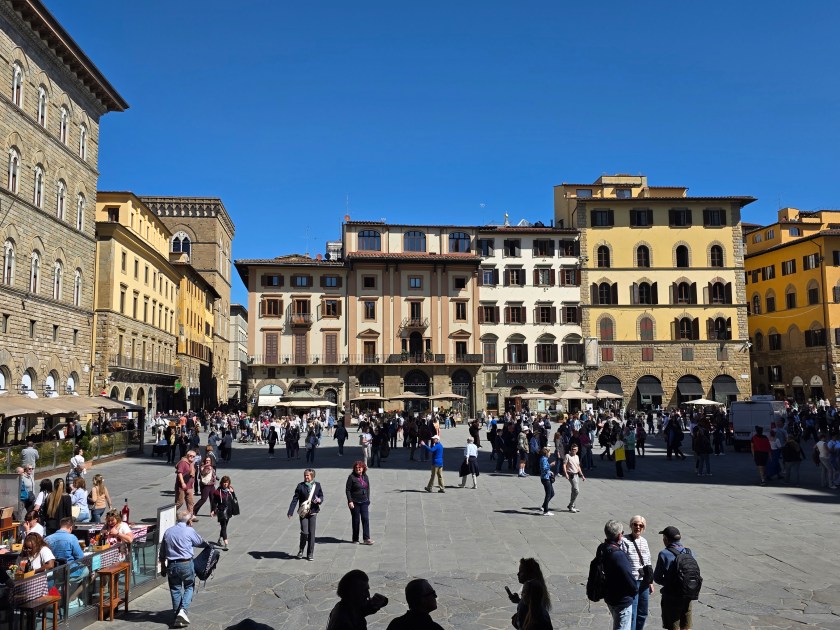
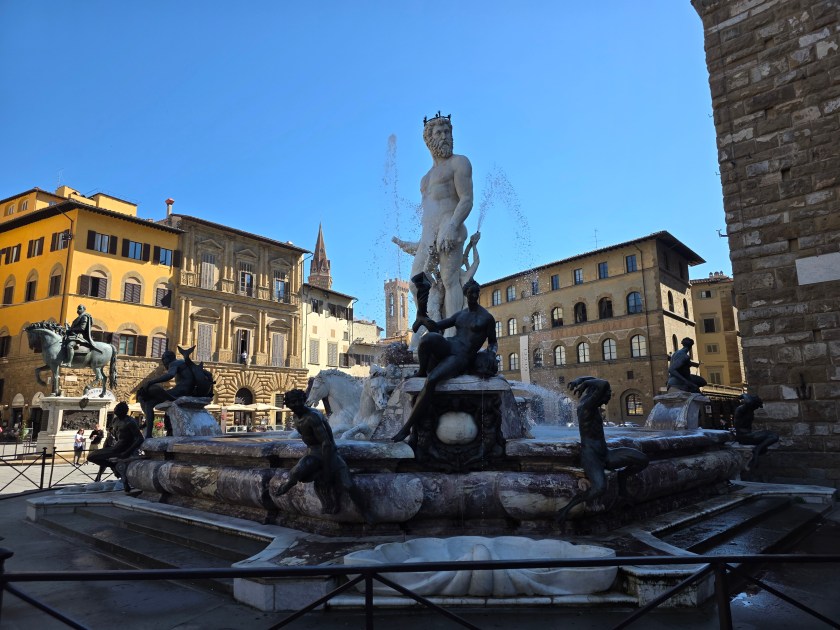
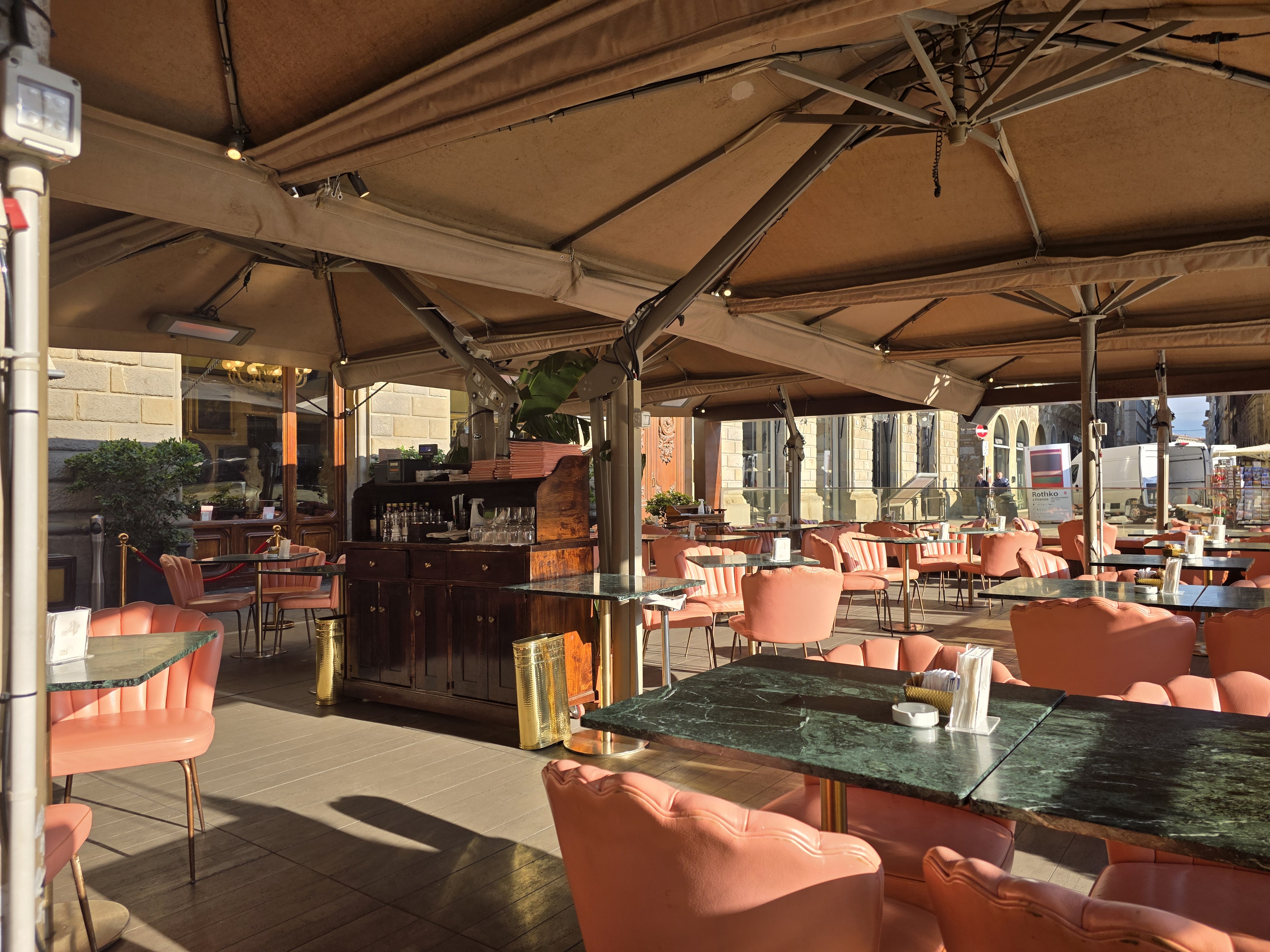
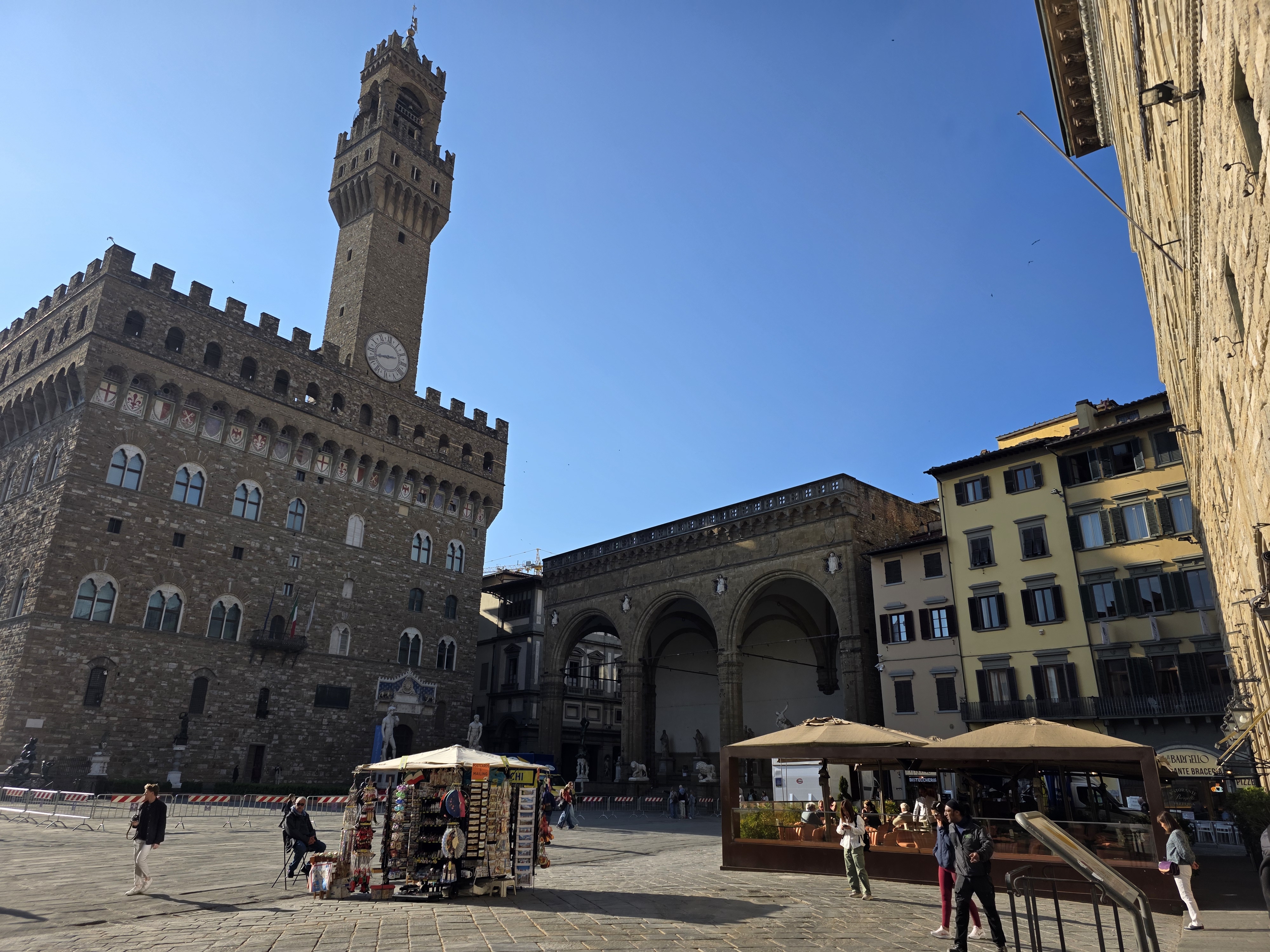
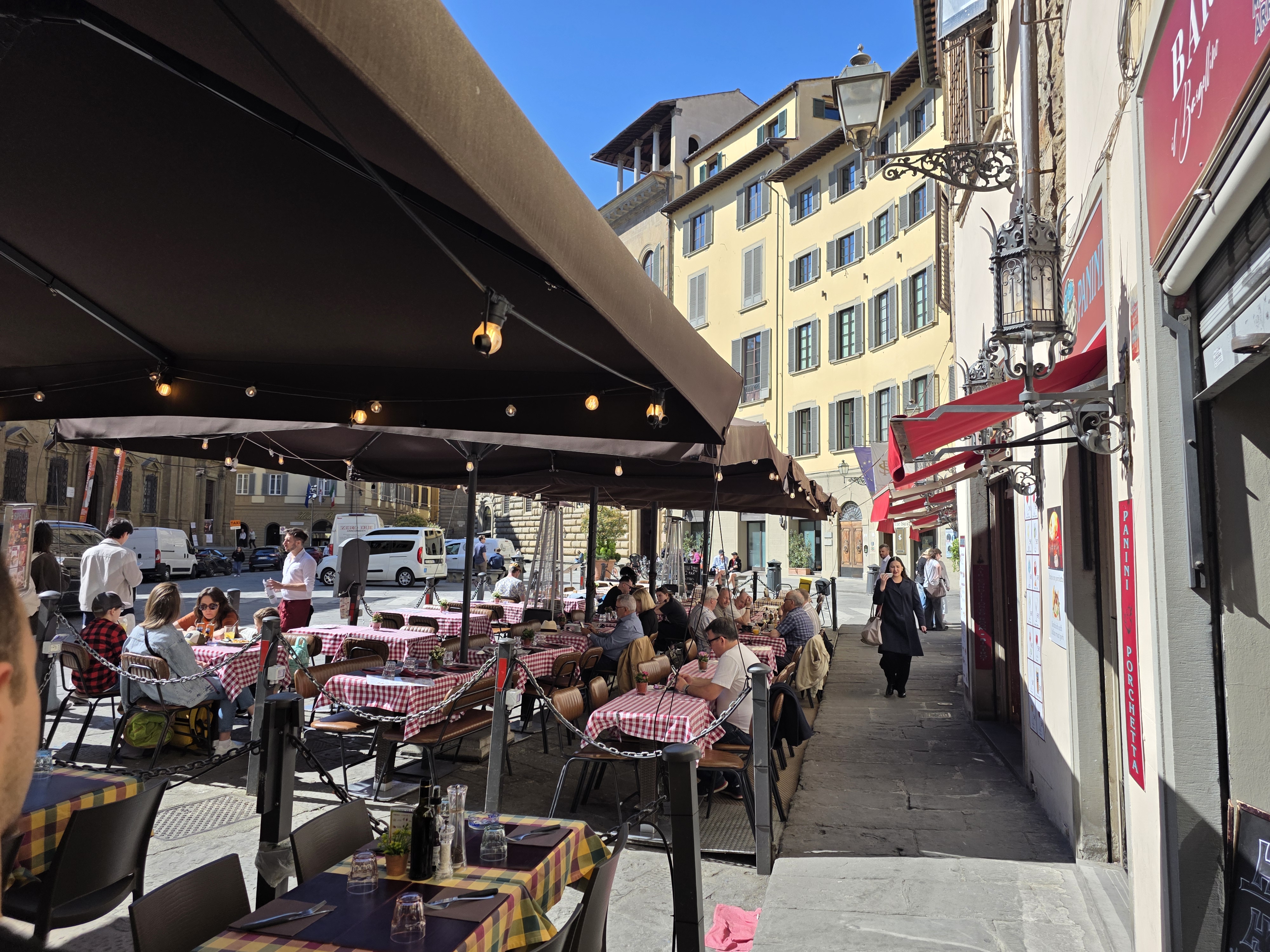
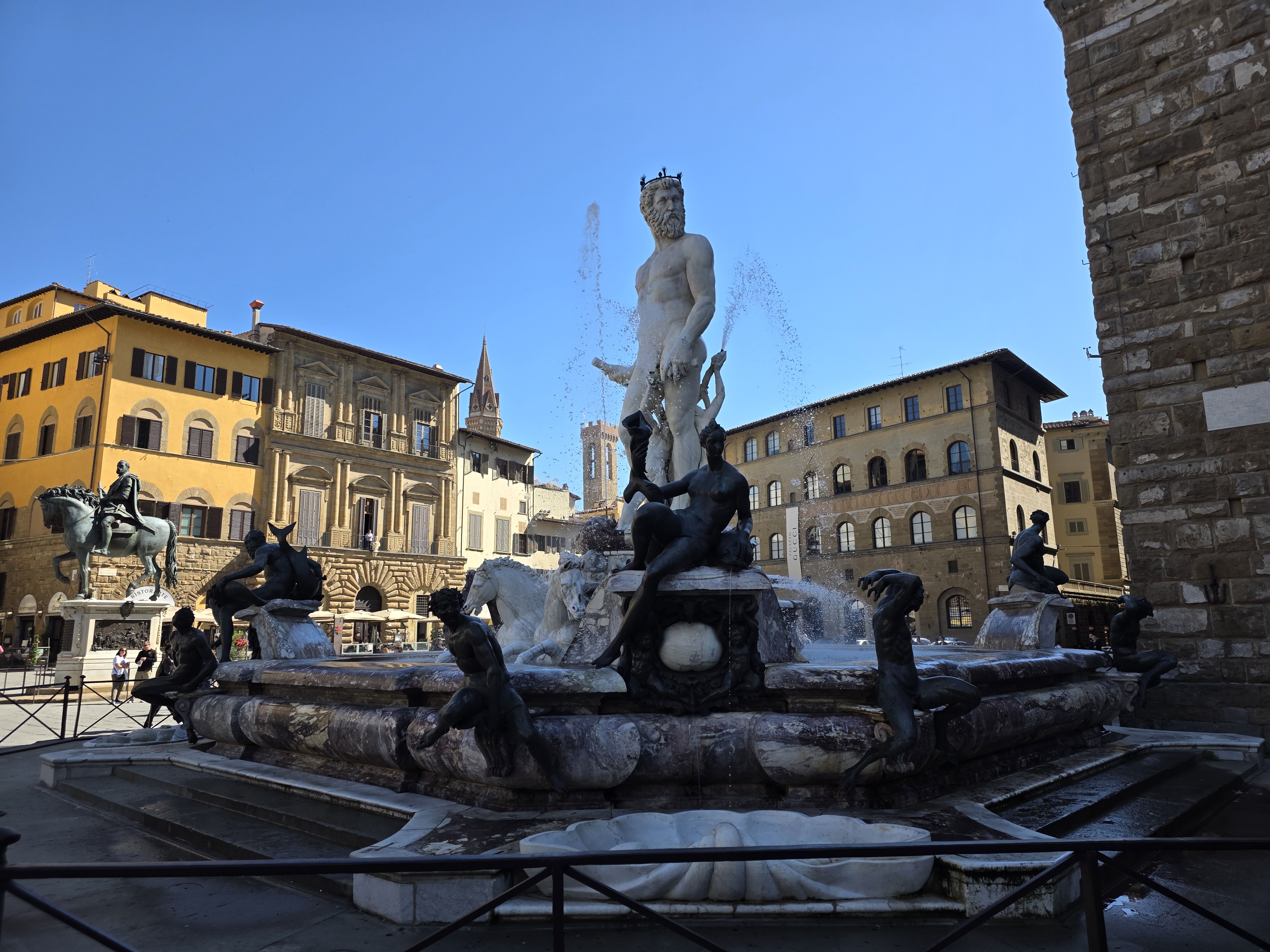
Today I was supposed to have a relaxed and calm morning. I got up fairly early, driven by the desire to have tiramisu for breakfast. Unusual, I know, but I absolutely had to eat tiramisu in Italy, and there wasn’t really any other occasion to squeeze it in. So, I very purposefully headed to a posh café called Rivoire, on Piazza della Signoria with a view of Palazzo Vecchio, and treated myself to an omelette (for protein and balance) and an excellent small portion of tiramisu.


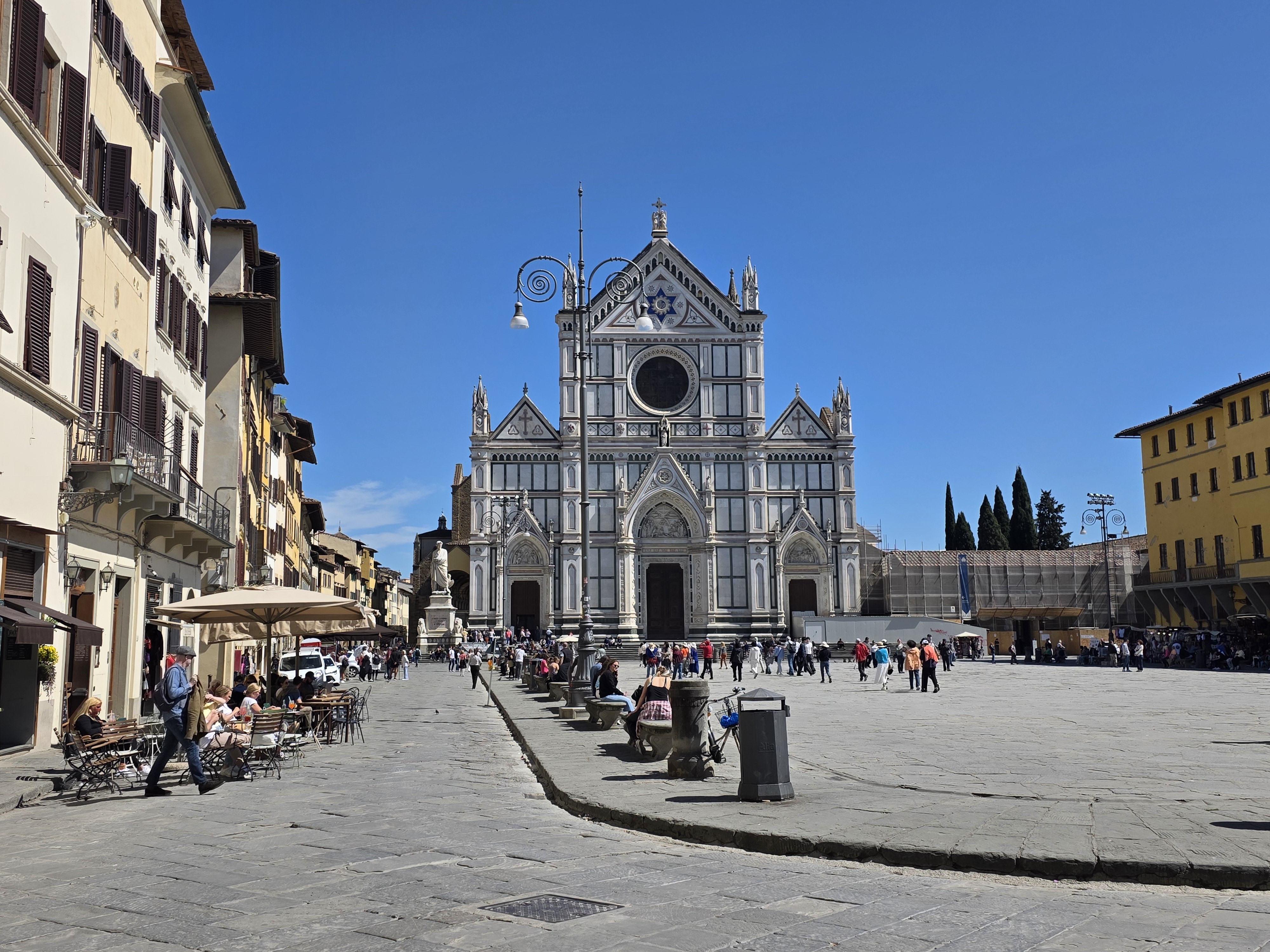
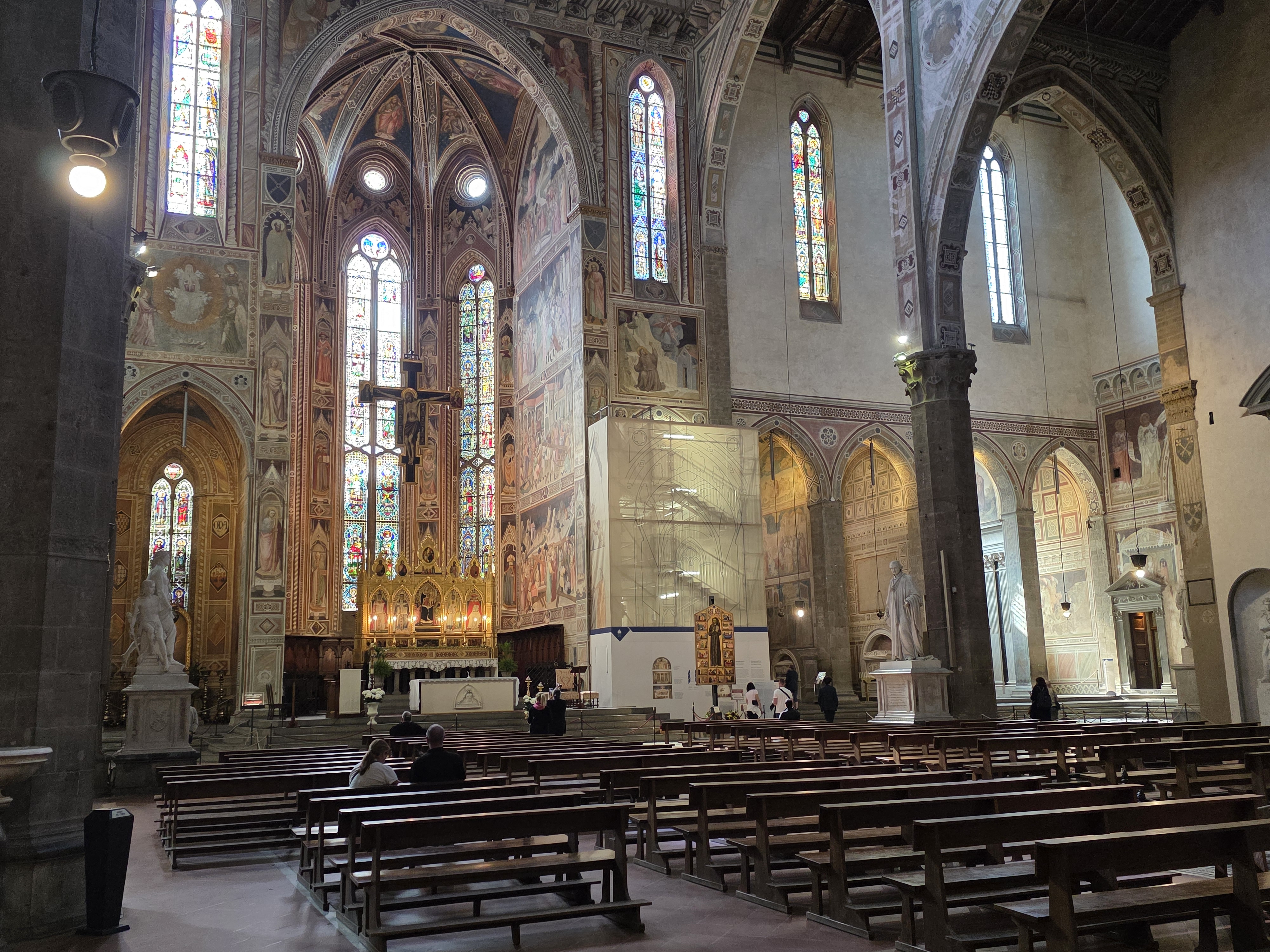
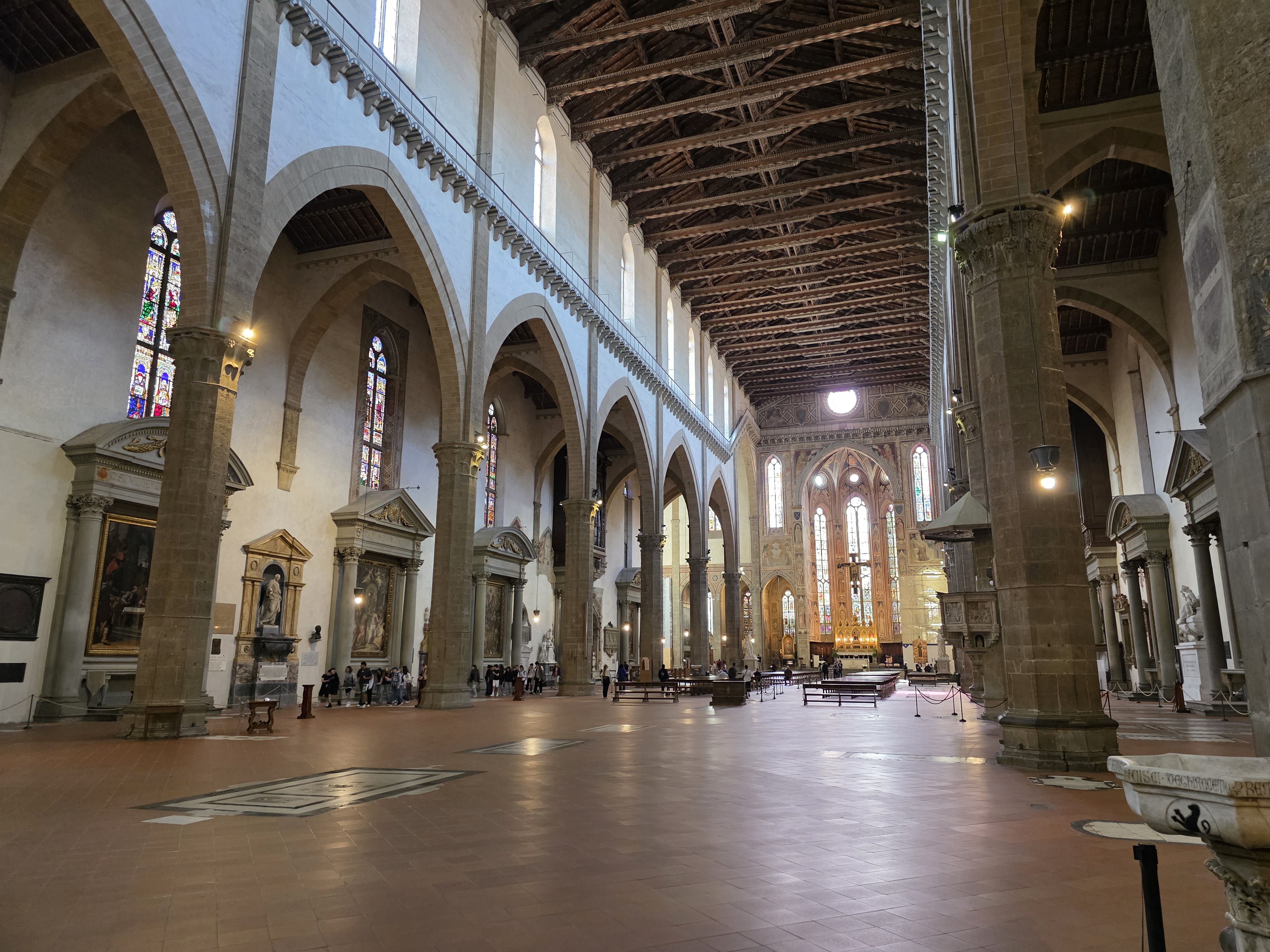
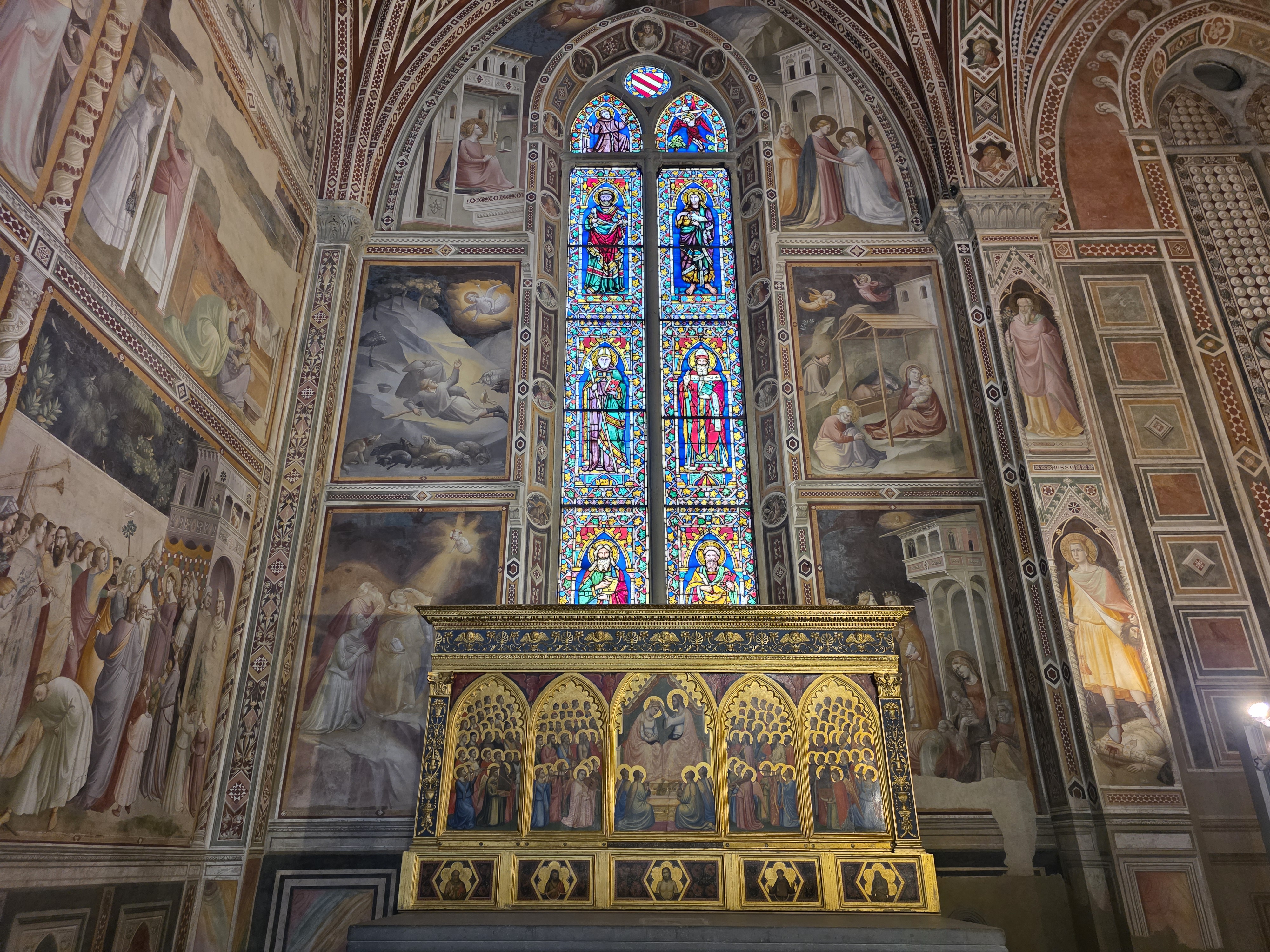
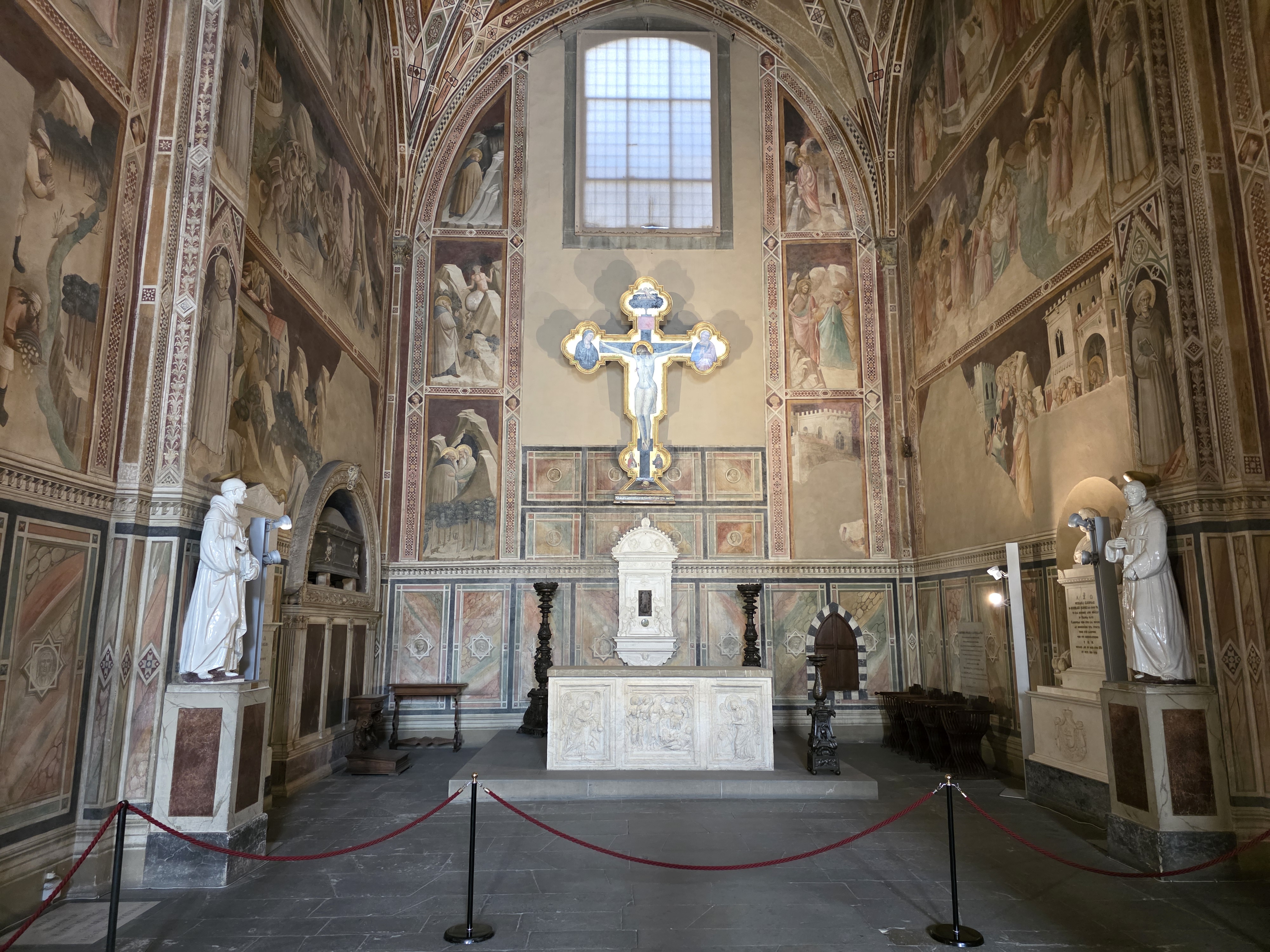
After that, I had a free morning before my Chianti tour, and again on Claude’s recommendation, I decided to visit the Basilica of Santa Croce. Entry cost 10 euros.

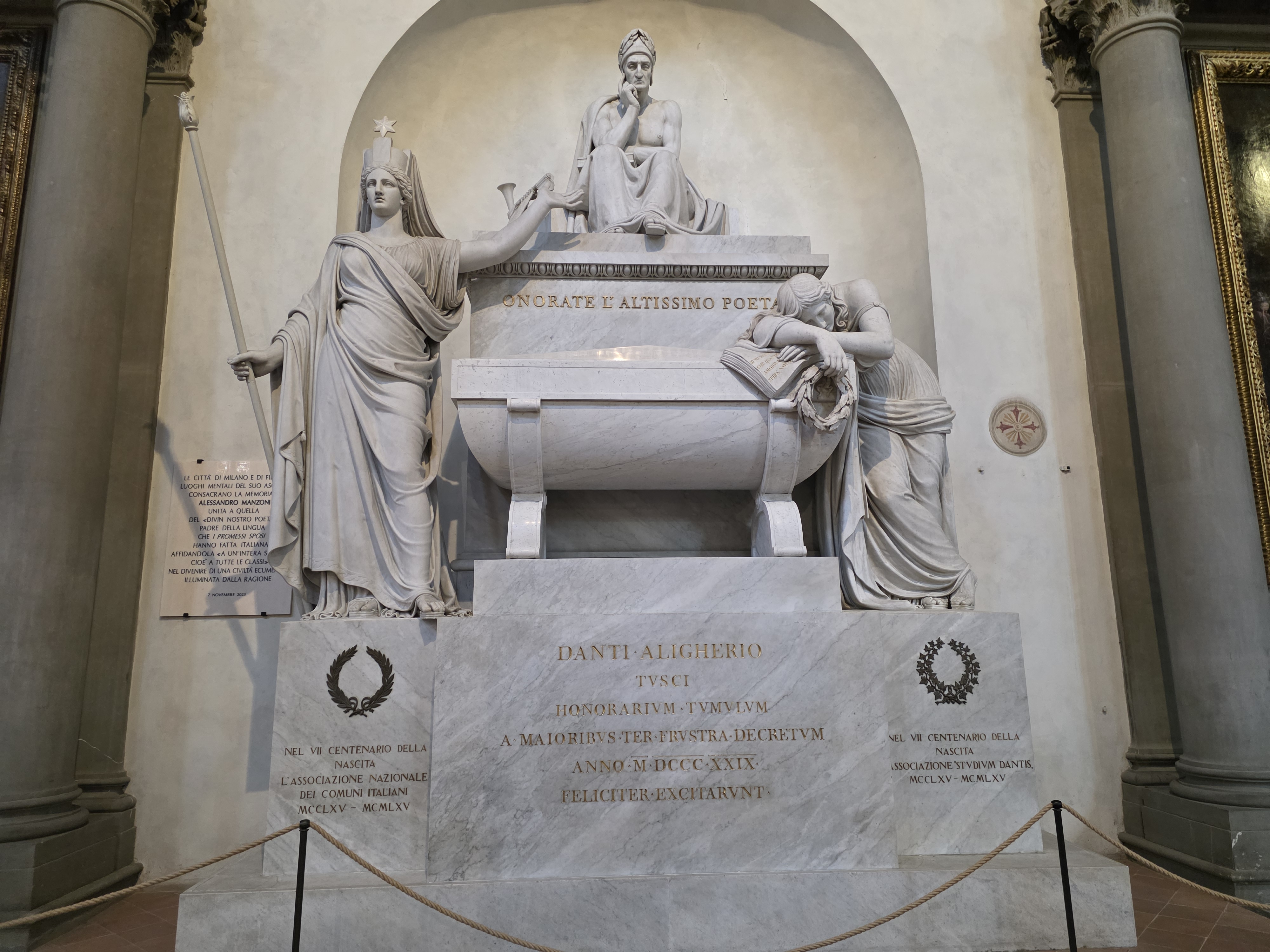
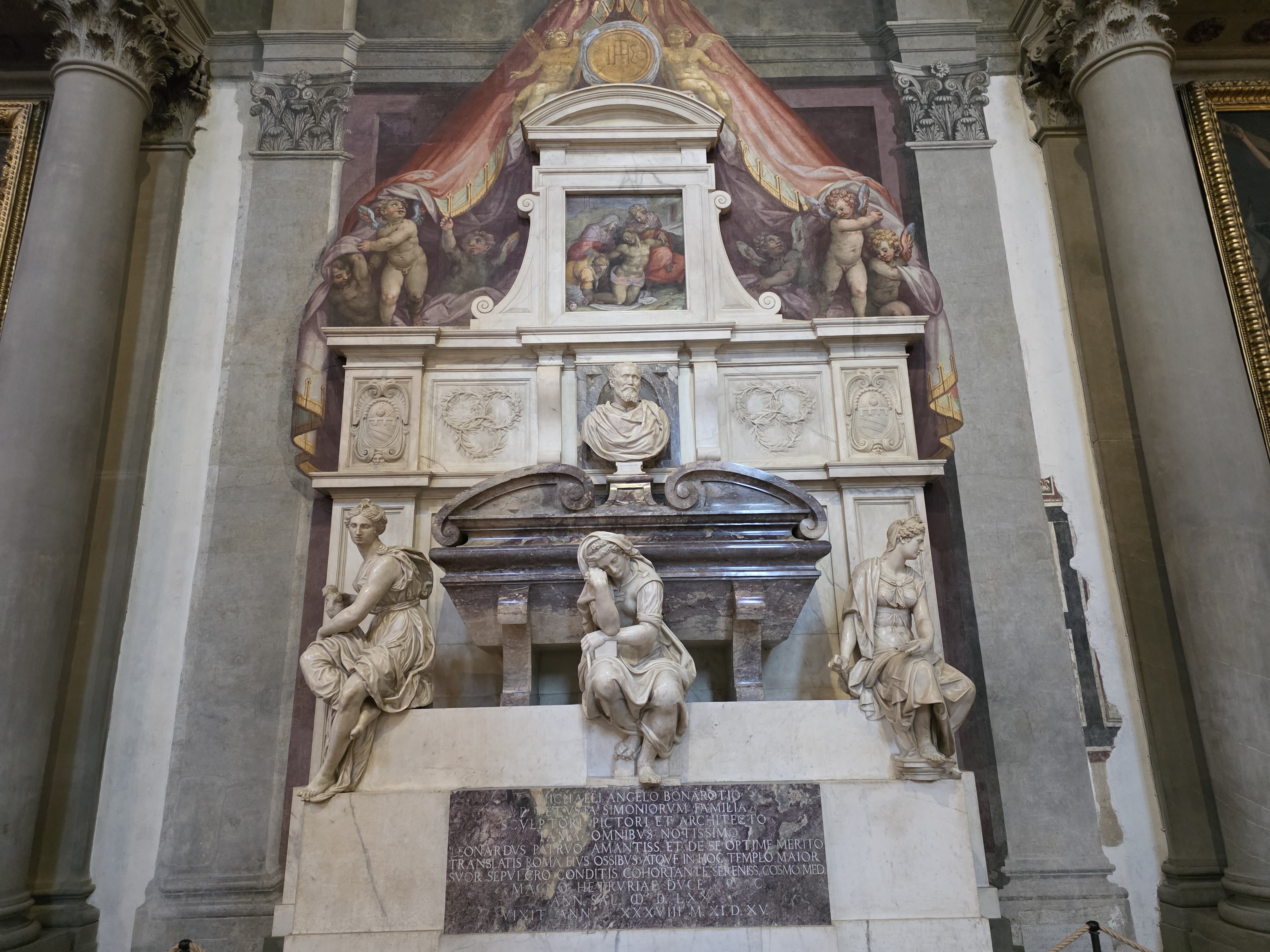
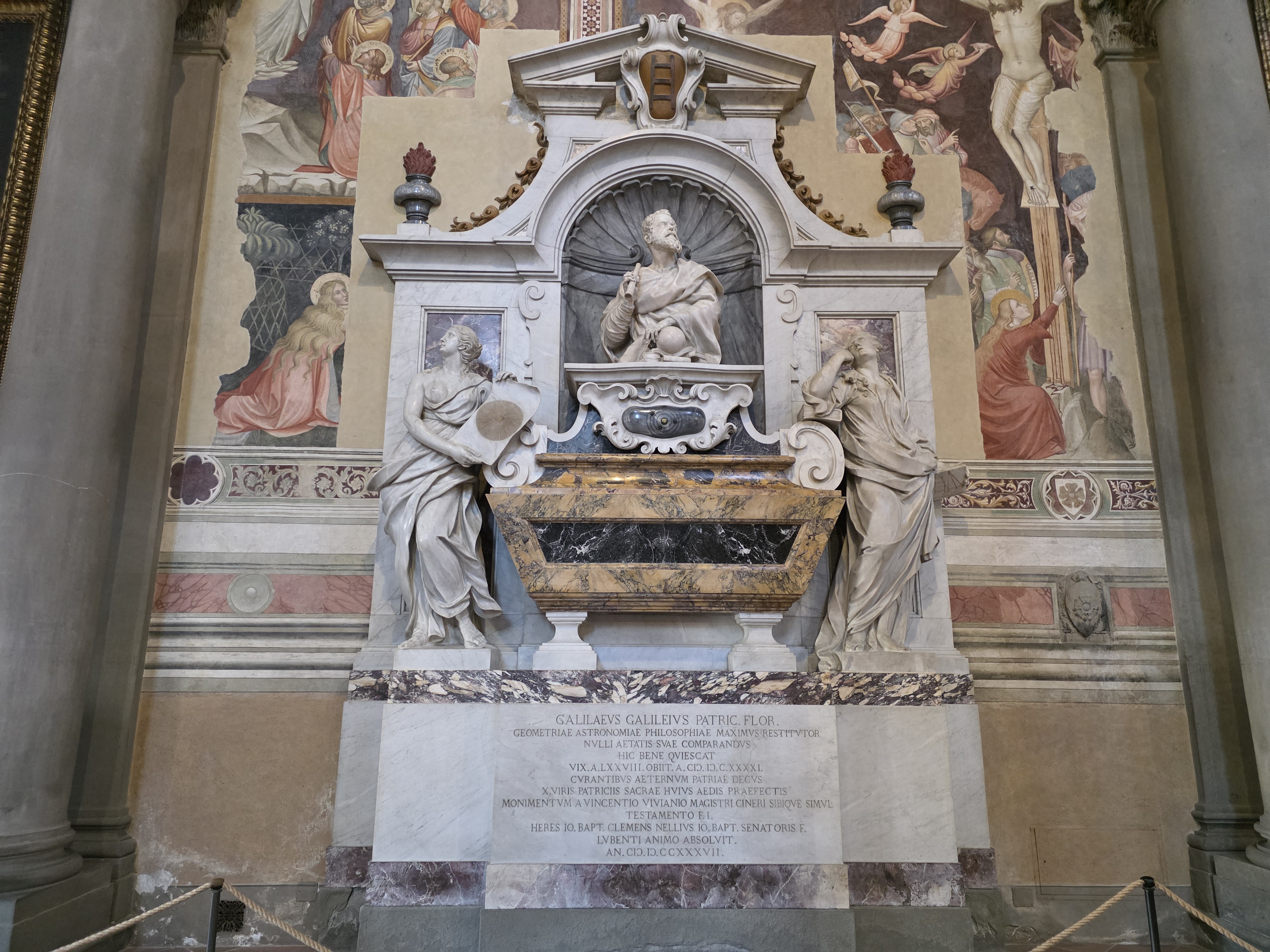
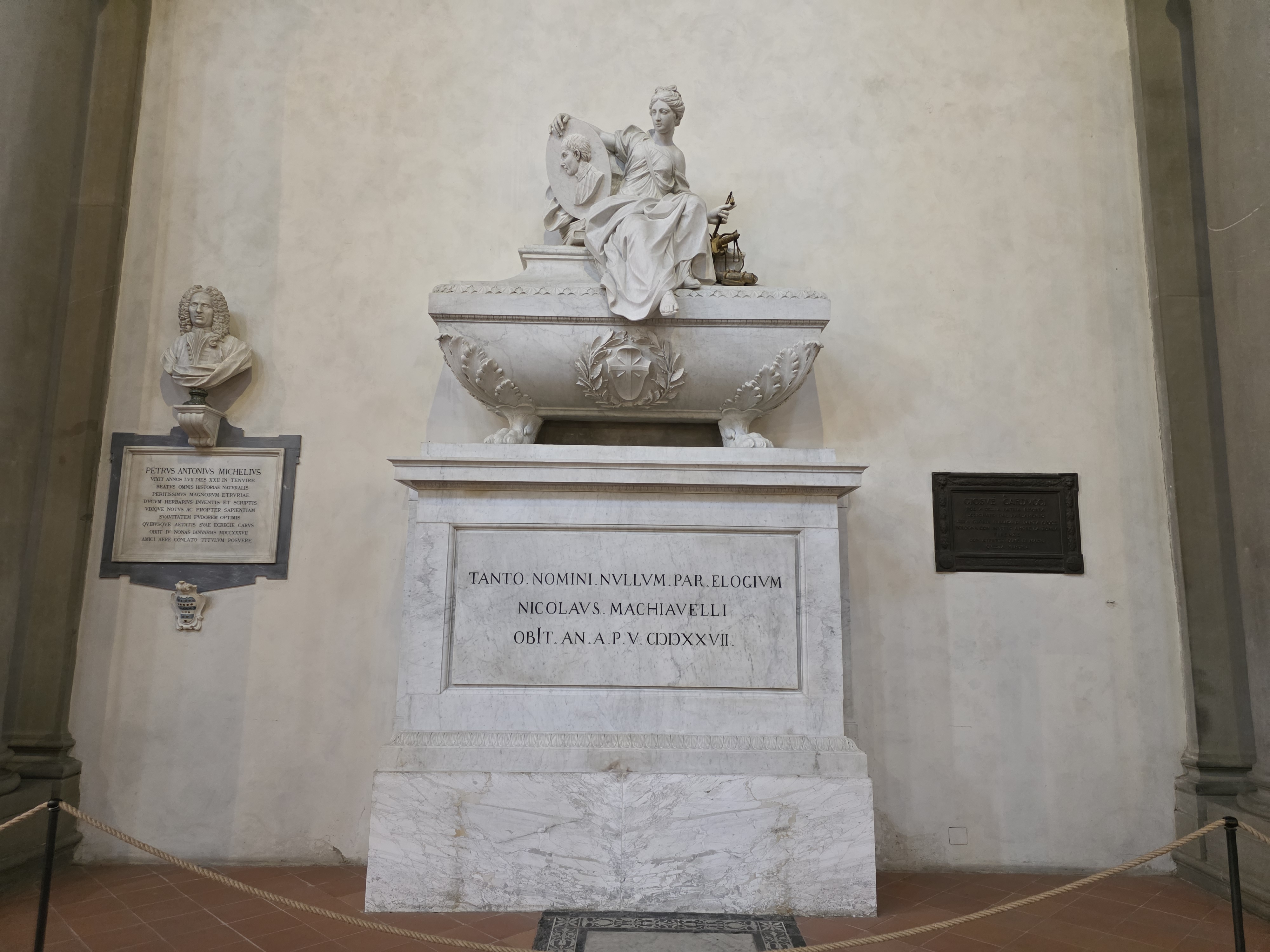
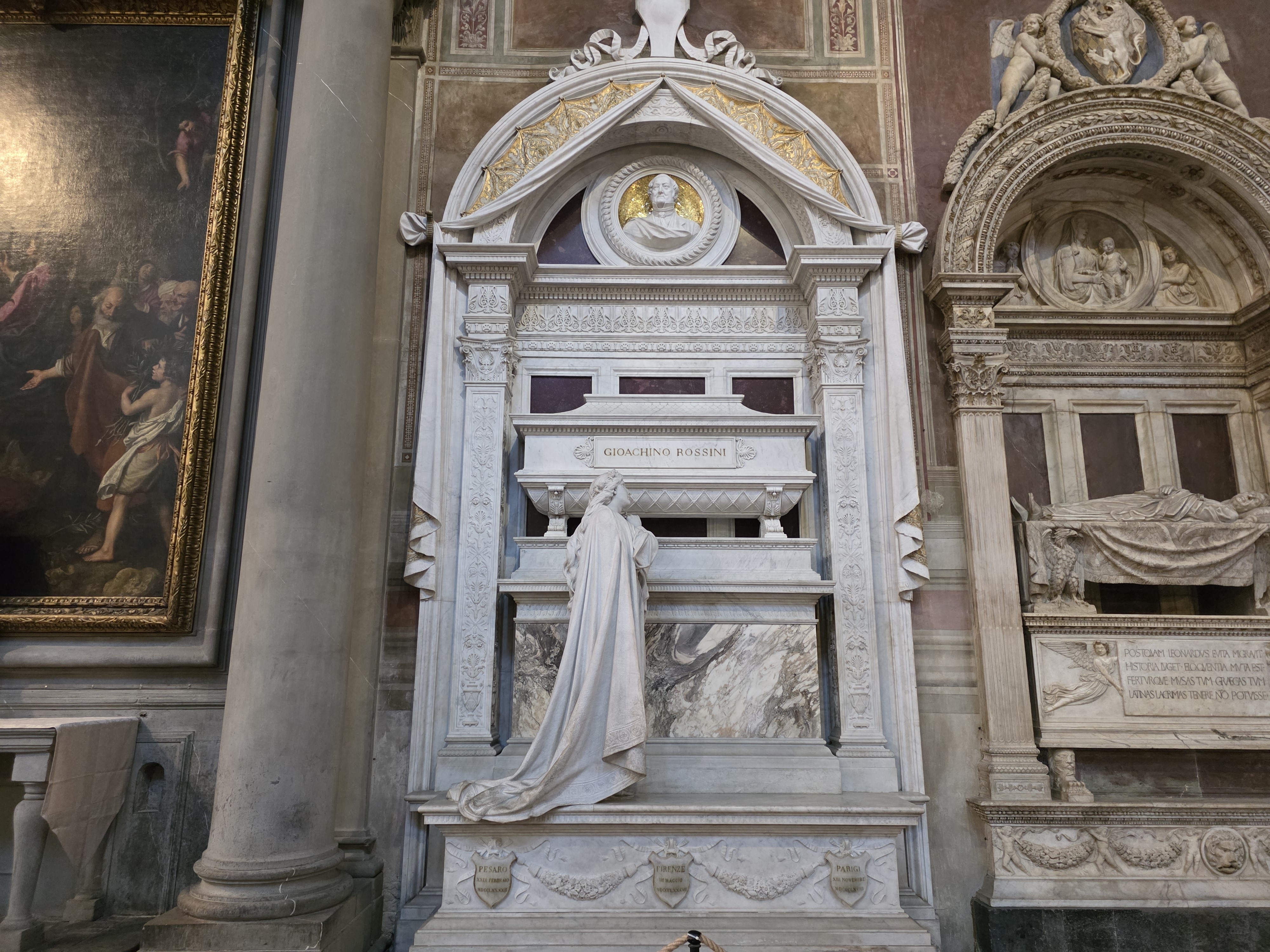
But it was fascinating, and overall, I actually liked the interior way more than the Duomo’s. There were various frescoes, as well as the tombs of famous people – Galileo, Michelangelo, Dante, Machiavelli, Rossini.

After the basilica there wasn’t particularly much else to do, so I found a specialty coffee shop and spent some time there. I noticed a man ordering a croissant with a Nutella filling and a coffee. And he paid 3.5 euros for all of it. Honestly, that shocked me, because in both London and especially Baku, the coffee alone would cost more than that. And here it was 3.5 euros!

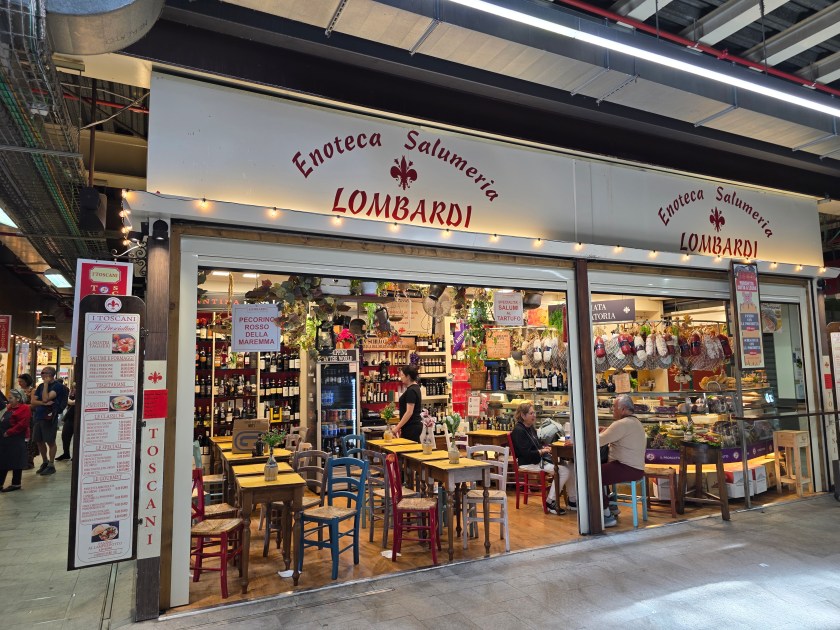
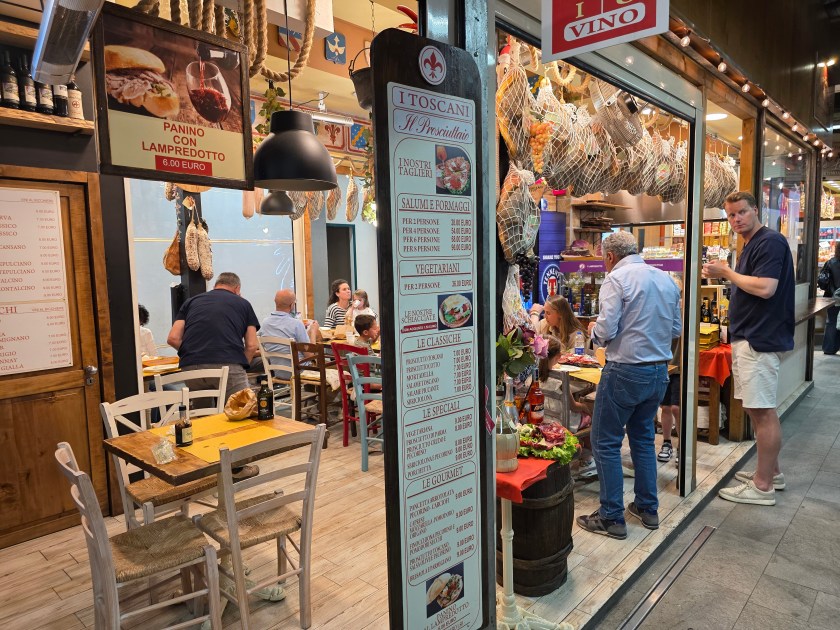
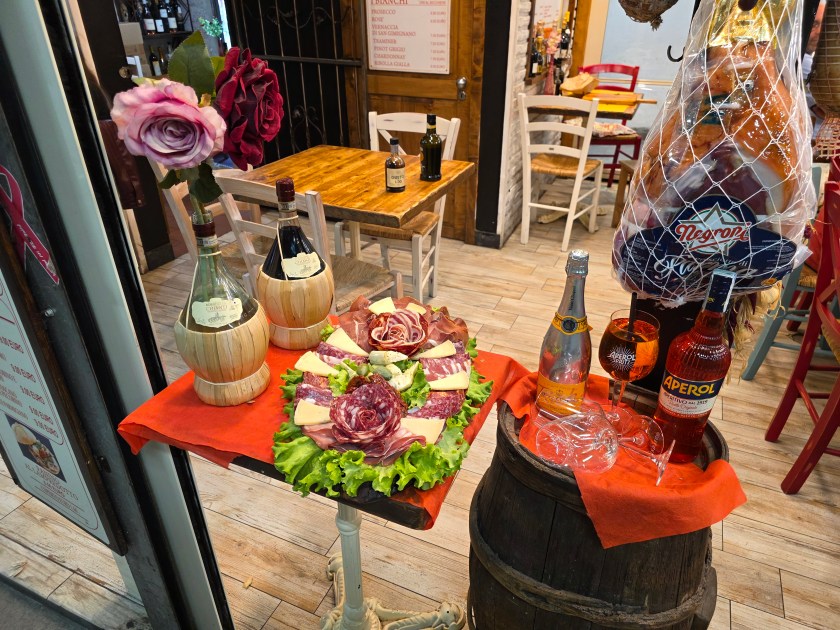
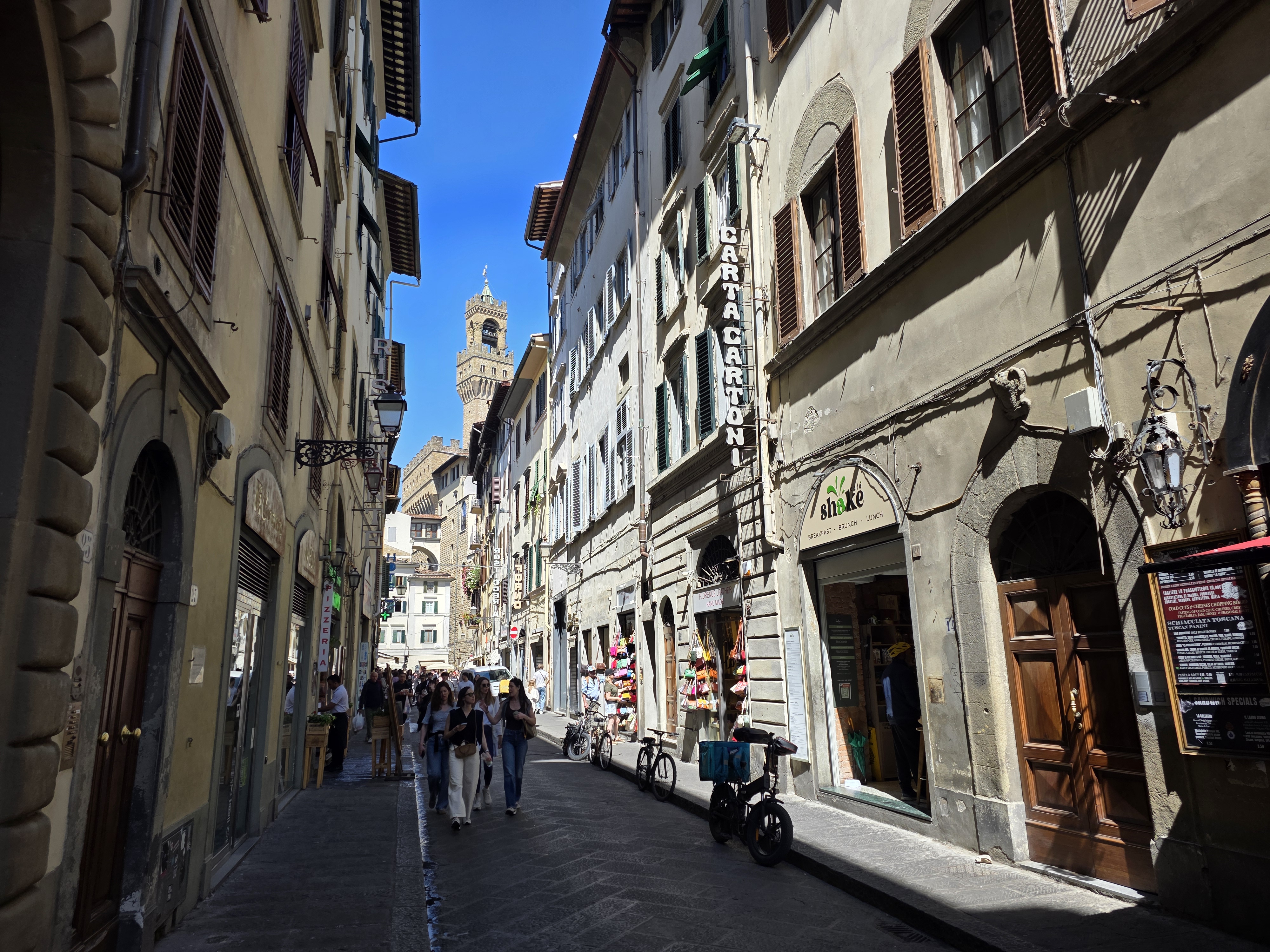
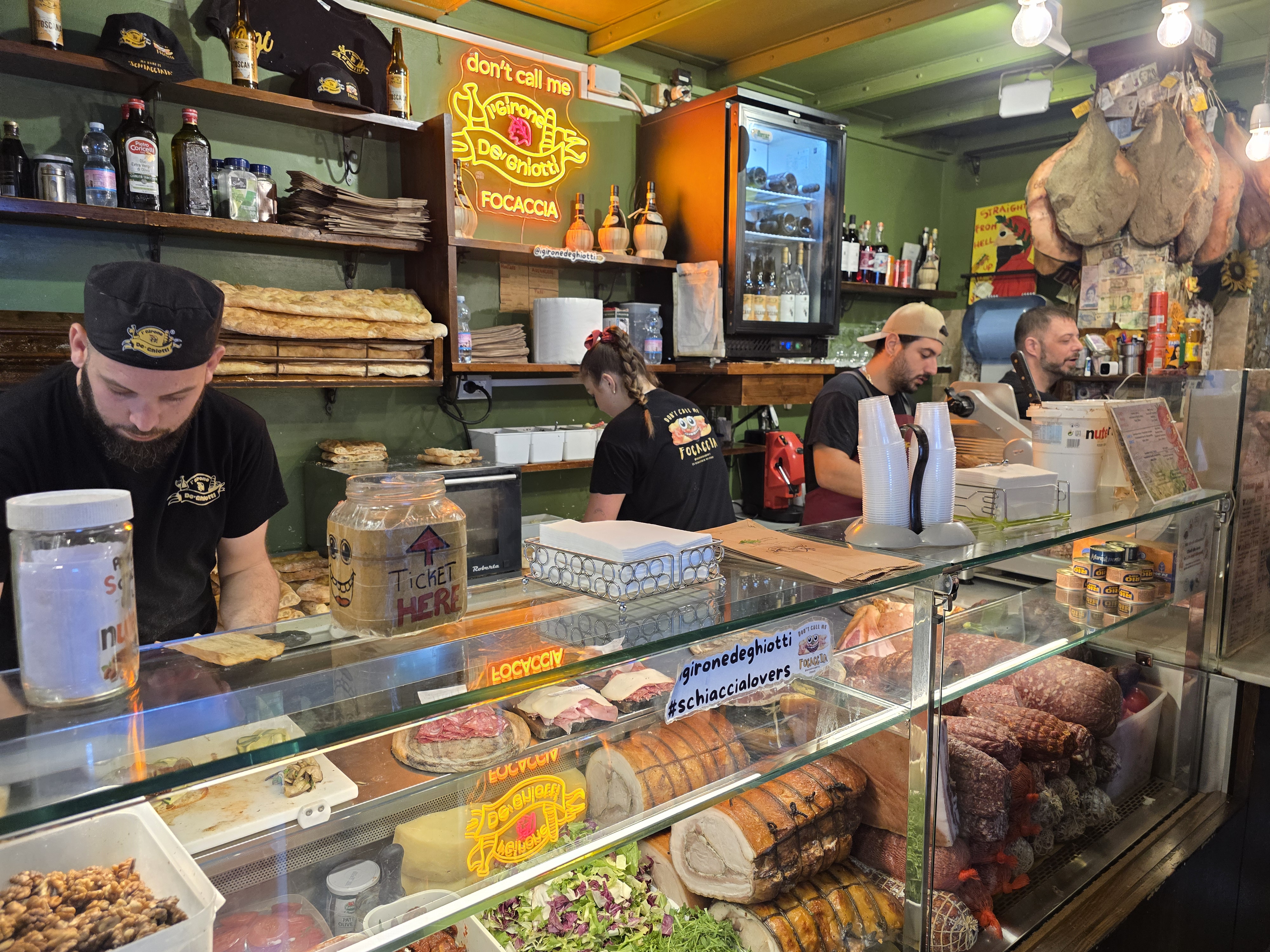
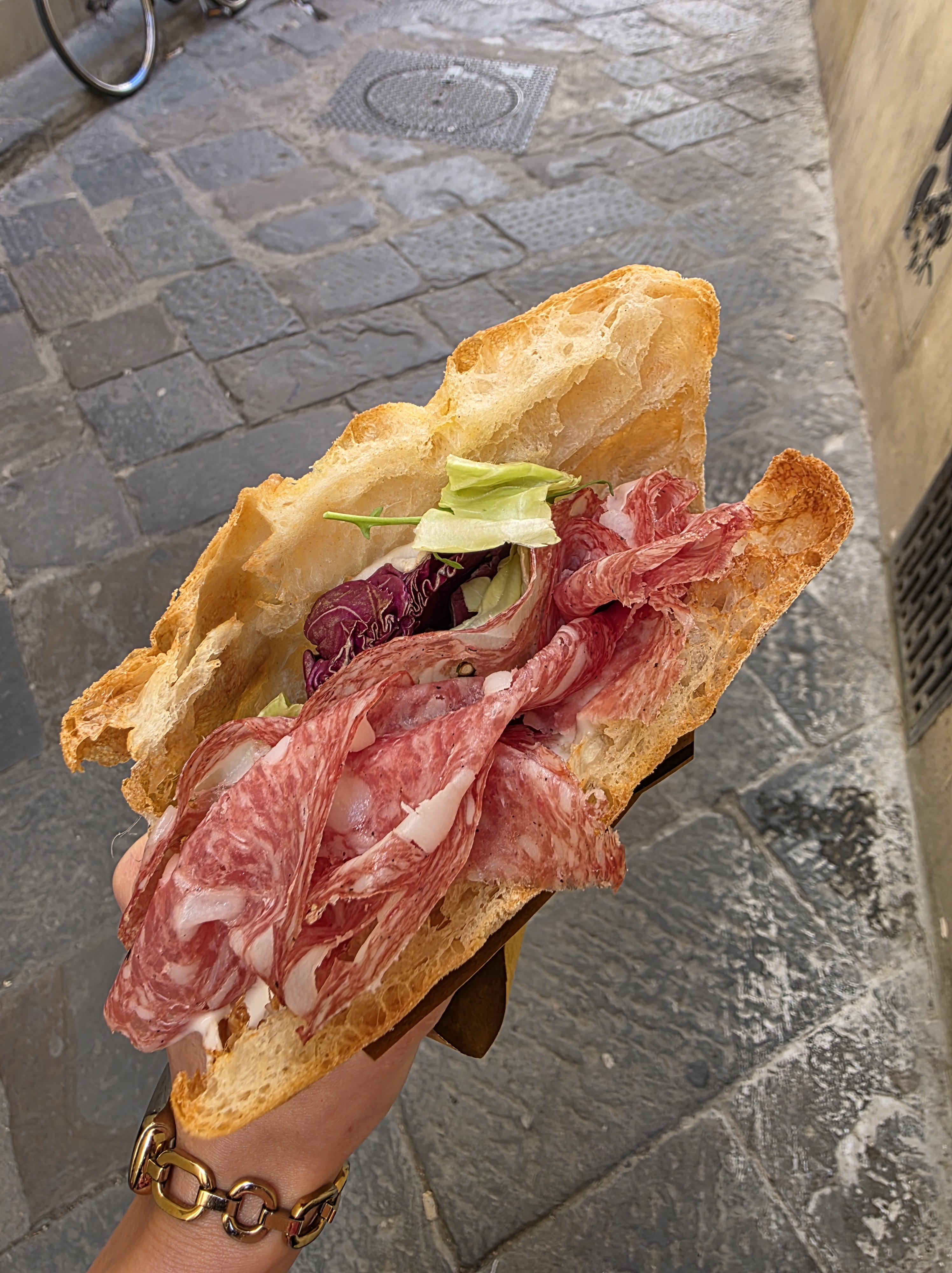
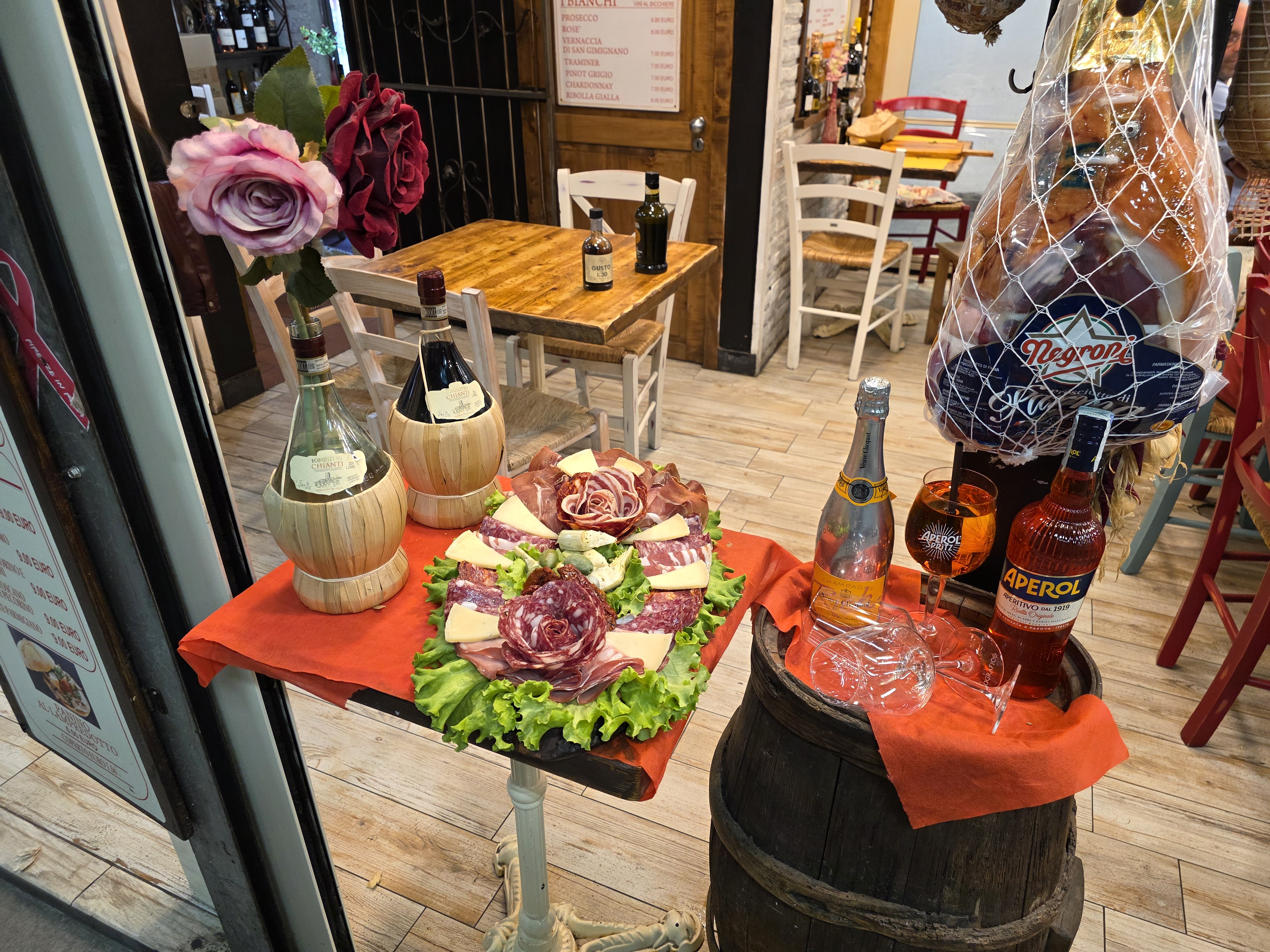
For an early lunch I planned to have another one of those schiacciata sandwiches. I found a couple of highly rated places and, once there, chose the one with the shorter queue and got another salami sandwich – honestly, it feels like I’m surviving entirely on cured meats here.

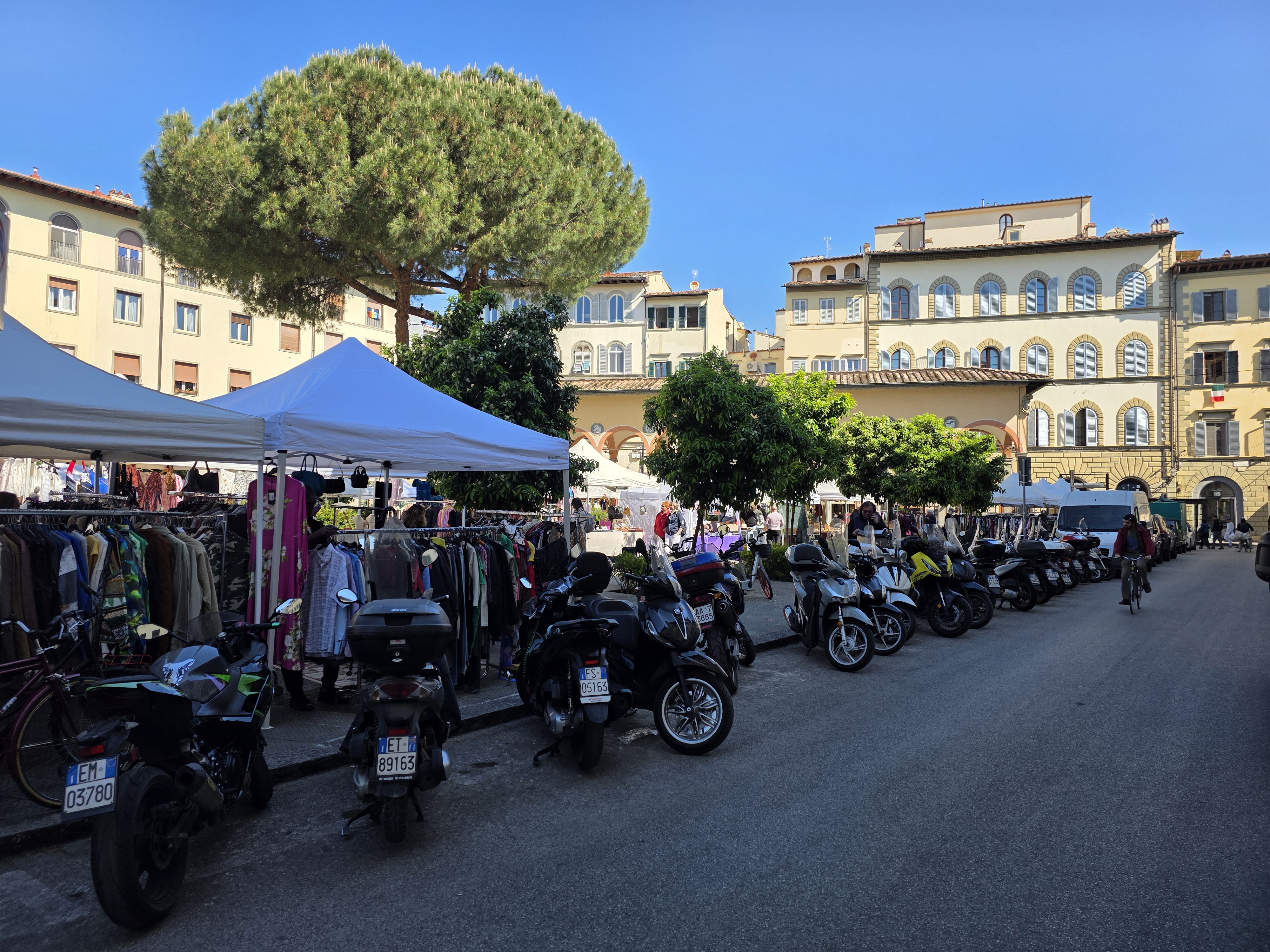
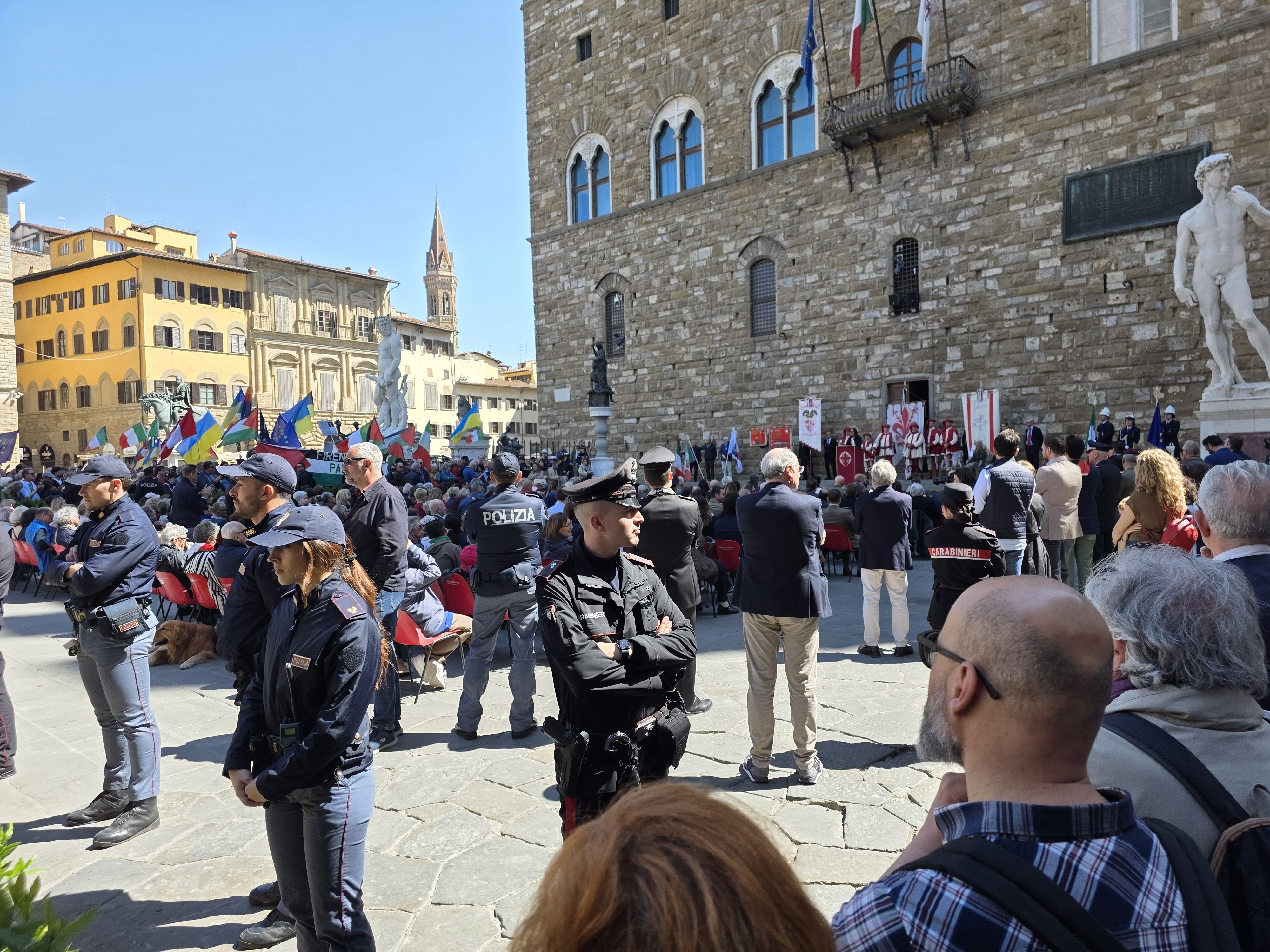
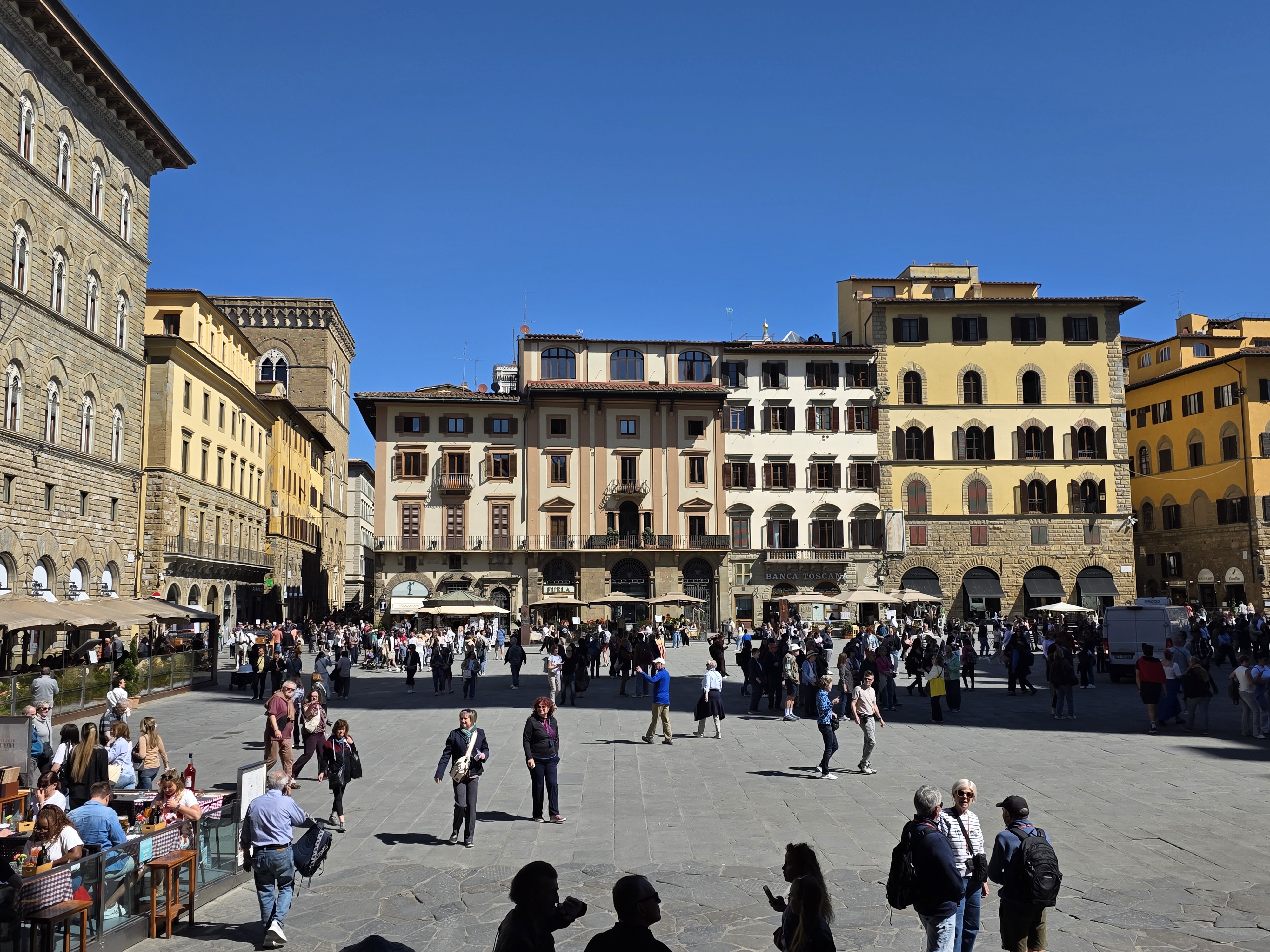
On Piazza della Signoria I came across some kind of celebration – today, April 25th, is a national holiday in Italy, Liberation Day from Fascist occupation.

And by 2pm I arrived at the Santa Maria Novella railway station, which was the meeting point for our Chianti wine tour.

While waiting for the tour, I met an American woman who told me her daughter lives in Barcelona and she had been visiting her. Her husband doesn’t like travelling, so she mostly travels without him. She had absolutely no idea what Azerbaijan was, though she admitted herself that Americans aren’t particularly strong at geography. Her parents were from Latin America, so she speaks excellent Spanish, and even spoke to the guide in Spanish rather than English. She said that ever since she was young, she’d been used to the idea that in Europe it’s better not to advertise that you’re American – and now, with the arrival of the “orange man”, as she called him, even more so.

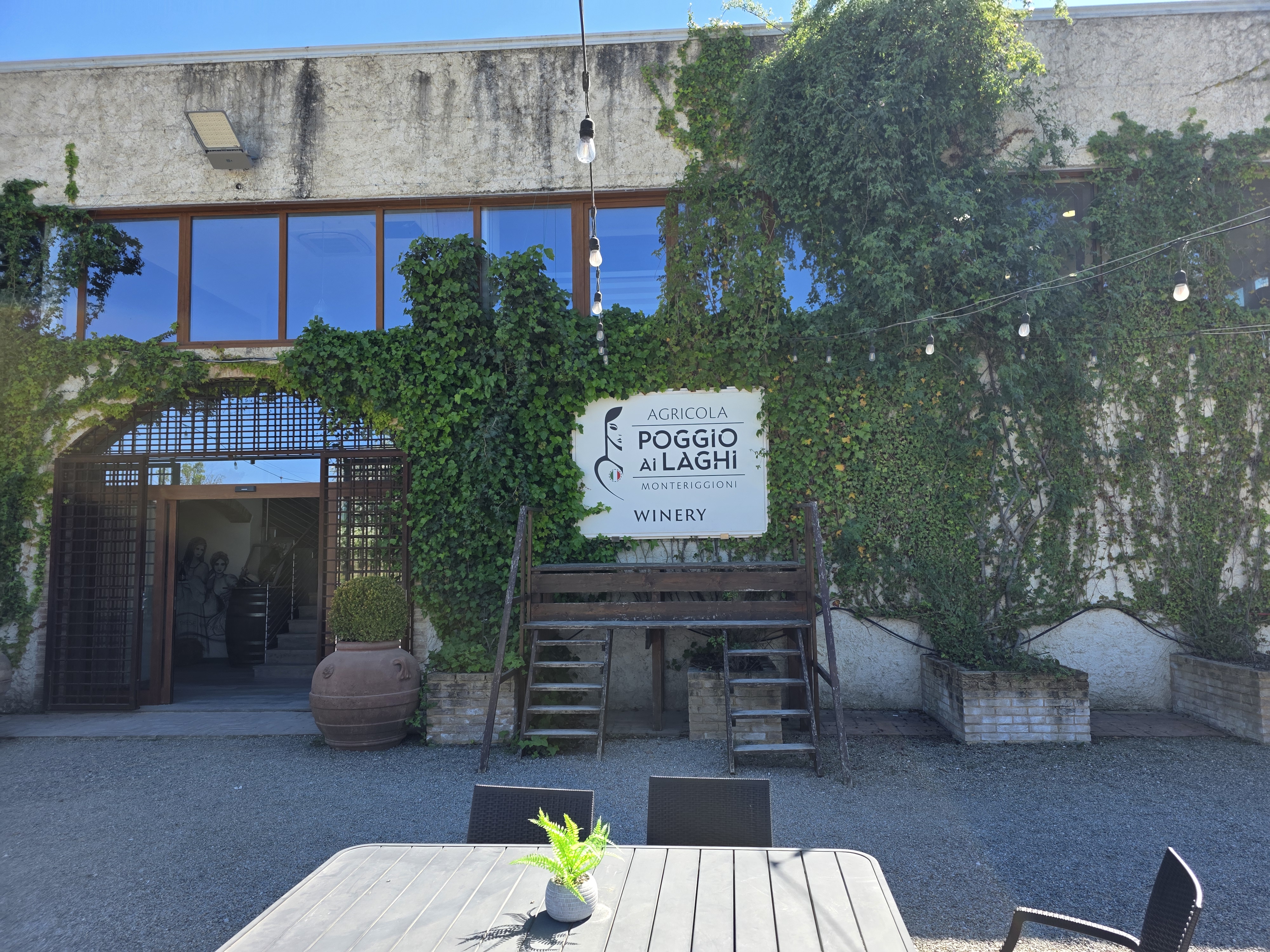
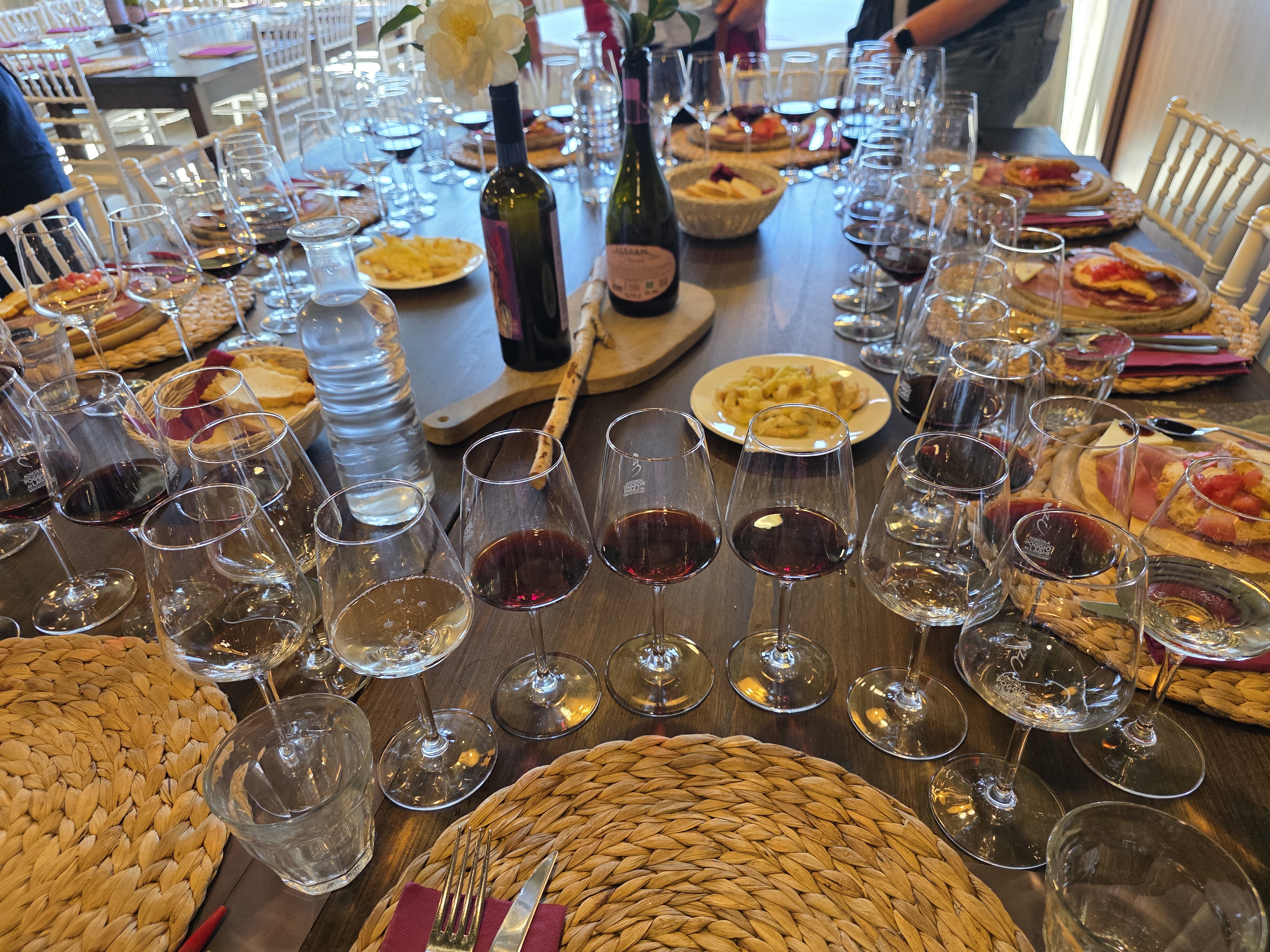
As for the tour itself, the drive there took an hour and the drive back another hour, while we spent about two hours there. We went to Monteriggioni, in the Chianti region of Tuscany, roughly between Florence and Siena, to a winery called Poggio ai Laghi. It turned out not to be quite what I had expected, because I had imagined something outdoors, surrounded by those famous Tuscan vineyard landscapes.

In reality, they only showed us the vineyards briefly from the side and allowed us to take photos there, but there was no actual walk outdoors. We spent most of the time inside, where we tasted seven wines. Yes, it was interesting, tasty and informative, but not entirely what I had imagined.

As for the wine itself, there are fairly strict rules for producing Chianti Classico. Firstly, at least 80% of the grapes must be the local Sangiovese variety. Secondly, the vineyards are not artificially irrigated and rely entirely on rainfall, so naturally wines from different years vary.

We first tried a sparkling white wine, then a regular white, which I didn’t particularly like because it tasted rather watery.

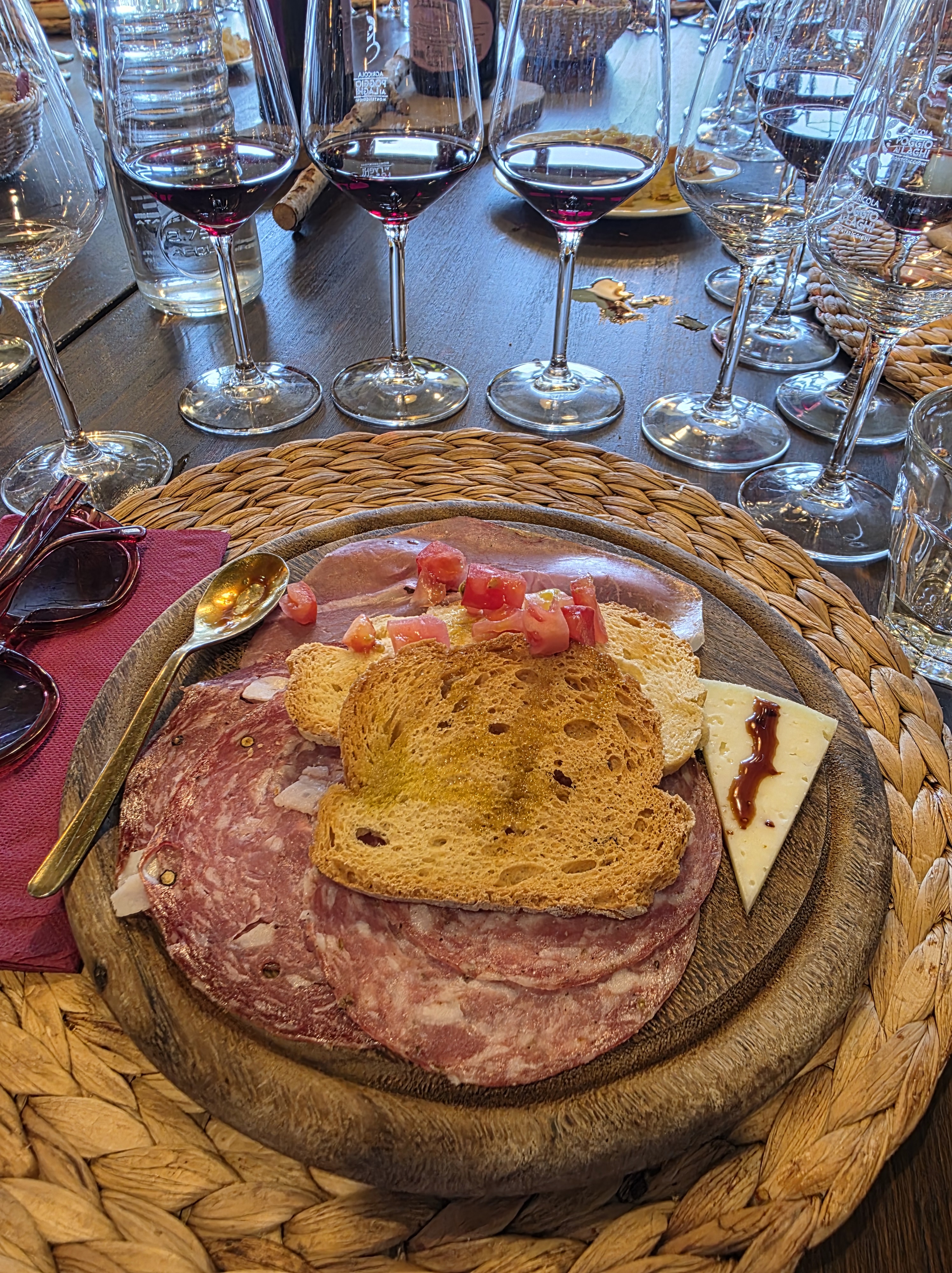
After that we tried three red wines, all very different. One was a younger Classico, the second a Riserva with a strong cherry flavour, which I liked the most, and the third was an IGT – not necessarily a lower category, but apparently with a lower required percentage of the grape variety.

What was interesting was that before, when people talked about notes of tobacco, leather and so on, it never really meant anything to me. But when you actually taste these different wines, you really can notice the differences and all those flavour notes. At the end we also had a dessert wine.

Alongside all this there were snacks – we got to try their balsamic vinegar, olive oils (including truffle oil), and of course cheese, a couple of types of salami, prosciutto and bread. Honestly, after all that I barely even needed dinner, because I kept snacking throughout the tasting.

And toward the end, while we were already slowly getting ready to leave, one of the administrators caught us and offered us two additional wines that hadn’t been included in the tasting itself. One was an Classico Riserva, and the other was something called Donna Ava, apparently the winery’s most expensive wine, reserved for special occasions, as he put it.

I’ve always said I can’t tell the difference between a 10-euro wine and a 100-euro wine, but if you actually taste different wines side by side, you really can tell.

Although to be fair, the cheaper wines there weren’t 10 euros – they were more like 40–50. Those prices included shipping to various countries, but there was one price for the EU and the US, and another for the rest of the world – and our post-Brexit United Kingdom naturally falls into “the rest of the world.” They did say they could offer me some sort of discount, but the problem was that I couldn’t take the wine with me because I didn’t have checked luggage, and deliveries required a minimum order of six bottles, so I declined.

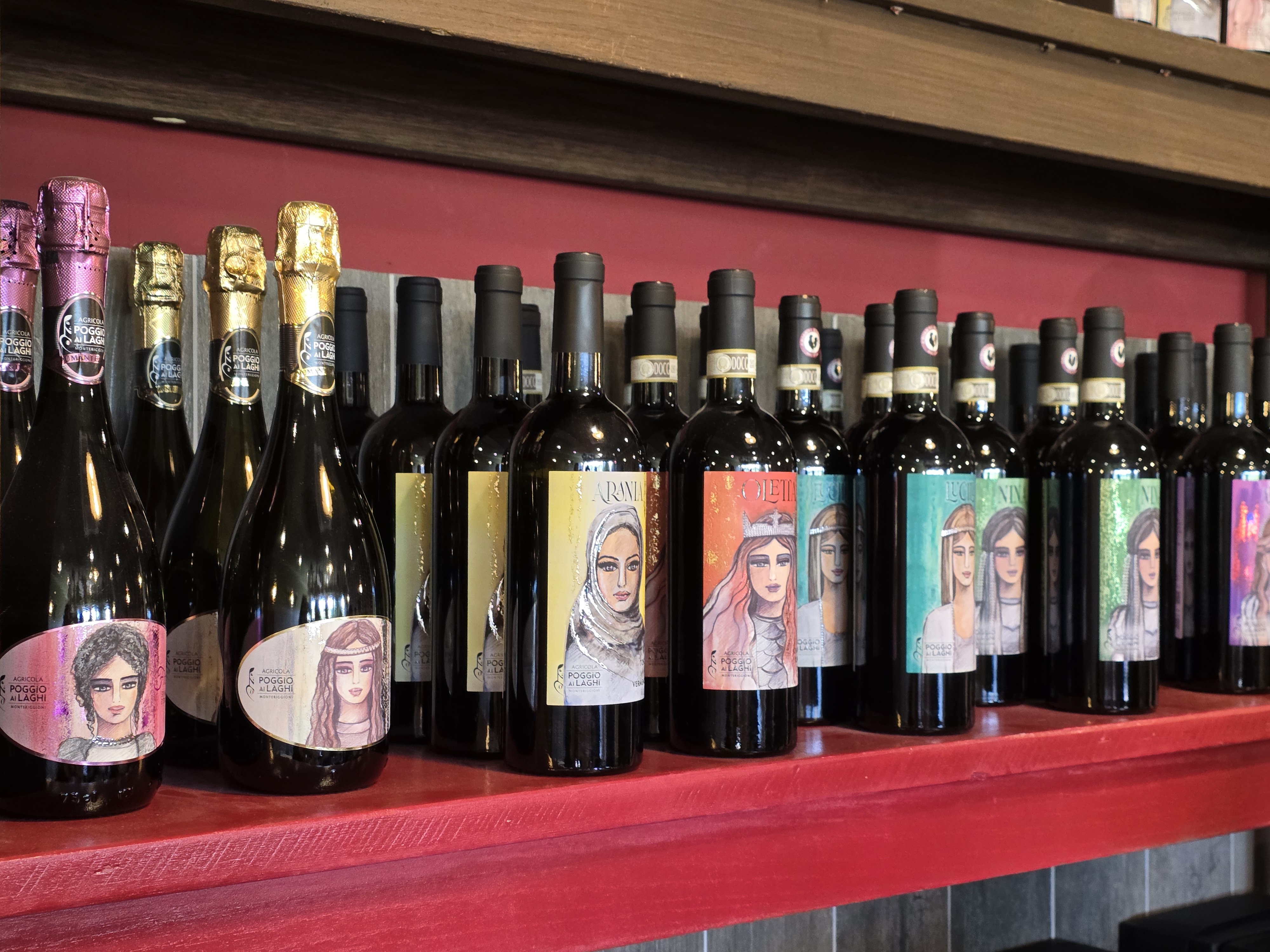
They also said they don’t sell these wines to restaurants or shops, only exclusively at the winery itself. Each bottle features a woman on the label – every wine is dedicated to the medieval noblewoman Donna Ava of Monteriggioni or one of her seven maidservants (Lucilla, Oletta, Nina, Arania, Aranda, Arella and Firmina).

The symbol of Chianti Classico is a black rooster on the bottle. There is a legend about this. Historically, Florence and Siena were always rivals. One day, to establish the border between the two cities, it was agreed that after the first rooster crowed at sunrise, riders from each city would set out toward each other, and the border would be placed where they met. The people of Siena chose a white rooster, while the Florentines chose a black one and deliberately kept it hungry. As a result, the starving rooster crowed way before dawn, allowing the Florentine rider to set off earlier and ride almost all the way to Siena.

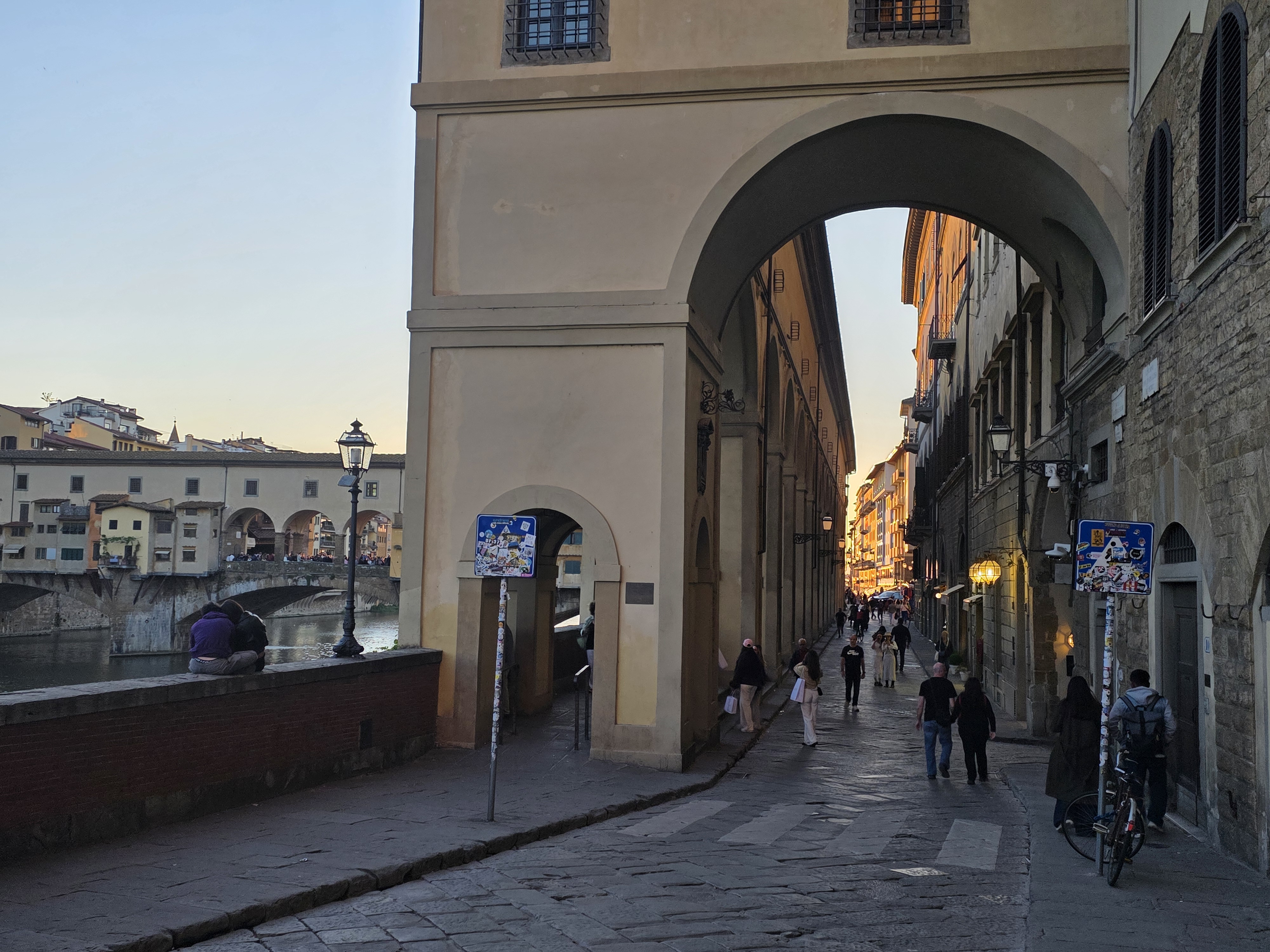
When we got back, naturally I didn’t feel like having dinner anymore, but I did feel like ice cream, so I walked once more toward the river and the bridge and had some gelato.

I ended up doing 23,000 steps that day, and by noon alone I had already done 10,000 – despite the fact that this was supposed to be a relaxed morning.

It was my last day in Florence – tomorrow morning I’m heading back.

Posted in English, Europe, Florence, Italy

Florence – Day 2

РУССКОЯЗЫЧНАЯ ВЕРСИЯ ПО ЭТОЙ ССЫЛКЕ. CLICK HERE FOR RUSSIAN VERSION.

April 24 2026 – Friday

Today I slept very poorly, because at 4:30am some large vehicle – either a garbage truck or a street-cleaning machine, I couldn’t quite tell – pulled up right under my window and stayed in the same spot for at least an hour, making unbelievably loud noises. I never figured out what it was doing there, since I couldn’t properly see it from my window, but it was impossible to sleep, and I only managed to drift off for a bit once it had left, even though I then had to get up early for all my tours.

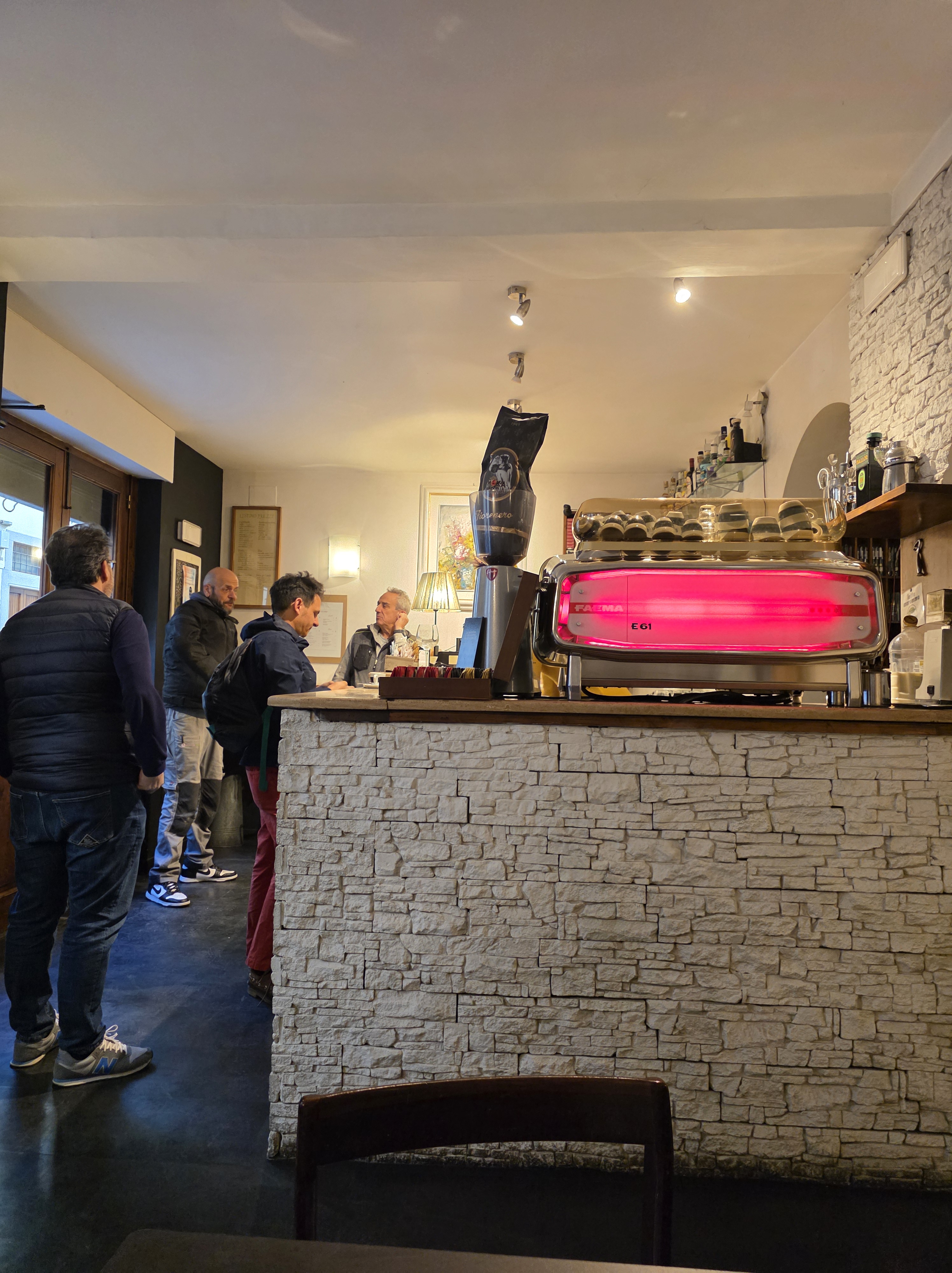
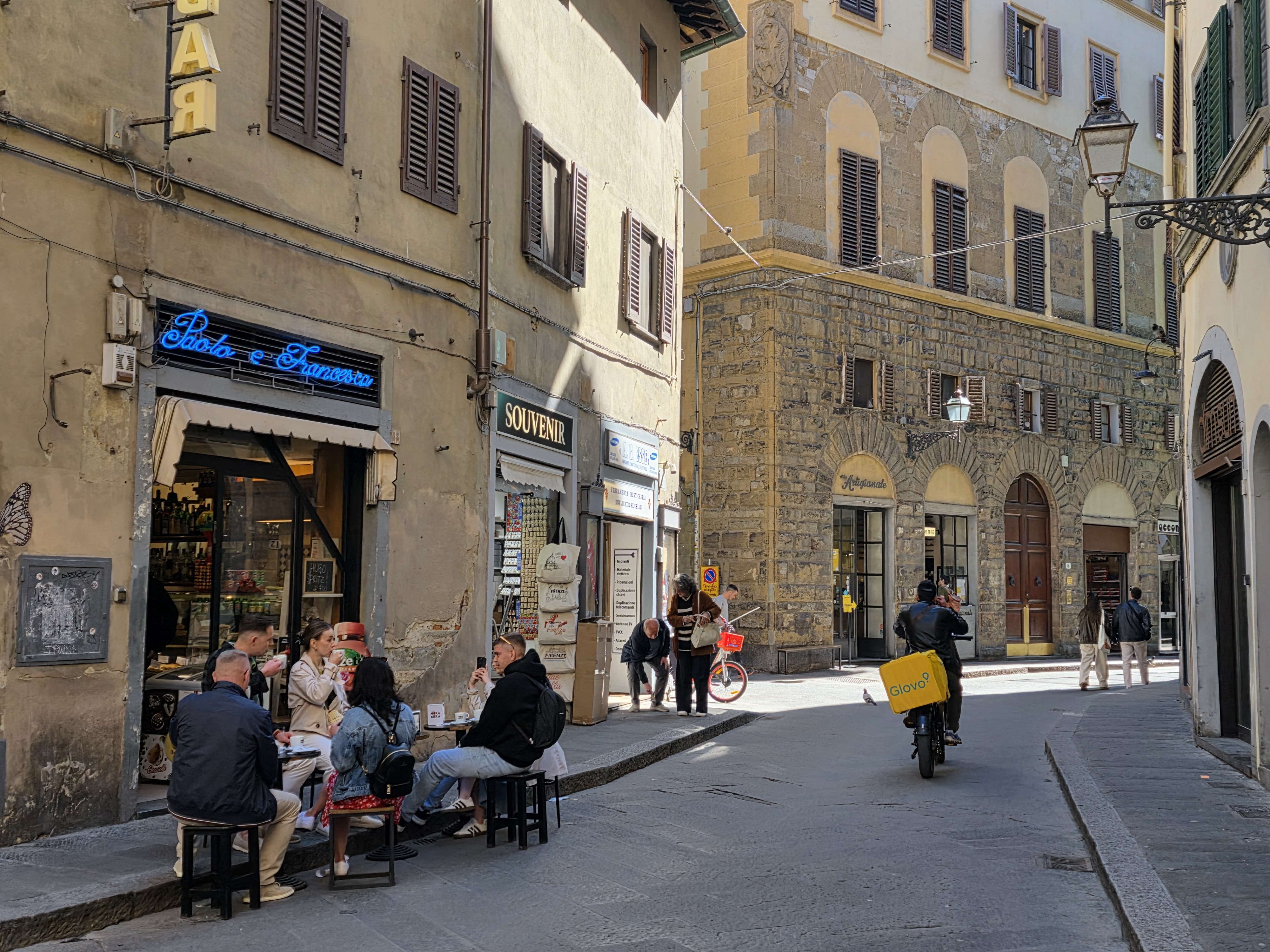
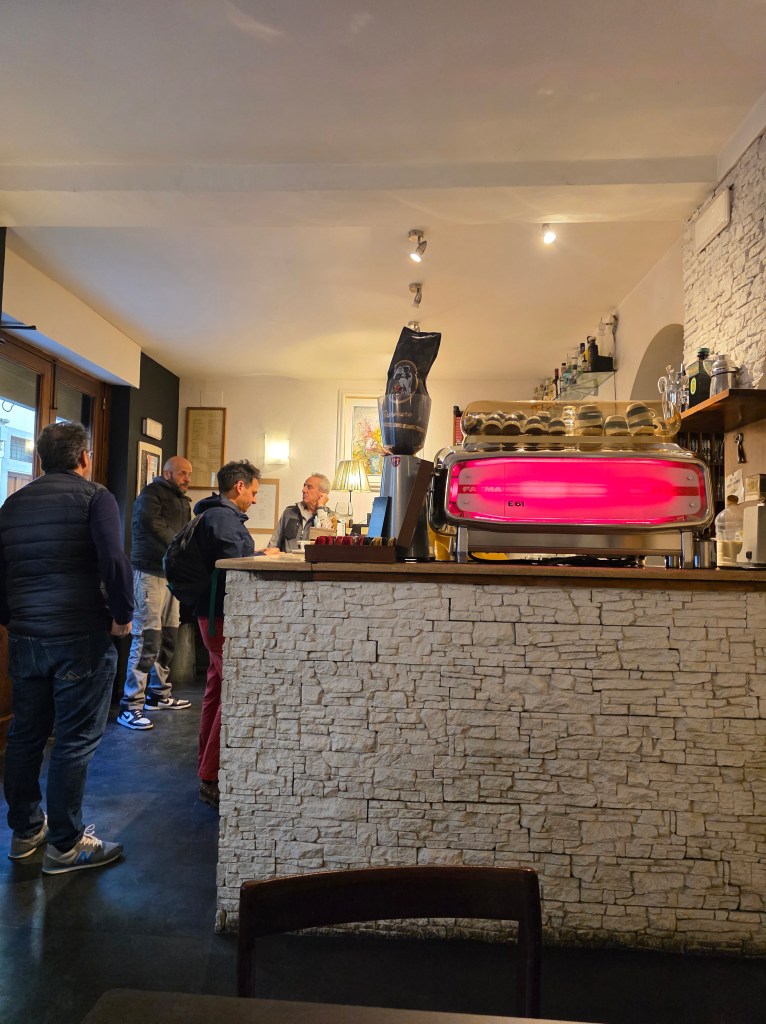
I don’t have breakfast at the hotel, so in the morning I went straight to a bar right opposite as soon as it opened. It’s a traditional kind of place – coffee in the morning, wine in the evening. I went in literally as the woman working there opened the shutters, and at the same time quite a few other people came in. I sat down to eat and watch people, and came to the conclusion that these coffee bars are the local equivalent of our “day-day kafesi” (“cafes for uncles”), because the entire time I was there, various working-looking men kept coming in for a quick espresso, drinking it right at the counter, exchanging a few words with the barista or each other, and leaving.
I had a ticket to the Accademia Gallery for 9am, and there was a bit of a hiccup. The booking page showed two locations on the map: one was the entrance to the gallery, and the other was supposedly the meeting point with an agency representative who was meant to exchange my voucher for an actual ticket. It said something like, “our staff in yellow vests will meet you there”.

I arrived and saw the gallery entrance with a queue, along with various representatives from different agencies – but not the one I needed. Meanwhile, Google Maps sent me in a completely different direction, where there was no sign at all, and the meeting point was marked in front of what looked like a hotel. Then a couple approached the same spot, with phones in hand, also looking for the people in yellow vests – but there weren’t any.

I started to suspect that this probably wasn’t the right place, and after unsuccessful attempts to call or message anyone on WhatsApp, we collectively decided to go back to the gallery, queue up, and try to get in with the voucher.

In the end, we joined the 9am queue (there was a separate one for each time slot), and when it was our turn, we were told that we did indeed need to exchange the vouchers and pointed to not one, but three people in yellow vests standing nearby. Of course, it was a completely different location – the street number was correct, but somehow Google Maps sent us to the wrong place.

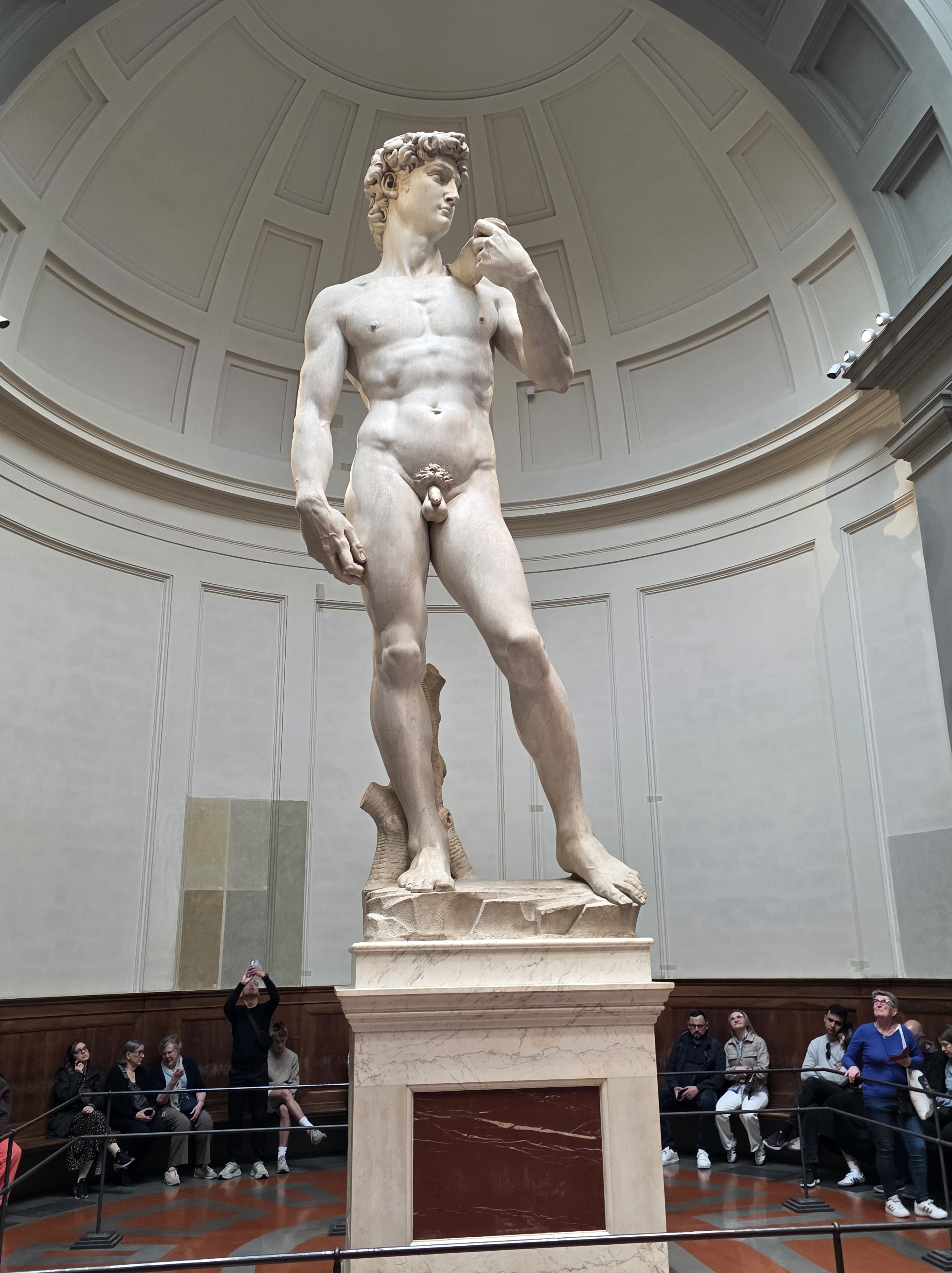
Anyway, everything worked out, and at 9am sharp I walked into the gallery. I should say I came to the conclusion that museums and galleries need to be approached strategically. No one has the time or energy to see everything. For example, in this case, you know you’re going there to see David, so you plan everything around David.

So, I didn’t waste much time looking at the paintings in the first room, just gave them a quick glance and went straight to David. On the way, there were also the four unfinished sculptures of “Slaves” that Michelangelo was working on for the tomb of Pope Julius II.

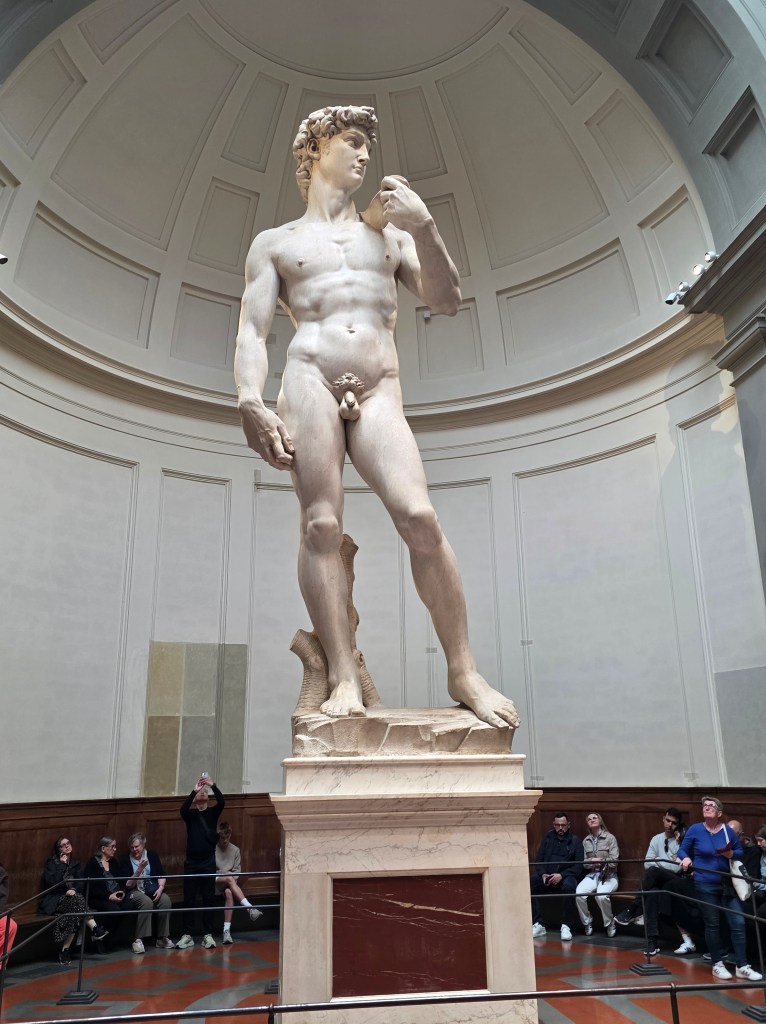
David itself, of course, immediately stands out – it’s huge, five metres tall. Interestingly, the proportions are intentionally distorted – the head and right hand are unnaturally large, because the sculpture was meant to be viewed from below. Also, it’s carved from a single block of marble that had previously been considered defective and that no one wanted to work with.
All in all, I spent no more than half an hour in the Accademia Gallery and moved on. I then had a ticket to the Uffizi Gallery for 11am. On the way, I stopped for an espresso in one of the coffee bars – the espresso here could wake the dead, which was very helpful after a half-sleepless night.
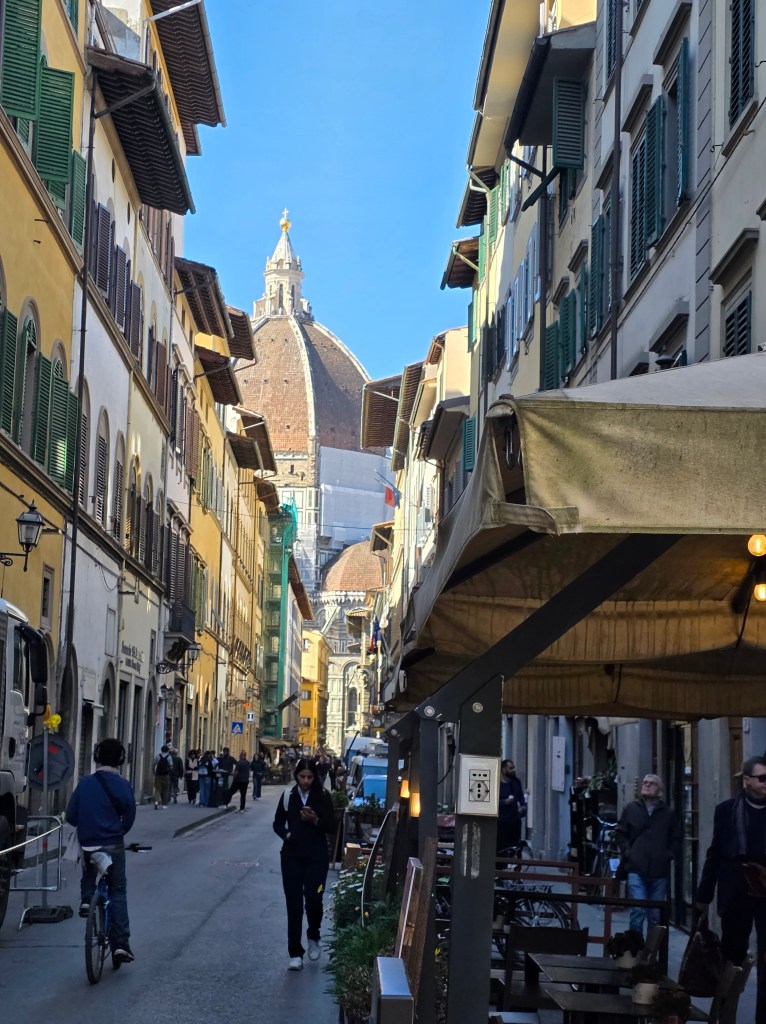
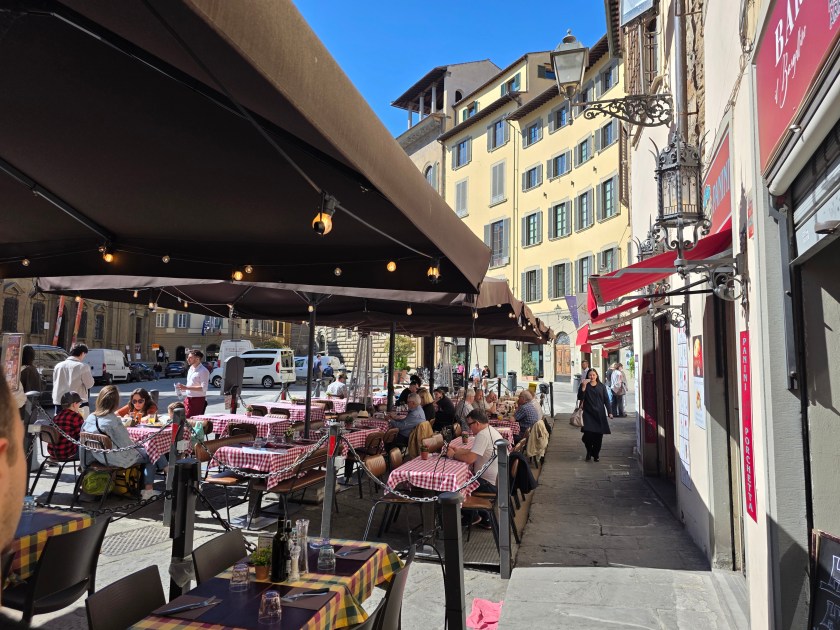
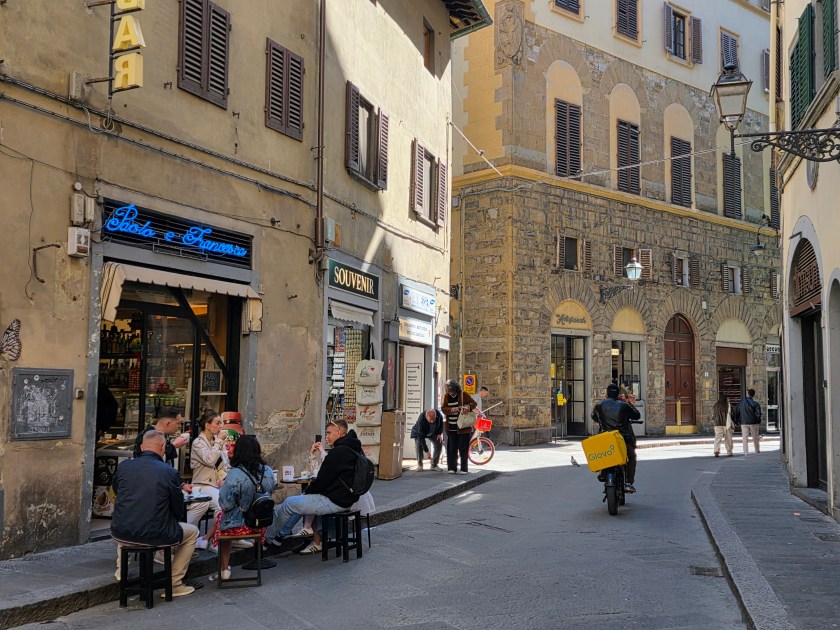
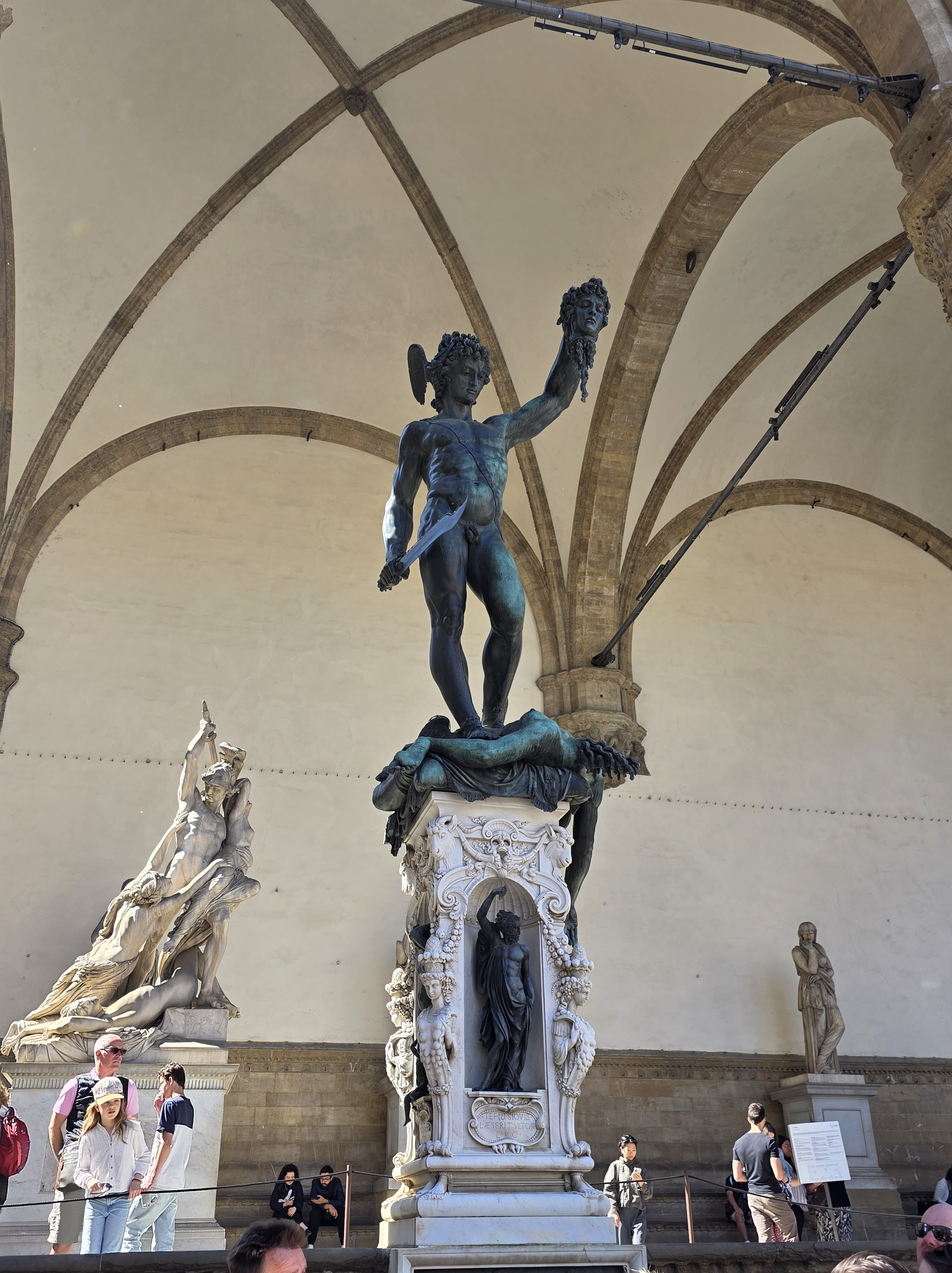
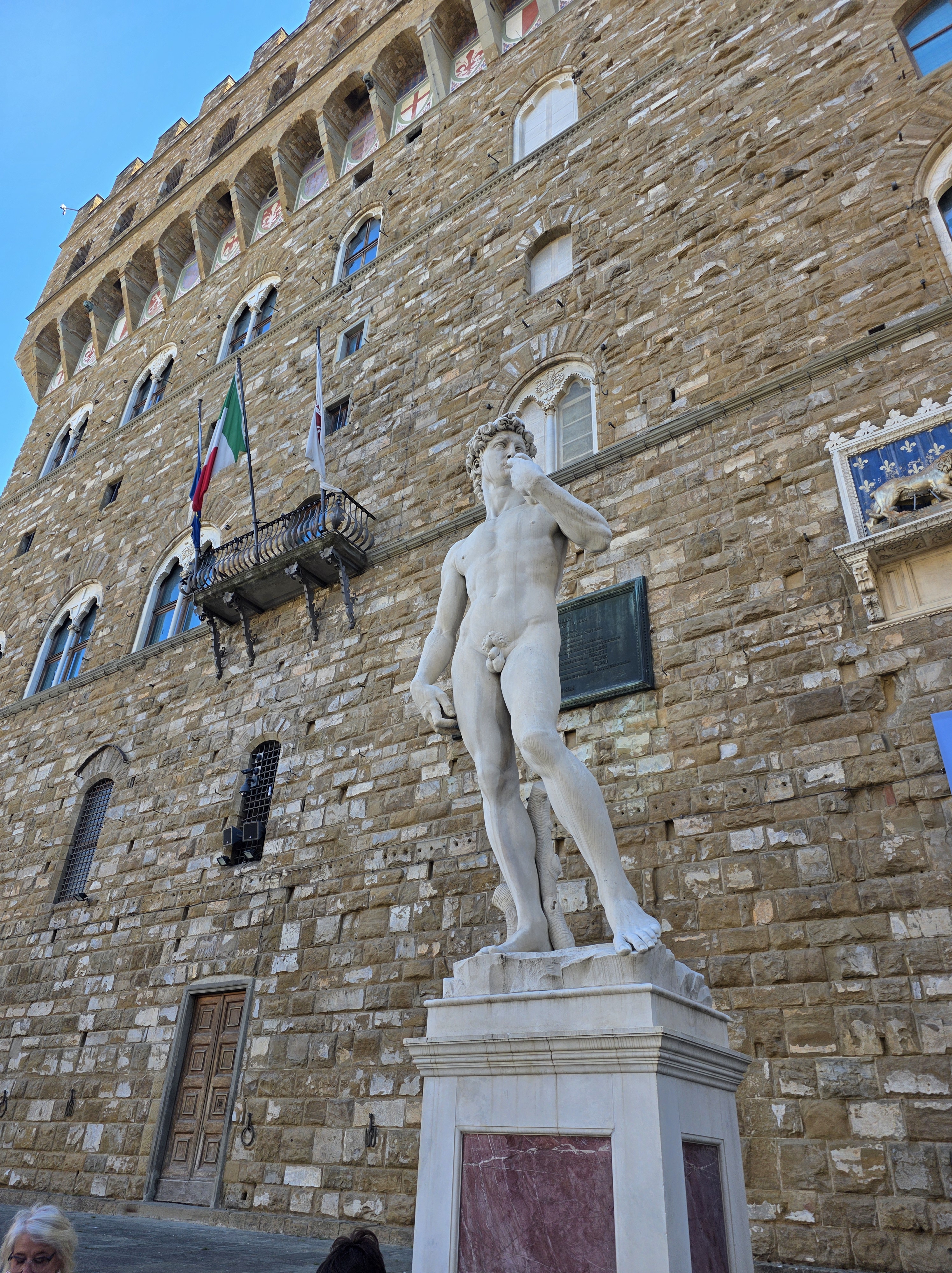
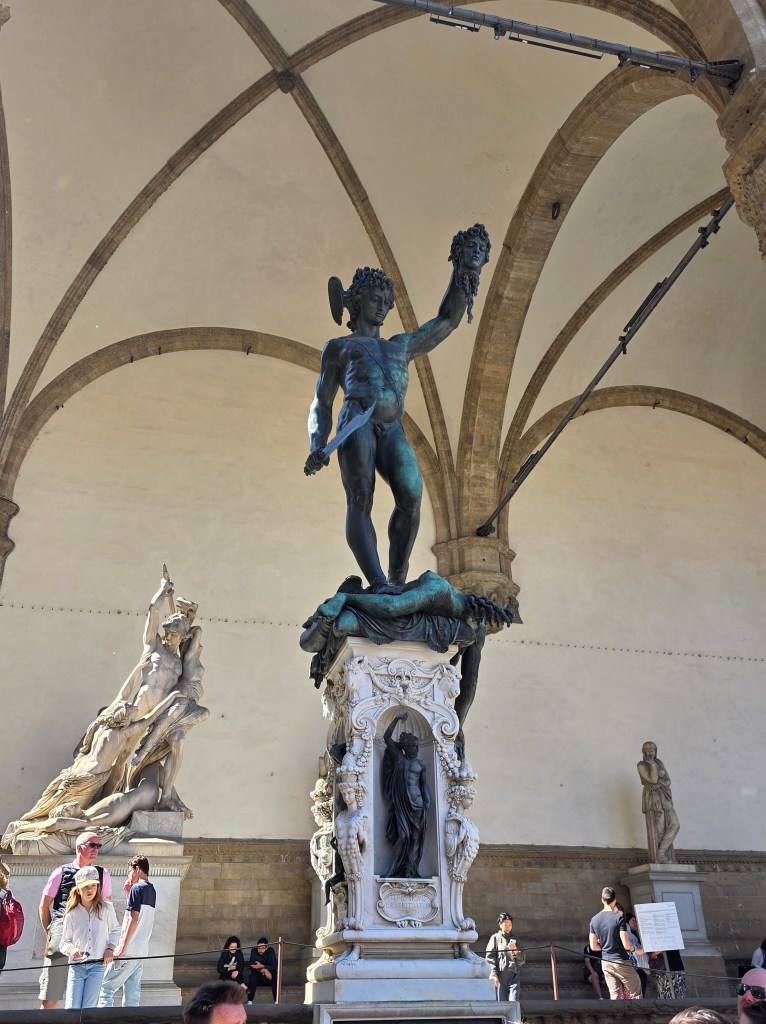
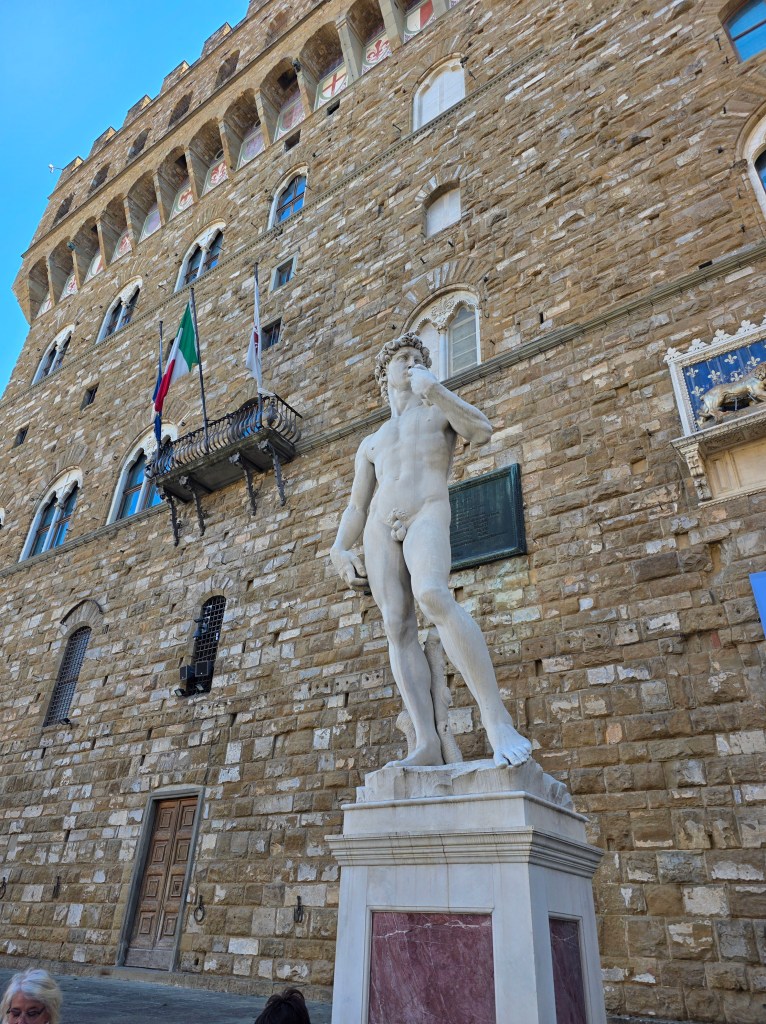
At the Uffizi there were also different queues for different time slots, and it turned out that although I had booked for 11, I was assigned the nearest available slot at 11:30. There was no point trying to get in earlier, so in the meantime I looked at the sculptures in the open-air Loggia dei Lanzi, including Cellini’s “Perseus with the Head of Medusa.” There’s also another David nearby – a replica, of course. I had some delicious dark chocolate gelato, and then went back to the Uffizi.
While I was standing in line, a Russian-speaking couple arrived and casually squeezed into the middle of the queue. Only my very unfriendly look ensured that they moved behind me rather than in front of me.

I have to say, despite the unfriendly look, I was really looking forward to visiting the Uffizi. It gave me goosebumps to think that someone had created a sculpture or painted a picture, and 500 years later people are spending money and standing in queues in order to see their work.

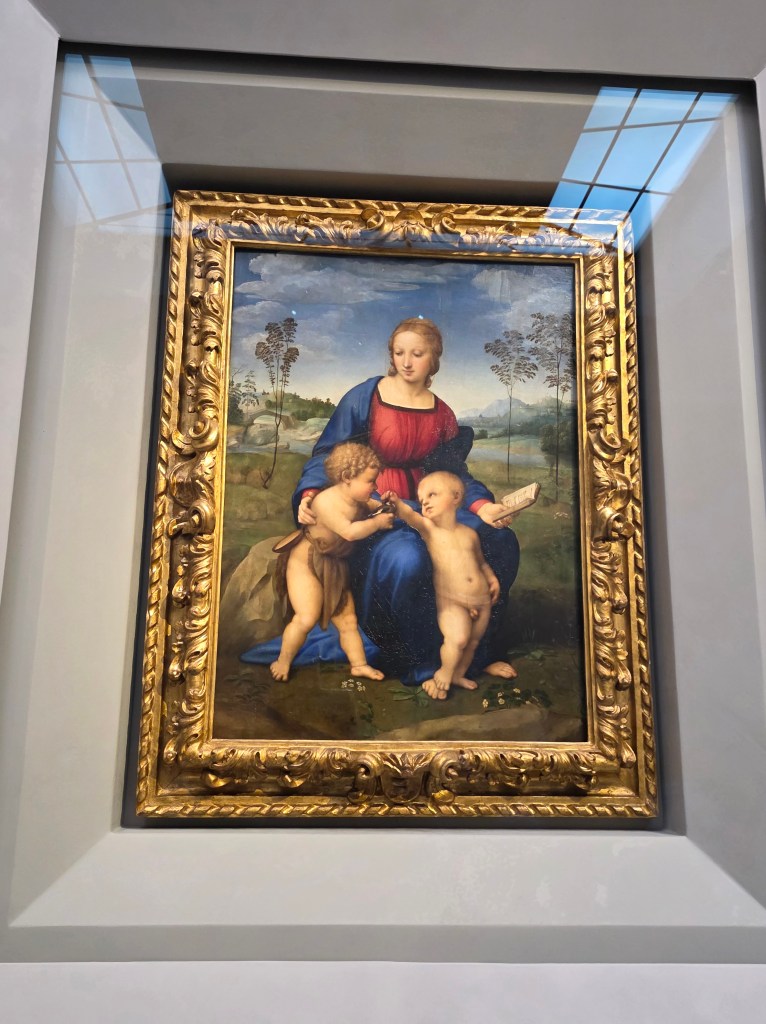
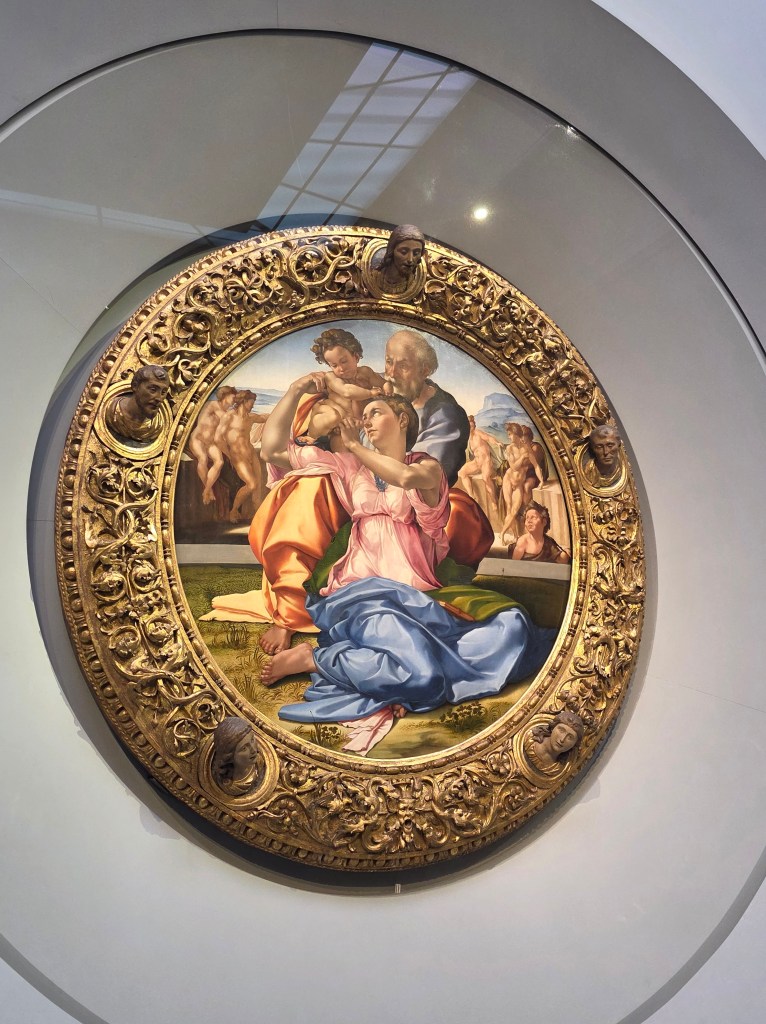
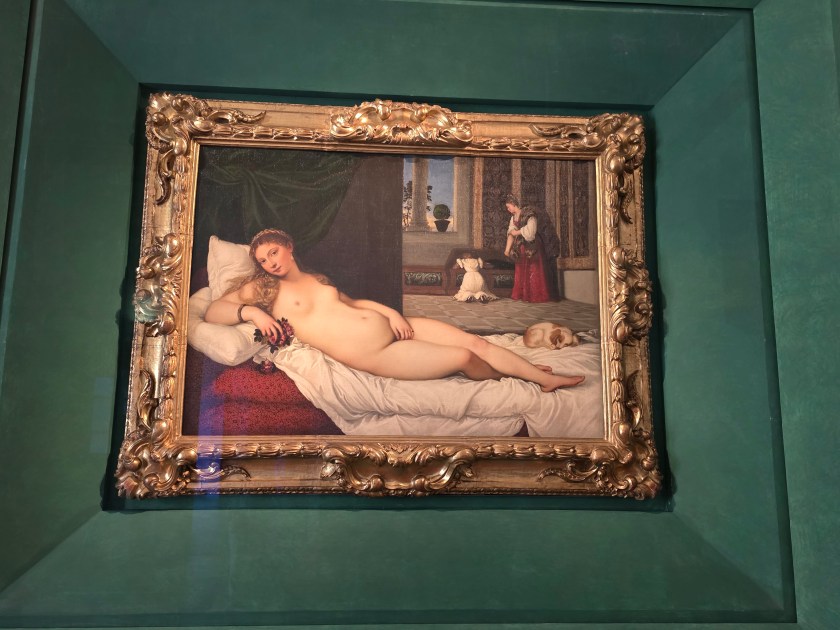
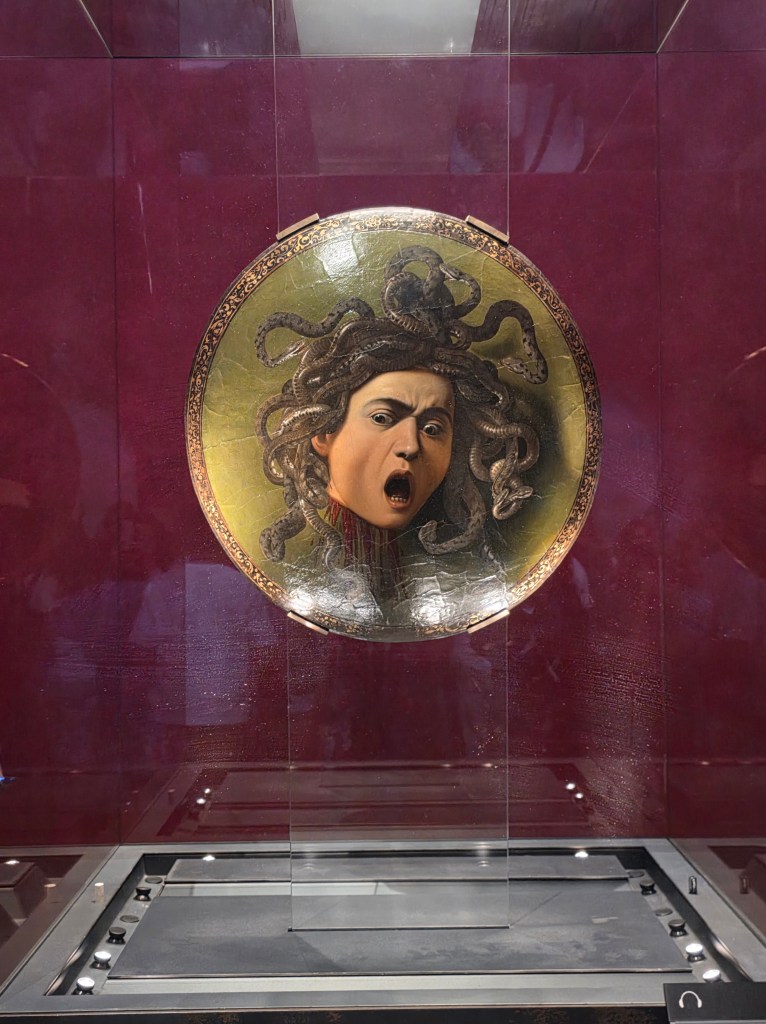
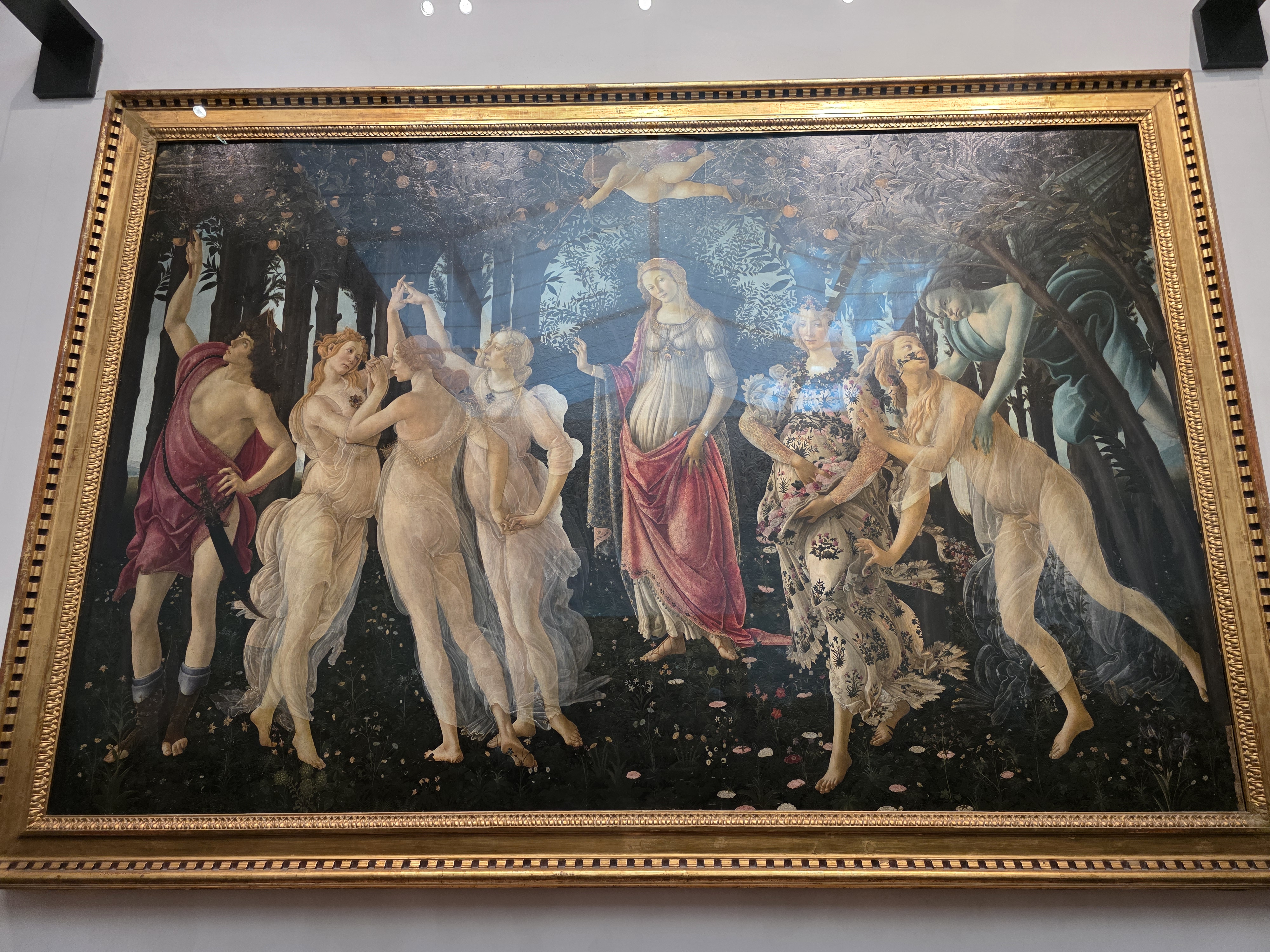
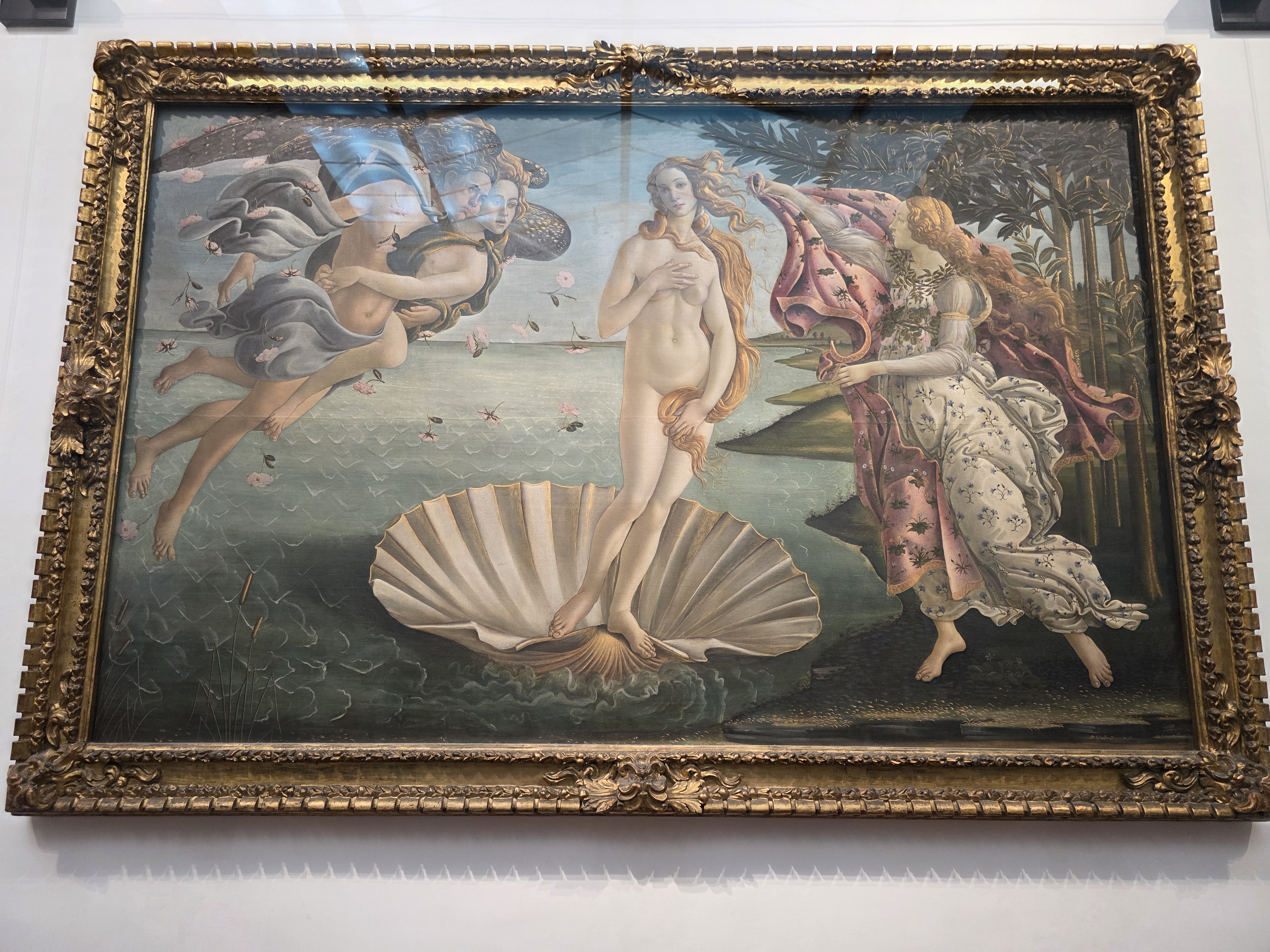
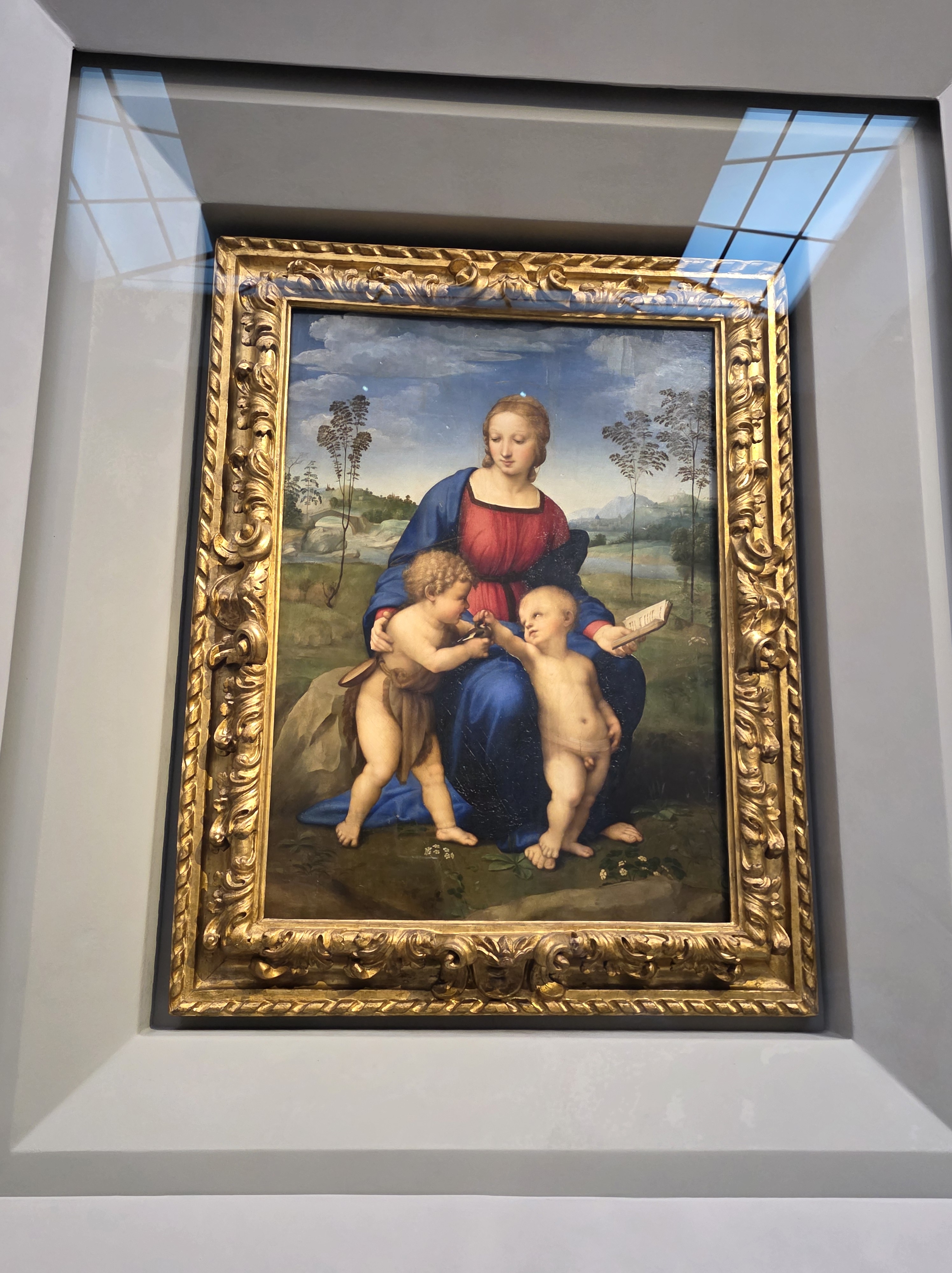
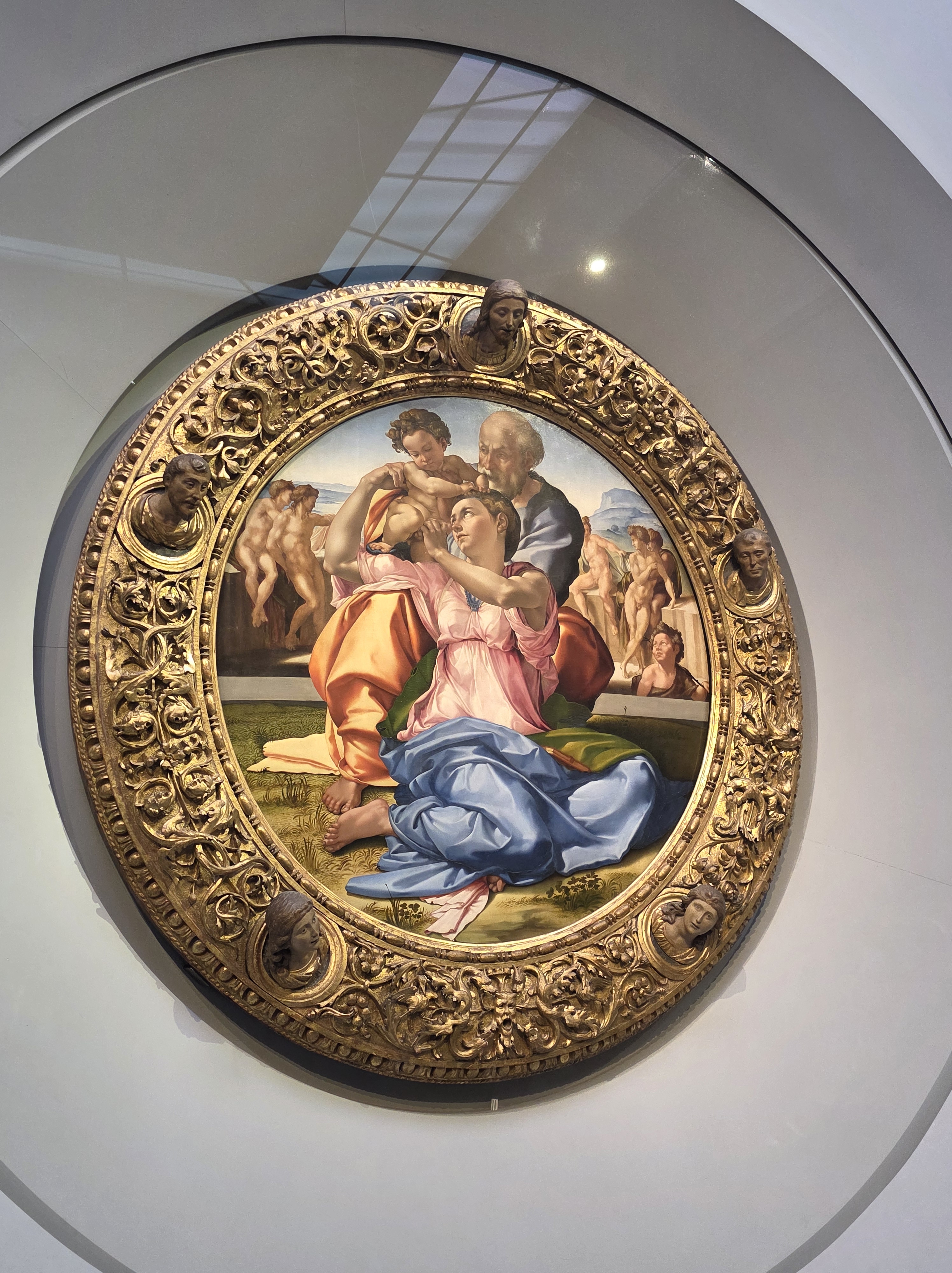
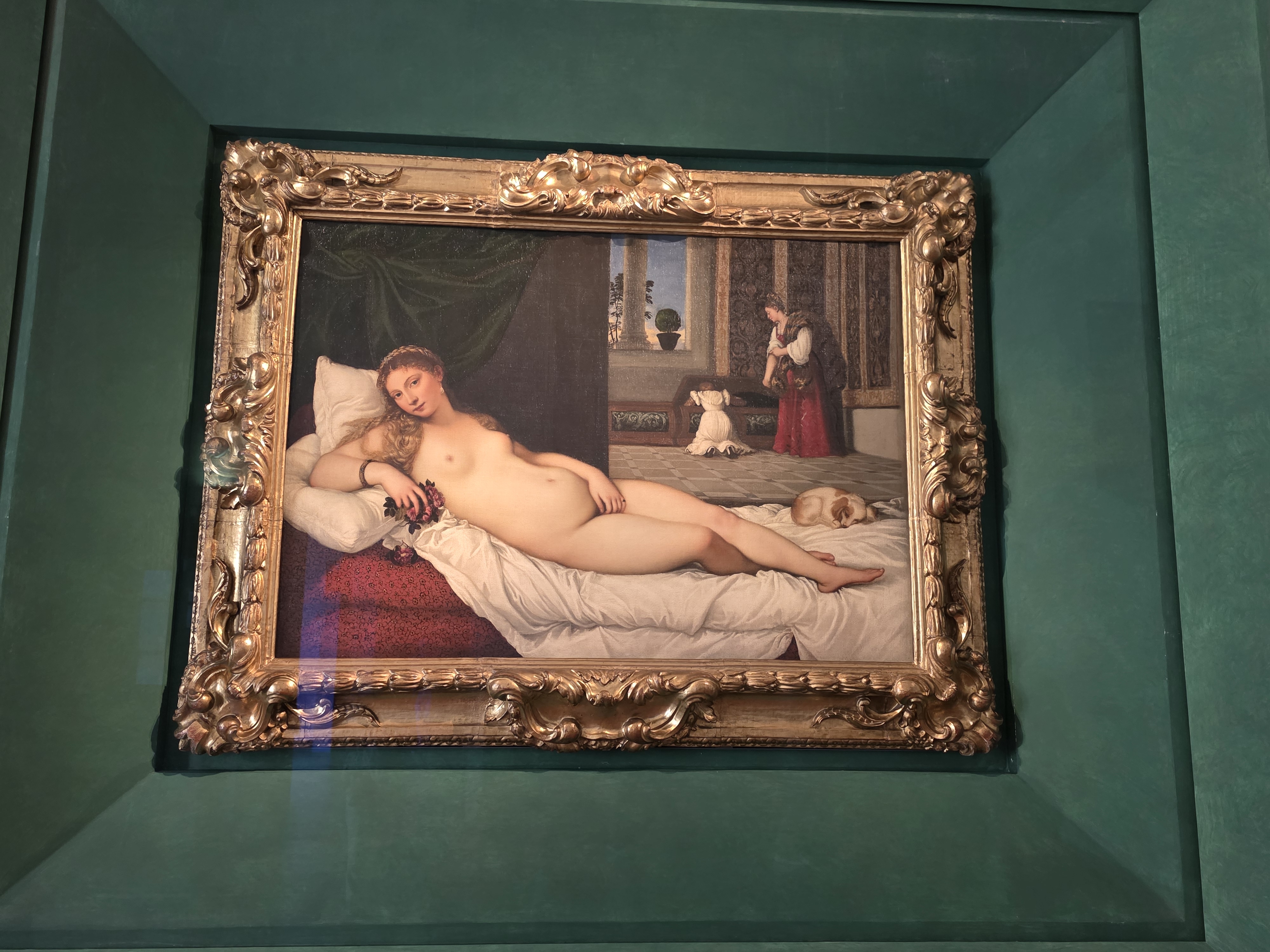
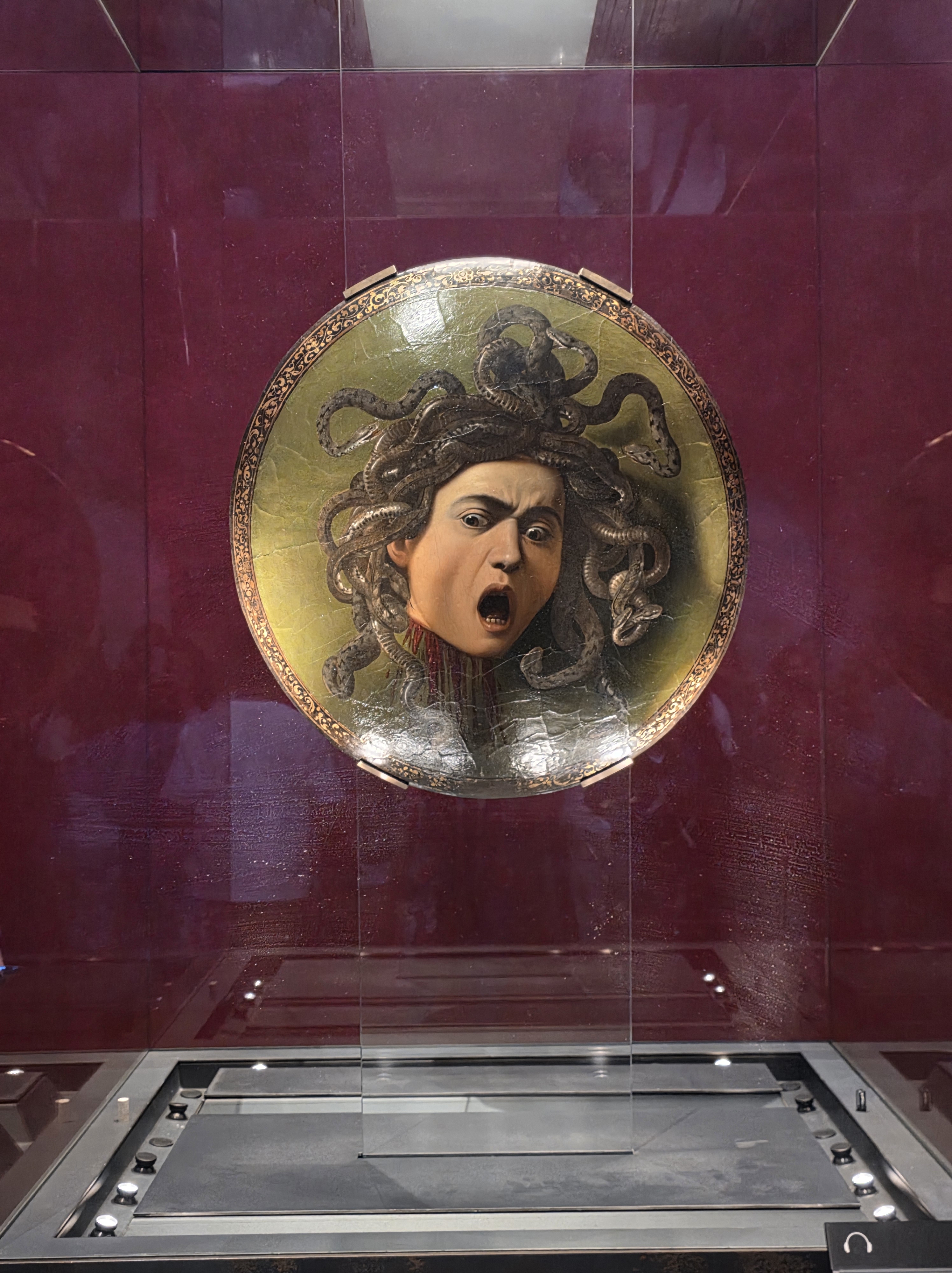
I approached this gallery strategically as well and selected eight paintings I absolutely had to see: Botticelli’s Birth of Venus and Primavera, Lippi’s Madonna and Child with Two Angels, Michelangelo’s Doni Tondo, Raphael’s Madonna of the Goldfinch, Leonardo da Vinci’s Annunciation, Titian’s Venus of Urbino, and Caravaggio’s Medusa. I planned my entire route around these with the help of ChatGPT, to be as efficient as possible and see everything. All the other paintings I saw were along this route. As a result, I enjoyed this visit enormously, which is not always the case with museums and galleries.
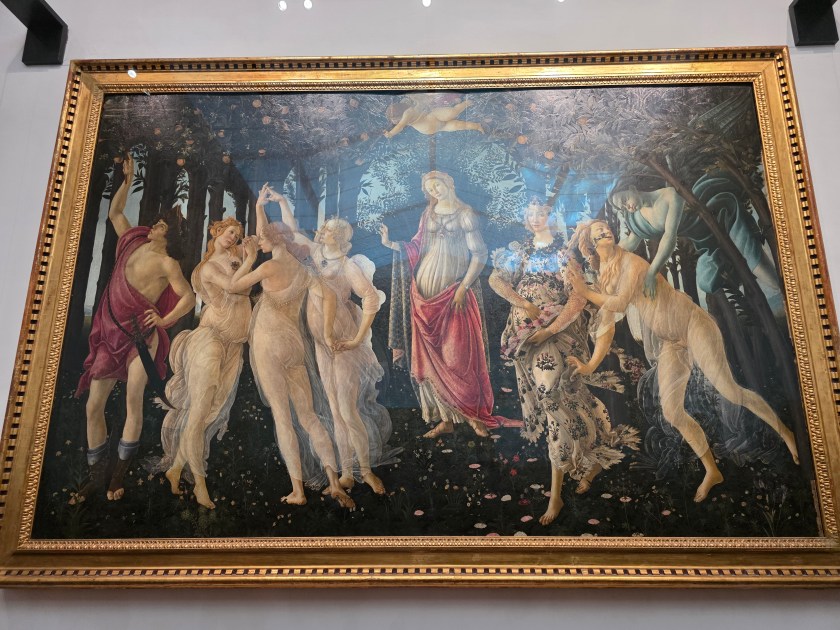
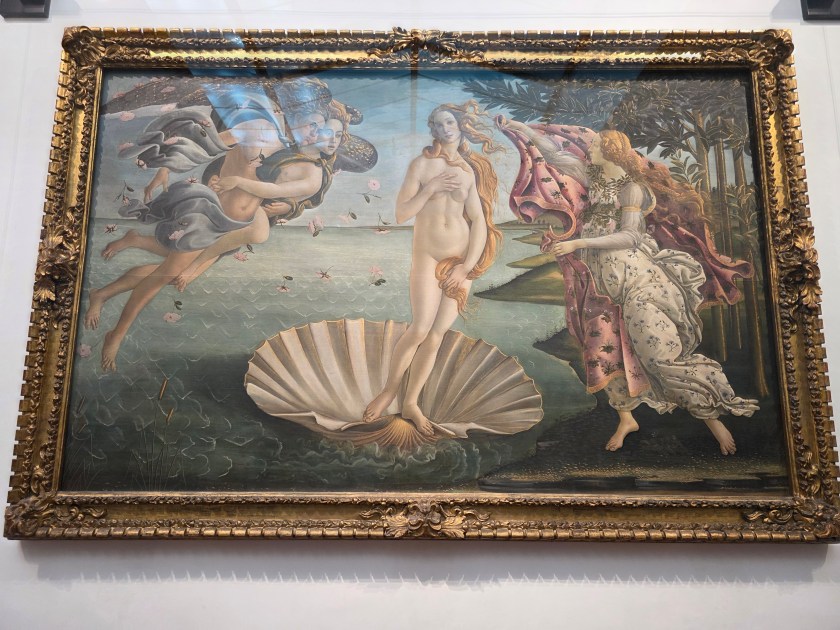
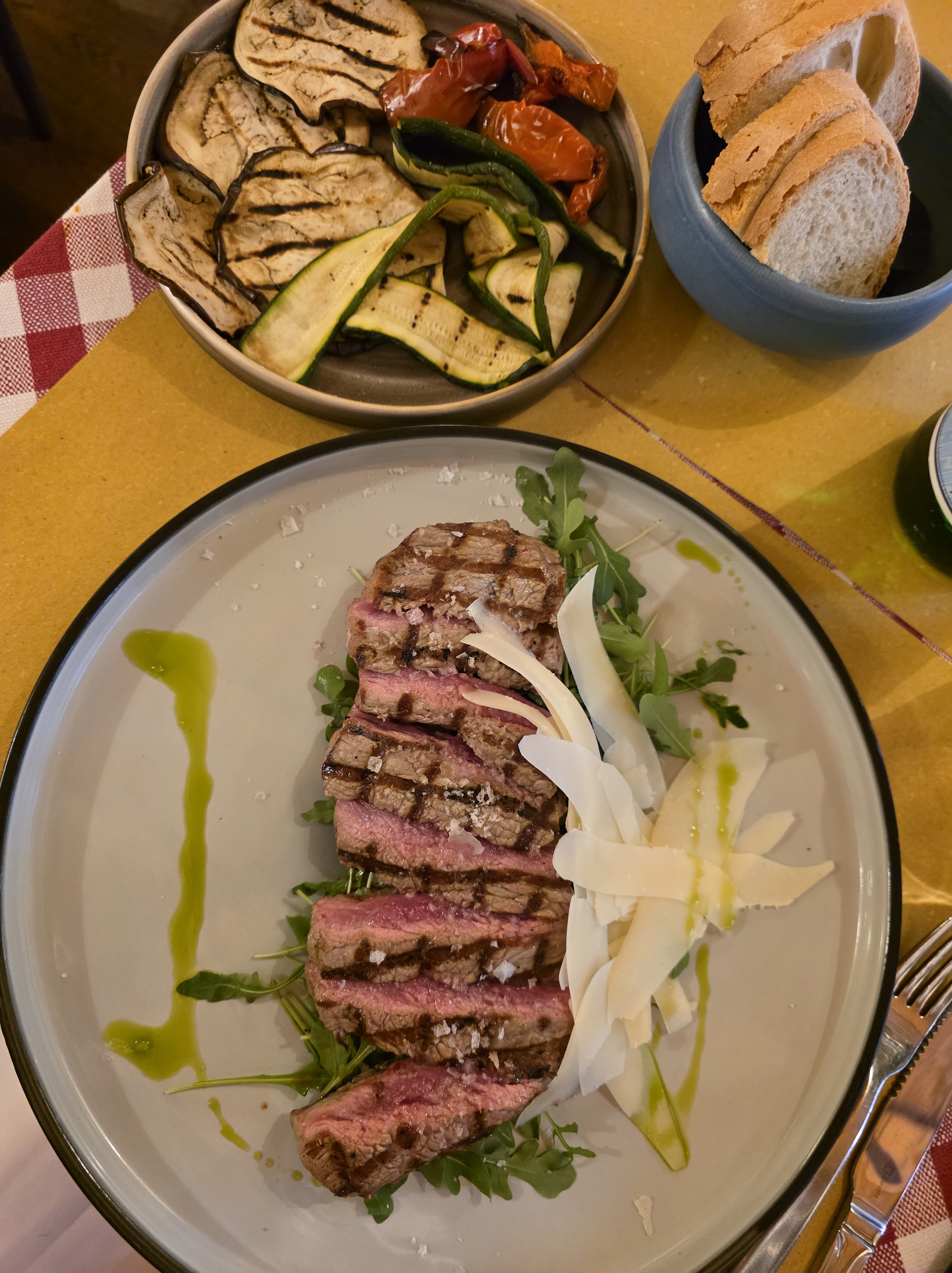
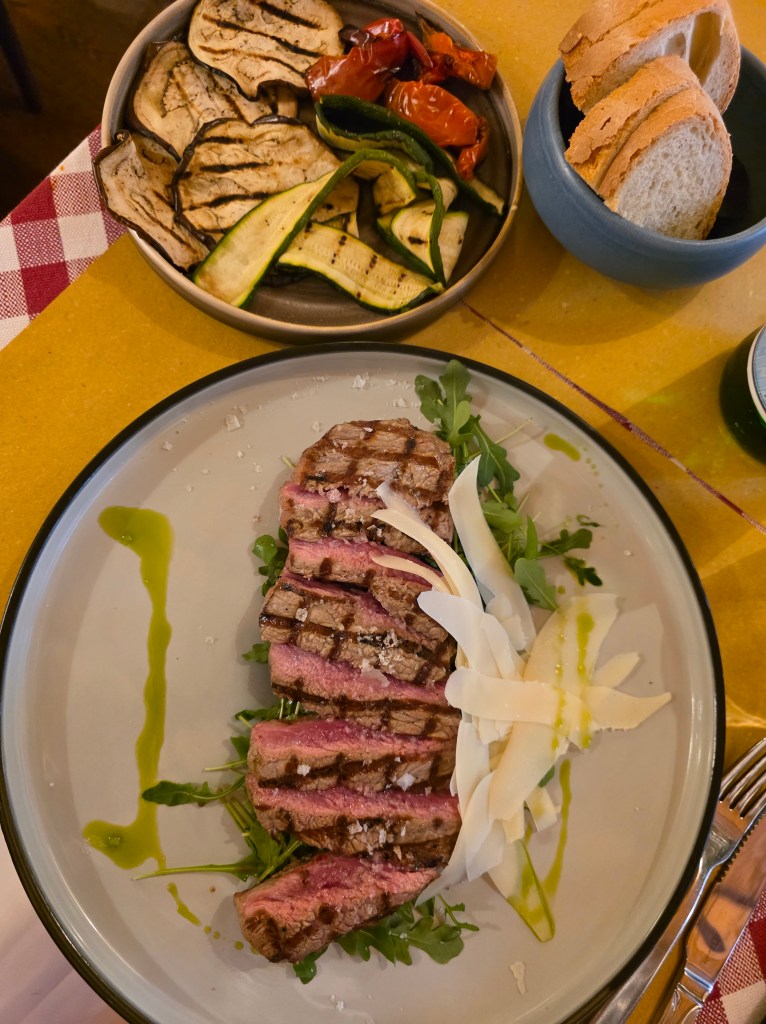
The visit took about an hour and a half, which, in my opinion, is more than enough to avoid getting too tired and not to spread your attention too thinly. Afterwards, feeling completely satisfied, I went for lunch – beef sirloin with arugula and parmesan. This time I skipped wine, and as it soon became clear, that was a very wise decision.
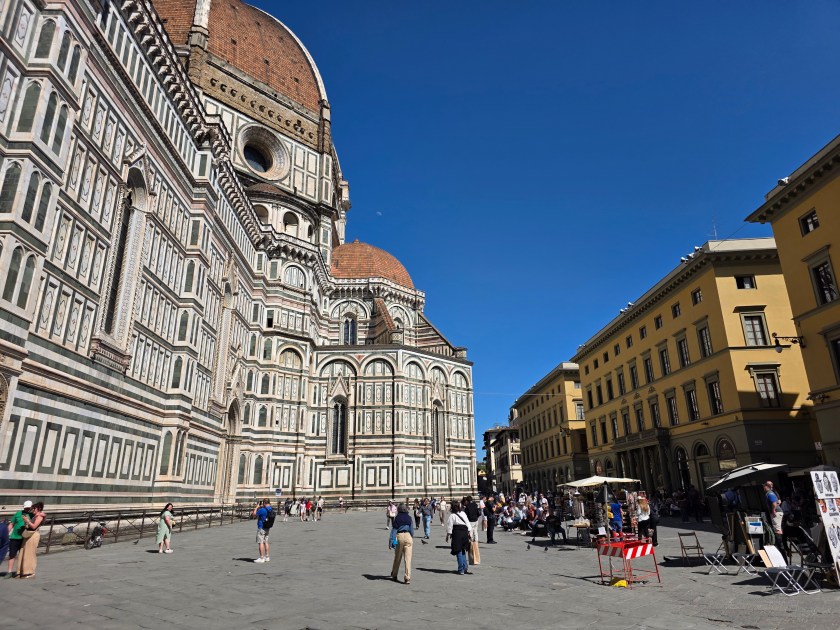
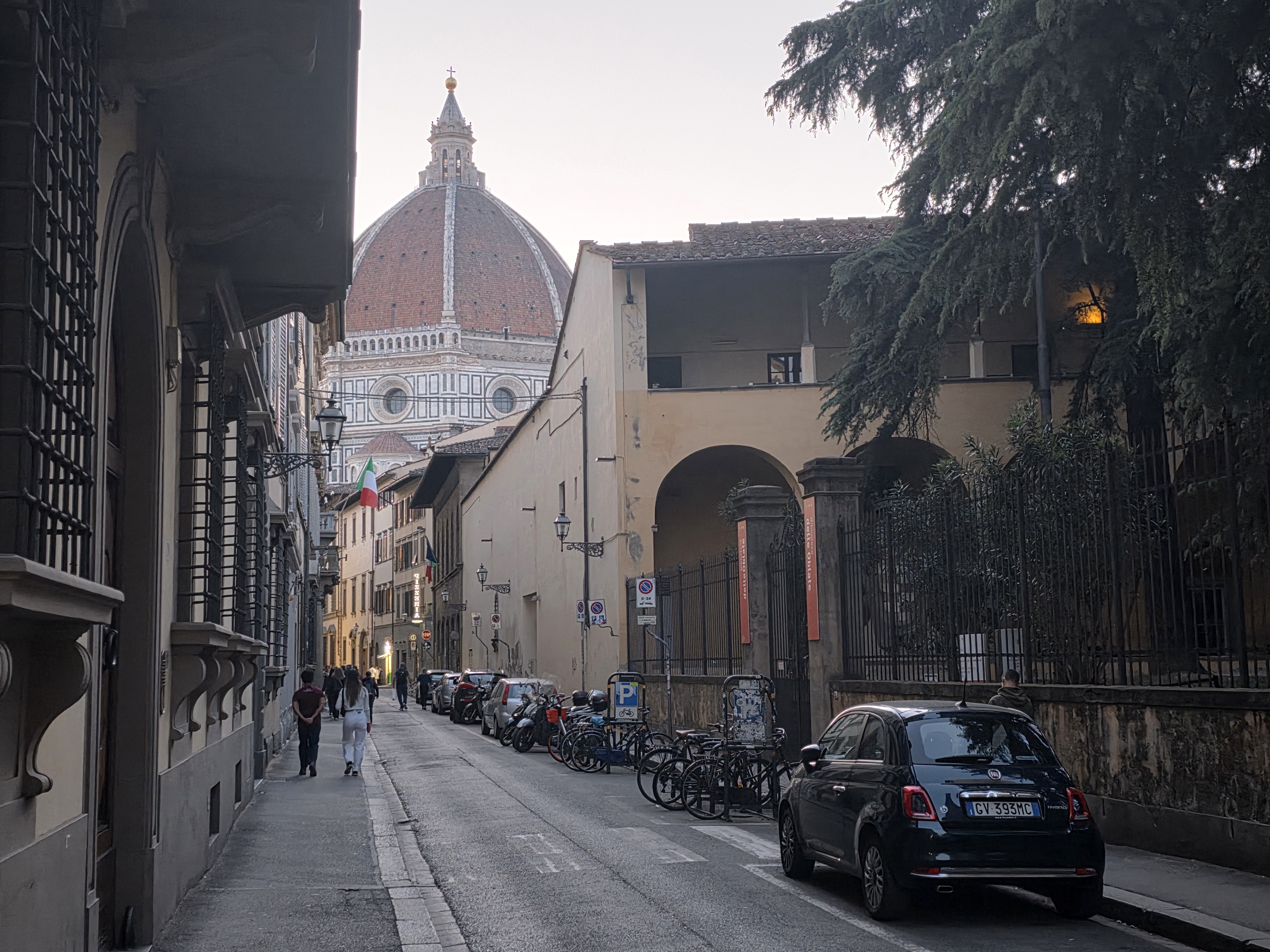
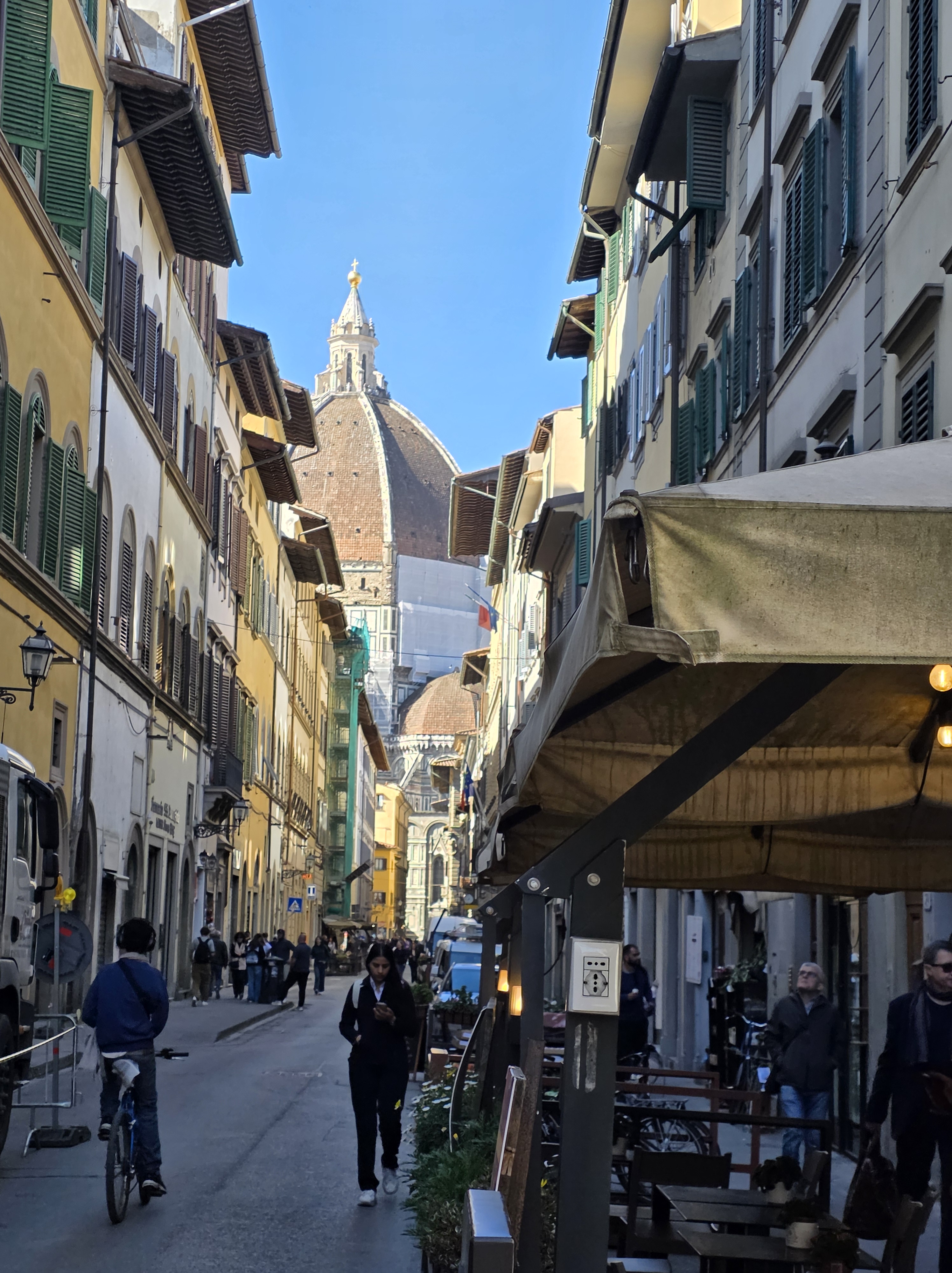
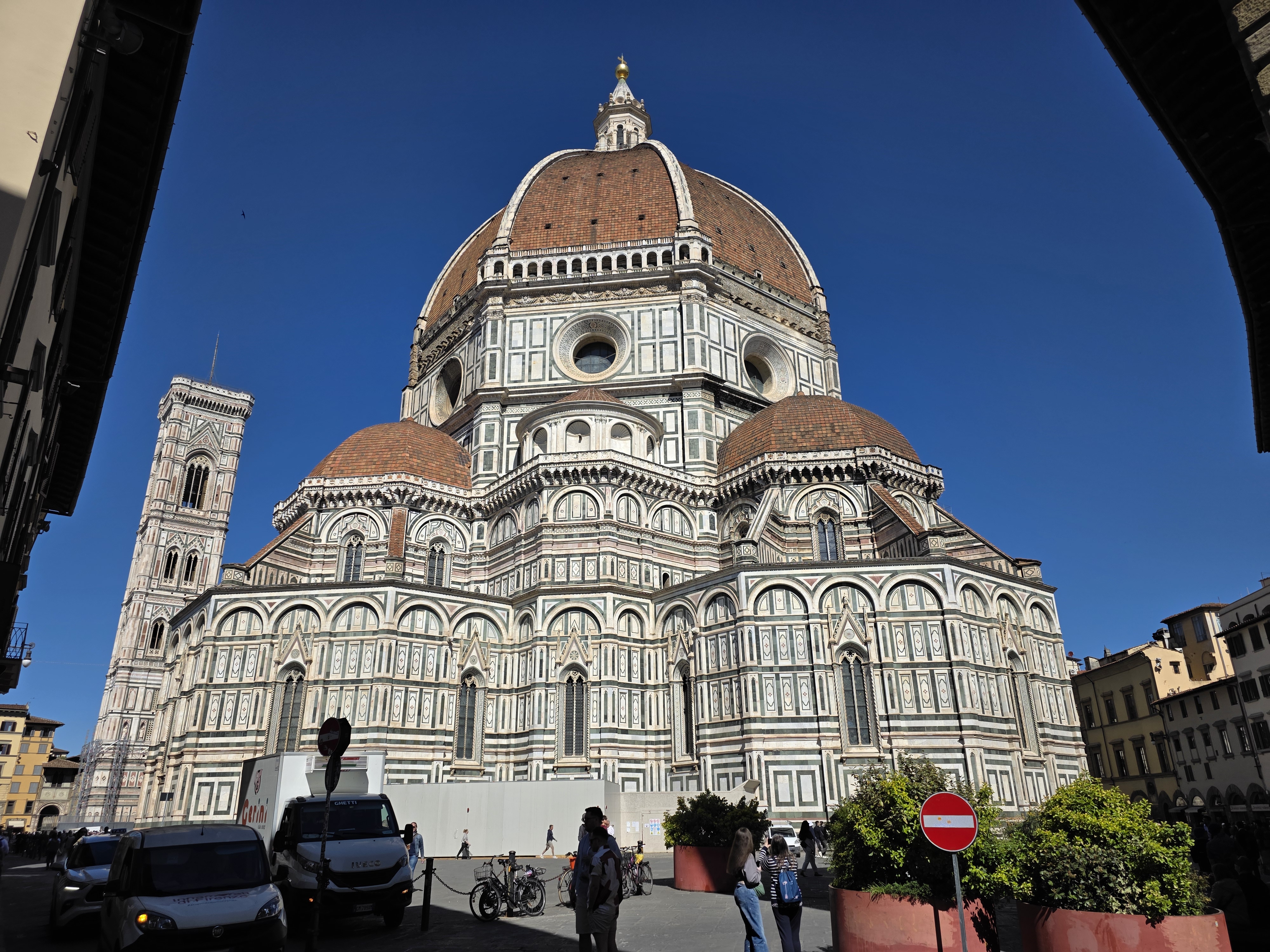
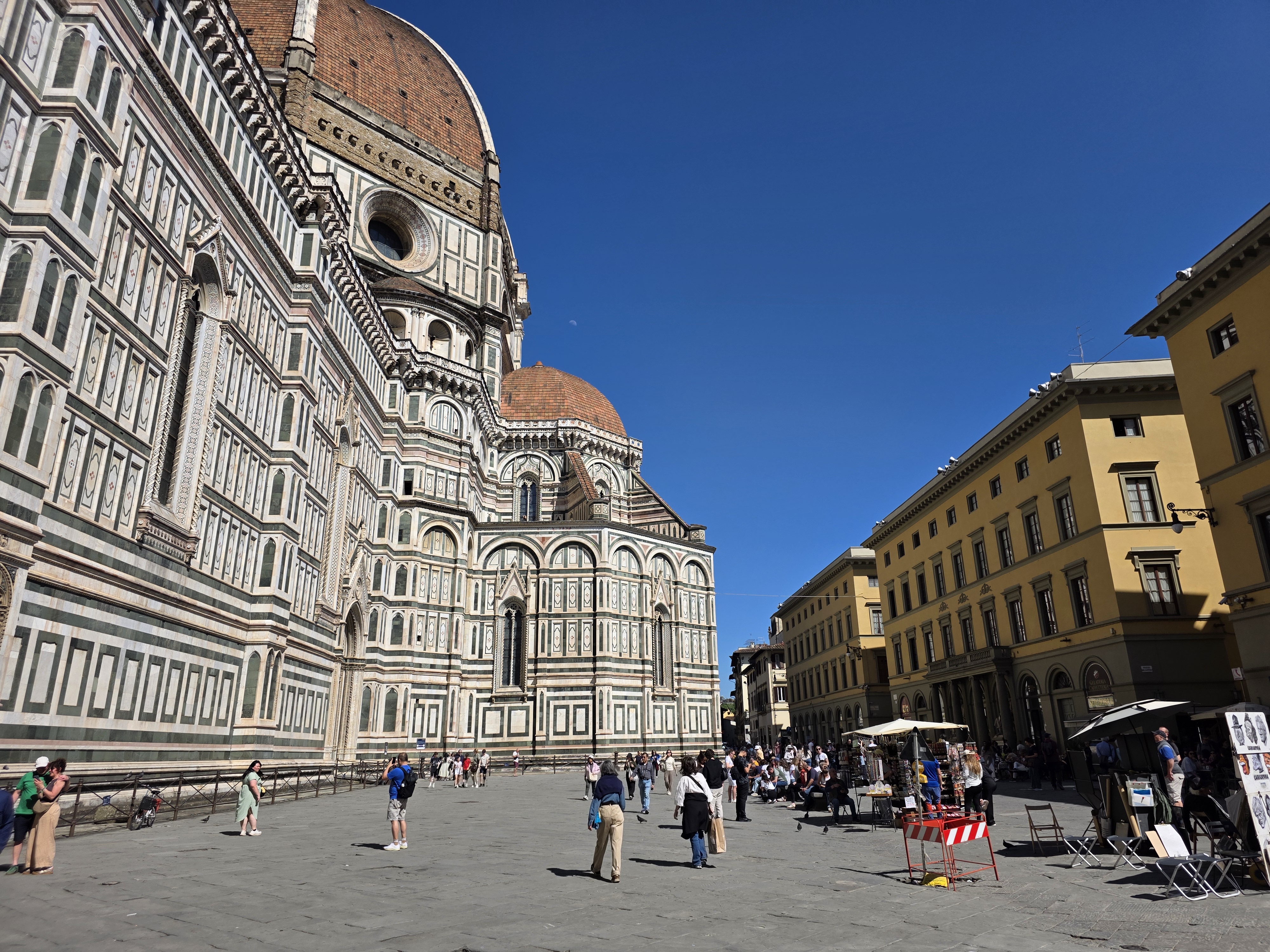
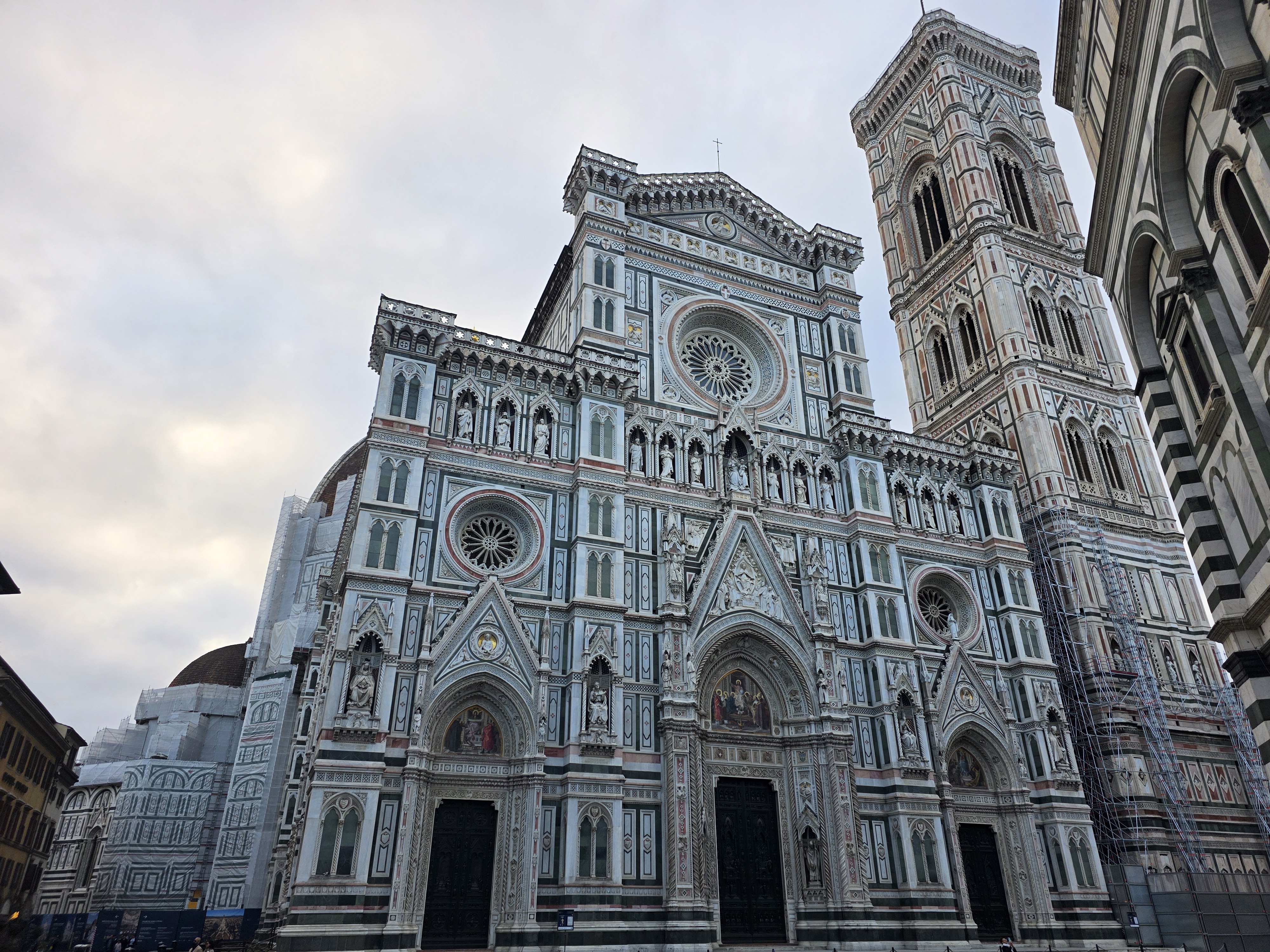
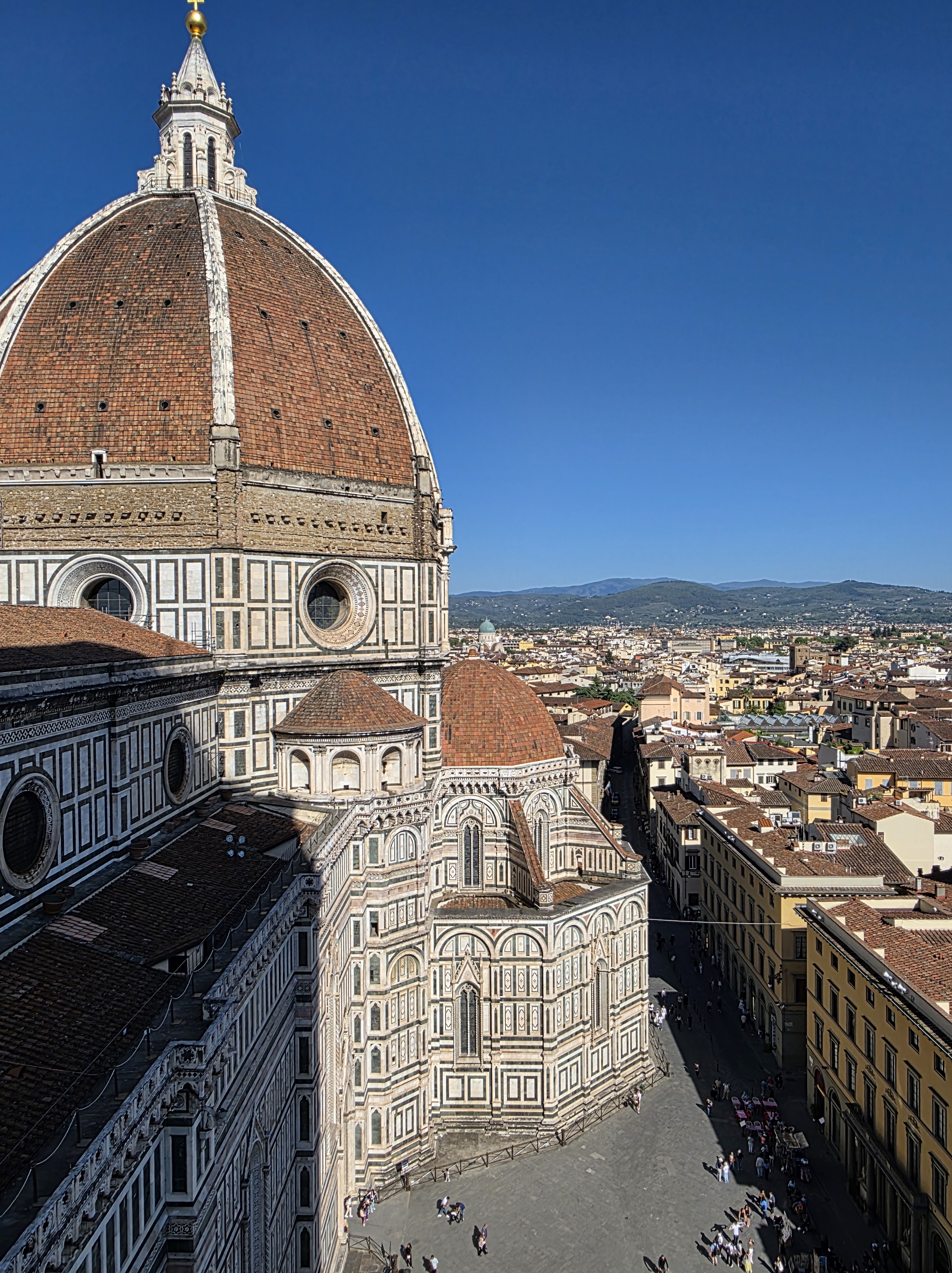
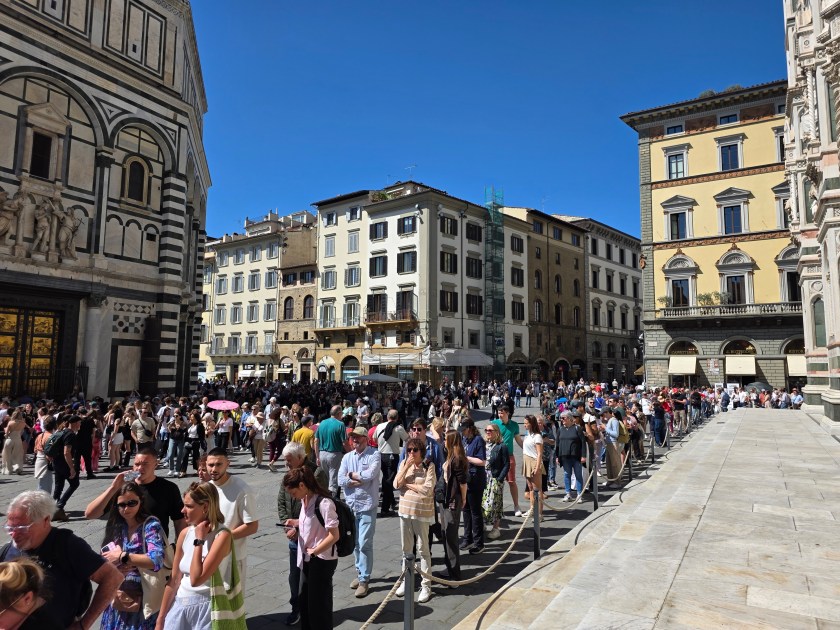
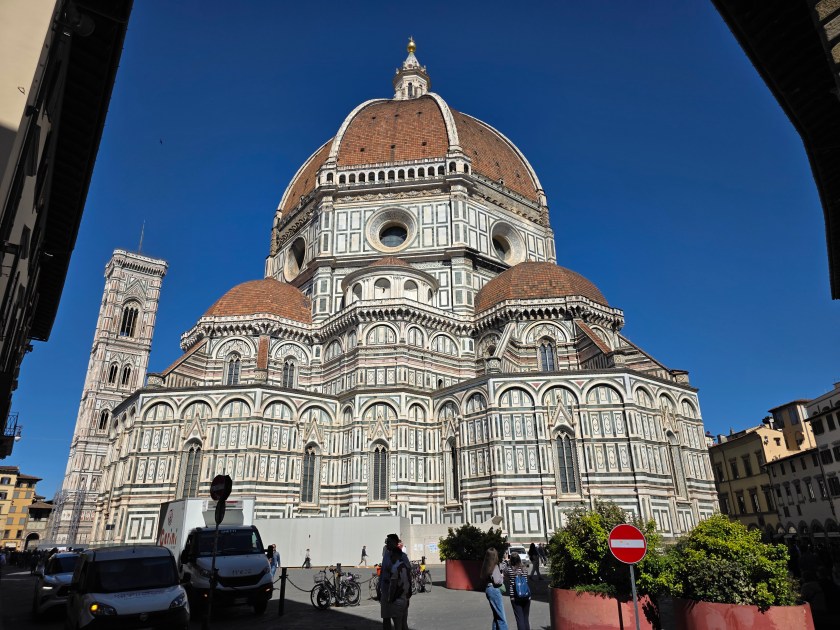
Next on the agenda, with a pre-booked ticket, was climbing Giotto’s Campanile next to the Duomo (the Cathedral of Santa Maria del Fiore) at 4:30pm. I still had plenty of time, which I decided to spend walking around the cathedral to see it from all sides.

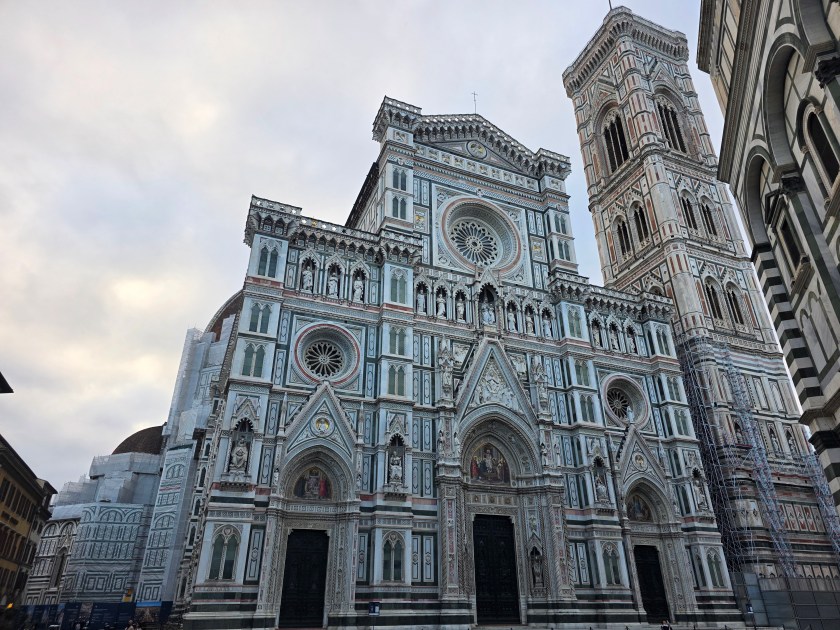
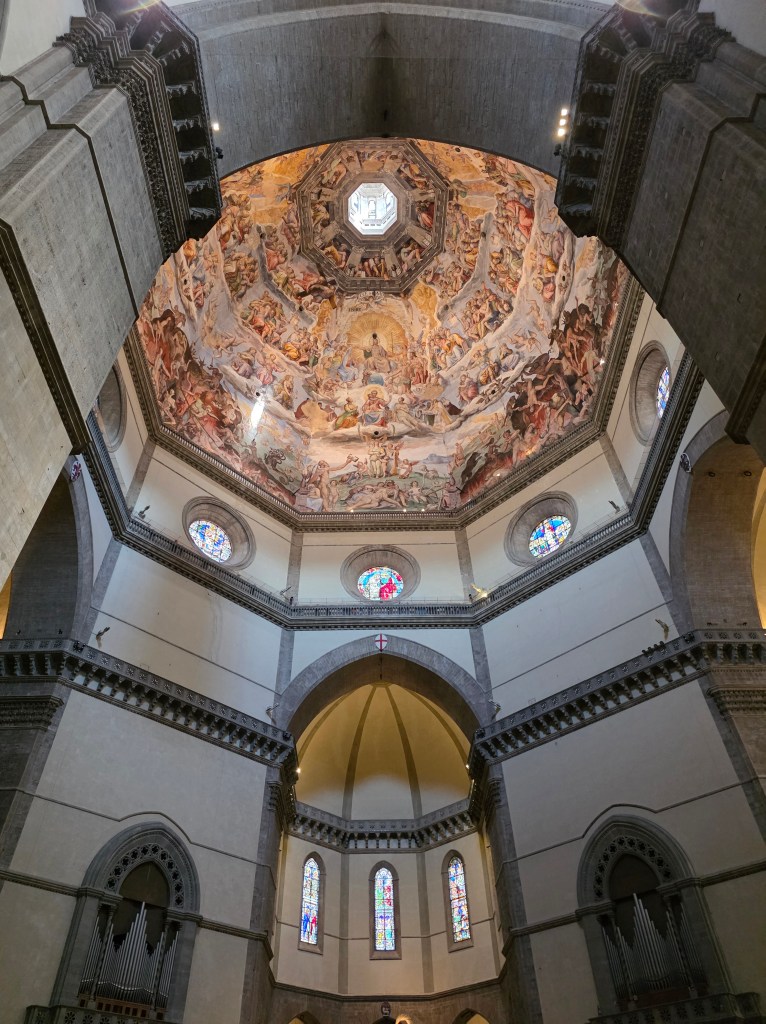
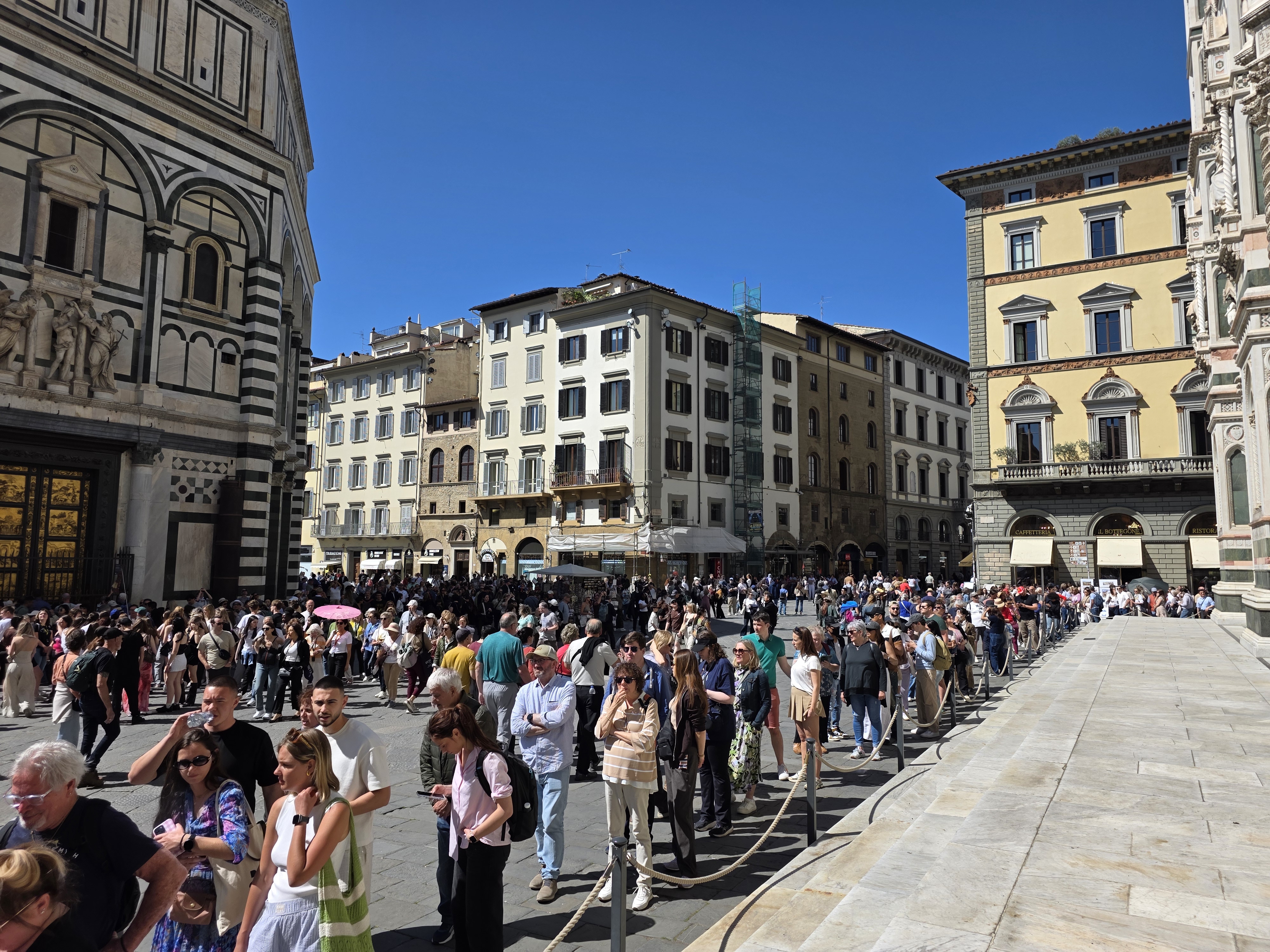
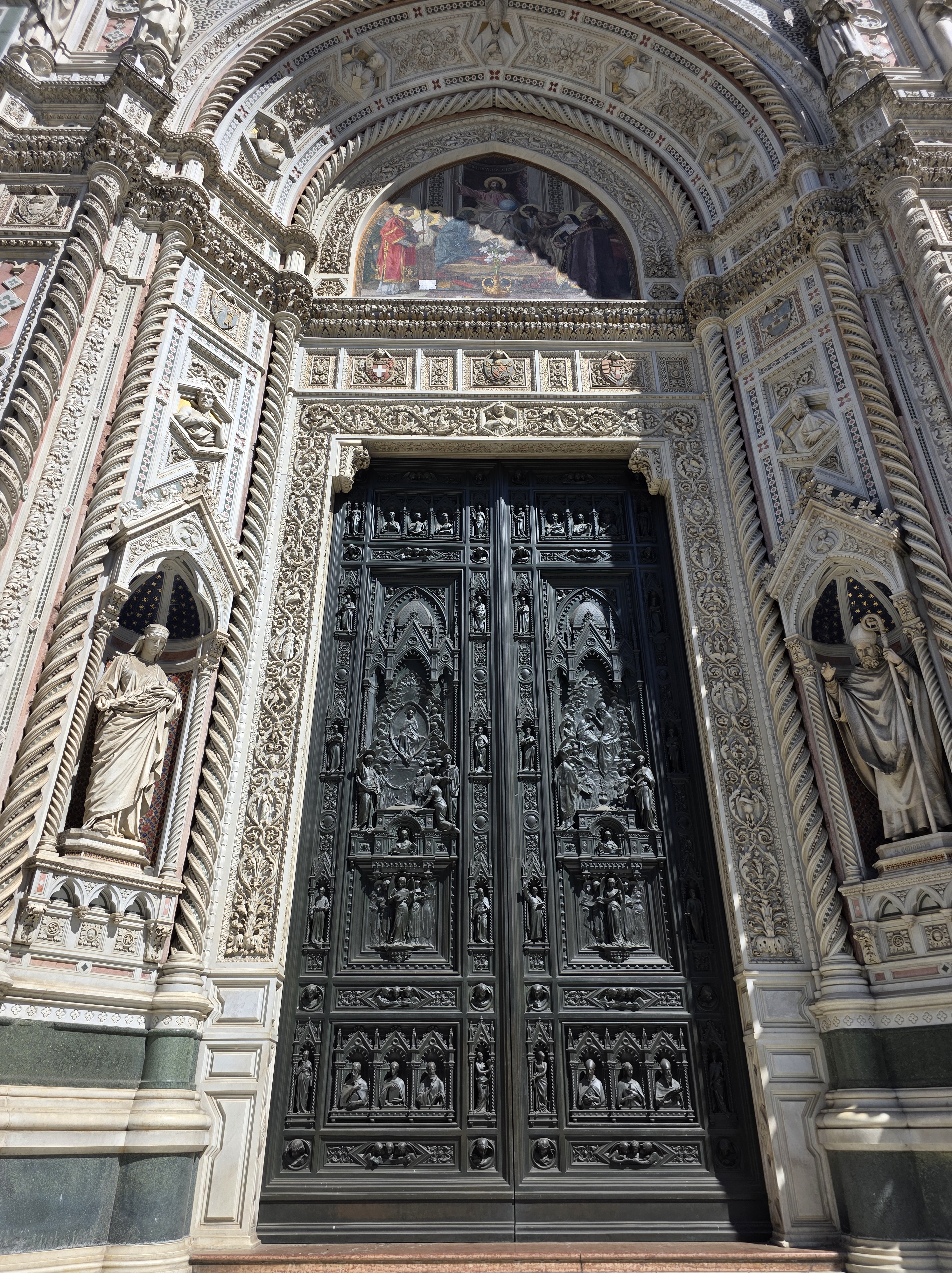
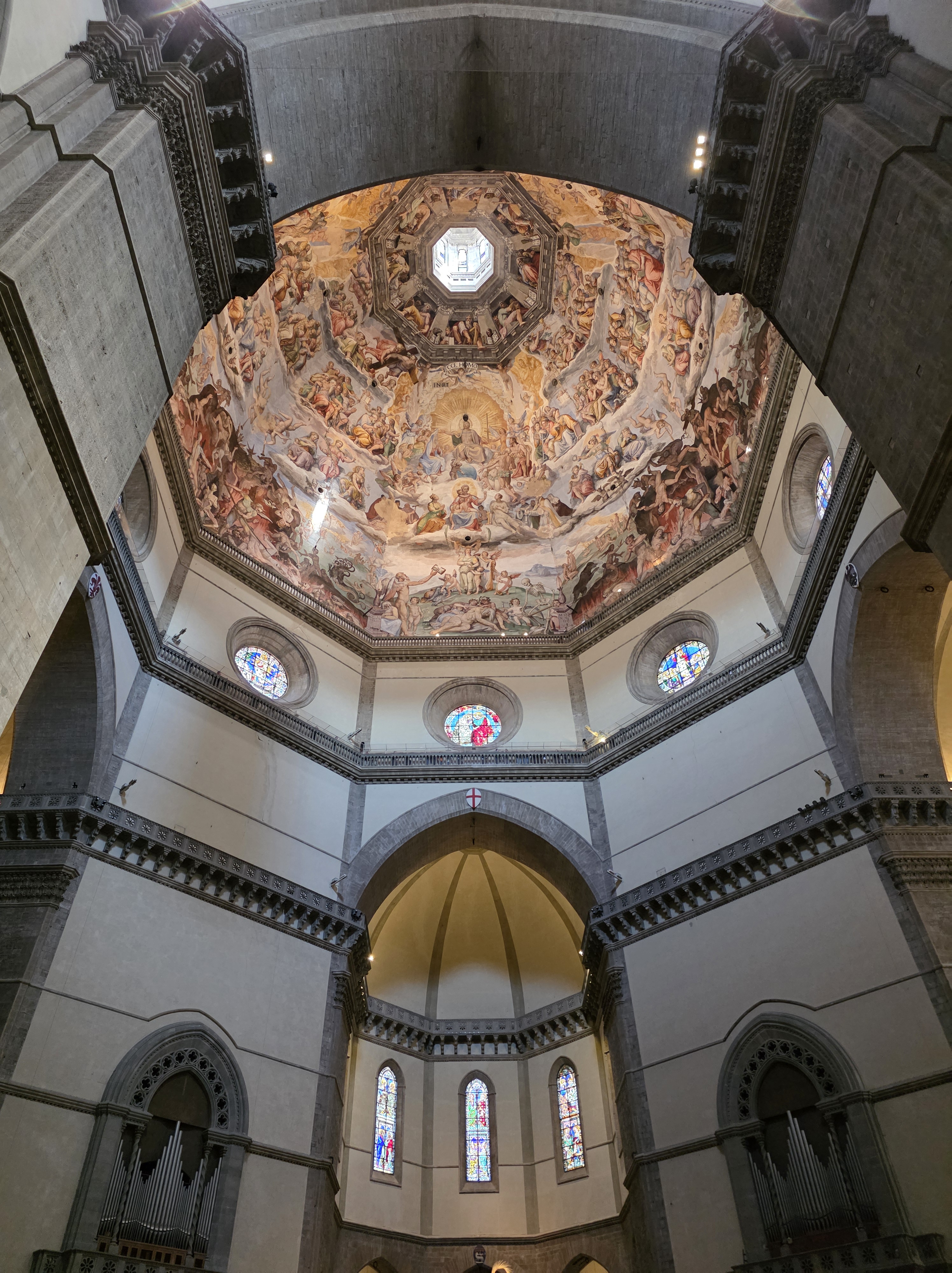
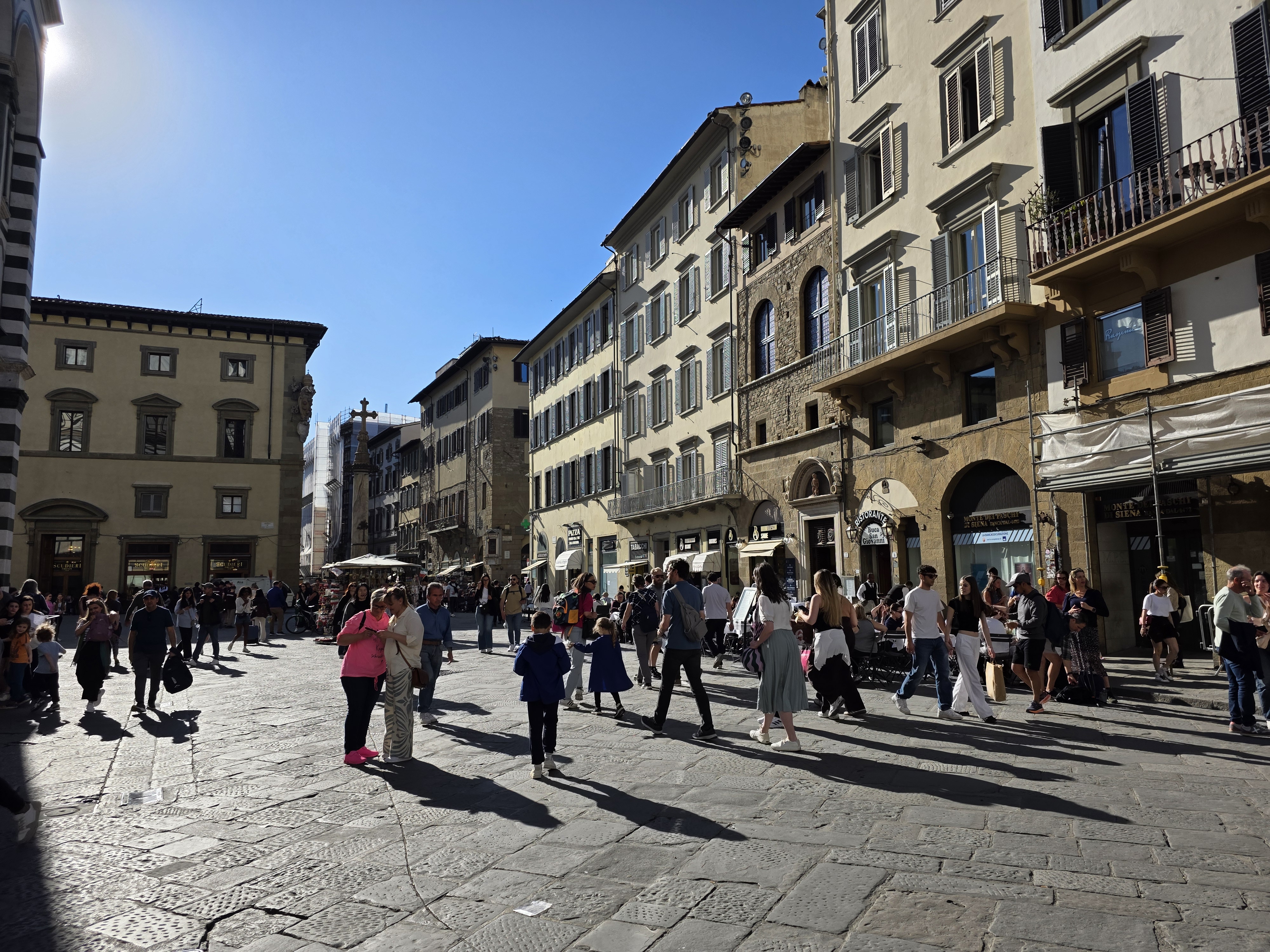
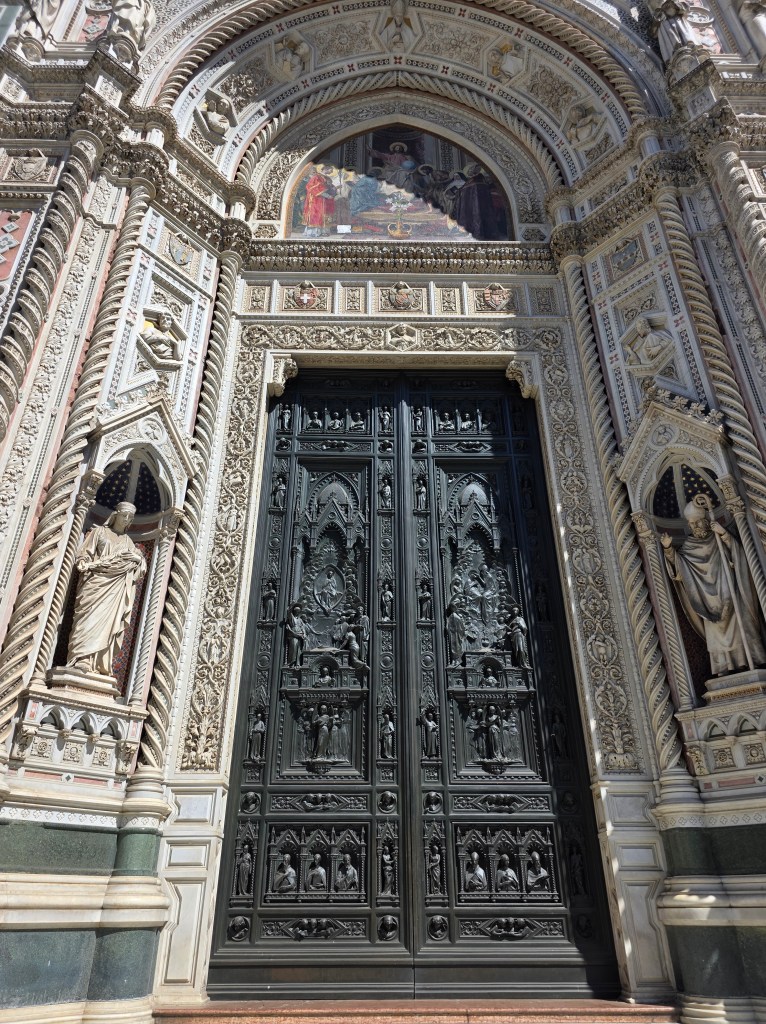
Entry to the cathedral was free, though with a small queue, so I decided to go inside as well. I have to say, from the outside the cathedral is absolutely stunning – I would probably call it one of the most beautiful, if not the most beautiful, I’ve ever seen. But inside, it didn’t strike me as anything extraordinary. I’ve seen much more impressive cathedrals – there’s no comparison at all with the Sagrada Família, for example. The only really striking feature is the dome and its frescoes.
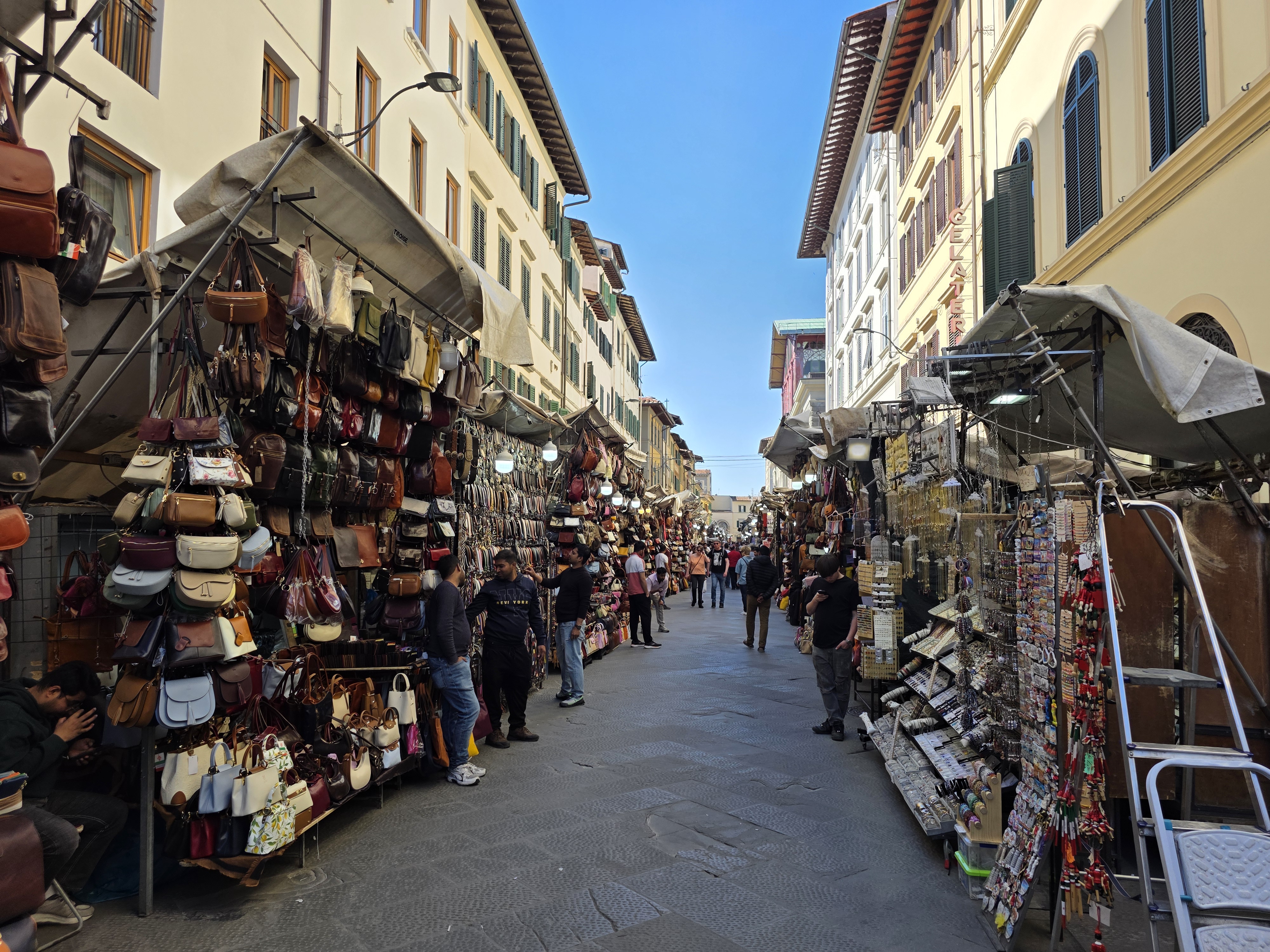
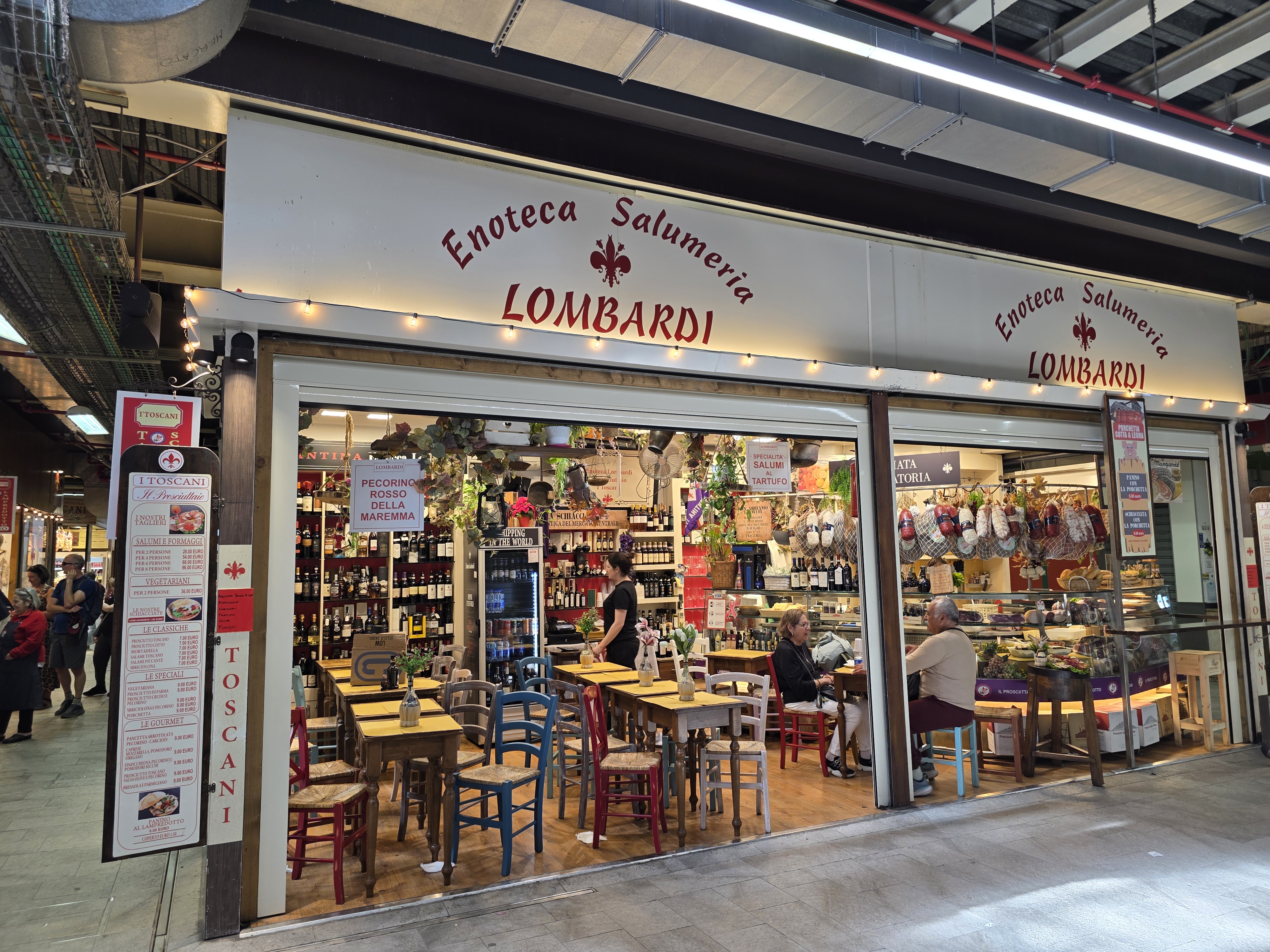
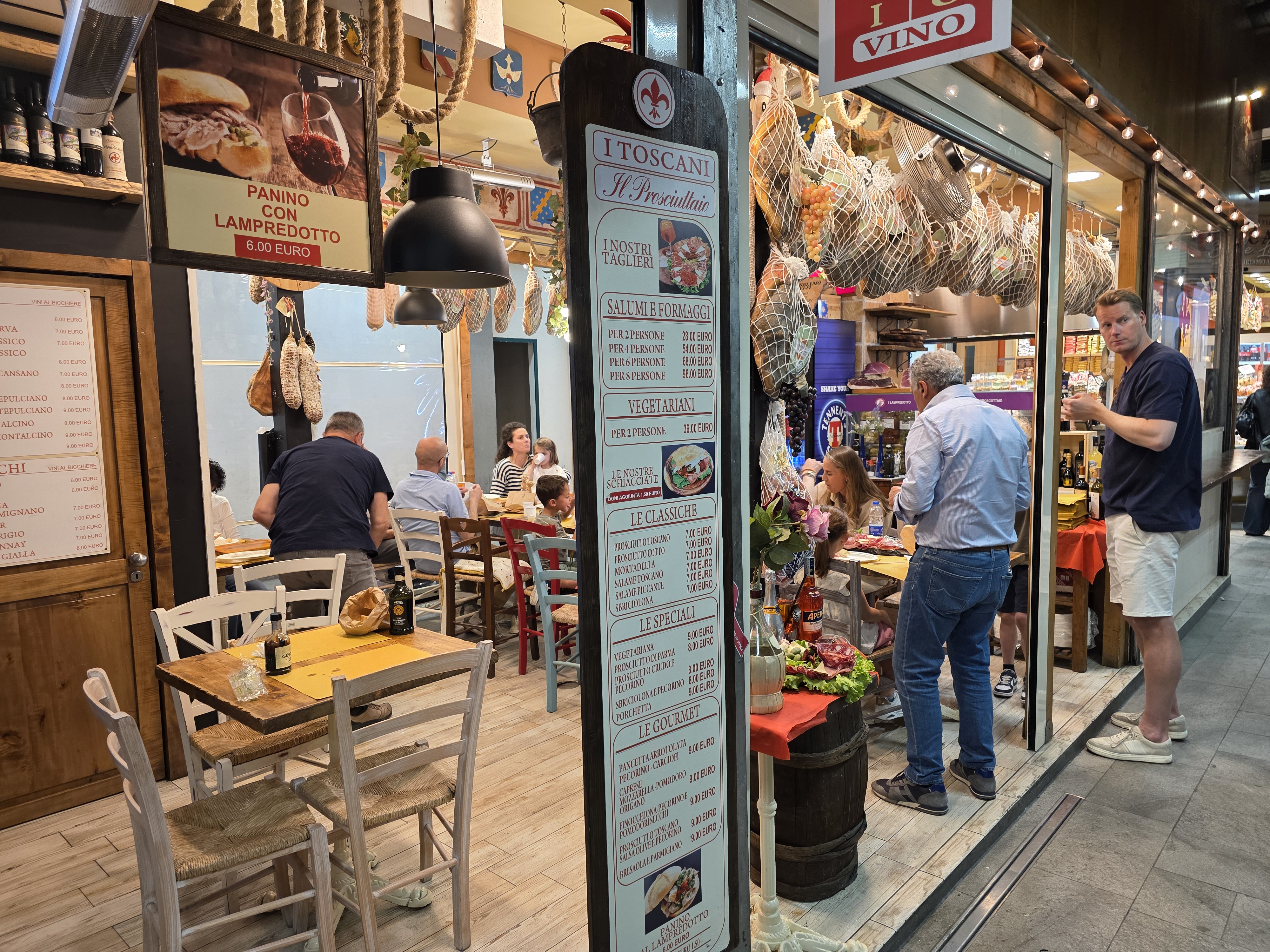
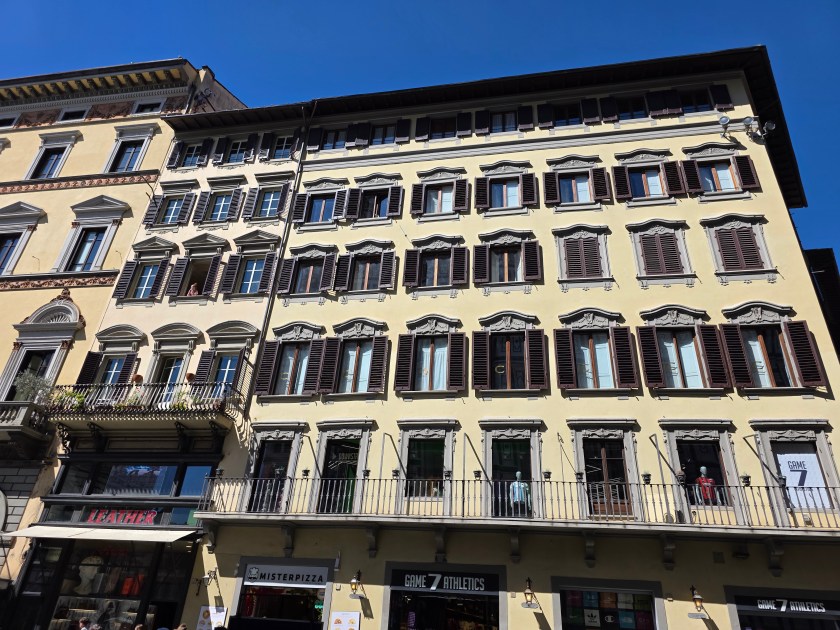
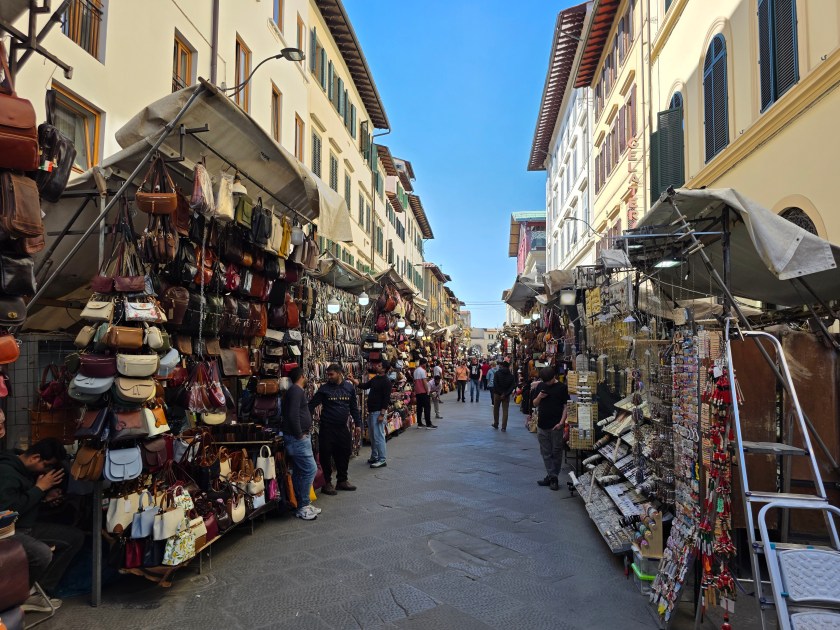
After that, I went to see the San Lorenzo Market. The market consists of an outdoor section with souvenir and leather stalls, and a covered food hall with produce vendors – cheeses, meats, snacks, sandwiches. I imagine it must be packed at lunchtime, but I went in the afternoon – there were people, but not even all the stalls were open anymore.
And finally – the bell tower, and this was quite an adventure. I keep telling myself never to climb another tower again, but somehow I always end up doing it anyway.

Compared to Venice, where the Campanile takes you up and down by lift and all you have to do is enjoy the view, this is nothing like that.

To reach the top viewing platform, you have to climb 414 steps. When I googled it, it didn’t seem too bad, because I’m usually afraid of spiral staircases, and the photos showed straight ones. And they were straight at first. Very narrow, though, with people going both up and down at the same time, squeezing past each other – and there were no railings at all, just bare stone walls.

The worst part was that in the end there was indeed a spiral staircase leading to the very top. I made it up, trying not to think about how I’d get down later.

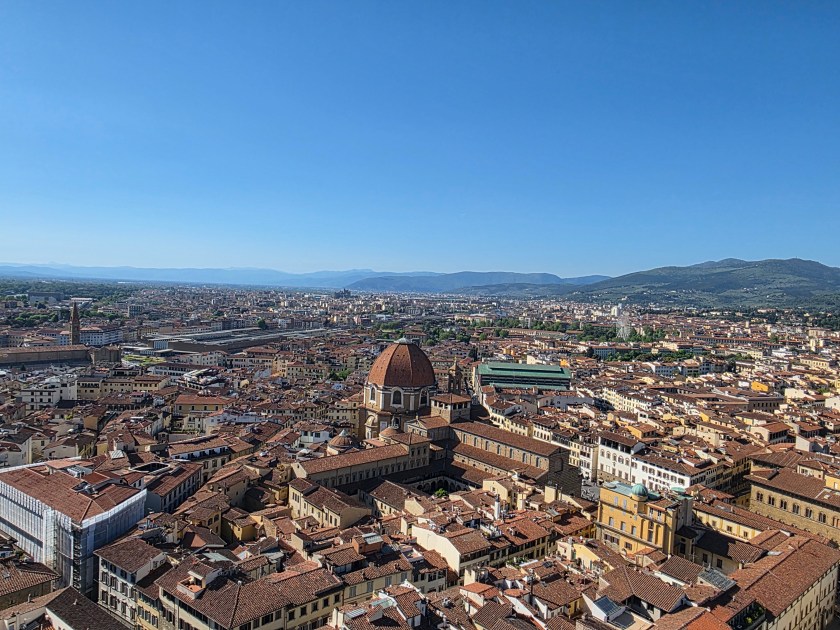
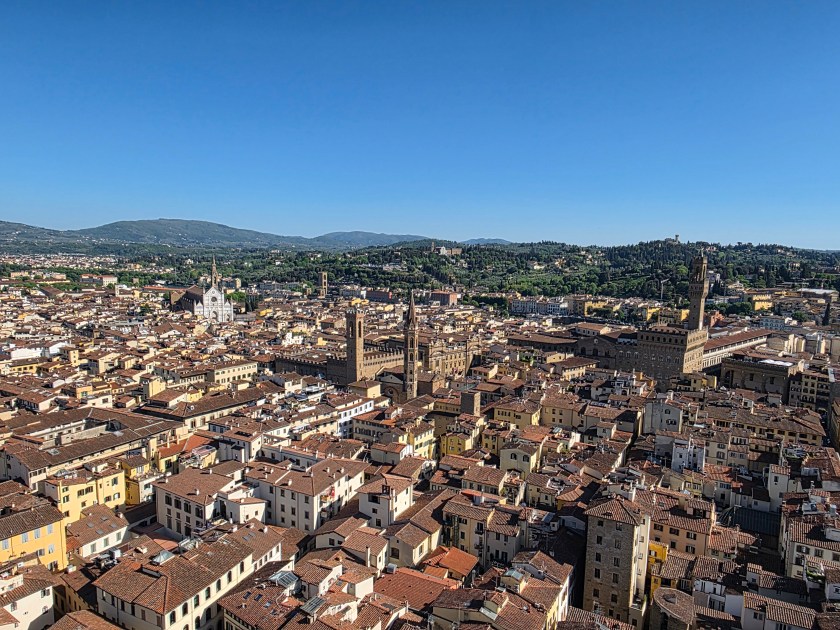
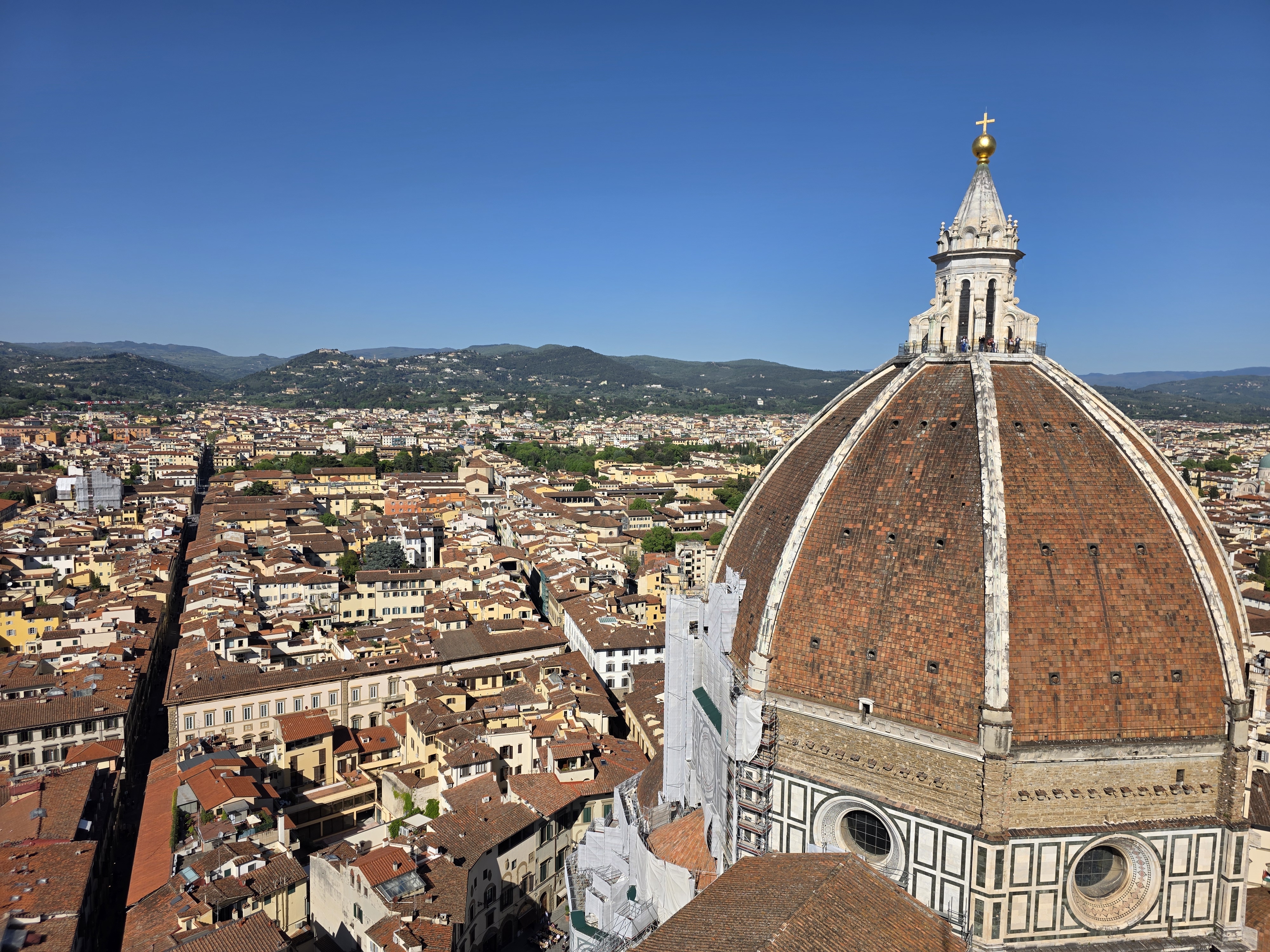
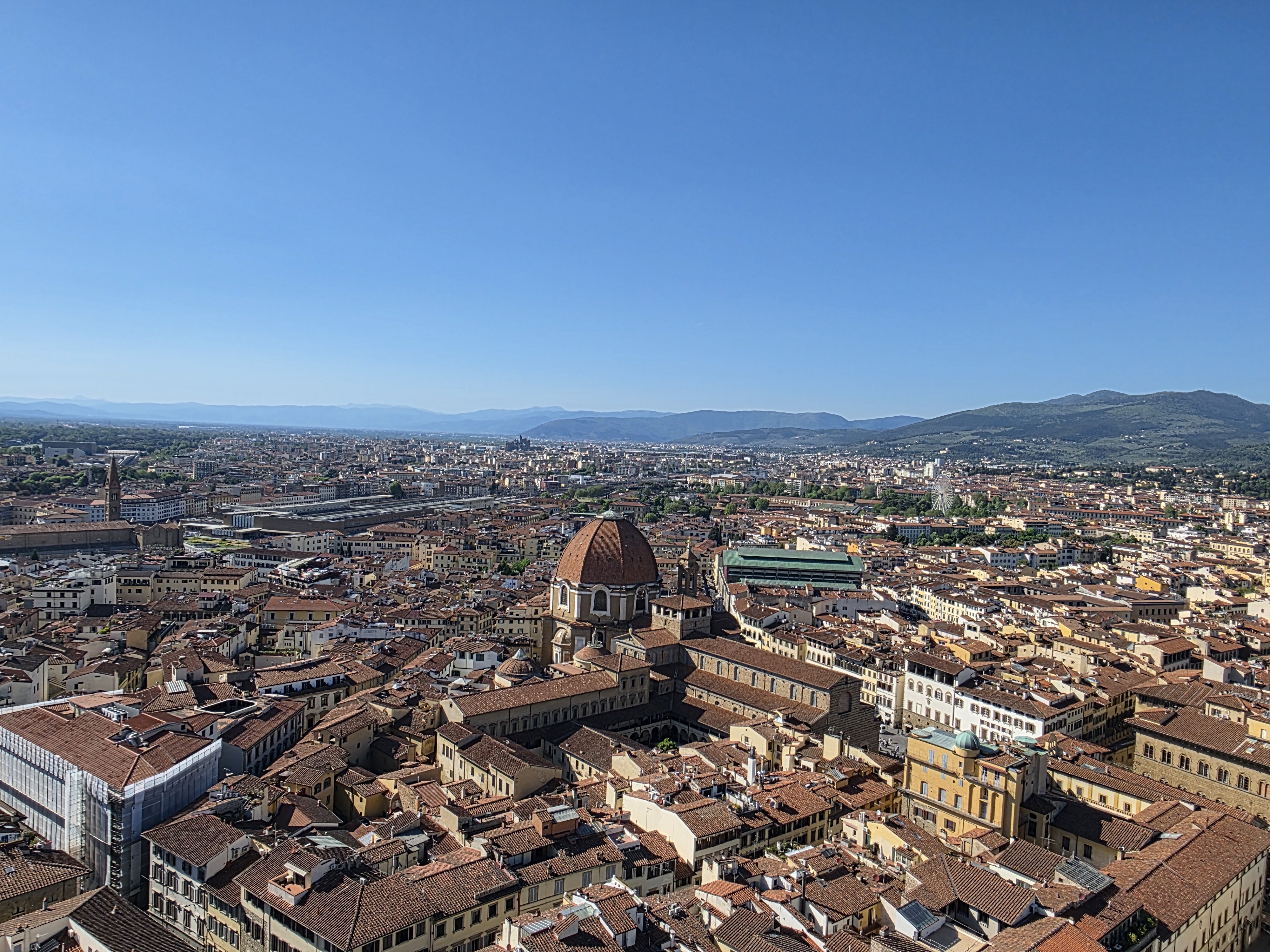
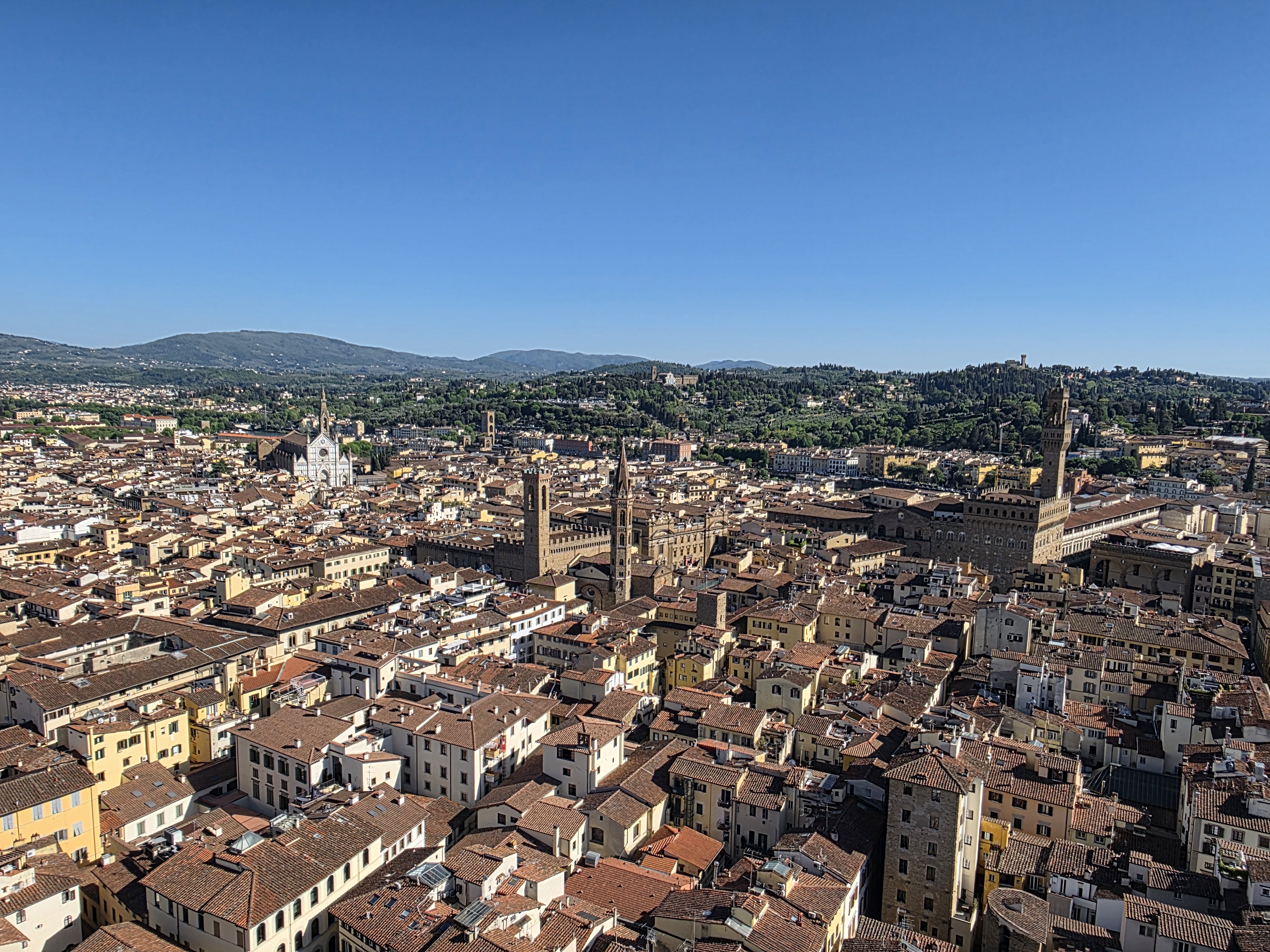
Of course, the view from the top is stunning – you see the Duomo dome at eye level, looking at the people standing there, while they look back at you. But the descent was honestly a nightmare. I had a proper panic attack – it was already scary going down, there was nothing to hold onto, and on top of everything there was a constant flow of people climbing up, so I had to stand in awkward positions waiting for them to pass. At one point, some Italians even asked (in Italian!) if I was scared and offered me their arms to hold onto.
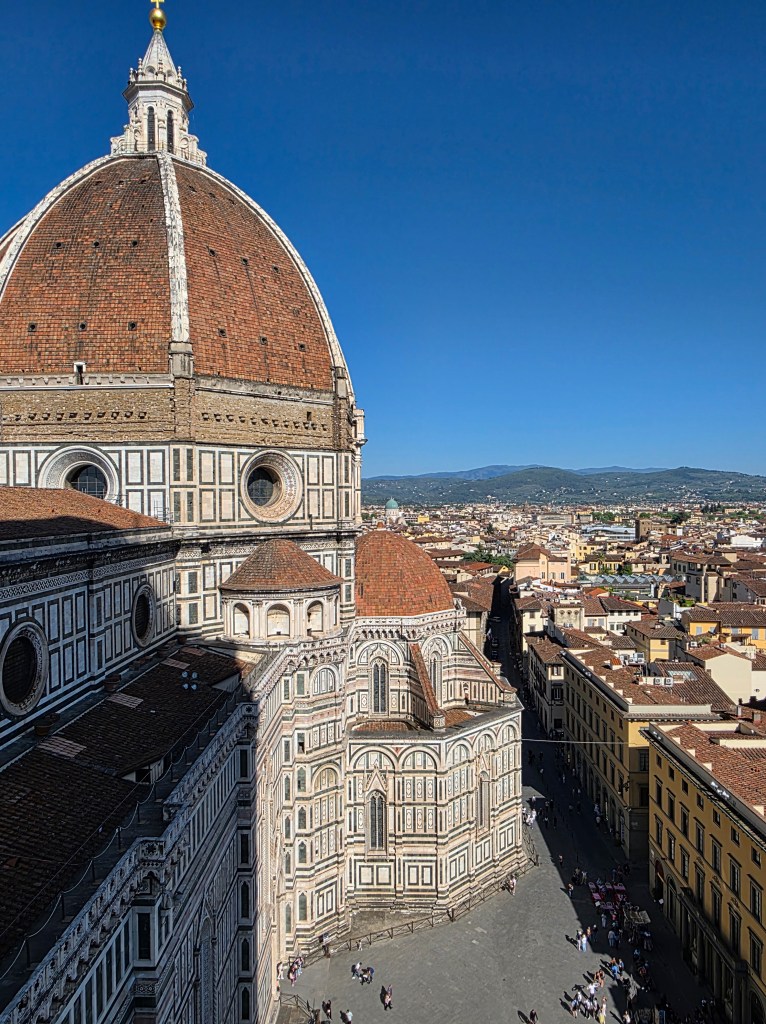
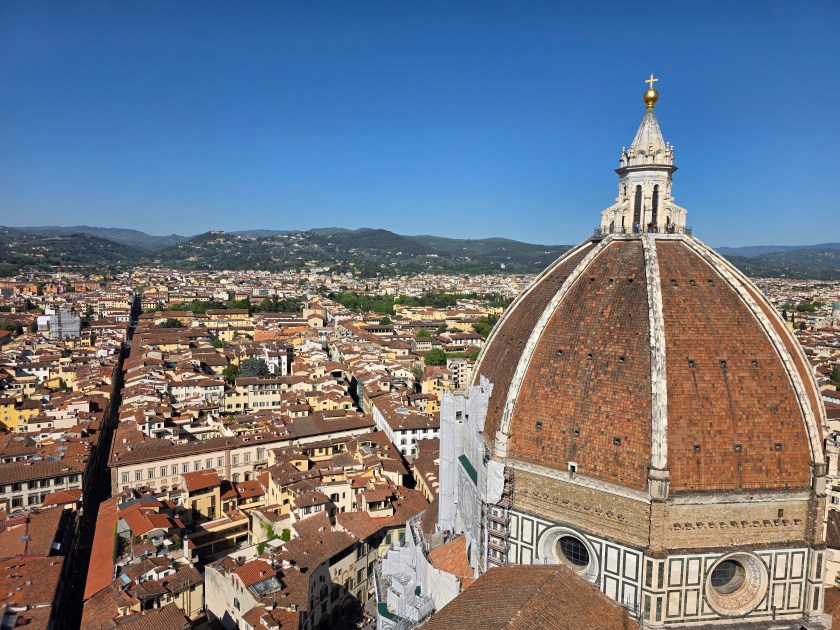
I somehow made it down, and once again I swear I will never climb another tower again! And yes, good thing I didn’t have wine at lunch – this was not exactly fun even when completely sober.

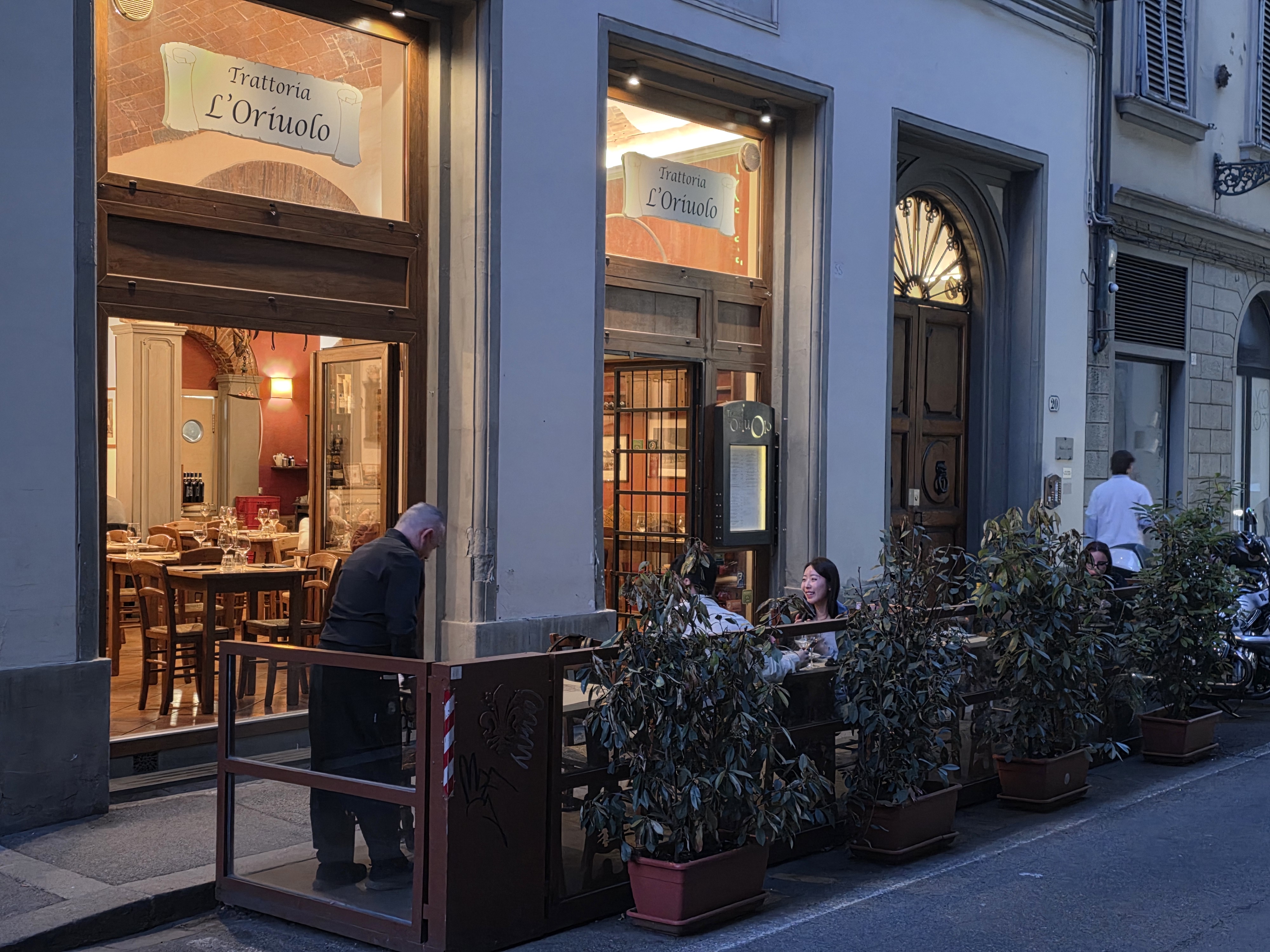
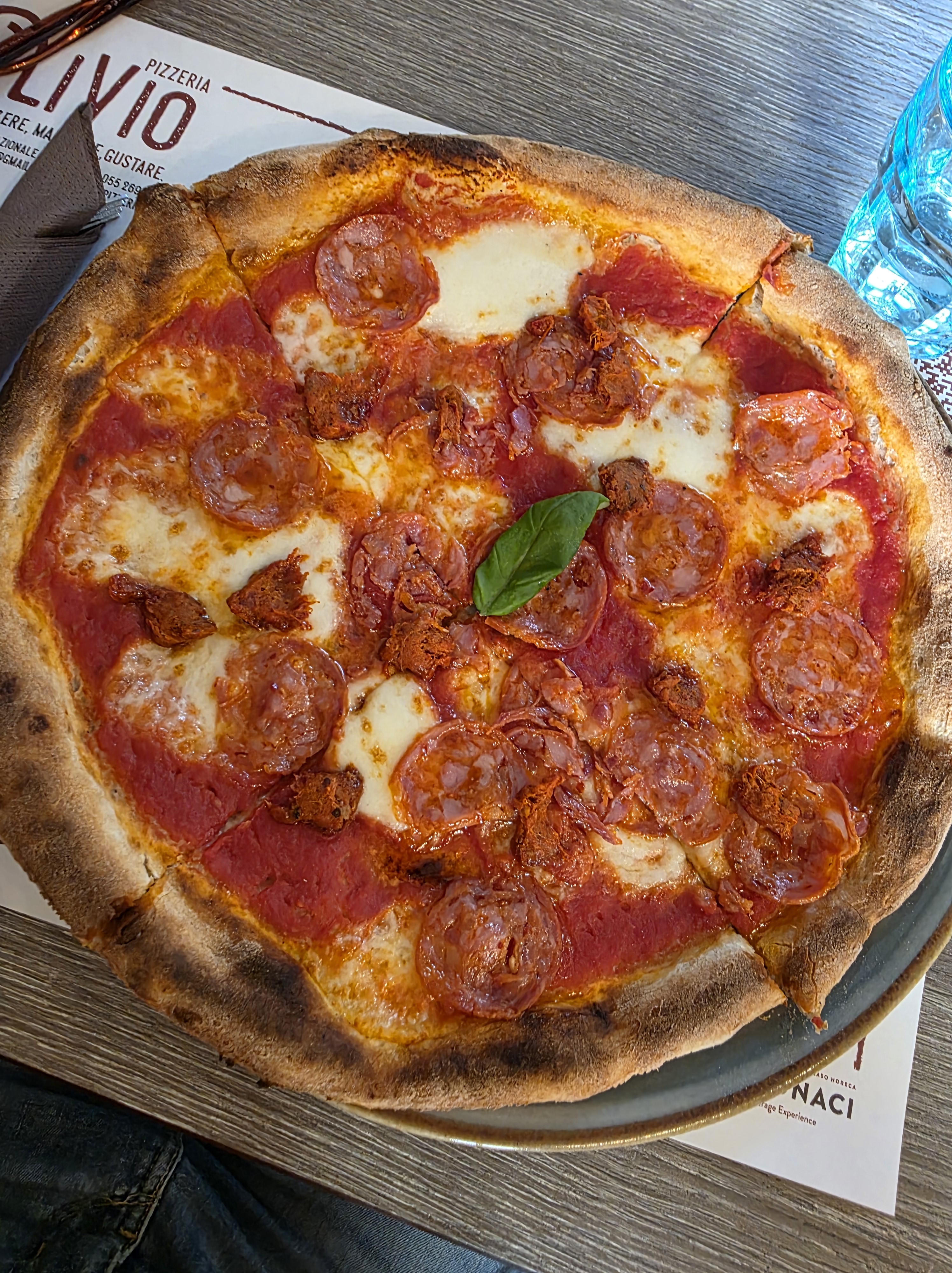
By then it was already getting close to dinner time – a bit early, but I was quite hungry, so I headed to the LiVio pizzeria, which had been recommended to me as one of the best in town. And unlike the rather mediocre pizza I had in Venice, this one really was excellent.
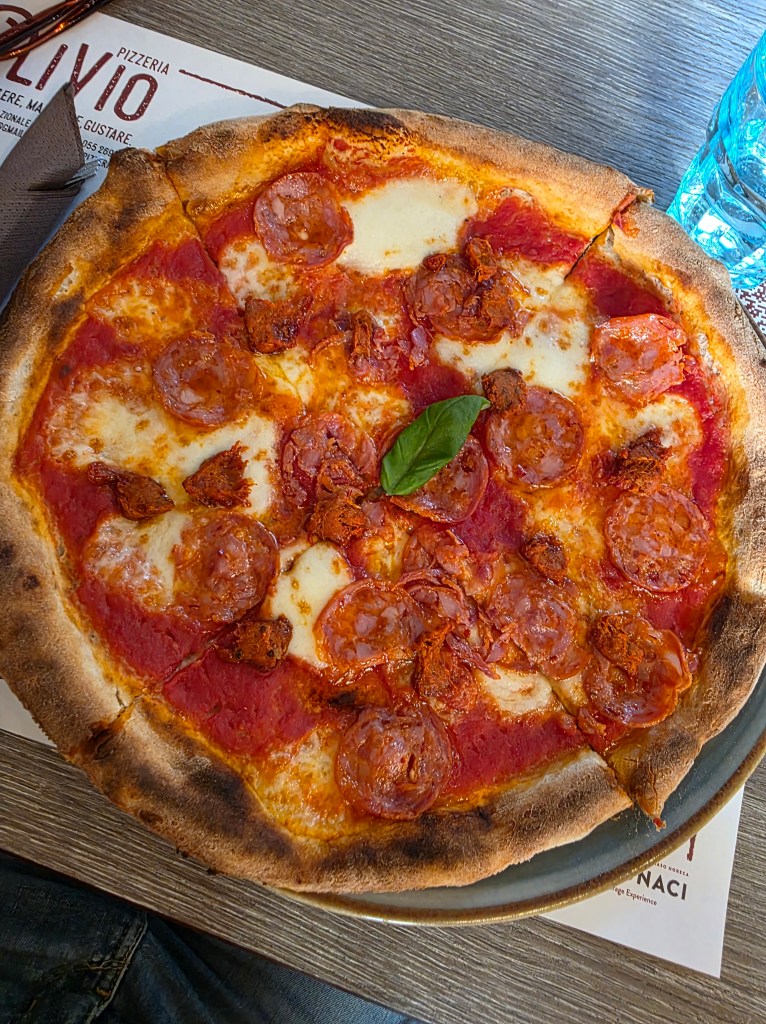
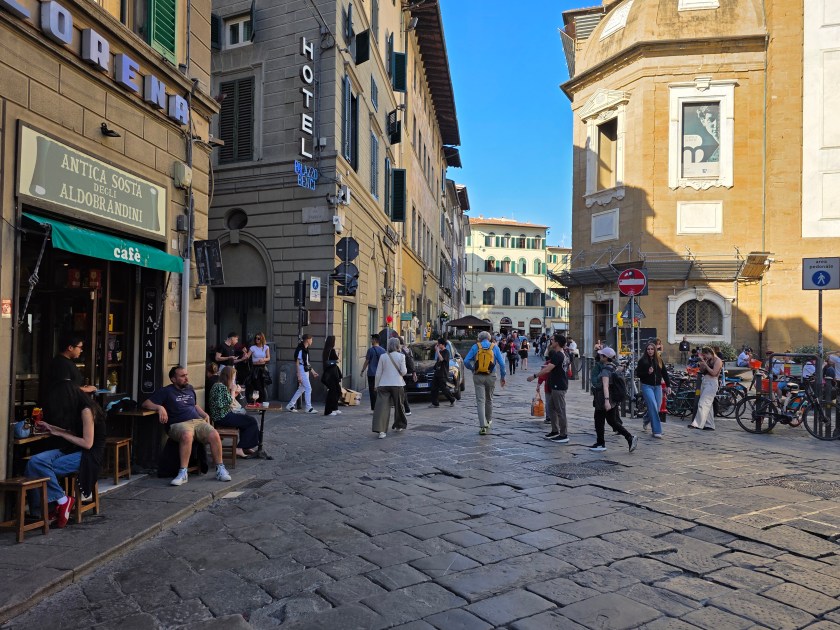
My food adventures didn’t end there, because after dinner I decided to have a limoncello spritz elsewhere, and was unexpectedly served a complimentary bruschetta with tomatoes.

In general, I’m definitely eating much more than usual here – more fat, more sugar, more carbs in general. But I believe that any trip is also a chance to immerse yourself in the culinary culture of a place, alongside everything else, so I don’t regret anything!

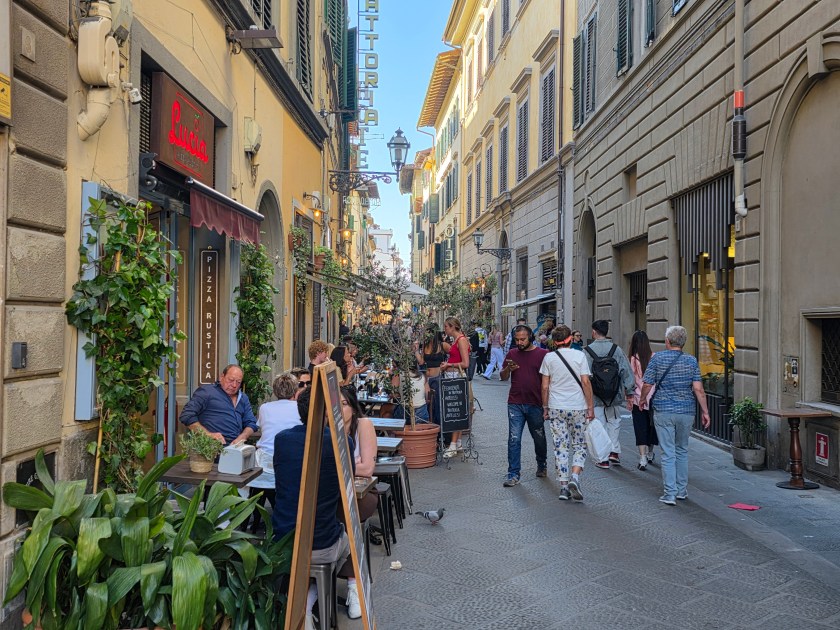
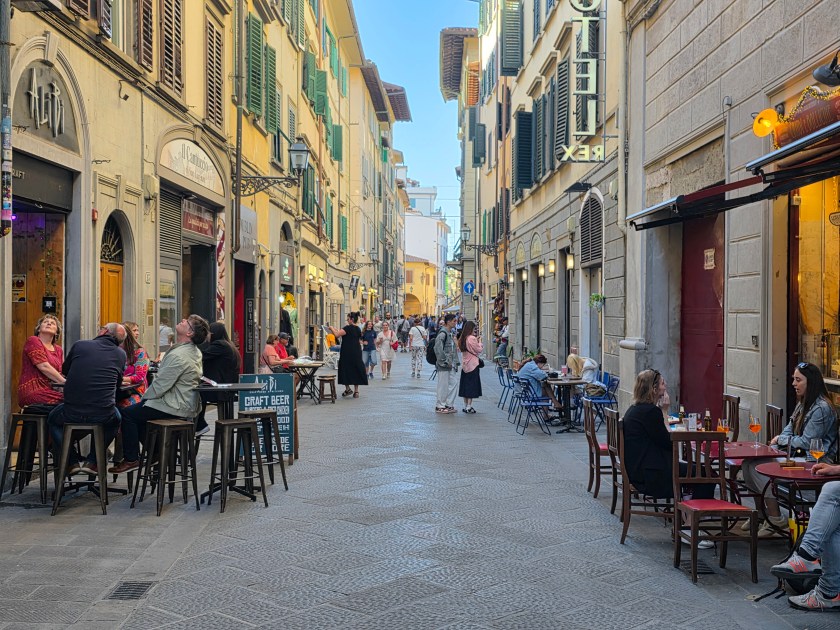
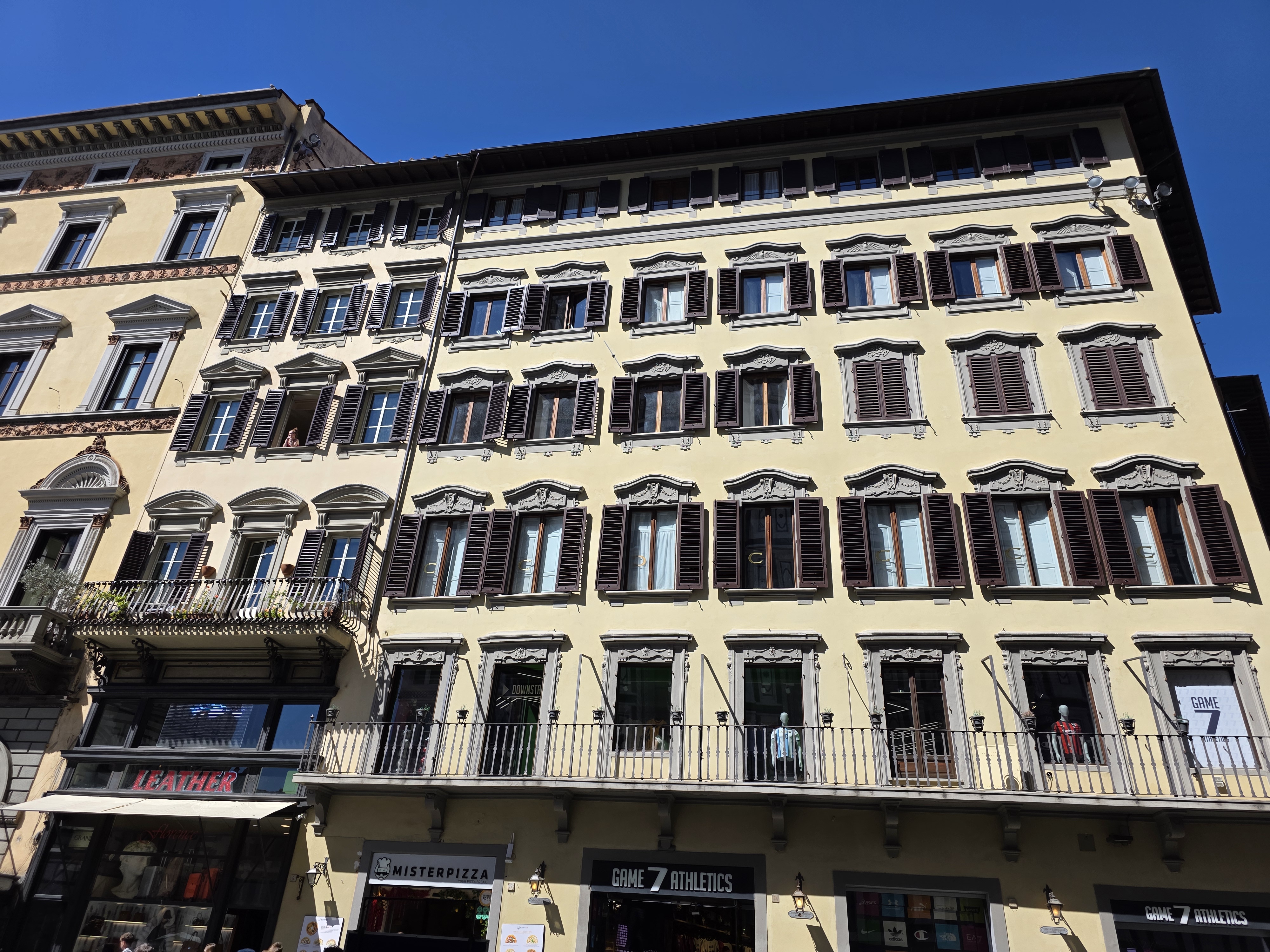
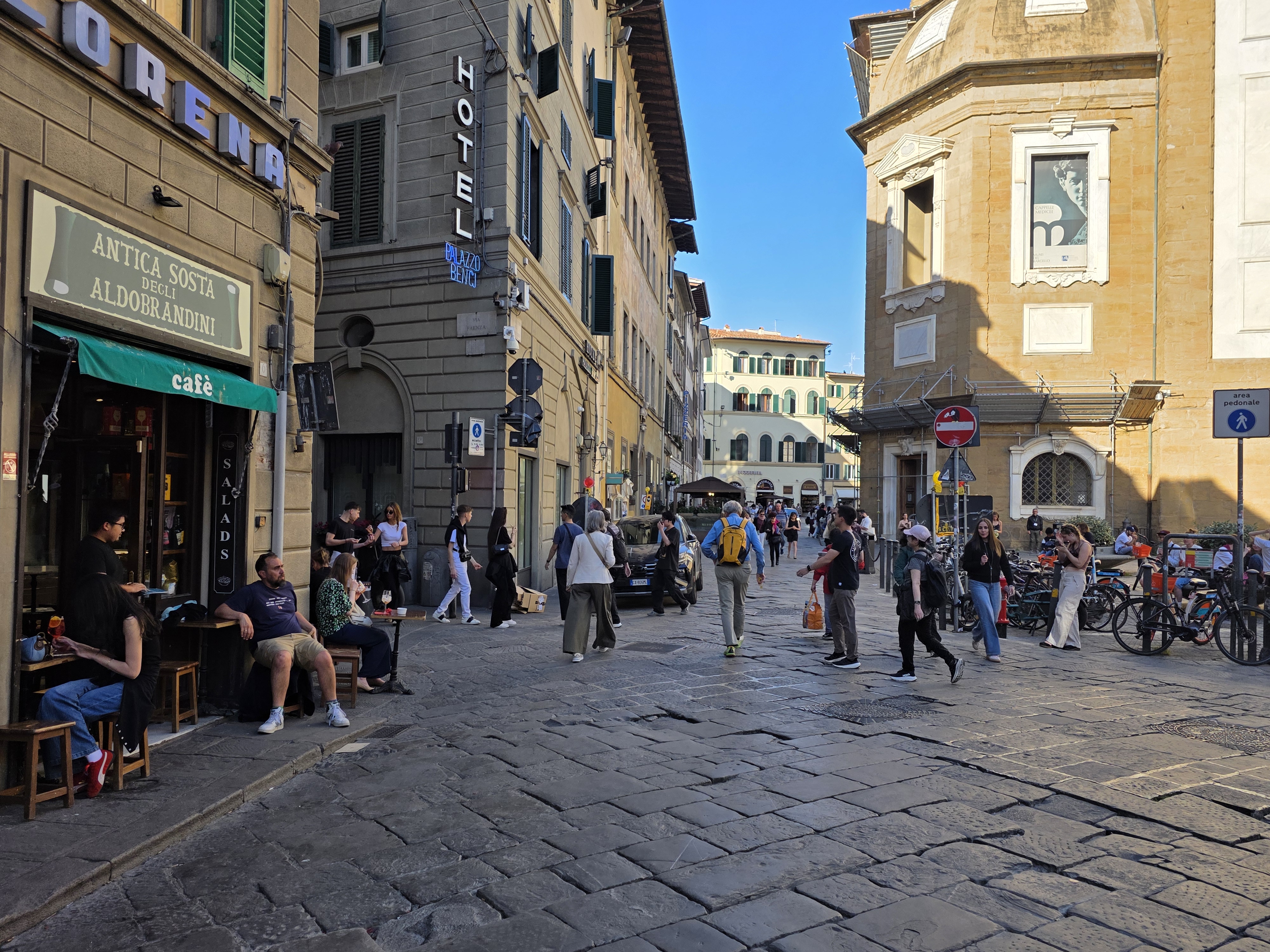
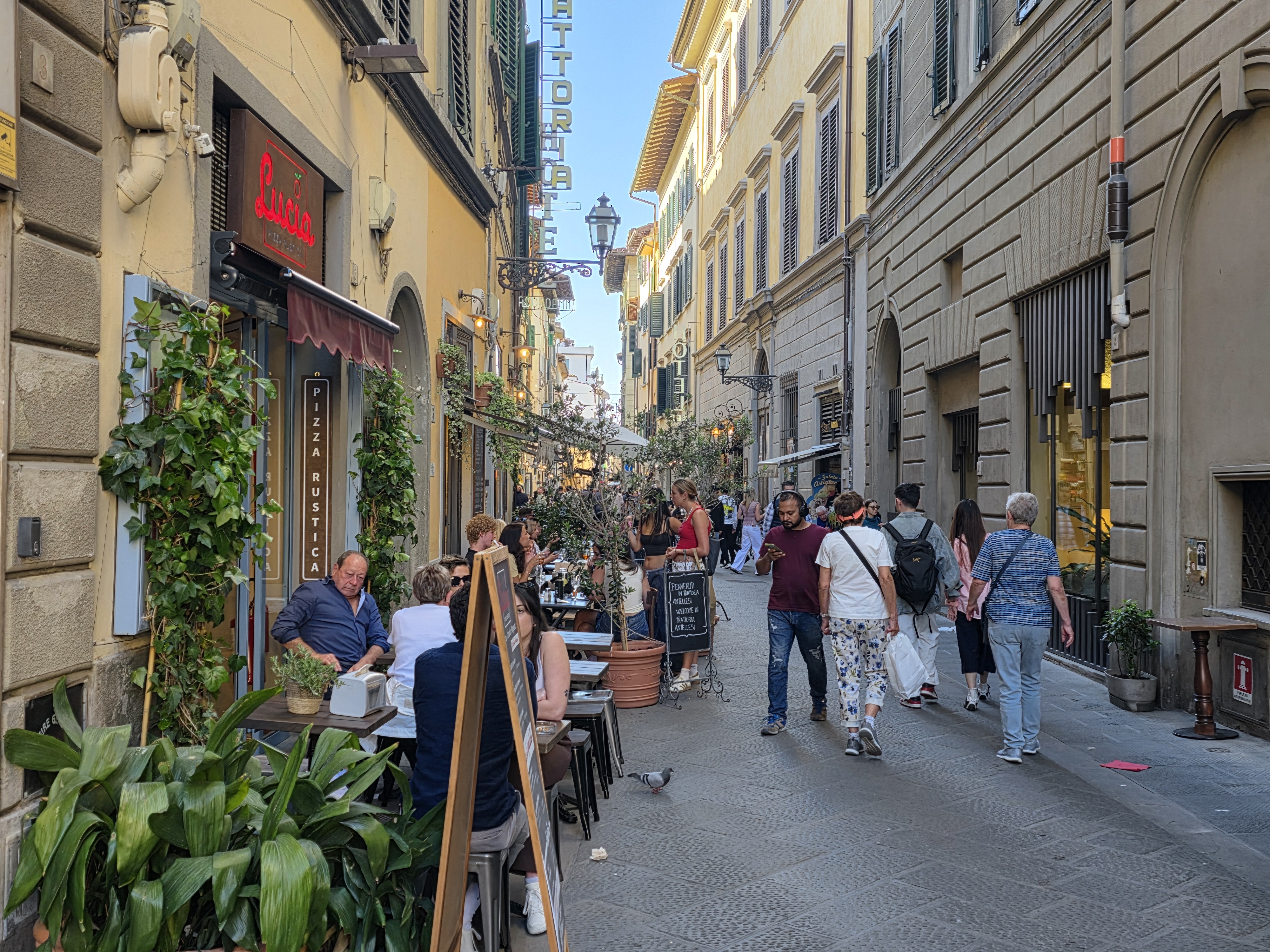
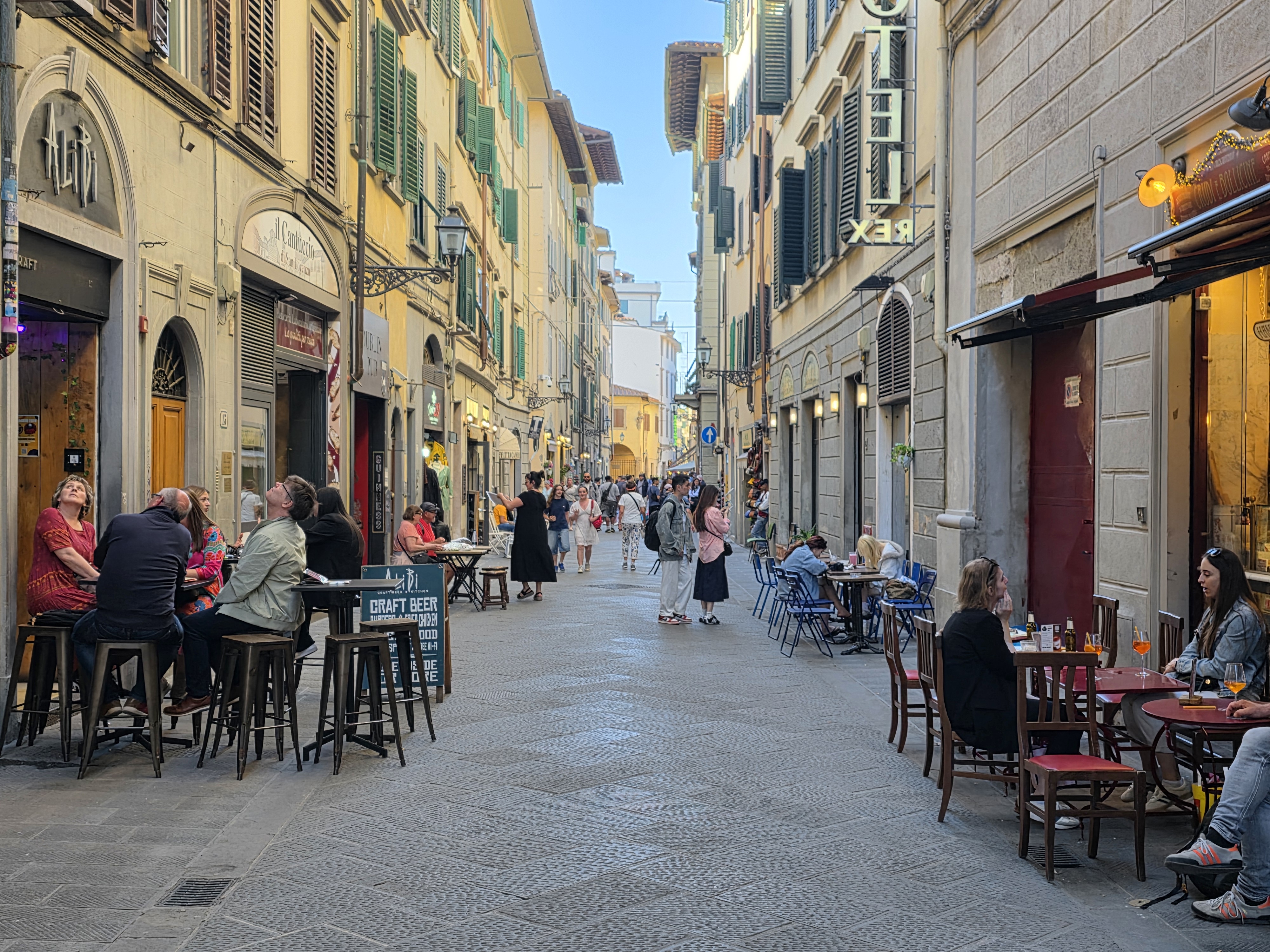
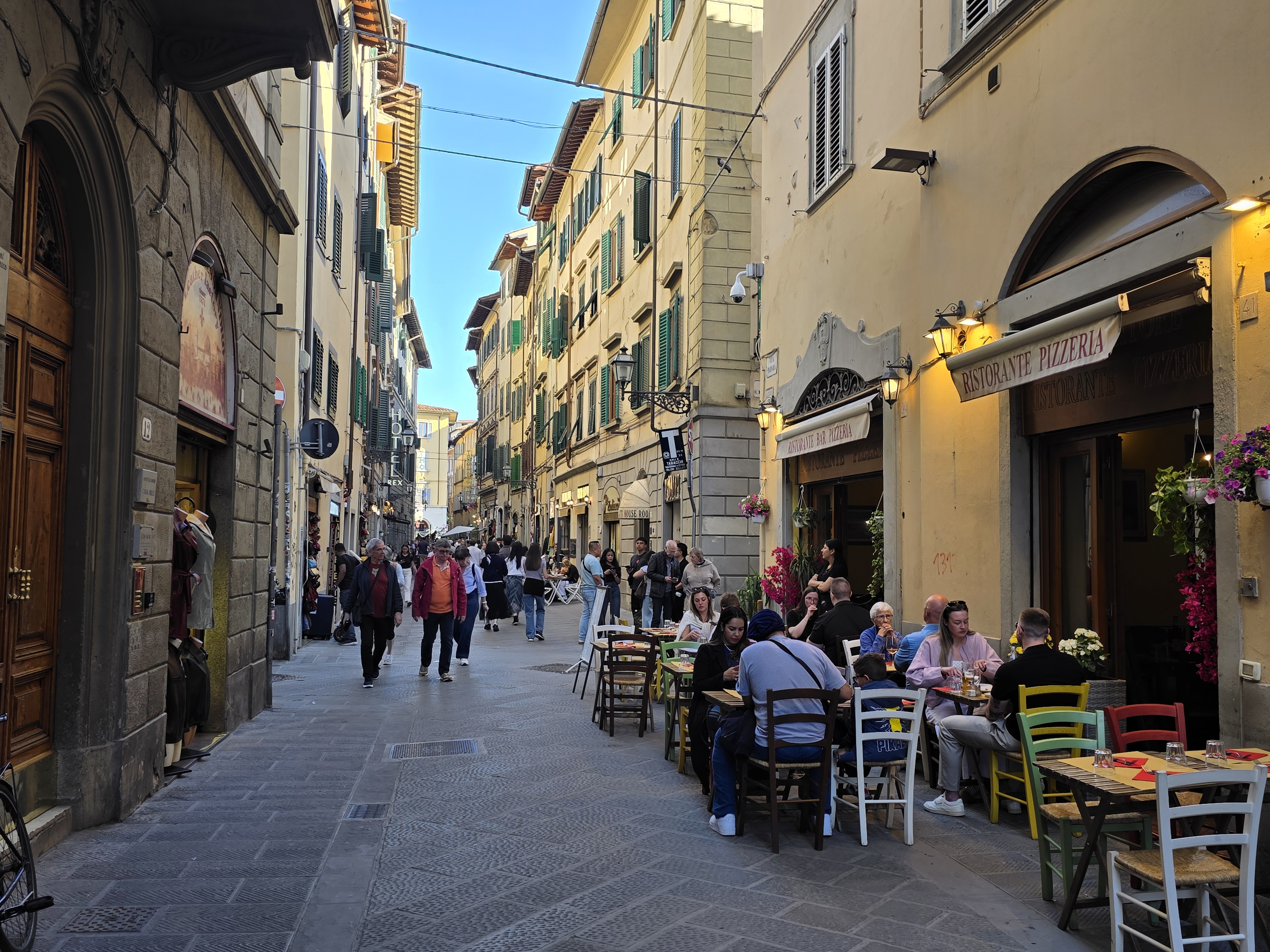
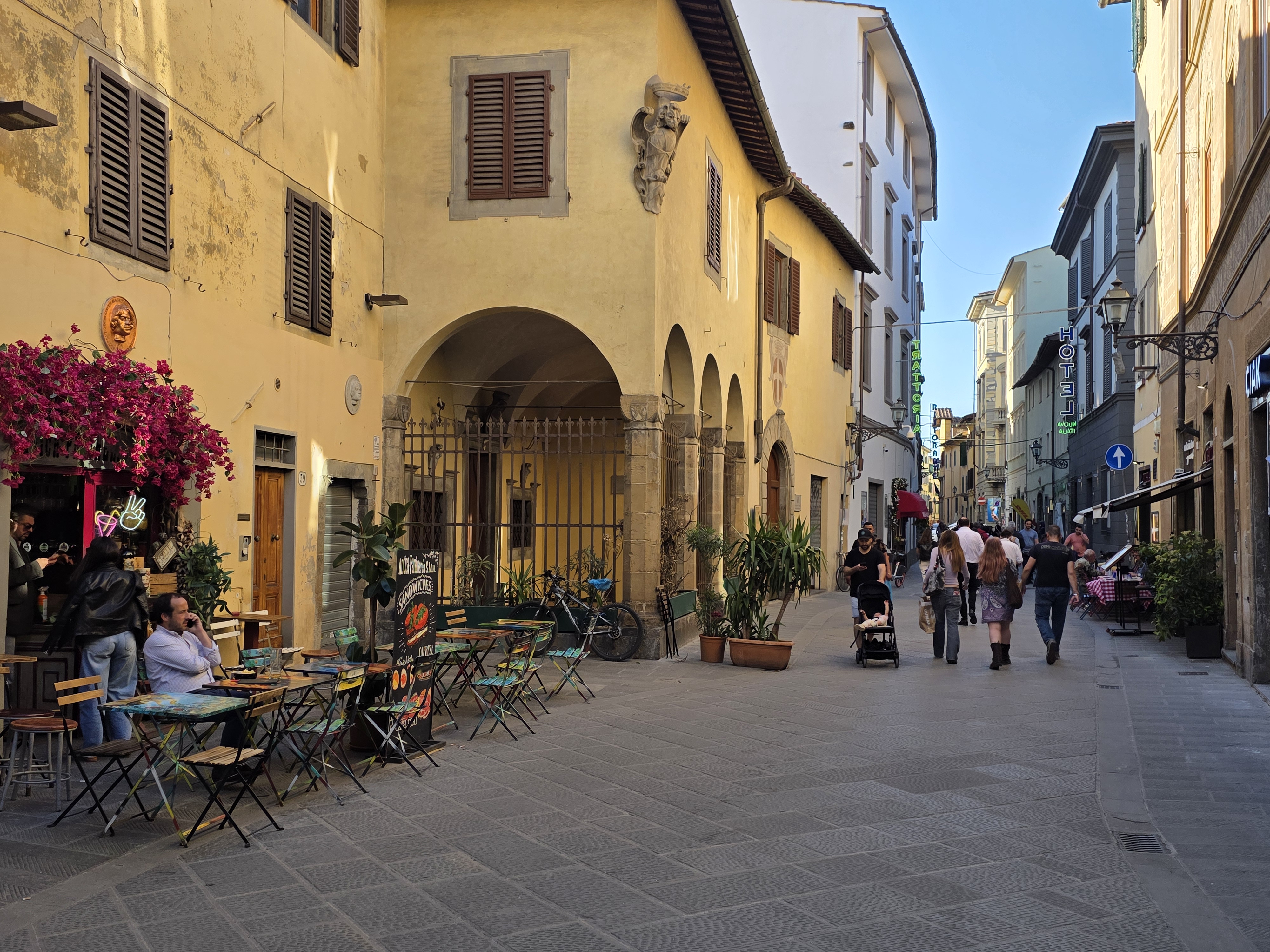
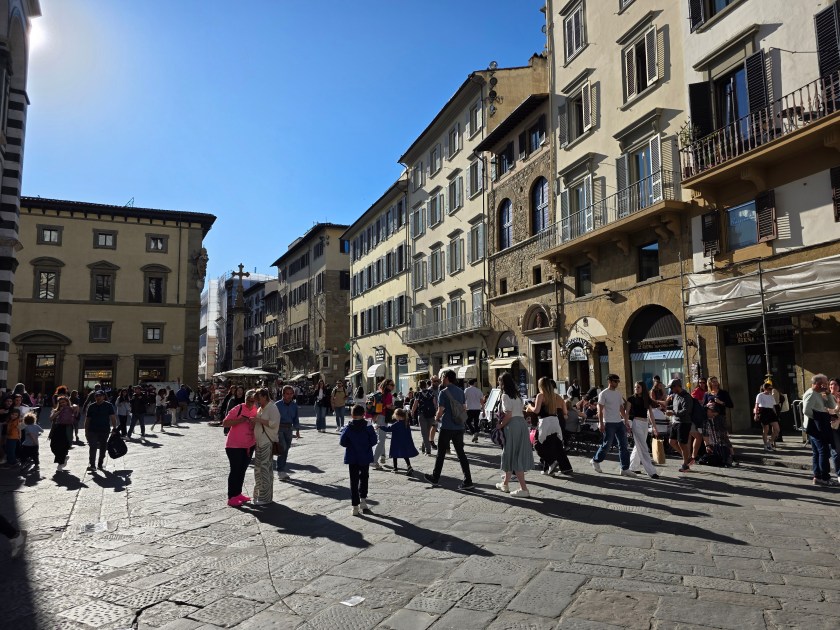
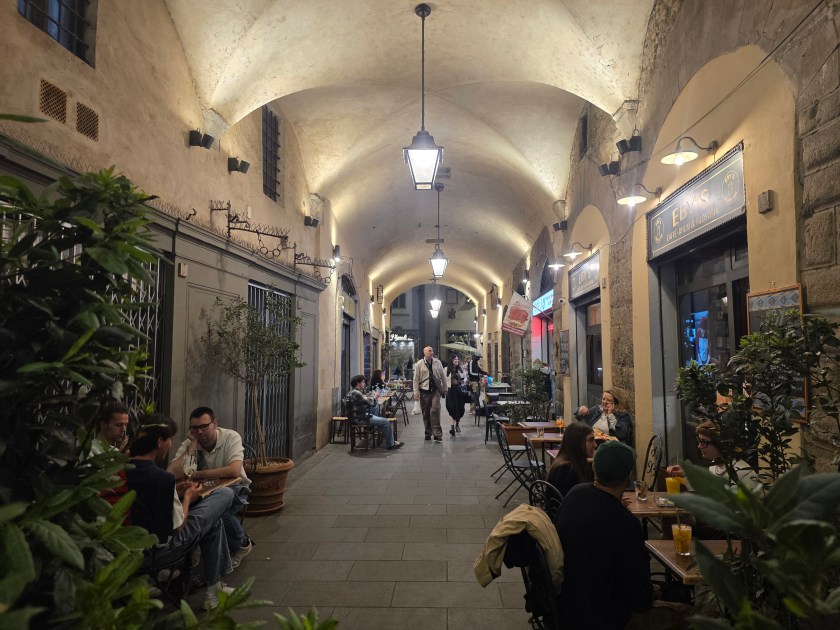
After all that, I wandered around a bit more near my hotel – exploring parts of the area I hadn’t seen yet.
Posted in English, Europe, Istanbul, Turkey

Istanbul – Day 1

РУССКОЯЗЫЧНАЯ ВЕРСИЯ ПО ЭТОЙ ССЫЛКЕ. CLICK HERE FOR RUSSIAN VERSION.

03 February 2019

Surprising, but fact – I am a person who has seen quite a few countries, including far ones, but has never been to the neighbouring Turkey. Yet, every self-respecting Azerbaijani, who has the opportunity to travel abroad, has definitely been there. So I finally decided to fill this unforgivable gap, and here we are, flying to Istanbul!

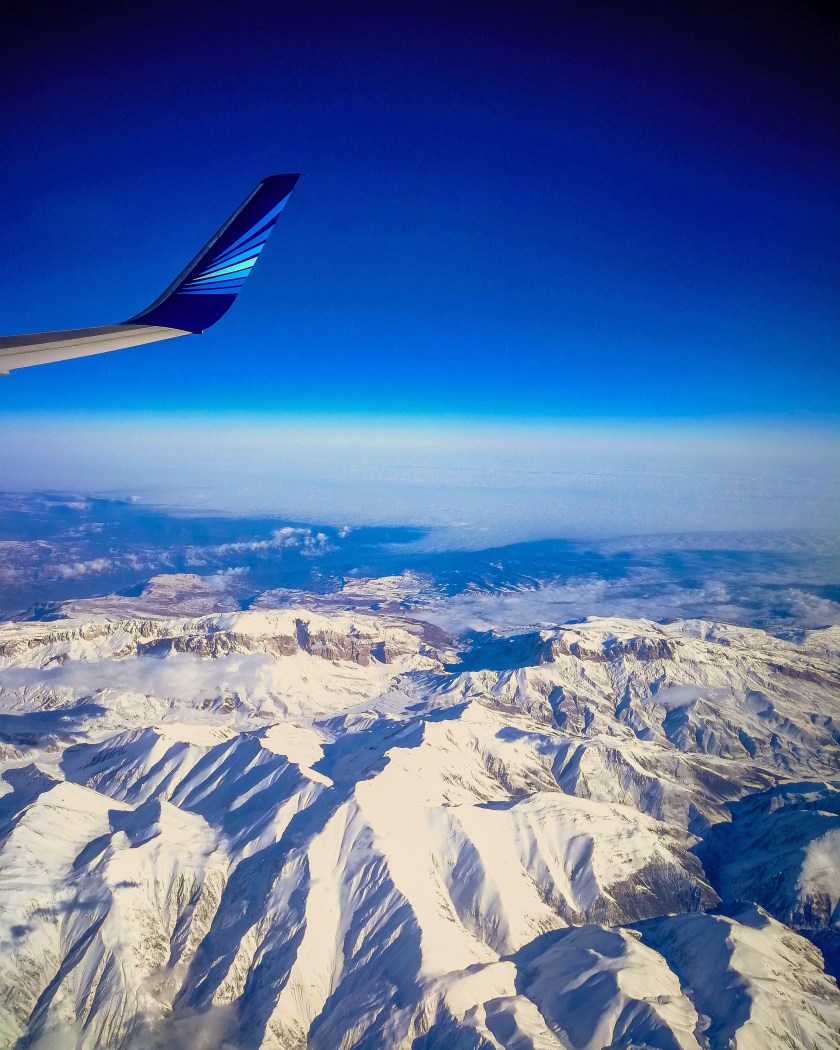
The flight begins with mixed feelings: there is no online check-in, which is bad, but we end up without a seat neighbour, which is good; our seats are at the very rear of the aircraft, which is bad, but breakfast starts being served from the tail of the cabin, which is good. First we are flying over mountains – underneath us there is the majestic Caucasus, with its dazzling snowy peaks! – and then mostly over the Black Sea.

IMG_20190213_142509_380

The Istanbul Ataturk Airport is definitely worth a mention – the speed and the quality, which we observed while going through all the necessary stages of arrival, really impressed us. Such a contrast with, say, Heathrow, where you hang around for a good hour in an extremely slow queue at the passport control. The queue here isn’t any shorter, if not longer, but it’s moving speedily and cheerfully all the time.

At first glance, Istanbul didn’t strike us with anything extraordinary. We are going in a taxi, on our right side we see the Marmara Sea, and on our left side there are some buildings, not very expressive ones.

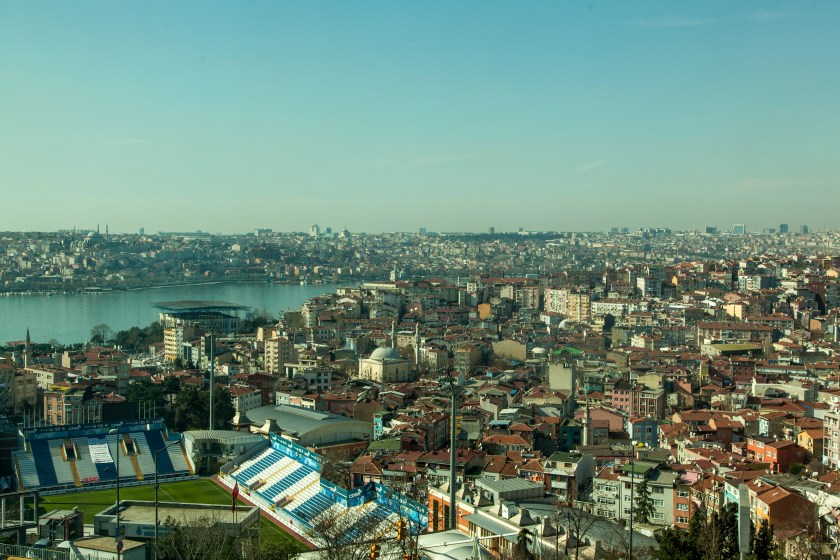
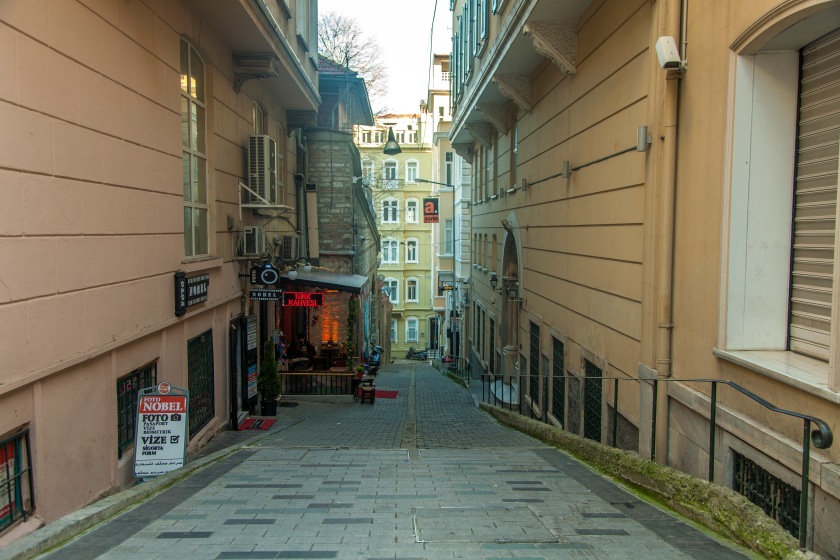
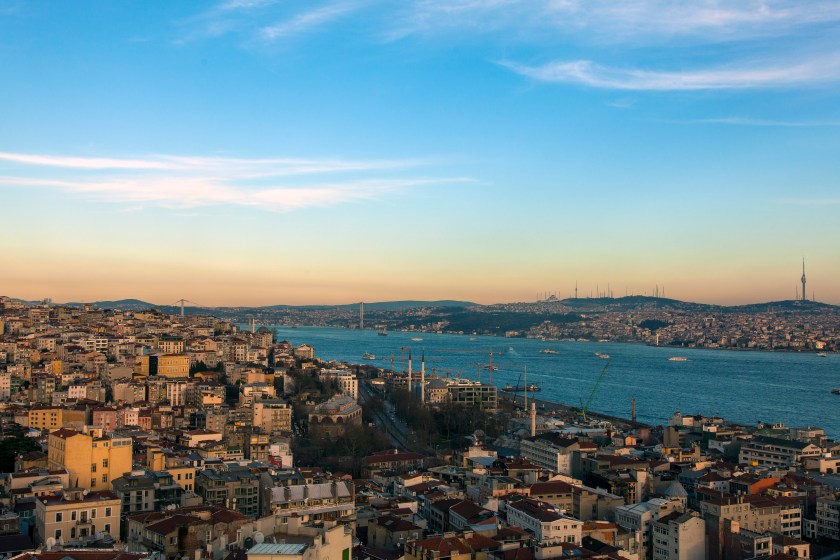
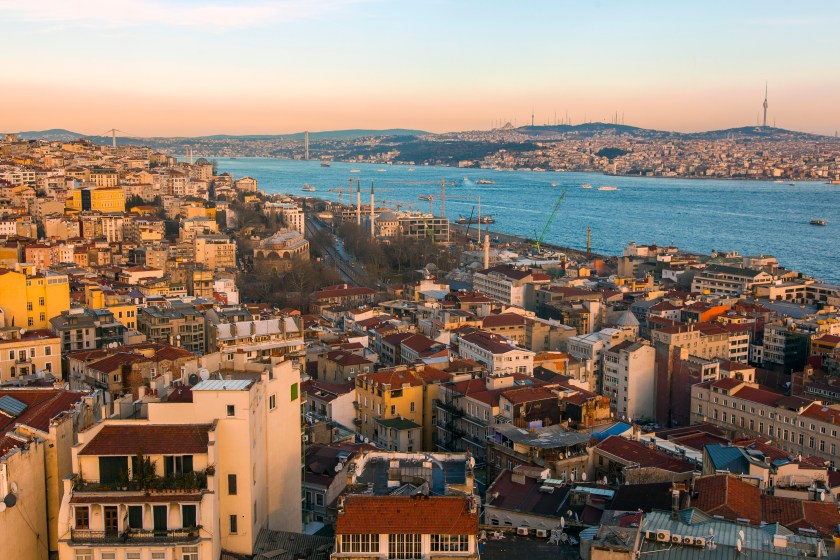
Our hotel is located in the Pera district in the European part of the city, and is literally a stone’s throw away from the central pedestrian street Istiklal Caddesi. In general, we were advised – and we also advise this in our turn – to choose a hotel in this particular part of the city, and definitely not in the Old Town, where most of the tourist attractions are. In fact the Old Town area is only lively during the daytime, while Istiklal Avenue and its surroundings provide the tourist with everything they need – food, drink, shopping, entertainment – at all times of the day and night. View from our hotel window:
IMG_3955

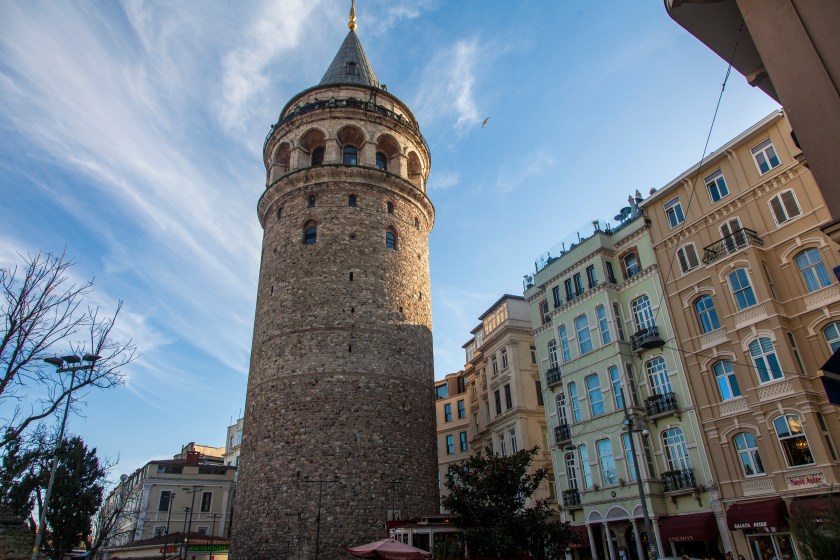
So Istiklal Avenue is where we start exploring Istanbul today. Our hotel’s location is such that if you walk a kilometre to the left, you will get to Taksim, and if you walk one (plus a bit more) to the right, you will reach the Galata Tower.
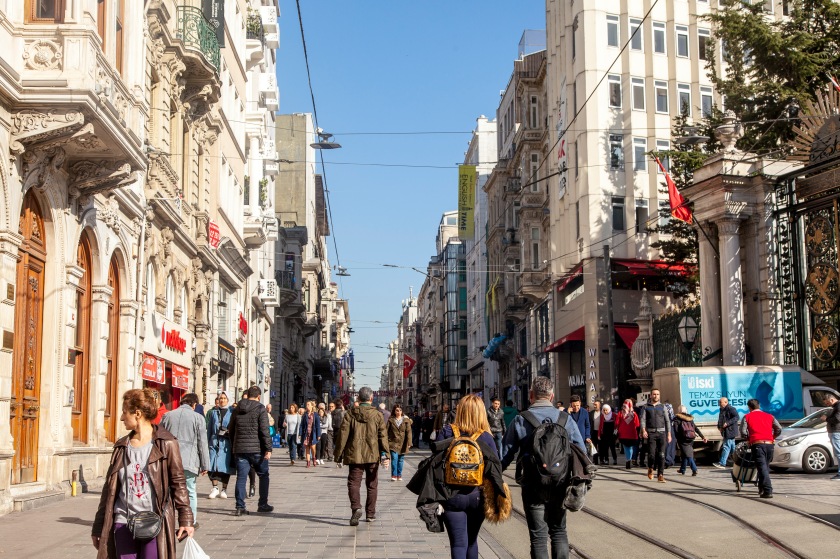
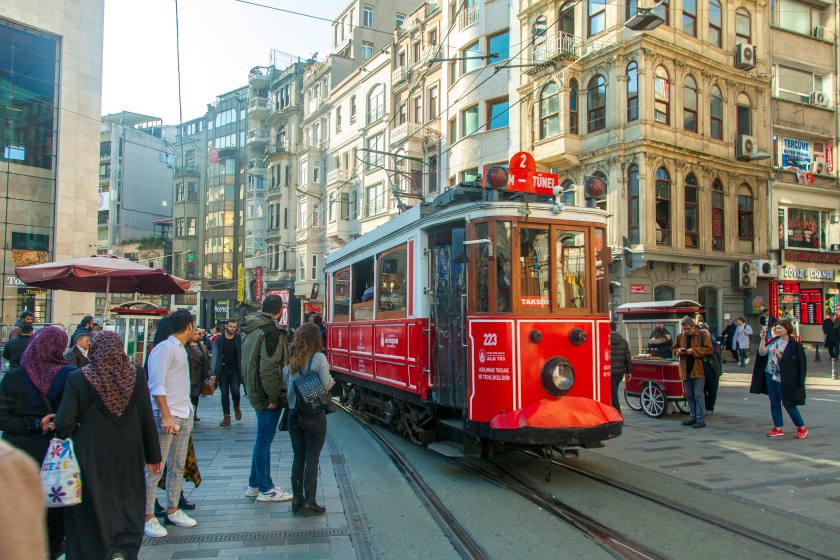
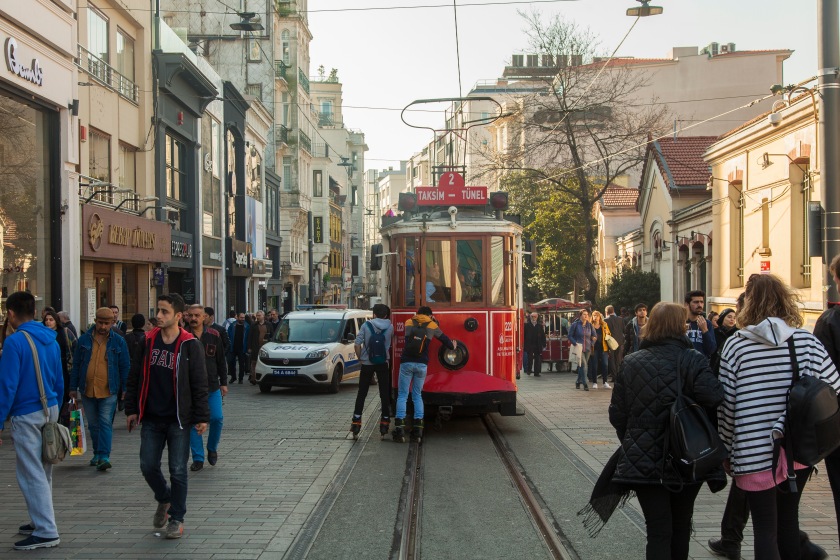
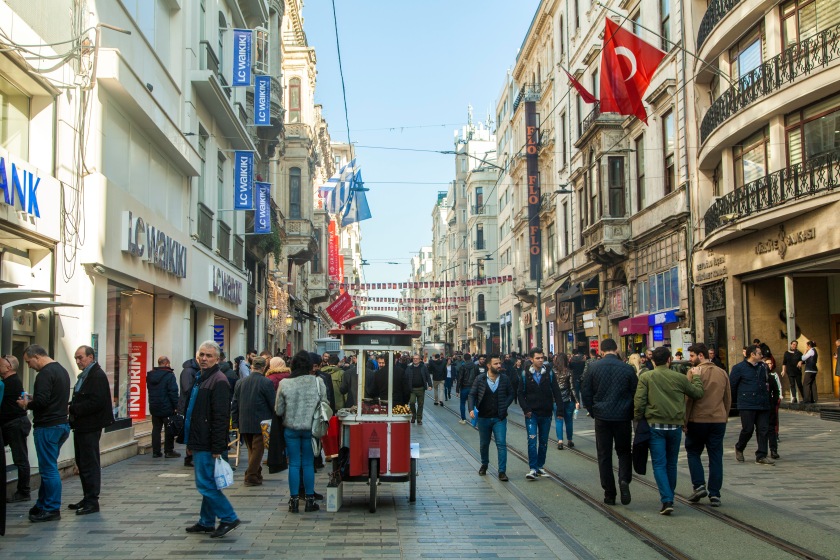
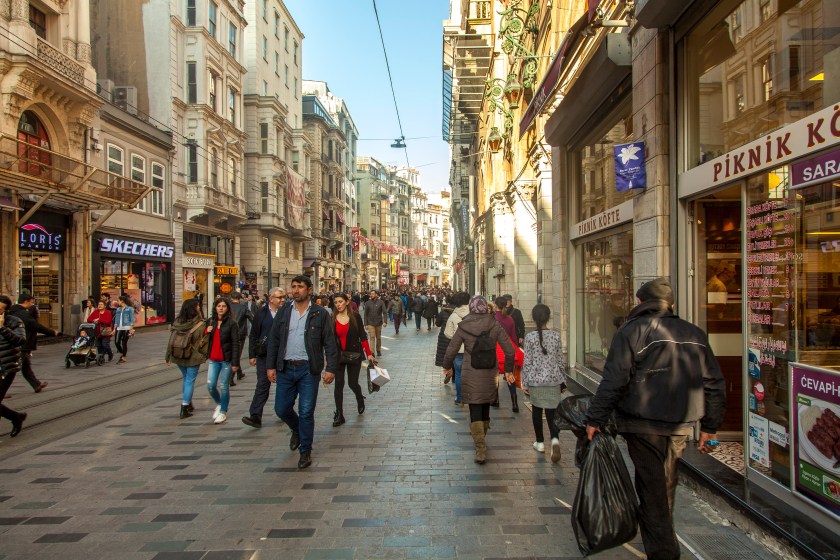
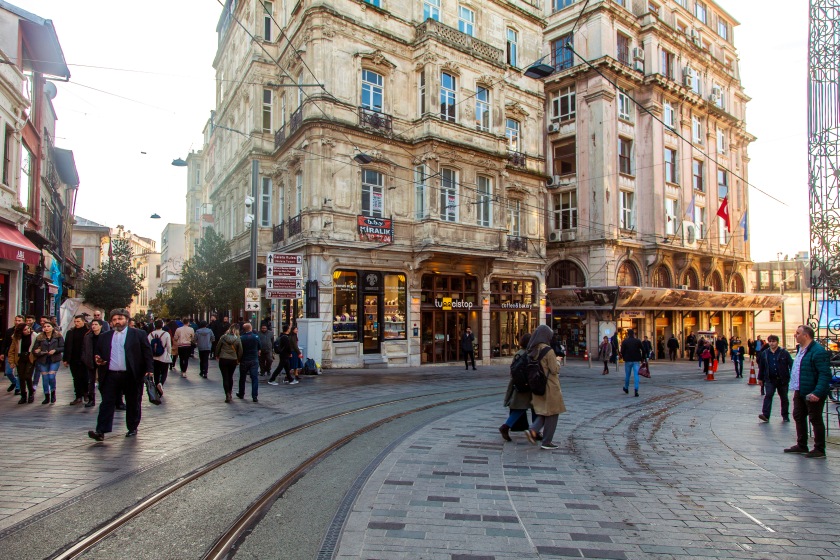
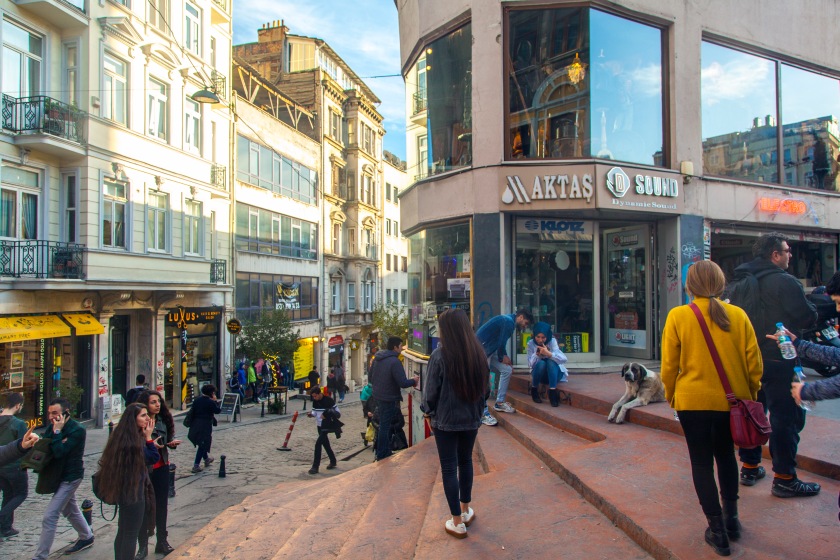
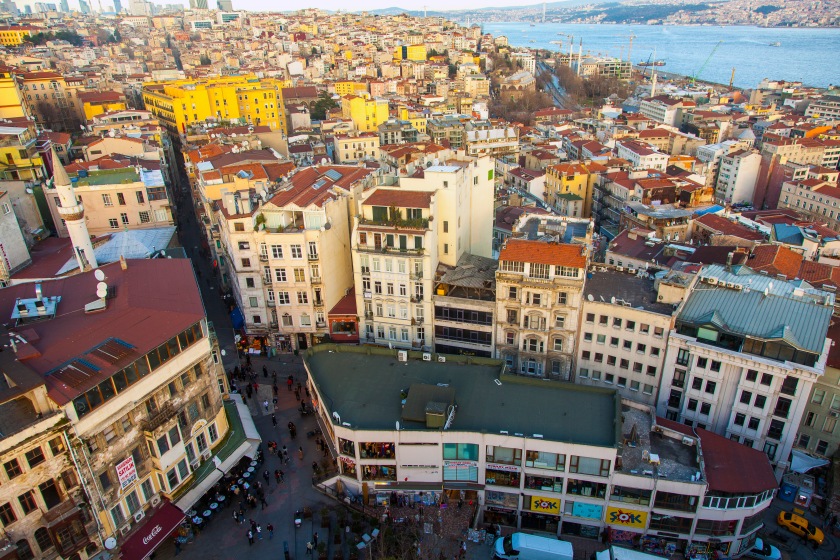
We first turned left. A historic tram line passes through Istiklal Caddesi, and this is the street’s only transport, apart from cleaning vehicles and police cars, which, by the way, also try to drive along the tramway track so as not to disturb pedestrians very much. For people from Baku, the best description of Istiklal Avenue is that it’s Istanbul’s “Torgovaya”, only a very long one.
IMG_3958

IMG_3984

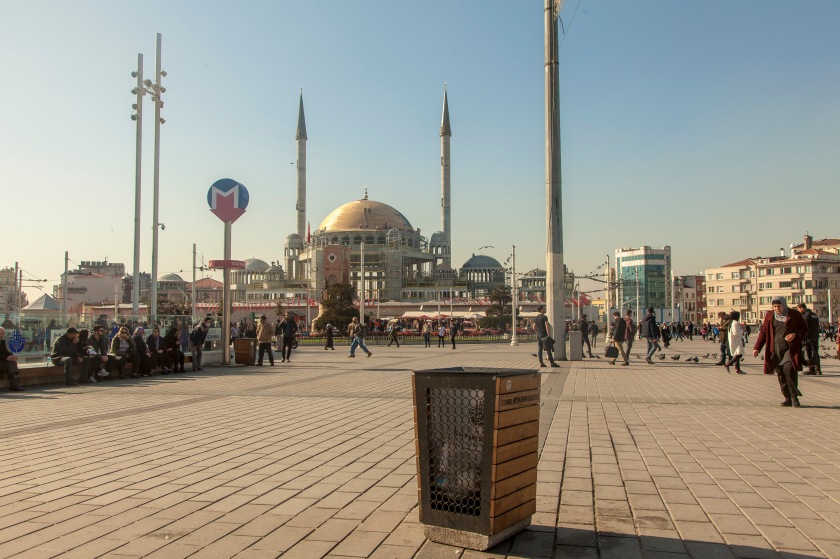
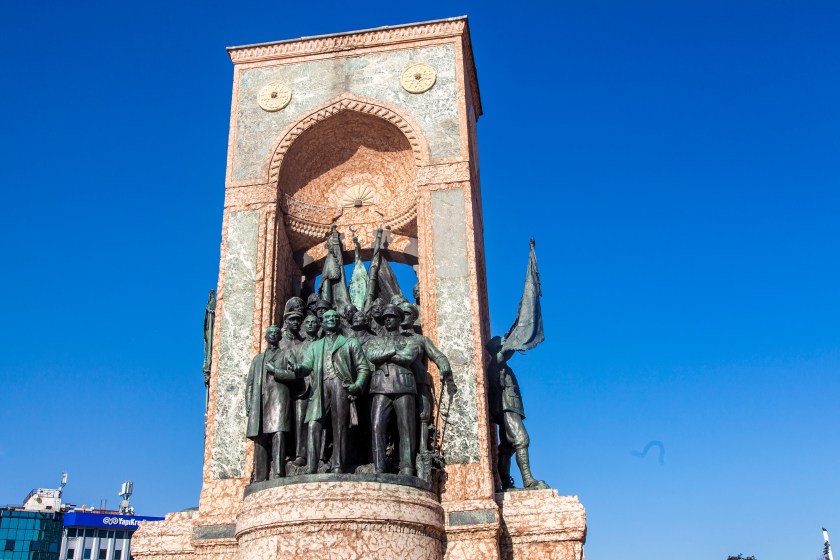
We are surprisingly lucky with the weather today: despite it being February, it is so warm during the daytime that we have to take off our outerwear every now and then. When we sit down on a bench on Taksim Square, the sun is literally scorching. The square itself does not seem very cozy. We sat there for a bit and looked at a mosque under construction, at the “Republic” monument with sculptures of Ataturk and other marshals, including the Soviet marshal Voroshilov, and then turned back to Istiklal Caddesi, more interested in the tram, with roller skater boys clinging to it, than in the square itself.

IMG_3965

IMG_3967

IMG_3972

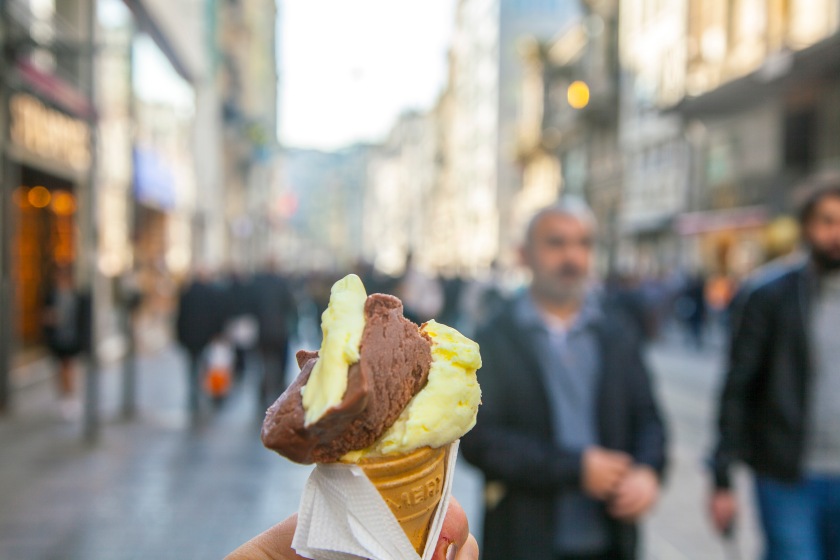
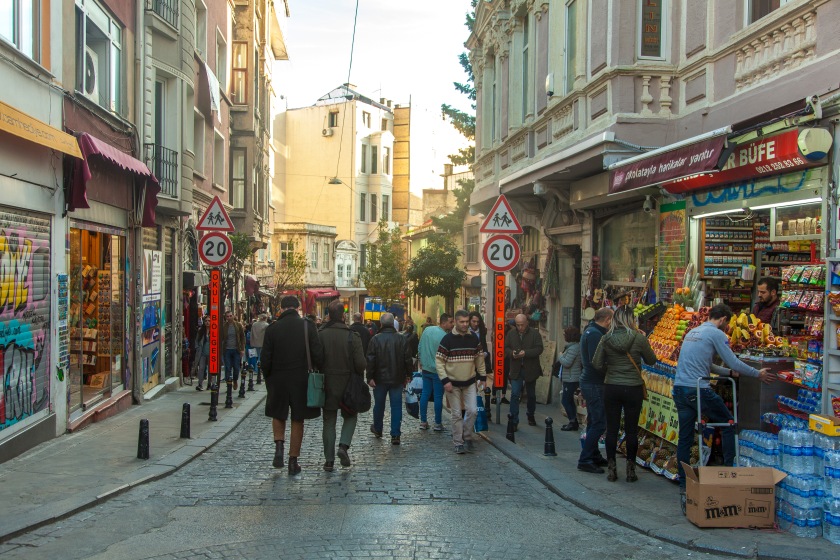
Walking Istiklal Street is very pleasant. We are eating wonderful roasted chestnuts, which are sold at every corner, and dondurma – the special stretchy Turkish ice cream, which the seller scoops onto cones, using a long-handled paddle, and turning the whole thing into a real show.

IMG_3959

IMG_3979

IMG_3990

IMG_3994

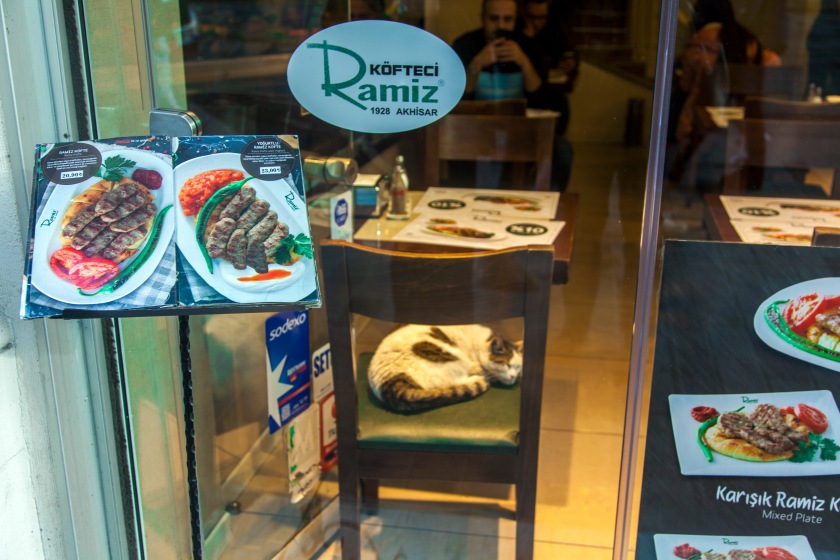
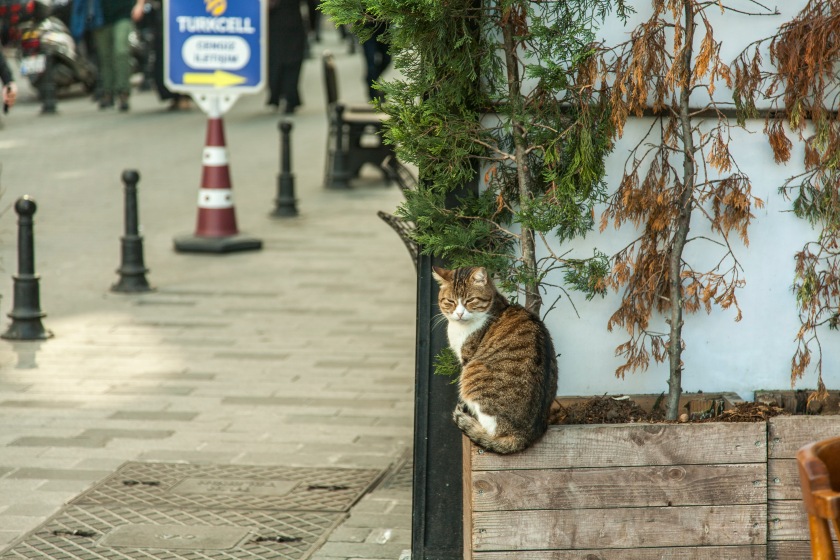
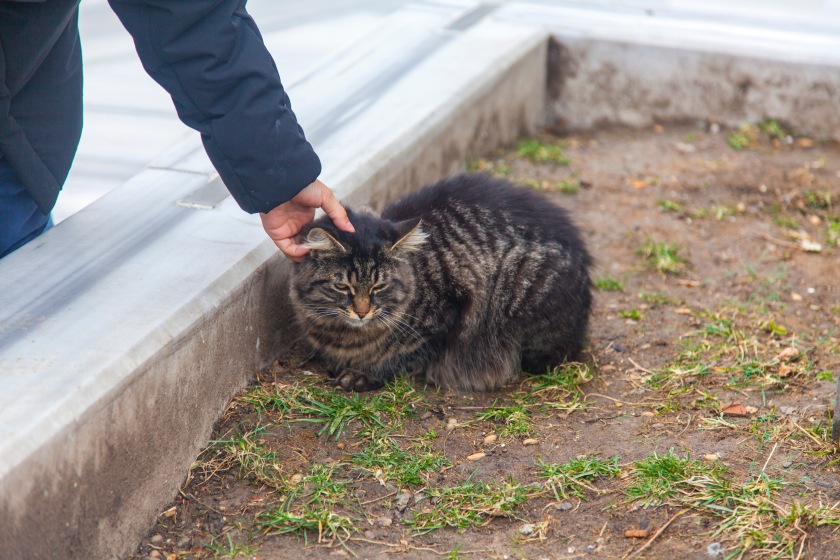
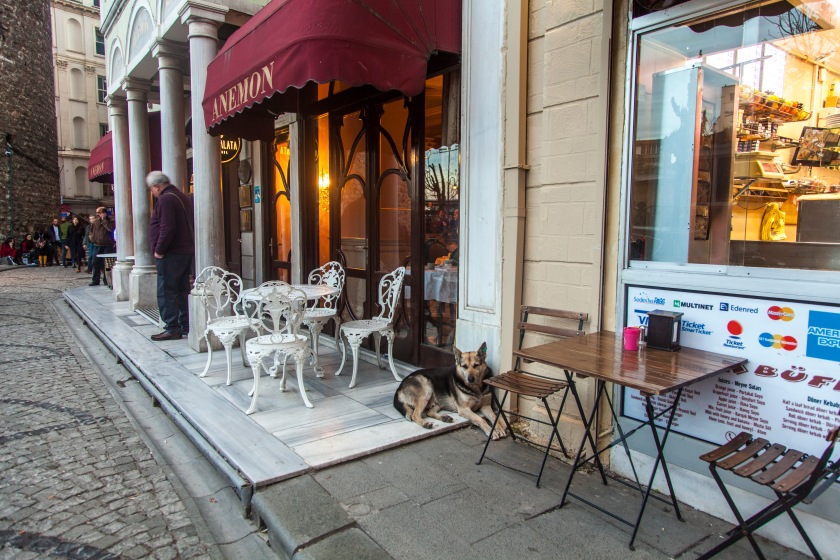
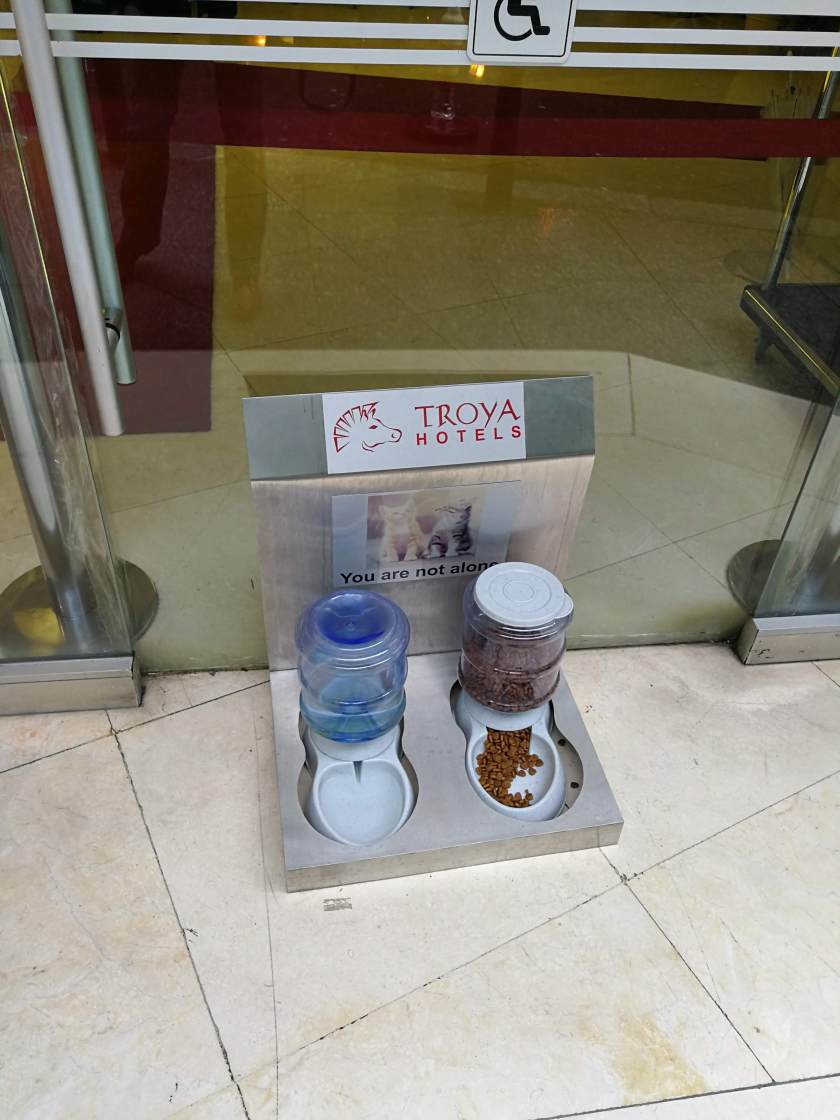
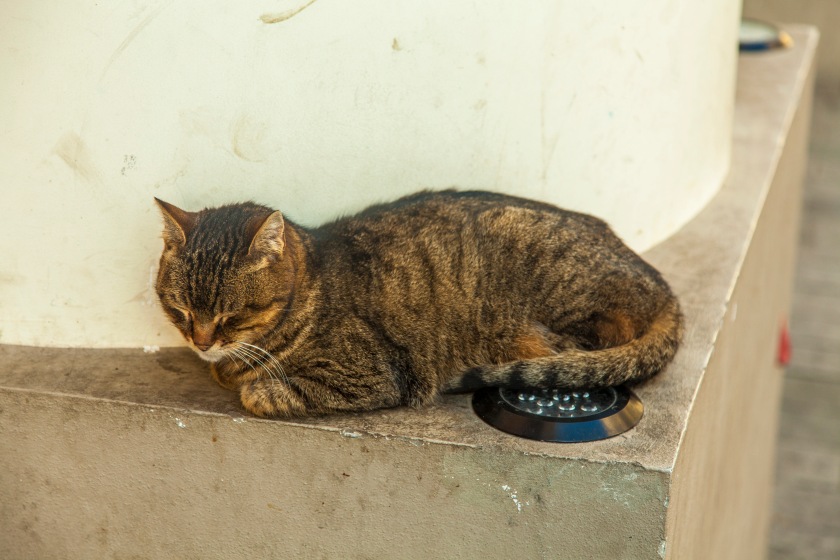
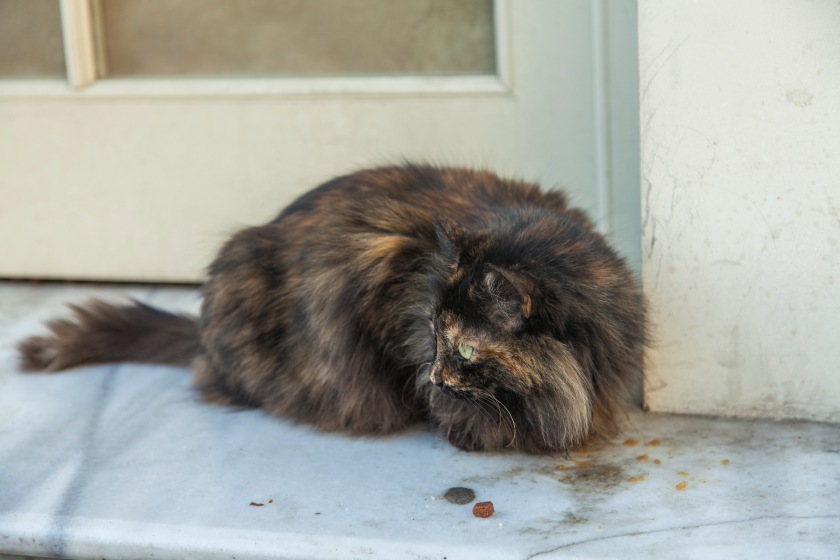
A separate paragraph should be devoted to the cats of Istanbul. There are lots of them, and this is the only place I have seen where cats are as beautiful as in Baku, but here they are loved and cherished much more. Almost every store or restaurant has food and drink bowls for cats, and often even a special little cat house. However, the most audacious cats prefer to settle in a chair right inside. There are quite ordinary-looking cats, and there are also simply outstanding examples of fluffiness and fatness. Dogs can also be found, though less often; all of them are microchipped and seemingly contented.

IMG_3995

IMG_3957

IMG_4243

IMG_3997

IMG_4003

IMG_4037

cof

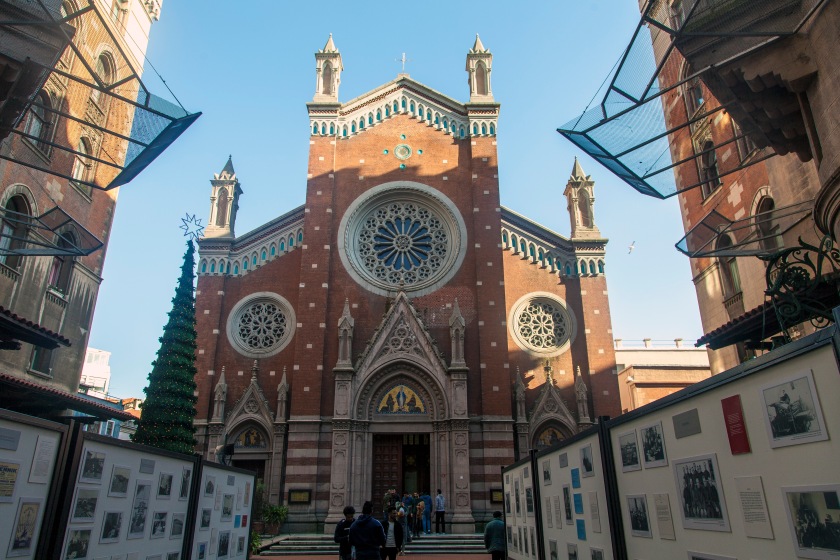
What’s also interesting on Istiklal Caddesi is that there are quite a few Christian churches. We walked into one – the Basilica of St. Anthony of Padua, and, as it seemed to me, there were quite a few Turks praying in it, although I could be wrong.

IMG_3987

We reached the Galata Tower quite unexpectedly – for some reason I had the impression that it was in the opposite direction, and then suddenly we saw a signpost. It was about 5pm, and at first we decided to wait for the evening to take pictures of the tower in the evening light, and then thought that instead of idly waiting around we might as well go up to the observation deck (previously we were planning to do it tomorrow). The queue (maybe it’s a property of all the queues in Istanbul!), despite its impressive length, was moving rather quickly. We wondered if there was a lift inside the tower, or if we would have to climb a spiral staircase. There was a lift, yet we still had to climb the last two floors.

IMG_4004

IMG_4006

IMG_4011

IMG_4013

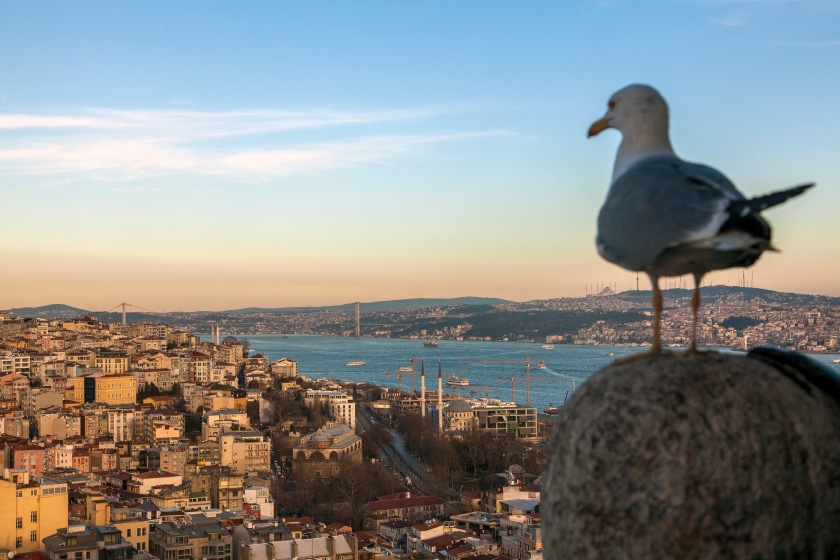
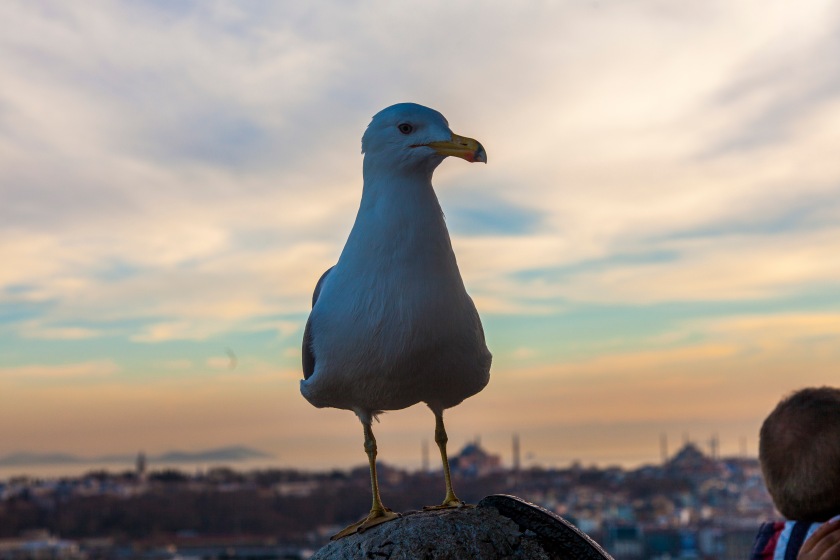
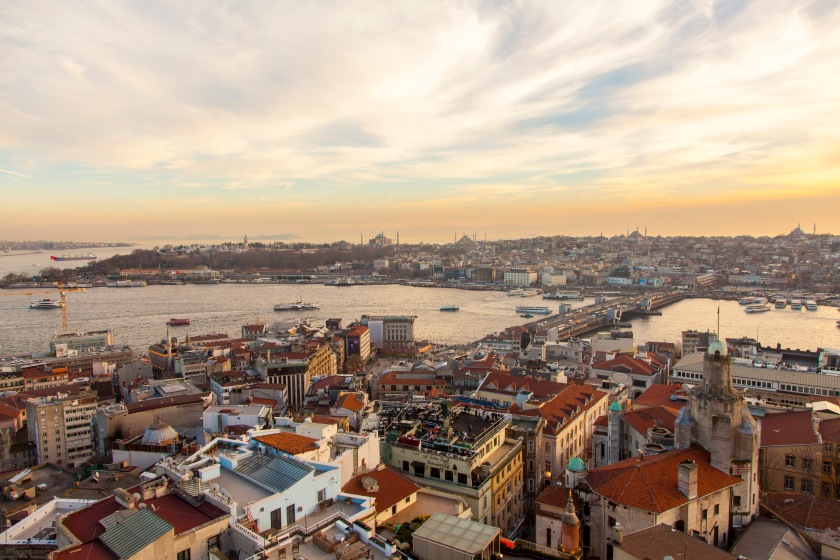
I must say that a moderate wait in the queue and a dizzy climb up the eerie stairs were totally worth it. The view of Istanbul from all sides is magnificent! A special feature are the large seagulls, which land on stone balls from time to time, right at arm’s length, and observe the city, looking very smart and important. Obviously, just like the tourists here, they are admiring the Bosphorus, the Golden Horn Bay, the famous mosques in the Old City. The only slightly annoying bit is that there are too many people on such a narrow rim of the tower, especially when not everyone is following the instructions to move only clockwise, which leads to chaotic cramming.

IMG_4021

IMG_4029

IMG_4022

IMG_4023

IMG_4024

IMG_4033

The tower also offers another entertainment – a simulation of a helicopter flight, which we didn’t find tempting though. However, we were taken a ton of pictures of, wearing historical costumes of harem dwellers. The poster advertising this attraction beckons you with a price of 30 liras (about 6 USD) per photo, but the ingenious photographer takes so many beautiful photos, with a variety of props, that you almost unwittingly end up forking out a lot more. But we still liked it!

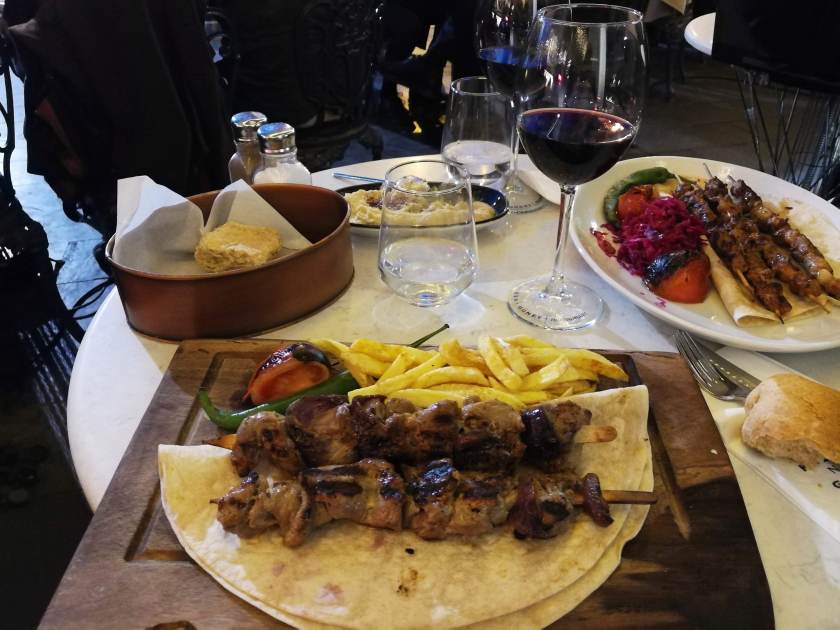
To make sure we do get to see the Galata Tower in the evening light, we decided to have dinner in a restaurant directly opposite it. The weather and the heaters allowed us to sit comfortably outside (in February!) As for the restaurant, what can I say? Delicious kebabs, excellent service.

mde

IMG_4039

Posted in Asia, English, Ho Chi Minh City, Vietnam

Vietnam – Day 1

РУССКОЯЗЫЧНАЯ ВЕРСИЯ ПО ЭТОЙ ССЫЛКЕ. CLICK HERE FOR RUSSIAN VERSION.

5 June 2017

Our Vietnamese trip began last night, when we left Baku for Doha and from the latter, after a 2-hour connection, flew straight to Ho Chi Minh city. The flight, albeit a long one, felt okay, in many respects due to being an overnight one: we literally got on, sat down, went to sleep, woke up – and suddenly it was already brunch time with just two hours remaining.

In general, everything went pretty smoothly, even though getting the visa took ages. First, we had to fill out a long form asking about everything one could possibly ask about, including religion and information about family members. Then we handed the documents to the officer and were asked to wait. And wait. And wait again. In total, the waiting time was less than an hour, but it felt like eternity.

We were anxious that the travel agency representatives wouldn’t wait for us, but obviously they were aware of the speed of the visa issuing process, so of course, our fears were groundless – we were greeted by a nice lady called Phuoc, picked up by an air-conditioned car and taken to the travel agency office to settle the outstanding payment balance. On the way, she showed us some flashcards with basic phrases in Vietnamese and told us about the history of Ho Chi Minh city and how it was only in the 1970’s when it was called so, because its previous name, Saigon, was too reminiscent of the Vietnam war. By the way, the name Saigon, as per Phuoc, is the modified form of the old Khmer “Prey Nokor” (yes, yes, don’t be surprised!), which used to be the name of the city in its pre-Vietnamese (i.e. Cambodian) times.

IMG_2171

The office turned out to be a small room with a couple of computers, piled with boxes and smelling of mothballs for some reason, where we were warmly welcomed, served iced tea, handed an ancient Nokia with a local sim-card to stay in touch with them, and, of course, charged the outstanding payment. Overall, for the time being, it feels like the agency is taking good care of us!

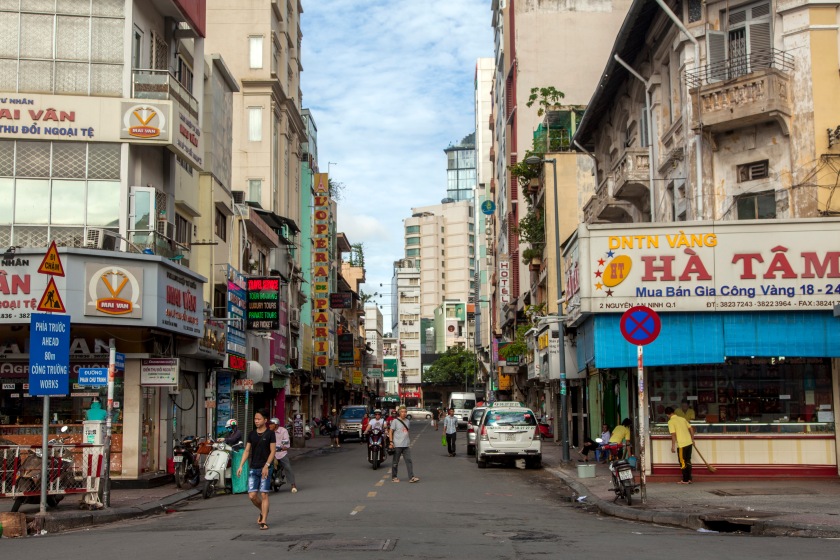
Then we were brought to the Lavender Boutique Hotel, where they left us – nothing is planned for today and we have the evening free. So after freshening up, we went out to explore the surroundings and get some dinner. The moment we stepped out into the street, we felt like in a bath – the air temperature is about 30 degrees Celsius and it’s very humid. The vegetation around is quite tropical with lots of greenery, palm trees, etc.

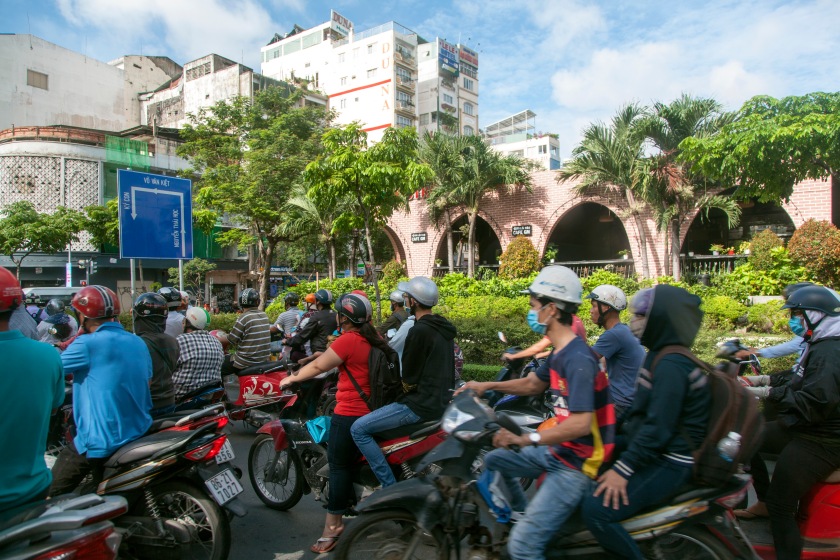
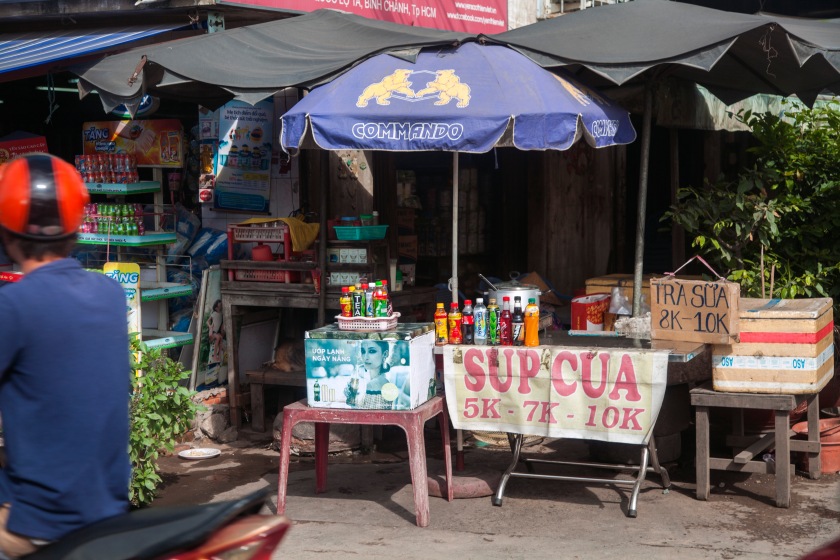
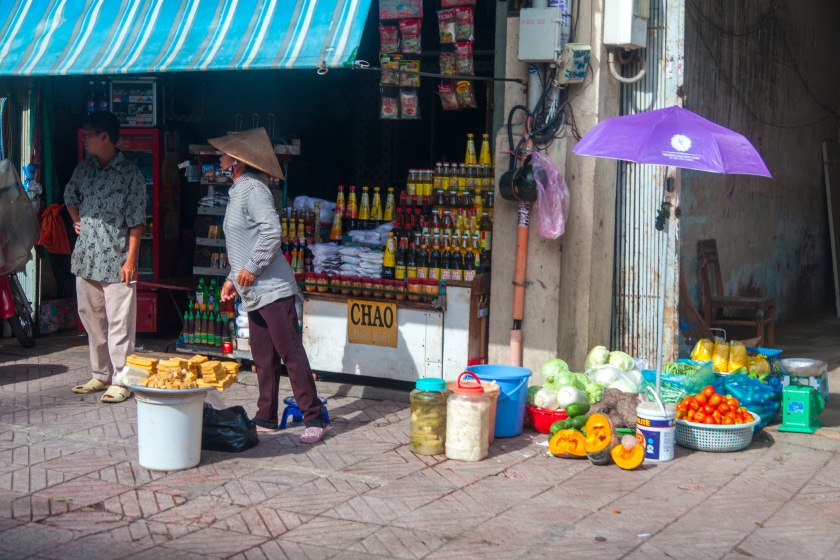
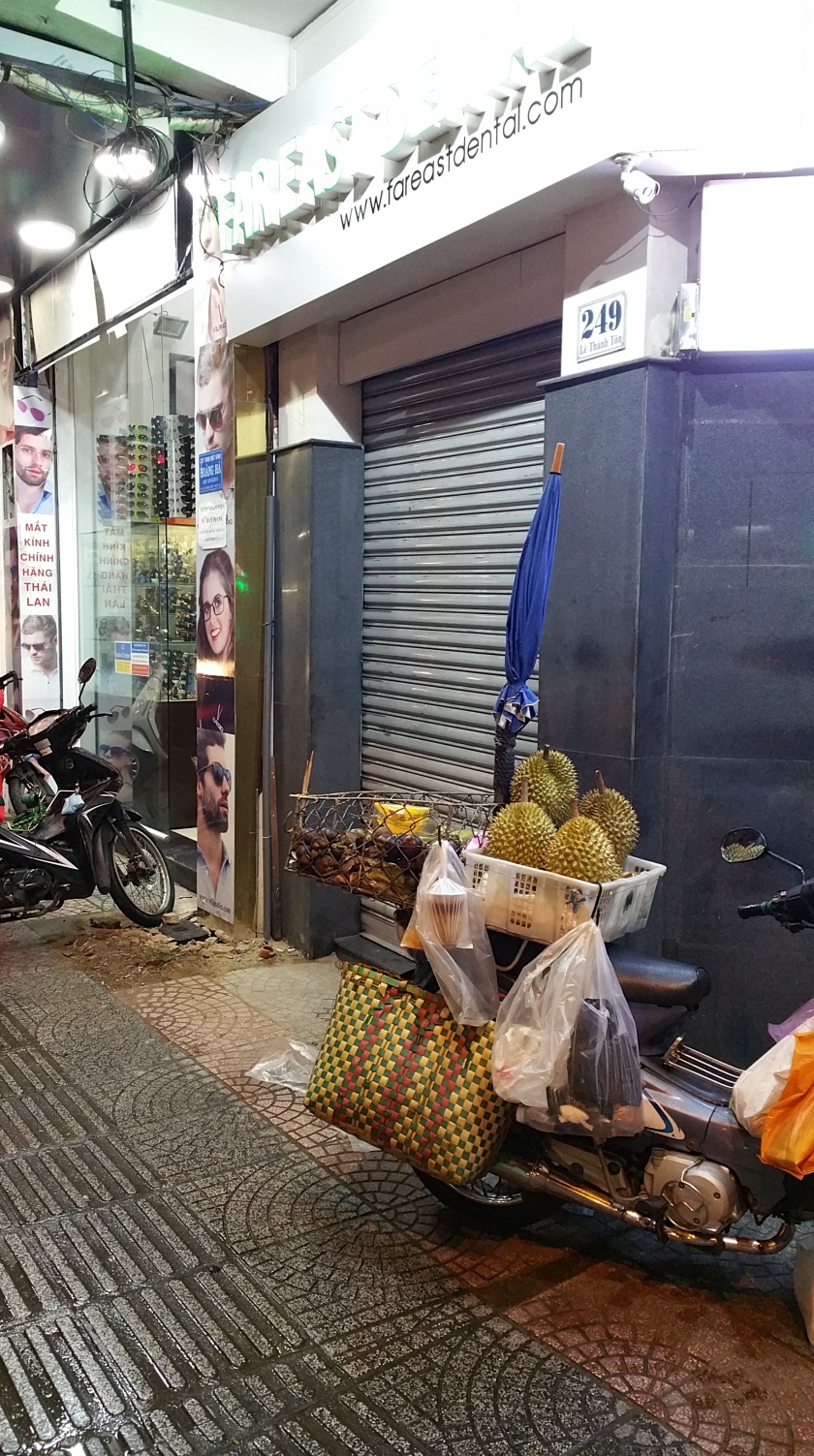
Walking around proves to be very, very difficult. Firstly, one must take into account the crazy traffic: most people here don’t drive a car, but a scooter, which there are lots and lots of. And if car-owners at least follow some traffic rules – that is, stop at the red light and before zebra crossings – you can’t expect the same from motorcyclists, so you have to manoeuvre between them literally risking your life! They even drive on sidewalks! Secondly, the sidewalks themselves are tiled pretty badly – chicken soup to our Bakuvian souls! – and are very uneven. And thirdly, the sidewalks, which aren’t very wide anyway, are clogged up with all sort of things: parked motorcycles, low stools with people sitting on them, street food and fruit stalls. And very specific scents are exuded both by the food and the fruit, as among the latter, durian dominates confidently with its unique smell, and it is at every corner!

IMG_2176

IMG_2181

IMG_2178

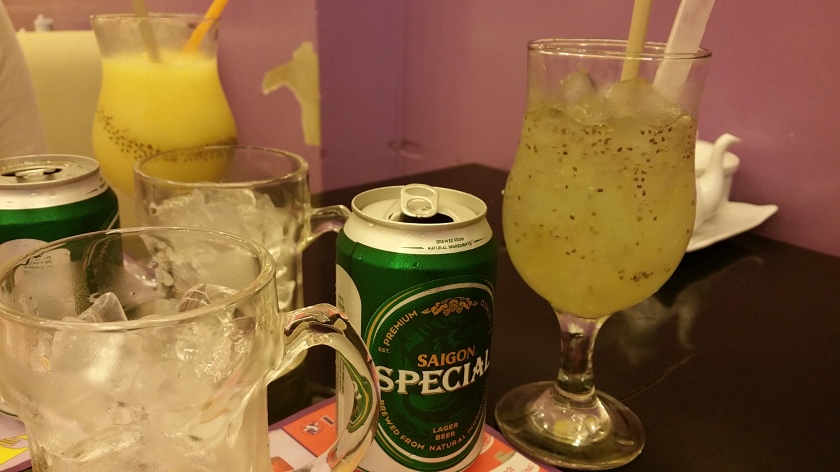
Among all this unglamorous disorder, we discover a nice-looking restaurant, where, as we can see through the window, most customers are Vietnamese but there are some foreigners too, which we perceive as a good sign: the place is, therefore, not very touristy, but still foreigner-friendly. We tried local beer, some drink made of aloe vera with chia seeds and rice noodles with pork, cucumbers, peanuts and something else, and everything was tasty. And it all cost us less than 15 USD for two!

20170605_181240

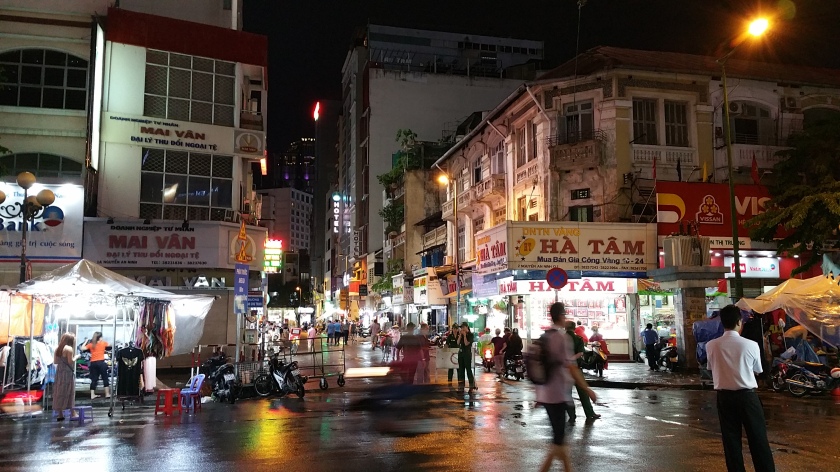
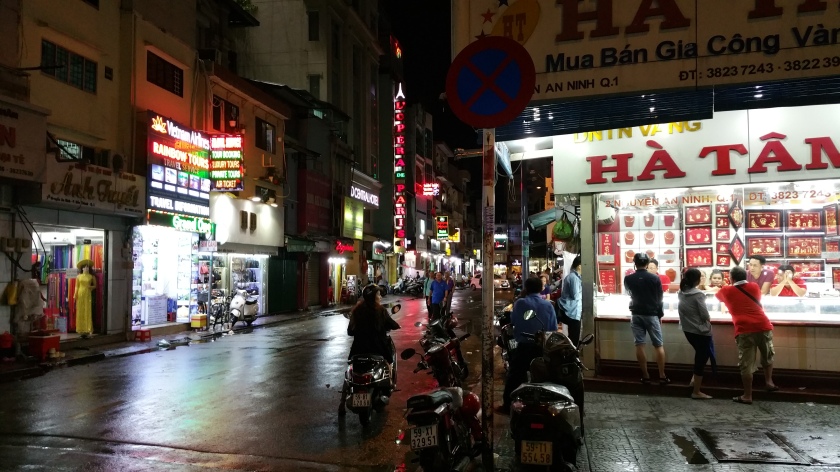
After dinner we tried to walk to the Saigon River, which was supposed to be nearby, but had to give up as a terrible shower started pouring and didn’t stop for a good half an hour. Our Singapore raincoats, which we’d prudently taken with us, came in handy, but didn’t help much – we still had to wait under canopies every time the rain intensified (that is every 5 minutes), until we finally got our feet so wet that we decided to turn back, almost making it to a fancier-looking area than ours. The people here are obviously accustomed to downpours, especially since now it’s the rainy season – everyone has raincoats, huge umbrellas, even scooters are covered with waterproof covers. While waiting, by the way, we walked into a shopping centre selling clothes, which even smelled of cheap clothes – not a sight that can surprise us, who had seen the Baku street markets in underground passages.

20170605_192715

20170605_192759

So here are my first impressions of the city: very colourful, much poorer than the previously seen Asian cities (such as Singapore or Hong Kong or Shanghai), scooters swarming all around and everywhere smells of durian.

20170605_193304