Posted in English, Europe, Florence, Italy

Florence – Day 3

РУССКОЯЗЫЧНАЯ ВЕРСИЯ ПО ЭТОЙ ССЫЛКЕ. CLICK HERE FOR RUSSIAN VERSION.

April 24 2026 – Friday

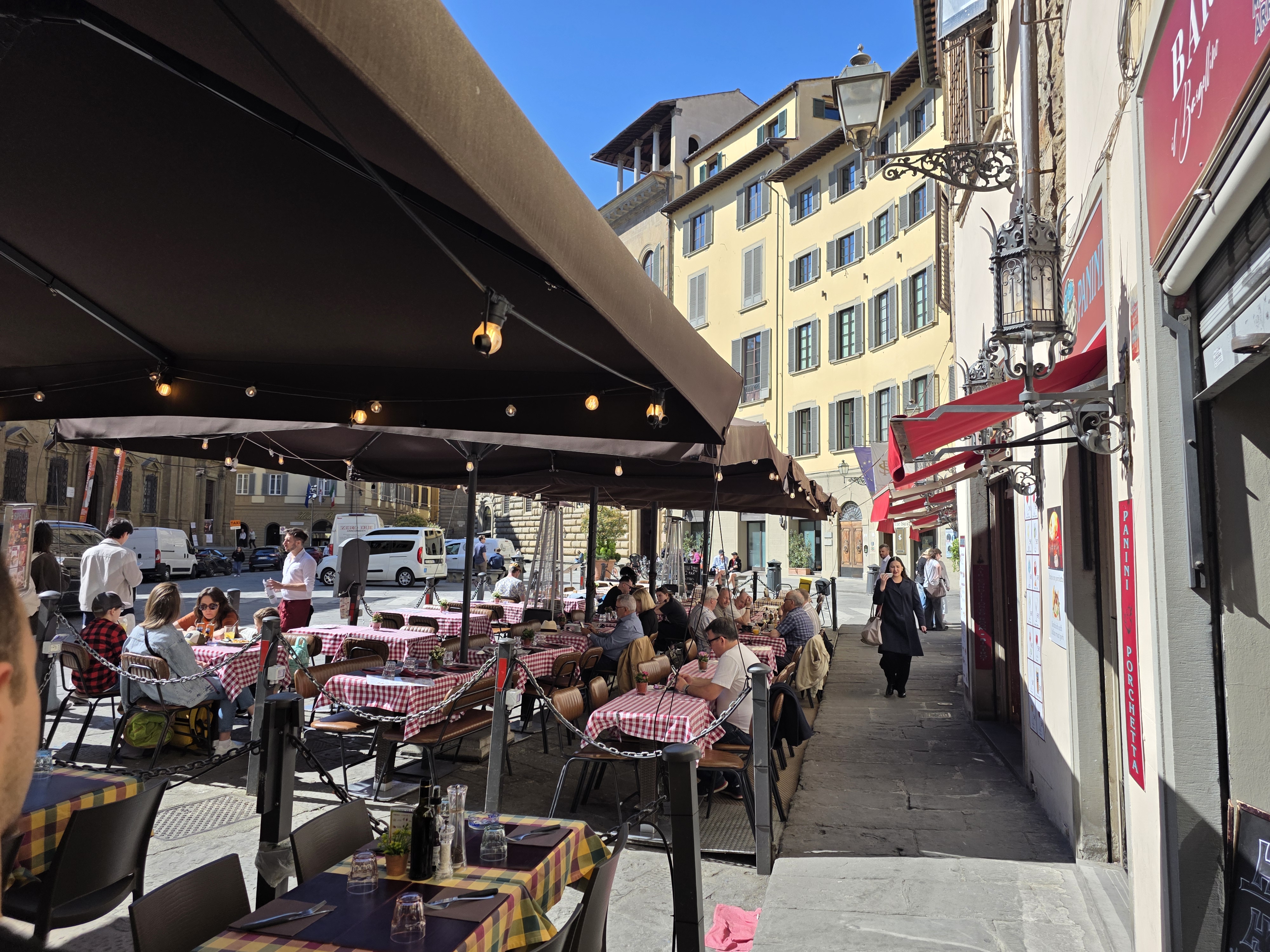
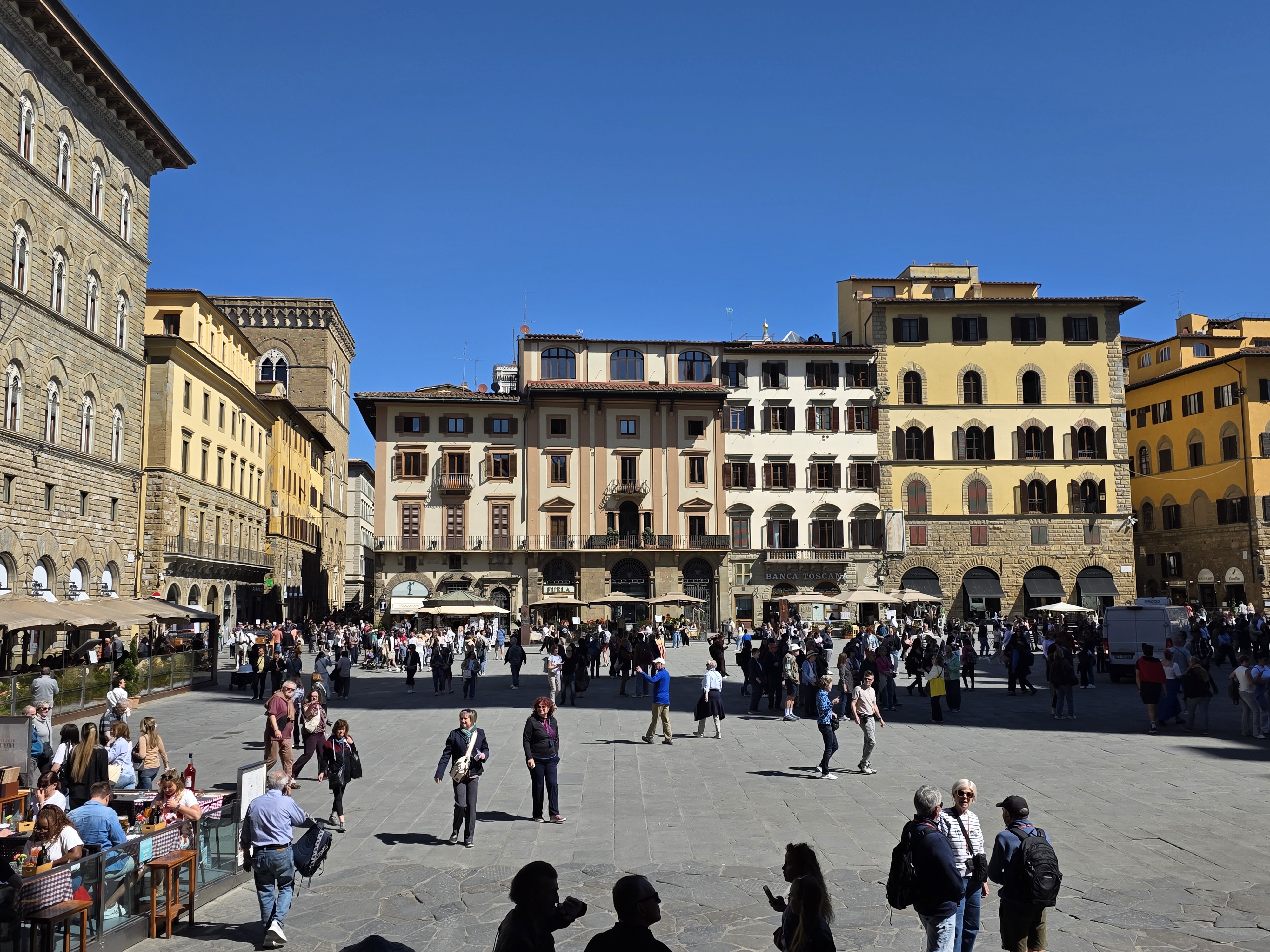
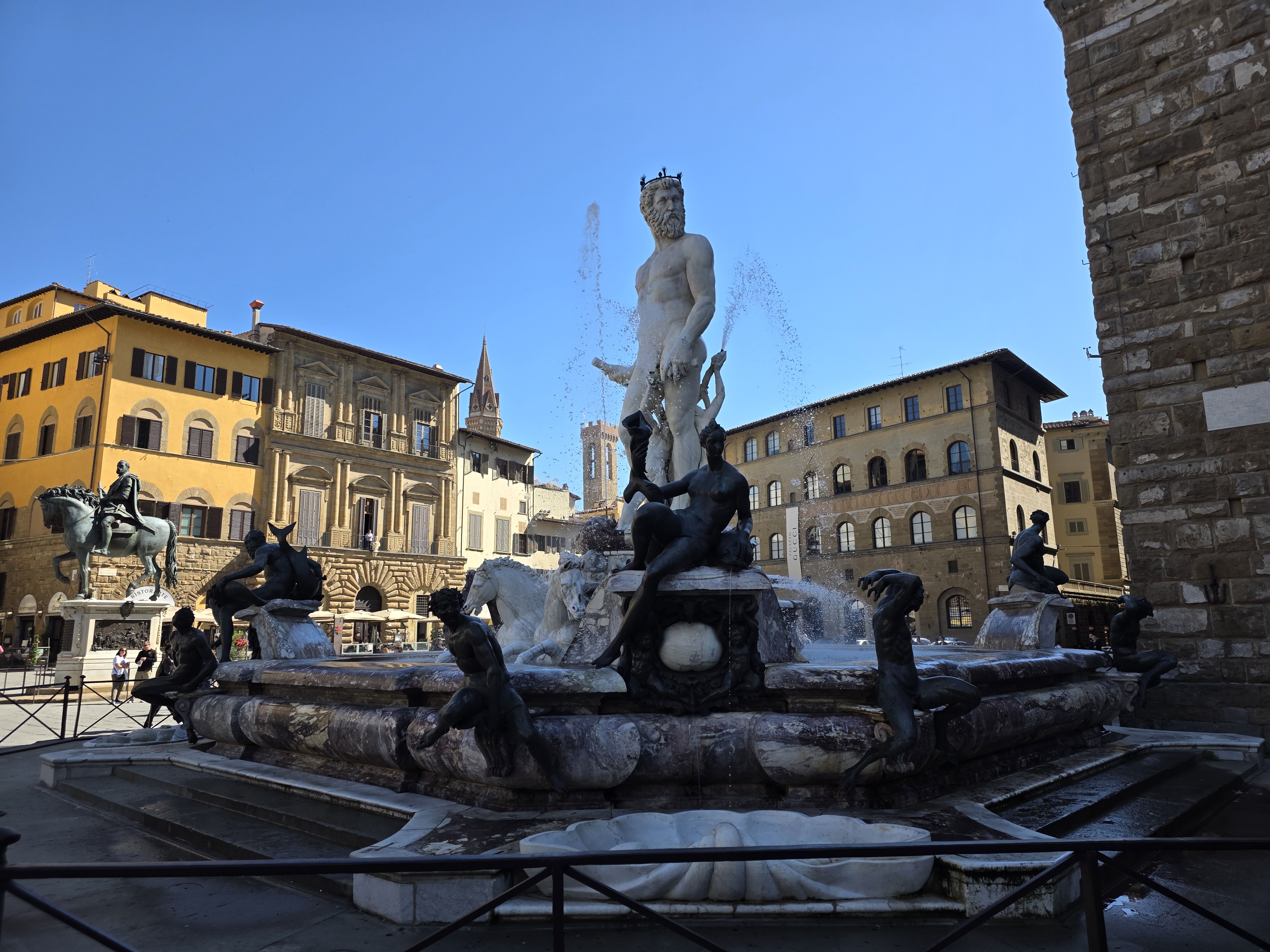
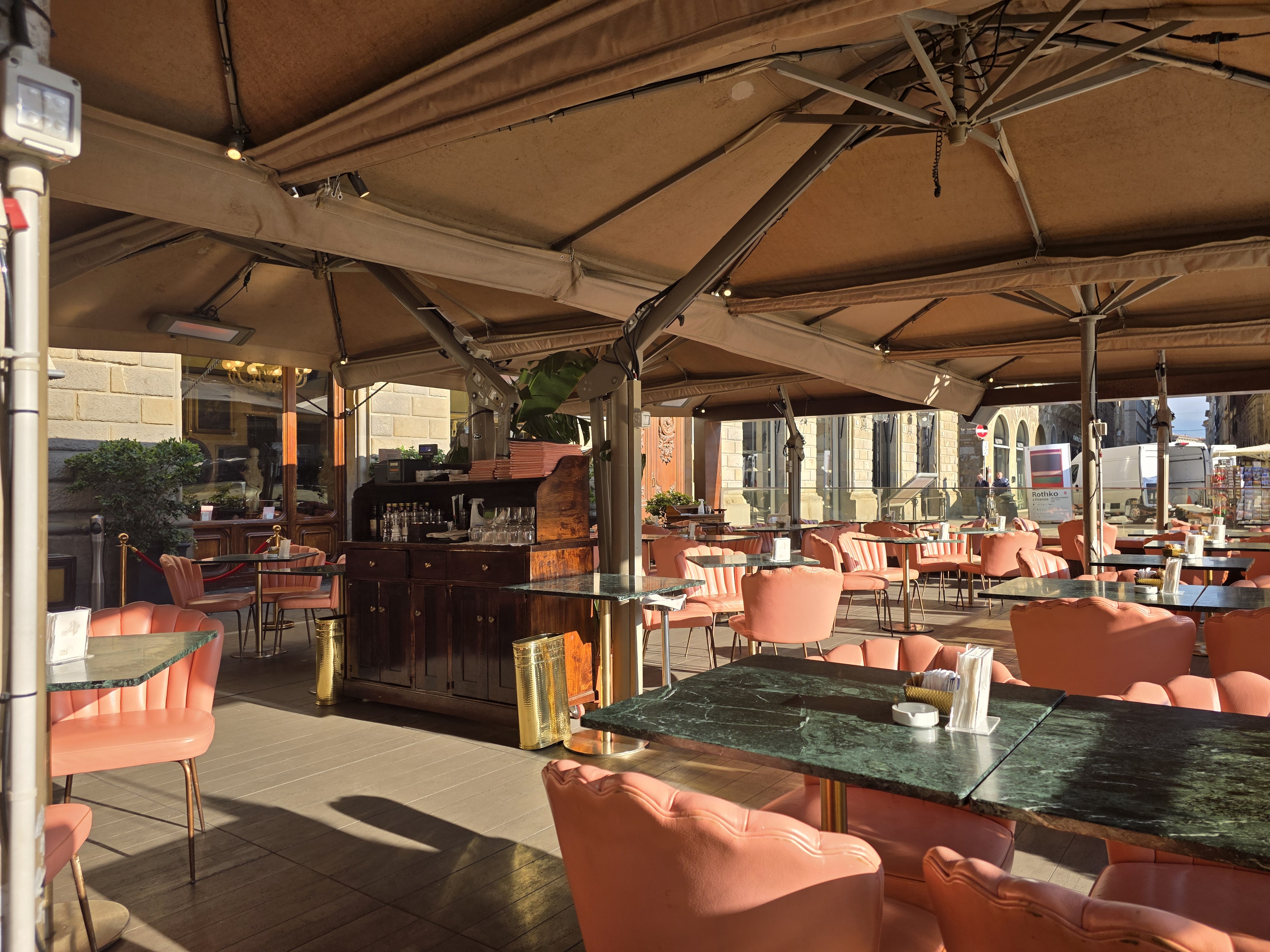
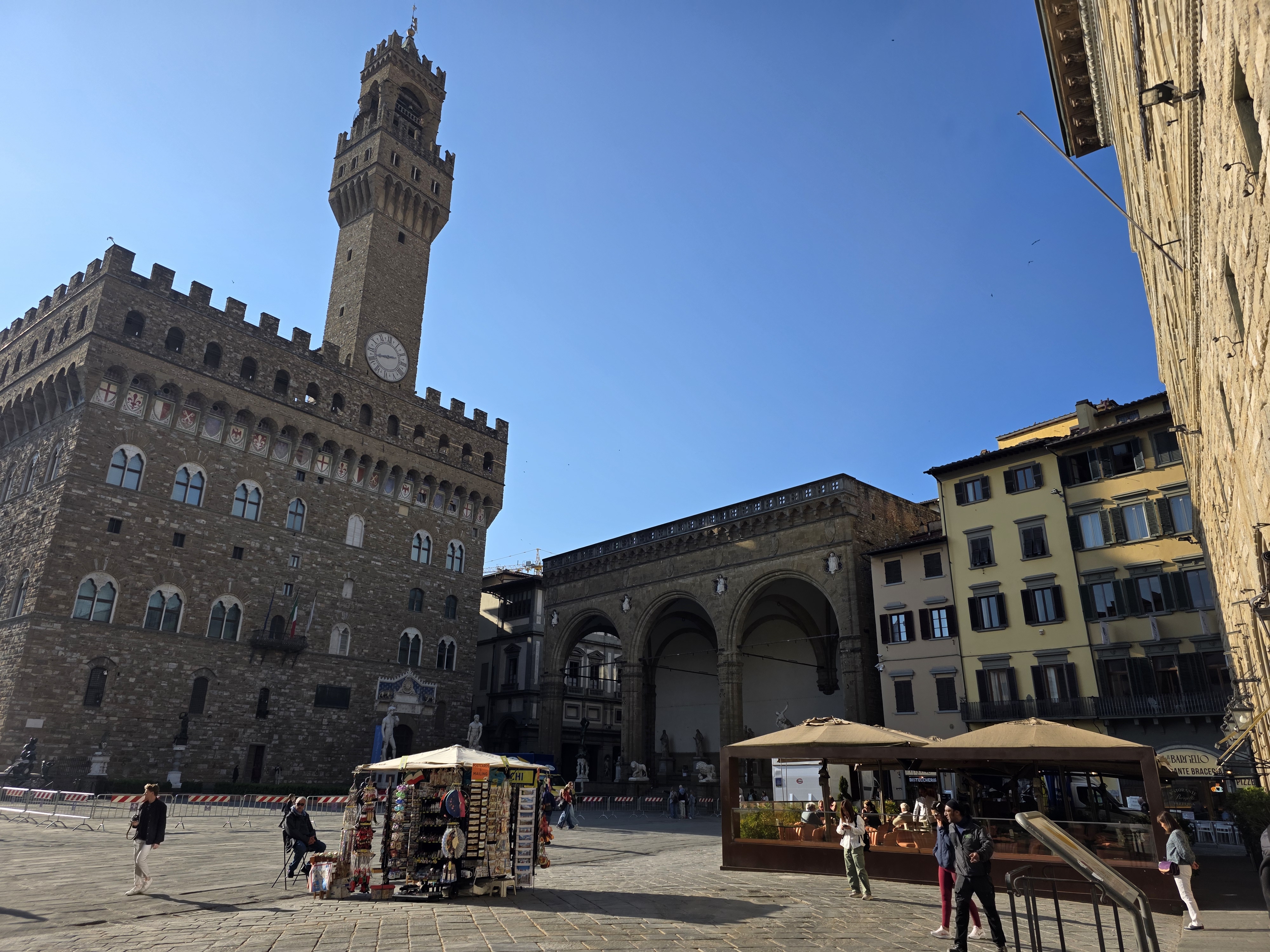
Today I was supposed to have a relaxed and calm morning. I got up fairly early, driven by the desire to have tiramisu for breakfast. Unusual, I know, but I absolutely had to eat tiramisu in Italy, and there wasn’t really any other occasion to squeeze it in. So, I very purposefully headed to a posh café called Rivoire, on Piazza della Signoria with a view of Palazzo Vecchio, and treated myself to an omelette (for protein and balance) and an excellent small portion of tiramisu.
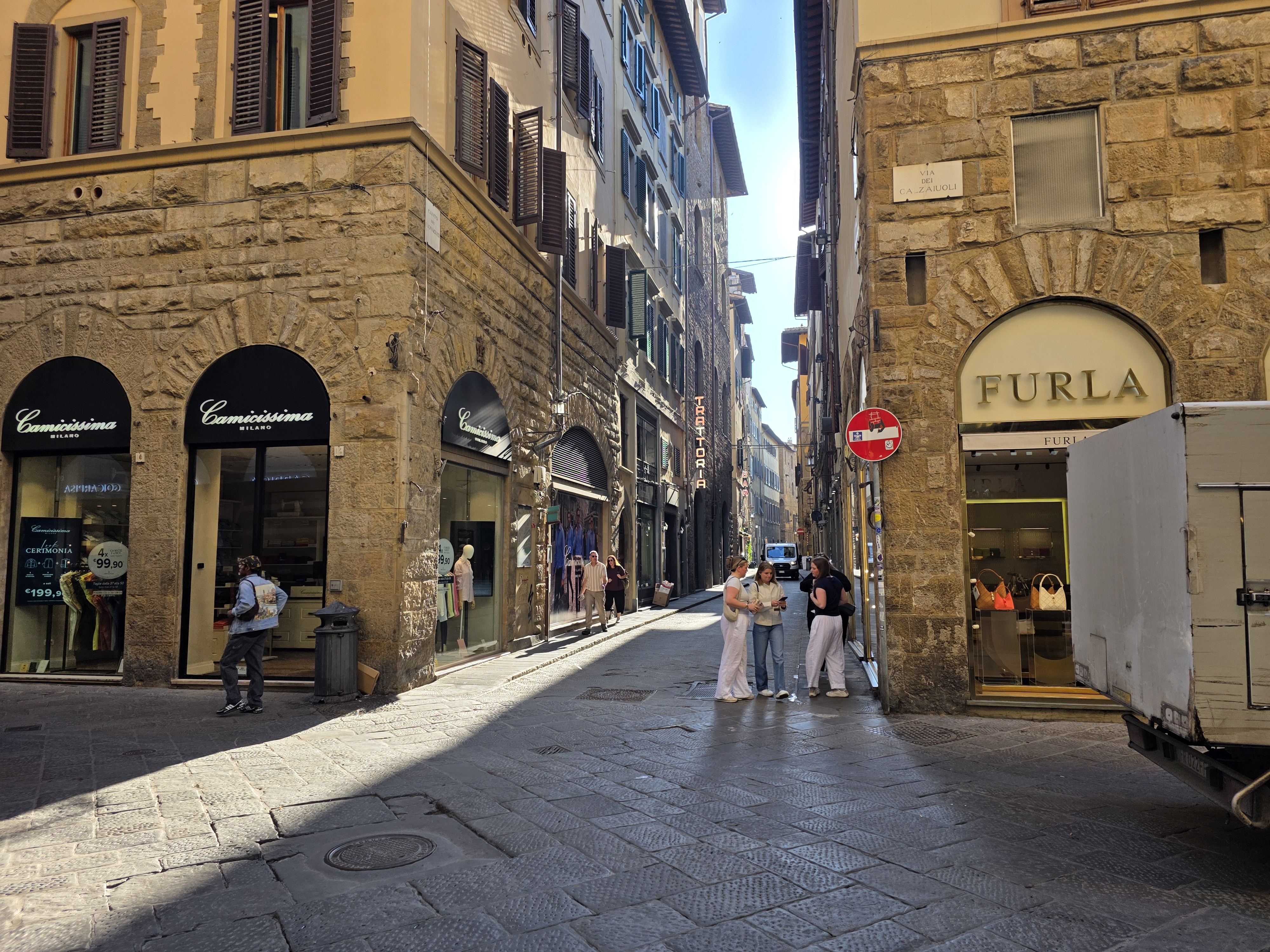
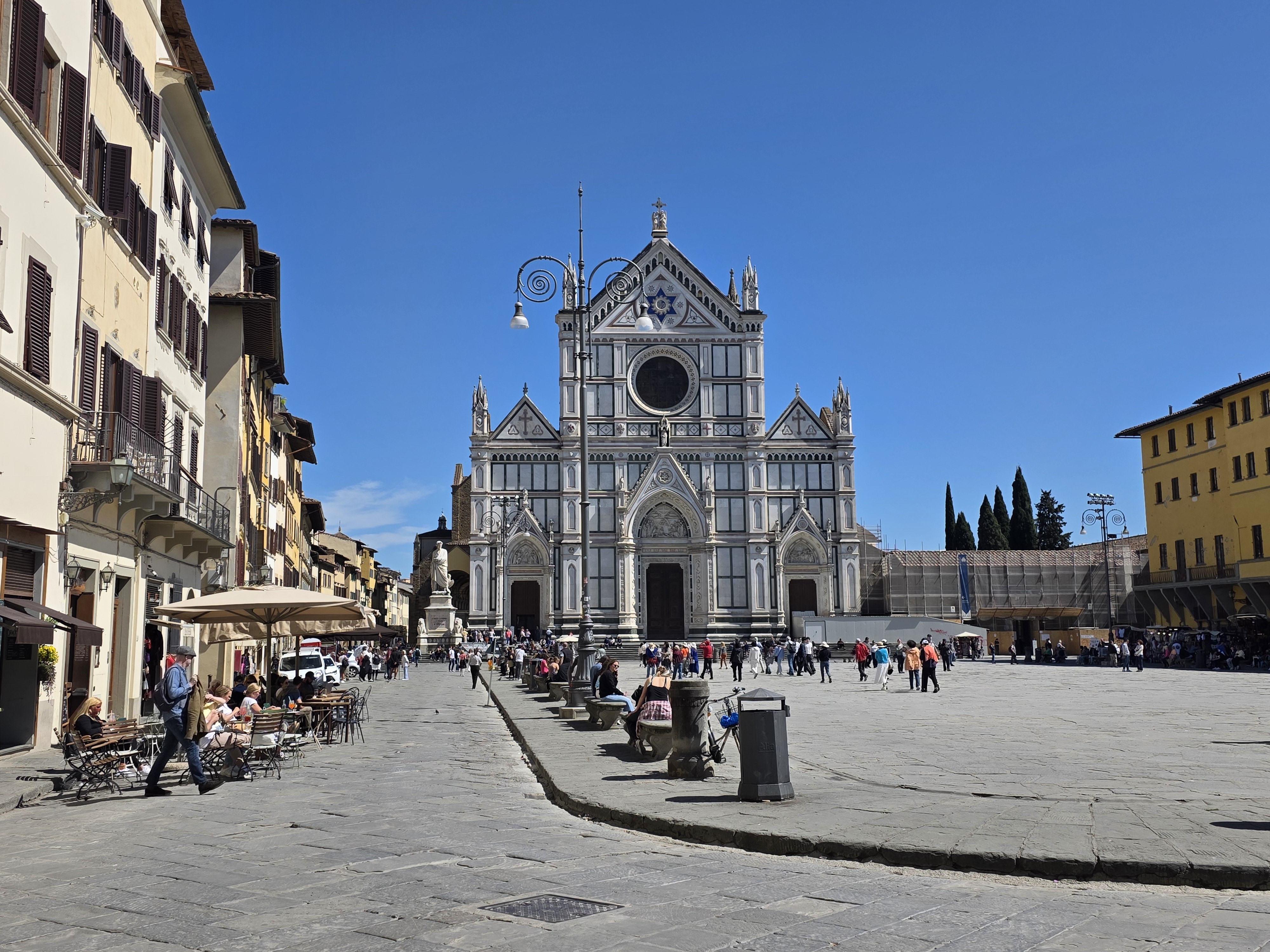
After that, I had a free morning before my Chianti tour, and again on Claude’s recommendation, I decided to visit the Basilica of Santa Croce. Entry cost 10 euros.
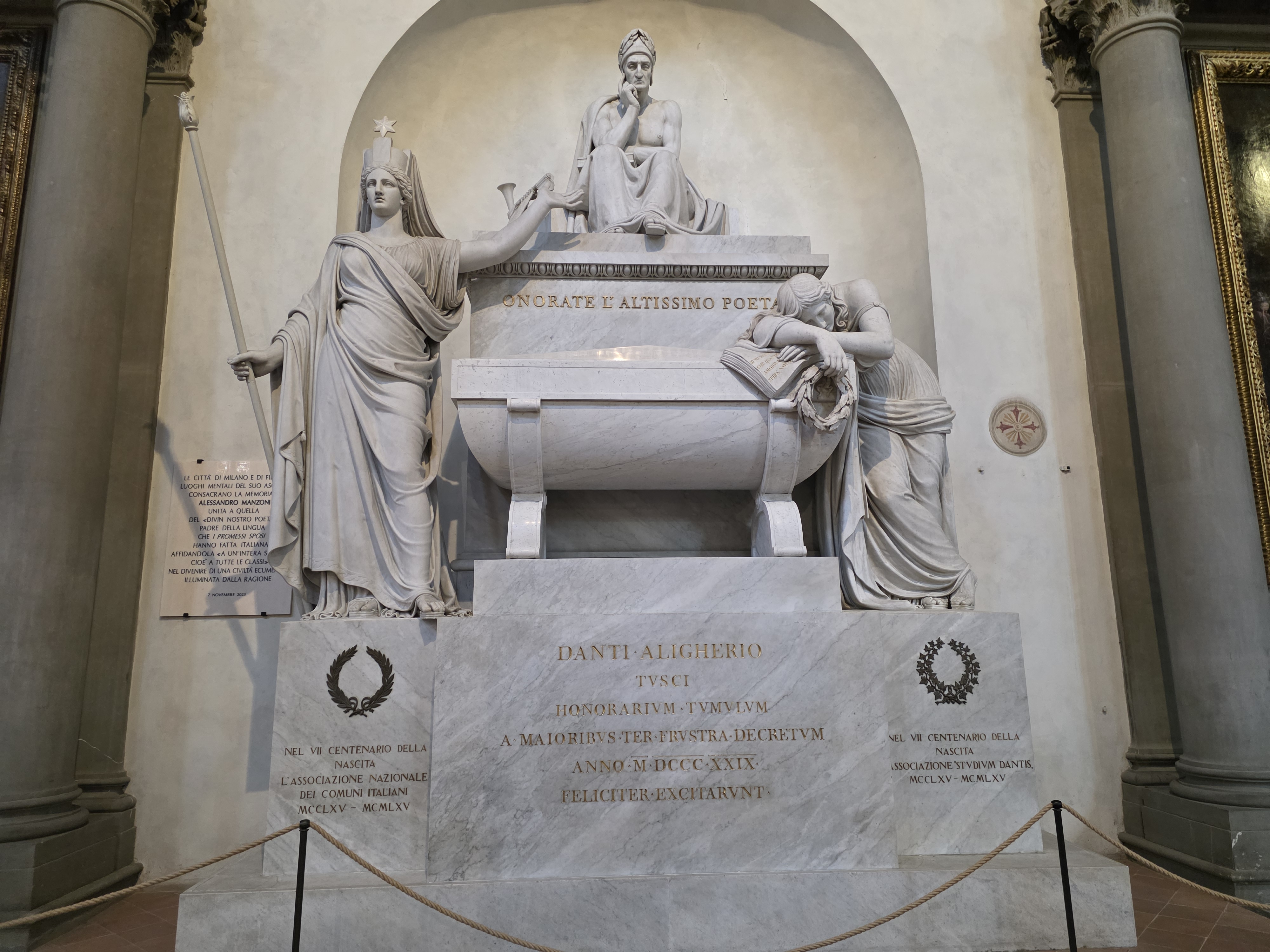
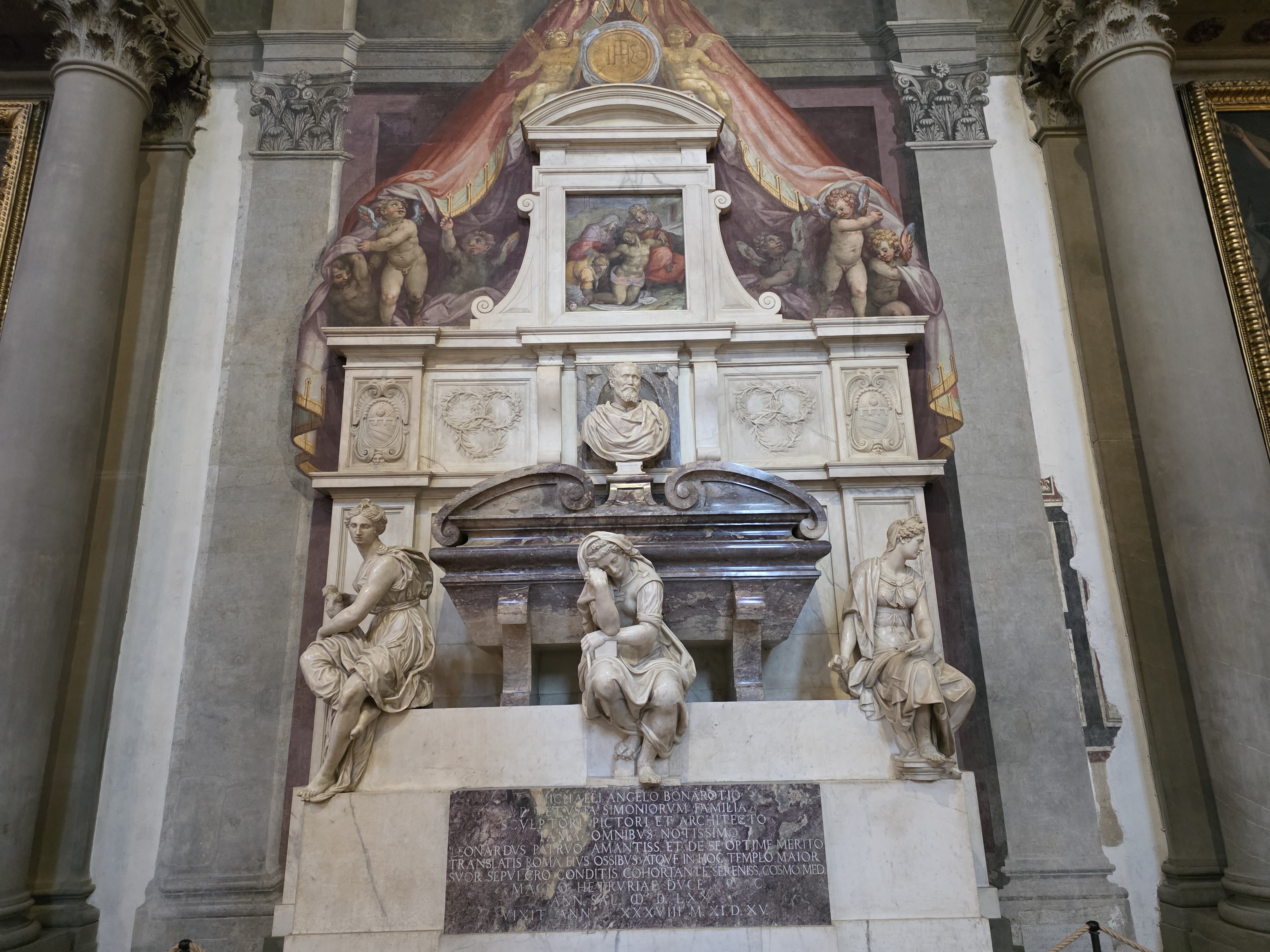
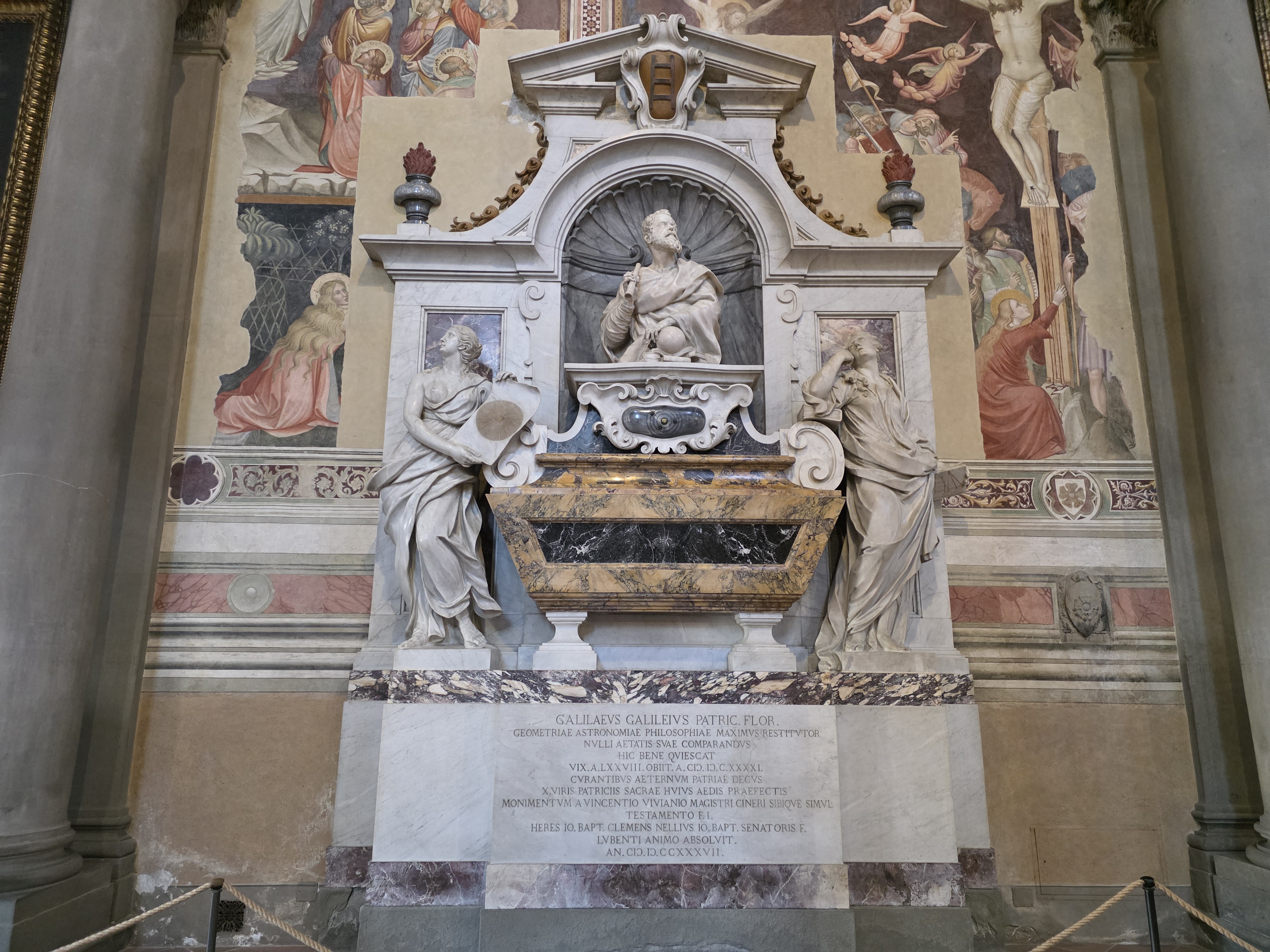
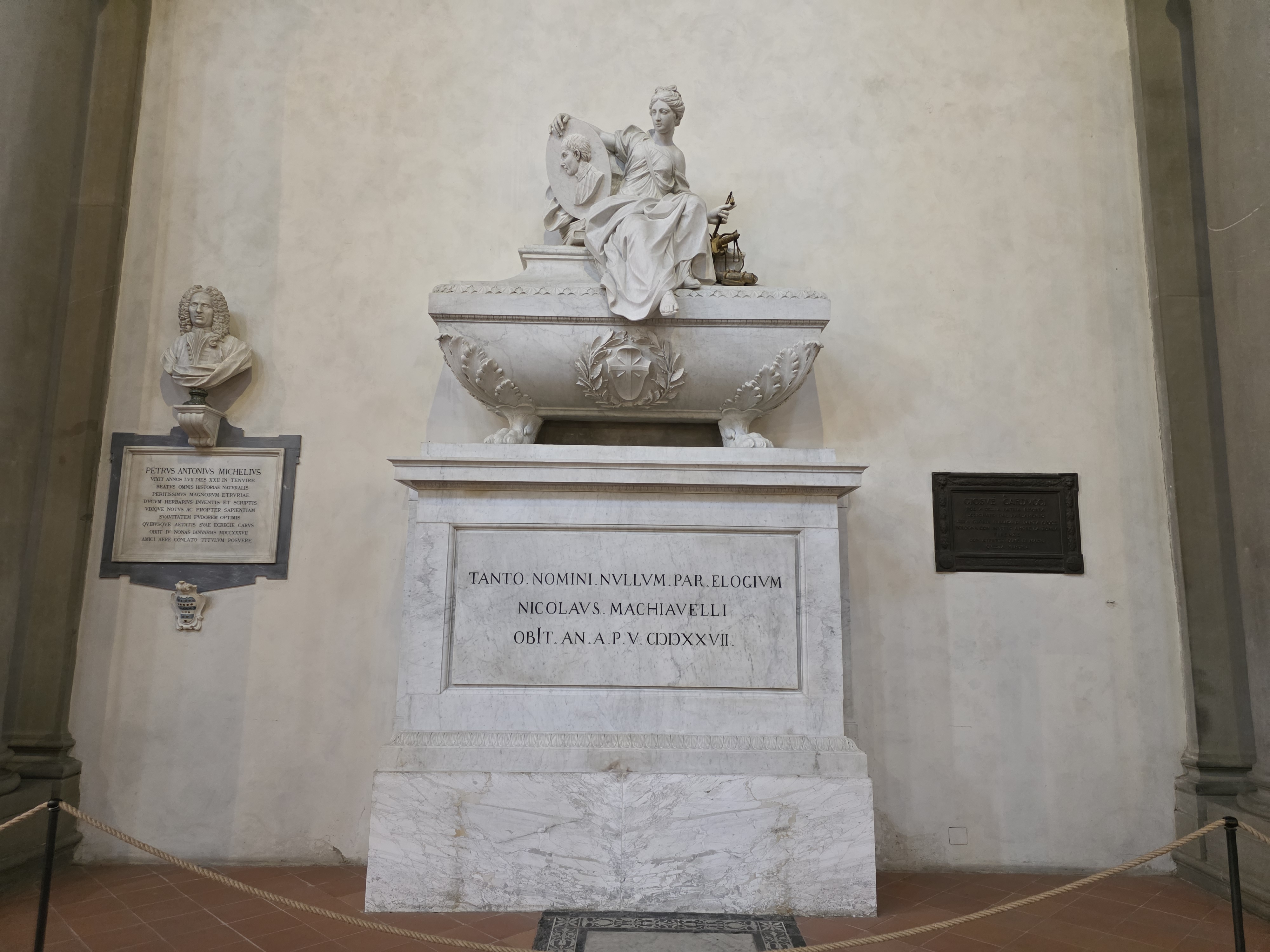
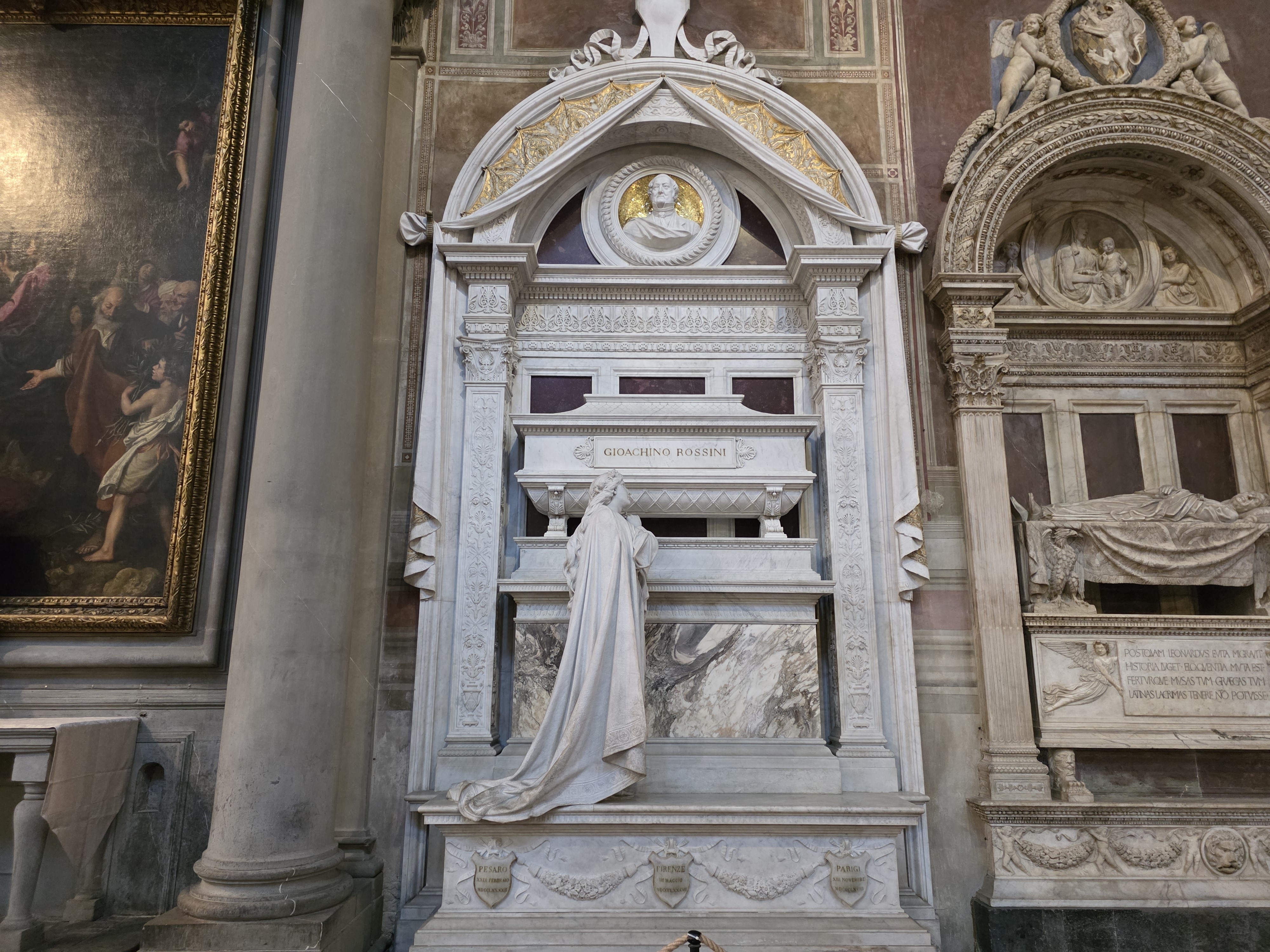
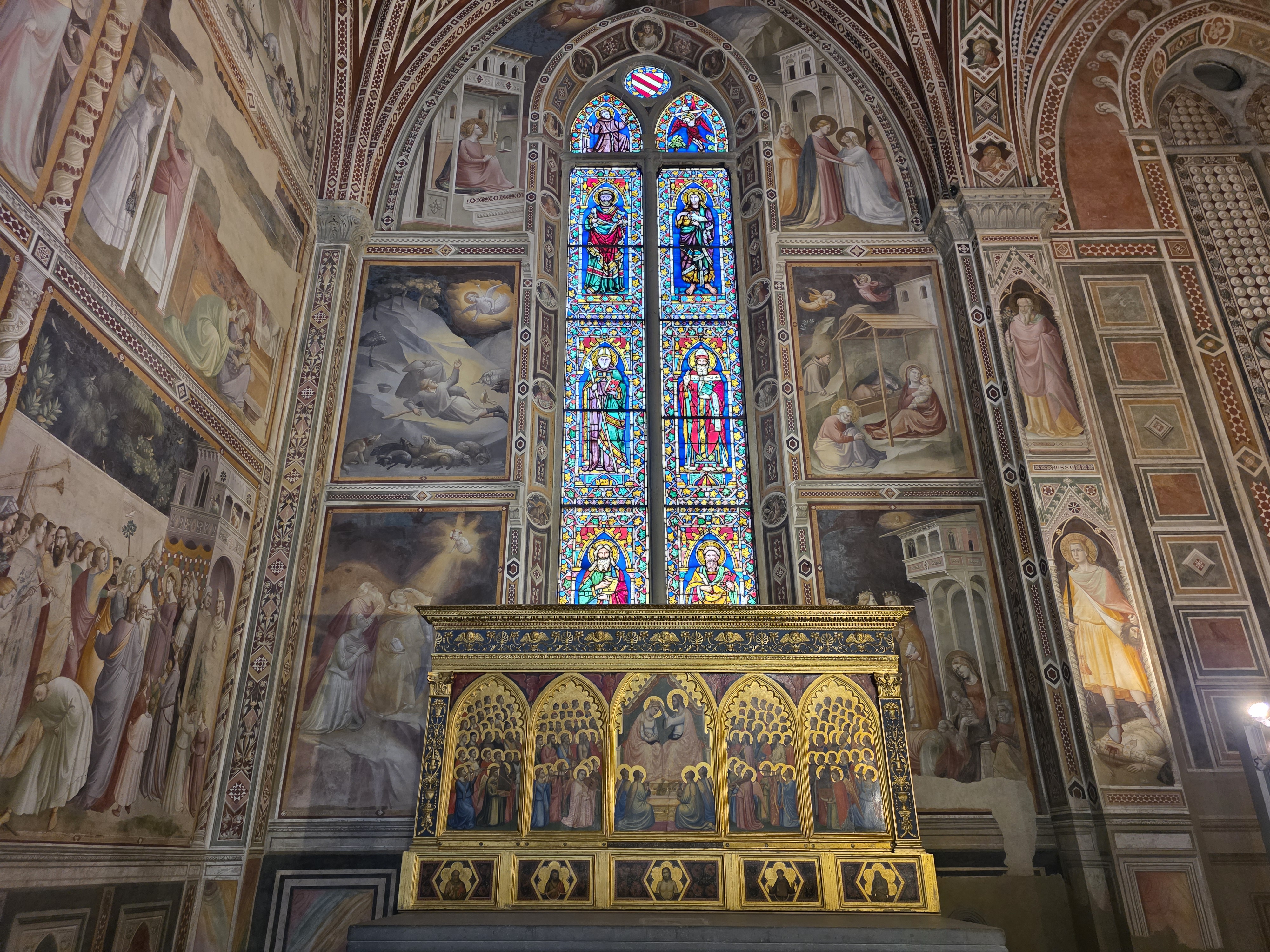
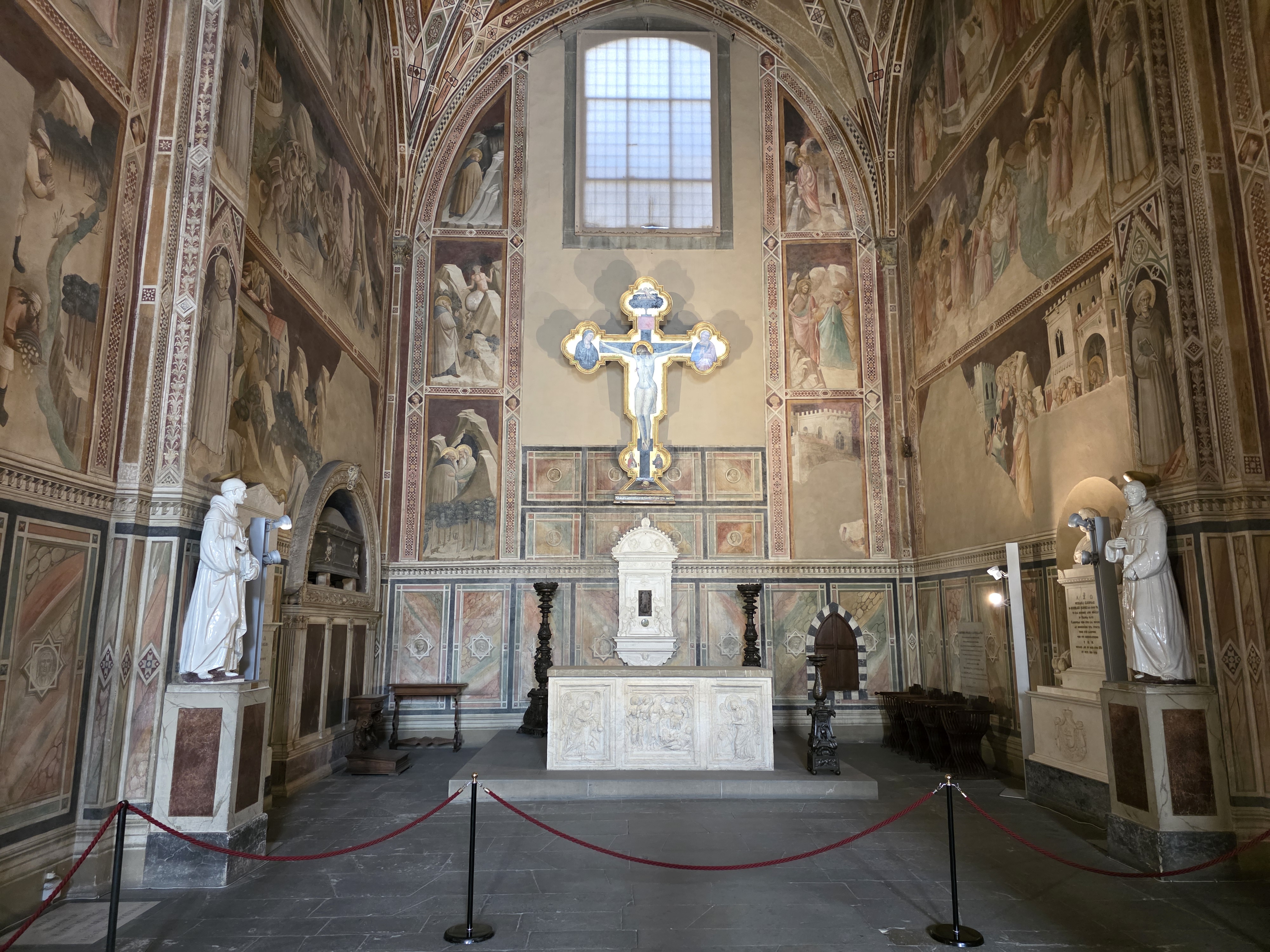
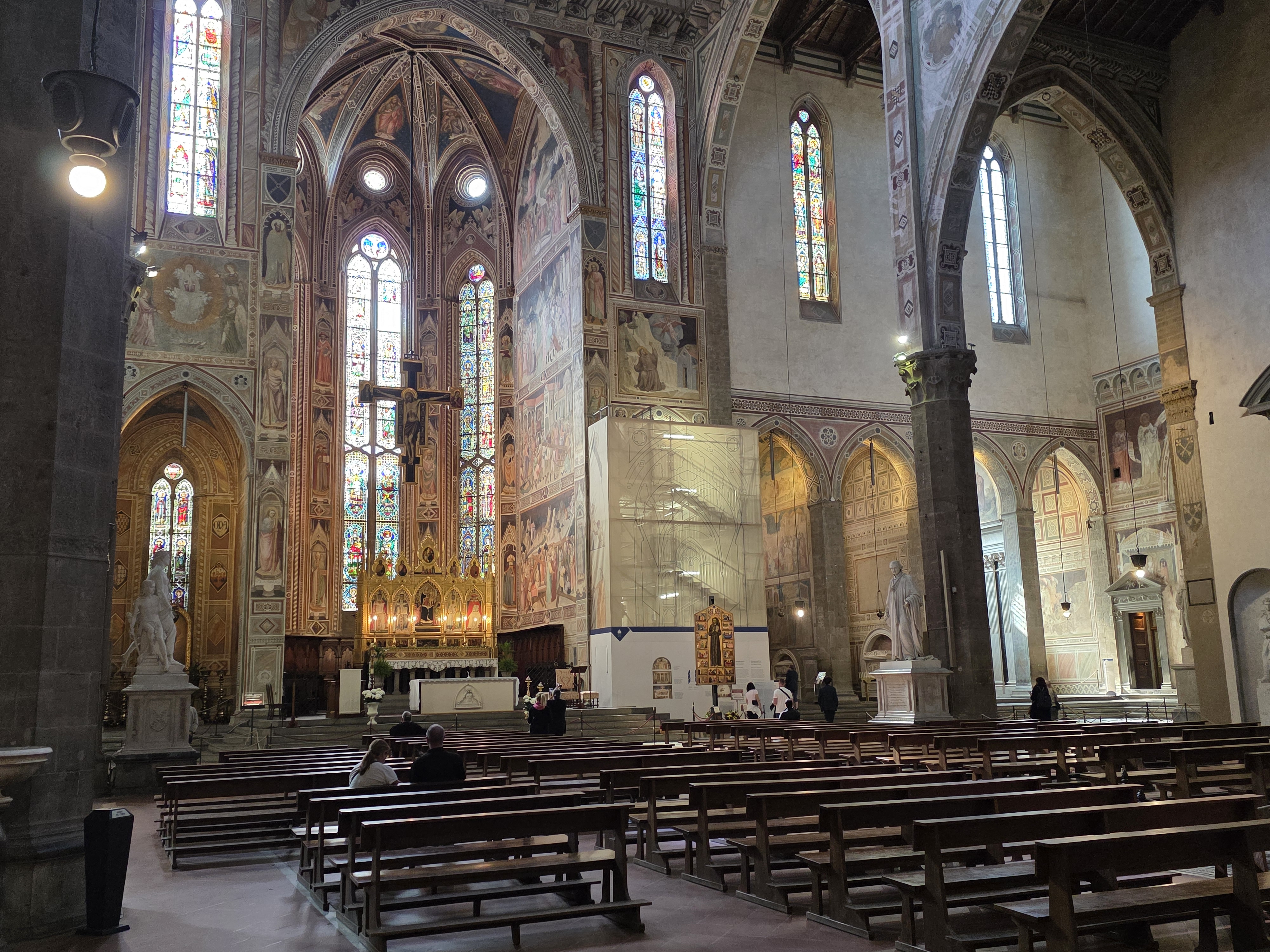
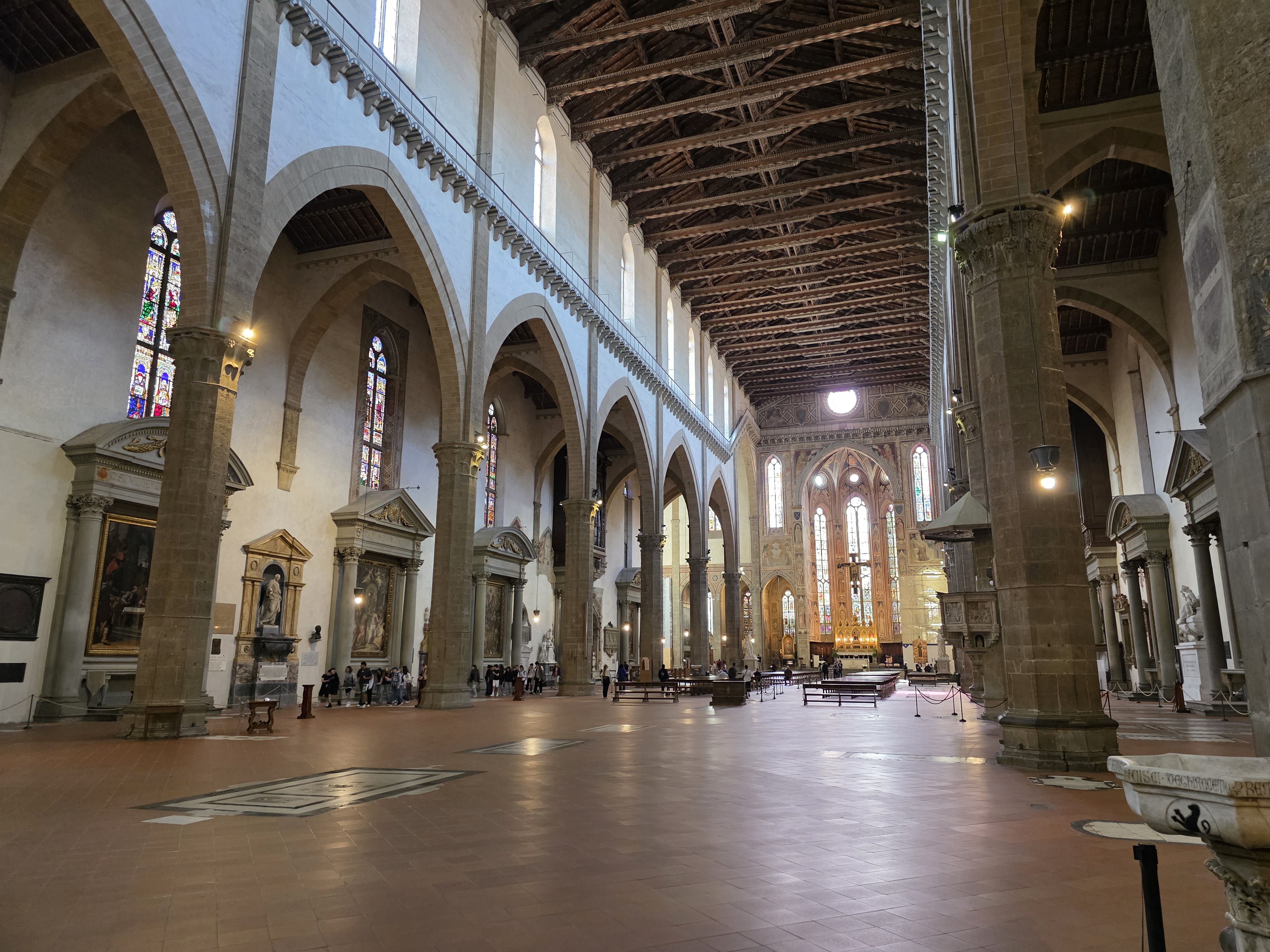
But it was fascinating, and overall, I actually liked the interior way more than the Duomo’s. There were various frescoes, as well as the tombs of famous people – Galileo, Michelangelo, Dante, Machiavelli, Rossini.
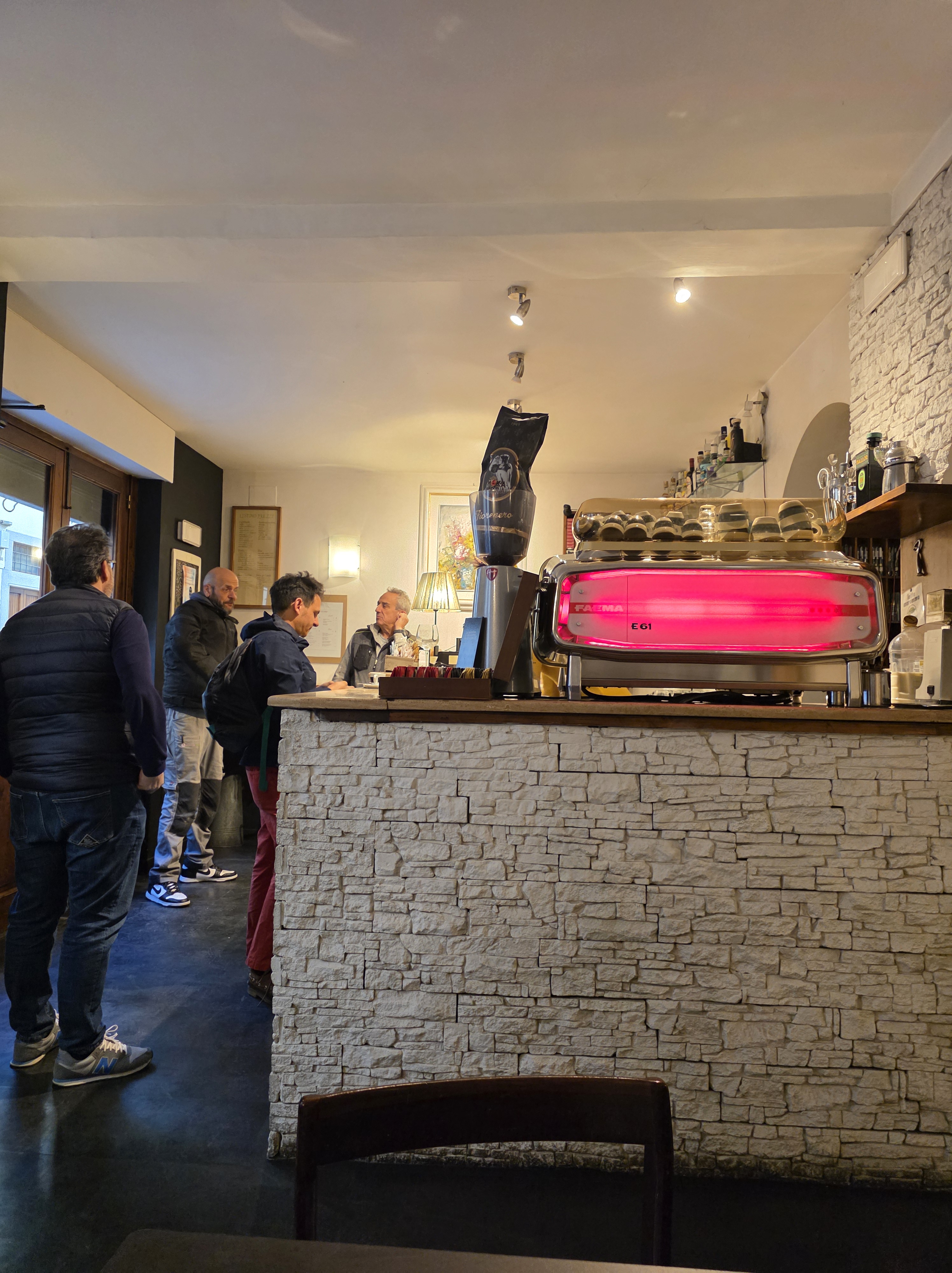
After the basilica there wasn’t particularly much else to do, so I found a specialty coffee shop and spent some time there. I noticed a man ordering a croissant with a Nutella filling and a coffee. And he paid 3.5 euros for all of it. Honestly, that shocked me, because in both London and especially Baku, the coffee alone would cost more than that. And here it was 3.5 euros!
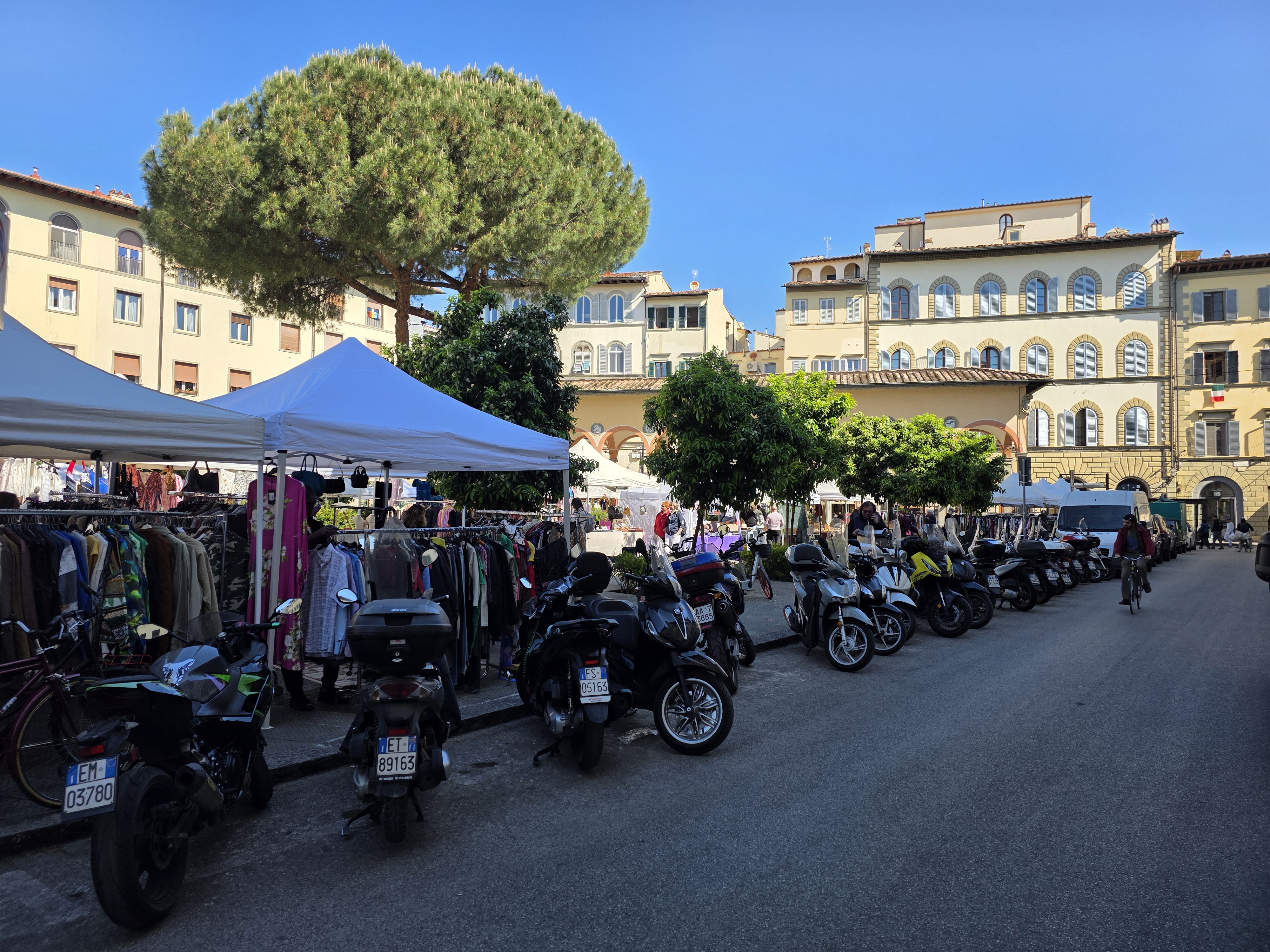
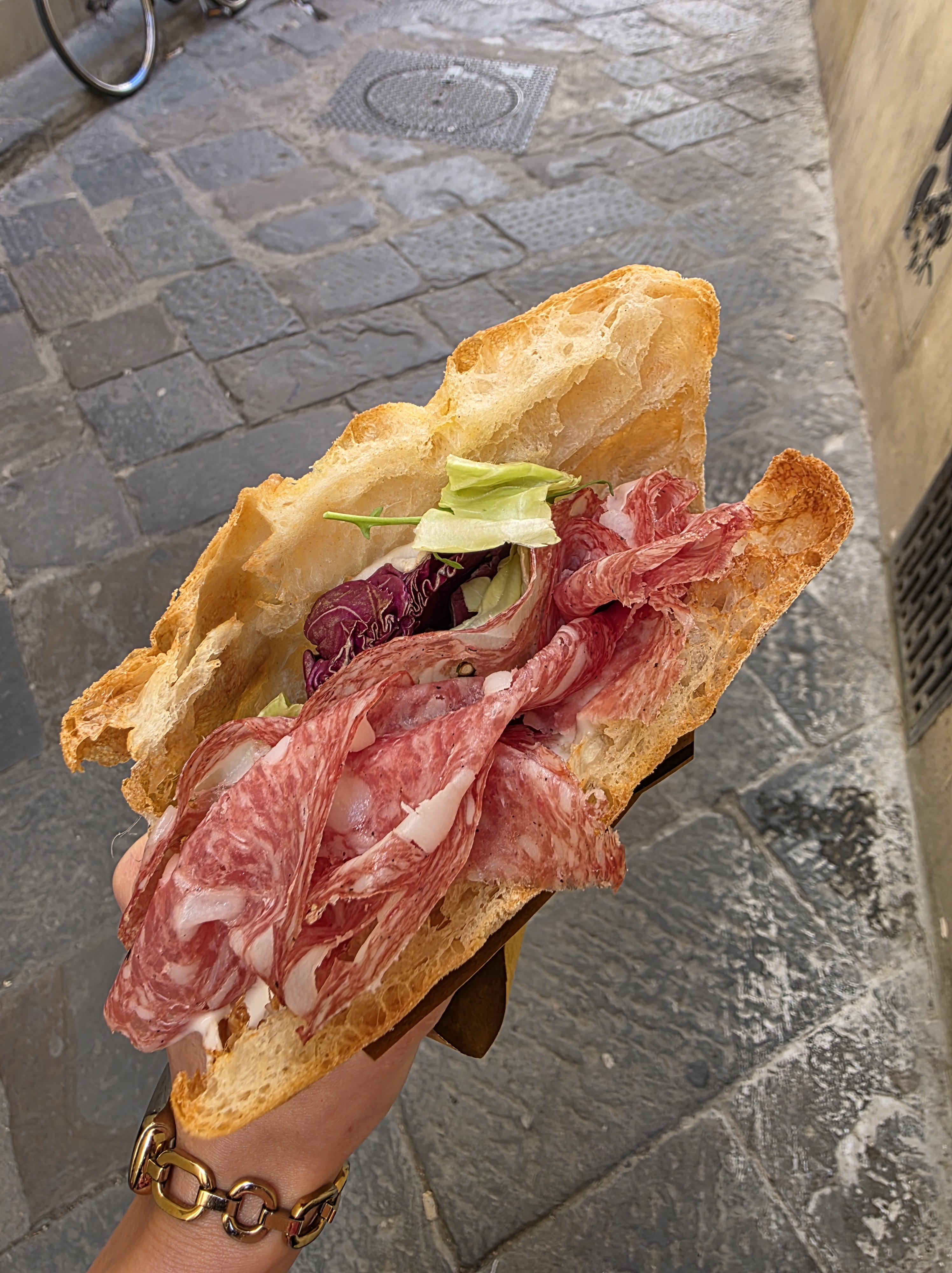
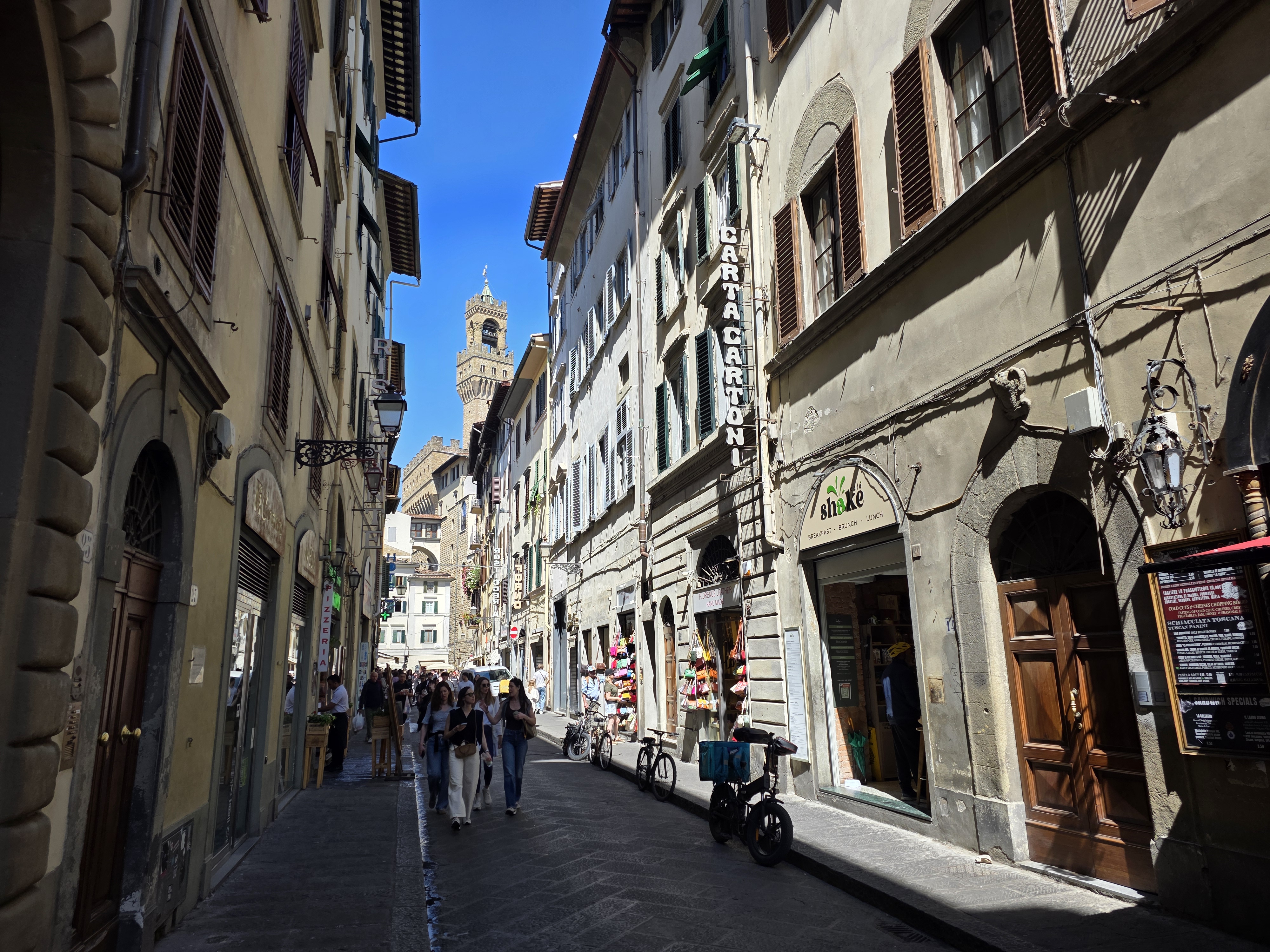
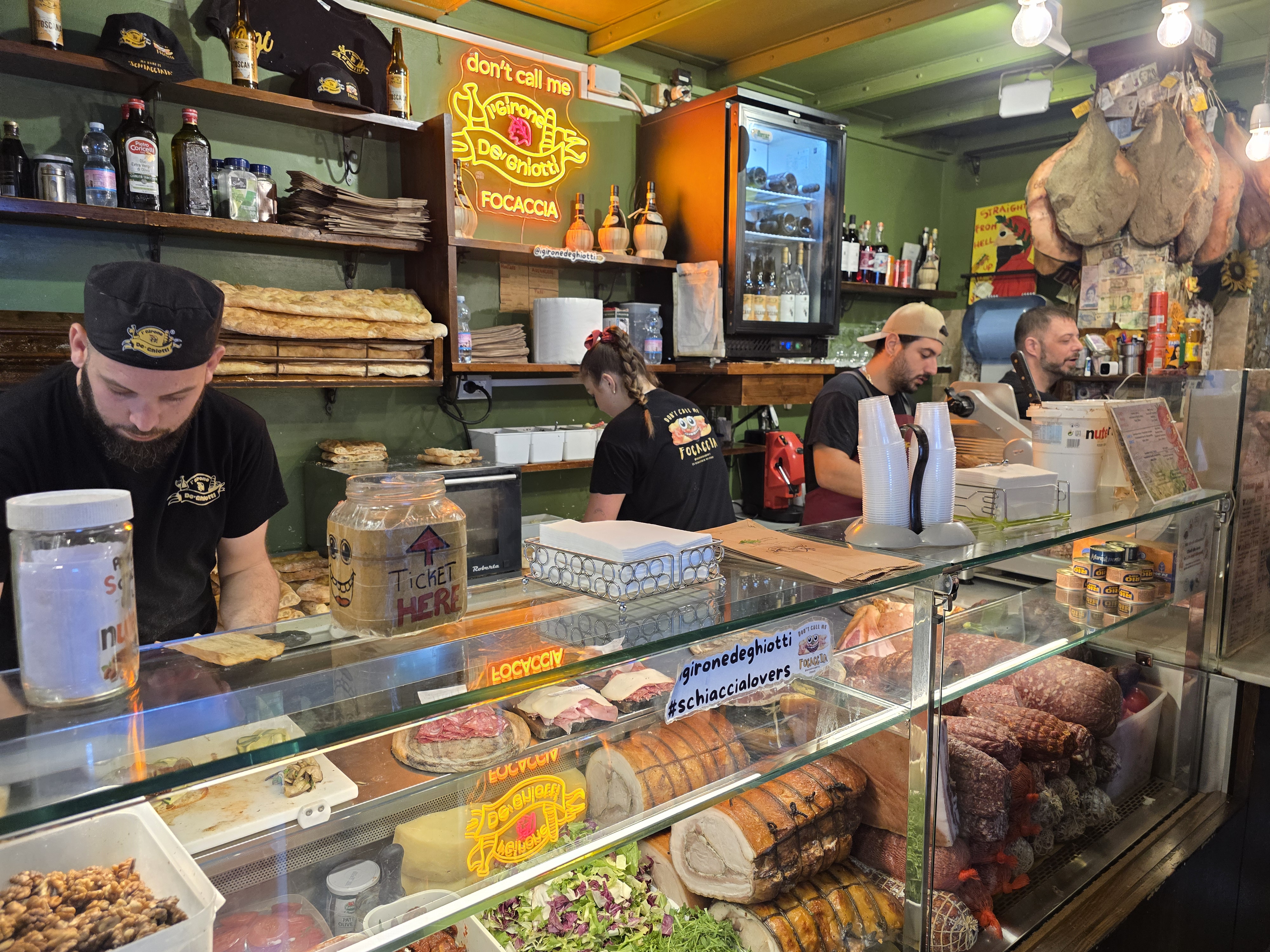
For an early lunch I planned to have another one of those schiacciata sandwiches. I found a couple of highly rated places and, once there, chose the one with the shorter queue and got another salami sandwich – honestly, it feels like I’m surviving entirely on cured meats here.
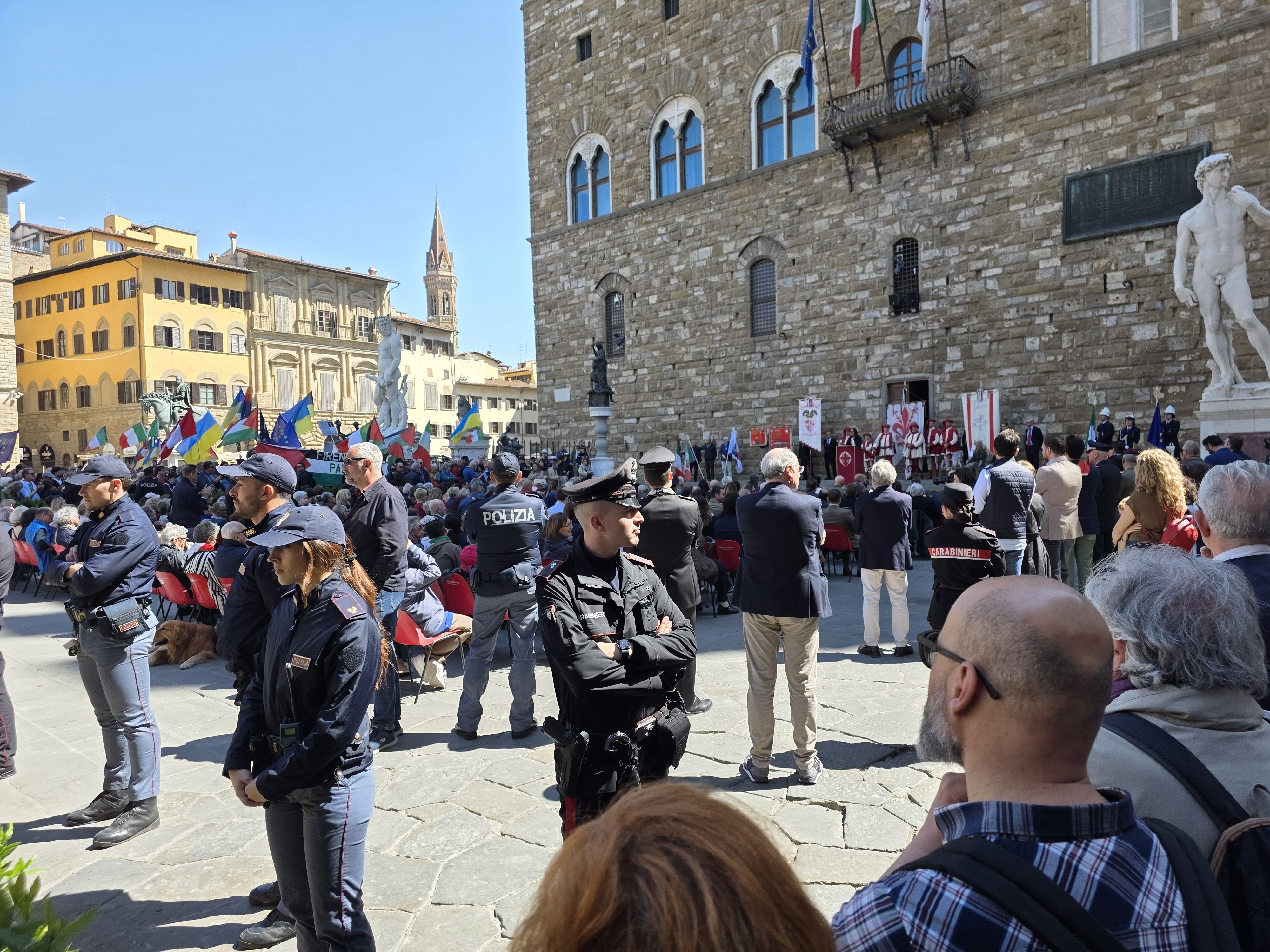
On Piazza della Signoria I came across some kind of celebration – today, April 25th, is a national holiday in Italy, Liberation Day from Fascist occupation.
And by 2pm I arrived at the Santa Maria Novella railway station, which was the meeting point for our Chianti wine tour.

While waiting for the tour, I met an American woman who told me her daughter lives in Barcelona and she had been visiting her. Her husband doesn’t like travelling, so she mostly travels without him. She had absolutely no idea what Azerbaijan was, though she admitted herself that Americans aren’t particularly strong at geography. Her parents were from Latin America, so she speaks excellent Spanish, and even spoke to the guide in Spanish rather than English. She said that ever since she was young, she’d been used to the idea that in Europe it’s better not to advertise that you’re American – and now, with the arrival of the “orange man”, as she called him, even more so.

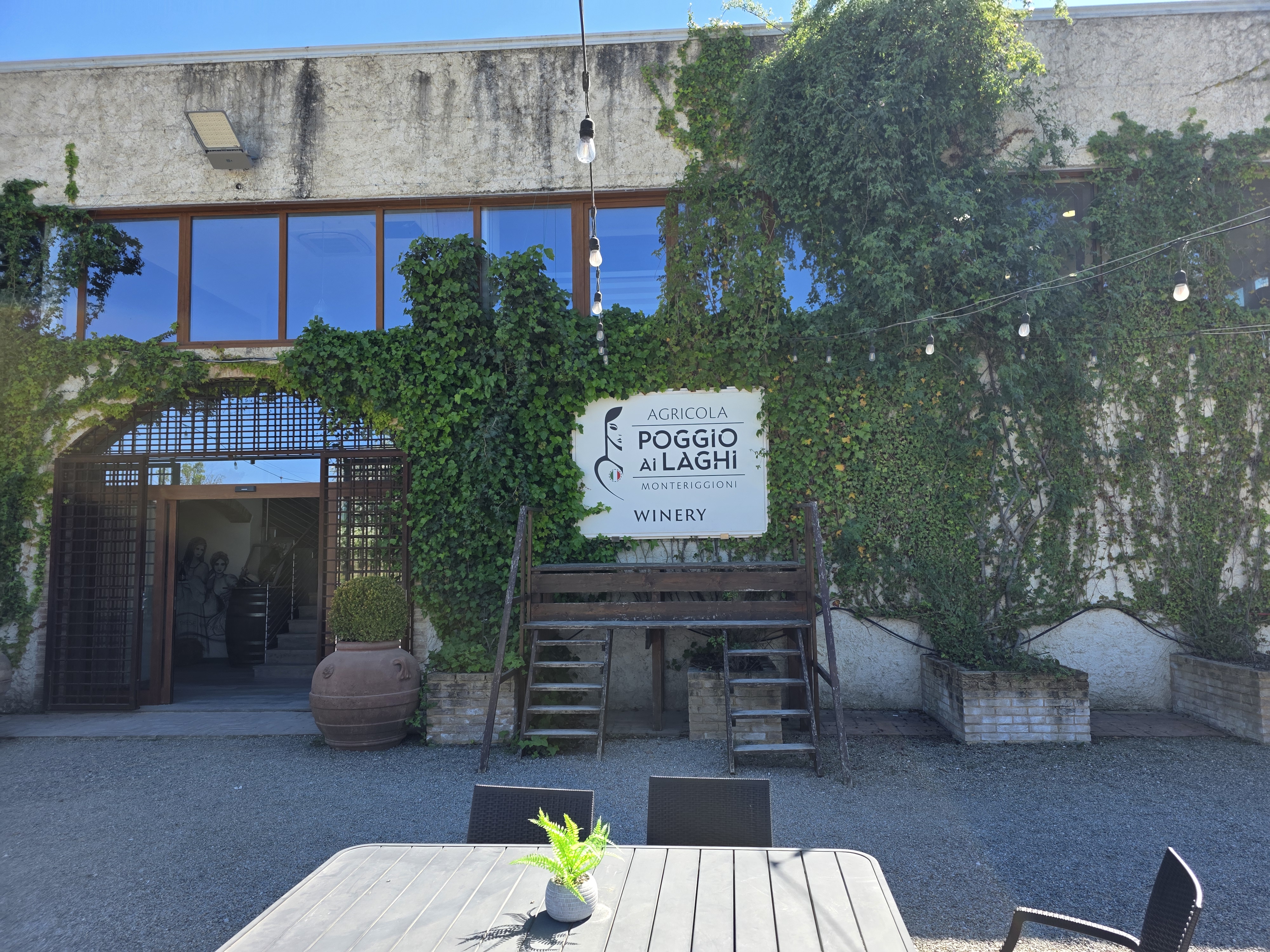
As for the tour itself, the drive there took an hour and the drive back another hour, while we spent about two hours there. We went to Monteriggioni, in the Chianti region of Tuscany, roughly between Florence and Siena, to a winery called Poggio ai Laghi. It turned out not to be quite what I had expected, because I had imagined something outdoors, surrounded by those famous Tuscan vineyard landscapes.

In reality, they only showed us the vineyards briefly from the side and allowed us to take photos there, but there was no actual walk outdoors. We spent most of the time inside, where we tasted seven wines. Yes, it was interesting, tasty and informative, but not entirely what I had imagined.
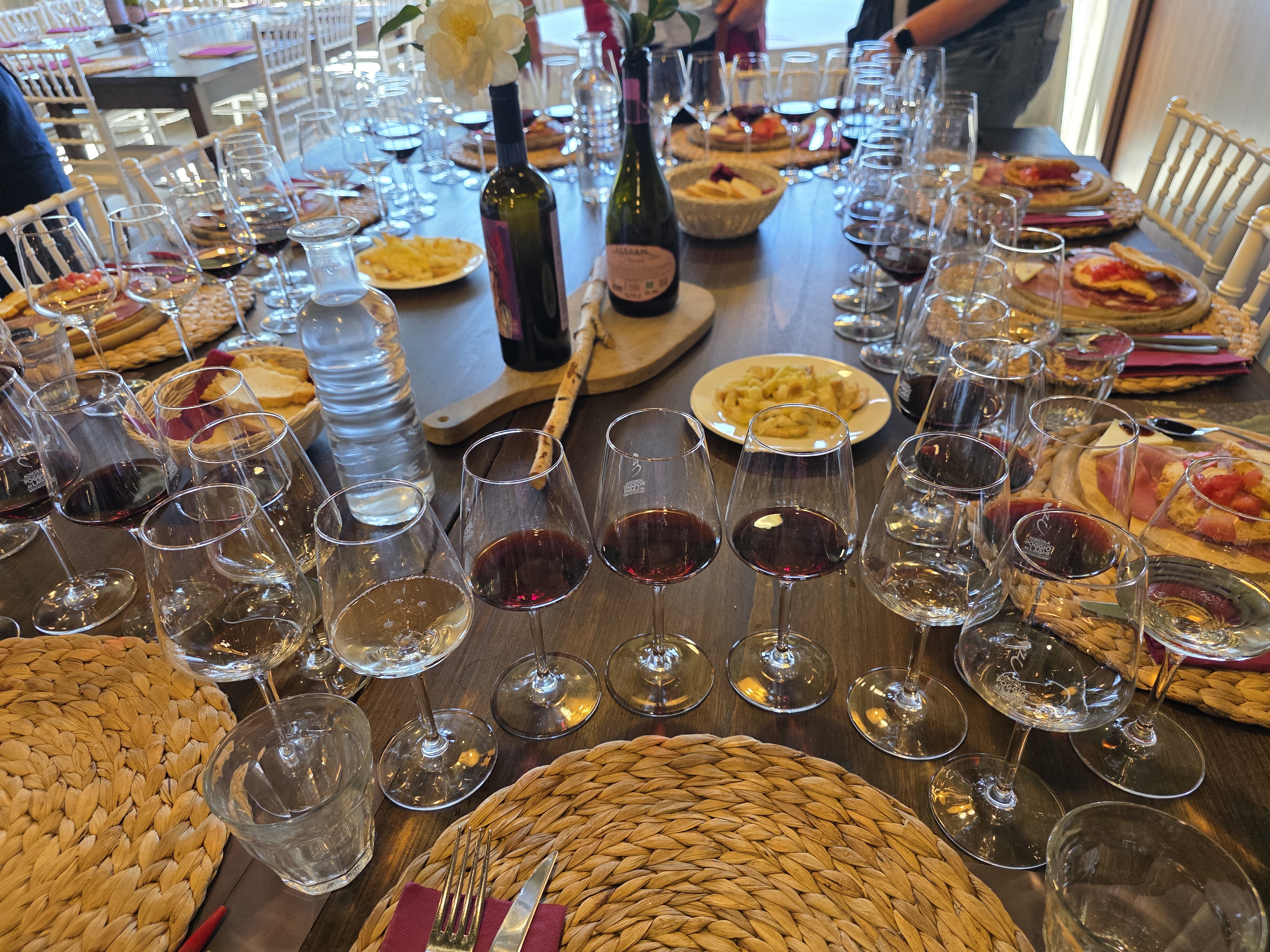
As for the wine itself, there are fairly strict rules for producing Chianti Classico. Firstly, at least 80% of the grapes must be the local Sangiovese variety. Secondly, the vineyards are not artificially irrigated and rely entirely on rainfall, so naturally wines from different years vary.

We first tried a sparkling white wine, then a regular white, which I didn’t particularly like because it tasted rather watery.

After that we tried three red wines, all very different. One was a younger Classico, the second a Riserva with a strong cherry flavour, which I liked the most, and the third was an IGT – not necessarily a lower category, but apparently with a lower required percentage of the grape variety.

What was interesting was that before, when people talked about notes of tobacco, leather and so on, it never really meant anything to me. But when you actually taste these different wines, you really can notice the differences and all those flavour notes. At the end we also had a dessert wine.

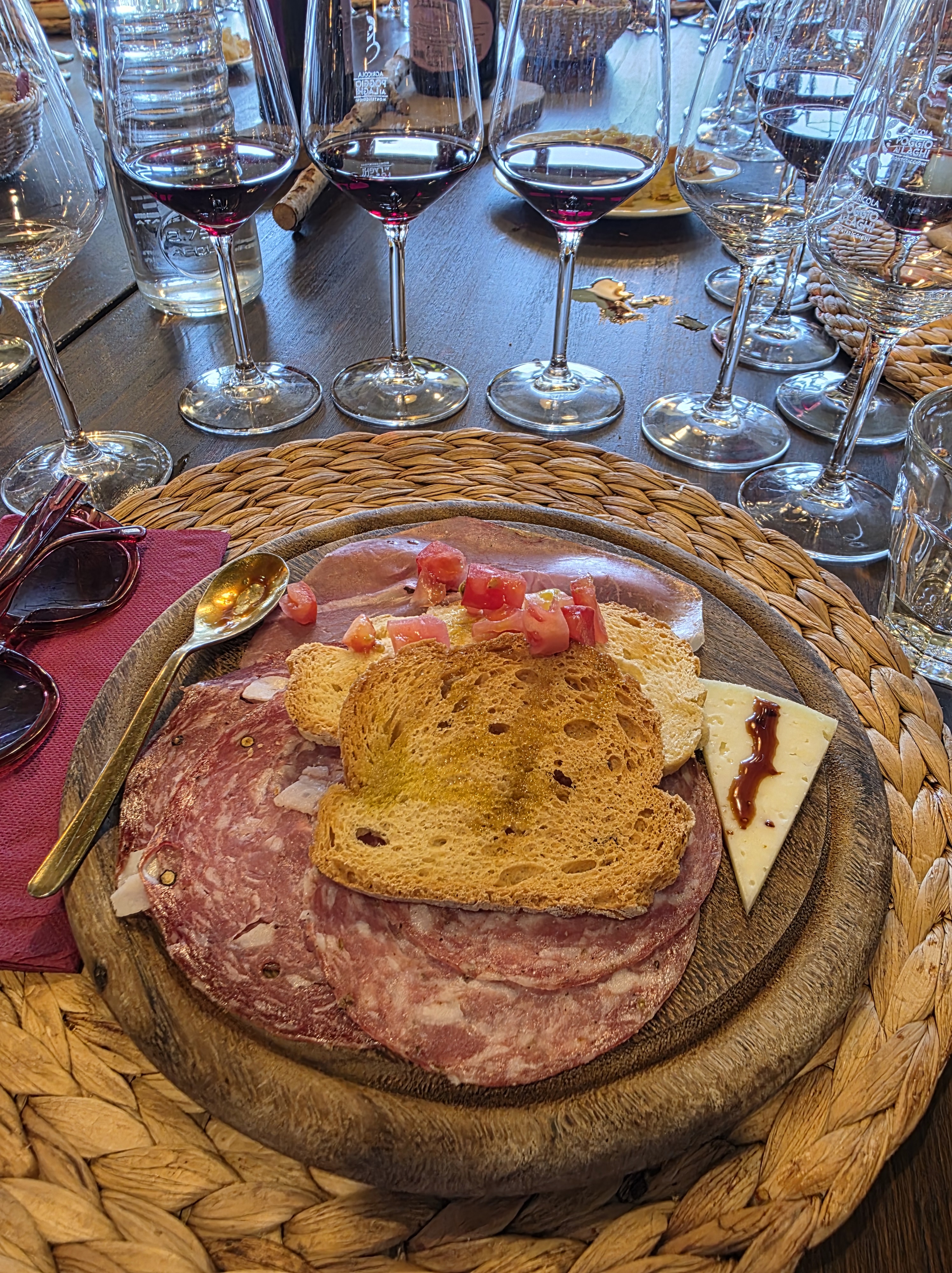
Alongside all this there were snacks – we got to try their balsamic vinegar, olive oils (including truffle oil), and of course cheese, a couple of types of salami, prosciutto and bread. Honestly, after all that I barely even needed dinner, because I kept snacking throughout the tasting.
And toward the end, while we were already slowly getting ready to leave, one of the administrators caught us and offered us two additional wines that hadn’t been included in the tasting itself. One was an Classico Riserva, and the other was something called Donna Ava, apparently the winery’s most expensive wine, reserved for special occasions, as he put it.

I’ve always said I can’t tell the difference between a 10-euro wine and a 100-euro wine, but if you actually taste different wines side by side, you really can tell.

Although to be fair, the cheaper wines there weren’t 10 euros – they were more like 40–50. Those prices included shipping to various countries, but there was one price for the EU and the US, and another for the rest of the world – and our post-Brexit United Kingdom naturally falls into “the rest of the world.” They did say they could offer me some sort of discount, but the problem was that I couldn’t take the wine with me because I didn’t have checked luggage, and deliveries required a minimum order of six bottles, so I declined.

They also said they don’t sell these wines to restaurants or shops, only exclusively at the winery itself. Each bottle features a woman on the label – every wine is dedicated to the medieval noblewoman Donna Ava of Monteriggioni or one of her seven maidservants (Lucilla, Oletta, Nina, Arania, Aranda, Arella and Firmina).
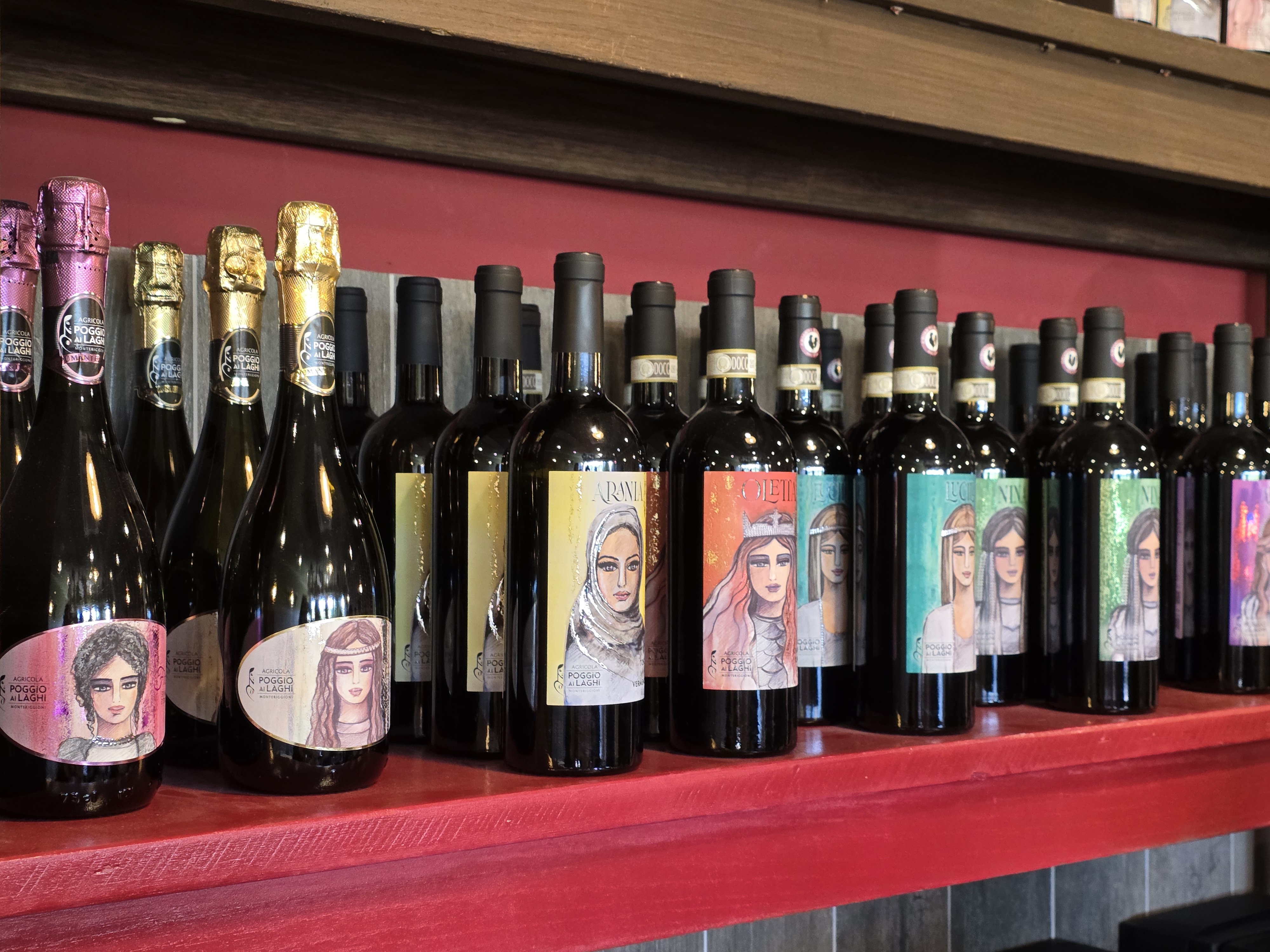
The symbol of Chianti Classico is a black rooster on the bottle. There is a legend about this. Historically, Florence and Siena were always rivals. One day, to establish the border between the two cities, it was agreed that after the first rooster crowed at sunrise, riders from each city would set out toward each other, and the border would be placed where they met. The people of Siena chose a white rooster, while the Florentines chose a black one and deliberately kept it hungry. As a result, the starving rooster crowed way before dawn, allowing the Florentine rider to set off earlier and ride almost all the way to Siena.

When we got back, naturally I didn’t feel like having dinner anymore, but I did feel like ice cream, so I walked once more toward the river and the bridge and had some gelato.
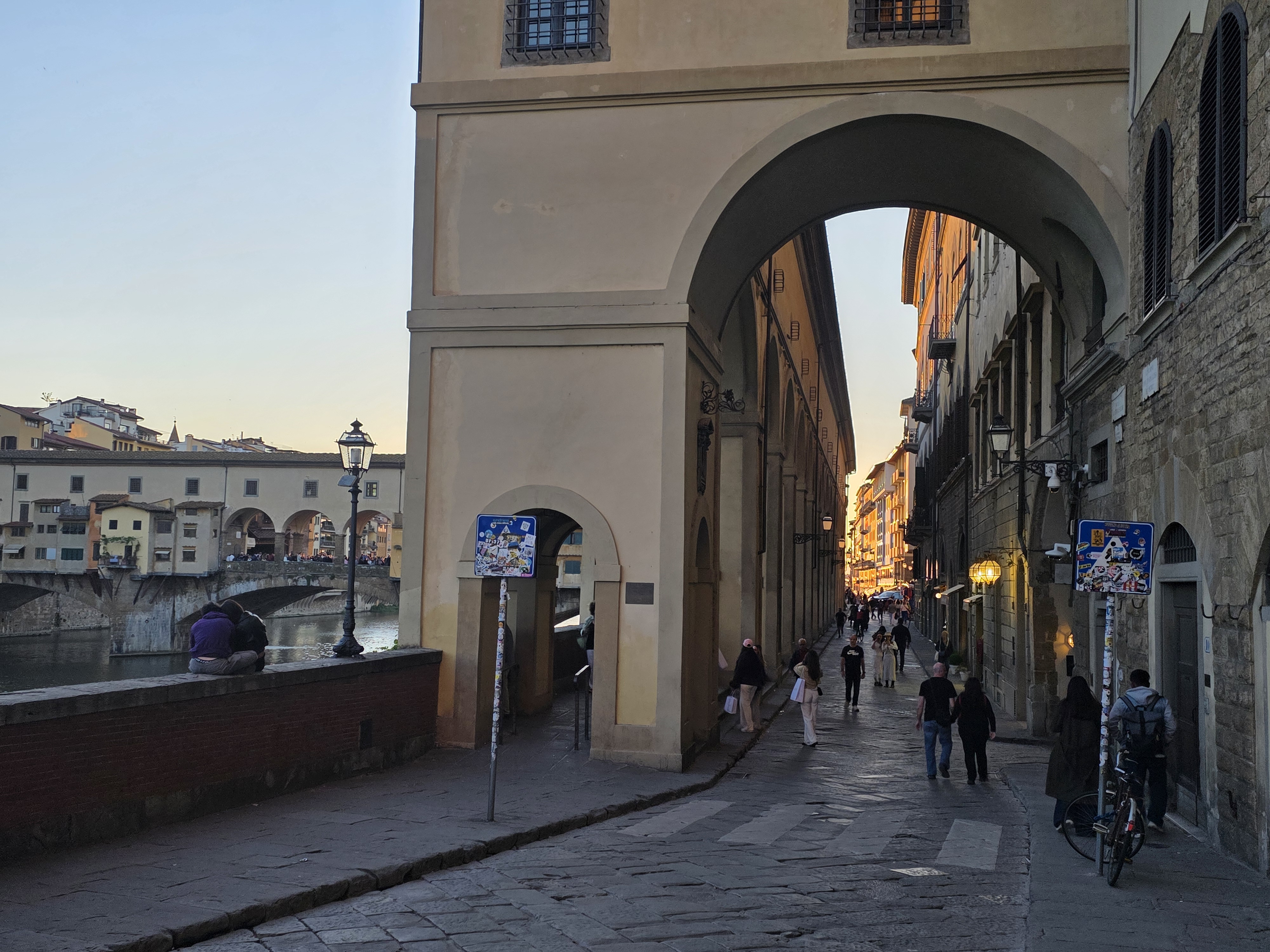
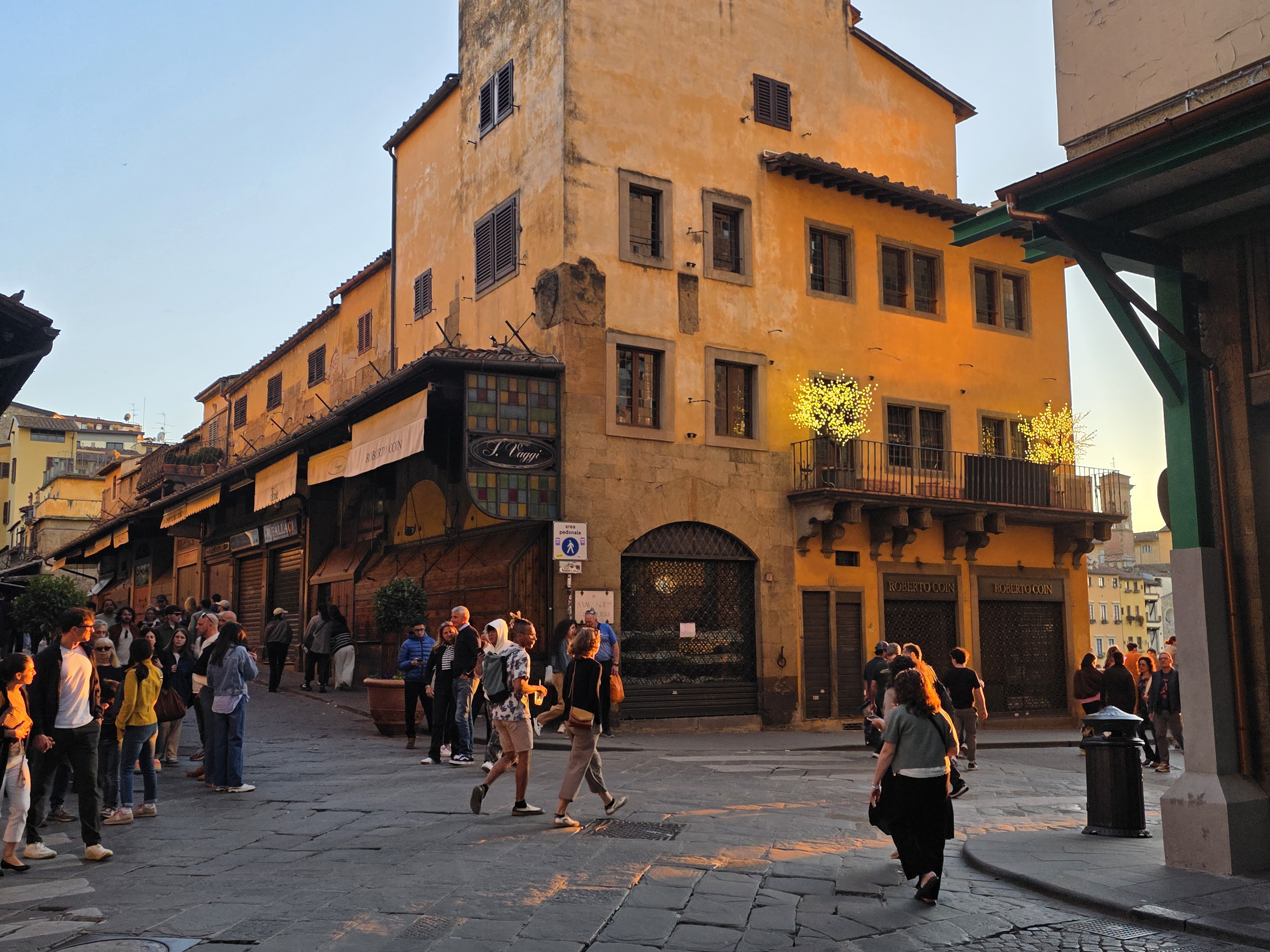
I ended up doing 23,000 steps that day, and by noon alone I had already done 10,000 – despite the fact that this was supposed to be a relaxed morning.

It was my last day in Florence – tomorrow morning I’m heading back.
Posted in English, Europe, Florence, Italy

Florence – Day 2

РУССКОЯЗЫЧНАЯ ВЕРСИЯ ПО ЭТОЙ ССЫЛКЕ. CLICK HERE FOR RUSSIAN VERSION.

April 24 2026 – Friday

Today I slept very poorly, because at 4:30am some large vehicle – either a garbage truck or a street-cleaning machine, I couldn’t quite tell – pulled up right under my window and stayed in the same spot for at least an hour, making unbelievably loud noises. I never figured out what it was doing there, since I couldn’t properly see it from my window, but it was impossible to sleep, and I only managed to drift off for a bit once it had left, even though I then had to get up early for all my tours.

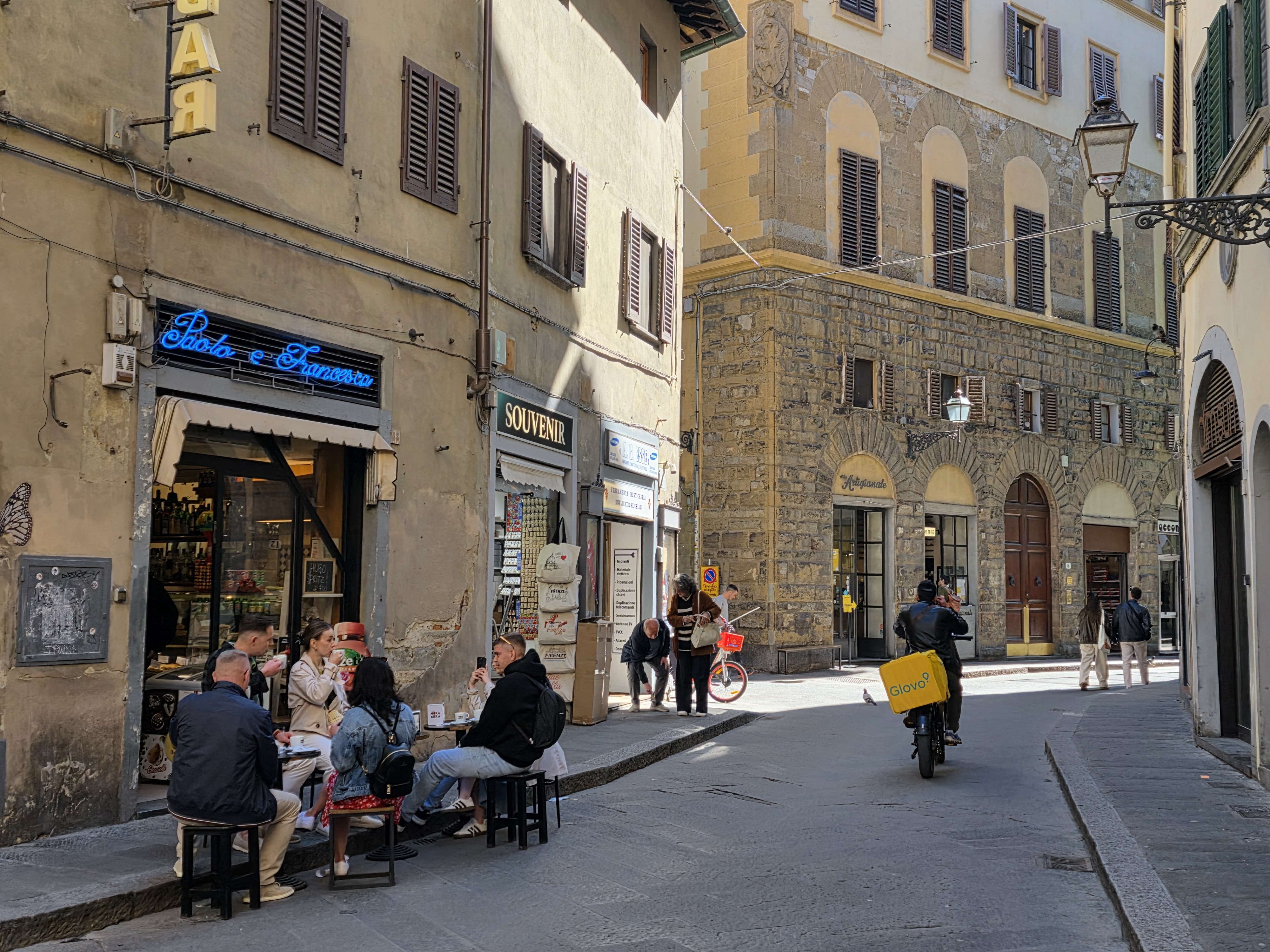
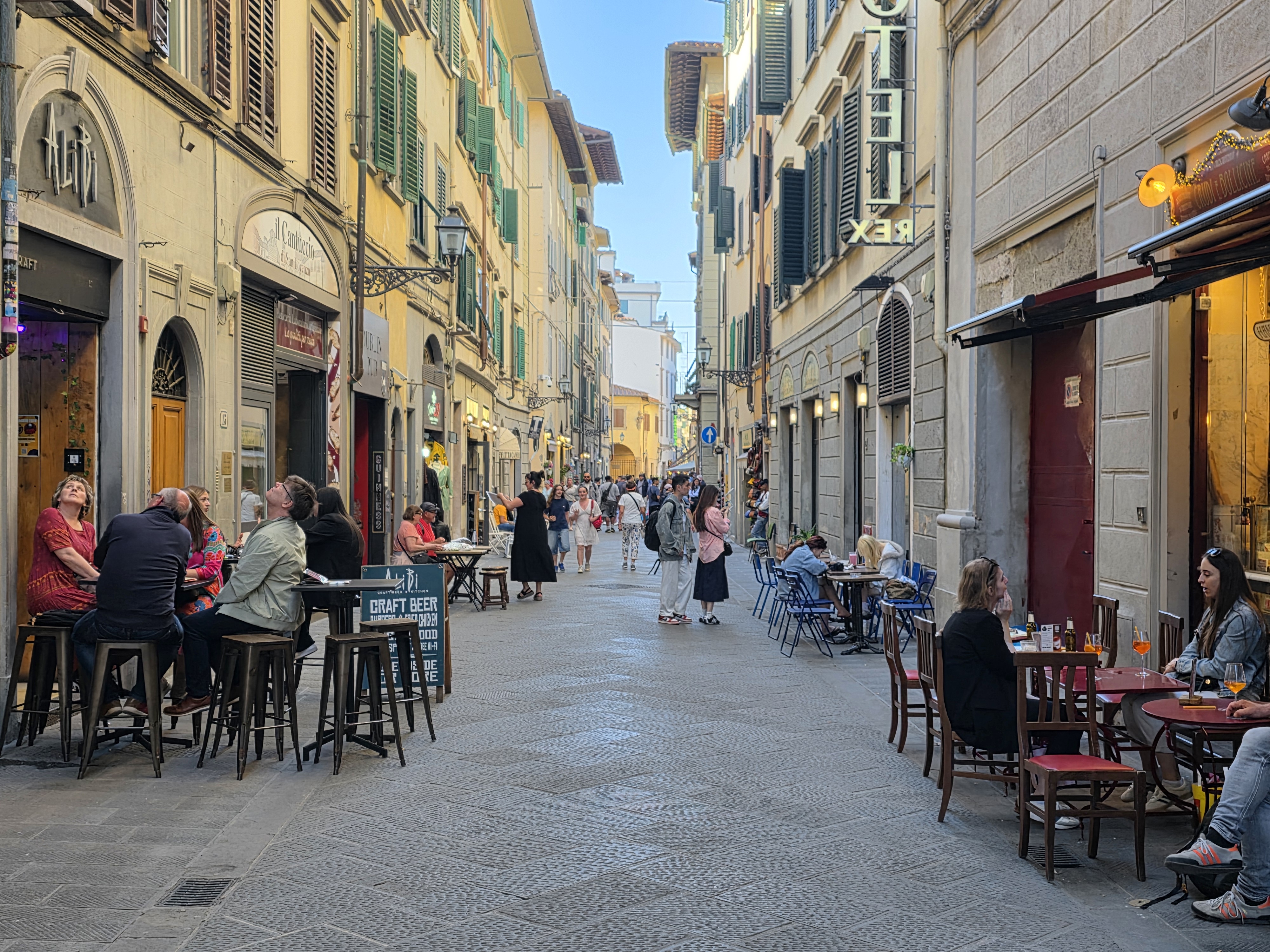
I don’t have breakfast at the hotel, so in the morning I went straight to a bar right opposite as soon as it opened. It’s a traditional kind of place – coffee in the morning, wine in the evening. I went in literally as the woman working there opened the shutters, and at the same time quite a few other people came in. I sat down to eat and watch people, and came to the conclusion that these coffee bars are the local equivalent of our “day-day kafesi” (“cafes for uncles”), because the entire time I was there, various working-looking men kept coming in for a quick espresso, drinking it right at the counter, exchanging a few words with the barista or each other, and leaving.

I had a ticket to the Accademia Gallery for 9am, and there was a bit of a hiccup. The booking page showed two locations on the map: one was the entrance to the gallery, and the other was supposedly the meeting point with an agency representative who was meant to exchange my voucher for an actual ticket. It said something like, “our staff in yellow vests will meet you there”.

I arrived and saw the gallery entrance with a queue, along with various representatives from different agencies – but not the one I needed. Meanwhile, Google Maps sent me in a completely different direction, where there was no sign at all, and the meeting point was marked in front of what looked like a hotel. Then a couple approached the same spot, with phones in hand, also looking for the people in yellow vests – but there weren’t any.

I started to suspect that this probably wasn’t the right place, and after unsuccessful attempts to call or message anyone on WhatsApp, we collectively decided to go back to the gallery, queue up, and try to get in with the voucher.

In the end, we joined the 9am queue (there was a separate one for each time slot), and when it was our turn, we were told that we did indeed need to exchange the vouchers and pointed to not one, but three people in yellow vests standing nearby. Of course, it was a completely different location – the street number was correct, but somehow Google Maps sent us to the wrong place.

Anyway, everything worked out, and at 9am sharp I walked into the gallery. I should say I came to the conclusion that museums and galleries need to be approached strategically. No one has the time or energy to see everything. For example, in this case, you know you’re going there to see David, so you plan everything around David.

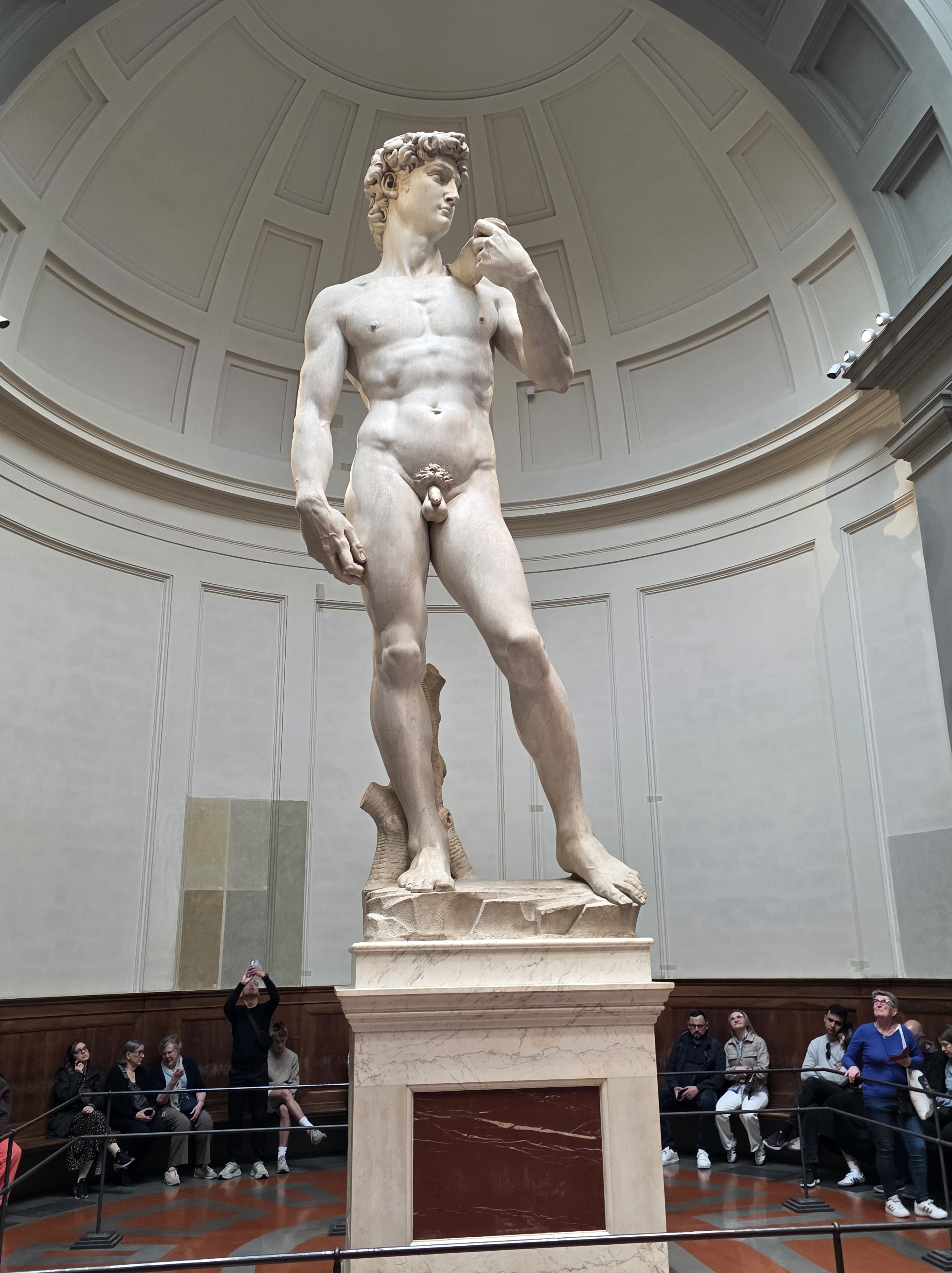
So, I didn’t waste much time looking at the paintings in the first room, just gave them a quick glance and went straight to David. On the way, there were also the four unfinished sculptures of “Slaves” that Michelangelo was working on for the tomb of Pope Julius II.

David itself, of course, immediately stands out – it’s huge, five metres tall. Interestingly, the proportions are intentionally distorted – the head and right hand are unnaturally large, because the sculpture was meant to be viewed from below. Also, it’s carved from a single block of marble that had previously been considered defective and that no one wanted to work with.

All in all, I spent no more than half an hour in the Accademia Gallery and moved on. I then had a ticket to the Uffizi Gallery for 11am. On the way, I stopped for an espresso in one of the coffee bars – the espresso here could wake the dead, which was very helpful after a half-sleepless night.


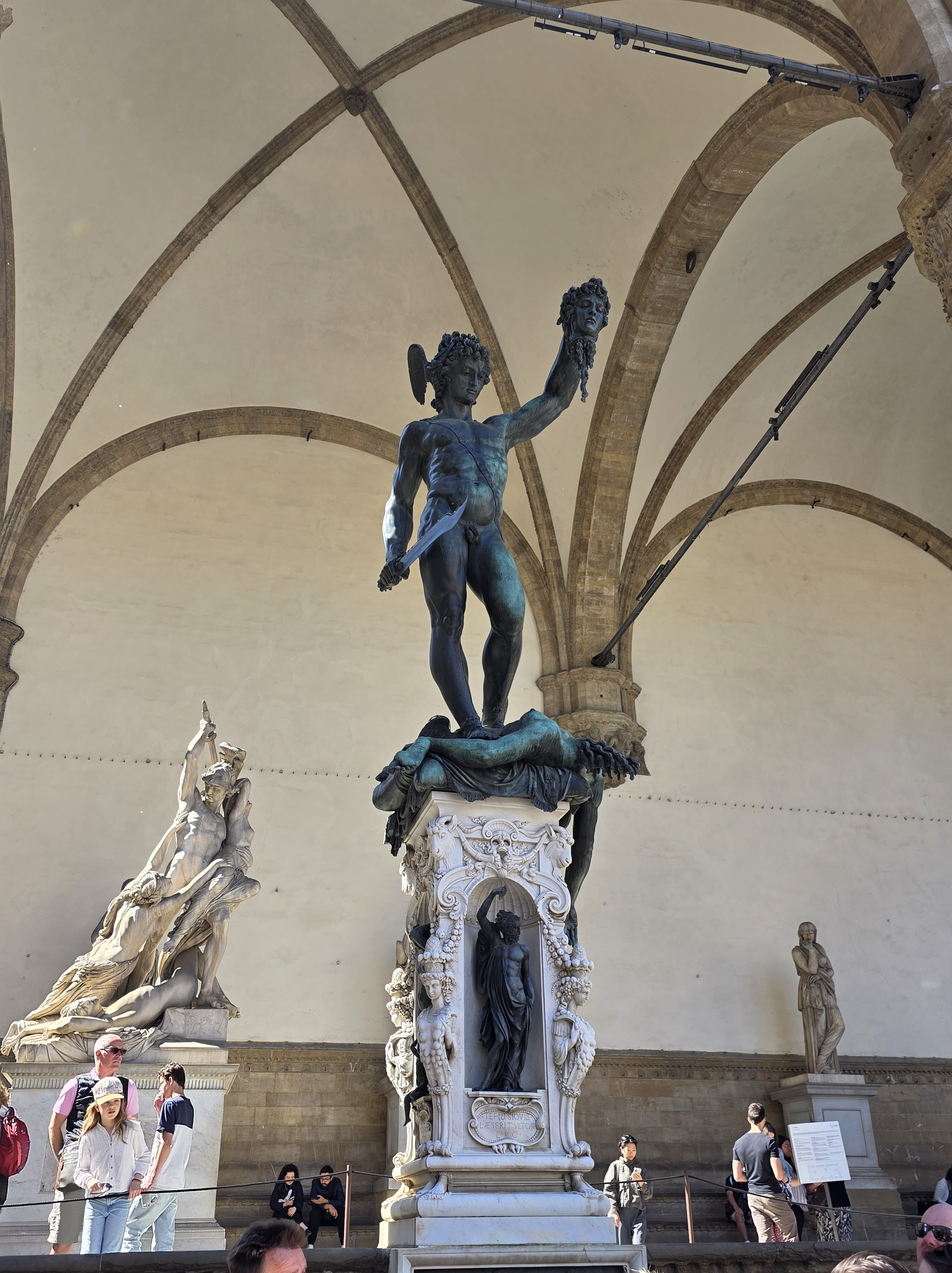
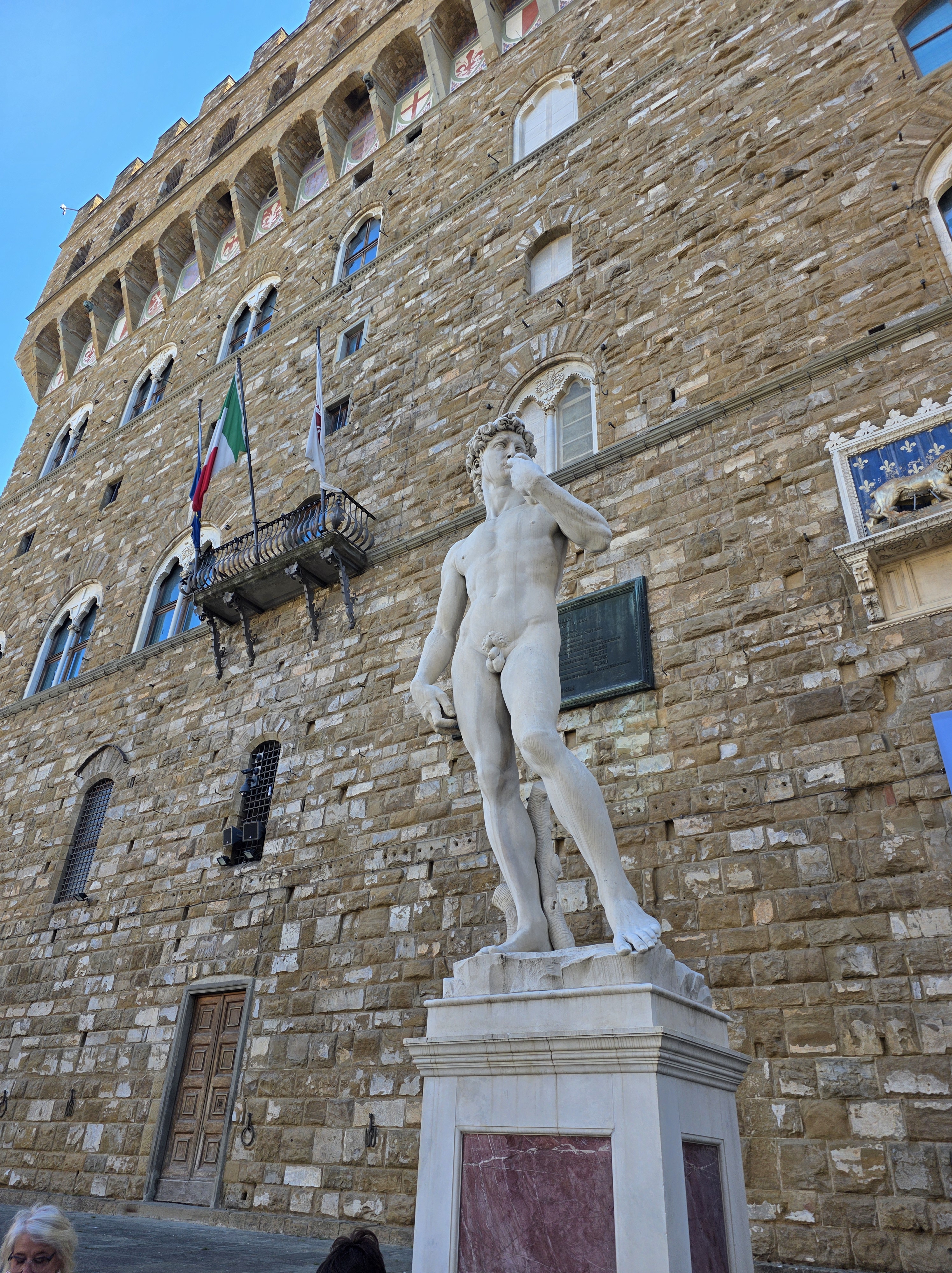
At the Uffizi there were also different queues for different time slots, and it turned out that although I had booked for 11, I was assigned the nearest available slot at 11:30. There was no point trying to get in earlier, so in the meantime I looked at the sculptures in the open-air Loggia dei Lanzi, including Cellini’s “Perseus with the Head of Medusa.” There’s also another David nearby – a replica, of course. I had some delicious dark chocolate gelato, and then went back to the Uffizi.

While I was standing in line, a Russian-speaking couple arrived and casually squeezed into the middle of the queue. Only my very unfriendly look ensured that they moved behind me rather than in front of me.

I have to say, despite the unfriendly look, I was really looking forward to visiting the Uffizi. It gave me goosebumps to think that someone had created a sculpture or painted a picture, and 500 years later people are spending money and standing in queues in order to see their work.
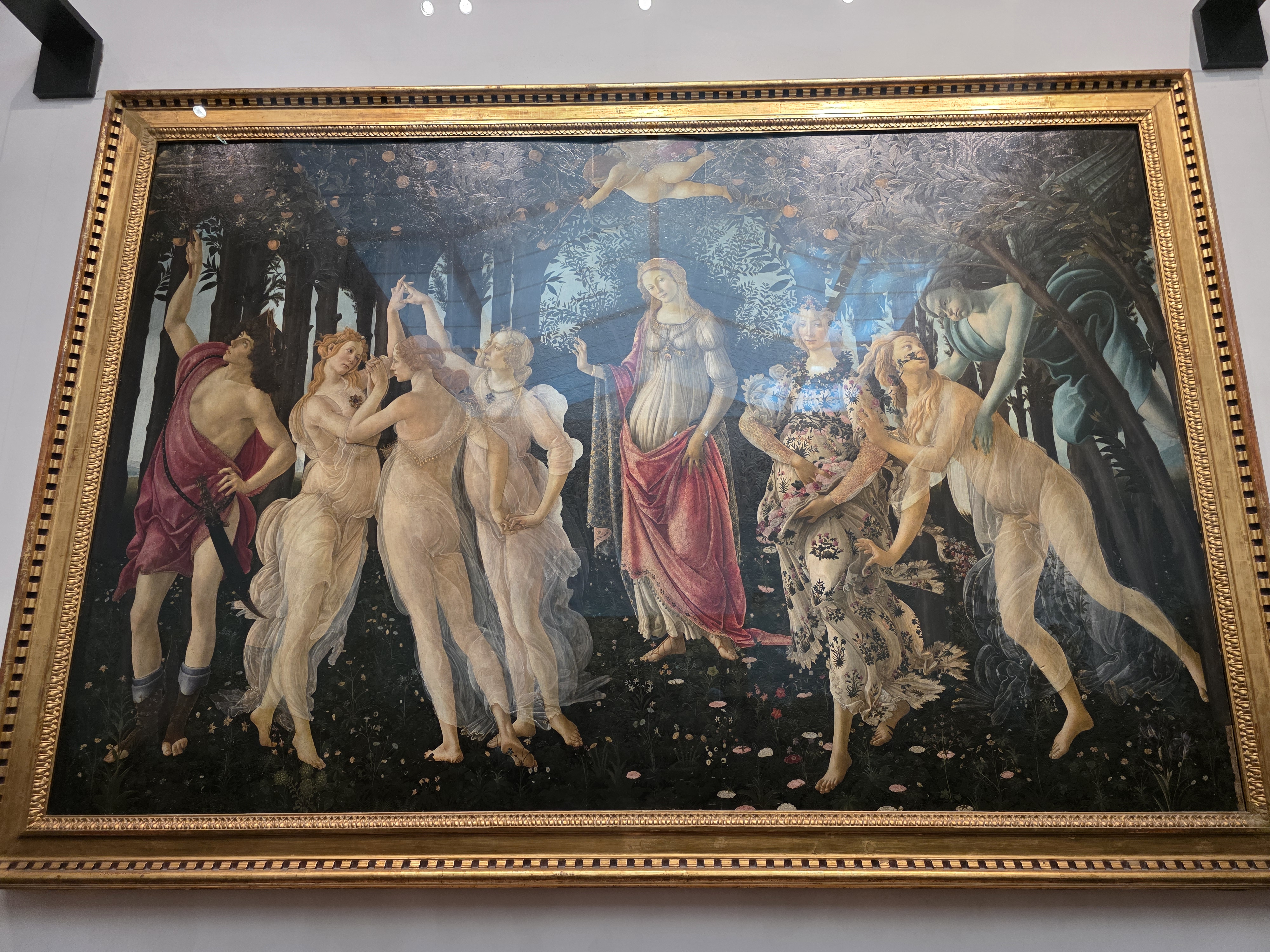
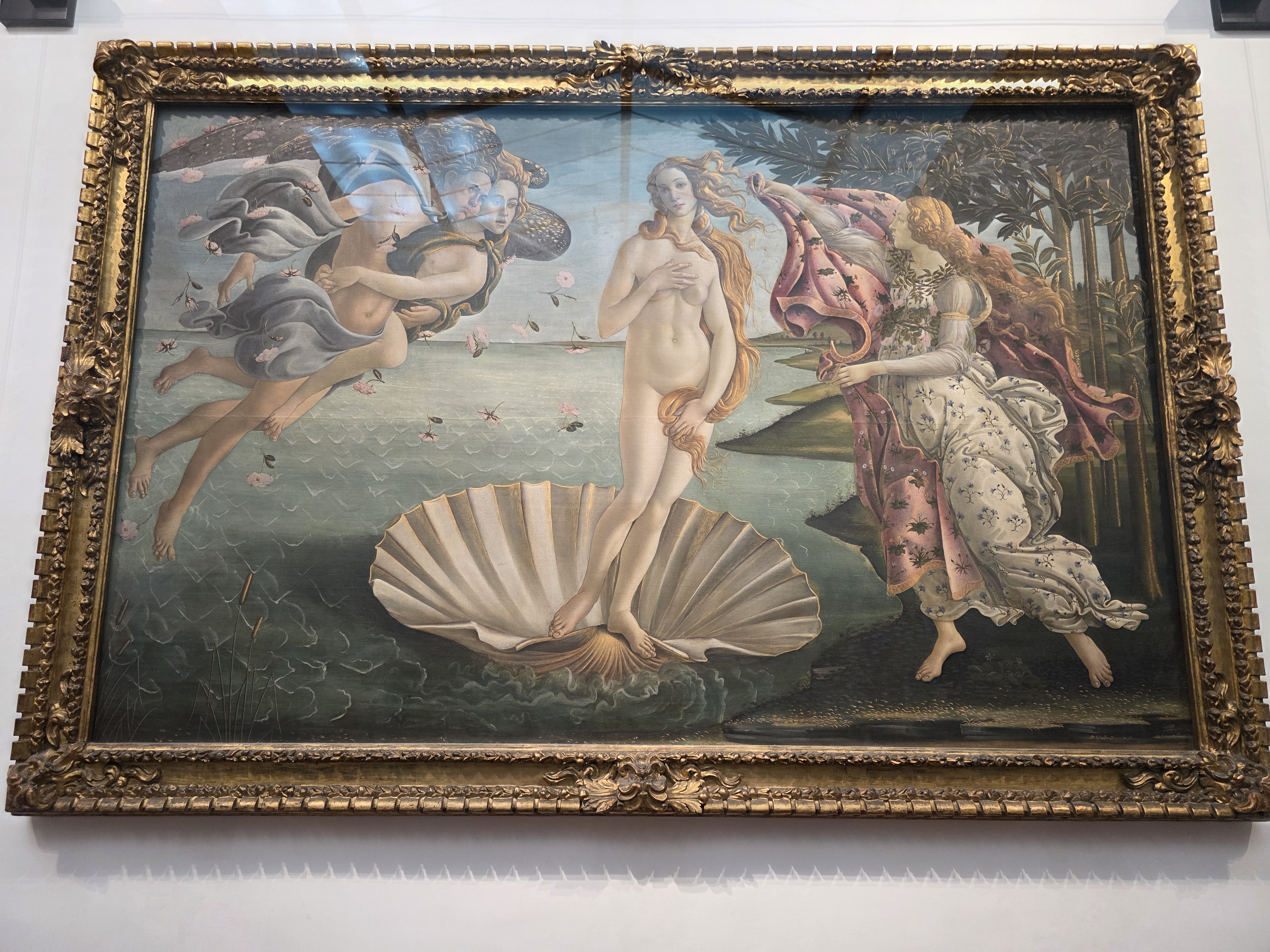
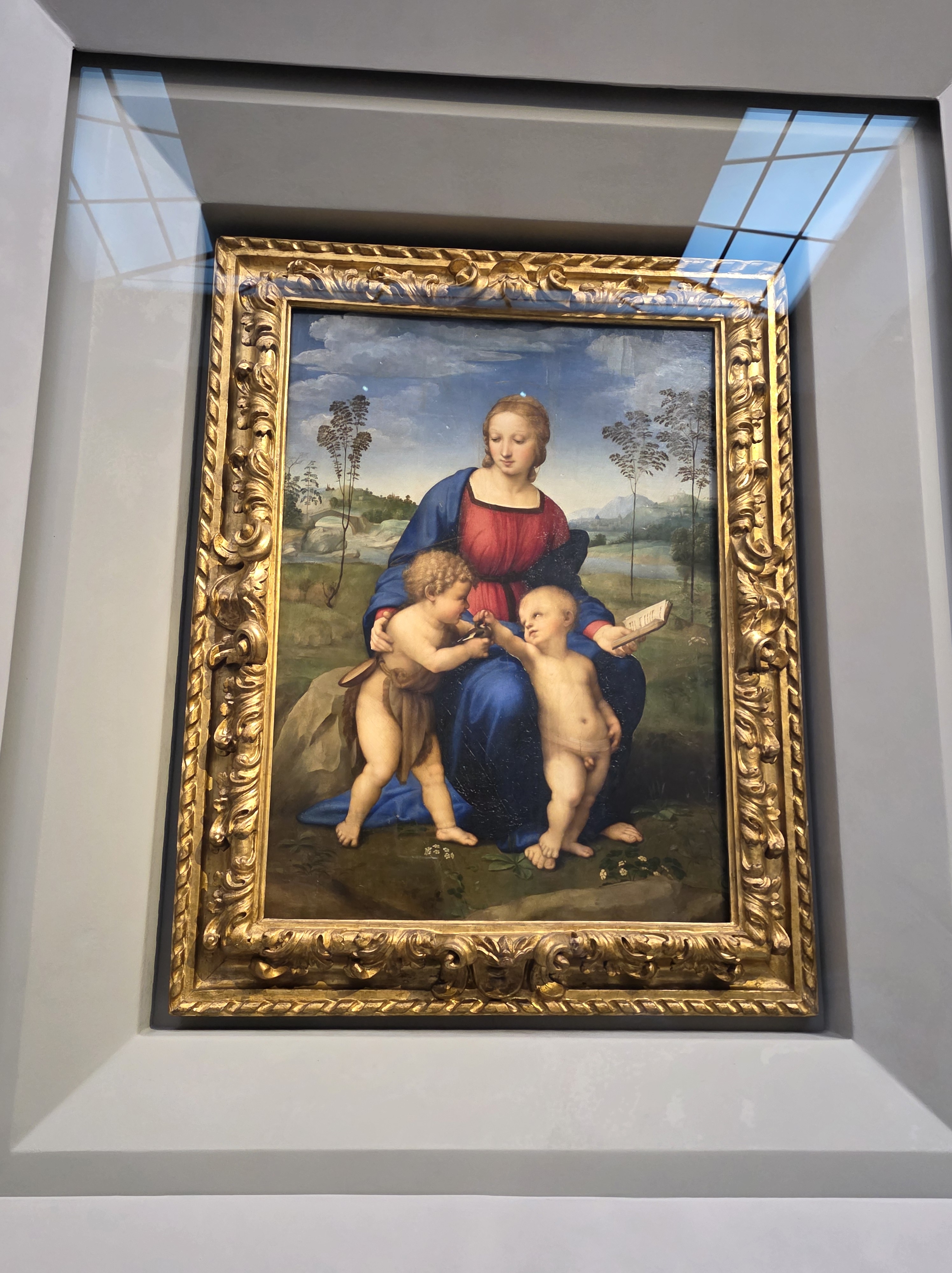
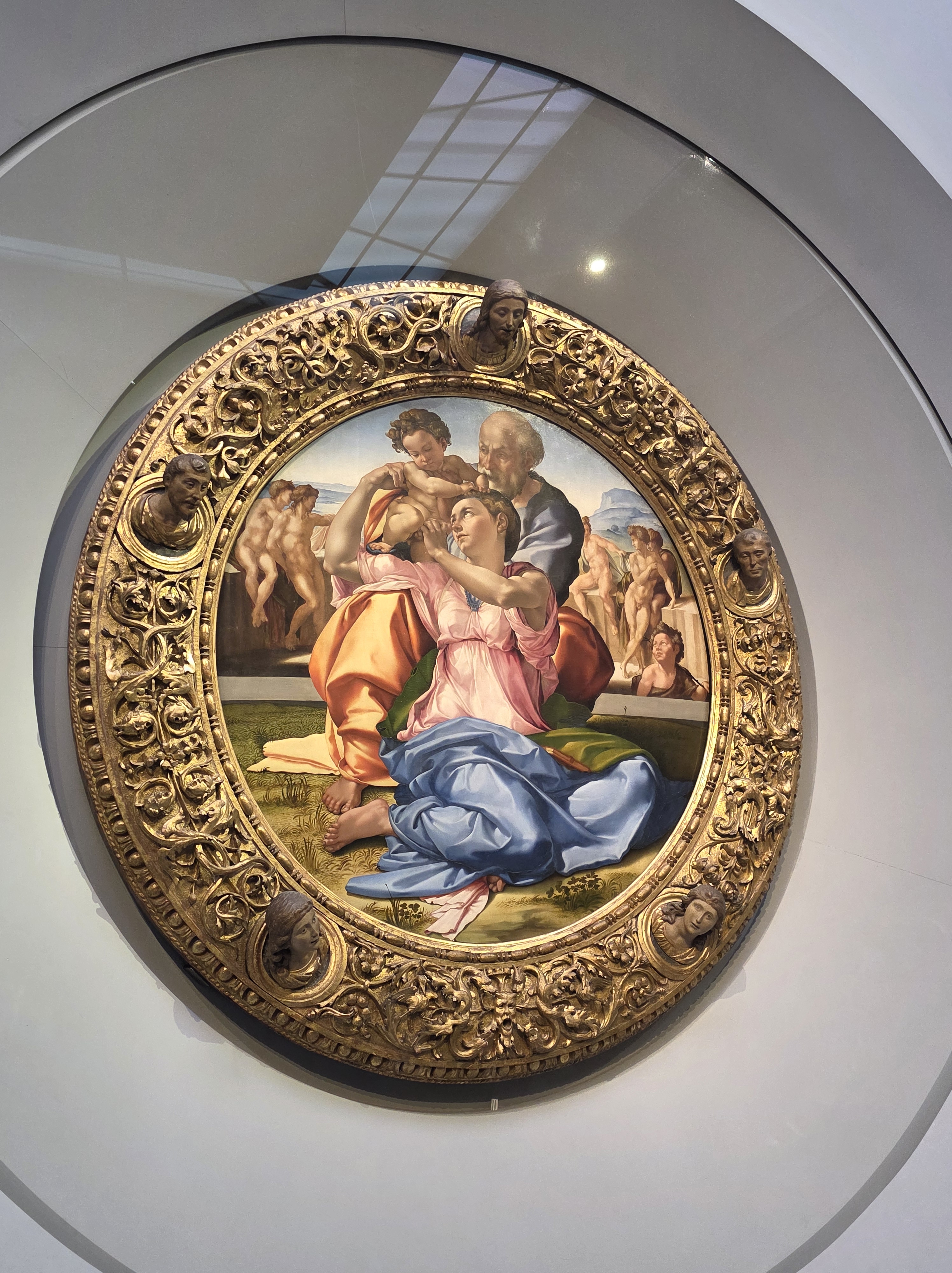
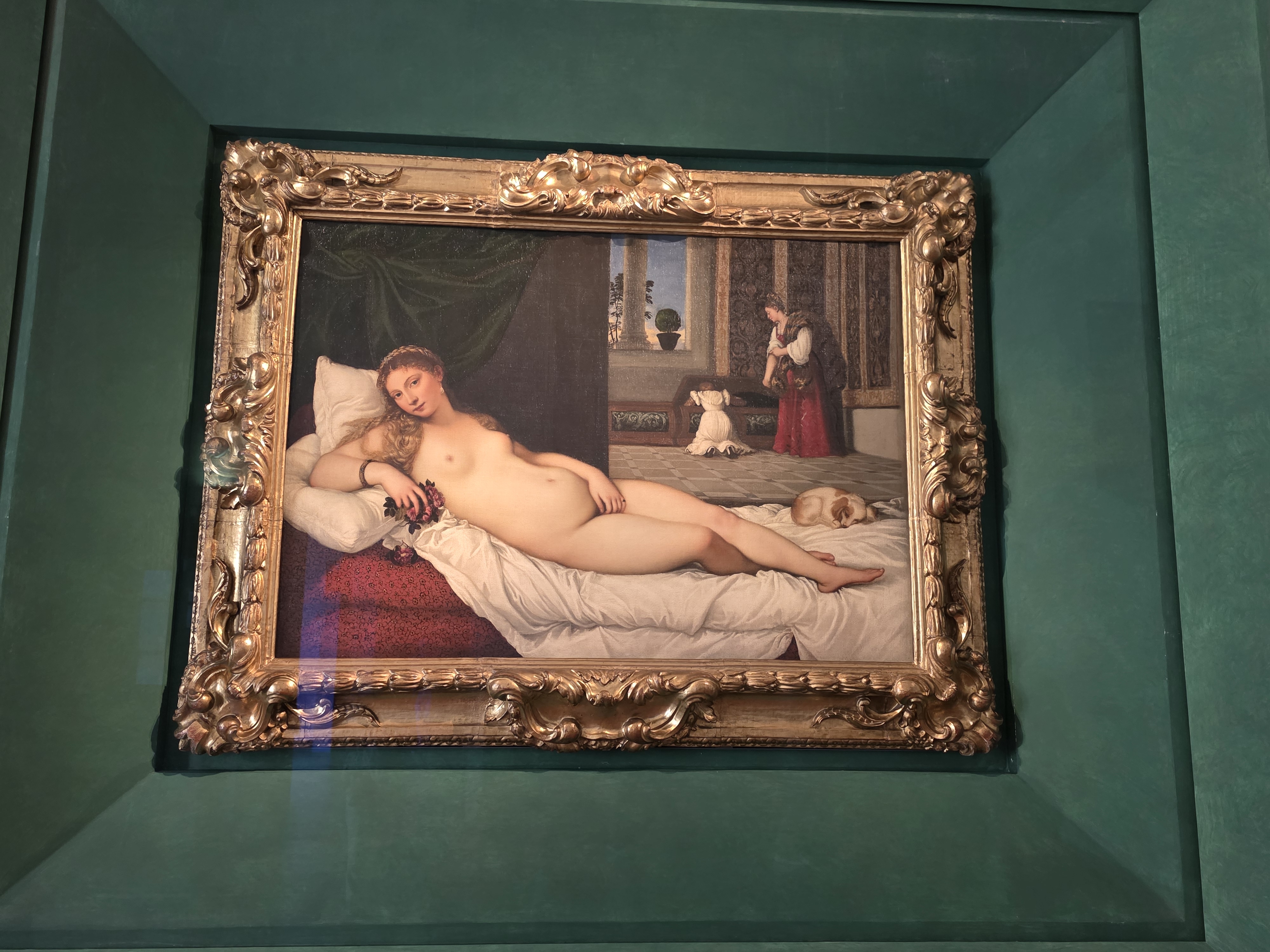
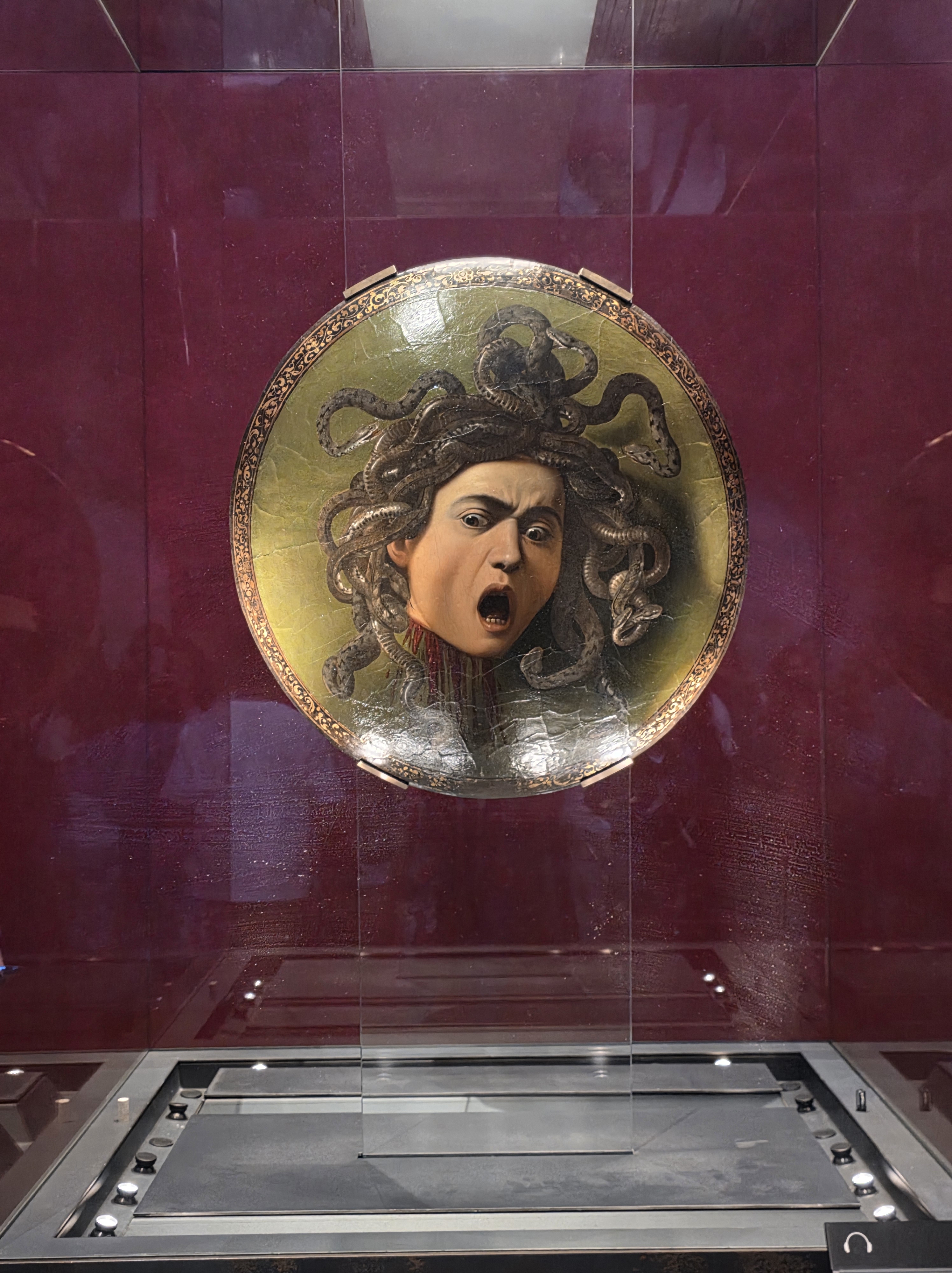
I approached this gallery strategically as well and selected eight paintings I absolutely had to see: Botticelli’s Birth of Venus and Primavera, Lippi’s Madonna and Child with Two Angels, Michelangelo’s Doni Tondo, Raphael’s Madonna of the Goldfinch, Leonardo da Vinci’s Annunciation, Titian’s Venus of Urbino, and Caravaggio’s Medusa. I planned my entire route around these with the help of ChatGPT, to be as efficient as possible and see everything. All the other paintings I saw were along this route. As a result, I enjoyed this visit enormously, which is not always the case with museums and galleries.
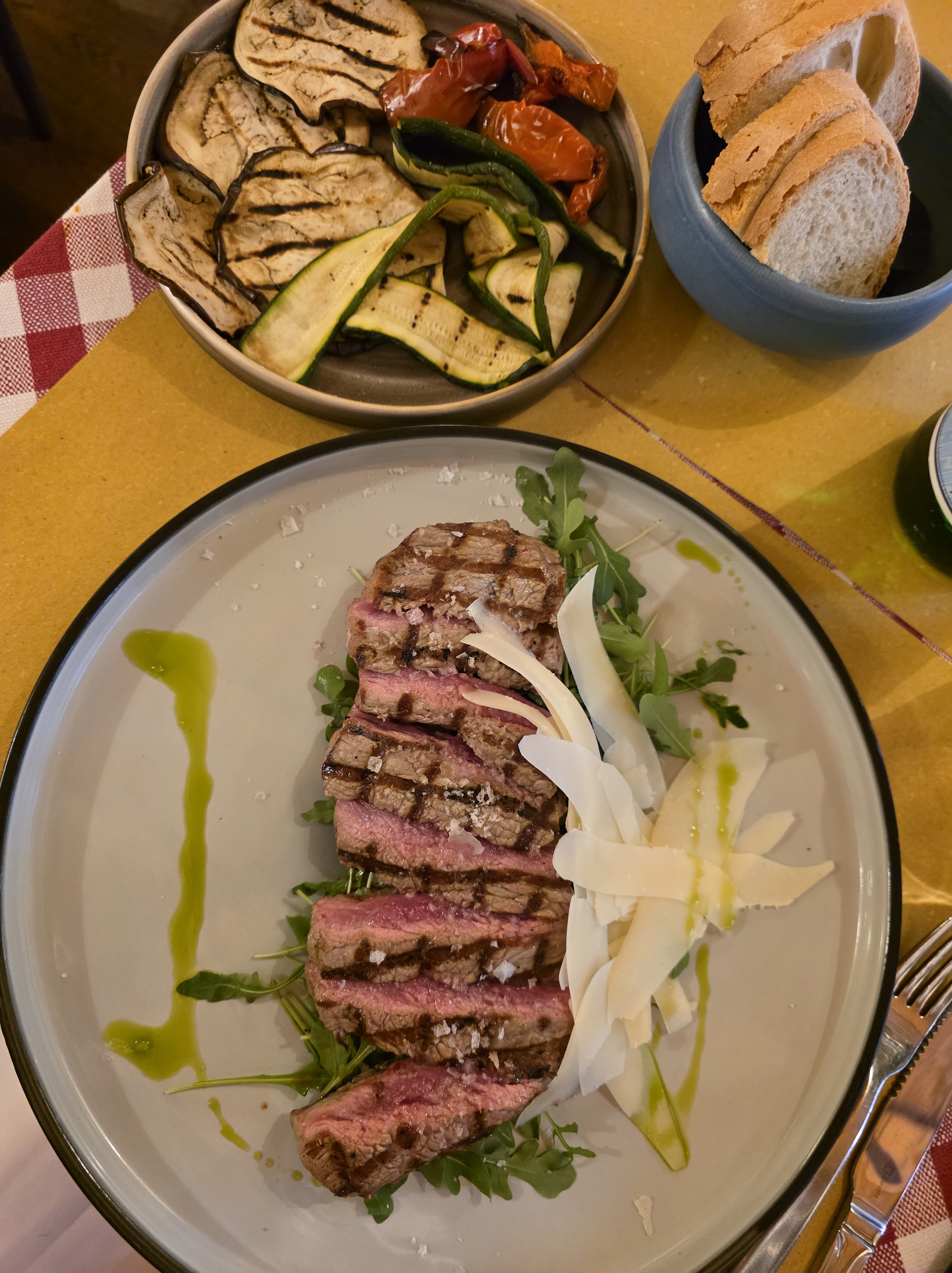
The visit took about an hour and a half, which, in my opinion, is more than enough to avoid getting too tired and not to spread your attention too thinly. Afterwards, feeling completely satisfied, I went for lunch – beef sirloin with arugula and parmesan. This time I skipped wine, and as it soon became clear, that was a very wise decision.

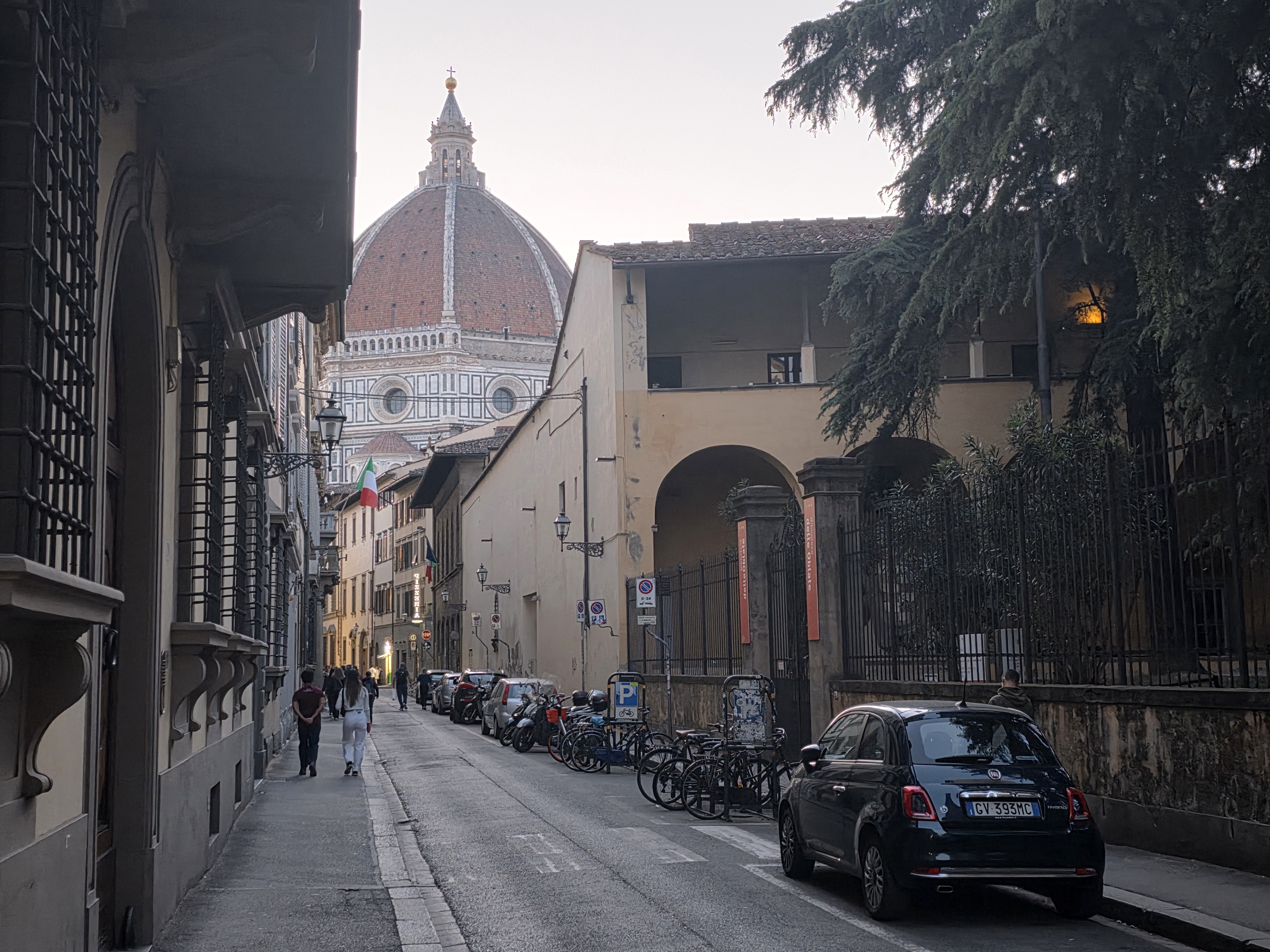
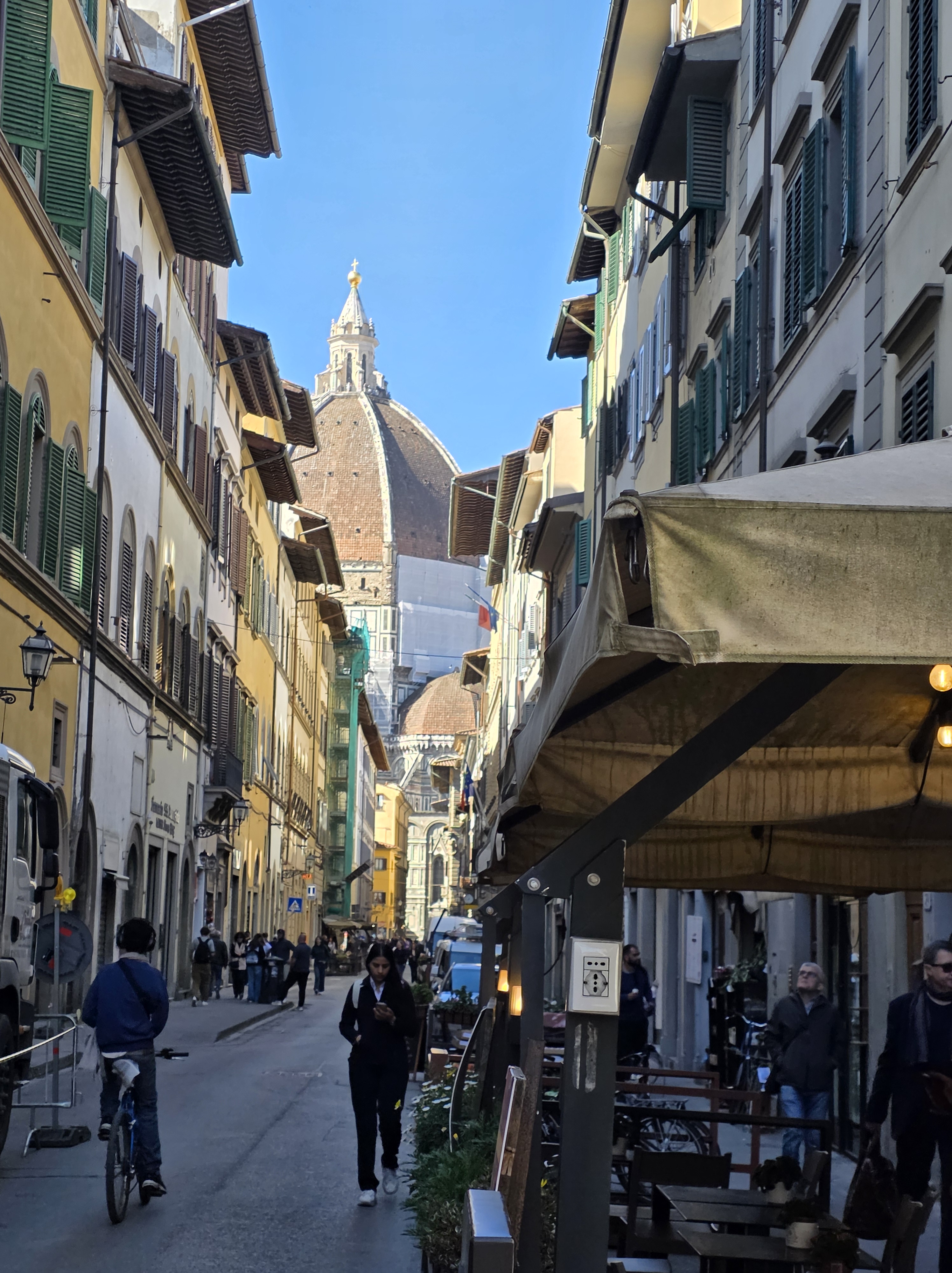
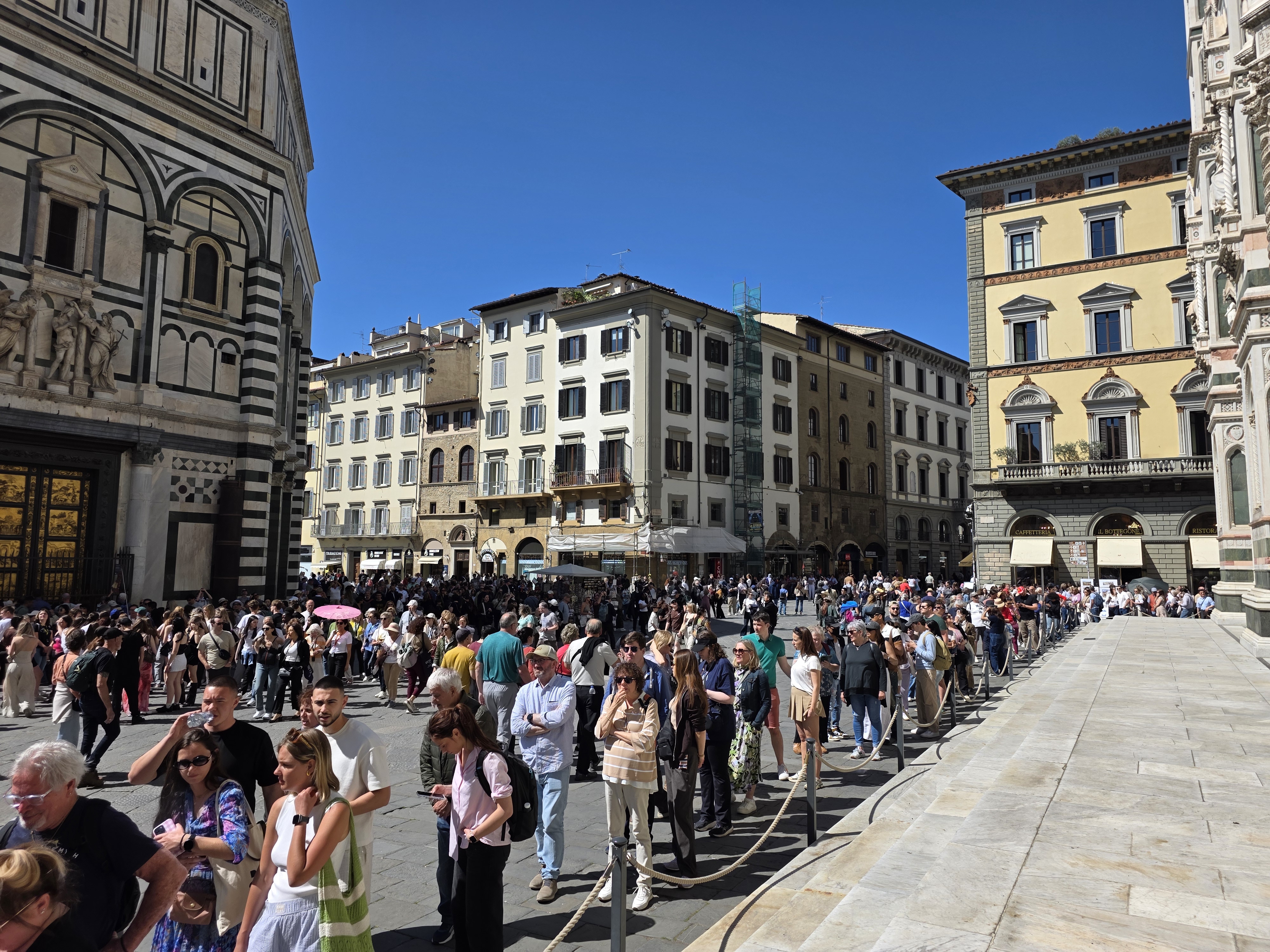
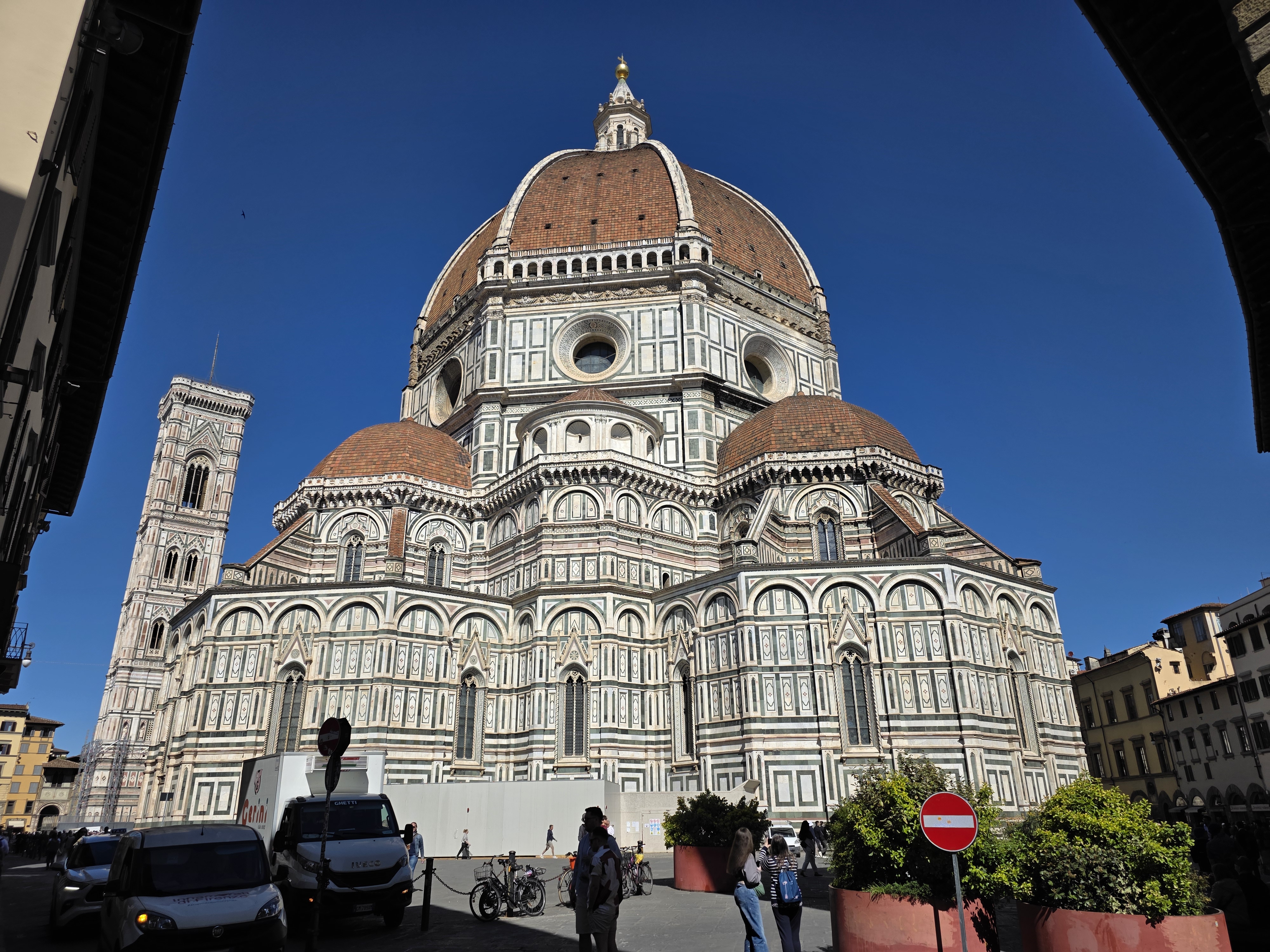
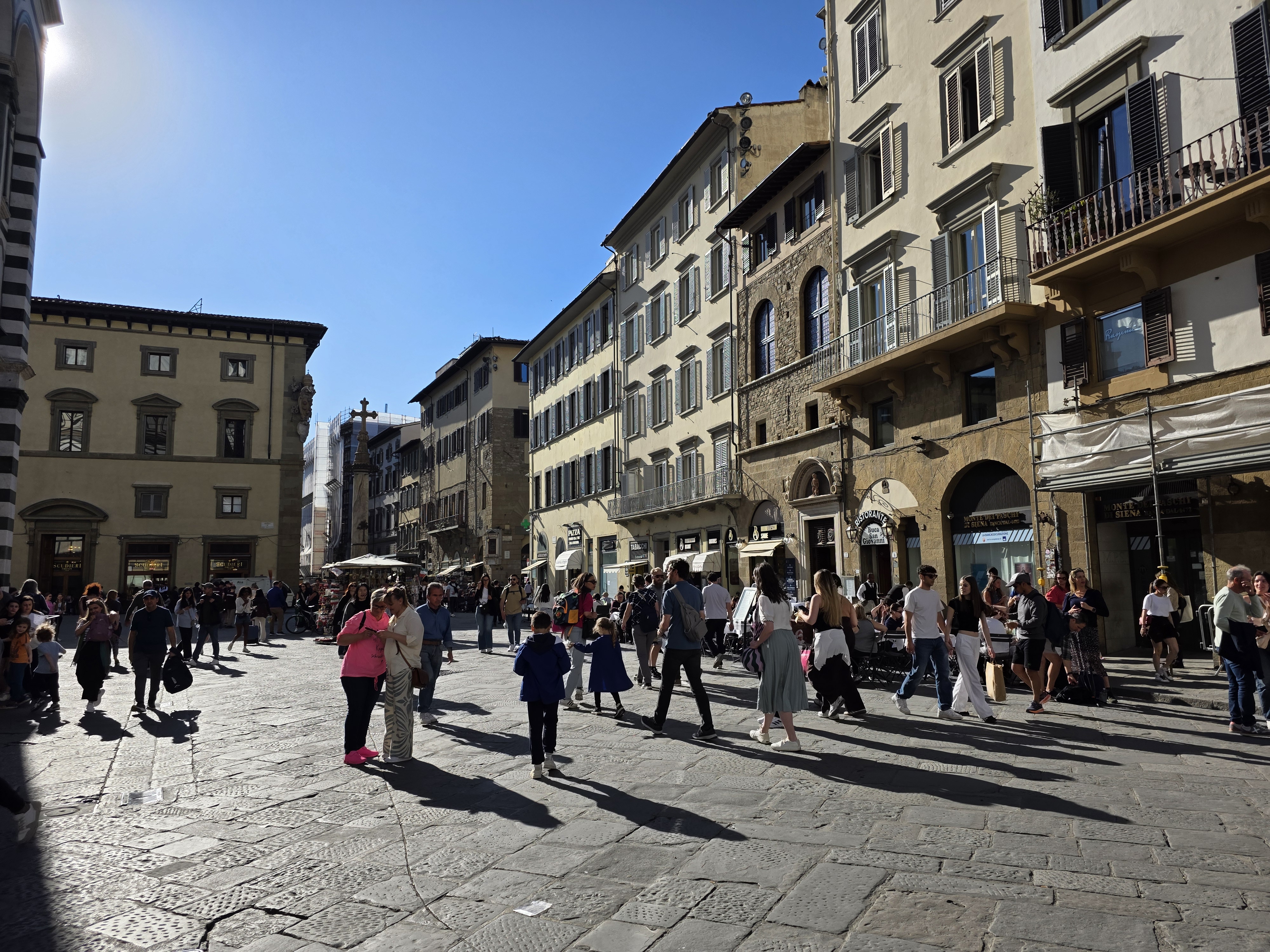
Next on the agenda, with a pre-booked ticket, was climbing Giotto’s Campanile next to the Duomo (the Cathedral of Santa Maria del Fiore) at 4:30pm. I still had plenty of time, which I decided to spend walking around the cathedral to see it from all sides.

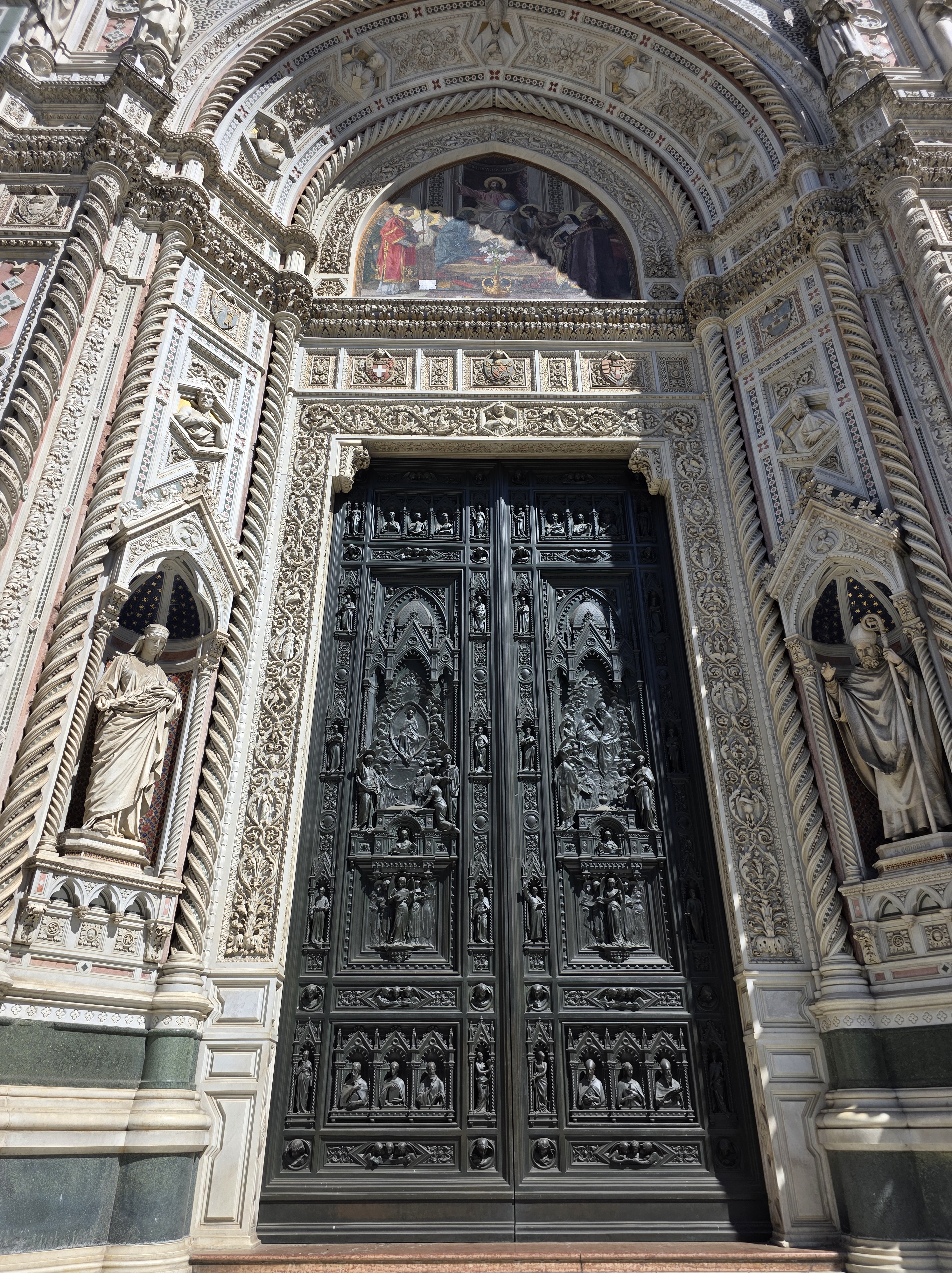
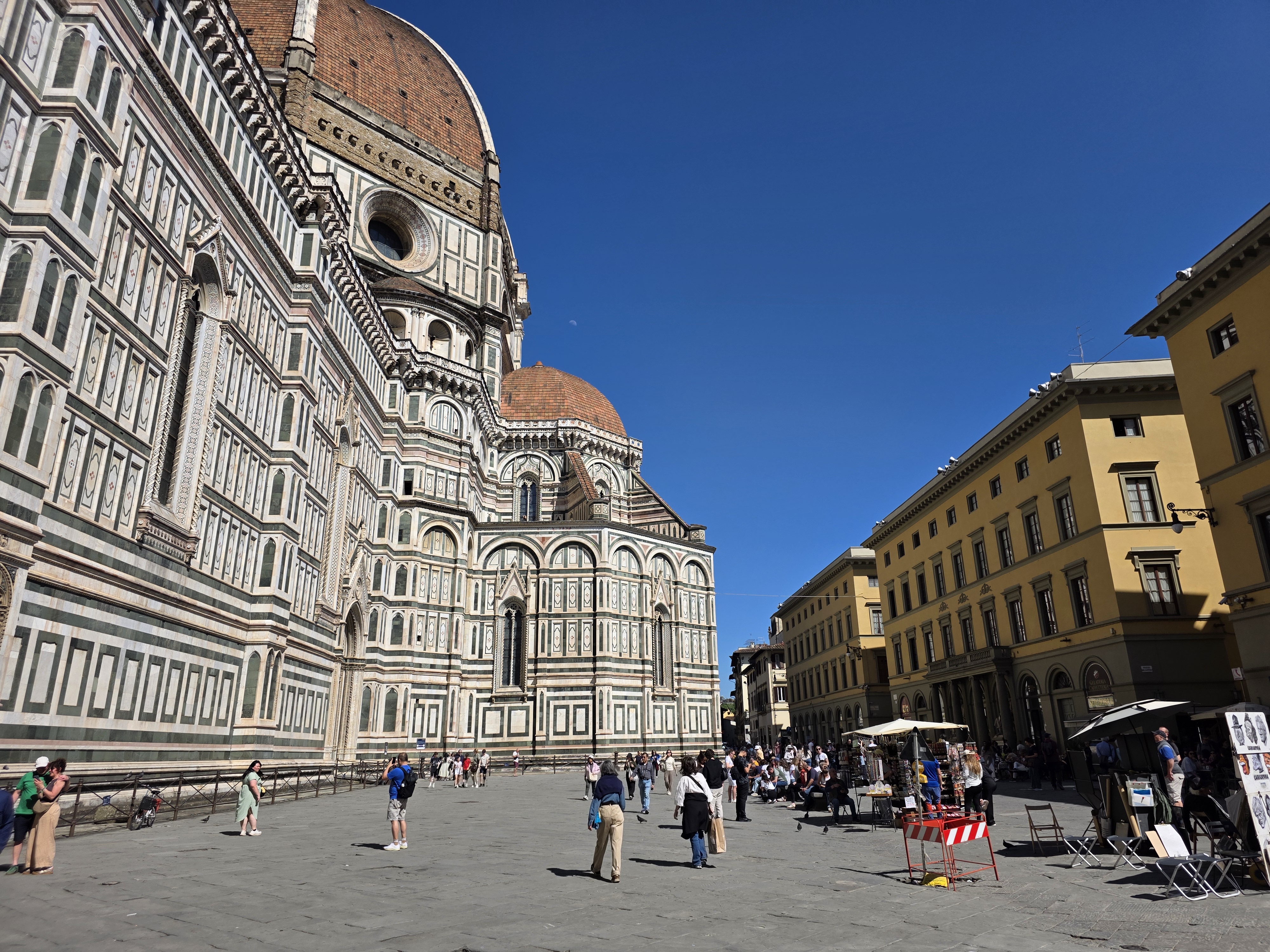
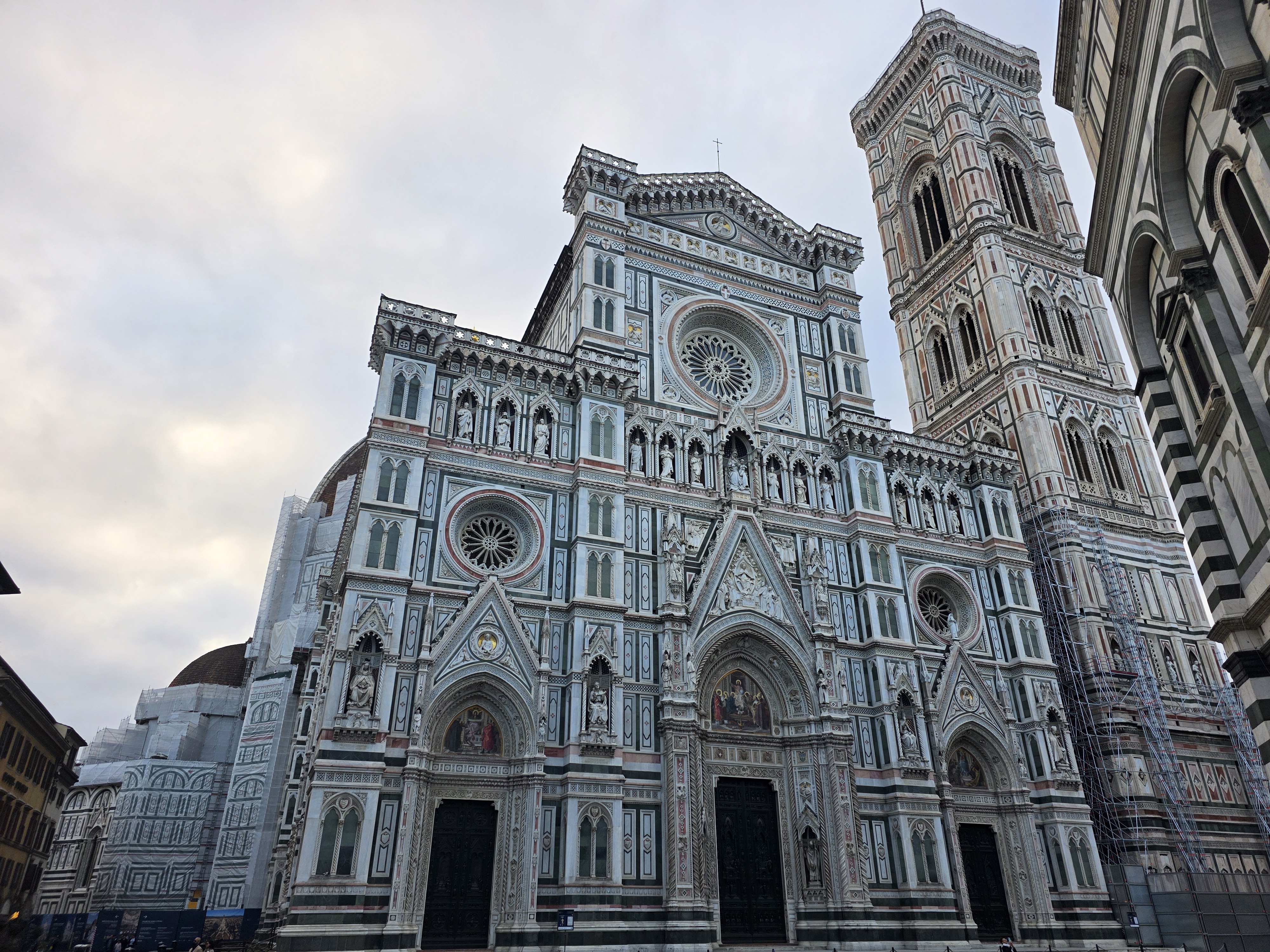
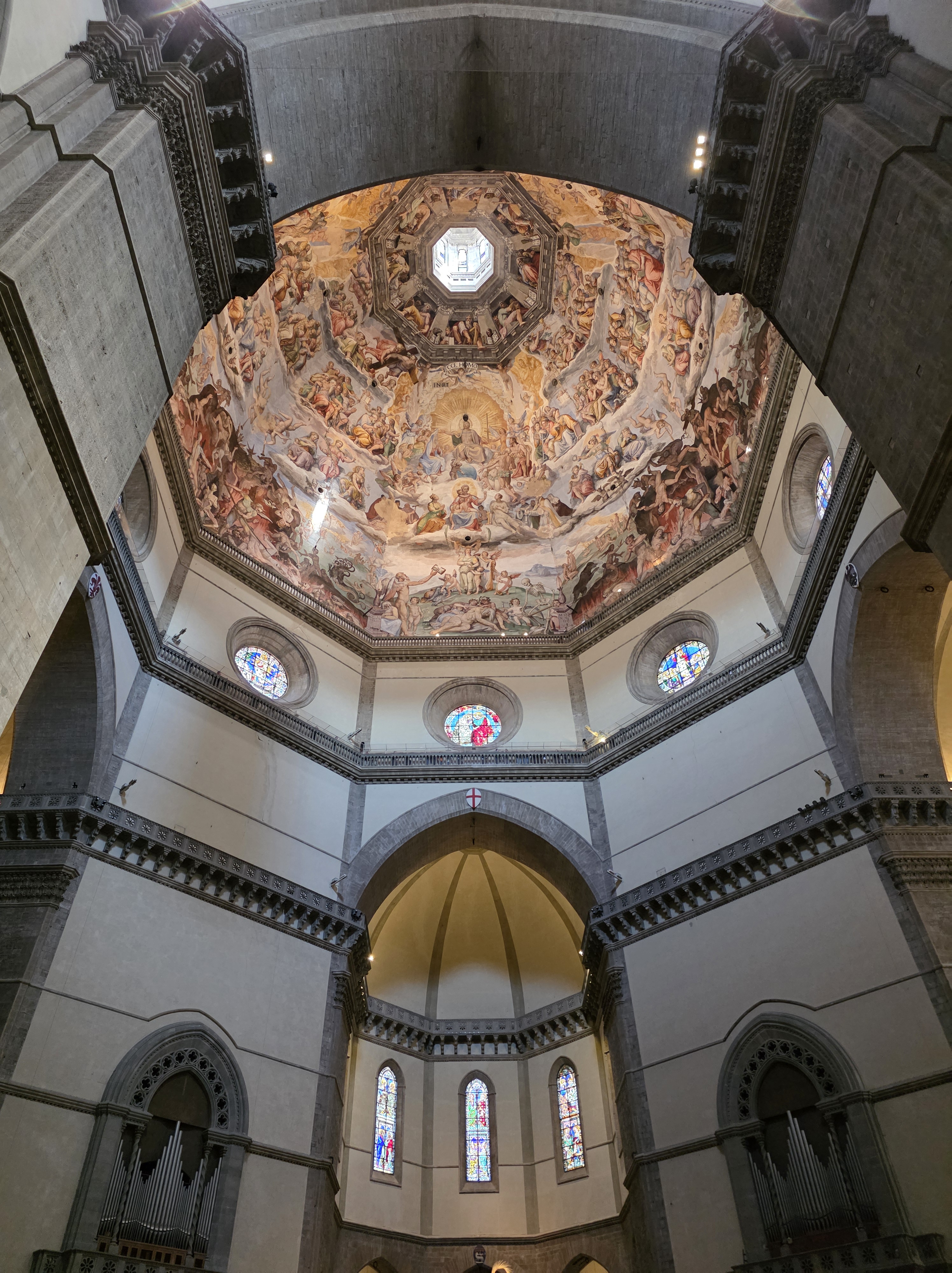
Entry to the cathedral was free, though with a small queue, so I decided to go inside as well. I have to say, from the outside the cathedral is absolutely stunning – I would probably call it one of the most beautiful, if not the most beautiful, I’ve ever seen. But inside, it didn’t strike me as anything extraordinary. I’ve seen much more impressive cathedrals – there’s no comparison at all with the Sagrada Família, for example. The only really striking feature is the dome and its frescoes.


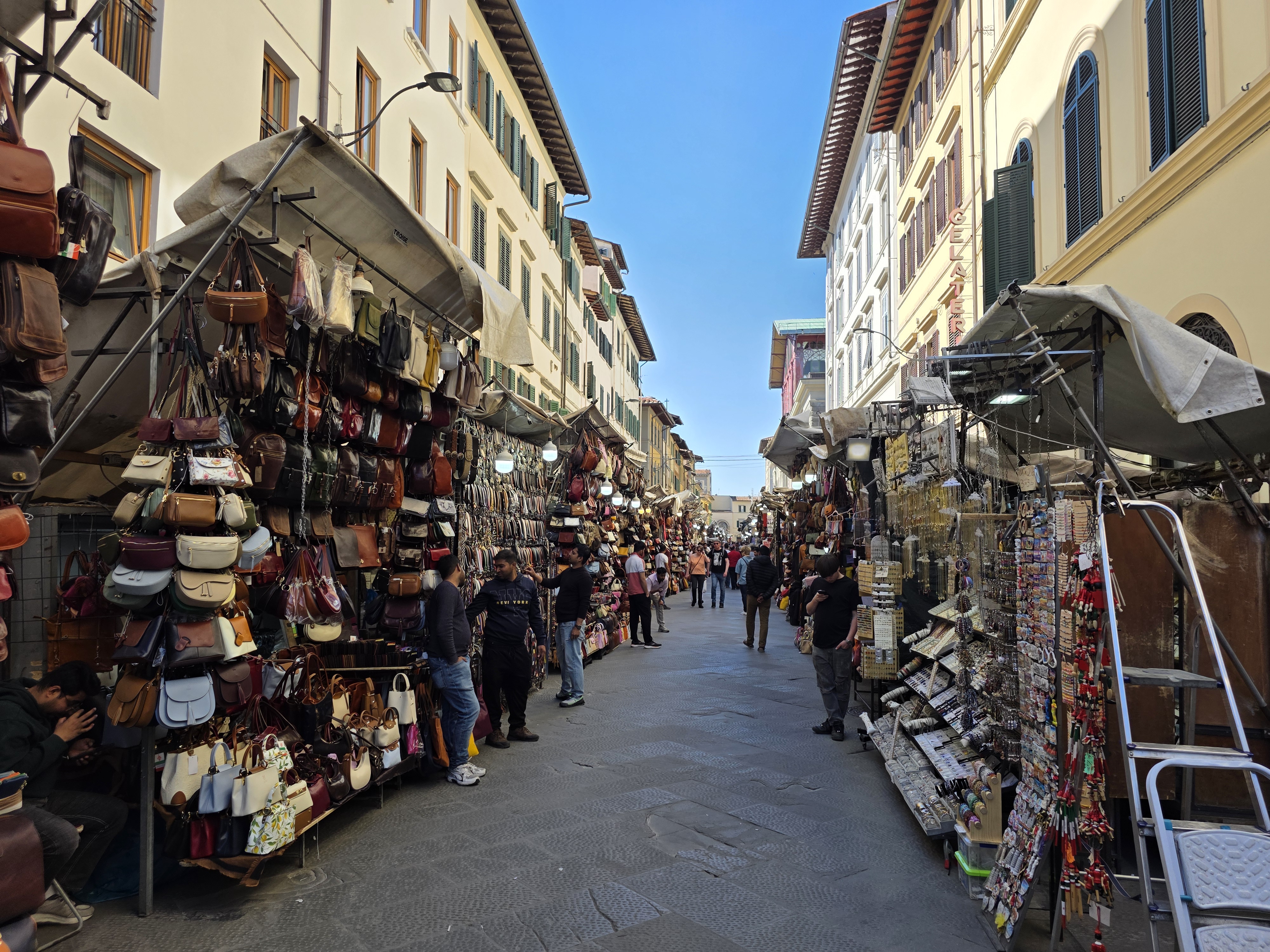
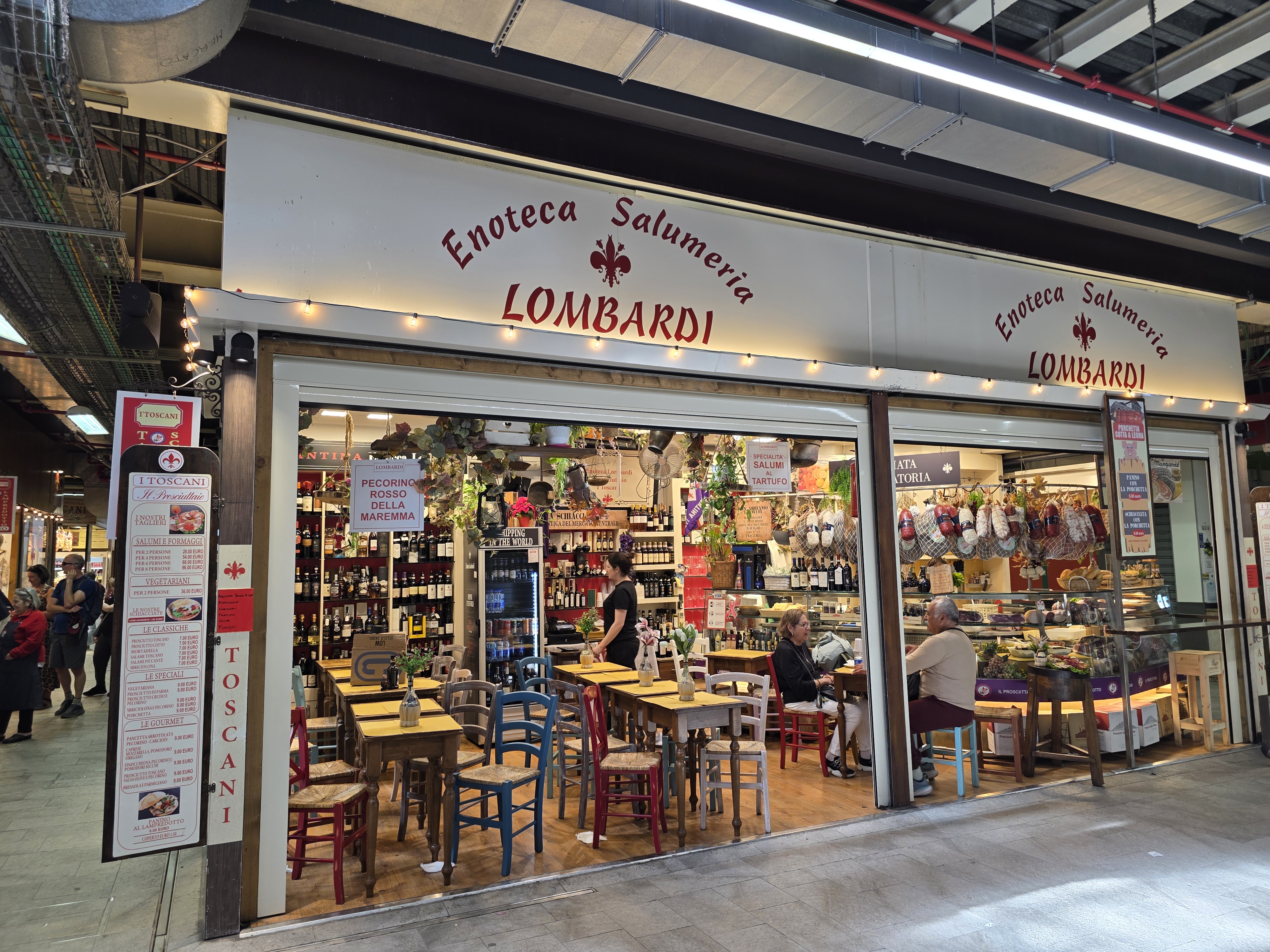
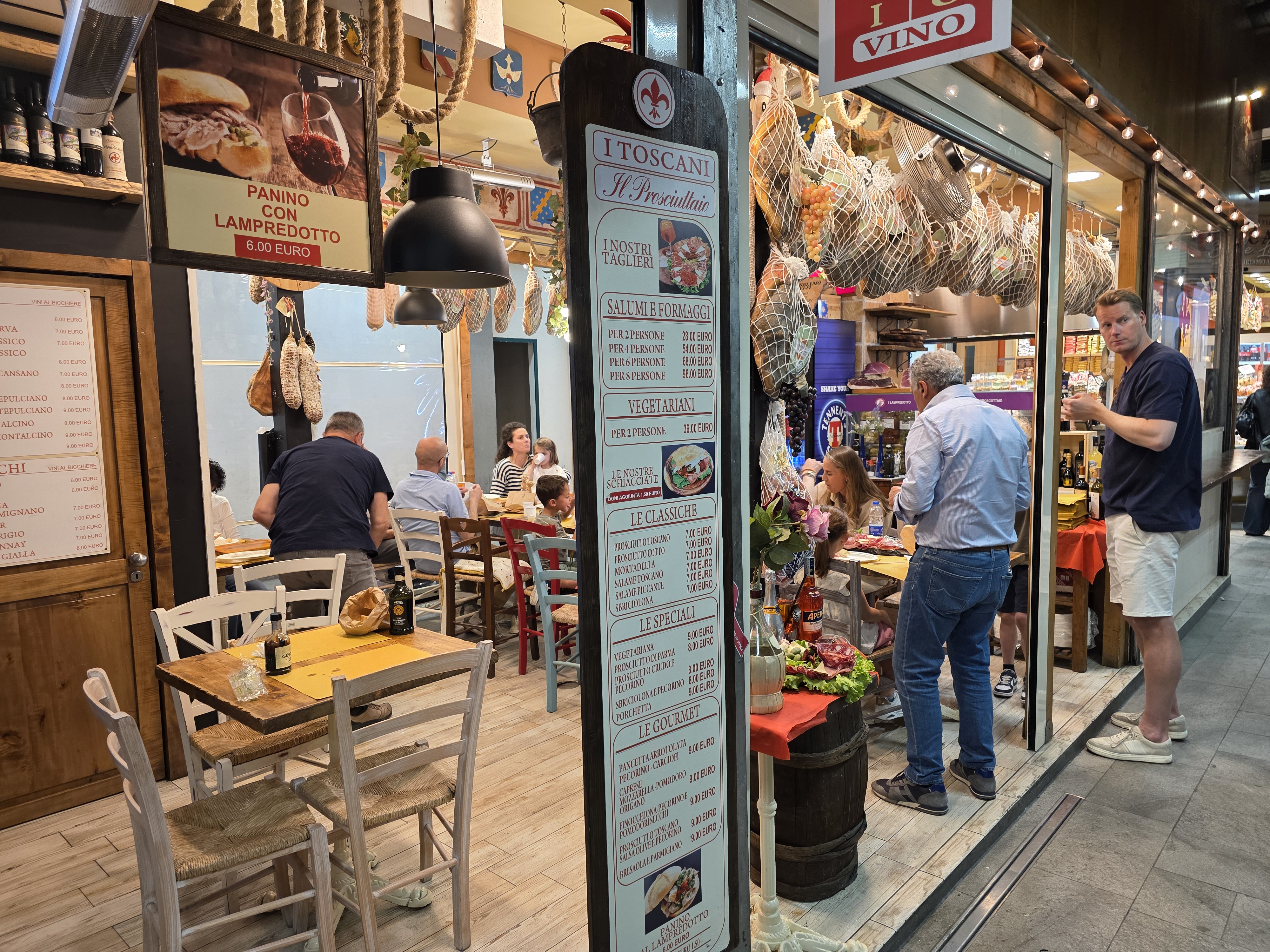
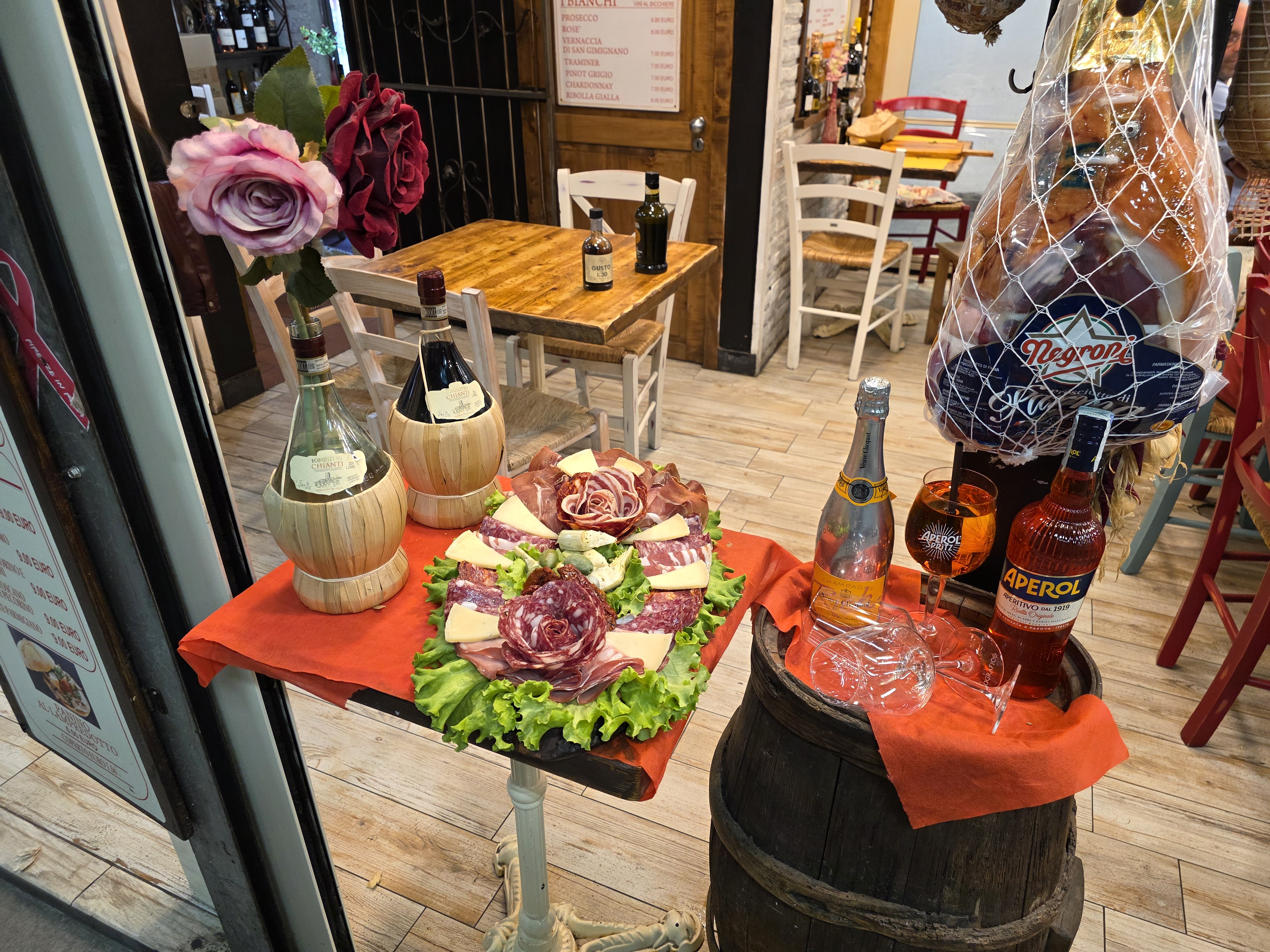
After that, I went to see the San Lorenzo Market. The market consists of an outdoor section with souvenir and leather stalls, and a covered food hall with produce vendors – cheeses, meats, snacks, sandwiches. I imagine it must be packed at lunchtime, but I went in the afternoon – there were people, but not even all the stalls were open anymore.

And finally – the bell tower, and this was quite an adventure. I keep telling myself never to climb another tower again, but somehow I always end up doing it anyway.

Compared to Venice, where the Campanile takes you up and down by lift and all you have to do is enjoy the view, this is nothing like that.

To reach the top viewing platform, you have to climb 414 steps. When I googled it, it didn’t seem too bad, because I’m usually afraid of spiral staircases, and the photos showed straight ones. And they were straight at first. Very narrow, though, with people going both up and down at the same time, squeezing past each other – and there were no railings at all, just bare stone walls.

The worst part was that in the end there was indeed a spiral staircase leading to the very top. I made it up, trying not to think about how I’d get down later.

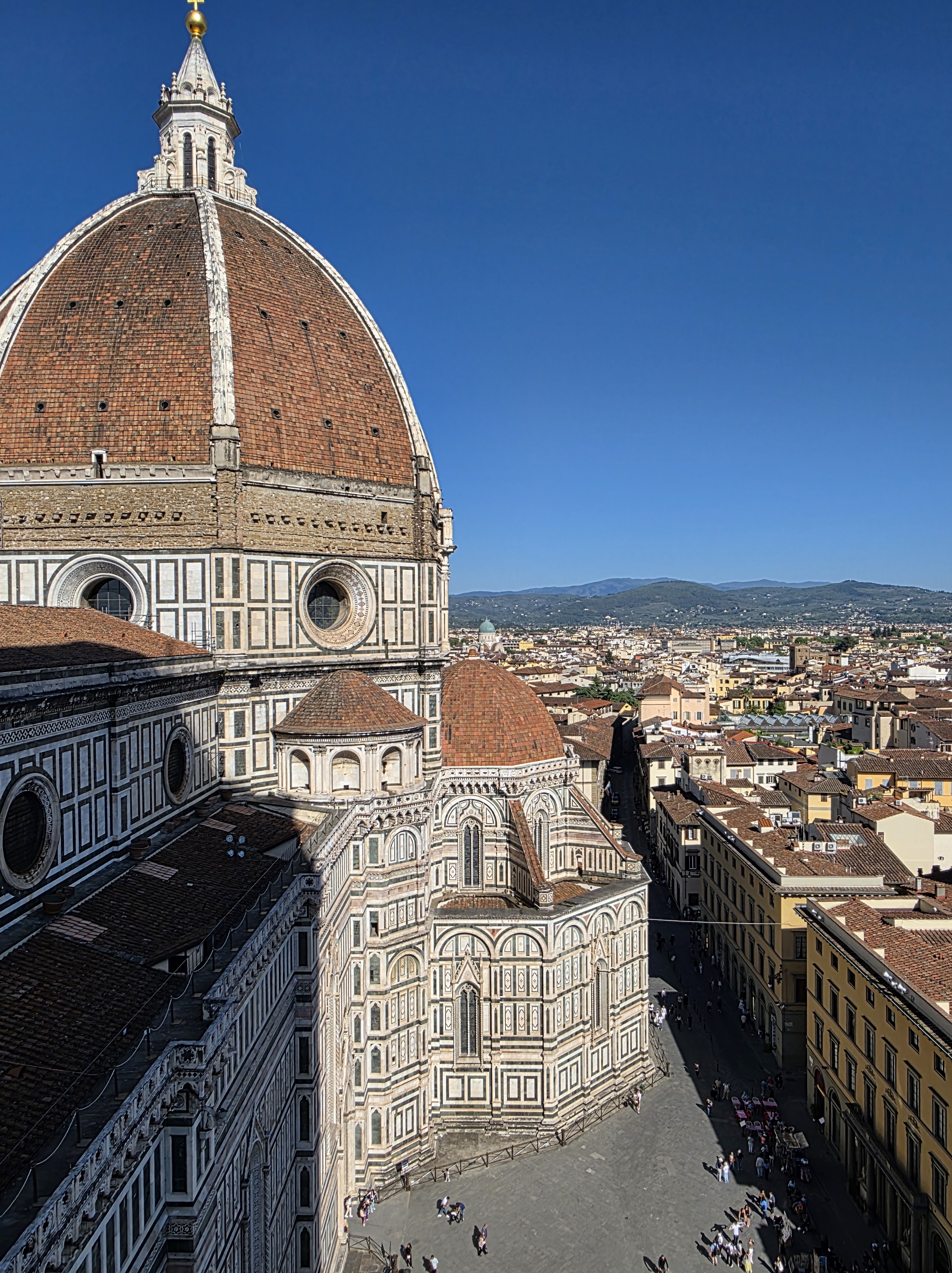
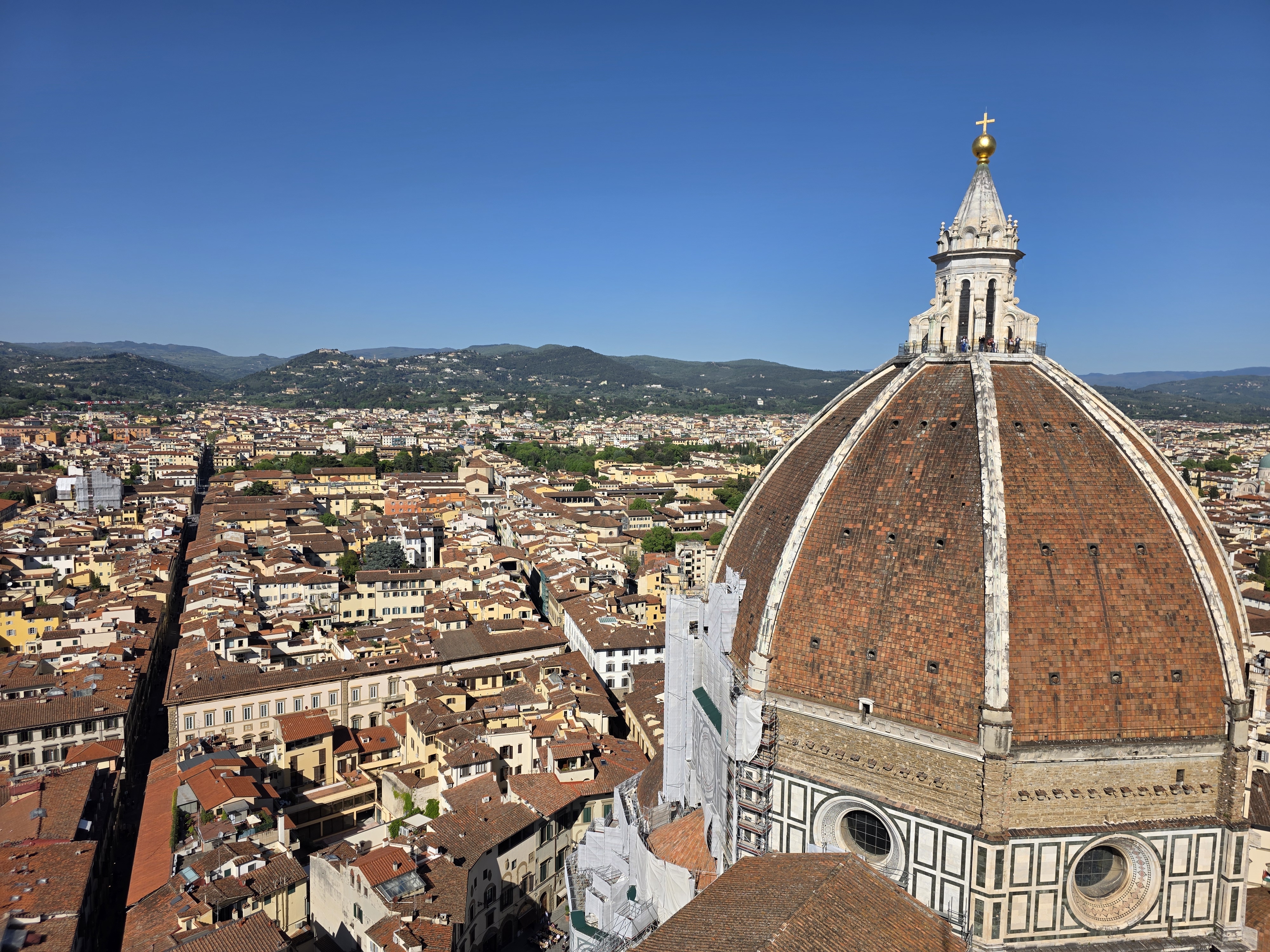
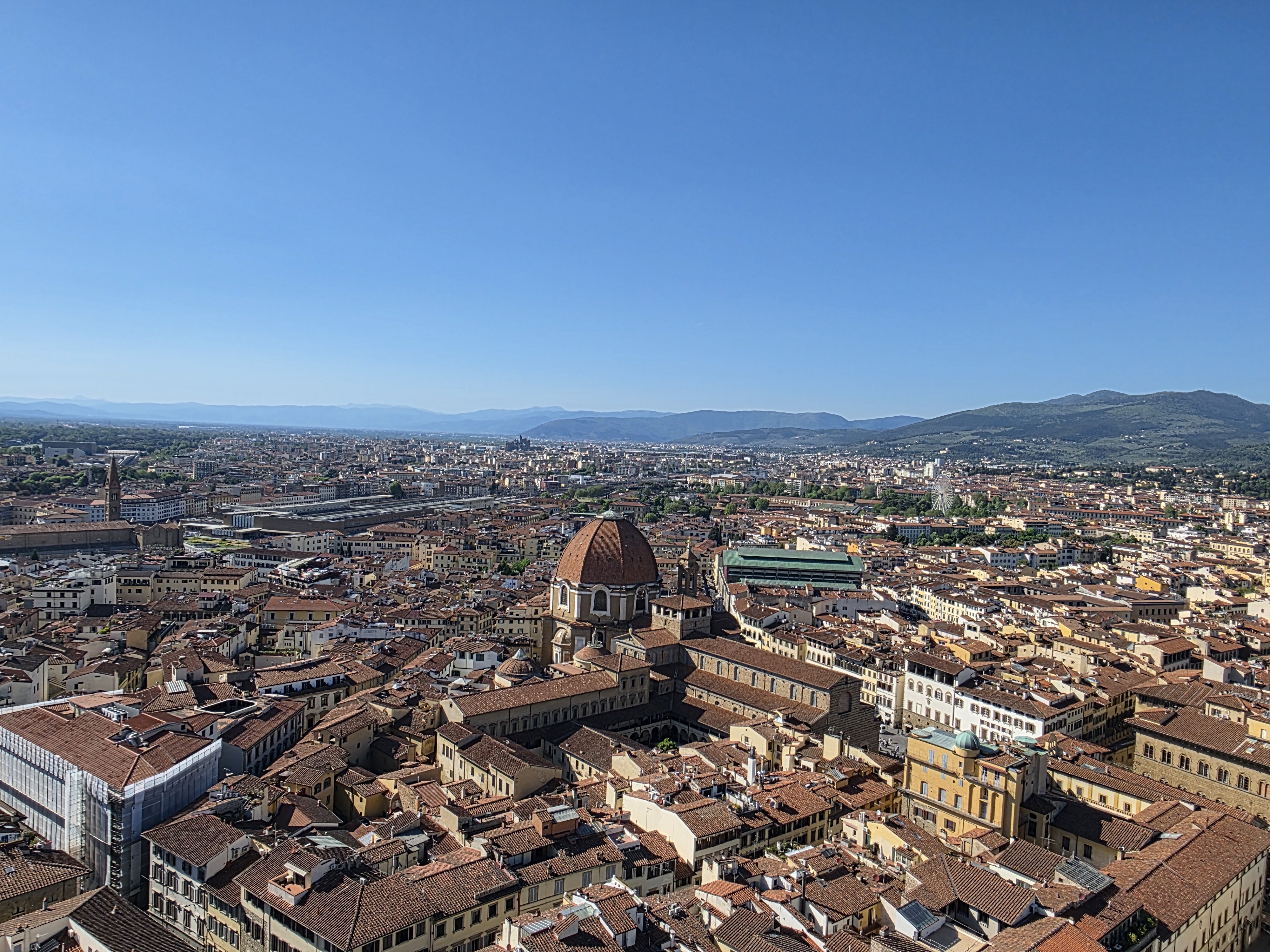
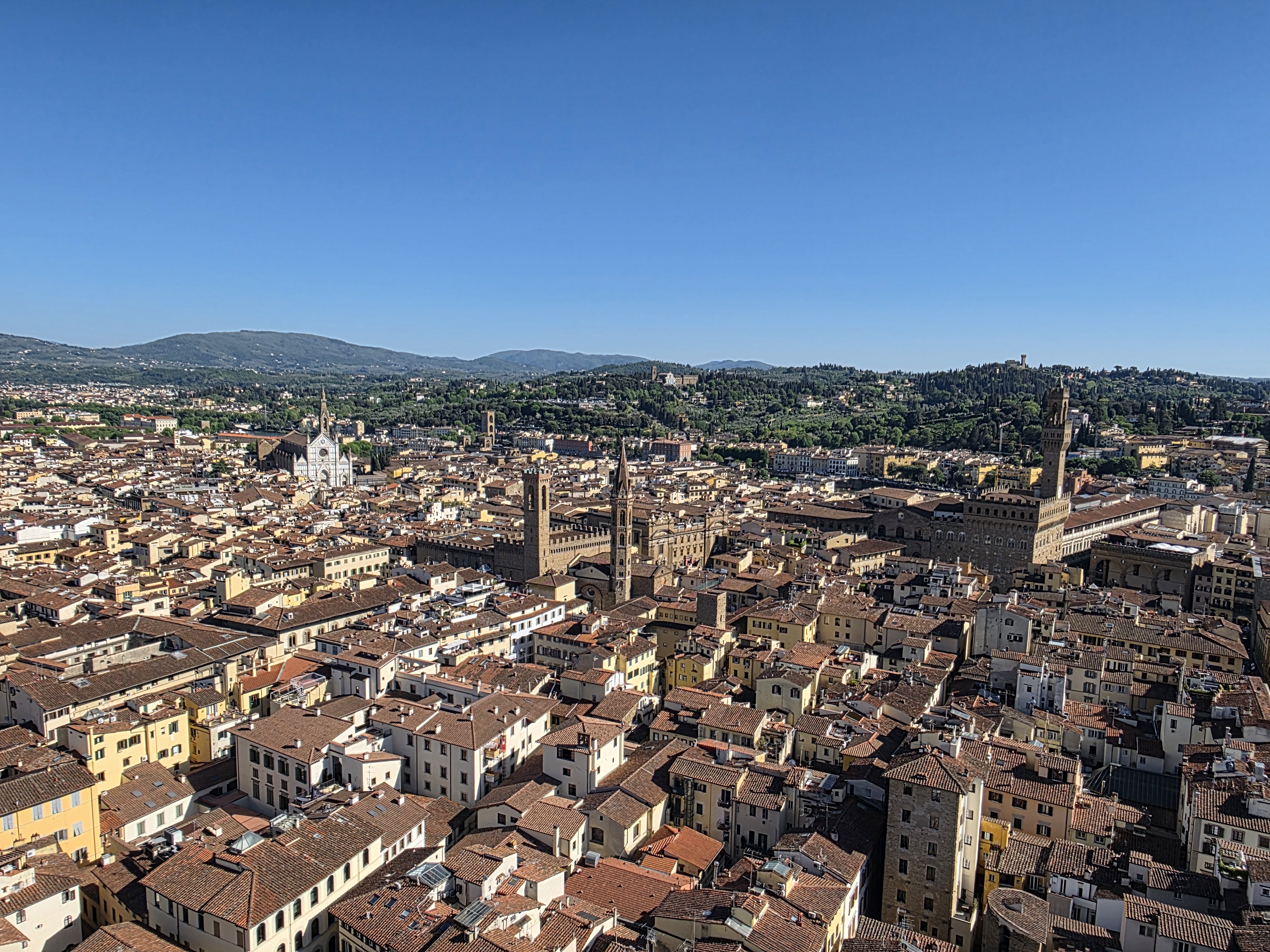
Of course, the view from the top is stunning – you see the Duomo dome at eye level, looking at the people standing there, while they look back at you. But the descent was honestly a nightmare. I had a proper panic attack – it was already scary going down, there was nothing to hold onto, and on top of everything there was a constant flow of people climbing up, so I had to stand in awkward positions waiting for them to pass. At one point, some Italians even asked (in Italian!) if I was scared and offered me their arms to hold onto.

I somehow made it down, and once again I swear I will never climb another tower again! And yes, good thing I didn’t have wine at lunch – this was not exactly fun even when completely sober.

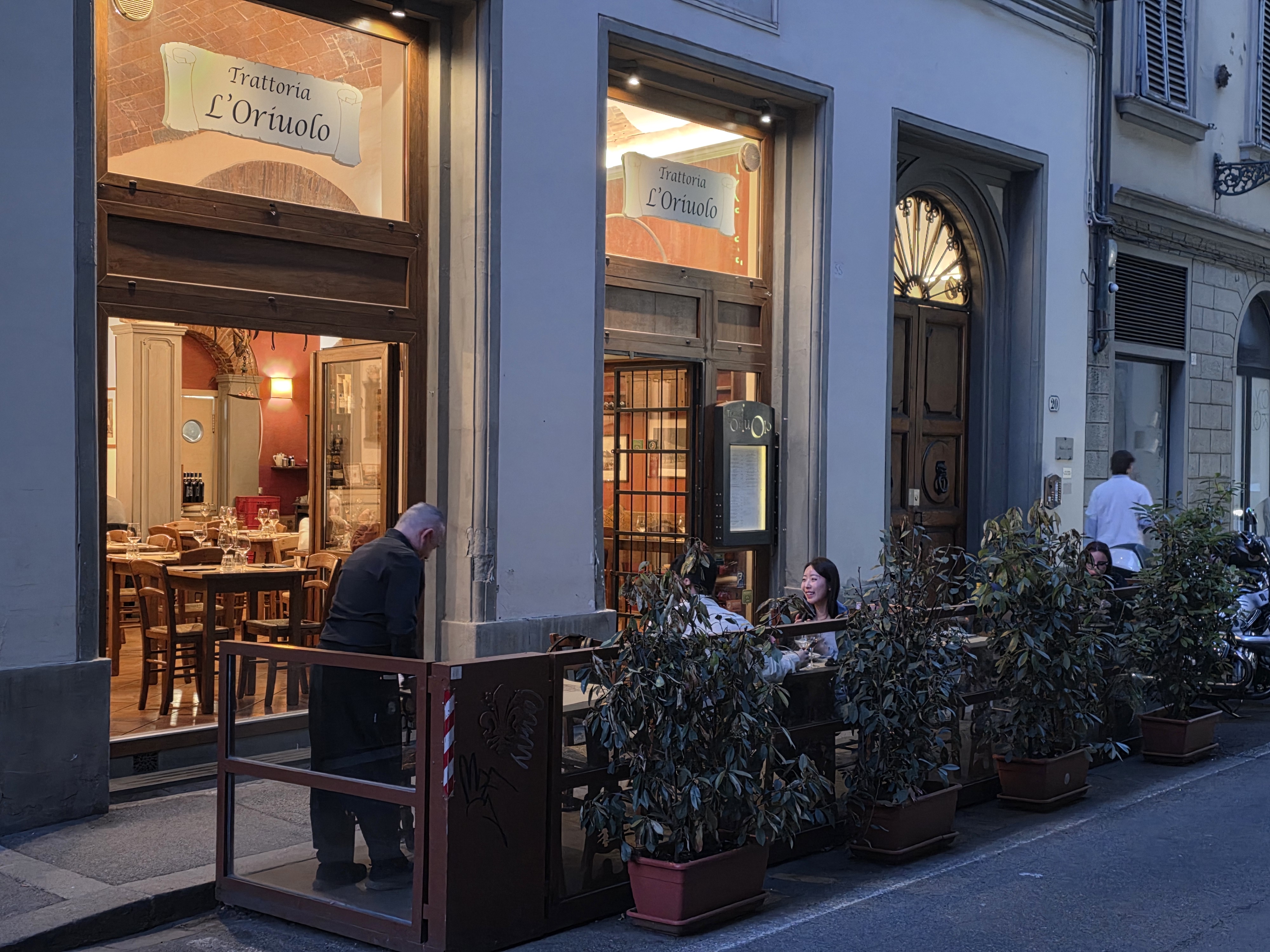
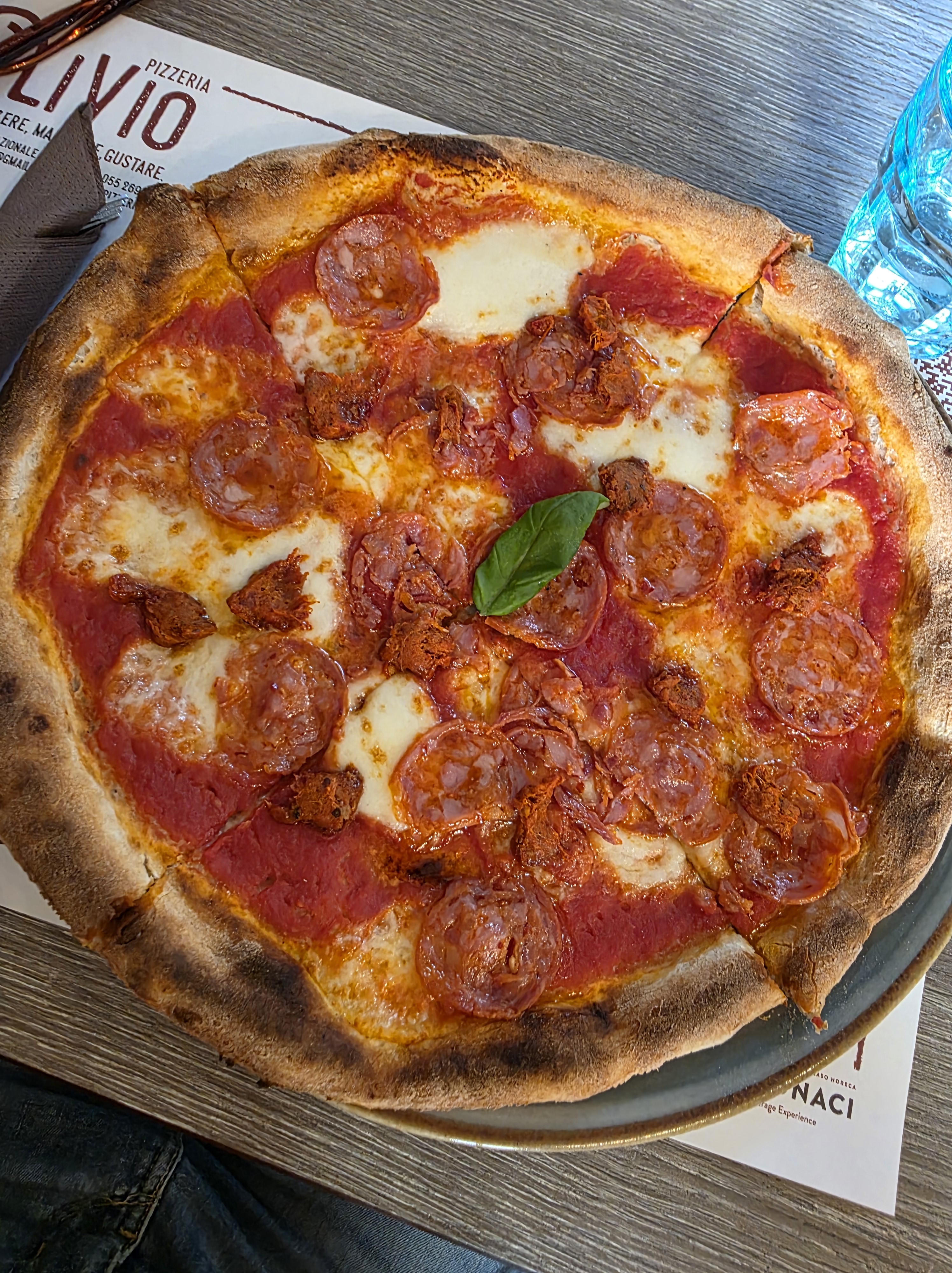
By then it was already getting close to dinner time – a bit early, but I was quite hungry, so I headed to the LiVio pizzeria, which had been recommended to me as one of the best in town. And unlike the rather mediocre pizza I had in Venice, this one really was excellent.


My food adventures didn’t end there, because after dinner I decided to have a limoncello spritz elsewhere, and was unexpectedly served a complimentary bruschetta with tomatoes.

In general, I’m definitely eating much more than usual here – more fat, more sugar, more carbs in general. But I believe that any trip is also a chance to immerse yourself in the culinary culture of a place, alongside everything else, so I don’t regret anything!

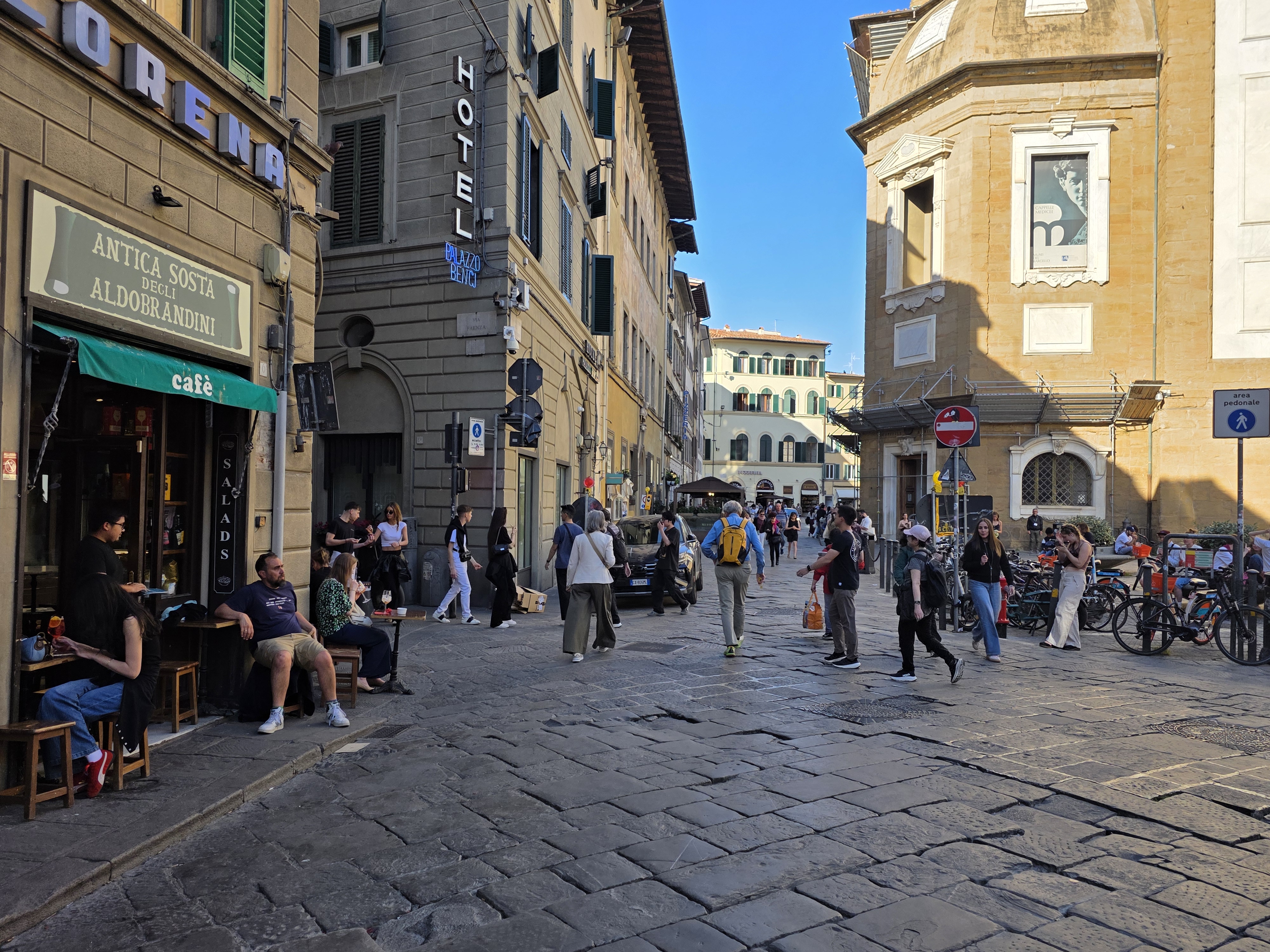
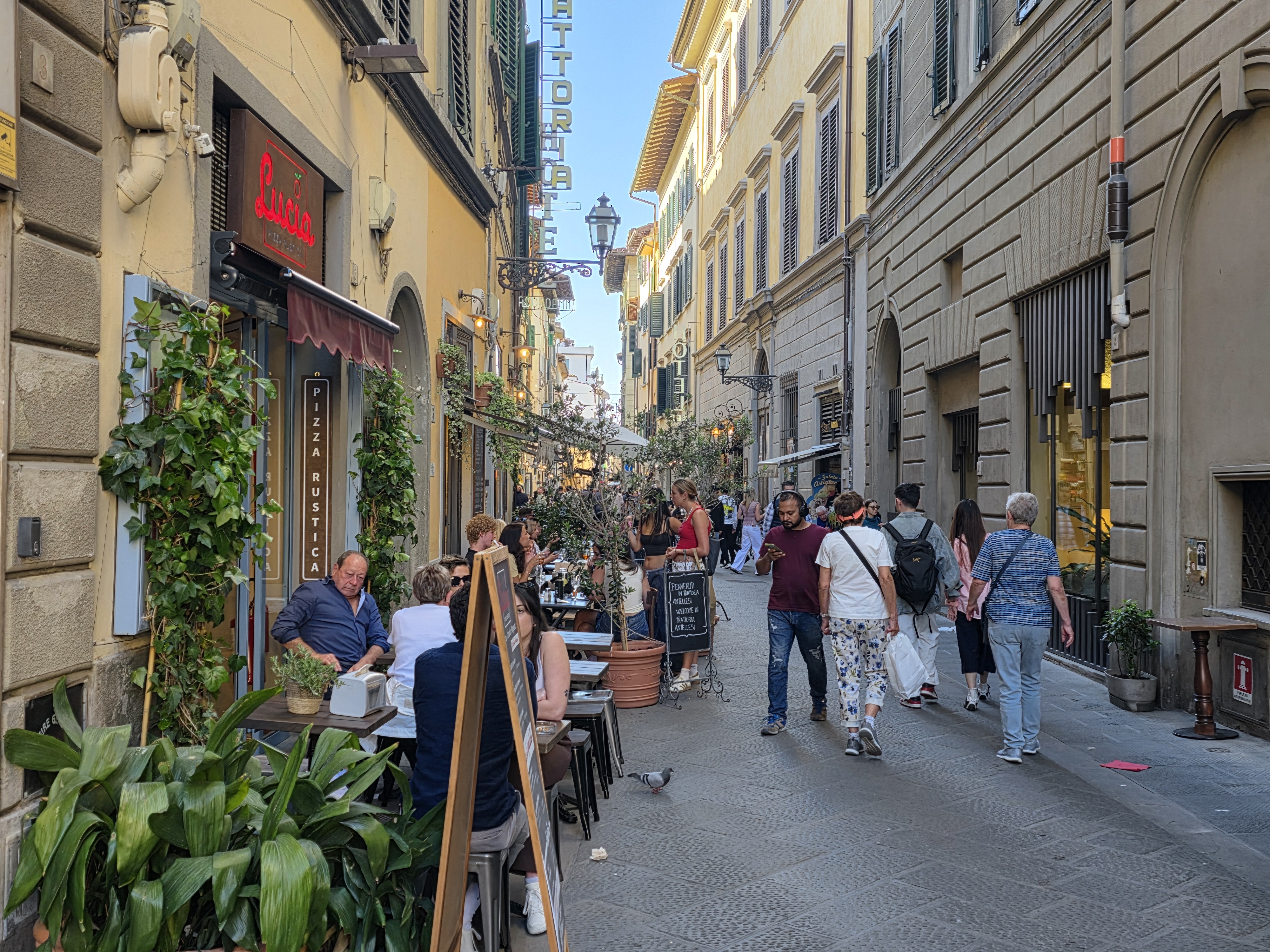
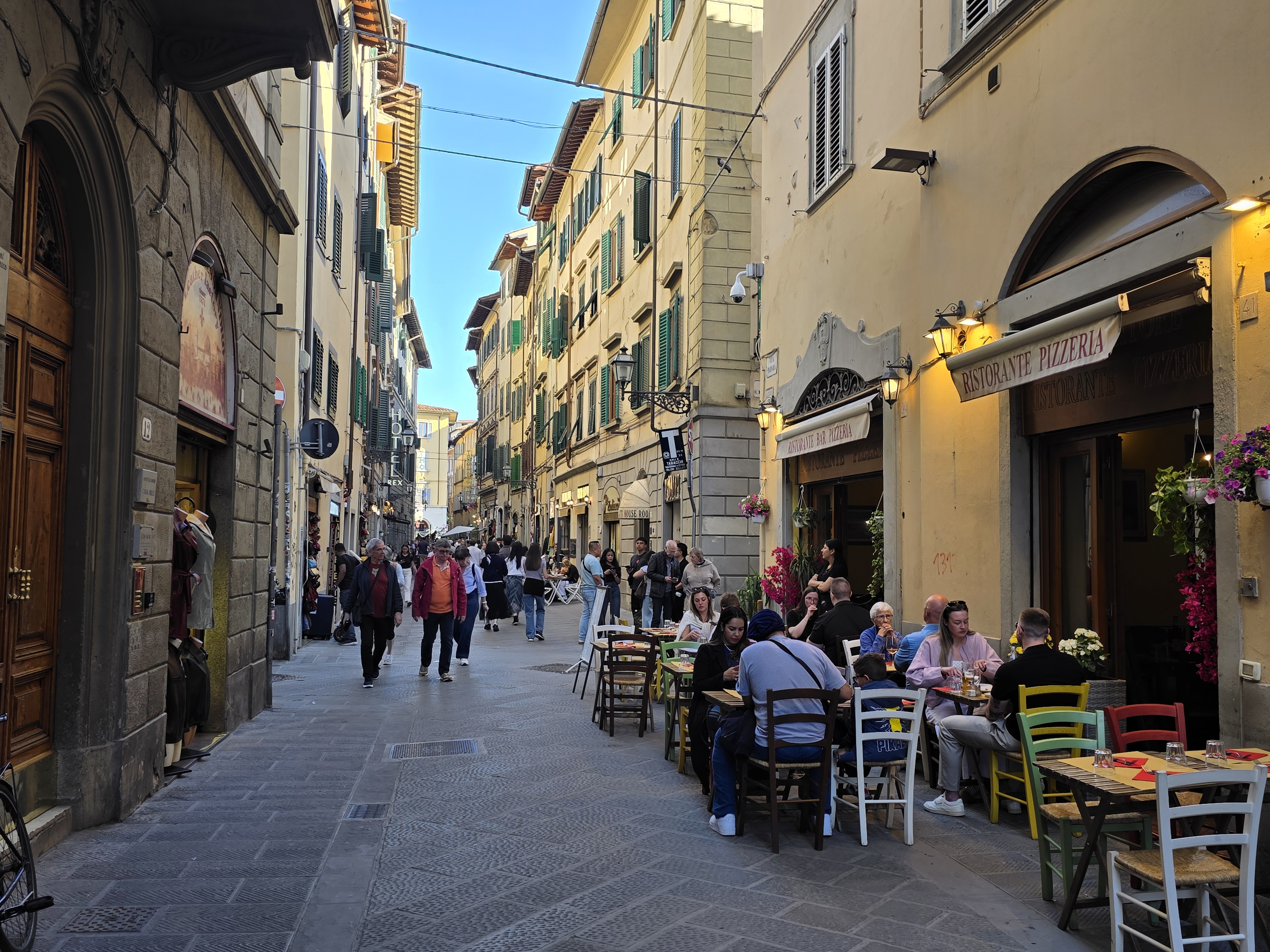
After all that, I wandered around a bit more near my hotel – exploring parts of the area I hadn’t seen yet.

Posted in English, Europe, Italy, Venice

Venice – Day 2

РУССКОЯЗЫЧНАЯ ВЕРСИЯ ПО ЭТОЙ ССЫЛКЕ. CLICK HERE FOR RUSSIAN VERSION.

October 26 – Sunday

The second day started very early, but luckily the clocks changed today, so I gained an extra hour. I ended up waking at 6am – earlier than I needed to, by the way – and packed my suitcase, since I’m moving to another hotel today, closer to the airport, to make things easier for my very early flight.

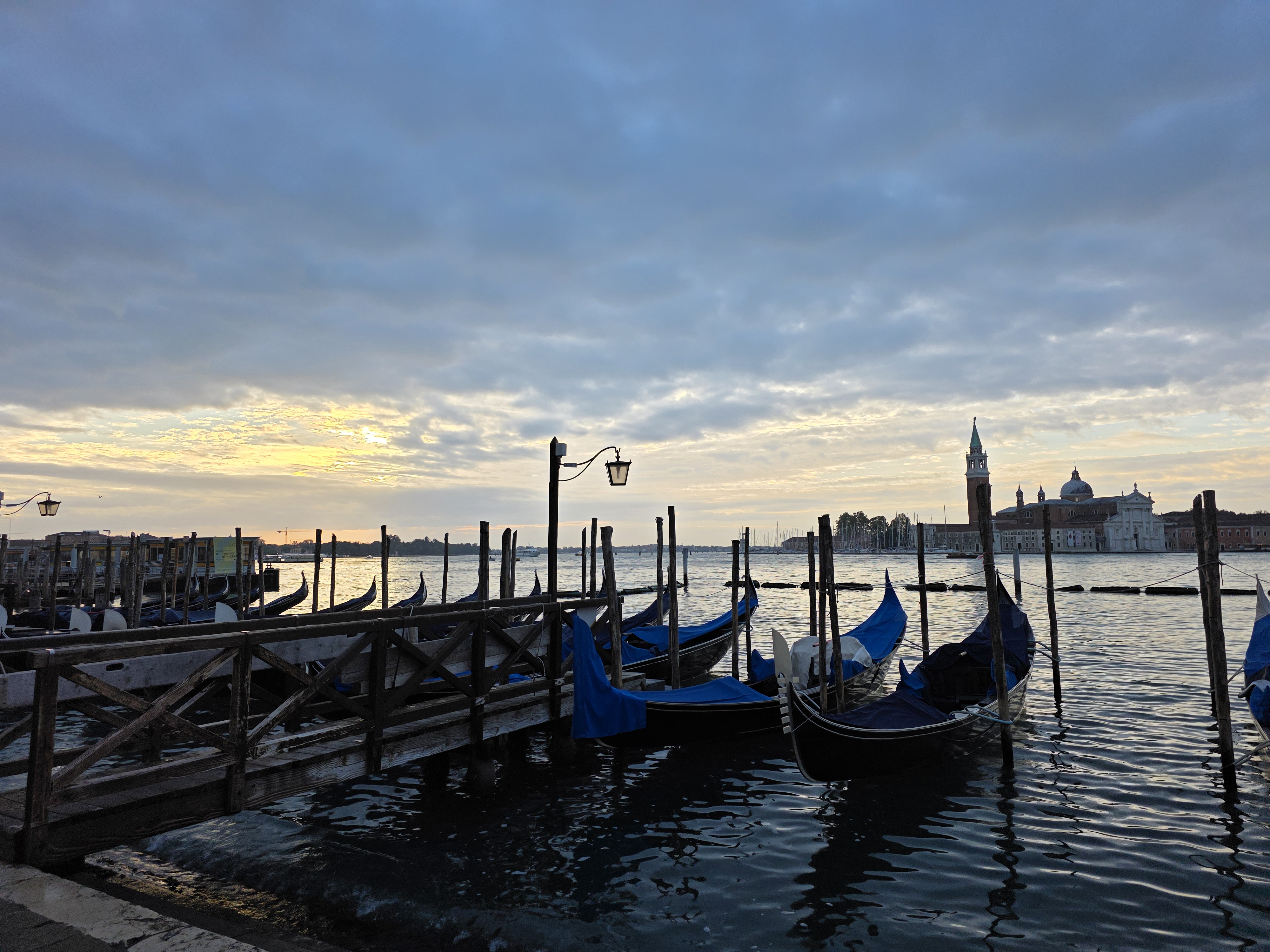
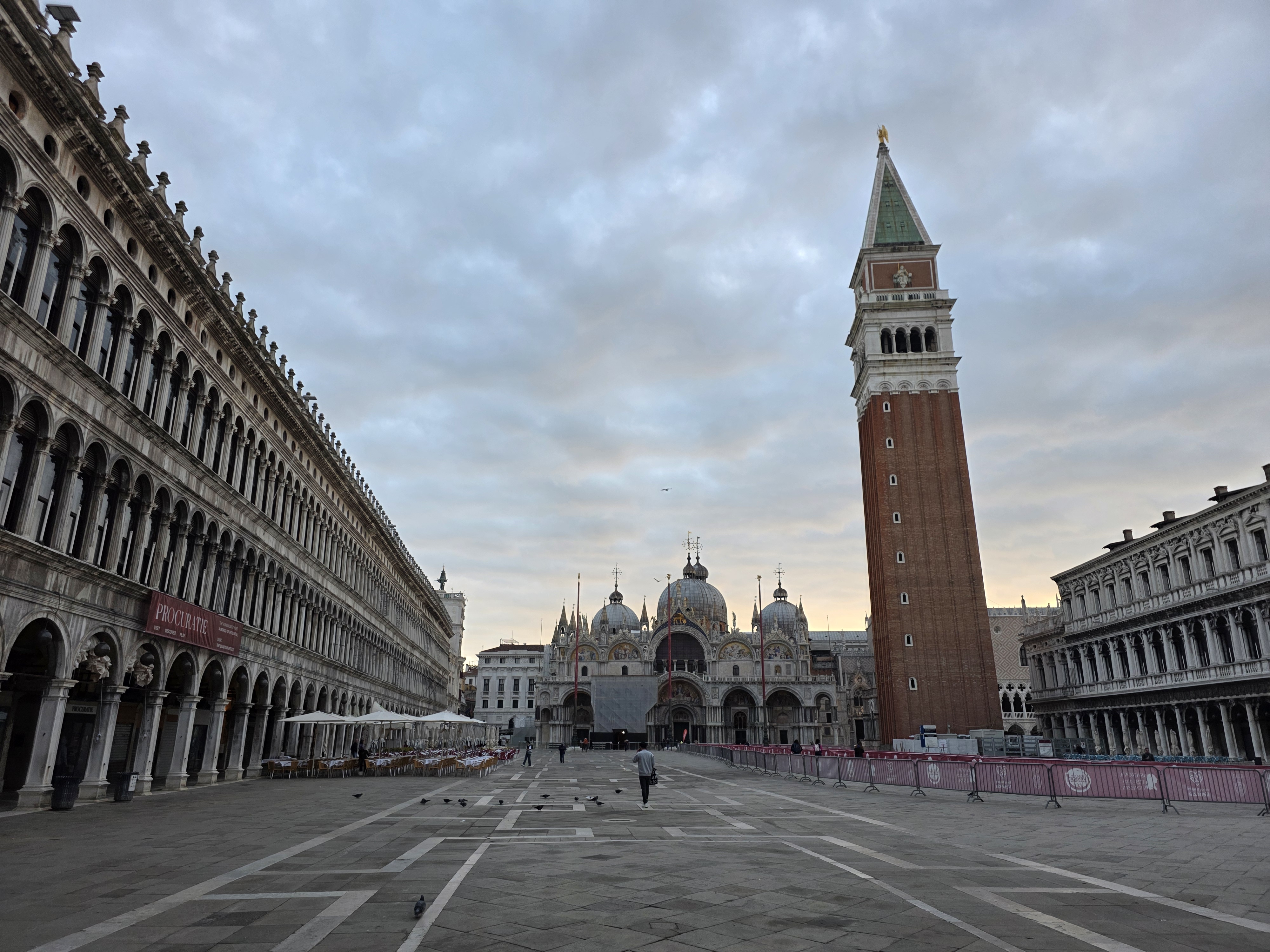
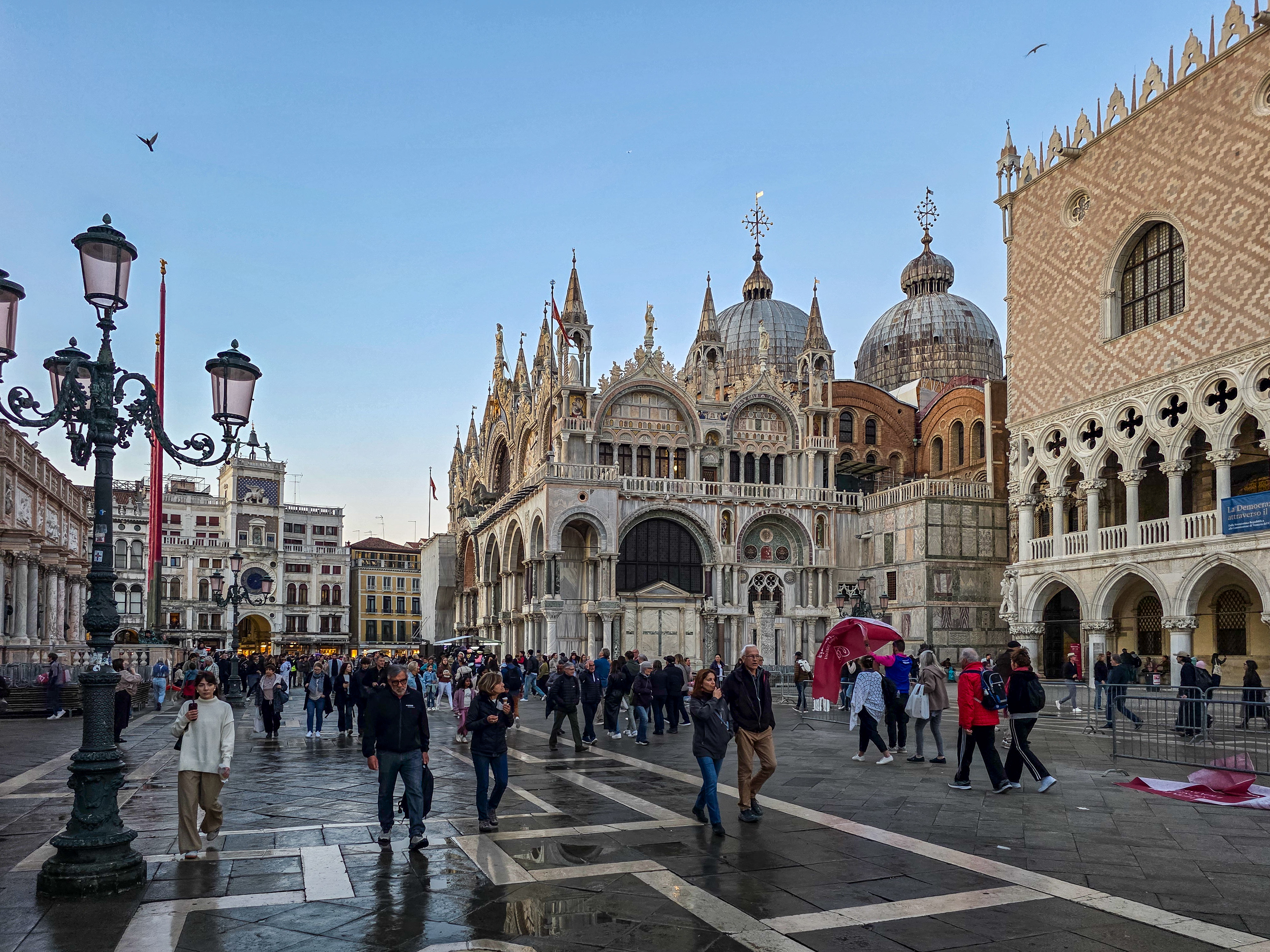
To kill some time before breakfast, I decided to take a short walk in the area, especially since I hadn’t actually seen St Mark’s Square yet. I have a tour of St Mark’s Basilica (and a few other landmarks) planned for today, but I wanted to see everything in the morning, before the crowds and before the marathon – which is the reason today’s island tour meeting point was moved.

Breakfast at the hotel didn’t strike me as anything special, but it was fine. After breakfast, I left my suitcase in the storage room and set off along the route I already knew toward the statue of Bartolomeo Colleoni. It was a very pleasant walk through early-morning Venice, before the city got too crowded.

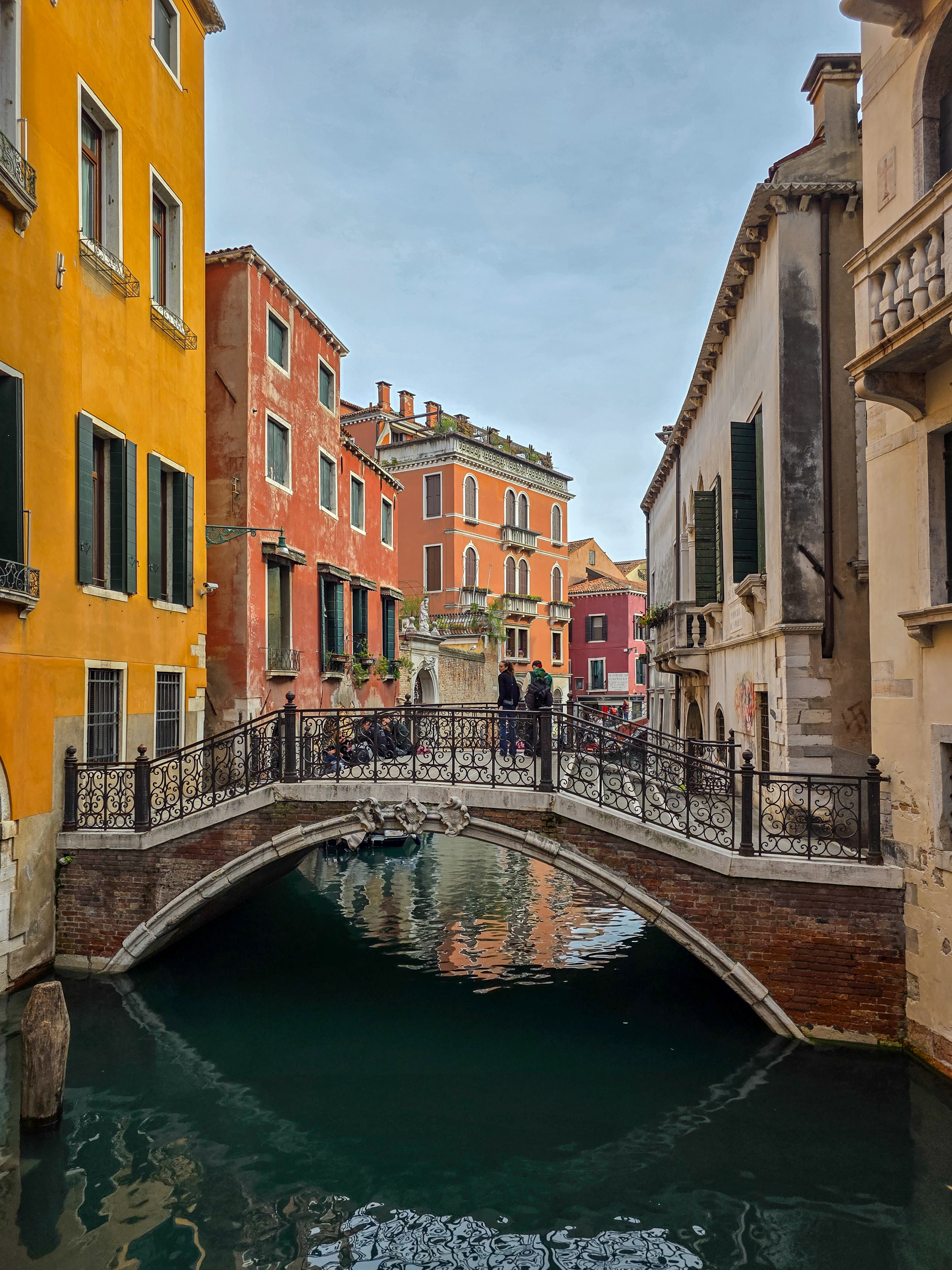
I found my group and our guide very easily. The guide – a very nice woman named Serena – shared lots of interesting facts about Venice throughout the journey. For example, that Venice, built on rather marshy terrain, has actually been standing on wooden piles for over 15 centuries, and due to the anaerobic conditions, these piles haven’t just not rotted, but they have basically turned to stone.

She also mentioned that the “fish” shape of Venice on the map is actually not a single island, but a multitude of smaller ones, each separated by canals, many of which are manmade.

During high tide – the so-called acqua alta – the city sometimes floods, and we’ll come back to that later. But for now, here’s an interesting fact: in 2019, there was one of the worst floods in recent decades (only once in history has the water been higher), which caused significant damage to St Mark’s Basilica. As a result, a super-expensive flood defence system was built, made up of gates and dams – but it’s so costly to operate that it’s only used in absolute emergency cases.

Apparently, in recent years there’s also been a trend of residents moving out of the city to the mainland and renting their homes out on Airbnb, because, firstly, it’s become expensive to live in Venice; secondly, it’s overcrowded with tourists; and thirdly, it’s simply inconvenient to live on a massive pedestrian-only territory, where you can’t even get close to your house with e.g. heavy shopping bags. So, there’s a real risk that in the near future, Venice will essentially turn into a giant open-air museum.

Meanwhile, listening to all these fascinating stories, we arrived at the island of Murano, world-famous for its glassmaking – I think everyone’s heard of Murano glass.

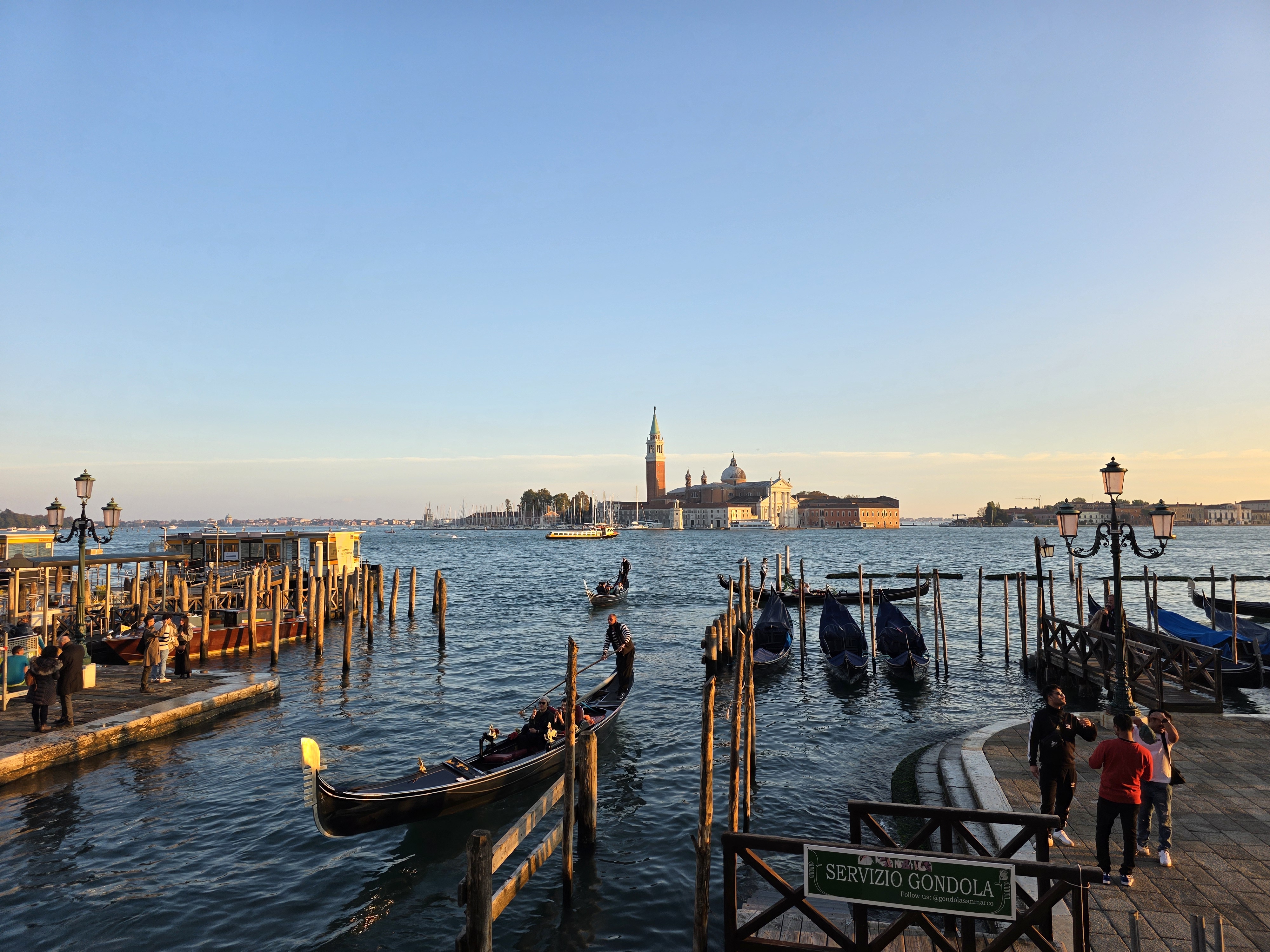
On the way, Serena pointed out some tiny islands – some with abandoned monasteries, one with an active monastery (where you can stay overnight, but only for spiritual purposes), and another with a Michelin-starred vineyard that produces the very expensive Venissa wine from slightly salty local grapes.

As for Murano glassmaking, the glass furnaces were originally moved here from Venice proper, both for fire safety reasons and to maintain strict secrecy of the techniques. We were taken to a workshop – on Sundays, the industrial furnaces don’t operate, but they still do demonstrations for tourists. First, the master glassblower (yes, he actually blew glass using a blowing pipe) made a vase for us – and to show how hot it was, the guide threw a piece of paper inside and it instantly burst into flames. Then, without blowing, the master made a small glass horse in under five minutes.

We were told that most shops in Venice claiming to sell Murano glass are actually selling fakes, whereas here, at their showroom, everything is authentic and comes with a certificate. Well, who am I to resist buying a couple of pieces of jewellery?

With some time left before the boat, I tried walking to the centre of the island, but there was nothing interesting there at all, so I quickly returned.

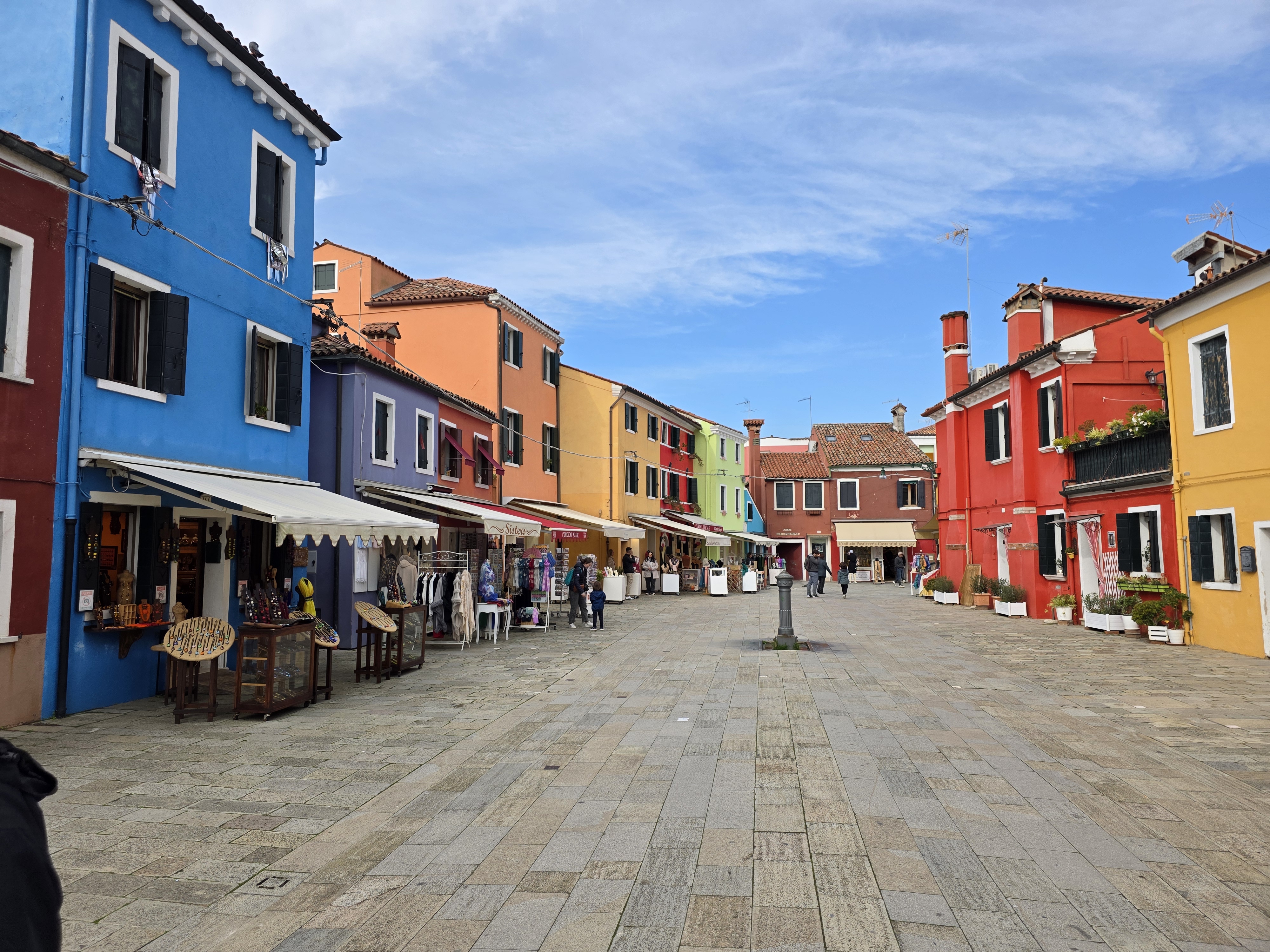
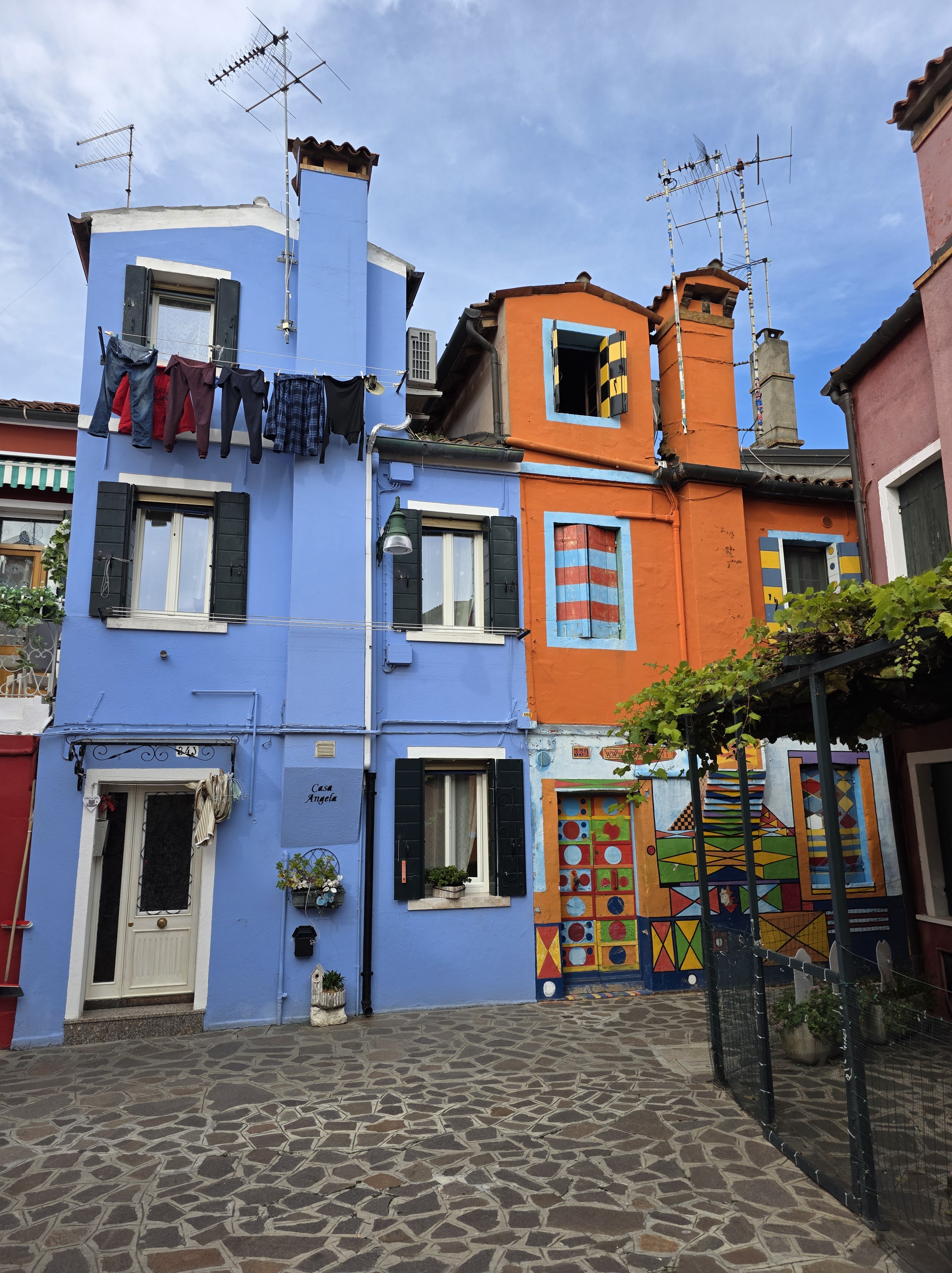
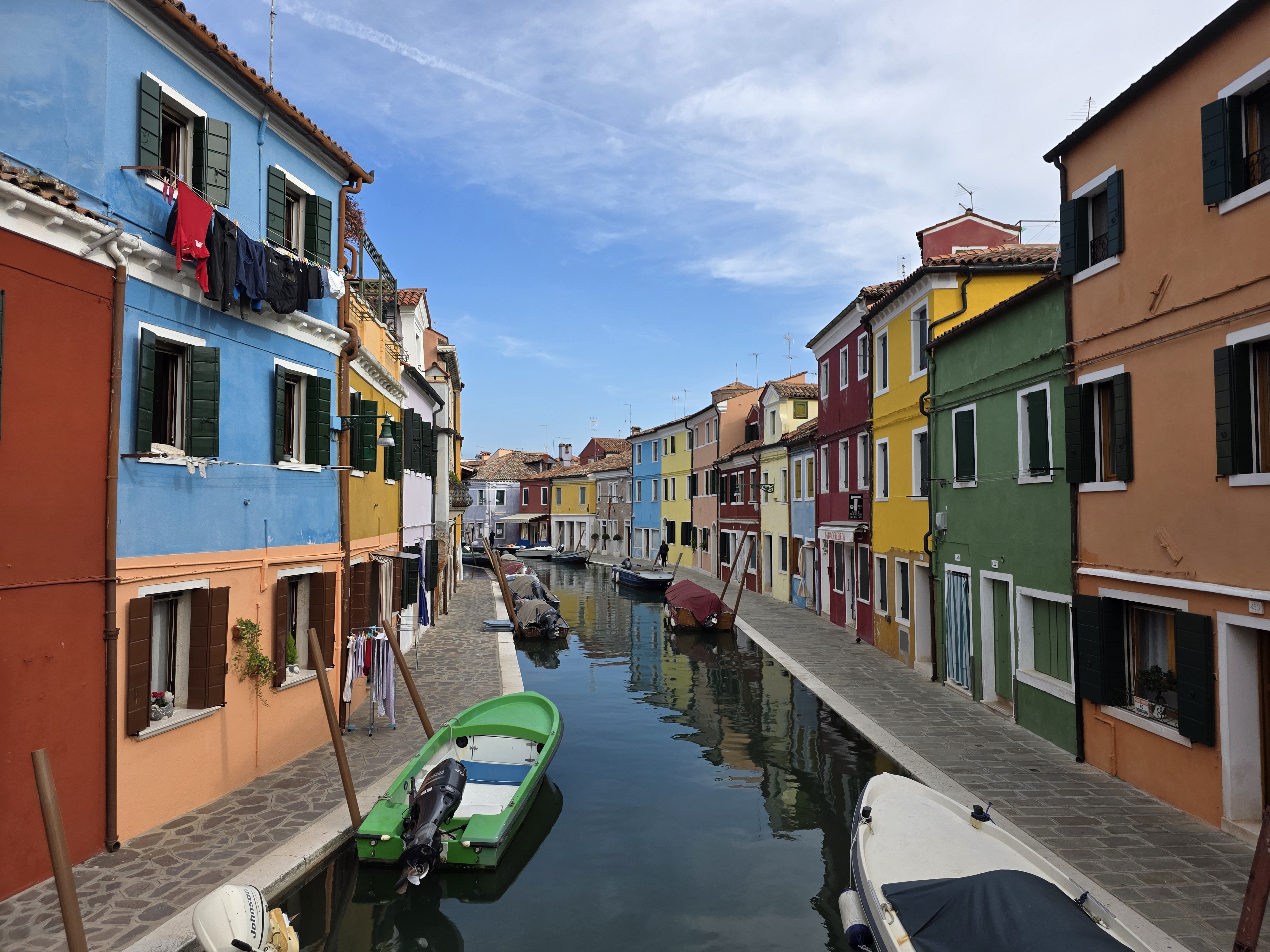
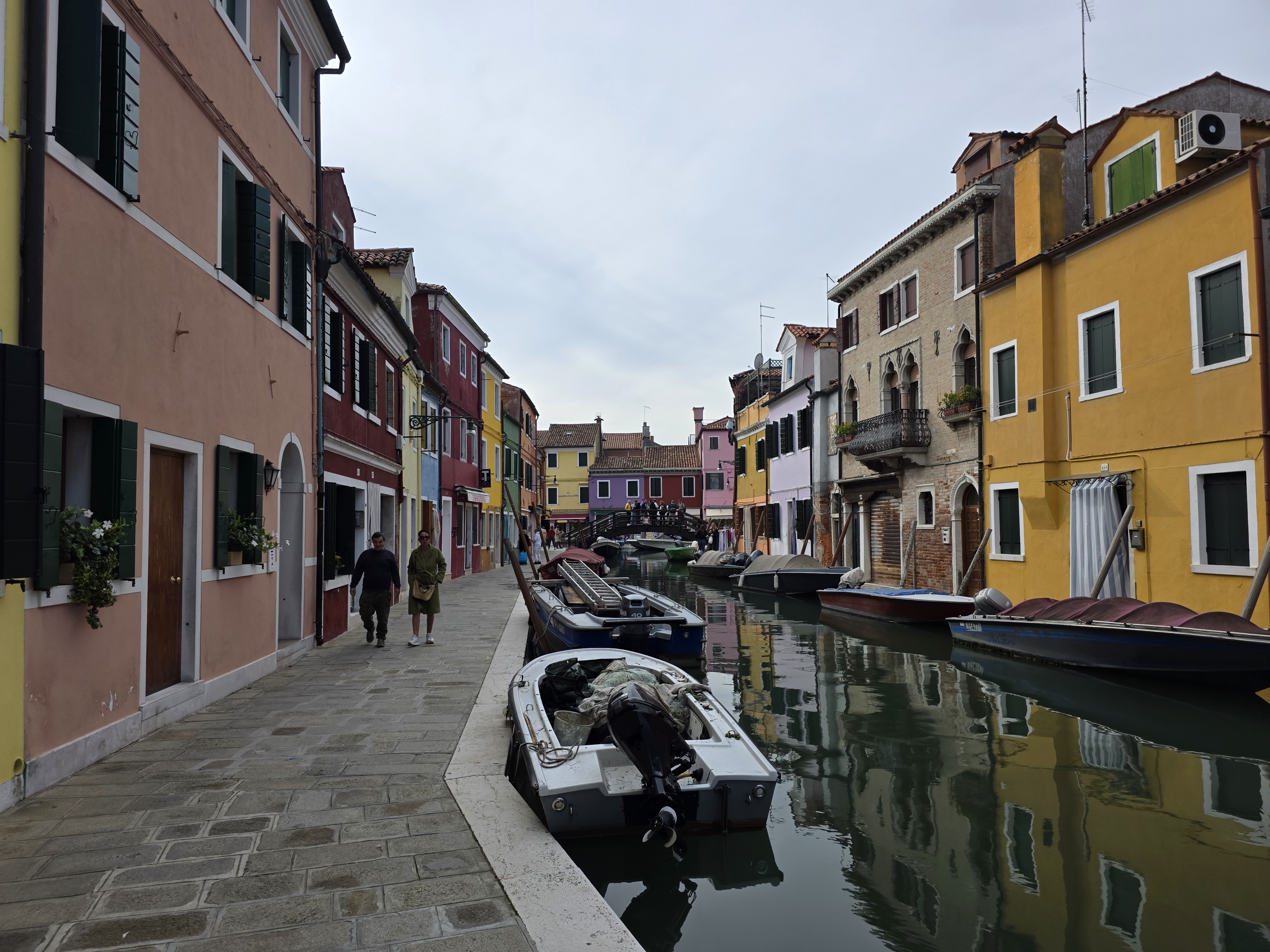
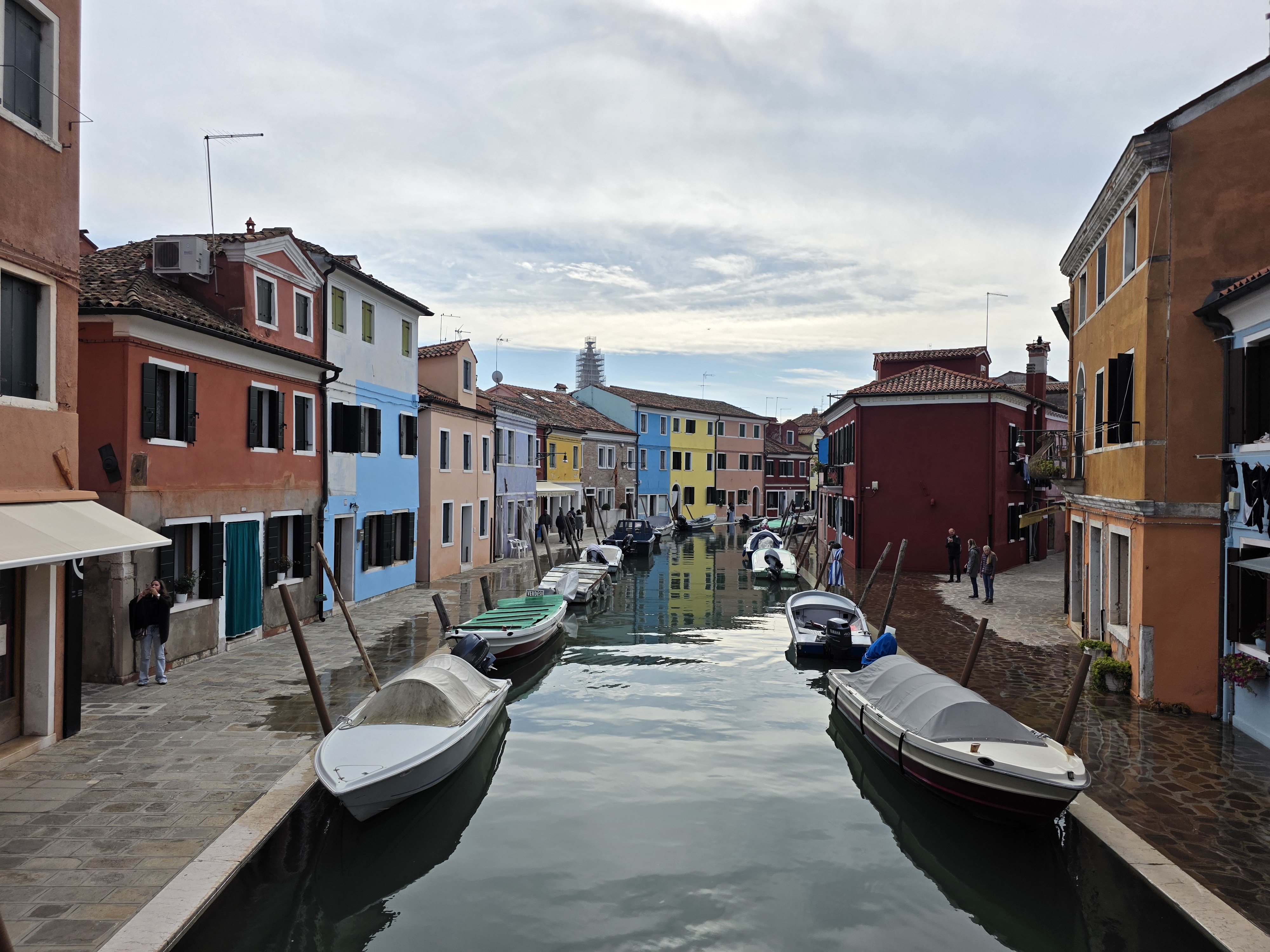
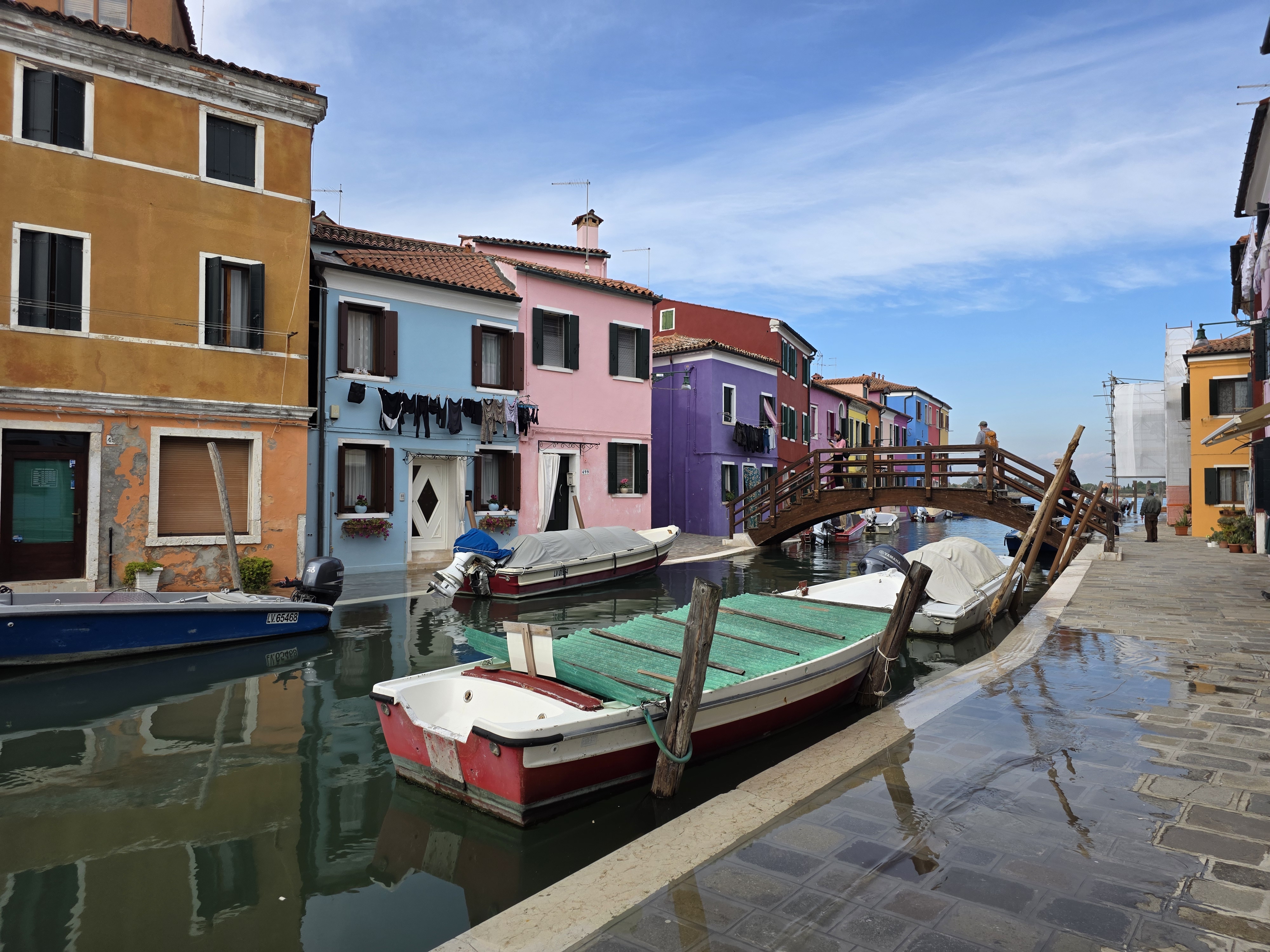
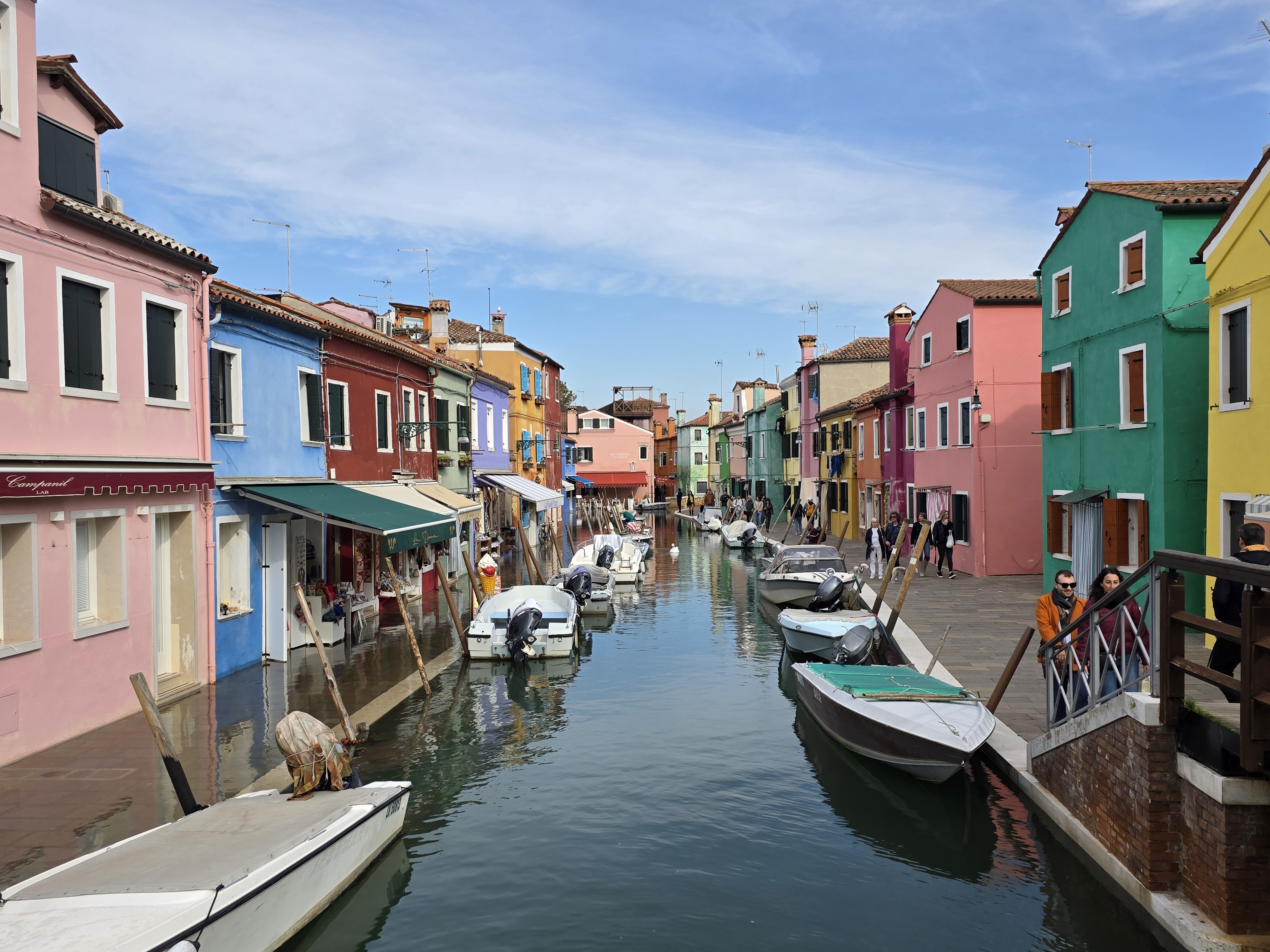
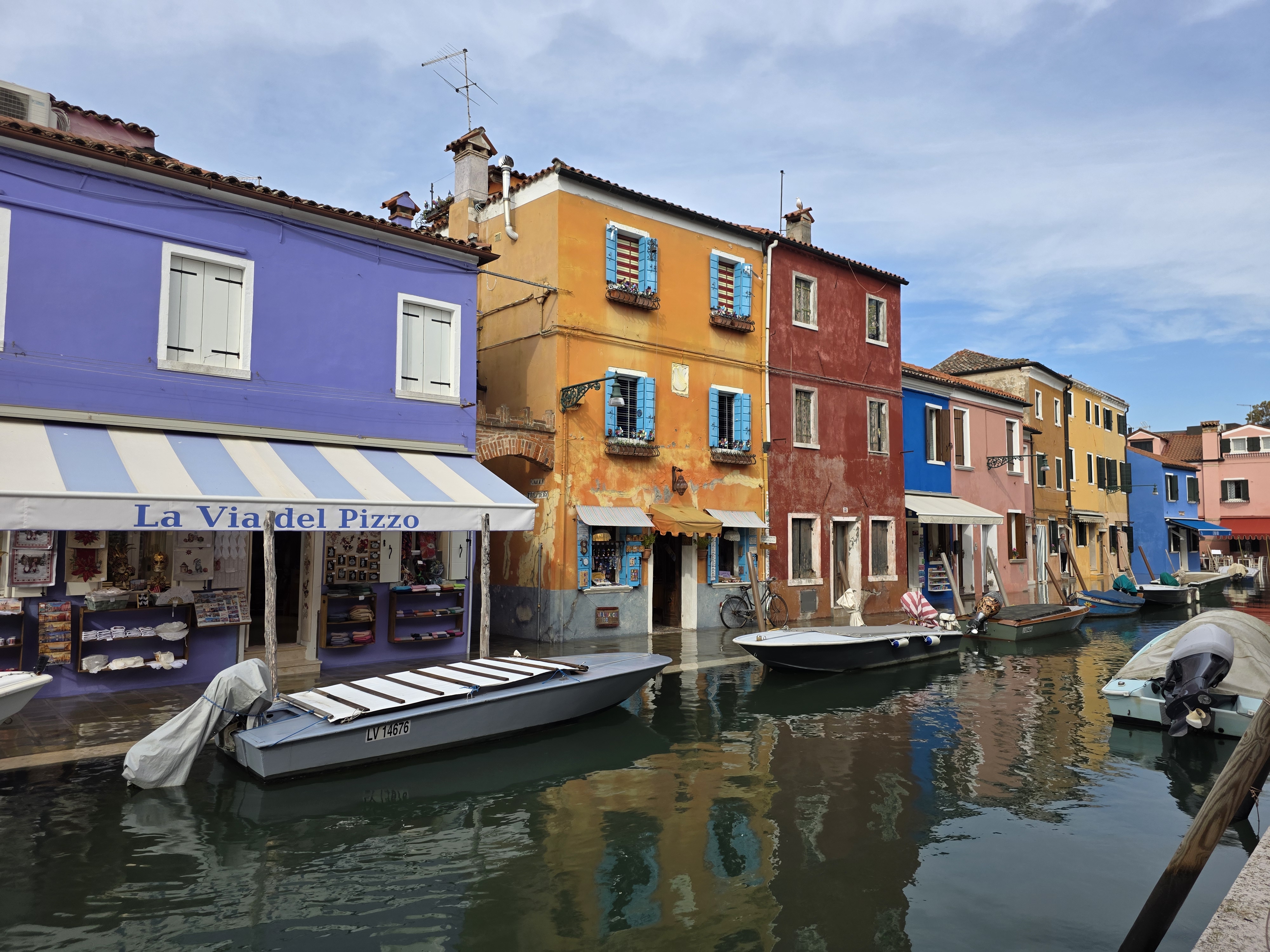
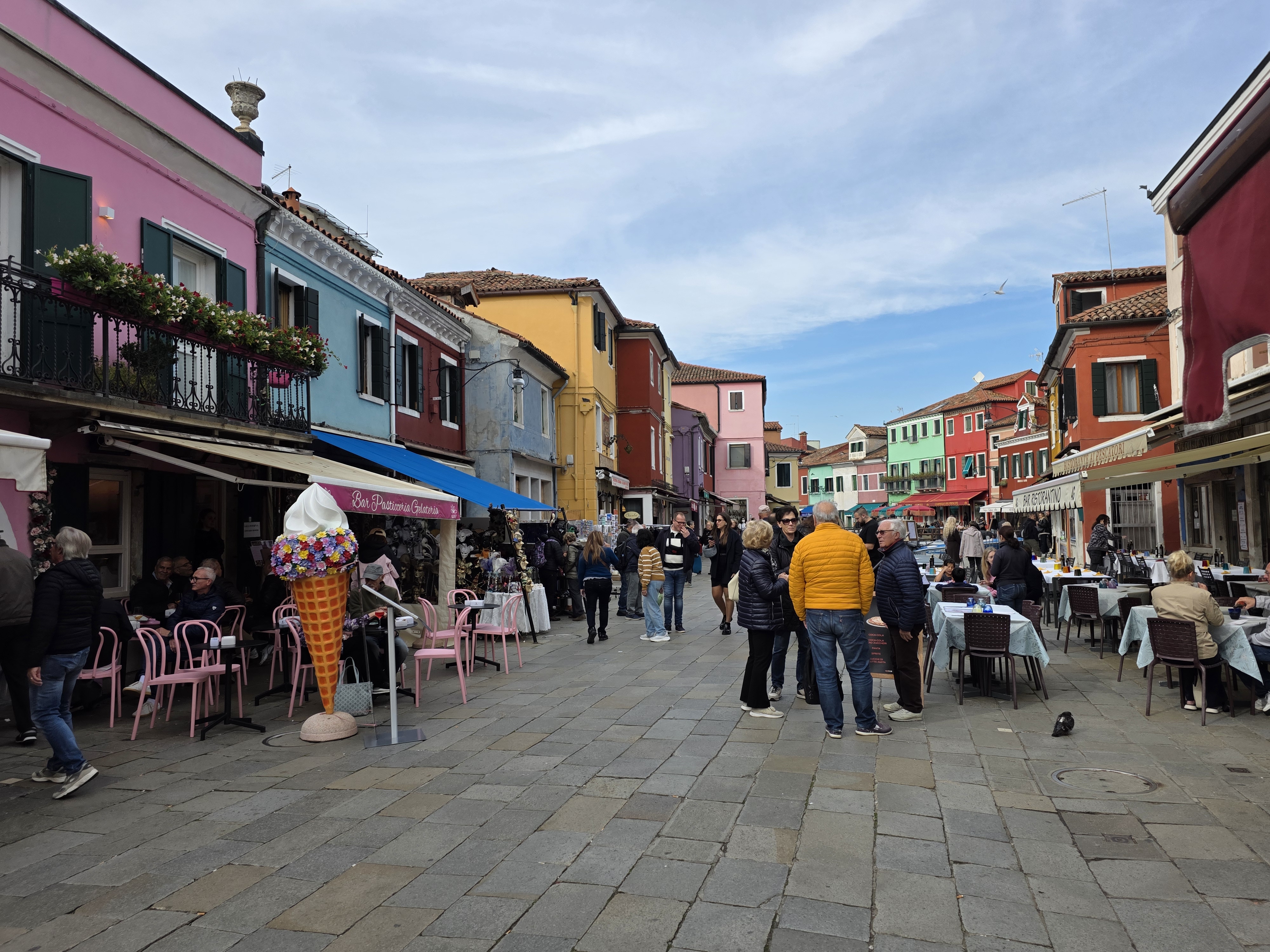
From Murano we went to Burano. This one was a much more picturesque island. Originally a fishing village, it’s known for its colourful houses. One theory says the houses were painted bright colours so fishermen could easily find their homes; another says it helped distinguish between families with the same surname. In any case, all houses really are painted different colours, and you’re not allowed to repaint them.

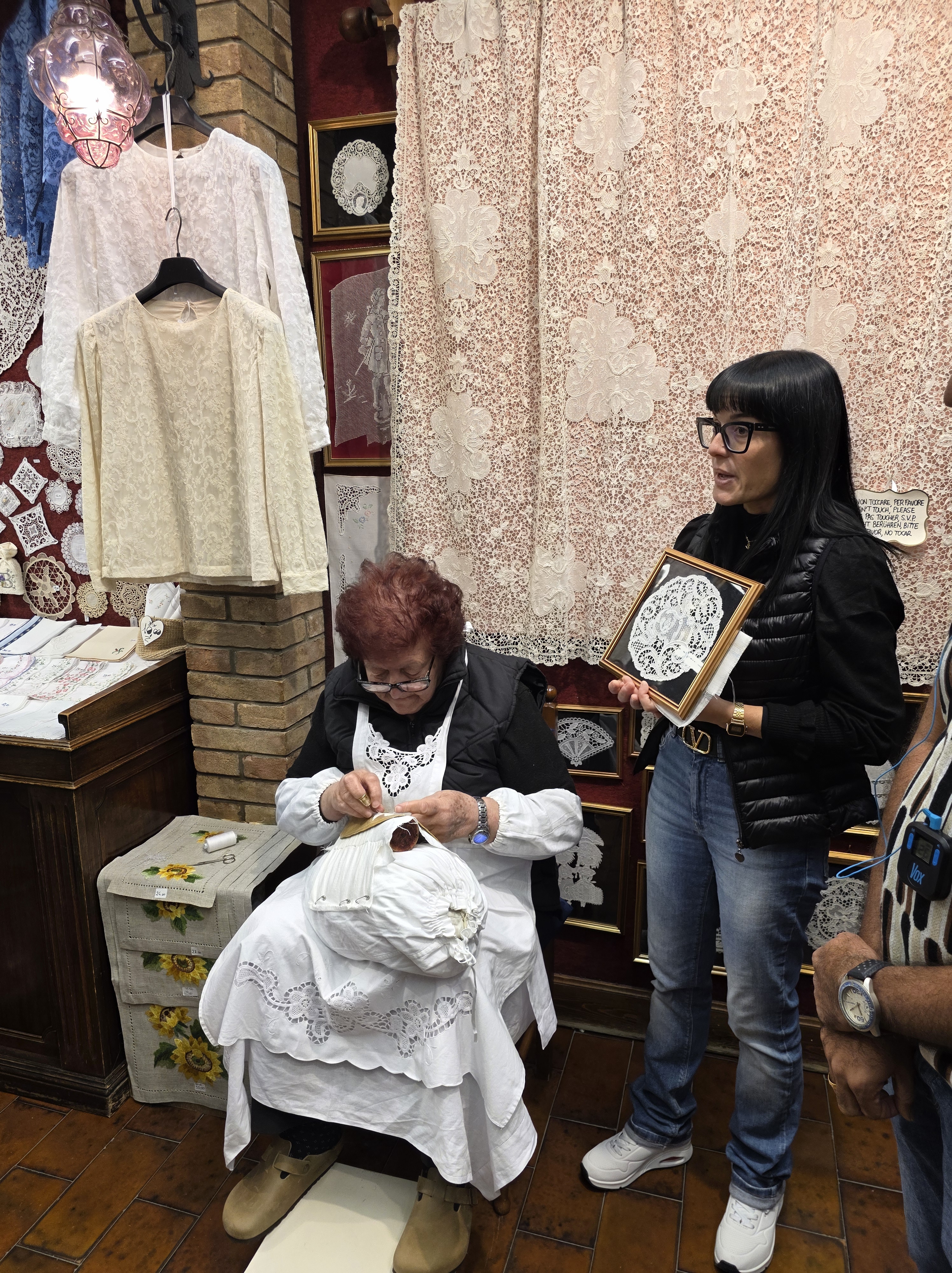
Burano is also famous for its lace, but sadly this craft is dying out, because the youngest lacemakers are already over 70, and the new generation isn’t interested in such painstaking manual work. We were taken to a lace shop where we saw one of these elderly lacemakers at work. We were told that each lacemaker specialises in a specific type of stitch.
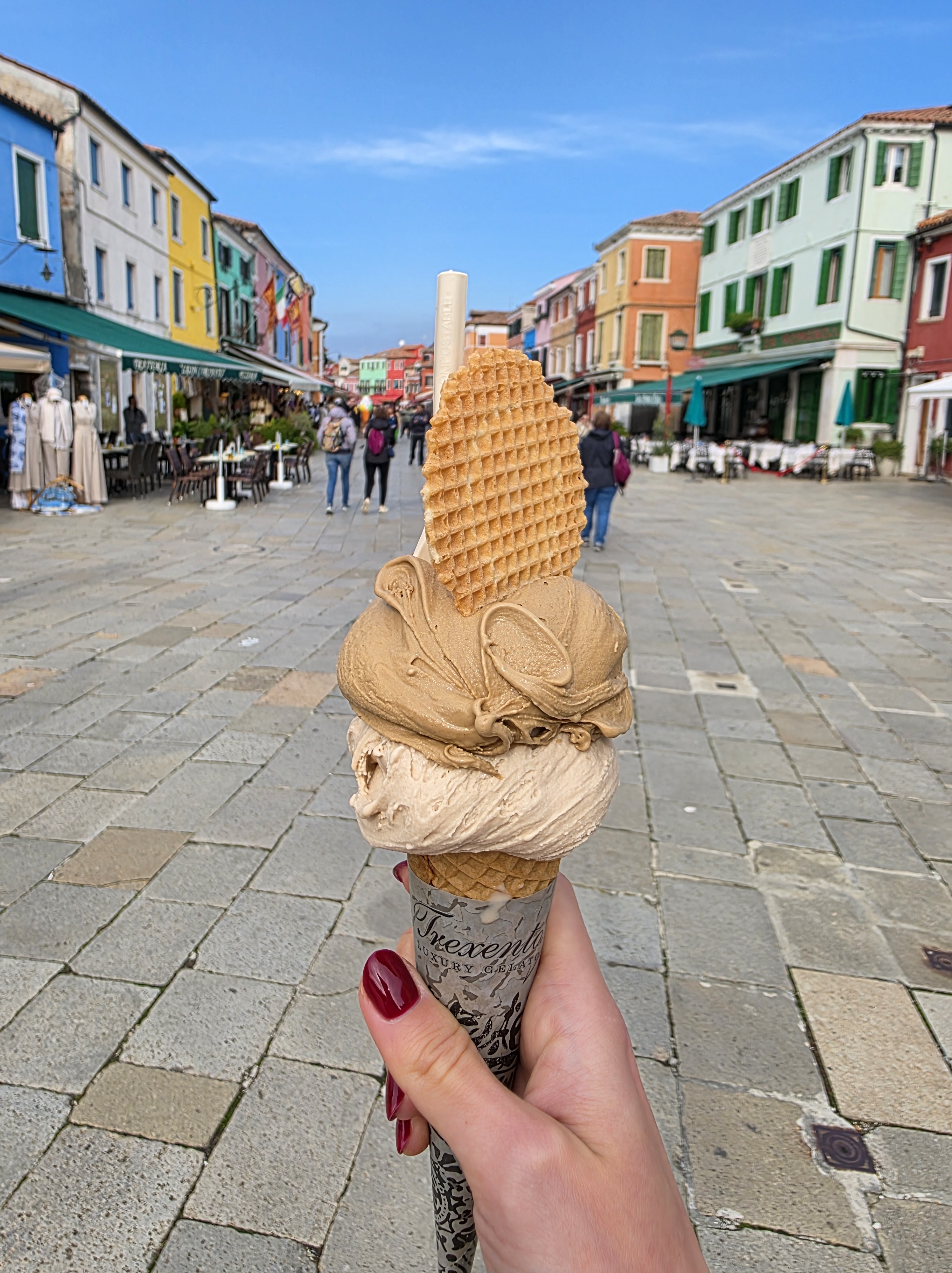
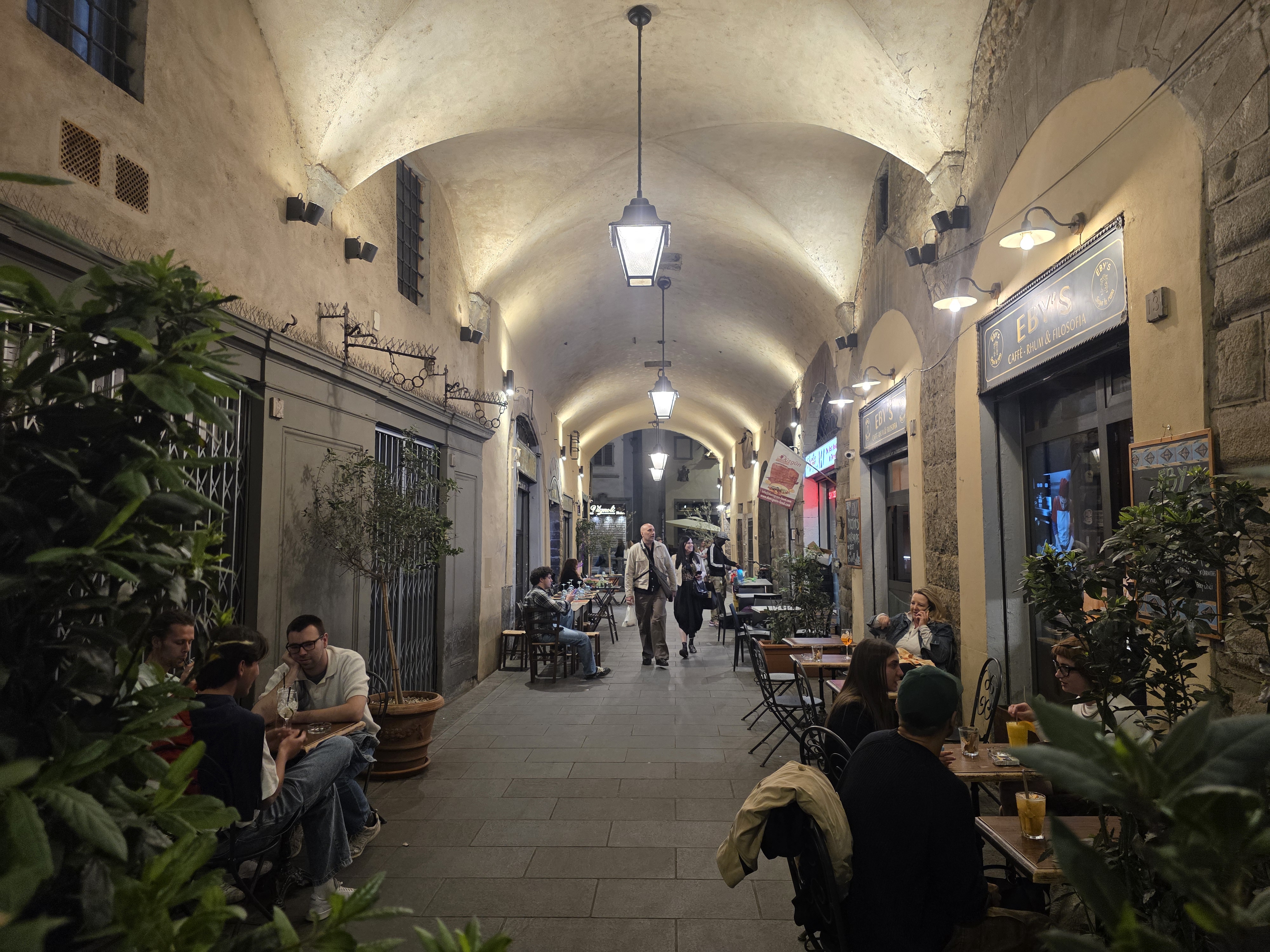
Then we had about an hour of free time. Serena strongly recommended trying the local biscuits, but I didn’t feel like biscuits – instead, I treated myself to a big coffee and hazelnut gelato, had a coffee, and went for a walk and took photos.

We came back to Venice around lunchtime, and I went to a well-reviewed pizzeria – but to be honest, I can’t say it was the best pizza I’d ever had. Maybe pizza just has to be eaten in Naples, or maybe I just ended up in an overrated tourist spot.

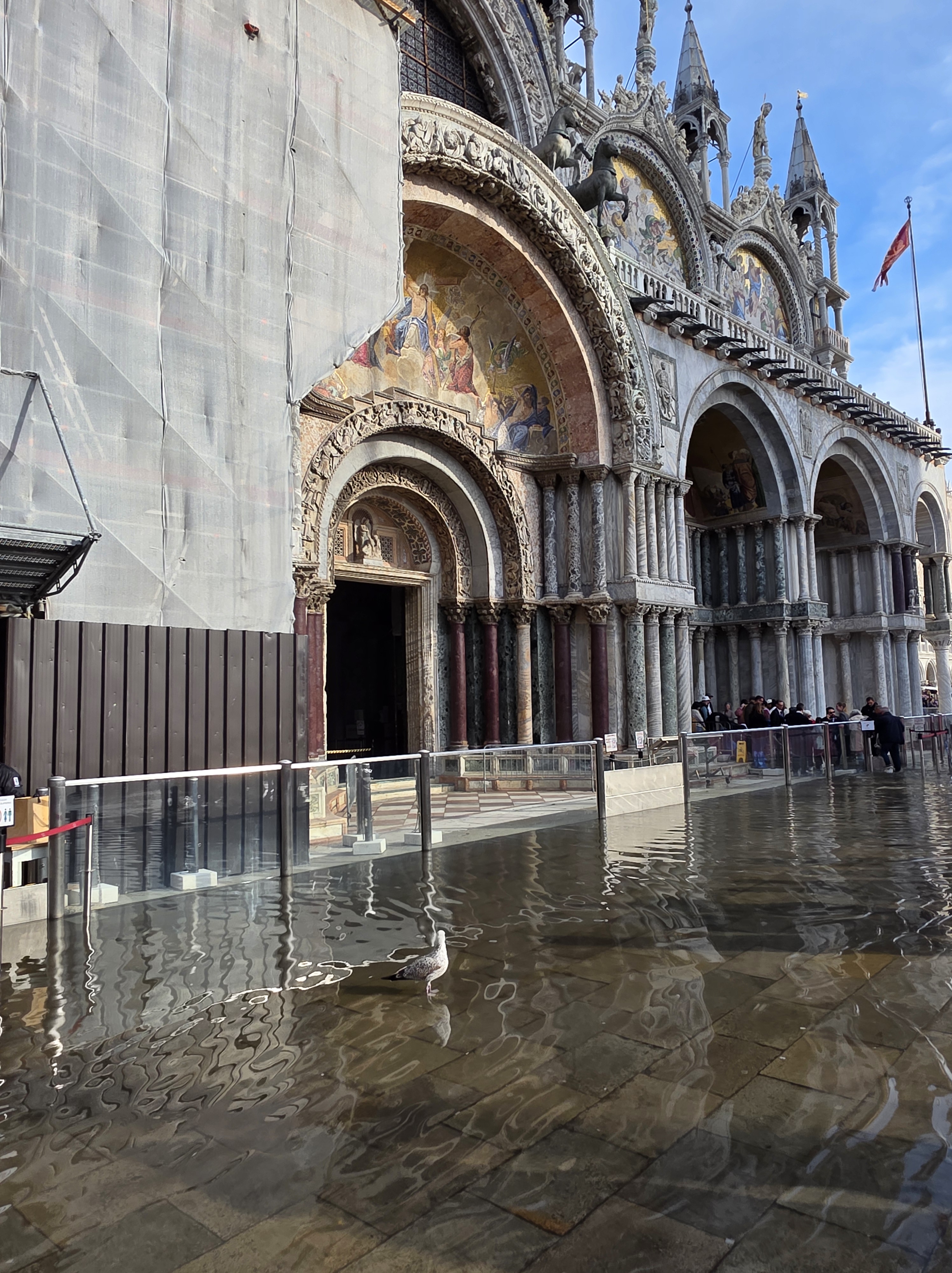
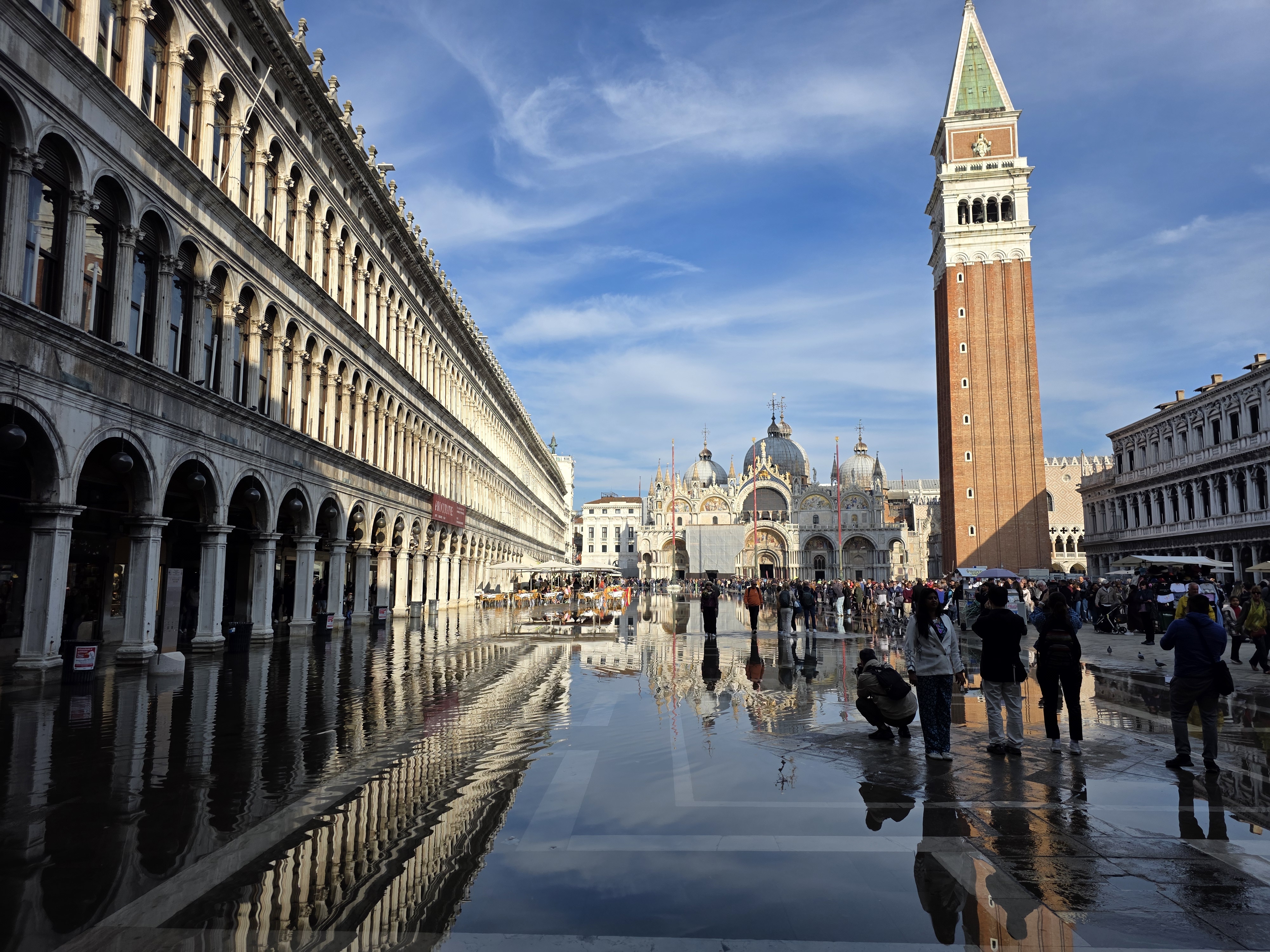
After lunch, I headed to the Basilica to make it in time for my tour. And good thing I went early, because I saw firsthand what acqua alta actually looks like! I’d already noticed on Burano that the canals were starting to overflow, with water coming out of manholes.

Well, the same thing was happening in St Mark’s Square, which is the lowest point in Venice. It was seriously flooded – the slowest marathon runners were still finishing the race, while in some parts of the square the water was already ankle-deep or more. And all this without a single drop of rain, purely from the tide. It was impossible to reach the Basilica without getting your feet wet, and I couldn’t get across the square to the tour meeting point – I had to go around the perimeter and still got a bit soaked.

There were quite a few kiosks on the square where enterprising vendors – the ones normally selling scarves to visitors who forgot to cover their shoulders for religious buildings – suddenly pulled out some kind of plastic overshoes or knee-high boots (clearly, this is a common occurrence!) and started selling them. Our guide said we’d have to walk through water to get into the Basilica, so we’d be better off either taking our shoes off or buying those covers – I did the latter.

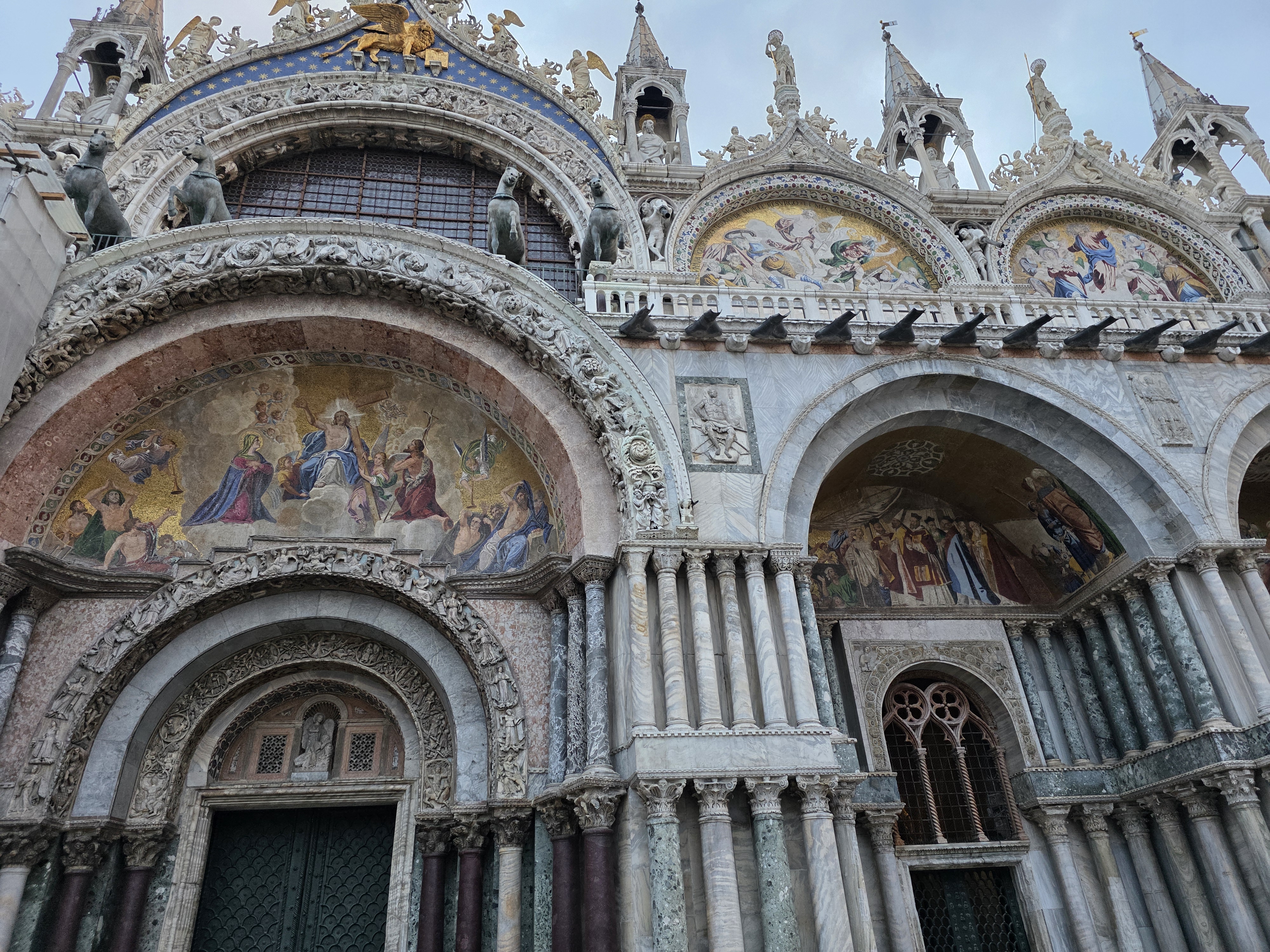
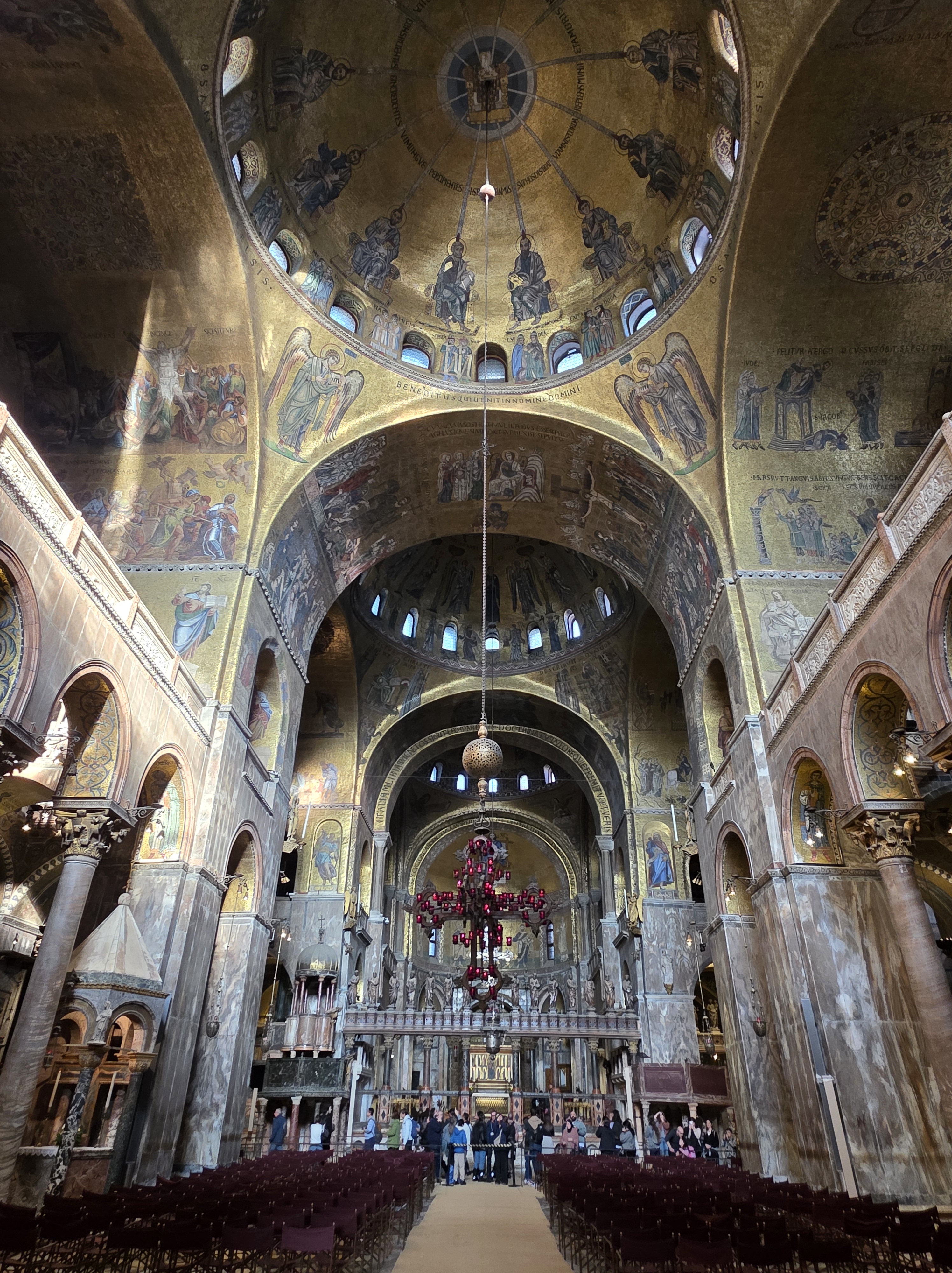
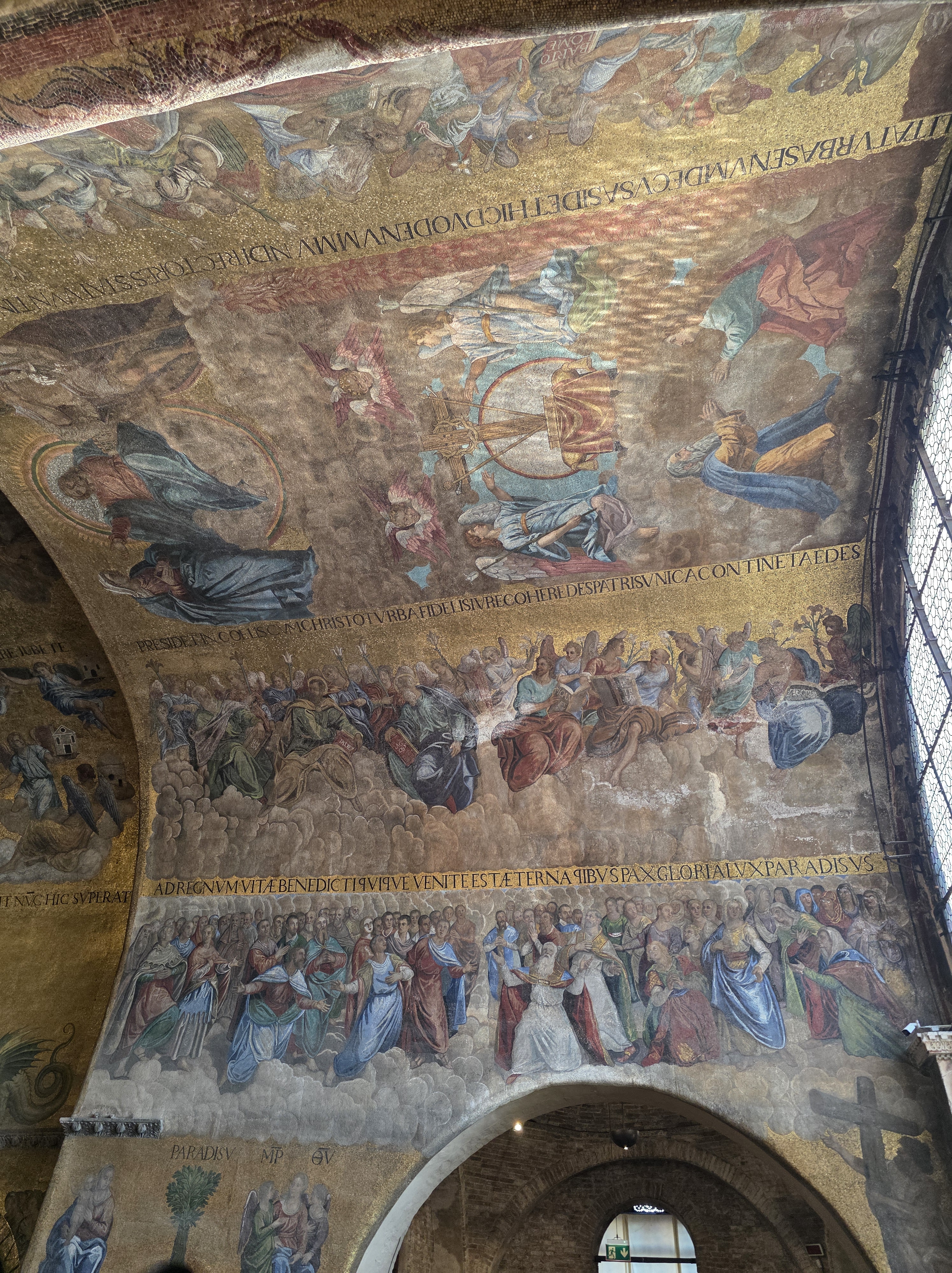
I saw the Basilica, with its amazing mosaics, and went up to the second-floor museum, displaying various relics, Byzantine artefacts, and fragments of older mosaics. I also stepped out onto the terrace and watched the last marathon runners down below.

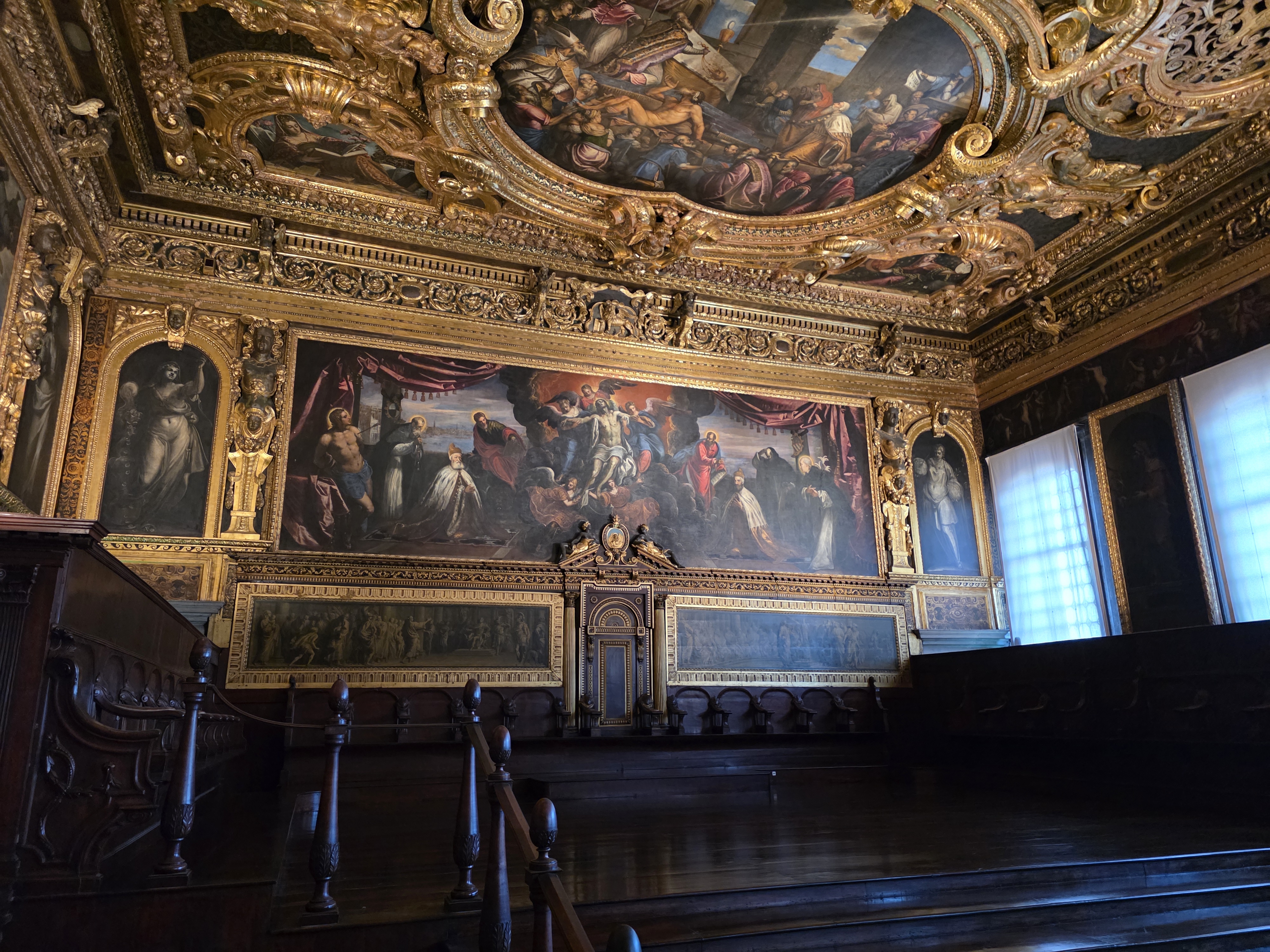
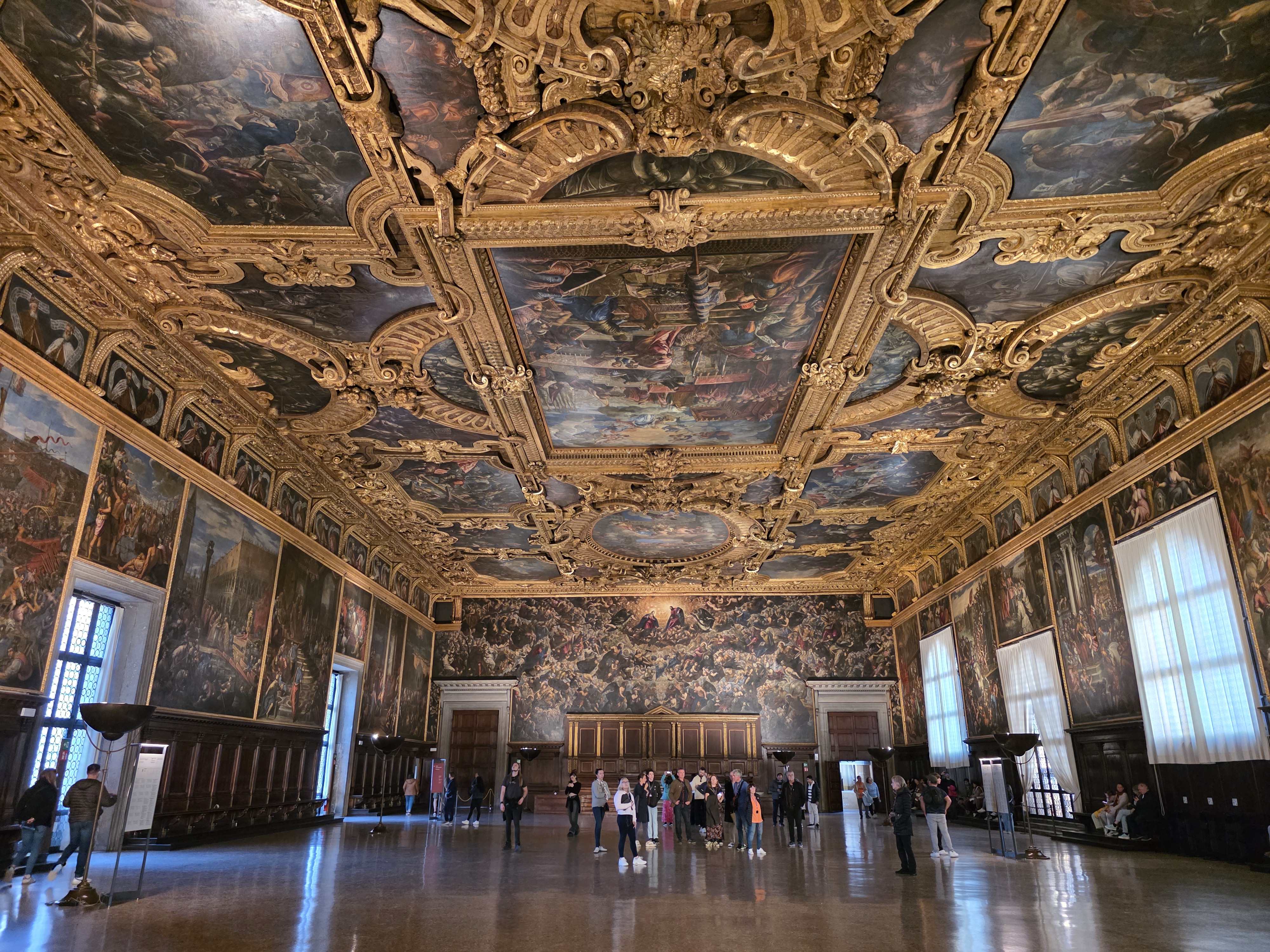
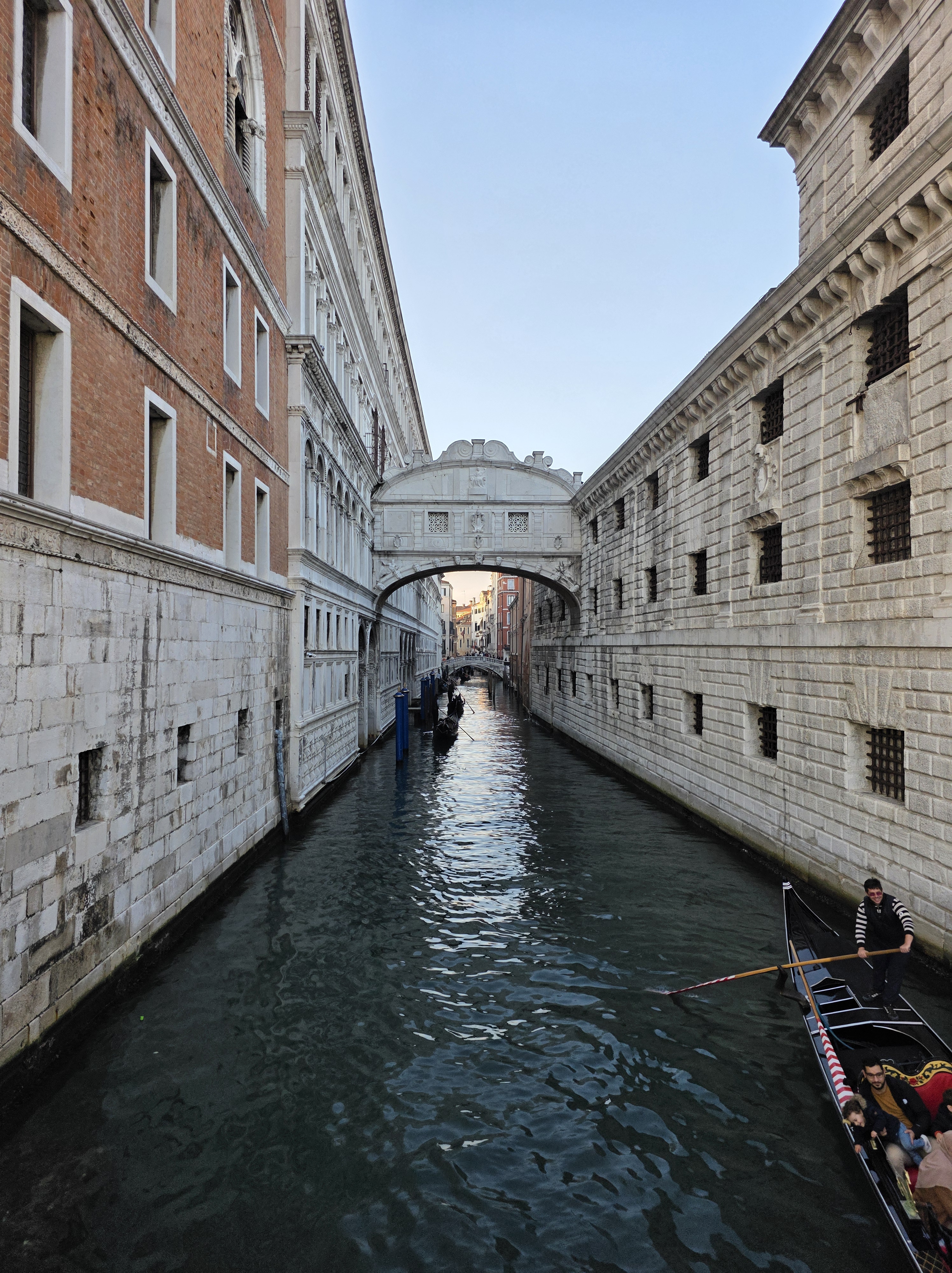
Next on the tour was the Doge’s Palace, right next door, where I looked at different rooms. The ceilings were truly luxurious, covered in gold leaf, paintings, and genuine masterpieces by famous Venetian artists. The palace also includes a prison, connected with the main building by the so-called Bridge of Sighs – named for the fact that prisoners would see the outside world for the last time through its window and, presumably, sigh.

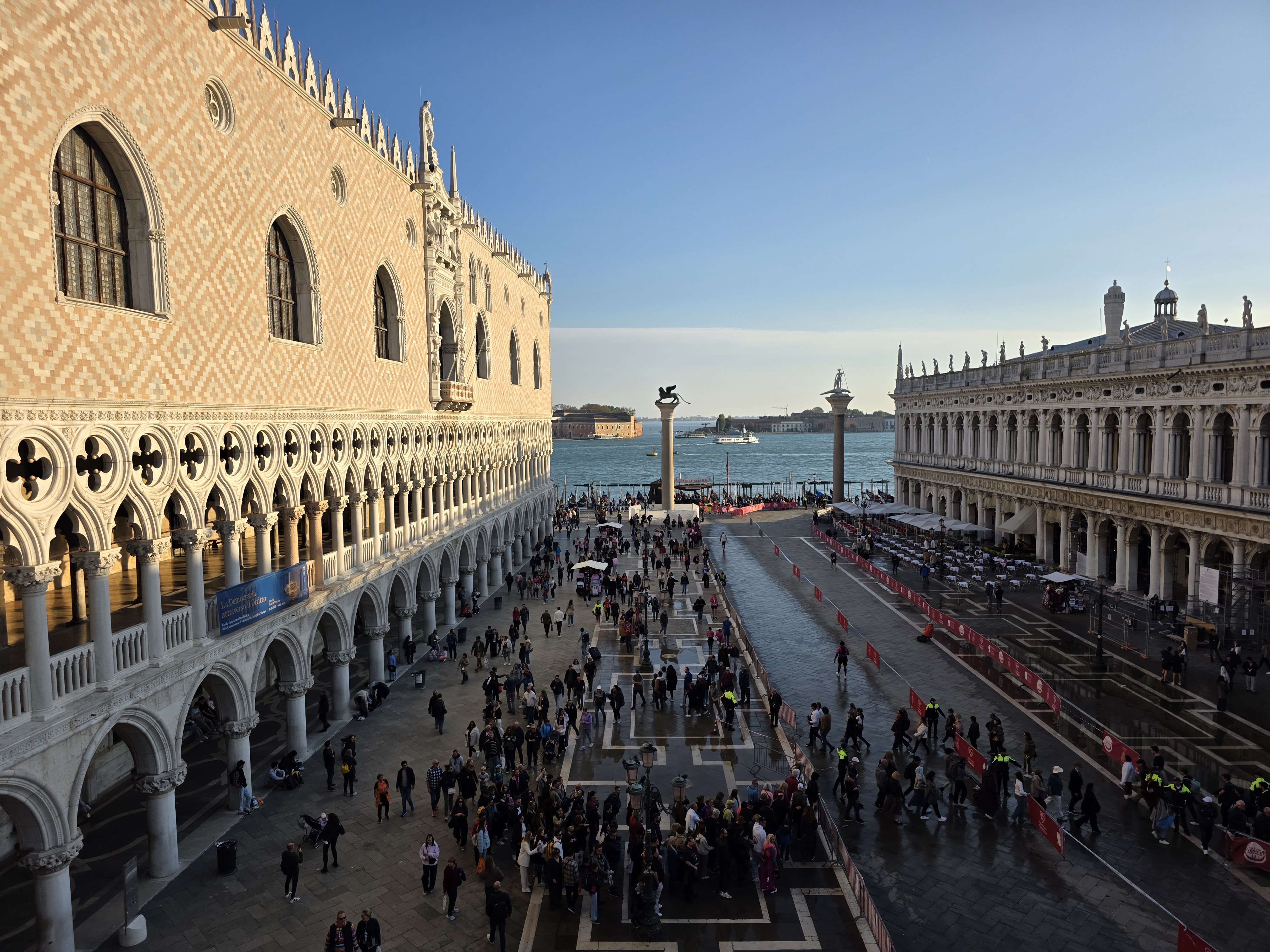
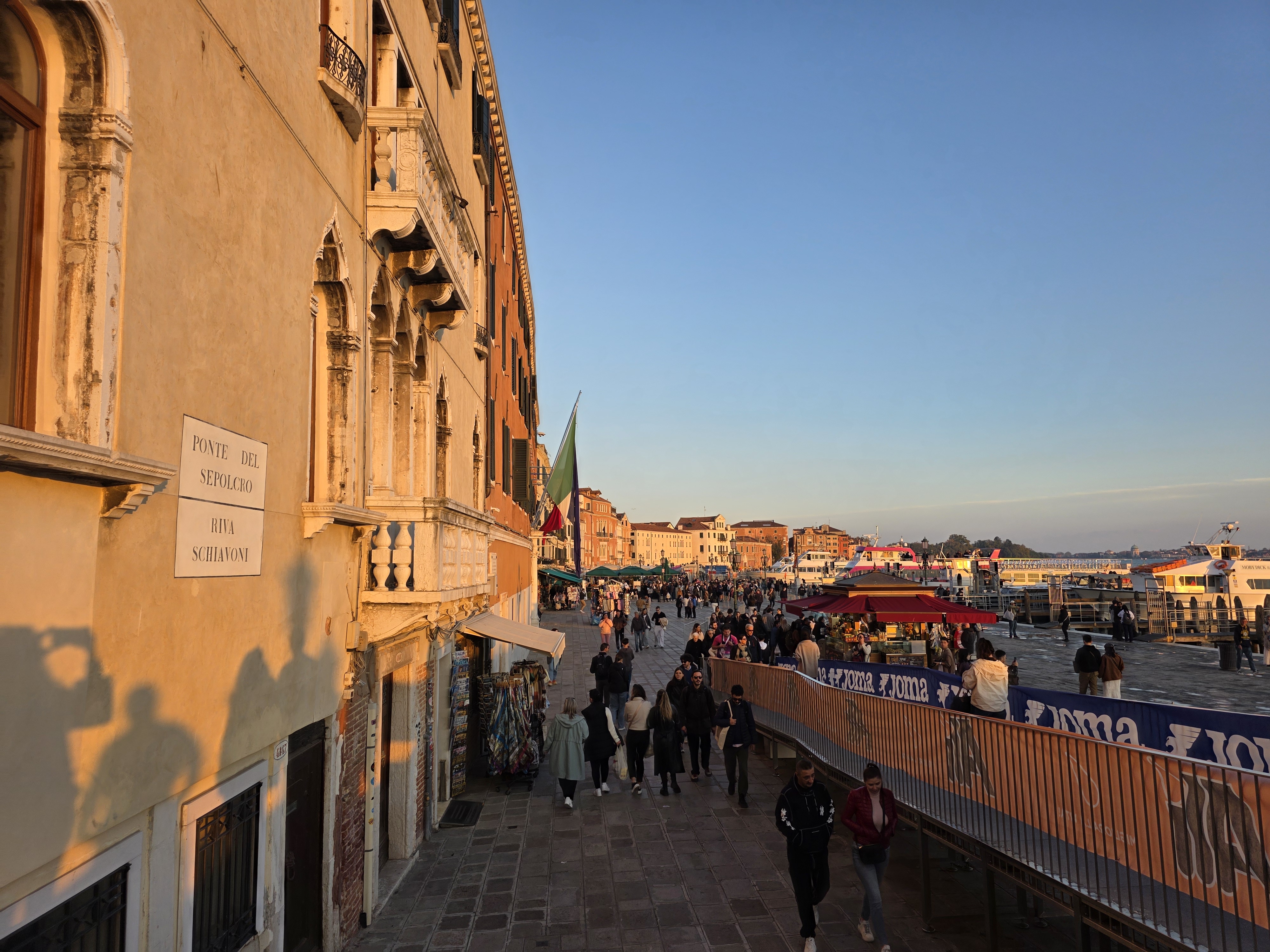
I finished the tour earlier than expected, so I had some time before my visit to the bell tower (Campanile) of St Mark’s. I strolled along the promenade, where the marathon barriers had already been removed. The crowd was enormous – apparently a mix of marathon finishers and other tourists.

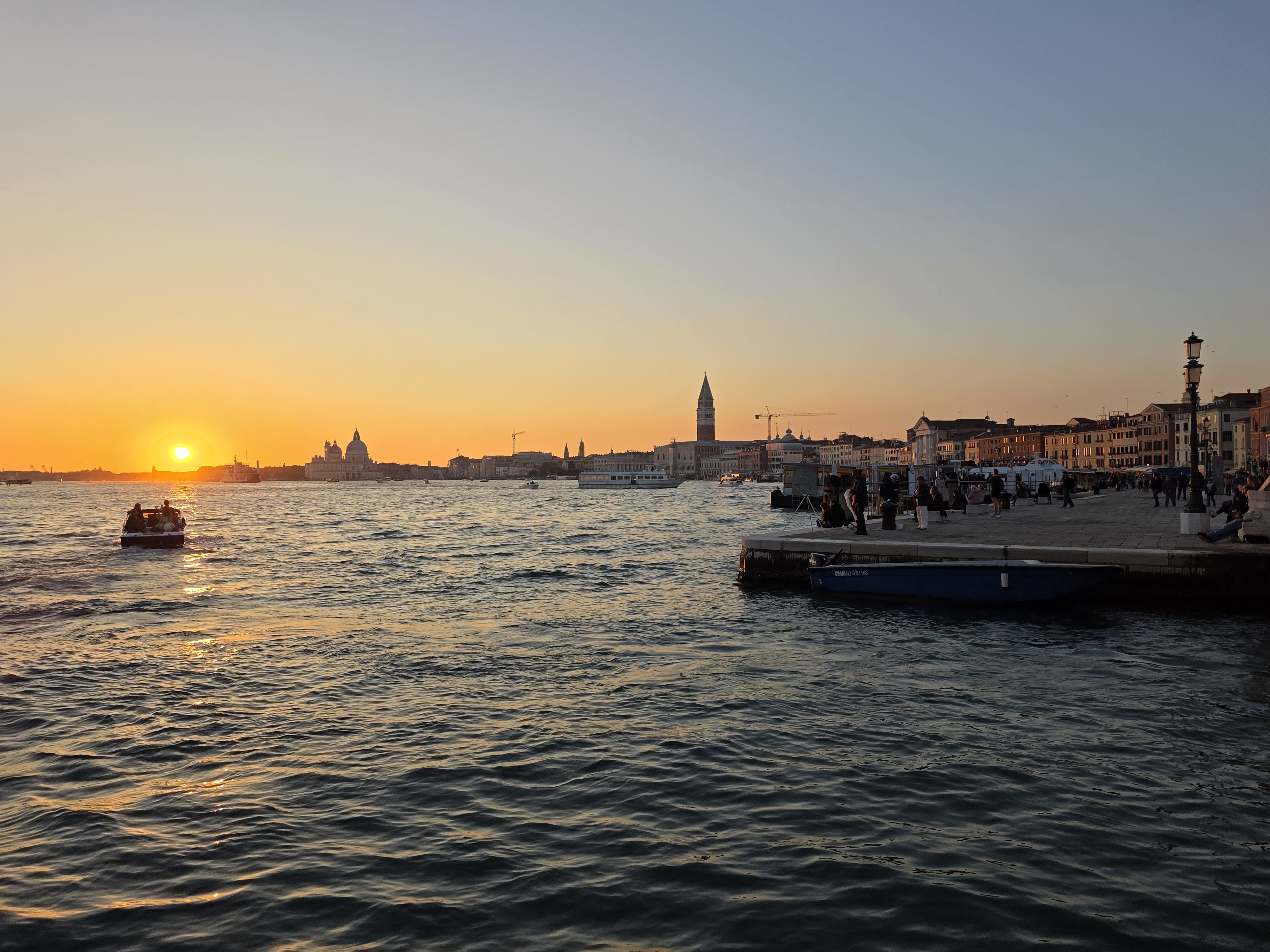
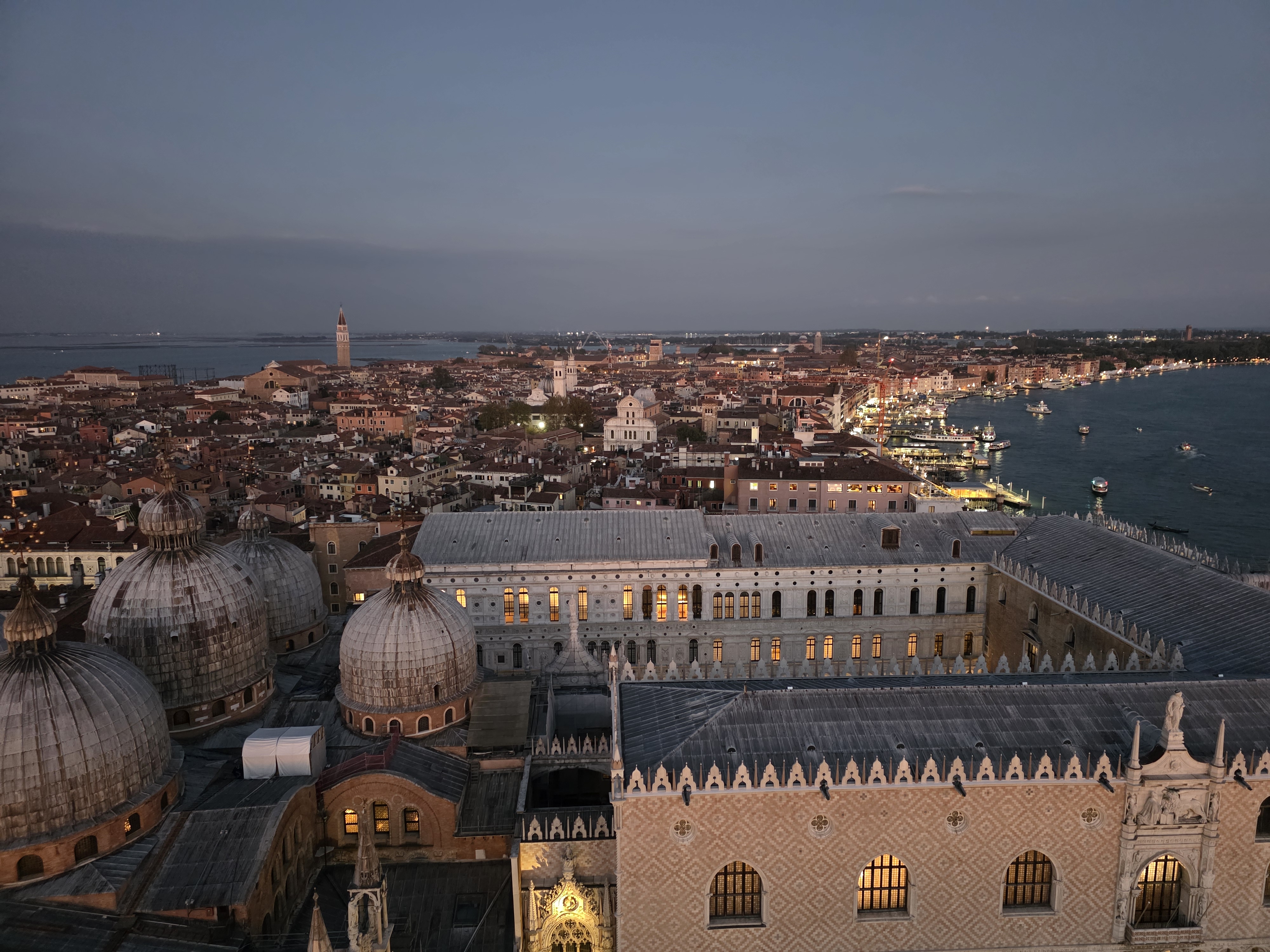
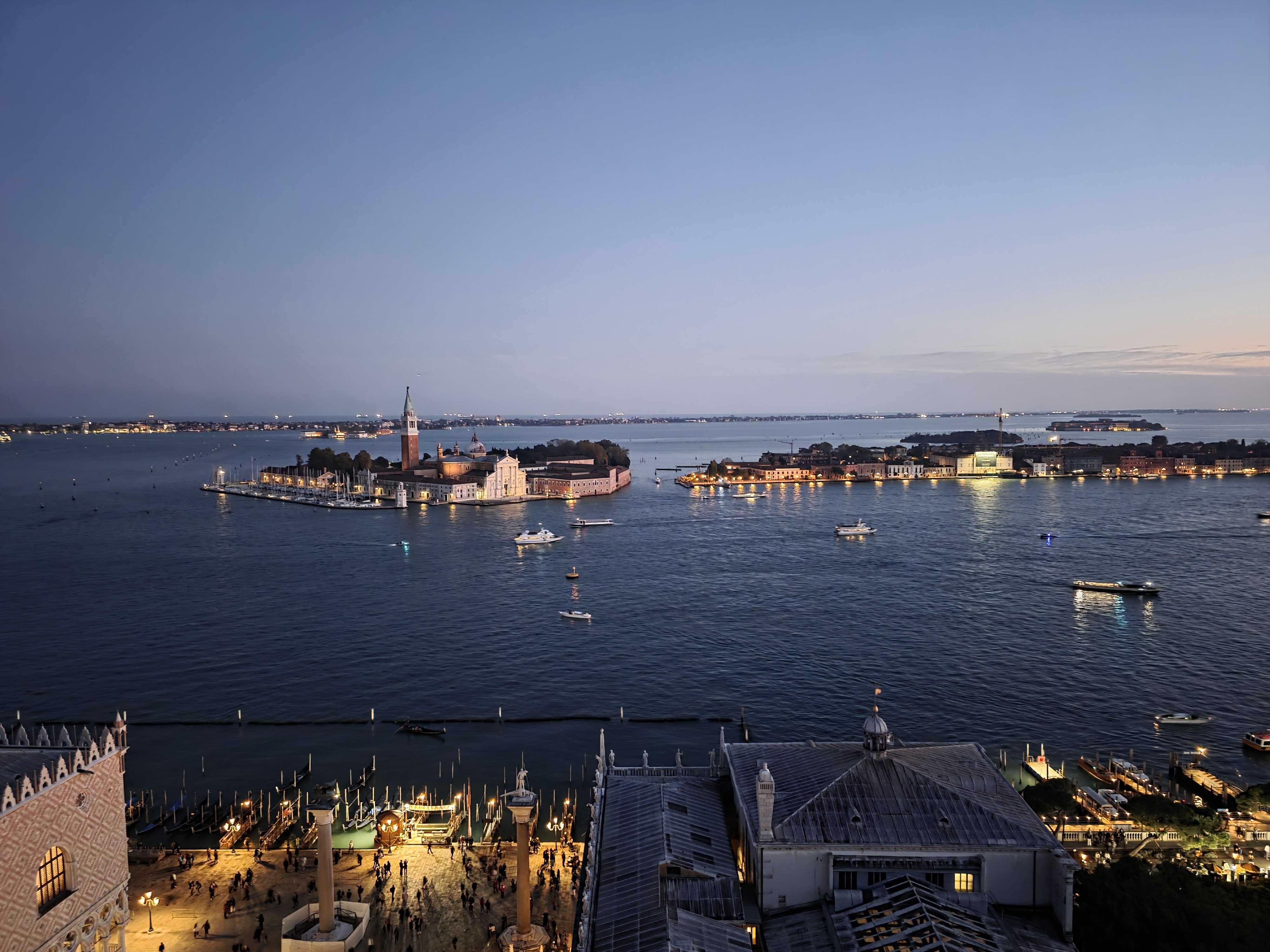
I ended up getting into the Campanile half an hour earlier than my booked slot – fortunately, they let me in. The whole attraction is the viewing platform at the top, which you reach by lift. I happened to be there right at sunset, and got to see Venice from above in the evening light, taking some beautiful photos.

In the evening, I had to move to a different hotel near the airport, as I have a very early flight tomorrow, as mentioned, and running around pedestrian-only Venice at 4am looking for transfer options didn’t seem like a great idea.

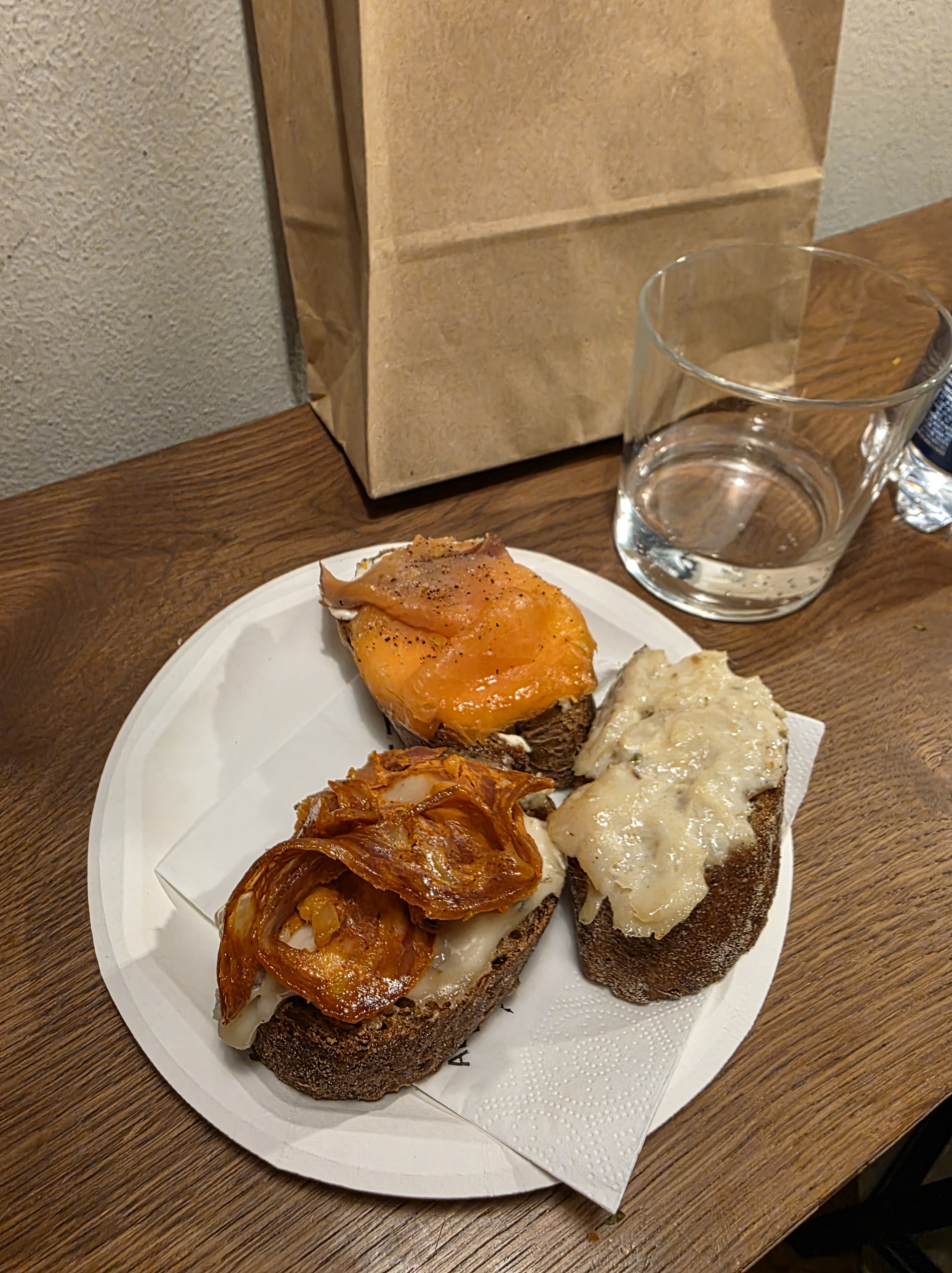
Before that, I decided to have dinner – something light, after the pizza earlier – and I wanted to try local cicchetti. This Venetian speciality consists of small tapas-like bites with all kinds of toppings, the most famous being a paste made from dried cod, called baccalà.

I tried two types of cicchetti with cod, one with salmon, and one with salami – and I liked them all!

Then I picked up my suitcase from the first hotel and set off. First, I took a vaporetto (water bus) from near the Rialto Bridge, and then a regular bus from Piazzale Roma to the airport area. Initially, I thought I’d walk to Piazzale Roma, but then I found out I’d have to take a boat partway anyway, so I ended up just taking the vaporetto.

The hotel’s location was very odd – I had to get off the bus right in the middle of a highway, with no pavement or footpath in sight, and then walk for about 10 minutes. But at least tomorrow at 4:30 a.m., the shuttle will pick me up and get me to the airport in just 5 minutes.

Posted in English, Europe, Lisbon, Porto, Portugal

Portugal – Day 3

РУССКОЯЗЫЧНАЯ ВЕРСИЯ ПО ЭТОЙ ССЫЛКЕ. CLICK HERE FOR RUSSIAN VERSION.

April 18, 2023 – Wednesday

We got up in the morning and, as usual, had breakfast. We were supposed to take a train to Porto at noon, but when we arrived at the station, we discovered that it didn’t exist – the train had been cancelled due to a strike, like all the 12-o’clock trains throughout the entire month. What can I say – wonderful. Even more wonderful was the fact that the app sold us the ticket without batting an eye and didn’t even notify us about the strike.

We had to buy tickets for a later train, at 15:30, and then spent a long time looking for a place to leave our luggage so we wouldn’t have to drag it around. We found one across the street from the station and went to get some coffee. But first, we wandered around Alfama, from where we made our way to Restauradores and had coffee there.

Then we returned to the station, boarded the train and, thank God, we were off. On the train, we encountered some American fellow passengers who couldn’t grasp that, in addition to the seat number on the ticket, you also have to check the carriage number – instead of trying to chase away people already sitting in a seat with the same number.

In the end, we arrived in Porto quite late – it was already around 7 p.m.

We got to the hotel by Uber and went out for dinner at a restaurant, where we once again ran into loud Americans, who talked non-stop at the next table all evening, and we learned their entire life story and all their family problems.

Posted in English, Europe, Lisbon, Portugal

Portugal – Day 2

РУССКОЯЗЫЧНАЯ ВЕРСИЯ ПО ЭТОЙ ССЫЛКЕ. CLICK HERE FOR RUSSIAN VERSION.

April 18, 2023 – Tuesday

The second day in Lisbon was marked by queues. But – first things first. In the morning, we got up and tried the wonderful, varied breakfast at the hotel (I was the one actually “trying” it   – my friend was having it for the third time), with smoked salmon, waffles, pancakes, and the like.

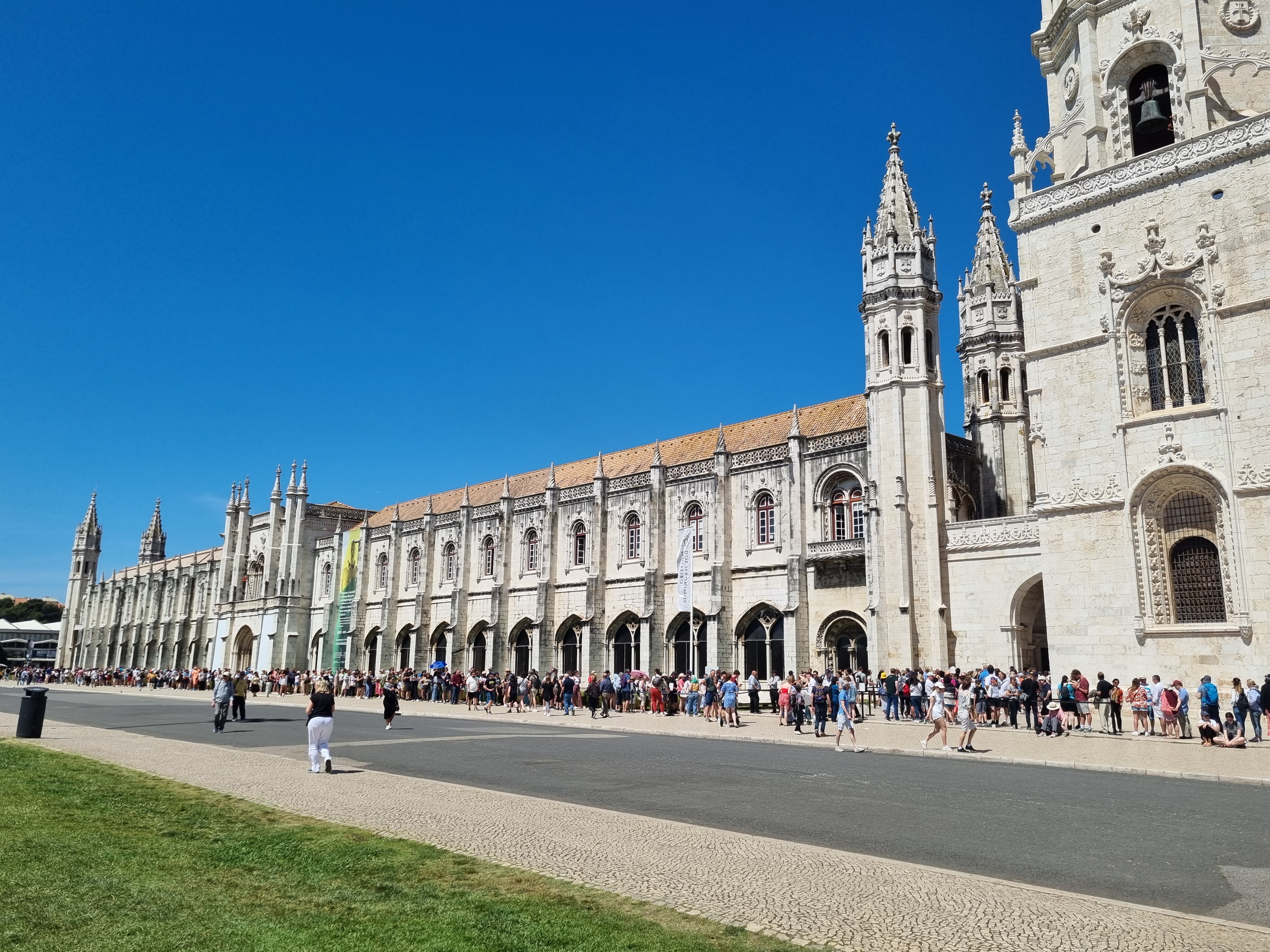
Then we went to the Belém area – it’s like a suburb of Lisbon. The idea was to see the Jerónimos Monastery and the Belém Tower. We got there by city bus – an authentic route through non-touristy areas.

When we arrived at the monastery, we saw a queue. No – that’s not quite right – we saw an incredibly long QUEUE and probably about 15 large tourist buses. We didn’t really feel like standing in that queue, so we decided to head straight to the Belém Tower, figuring we could return to the monastery later and check whether the queue had dispersed, assuming most group tours visit the monastery right when it opens.

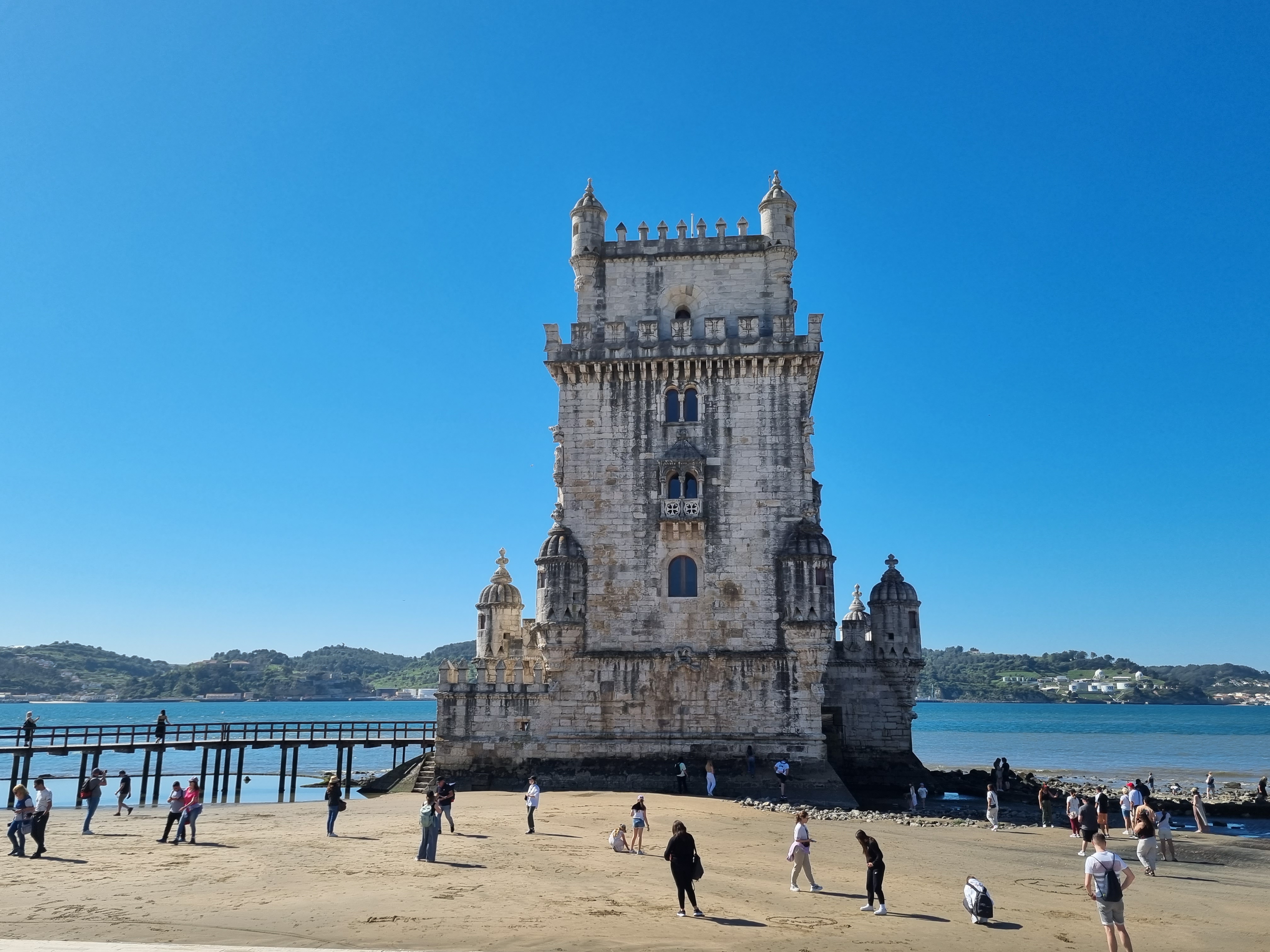
It was about a 15-minute walk to the Torre de Belém, but there we found quite a long queue as well. It turned out there were two reasons for this: first, entrance to the tower is free on Tuesdays; and second, they only let people in in small groups, after the previous group has left, to avoid overcrowding in the narrow spiral staircases and confined spaces.

The tower was built back in the 16th century, in honour of Vasco da Gama’s discovery of the sea route to India. It looks very interesting from the outside, but I’ll leave the question of whether it was worth standing in line for 40 minutes under the scorching sun to go inside open.

After the tower, we gave the Jerónimos Monastery a second chance and went back to see how things were going there. But the line hadn’t gotten any shorter, and the sun continued to scorch mercilessly. So, after googling photos of the monastery’s interior and deciding it wasn’t worth the long wait and completely burnt shoulders, we dealt with a more pressing matter – and went for lunch at a French-Portuguese restaurant, where all the staff spoke good French and worse English. I never thought I’d have to speak French in Portugal.

By the way, about English – overall, I’m pleasantly surprised. Almost everywhere we go, people speak it very, very well. I hadn’t expected this from Southern Europe, based on past experience.

After lunch, we returned to the centre and headed to another monastery – São Vicente de Fora. This turned out to be a very good idea, because unlike Jerónimos, there was practically no one there. And it’s completely unclear why – the interior is very beautiful, many rooms are decorated with azulejos, and you can also visit the pantheon of the Portuguese Braganza dynasty and see azulejo panels based on the fables of La Fontaine. An interesting observation – the masters of azulejo painting were not very good at depicting animals, and the dogs and cats turned out rather odd, with human eyes and pig ears.

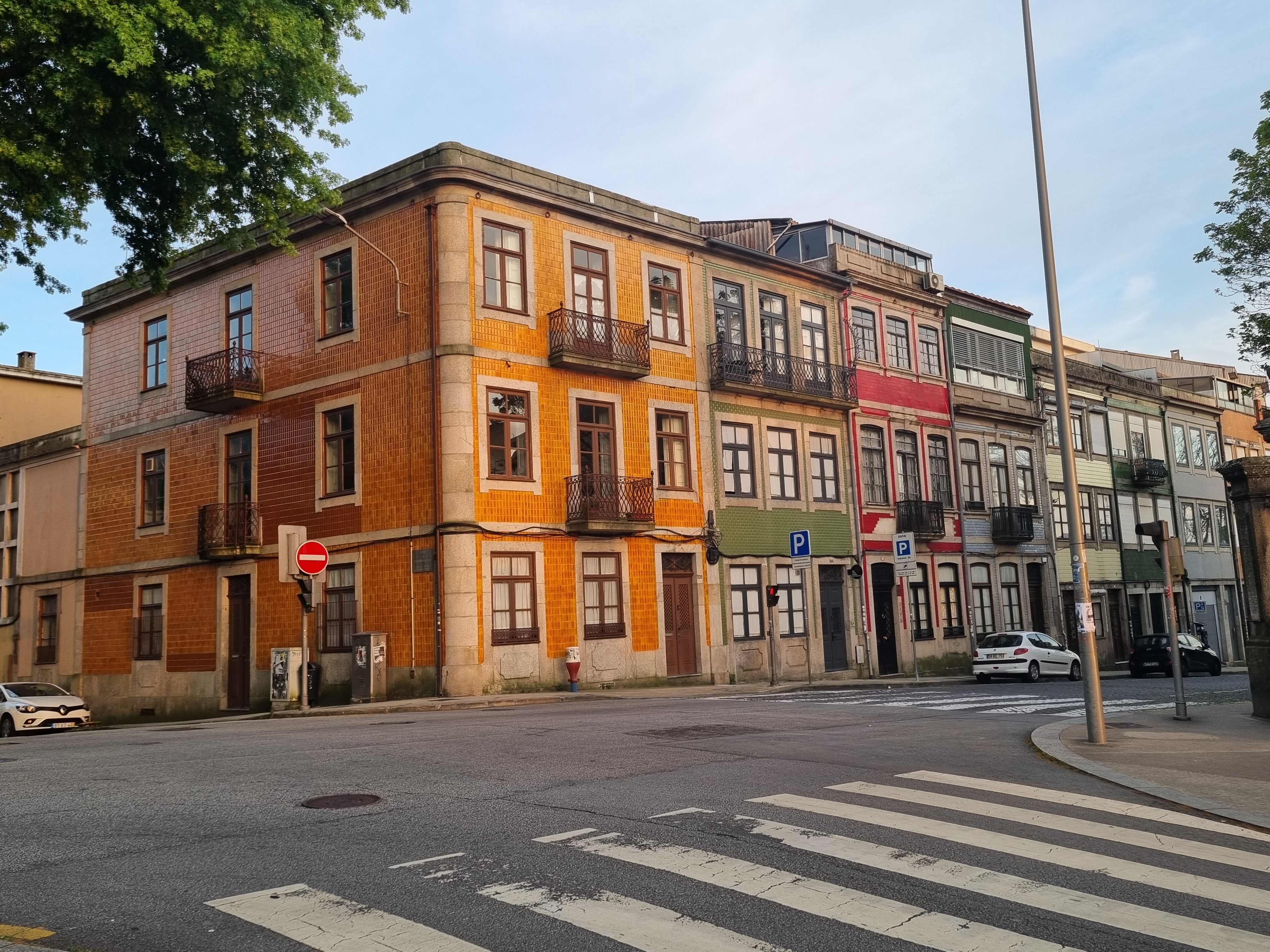
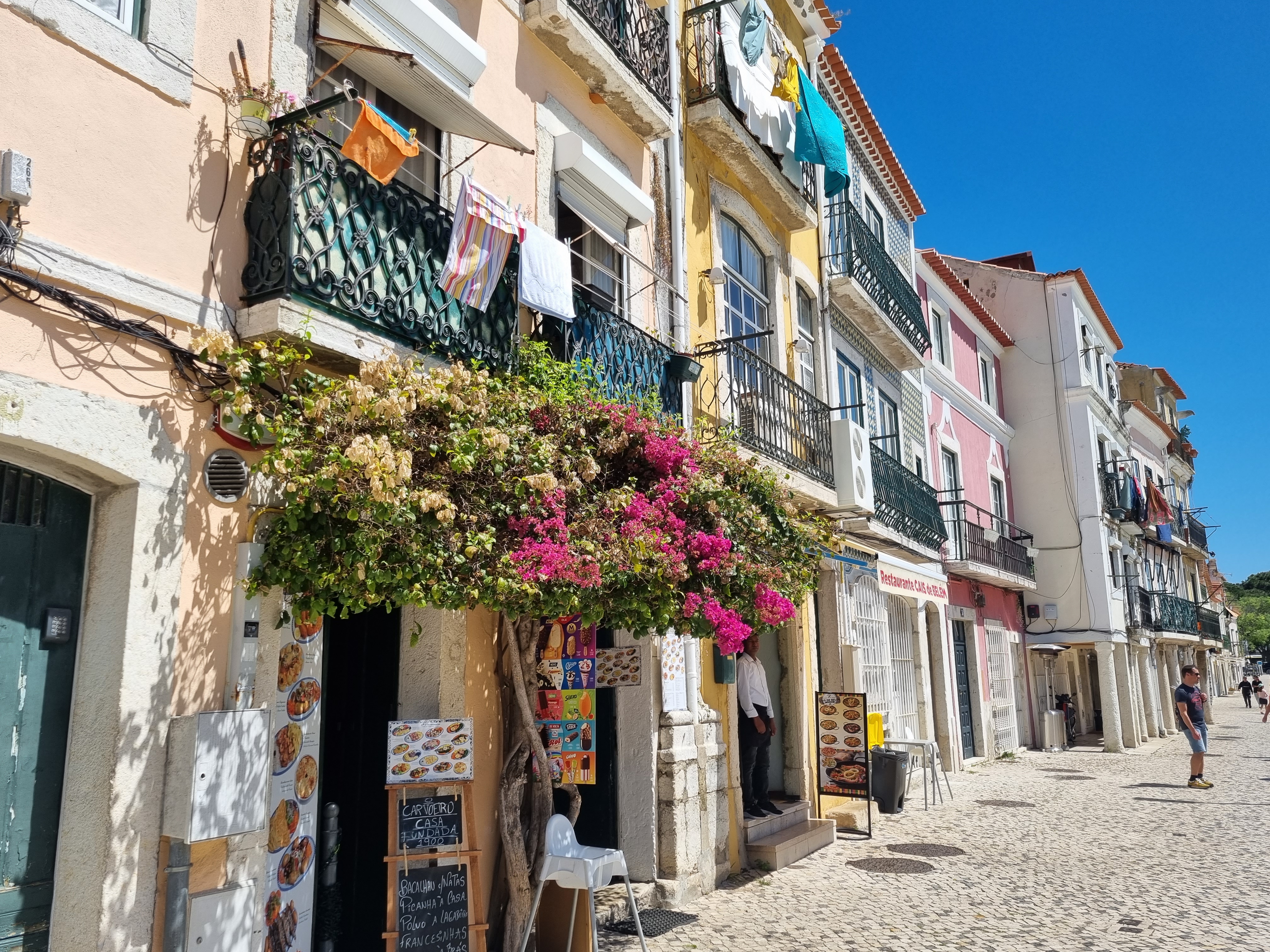
In the evening, we walked around the Alfama district, which I really liked. It’s very colourful and authentic, with beautiful architecture, trams, hanging laundry, and a chaotic street layout. This is the oldest district of Lisbon – the only one that survived the devastating 1755 earthquake.

Posted in Asia, English, Himeji, Japan, Osaka

Japan – Day 8

РУССКОЯЗЫЧНАЯ ВЕРСИЯ ПО ЭТОЙ ССЫЛКЕ. CLICK HERE FOR RUSSIAN VERSION.

30 May 2025

Today, completely unintentionally, we woke up at 6:30 a.m., but it turned out to be a good thing, since we had a long day of traveling ahead: from Kyoto to Himeji, then on to Osaka, and finally back to Kyoto.

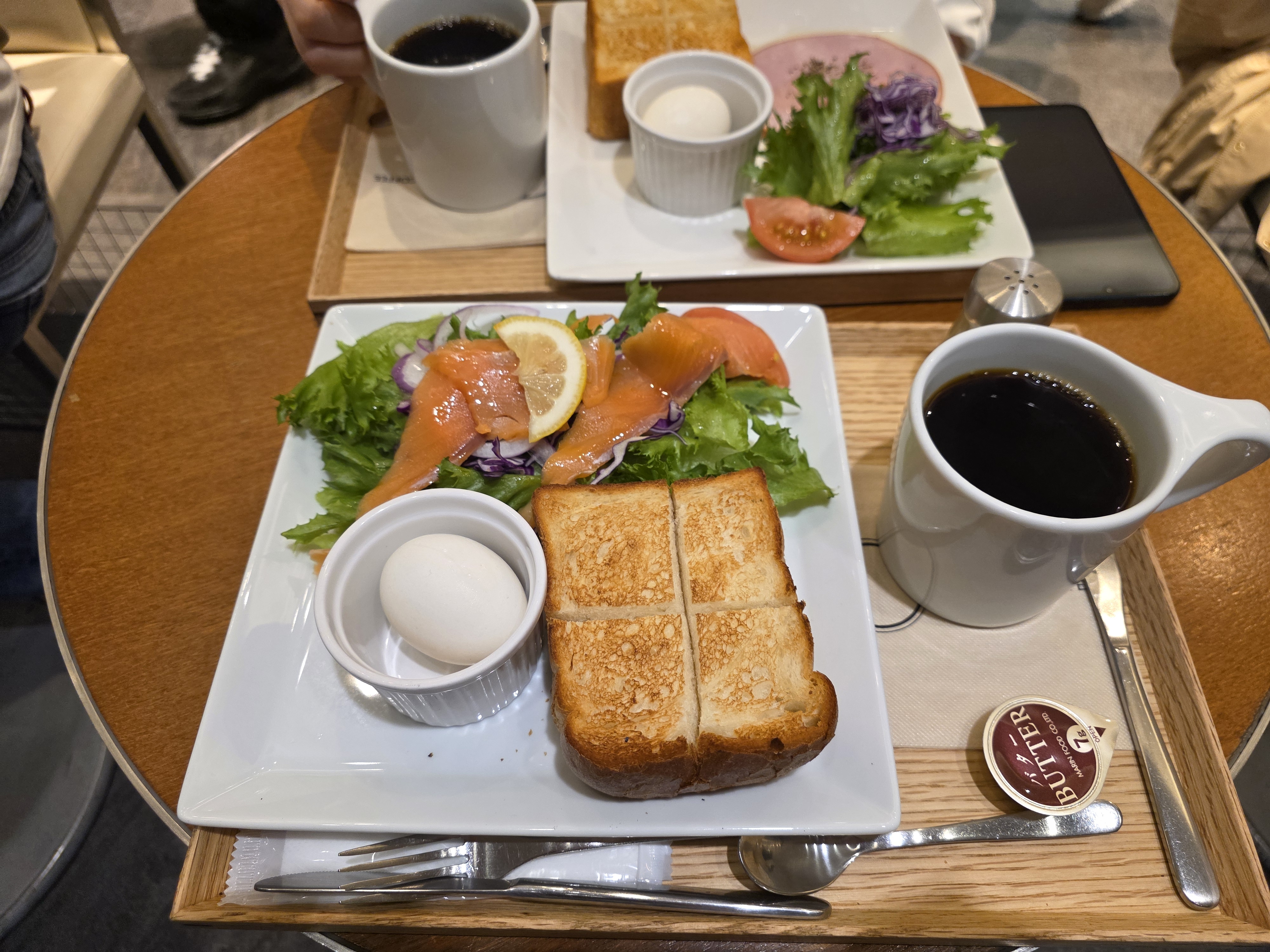
As a result, we left an hour earlier than planned. But before heading out, we walked to Kyoto Station and had breakfast there – we had delicious toasts made with Japanese milk bread, topped with egg and salmon in my case, or ham in Rena’s.

At the station, we took an express train (not the Shinkansen, just a regular limited express) to Himeji.

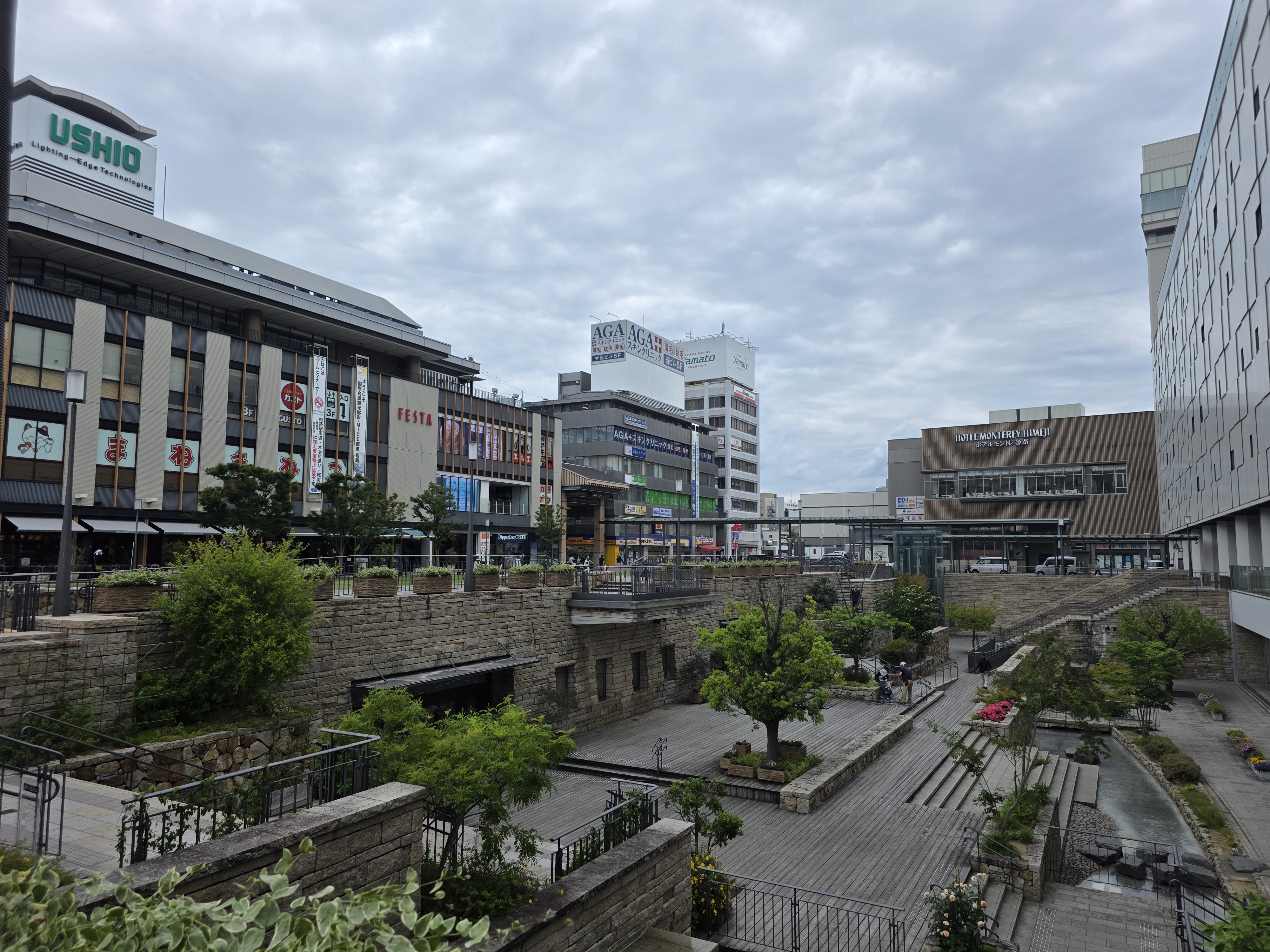
The sole reason for the trip to Himeji (which took about an hour and a half, by the way) was to visit its famous castle. From Himeji Station, we walked down one of the main streets towards the castle. Honestly, there wasn’t much to see along the way – the city seemed fairly ordinary and, at first glance, felt rather provincial.

The castle really is the city’s main (and maybe only) attraction – but what an attraction it is. It is extremely popular among tourists, as it’s one of Japan’s oldest castles, and interestingly, is built almost entirely out of wood.

We weren’t sure whether it was enough to admire the castle from the outside or whether we should go inside as well. Google reviews strongly recommended going in, and so we did – but in hindsight, we might as well have skipped it.

From the outside, the castle is stunning – graceful and elegant. No wonder it’s also called the “White Heron Castle” – it truly does resemble a white heron. But inside, there’s practically nothing to see. Just seven floors of empty wooden rooms, between which we had to walk up and down the steep, slippery staircases (they are slippery because you have to take your shoes off and walk in socks). There’s no interior decoration, no furnishings, barely any artifacts. Even the weapon displays are sparse – just a couple of spears and guns for show.

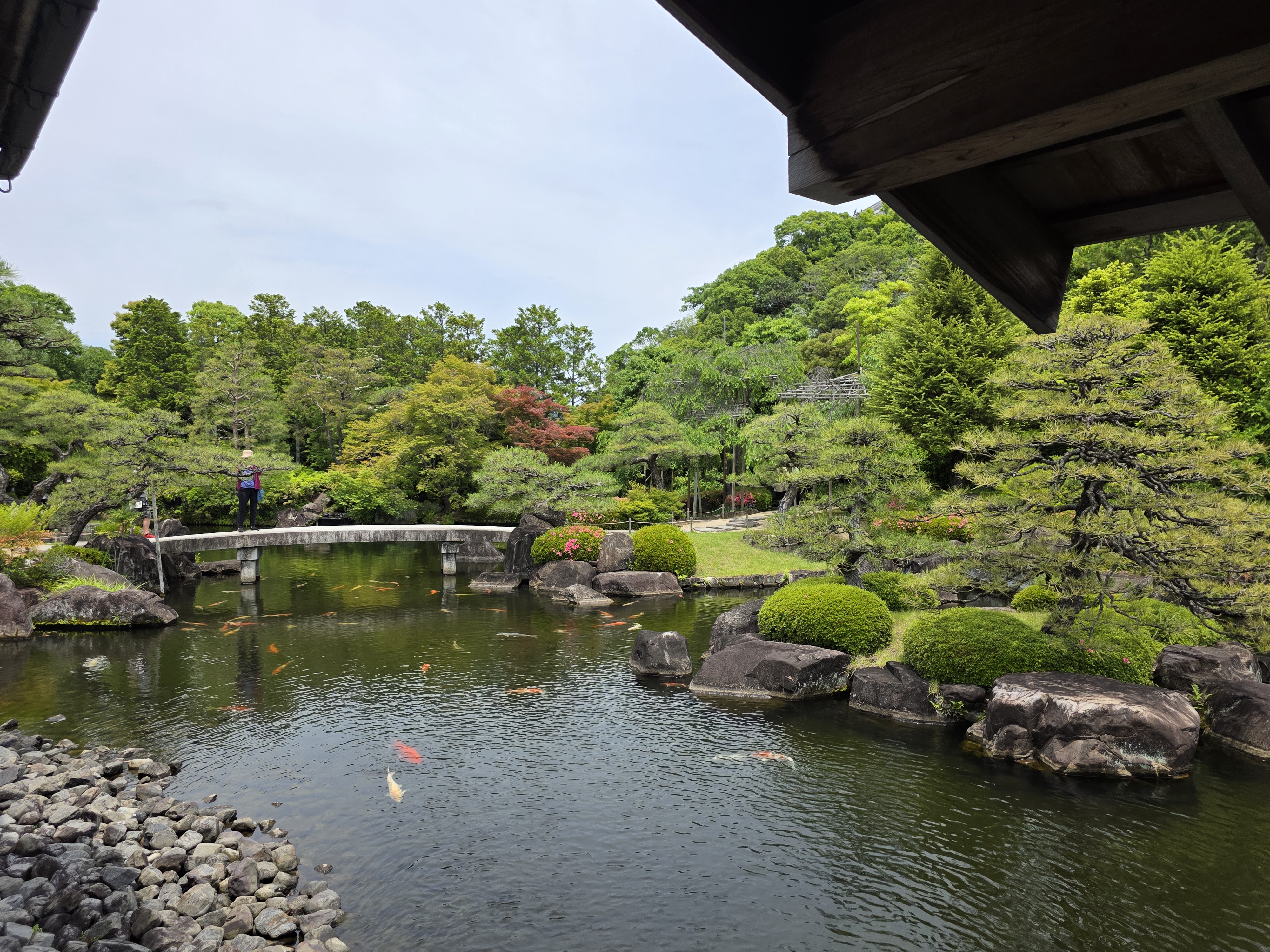
However, right next to the castle is Koko-en – a lovely garden made up of nine smaller gardens, each designed in a different traditional Japanese style. One focuses on pine trees only, another features multi-level paths, waterfalls, and stones, while another has a flat landscape – and all are filled with beautiful flowers and trees. Interestingly, the garden was created only recently, in the late 20th century, but it’s designed to reflect the aesthetics of the Edo period.

It was hot and stuffy all day, even though the forecast had promised rain – instead, we got bright sun. By the time we finished at the gardens, it was already lunchtime. We decided to have lunch in Himeji and ate in a tiny local eatery that served Kobe beef – a premium, marbled Wagyu variety that’s about twice as expensive as regular Wagyu, but still reasonably priced here.

There wasn’t anything else we wanted to do in Himeji, so we headed to Osaka – in the opposite direction, towards Kyoto – about an hour’s ride.

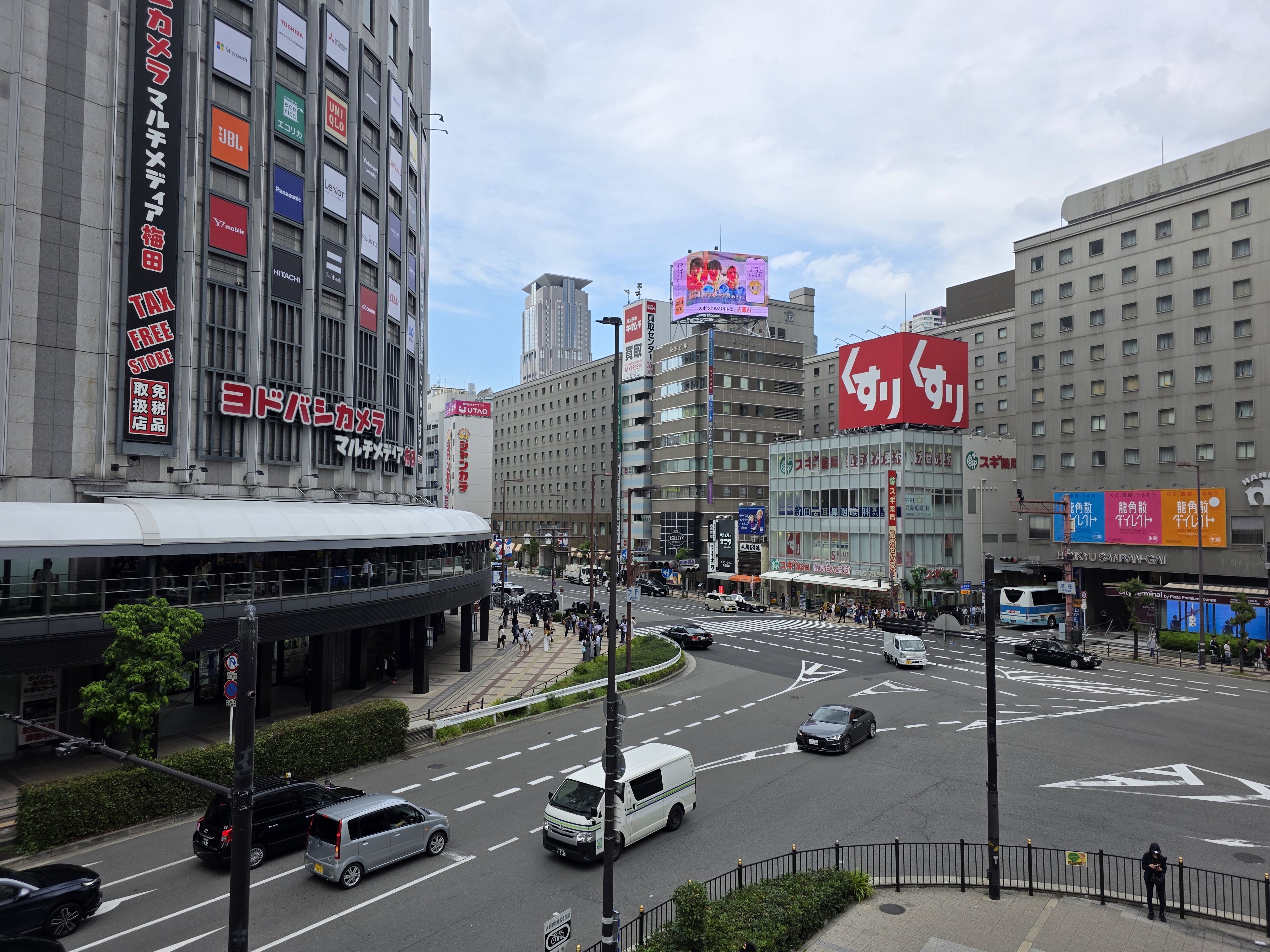
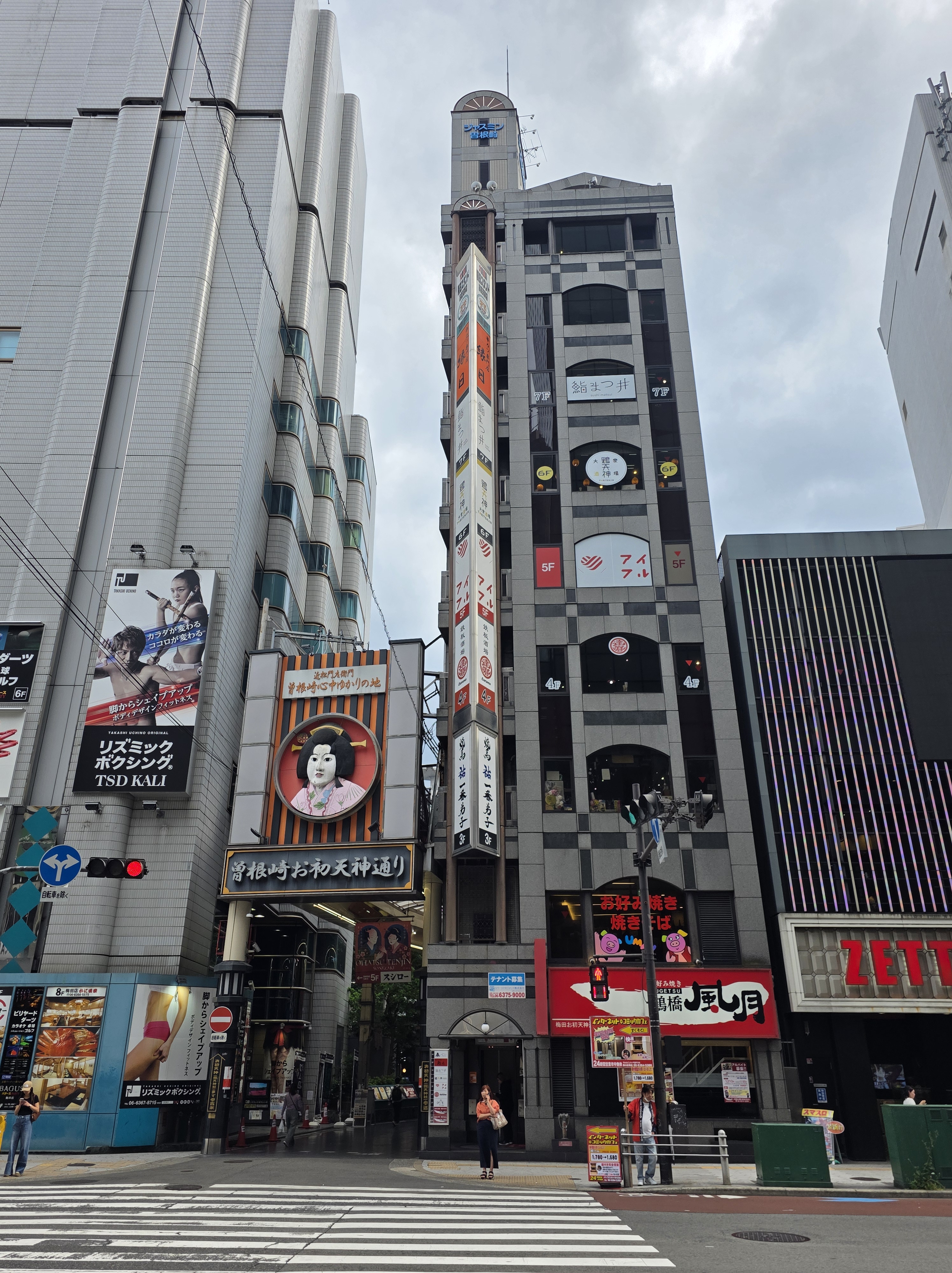
The contrast was immediate – Osaka has a completely different energy. It is a much more modern city than anything else we’d seen so far (even Tokyo). If your idea of a modern Asian city includes futuristic infrastructure and glass skyscrapers, Osaka fits the bill perfectly – it felt like such a contrast to Kyoto, which is only half an hour away. Even the people looked different – more relaxed, dressed more brightly and stylishly. And there are even dedicated bike lanes – in the other places we saw, cyclists just ride on the sidewalks, while you narrowly manage to avoid them.

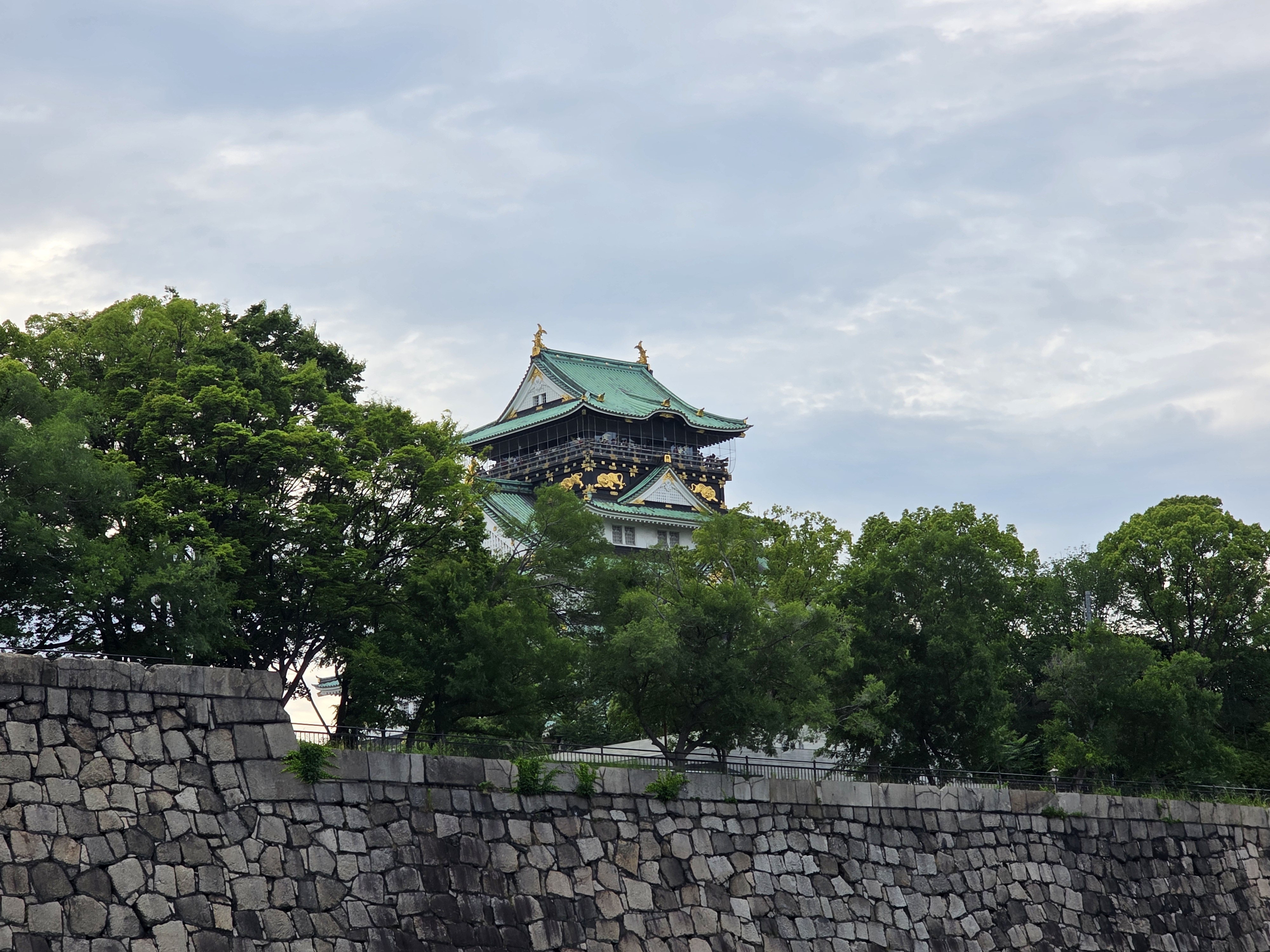
Osaka also has a castle, so we went to take a look – just from the outside, of course. It turned out to be located on a hill, mostly hidden behind trees, and we didn’t feel like climbing up – we simply didn’t have the energy.

The park around the castle reminded us a bit of Hiroshima Castle’s grounds, but Osaka’s was better maintained and much more lively – full of people, like the city itself.

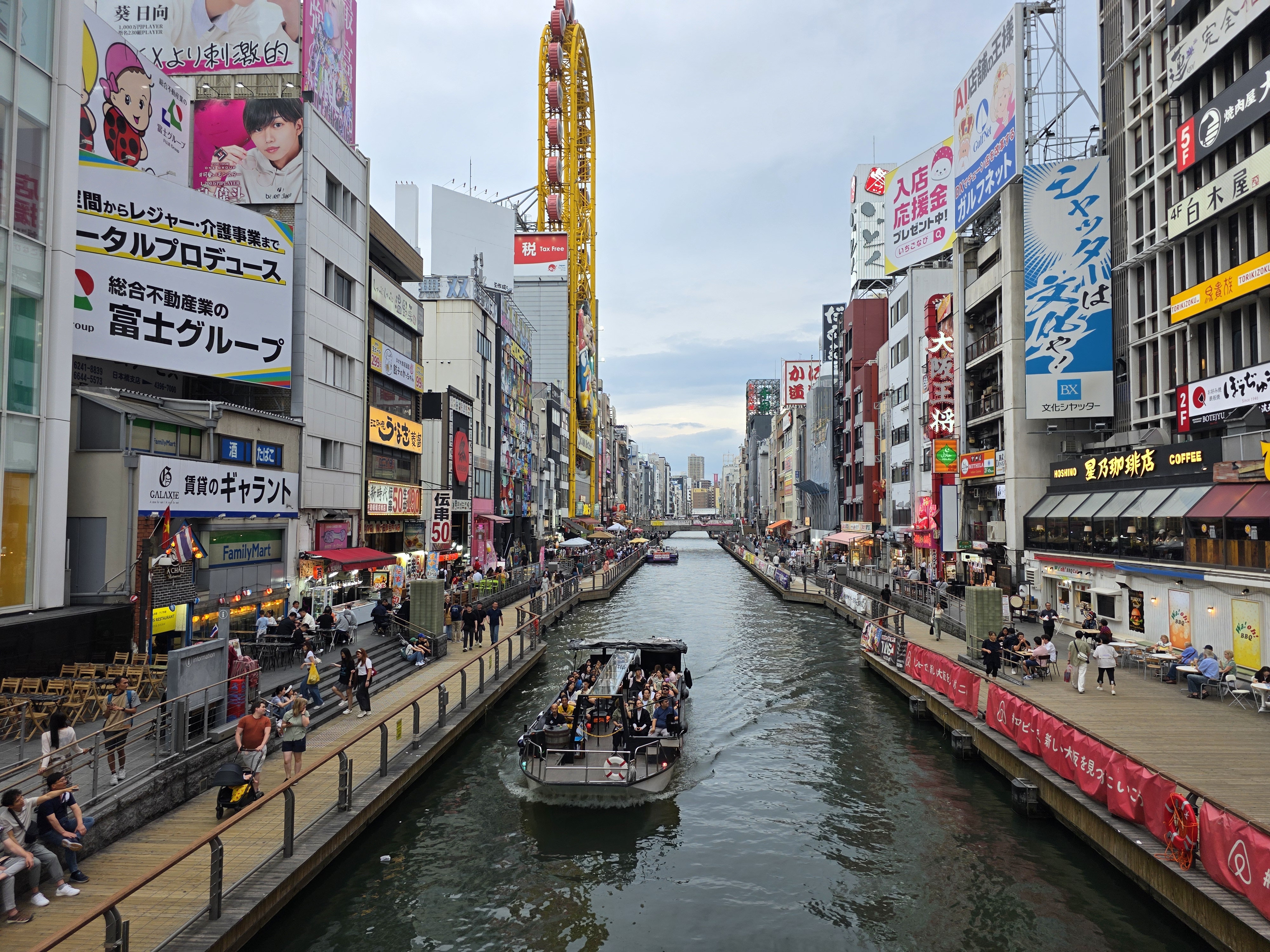
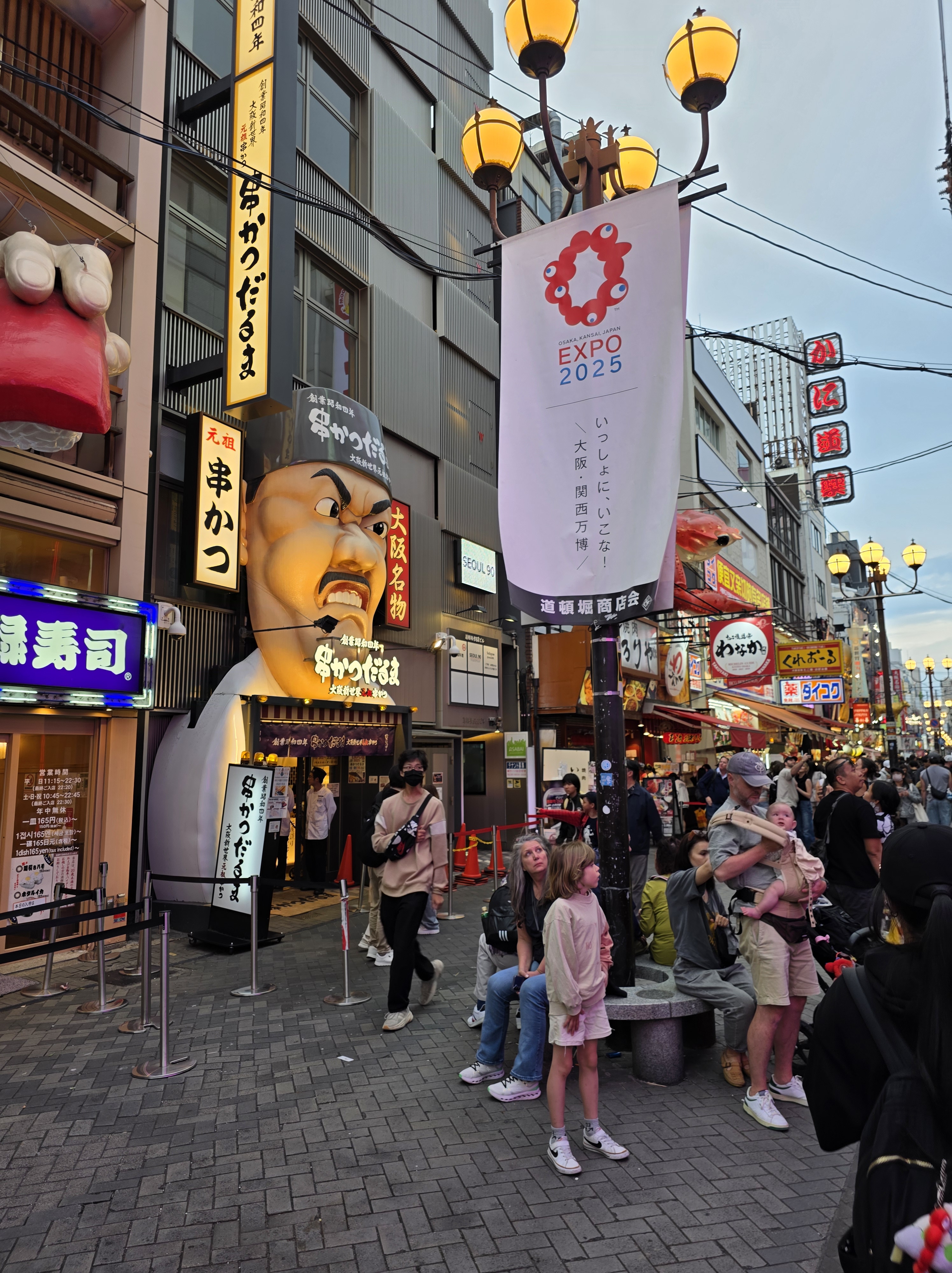
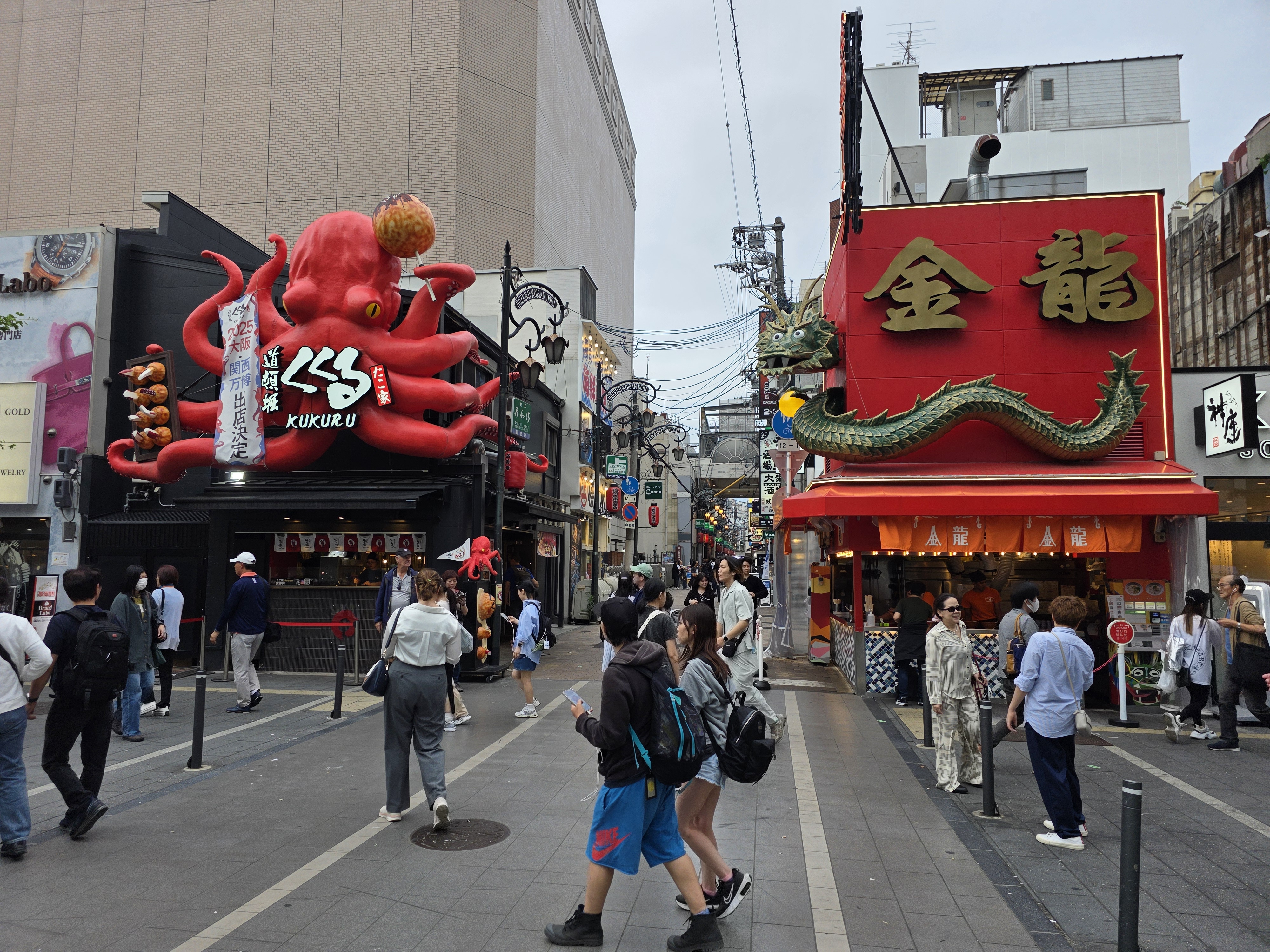
Next, we headed to what’s probably the noisiest and most chaotic part of the city: the Dotonbori area. Along the canal and the adjacent pedestrian street, there is an endless choice of cafés, restaurants, shops, and game centres – all with huge, elaborate signs, that are more like 3D sculptures, covering the entire facade. At night, everything lights up in dazzling neon.

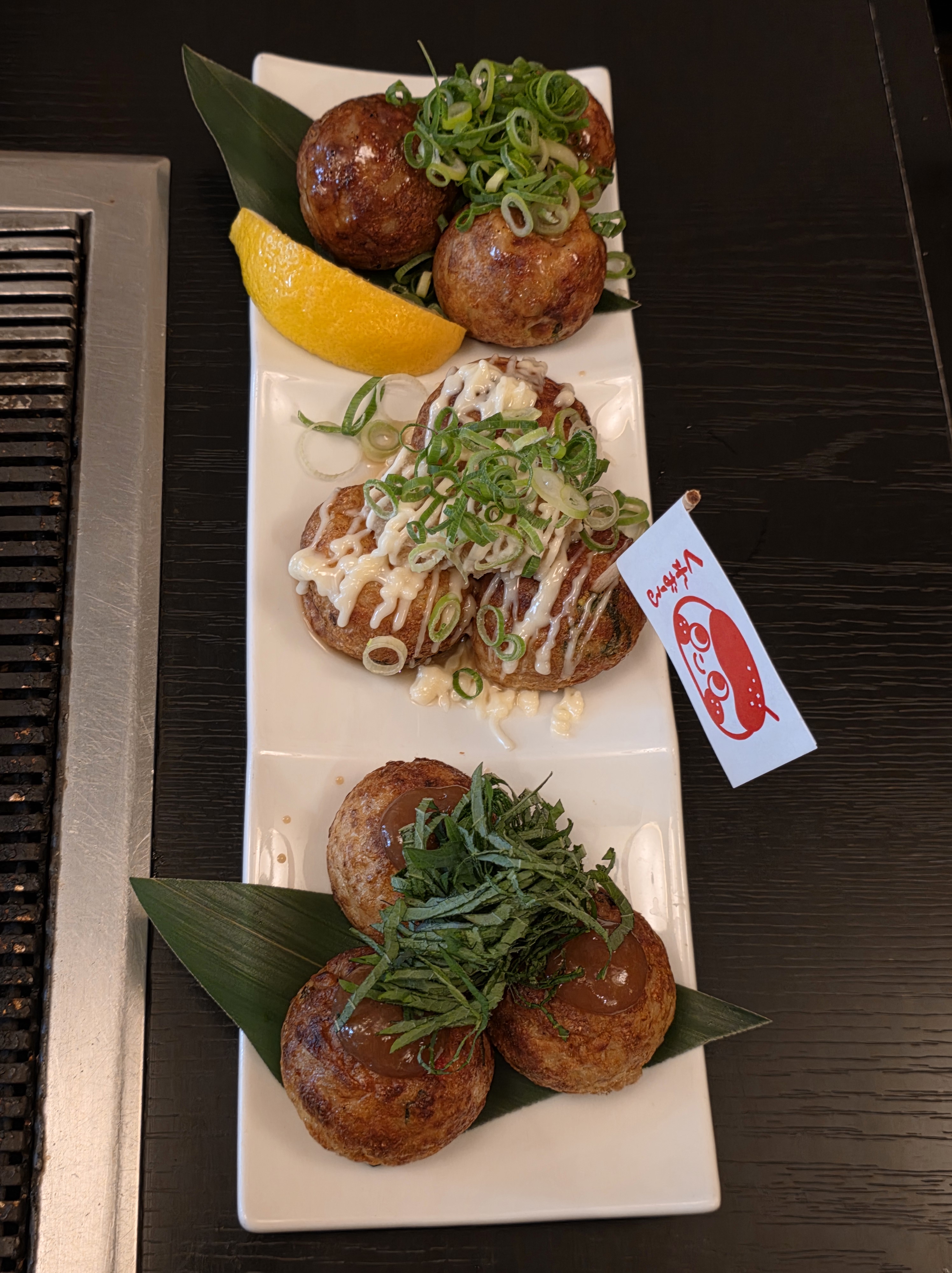
Food stalls and restaurants offer all the local specialties – which, of course, we tried for dinner: okonomiyaki (something between a savory pancake and fritter made of a hodgepodge of different ingredients – seafood, cabbage, eggs), takoyaki (fried octopus balls in liquid batter), and noodles. I really liked it, though Rena didn’t.

In general, if you’re looking for that loud, wild, fashionable version of Japan you often see in the media – you’ll find it here, in Osaka. The city is vibrant, chaotic, and it’s very entertaining to look at all this, but we’re still happy to be staying in Kyoto, where we were happy to return in the evening.

Posted in Asia, English, Hiroshima, Japan, Miyajima

Japan – Day 6

РУССКОЯЗЫЧНАЯ ВЕРСИЯ ПО ЭТОЙ ССЫЛКЕ. CLICK HERE FOR RUSSIAN VERSION.

28 May 2025

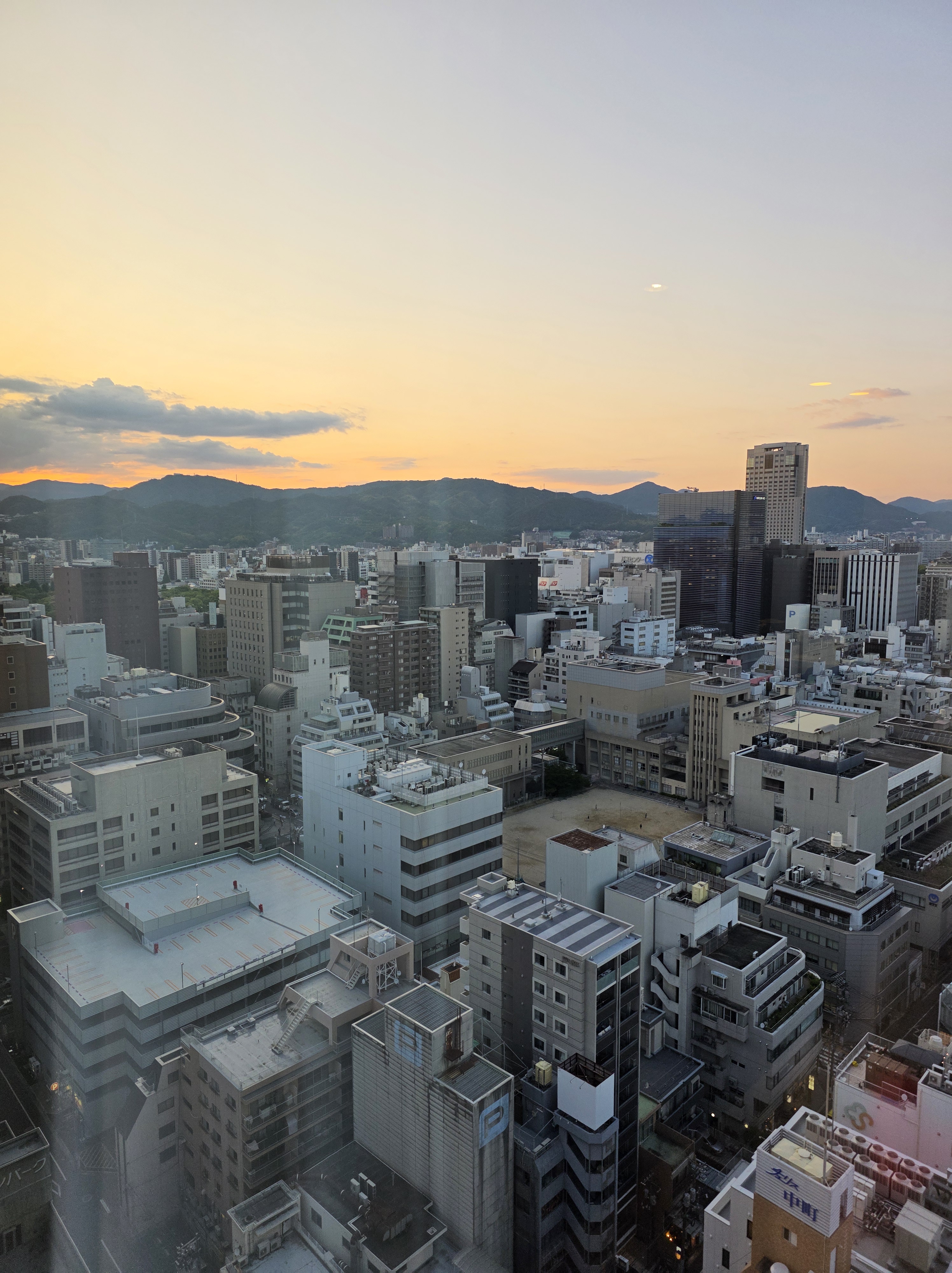
Today we went to Miyajima Island right in the morning. Prior to that, we had breakfast at our hotel – we tried the buffet on the 25th floor, which had a really cool view of the city. The breakfast offered both Western and Japanese options, including local Hiroshima specialties like fish cakes and fish sausage.

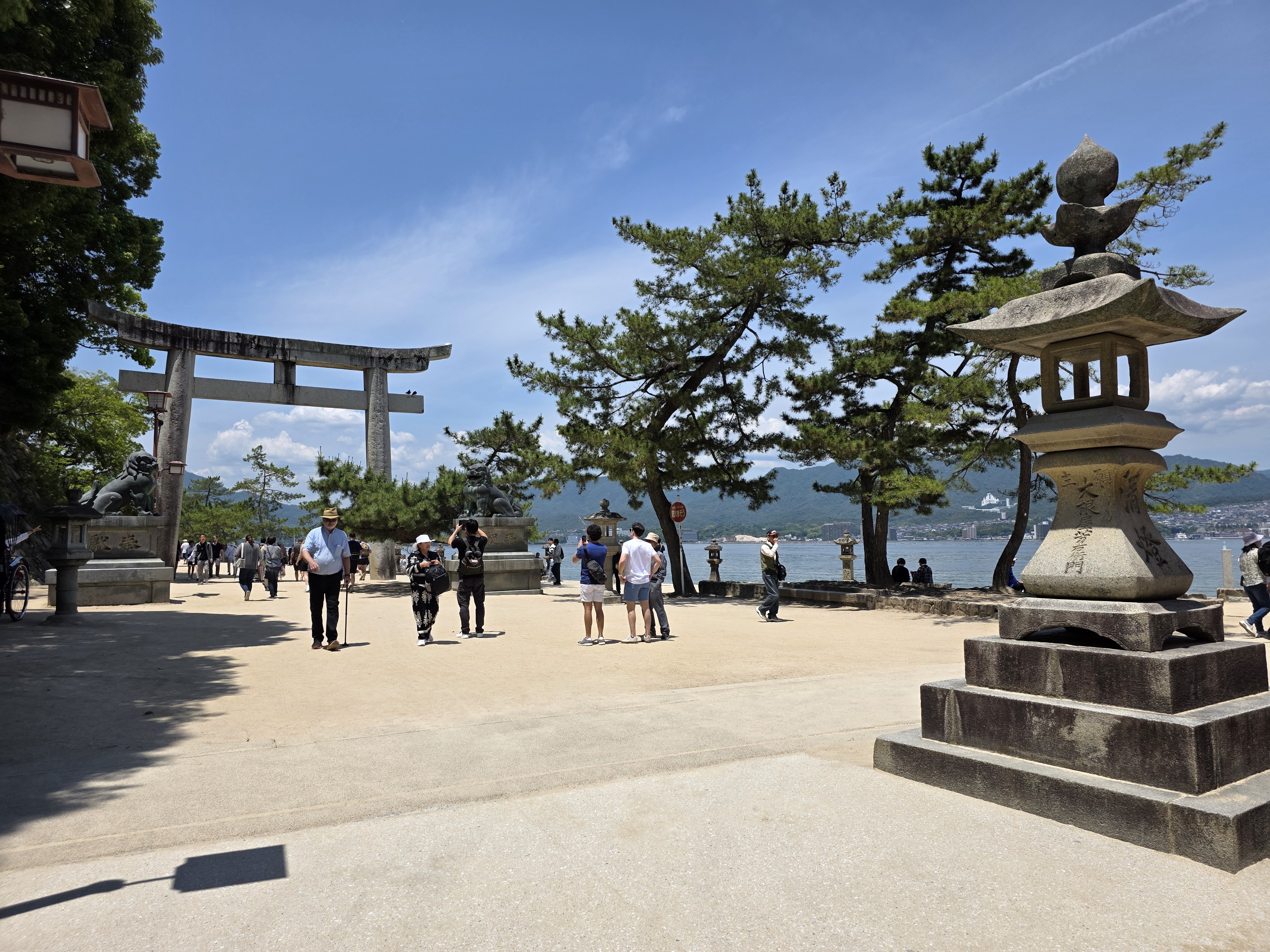
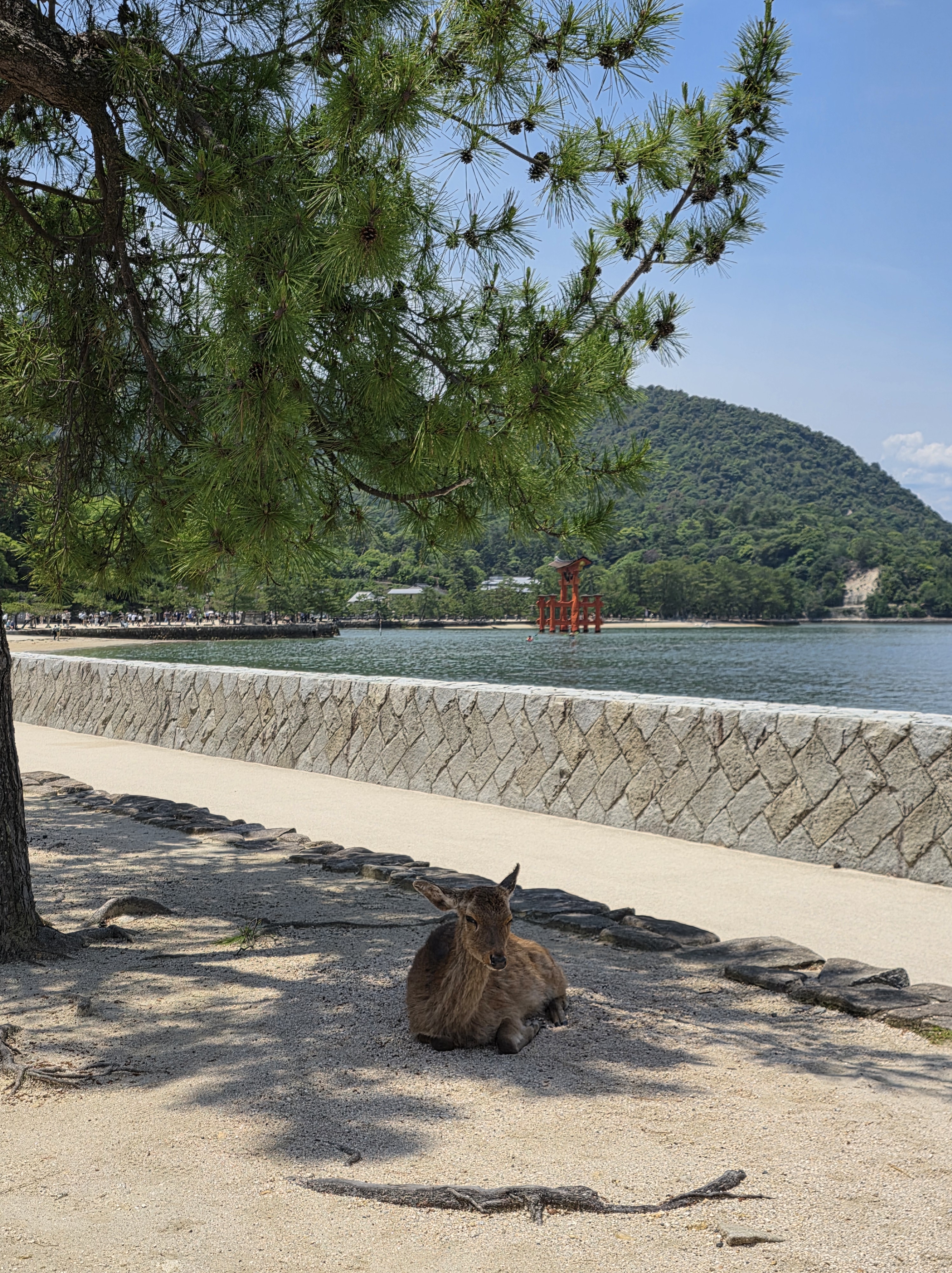
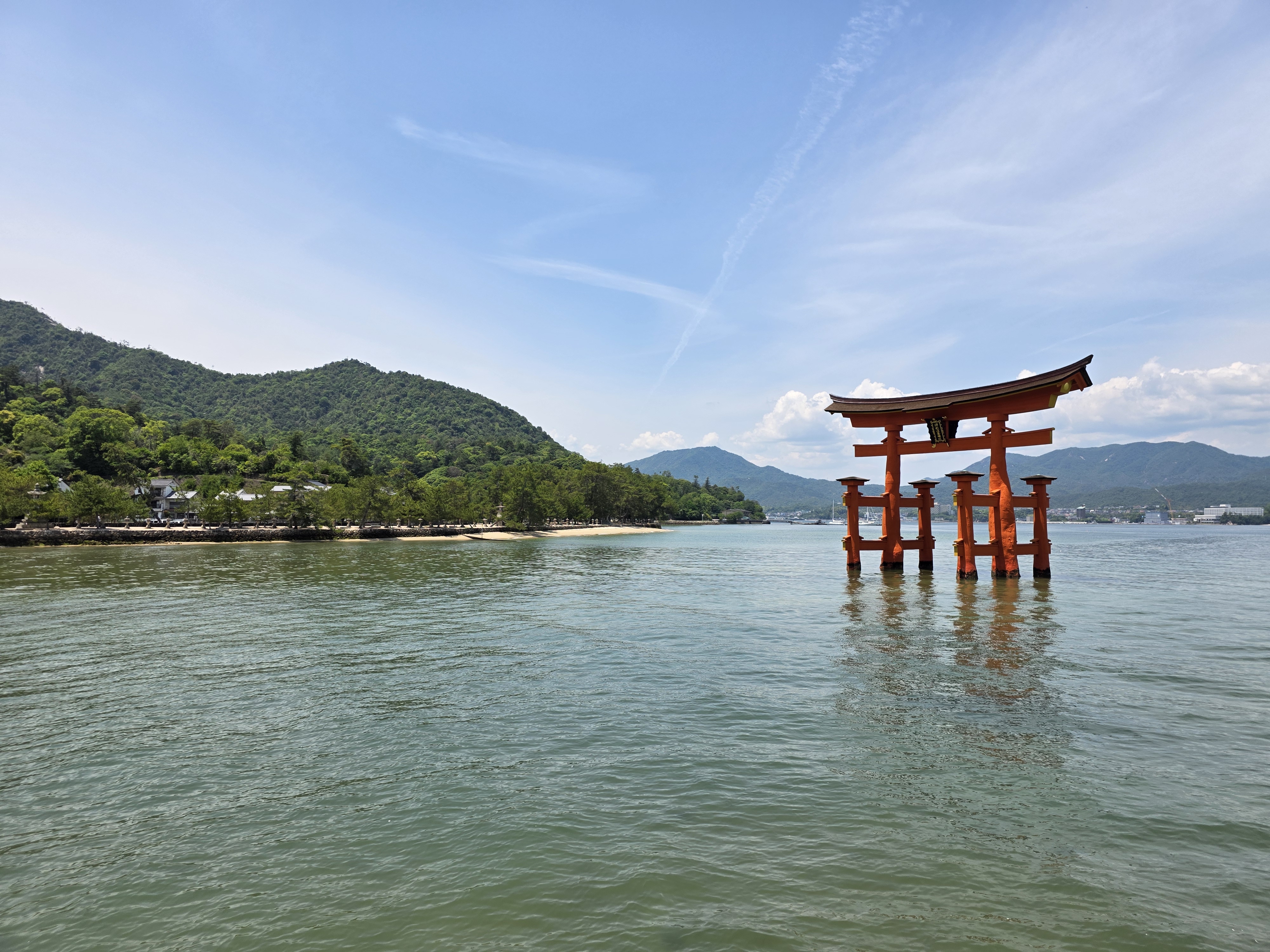
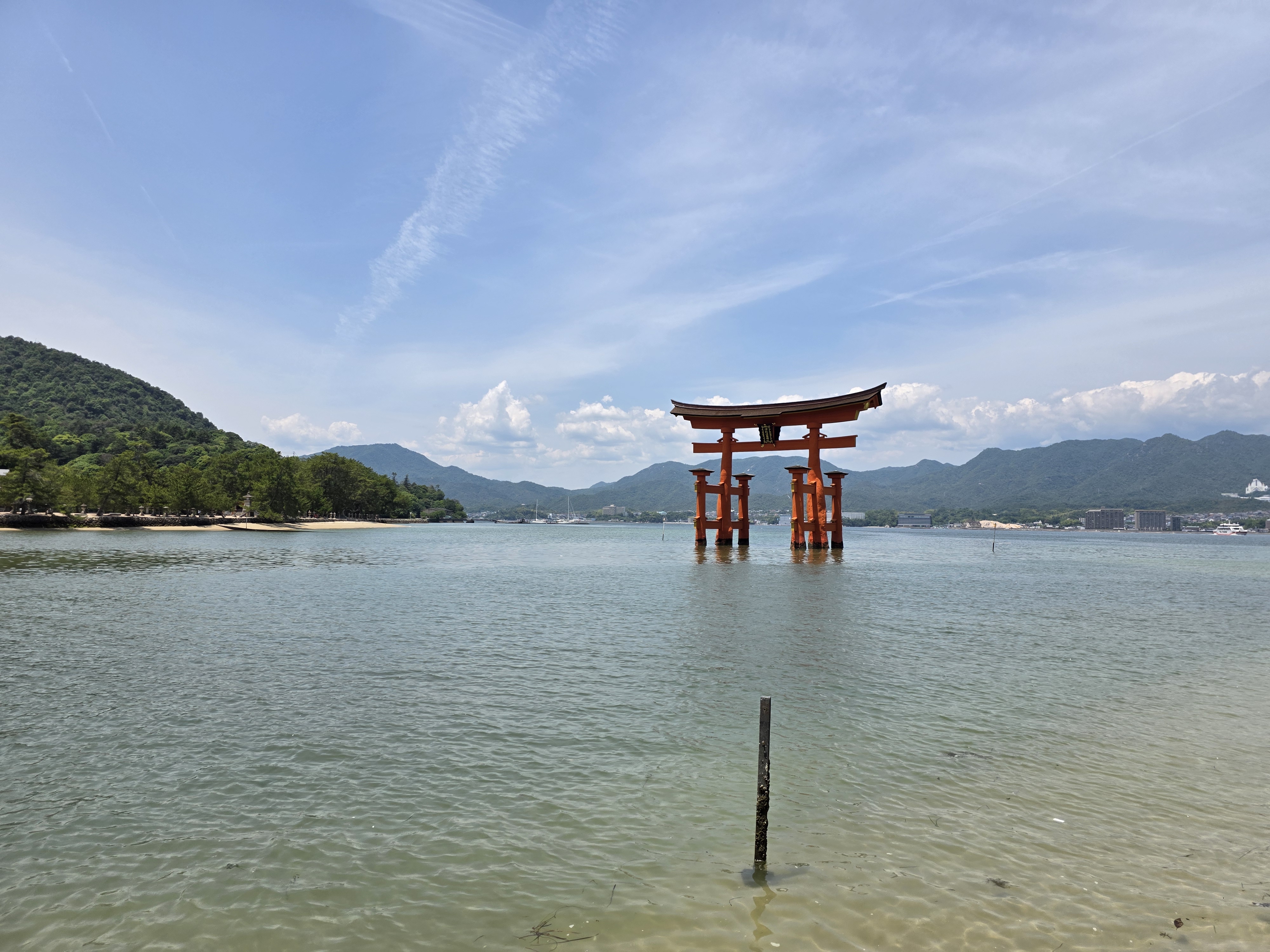
We walked to Shin-Hakushima Station, passing by the castle we visited yesterday – which, in daylight, looked a little less impressive than it did lit up at night. The train took about 20 minutes to get us to the ferry terminal, accompanied by a noisy Iranian tour group. From the terminal, ferries from two different companies run frequently to Miyajima, and the crossing only takes 10 minutes. From the ferry, we got a great view of the famous “floating” torii gates.

There were tons of tourists on the island – but despite its small size, it didn’t feel crowded. Somehow, everyone seemed to spread out. Most tourists were local Japanese, but there were also quite a few foreigners – the Germans again made a noticeable appearance.

Stray deer roam freely on the island – so there’s no need to go to Nara to see them. That said, the ones here seem hungrier and more persistent. We didn’t even think of eating anything outside, but we saw others who did and clearly regretted it, trying in vain to fend off the pushy deer.

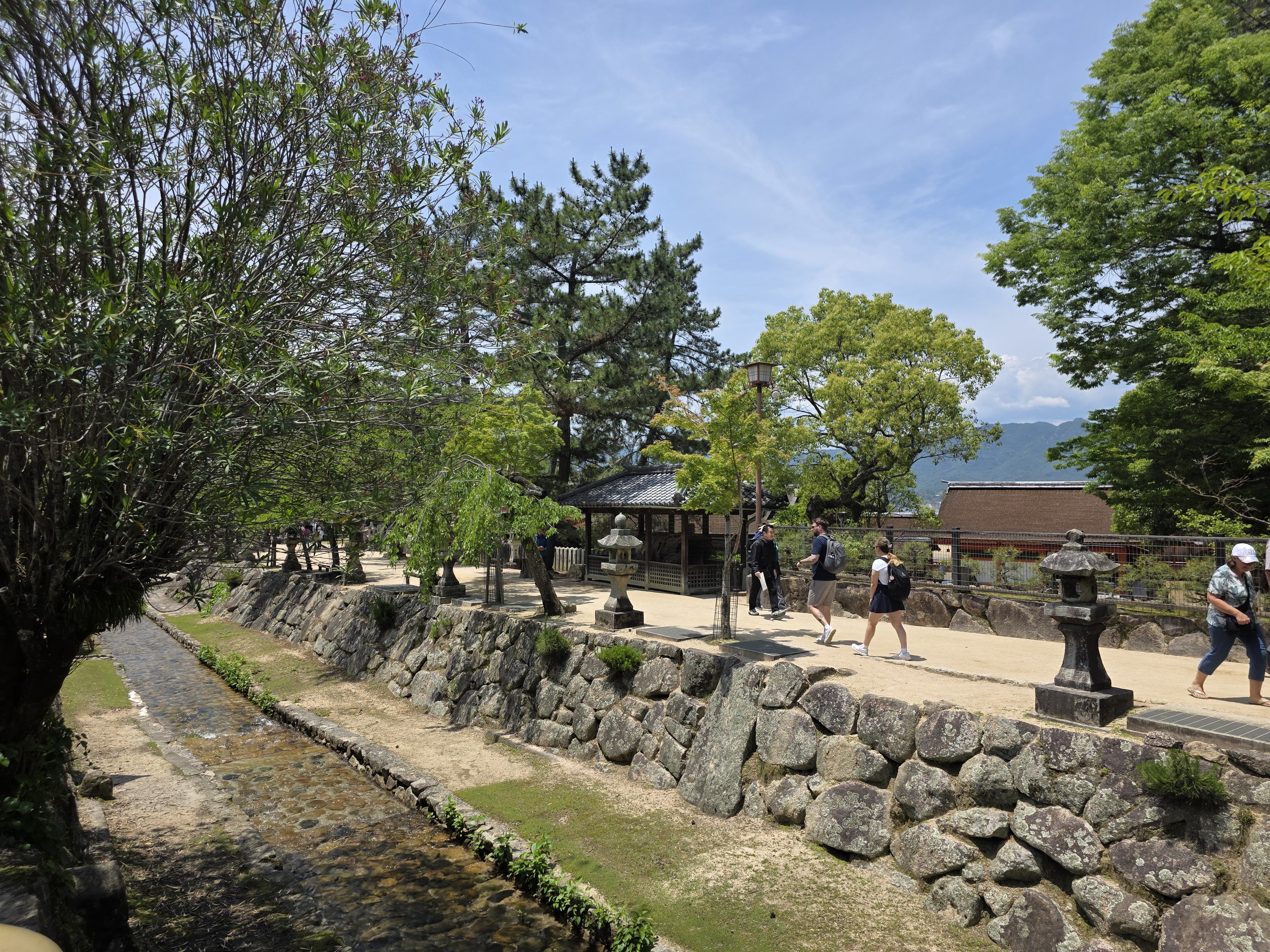
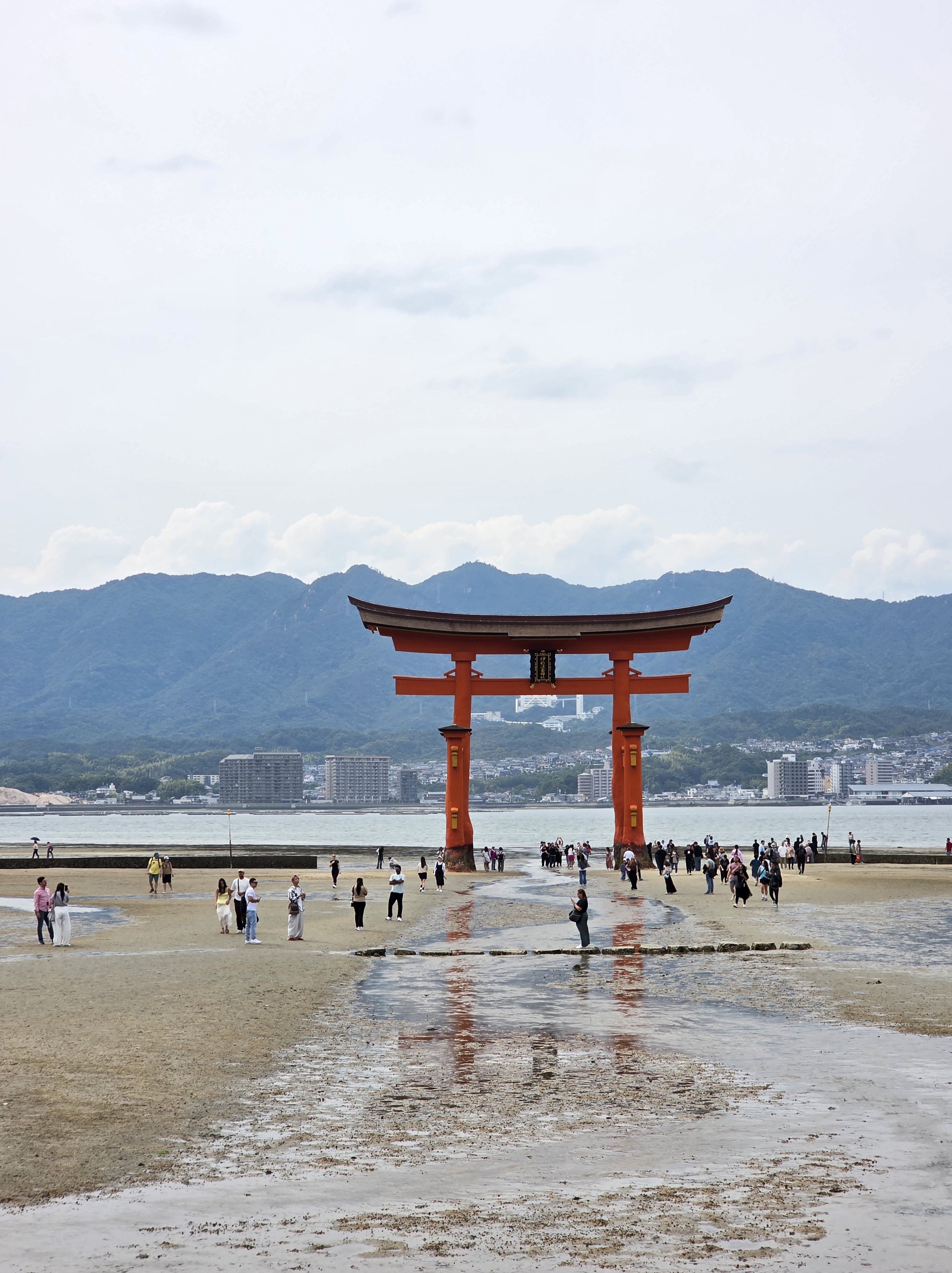
Once on the island, we wandered through the charming streets of Miyajima toward the Itsukushima Shrine – the one the “floating” torii gate belongs to. Interestingly, the gate doesn’t “float” all the time – only at high tide. So when we arrived in the morning, it was surrounded by water, but by around 3 p.m., it was already on dry land, with people walking right up to it and through it.

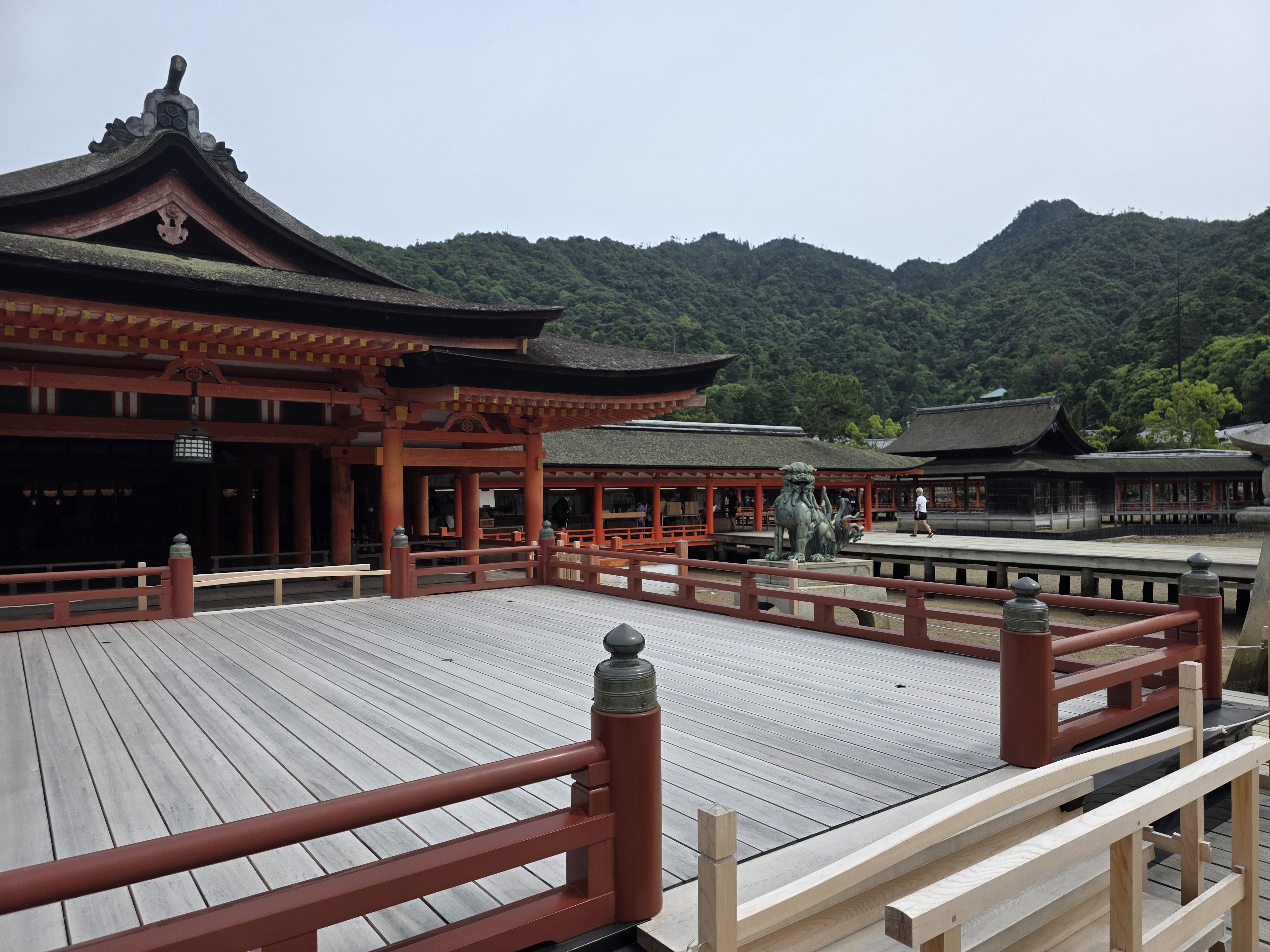
The shrine is Shinto, and the entrance fee is 300 yen (about £1.50), but at the moment, much of it is closed for restoration. Unfortunately, the nearby five-tiered pagoda from the 15th century was also under restoration – we didn’t even recognise it at first, and thought it was a new building going up in the middle of this historical island! So when we climbed up to the Hokoku Temple, we weren’t able to see it.

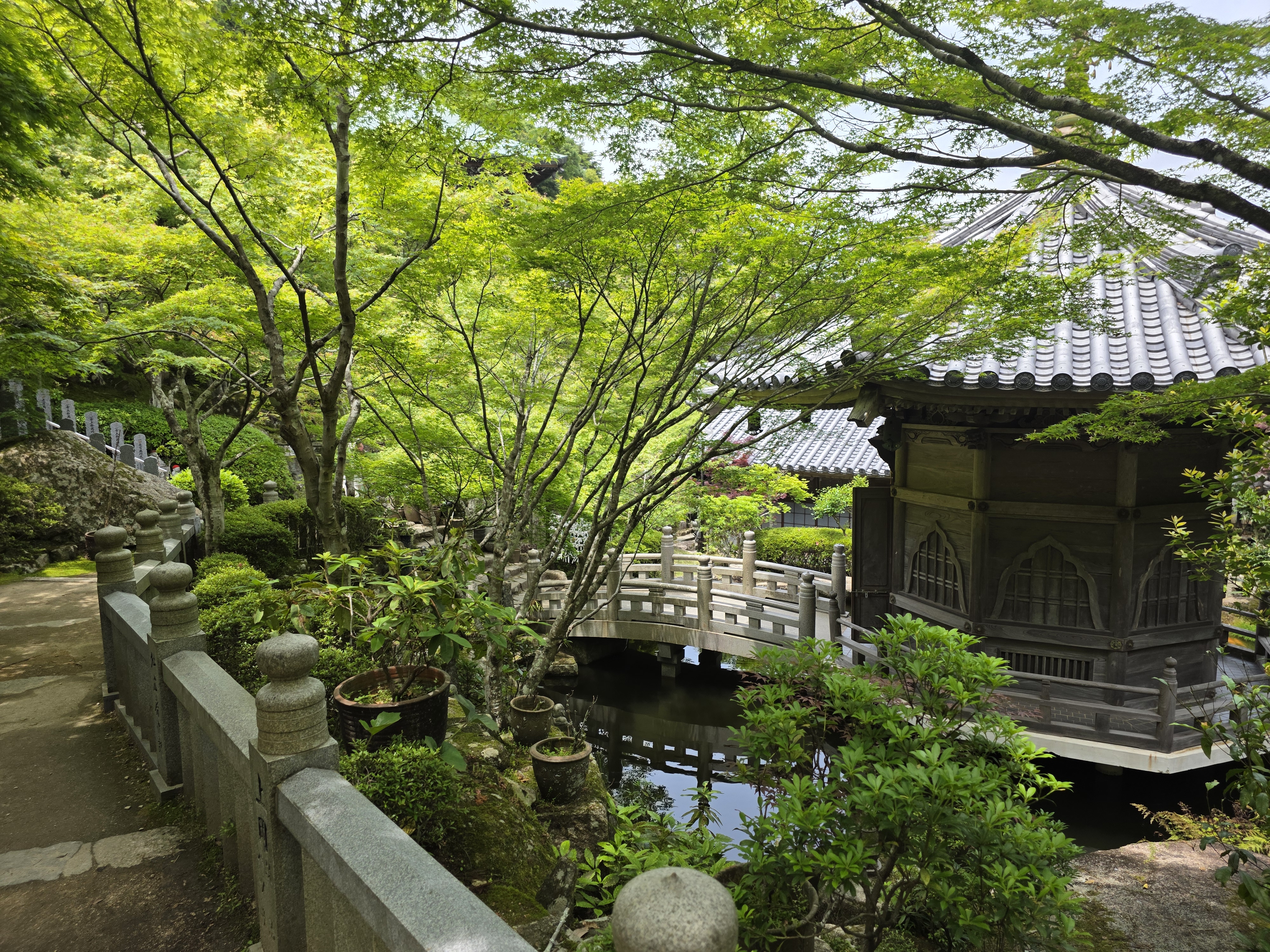
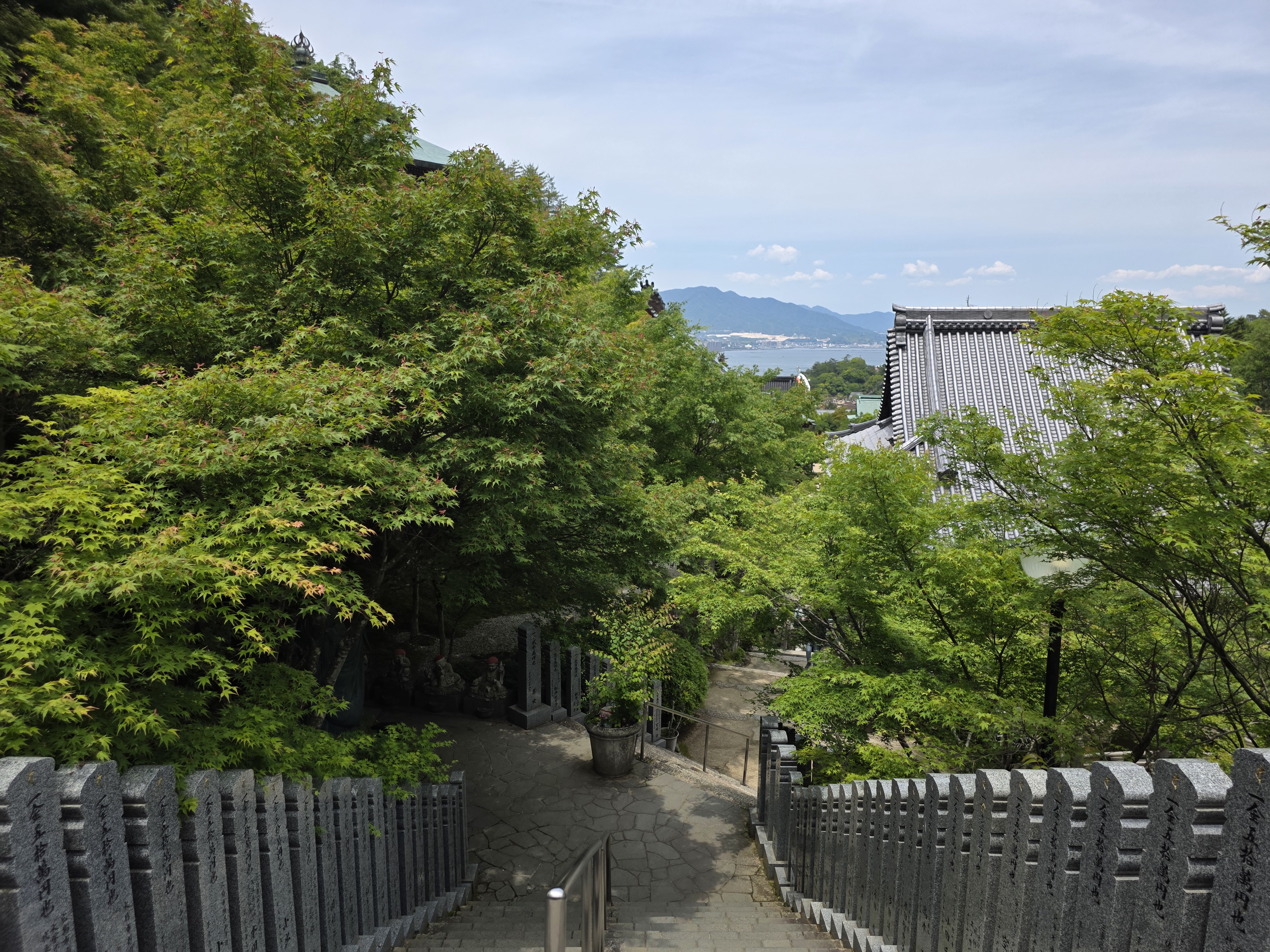
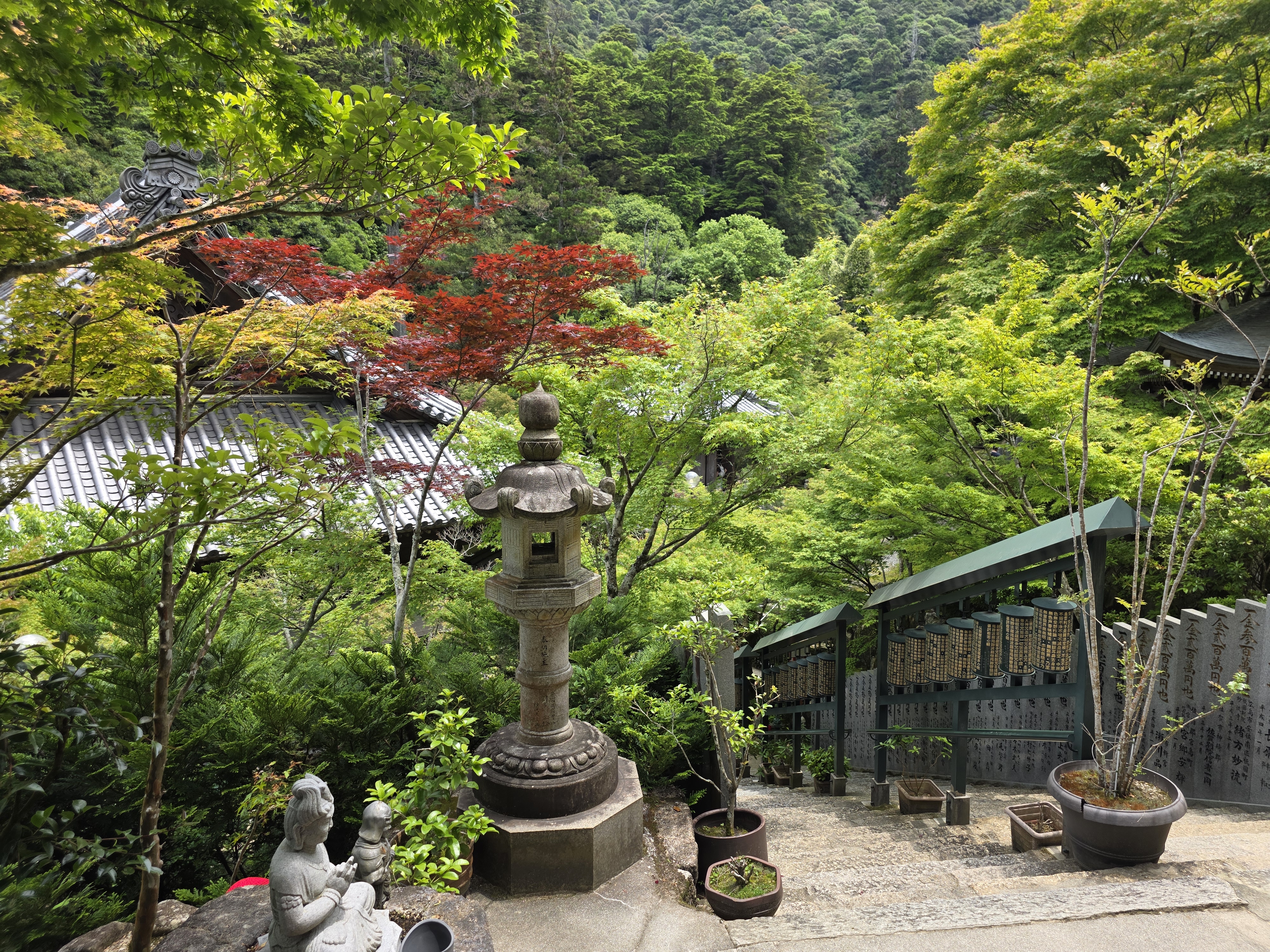
We then continued up to Daisho-in Temple – unlike the shrine and like Hokoku, this one is Buddhist. From here, you can hike to the top of Mount Misen, but we decided not to do that and just enjoyed the temple itself.

The path to the temple was calm and peaceful. Of course, tourists come here too (the same noisy Iranian group was there), but not in overwhelming numbers. Many worshippers were also present, performing rituals. For example, you can strike a large bell and make a wish – though you have to pay. Sure, you can do it for free, but I would imagine that the local higher powers probably don’t grant free wishes.

They say (and back it up with photos!) that the views from the temple in autumn are absolutely spectacular – but even in May, for some reason, many trees were already red, so it was beautiful anyway. We really liked the temple.

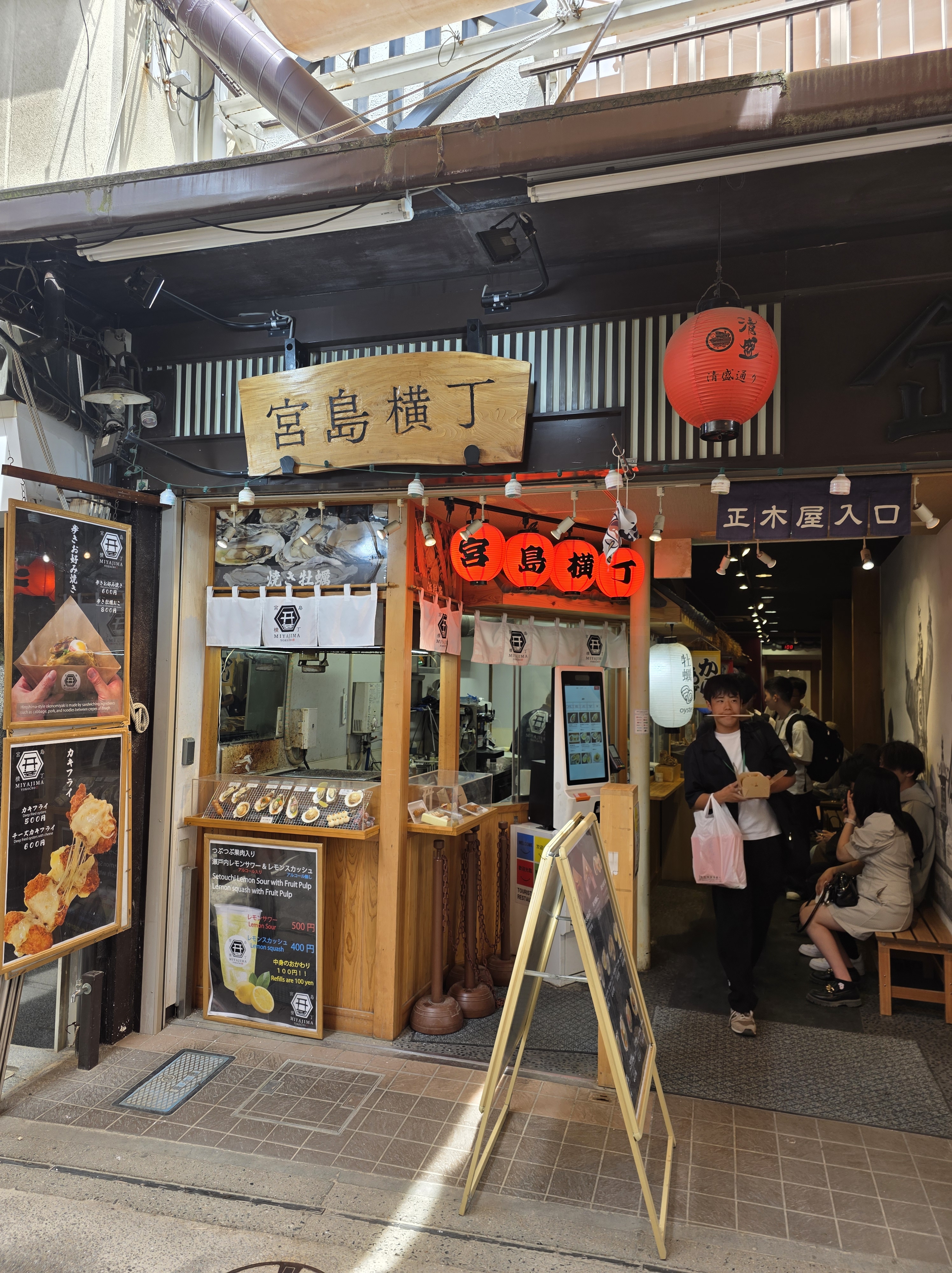
By then it was lunchtime, so we headed back down toward the pier and went into one of the local restaurants to try regional cuisine. We were seated in a “Japanese room” – many places here offer that option – which means sitting on tatami mats at a low table, shoes off. The regional specialties are grilled eel and oysters, which we had in a set meal with buckwheat noodles (soba). It was interesting to try, but I wouldn’t call it my favourite flavour of Japan.

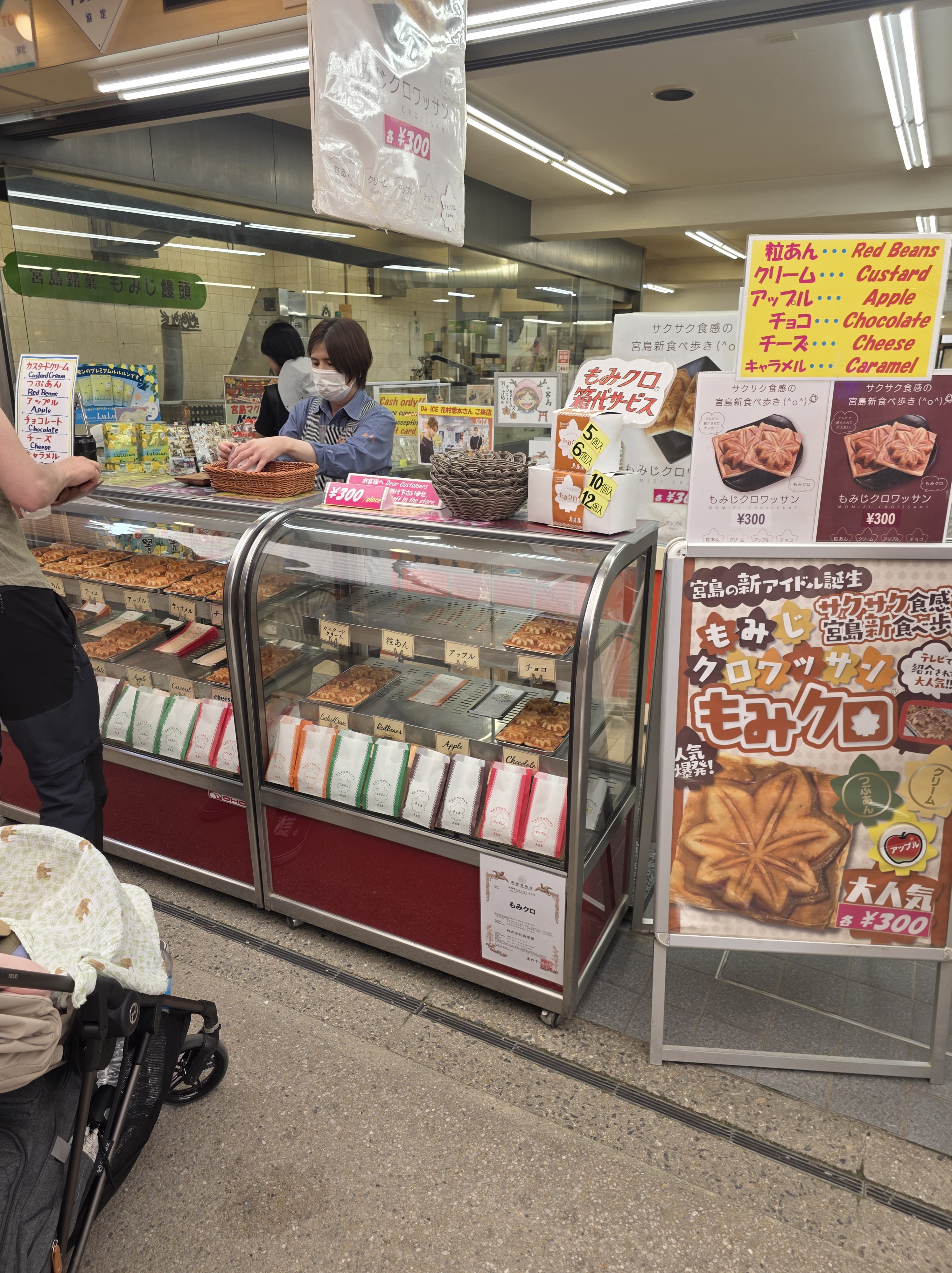
Another local delicacy is momiji manju – maple-leaf-shaped cakes with sweet fillings. The traditional version has sweet bean paste, which I didn’t like, but the chocolate and custard-filled ones were very tasty and delicate.

After lunch, we strolled through covered streets filled with cafés, food stalls, and souvenir shops – including some Ghibli-themed ones that were much better than the museum shop we saw yesterday.

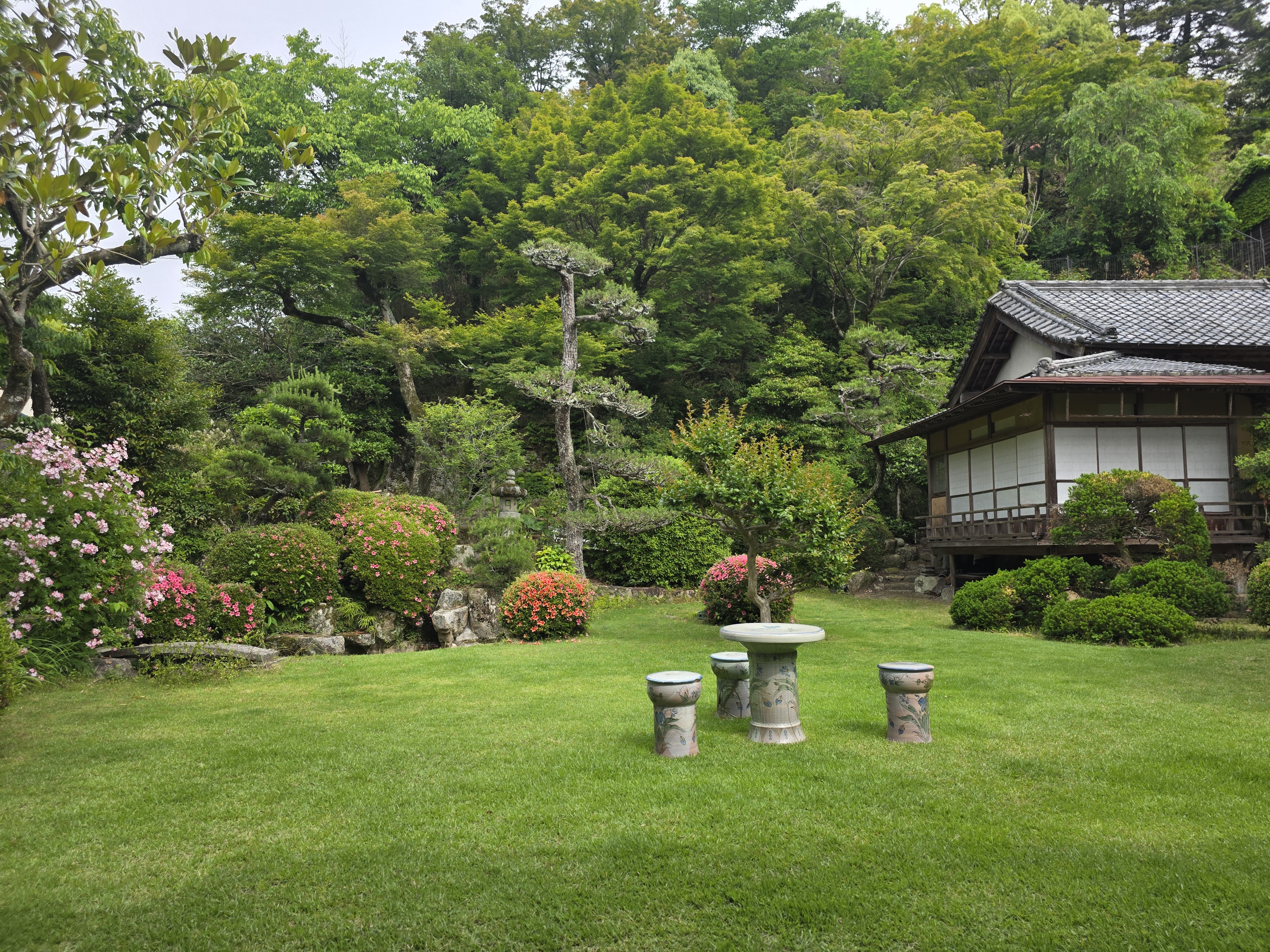
Then we stopped for coffee at a place we’d spotted earlier that looked like someone’s private garden. And as far as I could tell, that’s exactly what it was – a house and garden converted into a café, run by two elderly women. The garden was beautifully maintained and very traditionally Japanese, and it was such a pleasant spot to relax. At first there were some noisy customers chatting loudly, but they left soon after.

From there, we headed back to the ferry. For some reason, at that time there were schoolchildren in uniforms everywhere – whole classes, probably on school trips. Some were arriving, some were leaving, some were gathered for class photos.

Back in Hiroshima, we decided to walk through the Peace Memorial Park and visit the Atomic Dome – the skeletal remains of one of the Hiroshima Prefectural buildings that survived the atomic bombing. Interestingly, the memorial plaque doesn’t mention anywhere that the bombing was carried out by the Americans – and the overall tone of the memorial isn’t accusatory at all, but more like a quiet reflection on the horrors of war and the importance of peace.

At the hotel, we arrived just in time for happy hour and had some rather mediocre wine that made us a bit dizzy – but then we went to dinner and had delicious katsu to make up for it.

Posted in Asia, English, Hiroshima, Japan, Tokyo

Japan – Day 5

РУССКОЯЗЫЧНАЯ ВЕРСИЯ ПО ЭТОЙ ССЫЛКЕ. CLICK HERE FOR RUSSIAN VERSION.

27 May 2025

Today was our last day in Tokyo (though we’ll be coming back later). We had breakfast again at the same café in the park as the day before yesterday. We had to go to Hiroshima, but only after lunch, so in the morning we took a walk to Mejiro Japanese Garden, not far from our hotel. It’s a small, quiet, and very typically Japanese garden – clearly not a famous one, as there were very few people around.

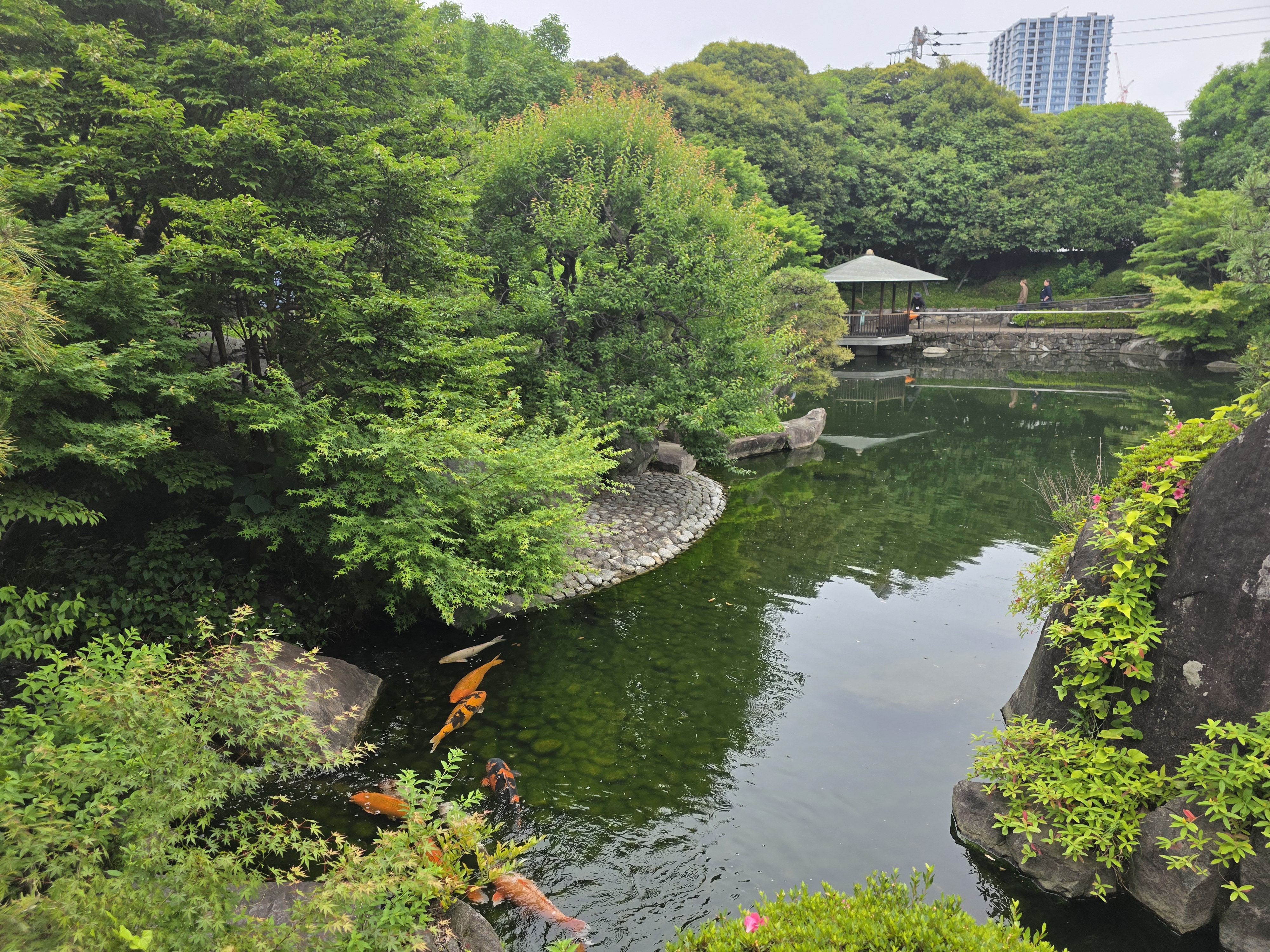
At the entrance, there’s a traditional room that looks like a tea house, which can be rented for photo shoots or private events. The garden itself has a central pond surrounded by greenery, and a small gazebo. On the surface of the pond we saw lots of water striders, and in the pond itself, big fat koi carp swimming lazily around.

After returning to the hotel, we headed off to Tokyo Station. The station is truly massive – many subway and train lines converge there, and it’s also where the high-speed Shinkansen trains depart, which we were taking to Hiroshima. We had lunch right at the station in a Chinese restaurant – the hot and sour soup was especially good.

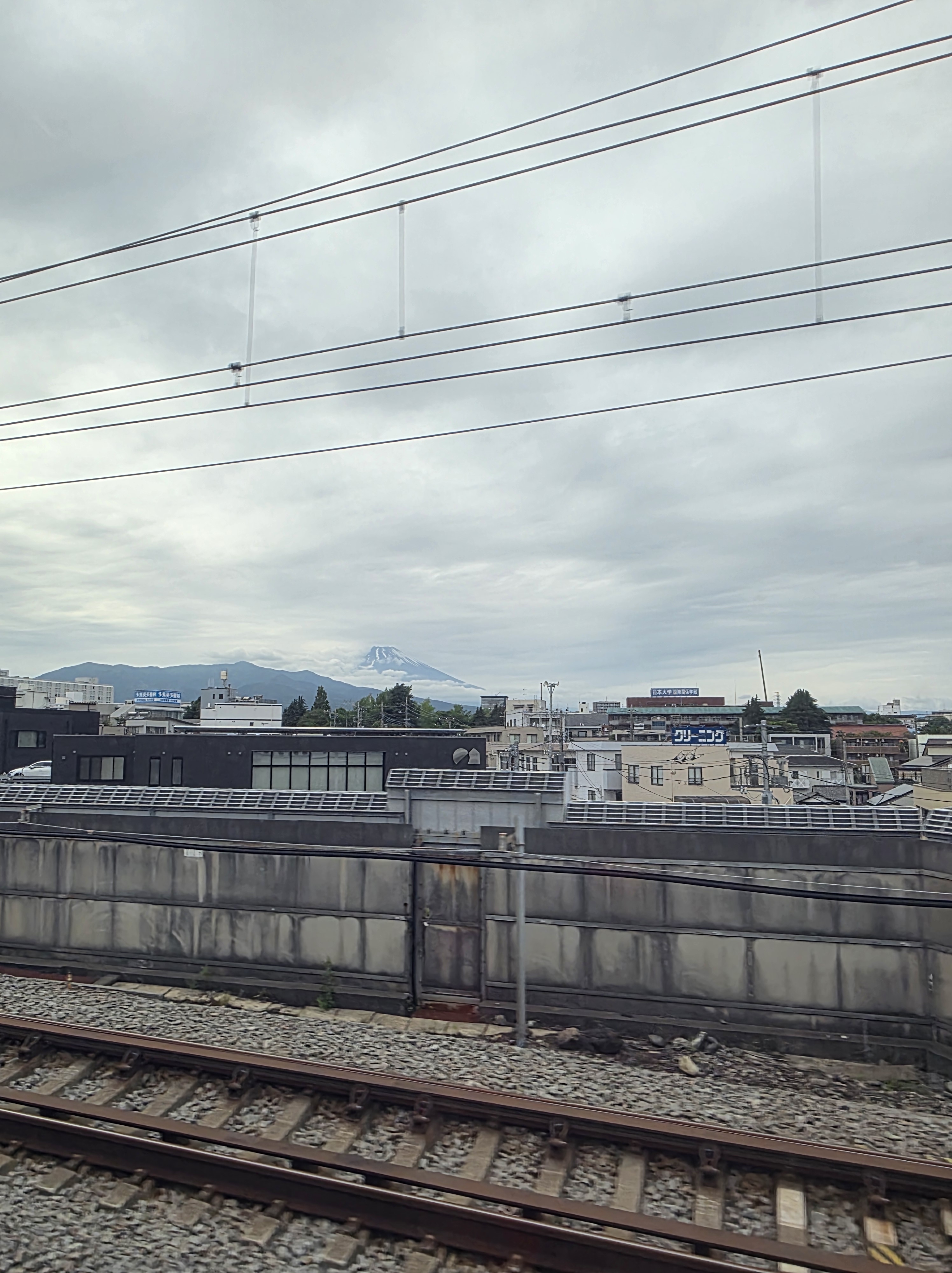
Coming back to the Shinkansen – also known as “bullet trains.” They’re fast, but not quite as jaw-dropping as the ones in China. Almost ten years ago, I took a Chinese bullet train from Hangzhou to Shanghai, and it was flying so fast you couldn’t even make out the scenery – everything outside just blurred into a gray wall. That was a proper “bullet.” Here, the train is definitely fast, but you can still see everything outside – the outline of Mount Fuji as we approached Kyoto, endless rice fields, and villages with houses that still have traditional curved Japanese roofs.

The journey to Hiroshima took about four hours, but it passed quickly and effortlessly. We’re not planning to do much in Hiroshima itself – the real goal of coming here is to visit Miyajima Island.

Once we arrived, we checked in to the hotel. First impressions of the city – at first glance, Hiroshima didn’t feel that different from Tokyo. But no, the vibe is quite different. For one, there are far fewer people, which makes foreigners stand out more – especially Germans, of whom there seem to be quite a few. Second – though maybe this was just our route – there were some confusing pedestrian passages and street crossings where it wasn’t obvious how or where to cross. Thirdly, I’ve already mentioned Japan’s older infrastructure – and here it feels even more dated. The buses look like ancient Ikaruses, and the taxis seem straight out of a movie from the ’80s or ’90s.

Just off the wide avenues, as in Tokyo, are hidden narrow streets. Same as in Tokyo, often there are no sidewalks, and where they do exist, cyclists ride along them, also in the same way.

We had dinner at a fish restaurant – though calling it a “restaurant” might be a bit generous. It was more like a small eatery with room for 10–15 people, and, once again, everything was in Japanese. They gave us a card with pictures of various fish, and we just pointed to the ones we wanted. Those were grilled with salt and served with rice, miso soup, and a few small side dishes.

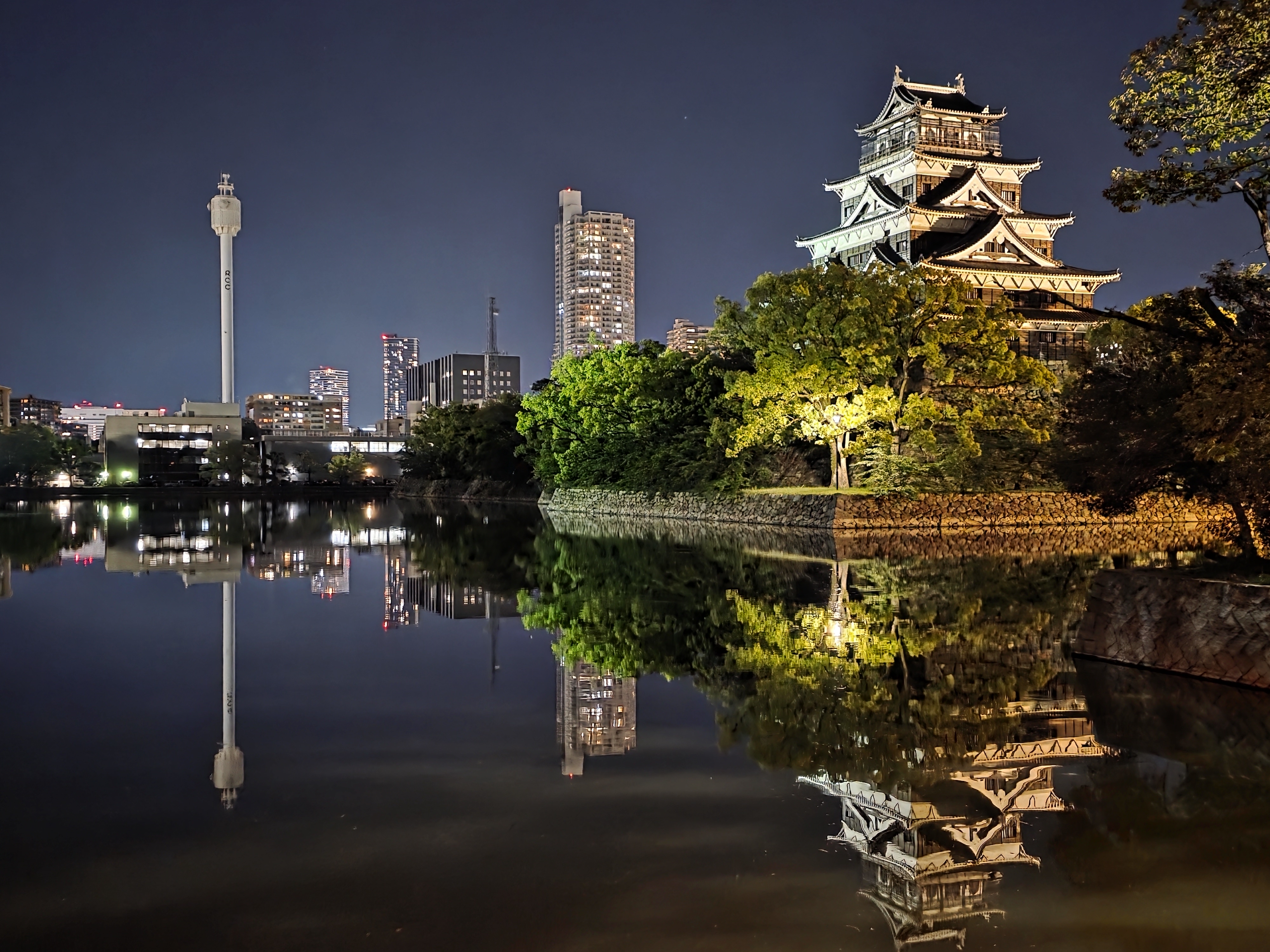
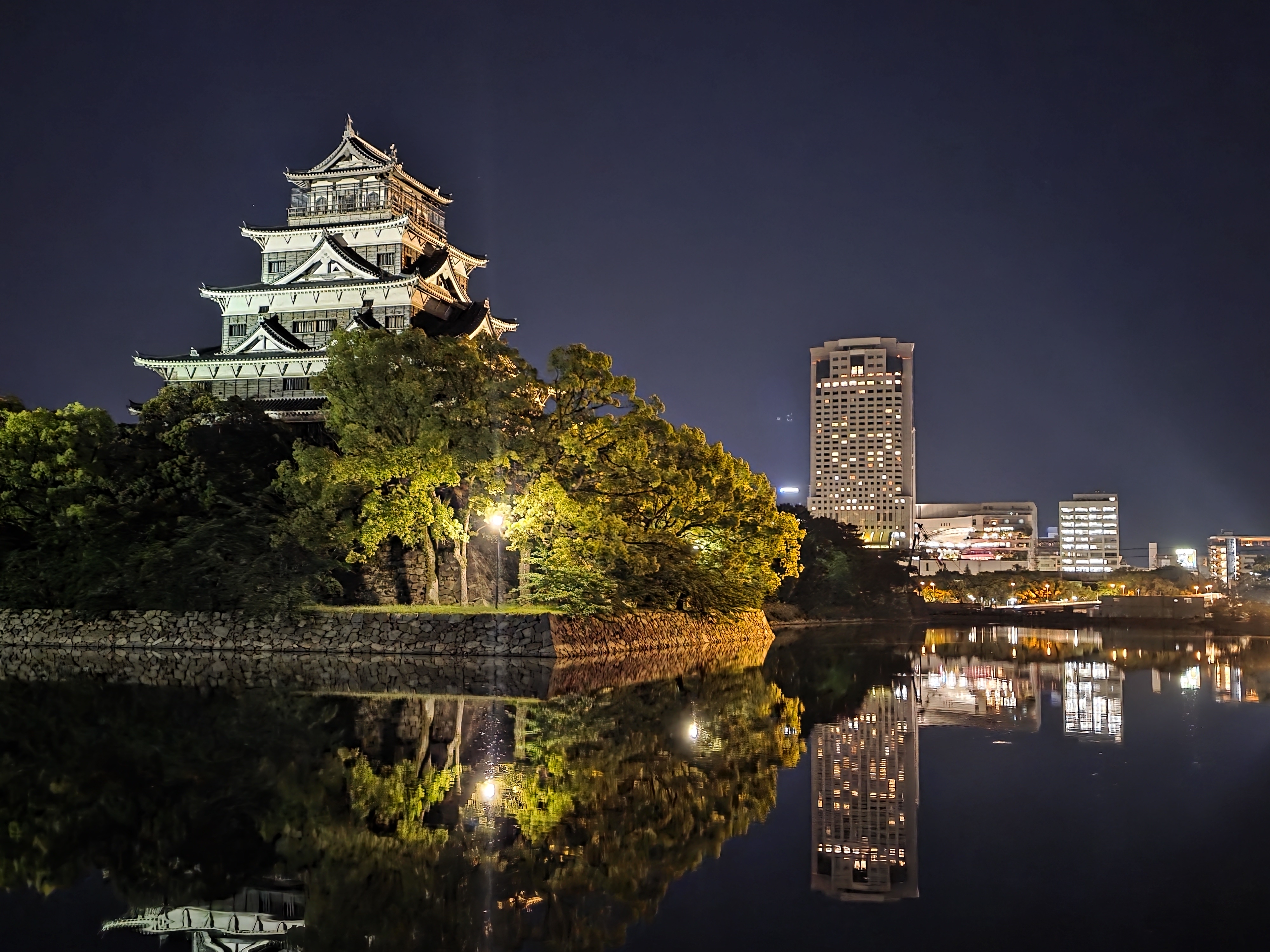
After that, we made our way through some dark streets to Hiroshima Castle to see it lit up at night. It was definitely worth the walk – we got some beautiful photos with the castle reflected in the water. By the way, the original castle was almost completely destroyed by the atomic bombing – what we see today is a reconstruction.

Posted in Asia, English, Japan, Tokyo

Japan – Day 4

РУССКОЯЗЫЧНАЯ ВЕРСИЯ ПО ЭТОЙ ССЫЛКЕ. CLICK HERE FOR RUSSIAN VERSION.

26 May 2025

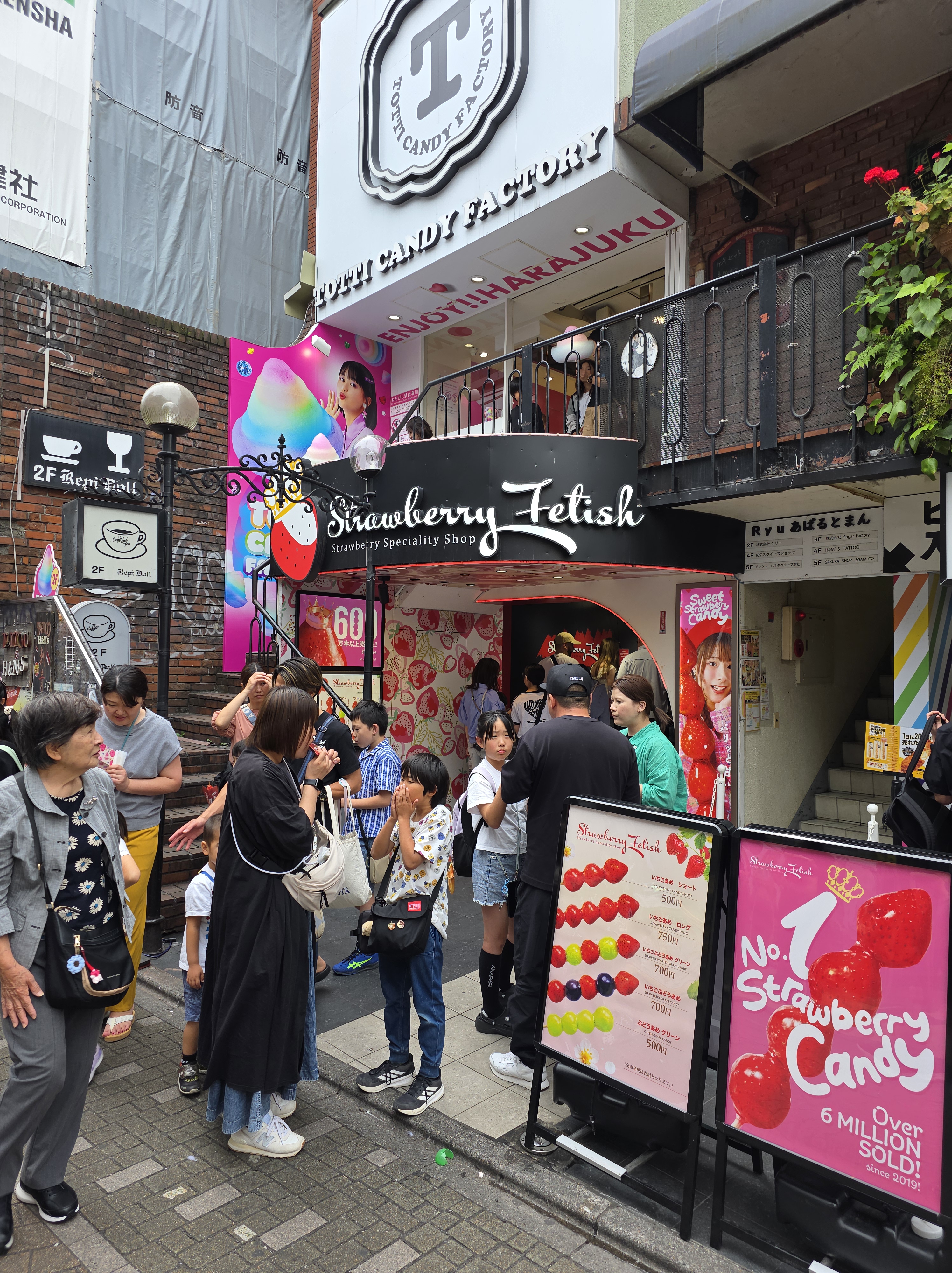
In the morning, we went to have breakfast at a French bakery not far from the hotel. Since we had the Ghibli Museum on the agenda for today, we decided not to rush and instead went for a walk through Harajuku – a trendy, youthful district full of interesting and extravagant shops with alternative fashion.

Tokyo really is a huge city – the distances are vast, and each district has its own distinct vibe, completely different from the others.

Another observation – the Japanese really do love queuing. Even though, as I mentioned before, there are countless eateries, some are clearly more popular than others, and there are always queues outside them. We often see queues at shops too – and sometimes, it’s not even clear what people are queuing up for.

We walked across the entire district to the subway station, and from there we headed to the Kichijoji area, where the Ghibli Museum is located. Kichijoji also has a totally different feel, and it also has narrow streets with izakayas, but we didn’t find anything interesting here: since it was around midday, most of them were shut behind roller shutters (I’m guessing, it’s more lively in the evening).

So, in search of lunch, we somehow ended up in the Japanese equivalent of what we’d call a “day-day kafesi” (literally – “café for uncles”), indeed quite packed with local “uncles”, and everything was in Japanese. Luckily, the ordering was done via an interactive tablet – you just tap on pictures and help yourself out with Google Lens. They served ramen, noodles, yakitori with rice, and some very tasty gyoza. It was a delicious and incredibly cheap meal – 1800 yen for two (that’s 9 pounds, mind you!).

After lunch, we still had time before the museum and headed to the nearby Inokashira Park – a lovely park with a large lake in the middle.

As for the museum itself – as you can probably guess, it’s dedicated to the Ghibli anime studio. Tickets need to be bought in advance – for foreign tourists, they’re released once a month for the following month and sell out within just a couple of hours. I’m not a Ghibli fan (to be honest, I’ve never even seen a single film), but I joined Rena – and didn’t regret it one bit.

You’re not allowed to take pictures inside the museum, which makes sense – otherwise, people would be crowding every exhibit forever. The exhibits – both temporary and permanent – were really interesting. The idea is to use Studio Ghibli’s well-known anime films as an example to show the entire animation process – from early sketches and drawings to the final product.

There are piles of scrapbooks and art books filled with images of everything imaginable – tools, landscapes, cityscapes, people in motion, animals, plants – all used to create the most realistic animations possible. You really get a sense of how colossal the amount of work is.

It was also fascinating to see how animation frames are brought to life – with techniques like layering images or using fast-spinning three-dimensional figures in different poses (the rotation itself is too fast to see, so it looks like the figures are actually moving, though they’re just different models ending up in the same position). Overall, it was all really, really interesting.

They also showed a short animation – “The Day I Bought a Star” – about a boy who buys something like a precious gem from a mole and a frog, then plants it and grows a planet. Unfortunately, the film was in Japanese with no subtitles, so we didn’t quite understand what was going on. Actually, the museum doesn’t bother much with translations in other parts either – apparently, they feel they have enough visitors already, and if you don’t understand Japanese, that’s your own problem.

The museum shop was a bit of a disappointment – we expected more, given how great the museum was, but it really didn’t impress us.

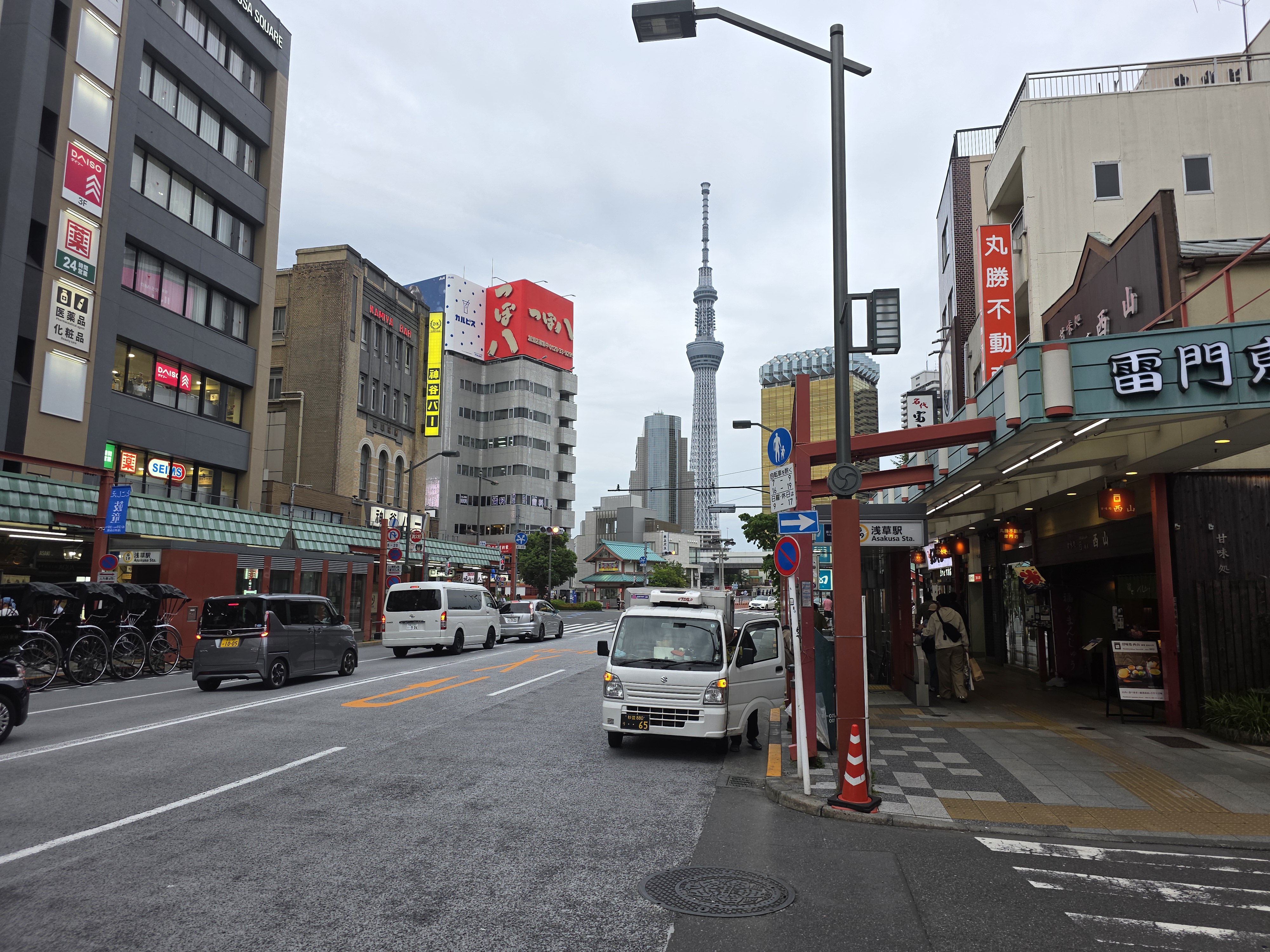
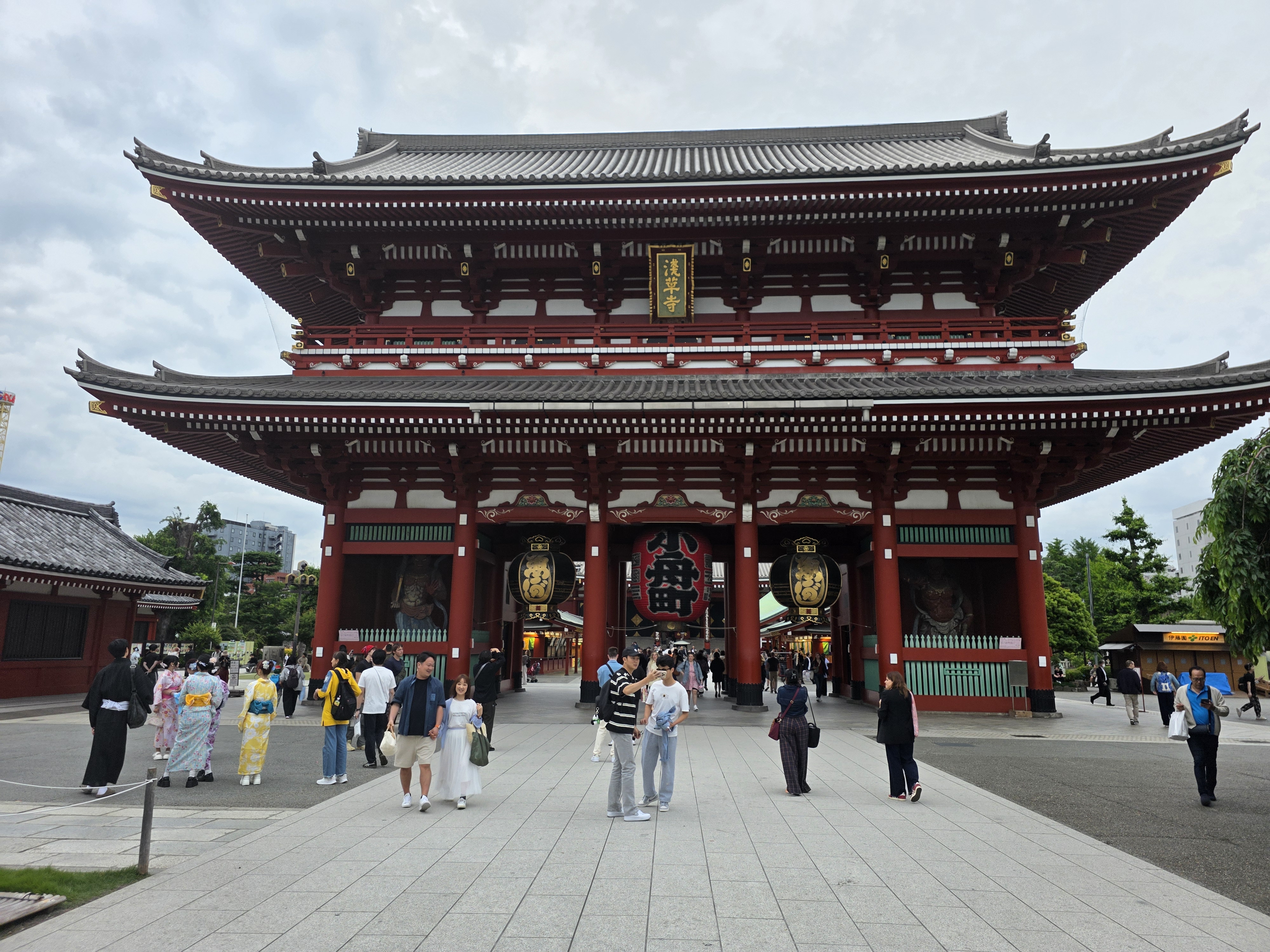
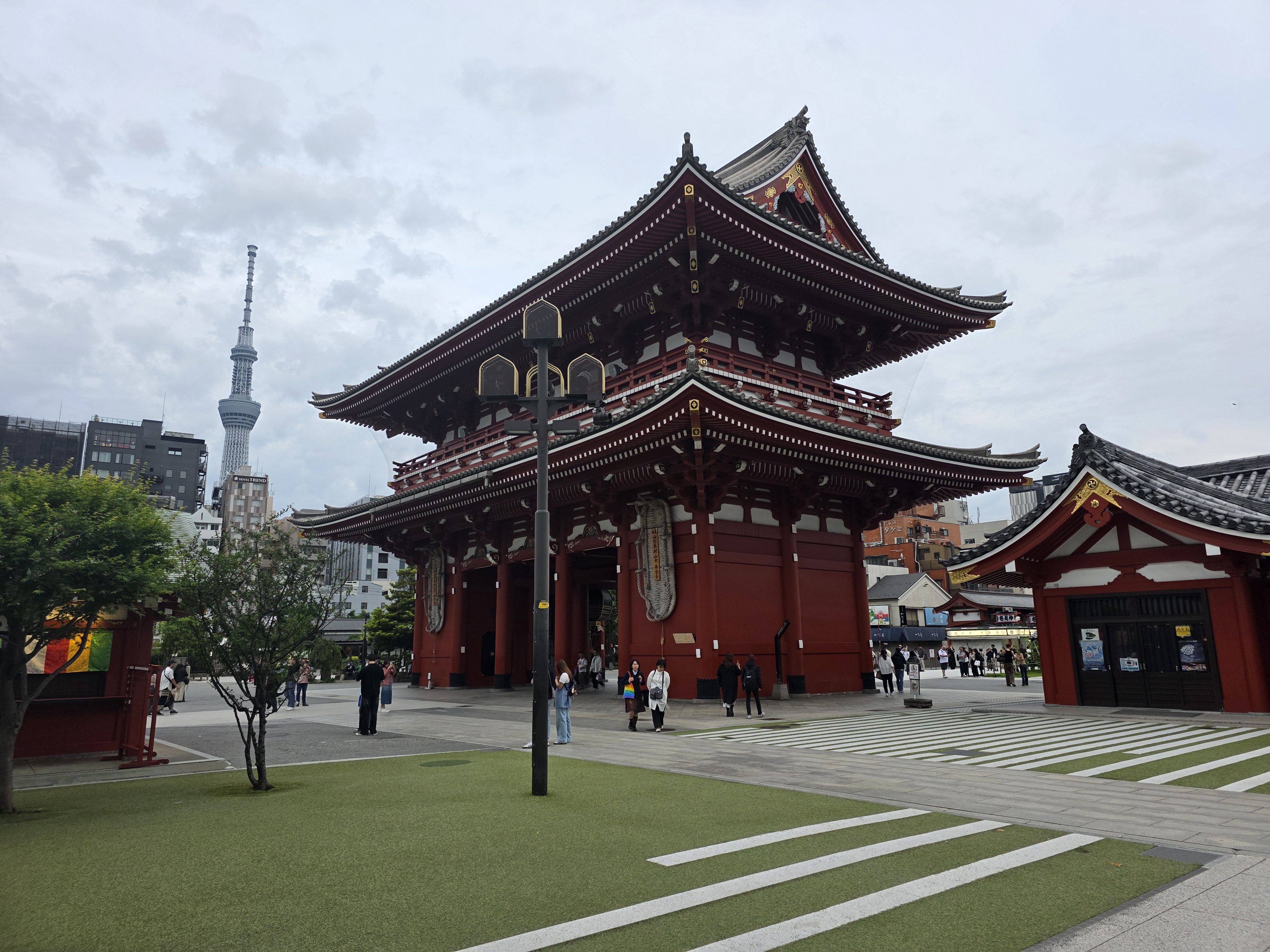
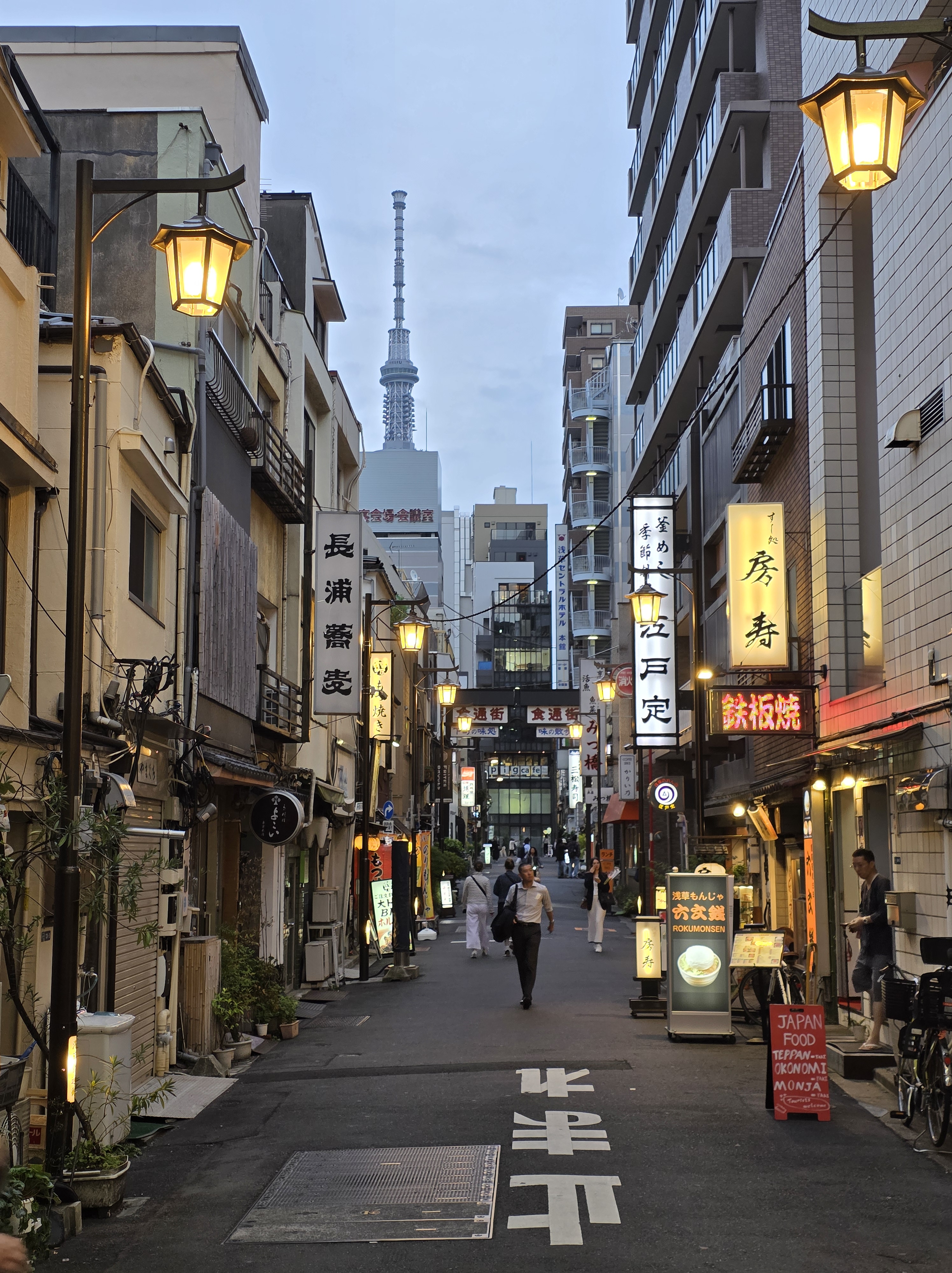
After the museum, we headed to the other side of Tokyo – to the Asakusa district – to visit Sensoji Temple. It’s Buddhist and is the oldest Buddhist temple in Tokyo. The approach to the temple is via Nakamise-dori, a traditional-style shopping street that mostly sells souvenirs. Since it was almost evening already, very few of the shops were still open – which was actually a good thing, because there were no crowds. The temple itself was beautiful.

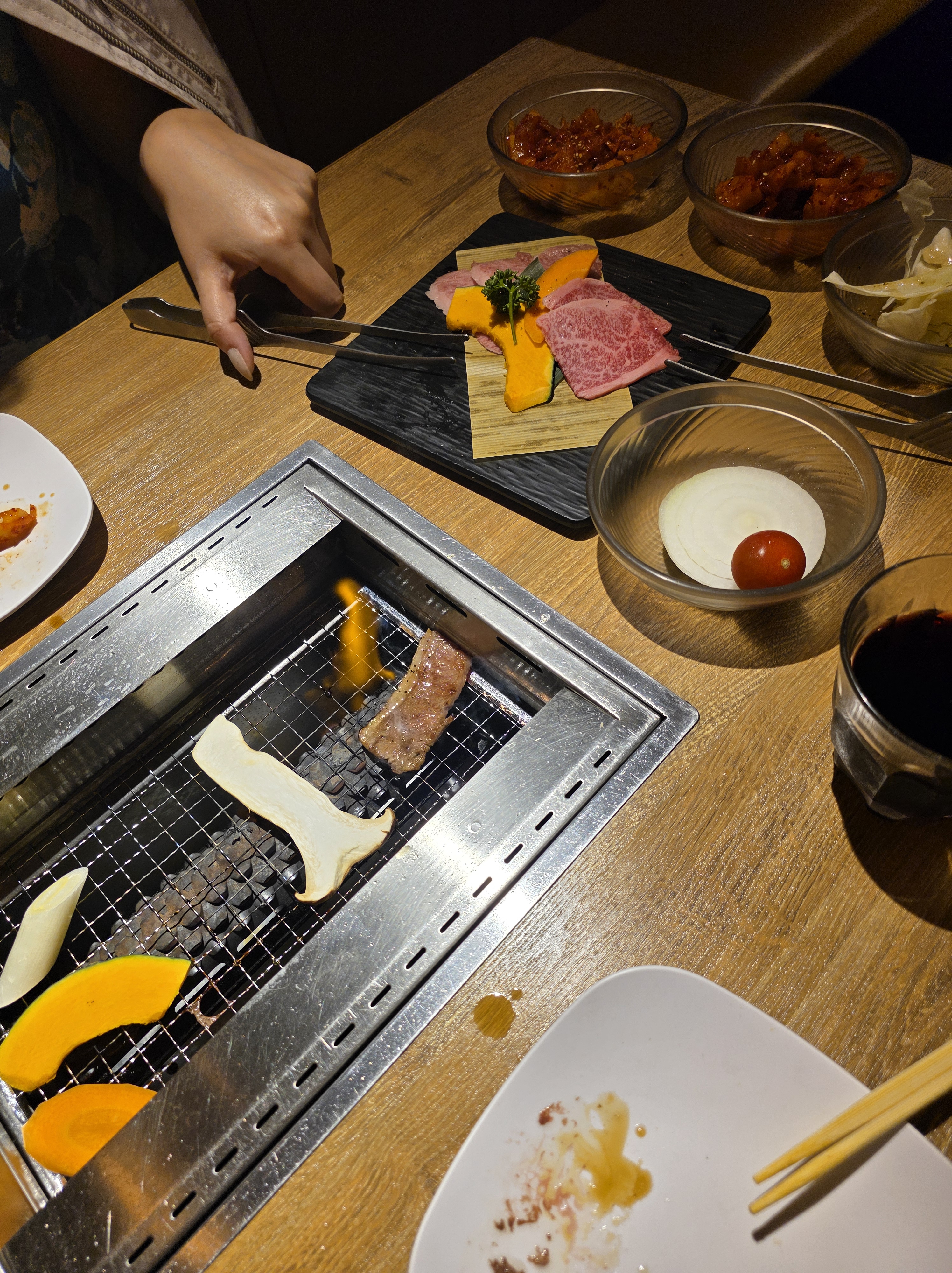
We had dinner in the same area, at a yakiniku-style restaurant – where you grill meat and other food yourself at the table. The place offered all-you-can-eat for 100 minutes. Naturally, we went for the marbled Wagyu beef – they had a variety of cuts. Unfortunately, we only managed two rounds of meat per person – a shame, because the beef was absolutely delicious!

Posted in Asia, English, Japan, Tokyo

Japan – Day 2

РУССКОЯЗЫЧНАЯ ВЕРСИЯ ПО ЭТОЙ ССЫЛКЕ. CLICK HERE FOR RUSSIAN VERSION.

24 May 2025

Observations after our second day in Tokyo – first of all, Japan is, above all, for the Japanese. For example, you won’t see souvenir shops with magnets and other touristy junk popping up everywhere – you can find them, of course, but you pretty much have to deliberately look for them.

Secondly, cash still plays a major role here – which is surprising for such a developed, high-tech country. Cards are accepted in many places, but definitely not everywhere. For example, the balance on the transport IC card (which, by the way, is incredibly convenient – you can use it for transport all over Japan, and also to pay in convenience stores like FamilyMart and 7-Eleven, at vending machines, and even to lock up your suitcase in hotel storage rooms or in Shinkansen luggage lockers) can only be topped up with cash. You can load it from a card only when you first buy it at the airport.

That said, the country doesn’t even feel especially high-tech. Websites and online payment systems are often clunky, and the city infrastructure doesn’t give off a futuristic vibe that’s miles ahead of, say, old Europe – like was the case in e.g. Singapore. For instance, there aren’t always escalators at the entrances and exits of the subway, which would be unthinkable in Singapore. It feels like Japan’s rapid development sort of paused at some point – maybe in the ’90s. The architecture doesn’t resemble the likes of Singapore or Hong Kong either. There are lots of plain, boxy concrete apartment buildings. But it also doesn’t feel densely built-up like Hong Kong, despite what we’d heard about Japanese homes being so compact they fit a bed, a toilet, and a kitchen into literally a single square meter – often with retractable furniture. At least from the outside, it doesn’t look like space is that tight.

People, of course, are very polite. If the British are known for loving to queue, then the Japanese seem like they were born for it.

We also noticed that various jobs that seem “inefficient” by our standards – like waving a flag to direct traffic that’s already controlled by traffic lights – are often done by elderly men. Even in retirement age, people don’t sit at home on the couch; they still prefer to work, even if it’s not clear what exactly they’re contributing.

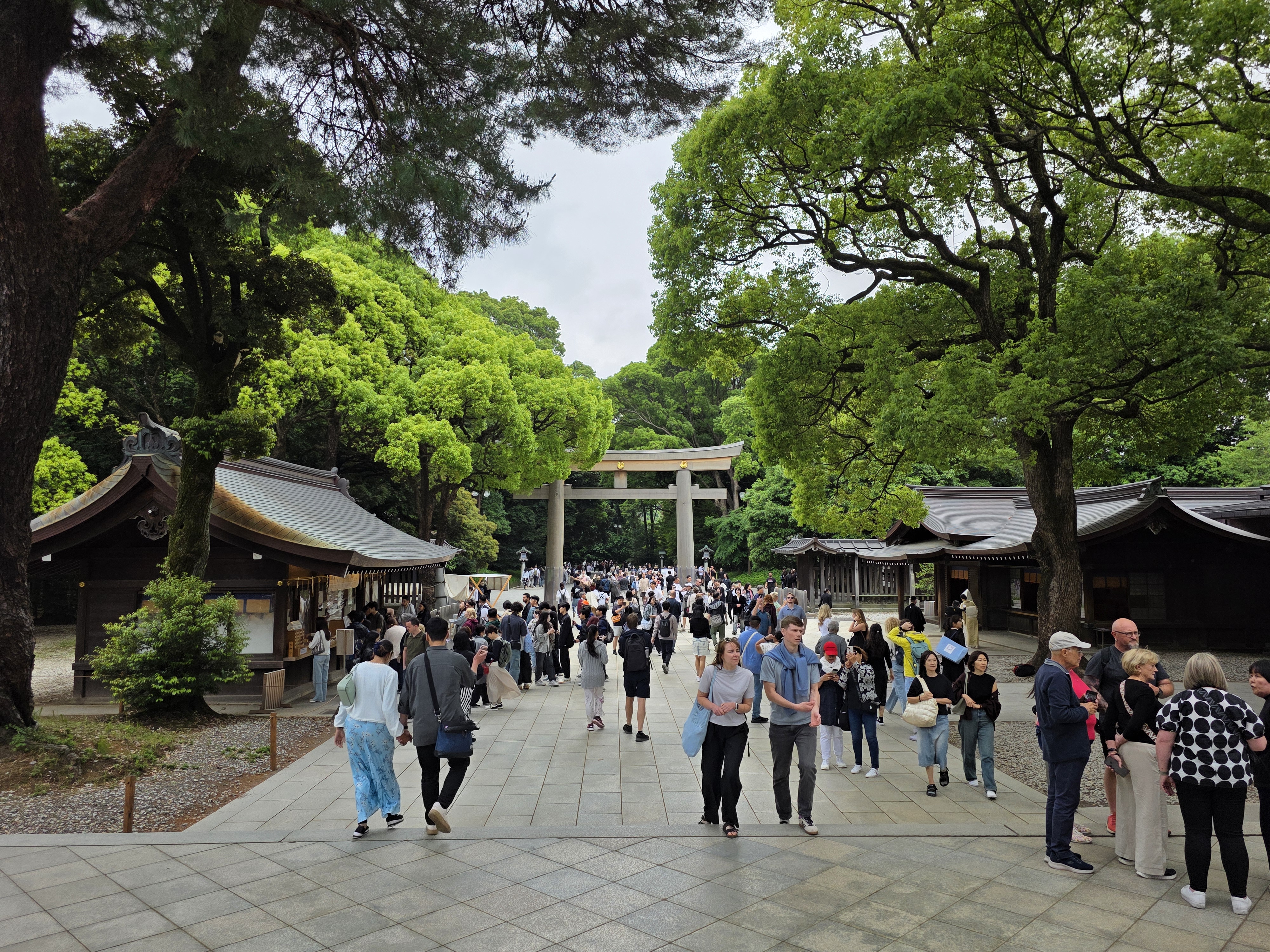
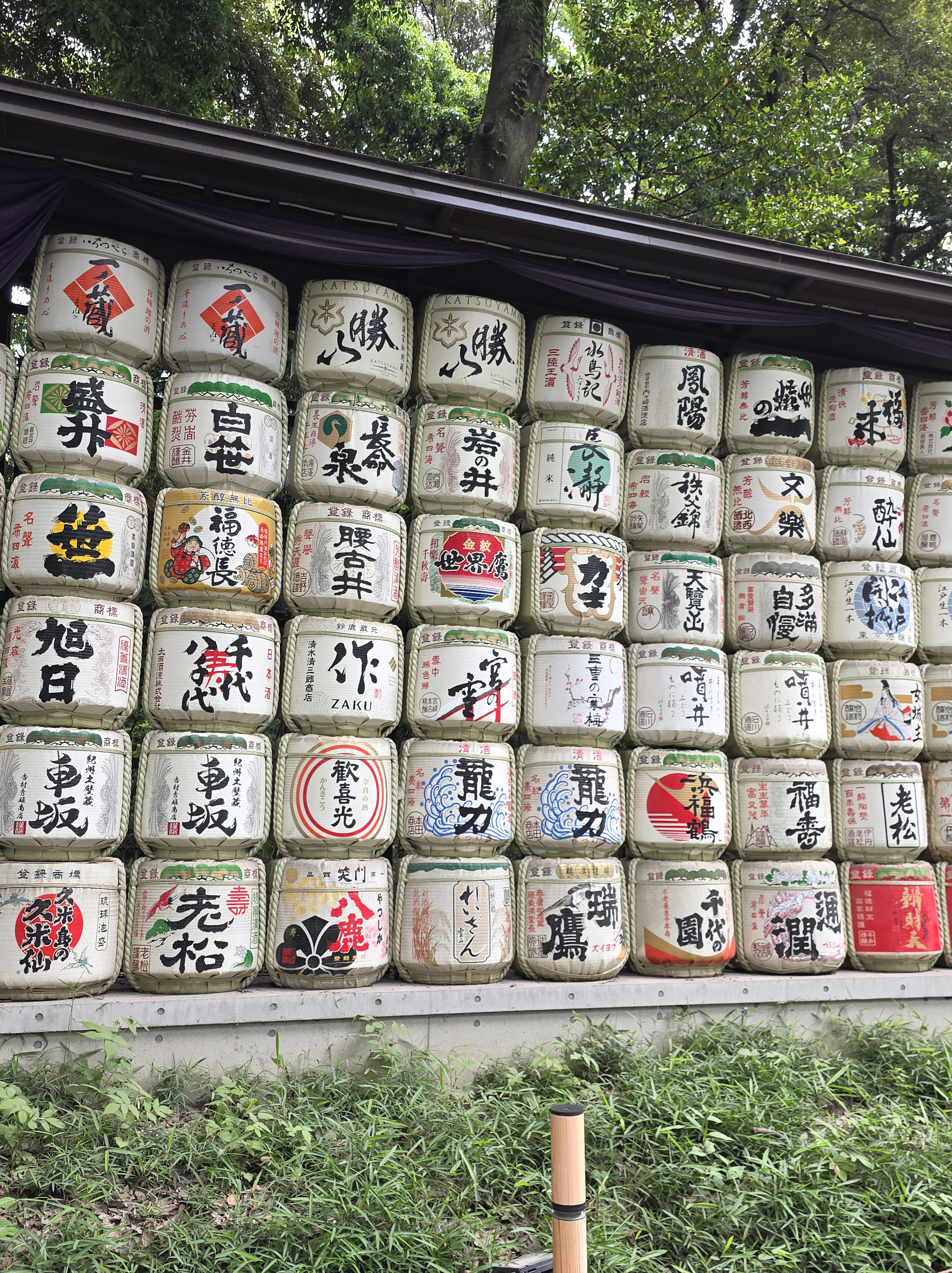
Now, about today itself. In the morning, we had breakfast at a café near the hotel and then headed to Meiji Shrine. It’s a large area with gardens and the shrine complex itself – the biggest Shinto shrine in Tokyo from the early 20th century. It was interesting, though there wasn’t that much to linger over. We were lucky to see a traditional Japanese wedding procession, and all the tourists immediately whipped out their cameras to record it.

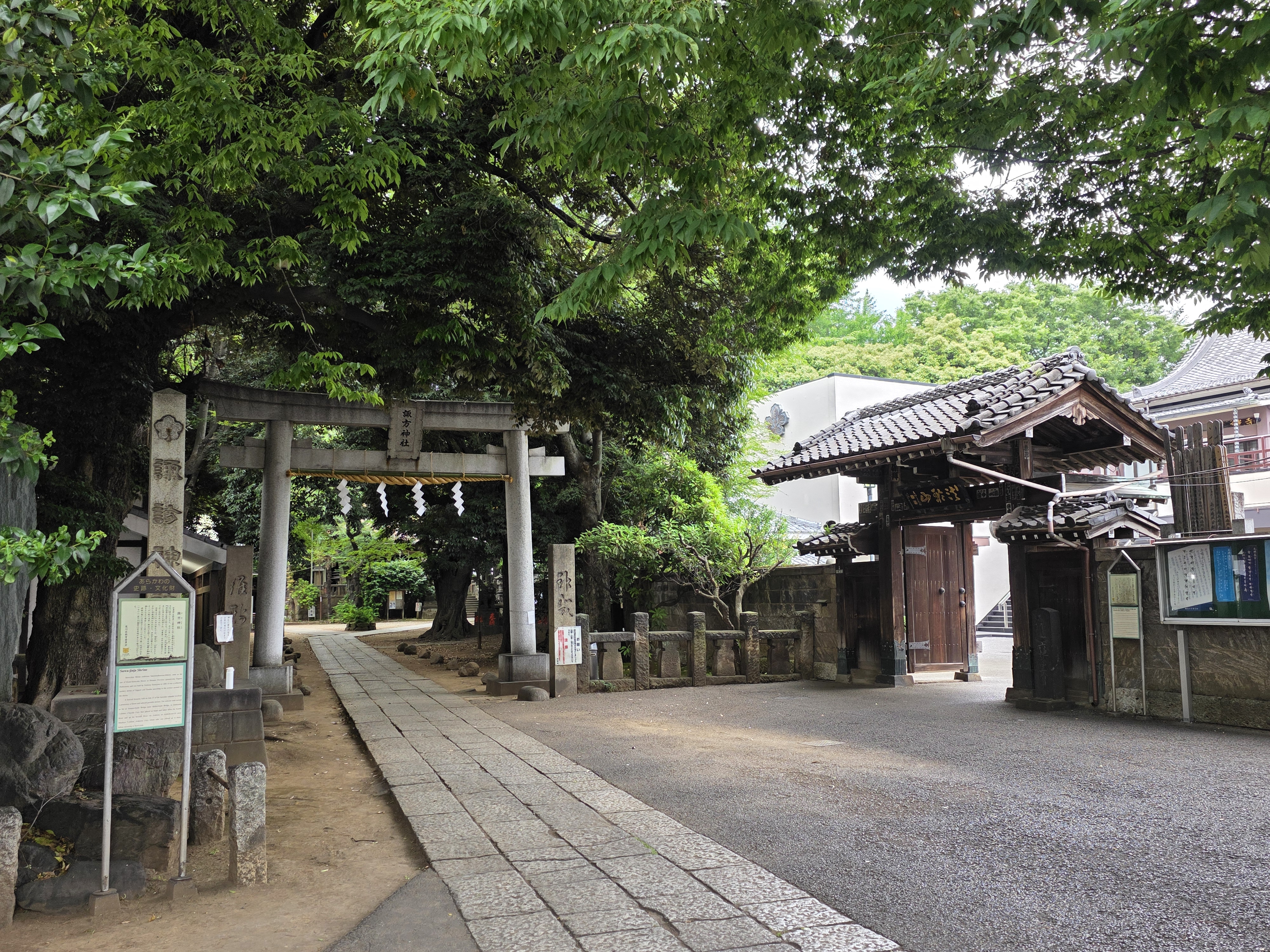
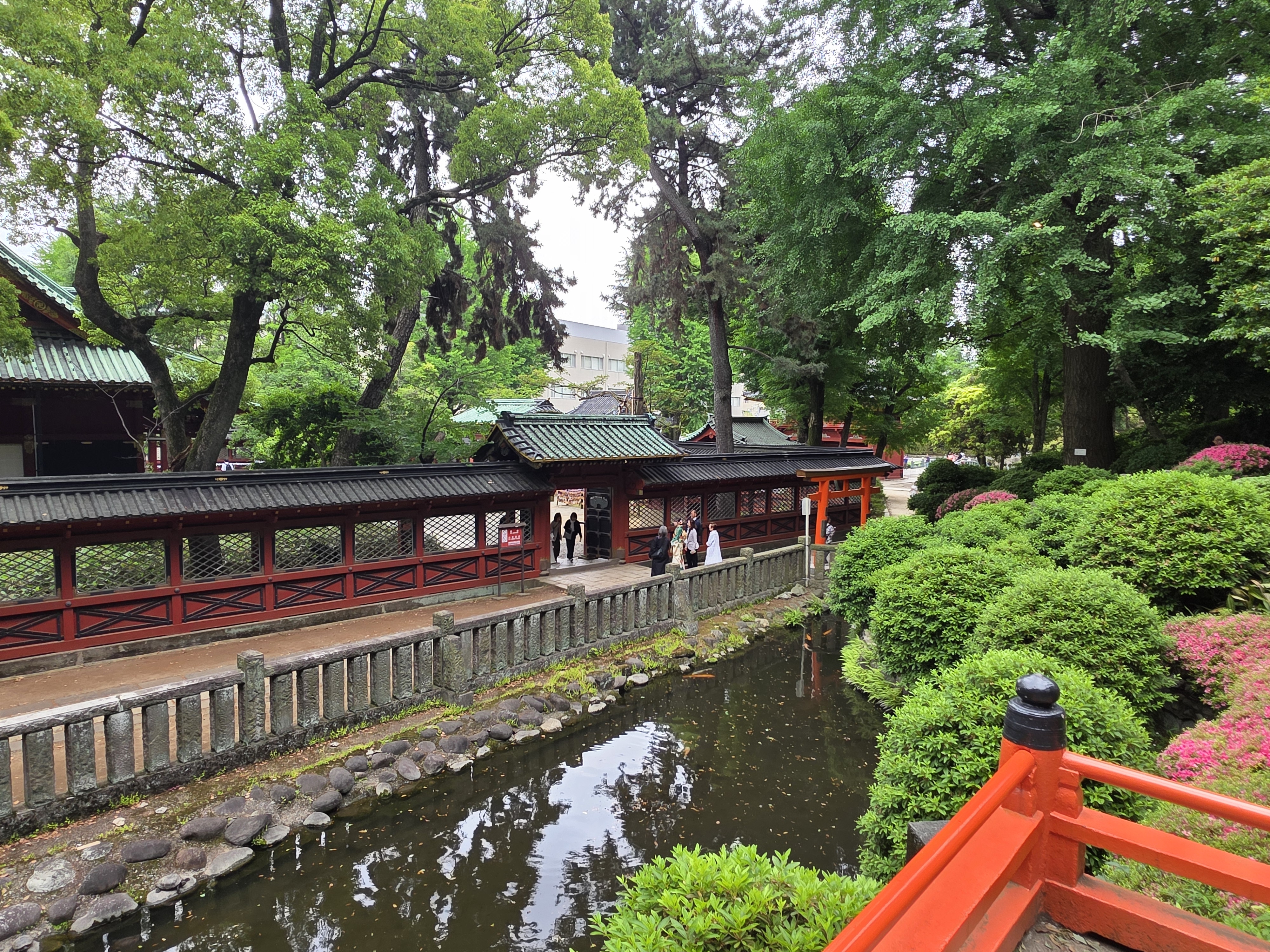
From there, we went to the Nezu area, where we strolled through narrow streets and visited another shrine – called Nezu Shrine. It was much quieter there, clearly not a major tourist spot, but we actually found it more charming and interesting.

Before visiting the shrine, we had sushi nearby. I ordered an assorted nigiri set – I could recognise salmon, tuna, and grilled eel, and there were a few other types of fish I couldn’t identify. It was incredibly tasty – sushi like this just doesn’t exist outside Japan. And yes, it’s true what people say: sushi here is nothing like what we get back home. Here it’s mostly nigiri, sashimi, and occasionally very simple maki rolls. Just the basics: rice, fish, nori. No mayo, avocado, cream cheese – or God forbid, Caesar rolls.

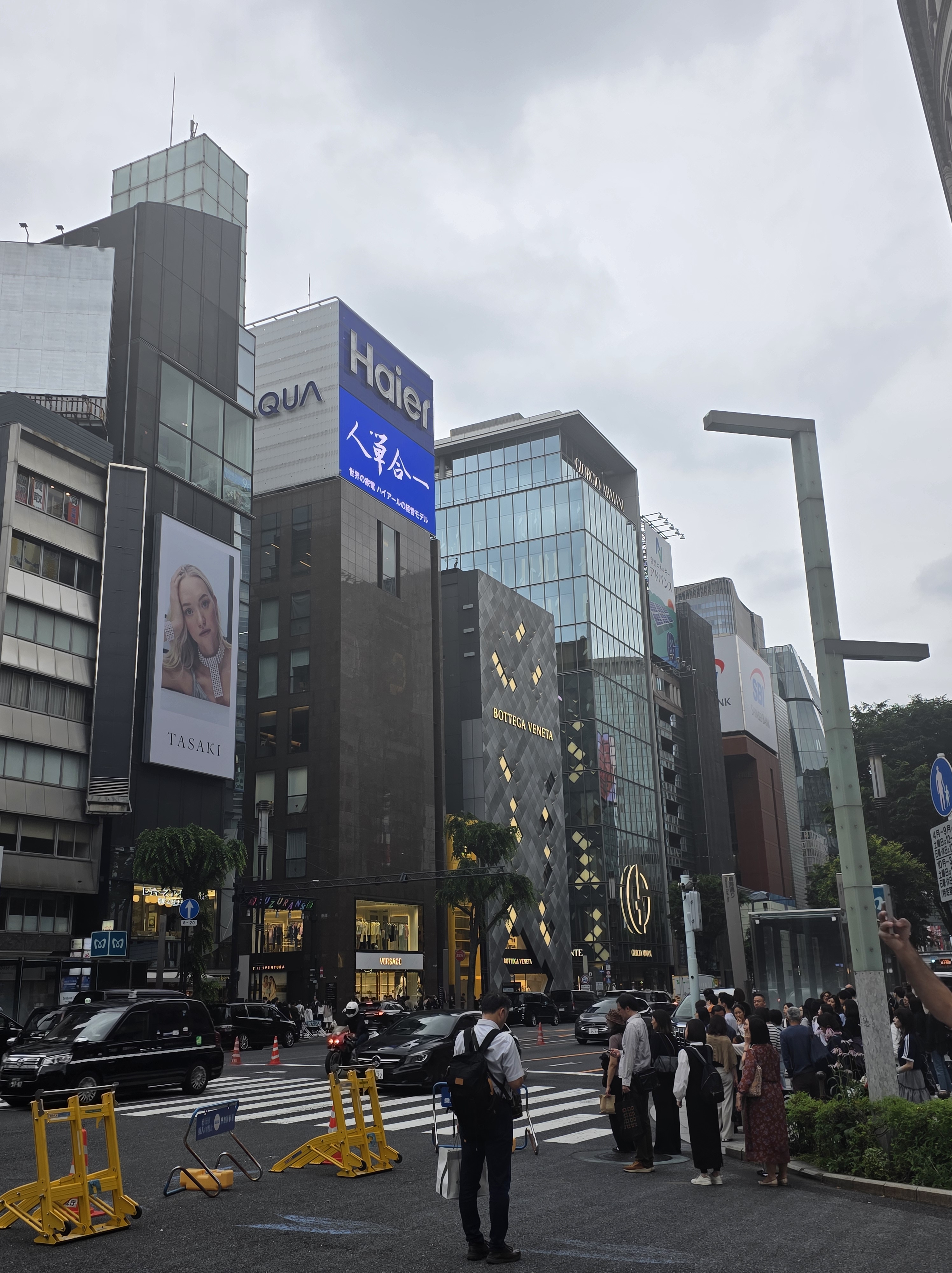
Next, we headed to the Ginza district and walked around. Each Tokyo neighbourhood feels different from the the other – Ginza feels more upscale and also more European in a way. In places, it almost feels like walking around the Galeries Lafayette area in Paris.

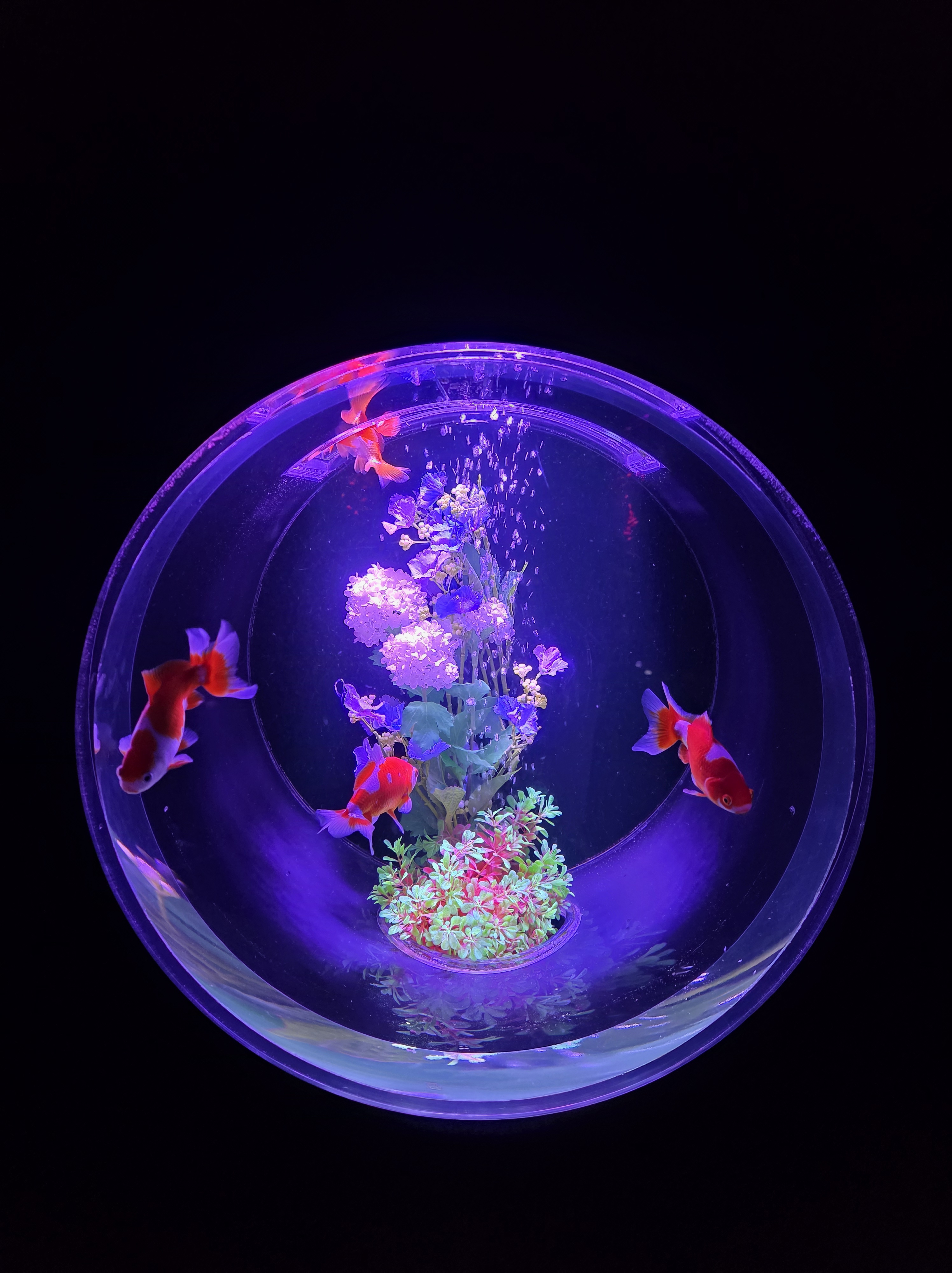
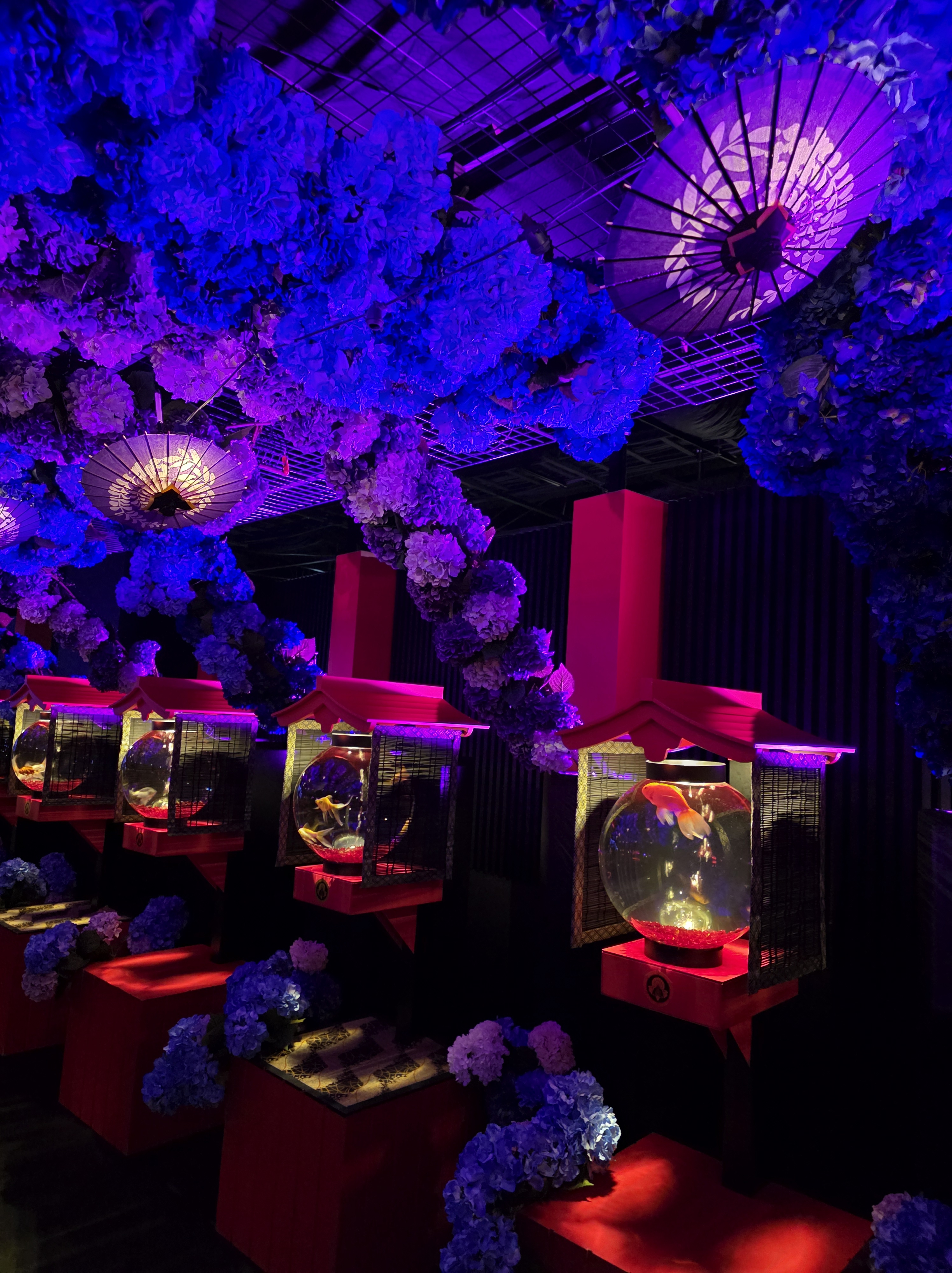
In Ginza, we visited the Art Aquarium Museum, which has lots of different aquarium installations with live fish lit up in creative ways. Yes, it was cool and interesting, but there was also something a bit unsettling about it – some sense of neglect or even cruelty. Some tanks were tiny glass bowls, others looked like solitary confinement cells with two or three fish crammed inside, clearly with no room to move. It’s unclear whether they’re kept there permanently, and if not, how the whole system works – how they’re fed, where they’re moved, etc. The fish themselves were fascinating – some with bulging eyes, others round-bellied and odd-looking. But after a while, the installations started to feel a bit repetitive.

We had dinner in a diner in the same building – set meals with meat, fish, and various small side dishes. I had one with wagyu beef.

We wanted to hang around Ginza a bit longer, but it started raining so we headed back to the hotel.