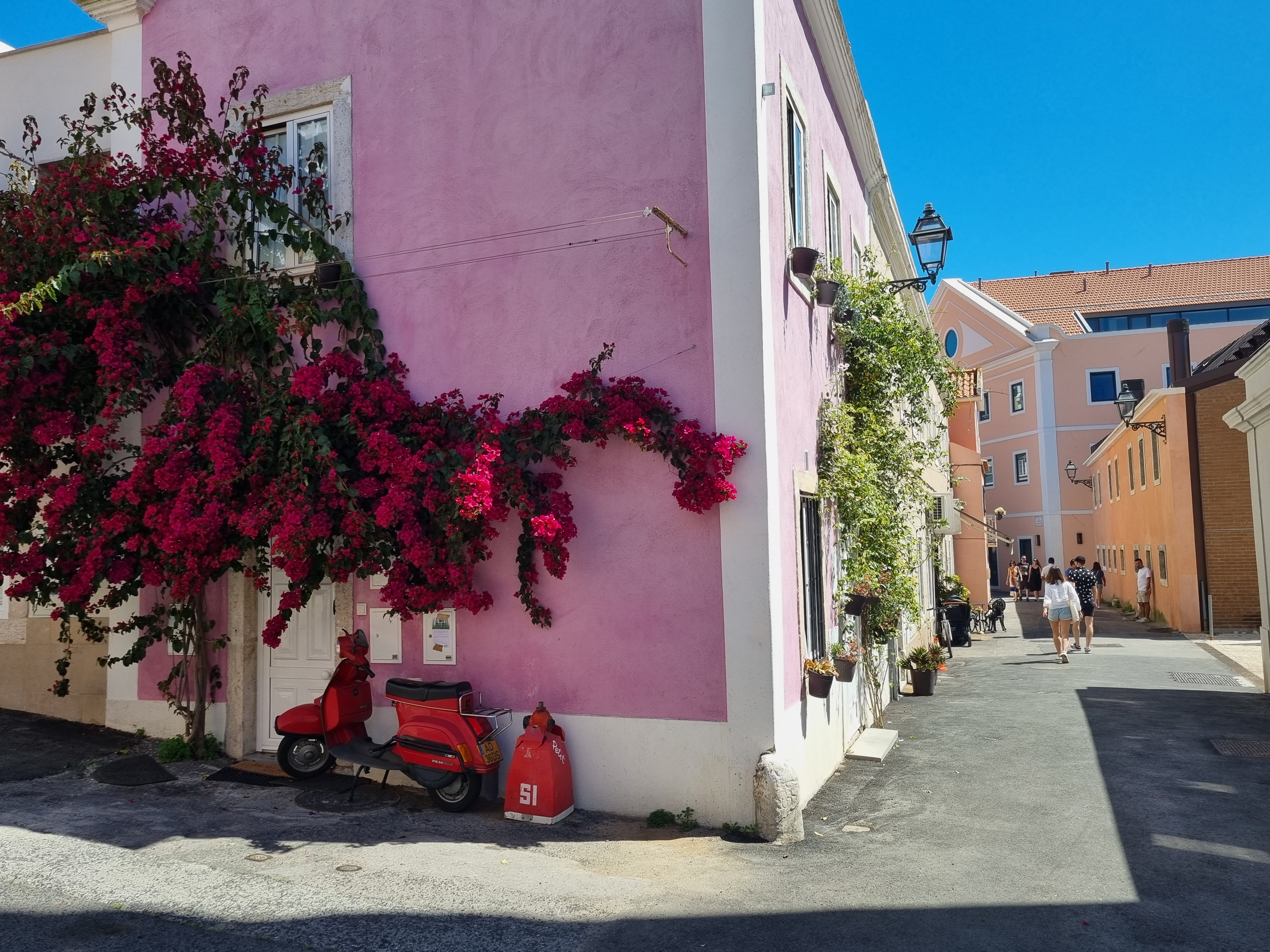
Posted in English, Europe, Florence, Italy

Florence – Day 3

РУССКОЯЗЫЧНАЯ ВЕРСИЯ ПО ЭТОЙ ССЫЛКЕ. CLICK HERE FOR RUSSIAN VERSION.

April 24 2026 – Friday

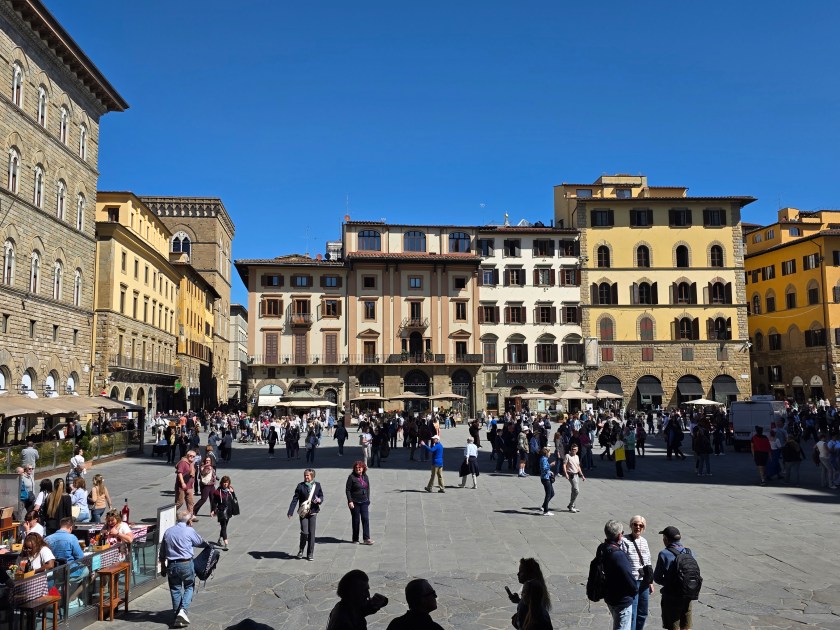
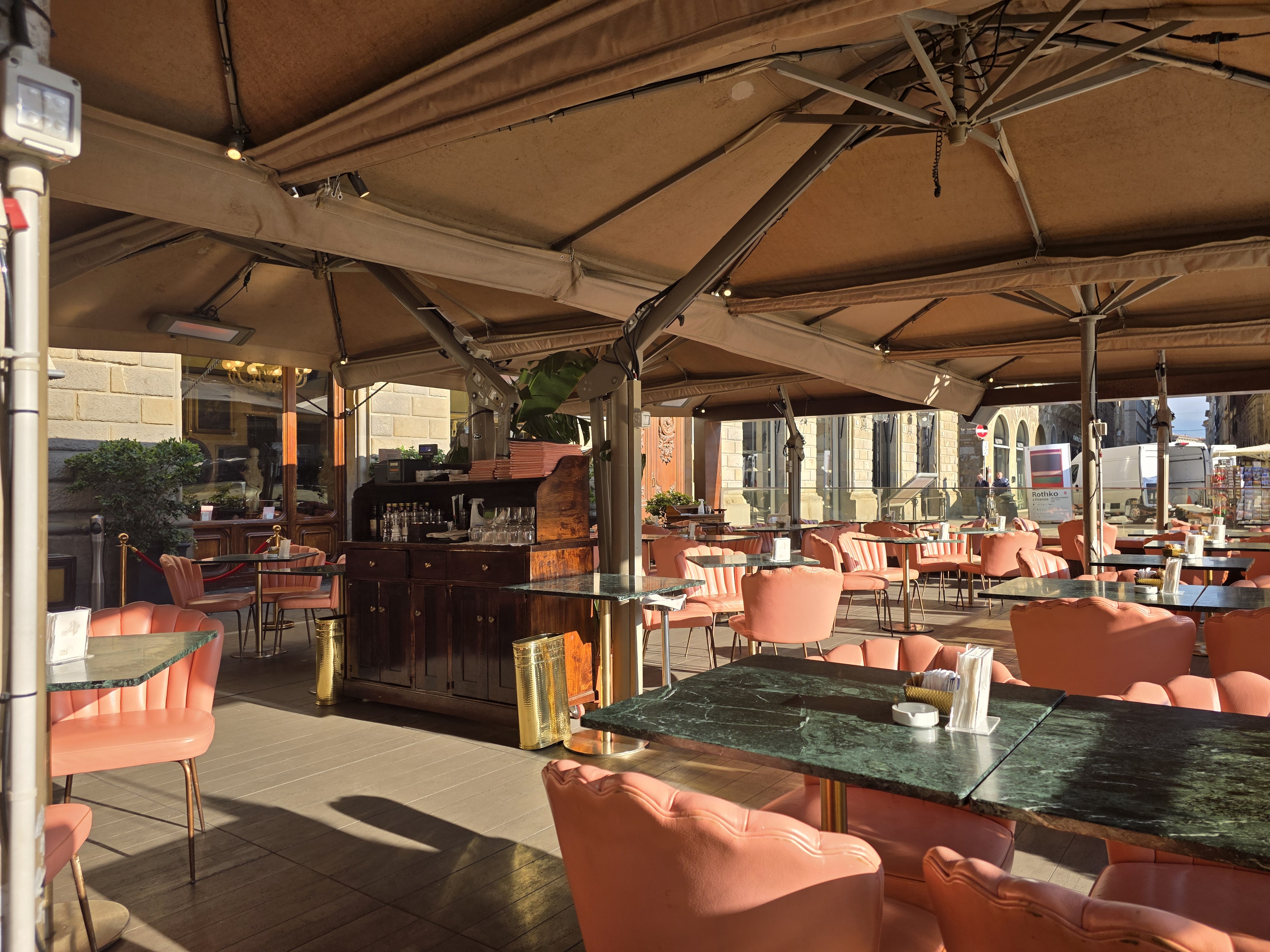
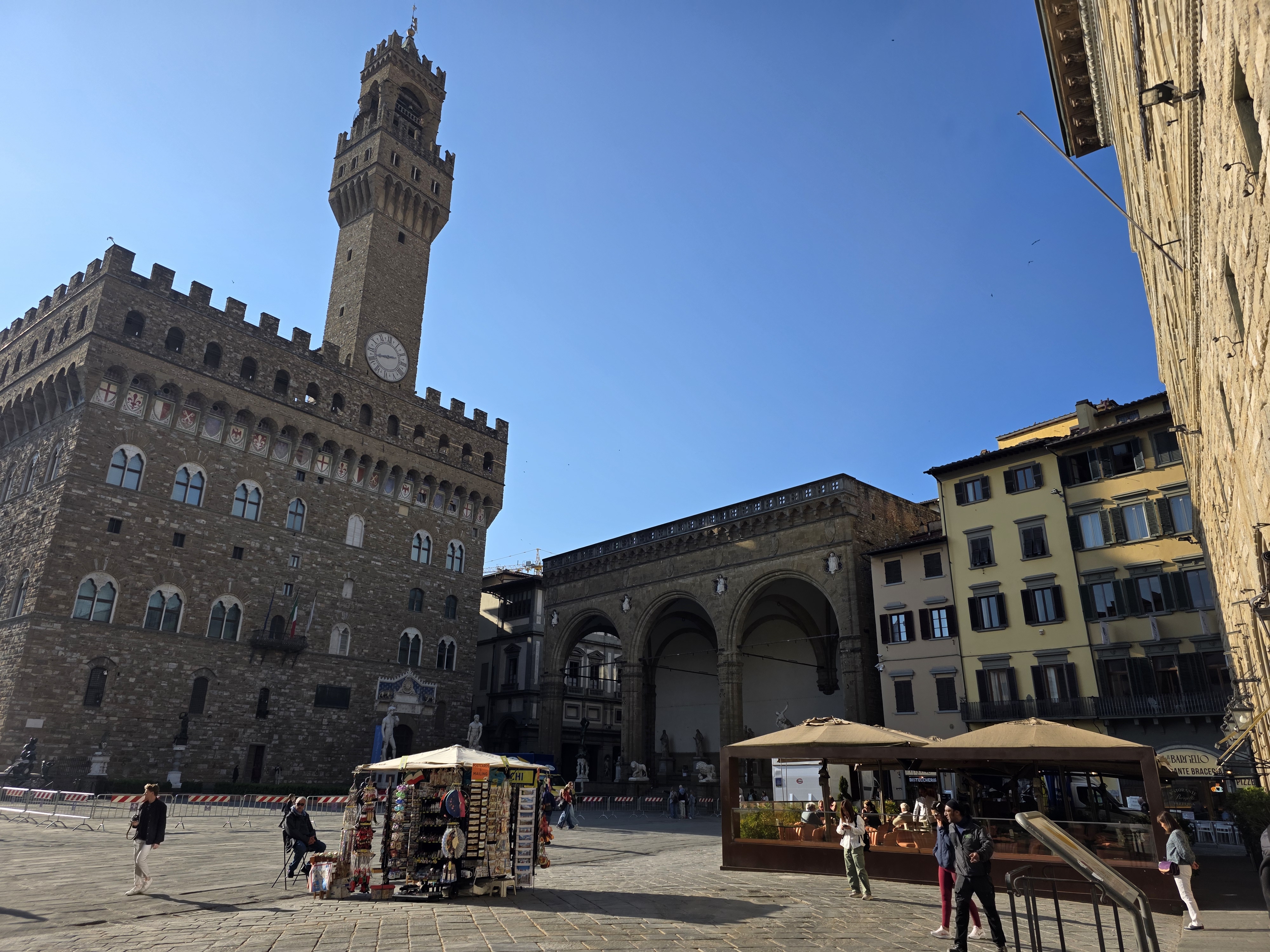
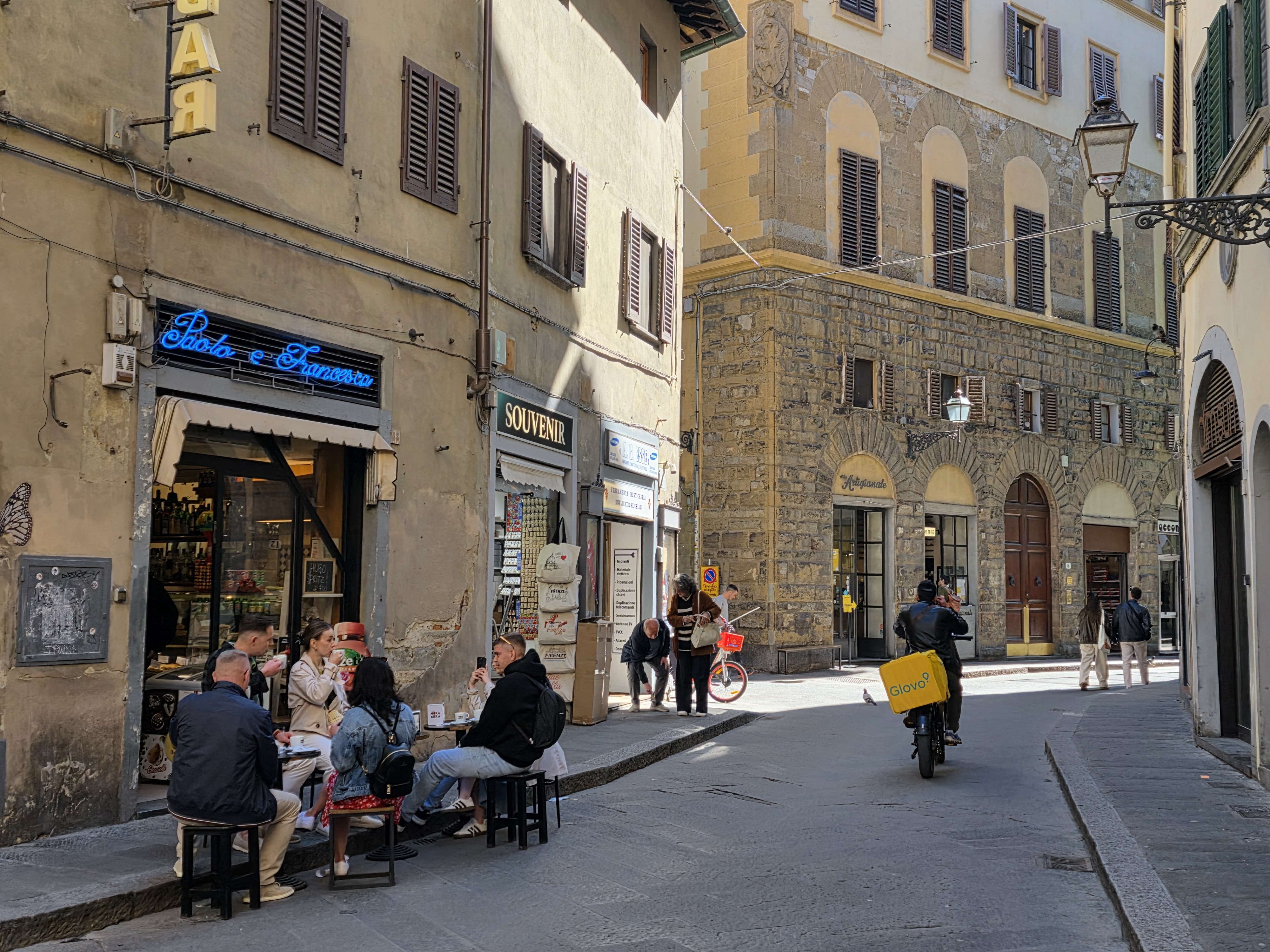
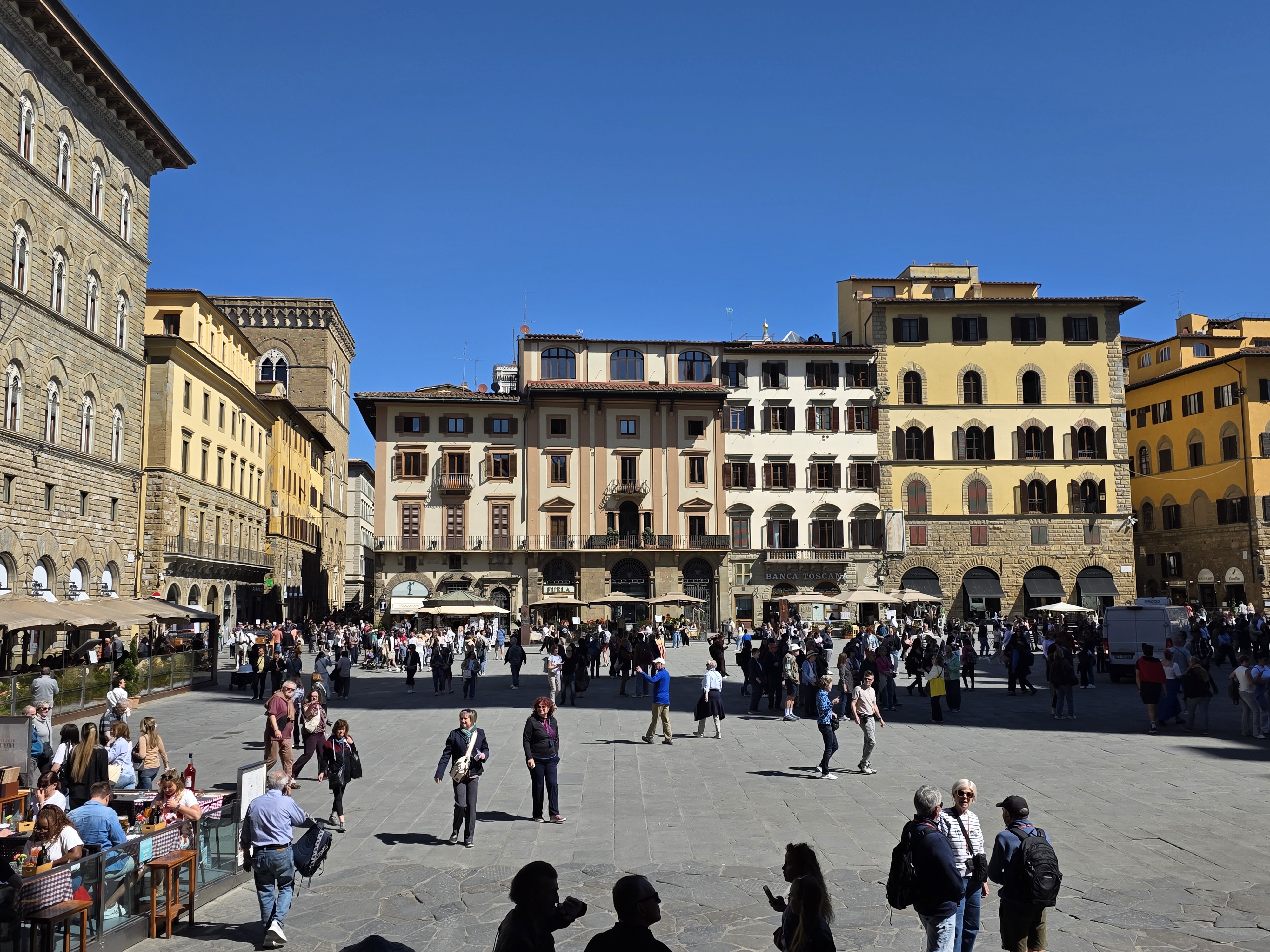
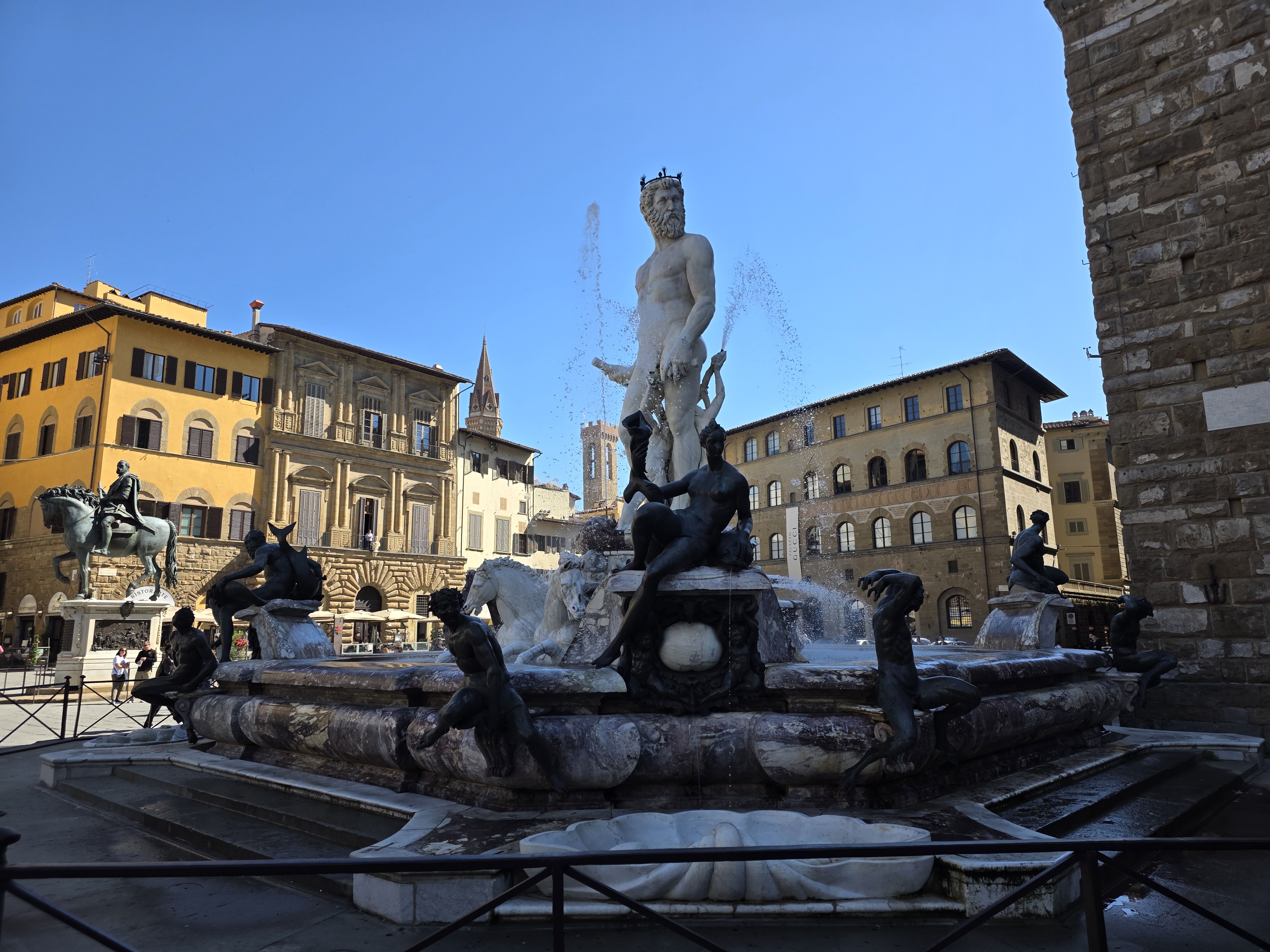
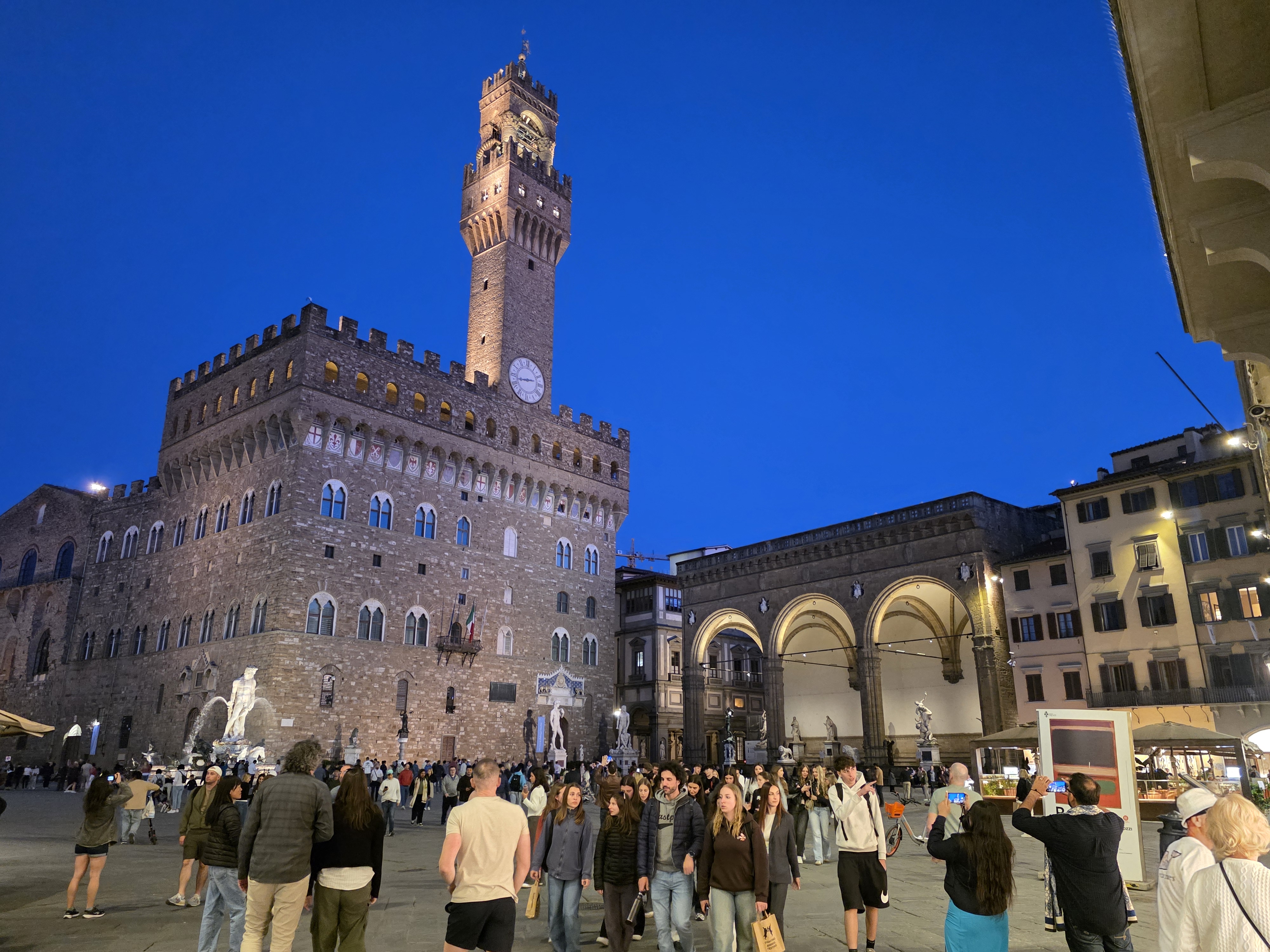
Today I was supposed to have a relaxed and calm morning. I got up fairly early, driven by the desire to have tiramisu for breakfast. Unusual, I know, but I absolutely had to eat tiramisu in Italy, and there wasn’t really any other occasion to squeeze it in. So, I very purposefully headed to a posh café called Rivoire, on Piazza della Signoria with a view of Palazzo Vecchio, and treated myself to an omelette (for protein and balance) and an excellent small portion of tiramisu.


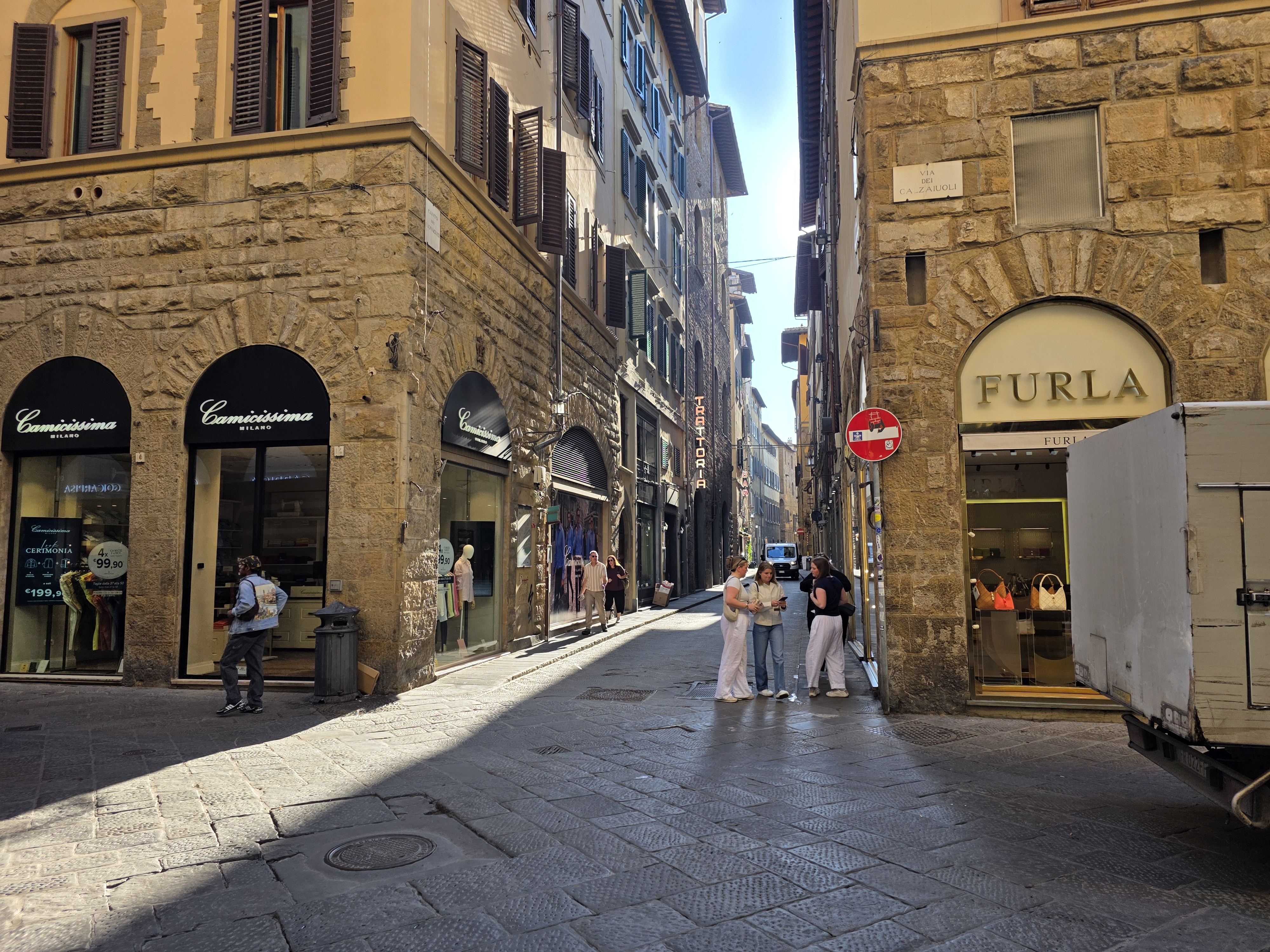
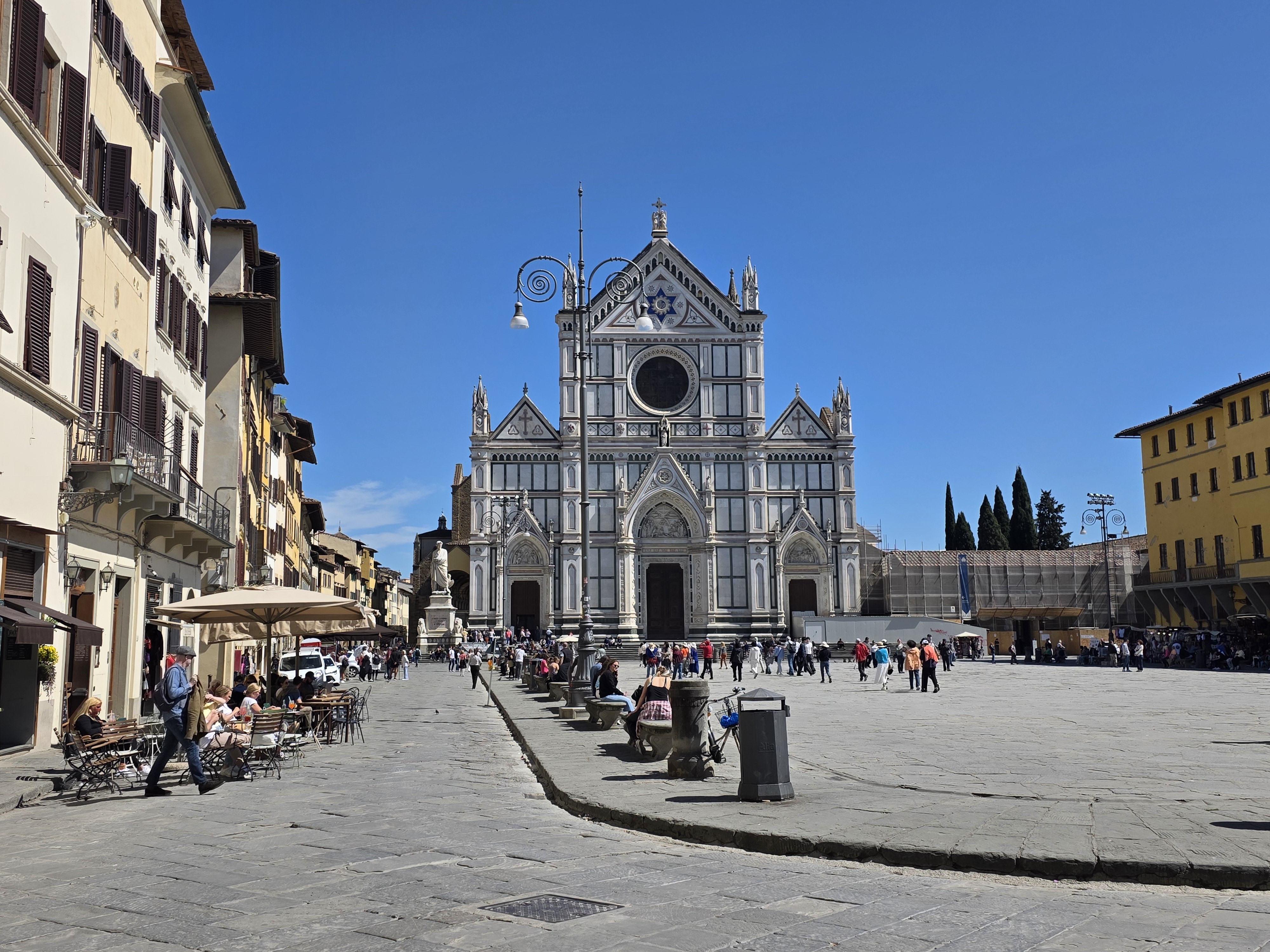
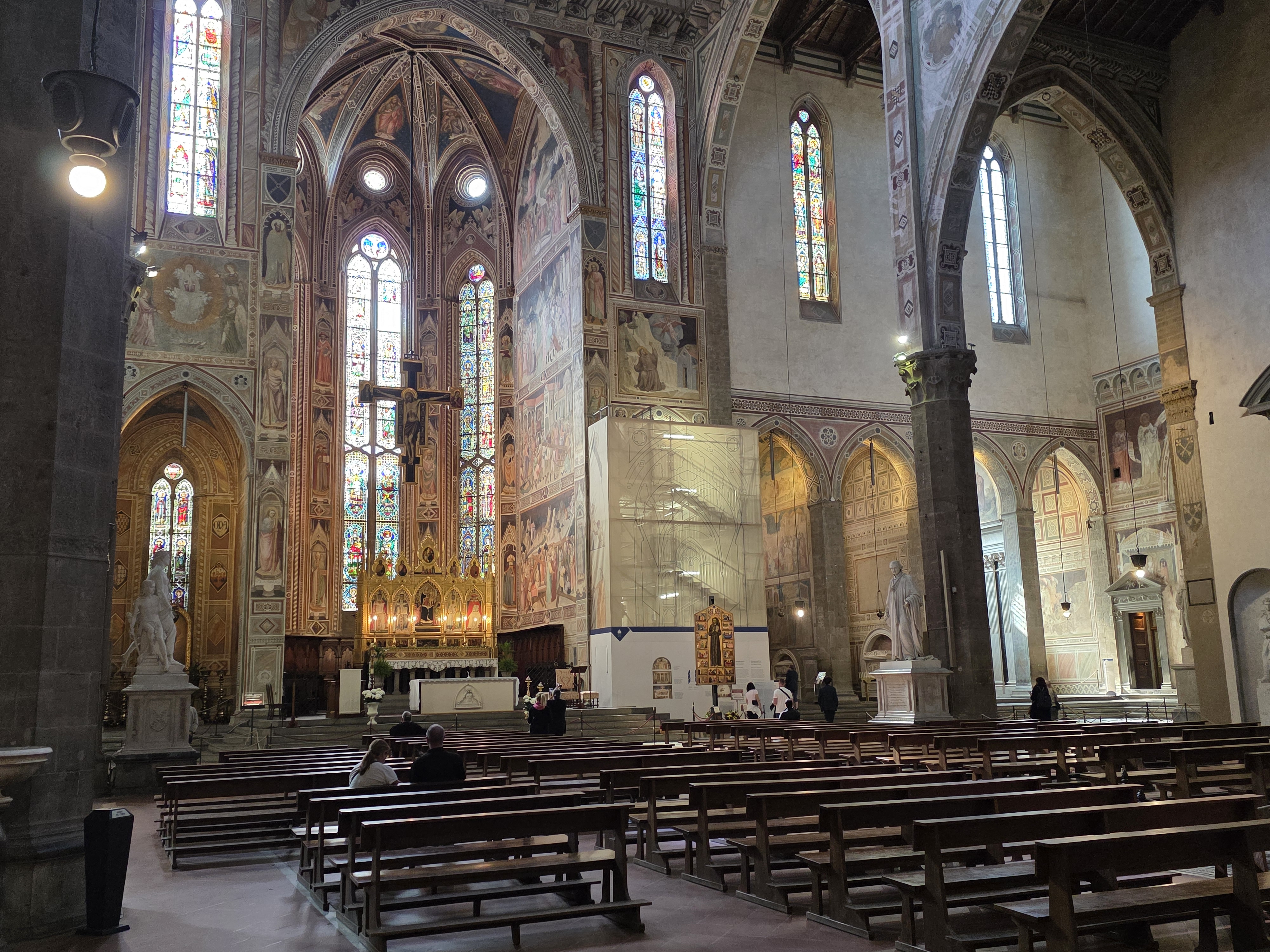
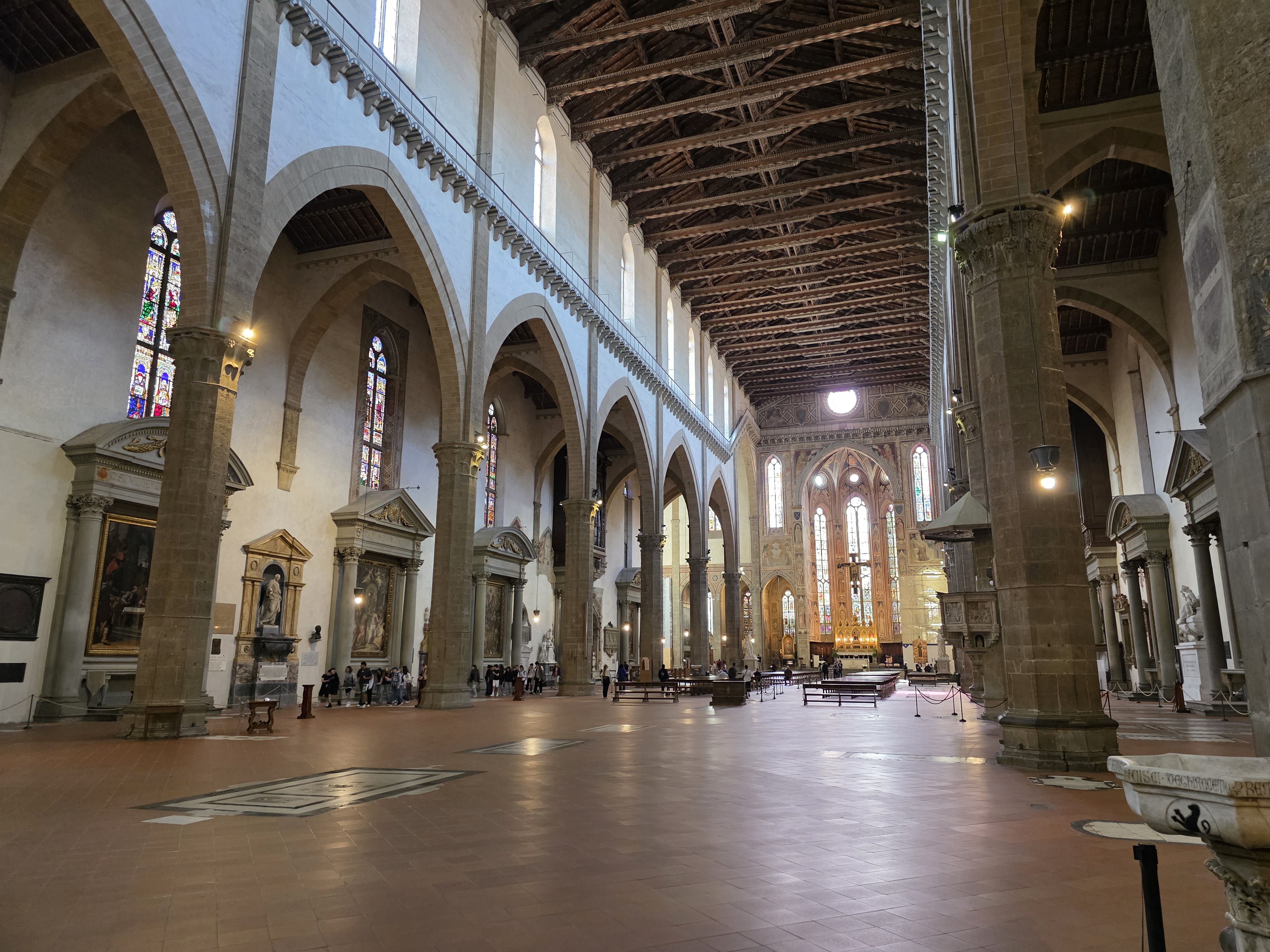
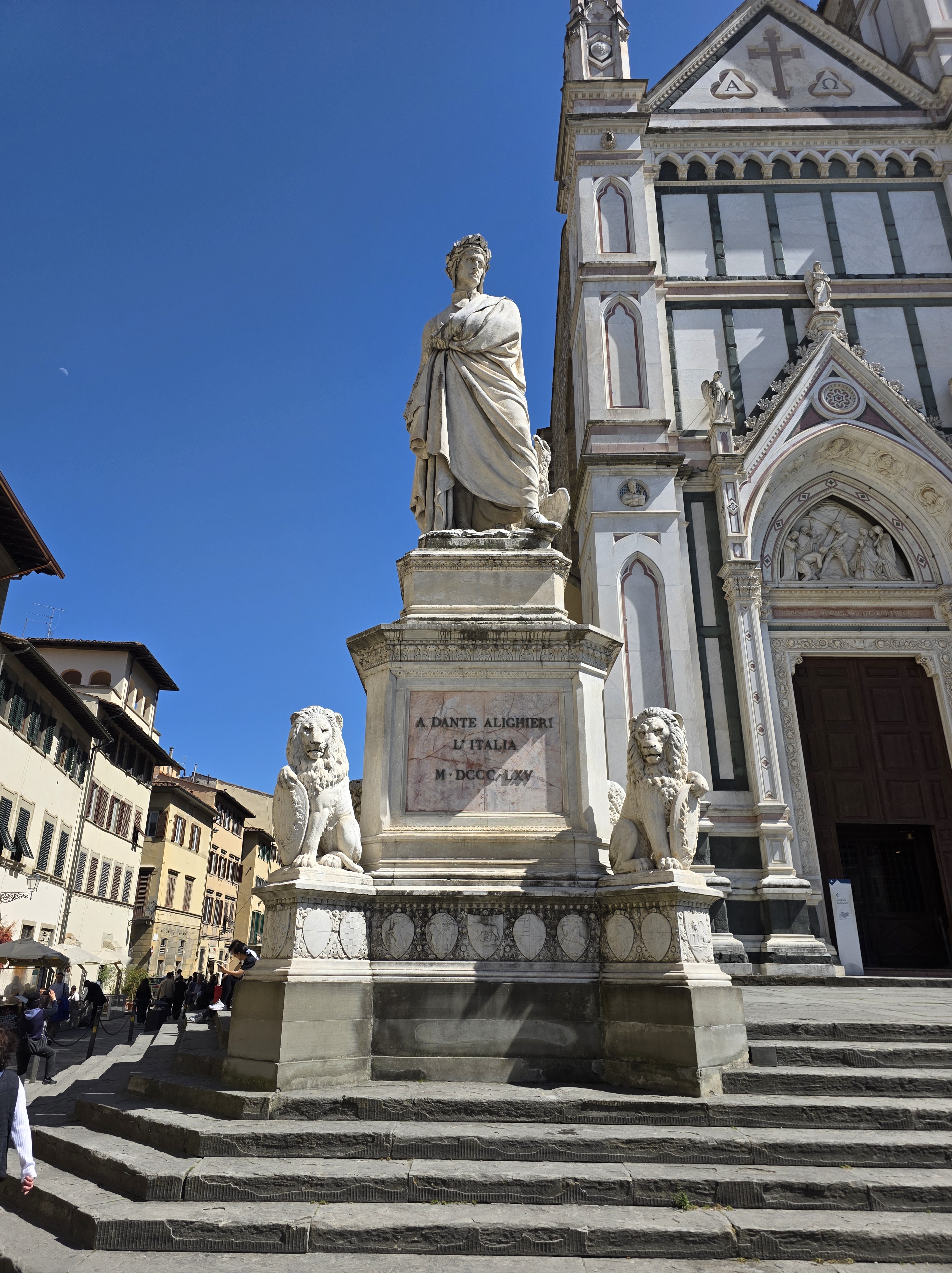
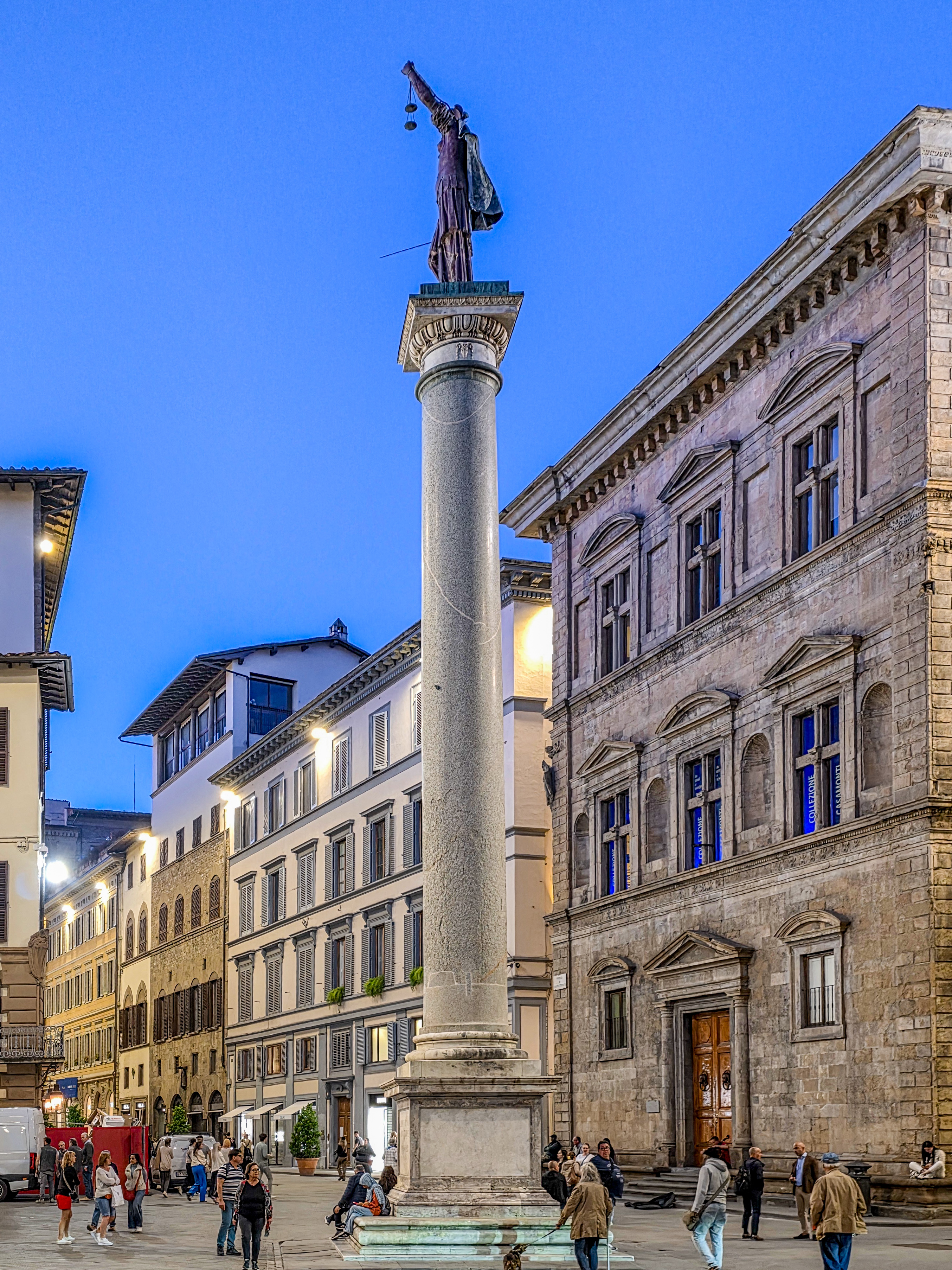
After that, I had a free morning before my Chianti tour, and again on Claude’s recommendation, I decided to visit the Basilica of Santa Croce. Entry cost 10 euros.

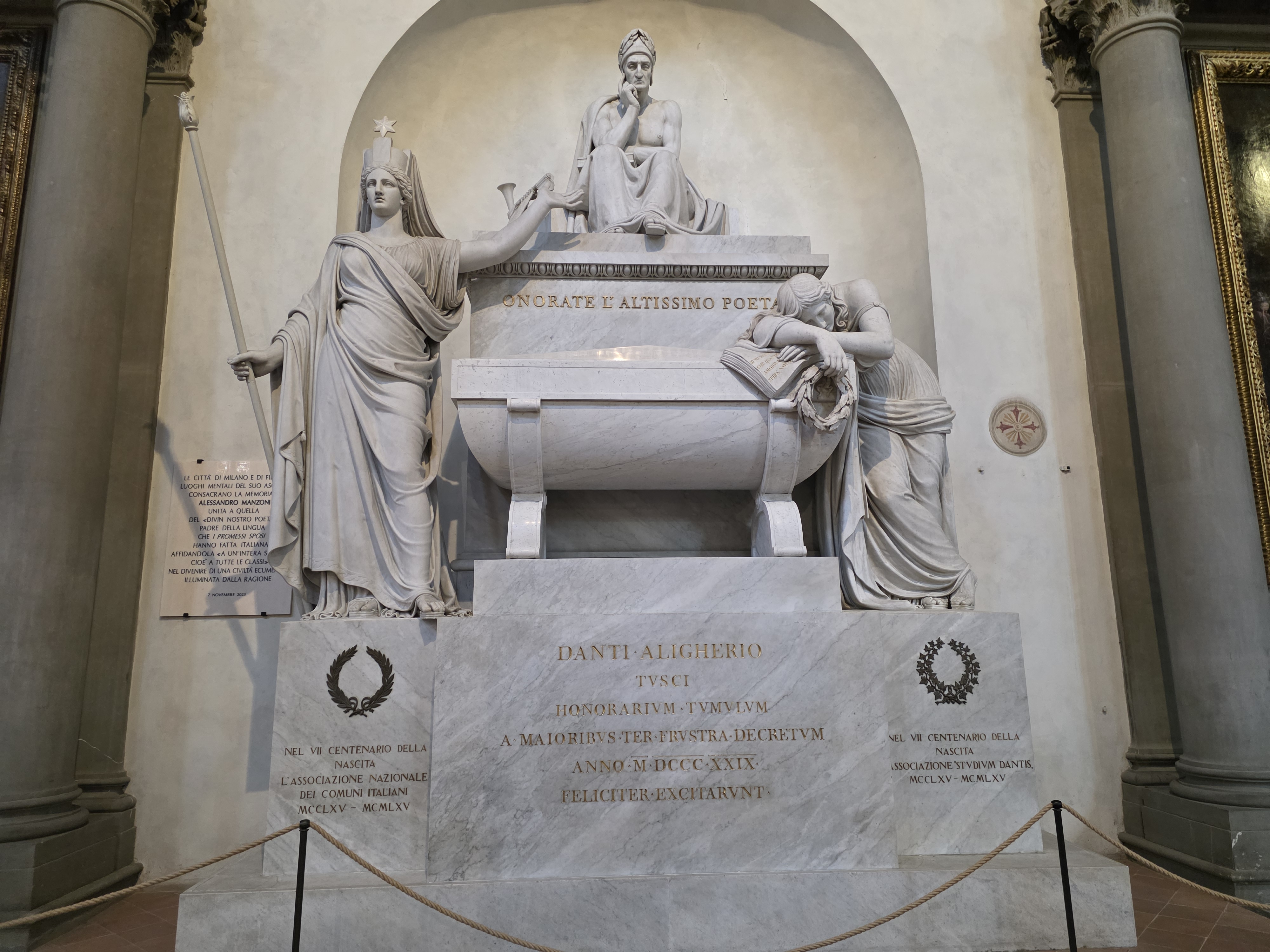
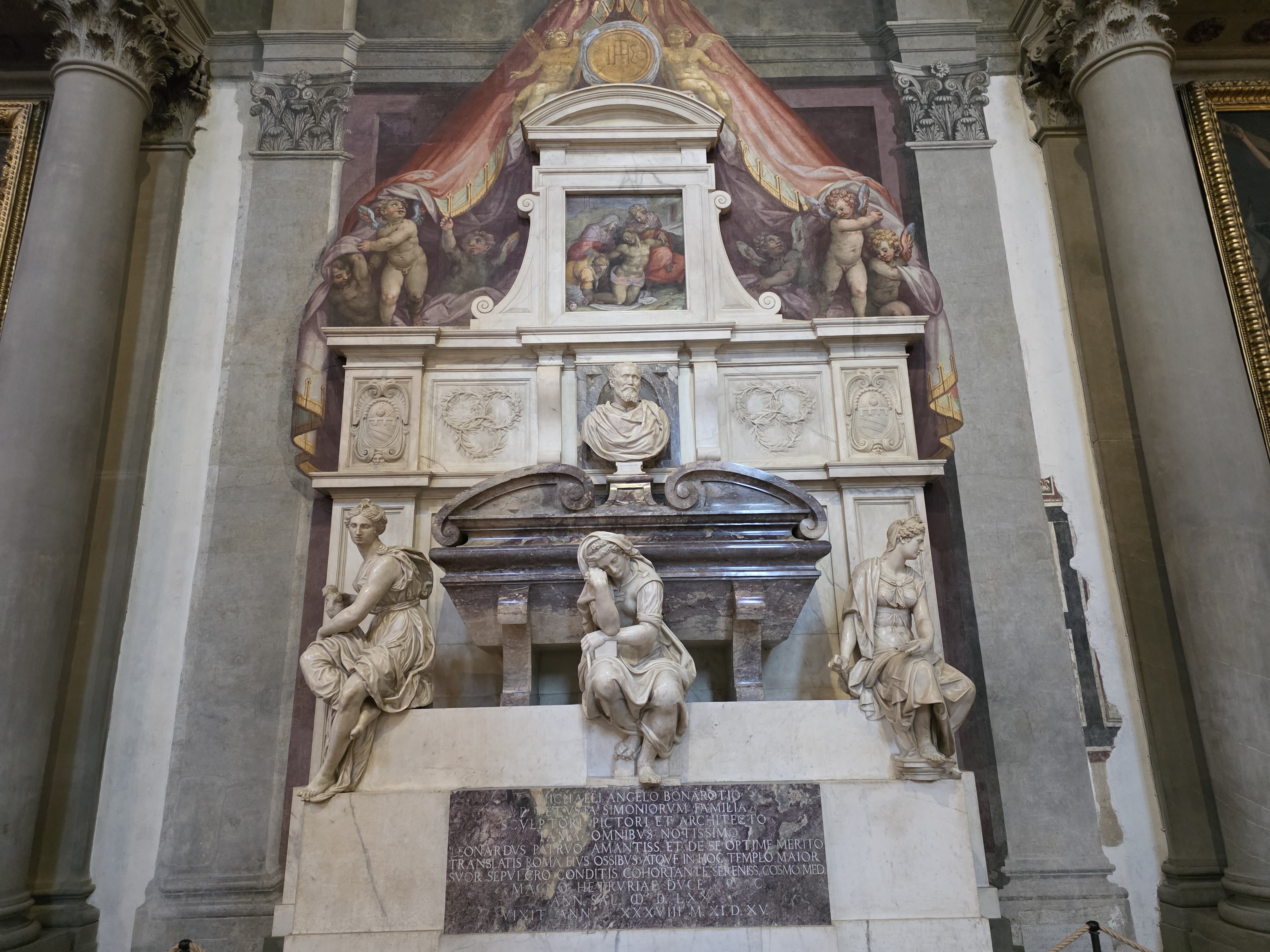
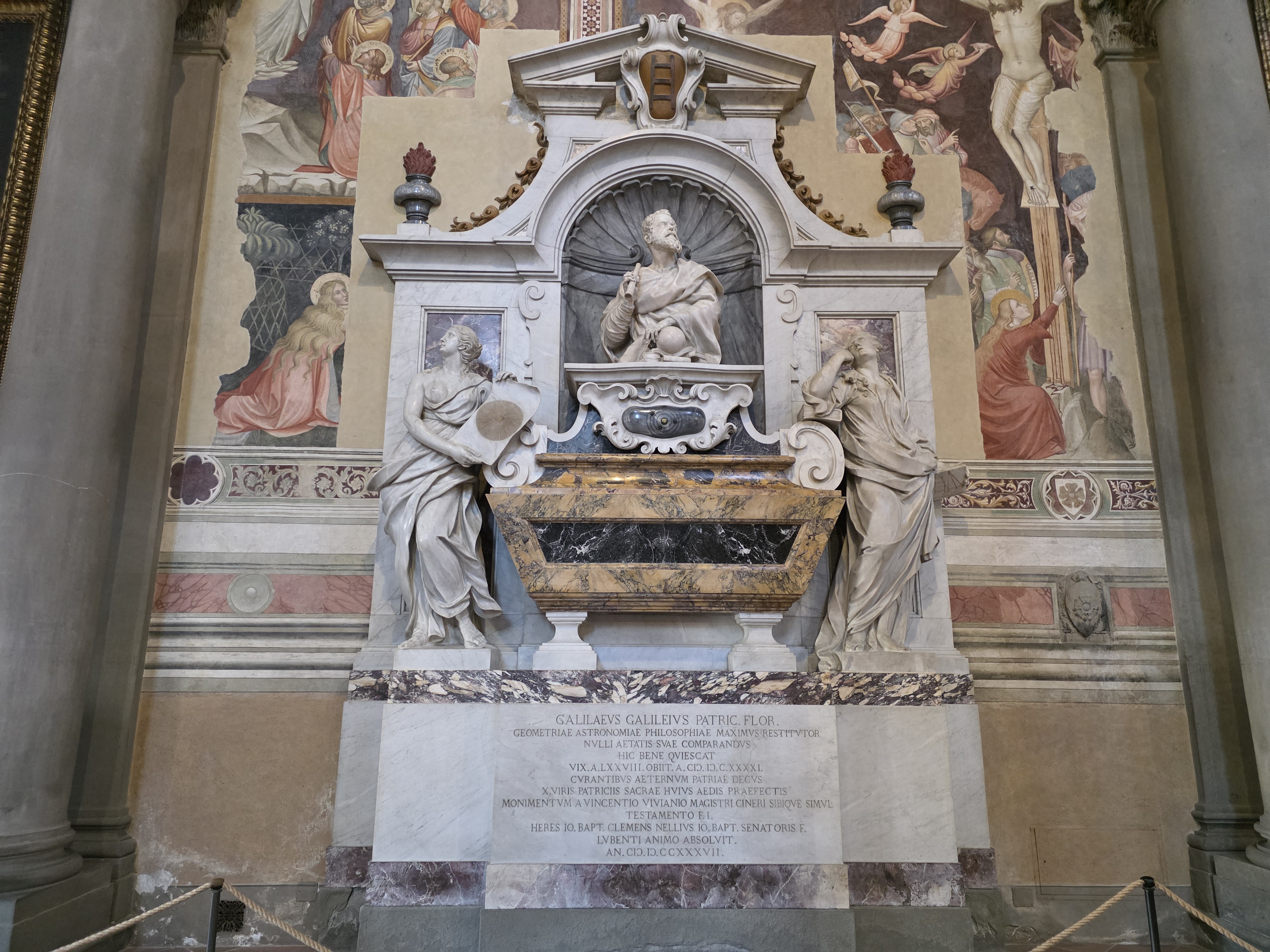
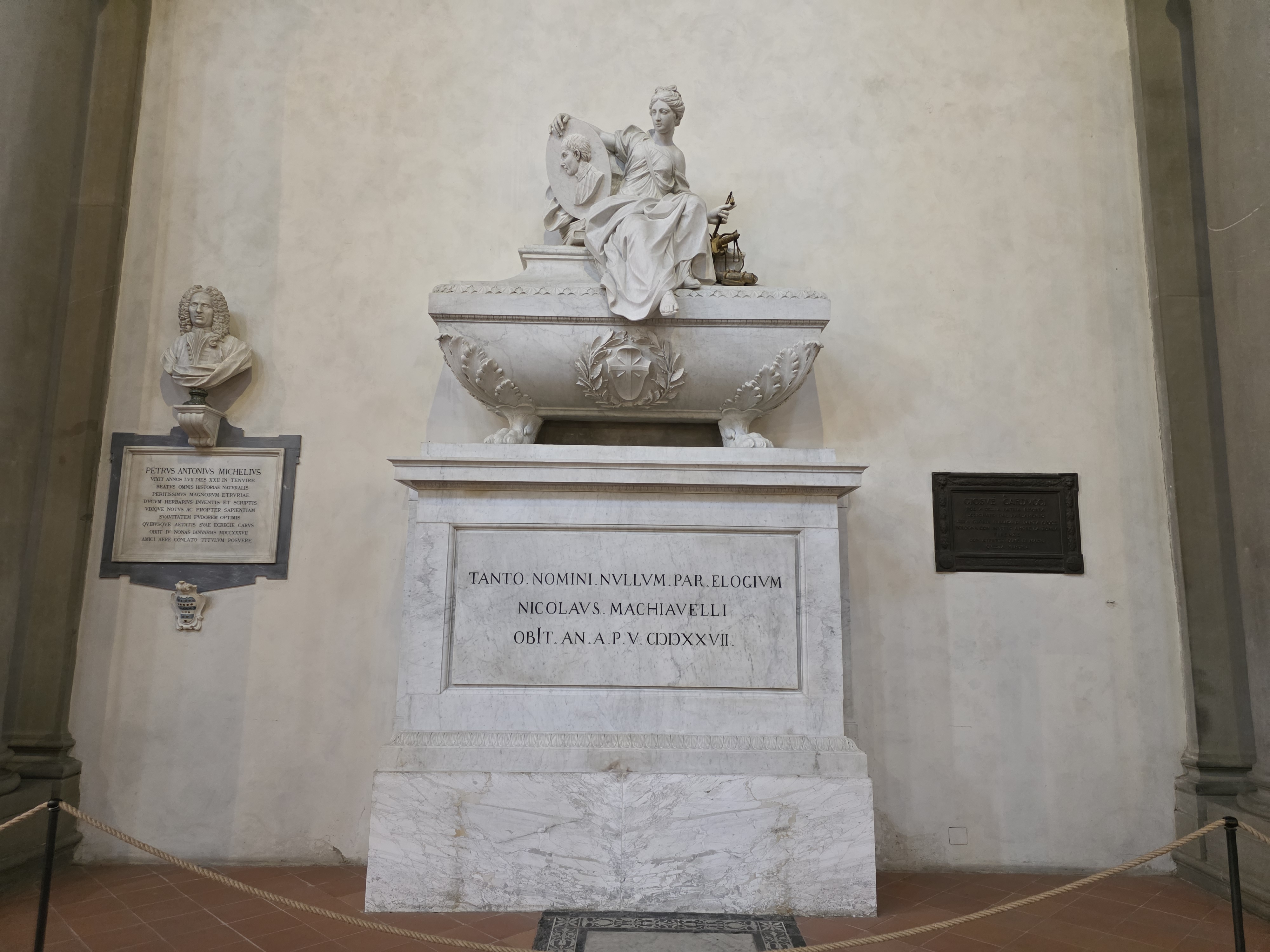
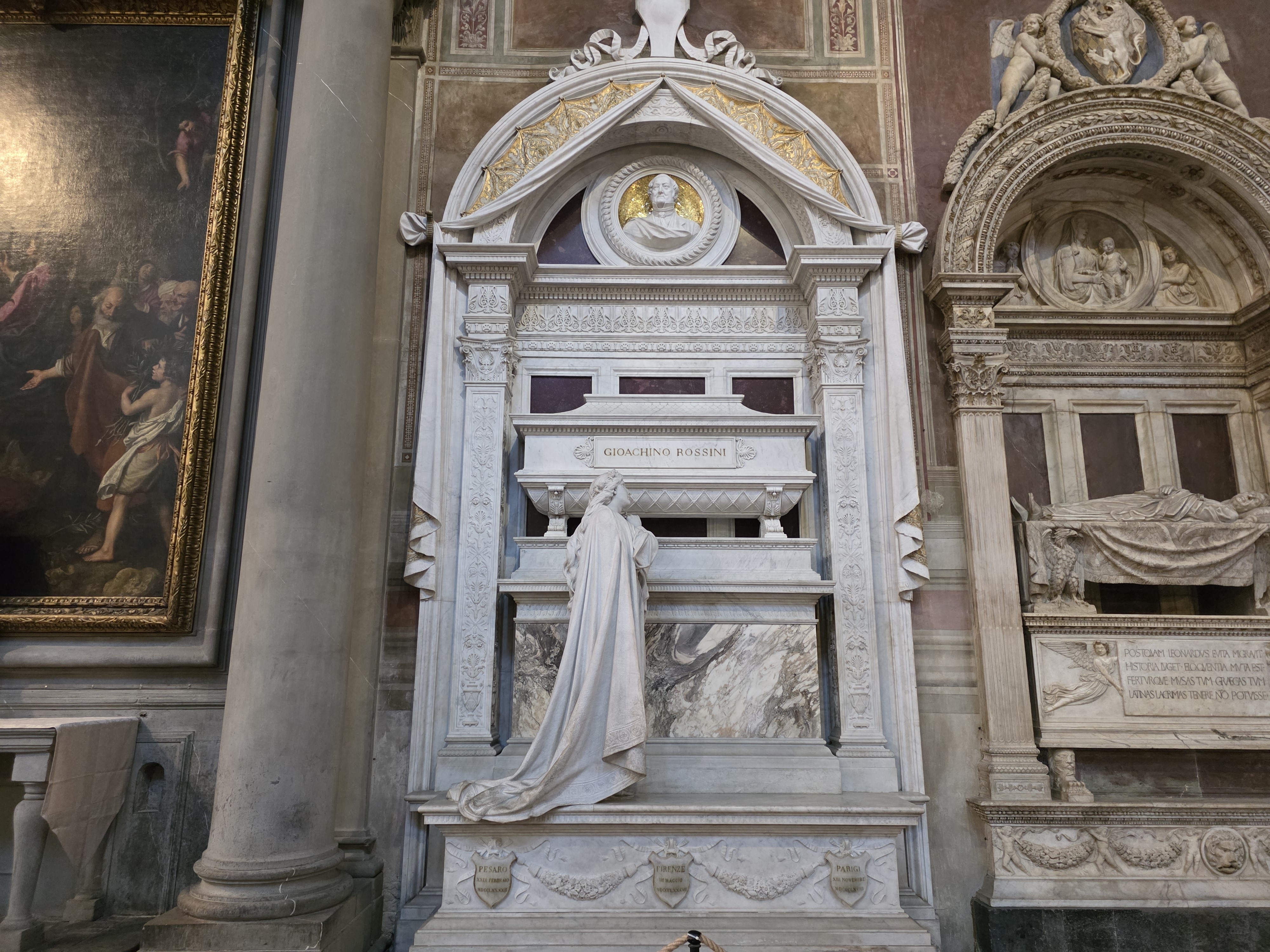
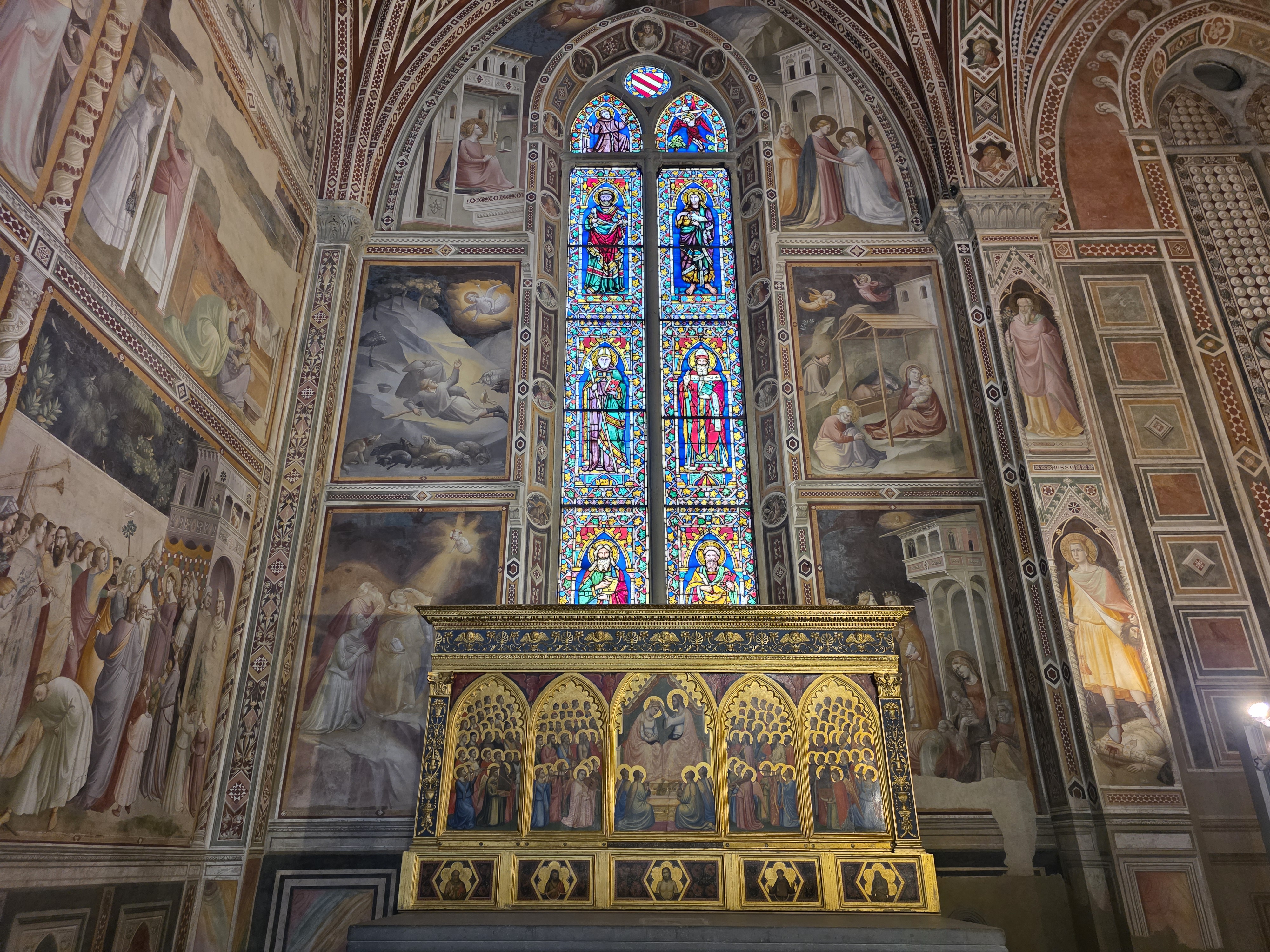
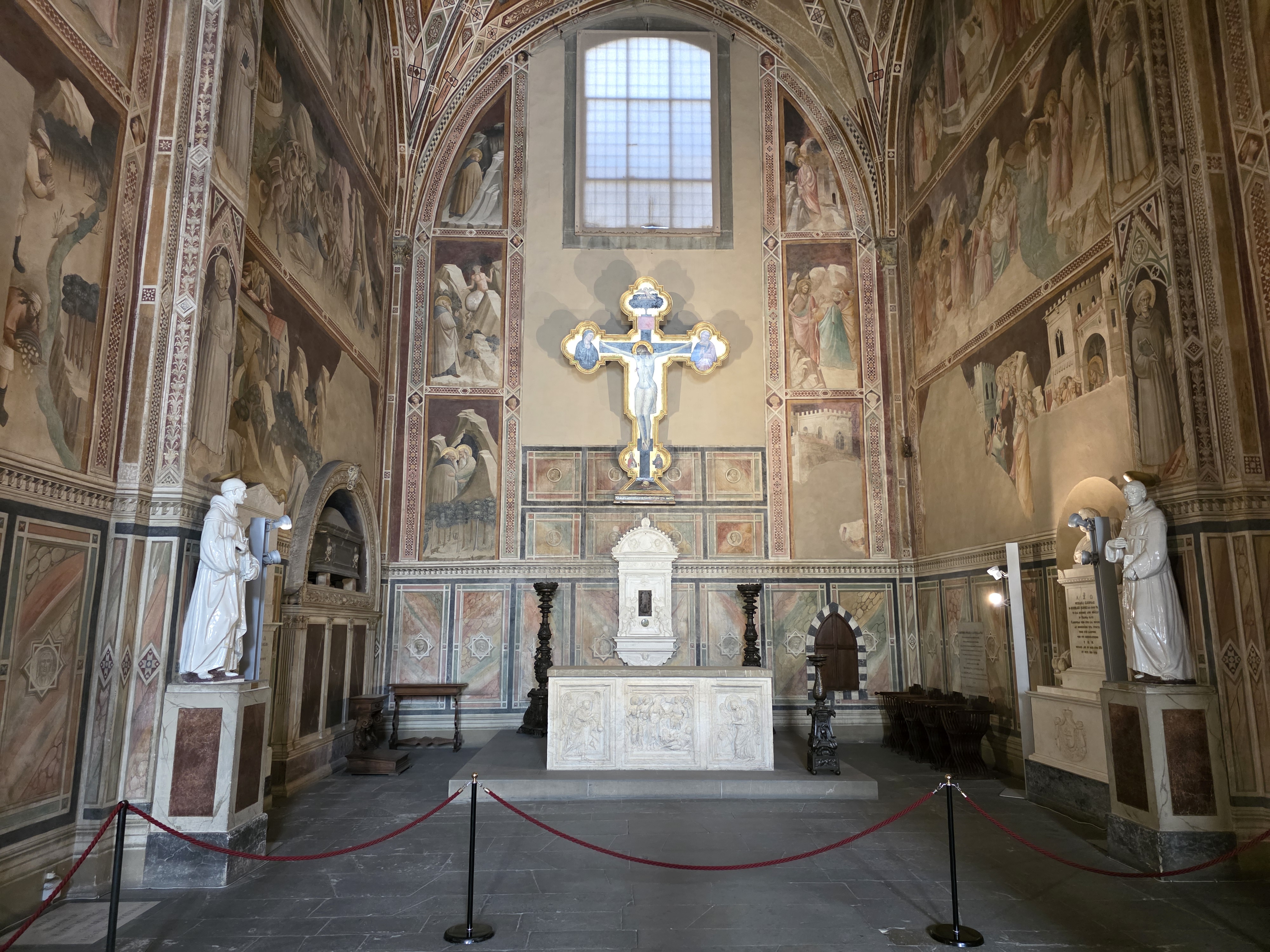
But it was fascinating, and overall, I actually liked the interior way more than the Duomo’s. There were various frescoes, as well as the tombs of famous people – Galileo, Michelangelo, Dante, Machiavelli, Rossini.

After the basilica there wasn’t particularly much else to do, so I found a specialty coffee shop and spent some time there. I noticed a man ordering a croissant with a Nutella filling and a coffee. And he paid 3.5 euros for all of it. Honestly, that shocked me, because in both London and especially Baku, the coffee alone would cost more than that. And here it was 3.5 euros!

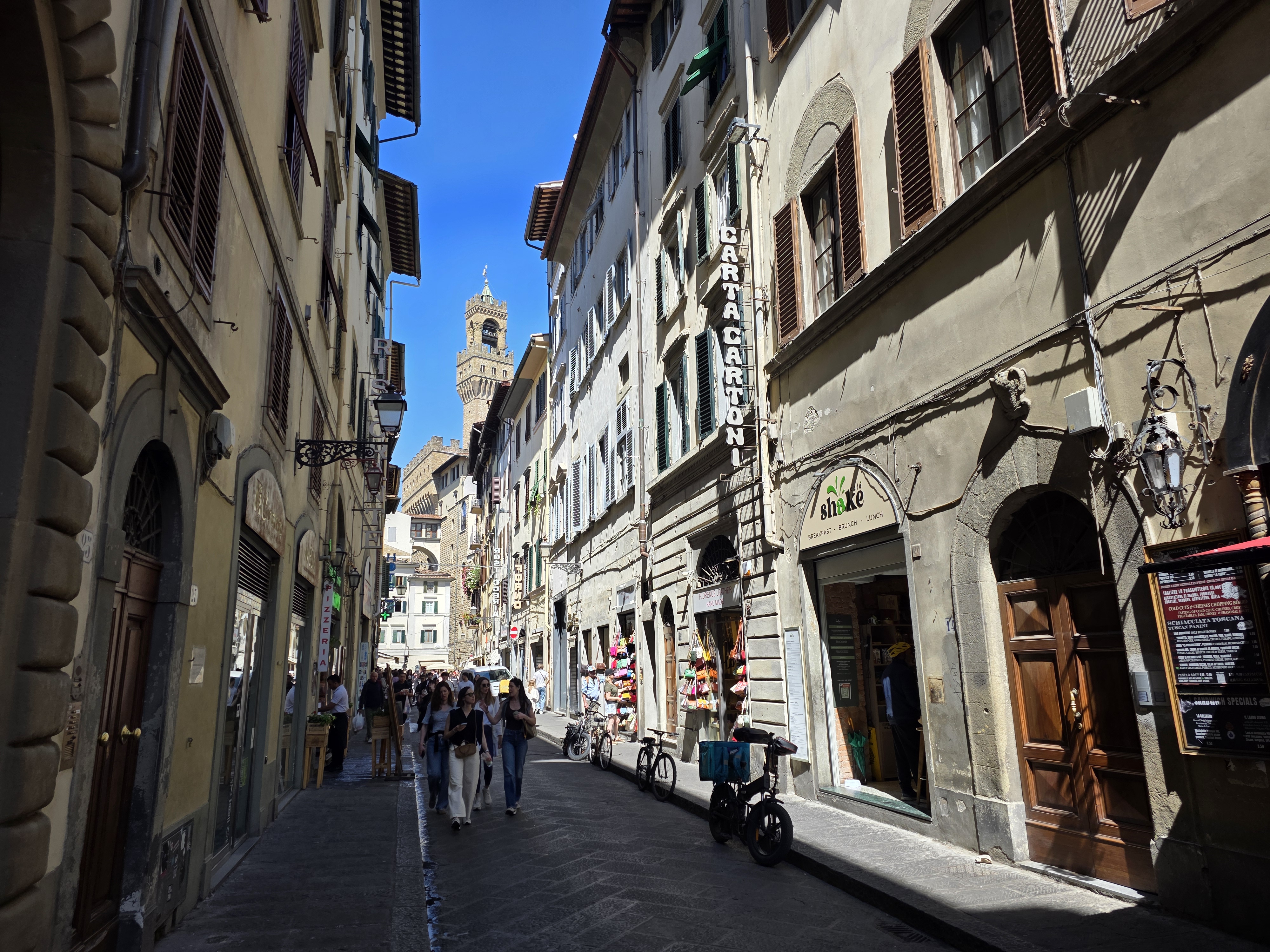
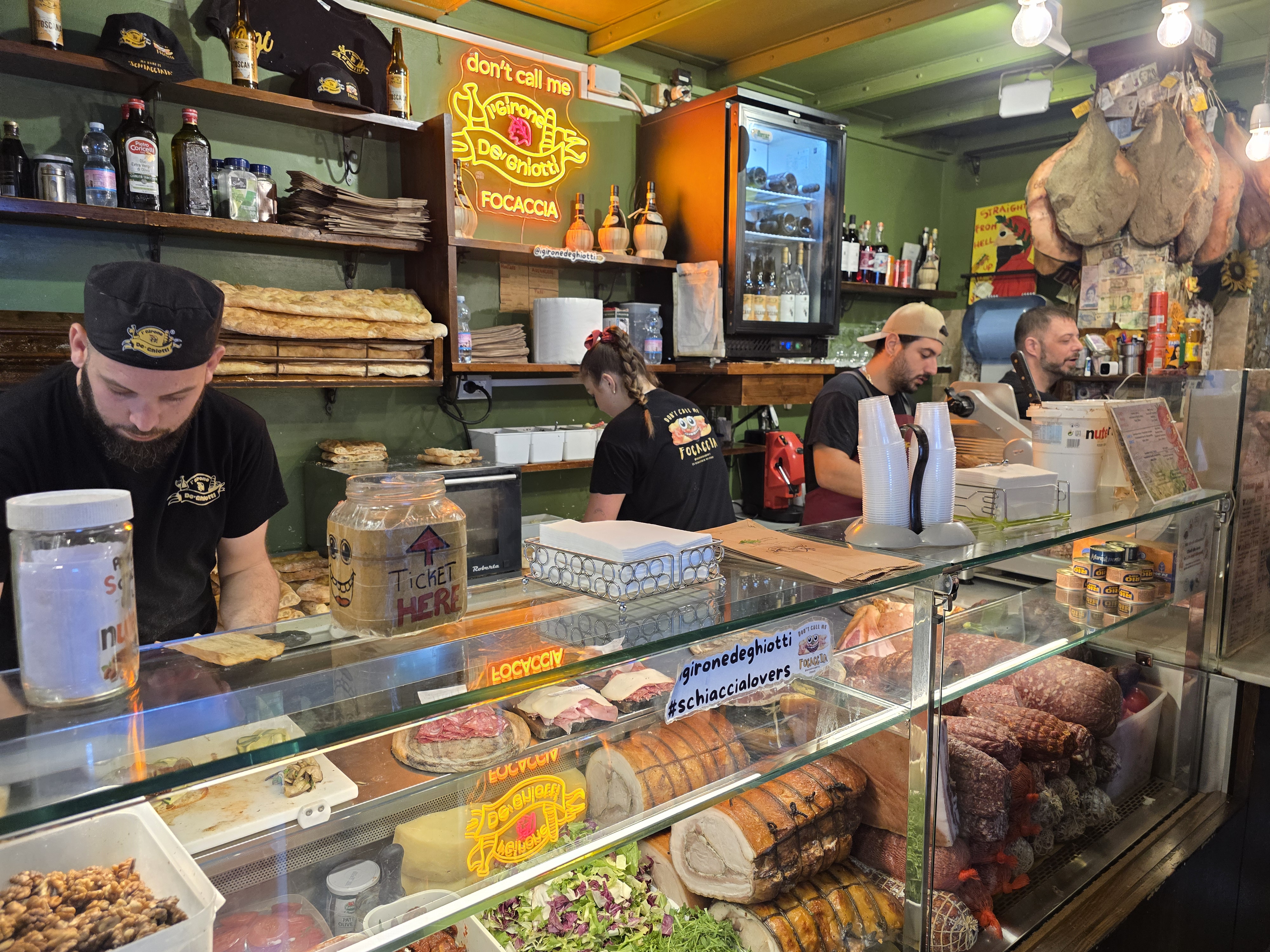
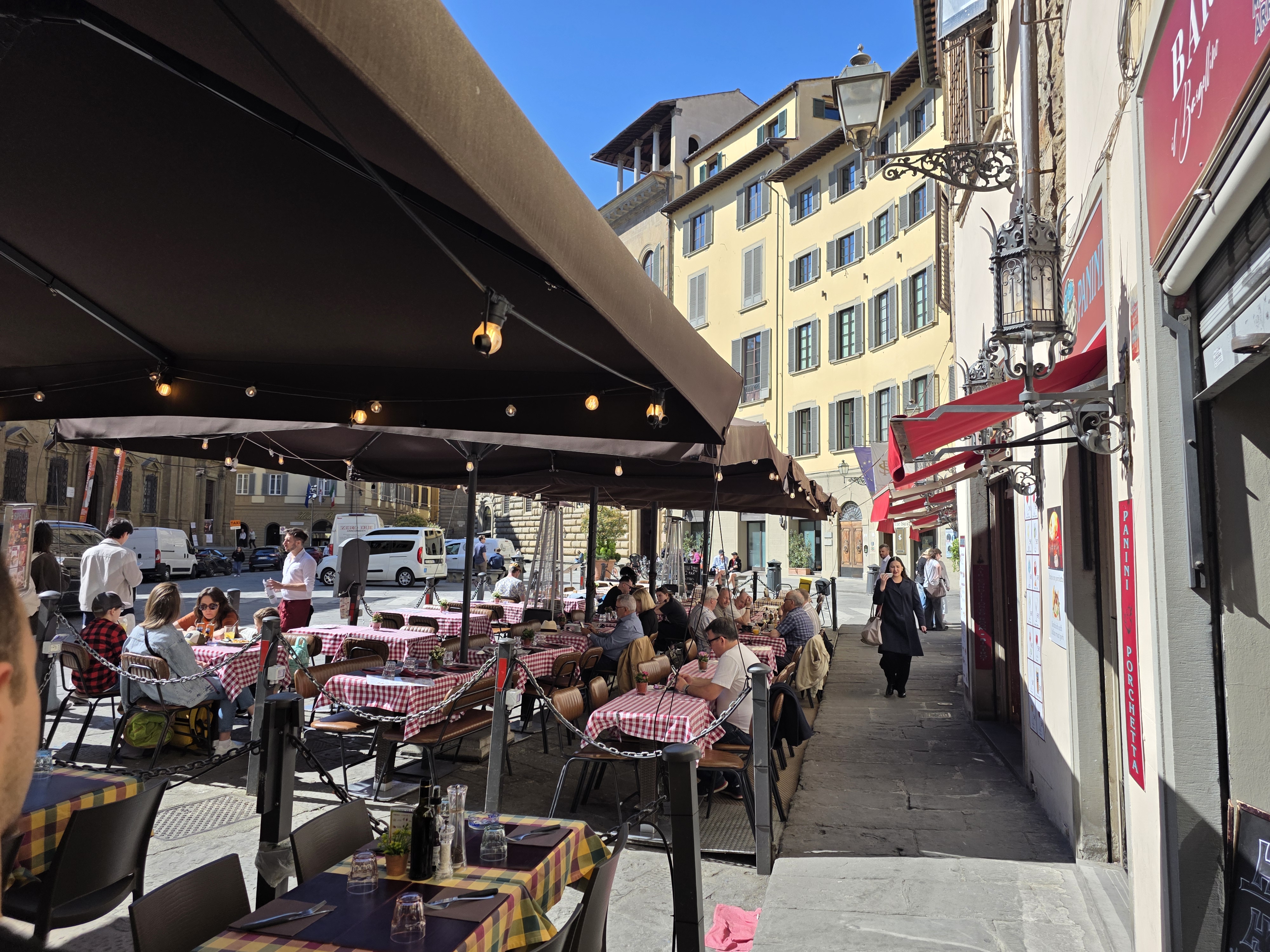
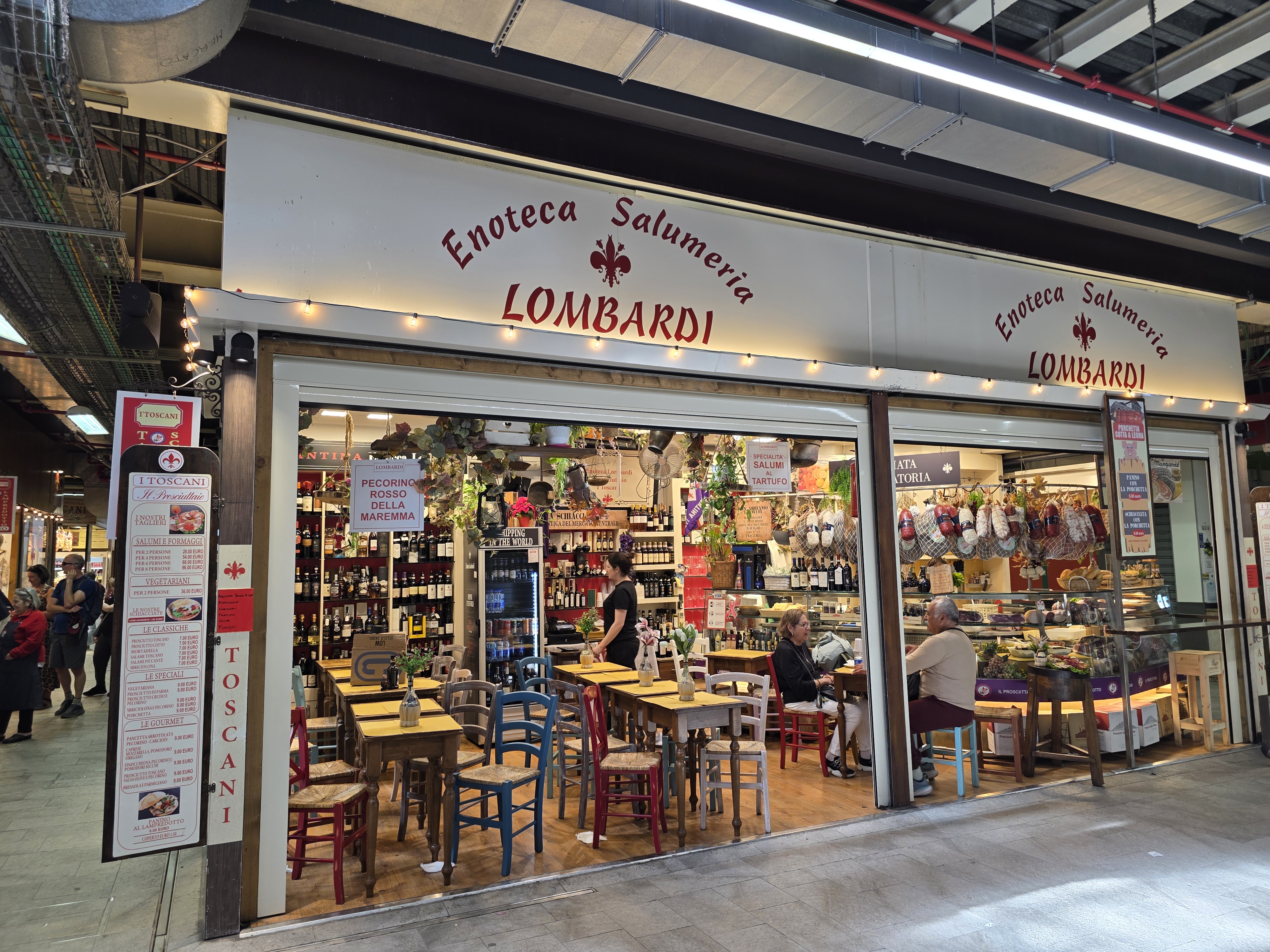
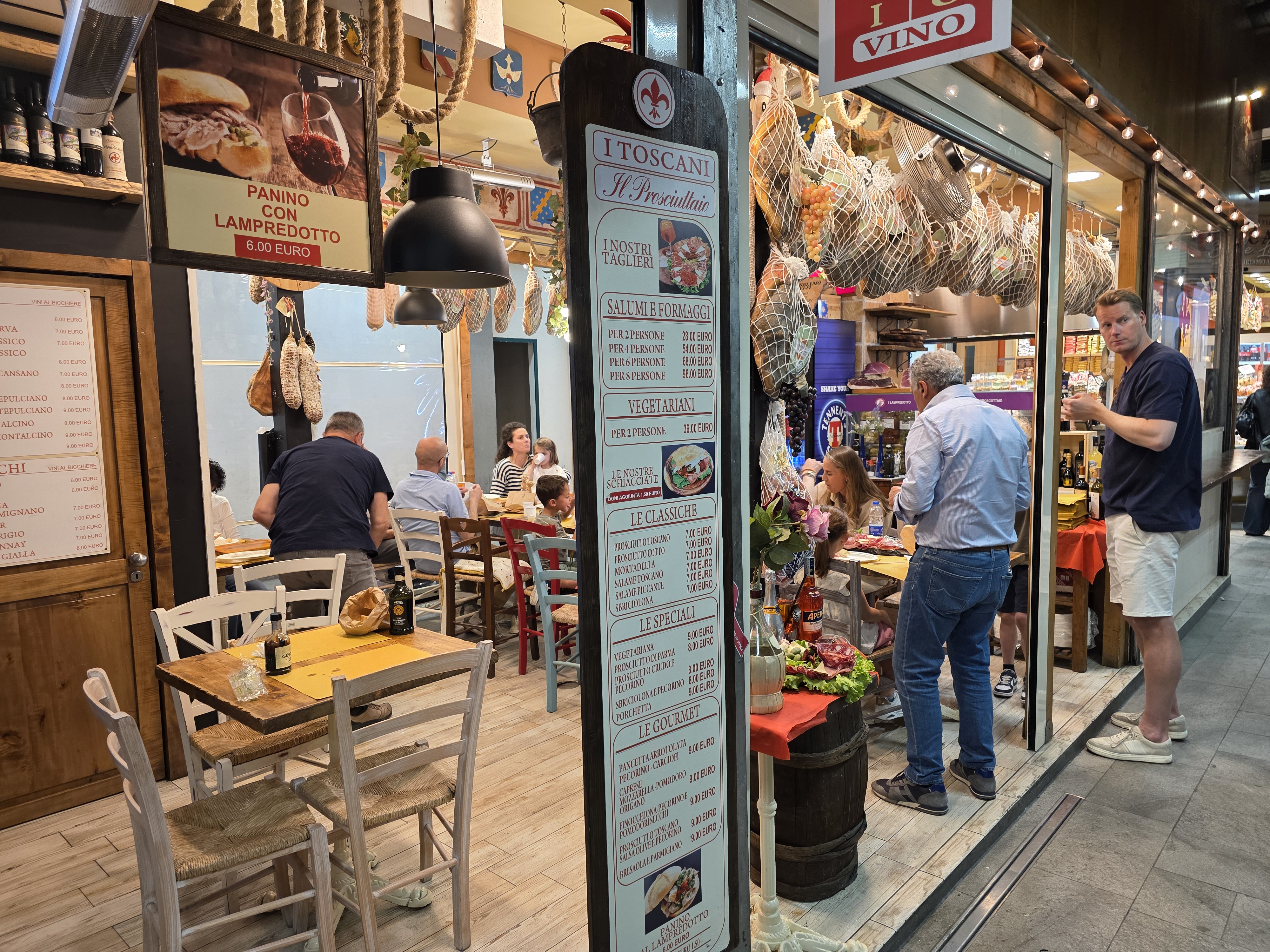
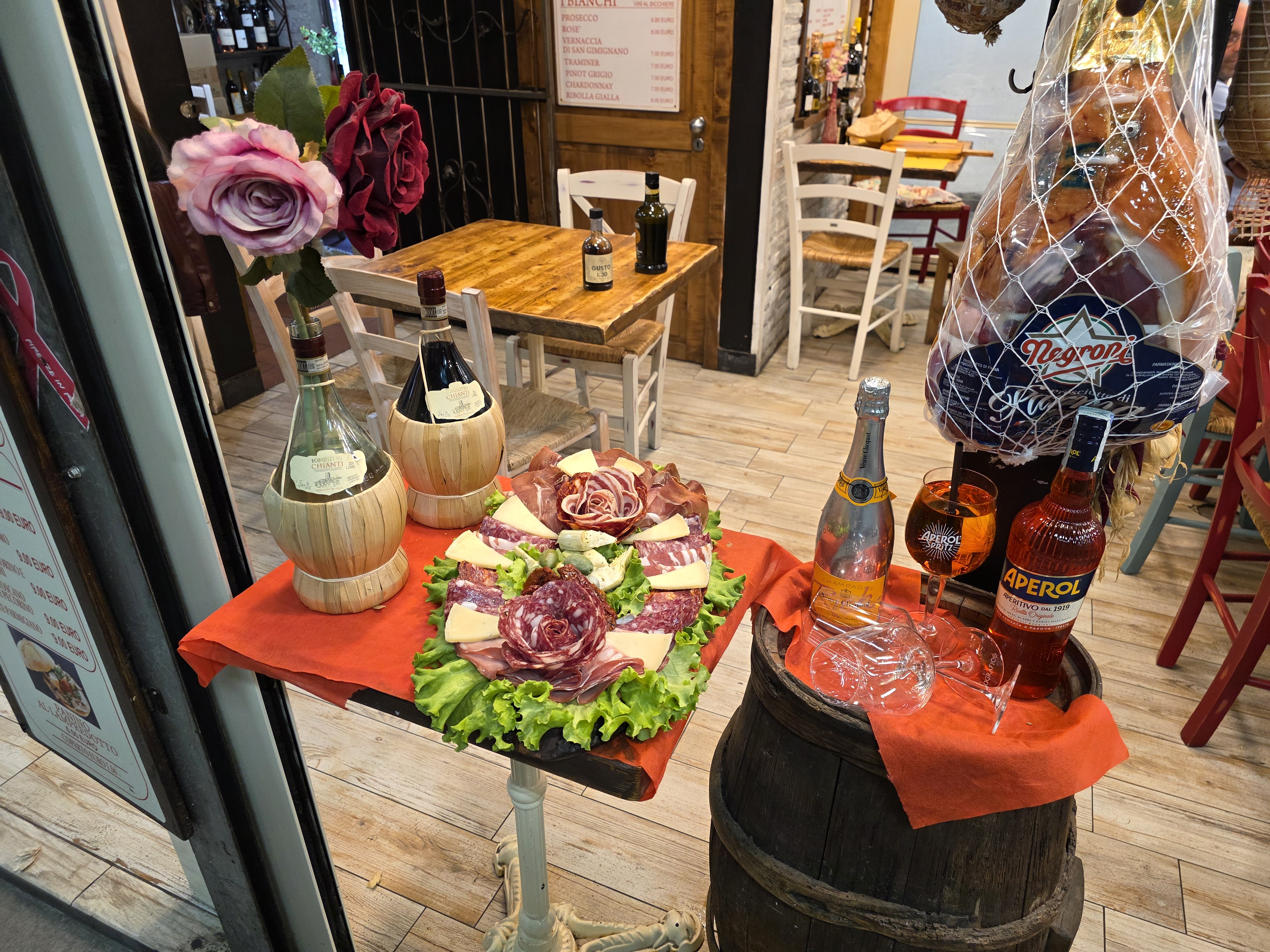
For an early lunch I planned to have another one of those schiacciata sandwiches. I found a couple of highly rated places and, once there, chose the one with the shorter queue and got another salami sandwich – honestly, it feels like I’m surviving entirely on cured meats here.

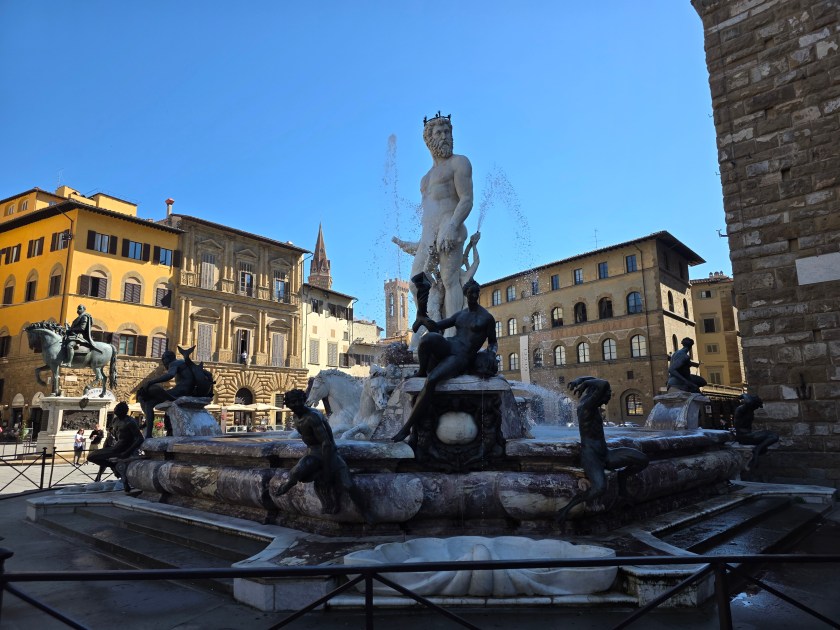
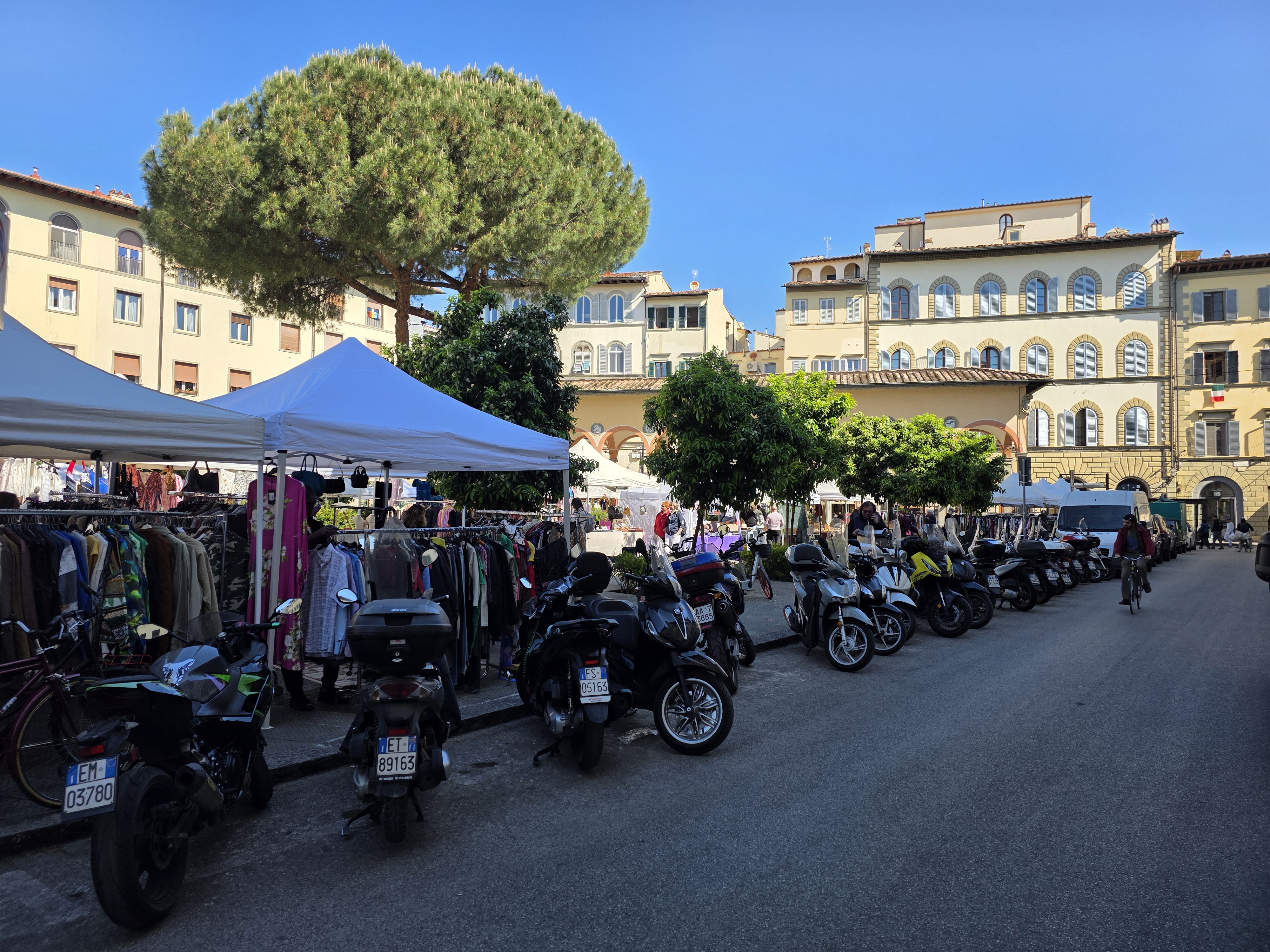
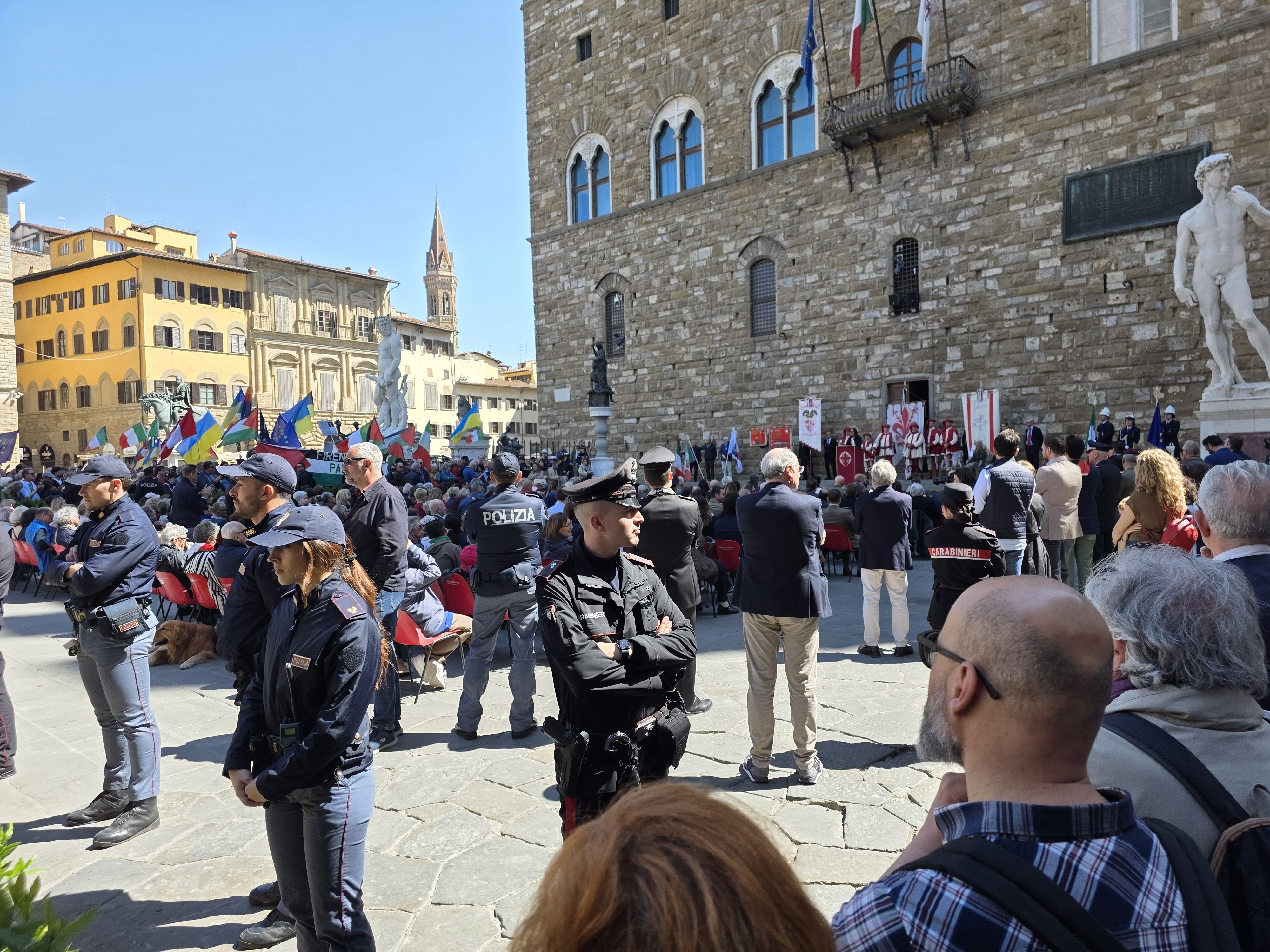
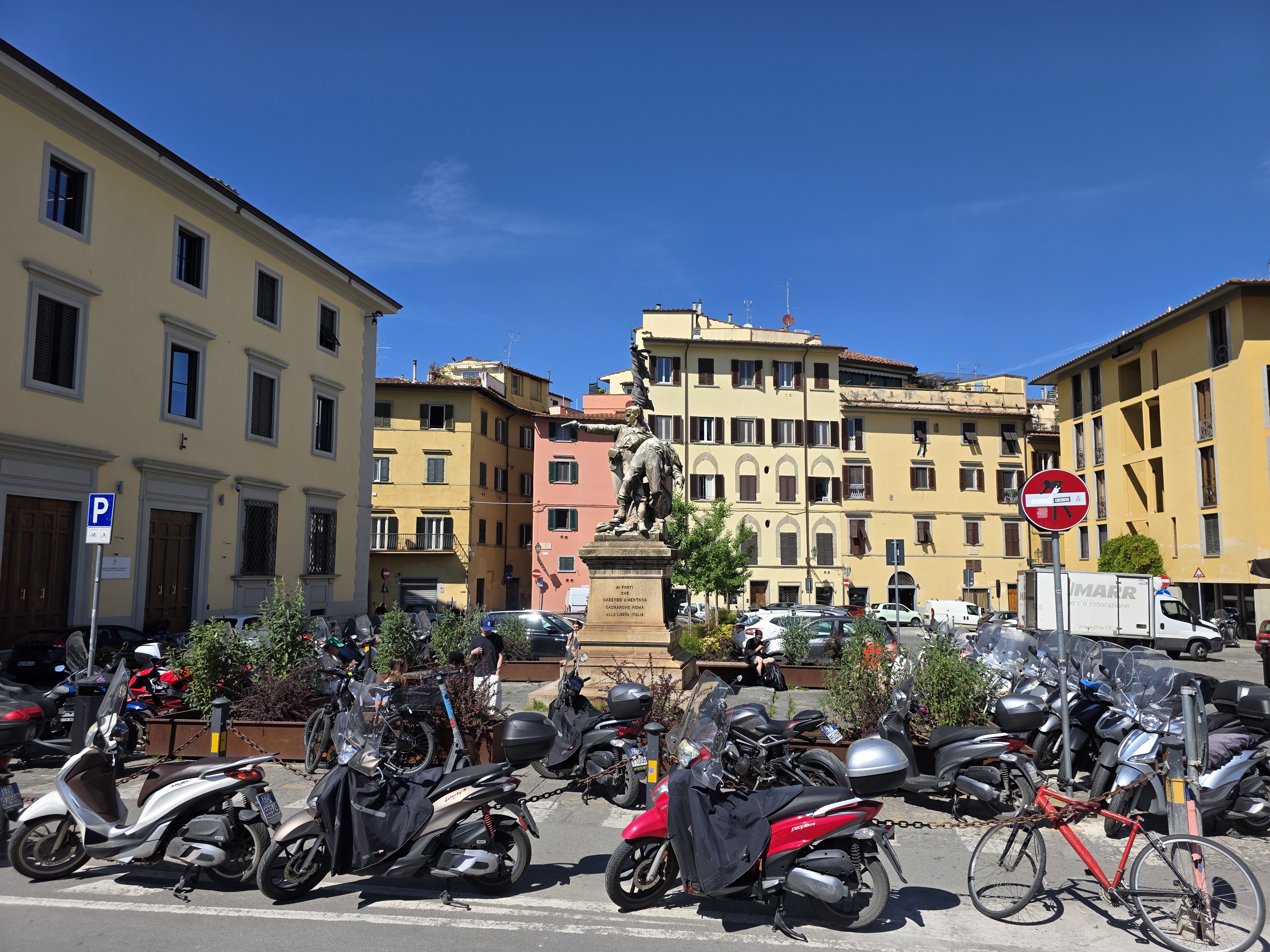
On Piazza della Signoria I came across some kind of celebration – today, April 25th, is a national holiday in Italy, Liberation Day from Fascist occupation.

And by 2pm I arrived at the Santa Maria Novella railway station, which was the meeting point for our Chianti wine tour.

While waiting for the tour, I met an American woman who told me her daughter lives in Barcelona and she had been visiting her. Her husband doesn’t like travelling, so she mostly travels without him. She had absolutely no idea what Azerbaijan was, though she admitted herself that Americans aren’t particularly strong at geography. Her parents were from Latin America, so she speaks excellent Spanish, and even spoke to the guide in Spanish rather than English. She said that ever since she was young, she’d been used to the idea that in Europe it’s better not to advertise that you’re American – and now, with the arrival of the “orange man”, as she called him, even more so.

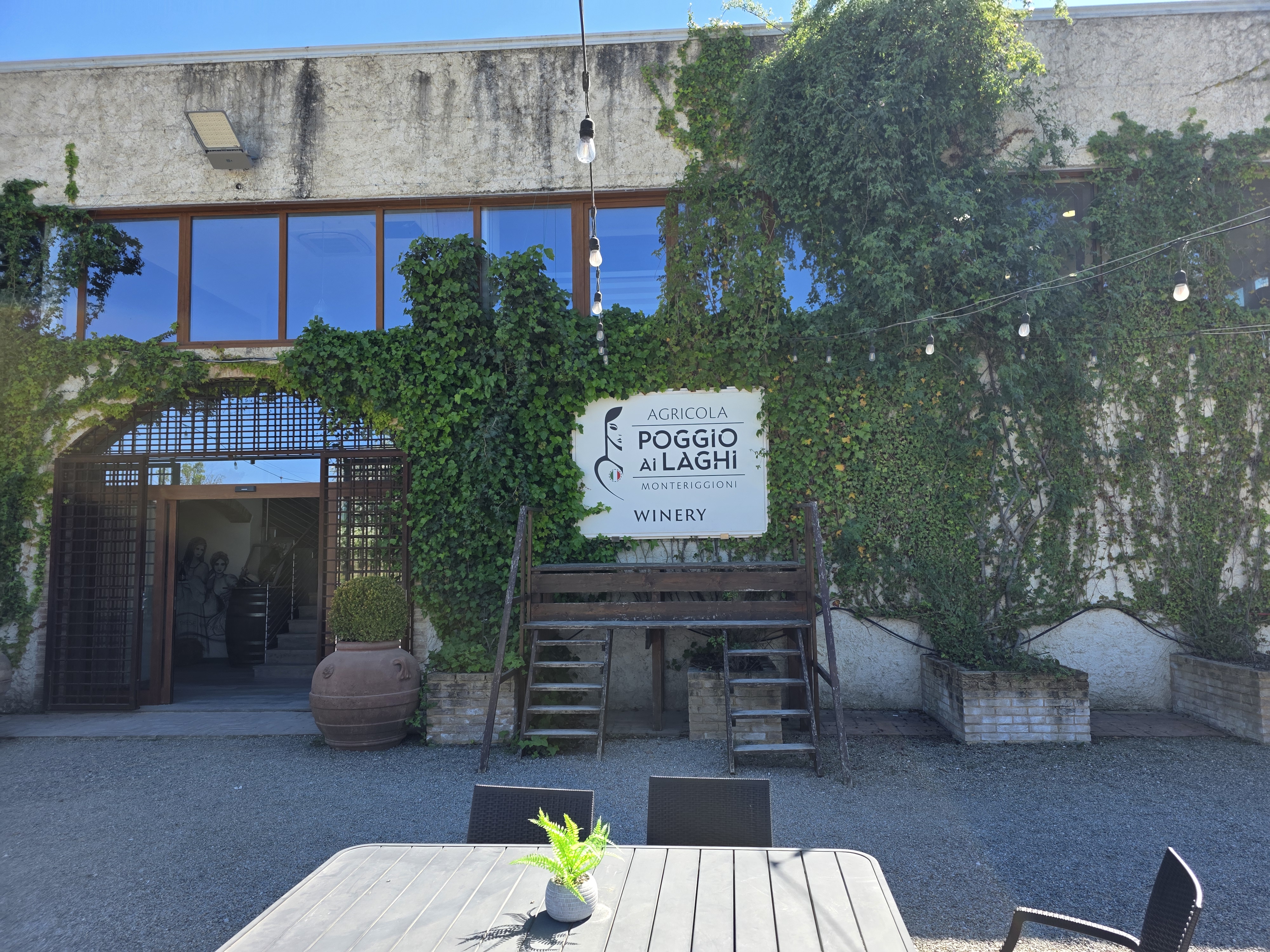
As for the tour itself, the drive there took an hour and the drive back another hour, while we spent about two hours there. We went to Monteriggioni, in the Chianti region of Tuscany, roughly between Florence and Siena, to a winery called Poggio ai Laghi. It turned out not to be quite what I had expected, because I had imagined something outdoors, surrounded by those famous Tuscan vineyard landscapes.

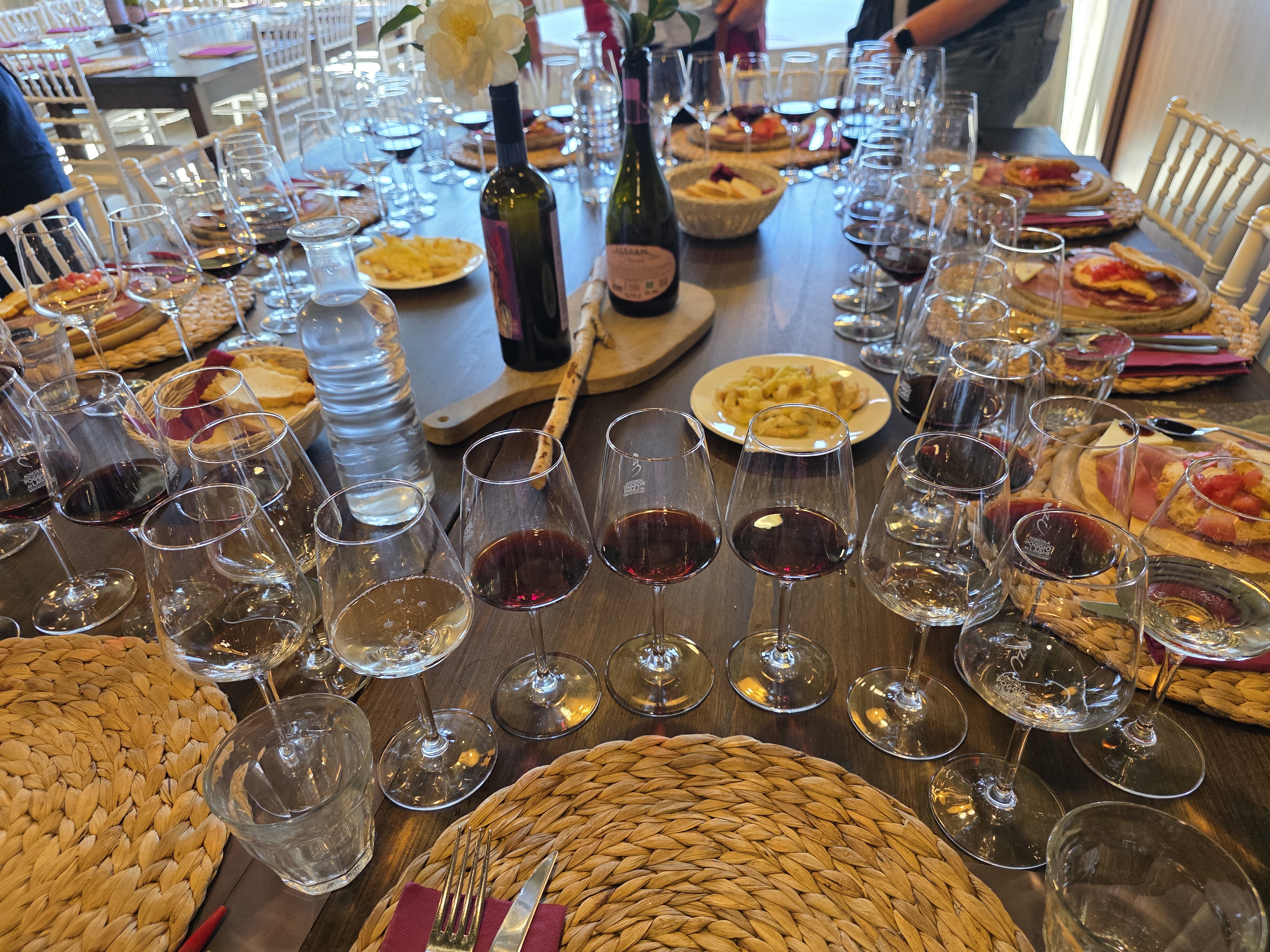
In reality, they only showed us the vineyards briefly from the side and allowed us to take photos there, but there was no actual walk outdoors. We spent most of the time inside, where we tasted seven wines. Yes, it was interesting, tasty and informative, but not entirely what I had imagined.

As for the wine itself, there are fairly strict rules for producing Chianti Classico. Firstly, at least 80% of the grapes must be the local Sangiovese variety. Secondly, the vineyards are not artificially irrigated and rely entirely on rainfall, so naturally wines from different years vary.

We first tried a sparkling white wine, then a regular white, which I didn’t particularly like because it tasted rather watery.

After that we tried three red wines, all very different. One was a younger Classico, the second a Riserva with a strong cherry flavour, which I liked the most, and the third was an IGT – not necessarily a lower category, but apparently with a lower required percentage of the grape variety.

What was interesting was that before, when people talked about notes of tobacco, leather and so on, it never really meant anything to me. But when you actually taste these different wines, you really can notice the differences and all those flavour notes. At the end we also had a dessert wine.

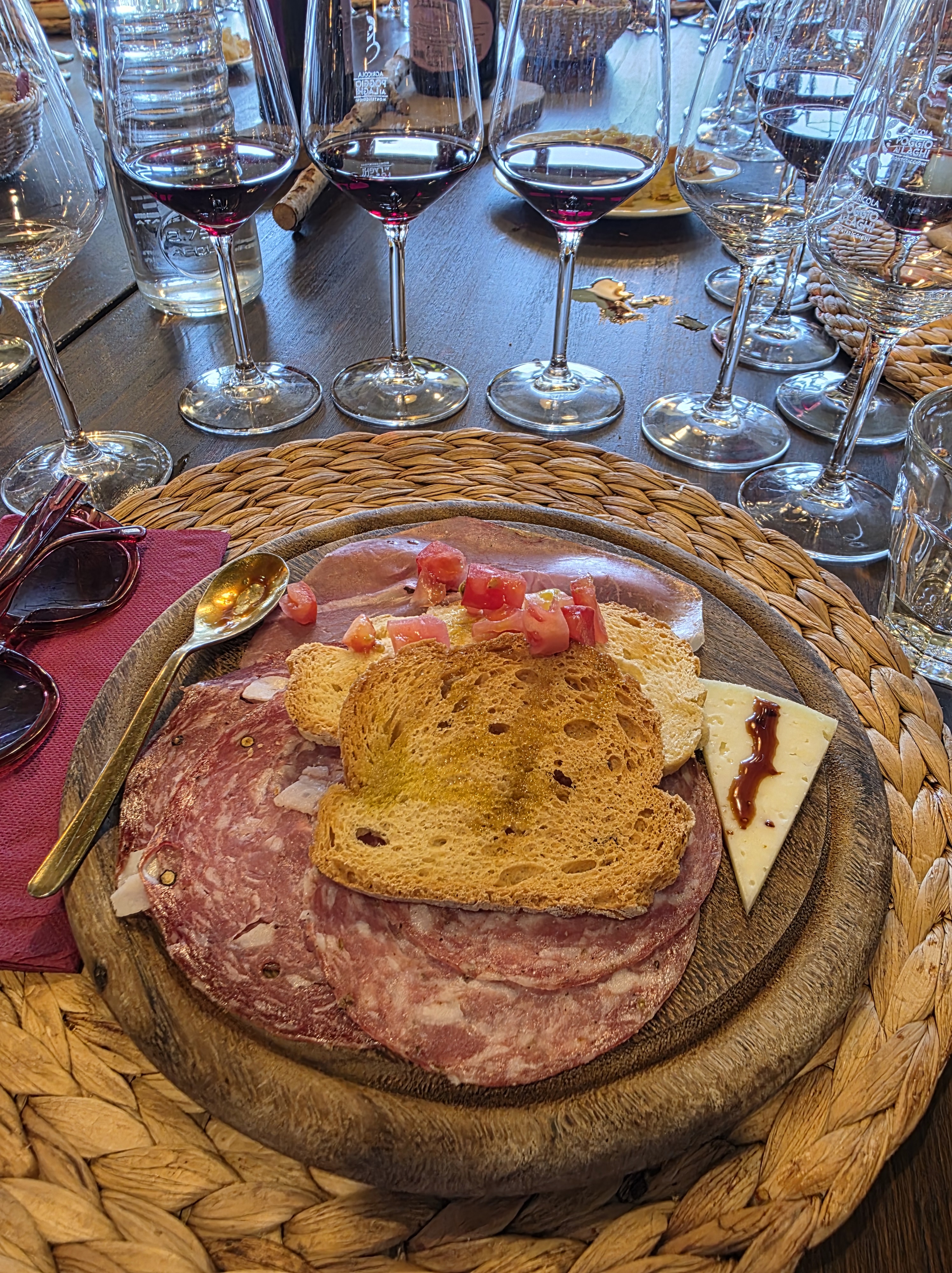
Alongside all this there were snacks – we got to try their balsamic vinegar, olive oils (including truffle oil), and of course cheese, a couple of types of salami, prosciutto and bread. Honestly, after all that I barely even needed dinner, because I kept snacking throughout the tasting.

And toward the end, while we were already slowly getting ready to leave, one of the administrators caught us and offered us two additional wines that hadn’t been included in the tasting itself. One was an Classico Riserva, and the other was something called Donna Ava, apparently the winery’s most expensive wine, reserved for special occasions, as he put it.

I’ve always said I can’t tell the difference between a 10-euro wine and a 100-euro wine, but if you actually taste different wines side by side, you really can tell.

Although to be fair, the cheaper wines there weren’t 10 euros – they were more like 40–50. Those prices included shipping to various countries, but there was one price for the EU and the US, and another for the rest of the world – and our post-Brexit United Kingdom naturally falls into “the rest of the world.” They did say they could offer me some sort of discount, but the problem was that I couldn’t take the wine with me because I didn’t have checked luggage, and deliveries required a minimum order of six bottles, so I declined.

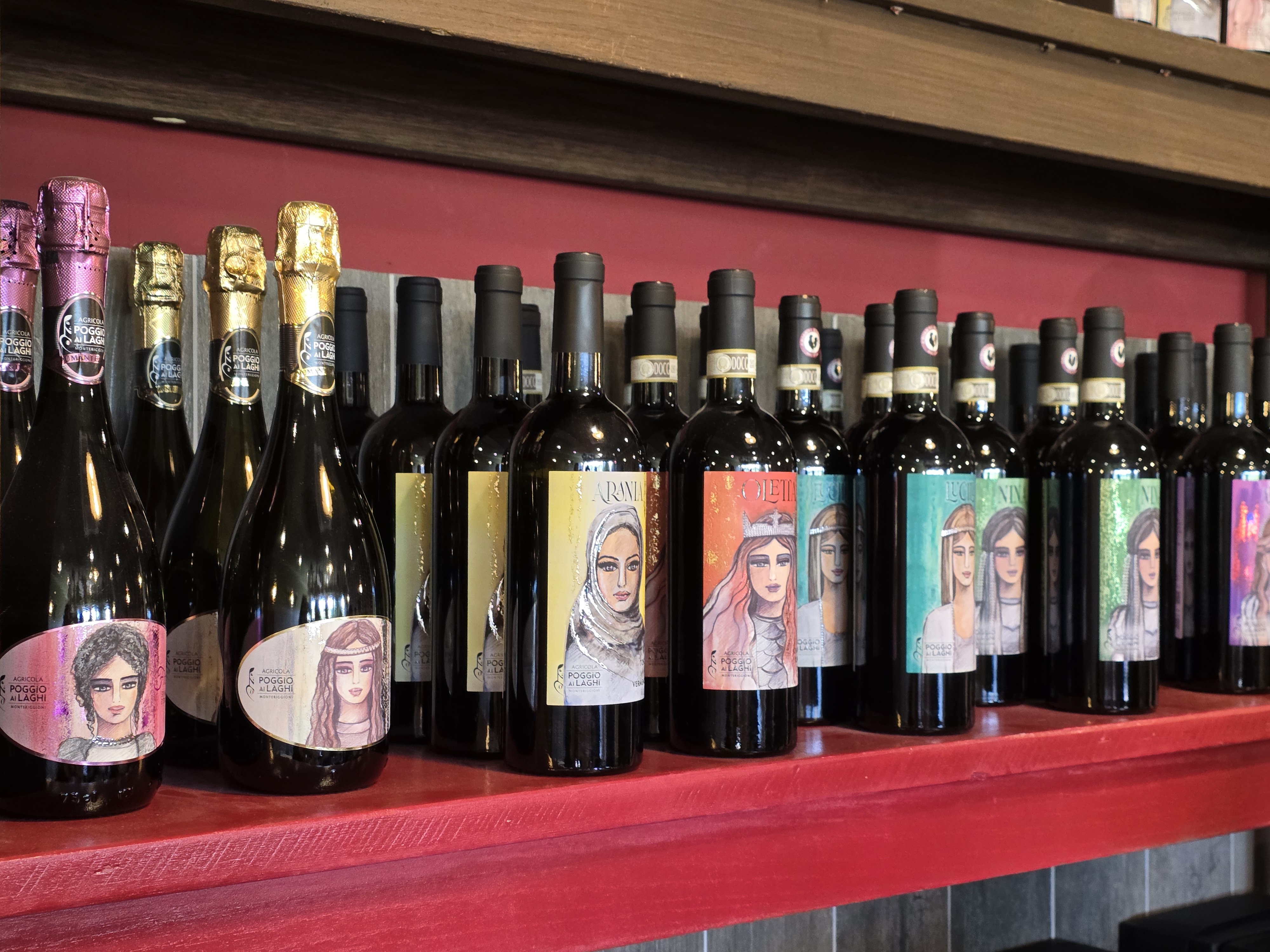
They also said they don’t sell these wines to restaurants or shops, only exclusively at the winery itself. Each bottle features a woman on the label – every wine is dedicated to the medieval noblewoman Donna Ava of Monteriggioni or one of her seven maidservants (Lucilla, Oletta, Nina, Arania, Aranda, Arella and Firmina).

The symbol of Chianti Classico is a black rooster on the bottle. There is a legend about this. Historically, Florence and Siena were always rivals. One day, to establish the border between the two cities, it was agreed that after the first rooster crowed at sunrise, riders from each city would set out toward each other, and the border would be placed where they met. The people of Siena chose a white rooster, while the Florentines chose a black one and deliberately kept it hungry. As a result, the starving rooster crowed way before dawn, allowing the Florentine rider to set off earlier and ride almost all the way to Siena.

When we got back, naturally I didn’t feel like having dinner anymore, but I did feel like ice cream, so I walked once more toward the river and the bridge and had some gelato.

I ended up doing 23,000 steps that day, and by noon alone I had already done 10,000 – despite the fact that this was supposed to be a relaxed morning.

It was my last day in Florence – tomorrow morning I’m heading back.

Posted in English, Europe, Florence, Italy

Florence – Day 2

РУССКОЯЗЫЧНАЯ ВЕРСИЯ ПО ЭТОЙ ССЫЛКЕ. CLICK HERE FOR RUSSIAN VERSION.

April 24 2026 – Friday

Today I slept very poorly, because at 4:30am some large vehicle – either a garbage truck or a street-cleaning machine, I couldn’t quite tell – pulled up right under my window and stayed in the same spot for at least an hour, making unbelievably loud noises. I never figured out what it was doing there, since I couldn’t properly see it from my window, but it was impossible to sleep, and I only managed to drift off for a bit once it had left, even though I then had to get up early for all my tours.

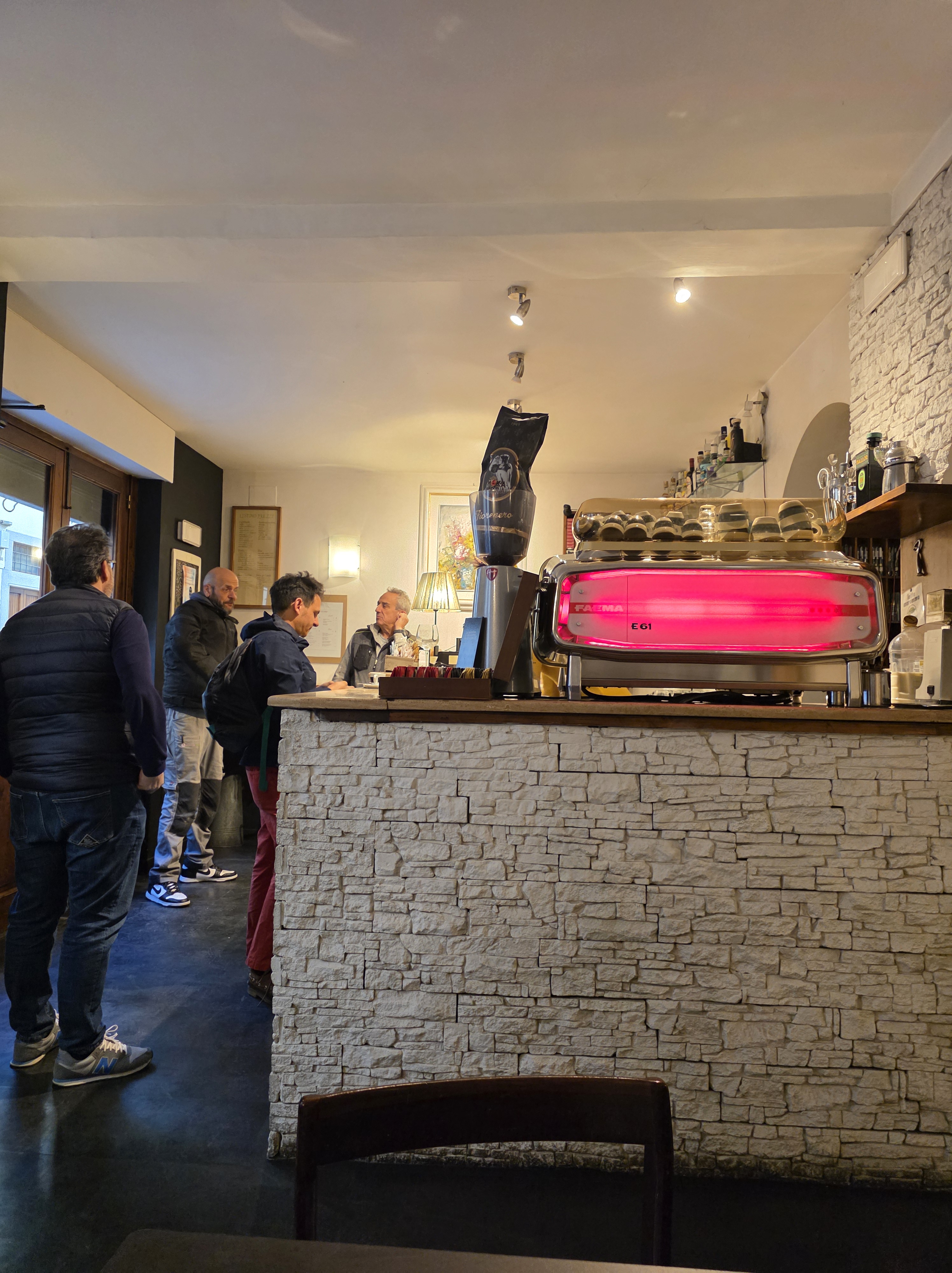
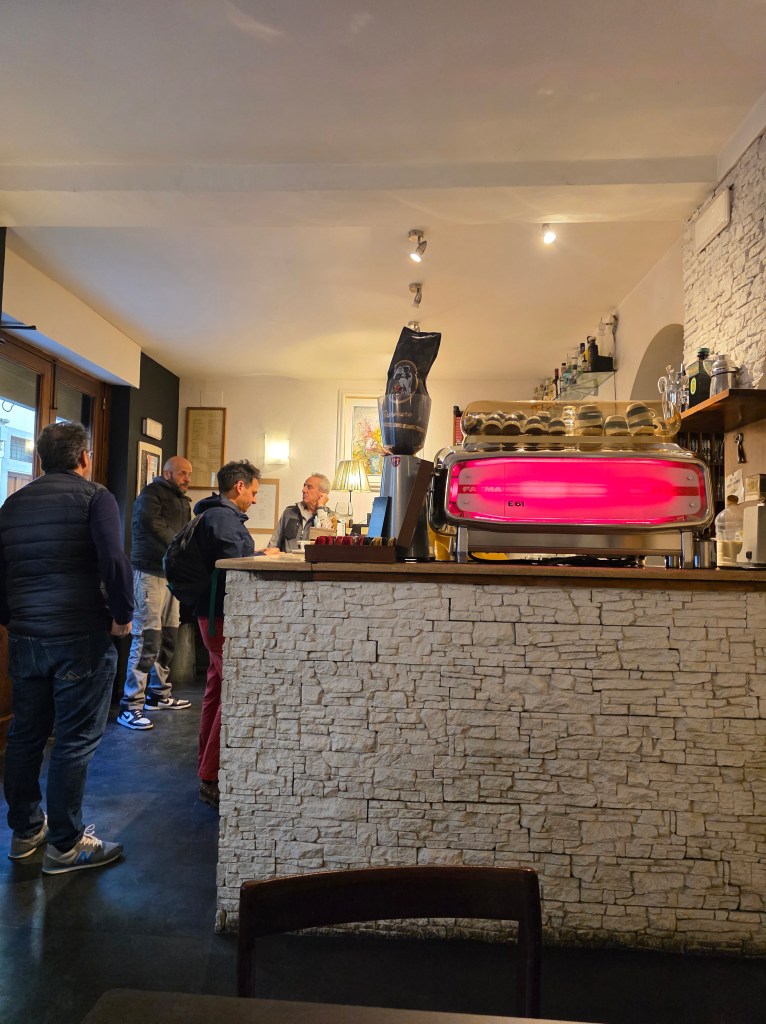
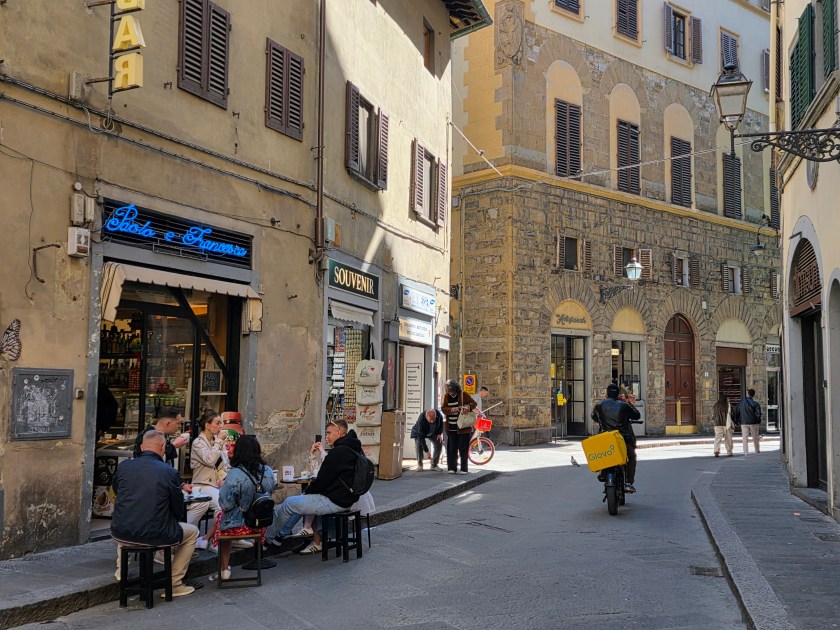
I don’t have breakfast at the hotel, so in the morning I went straight to a bar right opposite as soon as it opened. It’s a traditional kind of place – coffee in the morning, wine in the evening. I went in literally as the woman working there opened the shutters, and at the same time quite a few other people came in. I sat down to eat and watch people, and came to the conclusion that these coffee bars are the local equivalent of our “day-day kafesi” (“cafes for uncles”), because the entire time I was there, various working-looking men kept coming in for a quick espresso, drinking it right at the counter, exchanging a few words with the barista or each other, and leaving.
I had a ticket to the Accademia Gallery for 9am, and there was a bit of a hiccup. The booking page showed two locations on the map: one was the entrance to the gallery, and the other was supposedly the meeting point with an agency representative who was meant to exchange my voucher for an actual ticket. It said something like, “our staff in yellow vests will meet you there”.

I arrived and saw the gallery entrance with a queue, along with various representatives from different agencies – but not the one I needed. Meanwhile, Google Maps sent me in a completely different direction, where there was no sign at all, and the meeting point was marked in front of what looked like a hotel. Then a couple approached the same spot, with phones in hand, also looking for the people in yellow vests – but there weren’t any.

I started to suspect that this probably wasn’t the right place, and after unsuccessful attempts to call or message anyone on WhatsApp, we collectively decided to go back to the gallery, queue up, and try to get in with the voucher.

In the end, we joined the 9am queue (there was a separate one for each time slot), and when it was our turn, we were told that we did indeed need to exchange the vouchers and pointed to not one, but three people in yellow vests standing nearby. Of course, it was a completely different location – the street number was correct, but somehow Google Maps sent us to the wrong place.

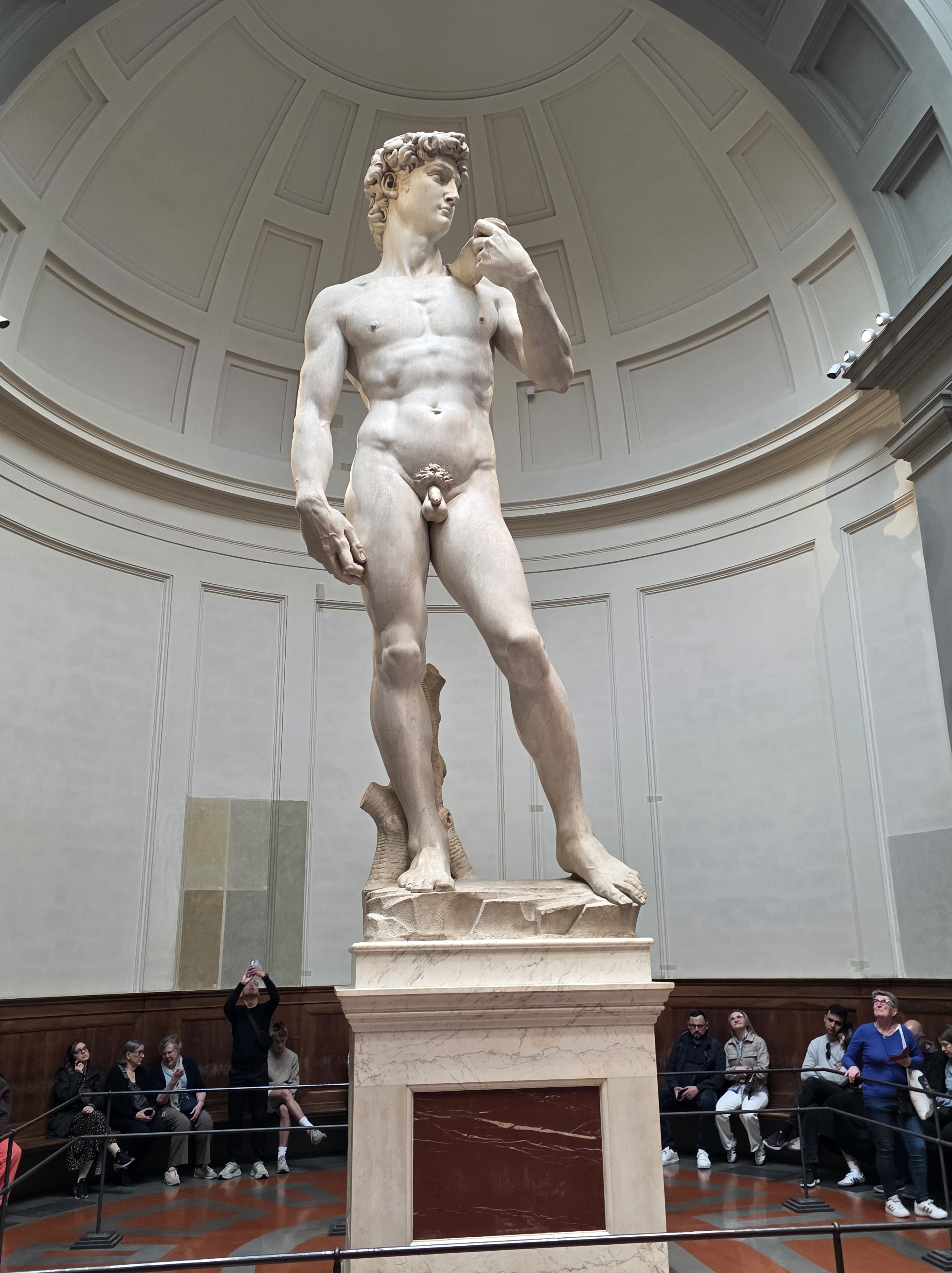
Anyway, everything worked out, and at 9am sharp I walked into the gallery. I should say I came to the conclusion that museums and galleries need to be approached strategically. No one has the time or energy to see everything. For example, in this case, you know you’re going there to see David, so you plan everything around David.

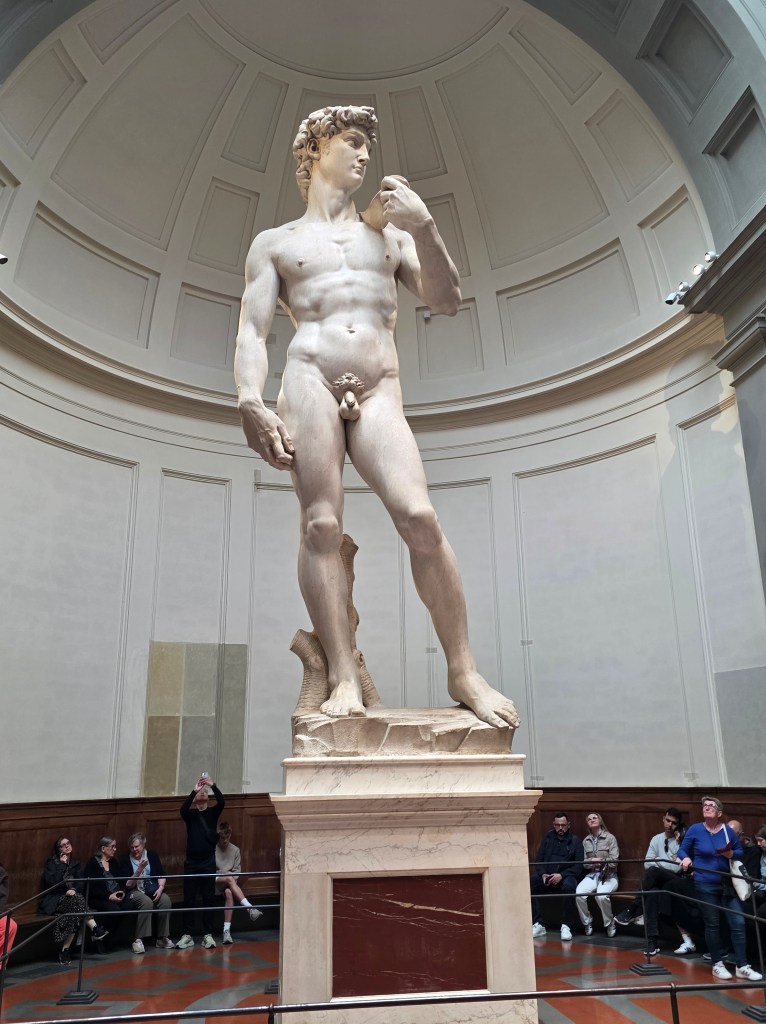
So, I didn’t waste much time looking at the paintings in the first room, just gave them a quick glance and went straight to David. On the way, there were also the four unfinished sculptures of “Slaves” that Michelangelo was working on for the tomb of Pope Julius II.

David itself, of course, immediately stands out – it’s huge, five metres tall. Interestingly, the proportions are intentionally distorted – the head and right hand are unnaturally large, because the sculpture was meant to be viewed from below. Also, it’s carved from a single block of marble that had previously been considered defective and that no one wanted to work with.
All in all, I spent no more than half an hour in the Accademia Gallery and moved on. I then had a ticket to the Uffizi Gallery for 11am. On the way, I stopped for an espresso in one of the coffee bars – the espresso here could wake the dead, which was very helpful after a half-sleepless night.
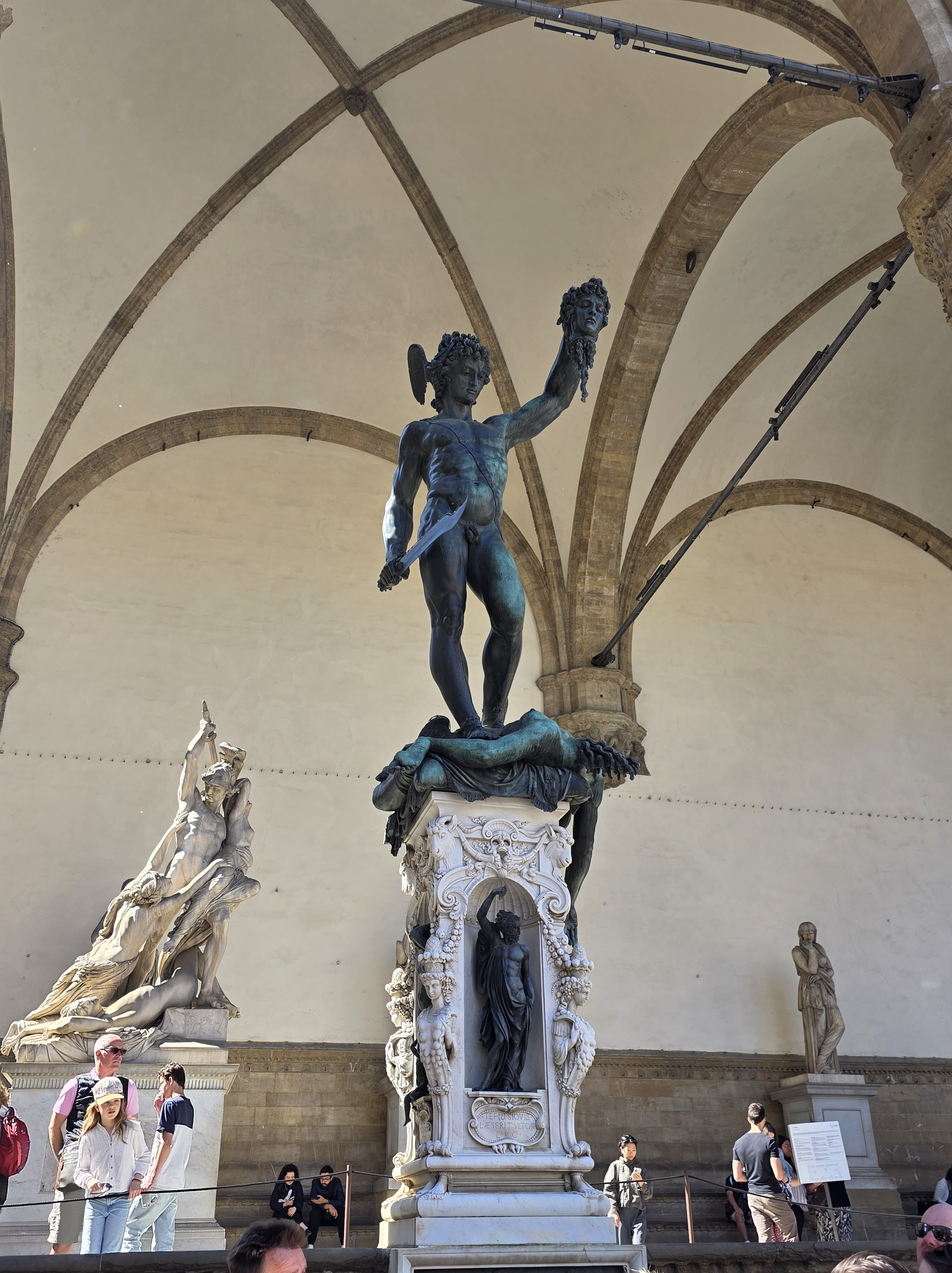
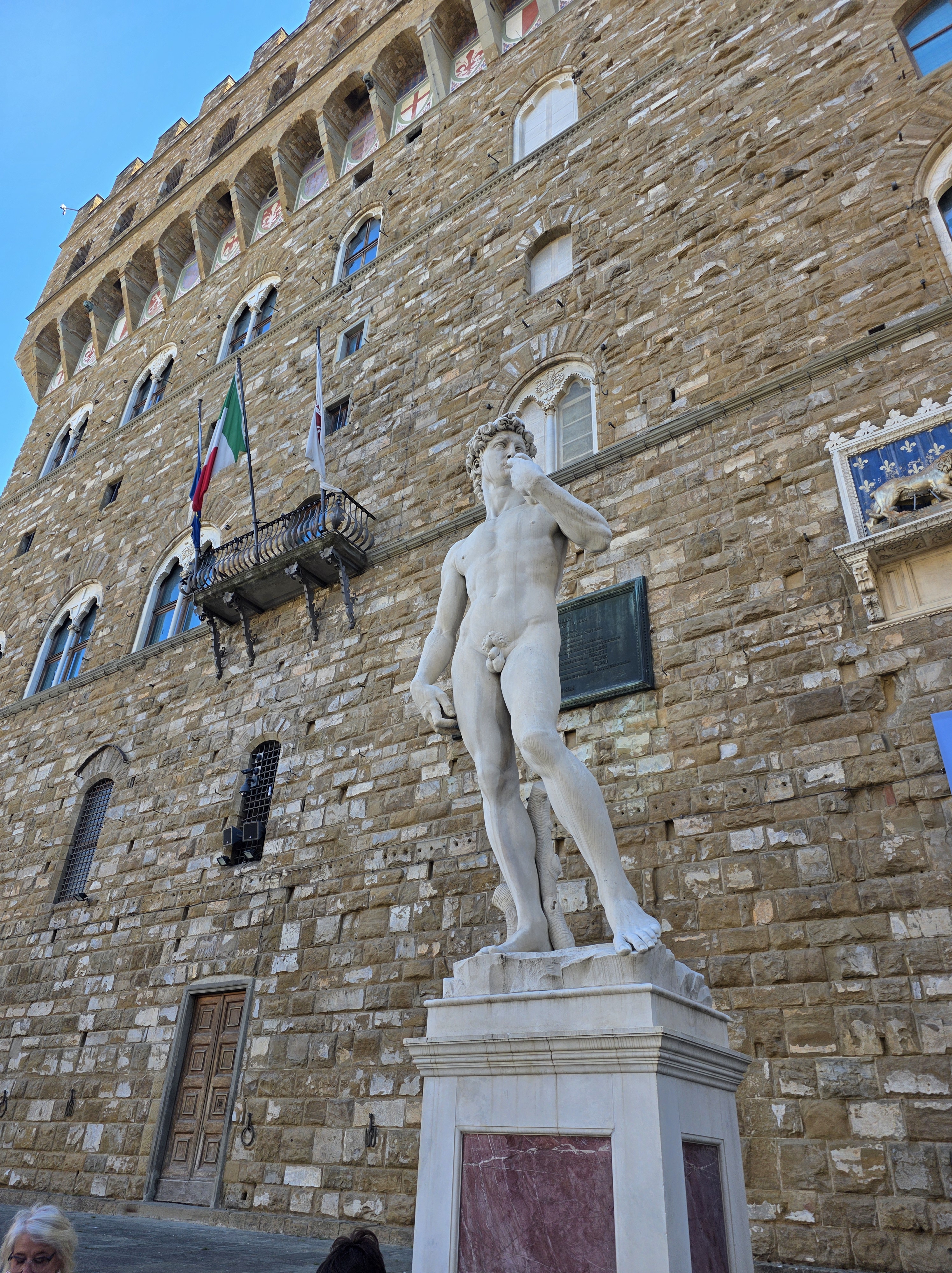
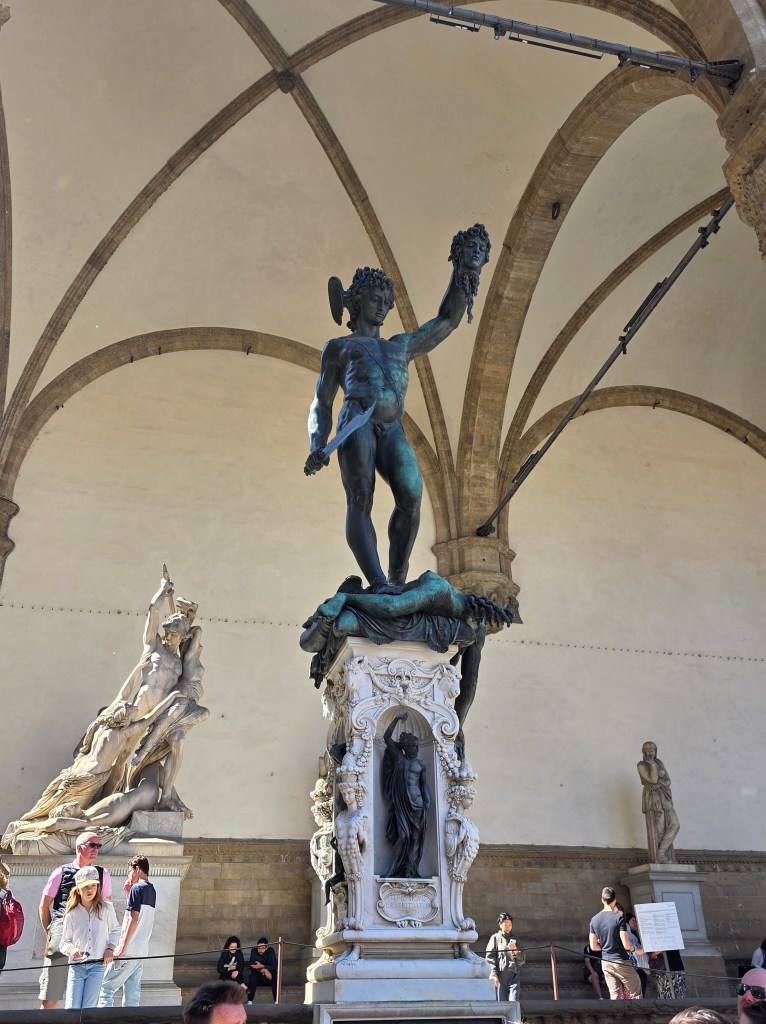
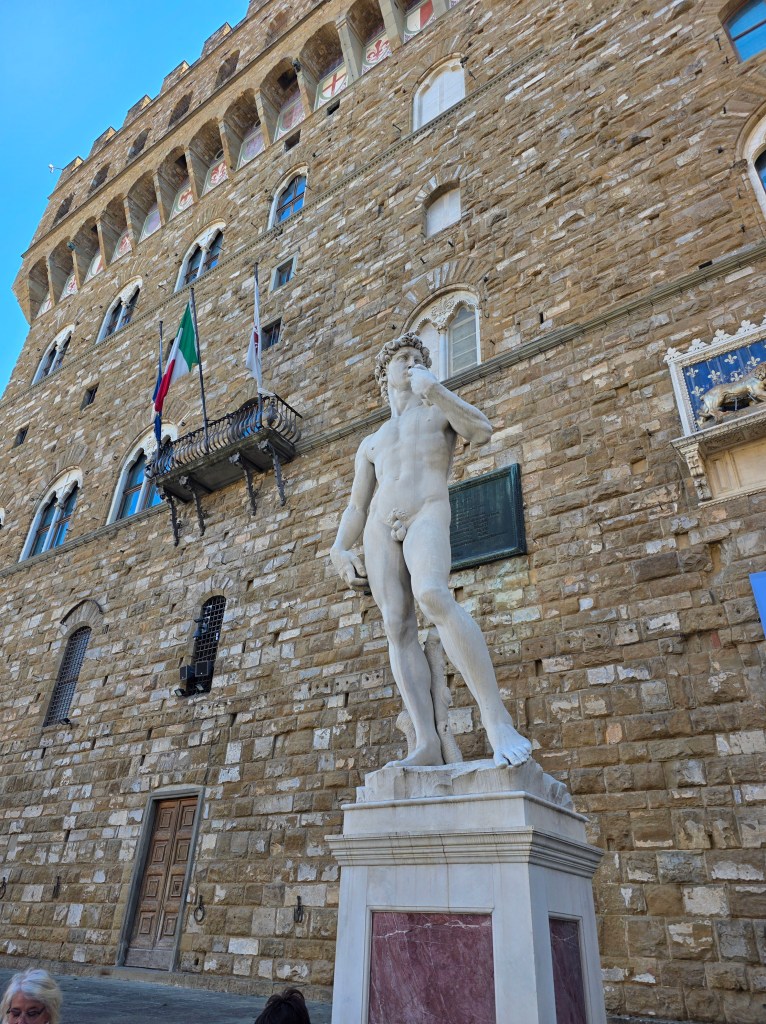
At the Uffizi there were also different queues for different time slots, and it turned out that although I had booked for 11, I was assigned the nearest available slot at 11:30. There was no point trying to get in earlier, so in the meantime I looked at the sculptures in the open-air Loggia dei Lanzi, including Cellini’s “Perseus with the Head of Medusa.” There’s also another David nearby – a replica, of course. I had some delicious dark chocolate gelato, and then went back to the Uffizi.
While I was standing in line, a Russian-speaking couple arrived and casually squeezed into the middle of the queue. Only my very unfriendly look ensured that they moved behind me rather than in front of me.

I have to say, despite the unfriendly look, I was really looking forward to visiting the Uffizi. It gave me goosebumps to think that someone had created a sculpture or painted a picture, and 500 years later people are spending money and standing in queues in order to see their work.

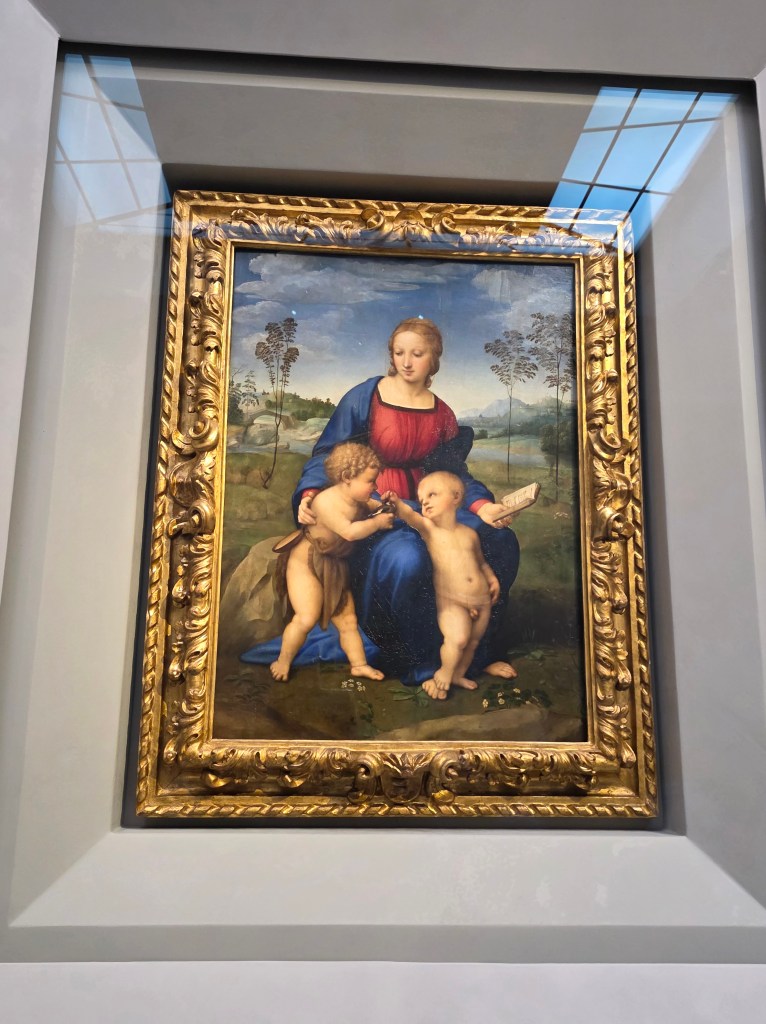
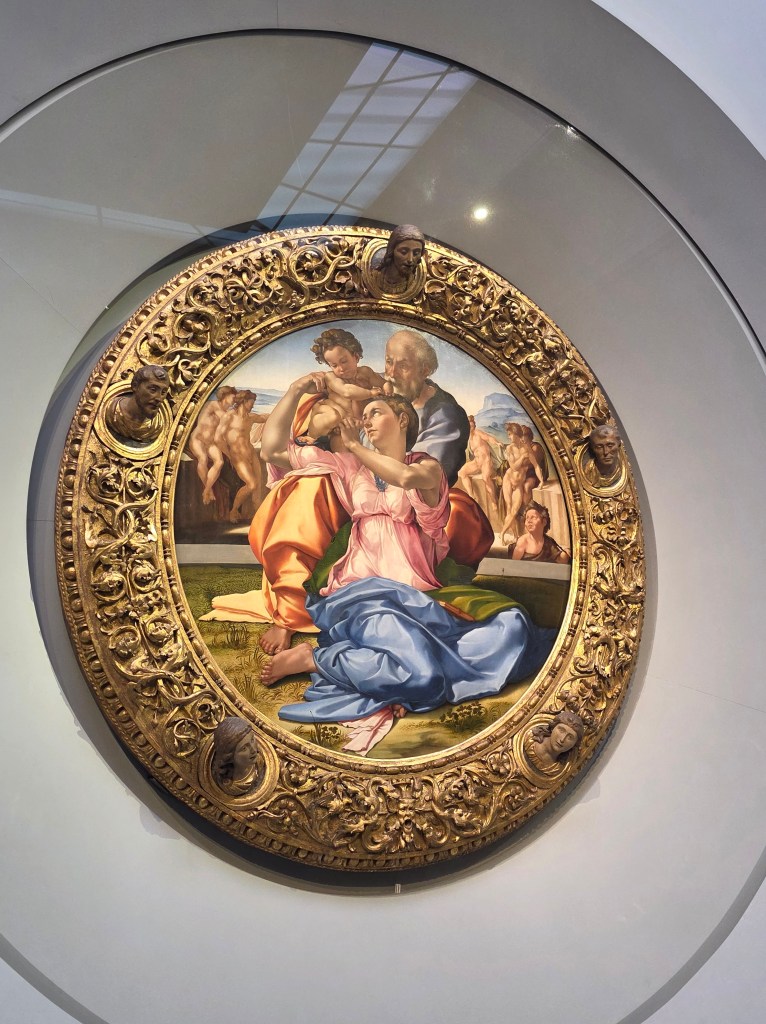
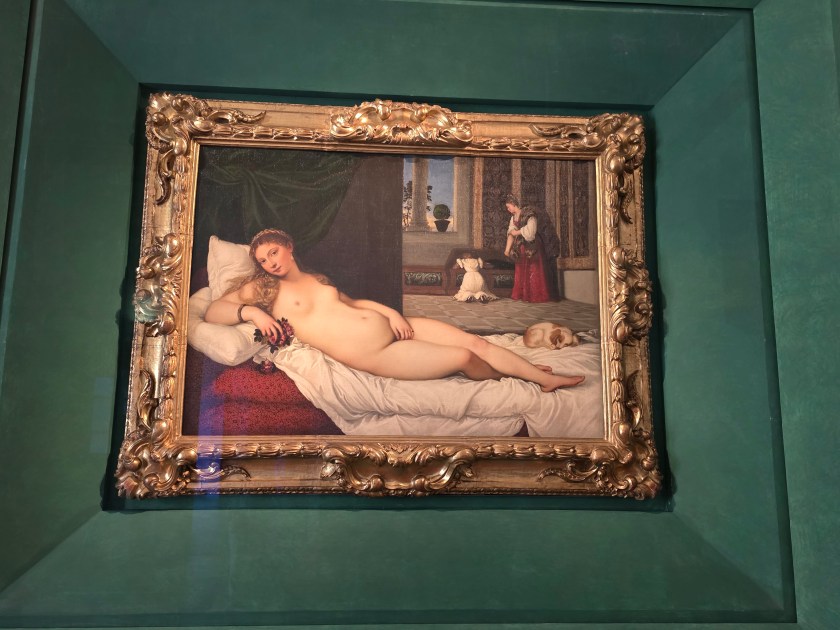
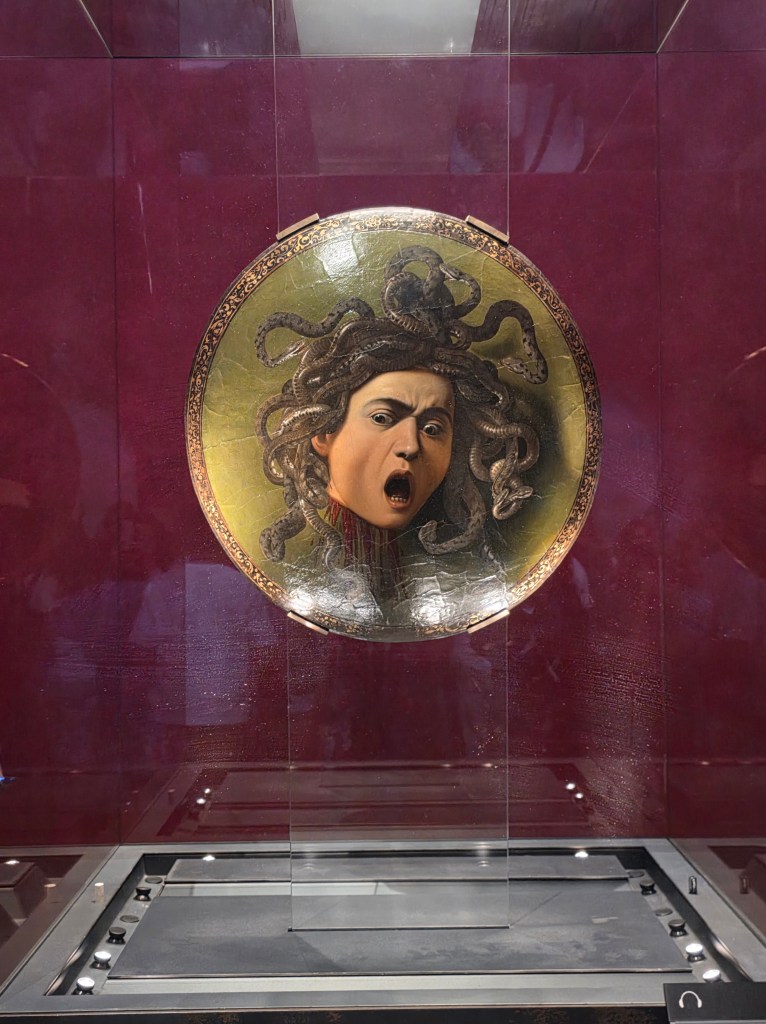
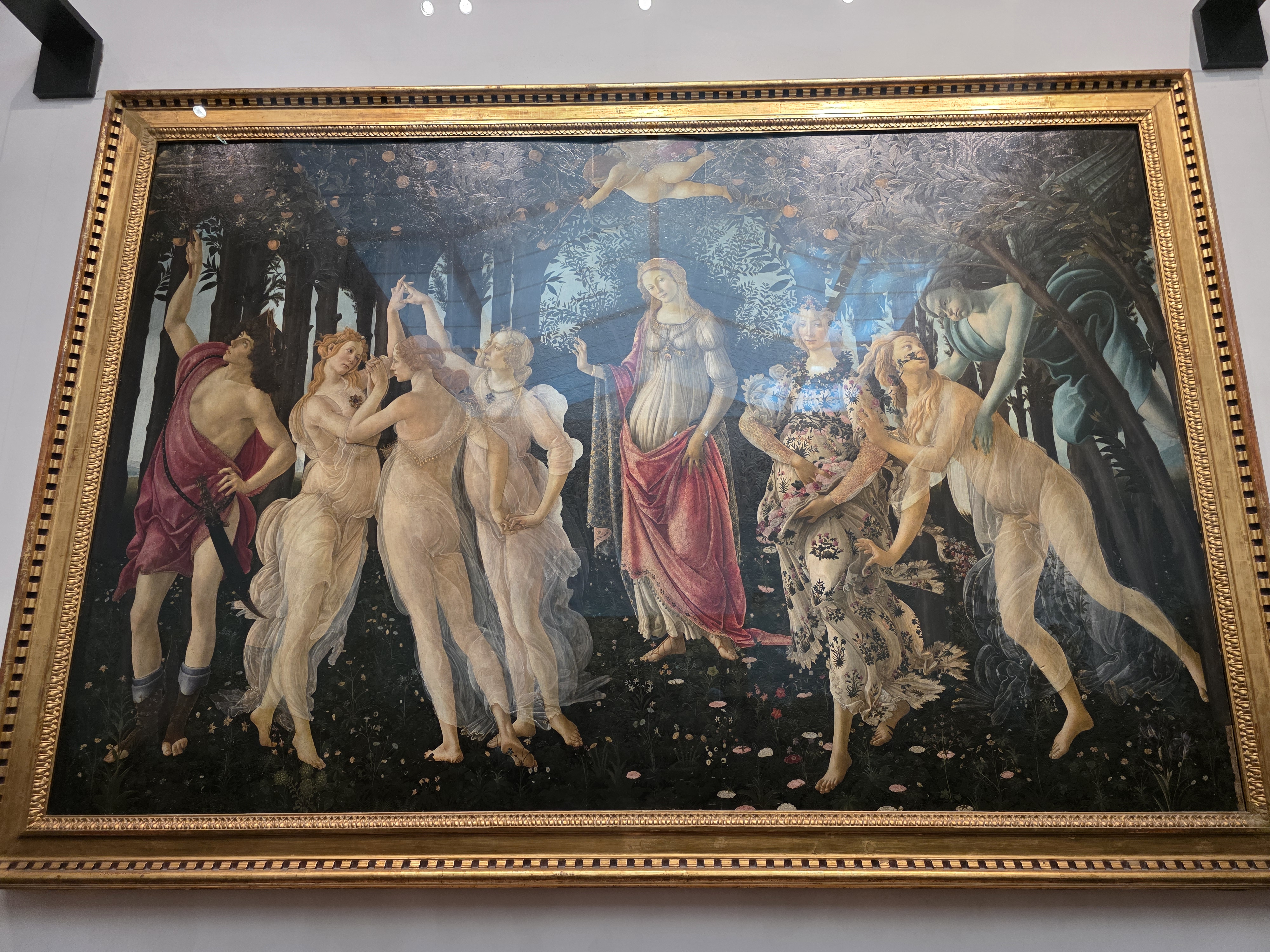
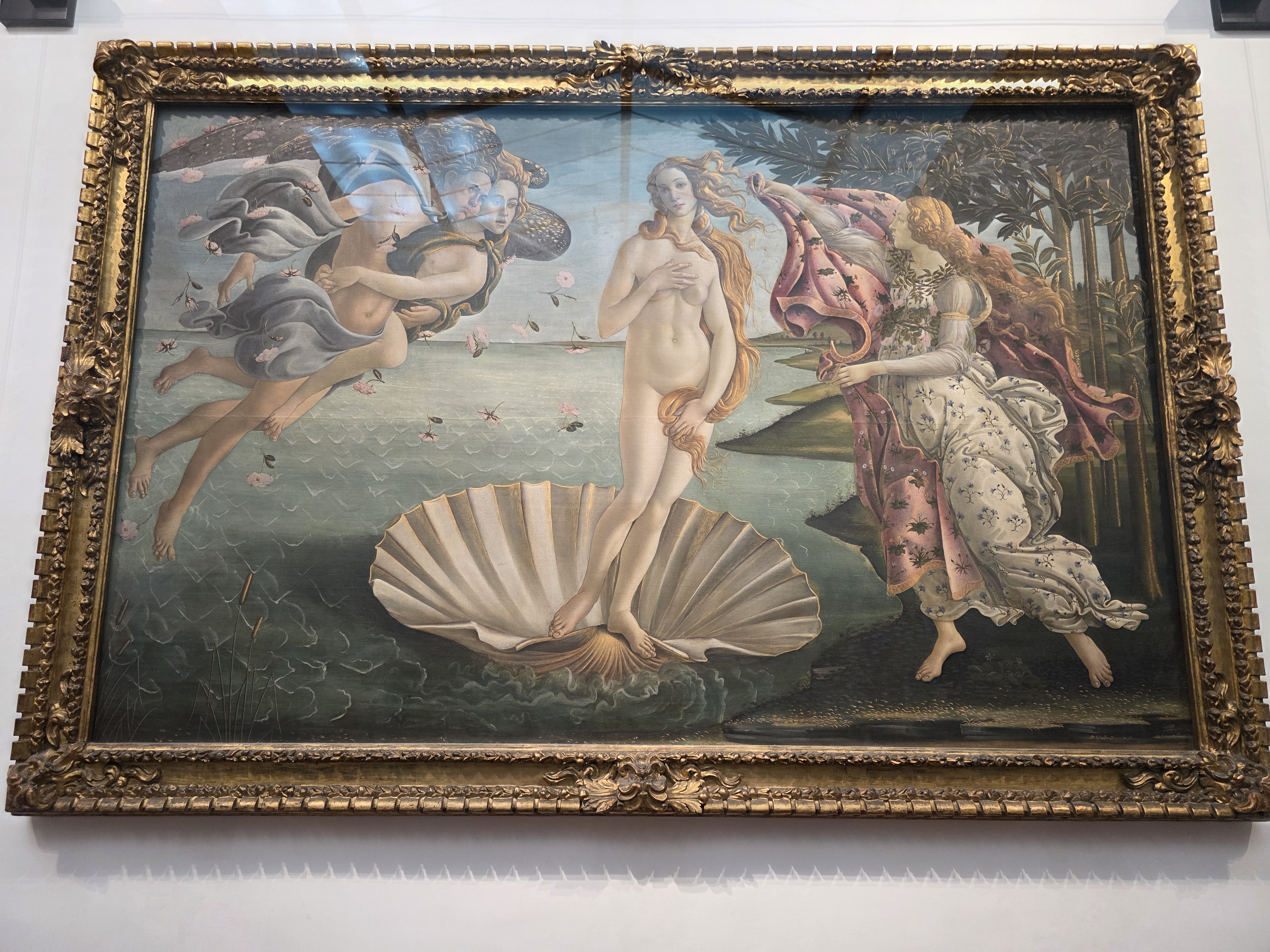
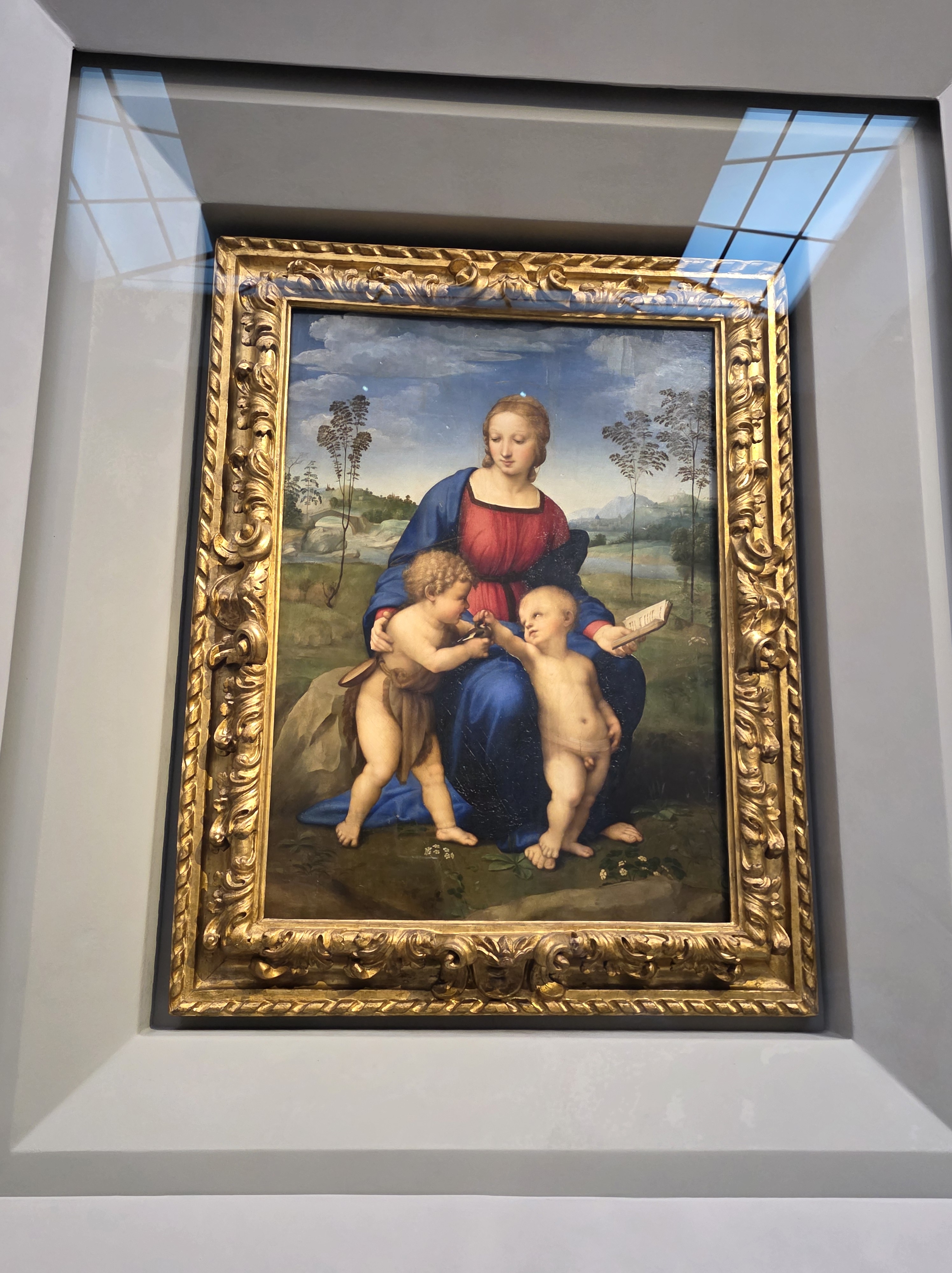
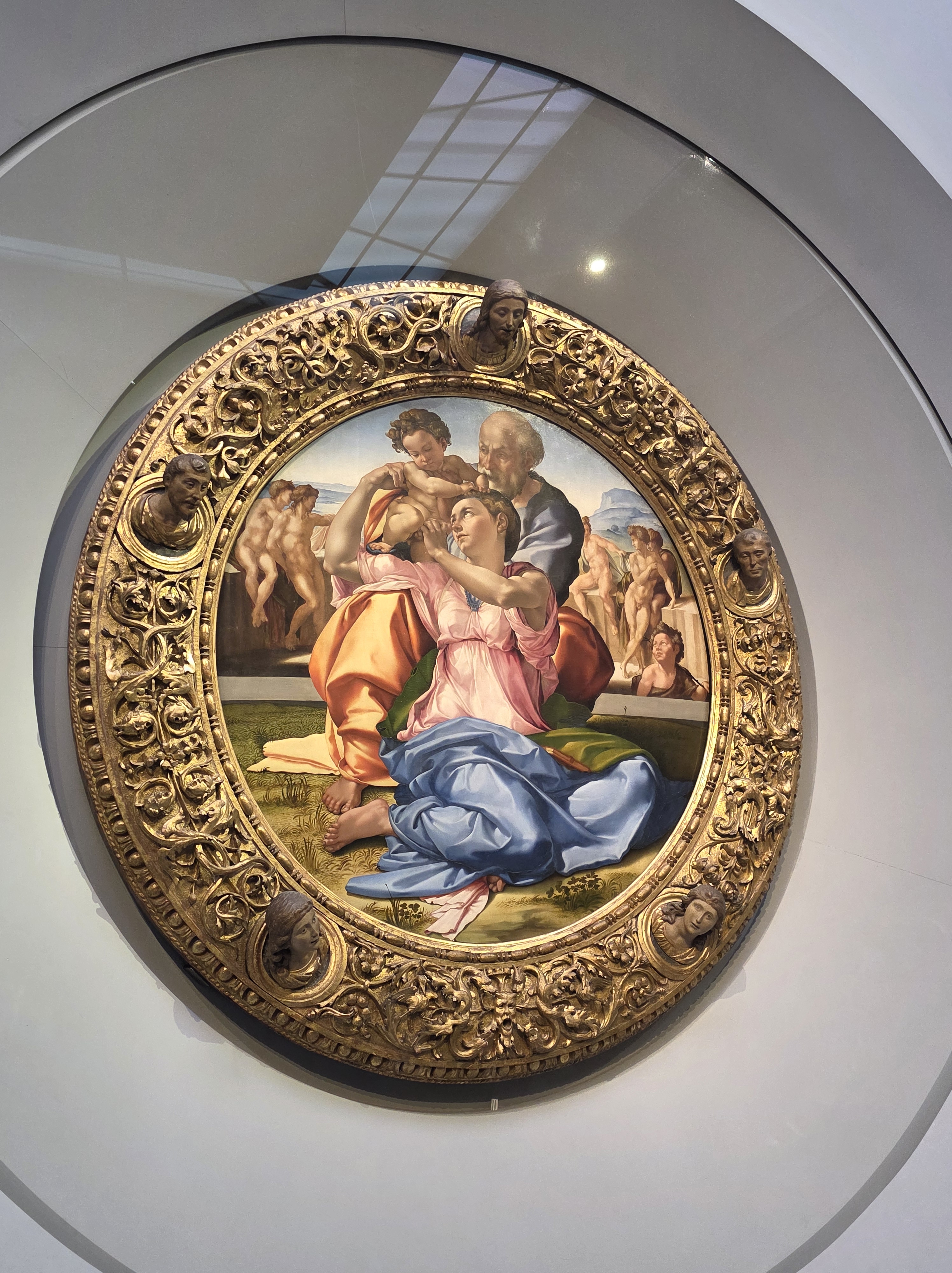
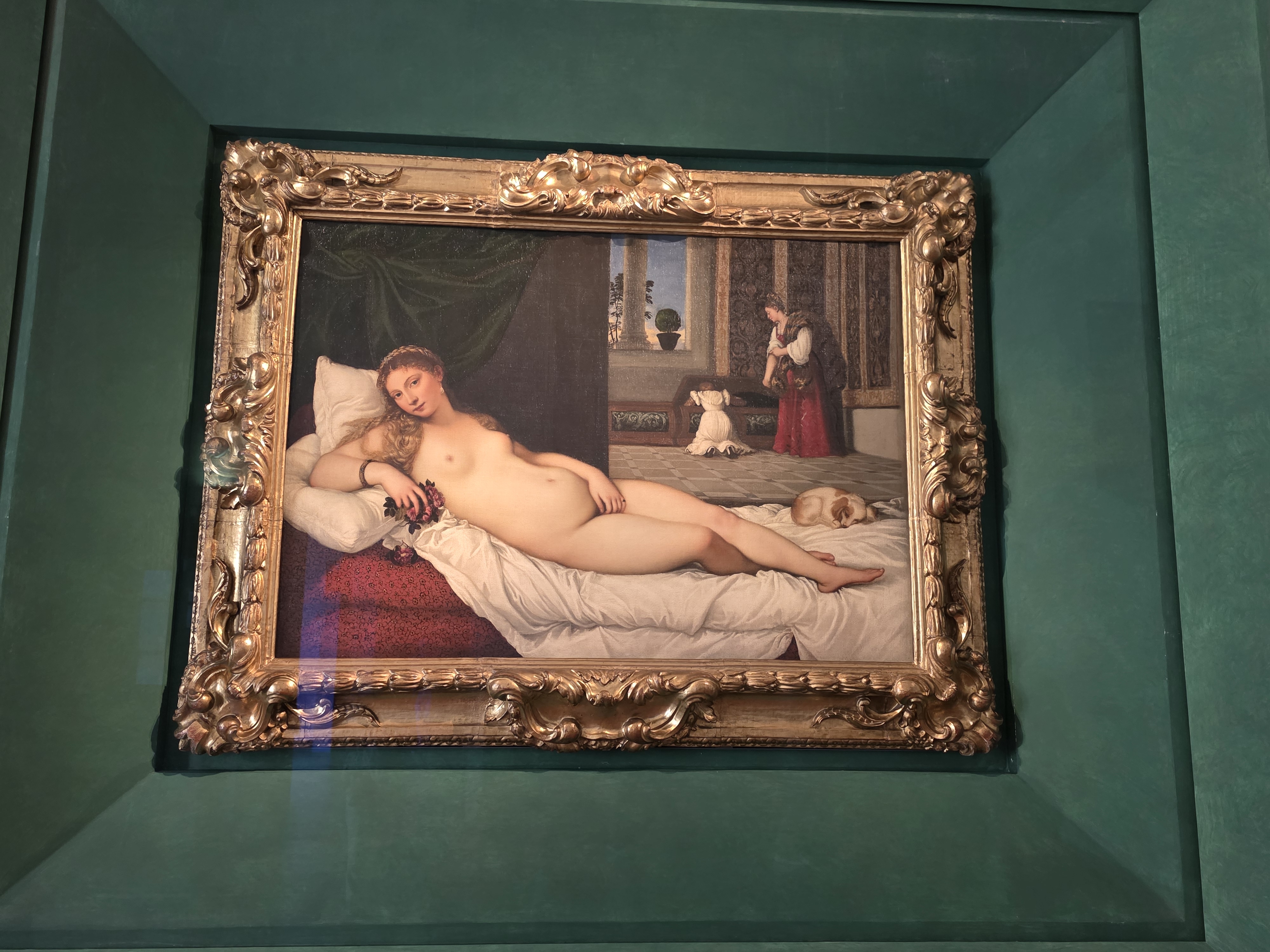
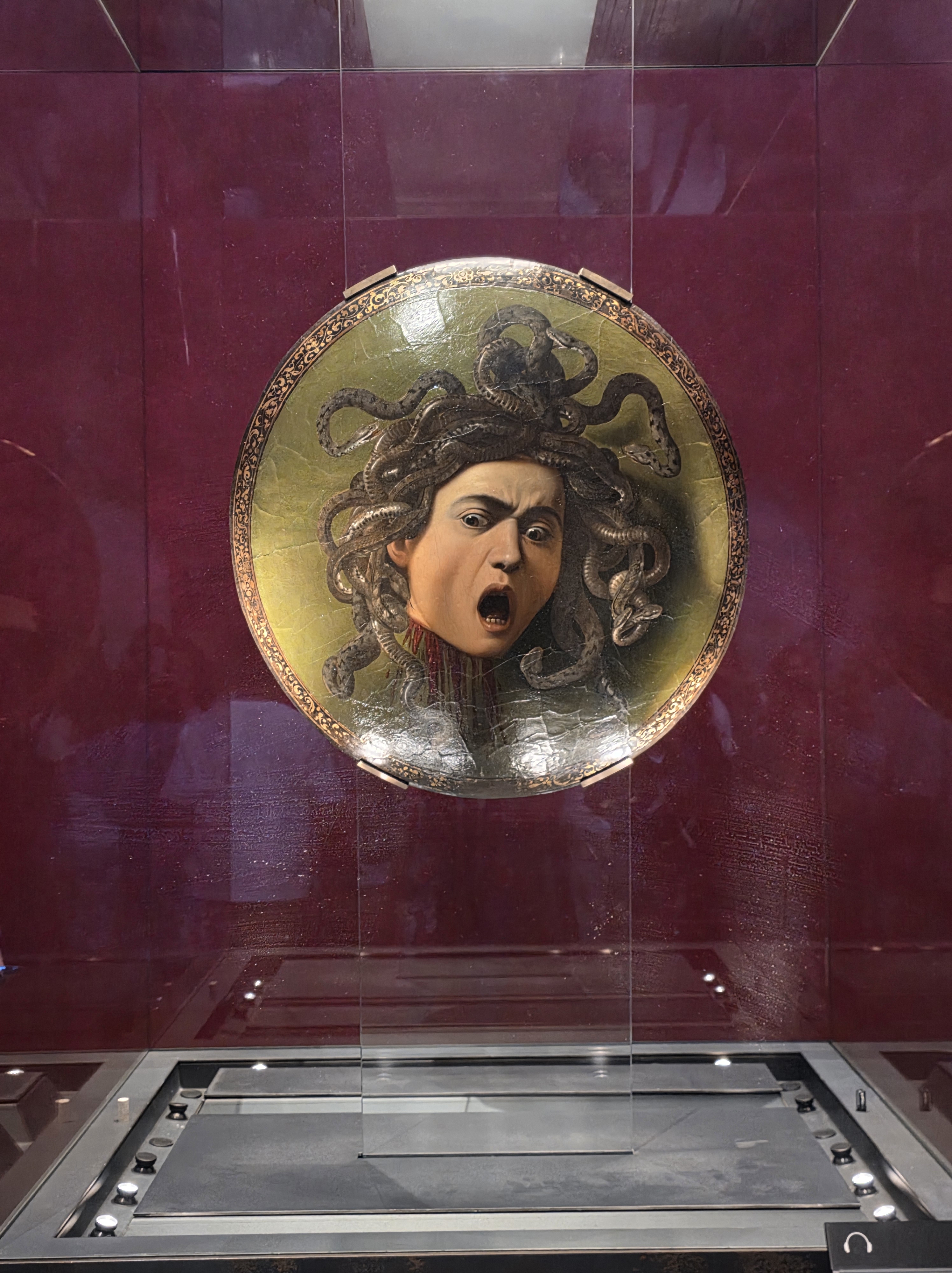
I approached this gallery strategically as well and selected eight paintings I absolutely had to see: Botticelli’s Birth of Venus and Primavera, Lippi’s Madonna and Child with Two Angels, Michelangelo’s Doni Tondo, Raphael’s Madonna of the Goldfinch, Leonardo da Vinci’s Annunciation, Titian’s Venus of Urbino, and Caravaggio’s Medusa. I planned my entire route around these with the help of ChatGPT, to be as efficient as possible and see everything. All the other paintings I saw were along this route. As a result, I enjoyed this visit enormously, which is not always the case with museums and galleries.
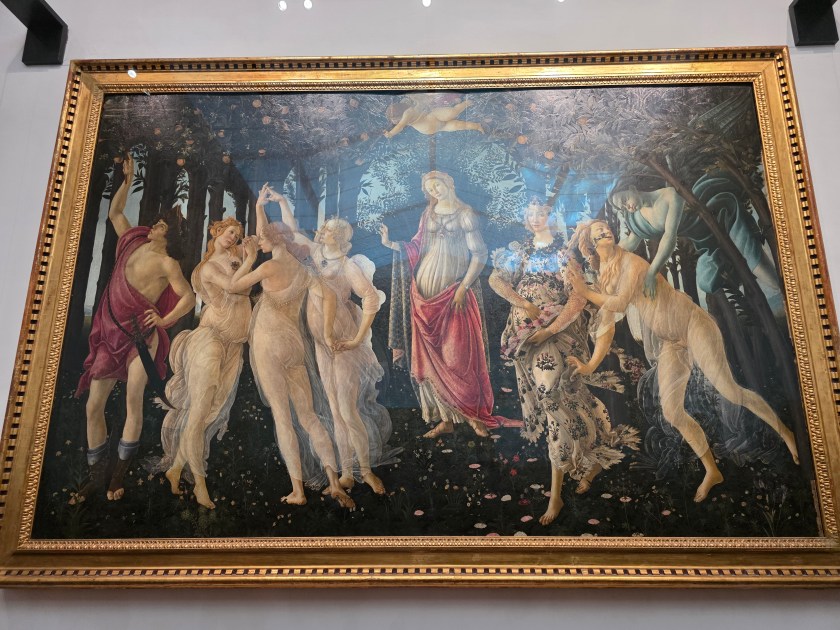
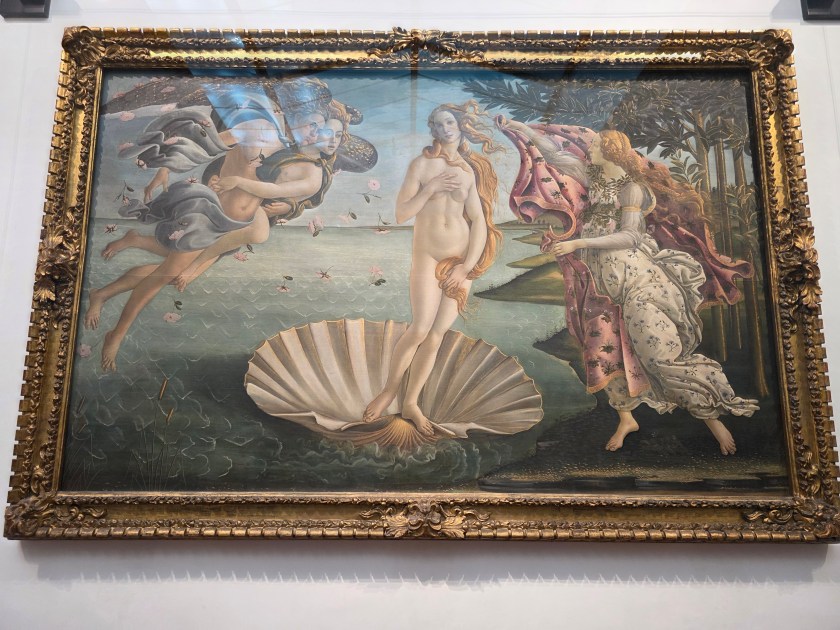
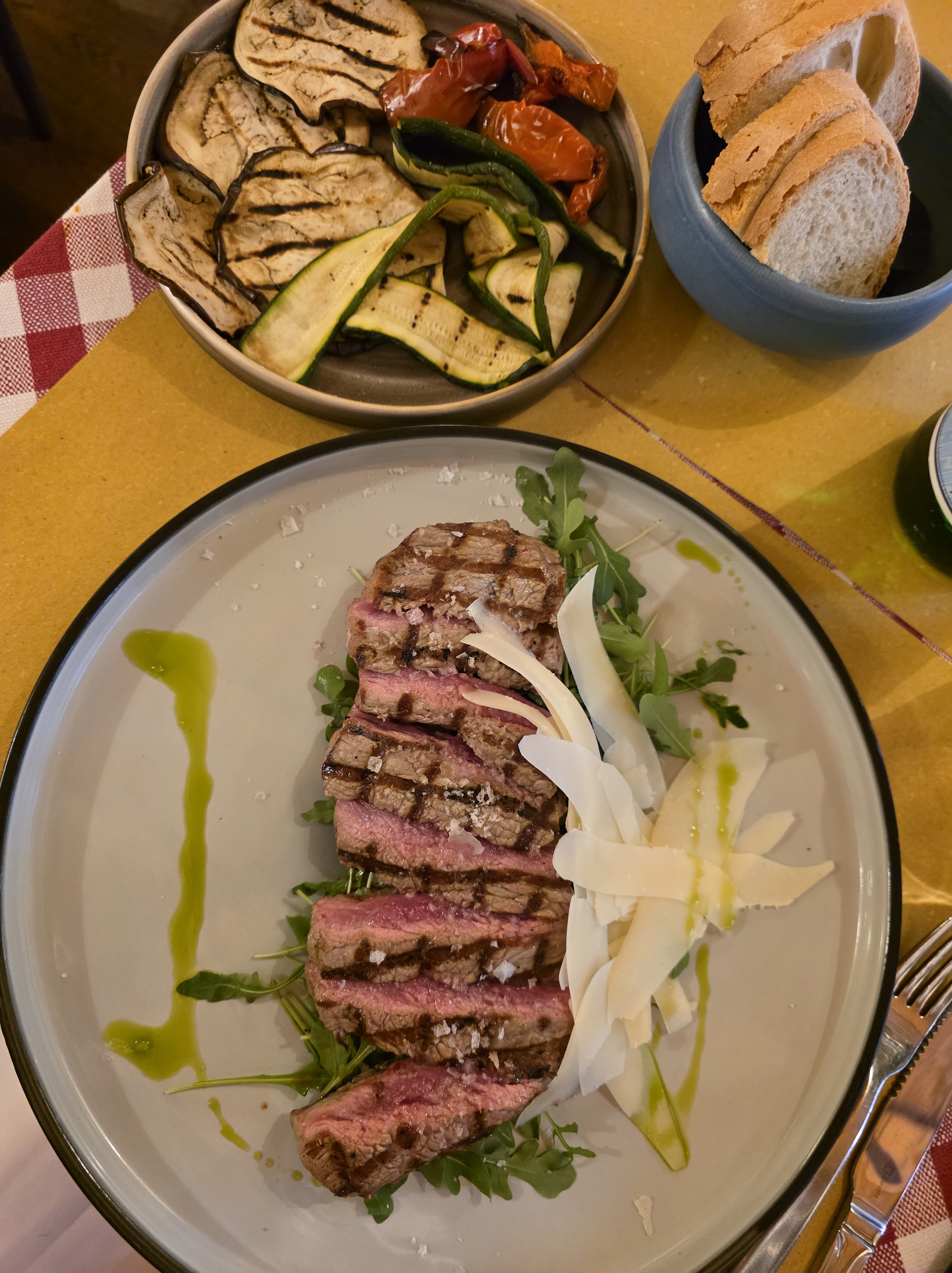
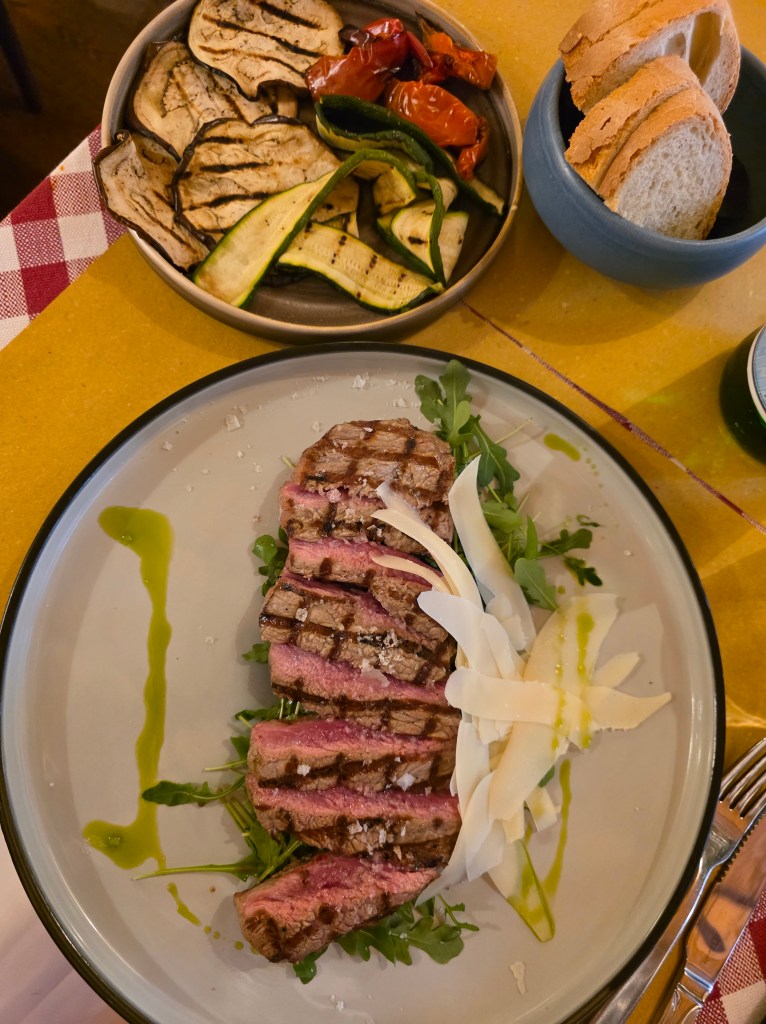
The visit took about an hour and a half, which, in my opinion, is more than enough to avoid getting too tired and not to spread your attention too thinly. Afterwards, feeling completely satisfied, I went for lunch – beef sirloin with arugula and parmesan. This time I skipped wine, and as it soon became clear, that was a very wise decision.
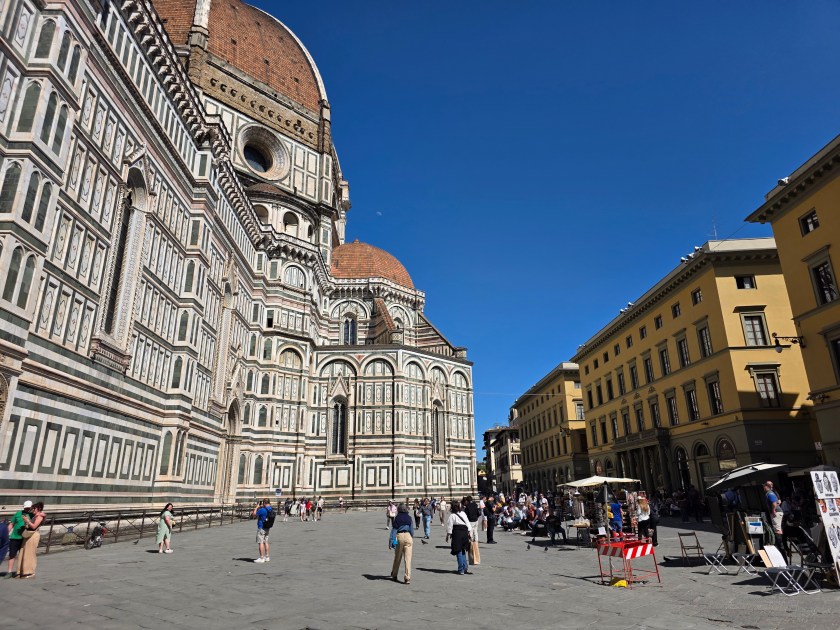
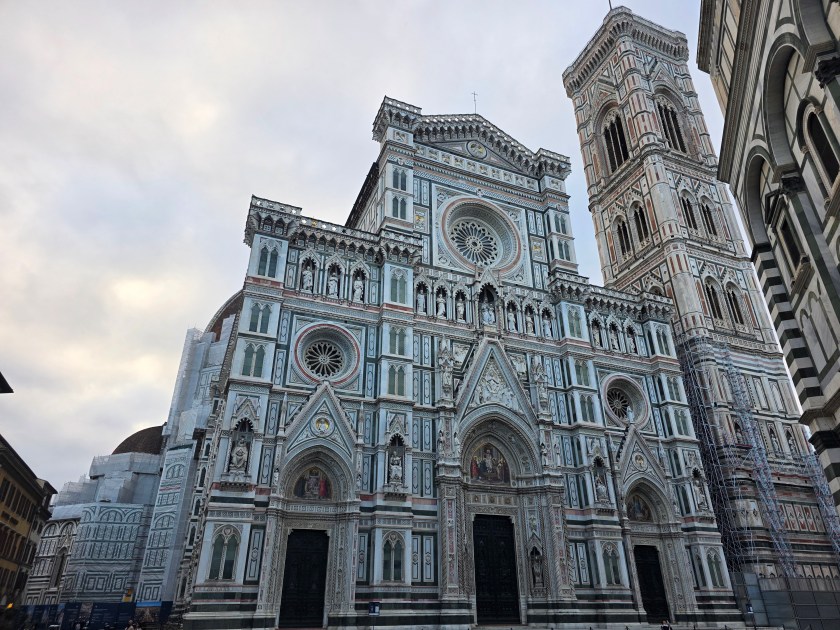
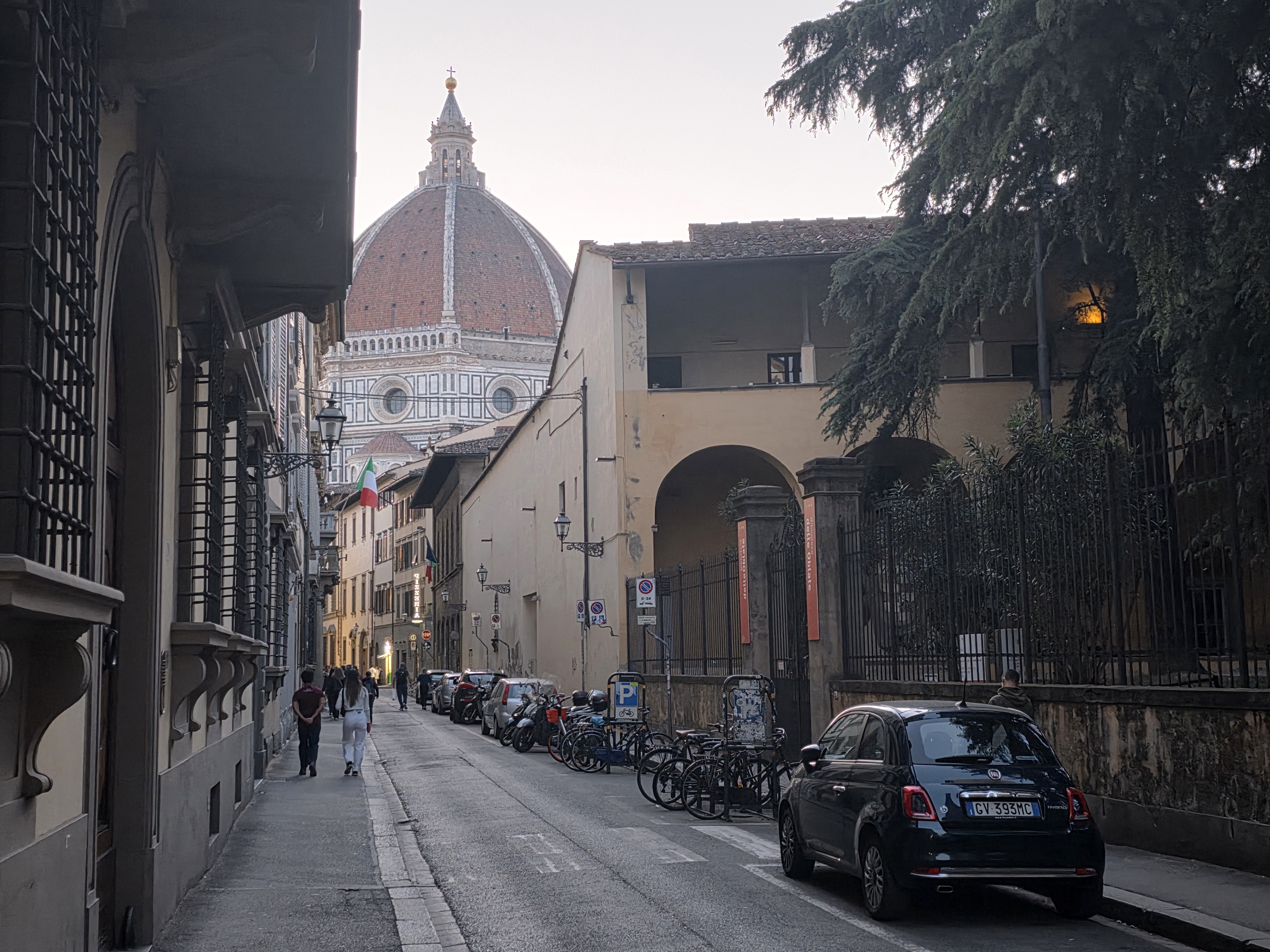
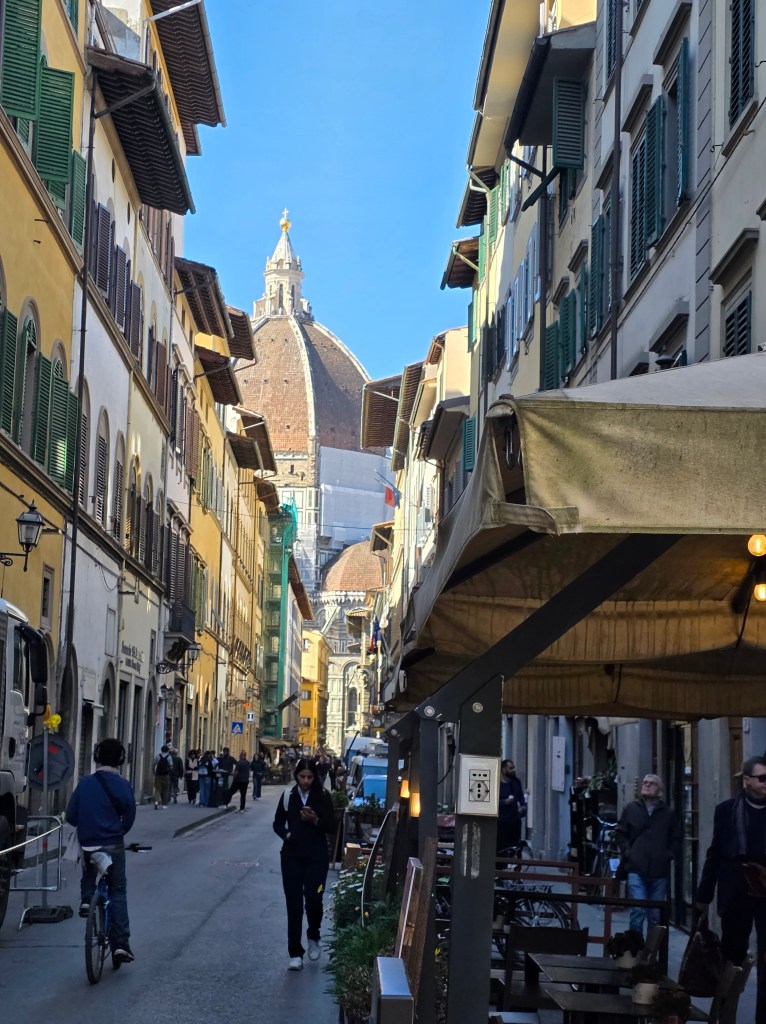
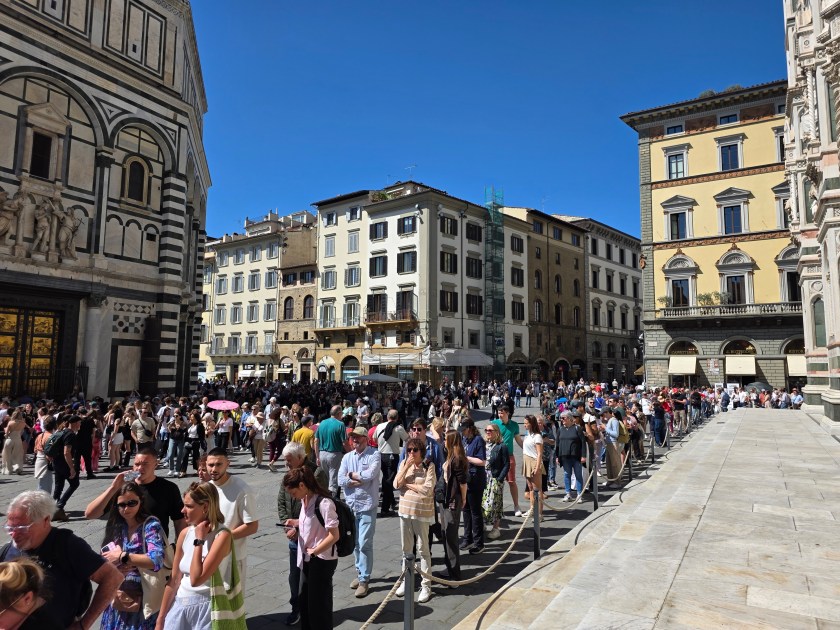
Next on the agenda, with a pre-booked ticket, was climbing Giotto’s Campanile next to the Duomo (the Cathedral of Santa Maria del Fiore) at 4:30pm. I still had plenty of time, which I decided to spend walking around the cathedral to see it from all sides.

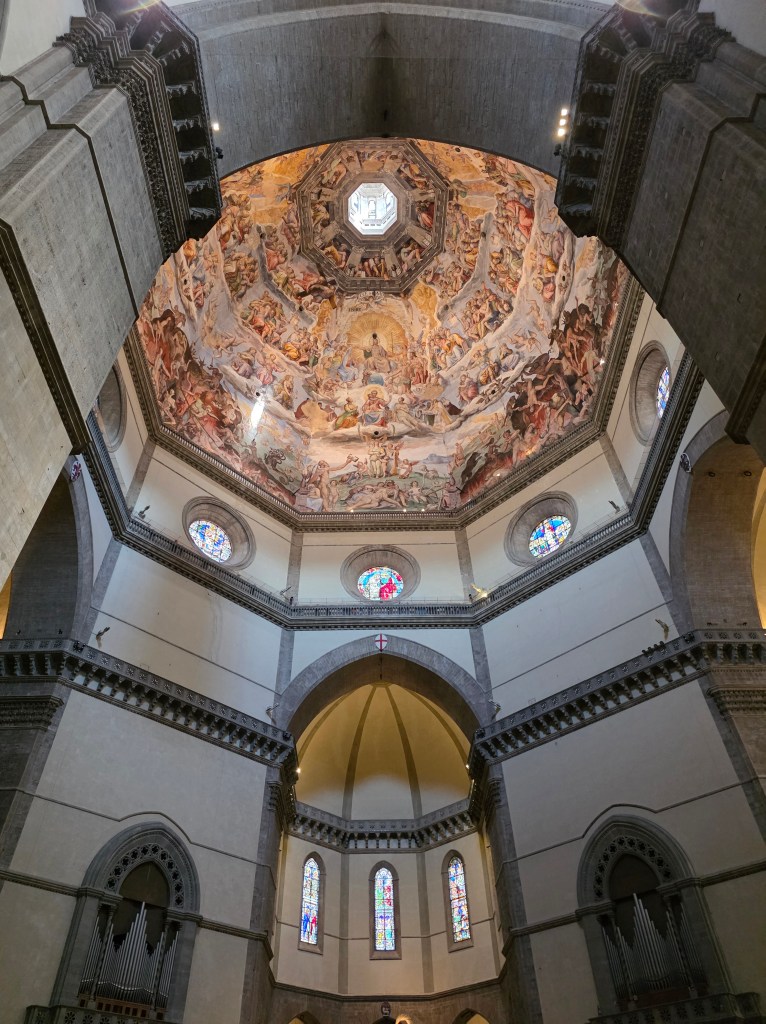
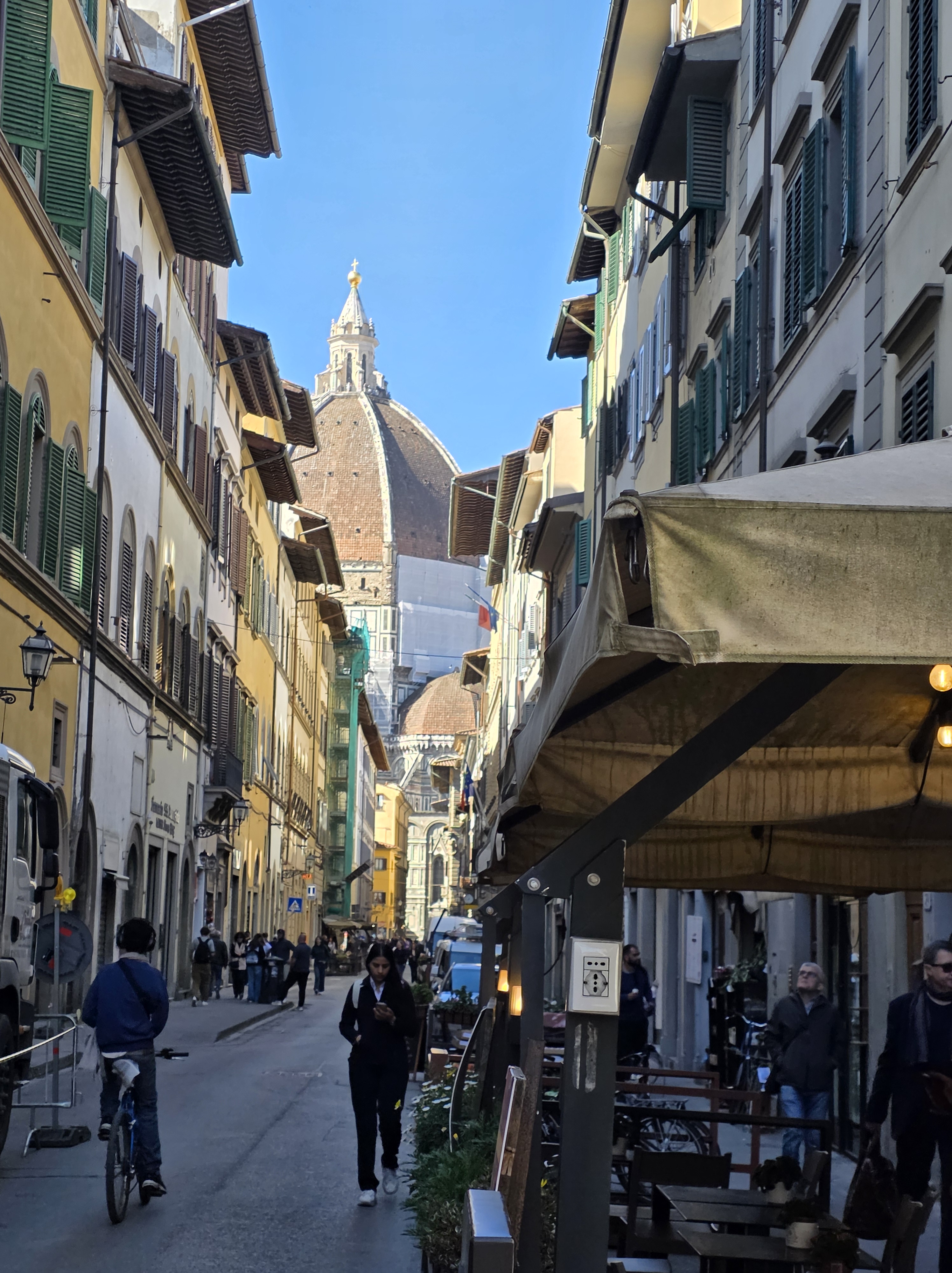
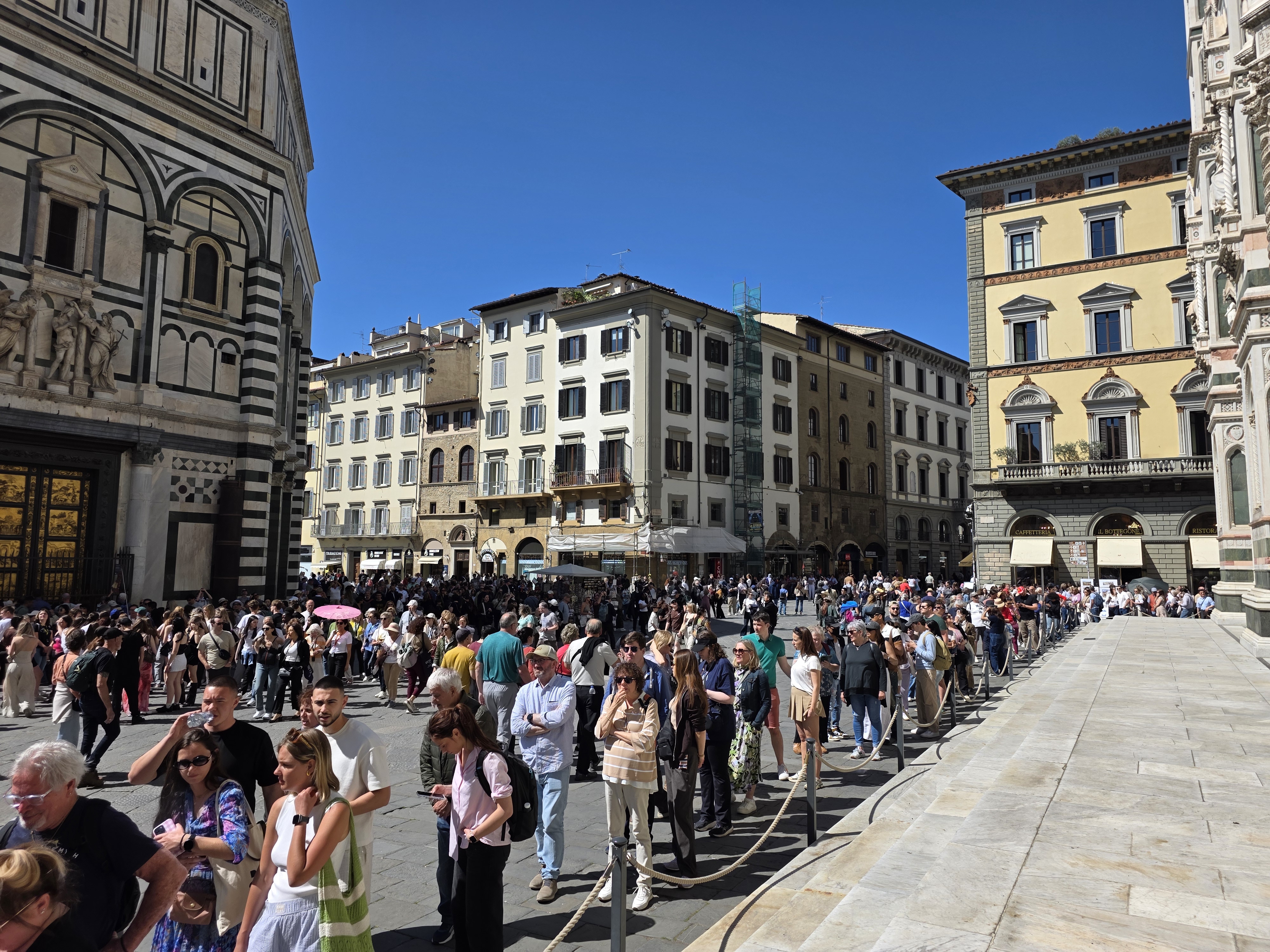
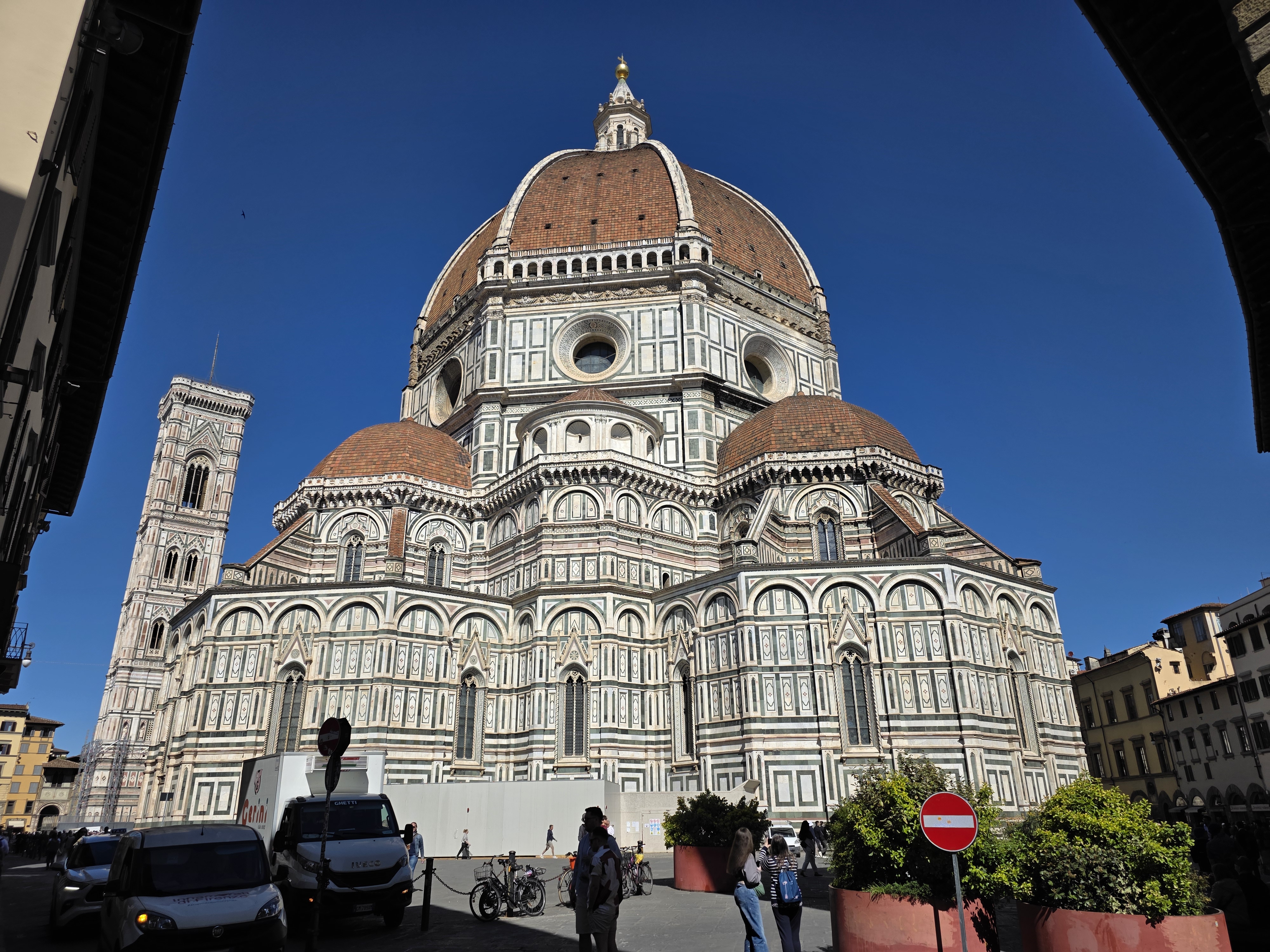
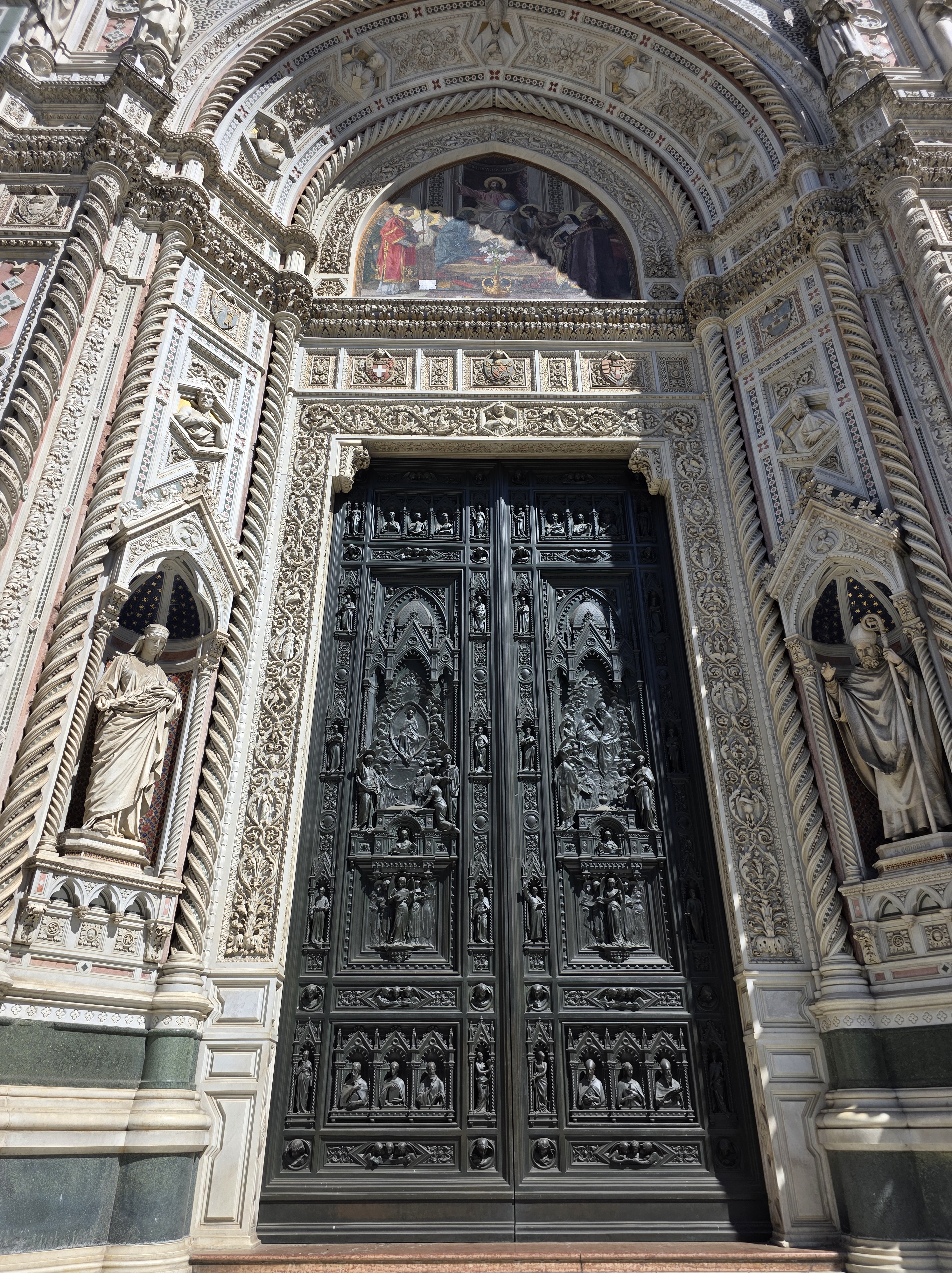
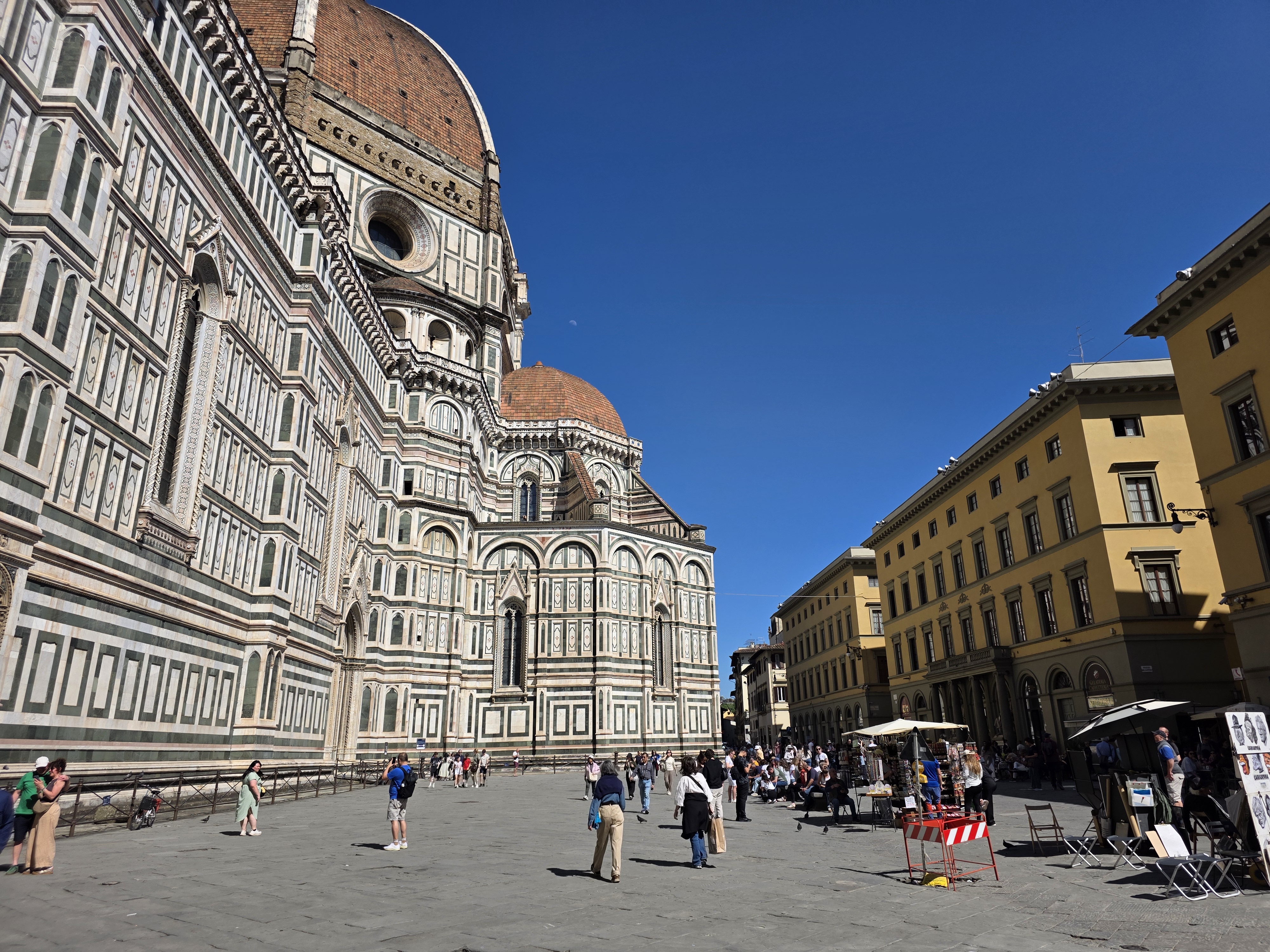
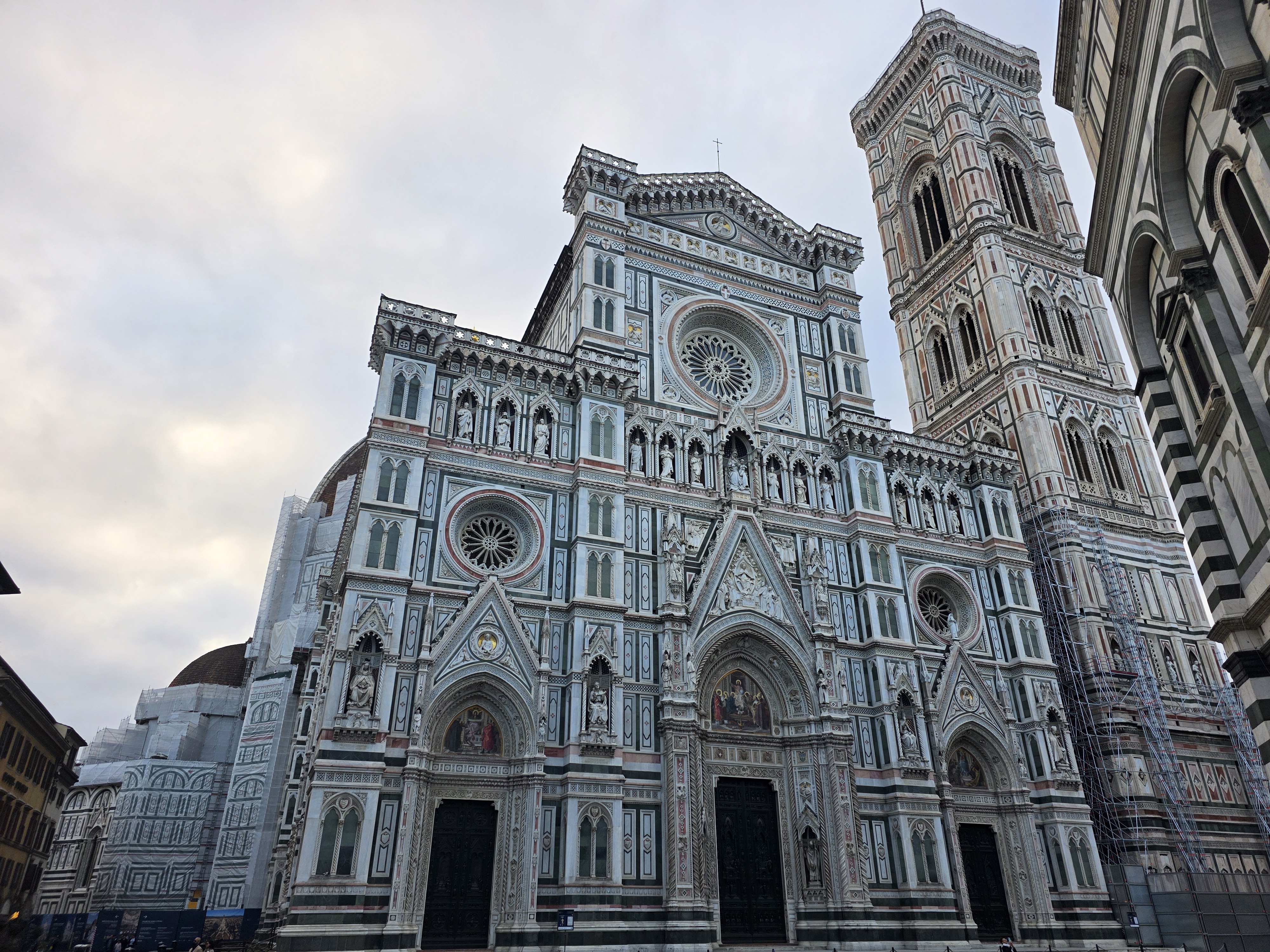
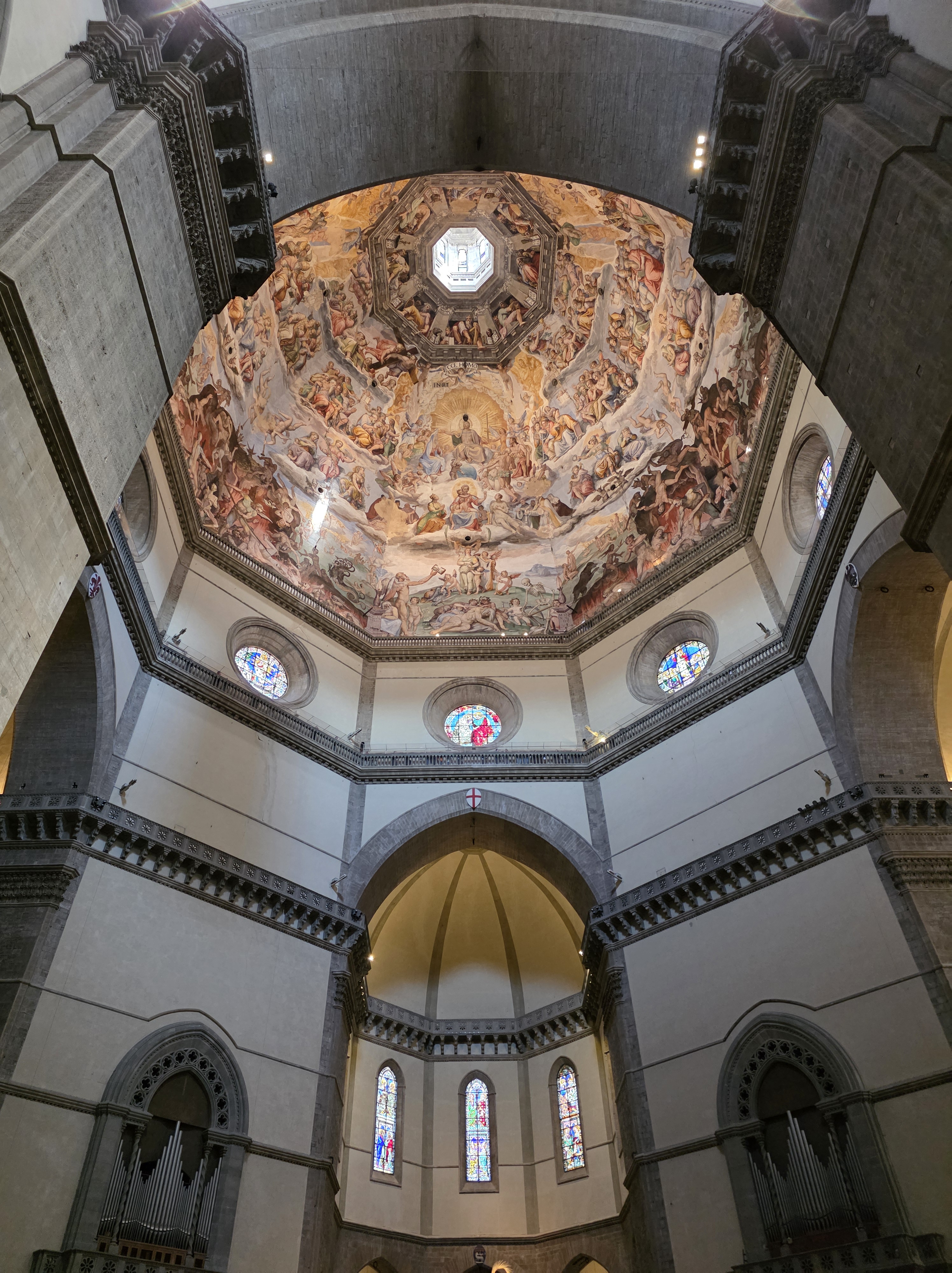
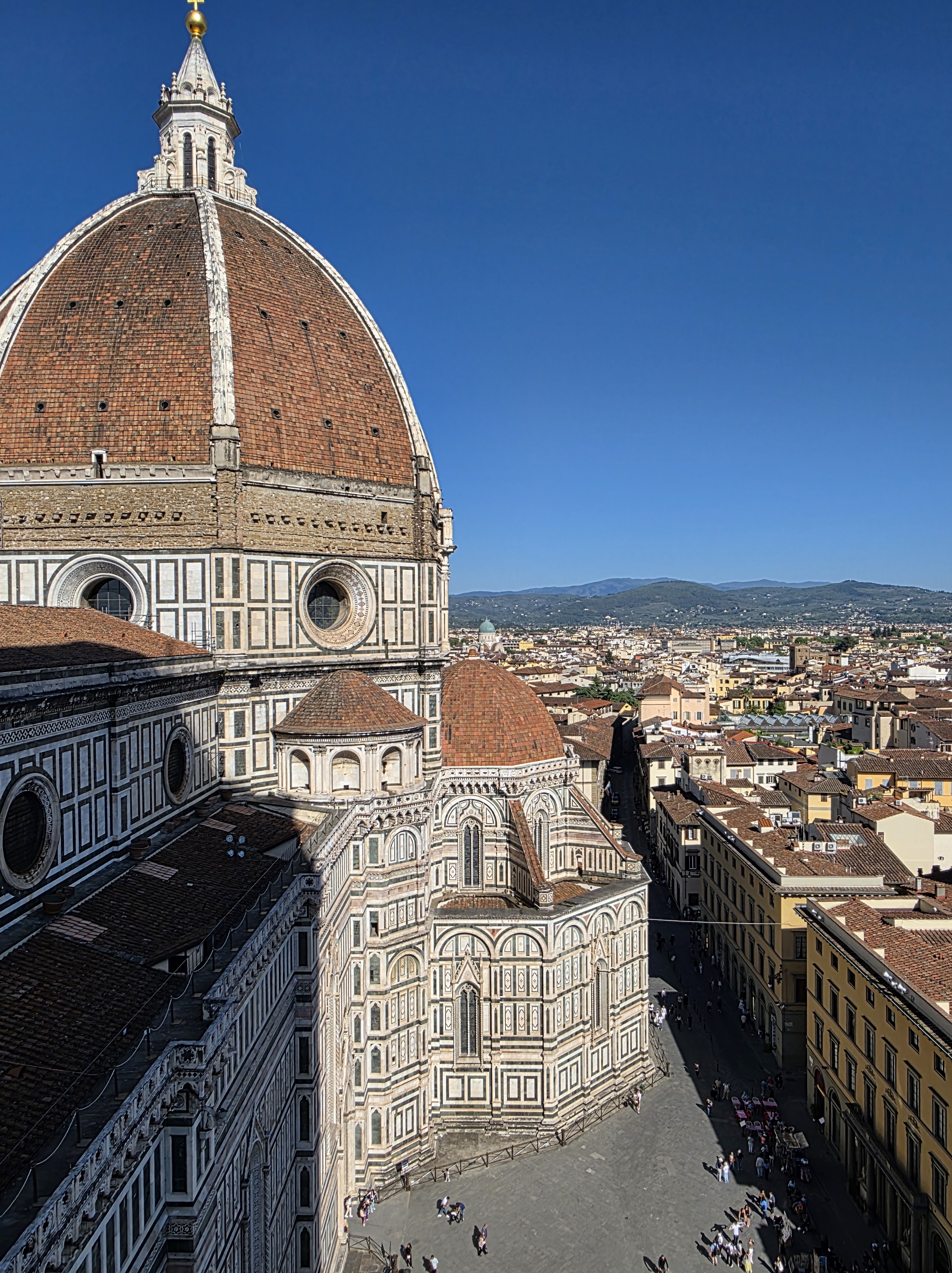
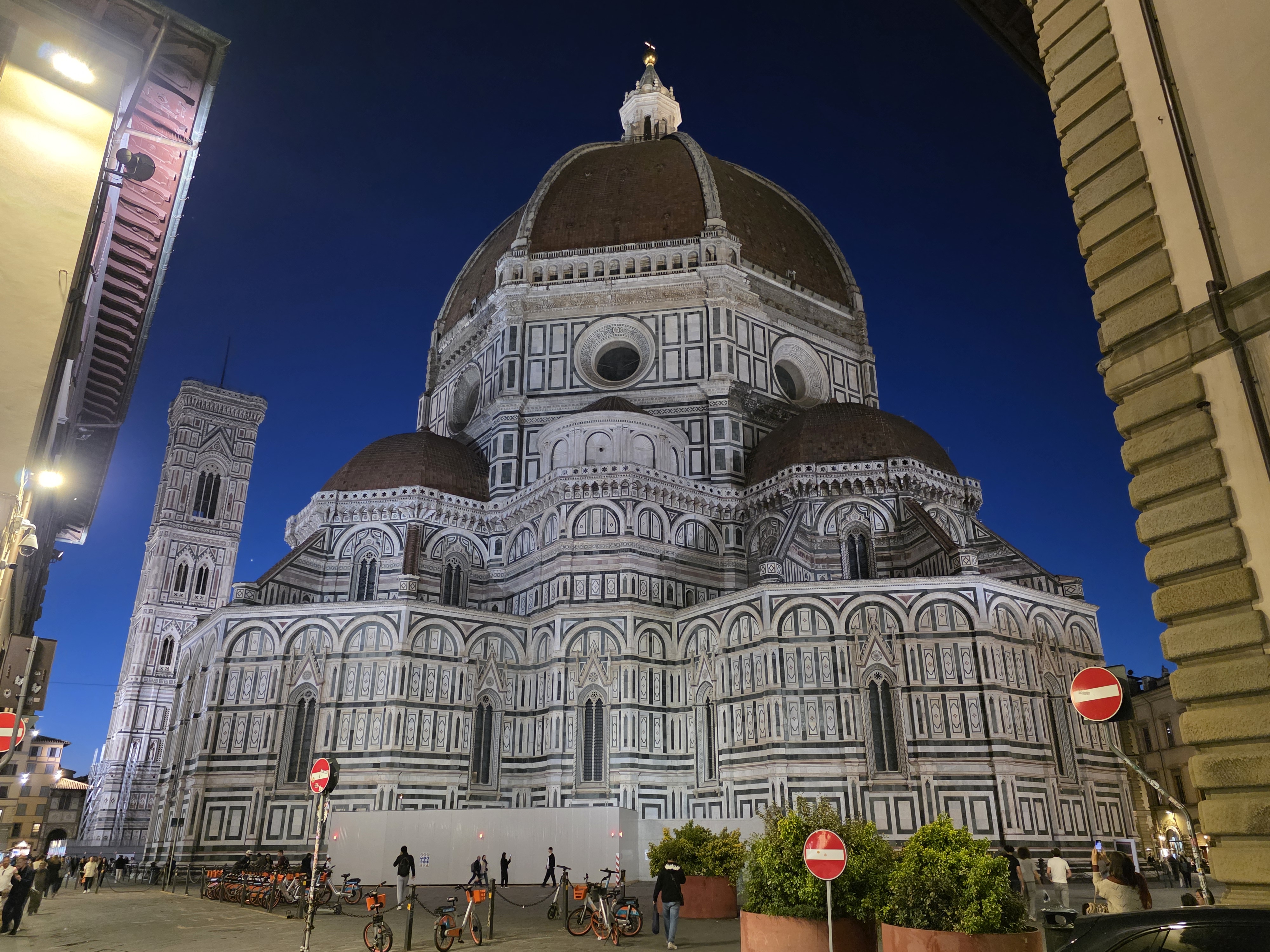
Entry to the cathedral was free, though with a small queue, so I decided to go inside as well. I have to say, from the outside the cathedral is absolutely stunning – I would probably call it one of the most beautiful, if not the most beautiful, I’ve ever seen. But inside, it didn’t strike me as anything extraordinary. I’ve seen much more impressive cathedrals – there’s no comparison at all with the Sagrada Família, for example. The only really striking feature is the dome and its frescoes.
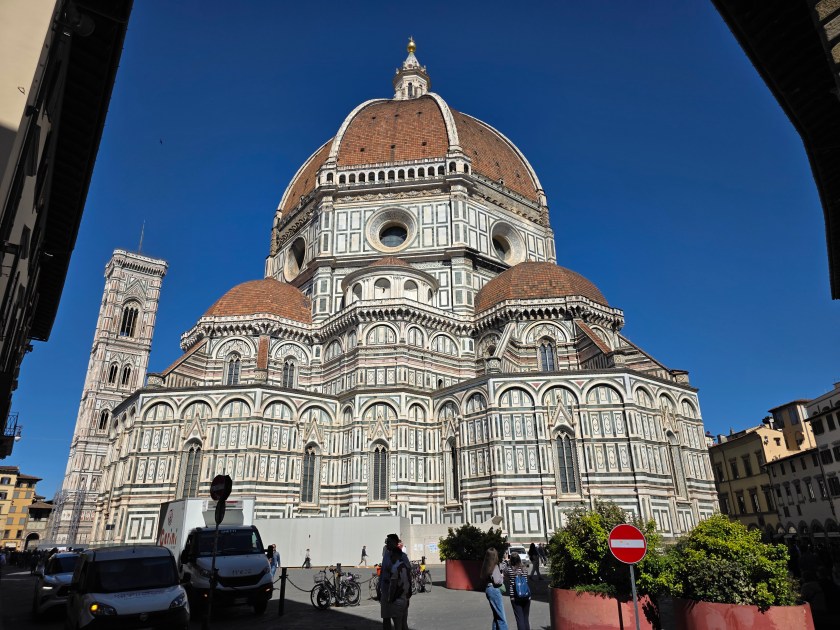
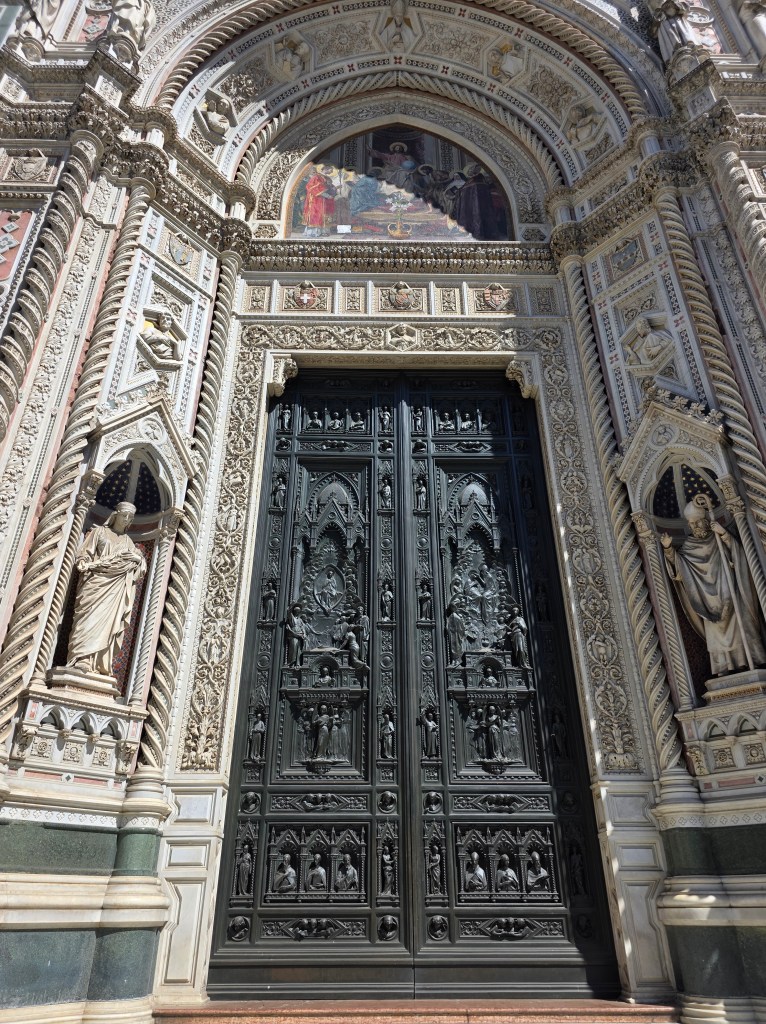
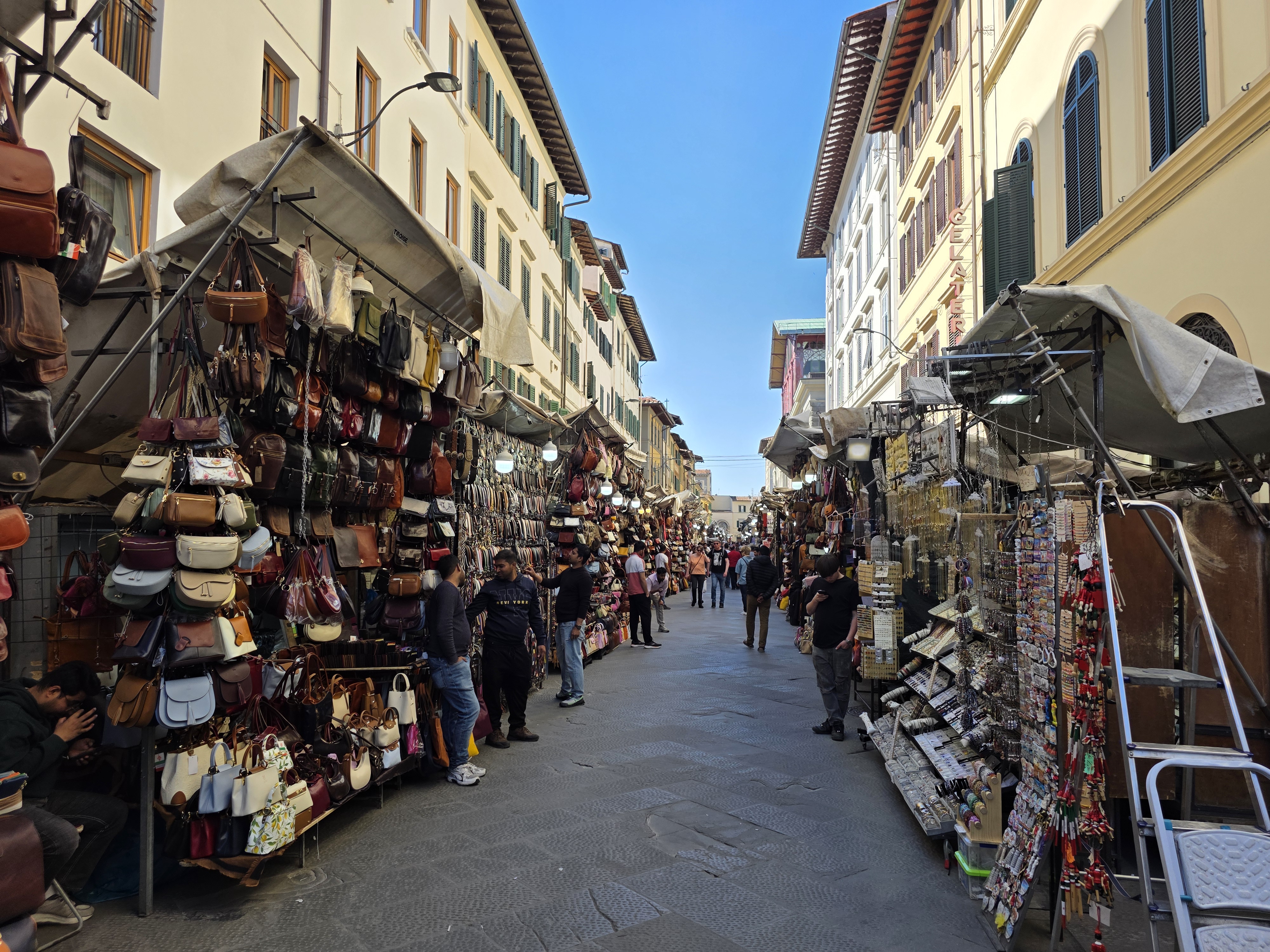
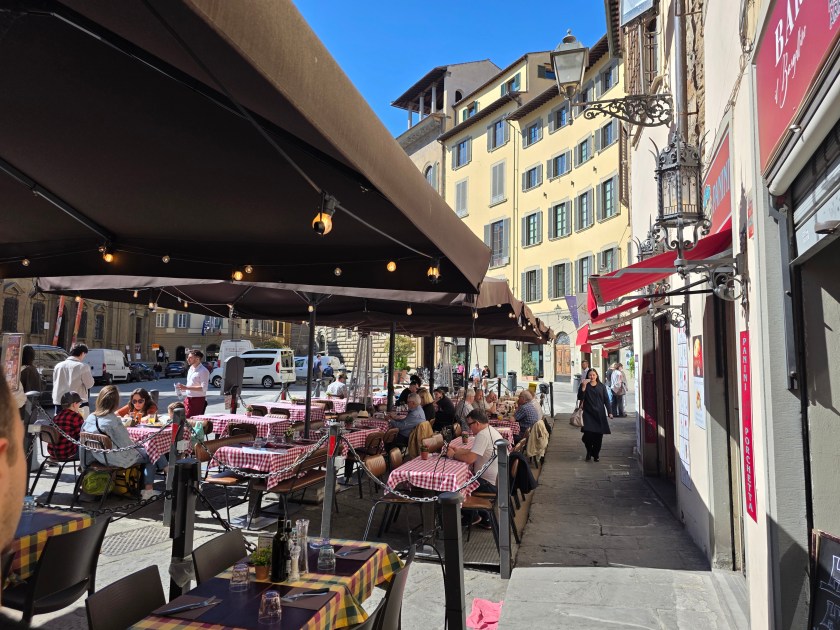
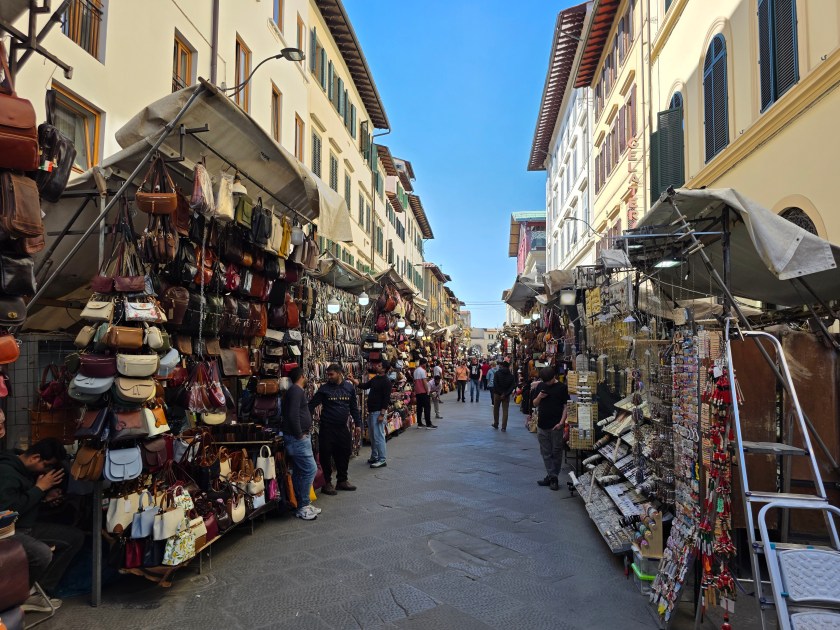
After that, I went to see the San Lorenzo Market. The market consists of an outdoor section with souvenir and leather stalls, and a covered food hall with produce vendors – cheeses, meats, snacks, sandwiches. I imagine it must be packed at lunchtime, but I went in the afternoon – there were people, but not even all the stalls were open anymore.
And finally – the bell tower, and this was quite an adventure. I keep telling myself never to climb another tower again, but somehow I always end up doing it anyway.

Compared to Venice, where the Campanile takes you up and down by lift and all you have to do is enjoy the view, this is nothing like that.

To reach the top viewing platform, you have to climb 414 steps. When I googled it, it didn’t seem too bad, because I’m usually afraid of spiral staircases, and the photos showed straight ones. And they were straight at first. Very narrow, though, with people going both up and down at the same time, squeezing past each other – and there were no railings at all, just bare stone walls.

The worst part was that in the end there was indeed a spiral staircase leading to the very top. I made it up, trying not to think about how I’d get down later.

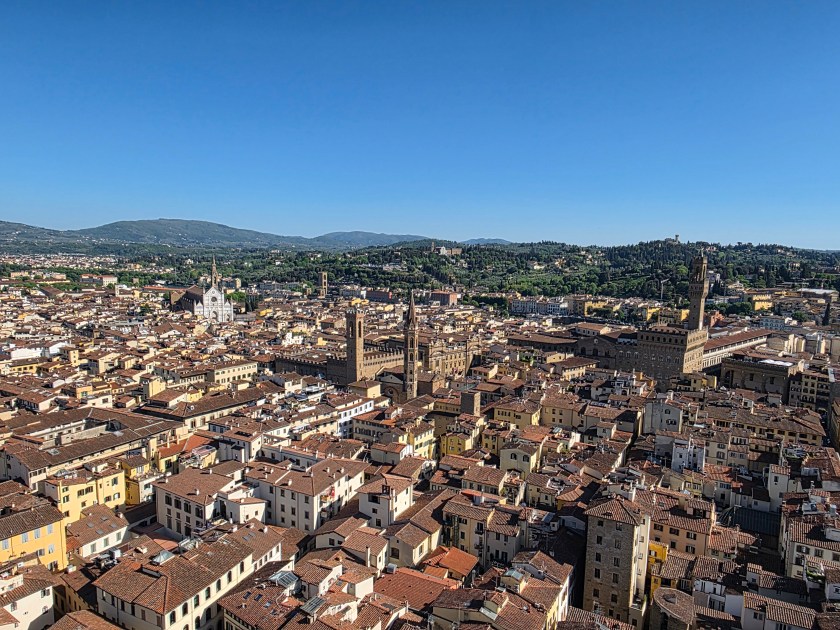
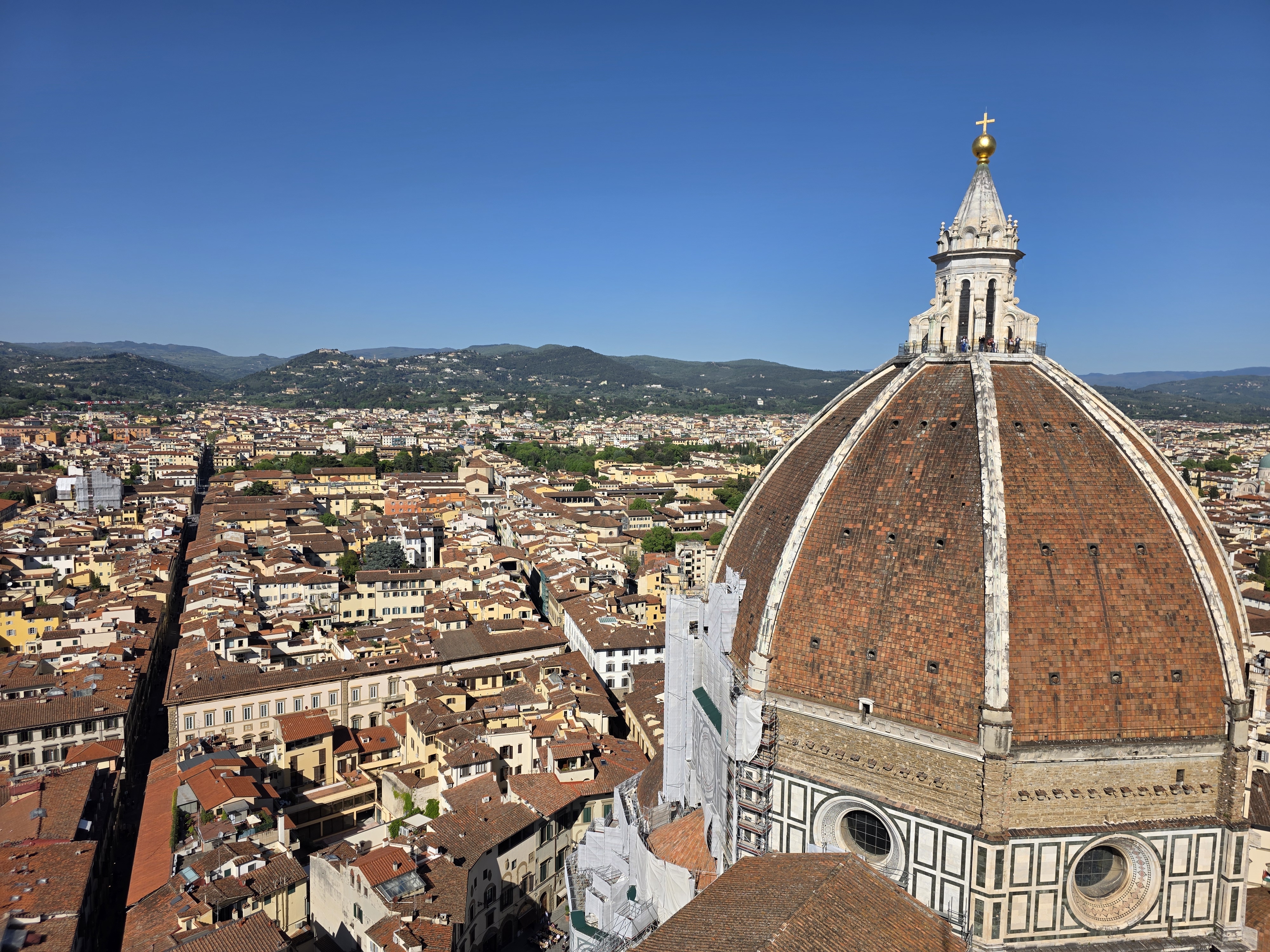
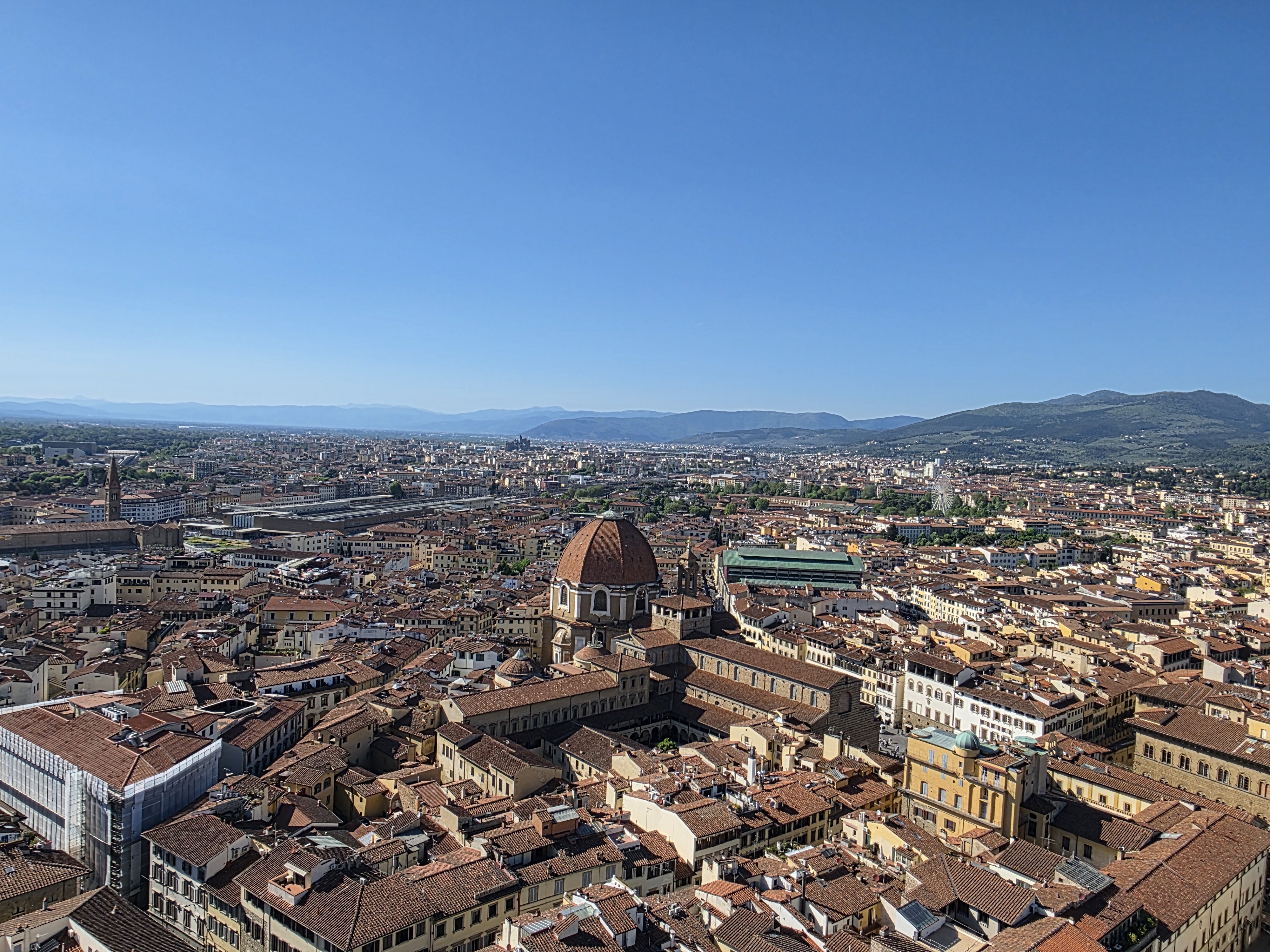
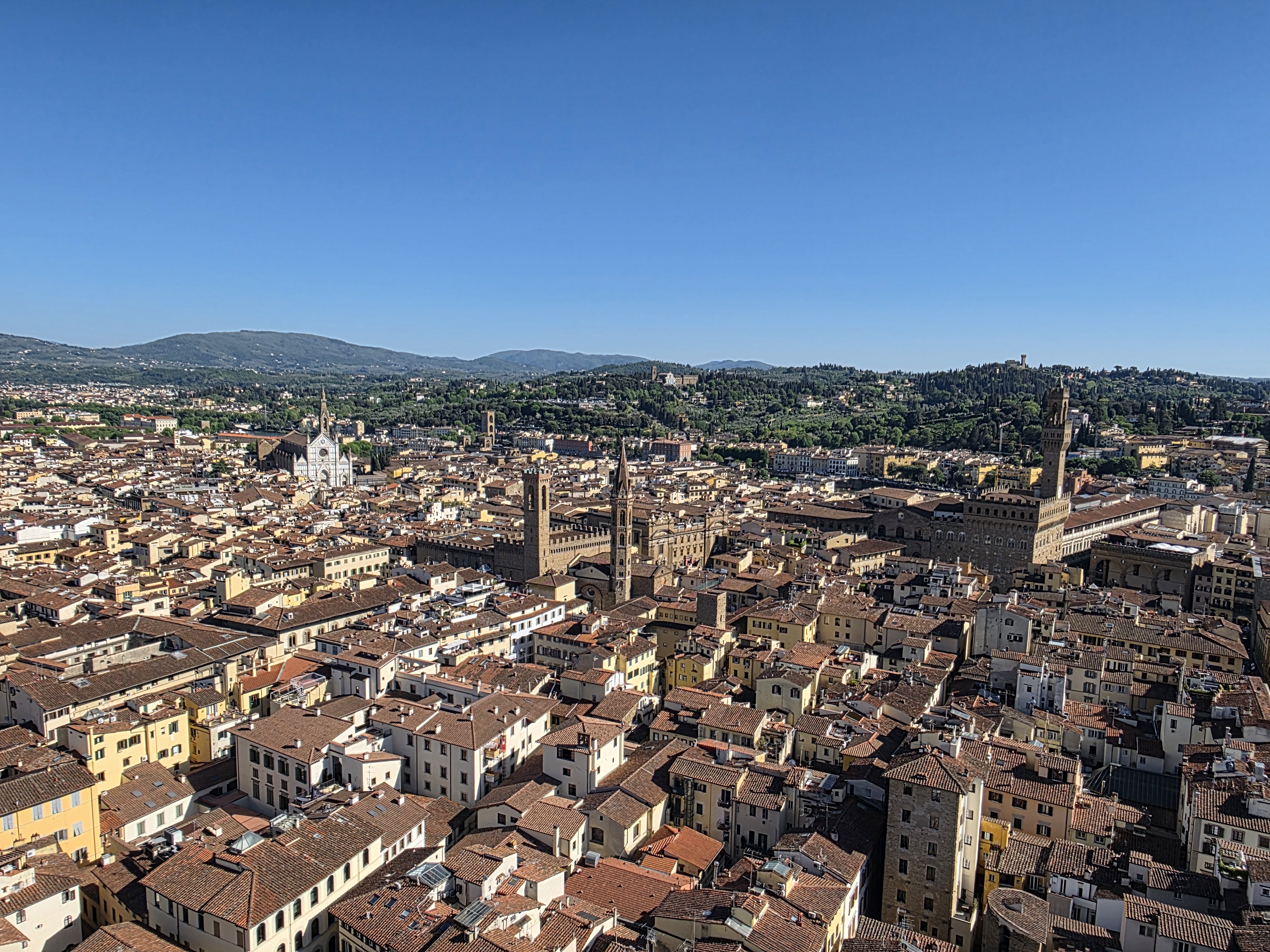
Of course, the view from the top is stunning – you see the Duomo dome at eye level, looking at the people standing there, while they look back at you. But the descent was honestly a nightmare. I had a proper panic attack – it was already scary going down, there was nothing to hold onto, and on top of everything there was a constant flow of people climbing up, so I had to stand in awkward positions waiting for them to pass. At one point, some Italians even asked (in Italian!) if I was scared and offered me their arms to hold onto.
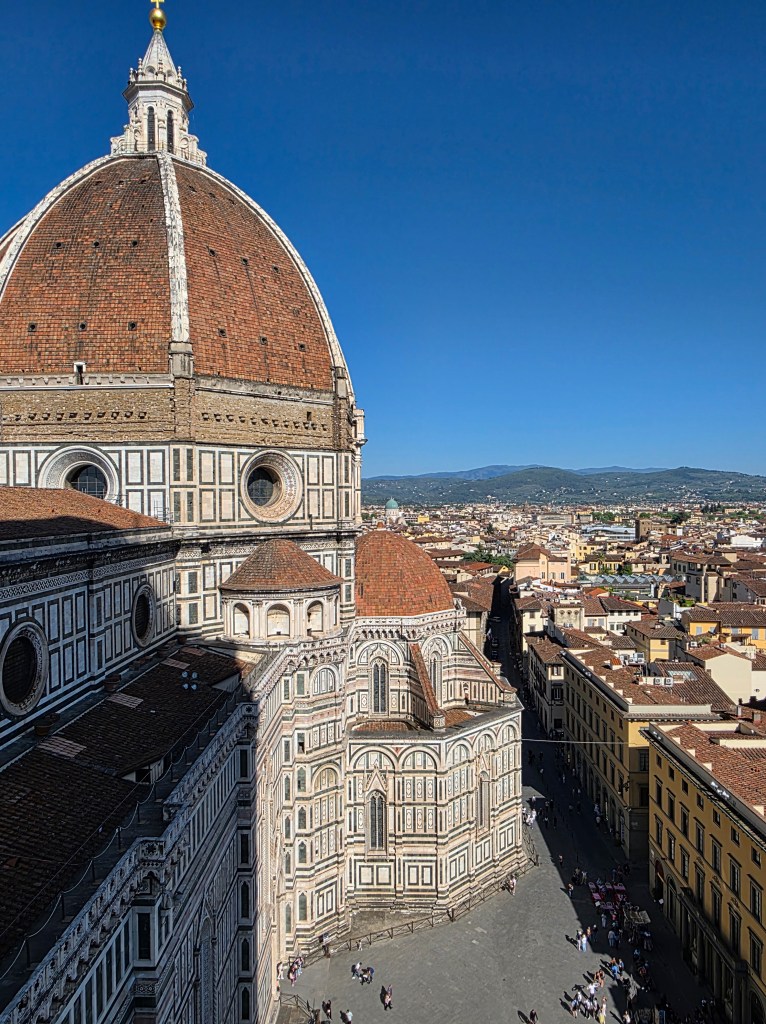
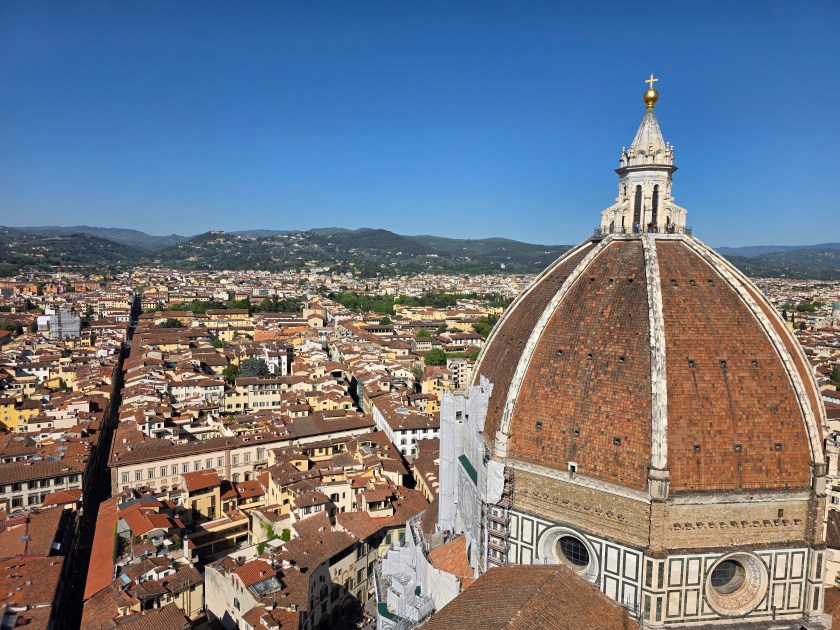
I somehow made it down, and once again I swear I will never climb another tower again! And yes, good thing I didn’t have wine at lunch – this was not exactly fun even when completely sober.

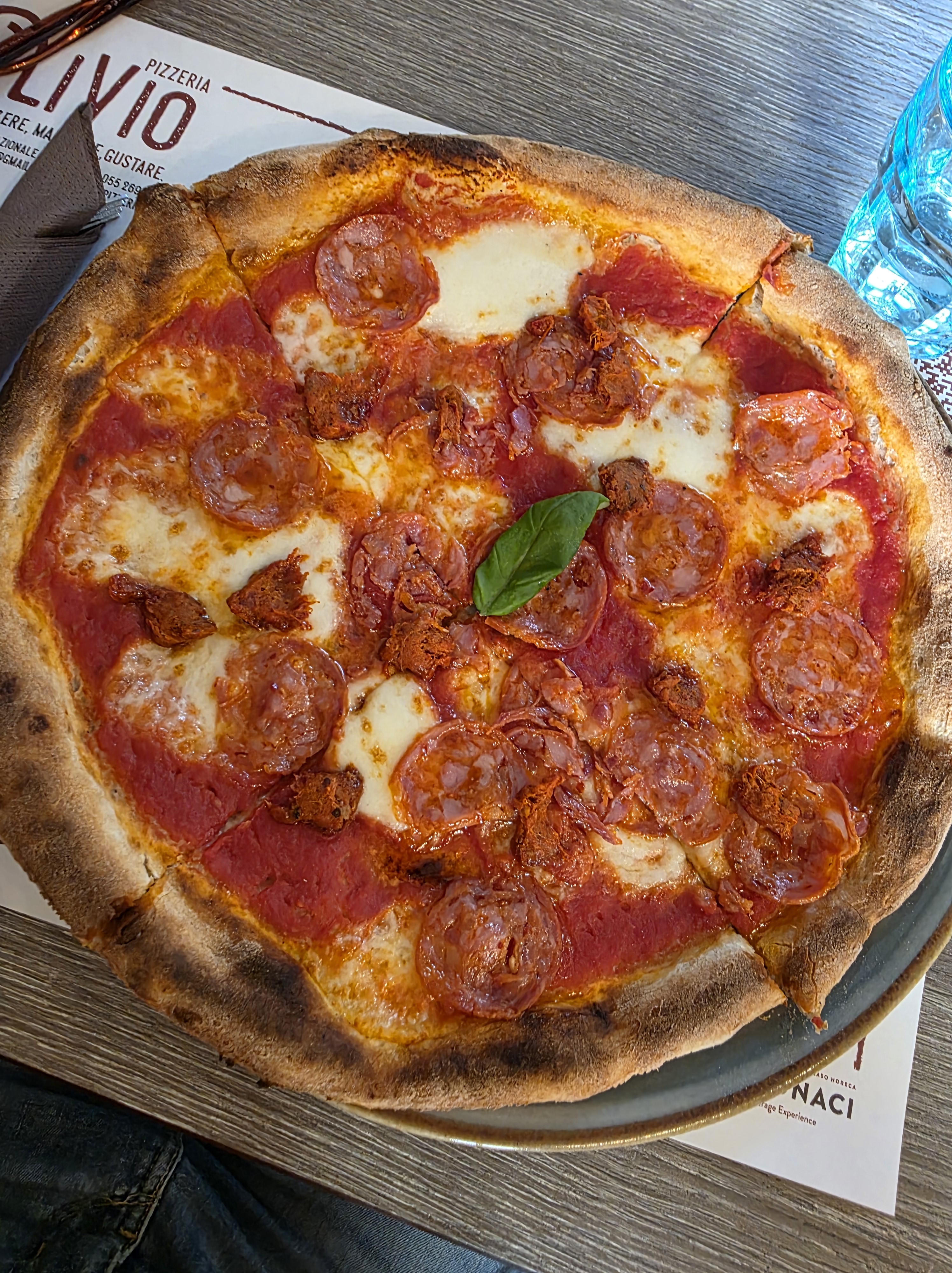
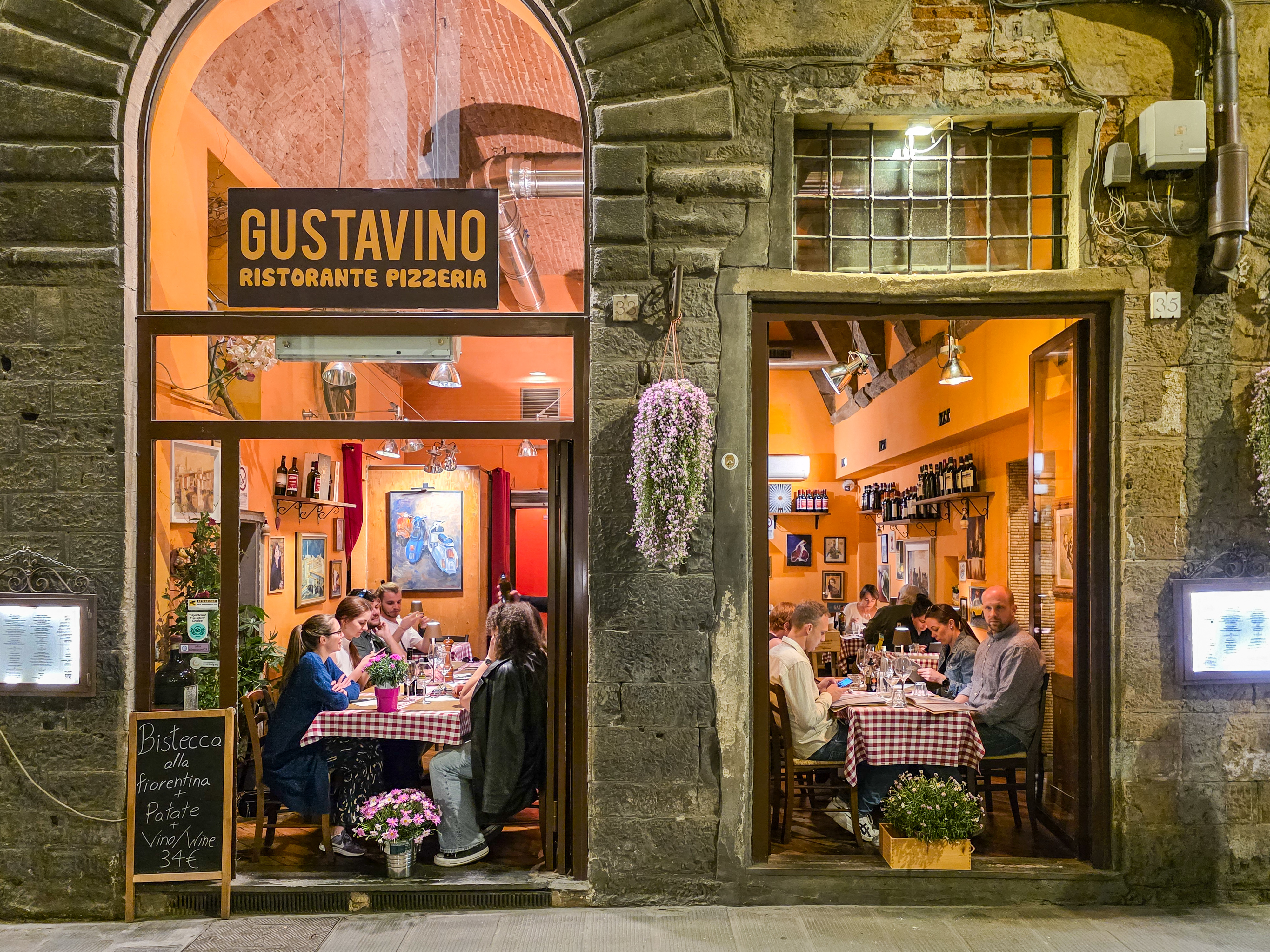
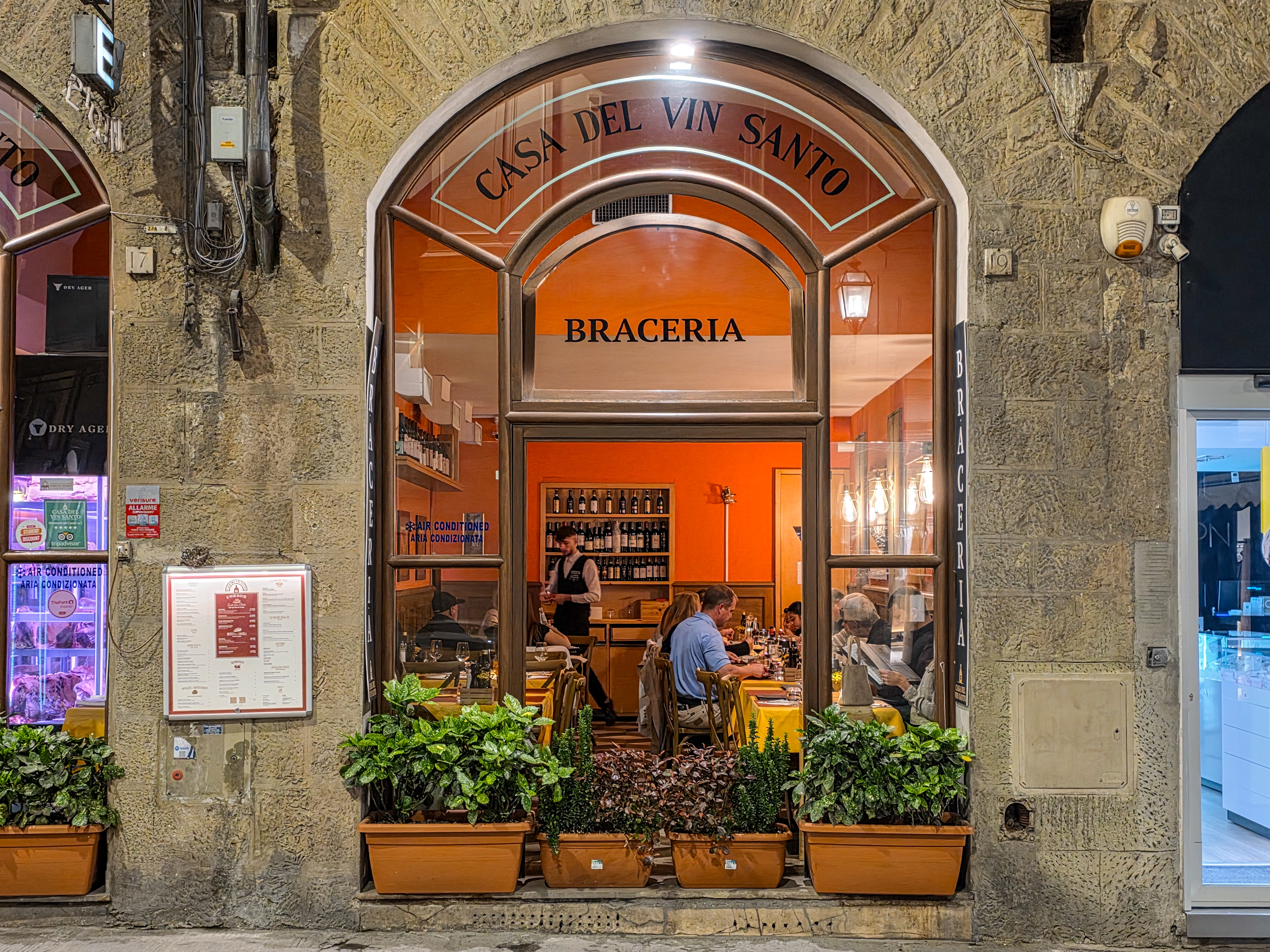
By then it was already getting close to dinner time – a bit early, but I was quite hungry, so I headed to the LiVio pizzeria, which had been recommended to me as one of the best in town. And unlike the rather mediocre pizza I had in Venice, this one really was excellent.
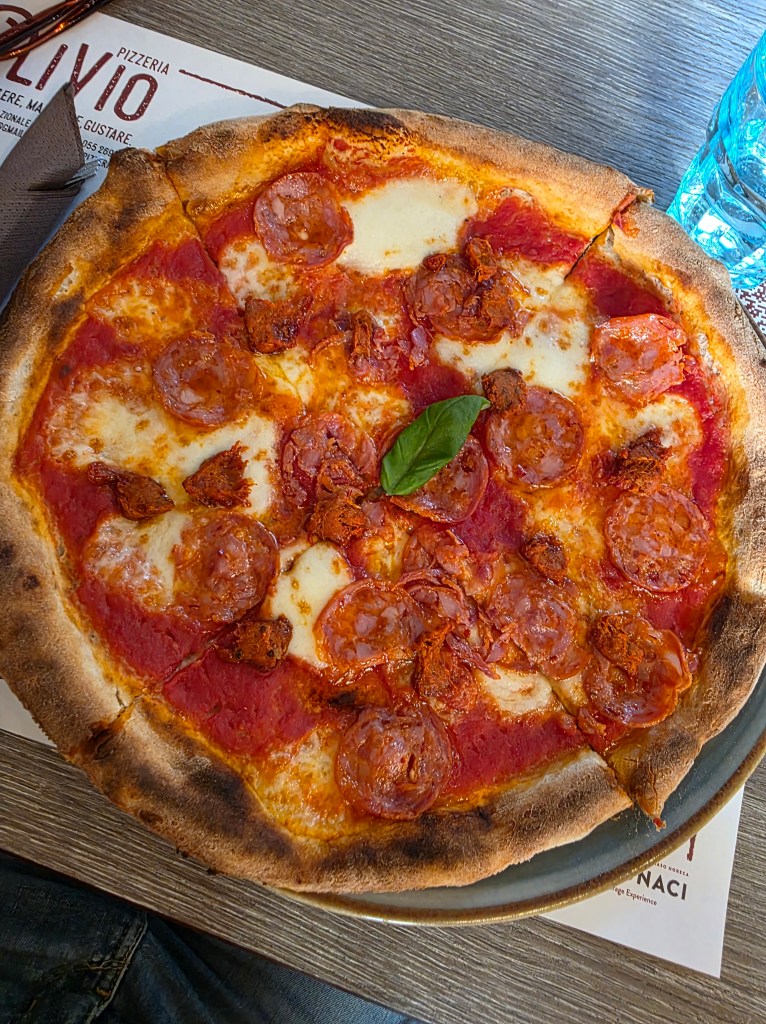
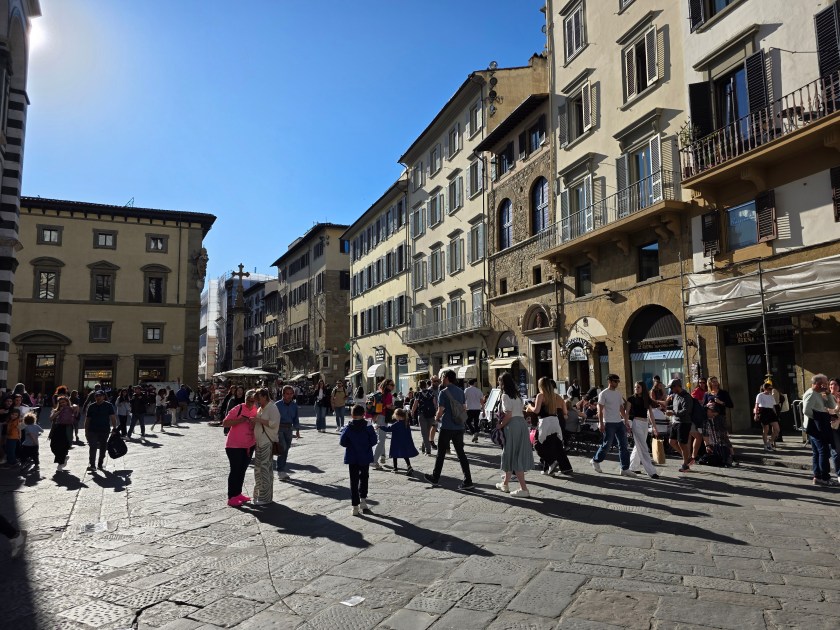
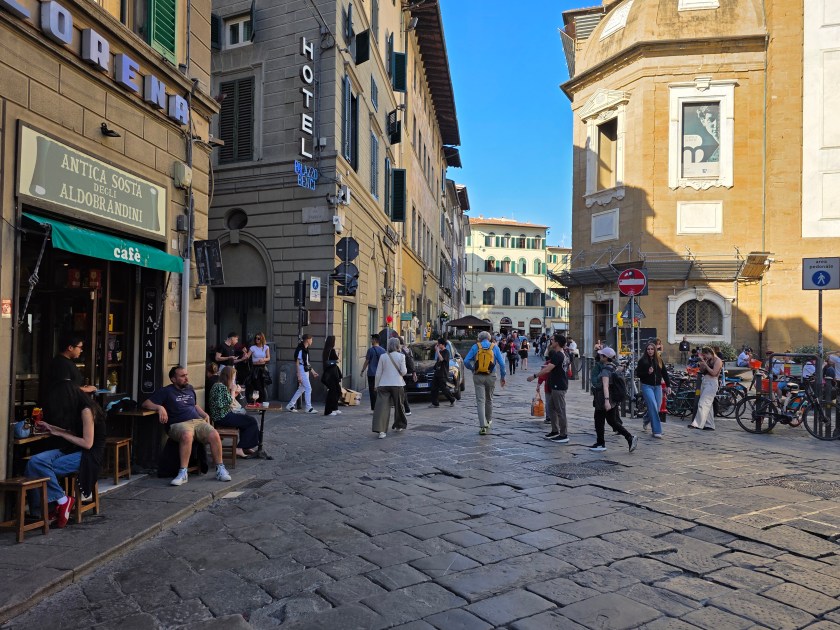
My food adventures didn’t end there, because after dinner I decided to have a limoncello spritz elsewhere, and was unexpectedly served a complimentary bruschetta with tomatoes.

In general, I’m definitely eating much more than usual here – more fat, more sugar, more carbs in general. But I believe that any trip is also a chance to immerse yourself in the culinary culture of a place, alongside everything else, so I don’t regret anything!

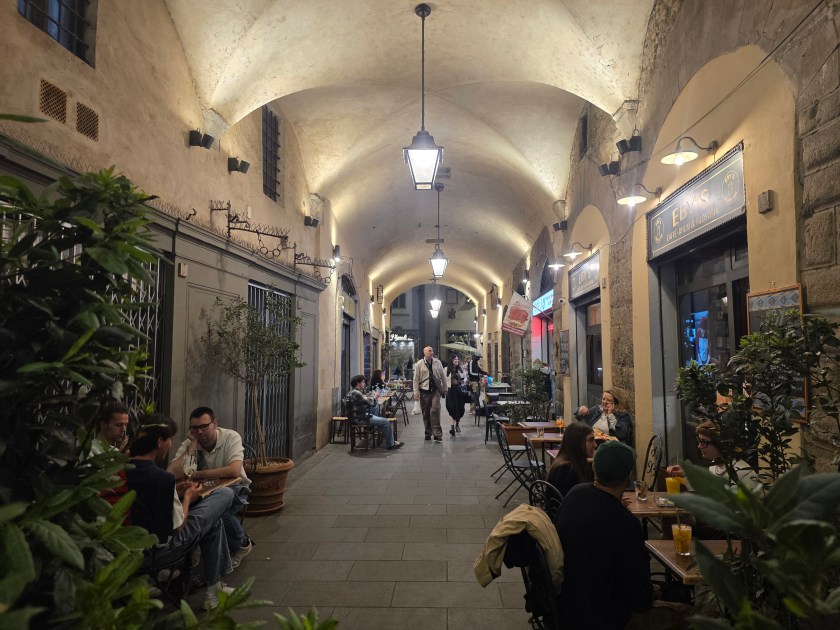
After all that, I wandered around a bit more near my hotel – exploring parts of the area I hadn’t seen yet.
Posted in English, Europe, Florence, Italy

Florence – Day 1

РУССКОЯЗЫЧНАЯ ВЕРСИЯ ПО ЭТОЙ ССЫЛКЕ. CLICK HERE FOR RUSSIAN VERSION.

April 23 2026 – Thursday

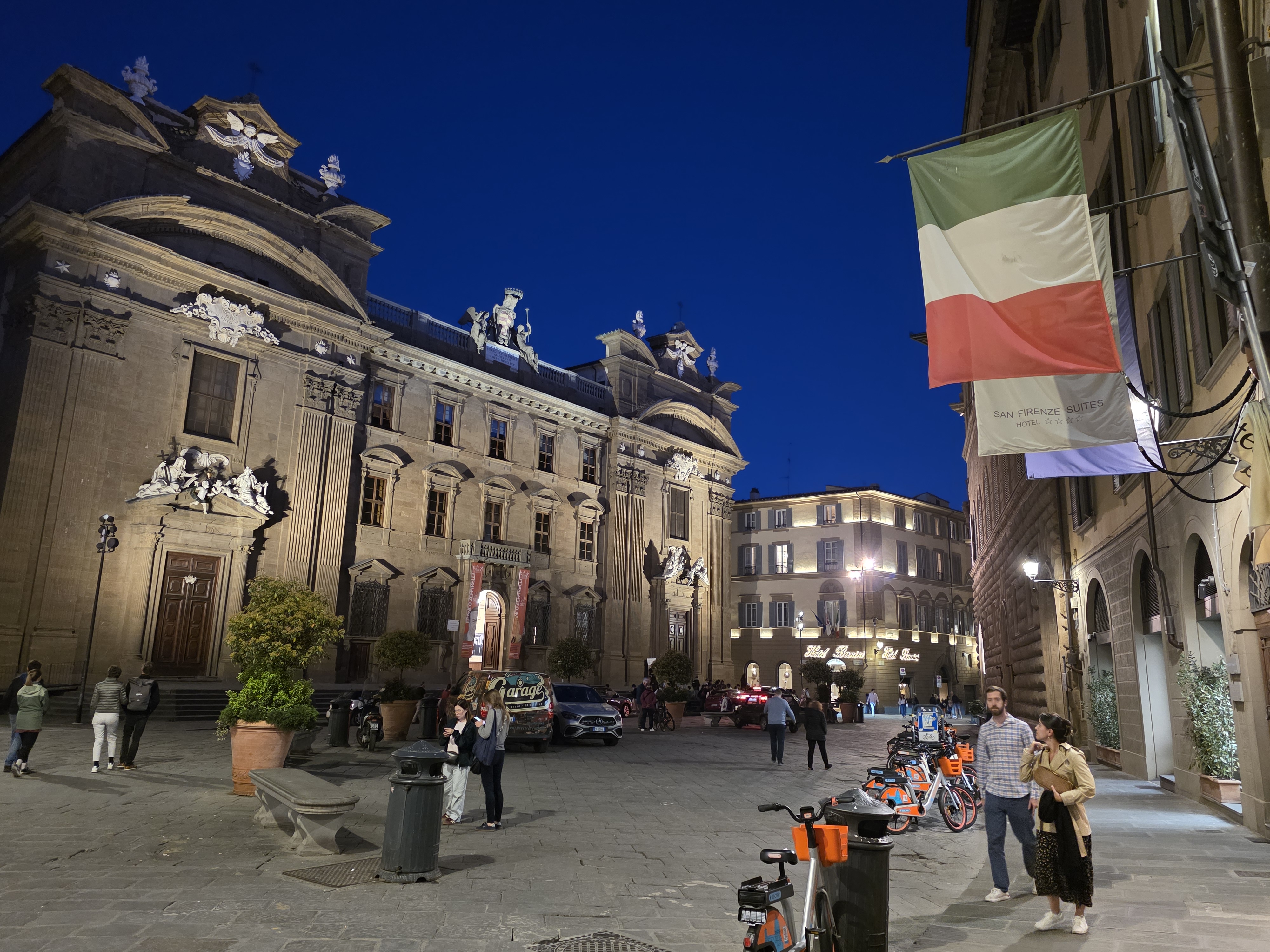
So, today I arrived in Florence. Early in the morning I headed to City Airport – it’s the one most conveniently located for me, just half an hour from home. Once again at boarding they threatened us with having to check in our hand luggage, but thankfully some volunteers stepped forward, so my little suitcase stayed with me, and there was even space for it in the overhead compartment right above my seat.

But on arrival I still had to queue for ages, because across the entire Schengen area there’s now a new entry-exit system with biometric checks. I don’t fully understand how it works, because once you’ve submitted your biometrics, they’re supposedly valid for three years, yet everyone still has to queue anyway. At least I was quite near the front and only waited about half an hour, while behind me there was still a whole crowd of people.

After getting through, I took the tram – its final stop, San Marco, is about a 10-minute walk from my hotel. I walked past the Accademia Gallery and saw a very impressive queue there, then past the famous sandwich place All’Antico Vinaio, where the queue was even more impressive (I will definitely try Florentine sandwiches, but not here – Google suggested that although this place is very popular, it’s deteriorated a lot because of tourist hype, and there are much better panini places around).

While I was on my way, someone from the hotel was messaging me on WhatsApp, asking me to let them know when I was on the tram, when I was at the door, and saying they would open it remotely and come down in five minutes. Basically, it felt like there was only one person working there. After five minutes, a pleasant woman named Marta came and showed me to a very spacious and, I’d even say, quite grand room.

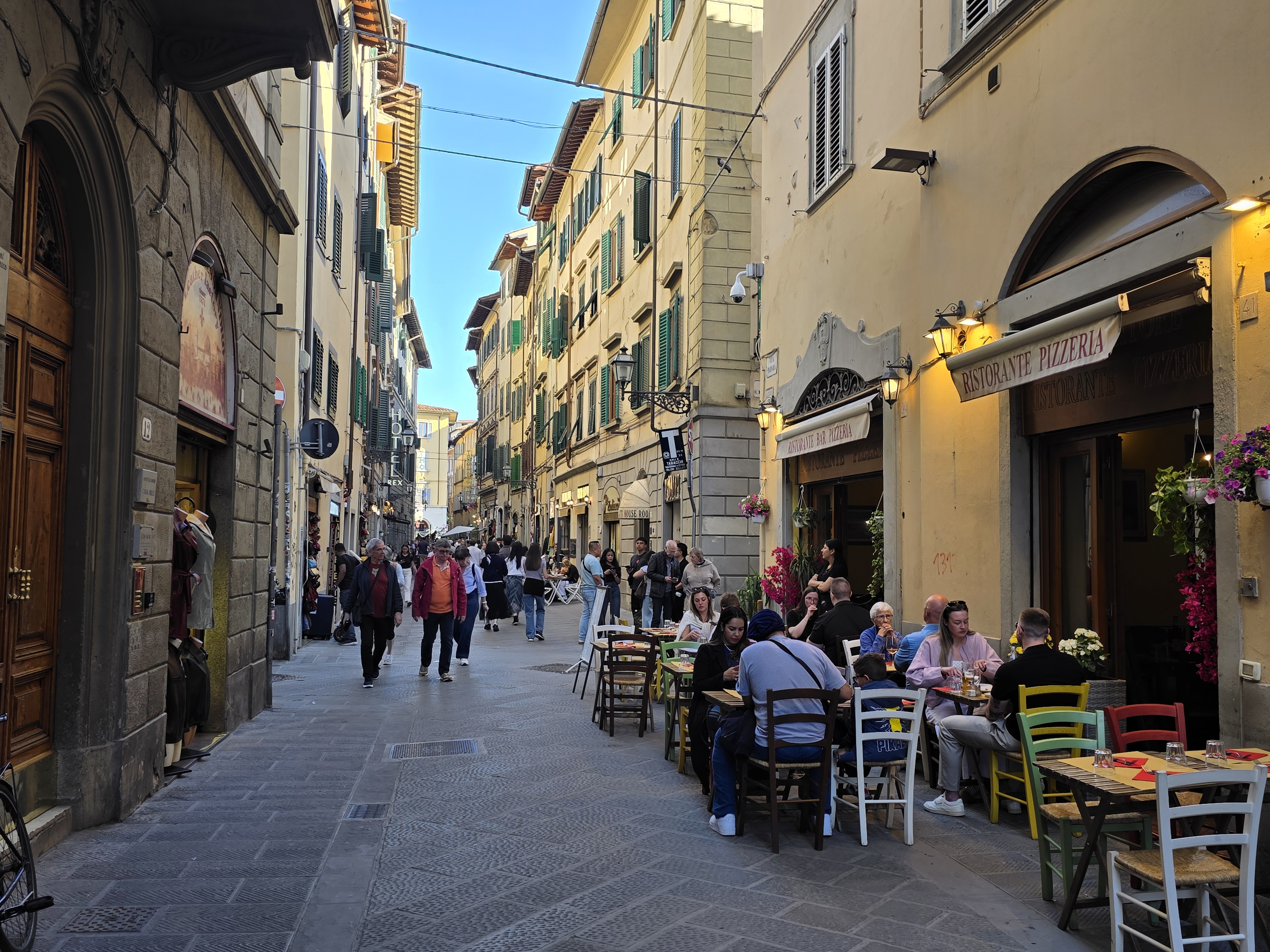
I left my things, freshened up a bit, and then went out with the mission of getting myself a sandwich for lunch at one of the Google-approved panini spots. These places specialise in traditional hot sandwiches made from a local type of focaccia (called schiacciata), filled with Tuscan cured meats, cheeses, and other ingredients. Another very popular filling is lampredotto – basically beef tripe – but that option is immediately off the table for me.

The Pino’s panineria also had a queue, but it was manageable, and I got myself a sandwich with salami, pecorino cheese, sun-dried tomatoes, peppers, and some kind of spicy sauce – it was very tasty.

And after the great lunch, it was time to go for a walk and get to know the city a little bit. My hotel is right next to the Old Town, but I’m planning to properly explore it tomorrow, when I have tickets booked for museums and for Giotto’s bell tower.

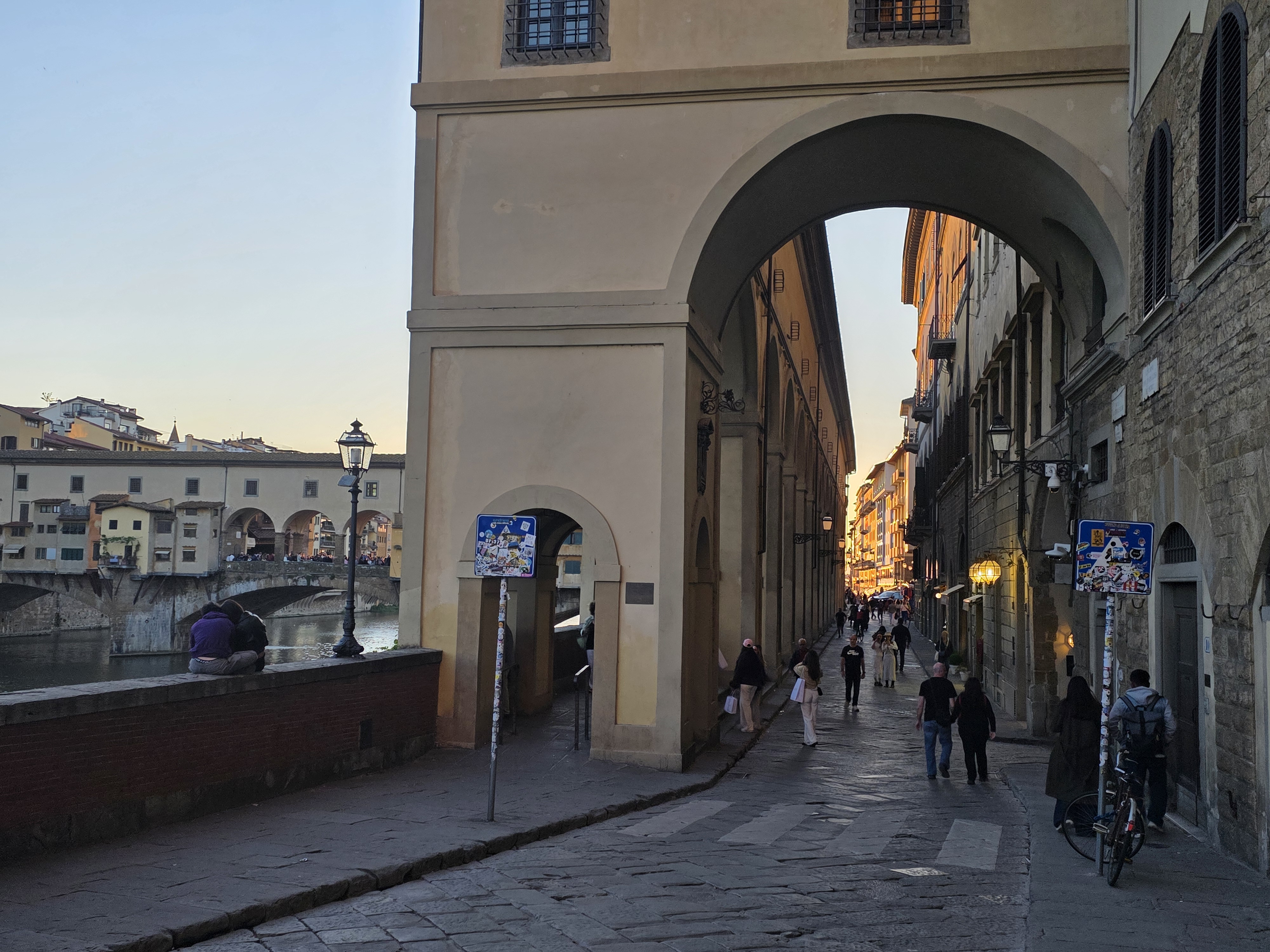
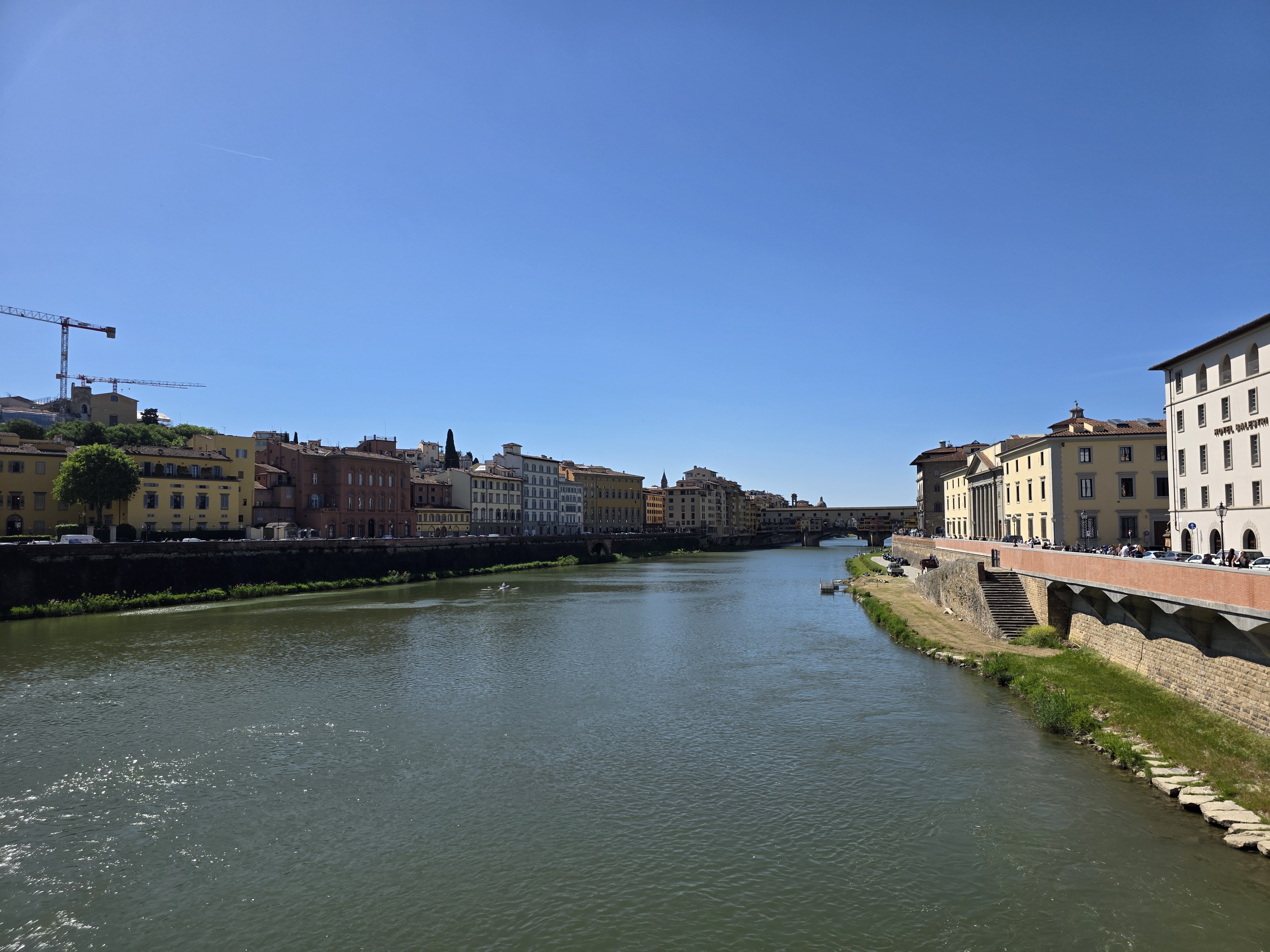
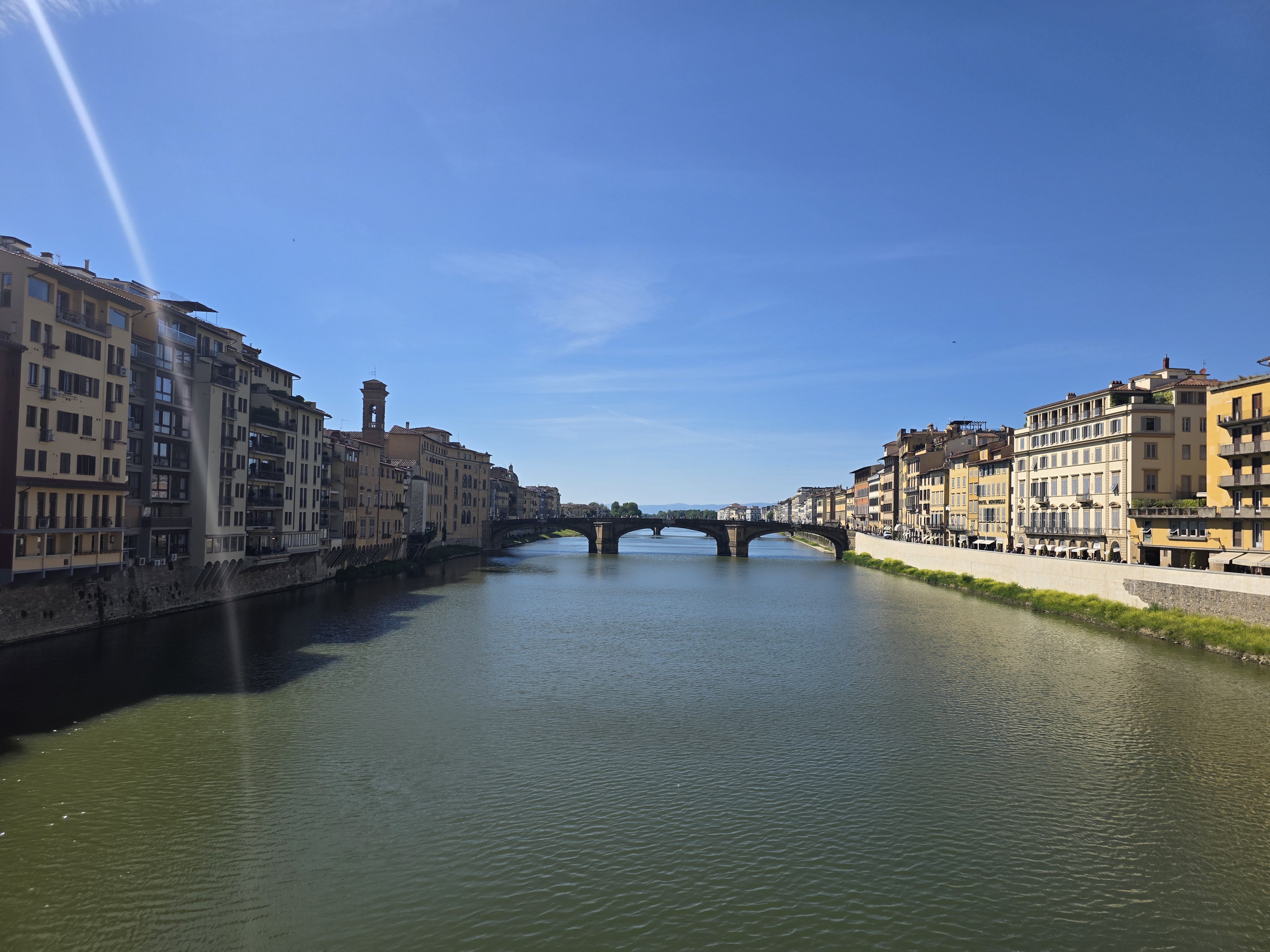
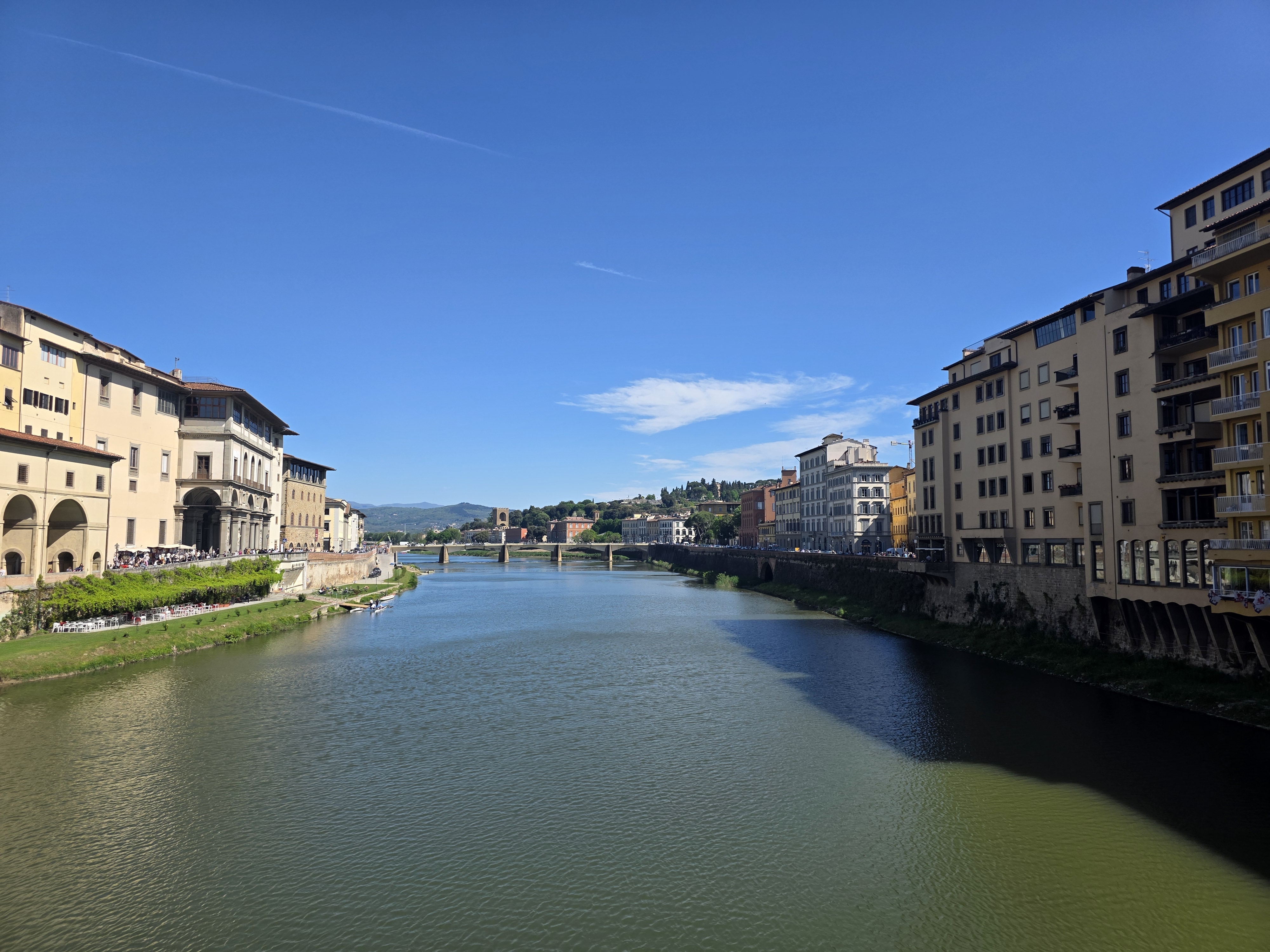
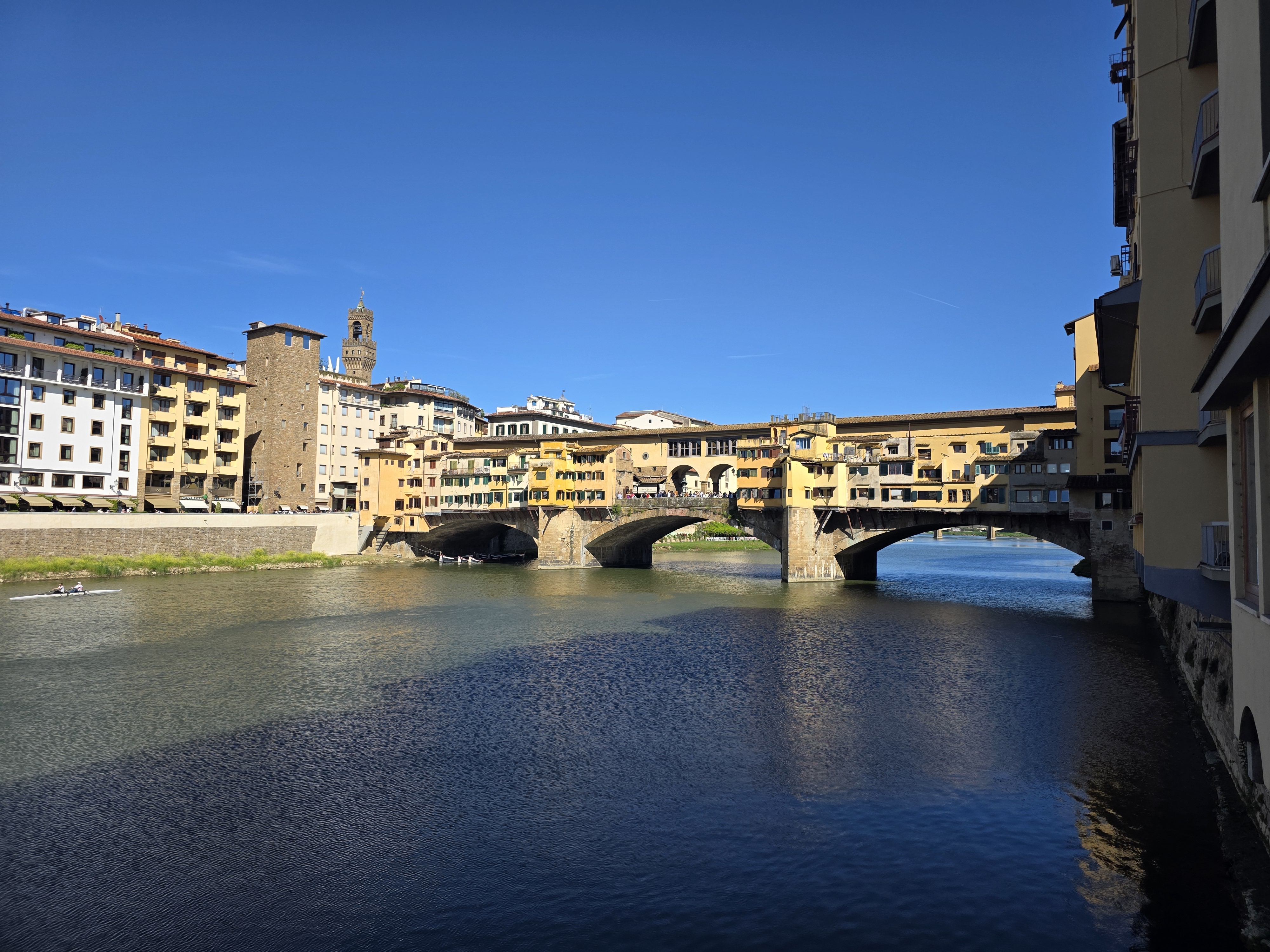
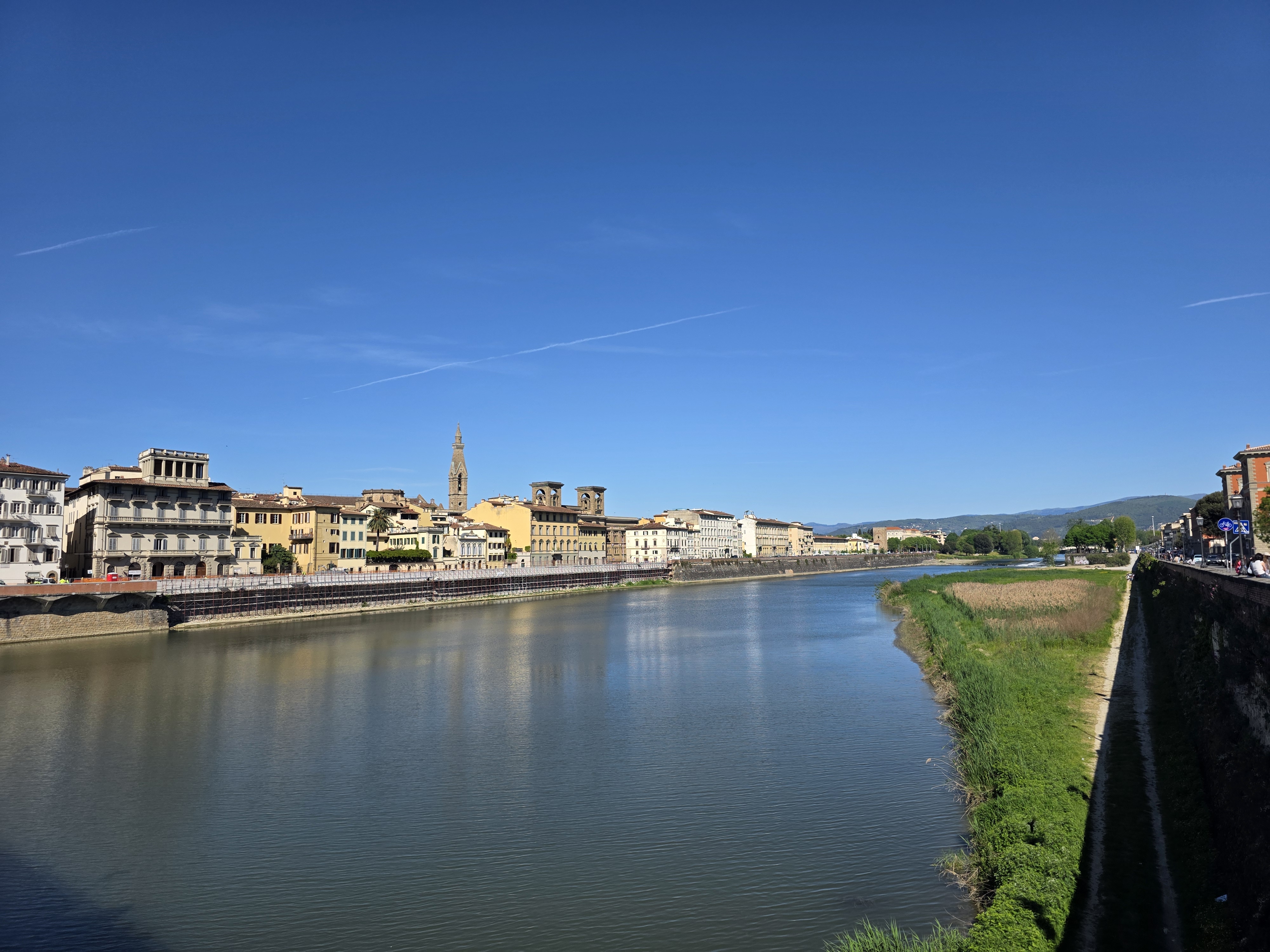
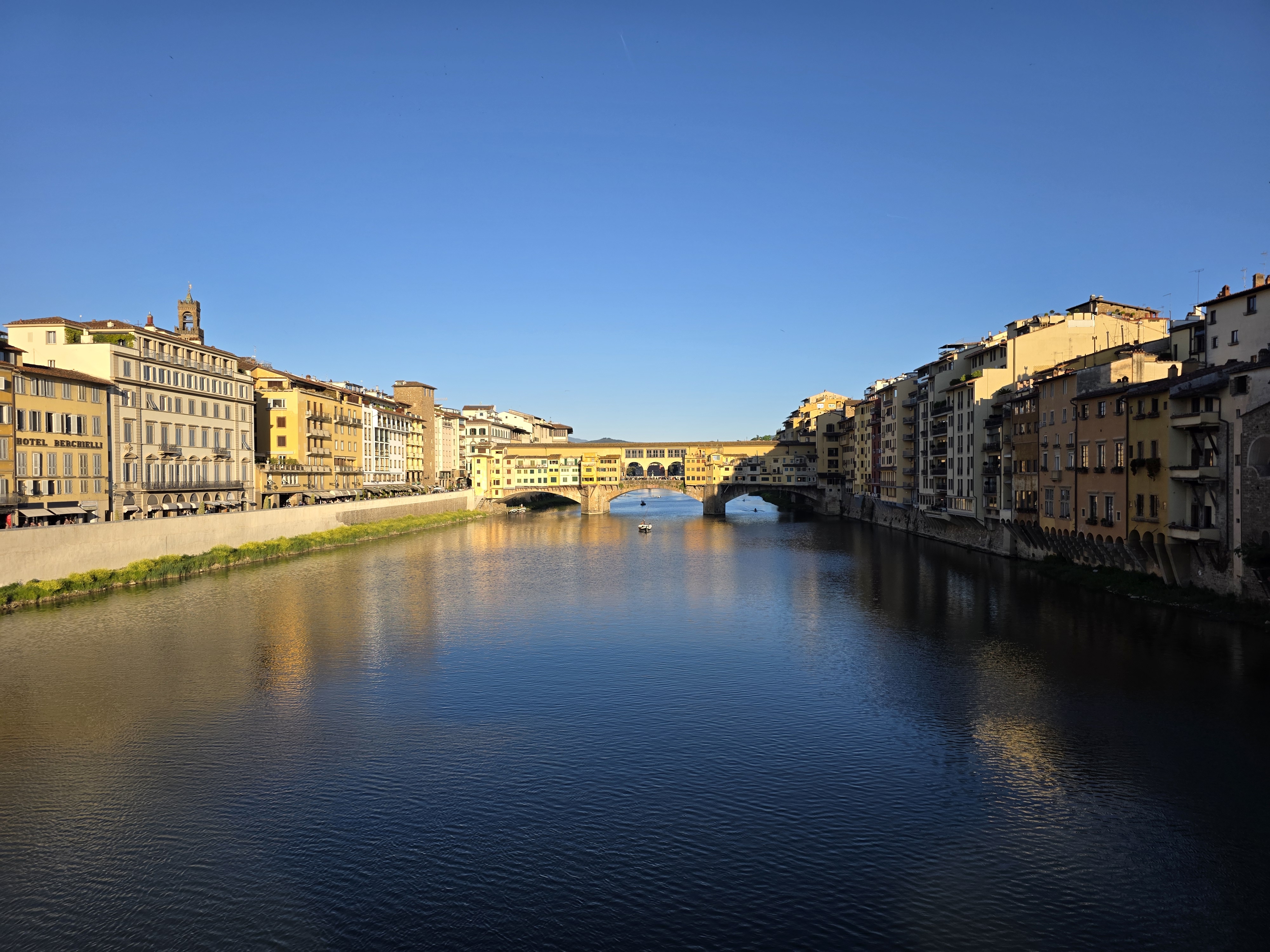
For today, the plan was to cross to the other side of the Arno River via the famous Ponte Vecchio, walk around the historic Oltrarno district on the left bank, have dinner there, and before that head up to Piazzale Michelangelo, which has something like a hilltop park and a viewing platform overlooking the city.

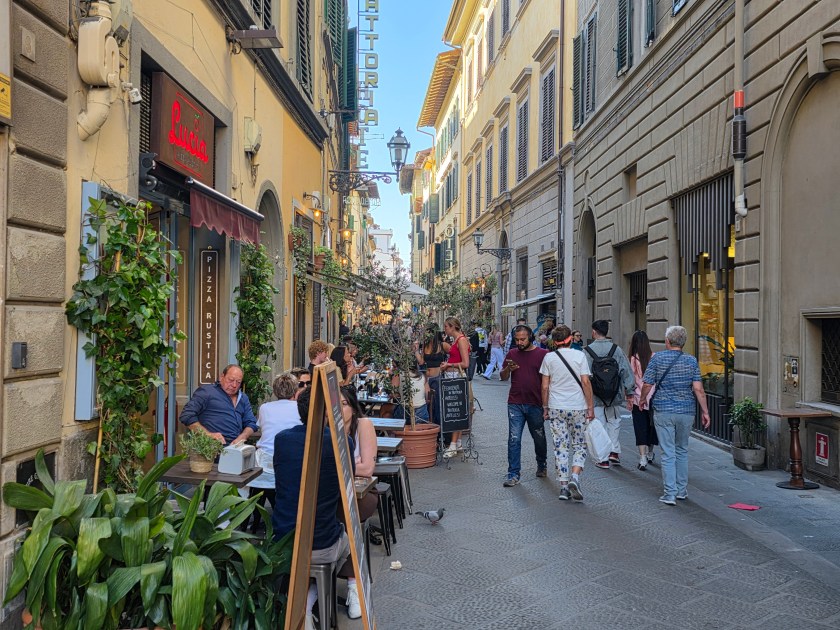
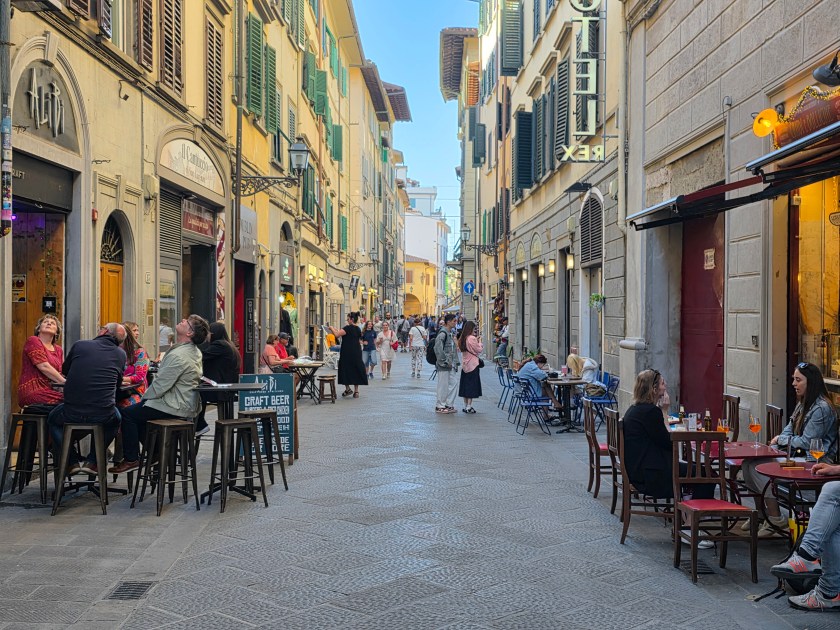
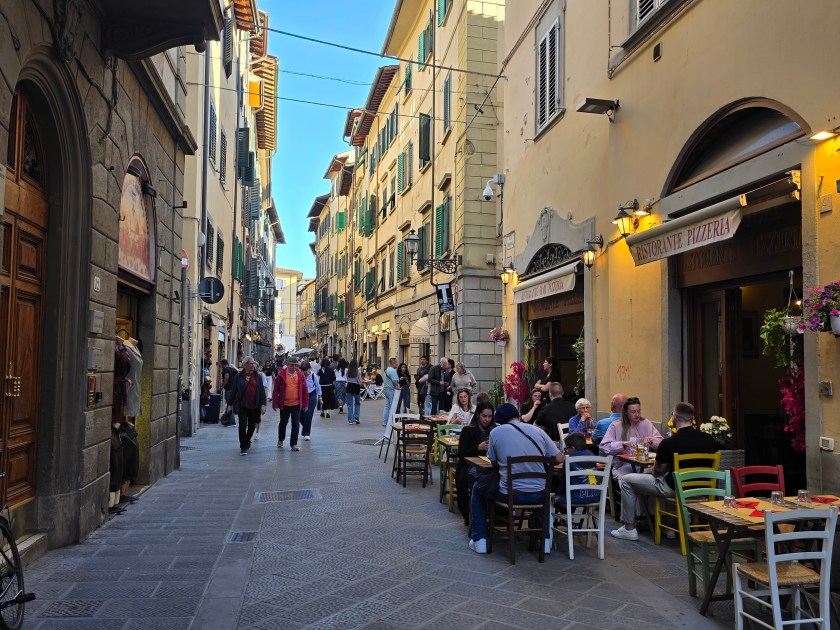
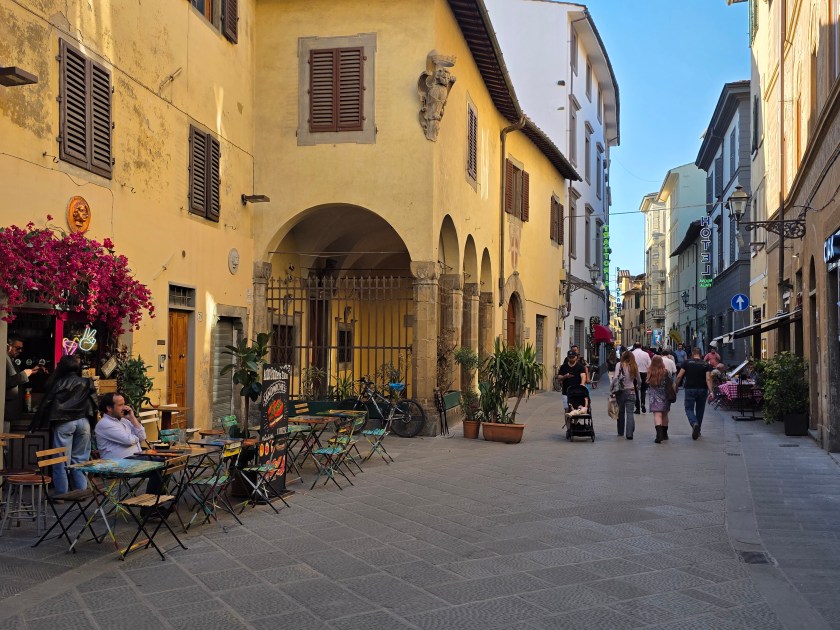
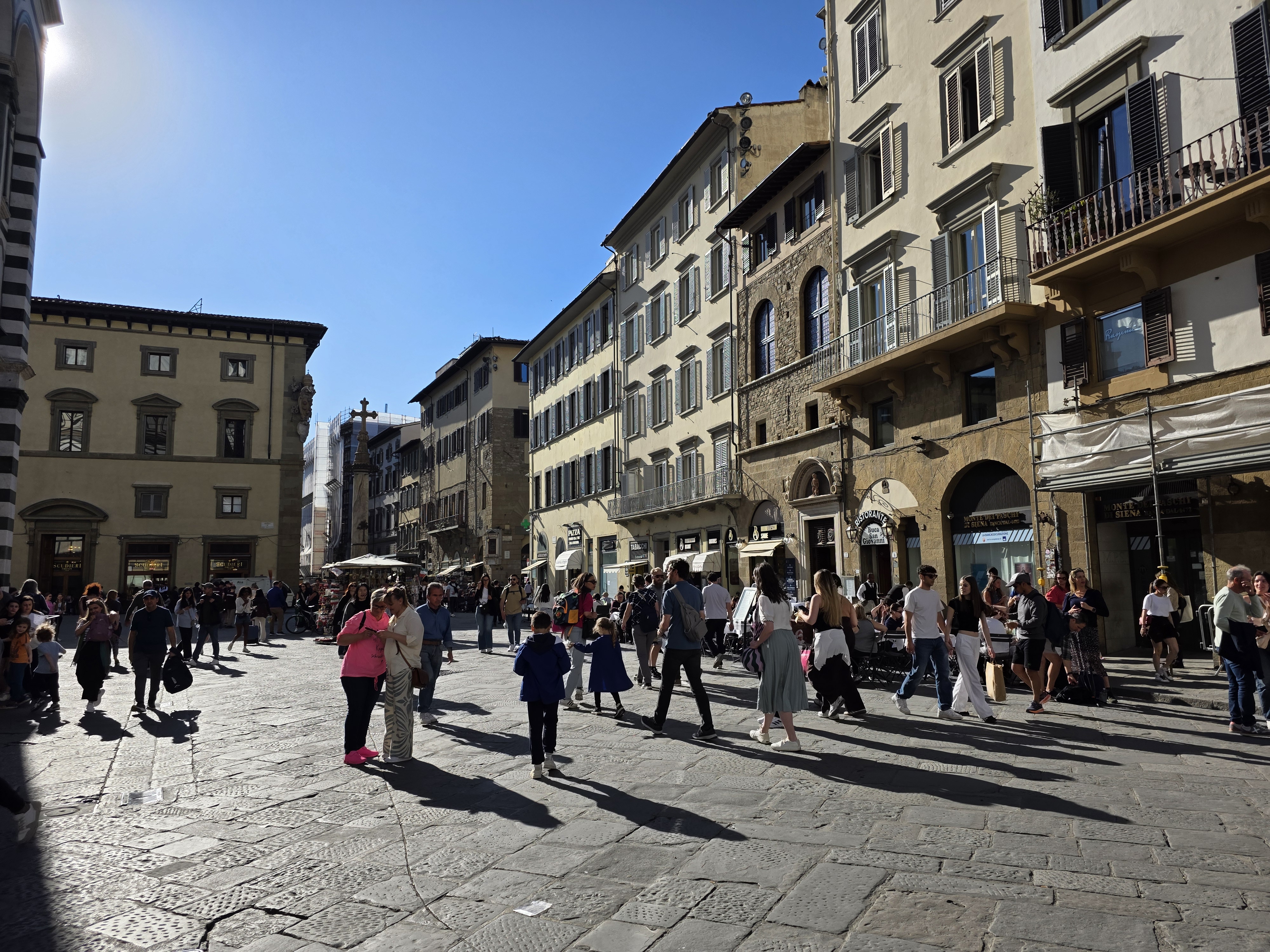
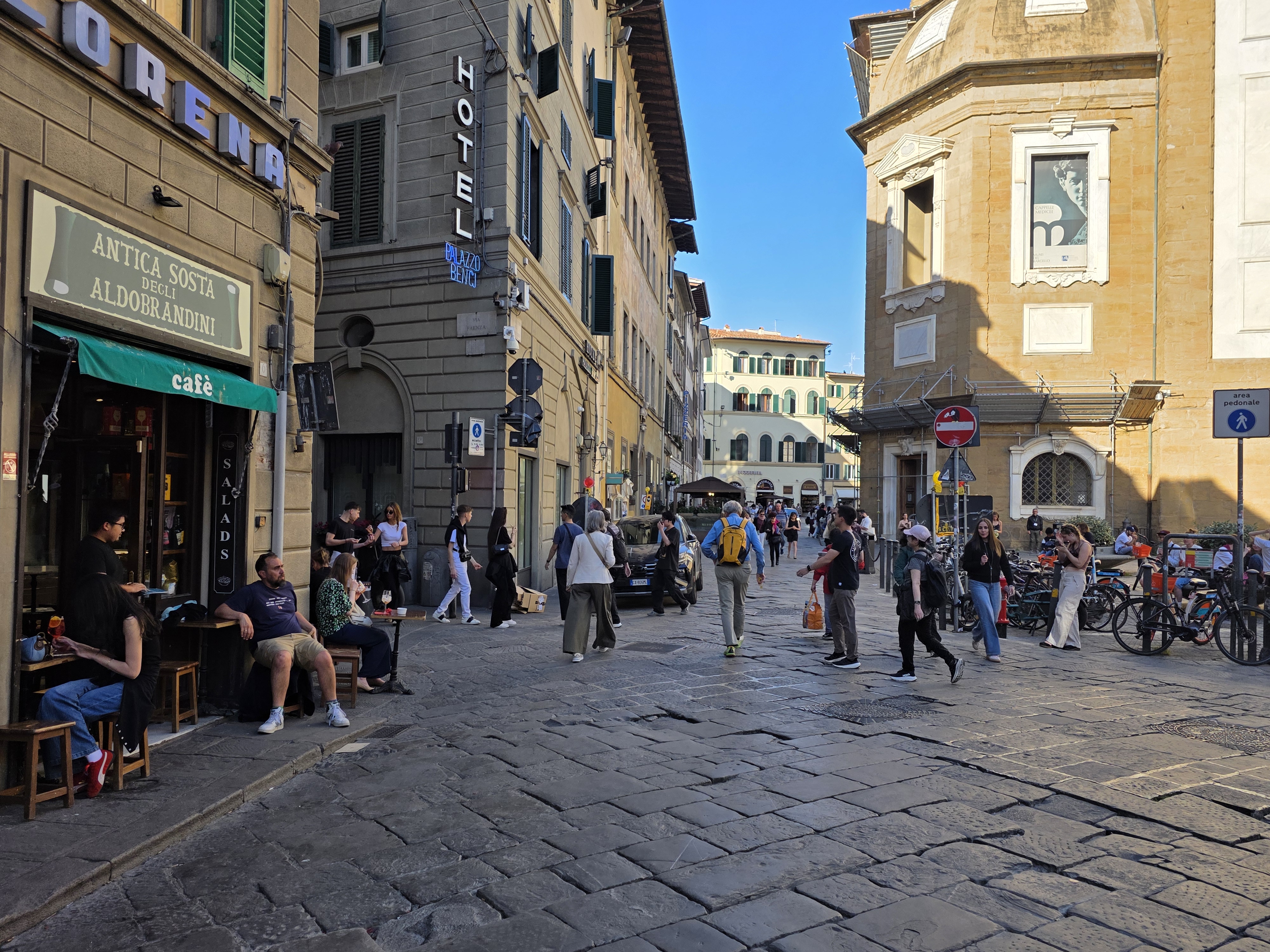
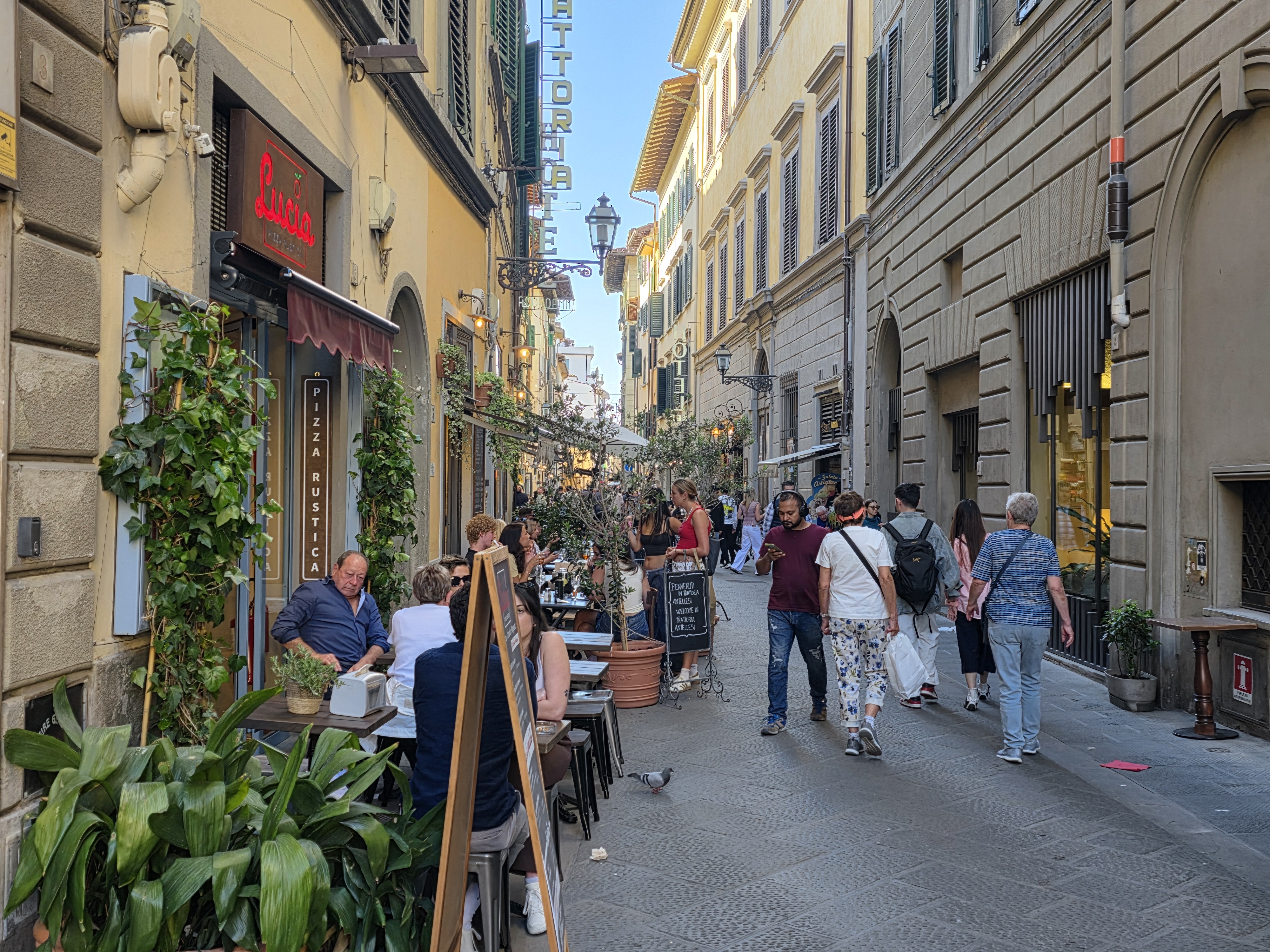
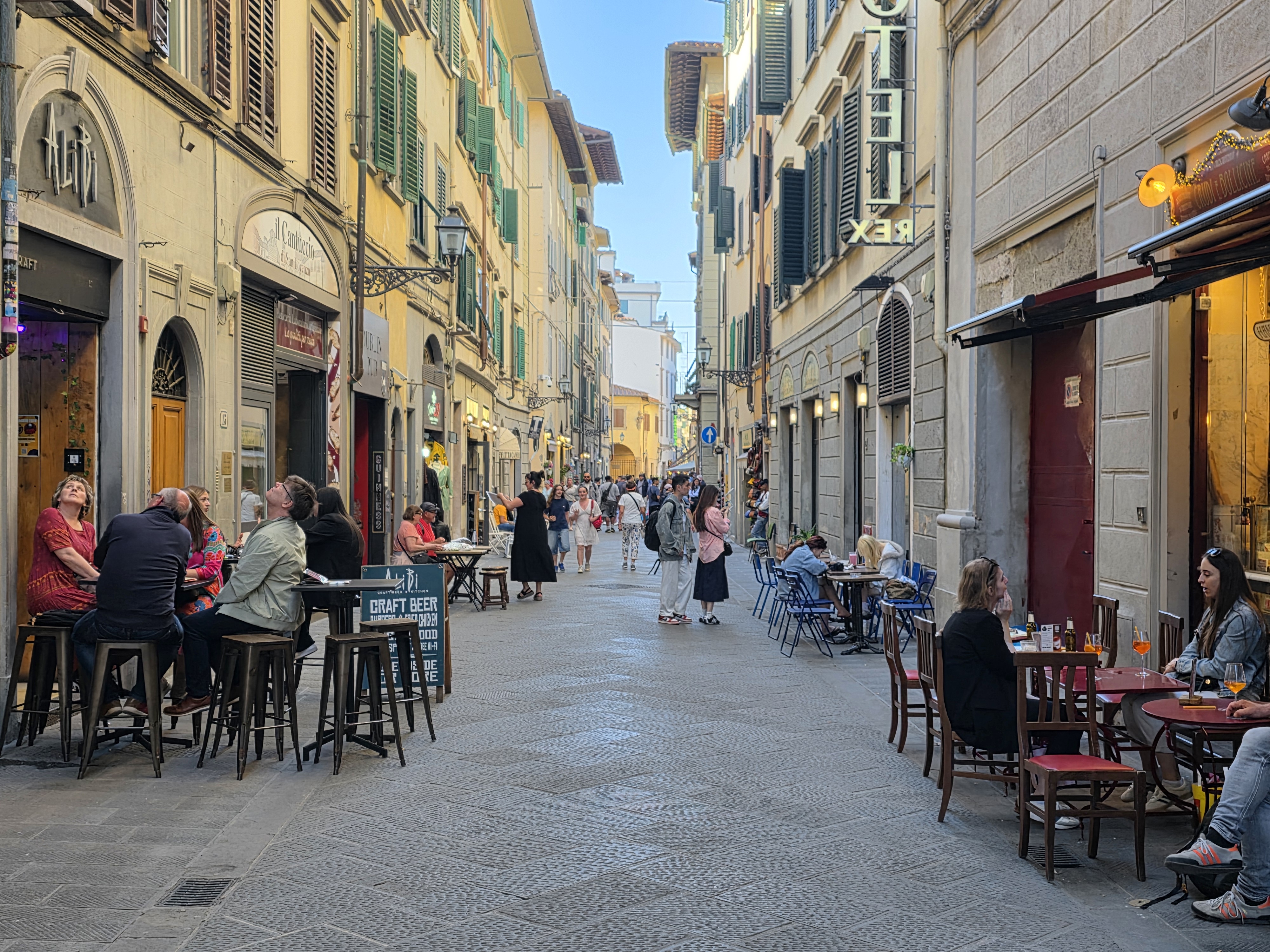
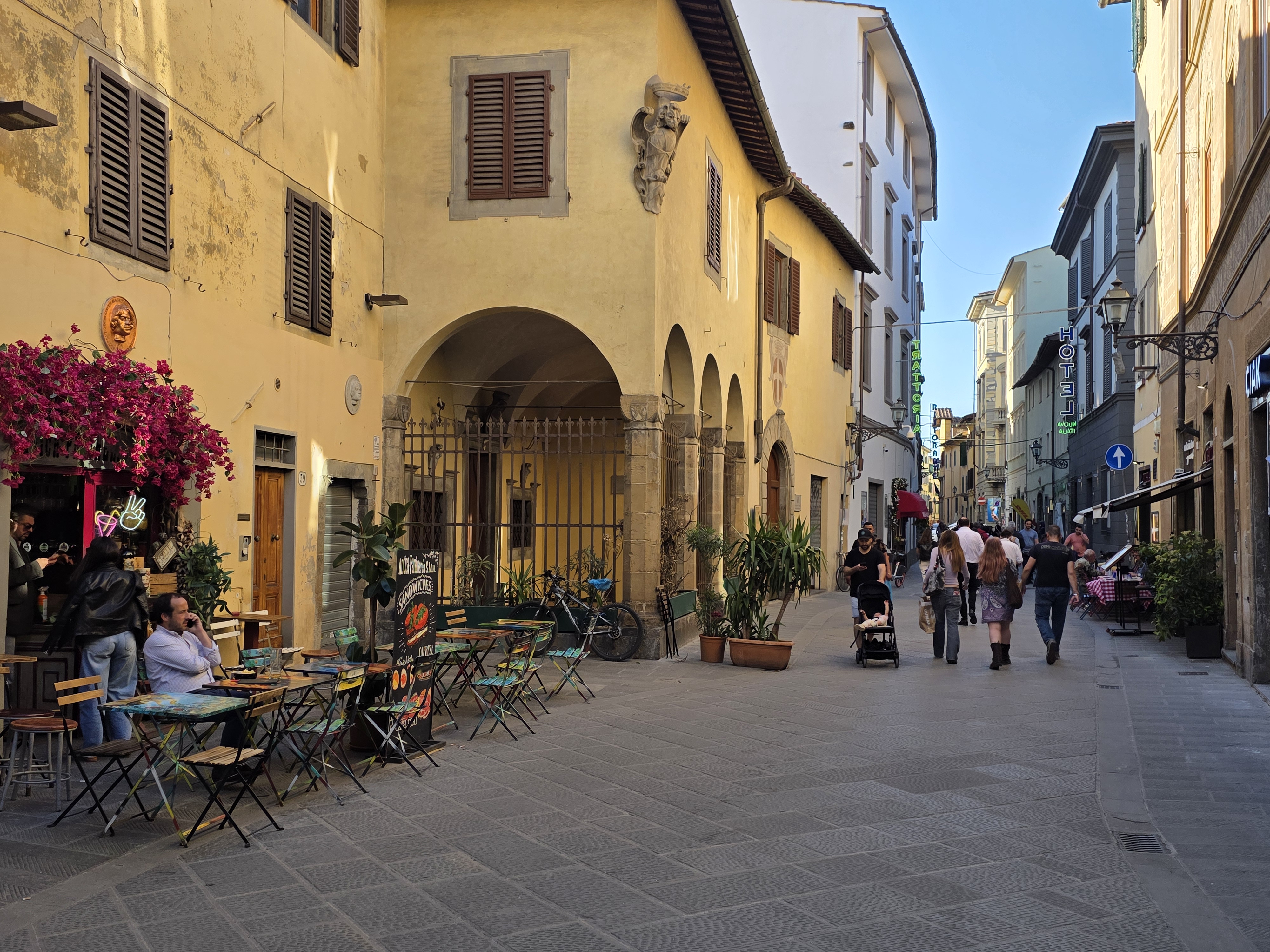
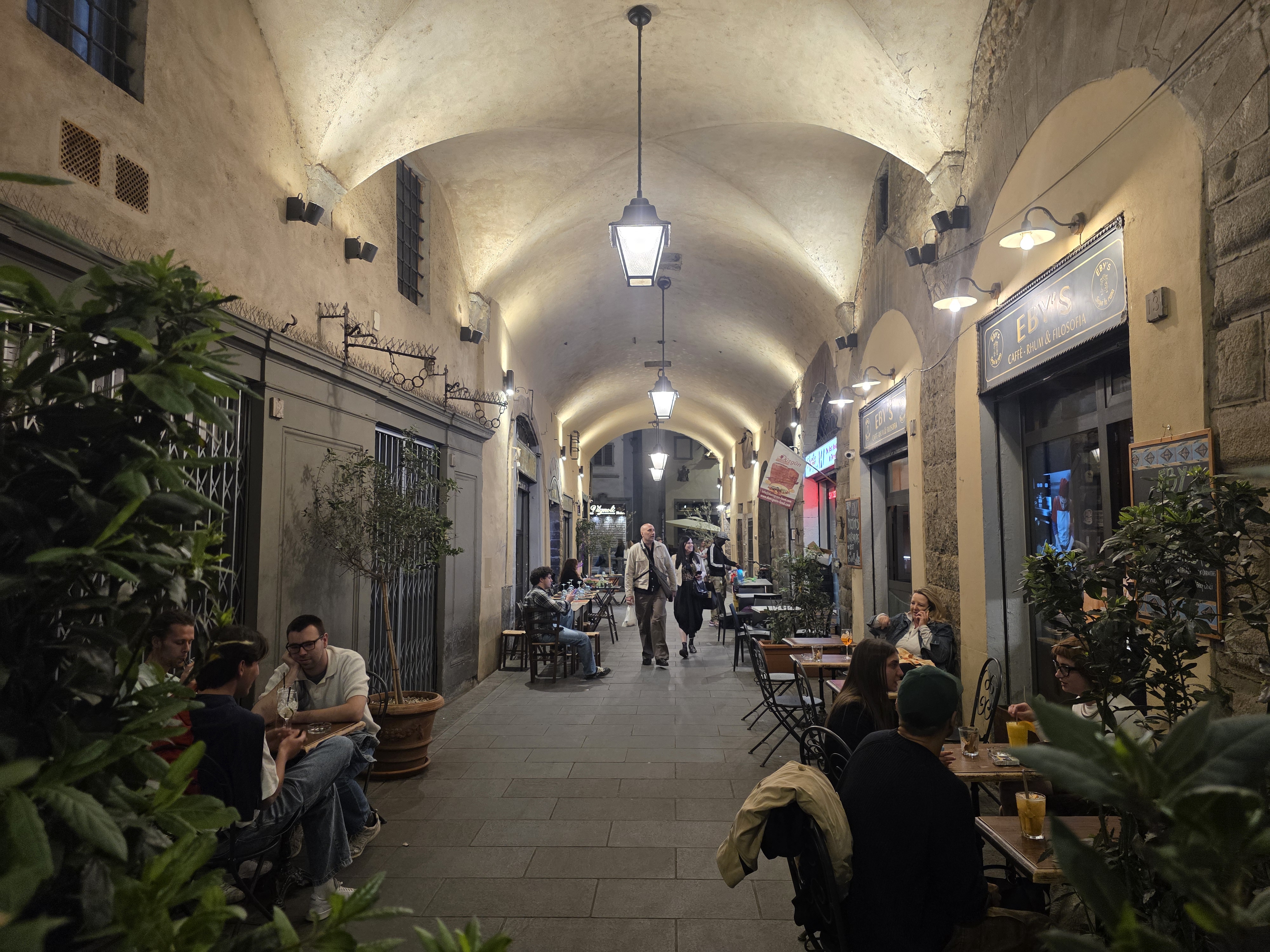
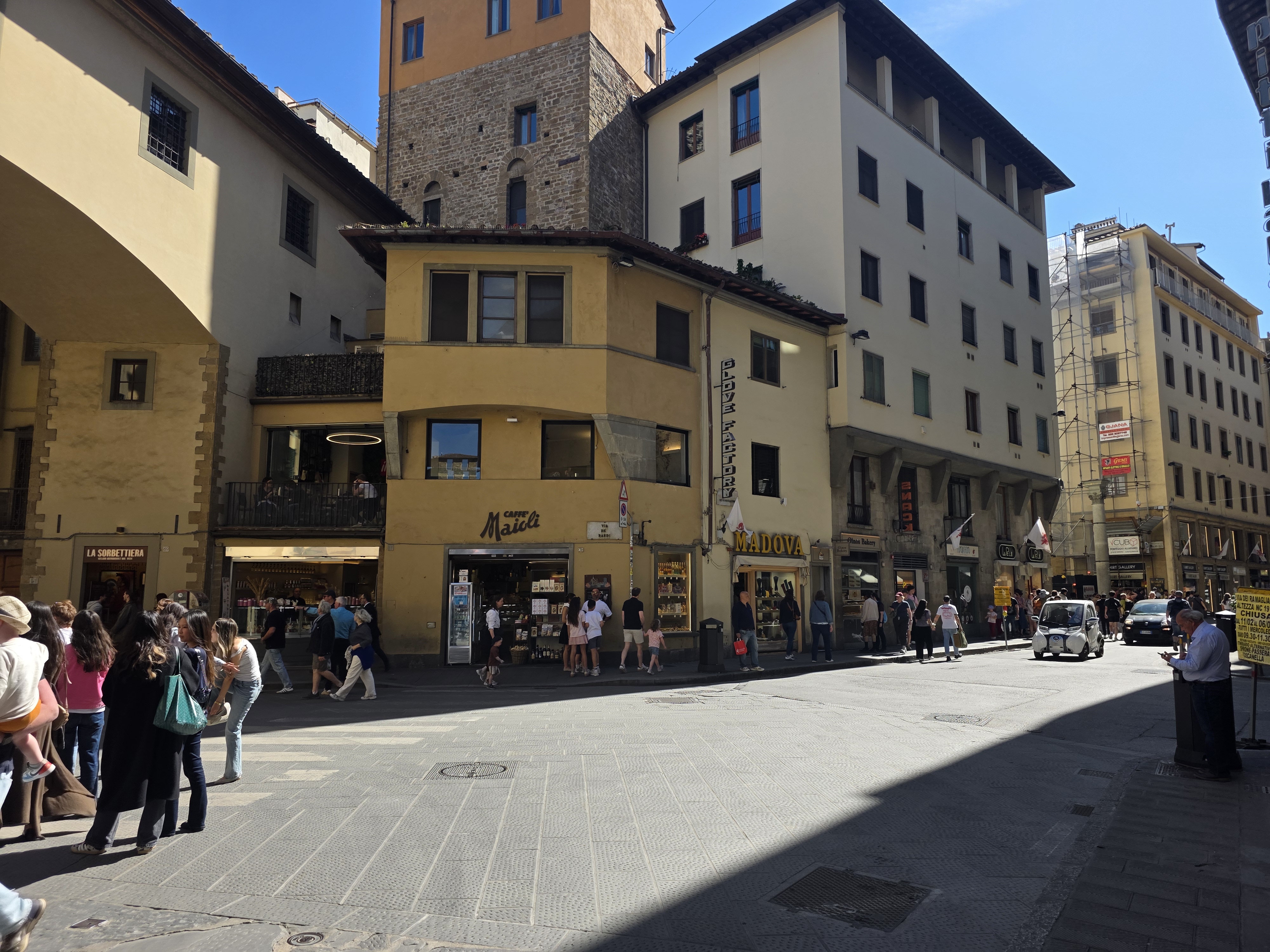
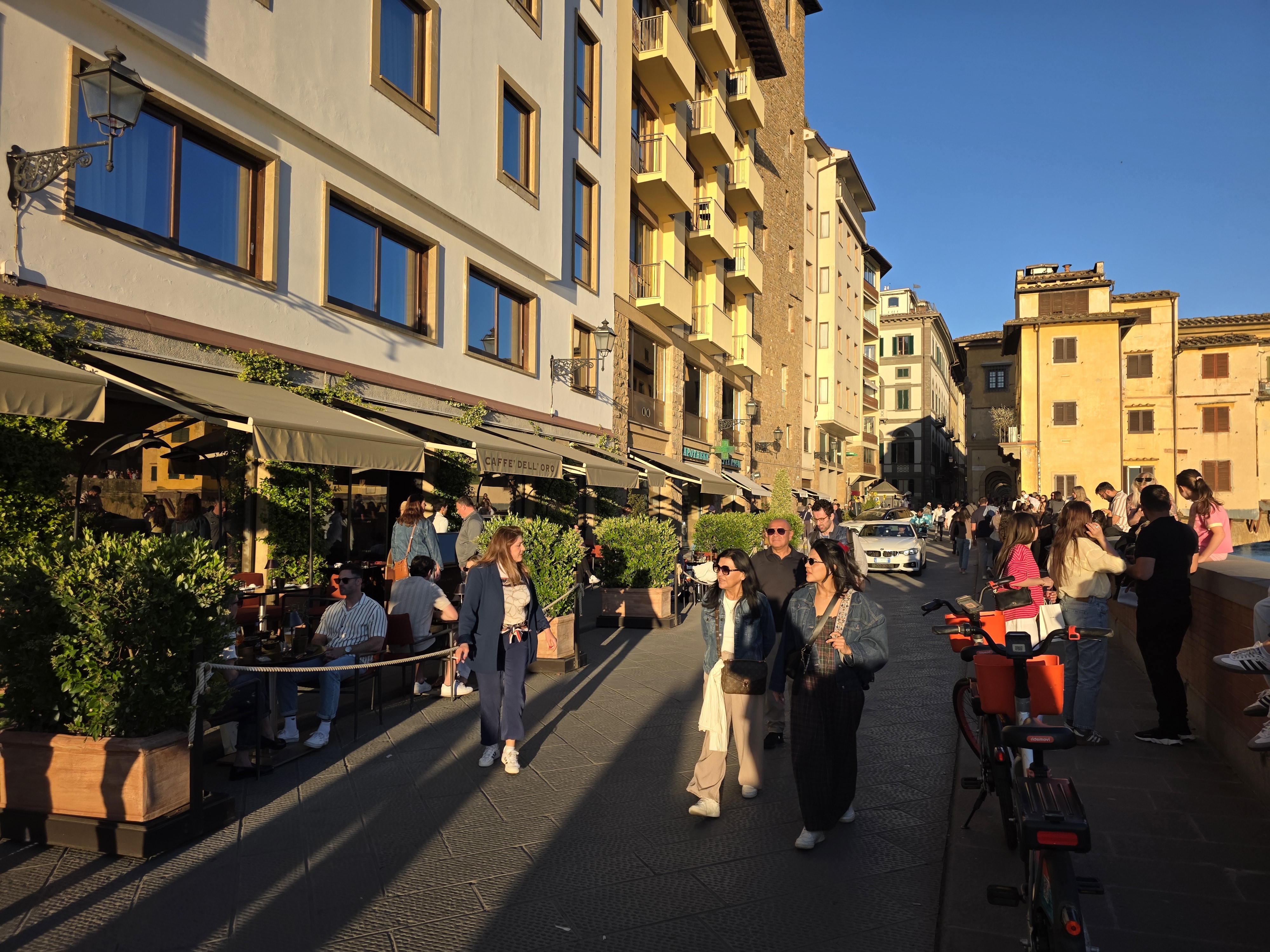
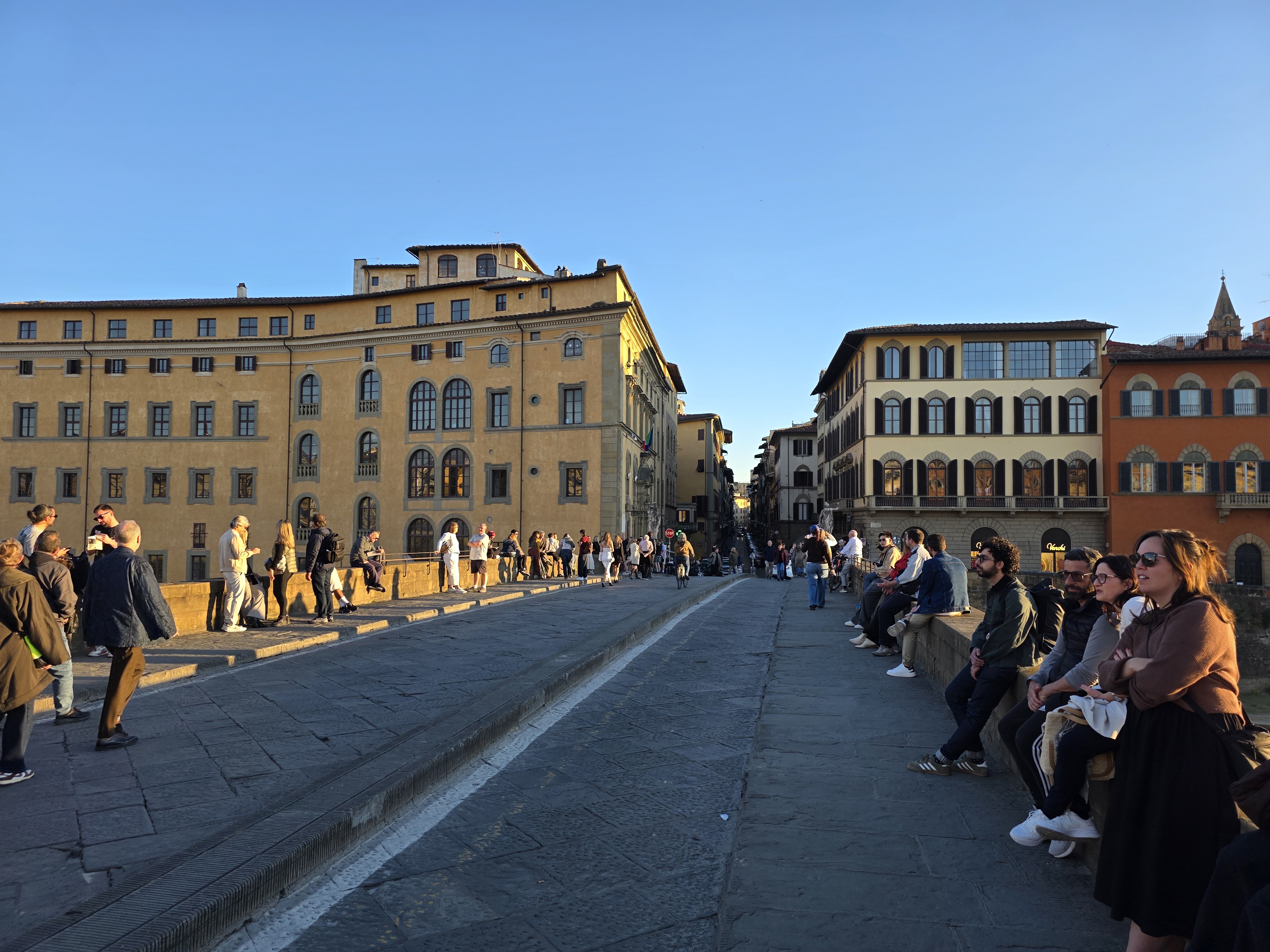
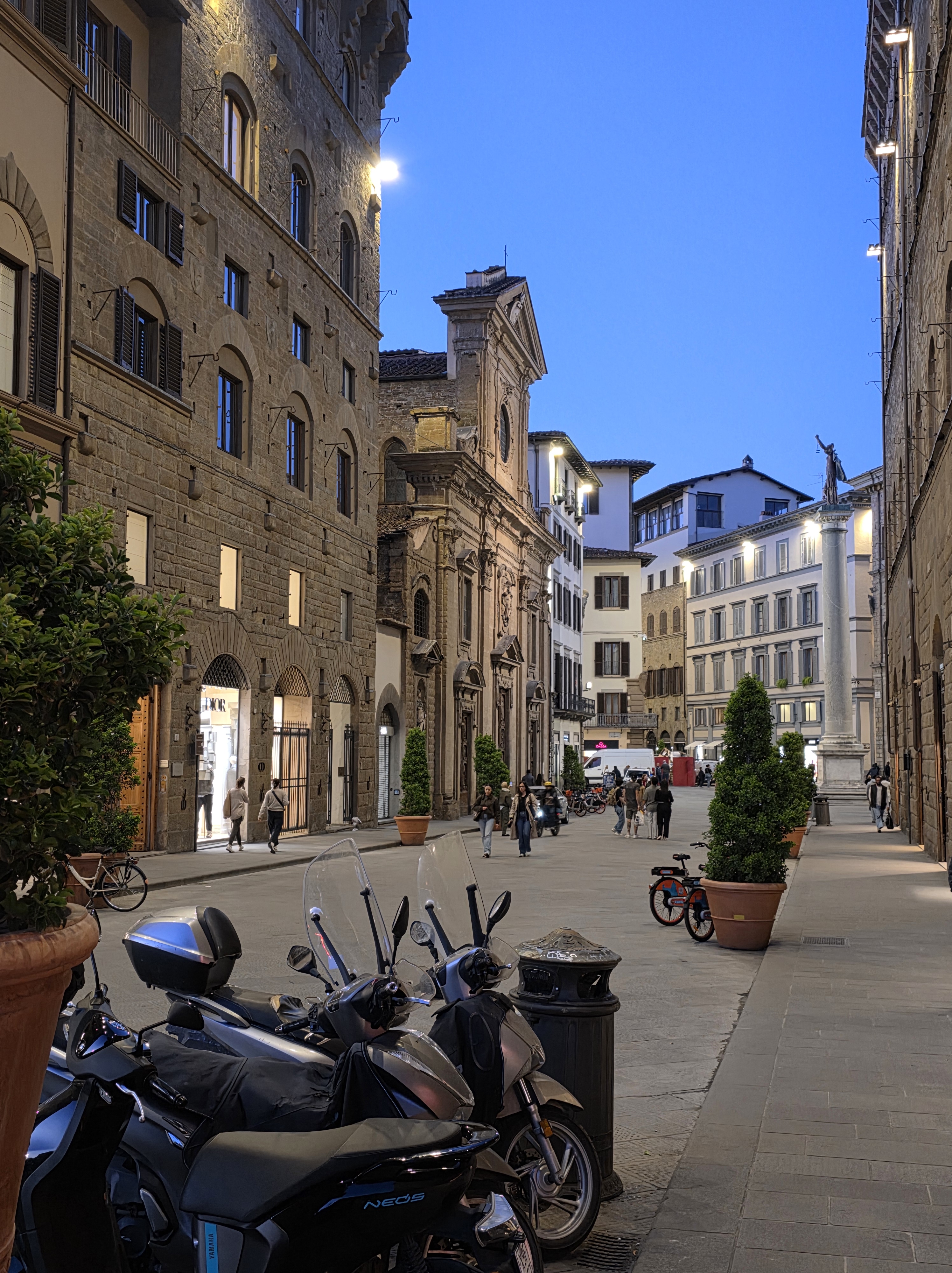
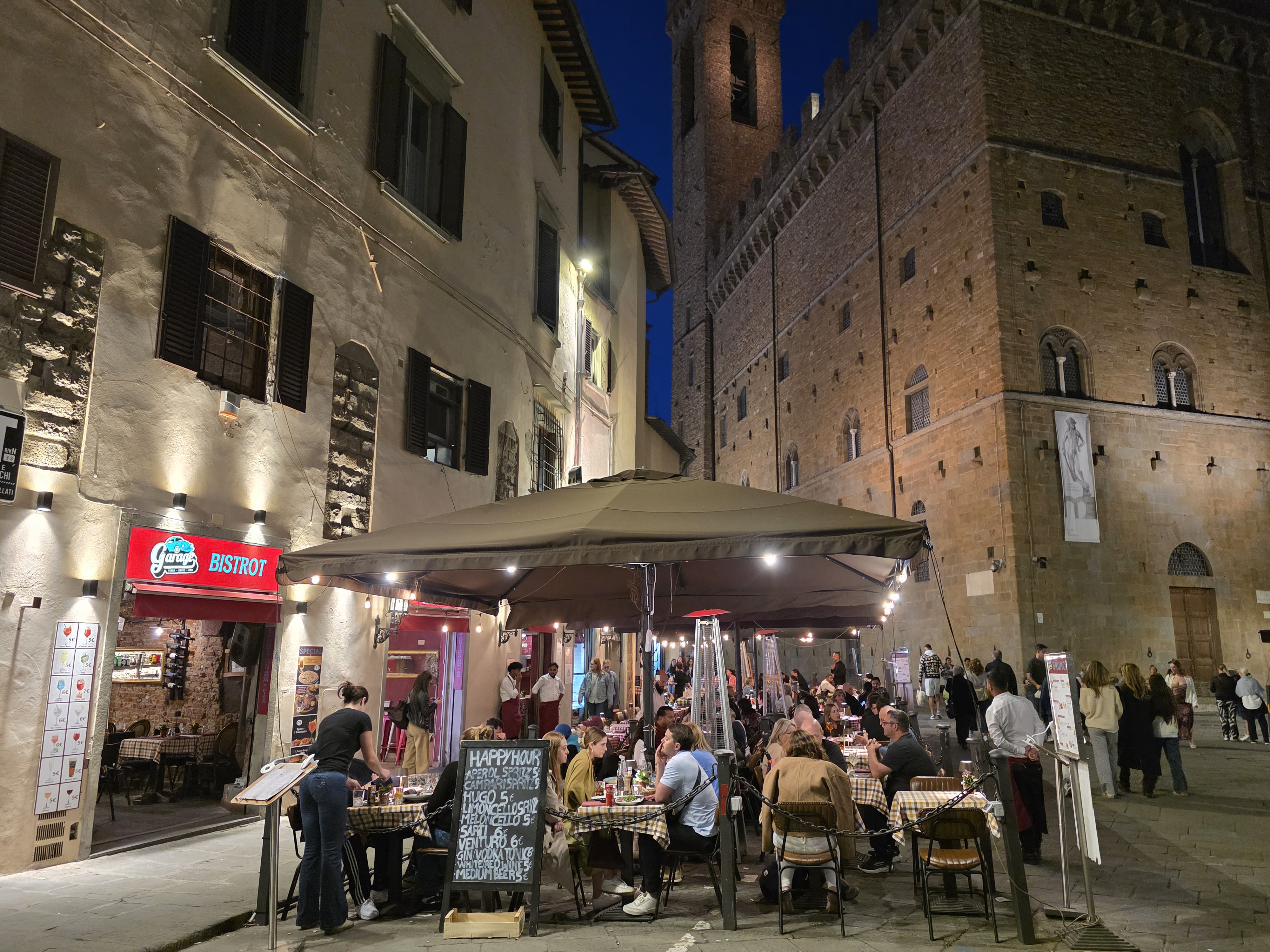
A couple of observations about Florence. There are a lot of people in the city centre – not quite the same level of madness as in Venice, but still a lot of tourists, especially Americans, British, Turks, and French. The central streets are narrow, and therefore, the pavements are very narrow too, and people stroll along them slowly and casually, so you can’t really get past.

On these narrow streets, you often see bags of rubbish placed outside doorways, which isn’t particularly nice. And in the city centre there’s also a bit of a sewage smell – interestingly, it’s not Venice with its canals, but it still smells a bit.

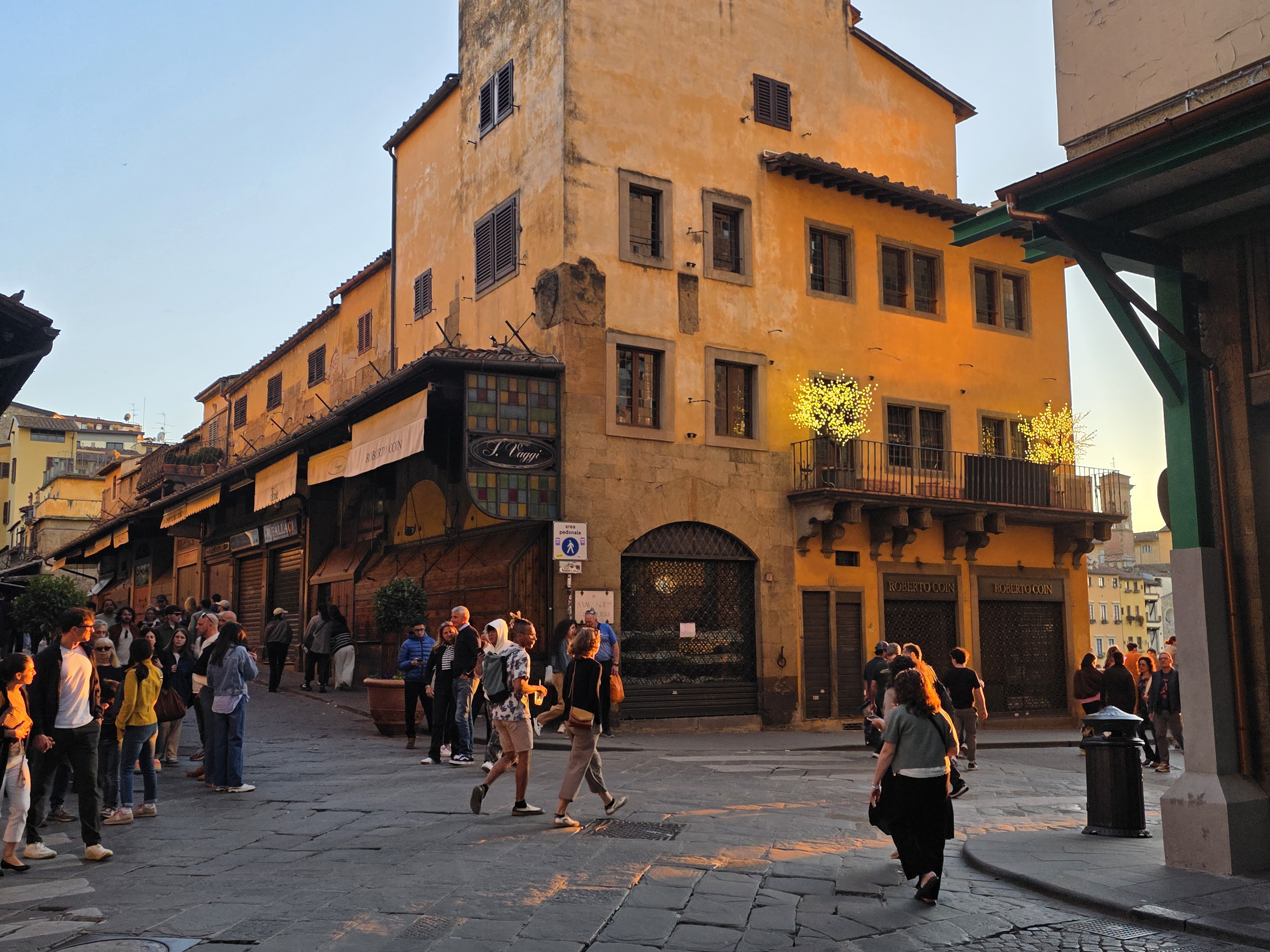
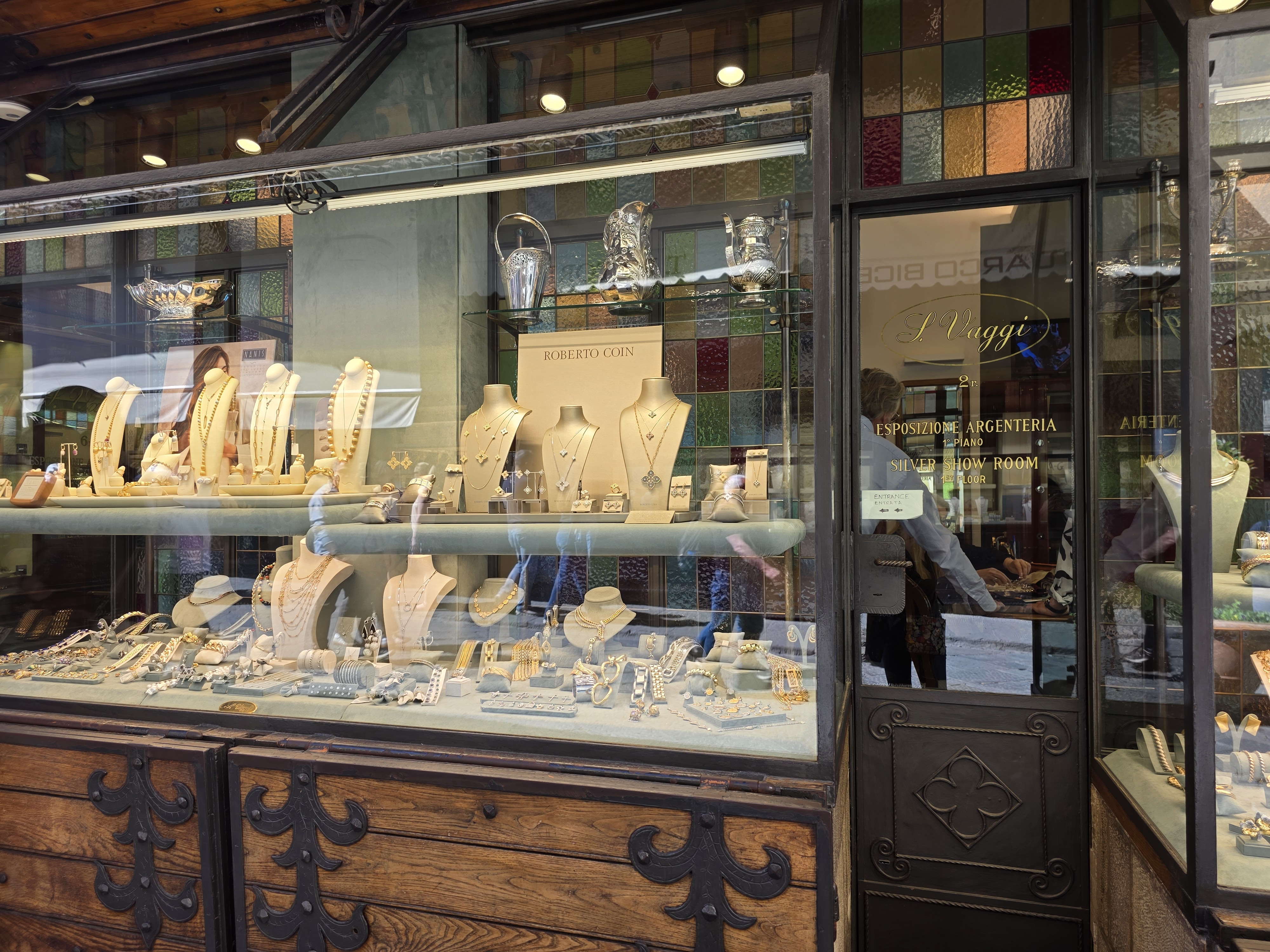
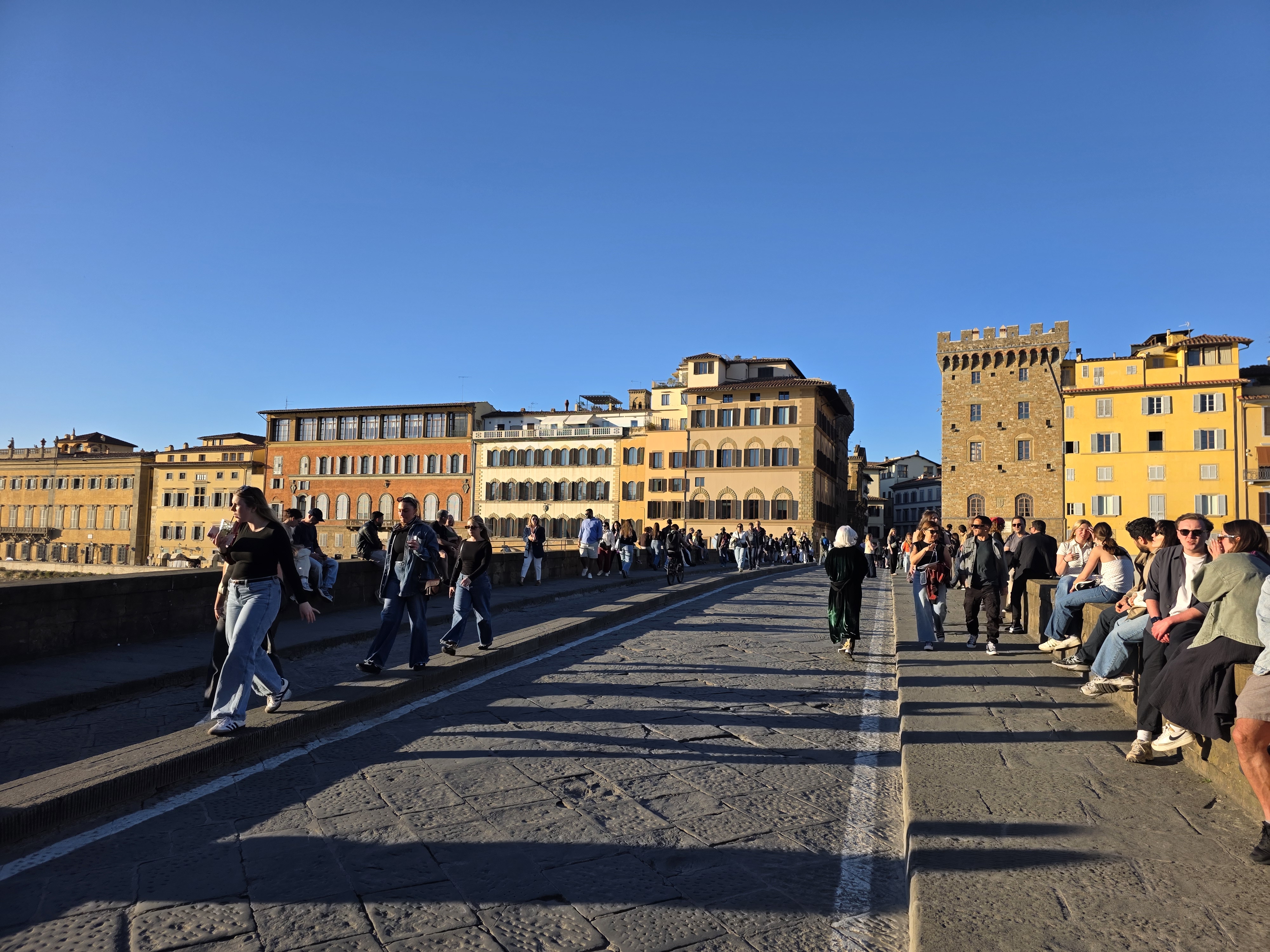
Around Ponte Vecchio, and along the bridge itself, there’s an abundance of jewellery shops – as in Florence in general – and also many shops selling leather goods: bags, jackets, gloves, and so on. The famous Italian leather! There are also plenty of places to eat – those same panini spots, wine bars, gelaterias, traditional trattorias and osterias, and all sorts of other places.


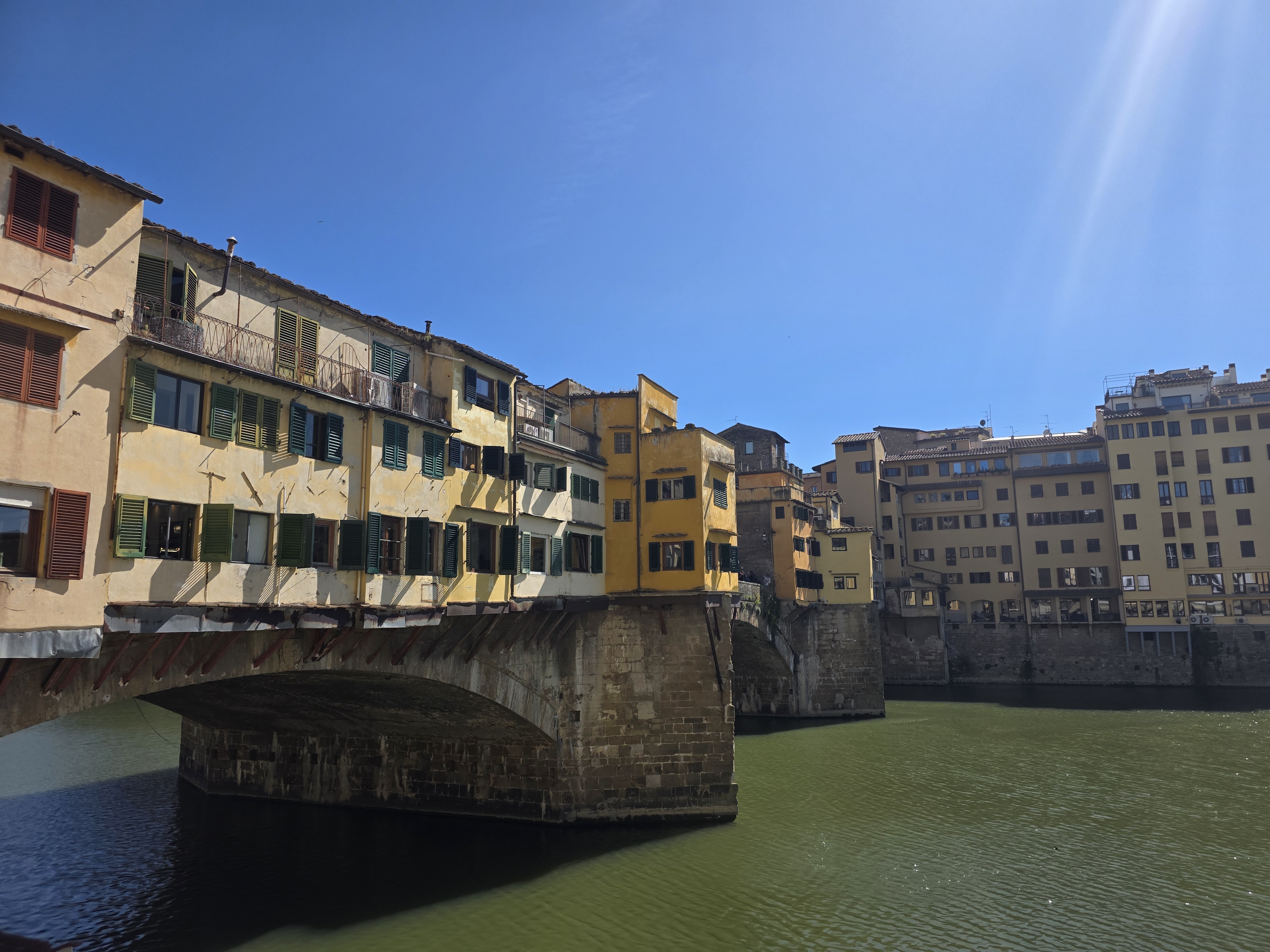
The bridge itself, and the yellow-orange houses hanging over the river, actually reminded me of Girona in Catalonia, Spain.
 
First, I walked around the Oltrarno area – it’s essentially also part of the historic centre, most of which lies on the other, right bank of the river. There are sights here too, like the Pitti Palace, but I won’t be visiting it. I wandered around a bit, checked out some of the shops, and then headed on foot along the river toward Piazzale Michelangelo and its viewing point.

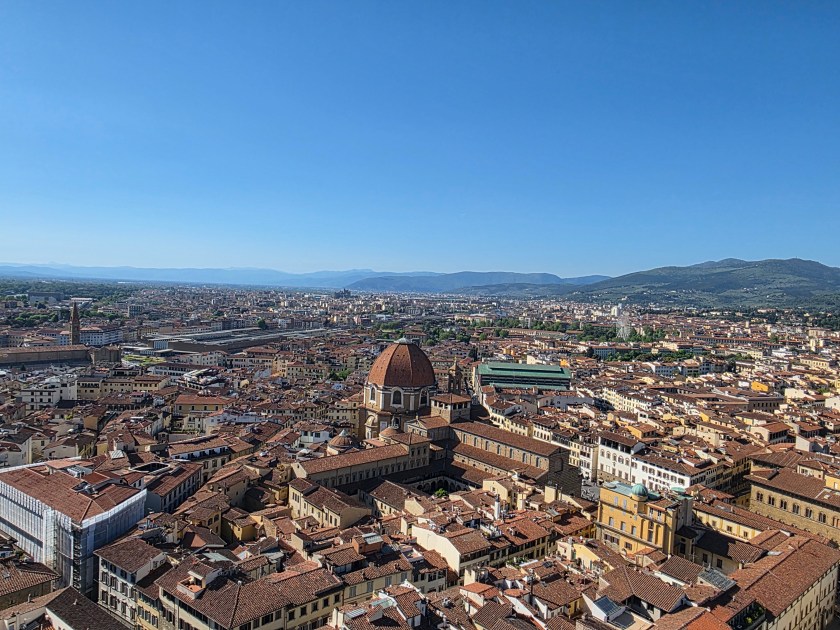
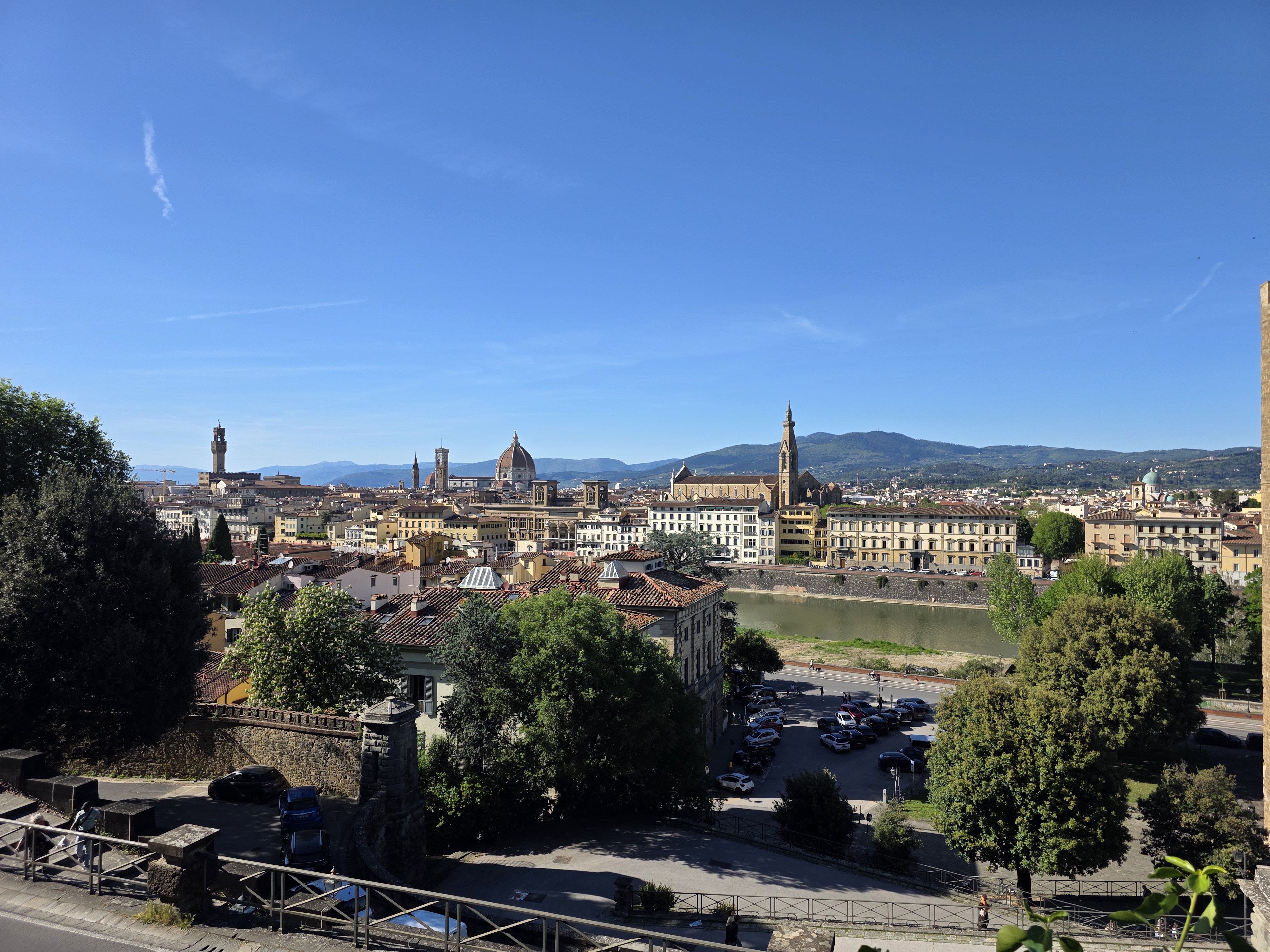
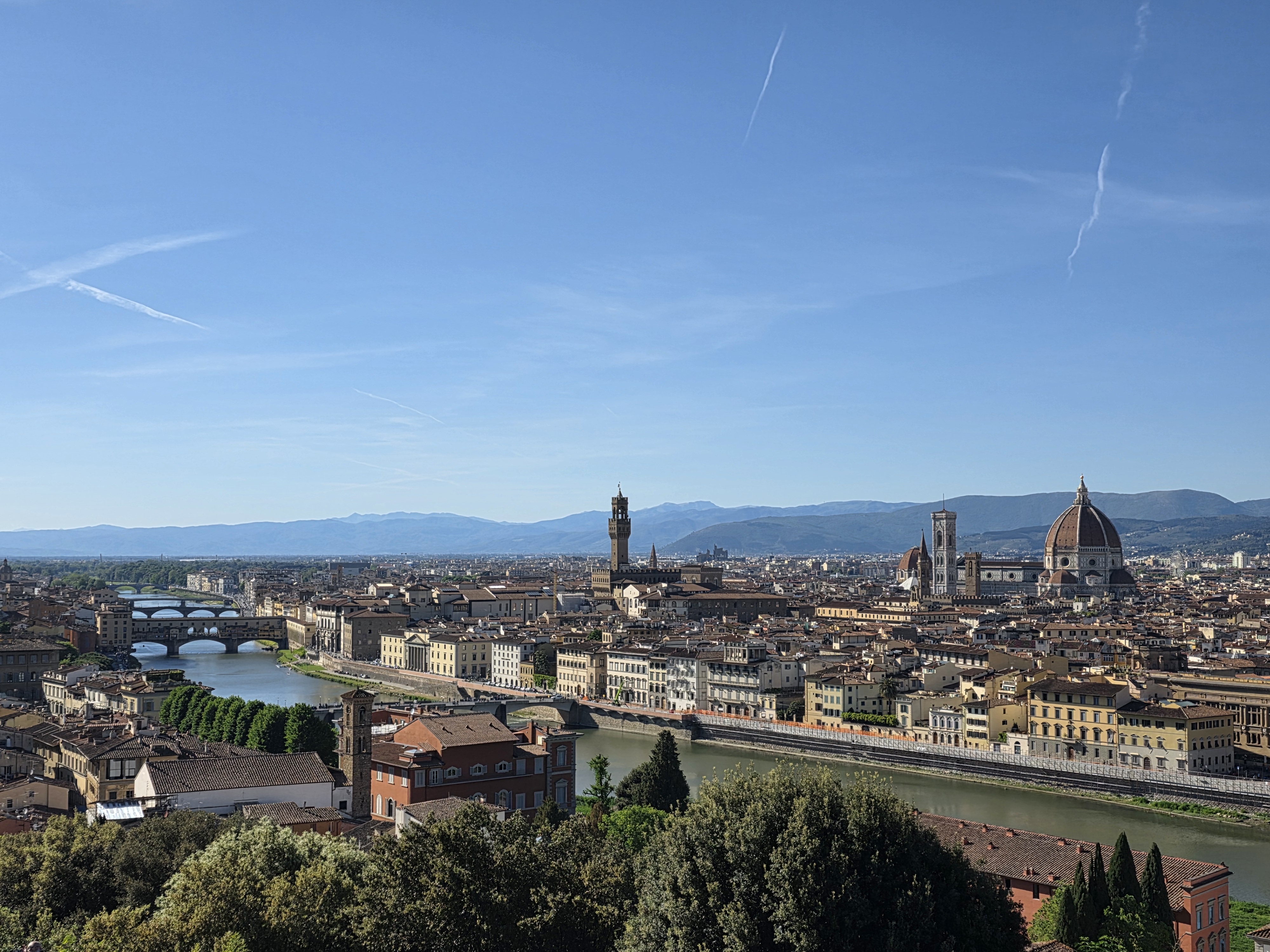
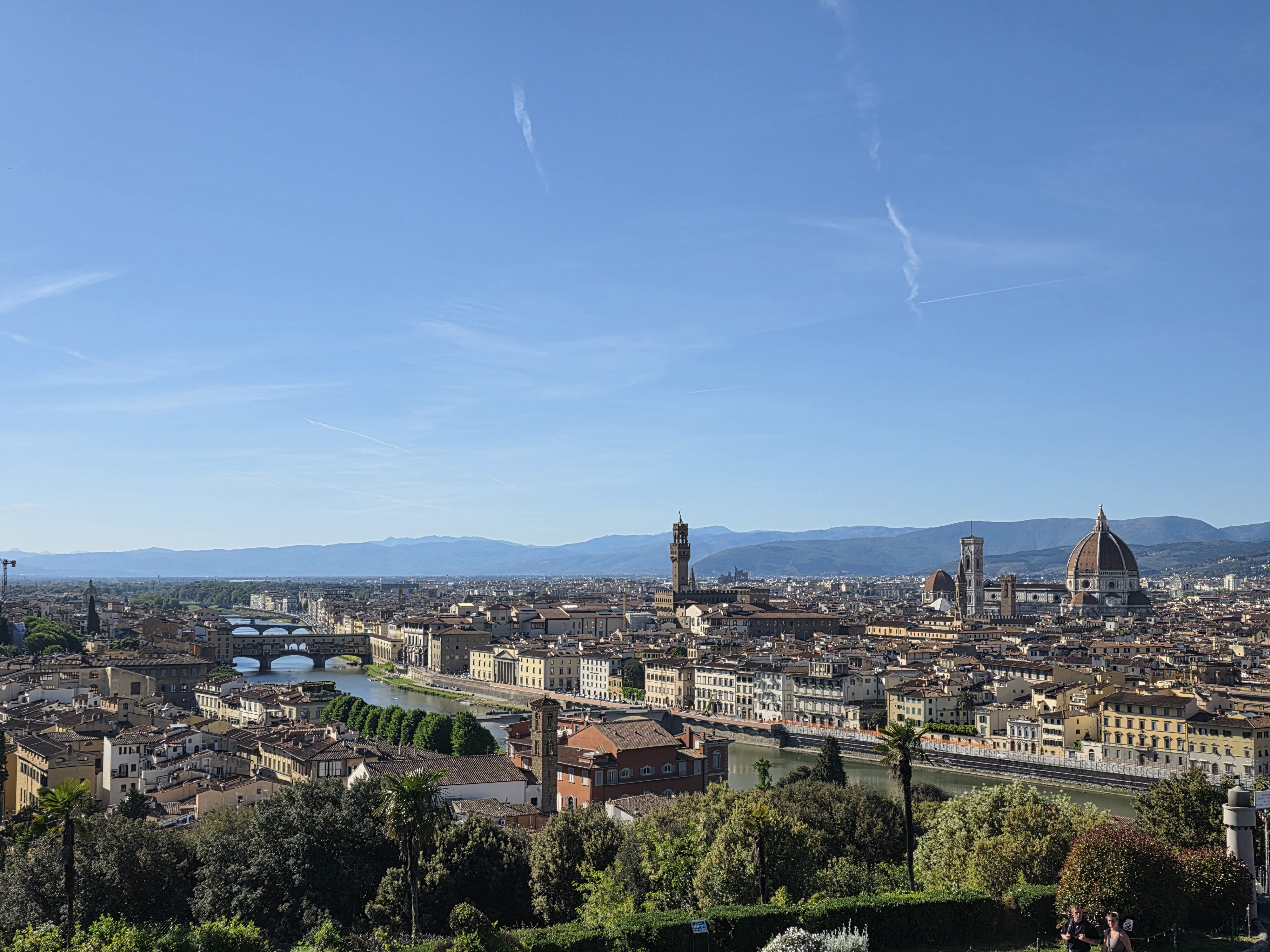
Up to that moment, I hadn’t really had that “wow” feeling from the beauty yet (though I hadn’t actually been into the Old Town properly). But when you climb up to the viewpoint and look out over the river, and see the Duomo, the bridges, and other landmarks on the opposite side – then yes, it’s truly breathtaking.

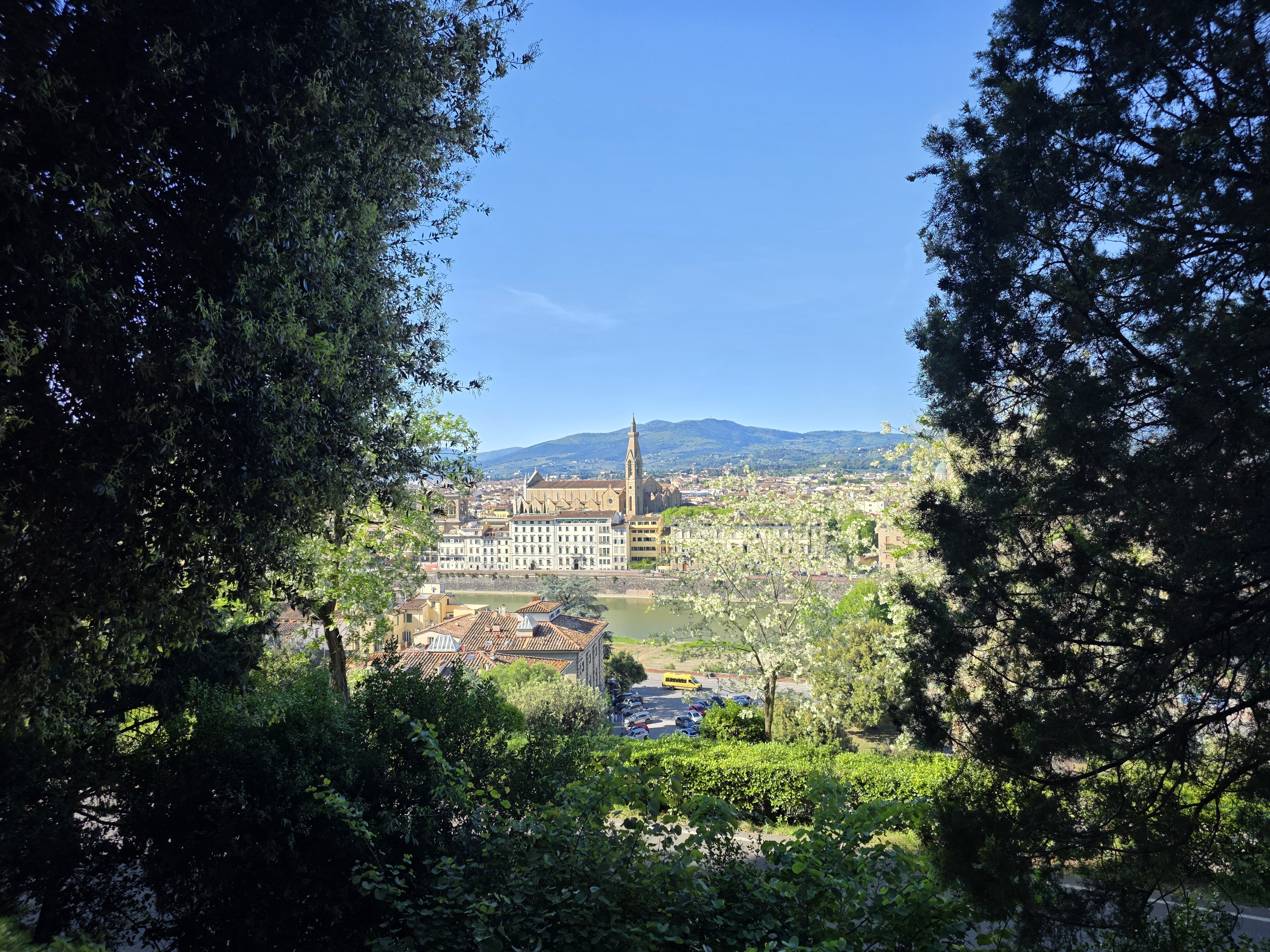
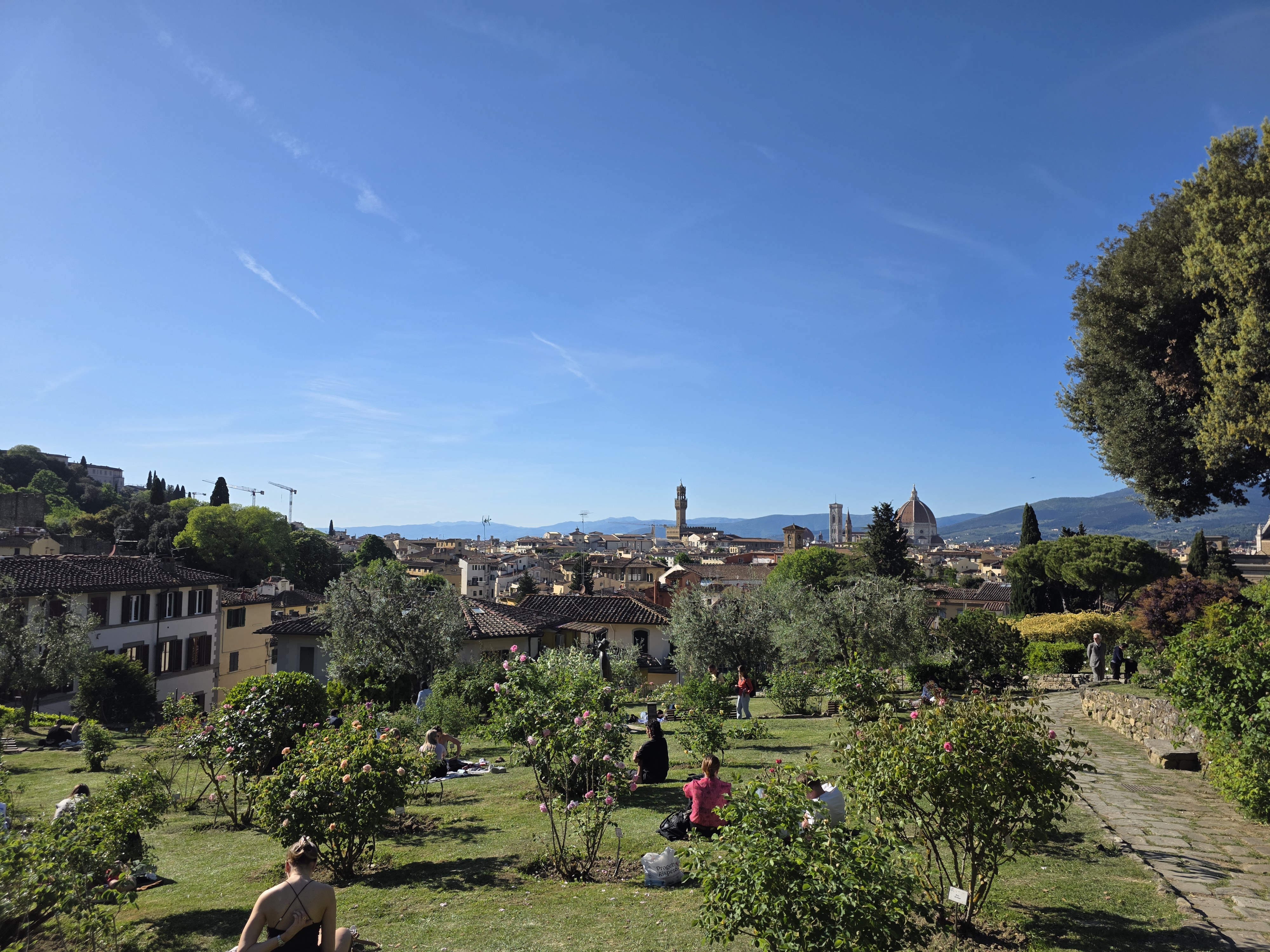
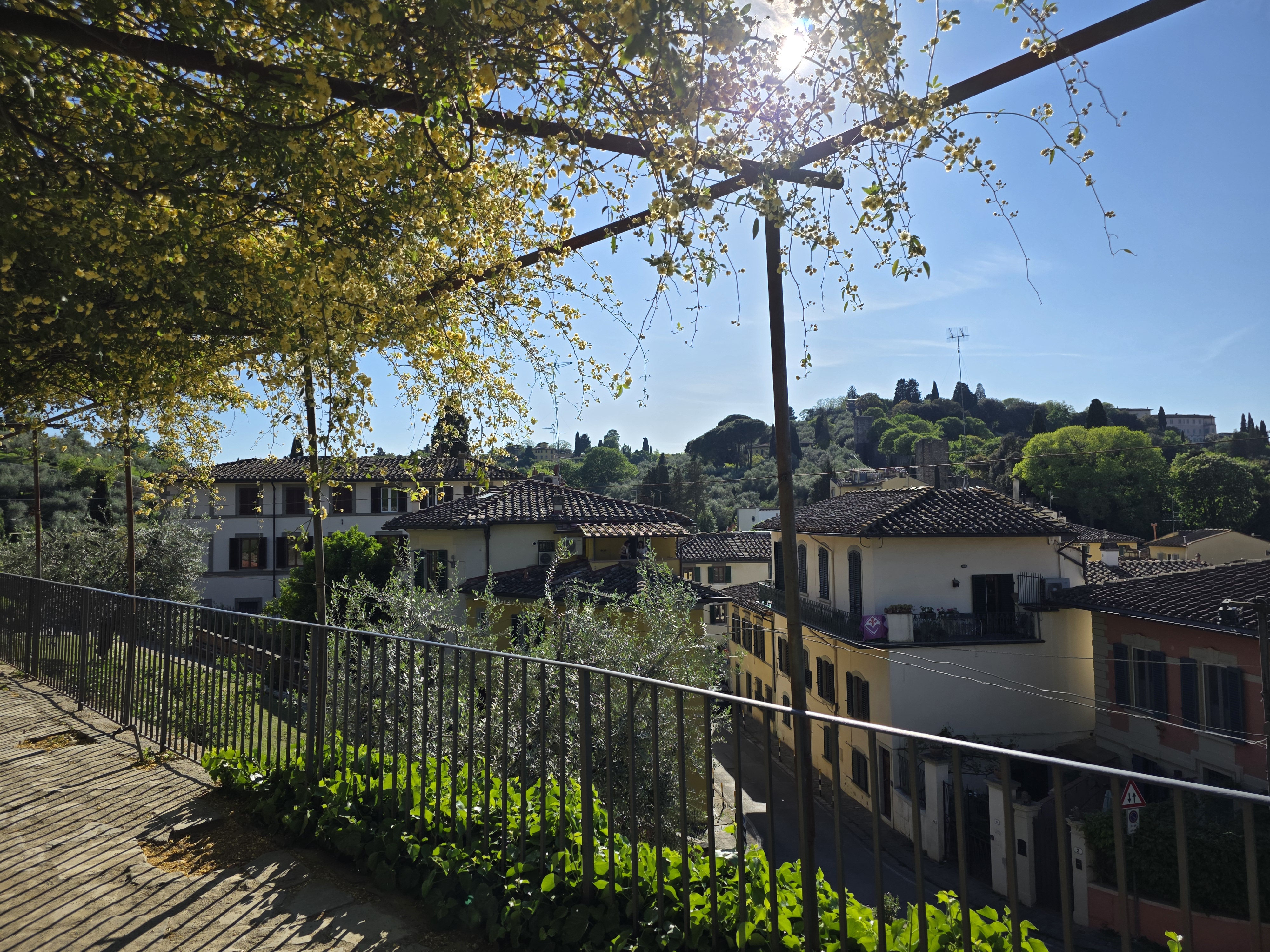
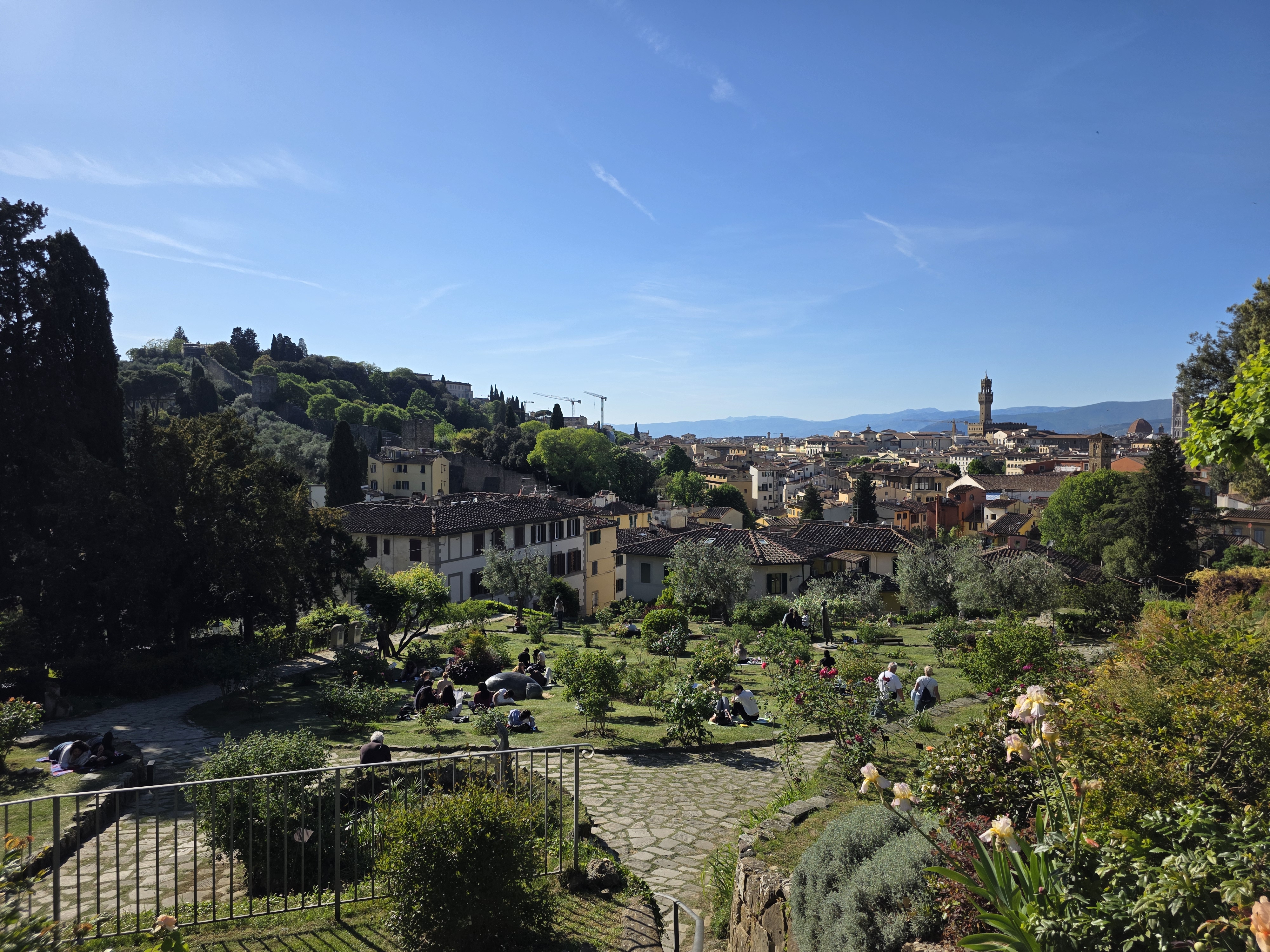
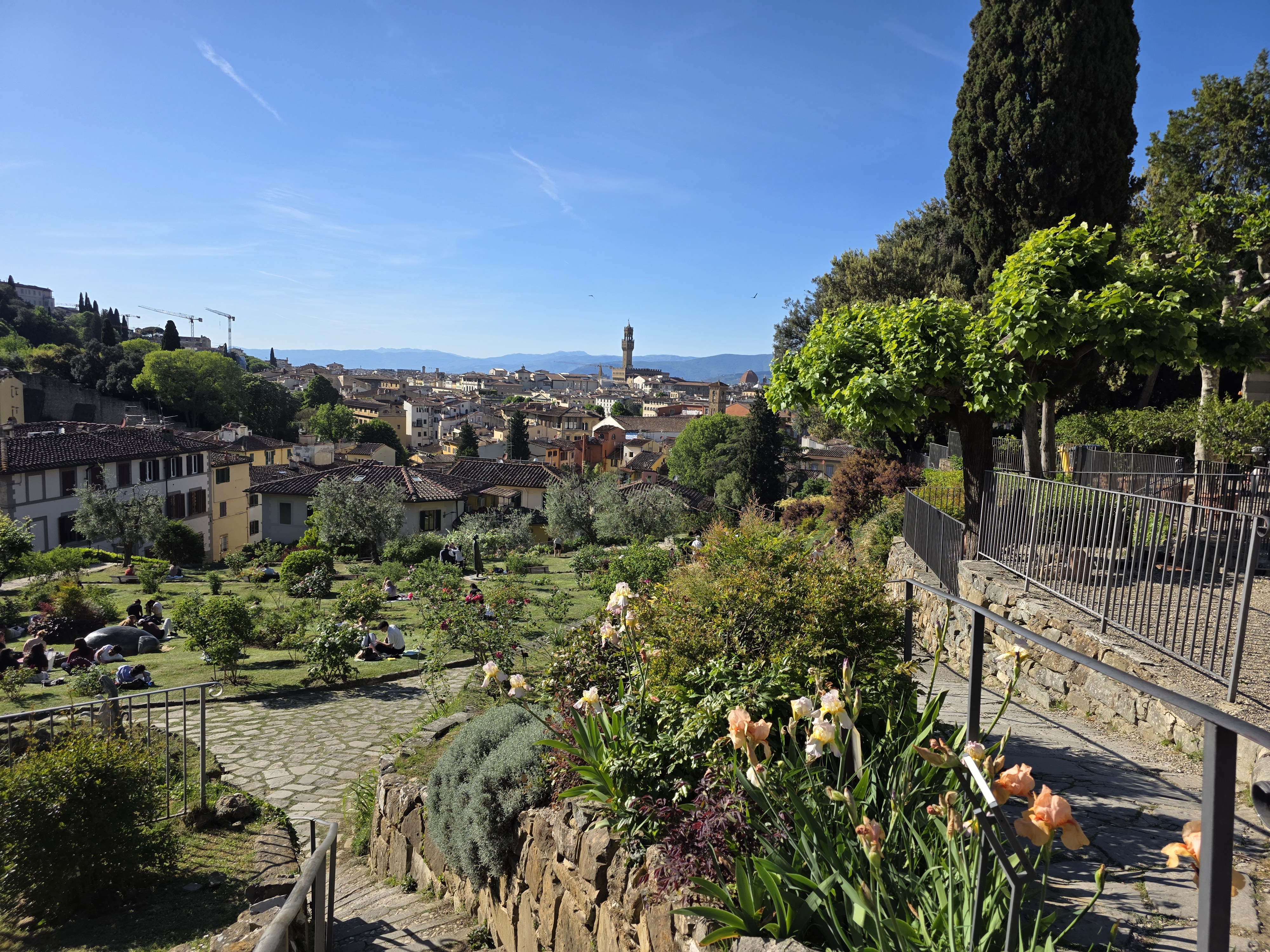
I took loads of photos, and then went down into the nearby Rose Garden, with its many green terraces and even more beautiful views of the city. And most importantly, all this greenery and the landscape look absolutely Tuscan – even if you’ve only ever seen Tuscany in photos before, you immediately recognise it.

The Rose Garden then turns into a Japanese garden – overall I really liked it here, with people sitting on the grass, sunbathing, eating and drinking.

From there I went back to Oltrarno, as it was already getting close to dinner time and I had a restaurant booked there. I tried pasta with wild boar ragù (honestly, it’s basically just like Russian-style makarony po-flotski, even if it’s made with boar) and had a glass of Chianti.

Continuing the overall impression, I’d note that everyone everywhere speaks English, and in general it feels like everything is geared toward tourists, with signs and menus automatically duplicated in English. Though maybe that’s just the case in the city centre.

As for the weather, it’s very good – I’d say late April is the perfect time for Florence. Nights and mornings are quite cool, around 5–7 degrees, but during the day it’s about 25, sunny, basically summer weather.

Posted in English, Europe, Italy, Venice

Venice – Day 2

РУССКОЯЗЫЧНАЯ ВЕРСИЯ ПО ЭТОЙ ССЫЛКЕ. CLICK HERE FOR RUSSIAN VERSION.

October 26 – Sunday

The second day started very early, but luckily the clocks changed today, so I gained an extra hour. I ended up waking at 6am – earlier than I needed to, by the way – and packed my suitcase, since I’m moving to another hotel today, closer to the airport, to make things easier for my very early flight.

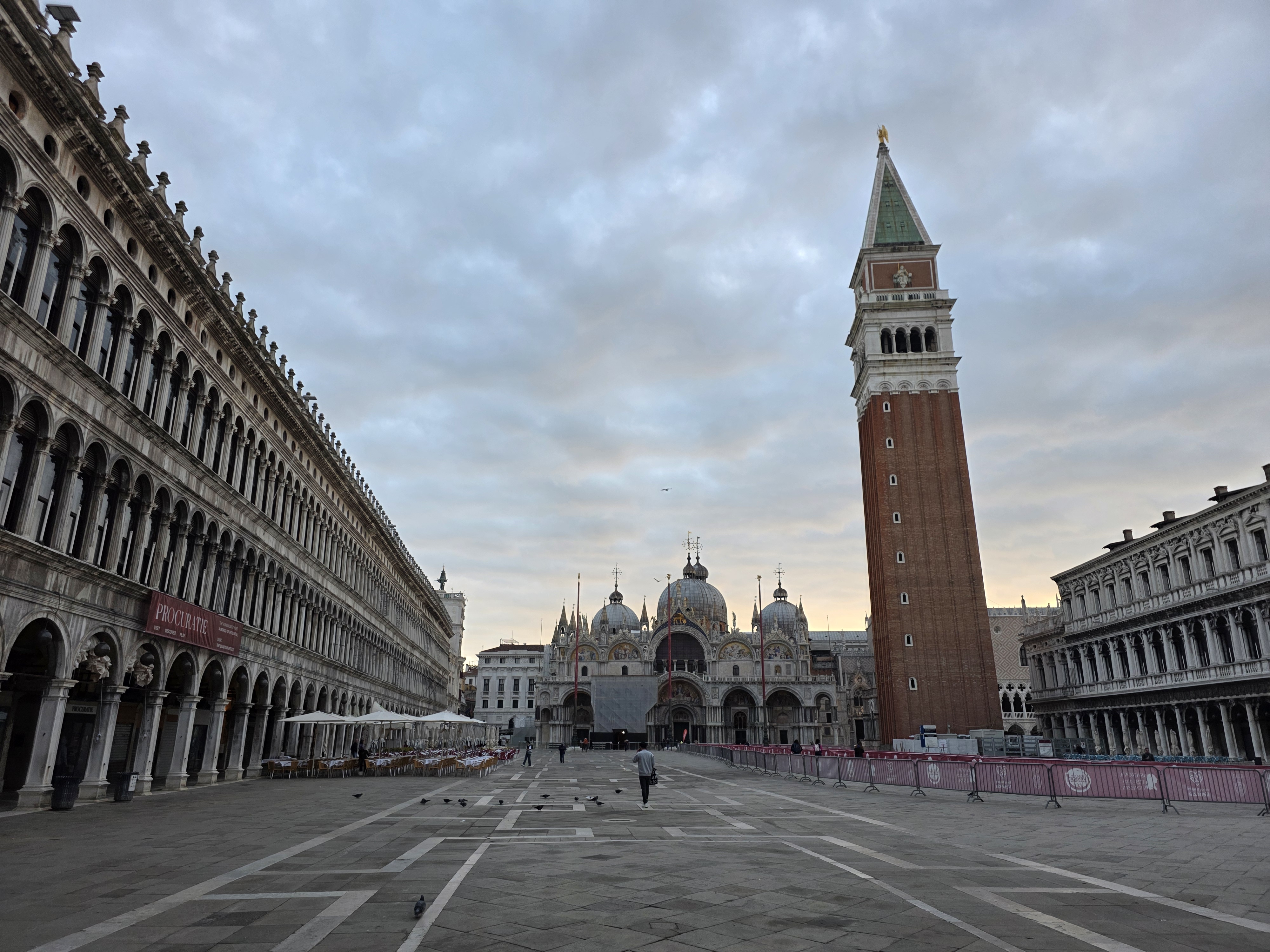
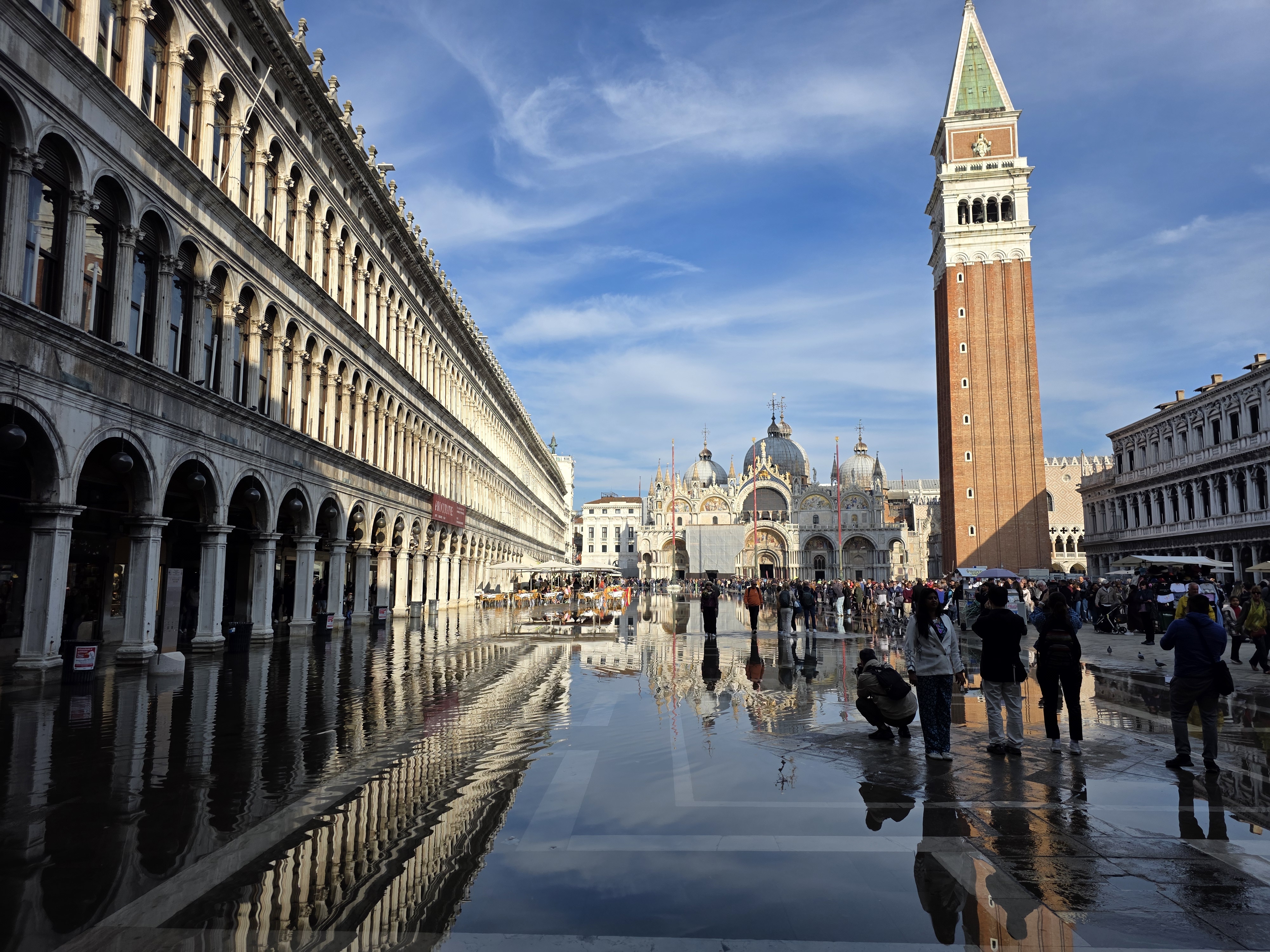
To kill some time before breakfast, I decided to take a short walk in the area, especially since I hadn’t actually seen St Mark’s Square yet. I have a tour of St Mark’s Basilica (and a few other landmarks) planned for today, but I wanted to see everything in the morning, before the crowds and before the marathon – which is the reason today’s island tour meeting point was moved.
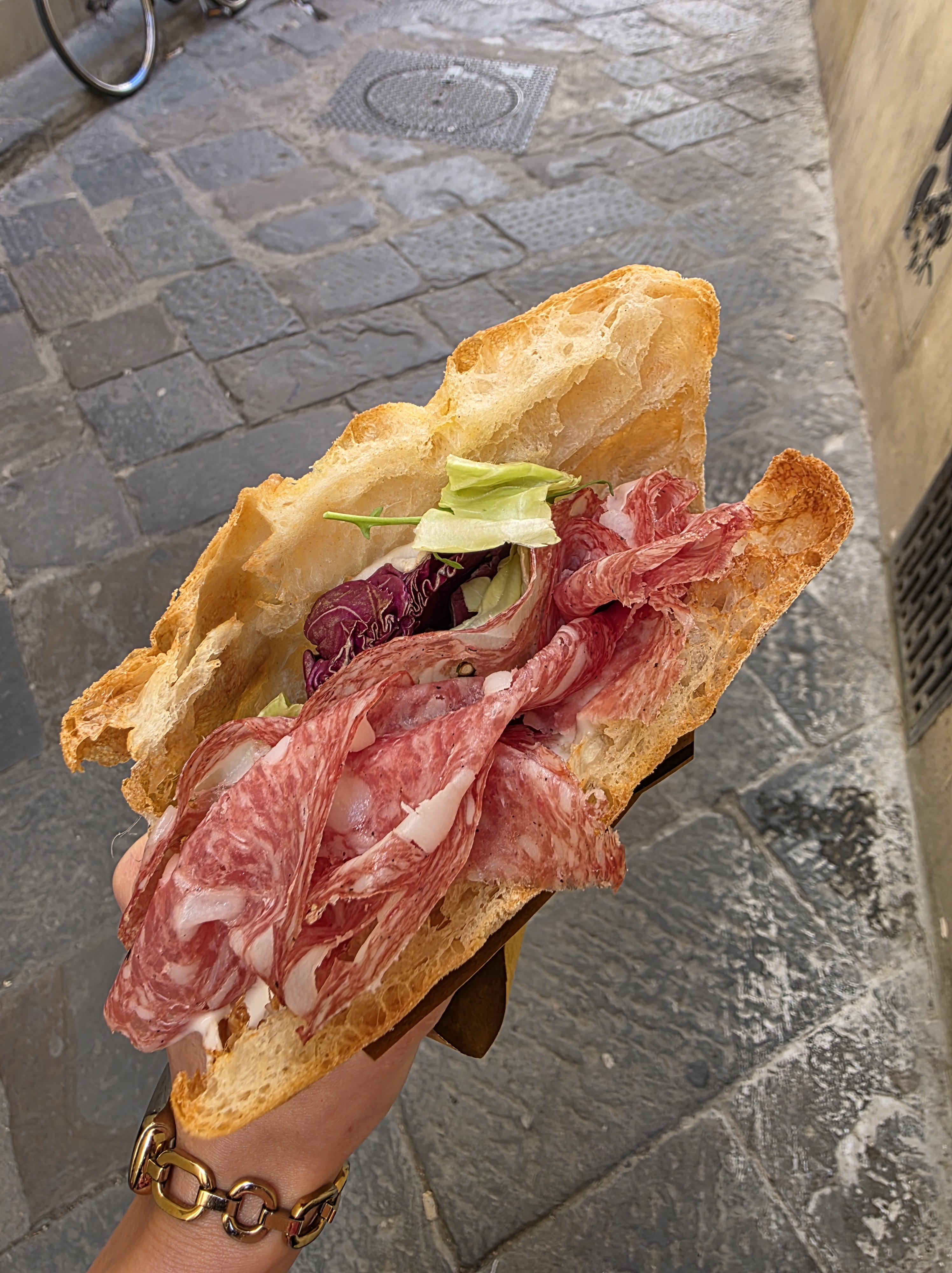
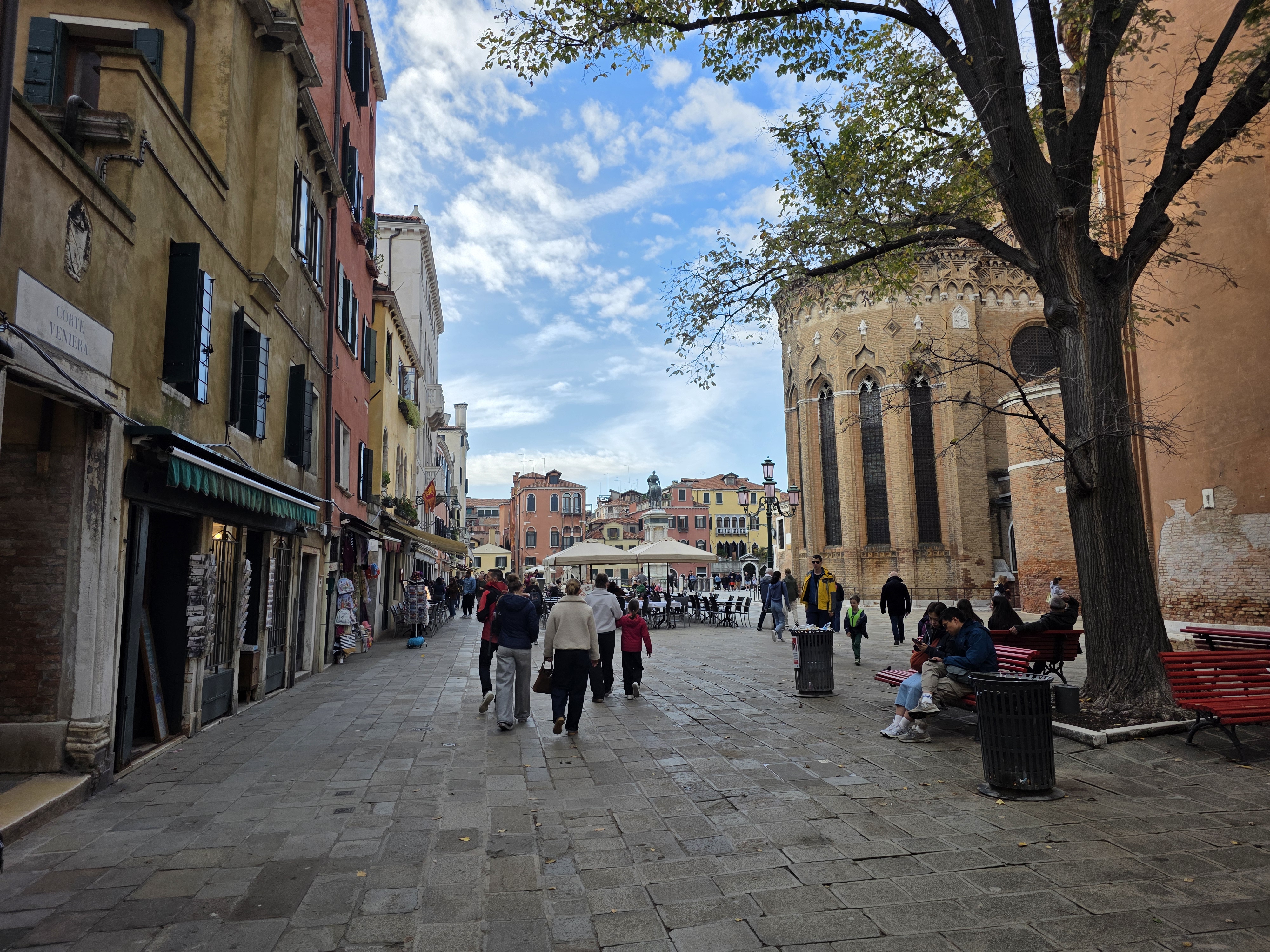
Breakfast at the hotel didn’t strike me as anything special, but it was fine. After breakfast, I left my suitcase in the storage room and set off along the route I already knew toward the statue of Bartolomeo Colleoni. It was a very pleasant walk through early-morning Venice, before the city got too crowded.

I found my group and our guide very easily. The guide – a very nice woman named Serena – shared lots of interesting facts about Venice throughout the journey. For example, that Venice, built on rather marshy terrain, has actually been standing on wooden piles for over 15 centuries, and due to the anaerobic conditions, these piles haven’t just not rotted, but they have basically turned to stone.

She also mentioned that the “fish” shape of Venice on the map is actually not a single island, but a multitude of smaller ones, each separated by canals, many of which are manmade.

During high tide – the so-called acqua alta – the city sometimes floods, and we’ll come back to that later. But for now, here’s an interesting fact: in 2019, there was one of the worst floods in recent decades (only once in history has the water been higher), which caused significant damage to St Mark’s Basilica. As a result, a super-expensive flood defence system was built, made up of gates and dams – but it’s so costly to operate that it’s only used in absolute emergency cases.

Apparently, in recent years there’s also been a trend of residents moving out of the city to the mainland and renting their homes out on Airbnb, because, firstly, it’s become expensive to live in Venice; secondly, it’s overcrowded with tourists; and thirdly, it’s simply inconvenient to live on a massive pedestrian-only territory, where you can’t even get close to your house with e.g. heavy shopping bags. So, there’s a real risk that in the near future, Venice will essentially turn into a giant open-air museum.

Meanwhile, listening to all these fascinating stories, we arrived at the island of Murano, world-famous for its glassmaking – I think everyone’s heard of Murano glass.

On the way, Serena pointed out some tiny islands – some with abandoned monasteries, one with an active monastery (where you can stay overnight, but only for spiritual purposes), and another with a Michelin-starred vineyard that produces the very expensive Venissa wine from slightly salty local grapes.

As for Murano glassmaking, the glass furnaces were originally moved here from Venice proper, both for fire safety reasons and to maintain strict secrecy of the techniques. We were taken to a workshop – on Sundays, the industrial furnaces don’t operate, but they still do demonstrations for tourists. First, the master glassblower (yes, he actually blew glass using a blowing pipe) made a vase for us – and to show how hot it was, the guide threw a piece of paper inside and it instantly burst into flames. Then, without blowing, the master made a small glass horse in under five minutes.

We were told that most shops in Venice claiming to sell Murano glass are actually selling fakes, whereas here, at their showroom, everything is authentic and comes with a certificate. Well, who am I to resist buying a couple of pieces of jewellery?

With some time left before the boat, I tried walking to the centre of the island, but there was nothing interesting there at all, so I quickly returned.

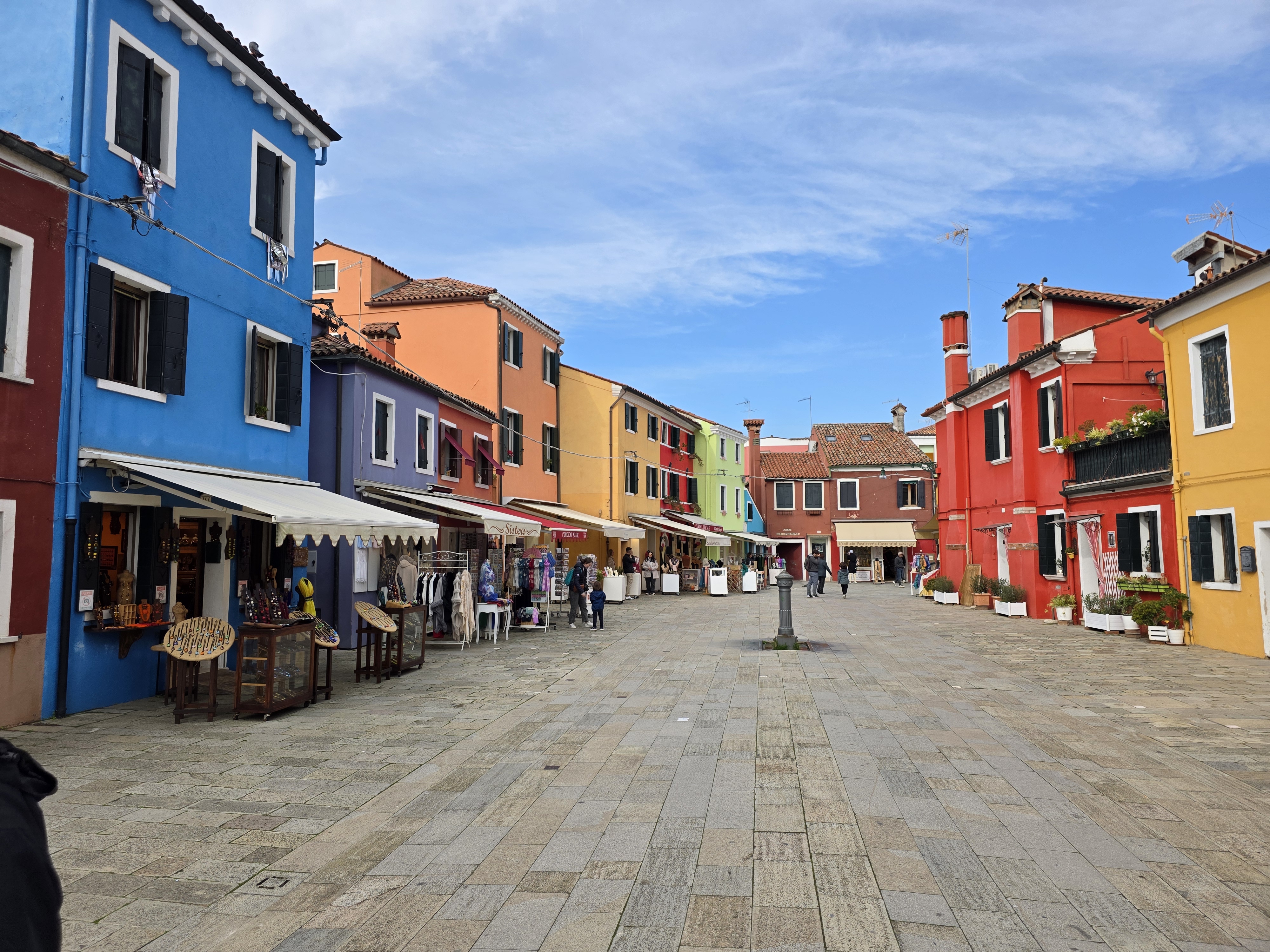
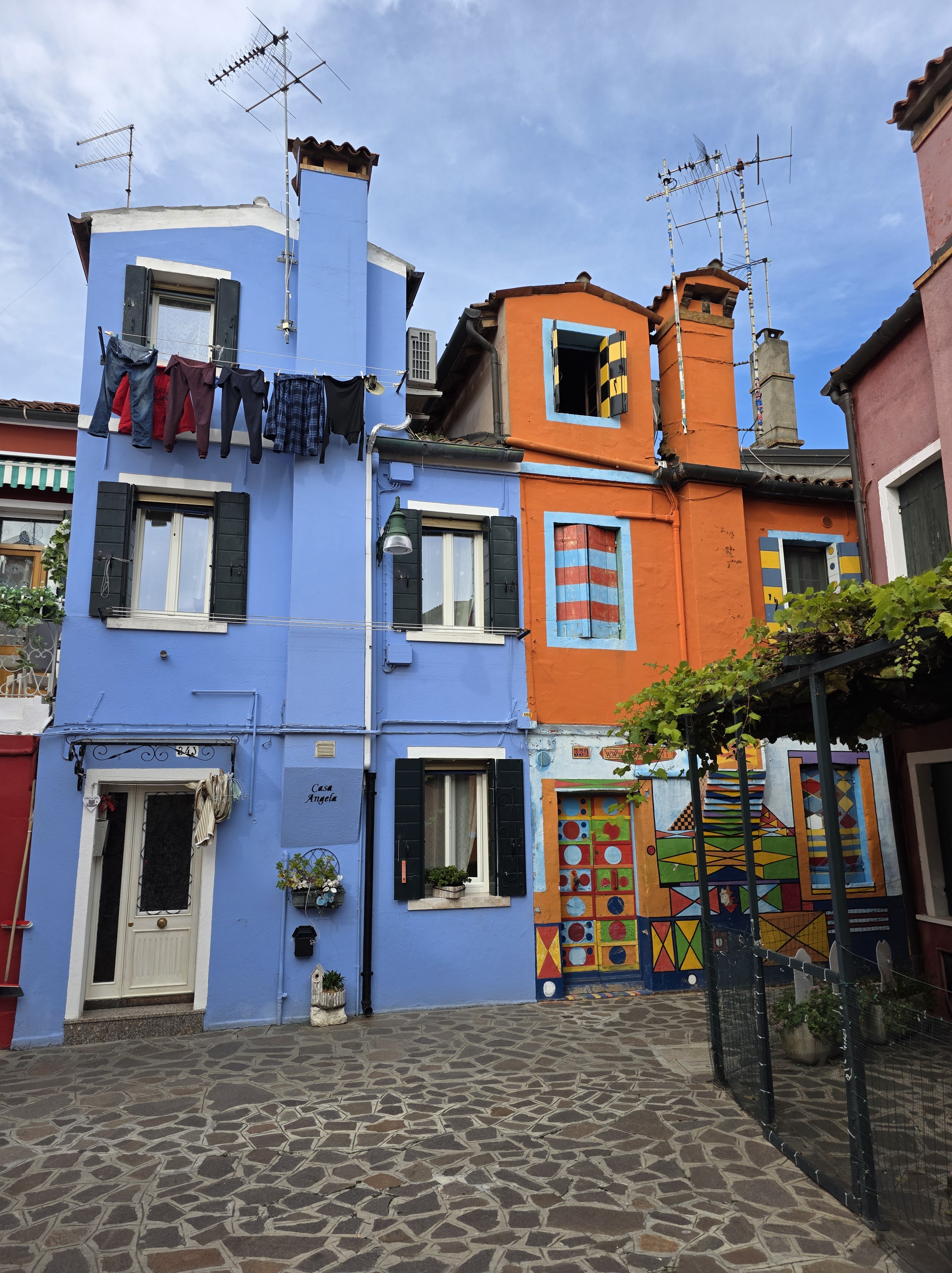
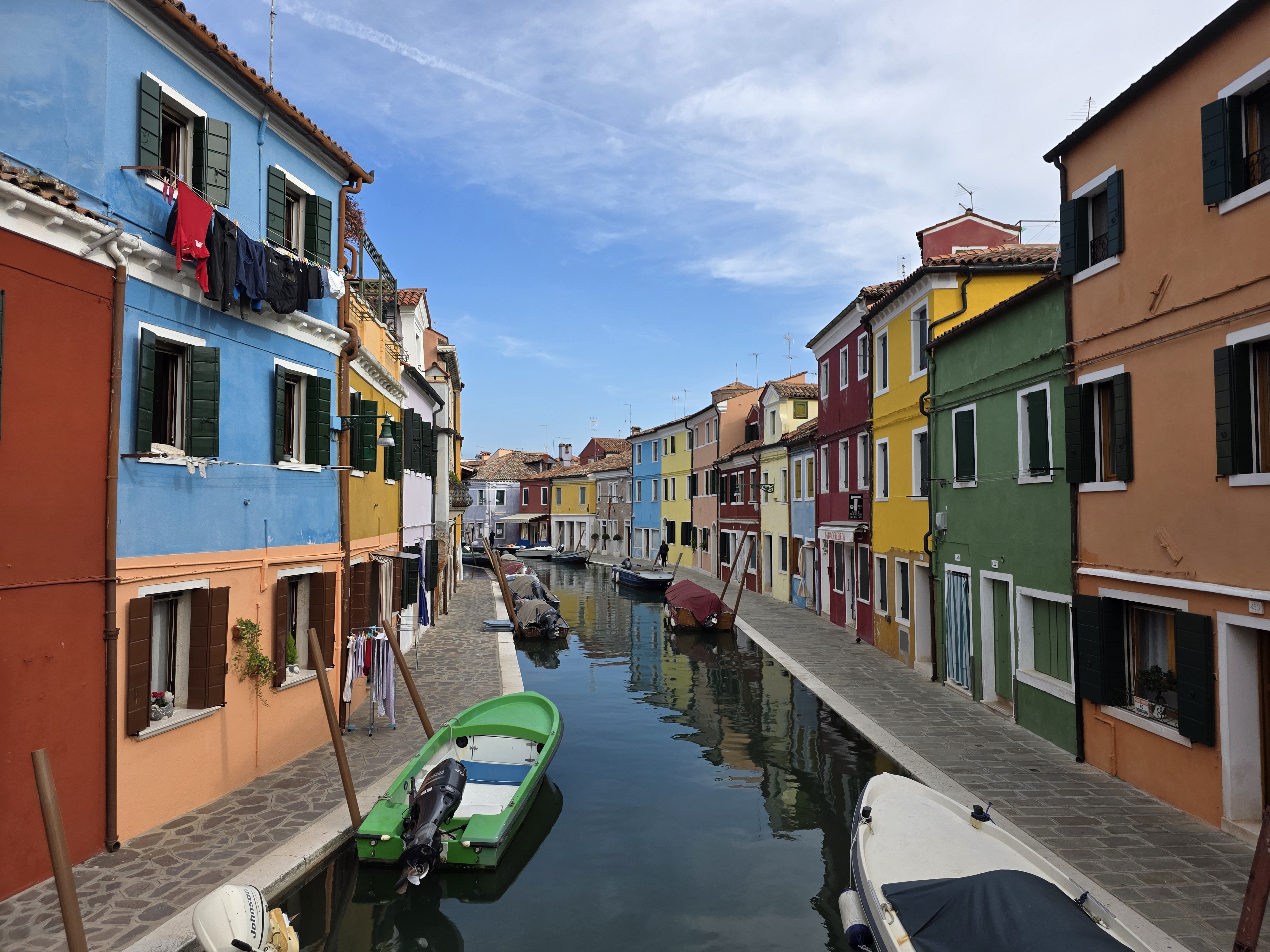
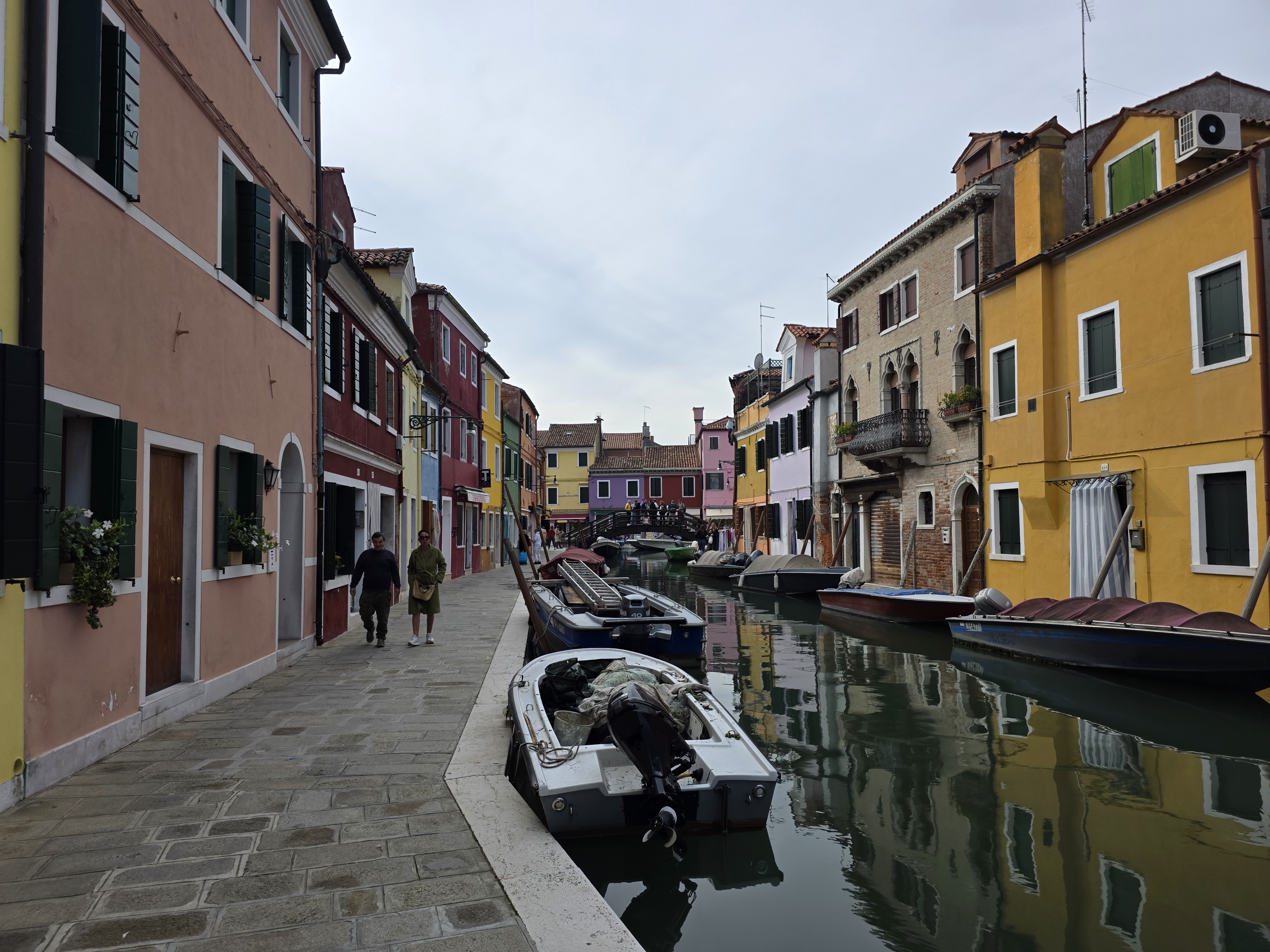
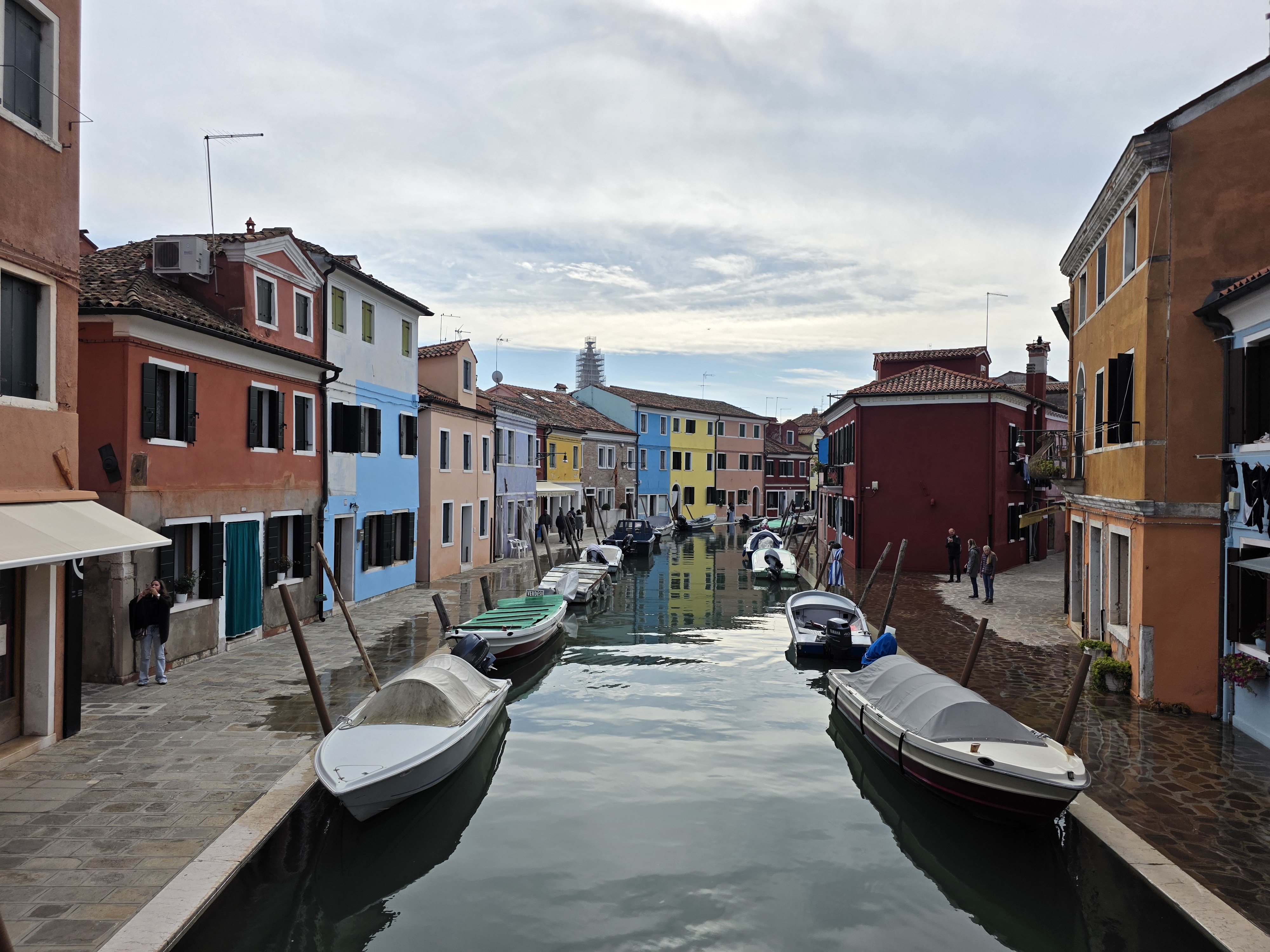
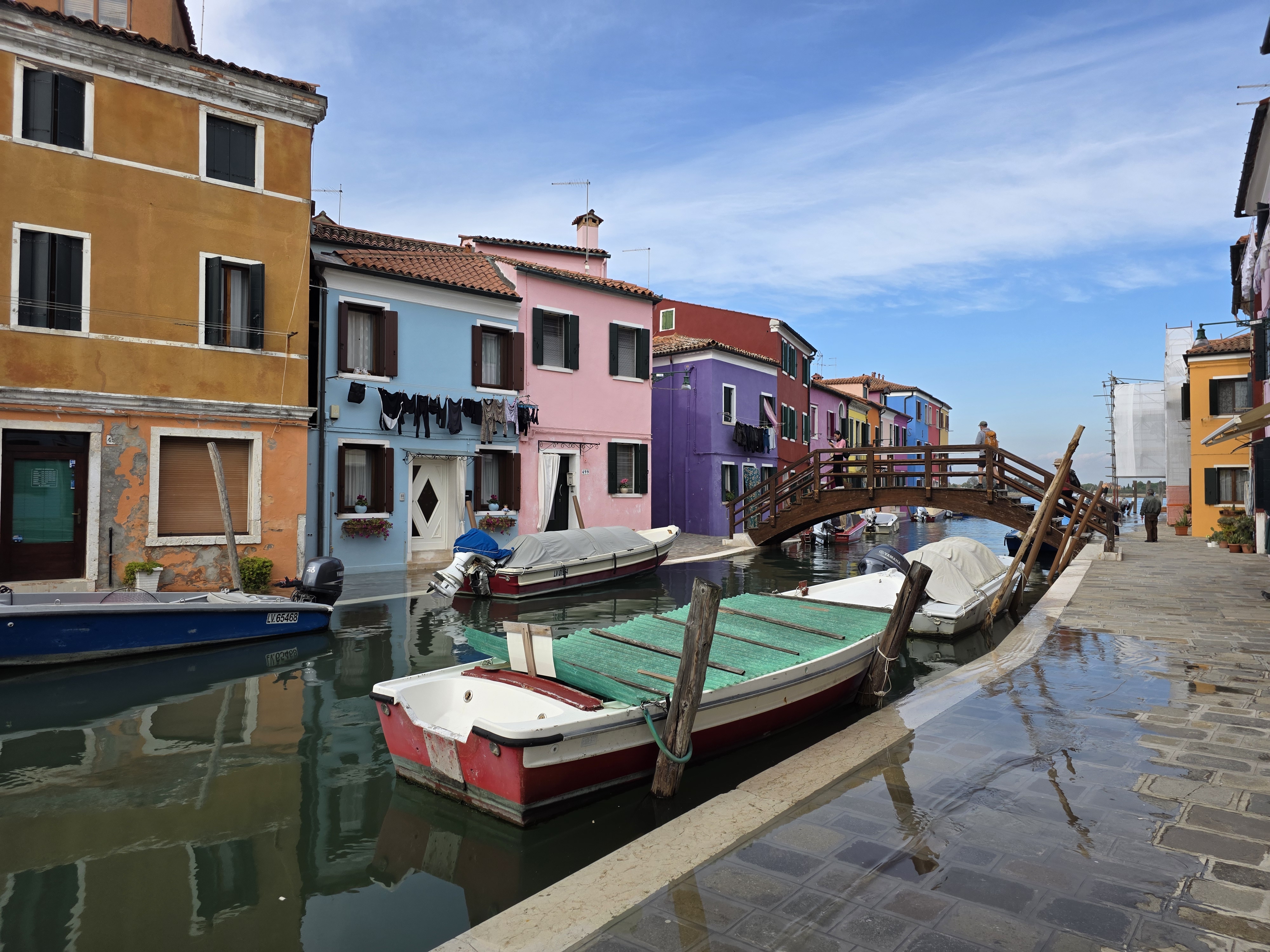
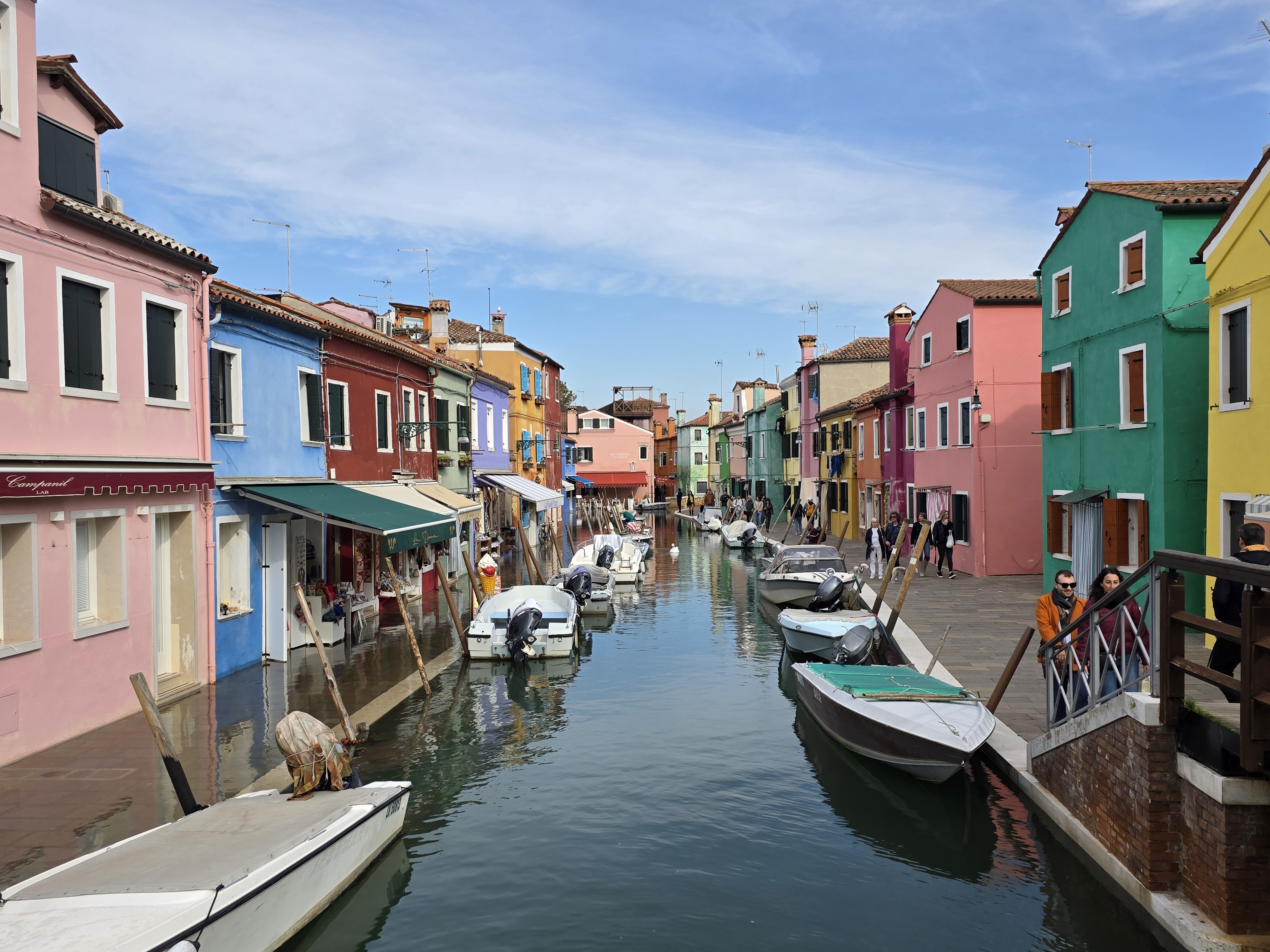
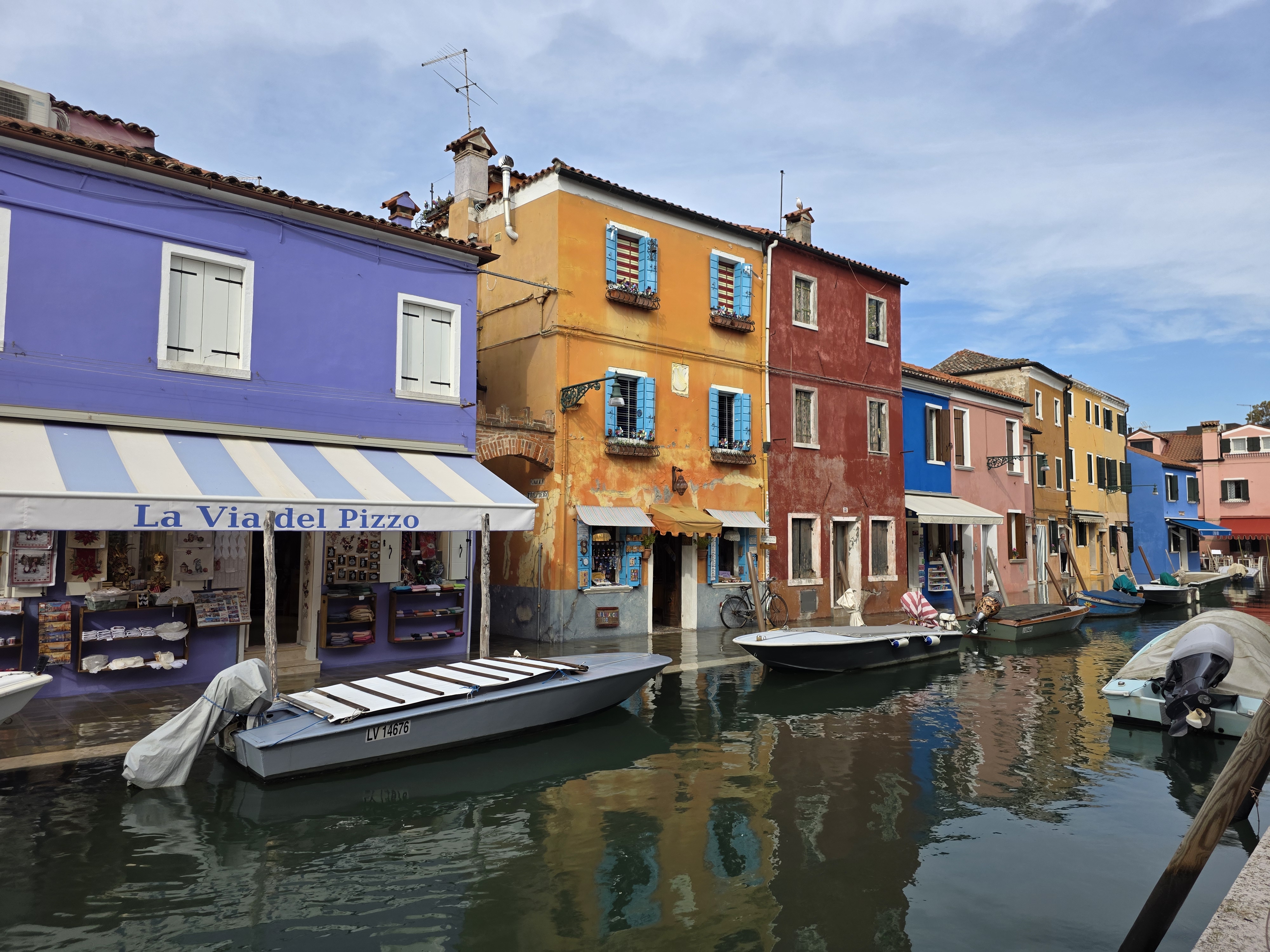
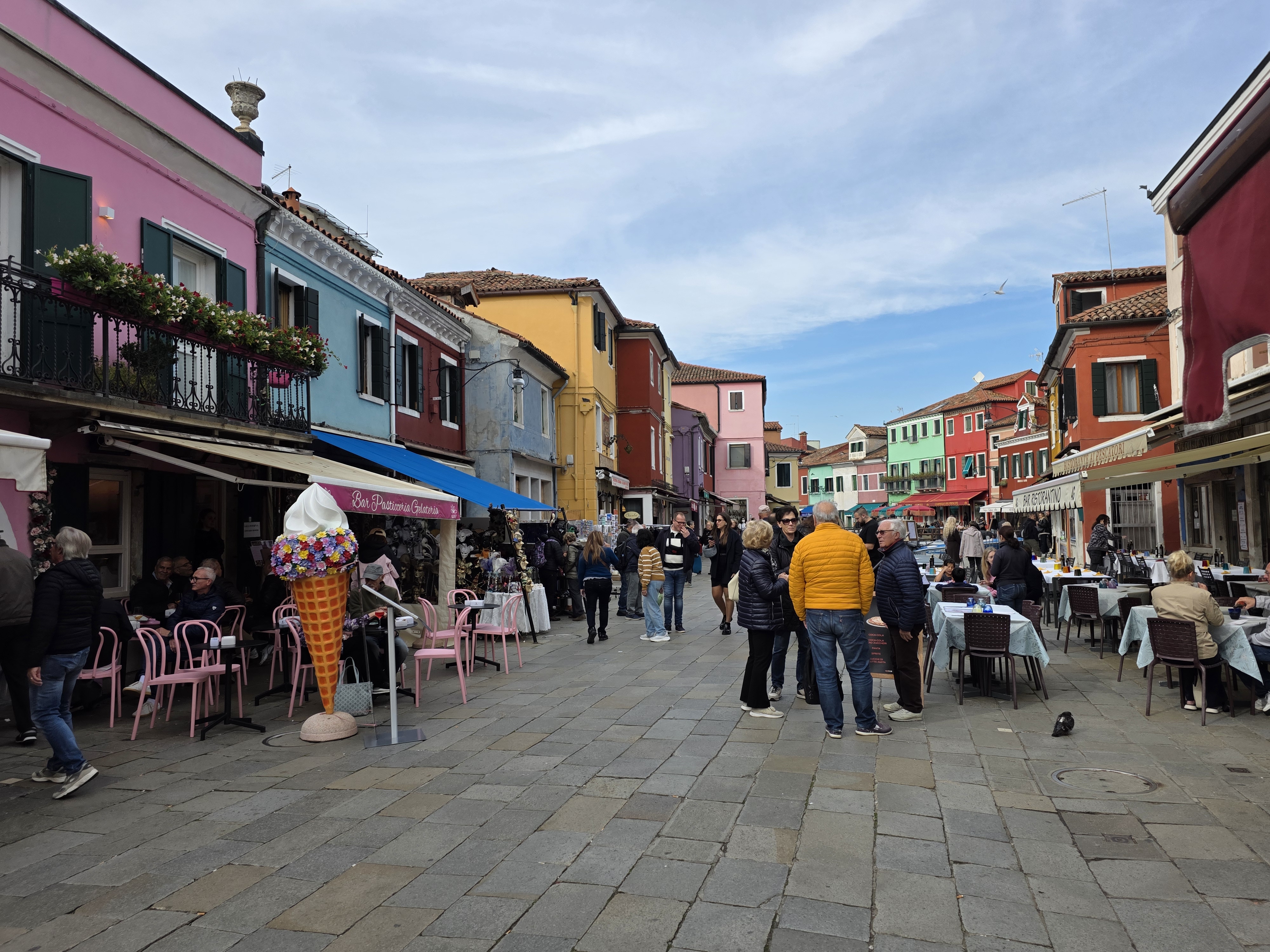
From Murano we went to Burano. This one was a much more picturesque island. Originally a fishing village, it’s known for its colourful houses. One theory says the houses were painted bright colours so fishermen could easily find their homes; another says it helped distinguish between families with the same surname. In any case, all houses really are painted different colours, and you’re not allowed to repaint them.

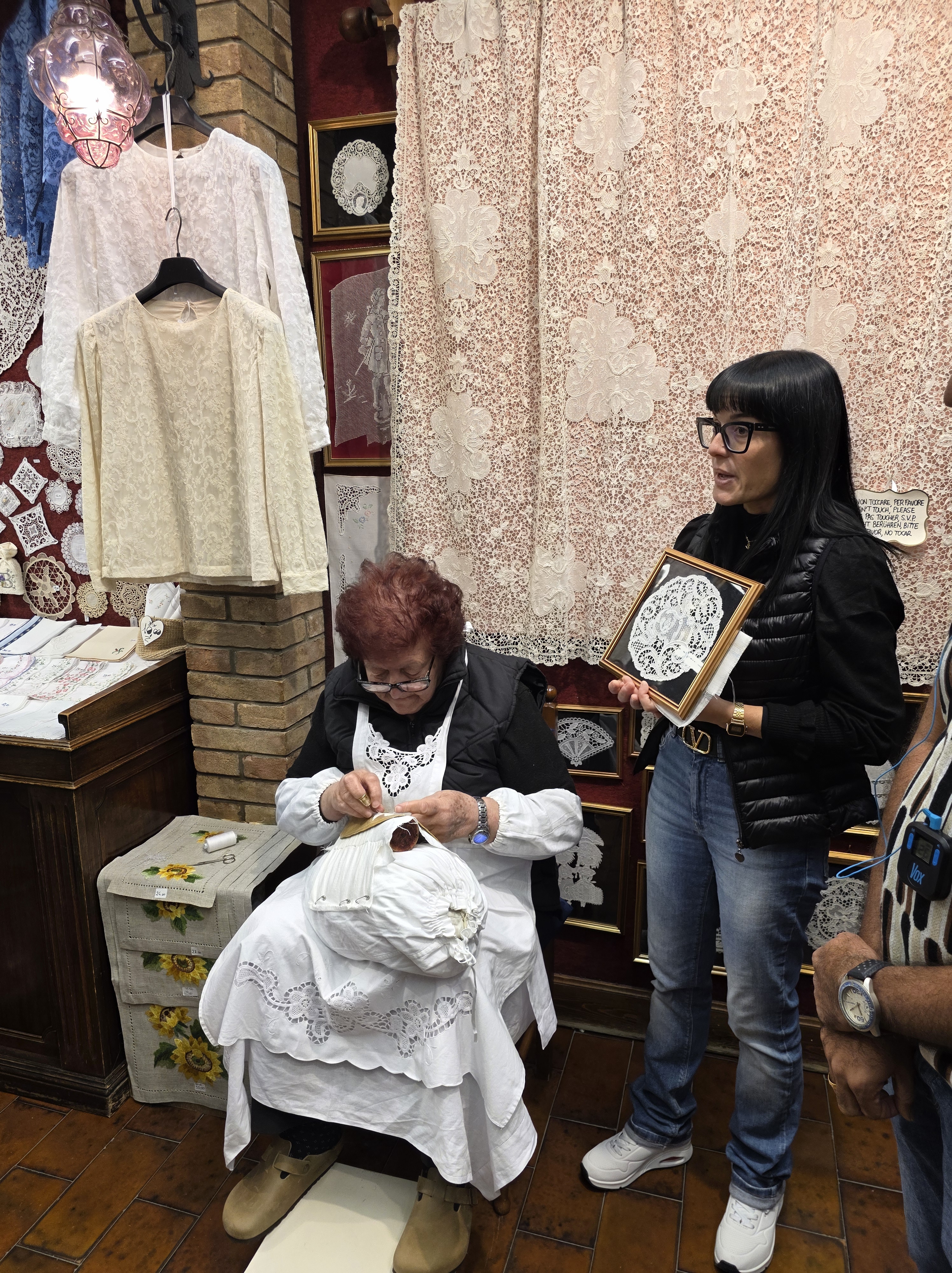
Burano is also famous for its lace, but sadly this craft is dying out, because the youngest lacemakers are already over 70, and the new generation isn’t interested in such painstaking manual work. We were taken to a lace shop where we saw one of these elderly lacemakers at work. We were told that each lacemaker specialises in a specific type of stitch.

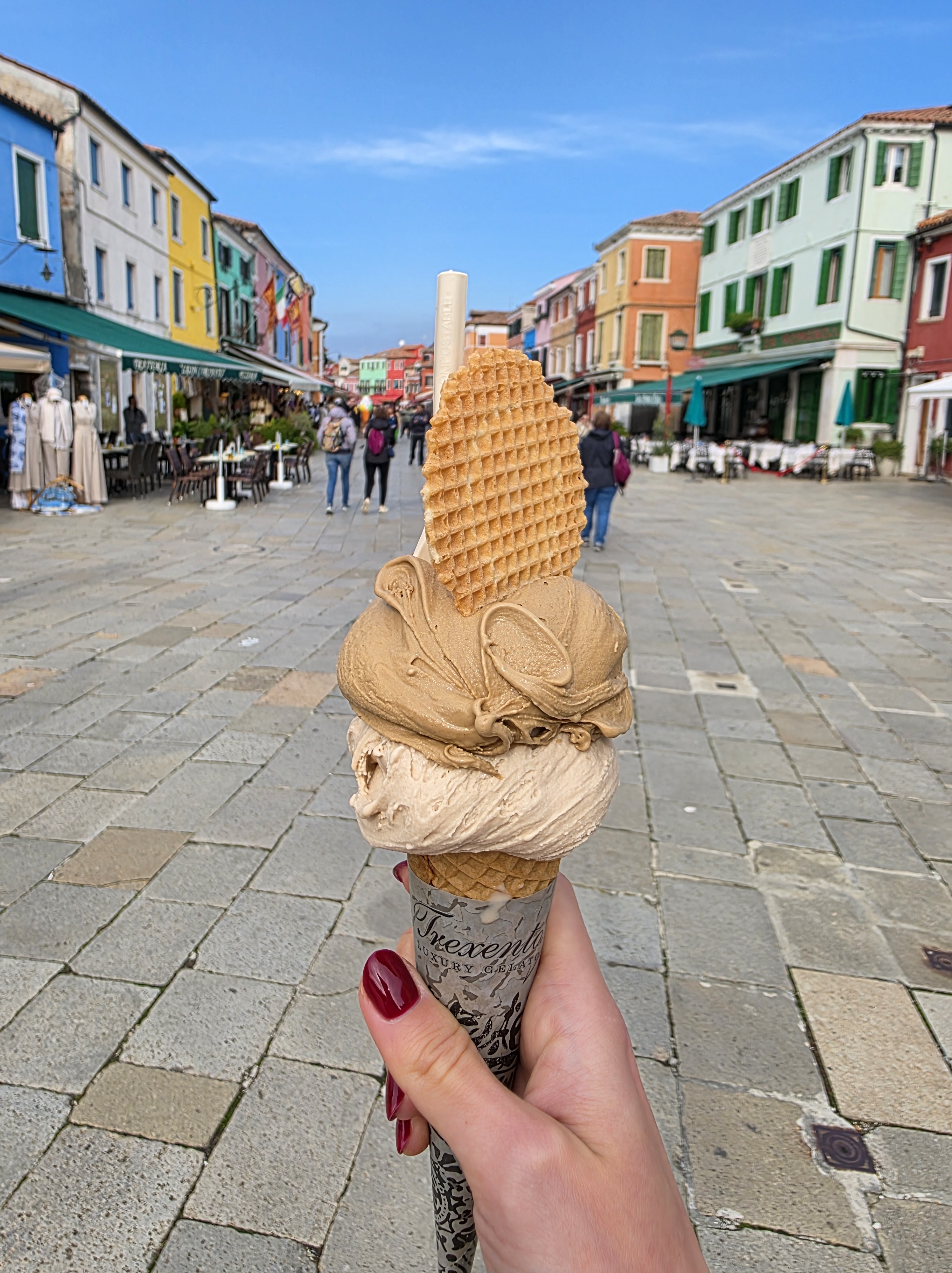
Then we had about an hour of free time. Serena strongly recommended trying the local biscuits, but I didn’t feel like biscuits – instead, I treated myself to a big coffee and hazelnut gelato, had a coffee, and went for a walk and took photos.

We came back to Venice around lunchtime, and I went to a well-reviewed pizzeria – but to be honest, I can’t say it was the best pizza I’d ever had. Maybe pizza just has to be eaten in Naples, or maybe I just ended up in an overrated tourist spot.

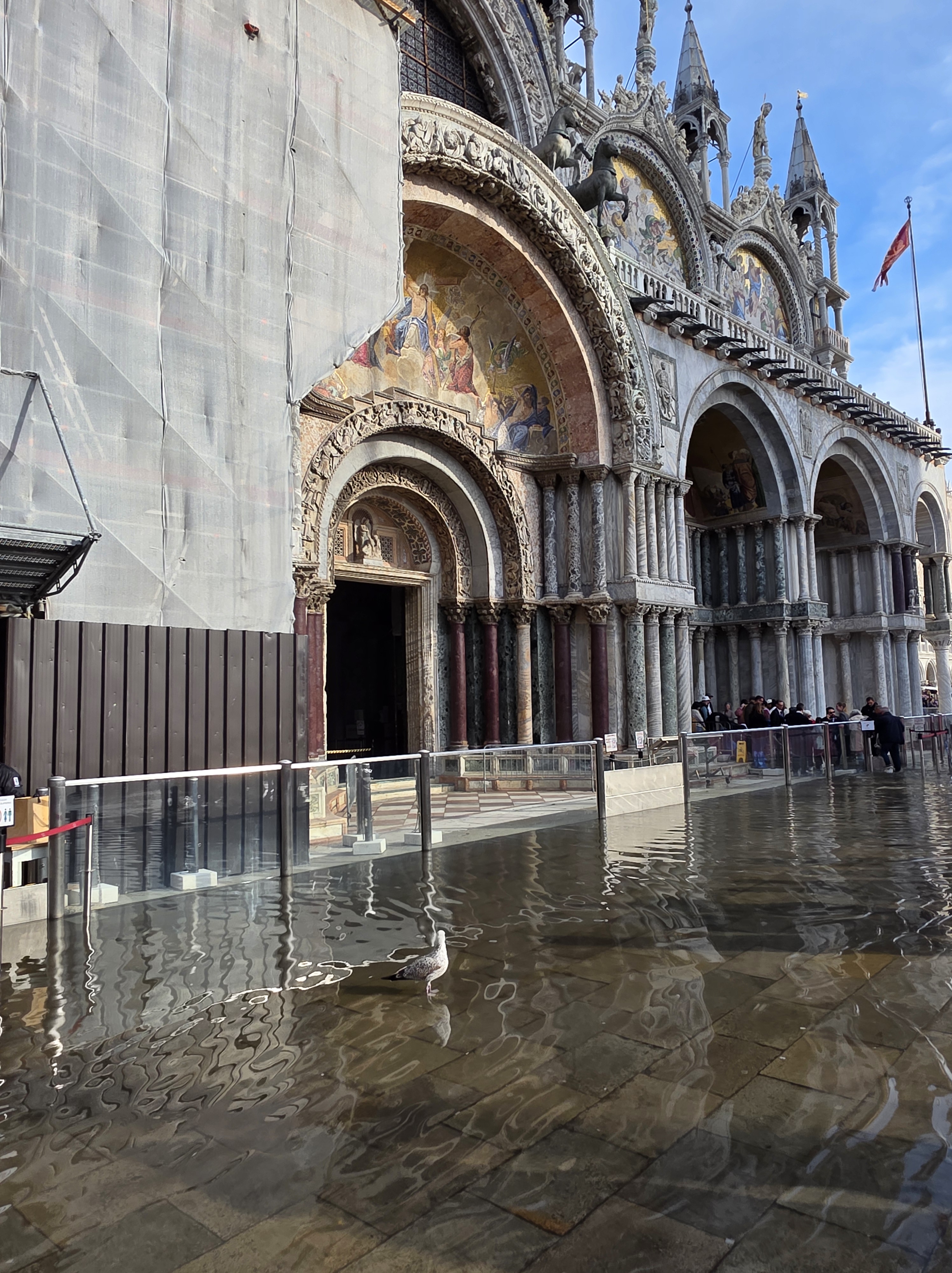
After lunch, I headed to the Basilica to make it in time for my tour. And good thing I went early, because I saw firsthand what acqua alta actually looks like! I’d already noticed on Burano that the canals were starting to overflow, with water coming out of manholes.

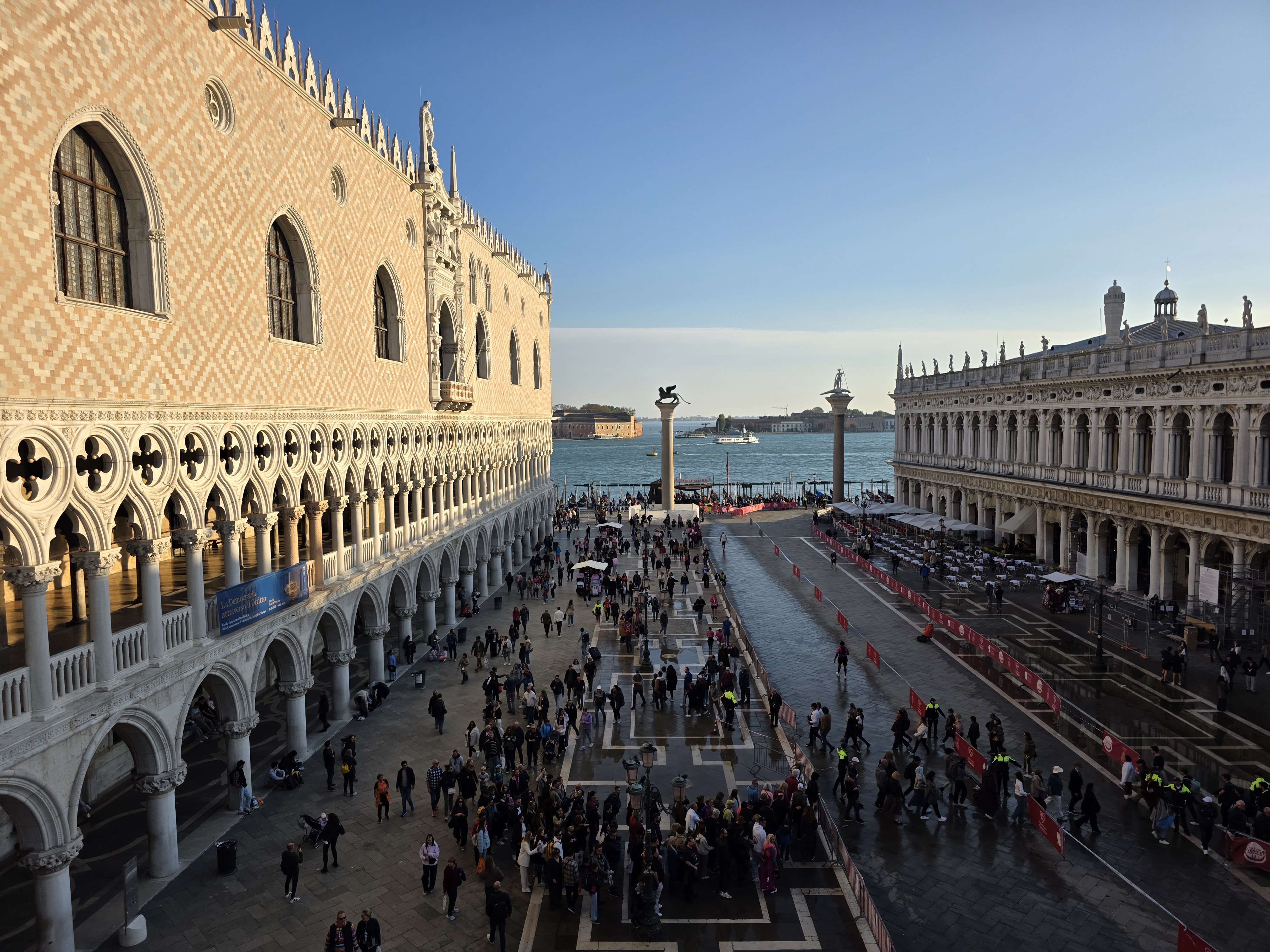
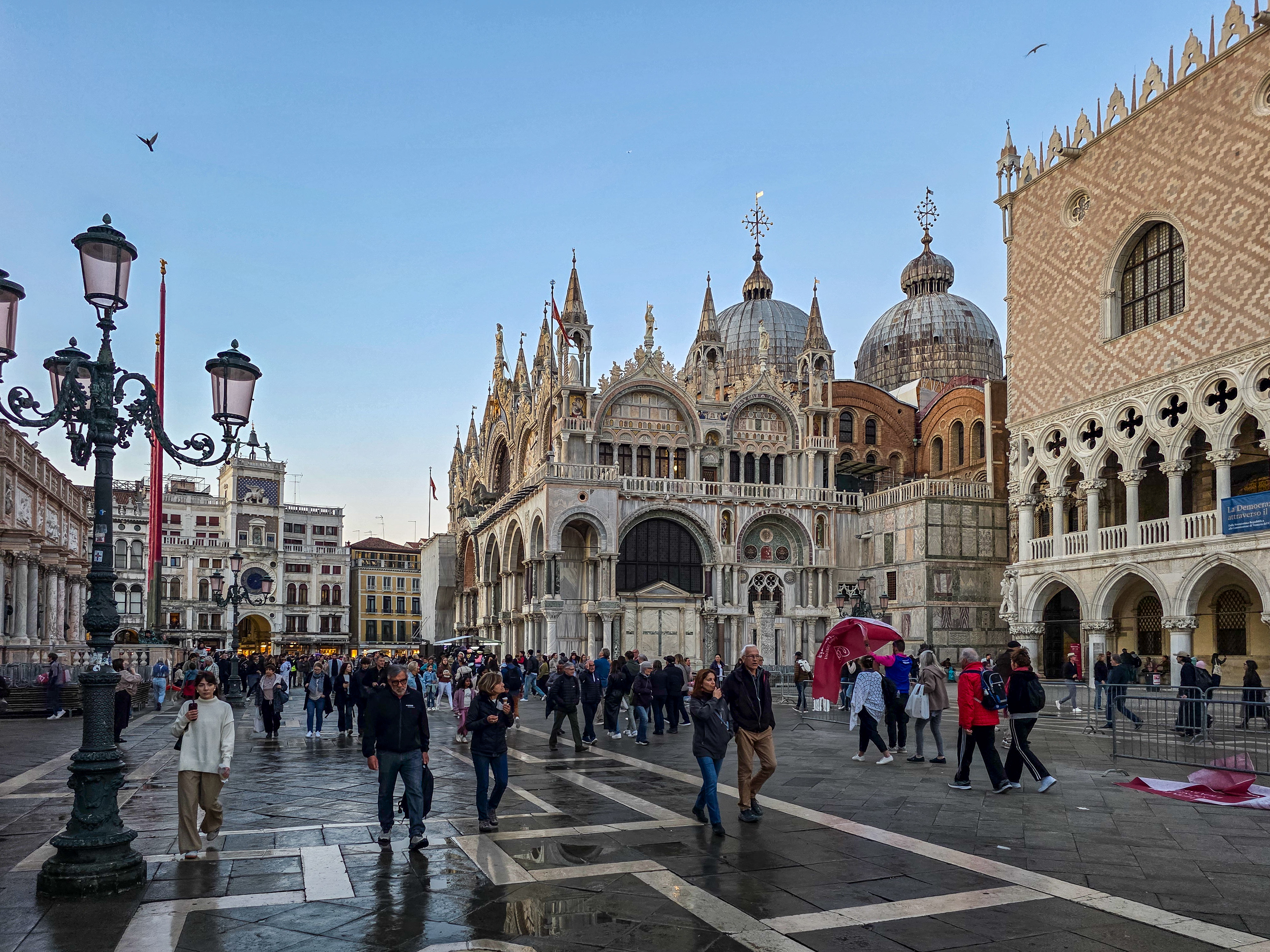
Well, the same thing was happening in St Mark’s Square, which is the lowest point in Venice. It was seriously flooded – the slowest marathon runners were still finishing the race, while in some parts of the square the water was already ankle-deep or more. And all this without a single drop of rain, purely from the tide. It was impossible to reach the Basilica without getting your feet wet, and I couldn’t get across the square to the tour meeting point – I had to go around the perimeter and still got a bit soaked.

There were quite a few kiosks on the square where enterprising vendors – the ones normally selling scarves to visitors who forgot to cover their shoulders for religious buildings – suddenly pulled out some kind of plastic overshoes or knee-high boots (clearly, this is a common occurrence!) and started selling them. Our guide said we’d have to walk through water to get into the Basilica, so we’d be better off either taking our shoes off or buying those covers – I did the latter.

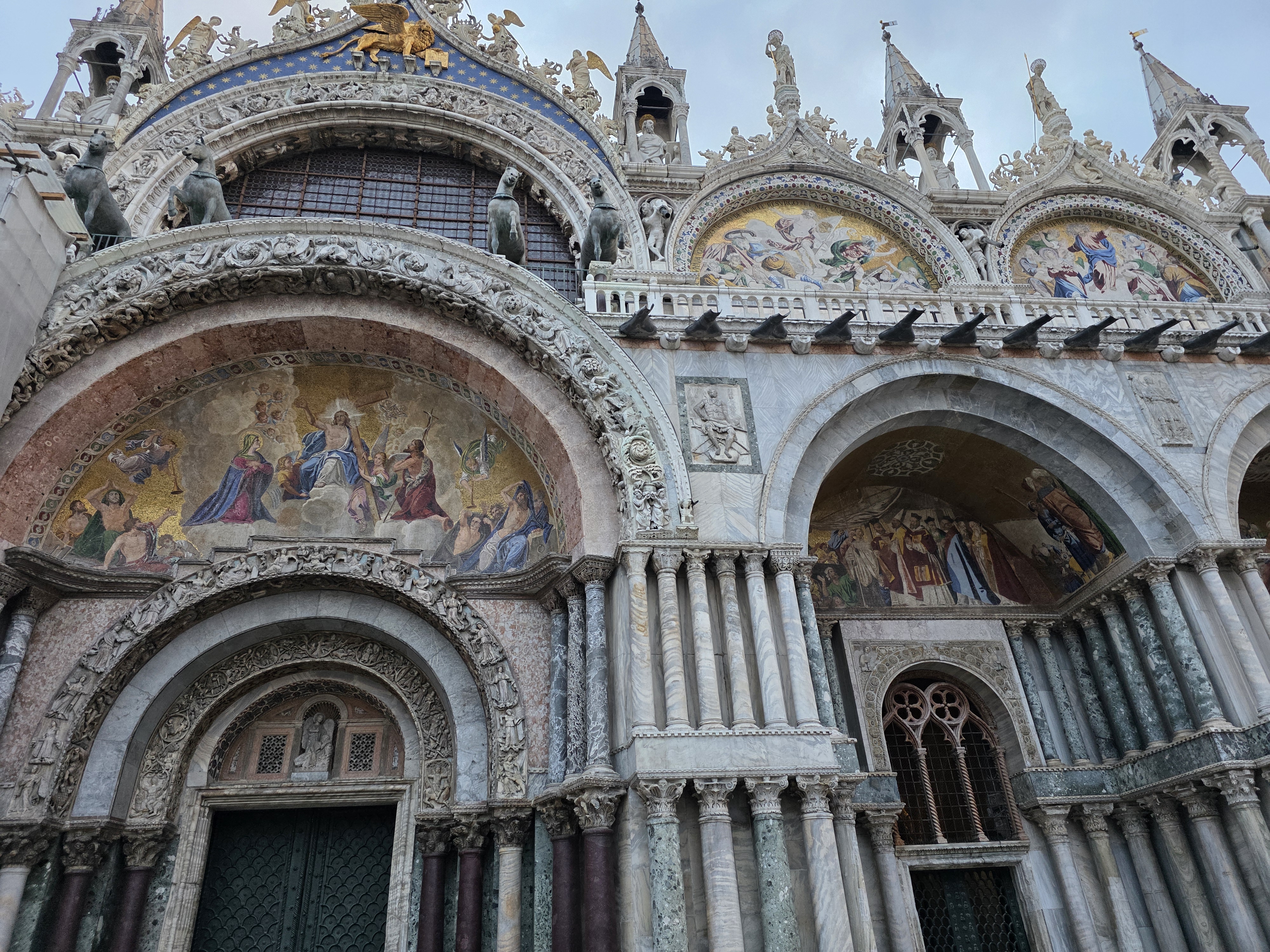
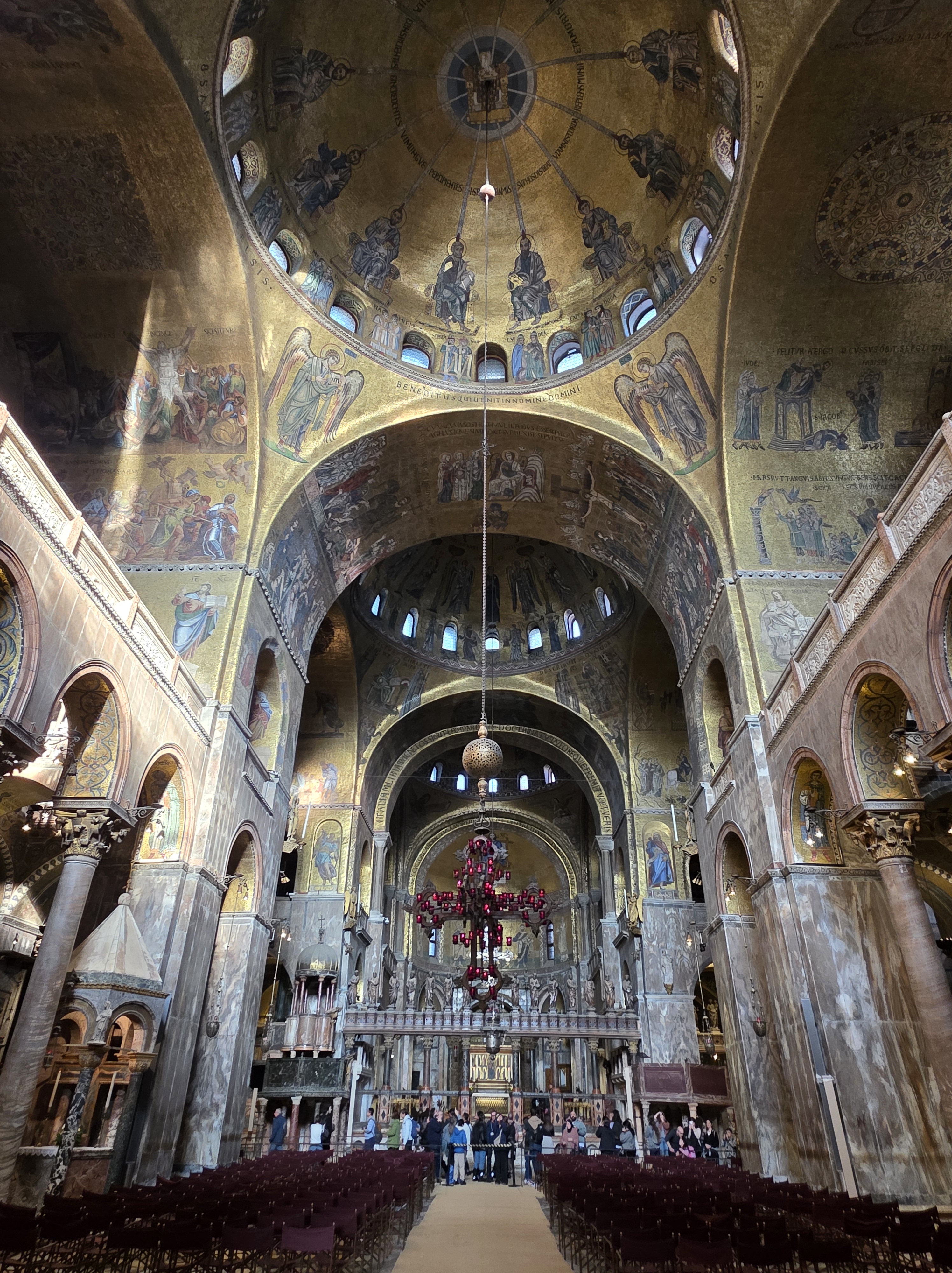
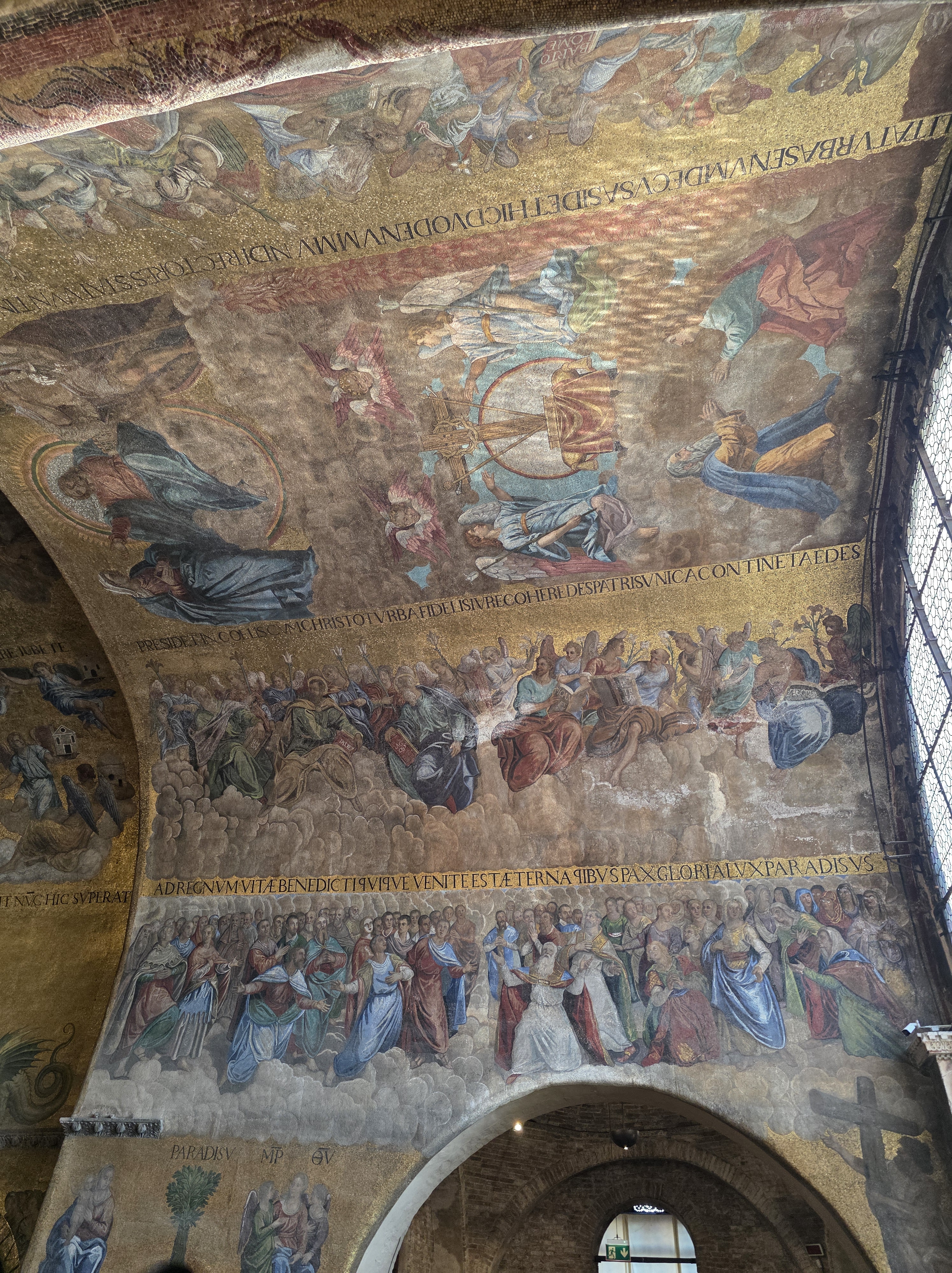
I saw the Basilica, with its amazing mosaics, and went up to the second-floor museum, displaying various relics, Byzantine artefacts, and fragments of older mosaics. I also stepped out onto the terrace and watched the last marathon runners down below.

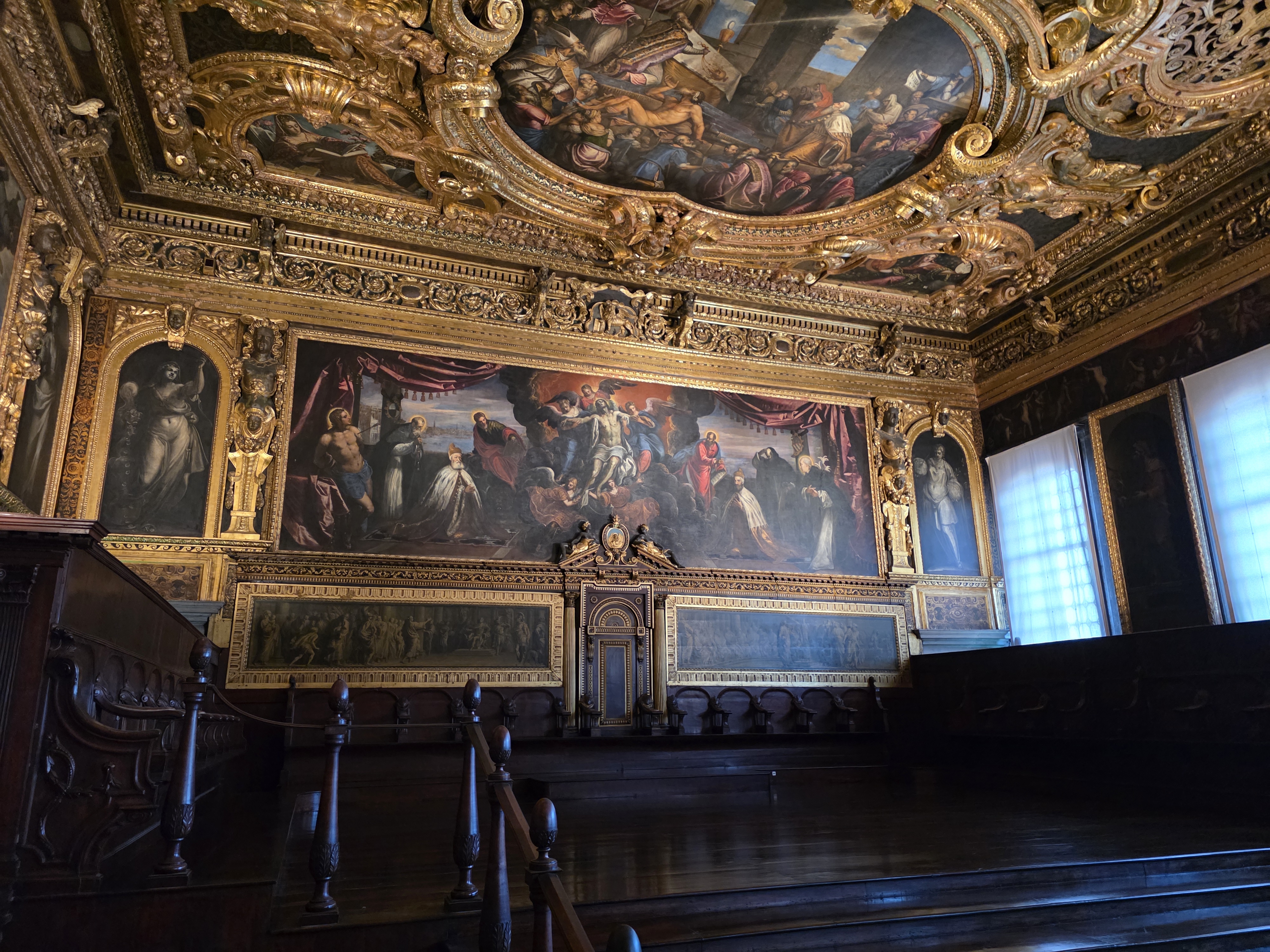
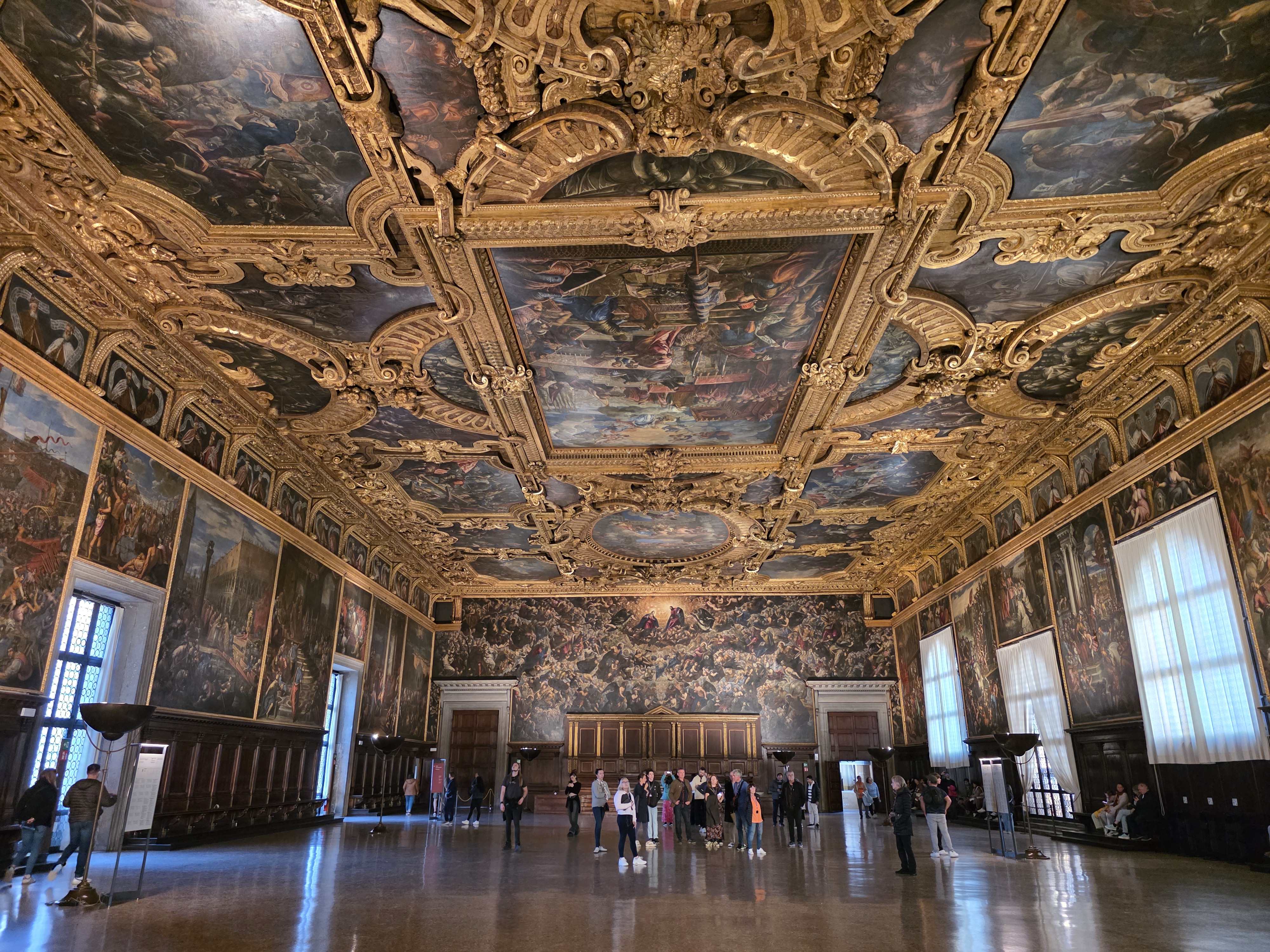
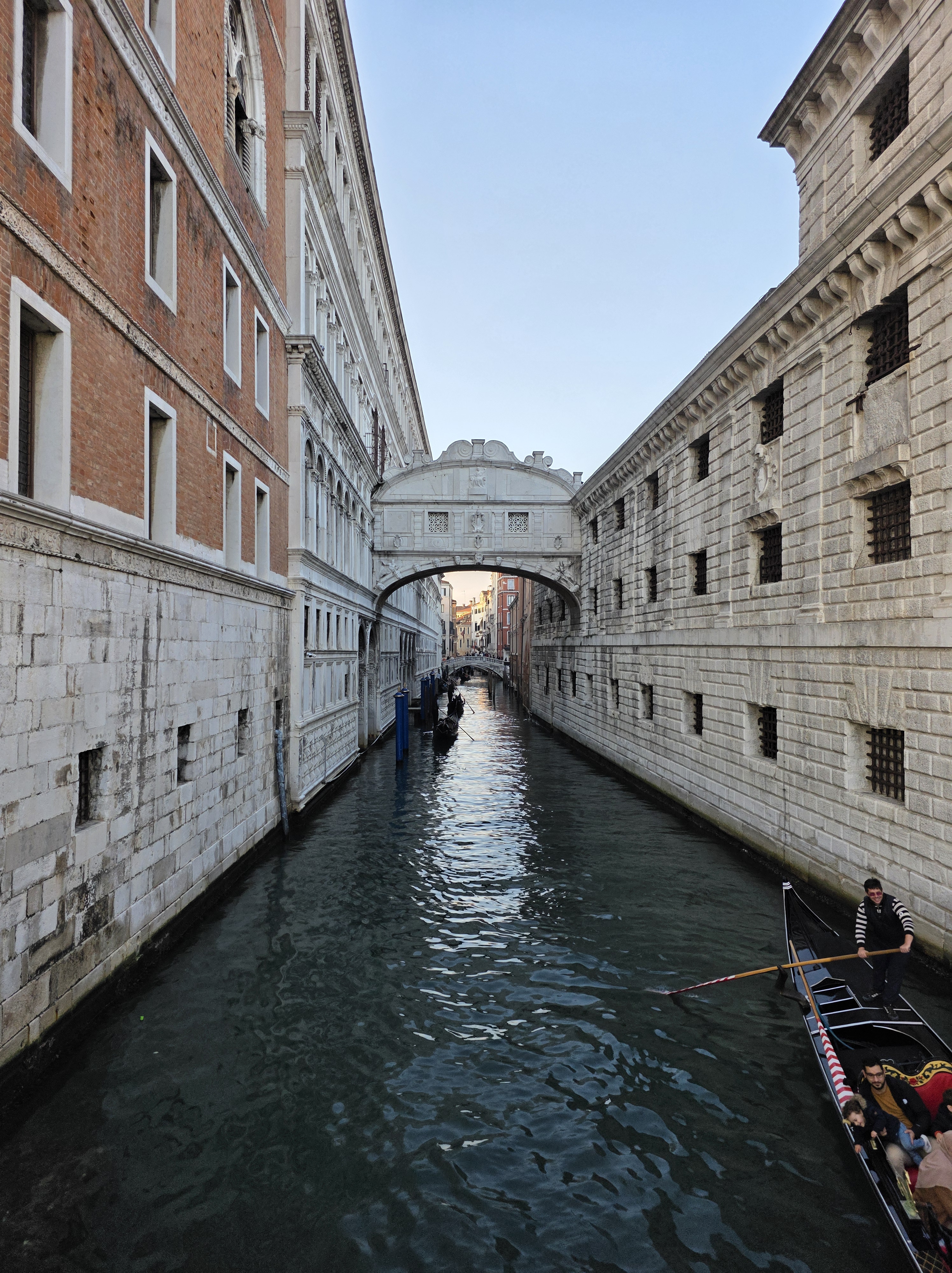
Next on the tour was the Doge’s Palace, right next door, where I looked at different rooms. The ceilings were truly luxurious, covered in gold leaf, paintings, and genuine masterpieces by famous Venetian artists. The palace also includes a prison, connected with the main building by the so-called Bridge of Sighs – named for the fact that prisoners would see the outside world for the last time through its window and, presumably, sigh.

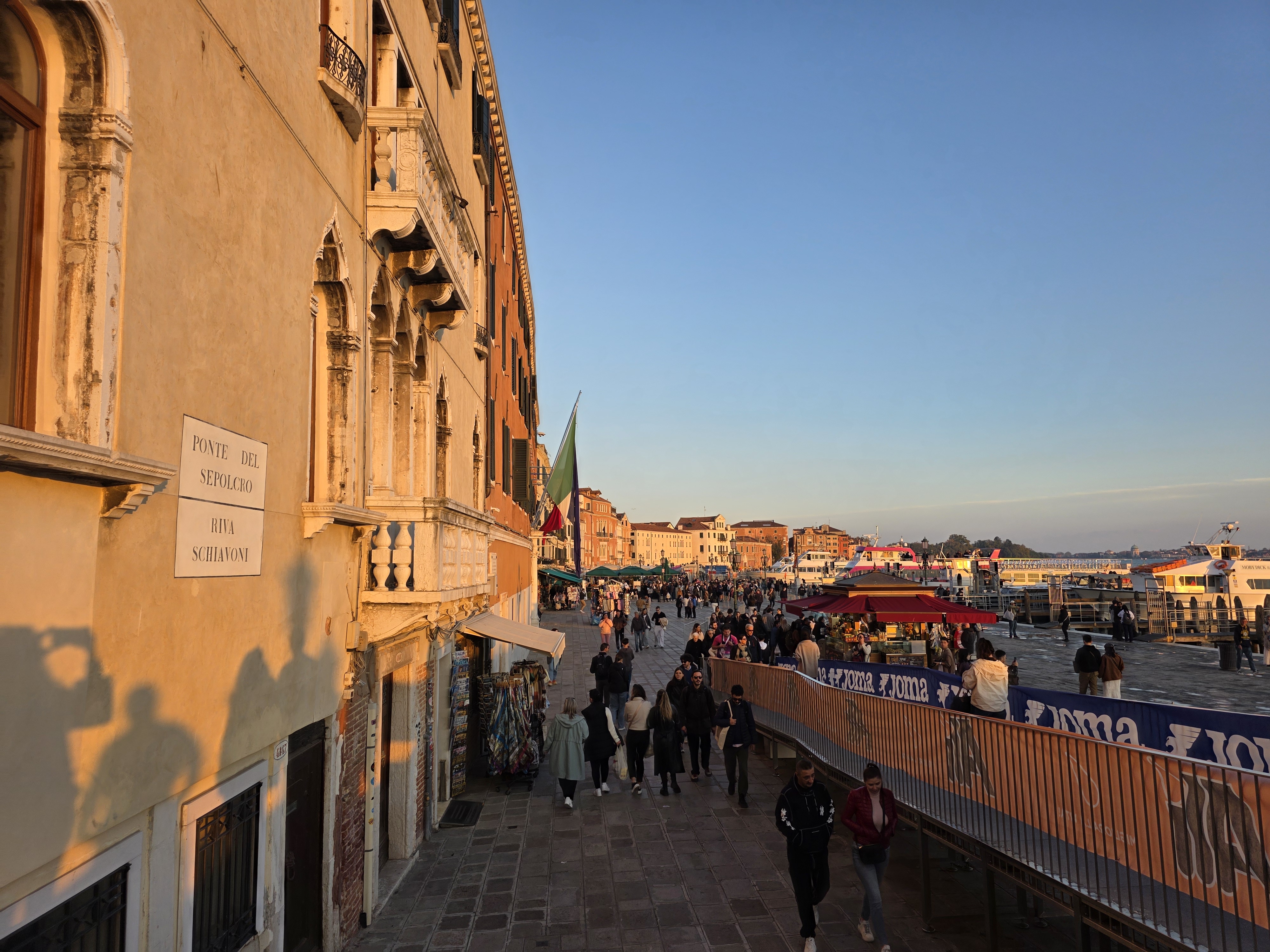
I finished the tour earlier than expected, so I had some time before my visit to the bell tower (Campanile) of St Mark’s. I strolled along the promenade, where the marathon barriers had already been removed. The crowd was enormous – apparently a mix of marathon finishers and other tourists.

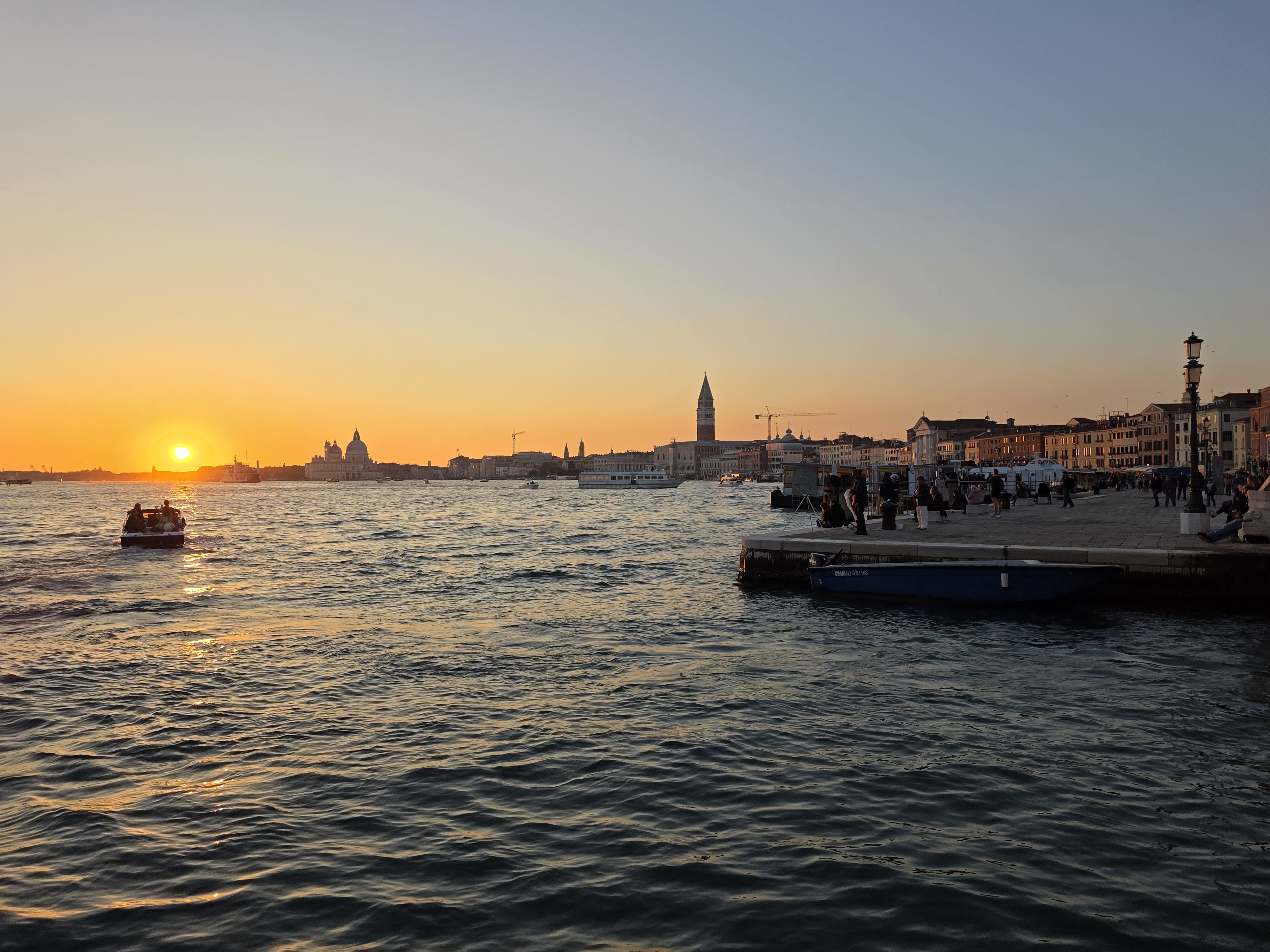
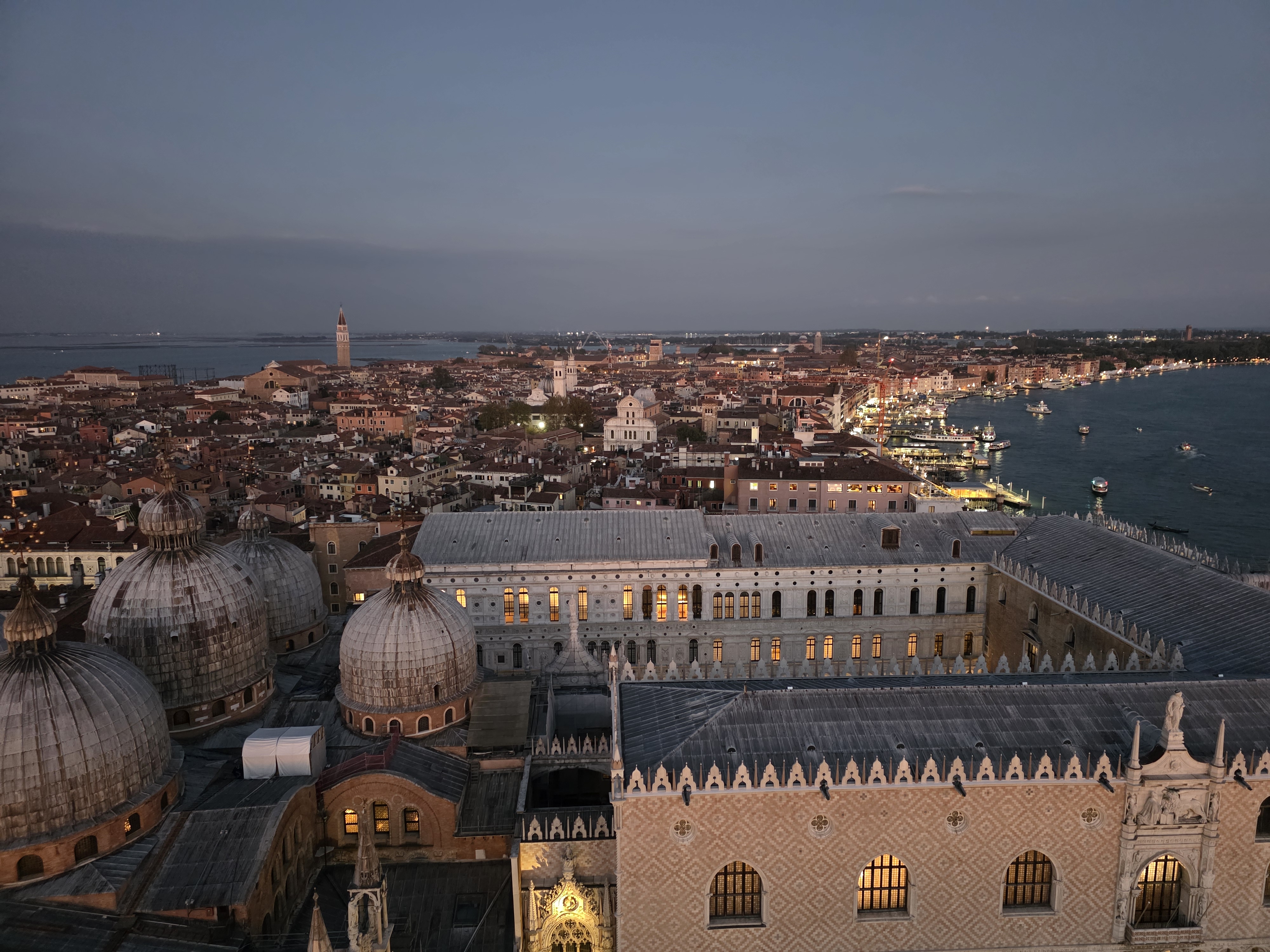
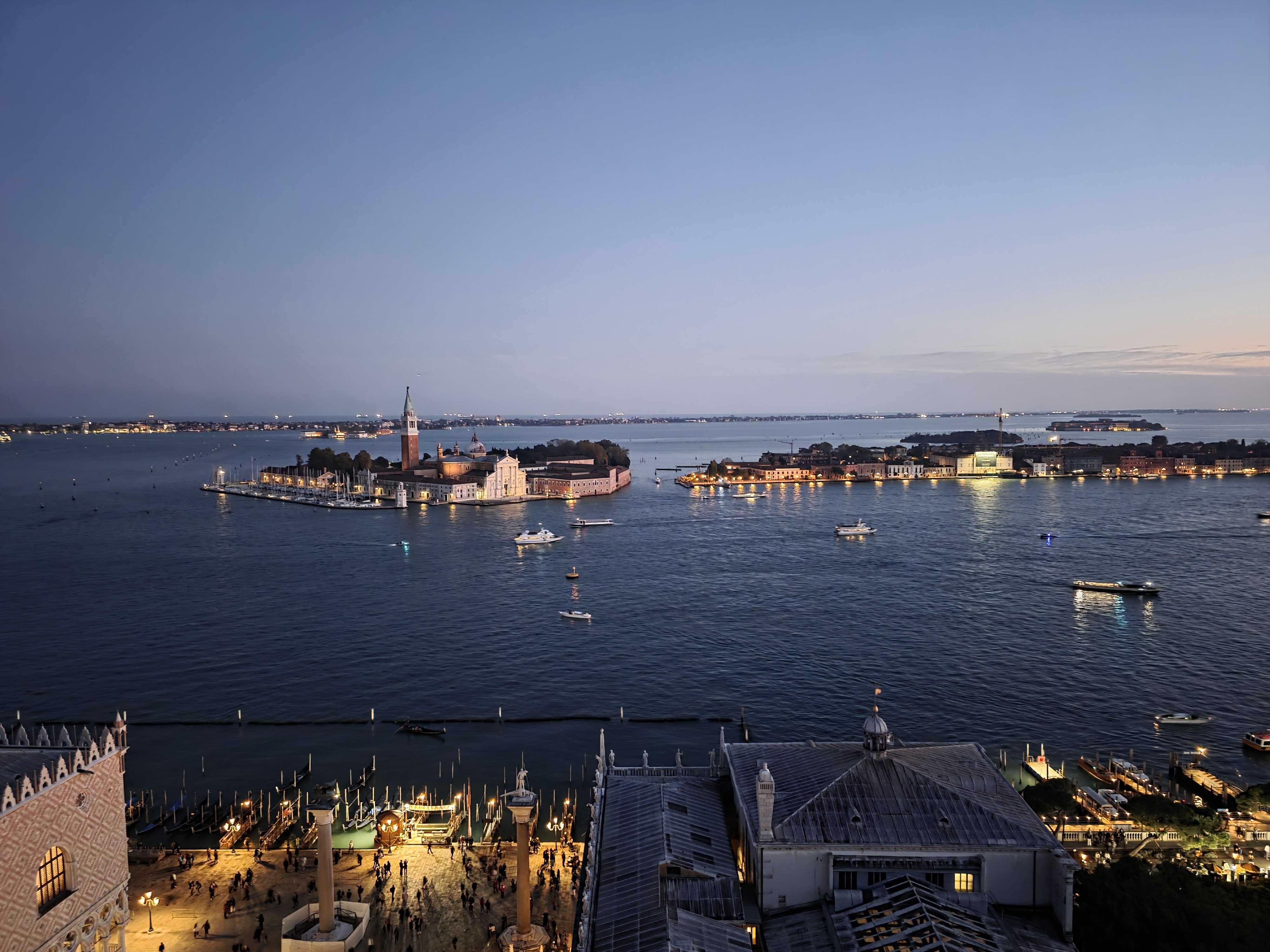
I ended up getting into the Campanile half an hour earlier than my booked slot – fortunately, they let me in. The whole attraction is the viewing platform at the top, which you reach by lift. I happened to be there right at sunset, and got to see Venice from above in the evening light, taking some beautiful photos.

In the evening, I had to move to a different hotel near the airport, as I have a very early flight tomorrow, as mentioned, and running around pedestrian-only Venice at 4am looking for transfer options didn’t seem like a great idea.

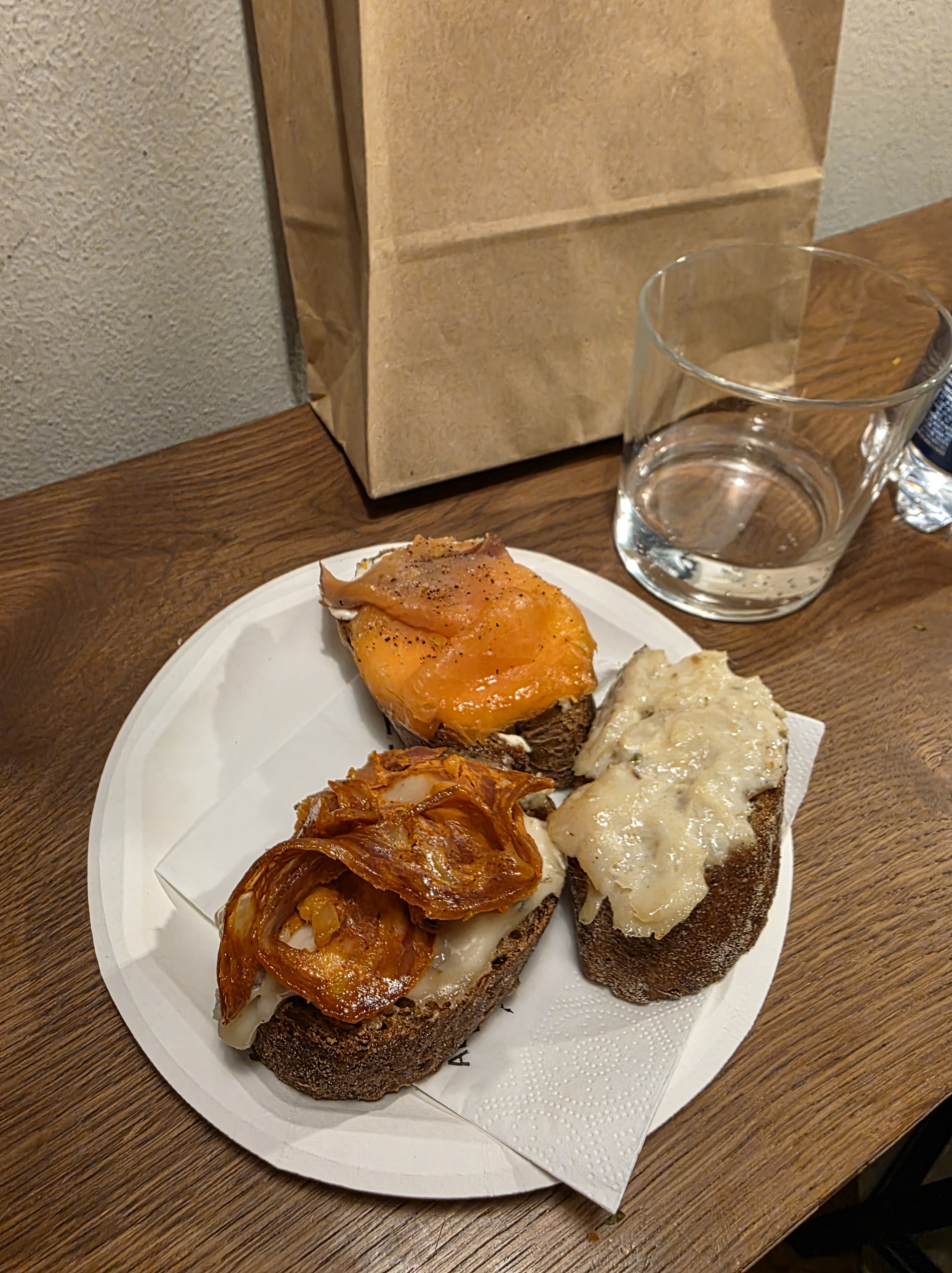
Before that, I decided to have dinner – something light, after the pizza earlier – and I wanted to try local cicchetti. This Venetian speciality consists of small tapas-like bites with all kinds of toppings, the most famous being a paste made from dried cod, called baccalà.

I tried two types of cicchetti with cod, one with salmon, and one with salami – and I liked them all!

Then I picked up my suitcase from the first hotel and set off. First, I took a vaporetto (water bus) from near the Rialto Bridge, and then a regular bus from Piazzale Roma to the airport area. Initially, I thought I’d walk to Piazzale Roma, but then I found out I’d have to take a boat partway anyway, so I ended up just taking the vaporetto.

The hotel’s location was very odd – I had to get off the bus right in the middle of a highway, with no pavement or footpath in sight, and then walk for about 10 minutes. But at least tomorrow at 4:30 a.m., the shuttle will pick me up and get me to the airport in just 5 minutes.

Posted in English, Europe, Italy, Venice

Venice – Day 1

РУССКОЯЗЫЧНАЯ ВЕРСИЯ ПО ЭТОЙ ССЫЛКЕ. CLICK HERE FOR RUSSIAN VERSION.

October 25 – Saturday

Well, my two-day trip to Venice began early on Saturday morning at Heathrow Airport with a (fortunately, the only) negative moment: due to a full flight, non-priority passengers were forced to check in their hand luggage (apparently, British Airways does this quite often – although before, I had only encountered them offering this as a voluntary option).

So, upon arrival I had to wait a bit for the suitcase, whereas otherwise I would’ve been out in literally seconds. I asked at the airport how best to get to the San Marco area – and got sold a ticket for the Alilaguna water bus. Marco Polo Airport is located on the mainland, and Venice is essentially an archipelago of more than a hundred islands. On board the water bus, munching on protein bars so as not to waste time on a very late lunch afterwards, I studied the route and realised it would take me a whole hour and forty minutes, as the water bus circles all around central Venice, and San Marco is one of the final stops. Whereas if I got off at one of the early stops in the Cannaregio area, about 30 minutes in, I could reach the hotel on foot in about 20 minutes. The city centre is pedestrian-only, so taking a taxi to the hotel wasn’t an option at all.

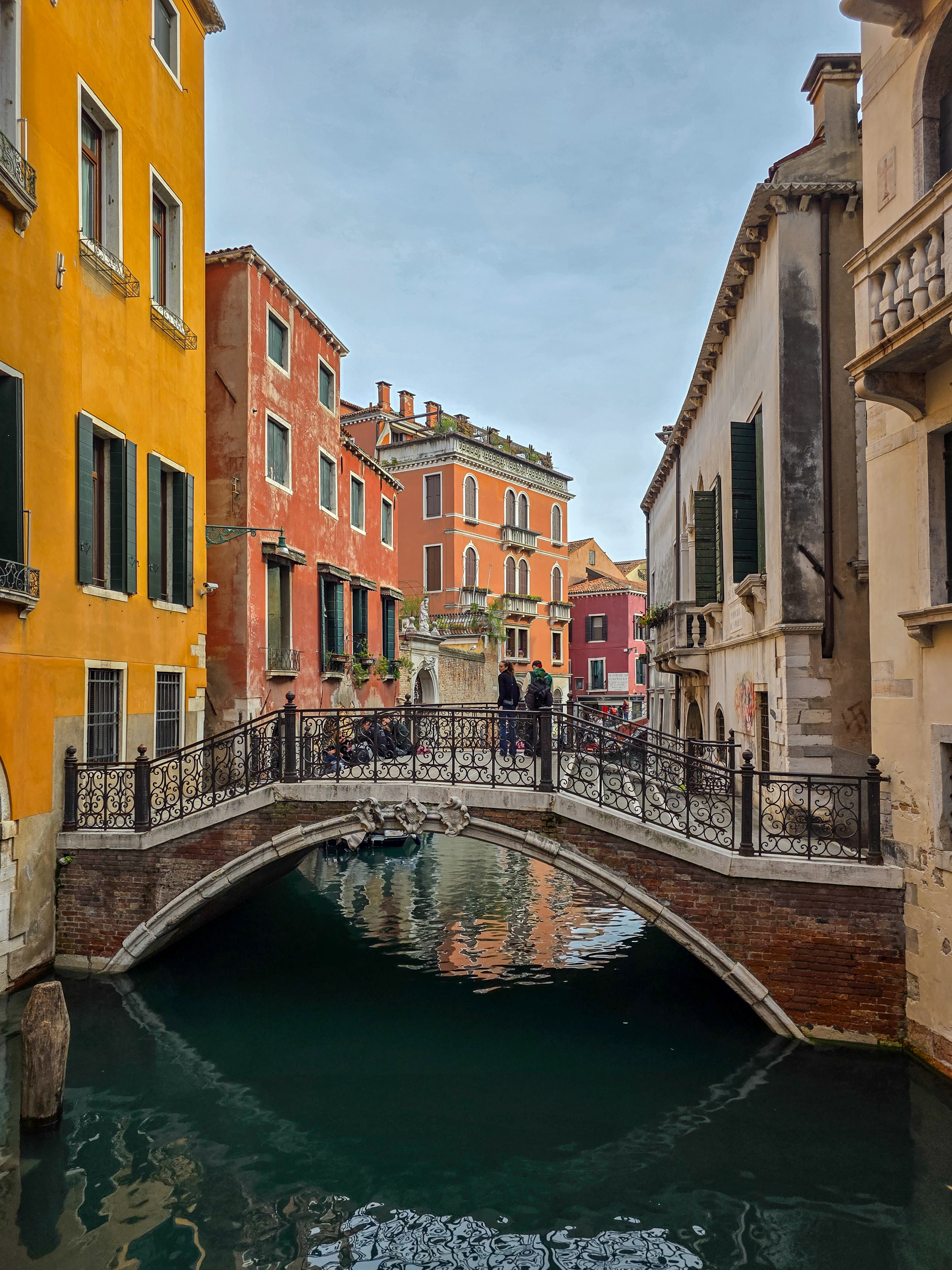
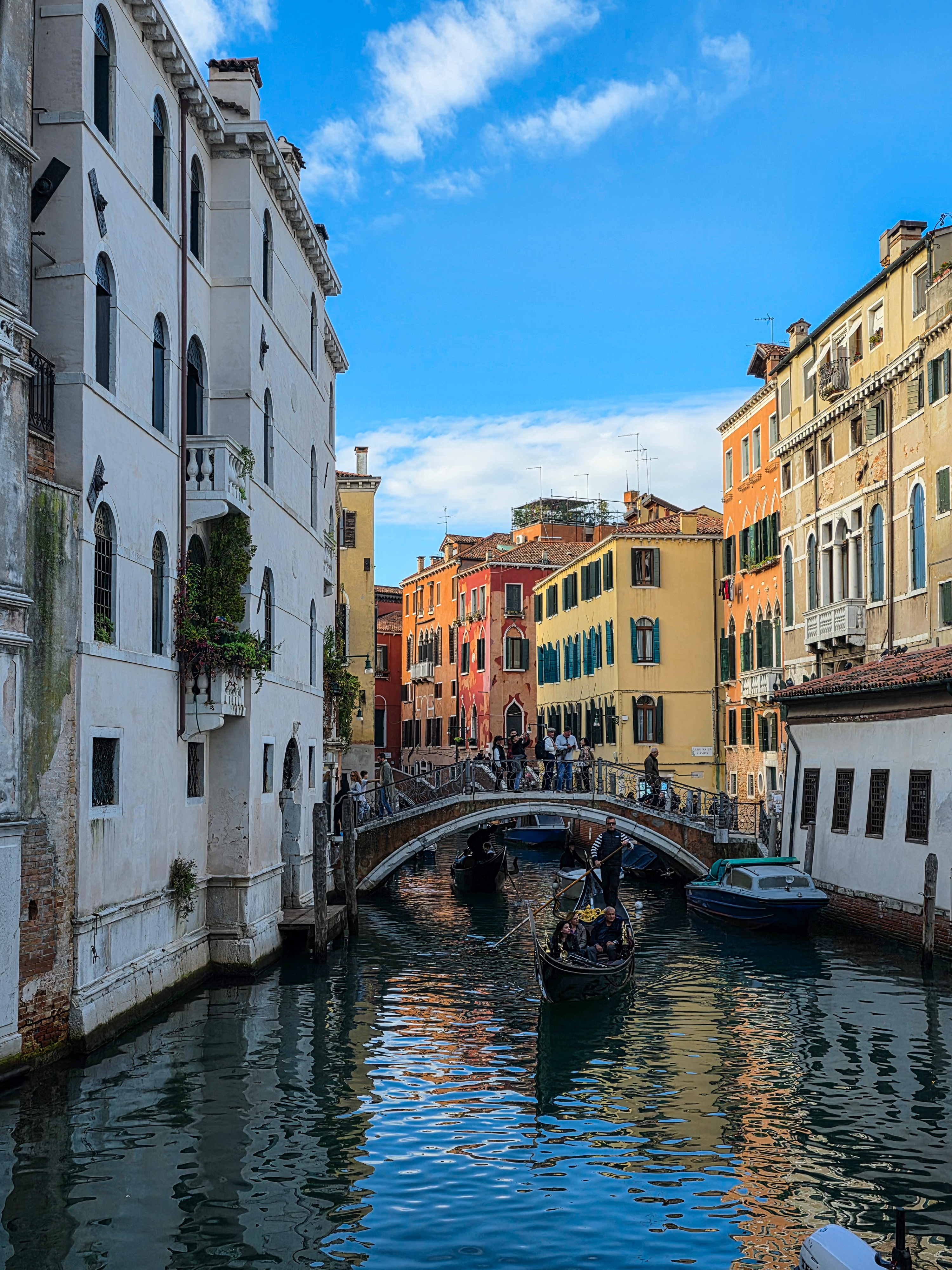
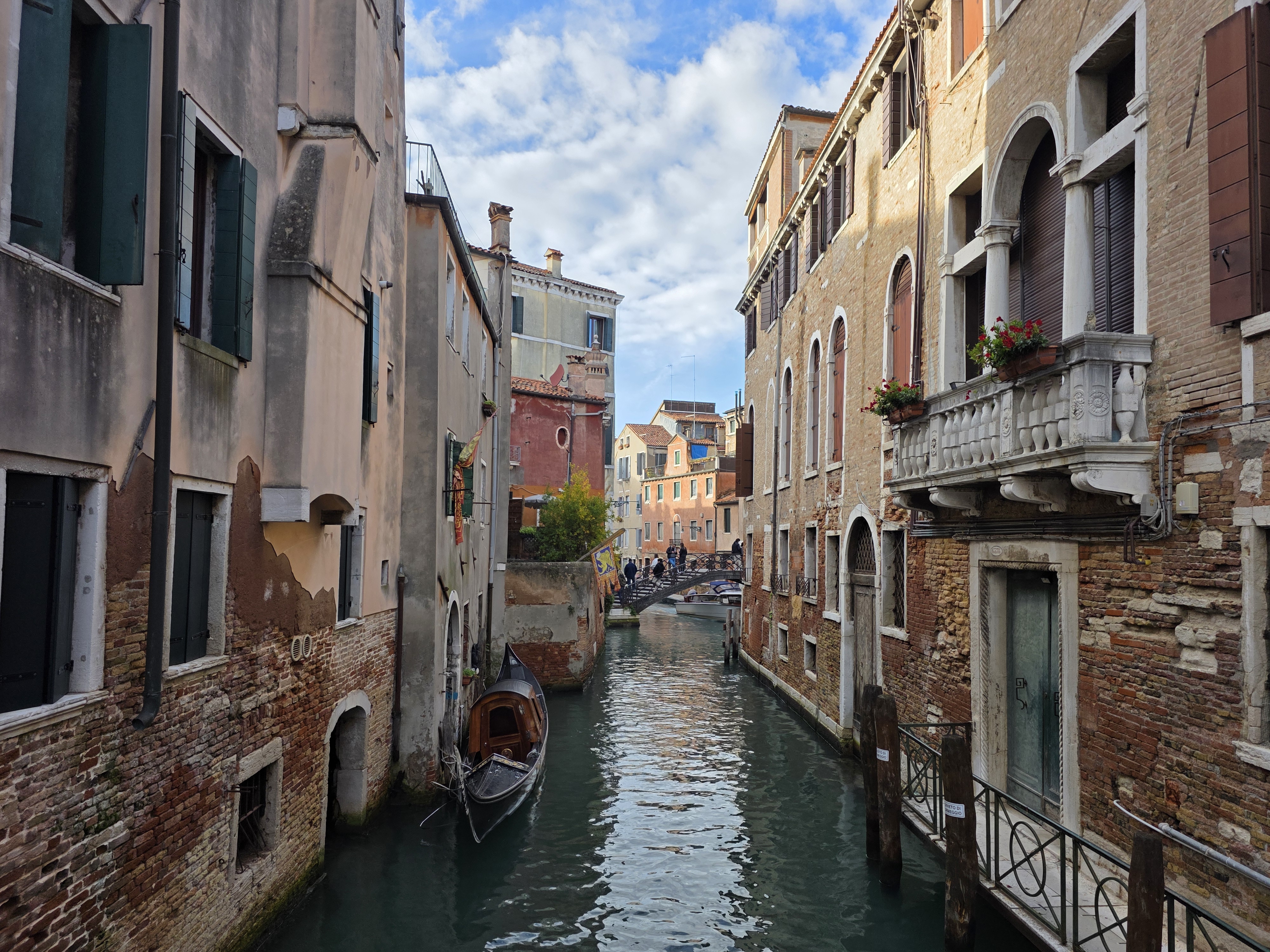
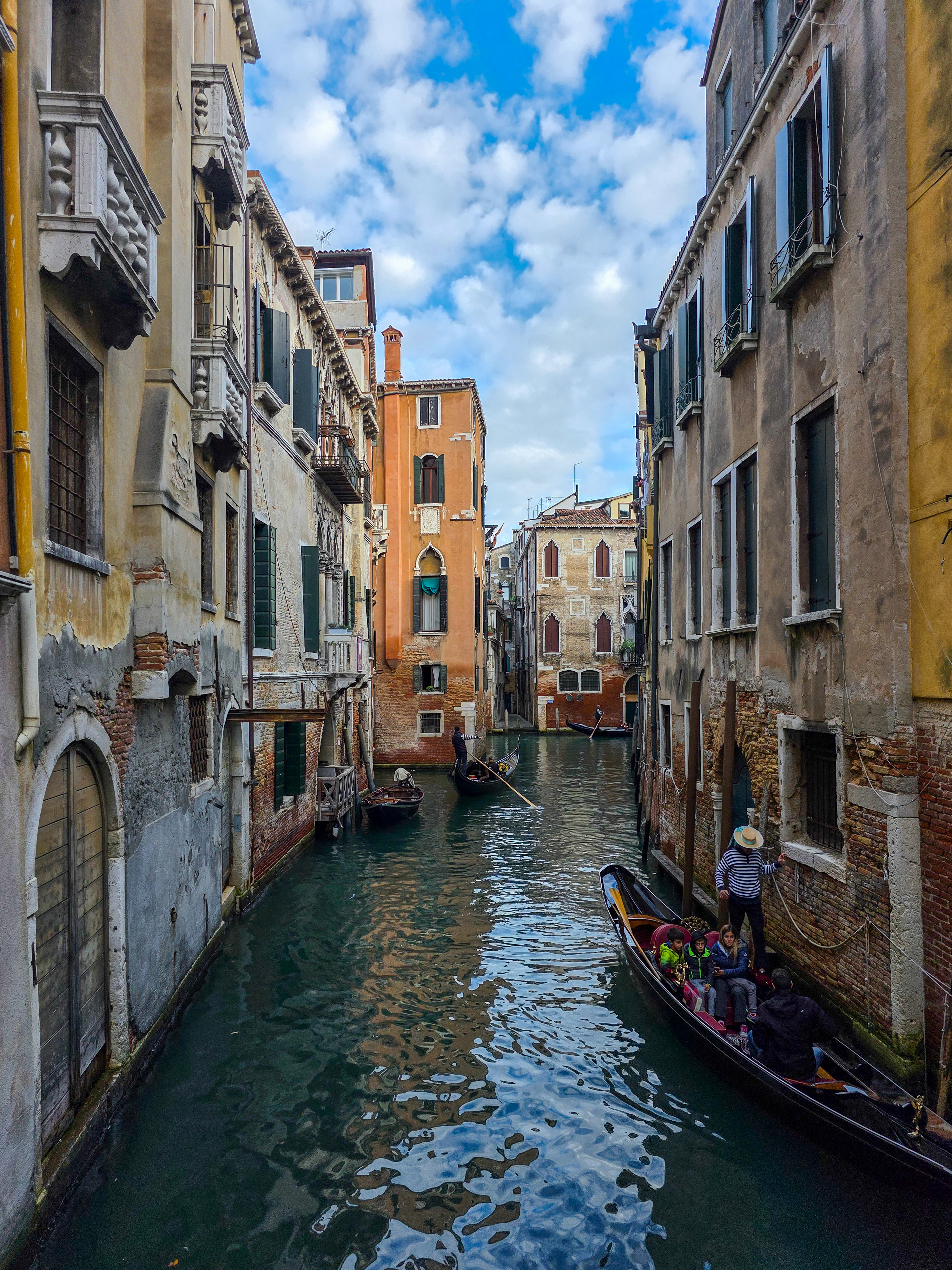
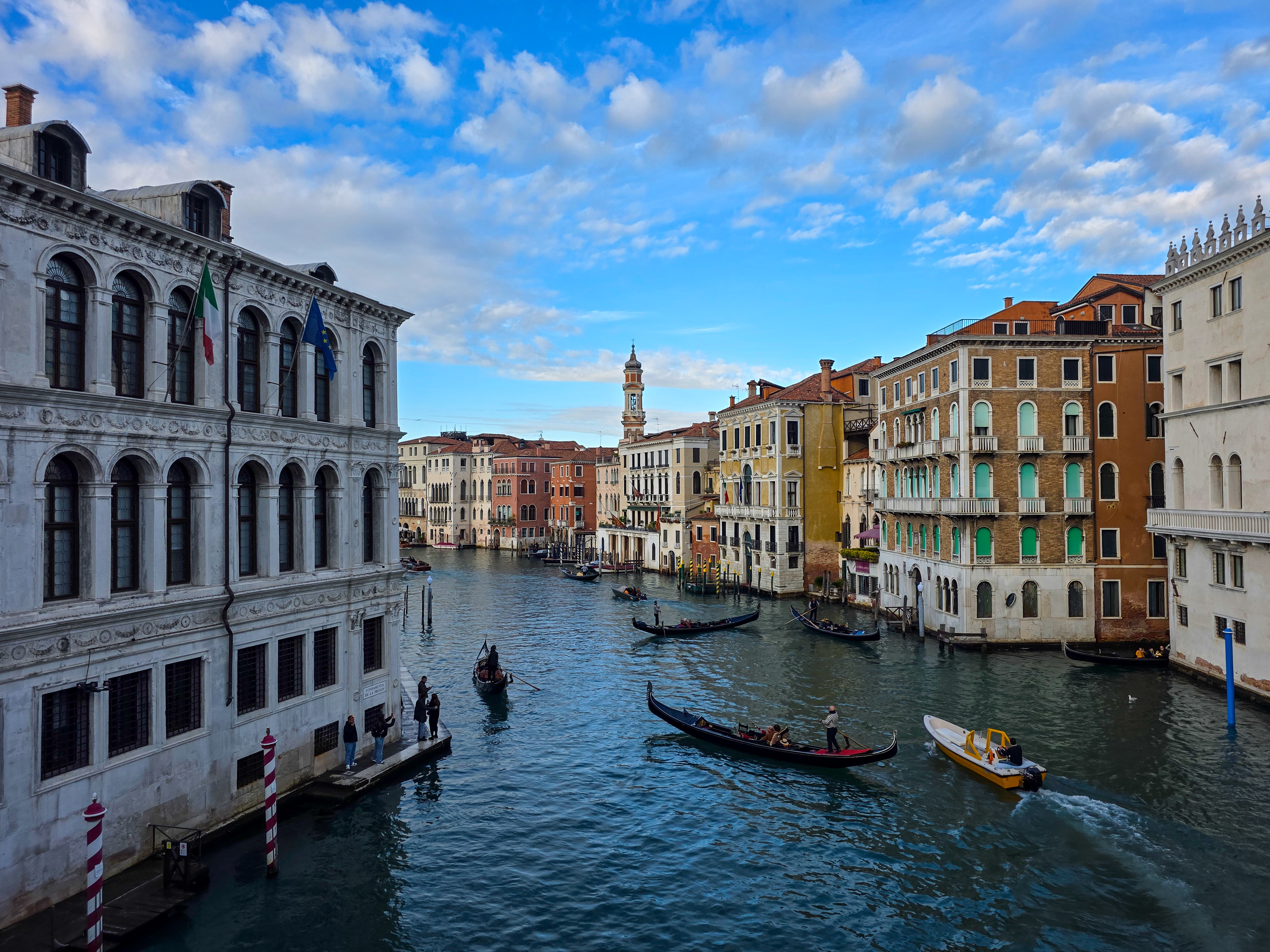
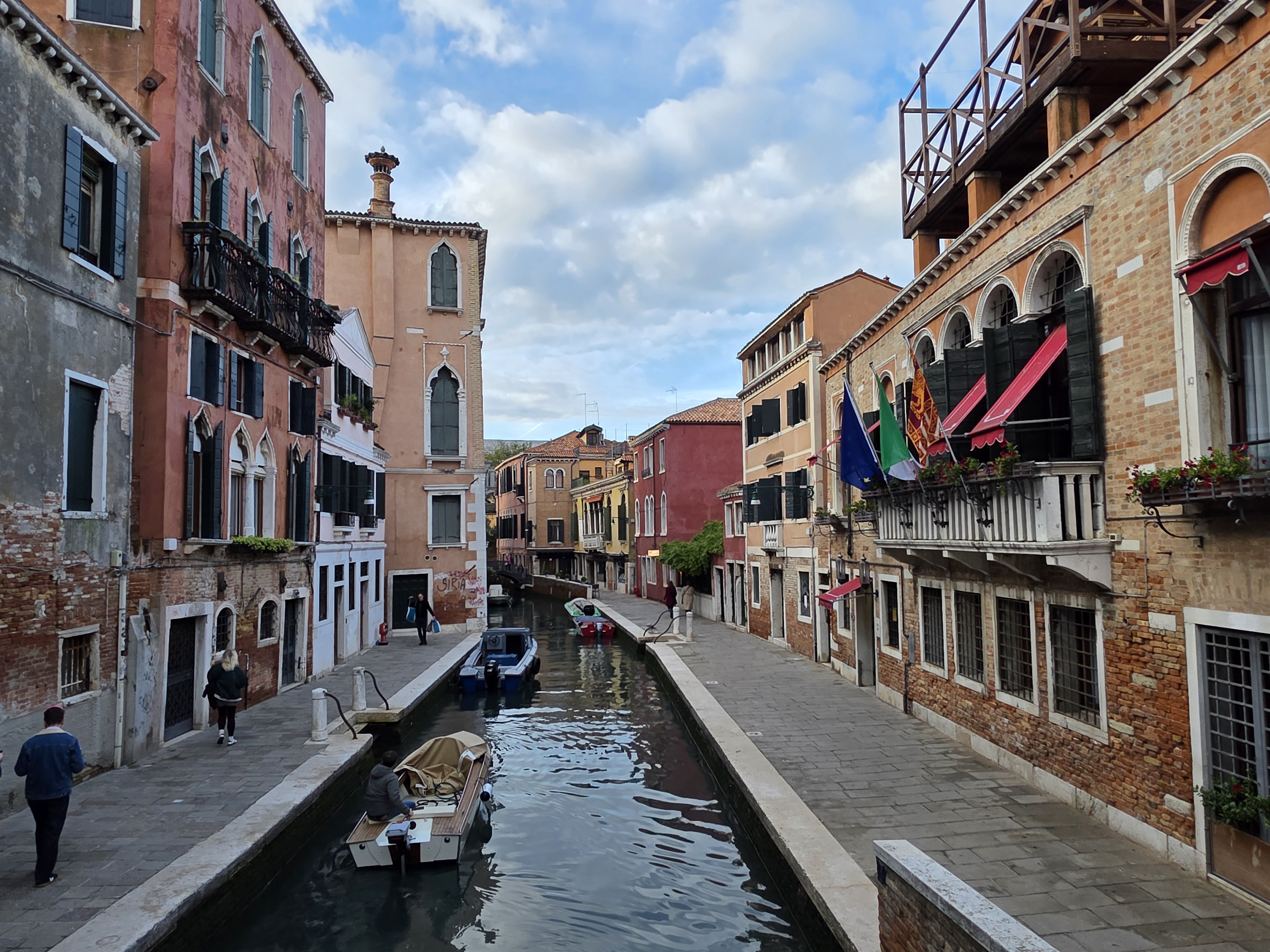
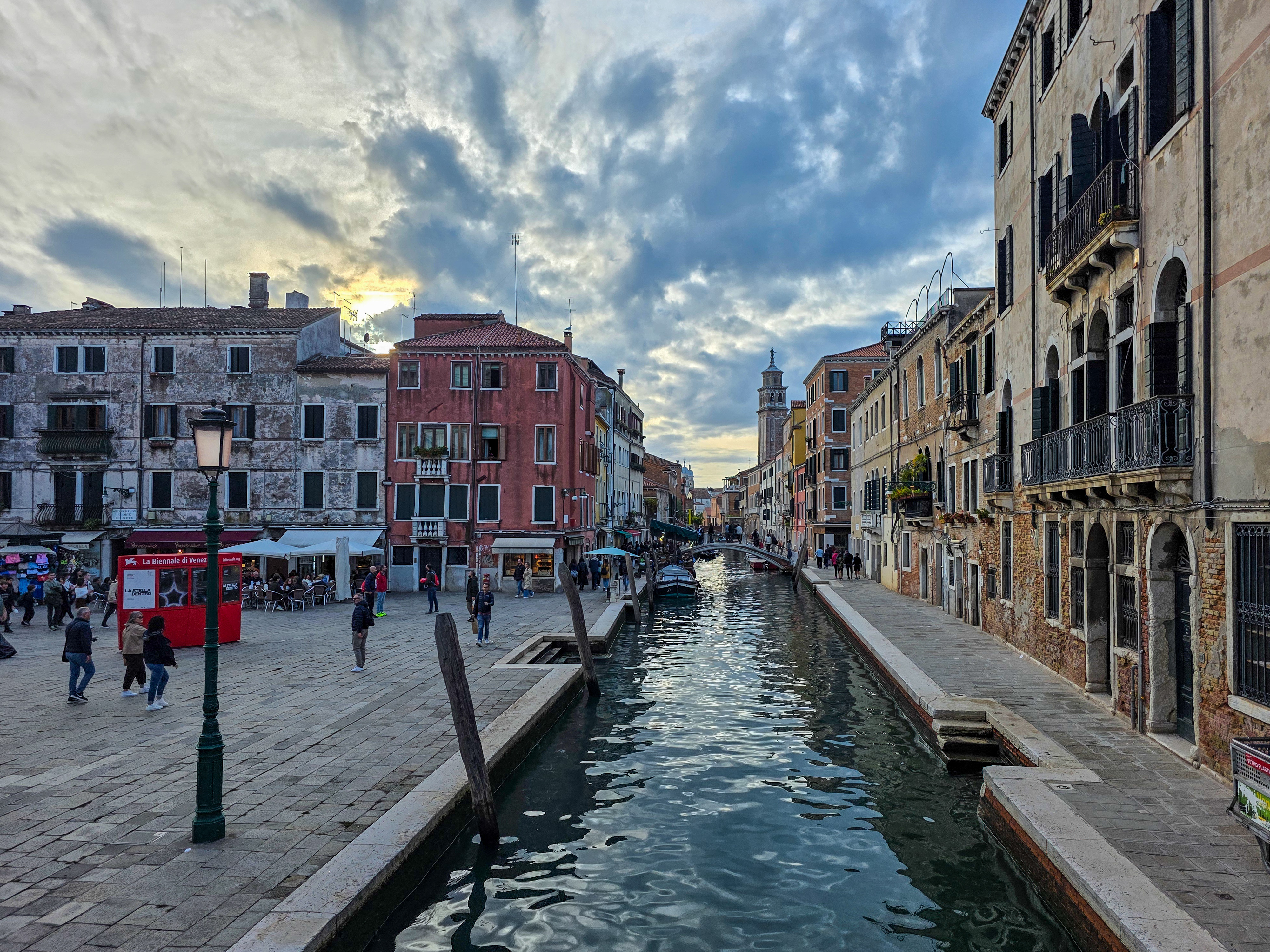
That’s exactly what I ended up doing, and right away I was able to enjoy the beauty of Venice, with its canals and gondolas. Of course, dragging a suitcase through crowds of people and hauling it over countless canal bridges wasn’t exactly convenient, but it wasn’t a disaster either. First impressions: beautiful, crowded, and a bit smelly (from the canal water).

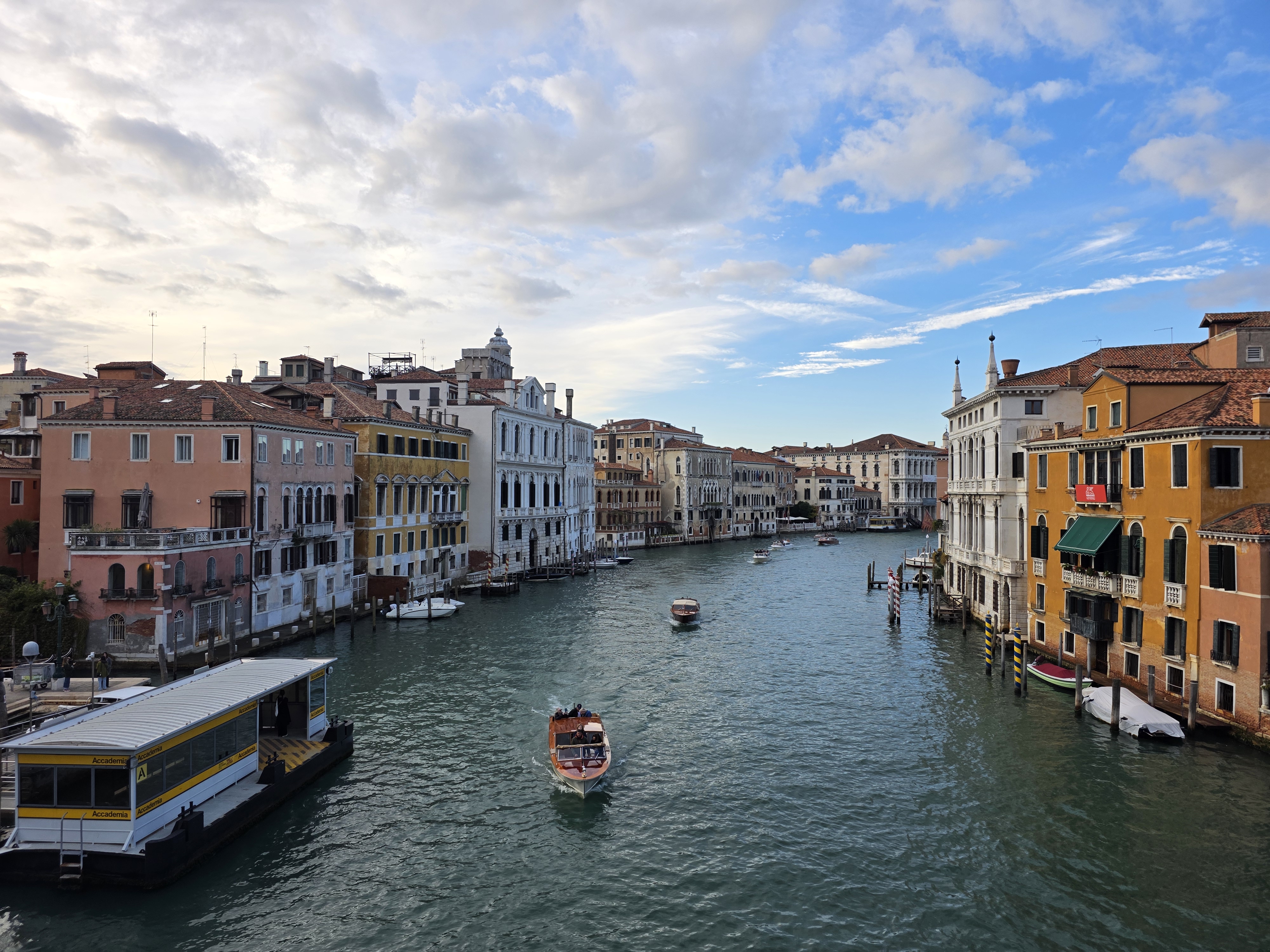
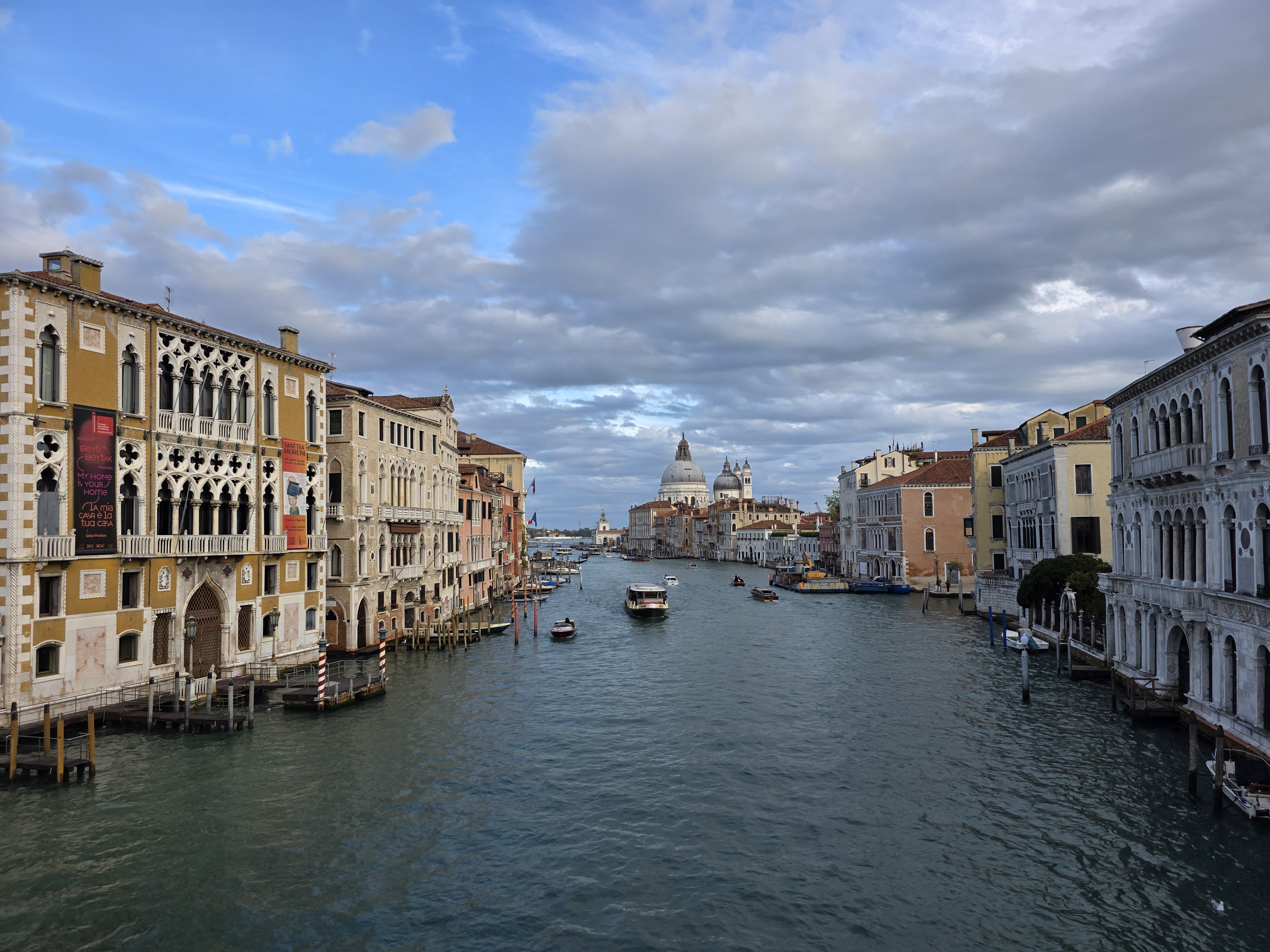
For the evening, I had a gondola ride and dinner planned, with about an hour of free time between hotel check-in and those. I decided to walk around the centre – first, to find the meeting point for tomorrow’s morning Murano and Burano island tour (it was supposed to be just five minutes from the hotel, at St. Mark’s Square, but, as “luck” would have it, there was going to be a marathon in Venice tomorrow, so I received a message saying that the meeting point had been moved somewhere near the equestrian statue of Bartolomeo Colleoni about a 20-minute walk away). Second, I’d downloaded a walking route through the centre that crossed the Grand Canal twice (Venice’s main waterway), including over the famous Rialto Bridge.

Everything was, of course, beautiful – the bridge, the views – I took so many amazing photos! The only “but”, as I said, was that the crowds were really, REALLY huge – and this isn’t even high tourist season (although I’m not so sure).

Eventually, I walked to the gondola tour meeting point – basically a kiosk. There were already other people waiting there with questioning looks, and we all came to the conclusion that we were in the right spot – which turned out to be true: soon a guide arrived and led us to our gondolas.

This should have been the time to enjoy the Venetian canals and life in general, but, as usual, I couldn’t avoid some anxiety. I checked the website of the restaurant I had booked for dinner – Gio’s at the St. Regis – and to my horror saw that their dinner dress code was “elegant.” I wasn’t just not dressed elegantly, I hadn’t even brought anything but jeans and trainers.

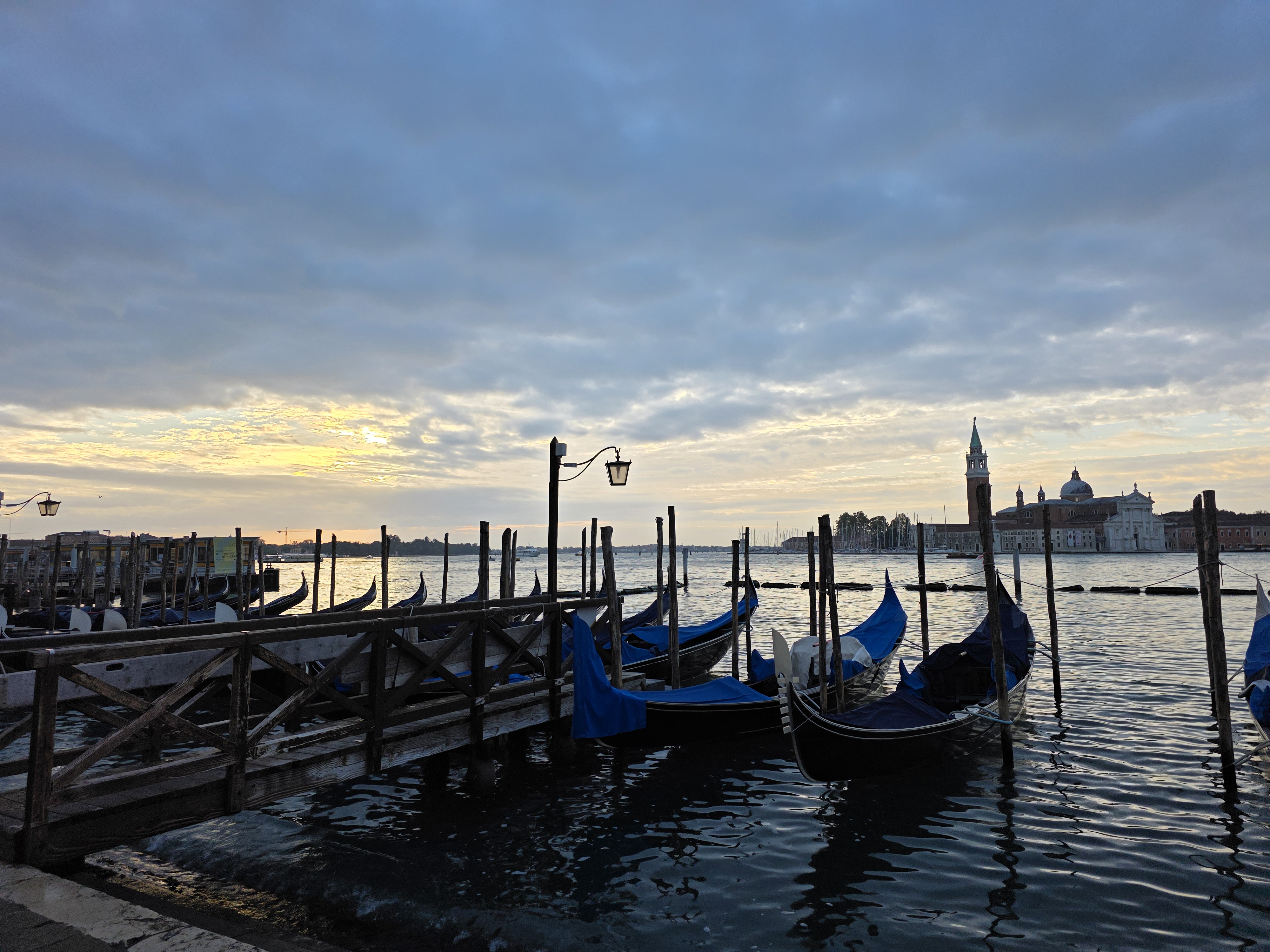
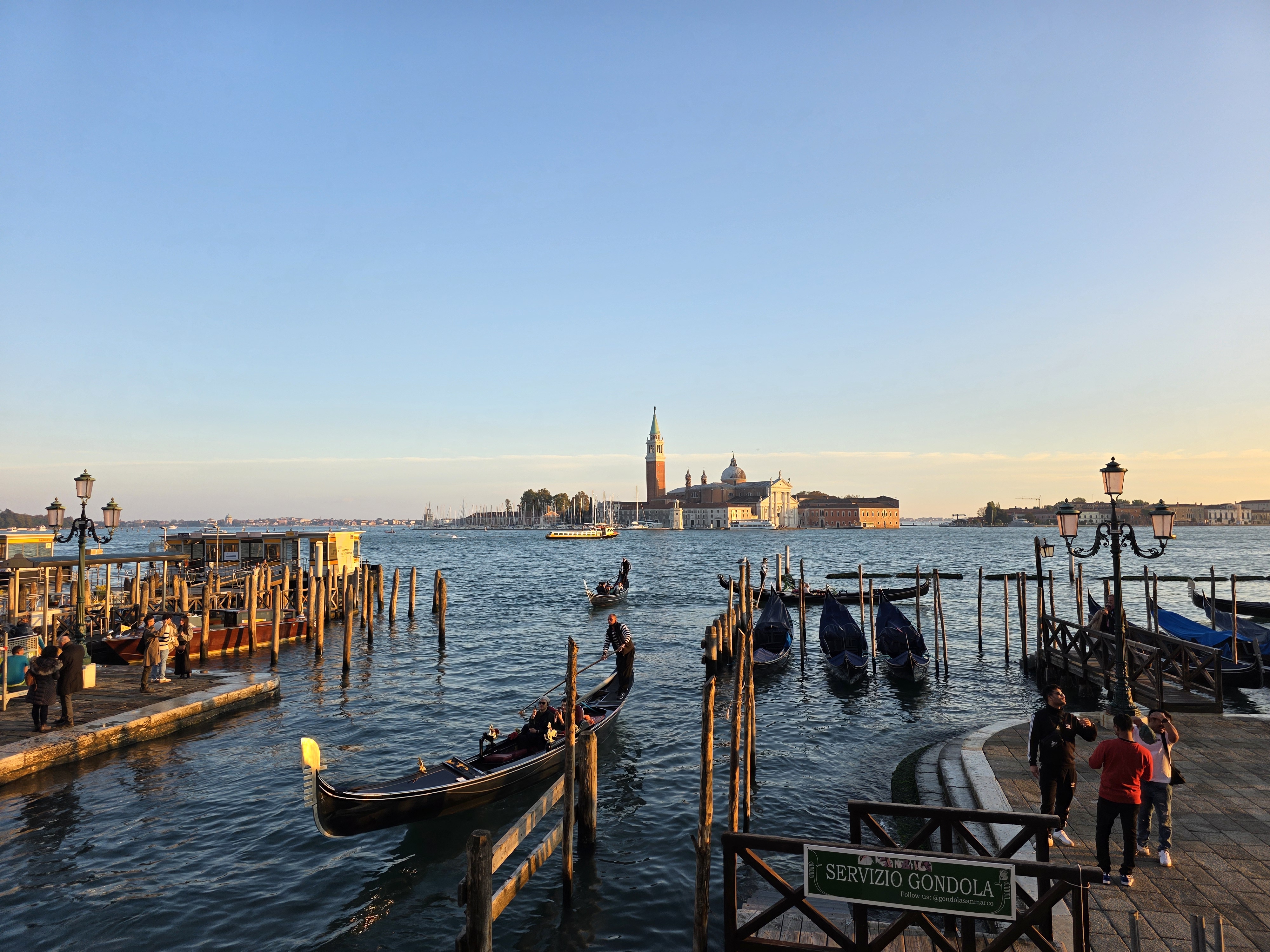
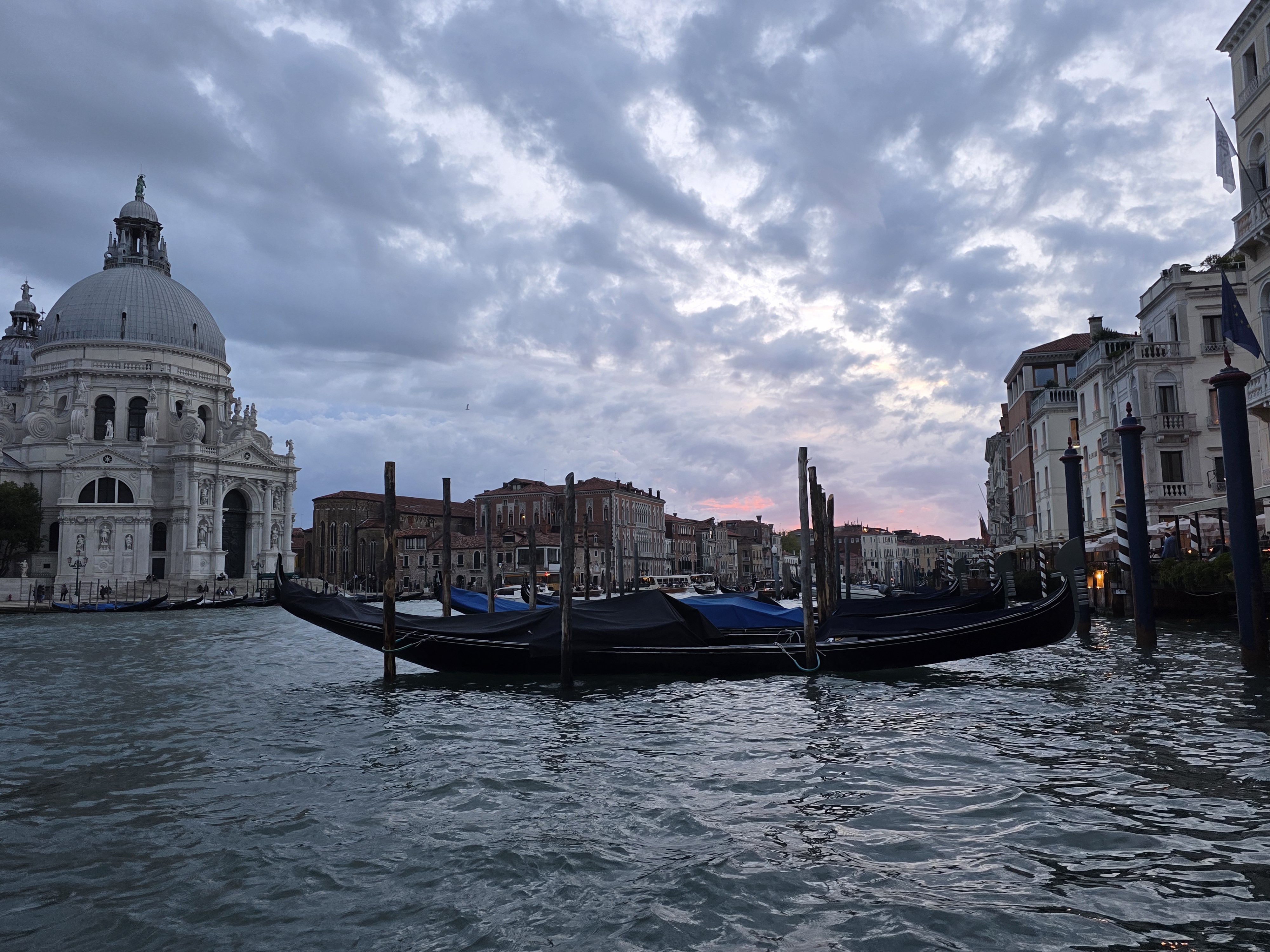
In the end, I decided to focus on the gondola ride for now and later go to the restaurant in person to see whether they would let me in – hoping that, even if not, it wouldn’t count as a late cancellation for which I’d be charged €100. The gondola ride was lovely, the canals were very pleasant (even though somewhat smelly), and the gondoliers were shouting something to each other along the way (in Venetian dialect, by the way – totally incomprehensible). Naturally, Venetians themselves don’t ride gondolas – those are purely a tourist attraction now, though in the past they were the main mode of transport around the city. These days, there are water taxis and water buses (called vaporetto). Incidentally, by law passed back in the 17th century, all gondolas in Venice are traditionally black – although before that, they came in all sorts of colours.

I arrived at the restaurant well in advance to find out whether I would be able to get in. When I asked about the dress code, they said, “No problem, don’t worry at all.” And since it wasn’t dinner time yet, they seated me on the terrace with a view of the Grand Canal and the Santa Maria della Salute church on the opposite bank, and offered me an aperitif. I really enjoyed this very expensive aperitif – it cost me €40.

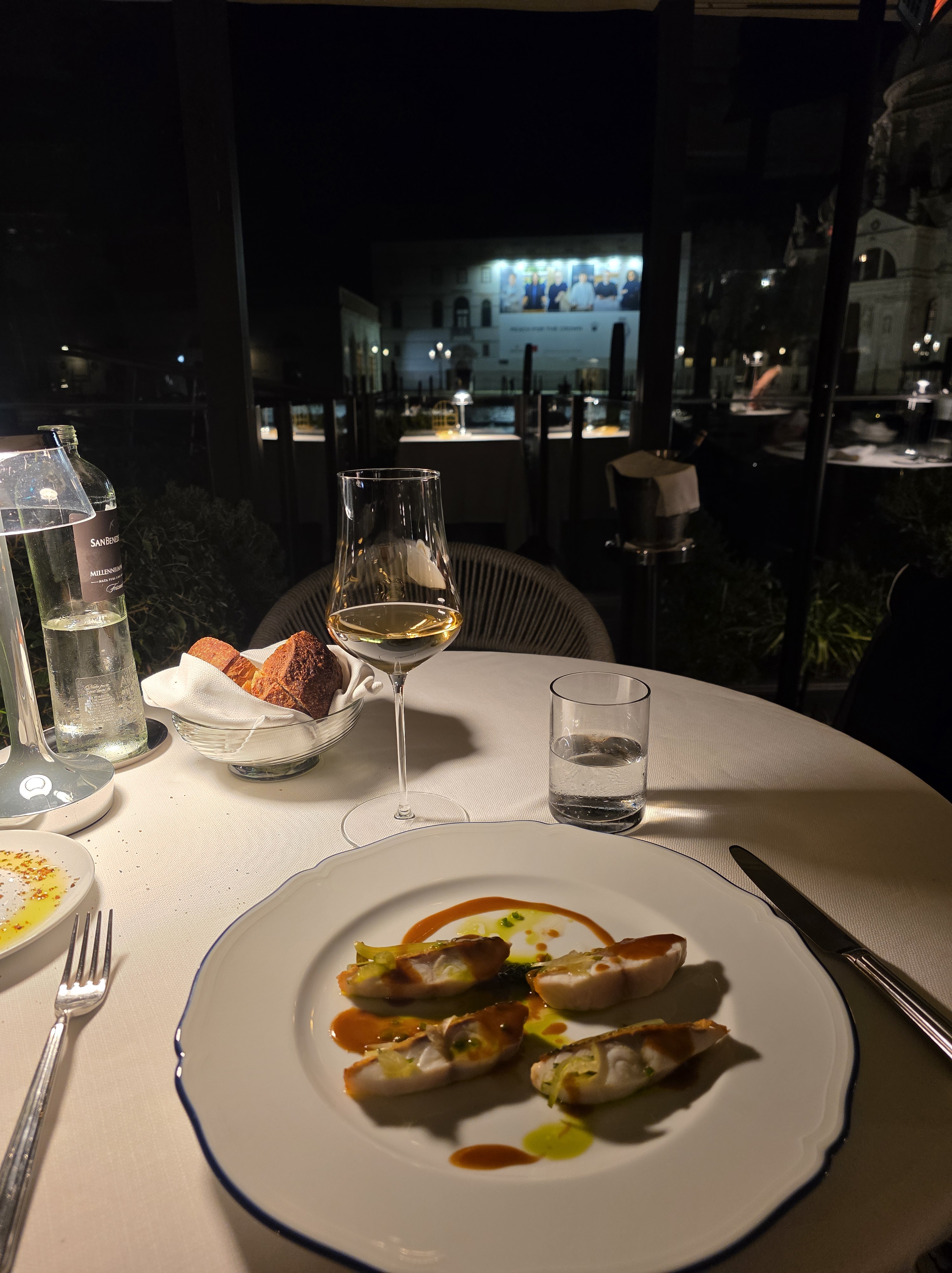
But that was just the beginning, because then came the dinner itself, which cost me whopping €160 including wine. But… what a dinner it was! For me, it was completely worth it. I chose the five-course tasting menu (calling them “courses” is a bit of a stretch – the portions were tiny, as expected in fine dining).

The service was impeccable – every dish came with commentary and explanations, and when I asked where the bathroom was, they walked me all the way to the door. At one point they even brought me a book with Monet’s Venetian paintings, which he had painted from this very hotel – just like that, “Here, take a look.”

The first course was carpaccio of raw red tuna in some kind of tomato sauce – I don’t usually like raw tuna, so I don’t even know how they managed it, but it turned out to be a masterpiece. Then there was pasta with blue lobster – it wasn’t actually blue, but apparently is when raw – not bad, though the pasta portion was tiny. The third course was pieces of sea bass – according to the menu, in some anchovy-based sauce, with chicory – and that was a true masterpiece, I’m not afraid to say. Then came a pre-dessert made of fermented grapes and fennel sorbet – quite original. And the actual dessert was a variation on tiramisu, also very tasty.

After dinner, I walked back to the hotel to rest. By the way, one observation – Venetians speak pretty good English. I had previously mostly been to southern Italy, and my impression from there was that few people spoke English in Italy. But Venice completely disproved that impression.

Posted in English, Europe, Porto, Portugal

Portugal – Day 5

РУССКОЯЗЫЧНАЯ ВЕРСИЯ ПО ЭТОЙ ССЫЛКЕ. CLICK HERE FOR RUSSIAN VERSION.

April 19 – Friday

On the last day, we were very unlucky with the weather. Rain had been in the forecast all week, and it did come – fortunately, only in the afternoon.

We got up, had breakfast, and then made a second attempt to get into the Majestic Café and have coffee there. We got in, but there was nothing special about it – all its popularity is nothing more than tourist hype. A café like any other.

Then we tried to get into Livraria Lello – the most famous bookstore in Porto, said to have inspired the idea of Hogwarts. As is known, J.K. Rowling lived in Porto for a while, and it was supposedly in the Majestic Café that she wrote Harry Potter. To be honest, I can’t imagine how anyone could write in such a loud and pompous place, but then again, I’m not Rowling! We didn’t get into Livraria – same story, a huge queue. Later we found out that entry is paid and costs 5 euros, but we gave up anyway.

We decided to go shopping and went to the Via Rua Catarina shopping centre, where we did quite well. There are both local Portuguese brands and European ones. We also had lunch at the food court. And when we came out, it was already pouring rain. We had to buy umbrellas right then and there.

Somehow we ran back to the hotel and rested. In the evening, we had a light show planned in the centre, at the Clérigos Church. We left a little early, hoping to climb the Clérigos Tower first, but in such weather – barely making it to Clérigos in short dashes – we decided against climbing any towers.

I really liked the light show. It lasted for half an hour and was a kind of combination of old (baroque!) and new technologies – essentially a very spectacular and colorful digital animation with beautiful orchestral music.

In the evening, we had dinner with traditional Portuguese fado. The dinner included a starter, main course, dessert, and half a bottle of wine – everything was very tasty. I also really enjoyed the performance – such soulful romances.

Posted in English, Europe, Porto, Portugal

Portugal – Day 4

РУССКОЯЗЫЧНАЯ ВЕРСИЯ ПО ЭТОЙ ССЫЛКЕ. CLICK HERE FOR RUSSIAN VERSION.

April 18, 2024 – Thursday

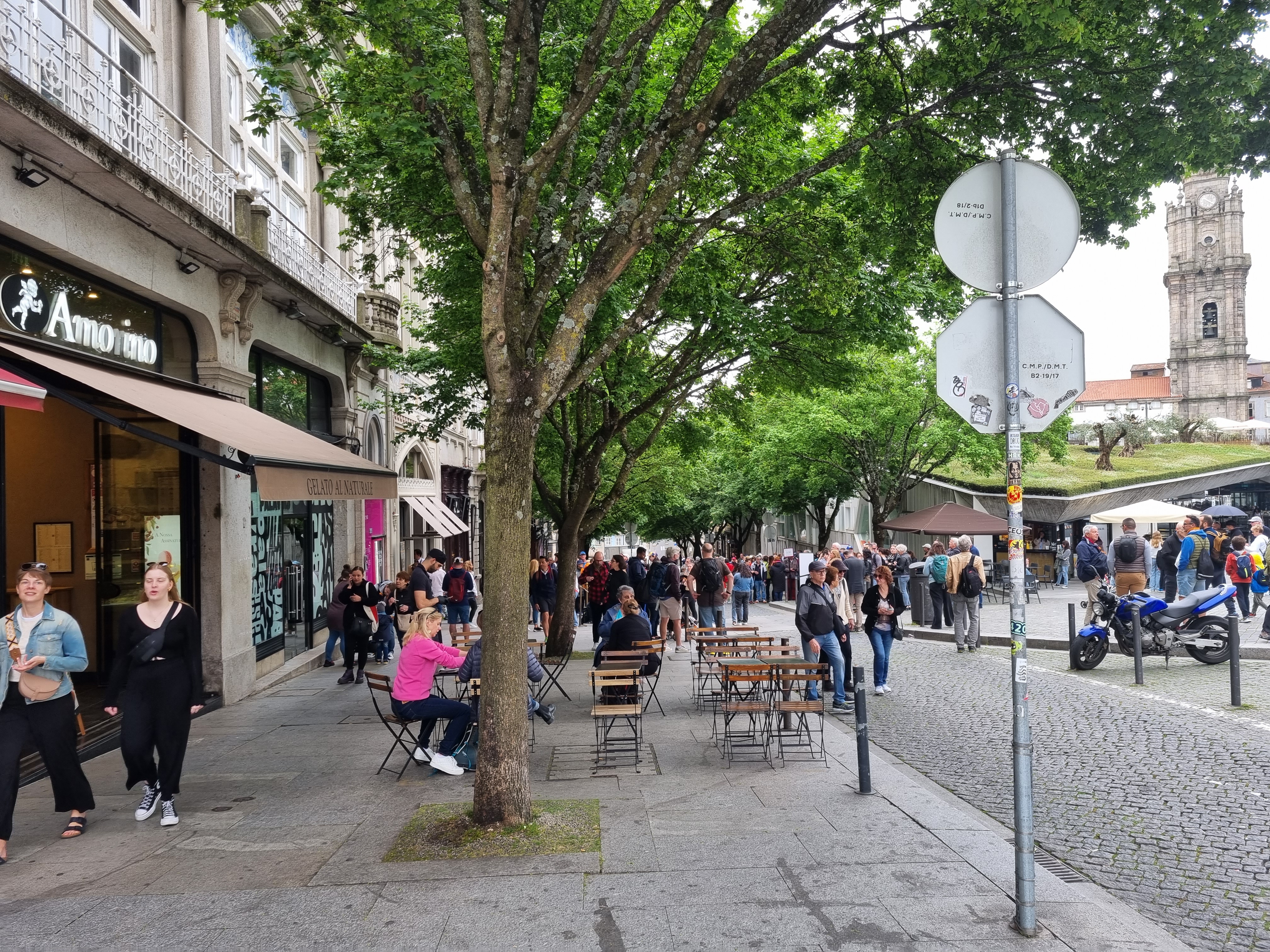
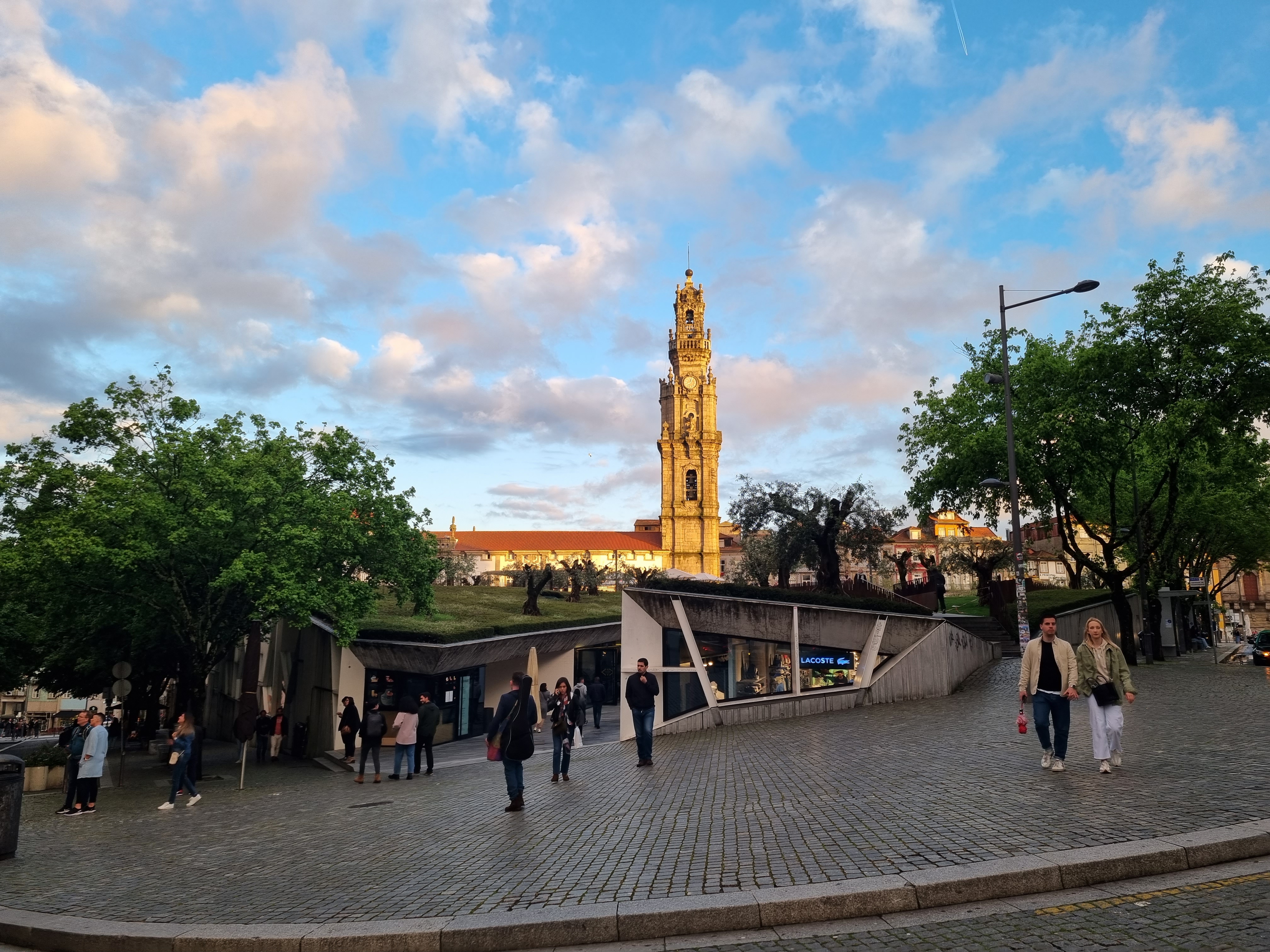
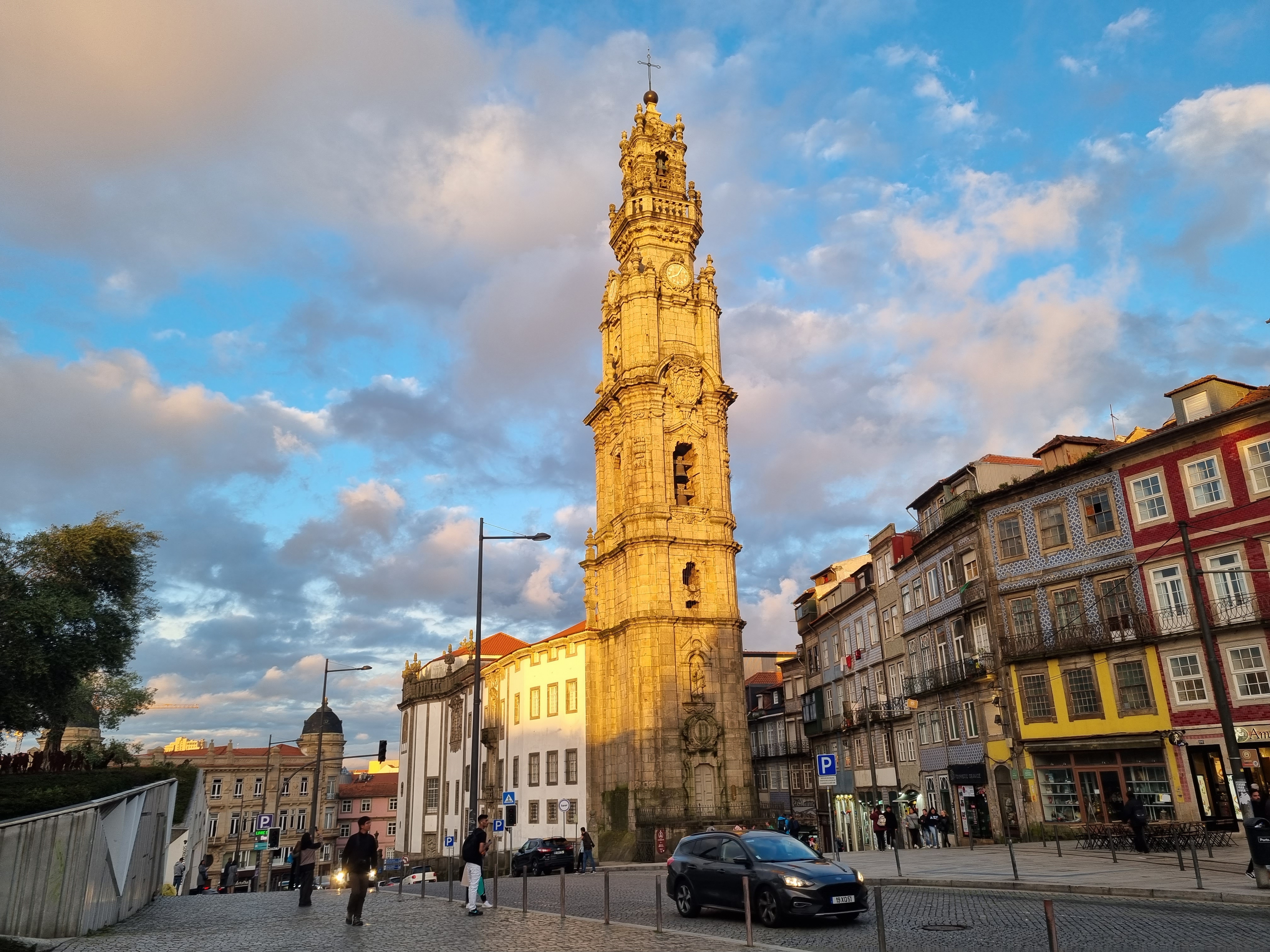
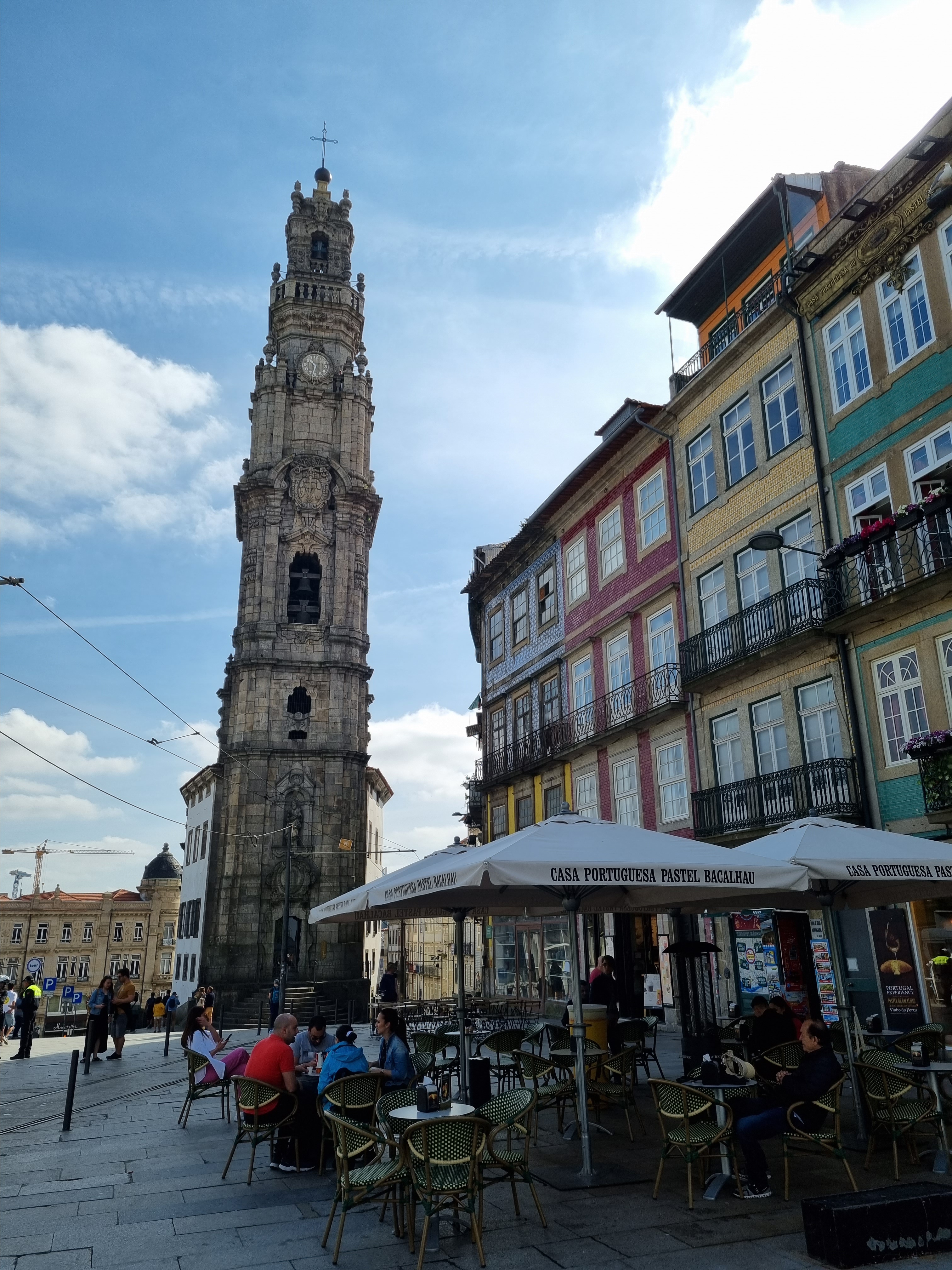
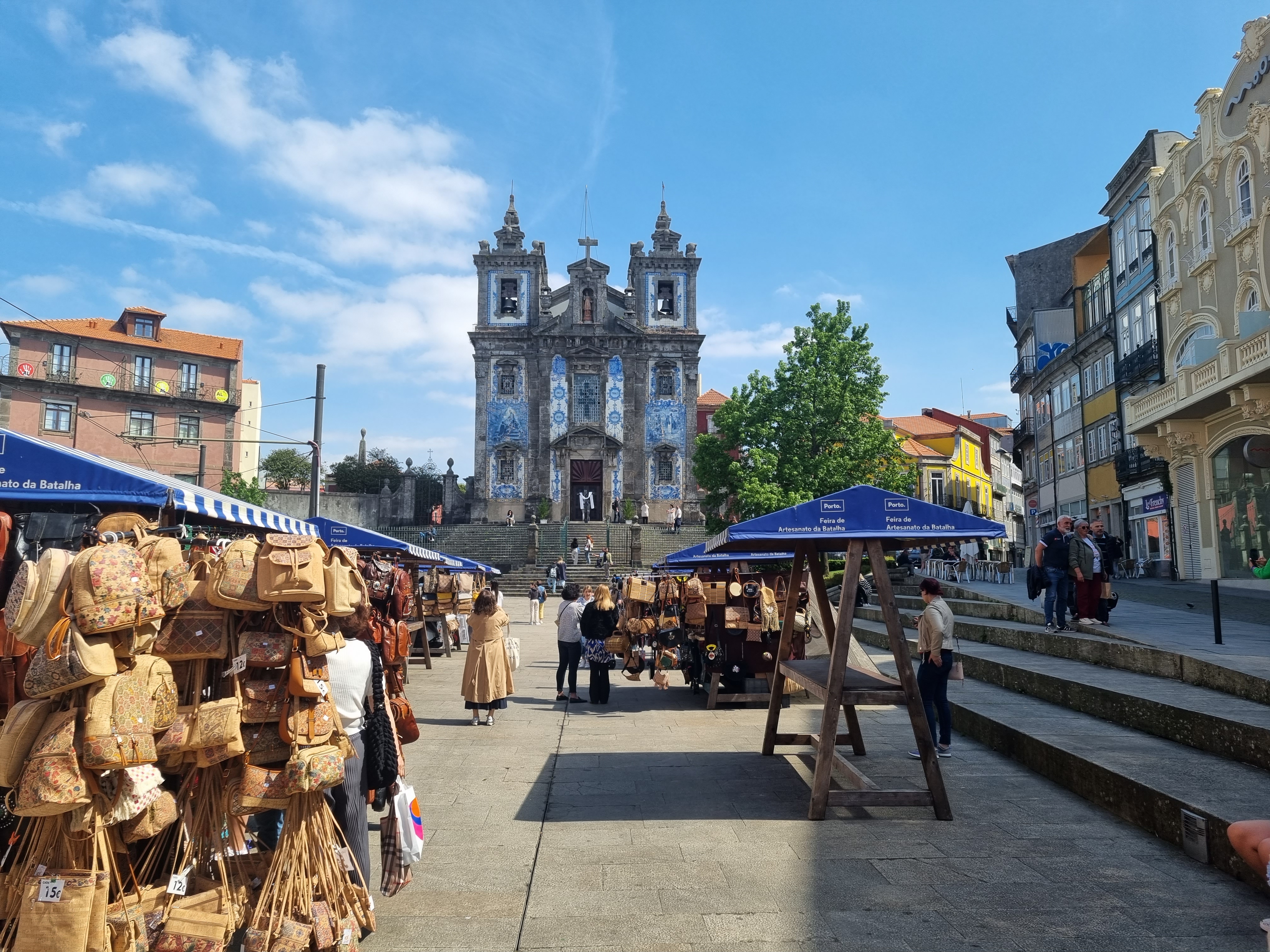
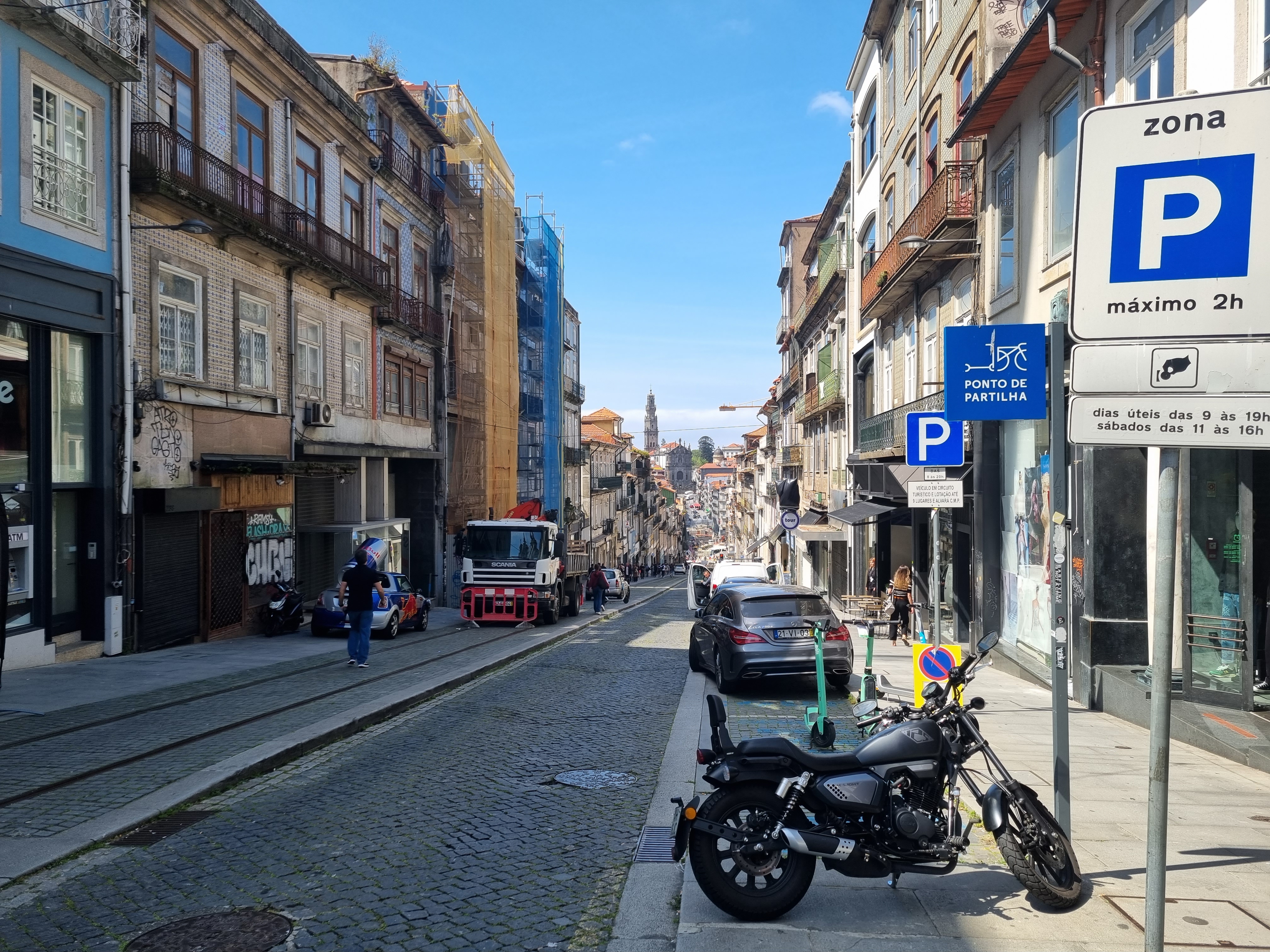
In the morning, after breakfast at our hotel, we went for a walk to the centre of Porto – we walked down to the river. On the way, we stopped at a church, but there was a service going on, so we left. Then we saw the Church of the Clérigos, where we plan to go tomorrow.

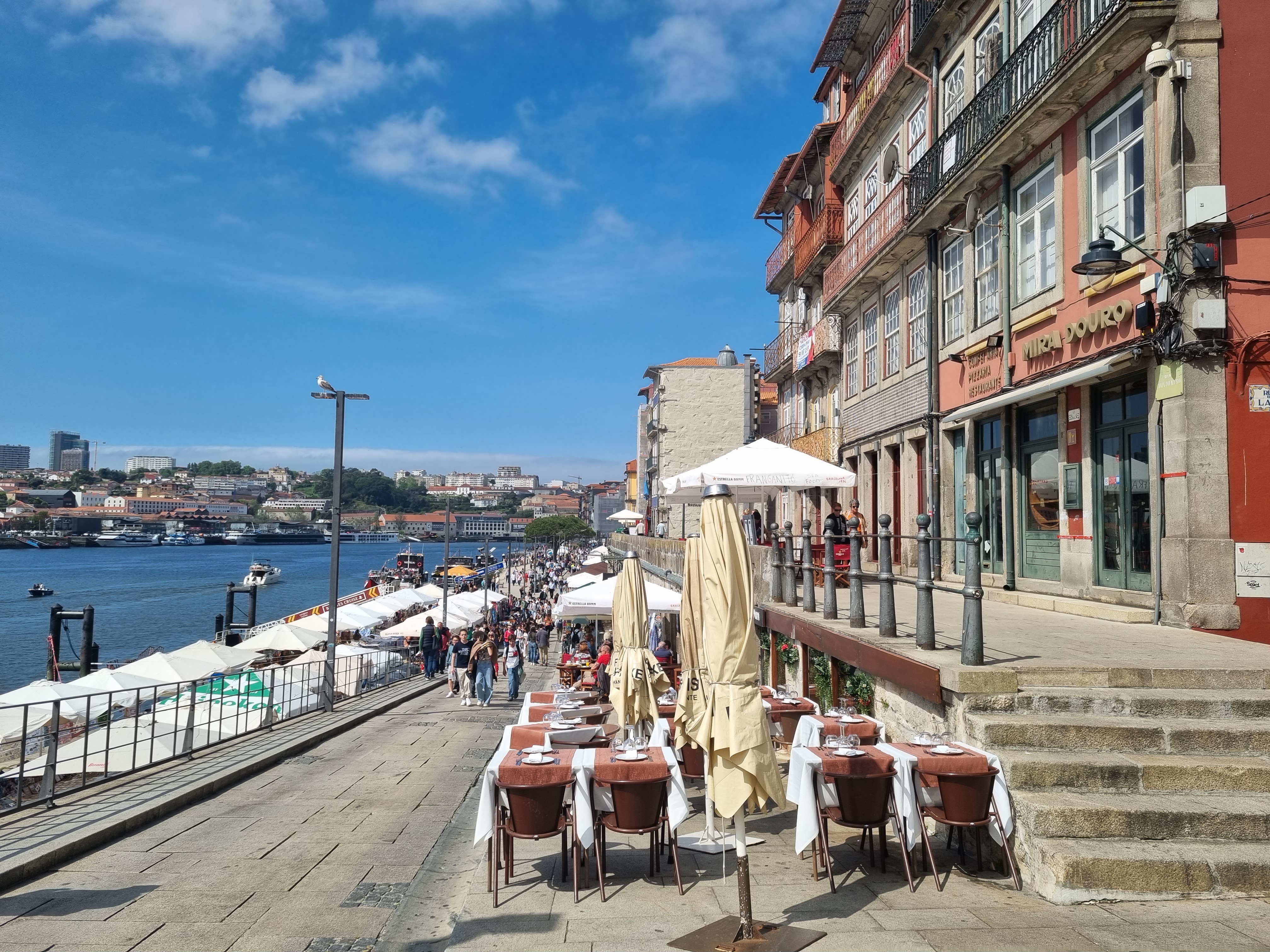
The Ribeira embankment was very, VERY crowded.

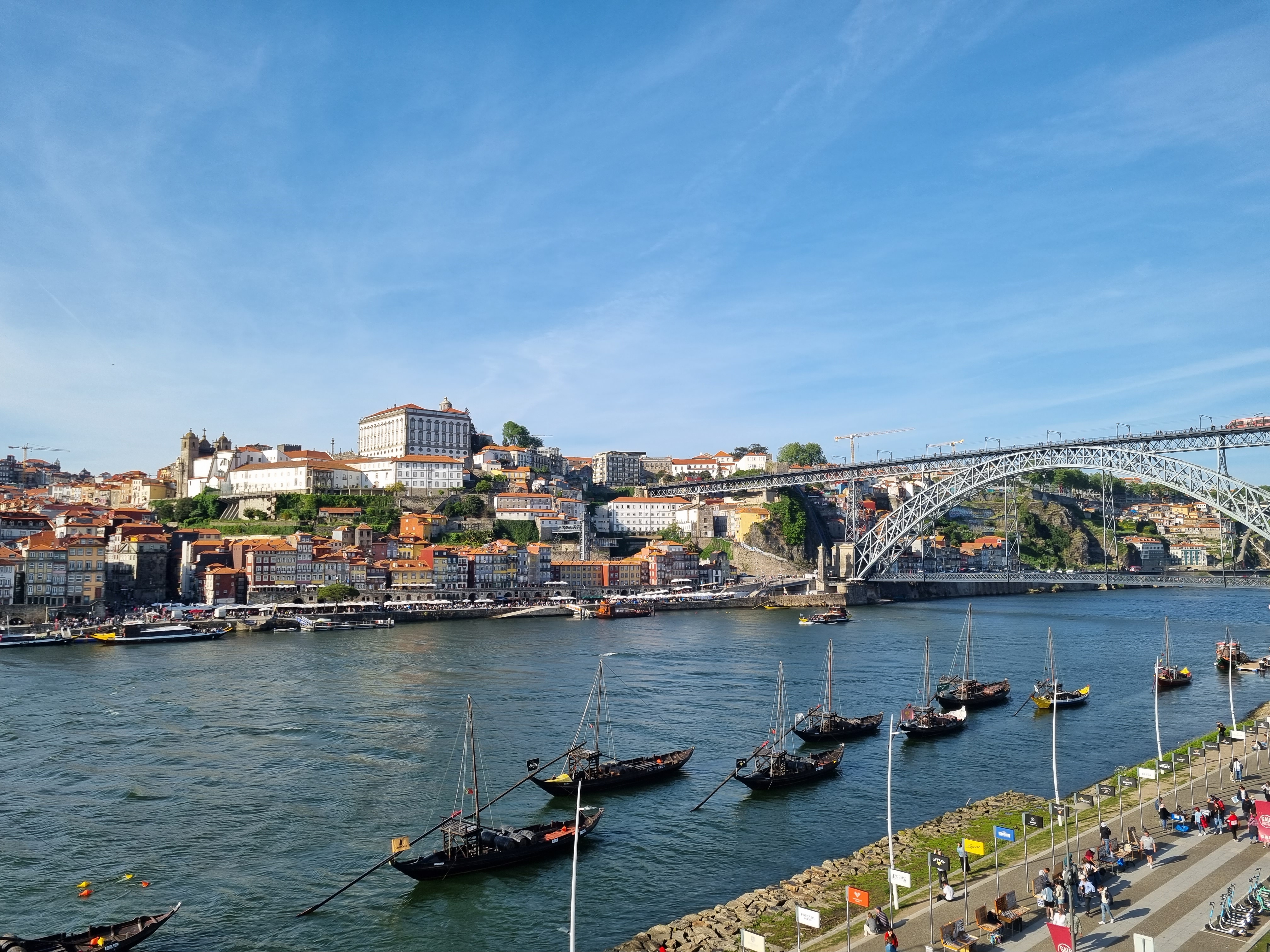
To kill time before our wine tour, we had lemonade on the embankment, and then took the funicular back up, planning to get to the famous Majestic Café and have coffee there. But the queue was so long that instead we went to a conceptual hipster coffee shop called Calma, where the coffee was very good.

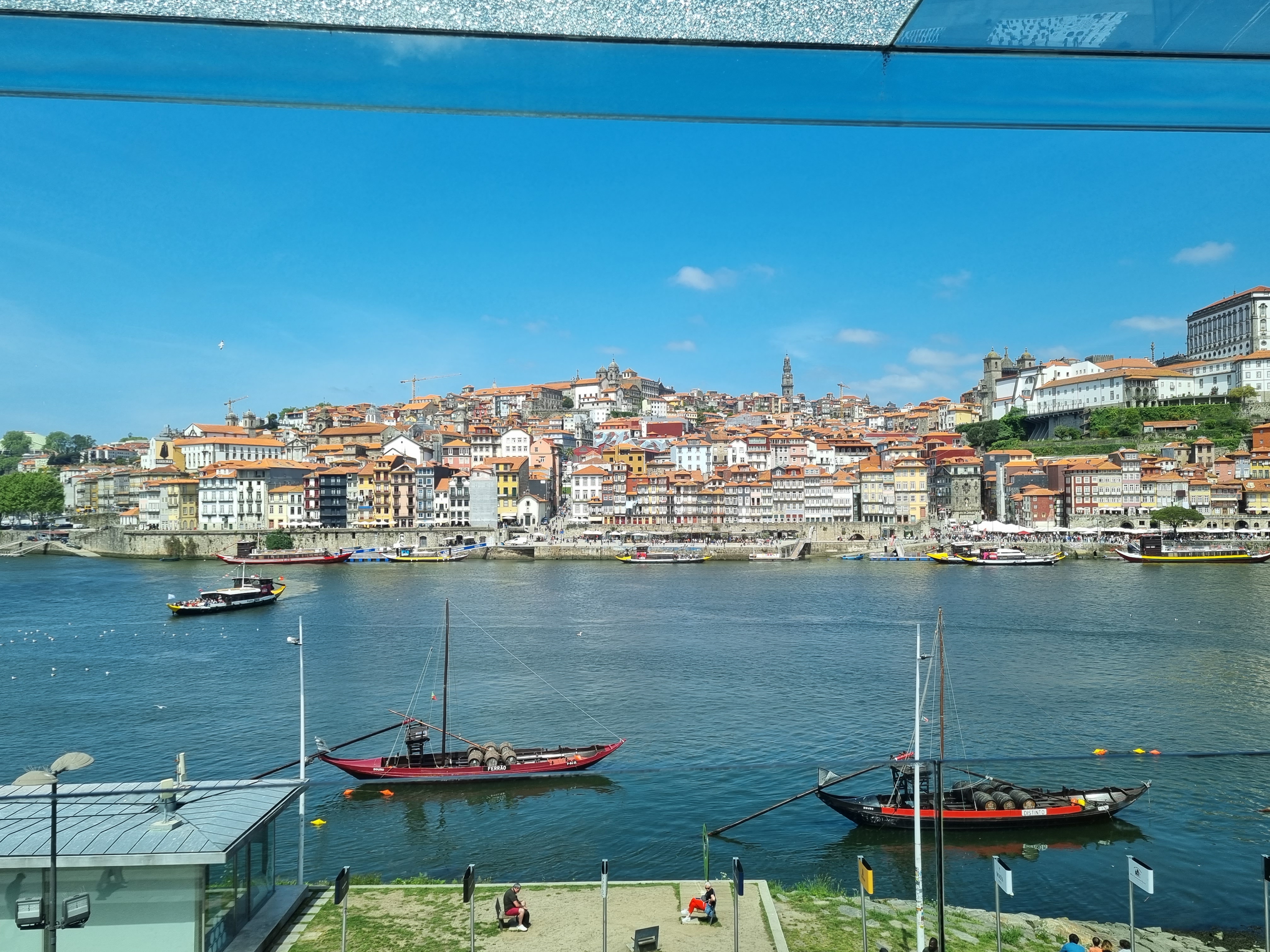
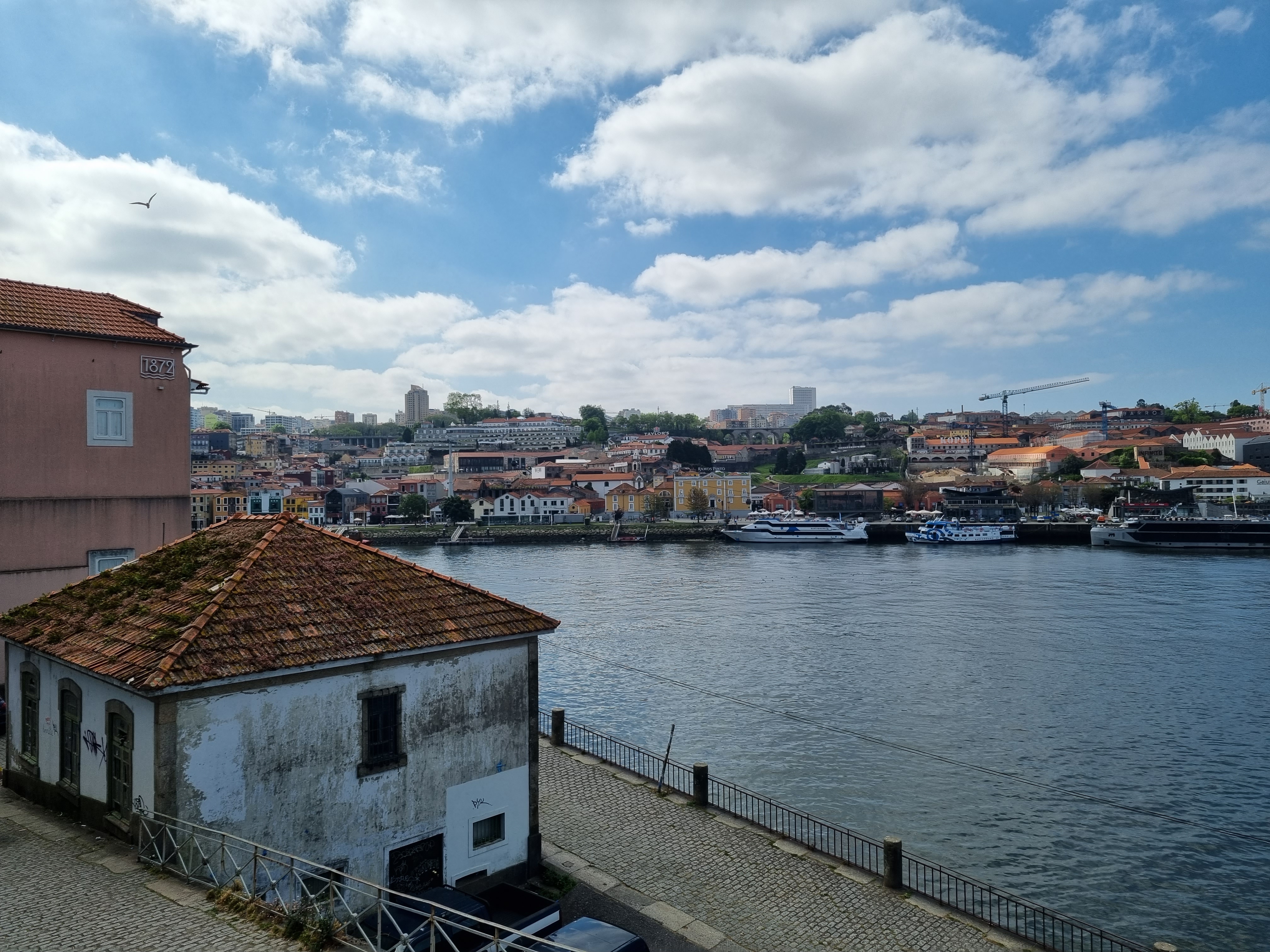
Once again, we walked down to the embankment, crossed the bridge to the Gaia side, where we were supposed to have lunch. The first place we tried turned out to be closed, but that worked out well, because we found a great restaurant with a panoramic view of the river.

After lunch, we finally went on our wine tour. It was a walking tour, mainly focused, of course, on port wine. We visited three wineries. Our guide, Ricardo, talked about port wine in a very interesting and humorous way.

The first winery was Churchill’s, founded by the English. There, they showed us the different barrels used in making port. One type, ruby, is a red port aged in chestnut barrels to avoid oxidation when exposed to air. Another red port, tawny, is aged in oak barrels specifically to oxidize. There is also white port. The point is that port is a fortified wine, so 77% brandy is added to stop fermentation. Brandy can be added at different stages, which makes the wine sweeter or less sweet. We tried all three types of port there. We liked ruby a bit more than the other two.
The next winery was called Vasques de Carvalho. There, we were told that their barrels “mature” not here, but in the Douro Valley itself. We tried the same three types of port, and we liked them better here.

At the last winery, we tried only one port – tawny – but we didn’t like it at all, as it had a strong alcohol taste. But there, we also tried three table wines – rosé, white, and red – which we really liked. I don’t remember anything about these wines, except that they are blends, and wines made from a single grape variety are almost never found here. There are about 200 grape varieties in total.

We didn’t leave the tour very drunk, since we only took a couple of sips of each drink. After returning to the hotel and resting, we went out for dinner at a five-story food court and walked around.

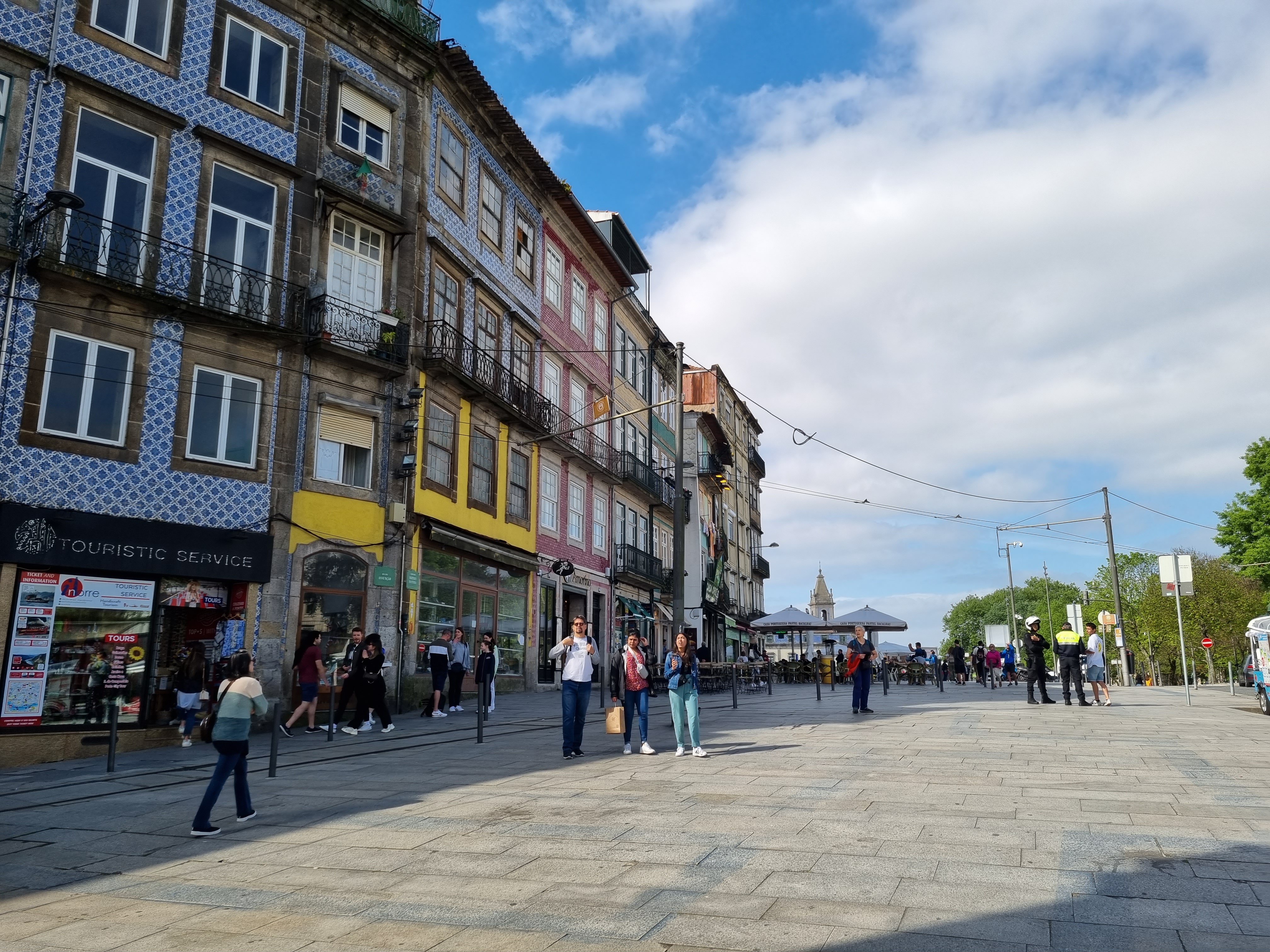
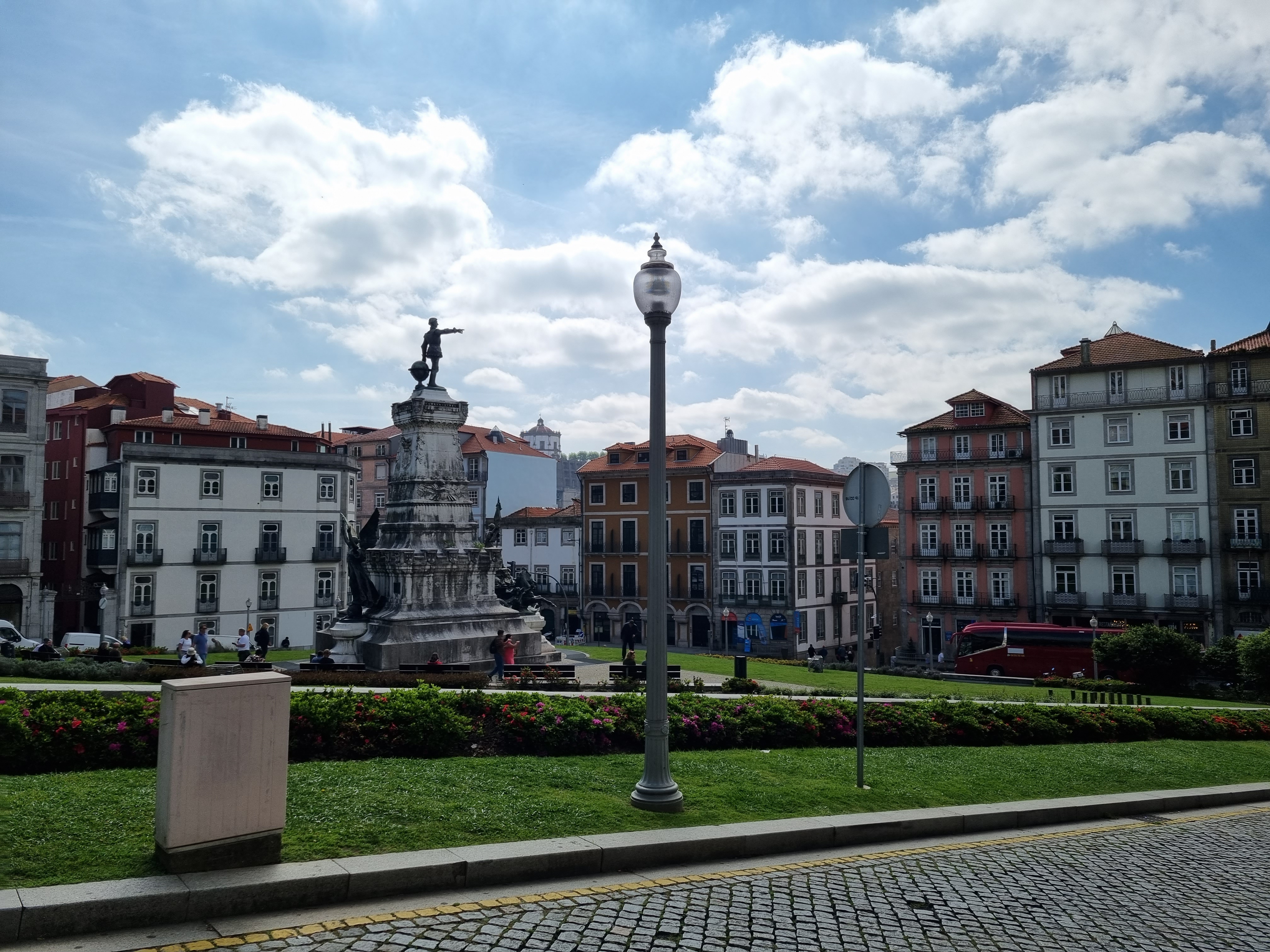
Overall, Porto is very different from Lisbon. Maybe it doesn’t have such a distinctive character, but it’s quite charming. In some places, it’s grand, in others – shabby, and it’s clear that this is a port city.

Posted in English, Europe, Lisbon, Porto, Portugal

Portugal – Day 3

РУССКОЯЗЫЧНАЯ ВЕРСИЯ ПО ЭТОЙ ССЫЛКЕ. CLICK HERE FOR RUSSIAN VERSION.

April 18, 2023 – Wednesday

We got up in the morning and, as usual, had breakfast. We were supposed to take a train to Porto at noon, but when we arrived at the station, we discovered that it didn’t exist – the train had been cancelled due to a strike, like all the 12-o’clock trains throughout the entire month. What can I say – wonderful. Even more wonderful was the fact that the app sold us the ticket without batting an eye and didn’t even notify us about the strike.
We had to buy tickets for a later train, at 15:30, and then spent a long time looking for a place to leave our luggage so we wouldn’t have to drag it around. We found one across the street from the station and went to get some coffee. But first, we wandered around Alfama, from where we made our way to Restauradores and had coffee there.

Then we returned to the station, boarded the train and, thank God, we were off. On the train, we encountered some American fellow passengers who couldn’t grasp that, in addition to the seat number on the ticket, you also have to check the carriage number – instead of trying to chase away people already sitting in a seat with the same number.

In the end, we arrived in Porto quite late – it was already around 7 p.m.

We got to the hotel by Uber and went out for dinner at a restaurant, where we once again ran into loud Americans, who talked non-stop at the next table all evening, and we learned their entire life story and all their family problems.

Posted in English, Europe, Lisbon, Portugal

Portugal – Day 2

РУССКОЯЗЫЧНАЯ ВЕРСИЯ ПО ЭТОЙ ССЫЛКЕ. CLICK HERE FOR RUSSIAN VERSION.

April 18, 2023 – Tuesday

The second day in Lisbon was marked by queues. But – first things first. In the morning, we got up and tried the wonderful, varied breakfast at the hotel (I was the one actually “trying” it   – my friend was having it for the third time), with smoked salmon, waffles, pancakes, and the like.
Then we went to the Belém area – it’s like a suburb of Lisbon. The idea was to see the Jerónimos Monastery and the Belém Tower. We got there by city bus – an authentic route through non-touristy areas.

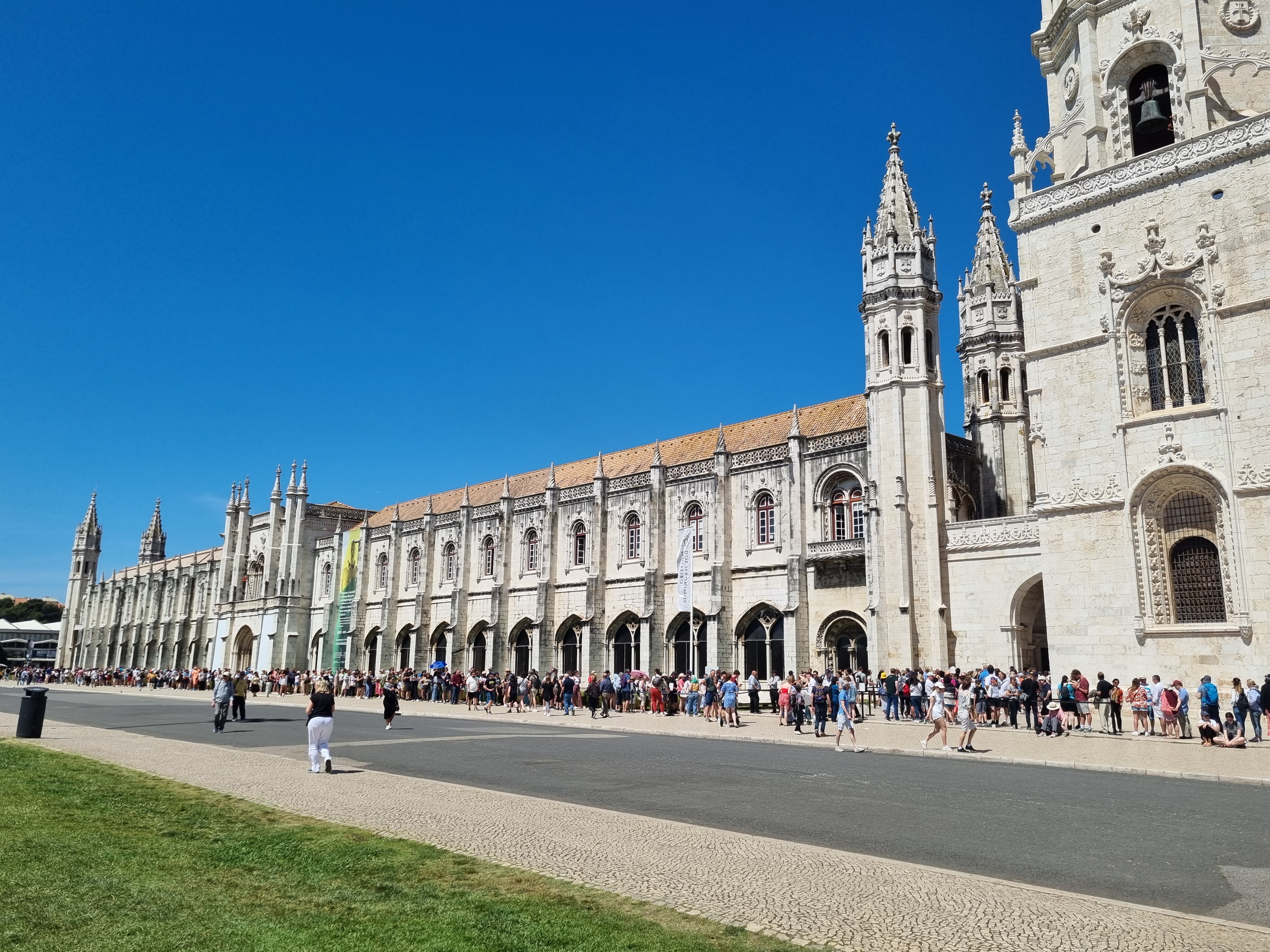
When we arrived at the monastery, we saw a queue. No – that’s not quite right – we saw an incredibly long QUEUE and probably about 15 large tourist buses. We didn’t really feel like standing in that queue, so we decided to head straight to the Belém Tower, figuring we could return to the monastery later and check whether the queue had dispersed, assuming most group tours visit the monastery right when it opens.

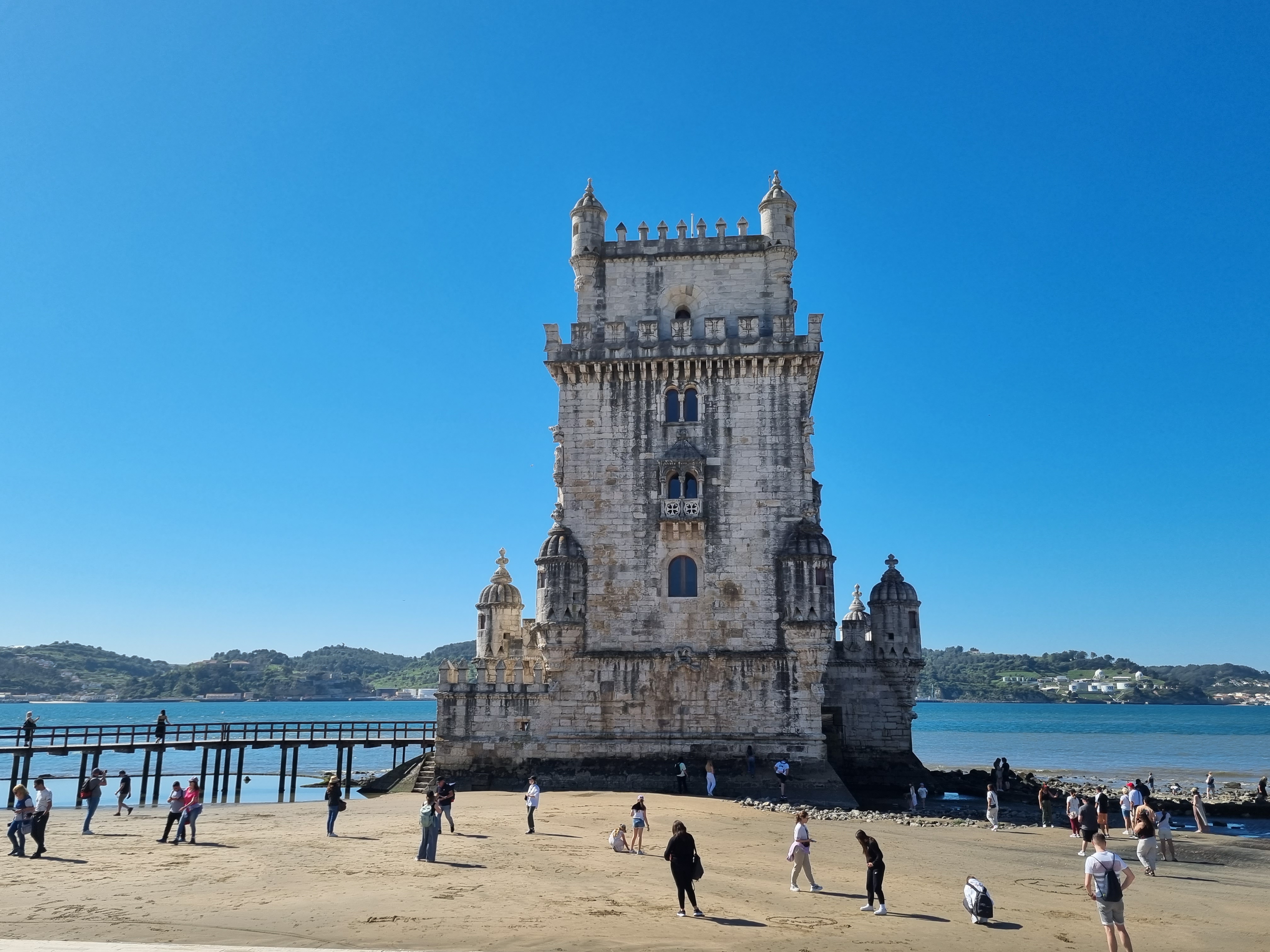
It was about a 15-minute walk to the Torre de Belém, but there we found quite a long queue as well. It turned out there were two reasons for this: first, entrance to the tower is free on Tuesdays; and second, they only let people in in small groups, after the previous group has left, to avoid overcrowding in the narrow spiral staircases and confined spaces.

The tower was built back in the 16th century, in honour of Vasco da Gama’s discovery of the sea route to India. It looks very interesting from the outside, but I’ll leave the question of whether it was worth standing in line for 40 minutes under the scorching sun to go inside open.

After the tower, we gave the Jerónimos Monastery a second chance and went back to see how things were going there. But the line hadn’t gotten any shorter, and the sun continued to scorch mercilessly. So, after googling photos of the monastery’s interior and deciding it wasn’t worth the long wait and completely burnt shoulders, we dealt with a more pressing matter – and went for lunch at a French-Portuguese restaurant, where all the staff spoke good French and worse English. I never thought I’d have to speak French in Portugal.

By the way, about English – overall, I’m pleasantly surprised. Almost everywhere we go, people speak it very, very well. I hadn’t expected this from Southern Europe, based on past experience.

After lunch, we returned to the centre and headed to another monastery – São Vicente de Fora. This turned out to be a very good idea, because unlike Jerónimos, there was practically no one there. And it’s completely unclear why – the interior is very beautiful, many rooms are decorated with azulejos, and you can also visit the pantheon of the Portuguese Braganza dynasty and see azulejo panels based on the fables of La Fontaine. An interesting observation – the masters of azulejo painting were not very good at depicting animals, and the dogs and cats turned out rather odd, with human eyes and pig ears.

In the evening, we walked around the Alfama district, which I really liked. It’s very colourful and authentic, with beautiful architecture, trams, hanging laundry, and a chaotic street layout. This is the oldest district of Lisbon – the only one that survived the devastating 1755 earthquake.

Posted in English, Europe, Lisbon, Portugal

Portugal – Day 1

РУССКОЯЗЫЧНАЯ ВЕРСИЯ ПО ЭТОЙ ССЫЛКЕ. CLICK HERE FOR RUSSIAN VERSION.

April 17, 2023

Technically, my trip to Portugal was supposed to start two days ago – on Saturday, April 15 – and I’d already bought a ticket for that date well in advance. But literally 36 hours before, when I received an email saying that online check-in was open and started entering my details at 1 a.m., I suddenly looked closely at my Schengen visa and realised that it was only valid from April 17. The old one had expired on the 13th, and the new one was valid from the 17th – so I had managed to buy a ticket for one of those unlucky four days when I didn’t have a visa. I had to urgently change it and buy a new one for 6 a.m. on Monday.

As a result, I had to wake up today at 2 a.m., and by 2:45 I was already in a taxi on my way to Heathrow. Everything went smoothly – unsurprisingly, there weren’t many people at the airport at that hour, so I didn’t have to queue for anything. I even managed to find coffee and oatmeal cookies. Special mention goes to a fellow passenger who showed up at 3:30 a.m. in full makeup – truly impressive.

By 10 a.m., I had arrived at the hotel in Lisbon, where my friend Rena – who’d flown in on Saturday, as originally planned – was already waiting for me.

I had another strong coffee (no joke, I’d been up since 2 a.m. and hadn’t slept a minute on the plane), and then we headed out for a walk around the Baixa district.

It is sunny and hot in Lisbon – a touch of summer after London’s unseasonably cold spring.

The city itself is very hilly – you’re constantly going up and down, and of course the “down” is much more pleasant. There are quite a few tourists, mostly French as far as I can tell – at least, they’re the ones you most often come across.

The city is stunning, with very interesting architecture. Many buildings are decorated with clay tiles – painted in the traditional Portuguese style. These tiles are called azulejos.

We’d headed to Baixa quite purposefully – our first stop for the day was the Carmo Convent, which now houses an archaeological museum. In 1755, Lisbon was hit by a devastating earthquake, followed by a tsunami and fires, and as a result almost the entire city was destroyed. For instance, only the shell of the Carmelite monastery remained, and that’s how it still stands today.

Afterwards, we had lunch – some fish – in a tiny tavern, and then visited Lisbon Cathedral (Sé), and saw the cloisters and treasury.

For the evening, we had planned a cruise along the Tagus River (which also flows through Spain – it starts there and reaches the Atlantic near Lisbon). We’d been told that seating on the deck was limited to the first 52 people, and when we arrived, there were already well over that many in the queue. Still, we somehow managed to score great spots – a table at the very front of the deck, right at the bow, next to a group of Germans.