Posted in English, Europe, Florence, Italy

Florence – Day 3

РУССКОЯЗЫЧНАЯ ВЕРСИЯ ПО ЭТОЙ ССЫЛКЕ. CLICK HERE FOR RUSSIAN VERSION.

April 24 2026 – Friday

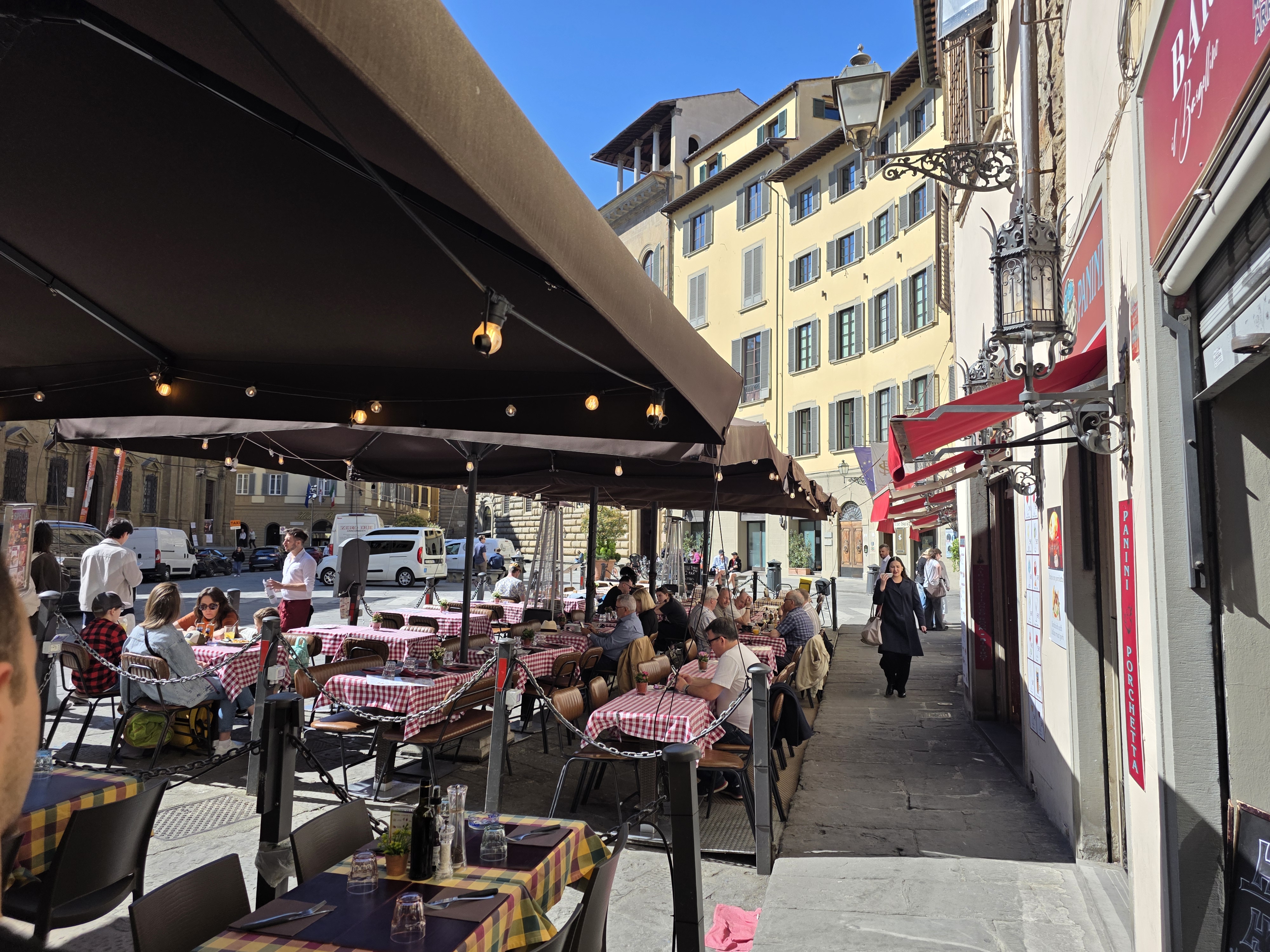
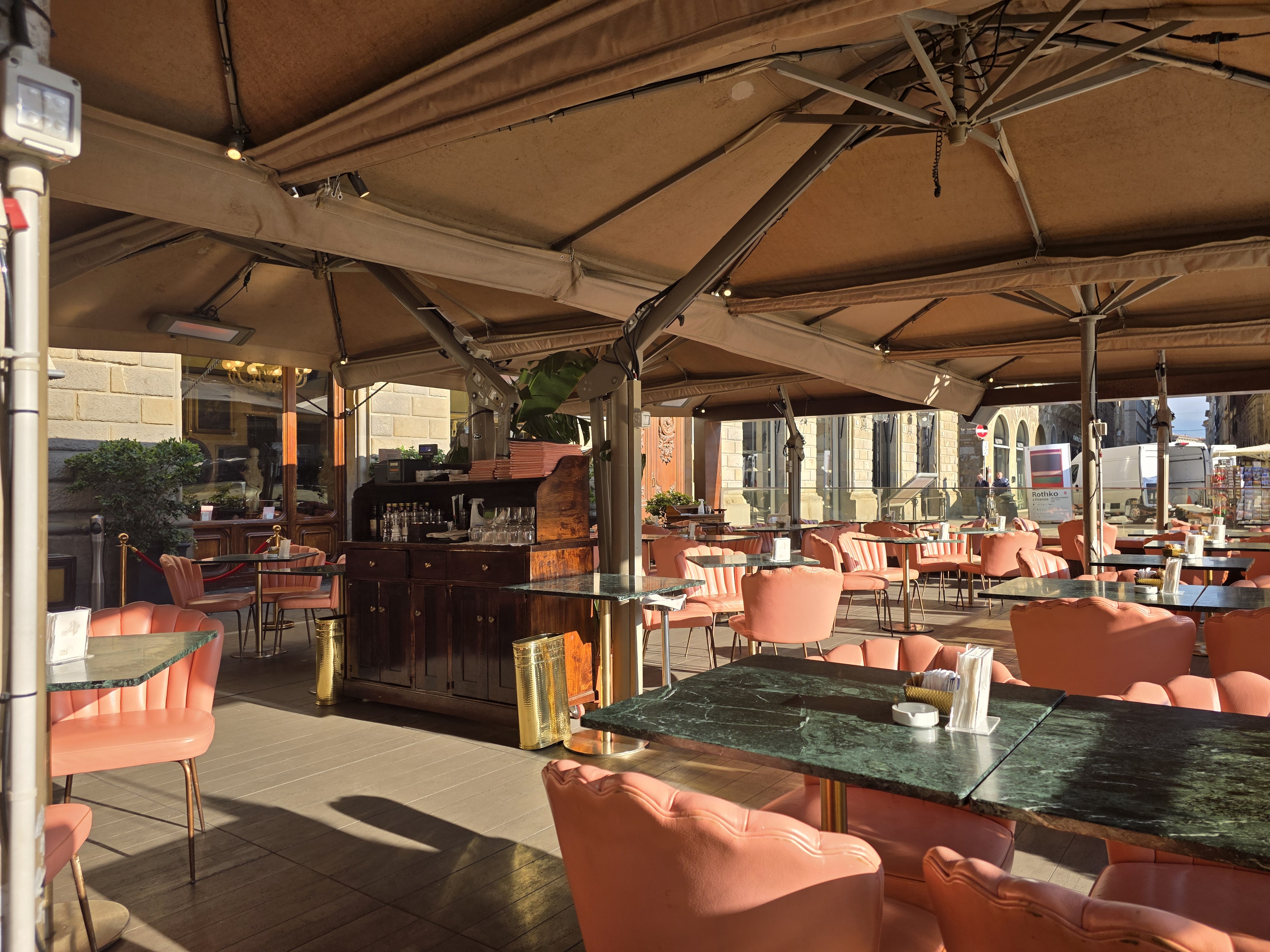
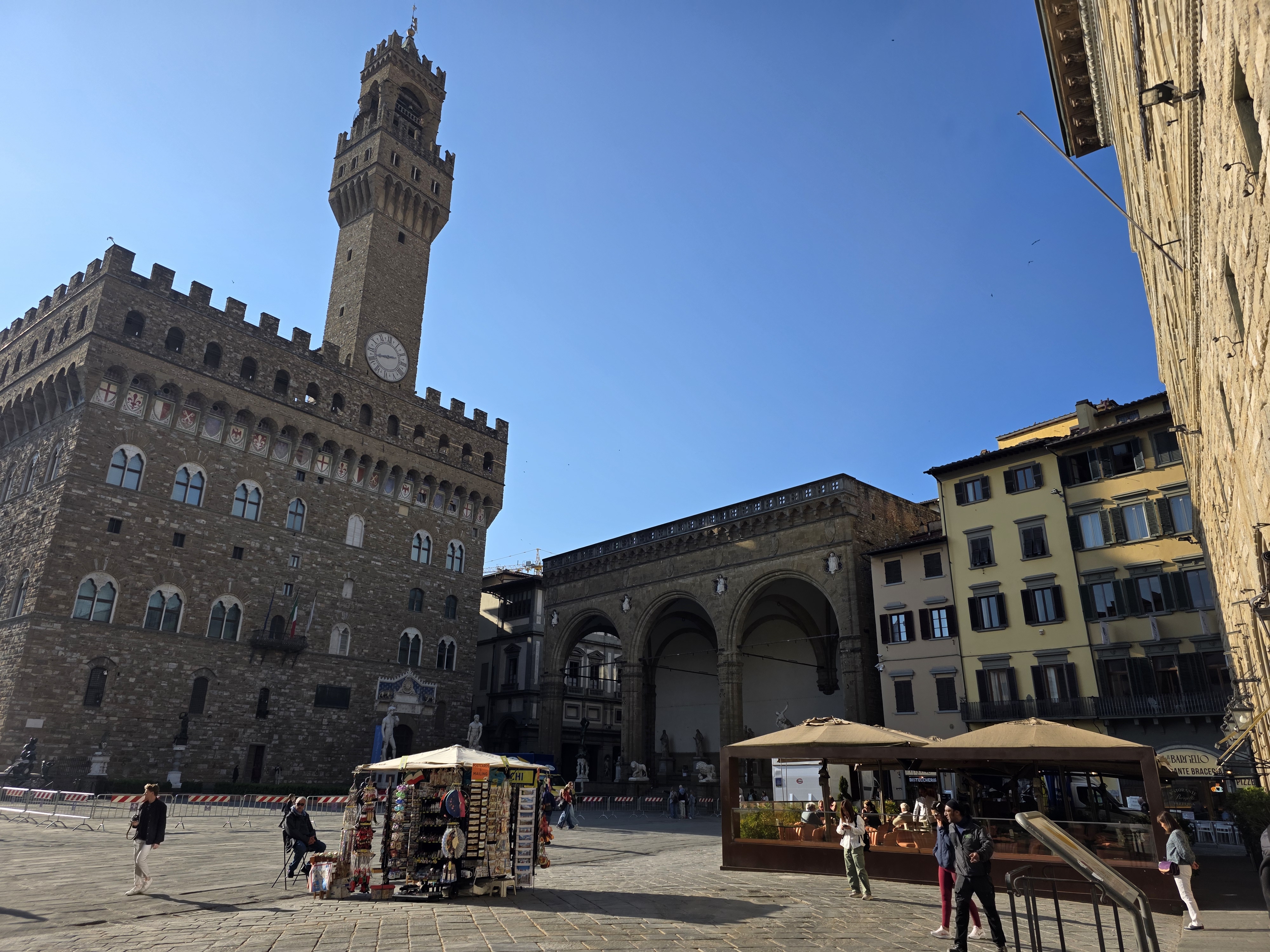
Today I was supposed to have a relaxed and calm morning. I got up fairly early, driven by the desire to have tiramisu for breakfast. Unusual, I know, but I absolutely had to eat tiramisu in Italy, and there wasn’t really any other occasion to squeeze it in. So, I very purposefully headed to a posh café called Rivoire, on Piazza della Signoria with a view of Palazzo Vecchio, and treated myself to an omelette (for protein and balance) and an excellent small portion of tiramisu.
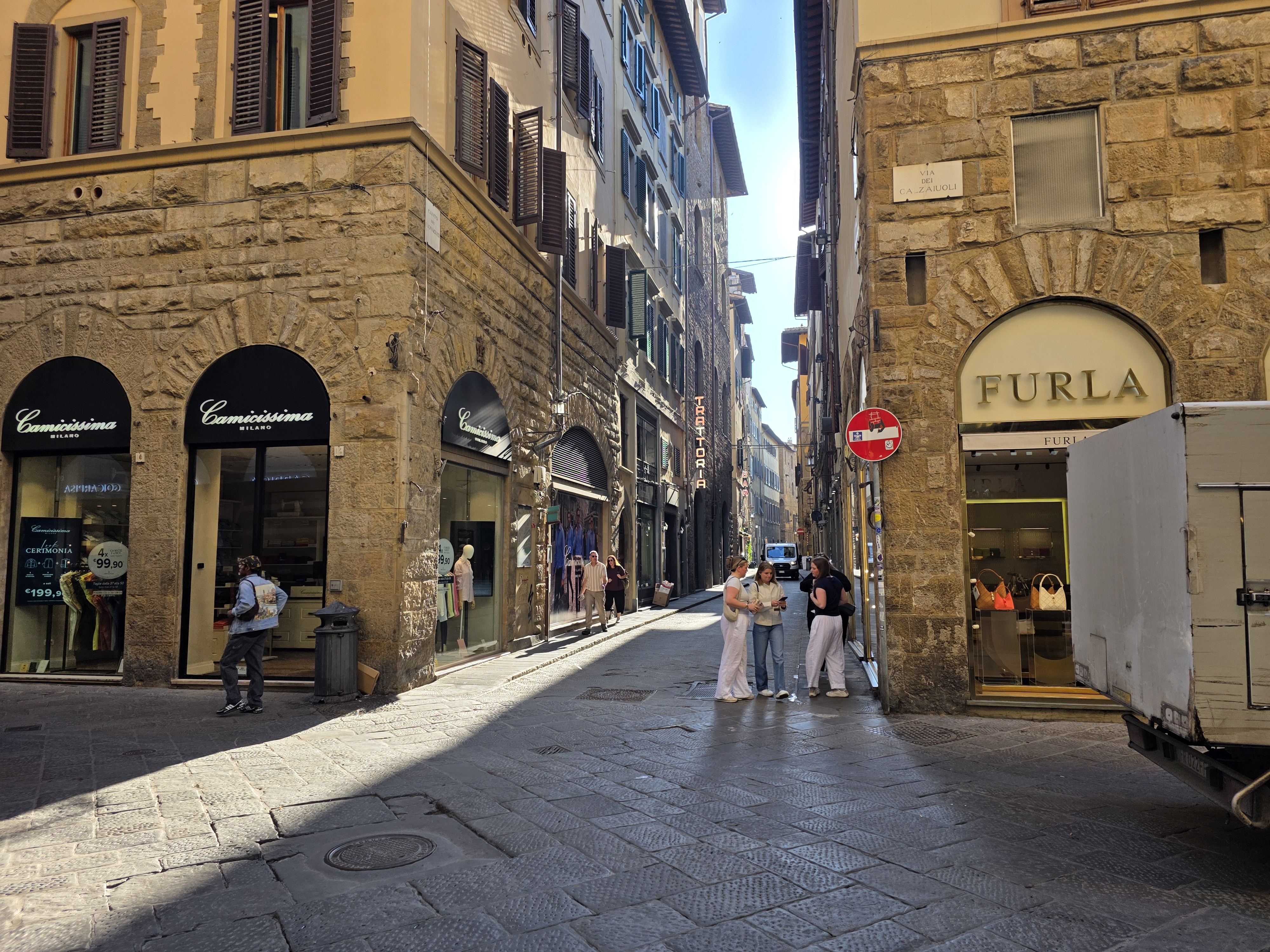
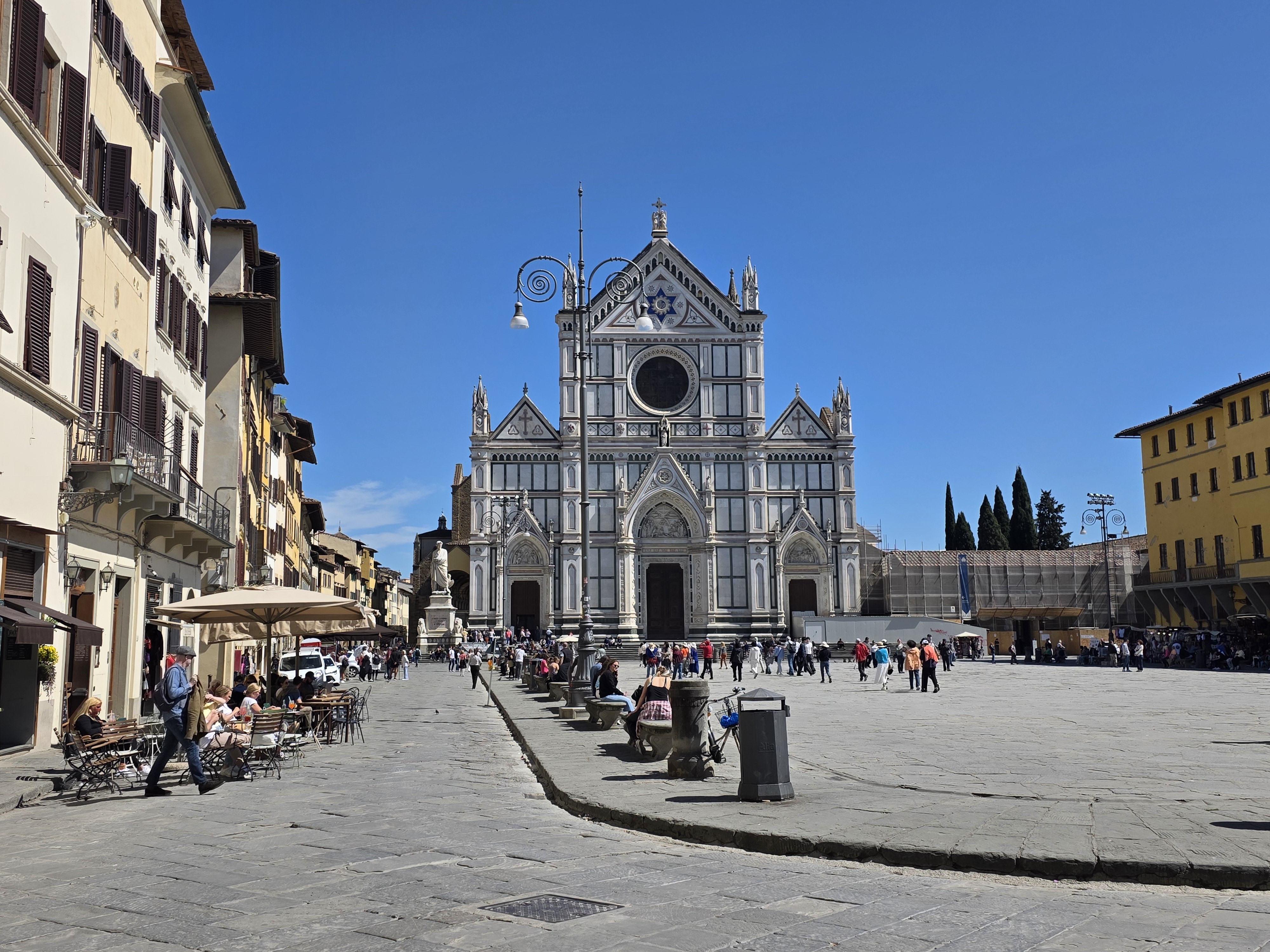
After that, I had a free morning before my Chianti tour, and again on Claude’s recommendation, I decided to visit the Basilica of Santa Croce. Entry cost 10 euros.
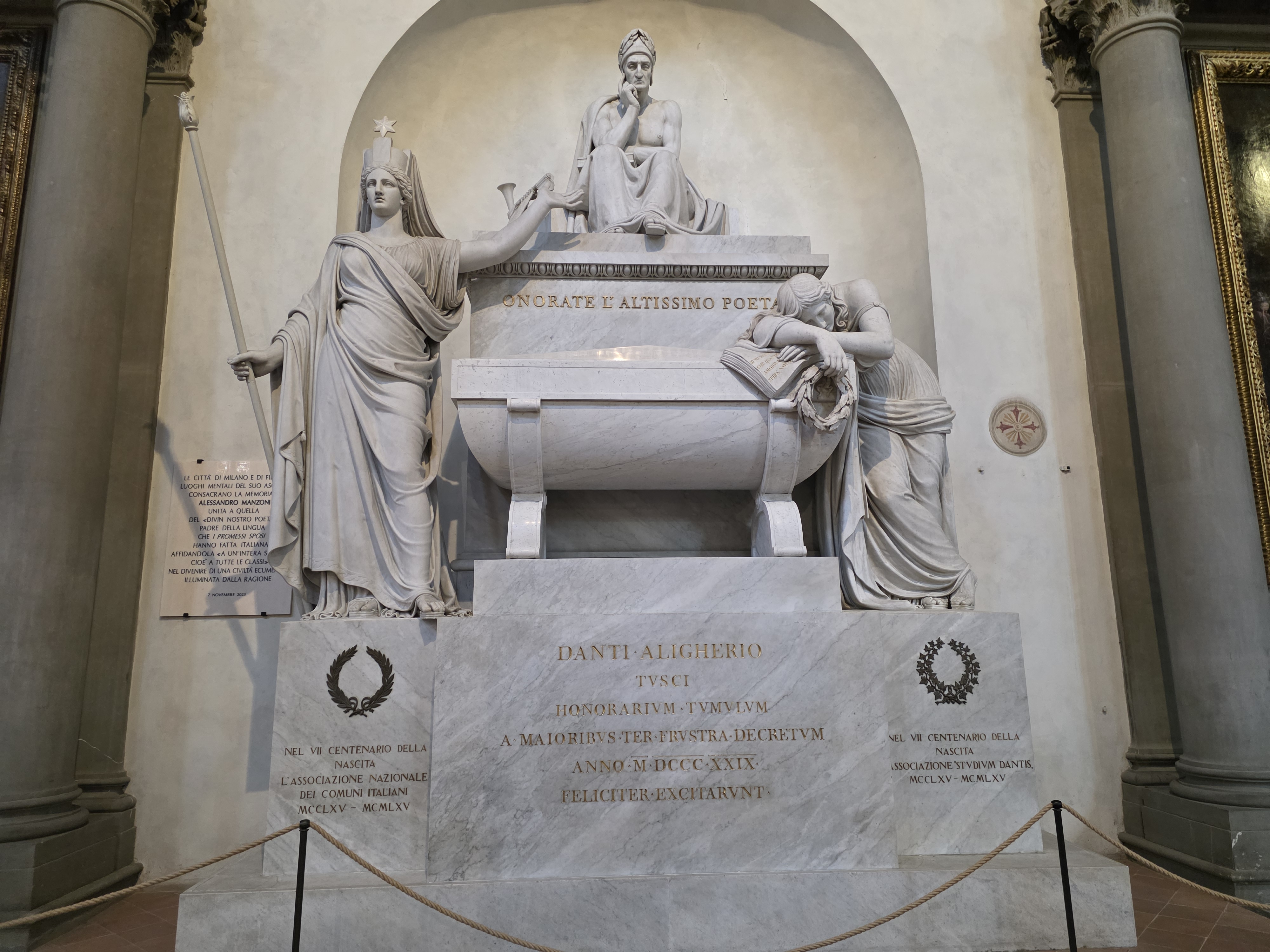
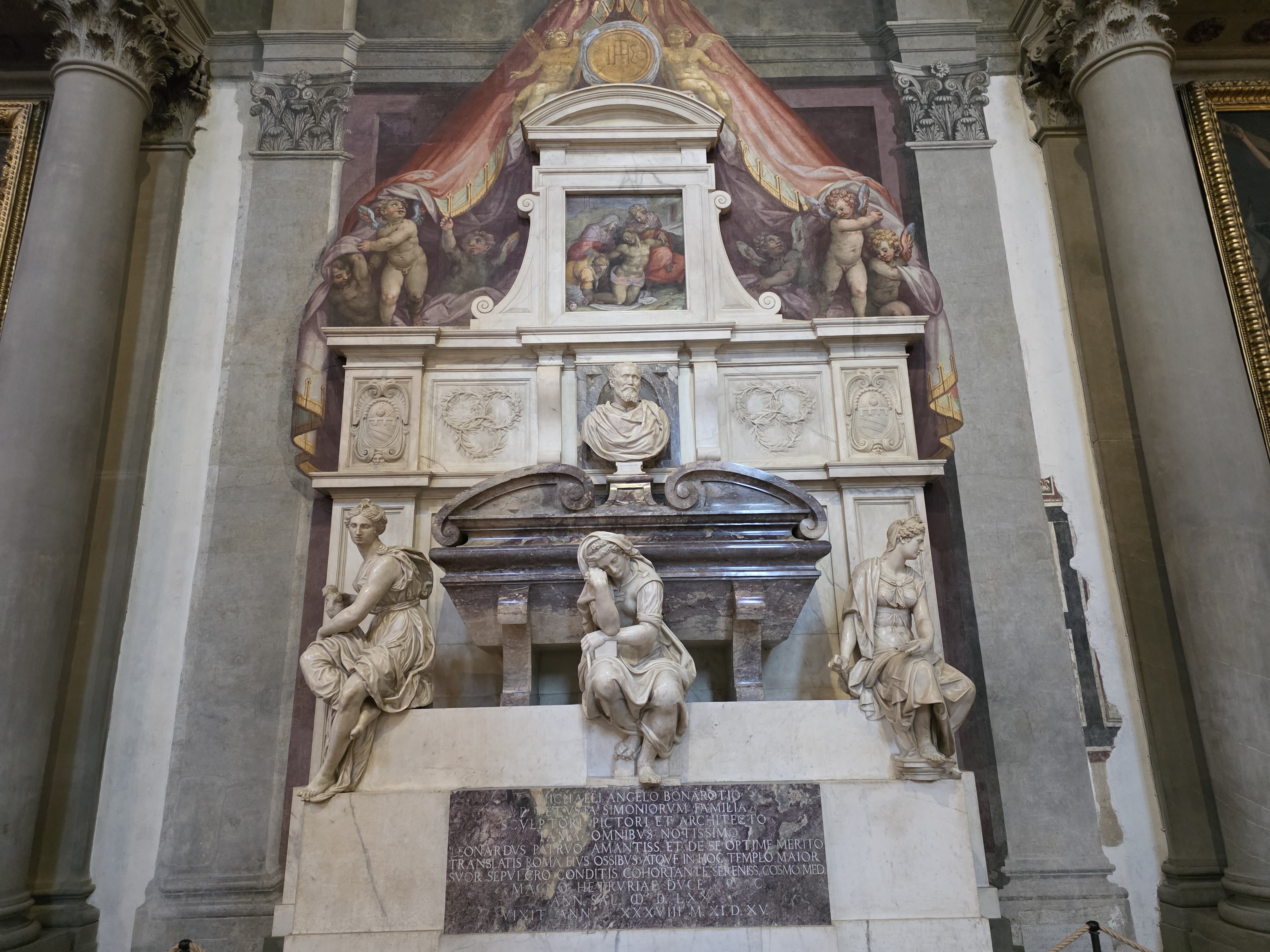
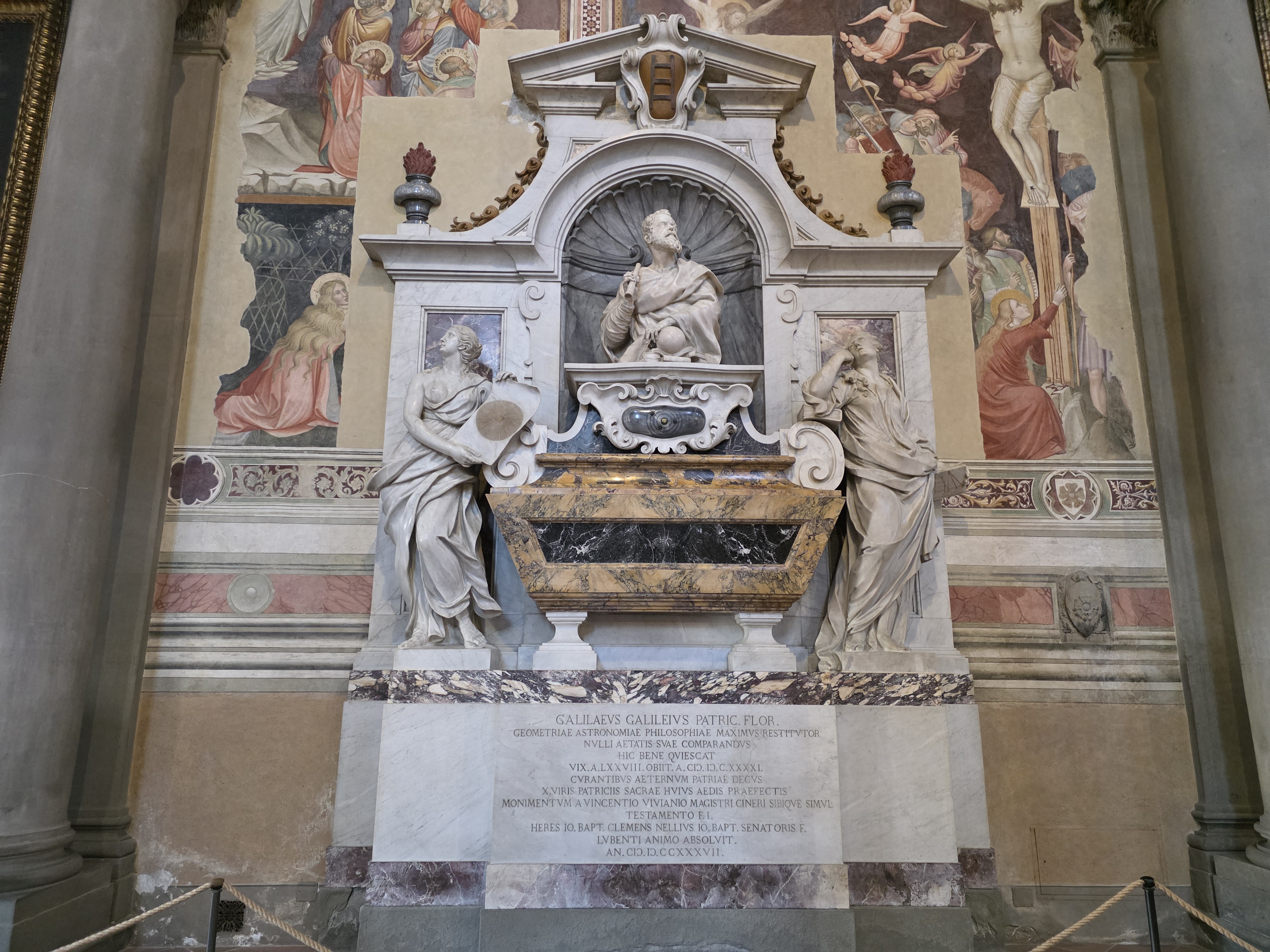
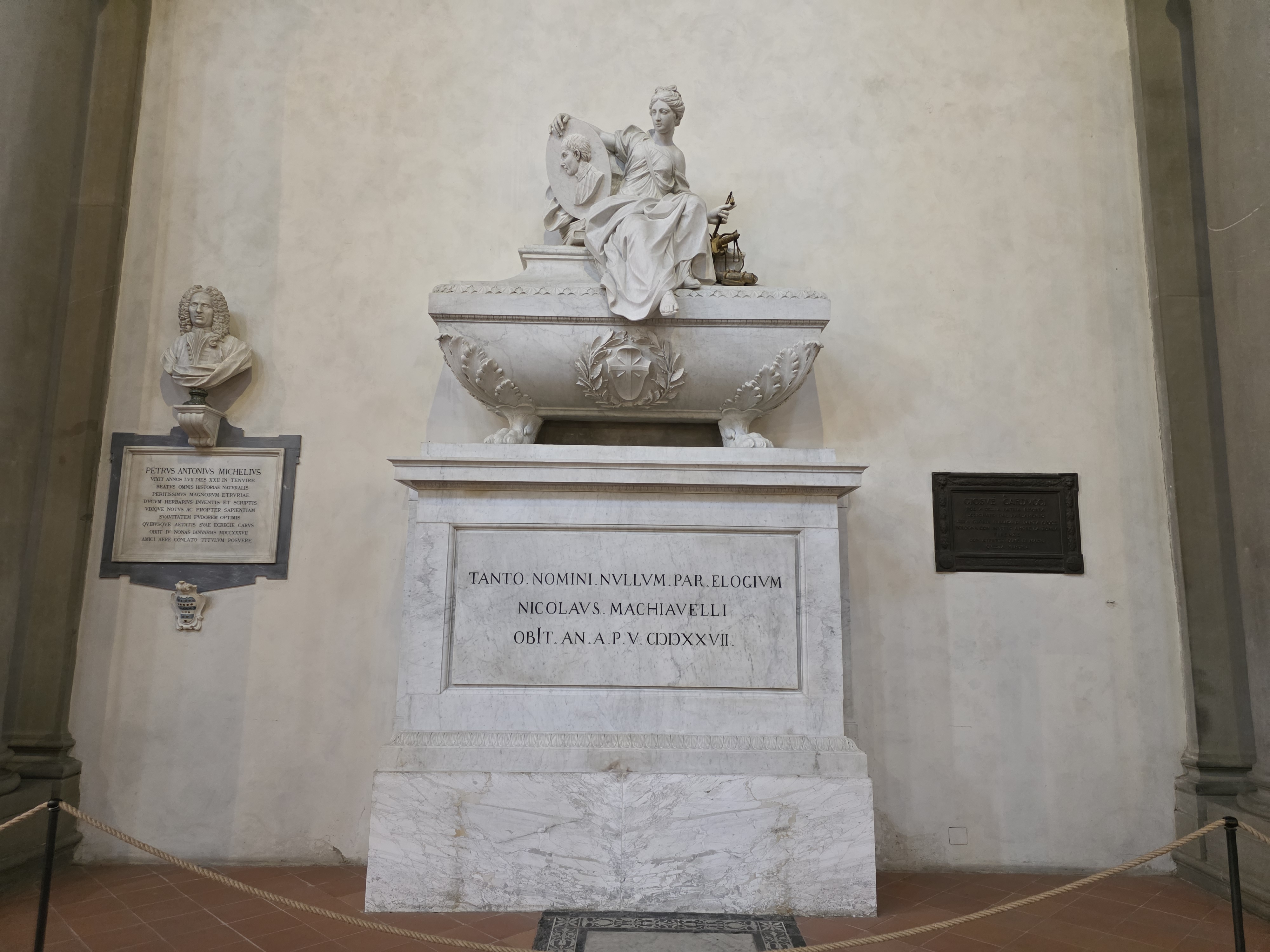
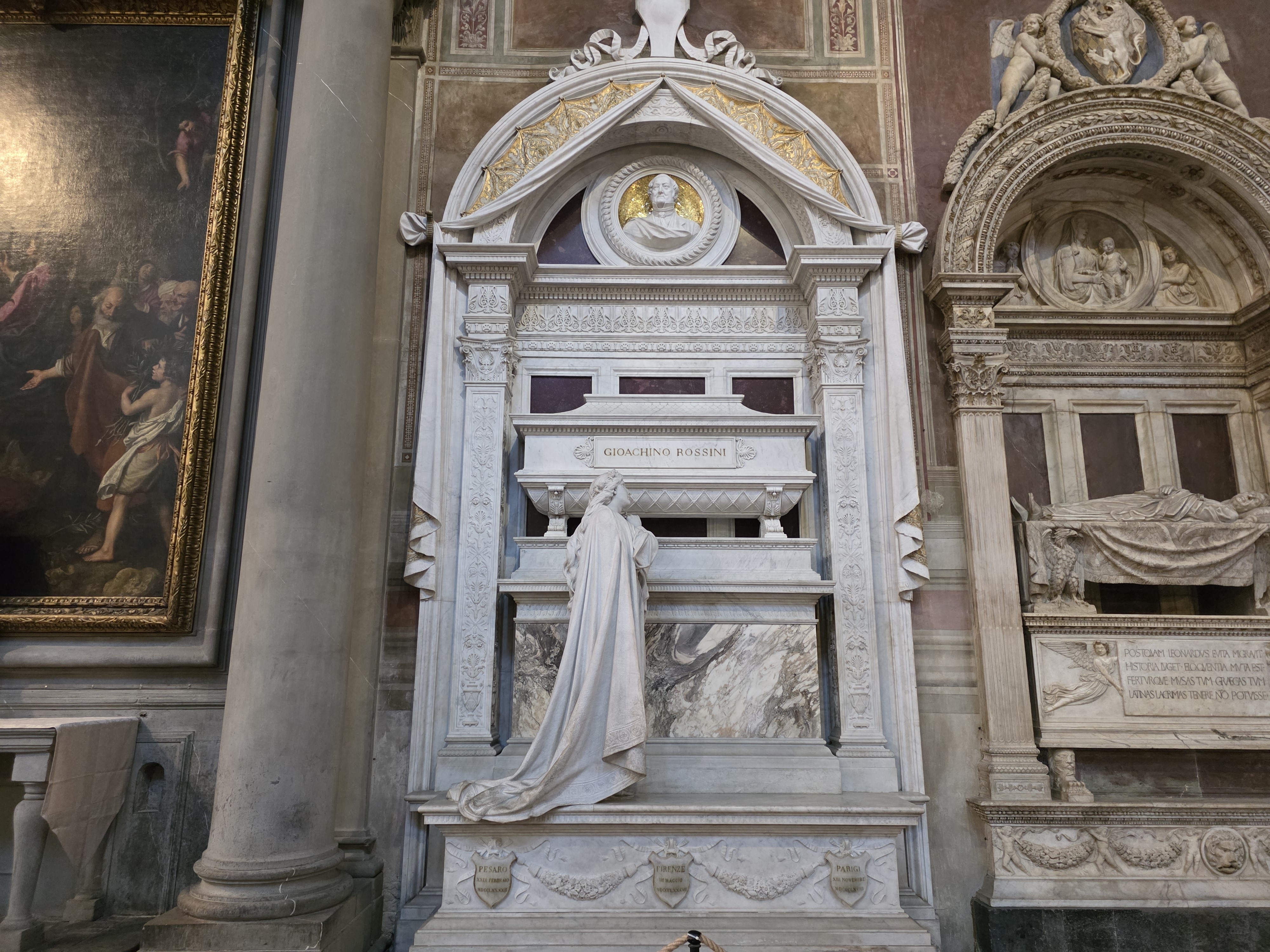
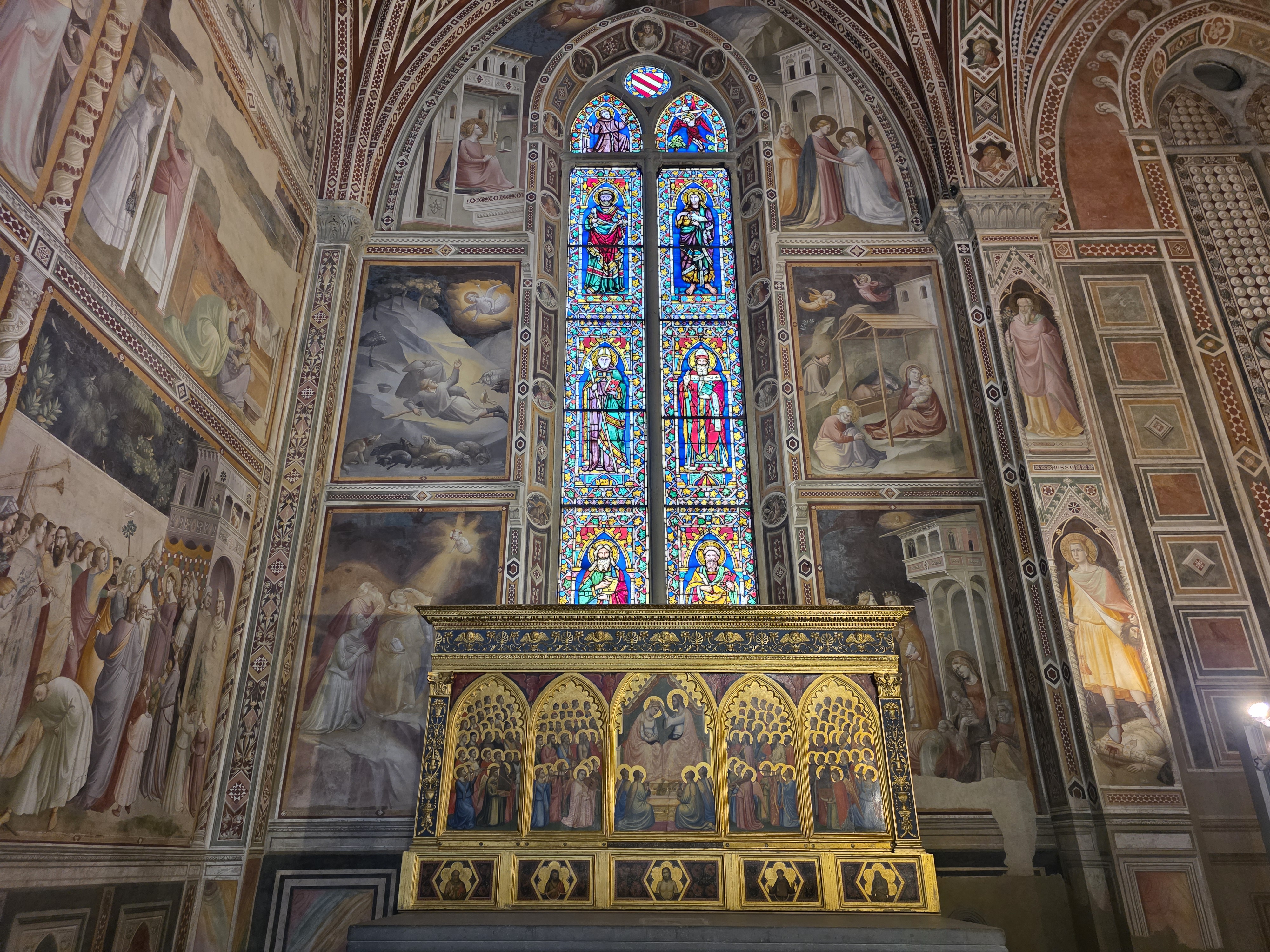
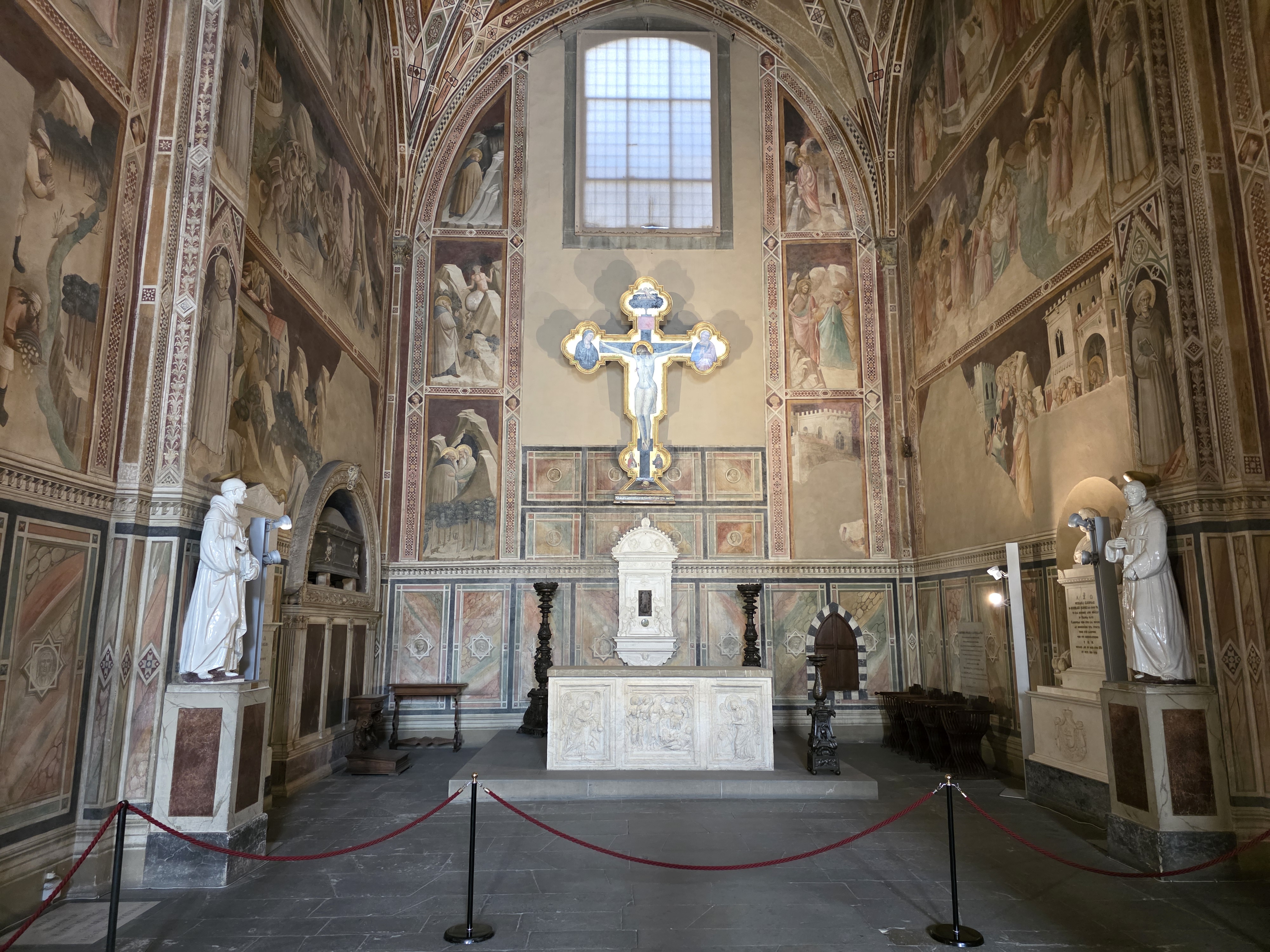
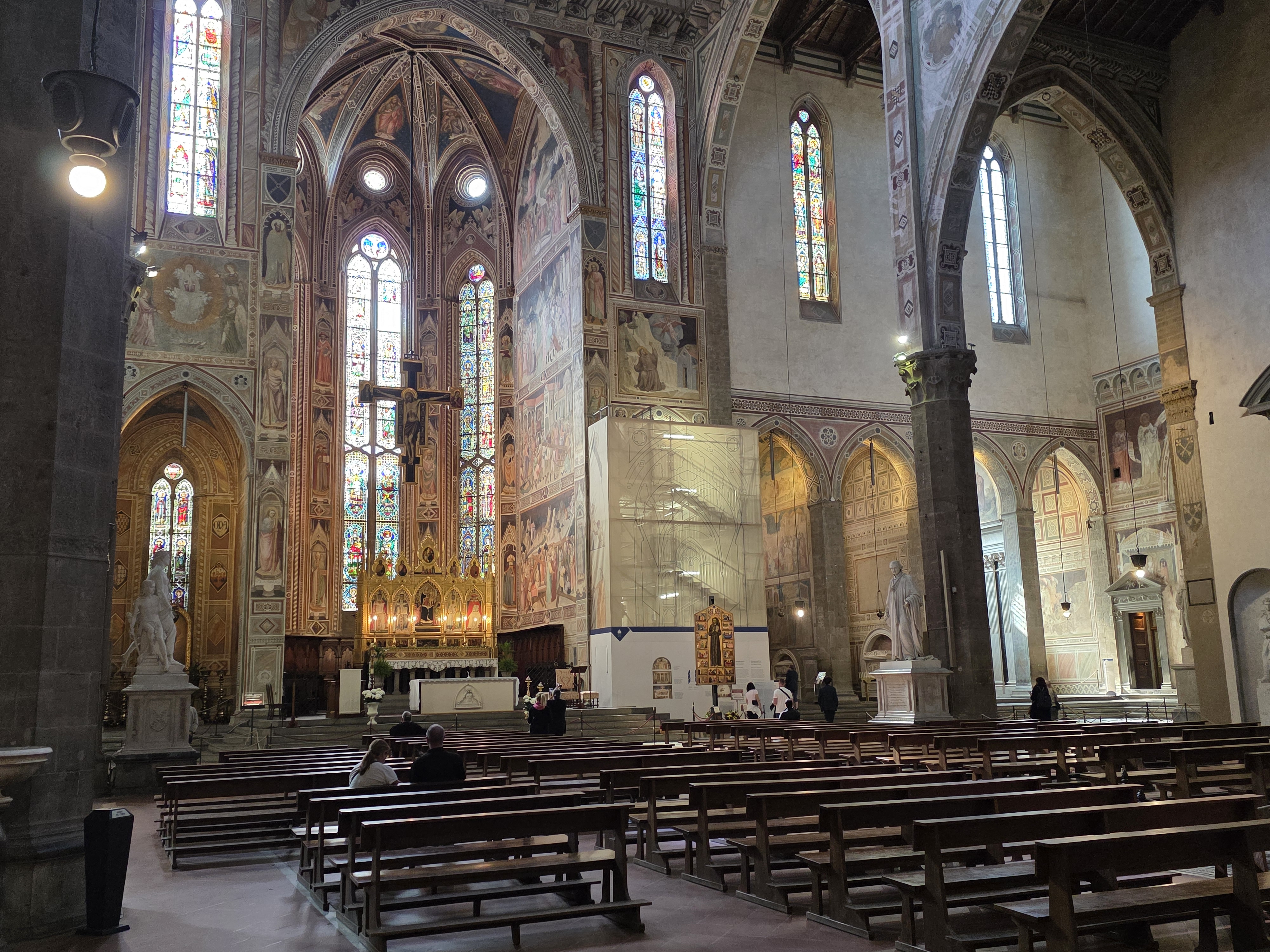
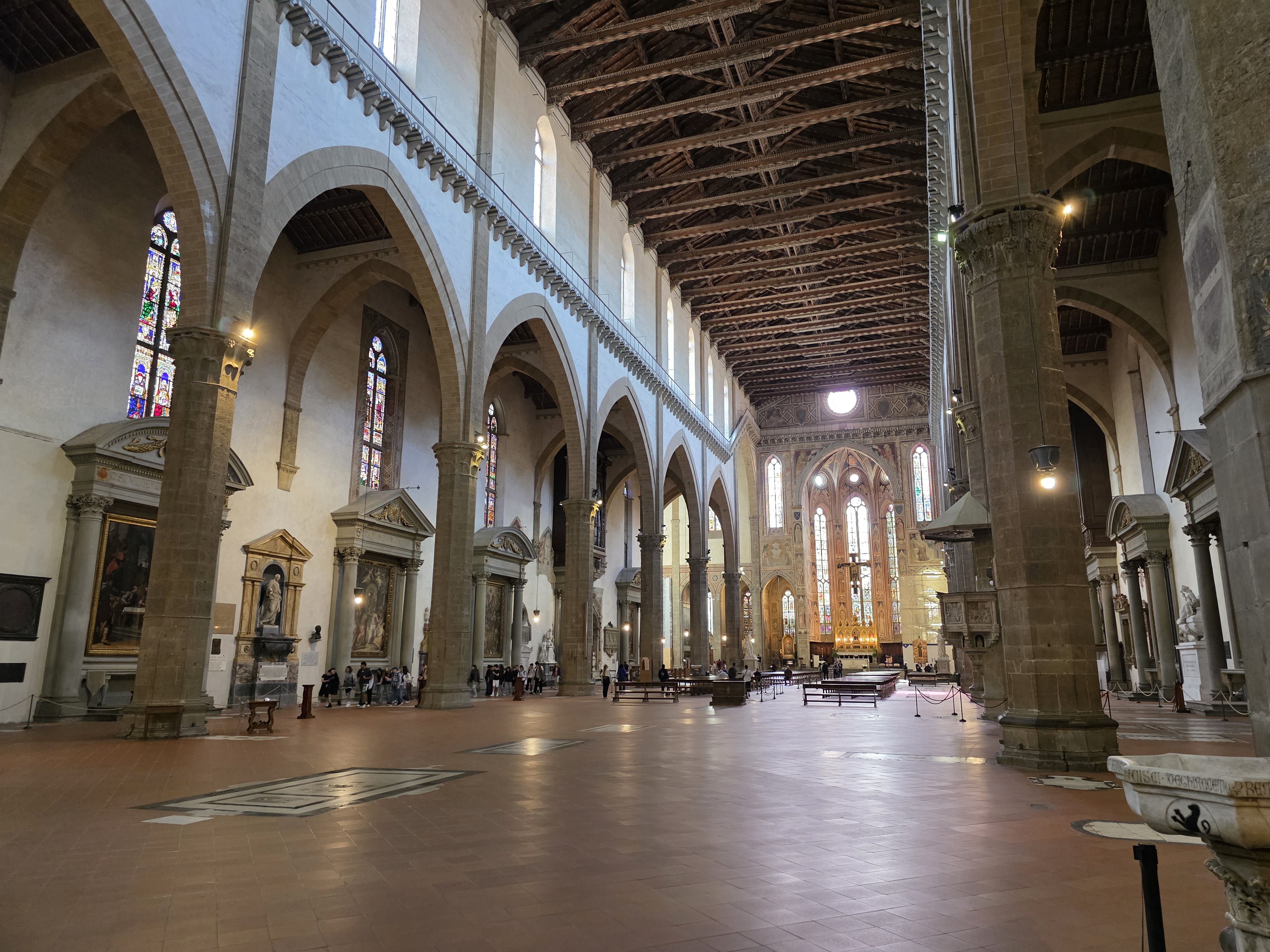
But it was fascinating, and overall, I actually liked the interior way more than the Duomo’s. There were various frescoes, as well as the tombs of famous people – Galileo, Michelangelo, Dante, Machiavelli, Rossini.
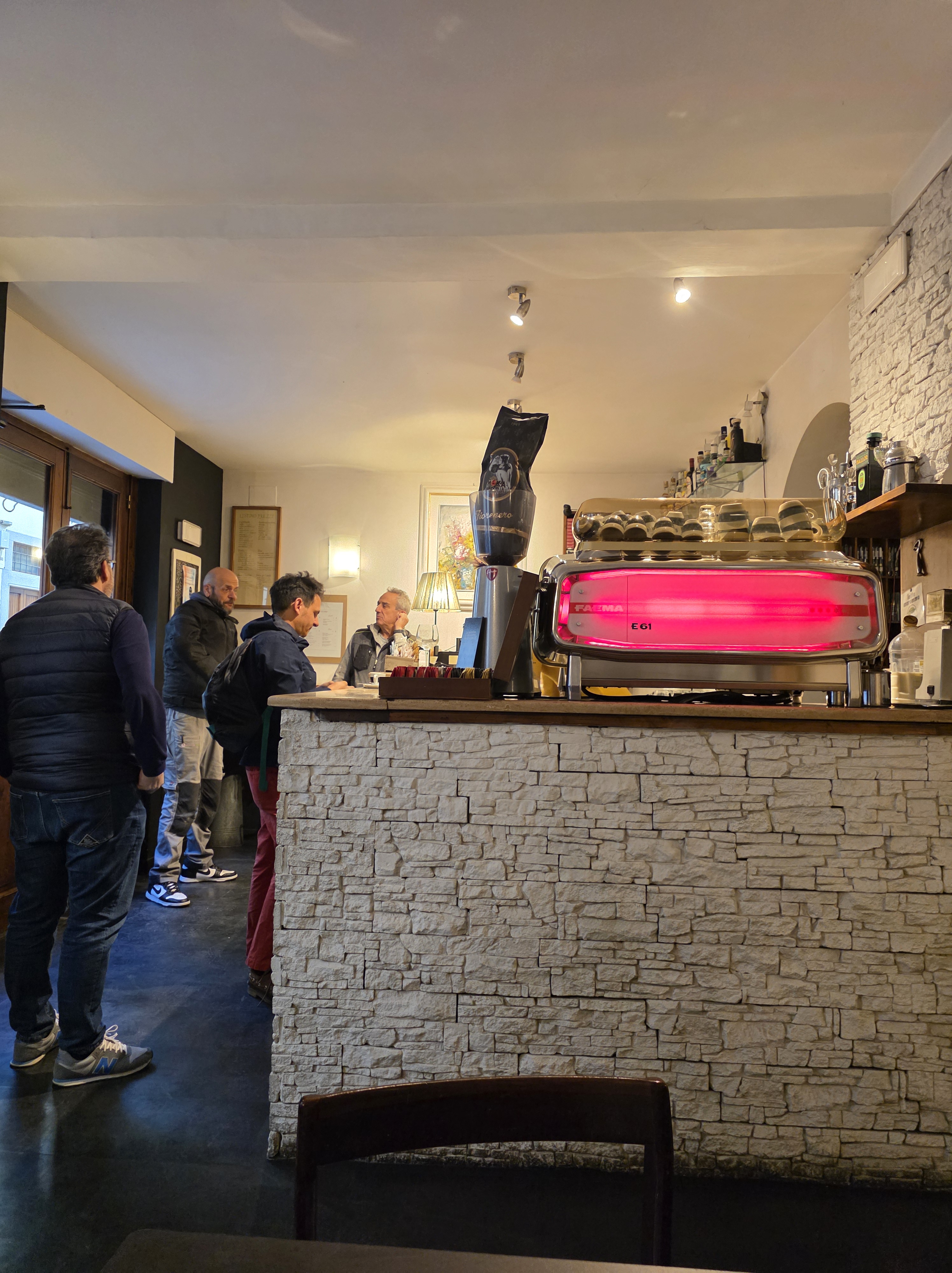
After the basilica there wasn’t particularly much else to do, so I found a specialty coffee shop and spent some time there. I noticed a man ordering a croissant with a Nutella filling and a coffee. And he paid 3.5 euros for all of it. Honestly, that shocked me, because in both London and especially Baku, the coffee alone would cost more than that. And here it was 3.5 euros!
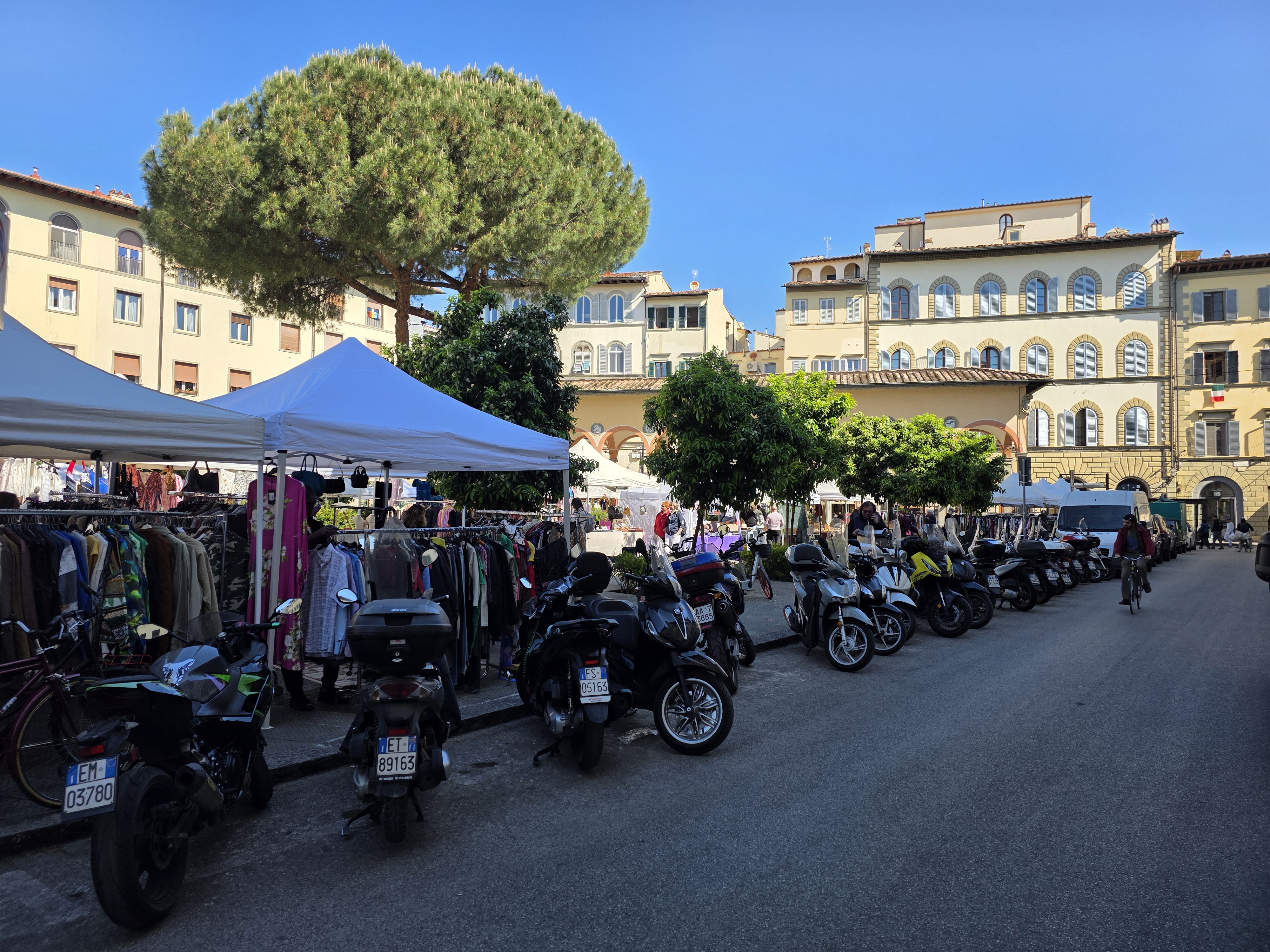
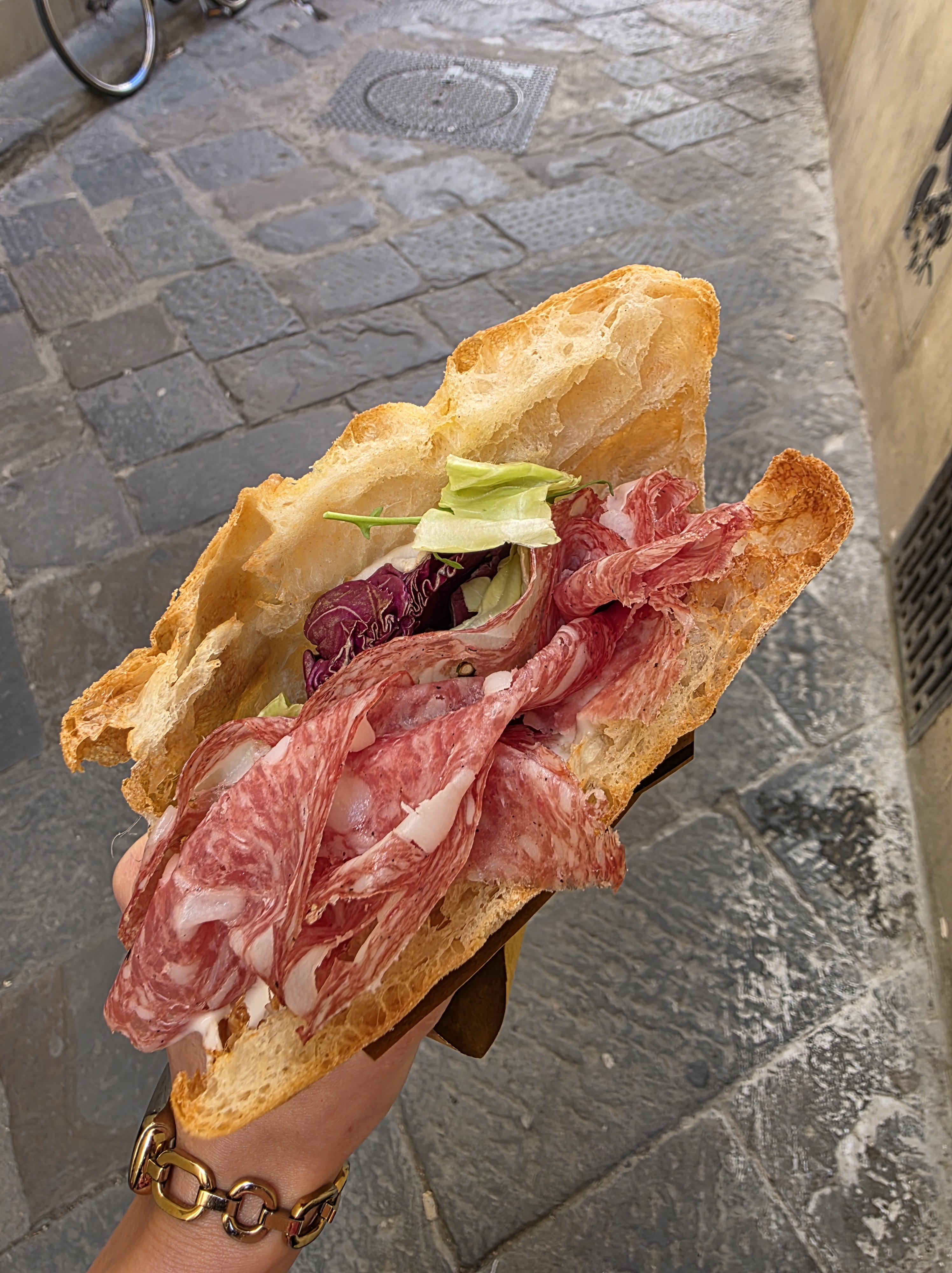
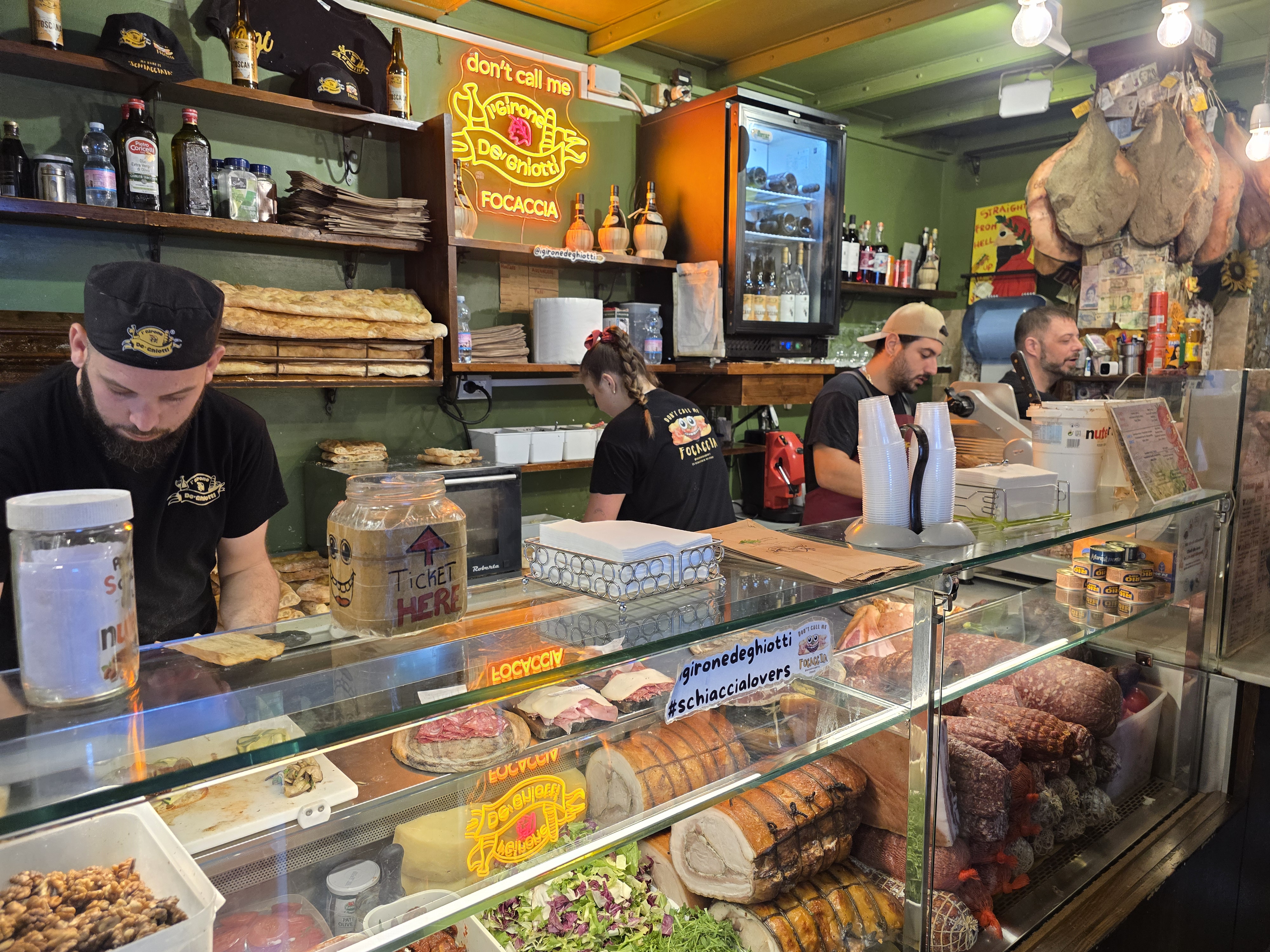
For an early lunch I planned to have another one of those schiacciata sandwiches. I found a couple of highly rated places and, once there, chose the one with the shorter queue and got another salami sandwich – honestly, it feels like I’m surviving entirely on cured meats here.
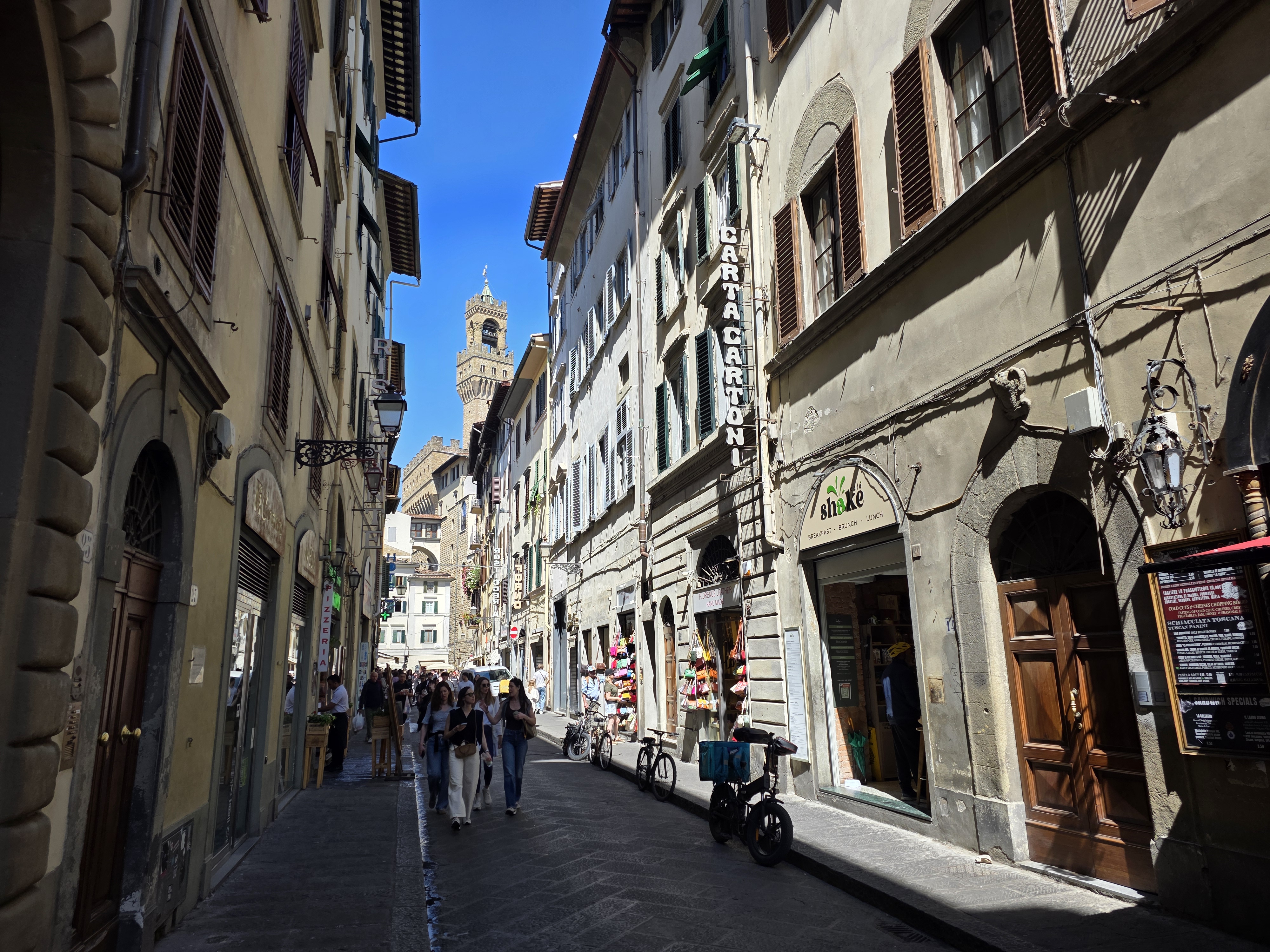
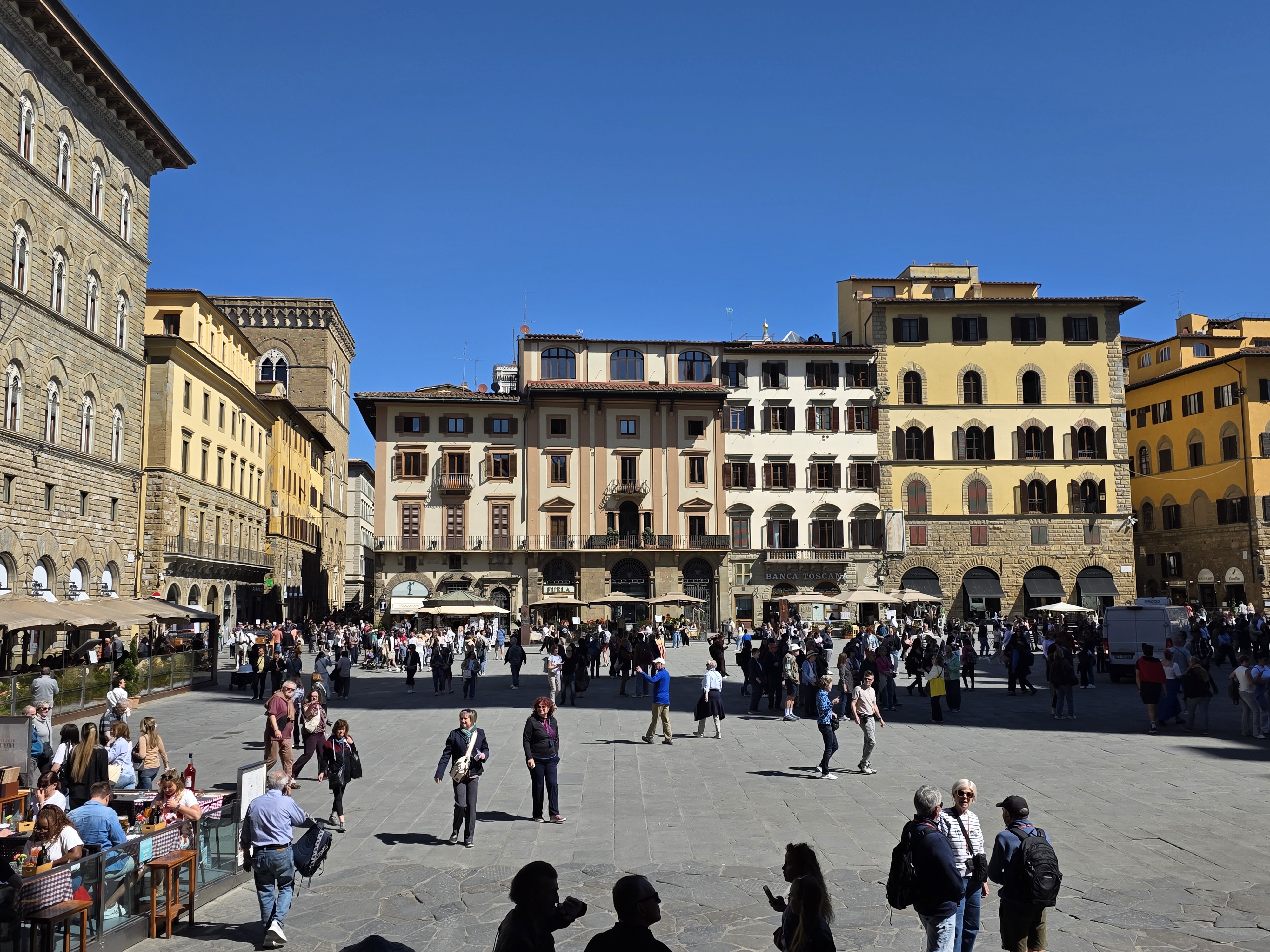
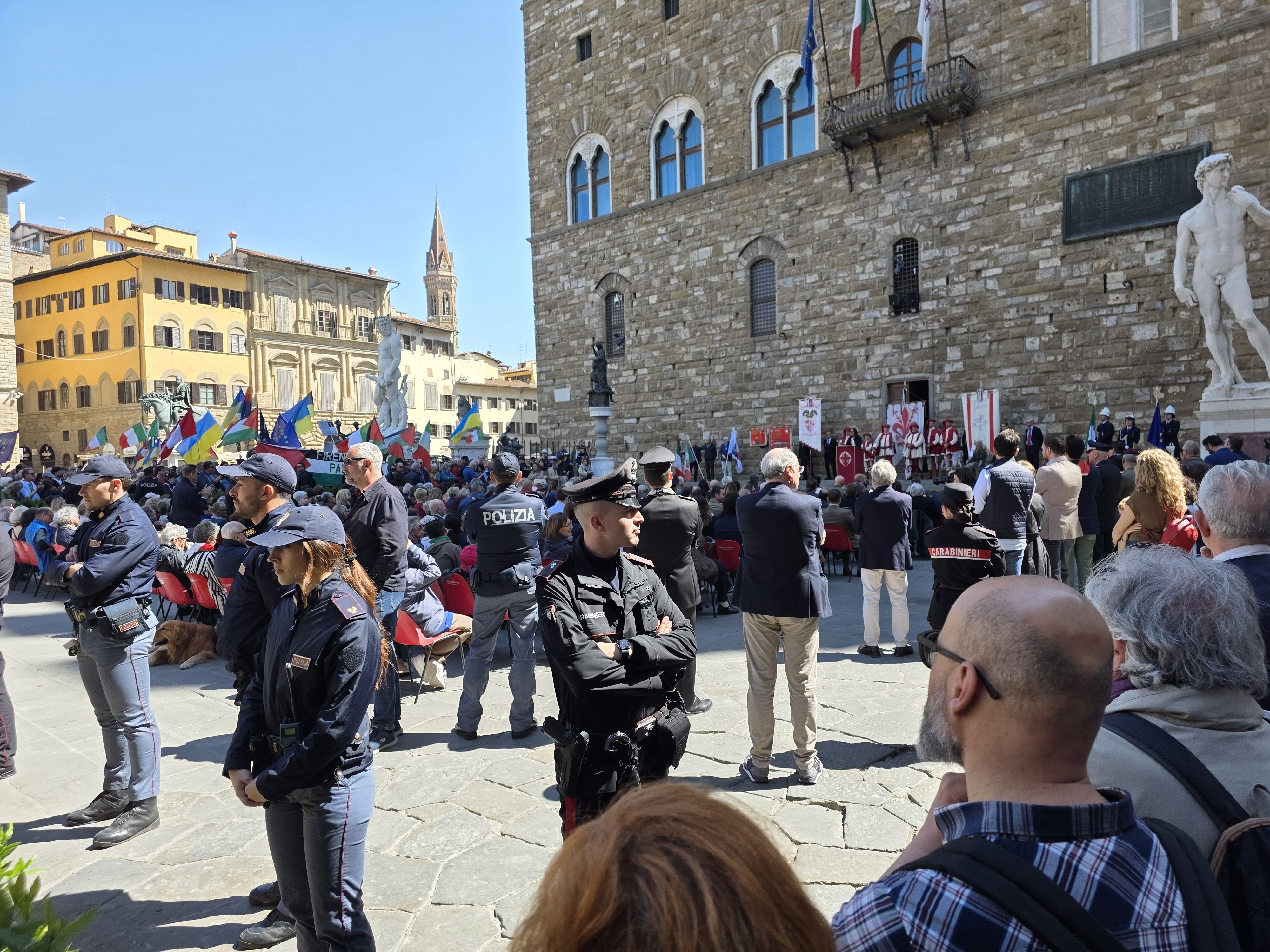
On Piazza della Signoria I came across some kind of celebration – today, April 25th, is a national holiday in Italy, Liberation Day from Fascist occupation.
And by 2pm I arrived at the Santa Maria Novella railway station, which was the meeting point for our Chianti wine tour.

While waiting for the tour, I met an American woman who told me her daughter lives in Barcelona and she had been visiting her. Her husband doesn’t like travelling, so she mostly travels without him. She had absolutely no idea what Azerbaijan was, though she admitted herself that Americans aren’t particularly strong at geography. Her parents were from Latin America, so she speaks excellent Spanish, and even spoke to the guide in Spanish rather than English. She said that ever since she was young, she’d been used to the idea that in Europe it’s better not to advertise that you’re American – and now, with the arrival of the “orange man”, as she called him, even more so.

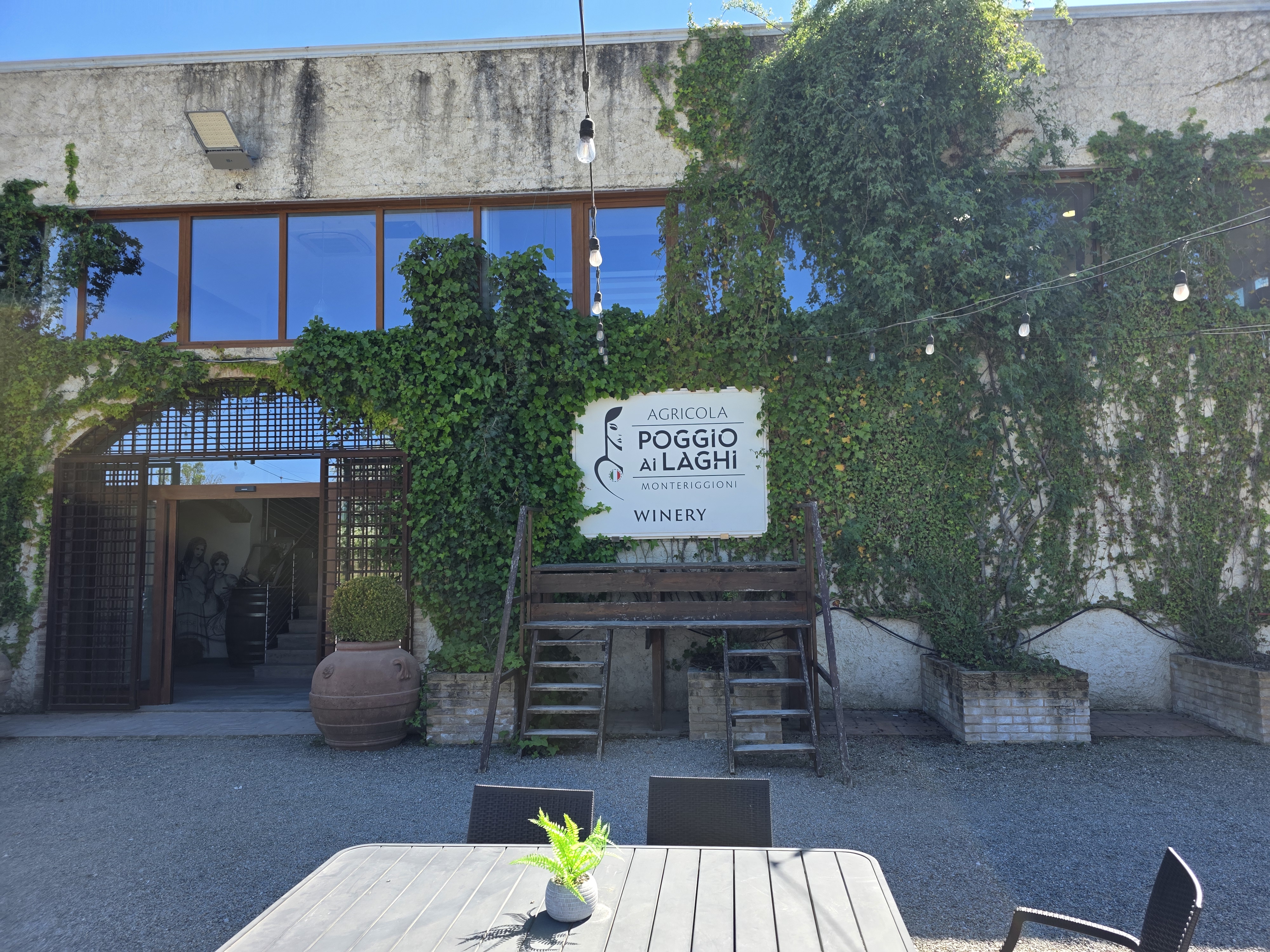
As for the tour itself, the drive there took an hour and the drive back another hour, while we spent about two hours there. We went to Monteriggioni, in the Chianti region of Tuscany, roughly between Florence and Siena, to a winery called Poggio ai Laghi. It turned out not to be quite what I had expected, because I had imagined something outdoors, surrounded by those famous Tuscan vineyard landscapes.

In reality, they only showed us the vineyards briefly from the side and allowed us to take photos there, but there was no actual walk outdoors. We spent most of the time inside, where we tasted seven wines. Yes, it was interesting, tasty and informative, but not entirely what I had imagined.
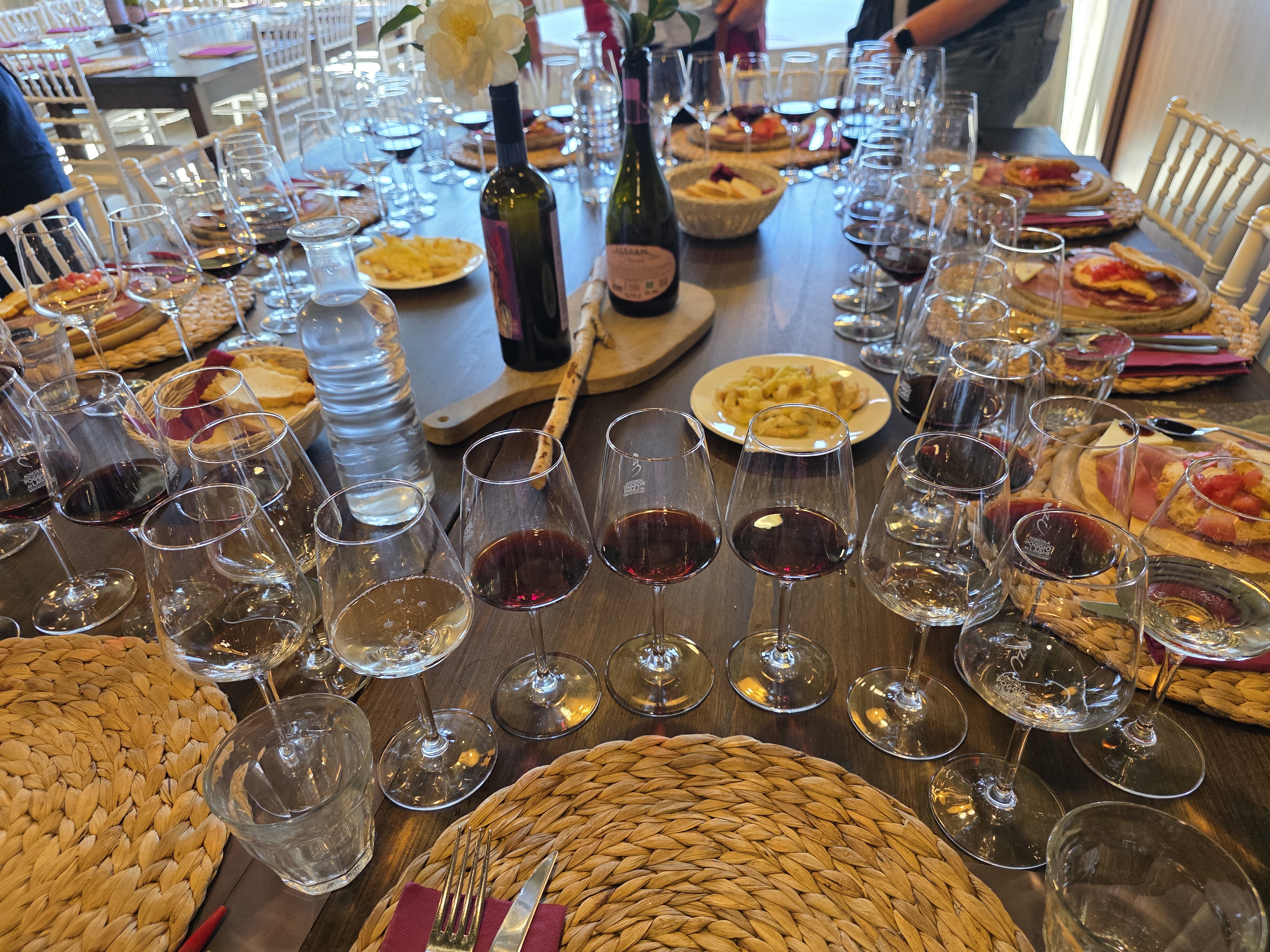
As for the wine itself, there are fairly strict rules for producing Chianti Classico. Firstly, at least 80% of the grapes must be the local Sangiovese variety. Secondly, the vineyards are not artificially irrigated and rely entirely on rainfall, so naturally wines from different years vary.

We first tried a sparkling white wine, then a regular white, which I didn’t particularly like because it tasted rather watery.

After that we tried three red wines, all very different. One was a younger Classico, the second a Riserva with a strong cherry flavour, which I liked the most, and the third was an IGT – not necessarily a lower category, but apparently with a lower required percentage of the grape variety.

What was interesting was that before, when people talked about notes of tobacco, leather and so on, it never really meant anything to me. But when you actually taste these different wines, you really can notice the differences and all those flavour notes. At the end we also had a dessert wine.

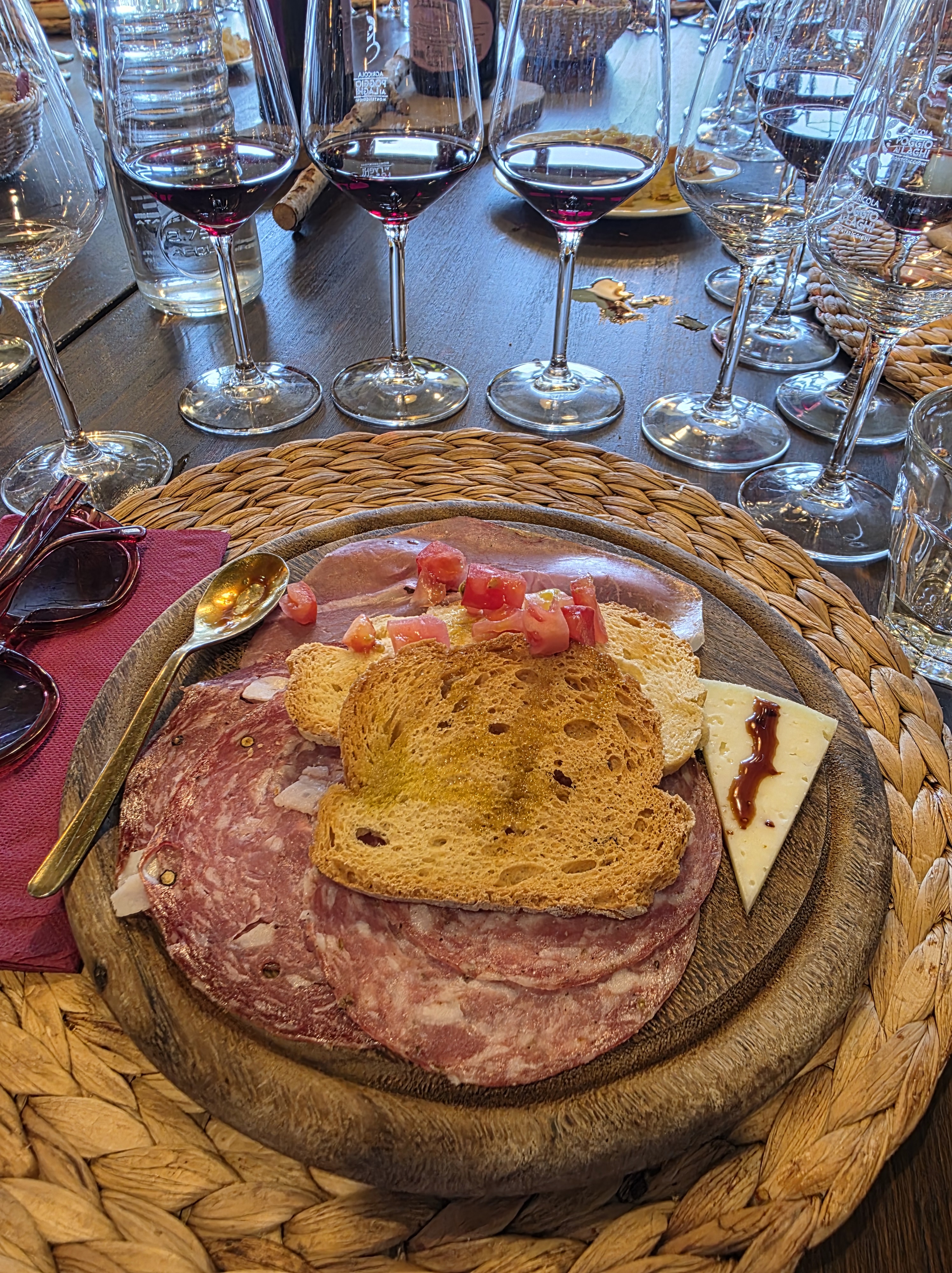
Alongside all this there were snacks – we got to try their balsamic vinegar, olive oils (including truffle oil), and of course cheese, a couple of types of salami, prosciutto and bread. Honestly, after all that I barely even needed dinner, because I kept snacking throughout the tasting.
And toward the end, while we were already slowly getting ready to leave, one of the administrators caught us and offered us two additional wines that hadn’t been included in the tasting itself. One was an Classico Riserva, and the other was something called Donna Ava, apparently the winery’s most expensive wine, reserved for special occasions, as he put it.

I’ve always said I can’t tell the difference between a 10-euro wine and a 100-euro wine, but if you actually taste different wines side by side, you really can tell.

Although to be fair, the cheaper wines there weren’t 10 euros – they were more like 40–50. Those prices included shipping to various countries, but there was one price for the EU and the US, and another for the rest of the world – and our post-Brexit United Kingdom naturally falls into “the rest of the world.” They did say they could offer me some sort of discount, but the problem was that I couldn’t take the wine with me because I didn’t have checked luggage, and deliveries required a minimum order of six bottles, so I declined.

They also said they don’t sell these wines to restaurants or shops, only exclusively at the winery itself. Each bottle features a woman on the label – every wine is dedicated to the medieval noblewoman Donna Ava of Monteriggioni or one of her seven maidservants (Lucilla, Oletta, Nina, Arania, Aranda, Arella and Firmina).
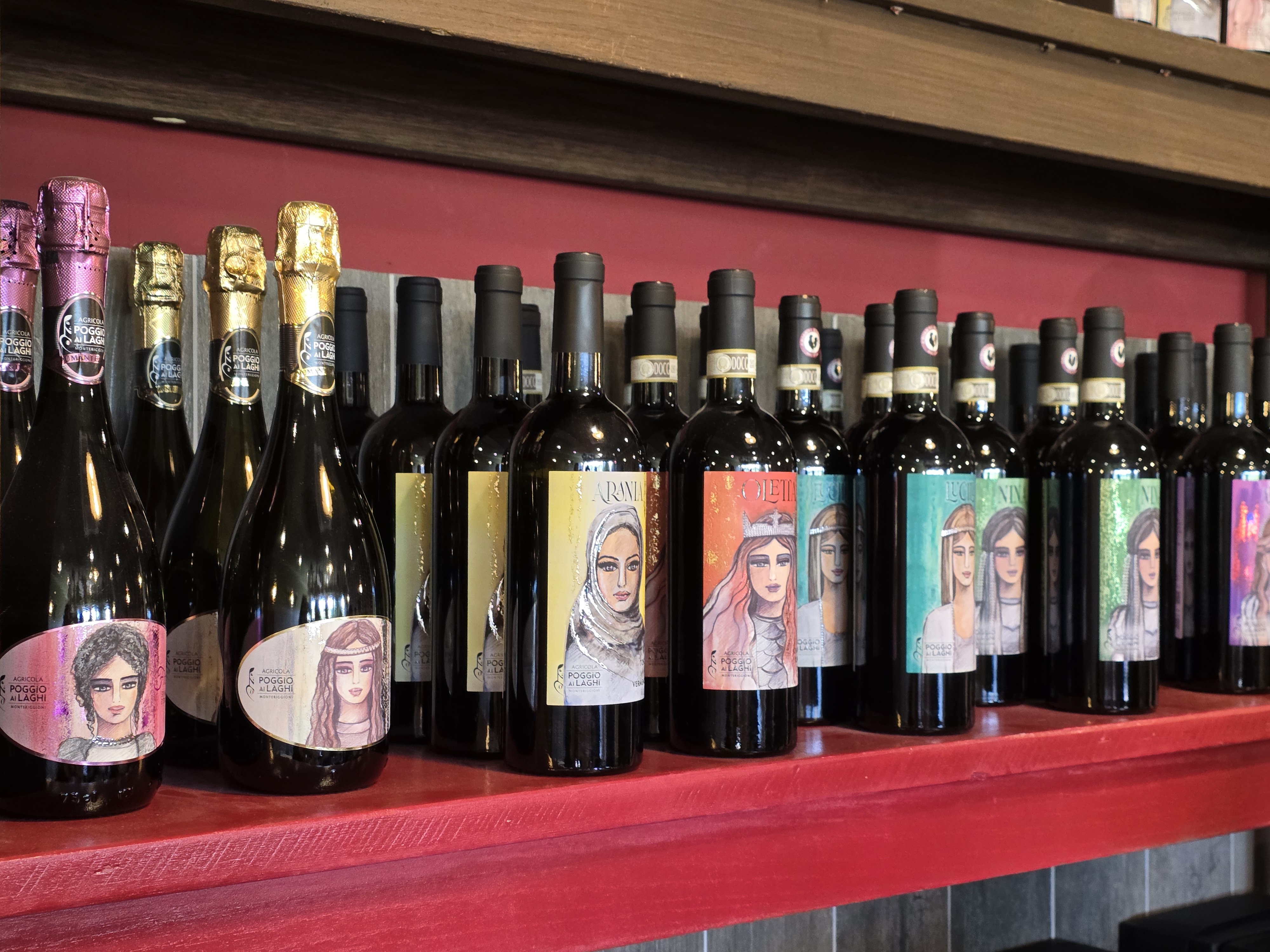
The symbol of Chianti Classico is a black rooster on the bottle. There is a legend about this. Historically, Florence and Siena were always rivals. One day, to establish the border between the two cities, it was agreed that after the first rooster crowed at sunrise, riders from each city would set out toward each other, and the border would be placed where they met. The people of Siena chose a white rooster, while the Florentines chose a black one and deliberately kept it hungry. As a result, the starving rooster crowed way before dawn, allowing the Florentine rider to set off earlier and ride almost all the way to Siena.

When we got back, naturally I didn’t feel like having dinner anymore, but I did feel like ice cream, so I walked once more toward the river and the bridge and had some gelato.
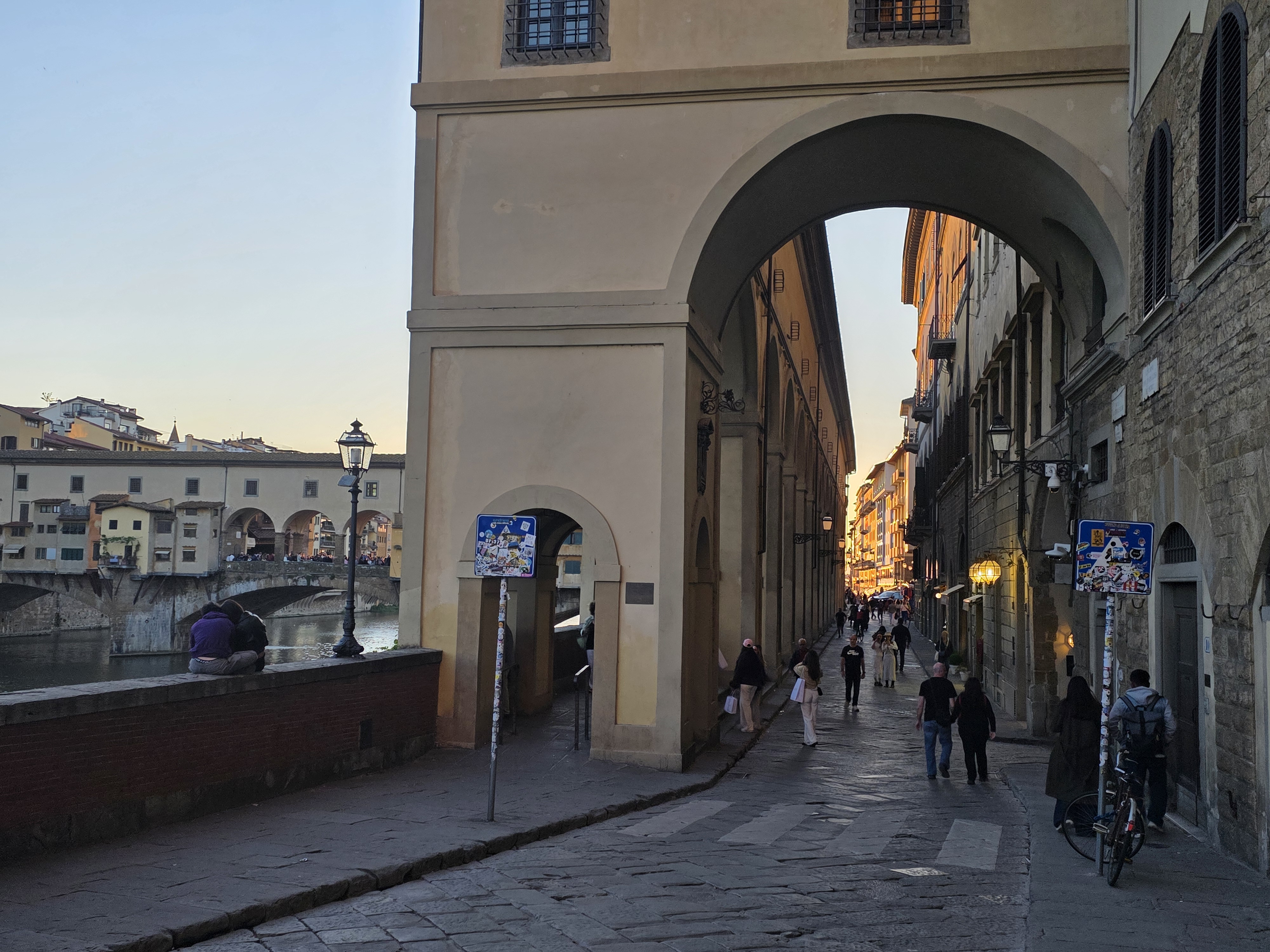
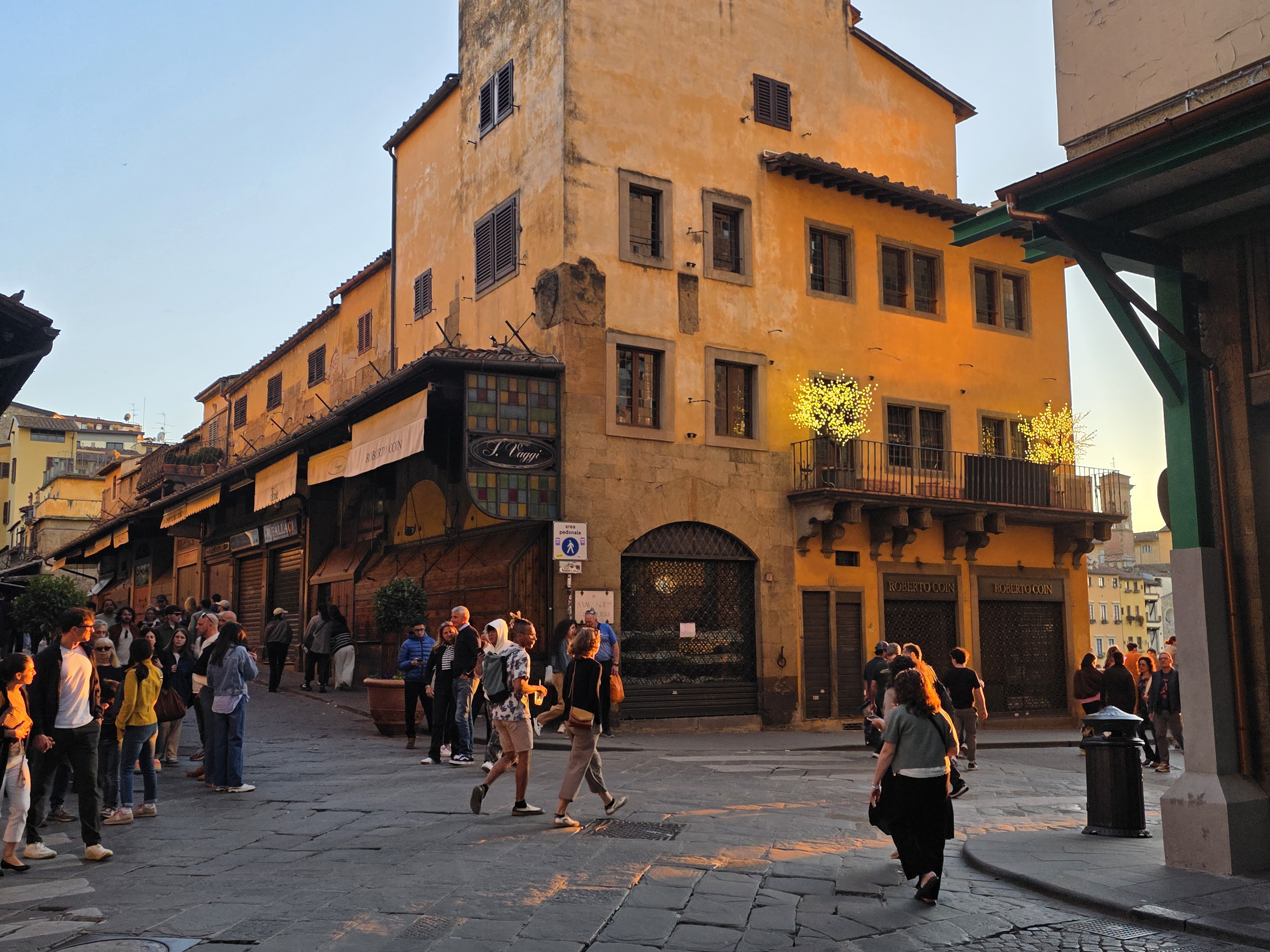
I ended up doing 23,000 steps that day, and by noon alone I had already done 10,000 – despite the fact that this was supposed to be a relaxed morning.

It was my last day in Florence – tomorrow morning I’m heading back.
Posted in English, Europe, Florence, Italy

Florence – Day 2

РУССКОЯЗЫЧНАЯ ВЕРСИЯ ПО ЭТОЙ ССЫЛКЕ. CLICK HERE FOR RUSSIAN VERSION.

April 24 2026 – Friday

Today I slept very poorly, because at 4:30am some large vehicle – either a garbage truck or a street-cleaning machine, I couldn’t quite tell – pulled up right under my window and stayed in the same spot for at least an hour, making unbelievably loud noises. I never figured out what it was doing there, since I couldn’t properly see it from my window, but it was impossible to sleep, and I only managed to drift off for a bit once it had left, even though I then had to get up early for all my tours.

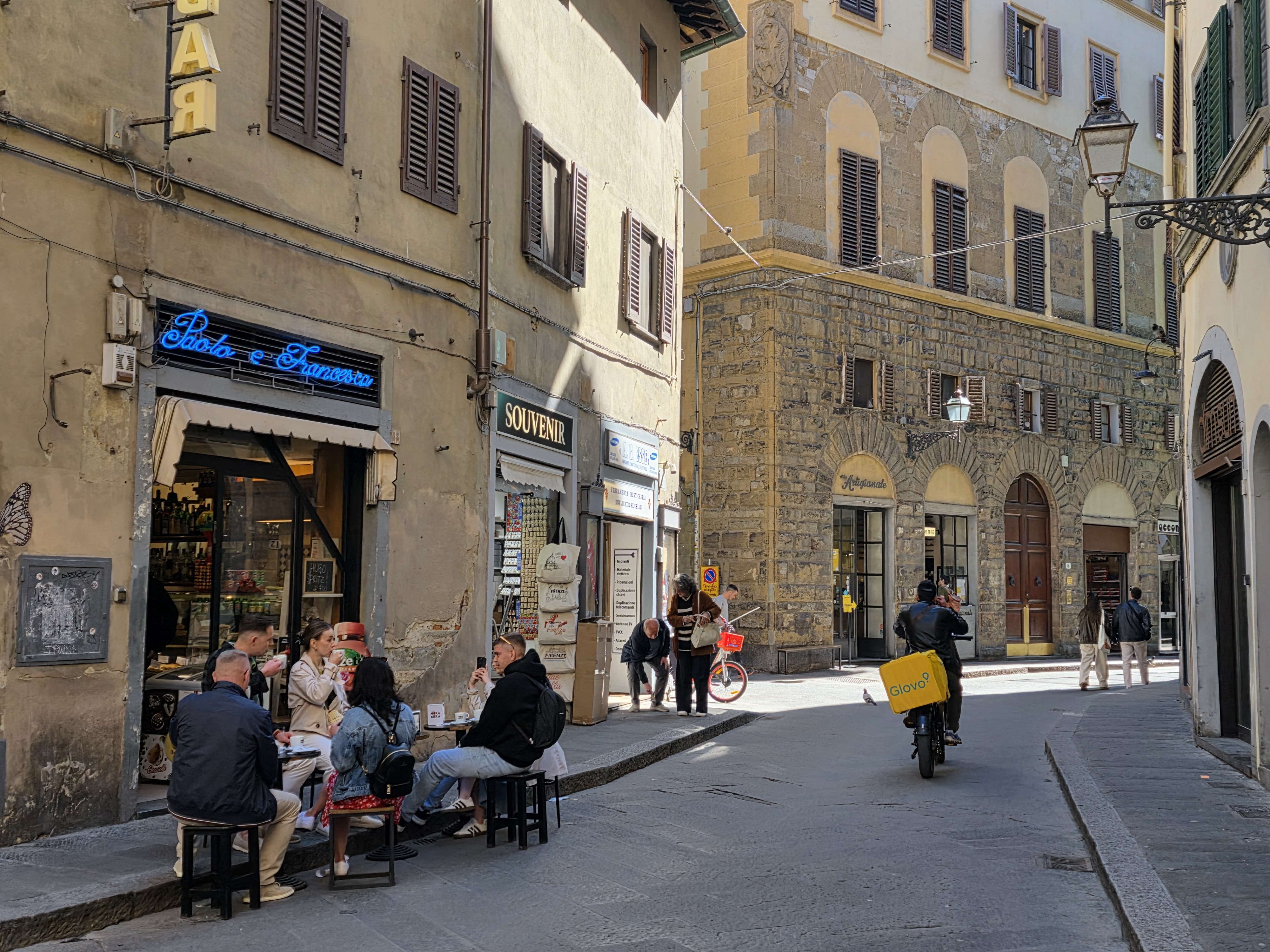
I don’t have breakfast at the hotel, so in the morning I went straight to a bar right opposite as soon as it opened. It’s a traditional kind of place – coffee in the morning, wine in the evening. I went in literally as the woman working there opened the shutters, and at the same time quite a few other people came in. I sat down to eat and watch people, and came to the conclusion that these coffee bars are the local equivalent of our “day-day kafesi” (“cafes for uncles”), because the entire time I was there, various working-looking men kept coming in for a quick espresso, drinking it right at the counter, exchanging a few words with the barista or each other, and leaving.

I had a ticket to the Accademia Gallery for 9am, and there was a bit of a hiccup. The booking page showed two locations on the map: one was the entrance to the gallery, and the other was supposedly the meeting point with an agency representative who was meant to exchange my voucher for an actual ticket. It said something like, “our staff in yellow vests will meet you there”.

I arrived and saw the gallery entrance with a queue, along with various representatives from different agencies – but not the one I needed. Meanwhile, Google Maps sent me in a completely different direction, where there was no sign at all, and the meeting point was marked in front of what looked like a hotel. Then a couple approached the same spot, with phones in hand, also looking for the people in yellow vests – but there weren’t any.

I started to suspect that this probably wasn’t the right place, and after unsuccessful attempts to call or message anyone on WhatsApp, we collectively decided to go back to the gallery, queue up, and try to get in with the voucher.

In the end, we joined the 9am queue (there was a separate one for each time slot), and when it was our turn, we were told that we did indeed need to exchange the vouchers and pointed to not one, but three people in yellow vests standing nearby. Of course, it was a completely different location – the street number was correct, but somehow Google Maps sent us to the wrong place.

Anyway, everything worked out, and at 9am sharp I walked into the gallery. I should say I came to the conclusion that museums and galleries need to be approached strategically. No one has the time or energy to see everything. For example, in this case, you know you’re going there to see David, so you plan everything around David.

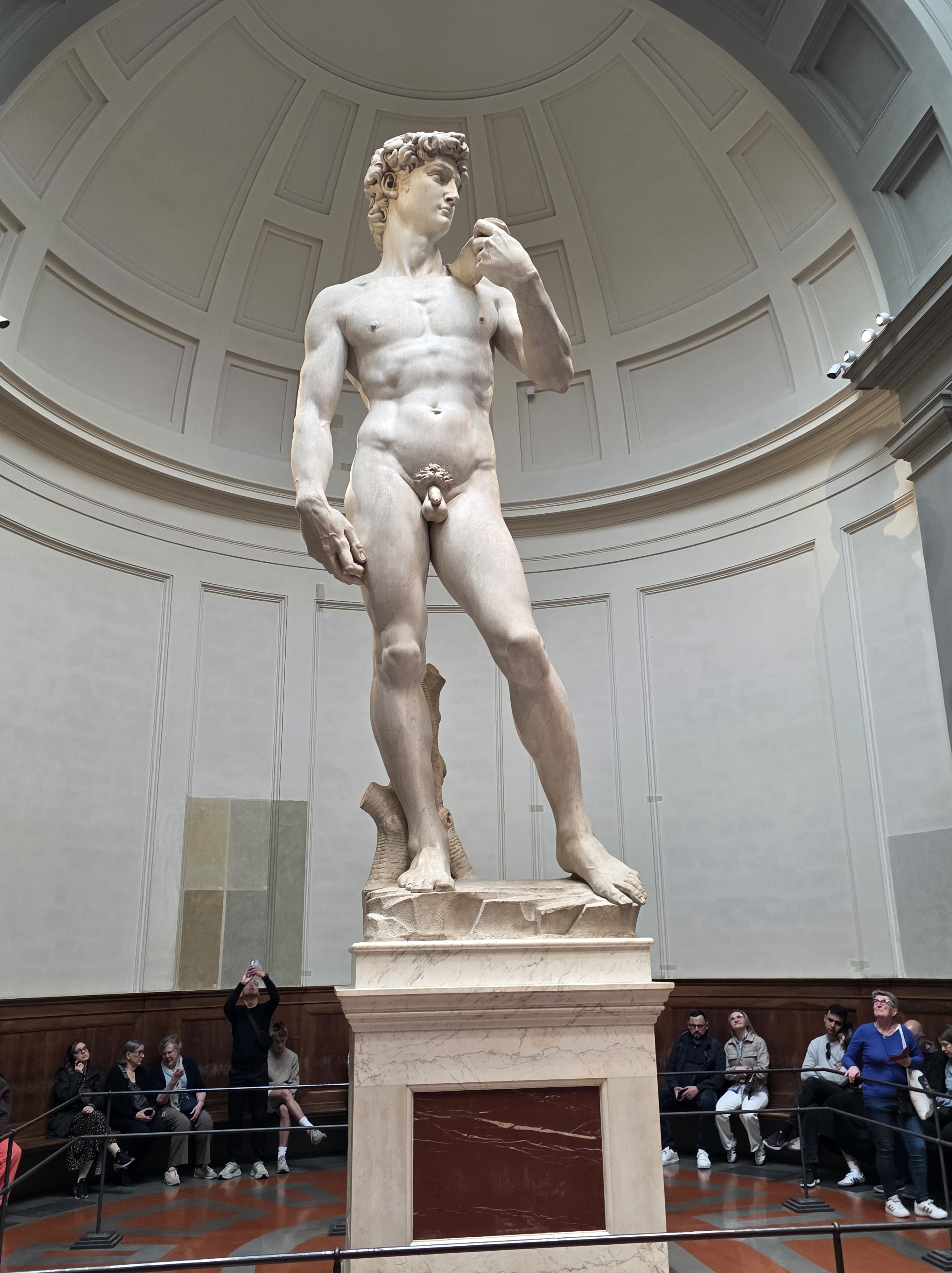
So, I didn’t waste much time looking at the paintings in the first room, just gave them a quick glance and went straight to David. On the way, there were also the four unfinished sculptures of “Slaves” that Michelangelo was working on for the tomb of Pope Julius II.

David itself, of course, immediately stands out – it’s huge, five metres tall. Interestingly, the proportions are intentionally distorted – the head and right hand are unnaturally large, because the sculpture was meant to be viewed from below. Also, it’s carved from a single block of marble that had previously been considered defective and that no one wanted to work with.

All in all, I spent no more than half an hour in the Accademia Gallery and moved on. I then had a ticket to the Uffizi Gallery for 11am. On the way, I stopped for an espresso in one of the coffee bars – the espresso here could wake the dead, which was very helpful after a half-sleepless night.


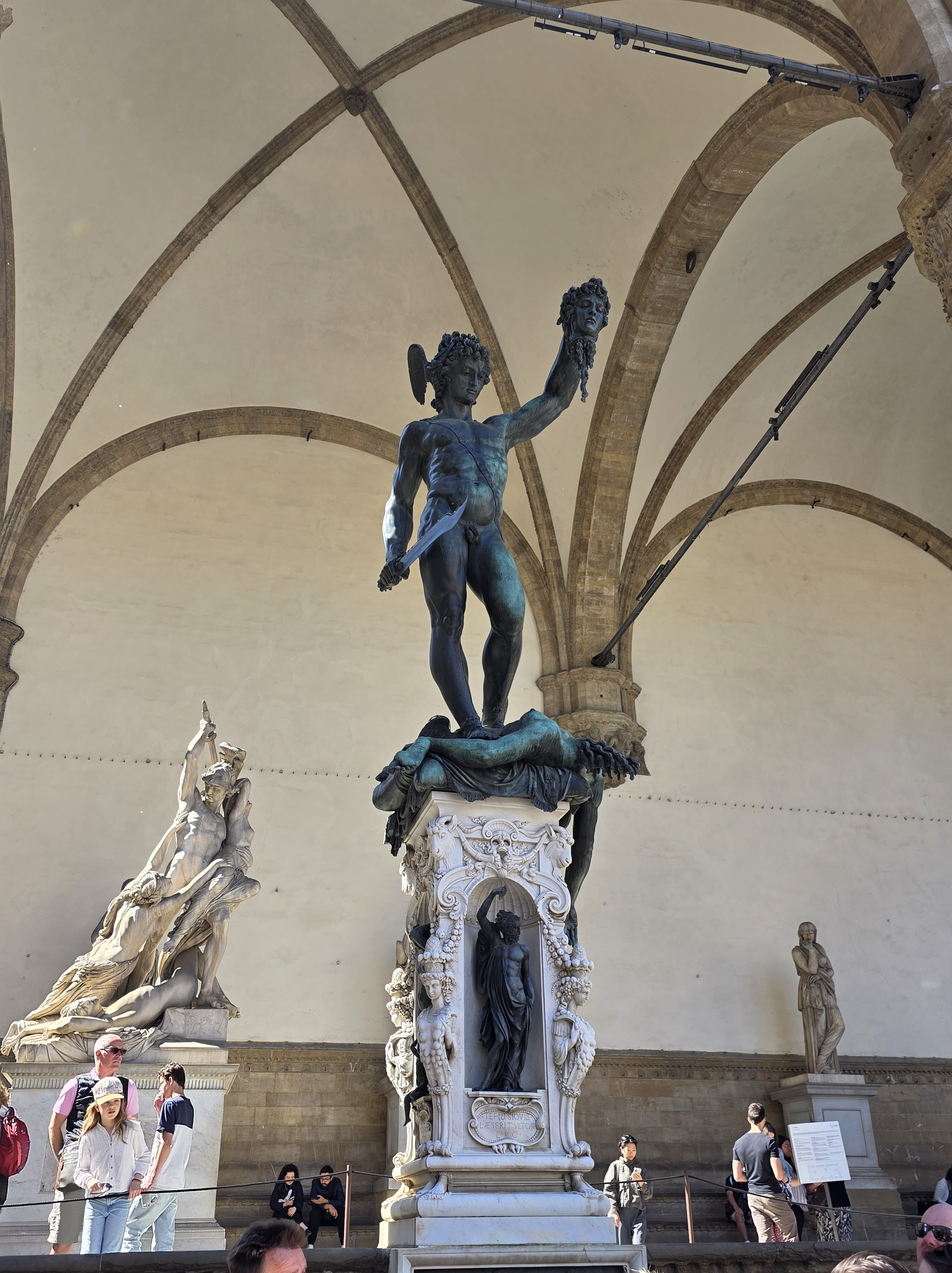
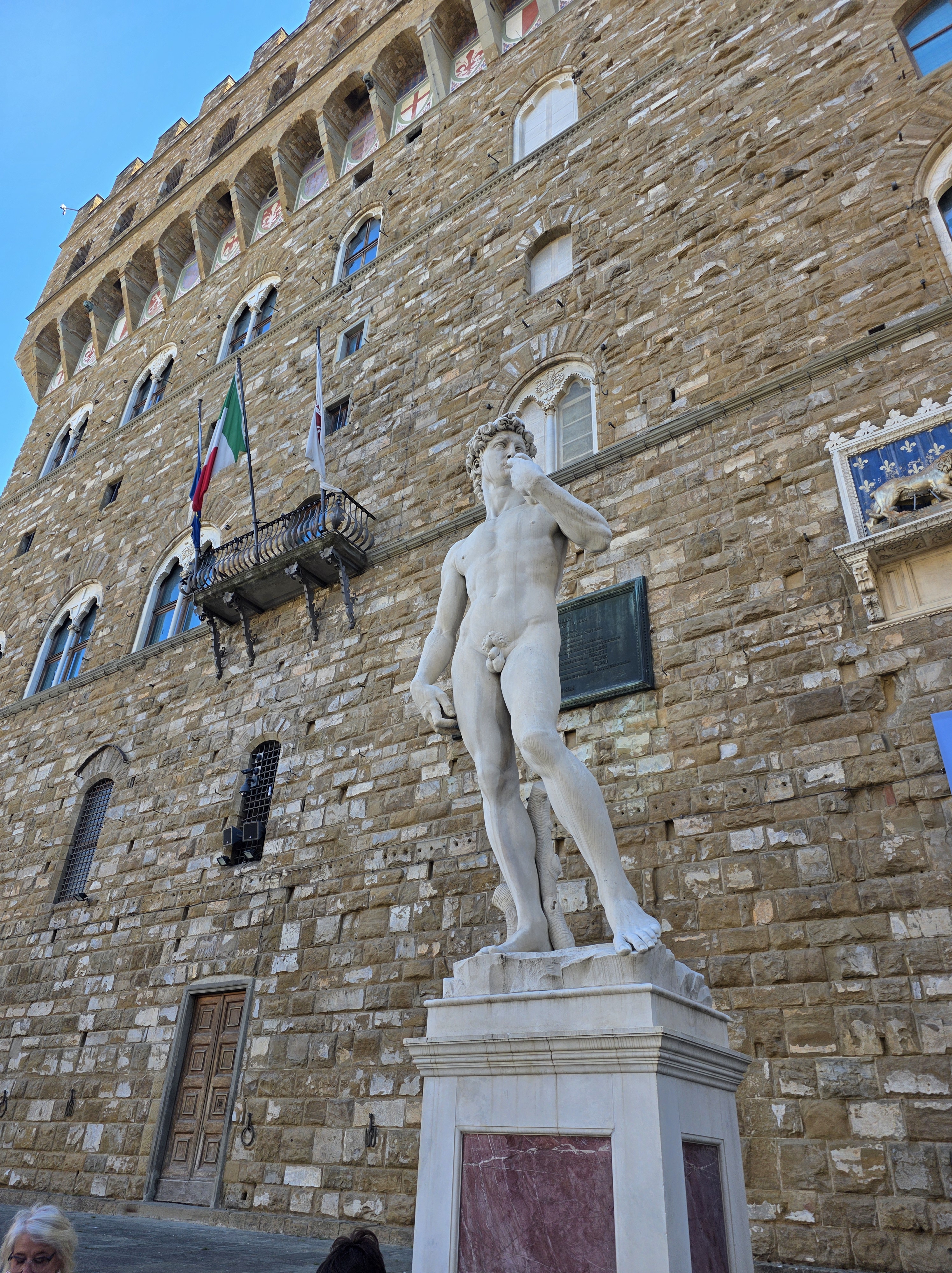
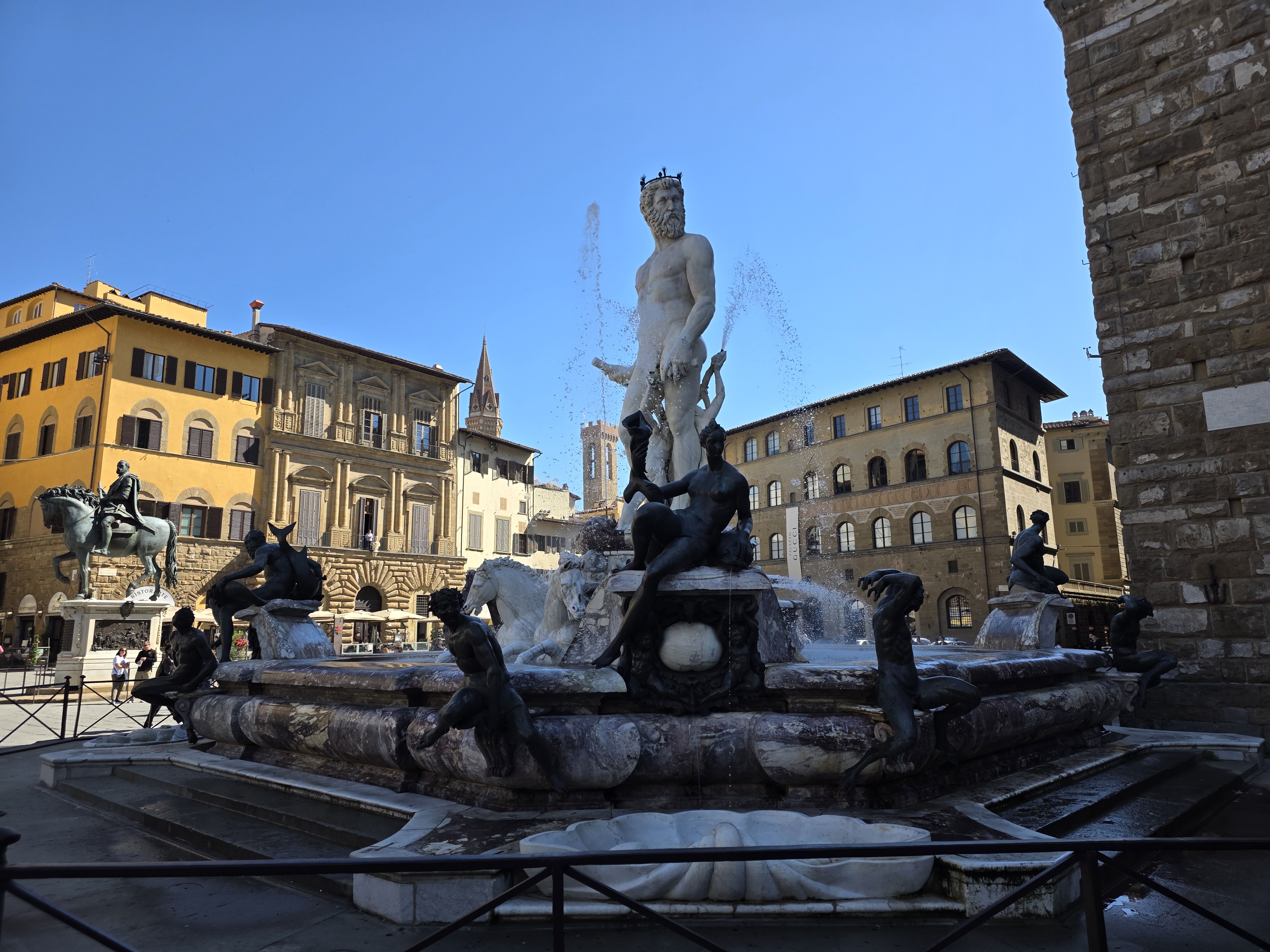
At the Uffizi there were also different queues for different time slots, and it turned out that although I had booked for 11, I was assigned the nearest available slot at 11:30. There was no point trying to get in earlier, so in the meantime I looked at the sculptures in the open-air Loggia dei Lanzi, including Cellini’s “Perseus with the Head of Medusa.” There’s also another David nearby – a replica, of course. I had some delicious dark chocolate gelato, and then went back to the Uffizi.

While I was standing in line, a Russian-speaking couple arrived and casually squeezed into the middle of the queue. Only my very unfriendly look ensured that they moved behind me rather than in front of me.

I have to say, despite the unfriendly look, I was really looking forward to visiting the Uffizi. It gave me goosebumps to think that someone had created a sculpture or painted a picture, and 500 years later people are spending money and standing in queues in order to see their work.
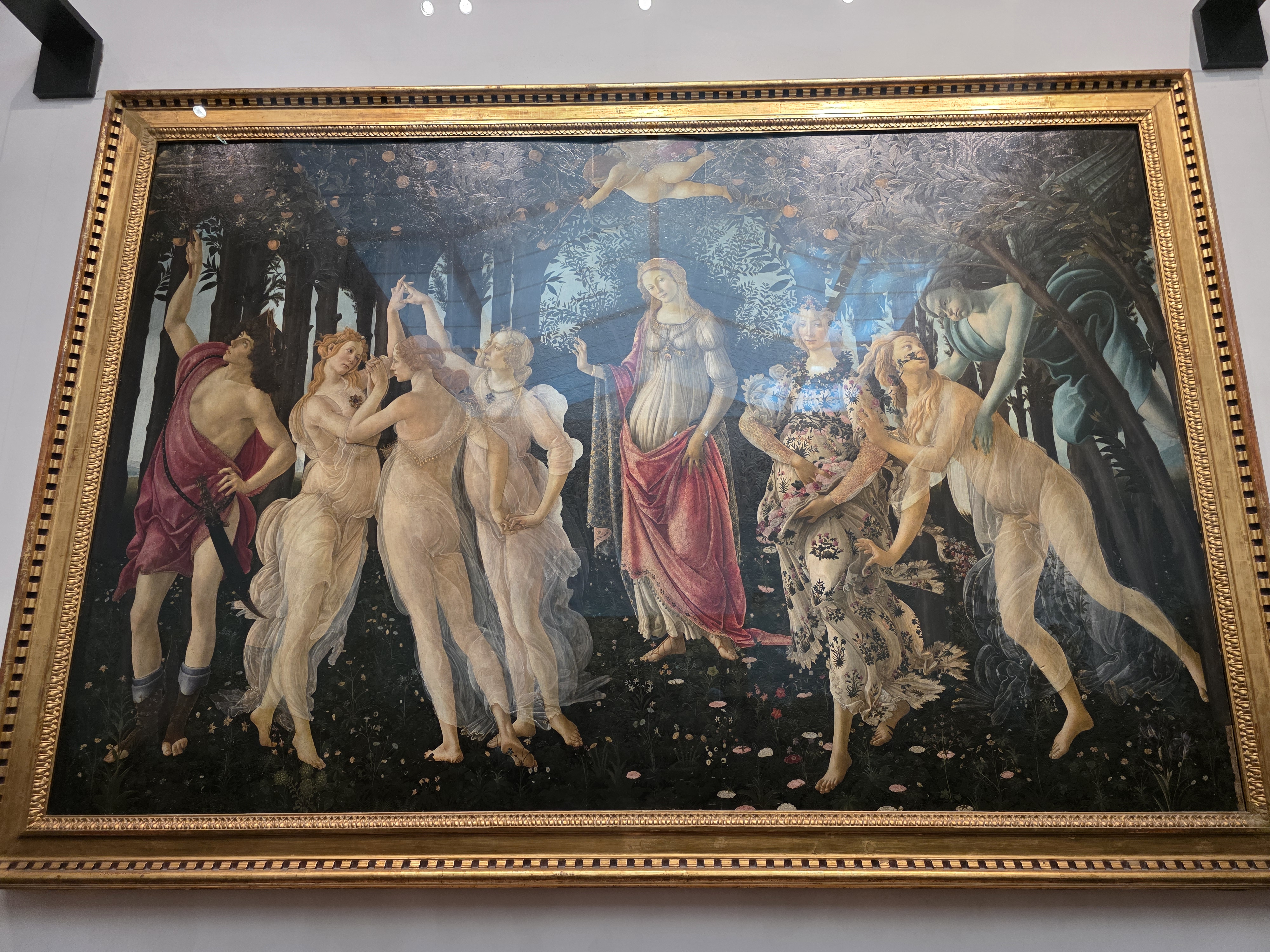
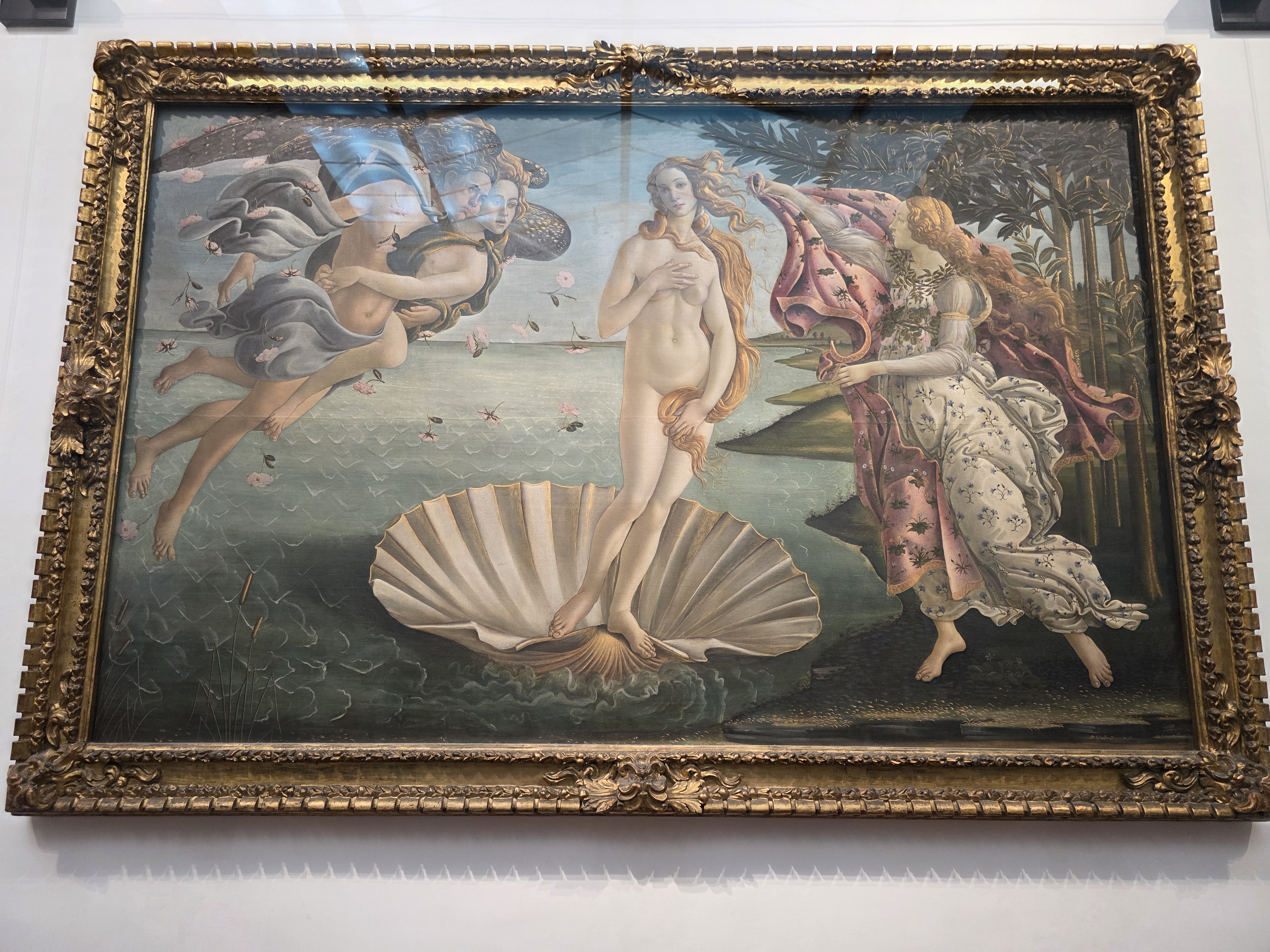
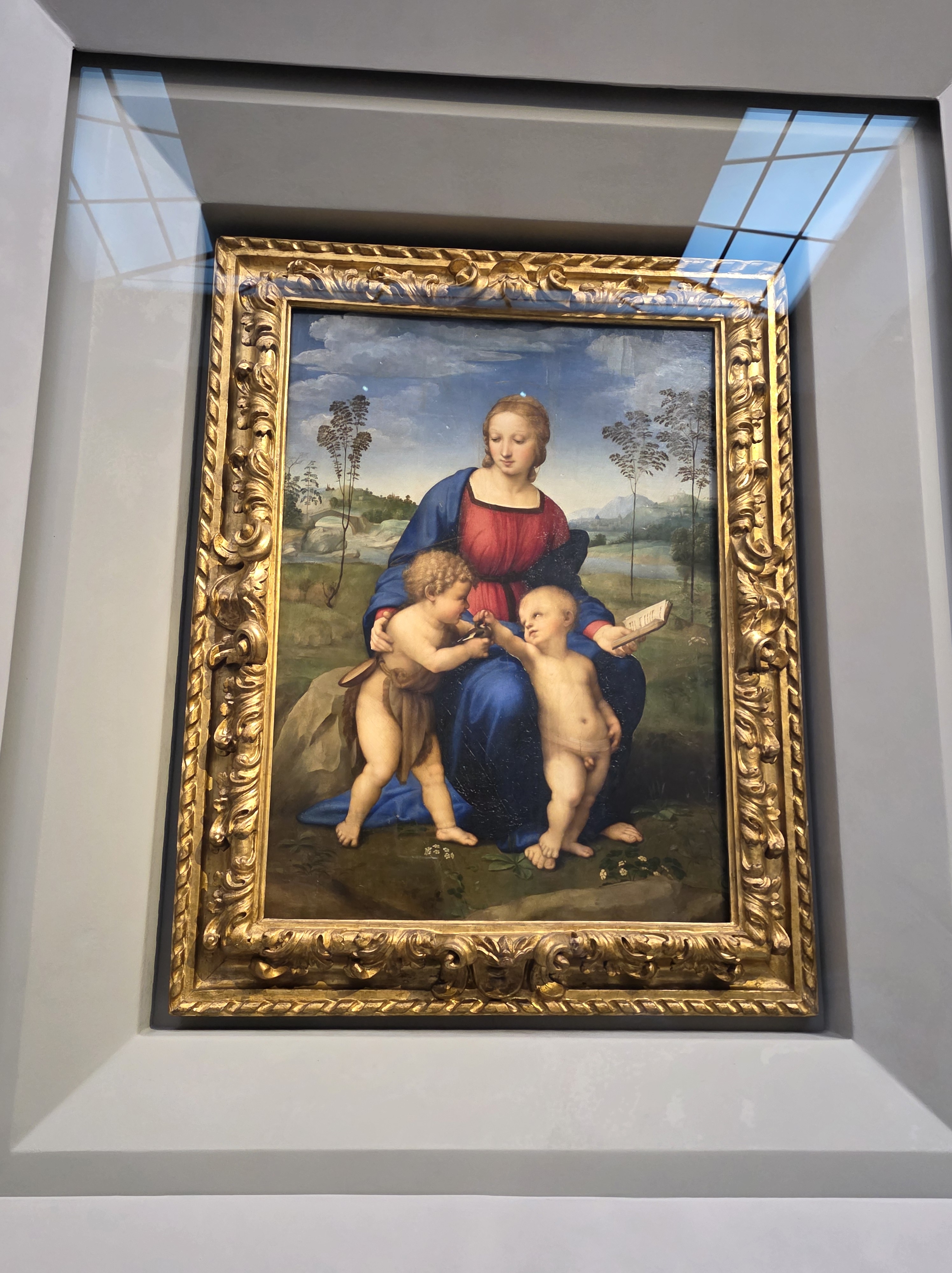
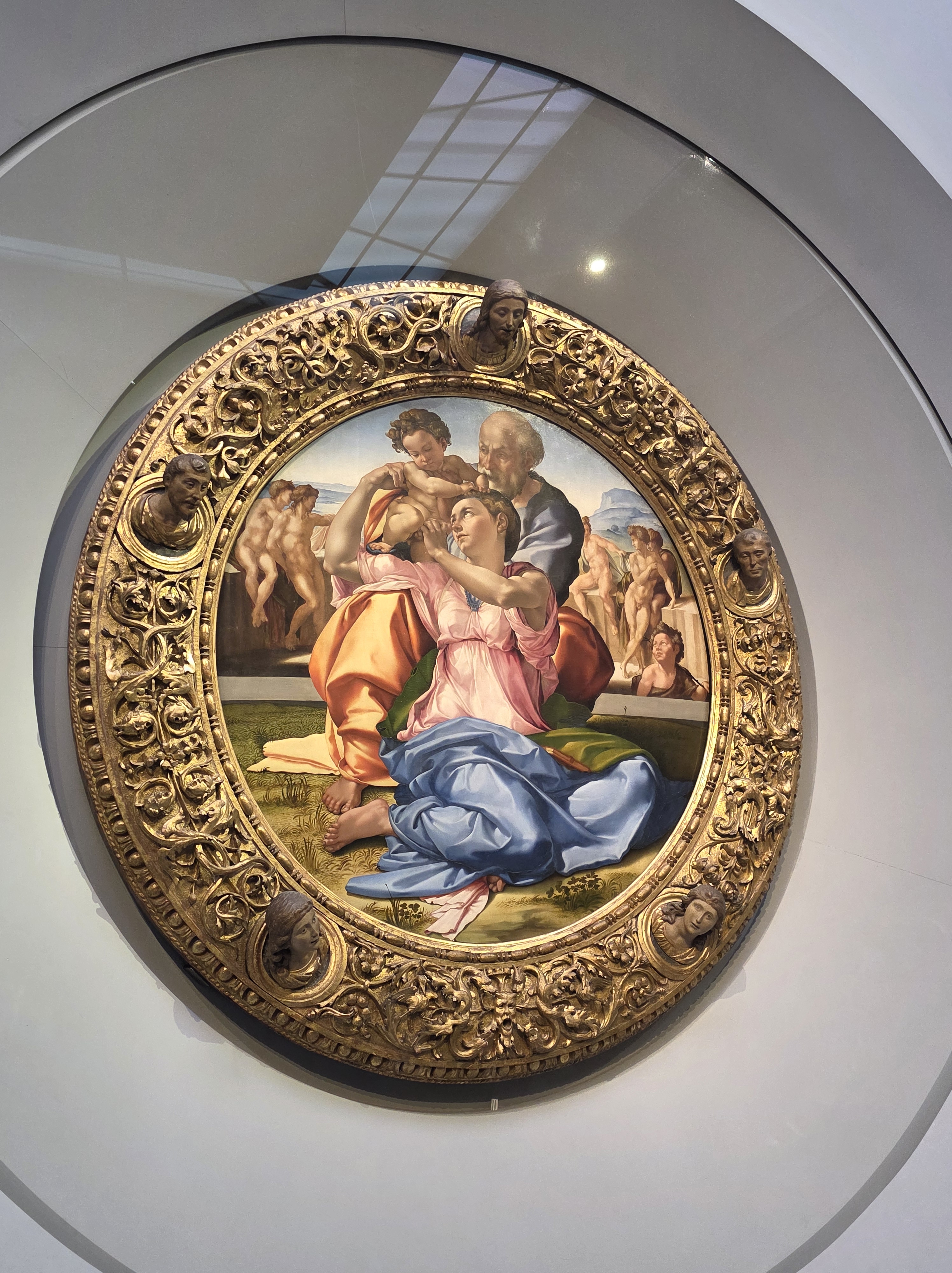
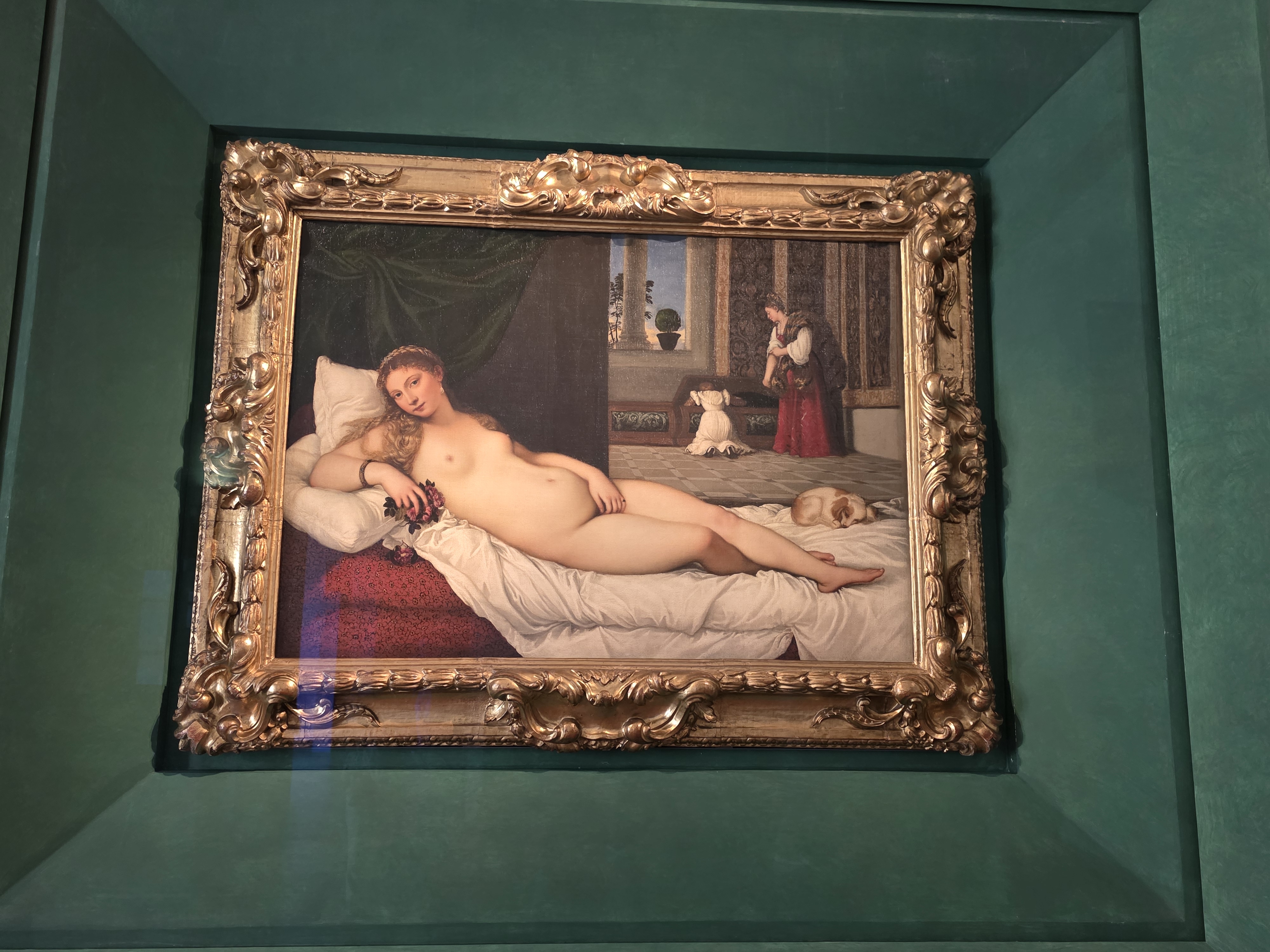
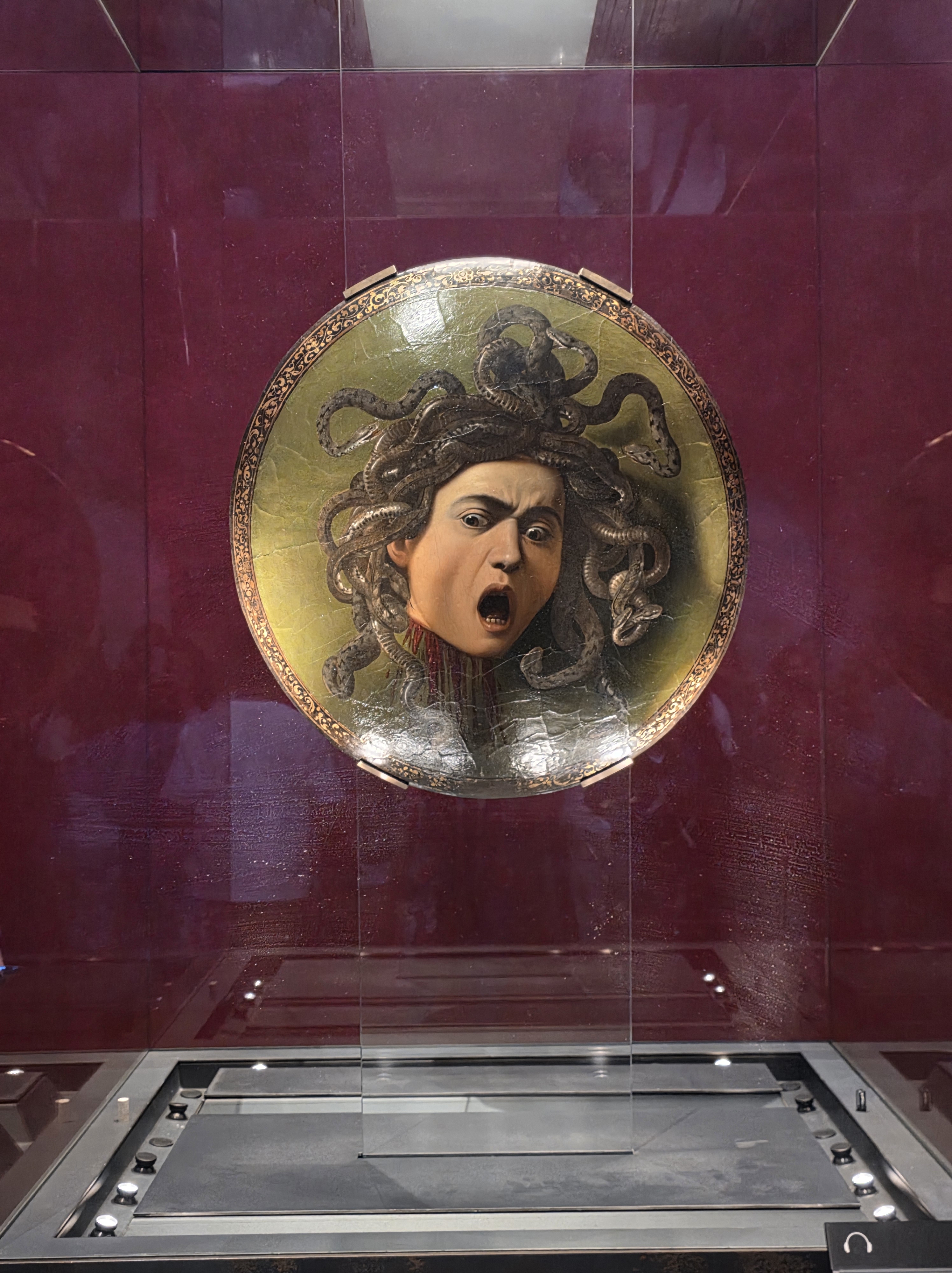
I approached this gallery strategically as well and selected eight paintings I absolutely had to see: Botticelli’s Birth of Venus and Primavera, Lippi’s Madonna and Child with Two Angels, Michelangelo’s Doni Tondo, Raphael’s Madonna of the Goldfinch, Leonardo da Vinci’s Annunciation, Titian’s Venus of Urbino, and Caravaggio’s Medusa. I planned my entire route around these with the help of ChatGPT, to be as efficient as possible and see everything. All the other paintings I saw were along this route. As a result, I enjoyed this visit enormously, which is not always the case with museums and galleries.
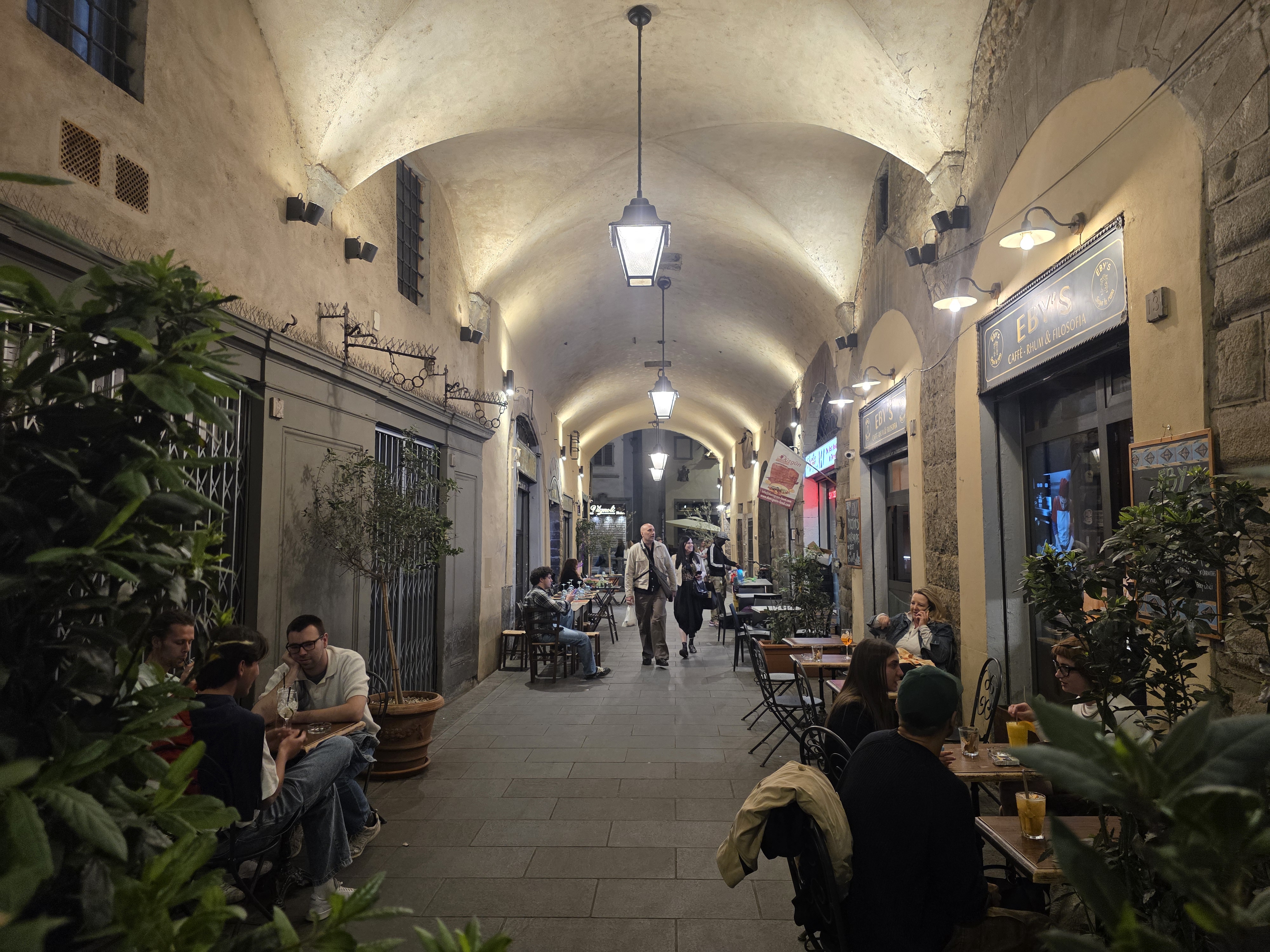
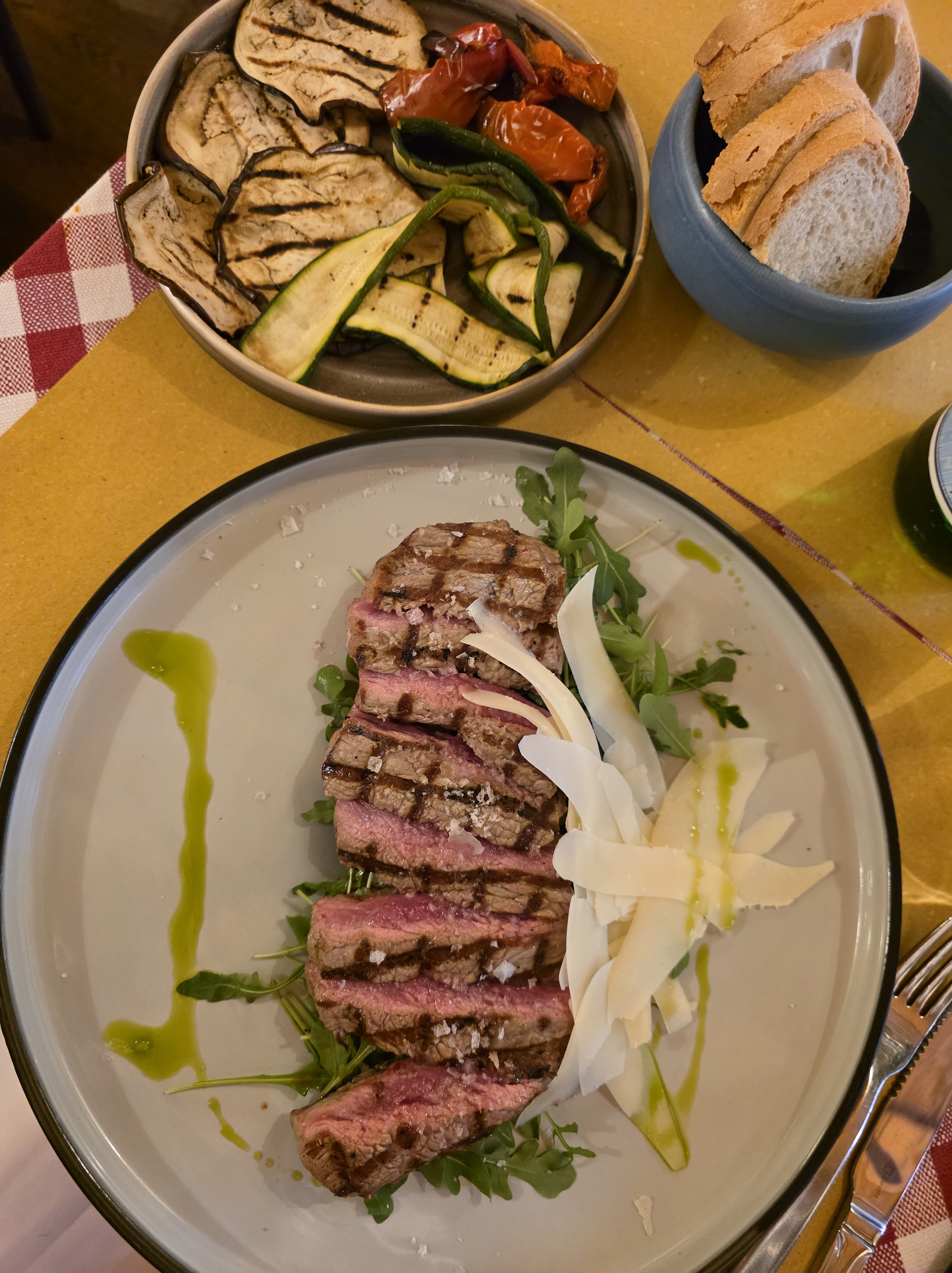
The visit took about an hour and a half, which, in my opinion, is more than enough to avoid getting too tired and not to spread your attention too thinly. Afterwards, feeling completely satisfied, I went for lunch – beef sirloin with arugula and parmesan. This time I skipped wine, and as it soon became clear, that was a very wise decision.

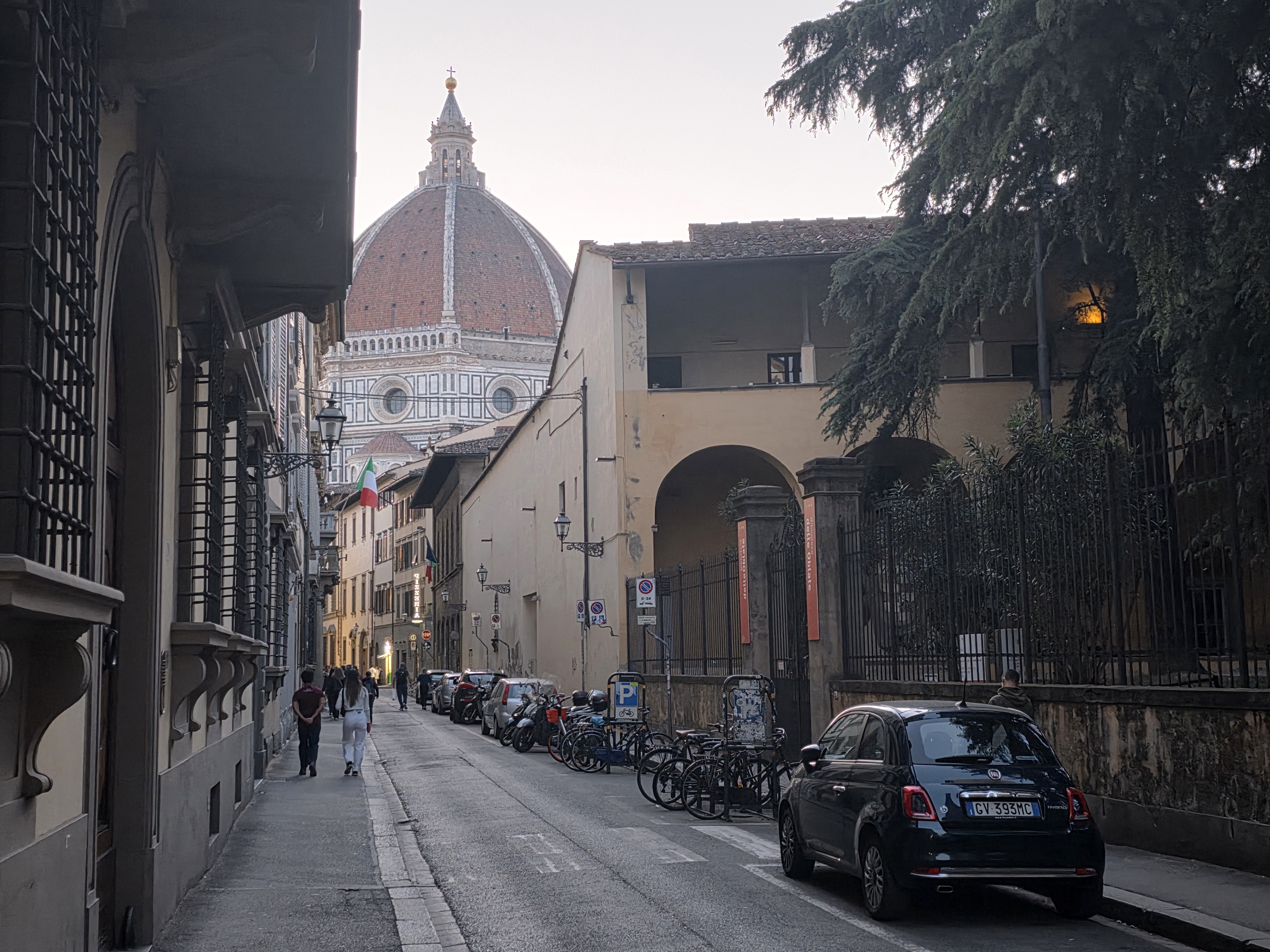
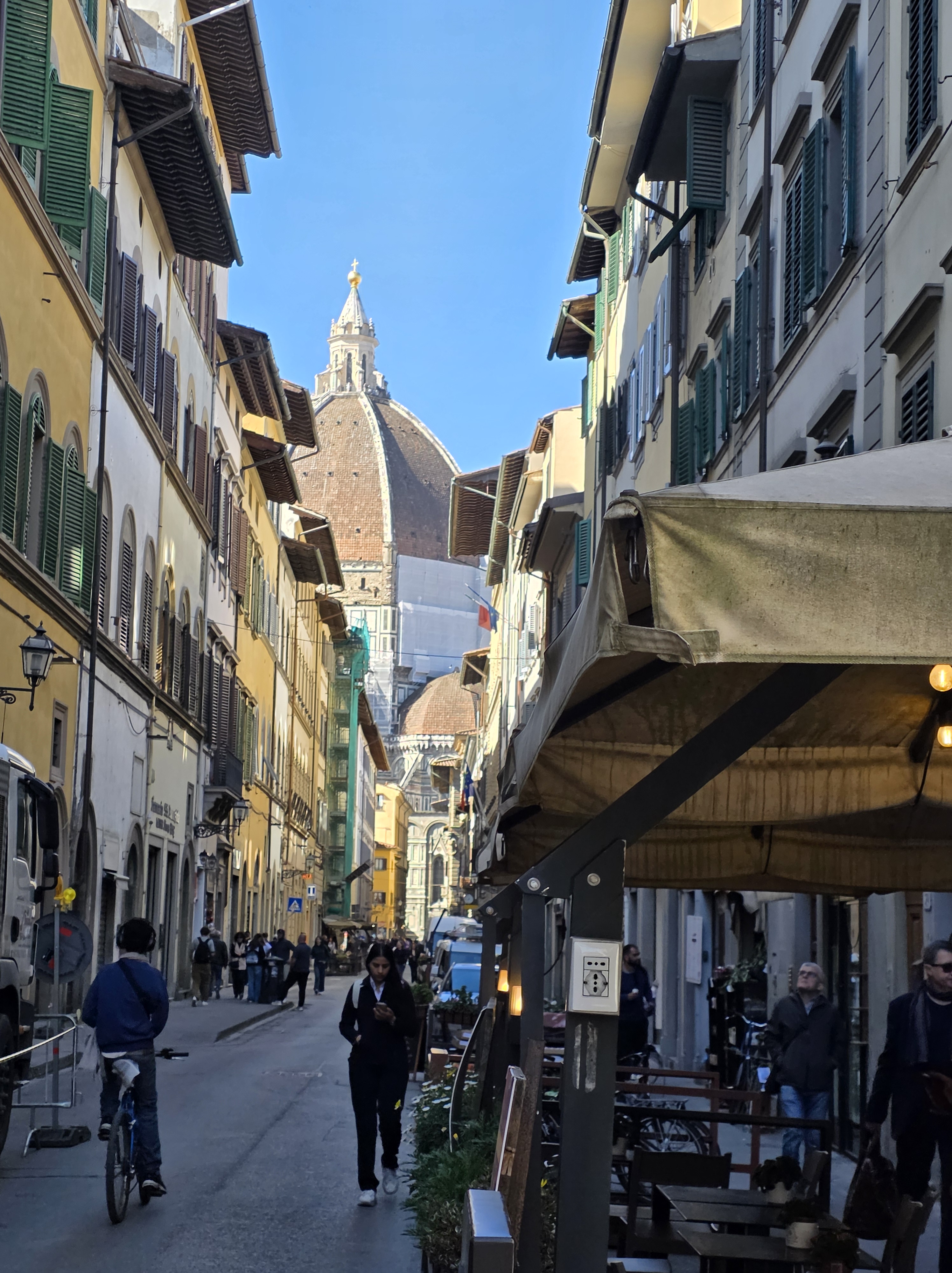
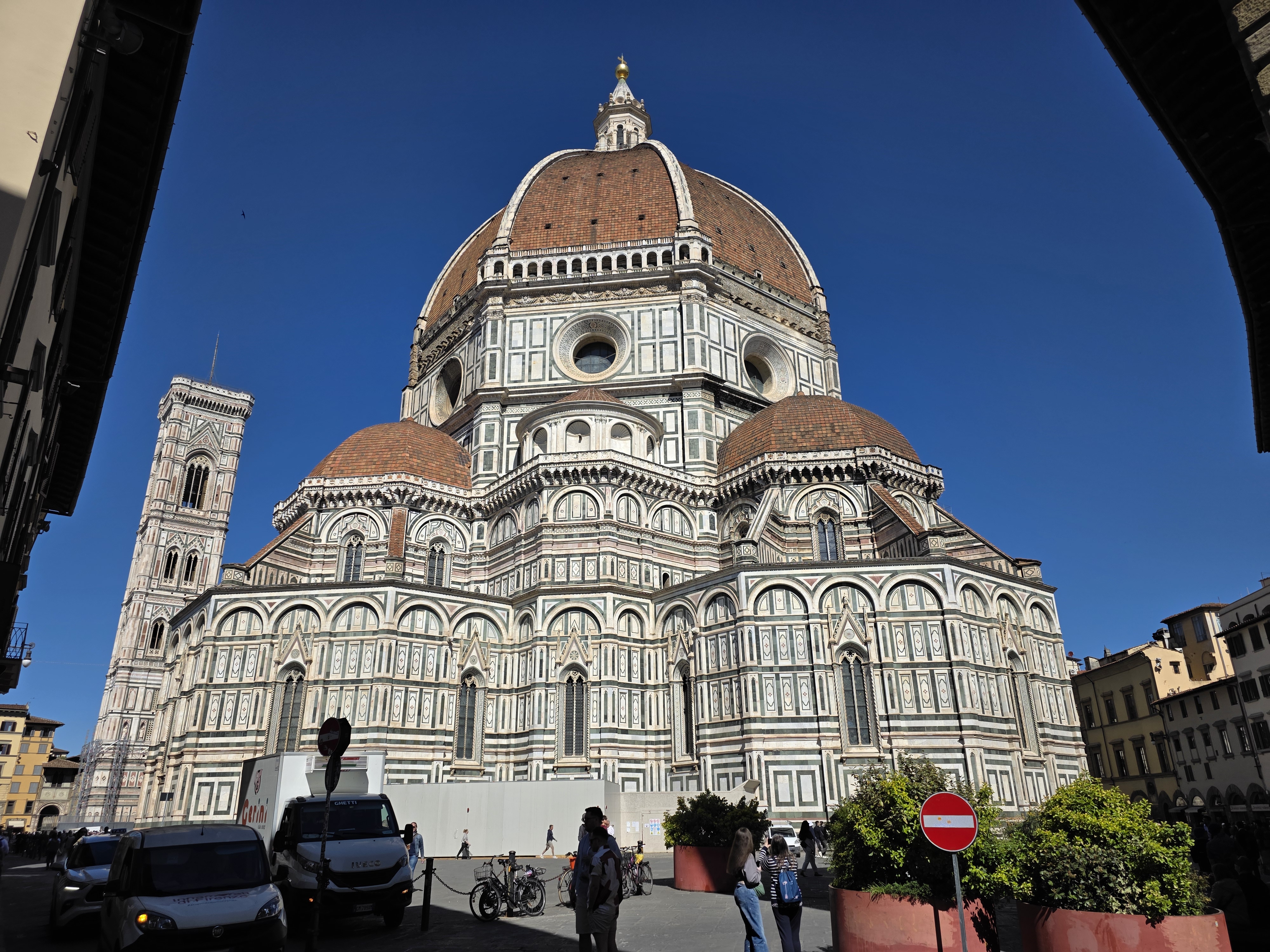
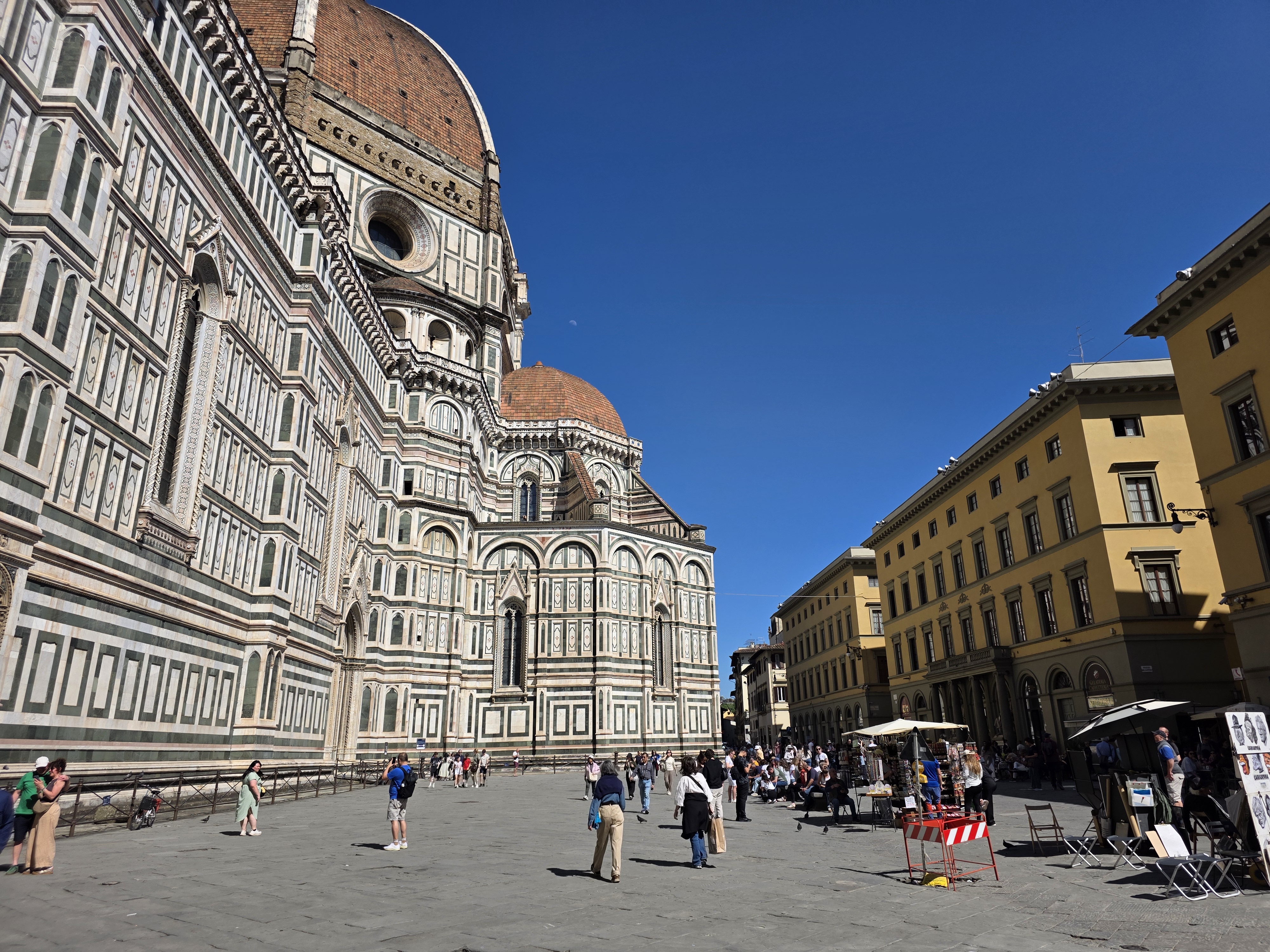
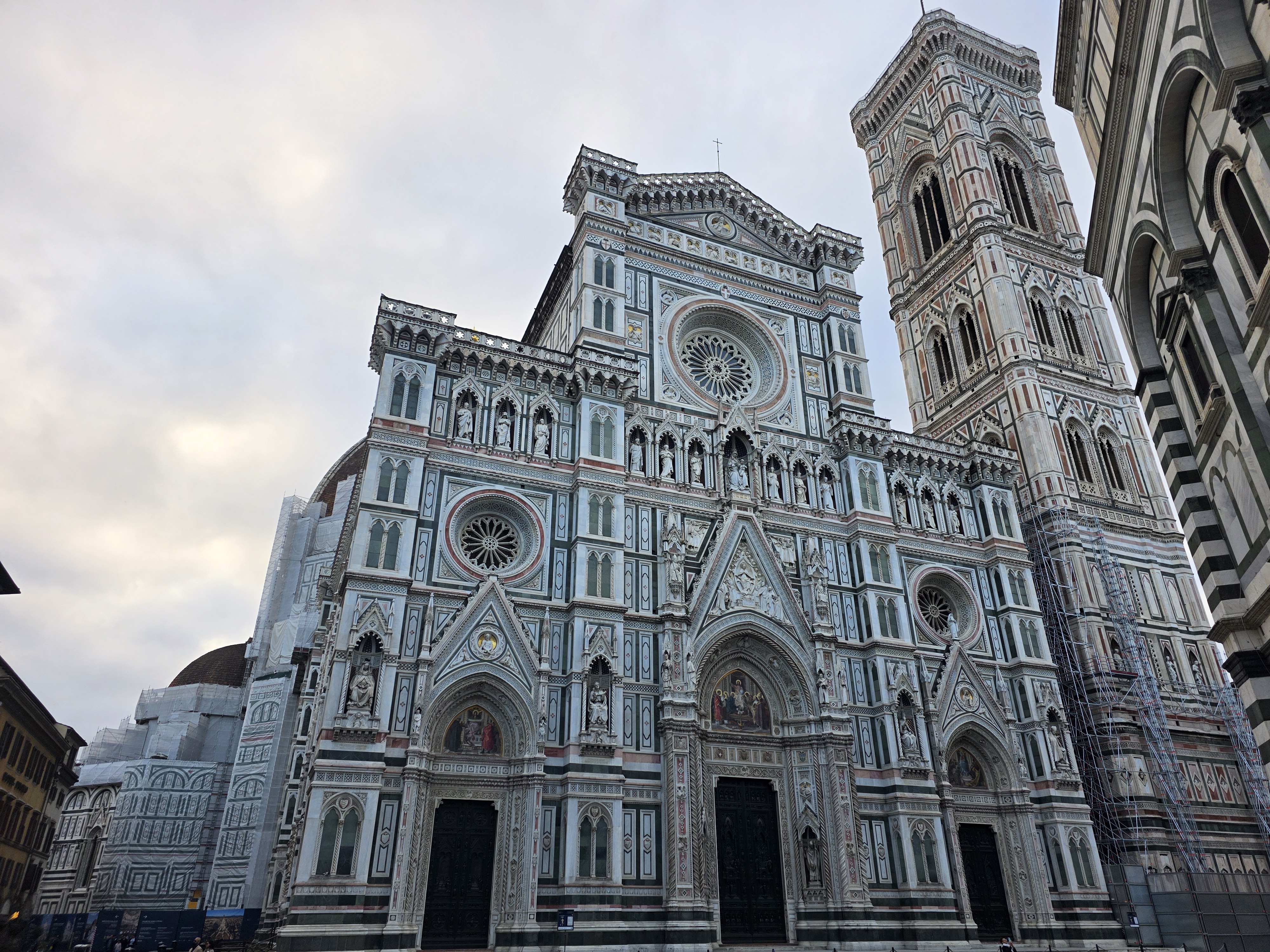
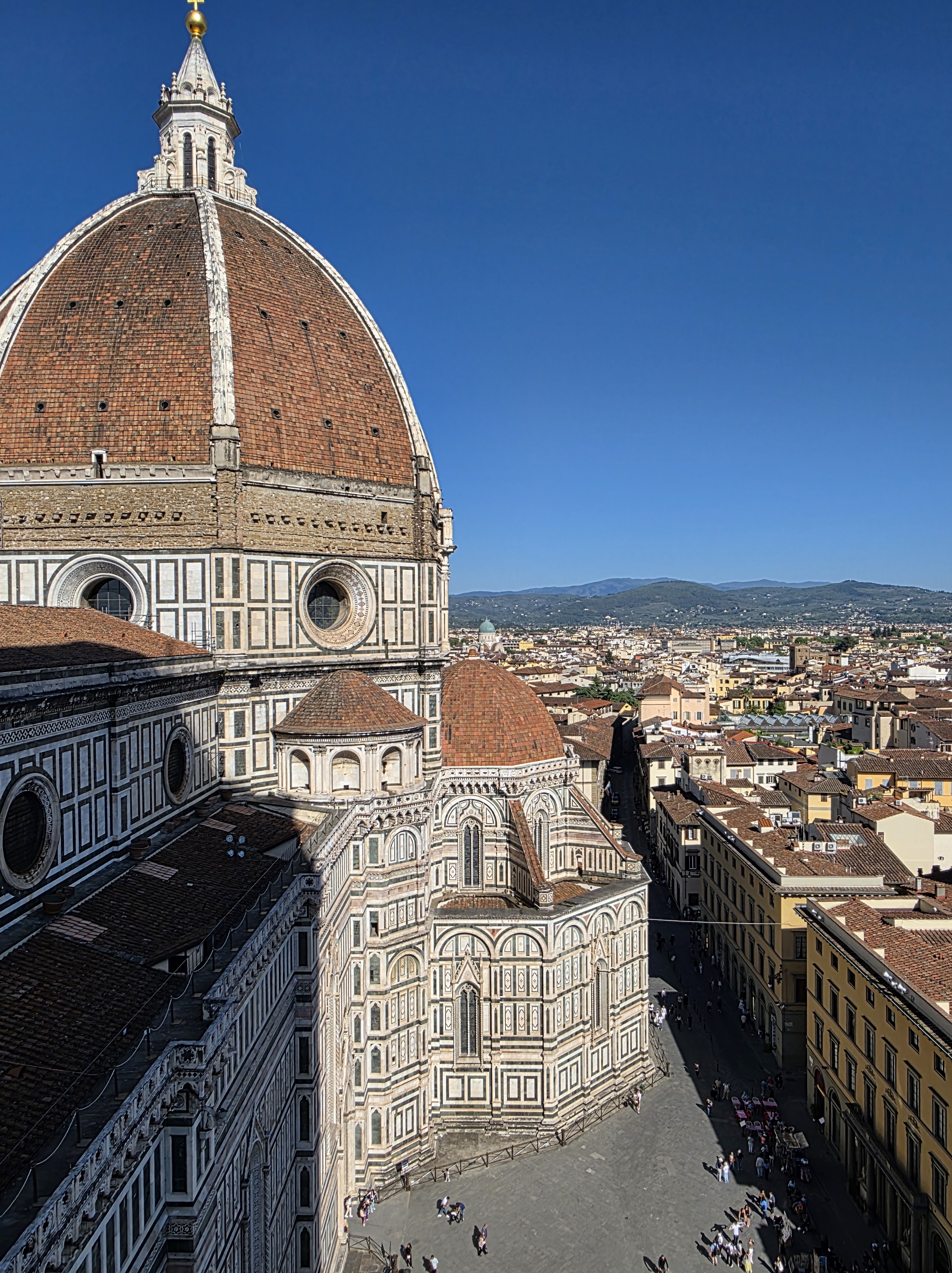
Next on the agenda, with a pre-booked ticket, was climbing Giotto’s Campanile next to the Duomo (the Cathedral of Santa Maria del Fiore) at 4:30pm. I still had plenty of time, which I decided to spend walking around the cathedral to see it from all sides.

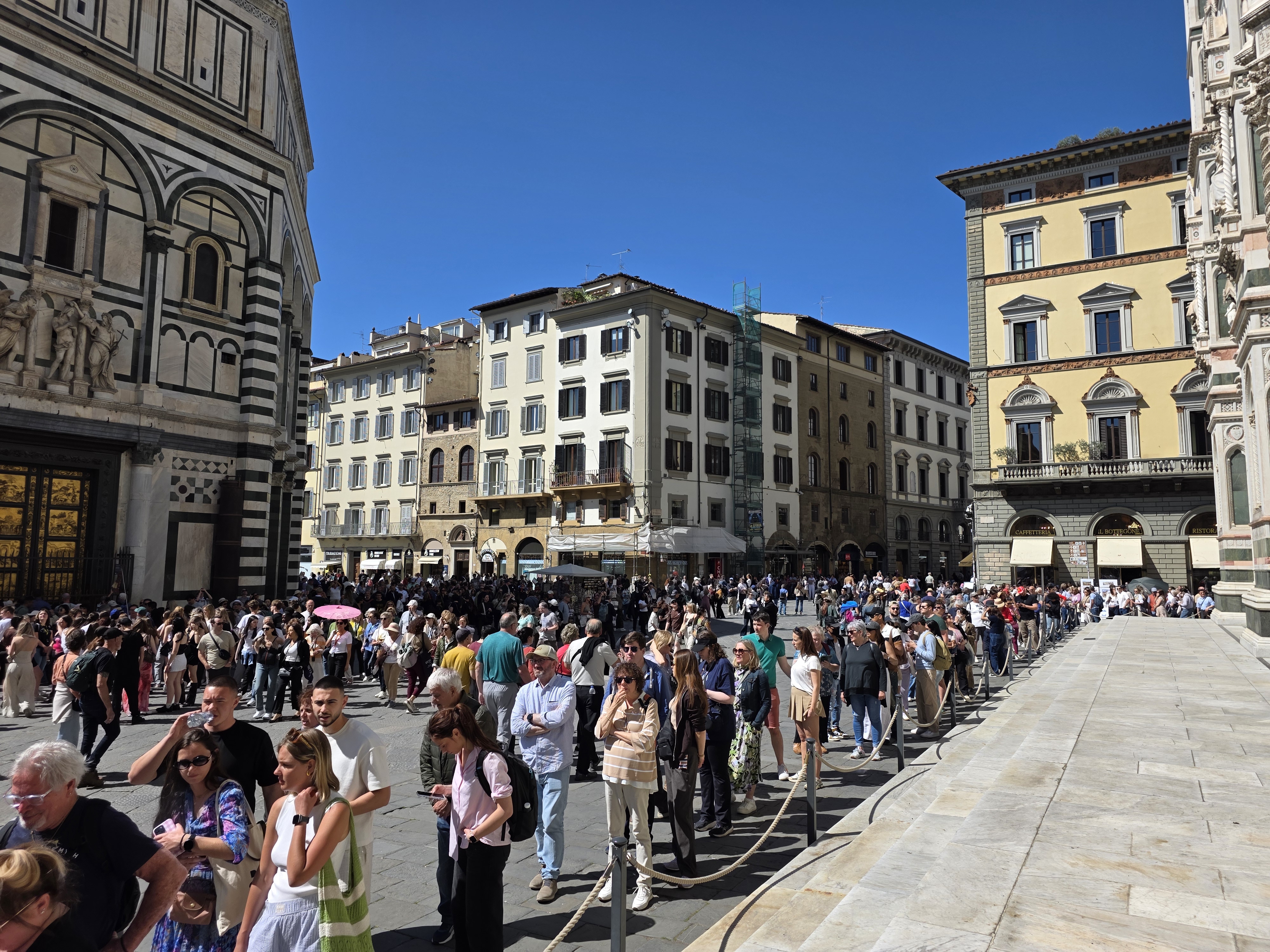
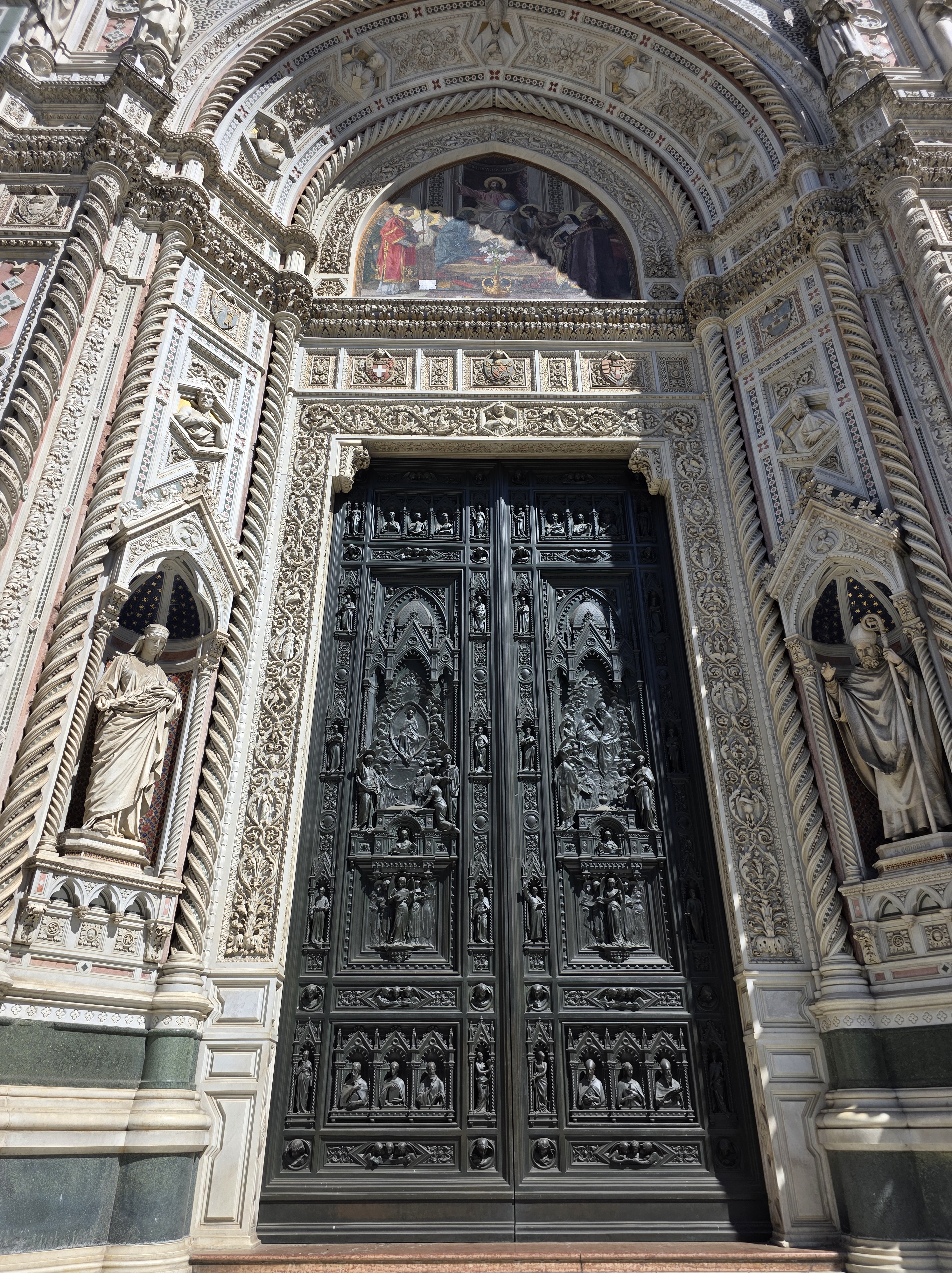
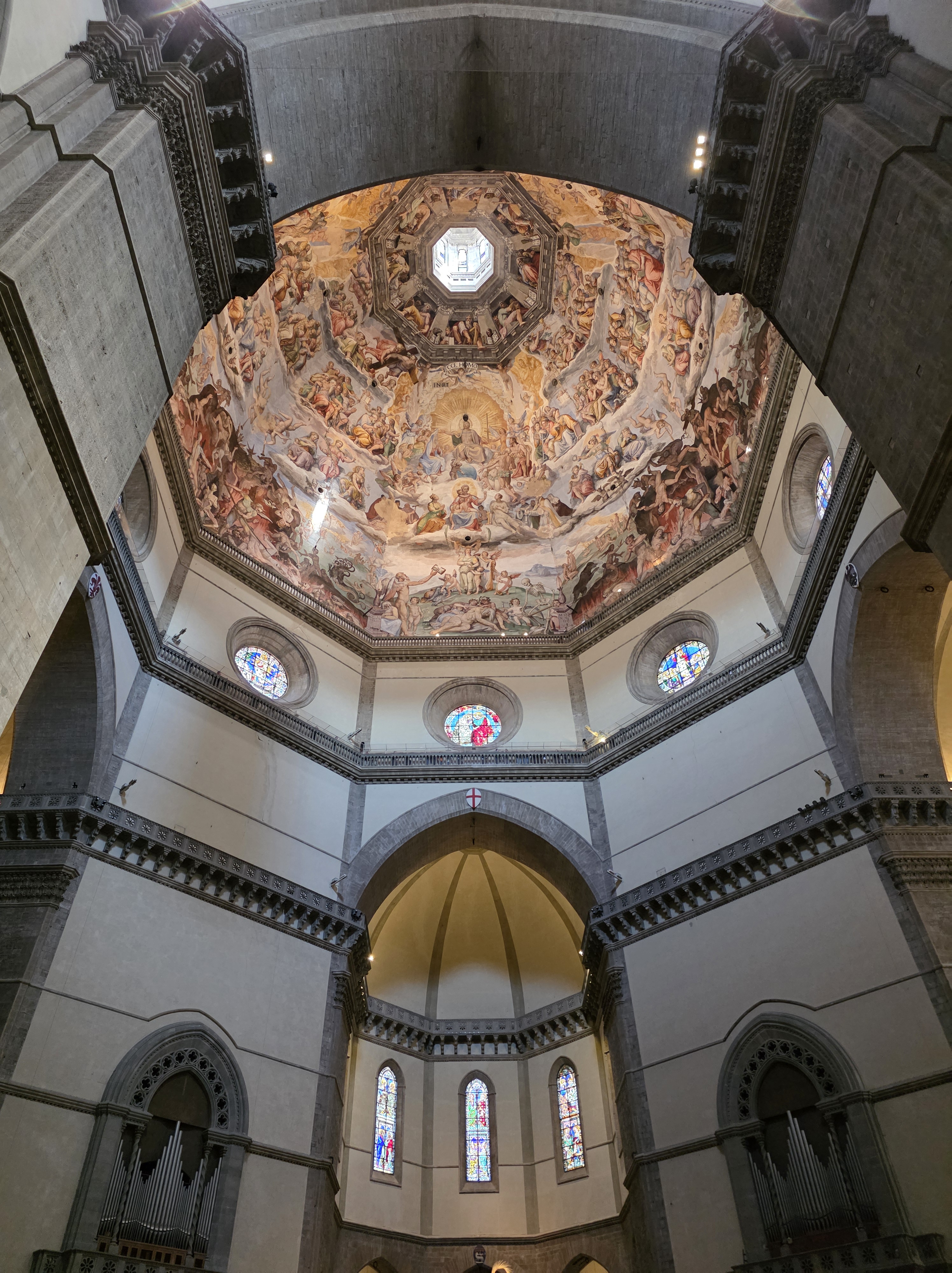
Entry to the cathedral was free, though with a small queue, so I decided to go inside as well. I have to say, from the outside the cathedral is absolutely stunning – I would probably call it one of the most beautiful, if not the most beautiful, I’ve ever seen. But inside, it didn’t strike me as anything extraordinary. I’ve seen much more impressive cathedrals – there’s no comparison at all with the Sagrada Família, for example. The only really striking feature is the dome and its frescoes.


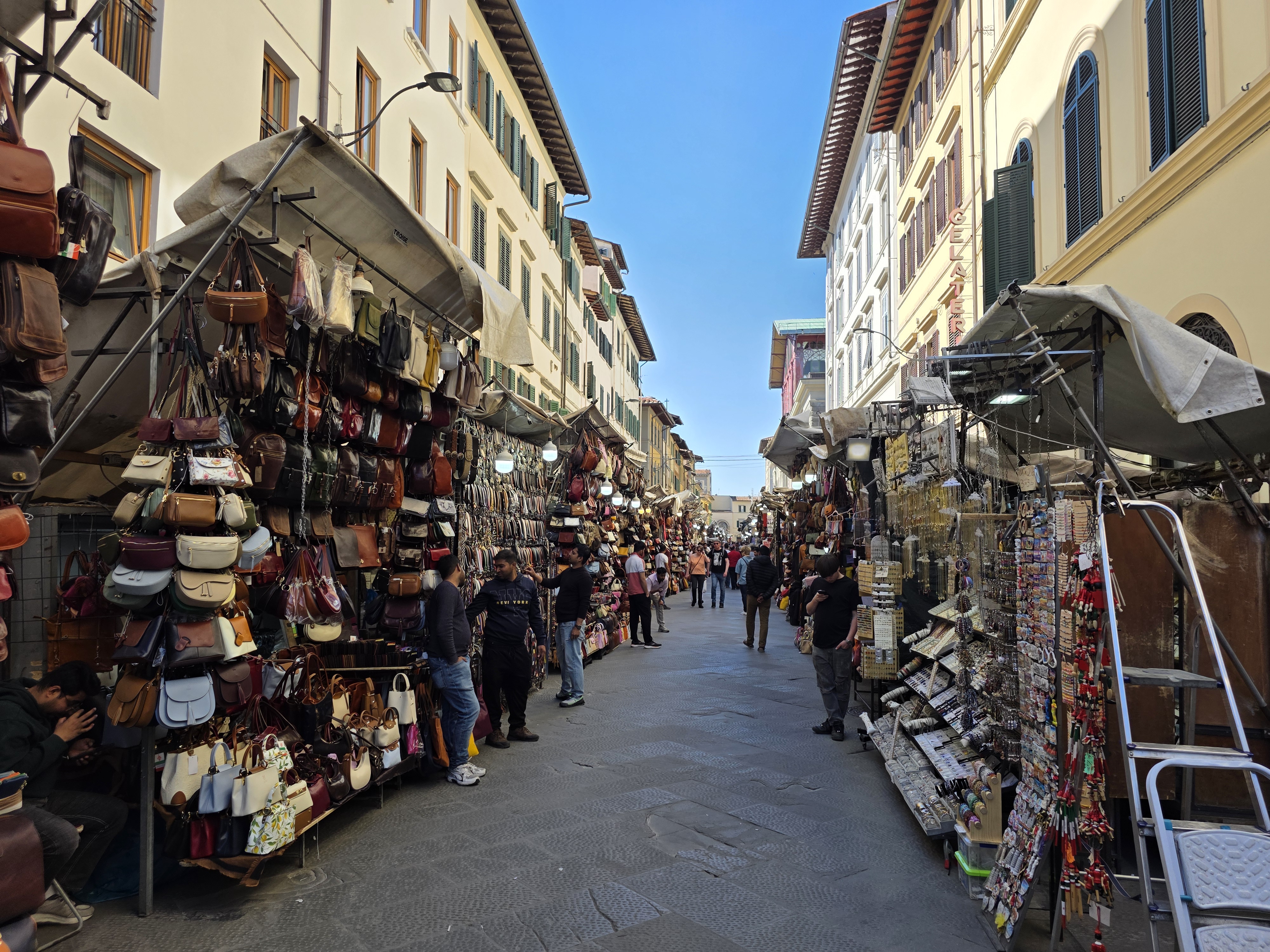
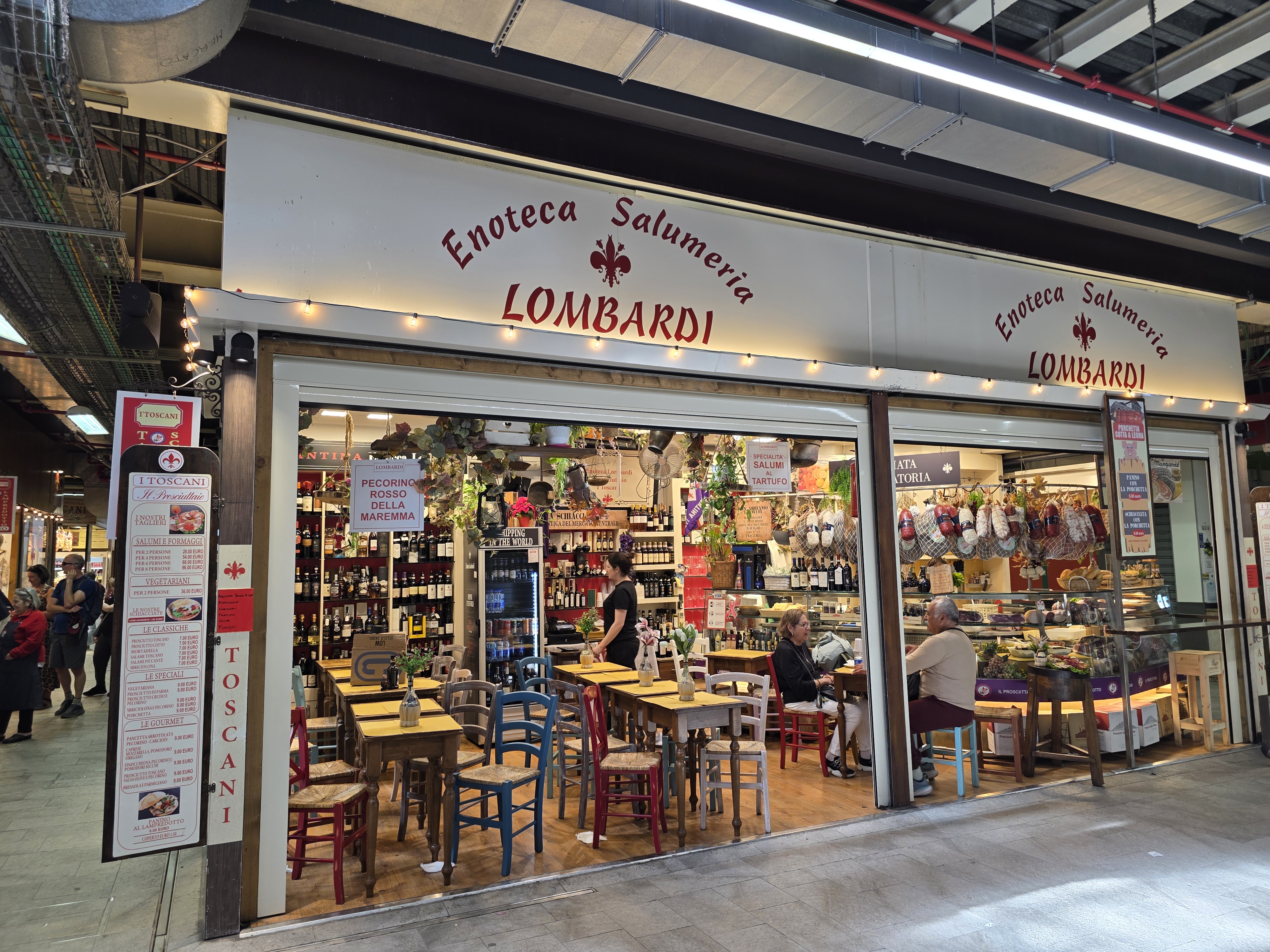
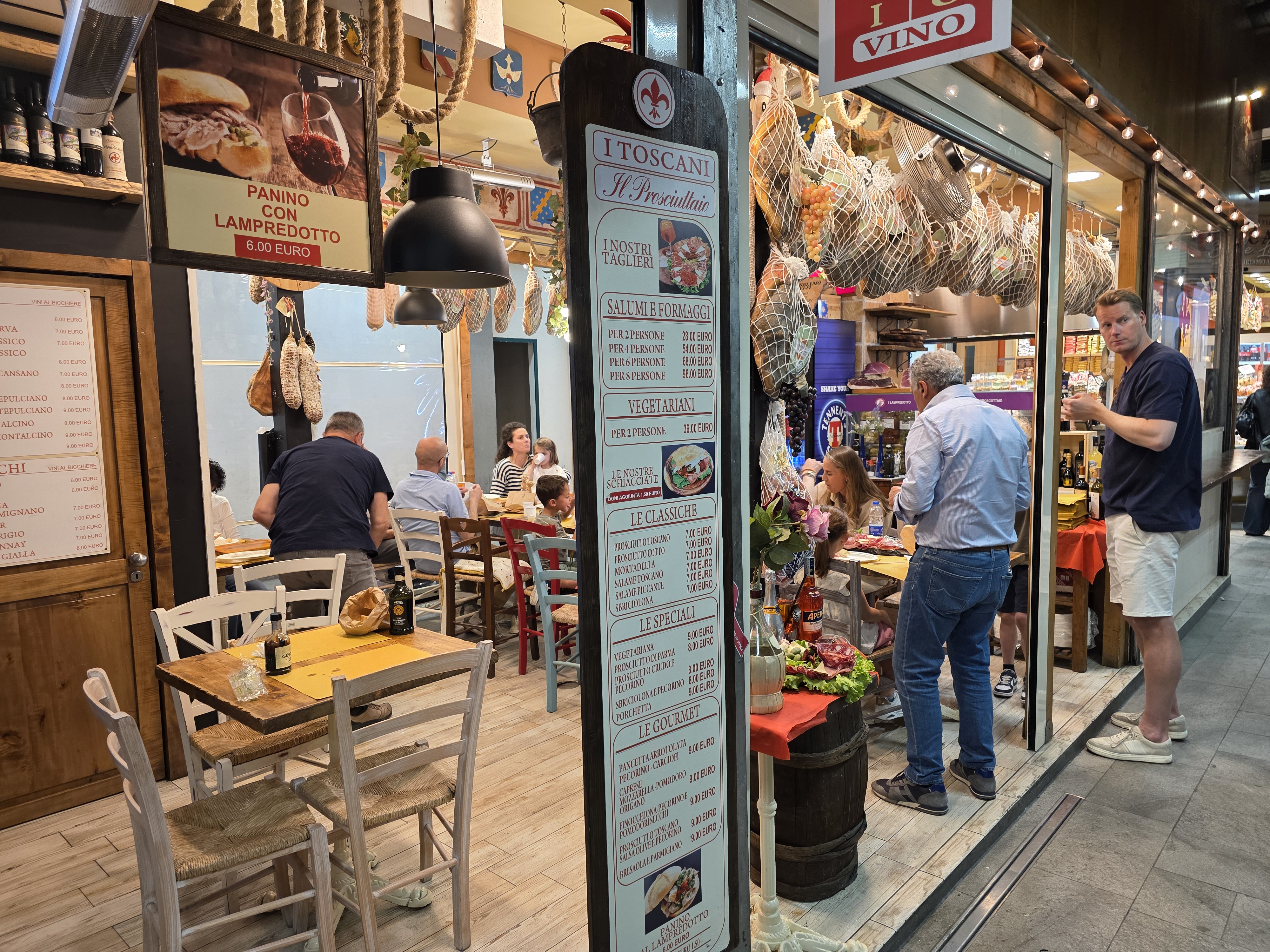
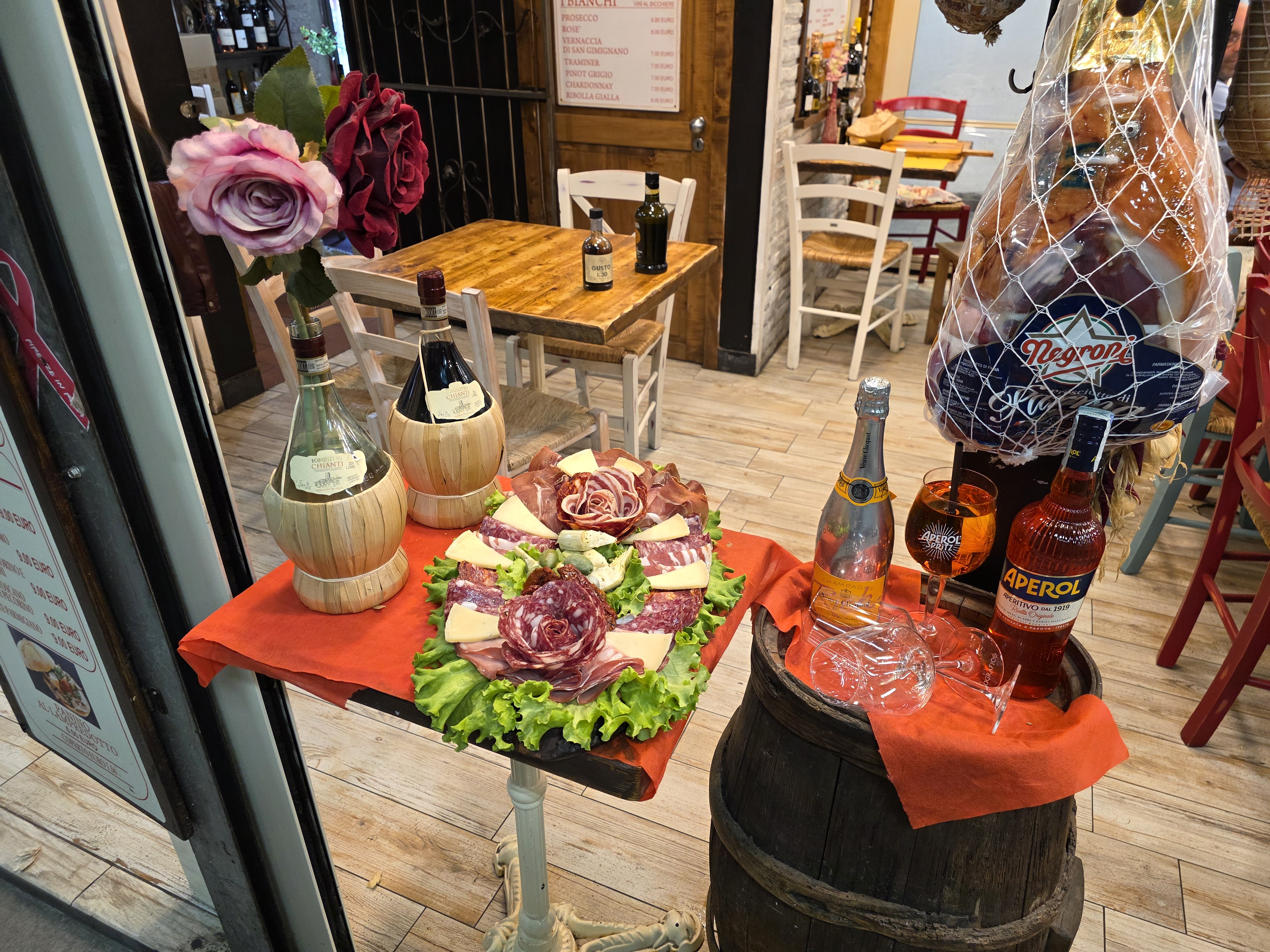
After that, I went to see the San Lorenzo Market. The market consists of an outdoor section with souvenir and leather stalls, and a covered food hall with produce vendors – cheeses, meats, snacks, sandwiches. I imagine it must be packed at lunchtime, but I went in the afternoon – there were people, but not even all the stalls were open anymore.

And finally – the bell tower, and this was quite an adventure. I keep telling myself never to climb another tower again, but somehow I always end up doing it anyway.

Compared to Venice, where the Campanile takes you up and down by lift and all you have to do is enjoy the view, this is nothing like that.

To reach the top viewing platform, you have to climb 414 steps. When I googled it, it didn’t seem too bad, because I’m usually afraid of spiral staircases, and the photos showed straight ones. And they were straight at first. Very narrow, though, with people going both up and down at the same time, squeezing past each other – and there were no railings at all, just bare stone walls.

The worst part was that in the end there was indeed a spiral staircase leading to the very top. I made it up, trying not to think about how I’d get down later.

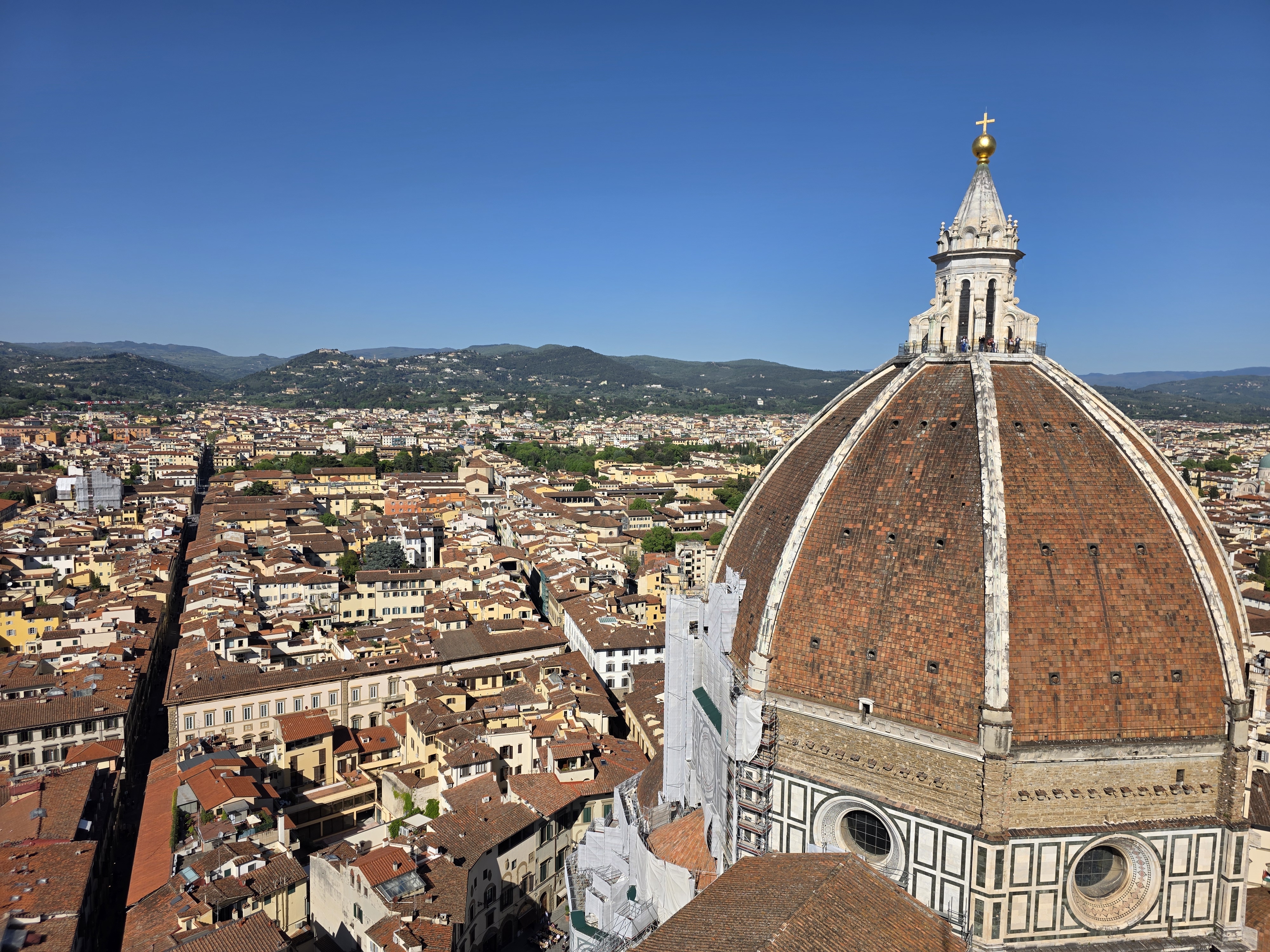
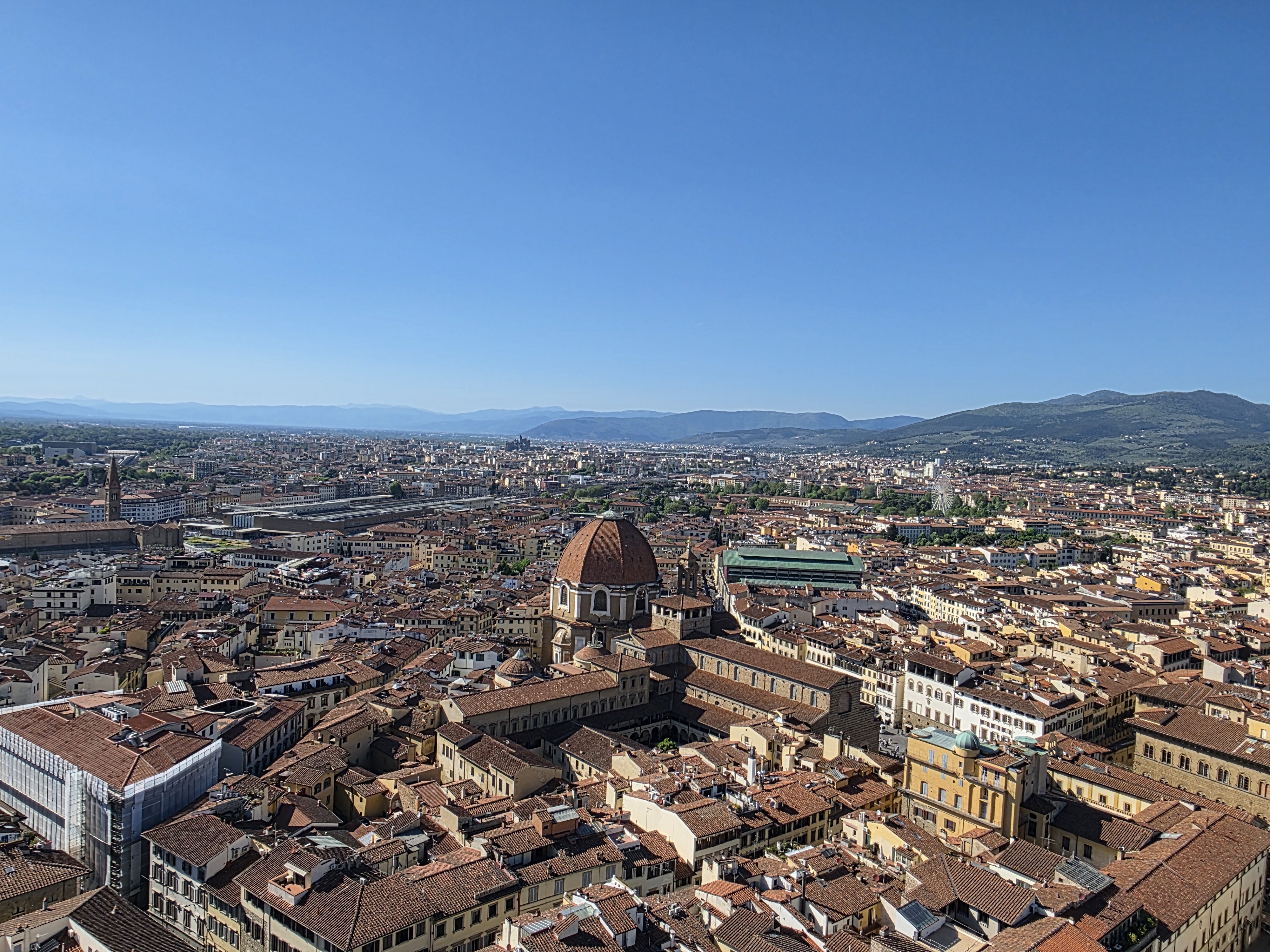
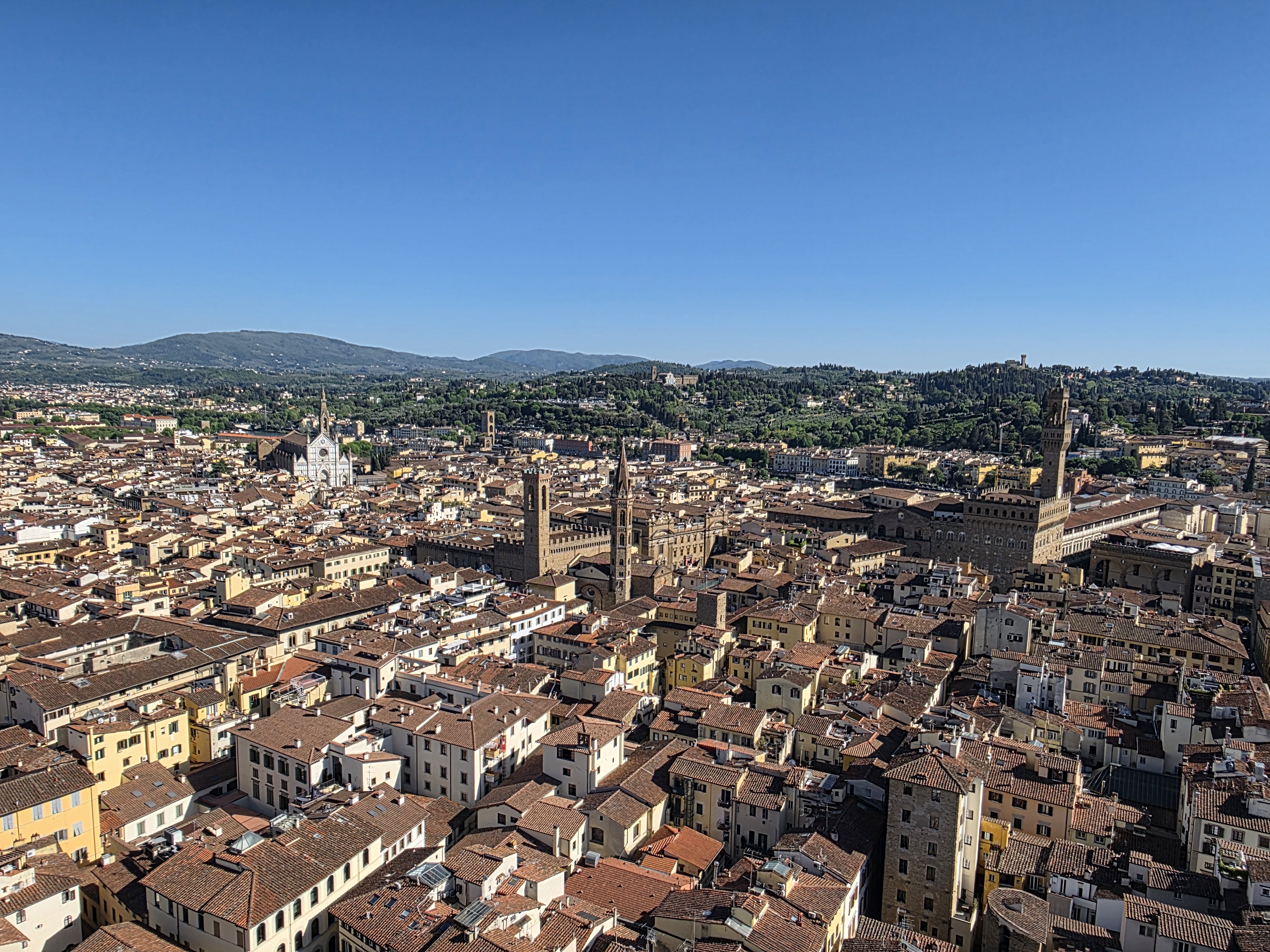
Of course, the view from the top is stunning – you see the Duomo dome at eye level, looking at the people standing there, while they look back at you. But the descent was honestly a nightmare. I had a proper panic attack – it was already scary going down, there was nothing to hold onto, and on top of everything there was a constant flow of people climbing up, so I had to stand in awkward positions waiting for them to pass. At one point, some Italians even asked (in Italian!) if I was scared and offered me their arms to hold onto.

I somehow made it down, and once again I swear I will never climb another tower again! And yes, good thing I didn’t have wine at lunch – this was not exactly fun even when completely sober.

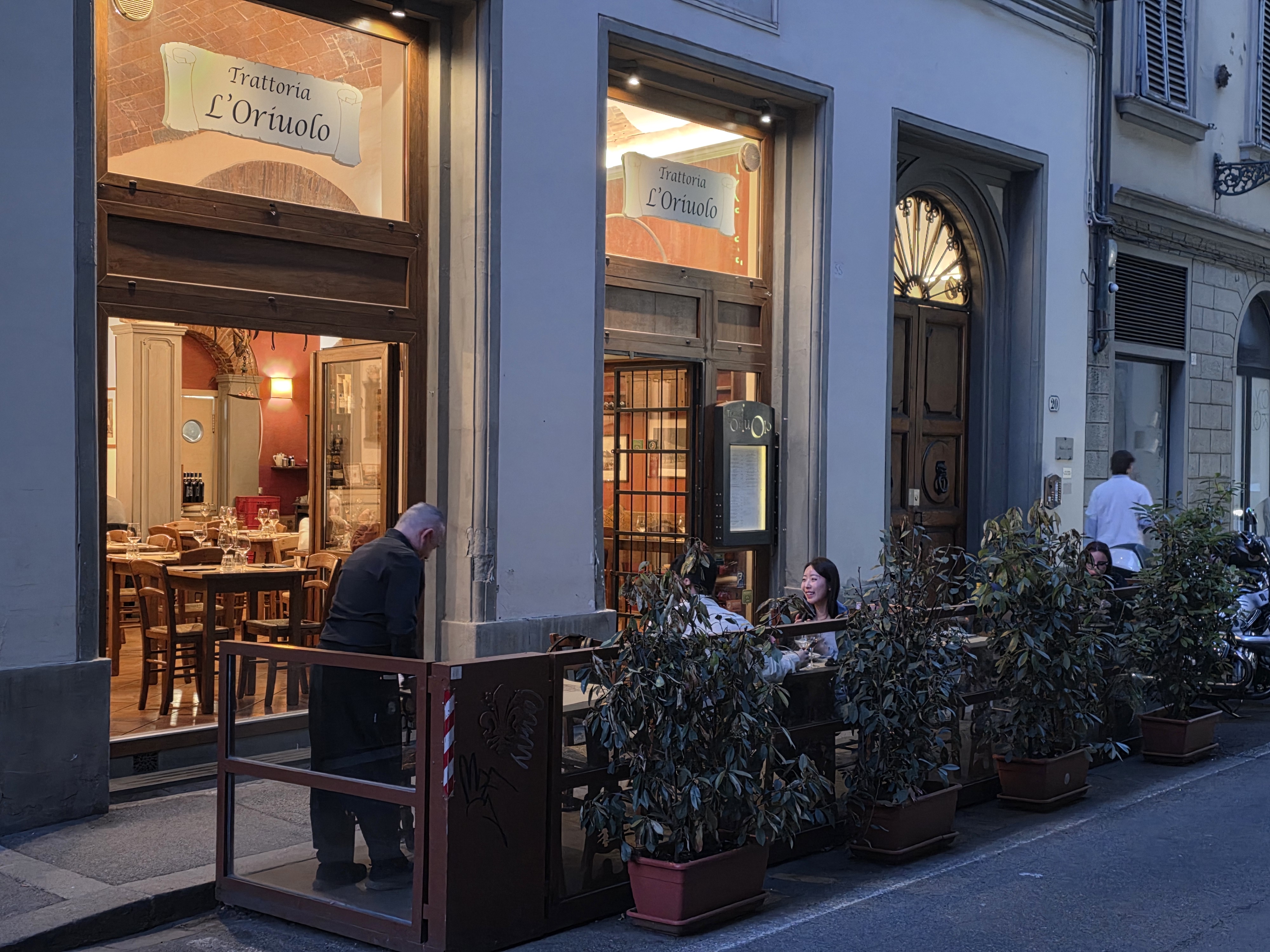
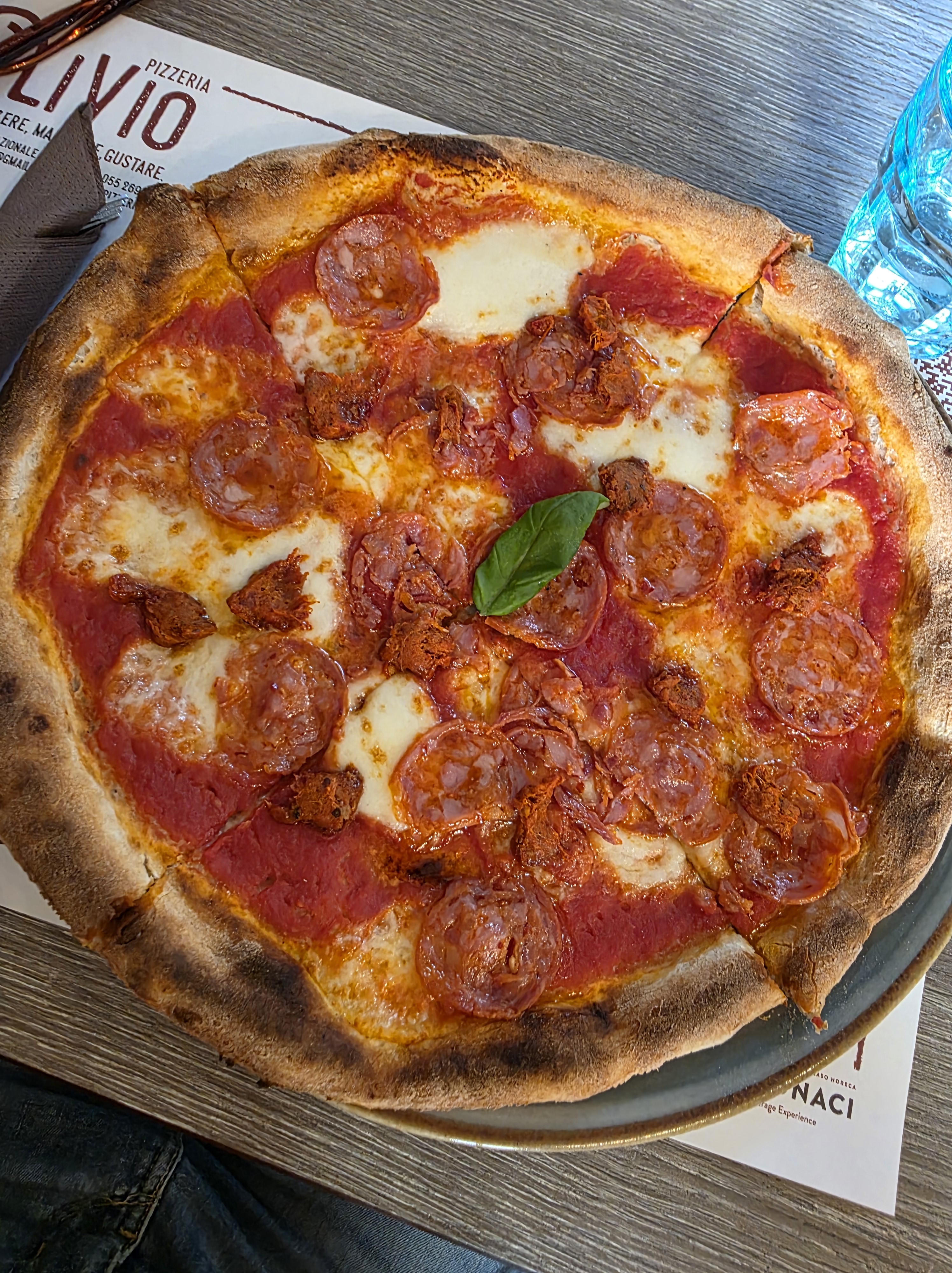
By then it was already getting close to dinner time – a bit early, but I was quite hungry, so I headed to the LiVio pizzeria, which had been recommended to me as one of the best in town. And unlike the rather mediocre pizza I had in Venice, this one really was excellent.


My food adventures didn’t end there, because after dinner I decided to have a limoncello spritz elsewhere, and was unexpectedly served a complimentary bruschetta with tomatoes.

In general, I’m definitely eating much more than usual here – more fat, more sugar, more carbs in general. But I believe that any trip is also a chance to immerse yourself in the culinary culture of a place, alongside everything else, so I don’t regret anything!

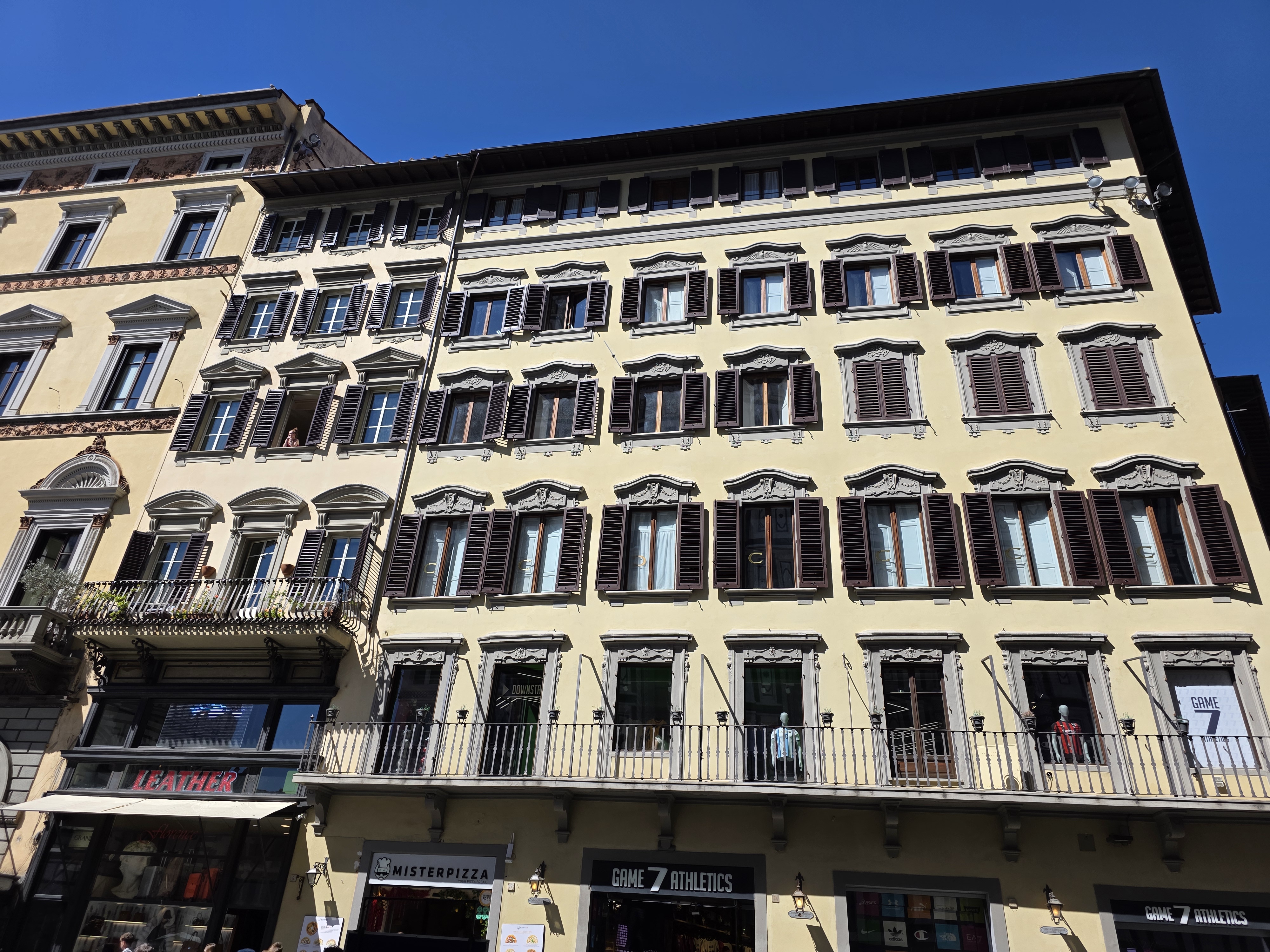
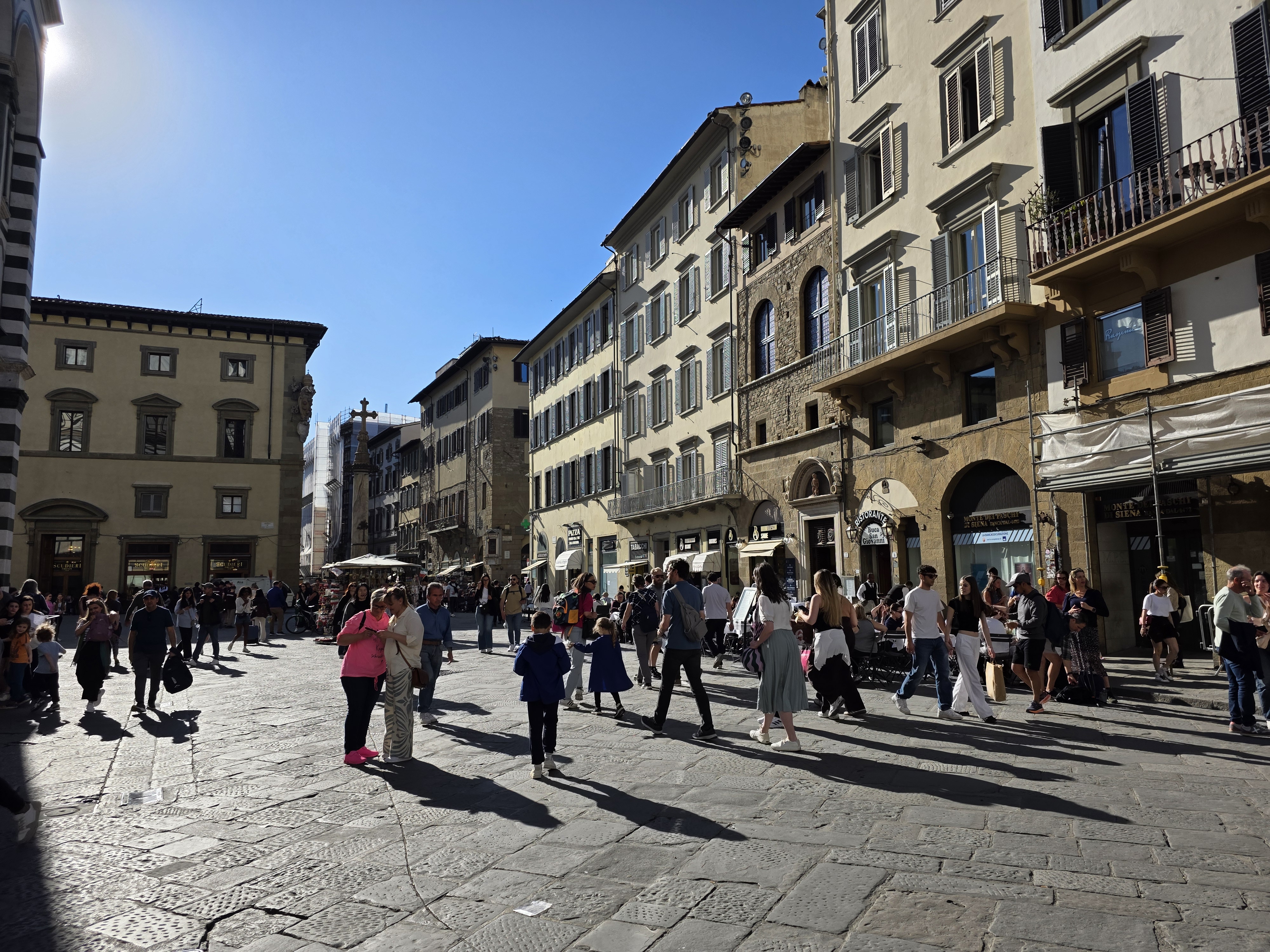
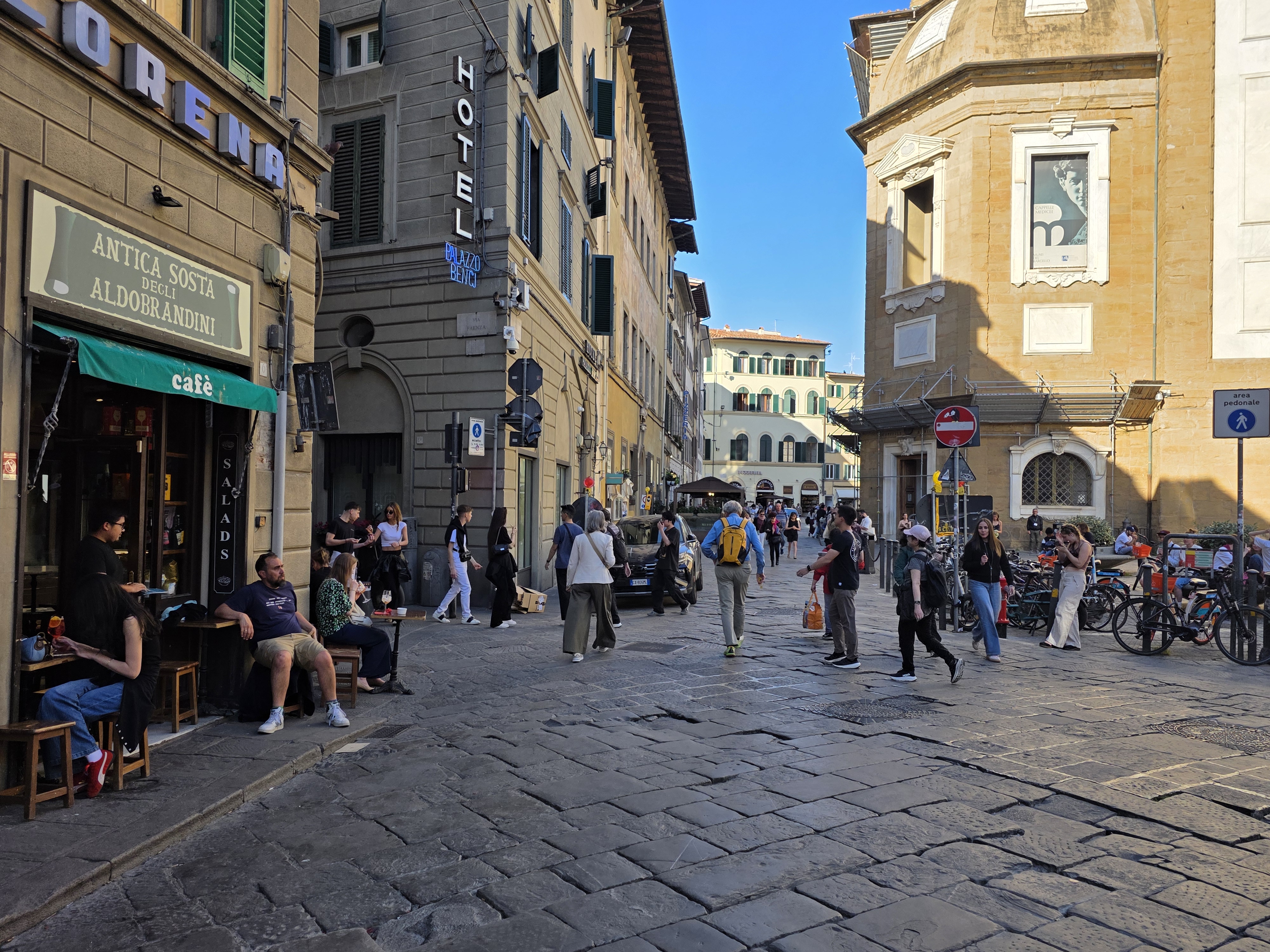
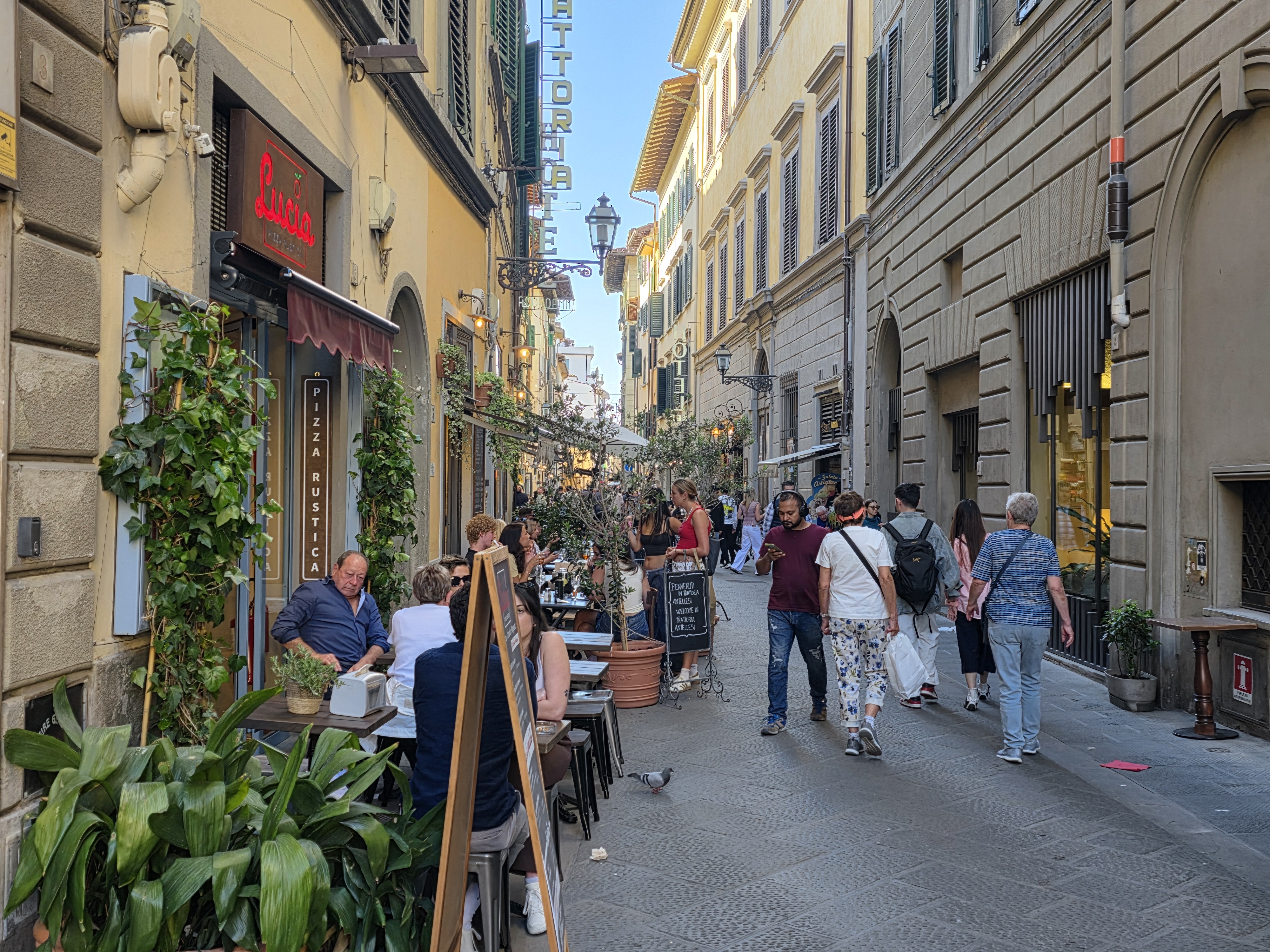
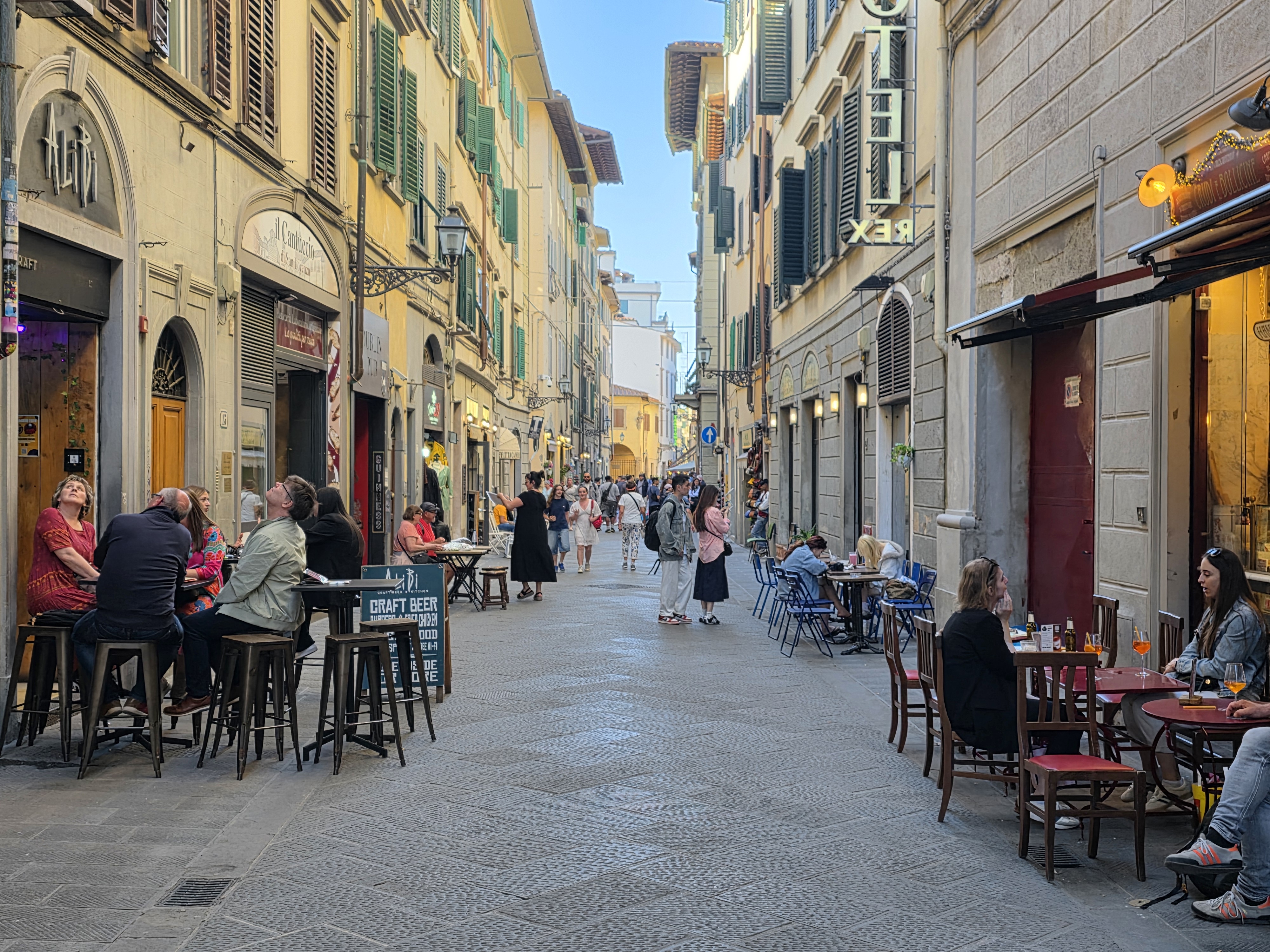
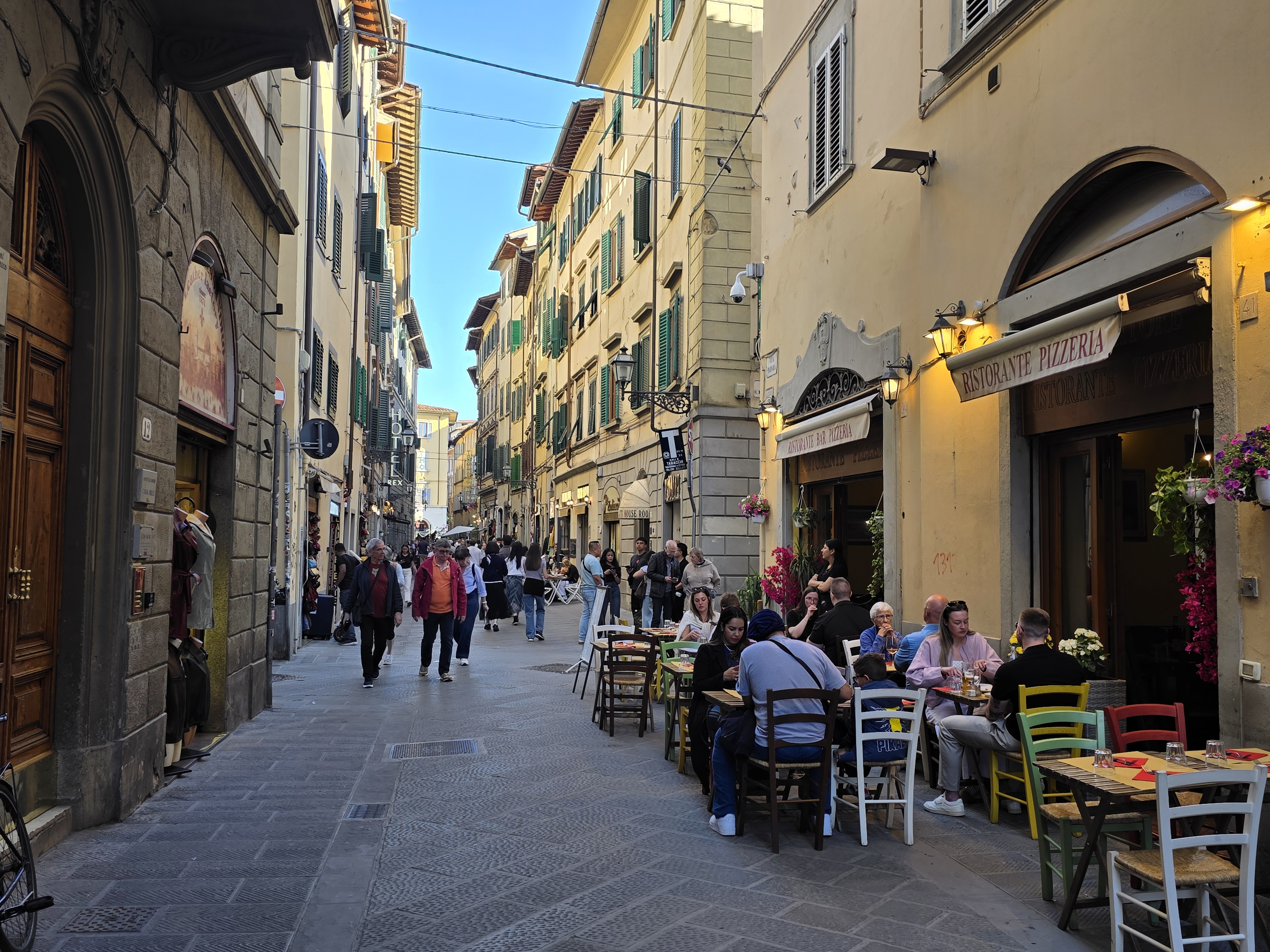
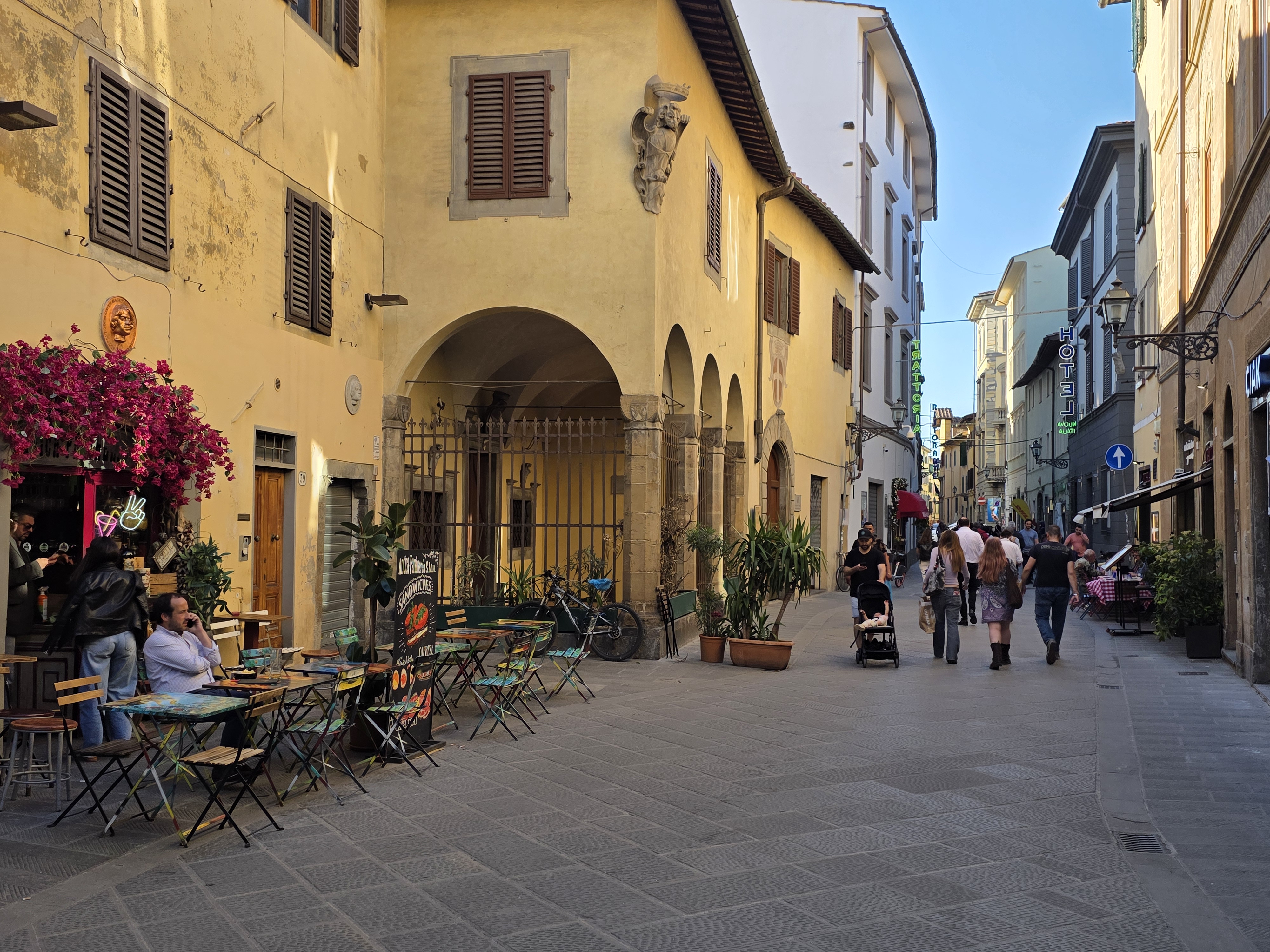
After all that, I wandered around a bit more near my hotel – exploring parts of the area I hadn’t seen yet.

Posted in English, Europe, Porto, Portugal

Portugal – Day 5

РУССКОЯЗЫЧНАЯ ВЕРСИЯ ПО ЭТОЙ ССЫЛКЕ. CLICK HERE FOR RUSSIAN VERSION.

April 19 – Friday

On the last day, we were very unlucky with the weather. Rain had been in the forecast all week, and it did come – fortunately, only in the afternoon.

We got up, had breakfast, and then made a second attempt to get into the Majestic Café and have coffee there. We got in, but there was nothing special about it – all its popularity is nothing more than tourist hype. A café like any other.

Then we tried to get into Livraria Lello – the most famous bookstore in Porto, said to have inspired the idea of Hogwarts. As is known, J.K. Rowling lived in Porto for a while, and it was supposedly in the Majestic Café that she wrote Harry Potter. To be honest, I can’t imagine how anyone could write in such a loud and pompous place, but then again, I’m not Rowling! We didn’t get into Livraria – same story, a huge queue. Later we found out that entry is paid and costs 5 euros, but we gave up anyway.

We decided to go shopping and went to the Via Rua Catarina shopping centre, where we did quite well. There are both local Portuguese brands and European ones. We also had lunch at the food court. And when we came out, it was already pouring rain. We had to buy umbrellas right then and there.

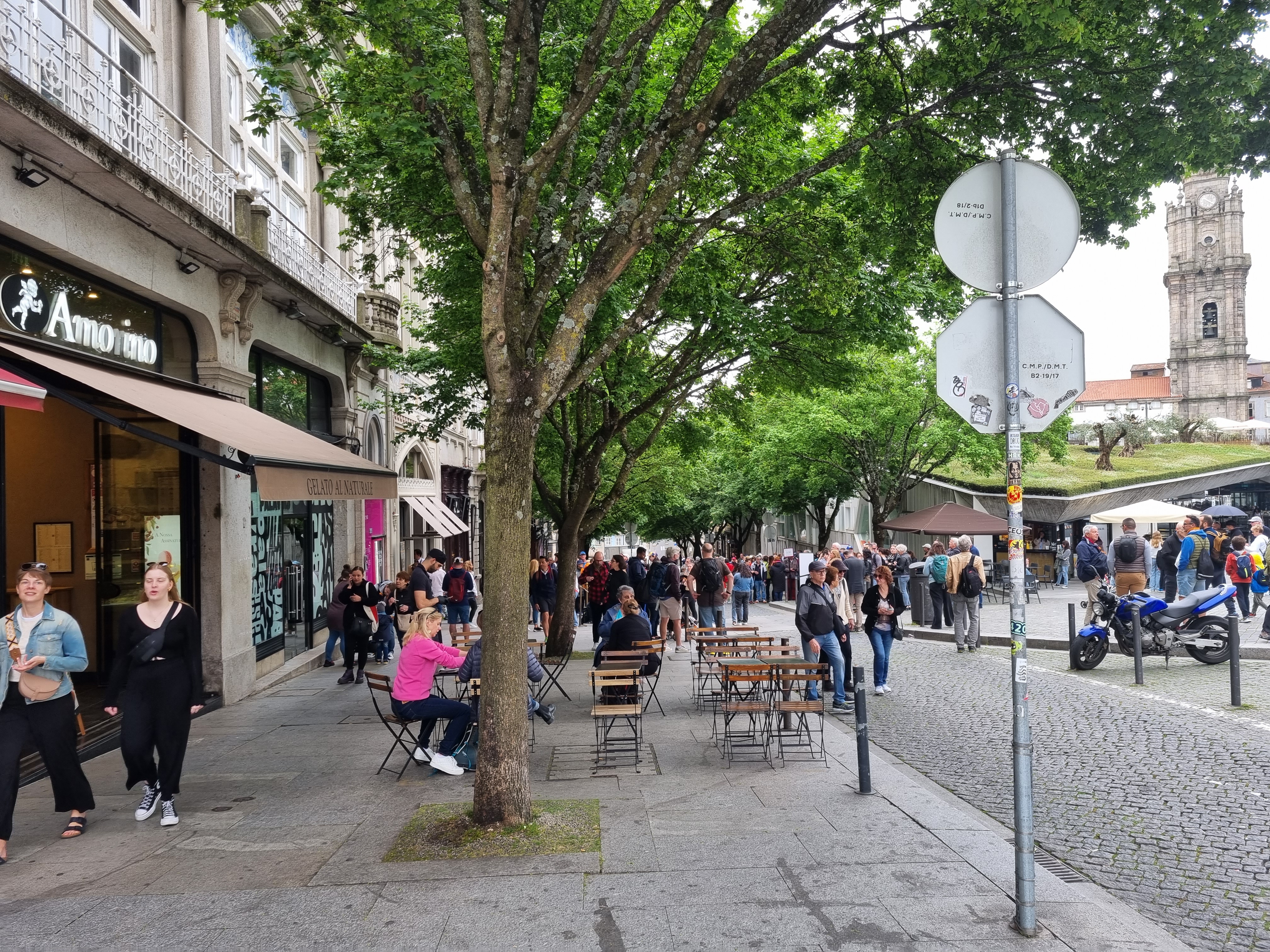
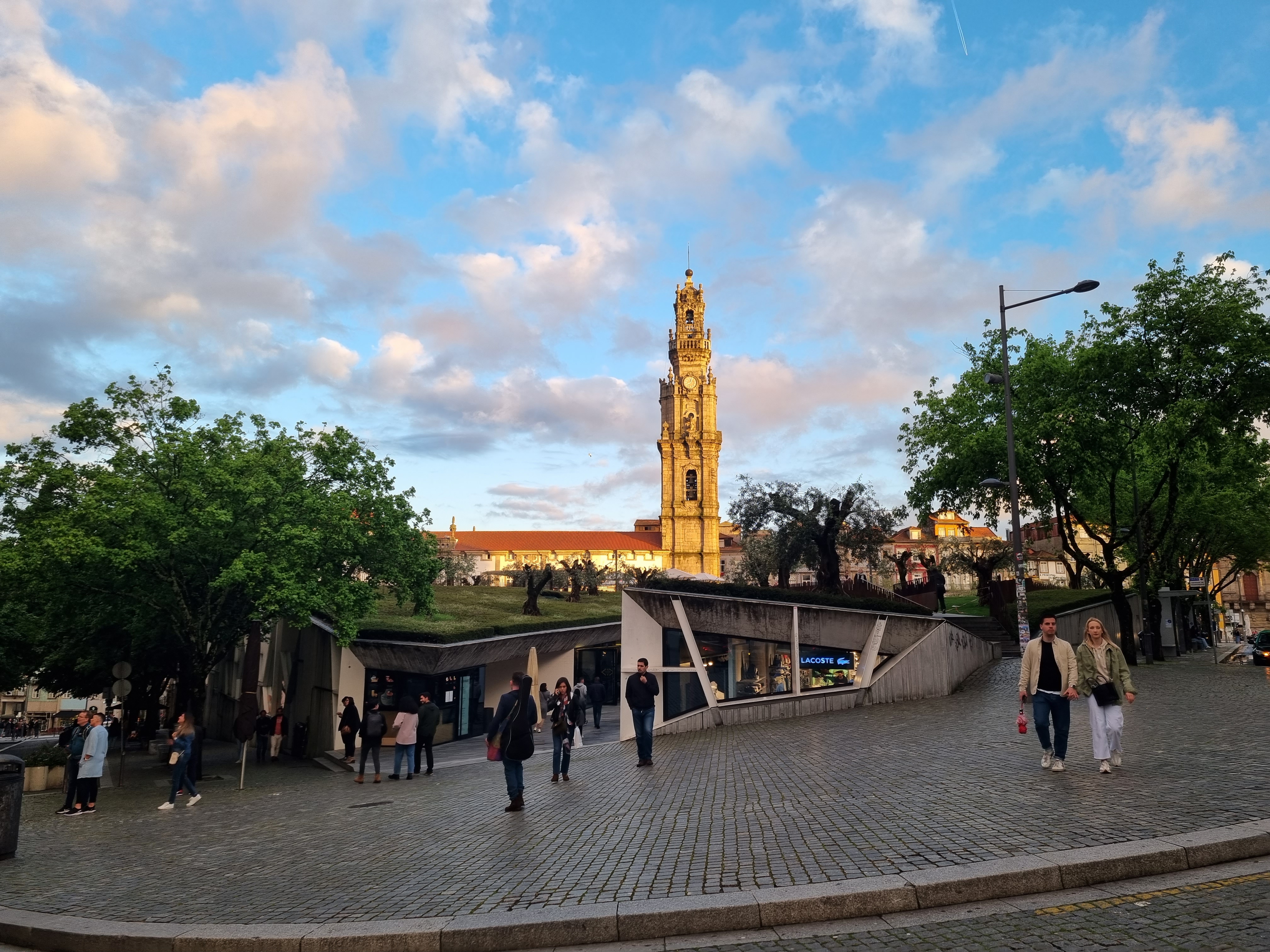
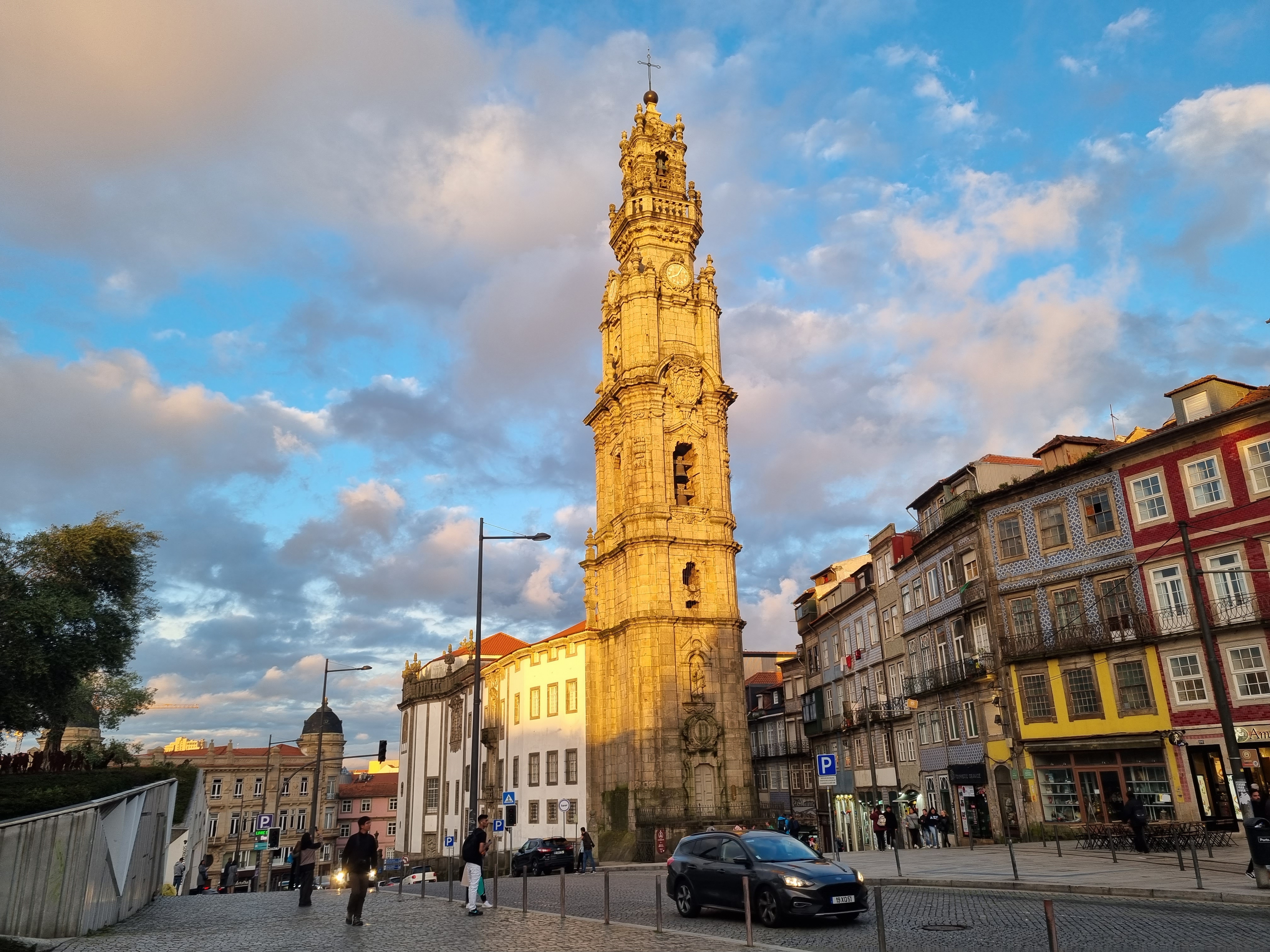
Somehow we ran back to the hotel and rested. In the evening, we had a light show planned in the centre, at the Clérigos Church. We left a little early, hoping to climb the Clérigos Tower first, but in such weather – barely making it to Clérigos in short dashes – we decided against climbing any towers.

I really liked the light show. It lasted for half an hour and was a kind of combination of old (baroque!) and new technologies – essentially a very spectacular and colorful digital animation with beautiful orchestral music.

In the evening, we had dinner with traditional Portuguese fado. The dinner included a starter, main course, dessert, and half a bottle of wine – everything was very tasty. I also really enjoyed the performance – such soulful romances.

Posted in English, Europe, Lisbon, Portugal

Portugal – Day 2

РУССКОЯЗЫЧНАЯ ВЕРСИЯ ПО ЭТОЙ ССЫЛКЕ. CLICK HERE FOR RUSSIAN VERSION.

April 18, 2023 – Tuesday

The second day in Lisbon was marked by queues. But – first things first. In the morning, we got up and tried the wonderful, varied breakfast at the hotel (I was the one actually “trying” it   – my friend was having it for the third time), with smoked salmon, waffles, pancakes, and the like.

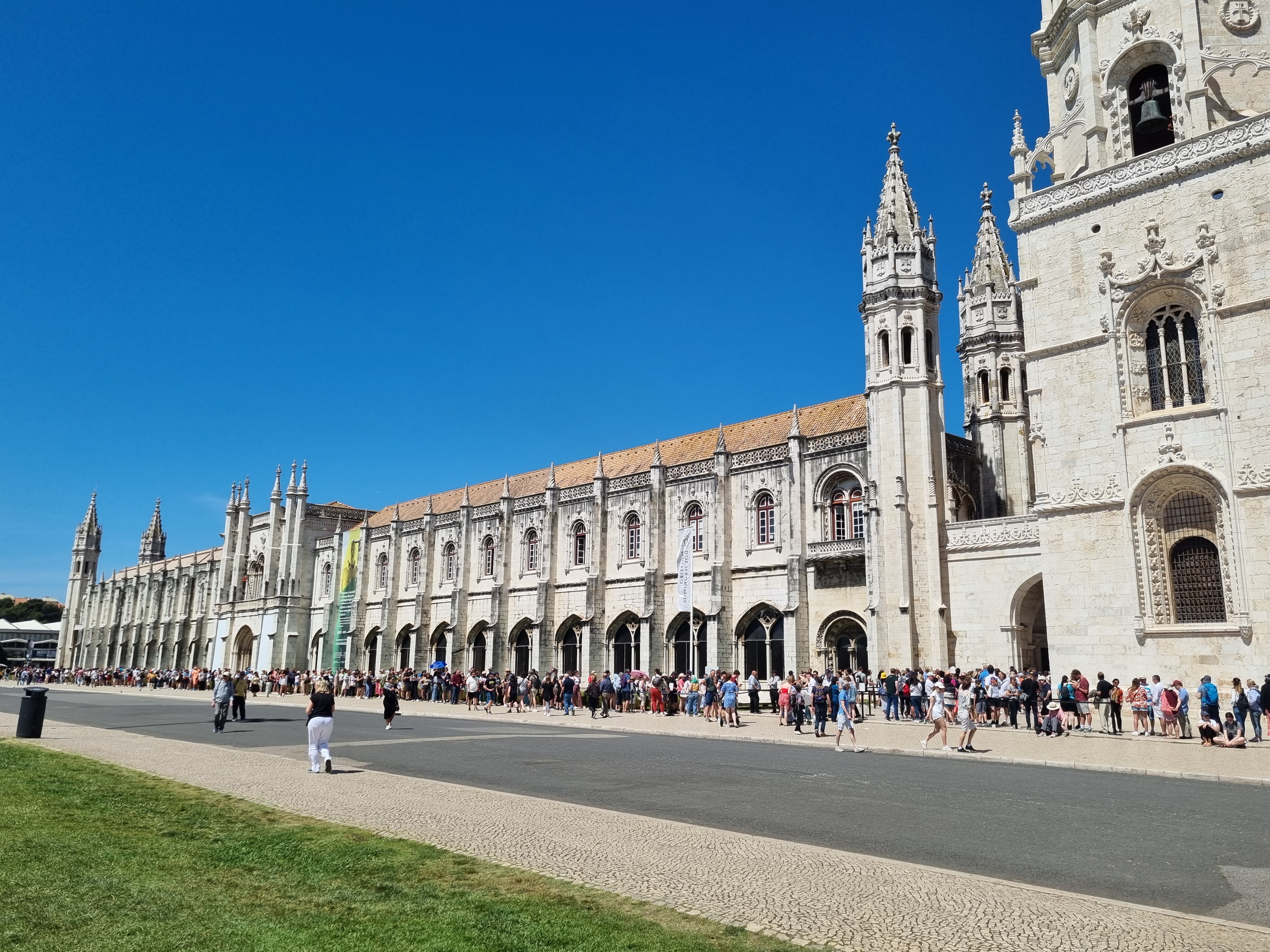
Then we went to the Belém area – it’s like a suburb of Lisbon. The idea was to see the Jerónimos Monastery and the Belém Tower. We got there by city bus – an authentic route through non-touristy areas.

When we arrived at the monastery, we saw a queue. No – that’s not quite right – we saw an incredibly long QUEUE and probably about 15 large tourist buses. We didn’t really feel like standing in that queue, so we decided to head straight to the Belém Tower, figuring we could return to the monastery later and check whether the queue had dispersed, assuming most group tours visit the monastery right when it opens.

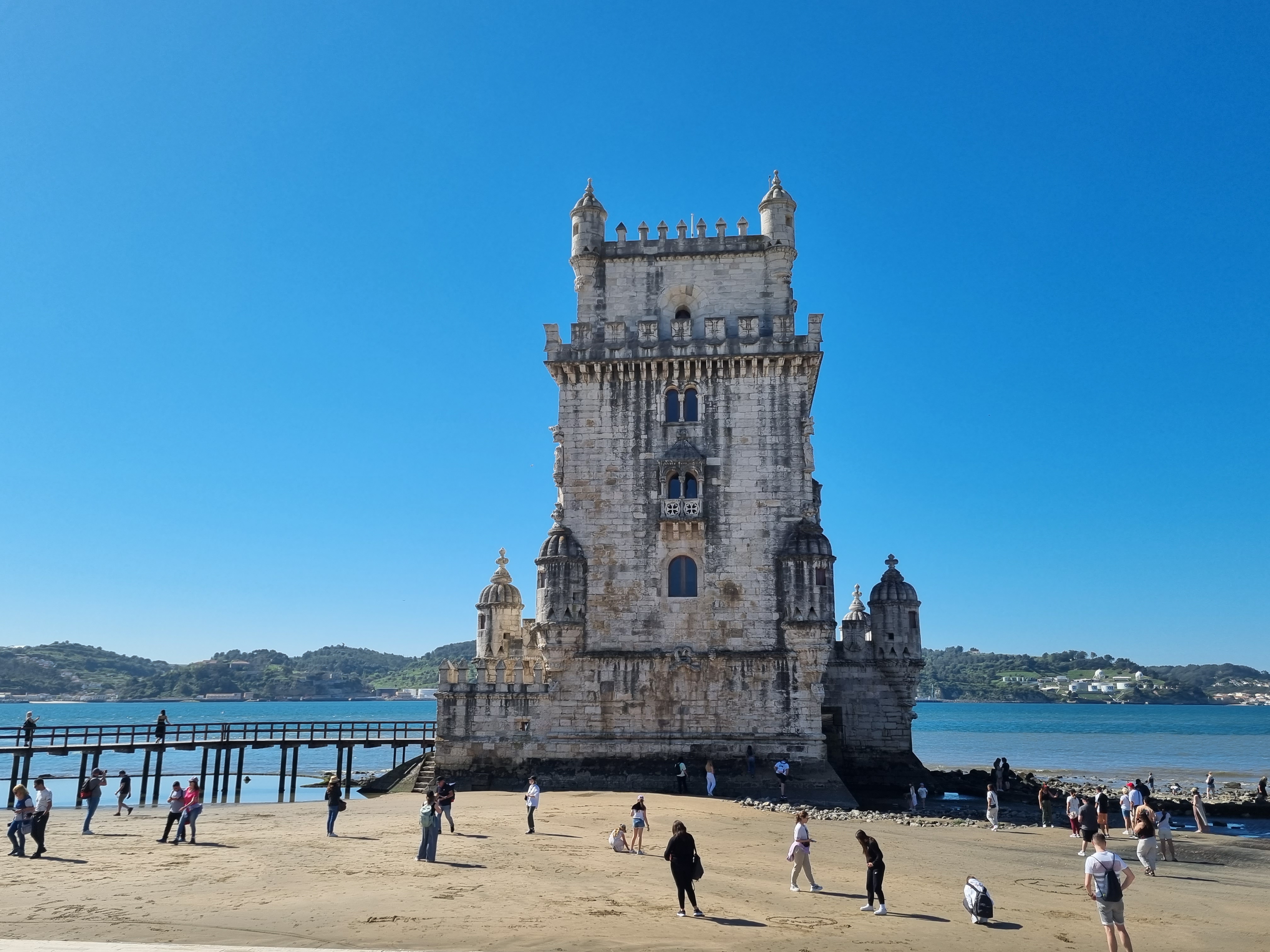
It was about a 15-minute walk to the Torre de Belém, but there we found quite a long queue as well. It turned out there were two reasons for this: first, entrance to the tower is free on Tuesdays; and second, they only let people in in small groups, after the previous group has left, to avoid overcrowding in the narrow spiral staircases and confined spaces.

The tower was built back in the 16th century, in honour of Vasco da Gama’s discovery of the sea route to India. It looks very interesting from the outside, but I’ll leave the question of whether it was worth standing in line for 40 minutes under the scorching sun to go inside open.

After the tower, we gave the Jerónimos Monastery a second chance and went back to see how things were going there. But the line hadn’t gotten any shorter, and the sun continued to scorch mercilessly. So, after googling photos of the monastery’s interior and deciding it wasn’t worth the long wait and completely burnt shoulders, we dealt with a more pressing matter – and went for lunch at a French-Portuguese restaurant, where all the staff spoke good French and worse English. I never thought I’d have to speak French in Portugal.

By the way, about English – overall, I’m pleasantly surprised. Almost everywhere we go, people speak it very, very well. I hadn’t expected this from Southern Europe, based on past experience.

After lunch, we returned to the centre and headed to another monastery – São Vicente de Fora. This turned out to be a very good idea, because unlike Jerónimos, there was practically no one there. And it’s completely unclear why – the interior is very beautiful, many rooms are decorated with azulejos, and you can also visit the pantheon of the Portuguese Braganza dynasty and see azulejo panels based on the fables of La Fontaine. An interesting observation – the masters of azulejo painting were not very good at depicting animals, and the dogs and cats turned out rather odd, with human eyes and pig ears.

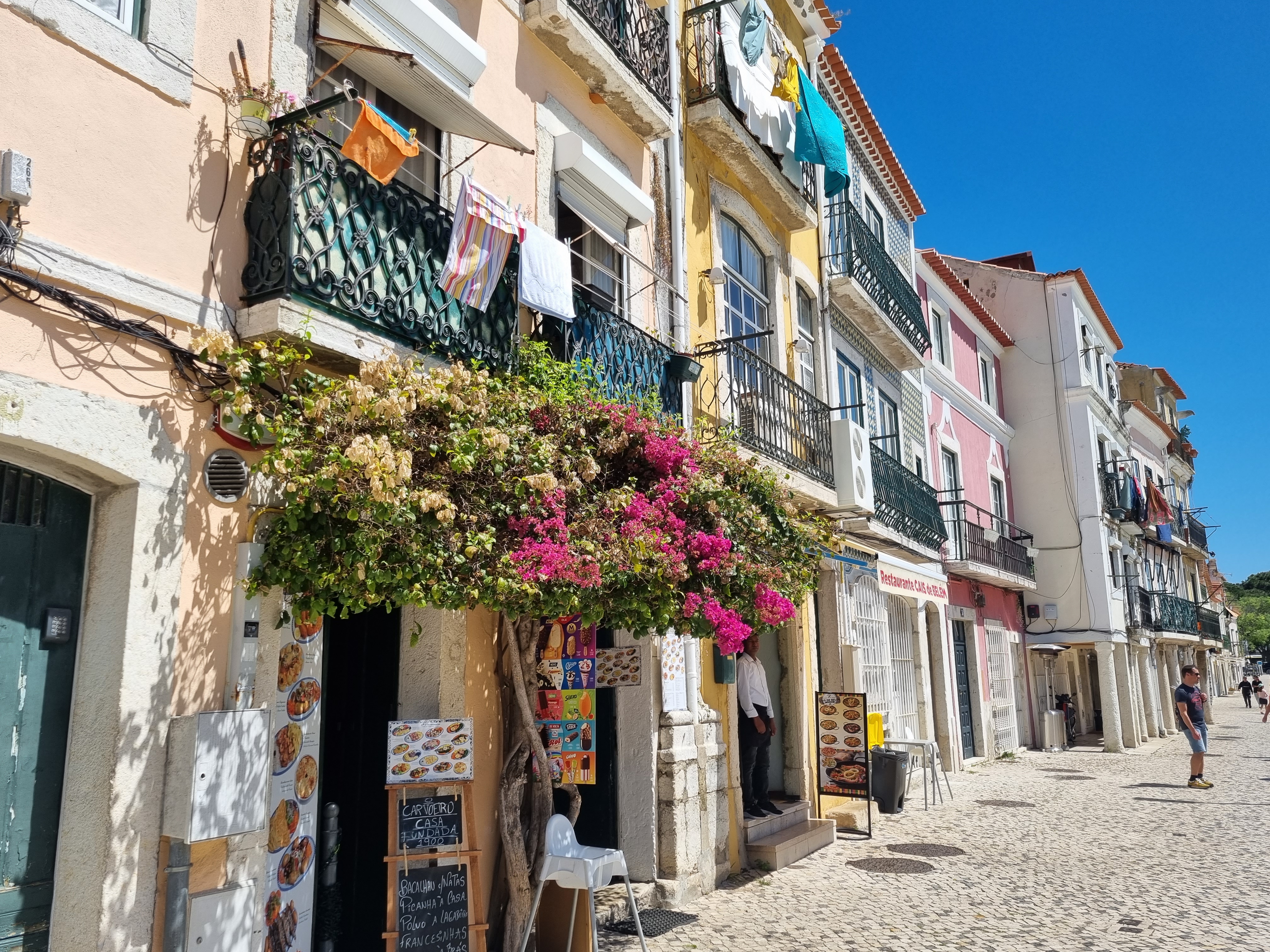
In the evening, we walked around the Alfama district, which I really liked. It’s very colourful and authentic, with beautiful architecture, trams, hanging laundry, and a chaotic street layout. This is the oldest district of Lisbon – the only one that survived the devastating 1755 earthquake.

Posted in Asia, English, Japan, Tokyo

Japan – Day 2

РУССКОЯЗЫЧНАЯ ВЕРСИЯ ПО ЭТОЙ ССЫЛКЕ. CLICK HERE FOR RUSSIAN VERSION.

24 May 2025

Observations after our second day in Tokyo – first of all, Japan is, above all, for the Japanese. For example, you won’t see souvenir shops with magnets and other touristy junk popping up everywhere – you can find them, of course, but you pretty much have to deliberately look for them.

Secondly, cash still plays a major role here – which is surprising for such a developed, high-tech country. Cards are accepted in many places, but definitely not everywhere. For example, the balance on the transport IC card (which, by the way, is incredibly convenient – you can use it for transport all over Japan, and also to pay in convenience stores like FamilyMart and 7-Eleven, at vending machines, and even to lock up your suitcase in hotel storage rooms or in Shinkansen luggage lockers) can only be topped up with cash. You can load it from a card only when you first buy it at the airport.

That said, the country doesn’t even feel especially high-tech. Websites and online payment systems are often clunky, and the city infrastructure doesn’t give off a futuristic vibe that’s miles ahead of, say, old Europe – like was the case in e.g. Singapore. For instance, there aren’t always escalators at the entrances and exits of the subway, which would be unthinkable in Singapore. It feels like Japan’s rapid development sort of paused at some point – maybe in the ’90s. The architecture doesn’t resemble the likes of Singapore or Hong Kong either. There are lots of plain, boxy concrete apartment buildings. But it also doesn’t feel densely built-up like Hong Kong, despite what we’d heard about Japanese homes being so compact they fit a bed, a toilet, and a kitchen into literally a single square meter – often with retractable furniture. At least from the outside, it doesn’t look like space is that tight.

People, of course, are very polite. If the British are known for loving to queue, then the Japanese seem like they were born for it.

We also noticed that various jobs that seem “inefficient” by our standards – like waving a flag to direct traffic that’s already controlled by traffic lights – are often done by elderly men. Even in retirement age, people don’t sit at home on the couch; they still prefer to work, even if it’s not clear what exactly they’re contributing.

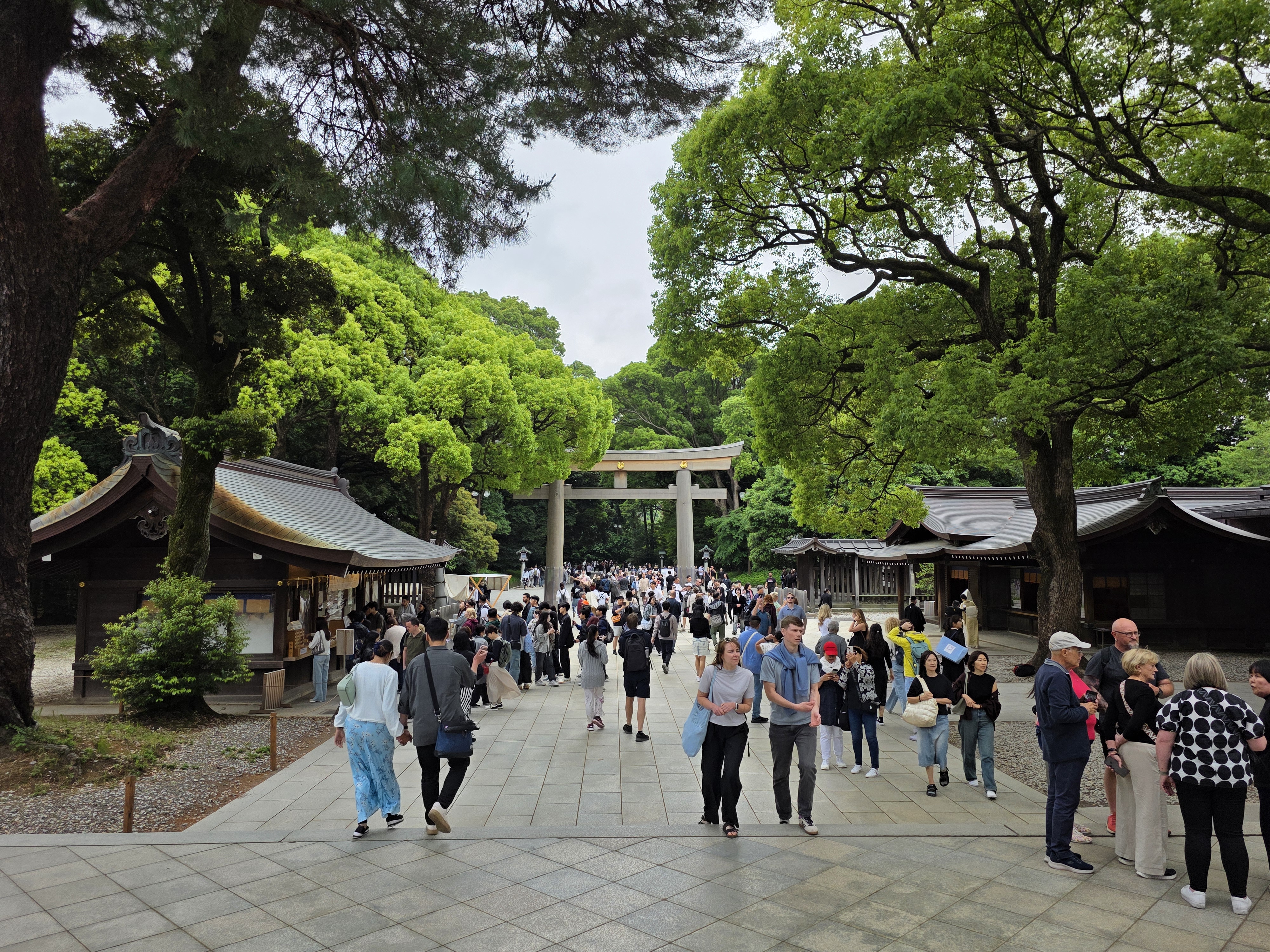
Now, about today itself. In the morning, we had breakfast at a café near the hotel and then headed to Meiji Shrine. It’s a large area with gardens and the shrine complex itself – the biggest Shinto shrine in Tokyo from the early 20th century. It was interesting, though there wasn’t that much to linger over. We were lucky to see a traditional Japanese wedding procession, and all the tourists immediately whipped out their cameras to record it.

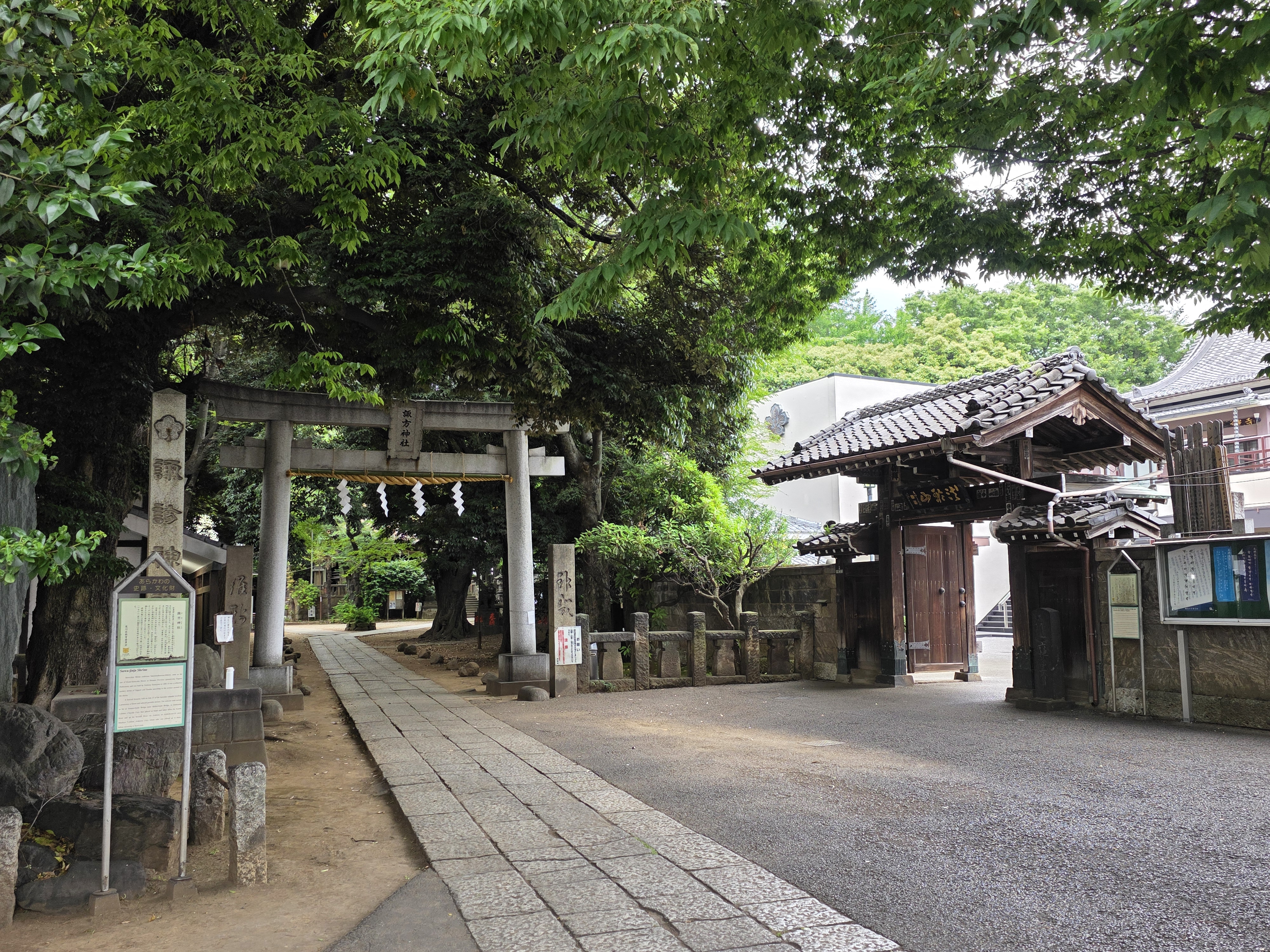
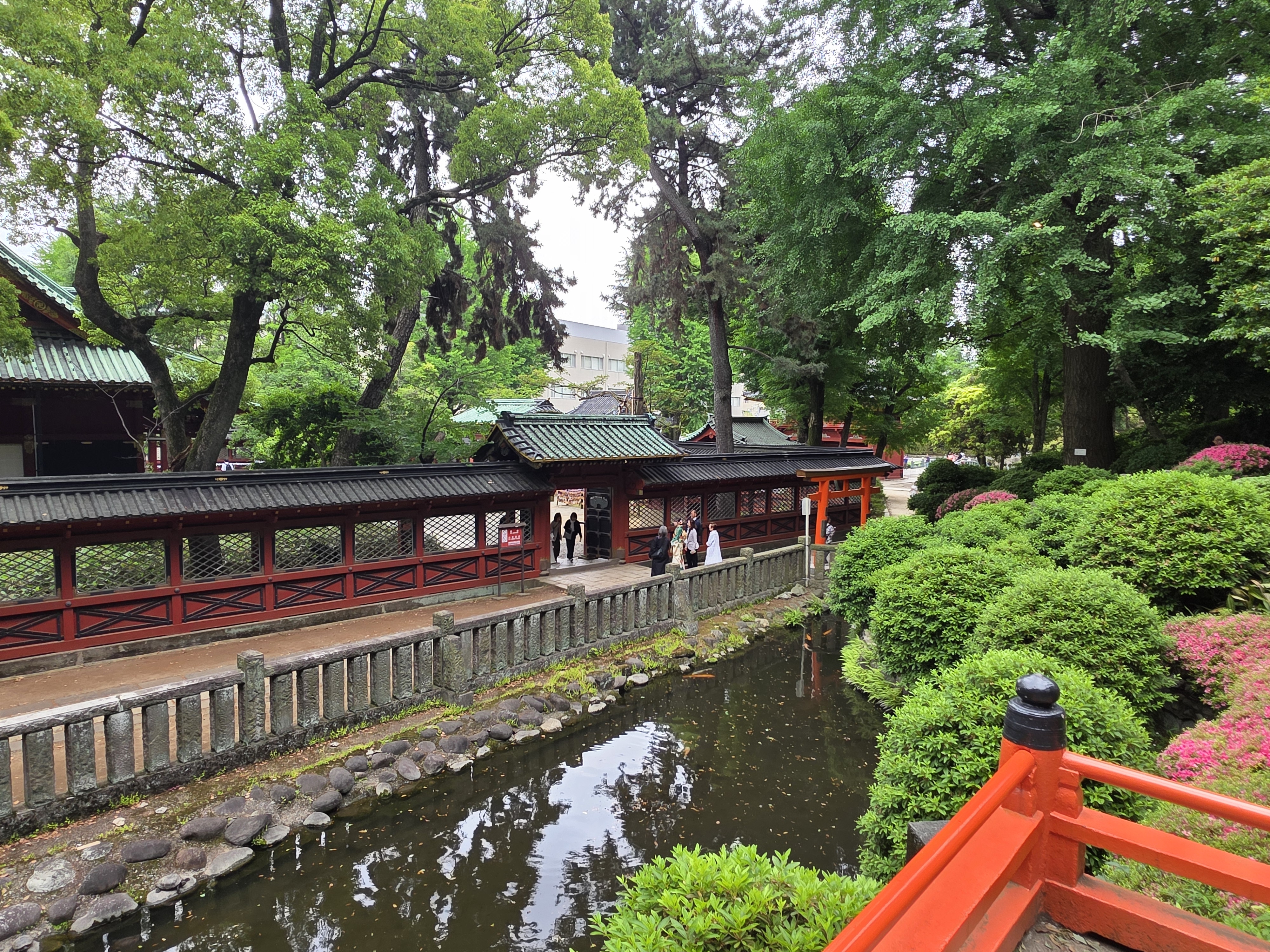
From there, we went to the Nezu area, where we strolled through narrow streets and visited another shrine – called Nezu Shrine. It was much quieter there, clearly not a major tourist spot, but we actually found it more charming and interesting.

Before visiting the shrine, we had sushi nearby. I ordered an assorted nigiri set – I could recognise salmon, tuna, and grilled eel, and there were a few other types of fish I couldn’t identify. It was incredibly tasty – sushi like this just doesn’t exist outside Japan. And yes, it’s true what people say: sushi here is nothing like what we get back home. Here it’s mostly nigiri, sashimi, and occasionally very simple maki rolls. Just the basics: rice, fish, nori. No mayo, avocado, cream cheese – or God forbid, Caesar rolls.

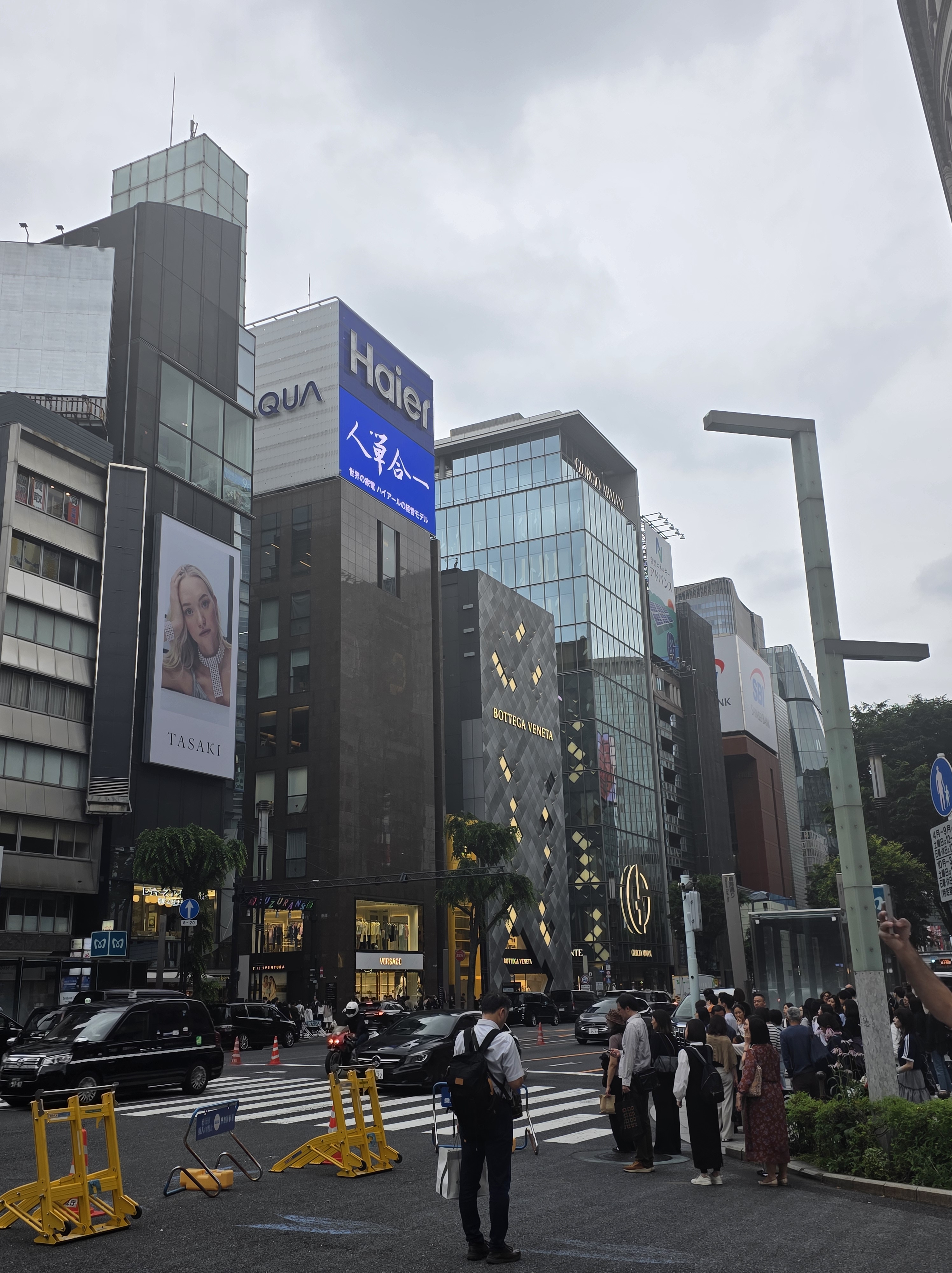
Next, we headed to the Ginza district and walked around. Each Tokyo neighbourhood feels different from the the other – Ginza feels more upscale and also more European in a way. In places, it almost feels like walking around the Galeries Lafayette area in Paris.

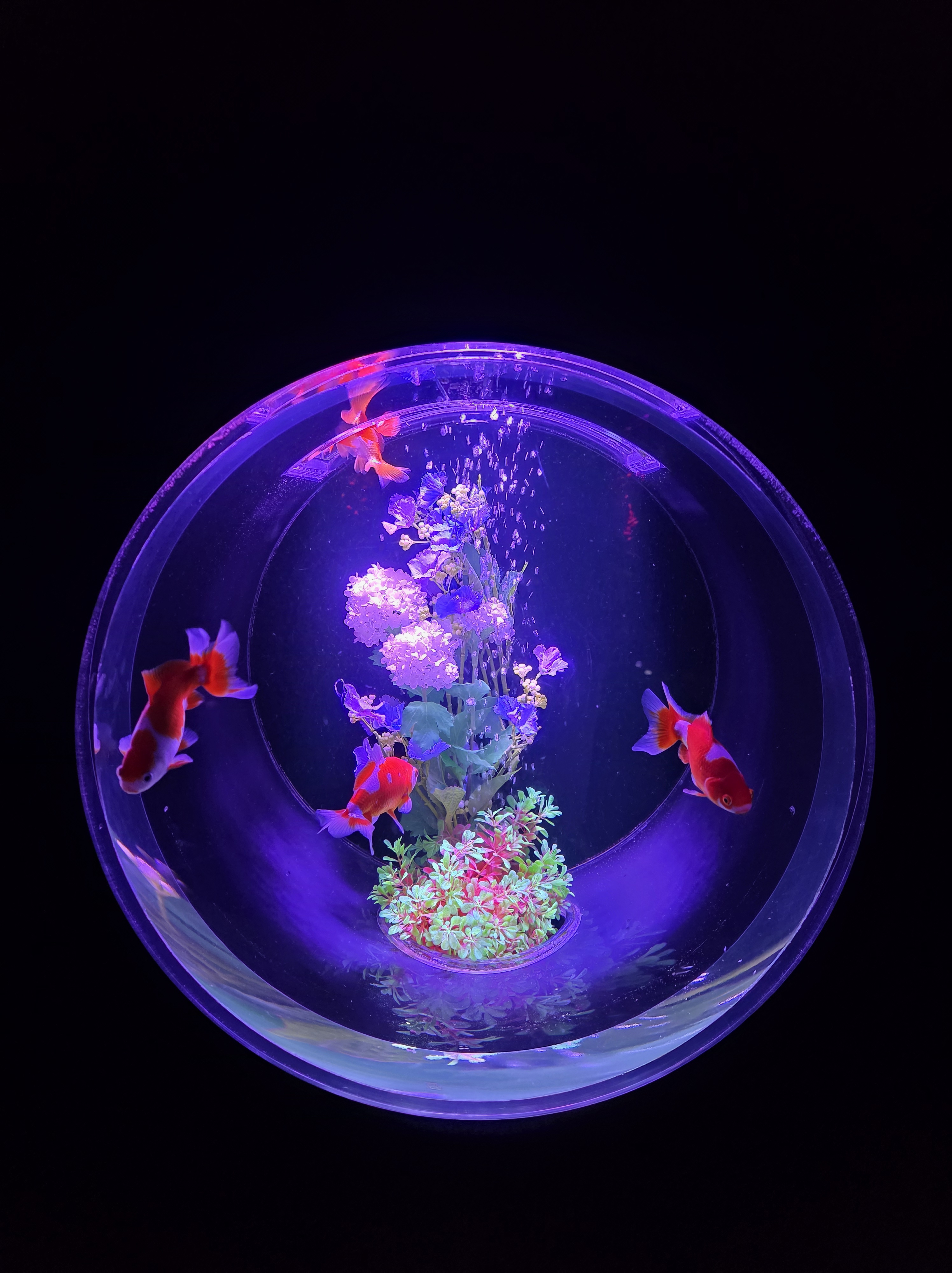
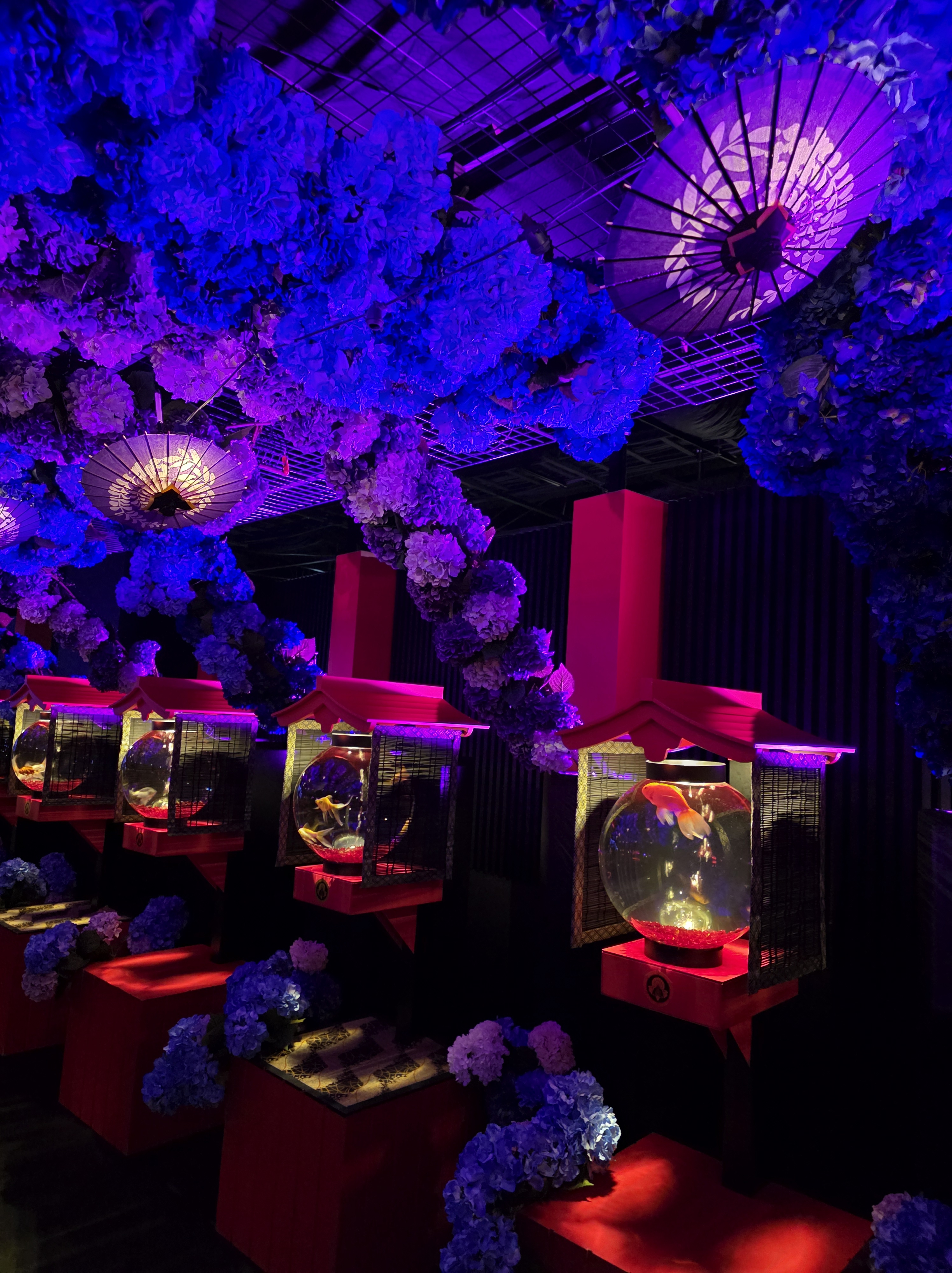
In Ginza, we visited the Art Aquarium Museum, which has lots of different aquarium installations with live fish lit up in creative ways. Yes, it was cool and interesting, but there was also something a bit unsettling about it – some sense of neglect or even cruelty. Some tanks were tiny glass bowls, others looked like solitary confinement cells with two or three fish crammed inside, clearly with no room to move. It’s unclear whether they’re kept there permanently, and if not, how the whole system works – how they’re fed, where they’re moved, etc. The fish themselves were fascinating – some with bulging eyes, others round-bellied and odd-looking. But after a while, the installations started to feel a bit repetitive.

We had dinner in a diner in the same building – set meals with meat, fish, and various small side dishes. I had one with wagyu beef.

We wanted to hang around Ginza a bit longer, but it started raining so we headed back to the hotel.

Posted in Asia, Chiang Mai, English, Thailand

Thailand – Day 5

РУССКОЯЗЫЧНАЯ ВЕРСИЯ ПО ЭТОЙ ССЫЛКЕ. CLICK HERE FOR RUSSIAN VERSION.

22 March 2018

And once again we had to forget about our sundresses and put on our elephant harem pants purchased in Bangkok, as pretty much the whole of today is dedicated to temples in Chiang Rai and its environs.

In general, there are lots and lots of temples in Thailand, people seem much more religious than, for example, in Vietnam or China, and it’s much more common to see monks everywhere. That’s quite understandable – the country hasn’t been colonised recently, it has no communist past or present, so obviously, religion hasn’t been historically oppressed. And by the way, Buddhism here seems to contain elements of Hinduism.

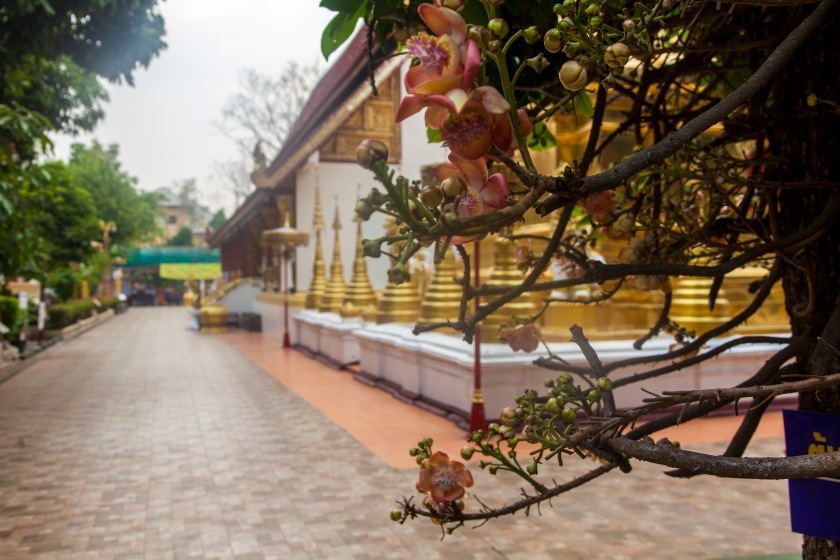
The first temple we went to was Wat Phra Singh, founded in the 14th century. The name of this temple comes from the golden Buddha image, almost as famous (and as ‘well-traveled’) as the Emerald Buddha. Our guide Dino said that the temple’s architecture is in Burmese style.

IMG_3464

IMG_3471

IMG_3474

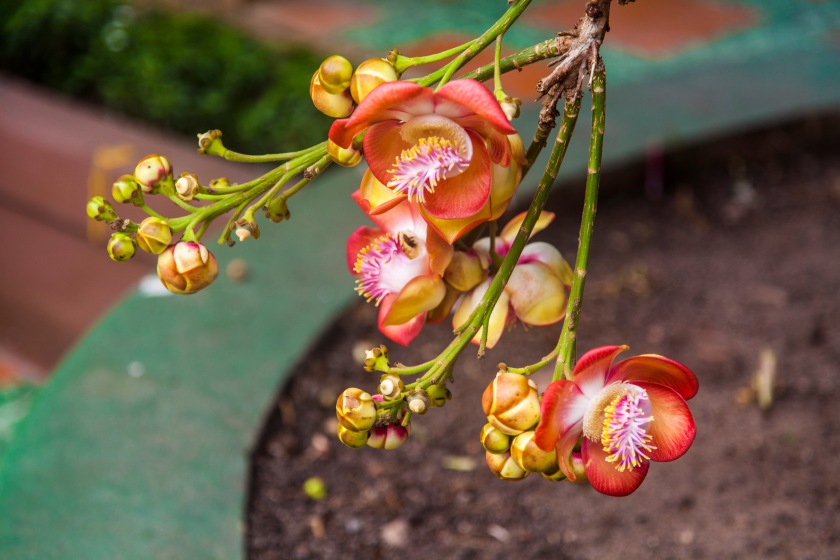
What was specifically remarkable about this temple is the large number of stray dogs that are fed here, apparently with rice, given their state of utter apathy; and sal trees, sacred to Buddhists, with large and very fragrant flowers.

IMG_3472

IMG_3481

IMG_3483

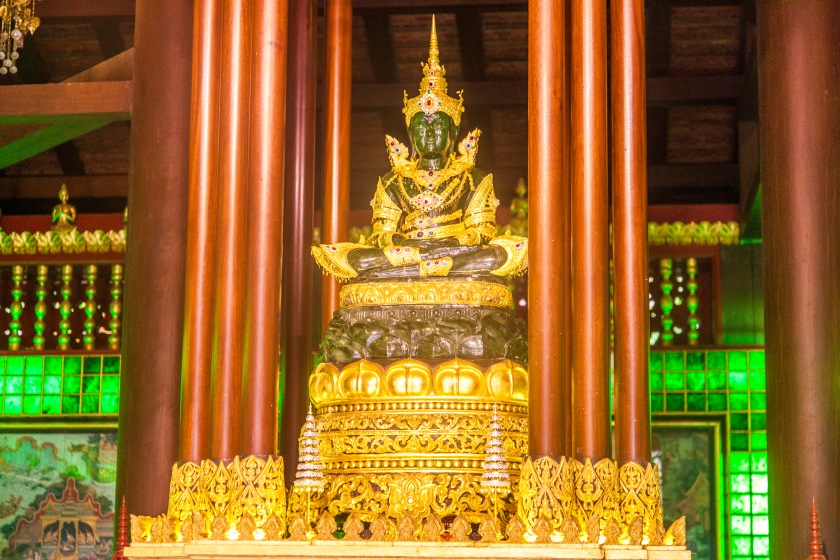
From here we headed to another temple – Wat Phra Keo, or the temple of the Emerald Buddha. Yes, yes, it has the same name as the one we saw in Bangkok. The temple is very old and was originally called something else, but in the 15th century, it was here, among the wreckage of a stupa split by a thunderbolt, that the Emerald Buddha statue, believed to be of divine origin, was found. Since the 18th century and up to this day, the statue is in Bangkok, just where we saw it, but before that it traveled a lot around the territories of Thailand, Laos, Myanmar and Cambodia. Dino talked about the statue’s displacements in the most thorough details – who and when took/stole it, who robbed whom etc. – but we didn’t even try to memorise all this, especially since he wasn’t the most interesting narrator ever…
IMG_3488

IMG_3521

The Chiang Rai temple currently has a jade replica of the Emerald Buddha (in fact, as you may remember, the original one is also made of jade) but at least, unlike in Bangkok, you can photograph it.

IMG_3512

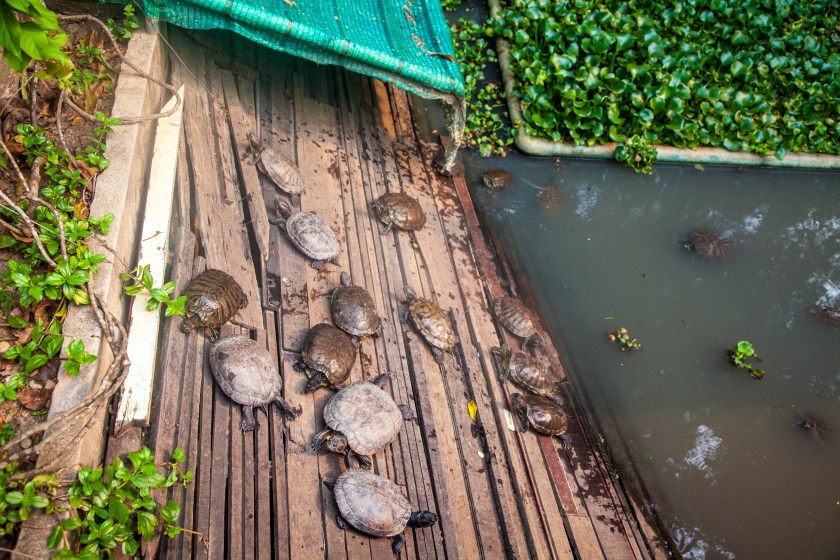
Right here, on the territory of the temple, we noticed a pond with turtles and spent quite a while watching one particular small, but proud turtle trying to crawl towards the fence, walking on the heads of its fellow turtles.

IMG_3508

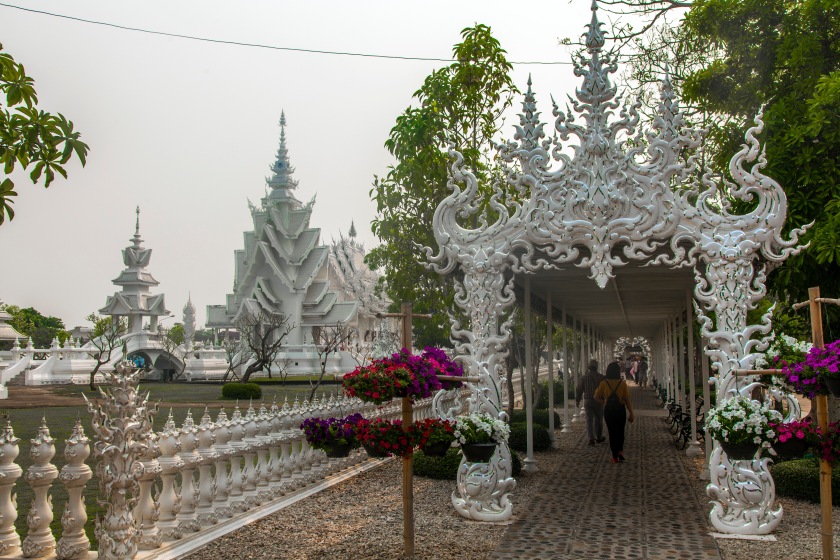
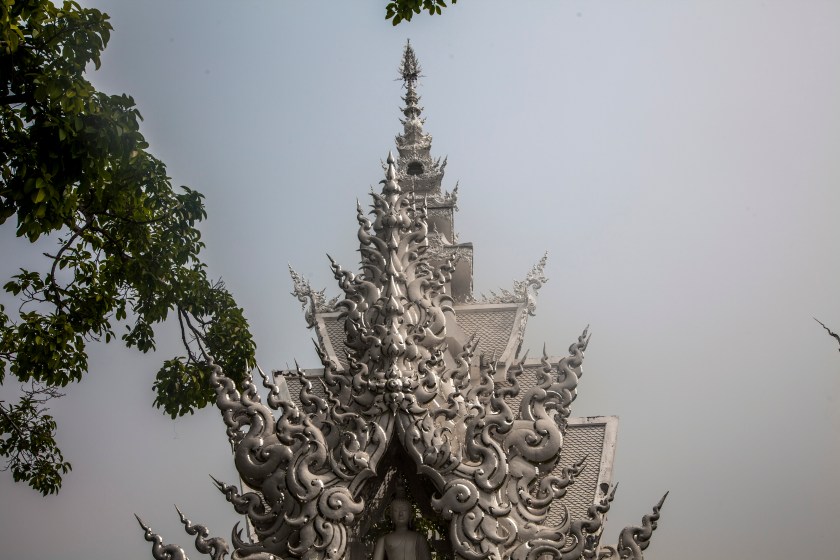
The third temple we saw was really the best – it was the White temple, very beautiful and unusual. It’s quite new, having been built in 1997, and in fact I would rather call it a modern art exhibit in the style of a Buddhist Temple.

IMG_3533

IMG_3563

IMG_3560

The white colour represents spiritual purity.

IMG_3555

IMG_3564

To get into the temple itself, one has to walk along a bridge past the “hands of sinners” sticking out of the earth – very symbolic.

IMG_3556

Right next to the temple there’s a museum containing paintings by Chalermchai Kositpipat – the artist who built this temple with his own money. The paintings are quite interesting, many depict paradise with different buildings in the same style as the White Temple, or mythological animals.

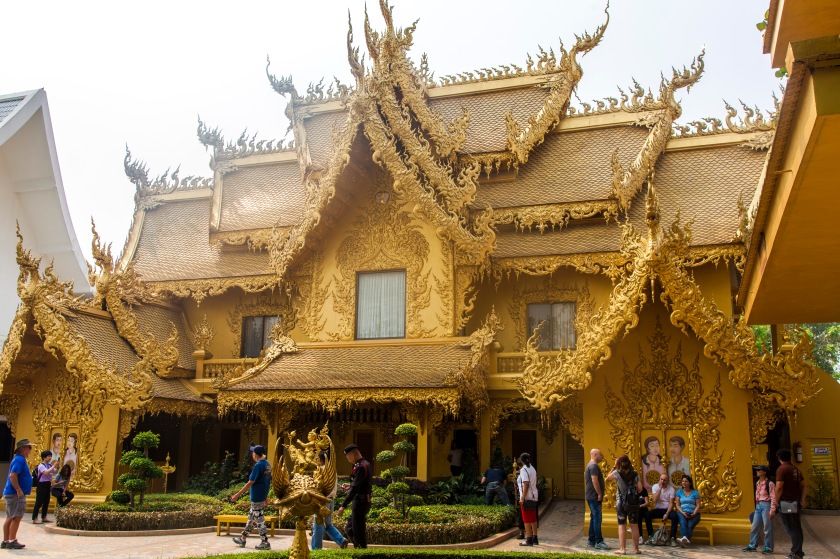
The gorgeous gilded building on the territory of the temple is nothing more than the ‘happy room’ (or rather a whole happy palace!), that is, a toilet.

IMG_3566

Fortunately for us, the thickest crowds of tourists started arriving just as we were leaving – most probably from Chiang Mai – so we were really lucky to walk around and take pictures without them.

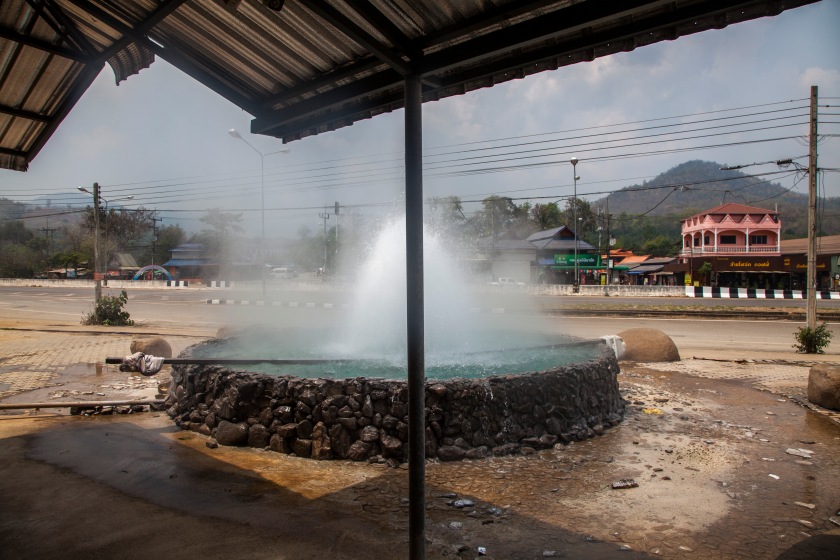
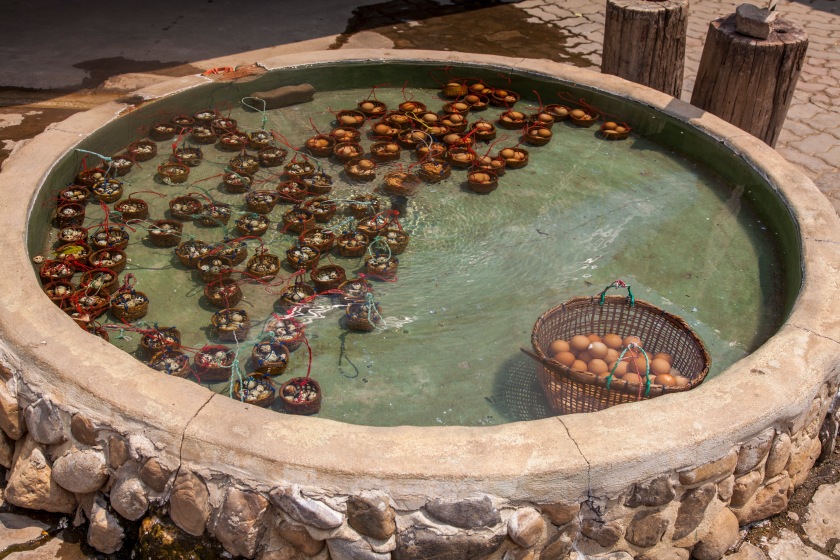
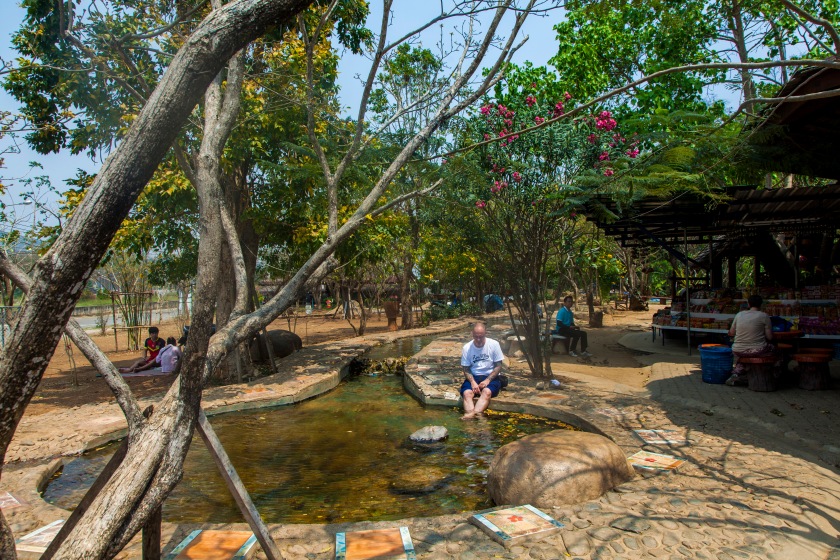
The White Temple was our last stop before we drove off to Chiang Mai – we had already checked out from our Chiang Rai hotel this morning and loaded our suitcases in the car. We stopped on our way for lunch, again in a cheap roadside cafe, with a hot spring next to it. In one fenced well, the water was boiling and bubbling up, another one was used for cooking eggs, and there was also a bigger section of the spring which was cool enough to put one’s legs into it, which is supposedly very good for health. Some people managed to sit knee-deep in the water, but I was barely able to dip my feet for a couple of seconds, as the water was very hot – around 50 degrees Celsius – the exact opposite situation of yesterday’s pool visit in Chiang Rai!

IMG_3572

IMG_3574

IMG_3575

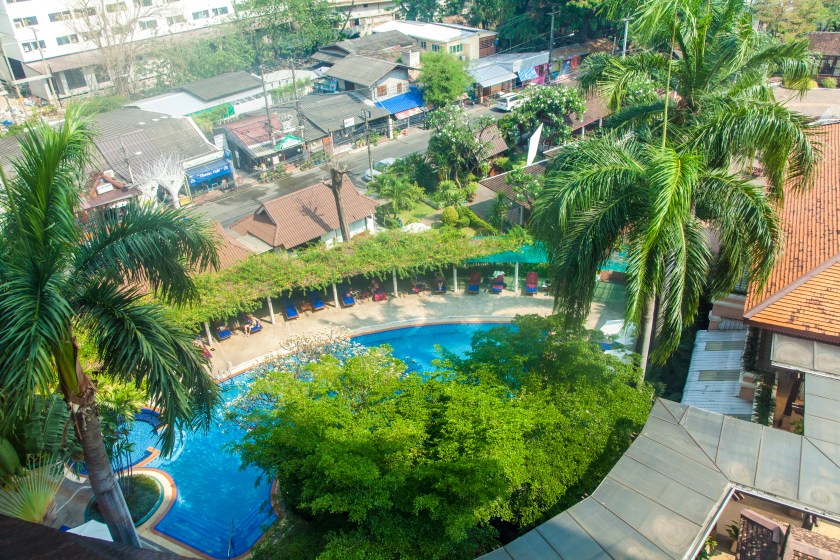
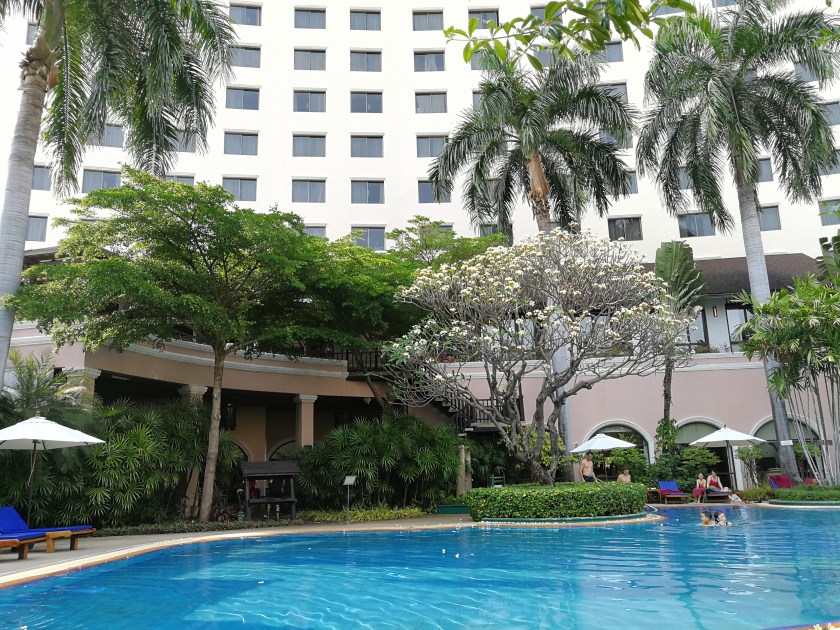
We arrived at our hotel in Chiang Mai at about 3pm. The hotel is located next to the night market, so there are lots of market stalls, massage parlours and bars around.

The hotel has two excellent swimming pools, and this time we had better luck and managed to take a dip. And we knew right away that we’d be more lucky – unlike in Chiang Rai, the poolside area was full of people.

IMG_3577

cof

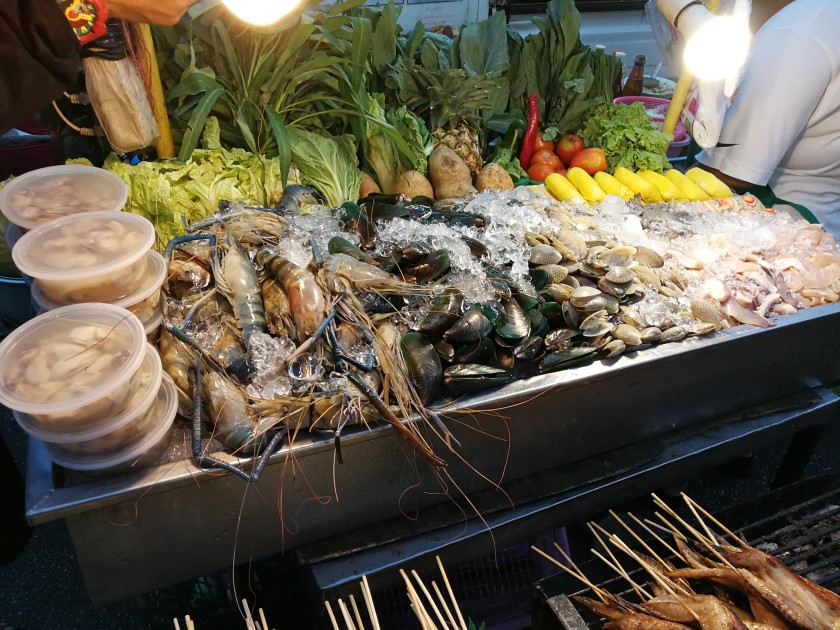
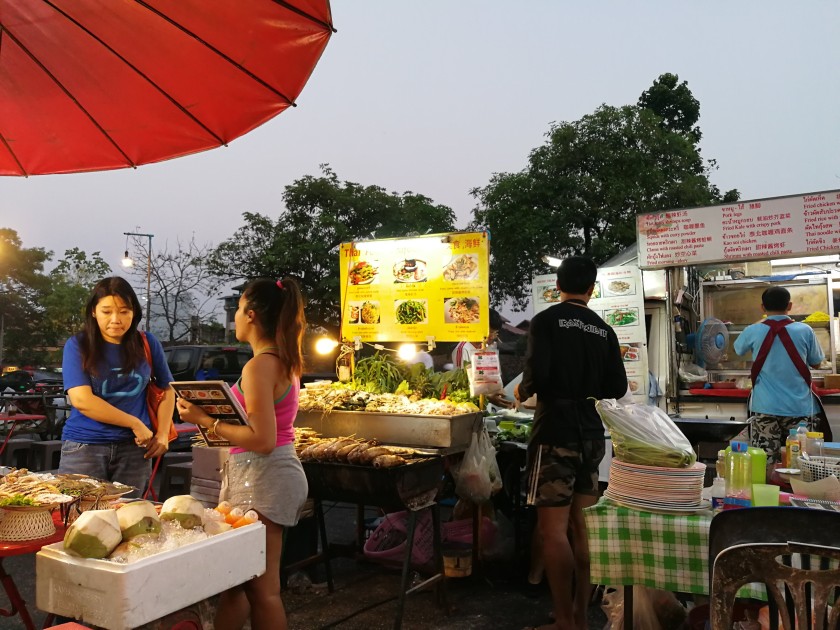
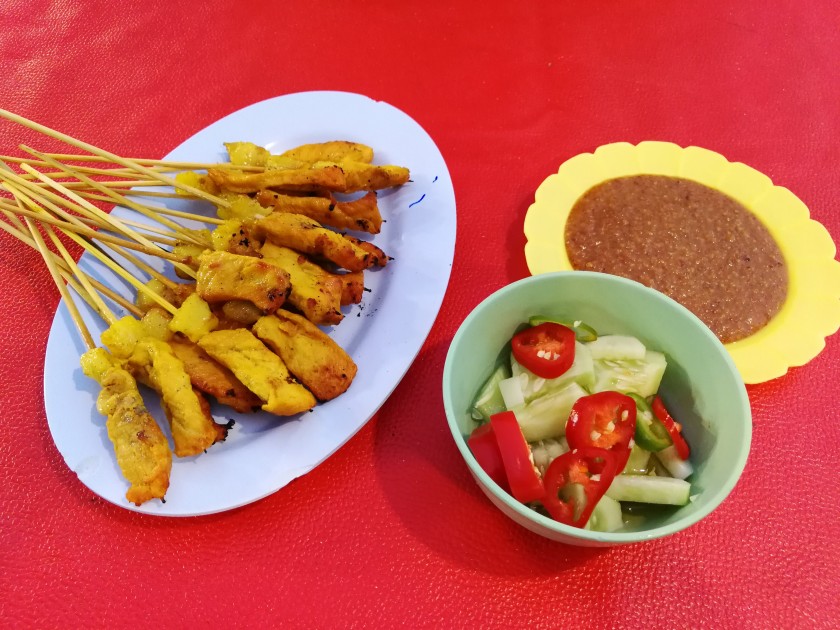
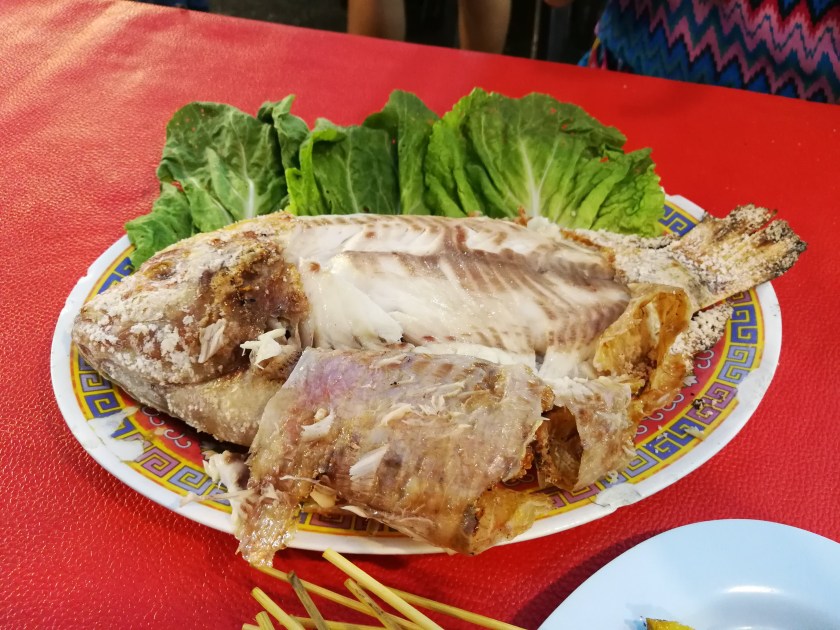
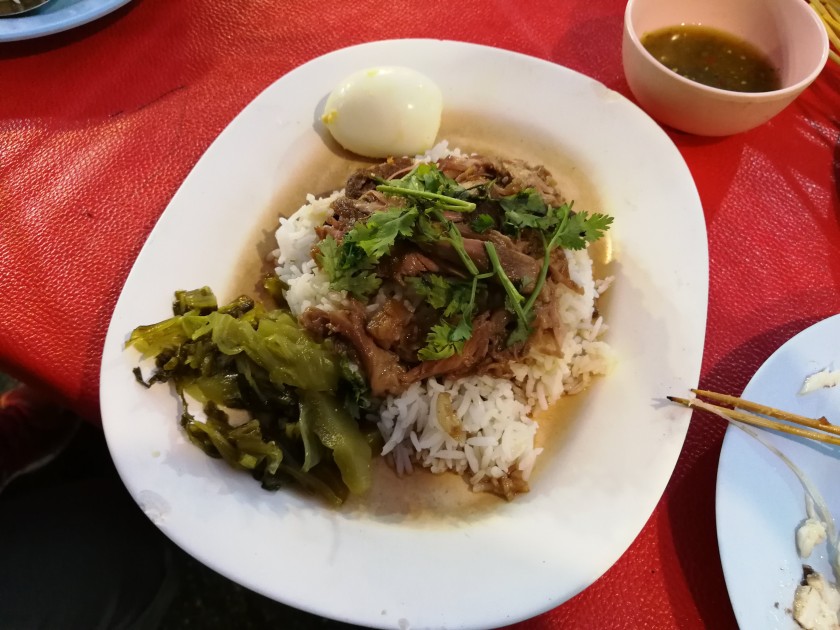
Our tour programme for the evening included a trip to the street food market and dinner right there. We tried pork satay (i.e. pork skewers) with peanut sauce, snapper fish in salt and some pork dish with rice. It was quite tasty, although not necessarily much cheaper than in a restaurant.

cof

cof

cof

cof

cof

On the way back to the hotel our guide Dino took a longer route so that we could walk around the Old Town, which we didn’t enjoy much – there was little to see in the dark, plus we wanted to rest a bit and enjoy some guide-less time.

Once we said goodbye to him, we went for a drink at one of the bars near the hotel, but left very quickly – the place seemed a bit dodgy, with a few foreign men and a lot of half-naked local women (if they were all women, of course), rushing with open arms towards every white man in sight trying to lure him into the bar. It seems that all the bars around are like that, and many are even completely empty, except for the stacks of women waiting at the entrance.

Posted in Asia, English, Hanoi, Hoi An, Vietnam

Vietnam – Day 6

РУССКОЯЗЫЧНАЯ ВЕРСИЯ ПО ЭТОЙ ССЫЛКЕ. CLICK HERE FOR RUSSIAN VERSION.

10 June 2017

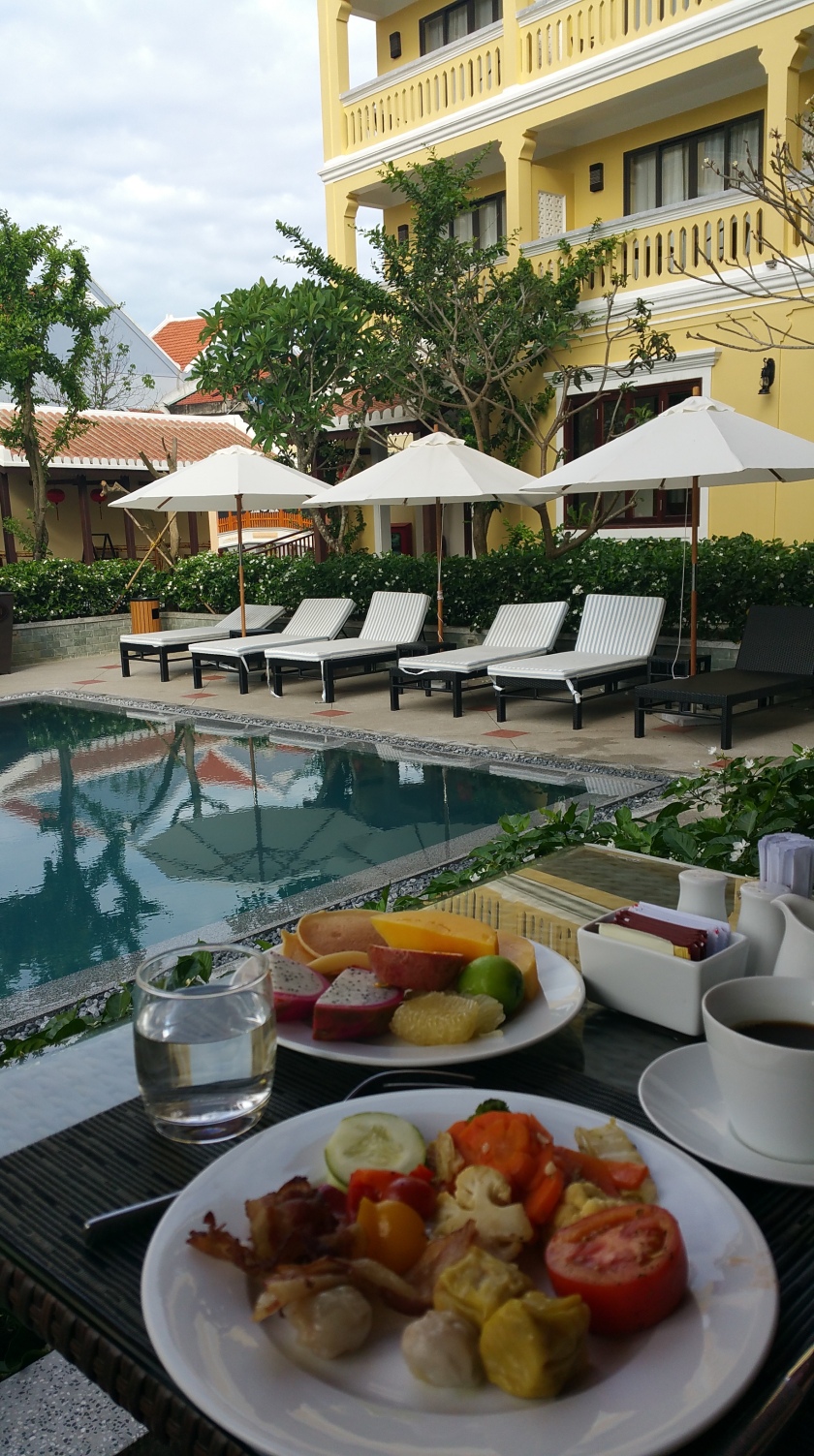
Yesterday we felt a bit disappointed that we were staying in this wonderful hotel with a swimming pool one night only, so even though today’s excursion was supposed to start at 9am, we were up at 6.30 already, to have time to enjoy both a lovely breakfast with lots of fruits by the pool, and the pool itself.

20170610_065844

So at 9am sharp we checked out from the hotel and went on a walking tour around the Old Town. We were there last night already, but under daylight the streets look totally different, not to mention that we had explanations this time.

IMG_2685

IMG_2691

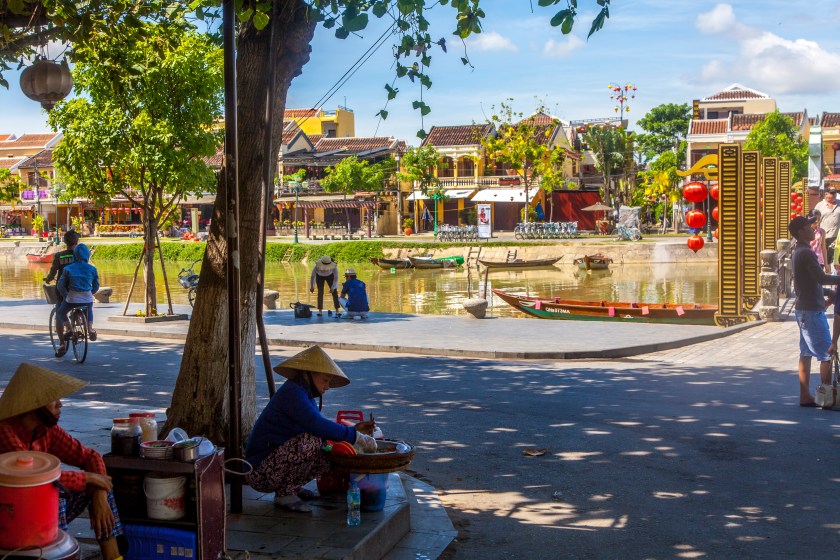
The Old Town is really beautiful, after all it’s included in the list of UNESCO’s cultural heritage for a reason – in fact it’s so beautiful that even the 38C heat and the scorching sun, under which we had to walk for two hours, didn’t spoil the impression the least bit.

IMG_2678

We walked into the Old Town through the Japanese bridge, which back in the days used to separate the Japanese quarter from the Chinese one. The bridge was built almost 400 years ago, and since then is being periodically renovated, especially during the rain and flood season, when the water level rises and floods it. The bridge, just like everything in the Old Town, is decorated with lanterns – white ones, which is perfectly normal for the Japanese, and which, according to Nam, used to cause the displeasure of the Chinese, who consider white to be the colour of mourning.

The Old Town consists of several streets adjoining the Thu Bon river, on the other side of which we can see much newer buildings, but also stylized as old to attract tourists.

IMG_2683

I guess, in the daytime, the streets we are walking around look even more beautiful than in the evening, as the architecture of buildings and pretty blossoming trees are better visible, plus it’s much less crowded, and the lanterns, although not lit, are still there.

IMG_2687

IMG_2710

IMG_2712

IMG_2714

IMG_2717

IMG_2719

IMG_2734

IMG_2743

Our tickets included four attractions of choice, and Nam started with the Chua Ong Pagoda located in Chinatown and built in the XVII century.

IMG_2696

IMG_2699

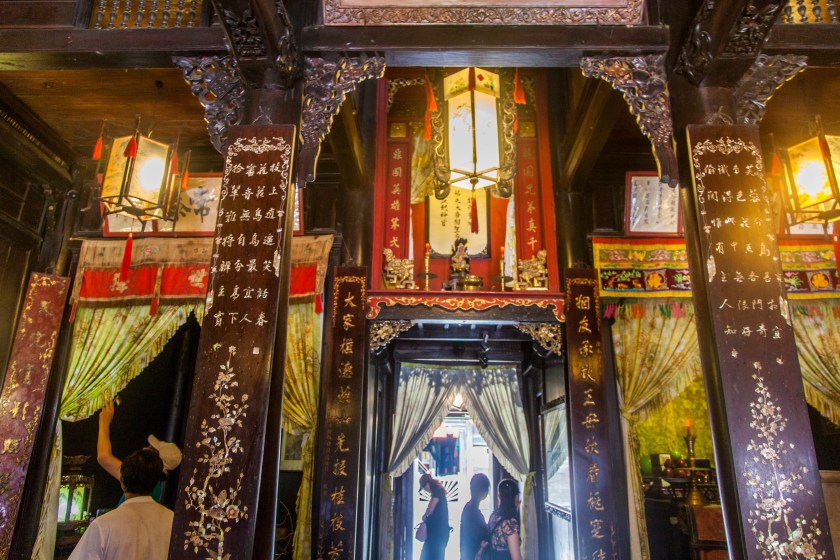
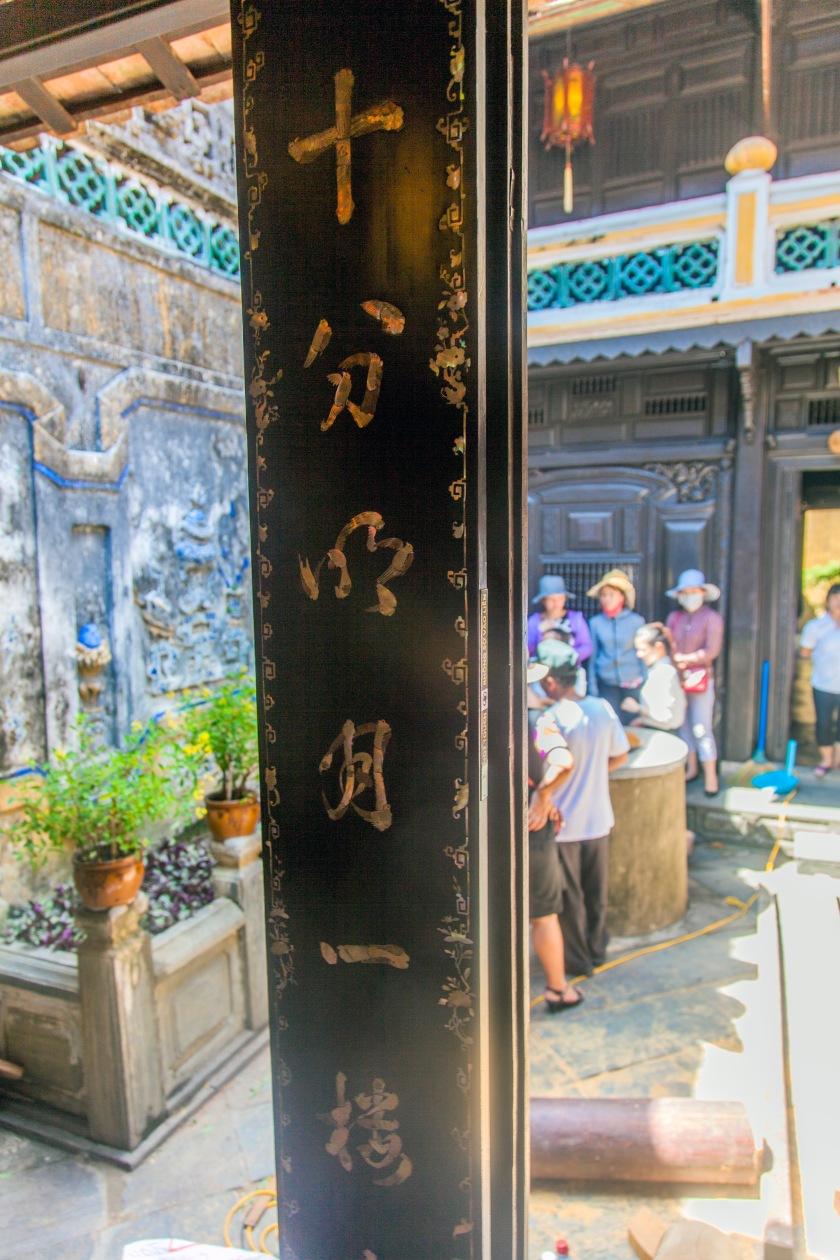
Next in our programme was a visit to one of the oldest family houses in Hoi An. The family still lives here, on the first floor. We were only shown only the ground floor, where the interior was decorated with elements of Vietnamese, Chinese and Japanese styles. For example, there was an interesting writing in Chinese characters, where each character was comprised of birds cut out of mother-of-pearl.

IMG_2715

IMG_2716

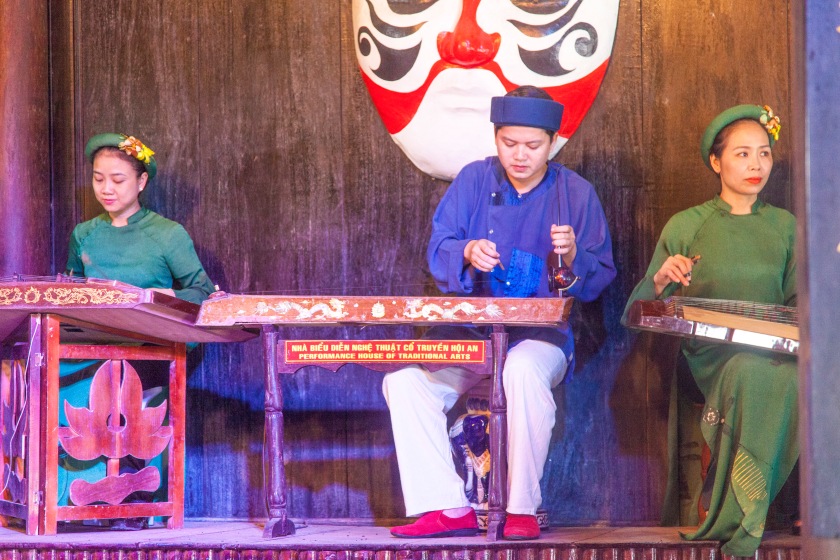
Next, we visited a little performance with songs, traditional dances with pots and fans and a game like bingo, where everyone was given a card with different Vietnamese words, and the singer sang a song and picked out the sticks on which the words were written. We weren’t the lucky ones to win, but some lady got a small silk lantern.

IMG_2738

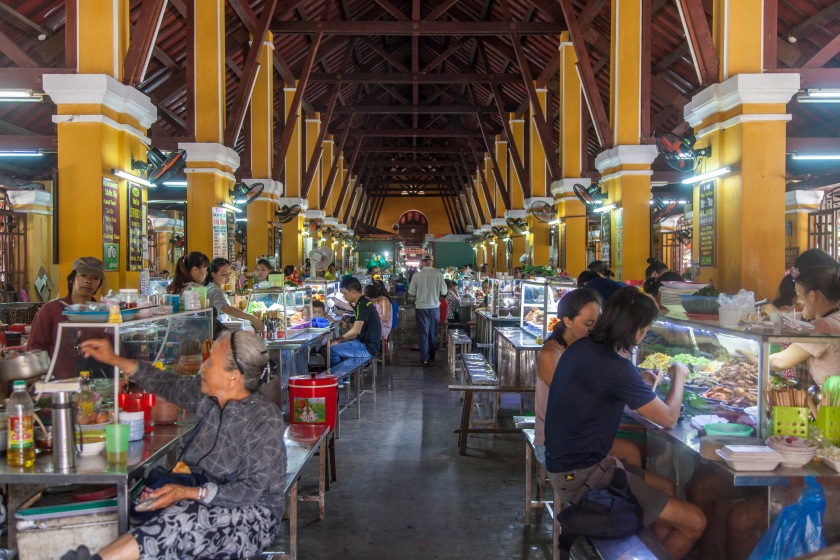
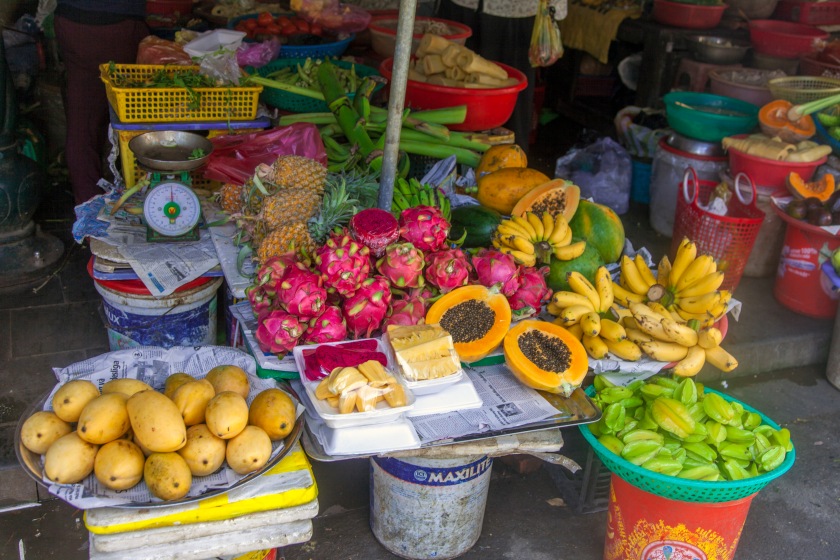
I’m not really mentioning another pagoda we visited, especially since I don’t even remember its name, but the Old Town tour ended with a visit to Central Market. The idea of a big food market is nothing unheard of, but the goods displayed are very exotic to us: there are tons and tons of tropical fruits, and a huge amount of unfamiliar herbs (I already mentioned how I had the impression that the Vietnamese eat everything that grows), and different types of hot pepper, and also something looking like a huge dining area with cooked foods.

IMG_2746

IMG_2750

IMG_2753

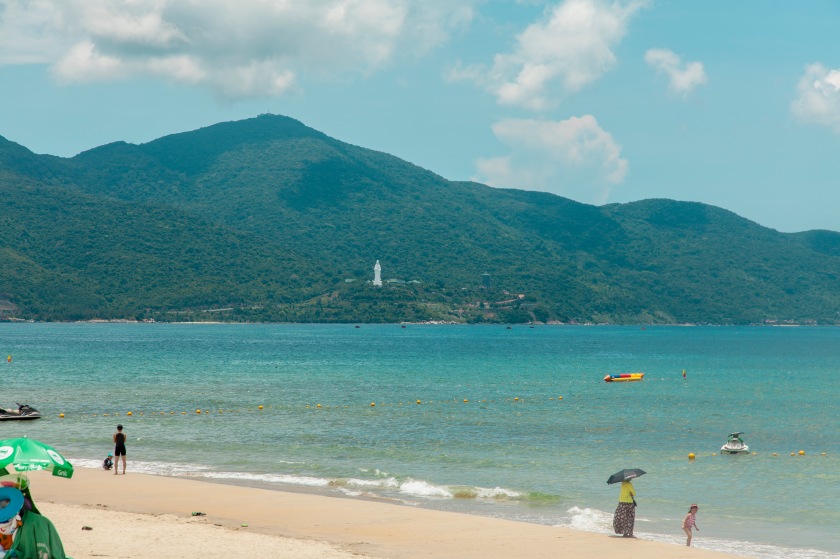
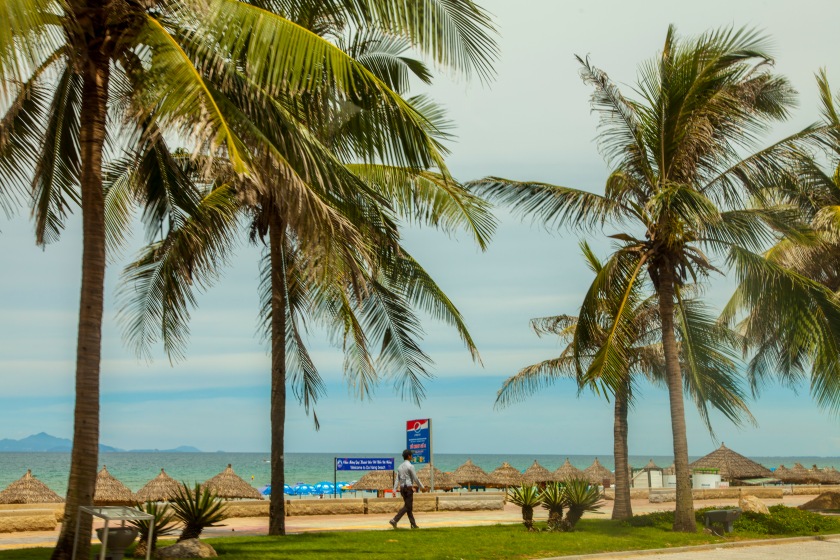
That marked the end of our Hoi An tour, and we headed back to Danang, because that is where the airport, from which we were later supposed to fly to Hanoi, was located. But our tireless guide still had plenty of energy, so he arranged two more photostops for us. The first one was on the beach, from where the Lady Buddha statue was distinctly visible. To be honest, a beach doesn’t make much sense unless you can swim and sunbathe there, but nevertheless we took a couple of photos.

IMG_2766

IMG_2769

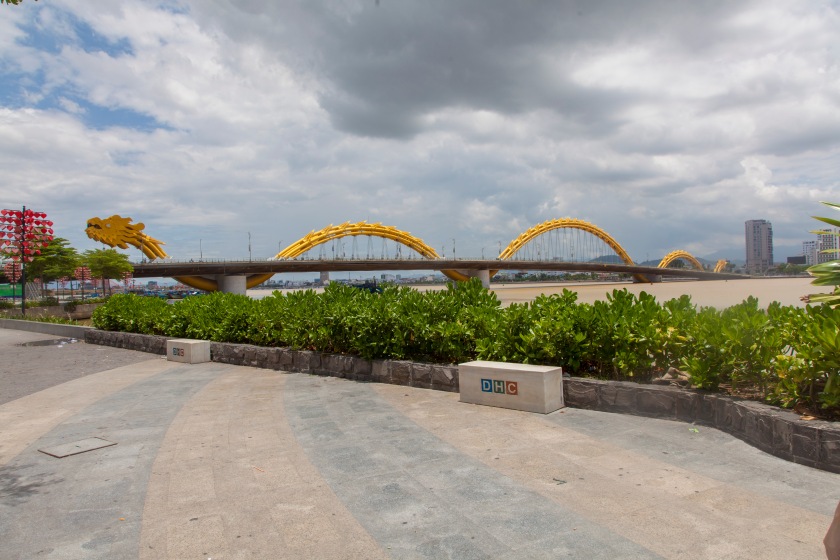
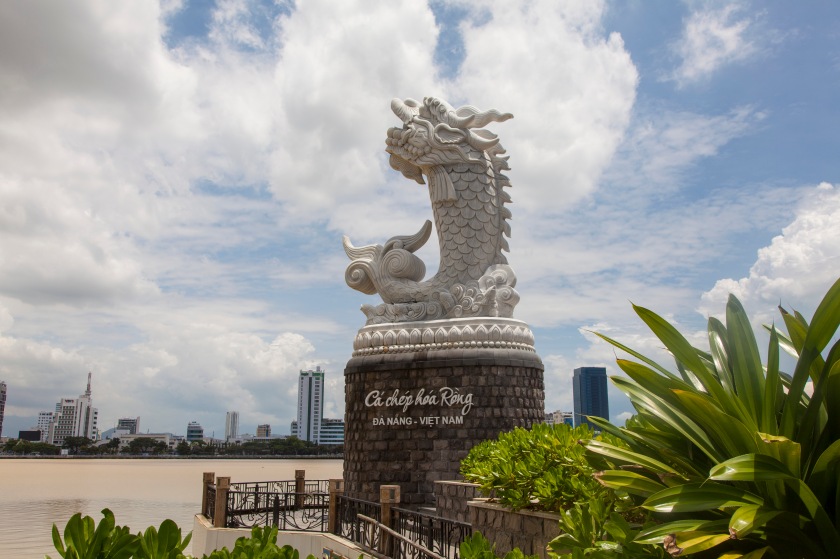
The second stop is by the Han river, because one of the main attractions in Danang, where our guide lives, by the way, is a dragon-shaped bridge across this river. And nearby there is a marble statue shaped like a fish with the head of a dragon, for which Danang is sometimes called the second Singapore. The origin of this strage creature is from the legend about the koi carp, which will turn into a dragon if it can climb up a waterfall. The sculpture depicts exactly this moment of transformation.

IMG_2770

IMG_2771

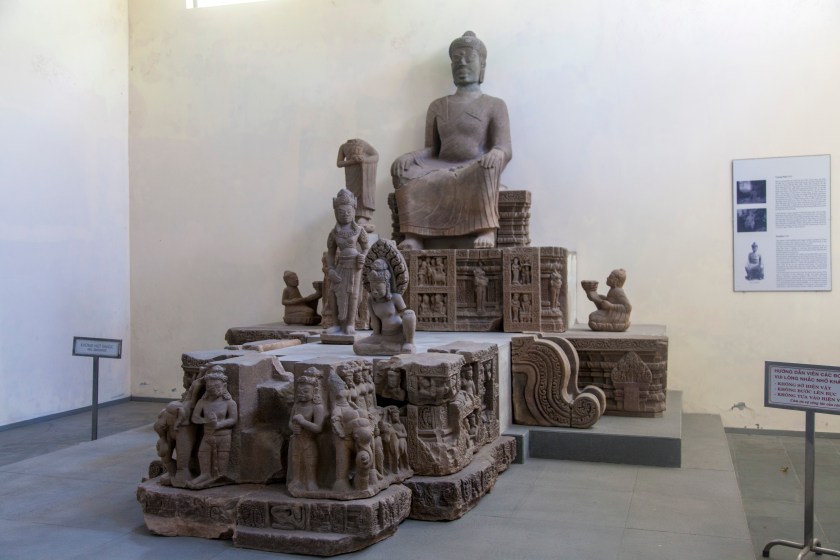
But even that wasn’t it yet – there was still a museum visit awaiting us. It was the Museum of Cham Sculpture and, quite honestly, it was already superfluous, as we were too exhausted by the terrible heat. But we still made a whirlwind tour around the museum. The museum hosts sculptures and architecture elements of the Champa kingdom, which existed in the Middle Ages in Central Vietnam and where Hinduism was practiced. The French archaeologist Henri Parmentier discovered these artifacts in the early 20th century, and this museum was opened as a result in 1919, thanks to which, they are still intact, as many other Cham sculptures and temples were damaged during the Indochina and Vietnam wars.

IMG_2780

Completely exhausted, we headed to the Danang airport. Nam escorted us to the check-in desk and even checked us in for the flight. We also had lunch right at the airport.

20170610_131040

The flight was delayed by 20-30 minutes, but then again we didn’t have to hang around at the airport on the back end, since there is no passport control on domestic flights. In Hanoi, we were picked up by our new guide, Sunny, and headed to the hotel.

On the way from the airport you immediately notice that Hanoi is different. But I haven’t yet fully understood what exactly makes it different from Saigon, for instance. Perhaps, it’s the fact that the city is more modern, yet has more old buildings, and even the people look different – I mean, however ridiculous this may sound, they more look like urban residents. The façades of buildings are very narrow, like everywhere else in Vietnam, which I don’t think I’ve mentioned before, but here we actually asked Sunny about the reason, and he explained that in the old days there was a special tax directly related to the width of the façade.

Our hotel is located in the Old Quarter, apart from which Hanoi also have the New and the French Quarters. While we were waiting to check in, we were treated to some nice refreshments, as usual.

20170610_174603 (1)

In the evening we walked up to the lake, also in the Old Quarter, to get some food, but the walk turned out to be more stress than pleasure. The traffic in the streets is even crazier than in Ho Chi Minh City, and the sidewalks are mostly non-functional – they are packed with parked scooters, street vendors and street food stalls with low tables and stools next to them – so one has to walk on the road, constantly shying away from scooters. On the other hand, there was such a thick crowd in the pedestrian zone near the lake, that even in the absence of vehicles it wasn’t too much fun either.

One of our observations in Vietnam, by the way, is about the general cleanliness. I mean, the streets are often chaotic, the sidewalks are cluttered, there is street food everywhere – yet, despite all this, there is no dirt, stench, rot and filth. Everything gets cleaned. Even toilets, albeit sometimes very shabby, are always clean and not disgusting.

20170610_190724

Posted in Asia, Danang, English, Hoi An, Hue, Vietnam

Vietnam – Day 5

РУССКОЯЗЫЧНАЯ ВЕРСИЯ ПО ЭТОЙ ССЫЛКЕ. CLICK HERE FOR RUSSIAN VERSION.

9 June 2017

The day has been very intense, but, to be honest, with the occasional feeling that everyone wants money from you. In Ho Chi Minh City this feeling wasn’t there and we even got the impression that Vietnam is a country not yet spoiled by tourism, because this industry is still developing here. But the further you move to more tourist places, the more this impression is dissipated.

I’ll come back to that, but first things first. In the morning, we checked out of our hotel in Hue and headed to see the imperial tombs nearby.

20170609_062925

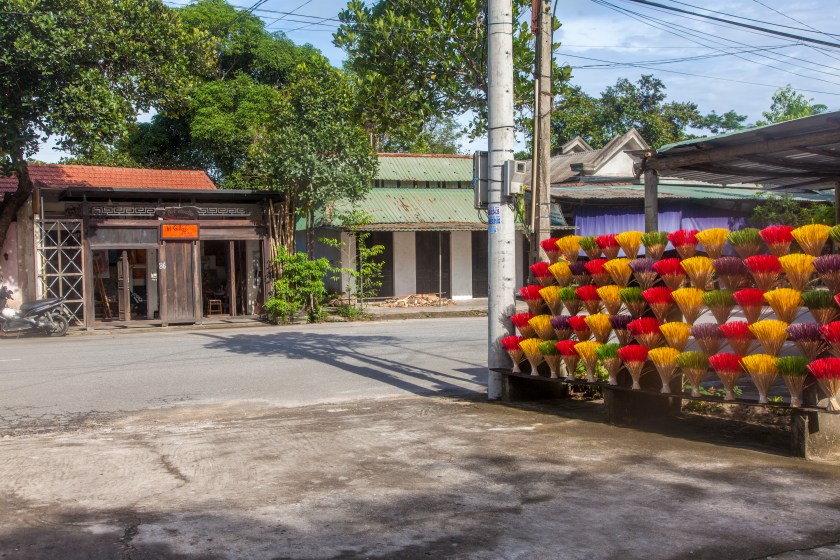
Today we have a new guide, a young man named Nam, who seems very diligent. Right on the outskirts of the city, we saw a lot of aromatic sticks for temples being sold along the roadside, and he asked the driver to stop the car so that we could see how they are made. Of course, the seller immediately started actively persuading us to buy regular souvenirs…

IMG_2486

IMG_2488

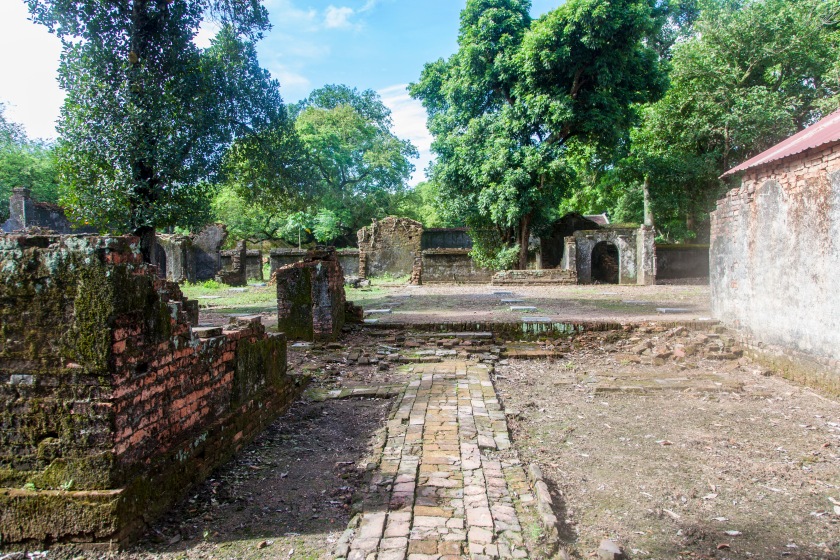
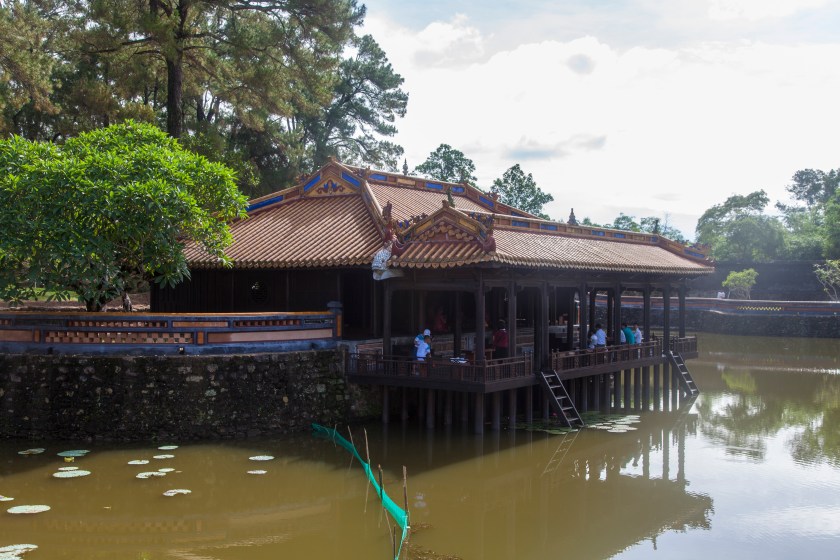
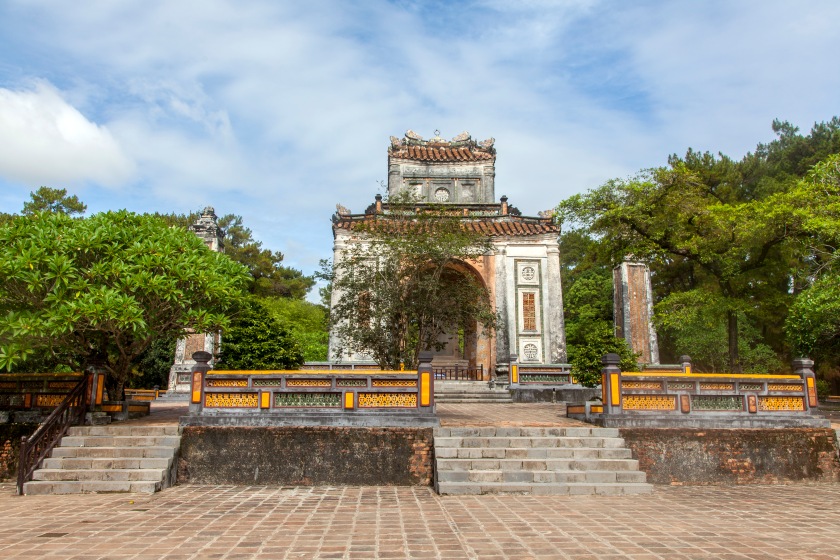
As I said, according to the programme, we had mausoleum visits planned, and the first one was the mausoleum of Tu Duc, who was the fourth emperor of the Nguyen dynasty and the last emperor of independent Vietnam – his successors ruled the French colony already. The presence of the ruling dynasty was perfectly acceptable for the French, since it facilitated the governing of people, so they didn’t get rid of it.

The mausoleum was built when Tu Duc was still alive and is not just a tomb, but in fact a whole complex that functioned as the Emperor’s summer cottage until his death, and later became home to his numerous wives and concubines.

IMG_2493

By the way, despite the fact that Tu Duc had a hundred or two wives and concubines, he did’t leave any offsprings, so his nephew inherited the throne after him.

IMG_2499

Interestingly, no one knows where exactly Tu Duc is buried in the mausoleum – it would seem logical that if there is a tomb, then that’s where he should be buried, but Nam explained to us that the emperor was clever and, considering the amount of treasures to be buried with him, he ordered to dig numerous tunnels under the territory of the mausoleum and bury him in one of them, so that no one knew where exactly. Nowadays, although with modern technologies determining the exact location wouldn’t be much of a problem, the government specifically decided not to do so.

IMG_2508

Our itinerary assumed that next we would go see the tomb of his grandfather – the very Minh Mang that I already mentioned in connection with traditional medicine. But Nam pointed out that even though the standard programme includes this mausoleum because of its convenient location, it is too similar to the first one, and, perhaps, we would find it more interesting if we went to see something different. So, he suggested another mausoleum instead, located slightly further – that of Khai Ding, the 12th and the penultimate emperor of the Nguyen dynasty, who ruled in the early 20th century. We agreed.

IMG_2510

This mausoleum was indeed completely different – the architecture contained mixed elements of both traditional Oriental and European styles. The territory was quite small in comparison with the previous complex, which had pavilions, gardens and a lake, but the mausoleum took 11 years to build, whereas the previous one took only three.

IMG_2524

This is not surprising at all, because the tomb itself is truly luxurious: the walls are decorated with various types of ceramics – local Vietnamese, Chinese and Japanese – and the ceilings are painted with 99 dragons, in such way that you can’t track the beginning and end of each.

IMG_2517

IMG_2518

So, the buildings are impressive, I could totally have walked around here for a long time if it hadn’t been for the unbearable heat, which made me want to get back into the car as quickly as possible.

It’s time to say goodbye to Hue and move on, heading to to Hoi An, where we should spend the night. But on the way to Hoi An there is still much to see!

The road started climbing up the mountains, and the places around were becoming more and more picturesque. We stopped every now and then to take pictures, then had a short comfort stop in some roadside cafe, which was part of a family business for production of oysters and pearls – right here, across the road, there was a large shallow lake where the molluscs were bred.

IMG_2532

IMG_2531

There is actually a tunnel through the mountain, but we drove over the Hai Van Pass instead to enjoy the picturesque views of the green slopes and the sea.
At the summit of the pass we made a photo-stop yet again, as there are some ruins that used to be a French fortress, and later an American bunker.

IMG_2538

The road from Hue to Danang, where we are going, takes two hours. We don’t stop in Danang itself, but Nam told us that the city is quite new, industrial, and has a large seaport – back in the days, the port was located in Hoi An, where we are heading eventually, but the French transferred it right here.

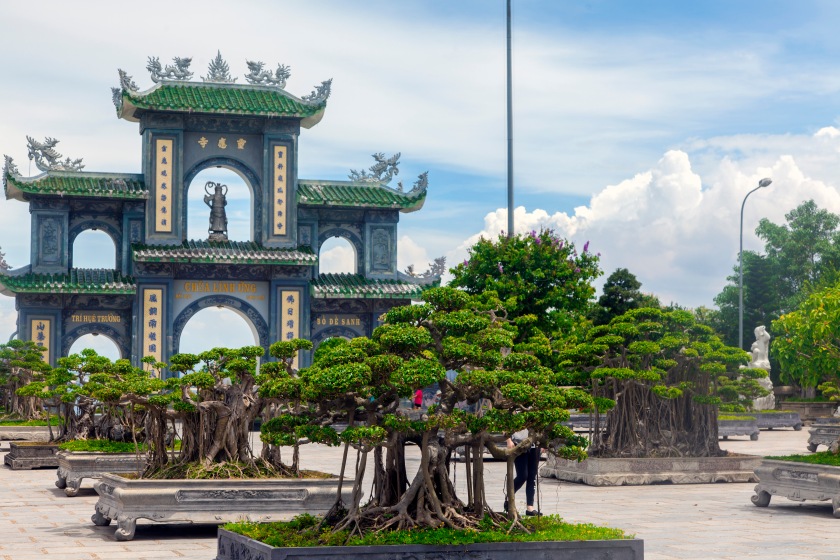
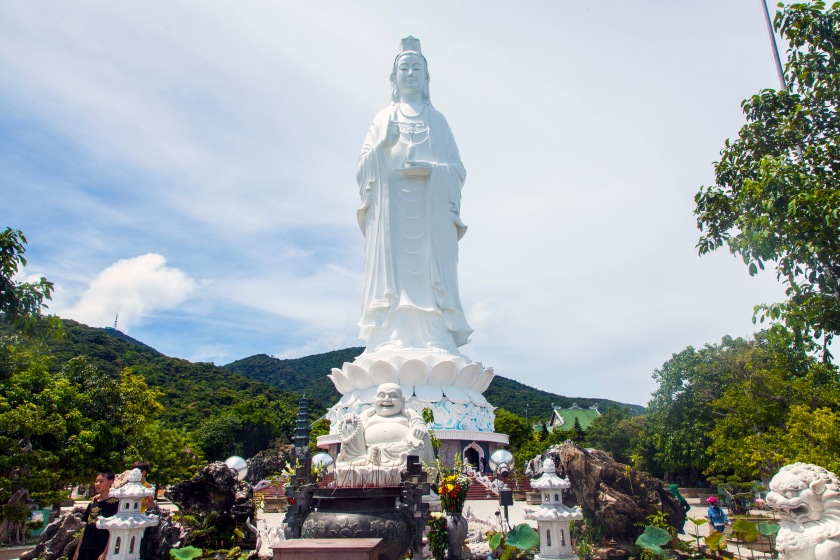
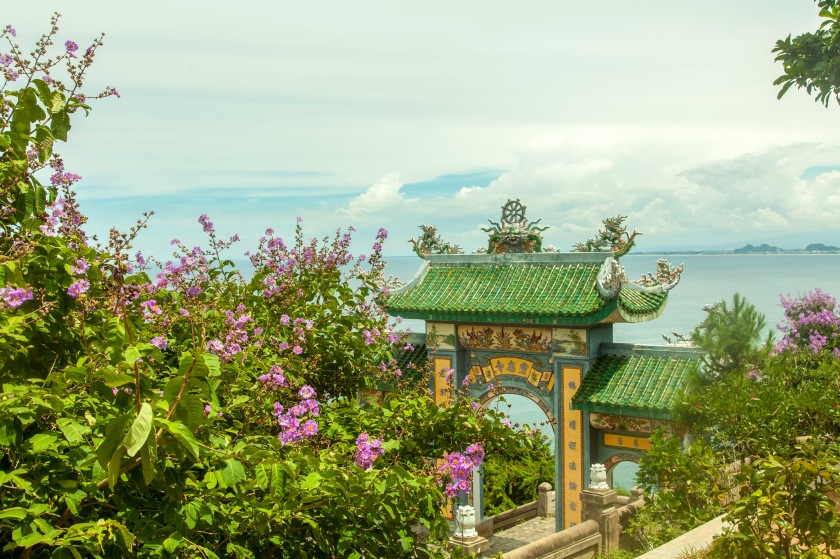
Actually, back when we were booking our tour, we made a special request to visit Danang, as we wanted to see the statue of Lady Buddha. That is why we were taken to the Son Tra mountain, also known as the Monkey Mountain, where this statue is located. Besides the statue, there is a whole complex with carved gates and the Linh Ung pagoda.

IMG_2552

IMG_2558

The pagoda is quite new, built in 2010, and the statue is even newer. I must say, Lady Buddha is very impressive, and no wonder: it is 70 metres high, made of a single piece of marble and can be seen from a long distance, almost 35km. It’s facing the bay, since it is supposed to protect sailors – it resonates with the Chinese goddess Tin Hau, perhaps the idea is even inspired by her. I was generally surprised by the idea of a female Buddha, but Nam explained that even though Buddha is a man in Indian Buddhism, in the Chinese version of Buddhism, under the influence of which this temple complex was built, there is also a female Buddha for balance (like yin and yang).

Apart from Lady Buddha, there is also a small Laughing Buddha statue nearby, which is said to bring good luck if you rub his belly. We stand in front of him to take a picture of Lady Buddha, and suddenly we hear loud sounds from the pond, resembling a dog barking, which turn out to be toads croaking!

IMG_2572

IMG_2574

Nam suggested that we have lunch in Danang on our way to the statue, but we were anxious that it might rain like it did yesterday in the pagoda of the Heavenly Lady and ruin the sightseeing experience that we’d been looking forward to from the very beginning, so we preferred to see Lady Buddha first, while the weather was still good (albeit very hot) and have lunch later when we get to Hoi An.

Along the coastline all the way from Danang to Hoi An we saw a huge number of hotels and fancy five-star beach resorts, but even more than the already existing ones were still under construction – clearly, tourism is developing extensively in this region and in the future Danang intends to compete with the resorts of Thailand, Indonesia and Malaysia.

IMG_2579

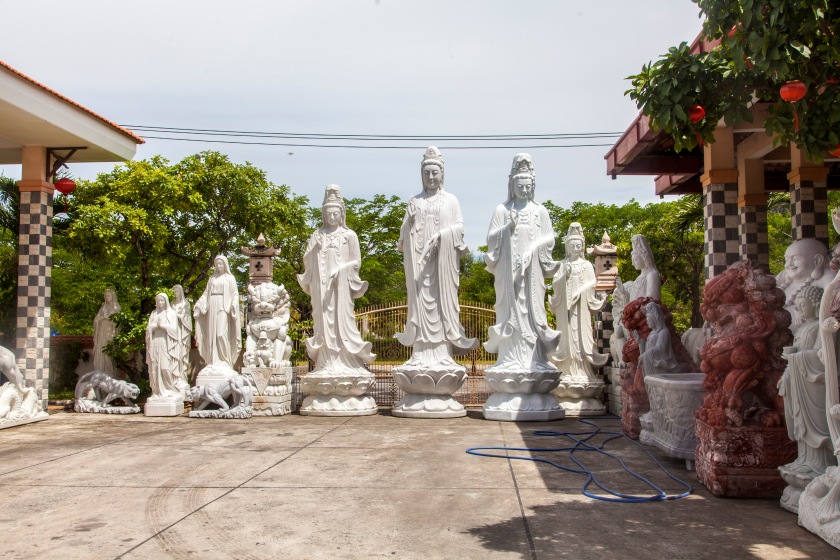
On the way, we made another stop, although our stomachs were already dreaming about food, at a marble factory, which there are quite a few of in Vietnam, and they showed us how marble statues were made. Looking at the statues themselves was actually more interesting than observing the production process: there were smaller replicas of the Lady Buddha statue, other Buddha statues, various animals and mythical creatures, Jesus Christ and the Virgin Mary (10% of the Vietnamese population are Catholics). At the factory we were also very actively solicited to buy souvenirs, but we didn’t like the little figurines that much and the big statues would obviously be quite problematic to buy.

IMG_2581

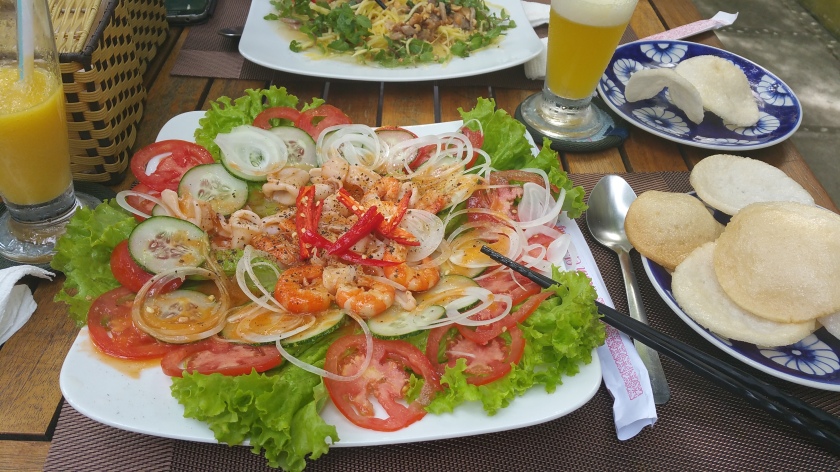
Thank goodness, there were now only a few kilometres separating us from our desired lunch, and finally we stopped at some roadside restaurant. First, for some reason, we had pretty low expectations of the restaurant – probably, because it was located right next to the noisy highway and, since the owner was apparently working in the kitchen by himself, the service wasn’t too prompt – but then we were served delicious salads and grilled fish, and also treated with orange slices and chewing gum when we asked for the bill, so our opinion of the restaurant made a complete U-turn.

20170609_144137

What Nam told us about Hoi An was that it is an old trading city, where the big seaport was located between the 16th and the 18th. Trade with China, Japan and European countries was conducted through the port, which is why there were many Chinese and Japanese living here.

IMG_2602

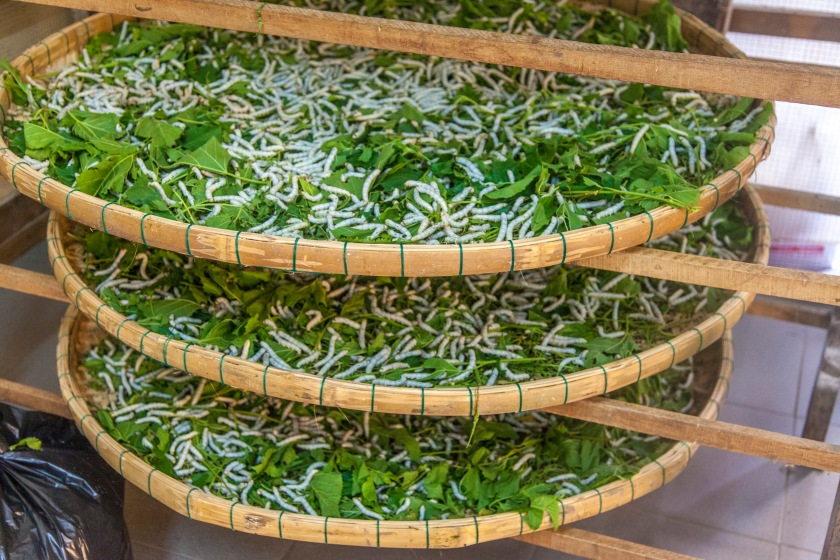
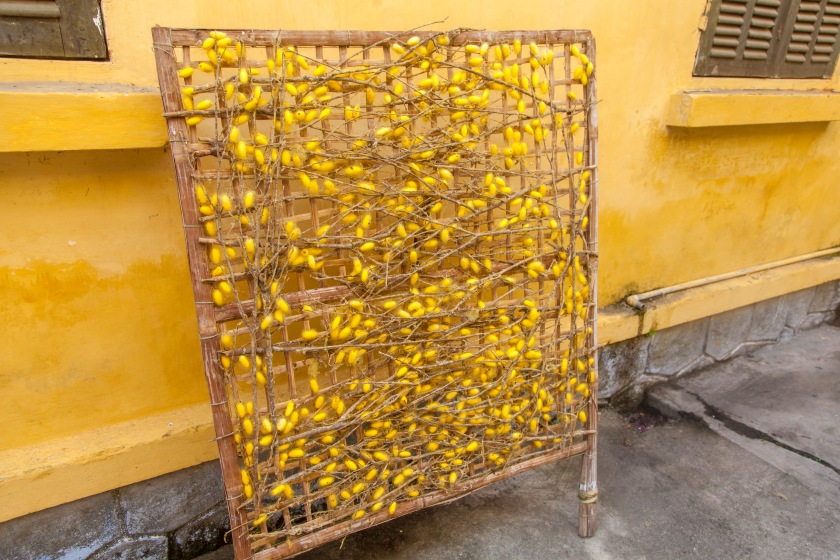
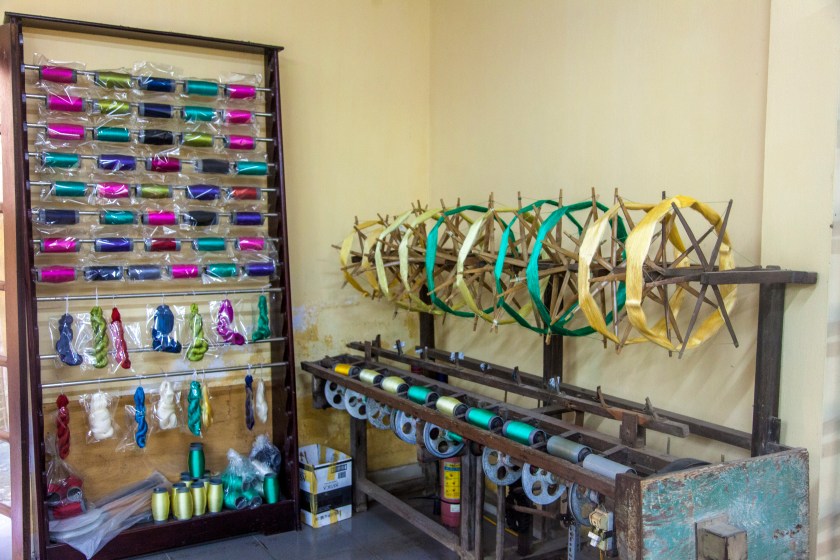
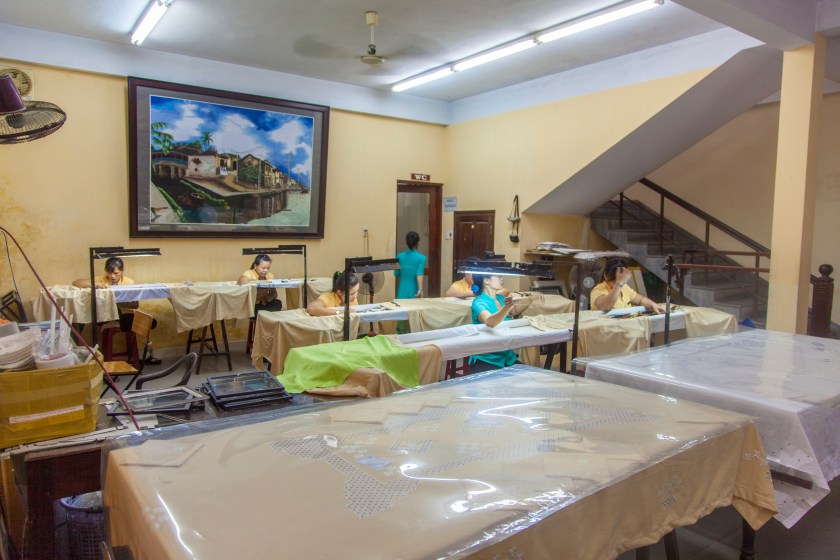
The city is famous for silk production, so we made yet another stop, this time at a silk factory. Here we saw all the stages of silk production – first some gross white worms swarming among mulberry leaves, then the cocoons, and then the thread and the finished fabric. Right at the factory, there is also a store selling ready-made fabrics and clothes and you can also order something from a tailor and get it ready the next, or even the same day. Generally in Hoi An, as we noticed, many ateliers provide similar services.

IMG_2593

IMG_2592

IMG_2596

IMG_2597

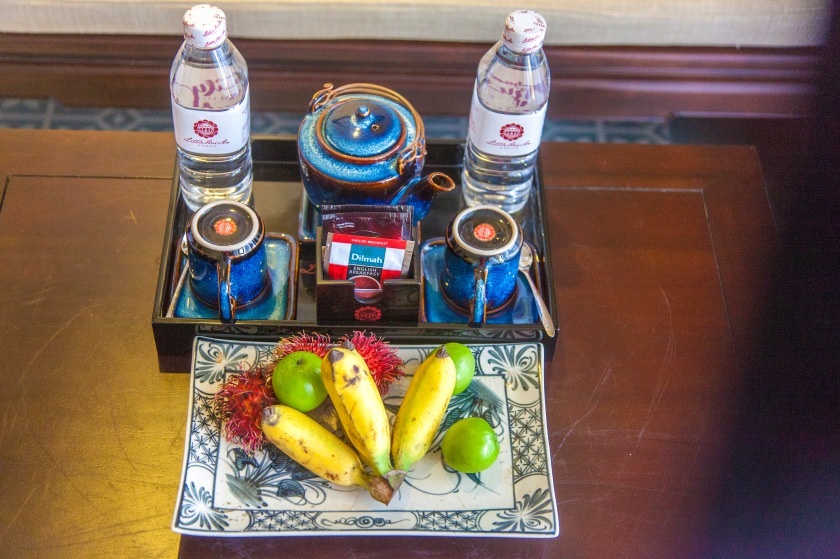
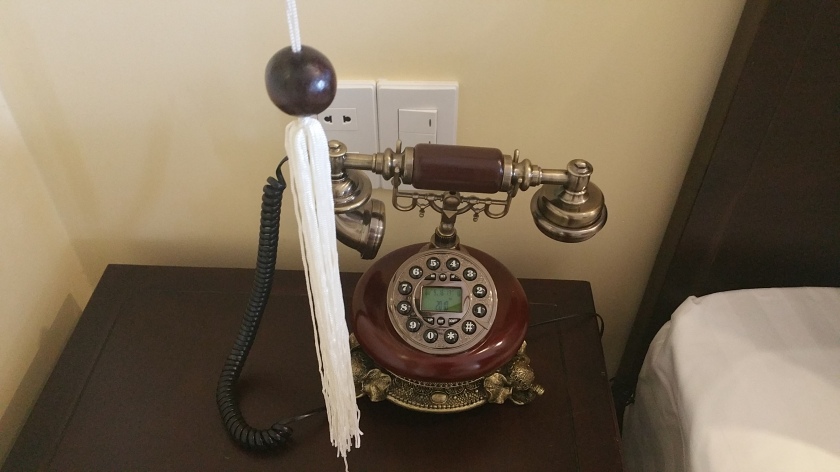
Finally, we got to the Little Hoian Central hotel, which turned out to be a pleasant surprise for us. The hotel is a three-star one, but cannot even be compared, for example, with London three-star hotels, where you get a tiny room and a rather meagre breakfast – this one has an outdoor pool and a spa, the room is huge, with a balcony, and the interior is in the typical Asian Colonial style of the 19th century: even the phone and the plumbing are stylised.

IMG_2609

IMG_2613

IMG_2612

IMG_2607

IMG_2614

IMG_2610

20170609_161829

Since we were extremely tired, the pool and the spa came in really handy: first we washed off all the fatigue in the pleasant water, and then once again went for a wonderful massage.

IMG_2606

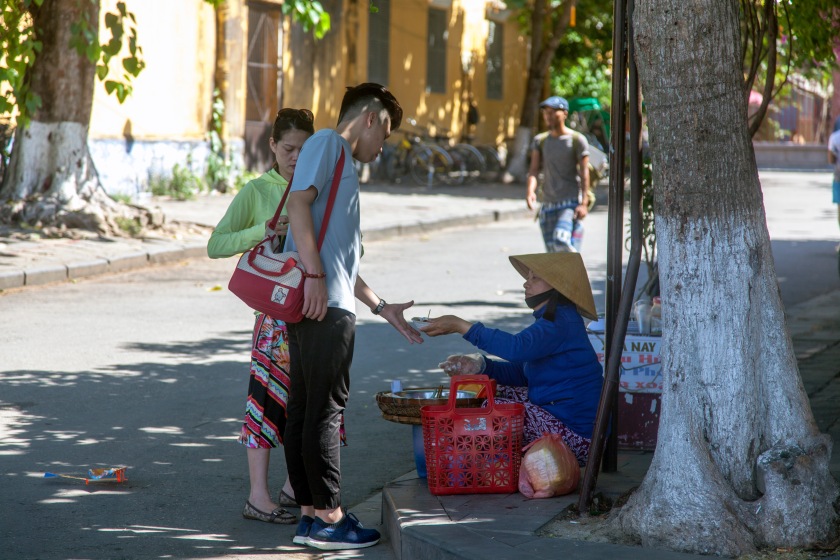
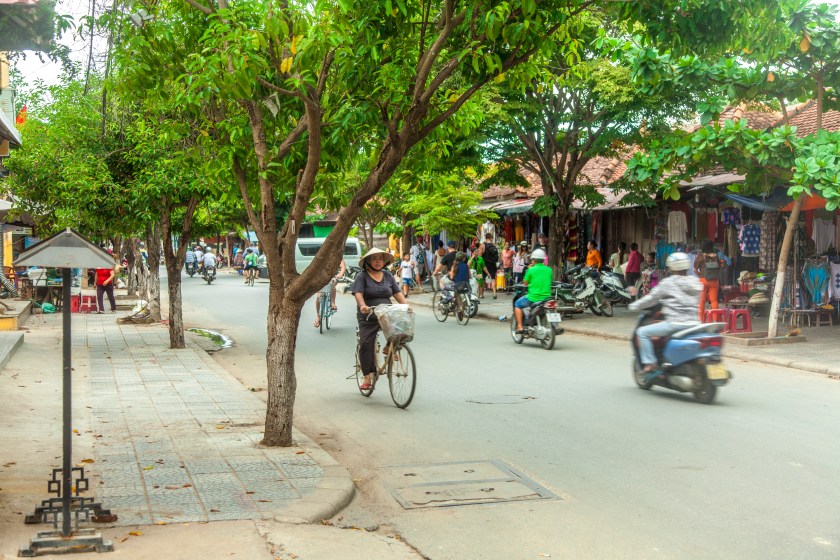
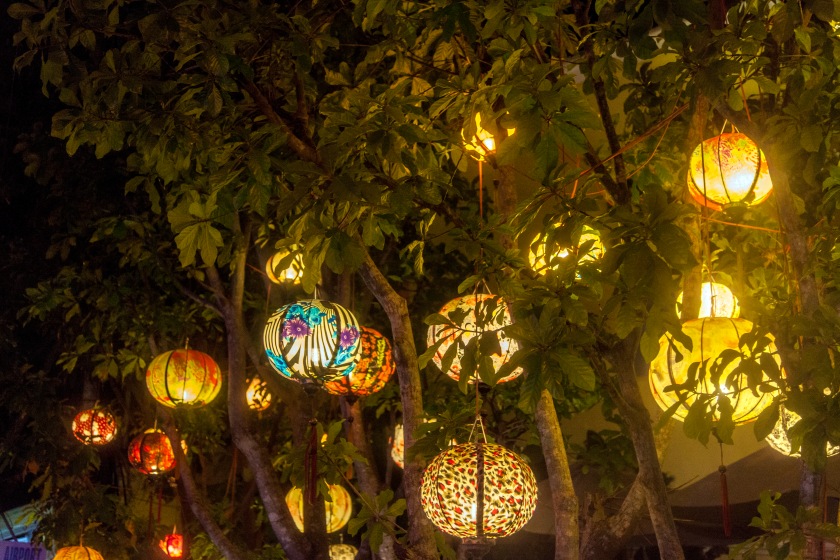
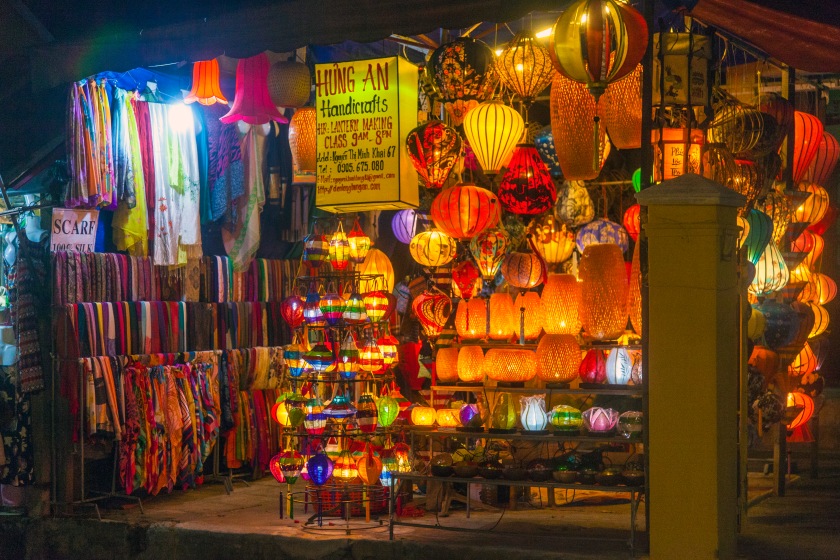
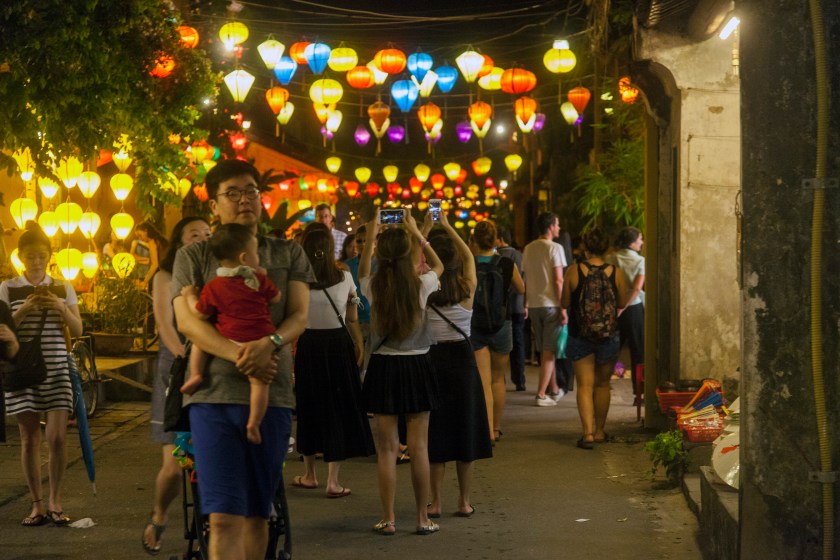
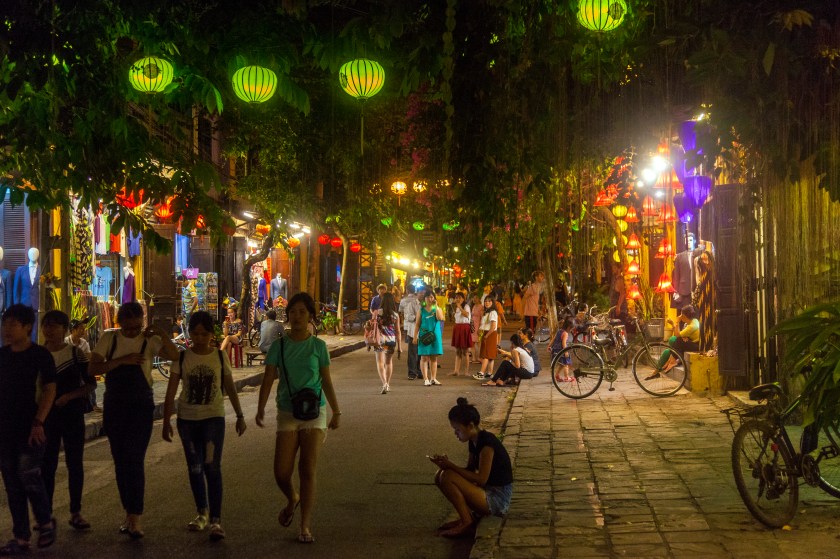
We had the evening free, so we made a sortie to the Old Town. One of Hoi An’s features is silk lanterns, and the whole Old Town is decorated with them, which makes it look particularly cool in the evening. The Old Town is only accessible to pedestrians and cyclists, and boy is it great to finally relax from these chaotic scurrying scooters everywhere! The zone is clearly very touristy, and there are mostly shops selling souvenirs, silk clothes and lanterns. The crowd is very thick, there are lots of foreign tourists, and even more local ones: it’s summer now, children have holidays, so many families travel around the country.

IMG_2622

IMG_2630

IMG_2633

IMG_2648

IMG_2651

IMG_2652

IMG_2658

IMG_2659

IMG_2661

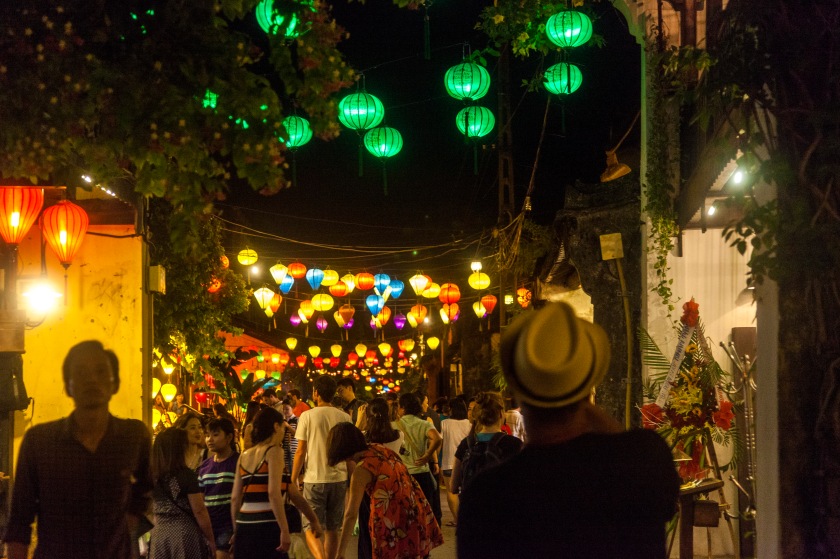
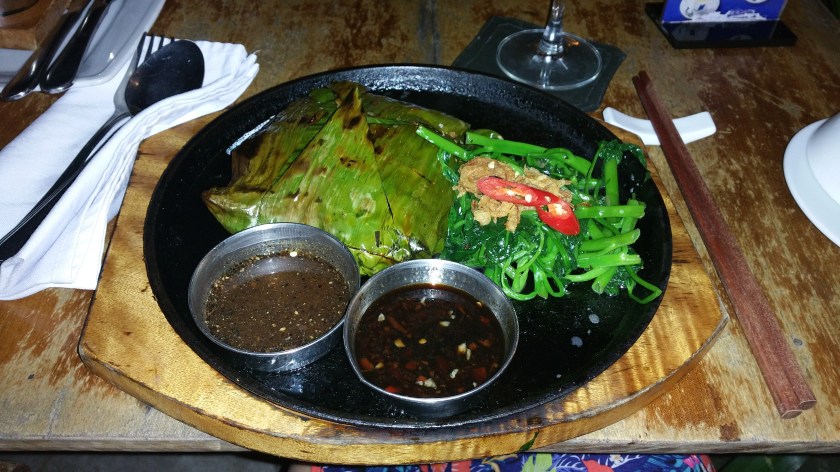
There are also plenty of cafes and restaurants, and we decide to have dinner in one of them, attracted by the nice view of its outdoor seating area among bamboos. It was a good choice – we ordered grilled fish again, and mine was wrapped in banana leaves and incredibly tasty. Plus we were entertained by lovely music: there is an international choir competition happening now in Hoi An, and the performance took place right in the street near our restaurant.

20170609_201850

Posted in Asia, English, Singapore

Singapore – Day 5

РУССКОЯЗЫЧНАЯ ВЕРСИЯ ПО ЭТОЙ ССЫЛКЕ. CLICK HERE FOR RUSSIAN VERSION.

28 November 2013

The day turned out very diverse in content which ranged quite impressively from the Universal Studios amusement park to a classical concert. But – one thing at a time.

Since the day before we had spent very limited time on Sentosa, we decided to repeat the visit right in the morning, and started again from the beach, and from the same one. We had kind of got used to it somehow, but the beach attendant must have been having a senior moment: he asked us literally all the same set of questions as yesterday: where we were from, whether we spoke Russian, what kind of country Azerbaijan was and whether it was close to Kazakhstan.

Siloso Beach

Sentosa

Even though the attendant caused a puzzled laughter with his repetition, the sunny weather which also replicated that of the previous day, was accepted with joy. The water was unpleasantly different though: tons of algae had been brought by the wind, and there was also something stinging in the water.

Sentosa

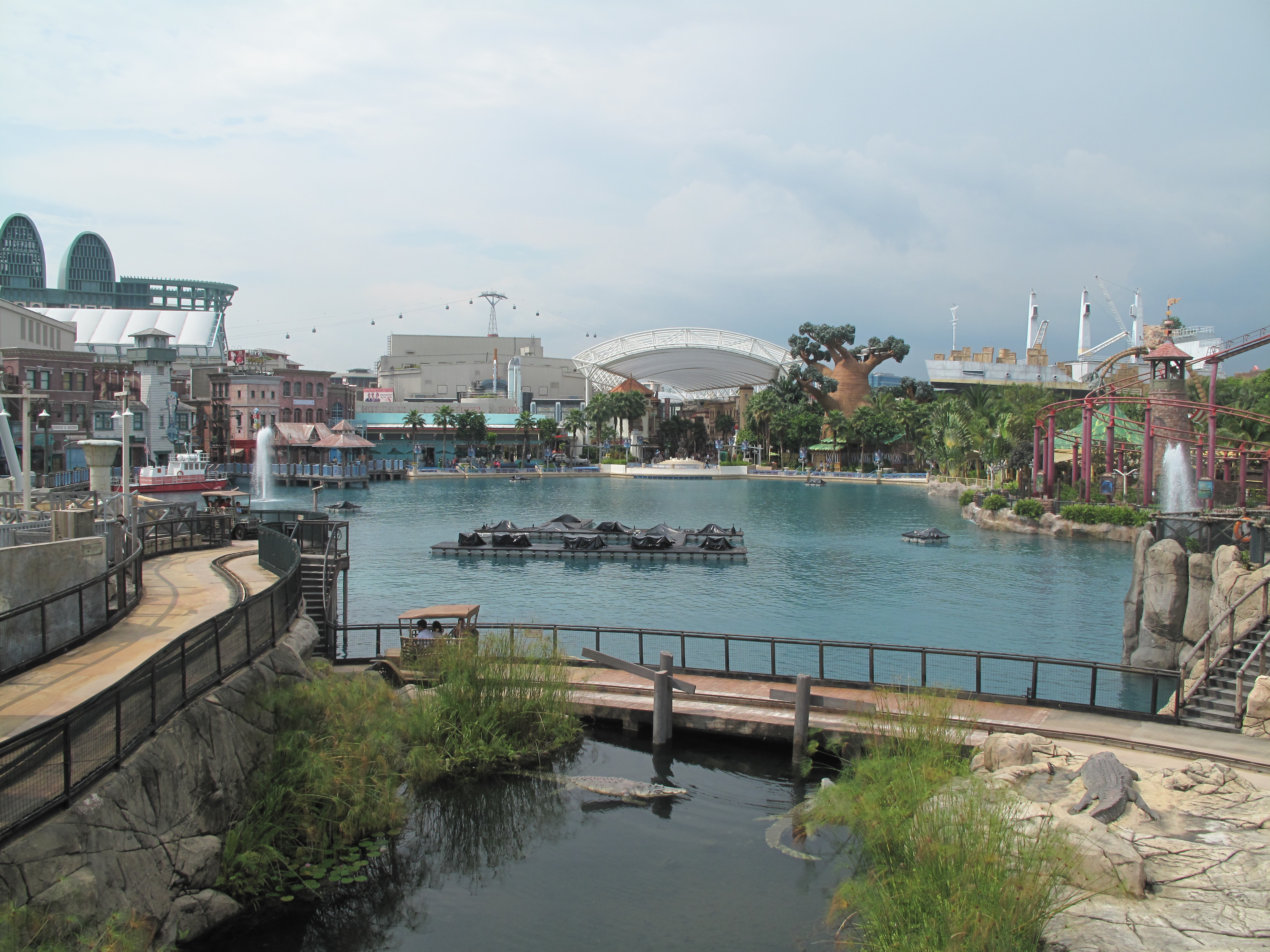
We hesitated a lot whether to visit the Universal Studios after all, or not. Having googled it thoroughly, we found out that it was basically nothing more than just an amusement park, and I personally am not a big fan of those. Nevertheless, we still decided to go and take a look – a very expensive look, I have to say.

Universal Studios

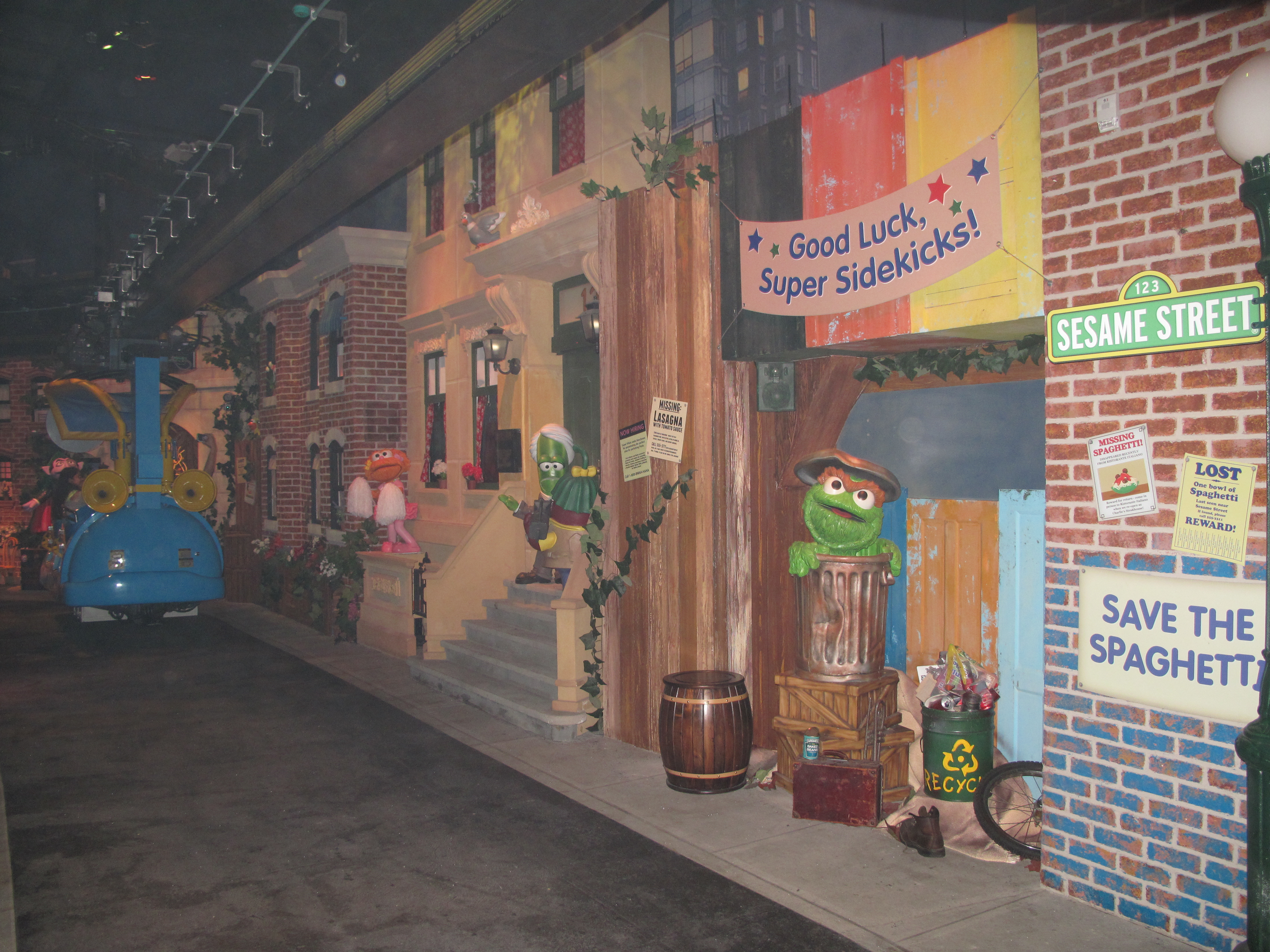
As a result, we, limited in time (due to the concert in the evening!) visited only three of the attractions. The first one was a complacent and almost childlike Sesame Street ride. The second one could have been the Transformers, but we noticed just in time that the ride included rotation and tipping upside down, which I absolutely can’t tolerate – and escaped.

Universal Studios

Universal Studios

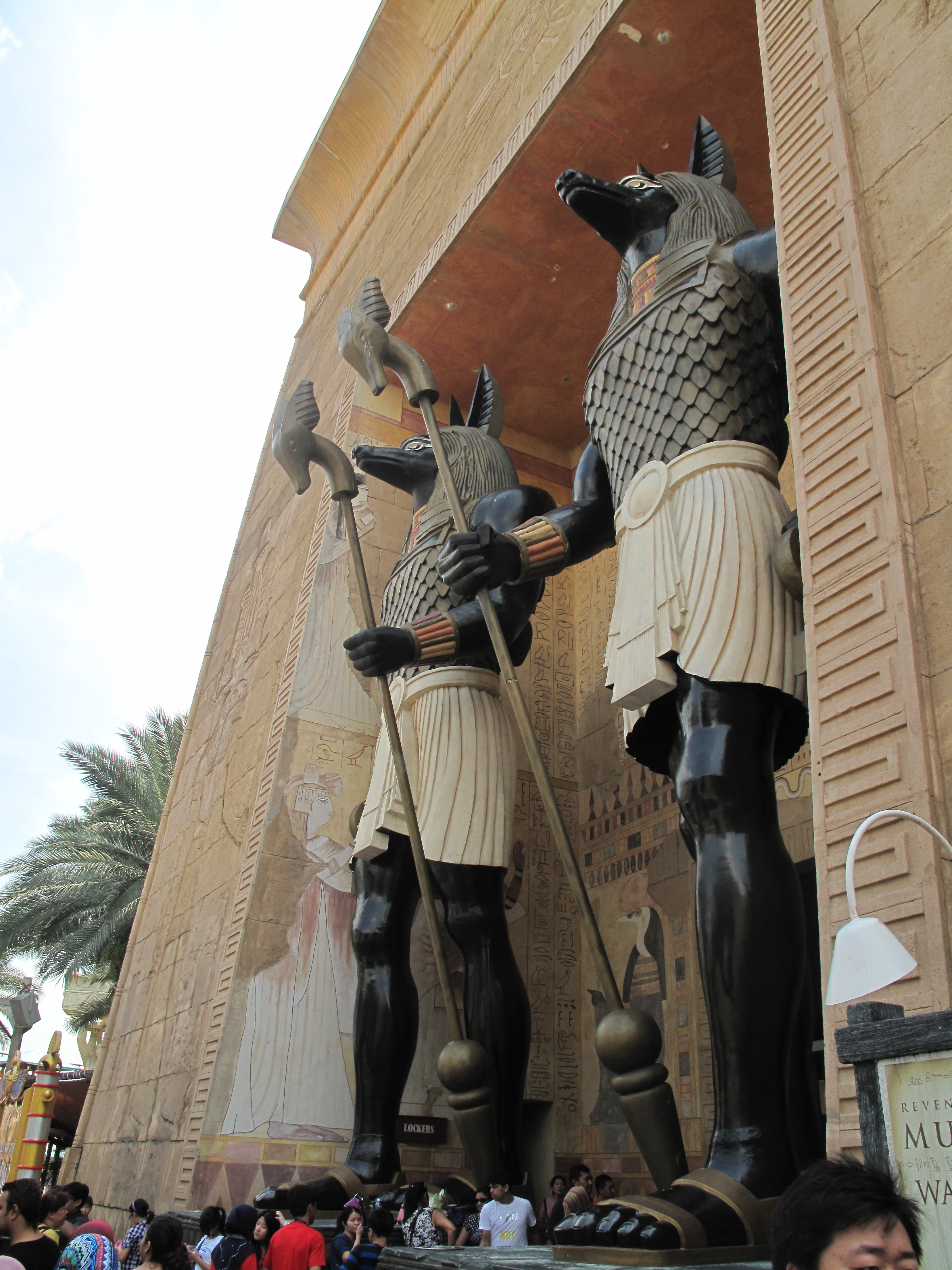
The one we found tempting was the attraction themed on the ‘Mummy’ and ancient Egypt. And that’s where our adventure began! First of all, it turned out that we were not allowed to take anything inside – so everything, including bags, had to be locked in a locker. We accidentally shut the first one, even before we had time to read how to set a passcode for it, and had to call the attendant and ask him to open the locker, promising to show our passports as soon as the bags containing them would be removed from there. We then put our belongings in another locker, properly following the guidance. There was a sign saying that the first 45 minutes were free of charge, and we recklessly trusted the digital clock showing 15 minutes waiting time in the queue – so we didn’t take any money with us, especially that we didn’t even have pockets to put it in. And there we went, right into this hallway, imitating an Egyptian temple, where we got stuck in an endless queue in a totally dark corridor, which took nearly an hour. The ride itself was very short. We expected something absolutely scary, but it was rather fun, despite the dizzying turns forward, backward, up and down, as well as the roars and spits of fire of the Egyptian priests. When we finally got to our locker, we couldn’t open it again – the free time had expired, and all our money was locked inside – so we had to call the attendant for help once more.

Universal Studios

And the third attraction was simply a little 4D cartoon about Shrek with shaking, water splashing and some hairy stuff, supposed to represent spiders, touching our legs.

Of course, we were ‘felled’ by the Egyptian attraction – if it hadn’t been for the hour-long standing, we could have caught another attraction. And all we had time for was having lunch at a Chinese bistro on Hollywood street right at the Universal Studios. At least we were precisely on schedule.

Universal Studios

Universal Studios

Universal Studios

And finally the long-awaited concert! It opened with Lyadov’s ‘Enchanted Lake’, but the word “enchanted” can be also applied to our overall impressions of the concert. It was truly an awesome event! Actually, it was a concert of the Singapore Symphony Orchestra, considered the best in Asia, directed by Lan Shui. And Lang Lang – a phenomenal, brilliant pianist – was taking part in it, playing Prokofiev’s Piano Concerto No. 3. It’s difficult to find words to describe the amazing impressions that his performance left on us. I was literally taken away, even being aware that if a piece of music as difficult to grasp as this one, had been played by someone else, it could have just seemed to me a set of random sounds and nothing special. Lang Lang’s virtuosity, power and dexterity are striking, and you just can’t imagine how anyone possibly can perform this piece at all. We were seated so that his face could be seen, so we had the opportunity to observe the infinite palette of his emotions.

Taking pictures and videos was prohibited (that’s how the lockers theme was continued – we had to lock our cameras in one before the concert), but when Lang Lang gave an encore, I, like some others, contrived to take a few pictures with my phone. Talking about the encore – the public went so wild that, despite all his efforts to simply take a bow and leave, he had to stay and play an intermezzo by Manuel Ponce and a waltz by Chopin.

Lang Lang

At first I thought that Tchaikovsky’s Fifth Symphony, which was to be played in the second part, was just an unnecessary appendage to the great genius Lang Lang. But in this case there was another genius – actually Tchaikovsky himself, with a very good performance of the orchestra and Lan Shui’s conducting.

Overall, I enjoyed the concert so much that even having to wait an hour for a taxi, which wasn’t extremely pleasant, didn’t spoil the great mood.

Posted in Europe, Italy, Rome

Adventures of the Azeris in Italy – day 3

РУССКОЯЗЫЧНАЯ ВЕРСИЯ ПО ЭТОЙ ССЫЛКЕ. CLICK HERE FOR RUSSIAN VERSION.

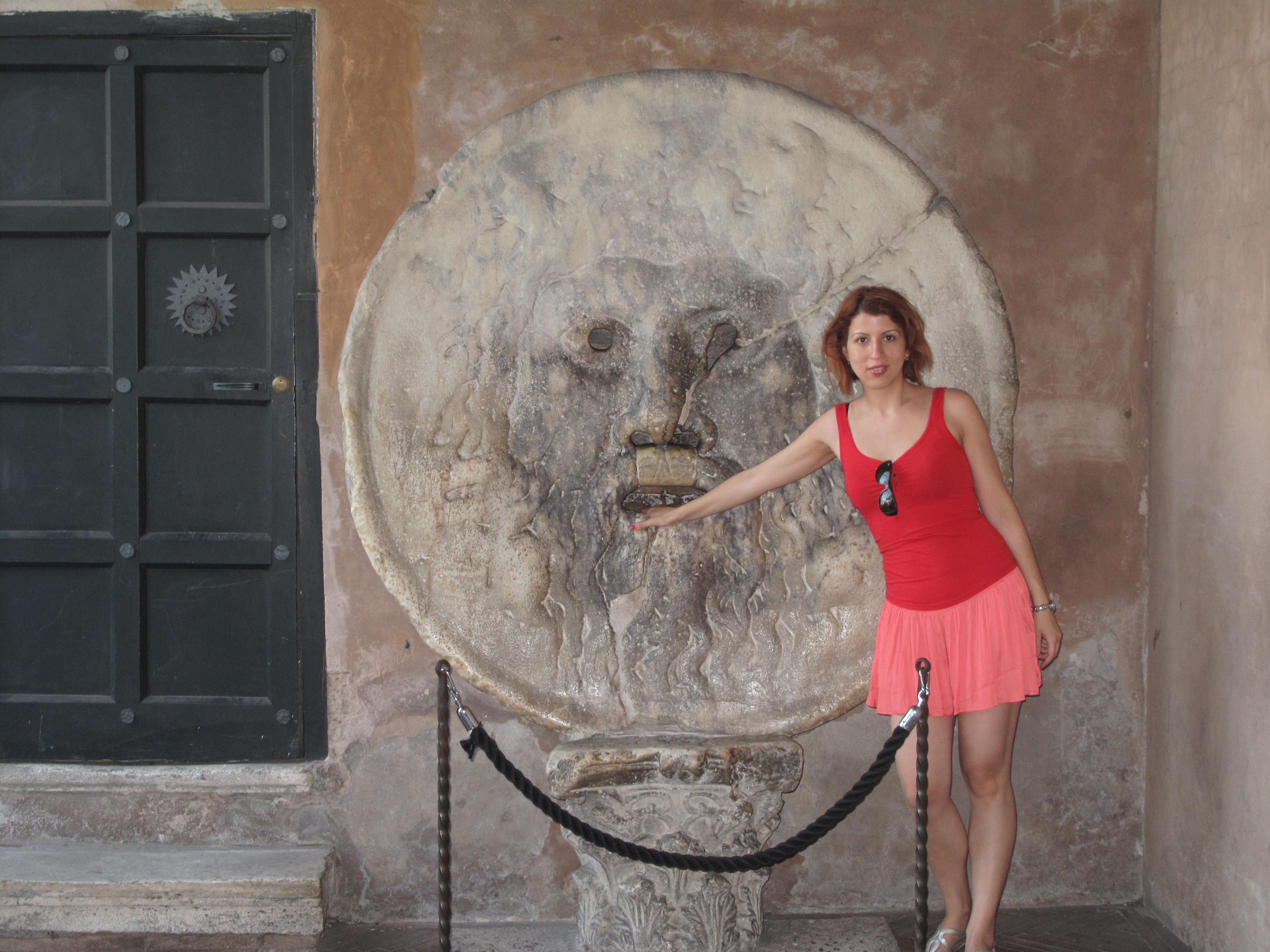
We still had a half more day in Rome. Our company had to split as part of it vigorously decided to go shopping. The other part, including me as well, didn’t mind shopping either, but somehow felt the urgent need to verify our own honesty by putting our hands into the Mouth of Truth. Here we were particularly lucky: a whole cavalcade of Japanese tourists arrived in several buses exactly AFTER us and formed a hopelessly long queue, while we reached the Bocca della Verità pretty quickly. It was only allowed to take one picture per person. Having confirmed that our hands remained intact, we left this place without visiting the church of Santa Maria in Cosmedin – we weren’t really up for it. We tried to find a taxi to catch up with our shopping companions, but there was none anywhere in sight, so we willy-nilly had to go back to the tour bus stop and spend ages (at least, 25 minutes or so!) waiting for the bus under the scorching sun.

The Mouth of Truth

Between this stop and the one leading to Via Corso with lots of shops, there was a trap awaiting us: the Vatican with its non-visited Sistine Chapel. We looked at each other: “Shall we get off here?” – “Yeah, let’s get off. As for the shopping, the hell with it!”

At the Vatican we were delighted by the virtual absence of a queue. Little did we know then, and only later we could appreciate the full extent of our mistake – this time people were entering the Basilica the proper way: through the Museum and the Sistine Chapel, which is completely the opposite side.

And then we met either a fairy godmother or a snake temptress who was persistently inviting us to join a private tour to the Museum, which would allow us to skip the queue, as there was no way to get into the Chapel other than via the Museum. But the tour was to take at least two hours of pure time (i.e. without all the preparation) and by the time it ended we were already supposed to be on our way to the airport. So we basically decided to waste our money: pay the full price, and then skip not only the queue, but also the Museum itself with this 1000+ chambers.

Our Italian-American guide apparently took after his Italian father in being extremely talkative – he eagerly explained us every single step we would have to make, starting from the purchase of the tickets. For us, however, his every word felt like a sharp knife, as it was stealing our precious time. Somewhere in the middle of his speech he was joined by a compassionate Italian lady, who tediously explained us that there was absolutely no way their company could charge us half price for the tour, even though we were going to skip the Museum. Although we hadn’t even asked for anything like this, we had to nod understandingly.

Eventually, we have our tickets in hand, our guide bids us farewell and starts his tour for the others – and off we rush through the museum chambers, full of sculptures, tapestries, maps, mosaics, etc. We only manage to catch a glimpse of this and that on the run, lingering for literally a second in front of anything particularly eye-catching. Very beautiful indeed, but terribly stuffy and packed with people – by and large we would hardly be able to survive a two-hour tour anyway!

The Vatican Museum


The Vatican Museum

And the Chapel is still quite far, we accelerate and accelerate…  Finally, swathed in shawls once again (it’s also a holy place!) we enter the Chapel. Michelangelo’s paintings on the walls and ceiling are utterly amazing, it is a pity, though, that we can’t appreciate all the details – the unpleasant surprise is that it is so crowded that there isn’t even room to sneeze, therefore no chance to walk around and look. By the way, taking photos in the Chapel is not allowed, but I managed to sneakily take one or two – it is quite blurry, but at least you get the idea.

Sistine Chapel

Still, we anyway felt great satisfaction by the Chapel itself and the fact that we had chosen contemplation thereof over meaningless shopping.

We were lucky to find a taxi right next to St. Peter’s square, and as a result we reached our hotel even before our companions.

Then we headed to the airport where our flight was delayed by about an hour. The transfer in Naples worked perfectly: a minivan took us to the port, where the driver got us tickets for the boat, and on our arrival to Ischia we were picked up by another minivan with a frail elderly driver, who nevertheless famously placed our luggage on the car rooftop.

We had been perceiving Ischia as some kind of a small town – it turned out to be a large island. The minivan drove us for about an hour in the dark until it dropped us at the start of the pedestrian zone of Sant’Angelo, where it took us ten more minutes to drag our suitcases to the hotel.