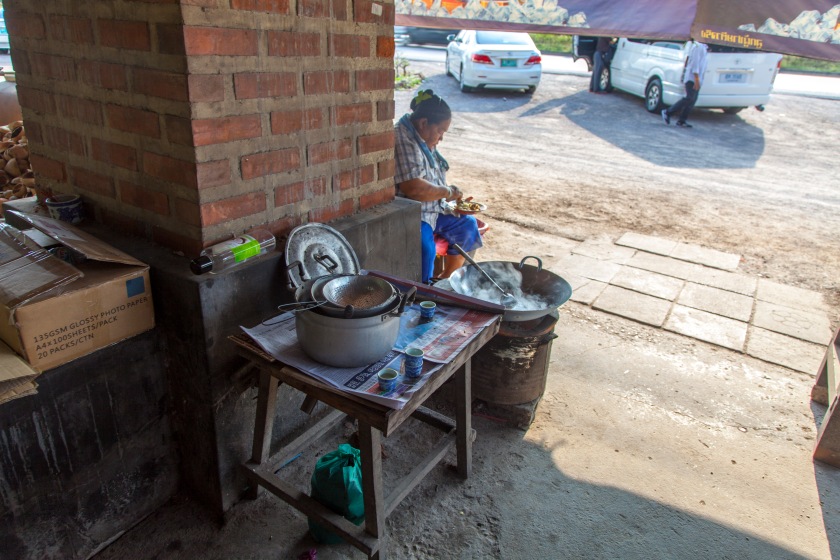
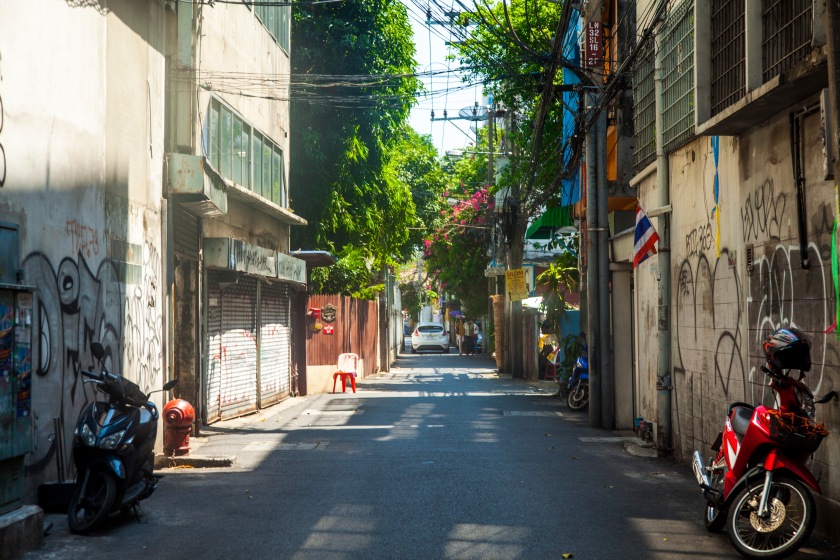
Posted in Asia, Chiang Mai, English, Thailand

Thailand – Day 5

РУССКОЯЗЫЧНАЯ ВЕРСИЯ ПО ЭТОЙ ССЫЛКЕ. CLICK HERE FOR RUSSIAN VERSION.

22 March 2018

And once again we had to forget about our sundresses and put on our elephant harem pants purchased in Bangkok, as pretty much the whole of today is dedicated to temples in Chiang Rai and its environs.

In general, there are lots and lots of temples in Thailand, people seem much more religious than, for example, in Vietnam or China, and it’s much more common to see monks everywhere. That’s quite understandable – the country hasn’t been colonised recently, it has no communist past or present, so obviously, religion hasn’t been historically oppressed. And by the way, Buddhism here seems to contain elements of Hinduism.

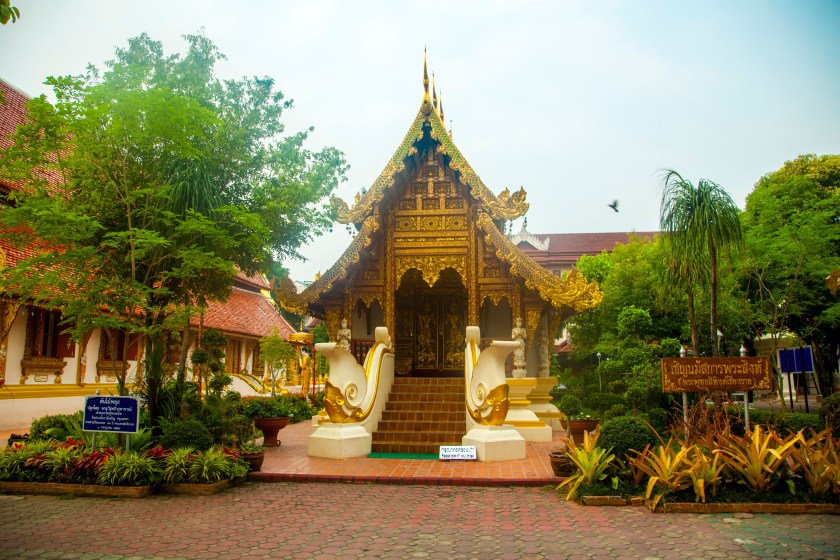
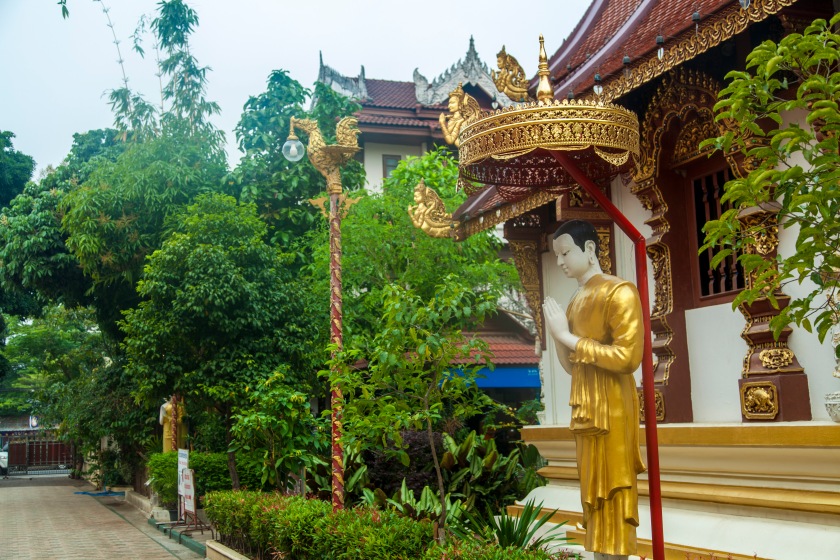
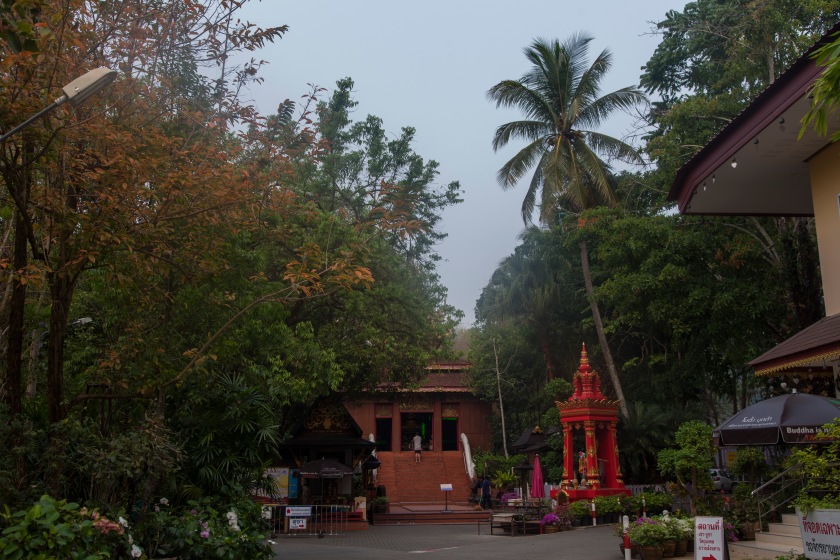
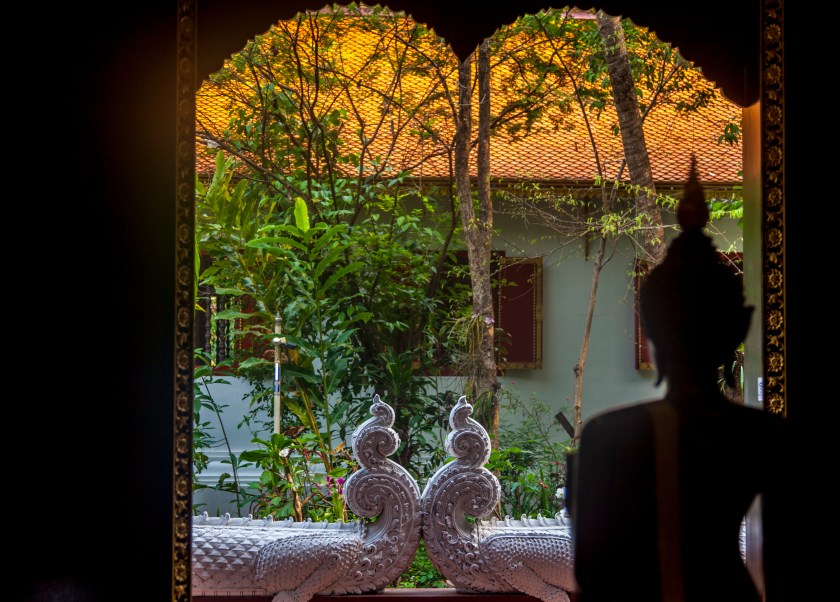
The first temple we went to was Wat Phra Singh, founded in the 14th century. The name of this temple comes from the golden Buddha image, almost as famous (and as ‘well-traveled’) as the Emerald Buddha. Our guide Dino said that the temple’s architecture is in Burmese style.

IMG_3464

IMG_3471

IMG_3474

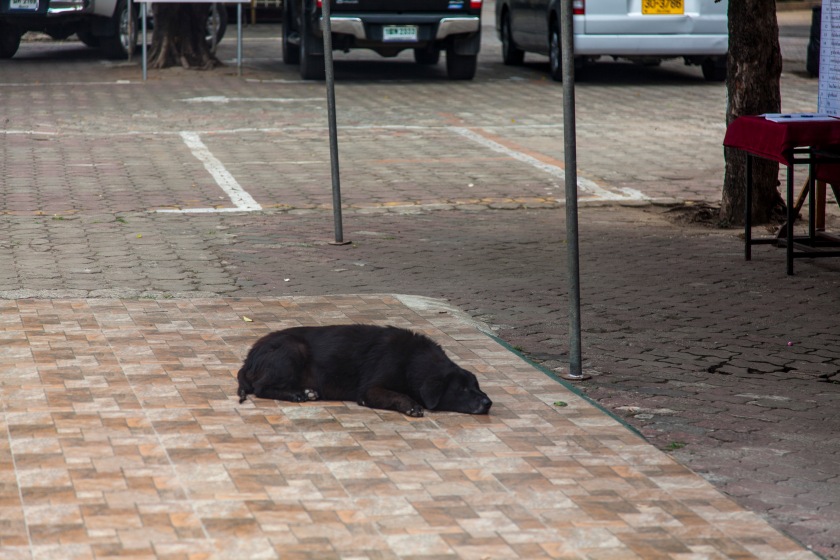
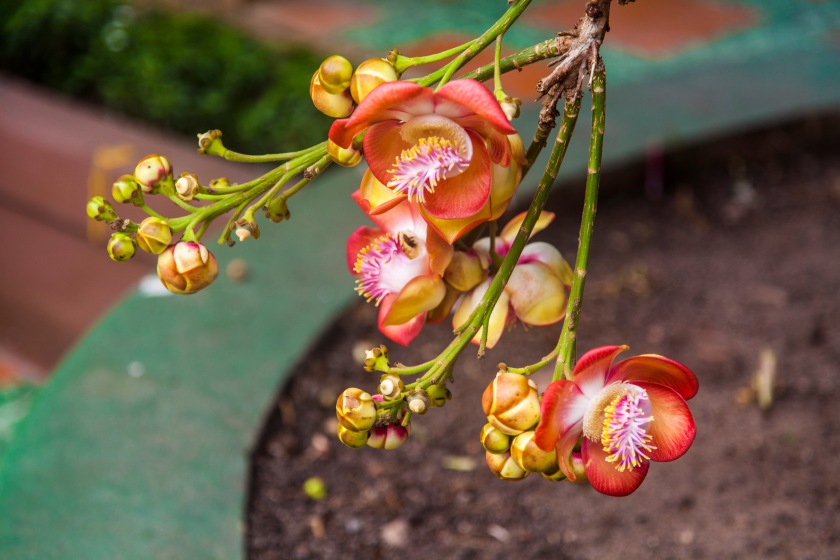
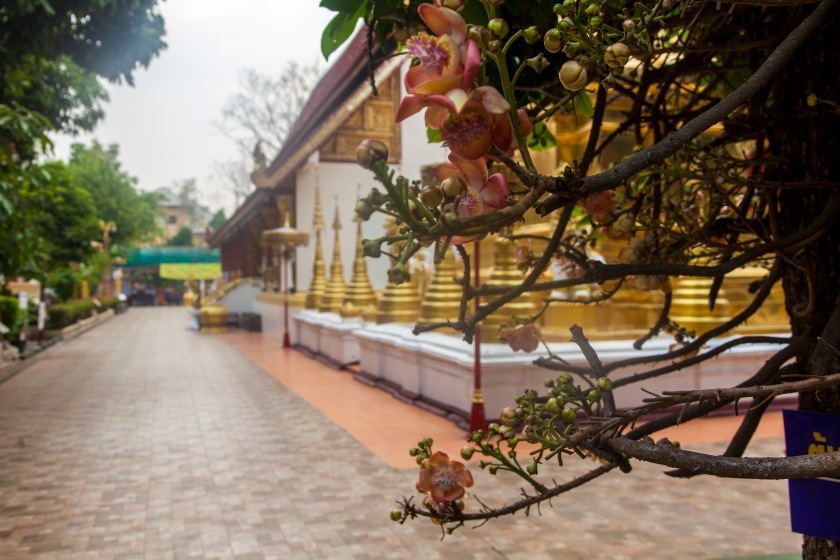
What was specifically remarkable about this temple is the large number of stray dogs that are fed here, apparently with rice, given their state of utter apathy; and sal trees, sacred to Buddhists, with large and very fragrant flowers.

IMG_3472

IMG_3481

IMG_3483

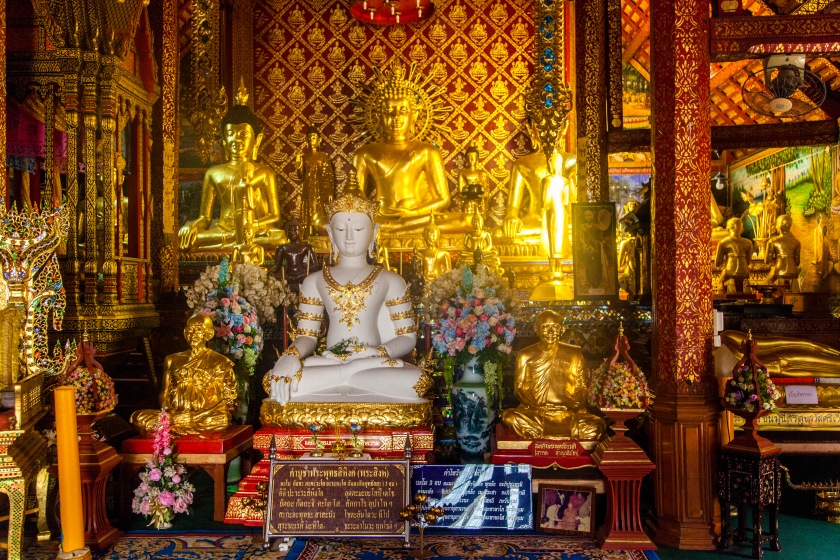
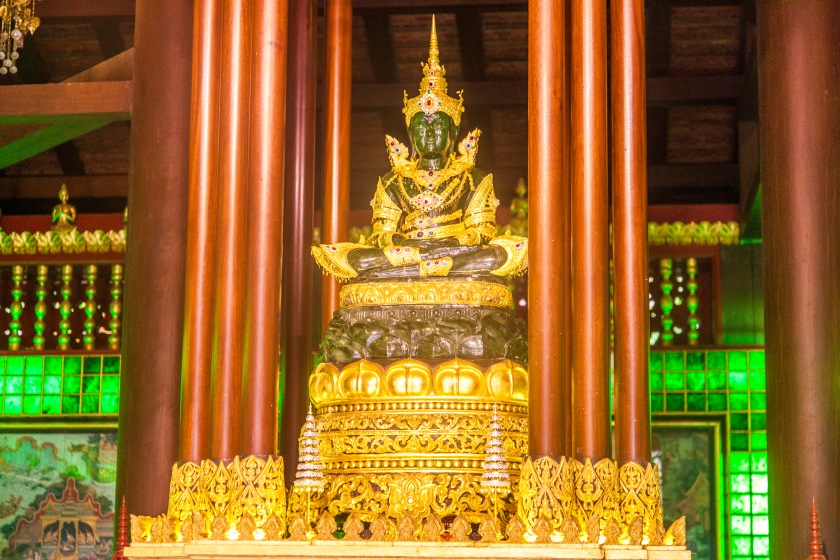
From here we headed to another temple – Wat Phra Keo, or the temple of the Emerald Buddha. Yes, yes, it has the same name as the one we saw in Bangkok. The temple is very old and was originally called something else, but in the 15th century, it was here, among the wreckage of a stupa split by a thunderbolt, that the Emerald Buddha statue, believed to be of divine origin, was found. Since the 18th century and up to this day, the statue is in Bangkok, just where we saw it, but before that it traveled a lot around the territories of Thailand, Laos, Myanmar and Cambodia. Dino talked about the statue’s displacements in the most thorough details – who and when took/stole it, who robbed whom etc. – but we didn’t even try to memorise all this, especially since he wasn’t the most interesting narrator ever…

IMG_3488

IMG_3521

The Chiang Rai temple currently has a jade replica of the Emerald Buddha (in fact, as you may remember, the original one is also made of jade) but at least, unlike in Bangkok, you can photograph it.

IMG_3512

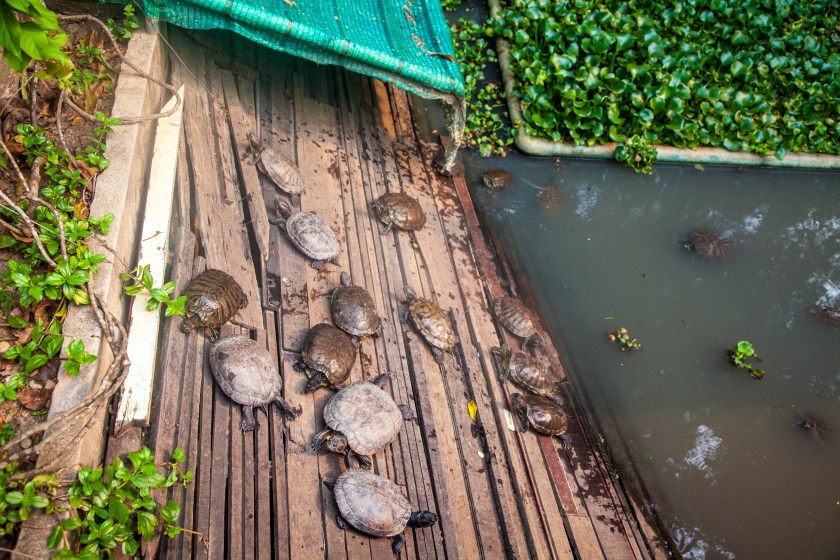
Right here, on the territory of the temple, we noticed a pond with turtles and spent quite a while watching one particular small, but proud turtle trying to crawl towards the fence, walking on the heads of its fellow turtles.

IMG_3508

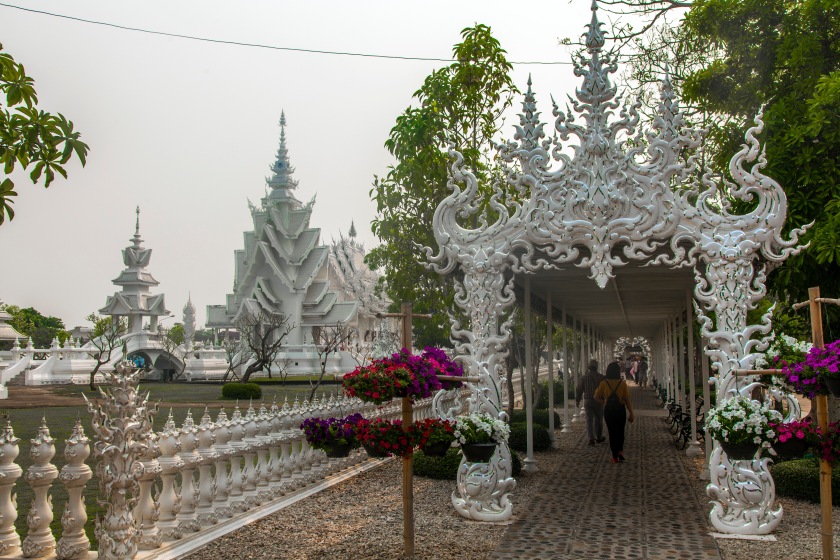
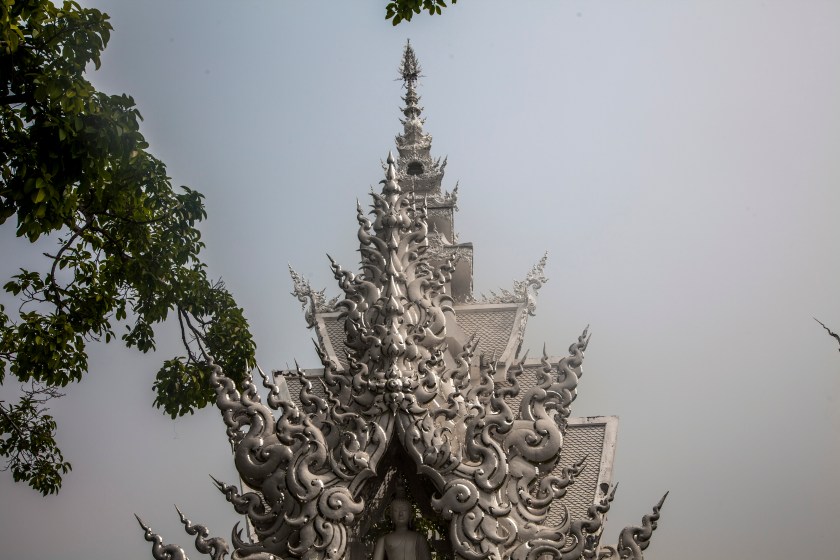
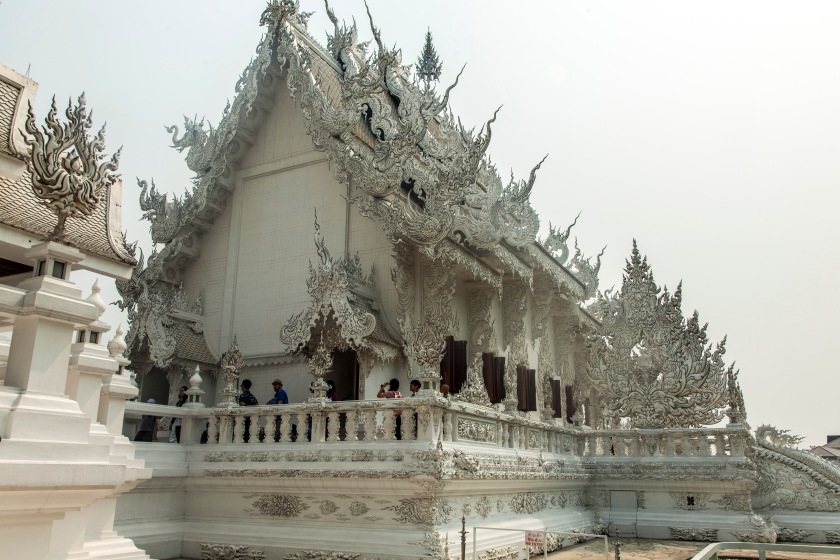
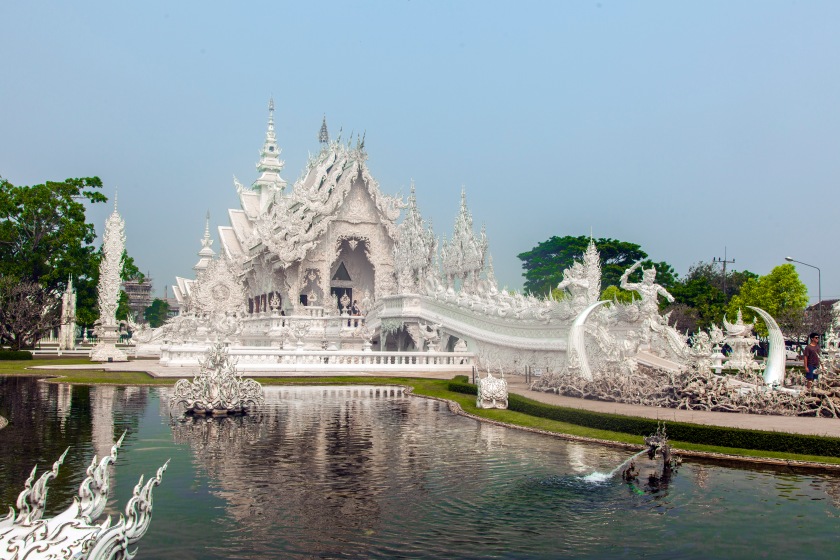
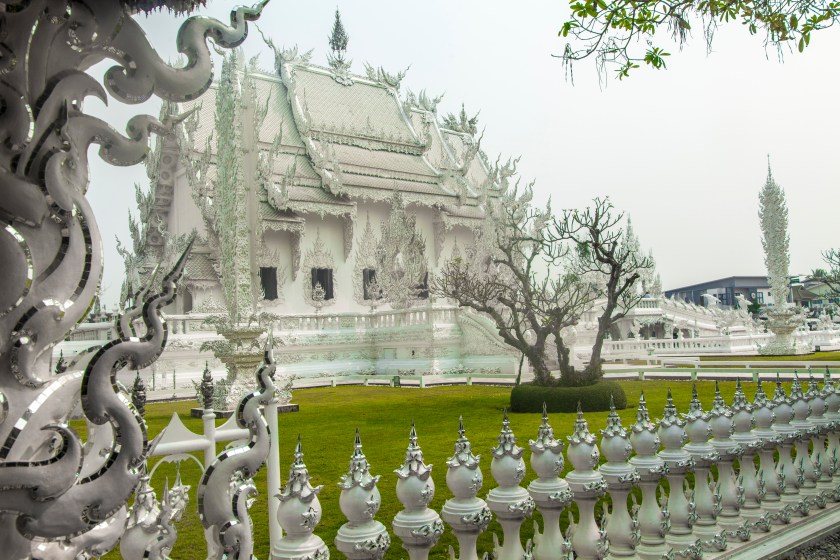
The third temple we saw was really the best – it was the White temple, very beautiful and unusual. It’s quite new, having been built in 1997, and in fact I would rather call it a modern art exhibit in the style of a Buddhist Temple.

IMG_3533

IMG_3563

IMG_3560

The white colour represents spiritual purity.

IMG_3555

IMG_3564

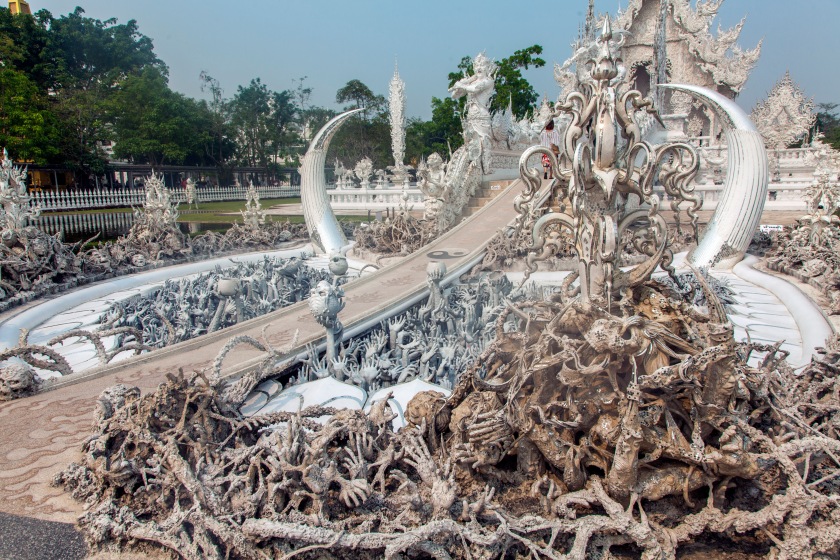
To get into the temple itself, one has to walk along a bridge past the “hands of sinners” sticking out of the earth – very symbolic.

IMG_3556

Right next to the temple there’s a museum containing paintings by Chalermchai Kositpipat – the artist who built this temple with his own money. The paintings are quite interesting, many depict paradise with different buildings in the same style as the White Temple, or mythological animals.

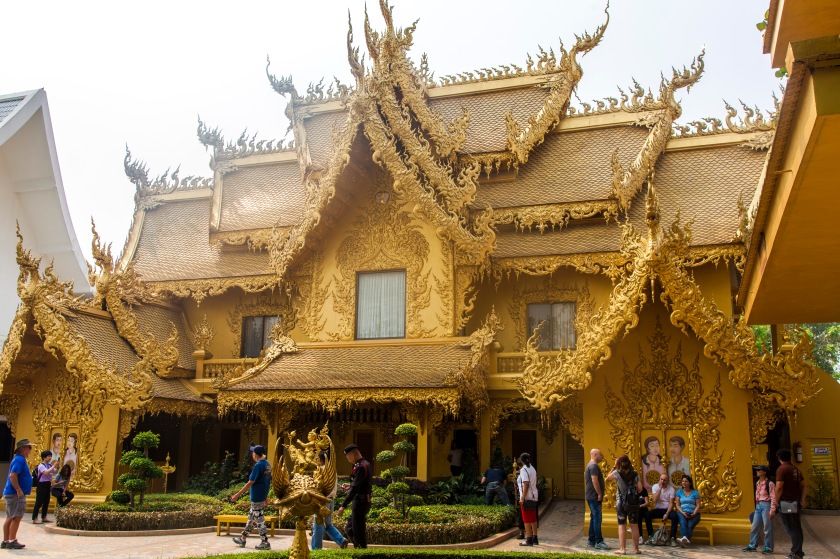
The gorgeous gilded building on the territory of the temple is nothing more than the ‘happy room’ (or rather a whole happy palace!), that is, a toilet.

IMG_3566

Fortunately for us, the thickest crowds of tourists started arriving just as we were leaving – most probably from Chiang Mai – so we were really lucky to walk around and take pictures without them.

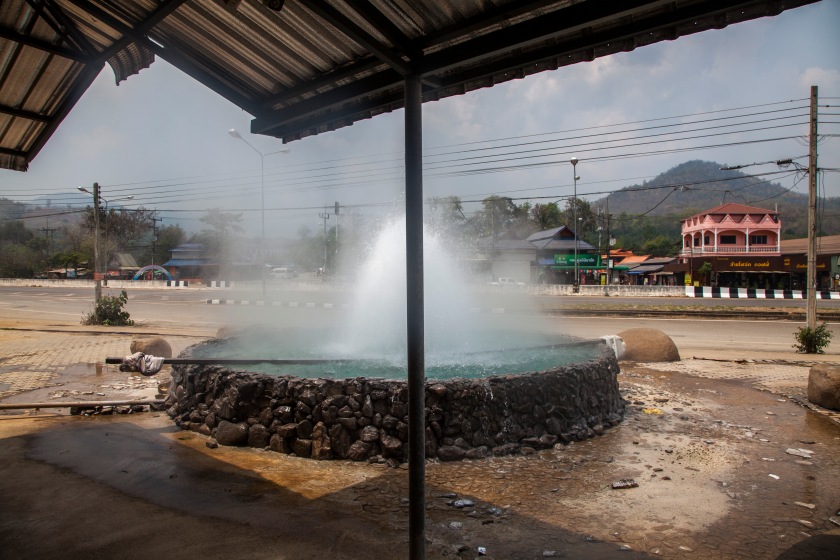
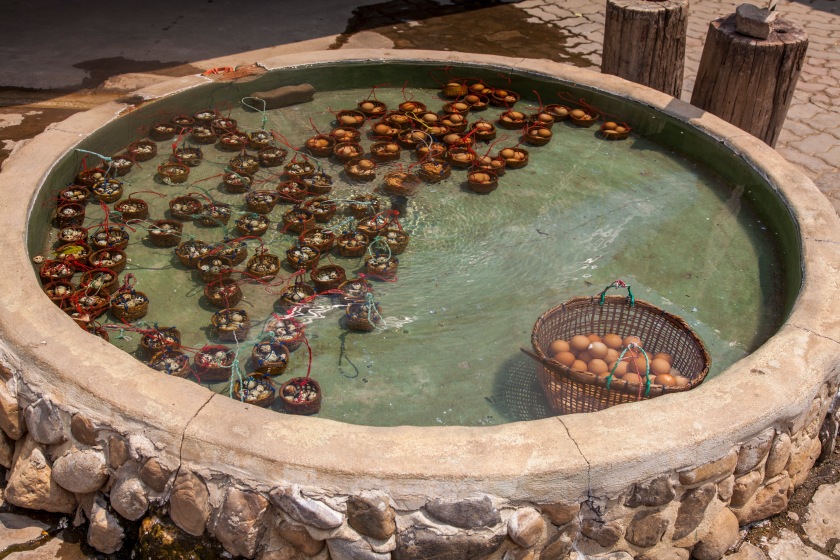
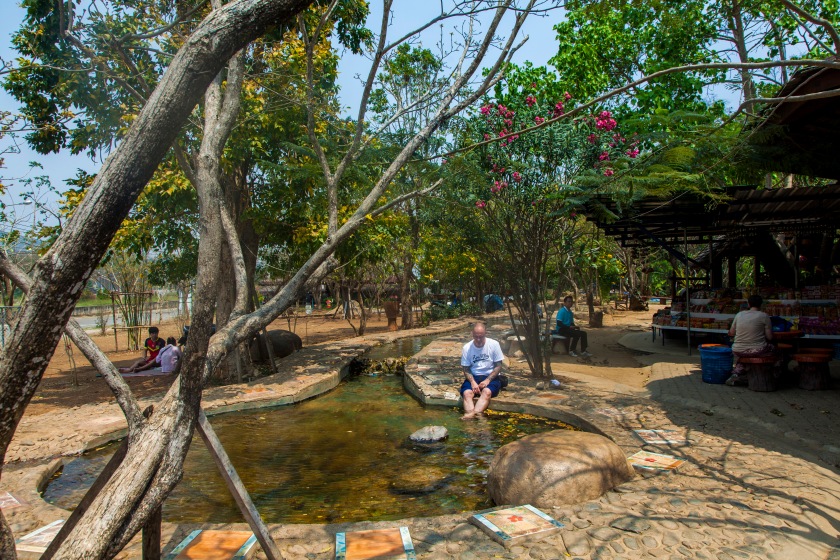
The White Temple was our last stop before we drove off to Chiang Mai – we had already checked out from our Chiang Rai hotel this morning and loaded our suitcases in the car. We stopped on our way for lunch, again in a cheap roadside cafe, with a hot spring next to it. In one fenced well, the water was boiling and bubbling up, another one was used for cooking eggs, and there was also a bigger section of the spring which was cool enough to put one’s legs into it, which is supposedly very good for health. Some people managed to sit knee-deep in the water, but I was barely able to dip my feet for a couple of seconds, as the water was very hot – around 50 degrees Celsius – the exact opposite situation of yesterday’s pool visit in Chiang Rai!

IMG_3572

IMG_3574

IMG_3575

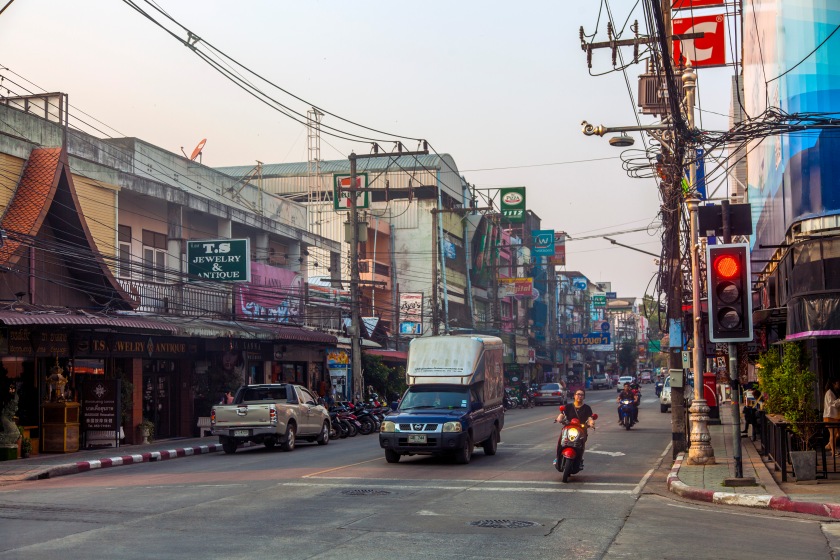
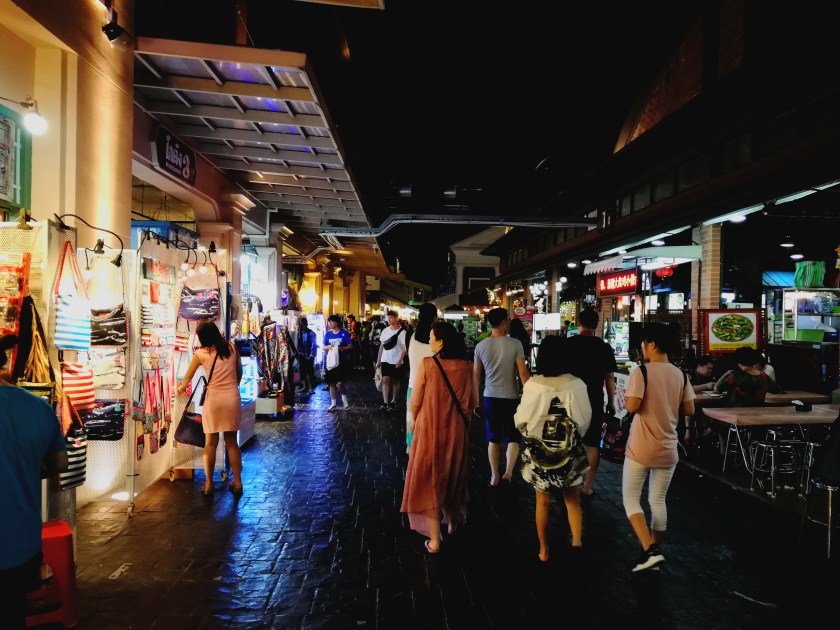
We arrived at our hotel in Chiang Mai at about 3pm. The hotel is located next to the night market, so there are lots of market stalls, massage parlours and bars around.

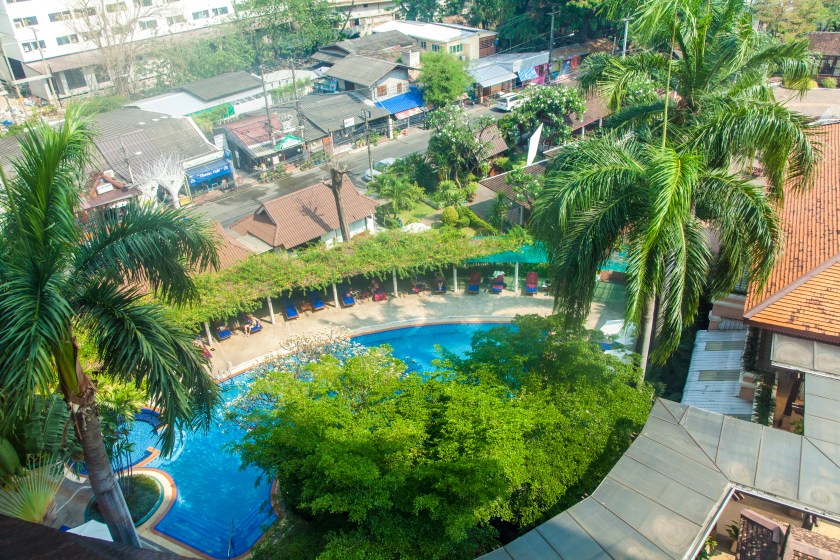
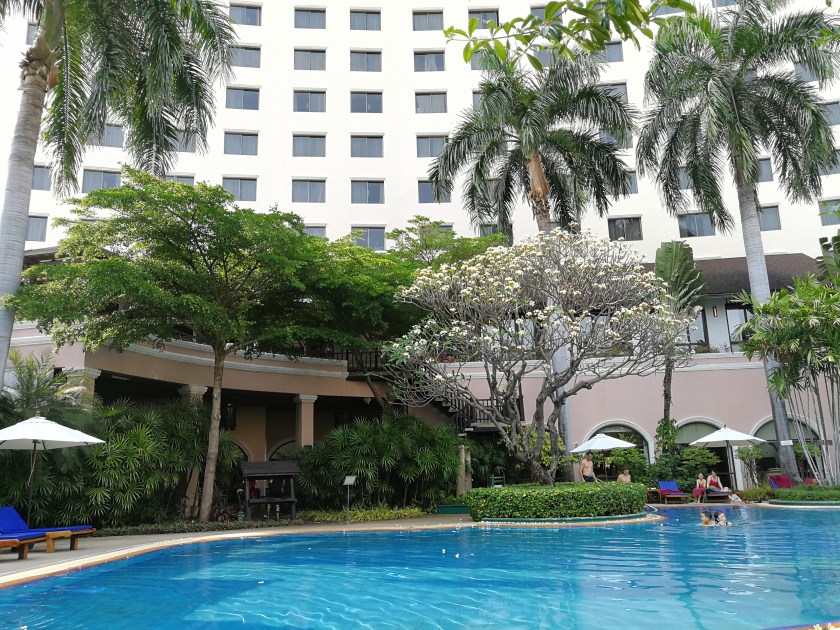
The hotel has two excellent swimming pools, and this time we had better luck and managed to take a dip. And we knew right away that we’d be more lucky – unlike in Chiang Rai, the poolside area was full of people.

IMG_3577

cof

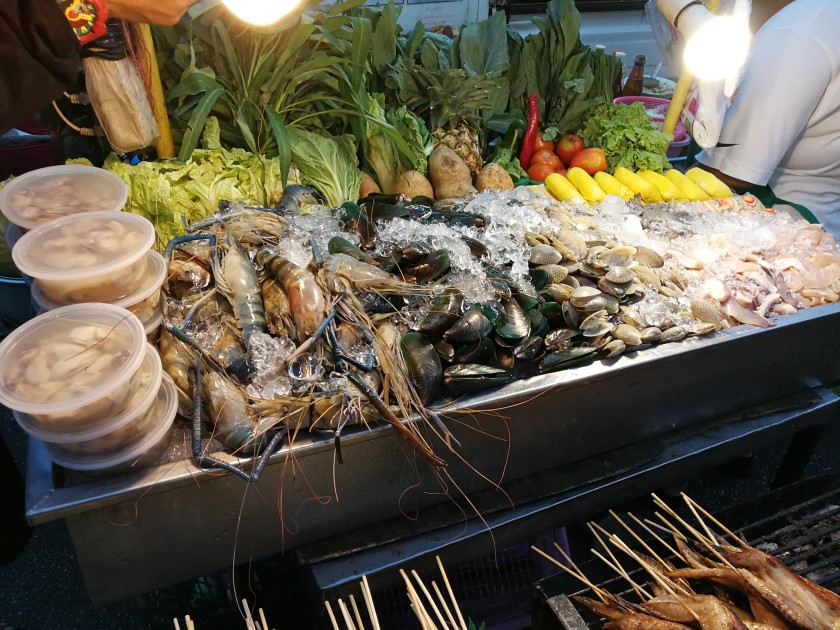
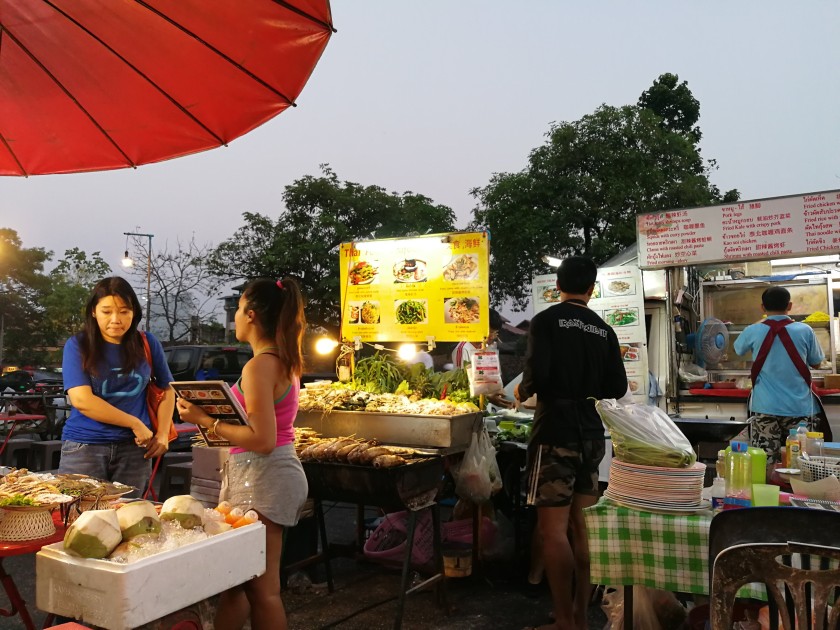
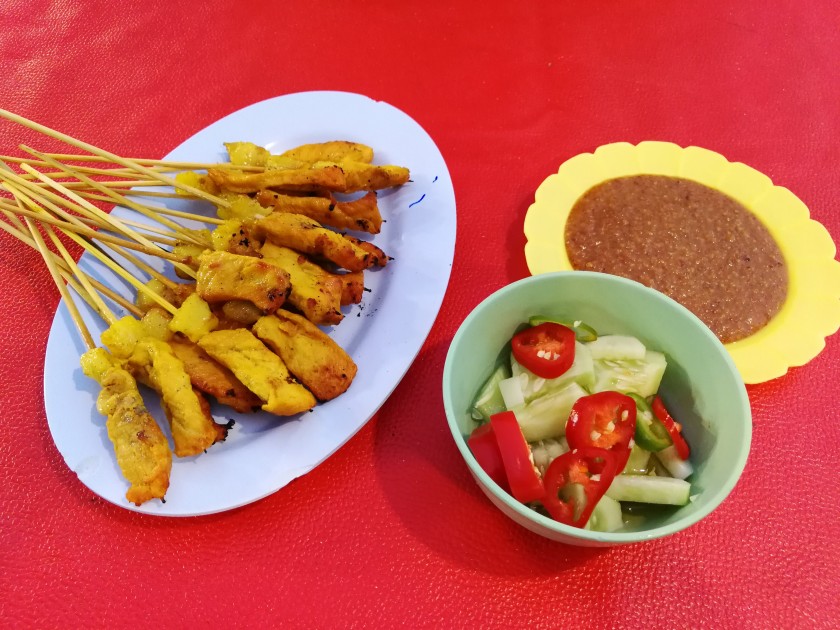
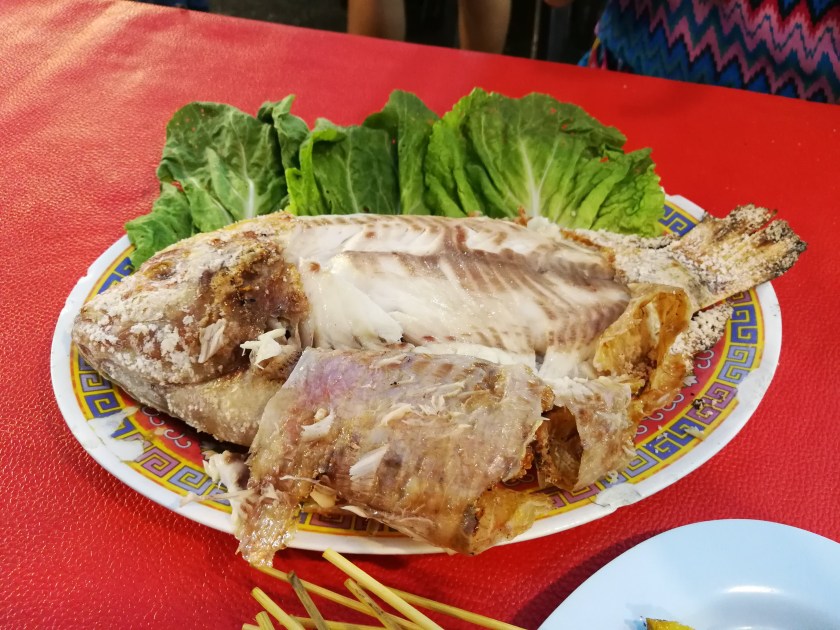
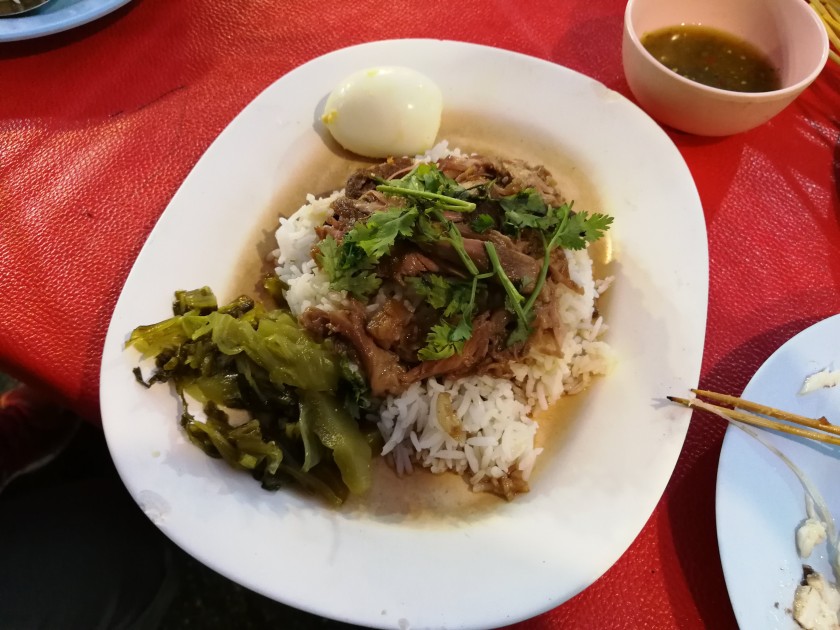
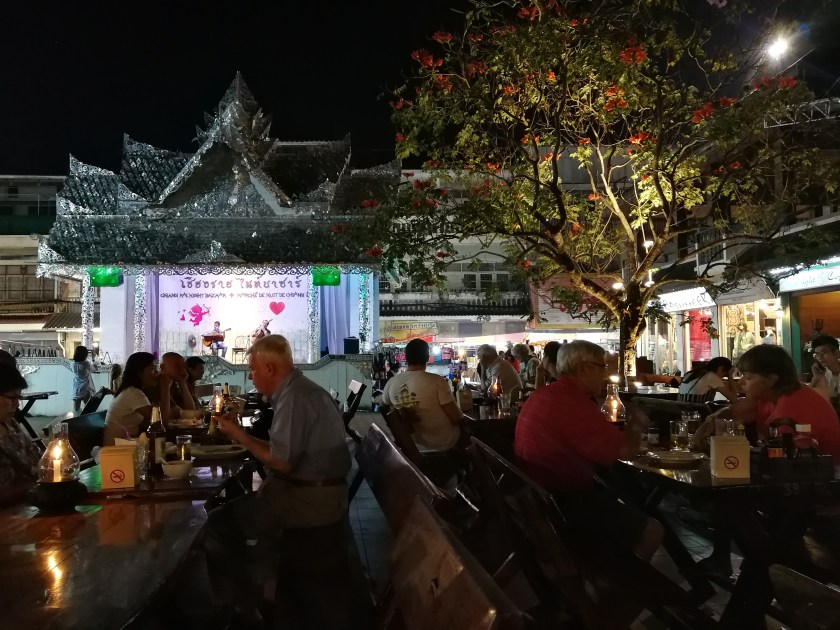
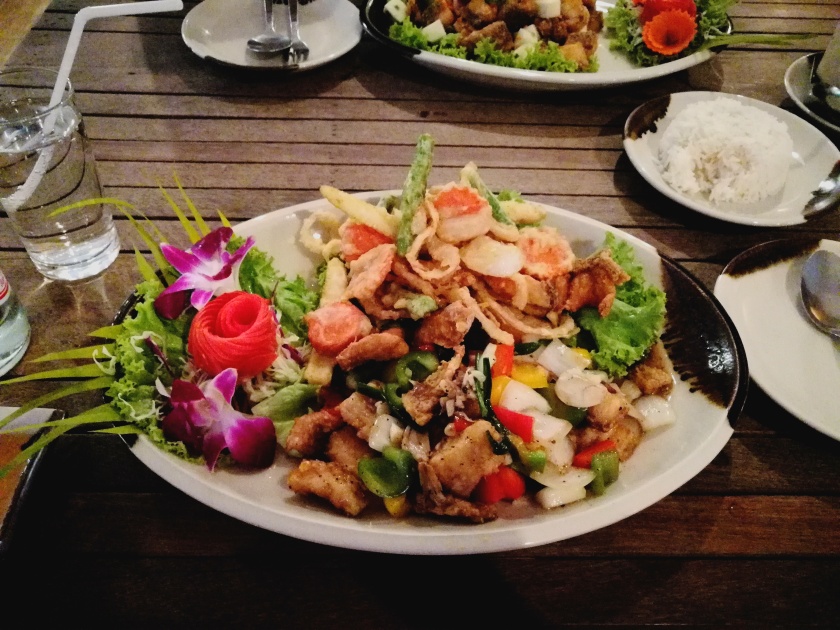
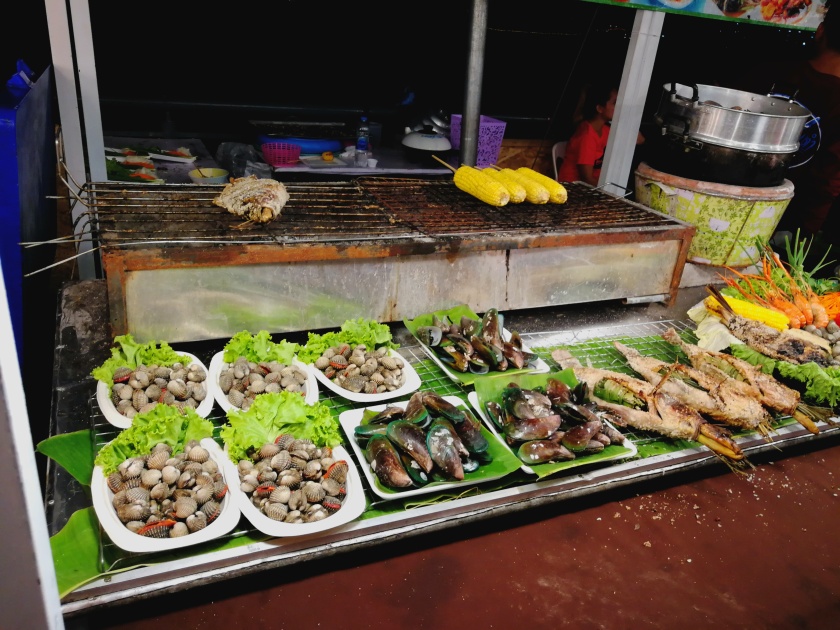
Our tour programme for the evening included a trip to the street food market and dinner right there. We tried pork satay (i.e. pork skewers) with peanut sauce, snapper fish in salt and some pork dish with rice. It was quite tasty, although not necessarily much cheaper than in a restaurant.

cof

cof

cof

cof

cof

On the way back to the hotel our guide Dino took a longer route so that we could walk around the Old Town, which we didn’t enjoy much – there was little to see in the dark, plus we wanted to rest a bit and enjoy some guide-less time.

Once we said goodbye to him, we went for a drink at one of the bars near the hotel, but left very quickly – the place seemed a bit dodgy, with a few foreign men and a lot of half-naked local women (if they were all women, of course), rushing with open arms towards every white man in sight trying to lure him into the bar. It seems that all the bars around are like that, and many are even completely empty, except for the stacks of women waiting at the entrance.

Posted in Asia, Chiang Rai, English, Thailand

Thailand – Day 4

РУССКОЯЗЫЧНАЯ ВЕРСИЯ ПО ЭТОЙ ССЫЛКЕ. CLICK HERE FOR RUSSIAN VERSION.

21 March 2018

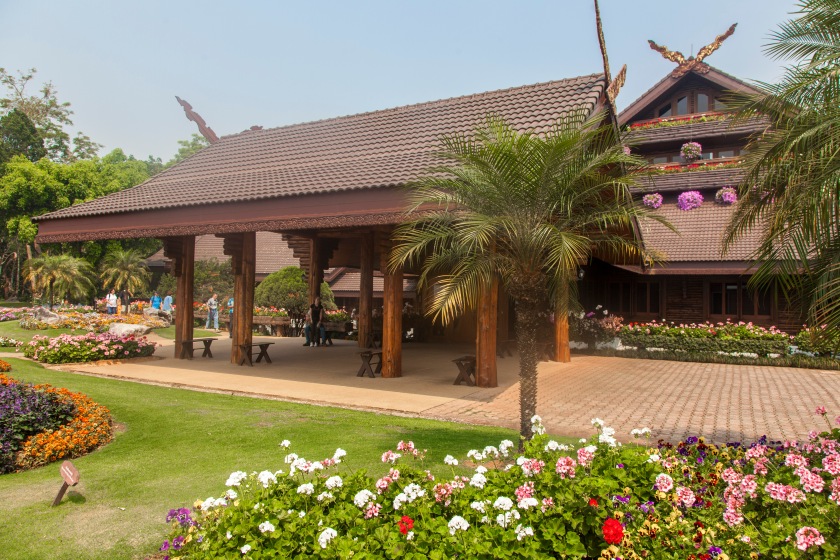
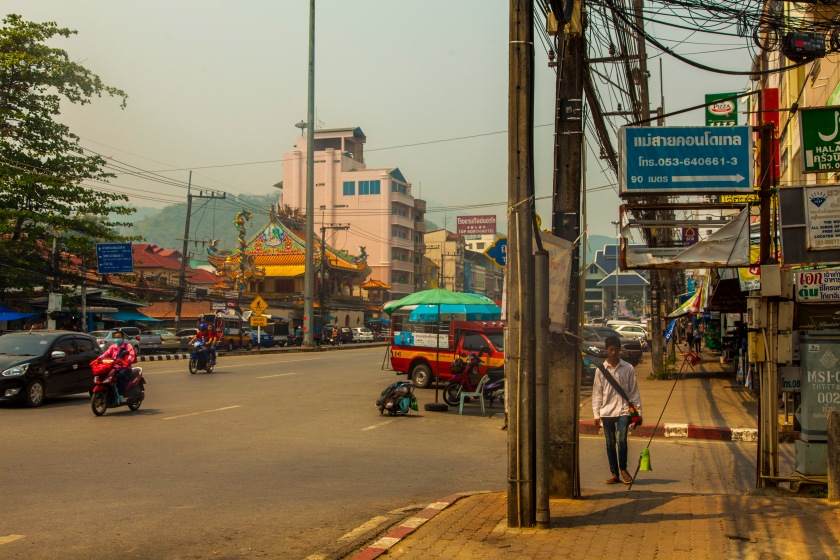
Today we left our hotel at 8am for our first excursion in Chiang Rai and headed up north, to the Doi Tung Royal villa with a beautiful garden.

IMG_3367

The garden is one of the successful projects of the late Queen Mother, who tried to combat drug trafficking in this dysfunctional region, bordering Myanmar, by increasing employment.

IMG_3380

IMG_3381

IMG_3386

IMG_3387

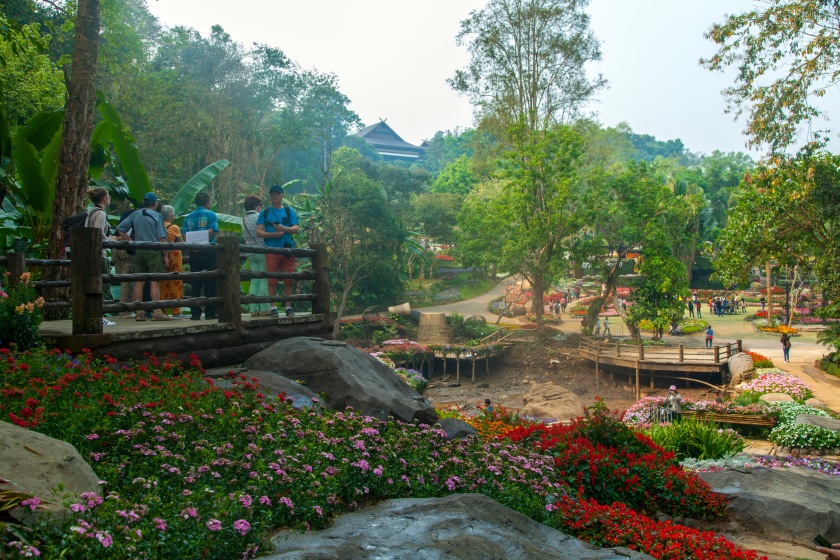
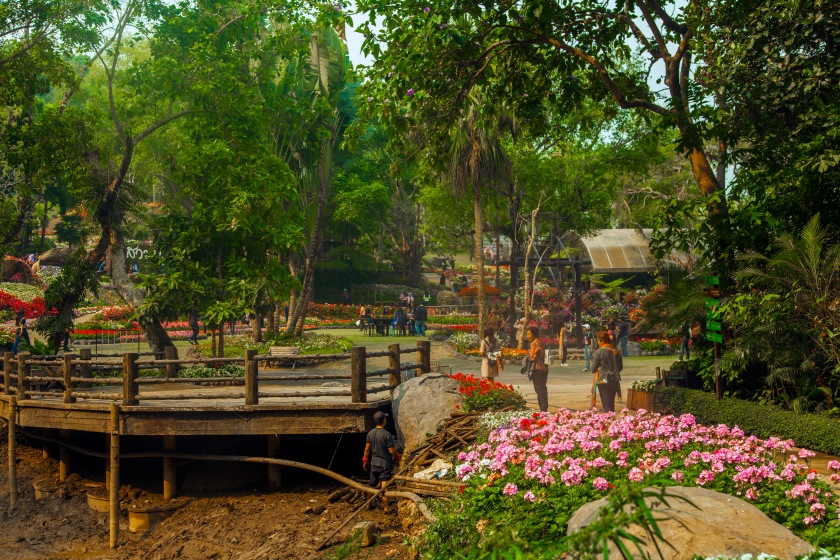
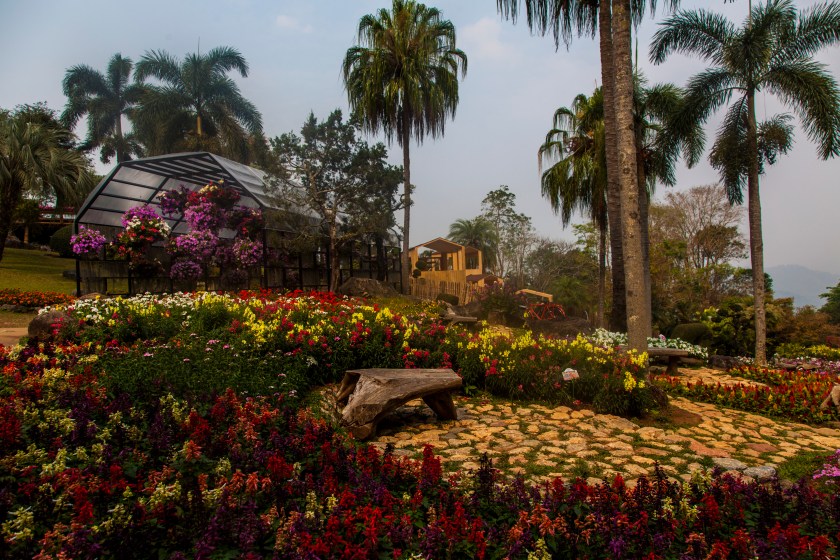
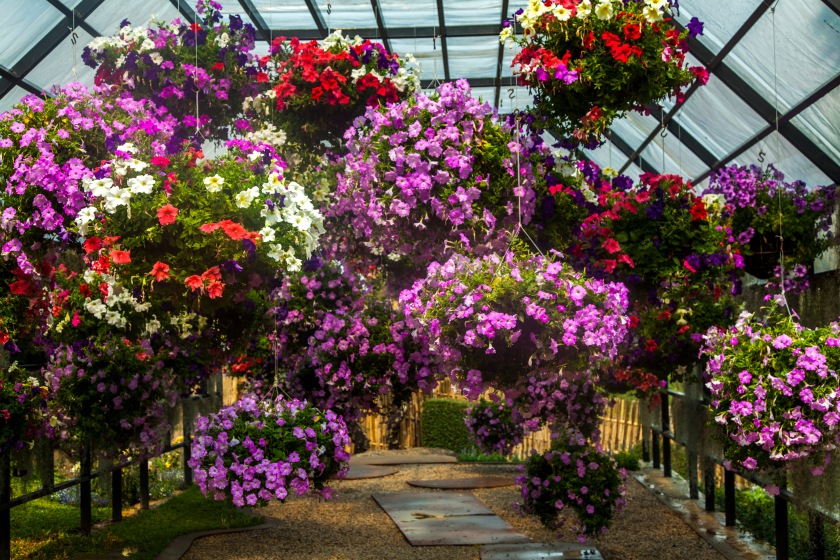
And indeed, the garden is very beautiful. At an altitude of 1300 m above sea level, it is much cooler than Chiang Rai itself, and full of the most diverse flowers ever – predominantly European, but including some local orchids too.

IMG_3393

IMG_3397

IMG_3399

IMG_3404

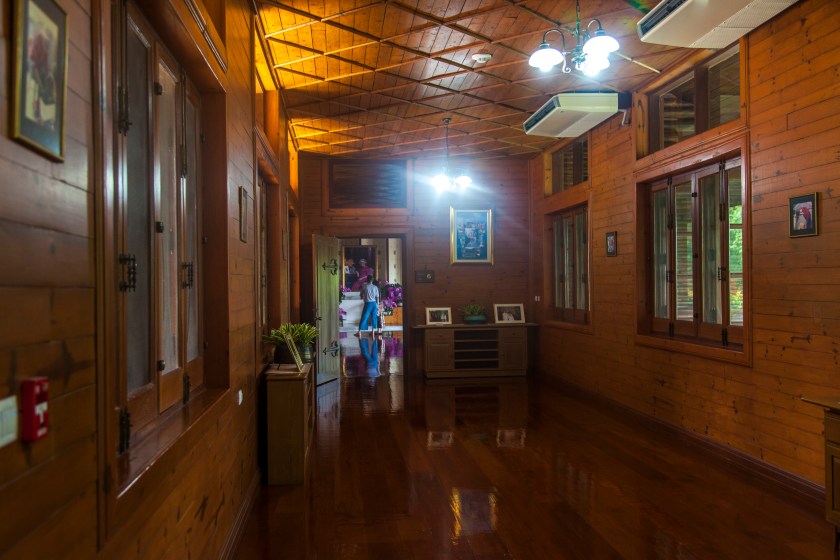
The actual royal villa, where the Queen Mother used to live, is located further uphill. We went up to the residence – again, strict dress code had to be followed there and we had to cover up – and went inside. I managed to take one photo before a lady from a French tourist group – the only tourists apart from us, I wonder where the crowds of Chinese tourists are? – warned me that this was prohibited.

IMG_3411

The residence is essentially a huge wooden hut, the entire interior is also made of wood. Some of the Queen’s personal belongings are exhibited, in particular tools for embroidery and pottery. The balcony provides stunning views of the garden that we saw before.

IMG_3414

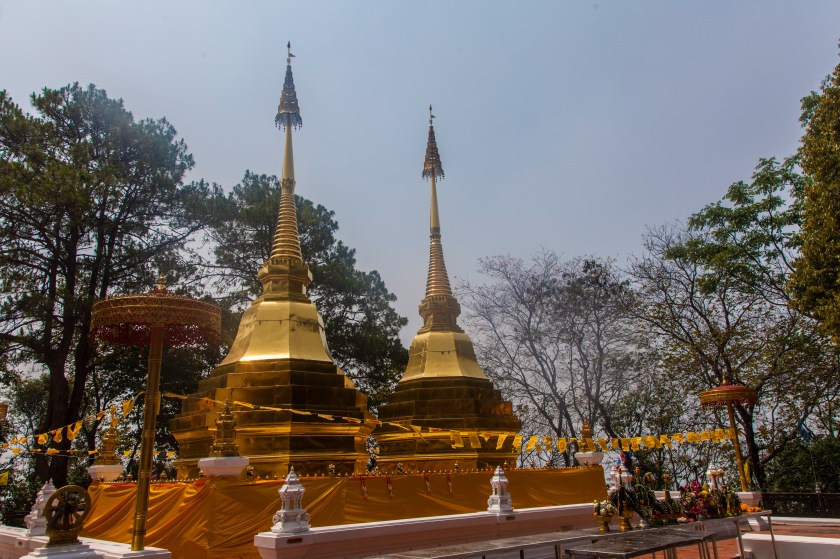
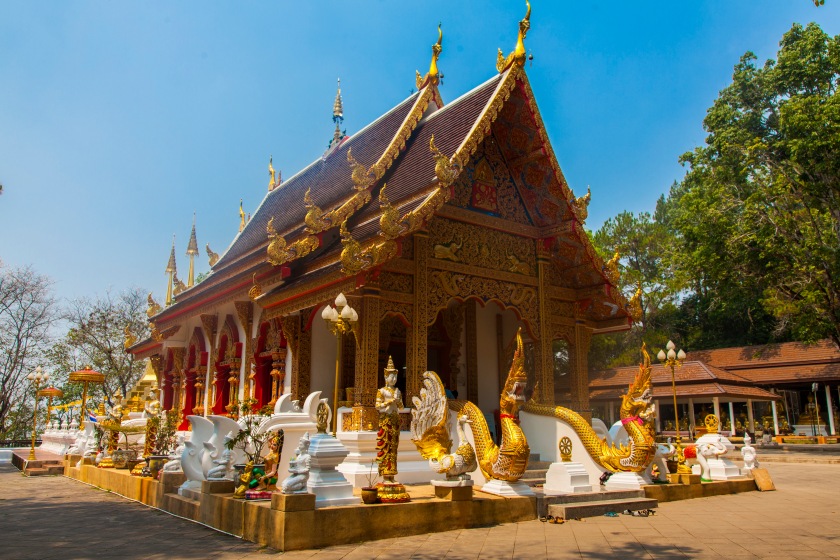
There is another attraction at the very top of the Doi Tung mountain, where we had to get by car. These are two stupas in a typical Lanna style, erected as far back as the 10th century and containing Lord Buddha’s relics – namely, his collarbone.

IMG_3420

IMG_3425

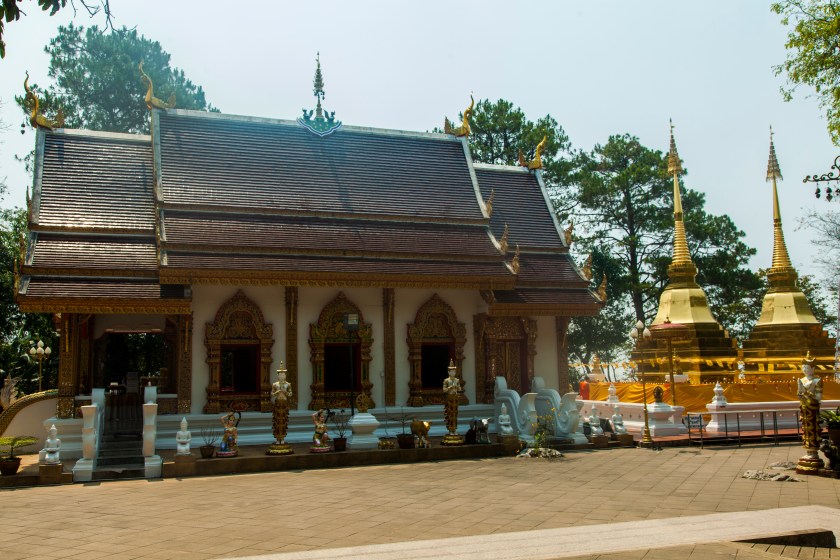
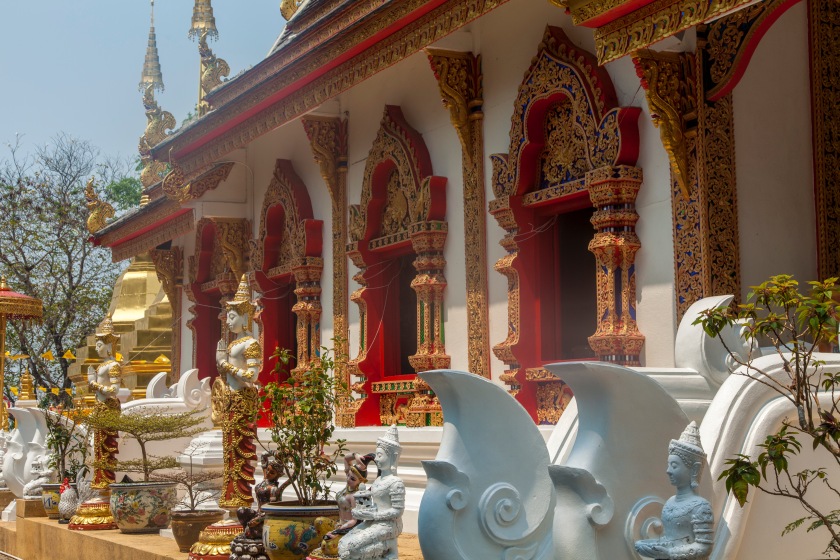
There is also a temple next to the stupas, very intricate from the outside, but not particularly remarkable inside. As for the stupas themselves, we couldn’t come close to them – women are not allowed to.

IMG_3429

IMG_3430

By the way, our guide Dino told us that these stupas were especially sacred for people born in the year of the Pig (or Elephant) according to the Eastern Zodiac. And for each of the zodiacal animals, there are respective stupas all around Indochina. It is believed that everyone should visit the stupa corresponding to their zodiacal animals and pray there at least once during their lifetime.

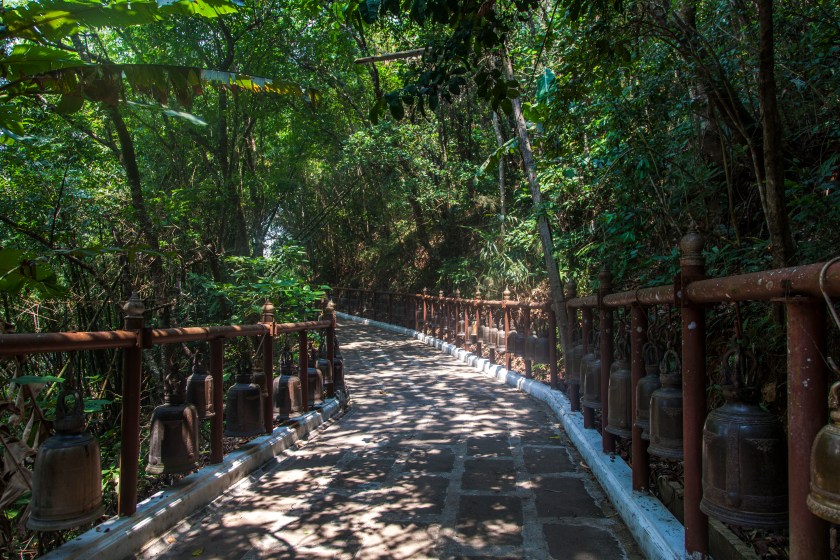
On the way back down to our car we descended a stepped alley with lots and lots of bells of different sizes at the sides.

IMG_3432

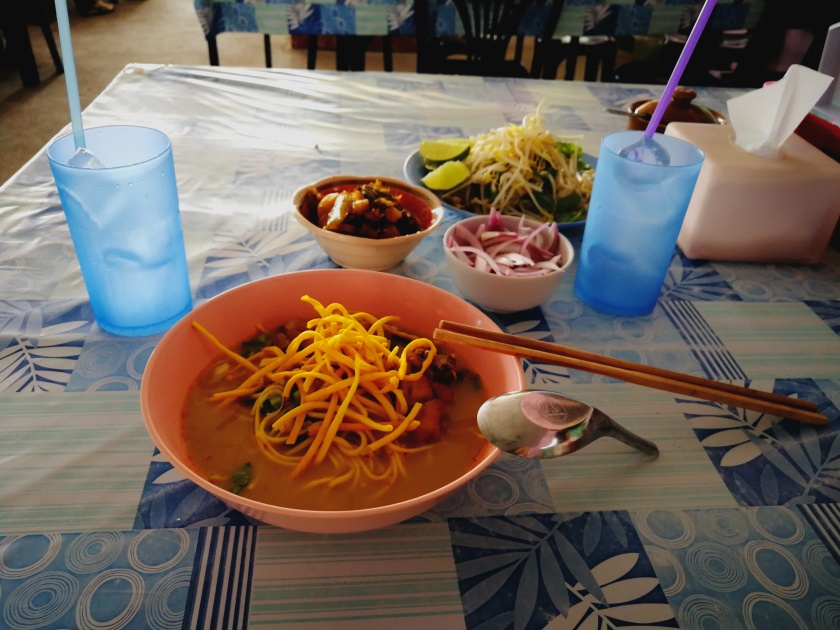
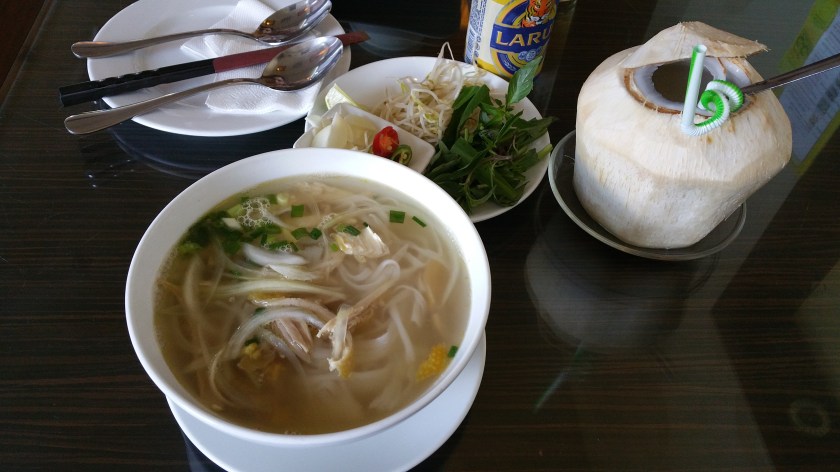
It was already lunch time, and we stopped at some roadside eatery. I had read somewhere that in Thailand the most delicious food can be found right in such non-glamorous places (in China as well, by the way – as confirmed by myself), and it turned out to be exactly the case! We got two servings of spicy chicken noodle soup, and we liked it a lot. And it cost us 70 baht for two, which didn’t even make 3 USD!

selfp

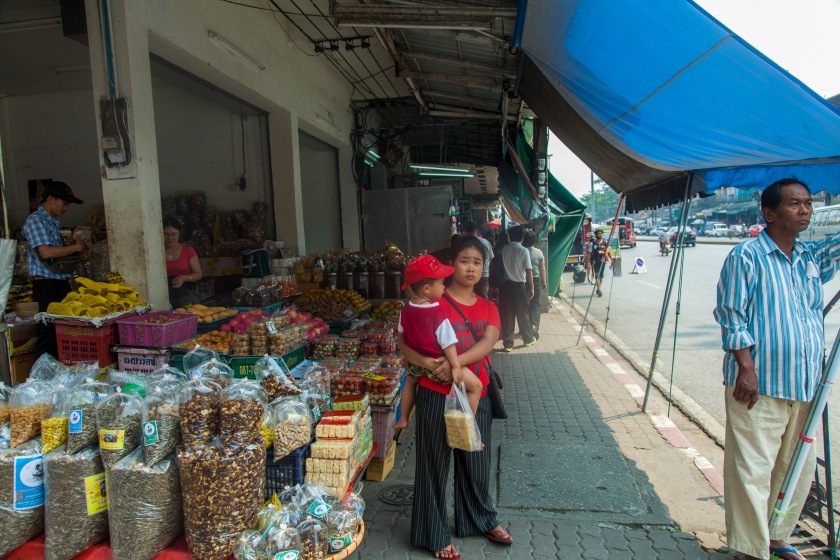
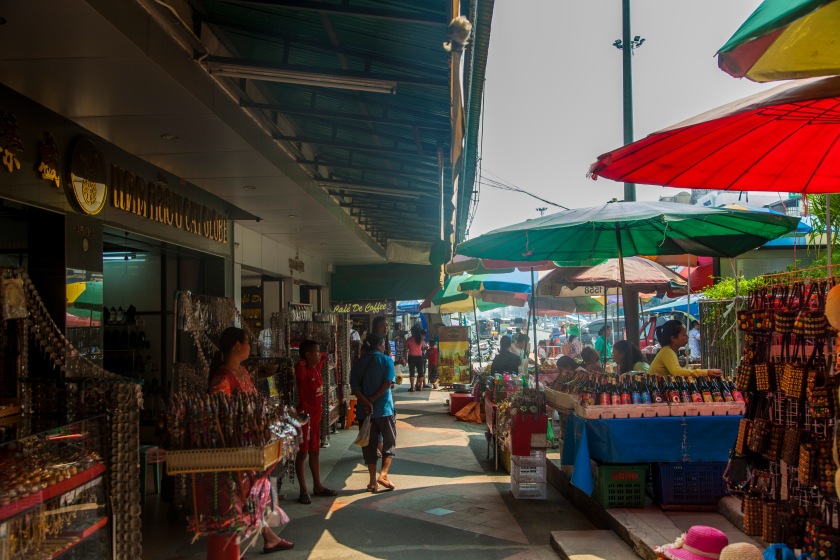
After lunch we drove to the town of Mae Sai at the very border with Myanmar. Dino said that Thai, Burmese, Indian, and Chinese people live here, and everyone gets along very well: Muslims, Buddhists, and Christians. In Mae Sai we visited a jade shop and walked past a street market, which, apparently, Dino himself was much more interested in than we were.

IMG_3438

IMG_3443

IMG_3444

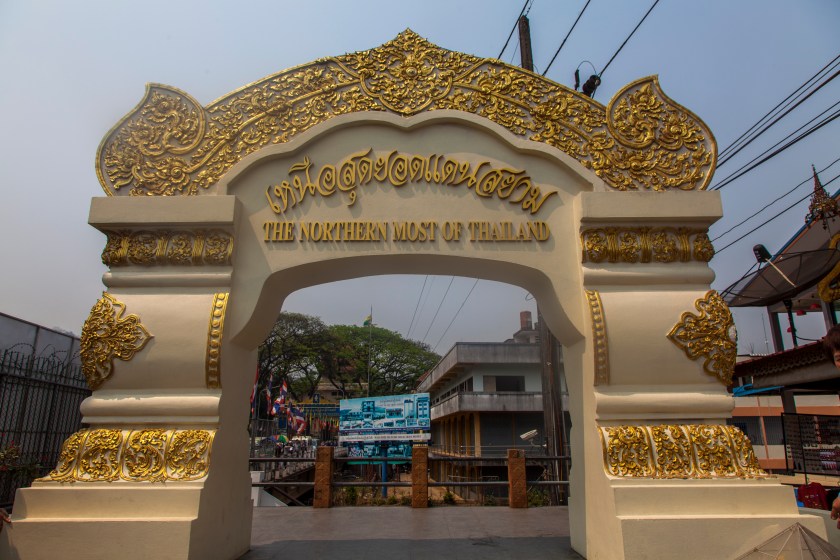
But what was really interesting to see was the gate separating Thailand from Myanmar. We asked, how far away from here the Golgen Triangle was – that is, the place where the borders of Thailand, Myanmar and Laos meet. We were told that it was a 35-minute drive, for which we’d have to pay extra to the driver and that we’d still need to get permission to get on a Mekong tour boat.

IMG_3445

IMG_3451

We decided that we didn’t want to go there and headed back to Chiang Rai. Once back at the hotel and left to ourselves, we went straight to the swimming pool, which we’d been drooling over for two days now. But it was no coincidence that the area around the pool was completely empty all the time, which we were really surprised about. The water turned out to be so icy cold that I could not even dip my toe in it, let alone get in there.

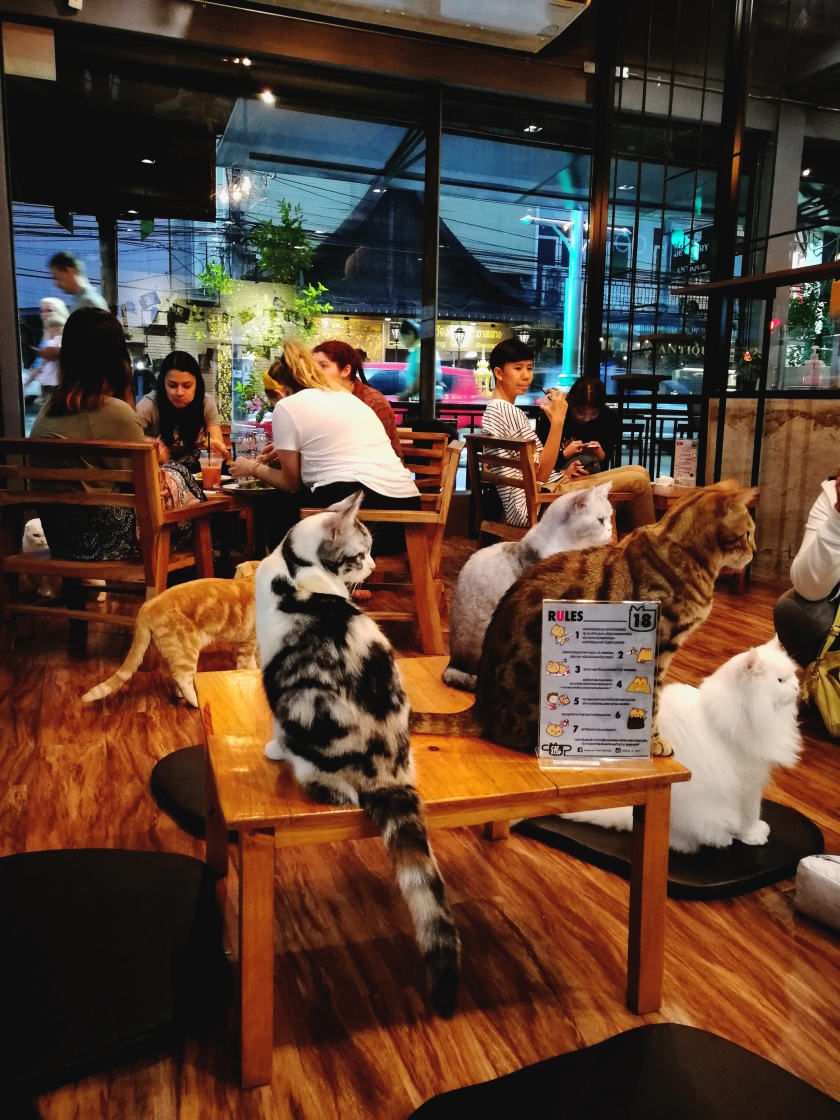
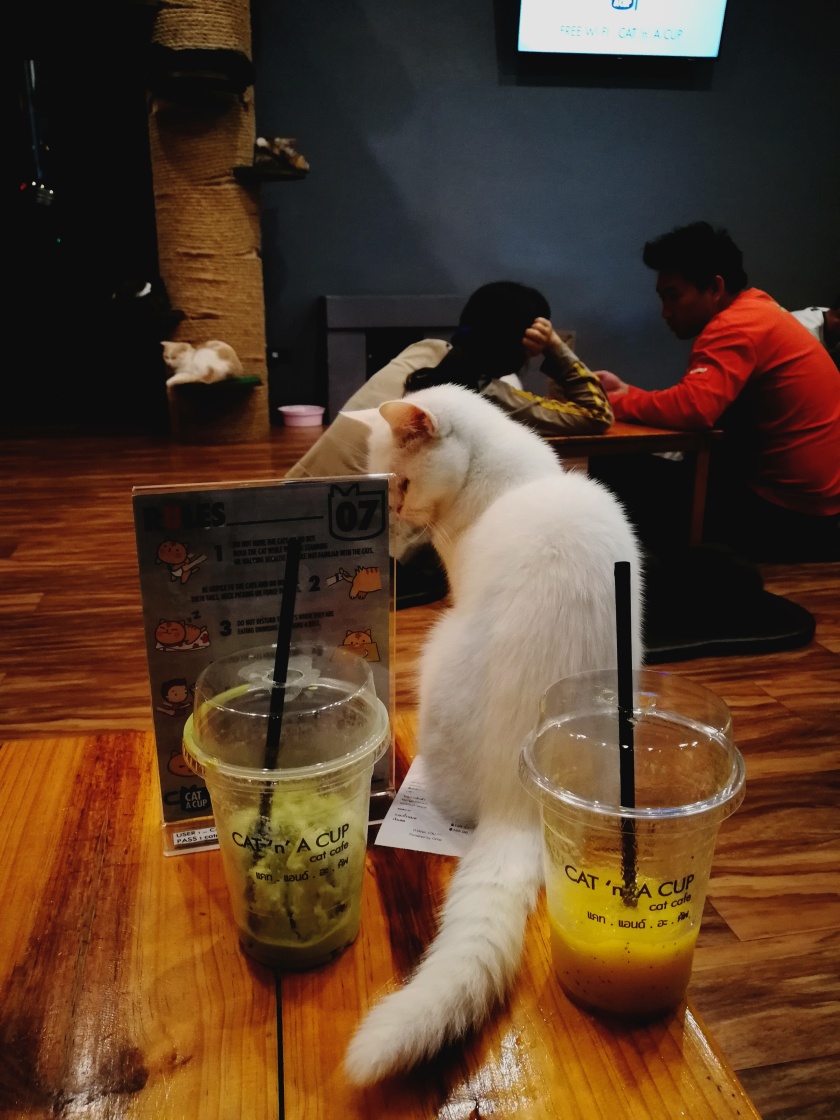
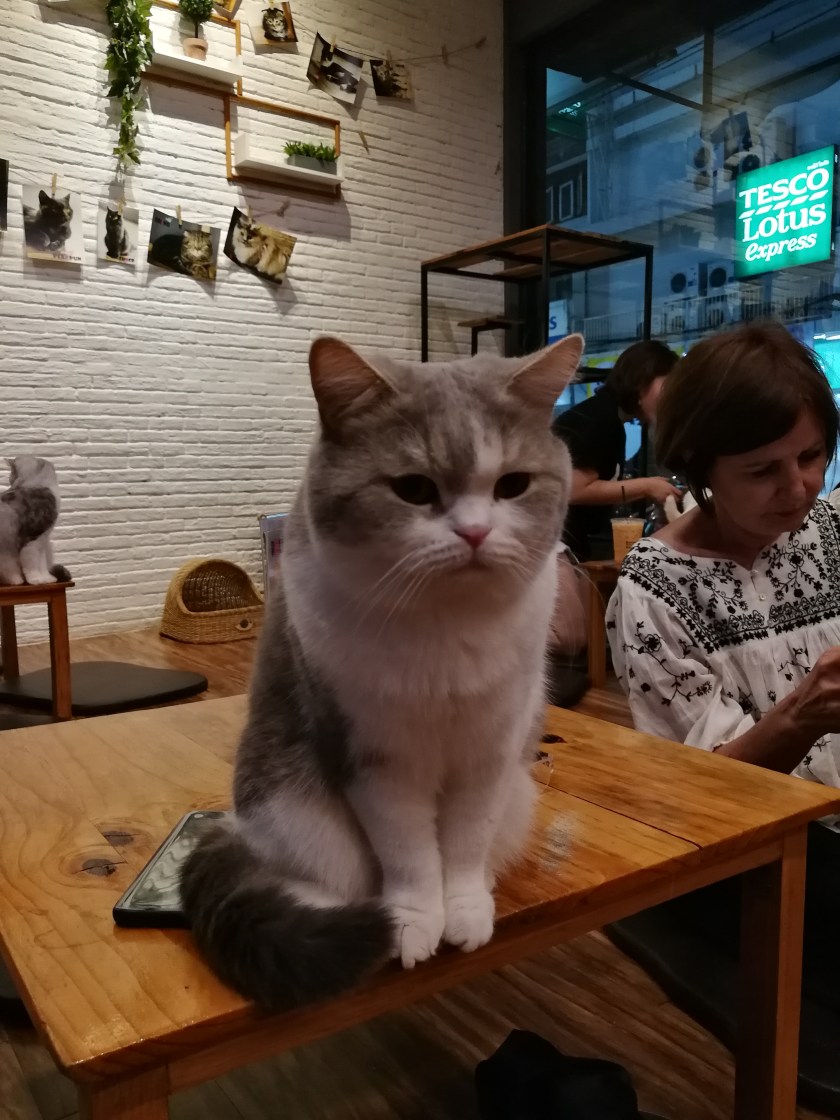
Mission unaccomplished! But we went again to get a wonderful massage in the same parlour as yesterday. There are plenty of such parlours on our street, but as we already tested this one yesterday and were very happy with it, we saw no point in looking for something else. And after the massage, as we were intending to go for dinner, we accidentally spotted a cat in the window of a small coffee shop, and then many more cats. We’d noticed this coffee shop, called Cat’n’Cup, yesterday, but somehow didn’t realise that it was a cat cafe. So how could we resist going in to have a frappe and to pet some furry purring felines!

selfp

Well, the latter actually turned out a bummer: we were still smelling of massage oil with a citrus aroma, which by cat standards meant that we were stinking sickeningly! So they avoided us at all costs, although we did see one or two curious faces on our table!

selfp

sdr

Then we went to have dinner in an open-air restaurant, right around the corner from the night market. It was a very pleasant place, and next to it there was a stage, from which we were entertained first with Chinese music, then with English-language guitar songs, and finally with Thai dances.

sdr

Posted in Asia, Chiang Rai, English, Thailand

Thailand – Day 3

РУССКОЯЗЫЧНАЯ ВЕРСИЯ ПО ЭТОЙ ССЫЛКЕ. CLICK HERE FOR RUSSIAN VERSION.

20 March 2018

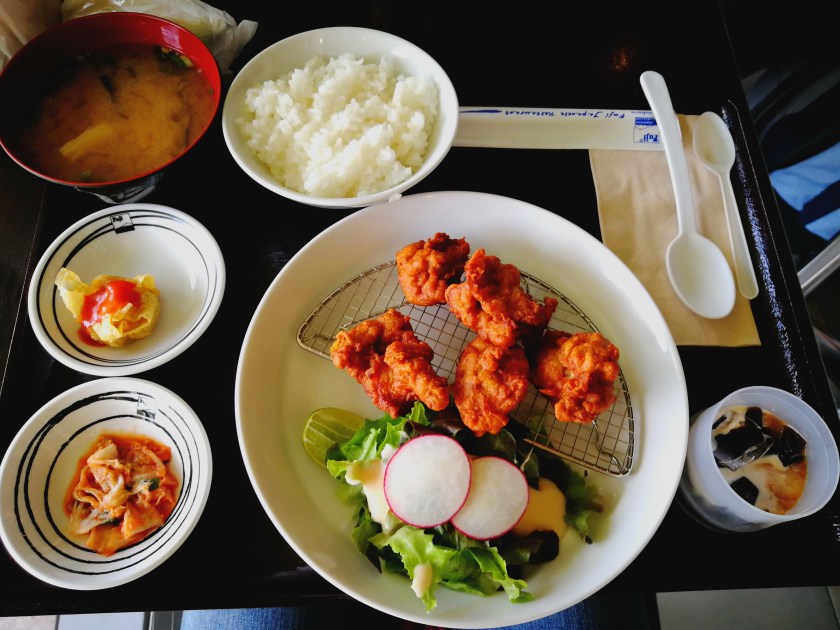
Today, I won’t be entertaining you guys with a long post: we are travelling. At 10 am, right after breakfast, the driver picked us up and took us to the airport. We’re going to Chiang Rai! We arrived at the airport pretty early, so we even had time to have a Japanese set with miso soup, spicy chicken, rice, kimchi (for some reason!) and coffee jelly for lunch.

selfp

The flight took a little over an hour, and in Chiang Rai we were met by our local guide Dino and taken to our hotel. Chiang Rai is the ancient capital of the Lanna kingdom, later the capital was moved to Chiang Mai. It’s located in the north of Thailand, very close to the Myanmar border, and the climate difference with Bangkok is noticed immediately: it’s hotter and drier during the day, the vegetation is dominated by broad-leaved trees over palm trees, there are even conifers; and in the evening – I’m rushing ahead of myself – it’s cooler. The city itself is small, with pretty much one main street, where our hotel is located – this so reminded us of Hue in Vietnam that we even had a feeling of deja vu.

IMG_3362

IMG_3361

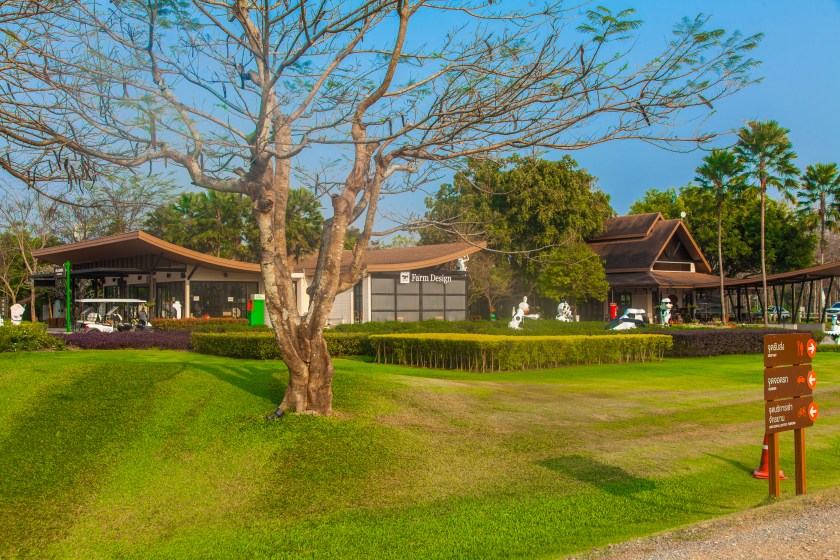
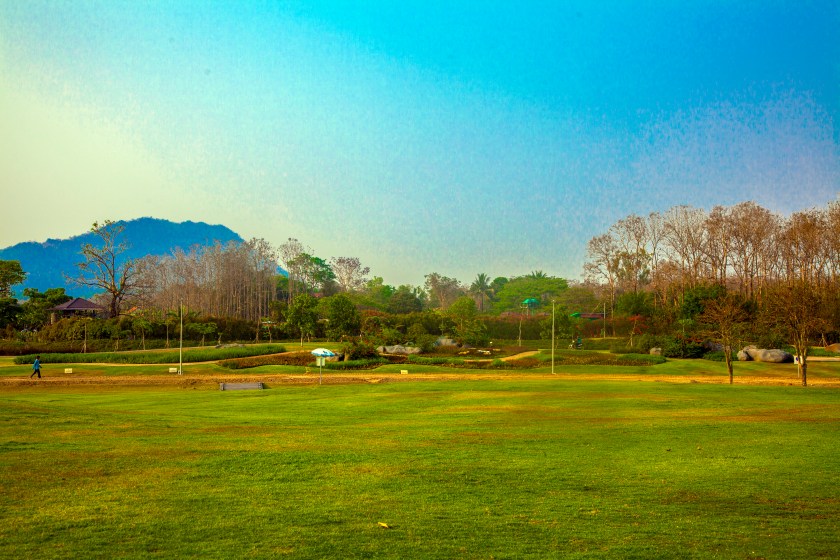
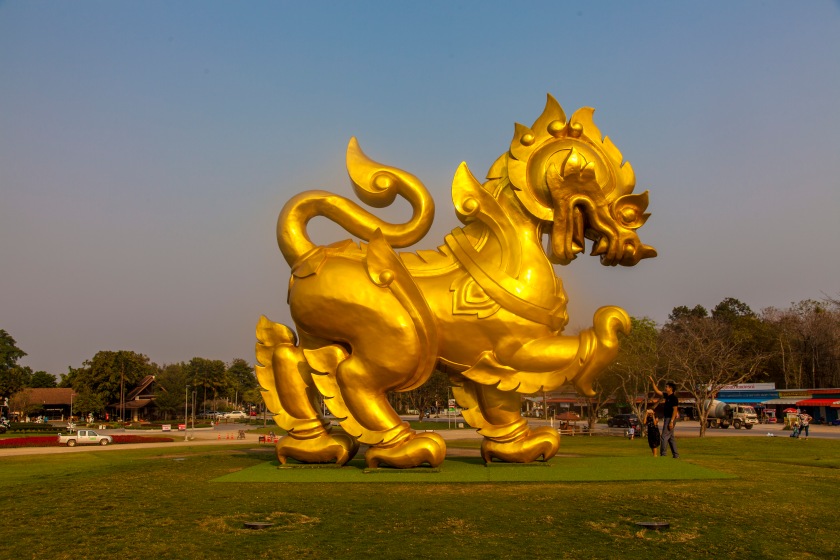
At the hotel we noticed a swimming pool, but couldn’t make it there today. Actually, according to our tour programme we were supposed to have the afternoon free, but Dino volunteered to show us a park outside the city, and off we went. The park, to be honest, wasn’t anything special – it had wide lawns, a few flowers, a few tea bushes and a large gilt statue of a dragon, that’s all. Dino said that the entrance to the main part of the park wasn’t free so we would not go there, and that there was a large tea plantation nearby.

IMG_3357

IMG_3343

IMG_3347

IMG_3348

After the park Dino was still enthusiastic to walk around the neighborhood with us, but we already wanted to relax, so instead we headed to the massage parlour, found on Google, right around the corner from the hotel, which we didn’t regret at all. Such a pleasure!

And then we had dinner in a restaurant on the same street, with huge portions of fish, and after that strolled a little around the night market.

selfp

Posted in Asia, Bangkok, English, Thailand

Thailand – Day 2

РУССКОЯЗЫЧНАЯ ВЕРСИЯ ПО ЭТОЙ ССЫЛКЕ. CLICK HERE FOR RUSSIAN VERSION.

19 March 2018

Today we had to get up very early to have breakfast and head to the Damnoen Saduak floating market at 7am. It’s a bit hard to assess how far the place really is from Bangkok, since today is Monday and the traffic is simply incredible, the roads are much more packed than yesterday, and we had to spend ages in traffic jams which were aggravated by the very long waiting time at traffic lights.

On the way to the floating market we stopped to see how oil and sugar are produced from coconut – something similar to what we’d already seen in Vietnam.

IMG_3297

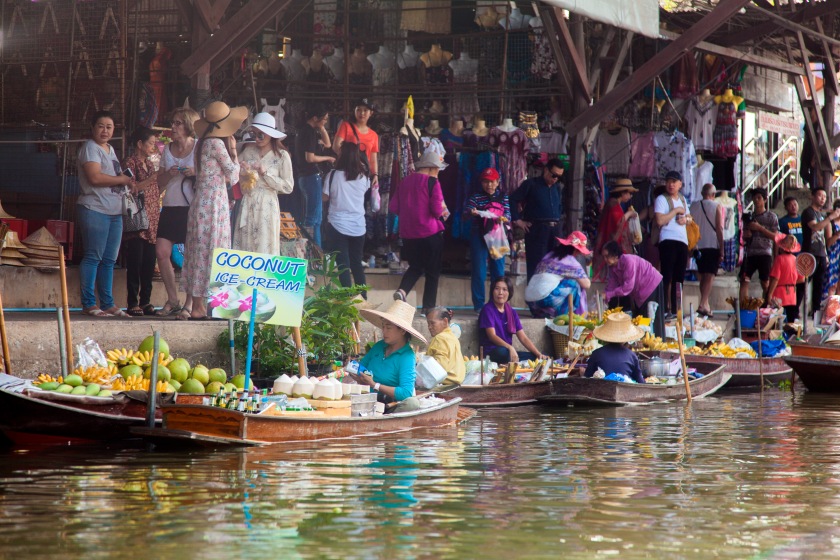
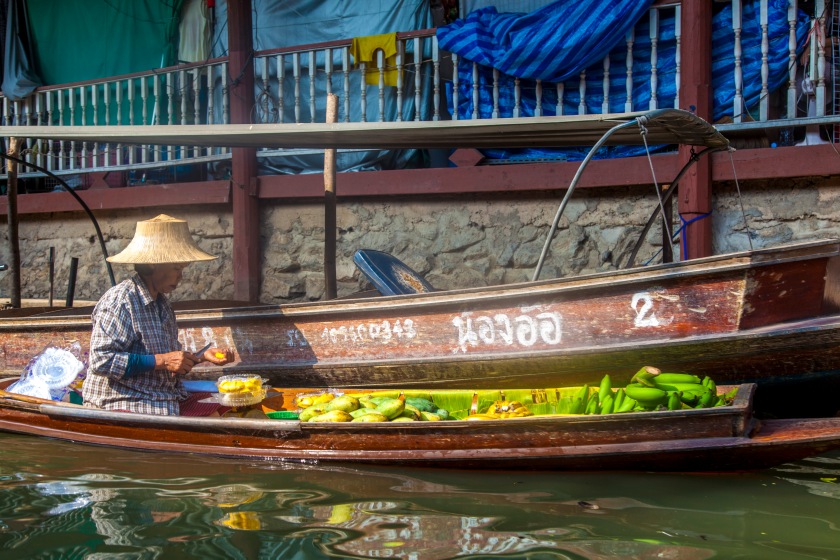
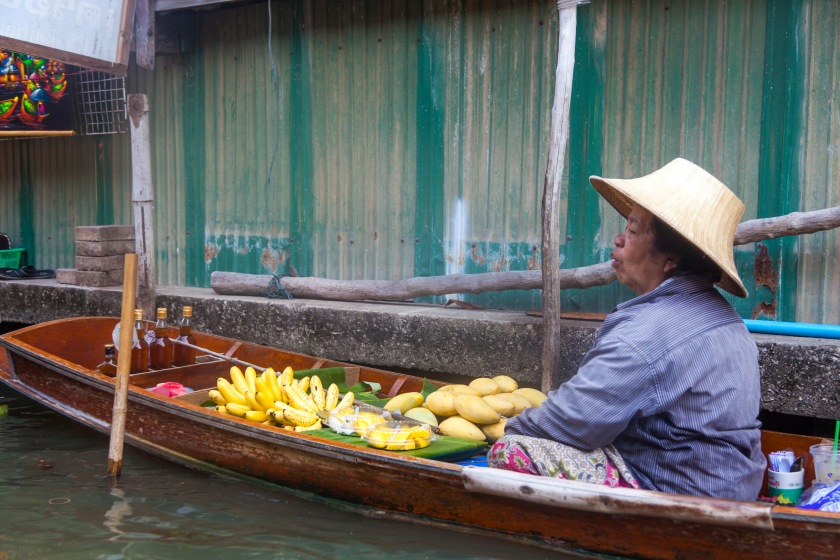
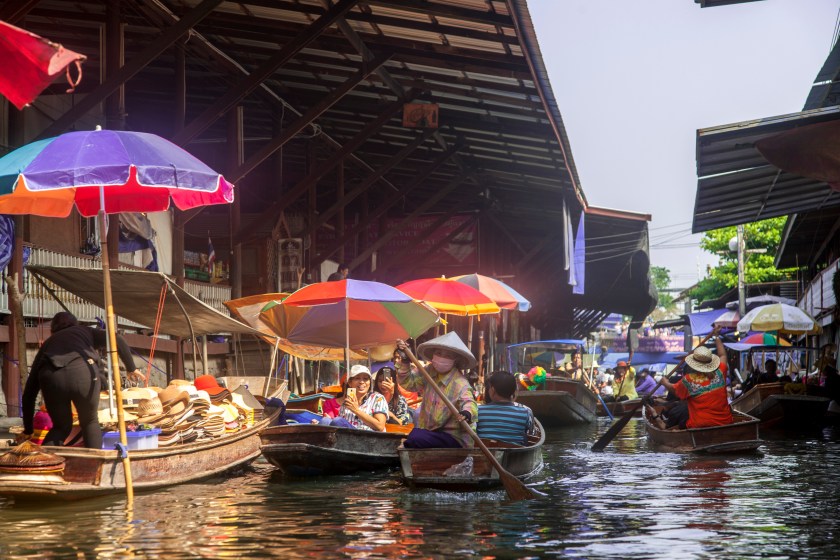
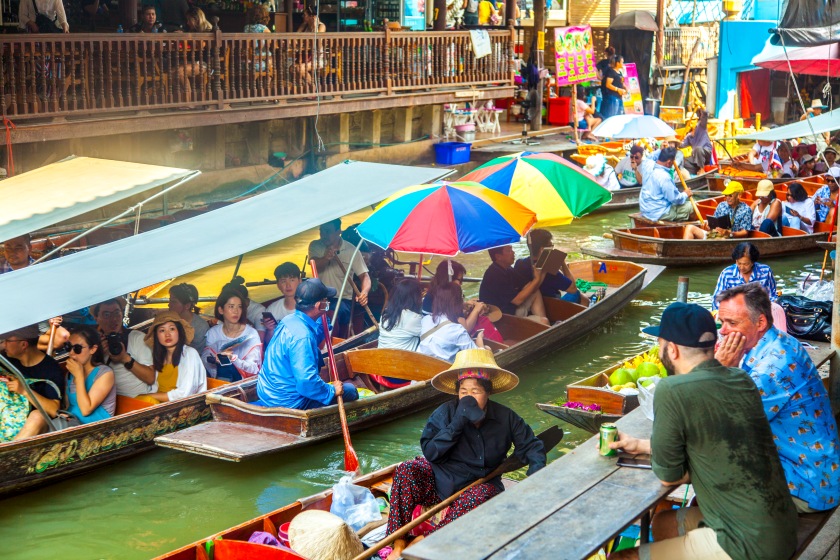
If I continue comparing with Vietnam, where the floating market didn’t quite meet our expectations, here it was the same. There were lots of boats, but most of them were carrying tourists, with only a couple boats here and there selling fruits and snacks.

IMG_3302

IMG_3307

IMG_3309

IMG_3310

IMG_3313

So we didn’t get to see that iconic postcard view of the canal crammed with boats full of colourful flowers and fruits. Maybe, again, we’d had to be here at 5am for that. On the other hand, along the banks of the canal there was a whole flea market kind of thing, with souvenirs, handicrafts and other stuff, so the boatman kept stopping every minute at one shop or another to get us to buy something off his friends. One of the sellers introduced herself as his wife and, when she faced our languid refusal to buy anything despite her persistence, she asked us to at least give tips to her husband at the end of our ride. Floating by another shop, we saw a woman washing her plate and hands right in the canal, which raised serious doubts as to the compliance of the food sold at the market with sanitary norms. Which is why, having got off the boat and having arrived to a local coffee shop, as agreed in advance with Vanna, we got hot coffee rather than the much desired iced coffee – common sense suggested that the ice could have also been made from frozen canal water, who knows?

IMG_3314

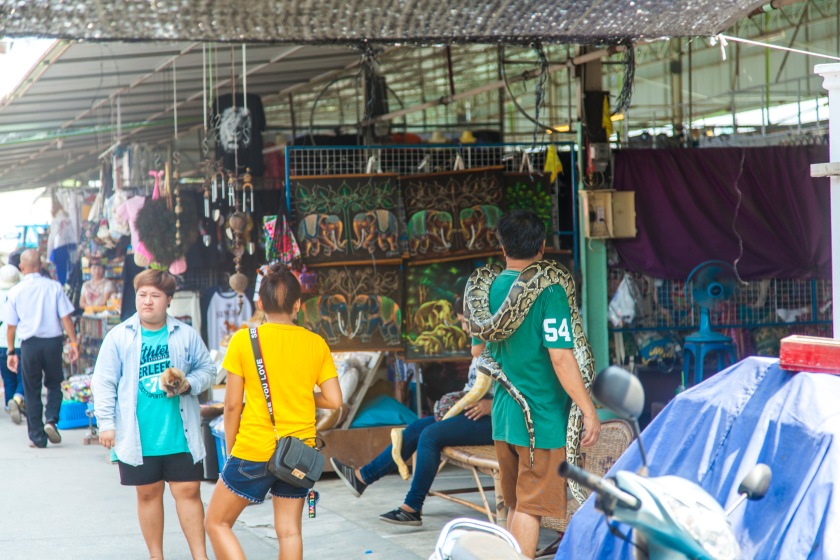
Another attraction at the market was the opportunity to take a picture with wild animals: sloths, loris and pythons. A thought flashed through my mind: maybe I should get a photo with a snake hanging around my neck? But I finally decided that I didn’t want to spend 200 baht (just under 7 USD) to support such a cruel business. Social responsibility, you know!

IMG_3319

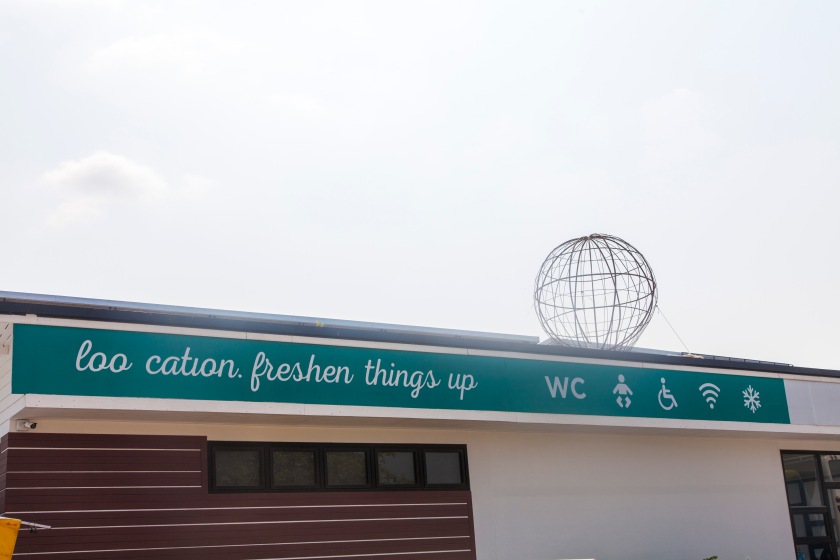
What also deserves a separate mention in this place is the toilet. It’s a whole single-storey building with enticing inscriptions and a car park, the interior reminds of pharmacy, there are snacks sold inside and even a wi-fi hotspot!

IMG_3316

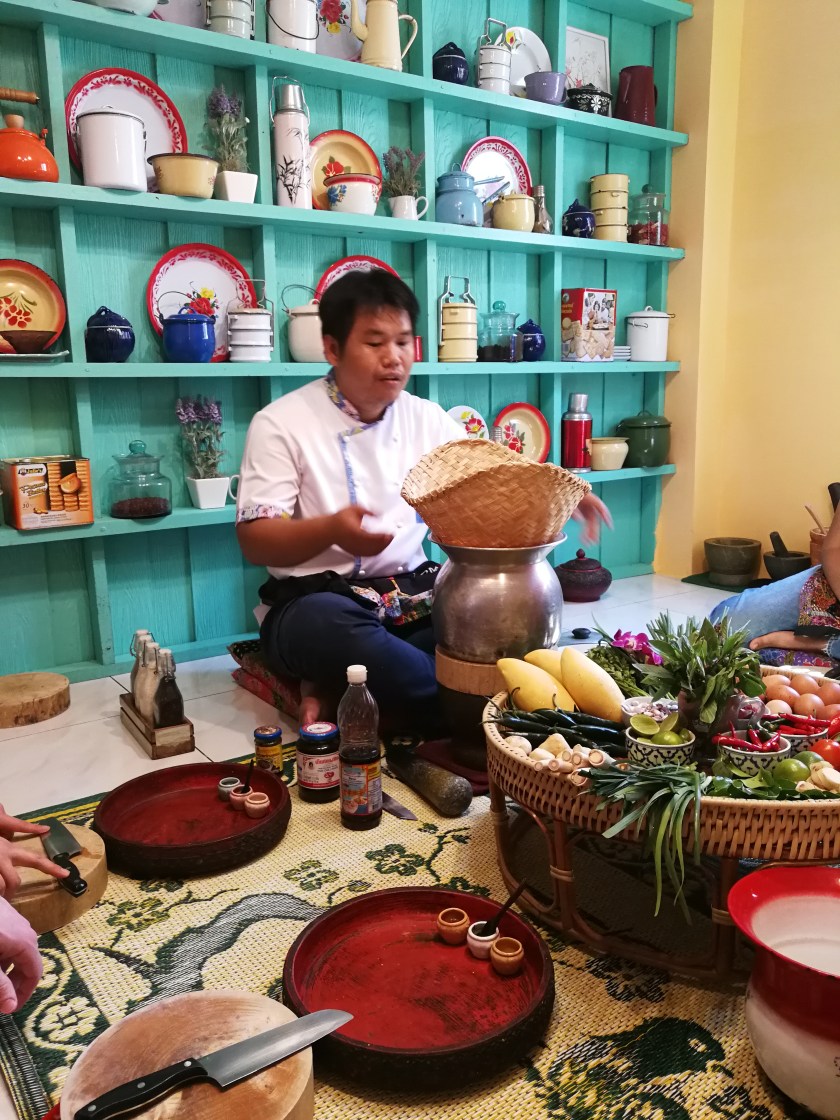
In short, we weren’t extremely impressed with the floating market, and we left for Bangkok well before 11am, which was our deadline in order to make it to our cooking class at 1.30pm. What cooking class? – you may ask. Well, actually the tour we chose is called ‘The Taste of Thailand’, so in addition to sightseeing and beach recreation, it also includes three cooking classes in different cities!

We were brought to the corner of some street in Bangkok and handed over to a guy, who assigned us to a group of 8 people and sent us off to the market nearby with his colleague – our current instructor.

IMG_3329

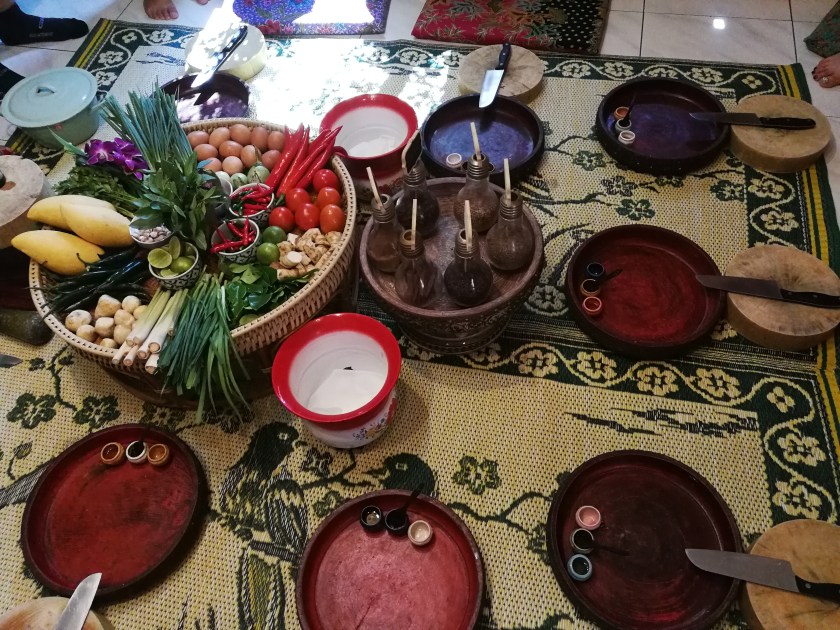
At the market, there were already baskets and a set of vegetables prepared for us, and we had to take them with us. That is, the market trip was a mock one – in fact, there was only one stall still open at this time as the market as such operates very early in the morning. It was just that the instructor – a very funny guy – took the opportunity to show us some essential ingredients, indispensable in Thai cuisine. As he explained, for example, the mushrooms or beans used here are, of course, local varieties, but can easily be replaced with any other variety, as they are used not for the taste, but for the texture, just like most other vegetables. As for galangal (a close relative of ginger), Thai basil, lemongrass and kaffir lime leaves, though, they can’t be replaced even with closely related plants – it wouldn’t be Thai cuisine anymore. From this we concluded that it is unlikely that we would be able to hone our Thai chef skills in Baku: there’s no way we can find kaffir lime leaves there. He also pointed out the important difference between Thai and Indian curries – in Indian curries the flavour is created using dried herbs and spices, and in Thai curries – using fresh herbs and roots. For instance, ginger and turmeric are always used fresh, never dried and ground.

A funny episode – there was a very nice Colombian couple in the group with us, and right upfront the lady warned the instructor that she couldn’t stand onions or any related plants. The instructor joked that he would then pass onions off as cabbage, and so till the end of the class he continued referring to all kinds of onion-like plants as cabbage.

cof

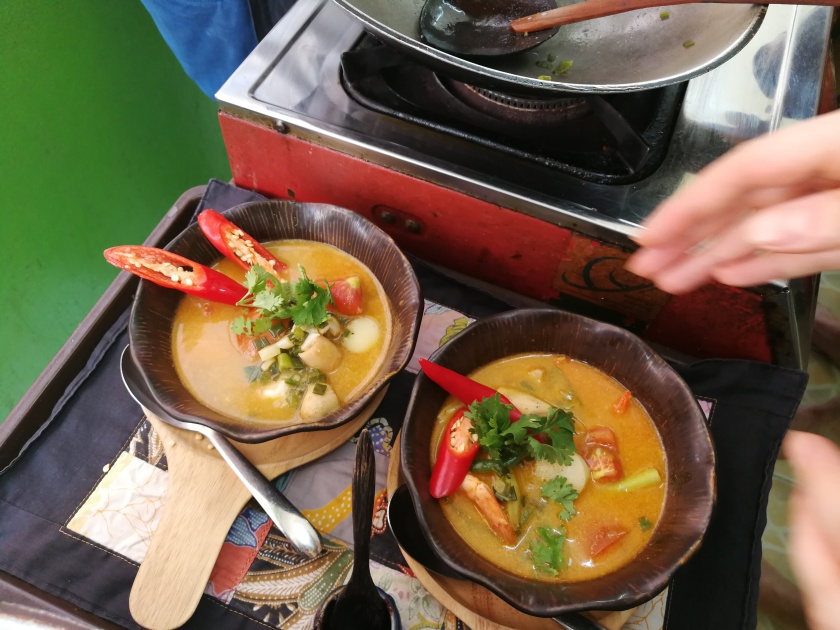
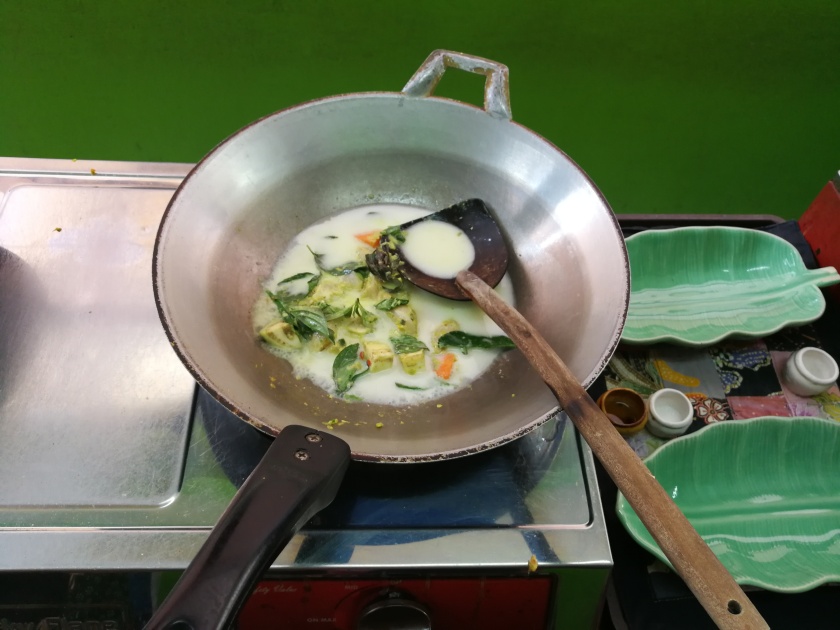
Having picked up our baskets with vegetables and herbs, we headed back to the cooking school and immediately got down to work. We had five dishes to cook: Tom Yum soup, Pad Thai, green curry, spicy chicken salad and sticky rice with mango for dessert. Frankly speaking, we didn’t cook the last two ourselves, but rather simply observed the process. Our only contribution to the dessert was participation in making coconut milk from grated pulp, and the milk was then used for the soup and curry as well as for the dessert. We started actually doing something when we moved on to the Tom Yum soup.

cof

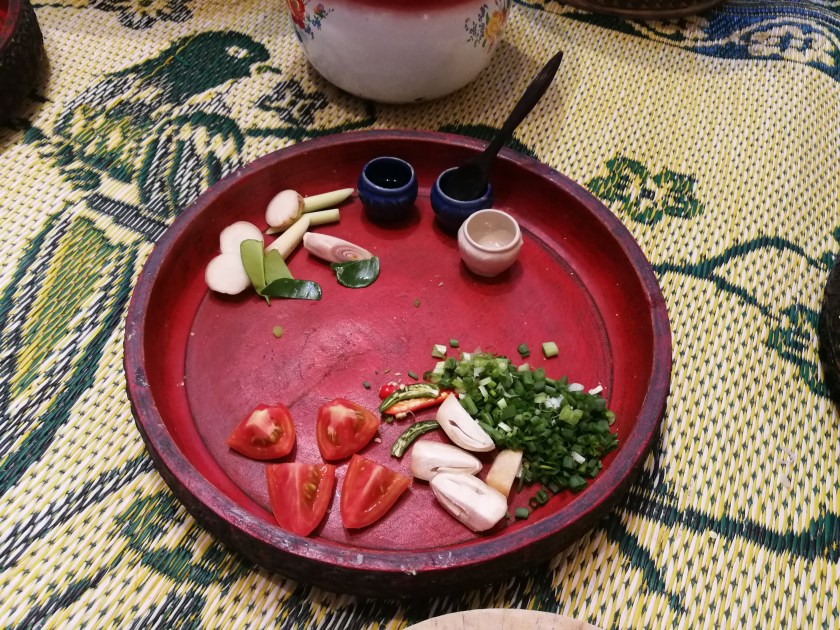
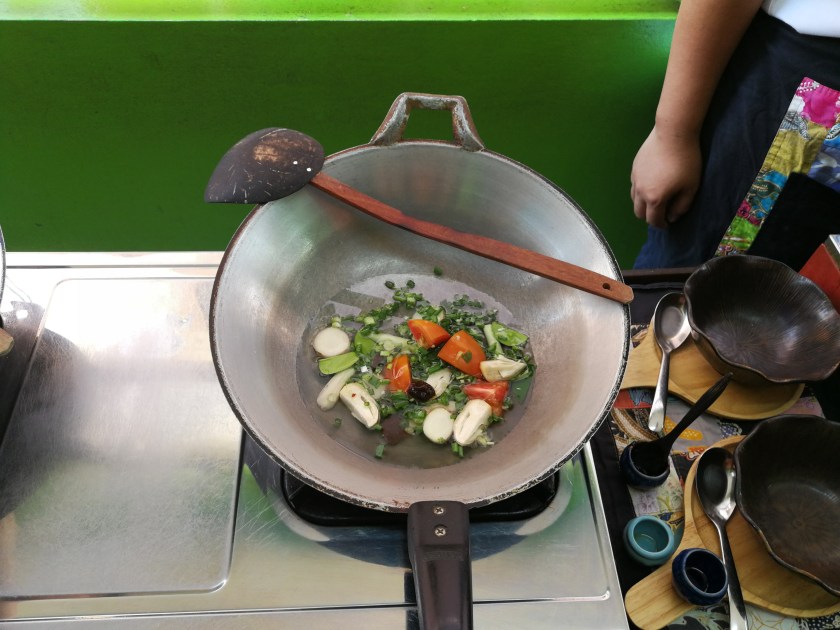
All we had to do was cut up the vegetables (tomatoes, green onions, mushrooms and chili peppers – I boldly took two), prep the “flavour ingredients”: lemongrass, galangal and kaffir lime leaves – these are the three ingredients that actually create that distinct Tom Yum flavour and that are not supposed to be eaten, by the way; all the rest can be replaced if necessary – and then put everything in our individual wok, and add fish sauce, chili paste and lime juice to taste. The fish sauce, which we first came across in Vietnam, features in absolutely every dish here, apart from sweets. It replaces salt and enhances the flavours, being a natural source of sodium glutamate. While we were cooking, the instructor was walking around, adding water and coconut milk, then adding shrimps. Generally, I noticed that we were only trusted with processing vegetables and greens, while all the meat was provided already prepped and added straight to our woks.

cof

cof

cof

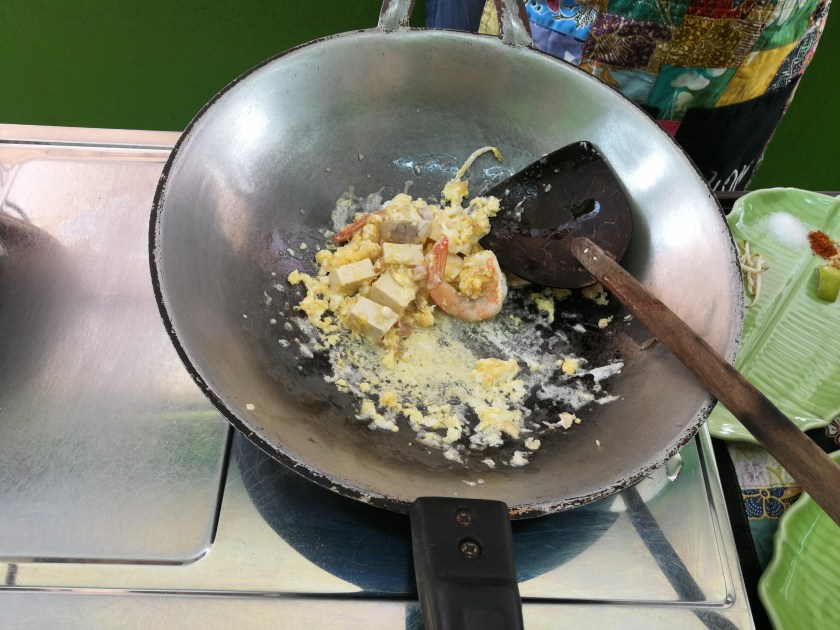
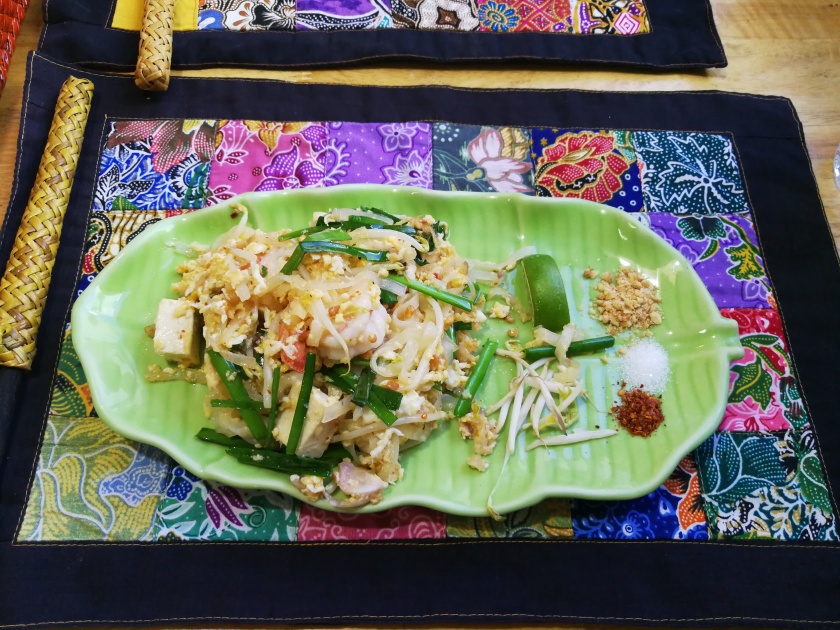
Once we cooked and happily consumed our own Tom Yum soup portions, it was time to cook the Pad Thai. The instructor had pre-soaked the rice noodles in cold water, so we just had to cut up the tofu and leeks and return to our woks, already washed and seasoned with soybean oil for us. First of all we fried off some crushed garlic with tofu and spices (fish sauce, coconut sugar, chili flakes, ground peanuts and something like pickled radish). Then we broke an egg into the wok and gave it a quick fry too. Finally, in went the noodles, leeks and soybean sprouts. The instructor told us that in Thailand no one cooks Pad Thai at home, and this is exclusively street food. Interestingly, some type of sugar is added to almost any dish here.

cof

cof

By the way, at some point the instructor told us that almost everyone in Thailand knows about Azerbaijan, due a lot of Thai players in our volleyball clubs, and since volleyball is the only team sports which Thais are good at, this fact is widely known. Good to know, as we were quite surprised that hearing about us being from Azerbaijan, no one here makes a puzzled face and asks what on Earth it is, like we’re used to.

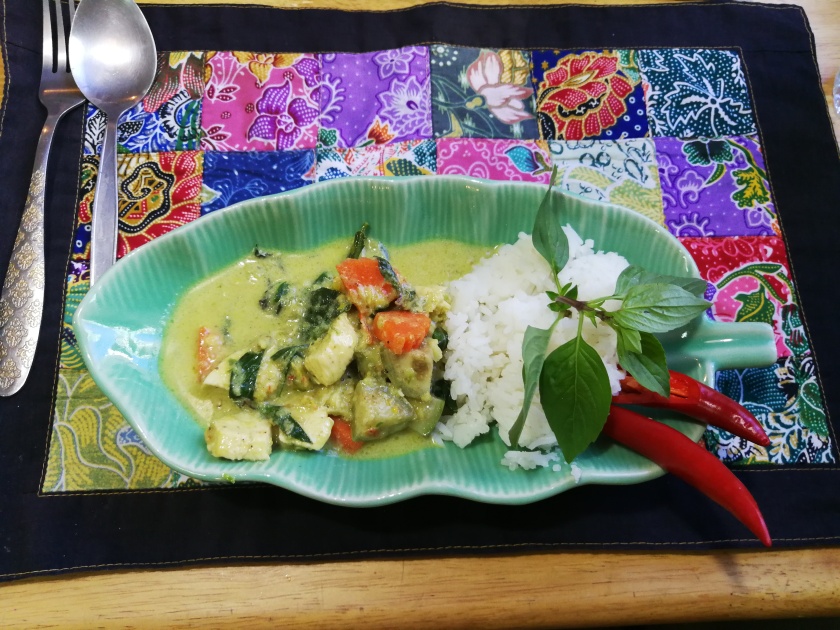
After Pad Thai we tasted the spicy chicken salad prepared for us by the instructor, as mentioned, using onions, boiled minced chicken, chilis, ground roast rice and of course seasoned with fish sauce. And then we had to cook green curry. The instructor prepared the curry paste himself, explaining in the meantime that no one does it at home and everyone buys readily made paste. He mixed a lot of ingredients in the mortar – coriander and cumin seeds, the “holy trinity” (if you remember, that’s lemongrass, lime leaves and galangal), red and green chili peppers, turmeric root, garlic and something else, and then we took turns to mash it all with a pestle. Then, one last time, we returned to our woks, where coconut milk and chicken slices were already added for us, and cooked that with Thai eggplant, basil and finger root ginger with the addition of fish sauce, sugar and curry paste.

cof

cof

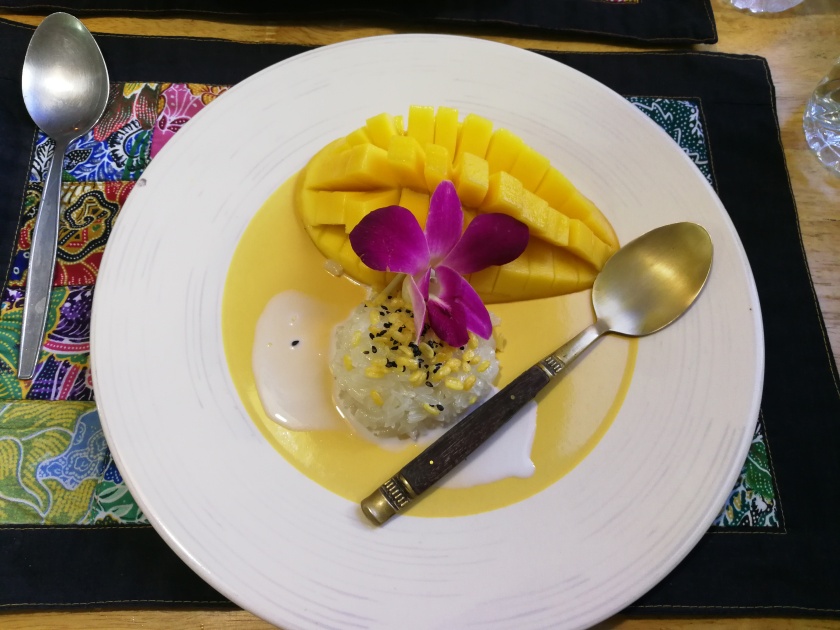
At the very end we were served our dessert – a slightly salty sticky rice mass (yes, salt is added to desserts and not to savoury dishes here – for the latter this mission is given to fish sauce!) with fresh mango. We really liked the class overall: we acquired new skills, plus it was fun and tasty!

cof

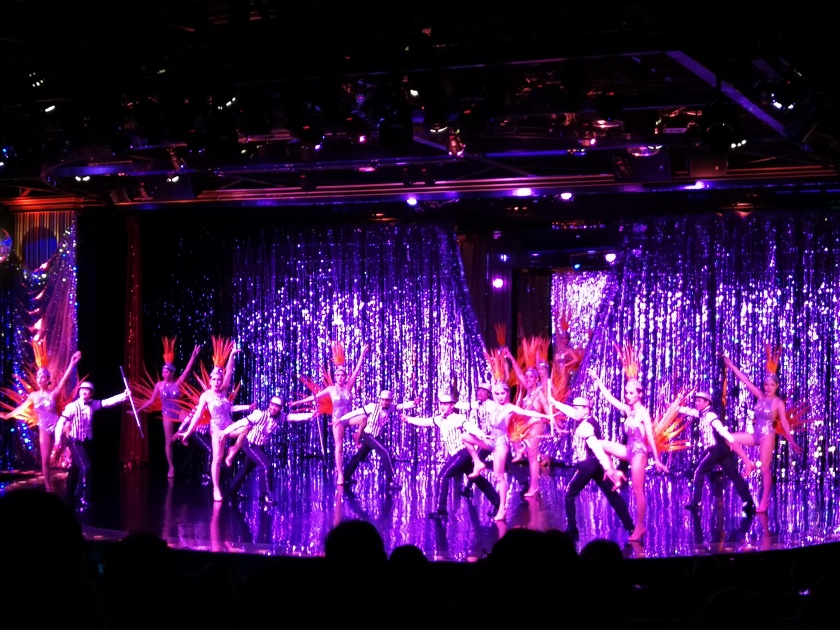
For the evening we had a ladyboy cabaret show planned. It sounds a bit dubious, I understand, but there was absolutely nothing bawdy there. Just normal singing and dancing, the performance was pretty good: they were portraying Beyoncé and Marilyn Monroe, acting scenes in Chinese and Korean style, and for some reason dancing to “Hava Nagila”. If you don’t know they are ladyboys, you could totally take them for women.

oznor

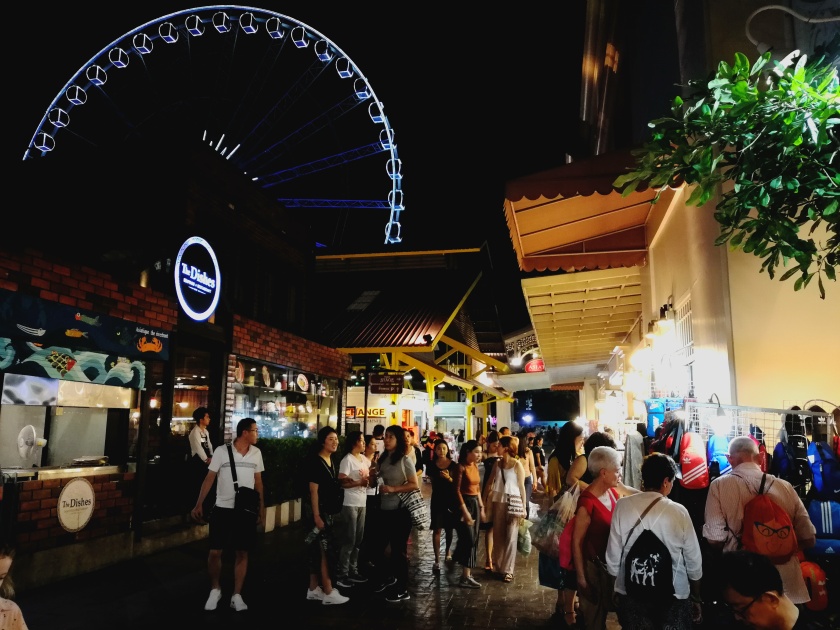
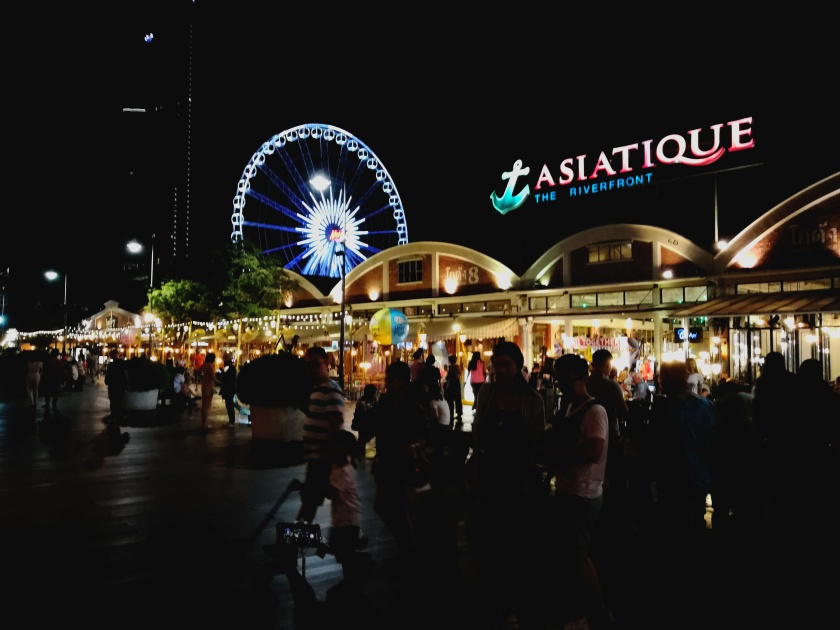
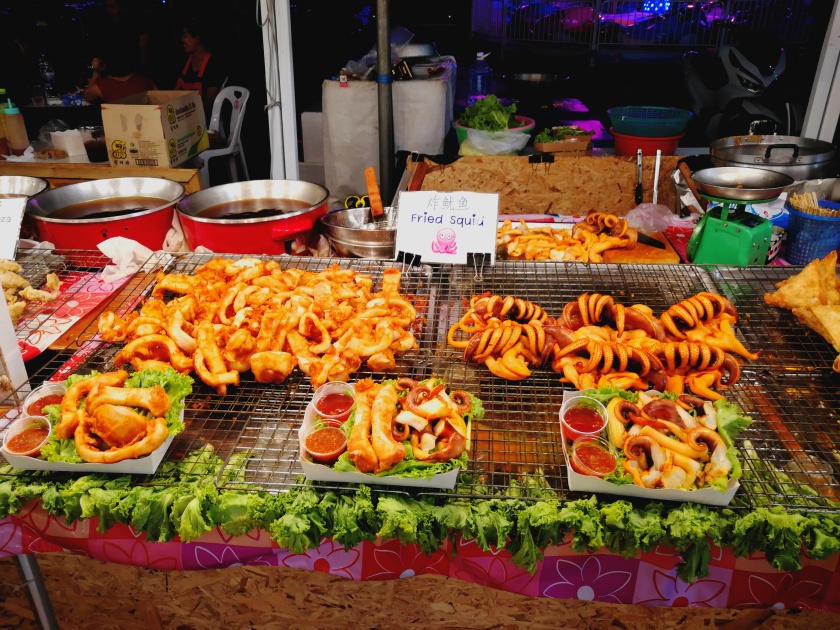
By the way, the show wasn’t included in our tour programme, therefore, even though Vanna kindly arranged tickets for us, even with a discount, we had to take a taxi ourselves. The cabaret is on the Asiatic embankment – it’s a very pleasant place with a ferris wheel, restaurants, shops and a night food market. We went for little walk after the show, and the street food looked very tempting to us, but firstly, we were still full after the cooking class, and secondly, we are still slightly apprehensive about street food.

selfp

selfp

selfp

selfp

selfp

Posted in Asia, English, Hanoi, Vietnam

Vietnam – Day 10

РУССКОЯЗЫЧНАЯ ВЕРСИЯ ПО ЭТОЙ ССЫЛКЕ. CLICK HERE FOR RUSSIAN VERSION.

14 June 2017

Here we got to our last day – or actually the last half-day – in Vietnam. We didn’t have much to do today, and the only plans we had were to walk around and possibly buy something.

20170614_071901

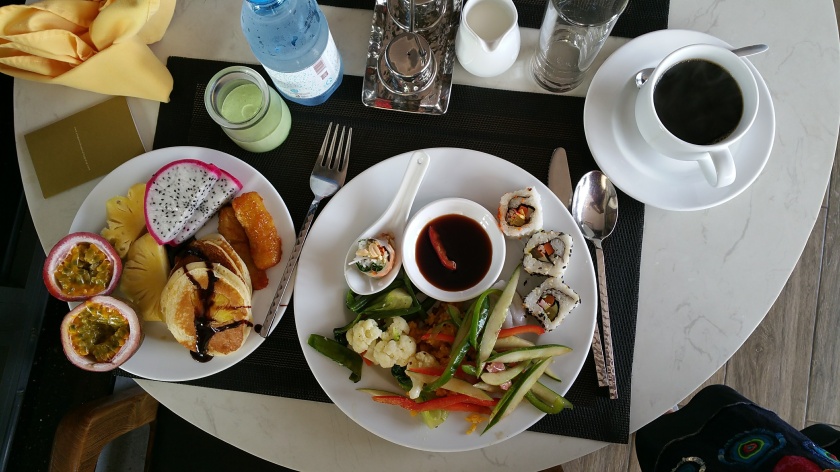
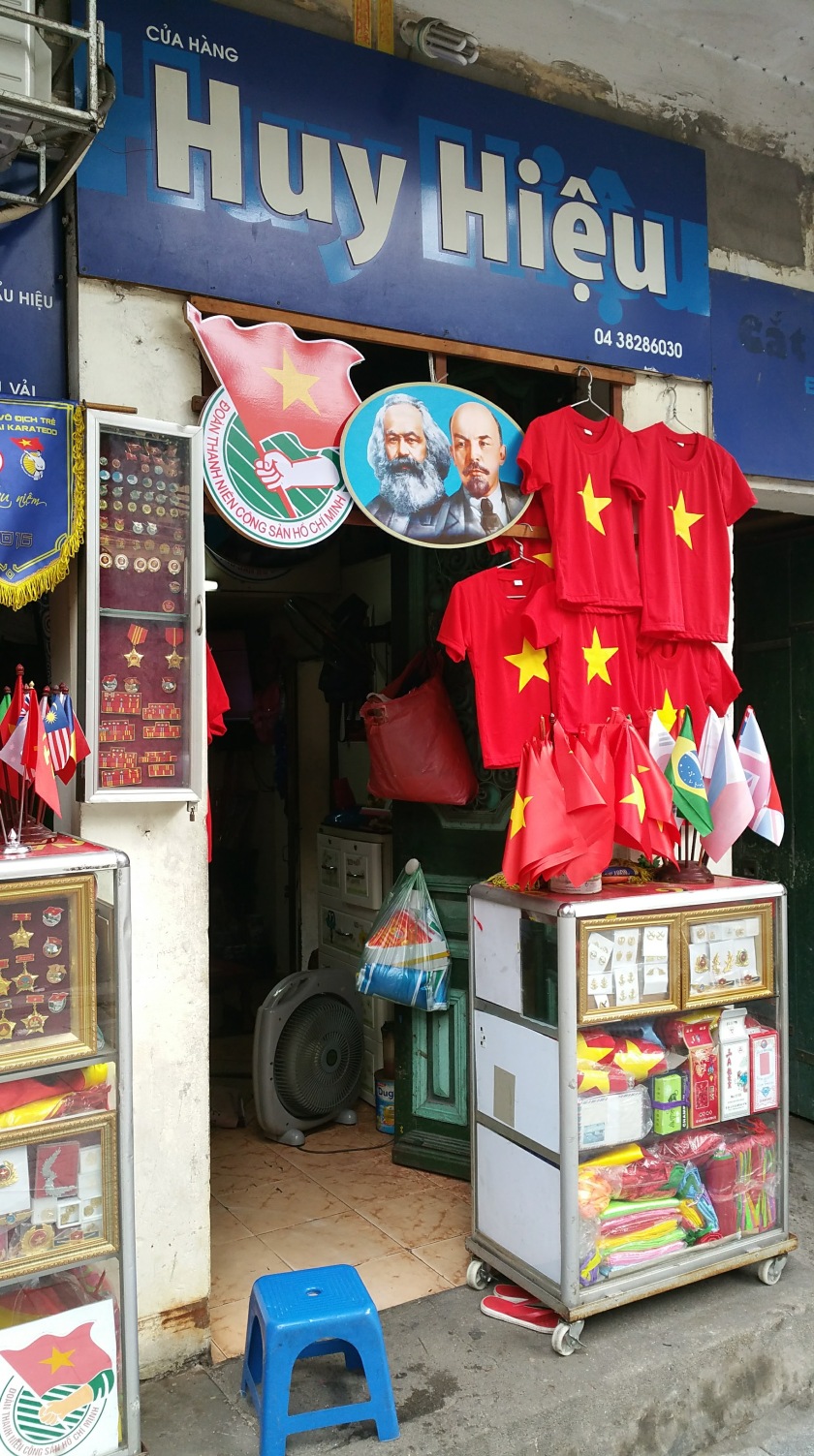
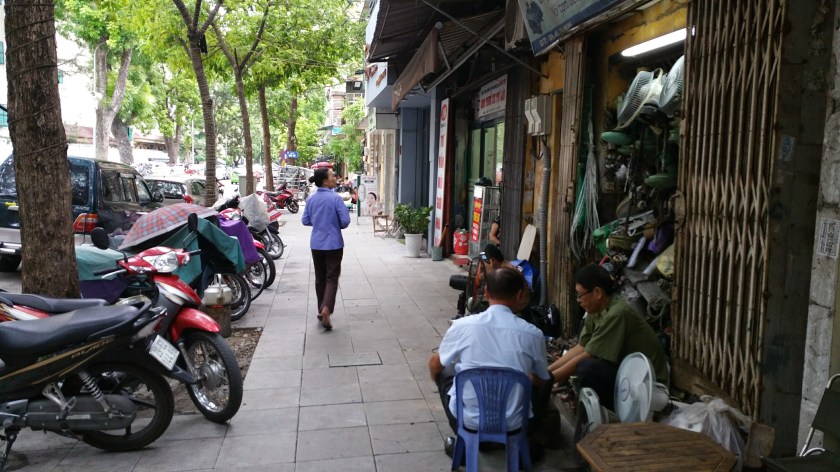
So we had a really slow breakfast, yet still managed to leave the hotel before 9am. Therefore, many clothing stores were still closed – and actually, we were pretty interested in local brands. A lot of other shops were open though: those selling household goods with buckets and mops; repair shops, littered with all sorts of junk; shops selling faxes or coils for electric stoves etc.

20170614_083619

20170614_131319

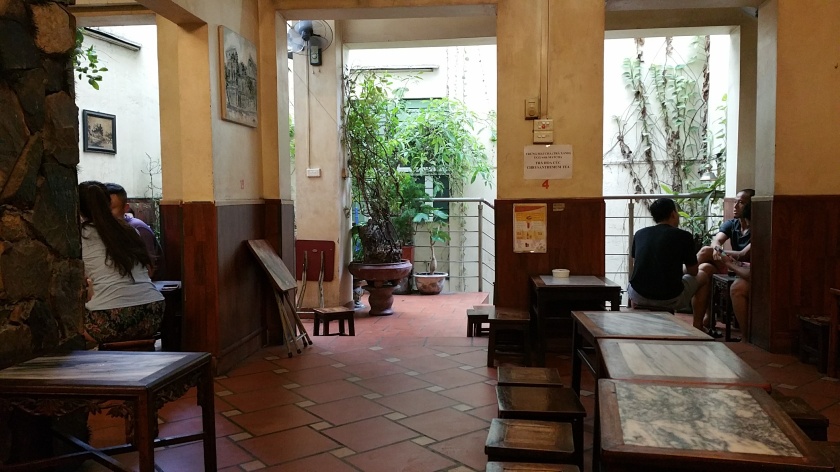
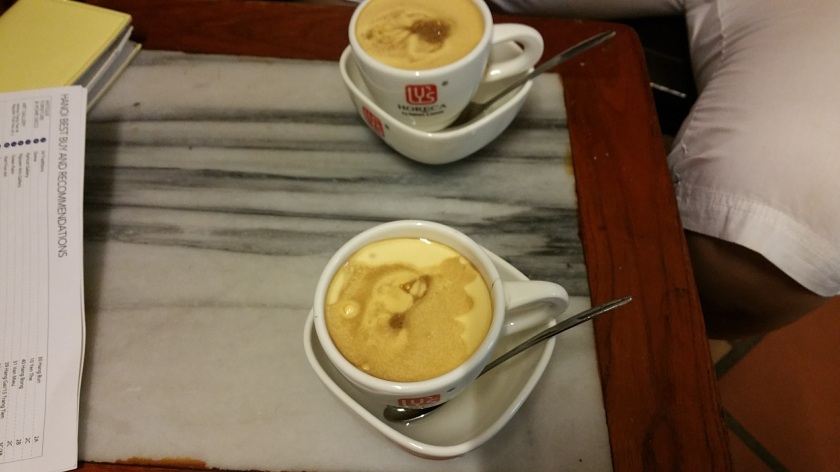
That is why, we decided to walk to the lake again and try something we hadn’t tried yet: the famous egg coffee. This is a typical Hanoi invention and we headed straight to the Giang cafe, owned by a family which invented this drink back when cow’s milk was in short supply – so a certain Giang came up with the idea of ​​replacing it with egg yolk. The drink is very interesting, has a dense consistency and tastes like egg-flip, consisting of egg yolk, whipped with sugar, robusta coffee and condensed milk.

20170614_092542

20170614_092830

Since we really liked the coffee in Vietnam in general – it’s so fragrant, not sure whether it’s because the Vietnamese drink mostly Robusta rather than Arabica or for some other reason – on our way we went to a coffee shop and bought coffee beans to take home with us.

We walked back along the same shopping street as before, and the clothing stores were already open, but on closer examination somehow didn’t impress us too much: it felt like the clothes were better in Saigon, where unfortunately, we didn’t have time to walk around shops.

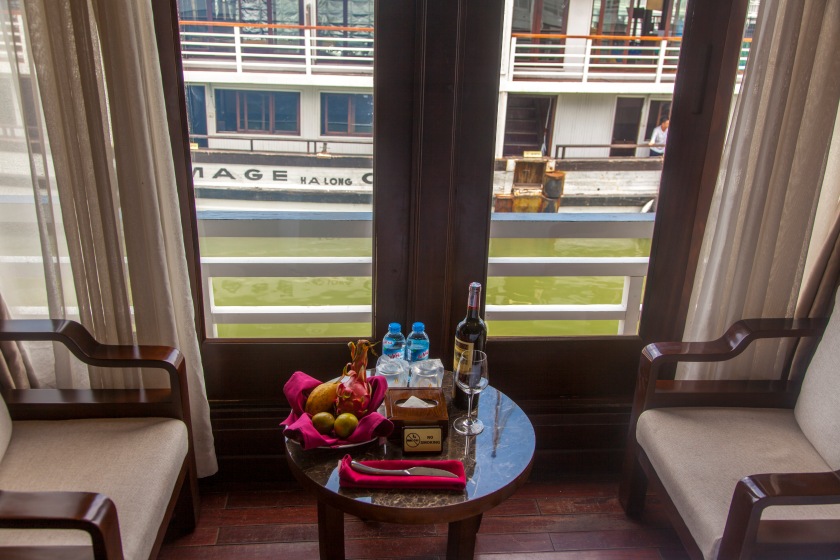
But we did get to buy fruits to take home! We were looking for a street market, which we saw on the first day near our hotel, but didn’t find it – apparently they are off today – so we popped into an ordinary fruit shop and got pitahayas (dragon fruit), litchis, mangosteens and rambutans there.

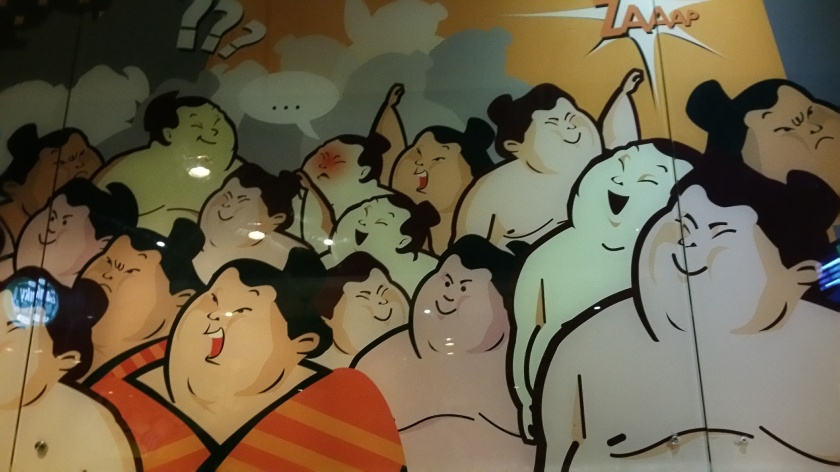
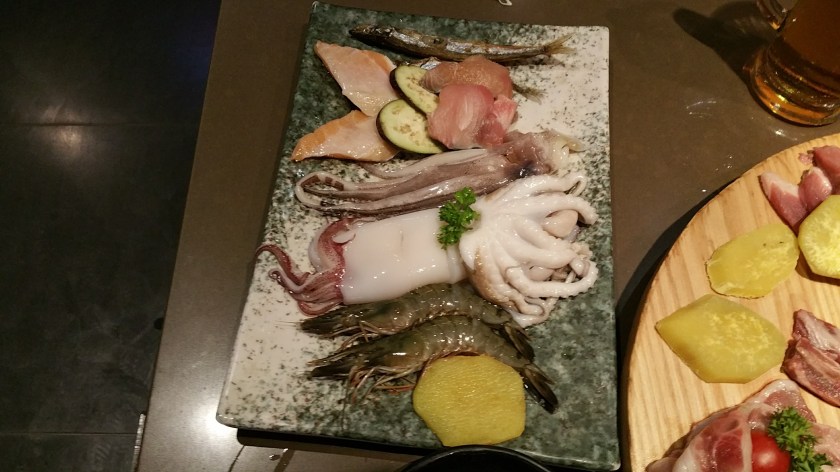
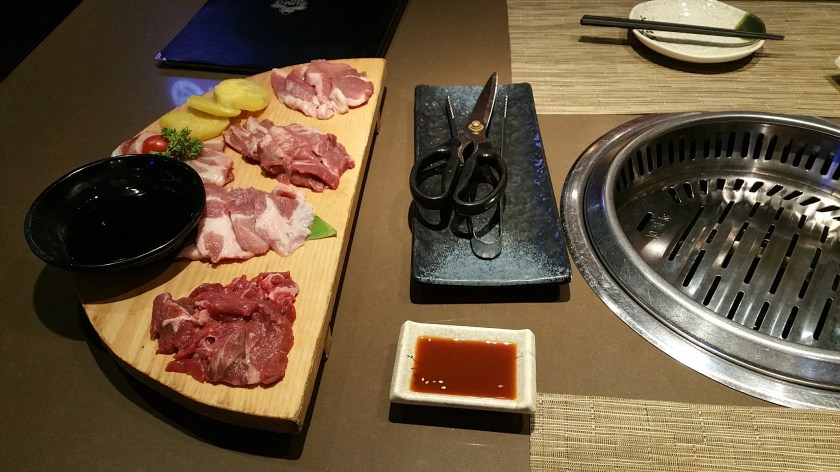
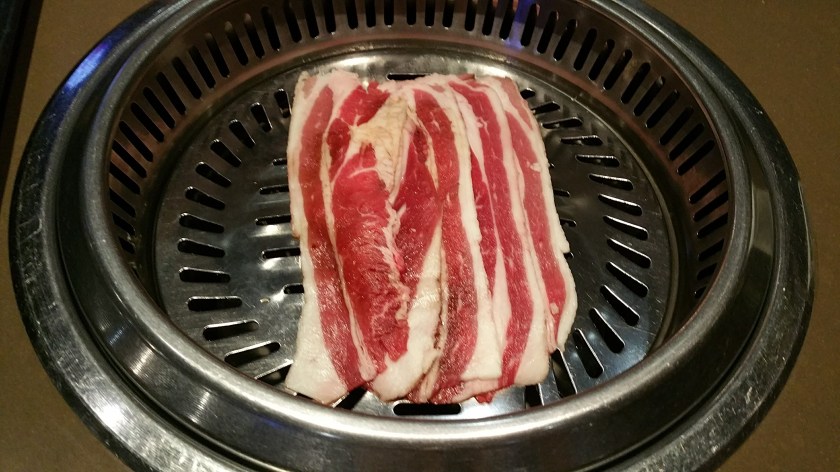
Now we only had to have lunch, and we walked into a Japanese barbecue restaurant, where you could pay 300,000 VND (about 13-14 US dollars) and get an unlimited amount of meat and seafood, which you had to grill right in the centre of the table. Unfortunately, our stomachs have limited capacity, so pretty soon we had to ask to stop bringing food and just serve the dessert (which, along with bottomless beer, was also included in the price).

20170614_120307

20170614_120755

20170614_121044

20170614_122358

Then we returned to the hotel, took a quick shower and went to check out. The staff of the hotel were very nice to us: we were seen off by pretty much all of the reception staff, who even gave us hanging decorations with rag birds as gifts! At half past two in the afternoon the travel agency car picked us up and took us to the airport.

Goodbye, beautiful country of delicious food, fragrant coffee, wonderful massage, rich history and culture, stunning nature, crazy traffic and lovely people!

20170614_084841

Posted in Asia, English, Halong, Hanoi, Vietnam

Vietnam – Day 9

13 June 2017

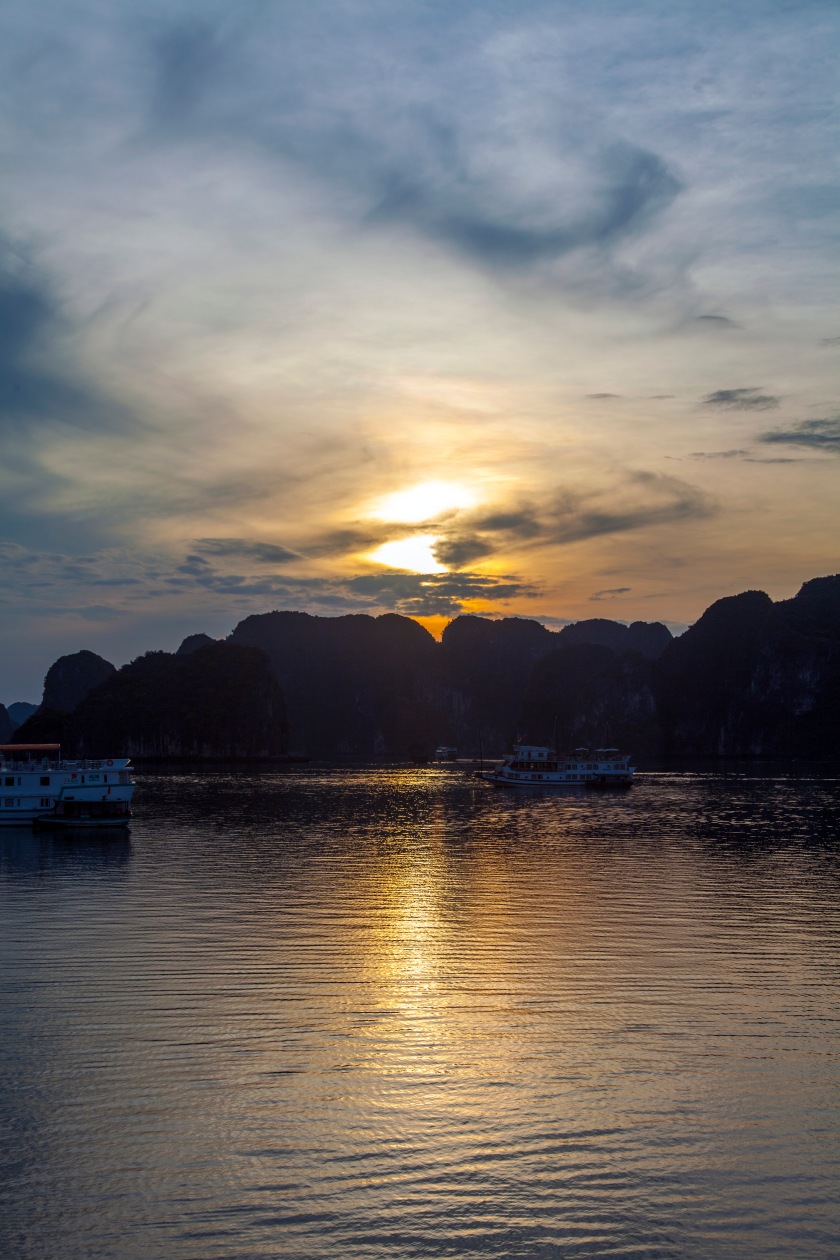
I did manage to get up very early: when I woke up, it wasn’t even 5am and the sky was already brightening. Alas, I couldn’t photograph the phenomenal sunrise – firstly, because it was quite ordinary and not as stunningly beautiful as I had expected, and secondly, once I took my camera, which had stayed the whole night in an air-conditioned cabin, out in such a humid environment, it immediately got water condensed on it and it took a very long time to wipe the lens and the mirror.

IMG_3024

IMG_3036

IMG_3042

The captain of the ship was also up, doing yoga at the upper deck, and at 6am he started the tai chi class. At first I didn’t like it at all, because we were given rather heavy wooden sticks and started stretching using those, which neither me nor my lower back appreciated much. I really liked the actual tai chi exercises though, but they took only five or ten minutes out of the whole half-an-hour session.

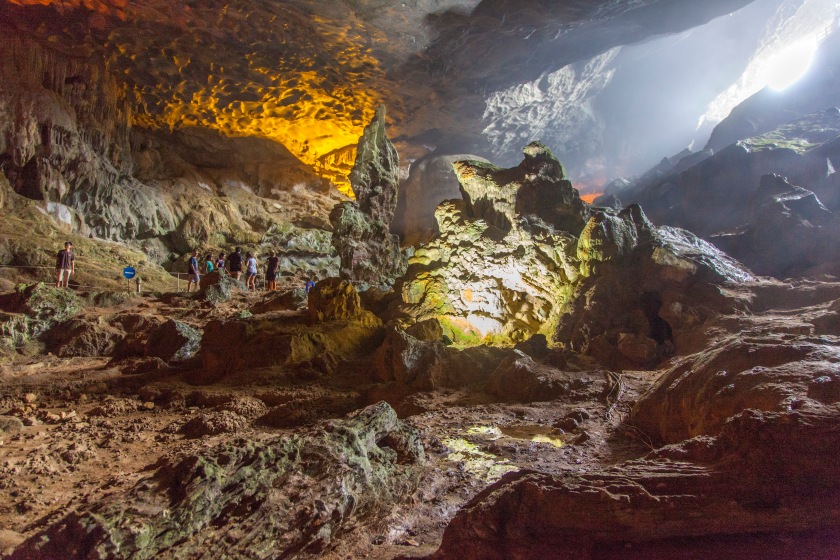
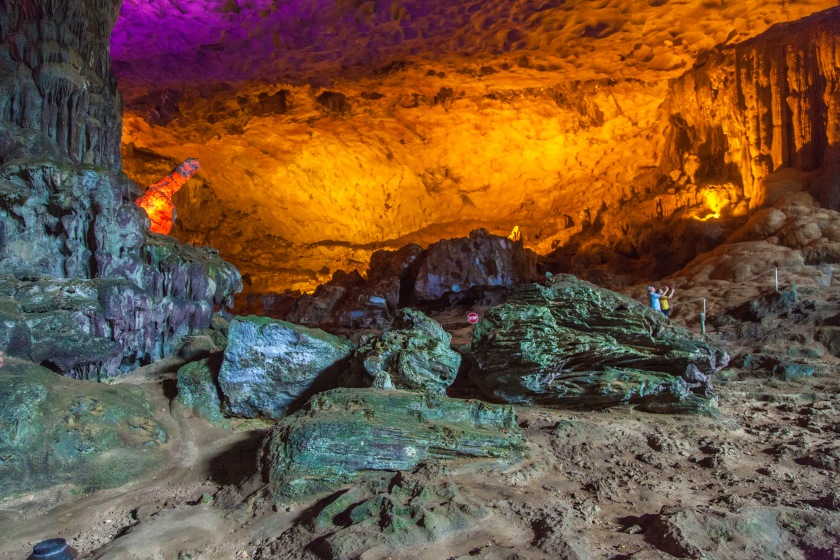
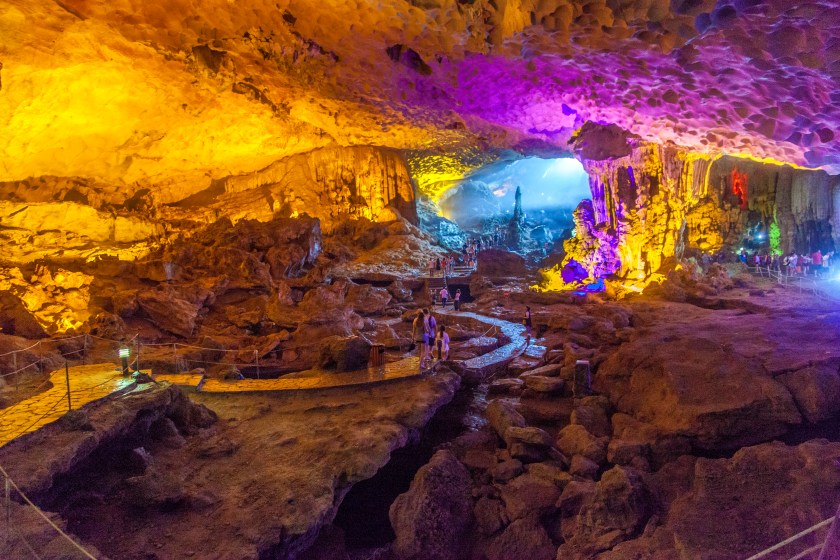
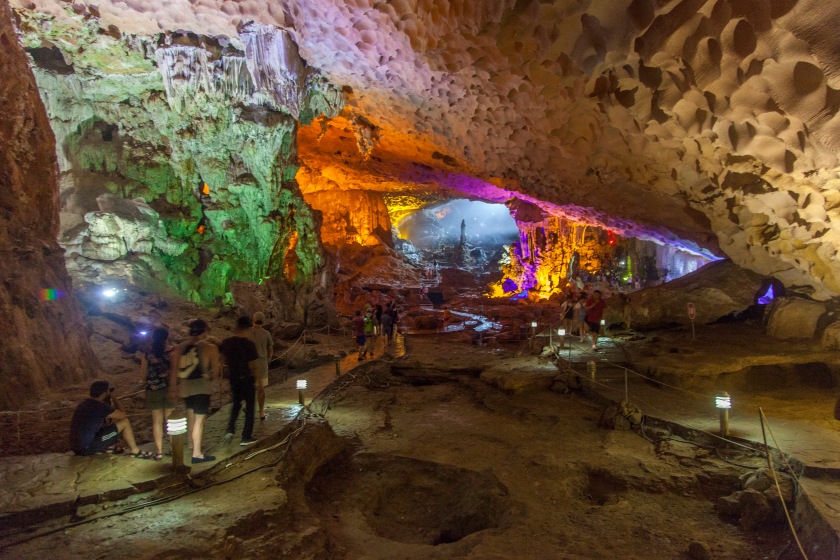
After breakfast there was one more motor boat trip planned for us. This time we went to a cave called the Surprise Cave.

20170613_064839

IMG_3047

The reason it’s called so is because it’s very spacious, which you don’t expect at all looking at the island from the outside.

IMG_3049

IMG_3057

IMG_3062

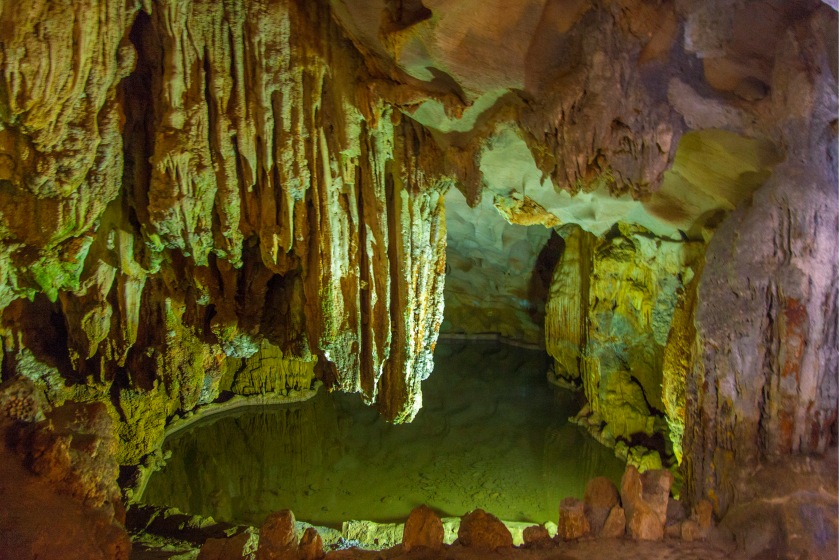
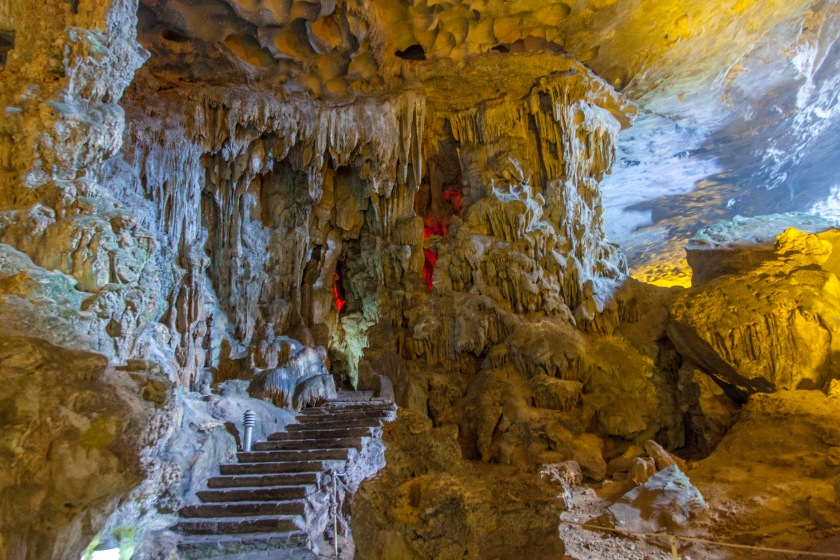
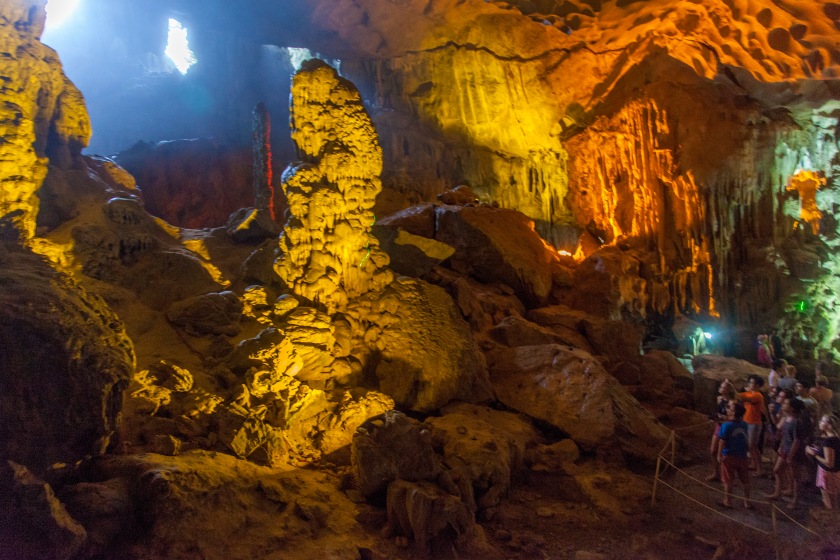
The cave, in fact, consists of several “rooms”, and is not just a wild spot where you can walk anywhere and climb the rocks, no, it is fully equipped for tourists. There are man-made stairs, lighting – with the illumination being multicolored and very well thought out – and identification signage, so quite obviously, the entrance isn’t free, but the ticket is already included in our cruise.

IMG_3064

IMG_3068

IMG_3069

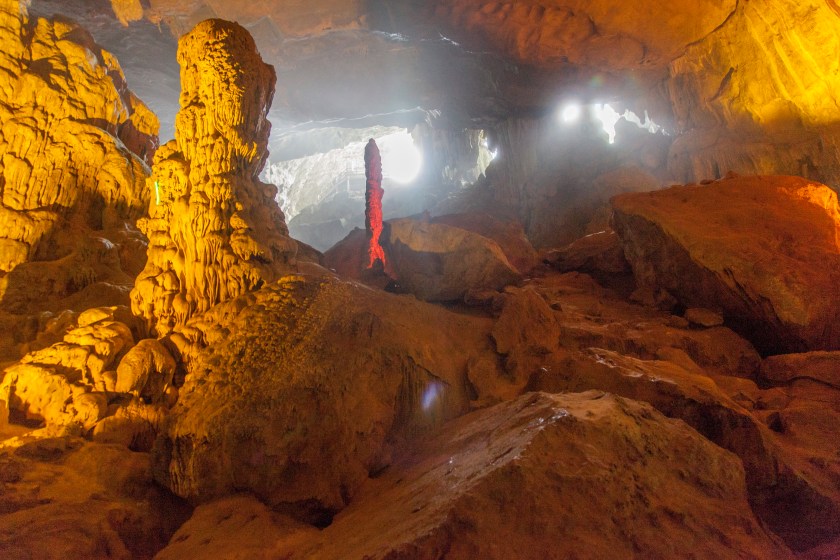
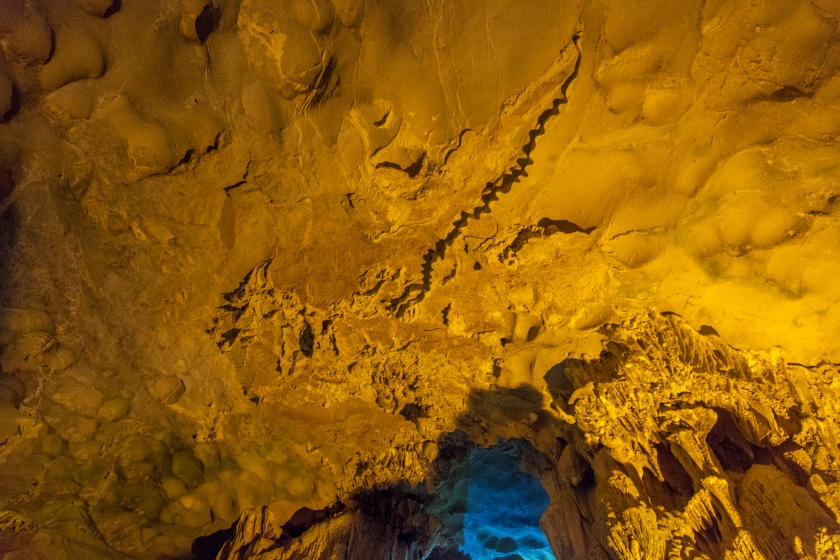
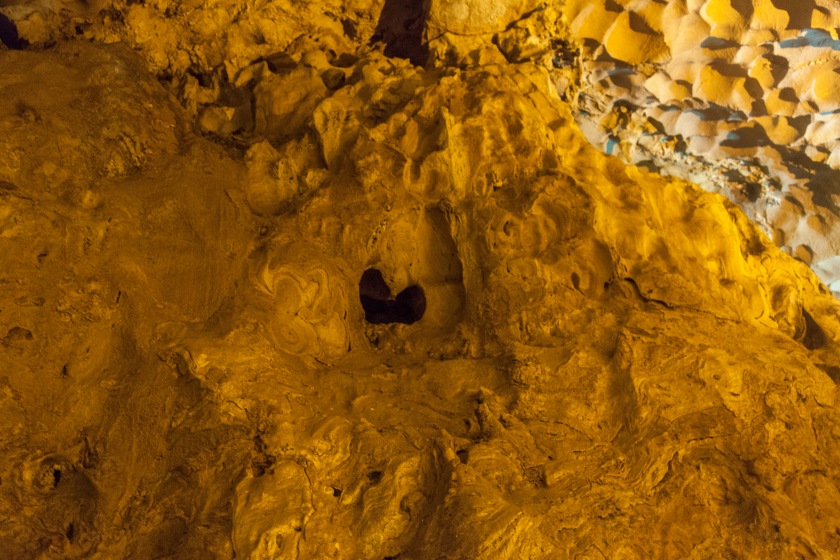
Luckily, it was very cool in the cave, as the weather outside is again very stuffy and humid. I have to say, I found the cave absolutely amazing and not only because of the size. I’d never seen anything like it in my life, it’s incredible to discover such places. Just look at those stalactites and stalagmites of freakish shapes, or patterns on the rocks, looking like a dragon or a heart!

IMG_3060

IMG_3061

IMG_3073

IMG_3075

Upon returning to the ship, we only had to check out, have brunch and disembark on the shore.

IMG_3081

IMG_3084

IMG_3099

We were back in the office of the cruise company, where we had to spend an hour waiting for our minibus. And that was the exact moment when we felt all the power of our luck, for literally the very minute when we sat down in the waiting room, an incredible downpour started and didn’t stop for the whole hour that we were waiting. Moreover, later in Hanoi we were told that yesterday, when we were not there, there was a heavy storm with rain and that today it had just moved to Halong, to the extent that some cruises got canceled altogether. Just imagine that if our cruise was only a day later, we might have not even got to the place which was the main reason why we actually organised this Vietnam trip!

The road to Hanoi took the same four hours and again was not particularly interesting, except for the fact that at some point our Peruvian fellow passenger snapped at the driver, saying that he was carrying 8 people and not potatoe,s so he had 8 lives in his hands and it wouldn’t hurt to drive more carefully. I’m not sure if the driver was actually doing any dangerous maneuvers, but one thing I know was that I didn’t manage to sleep in the back seat, as every time I was falling asleep and my mind began drifting away, the minibus jumped and I immediately was wide awake.

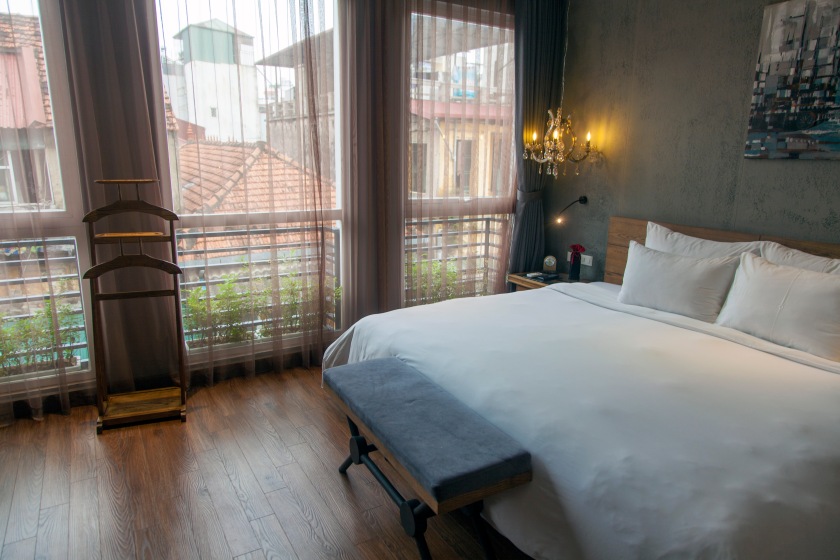
In Hanoi, we checked in at the same hotel, only now we were upgraded to a better room free of charge – a much larger one and with a nice view from the window.

IMG_3117

Even though it was only 4pm, we felt too lazy to go out, especially after we saw how crazy the Hanoi traffic was on that day. Especially that we had a visit from the travel agency representative who we had corresponded with when booking the tour and who came to meet us personally, thank us and give us lacquered boxes as gifts. Of course, we warmly thanked her too, both for the gifts, and for the wonderful organisation of the tour, since not only was it very interesting and educating, but also everything went without a hitch: we were always met and seen off perfectly on time and were very well taken care of.

Since today was our last night in Vietnam, we decided not to economise on ourselves at all, but to splash out on a massage in the hotel spa, which was twice as expensive as our previous massages (those had discount offers) and dinner in a high-end restaurant at the hotel as well.

20170613_164900

The massage was indeed of a little higher class than in Hue and in Hoi An: even though tea had been served there as well, and in Hoi An we had also been offered to choose a fragrance oil for massage, but here we had our feet washed in some cinnamon decoction before the procedure (plus the tea came with biscuits! 🙂 )

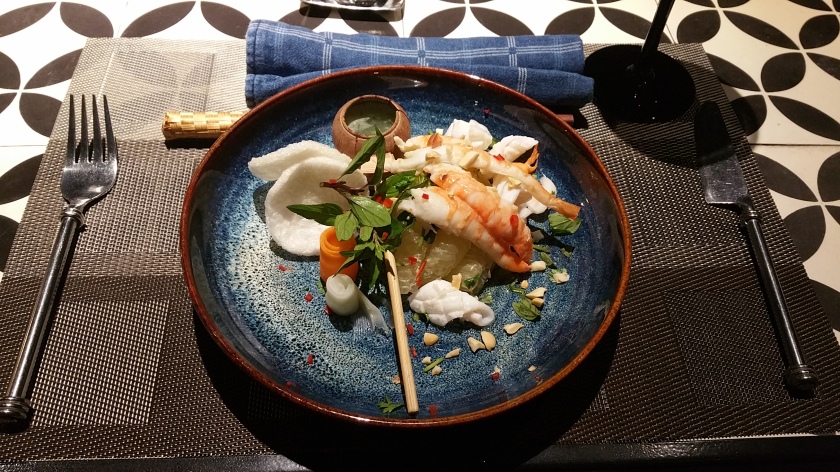
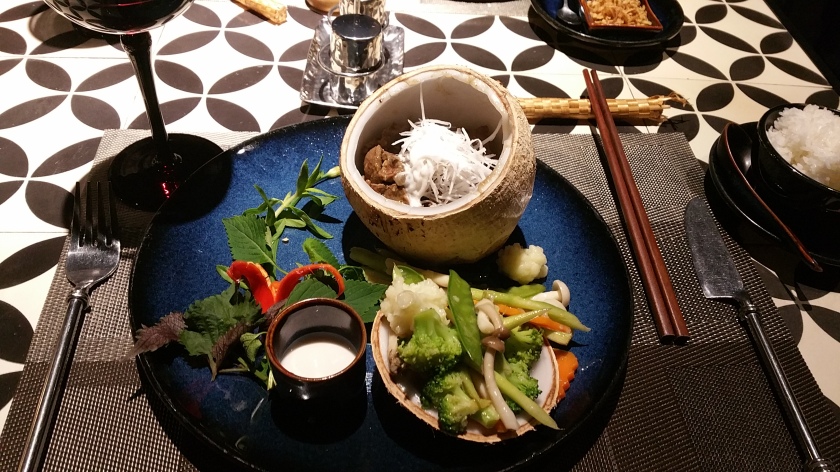
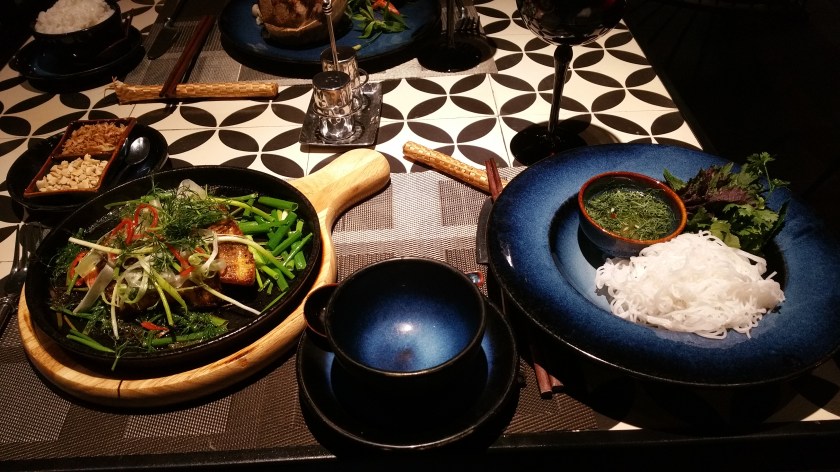
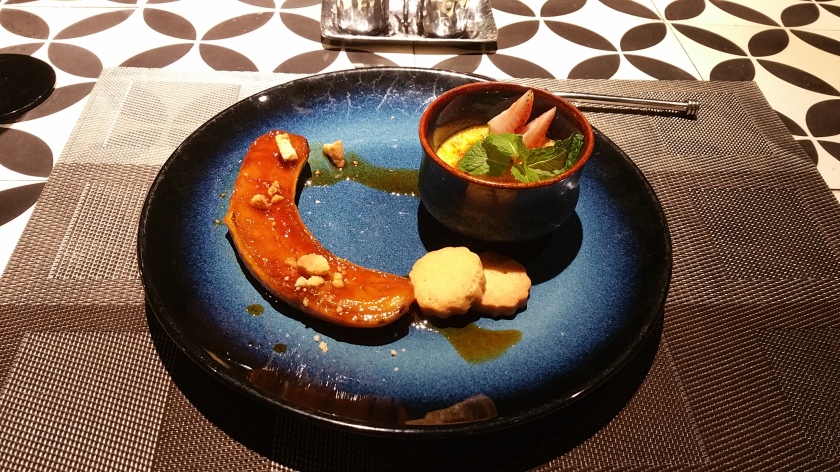
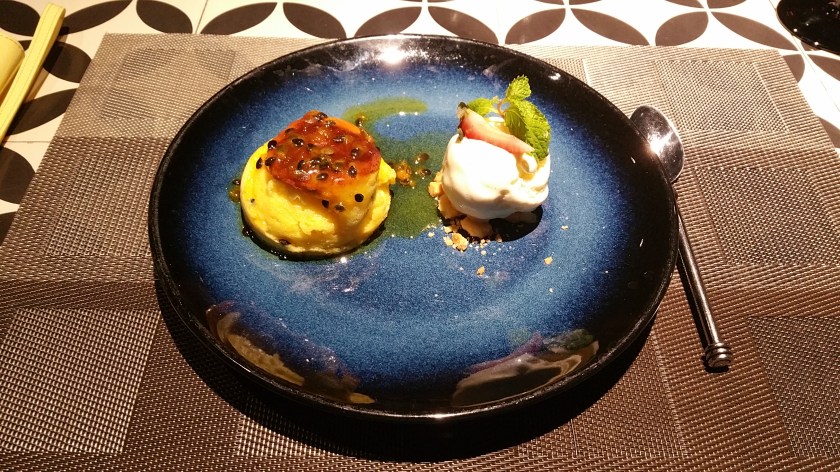
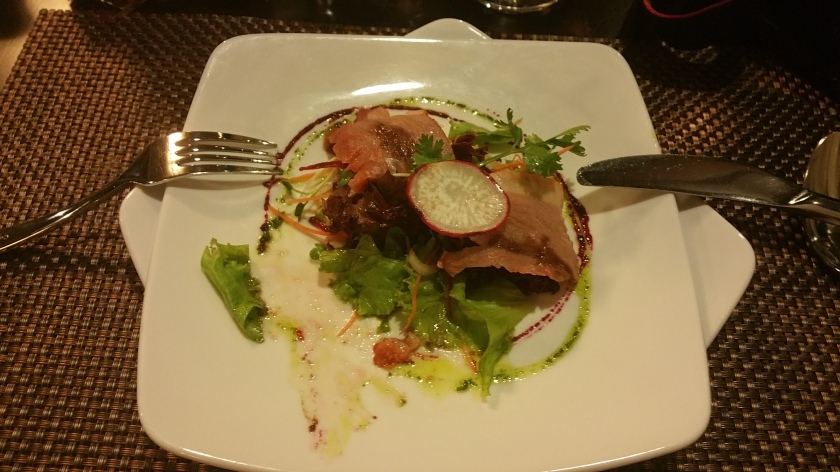
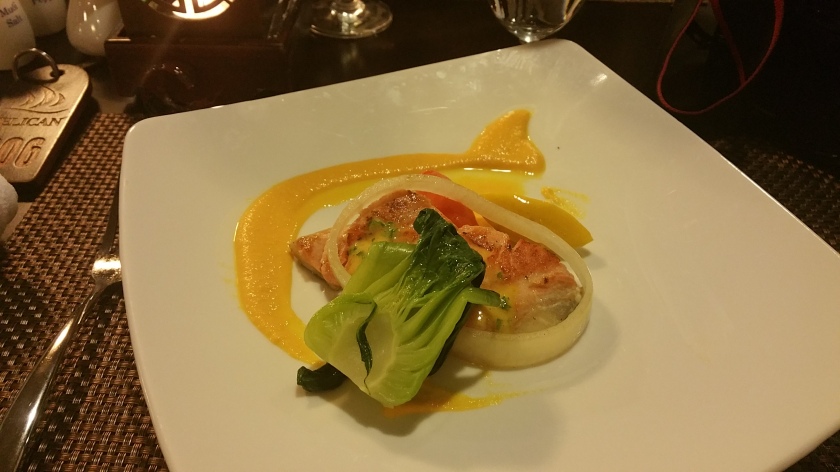
Dinner also was a very pleasant experience, not only with the meal being great (it included a pomelo, prawn and squid salad, beef stewed in coconut milk and served right in a coconut shell, baked Hanoi fish, passion fruit cake and creme brulee with flambéed banana), but also the service being excellent and friendly.

20170613_193254

20170613_194547

20170613_194607

20170613_203929

20170613_203944

Service in Vietnam is generally excellent – only once we sat down to have coffee in some fancy café in Hanoi, and were completely ignored by the waiters so had to indignantly leave without ordering, but that is more likely an exception, and besides all TripAdvisor reviews about this place mention the awful service. As for all other places – whether hotels, spas, restaurants or means of transport – everyone is very friendly, knows their work well and many are very eager to do more than they should. Perhaps this is somehow related to the fact that the country has a very developed tipping culture: the salaries of staff are usually very low making them really count on tips from customers.

Posted in Asia, English, Halong, Hanoi, Vietnam

Vietnam – Day 8

РУССКОЯЗЫЧНАЯ ВЕРСИЯ ПО ЭТОЙ ССЫЛКЕ. CLICK HERE FOR RUSSIAN VERSION.

12 June 2017

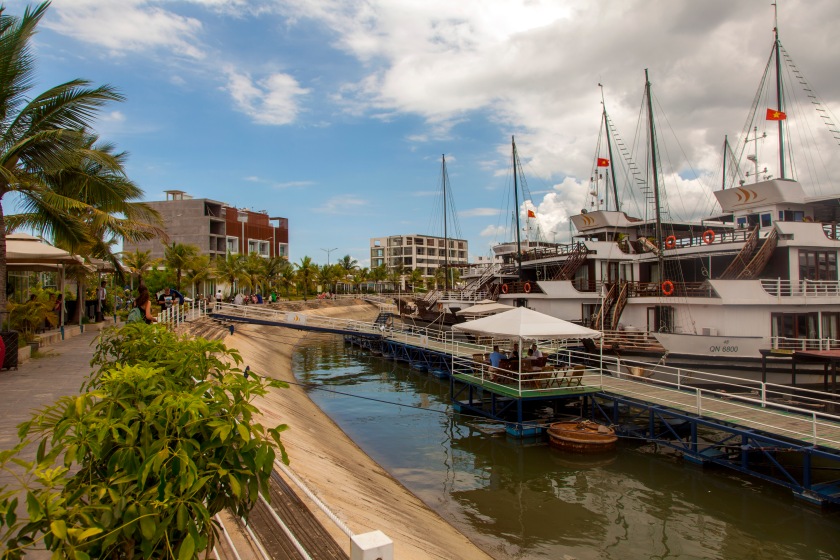
Yesterday’s excursion was the last one with a guide, but the Vietnam tour continues. At 7.30am we were picked up from our hotel by a minibus – and off we drove to Halong, where we were supposed to take a cruise around the bay

The drive from Hanoi to Halong took about four hours, including a stop halfway. There wasn’t anything remarkable on the way, and there were seven of us in the minibus: a Vietnamese lady, a company of three Colombians and one Peruvian, and us, obviously. Finally we arrived on the Tuan Chau island, looking like a proper resort, with an aquapark – and merged into a large crowd of people awaiting the ship. At first we were unpleasantly surprised, as we’d been told that the cruise was designed for a rather small number people (44 guests max), but then it turned out that all these people were actually waiting for three different ships.

IMG_2916

As a result, we boarded ours with our fellow minibus riders and a few more couples, families and companies. As a welcome, we were offered some juice, instructed on safety and itinerary, placed in cabins and served lunch.

IMG_2918

IMG_2921

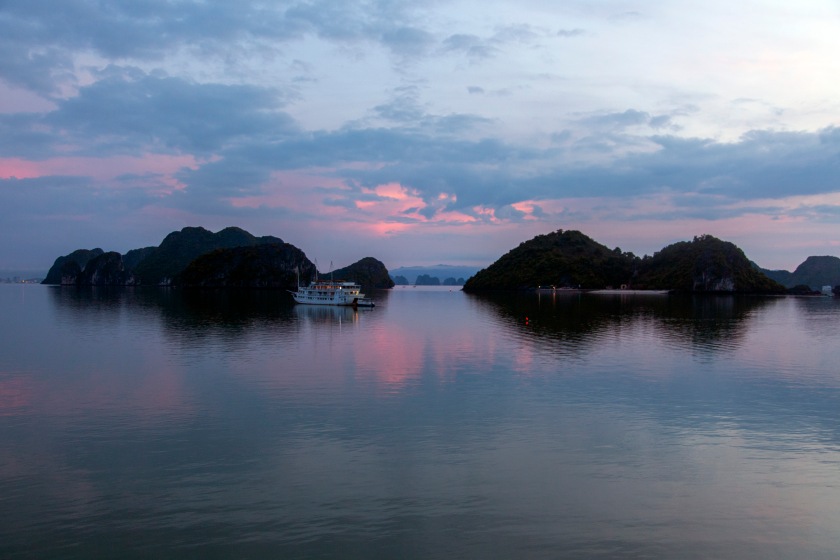
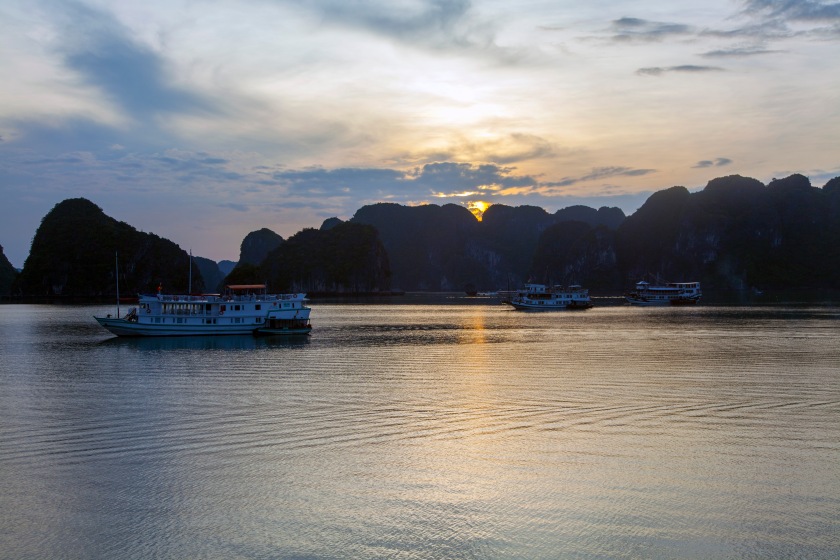
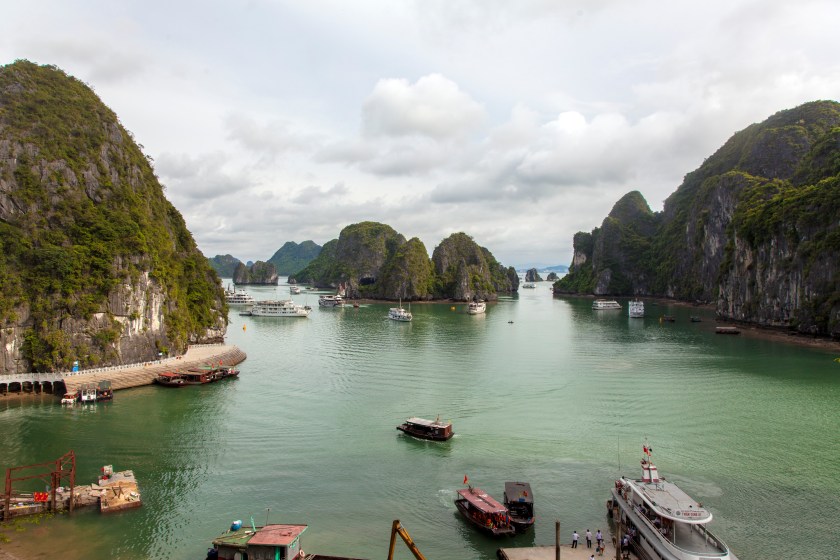
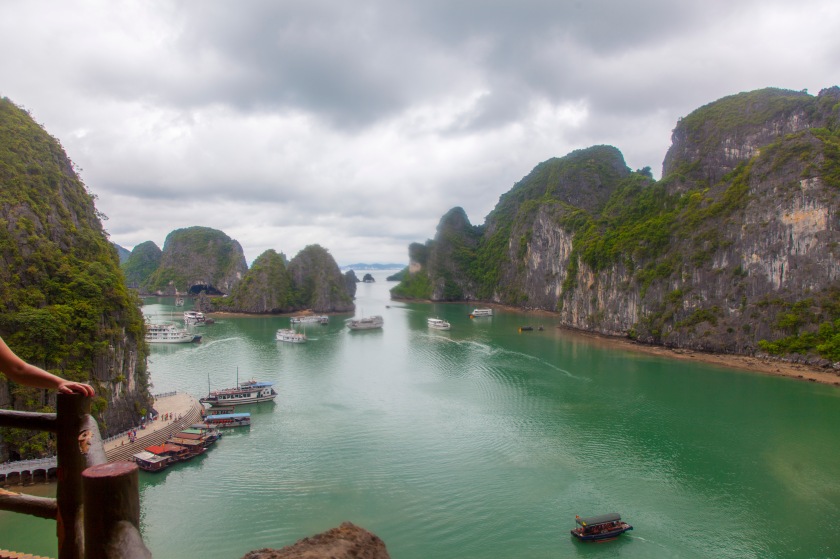
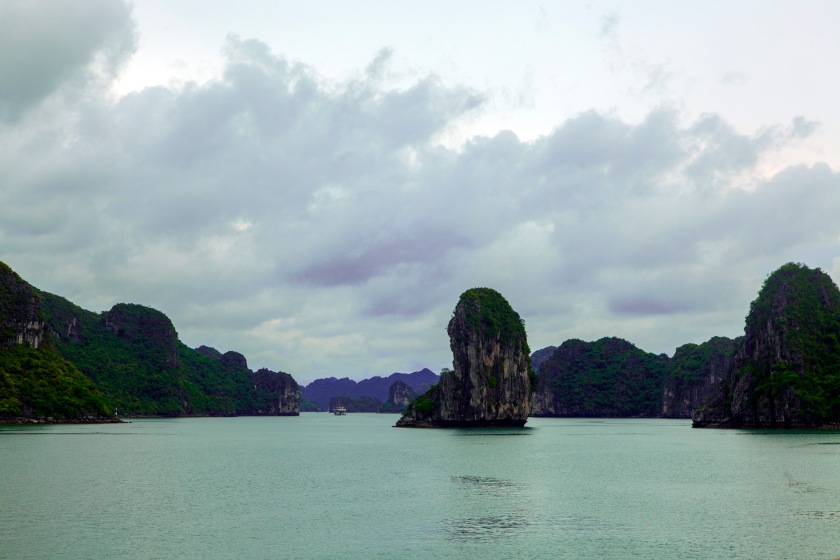
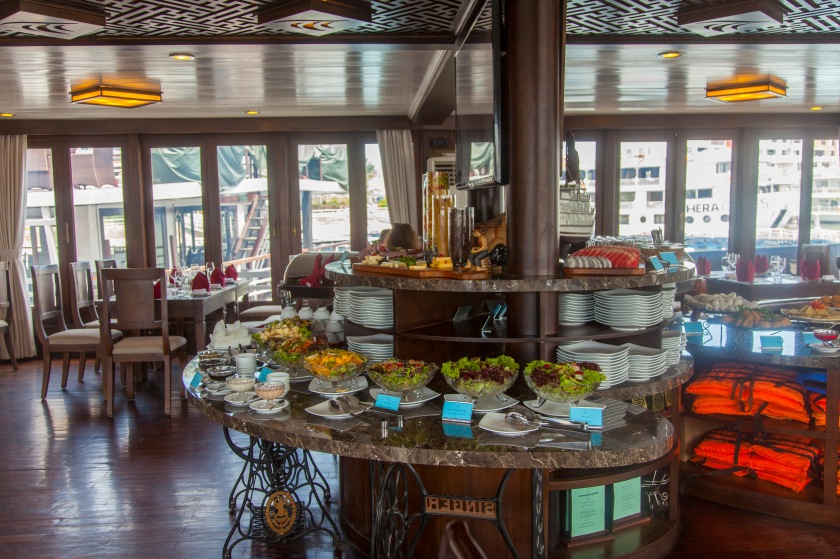
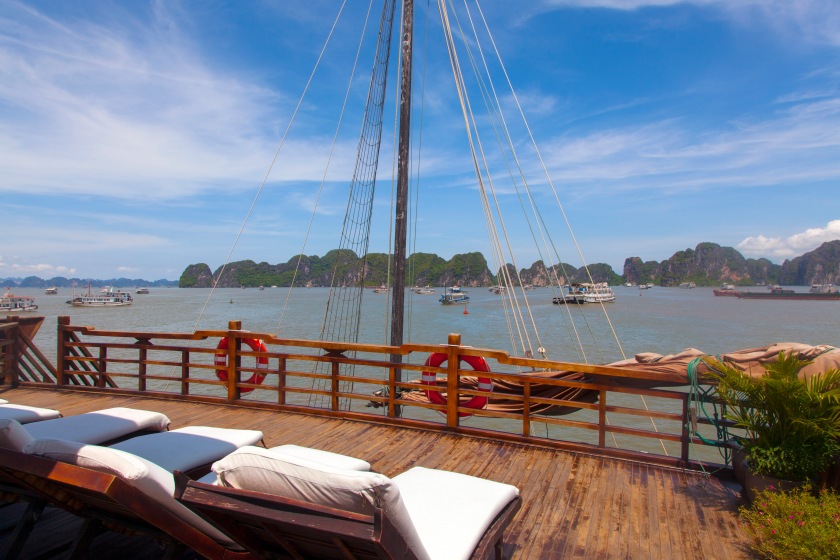
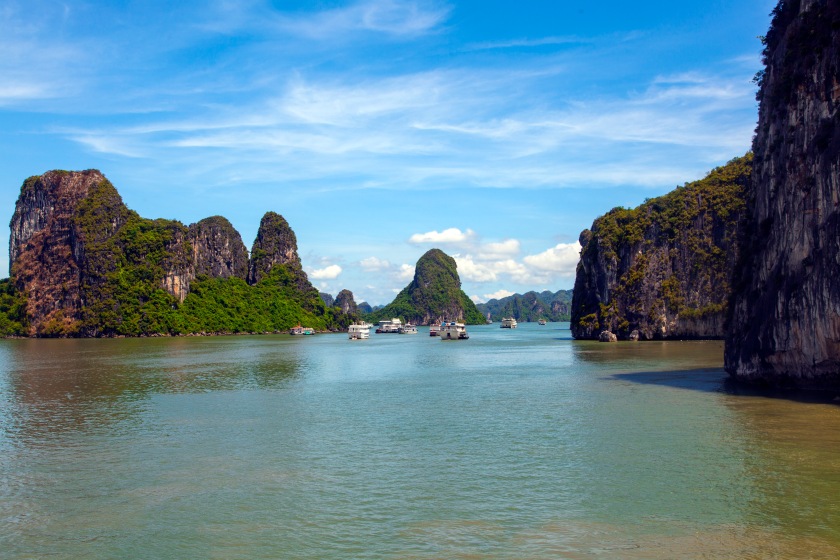
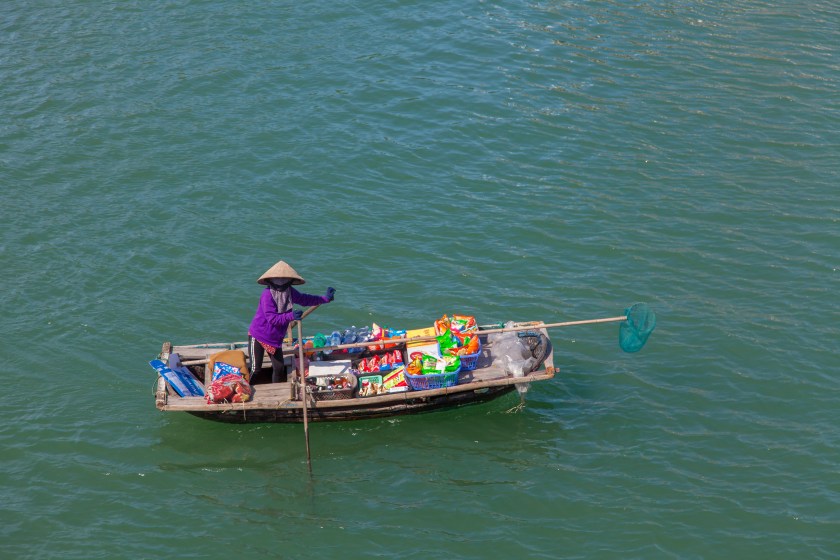
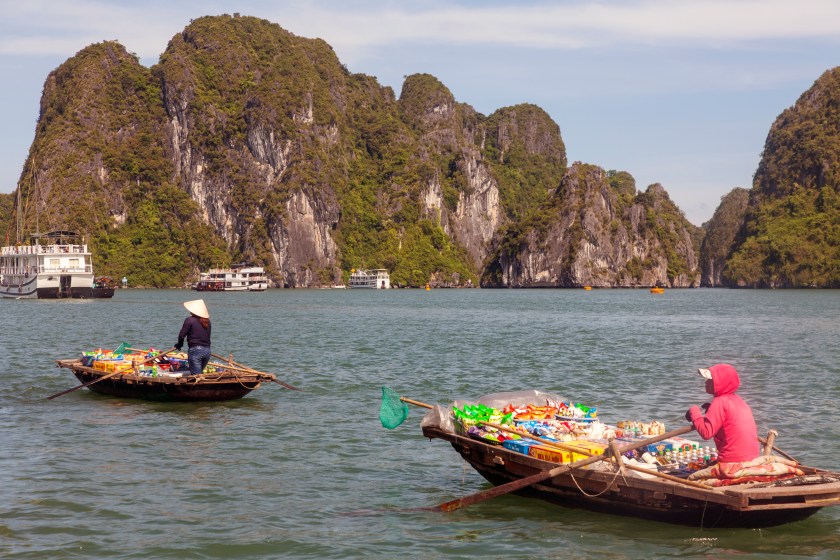
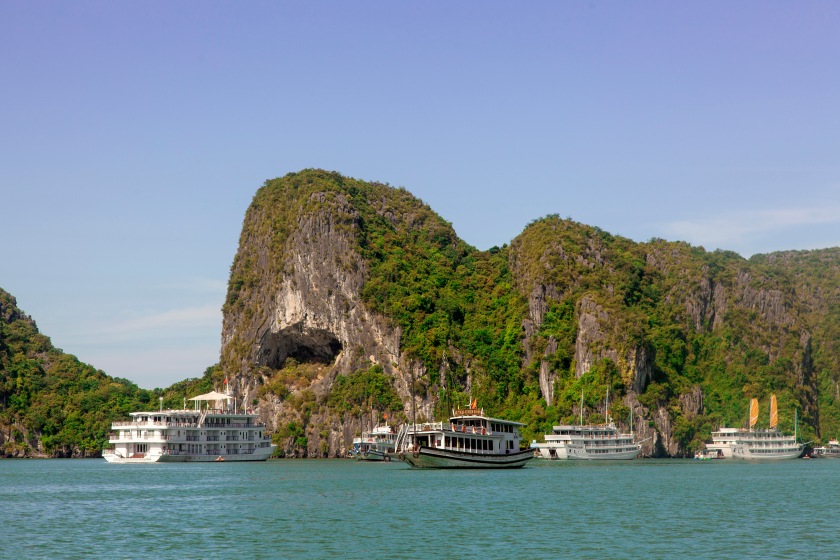
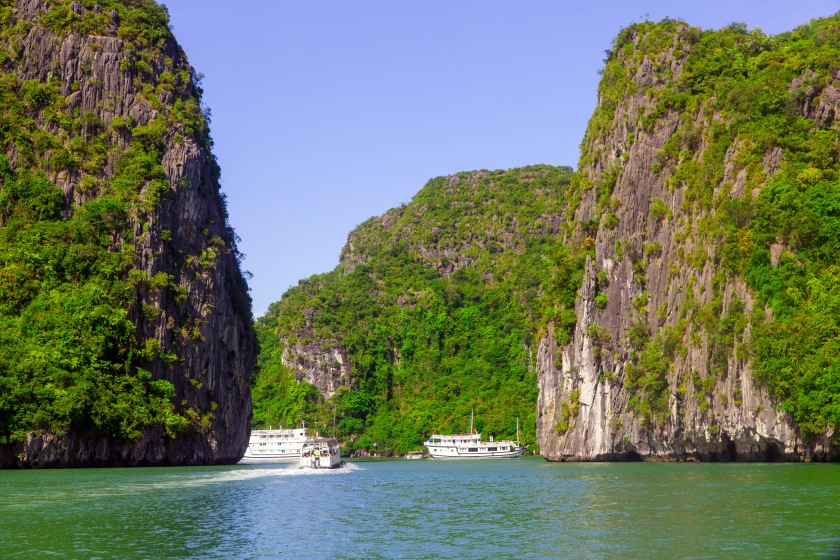
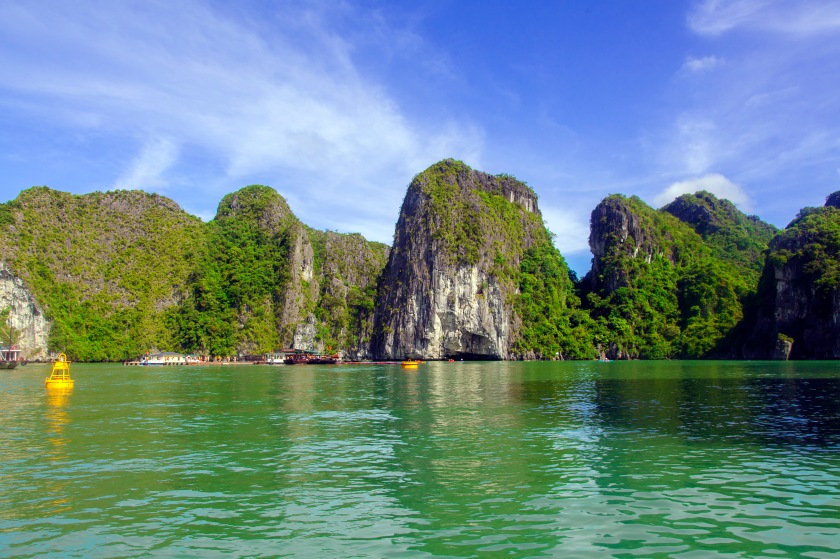
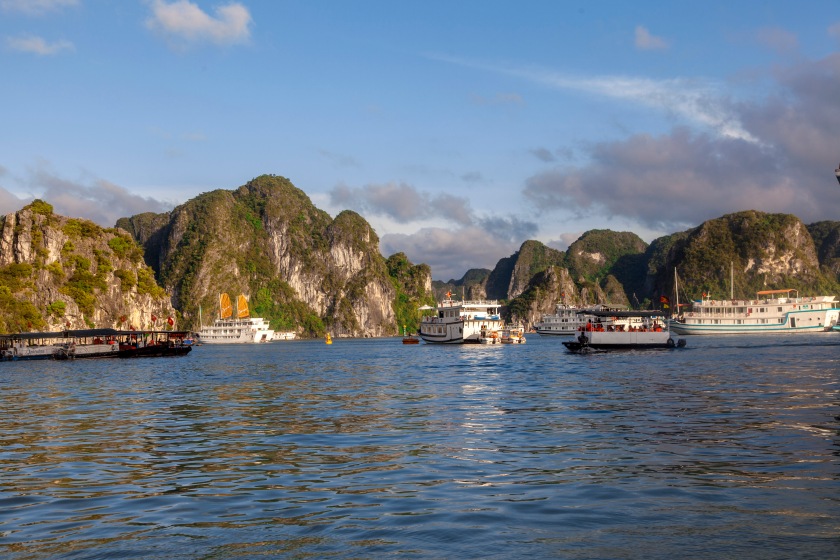
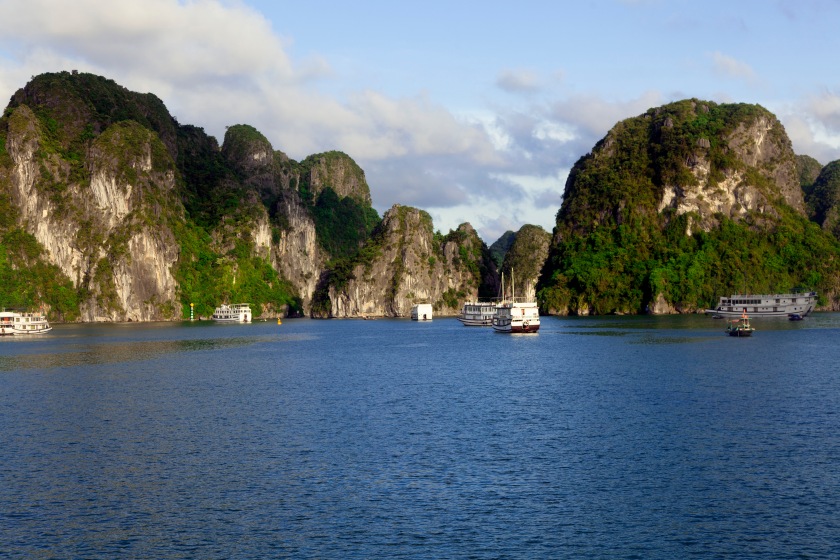
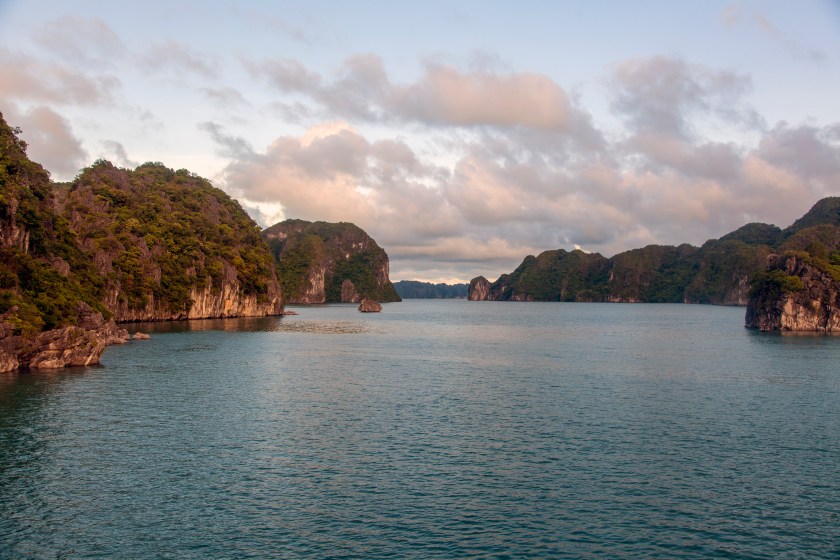
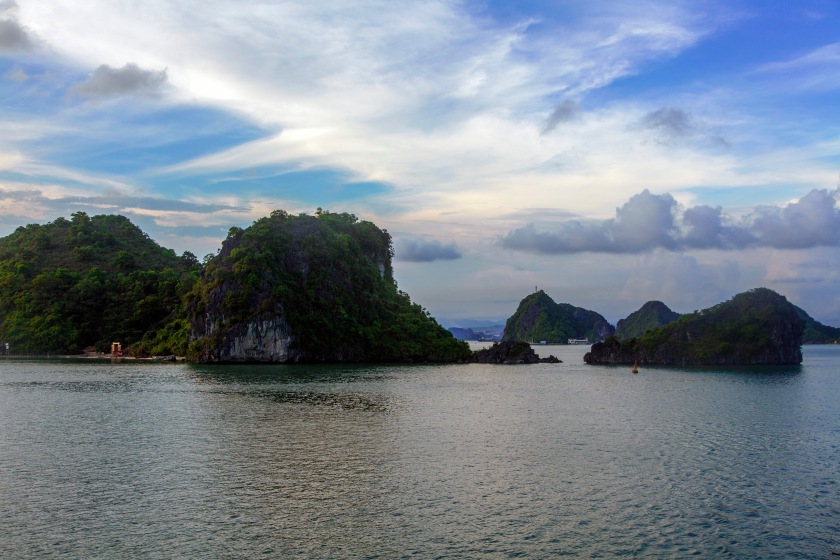
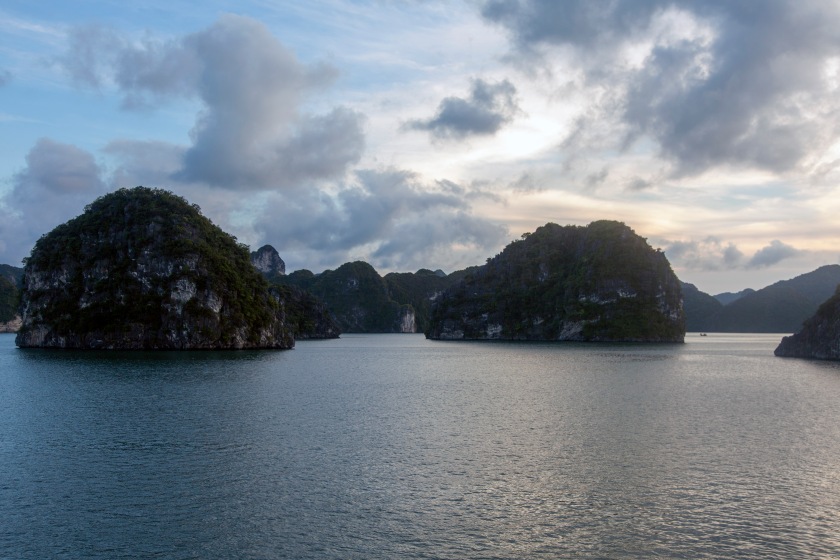
Halong Bay is probably one of the most beautiful places I’ve ever seen, if not the most. We are surrounded by lots of limestone cliffs and islands covered with greenery, jade-green sea, cruise ships and small fishing and trading boats.

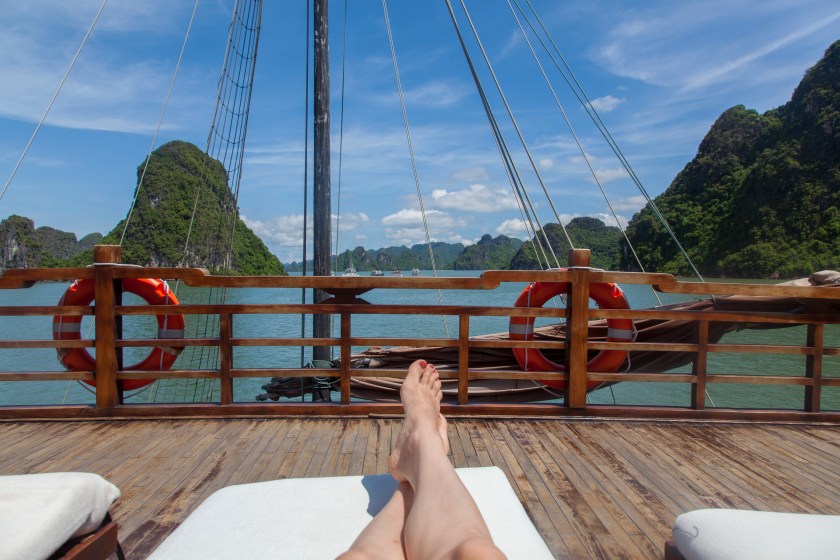
After all the excursion rush on previous days it felt so blissful to just lie in a chaise longue under the sun on the upper deck.

IMG_2924

IMG_2933

IMG_2930

IMG_2955

IMG_2959

IMG_2964

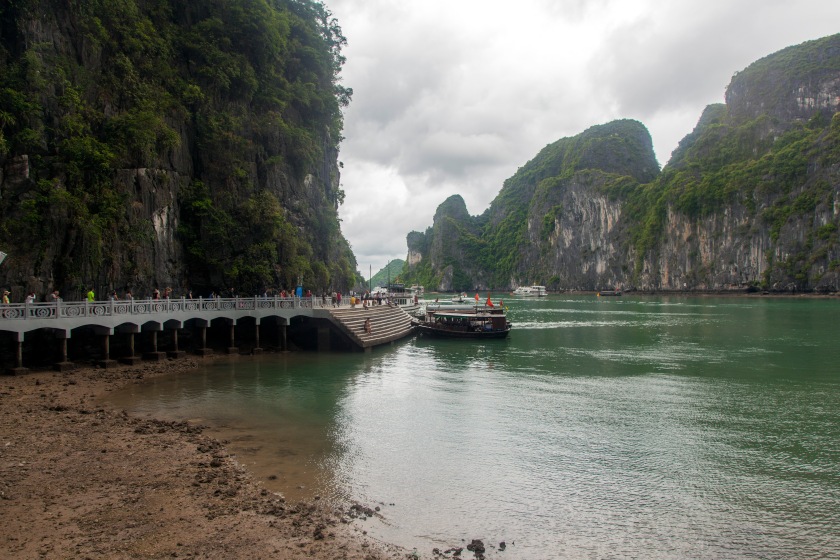
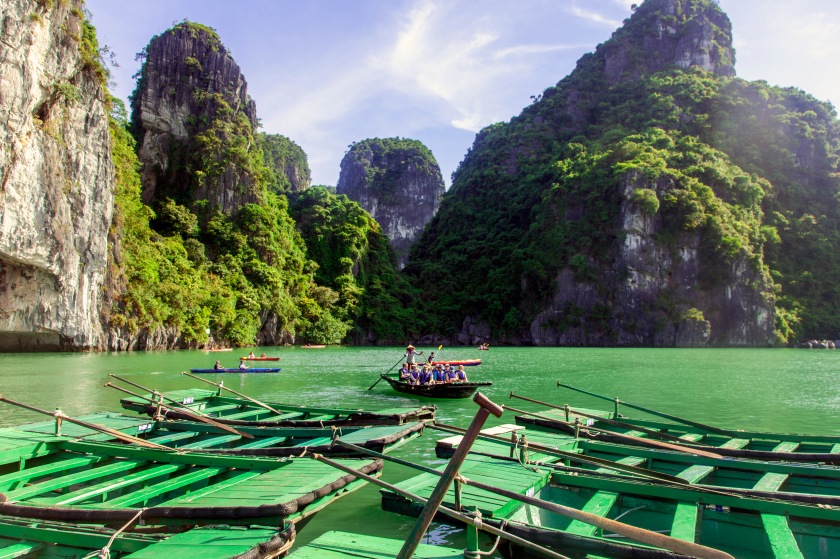
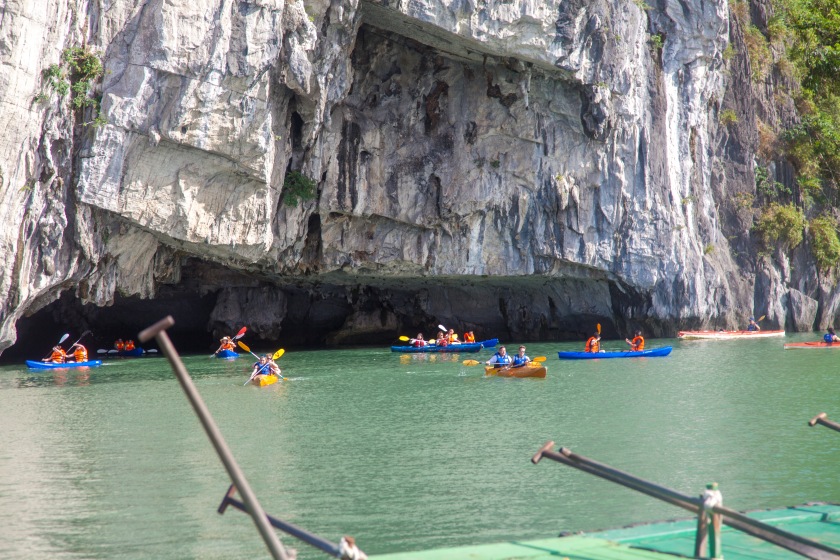
But in any case, we didn’t get to lie for long – in about an hour, everyone was offered to get on one of the two small motor boats that were traveling behind our ship in tow. We were first taken to some sort of cove, fenced off by rocks from the rest of the bay, with an entrance through a small grotto. There were actually two options to get into the cove through the grotto: either on a bamboo boat with a group of people and a local boatman, or in a kayak, paddling yourself.

IMG_2966

IMG_2968

IMG_2969

At first, although the idea of ​​kayaking seemed pretty tempting, we were somehow feeling scared – neither of us had ever tried before – and were more inclined toward the bamboo boat. But once on the spot, when we heard that the staff were happy to watch our cameras, we changed our minds.

First, when we just were seated in a kayak, given a paddle each and pushed away from the pier, we felt a bit lost and couldn’t figure out how to paddle, clumsily navigated our way into the grotto, crashed into another kayak, hit the wall, hit a stalactite – and then we finally figured things out and learned to properly paddle, turn and navigate the boat. It felt great, especially that we learned a new skill, even though paddling was pretty difficult – too bad we were only given 25 minutes. By the way, on the rock above the grotto we found an inscription saying “Lesozavodsk 1962”, I wonder how and why it even got there!

IMG_2970

The next stop of the motor boat was the Ti Top Island with a beach. But apart from the beach, there was also an observation deck, right at the top. Of course, I totally had to go there, and that is when I realised that all the time I’d spent on the StairMaster machine in the gym had not been wasted: I managed the 400-something stairs leading to the deck surprisingly easily, while many others struggled and had to settle for an intermediate viewing platform halfway.

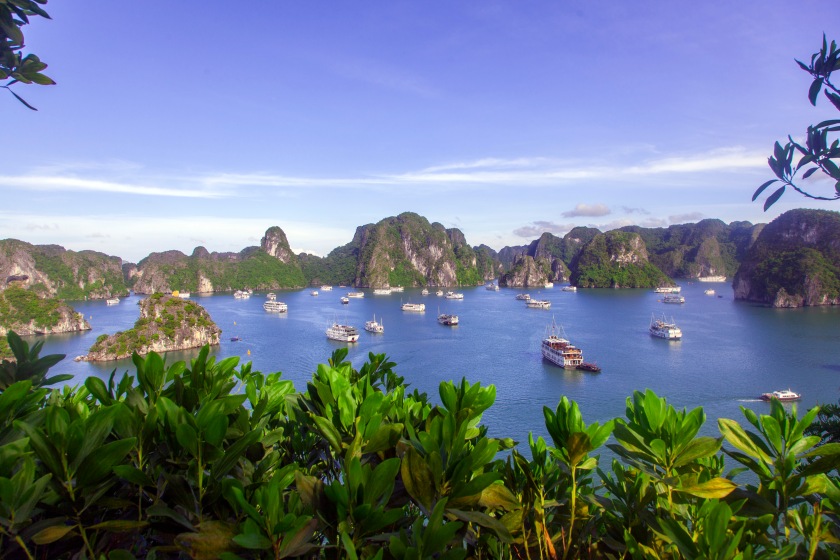
Even though, having made it to the top in this humid stuffiness, I was absolutely drenched in sweat, but the full view of the bay which I got to see, was more than worth it. Such incredible beauty, it’s not for nothing that Halong Bay is named one of the seven wonders of nature!

IMG_2978

IMG_2979

IMG_2981

The descent on the way back, seemed harder and scarier, I must say, but the refreshing sea down below seemed like a reward!

20170612_170117

IMG_2987

Kudos to the cruise organisers, who provided for everything: we were given beach towels; then as we stepped off the motor boat back onto our ship we had our feet washed with a hose; the dirty towels were then spread on the floor to make sure we didn’t slip or wet the floor.

After that, they announced the happy hour and gave us some time to relax on the upper deck with a nice tropical cocktail.

IMG_2989

IMG_2991

IMG_2993

IMG_2994

IMG_2998

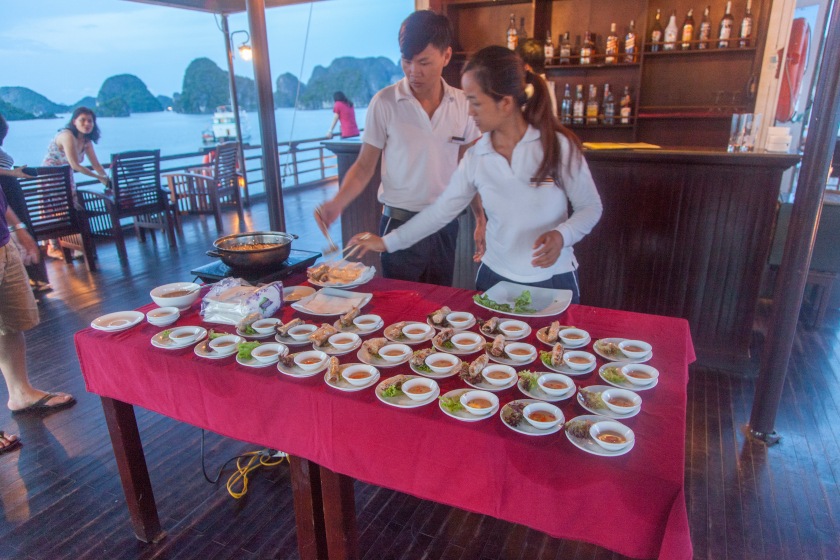
But we didn’t have time to get bored, since a master class on making fried spring rolls started very soon. It didn’t require too much effort from our side actualy: all we had to do was to wrap the prepared stuffing, consisting of rice vermicelli, white and spring onions, minced pork, two kinds of mushrooms, carrots, raw eggs and spices, into rice paper. The rolls were then deep-fried in soybean oil for us, and we tried them, dipping them into fish sauce (that stinky one).

IMG_3004

That wasn’t our only meal for the evening, and dinner was served pretty soon. After the dinner, there was see some French film about Indochina and squid fishing planned – but we weren’t too keen on the former and completely forgot about the latter, going to bed at 9pm instead, because we have major plans for tomorrow: wake up at least at 6am for a taichi class, and preferably even earlier, to catch the sunrise.

20170612_192515

20170612_194027

Posted in Asia, English, Hanoi, Vietnam

Vietnam – Day 7

РУССКОЯЗЫЧНАЯ ВЕРСИЯ ПО ЭТОЙ ССЫЛКЕ. CLICK HERE FOR RUSSIAN VERSION.

11 June 2017

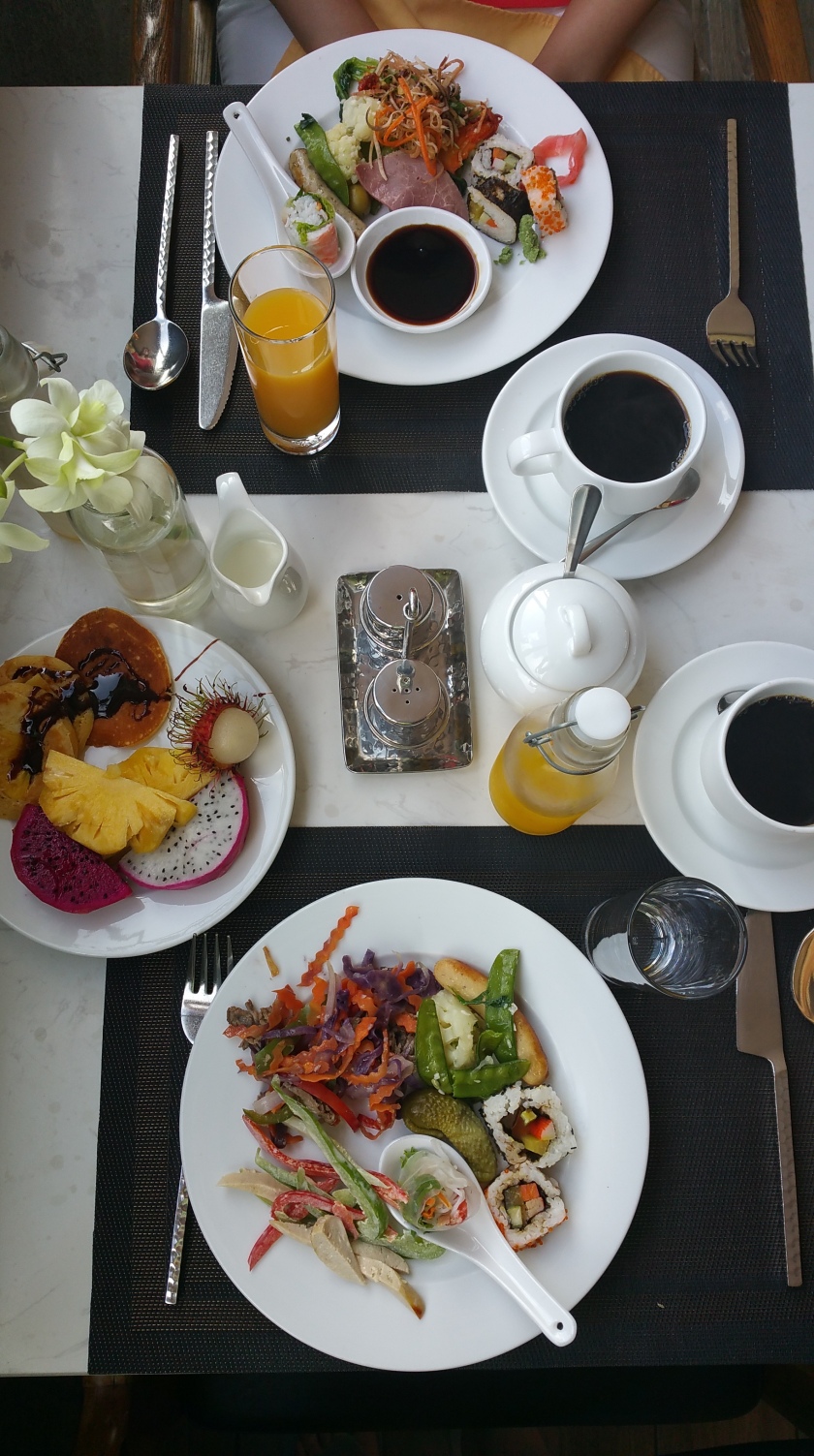
Once again we’ve had a very intense day, and our legs are almost falling off. As usual, the morning started with a breakfast, a very varied and tasty one, like we’re already used to. At 9am, Sunny was waiting for us at the hotel reception for a tour of Hanoi.
20170611_074704

We were offered two museums to choose from: the History Museum or the Ethnology Museum, and we chose the latter, which turned out to be an excellent choice. What was especially good was that Sunny went with us and made very interesting comments about most of the exhibits.

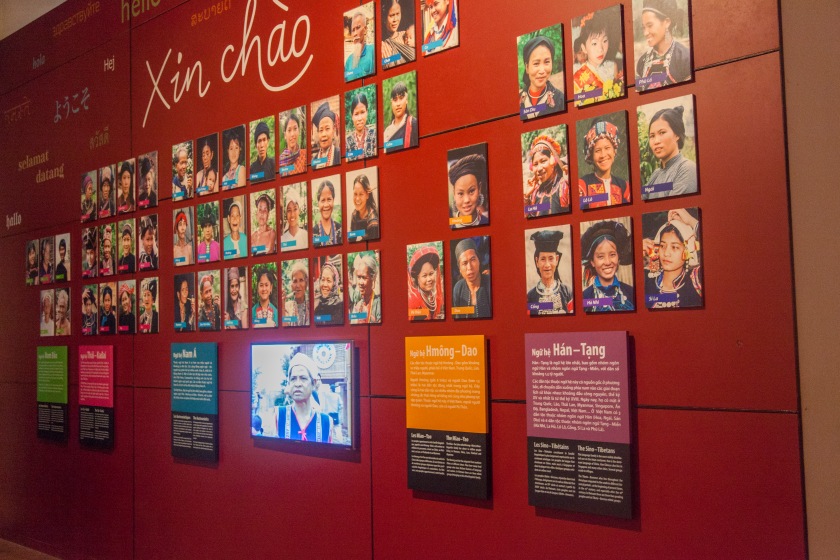
The museum is dedicated to the culture and lifestyle of 54 different nationalities officially recognised in Vietnam, 86% of which are viets.
IMG_2785

Hmongs, for example, still have the custom of kidnapping brides. The kidnapped girl is brought to the house of the potential bridegroom, where she is locked in a room for three days, after which she is unlocked and free to leave. If she does, the rejected groom either switches to another “victim”, or kidnaps her again, but without the chance to leave this time. But in this case, she can demand a huge ransom for herself, whether it’s 300 or 3000 buffaloes, and if the groom can’t afford to pay that, his family becomes the laughingstock of the whole community.

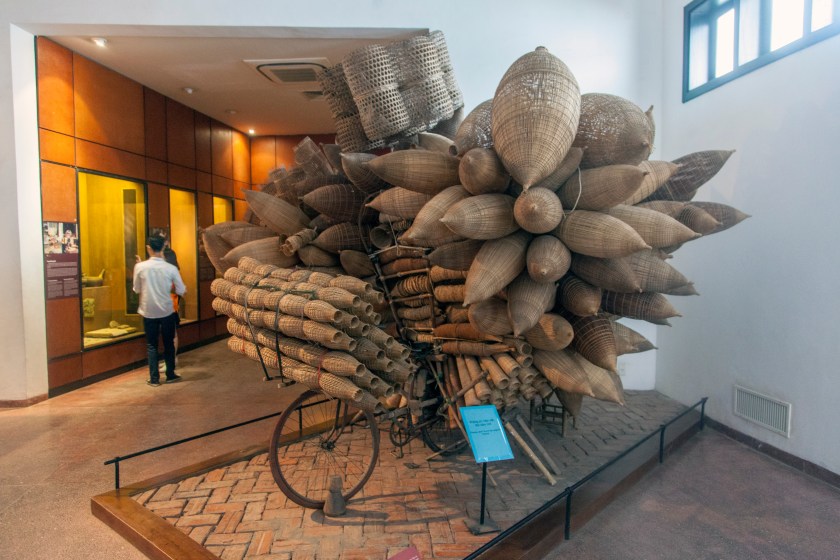
The architect, who designed the museum building, was so impressed by the sight of a peasant on a bicycle loaded with hundreds of fishing baskets, that she bought the whole batch along with the bike itself.
IMG_2787

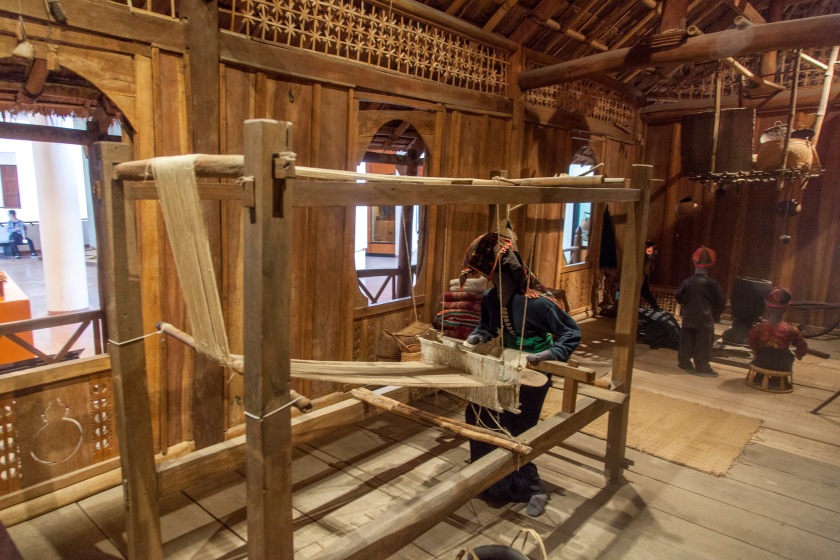
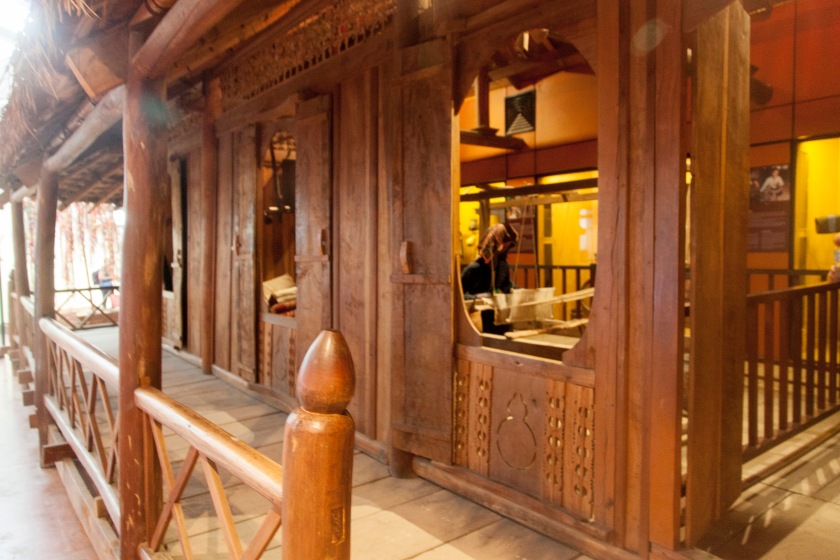
One of Vietnam’s major ethnic minorities are Tai people, akin to the Thai. A woman is very highly regarded and revered much more than a man in the Tai culture – there is even a house decoration, consisting of small bags, hanging on the window, according to the number of girls in the family.
IMG_2793

IMG_2791

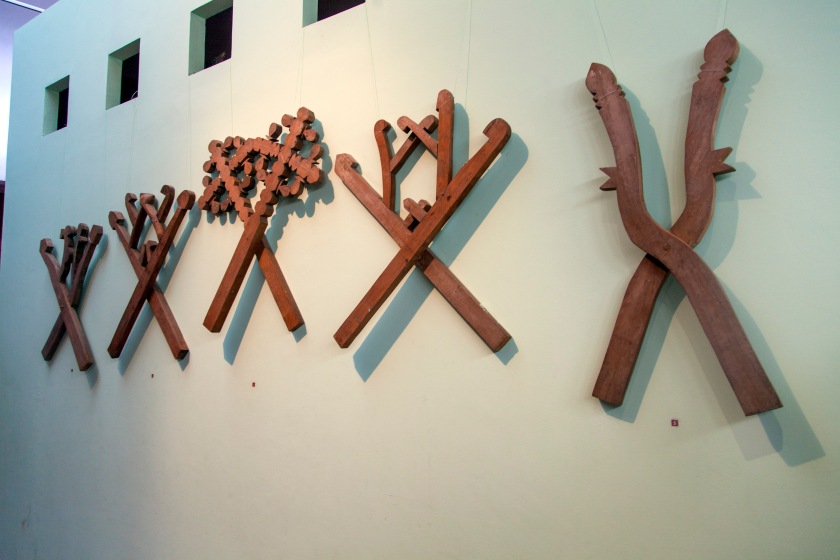
As for the roofs, these are decorated with such crossbred sticks as in the photo. A newly married couple would use the simplest version – the first on the right in the photo. When the wife becomes pregnant with the first child, the decoration changes to one like the first on the left, and then, when the child is born, like the second on the left. The house owners are free to do this themselves. But the remaining two decorations are awarded by the community, depending on this family’s contribution to the community life: the greater it is, the greater the chance to get more “antlered” sticks.
IMG_2795

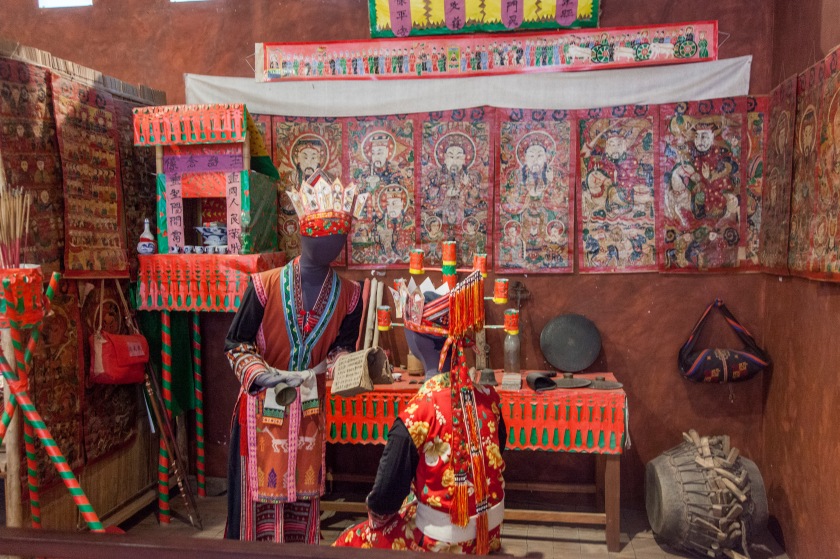
The Yao people’s tradition obliges all boys to complete the male initiation ceremony when they are about 14, after which they are considered full-fledged men, are allowed to participate in community meetings etc. Without this ceremony, even a 50-year-old man has the status of a boy – and the rights of one too! By the way, it’s interesting how community is mentioned in connection with almost every ethnicity here.
IMG_2798

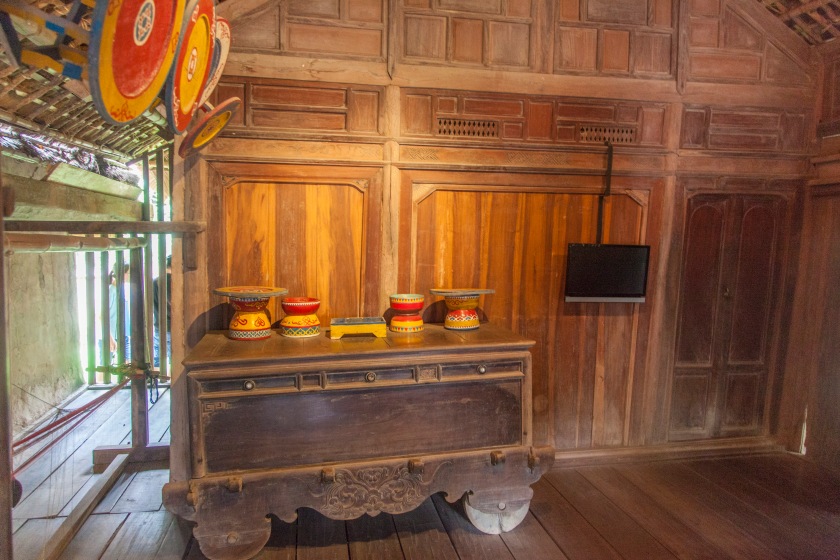
The second part of the museum is open-air, where we get the opportunity to see traditional houses of different nationalities. And, according to Sunny, these houses were brought from the respective regions, and not built specifically for the museum. In the Cham house, we feel a cognitive dissonance evoked by a TV set hanging on the wall, amid a simple and traditional interior. I understand that there is nothing strange about this, but on the other hand, Sunny himself, pointing to a picture of an ethnic minority representative in traditional clothes with an American T-shirt visible underneath them, tells us how surprising he finds it that when asked where they get such clothes, these people respond that they do it online. He also notes all the time that the state and society have done a lot to improve the lives of these isolated peoples, who have a very traditional lifestyle and who don’t always come into close contact with modern civilisation.
IMG_2801

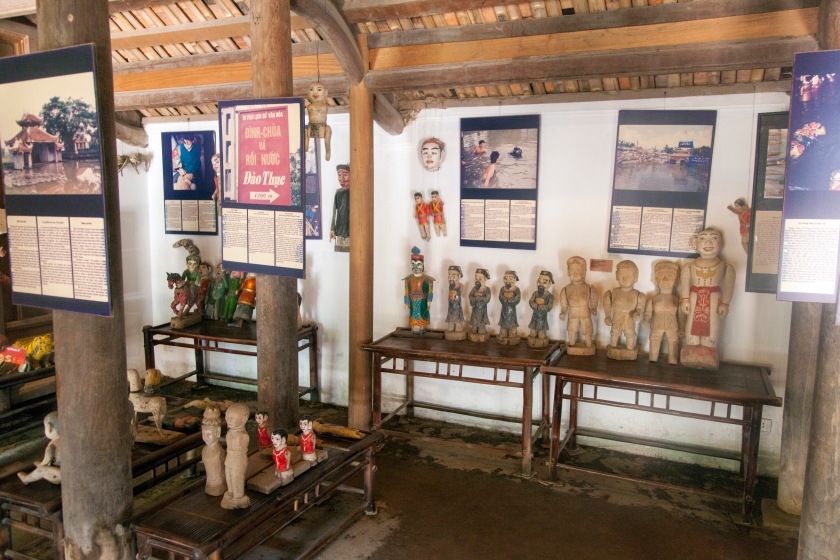
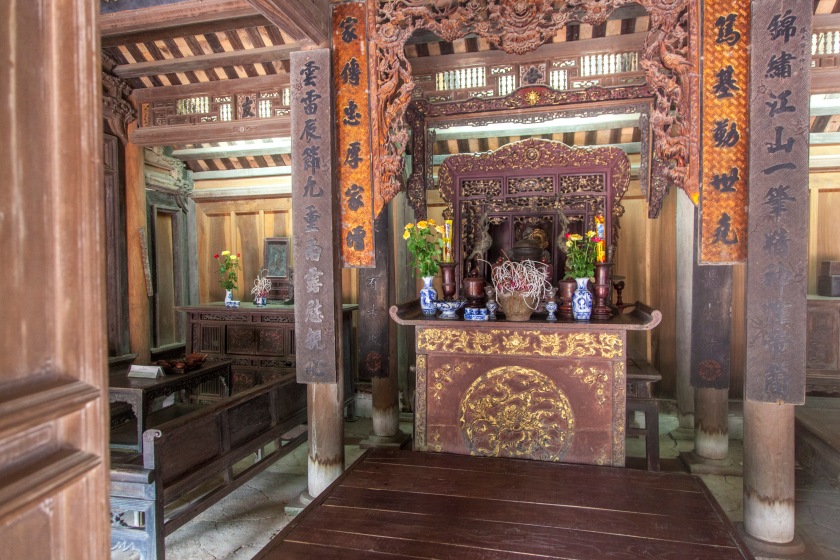
A traditional house of the Viets must have an altar where the ancestors are worshipped. And the daughter-in-law of the family is not allowed to pray there, because she has her own ancestors. In one of the pantries, a collection of dolls made of some kind of light wood, perhaps cork, is collected – these are the dolls for traditional water puppet shows, one of which we were to see in the afternoon.
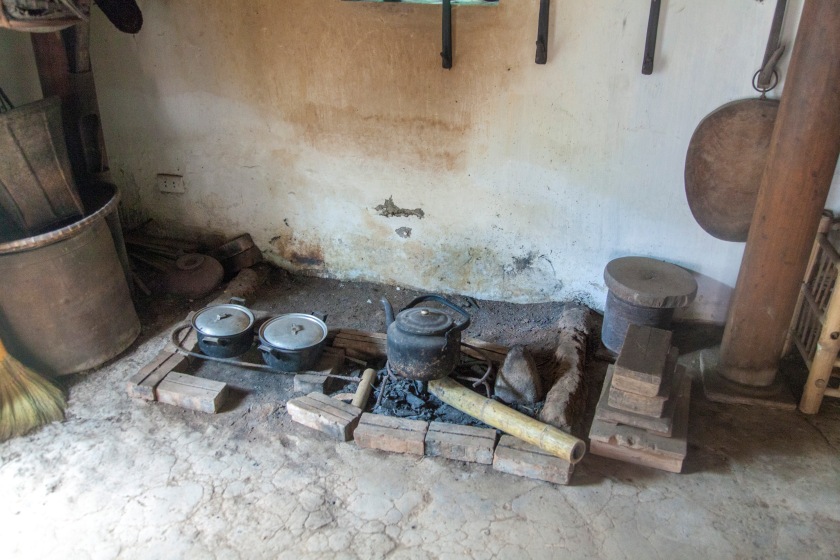
IMG_2804

IMG_2806

IMG_2807

The house belonging to the people of the Bahnar is the highest here, about 20 metres. It’s not a residential house, but a communal one – it should be the highest in a Bahnar village and no one has the right to build higher.

IMG_2808

And the longest house is that of the Ede people. I thought right away that it looked somewhat Indonesian, and almost immediately Sunny explained that the people are akin to the Indonesians. They also put the woman in the first place, which is why the most honourable places in the house, and the wider and more comfortable staircase are for women, and a woman’s breast is sculpted on the latter, so it’s pretty self-explanatory. Actually, the reason why the house is so long is because each daughter is entitled to a separate room, where she lives alone before her marriage, and with her husband thereafter. The sons all share a common room, as after marriage they will move into their wife’s house anyway.
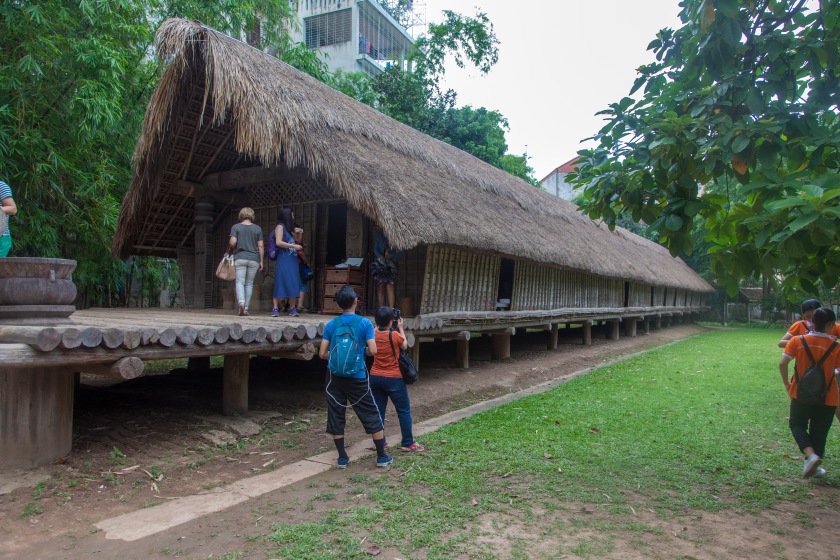
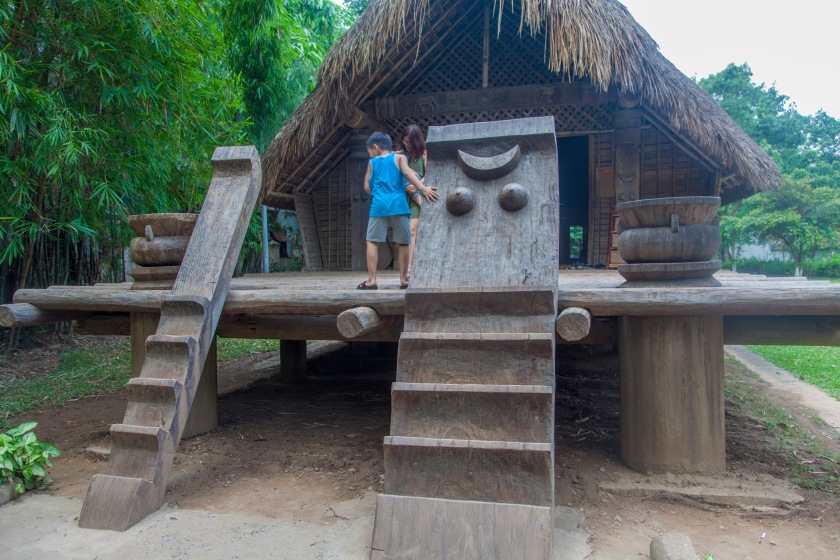
IMG_2809

IMG_2813

There is also a tomb, pertinent to the Giarai people, and it features figurines depicting all stages of a human life, placed around its perimeter.
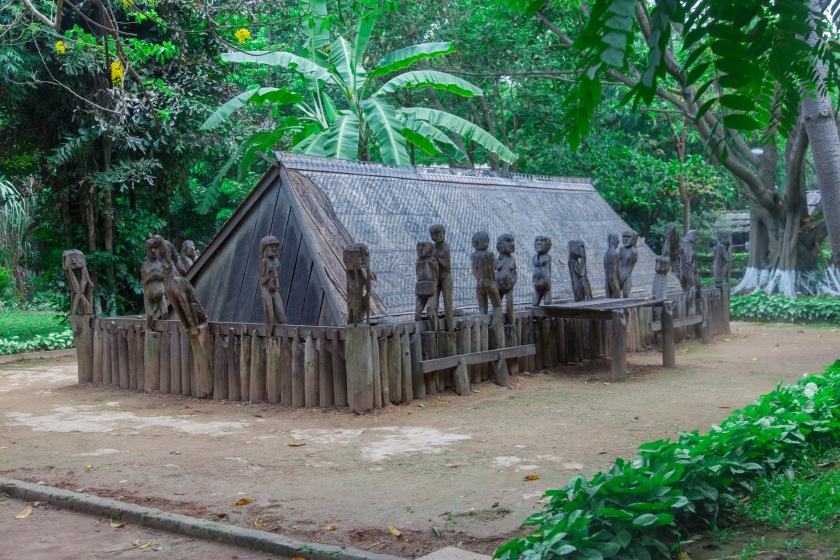
IMG_2814

We spent around two hours in total in the museum, and as I already said, absolutely didn’t regret our choice, as the visit was very interesting and informative. From there we headed to the Temple of Literature, which was founded as early as in the 11th century and which had the first university of Vietnam in its territory.

There is a tiger depicted on one side of the gate and a dragon on the other, and Sunny explained that any place with these two animals present on the gates (the tiger should be descending from above and the dragon is together with a koi carp) is somehow connected to science and education.
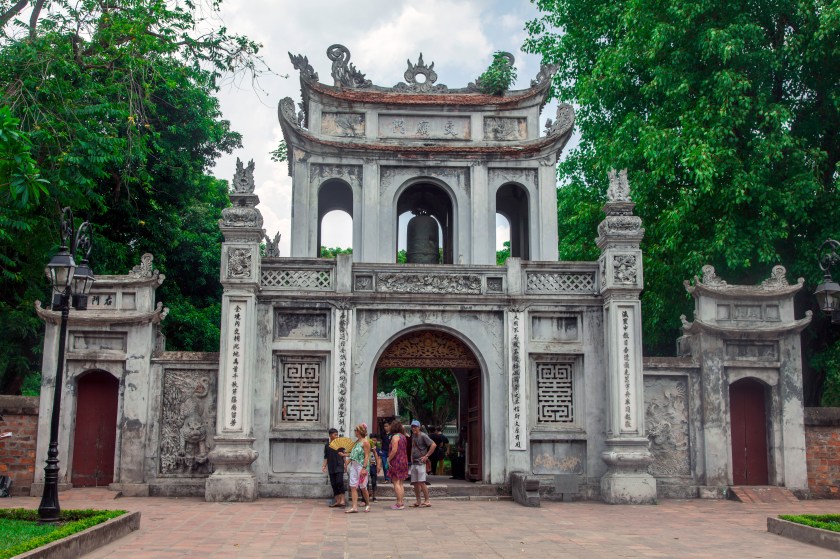
IMG_2817

The temple has been destroyed several times, including during the Indochina War, so almost everything that we see here was reconstructed. As for the residential premises for students, for example, these don’t even exist any longer. Only one of the original buildings remains, and it’s also depicted on a 100,000-dong bill.
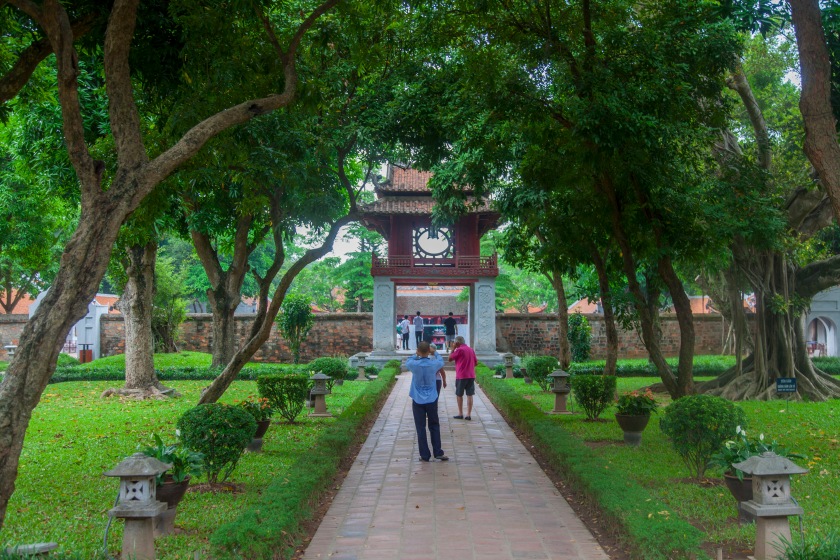
IMG_2819

The best students used to get selected for prestigious government jobs, with their names immortalised on special stone steles. For that the students had to pass difficult exams, some of which took years to prepare for, and the examinations were conducted in several stages, the last one being assessed by the emperor himself.
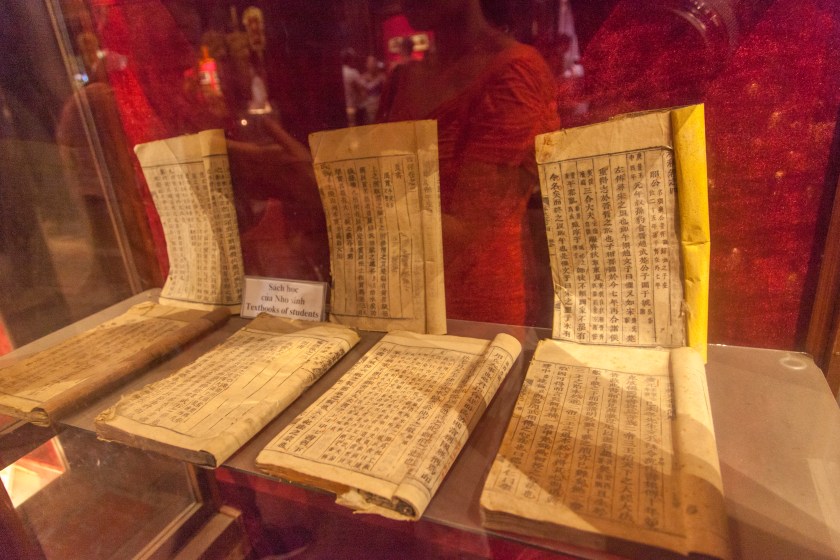
IMG_2832

The temple is dedicated to Confucius, hence his statue here. But apart from him there are others, for example, on the upper floor there are statues of the monarchs who contributed the most to the development of the imperial academy.
Sunny explained the difference between a temple and ta pagoda, but I still can’t say that it’s crystal clear to me. It seems like a pagoda is an exclusively Buddhist place for worshipping only, whereas a temple can also be Confucian, like this one, or for worshiping real people or even one’s own ancestors, and can be used not only for worship, but also for meditation or even community gatherings.
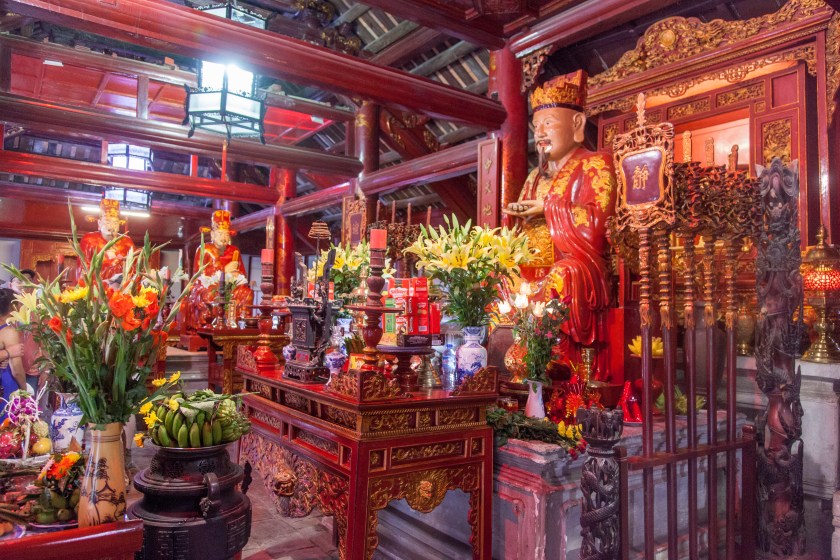
IMG_2824

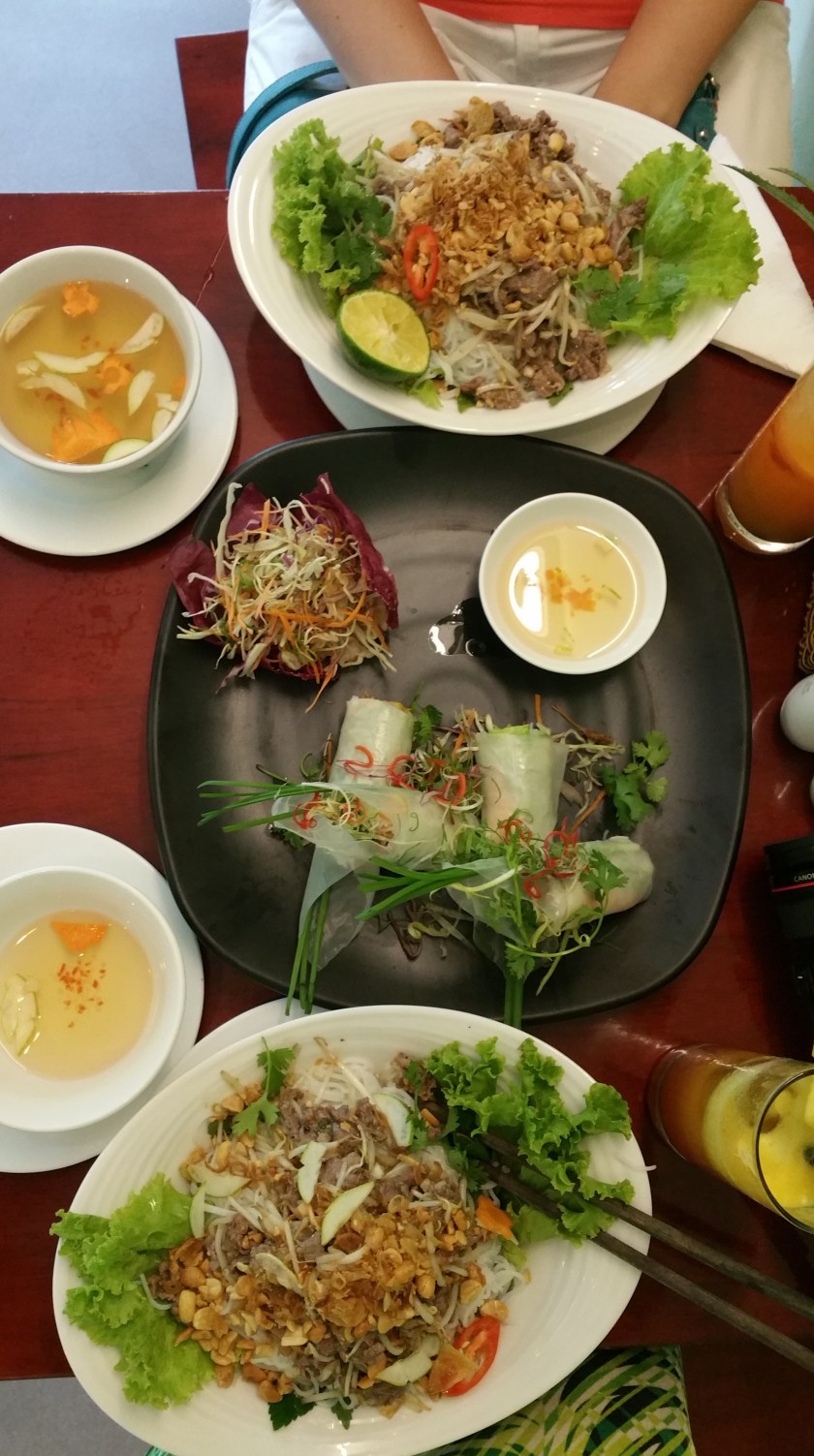
After a lunch break, which consisted of the freshest spring rolls with prawns and pineapple and delicious beef noodles, we moved to the French Quarter. Here, of course, you mostly see colonial buildings rather than the narrow houses attached to one another, as in other places.
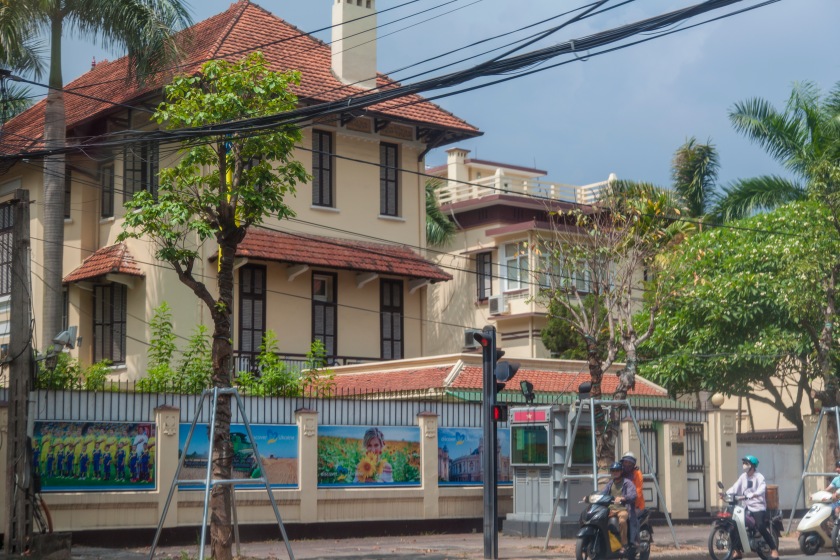
20170611_131127

IMG_2837

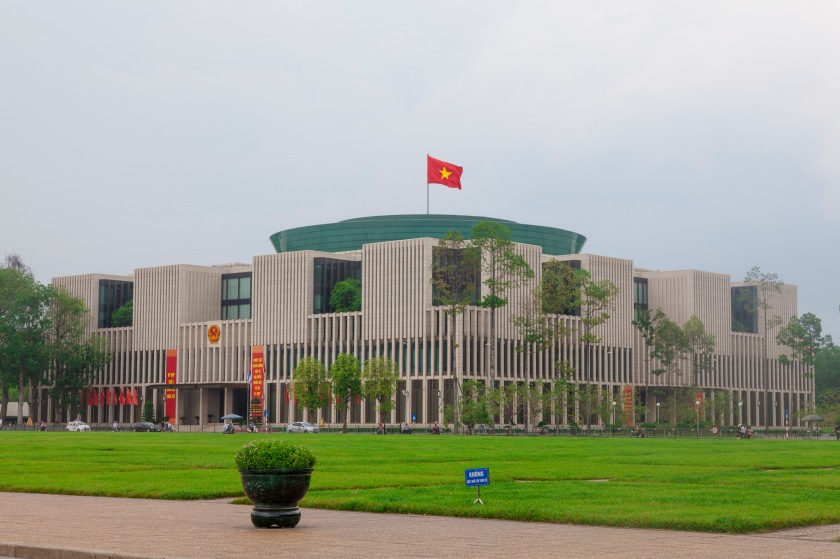
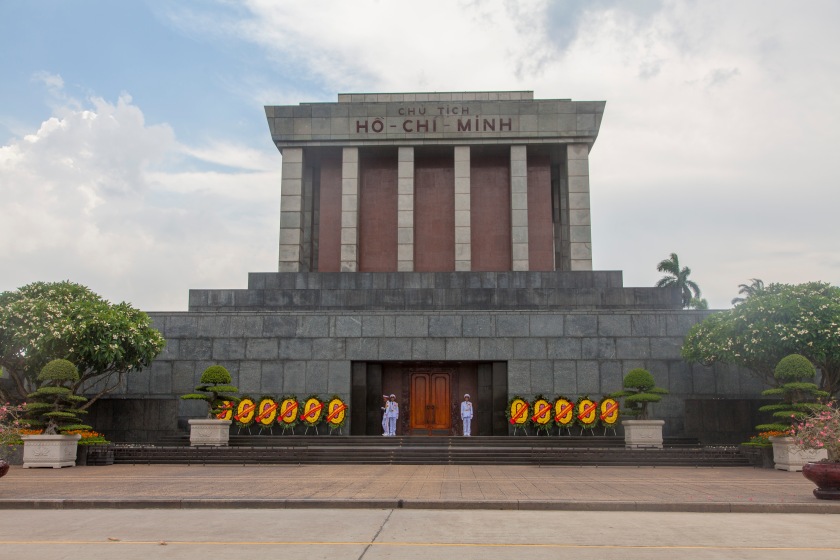
We were brought here to see the house where Ho Chi Minh lived, and walking across a fenced square with a flag, we see his mausoleum. The mausoleum is open for visits in the mornings several days a week, and we were offered to come here this morning, but we would have had to queue for a couple of hours, as it is Sunday, so we refused. Sunny told us that in Vietnam, especially in the south, there is a very ambiguous attitude towards Ho Chi Minh, but he personally respects him and believes that he has done a lot for the people.
IMG_2844

IMG_2846

Next, we went to the botanical garden nearby, where the house museum is located, but first we saw a luxurious presidential palace in colonial style, which was built by the French, with tax money. Later, the palace was painted in a much brighter tone of yellow than what would have been appropriate for a French colonial building: the palace was to be seen among all this rich vegetation, and besides, the yellow colour symbolizes the power and the emperor in Vietnam, just like in China.
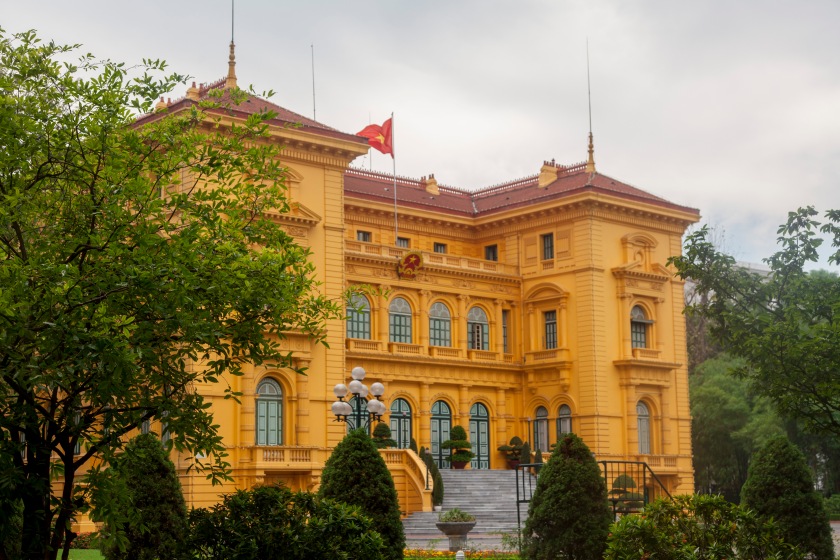
IMG_2855

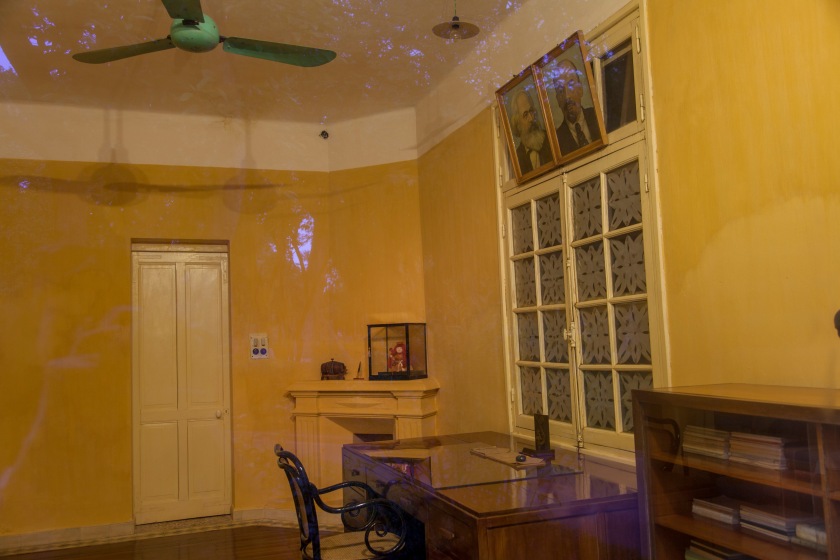
Nowadays this palace is used very rarely and for very special occasions, yet during Ho Chi Minh’s times it was used quite extensively. However, Ho Chi Minh refused to live there, choosing a more modest one-story yellow house right next to it instead. Through its windows we could see his dining room, study and bedroom, all with very modest decor.
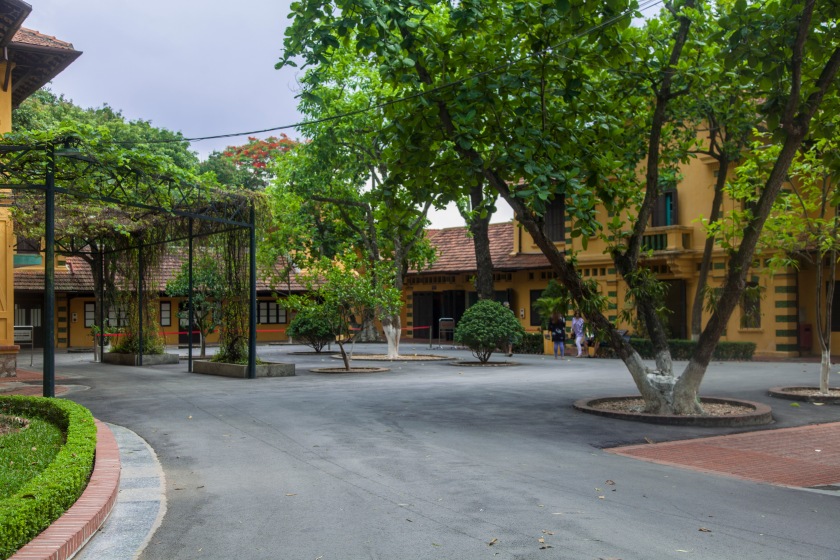
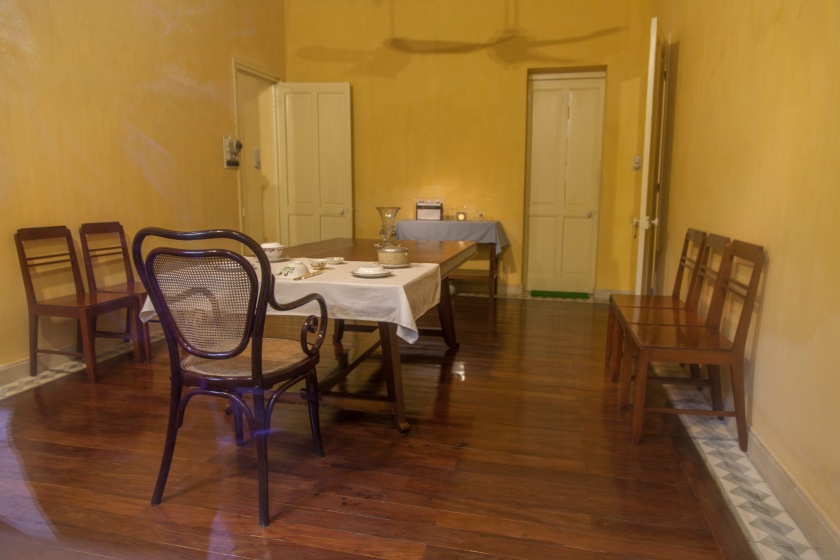
IMG_2857

IMG_2859

IMG_2860

According to Sunny, the leader only spent four years in this house, as it had a very bad feng shui location. After that, he moved to a wooden stilted house – located pretty much next door and which I somehow didn’t take a picture of – and lived here for eleven years until his death. By the way, he lived alone, and officially didn’t have any children, although he was married, but Sunny claims that he has an illegitimate son who still lives in Hanoi and who the government still refuses to officially recognise as Ho Chi Minh’s son.

There is yet another attraction in this garden, a much more ancient one that has nothing to do with Ho Chi Minh: it is a pagoda standing on a single pillar in the middle of a lotus pond and built in the XI century. There are only two pagodas like that in the world, the second one being in Thailand. In fact, later, when viewing the photos I’d taken, I got a strong feeling of déjà vu, as if I had already seen this pagoda, and then I remembered how a very long time ago I had seen a book with the works of the Russian artist Ilya Glazunov, with a sketch of this very pagoda.
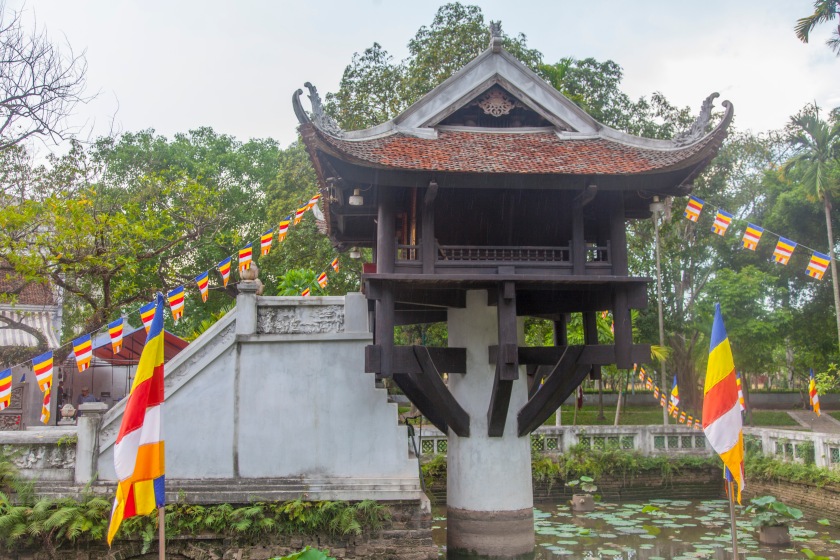
IMG_2865

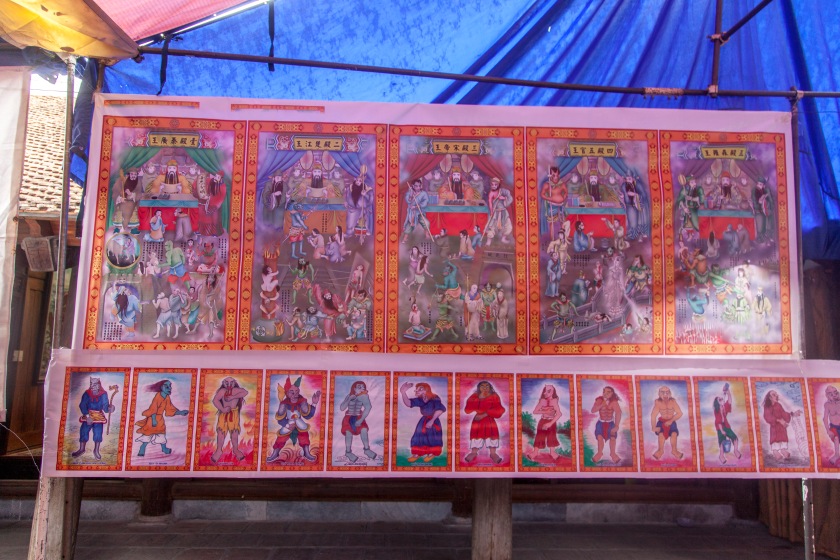
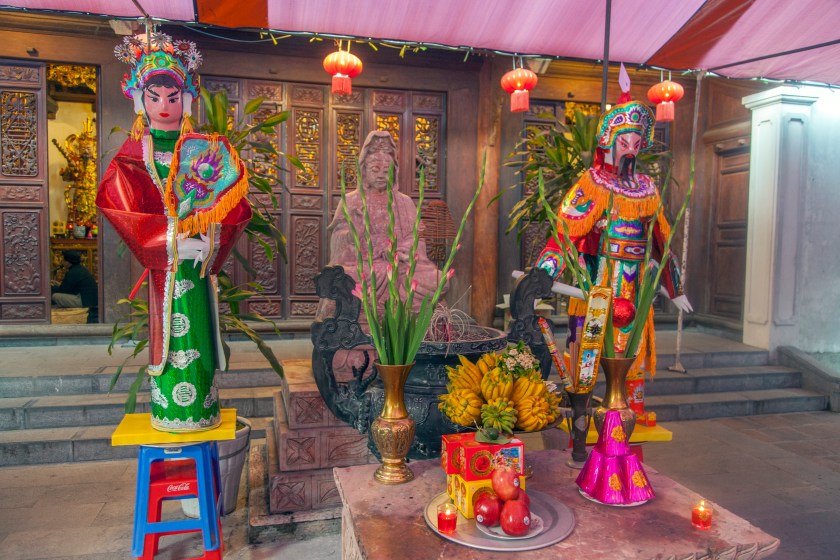
The last place, where we reached by walking, was some kind of temple, not identified by Google, with a pretty crude interior design. On the walls there are images of scary-looking people, and Sunny said that people come to this temple to appease infernal sinners, so that those don’t try to spoil their lives out of envy. This is done very generously: with fruits, ChocoPie’s and even chicken and beer. We can hear loud chants from the next room.
IMG_2866

IMG_2867

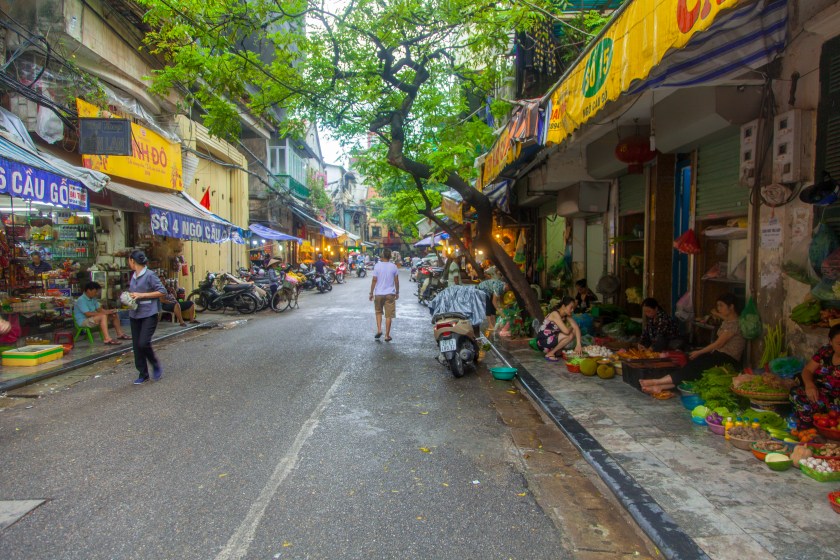
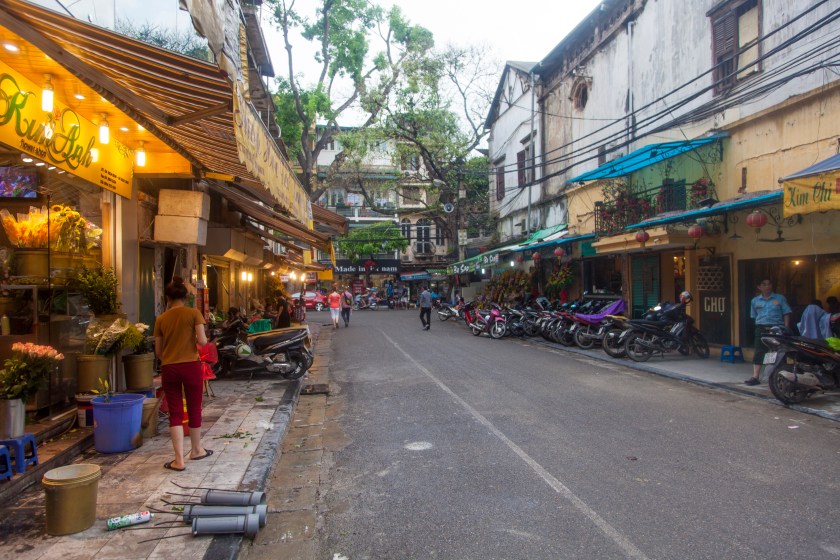
We then got in the car again and drove back to the Old Quarter, where we walked right up to the Hoan Kiem Lake.
IMG_2878

IMG_2880

IMG_2884

IMG_2895

We already came here yesterday, but as I wrote, didn’t enjoy it too much, having to push through the impassable crowd. Today, there were much less people, and besides Sunny took us to the Ngoc Son temple, located right on the lake. Once again we saw the same kind of tiger and dragon on the gates, indicating something related to education.
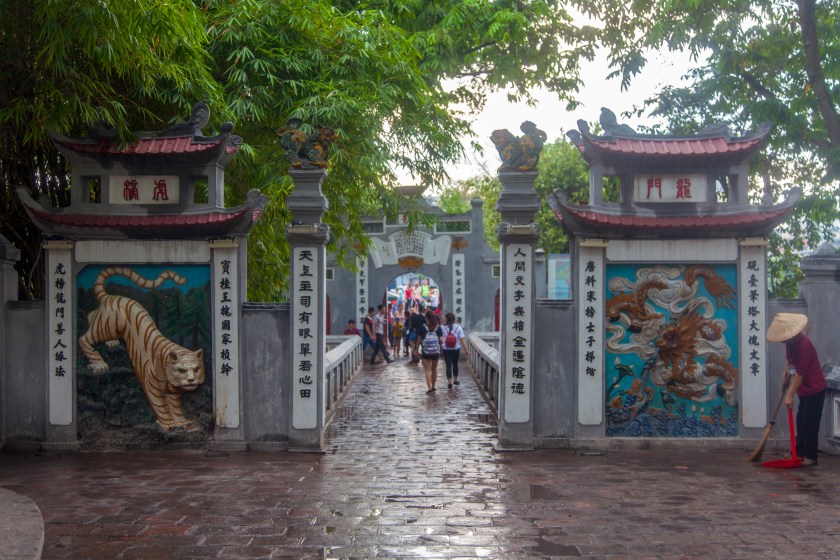
IMG_2886

The lake is home to a rare kind of turtles, and the name Hoan Kiem literally translates as the Lake of the Returned Sword – according to a legend, General Le Loi received a magic sword that helped him repel the Chinese attack, and then a golden turtle surfaced from the lake and took the sword back, deciding that the General no longer needed it and had to return it.
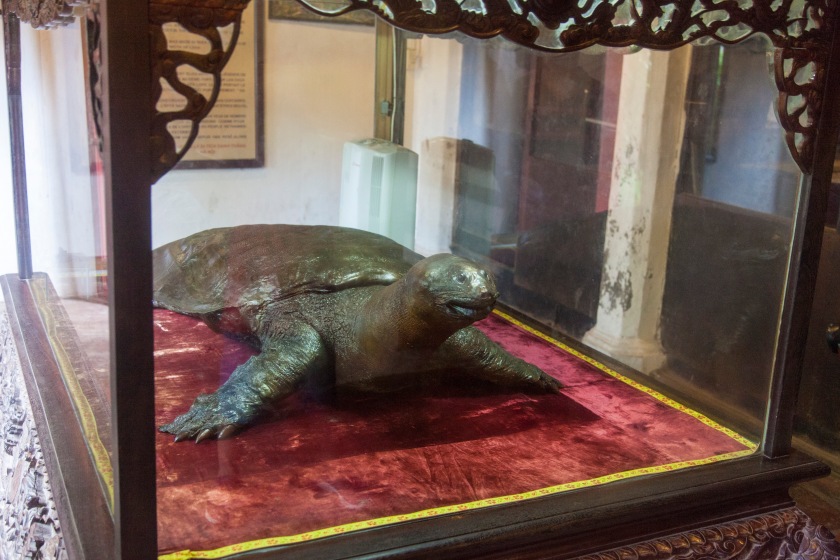
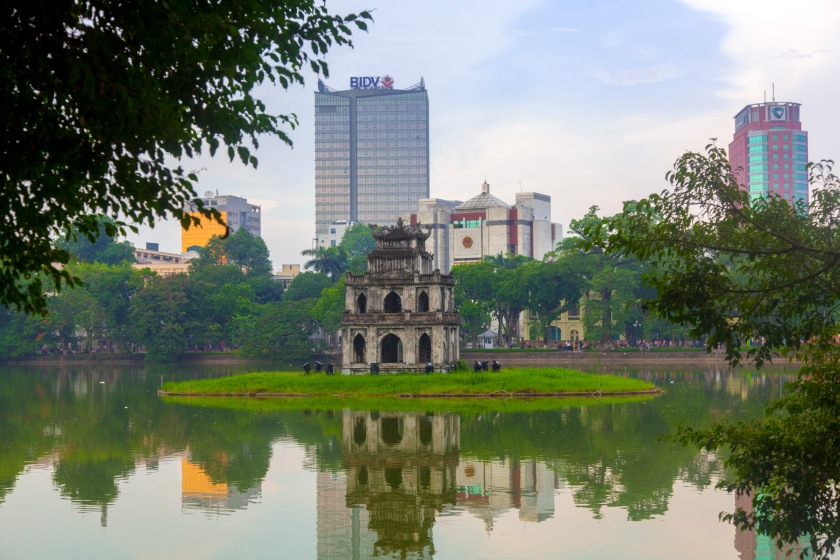
IMG_2890

IMG_2905

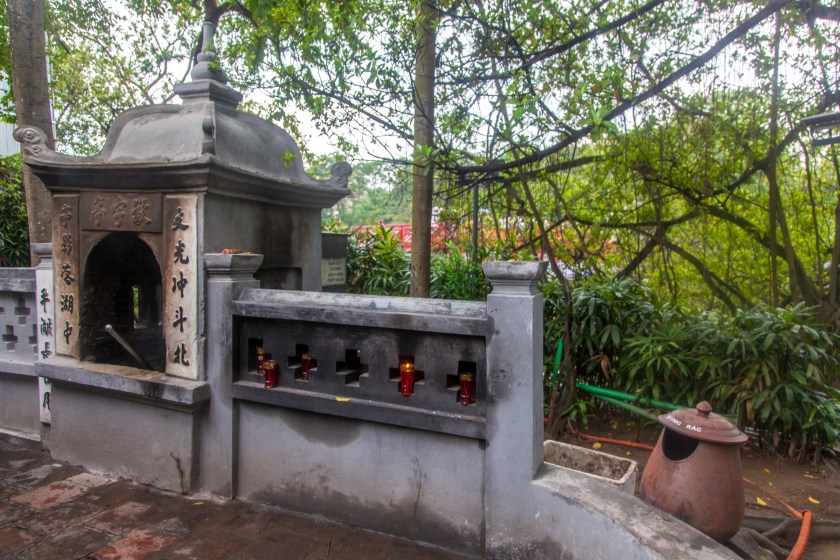
The Ngoc Son temple itself is dedicated to the hero Tranh, who defeated the Mongols in the 13th century, preventing them from seizing the country. Sunny said that there are three historical figures who are considered the “fathers” of the Vietnamese people: the emperor Lac Long Quan, believed to be the ancestor of all the Vietnamese; the aforementioned hero Tranh and, of course, Ho Chi Minh.
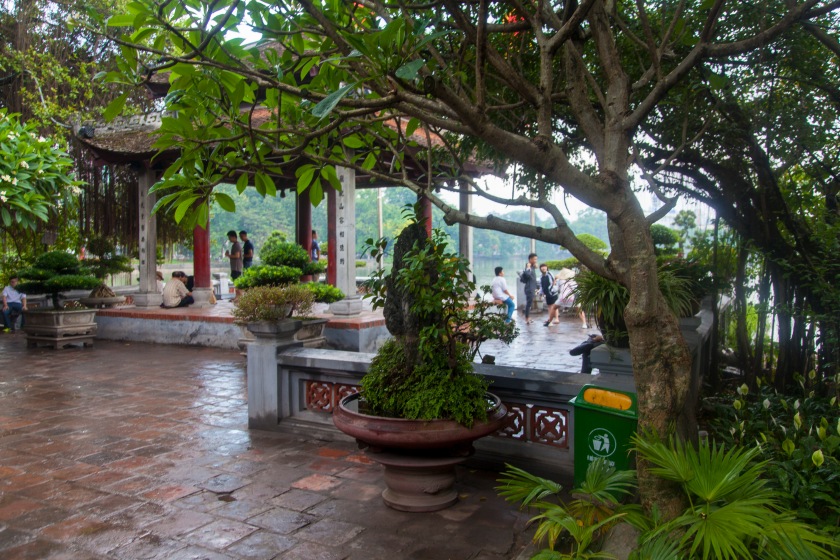
IMG_2891

IMG_2888

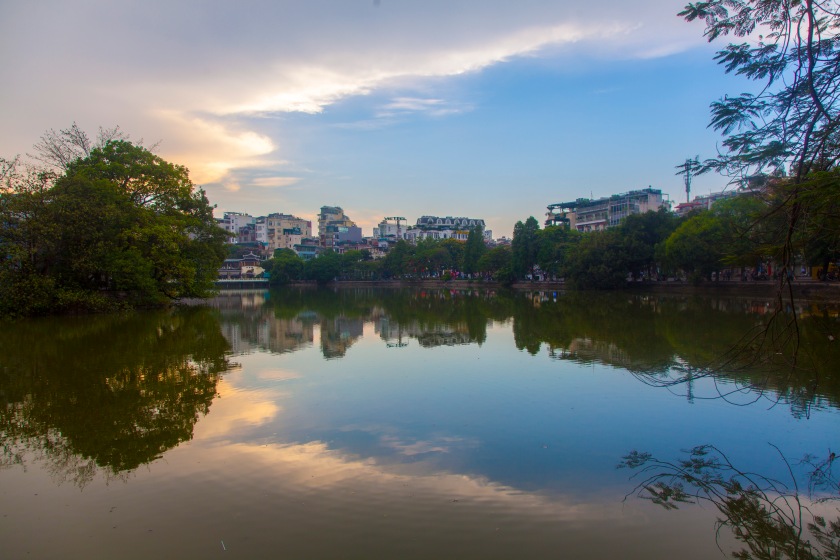
After the temple visit we had about 45 minutes of free time, which we spent walking along the lake and watching the locals.

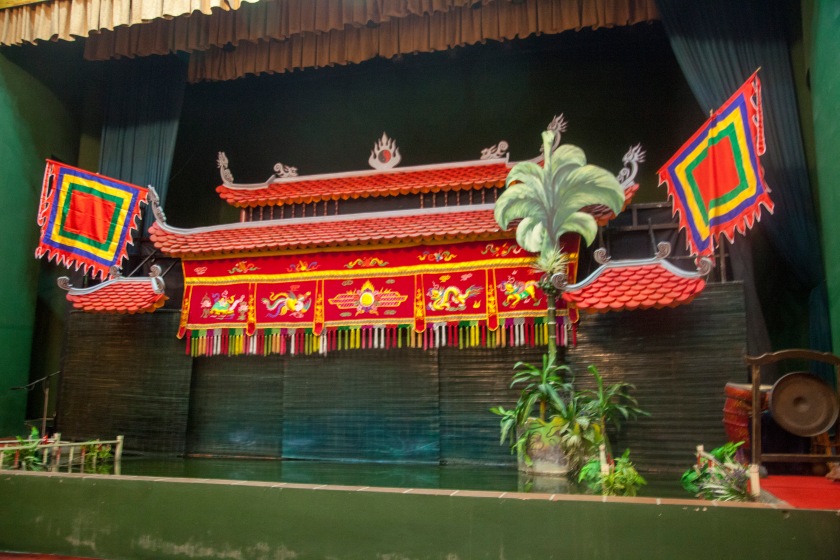
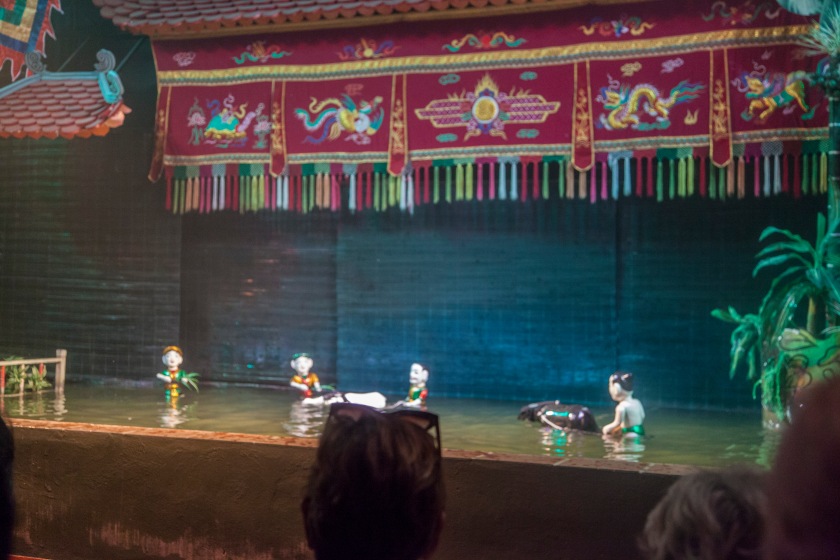
And then we went to see a water puppet show. The idea of a water puppet theatre is that the actors hide behind a screen, knee-deep in water, and control the puppets with long bamboo rods, which can’t be seen under the water. Obviously, the culture of such performances originated in rice fields. We were shown a dozen of acts, including separate dances of a dragon, a phoenix and a unicorn, and then one featuring all three plus a turtle (these four animals are considered sacred in Vietnam and are symbolic: the dragon for power, the unicorn that looks pretty strange and doesn’t even have a horn – for peaceful life, the phoenix for beauty, and the turtle for longevity), scenes showing peasants growing rice or repelling a fox trying to steal a duck from them, Le Loi returning the sword to the turtle, etc. The whole performance was accompanied by national instruments and singing, very interesting.
IMG_2906

IMG_2909

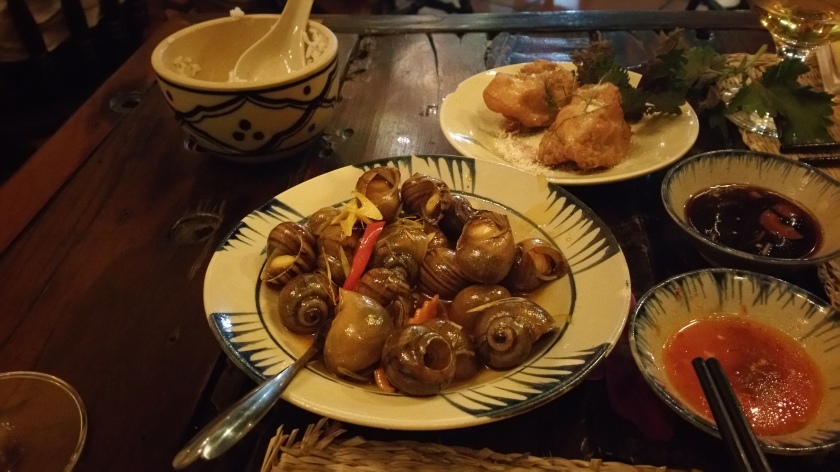
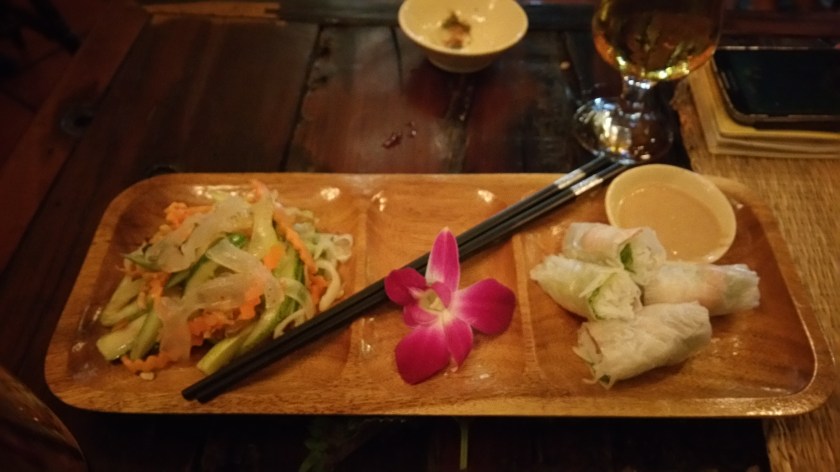
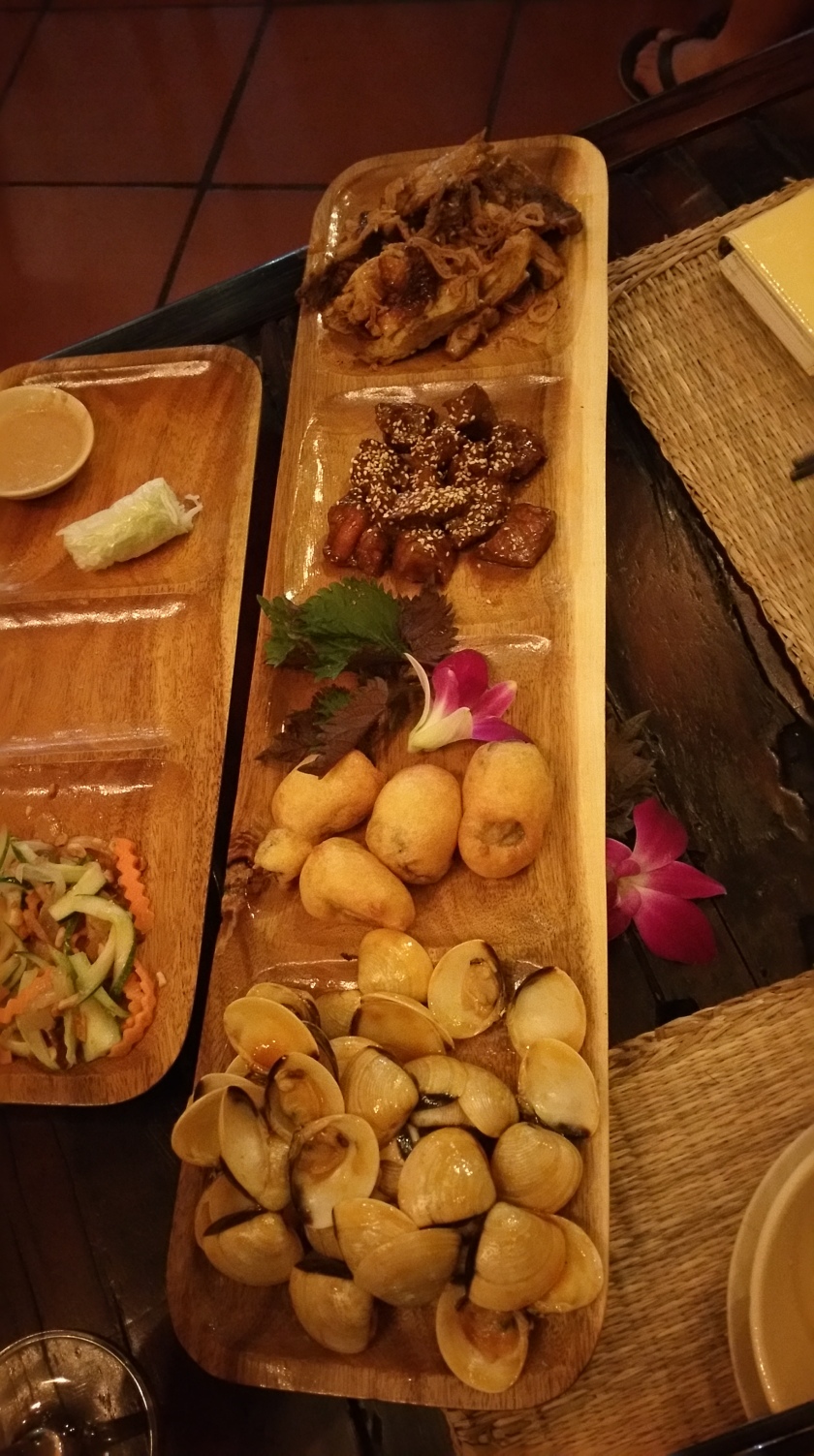
After the performance, we said goodbye to Sunny and went to have dinner at the Ngon Villa restaurant, where you can pay 360,000 dong, or about 15 USD and choose anything from the menu in any quantities (out of dishes marked with one and two asterisks – for those marked with three we’d have had to pay 580,000). So we tried meat and chicken cooked in different ways, a jellyfish salad (which we didn’t like), baked oysters, clams, snails (didn’t like them either) and a dessert of coffee jelly with coconut milk. Unbelievable, but this was our most expensive meal in Vietnam so far.
20170611_191114

20170611_191523

20170611_194054

Posted in Asia, English, Hanoi, Hoi An, Vietnam

Vietnam – Day 6

РУССКОЯЗЫЧНАЯ ВЕРСИЯ ПО ЭТОЙ ССЫЛКЕ. CLICK HERE FOR RUSSIAN VERSION.

10 June 2017

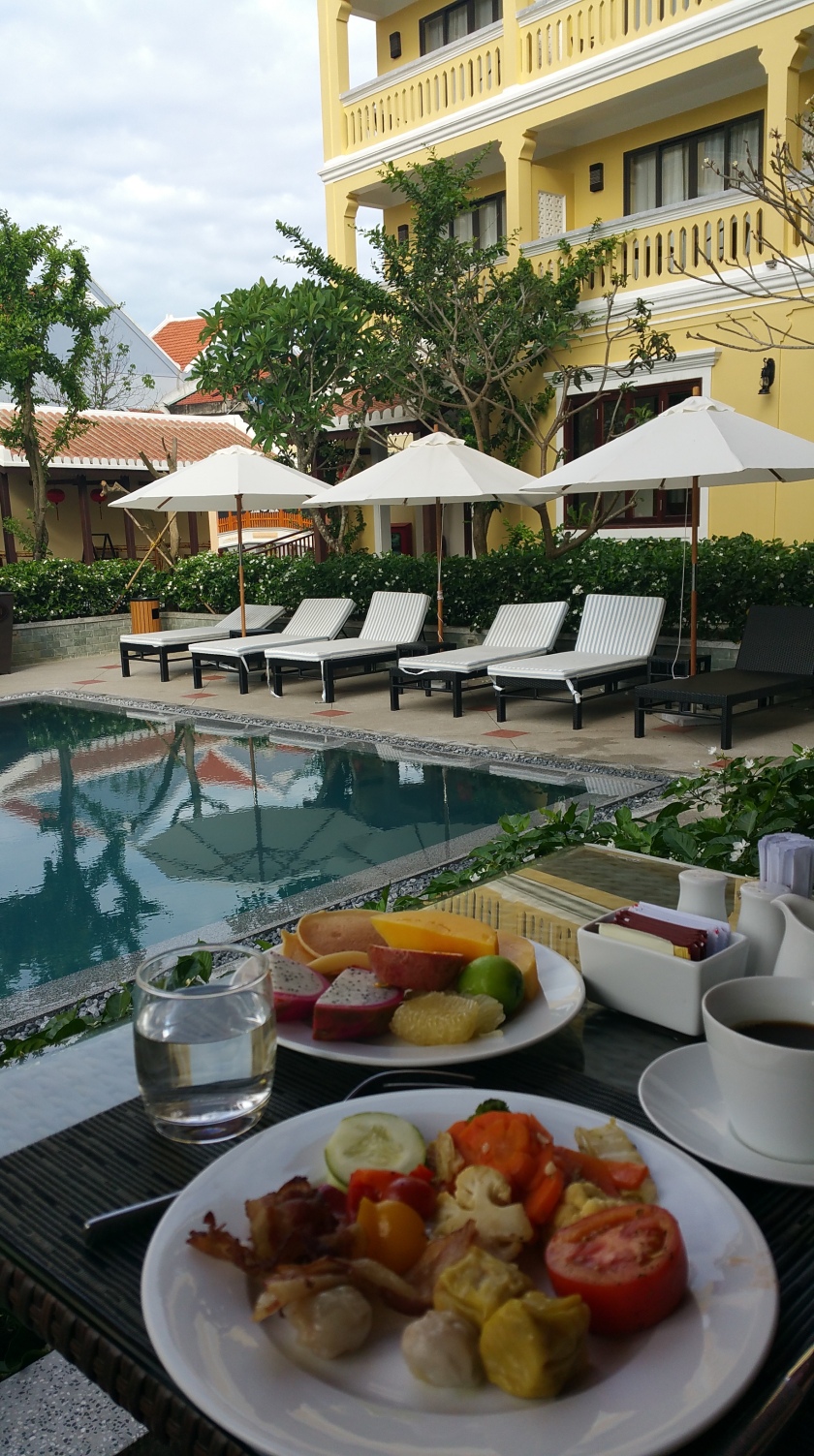
Yesterday we felt a bit disappointed that we were staying in this wonderful hotel with a swimming pool one night only, so even though today’s excursion was supposed to start at 9am, we were up at 6.30 already, to have time to enjoy both a lovely breakfast with lots of fruits by the pool, and the pool itself.

20170610_065844

So at 9am sharp we checked out from the hotel and went on a walking tour around the Old Town. We were there last night already, but under daylight the streets look totally different, not to mention that we had explanations this time.

IMG_2685

IMG_2691

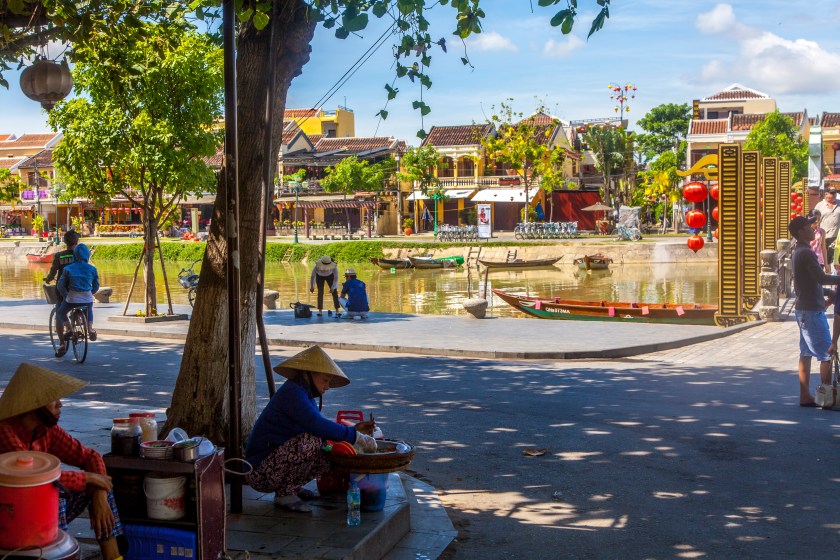
The Old Town is really beautiful, after all it’s included in the list of UNESCO’s cultural heritage for a reason – in fact it’s so beautiful that even the 38C heat and the scorching sun, under which we had to walk for two hours, didn’t spoil the impression the least bit.

IMG_2678

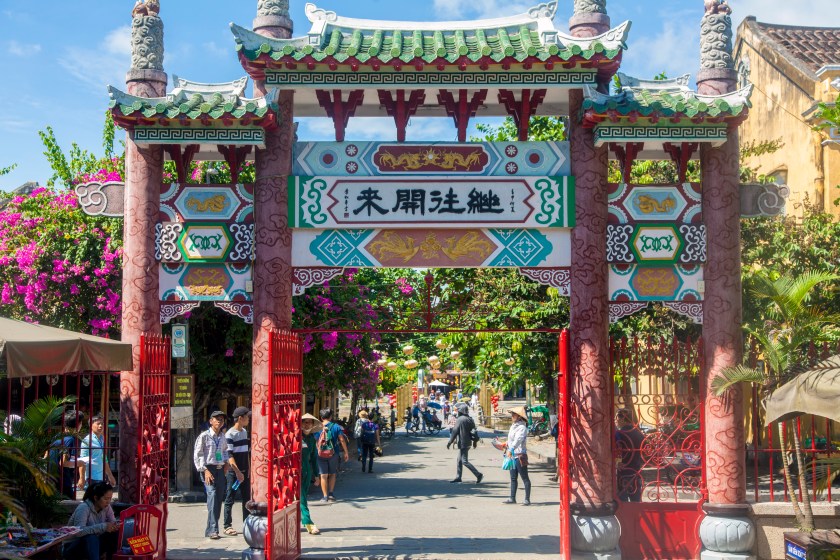
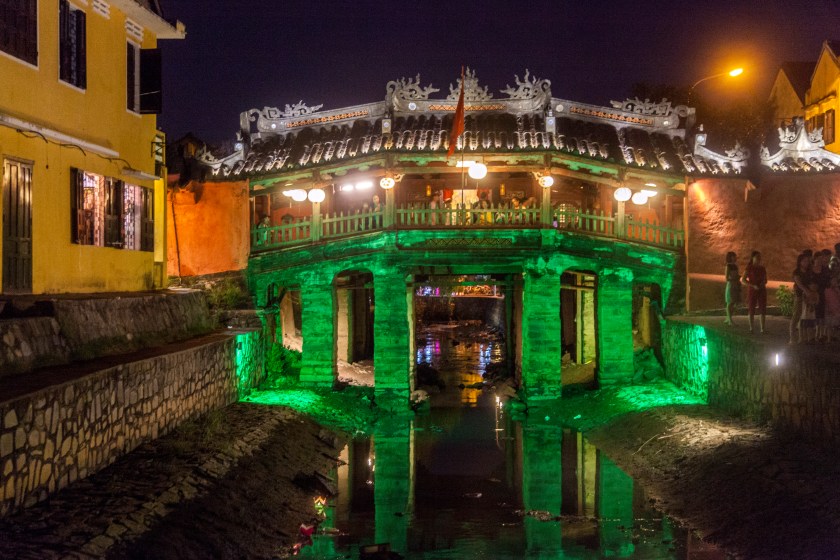
We walked into the Old Town through the Japanese bridge, which back in the days used to separate the Japanese quarter from the Chinese one. The bridge was built almost 400 years ago, and since then is being periodically renovated, especially during the rain and flood season, when the water level rises and floods it. The bridge, just like everything in the Old Town, is decorated with lanterns – white ones, which is perfectly normal for the Japanese, and which, according to Nam, used to cause the displeasure of the Chinese, who consider white to be the colour of mourning.

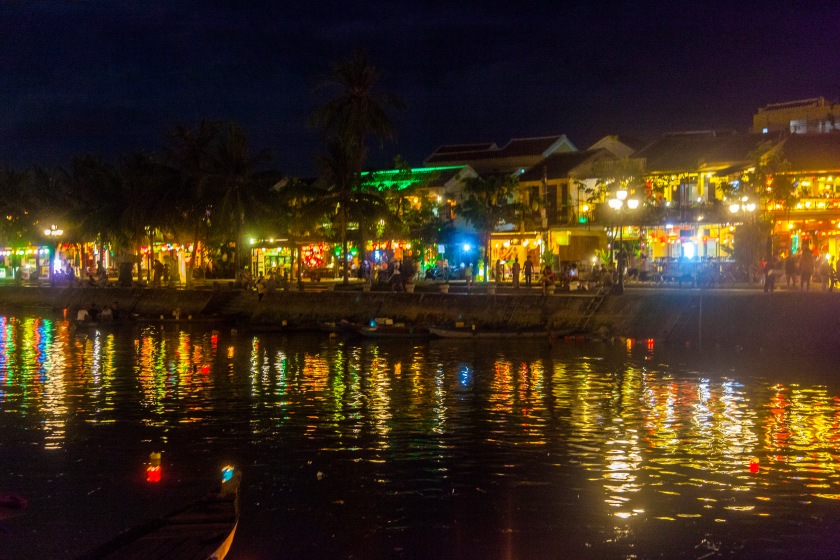
The Old Town consists of several streets adjoining the Thu Bon river, on the other side of which we can see much newer buildings, but also stylized as old to attract tourists.

IMG_2683

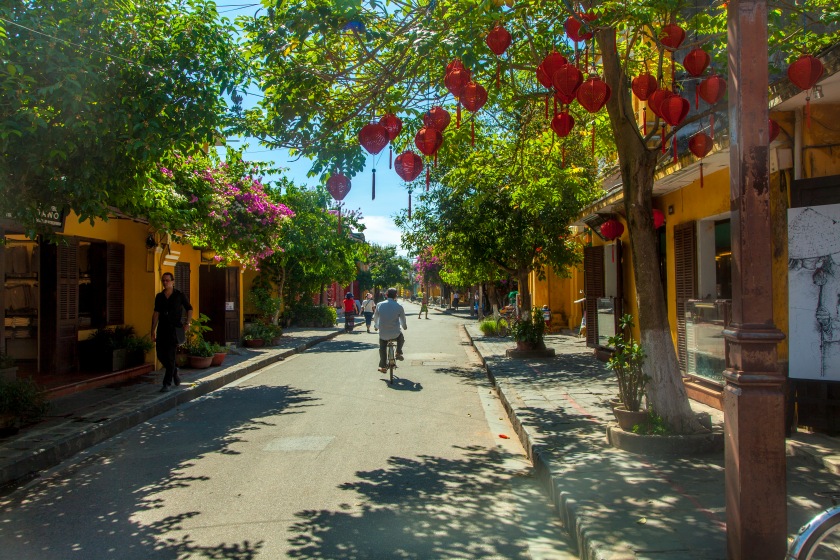
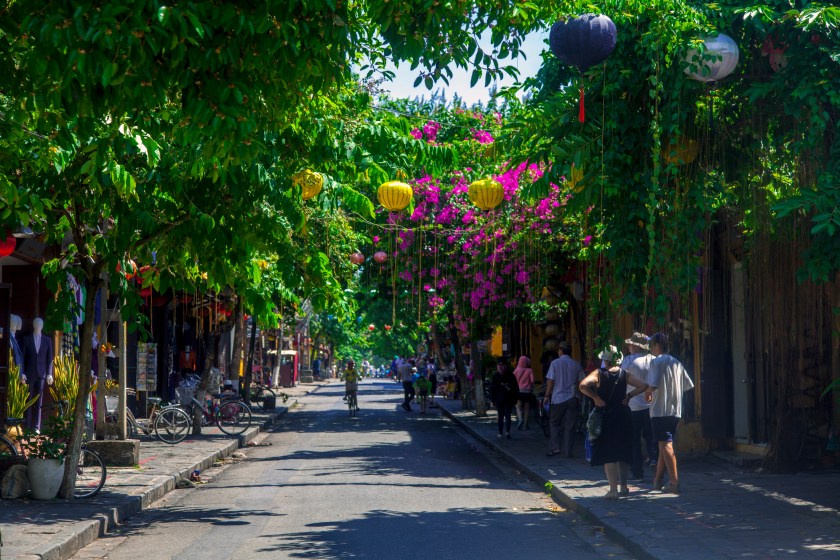
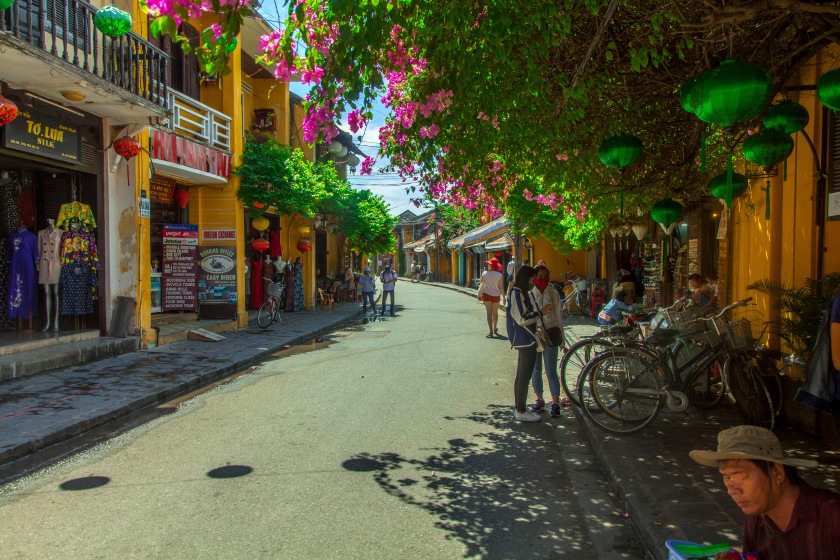
I guess, in the daytime, the streets we are walking around look even more beautiful than in the evening, as the architecture of buildings and pretty blossoming trees are better visible, plus it’s much less crowded, and the lanterns, although not lit, are still there.

IMG_2687

IMG_2710

IMG_2712

IMG_2714

IMG_2717

IMG_2719

IMG_2734

IMG_2743

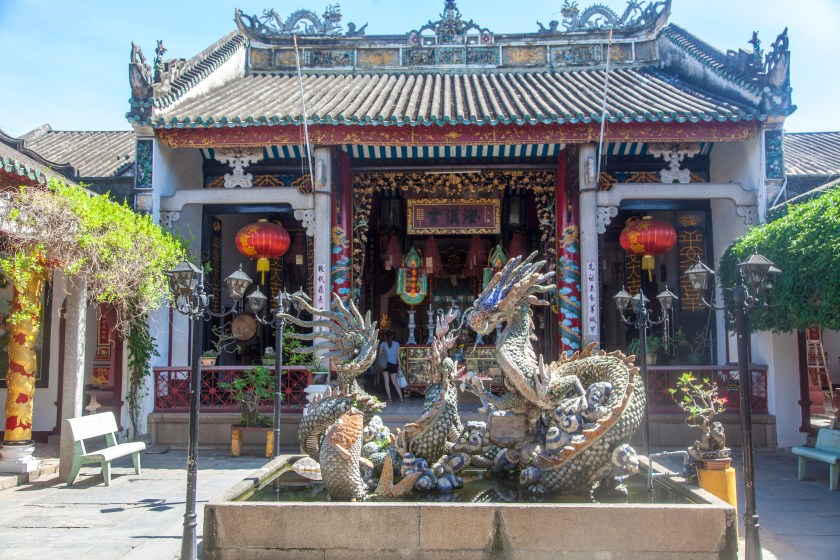
Our tickets included four attractions of choice, and Nam started with the Chua Ong Pagoda located in Chinatown and built in the XVII century.

IMG_2696

IMG_2699

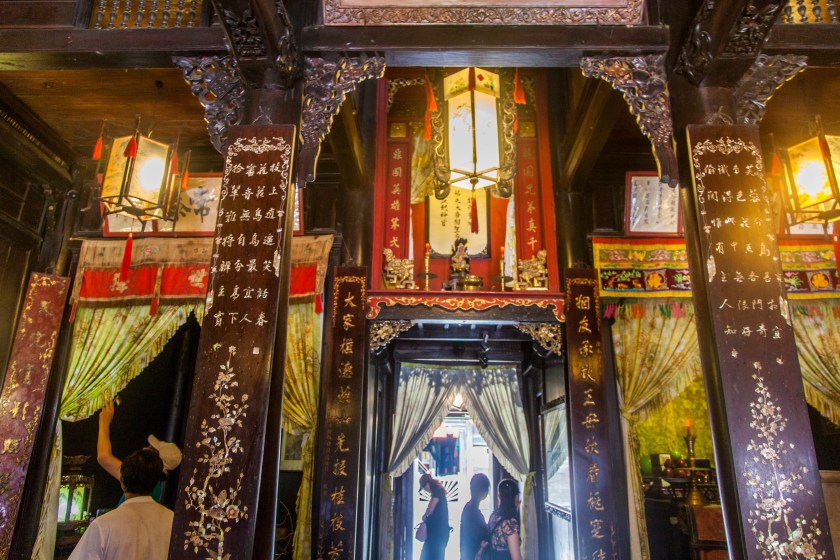
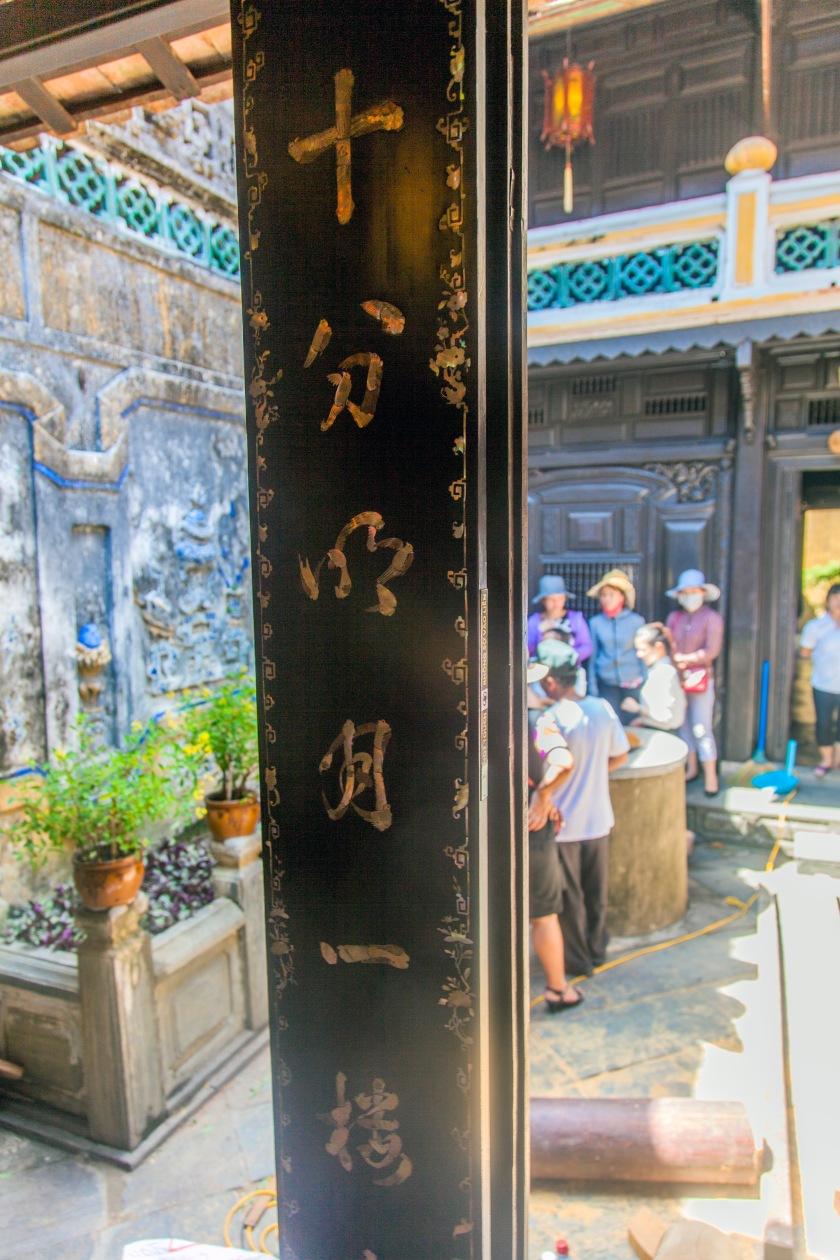
Next in our programme was a visit to one of the oldest family houses in Hoi An. The family still lives here, on the first floor. We were only shown only the ground floor, where the interior was decorated with elements of Vietnamese, Chinese and Japanese styles. For example, there was an interesting writing in Chinese characters, where each character was comprised of birds cut out of mother-of-pearl.
IMG_2715

IMG_2716

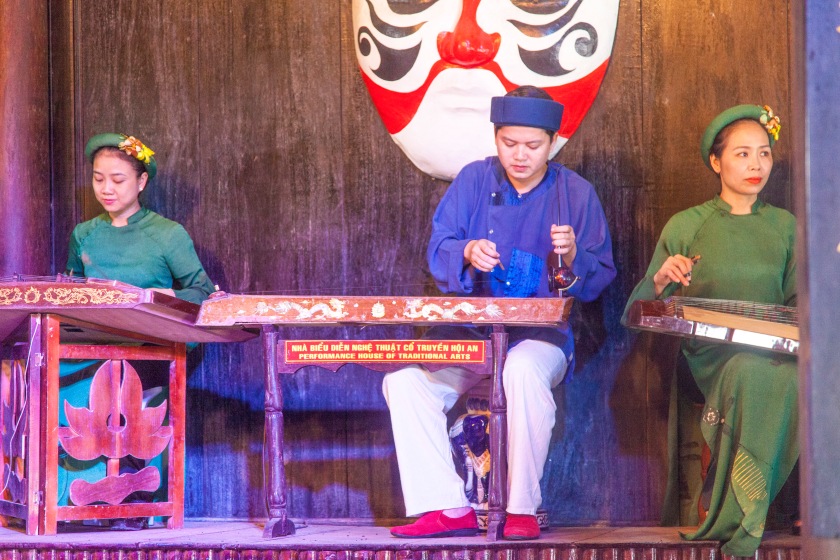
Next, we visited a little performance with songs, traditional dances with pots and fans and a game like bingo, where everyone was given a card with different Vietnamese words, and the singer sang a song and picked out the sticks on which the words were written. We weren’t the lucky ones to win, but some lady got a small silk lantern.

IMG_2738

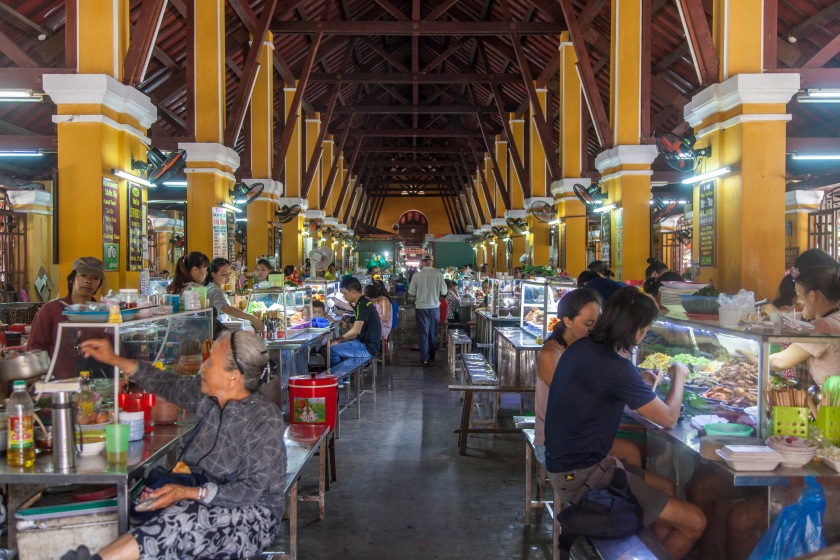
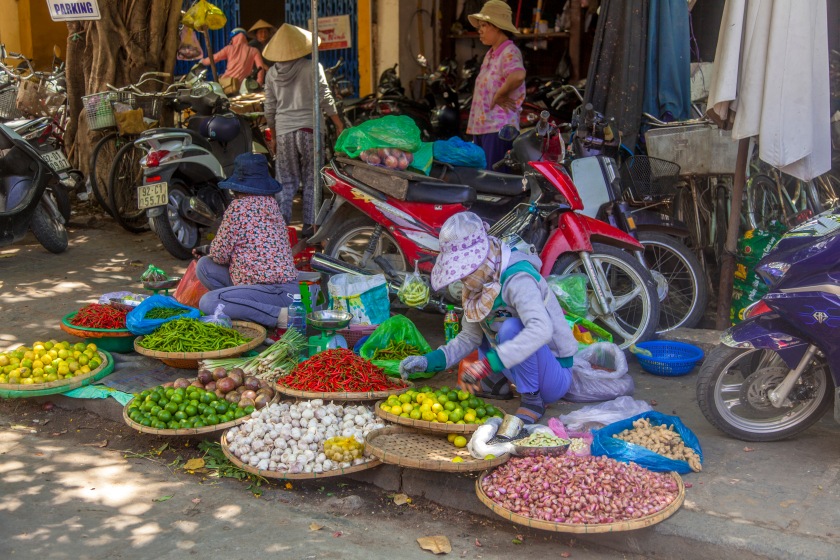
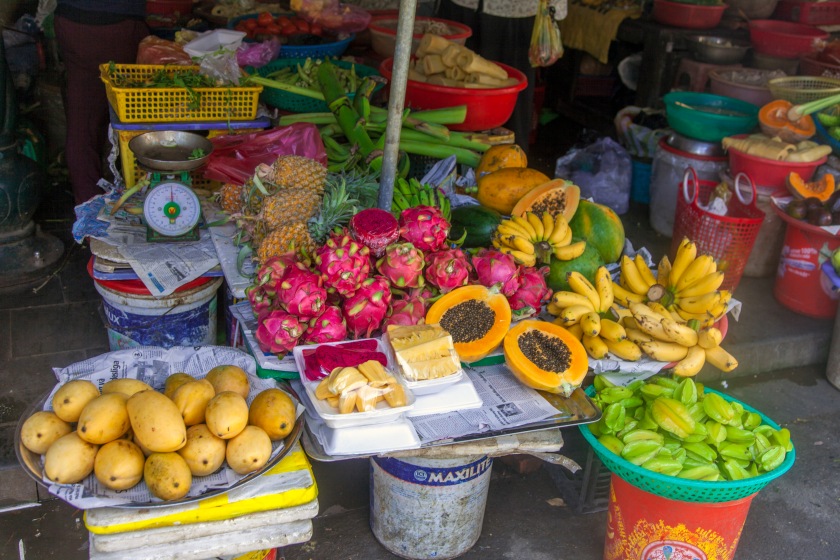
I’m not really mentioning another pagoda we visited, especially since I don’t even remember its name, but the Old Town tour ended with a visit to Central Market. The idea of a big food market is nothing unheard of, but the goods displayed are very exotic to us: there are tons and tons of tropical fruits, and a huge amount of unfamiliar herbs (I already mentioned how I had the impression that the Vietnamese eat everything that grows), and different types of hot pepper, and also something looking like a huge dining area with cooked foods.

IMG_2746

IMG_2750

IMG_2753

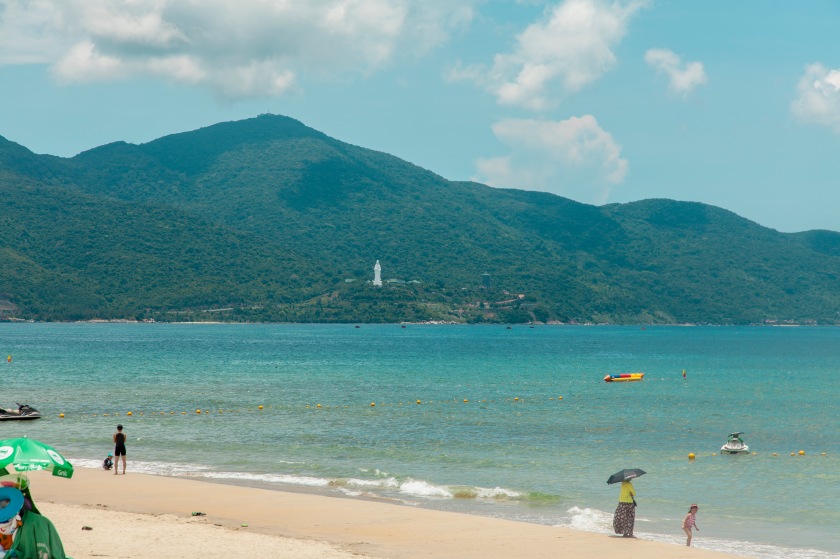
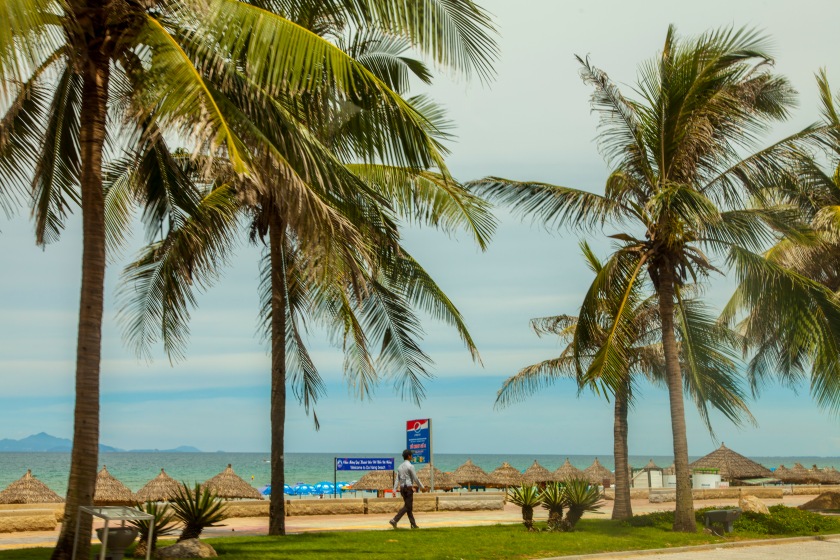
That marked the end of our Hoi An tour, and we headed back to Danang, because that is where the airport, from which we were later supposed to fly to Hanoi, was located. But our tireless guide still had plenty of energy, so he arranged two more photostops for us. The first one was on the beach, from where the Lady Buddha statue was distinctly visible. To be honest, a beach doesn’t make much sense unless you can swim and sunbathe there, but nevertheless we took a couple of photos.

IMG_2766

IMG_2769

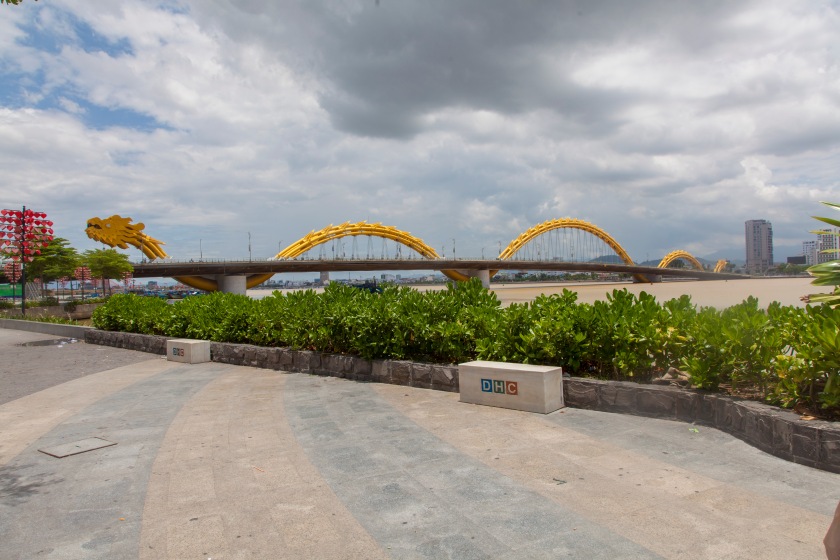
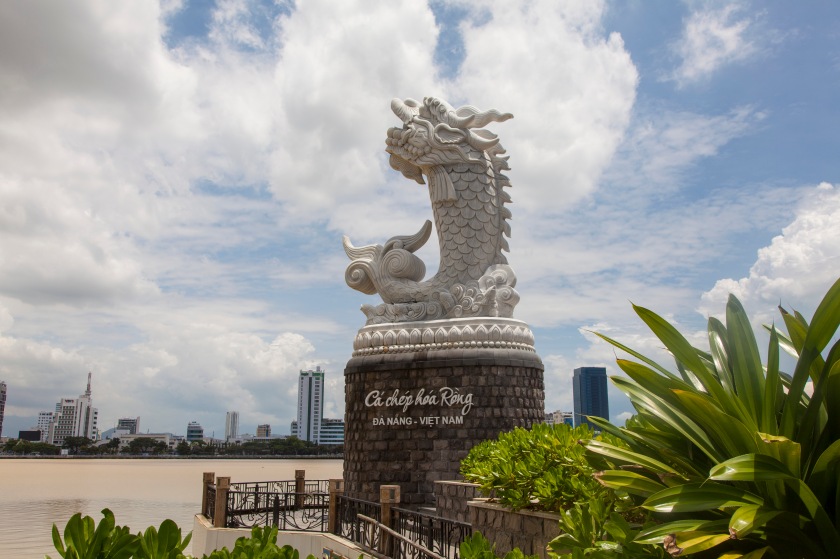
The second stop is by the Han river, because one of the main attractions in Danang, where our guide lives, by the way, is a dragon-shaped bridge across this river. And nearby there is a marble statue shaped like a fish with the head of a dragon, for which Danang is sometimes called the second Singapore. The origin of this strage creature is from the legend about the koi carp, which will turn into a dragon if it can climb up a waterfall. The sculpture depicts exactly this moment of transformation.
IMG_2770

IMG_2771

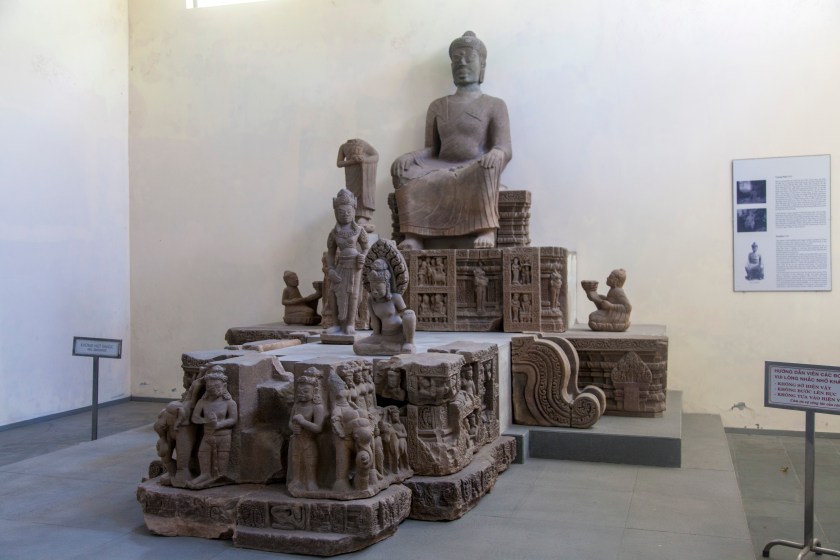
But even that wasn’t it yet – there was still a museum visit awaiting us. It was the Museum of Cham Sculpture and, quite honestly, it was already superfluous, as we were too exhausted by the terrible heat. But we still made a whirlwind tour around the museum. The museum hosts sculptures and architecture elements of the Champa kingdom, which existed in the Middle Ages in Central Vietnam and where Hinduism was practiced. The French archaeologist Henri Parmentier discovered these artifacts in the early 20th century, and this museum was opened as a result in 1919, thanks to which, they are still intact, as many other Cham sculptures and temples were damaged during the Indochina and Vietnam wars.

IMG_2780

Completely exhausted, we headed to the Danang airport. Nam escorted us to the check-in desk and even checked us in for the flight. We also had lunch right at the airport.

20170610_131040

The flight was delayed by 20-30 minutes, but then again we didn’t have to hang around at the airport on the back end, since there is no passport control on domestic flights. In Hanoi, we were picked up by our new guide, Sunny, and headed to the hotel.

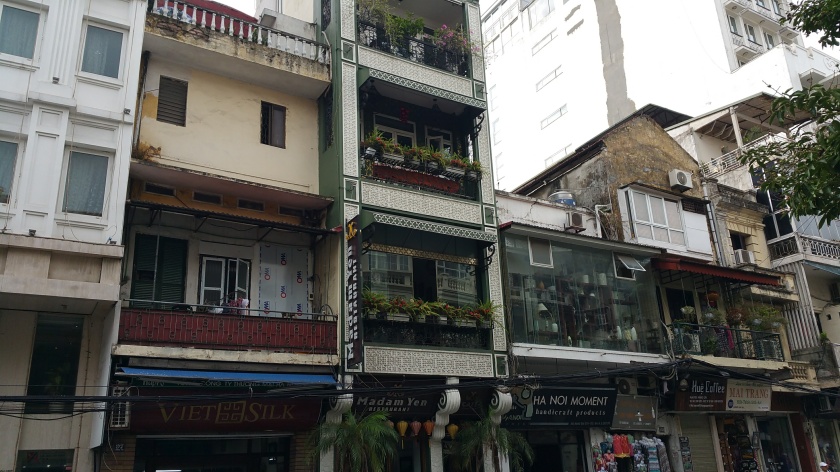
On the way from the airport you immediately notice that Hanoi is different. But I haven’t yet fully understood what exactly makes it different from Saigon, for instance. Perhaps, it’s the fact that the city is more modern, yet has more old buildings, and even the people look different – I mean, however ridiculous this may sound, they more look like urban residents. The façades of buildings are very narrow, like everywhere else in Vietnam, which I don’t think I’ve mentioned before, but here we actually asked Sunny about the reason, and he explained that in the old days there was a special tax directly related to the width of the façade.

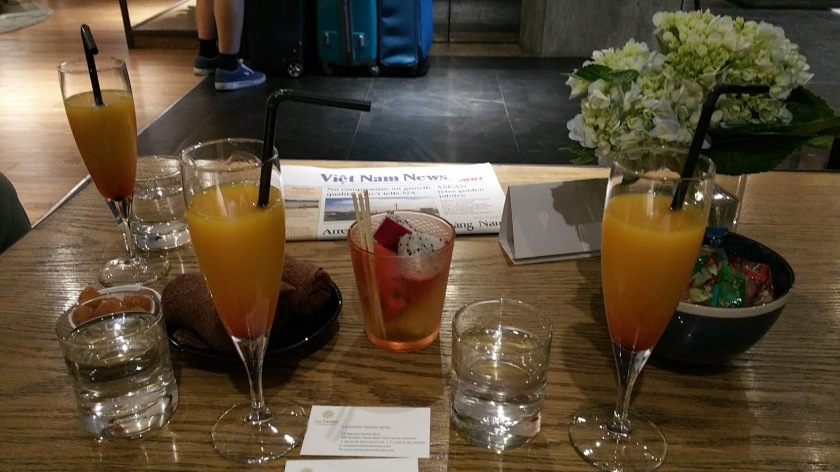
Our hotel is located in the Old Quarter, apart from which Hanoi also have the New and the French Quarters. While we were waiting to check in, we were treated to some nice refreshments, as usual.

20170610_174603 (1)

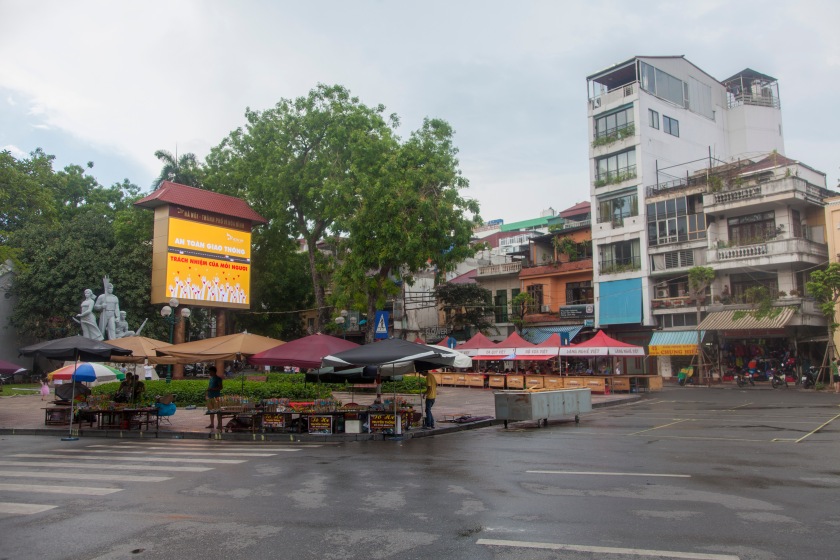
In the evening we walked up to the lake, also in the Old Quarter, to get some food, but the walk turned out to be more stress than pleasure. The traffic in the streets is even crazier than in Ho Chi Minh City, and the sidewalks are mostly non-functional – they are packed with parked scooters, street vendors and street food stalls with low tables and stools next to them – so one has to walk on the road, constantly shying away from scooters. On the other hand, there was such a thick crowd in the pedestrian zone near the lake, that even in the absence of vehicles it wasn’t too much fun either.

One of our observations in Vietnam, by the way, is about the general cleanliness. I mean, the streets are often chaotic, the sidewalks are cluttered, there is street food everywhere – yet, despite all this, there is no dirt, stench, rot and filth. Everything gets cleaned. Even toilets, albeit sometimes very shabby, are always clean and not disgusting.

20170610_190724

Posted in Asia, Danang, English, Hoi An, Hue, Vietnam

Vietnam – Day 5

РУССКОЯЗЫЧНАЯ ВЕРСИЯ ПО ЭТОЙ ССЫЛКЕ. CLICK HERE FOR RUSSIAN VERSION.

9 June 2017

The day has been very intense, but, to be honest, with the occasional feeling that everyone wants money from you. In Ho Chi Minh City this feeling wasn’t there and we even got the impression that Vietnam is a country not yet spoiled by tourism, because this industry is still developing here. But the further you move to more tourist places, the more this impression is dissipated.

I’ll come back to that, but first things first. In the morning, we checked out of our hotel in Hue and headed to see the imperial tombs nearby.

20170609_062925

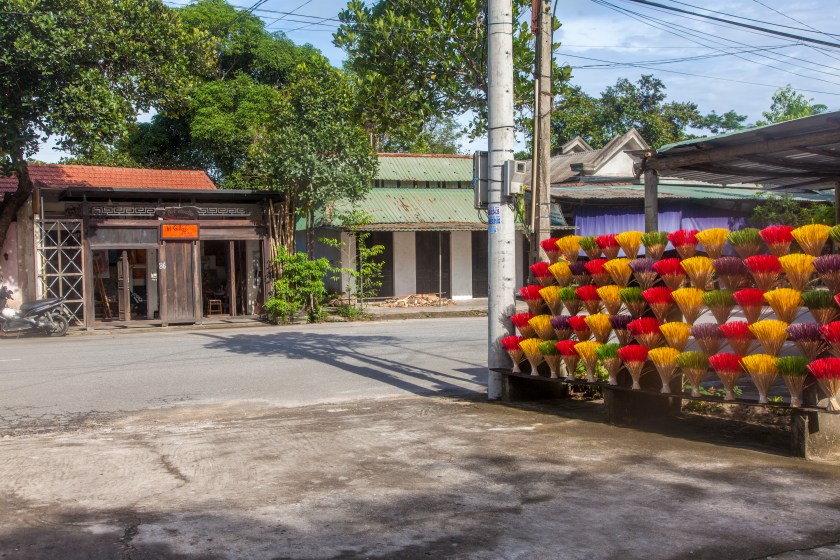
Today we have a new guide, a young man named Nam, who seems very diligent. Right on the outskirts of the city, we saw a lot of aromatic sticks for temples being sold along the roadside, and he asked the driver to stop the car so that we could see how they are made. Of course, the seller immediately started actively persuading us to buy regular souvenirs…

IMG_2486

IMG_2488

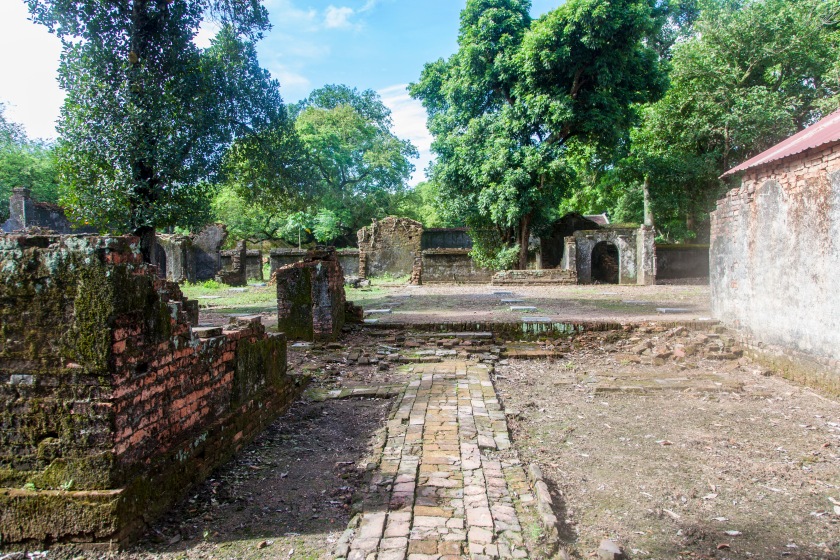
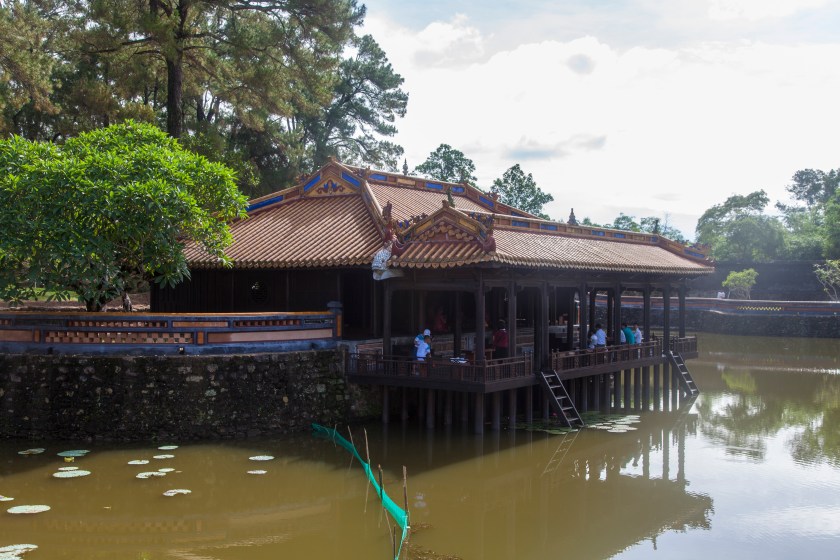
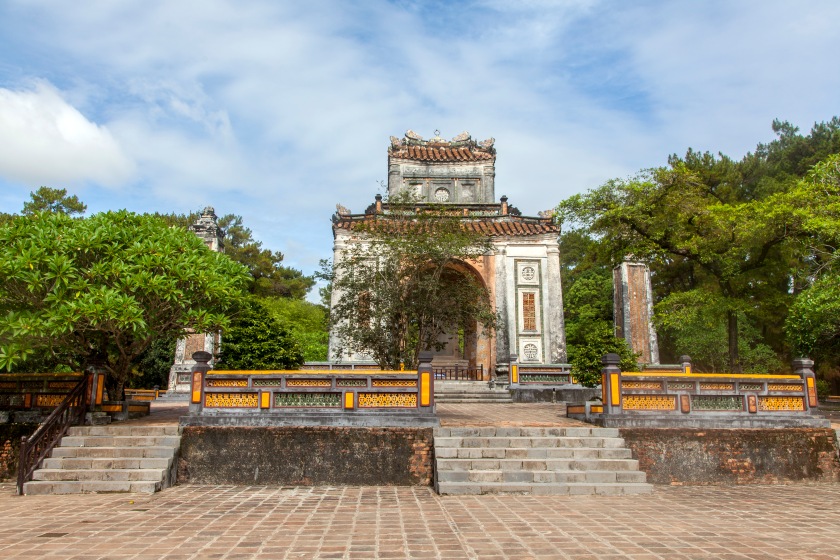
As I said, according to the programme, we had mausoleum visits planned, and the first one was the mausoleum of Tu Duc, who was the fourth emperor of the Nguyen dynasty and the last emperor of independent Vietnam – his successors ruled the French colony already. The presence of the ruling dynasty was perfectly acceptable for the French, since it facilitated the governing of people, so they didn’t get rid of it.

The mausoleum was built when Tu Duc was still alive and is not just a tomb, but in fact a whole complex that functioned as the Emperor’s summer cottage until his death, and later became home to his numerous wives and concubines.

IMG_2493

By the way, despite the fact that Tu Duc had a hundred or two wives and concubines, he did’t leave any offsprings, so his nephew inherited the throne after him.

IMG_2499

Interestingly, no one knows where exactly Tu Duc is buried in the mausoleum – it would seem logical that if there is a tomb, then that’s where he should be buried, but Nam explained to us that the emperor was clever and, considering the amount of treasures to be buried with him, he ordered to dig numerous tunnels under the territory of the mausoleum and bury him in one of them, so that no one knew where exactly. Nowadays, although with modern technologies determining the exact location wouldn’t be much of a problem, the government specifically decided not to do so.

IMG_2508

Our itinerary assumed that next we would go see the tomb of his grandfather – the very Minh Mang that I already mentioned in connection with traditional medicine. But Nam pointed out that even though the standard programme includes this mausoleum because of its convenient location, it is too similar to the first one, and, perhaps, we would find it more interesting if we went to see something different. So, he suggested another mausoleum instead, located slightly further – that of Khai Ding, the 12th and the penultimate emperor of the Nguyen dynasty, who ruled in the early 20th century. We agreed.

IMG_2510

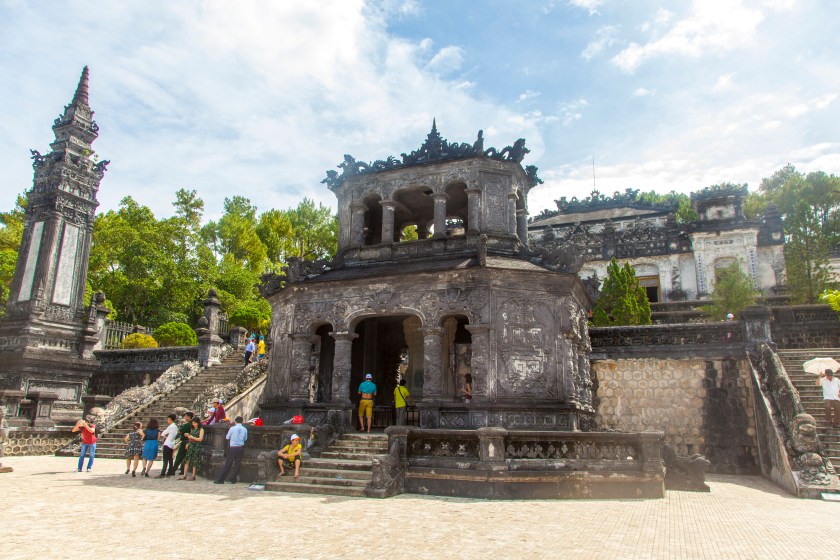
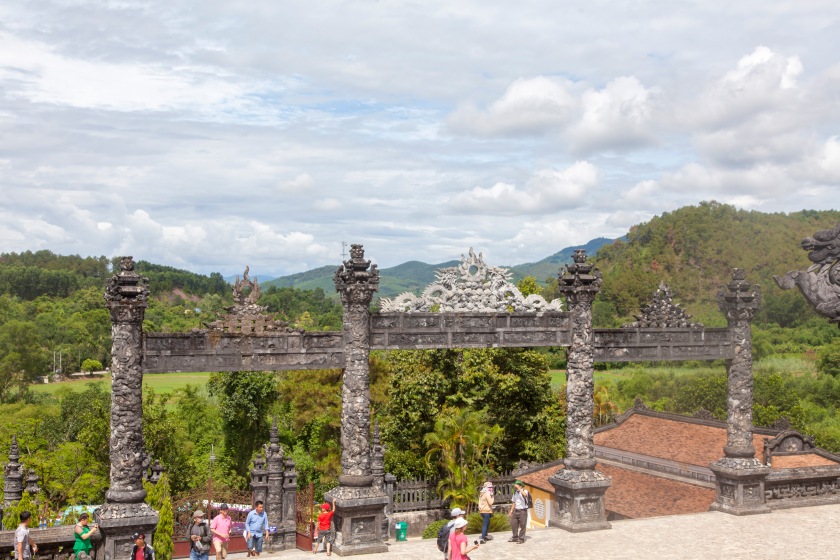
This mausoleum was indeed completely different – the architecture contained mixed elements of both traditional Oriental and European styles. The territory was quite small in comparison with the previous complex, which had pavilions, gardens and a lake, but the mausoleum took 11 years to build, whereas the previous one took only three.

IMG_2524

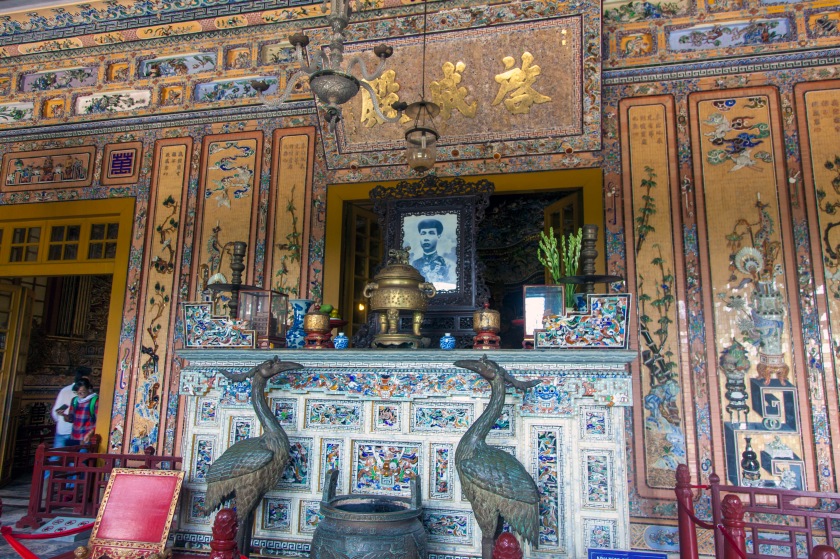
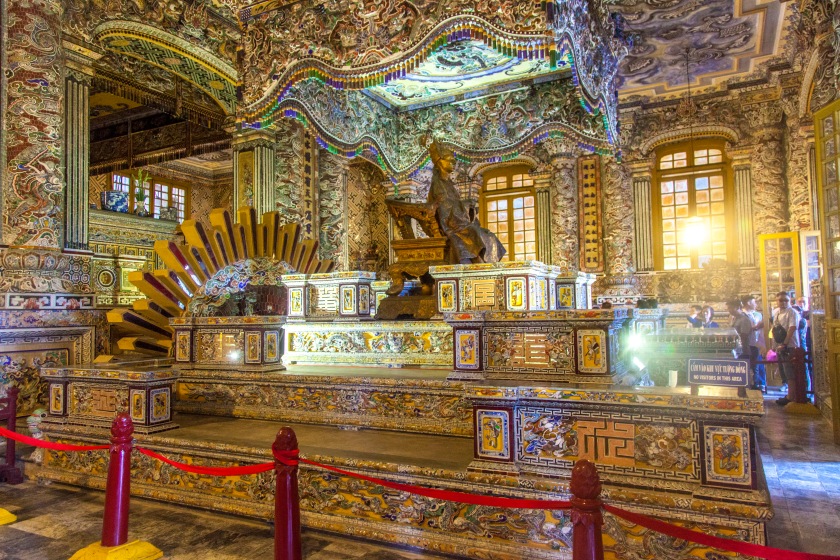
This is not surprising at all, because the tomb itself is truly luxurious: the walls are decorated with various types of ceramics – local Vietnamese, Chinese and Japanese – and the ceilings are painted with 99 dragons, in such way that you can’t track the beginning and end of each.

IMG_2517

IMG_2518

So, the buildings are impressive, I could totally have walked around here for a long time if it hadn’t been for the unbearable heat, which made me want to get back into the car as quickly as possible.

It’s time to say goodbye to Hue and move on, heading to to Hoi An, where we should spend the night. But on the way to Hoi An there is still much to see!

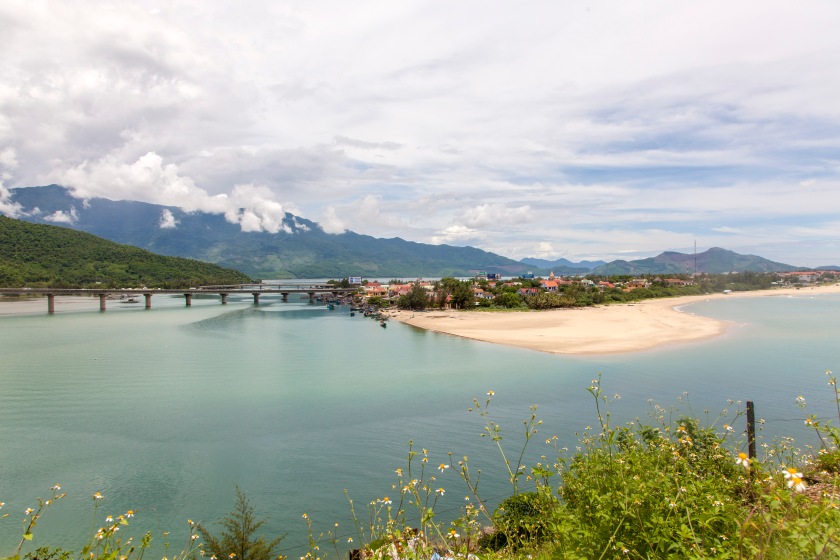
The road started climbing up the mountains, and the places around were becoming more and more picturesque. We stopped every now and then to take pictures, then had a short comfort stop in some roadside cafe, which was part of a family business for production of oysters and pearls – right here, across the road, there was a large shallow lake where the molluscs were bred.

IMG_2532

IMG_2531

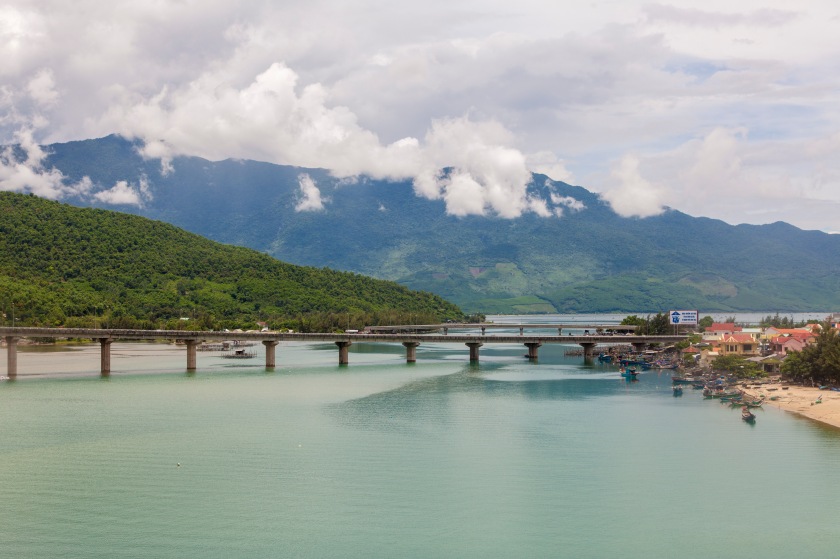
There is actually a tunnel through the mountain, but we drove over the Hai Van Pass instead to enjoy the picturesque views of the green slopes and the sea.
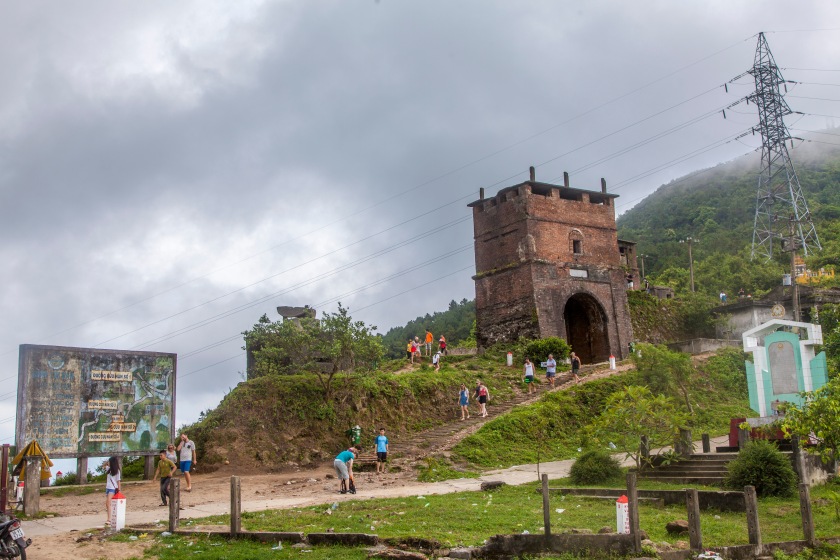
At the summit of the pass we made a photo-stop yet again, as there are some ruins that used to be a French fortress, and later an American bunker.

IMG_2538

The road from Hue to Danang, where we are going, takes two hours. We don’t stop in Danang itself, but Nam told us that the city is quite new, industrial, and has a large seaport – back in the days, the port was located in Hoi An, where we are heading eventually, but the French transferred it right here.

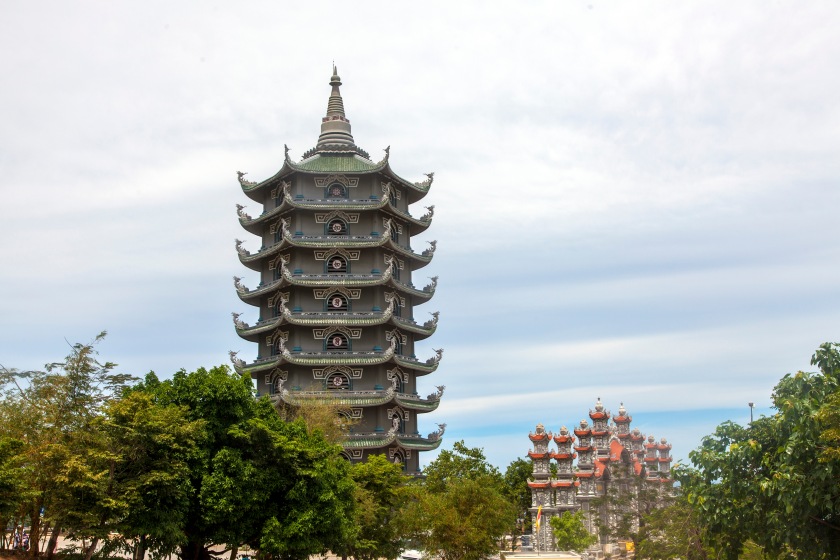
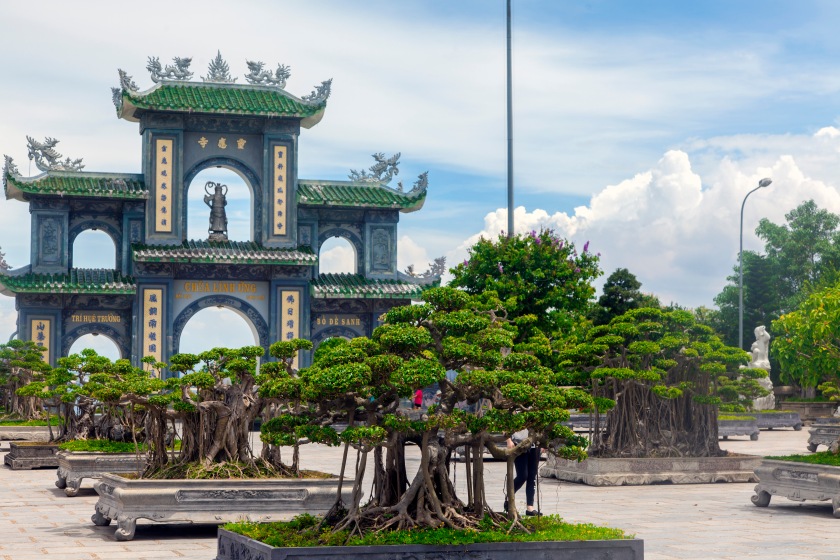
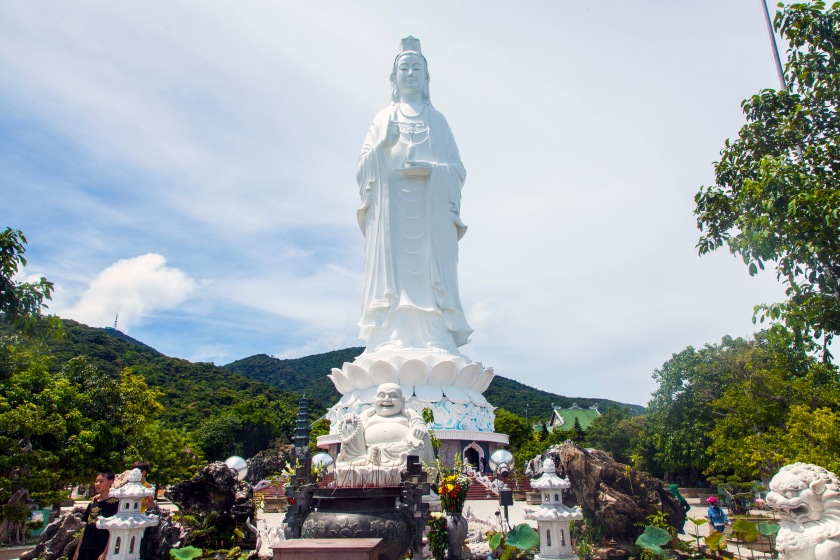
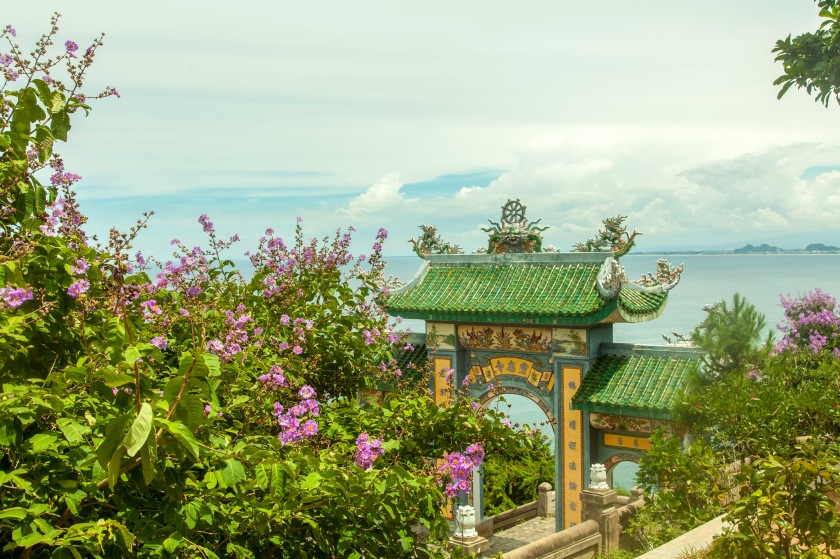
Actually, back when we were booking our tour, we made a special request to visit Danang, as we wanted to see the statue of Lady Buddha. That is why we were taken to the Son Tra mountain, also known as the Monkey Mountain, where this statue is located. Besides the statue, there is a whole complex with carved gates and the Linh Ung pagoda.

IMG_2552

IMG_2558

The pagoda is quite new, built in 2010, and the statue is even newer. I must say, Lady Buddha is very impressive, and no wonder: it is 70 metres high, made of a single piece of marble and can be seen from a long distance, almost 35km. It’s facing the bay, since it is supposed to protect sailors – it resonates with the Chinese goddess Tin Hau, perhaps the idea is even inspired by her. I was generally surprised by the idea of a female Buddha, but Nam explained that even though Buddha is a man in Indian Buddhism, in the Chinese version of Buddhism, under the influence of which this temple complex was built, there is also a female Buddha for balance (like yin and yang).

Apart from Lady Buddha, there is also a small Laughing Buddha statue nearby, which is said to bring good luck if you rub his belly. We stand in front of him to take a picture of Lady Buddha, and suddenly we hear loud sounds from the pond, resembling a dog barking, which turn out to be toads croaking!

IMG_2572

IMG_2574

Nam suggested that we have lunch in Danang on our way to the statue, but we were anxious that it might rain like it did yesterday in the pagoda of the Heavenly Lady and ruin the sightseeing experience that we’d been looking forward to from the very beginning, so we preferred to see Lady Buddha first, while the weather was still good (albeit very hot) and have lunch later when we get to Hoi An.

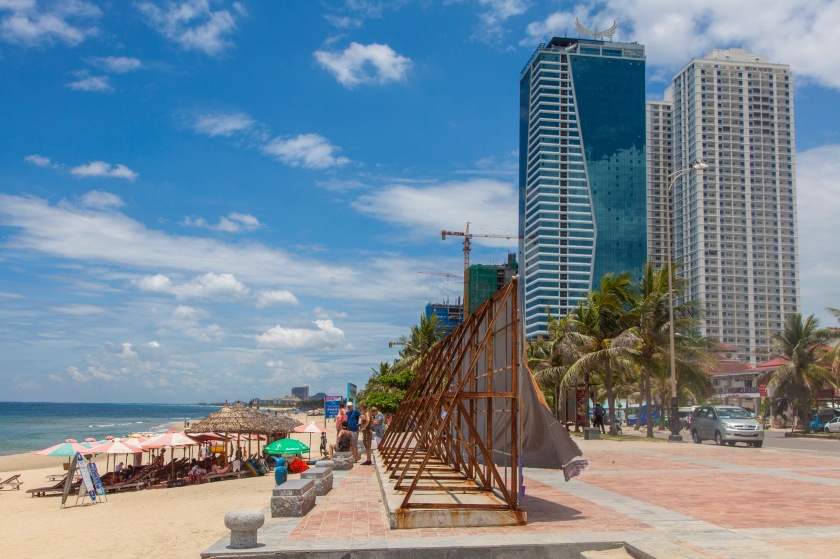
Along the coastline all the way from Danang to Hoi An we saw a huge number of hotels and fancy five-star beach resorts, but even more than the already existing ones were still under construction – clearly, tourism is developing extensively in this region and in the future Danang intends to compete with the resorts of Thailand, Indonesia and Malaysia.

IMG_2579

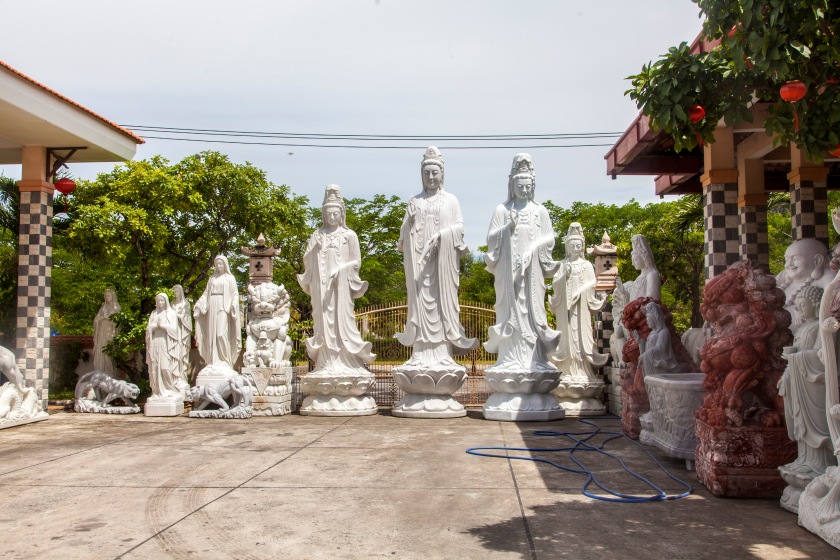
On the way, we made another stop, although our stomachs were already dreaming about food, at a marble factory, which there are quite a few of in Vietnam, and they showed us how marble statues were made. Looking at the statues themselves was actually more interesting than observing the production process: there were smaller replicas of the Lady Buddha statue, other Buddha statues, various animals and mythical creatures, Jesus Christ and the Virgin Mary (10% of the Vietnamese population are Catholics). At the factory we were also very actively solicited to buy souvenirs, but we didn’t like the little figurines that much and the big statues would obviously be quite problematic to buy.

IMG_2581

Thank goodness, there were now only a few kilometres separating us from our desired lunch, and finally we stopped at some roadside restaurant. First, for some reason, we had pretty low expectations of the restaurant – probably, because it was located right next to the noisy highway and, since the owner was apparently working in the kitchen by himself, the service wasn’t too prompt – but then we were served delicious salads and grilled fish, and also treated with orange slices and chewing gum when we asked for the bill, so our opinion of the restaurant made a complete U-turn.

20170609_144137

What Nam told us about Hoi An was that it is an old trading city, where the big seaport was located between the 16th and the 18th. Trade with China, Japan and European countries was conducted through the port, which is why there were many Chinese and Japanese living here.

IMG_2602

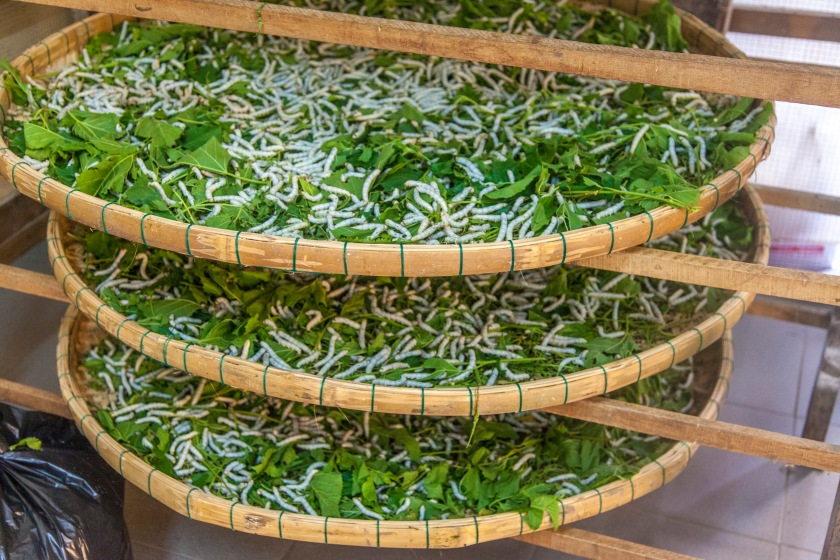
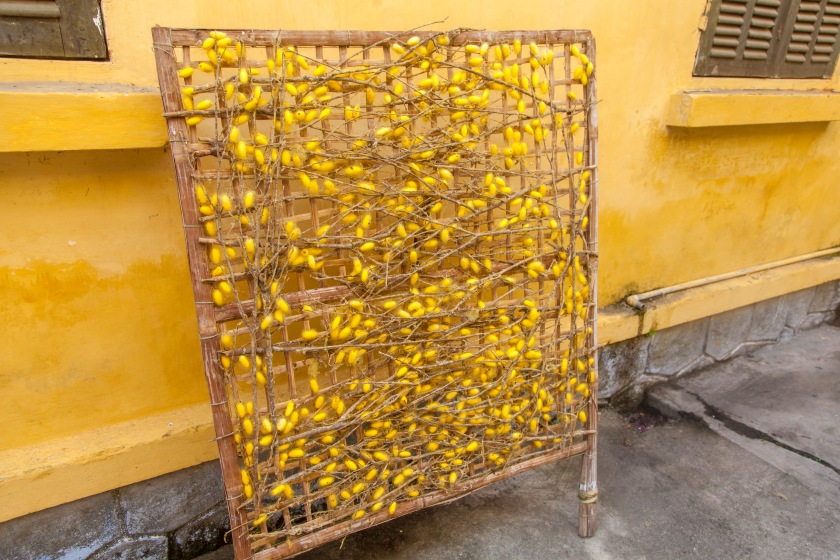
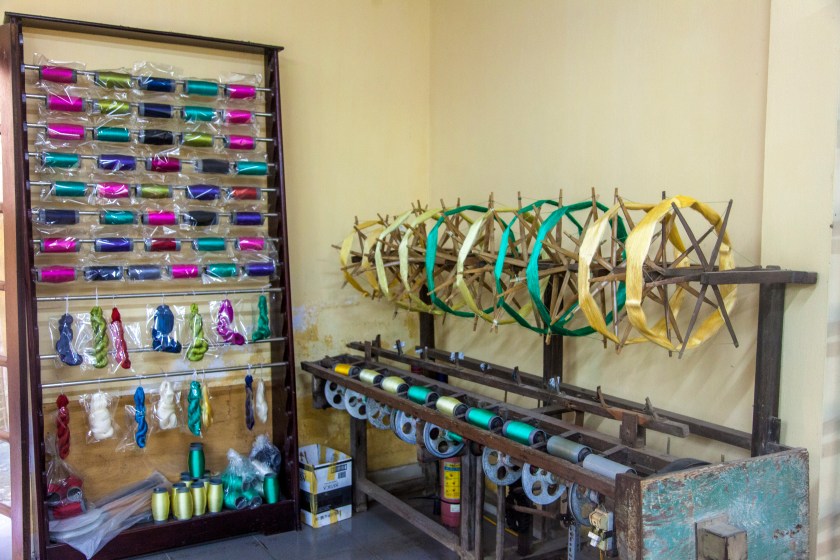
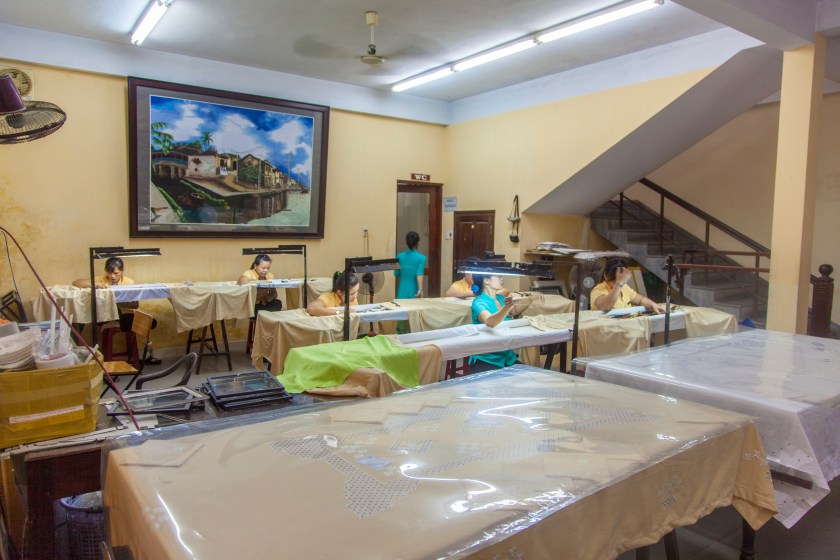
The city is famous for silk production, so we made yet another stop, this time at a silk factory. Here we saw all the stages of silk production – first some gross white worms swarming among mulberry leaves, then the cocoons, and then the thread and the finished fabric. Right at the factory, there is also a store selling ready-made fabrics and clothes and you can also order something from a tailor and get it ready the next, or even the same day. Generally in Hoi An, as we noticed, many ateliers provide similar services.

IMG_2593

IMG_2592

IMG_2596

IMG_2597

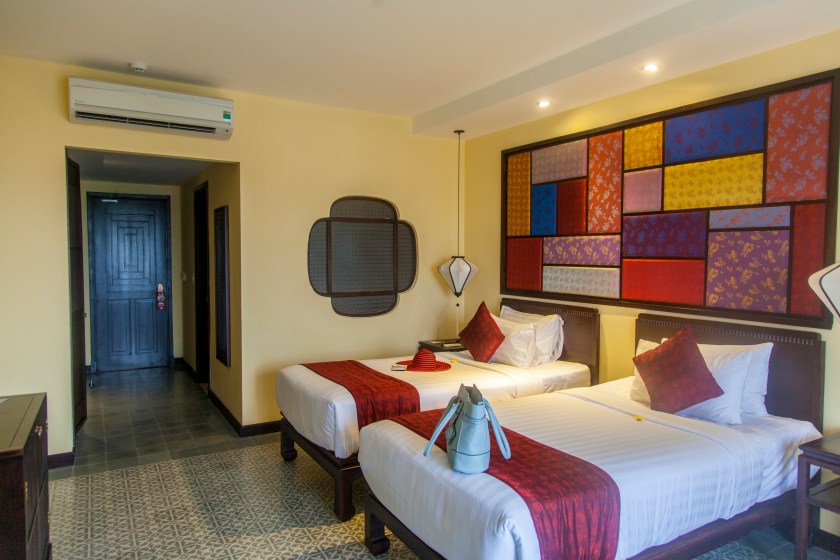
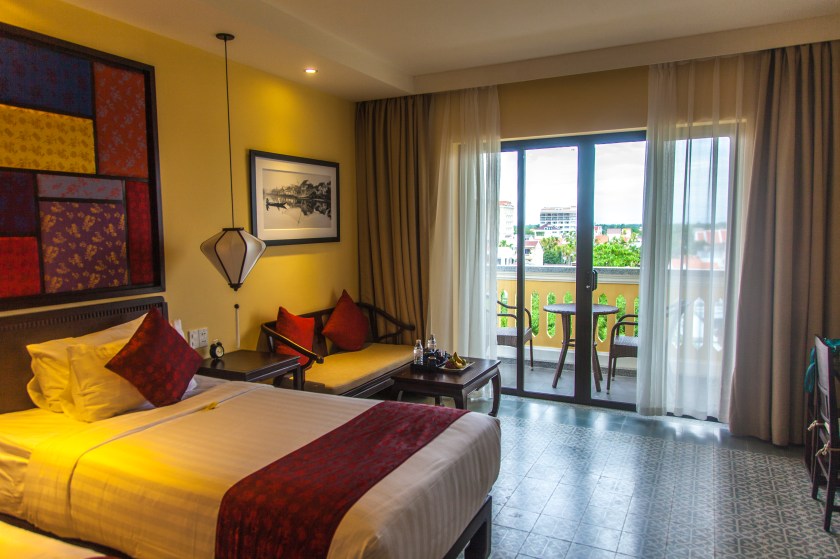
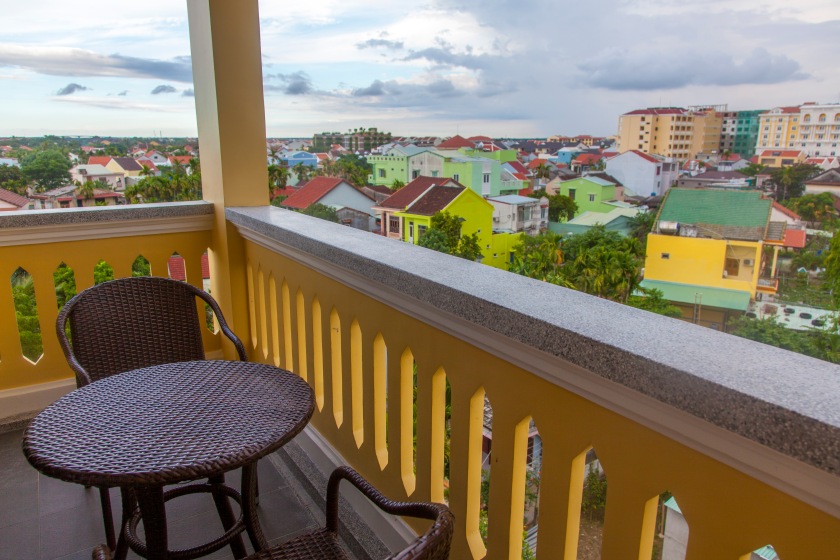
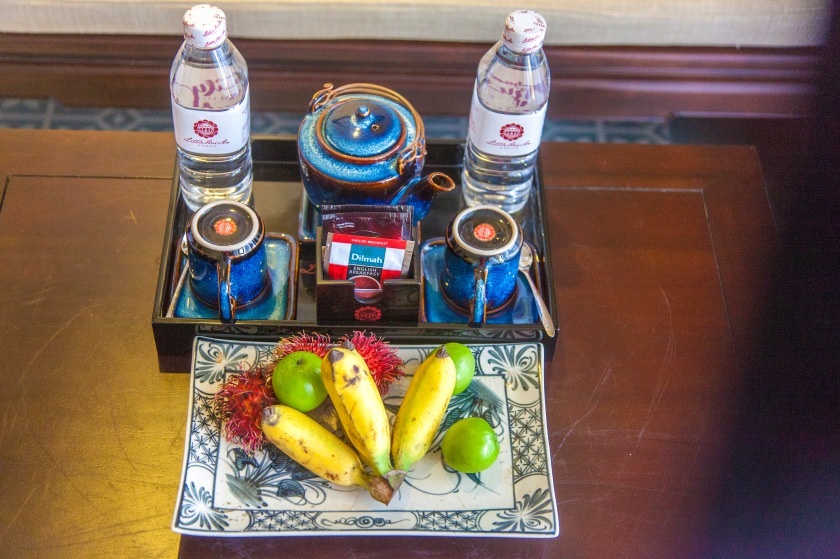
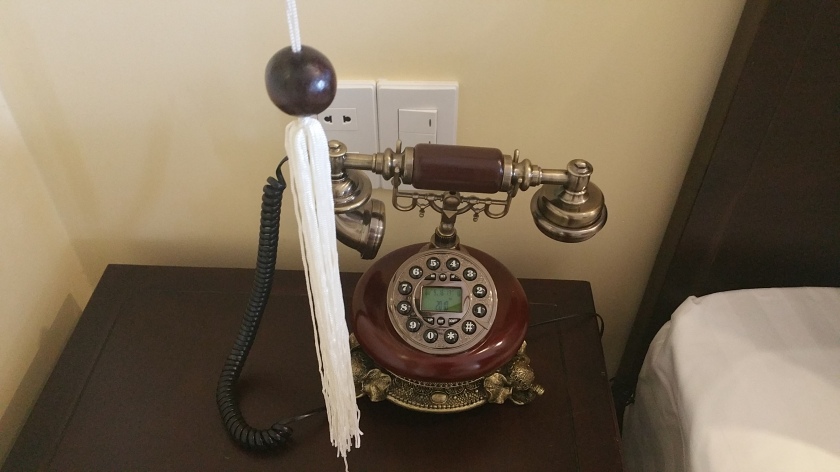
Finally, we got to the Little Hoian Central hotel, which turned out to be a pleasant surprise for us. The hotel is a three-star one, but cannot even be compared, for example, with London three-star hotels, where you get a tiny room and a rather meagre breakfast – this one has an outdoor pool and a spa, the room is huge, with a balcony, and the interior is in the typical Asian Colonial style of the 19th century: even the phone and the plumbing are stylised.

IMG_2609

IMG_2613

IMG_2612

IMG_2607

IMG_2614

IMG_2610

20170609_161829

Since we were extremely tired, the pool and the spa came in really handy: first we washed off all the fatigue in the pleasant water, and then once again went for a wonderful massage.

IMG_2606

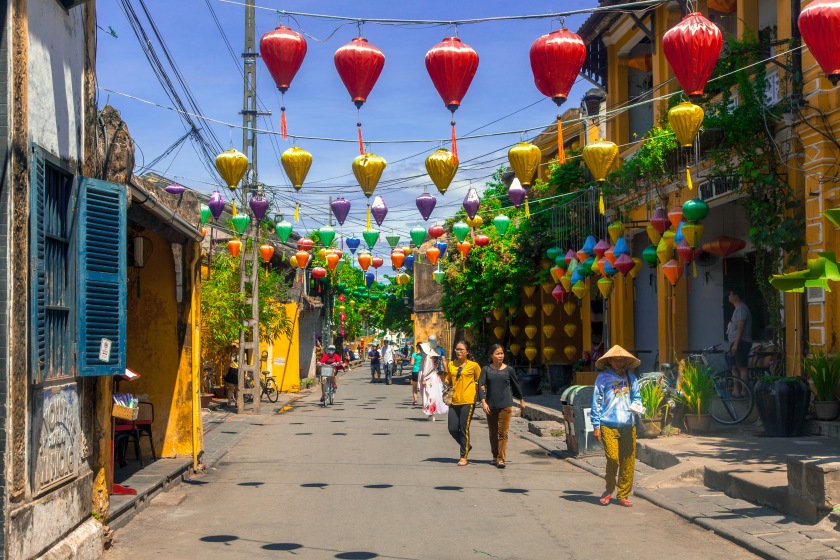
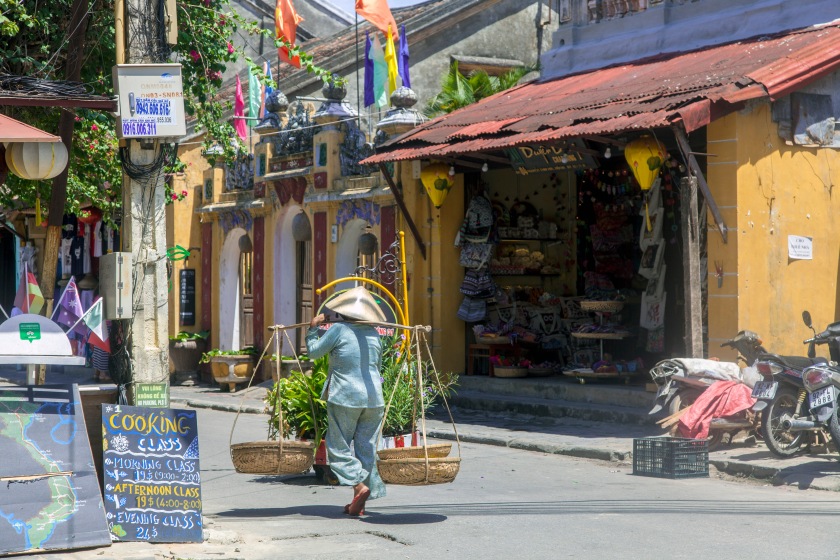
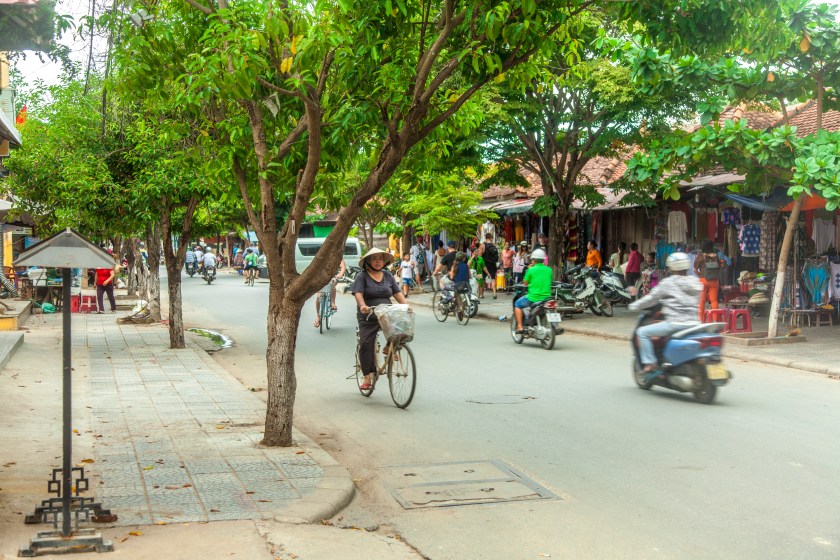
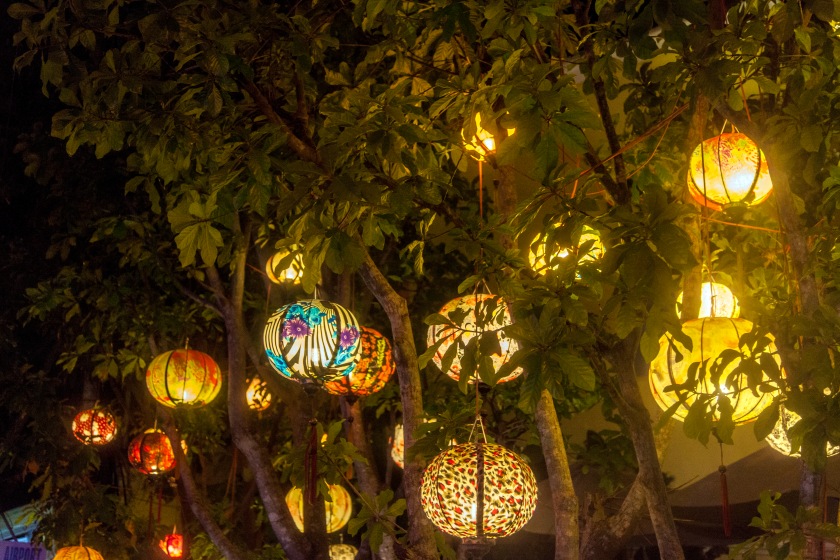
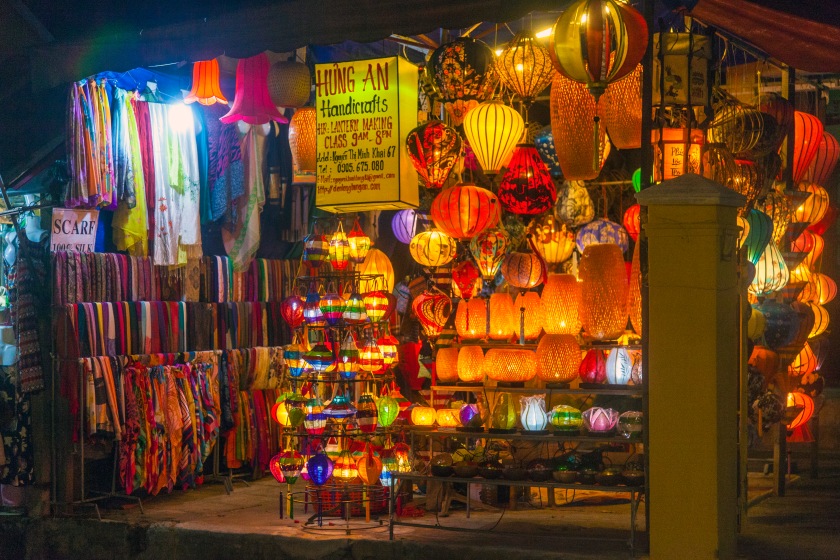
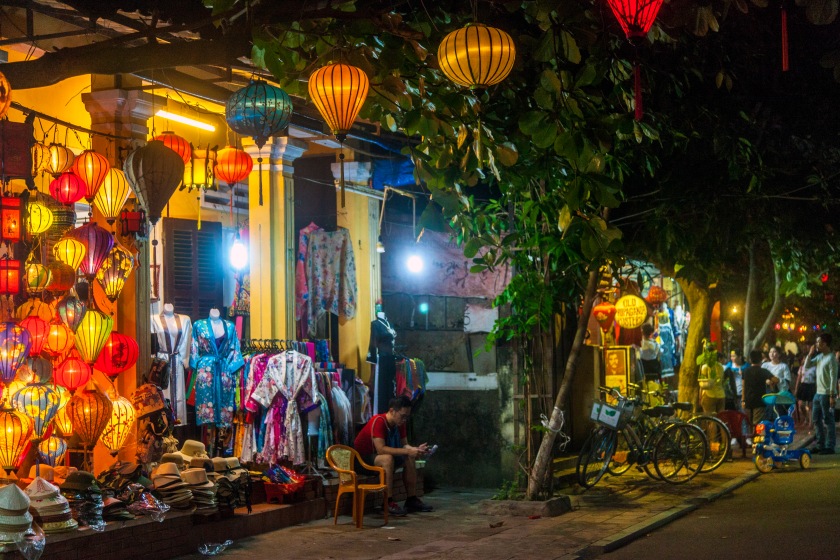
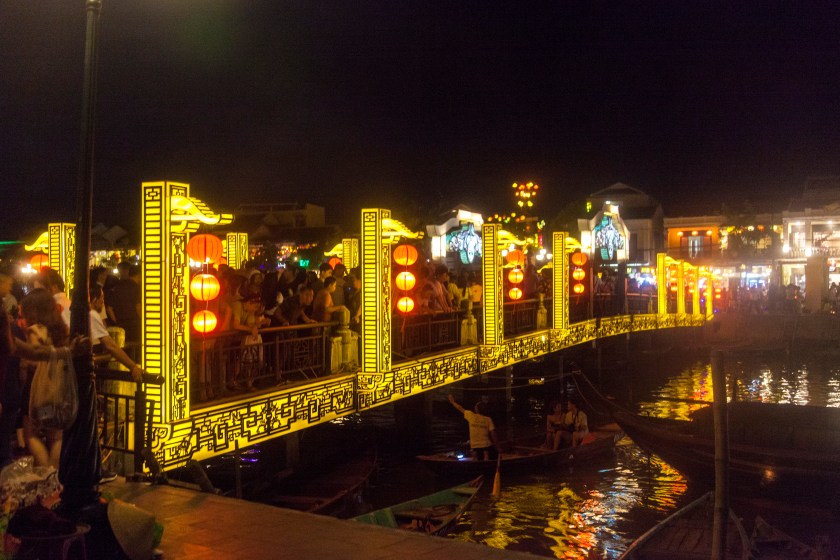
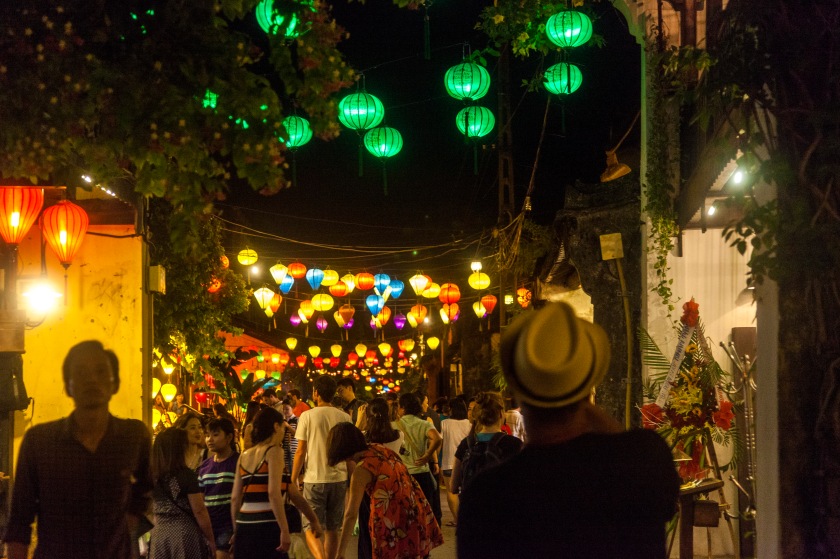
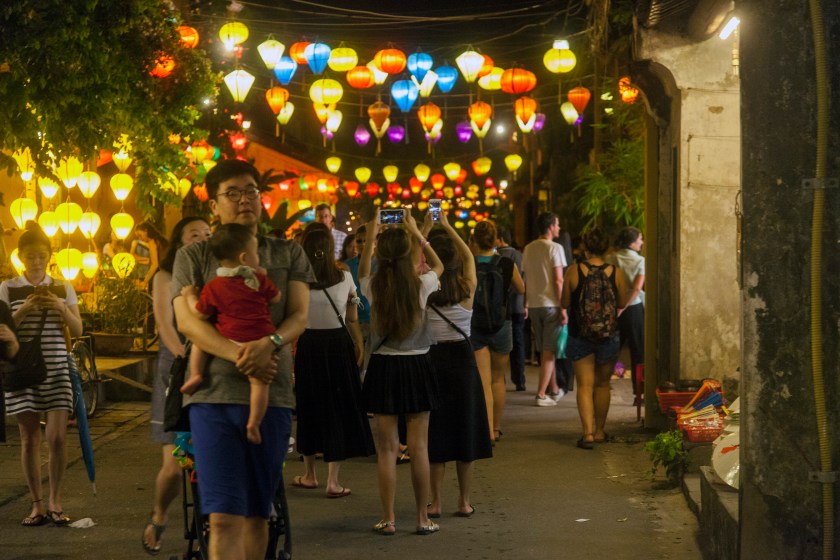
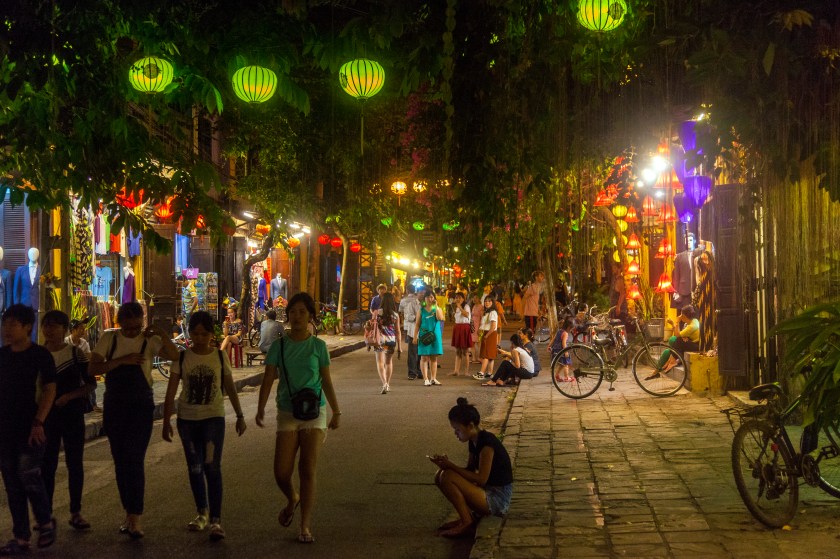
We had the evening free, so we made a sortie to the Old Town. One of Hoi An’s features is silk lanterns, and the whole Old Town is decorated with them, which makes it look particularly cool in the evening. The Old Town is only accessible to pedestrians and cyclists, and boy is it great to finally relax from these chaotic scurrying scooters everywhere! The zone is clearly very touristy, and there are mostly shops selling souvenirs, silk clothes and lanterns. The crowd is very thick, there are lots of foreign tourists, and even more local ones: it’s summer now, children have holidays, so many families travel around the country.

IMG_2622

IMG_2630

IMG_2633

IMG_2648

IMG_2651

IMG_2652

IMG_2658

IMG_2659

IMG_2661

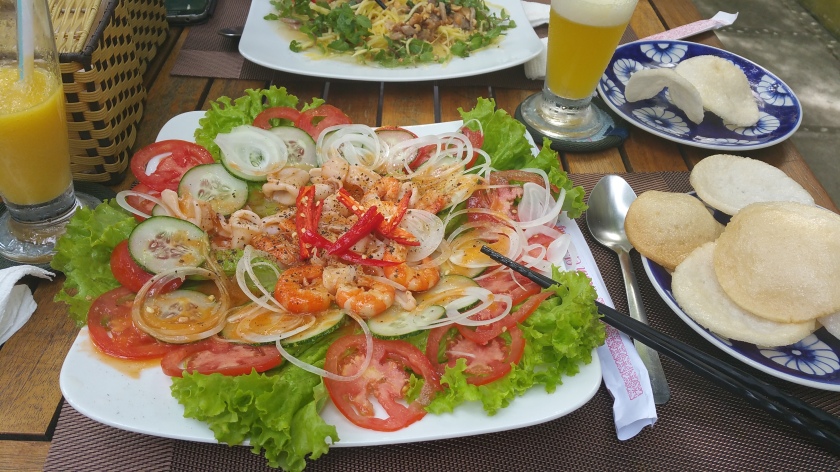
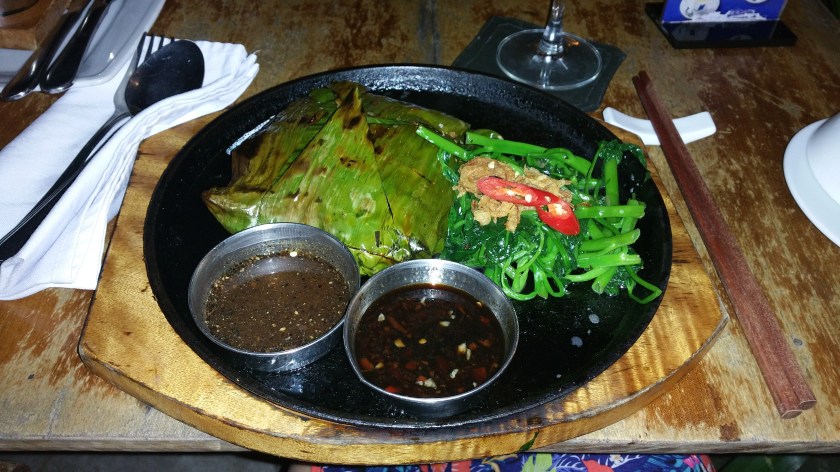
There are also plenty of cafes and restaurants, and we decide to have dinner in one of them, attracted by the nice view of its outdoor seating area among bamboos. It was a good choice – we ordered grilled fish again, and mine was wrapped in banana leaves and incredibly tasty. Plus we were entertained by lovely music: there is an international choir competition happening now in Hoi An, and the performance took place right in the street near our restaurant.

20170609_201850