Posted in English, Europe, Georgia

Georgia – Day 1

РУССКОЯЗЫЧНАЯ ВЕРСИЯ ПО ЭТОЙ ССЫЛКЕ. CLICK HERE FOR RUSSIAN VERSION.

27 December 2014

We arrived last night, and found Zviad, the guide meeting us, very easily, so logistic-wise everything went really smoothly. The smooth start actually began at the passport control, where each of us was handed a bottle of Saperavi wine – turns out, they are given out to all foreigners entering the country, isn’t that surprising? Zviad drove us a bit around the night Tbilisi, which immediately aroused nostalgia – the non-central streets seemed very similar to the Baku of my childhood. We got particularly excited when shown the river Kura and then the Avlabari neighbourhood, and started quoting the Khanuma movie.

20141227_085802

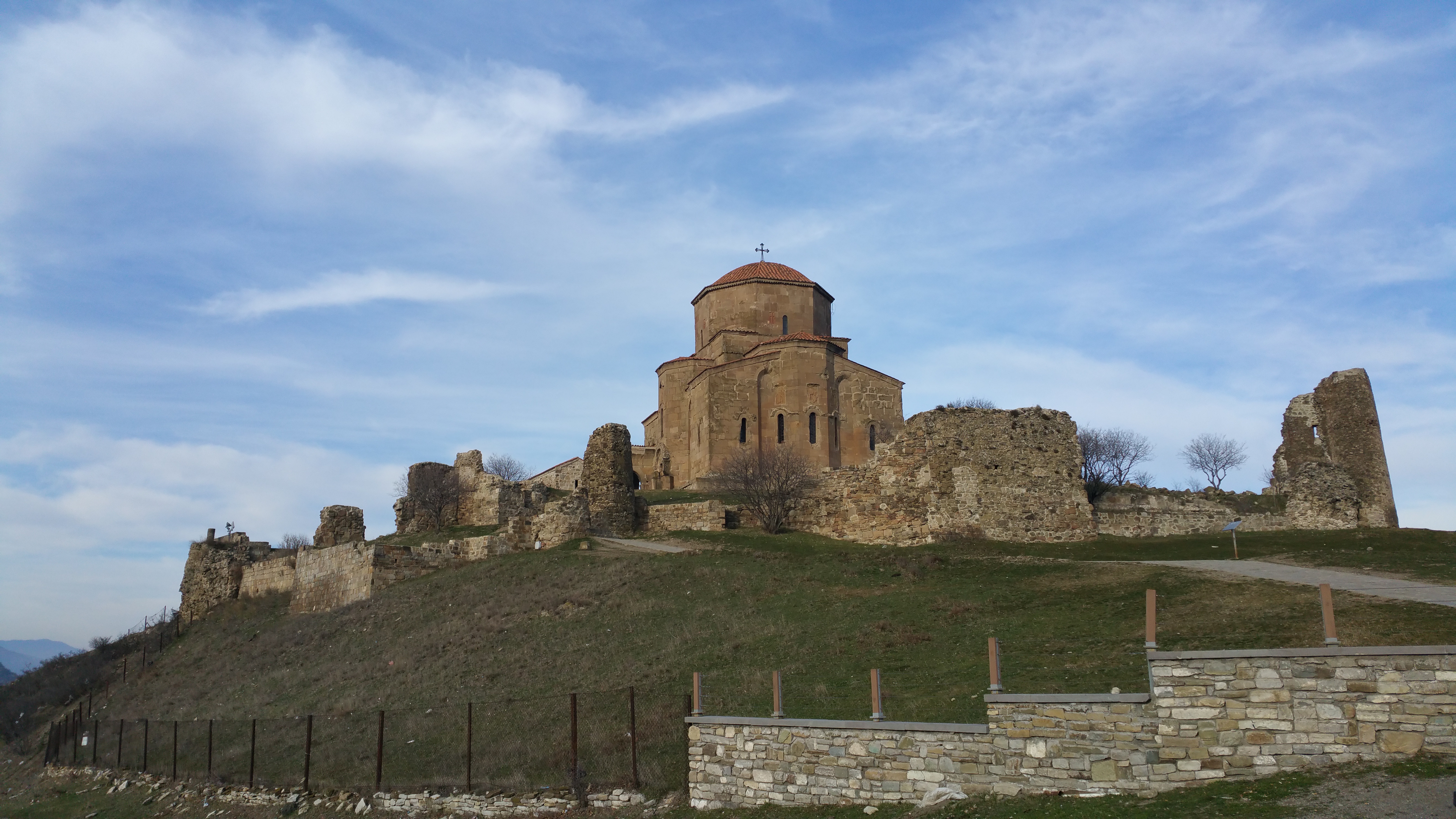
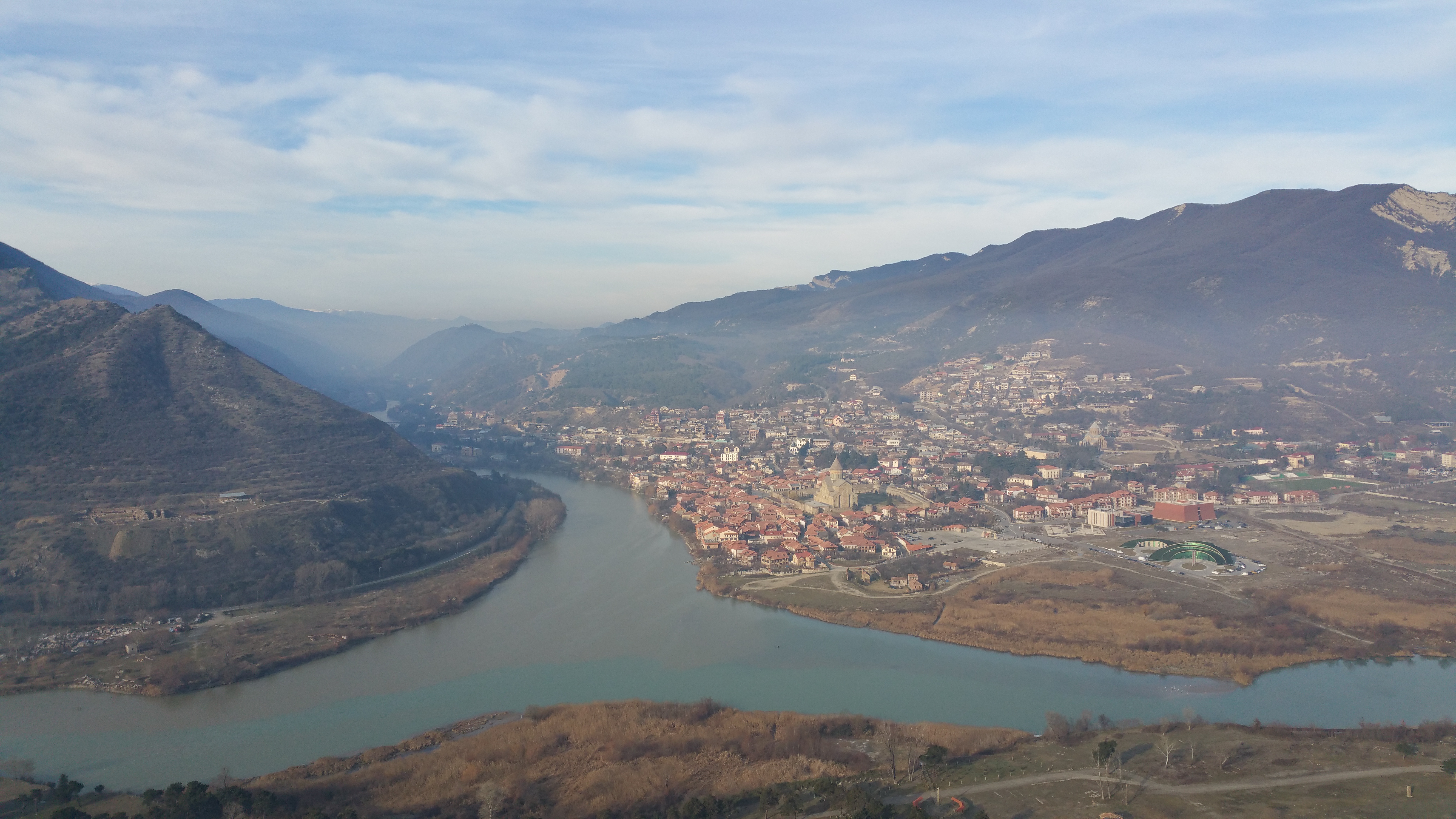
It was decided that on the first day we would make a sortie out of Tbilisi and leave the city sightseeing for the second one. The weather promised to be nice (and honestly fulfilled the promise), even though it was quite chilly near the Jvari (meaning ‘cross’) monastery where we headed first, and the puddles were flecked with ice. The monastery is located atop a rocky mountain, from which one can see the Mtskheta town and also exactly what was described in Lermontov’s poem ‘The Novice’ (‘Mtsyri’): “…where soundingly together flow Aragva and Kura – the place, where, like two sisters, they embrace…”, i.e. where the blue Aragvi merges with the yellow Kura, and the line separating these waters is very clearly noticeable. The reason why the monastery is called the Holy Cross monastery is not because it has the shape of a cross, as one might expect, but because it was here where St. Nino of Georgia, a female evangelist, erected a cross. The legend says that this very cross lies in the foundation of the monastery.

20141227_104035

20141227_104044

20141227_104539

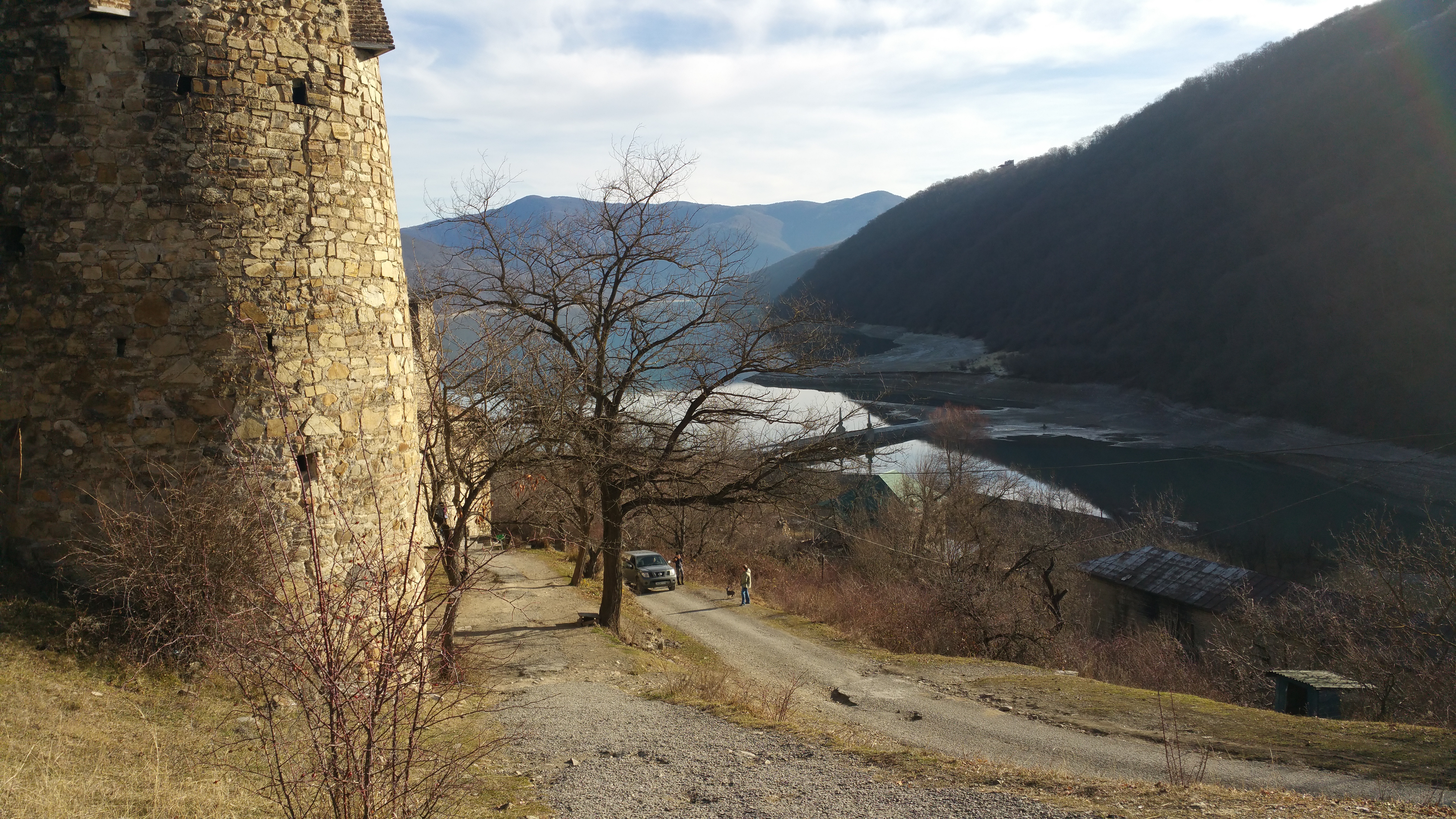
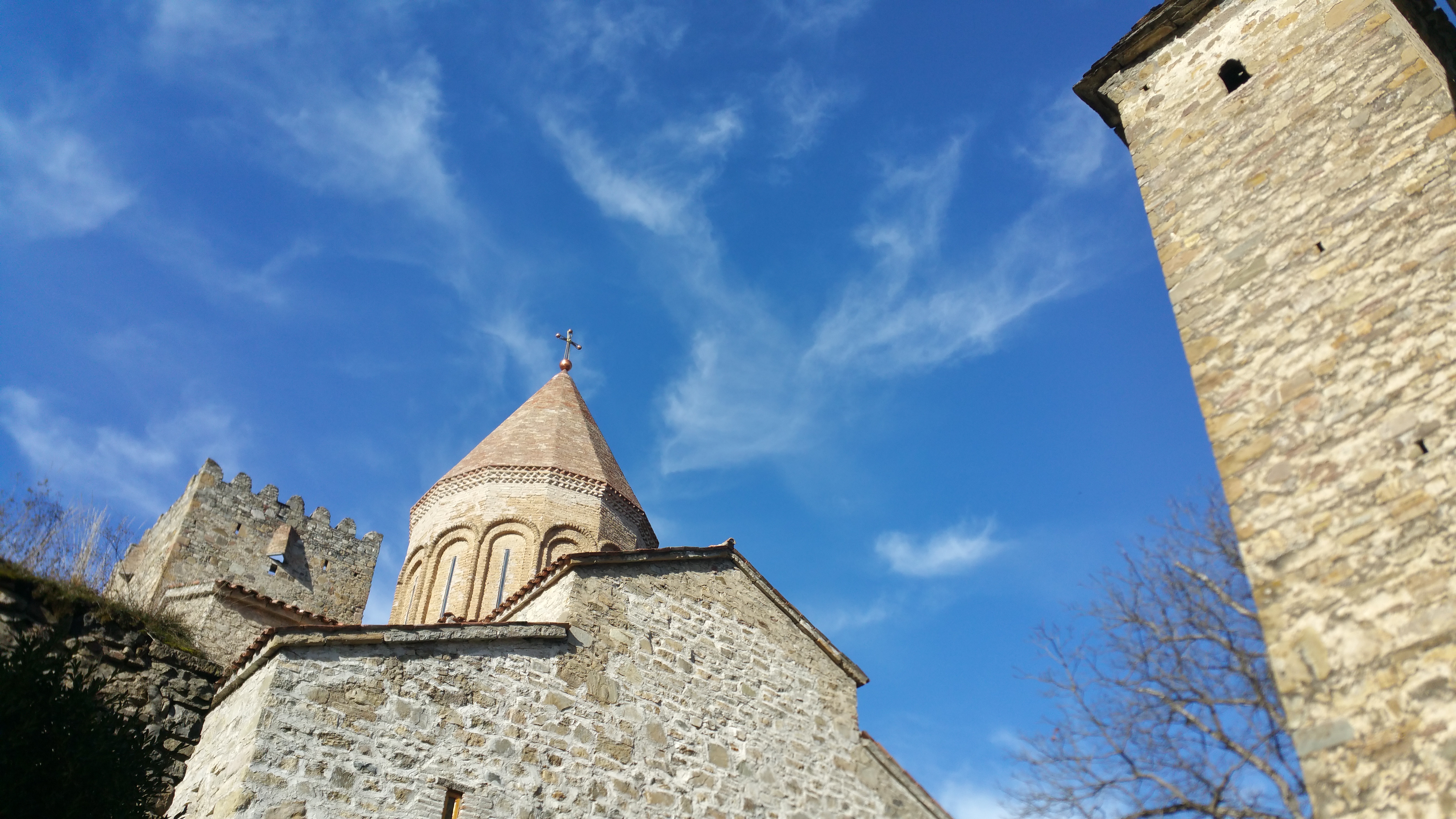
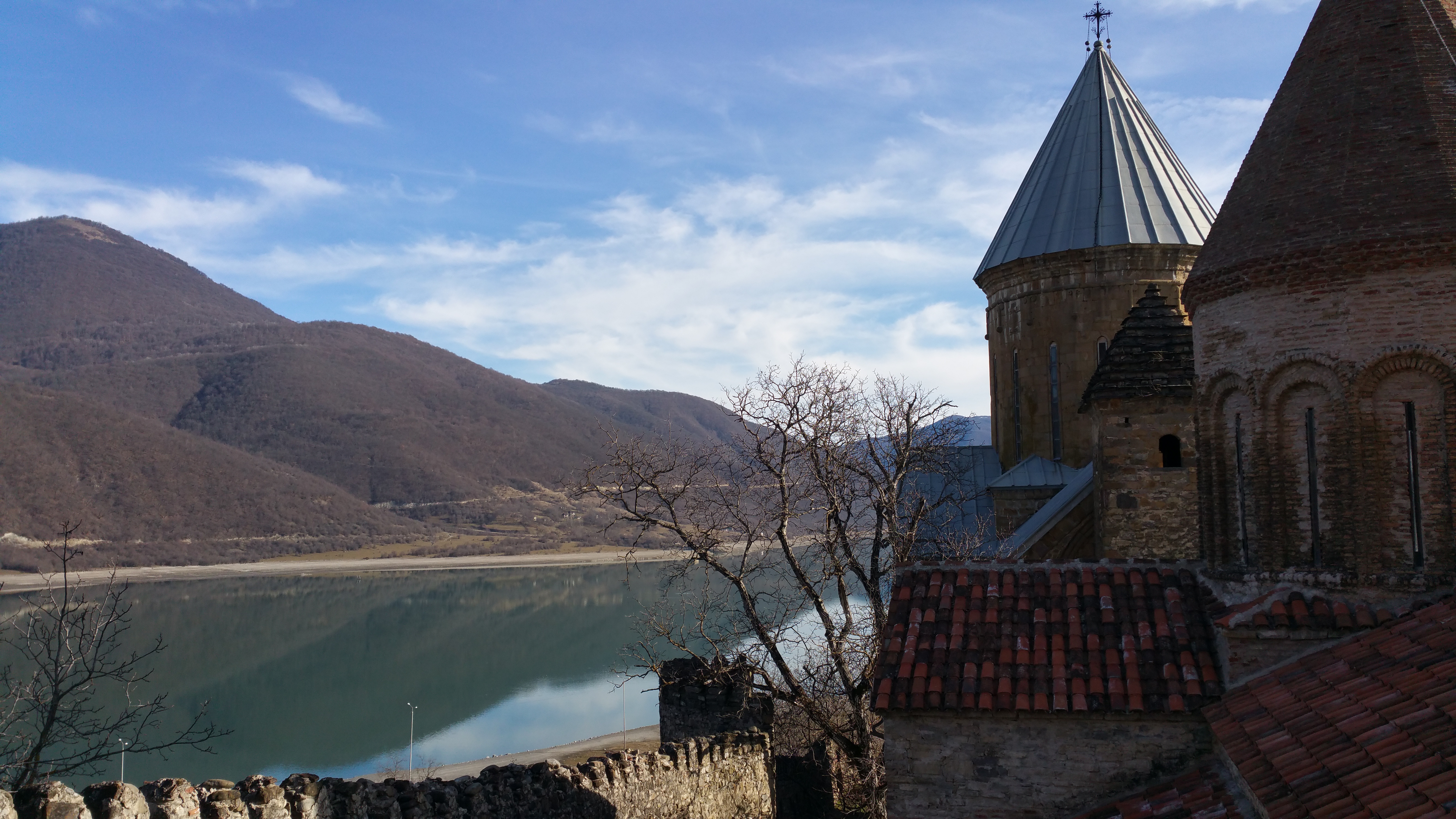
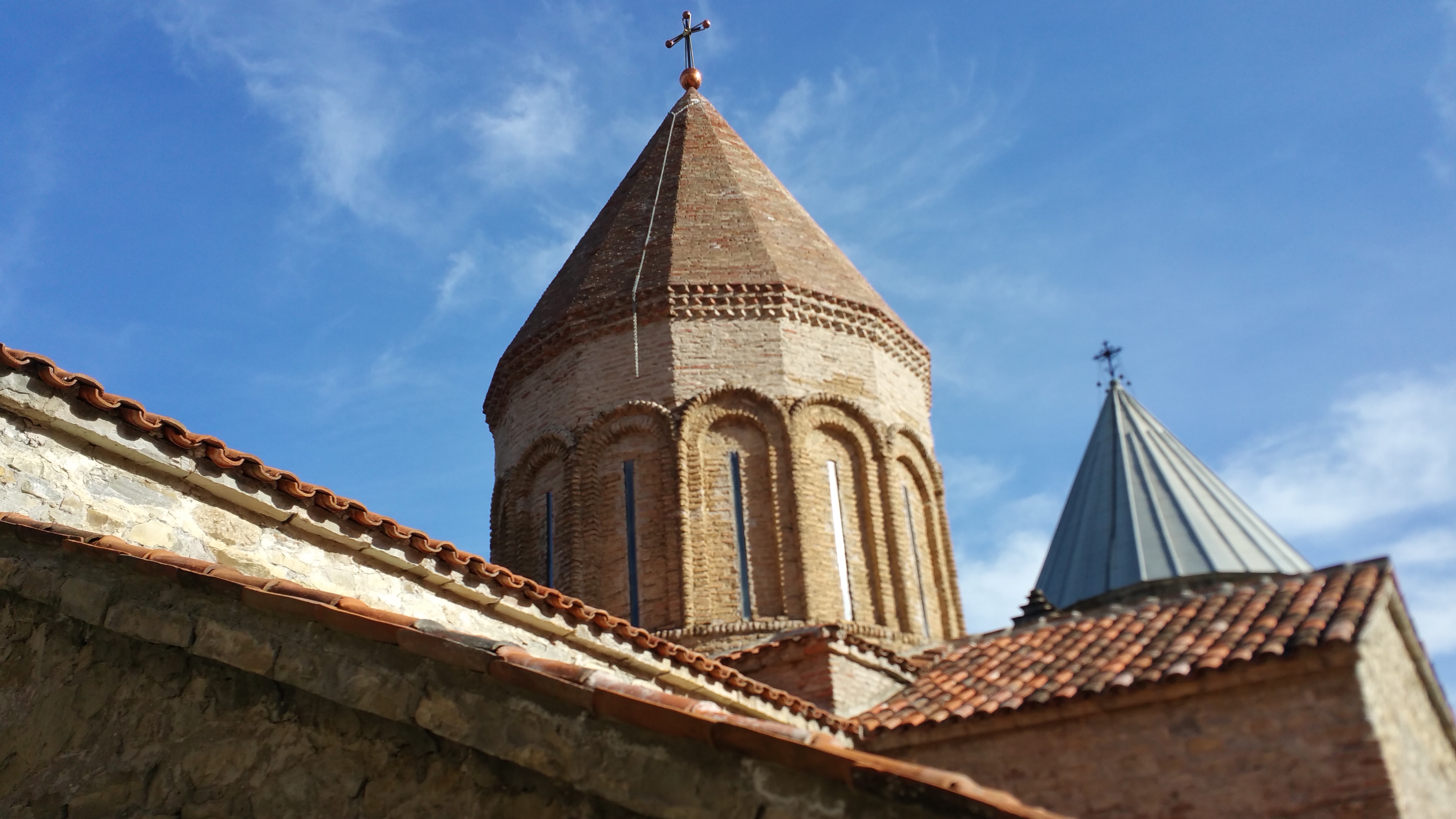
We drove off along Aragvi, on the Georgian Military Highway, to see the ancient fortress of Ananuri. The places around were very picturesque, even though it’s not the best season now – in autumn or spring it must look absolutely spectacular! On our way we took pictures of the Zhinvali reservoir from various angles. It’s also very beautiful, but that’s somewhat overshadowed by the fact that to create this beauty (which of course has practical use too!) three villages had to be flooded. We visited one of the churches in the castle complex, while the other one was closed. Zviad told us that once all the walls in the first church were painted with frescoes, but then during the stay of a Russian garrison in the fortress, they were all covered with a thick layer of lime. Relatively recently a small area was cleared and a really impressive fresco of St. George was discovered. I climbed to the top of the tower, which was quite difficult and scary, considering the narrow passages and steep, broken stairs. But I got the chance to look out of a loophole, although it was so narrow that I couldn’t really see much.

20141227_121051

20141227_121232

20141227_121726

20141227_121742

20141227_121846

20141227_121942

20141227_122617

20141227_123401

20141227_123628

20141227_125548

From here we drove back to Mtskheta and stopped in the old part of the city. In general, as we noted, it is peculiar to Georgia that most of the ancient and old buildings are restored in their original form. Therefore, all the houses are colorful, neat, with traditional Georgian balconies and look very good. There are little shops selling souvenirs, wine, churchkhela (Georgian sweet “sausages” made of fruit and nuts) with sellers strongly beckoning tourists to drink with them all along the road to the Cathedral of Mtskheta. Our guide even argued with someone, reproaching him for trying to “recapture” his guests.

.

20141227_133702

20141227_133713

20141227_133745

20141227_141233

20141227_141303

20141227_141404

The Cathedral of Mtskheta, or Svetitskhoveli (translated as “the life-giving pillar”) is a patriarchal cathedral with the seat of the Patriarch standing right in the centre thereof. It’s a burial place of the last kings of Georgia and various princes, including a few from the Mukhrani branch of the famous Bagrationi dynasty. The Cathedral is one of the three main cathedral in country, symbolising the central Georgia, or the Kartli region. The Alaverdi temple in Kakheti, respectively, represents the east of Georgia and the Bagrat temple in Kutaisi represents the west. Even in Soviet times, it was common among the youth of Tbilisi to wed in Svetitskhoveli, so every spring after Easter endless wedding processions stretched from Tbilisi.

20141227_134636

Instead of the anticipated three hours we spent five on the road, by the end of which we were absolutely starving. We wanted to taste some proper Georgian cuisine, and on our return to Tbilisi we were taken to a restaurant called “Zakhar Zakharich”. The food there was really delicious. Our menu consisted of the kharcho soup, Imeretian khachapuri (cheese pie), aubergines with walnuts, ojakhuri (roasted pork with potatoes and onions), shkmeruli (fried chicken with lots of garlic) and jigar (liver) on the grid. As for the wine, we had red Saperavi in pitchers. In short, we had a great treat and only paid 127 GEL for four of us, which makes about 70 USD , or 54 AZN.

The only thing we could do after that was taking a two-hour nap. In the evening, we walked along the holiday-decorated Rustaveli Avenue, which was right around the corner from our hotel. It was beautiful, but in many ways reminded of Baku – potholes here and there, lots of construction, cars on the sidewalks, cigarette smoke everywhere – as most of the population seems to smoke. However, the walk was still nice.

Posted in Asia, China, English, Hong Kong

Hong Kong – Day 3

РУССКОЯЗЫЧНАЯ ВЕРСИЯ ПО ЭТОЙ ССЫЛКЕ. CLICK HERE FOR RUSSIAN VERSION.

2 December 2013

Today we went on with the bus tour which continued on the Kowloon peninsula. I found it less interesting than the island – lots of skyscrapers and shops, the streets mostly looked quite the same. Generally, it would have even been better to find a hotel on the island instead, it is way more picturesque than the peninsula which basically has only shopping and restaurants, and also the Avenue of Stars on the promenade, where we walked prior to the bus ride. The first time, I mean last year, it had been more fun – at least, seeing the handprints of local stars for the second time seemed less exciting now, however I still found the Bruce Lee statue impressive.

IMG_2174

IMG_8091

IMG_8093

IMG_8103

IMG_8102

IMG_8099

IMG_8101

During the bus tour, as usual, we were listening to the audio guide, and again heard the familiar information about the Black Christmas, when on 25 December 1941 the Hong Kong authorities had ignominiously surrendered to the Japanese; and how the Chinese emperor had mastered Kowloon and why this area with eight dragon-like hills was called the peninsula of Nine Dragons. But there was also an unfamiliar piece of information which I found quite interesting: one can hardly find any rats in Hong Kong nowadays, but in the late 19th century the city was literally flooded with lots of them. When some Japanese doctor proved the correlation between the spread of plague and the presence of rats, the city authorities took drastic measures and announced a reward of 2, and later 5 cents per caught rat. All went well at first, but then the reward had to be cancelled, for some particularly enterprising citizens started importing thousands of rats from China!

IMG_8105

IMG_8108

IMG_8111

IMG_8116

IMG_8121

The highlight of the day was meeting my teacher of Cantonese, which I learn over Skype. It’s always great when you have the opportunity to talk to someone local during a trip – it was fascinating to ask her questions about the Chinese language, and how text messages are typed in Chinese (she said there were dozens of ways: for example, her cousins, who can only read, but not write characters, use an app where you input romanised text, and it suggests all possible character options, out of which you need to find and select the appropriate one; while she herself prefers the app where you handwrite each character on the touchscreen, and the app recognises them and translates into printed text – the trick here is to follow the correct stroke order), and to hear from her that the income tax is very low in Hong Kong, however, there is no state pension at all. By the way, despite being 35, my teacher looks 23-25 at most.

She took us to the Maritime Museum, which had an exhibition of John Thomson’s photoworks, depicting Hong Kong and Coastal China of the 19th century. The technique of creating these photographs was shown right there: the wet collodion photographic process he had been using was already somewhat more advanced than the daguerreotype process, but still as far as the moon from being any similar to the modern process. It was rather complicated and time consuming, so it’s really amazing how Thomson managed to obtain photographs of such high quality. Personally, I liked the most those portraying people, some of which had been obviously posing very diligently and thus had ‘frozen’ faces, while the facial expressions of some others were vivid and natural, creating real genre pictures.

The rest of the museum expositions were stationary, and demonstrated the history of local seafaring and shipbuilding, piracy and maritime trade from ancient times to the present. Even we, being generally quite far from maritime affairs, found it very interesting.

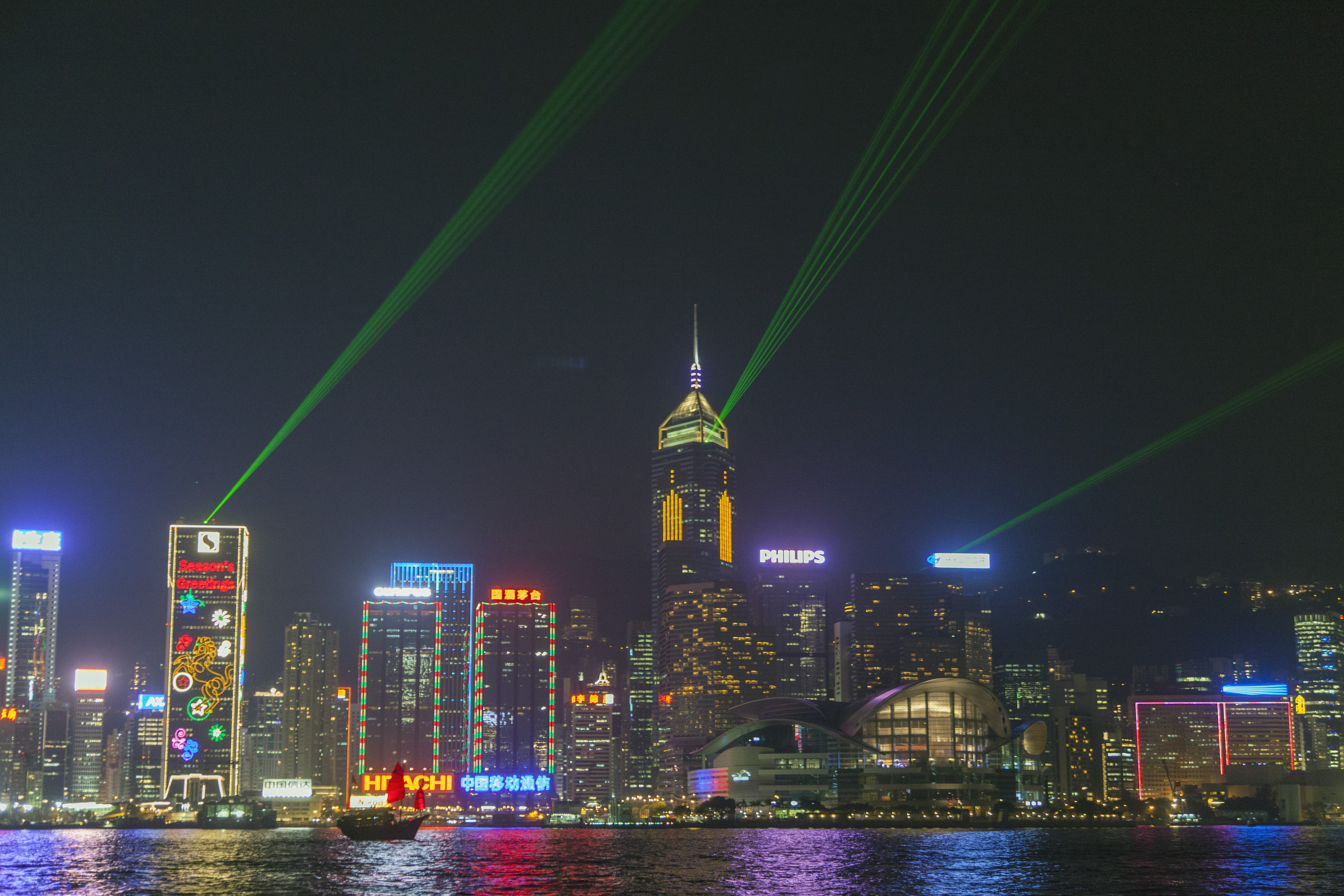
We finished off the day with a night tour of Hong Kong and the laser show. Hong Kong is remarkably bright at night, and the famous neon signs are not the only contributors to this – the walls of most skyscrapers basically turn into huge glowing panels. As for the laser show, it didn’t impress us any more than the last time we had seen it, even though the air was way cleaner and the rays should have been more noticeable.

IMG_8124

IMG_8137

IMG_8138

IMG_8144

IMG_8147

IMG_8151

IMG_8155

IMG_8160

IMG_8162

IMG_8176

Posted in Asia, China, English, Hong Kong, Singapore

Singapore – Day 7 / Hong Kong

РУССКОЯЗЫЧНАЯ ВЕРСИЯ ПО ЭТОЙ ССЫЛКЕ. CLICK HERE FOR RUSSIAN VERSION.

30 November 2013

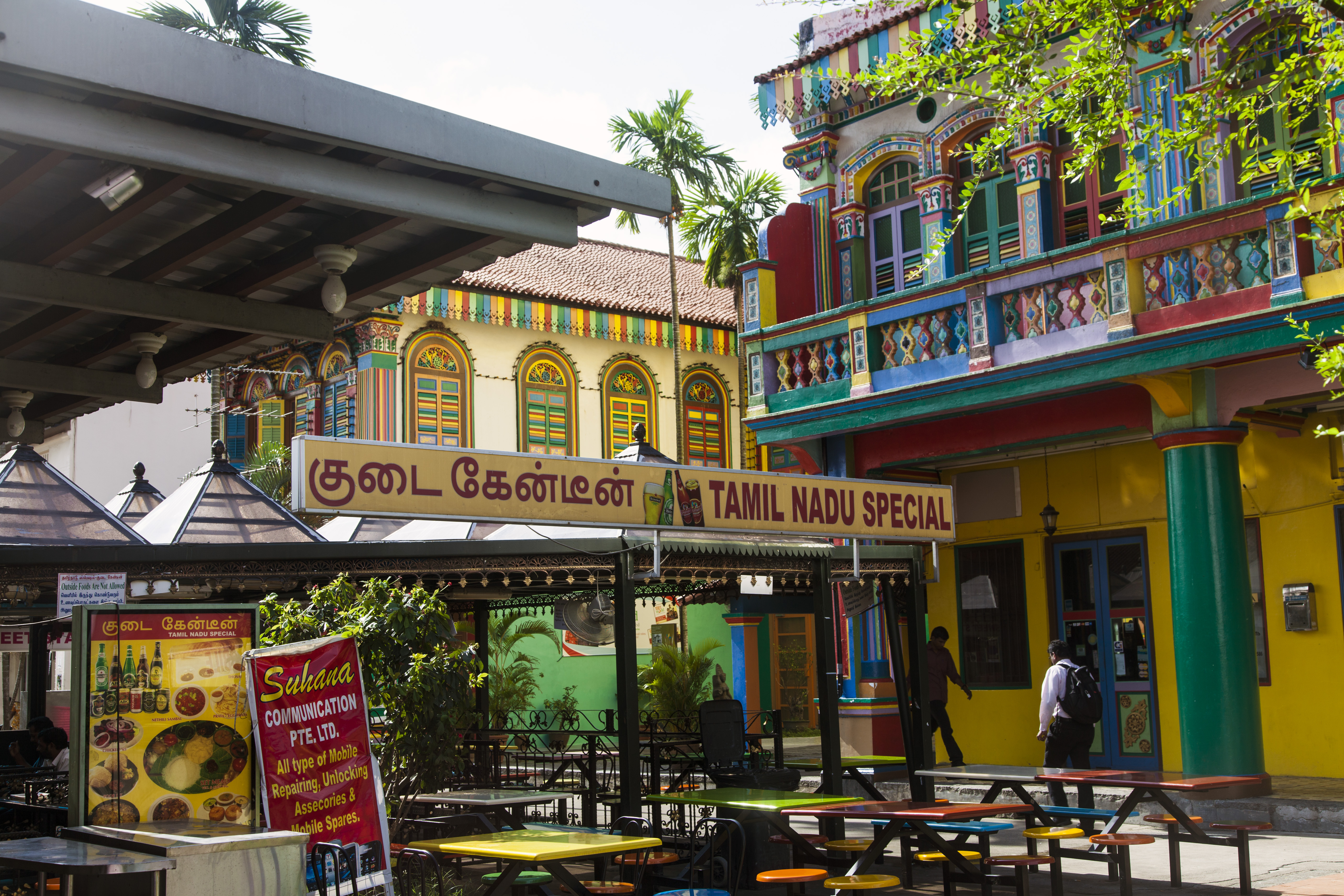
The trip to the chic and luxury Singapore ended not very luxuriously in Little India. First, we were intending to have lunch right there too, in order to join the Indian spirit, just as we had been joining the Chinese spirit in Chinatown; however the spirit didn’t please us that much, for it was very smelly! We really had the impression that the city government of Singapore had just given up on this part of town and provided people the opportunity to live in a familiar environment: very colourful, moderately dirty and ragged.

IMG_7806

IMG_7804

IMG_7800

IMG_7796

IMG_7816

IMG_7815

IMG_7813

Besides, there was a lot of construction going on around; maybe in the near future Little India too would be transformed to match the other parts of the magnificent Singapore. Quite frankly, we didn’t have the desire to eat here, so we eventually decided to have lunch at Changi Airport.

Even though our flight was delayed by an hour, we made it safely to Hong Kong on a small JetStar plane. The air temperature here is far from tropical, yet, by our standards, if it can get up to 20°C (or even slightly above), you wouldn’t really wear a down parka. By Chinese standards, though, it’s exactly the right time for those – that is why Hong Kong is dressed very diversely: foreigners walk around in almost beach style clothing, and the locals wear warm winter jackets and boots.

While during our last visit we were staying on Hong Kong Island, this time we booked a hotel on the busy Nathan Road on the Kowloon Peninsula.

Posted in Asia, English, Singapore

Singapore – Day 5

РУССКОЯЗЫЧНАЯ ВЕРСИЯ ПО ЭТОЙ ССЫЛКЕ. CLICK HERE FOR RUSSIAN VERSION.

28 November 2013

The day turned out very diverse in content which ranged quite impressively from the Universal Studios amusement park to a classical concert. But – one thing at a time.

Since the day before we had spent very limited time on Sentosa, we decided to repeat the visit right in the morning, and started again from the beach, and from the same one. We had kind of got used to it somehow, but the beach attendant must have been having a senior moment: he asked us literally all the same set of questions as yesterday: where we were from, whether we spoke Russian, what kind of country Azerbaijan was and whether it was close to Kazakhstan.

Siloso Beach

Sentosa

Even though the attendant caused a puzzled laughter with his repetition, the sunny weather which also replicated that of the previous day, was accepted with joy. The water was unpleasantly different though: tons of algae had been brought by the wind, and there was also something stinging in the water.

Sentosa

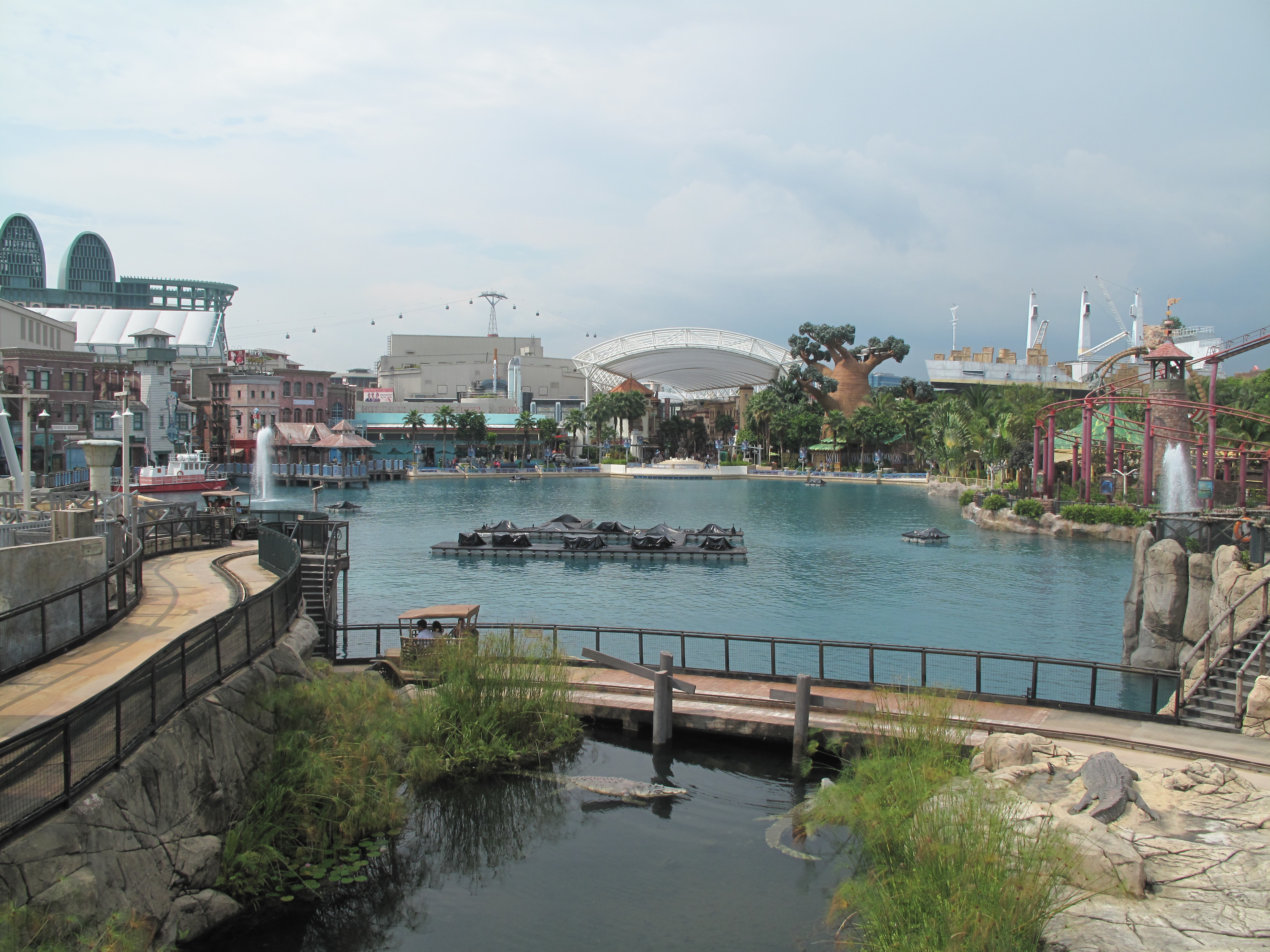
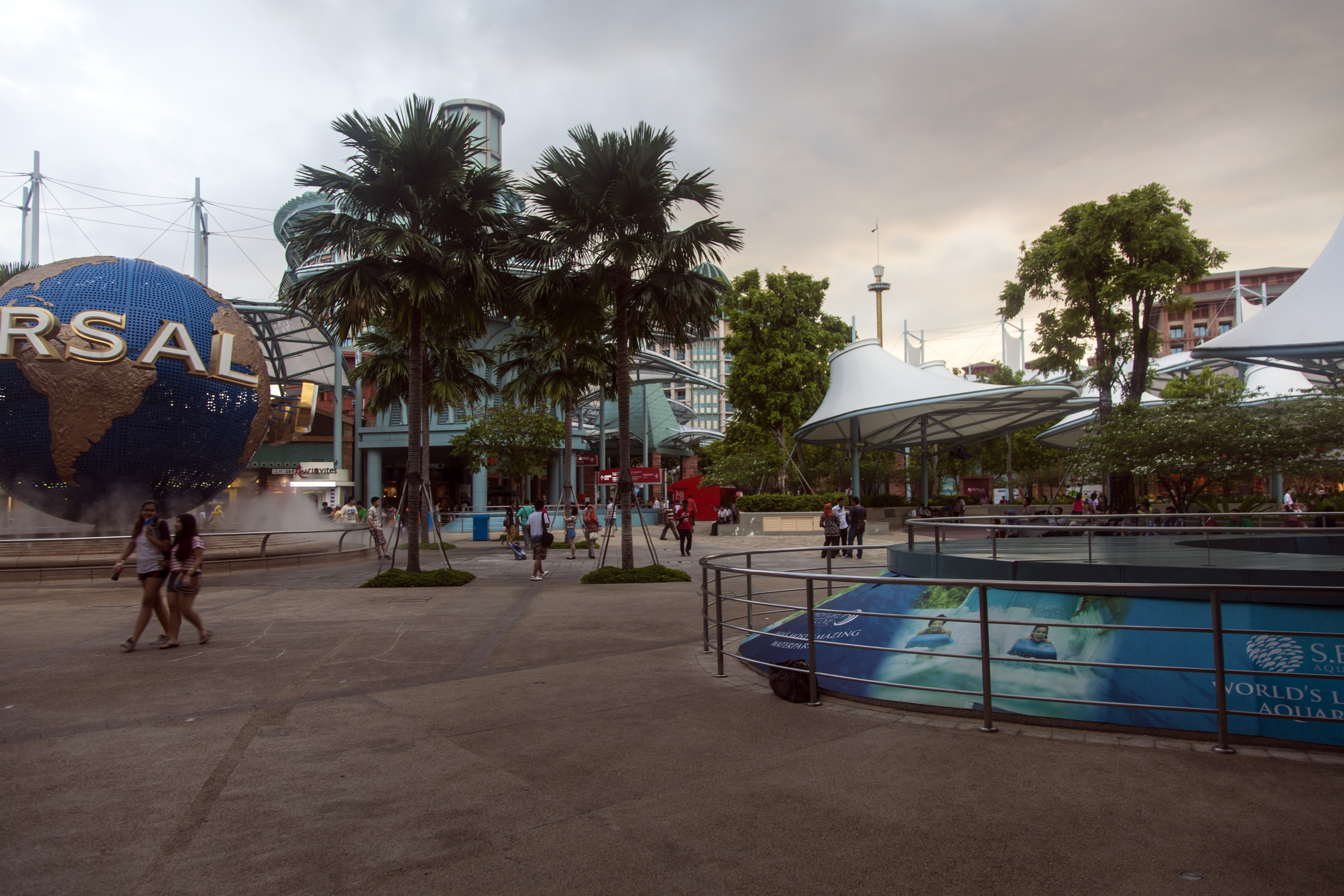
We hesitated a lot whether to visit the Universal Studios after all, or not. Having googled it thoroughly, we found out that it was basically nothing more than just an amusement park, and I personally am not a big fan of those. Nevertheless, we still decided to go and take a look – a very expensive look, I have to say.

Universal Studios

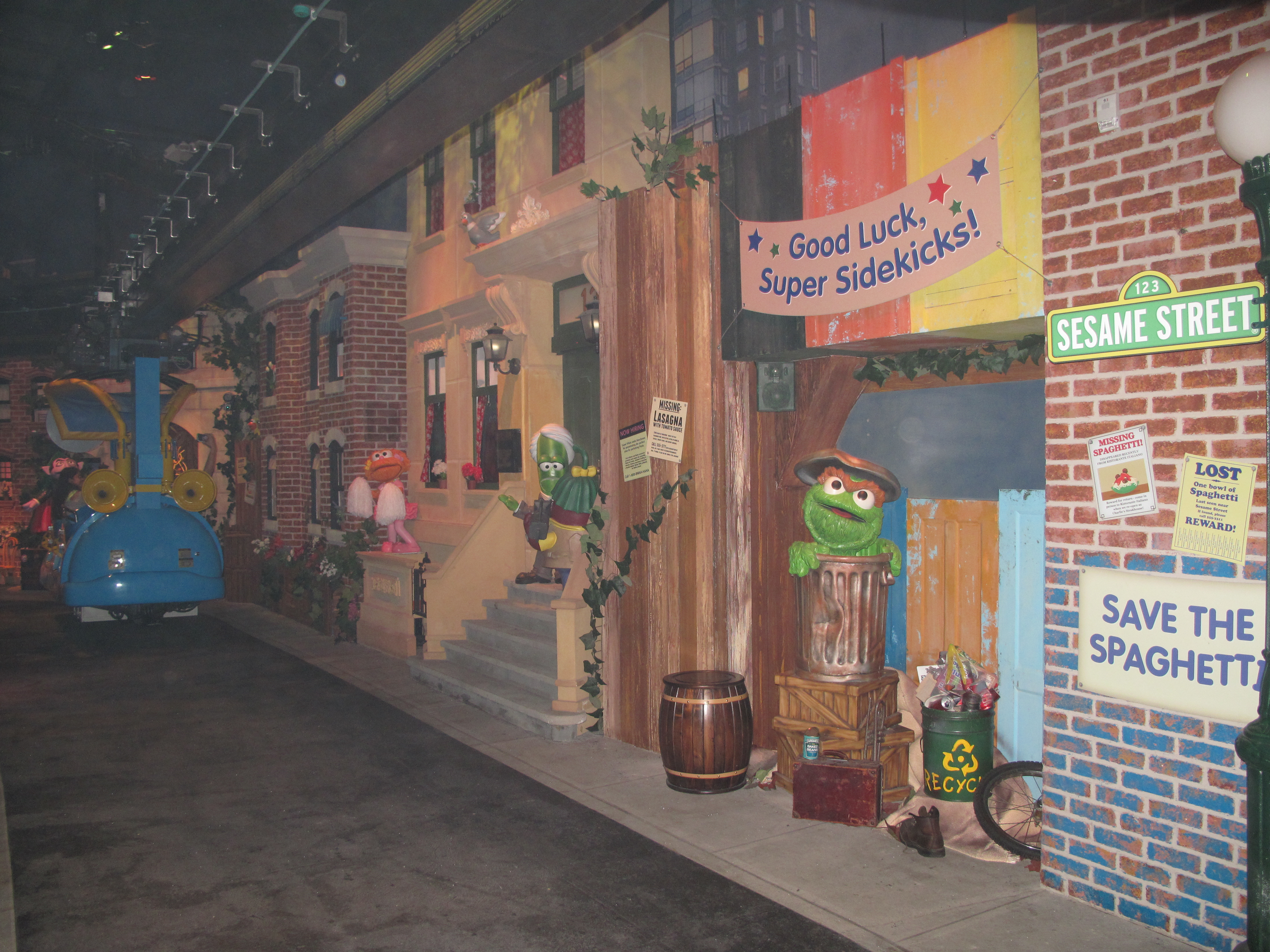
As a result, we, limited in time (due to the concert in the evening!) visited only three of the attractions. The first one was a complacent and almost childlike Sesame Street ride. The second one could have been the Transformers, but we noticed just in time that the ride included rotation and tipping upside down, which I absolutely can’t tolerate – and escaped.

Universal Studios

Universal Studios

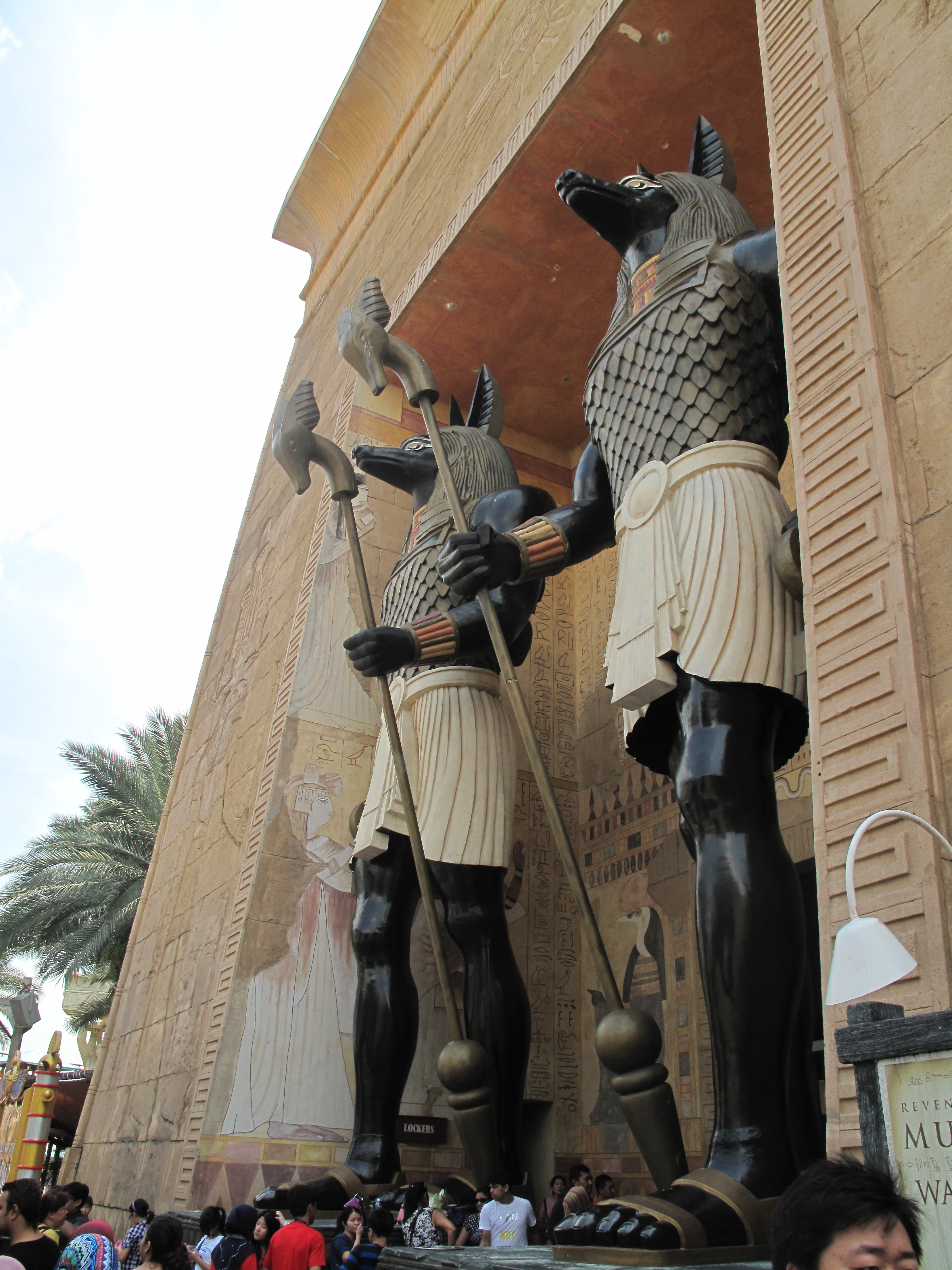
The one we found tempting was the attraction themed on the ‘Mummy’ and ancient Egypt. And that’s where our adventure began! First of all, it turned out that we were not allowed to take anything inside – so everything, including bags, had to be locked in a locker. We accidentally shut the first one, even before we had time to read how to set a passcode for it, and had to call the attendant and ask him to open the locker, promising to show our passports as soon as the bags containing them would be removed from there. We then put our belongings in another locker, properly following the guidance. There was a sign saying that the first 45 minutes were free of charge, and we recklessly trusted the digital clock showing 15 minutes waiting time in the queue – so we didn’t take any money with us, especially that we didn’t even have pockets to put it in. And there we went, right into this hallway, imitating an Egyptian temple, where we got stuck in an endless queue in a totally dark corridor, which took nearly an hour. The ride itself was very short. We expected something absolutely scary, but it was rather fun, despite the dizzying turns forward, backward, up and down, as well as the roars and spits of fire of the Egyptian priests. When we finally got to our locker, we couldn’t open it again – the free time had expired, and all our money was locked inside – so we had to call the attendant for help once more.

Universal Studios

And the third attraction was simply a little 4D cartoon about Shrek with shaking, water splashing and some hairy stuff, supposed to represent spiders, touching our legs.

Of course, we were ‘felled’ by the Egyptian attraction – if it hadn’t been for the hour-long standing, we could have caught another attraction. And all we had time for was having lunch at a Chinese bistro on Hollywood street right at the Universal Studios. At least we were precisely on schedule.

Universal Studios

Universal Studios

Universal Studios

And finally the long-awaited concert! It opened with Lyadov’s ‘Enchanted Lake’, but the word “enchanted” can be also applied to our overall impressions of the concert. It was truly an awesome event! Actually, it was a concert of the Singapore Symphony Orchestra, considered the best in Asia, directed by Lan Shui. And Lang Lang – a phenomenal, brilliant pianist – was taking part in it, playing Prokofiev’s Piano Concerto No. 3. It’s difficult to find words to describe the amazing impressions that his performance left on us. I was literally taken away, even being aware that if a piece of music as difficult to grasp as this one, had been played by someone else, it could have just seemed to me a set of random sounds and nothing special. Lang Lang’s virtuosity, power and dexterity are striking, and you just can’t imagine how anyone possibly can perform this piece at all. We were seated so that his face could be seen, so we had the opportunity to observe the infinite palette of his emotions.

Taking pictures and videos was prohibited (that’s how the lockers theme was continued – we had to lock our cameras in one before the concert), but when Lang Lang gave an encore, I, like some others, contrived to take a few pictures with my phone. Talking about the encore – the public went so wild that, despite all his efforts to simply take a bow and leave, he had to stay and play an intermezzo by Manuel Ponce and a waltz by Chopin.

Lang Lang

At first I thought that Tchaikovsky’s Fifth Symphony, which was to be played in the second part, was just an unnecessary appendage to the great genius Lang Lang. But in this case there was another genius – actually Tchaikovsky himself, with a very good performance of the orchestra and Lan Shui’s conducting.

Overall, I enjoyed the concert so much that even having to wait an hour for a taxi, which wasn’t extremely pleasant, didn’t spoil the great mood.

Posted in Asia, English, Singapore

Singapore – Day 4

РУССКОЯЗЫЧНАЯ ВЕРСИЯ ПО ЭТОЙ ССЫЛКЕ. CLICK HERE FOR RUSSIAN VERSION.

27 November 2013

This morning, right after breakfast, we went up to the concierge in order to find out whether there was anything interesting going on in town. Instead of an answer, he handed us a brochure, where we read that tomorrow there was going to be a performance of Lang Lang – the Chinese pianist that we had seen in a TV-programme quite some time ago in London, got very impressed and had been dreaming to hear live since then. And now we were lucky: he was here!

We immediately changed the plans for tomorrow: the concert in the evening would make it impossible to spend a whole day on Sentosa island. So we decided to book our concert tickets and then go to Sentosa right today. These plans were overset by the rather useless concierge: in response to our request to book tickets for us, he muttered with a strong Indian accent that he couldn’t do this, basically telling us to go book ourselves. We asked him to clarify whether we needed to go directly to the concert hall and got an affirmative answer. We found this pretty strange, as almost anywhere, we thought, there at least existed box offices around the city, if hotels didn’t provide such services.

Mt Elizabeth Hospital

Quite obviously, we didn’t know the exact location of the hall, so we had to stray a bit – but no rest for the wicked, so we strayed, searched and found. The receptionist at the concert hall – a nice Chinese young lady – seemed way more helpful than our concierge: she told us that the ticket office actually opened an hour later, but there were options to either book tickets online (and she gave us the link) or else to buy them from SISTIC Outlets – a ticketing service with outlets all around Singapore (which actually did exist after all!); she then asked us where we were going from there (to the Harbour Front station, in order to head to Sentosa from there, as you remember), and advised where the nearest outlet was. Surely there must have been at least one around Orchard Road as well, and if the concierge had told us about them, he would have saved us at least an hour, or even an hour and a half.

Esplanade MRT Station

Esplanade

Outram Park MRT Station

Anyway, we found a SISTIC Outlet in the Vivocity mall, which could be accessed directly from the tube, bought our tickets and, totally relieved, albeit later than originally planned, got on the Sentosa Monorail right from the mall. By the way, the train fare can be paid with EZ-Link cards, which are also valid for other types of public transport, and can even be used even in some stores.

Waterfront Station

Once on the island, we decided to limit ourselves to the beach and the Aquarium only, and then come again another time to visit the Universal Studios separately. It was lunch time and we sat down in an Asian eatery, where, as we had already seen in many places, the complete diversity of the south-east Asian cuisine was represented by countries: China, India, Vietnam, Indonesia – but also some western food, like spaghetti or Fish’n’Chips, for those tired of Asian food. Generally, what I like in Singapore, is this spirit of pan-Asianism – although it would be weird to expect anything else from a city-state with such a colourful ethnic composition: the backbone of the population is formed by Chinese, Malays and Tamils.

Sentosa Island

Sentosa Island

Sentosa Island

Sentosa Island

The weather was exceptionally suitable for the beach: as a special gift, the sun was shining all the time, without a single drop of rain (all the previous days had been cloudy). Arriving at the Beach station, we realised that there were beaches both to the left and to the right, and, after hanging about near the signs announcing this, like Buridan’s donkeys, we eventually chose the one to the right – Siloso beach. We had never seen such white fine soft sand before. The beach was quite uncrowded. Among the few other visitors there were a group of teen school students (maybe even skipping classes) who were swimming right in their clothes – both boys and girls.

Siloso Beach

Siloso Beach

Siloso Beach

Siloso Beach

Siloso Beach

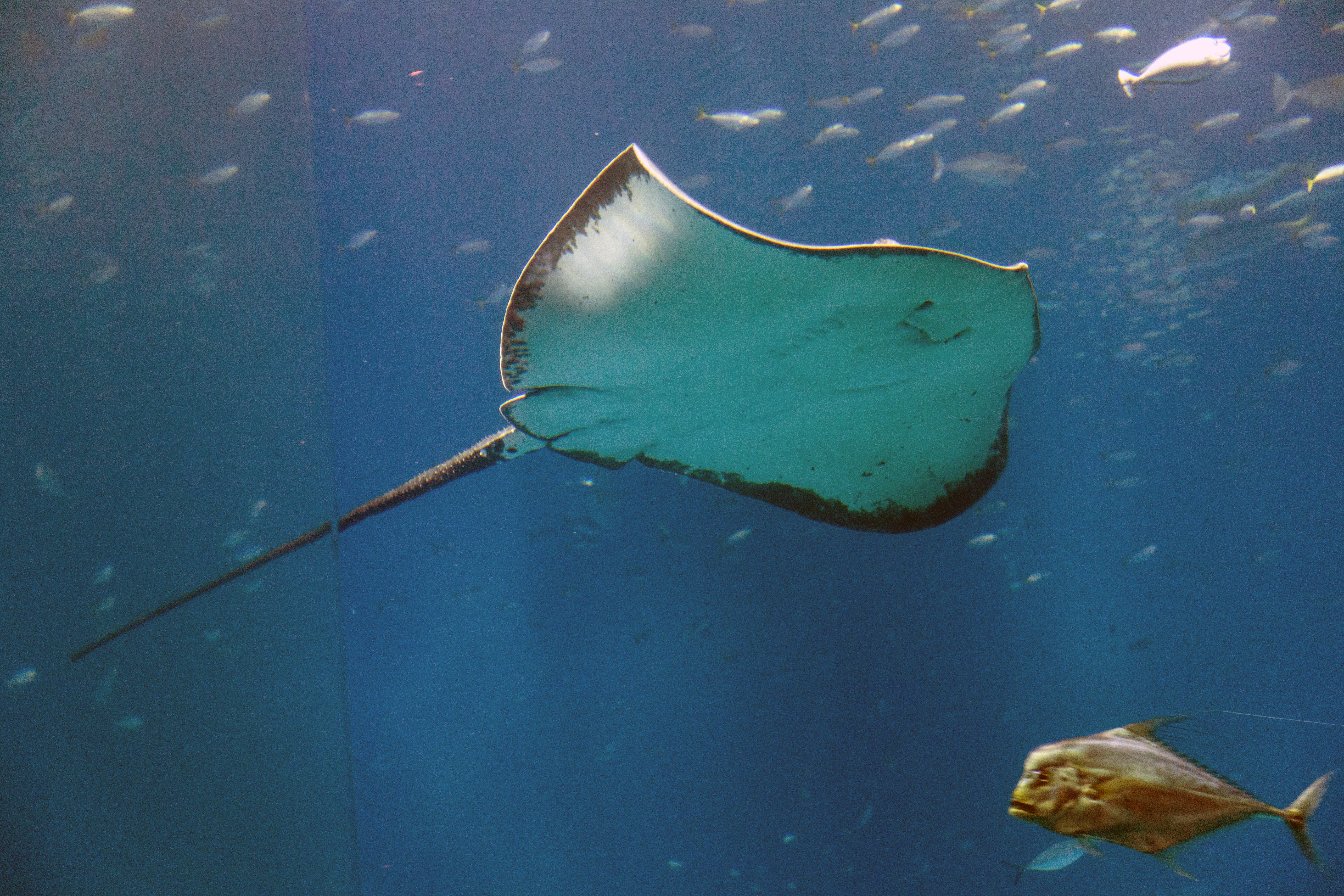
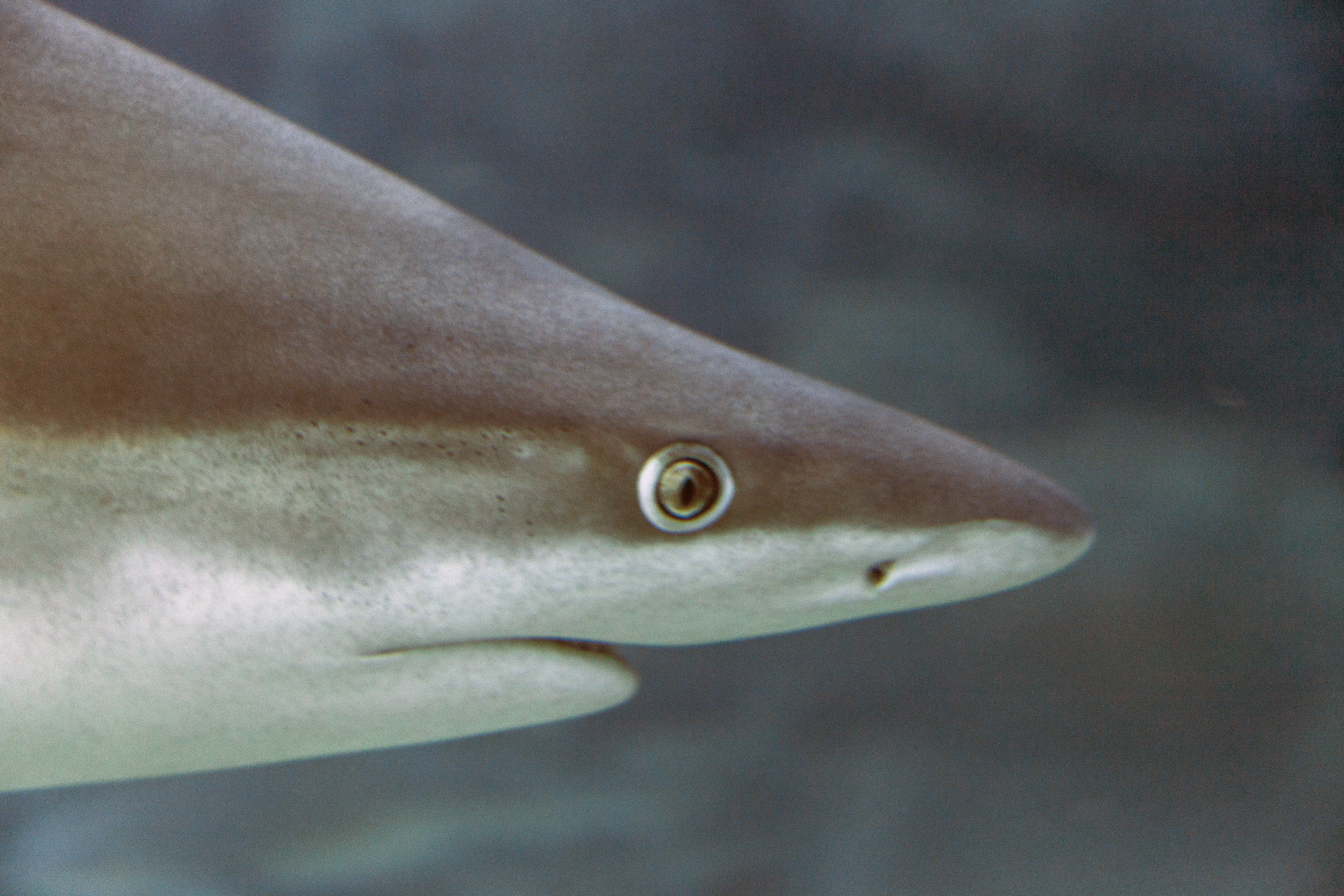
After swimming to our heart’s content we headed to the Aquarium – the largest one in the world. It’s simply gorgeous, especially its huge glass arches, where fish glide both along the walls, and above one’s head – a very strong impression. We took tons of pictures and videos of various fish: the “smiling” rays resembling Astrid Lindgren’s Karlsson, disguised as a ghost, the sharks with their concentrated yet dazed snouts, and the moray eels. I loved the large amphitheatre, where the whole wall was made of glass, and it felt as though there was a whole ocean behind it. There we just sat on the floor and stared at the fish scurrying to and fro, among which rays stood out again, but this time giant ones.

Little Ray

Some Crustacean

Nautilus

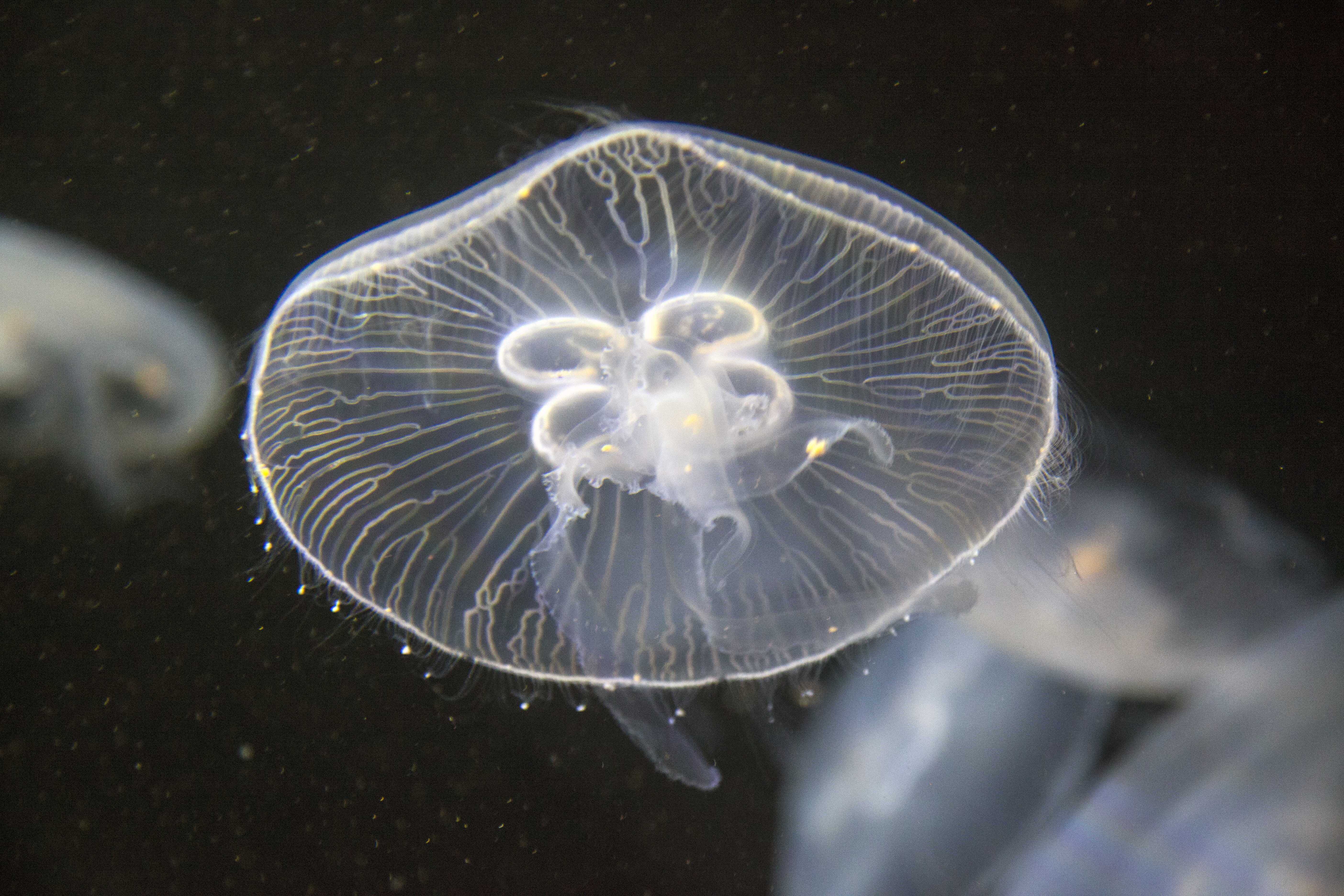
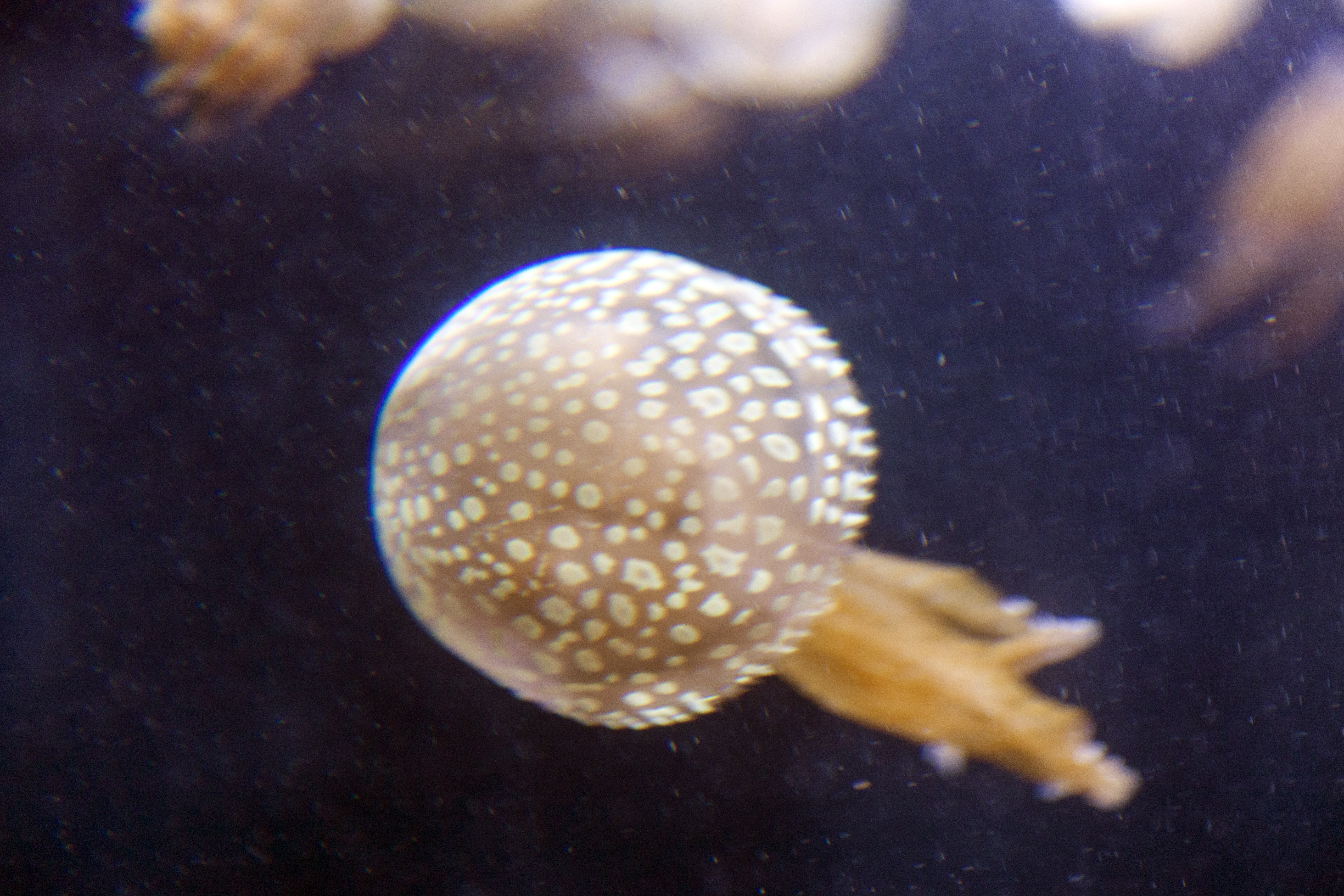
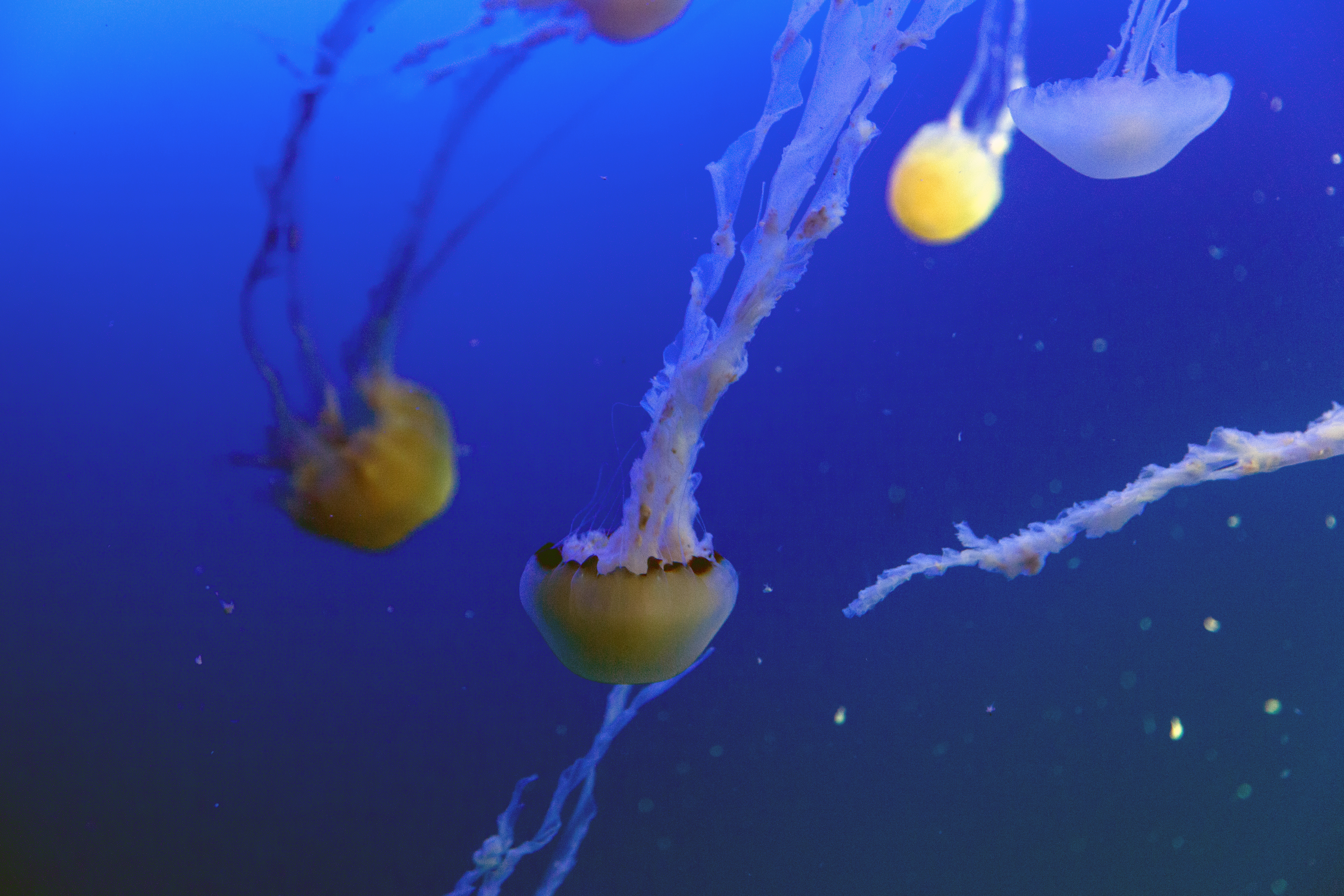
Some Jellyfish

Some Jellyfish

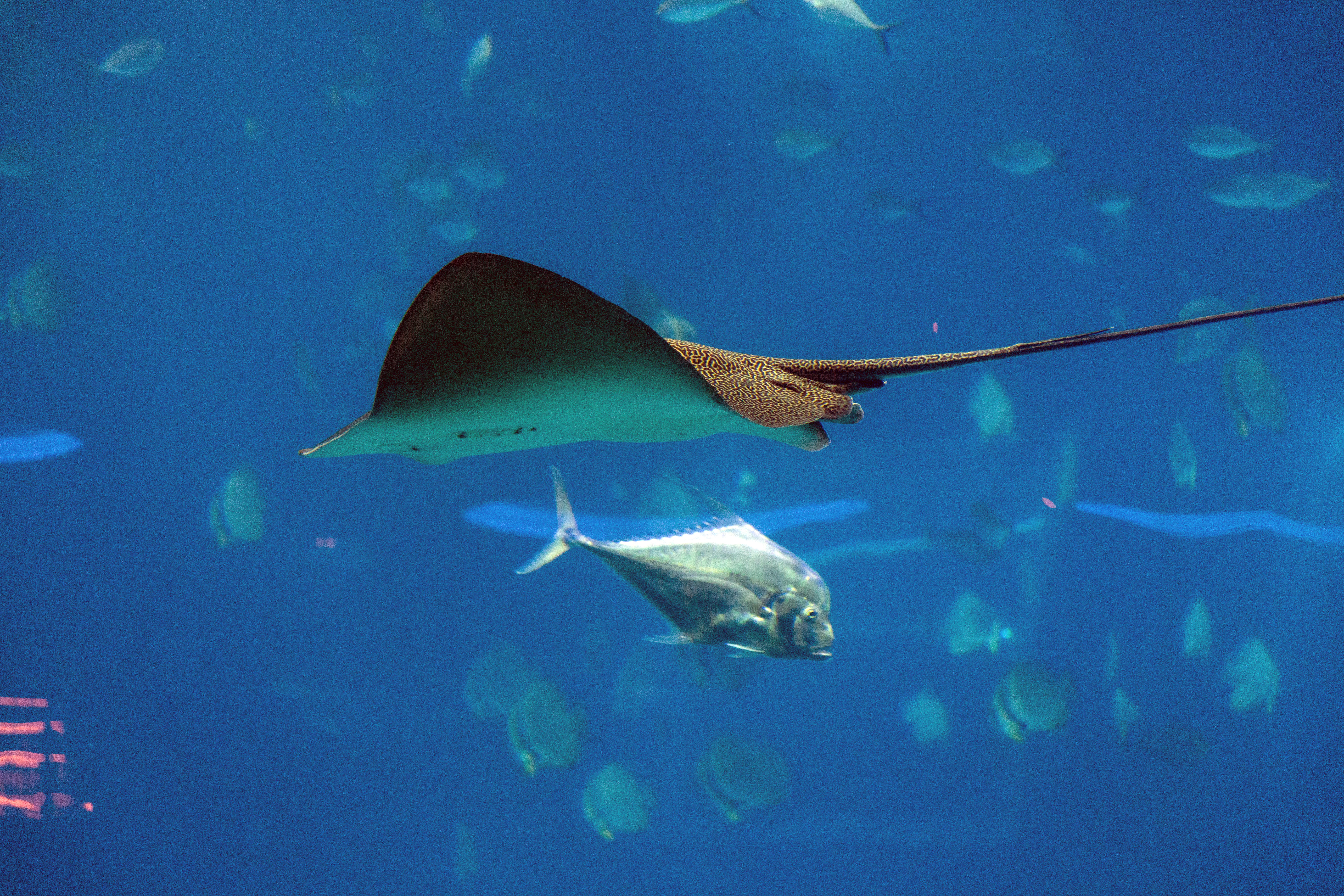
Ray and some other fish

IMG_7640

IMG_7642

Shark

Shark

Moray Eels

Lionfish

IMG_7657

Next to the dolphin displays, we were warned not to attract the dolphins’ attention, or beckon them, because they might decide what we offered them food, get discouraged and never come again when beckoned. It is understandable, as dolphins are highly intelligent beings, unlike, for example, some big fish, which had been staring at us for quite a long time with the stupidest expression (and painfully resembling someone I know, just couldn’t remember who exactly it was) – whether you beckon it or not.

Stupid Fish

Dolphin

We had dinner right on Sentosa, and oddly enough, at a Mexican, not Asian restaurant.

Sentosa Island

Sentosa Island

Sentosa Island

Sentosa Island

Sentosa Island

Posted in Asia, English, Singapore

Singapore – Day 1

РУССКОЯЗЫЧНАЯ ВЕРСИЯ ПО ЭТОЙ ССЫЛКЕ. CLICK HERE FOR RUSSIAN VERSION.

24 November 2013

Before our trip, we were a bit worried because of the very short connection between the Baku-Doha and Doha-Singapore flights. But everything went like clockwork – we made it on time, and so did our luggage. Needless to say, the flight felt really long and tiring, but what can I do, if Europe, which is much closer, is of less interest to me than Southeast Asia?

We arrived in Singapore on Sunday, and the myth of there being no traffic jams there was immediately dispelled – we were stuck for quite a while, not unlike in Baku. Perhaps, if our hotel hadn’t been so close to Orchard road – the main shopping street – or if it had been a working day, we would have had more luck, but it was what it was. After we got settled in the hotel, we still had time to walk on the Orchard Road and enjoy the sight of Christmas illuminations and decorations, which in the 30-degree heat looked rather surreal. Besides, the whole street was filled with a funny jingle, sounding either like bird tweeting, or some mechanical tinkling.

Well, no matter how nice the decorations are, you can see them pretty much anywhere, as well as all kinds of street performance – what’s really interesting is the local flavour: for example, on our way to Orchard Road, around Lucky Plaza, we saw hordes of women sitting on mats right on the sidewalk and having a picnic. It first looked to us like a bunch of homeless people, but they seemed too happy and well-dressed for that. It turned out that these were local Filipino maids, who love to spend their Sundays like this.

We marked our very first evening in Singapore with Singaporean food – but the gastronomic aspect of our trip will (hopefully!) be covered in a separate post.

IMG_1500

Posted in Amalfi Coast, English, Europe, Italy

Adventures of the Azeris in Italy – Amalfi Coast

РУССКОЯЗЫЧНАЯ ВЕРСИЯ ПО ЭТОЙ ССЫЛКЕ. CLICK HERE FOR RUSSIAN VERSION.

The “cool” guy despising group tours seems to have jinxed us. At first everything went very normal: the bus punctually picked us up at 5.15am, while it was still dark, collected other participants of the Amalfi Coast tour from their hotels and delivered all of us to Ischia Porto, where we boarded a ferry. In Naples we were met by a tour guide with a Baltic accent, and got on another bus.
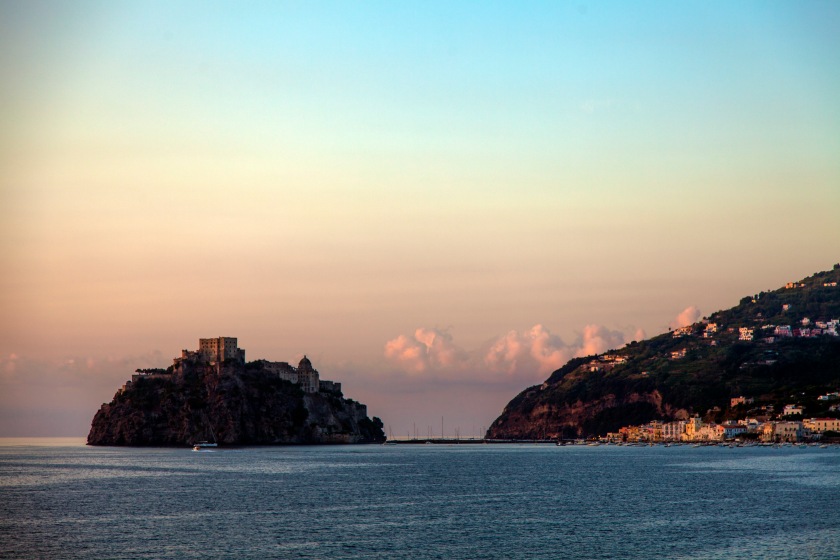
Ischia Porto

I must say that Naples hadn’t made much of an impression when we arrived from Rome, but, as we drove through it, Lena the tour guide spoke of it with great passion. She was telling us about its status of the capital of the kingdom, its magnificent palaces neighbouring with sunless narrow streets with colourful linens hanging on the balconies, just like in the movie La Ciociara.

We drove out of Naples, past Pompeii and Herculaneum. Here we were told that everything around was pretty much sitting on a powder keg – there are lots of extinct and dormant volcanoes, and also the active Vesuvius. It erupts every 60-70 years, and the last time was just 69 years ago. Thus, on the one hand, the next eruption is anticipated with fear, but on the other, it is awaited, because the longer the interval between two eruptions, the more destructive disaster it turns into – for example, the eruption that destroyed Pompeii and Herculaneum in 79 AD occurred after 300 years of inactivity. However, people continue to settle right at the foot of the volcano with careless perseverance: the climate is too favourable and the soil too fertile for these places to be left. Officially construction within a radius of a few kilometers from Mount Vesuvius is prohibited. But people here seem to live with the if-you-mustn’t-but-want-to-do-it-then-you-can-do-it principle – especially that the law does not permit to destroy the buildings, even at the stage of one wall built only, and only makes the owners pay a fine of 20-30k euros.
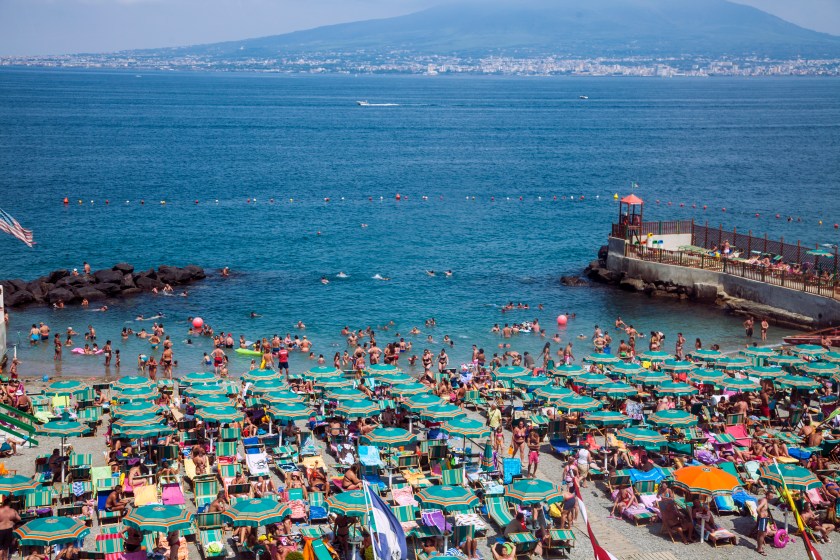
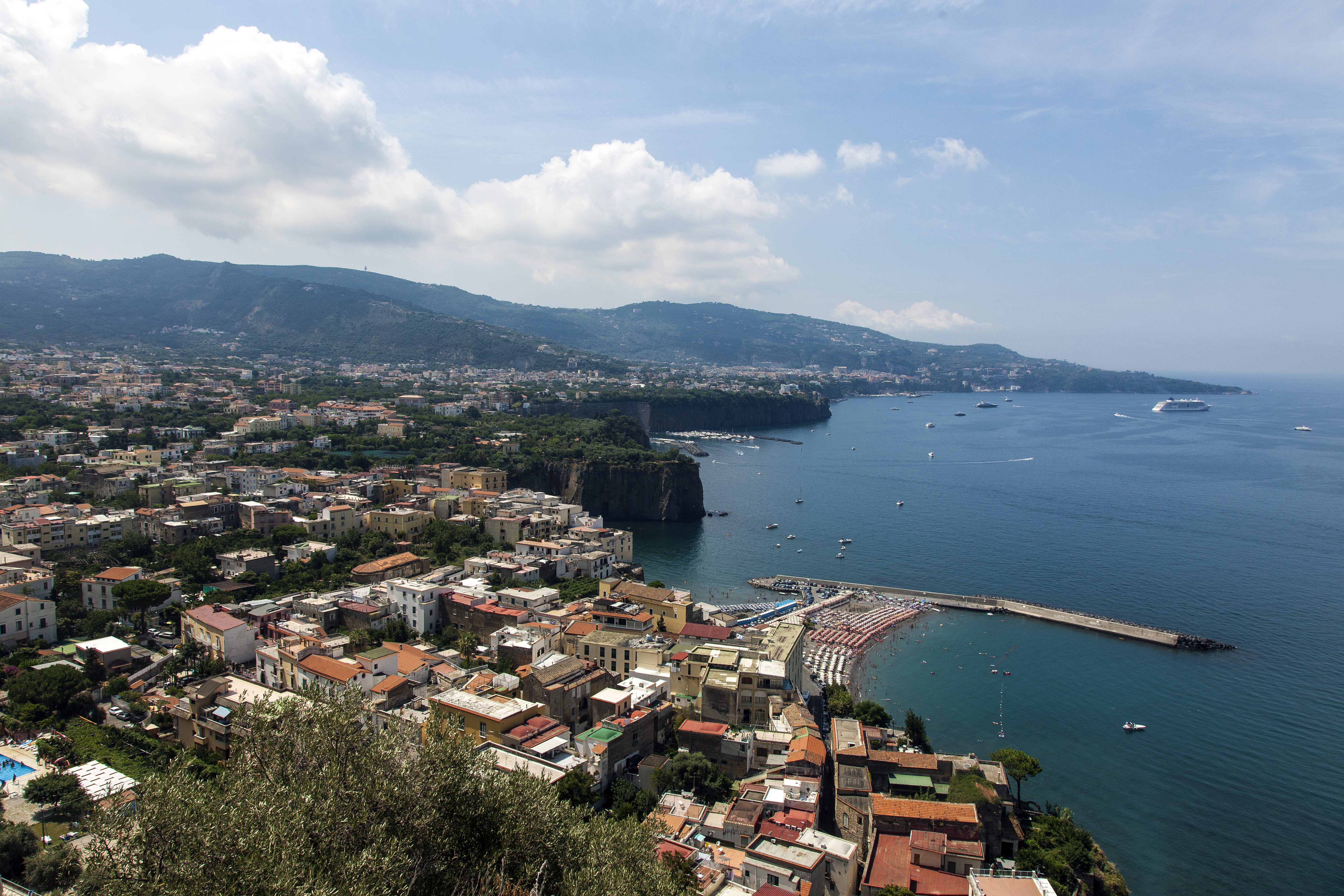
Heading to Sorrento

At this point already we noticed that the traffic was very slow on our side of the road, we were basically in a traffic jam. But Lena suggested that this was due to tomorrow’s holiday of Ferragosto and had to do with everyone flocking to the resort coast. The reality was much worse: and we had the chance to fully appreciate it, as well as the “evil eye” of the New Russian, when we entered a two-kilometre tunnel. Here the column of vehicles literally froze, although the opposite lane was absolutely empty. We spent exactly an hour and a half in this tunnel, and the whole way from Naples to Sorrento took us a good four hours, while it barely should have taken 90 minutes. The people in the bus got extremely frustrated, the most radical ones were demanding to turn around, get on the opposite lane, return to Naples and get the money back, but this was absolutely impossible, because there was no opportunity to turn around, and besides large buses are allowed to move in only one direction along this coast. The most impatient ones left the bus at the exit of the tunnel, as the situation outside was no better, and walked around to stretch their legs.

Our tour guide talked to the Carabinieri driving past us, and found out that a terrible fatal accident had happened somewhere ahead and a funeral car was already heading there. Why it took almost two hours for the Carabinieri to get close to the scene remained a big question to us. And anyway, even to us (not quite knowing the intricacies of the case, of course) it seemed pretty logical that the traffic in the tunnel should have somehow been regulated in order to avoid such a disheartening and unsafe congestion in it.

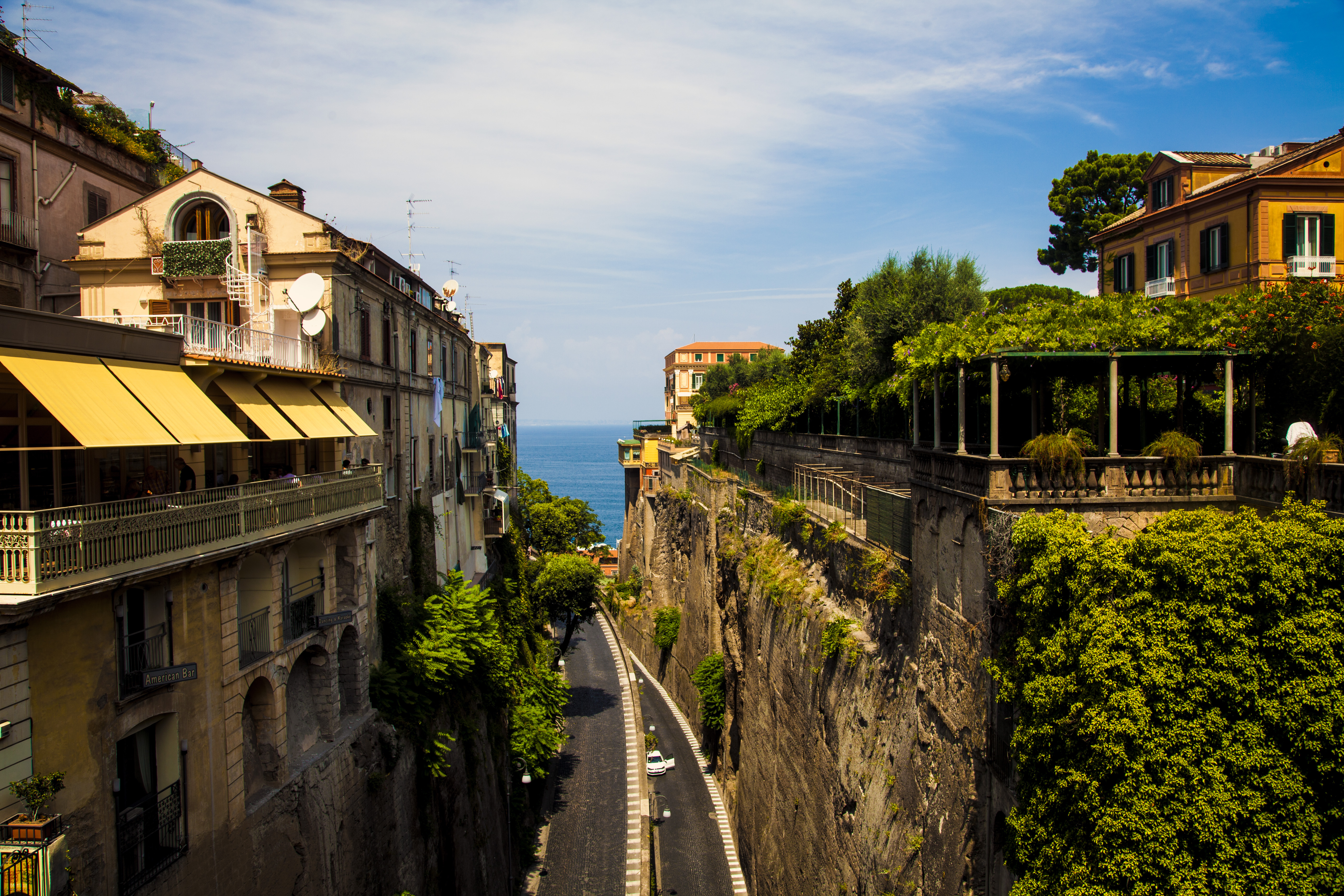
It seemed that the whole tour went awry. However, the situation was saved: Lena promptly got in touch with their “headquarters ” and agreed that we would be allowed to board a different ferry at a different, nearer port an hour later than initially planned, which therefore allowed us to save an hour, and then one more – by cancelling the set lunch planned originally and giving the tourists an opportunity to eat on the go during town walks. And finally, exhausted, but happy, we returned arrived in Sorrento. What can I say, it is indeed a very beautiful town. We were told that it had been visited by Gorky (again!), Feodor Chaliapin, Sylvester Shchedrin. Everything here is all about lemons and olives – lemons reach monstrous proportions (up to two kilograms) and have a distinctive flavour, the whole town smells of them! The mountains slopes are covered with olive trees, with rows stretched underneath them. We were told that the olives for the best first press oil must be collected directly from the tree and not from the ground, which is virtually impossible to do manually on steep slopes – and that’s where those nets come in handy!
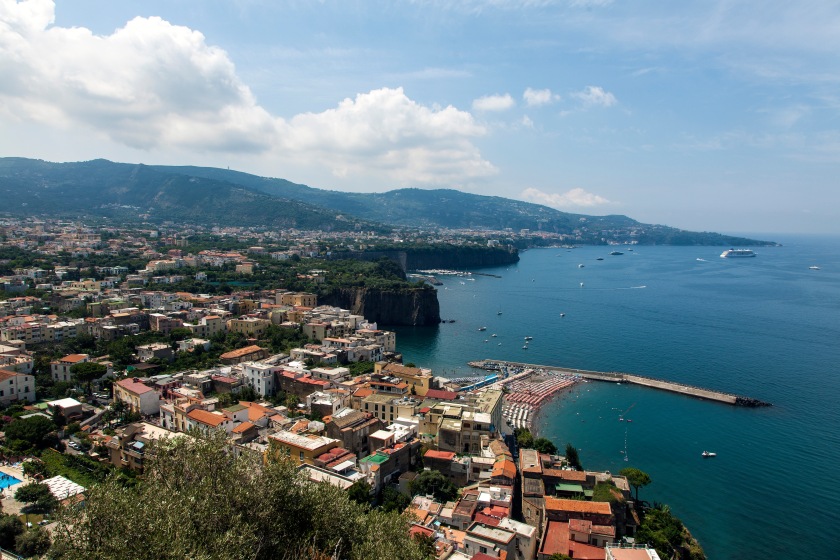
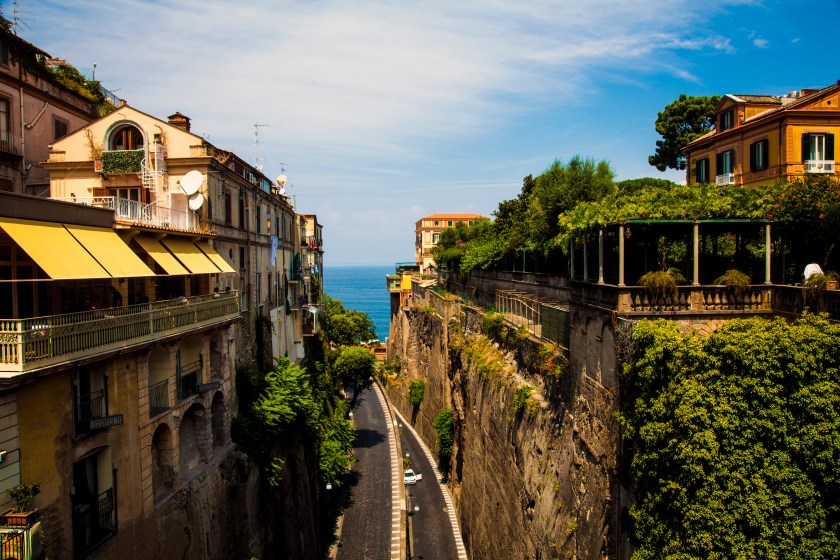
Sorrento

Sorrento

Sorrento and the Amalfi Coast are considered traditional wedding places for couples from all over the world. We saw an English wedding, with guests walking on the streets and taking photos.

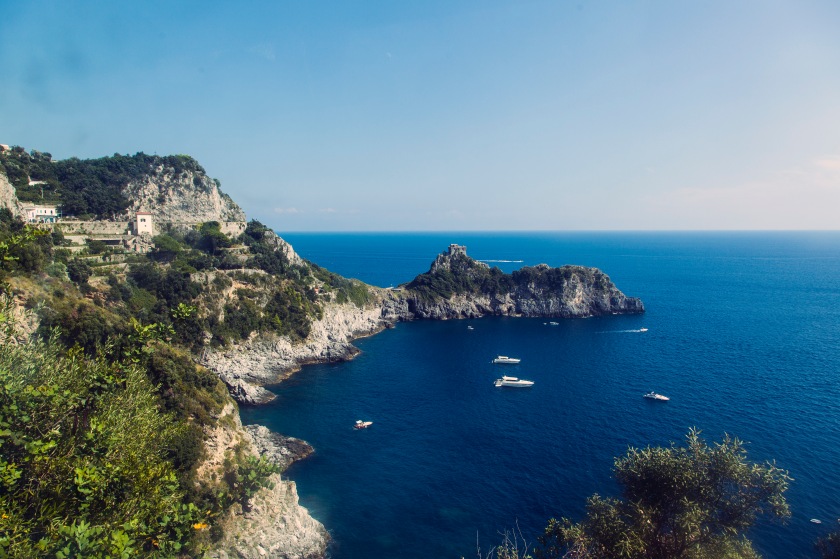
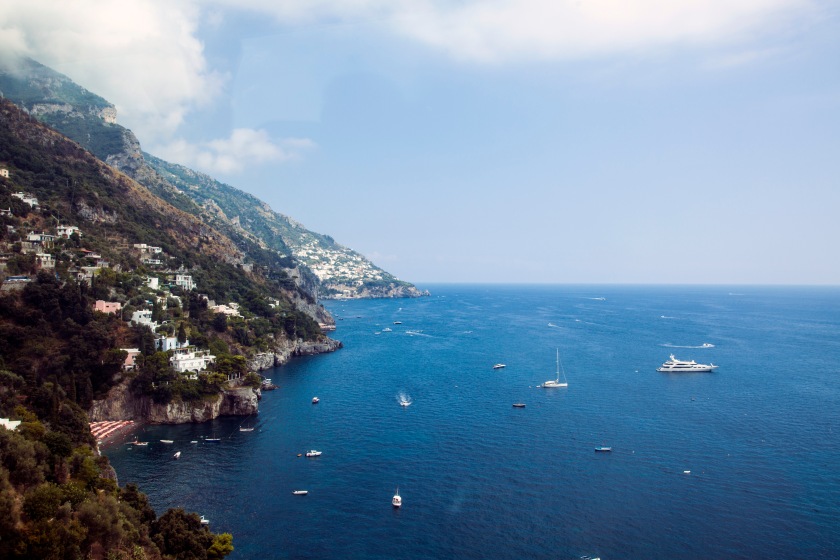
The views here are just so breathtakingly beautiful, in the truest sense of the word! In general, a drive on the mountain serpentine feels, to put it mildly, quite exciting. The bus is driving on a narrow ledge along the cliff, at a height of up to 300 metres above sea level. The road, however, had not always been there – it was constructed by Mussolini. Prior to that, people used to walk on foot or ride donkeys on the mountain paths.
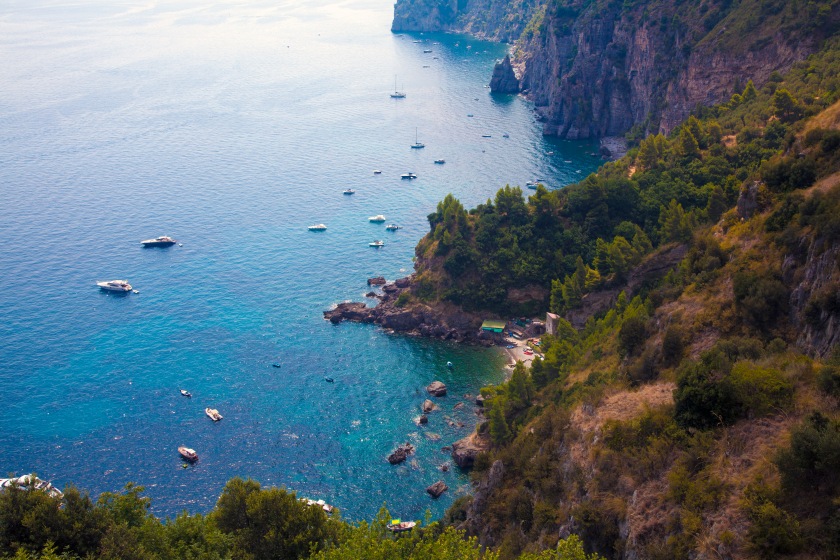
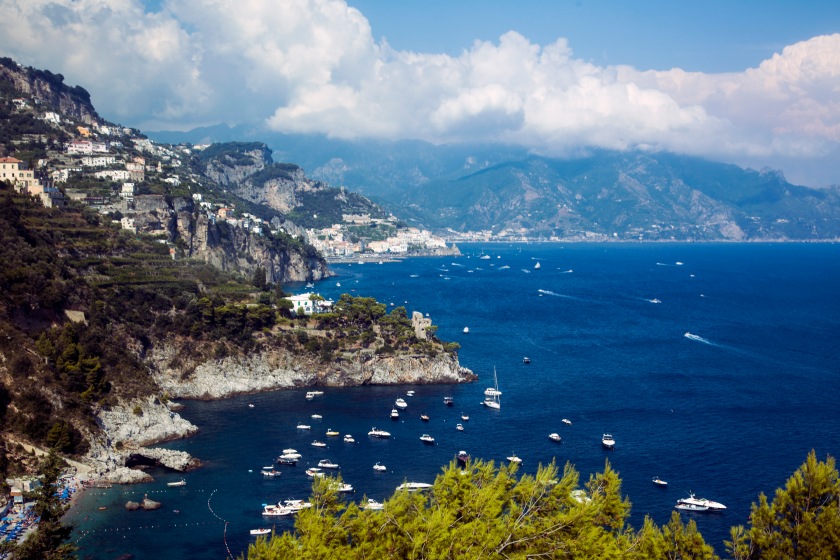
Amalfi Coast

Amalfi Coast

Amalfi Coast

IMG_6689

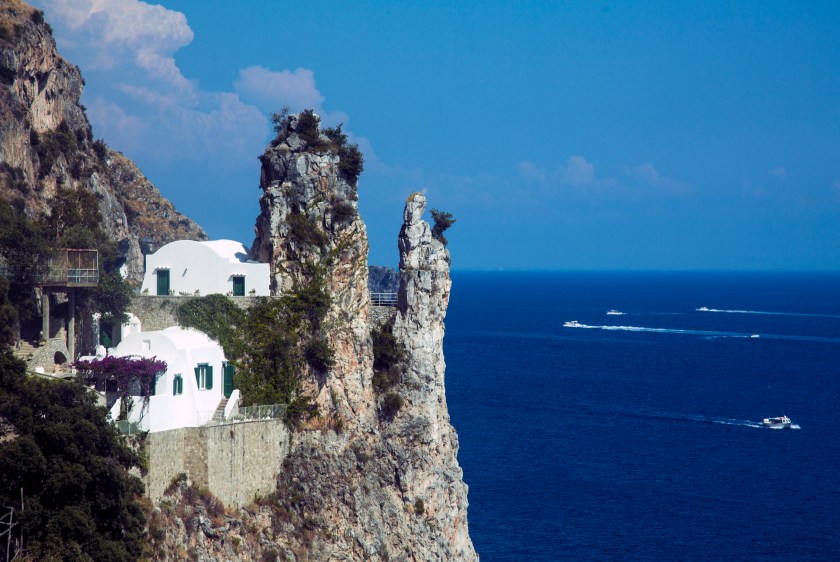
Despite the fact that these places are declared heaven on earth (it’s even said that righteous Amalfians will return home after death), life is not that comfortable there. Of course, it probably is for Sophia Loren or Gina Lollobrigida, who own luxury villas along the coast, as we were shown, with helipads and elevators that can take them right down to the beach. For ordinary mortals, though, every simple thing turns into a difficult issue – they have to walk a hell lot of steps (and I mean that – really a lot!) every time they want to go to the beach or to work. If you ask someone where they live, they will tell you the number of the step rather than the street name! And imagine them having to do something more serious, such as painting the house! That’s what they do in this case: a van brings a couple of donkeys to the closest possible place, where the specially trained animals get loaded with buckets of paint and rush up the stairs.
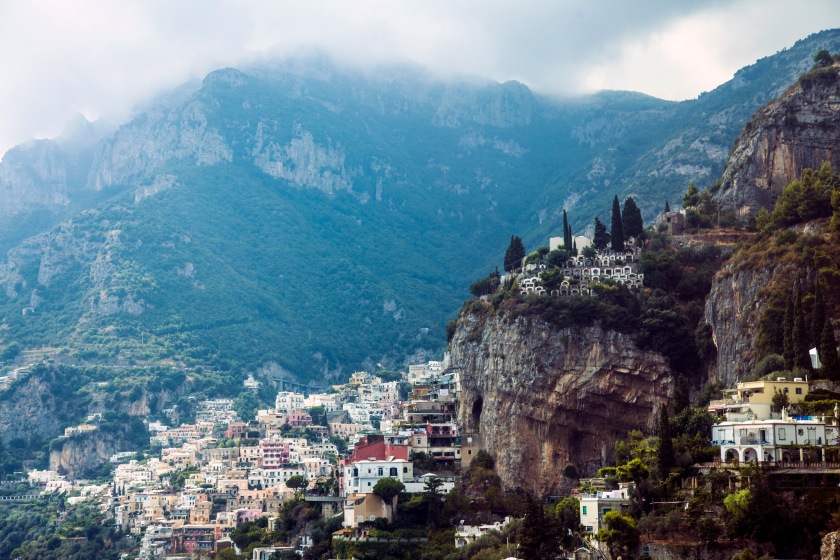
Rock Looking Like Virgin Mary with Flowers

Amalfi Coast

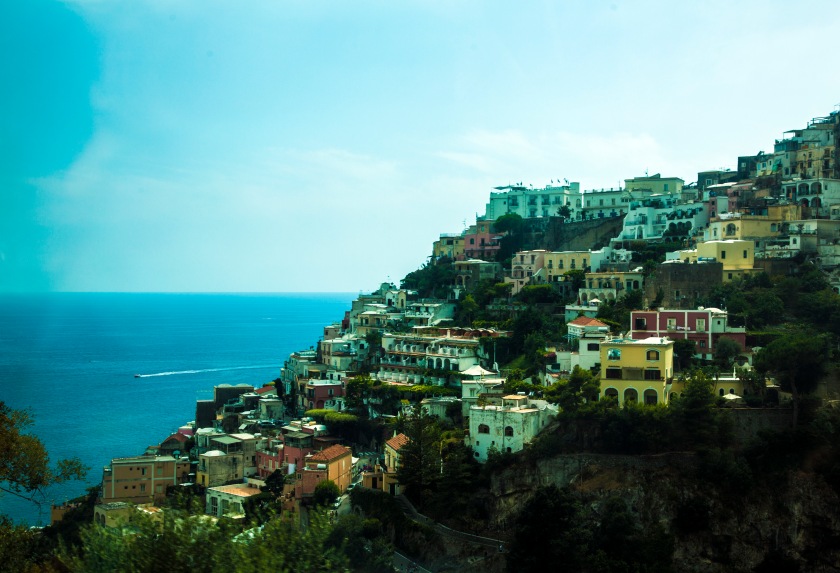
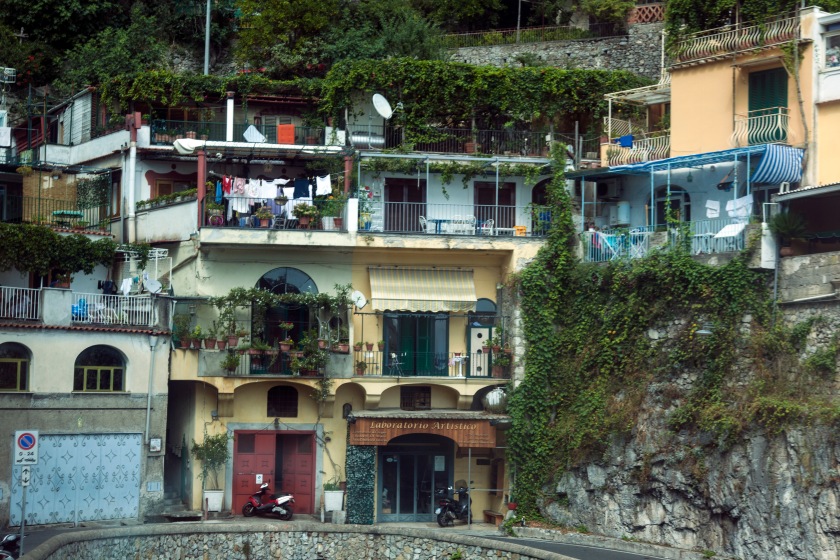
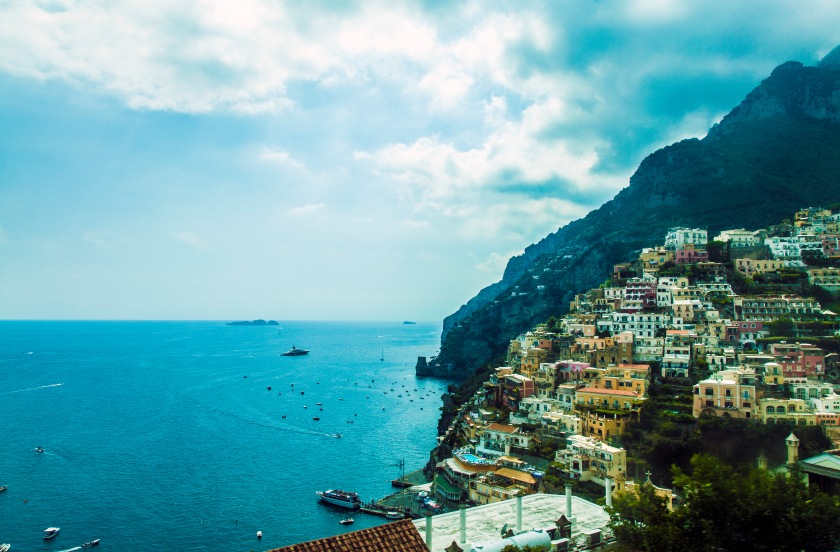
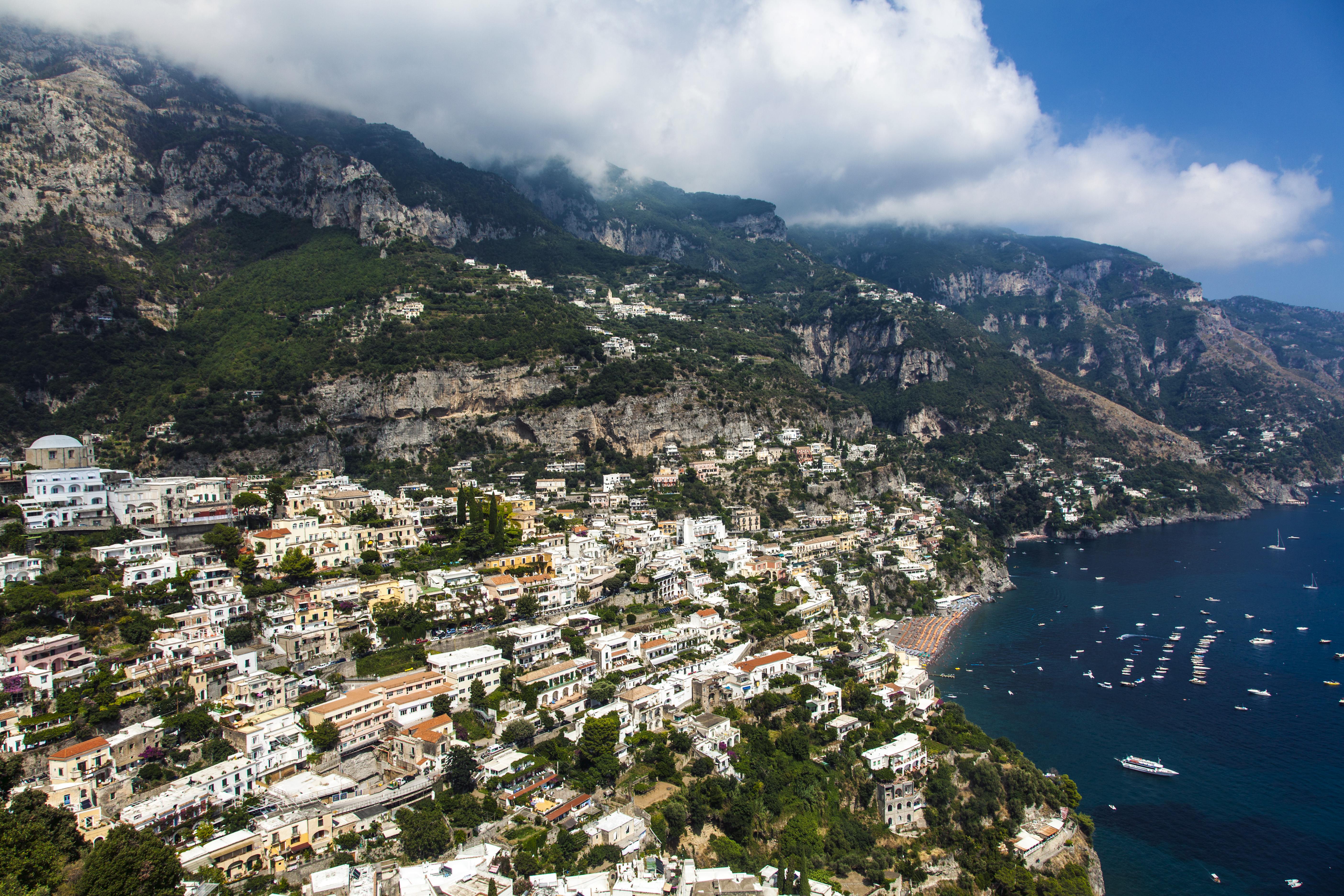
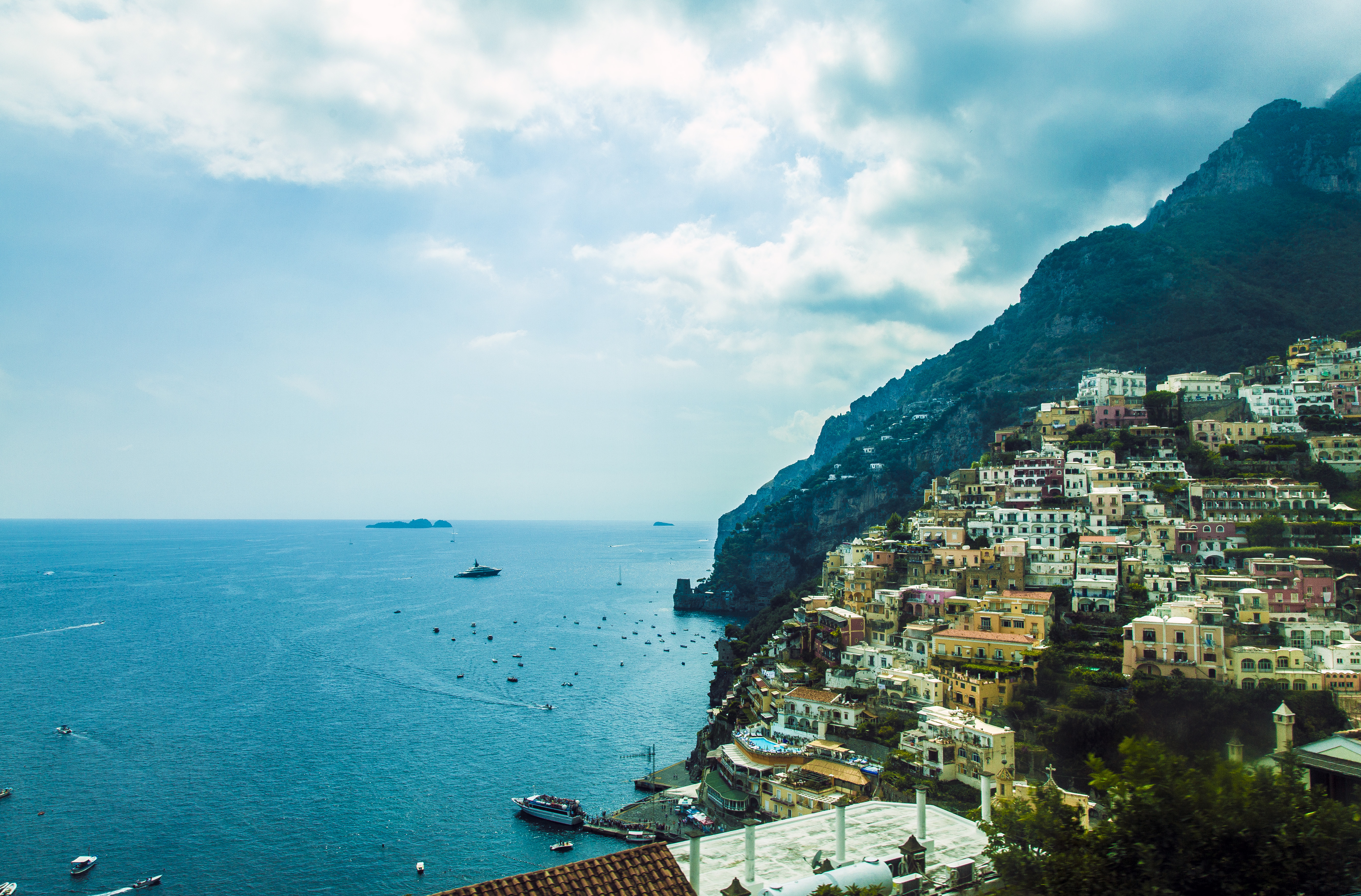
We didn’t get to visit the very beautiful town of Positano, although we did fully appreciate the view over it from the observation deck: pink, white and yellow houses, literally built into the rocks. Very picturesque, but it looked even more inaccessible and impractical.
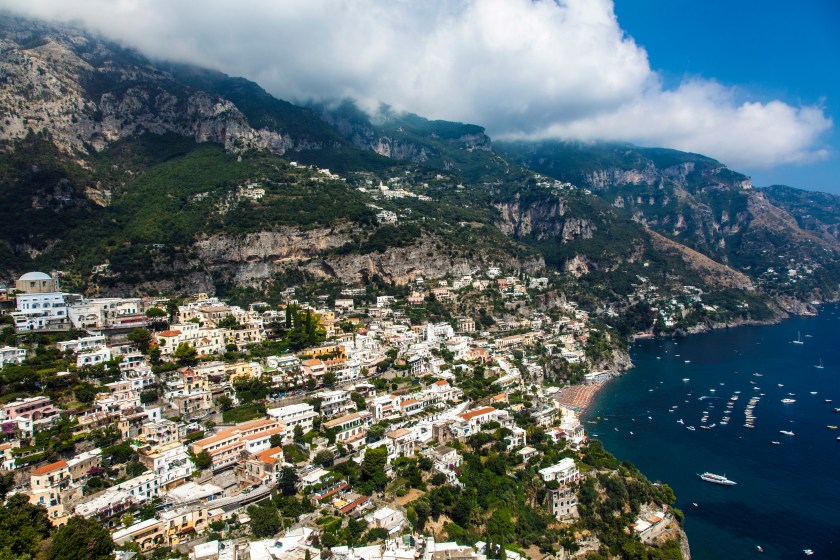
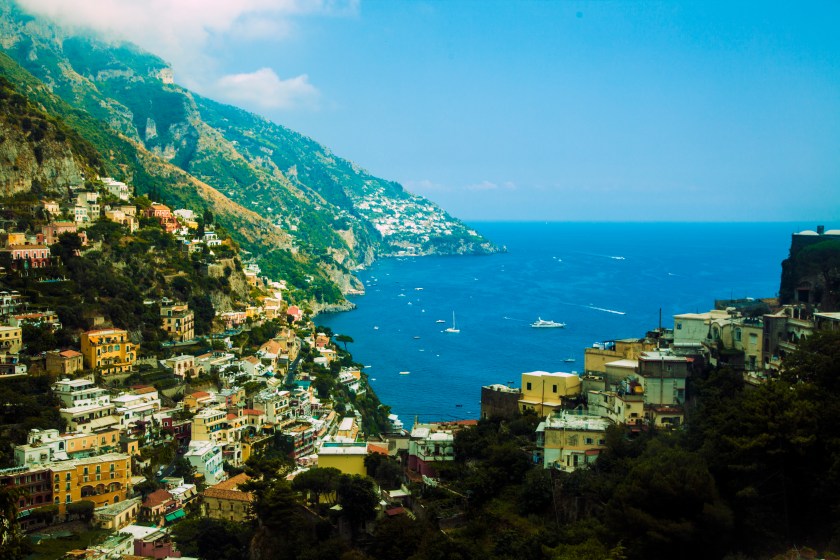
Positano

Positano

Positano

Positano

Positano

Another town where we didn’t stop either – Praiano – is less well known than Positano. It is interesting that the traditional Christmas nativity scene includes the model of the town itself. This is the ending point of the Christmas procession on December 25, carrying a miniature figuring of Christ the child. We drove past this model and had the chance to take a look.

Amalfi, despite being so celebrated, looked to us like one more replica of the previously seen towns. It is famous for the majestic Cathedral of St. Andrew, where the relics of the aforementioned saint lie. Lena was persistently urging us to see them but honestly we weren’t too enthusiastic about this idea, even though the cathedral was really very beautiful from the outside.
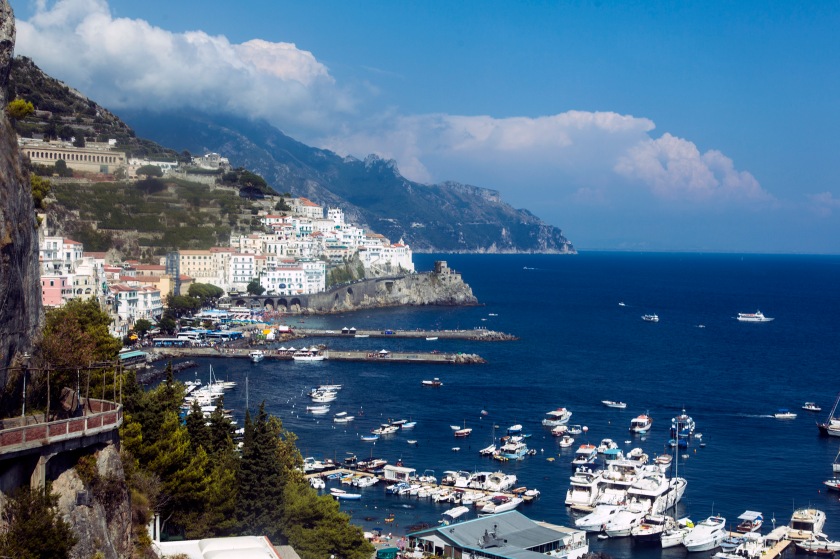
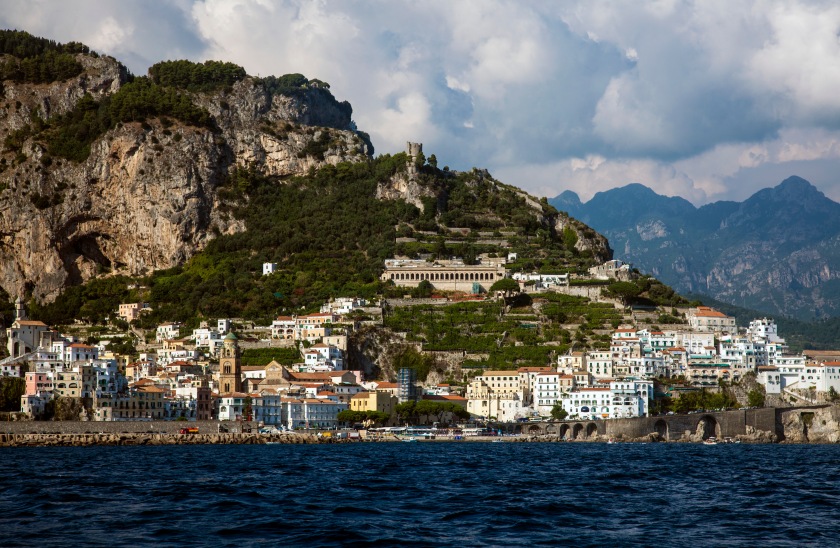
Amalfi

Amalfi

Speaking of holy relics: it appears that in the Middle Ages they were extremely fashionable and prestigious to have in any city, so they were then subject to barter in the best case and theft in the worst. The relics of St. Andrew appeared in Amalfi as a result of the latter actually. Sometimes they would steal not only whole relics, but also parts of them. Robbed monks were ashamed to admit being so careless, therefore, they would replace the missing parts with fake ones (surprisingly, these fake relics still went on working wonders!), and as a result, a saint could end up having three or four arms or legs.

Thus, the walking tour around Amalfi did not satisfy us, but the boat trip along its coast was very pleasant, allowing us to see all these magnificent mountains, bays, hotels and villas from the sea. We sailed in the direction of Maiori, Minori and Ravello, where our bus arrived to pick us up. By the way, on top of all the transportation troubles we had had, the bus somehow managed to hit a parked car when manoeuvring to enter yet another busy tunnel, so while we were happily enjoying our sea trip, the driver had to deal with the frustrated owner of that car.
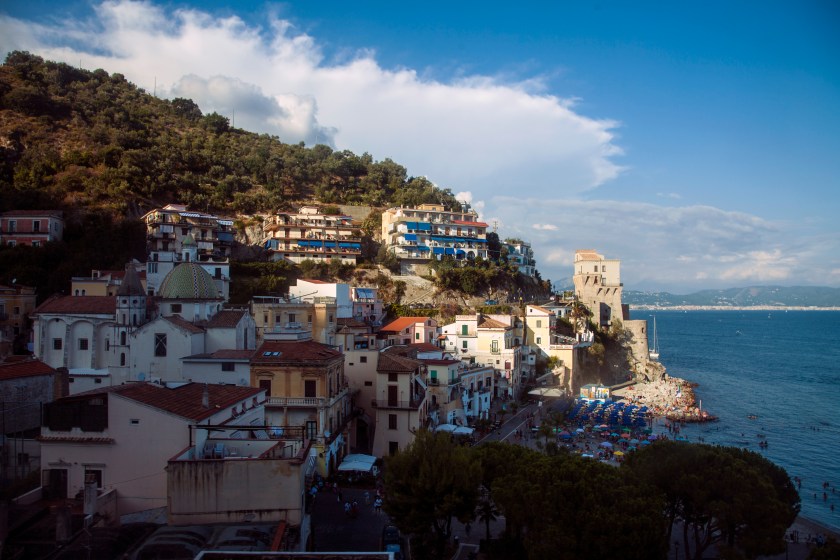
Minori

Ravello is a small town located even higher up the cliff. We didn’t go up there, and only saw it from aside, while listening to our guide’s comments about Wagner festivals that are held there and are so popular that tickets must be booked almost a year in advance.

The town of Ravello is also a proud owner of relics – this time those of Saint Panteleimont, and every year on the day of his execution the Saint, as if to demonstrate his full consent to be in this place, arranges a miracle – liquefaction of his blood. A similar miracle, but with even more rapid boiling of the blood, is arranged by Saint Januarius, the patron of Naples. It is very important for Neapolitans, as a pattern has been traced: if the blood liquefies duly, the Vesuvius does not erupt during this year and any other ills also bypass Naples. Therefore, on this day – namely September 19 – all Neapolitans are very nervous and can’t wait for the coveted event. To guarantee it happening for sure, the oldest old ladies are sat in the first row in the cathedral (who are jokingly referred to as the “relatives of Saint Januarius” for their age), and start praying to the saint. Then, if the miracle is delayed, they switch to exhortations – gently at first, then more and more angrily until they literally end up swearing. Instead of taking offense, the Saint, either stimulated by, or scared of such attitude finally performs the long-awaited miracle!

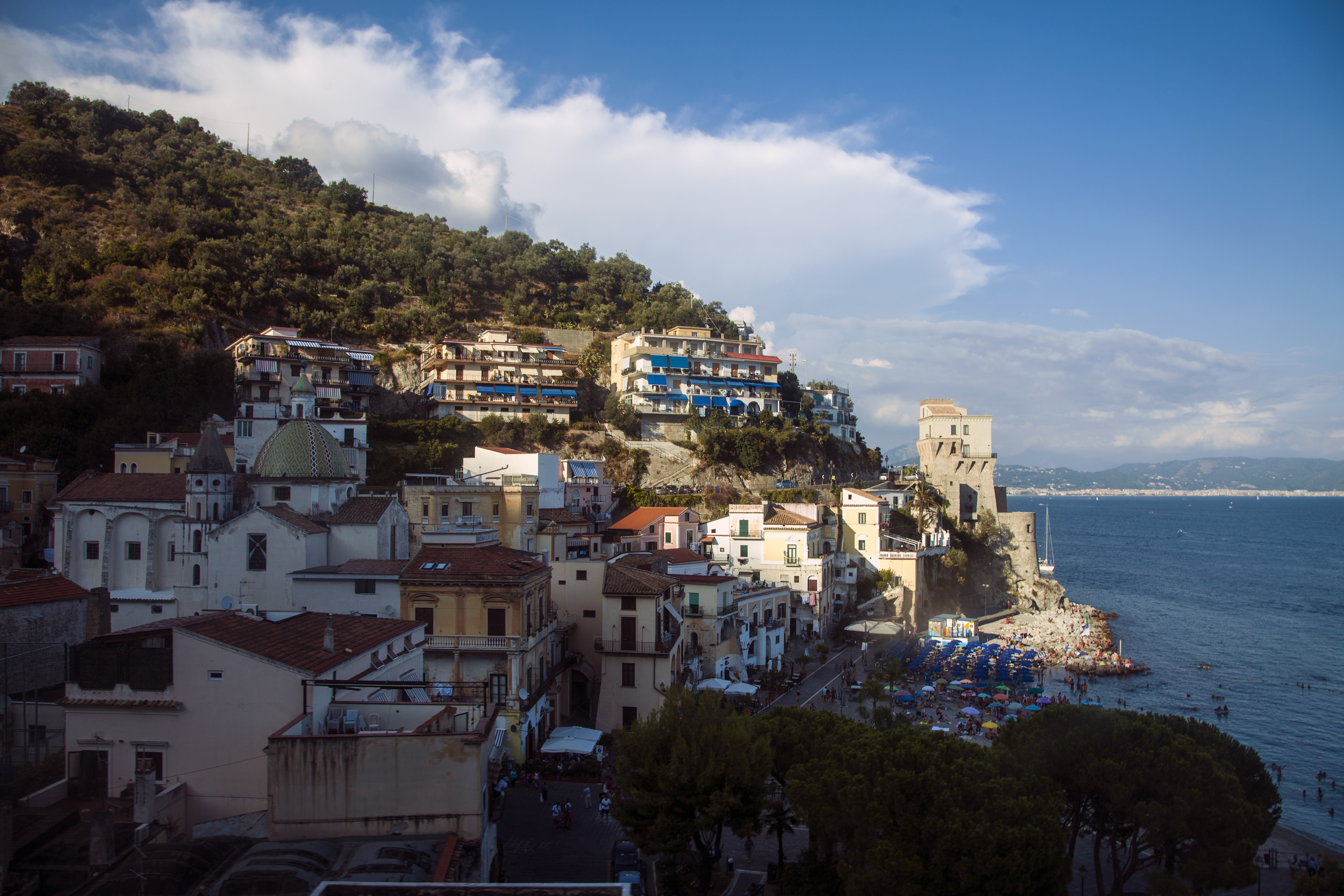
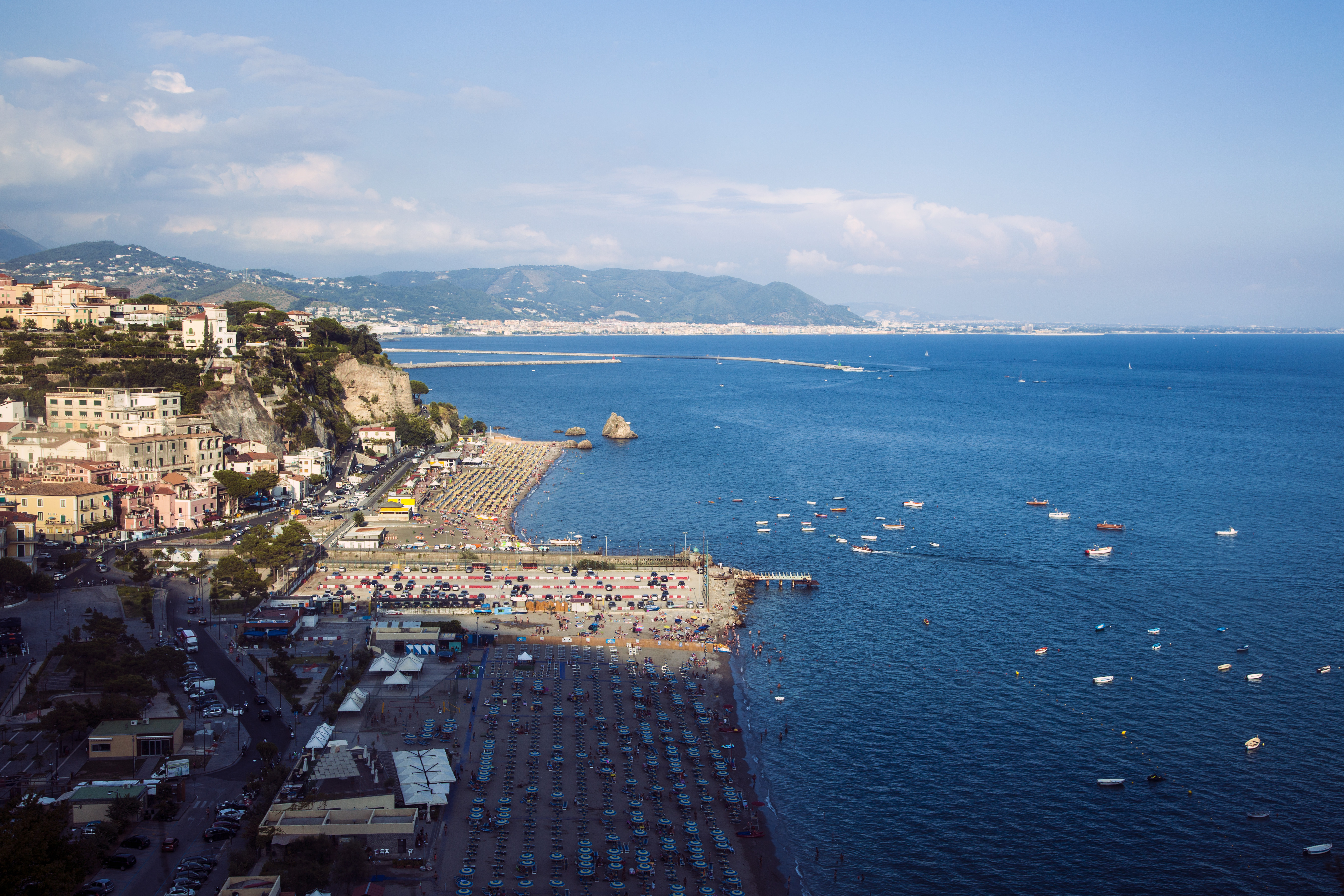
The last town of the Amalfi coast was Vetri Sul Mare, and rounding the hill, we saw the city of Salerno in the distance and hurried back to Naples, to get to the port. On the way back, Lena told us that the Neapolitans were very superstitious , believed in destiny and tried to find signs in any event for the game of bingo . In every house there is a booklet that translates any unusual event into the language of numbers. Lena said half-jokingly, half-seriously, that upon returning home she would check that little book and find out which numbers corresponded to a traffic congestion, a corpse on the road and other events that happened to us today, and then place bets on these numbers.
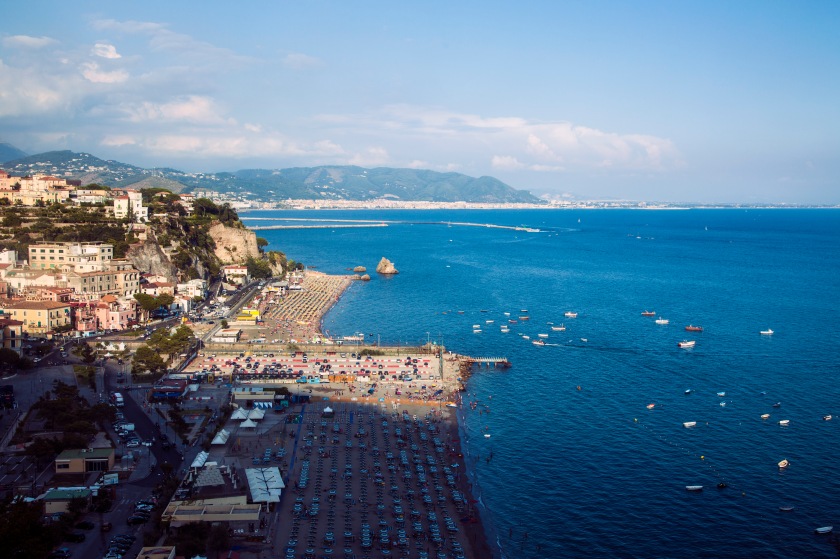
Vietri Sul Mare

Posted in Europe, Ischia, Italy

Adventures of the Azeris in Italy – Baia di Sorgeto

РУССКОЯЗЫЧНАЯ ВЕРСИЯ ПО ЭТОЙ ССЫЛКЕ. CLICK HERE FOR RUSSIAN VERSION.

Whoop whoop, it finally happened – the bustling Larissa’s efforts overcame the passivity of the Italian side: they managed to find the tour operator conducting tours in Russian, and its representative came to our hotel to provide all kinds of guidance to its Russian-speaking  guests.
A small group of the latter gathered in the pool area, dominated (or at least, so he thought) by a man from St. Petersburg, with traces of heavy drinking on his face, not speaking any foreign language, and trying hard to show everyone how rich and cool he was: he expressed the desire to have only individual tours, was only interested in Michelin-starred restaurants and said something like “One should use a choke chain on the tour guide, to make sure they only do what you tell them to do”. His aspiration for ‘separatism’ was actually quite convenient for us, as this specimen would be extremely unpleasant to be around on any tour. His wife, by the way, looked quite simple and seemed to feel uncomfortable with her husband’s statements.
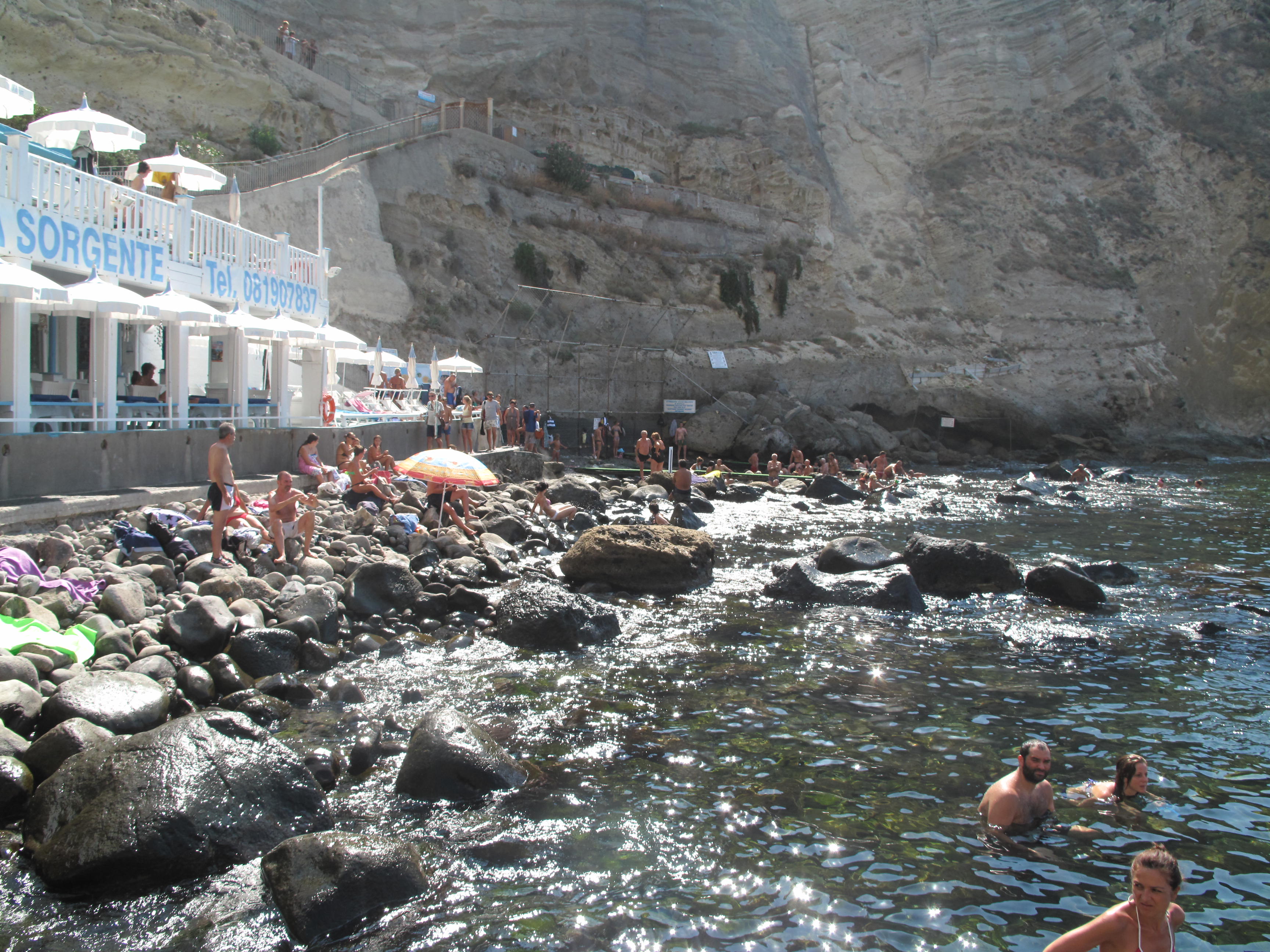
As a result of the conversation with the representative of the tour operator we got vouchers for a tour on Wednesday, and also learned about the Sorgeto bay located right here, near Sant’Angelo, and Le Fumarole beach located on a volcanic basin, heating the sand up to a hundred degrees centigrade. It sounded, though, like all you could to at Le Fumarole was baking potatoes and eggs in the sand, so we decided to abstain from a trip there and visit Sorgeto. As we were explained, the beach there pretty much consisted of natural stone beds with trickles of thermal water at 90-100 degrees Celsius flowing into them from under the ground. Combined with sea water, it results in overall temperature of around 35-40 degrees.

We took a water taxi to Sorgeto. The sailing was very pleasant, and we saw the “Elephant” rock on our way. However, Sorgeto itself, where we had been even encouraged to go at night, did not impress us that much: it was basically a jumble of huge boulders, looking scary to even step on (to us, at least), and even more so to try to lie on – it seemed absolutely impossible. Therefore, we returned to Sant’Angelo on the very next taxi.

Can you spot the elephant?


Baia di Sorgeto


Posted in Europe, Ischia, Italy

Adventures of the Azeris in Italy – Ischia Porto

РУССКОЯЗЫЧНАЯ ВЕРСИЯ ПО ЭТОЙ ССЫЛКЕ. CLICK HERE FOR RUSSIAN VERSION.

All this sightseeing is nice and interesting, but who said one shouldn’t be shopping when abroad? We’d been thinking for ages how to do it, and were first planning to travel to Naples, but then realised it would take us two hours to get there and two more to get back, especially that the opening time of the shops wasn’t very clear. Due to summertime many places here are closed from 1pm till 4pm, working a little in the morning and till midnight in the evening. And besides, August is the month of holidays, culminating on August 15 , the holiday of Ferragosto, which is an ancient pagan festival of the sun and harvest , adapted in Christianity as a day dedicated to the Madonna. Therefore, the working hours of shops (if at all? ) were under big question.

As a result we compromised . We had already mentioned that in general shopping in Sant’Angelo is virtually inexistent, so we were taken to Ischia Porto, the “capital” of the island. We were told that under the order of Mussolini each Italian city should have its own Via Roma, that is the street of Rome – usually it is the main street with all the shops concentrated on it. Ischia Porto is no exception . We arrived there at 6pm, and the street was crowded . However, we saw very little brand shops as such – most of them, just like in Sant’Angelo, contained a hodgepodge of several items by various brands. Still, after walking along the street till 10pm, each of us ended up with some new clothes .

The taxi driver, which was supposed to take us back to our hotel, told us that the price was not negotiable, but would rather be calculated based on the meter. We were pleased with the idea of not having to pay 40 euros this time. Well, indeed, we didn’t have to – the meter counted 60! We tried to argue, but the driver’s reply was that this was the night fare. Why 11pm had to be considered as night already – is an altogether different question, but arguing any further was simply pointless.

Posted in Europe, Ischia, Italy

Adventures of the Azeris in Italy – La Mortella (Ischia)

РУССКОЯЗЫЧНАЯ ВЕРСИЯ ПО ЭТОЙ ССЫЛКЕ. CLICK HERE FOR RUSSIAN VERSION.

From time to time we are promised that a Russian representative of some travel company will come to the hotel to “tell us everything” and organise a tour. But we do not believe in anything any longer and try to entertain ourselves as much as we can. Having gone through the available booklets, we decided to visit the La Mortella gardens.

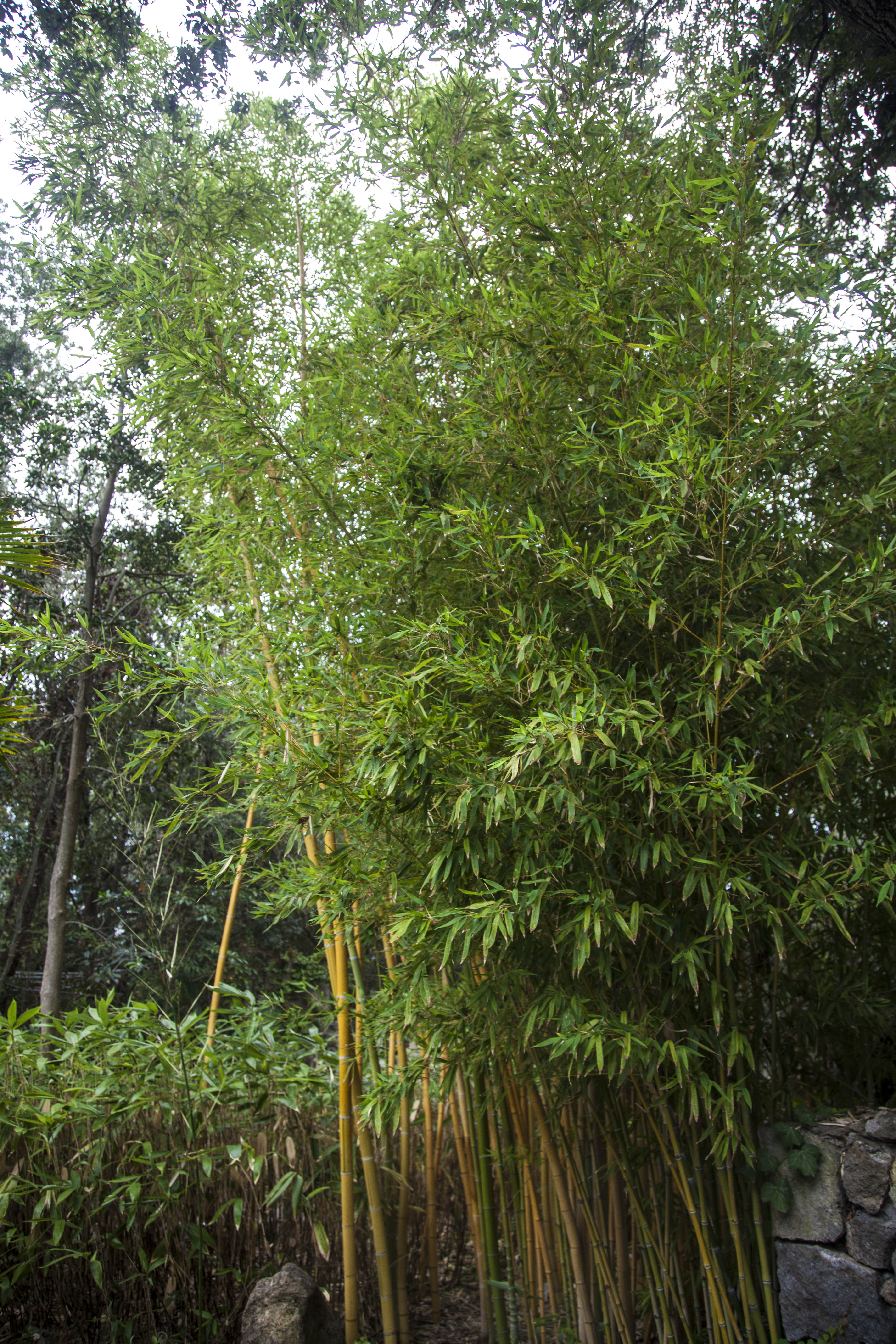
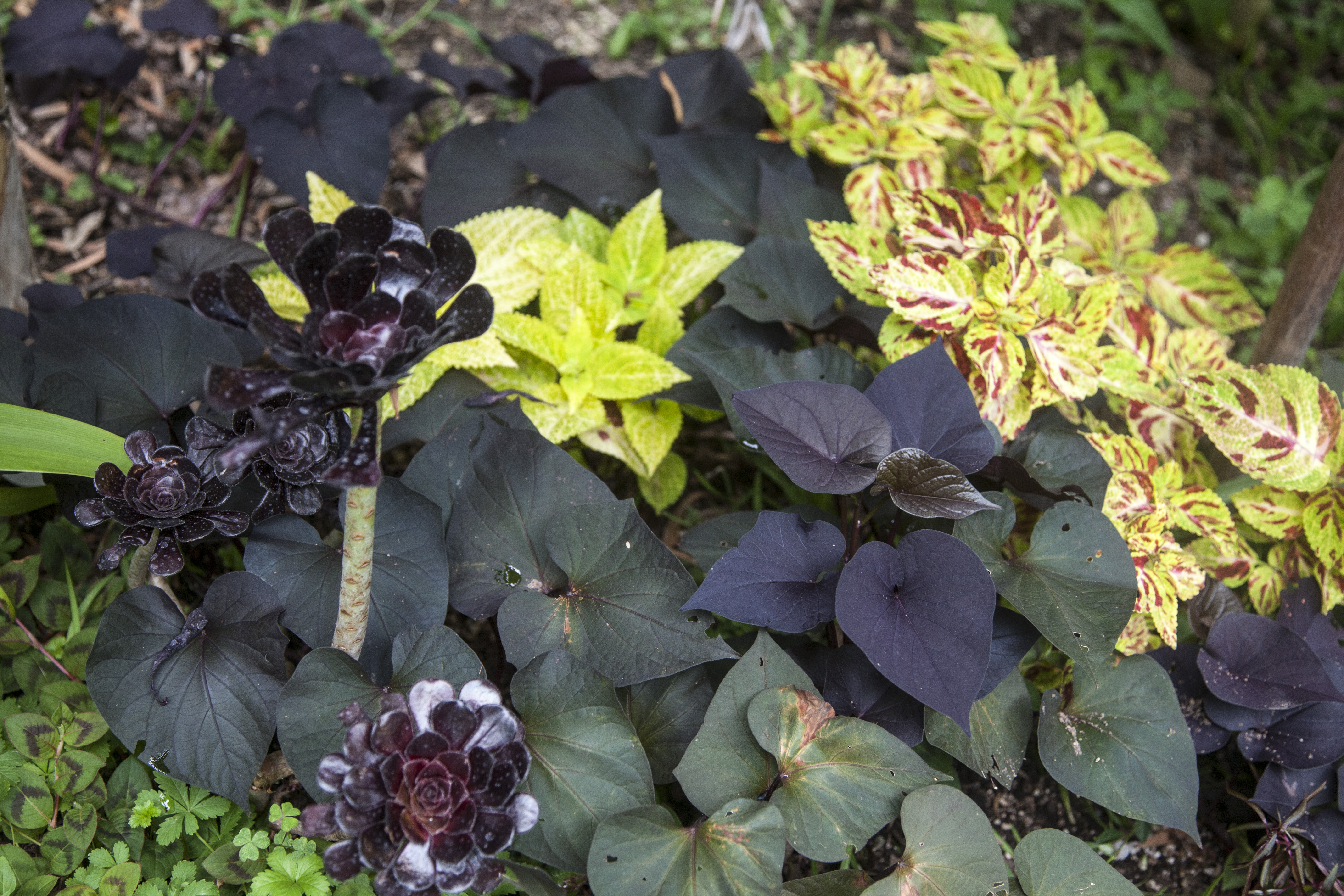
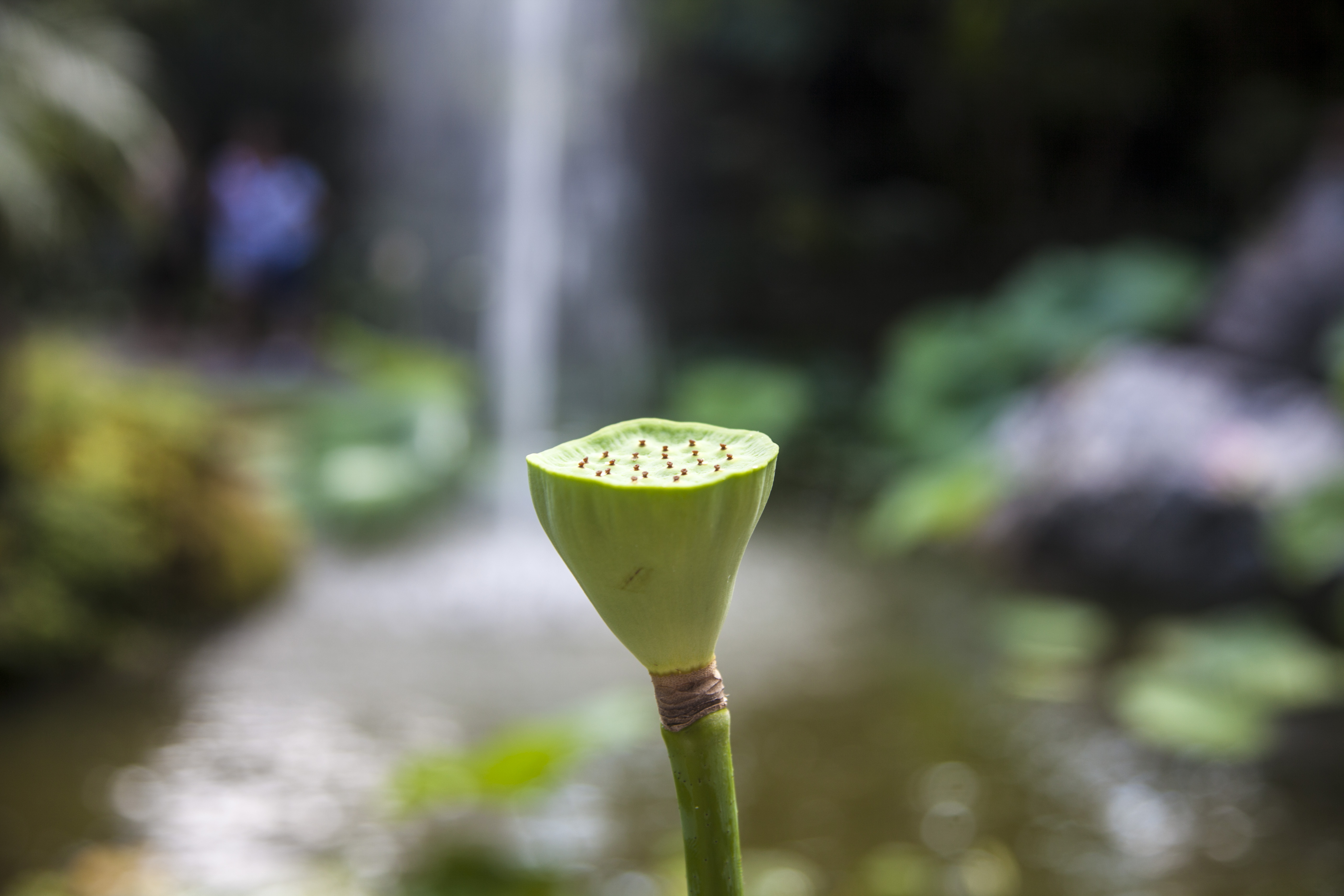
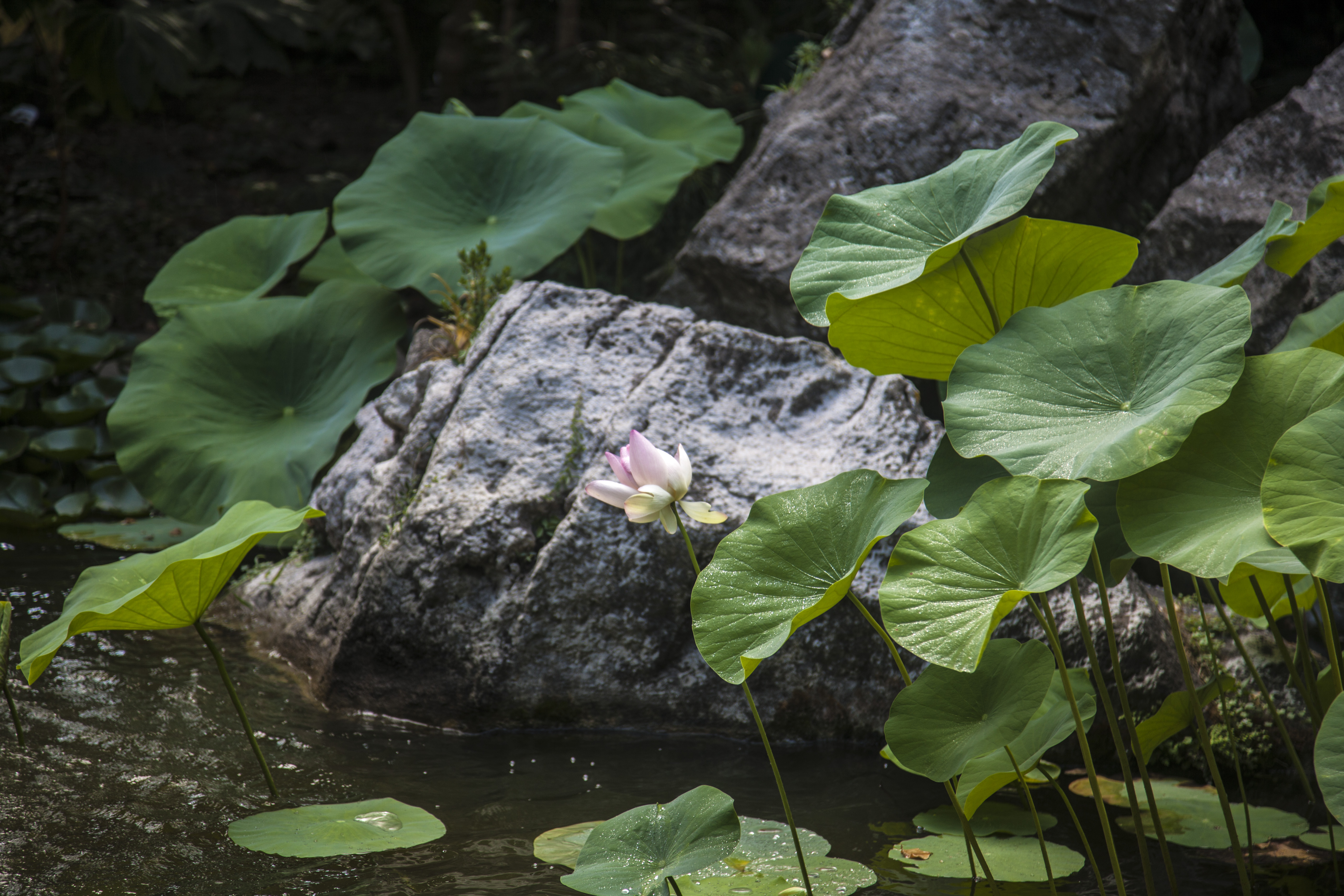
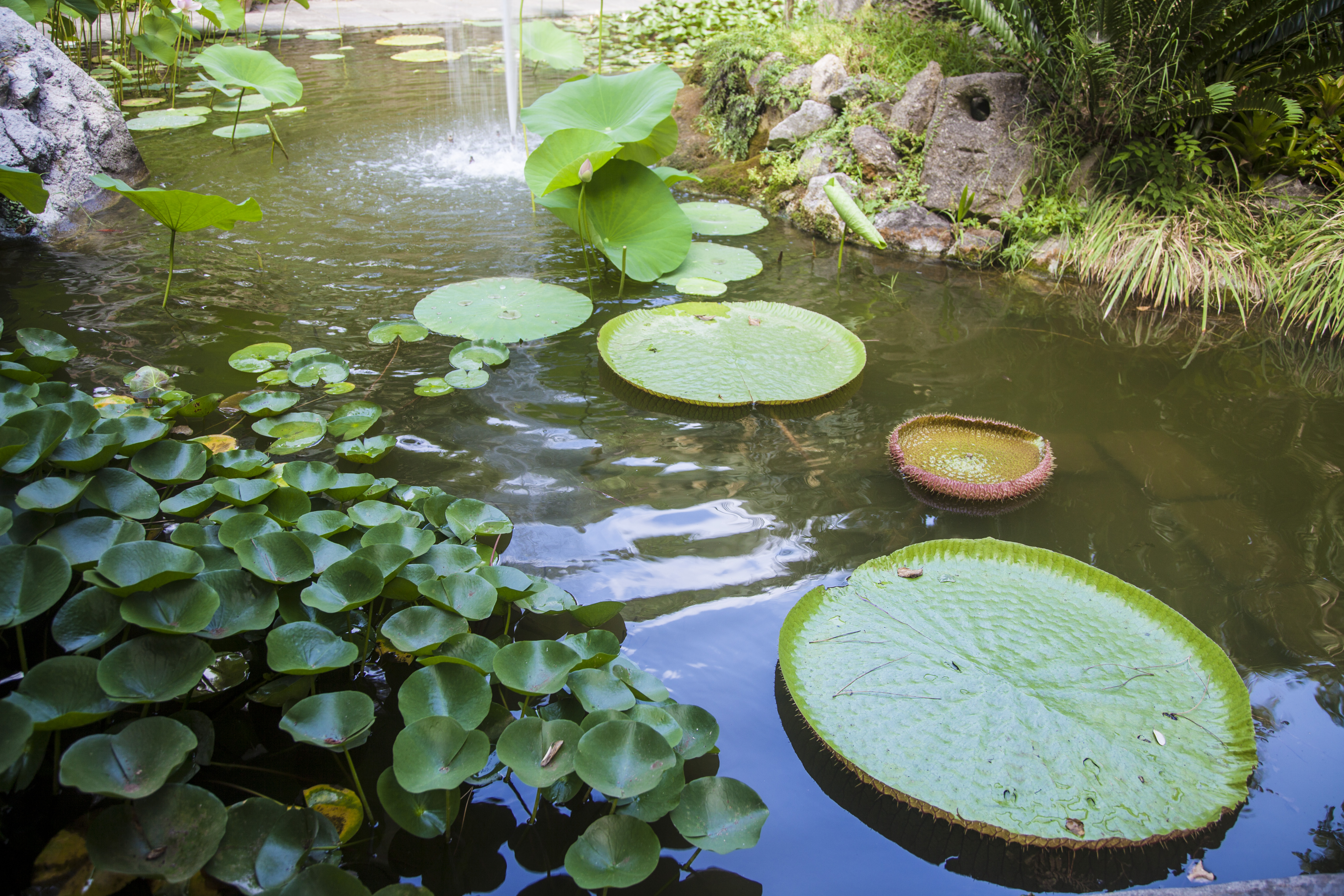
These gardens were planted by an Argentinian gardener who was the wife of the famous English composer Sir John Walton. They settled in Ischia in 1949, and, for the inspiration of her talented husband, she created the lower garden, full of the most rare plants from all around the world, including the giant Amazonian water lily Victoria amazonica, a leaf of which, as we all remember from our school books, can easily hold a month-old baby (dedicated to those lilies is the Victoria House, where water pours into a pool out of a  the ‘bocca’ (mouth) bas-relief); the Chinese paper tree, lotus, bamboos, Araucaria , bromeliads (that’s all I could remember, although there were lots more).

La Mortella - Bamboo

La Mortella

La Mortella

La Mortella

La Mortella - Lotus

La Mortella

La Mortella

La Mortella - Victoria Amazonica

La Mortella

La Mortella - Lazy Cat

The upper garden was created after the death of Sir Walton , in his memory. He is buried right here (and so is Susana – his widow, who died later and who is referred to as the soul of the garden). Clambering up, we saw the Greek theatre , a pool with a bronze crocodile, the Temple of the Sun, the Thai pagoda and a concert hall, where they show a documentary with Lady Walton herself talking about the garden. We did not watch it all, but caught the moment where Prince Charles of Wales was admiring her replicated version of the Victoria House at Chelsea Flower Show in London.

La Mortella

La Mortella - Thai Pagoda

La Mortella - Templa of the Sun

La Mortella - Temple of the Sun