Posted in Asia, English, Ho Chi Minh City, Vietnam

Vietnam – Day 1

РУССКОЯЗЫЧНАЯ ВЕРСИЯ ПО ЭТОЙ ССЫЛКЕ. CLICK HERE FOR RUSSIAN VERSION.

5 June 2017

Our Vietnamese trip began last night, when we left Baku for Doha and from the latter, after a 2-hour connection, flew straight to Ho Chi Minh city. The flight, albeit a long one, felt okay, in many respects due to being an overnight one: we literally got on, sat down, went to sleep, woke up – and suddenly it was already brunch time with just two hours remaining.

In general, everything went pretty smoothly, even though getting the visa took ages. First, we had to fill out a long form asking about everything one could possibly ask about, including religion and information about family members. Then we handed the documents to the officer and were asked to wait. And wait. And wait again. In total, the waiting time was less than an hour, but it felt like eternity.

We were anxious that the travel agency representatives wouldn’t wait for us, but obviously they were aware of the speed of the visa issuing process, so of course, our fears were groundless – we were greeted by a nice lady called Phuoc, picked up by an air-conditioned car and taken to the travel agency office to settle the outstanding payment balance. On the way, she showed us some flashcards with basic phrases in Vietnamese and told us about the history of Ho Chi Minh city and how it was only in the 1970’s when it was called so, because its previous name, Saigon, was too reminiscent of the Vietnam war. By the way, the name Saigon, as per Phuoc, is the modified form of the old Khmer “Prey Nokor” (yes, yes, don’t be surprised!), which used to be the name of the city in its pre-Vietnamese (i.e. Cambodian) times.
IMG_2171

The office turned out to be a small room with a couple of computers, piled with boxes and smelling of mothballs for some reason, where we were warmly welcomed, served iced tea, handed an ancient Nokia with a local sim-card to stay in touch with them, and, of course, charged the outstanding payment. Overall, for the time being, it feels like the agency is taking good care of us!

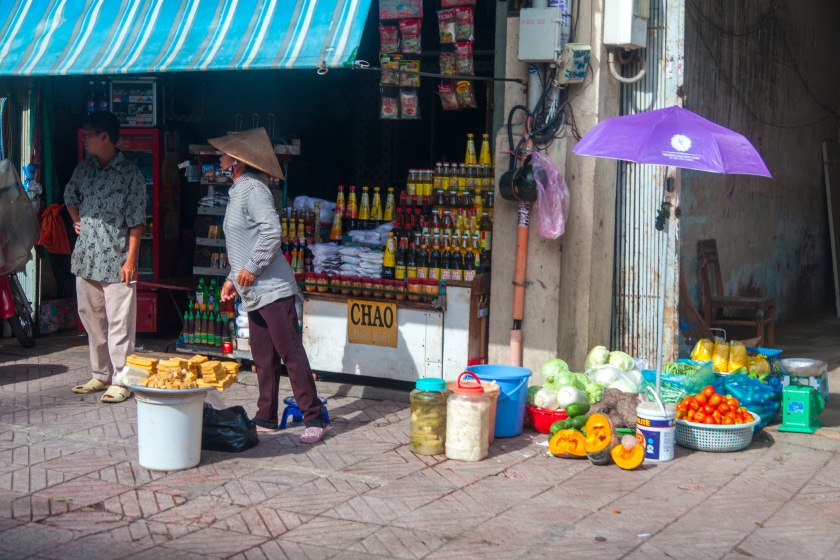
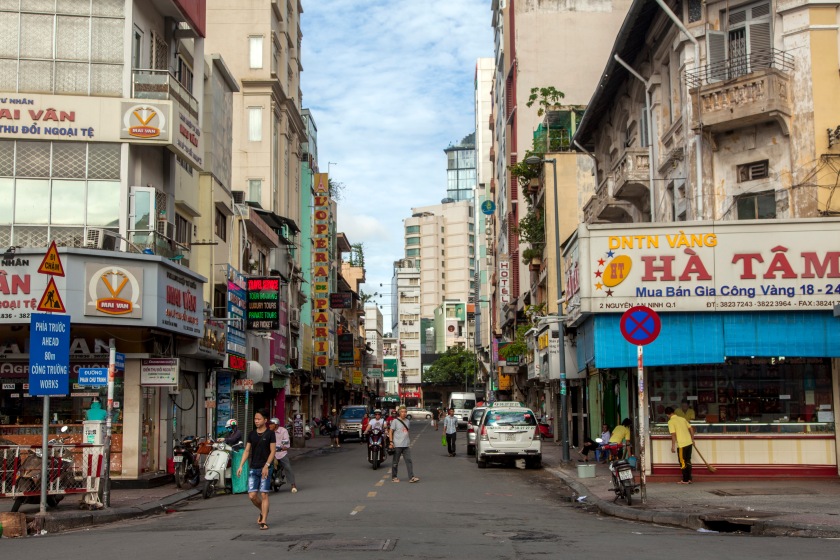
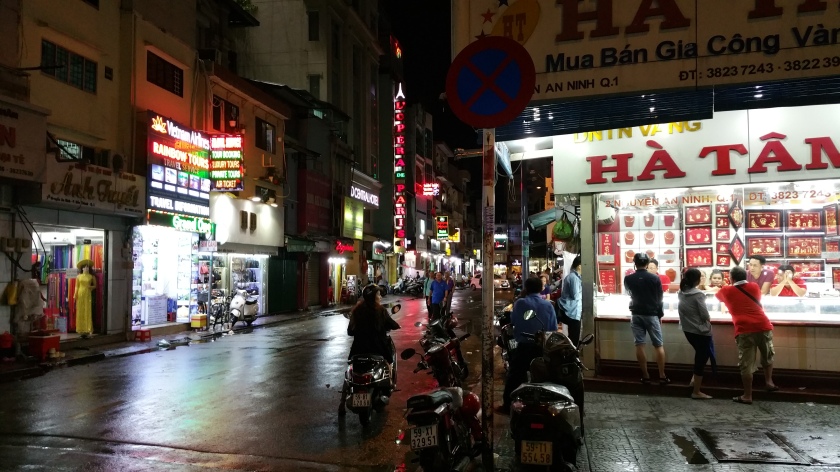
Then we were brought to the Lavender Boutique Hotel, where they left us – nothing is planned for today and we have the evening free. So after freshening up, we went out to explore the surroundings and get some dinner. The moment we stepped out into the street, we felt like in a bath – the air temperature is about 30 degrees Celsius and it’s very humid. The vegetation around is quite tropical with lots of greenery, palm trees, etc.

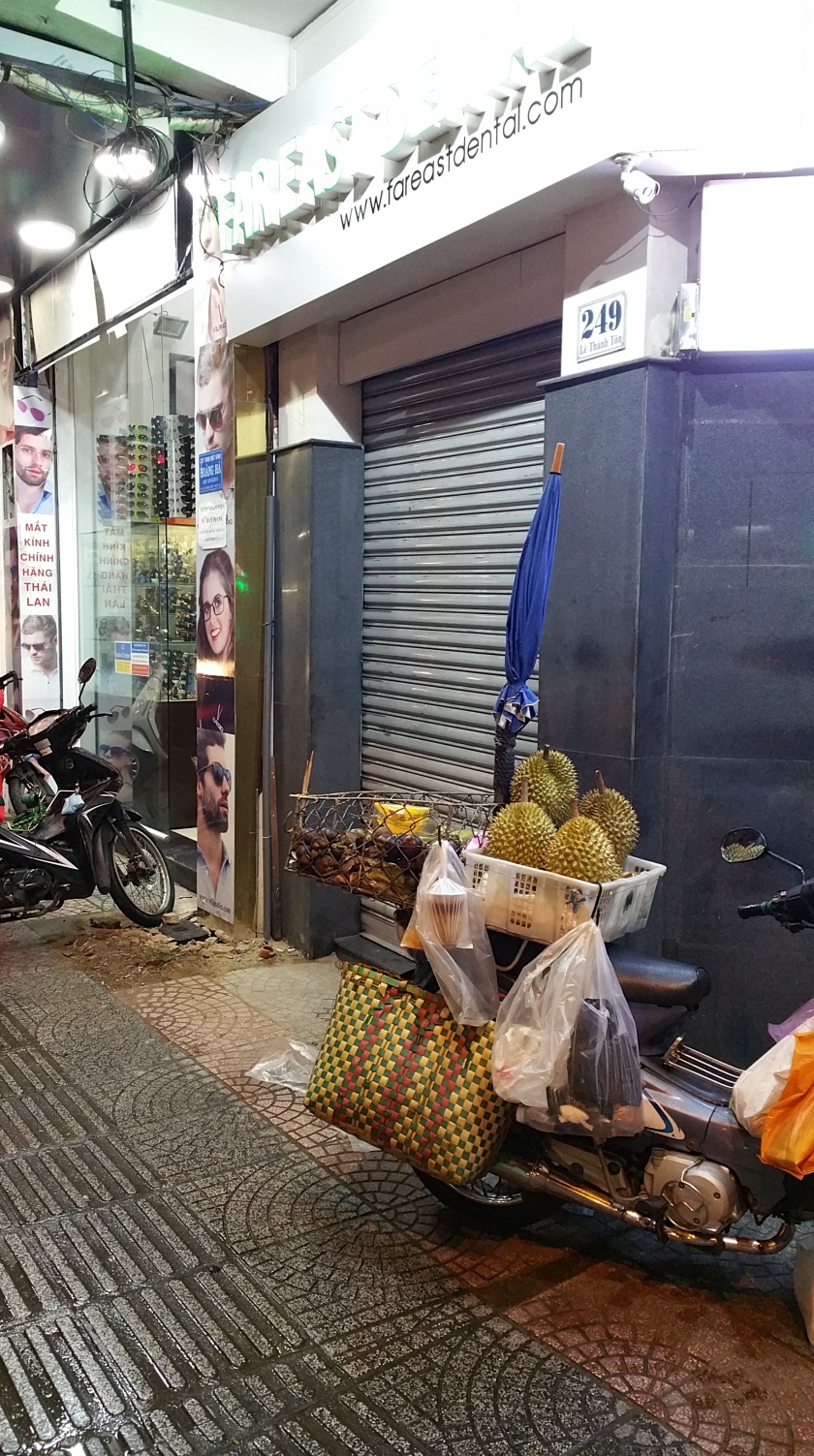
Walking around proves to be very, very difficult. Firstly, one must take into account the crazy traffic: most people here don’t drive a car, but a scooter, which there are lots and lots of. And if car-owners at least follow some traffic rules – that is, stop at the red light and before zebra crossings – you can’t expect the same from motorcyclists, so you have to manoeuvre between them literally risking your life! They even drive on sidewalks! Secondly, the sidewalks themselves are tiled pretty badly – chicken soup to our Bakuvian souls! – and are very uneven. And thirdly, the sidewalks, which aren’t very wide anyway, are clogged up with all sort of things: parked motorcycles, low stools with people sitting on them, street food and fruit stalls. And very specific scents are exuded both by the food and the fruit, as among the latter, durian dominates confidently with its unique smell, and it is at every corner!
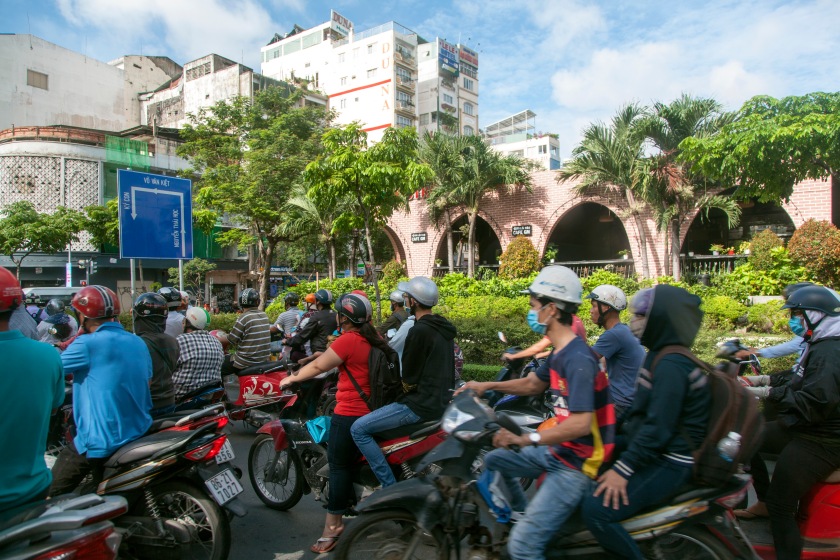
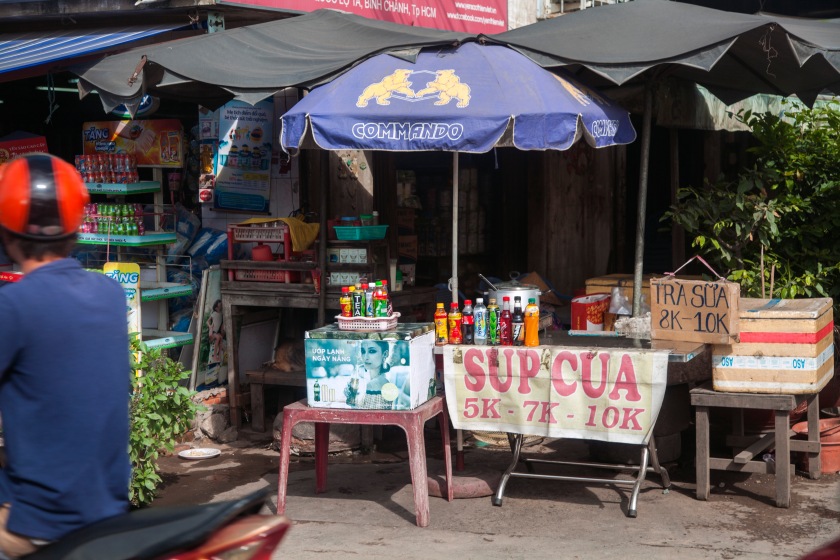
IMG_2176

IMG_2181

IMG_2178

Among all this unglamorous disorder, we discover a nice-looking restaurant, where, as we can see through the window, most customers are Vietnamese but there are some foreigners too, which we perceive as a good sign: the place is, therefore, not very touristy, but still foreigner-friendly. We tried local beer, some drink made of aloe vera with chia seeds and rice noodles with pork, cucumbers, peanuts and something else, and everything was tasty. And it all cost us less than 15 USD for two!
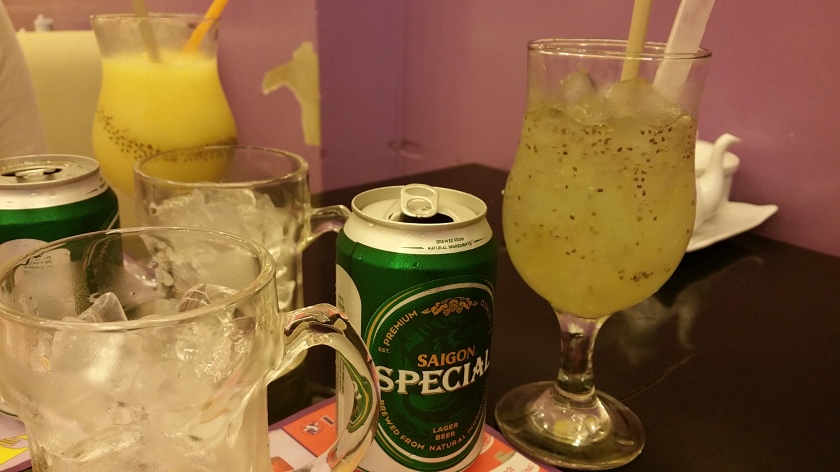
20170605_181240

After dinner we tried to walk to the Saigon River, which was supposed to be nearby, but had to give up as a terrible shower started pouring and didn’t stop for a good half an hour. Our Singapore raincoats, which we’d prudently taken with us, came in handy, but didn’t help much – we still had to wait under canopies every time the rain intensified (that is every 5 minutes), until we finally got our feet so wet that we decided to turn back, almost making it to a fancier-looking area than ours. The people here are obviously accustomed to downpours, especially since now it’s the rainy season – everyone has raincoats, huge umbrellas, even scooters are covered with waterproof covers. While waiting, by the way, we walked into a shopping centre selling clothes, which even smelled of cheap clothes – not a sight that can surprise us, who had seen the Baku street markets in underground passages.
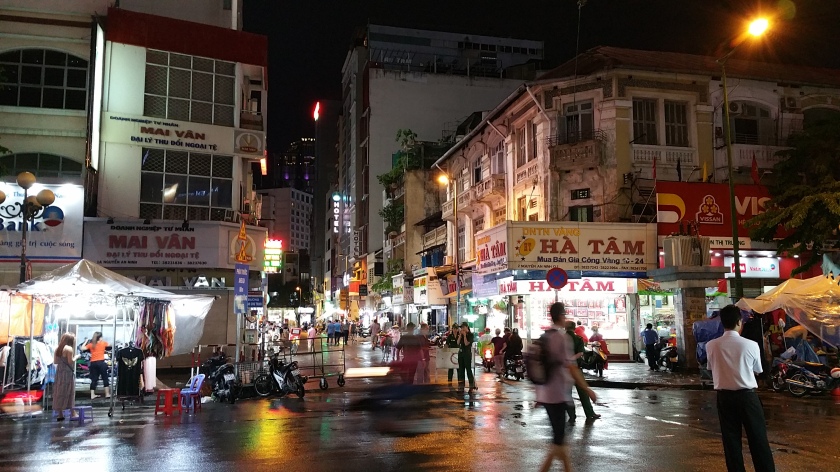
20170605_192715

20170605_192759

So here are my first impressions of the city: very colourful, much poorer than the previously seen Asian cities (such as Singapore or Hong Kong or Shanghai), scooters swarming all around and everywhere smells of durian.
20170605_193304

Posted in Europe, Georgia

Georgia – Day 2

РУССКОЯЗЫЧНАЯ ВЕРСИЯ ПО ЭТОЙ ССЫЛКЕ. CLICK HERE FOR RUSSIAN VERSION.

27 December 2014

We dedicated our second day to a tour of Tbilisi. First of all, we were taken to the Turtle lake which is located in the posh Vake district. The lake is called like that for a very obvious reason – there are small turtles on its shores. The lake was coated with a thin layer of ice, and the park impressed us with its clean pine air and the sources thereof.

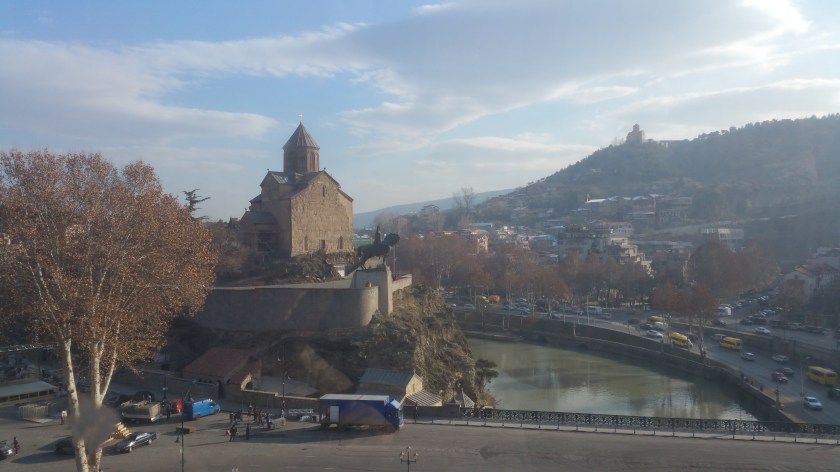
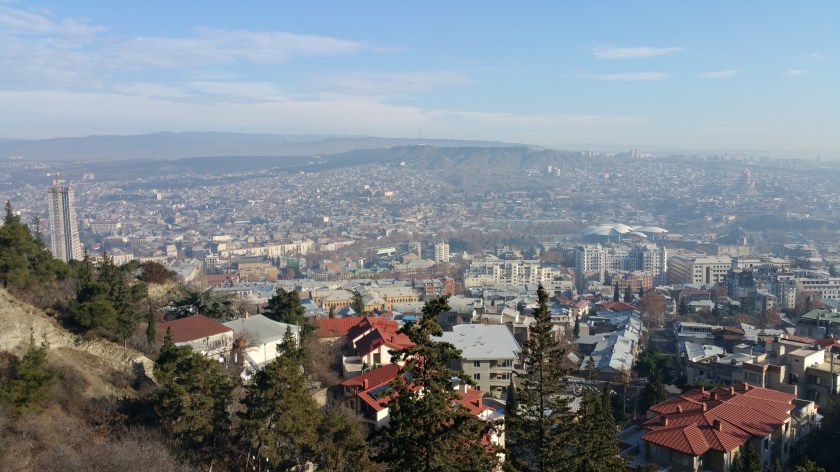
Yesterday we thought that Tbilisi was pretty small, but when we were taken to see it from one of the highest points today, so that not only the old part, but also the new districts were visible, it turned out that the sizes are much larger and the city, extended in length, lies in the cleft between the mountains. In short, the size of the city could be seen well, but the details could not really be made out – it was very foggy. On the way to this lookout point we saw a very original building of the 112 rescue service in the form of a flying saucer.

20141228_120721
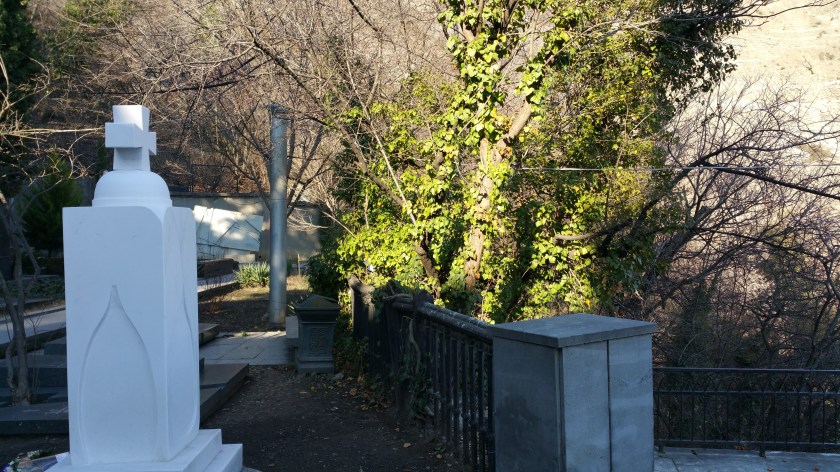
One of the planned visits was the Pantheon – the burial place of famous Georgian figures of culture, science and politics – situated on the slopes of Mount Mtatsminda. More precisely, it was our guide who told us about the Pantheon, as we only knew about the graves of Griboyedov and his wife, Nina Chavchavadze. It turns out that these very graves initiated the Pantheon. We came as close as we could by car, and then had to walk, making pretty steep climbs. The guide was encouraging us by showing the place of destination. From this high point, we looked at Tbilisi again, from a different perspective now, and suddenly it turned out that the grave of Griboyedov was just behind us. The grave had a very touching monument to a weeping woman clinging to a cross, and a no less touching famous inscription: “Your spirit and achievements will be remembered forever. Why still does my love outlive you?” With regard to the Pantheon itself, I found all the graves interesting, even though I had only known the names of Stalin’s mother, Zviad Gamsakhurdia and Nodar Dumbadze.

20141228_121124

20141228_121322
After such a spiritual visit we moved on to a purely prosaic activity – food consumption, for the purpose of which we were taken to the Agmashenebeli avenue (former Plekhanov street). By the way, I really liked the avenue, even more than the Rustaveli ave. I can’t now recall the name of the small restaurant we went to, but the interior was purely Georgian, with antique items, such as cameras and phonographs, and reproductions of Pirosmani’s paintings on the walls (we ate our khachapuris right next to the famous “Feast of Five Princes”).

If yesterday we visited ancient churches and temples, today, having driven us through a quarter that was very reminiscent of the Kubinka and generally the area of Teze Bazar in Baku, Zviad brought us to a modern temple, visible from almost any point of Tbilisi – Tsminda Sameba, the Holy Trinity Cathedral. It occupies a large area, around which you can still see construction works, like columns being built and stone carving works going on.

20141228_140522
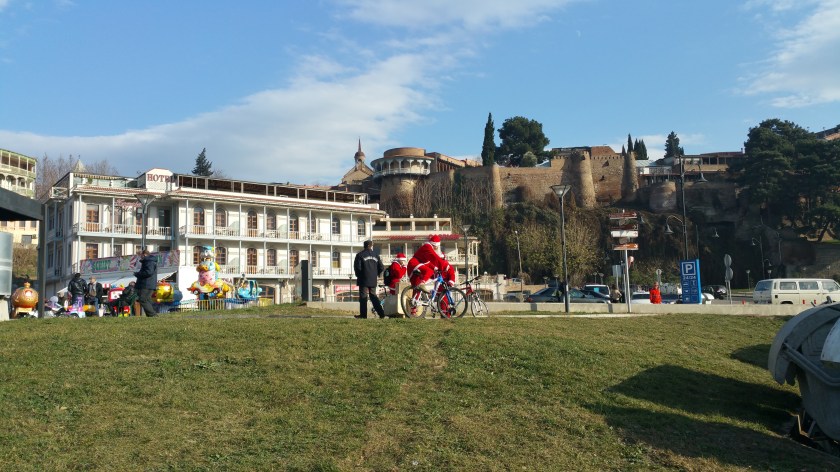
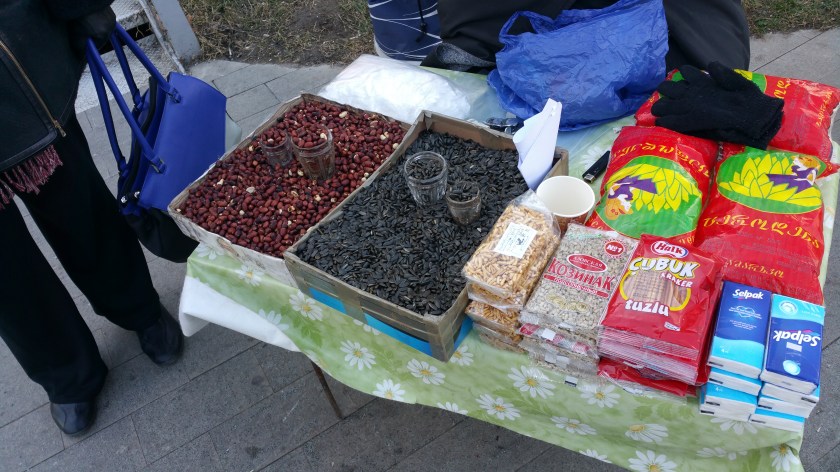
Apparently, the plan of our guide consisted of alternating spiritual visits with pure entertainment – undoubtedly the cableway to the Narikala forthress at the same Mount Mtatsminda was part of the latter. It is not at all scary here – unlike the one I took to the Great Wall in China, where you literally float over the abyss, risking dropping your shoes there (while also afraid to drop yourself!). Here you just sit in a closed cabin for 5-6 people and peacefully look at the Kura and its banks underneath. We didn’t get to see the fortress, but had the opportunity to be photographed with a falcon, and then descended to the Europe Square using the same cableway. We saw a few people dressed as Santa Clauses riding bicycles, and also something that made me really emotional – street vendors of roasted peanuts and sunflower seeds, which are measured with a large or a small faceted glass and then sold in paper cornets: where are the days when we had the exact same thing in Baku?..

20141228_145438

20141228_143903

20141228_144909

20141228_150224

20141228_150422
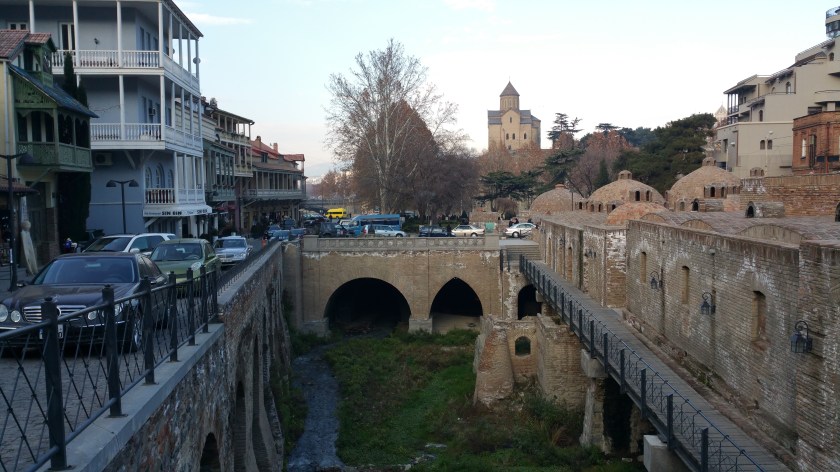
Both today and yesterday we saw a lot of purely Tbilisian houses, clinging on the steep cliffs over the Kura, with a lot of balconies. Today we also went into one of the old quarters. Here we found the famous sulfur baths, which we could sense even from afar for the very specific smell of hydrogen sulphide. We walked up to a waterfall in a narrow crevice.

20141228_151501

20141228_152154

20141228_151855
Ever since yesterday we really wanted to buy churchkhela – the traditional sausage-shaped candy made of grape must with nuts, but Zviad had told us not to buy it not just anywhere but in trusted places, and so he took us to one. The tiny convenience store seemed to have a whole market squeezed in it: they had meat, and cheese, and pickles, and a variety of fruit-vegetables, and well, of course, the coveted churchkhela. Unluckily, we had to wait for the sales assistant of this particular department for quite a while – it turned out that he had been queueing at a supermarket nearby to buy a box of champagne.

Towards the end of the day we went up the Mtatsminda for the third time, this time by a cable car. The first stop was near the pantheon we’d already seen, and the second one led us to a large park, with lots of swings and carousels, with New Year’s songs coming from the speakers, with a house with upturned balconies – as if it was standing upside down. And again I was wrapped in nostalgia – the Baku Boulevard in the days of my childhood looked exactly like this, even the benches were similar. But it’s not that I’m trying to say that anything around looks old and shabby, straight from those times – the park is exactly maintained like this, just as the buildings are restored, as I said before.

20141228_165328
Overflowing with impressions, we ended the day in the khinkali restaurant right near the hotel, where we tried different kinds of khinkali: with meat, mushrooms, cheese – and were very pleased. Thus, our stay in Tbilisi was brief, but very impressive.

Posted in English, Europe, Georgia

Georgia – Day 1

РУССКОЯЗЫЧНАЯ ВЕРСИЯ ПО ЭТОЙ ССЫЛКЕ. CLICK HERE FOR RUSSIAN VERSION.

27 December 2014

We arrived last night, and found Zviad, the guide meeting us, very easily, so logistic-wise everything went really smoothly. The smooth start actually began at the passport control, where each of us was handed a bottle of Saperavi wine – turns out, they are given out to all foreigners entering the country, isn’t that surprising? Zviad drove us a bit around the night Tbilisi, which immediately aroused nostalgia – the non-central streets seemed very similar to the Baku of my childhood. We got particularly excited when shown the river Kura and then the Avlabari neighbourhood, and started quoting the Khanuma movie.

20141227_085802

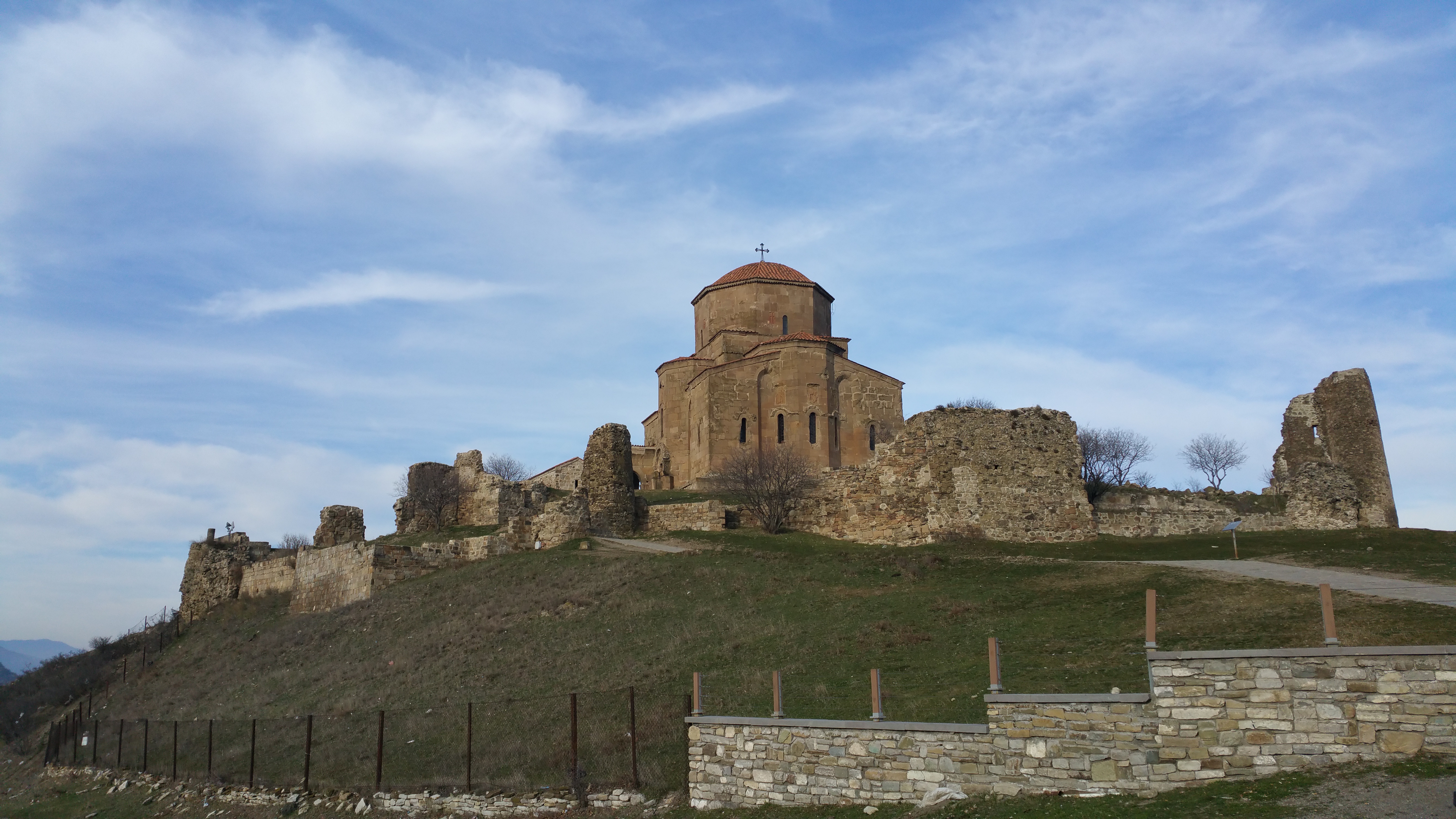
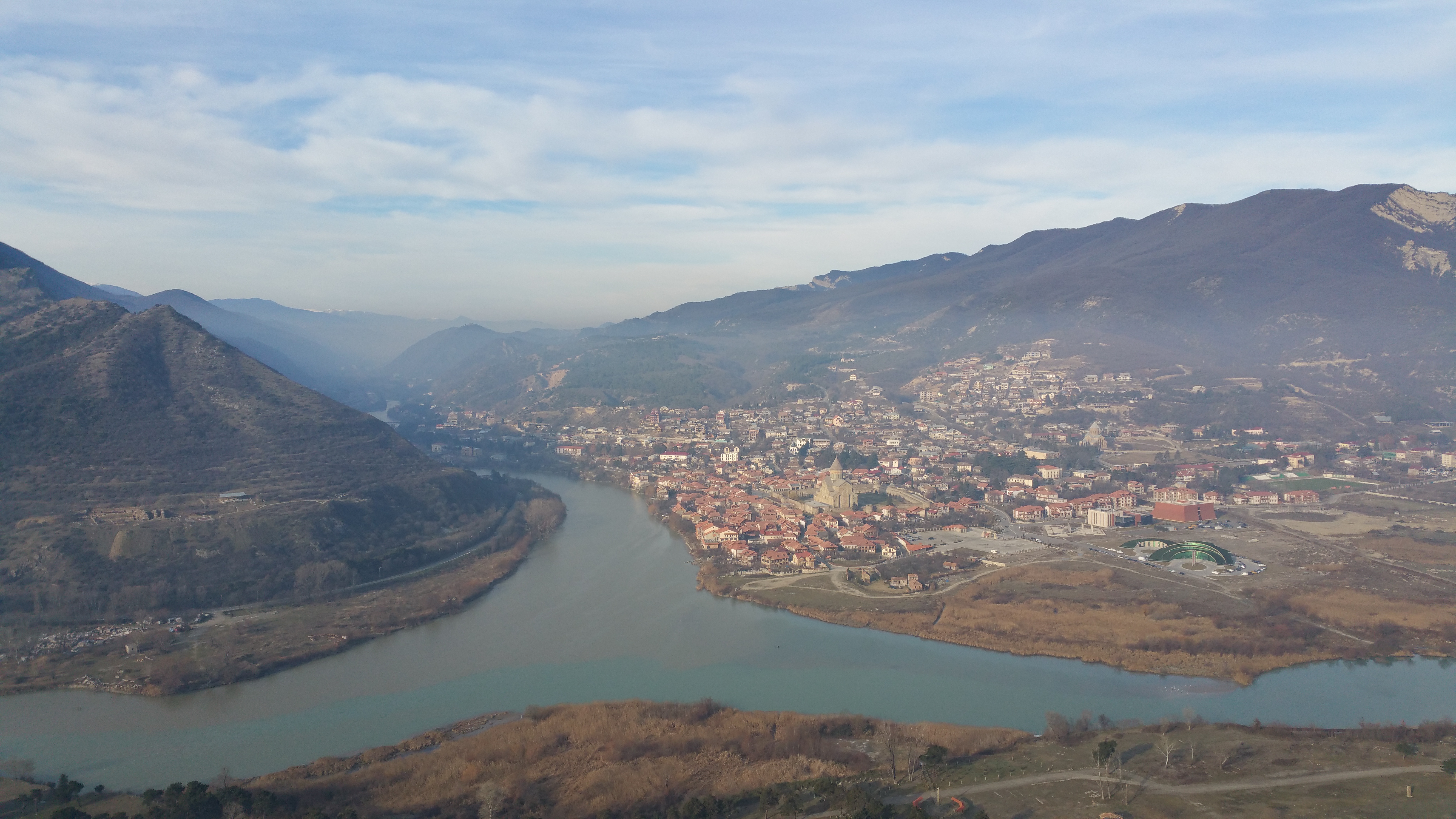
It was decided that on the first day we would make a sortie out of Tbilisi and leave the city sightseeing for the second one. The weather promised to be nice (and honestly fulfilled the promise), even though it was quite chilly near the Jvari (meaning ‘cross’) monastery where we headed first, and the puddles were flecked with ice. The monastery is located atop a rocky mountain, from which one can see the Mtskheta town and also exactly what was described in Lermontov’s poem ‘The Novice’ (‘Mtsyri’): “…where soundingly together flow Aragva and Kura – the place, where, like two sisters, they embrace…”, i.e. where the blue Aragvi merges with the yellow Kura, and the line separating these waters is very clearly noticeable. The reason why the monastery is called the Holy Cross monastery is not because it has the shape of a cross, as one might expect, but because it was here where St. Nino of Georgia, a female evangelist, erected a cross. The legend says that this very cross lies in the foundation of the monastery.

20141227_104035

20141227_104044

20141227_104539

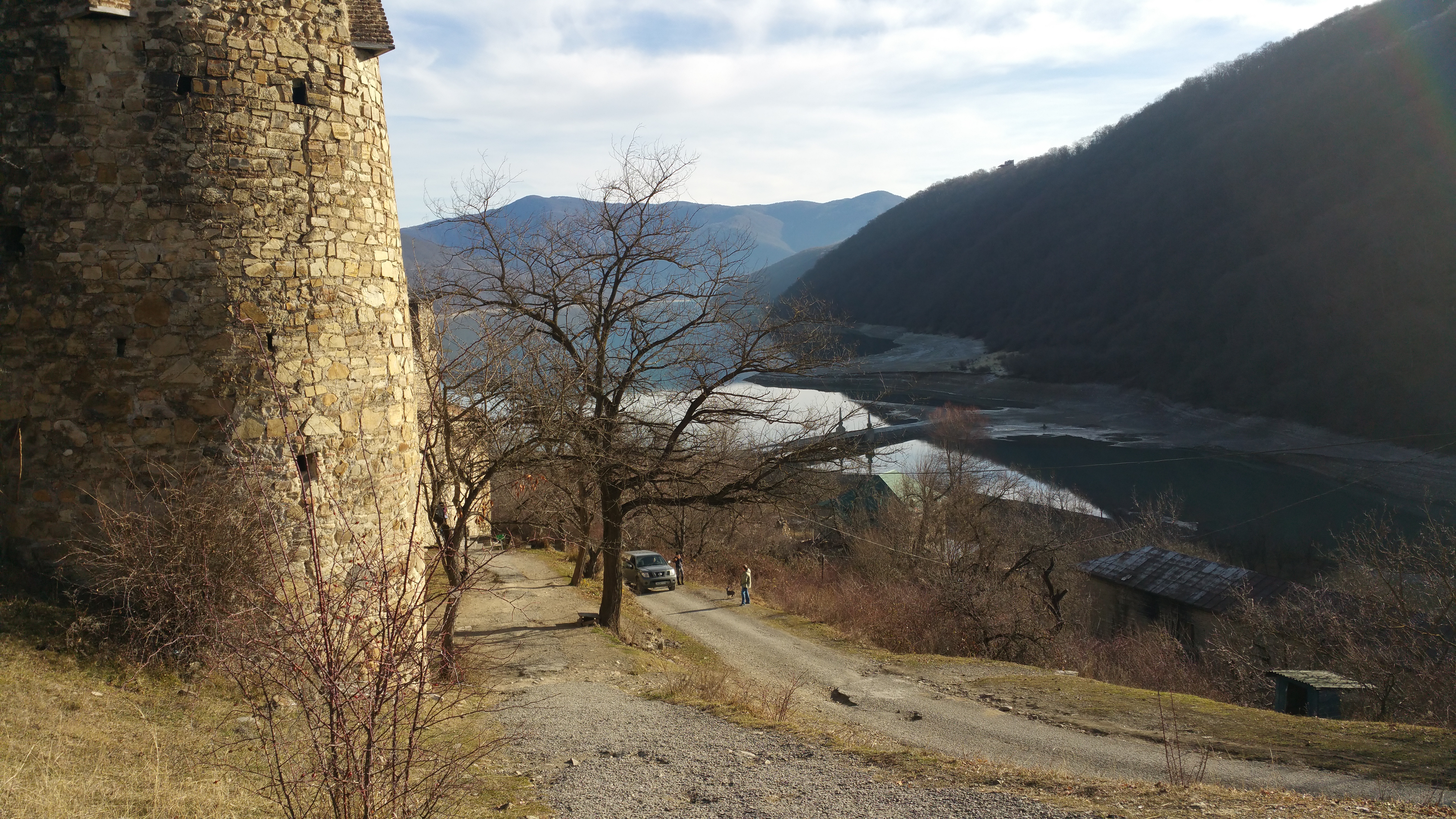
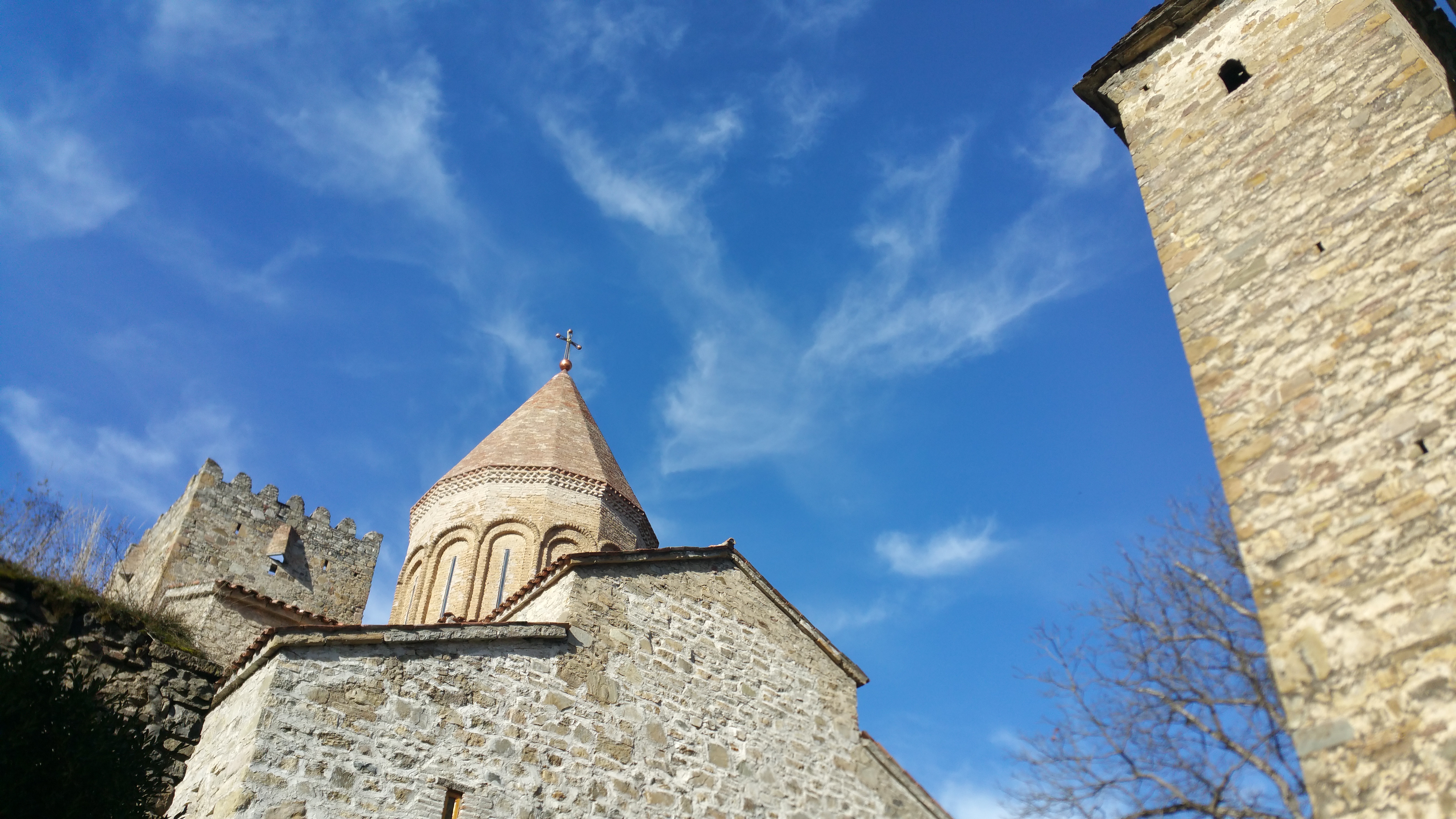
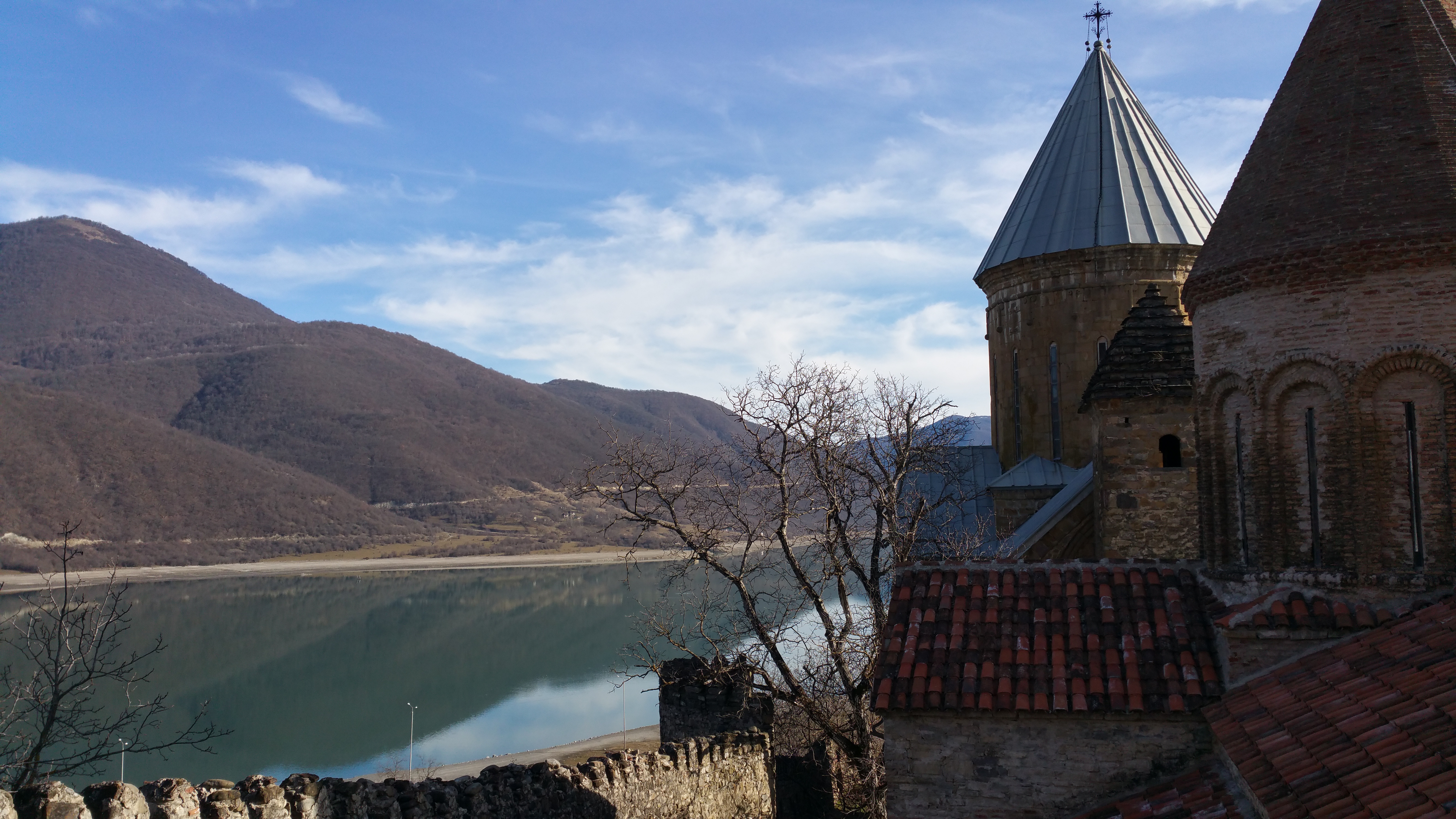
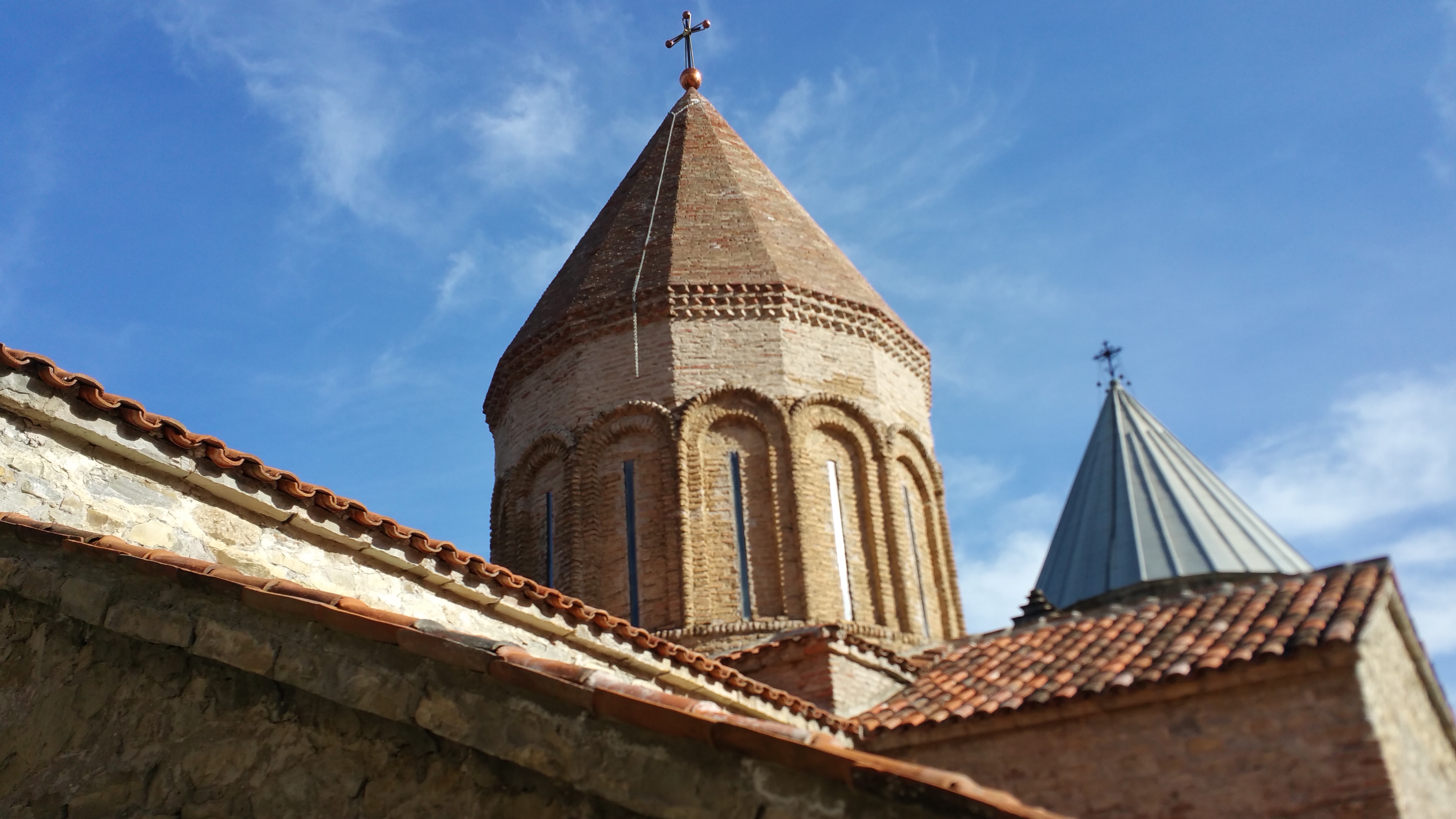
We drove off along Aragvi, on the Georgian Military Highway, to see the ancient fortress of Ananuri. The places around were very picturesque, even though it’s not the best season now – in autumn or spring it must look absolutely spectacular! On our way we took pictures of the Zhinvali reservoir from various angles. It’s also very beautiful, but that’s somewhat overshadowed by the fact that to create this beauty (which of course has practical use too!) three villages had to be flooded. We visited one of the churches in the castle complex, while the other one was closed. Zviad told us that once all the walls in the first church were painted with frescoes, but then during the stay of a Russian garrison in the fortress, they were all covered with a thick layer of lime. Relatively recently a small area was cleared and a really impressive fresco of St. George was discovered. I climbed to the top of the tower, which was quite difficult and scary, considering the narrow passages and steep, broken stairs. But I got the chance to look out of a loophole, although it was so narrow that I couldn’t really see much.

20141227_121051

20141227_121232

20141227_121726

20141227_121742

20141227_121846

20141227_121942

20141227_122617

20141227_123401

20141227_123628

20141227_125548

From here we drove back to Mtskheta and stopped in the old part of the city. In general, as we noted, it is peculiar to Georgia that most of the ancient and old buildings are restored in their original form. Therefore, all the houses are colorful, neat, with traditional Georgian balconies and look very good. There are little shops selling souvenirs, wine, churchkhela (Georgian sweet “sausages” made of fruit and nuts) with sellers strongly beckoning tourists to drink with them all along the road to the Cathedral of Mtskheta. Our guide even argued with someone, reproaching him for trying to “recapture” his guests.

.

20141227_133702

20141227_133713

20141227_133745

20141227_141233

20141227_141303

20141227_141404

The Cathedral of Mtskheta, or Svetitskhoveli (translated as “the life-giving pillar”) is a patriarchal cathedral with the seat of the Patriarch standing right in the centre thereof. It’s a burial place of the last kings of Georgia and various princes, including a few from the Mukhrani branch of the famous Bagrationi dynasty. The Cathedral is one of the three main cathedral in country, symbolising the central Georgia, or the Kartli region. The Alaverdi temple in Kakheti, respectively, represents the east of Georgia and the Bagrat temple in Kutaisi represents the west. Even in Soviet times, it was common among the youth of Tbilisi to wed in Svetitskhoveli, so every spring after Easter endless wedding processions stretched from Tbilisi.

20141227_134636

Instead of the anticipated three hours we spent five on the road, by the end of which we were absolutely starving. We wanted to taste some proper Georgian cuisine, and on our return to Tbilisi we were taken to a restaurant called “Zakhar Zakharich”. The food there was really delicious. Our menu consisted of the kharcho soup, Imeretian khachapuri (cheese pie), aubergines with walnuts, ojakhuri (roasted pork with potatoes and onions), shkmeruli (fried chicken with lots of garlic) and jigar (liver) on the grid. As for the wine, we had red Saperavi in pitchers. In short, we had a great treat and only paid 127 GEL for four of us, which makes about 70 USD , or 54 AZN.

The only thing we could do after that was taking a two-hour nap. In the evening, we walked along the holiday-decorated Rustaveli Avenue, which was right around the corner from our hotel. It was beautiful, but in many ways reminded of Baku – potholes here and there, lots of construction, cars on the sidewalks, cigarette smoke everywhere – as most of the population seems to smoke. However, the walk was still nice.

Posted in Asia, China, English, Hong Kong

Hong Kong – Day 3

РУССКОЯЗЫЧНАЯ ВЕРСИЯ ПО ЭТОЙ ССЫЛКЕ. CLICK HERE FOR RUSSIAN VERSION.

2 December 2013

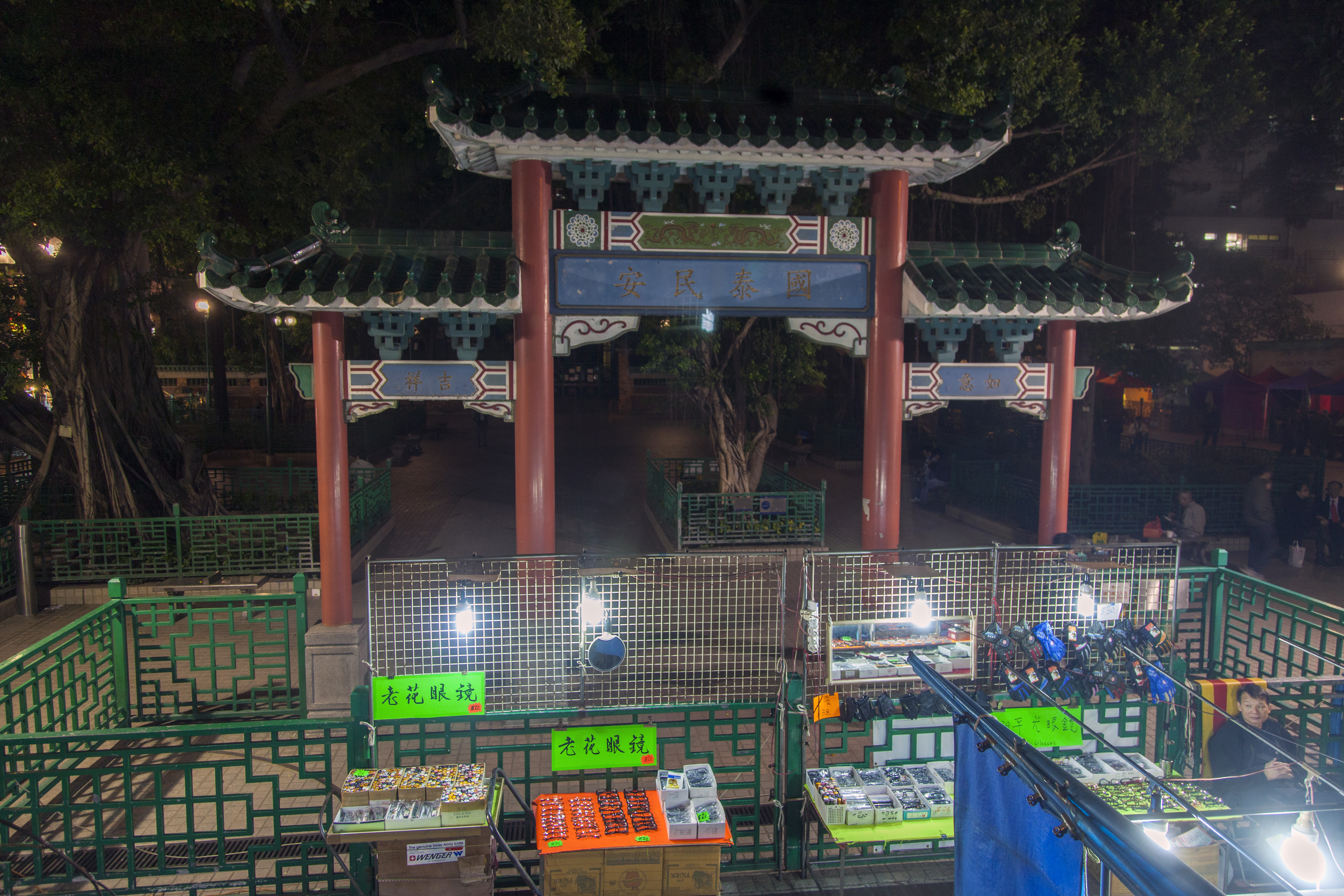
Today we went on with the bus tour which continued on the Kowloon peninsula. I found it less interesting than the island – lots of skyscrapers and shops, the streets mostly looked quite the same. Generally, it would have even been better to find a hotel on the island instead, it is way more picturesque than the peninsula which basically has only shopping and restaurants, and also the Avenue of Stars on the promenade, where we walked prior to the bus ride. The first time, I mean last year, it had been more fun – at least, seeing the handprints of local stars for the second time seemed less exciting now, however I still found the Bruce Lee statue impressive.

IMG_2174

IMG_8091

IMG_8093

IMG_8103

IMG_8102

IMG_8099

IMG_8101

During the bus tour, as usual, we were listening to the audio guide, and again heard the familiar information about the Black Christmas, when on 25 December 1941 the Hong Kong authorities had ignominiously surrendered to the Japanese; and how the Chinese emperor had mastered Kowloon and why this area with eight dragon-like hills was called the peninsula of Nine Dragons. But there was also an unfamiliar piece of information which I found quite interesting: one can hardly find any rats in Hong Kong nowadays, but in the late 19th century the city was literally flooded with lots of them. When some Japanese doctor proved the correlation between the spread of plague and the presence of rats, the city authorities took drastic measures and announced a reward of 2, and later 5 cents per caught rat. All went well at first, but then the reward had to be cancelled, for some particularly enterprising citizens started importing thousands of rats from China!

IMG_8105

IMG_8108

IMG_8111

IMG_8116

IMG_8121

The highlight of the day was meeting my teacher of Cantonese, which I learn over Skype. It’s always great when you have the opportunity to talk to someone local during a trip – it was fascinating to ask her questions about the Chinese language, and how text messages are typed in Chinese (she said there were dozens of ways: for example, her cousins, who can only read, but not write characters, use an app where you input romanised text, and it suggests all possible character options, out of which you need to find and select the appropriate one; while she herself prefers the app where you handwrite each character on the touchscreen, and the app recognises them and translates into printed text – the trick here is to follow the correct stroke order), and to hear from her that the income tax is very low in Hong Kong, however, there is no state pension at all. By the way, despite being 35, my teacher looks 23-25 at most.

She took us to the Maritime Museum, which had an exhibition of John Thomson’s photoworks, depicting Hong Kong and Coastal China of the 19th century. The technique of creating these photographs was shown right there: the wet collodion photographic process he had been using was already somewhat more advanced than the daguerreotype process, but still as far as the moon from being any similar to the modern process. It was rather complicated and time consuming, so it’s really amazing how Thomson managed to obtain photographs of such high quality. Personally, I liked the most those portraying people, some of which had been obviously posing very diligently and thus had ‘frozen’ faces, while the facial expressions of some others were vivid and natural, creating real genre pictures.

The rest of the museum expositions were stationary, and demonstrated the history of local seafaring and shipbuilding, piracy and maritime trade from ancient times to the present. Even we, being generally quite far from maritime affairs, found it very interesting.

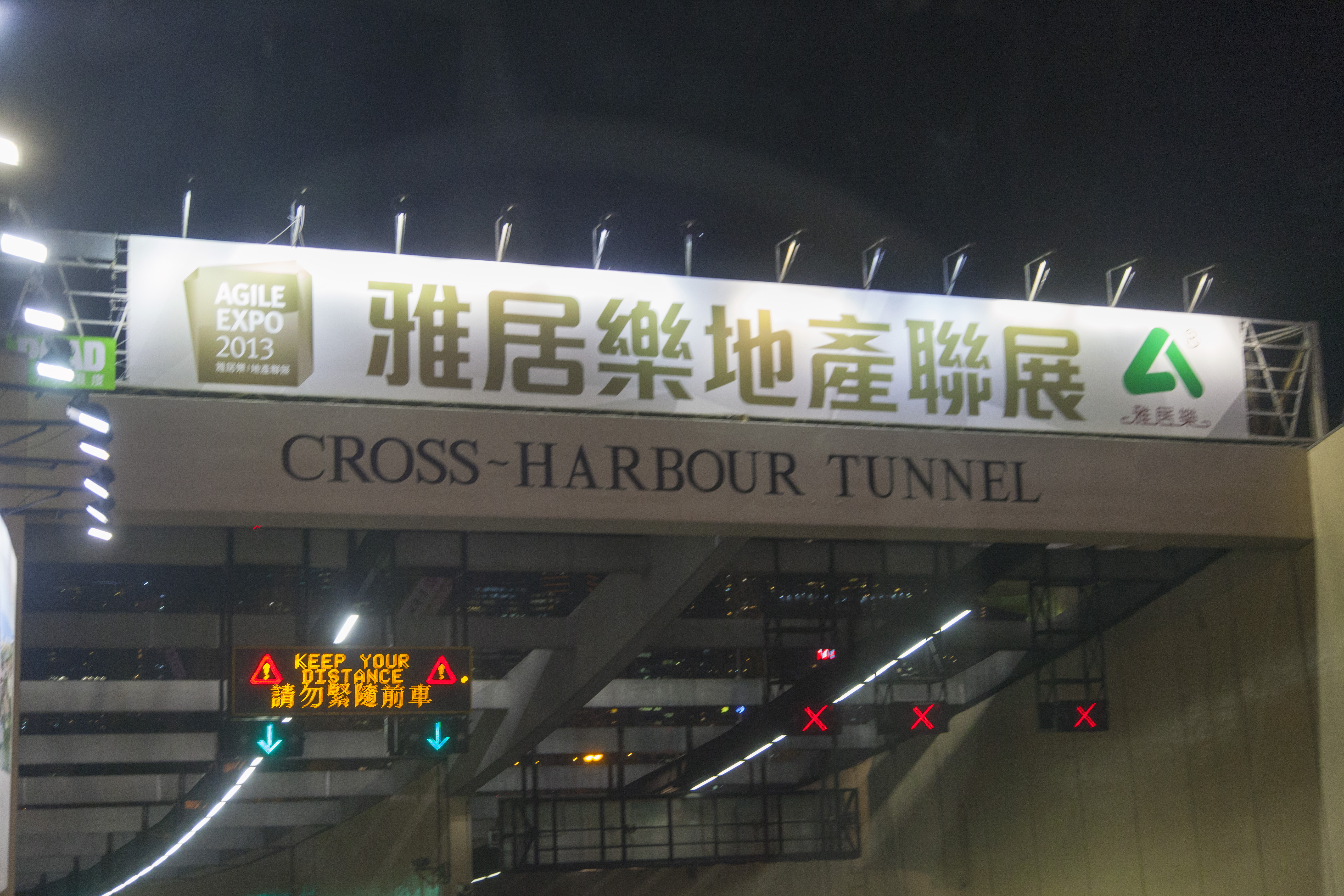
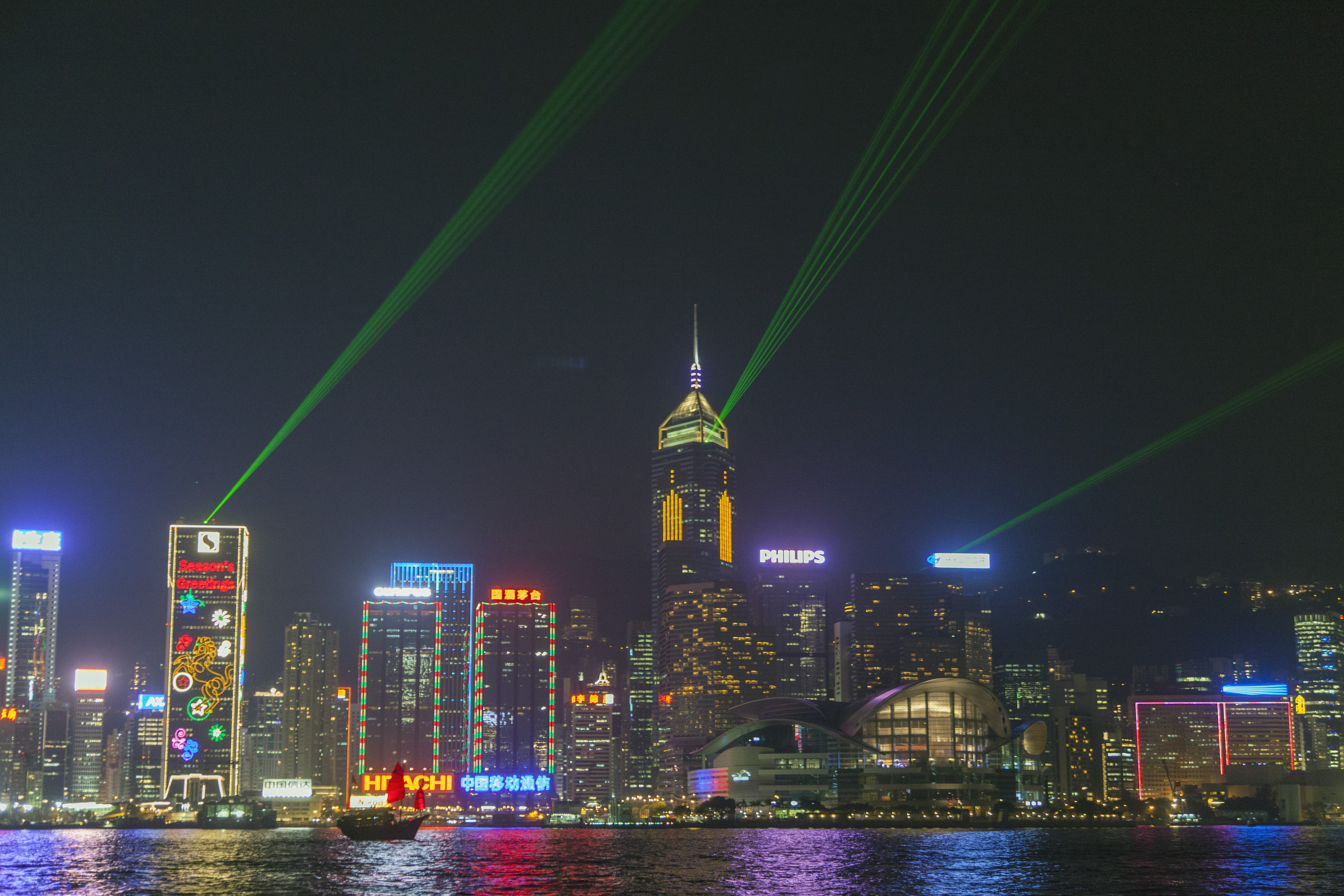
We finished off the day with a night tour of Hong Kong and the laser show. Hong Kong is remarkably bright at night, and the famous neon signs are not the only contributors to this – the walls of most skyscrapers basically turn into huge glowing panels. As for the laser show, it didn’t impress us any more than the last time we had seen it, even though the air was way cleaner and the rays should have been more noticeable.

IMG_8124

IMG_8137

IMG_8138

IMG_8144

IMG_8147

IMG_8151

IMG_8155

IMG_8160

IMG_8162

IMG_8176

Posted in Amalfi Coast, English, Europe, Italy

Adventures of the Azeris in Italy – Amalfi Coast

РУССКОЯЗЫЧНАЯ ВЕРСИЯ ПО ЭТОЙ ССЫЛКЕ. CLICK HERE FOR RUSSIAN VERSION.

The “cool” guy despising group tours seems to have jinxed us. At first everything went very normal: the bus punctually picked us up at 5.15am, while it was still dark, collected other participants of the Amalfi Coast tour from their hotels and delivered all of us to Ischia Porto, where we boarded a ferry. In Naples we were met by a tour guide with a Baltic accent, and got on another bus.

Ischia Porto

I must say that Naples hadn’t made much of an impression when we arrived from Rome, but, as we drove through it, Lena the tour guide spoke of it with great passion. She was telling us about its status of the capital of the kingdom, its magnificent palaces neighbouring with sunless narrow streets with colourful linens hanging on the balconies, just like in the movie La Ciociara.

We drove out of Naples, past Pompeii and Herculaneum. Here we were told that everything around was pretty much sitting on a powder keg – there are lots of extinct and dormant volcanoes, and also the active Vesuvius. It erupts every 60-70 years, and the last time was just 69 years ago. Thus, on the one hand, the next eruption is anticipated with fear, but on the other, it is awaited, because the longer the interval between two eruptions, the more destructive disaster it turns into – for example, the eruption that destroyed Pompeii and Herculaneum in 79 AD occurred after 300 years of inactivity. However, people continue to settle right at the foot of the volcano with careless perseverance: the climate is too favourable and the soil too fertile for these places to be left. Officially construction within a radius of a few kilometers from Mount Vesuvius is prohibited. But people here seem to live with the if-you-mustn’t-but-want-to-do-it-then-you-can-do-it principle – especially that the law does not permit to destroy the buildings, even at the stage of one wall built only, and only makes the owners pay a fine of 20-30k euros.

Heading to Sorrento

At this point already we noticed that the traffic was very slow on our side of the road, we were basically in a traffic jam. But Lena suggested that this was due to tomorrow’s holiday of Ferragosto and had to do with everyone flocking to the resort coast. The reality was much worse: and we had the chance to fully appreciate it, as well as the “evil eye” of the New Russian, when we entered a two-kilometre tunnel. Here the column of vehicles literally froze, although the opposite lane was absolutely empty. We spent exactly an hour and a half in this tunnel, and the whole way from Naples to Sorrento took us a good four hours, while it barely should have taken 90 minutes. The people in the bus got extremely frustrated, the most radical ones were demanding to turn around, get on the opposite lane, return to Naples and get the money back, but this was absolutely impossible, because there was no opportunity to turn around, and besides large buses are allowed to move in only one direction along this coast. The most impatient ones left the bus at the exit of the tunnel, as the situation outside was no better, and walked around to stretch their legs.

Our tour guide talked to the Carabinieri driving past us, and found out that a terrible fatal accident had happened somewhere ahead and a funeral car was already heading there. Why it took almost two hours for the Carabinieri to get close to the scene remained a big question to us. And anyway, even to us (not quite knowing the intricacies of the case, of course) it seemed pretty logical that the traffic in the tunnel should have somehow been regulated in order to avoid such a disheartening and unsafe congestion in it.

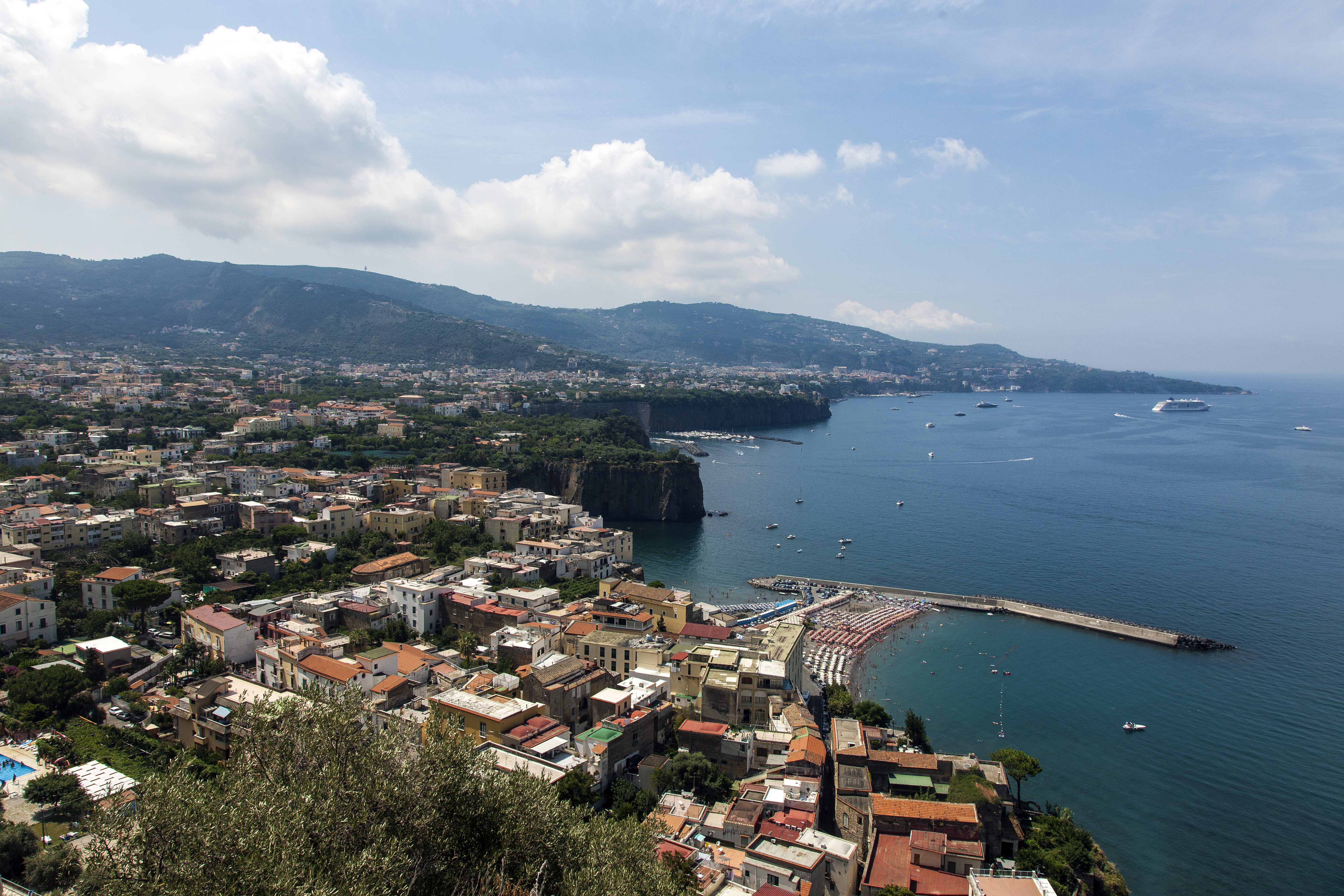
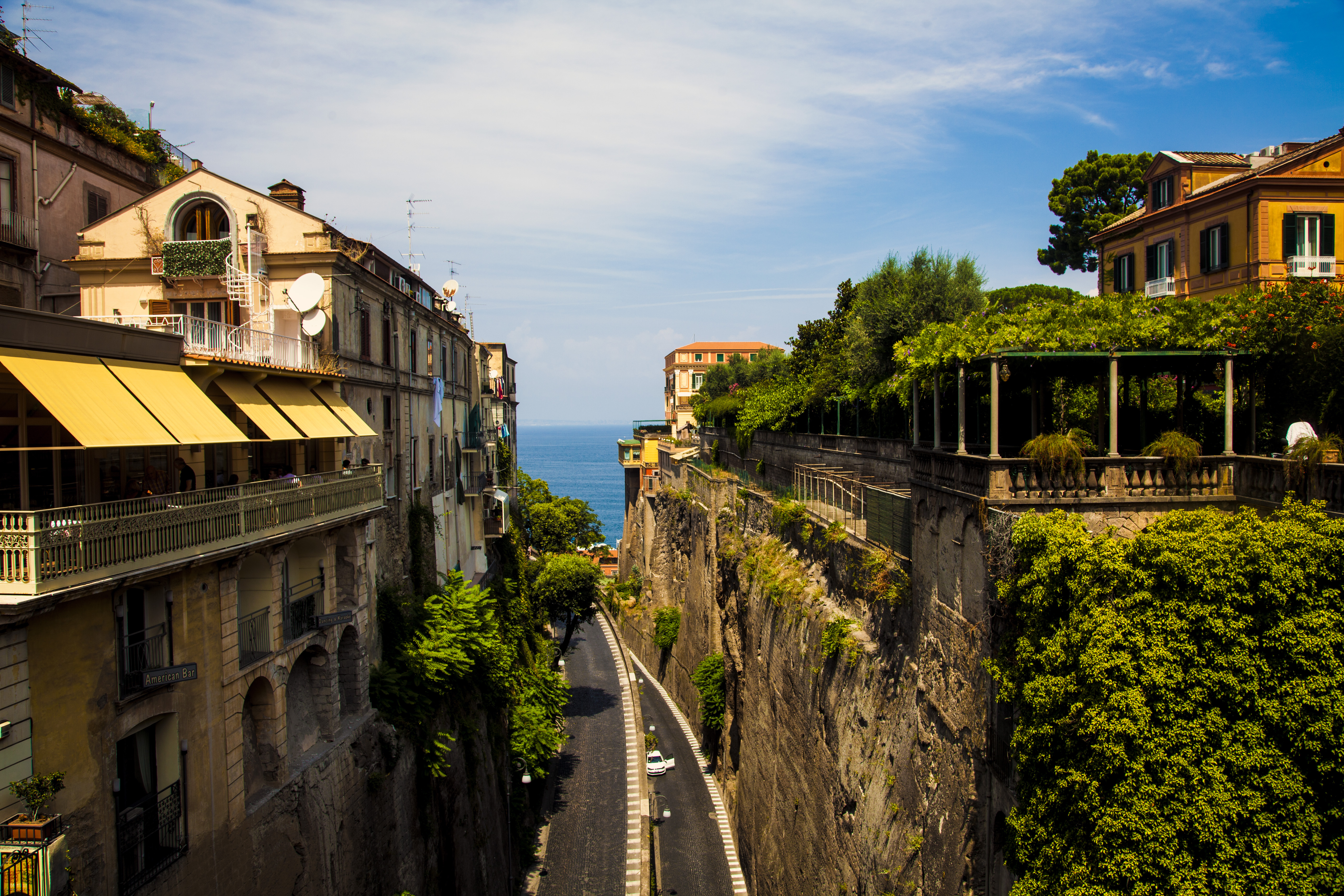
It seemed that the whole tour went awry. However, the situation was saved: Lena promptly got in touch with their “headquarters ” and agreed that we would be allowed to board a different ferry at a different, nearer port an hour later than initially planned, which therefore allowed us to save an hour, and then one more – by cancelling the set lunch planned originally and giving the tourists an opportunity to eat on the go during town walks. And finally, exhausted, but happy, we returned arrived in Sorrento. What can I say, it is indeed a very beautiful town. We were told that it had been visited by Gorky (again!), Feodor Chaliapin, Sylvester Shchedrin. Everything here is all about lemons and olives – lemons reach monstrous proportions (up to two kilograms) and have a distinctive flavour, the whole town smells of them! The mountains slopes are covered with olive trees, with rows stretched underneath them. We were told that the olives for the best first press oil must be collected directly from the tree and not from the ground, which is virtually impossible to do manually on steep slopes – and that’s where those nets come in handy!

Sorrento

Sorrento

Sorrento and the Amalfi Coast are considered traditional wedding places for couples from all over the world. We saw an English wedding, with guests walking on the streets and taking photos.

The views here are just so breathtakingly beautiful, in the truest sense of the word! In general, a drive on the mountain serpentine feels, to put it mildly, quite exciting. The bus is driving on a narrow ledge along the cliff, at a height of up to 300 metres above sea level. The road, however, had not always been there – it was constructed by Mussolini. Prior to that, people used to walk on foot or ride donkeys on the mountain paths.

Amalfi Coast

Amalfi Coast

Amalfi Coast

IMG_6689

Despite the fact that these places are declared heaven on earth (it’s even said that righteous Amalfians will return home after death), life is not that comfortable there. Of course, it probably is for Sophia Loren or Gina Lollobrigida, who own luxury villas along the coast, as we were shown, with helipads and elevators that can take them right down to the beach. For ordinary mortals, though, every simple thing turns into a difficult issue – they have to walk a hell lot of steps (and I mean that – really a lot!) every time they want to go to the beach or to work. If you ask someone where they live, they will tell you the number of the step rather than the street name! And imagine them having to do something more serious, such as painting the house! That’s what they do in this case: a van brings a couple of donkeys to the closest possible place, where the specially trained animals get loaded with buckets of paint and rush up the stairs.

Rock Looking Like Virgin Mary with Flowers

Amalfi Coast

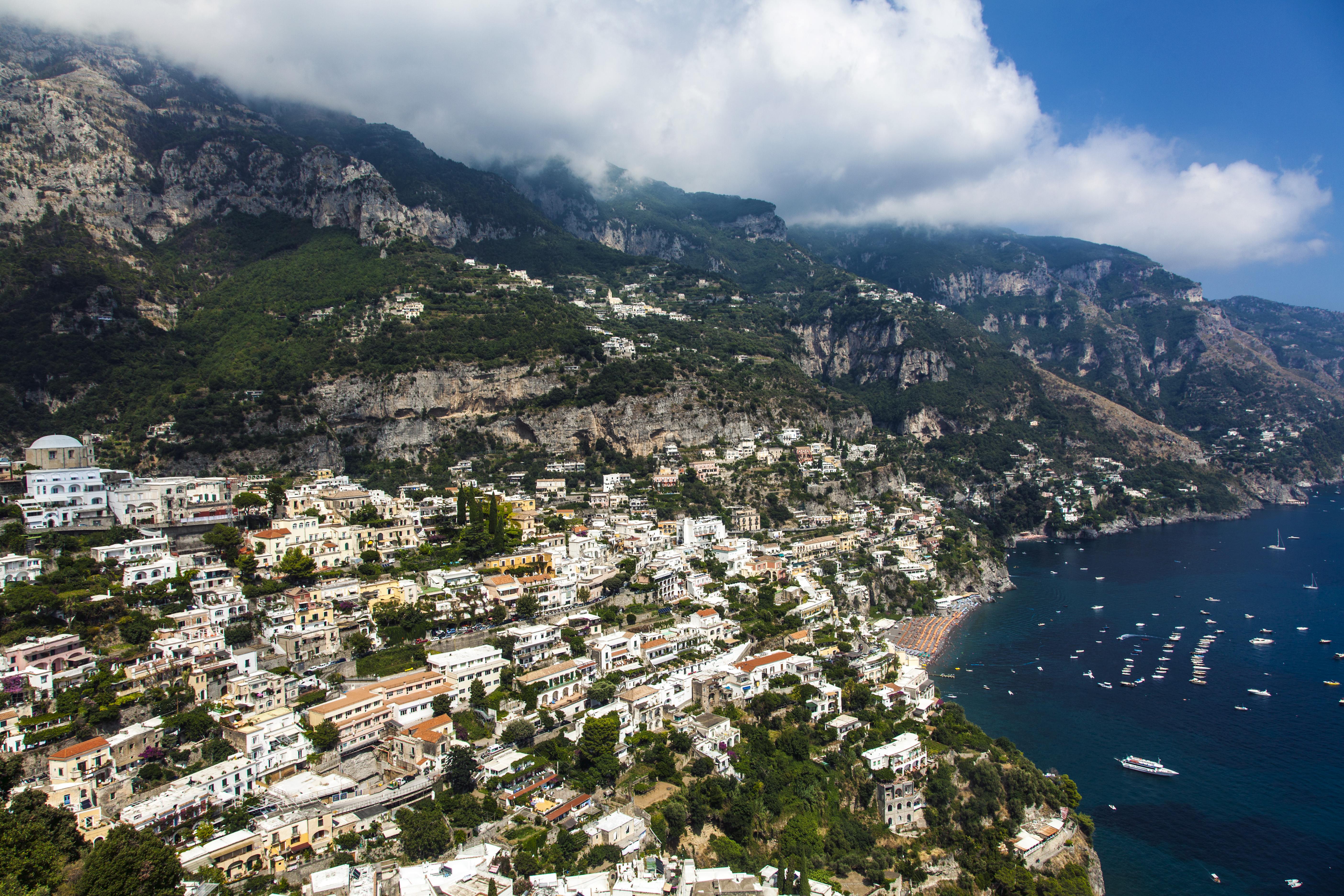
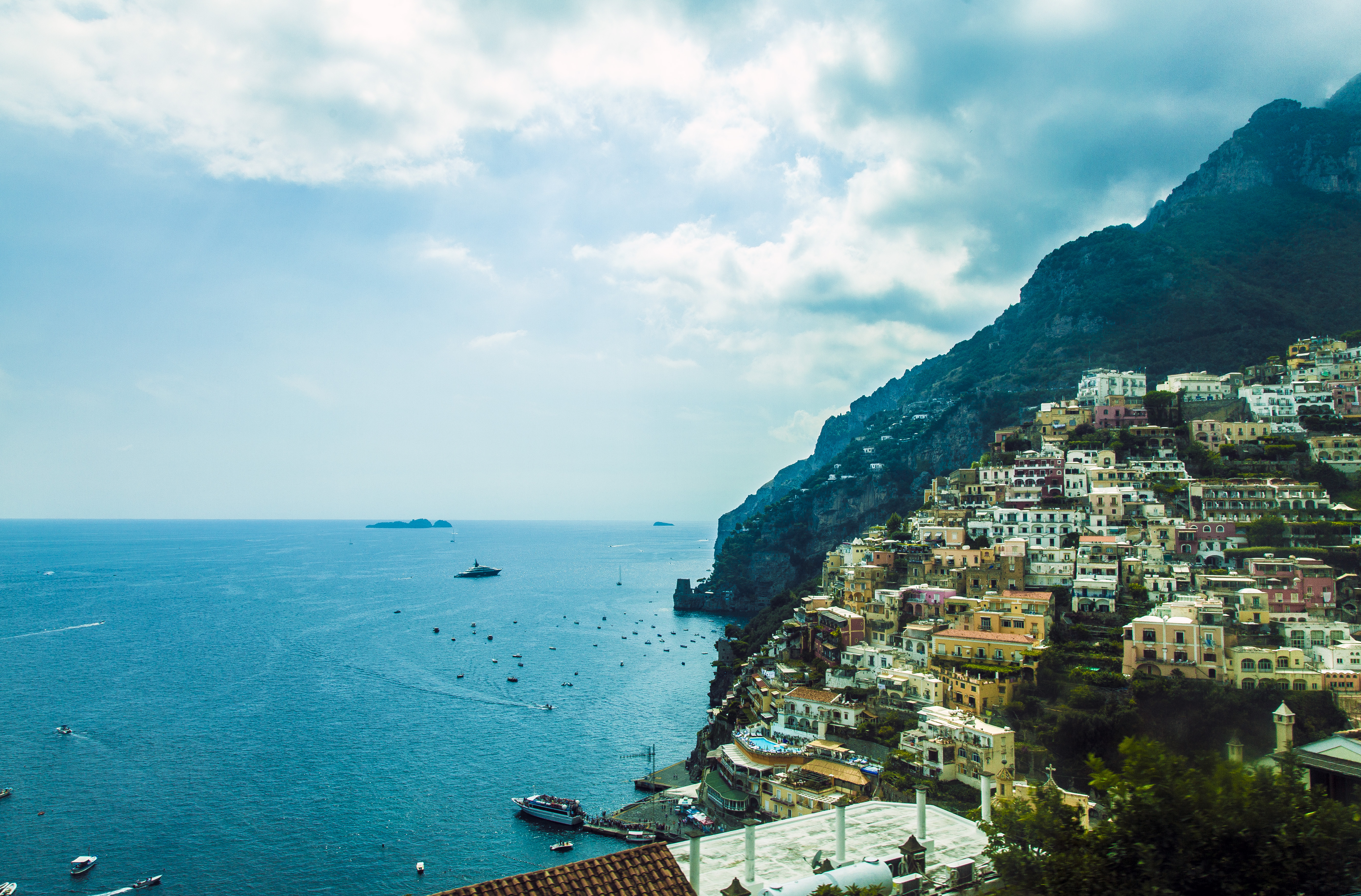
We didn’t get to visit the very beautiful town of Positano, although we did fully appreciate the view over it from the observation deck: pink, white and yellow houses, literally built into the rocks. Very picturesque, but it looked even more inaccessible and impractical.

Positano

Positano

Positano

Positano

Positano

Another town where we didn’t stop either – Praiano – is less well known than Positano. It is interesting that the traditional Christmas nativity scene includes the model of the town itself. This is the ending point of the Christmas procession on December 25, carrying a miniature figuring of Christ the child. We drove past this model and had the chance to take a look.

Amalfi, despite being so celebrated, looked to us like one more replica of the previously seen towns. It is famous for the majestic Cathedral of St. Andrew, where the relics of the aforementioned saint lie. Lena was persistently urging us to see them but honestly we weren’t too enthusiastic about this idea, even though the cathedral was really very beautiful from the outside.

Amalfi

Amalfi

Speaking of holy relics: it appears that in the Middle Ages they were extremely fashionable and prestigious to have in any city, so they were then subject to barter in the best case and theft in the worst. The relics of St. Andrew appeared in Amalfi as a result of the latter actually. Sometimes they would steal not only whole relics, but also parts of them. Robbed monks were ashamed to admit being so careless, therefore, they would replace the missing parts with fake ones (surprisingly, these fake relics still went on working wonders!), and as a result, a saint could end up having three or four arms or legs.

Thus, the walking tour around Amalfi did not satisfy us, but the boat trip along its coast was very pleasant, allowing us to see all these magnificent mountains, bays, hotels and villas from the sea. We sailed in the direction of Maiori, Minori and Ravello, where our bus arrived to pick us up. By the way, on top of all the transportation troubles we had had, the bus somehow managed to hit a parked car when manoeuvring to enter yet another busy tunnel, so while we were happily enjoying our sea trip, the driver had to deal with the frustrated owner of that car.

Minori

Ravello is a small town located even higher up the cliff. We didn’t go up there, and only saw it from aside, while listening to our guide’s comments about Wagner festivals that are held there and are so popular that tickets must be booked almost a year in advance.

The town of Ravello is also a proud owner of relics – this time those of Saint Panteleimont, and every year on the day of his execution the Saint, as if to demonstrate his full consent to be in this place, arranges a miracle – liquefaction of his blood. A similar miracle, but with even more rapid boiling of the blood, is arranged by Saint Januarius, the patron of Naples. It is very important for Neapolitans, as a pattern has been traced: if the blood liquefies duly, the Vesuvius does not erupt during this year and any other ills also bypass Naples. Therefore, on this day – namely September 19 – all Neapolitans are very nervous and can’t wait for the coveted event. To guarantee it happening for sure, the oldest old ladies are sat in the first row in the cathedral (who are jokingly referred to as the “relatives of Saint Januarius” for their age), and start praying to the saint. Then, if the miracle is delayed, they switch to exhortations – gently at first, then more and more angrily until they literally end up swearing. Instead of taking offense, the Saint, either stimulated by, or scared of such attitude finally performs the long-awaited miracle!

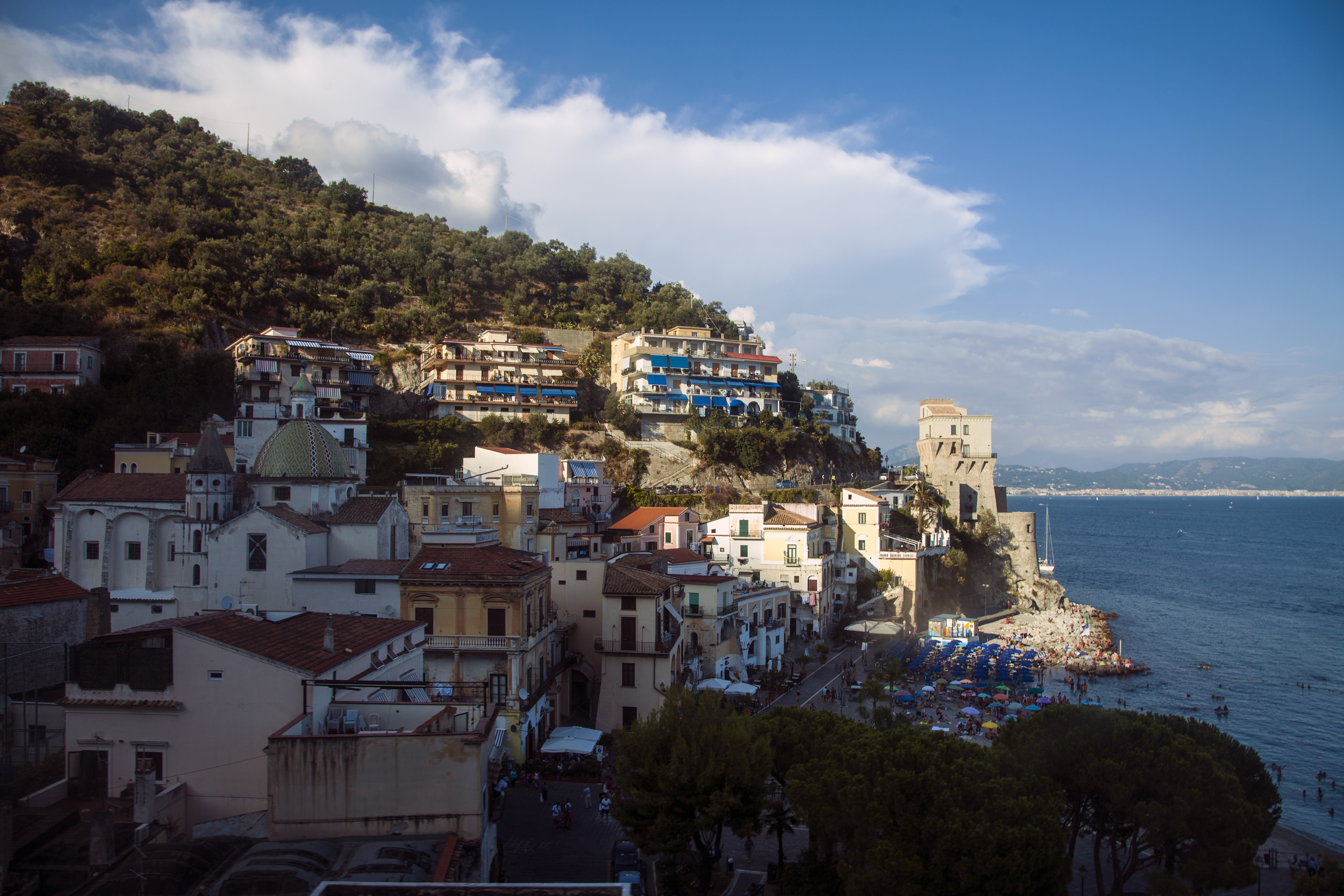
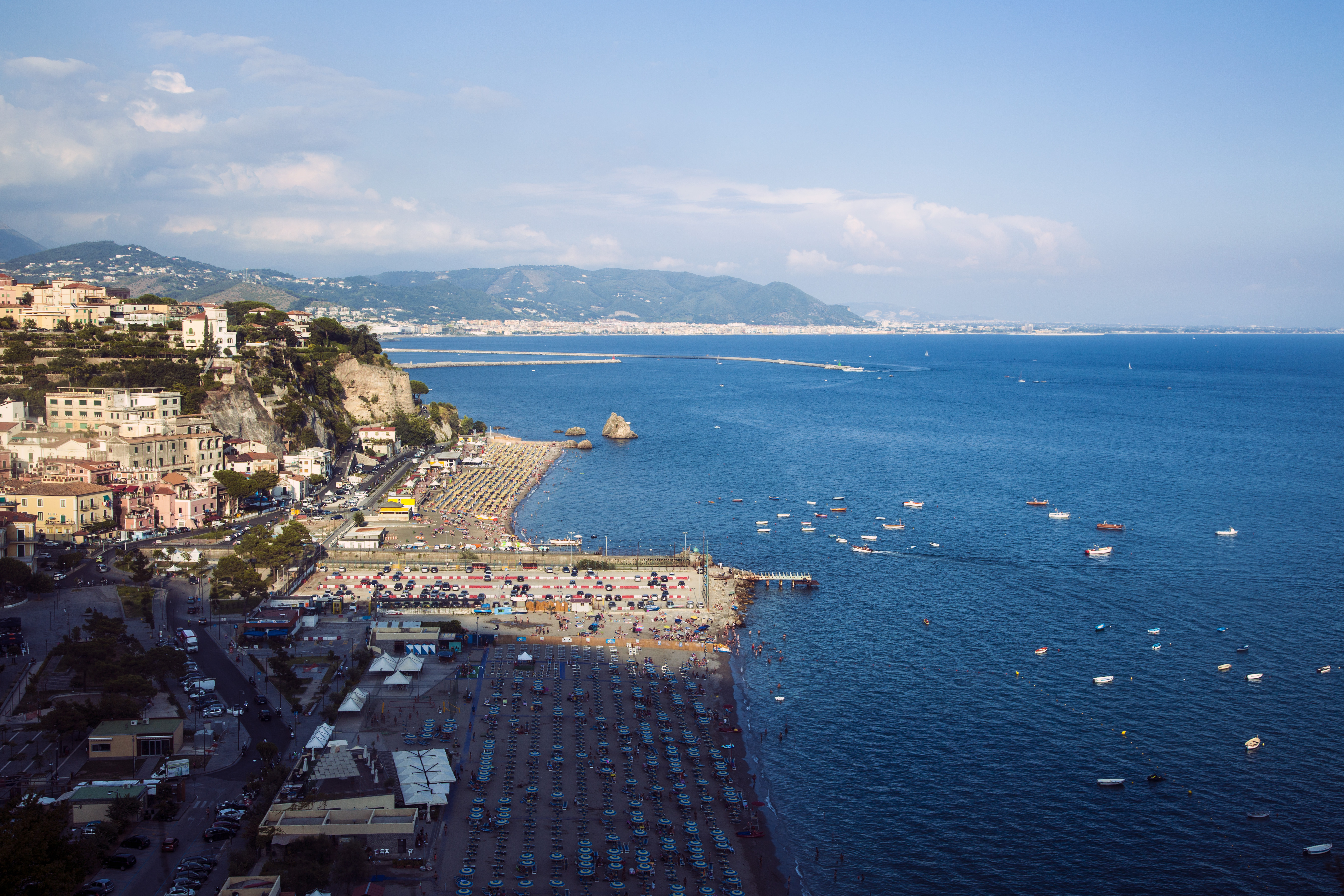
The last town of the Amalfi coast was Vetri Sul Mare, and rounding the hill, we saw the city of Salerno in the distance and hurried back to Naples, to get to the port. On the way back, Lena told us that the Neapolitans were very superstitious , believed in destiny and tried to find signs in any event for the game of bingo . In every house there is a booklet that translates any unusual event into the language of numbers. Lena said half-jokingly, half-seriously, that upon returning home she would check that little book and find out which numbers corresponded to a traffic congestion, a corpse on the road and other events that happened to us today, and then place bets on these numbers.

Vietri Sul Mare

Posted in Capri, Europe, Italy

Adventures of the Azeris in Italy – Capri

РУССКОЯЗЫЧНАЯ ВЕРСИЯ ПО ЭТОЙ ССЫЛКЕ. CLICK HERE FOR RUSSIAN VERSION.

We got our Capri trip almost with a fight. Poor Larissa was really struggling to arrange it for us, but all her efforts met a “brick wall” of the complete apathy of her Italian colleagues. Her requests were passed from one to another, delayed by half an hour, then by another half an hour, and it looked like the trip was about to burst like a soap bubble, when finally, totally desperate, she explained to us how to get there pretty much on our own: take a taxi, then board a boat and then find a tour at the port. She didn’t possess any maps of Capri or guide books, so just had to draw some directions using pen and paper.

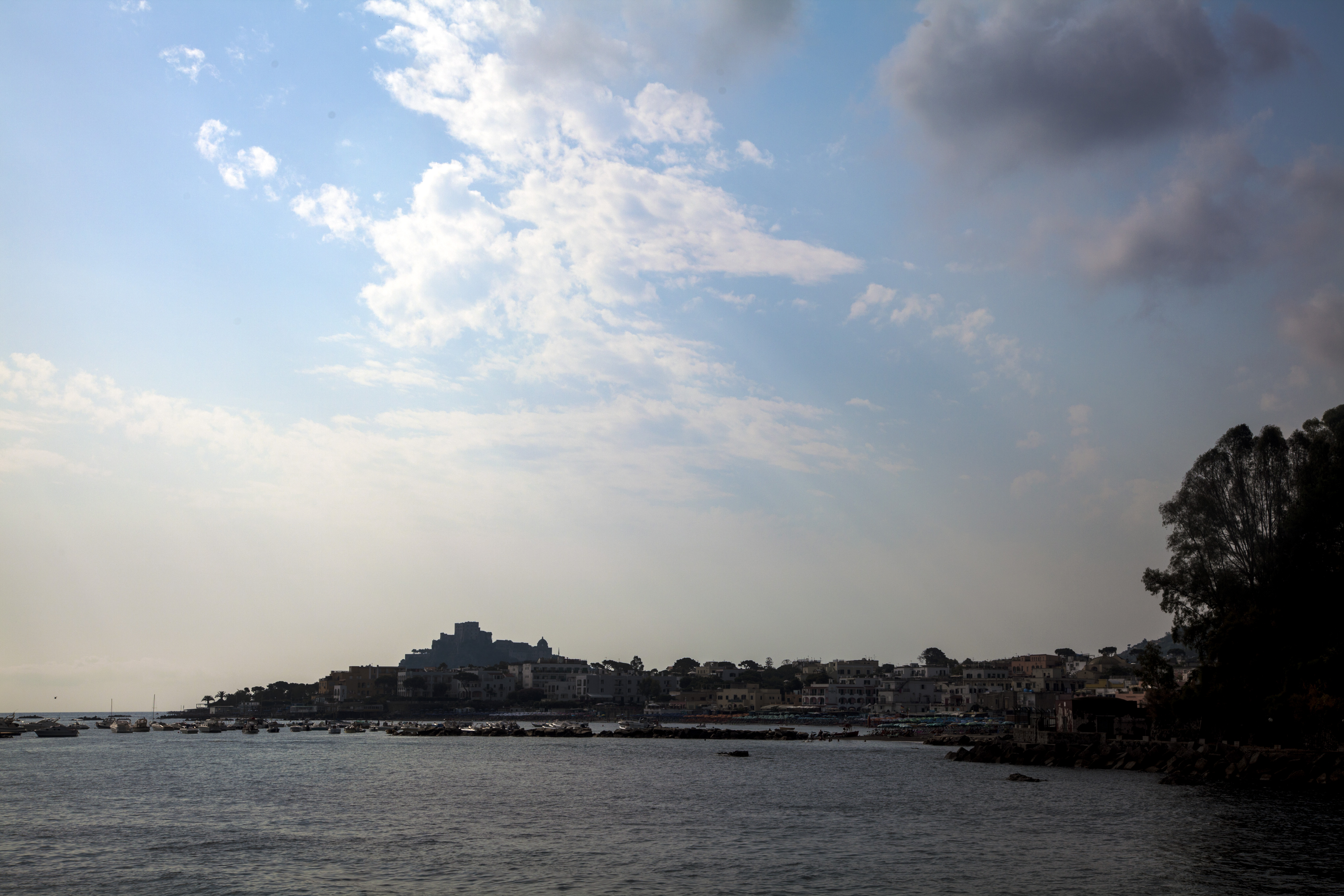
Ischia

Ischia

Forio

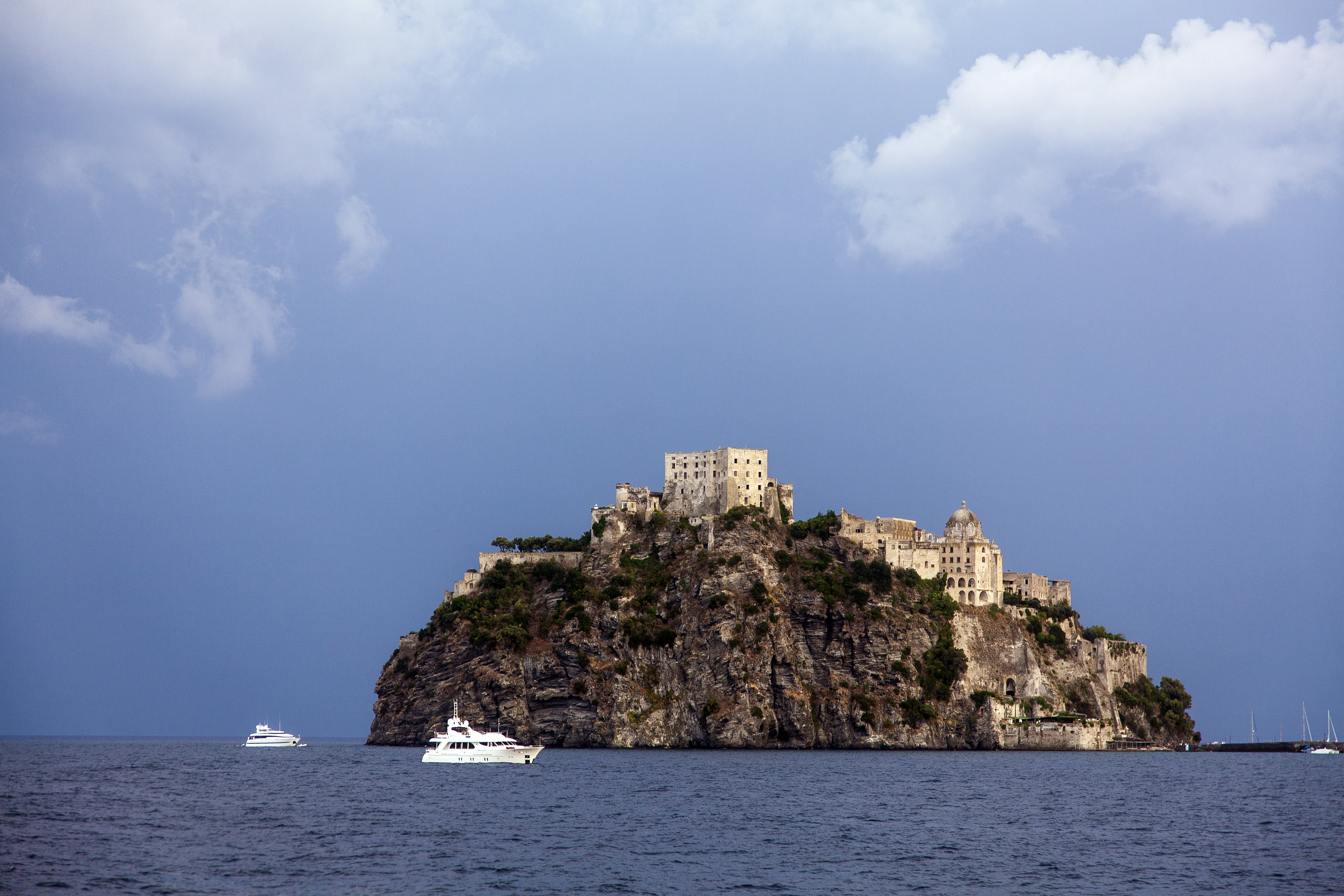
The boat took about an hour to get to Capri. Fortunately, the day was more or less cloudy, and there was a delightful breeze at the top deck of the boat. We boarded it in Forio and sailed around the whole Ischia, stopping to pick up passengers at all the Ischian ports: Lacco Ameno, Casamicciola and Ischia Porto.

IMG_6481

Larissa had promised us that there would be Russian-speaking tour guides chasing tourists right at the port, but we didn’t want to entrust ourselves to chance and signed up for the Italian/German/English language tour offered directly on board.

Having got rid of this concern, we immersed ourselves in observing other passengers, and were not generally too impressed by their looks. There were quite a lot of sweet couples, gently kissing and hugging, however some of them seemed just plain unattractive. The men looked like a mixture of Julius Caesar with Danny DeVito or Savely Kramarov and the women looked sloppy, scruffy, ready to become coarse in a few years – I’m not trying to be mean here, but you just so imagine them in hair rollers and robe, yelling at their screaming kids!

For reference – the area of the Capri island is four times smaller than that of Ischia, making a total of ten square kilometres. The island is essentially a limestone mountain (as opposed to the volcanic Ischia), so it doesn’t have beaches per se. There are only two towns here, the lower one being Capri, and the higher one is called Anacapri. The water washes away the limestone, which results in the formation of grottos. We took a bus to visit the most famous one of them – the Blue Grotto – once we got off the boat.

The Blue Grotto

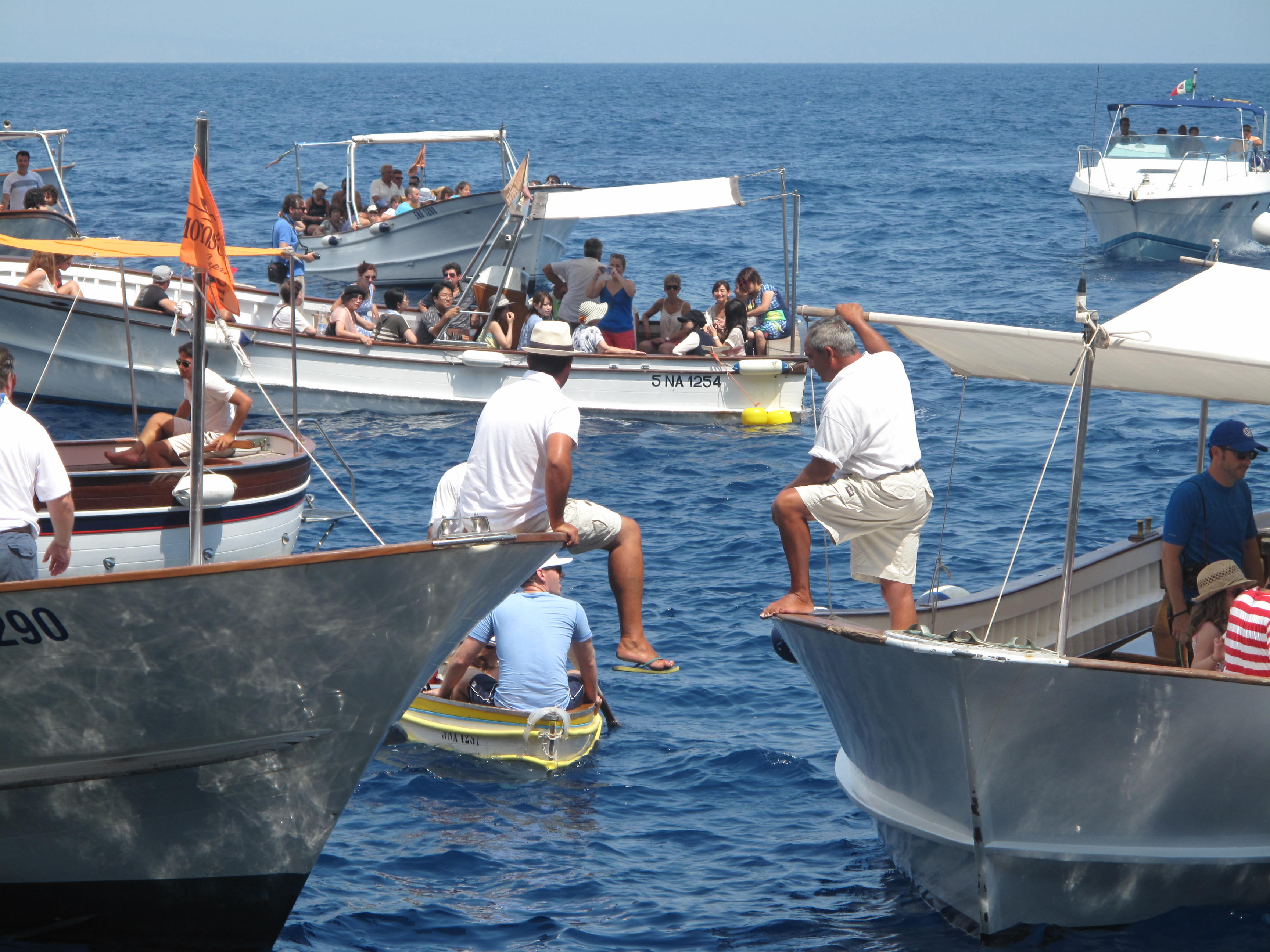
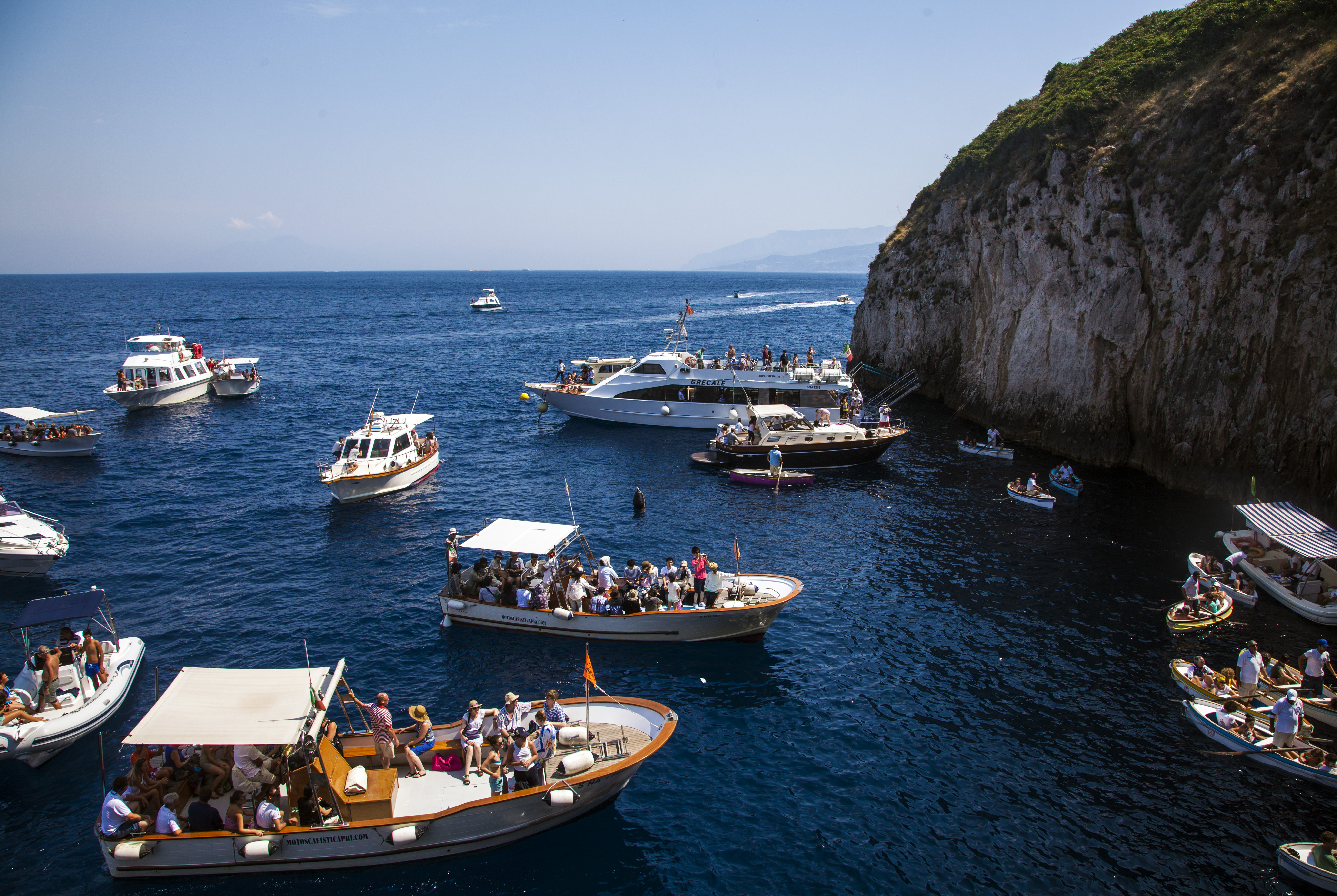
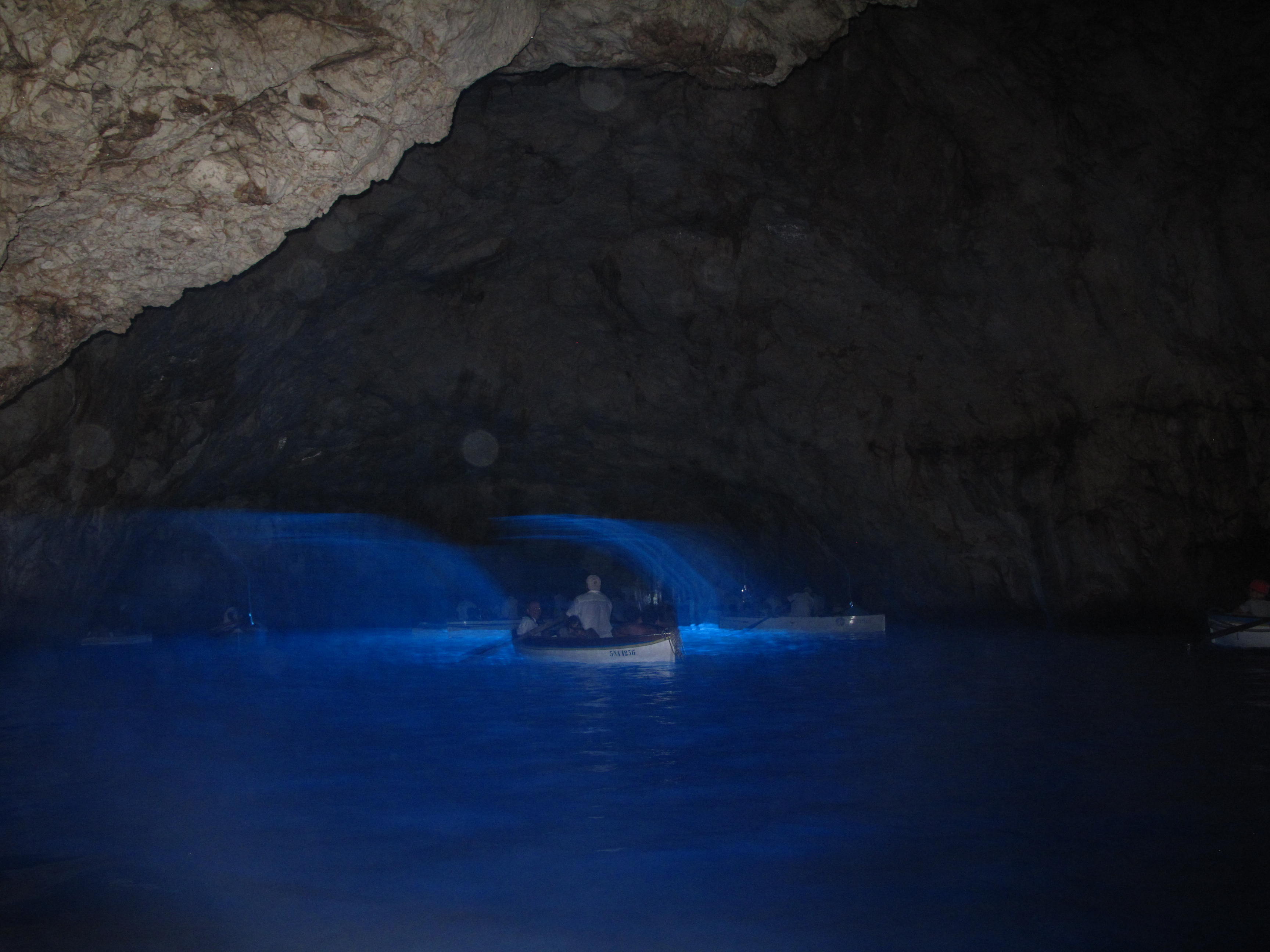
We turned out to be very lucky: the Blue Grotto can be entered only forty days a year (at least, so we were told!), at low water, and we just made it before it closed for today. This is how this all worked: the bus drove us right up to the stairs running down to the water, where there was a myriad of row boats with rowers. We had to wait in a queue; then manage to climb into the row boat, which was not that easy at all; then sail on it to the floating box office and pay there; and then lie down on the boat floor, as the entrance to the cave was very low. We entered into absolute darkness, lit only with occasional camera flashes, and accompanied by many-voiced rendition of “O Sole Mio”. We understood why the cave was called blue only once we turned back: illuminated with the light coming through the inlet, the water and ceiling coving got an amazing blue colour.

The Blue Grotto

The Blue Grotto

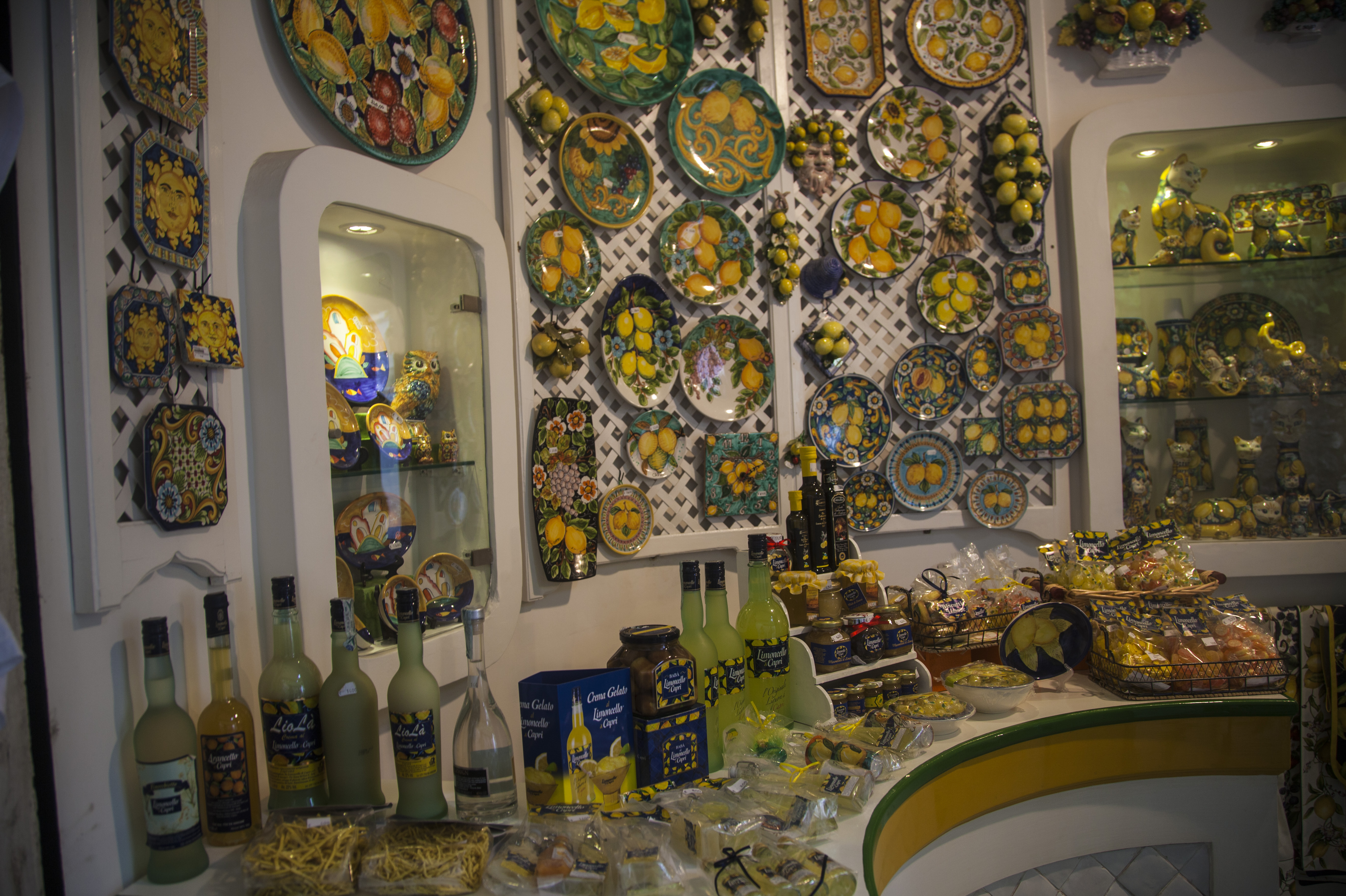
After seeing the grotto, we were taken to the central square of Anacapri. Here our opinion differed with that of Larissa, who had been convincing us that there was nothing to see in Anacapri, and praising Capri – we actually liked Anacapri better, with its magnificent view from the observation deck and a lot of very nice shops. It seems that the symbol of the island is lemon: there are loads of lemon-related souvenirs; there is a lovely refreshing drink made of lemon juice with crushed ice  sold everywhere, and the crown of all is the famous limoncello liqueur. Unfortunately, we only had time to catch a glimpse of all this beauty, as most of the free time we were given was taken by lunch, which our guide Cecilia was so ardently advocating to have right there, that we thought she was receiving commission from the restaurant for referring clients.

View from Anacapri

Anacapri

Later we were taken down to Capri. Here we saw (from the distance) the house of the “stormy petrel of revolution” Gorky, and Cecilia told us that in 1907 he had been visited by Lenin here – there is even a monument to the latter in Capri (which, by the way, no one thought of destroying!). We were told that here is where he was planning the revolution.

Capri

Capri

Capri - Gorky

Monument to Lenin

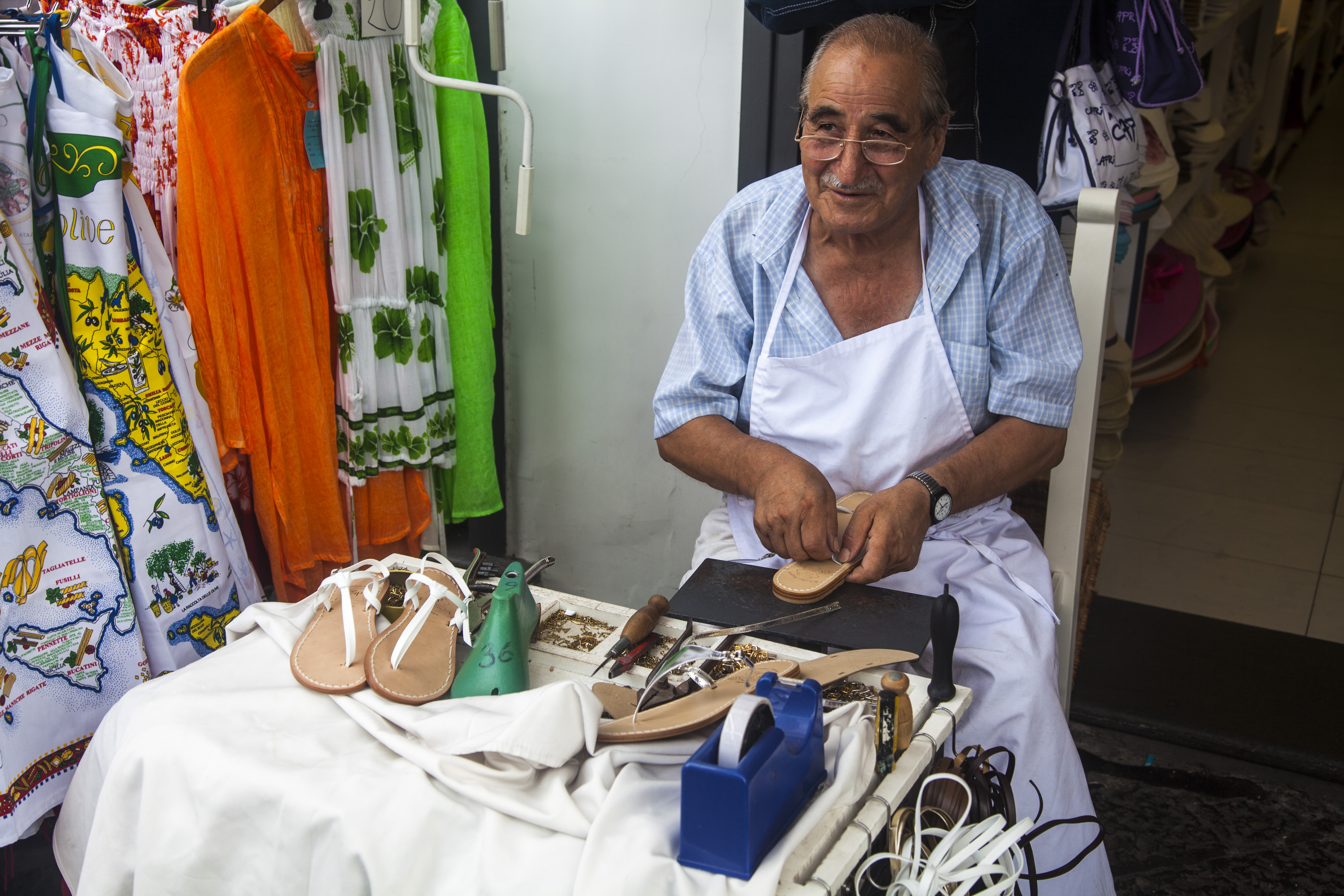
How did we find Capri? Very cramped, too posh, bristling with villas and gorgeous boutiques with crazy prices. On the narrow roads of what is assumed to be the pedestrian zone there are electrocars constantly scurrying around – we have them in Sant’Angelo too, but there they are not flowing continuously and are therefore not so annoying.

Capri

Capri

Capri

Capri - Shoemaker

By the way, all of this splendour functions only from April to October – in winter Capri becomes dormant, and any connection with Ischia stops. Therefore, as Cecilia said, most Ischians have never been to Capri – in summer they are employed in the tourism sector, and in the winter it’s difficult to get there (via Naples), and there is hardly anything to do as well.

If Anacapri was cool and pleasant, in Capri, despite the occasional drizzle, and perhaps because of it, it was very hot and humid. In this swelter we visited the Augusto Gardens and took numerous pictures of the famous Faraglioni rocks.  This stuffiness made the above mentioned lemon drink (la granita) the main highlight of the garden visit. Oh, Larissa, Larissa, we thought, this is where we should have been sitting on a terrace of some restaurant, staring at sauntering tourists and scurrying electrocars, instead of doing so in Anacapri, which instead was perfect for walking.

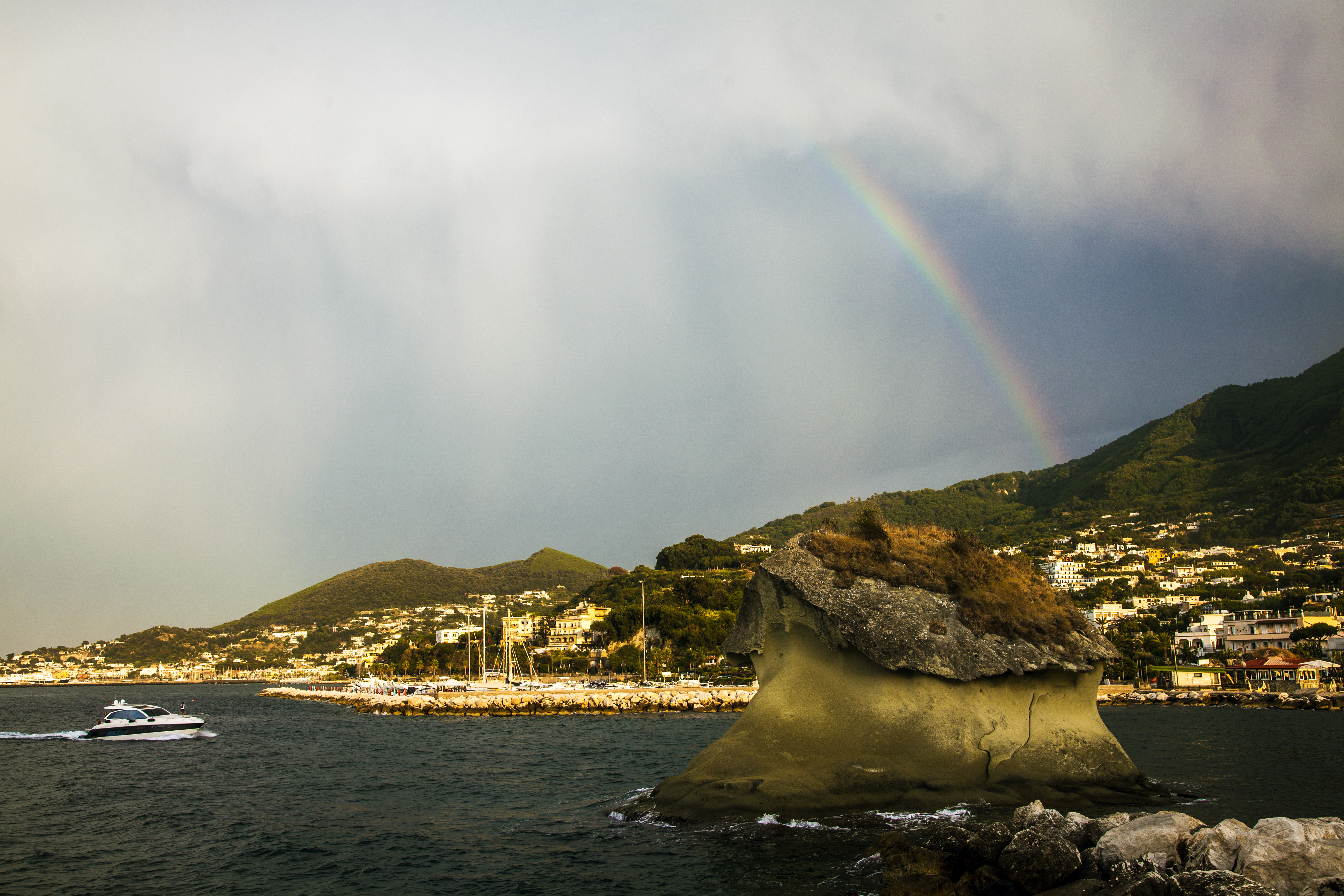
The drizzle finally ended with a magnificent rainbow that we saw on our way back.

Ischia Porto

Ischia (Casamicciola)

Ischia (Lacco Ameno)

Ischia

IMG_6567

Ischia

Ischian sky

Sant'Angelo - way back

Posted in Europe, Italy, Rome

Adventures of the Azeris in Italy – day 3

РУССКОЯЗЫЧНАЯ ВЕРСИЯ ПО ЭТОЙ ССЫЛКЕ. CLICK HERE FOR RUSSIAN VERSION.

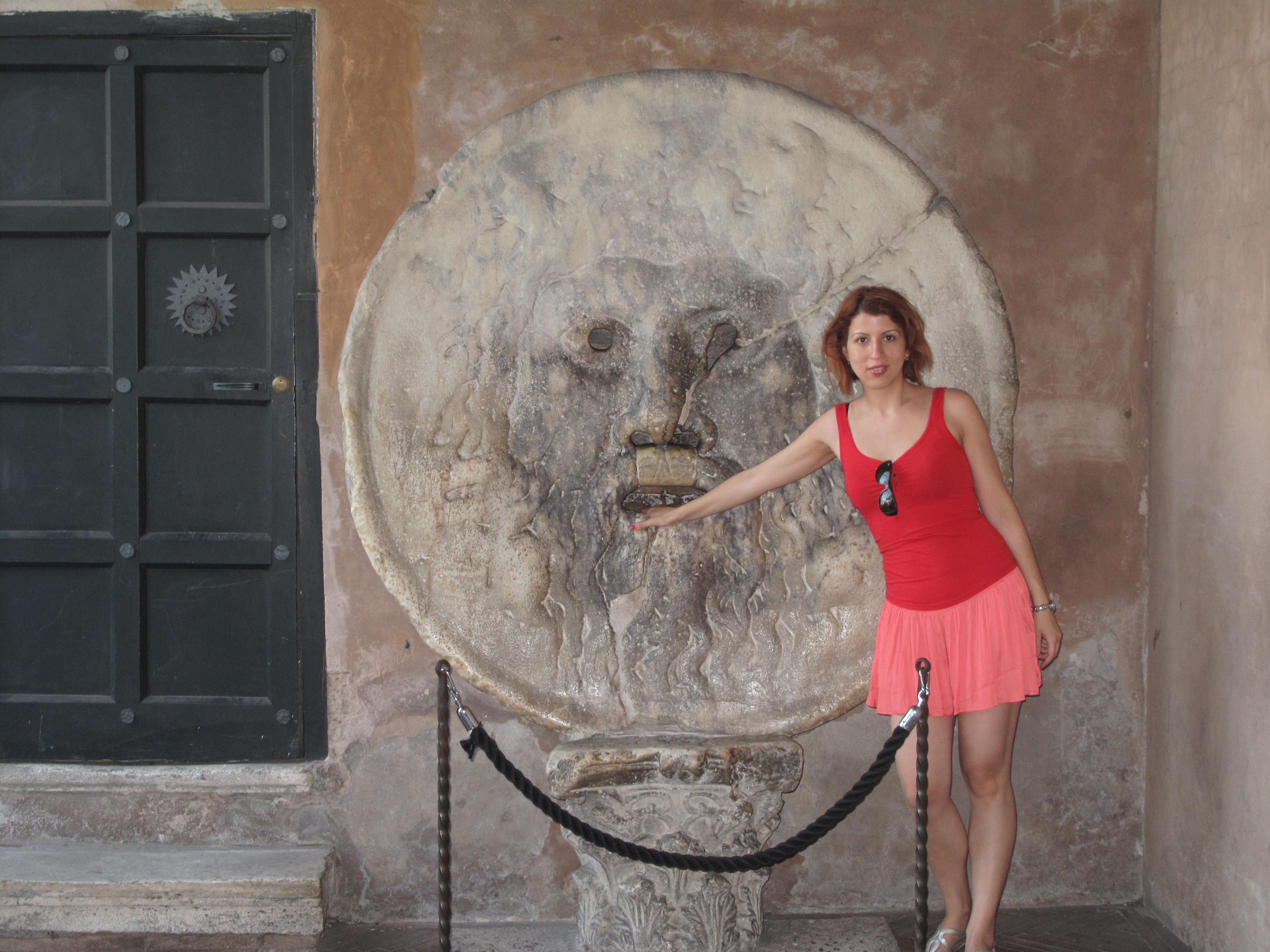
We still had a half more day in Rome. Our company had to split as part of it vigorously decided to go shopping. The other part, including me as well, didn’t mind shopping either, but somehow felt the urgent need to verify our own honesty by putting our hands into the Mouth of Truth. Here we were particularly lucky: a whole cavalcade of Japanese tourists arrived in several buses exactly AFTER us and formed a hopelessly long queue, while we reached the Bocca della Verità pretty quickly. It was only allowed to take one picture per person. Having confirmed that our hands remained intact, we left this place without visiting the church of Santa Maria in Cosmedin – we weren’t really up for it. We tried to find a taxi to catch up with our shopping companions, but there was none anywhere in sight, so we willy-nilly had to go back to the tour bus stop and spend ages (at least, 25 minutes or so!) waiting for the bus under the scorching sun.

The Mouth of Truth

Between this stop and the one leading to Via Corso with lots of shops, there was a trap awaiting us: the Vatican with its non-visited Sistine Chapel. We looked at each other: “Shall we get off here?” – “Yeah, let’s get off. As for the shopping, the hell with it!”

At the Vatican we were delighted by the virtual absence of a queue. Little did we know then, and only later we could appreciate the full extent of our mistake – this time people were entering the Basilica the proper way: through the Museum and the Sistine Chapel, which is completely the opposite side.

And then we met either a fairy godmother or a snake temptress who was persistently inviting us to join a private tour to the Museum, which would allow us to skip the queue, as there was no way to get into the Chapel other than via the Museum. But the tour was to take at least two hours of pure time (i.e. without all the preparation) and by the time it ended we were already supposed to be on our way to the airport. So we basically decided to waste our money: pay the full price, and then skip not only the queue, but also the Museum itself with this 1000+ chambers.

Our Italian-American guide apparently took after his Italian father in being extremely talkative – he eagerly explained us every single step we would have to make, starting from the purchase of the tickets. For us, however, his every word felt like a sharp knife, as it was stealing our precious time. Somewhere in the middle of his speech he was joined by a compassionate Italian lady, who tediously explained us that there was absolutely no way their company could charge us half price for the tour, even though we were going to skip the Museum. Although we hadn’t even asked for anything like this, we had to nod understandingly.

Eventually, we have our tickets in hand, our guide bids us farewell and starts his tour for the others – and off we rush through the museum chambers, full of sculptures, tapestries, maps, mosaics, etc. We only manage to catch a glimpse of this and that on the run, lingering for literally a second in front of anything particularly eye-catching. Very beautiful indeed, but terribly stuffy and packed with people – by and large we would hardly be able to survive a two-hour tour anyway!

The Vatican Museum


The Vatican Museum

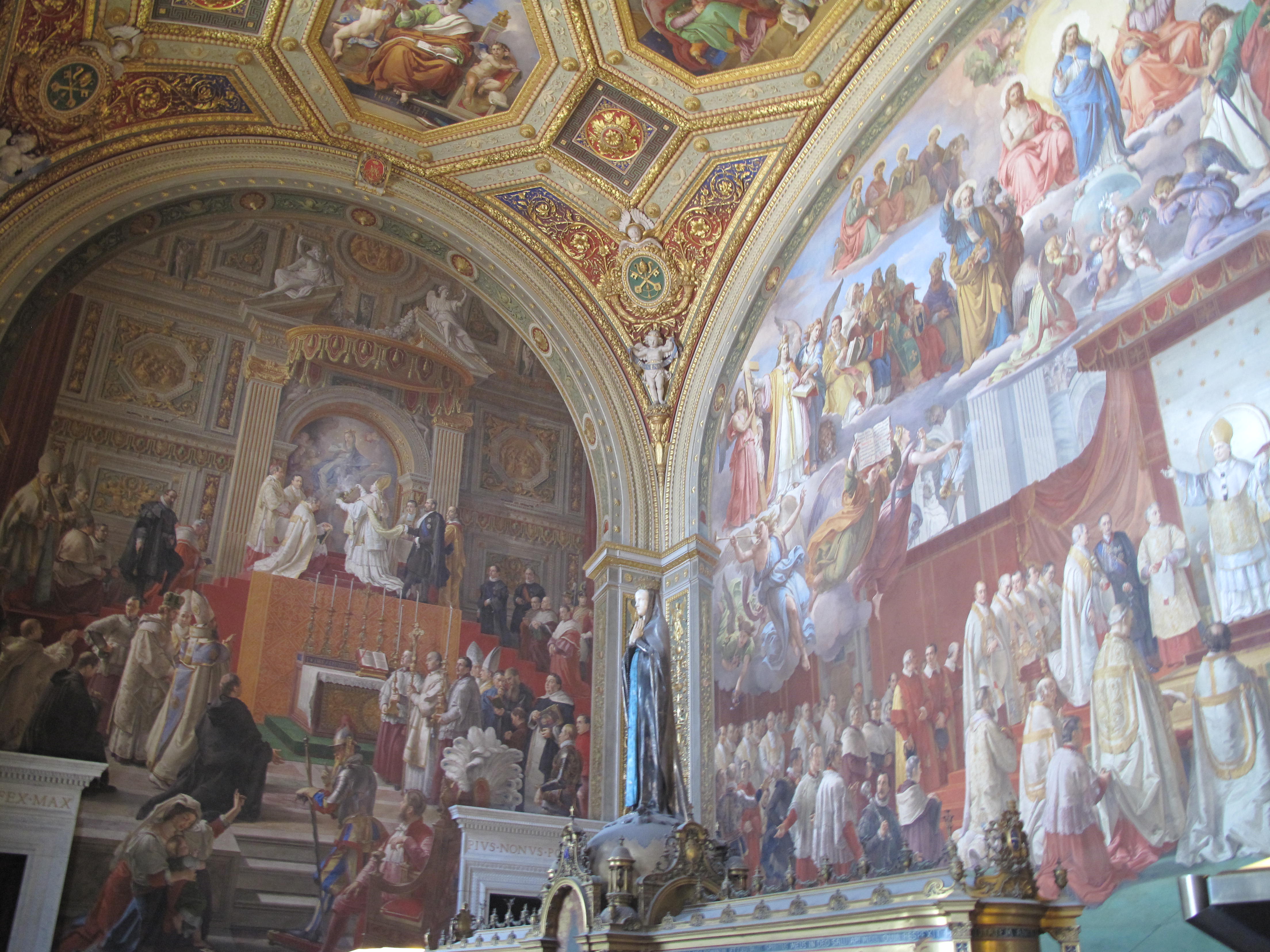
And the Chapel is still quite far, we accelerate and accelerate…  Finally, swathed in shawls once again (it’s also a holy place!) we enter the Chapel. Michelangelo’s paintings on the walls and ceiling are utterly amazing, it is a pity, though, that we can’t appreciate all the details – the unpleasant surprise is that it is so crowded that there isn’t even room to sneeze, therefore no chance to walk around and look. By the way, taking photos in the Chapel is not allowed, but I managed to sneakily take one or two – it is quite blurry, but at least you get the idea.

Sistine Chapel

Still, we anyway felt great satisfaction by the Chapel itself and the fact that we had chosen contemplation thereof over meaningless shopping.

We were lucky to find a taxi right next to St. Peter’s square, and as a result we reached our hotel even before our companions.

Then we headed to the airport where our flight was delayed by about an hour. The transfer in Naples worked perfectly: a minivan took us to the port, where the driver got us tickets for the boat, and on our arrival to Ischia we were picked up by another minivan with a frail elderly driver, who nevertheless famously placed our luggage on the car rooftop.

We had been perceiving Ischia as some kind of a small town – it turned out to be a large island. The minivan drove us for about an hour in the dark until it dropped us at the start of the pedestrian zone of Sant’Angelo, where it took us ten more minutes to drag our suitcases to the hotel.


Posted in Europe, Italy, Rome

Adventures of the Azeris in Italy – day 1

РУССКОЯЗЫЧНАЯ ВЕРСИЯ ПО ЭТОЙ ССЫЛКЕ. CLICK HERE FOR RUSSIAN VERSION.

The Italian embassy can essentially be considered the territory of Italy. Therefore, our Italian adventures started from there. First impressions: disorder and outdatedness, colloquially speaking, looks like a Mickey Mouse organisation (later, our stay in the “Big Italy” only confirmed this impression). Simplest things like online appointments, electronic filling of application forms etc. seem to be unheard of here. Their own regulation, posted on the wall of the embassy, saying ​​that documents must be submitted no later than five working days prior to departure, is totally misinterpreted by the embassy workers, who would not accept the documents any earlier than five days before departure (as one might imagine, this allows virtually no time for any changes or corrections). Those who come to apply for visas know none of this, of course – they arrive decorously, queue and wait… The consul, with the face of a gendarme, appears at 9.30 am and begins to check the documents himself. All those who have naively came in advance are mercilessly sent off, receiving a mark in red ink on their application, with the date they should come and the consul’s signature. Others are kindly accepted, but are picked at for every little thing (like a photo being stapled and not glued, or lack of the zillionth stamp, etc.)

Everyone’s faces carry this I-don’t-feel-like-working-but-definitely-feel-like-acting-all-bossy expression. Quite a lot of the “mainland” Italians look and act exactly the same.

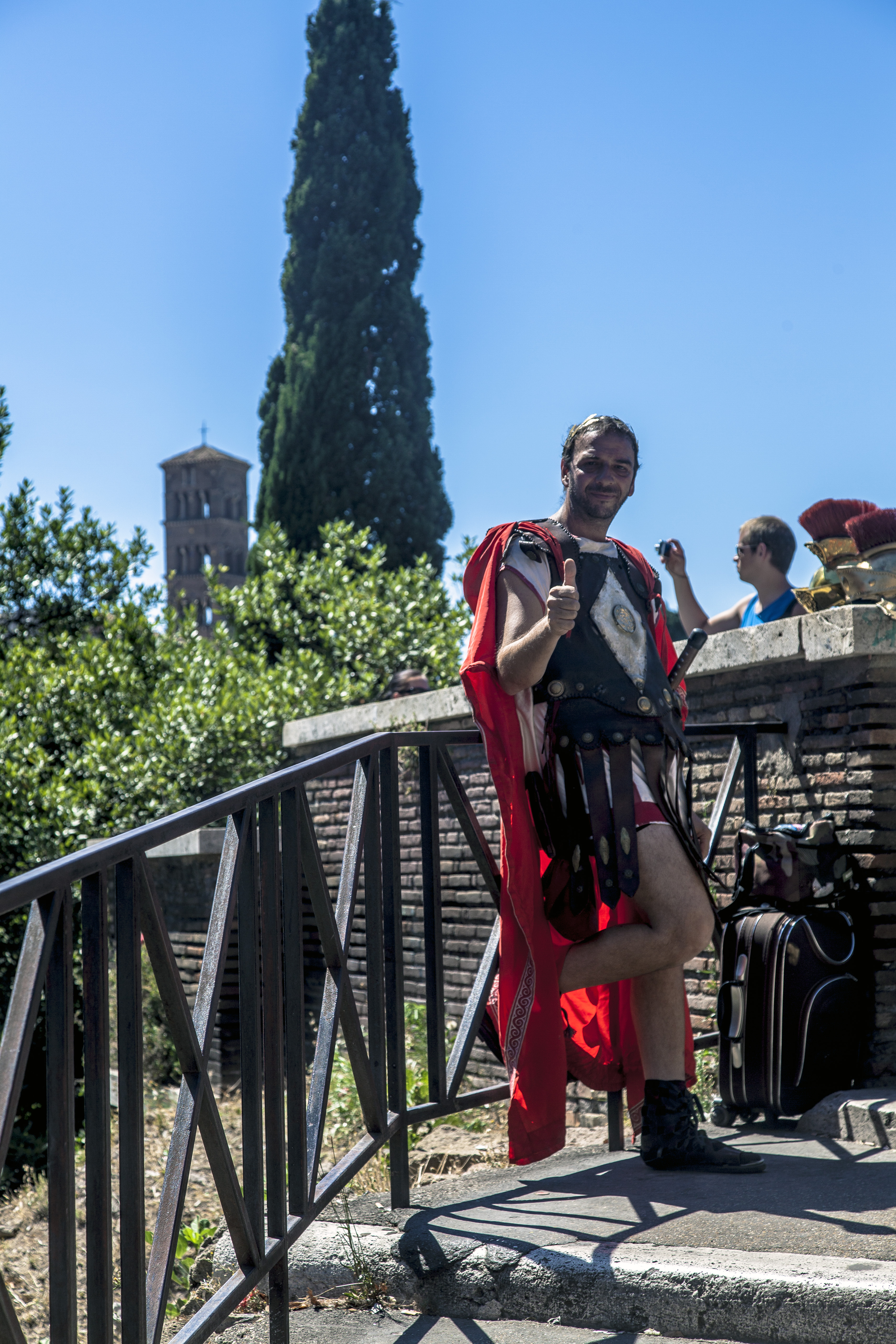
As it had been forecast, Rome greeted us with a 40°C heat, thankfully, a dry and therefore, bearable one. The hotel receptionist was a Russian-speaking lady from Moldova, and she worked well and efficiently. We basically had two days to spend in Rome (one full and two halves), so the most reasonable thing to start with was a city sightseeing tour, and we rushed off to find one. It was a pleasant surprise to see that the Colosseum was just around the corner – right until we remembered that we had booked the hotel with this thought in mind, so it was actually no surprise at all. As we approached the Colosseum, we were literally attacked by sellers of all kinds of stuff like hats, umbrellas, water, as well as “gladiators” and other “ancient Romans,” offering themselves for photos (for money, of course). Unfortunately, all of this merchandising fraternity could express themselves only in Italian and had absolutely no clue where the bus stop was (as we’d been told in our hotel, it was somewhere near the Colosseum). Everyone knows that the Colosseum is a round and a rather large building. We diligently walked all around that whopper – there were no signs in sight and people passing by continued to know nothing about this. Finally, we managed to find the stop ourselves, caught the bus, perched on its upper deck and indulged in the journey through the Eternal City.

Posing "gladiator"

Colosseum

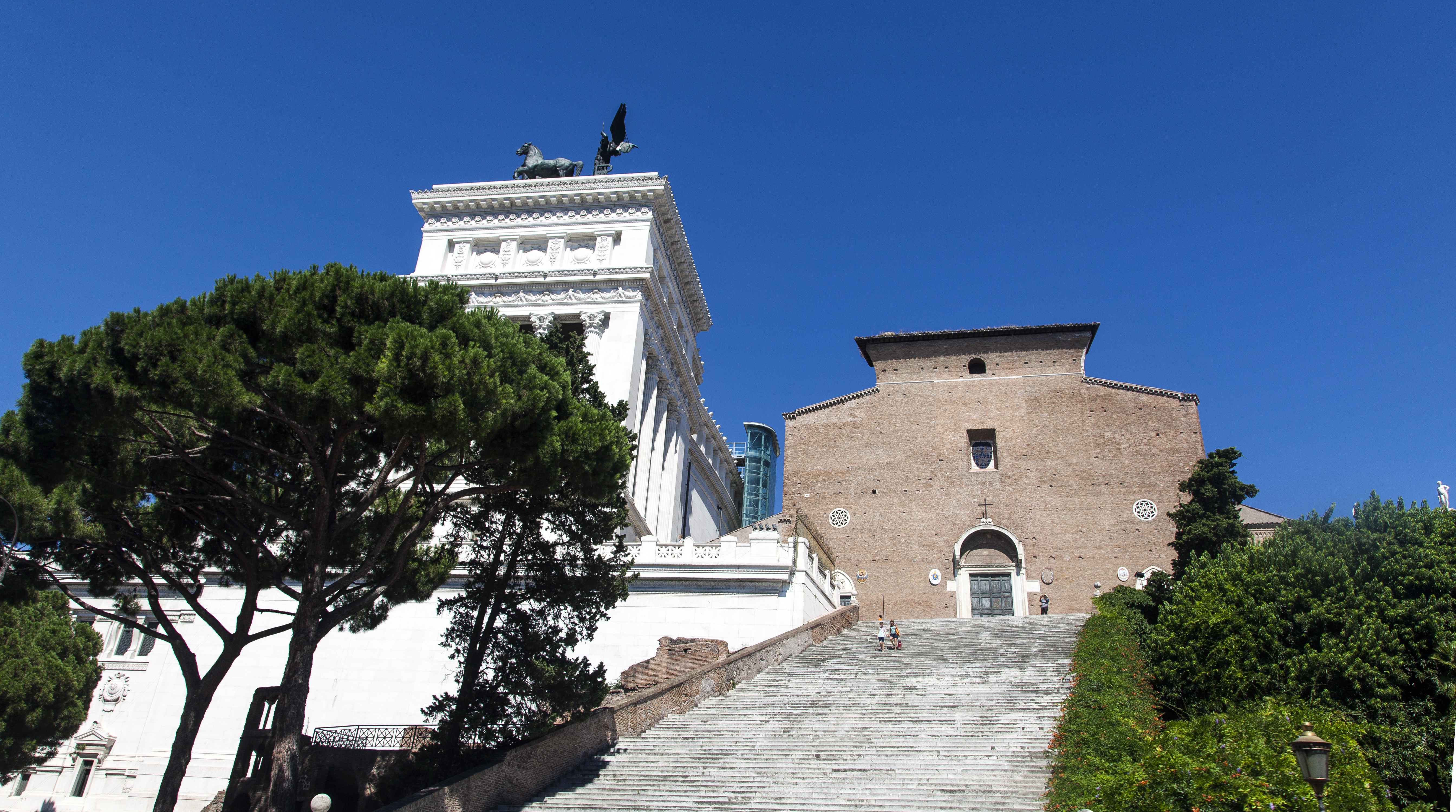
It’s all very beautiful – the sculptures, the ruins, the palaces. Everything is covered with the spirit of antiquity, you feel yourself in a huge museum under the sky. But somehow it didn’t touch the delicate strings of my heart, like, for example, London or Hong Kong.


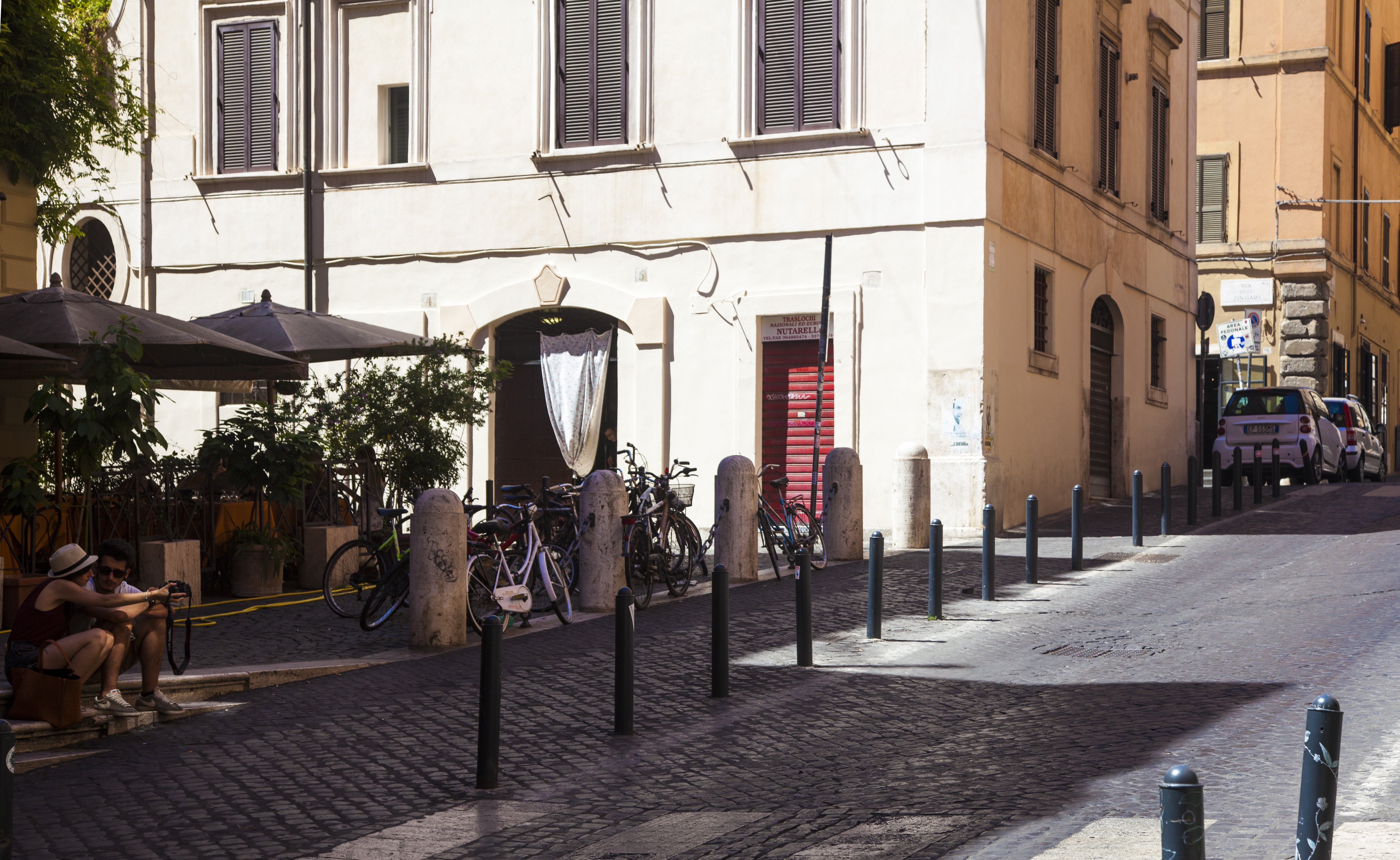
Via Leonina


Roman ruins


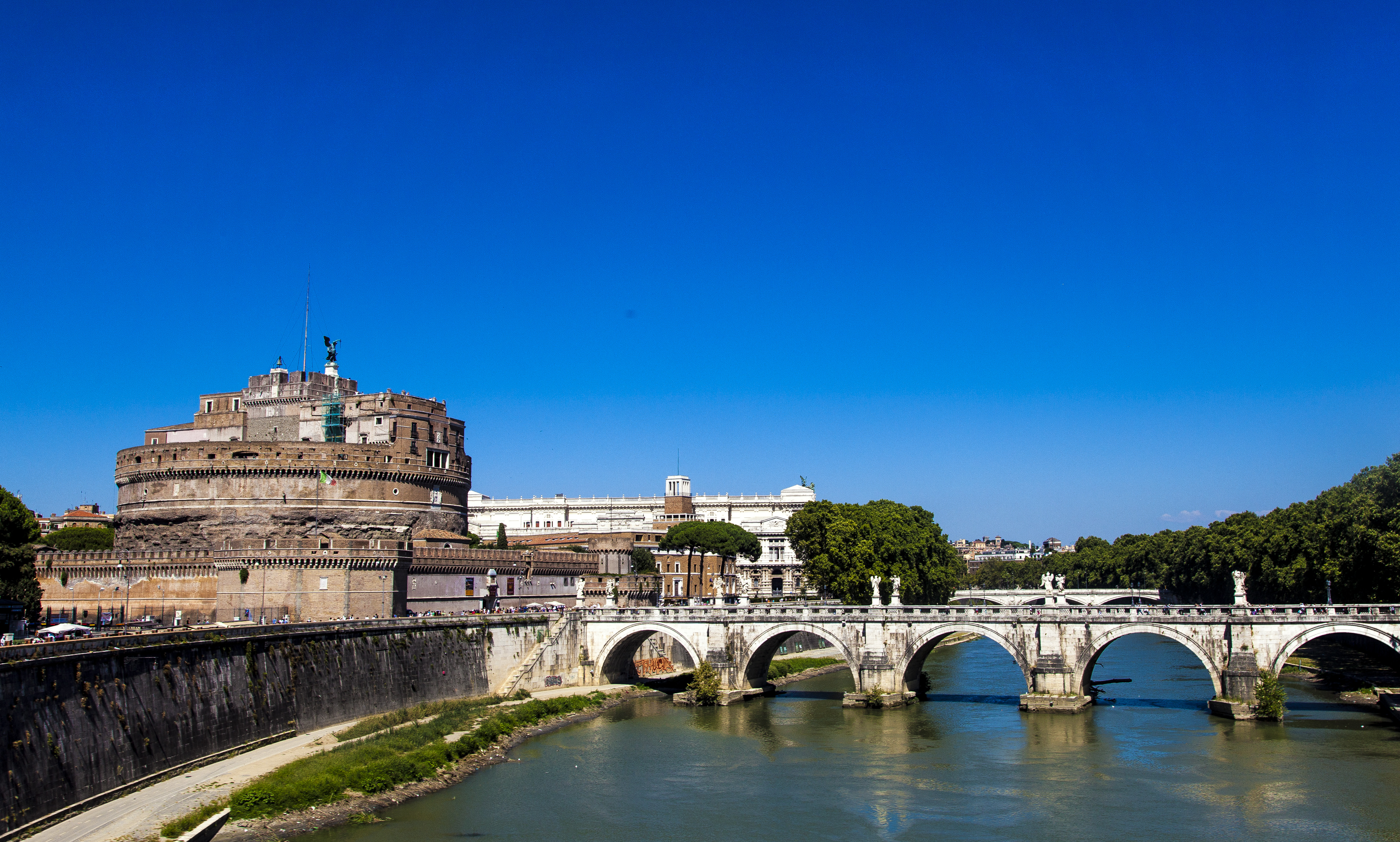
St. Peter's Basilica


River Tiber


IMG_6294

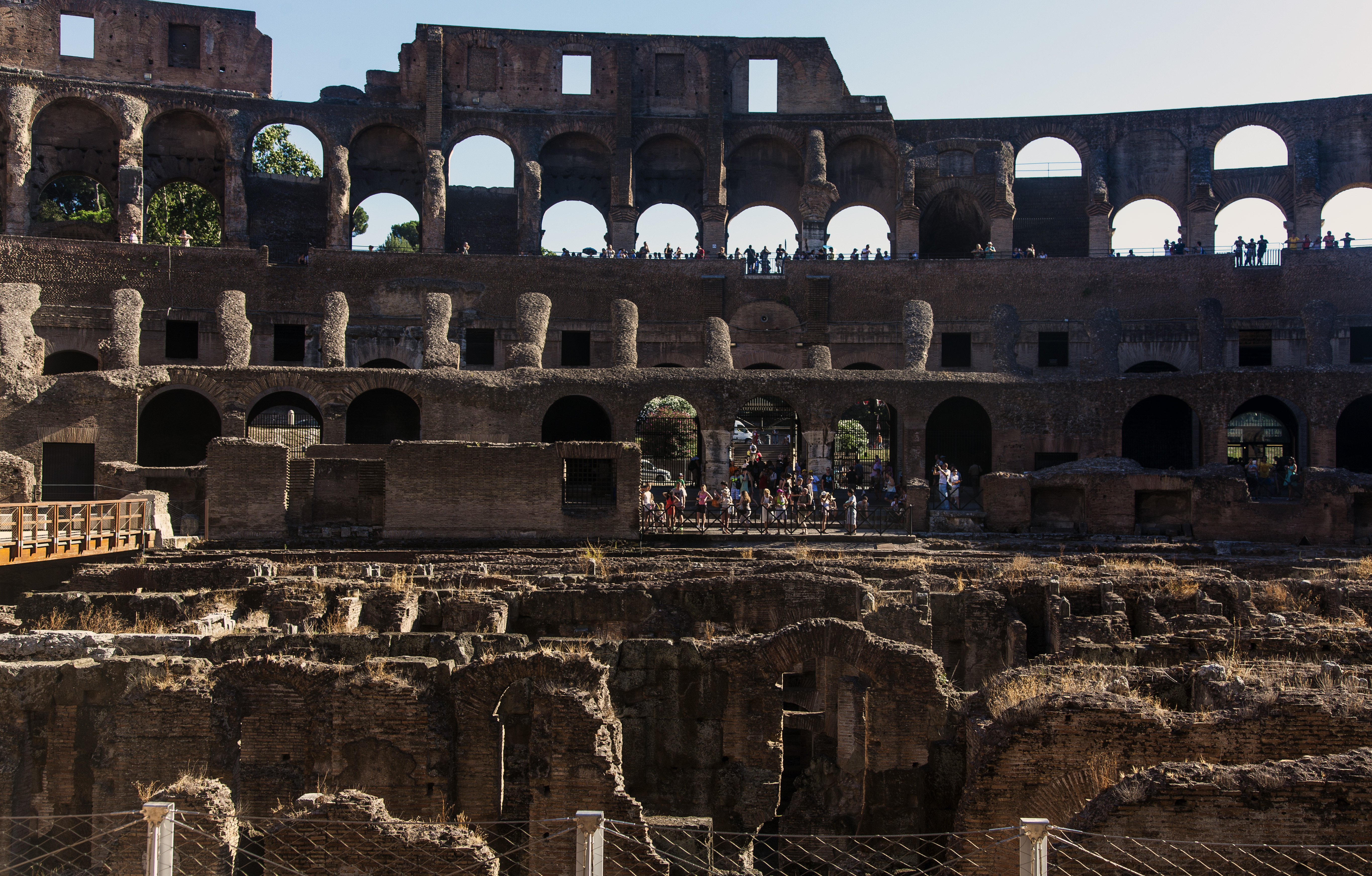
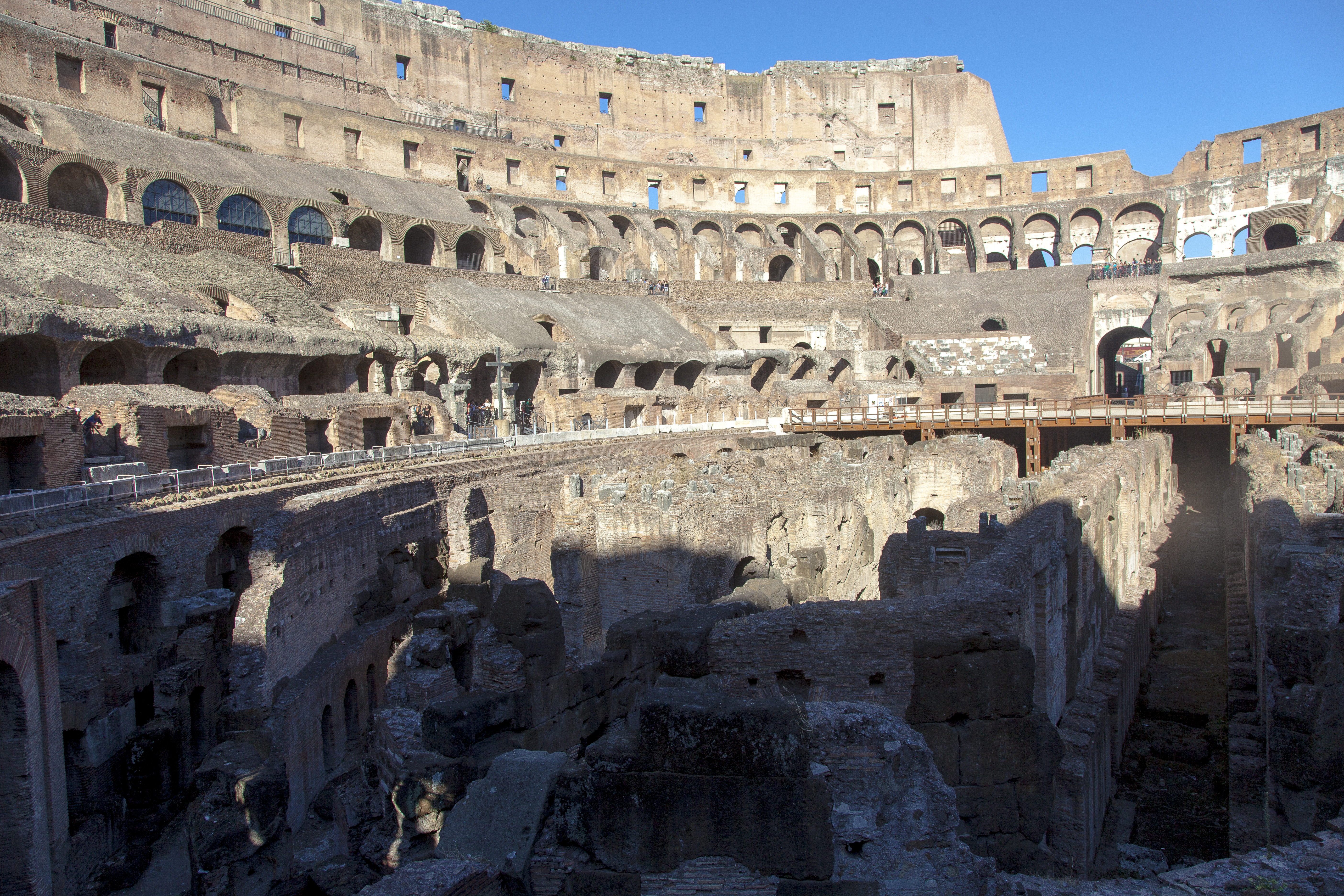
As our tour tickets were valid for 48 hours, we decided to do a full circle without hopping off, and completed the tour with a Colosseum visit. It certainly is a fascinating feeling when you think of these stones being about 2000 years old. There were world wars, and they were standing there; there was Napoleon, and they were standing there; there was the Holy Inquisition, and they were standing there; there was the fall of the Roman Empire, and they were standing there… We climbed to the top and saw part of the arena and the maze beneath it, imagining a defeated gladiator and a crowd of spectators, roaring “Finish him! Finish him!”

Colosseum


Colosseum

Posted in Croatia, Europe, Korčula

Croatia – Day 8

РУССКОЯЗЫЧНАЯ ВЕРСИЯ ПО ЭТОЙ ССЫЛКЕ. CLICK HERE FOR RUSSIAN VERSION.

31 August 2012 – Friday

After the two tours we had had with the “Elite Travel” company, where we were picked up next to the “President” hotel, our impressions about this company and their work were quite good. And looks like we put an “evil eye” on them: our today’s trip to the Korčula island started with a hitch: the bus didn’t arrive. It turned out that the day before we had been forgotten to be included in the list. As a result, we were picked up by a separate minibus and delivered to the port of Gruž, where we eventually found our group and the guide. The guide (also named Ivana) initially seemed to us a bit rude (instead of apologising immediately, she attacked us – saying something like, come on, what’s your problem, you’ve been finally brought here after all!), and most importantly, uninteresting – she was literally falling asleep while making comments in English and German. She seemed more willing to speak German, by the way – generally I noticed a clear preference shown to German tourists here.

Another problem – among the group there was a family with a two-year-old toddler, for whom this long road, quite obviously, was way too long: in the good moments he was spinning like mad, while in the bad ones he was crying and throwing up. So, his presence added neither peace, nor fresh air to other passengers.

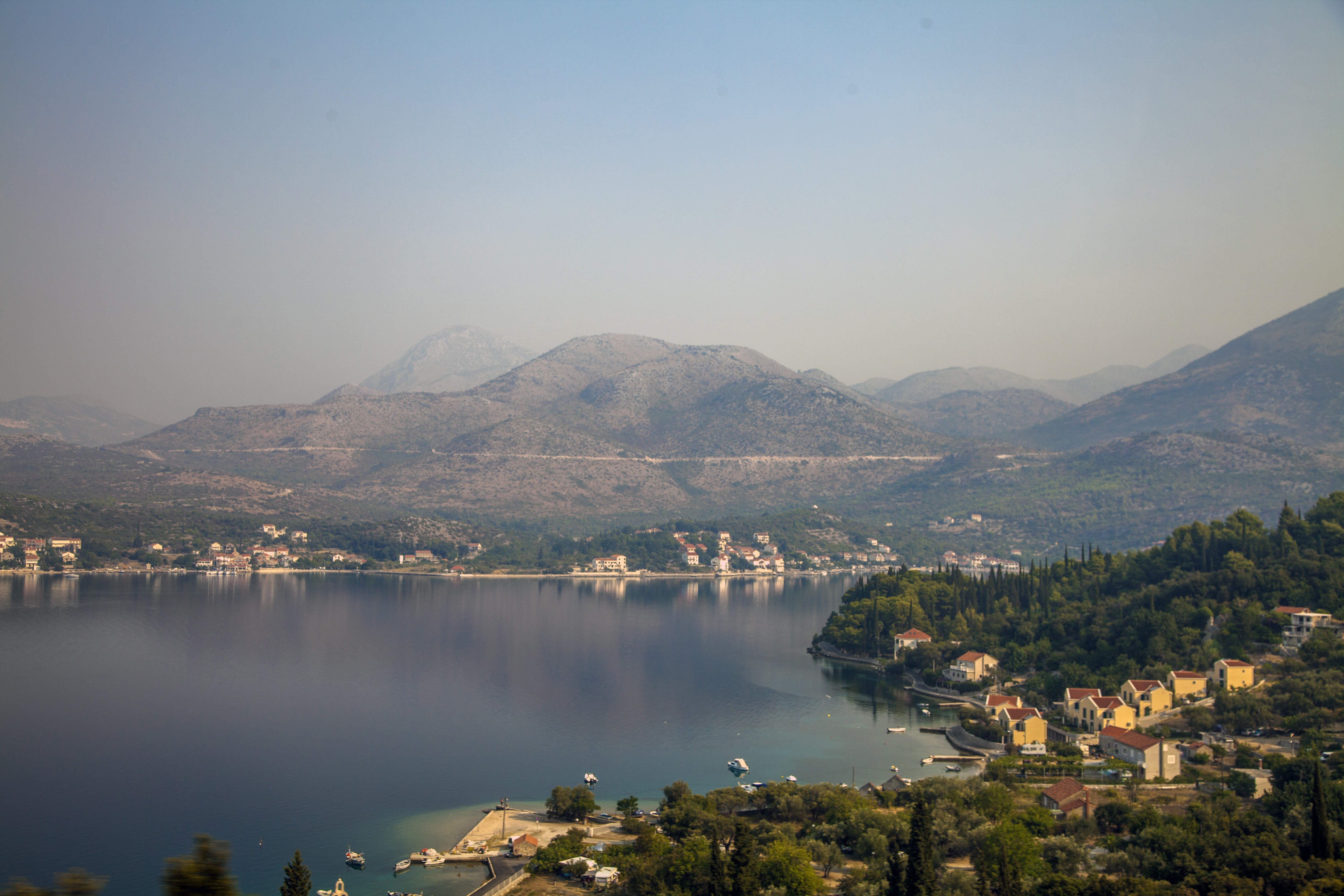
We climbed high into the mountains, again very close to the burning Bosnia. In the town of Slano we picked the last passengers. The location is called Slano (“salty”), because, starting almost from the first settlements, when salt used to be worth its weight in gold, it was mined here. Because of this salt, the Ottoman Empire’s caravan ways passed through these places.

This time the road was totally crazy. In some parts of it even looking down was scary, and at the same time it was hard to tear oneself away from the window – the view was unbelievably beautiful!

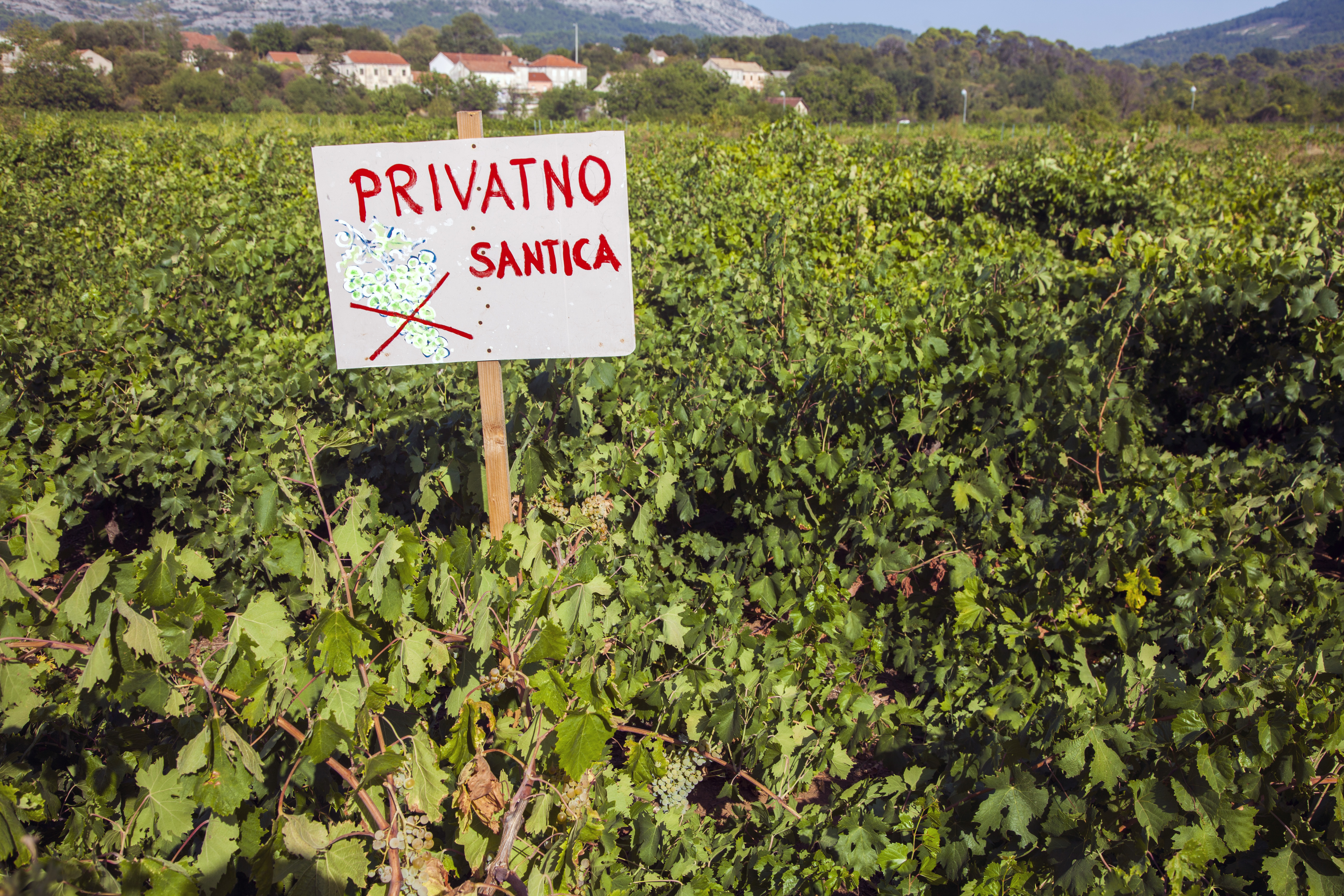
Virtually the entire foreseeable space around us was covered with vineyards. The plan was to visit one of them for wine tasting on our way back. Our guide told us that mainly red wine is produced here, and Postup is considered to be the best of all. Looking ahead, I can mention that Korčula is famous for its white wine, Pošip.

We were transported to Korčula on a small shuttle boat from Orebič (a very nice town, by the way), and got to observe how cars and even buses were transported on a large ferry.

In the town of Korčula we were to visit the Old Town, and the whole group was divided into English speakers and German speakers. The English speakers stayed with our gloomy, moody and sleepy guide, – and that was when she suddenly revived, and showed great artistry and a sense of humour.

First thing, she told us about the local “wind rose”. There is the north wind “bura”, which blows in winter and brings clear and sunny weather, although lowering the temperature to zero. There is a south wind called “jugo” or “siroc”, the locals’ least favourite: it blows from the Sahara in summer and brings dust, and, oddly enough, rain. The city walls are located so that this wind could penetrate the city as little as possible. Finally, the wind most preferred by the population is the western “mistral”, bringing cool air in summer. The city is open for this wind from the sea, and, as Ivana joked, this was the first air-conditioning system in the world.

On the city gates the name of the first Croatian King Tomislav is engraved, and above it there is the Venetian winged lion, as the city used to belong to the Venetian Republic for a long time. These lions usually have their attributes, or symbols, showing how easy or difficult it was to get into the town. If the lion has a closed book before it, it was hard, and if the book is open, it means that the Venetians were accepted almost with open arms.

We came to Korčula thinking of ​​Marco Polo, because we had heard that he was from here. However, it turned out that Venice claims to be his hometown as well, and also, his home as such does not exist – the assumed house is a ruin. As our guide indignantly mentioned, in communist times nobody really cared about history, and in the times of crisis the intention even was to sell it. Luckily, the town borrowed some money and bought the house out (currently the price of these ruins is half a million euros!), but that money wasn’t enough to restore the building and make a museum out of it, as planned. For the time being some enterprising and patriotic Korčulan opened a souvenir shop named after Marco Polo, and behind it, the Museum of Marco Polo, in a totally different place.

By the way, three things are cited as proof that Marco Polo was born here indeed: first, there is a De Polo family still living here to this day, while in Venice there are no families with such name. Secondly, there exists a register of baptisms of the 14th century, which mentions Marco de Polo. Of course, the great traveller lived in the 13th century, but because it was quite common to give children the names of their ancestors, this could well be some great-grandson of his. Well, and thirdly, the book written by Marco Polo’s cellmate brings his own words, saying that he saw the tower of his hometown Corcyra Melaina and sailed towards it. It is proved that this is how Korčula was called in the ancient times, and no other city, including Venice, has claims on this name. As there is only one tower in the town, the house of Marco Polo could be identified.

One of our stops was in the atrium. Ivana showed us, where the mayor and his secretary would seat and how they would collect the citizens’ complaints, literally portraying and mimicking each of them.

In front of the atrium was the doctor’s house. Doctors used to be lured from Venice, the bait being this very house. The doctor could live there with his family as long as he remained in the service of the city of Korčula.

We made good use of our free time – at least, I got a chance to take a quick dip in the sea, right in the city, among boats – even there it was very clean. I deliberately found a deep place, as it was impossible to get into the water in the shallow part because of the large slippery rocks.

On the way back we were taken to a huge winery belonging to the Matuško family. This family produces 500,000 litres of product annually, 90% of which is red wine, and the remaining 10% is comprised of white wine, dessert wine, schnapps and olive oil. They have huge cellars, completely cluttered with enormous barrels.

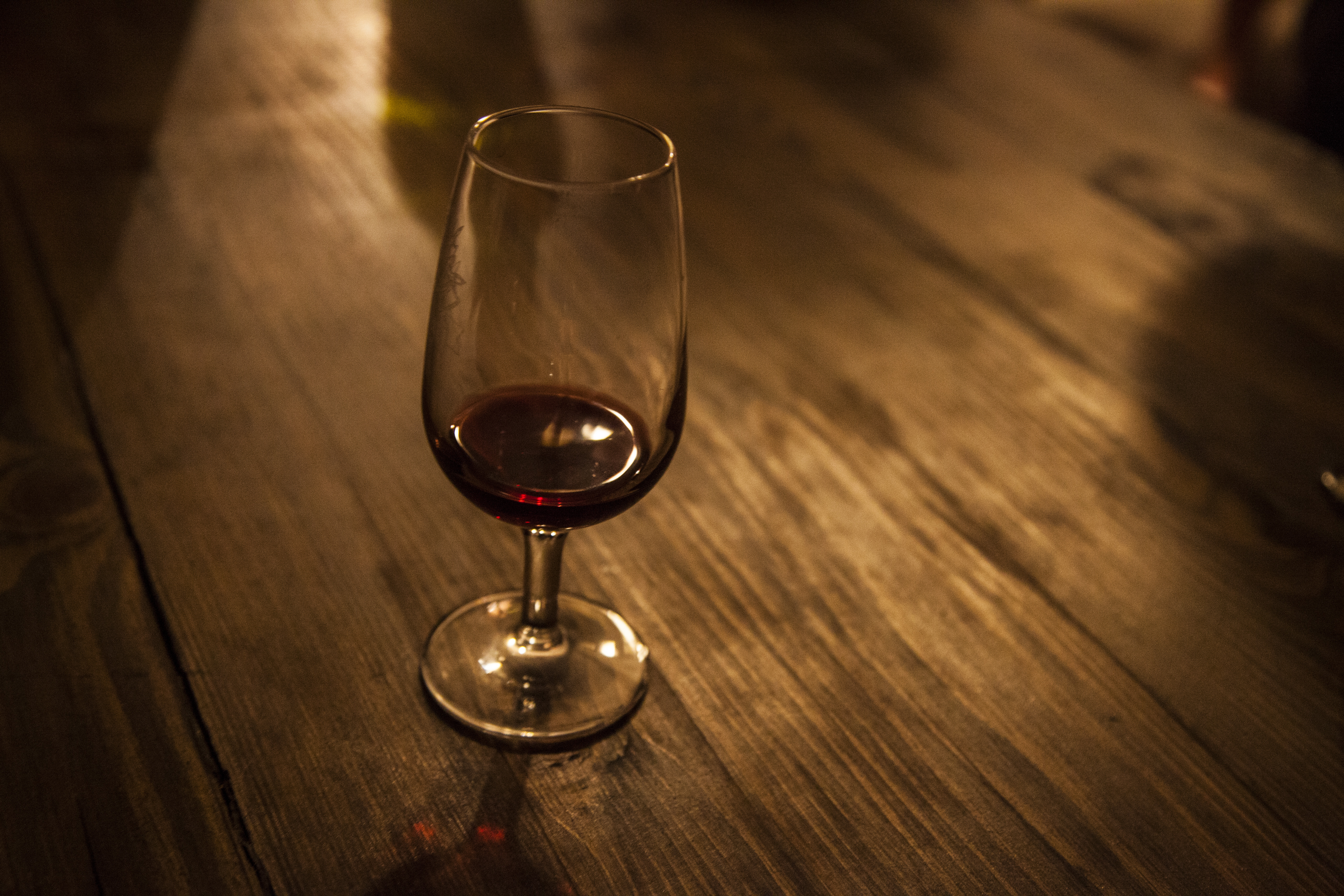
The first wine we tried was Plavac Mali. The name generally belongs to a grape variety, grown in the continental climate, in places where there is enough water, but not so much sun. 4—5 kg of grapes can be collected from one plant. The wine turns dry and light (only 12.2%), and is only drunk young.

The next wine was Dingač, made from the same grapes variety, but grown in Mediterranean climate: a little water and a lot of sun, and the sunlight comes from three sources: direct, reflected from the sea and reflected from stones. As a result, no more than one kilogramme of grapes is collected from each plant; the wine turns more robust, almost black (14.5%), and is preserved for several years.

The next drink to try was the sweet dessert wine called Prošek. It can be maintained for many years: according to tradition, when a child is born in a family, a barrel of Prošek is made, and it can only be opened at this child’s wedding. Personally, I found it it too sweet. And finally there was a 40% grappa and a 25% cherry brandy, made from this very grappa.

We then had a short stop in the town of Ston. There, too, there is the old town and a fortress, but we didn’t get to see them.

Posted in Croatia, Dubrovnik, Europe, Kotor, Montenegro

Croatia – Day 7

РУССКОЯЗЫЧНАЯ ВЕРСИЯ ПО ЭТОЙ ССЫЛКЕ. CLICK HERE FOR RUSSIAN VERSION.

30 August 2012 – Thursday

Today, by contrast, was a very active day: we took the long-awaited trip to Montenegro. The mountain forest road, which took us quite long to drive through until the border, was indeed beautiful, but the day was extremely hazy. At first we thought it was fog, but then it turned out that it was the smoke from forest fires in Bosnia. We were told that the situation was really critical there, so a few sections of Croatian firefighters were sent for help.

In general, our guide Petra told us a lot of things, mostly about Croatia, though. For example, we learned that the Lokrum island (very close to Dubrovnik), famous for its parks and entertainment,  had been cursed. A very soon death is believed to await anyone who stays there overnight. The superstitious Dubrovnikers still believe in this, so every day the last, eight o’clock boat to the city is fully packed with people hurrying to leave the island.

We also learned that  Dubrovnikers do not like to rent housing, but tend to buy it instead – so they feel safer. In this case, they have to take mortgage loans for 30-40 years because of very high cost of real estate.

Driving further up in the mountains, we saw three islands from up high: Mrkan (St. Martin), Bobara (St. Barbara) and Supetar (St. Peter’s). In the 14th century, first quarantines in history were located on them, and all those traveling to Dubrovnik (then Ragusa) were required to spend 40 days there, hence the name (from the Italian word “quaranta” – “forty”). Owing to this, plague spread very little in Dubrovnik.

Driving past Konovle, we heard about the fertility of these lands. Here exists a kind of black market for vegetables here: there are women working on the fields, referred to as “our ladies”, who can be called any time and asked to deliver fresh vegetables, which they will do the same day (or, the latest, the next morning), bypassing shops and markets.

We got slightly anxious, approaching the Montenegrin border, and took out our passports and insurance documents in advance. But everything went smoothly and no one got into the bus to check anything – Petra sorted everything out by herself.

Generally, the difference between Croatia and Montenegro can be noticed immediately: Montenegro seems poorer, the houses are more dilapidated, there are lots of signs in Cyrillic script (they use both Latin and Cyrillic scripts here) and in Russian too.

The official currency is euro, even though Montenegro is not part of the EU and not going to be one in the foreseeable future. There is an explanation. This area is located at the junction of the Eurasian and African tectonic plates, which results in frequent earthquakes. After one of such earthquakes in the second half of the XX century, Montenegro had to borrow money from Germany for rehabilitation and reconstruction. When in the 80’s Yugoslavia suffered an economic crisis and, therefore, a high inflation, Montenegro, in order to pay off the debt in German marks, asked for permission to make them their local currency. After Germany switched to euro, so did Montenegro. However, the government does not have the right to print money, it still gets it from Germany.

In general, we were told that the highlanders and the seaside residents were like two different nations. The highlanders used to lead an austere life, and very often, especially during the Second World War, when a family was left without men, some women had to take on the role of head of the family. These women, called “virdžina” (i.e. “virgin”), dressed like men, carried weapons, talked about themselves in the masculine, were always in the company of men, and only performed men’s duties around the house. Nowadays this tradition has practically disappeared. As for the seaside residents, they, in particular Kotorians, used to be were very educated (education was received by both young men and women, even from common families) and looked down upon the highlanders.

When the Boka Kotorska (Kotor Bay) eventually  appeared in sight, we were really disappointed: in the haze it looked like a decal, devoid of any colors, moreover, the fog was so thick that we couldn’t see almost anything. We were taken to a place which was supposed to have a magnificent view and where we could take photos of the Kotor Bay. But there wasn’t much to take pictures of.

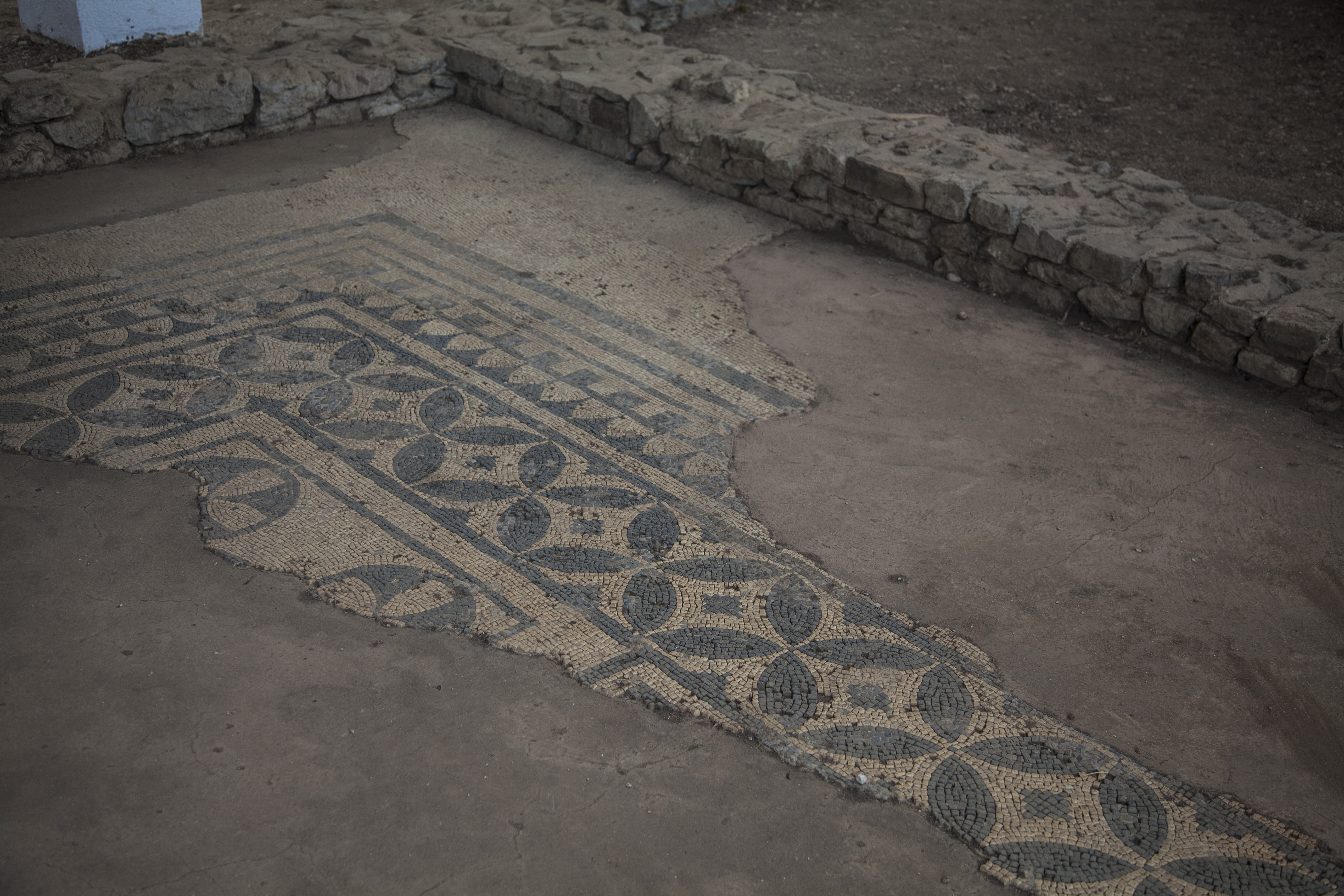
And so, sad and disappointed, we drove to a place called Risan, famous for its Roman mosaics. There are the remains of an ancient Roman villa, which has fragments of these mosaics on the floor.

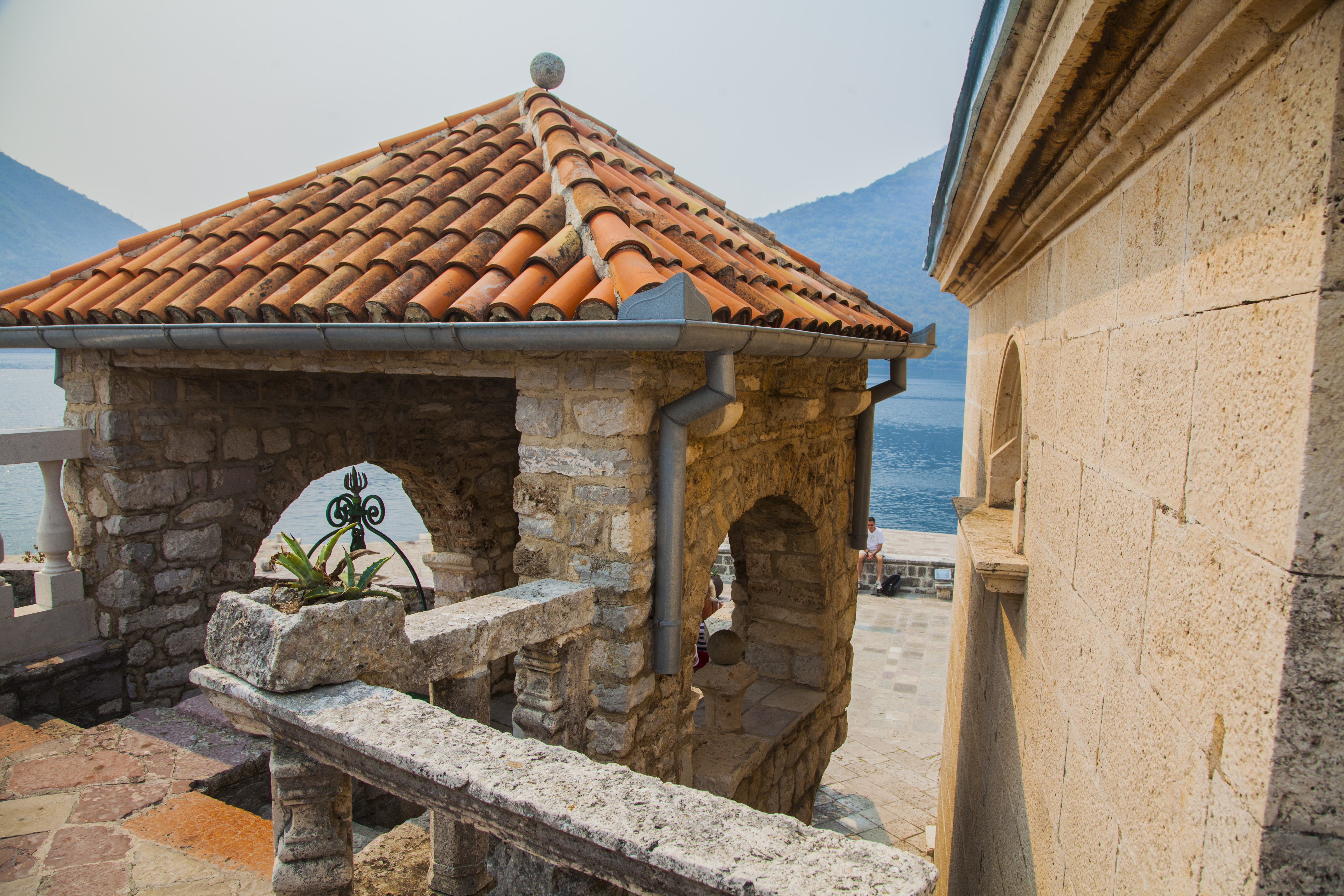
Near the town of Perast we boarded a boat and headed to a small man-made island called Gospa od Škrpjela (Our Lady of the Rocks) with a church of the same name. The origin of the island is rather interesting. For some reason, the Catholics in this area did not have their own church. But once, as legend says, a fisherman found an icon on a rock right in the middle of the Bay. This was considered to be a sign from God, so since then fishermen would throw more and more rocks one on another, after returning from each successful journey and also sank their old ships, loaded with stones.  That is how the island was built.  The tradition to throw rocks still exists – every year, on the day when the icon was found, local people throw more rocks. The church looks very nice inside, with many beautiful canvas by a famous local painter Tripo Kokolja. The altar is made of several kinds of marble, the most rare and expensive of which was exchanged for silver on a  kilogram per kilogram basis.

As we were driving down towards Kotor, Petra told us of some humorous stereotypes which people of the former Yugoslavia have about each other. Thus, the stereotypes are that the Croats are very good singers, but also are too arrogant, the Bosniacs have great sense of humour, but are not particularly bright (sorry, don’t mean to offend anyone – these are not my words, but those of a Croat lady after all!), and the Montenegrins are very lazy. There is even a joke about a competition on who can lie on the road for the longest time. After 24 hours, the competition had to be stopped because the three participating Montenegrins were still lying there with no intention of getting up in the near future. We were shown a card with ten funny Montenegrin Commandments:

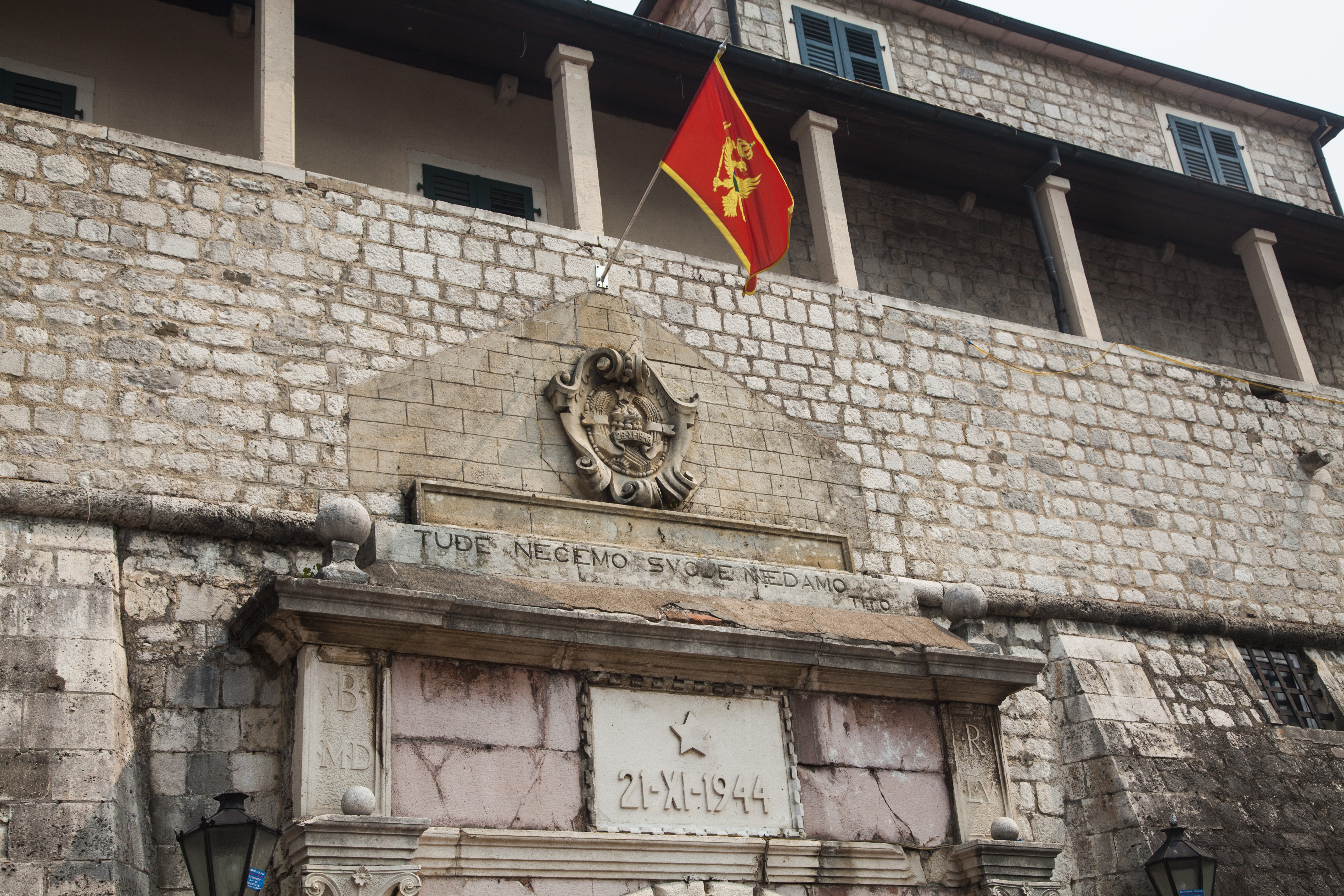
In Kotor we were passed to a Russian guide (a lady named Katya, from St. Petersburg, living here for seven years). Very quickly, she walked us around the Old City, as we only had two hours of free time, including a guided tour and lunch. The Kotor city walls are located high in the mountains, and we didn’t get to climb up there. The Old City has plenty of churches and monasteries, the first music school in the Balkans, the first theatre (now it has been sold to become a hotel, so there is no theatre in Kotor anymore). There are both Catholic and Orthodox churches here, but the Catholic ones are more in number – as there are more Catholics here, although generally the majority of Montenegrins are Orthodox. In tough times, many churches had a Catholic and an Orthodox altar at the same time, i.e. were open for both confessions.

Along with other memorable places, our attention was brought to the Pima Palace on the Flour Square. Head of the Pima family used to be one of the largest grain traders here.

Interestingly, in contrast to Dubrovnik, the buildings here are necessarily located at an angle to each other – it was believed that locating them in a row would bring bad luck.

The Kotorians are most proud of the fact that they never were under the Ottoman Empire, even though in their history they used to be subordinate to Venice, were occupied by a Napoleon’s general and by Italian fascists (for two months). On this occasion, we heard a story how Jesus Christ appeared to a girl named Katarina from a mountain village and told her that in two hundred years, the Turks would attack Kotor. The girl didn’t hesitate to come down from the mountains with her mother to warn the Kotorians about the danger. The latter immediately started building a wall to protect their land, succeeded in this and, when the the Turks did attack, they managed to parry the enemy’s strike. Katarina herself had become a nun. In appreciation, her relics were later transferred to the Church of St. Clara, right here, so that the saint would continue to defend the citizens.

By the way, her descent from the mountains was no big deal – we were informed that some inhabitants of the mountain village Njeguši do it every day when delivering products to Kotor.

Driving out of Kotor, we saw a beautiful town on the other side of the bay (the fog had already cleared a little) – either Muo or Prčanj, where we weren’t taken. There was no time left for bathing either, although there were beaches here and there.

On the way back we were told that during the previous tour a few days before, the car queue on the border was seven kilometres! The most thorough shakedowns are usually undergone by those with Albanian and Kosovar passports – this road is actually a drug “Silk Road”. Recently the guards caught a couple in a car with German plates, transporting drugs for the sum of 10 million euros. But this time we were lucky, there was only one bus ahead of us, from Ukraine, which took quite a long time to check though.