Posted in Asia, China, Hong Kong

Trip to China – Hong Kong – Day 3

РУССКОЯЗЫЧНАЯ ВЕРСИЯ ПО ЭТОЙ ССЫЛКЕ. CLICK HERE FOR RUSSIAN VERSION.

28 March 2012, Wednesday

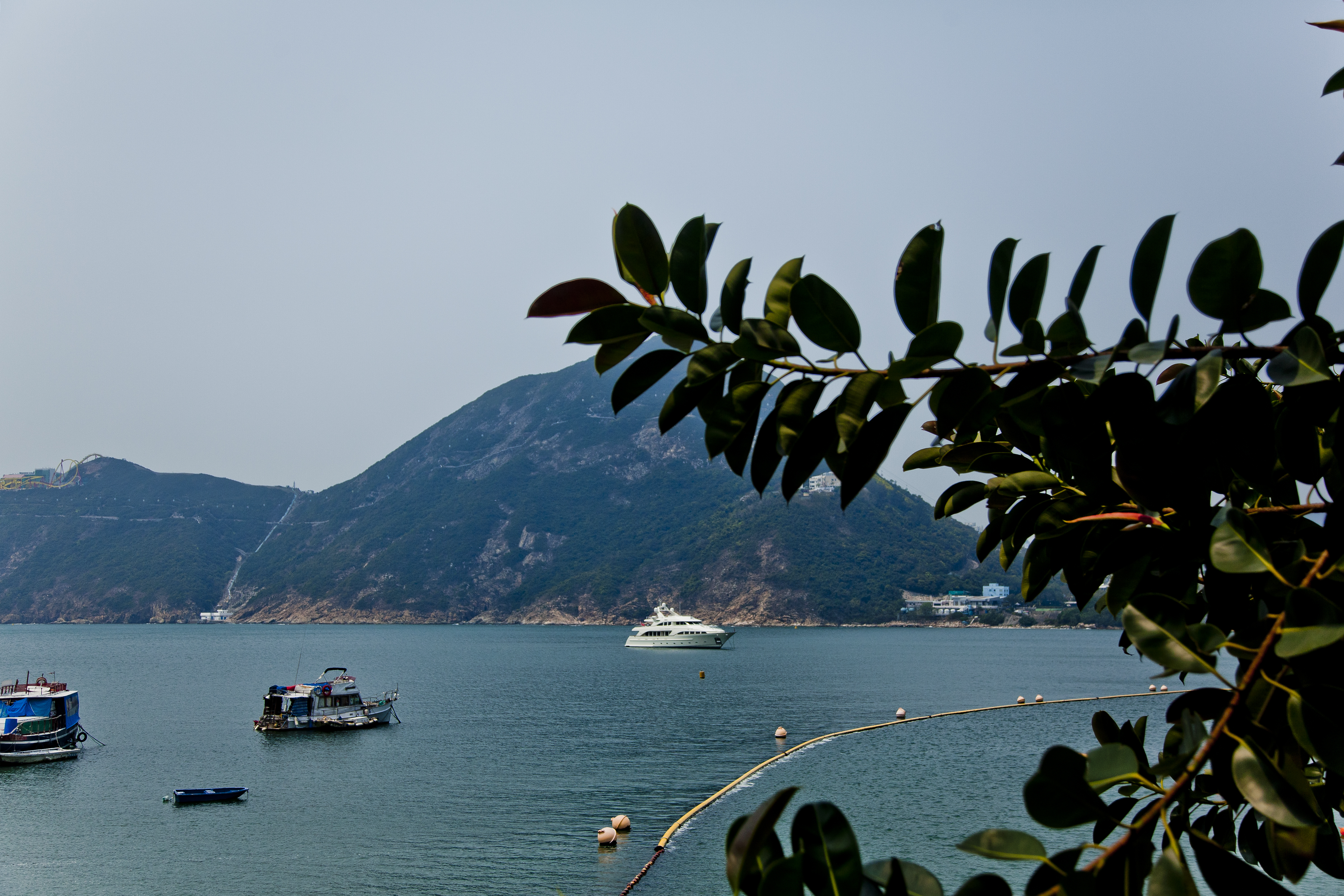
The day began with another bus tour – the one that led out of town. The view, especially along the southern coast, strewn with beaches, was simply amazing, but there wasn’t really anything worth a separate description, unless I would keep repeating: “Oh my god, how beautiful! The sea, the hills, the wonderful smell of flowers!” And the smell was indeed worth these words, it was totally unfamiliar, but still very, very nice.

It is very prestigious to live in the Repulse Bay area (called so, because it once used to be a nest of pirates, which the British troops repulsed severely and eventually eradicated), therefore housing here is very expensive, reaching HK$200,000 (about 26,000 USD or 20,000 AZN) per sq m.

The highlight of the journey was lunch at the Jumbo Kingdom floating restaurant in the Aberdeen fishing village. It can be called a village just conditionally, as it also has high-rises, just like the city does. It was quite suprising to encounter the name of a small Scottish town in subtropical Hong Kong. It turned out that it was named after Lord George Hamilton-Gordon, the British Secretary of State for War and the Colonies, who was Scottish. Generally, everything here is so saturated with Scottish spirit, that even during the handover ceremony (sovereignty transfer from United Kingdom to the People’s Republic of China) in 1997 there were Scottish soldiers marching to the buzz of bagpipes.

Aberdeen is given a special flavour with sampans – traditional boats, in which the Tanka people used to live in the past, and sometimes even live now. We took a ride on one of these sampans which brought us to the restaurant.

The floating restaurant consists of two decks: the top deck is a restaurant serving western cuisine, while the first deck is a fine Chinese (Cantonese) restaurant. We chose the latter. The prices of some dishes, quite frankly, were off the scale, reaching thousands (shark fin soup, for example) or even tens of thousands (fish maw) of Hong Kong dollars. We weren’t really up for spending a fortune on food, so went for quite ordinary stuff we were familiar with: dim sum, sweet and sour pork and chicken noodles. We were served such a huge mountain of noodles, that even after jointly and vibrantly eating as much as we could, it still looked almost untouched. The degree of our satiety could best be described by the fact that we couldn’t bring ourselves to have dinner later that day.

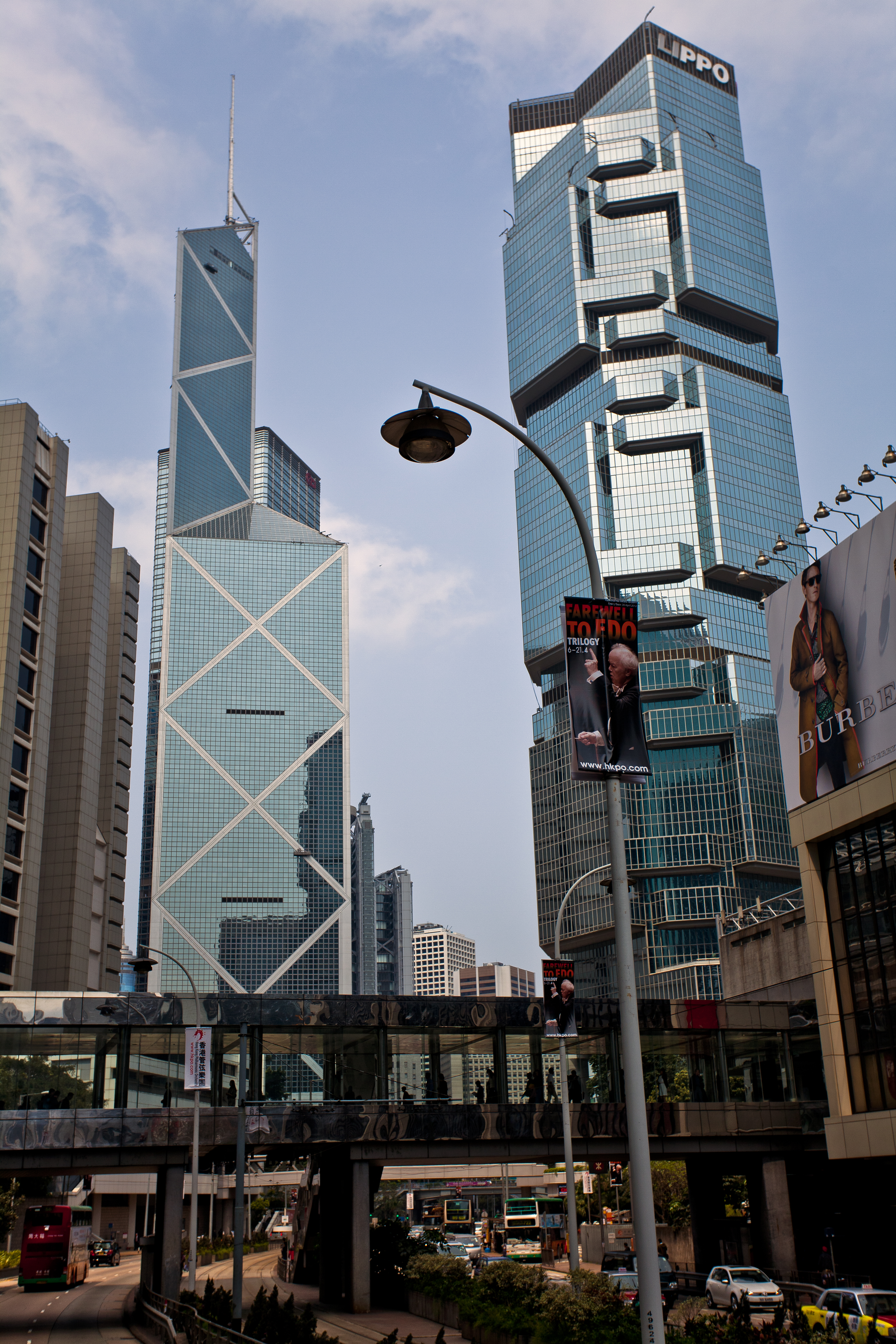
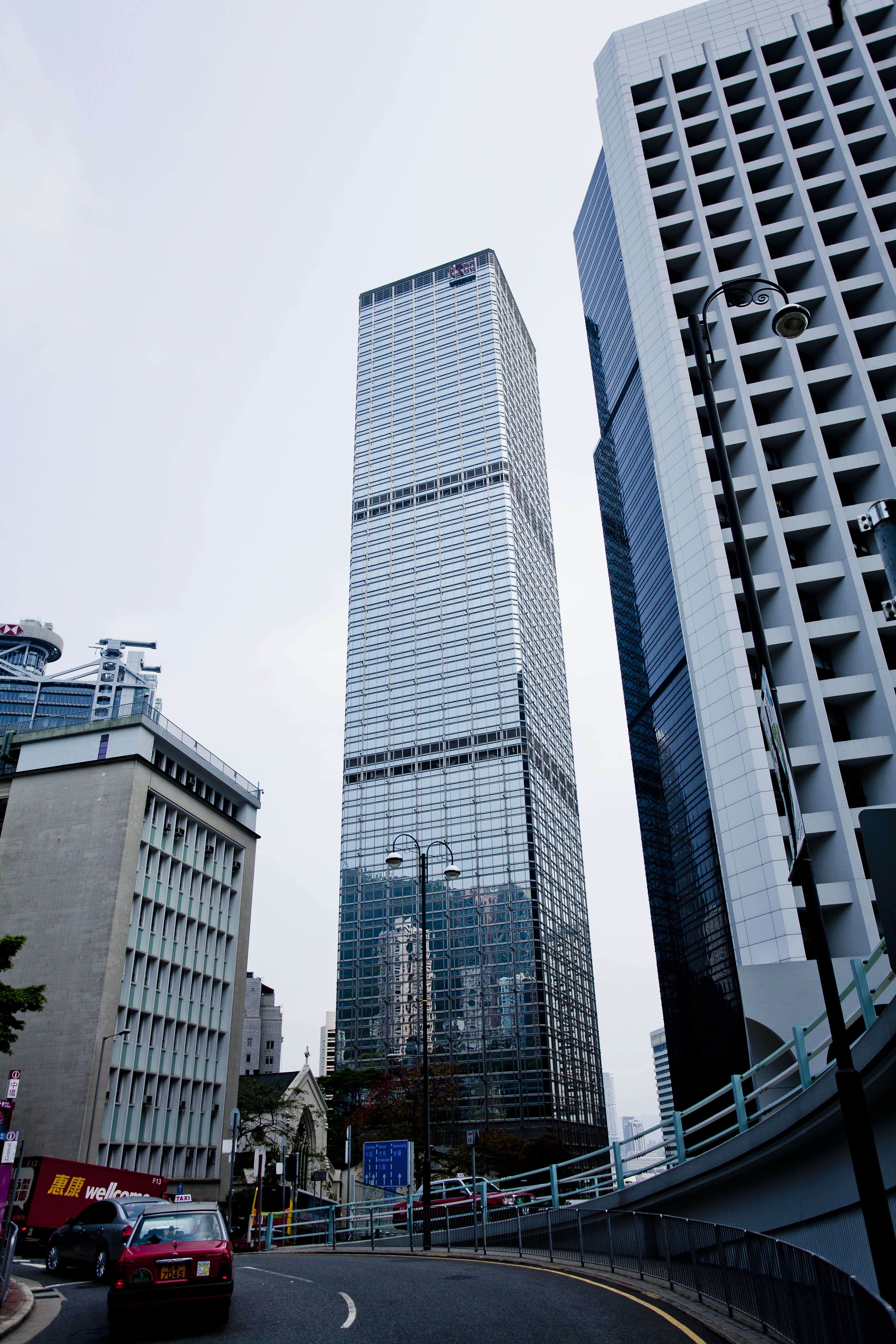
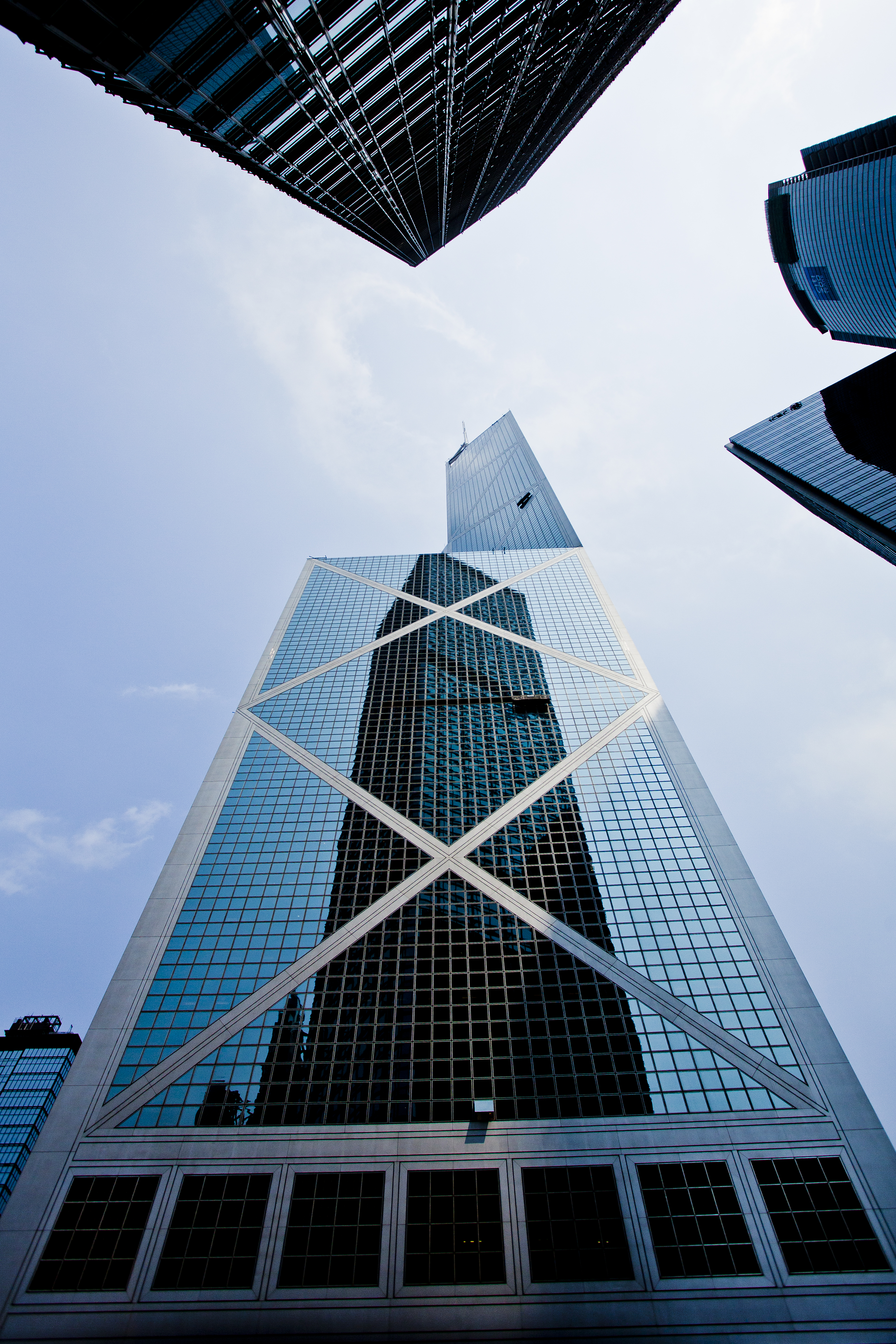
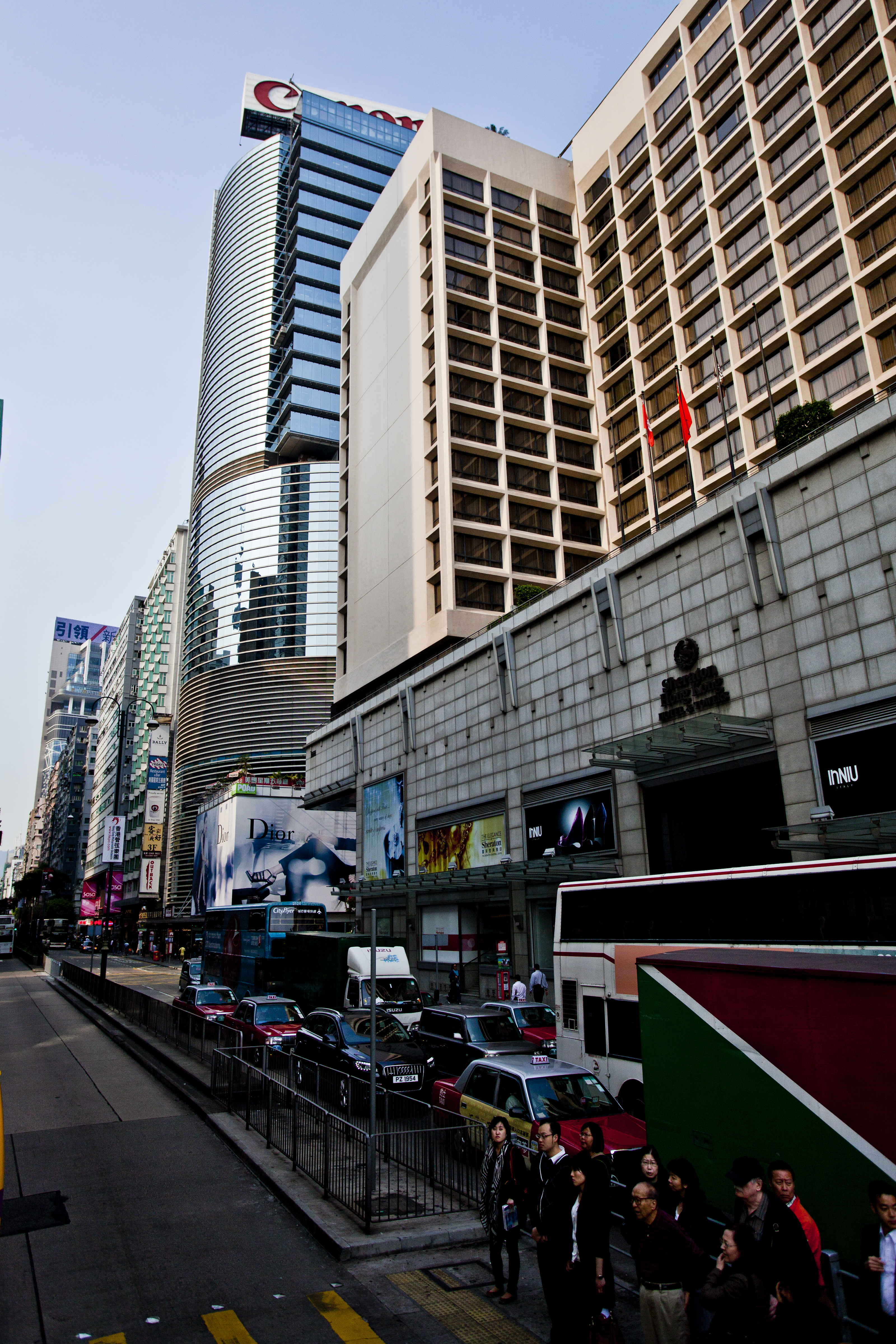
The restaurant turned out to be quite close to the city – we saw some familiar skyscrapers on our way back. By the way, skyscrapers in Hong Kong usually get nicknames related to their shape: for example, the building of the Chinese People’s Liberation Army Forces (the former head office of the British army) is referred to as the “upside-down Gin bottle” (which I didn’t get the chance to take a photo of), and the Lippo Centre buildings, looking like trees with climbing koalas, are simply called the “Koala trees” (in the photo below).

After lunch, our high spirits left us. It happened in the Wan Chai Computer Centre. One would have thought this was a paradise for electronics lovers where they could just shop their butts off. However, being in a space, divided into tiny compartments, littered with goods and packed with people, felt somewhat depressing for some reason. Even buying good phones for quite low prices didn’t make us feel much better.

To recover from a bad mood we decided to visit the Victoria Peak again. Here, too, things didn’t go very smoothly: to buy our tram tickets we had to wait in a queue probably a kilometre long, and also we completely forgot to ask the tour staff about round trips to the Lantau Island, which we were planning for the next day.

Nevertheless, we visited the local “Madame Tussauds”. The exhibition, of course, mainly consists of local celebrities’ figures, among which Jackie Chan’s one stands out (so much, that taking a picture next to it costs money). In general, the wax population is far less than in London, which is quite logical.

Having waited until dusk, we again visited the viewing terrace, where, almost gone with the raging wind, we enriched our photo collection with the pictures of the evening harbour with a bird’s-eye view.

Posted in Asia, China, Hong Kong

Trip to China – Hong Kong – Day 2

РУССКОЯЗЫЧНАЯ ВЕРСИЯ ПО ЭТОЙ ССЫЛКЕ. CLICK HERE FOR RUSSIAN VERSION.

27 March 2012, Tuesday

First of all, we should praise ourselves. And Hong Kong too. The first ones (i.e. us!) were able to find our bearings all the time, figured out where and how to go, purchased Octopus cards which are used for payment in all public transport in Hong Kong (and some shops as well). No more taxis from now on, long live the public transport! The second one, that is Hong Kong itself, provided an opportunity to understand everything, being a very user-friendly city: the streets, the transportation – everything is clear and more or less available, unlike Beijing, where standing on one side of a very wide street, you might have no clue how to get to the other side. Hong Kong’s streets are narrow, often literally a gap between skyscrapers. Usually there are overground crossings in areas with heavy traffic.

So, after breakfast (which was way more modest than in the luxury Beijing hotel), we, as decided the day before, headed to the nearest tour bus stop. We took a tram; trams here, as everything in Hong Kong, had grown in height and not in length: they are short and double-decker.

The bus took so long to arrive, that we got quite anxious whether we were standing in the right place. But just at the moment when we went to clarify this with a staff member of the Sogo department store, in front of which we had been waiting, the long-awaited bus appeared in the distance. Interestingly enough, the tickets were only sold near the Victoria Peak tram station, meaning that should we have decided to get off earlier, we would have ridden for free.

The road to Victoria Peak, which had been open to the public in late 19th century, was extremely steep and we rode at a crazy angle! We were literally pressed into the seat backs. The funicular is not only an attraction for tourists, but also public transportation for residents of the upper levels of the island. In fact, it was originally created in order to stimulate building development of the mountain.

As we got off the tram, we immediately found ourselves in a mall, where we had to climb quite a few escalators in order to get to the lookout. But it was totally worth it: the view from the Sky Terrace was just divine! The Victoria Harbour was picturesque to the utmost; and the concrete jungle, framing it, looked very harmonious next to the lush and curly greenery on the slopes.

We had lunch at the peak, at the Bubba Gump Shrimp & Co restaurant. It is a nice seafood restaurant from an American chain, with average prices. The way of calling the waiter is really interesting: there is a two-sided sign board on the table. If you don’t need anything, you turn it to its blue side, which says: “Run, Forrest, run!” If you need the waiter though, you turn it over to the red side, saying: “Stop, Forrest, stop!”

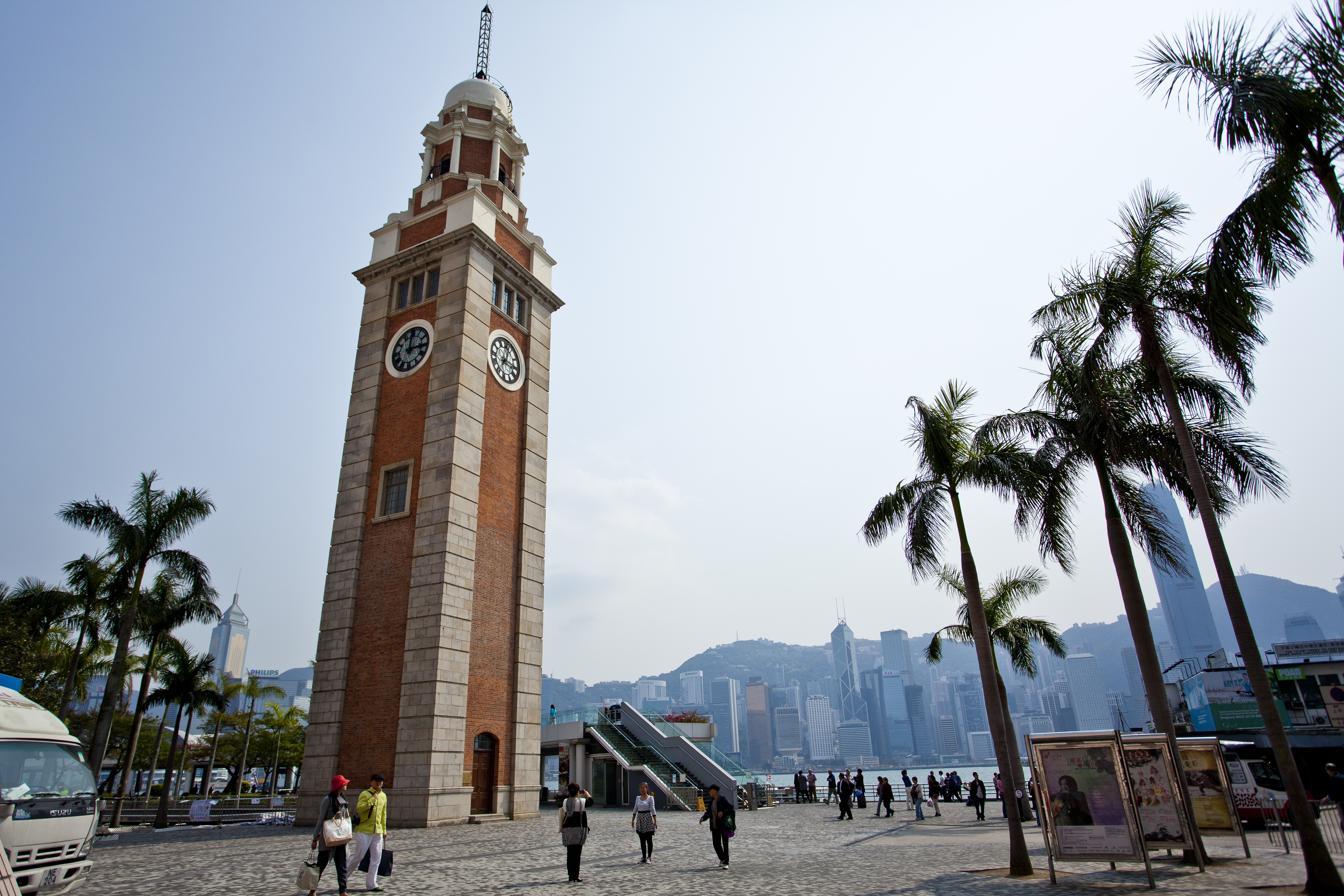
After a ride through the Hong Kong island (the name, by the way, originates from the Cantonese “Hēunggóng”, which means “Fragrant Harbour”), which is the historical centre of the former British colony, we took the Star Ferry to the Kowloon peninsula. Its name means “nine dragons”.

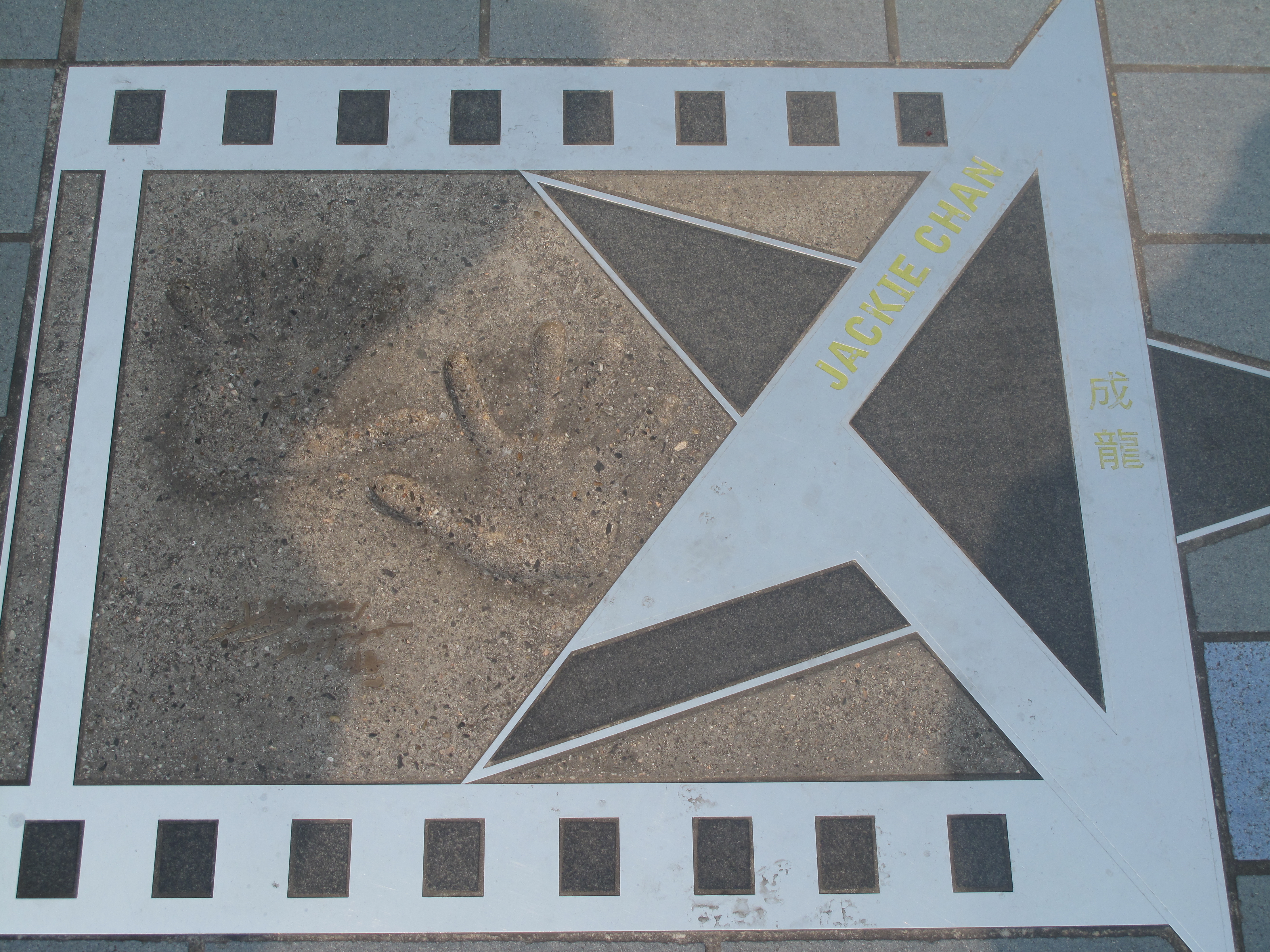
One of the main attractions in Kowloon is the Tsim Sha Tsui Promenade, or more precisely, the Avenue of Stars, like the Hollywood Walk of Fame, but, obviously, related to Hong Kong cinema. Among a myriad of names, completely unfamiliar to us, there were also the names of internationally famous actors, such as Jet Li, Chow Yun Fat, Andy Lau, and of course, the two biggest local stars – Jackie Chan and Bruce Lee. The latter also has a monument in his honour, which is really an object of pilgrimage for Chinese (and other) tourists.

Speaking of Chinese tourists, we had been told that the Chinese liked to be photographed with the Europeans, but in Beijing no one had expressed the desire to take a picture with us. Here though, right on the Promenade, a whole family – apparently, tourists from some Chinese province – approached us and asked to take photos with us, which they then did one by one.

We toured around Kowloon twice: in the day and evening. During the daytime it looked a bit inferior to the island, despite some memorable sites, such as the Peninsula Hotel, where during the Second World War, just after several days of fighting, the British signed the surrender to Japan; or the International Commerce Centre, which is the tallest skyscraper in Hong Kong (by the way, Hong Kong has the most high-rises in the world, almost twice as many as New York does). In contrast to the fashionable boutiques of the island, the peninsula is famous for its more democratic markets: the Ladies’ Market, Temple Street Night Market, Flower Market, Bird Market, etc.

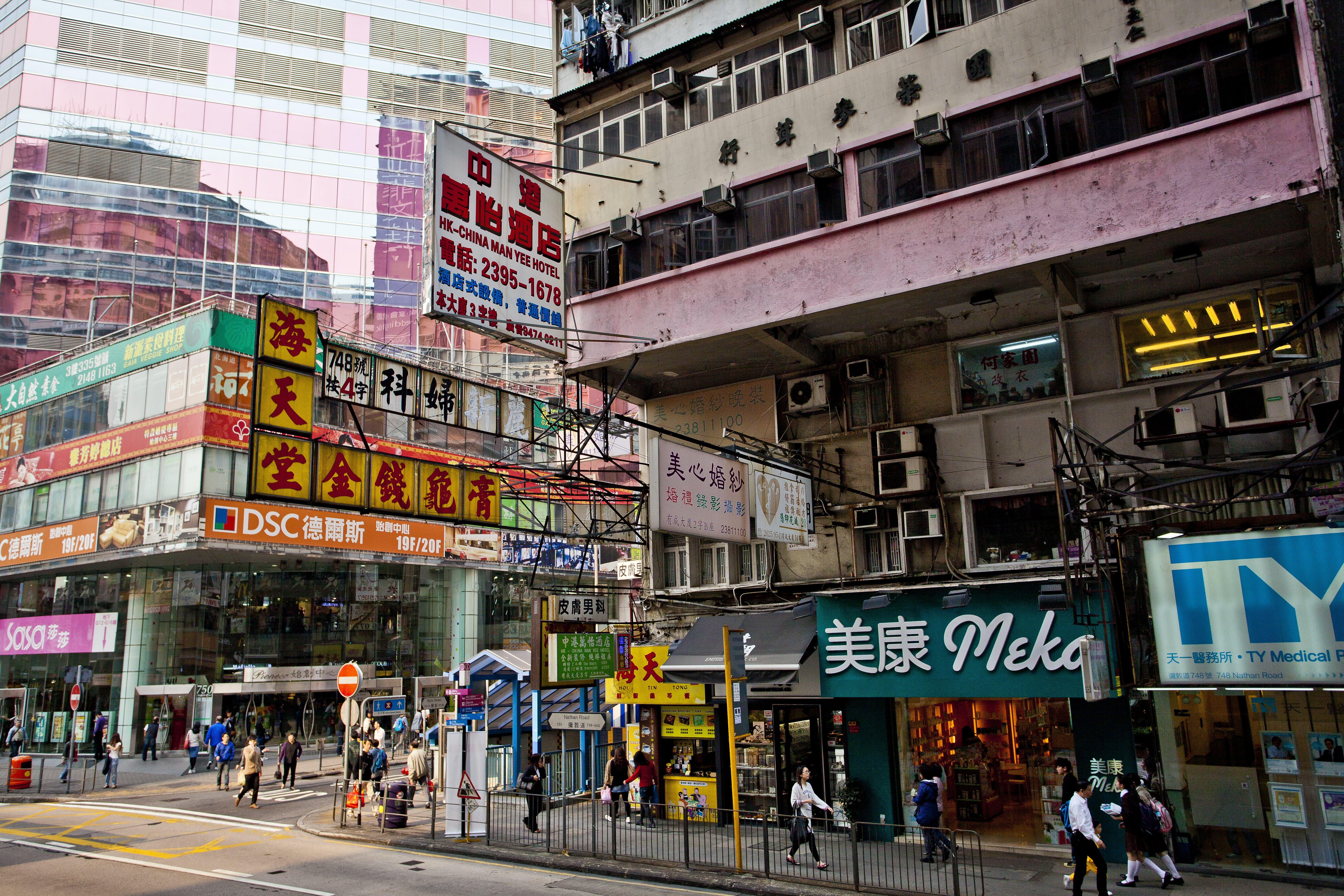
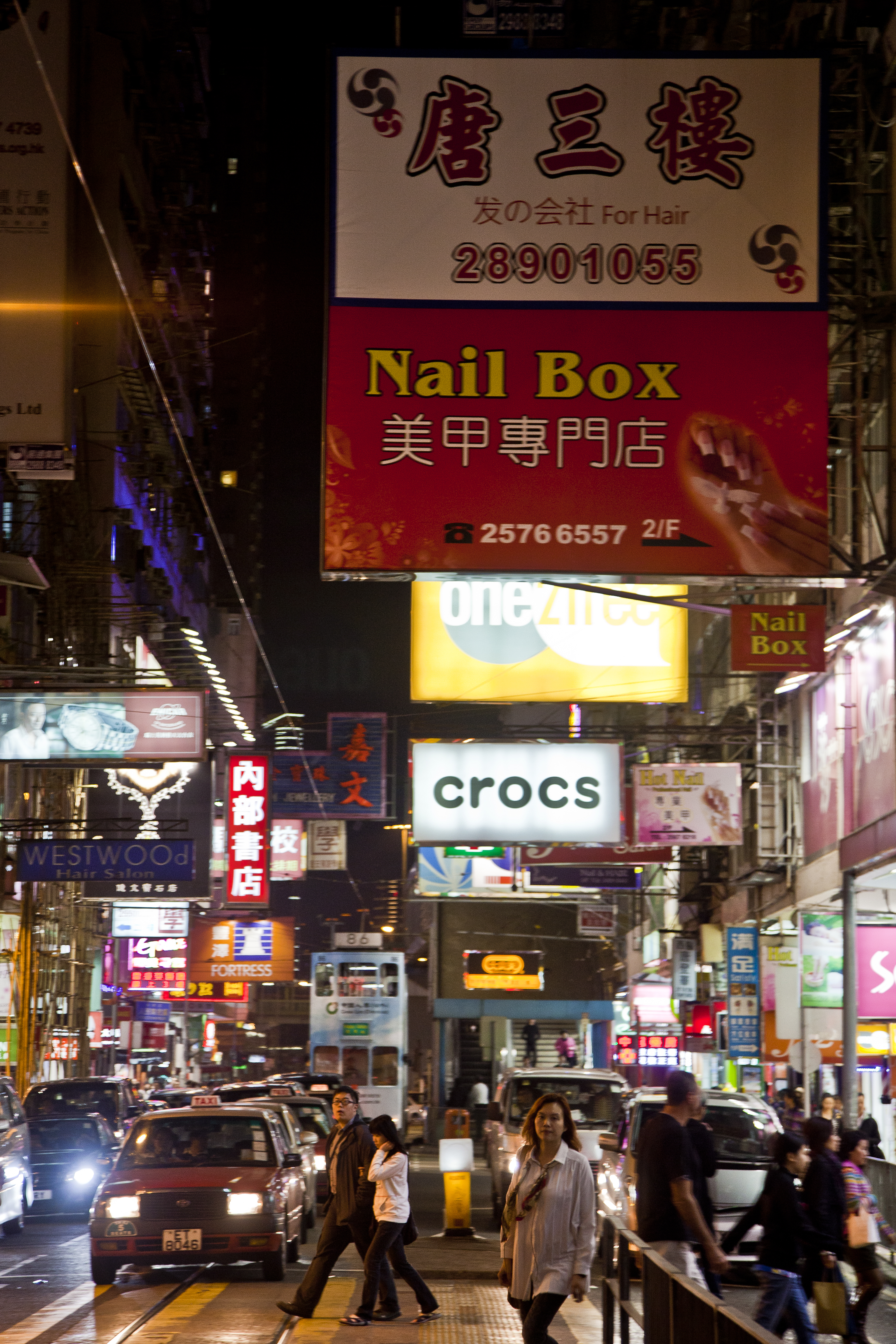
However, at night the streets of Kowloon are brilliantly lit by colourful neon lights – especially areas like Nathan Road and Mong Kok – and look absolutely safe (the crime rate in Hong Kong is really very low).

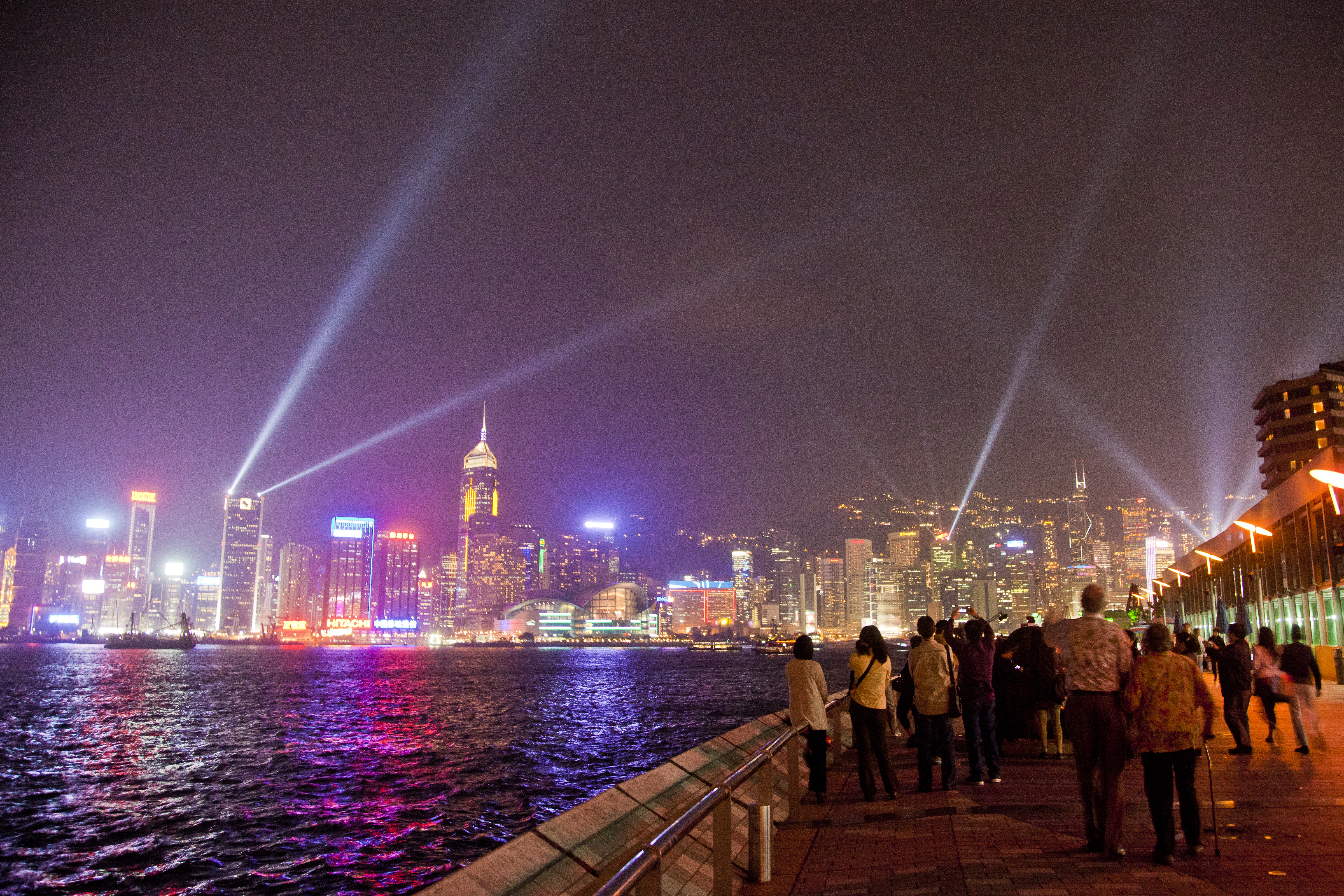
After the night tour around Kowloon we came back to the Tsim Sha Tsui Promenade, where a laser show is demonstrated every night at 8pm. Honestly, we expected something more from it, and when the green laser beams started appearing in the sky, we kept waiting for the real show to begin. But that was it, as it turned out – not too impressive (later note: the light show on Maiden Tower walls in Baku during Eurovision Song Contest 2012 week was way more spectacular). But I took some photos of the harbour.

On the way back we easily found the right tube station (or MTR station, as it is called here), then the right tram stop, and after the 12-hour “sortie”, safely returned to our Emperor (Happy Valley) hotel.

A few general observations: the local language, that is, Cantonese, is quite different from Mandarin, or Standard Chinese, which is the official language in China and Taiwan. As for Hong Kong, it has two official languages: English and Chinese (both Mandarin and Cantonese, which makes, in fact, three). For example, tube announcements are made in all three, and pretty soon we got the hang of aurally distinguishing Cantonese from Mandarin.

The writing is also different. Here they use older, traditional characters, which look more complicated, with lots of strokes and dots. In Mainland China, though, as well as in Singapore and Malaysia, simplified characters are used. They were introduced in the middle of 20th century, to increase the literacy of the population.

Watching the locals, you sometimes feel like you see the English in Chinese guise. They queue sedately (something which the Chinese don’t tend to do generally), obey traffic rules, stand on the right side of escalators and walk on the left. All the service staff in all public places speak English, schoolchildren solve math problems for homework in English (we saw this in Starbucks; they were speaking Chinese among themselves, though).

In general, having arrived in Hong Kong, we clearly felt the difference between the communist and capitalist China. Not that in Beijing they flaunt their communist slogans, prohibitions and restrictions – it all seems veiled. But you still have the feeling that the tiger is holding out its paw, even though with hidden claws, over everything around: controlled Internet, controlled television, guides necessarily referring to happy life with universal equality in the People’s China, Mao’s portraits, five-star symbols, and even endless barrages on the streets constantly remind of it. In Hong Kong you see democracy in full bloom. No wonder that in 1997, when Margaret Thatcher returned Hong Kong to China after a 99-year lease  in accordance with the agreement, tens of thousands of Hong Kongers hastily emigrated to the West, terrified by the “charms” of the communist “paradise”. However, Hong Kong practically doesn’t feel its implications so far, because, as well as Macau, it has the status of a Special Administrative Region and will retain its internal system for 50 years. What Hong Kongers will do after the 50-year period expires, is a big question.

Posted in Asia, Beijing, China

Trip to China – Beijing – Day 5

РУССКОЯЗЫЧНАЯ ВЕРСИЯ ПО ЭТОЙ ССЫЛКЕ. CLICK HERE FOR RUSSIAN VERSION.

24 March 2012, Saturday

Today we visited the Beijing Zoo.  As we had scheduled the Kung Fu show for the evening, we decided not to spend more than 3-4 hours at the zoo. Therefore, we acted on the same principle as once at the Louvre, where, first thing, we had checked out the Mona Lisa and then viewed whatever we had time for. In this case, first of all we headed for the giant pandas. It should be mentioned that all the “Mona Lisas” of the local “Louvre” were sleeping like logs during our visit!

Signs of at least some activity were only shown by the very first panda we saw. It was calmly eating bamboo leaves, but then again, having completed its meal, it lay down to sleep. But anyway, those big cute animals looked very sweet!

The same thing was observed of the small (red) pandas: only one of them was eating something, while the others were sound asleep, sprawled in the branches.

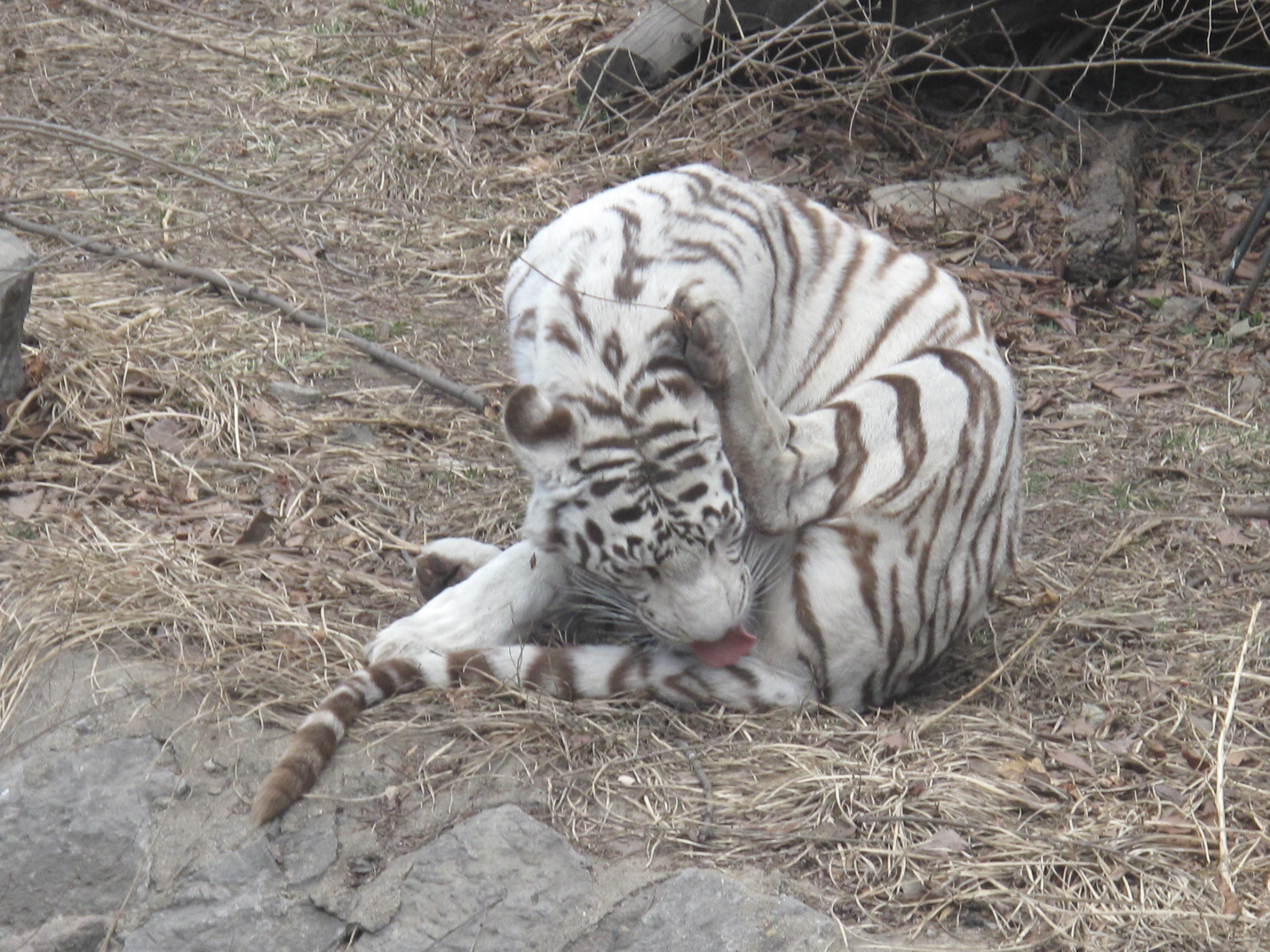
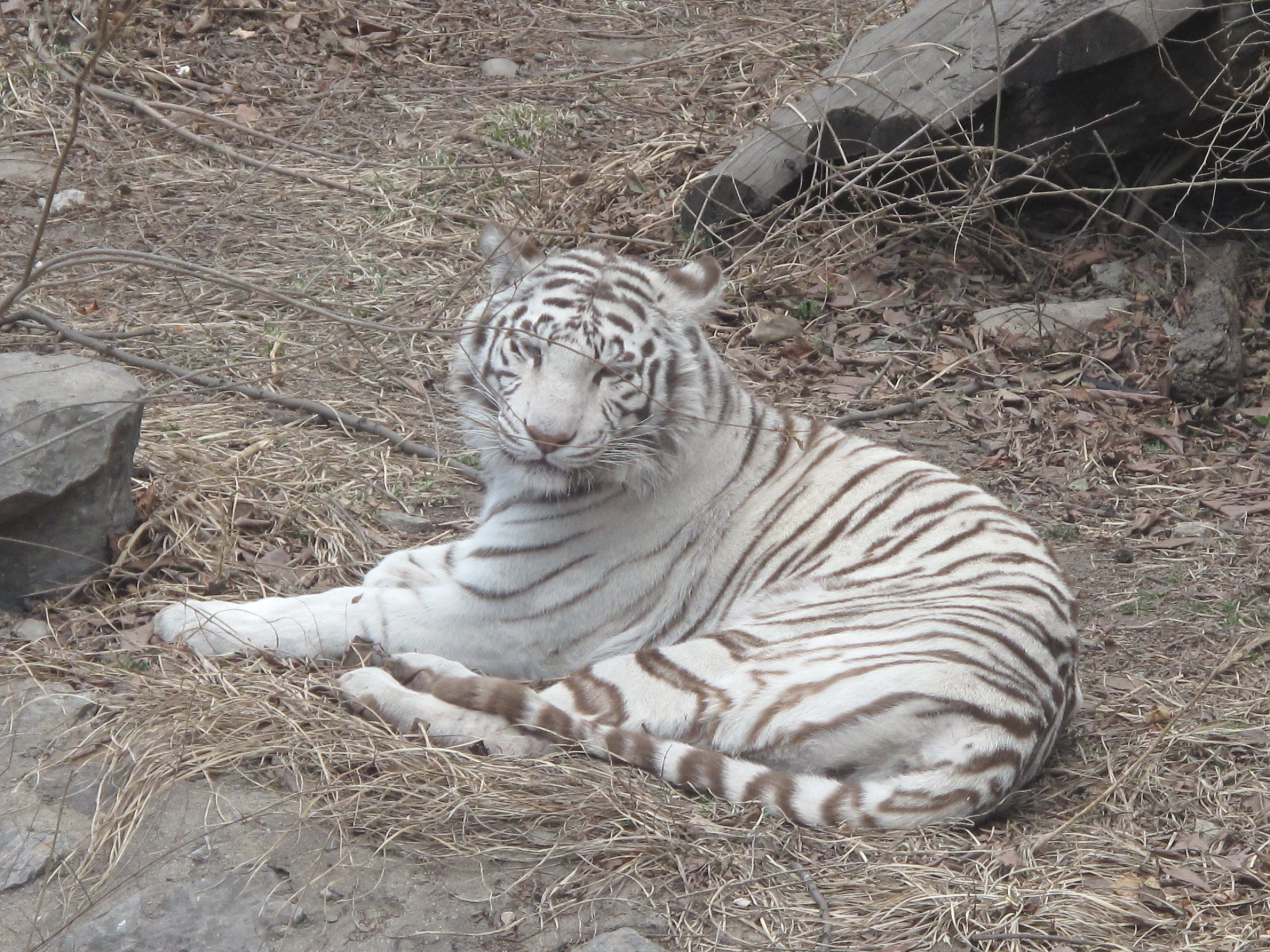
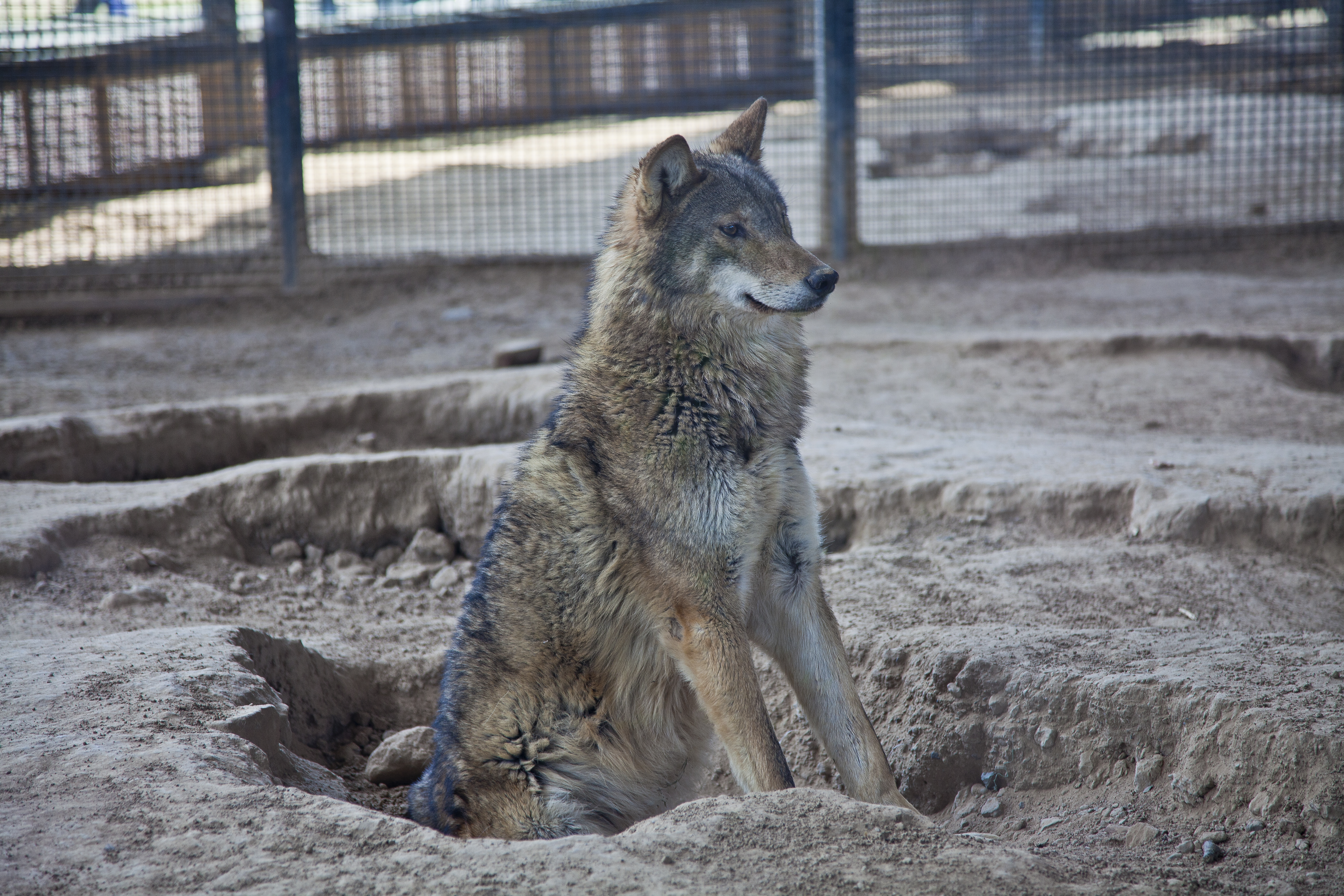
Actually, the entire zoo seemed like a big Land of Nod. The wolves were asleep, the bears were asleep, the jaguar was asleep… However, the lion and the tiger didn’t let us down. Apparently, the usual desire of all cats to show off played its role. While other animals tried to hide from spectators in the most inaccessible corners, the lion and the tiger, on the contrary, specially lay down on the most prominent places and struck majestic poses. We managed to take a photo of the lion while it was stretching!

Of course, the zoo was very busy; after all, it was a Saturday. We finally saw a lot of Chinese children (there are not too many of them on the streets). They were all chubby and rosy-cheeked, very cute!  It was a big surprise to see a lot of girls. Clearly, the desire to give birth only to boys, resulting from restriction on the number of children, has significantly decreased, at least in the capital. Perhaps, this is the consequence of the prohibition to determine the sex of the child before birth. At times we saw rare couples with two children (probably, well-off people), but never with three.

By the way, – that’s already another story – we also never saw any foreign guides. In Europe, a French-speaking group of tourists, for instance, would have a native francophone guide, the same about the speakers of other languages. In China, though, it seems like for any language requirement there is a corresponding Chinese person available. Even the text for the audio guide in Russian, mentioned earlier, was clearly recorded by a Chinese woman. Another point is that, all the TV channels, whether they are in Russian or French, are in fact Chinese, show news about China and the TV presenters too are Chinese! For example, a thin Chinese guy with glasses, giving the spiel in fluent Arabic from the screen, made an indelible impression.

The zoo was, indeed, huge, but we decided to leave out other animals, such as giraffes, anteaters, elephants, as we had seen them many times before, and they were not among our most favourites. The same can be said about the aquarium – only a few months before we had seen a very beautiful one in Bergen, Norway.

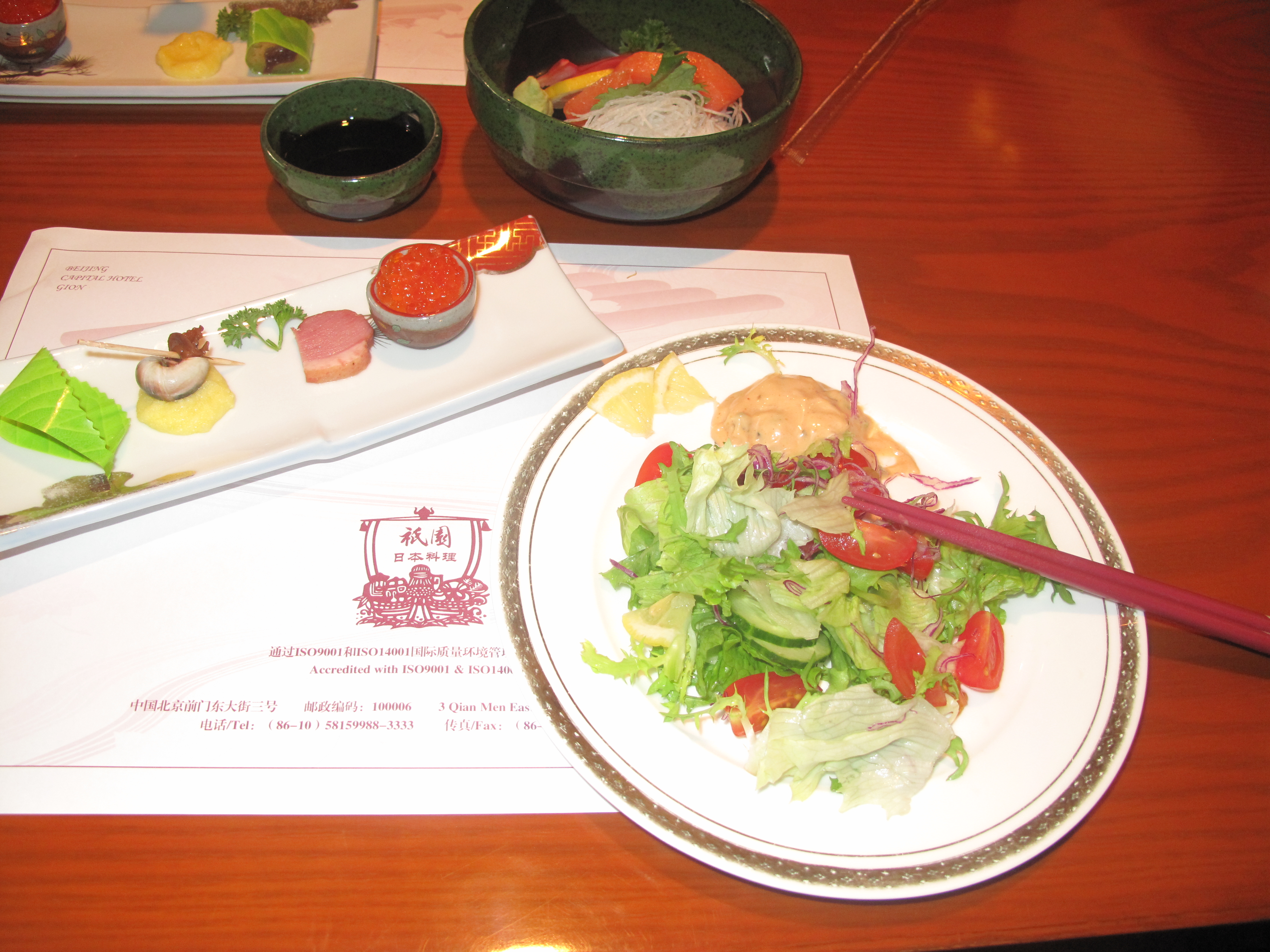
We got to eat something quite late, because most restaurants here serve food strictly at certain hours and are closed all the other time. So, if you feel hungry, say, between two and five o’clock in the afternoon, you can hardly find anywhere to eat. As a result, we combined lunch and dinner. And that was a good idea! We tried out the Japanese restaurant in our hotel. Not being quite sure what was what in the menu, we selected Teppanyaki course which was a set meal. We even thought that it was surprisingly expensive (300 RMB), but as it was our penultimate day in Beijing, we decided to still go for it.

And – oh my God! – it turned out to be an eight-course meal!!! The waitress just kept bringing and bringing plates, bowls and salad-dishes. From the menu description it wasn’t really clear that we would get that much: appetisers (salmon roe, a snail and some sort of jelly), a salad, miso soup, a fish dish, a beef dish, a rice bowl, grilled vegetables and fruit! Even when the waitress had already served all our food, we winced every time she appeared in sight with another tray, and sighed with relief when she passed by. And it was impossible not to eat everything – the food was incredibly delicious, perhaps the best of all we had eaten here. Our noble diet plans must have come to nothing after such a nosh-up. And the prices seemed not so high after all – where in Baku could one have such an abundance of delicious food for just 38 AZN (appox. 48 USD)?

In the evening, as already mentioned, we familiarised ourselves with Chinese martial arts, i.e. watched “The Legend of Kung Fu” at the Red Theatre. We had very good seats in the ninth row, numbers one and two – not at the edge, as one would expect, but right in the middle. Odd numbers were counted to the left of number one, and even numbers to the right of number two. Most of the spectators were foreigners, and the performance was in English with Chinese subtitles on the screen (while the Buddhist mantra “Oṃ maṇi padme hūṃ” didn’t require translation). Although one would think that a performance like this should be particularly interesting for men, and despite the imposing price of tickets for our row, the man sitting next to me slept through the whole performance.

The plot was rather simple: it was the story of a boy who entered the monastery to study martial arts, about his life, temptations and achieving the highest level of enlightenment. But the performance was very impressive and colourful, combining elements of ballet, pantomime, circus and opera. The actors did an amazing job, sometimes it even was impossible to distinguish imitation from real Kung Fu skills: the main character lay on swords, broke metal bars over his head, smashed bricks over his chest. So what was it – a sham, an illusion, or did we see a true master of Kung Fu in front of us?

The Chinese wouldn’t have been Chinese, if they hadn’t demonstrated their exceptional get-up-and-go. Apart from selling souvenirs with logos of the performance at the foyer, they also organised an opportunity to take photos with the artists for 20 RMB. We were among those who went for this opportunity – while had it been free of charge, we probably wouldn’t even have thought of doing so!

Posted in Asia, Beijing, China

Trip to China – Beijing – Day 4

РУССКОЯЗЫЧНАЯ ВЕРСИЯ ПО ЭТОЙ ССЫЛКЕ. CLICK HERE FOR RUSSIAN VERSION.

23 March 2012, Friday

Today was the Great Wall day, which had been planned from our very first day in Beijing. We woke up bright and early, and at 7.30 am were all ready, as instructed beforehand. But unfortunately, the other tour participants were not as punctual, so we didn’t hit the road before 8 am.

Our hotel staff had advised us to choose the tour to the Mutianyu section of the Wall, together with a part of the Sacred Way. Later we found out that the programme also included visits to jade and silk factories. Our guide was a small nimble lady of indeterminate age, named Hui Liang (Melanie for foreigners), who definitely earned her bread honestly and conscientiously – during the day we learned a lot more information about China than in all the previous time.

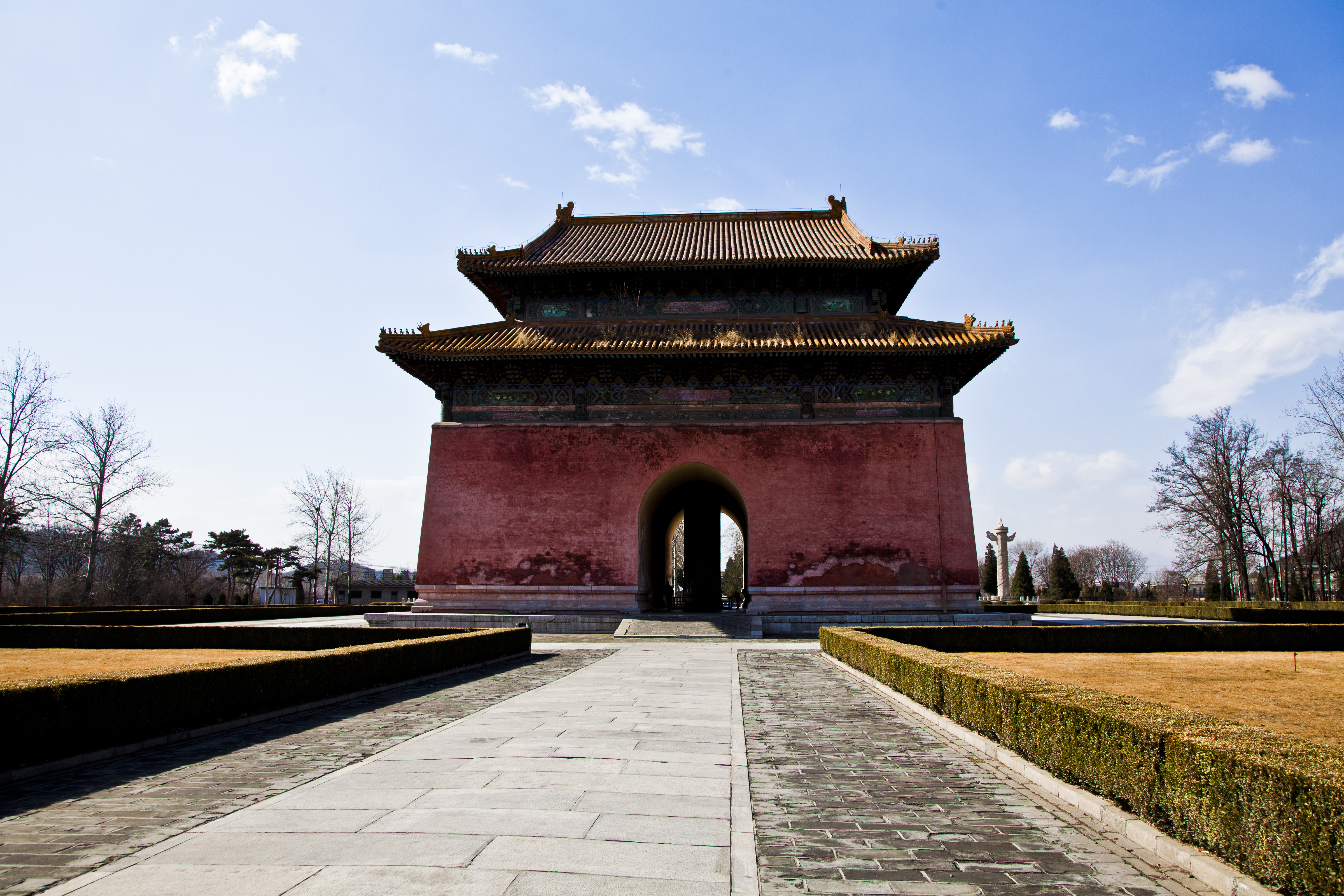
For example, while our coach was heading to the Sacred Way, we learned that the tombs of the Ming dynasty, to which the Way actually led, were located so far outside the city in accordance with feng shui requirements. As the Dragon used to be the symbol of the Emperor, all buildings associated with the Chinese ruler were constructed so that they lied along the so-called “dragon line”, where the Forbidden City symbolised the dragon’s head and the Ming Tombs were his tail. We also learned a lot of details about the mutual harmony of yin and yang, e.g. that in addition to well-known pairs like the Sun and the Moon; the earth and the sky; male and female, even fruits are divided into those related to yin (watermelon, pear) and those related to yang (lychee, orange), and it is not recommended to eat too much fruit of either category, it’s better to strike a balance.

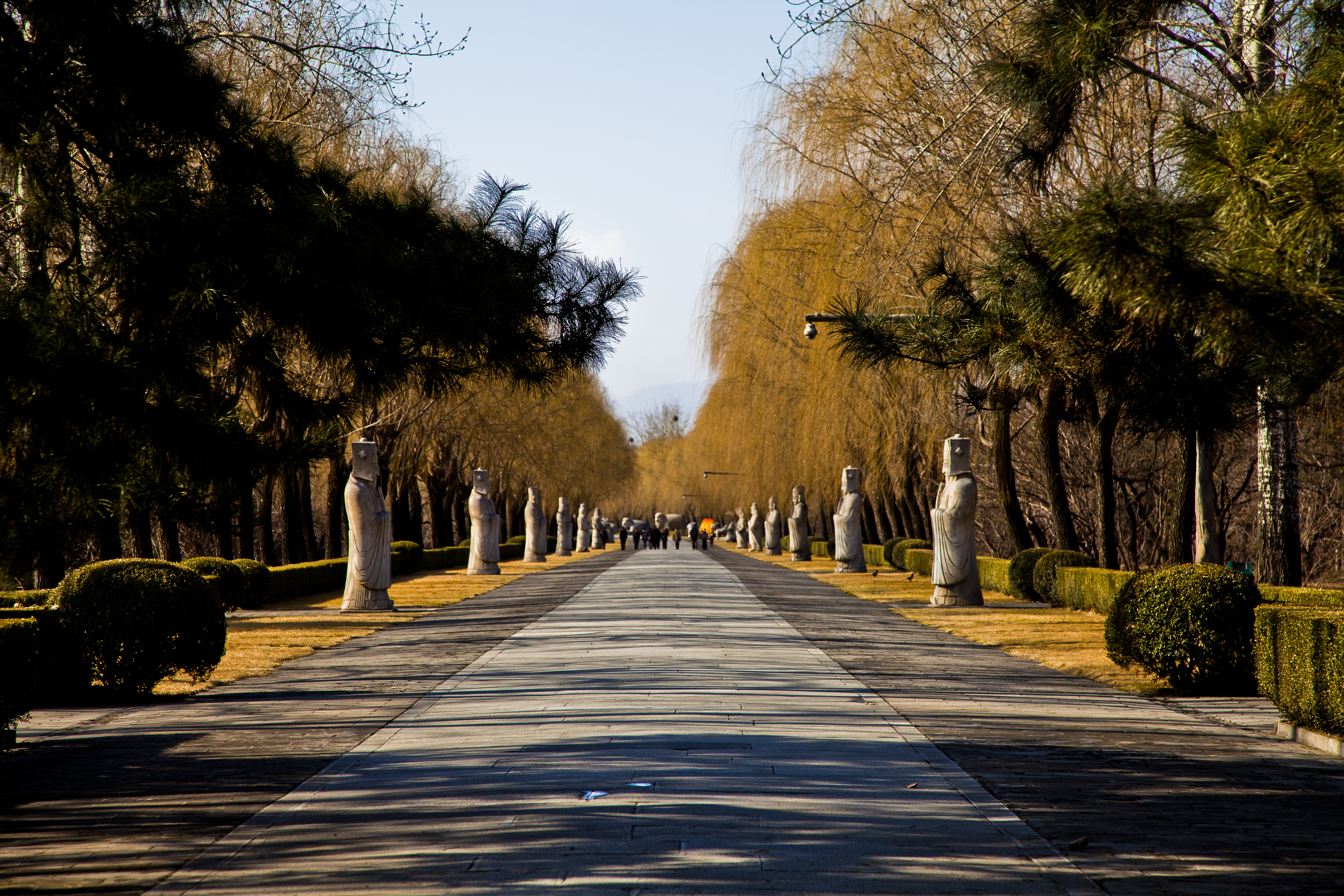
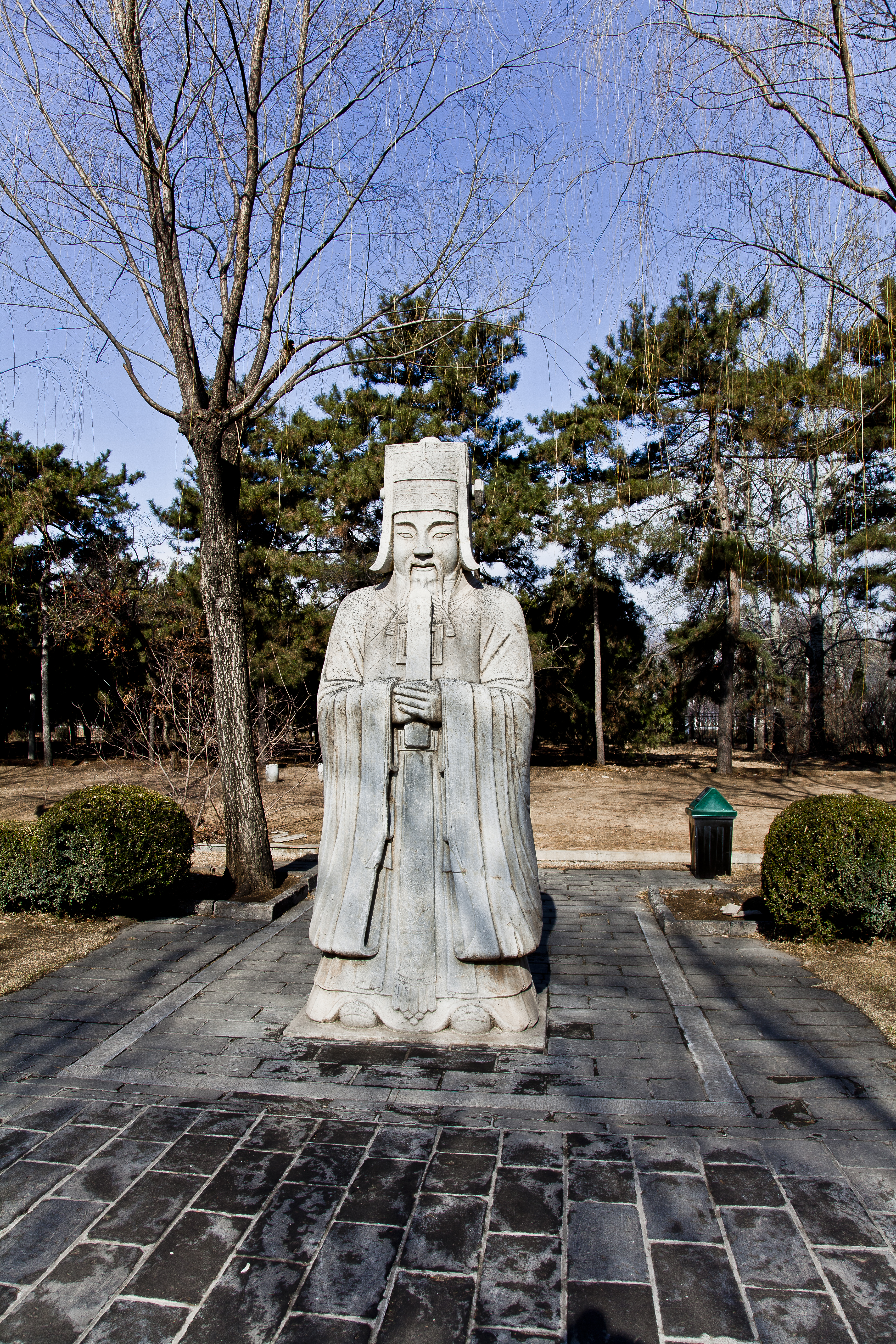
The part of the Sacred Way, which we saw, was, of course, interesting, but not really stunning. It represented a cobbled alley, lined with tall trees, with stone statues on both sides. Dourly towering officials and generals were followed by animals: elephants, camels, lions and mythical sons of the Dragon. In accordance with yin and yang principles each pair of standing animals had a corresponding pair of the same animals, seated.

We walked two and a half kilometres along the alley, right up to our coach, which was already waiting for us on the other side. This time, our talkative guide Melanie regaled us with stories about the famous Chinese jade. In fact, there are two kinds of jade. One of them, the nephrite jade, also known as “soft jade” is used primarily for carving handicrafts. The other variety – “hard jade” or jadeite – is rarer, and therefore, more expensive, so it is used for jewellery. Jade is also referred to as “living stone”, as it changes colour over time, depending on the temperature of the human body. Raw stones, potentially containing jade, can be the subject of gambling (called “gambling stones”), for even a trained eye can hardly detect whether an ordinary-looking grey stone conceals the precious mineral inside.

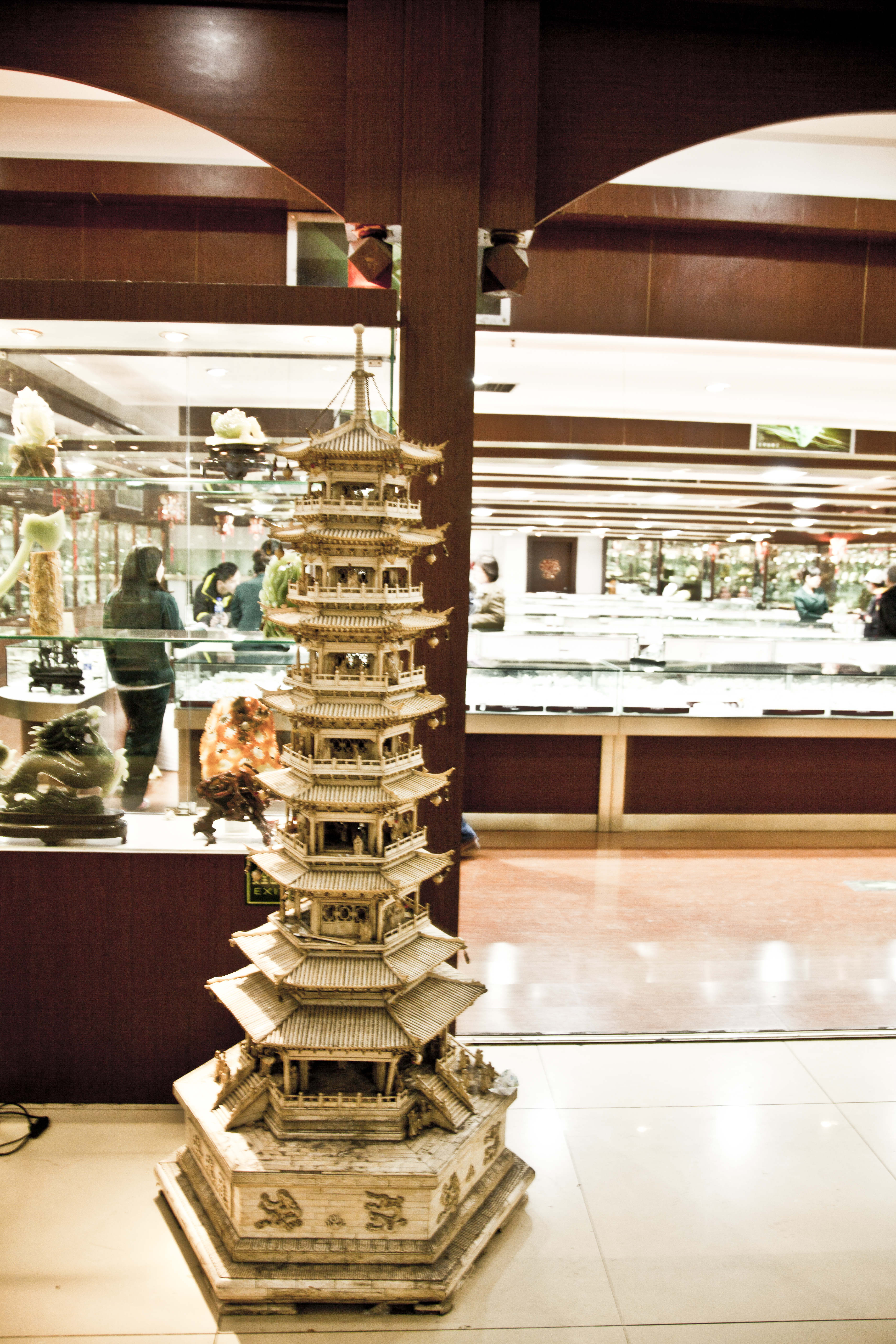
Right at the Long Di jade factory entrance, stood a stunning huge solid piece of jade, representing a mountain with finest carved openwork in the form of trees, flowers and pagodas. The composition had different colours: green, wine-red, yellow – all of which formed part of the jade block’s natural play of colours, so skilfully used by the carvers. It’s worth noting that the handicrafts at the factory were much more beautiful than those we had seen the day before in the imperial treasury, and the articles were sold for far less than in shops and, of course, hotels.

Among various figurines, we saw a lot of “cabbage”. The name of this vegetable in Chinese (báicài 白菜) sounds similar to “cái” (財) which means “wealth” or “money”, so figurines in the form of cabbage are believed to bring prosperity to the house, if properly located (the leaves should point to doors or windows, and the roots should point inside the house, otherwise financial fortune will smile upon your neighbours instead). By the way, another charm that brings wealth to its owner is one of the Dragon’s sons named Pi Xiu, the figurine of which we didn’t hesitate to buy. We were told that in China every self-respecting businessman possesses one, and in Las Vegas those with a Pi Xiu in their pocket aren’t allowed in casinos.

At the factory we were taught to distinguish real jade from fake jade:  if you hold it up to the light, you would see something like swirling clouds in a real piece of jade, while the fake one would either look totally homogenous or have air bubbles. To tell the quality of the jade it’s enough to strike it with a piece of agate and listen to the sound it makes: the higher the pitch, the higher the quality of the mineral.

We had lunch at a huge restaurant right at the factory. Apart from our group, there were at least a thousand people dining simultaneously, without exaggeration. We hadn’t had the chance to talk to any of our fellow travellers in the morning, but during lunch we met those of them we were sharing the table with. It was a couple from Australia and a brother and sister from Turkey. Another couple, sitting at the other table, was from Brazil, and the rest (a company of three) remained unfamiliar to us.

After the meal we drove and drove to the mountains, towards Mutianyu. The road would probably look much more beautiful in summer, with leaves on the trees. Upon arriving, Melanie told us that we would have to go up to the Wall by cable car. So we did, and, I have to say, riding in an open-top shaky cabin at a height of twenty metres was quite scary!

It should be mentioned that the information desk staff at our hotel hadn’t deceived us when recommending this tour: the Mutianyu section of the Wall was not too crowded (unlike the Badaling section, which is the closest one to Beijing), and the view was just spectacular. Walking the Wall basically meant constantly going up and down the stairs, most of which were not very steep, although there were some difficult sections. Here and there, all along the way, there were enterprising local merchants, attacking tourists even more intrusively than on the ground, sometimes just to chat and with the obligatory question: “Where are you from?” The same question was sometimes asked by other tourists too, though, for example, a Burmese guy – and when he heard the word “Azerbaijan”, he cheerfully told us that he had lived in Baku for four years and worked for BP’s ACG project. It felt quite funny to meet a colleague on the Great Wall of China!

If it hadn’t been for the strong wind, which spoiled the journey a little bit, we would have walked even more. We went back by cable car as well (although there was some kind of a wheel sled too), and this time we felt calmer and jumped off the seats with greater agility.

After visiting the Great Wall, we were already full of impressions. But that was not the end yet, and we drove to the Dong Wu silk factory through the Olympic Village. On our way, Melanie provided us with another batch of background information. Well, of course, we did have some general knowledge about silkworm larvae, cocoons and silk production. What we didn’t know was that in China (and nowhere else) there exist unique and very rare double cocoons, containing two worms. Such cocoons are unsuitable for yarn reeling and, consequently, for silk fabric production (as the two threads are bound together), but they can be stretched. These cocoons are used as fillers for pillows and blankets, which are extremely hygienic, warm in winter and cool in summer. First, the cocoons are put in boiling water, cut open, and the worms, which have completed their “work”, are thrown away (later they might end up at the Donghuamen snack market, fried and skewered!). Each cocoon is then stretched first over a small frame, then over a larger one, and, finally, four workers stretch it into a large square of the desired size. One cocoon can be stretched into a layer for a queen size blanket! A blanket usually contains about fifty layers.

On the whole, it was an excellent day – very interesting, very informative, and not too tiring!

Posted in Asia, Beijing, China

Trip to China – Beijing – Day 3

РУССКОЯЗЫЧНАЯ ВЕРСИЯ ПО ЭТОЙ ССЫЛКЕ. CLICK HERE FOR RUSSIAN VERSION.

22 March 2012, Thursday

To begin with, the Forbidden City, listed first among the must-see sights of Beijing, did not impress us that much. Spoiled with places like the Louvre and Schönbrunn, we expected that we would be allowed in the imperial appartments to marvel at their decorations, furniture, utensils and clothing of the emperors and their family members. Instead, we found ourselves on a huge territory without a single tree (or a bush, or even a grass blade), paved with stones, dotted with pavilions of the same type – very similar to those we had already seen the day before, in the Temple of Heaven complex. Of course, there are all sorts of artefacts, more or less divided among several galleries (art, ceramic, bronze), but Chinese museum art isn’t generally a surprise for us, as we have repeatedly seen it in various museums – for example, not long ago there was a wonderful exhibition of imperial clothing in Victoria and Albert museum in London.

Crowds of people, mostly Chinese, were traversing Gugong – that is how the imperial palaces complex is called.

It’s worth mentioning that amateur tour guides, attracted by our foreign looks, eagerly attacked us on the distant approaches to the complex, offering individual tours. But we, remembering the previous day’s unfortunate experience with the private sector, firmly refused.

By the way, just outside the complex we observed a funny scene. A loud bellow from a policeman, getting out of a car, made two stout women in galoshes and with voluminous bales full of stuff for sale (obviously illegal sale!) flee headlong, while their younger and suppler companions were walking on all fours, hiding from the guardian of order behind the balustrade.

So, back to the Gugong. The crowds were moving strictly from south to north, peering into the open windows of the main pavilions, the interior space of which still remains forbidden to people. It is, however, no wonder – these millions of visitors would otherwise just take down the quite small halls. As for the western and eastern pavilions, their doors and windows were firmly locked.

We deviated from the north-south axis just once, to visit the treasury. Alas, here too we were slightly disappointed, because the treasury was quite modest: a few trinkets in coral and jade did not hit the eye or imagination.

Interestingly enough, although moving among an avalanche of people is not that easy and even gets on your nerves, at the slightest deviation to the side, to emptier and more desolated places, you immediately start feeling uncomfortable.

Speaking about unattended places, there are quite a lot of them both on the left and on the right, because the collectivistic Chinese are not likely to disperse across the territory. Generally, this collectivism is observed everywhere. This is evidenced by previously mentioned collective dances and exercise in parks. The necessity to act as a group had also been symbolically showed in the Lao She teahouse the day before: at least three performances demonstrated a tremendous coherence of actions.

Another peculiarity we noticed was related to, excuse me, public toilets. Most of the stalls in those consist of squat toilet; however, there are always a couple of stalls with good old seat toilet. By the way, there are public toilets pretty much at every turn; they are free and fairly clean. Yes, the prose of life indeed, but still a very important issue for a travelling person.

Once again, back to the Gugong. Of course, it is possible that we could have missed something interesting, but nevertheless, upon reaching the northern gate we firmly decided not to go deep somewhere else, but to return the now habitual automatic audio guide and go back to the hotel. The latter didn’t work quite smoothly: the sidewalk was separated from the taxi stand literally by triple fencing – so near and yet so far! As we tried to squeeze through the passages to the roadway, we were attacked by trishaws and moto-rickshaws. Of course, we gloatingly replied: “No, thanks!”, but it didn’t make our passing any easier. The taxi drivers here also seemed not as quiet and law-abiding as those carrying us in the morning from the hotel. They were haggling, trying to overstate the price, and taximeters were apparently out of question. Finally we reached an agreement with one of them, not as greedy as the others, and drove off. The driver surprised us first with his English (something which you hardly ever come across here), and then, with the fact that at some point, stopping at a red light, he pulled out a thermos from the glove box, poured a cup of steaming jasmine tea and drunk it with pleasure.

Despite the fact that we were driving through much more interesting and colourful streets than the day before, our general mood was not so good. We didn’t even want to go out at all after lunch. But then we almost forced ourselves to go visit two places: the Beihai Park and the Donghuamen Snack Street. And this time it turned out an epic win, we enjoyed it a lot!

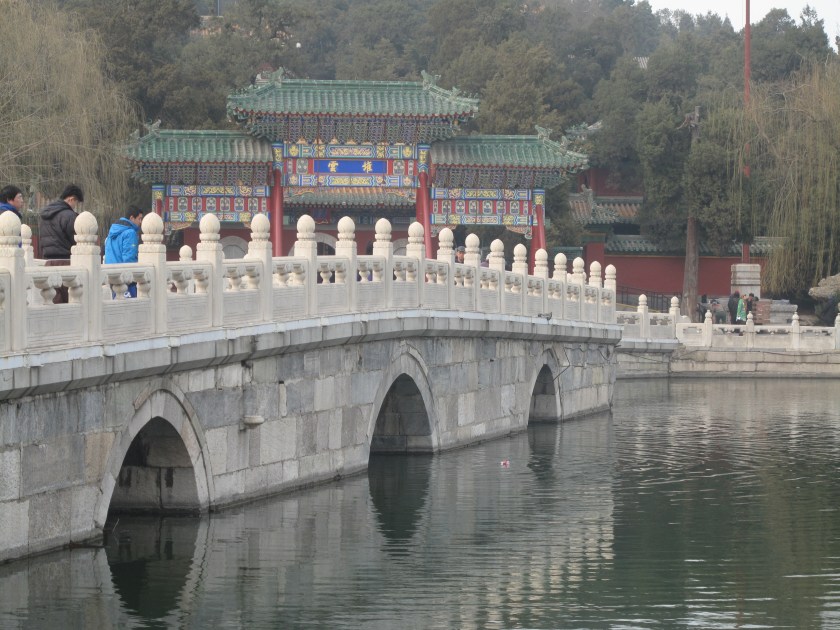
Clearly, the Beihai Park must be absolutely charming in summer, when, as we saw in photos, willows dip their green branches into the waters of the lake, reflecting the bright blue sky. But even on such a dull March day the evergreen part of the park looked beautiful and was somehow compensating the bareness of the willows. In the centre of the park there was a hill, crowned with the White Pagoda. Luckily, we didn’t make detours to get to the Pagoda, but walked through all the pavilions, in the very first of which we saw the magnificent statue of Buddha Shakyamuni. The trees in courtyards in front of each pavilion were covered with red diamond-shaped wish cards.

On the right there was a tower with a bell, which, as it is believed, should be struck three times for security and prosperity for the whole year. Needless to say, we easily parted with three yuans each, which was the fee for striking the bell. We did then have the dangerous desire to check whether it worked by skipping down the steep and narrow wooden stairs, but managed to suppress it.

As you would expect, the ascent to the Pagoda was very difficult. And even then, how can the way to Perfection be easy? We overcame it without much trouble, though, which cannot be said about one or two women, who couldn’t make it up the stairs. What we found a bit annoying was a Chinese family, pointing their fingers at us and vigorously discussing – us, I believe. Only later, after reading a book on Chinese concepts of culture and ethics, we realised that such behaviour is not uncommon and absolutely normal here.

Inspired by the “pilgrimage” to the Pagoda, the wonderful air and the beauty of bridges and pavilions, we decided that we definitely should not miss the next item of our programme.

Thus, from the sublime grandeur of the Pagoda, we moved on to the utterly earthy Donghuamen Snack Market. However, we weren’t intending to try anything there – both following warnings not to buy food from street vendors, and being aware of the very exotic selection: skewered grasshoppers, centipedes, beetles, seahorses, silkworms, worms, snakes, spiders, scorpions, and other creatures, unknown to us.

In their neighbourhood, even ordinary candied fruits, noodles with vegetables and lamb kebabs looked unappetising. Smells along the stalls varied from very pleasant ones (sweet or spicy) to absolutely disgusting malodours. The nasty smell was mainly coming from the raw offal, also skewered, and it should be noted in fairness, that all the arthropods mentioned above didn’t smell at all.

Having checked the map, we realised, that the Wangfujing Street, adjoining the market, was not far from our street – Qianmen – and we decided to walk to the hotel. The distance was, perhaps, quite short, but as we were extremely tired by that time, walking it didn’t seem very easy.

Posted in Asia, Beijing, China

Trip to China – Beijing – Day 2

РУССКОЯЗЫЧНАЯ ВЕРСИЯ ПО ЭТОЙ ССЫЛКЕ. CLICK HERE FOR RUSSIAN VERSION.

21 March 2012, Wednesday

In the morning we had to struggle to open our eyes, our bodies were swollen and bloated, and, barely able to move, we went down to have breakfast. And this was a somewhat new experience: all the Western hotels where we had happened to stay previously offered pretty much similar breakfasts, with slight deviations. Here in Beijing, though, we found almost none of the usual cheeses and sausages (the only sausage available was made of mushrooms!). Instead, there were a number of hot soups and congees, and other hot Chinese dishes – chicken, noodles with vegetables, rice, etc. The breakfast was complemented by tropical fruits, mainly familiar to us (grapefruit, pineapple, and kiwi) except for the rather tasteless dragon fruit.

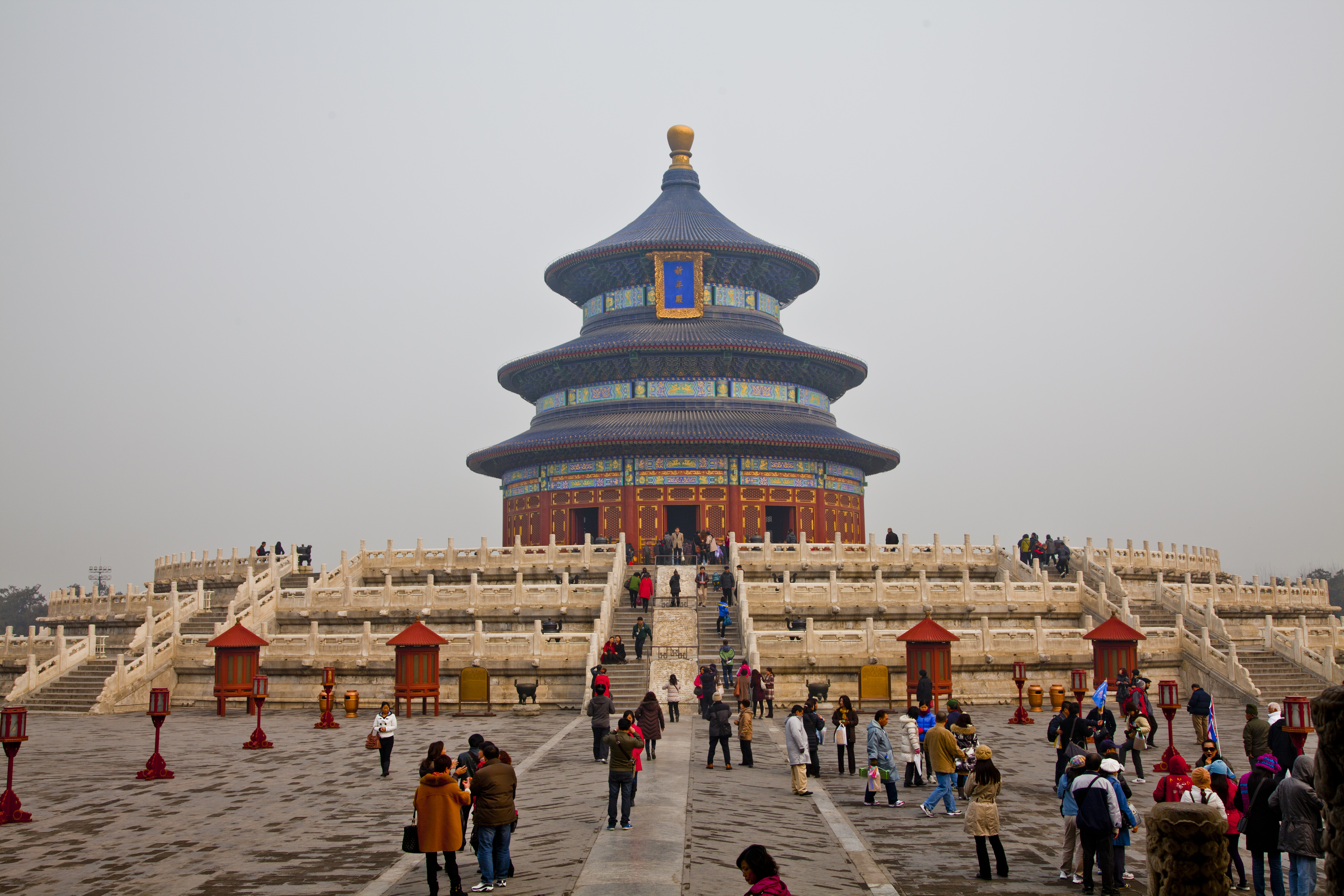
We decided to start our acquaintance with Beijing from the Temple of Heaven, and we think, we did the right thing. We paid 10 yuans (just over 1.5 USD or 1 AZN) for a ten-minute taxi ride – so cheap! – and there we were in the vast temple complex. Here it immediately became obvious how Beijing outdid the good old Europe in terms of audio guides – the one we got was fully automatic, showing the map of the complex along with our current location, marking in red the places we had missed and talking about the part of the park where we were at the moment.

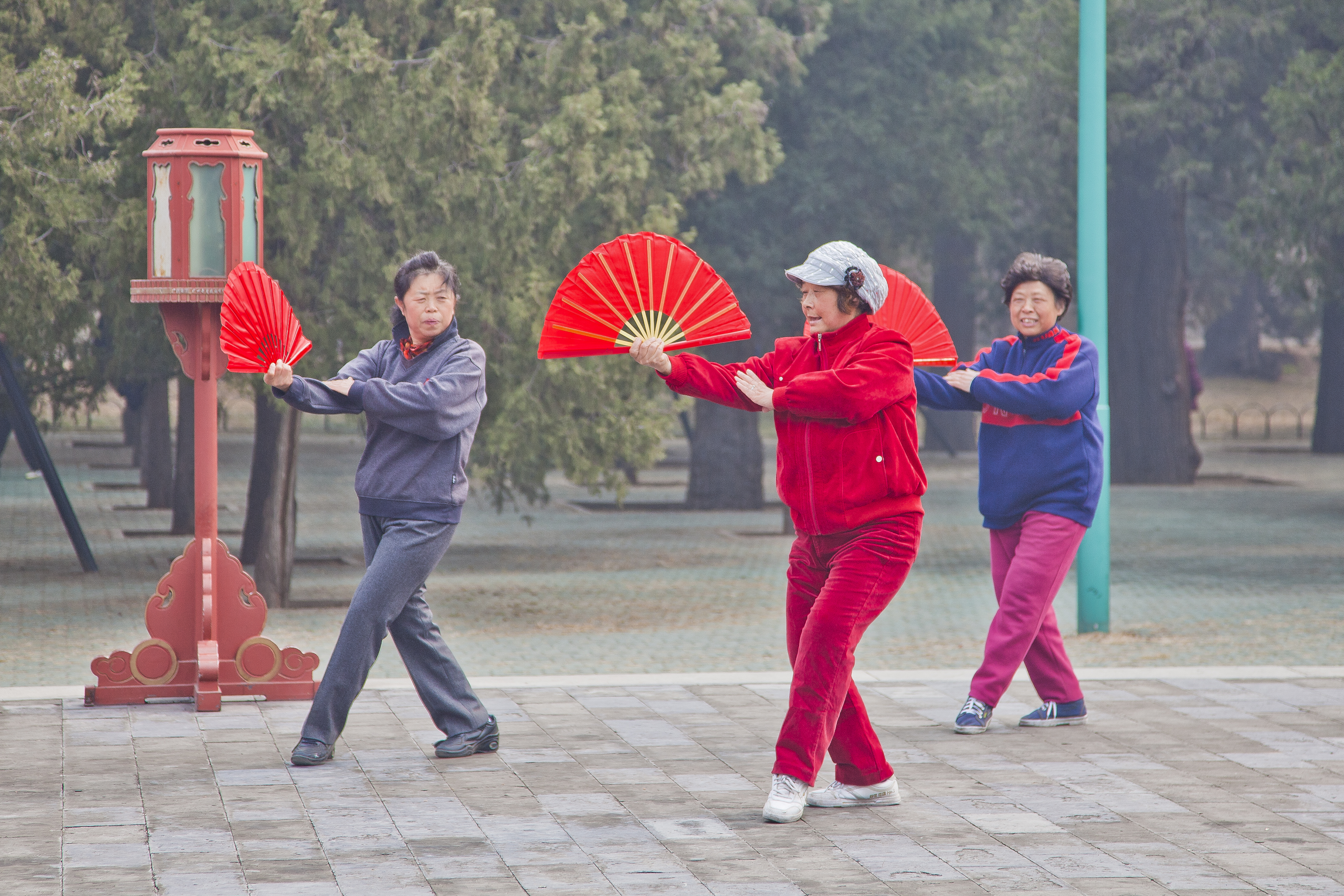
The Temple of Heaven did of course impress us a lot with its grandeur, the mastery of its architects and its typical “Chineseness”. But no less impressive seemed the Chinese themselves. Here and there, all over the huge territory of the park, there were people singing, dancing and practicing tai chi in groups, playing badminton and another game, unknown to us, which consisted of tossing a feather ball to each other. Passers-by, not participating in these mass events, were also having fun – for example, we saw an elderly Chinese gentleman with a hat and cane dancing as he walked by. Generally, old people looked very active here – another white-bearded old man took a few dance steps around a singing woman, someone else was stretching and doing exercise.

Our audio guide told us about the sacrifice ceremony, the animals driven to slaughter through the so-called “gates of hell”, about the symbolism in architecture and the repeatability of the number 9. The three-tiered altar was very impressive; they say that the voice of the emperor, as he stood in a circular area in the middle, was amplified a hundred times and sounded like it was coming from Heaven. Unfortunately, we didn’t have a chance to test this effect.

In one of the alleys we suddenly heard Azerbaijani speech – how surprising that almost the first non-Chinese that we came across here were our compatriots.

Of course it was impossible to walk the entire park, especially that some parts of it, such as the rosary, were quite irrelevant in early spring. Overjoyed at the cheapness, we were intending to take a taxi back to the hotel. But as we stood at the park entrance, quite lost, looking for a taxi stand, a moto-rickshaw appeared out of nowhere. This promised to be an exotic experience, so we thought, why not? We asked the guy how much it would cost and he showed three fingers. We tried to clarify: “Thirty?” He nodded in accordance. What we didn’t do – very stupid of us! – was ask him to show the amount in written. We asked him to take us to the Tiananmen Square, and off we went happily. Everyone in the streets were staring at us, and as for other rickshaw drivers, they were eyeing ours enviously. Encouraged by those looks, our driver suggested to drive us through the hutongs (authentic narrow alleys), but we were sensible enough to refuse. Finally the rickshaw stopped and the guy vaguely waved his hand in a certain direction, which was supposed to mean that Tiananmen was somewhere there. We handed the driver 30 yuans, and that’s when he made it clear that he was intending to receive not 30 yuans, but actually ten times more, he even pulled out some badge as confirmation. What could we do? Outraged, we reached for centesimal banknotes. What the guy said afterwards really took the biscuit – 300 yuans was meant to be the price per passenger, you see. This was far too much already, so we refused loudly and angrily, and left. The driver shouted after us: “Give me at least a hundred!”, but we remained hard as stone. It’s no joke paying almost 50 USD for a fifteen-minute ride, and, in any case he must have gone home praising the heavens for having sent him such gullible dupes. Well, at least that was a lesson for us.

We then had to walk quite a lot until we reached the Tiananmen Square, but probably it wasn’t possible to drive up closer than we did.  The area was indeed enormous but we didn’t experience such a delight as we did in the morning. The Square looks modern, with all the trappings of communism; their flag gives ground to ours in Baku in terms of size. Yet, we took photos against the portrait of the Great Helmsman, and, as it was already lunchtime, decided to go have a bite to eat somewhere.

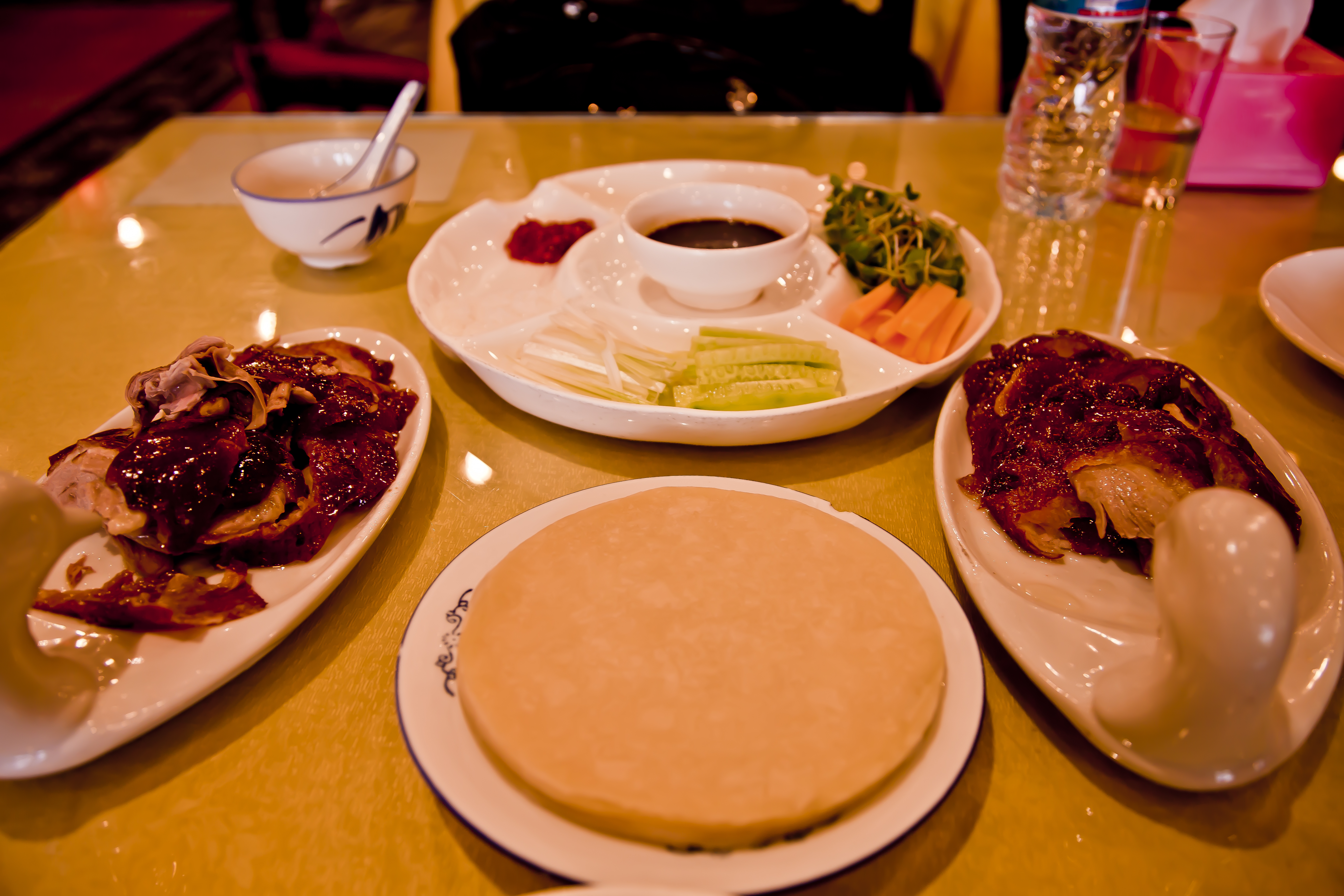
The Peking Duck in a restaurant specialising in roast duck, had very little in common with what is usually served in our restaurants: it was crispy, fatty, soft, with authentic relishes (half of which are persistently ignored by restaurants in Baku and, as far as I remember, at least in London as well).

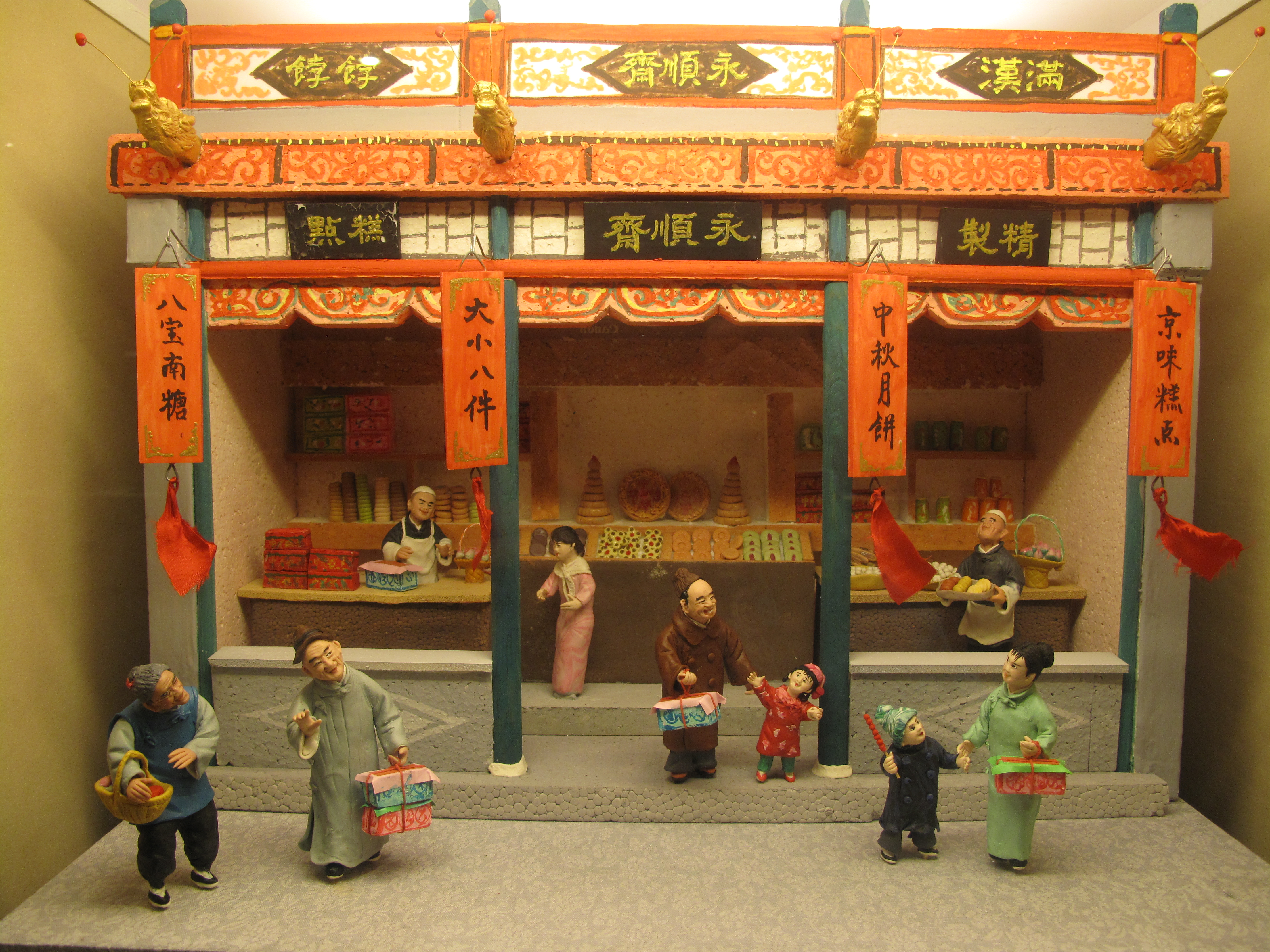
After having a rest in the hotel we headed to the Lao She Teahouse to watch the tea ceremony and other performances. And boy, was that fascinating! We arrived early to pick up our pre-booked tickets, and had time to view something like an exhibition on the first floor, where everything was about tea – tea-things, different varieties of the drink, etc, – and also models of different ancient Chinese facilities: hairdressing salon, pharmacy, confectionery and several types of teahouses.  They were all very well made, with charming figures of people.

We went up the staircase with carved gilded railings, into the main performance hall. The pictures of famous public figures from different countries, who ever attended the teahouse, all over the walls made us feel important. We had bought the tickets for the first row and were sharing a table for six with locals. Generally, most of the visitors in this packed hall were Chinese (just as pretty much everywhere else), except maybe us and a French couple at the next table.

The tickets included tea and snacks (sunflower seeds, peanuts, candied medlars on a stick, traditional sweet biscuits and some kind of a mucous rice porridge with pumpkin chunks). At this time of year they serve jasmine tea, and that’s how it looks like: the cup is filled to one-third with tea leaves, with boiling water poured over them. From time to time waiters come with kettles and refill the cup with hot water. It’s really surprising that despite being constantly diluted, not only doesn’t the tea lose its taste but it actually becomes better and better. Now that’s what I call real Chinese tea – and the dyed crap we are used to drinking can’t hold a candle to it.

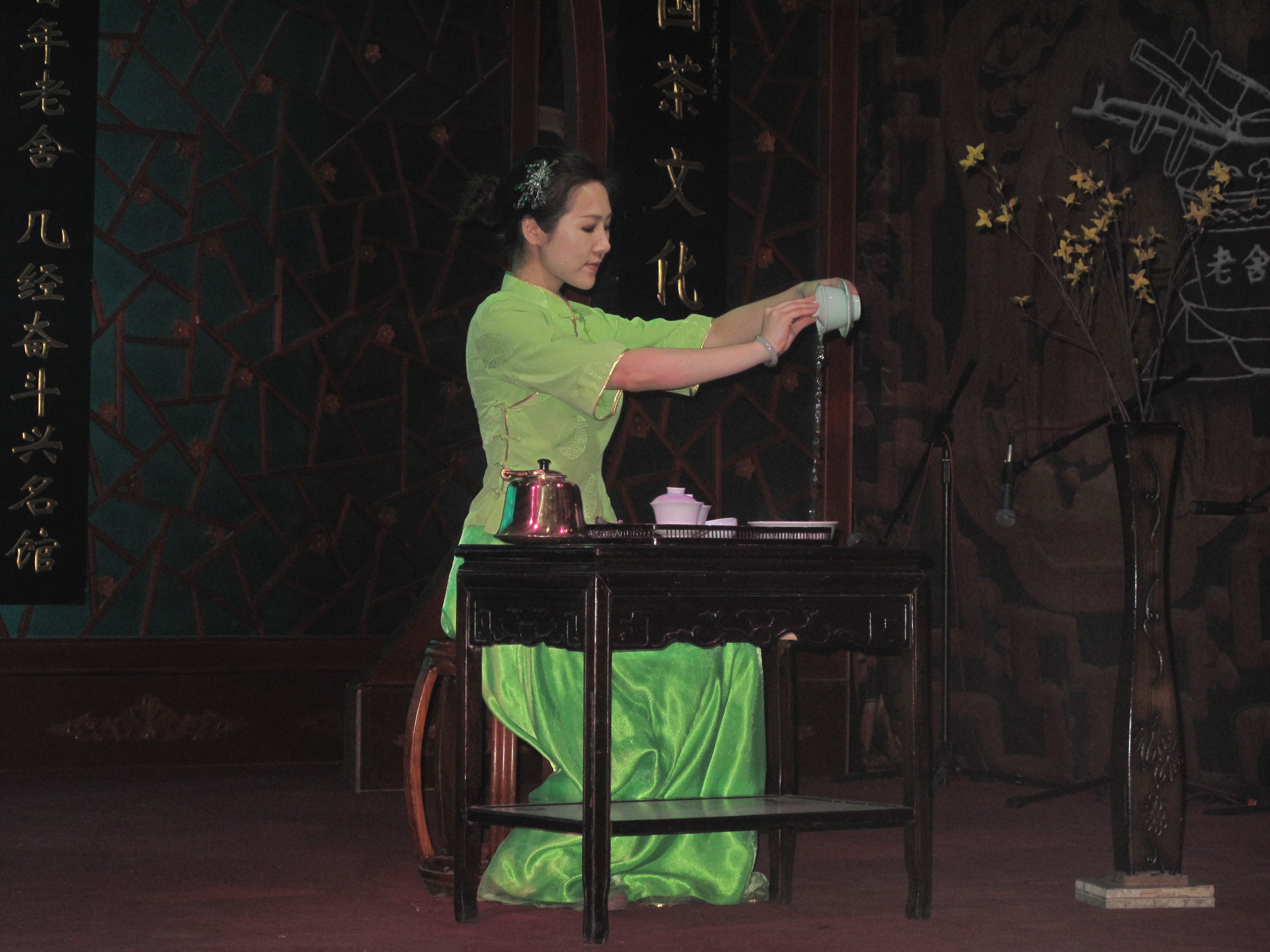
Back to the main part, i.e. the performance. Despite the fact that it was in Chinese only, hence all the dialogues were incomprehensible to us, we still enjoyed it big time. It started with the tea ceremony, demonstrated by a graceful lady in a spring green dress. Then another lady with a strong voice performed a song to a drum beat, executing traditional Chinese roulades, unfamiliar to our ears. She was then replaced on the stage by two sound imitators – their performance was at least understandable: whistle of a train, clattering of a horse’s hooves, hooting of a steamer, chirping of birds.

The tea ceremony

The next act was the long-awaited Peking opera. In fact, we had first wanted to see a separate performance but our thoughtful hotel staff had talked us out of it, and that was the right thing to do – we would probably have hardly been able to endure a full opera performance. But the ten-minute piece we saw really impressed us. A sly-looking lively girl led another girl, looking shy and timid, onto the stage, helped her into her seat and started describing the beauty of flowers and seasons to her. The interlinear translation of the songs into English was provided on a monitor on the wall, which cannot be said about the dialogues. Therefore, it remained unclear, why the silent shy girl was rising from her chair from time to time, making a few steps towards the energetic songstress and then sitting back down.

Beijing opera

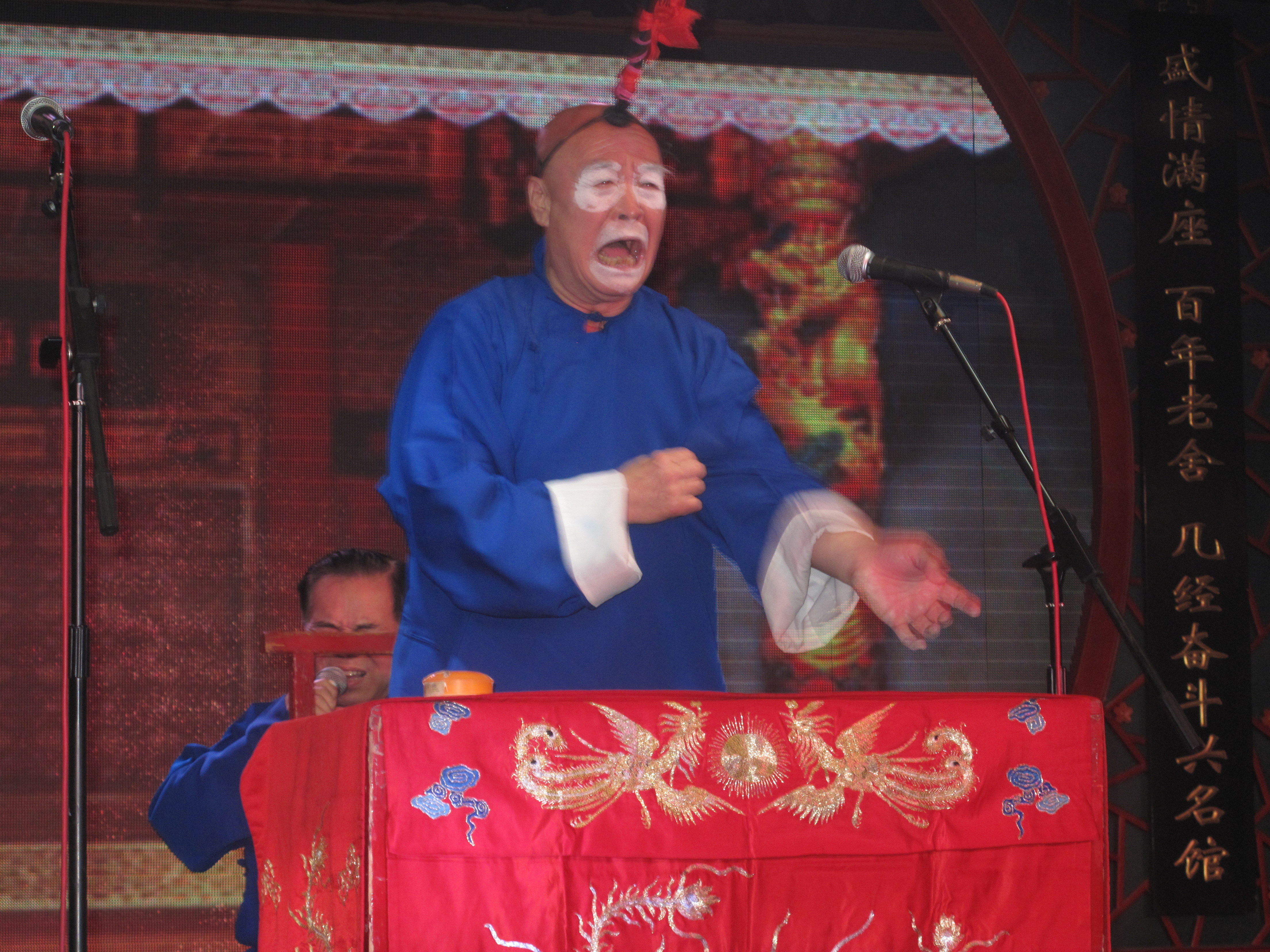
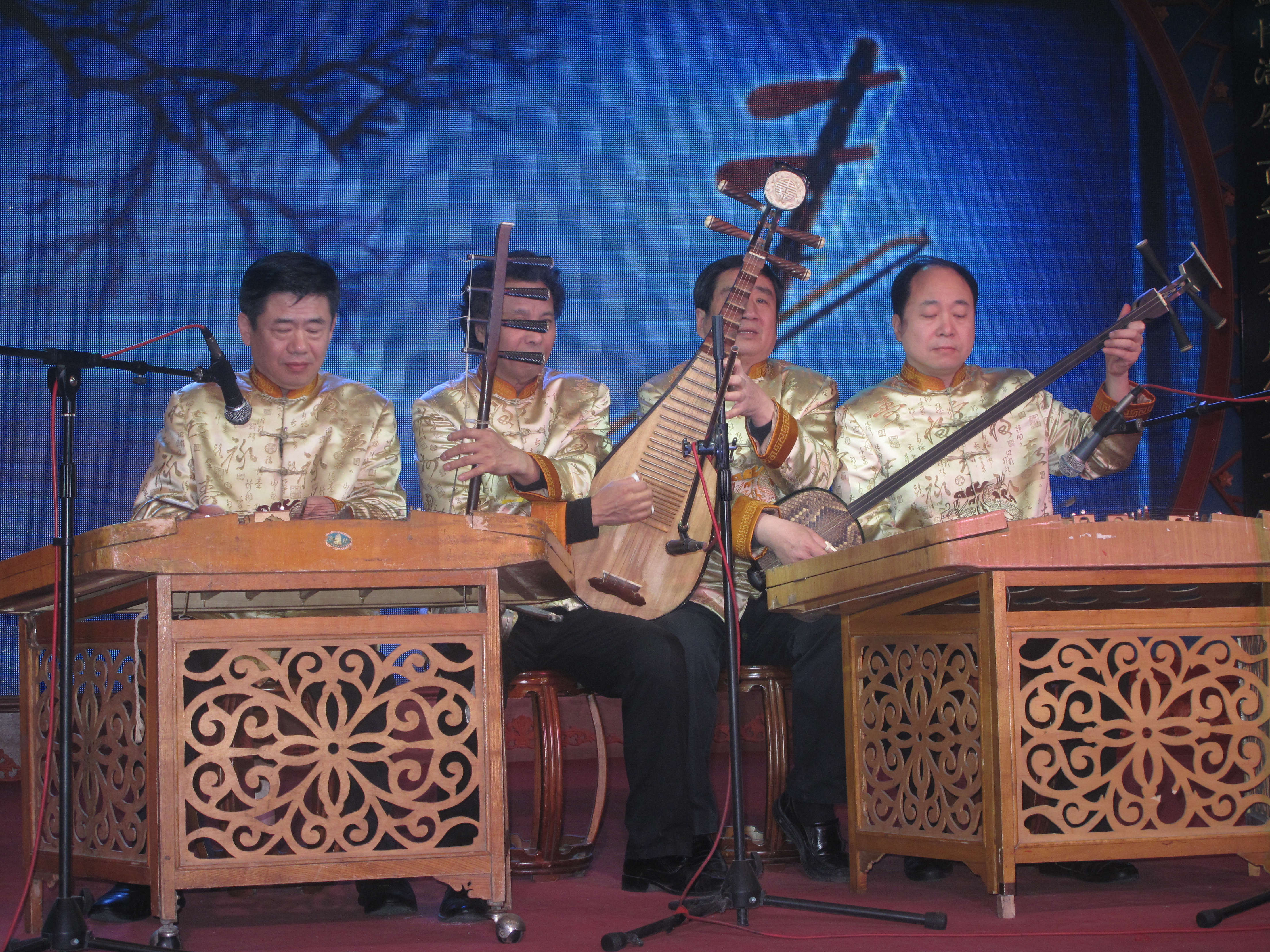
After the opera piece came another tea ceremony, with extremely long-nosed teapots: two guys and a girl showed a remarkable coherence of actions. Then, three acrobat ladies spun some plates on poles. Of course, we had seen plate spinning performances before, demonstrated by touring Chinese circus, but it should be recognised that the skills of these three girls were just amazing. As for the comedians, which were performing next, we couldn’t fully appreciate them for obvious reasons, but the local audience did have a good laugh. However, we quite liked the quartet, which played five instruments, each musician playing two simultaneously (I’ll let the readers guess how this can be possible, or check out the photo below).

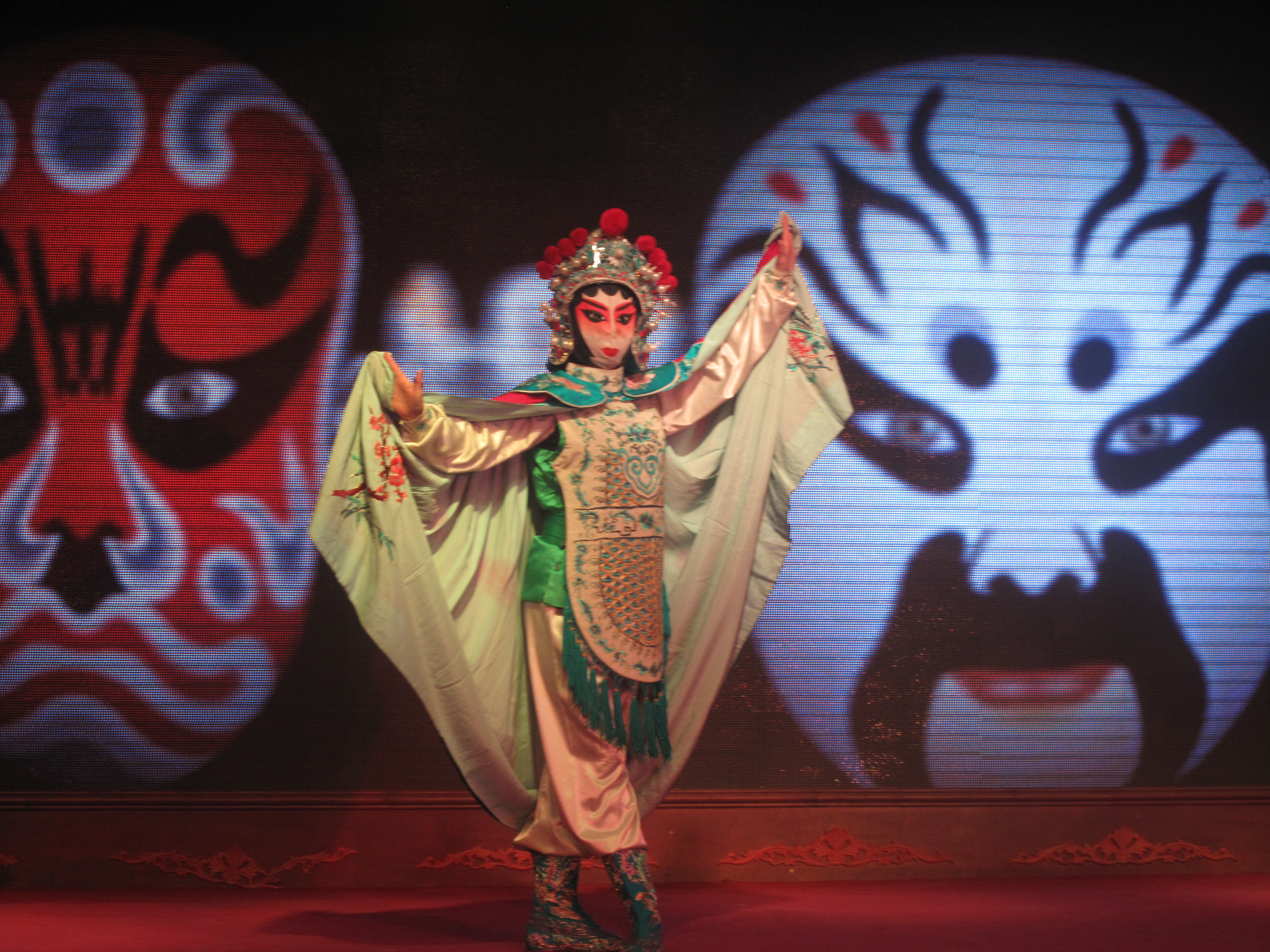
And finally, a sample of Sichuan opera, with very quick, almost instant, change of masks. Quite a short, but a very impressive performance.

Sichuan opera

As a result, it was a very vivid and memorable show. As we found out that the teahouse was on the same street as our hotel, we decided to walk back. The journey was slightly spoiled by the fact that the underground passage was closed due to the late hour, because of which we had to make a detour. But the weather was so pleasant that this didn’t cause any particular annoyance.