All Posts

Posted in Asia, Chiang Mai, English, Thailand

Thailand – Day 5

РУССКОЯЗЫЧНАЯ ВЕРСИЯ ПО ЭТОЙ ССЫЛКЕ. CLICK HERE FOR RUSSIAN VERSION.

22 March 2018

And once again we had to forget about our sundresses and put on our elephant harem pants purchased in Bangkok, as pretty much the whole of today is dedicated to temples in Chiang Rai and its environs.

In general, there are lots and lots of temples in Thailand, people seem much more religious than, for example, in Vietnam or China, and it’s much more common to see monks everywhere. That’s quite understandable – the country hasn’t been colonised recently, it has no communist past or present, so obviously, religion hasn’t been historically oppressed. And by the way, Buddhism here seems to contain elements of Hinduism.

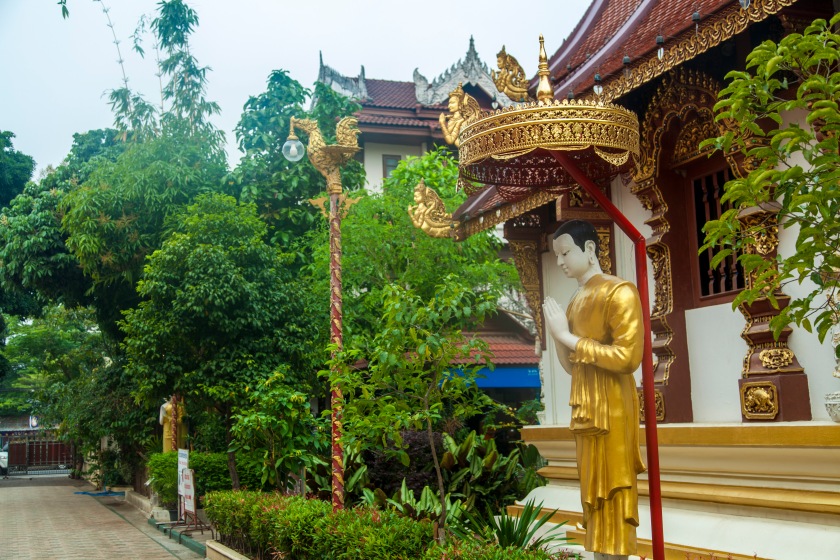
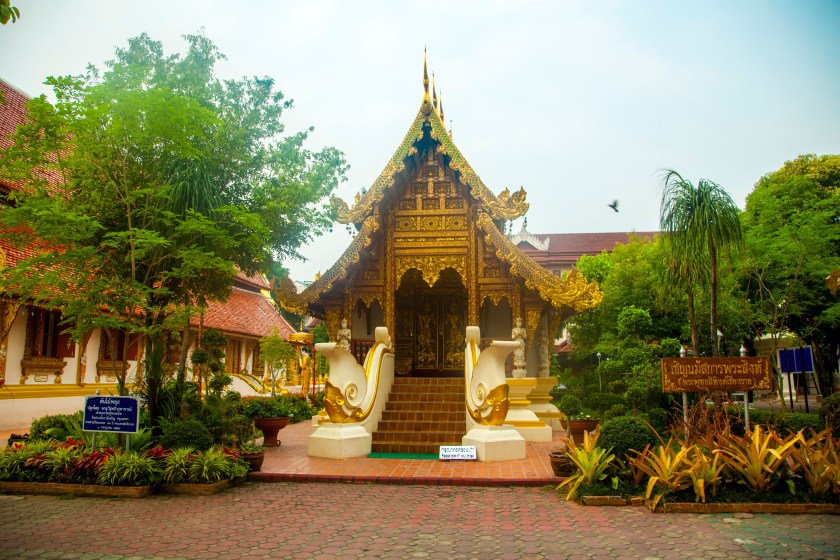
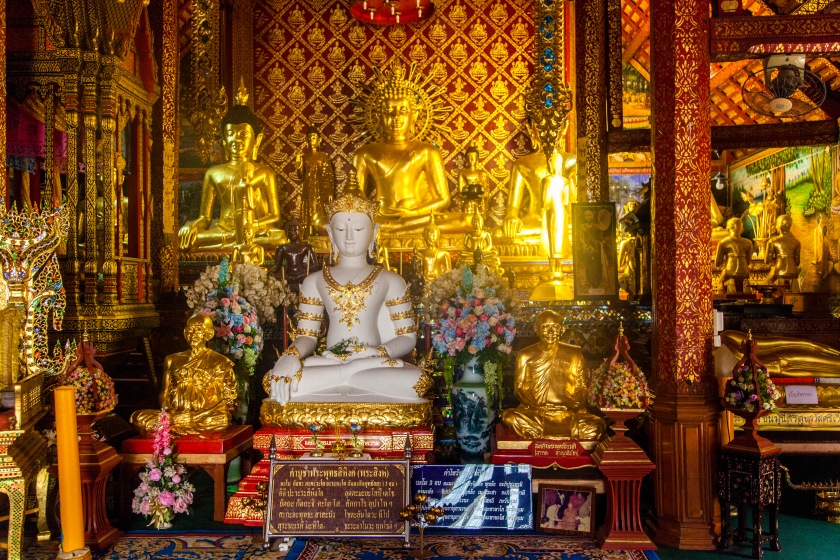
The first temple we went to was Wat Phra Singh, founded in the 14th century. The name of this temple comes from the golden Buddha image, almost as famous (and as ‘well-traveled’) as the Emerald Buddha. Our guide Dino said that the temple’s architecture is in Burmese style.
IMG_3464

IMG_3471

IMG_3474

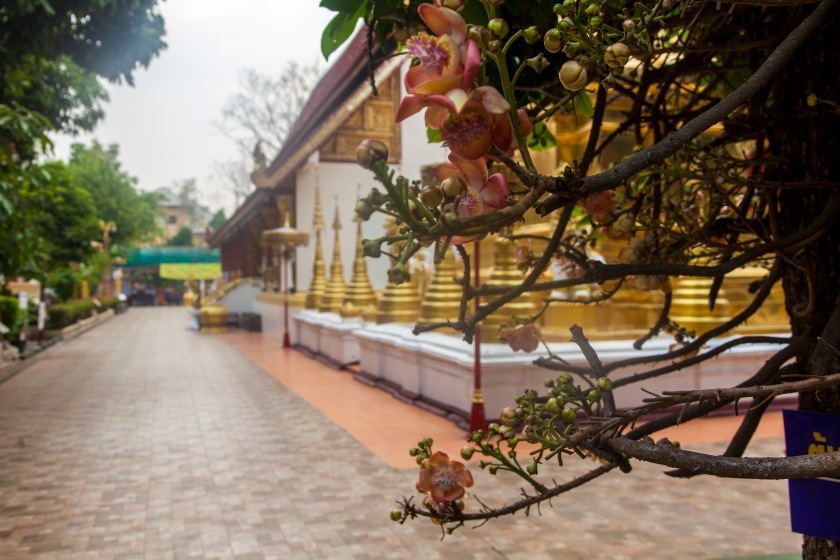
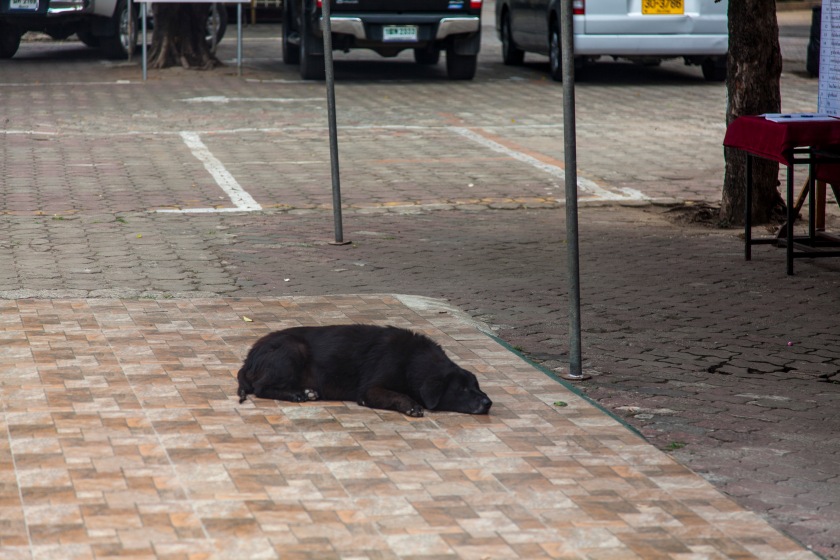
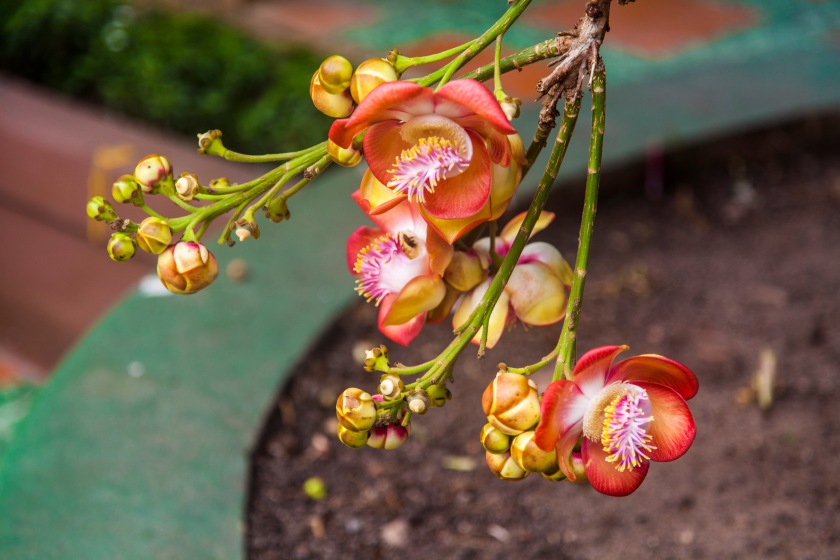
What was specifically remarkable about this temple is the large number of stray dogs that are fed here, apparently with rice, given their state of utter apathy; and sal trees, sacred to Buddhists, with large and very fragrant flowers.
IMG_3472

IMG_3481

IMG_3483

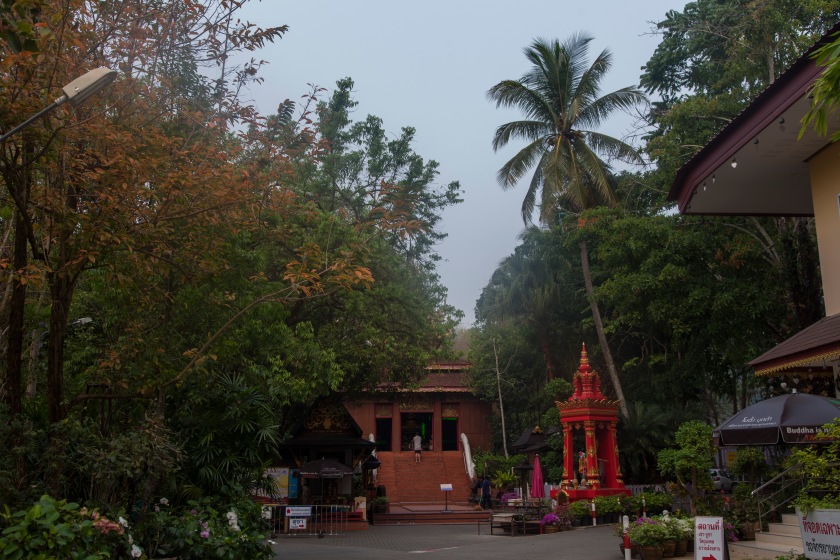
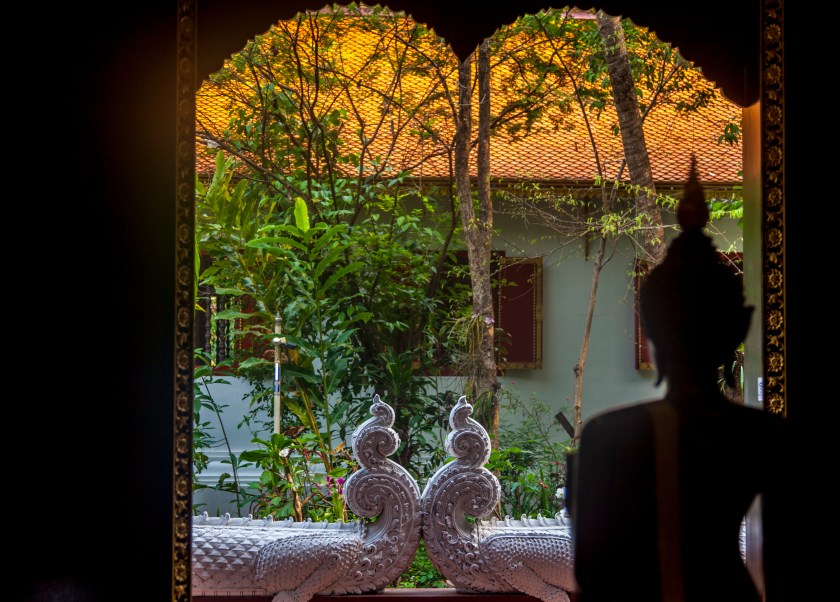
From here we headed to another temple – Wat Phra Keo, or the temple of the Emerald Buddha. Yes, yes, it has the same name as the one we saw in Bangkok. The temple is very old and was originally called something else, but in the 15th century, it was here, among the wreckage of a stupa split by a thunderbolt, that the Emerald Buddha statue, believed to be of divine origin, was found. Since the 18th century and up to this day, the statue is in Bangkok, just where we saw it, but before that it traveled a lot around the territories of Thailand, Laos, Myanmar and Cambodia. Dino talked about the statue’s displacements in the most thorough details – who and when took/stole it, who robbed whom etc. – but we didn’t even try to memorise all this, especially since he wasn’t the most interesting narrator ever…
IMG_3488

IMG_3521

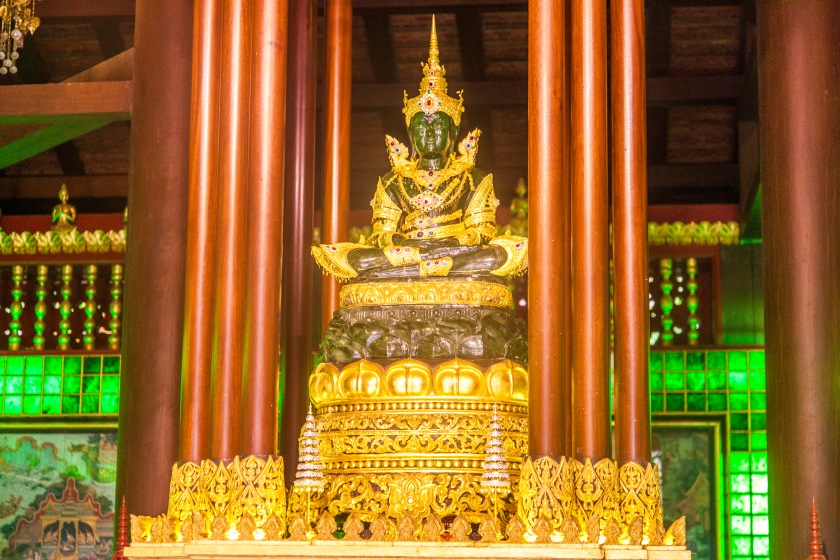
The Chiang Rai temple currently has a jade replica of the Emerald Buddha (in fact, as you may remember, the original one is also made of jade) but at least, unlike in Bangkok, you can photograph it.
IMG_3512

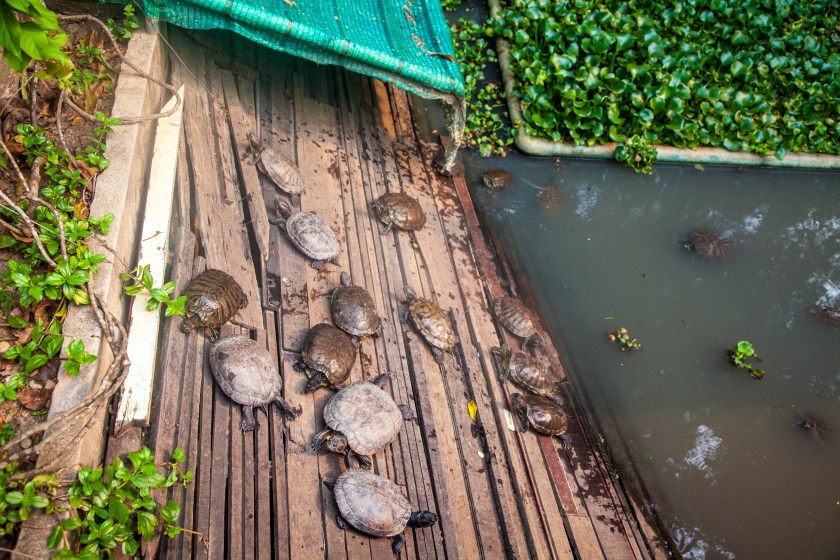
Right here, on the territory of the temple, we noticed a pond with turtles and spent quite a while watching one particular small, but proud turtle trying to crawl towards the fence, walking on the heads of its fellow turtles.
IMG_3508

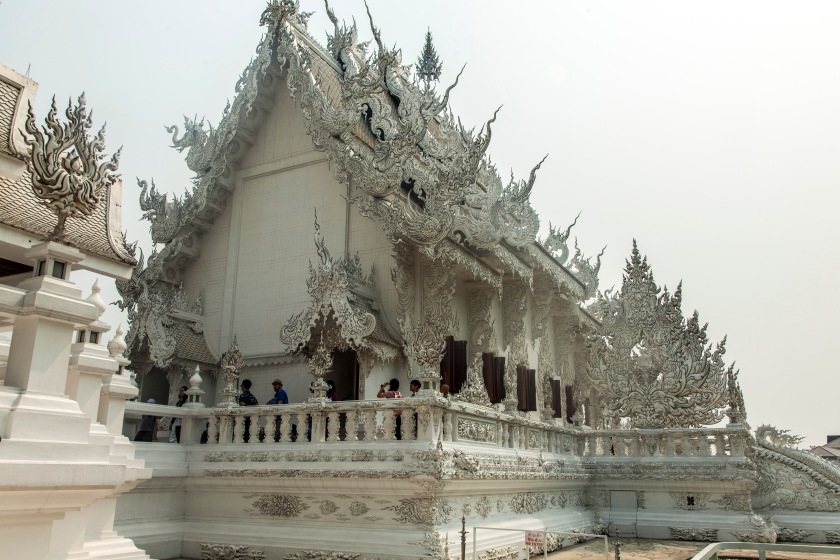
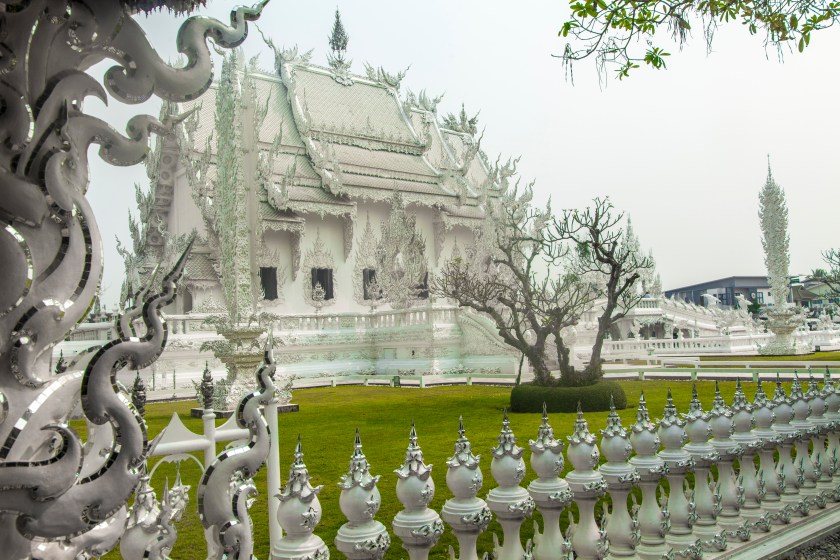
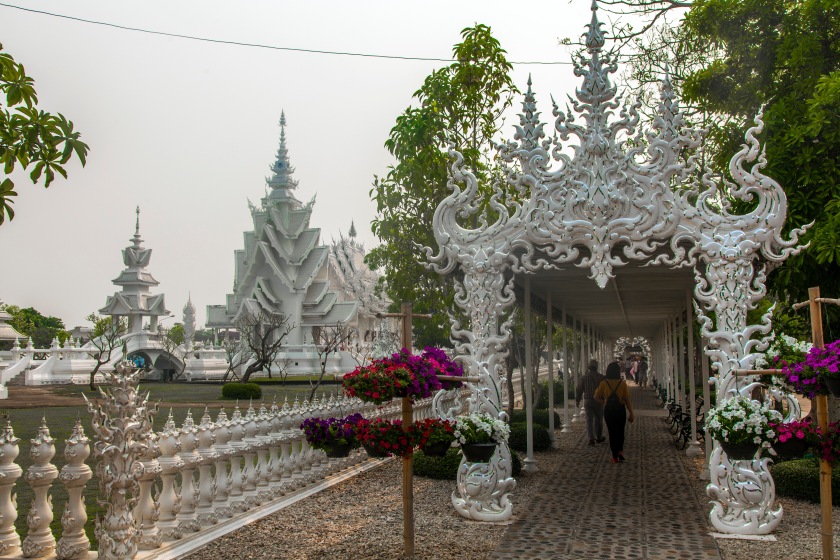
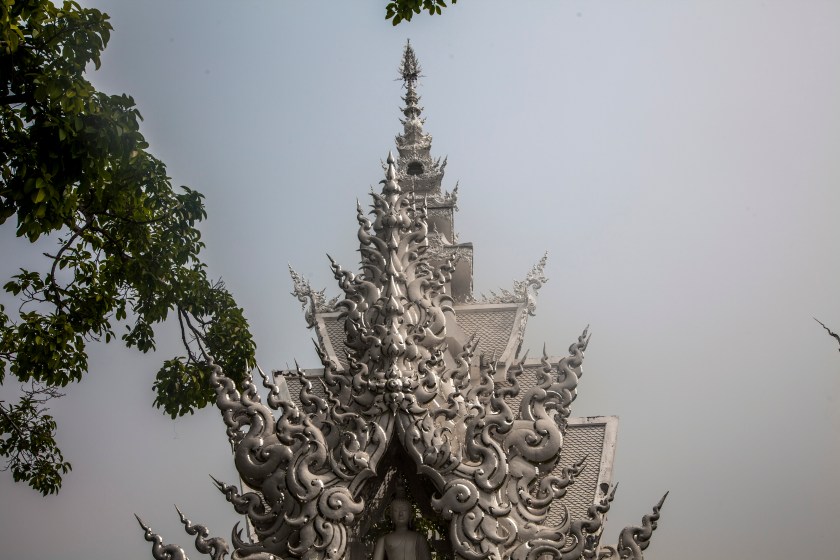
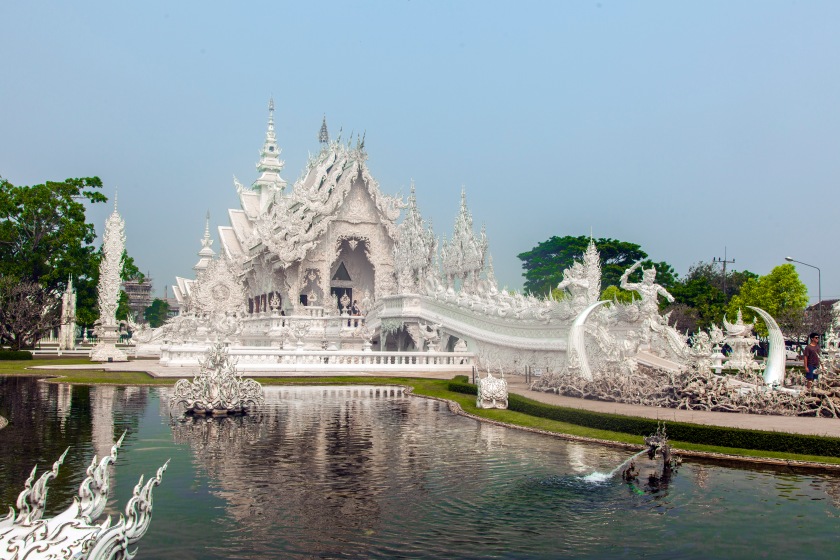
The third temple we saw was really the best – it was the White temple, very beautiful and unusual. It’s quite new, having been built in 1997, and in fact I would rather call it a modern art exhibit in the style of a Buddhist Temple.
IMG_3533

IMG_3563

IMG_3560

The white colour represents spiritual purity.
IMG_3555

IMG_3564

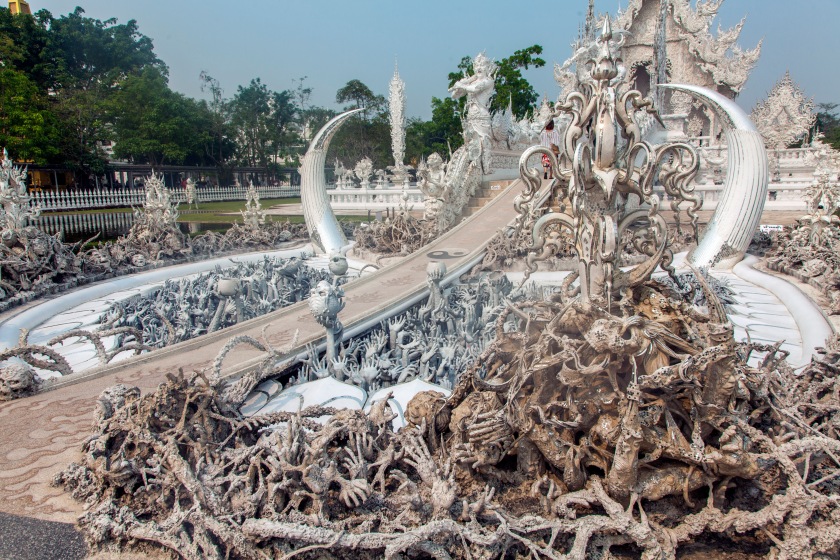
To get into the temple itself, one has to walk along a bridge past the “hands of sinners” sticking out of the earth – very symbolic.
IMG_3556

Right next to the temple there’s a museum containing paintings by Chalermchai Kositpipat – the artist who built this temple with his own money. The paintings are quite interesting, many depict paradise with different buildings in the same style as the White Temple, or mythological animals.

The gorgeous gilded building on the territory of the temple is nothing more than the ‘happy room’ (or rather a whole happy palace!), that is, a toilet.
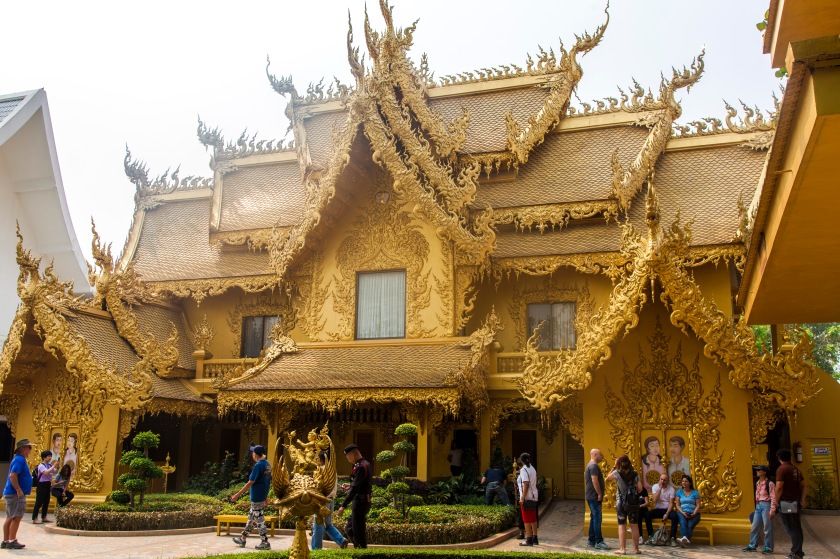
IMG_3566

Fortunately for us, the thickest crowds of tourists started arriving just as we were leaving – most probably from Chiang Mai – so we were really lucky to walk around and take pictures without them.

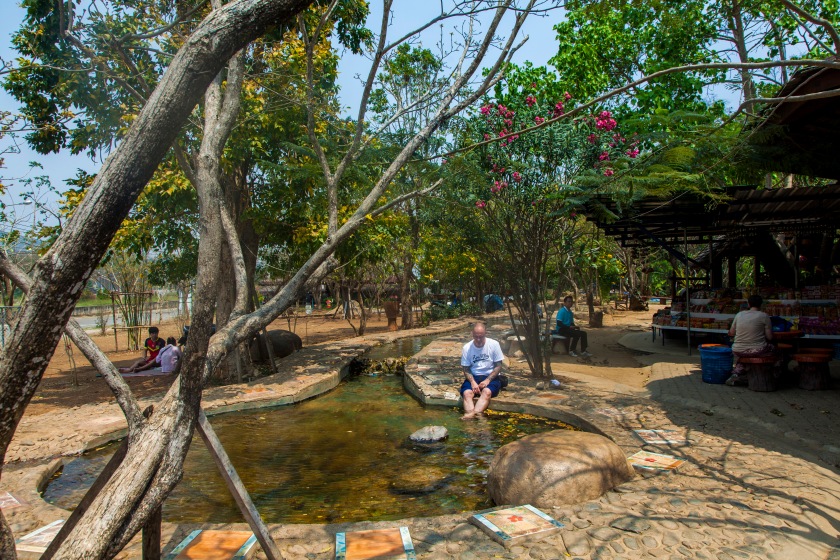
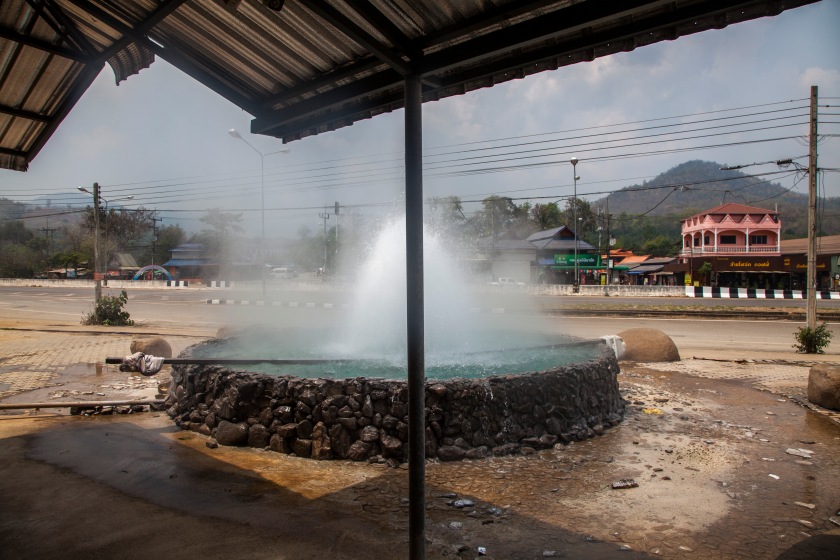
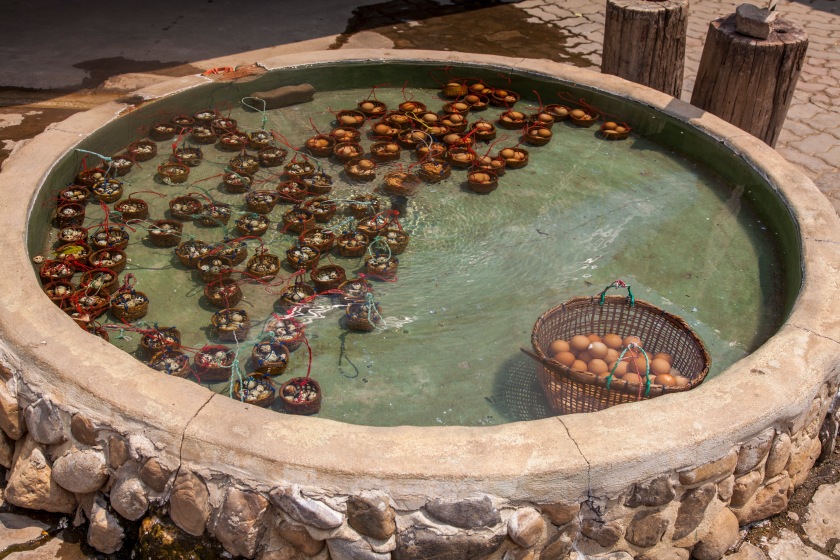
The White Temple was our last stop before we drove off to Chiang Mai – we had already checked out from our Chiang Rai hotel this morning and loaded our suitcases in the car. We stopped on our way for lunch, again in a cheap roadside cafe, with a hot spring next to it. In one fenced well, the water was boiling and bubbling up, another one was used for cooking eggs, and there was also a bigger section of the spring which was cool enough to put one’s legs into it, which is supposedly very good for health. Some people managed to sit knee-deep in the water, but I was barely able to dip my feet for a couple of seconds, as the water was very hot – around 50 degrees Celsius – the exact opposite situation of yesterday’s pool visit in Chiang Rai!
IMG_3572

IMG_3574

IMG_3575

We arrived at our hotel in Chiang Mai at about 3pm. The hotel is located next to the night market, so there are lots of market stalls, massage parlours and bars around.

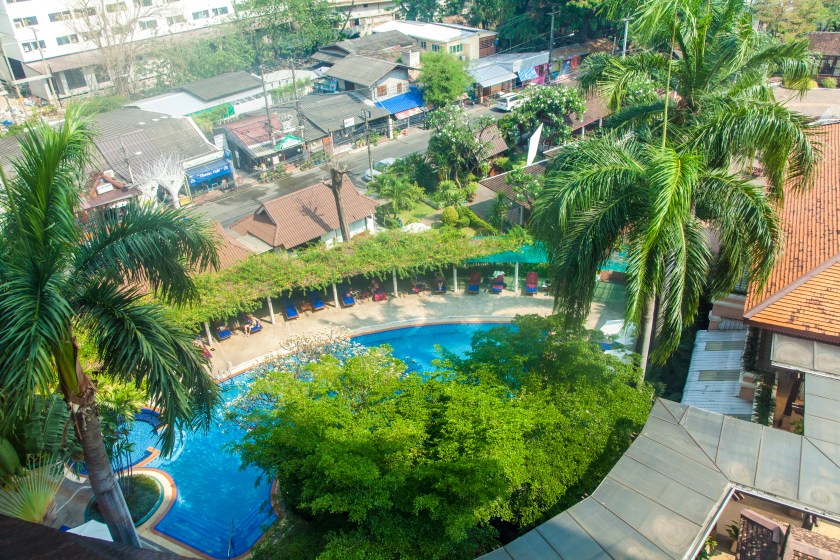
The hotel has two excellent swimming pools, and this time we had better luck and managed to take a dip. And we knew right away that we’d be more lucky – unlike in Chiang Rai, the poolside area was full of people.
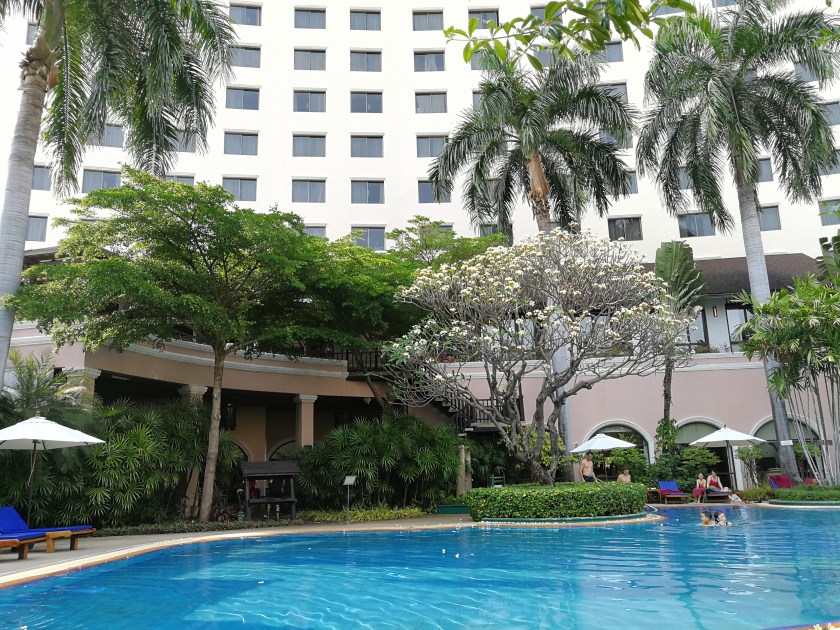
IMG_3577

cof

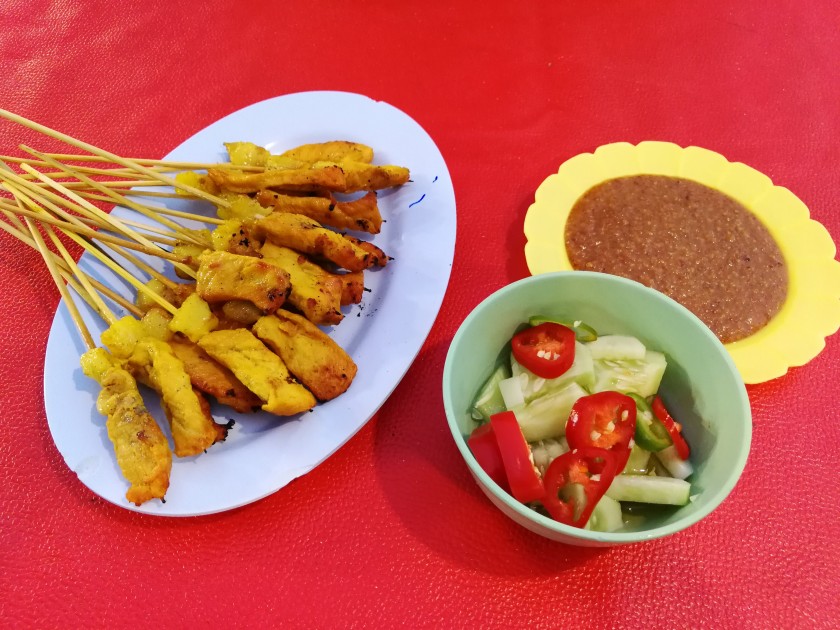
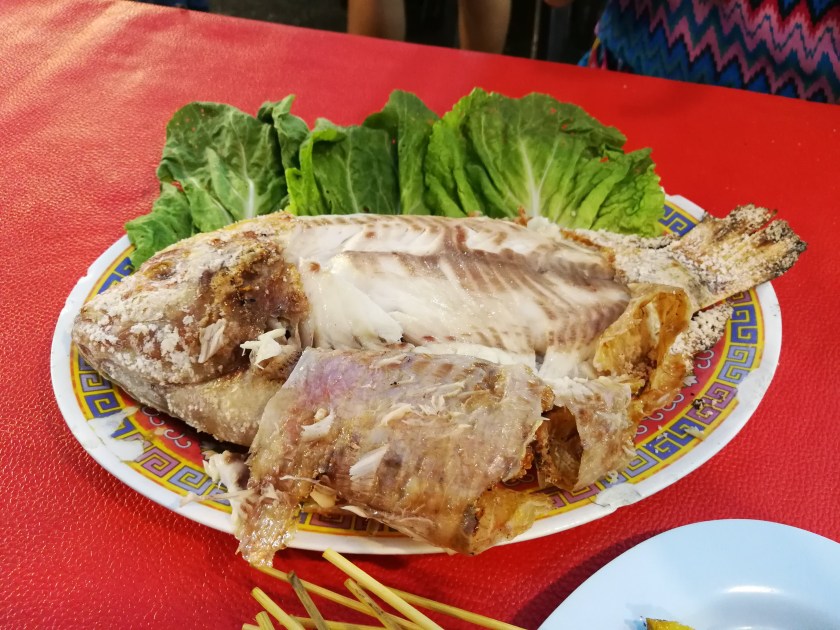
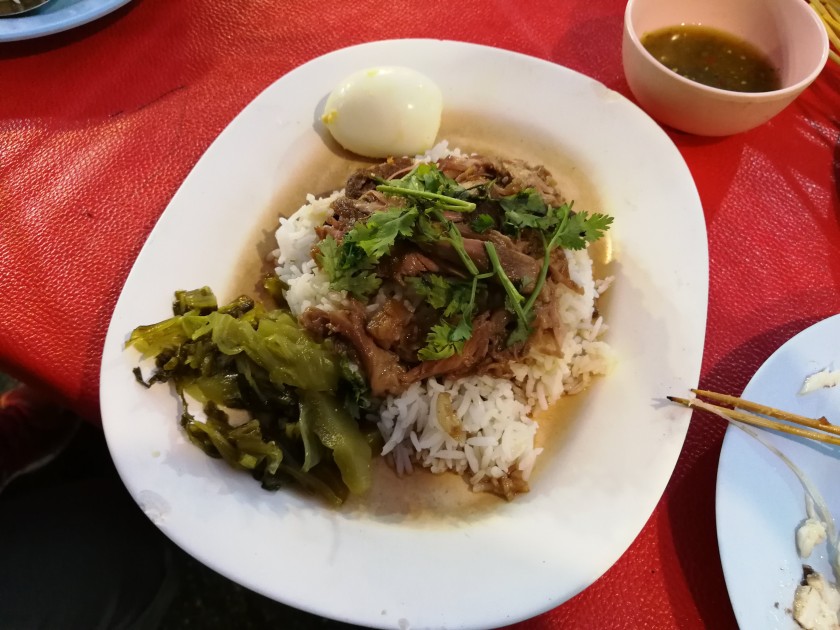
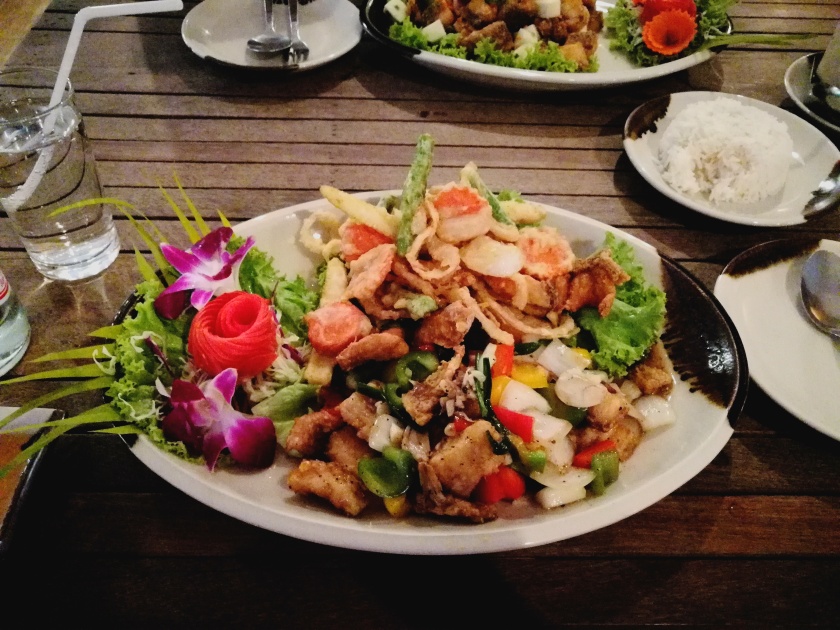
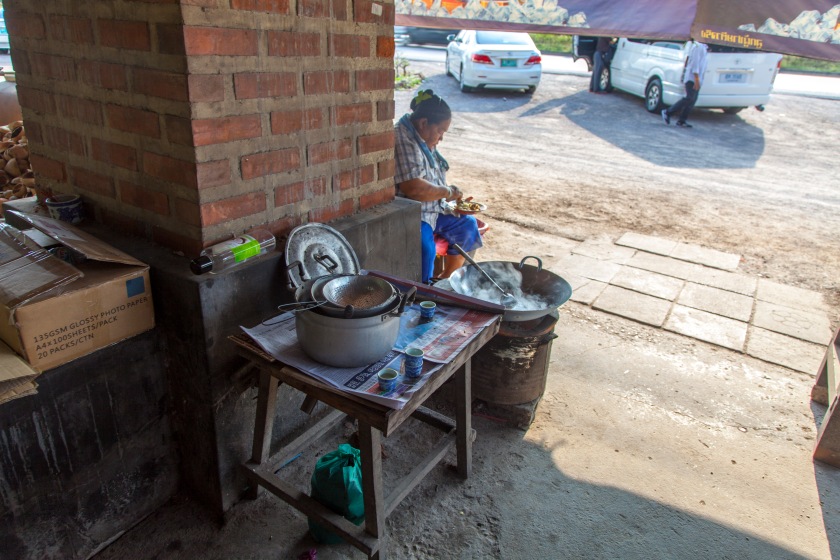
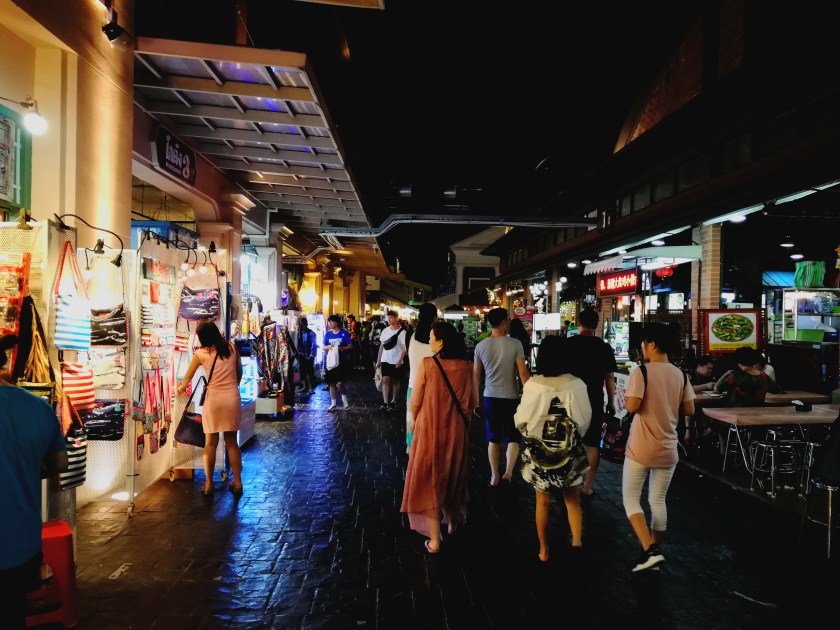
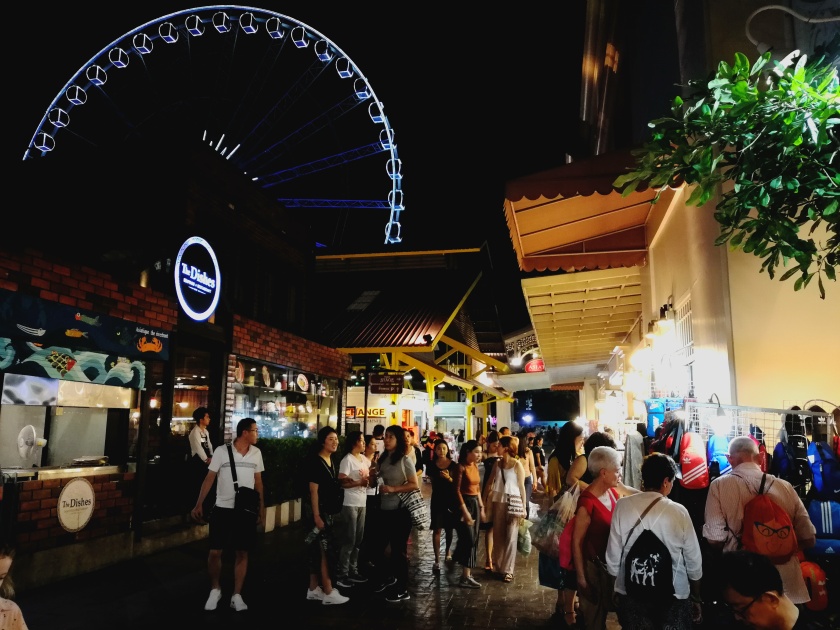
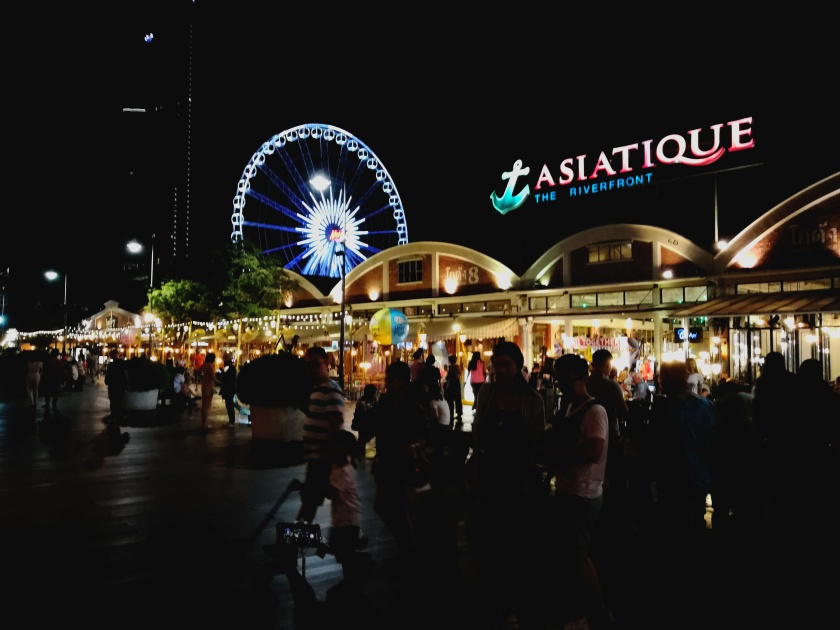
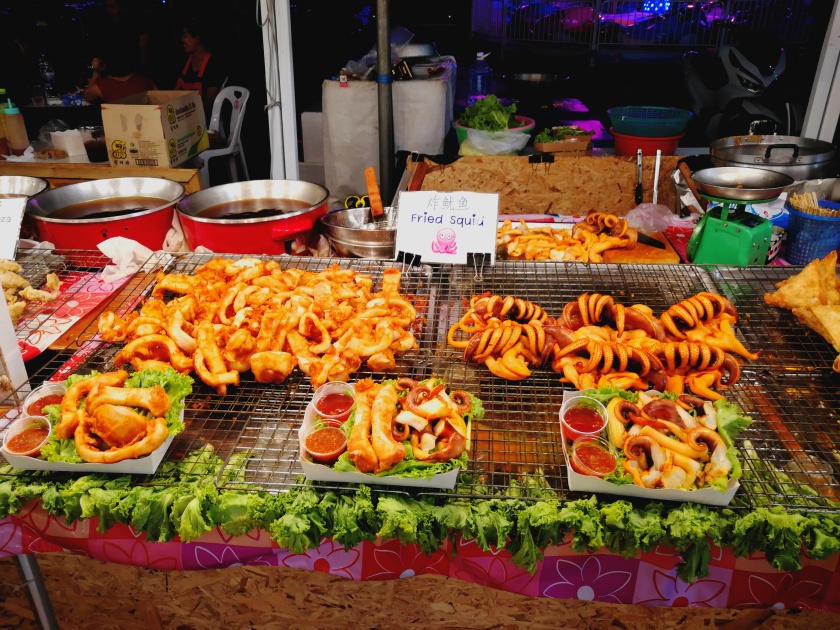
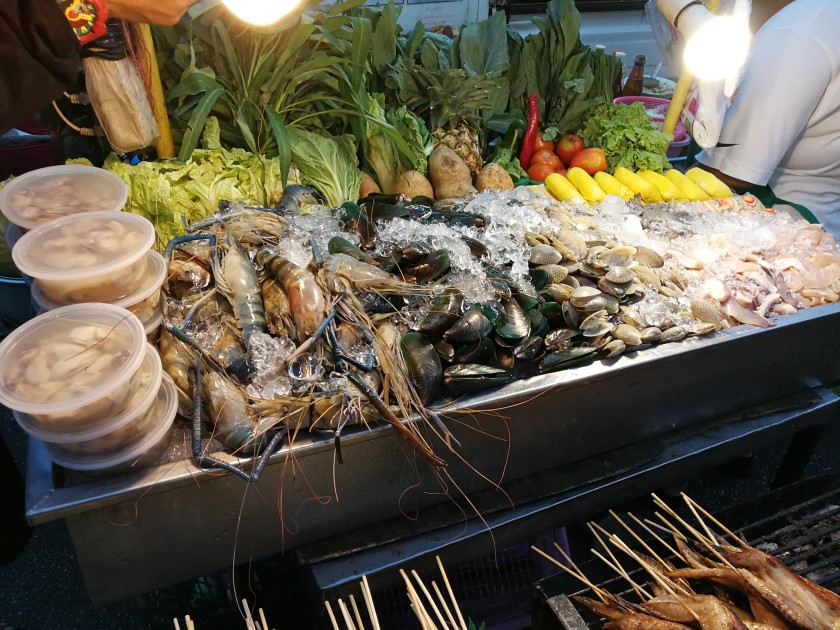
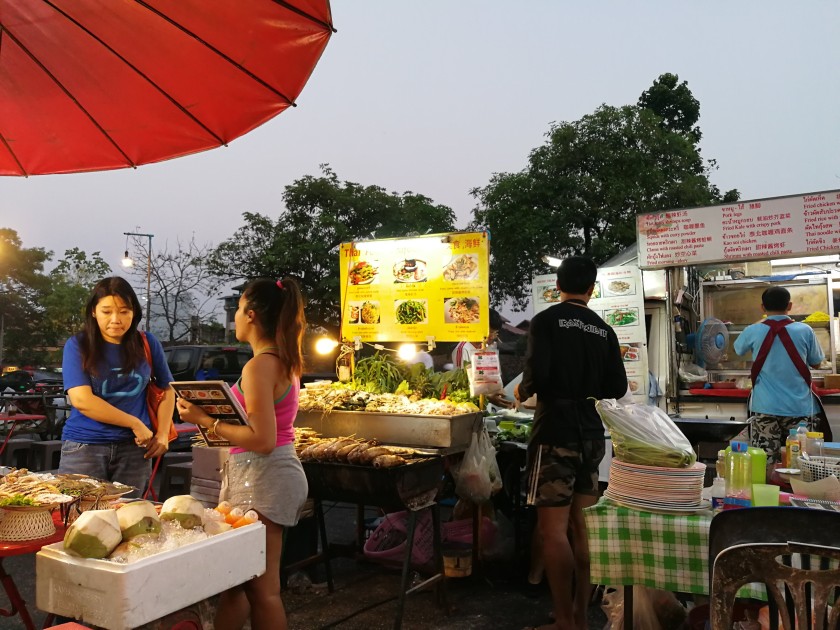
Our tour programme for the evening included a trip to the street food market and dinner right there. We tried pork satay (i.e. pork skewers) with peanut sauce, snapper fish in salt and some pork dish with rice. It was quite tasty, although not necessarily much cheaper than in a restaurant.
cof

cof

cof

cof

cof

On the way back to the hotel our guide Dino took a longer route so that we could walk around the Old Town, which we didn’t enjoy much – there was little to see in the dark, plus we wanted to rest a bit and enjoy some guide-less time.

Once we said goodbye to him, we went for a drink at one of the bars near the hotel, but left very quickly – the place seemed a bit dodgy, with a few foreign men and a lot of half-naked local women (if they were all women, of course), rushing with open arms towards every white man in sight trying to lure him into the bar. It seems that all the bars around are like that, and many are even completely empty, except for the stacks of women waiting at the entrance.
Posted in Русский, Азия, Таиланд, Чианг Май

Таиланд – День 5

CLICK HERE FOR ENGLISH VERSION. АНГЛОЯЗЫЧНАЯ ВЕРСИЯ ПО ЭТОЙ ССЫЛКЕ.

22 марта 2018

И снова пришлось забыть про открытые сарафанчики и облачиться в купленные в Бангкоке шаровары – практически весь сегодняшний день посвящен храмам в Чианг Рае и его окрестностях.

Вообще различных храмов в Таиланде великое множество, люди кажутся гораздо более религиозными, чем например во Вьетнаме или Китае, и монахи встречаются гораздо чаще. Оно и понятно – страну в ближайшем прошлом никто не колонизировал, коммунистического прошлого и настоящего у нее нет, так что религию явно никто не притеснял. А еще, буддизм тут с элементами индуизма.

Первый храм, куда мы поехали, это Ват Пхра Сингх, основанный в XIV веке. Имя этого храма происходит от золотой статуи Будды, почти такой же известной, как Изумрудный Будда, и столько же путешествовавшей. Наш гид Дино рассказал, что архитектура храма выполнена в бирманском стиле.

IMG_3464

IMG_3471

IMG_3474

Чем особенно запомнился храм, так это большим количеством бездомных собак, которых тут кормят, явно рисом, отчего они находятся в состоянии полной апатии, и священными для буддистов деревьями сала, с большими и очень ароматными цветами.

IMG_3472

IMG_3481

IMG_3483

Отсюда мы отправились в другой храм – Ват Пхра Кео, он же храм Изумрудного Будды. Да-да, он называется так же, как тот, который мы видели в Бангкоке. Храм очень старый и изначально назывался как-то иначе, но именно тут среди обломков ступы, расколотой ударом молнии, и была в XV веке обнаружена статуя Изумрудного Будды, которая по поверию имеет божественное происхождение. С XVII века и по сей день статуя находится в Бангкоке, где мы ее и видели, а до того она очень много путешествовала по территории Таиланда, Лаоса, Мьянмы и Камбоджи. Дино даже рассказывал подробно обо всех перипетиях ее перемещения – кто и когда ее вывез, украл, кого ограбил и т.д. – но мы даже не пытались запомнить все это, тем более, что рассказывал он не слишком интересно…

IMG_3488

IMG_3521

В чианграйском храме в данный момент находится копия Изумрудного Будды из нефрита (собственно, и оригинал, как вы помните, из него же), зато ее можно фотографировать, чего нельзя было делать в Бангкоке.

IMG_3512

Тут же, на территории храма, мы заметили пруд с черепахами и некоторое время наблюдали как одна маленькая, но гордая птичка черепаха все пыталась ползти куда-то наверх к ограде по головам своих соплеменников.

IMG_3508

А третий храм понравился больше всего – этот Белый храм, очень красивый и необычный. Он совсем новый – построен в 1997г, и по сути даже скорее представляет собой выставку современного искусства в стиле храма.

IMG_3533

IMG_3563

IMG_3560

Белый цвет олицетворяет духовную чистоту.

IMG_3555

IMG_3564

Чтобы попасть в сам храм, надо пройти по мостику мимо “рук грешников”, торчащих из земли – очень символично.

IMG_3556

Тут же рядом музей картин художника Чалермчая Коситпипата – того, который на свои деньги и построил этот храм. Картины довольно интересные, многие изображают рай с различными строениями в том же стиле, как и сам храм, либо мифологических животных.

Шикарное золоченое здание на территории храма – это не что иное как “комната (а точнее, целый дворец!) счастья”, то бишь туалет.

IMG_3566

На наше счастье, толпы туристов подъехали как раз когда мы уже уходили – судя по всему, из Чианг Мая – так что удалось погулять и пофотографироваться без них.

А вот мы отсюда как раз выехали в Чианг Май – чемоданы в машину были погружены еще с утра. Остановились по дороге пообедать, снова в дешевой придорожной кафешке при горячем источнике. В одном огороженном колодце вода прямо бурлила и кипела, в другом варились яйца, а еще в одну секцию источника можно было погружать ноги, якобы очень полезно. Некоторые ухитрялись сидеть по колено в воде, но мне едва удавалось окунуть ступни на пару секунд, очень горячо – градусов 50 – полная противоположность вчерашнему чианграйскому бассейну!

IMG_3572

IMG_3574

IMG_3575

Добрались мы до отеля в Чианг Мае часа в три, расположен отель у ночного базара, вокруг барахолка, множество баров и массажных салонов.

В отеле два прекрасных бассейна, и на этот раз удалось выкупаться. И сразу было понятно, что удастся – в отличие от чианграйского бассейна, в этом было полно народу.

IMG_3577

cof

На вечер у нас был по программе заплкнирован поход на рынок уличной еды с поеданием оной. Мы попробовали свиной сатай (шашлычки на шпажках) с арахисовым соусом, рыбу снеппер в соли и какое-то блюдо из свинины с рисом. Было вкусно, хотя не сказать, что значительно дешевле, чем было бы в ресторане.

cof

cof

cof

cof

cof

На пути обратно в отель гид Дино сделал круг, чтобы мы могли прогуляться по Старому городу, чем не доставил нам огромного удовольствия – в темноте мало что видно и понятно, хотелось уже отдохнуть и вообще уже распрощаться с ним.

Как только нам это удалось, мы зашли выпить по коктейлю в один из баров около отеля, но ушли очень быстро – заведение показалось левеньким, с некоторым количеством мужчин-иностранцев и большим количеством полуголых местных женщин (если они все были женщинами, конечно), кидающихся с распростертыми объятиями на каждого проходящего мимо белого мужчину и пытающихся завлечь его в бар. Кажется, все бары вокруг такие же, многие вообще пустуют за исключением стаек женщин, ожидающих у входа.

Posted in Asia, Chiang Rai, English, Thailand

Thailand – Day 4

РУССКОЯЗЫЧНАЯ ВЕРСИЯ ПО ЭТОЙ ССЫЛКЕ. CLICK HERE FOR RUSSIAN VERSION.

21 March 2018

Today we left our hotel at 8am for our first excursion in Chiang Rai and headed up north, to the Doi Tung Royal villa with a beautiful garden.

IMG_3367

The garden is one of the successful projects of the late Queen Mother, who tried to combat drug trafficking in this dysfunctional region, bordering Myanmar, by increasing employment.

IMG_3380

IMG_3381

IMG_3386

IMG_3387

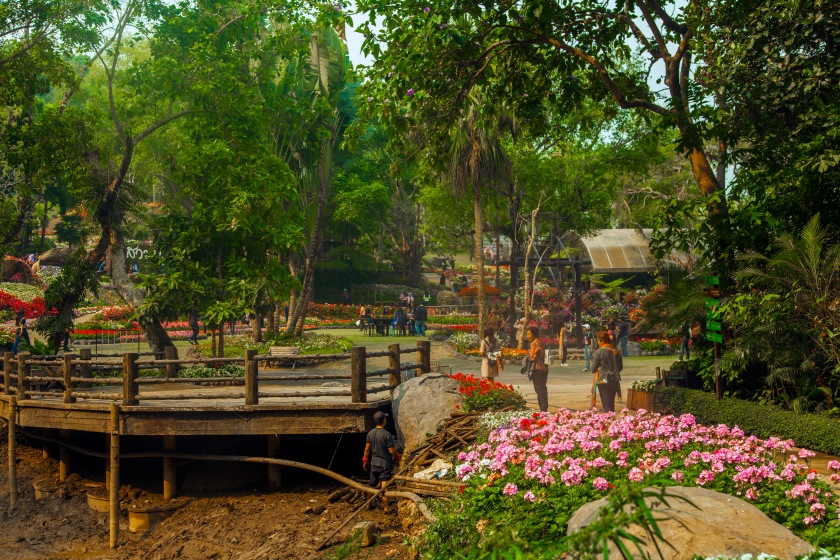
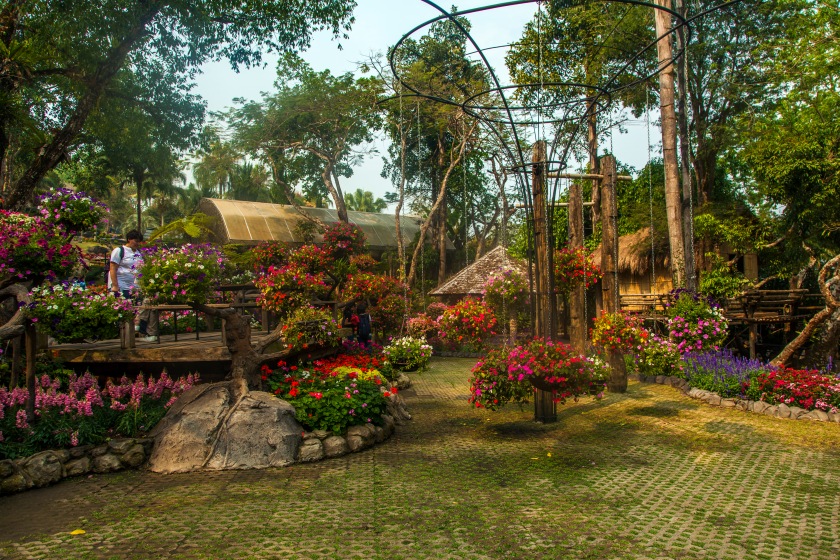
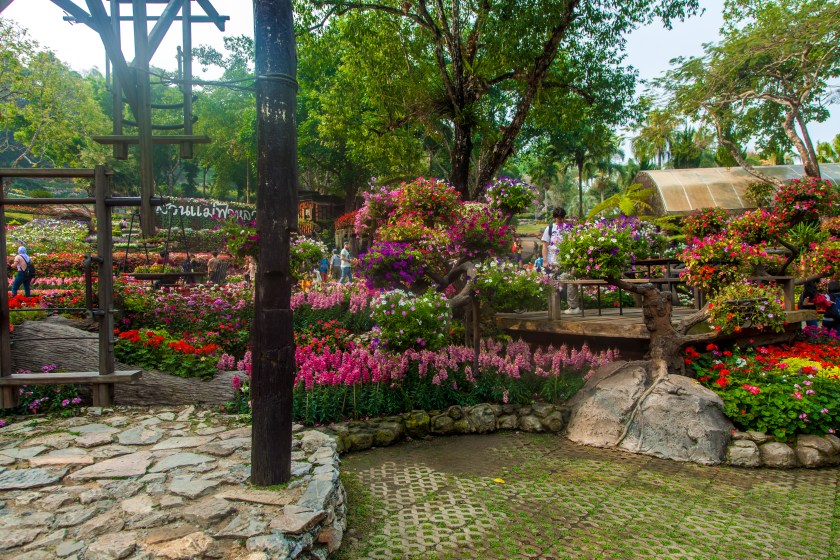
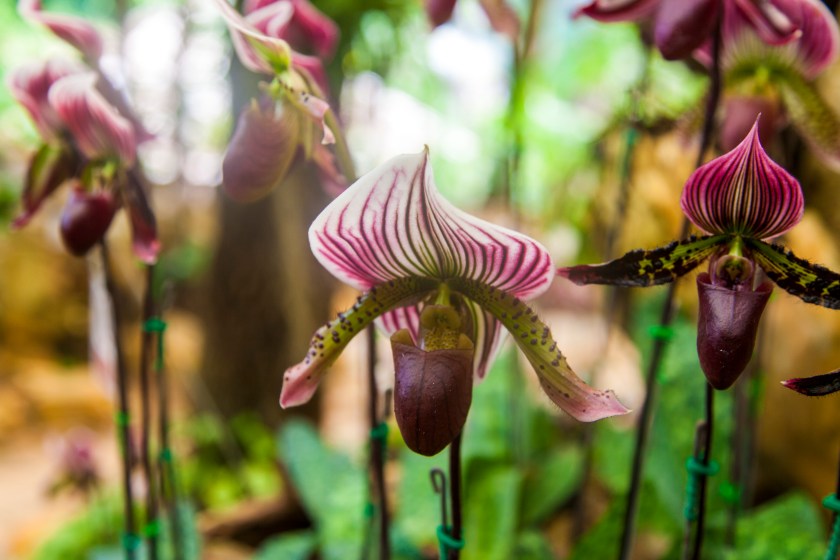
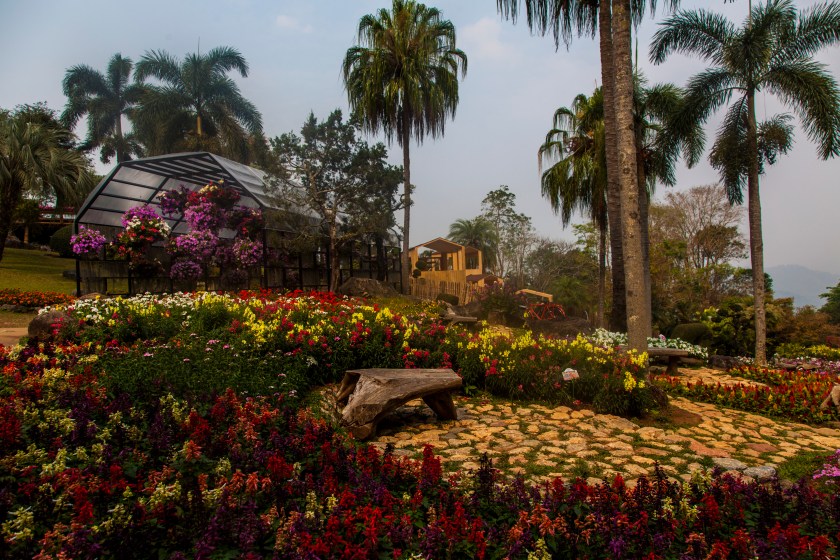
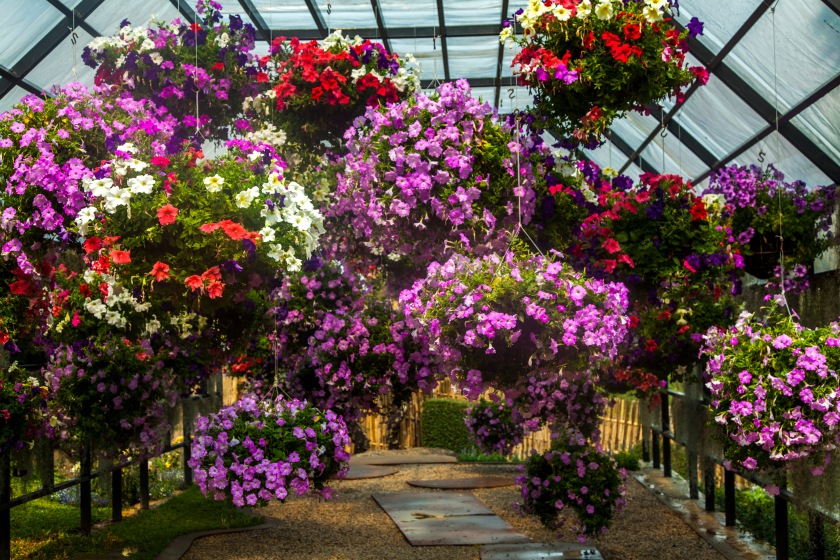
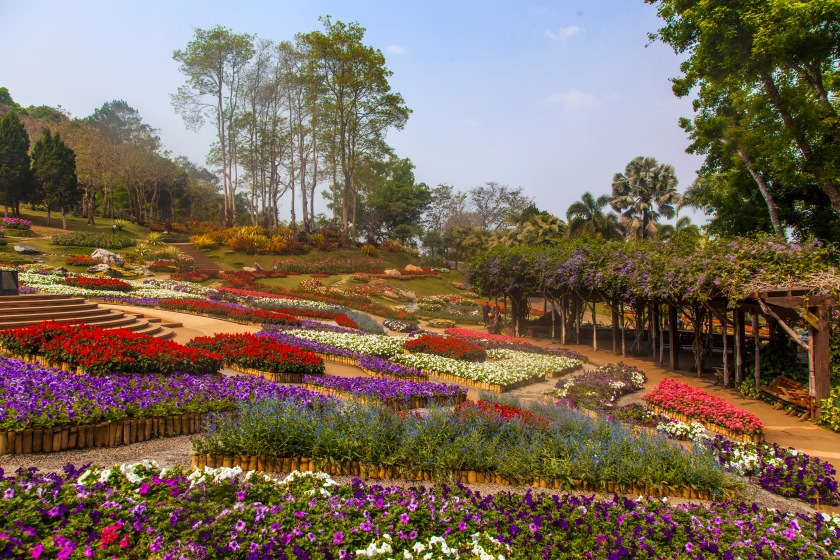
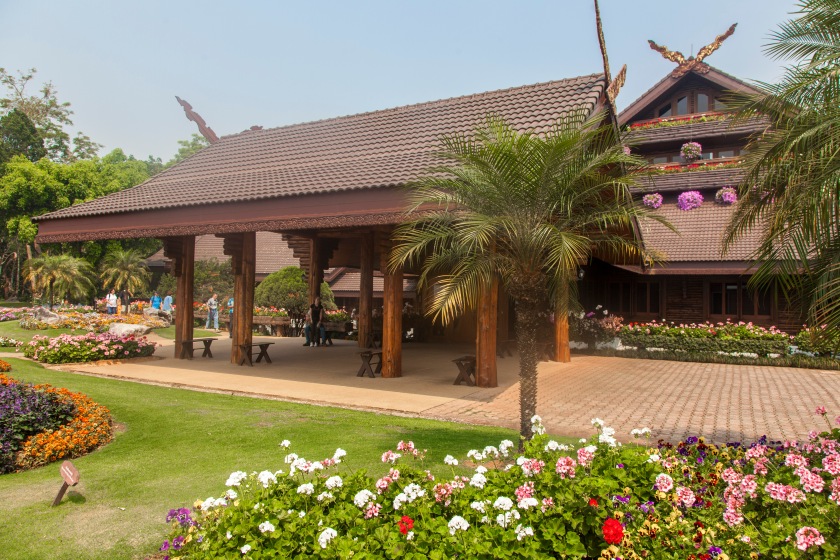
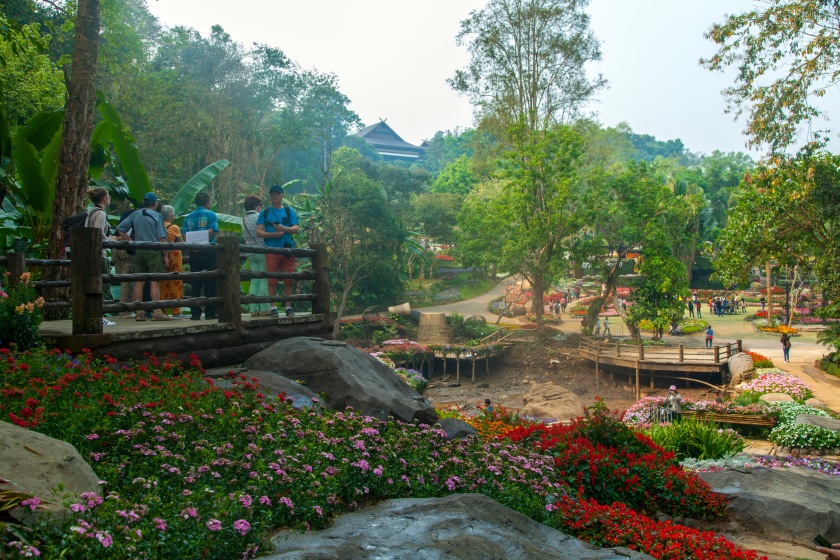
And indeed, the garden is very beautiful. At an altitude of 1300 m above sea level, it is much cooler than Chiang Rai itself, and full of the most diverse flowers ever – predominantly European, but including some local orchids too.

IMG_3393

IMG_3397

IMG_3399

IMG_3404

The actual royal villa, where the Queen Mother used to live, is located further uphill. We went up to the residence – again, strict dress code had to be followed there and we had to cover up – and went inside. I managed to take one photo before a lady from a French tourist group – the only tourists apart from us, I wonder where the crowds of Chinese tourists are? – warned me that this was prohibited.

IMG_3411

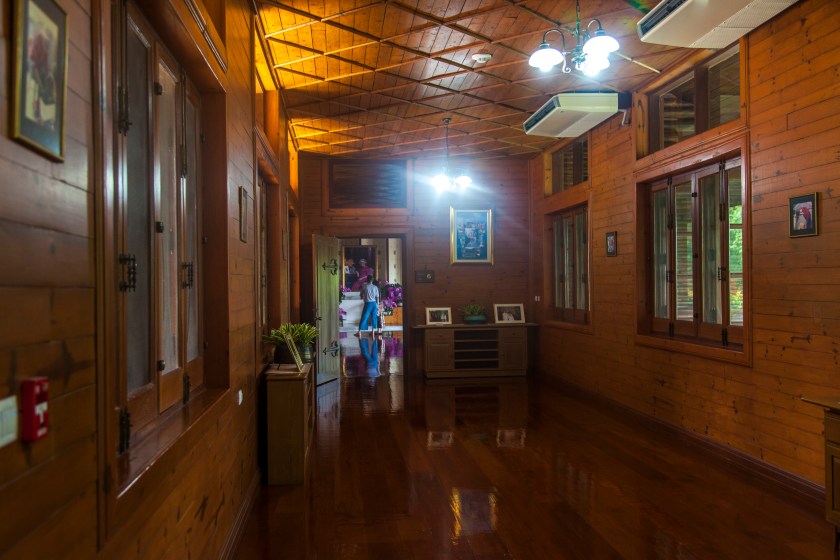
The residence is essentially a huge wooden hut, the entire interior is also made of wood. Some of the Queen’s personal belongings are exhibited, in particular tools for embroidery and pottery. The balcony provides stunning views of the garden that we saw before.

IMG_3414

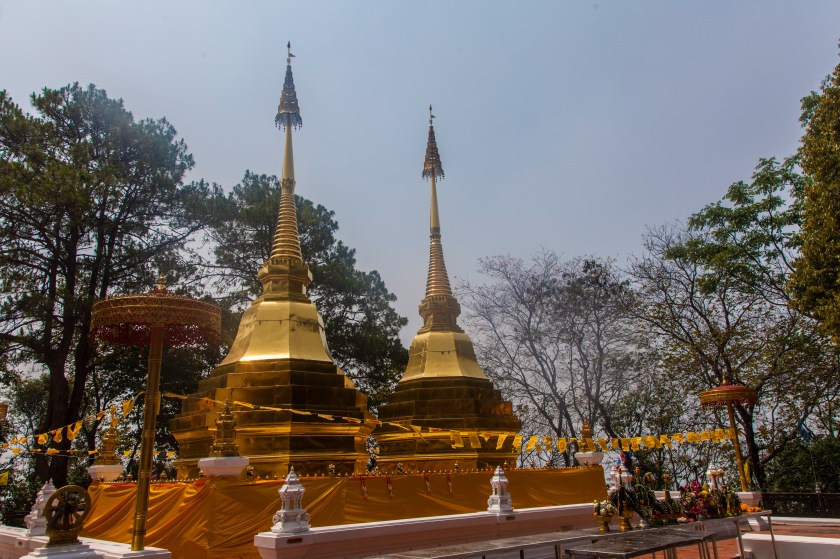
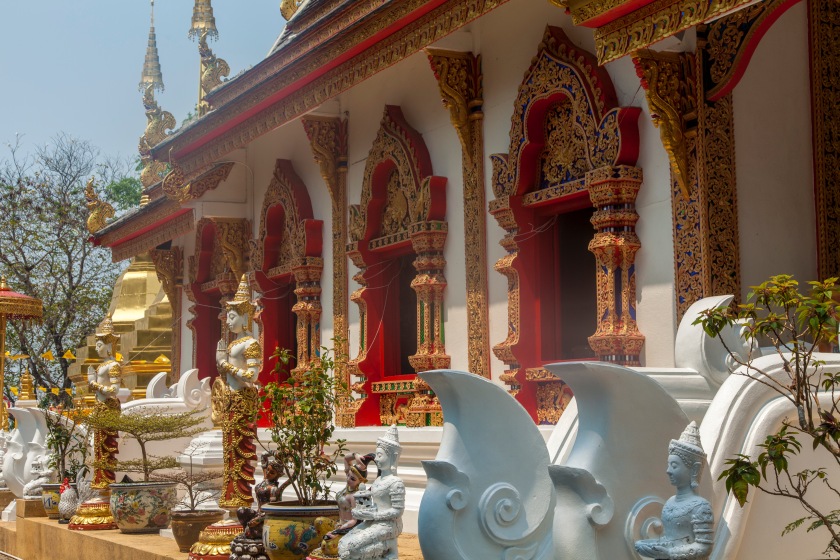
There is another attraction at the very top of the Doi Tung mountain, where we had to get by car. These are two stupas in a typical Lanna style, erected as far back as the 10th century and containing Lord Buddha’s relics – namely, his collarbone.

IMG_3420

IMG_3425

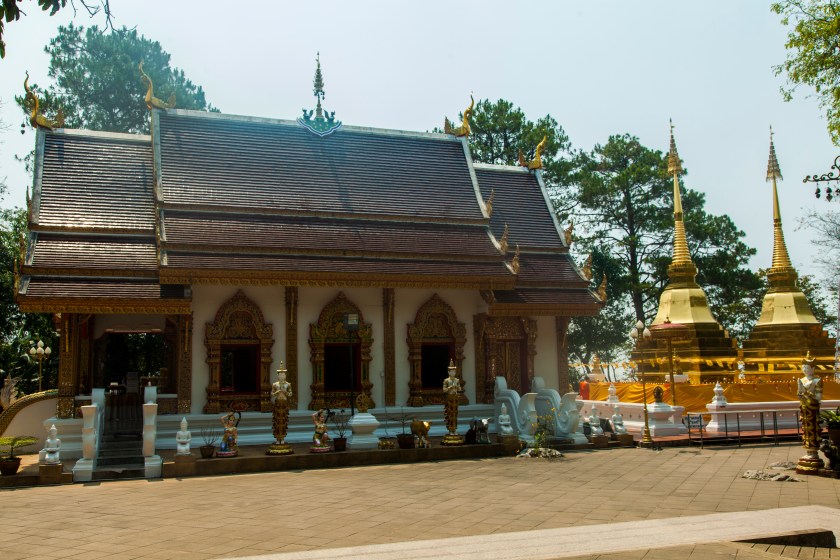
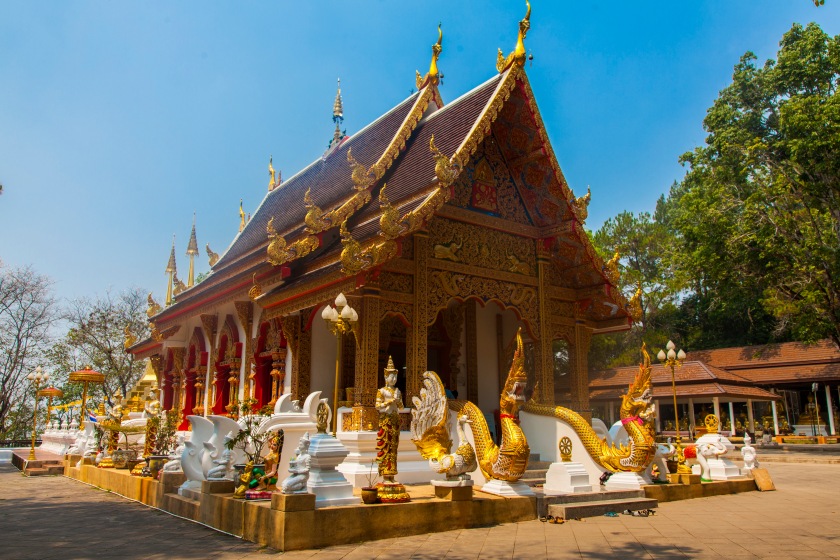
There is also a temple next to the stupas, very intricate from the outside, but not particularly remarkable inside. As for the stupas themselves, we couldn’t come close to them – women are not allowed to.

IMG_3429

IMG_3430

By the way, our guide Dino told us that these stupas were especially sacred for people born in the year of the Pig (or Elephant) according to the Eastern Zodiac. And for each of the zodiacal animals, there are respective stupas all around Indochina. It is believed that everyone should visit the stupa corresponding to their zodiacal animals and pray there at least once during their lifetime.

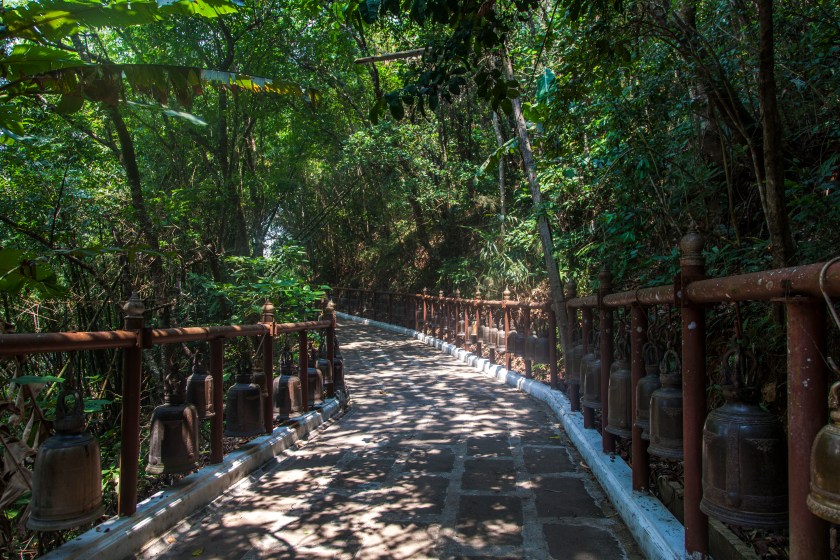
On the way back down to our car we descended a stepped alley with lots and lots of bells of different sizes at the sides.

IMG_3432

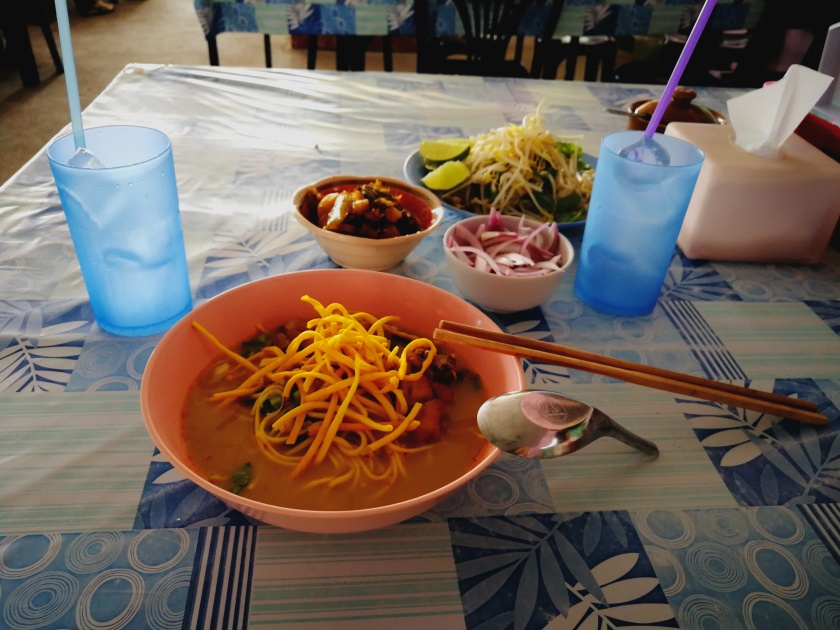
It was already lunch time, and we stopped at some roadside eatery. I had read somewhere that in Thailand the most delicious food can be found right in such non-glamorous places (in China as well, by the way – as confirmed by myself), and it turned out to be exactly the case! We got two servings of spicy chicken noodle soup, and we liked it a lot. And it cost us 70 baht for two, which didn’t even make 3 USD!

selfp

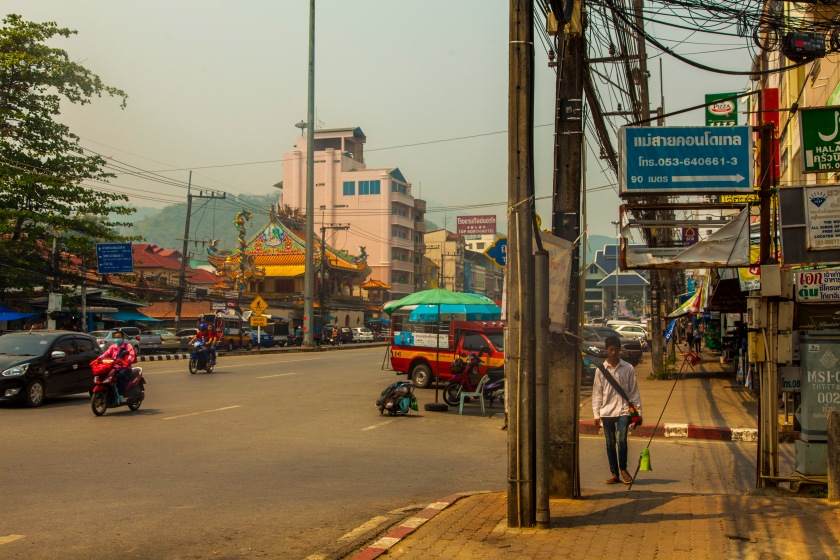
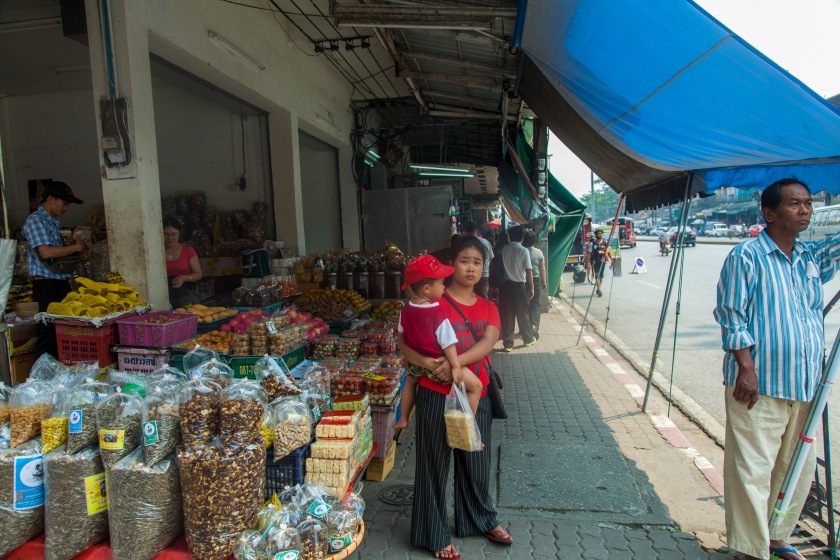
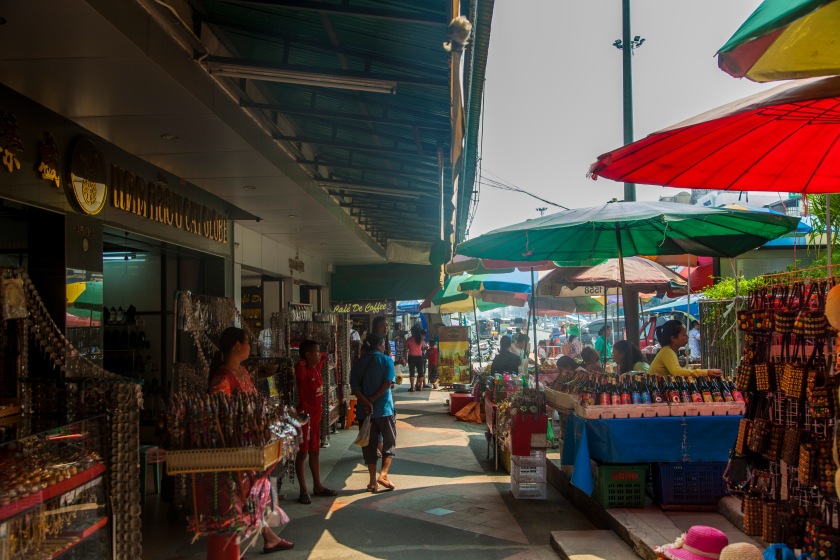
After lunch we drove to the town of Mae Sai at the very border with Myanmar. Dino said that Thai, Burmese, Indian, and Chinese people live here, and everyone gets along very well: Muslims, Buddhists, and Christians. In Mae Sai we visited a jade shop and walked past a street market, which, apparently, Dino himself was much more interested in than we were.

IMG_3438

IMG_3443

IMG_3444

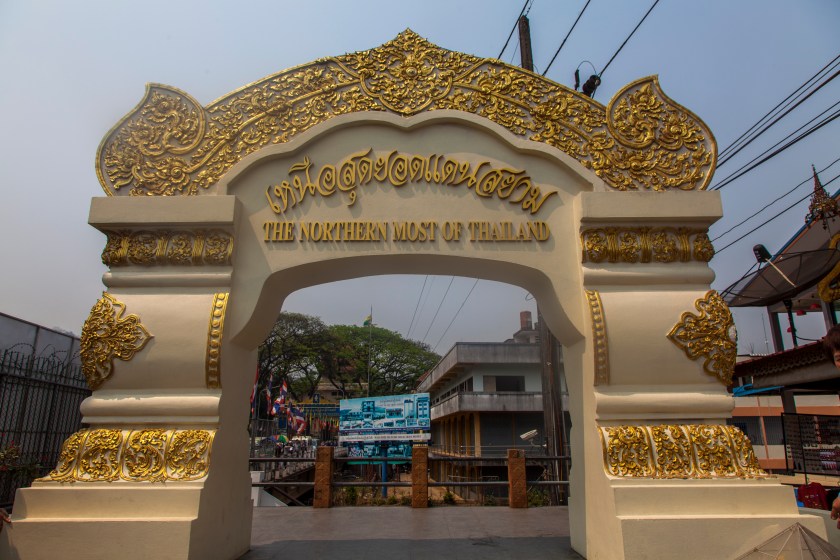
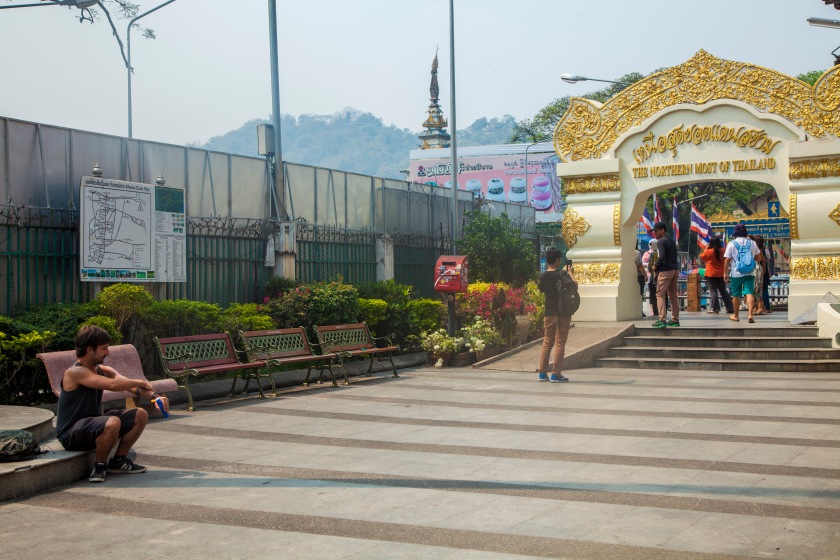
But what was really interesting to see was the gate separating Thailand from Myanmar. We asked, how far away from here the Golgen Triangle was – that is, the place where the borders of Thailand, Myanmar and Laos meet. We were told that it was a 35-minute drive, for which we’d have to pay extra to the driver and that we’d still need to get permission to get on a Mekong tour boat.

IMG_3445

IMG_3451

We decided that we didn’t want to go there and headed back to Chiang Rai. Once back at the hotel and left to ourselves, we went straight to the swimming pool, which we’d been drooling over for two days now. But it was no coincidence that the area around the pool was completely empty all the time, which we were really surprised about. The water turned out to be so icy cold that I could not even dip my toe in it, let alone get in there.

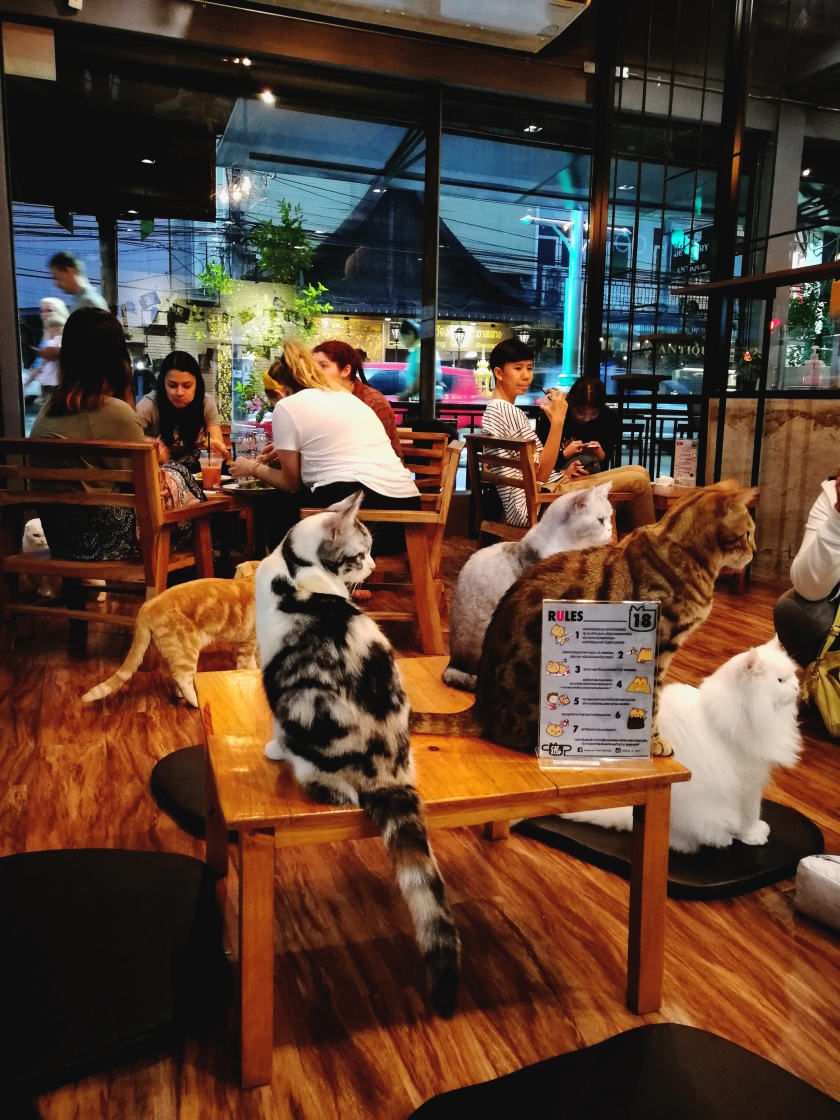
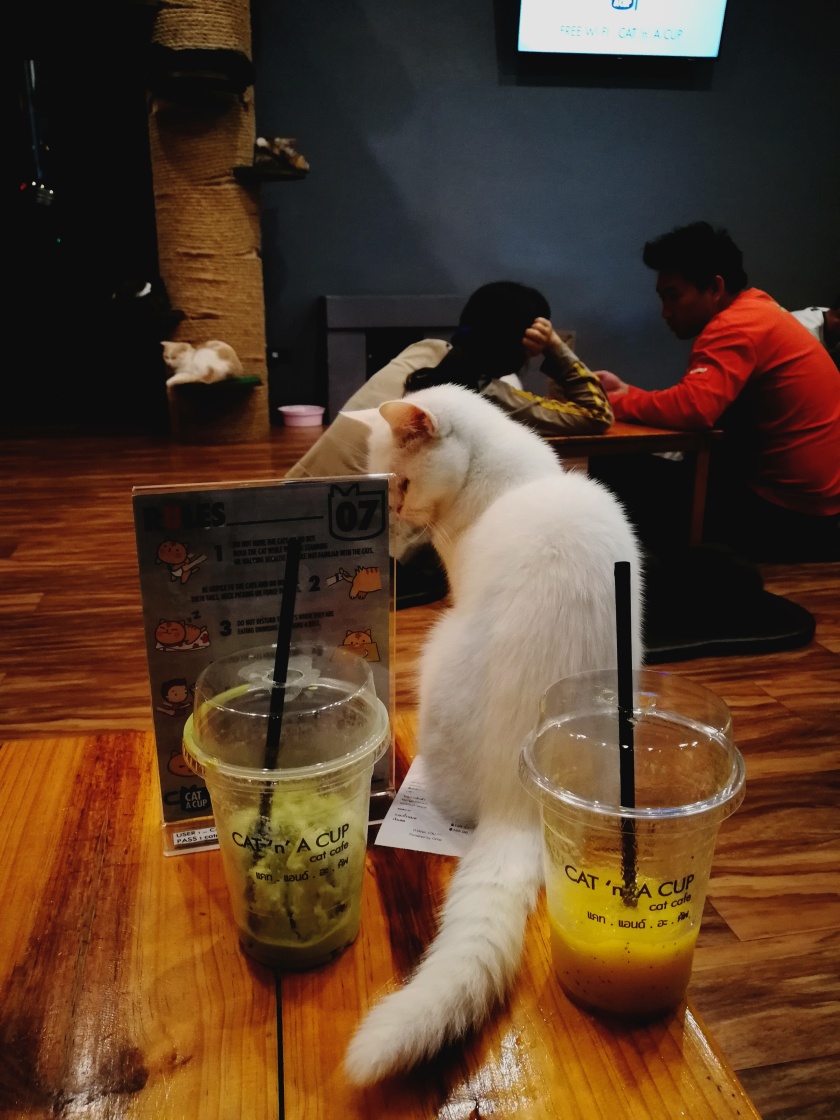
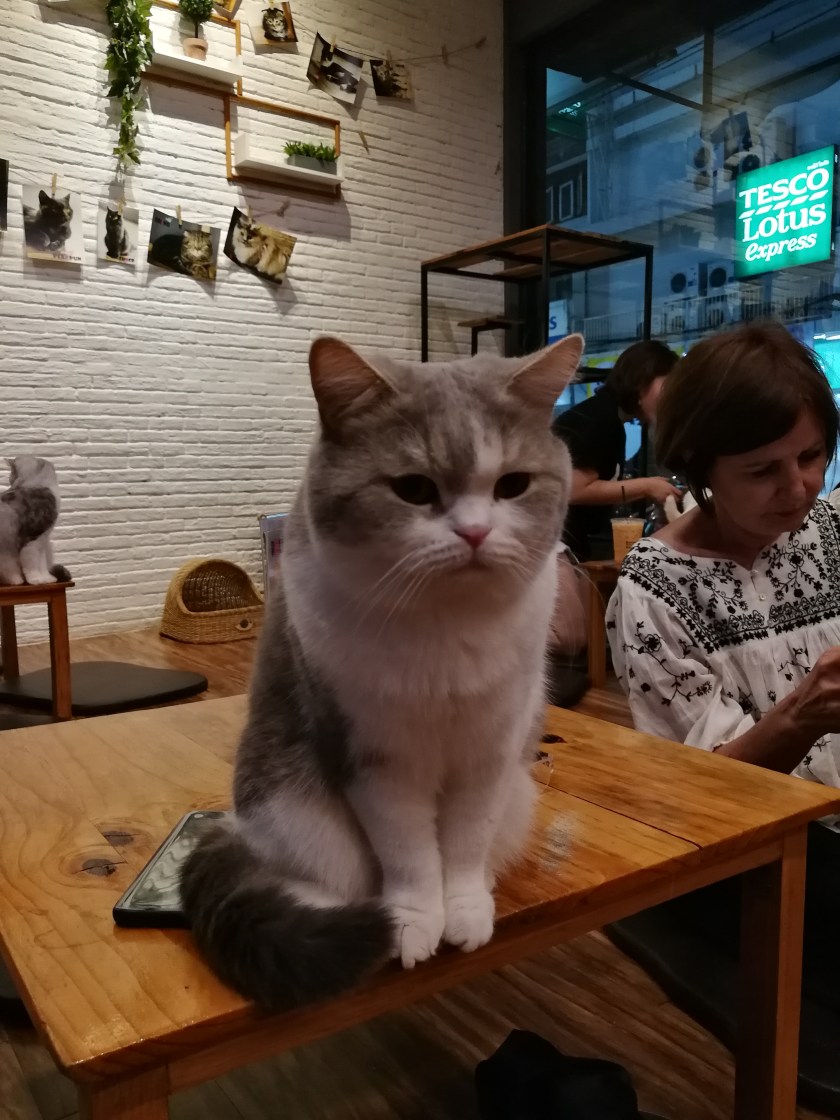
Mission unaccomplished! But we went again to get a wonderful massage in the same parlour as yesterday. There are plenty of such parlours on our street, but as we already tested this one yesterday and were very happy with it, we saw no point in looking for something else. And after the massage, as we were intending to go for dinner, we accidentally spotted a cat in the window of a small coffee shop, and then many more cats. We’d noticed this coffee shop, called Cat’n’Cup, yesterday, but somehow didn’t realise that it was a cat cafe. So how could we resist going in to have a frappe and to pet some furry purring felines!

selfp

Well, the latter actually turned out a bummer: we were still smelling of massage oil with a citrus aroma, which by cat standards meant that we were stinking sickeningly! So they avoided us at all costs, although we did see one or two curious faces on our table!

selfp

sdr

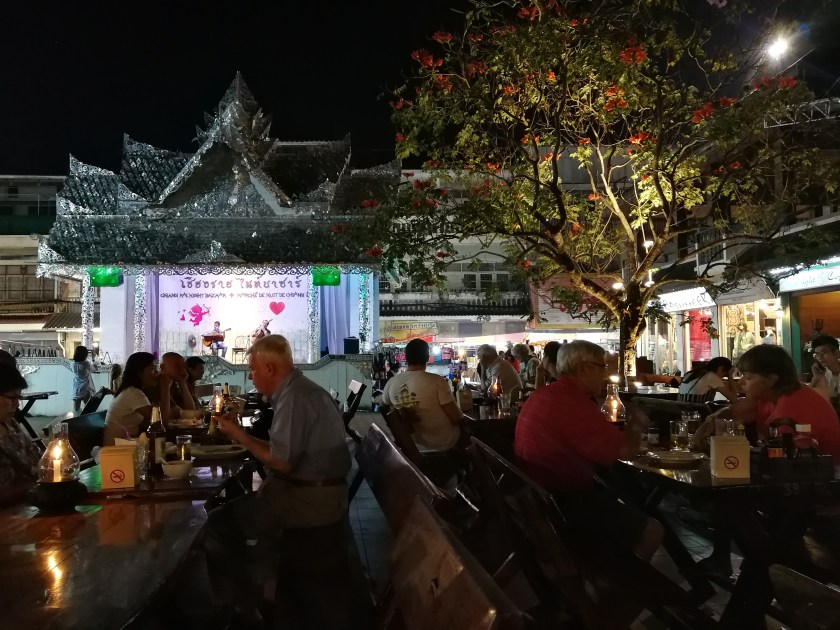
Then we went to have dinner in an open-air restaurant, right around the corner from the night market. It was a very pleasant place, and next to it there was a stage, from which we were entertained first with Chinese music, then with English-language guitar songs, and finally with Thai dances.

sdr

Posted in Русский, Азия, Таиланд, Чианг Рай

Таиланд – День 4

CLICK HERE FOR ENGLISH VERSION. АНГЛОЯЗЫЧНАЯ ВЕРСИЯ ПО ЭТОЙ ССЫЛКЕ.

21 марта 2018

Сегодня в 8 утра мы выехали на нашу первую экскурсию в Чианг Рае. Поехали на север, в королевскую резиденцию Дой Тунг с прекрасным садом.

IMG_3367

Сад – это один из успешных проектов покойной королевы-матери, которая пыталась с помощью увеличения занятости бороться с наркоторговлей в этом неблагополучном пограничном с Мьянмой регионе.

IMG_3380

IMG_3381

IMG_3386

IMG_3387

И сад действительно прекрасен. На высоте 1300 м над уровнем моря тут абсолютно не жарко, везде самые разнообразные цветы, в основном европейские, но есть и местные орхидеи.

IMG_3393

IMG_3397

IMG_3399

IMG_3404

Чуть выше сада находится королевская резиденция, где и проживала королева-мать. Мы поднялись к резиденции – там снова соблюдался дресс-код и пришлось прикрыть плечи – и вошли внутрь. Я успела сделать одно фото, прежде чем мадам из группы французских туристов – единственных туристов помимо нас, интересно, где толпы китайцев? – предупредила меня, что это запрещено.

IMG_3411

Резиденция – это по сути огромная такая деревянная изба, весь интерьер тоже из дерева, выставлены некоторые личные вещи королевы, в частности орудия для вышивки и керамической скульптуры. С балкона открывается потрясающий вид на ранее виденный нами сад.

IMG_3414

На самом верху горы Дой Тунг имеется еще одна достопримечательность, к которой мы едем на машине. Это две ступы в характерном для королевства Ланна стиле, возведенные аж в 10 веке и хранящие в себе мощи Будды – а именно его ключицу.

IMG_3420

IMG_3425

У ступ имеется храм, весьма затейливый снаружи, но ничем особо не примечательный изнутри. А вот к ступам подойти близко нам не удалось – женщинам туда подходить запрещено.

IMG_3429

IMG_3430

Кстати, наш гид Дино рассказал нам, что именно эти ступы являются особо священными для родившихся в год свиньи (или слона) восточного зодиака. И для каждого из животных есть свои соответствующие ступы по всему Индокитаю. Предполагается, что каждый верующий человек должен хоть раз в жизни посетить те, которые соответствуют его зодиакальному животному и помолиться там.

Обратно к машине мы спускались по ступенчатой аллеей с очень большим количеством колоколов по бокам.

IMG_3432

Было уже время обеда, и мы остановились у какой-то придорожной забегаловки. Вот я где-то читала, что в Таиланде самая вкусная еда именно в таких негламурных едальнях (в Китае, кстати, было так же – на своем примере проверяла), и ведь так и оказалось! Для нас заказали две порции острого куриного супа-лапши, и он нам очень и очень понравился. А обошлось это дело в 70 бат на двоих, что даже до 3 долларов США не дотягивает!

selfp

После обеда мы еще заехали в городок Мае Саи на самой границе с Мьянмой. Дино сказал, что тут живут и тайцы, и бирманцы, и индусы, и китайцы, и все прекрасно уживаются: и мусульмане, и буддисты, и христиане. Здесь посмотрели магазин нефритовых изделий и прошлись по местной барахолке, которая, судя по всему, самому Дино была гораздо интереснее, чем нам.

IMG_3438

IMG_3443

IMG_3444

Зато что было интересно, так это увидеть ворота, отделяющую Таиланд от Мьянмы. Мы спросили, далеко ли отсюда находится Золотой треугольник – место, где сходятся границы Таиланда, Мьянмы и Лаоса. Нам ответили, что в 35 минутах езды, и что за это придется дополнительно платить шоферу и еще получать разрешение, чтобы покататься на лодке по Меконгу.

IMG_3445

IMG_3451

Мы решили, что не хотим и поехали обратно в Чианг Рай. Вернувшись в отель и будучи предоставленными самим себе, мы отправились было к бассейну, на который уже второй день облизывались. Но неслучайно у бассейна было совершенно пусто, чему мы второй день удивлялись. Вода оказалась настолько ледяной, что я даже палец ноги туда окунуть не смогла, не говоря уже о том, чтобы туда залезть целиком.

Не солоно хлебавши, отправились снова на прекрасный массаж в тот же салон, что и вчера. По нашей улице таких салонов видимо-невидимо, но этот мы уже вчера опробовали и остались очень довольны – от добра добра не ищут, решили мы.
А после массажа, собираясь идти ужинать, мы совершенно случайно увидели кошку в окне одной маленькой кофейни, а потом еще много кошек. Кофейню под названием Cat’n’Cup мы заметили еще вчера, а вот что это кошачье кафе – както не сообразили. Ну как тут было не зайти выпить фраппе и потискать пушистых мурлык!

selfp

Правда, с тисканьем вышел небольшой облом: от нас пахло массажным маслом с каким-то цитрусовым ароматом, то есть по кошачьим меркам от нас тошнотворно воняло! От нас шарахались как черт от ладана, правда одна-две любопытные морды на нашем столике таки появились!

selfp

sdr

Ну а потом мы отправились ужинать в ресторан под открытым небом, прямо у ночного рынка. Очень приятное место, и рядом находилась сцена, с которой нас развлекали сначала китайской музыкой, потом англоязычными песнями под гитару, и в конце тайскими танцами.

sdr

Posted in Азия, Русский, Таиланд, Чианг Рай

Таиланд – День 3

CLICK HERE FOR ENGLISH VERSION. АНГЛОЯЗЫЧНАЯ ВЕРСИЯ ПО ЭТОЙ ССЫЛКЕ.

20 марта 2018

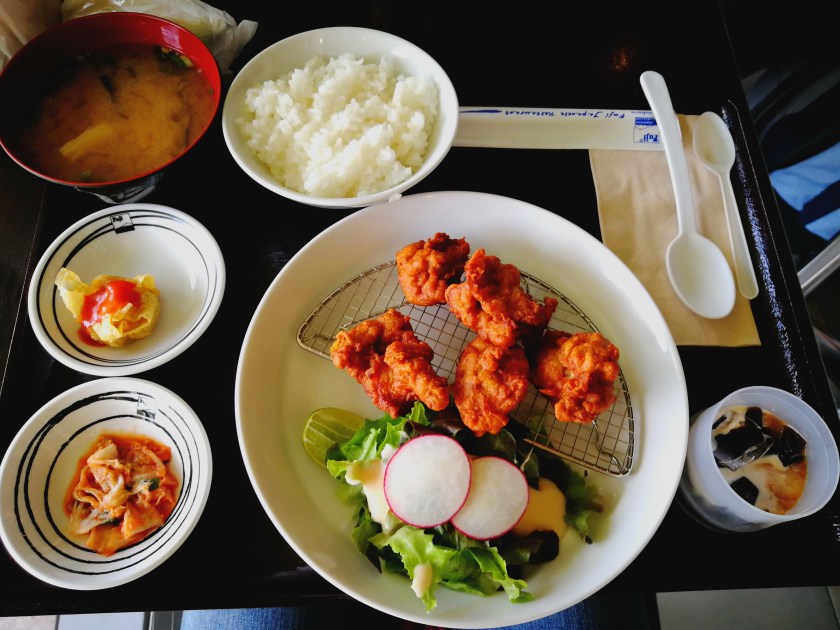
Сегодня длинным постом не порадую: мы в разъездах. В 10 утра, сразу после завтрака, за нами заехал шофер и повезли в аэропорт. Мы едем в Чианг Рай! В аэропорту оказались рано, так что до рейса успели даже пообедать набором японской еды с мисо супом, пряной курицей, рисом, кимчхи (почему-то!) и кофейным желе на десерт.

selfp

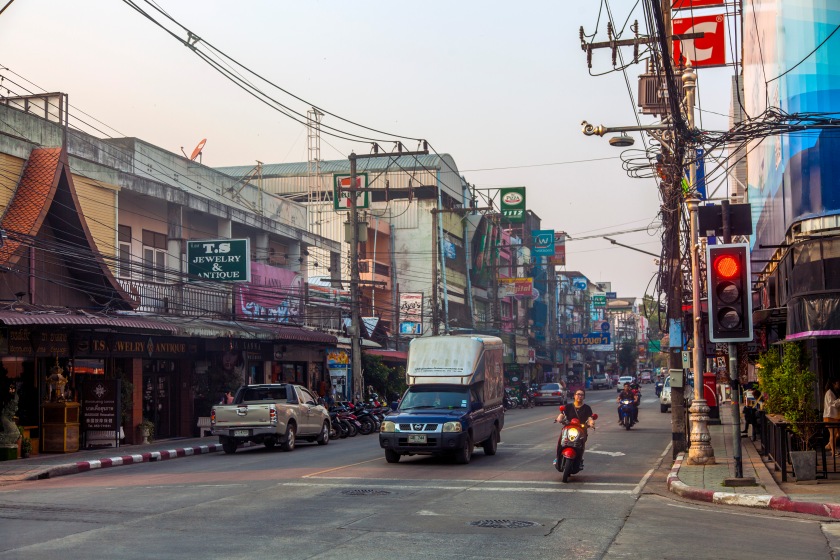
Рейс чуть больше часа, в Чианг Рае нас встретил здешний гид Дино и поехал с нами в отель. Чианг Рай – это древняя столица королевства Ланна, позже столицу перенесли в Чианг Май. Находится на севере Таиланда, практически на границе с Мьянмой, и мы сразу заметили разницу в климате с Бангкоком: днем жарче и суше, в растительности преобладают лиственные деревья над пальмами, встречаются даже хвойные, а вечером – забегу вперед – прохладнее. Сам город маленький, с фактически одной главной улицей, на которую и выходит наш отель – у нас даже возникло ощущение дежавю, настолько нам это напомнило Хюэ во Вьетнаме.

IMG_3362

IMG_3361

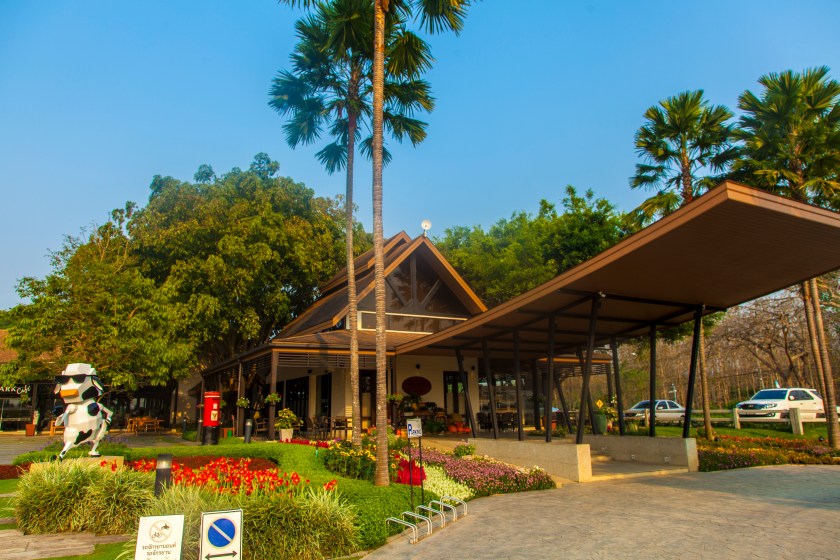
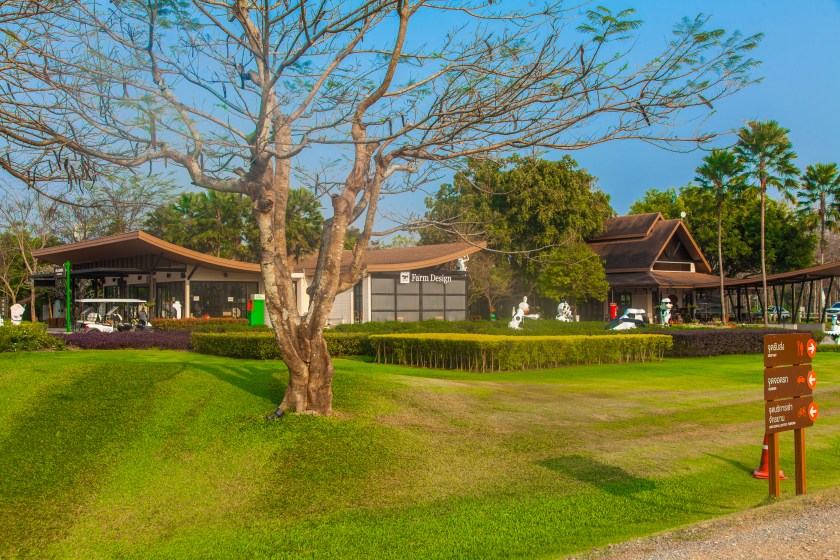
При отеле мы приметили бассейн, но сегодня в него не попали. Вообще-то по программе сегодня мы больше ничего делать были не должны, но Дино вызвался показать нам какой-то парк за городом, и мы поехали. Парк, по правде, ничего особенного из себя не представлял – широкие лужайки, немного цветов, несколько чайных кустиков и большая золоченая статуя дракона, вот и все. Дино сказал, что главная часть парка платная, но мы туда не пойдем, и что рядом находится большая чайная плантация.

IMG_3357

IMG_3343

IMG_3347

IMG_3348

После парка Дино порывался дальше нас сопроводить в прогулке по окрестностям, но нам уже хотелось отдохнуть, и мы отправились в найденный с помощью гугла массажный салон прямо в двух шагах от отеля, о чем не пожалели совершенно. Невероятный кайф!

А потом и поужинали в ресторане на той же улице огромными порциями рыбы, после чего прогулялись немного по ночному рынку-барахолке.

selfp

Posted in Asia, Chiang Rai, English, Thailand

Thailand – Day 3

РУССКОЯЗЫЧНАЯ ВЕРСИЯ ПО ЭТОЙ ССЫЛКЕ. CLICK HERE FOR RUSSIAN VERSION.

20 March 2018

Today, I won’t be entertaining you guys with a long post: we are travelling. At 10 am, right after breakfast, the driver picked us up and took us to the airport. We’re going to Chiang Rai! We arrived at the airport pretty early, so we even had time to have a Japanese set with miso soup, spicy chicken, rice, kimchi (for some reason!) and coffee jelly for lunch.

selfp

The flight took a little over an hour, and in Chiang Rai we were met by our local guide Dino and taken to our hotel. Chiang Rai is the ancient capital of the Lanna kingdom, later the capital was moved to Chiang Mai. It’s located in the north of Thailand, very close to the Myanmar border, and the climate difference with Bangkok is noticed immediately: it’s hotter and drier during the day, the vegetation is dominated by broad-leaved trees over palm trees, there are even conifers; and in the evening – I’m rushing ahead of myself – it’s cooler. The city itself is small, with pretty much one main street, where our hotel is located – this so reminded us of Hue in Vietnam that we even had a feeling of deja vu.

IMG_3362

IMG_3361

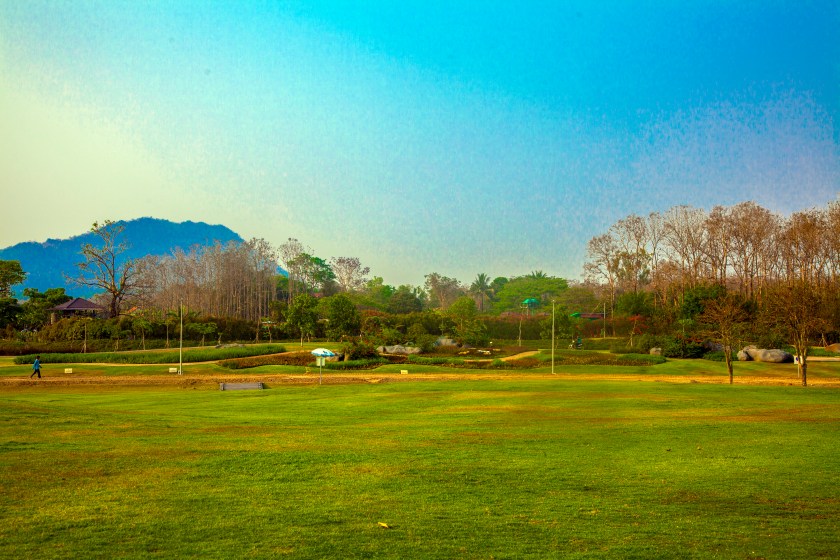
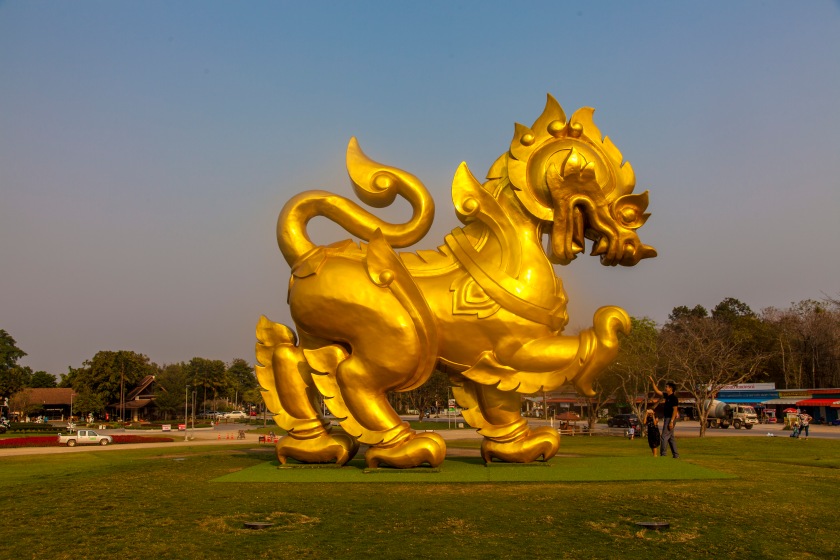
At the hotel we noticed a swimming pool, but couldn’t make it there today. Actually, according to our tour programme we were supposed to have the afternoon free, but Dino volunteered to show us a park outside the city, and off we went. The park, to be honest, wasn’t anything special – it had wide lawns, a few flowers, a few tea bushes and a large gilt statue of a dragon, that’s all. Dino said that the entrance to the main part of the park wasn’t free so we would not go there, and that there was a large tea plantation nearby.

IMG_3357

IMG_3343

IMG_3347

IMG_3348

After the park Dino was still enthusiastic to walk around the neighborhood with us, but we already wanted to relax, so instead we headed to the massage parlour, found on Google, right around the corner from the hotel, which we didn’t regret at all. Such a pleasure!

And then we had dinner in a restaurant on the same street, with huge portions of fish, and after that strolled a little around the night market.

selfp

Posted in Asia, Bangkok, English, Thailand

Thailand – Day 2

РУССКОЯЗЫЧНАЯ ВЕРСИЯ ПО ЭТОЙ ССЫЛКЕ. CLICK HERE FOR RUSSIAN VERSION.

19 March 2018

Today we had to get up very early to have breakfast and head to the Damnoen Saduak floating market at 7am. It’s a bit hard to assess how far the place really is from Bangkok, since today is Monday and the traffic is simply incredible, the roads are much more packed than yesterday, and we had to spend ages in traffic jams which were aggravated by the very long waiting time at traffic lights.

On the way to the floating market we stopped to see how oil and sugar are produced from coconut – something similar to what we’d already seen in Vietnam.

IMG_3297

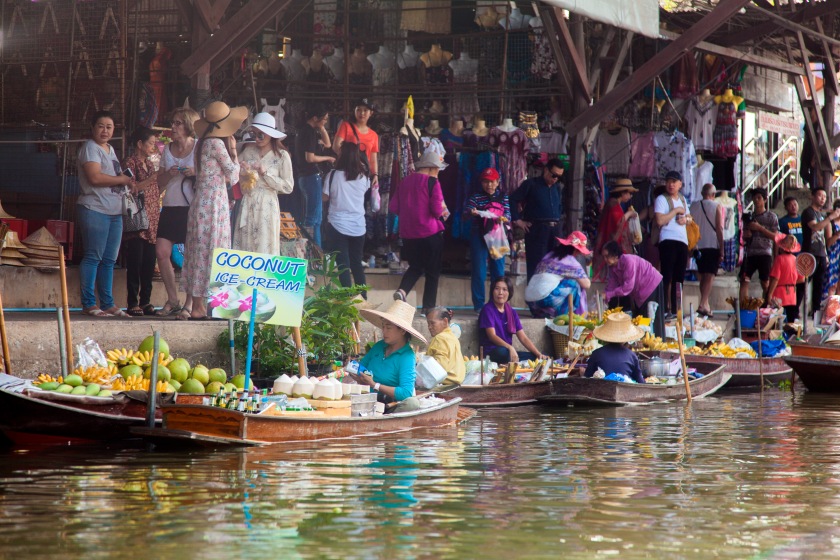
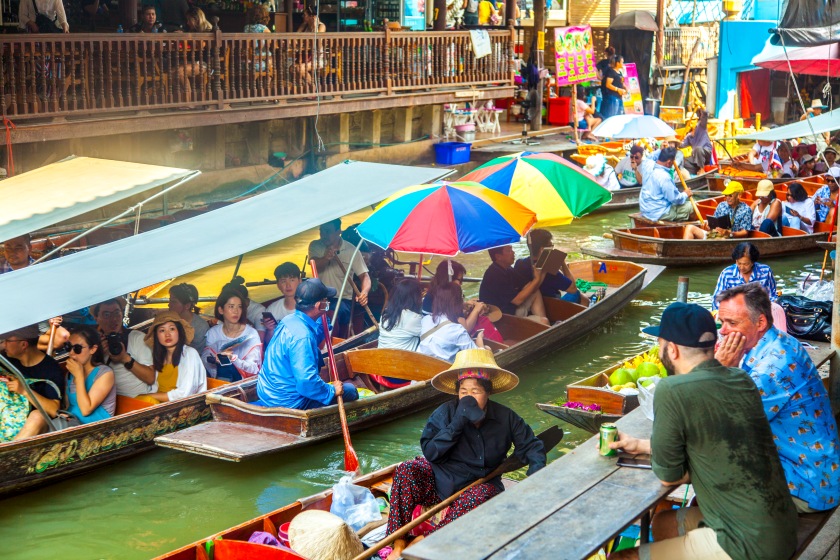
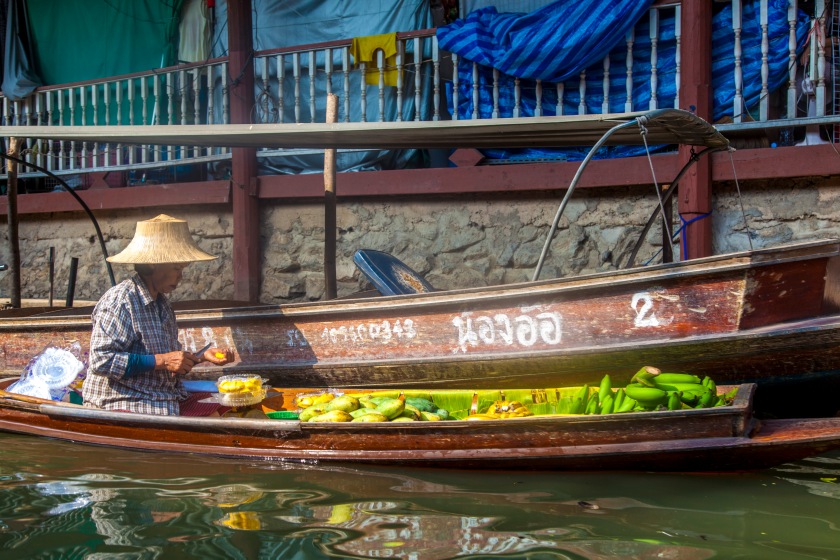
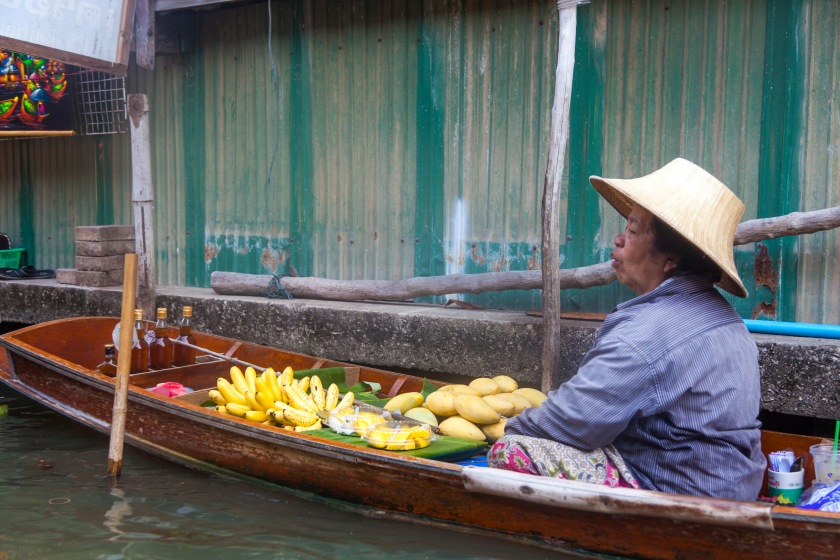
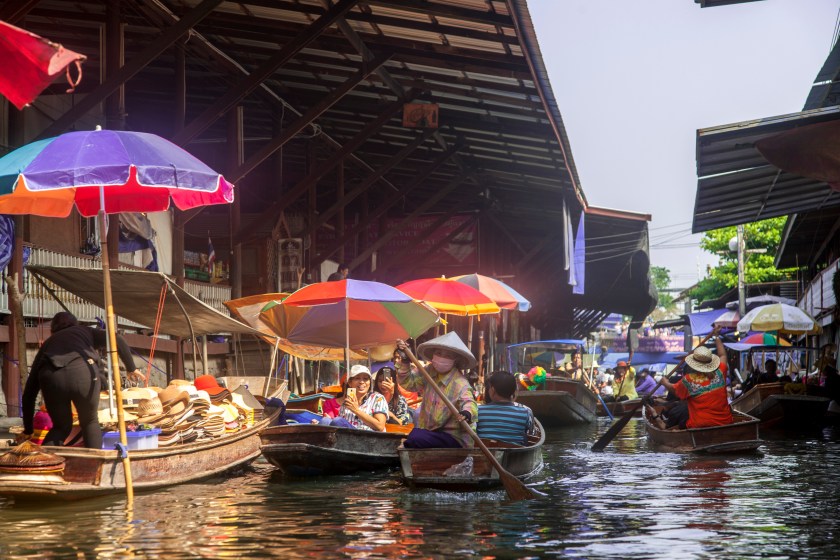
If I continue comparing with Vietnam, where the floating market didn’t quite meet our expectations, here it was the same. There were lots of boats, but most of them were carrying tourists, with only a couple boats here and there selling fruits and snacks.

IMG_3302

IMG_3307

IMG_3309

IMG_3310

IMG_3313

So we didn’t get to see that iconic postcard view of the canal crammed with boats full of colourful flowers and fruits. Maybe, again, we’d had to be here at 5am for that. On the other hand, along the banks of the canal there was a whole flea market kind of thing, with souvenirs, handicrafts and other stuff, so the boatman kept stopping every minute at one shop or another to get us to buy something off his friends. One of the sellers introduced herself as his wife and, when she faced our languid refusal to buy anything despite her persistence, she asked us to at least give tips to her husband at the end of our ride. Floating by another shop, we saw a woman washing her plate and hands right in the canal, which raised serious doubts as to the compliance of the food sold at the market with sanitary norms. Which is why, having got off the boat and having arrived to a local coffee shop, as agreed in advance with Vanna, we got hot coffee rather than the much desired iced coffee – common sense suggested that the ice could have also been made from frozen canal water, who knows?

IMG_3314

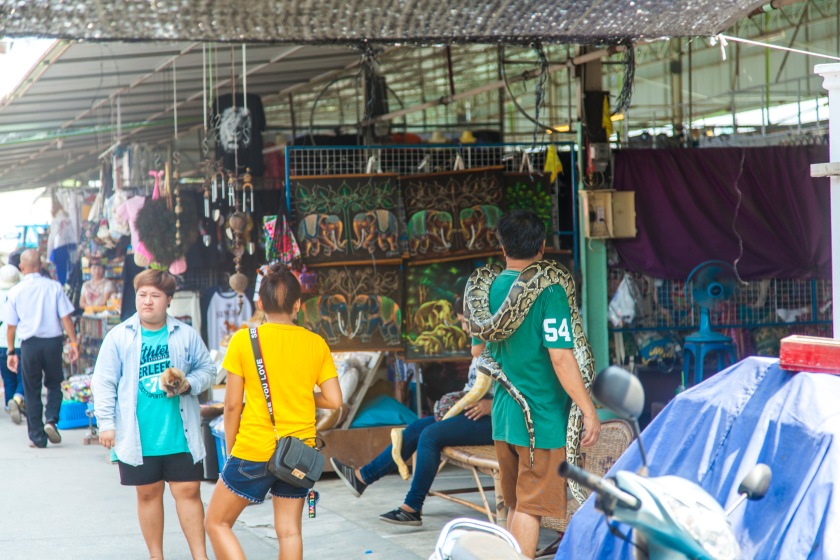
Another attraction at the market was the opportunity to take a picture with wild animals: sloths, loris and pythons. A thought flashed through my mind: maybe I should get a photo with a snake hanging around my neck? But I finally decided that I didn’t want to spend 200 baht (just under 7 USD) to support such a cruel business. Social responsibility, you know!

IMG_3319

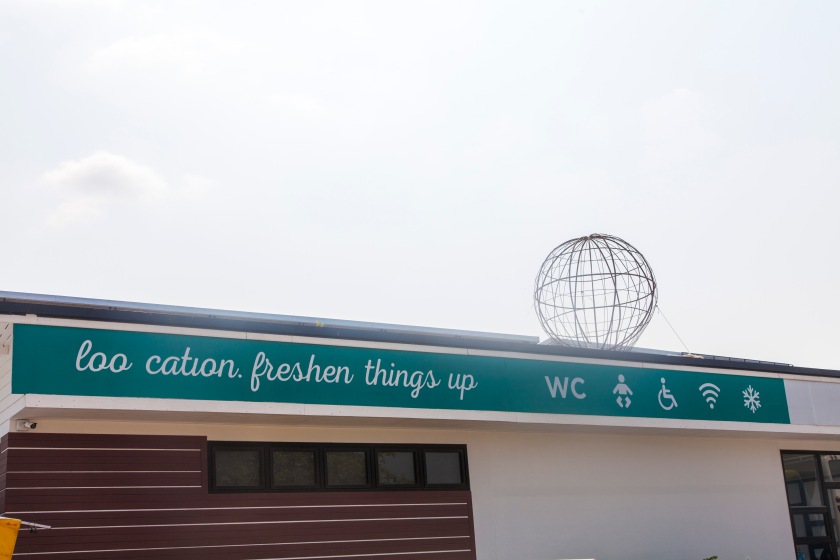
What also deserves a separate mention in this place is the toilet. It’s a whole single-storey building with enticing inscriptions and a car park, the interior reminds of pharmacy, there are snacks sold inside and even a wi-fi hotspot!

IMG_3316

In short, we weren’t extremely impressed with the floating market, and we left for Bangkok well before 11am, which was our deadline in order to make it to our cooking class at 1.30pm. What cooking class? – you may ask. Well, actually the tour we chose is called ‘The Taste of Thailand’, so in addition to sightseeing and beach recreation, it also includes three cooking classes in different cities!

We were brought to the corner of some street in Bangkok and handed over to a guy, who assigned us to a group of 8 people and sent us off to the market nearby with his colleague – our current instructor.

IMG_3329

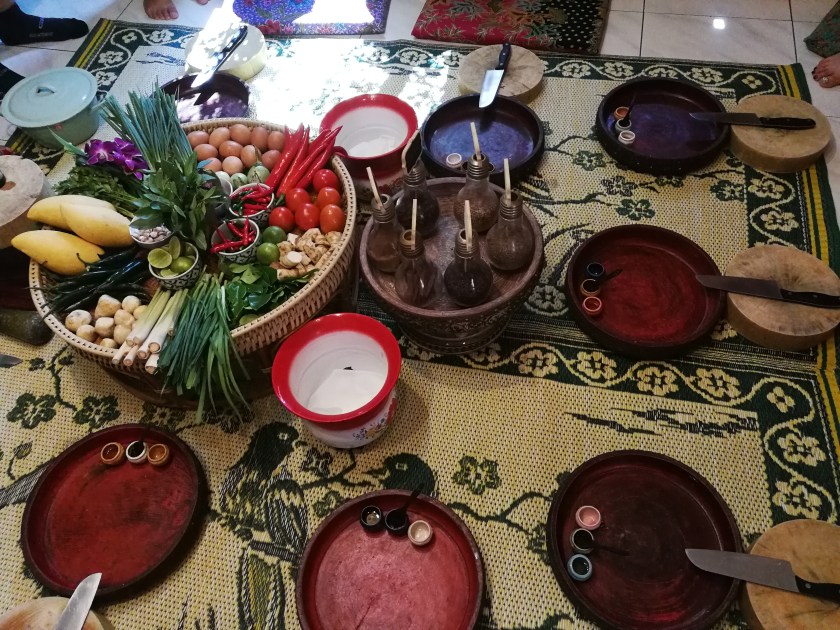
At the market, there were already baskets and a set of vegetables prepared for us, and we had to take them with us. That is, the market trip was a mock one – in fact, there was only one stall still open at this time as the market as such operates very early in the morning. It was just that the instructor – a very funny guy – took the opportunity to show us some essential ingredients, indispensable in Thai cuisine. As he explained, for example, the mushrooms or beans used here are, of course, local varieties, but can easily be replaced with any other variety, as they are used not for the taste, but for the texture, just like most other vegetables. As for galangal (a close relative of ginger), Thai basil, lemongrass and kaffir lime leaves, though, they can’t be replaced even with closely related plants – it wouldn’t be Thai cuisine anymore. From this we concluded that it is unlikely that we would be able to hone our Thai chef skills in Baku: there’s no way we can find kaffir lime leaves there. He also pointed out the important difference between Thai and Indian curries – in Indian curries the flavour is created using dried herbs and spices, and in Thai curries – using fresh herbs and roots. For instance, ginger and turmeric are always used fresh, never dried and ground.

A funny episode – there was a very nice Colombian couple in the group with us, and right upfront the lady warned the instructor that she couldn’t stand onions or any related plants. The instructor joked that he would then pass onions off as cabbage, and so till the end of the class he continued referring to all kinds of onion-like plants as cabbage.

cof

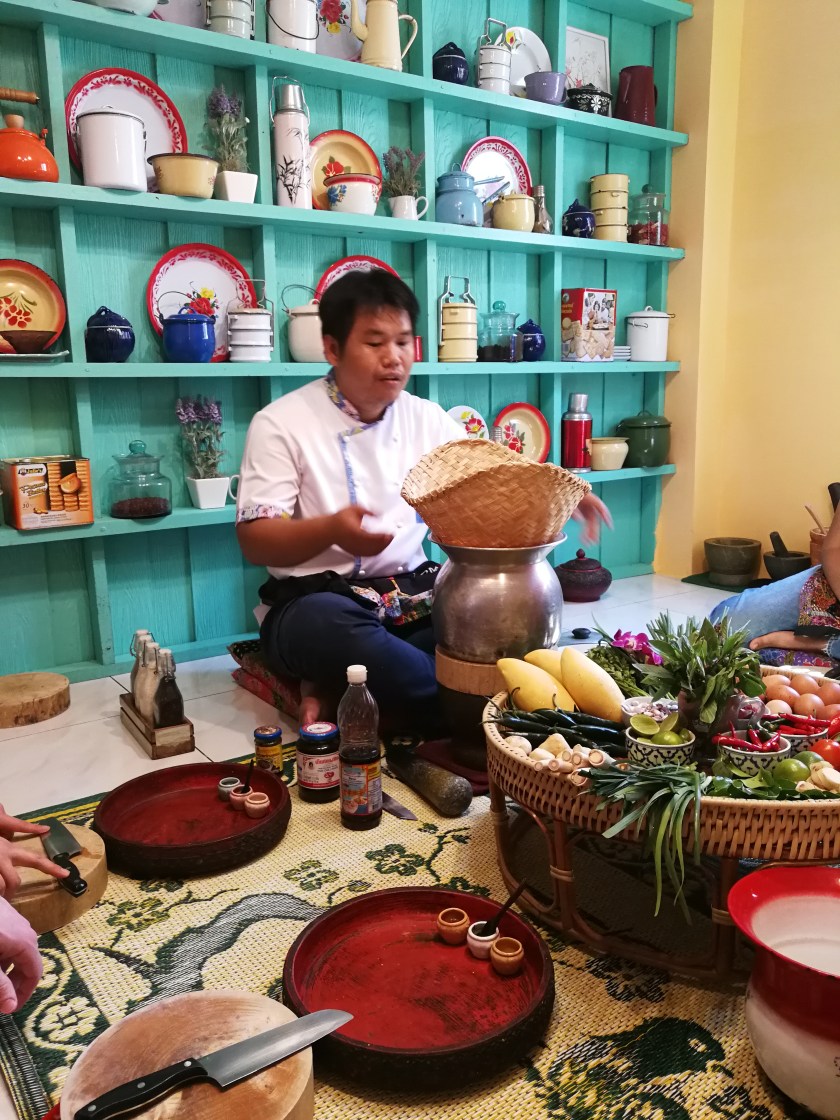
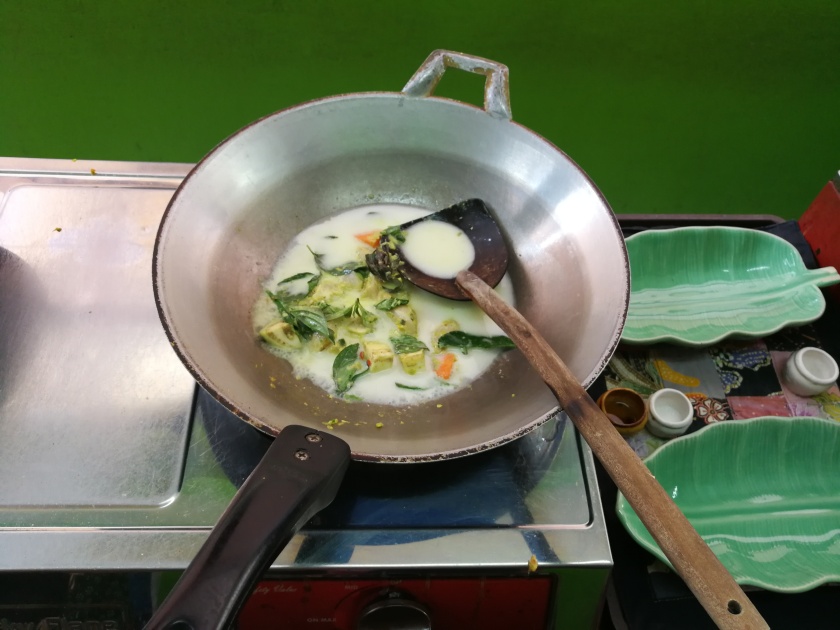
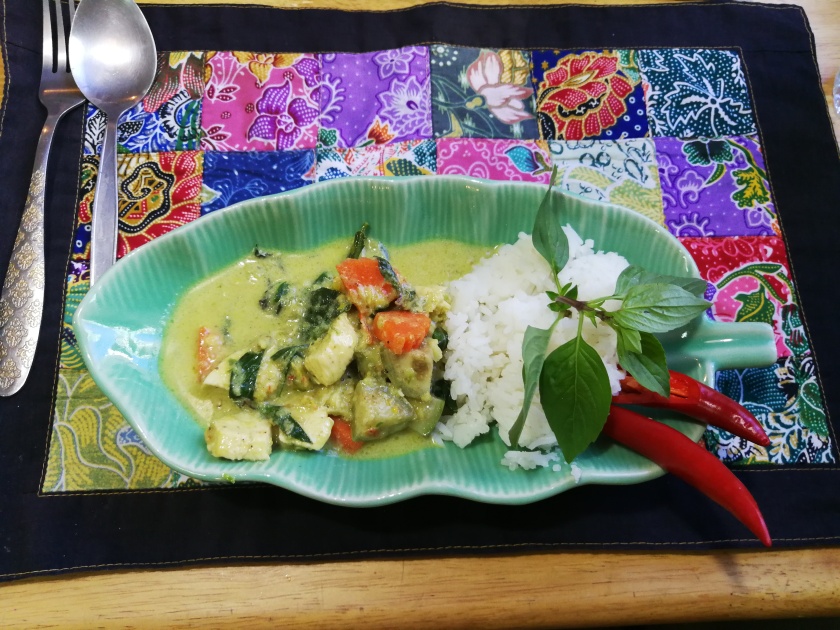
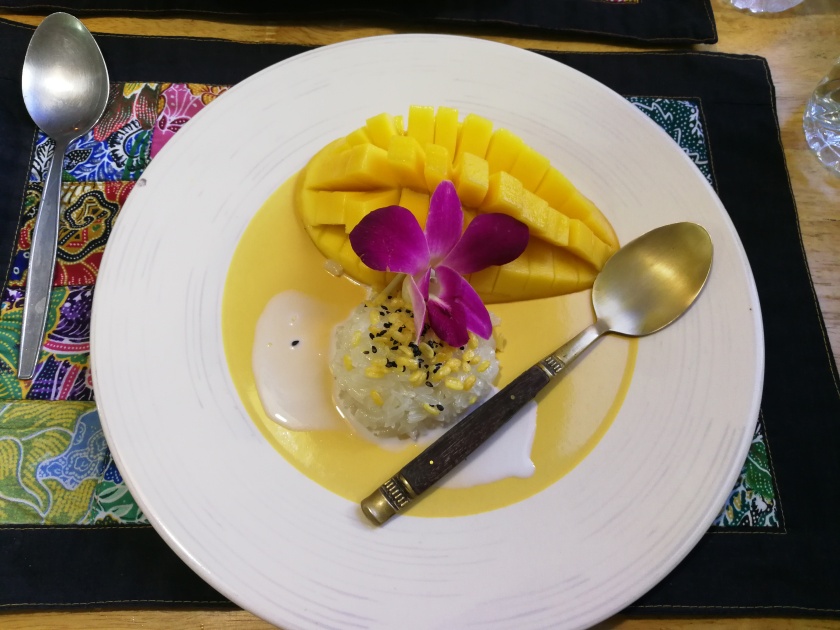
Having picked up our baskets with vegetables and herbs, we headed back to the cooking school and immediately got down to work. We had five dishes to cook: Tom Yum soup, Pad Thai, green curry, spicy chicken salad and sticky rice with mango for dessert. Frankly speaking, we didn’t cook the last two ourselves, but rather simply observed the process. Our only contribution to the dessert was participation in making coconut milk from grated pulp, and the milk was then used for the soup and curry as well as for the dessert. We started actually doing something when we moved on to the Tom Yum soup.

cof

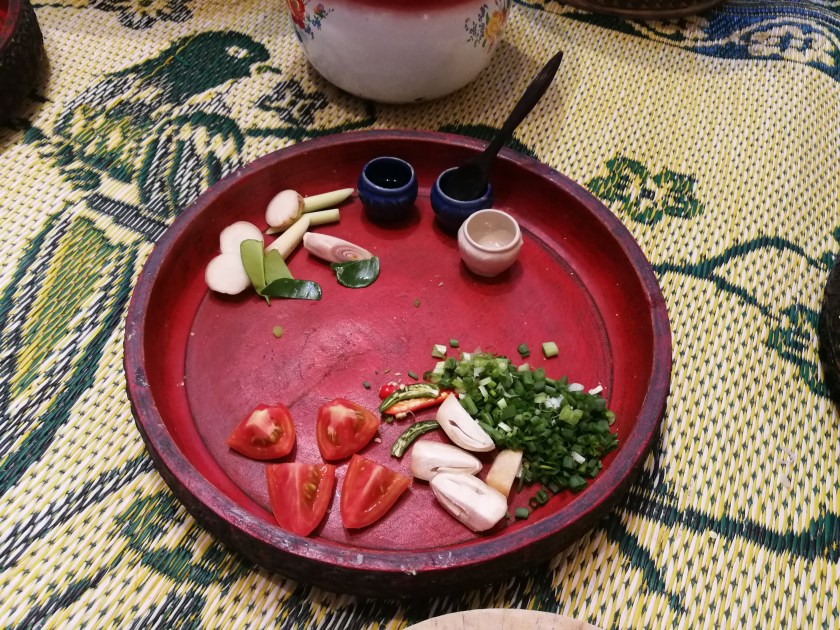
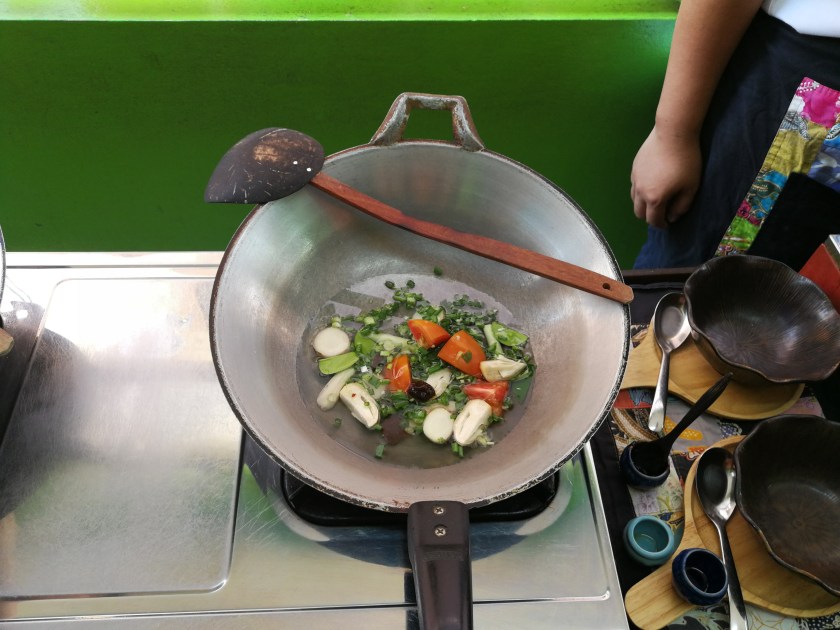
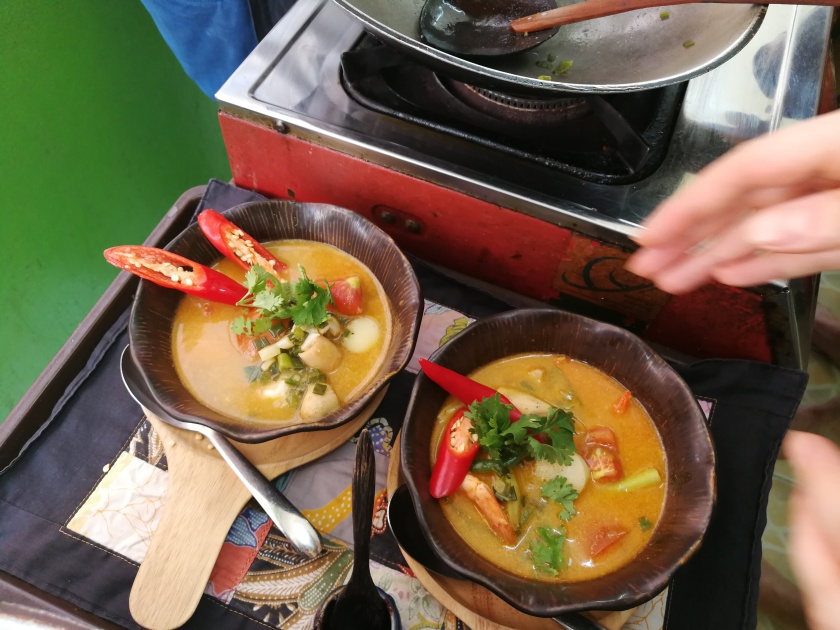
All we had to do was cut up the vegetables (tomatoes, green onions, mushrooms and chili peppers – I boldly took two), prep the “flavour ingredients”: lemongrass, galangal and kaffir lime leaves – these are the three ingredients that actually create that distinct Tom Yum flavour and that are not supposed to be eaten, by the way; all the rest can be replaced if necessary – and then put everything in our individual wok, and add fish sauce, chili paste and lime juice to taste. The fish sauce, which we first came across in Vietnam, features in absolutely every dish here, apart from sweets. It replaces salt and enhances the flavours, being a natural source of sodium glutamate. While we were cooking, the instructor was walking around, adding water and coconut milk, then adding shrimps. Generally, I noticed that we were only trusted with processing vegetables and greens, while all the meat was provided already prepped and added straight to our woks.

cof

cof

cof

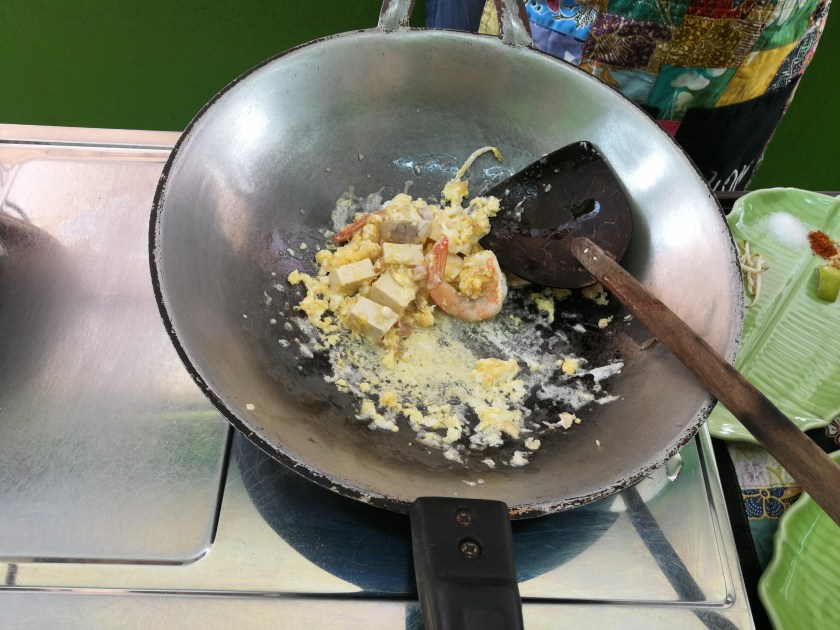
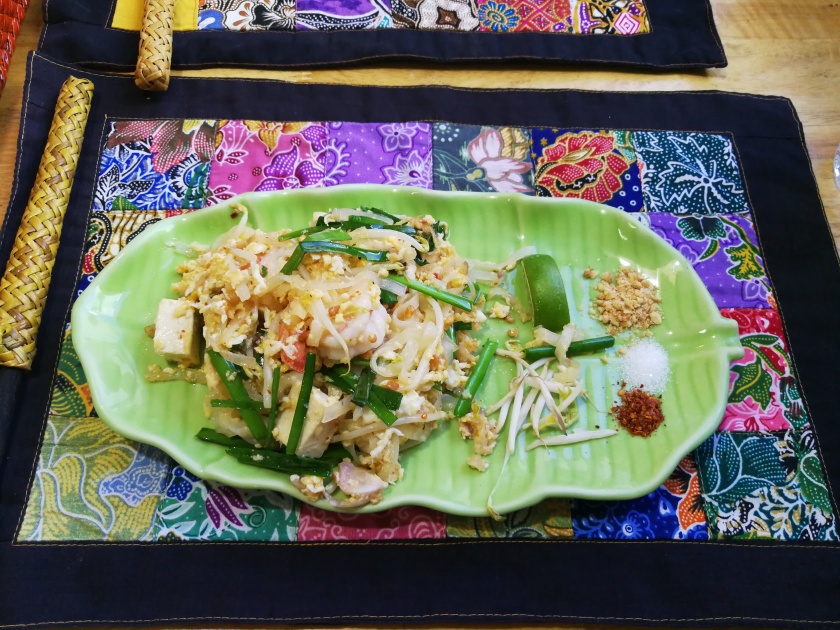
Once we cooked and happily consumed our own Tom Yum soup portions, it was time to cook the Pad Thai. The instructor had pre-soaked the rice noodles in cold water, so we just had to cut up the tofu and leeks and return to our woks, already washed and seasoned with soybean oil for us. First of all we fried off some crushed garlic with tofu and spices (fish sauce, coconut sugar, chili flakes, ground peanuts and something like pickled radish). Then we broke an egg into the wok and gave it a quick fry too. Finally, in went the noodles, leeks and soybean sprouts. The instructor told us that in Thailand no one cooks Pad Thai at home, and this is exclusively street food. Interestingly, some type of sugar is added to almost any dish here.

cof

cof

By the way, at some point the instructor told us that almost everyone in Thailand knows about Azerbaijan, due a lot of Thai players in our volleyball clubs, and since volleyball is the only team sports which Thais are good at, this fact is widely known. Good to know, as we were quite surprised that hearing about us being from Azerbaijan, no one here makes a puzzled face and asks what on Earth it is, like we’re used to.

After Pad Thai we tasted the spicy chicken salad prepared for us by the instructor, as mentioned, using onions, boiled minced chicken, chilis, ground roast rice and of course seasoned with fish sauce. And then we had to cook green curry. The instructor prepared the curry paste himself, explaining in the meantime that no one does it at home and everyone buys readily made paste. He mixed a lot of ingredients in the mortar – coriander and cumin seeds, the “holy trinity” (if you remember, that’s lemongrass, lime leaves and galangal), red and green chili peppers, turmeric root, garlic and something else, and then we took turns to mash it all with a pestle. Then, one last time, we returned to our woks, where coconut milk and chicken slices were already added for us, and cooked that with Thai eggplant, basil and finger root ginger with the addition of fish sauce, sugar and curry paste.
cof

cof

At the very end we were served our dessert – a slightly salty sticky rice mass (yes, salt is added to desserts and not to savoury dishes here – for the latter this mission is given to fish sauce!) with fresh mango. We really liked the class overall: we acquired new skills, plus it was fun and tasty!

cof

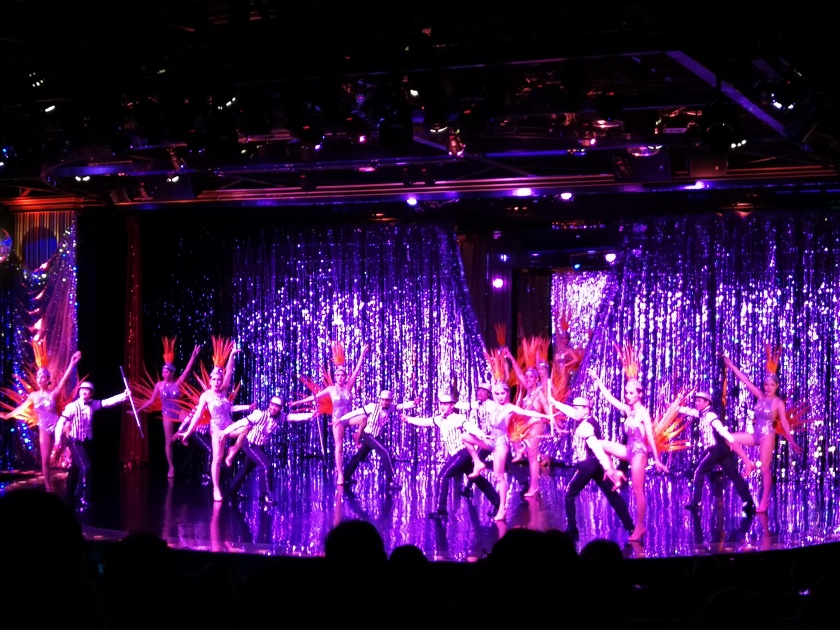
For the evening we had a ladyboy cabaret show planned. It sounds a bit dubious, I understand, but there was absolutely nothing bawdy there. Just normal singing and dancing, the performance was pretty good: they were portraying Beyoncé and Marilyn Monroe, acting scenes in Chinese and Korean style, and for some reason dancing to “Hava Nagila”. If you don’t know they are ladyboys, you could totally take them for women.

oznor

By the way, the show wasn’t included in our tour programme, therefore, even though Vanna kindly arranged tickets for us, even with a discount, we had to take a taxi ourselves. The cabaret is on the Asiatic embankment – it’s a very pleasant place with a ferris wheel, restaurants, shops and a night food market. We went for little walk after the show, and the street food looked very tempting to us, but firstly, we were still full after the cooking class, and secondly, we are still slightly apprehensive about street food.

selfp

selfp

selfp

selfp

selfp

Posted in Русский, Азия, Таиланд, Бангкок

Таиланд – День 2

CLICK HERE FOR ENGLISH VERSION. АНГЛОЯЗЫЧНАЯ ВЕРСИЯ ПО ЭТОЙ ССЫЛКЕ.

19 марта 2018

Сегодня встать пришлось очень рано, чтоб успеть позавтракать и в 7 утра отчалить на плавучий рынок Дамноен Садувак. Оценить, насколько на самом деле это место далеко от Бангкока, было довольно сложно, поскольку сегодня понедельник и движение на дорогах просто невероятное, улицы намного более загружены, чем вчера, поэтому пришлось немало времени провести в пробках, которые усугублялись еще тем, что здесь очень долгое время ожидания на светофорах.

По пути к плавучему рынку остановились посмотреть на производство кокосового масла и сахара – в принципе нечто похожее мы видели и во Вьетнаме.

IMG_3297

Если продолжать сравнивать с Вьетнамом, где плавучий рынок слегка не оправдал ожиданий, то здесь была та же история. Лодок было много, но на большинстве из них катали туристов, и лишь на отдельно взятых продавались фрукты и всякие закуски.

IMG_3302

IMG_3307

IMG_3309

IMG_3310

IMG_3313

А того открыточного вида ярких лодок, заваленных пестрыми цветами и фруктами, мы так и не застали. Может, опять-таки, надо было оказаться здесь в 5 утра для этого. Зато по берегам канала была расположена целая барахолка с сувенирами и прочей всякой всячиной, и лодочник поминутно останавливался около той или иной лавки, где торговцы активно пытались продать нам свой товар. Одна из таких торговок представилась его женой и когда встретила наш вялый отказ в ответ на свои настойчивые уговоры, сказала, мол, тогда дайте хотя бы потом мужу чаевые. Проезжая мимо другой лавки, мы увидели, как торговка моет свою тарелку и руки прямо в канале, что породило серьезные сомнения в отношении соответствия санитарным нормам продаваемой на рынке еды. Именно поэтому, высадившись на берег и придя в заранее условленную с Ванной кофейню, мы взяли себе горячий кофе, хотя очень хотелось со льдом – здравый смысл подсказал, что лед мог быть тоже сделан из замороженной воды из канала, кто их знает?

IMG_3314

Еще на рынке выставлялись животные для фотографирования: ленивцы, лори и питоны. Мелькнула было мысль повесить себе змеюку на шею, но не захотелось тратить 200 бат (чуть меньше 7 долларов США) на поддержку столь жестокого бизнеса. Социальная ответственность, понимаешь ли!

IMG_3319

Что еще заслуживает отдельного упоминания в этом месте, так это туалет. Стоит эдакое строение с завлекающими надписями, с парковкой, интерьер как в аптеке, продаются какие-то закуски, да еще и вайфай имеется!

IMG_3316

Короче говоря, от плавучего рынка сильного восторга мы не испытали, и еще до 11 утра выехали обратно в Бангкок, чтобы попасть на наш кулинарный класс в 13:30. Что за кулинарный класс? – можете вы спросить. Дело в том, что мы выбрали тур, который называется “Вкус Таиланда”, так что помимо осмотра достопримечательностей и пляжного отдыха он также включает в себя три кулинарных класса в разных городах!

Нас высадили на углу какой-то улицы и передали какому-то парню, который определил нас в группу из 8 человек и отправил со своим коллегой – нашим сегодняшним инструктором – на рынок.

IMG_3329

Там для нас уже были сложены корзины и подготовлен набор овощей, которые нам предстояло забрать с собой. То есть поход на рынок был как бы понарошку – собственно, и от рынка-то осталась одна-единственная лавка, всё остальное работает только рано утром. Просто инструктор – очень веселый юморной парень – воспользовался случаем показать нам незаменимые ингредиенты, без которых нельзя обойтись в тайской кухне. Как он объяснил, например грибы или бобы тут, конечно, используются местные, но их без проблем можно заменить на любой другой сорт, так как они не для вкуса, а для текстуры, так же как и большинство других овощей. А вот родственный имбирю галангал, тайский базилик, лемонграсс и листья кафрского лайма ничем не заменишь, даже родственными растениями – получится уже совсем не то. Из этого мы заключили, что полученные сегодня навыки отточить в Баку у нас вряд ли получится: уж листьев кафрского лайма у нас точно нигде не найдешь. Еще он указал на важное отличие тайских карри от индийских – в индийских вкус создается за счет сушеных трав и специй, а в тайских – свежими травами и кореньями. Те же имбирь и куркума тут всегда используются свежие, а не молотые.

Забавный эпизод – с нами в группе оказалась очень приятная пара из Колумбии и женщина еще на рынке заявила, что терпеть не может лук ни в каком виде. Инструктор пошутил, что он будет выдавать лук за капусту, и так до конца урока и продолжал называть все виды лука капустой.

cof

Набрав корзинки овощей и зелени, мы отправились в кулинарную школу, где сразу принялись за дело. Нам предстояло приготовить пять блюд: суп том ям, пад тай, зеленое карри, острый куриный салат и на десерт клейкий рис с манго. По совести говоря, два последних блюда мы готовили не сами, а лишь наблюдали за процессом. Только в начале мы поучаствовали в процессе приотовления кокосового молока из тертой мякоти, и молоко пошло в десерт, а также в суп и карри. Начали что-то делать мы с супа том ям.

cof

От нас требовалось только нарезать овощи (томаты, зеленый лук, грибы и перец чили – я рискнула взять два), подготовить “ароматизаторы”: лемонграсс, галангал и листья кафрского лайма – эта тройка продуктов, которые, кстати, в супе есть не надо, и создает неповторимый вкус том ям, все остальное в принципе можно менять – а потом сложить это все в свой индивидуальный вок, и добавить туда по вкусу рыбный соус, пасту чили и сок лайма. Этот рыбный соус, знакомый нам еще по Вьетнаму, здесь фигурирует абсолютно во всех блюдах, кроме сладостей. Он заменяет соль и усиливает вкус, так как является натуральным источником глутамата натрия. Инструктор ходил мимо, подливал воду и кокосовое молоко, подкладывал креветки. Вообще, я заметила, что нам самим доверяли обрабатывать практически только растительные продукты, а всё мясо нам в вок подкладывали уже подготовленное.

cof

cof

cof

Приготовив и с большим аппетитом съев суп том ям, мы отправились готовить пад тай. Инструктор заранее замочил рисовую лапшу в холодной воде, мы же нарезали тофу и лук-порей и снова вернулись к вокам, куда уже было налито соевое масло. Сначала мы быстро обжарили раздавленный чеснок с тофу и специями (рыбный соус, кокосовый сахар, хлопья чили, молотый арахис и что-то вроде маринованного редиса). Потом разбили в вок яйцо и тоже быстро обжарили. Ну и в конце туда же пошли лапша, порей и ростки сои.Инструктор сказал, что в Таиланде дома никто не готовит пад тай, и это исключительно уличная еда. Что интересно, так это добавление того или иного вида сахара практически в любое блюдо.

cof

cof

Кстати, в процессе работы инструктор сказал нам, что в Таиланде практически все знают про Азербайджан, так как в наших волейбольных клубах немало игроков из Таиланда, ну а поскольку волейбол единственный командный вид спорта, в котором тайцы сильны, этот факт широко известен. А мы-то удивлялись, почему услышав, что мы из Азербайджана, тут никто не делает непонимающее лицо и не спрашивает, что это вообще такое, как мы привыкли.

После пад тай мы отведали острый куриных салат, приготовленный для нас инструктором из лука, вареного куриного фарша, перца чили, молотого жареного риса, и конечно приправленного рыбным соусом. А нам самим пришлось готовить зеленое карри. Пасту для него инструктор приготовил сам, сопроводив это объяснением, что никто ее вообще-то сам дома не готовит, все покупают уже готовую. Он смешал в ступке массу ингредиентов – семена кориандра и зиры, “святую троицу” (если помните – лемонграсс, листья лайма и галангал), красные и зеленые перцы чили, корень куркумы, чеснок и что-то еще, а мы по очереди толкли все это пестиком. Затем в последний раз вернулись к нашим вокам, в которых для нас уже добавили кокосовое молоко и куски курицы, и приготовили в них заранее нарезанные нами тайский баклажан, базилик и пальчиковый имбирь с добавлением рыбного соуса, сахара и пасты карри.

cof

cof

Ну и в самом конце нам подали десерт – слегка солоноватую рисовую массу (да-да, соль здесь добавляют в десерты, а не в обеды – там с этой ролью превосходно справляется рыбный соус) со свежим манго. Класс нам очень понравился: и новые навыки приобрели, и интересно, и вкусно!

cof

Ну а на вечер у нас было запланировано кабаре-шоу трансвеститов. Звучит, понимаю, весьма сомнительно, но абсолютно ничего похабного там не было. Песни, танцы, номера были очень даже неплохи: и Бейонсе изобразили, и Мэрилин Монро, и сценки в китайском и корейском стиле показали, и почему-то станцевали под “Хаву нагилу”. Если не знать, что это “ледибои”, то никогда в жизни не усомнишься в том, что это женщины.

oznor

Кстати, шоу в нашу тур-программу не входит, поэтому, хотя Ванна любезно организовала нам билеты, да еще и со скидкой, добираться туда пришлось самим на такси. Кабаре находится на набережной Азиатик – это очень приятное место с чертовом колесом, ресторанами, магазинчиками и ночным рынком еды. Мы немного погуляли там, и еда показалась нам очень заманчивой, но мы во-первых, были еще сыты после кулинарного класса, а во-вторых, пока к уличной еде относимся с опаской.

selfp

selfp

selfp

selfp

selfp

Posted in Таиланд, Бангкок

Таиланд – День 1

CLICK HERE FOR ENGLISH VERSION. АНГЛОЯЗЫЧНАЯ ВЕРСИЯ ПО ЭТОЙ ССЫЛКЕ.

18 марта 2018

Вот и новое азиатское путешествие, с тем же турагентством, которое организовало наш вьетнамский тур – на этот раз мы в Таиланде! После ночного, практически бессонного рейса из Абу Даби (дети в самолете – это абсолютное зло!) мы оказались в Бангкоке в районе 7 утра, довольно быстро вышли из огроменного аэропорта и встретились с нашим гидом – пожилой женщиной по имени Ванна.

Уже потом она нам рассказала, что работала в крупной логистической компании, а когда в 57 лет вышла на пенсию, то поступила в университет и стала туристическим гидом, чтобы не сидеть без дела. А еще она в 40 лет научилась плавать и играть в теннис, а водить машину – в 45. Женщина очень приятная, бодрая и отзывчивая.

Первым делом нас повезли в наш отель. Конечно, по пути мы много глазели по сторонам и сравнивали с последними виденными нами азиатскими городами -Ханоем и Хошимином. Бангкок кажется (и впрочем, является) намного более развитым с точки зрения инфраструктуры и экономики. Очень зеленый город, много тропической растительности и цветов.

IMG_3157

В отеле нам сразу же предложили завтрак, неплохой, но как мы поняли, в отличие от Вьетнама, тут три звезды означают именно три звезды, и никакого тебе обилия всевозможных фруктов, димсамов, суши роллов и вообще всего, чего душа может пожелать.

Потом нам было дано 40 минут на приготовления, и мы сразу же отправились в тур по городу. Что сразу бросилось в глаза, так это фотографии короля по всему городу, причем короля умершего два года назад. Ванна сказала, что он для них был не просто король, а чуть ли не как отец, так он о народе заботился. Целый год после его смерти вся нация ходило в черно-белом в знак траура, и не по принуждению, а по собственной воле.

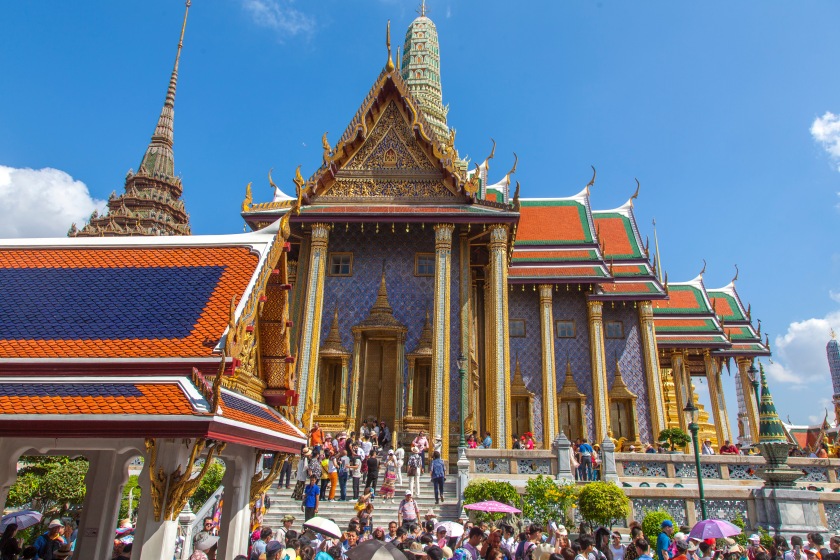
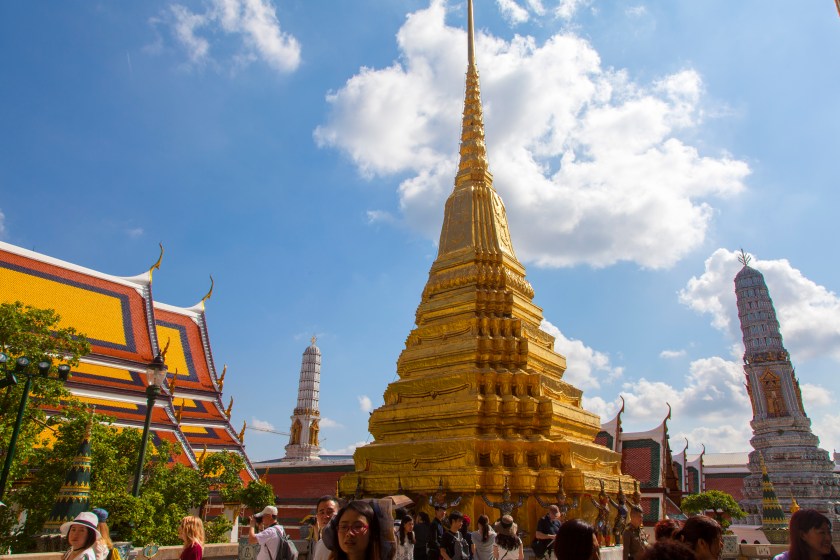
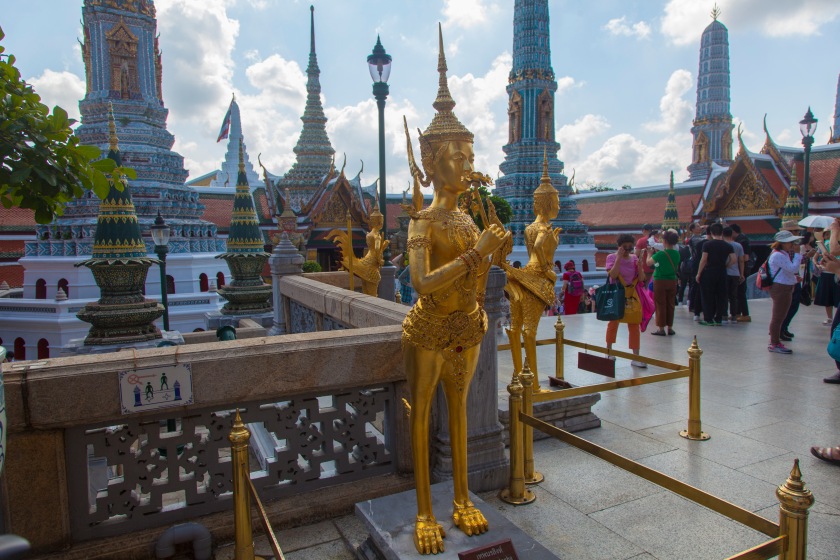
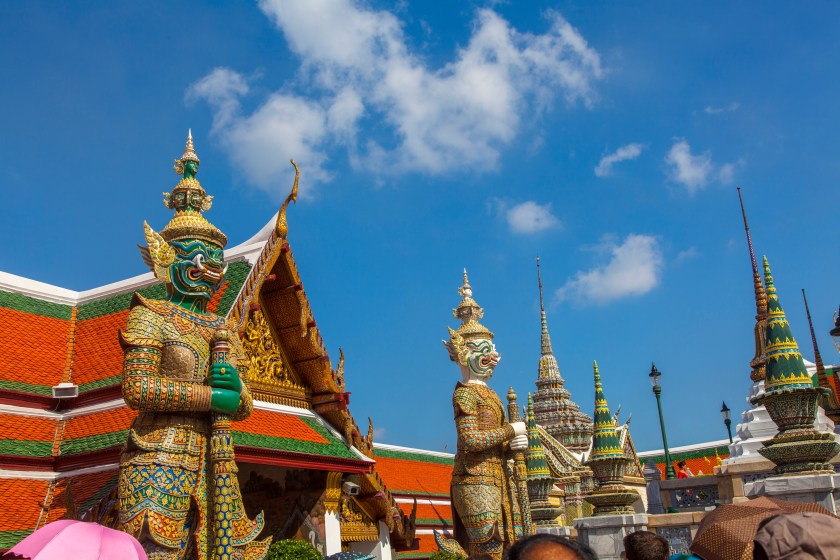
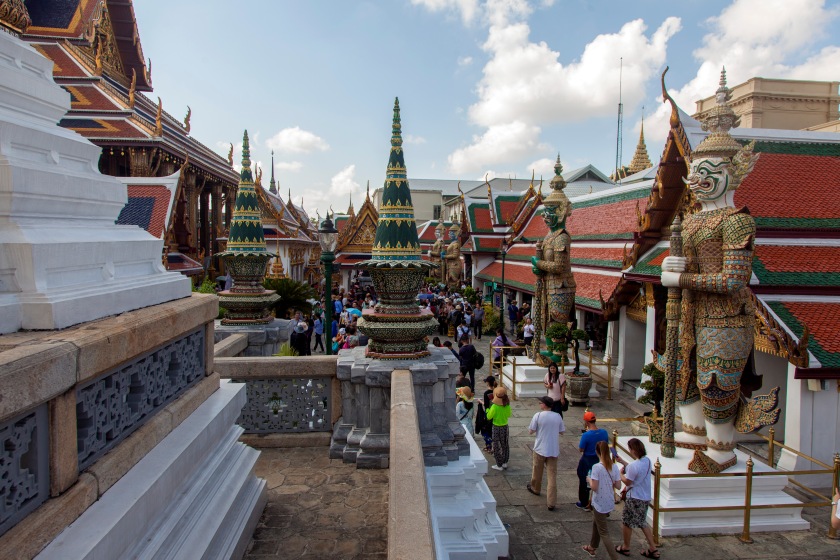
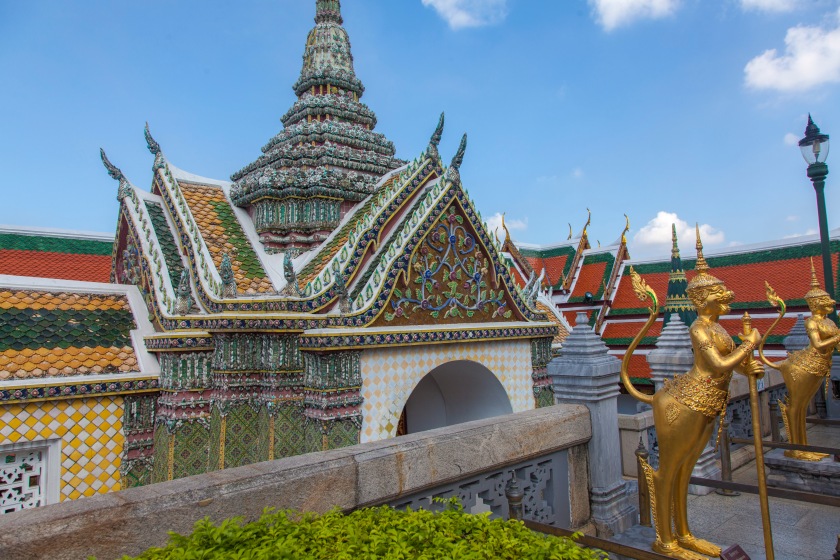
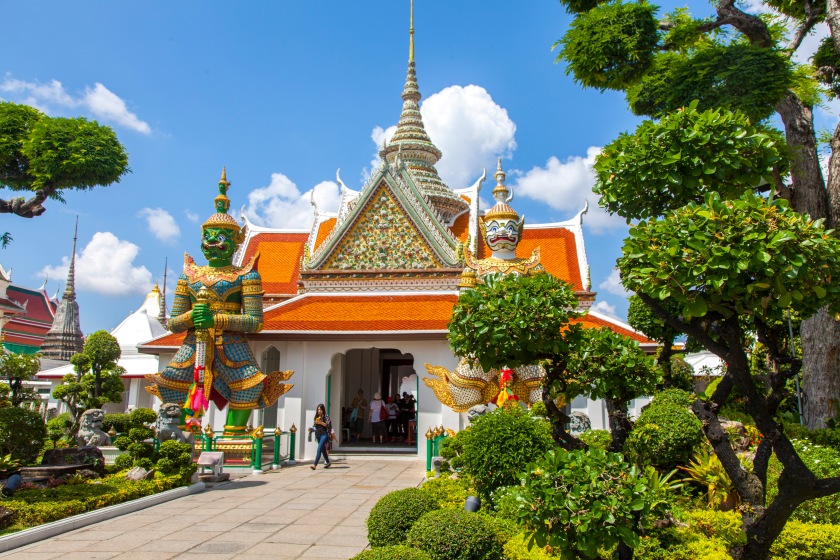
Первым номером программы стал Большой дворец – дворцовый комплекс, с храмами и павильонами, построенный еще в 18 веке. В комплексе строгий дресс код: обязательно закрытые плечи и колени. Что не так чтоб прямо очень приятно, учитывая тридцати-с-лишним-градусную жару, но не смертельно. Что еще немного портит картину – это толпы народа, преимущественно китайского. Написала эту фразу – и ощутила дежавю, то же самое я писала про Запретный город в Пекине. Но и тут 99% туристов – китайцы, Ванна сказала, что так круглый год, а в районе китайского Нового года – так вообще ни пройти, ни проехать.

IMG_3163

IMG_3164

Жемчужиной дворцового комплекса является Храм изумрудного Будды, фотографировать в котором не разрешалось. Изумрудный Будда на самом деле сделан из нефрита – изумруд в принципе резьбе не особенно подлежит – и его одежда меняется в зависимости от сезона, коих в Бангкоке три (лето, зима и сезон дождей) , а “переодевает” его сам король. Вообще статуя совсем небольшая, всего 66 см, по версии монахов была найдена в 15 веке в Чианграе среди руин какой-то пагоды, затем перевезена в Чиангмай (оба города нам предстоит увидеть, но в то время они к Таиланду не относились), а потом и в Бангкок. Статуя в Таиланде высоко почитается, вроде местного Палладиона – считается, что пока Изумрудный Будда в Таиланде, королевство будет существовать.

IMG_3214

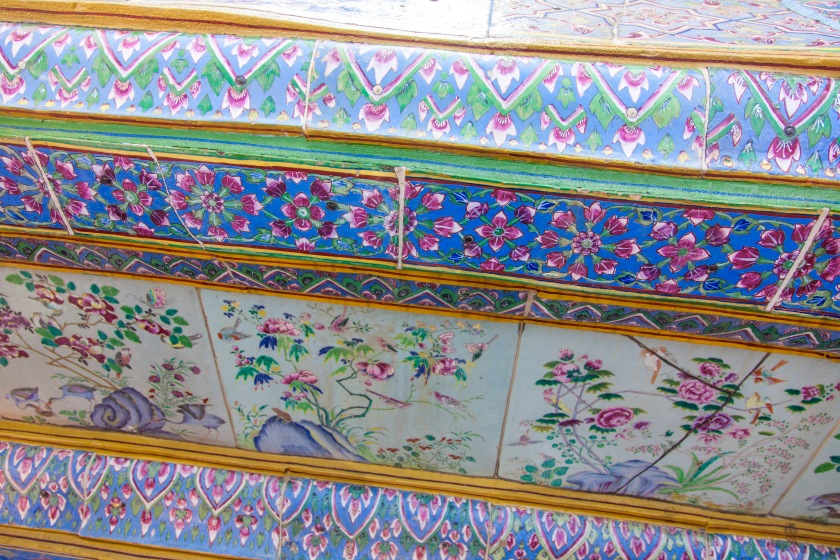
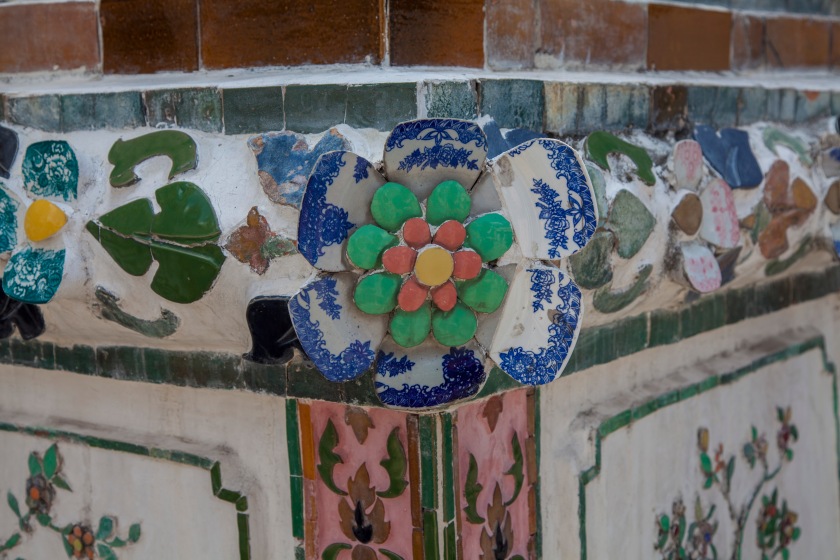
Ванна все время обращает наше внимание на элементы архитектуры при осмотре различных ступ и павильонов. Все выполнено вручную, будь то роспись потолков или мозаика из фарфоровых осколков.

IMG_3171

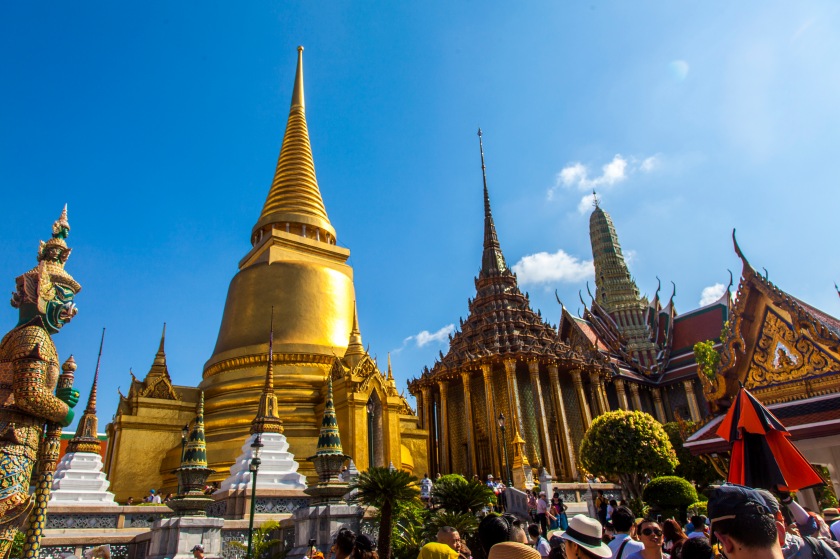
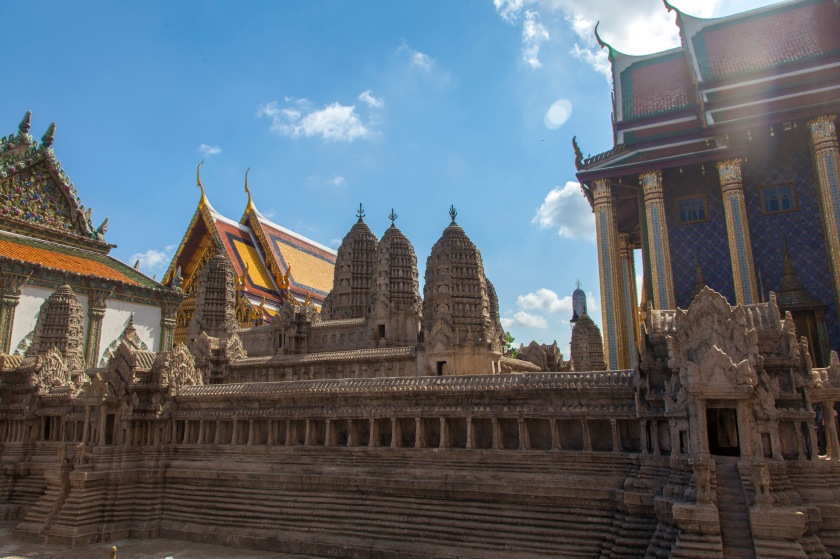
Одни строения в чисто тайском стиле – это видно и по форме крыш, и по обилию золота в отделке. Другие – в камбоджийском, с более заостренными куполами и без золота, хотя и тоже с весьма богатой отделкой. Здесь же стоит большой макет камбоджийского Ангкор Вата.

IMG_3170

IMG_3191

IMG_3196

IMG_3206

IMG_3177

IMG_3187

IMG_3188

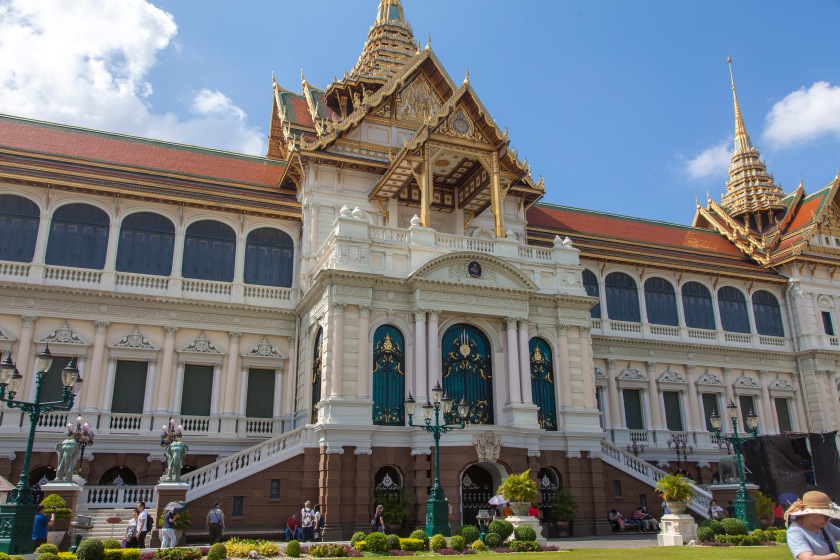
Рядом с дворцовым комплексом находится более новый дворец, построенный в европейском стиле в 19 веке – это после поездки в Европу король Чулалонгкорн (Рама V) хотел показать, что в Таиланде (или точнее в Сиаме в ту пору), который, кстати, в отличие от соседей по Индокитаю и именно благодаря политике Чулалонгкорна, ничьей колонией не являлся, умеют строить ничуть не хуже.

IMG_3227

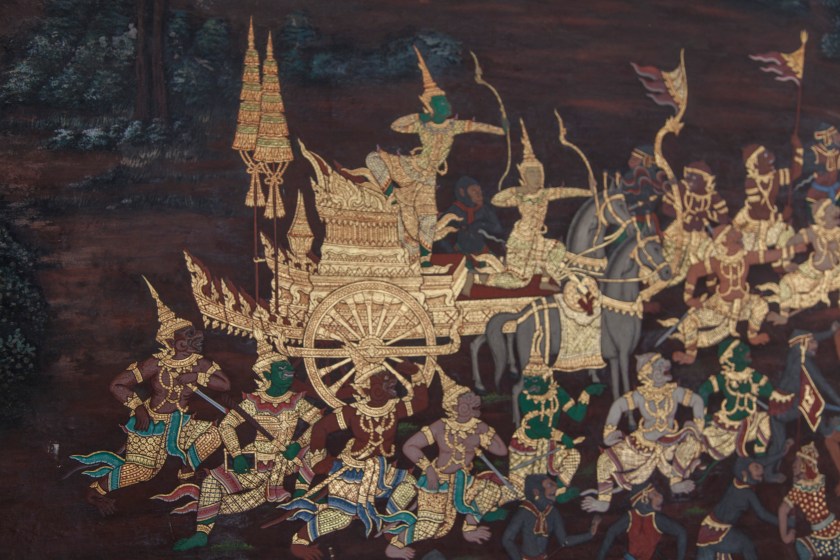
На выходе из Большого дворца мы рассмотрели настенные изображения вроде как из индийской мифологии – вообще индийское влияние тут чувствуется, даже версия буддизма здесь, судя по всему, индийская, а не китайская как например во Вьетнаме.

IMG_3219

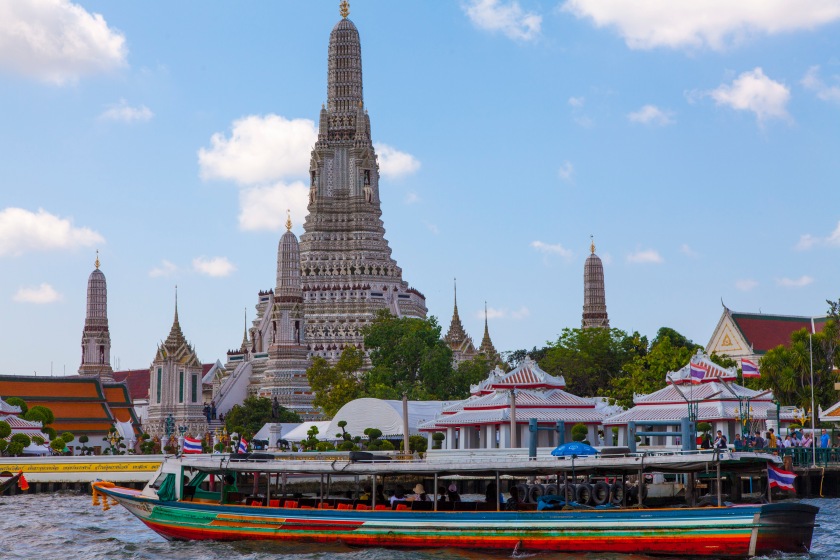
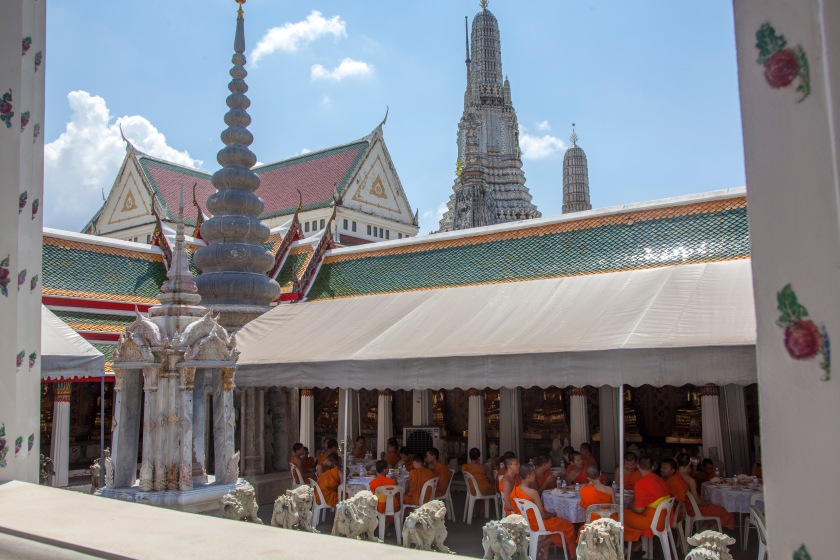
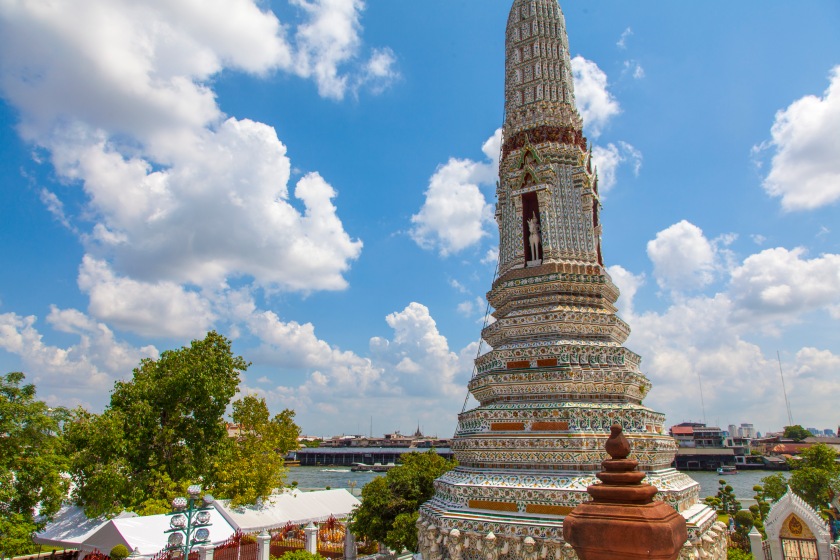
После Большого дворца поехали на катере через реку в Храм Утренней зари (он же Ват Арун). Увидели здесь обед буддийских монахов, некоторые из которых вообще еще дети, наверное ученики. Им разрешается есть только два раза в день и до полудня, а еще женщинам категорически запрещено к ним прикасаться.

IMG_3240

IMG_3242

IMG_3247

Купол у храма в камбоджийском стиле и тоже украшен фарфоровыми осколками. Ванна сказала, что в свое время королевский двор заказывал фарфоровую посуду из Китая и далеко не все уцелевало по дороге, вот битую посуду и утилизировали таким образом.

IMG_3252

IMG_3253

Последней сегодняшней остановкой, не предусмотренной нашим туром, но предложенной Ванной, было посещение фабрики драгоценных камней с целью приобретения оных. Мы купили серебряные украшения – золотые либо были слишком дорогими, либо слишком неприметными.

По пути в отель мы зашли в ресторан неподалеку и отведали небезызвестных нам супа том ям и зеленого карри. Вкусно, но остро! А потом, после сытного обеда, да еще и после бессонной ночи, сразу завалились на боковую и проспали часа 2-3, пока не надо было собираться к вечернем круизу по реке Чаопрайа с ужином. Ванна с шофером нас уже ждали , и мы поехали прямо к пристани.

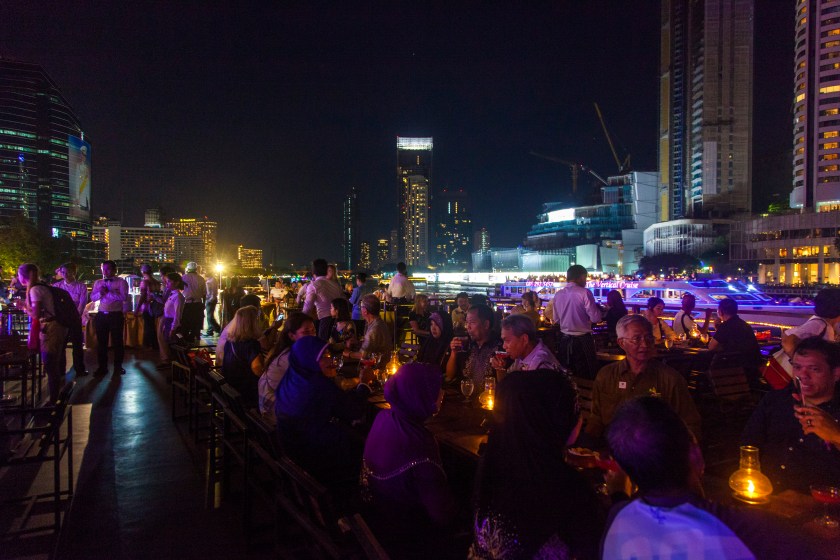
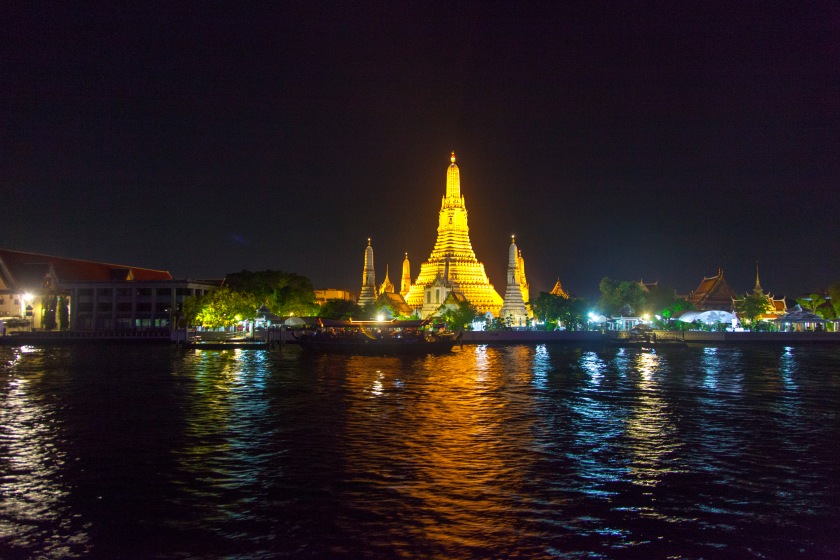
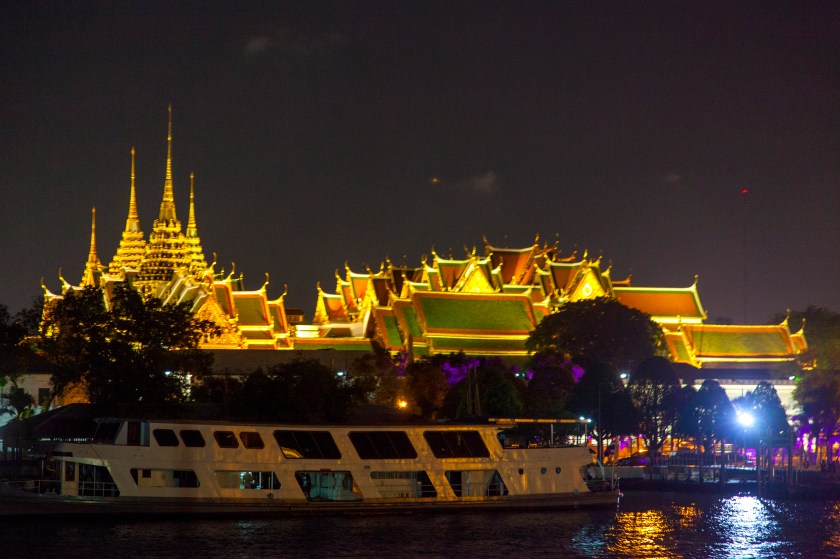
Людей на корабле было немало, но нам к счастью, достался стол на верхней открытой палубе, а не на нижней закрытой (хотя, возможно, это не просто везение, а у нас был именно такой билет). Круиз был очень приятным – на столах горели маленькие керосинки, ужин по принципу шведского стола был вкусным, мы проезжали ранее виденные нами Большой дворец и Ват Арун, великолепно подсвеченные в темноте, а нас тем временем развлекали культурной программой: певица распевала известные томные баллады (в том числе и на китайском – тоже известные, только не нам), а затем устроили мини кабаре-шоу трансвеститов.

IMG_3264

IMG_3269

IMG_3282

Posted in Bangkok, Thailand

Thailand – Day 1

РУССКОЯЗЫЧНАЯ ВЕРСИЯ ПО ЭТОЙ ССЫЛКЕ. CLICK HERE FOR RUSSIAN VERSION.

18 March 2018

Off we go to another Asian trip, with the same travel agency that organized our Vietnam tour – this time we are in Thailand! After the virtually sleepless overnight flight from Abu Dhabi (toddlers on board are an absolute evil!) we arrived in Bangkok at about 7am, found our way out of the enormous airport pretty quickly and met our guide – an elderly lady named Vanna.

Later she told us that she used to work for a large logistics company, and when she retired at 57, she entered the university and became a tour guide, so as not to sit around. She also learned to swim and play tennis at the age of 40 and driving a car at 45. We found her very nice, positive, full of energy and helpful.

First of all, we were taken to our hotel. Of course, on our way we kept staring around and comparing everything with the last Asian cities we had seen – that’s Hanoi and Ho Chi Minh City. Bangkok looks (and indeed, is) much more developed in terms of infrastructure and economy. It’s a very green city, with lots of tropical vegetation and flowers.

IMG_3157

In the hotel we were offered breakfast right away, and it was quite good, but as we understood, unlike in Vietnam, here three stars mean exactly three stars, and you don’t get an abundance of all kinds of fruits, dim sums, sushi rolls and whatever else your soul may desire.

Then we were given 40 minutes to get ready, and right after that we went on a city tour. What immediately caught my eye were photographs of the late king, deceased two years ago, all around the city. Vanna said that he was not just a king for them, but almost like a father, as he cared a lot about the people. For a whole year after his death, the entire nation wore black and white as a sign of mourning – not because they were forced to, but voluntarily.

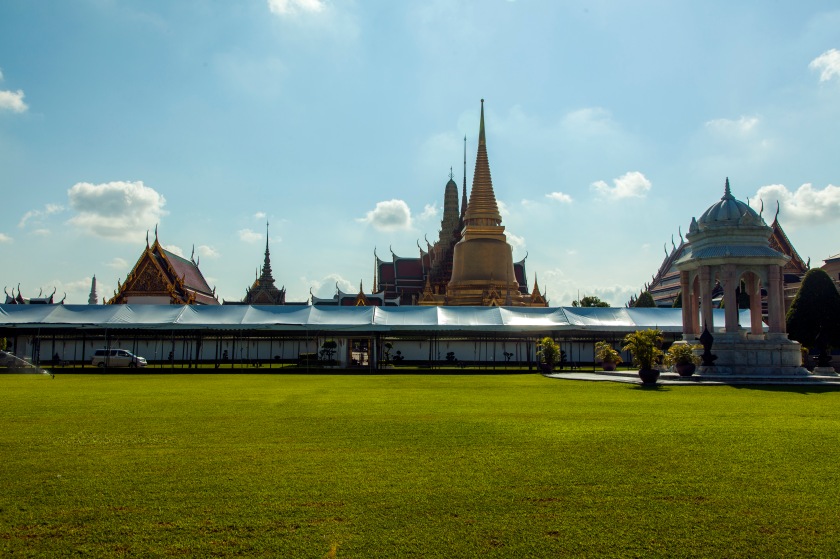
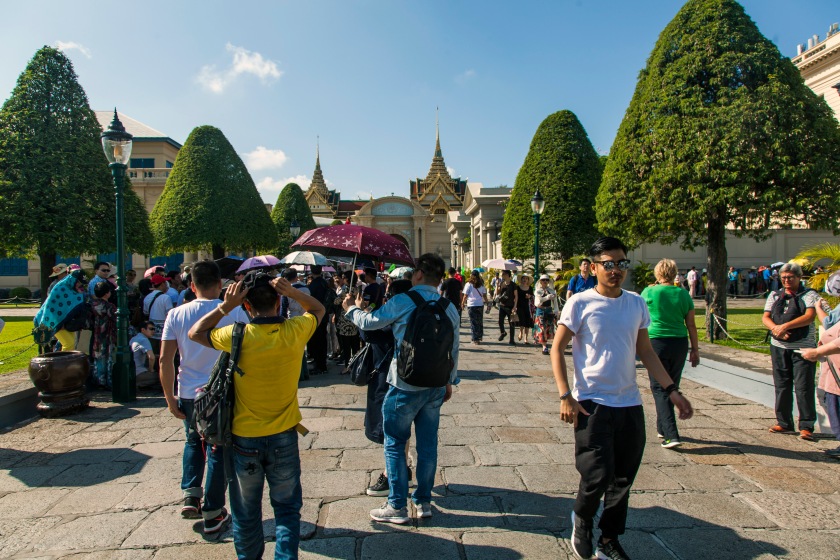
The first item of our programme was the Grand Palace – a complex of buildings, with temples and pavilions, built in the 18th century. There is a strict dress code on the premises: knees and shoulders must be covered. Given the thirty-plus degree heat, it doesn’t feel extremely nice but is not fatal. What spoils the impression a bit are crowds and crowds of people, mostly Chinese. I wrote this phrase – and felt deja vu, remembering how I had written the exact same thing about the Forbidden City in Beijing. Here as well, 99% of the tourists seem to be Chinese, Vanna said that it gets this crowded all year round, and even worse so during the Chinese New Year.

IMG_3163

IMG_3164

The highlight of the palace complex is the Temple of the Emerald Buddha (or Wat Phra Kaew), where taking photos was not allowed. The Emerald Buddha is actually made from a solid block of jade (as for emerald, it’s not even suitable for carving), his clothing varies depending on the season, which there are three of in Bangkok (winter, summer and rainy season), and it is the king himself who “dresses” the Buddha. In general, the statue is quite small, only 66 cm, and according to a legend, was found in the 15th century in Chiang Rai among the ruins of some pagoda, then transported to Chiang Mai (we are going to see both cities, but at that time they did not belong to Thailand) and to a bunch of other places, before finally making it to Bangkok. The figurine is highly revered in Thailand and even considered the Palladium of the Kingdom, which is said to stand for as long as the Emerald Buddha is in Thailand.

IMG_3214

Vanna keeps drawing our attention to elements of the architecture, as we are examining various stupas and pavilions. Everything is made by hand, whether it’s ceiling paintings or porcelain shard mosaic work.

IMG_3171

Some buildings are purely in Thai style – this is evident both from the shape of the roofs and the abundance of gold in the finish. Others are in Cambodian style, with more pointed domes and without gold, although also with a very rich finish. There is even a model of the Cambodian Angkor Wat temple.

IMG_3170

IMG_3191

IMG_3196

IMG_3206

IMG_3177

IMG_3187

IMG_3188

One group of buildings includes a newer palace built in European style in the 19th century – after a European trip, King Chulalongkorn (Rama V) wanted to demonstrate that in Thailand (or actually, Siam back in the days), which unlike its neighbours in Indochina and thanks to Chulalongkorn’s politics, wasn’t anybody’s colony, they could build at the same level as in Europe.

IMG_3227

At the exit from the Grand Palace, we saw numerous wall paintings from Indian mythology – in general, Indian influence is largely felt here, even Buddhism seems to be in its Indian form, not Chinese like in Vietnam.

IMG_3219

After the Grand Palace we took a boat across the river to the Temple of Dawn (or Wat Arun). Here we saw Buddhist monks, some of whom were young boys – probably novices – having lunch. They are allowed to eat only twice a day and only before noon, and also women aren’t allowed to touch them.

IMG_3240

IMG_3242

IMG_3247

The dome of the temple is in the Cambodian style and also decorated with porcelain shards. Vanna said that back in the days the royal court ordered porcelain tableware from China, and far from everything survived on the way, so this is how the broken crockery was utilised.

IMG_3252

IMG_3253

Today’s last stop, not included in our tour programme, but suggested by Vanna, was a visit to a gem factory to purchase jewelry. We bought silver jewelry – gold was either too expensive, or too inconspicuous.

On the way to our hotel, we popped into a restaurant nearby and tasted the local versions of the famous tom yum soup and green curry. Delicious but spicy! And then, after a hearty lunch and a sleepless night, we immediately went to bed and slept for 2-3 hours, until it was time to get ready for the dinner cruise on the Chao Praya River. Vanna and the driver were already waiting for us, and we drove right to the pier.

There were quite lot of people on the cruise boat, but fortunately we had a table on the open upper deck, and not on the closed bottom one (although, perhaps, this wasn’t sheer luck, but rather what our ticket included). The cruise was very pleasant – there were small kerosene lamps burning on the tables, the buffet dinner was delicious, we passed by the Grand Palace and Wat Arun, which we had seen before and which were now magnificently illuminated, and in the meantime we were entertained by the cultural programme: the singer was singing famous languid ballads (including ones in Chinese – probably also famous, just not to us), and then we say a mini ladyboy cabaret show.

IMG_3264

IMG_3269

IMG_3282