Posted in Asia, English, Himeji, Japan, Osaka

Japan – Day 8

РУССКОЯЗЫЧНАЯ ВЕРСИЯ ПО ЭТОЙ ССЫЛКЕ. CLICK HERE FOR RUSSIAN VERSION.

30 May 2025

Today, completely unintentionally, we woke up at 6:30 a.m., but it turned out to be a good thing, since we had a long day of traveling ahead: from Kyoto to Himeji, then on to Osaka, and finally back to Kyoto.

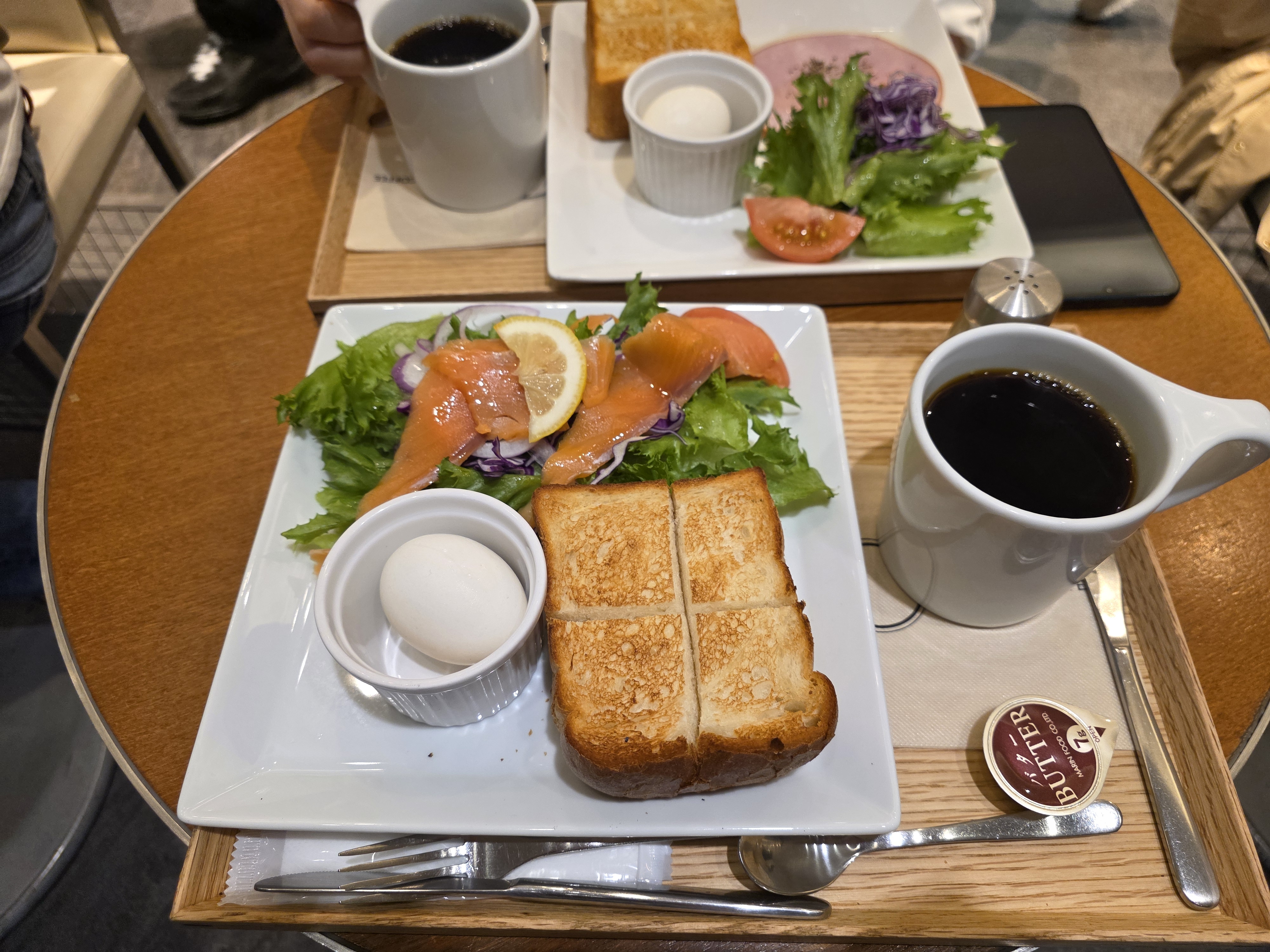
As a result, we left an hour earlier than planned. But before heading out, we walked to Kyoto Station and had breakfast there – we had delicious toasts made with Japanese milk bread, topped with egg and salmon in my case, or ham in Rena’s.

At the station, we took an express train (not the Shinkansen, just a regular limited express) to Himeji.

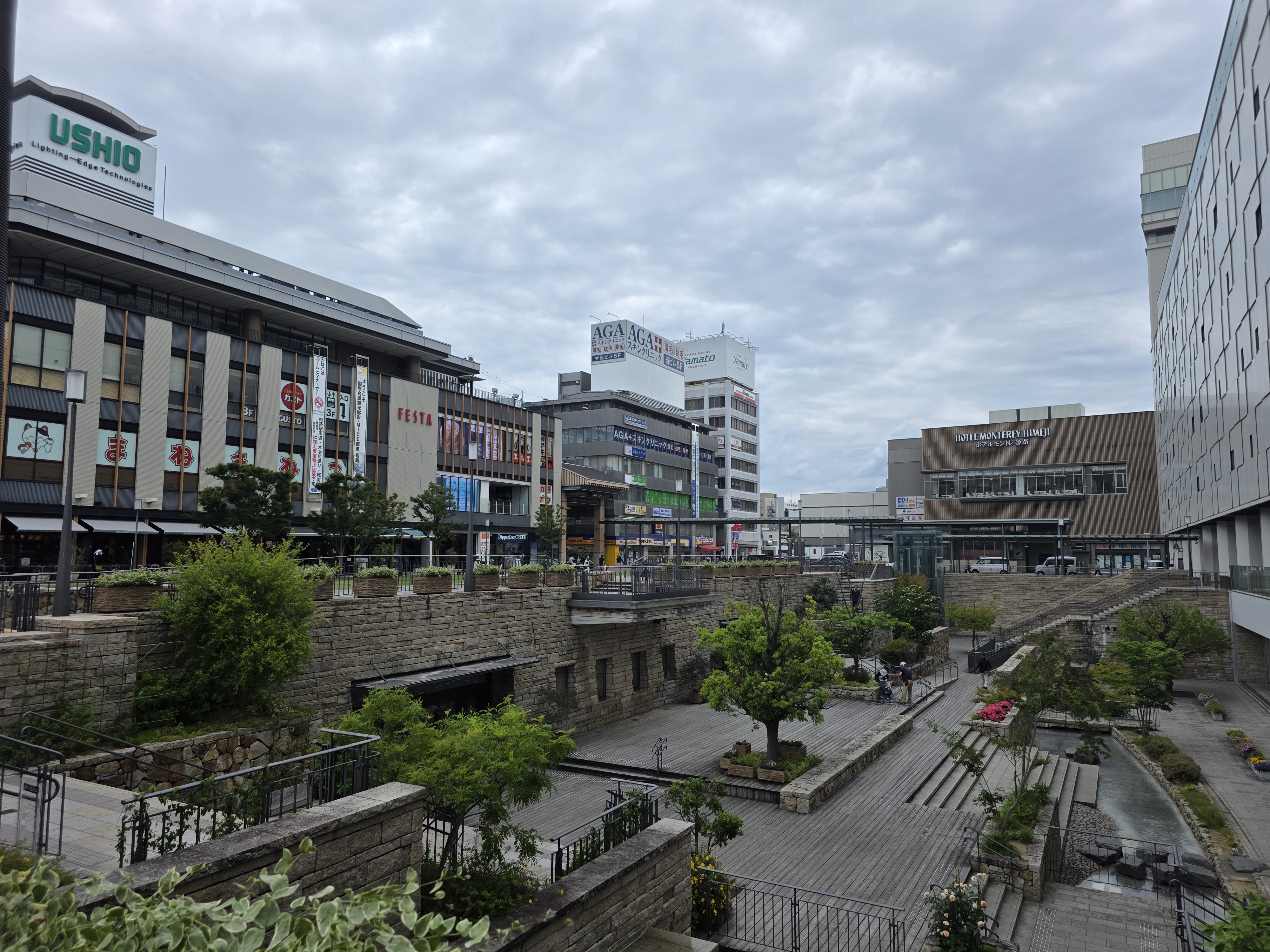
The sole reason for the trip to Himeji (which took about an hour and a half, by the way) was to visit its famous castle. From Himeji Station, we walked down one of the main streets towards the castle. Honestly, there wasn’t much to see along the way – the city seemed fairly ordinary and, at first glance, felt rather provincial.

The castle really is the city’s main (and maybe only) attraction – but what an attraction it is. It is extremely popular among tourists, as it’s one of Japan’s oldest castles, and interestingly, is built almost entirely out of wood.

We weren’t sure whether it was enough to admire the castle from the outside or whether we should go inside as well. Google reviews strongly recommended going in, and so we did – but in hindsight, we might as well have skipped it.

From the outside, the castle is stunning – graceful and elegant. No wonder it’s also called the “White Heron Castle” – it truly does resemble a white heron. But inside, there’s practically nothing to see. Just seven floors of empty wooden rooms, between which we had to walk up and down the steep, slippery staircases (they are slippery because you have to take your shoes off and walk in socks). There’s no interior decoration, no furnishings, barely any artifacts. Even the weapon displays are sparse – just a couple of spears and guns for show.

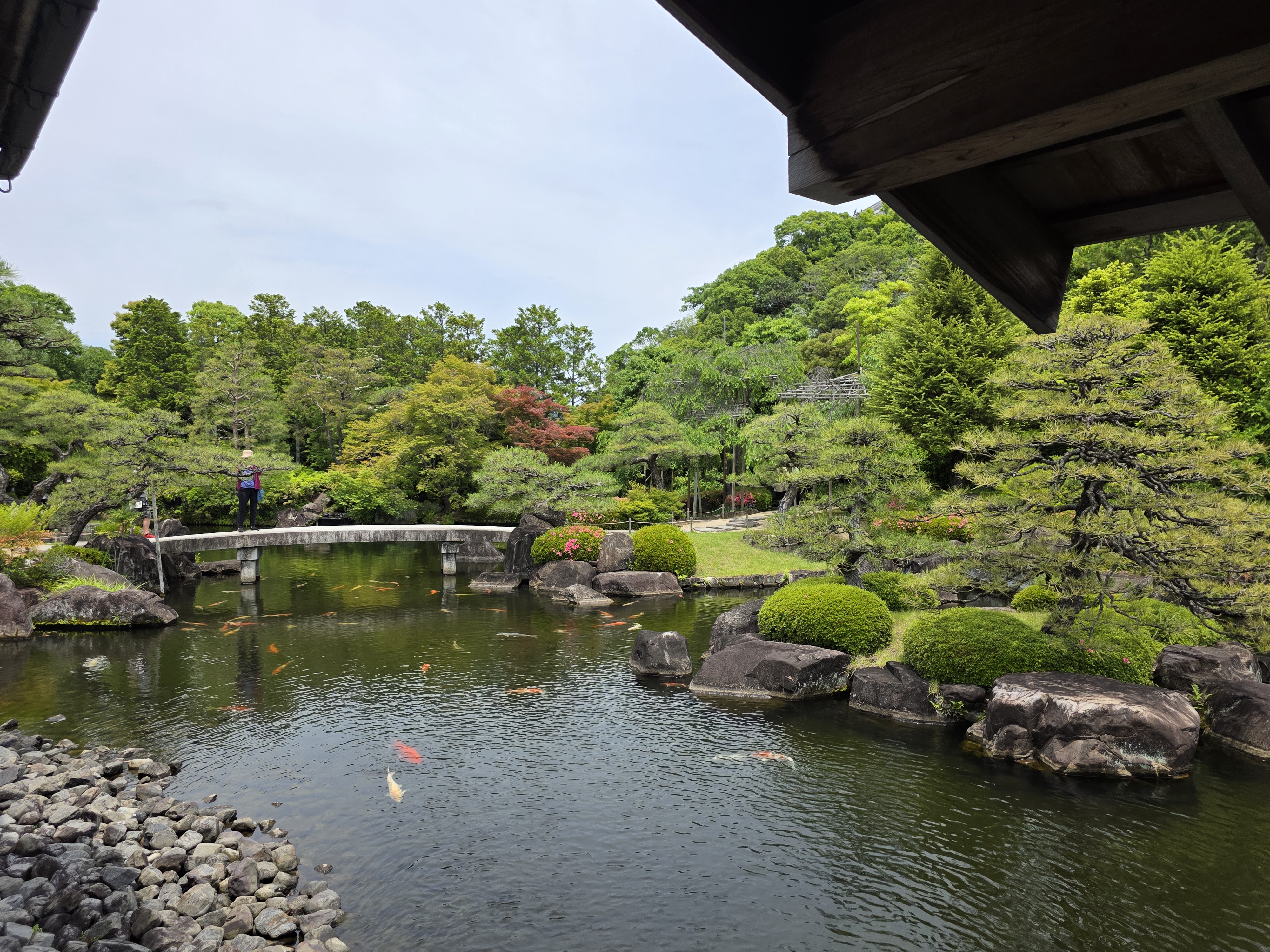
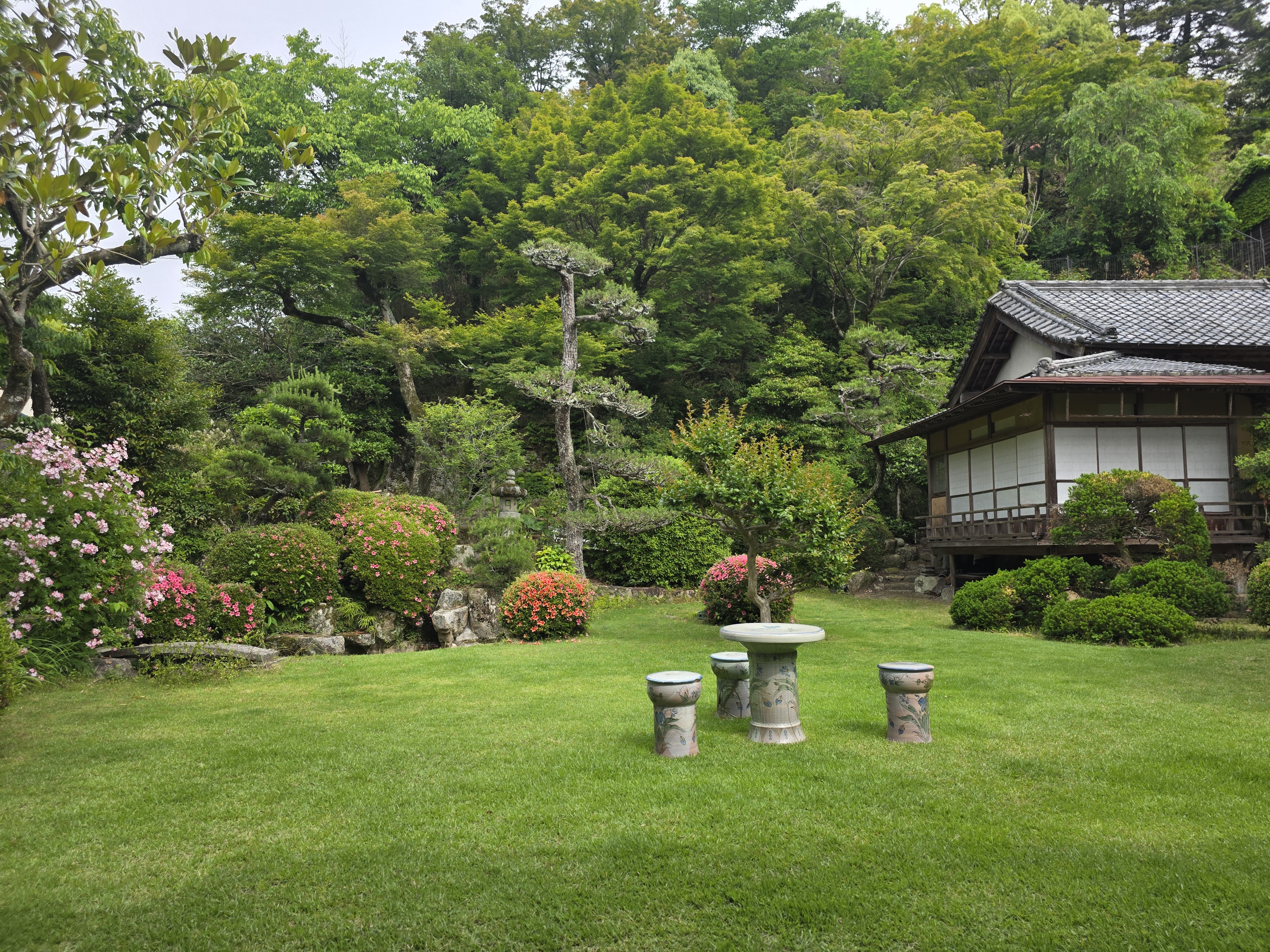
However, right next to the castle is Koko-en – a lovely garden made up of nine smaller gardens, each designed in a different traditional Japanese style. One focuses on pine trees only, another features multi-level paths, waterfalls, and stones, while another has a flat landscape – and all are filled with beautiful flowers and trees. Interestingly, the garden was created only recently, in the late 20th century, but it’s designed to reflect the aesthetics of the Edo period.

It was hot and stuffy all day, even though the forecast had promised rain – instead, we got bright sun. By the time we finished at the gardens, it was already lunchtime. We decided to have lunch in Himeji and ate in a tiny local eatery that served Kobe beef – a premium, marbled Wagyu variety that’s about twice as expensive as regular Wagyu, but still reasonably priced here.

There wasn’t anything else we wanted to do in Himeji, so we headed to Osaka – in the opposite direction, towards Kyoto – about an hour’s ride.

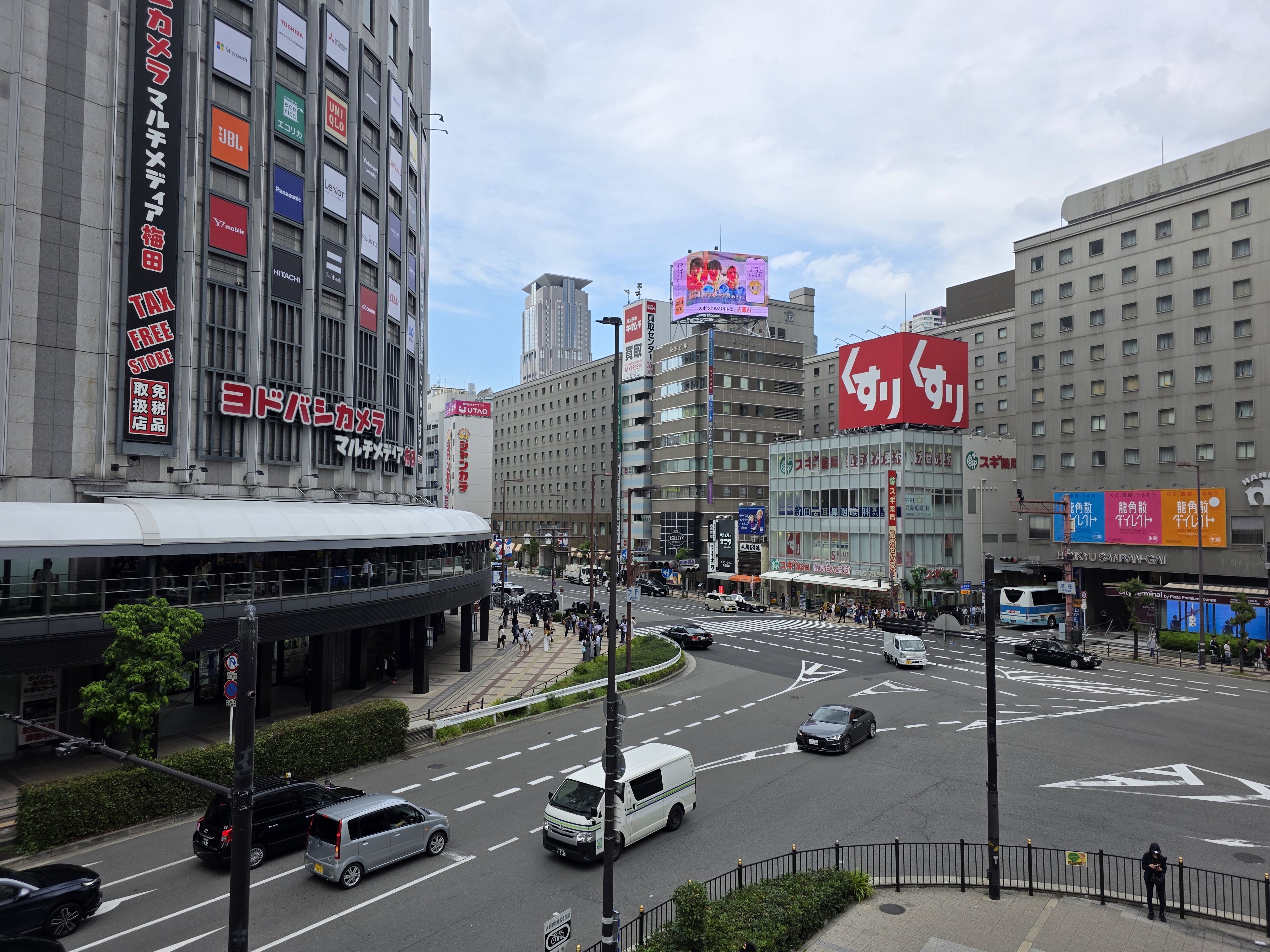
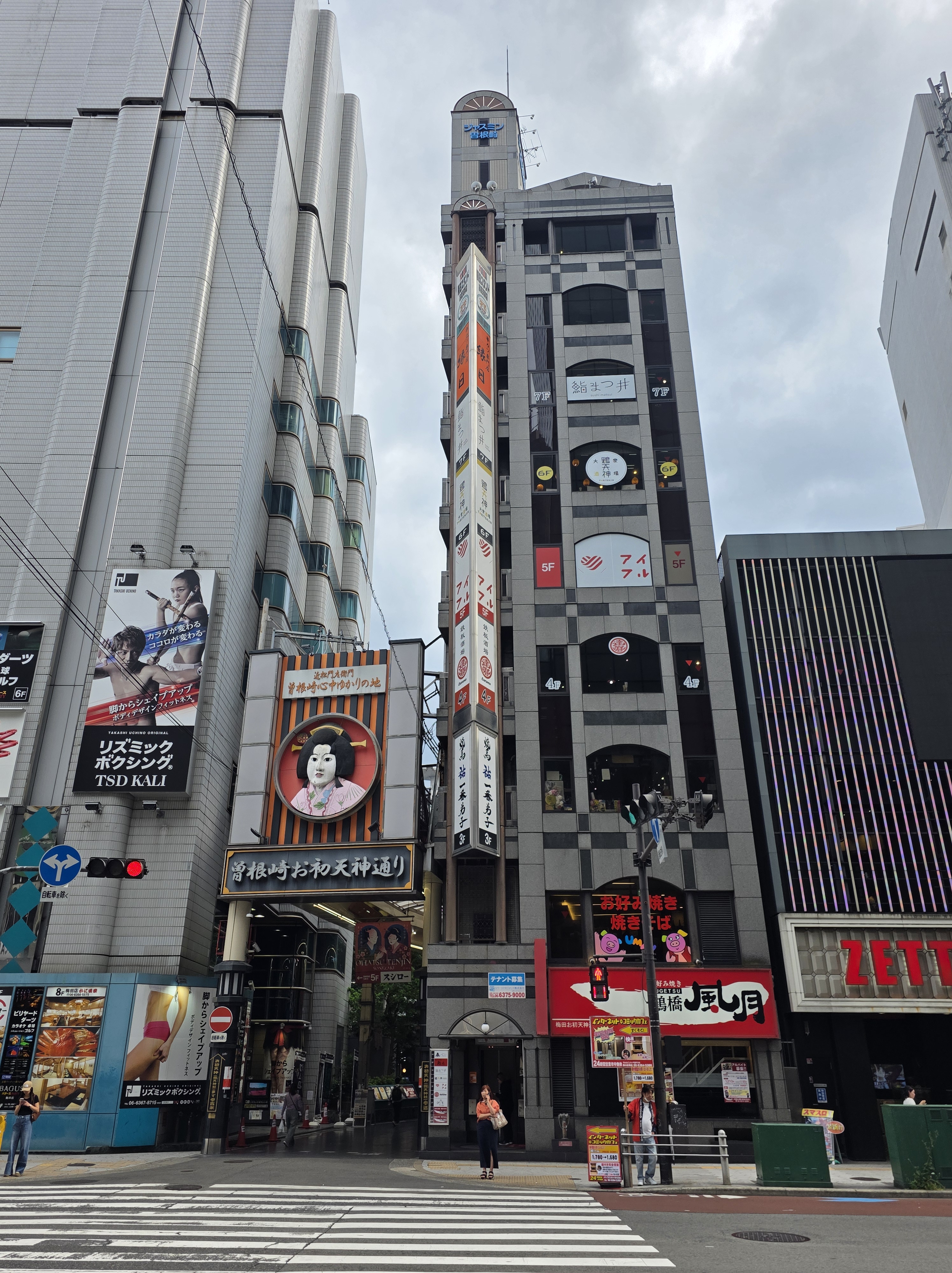
The contrast was immediate – Osaka has a completely different energy. It is a much more modern city than anything else we’d seen so far (even Tokyo). If your idea of a modern Asian city includes futuristic infrastructure and glass skyscrapers, Osaka fits the bill perfectly – it felt like such a contrast to Kyoto, which is only half an hour away. Even the people looked different – more relaxed, dressed more brightly and stylishly. And there are even dedicated bike lanes – in the other places we saw, cyclists just ride on the sidewalks, while you narrowly manage to avoid them.

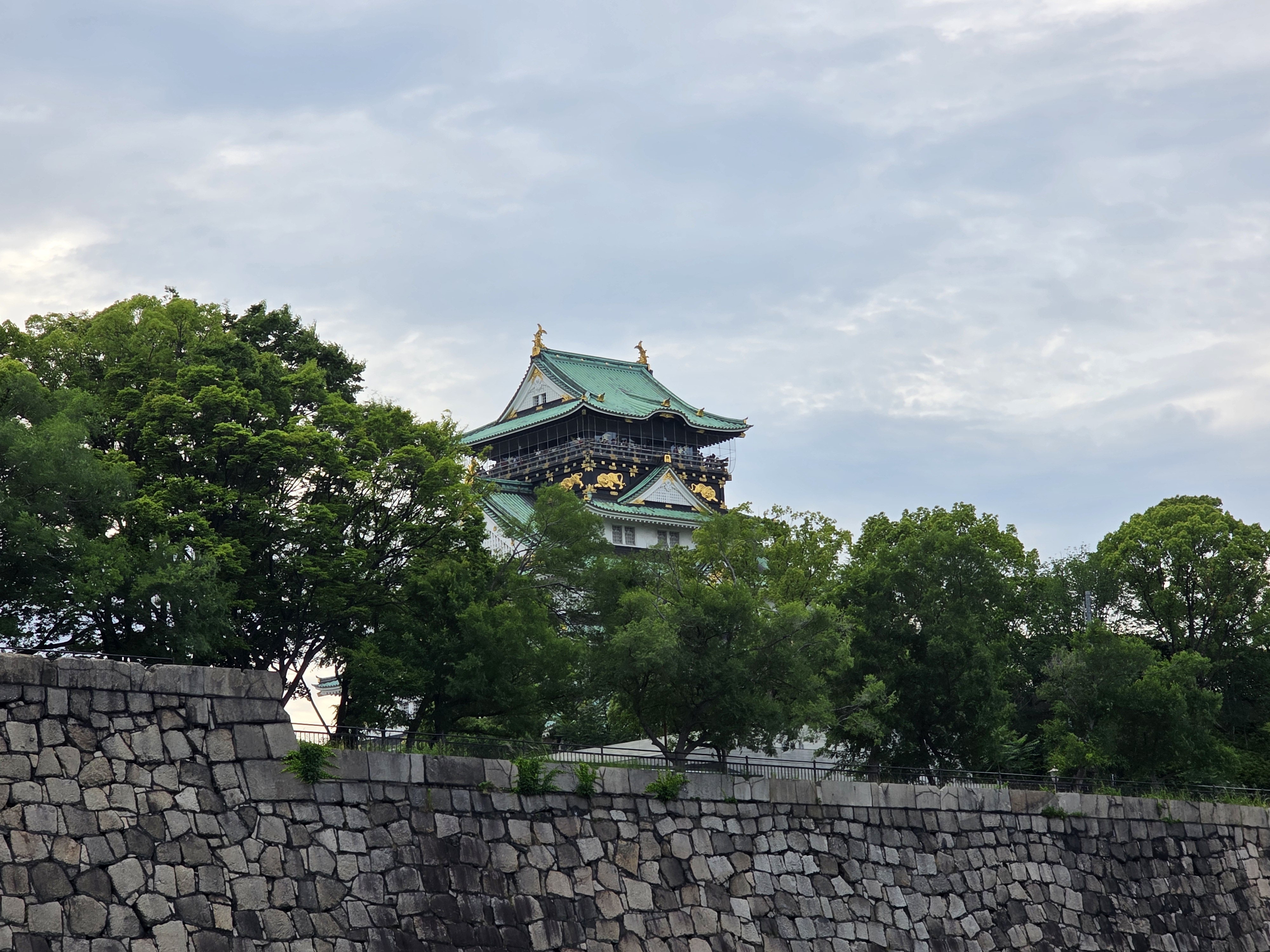
Osaka also has a castle, so we went to take a look – just from the outside, of course. It turned out to be located on a hill, mostly hidden behind trees, and we didn’t feel like climbing up – we simply didn’t have the energy.

The park around the castle reminded us a bit of Hiroshima Castle’s grounds, but Osaka’s was better maintained and much more lively – full of people, like the city itself.

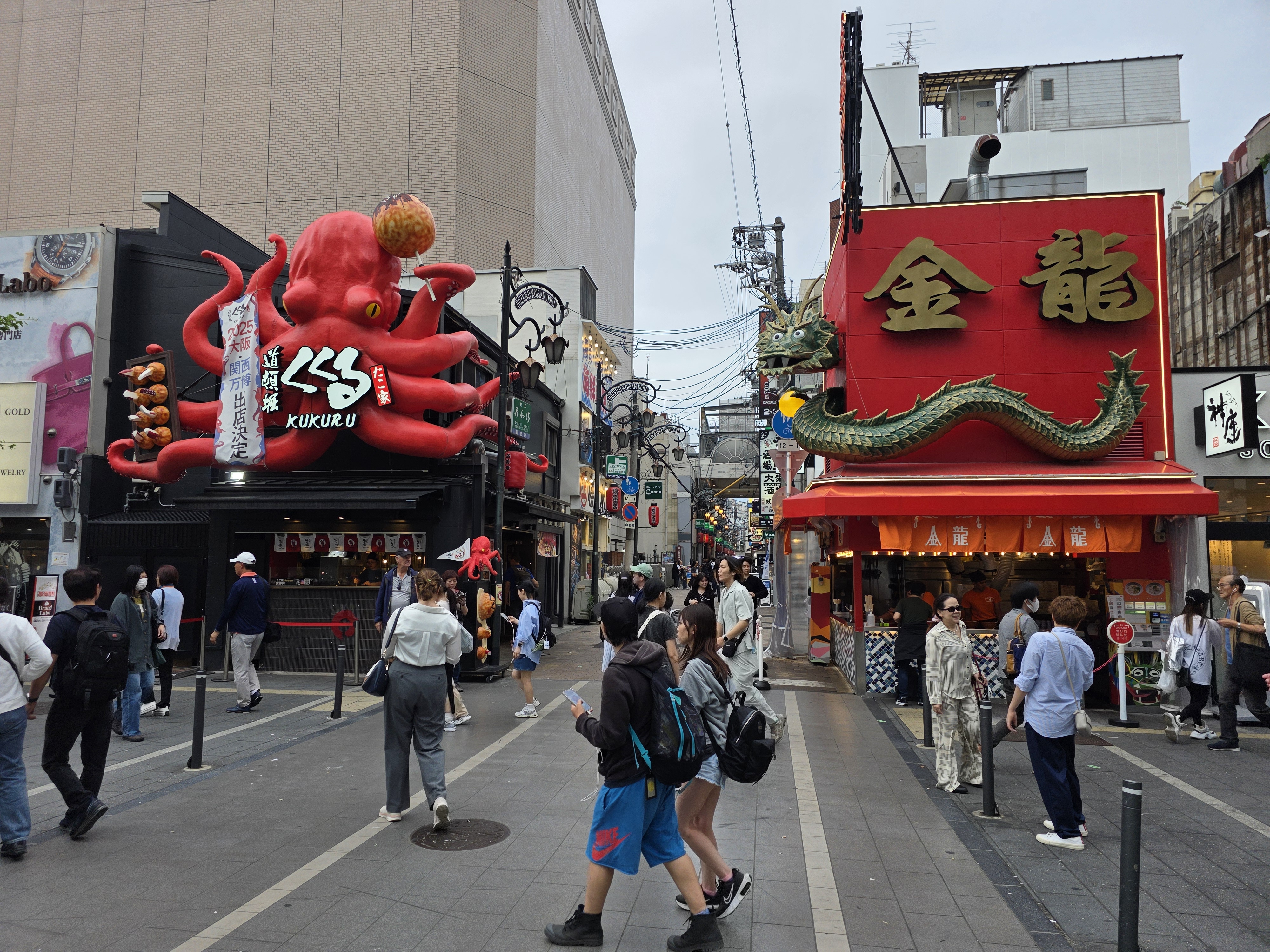
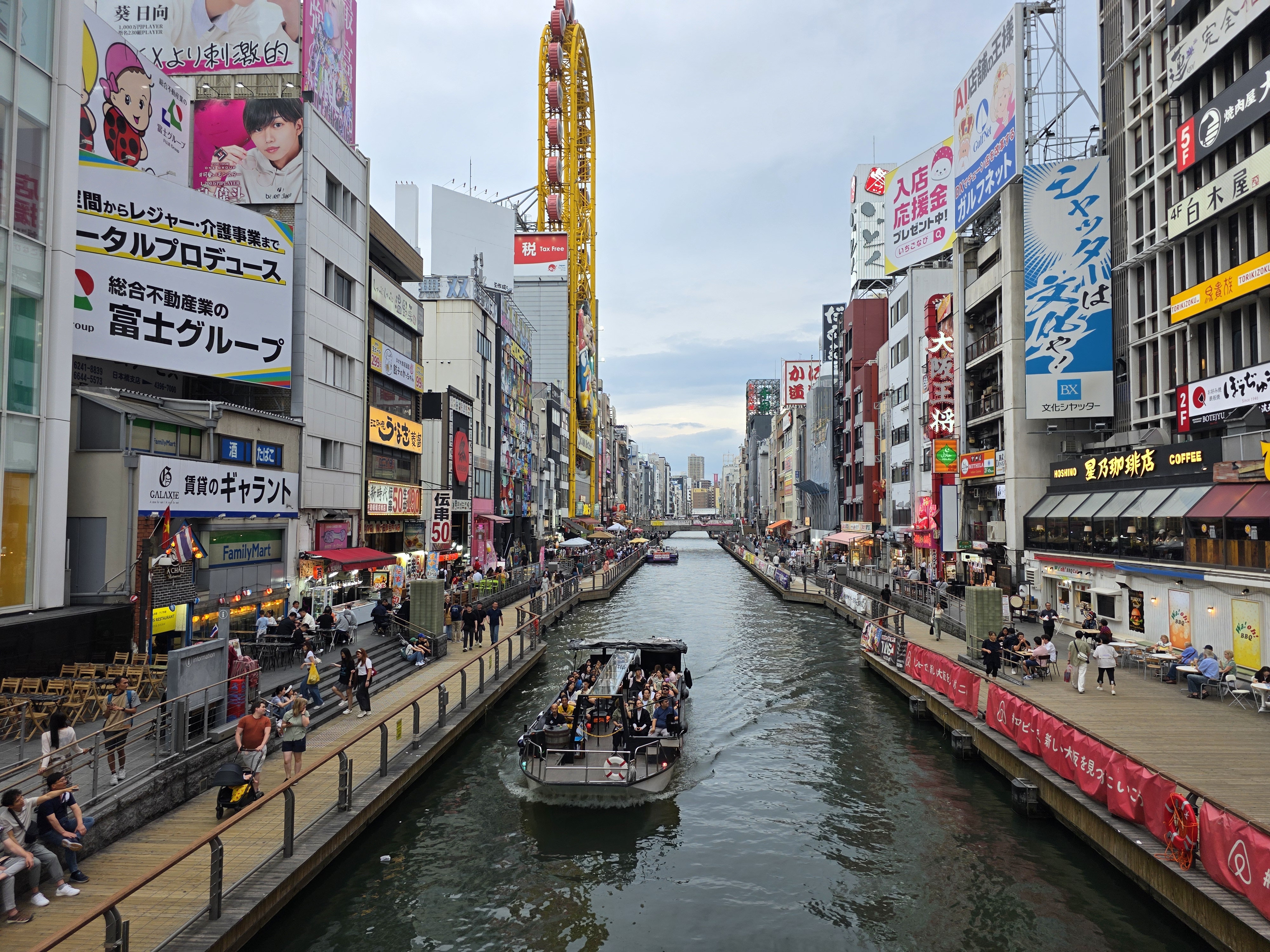
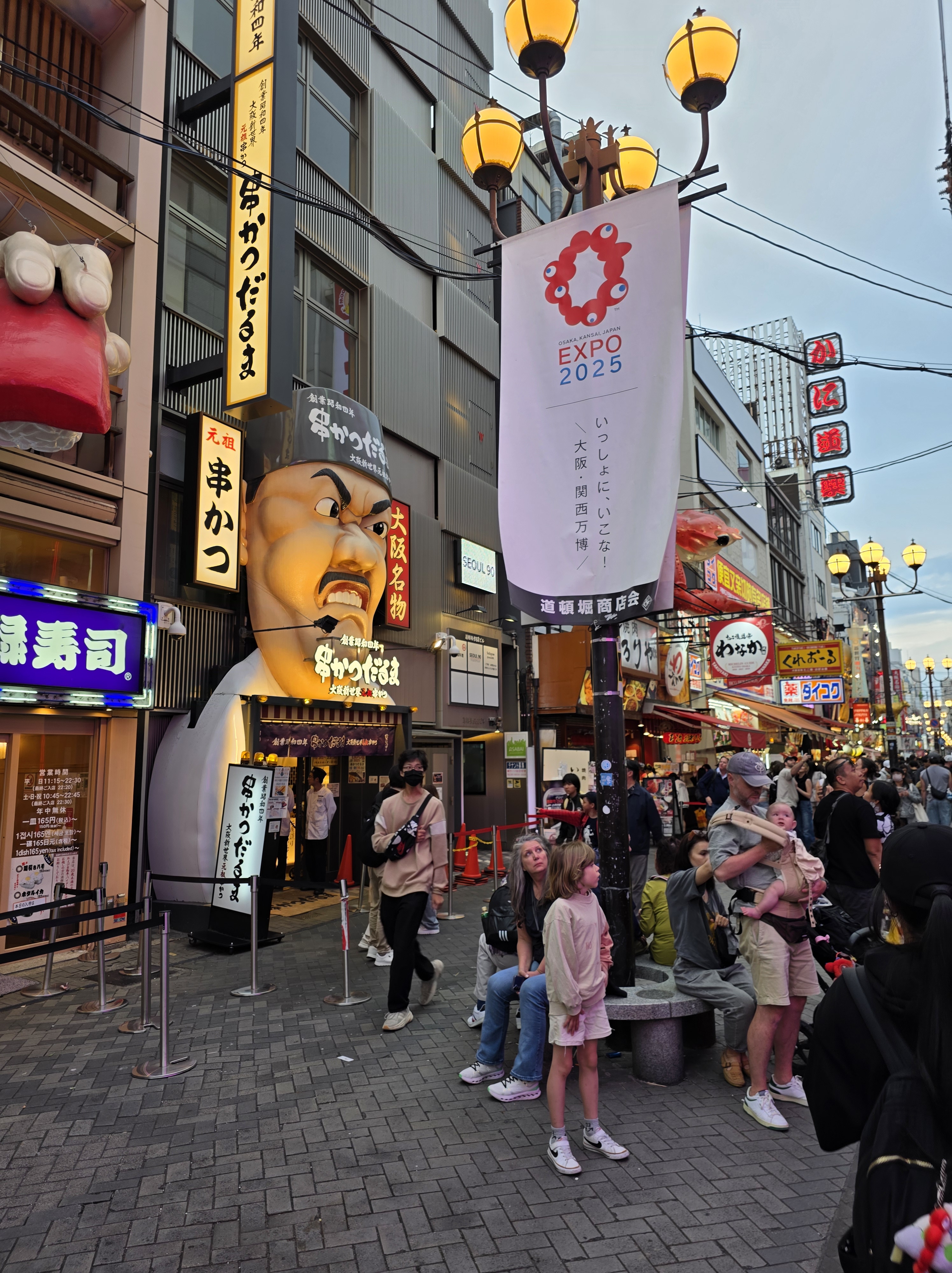
Next, we headed to what’s probably the noisiest and most chaotic part of the city: the Dotonbori area. Along the canal and the adjacent pedestrian street, there is an endless choice of cafés, restaurants, shops, and game centres – all with huge, elaborate signs, that are more like 3D sculptures, covering the entire facade. At night, everything lights up in dazzling neon.

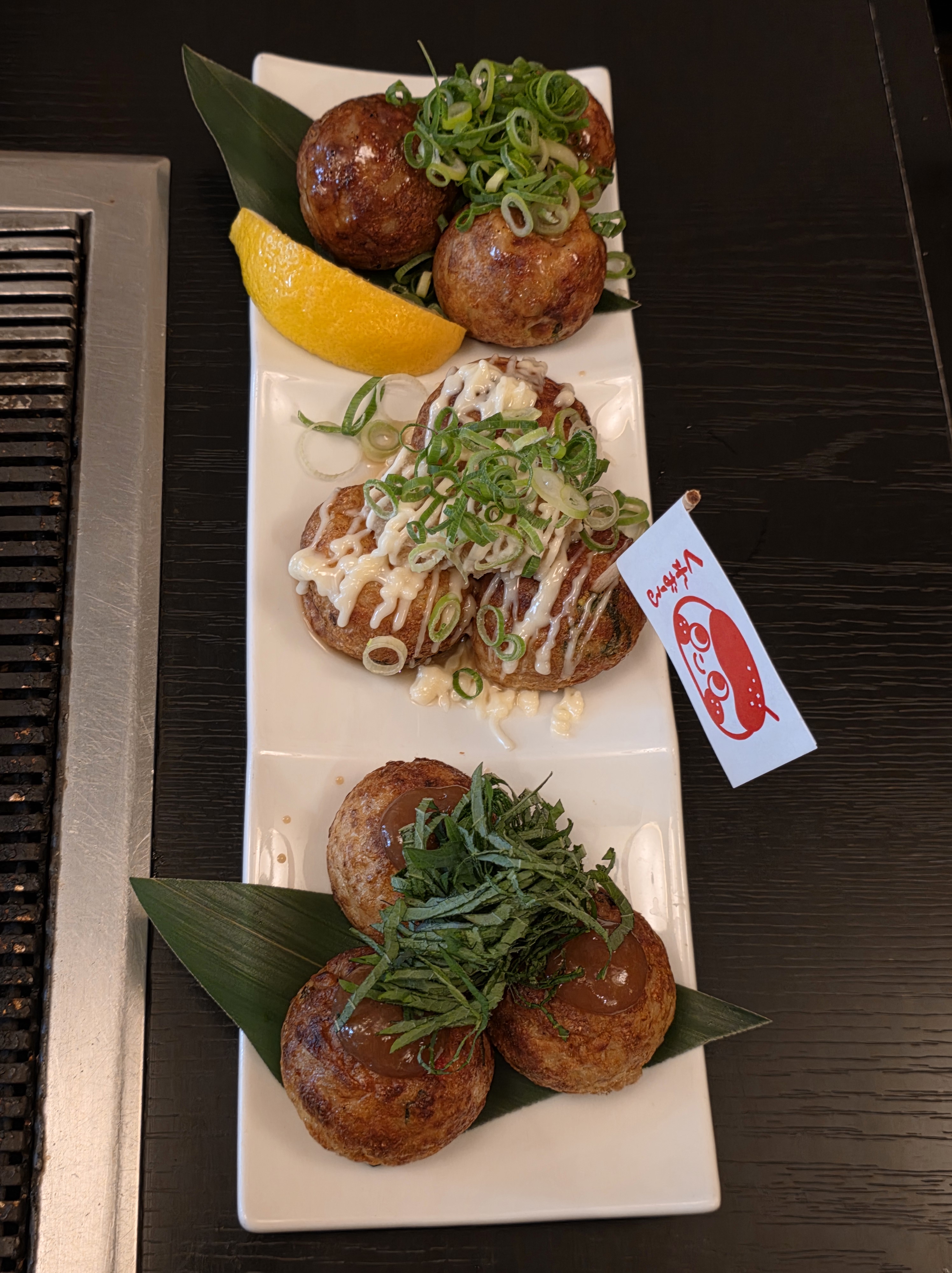
Food stalls and restaurants offer all the local specialties – which, of course, we tried for dinner: okonomiyaki (something between a savory pancake and fritter made of a hodgepodge of different ingredients – seafood, cabbage, eggs), takoyaki (fried octopus balls in liquid batter), and noodles. I really liked it, though Rena didn’t.

In general, if you’re looking for that loud, wild, fashionable version of Japan you often see in the media – you’ll find it here, in Osaka. The city is vibrant, chaotic, and it’s very entertaining to look at all this, but we’re still happy to be staying in Kyoto, where we were happy to return in the evening.

Posted in Asia, English, Hiroshima, Japan, Miyajima

Japan – Day 6

РУССКОЯЗЫЧНАЯ ВЕРСИЯ ПО ЭТОЙ ССЫЛКЕ. CLICK HERE FOR RUSSIAN VERSION.

28 May 2025

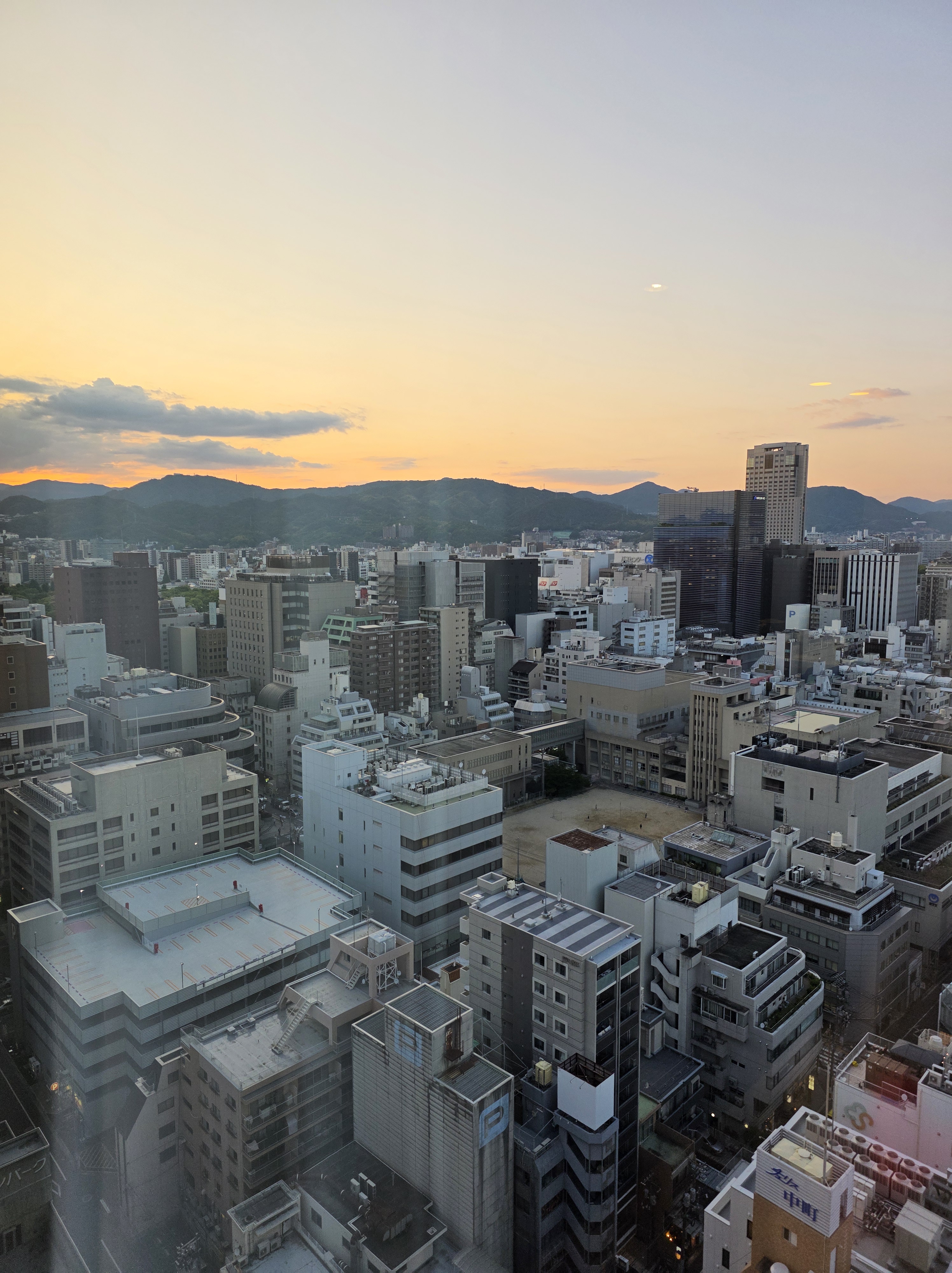
Today we went to Miyajima Island right in the morning. Prior to that, we had breakfast at our hotel – we tried the buffet on the 25th floor, which had a really cool view of the city. The breakfast offered both Western and Japanese options, including local Hiroshima specialties like fish cakes and fish sausage.

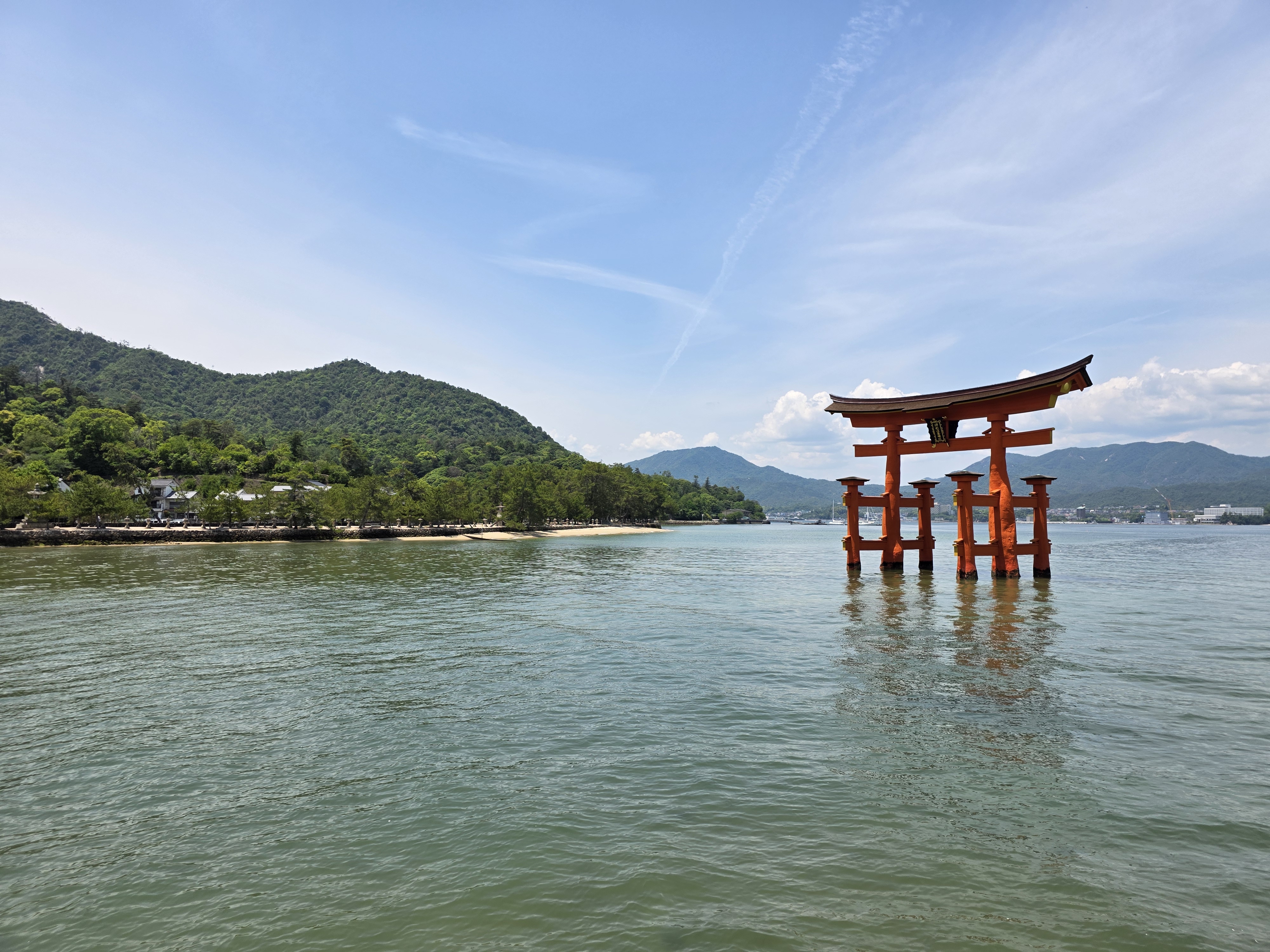
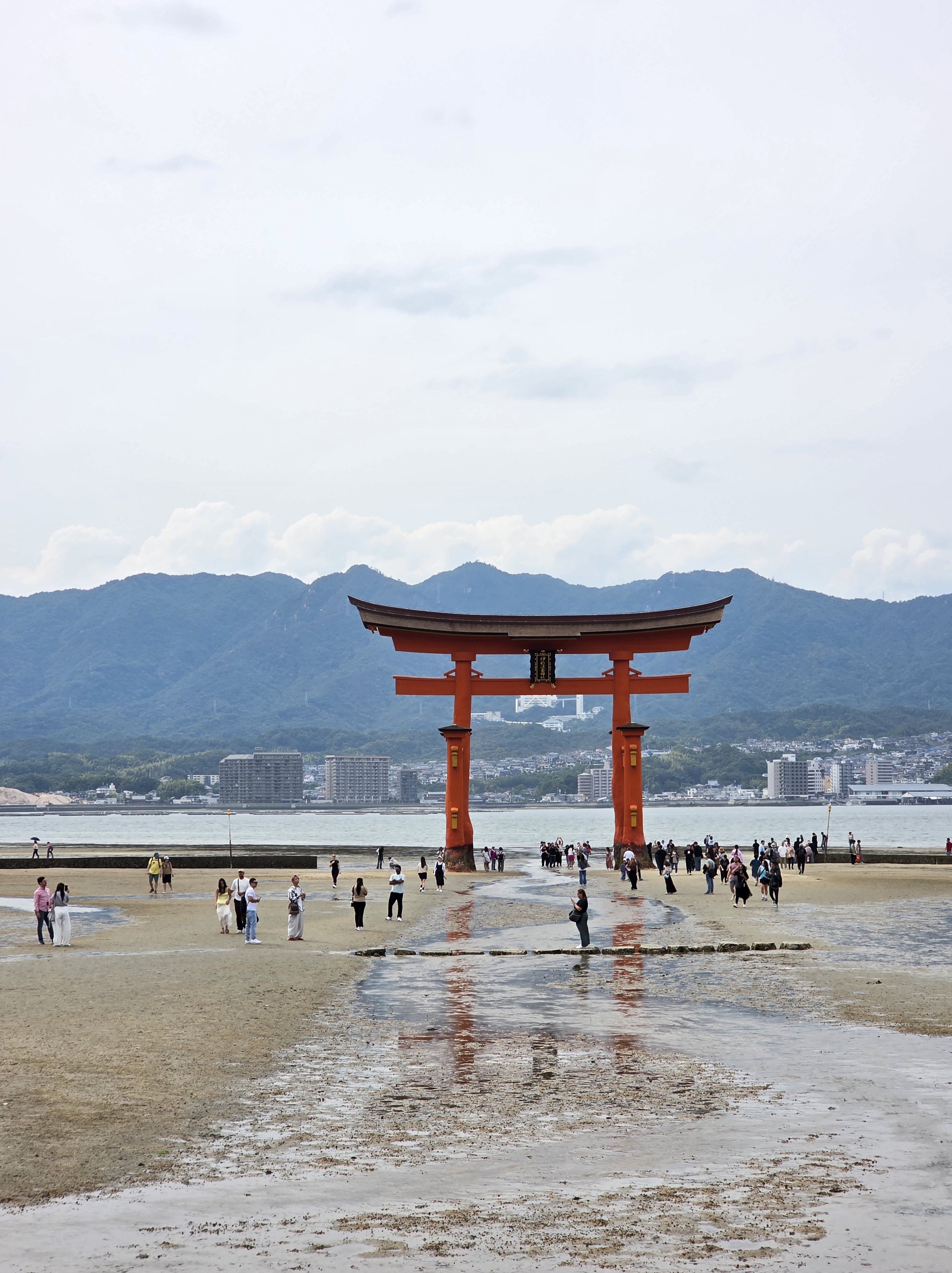
We walked to Shin-Hakushima Station, passing by the castle we visited yesterday – which, in daylight, looked a little less impressive than it did lit up at night. The train took about 20 minutes to get us to the ferry terminal, accompanied by a noisy Iranian tour group. From the terminal, ferries from two different companies run frequently to Miyajima, and the crossing only takes 10 minutes. From the ferry, we got a great view of the famous “floating” torii gates.

There were tons of tourists on the island – but despite its small size, it didn’t feel crowded. Somehow, everyone seemed to spread out. Most tourists were local Japanese, but there were also quite a few foreigners – the Germans again made a noticeable appearance.

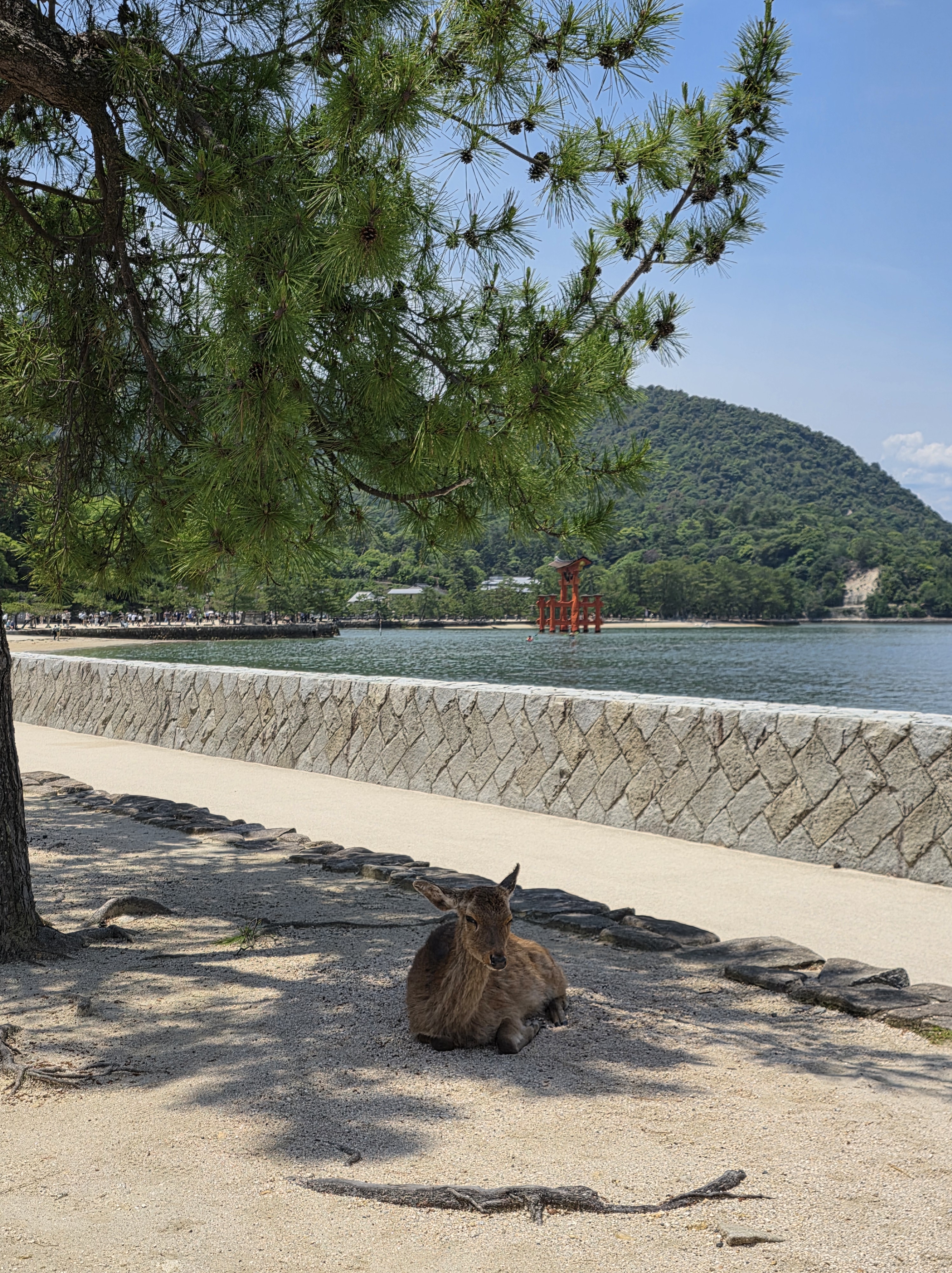
Stray deer roam freely on the island – so there’s no need to go to Nara to see them. That said, the ones here seem hungrier and more persistent. We didn’t even think of eating anything outside, but we saw others who did and clearly regretted it, trying in vain to fend off the pushy deer.

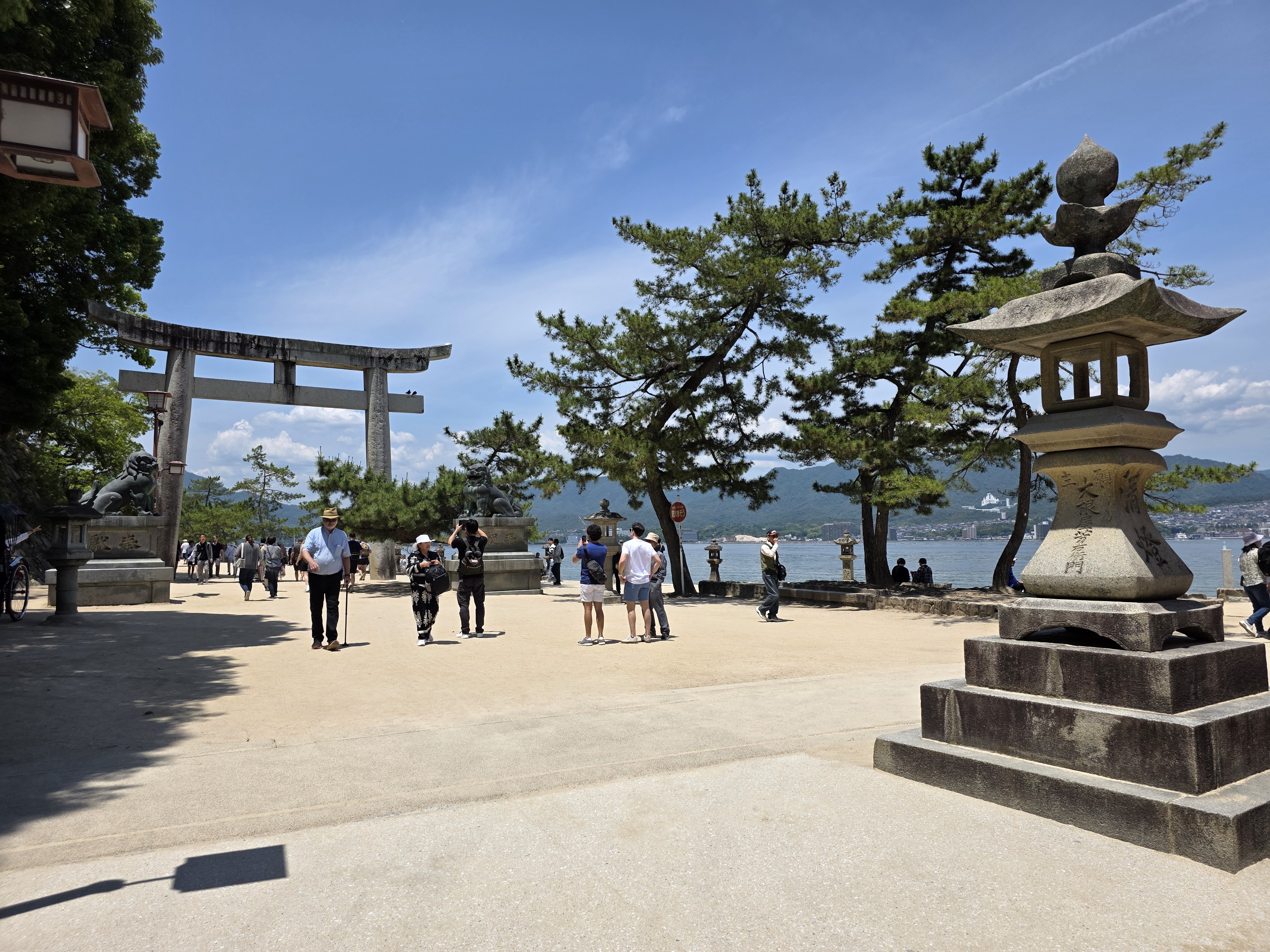
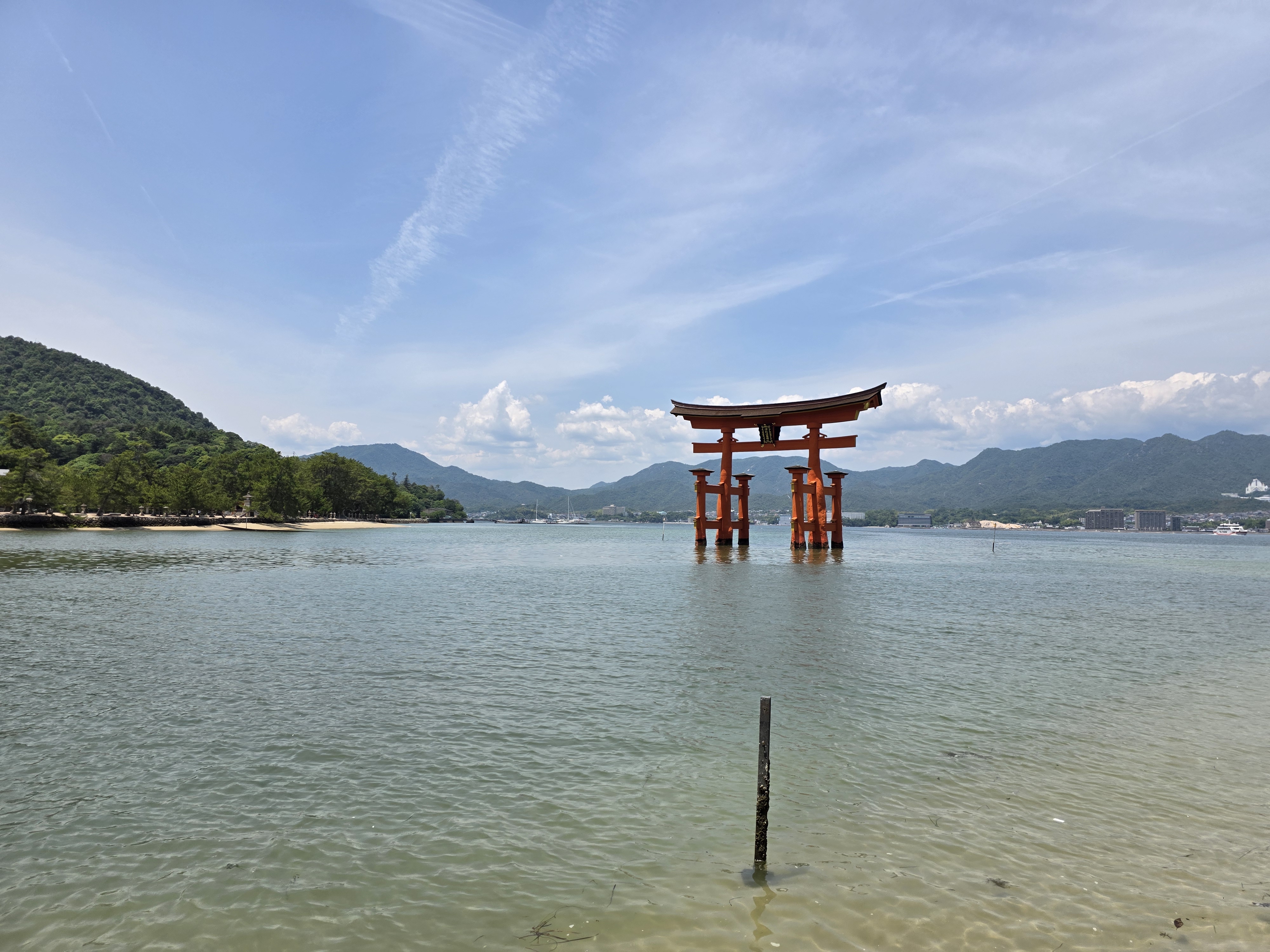
Once on the island, we wandered through the charming streets of Miyajima toward the Itsukushima Shrine – the one the “floating” torii gate belongs to. Interestingly, the gate doesn’t “float” all the time – only at high tide. So when we arrived in the morning, it was surrounded by water, but by around 3 p.m., it was already on dry land, with people walking right up to it and through it.

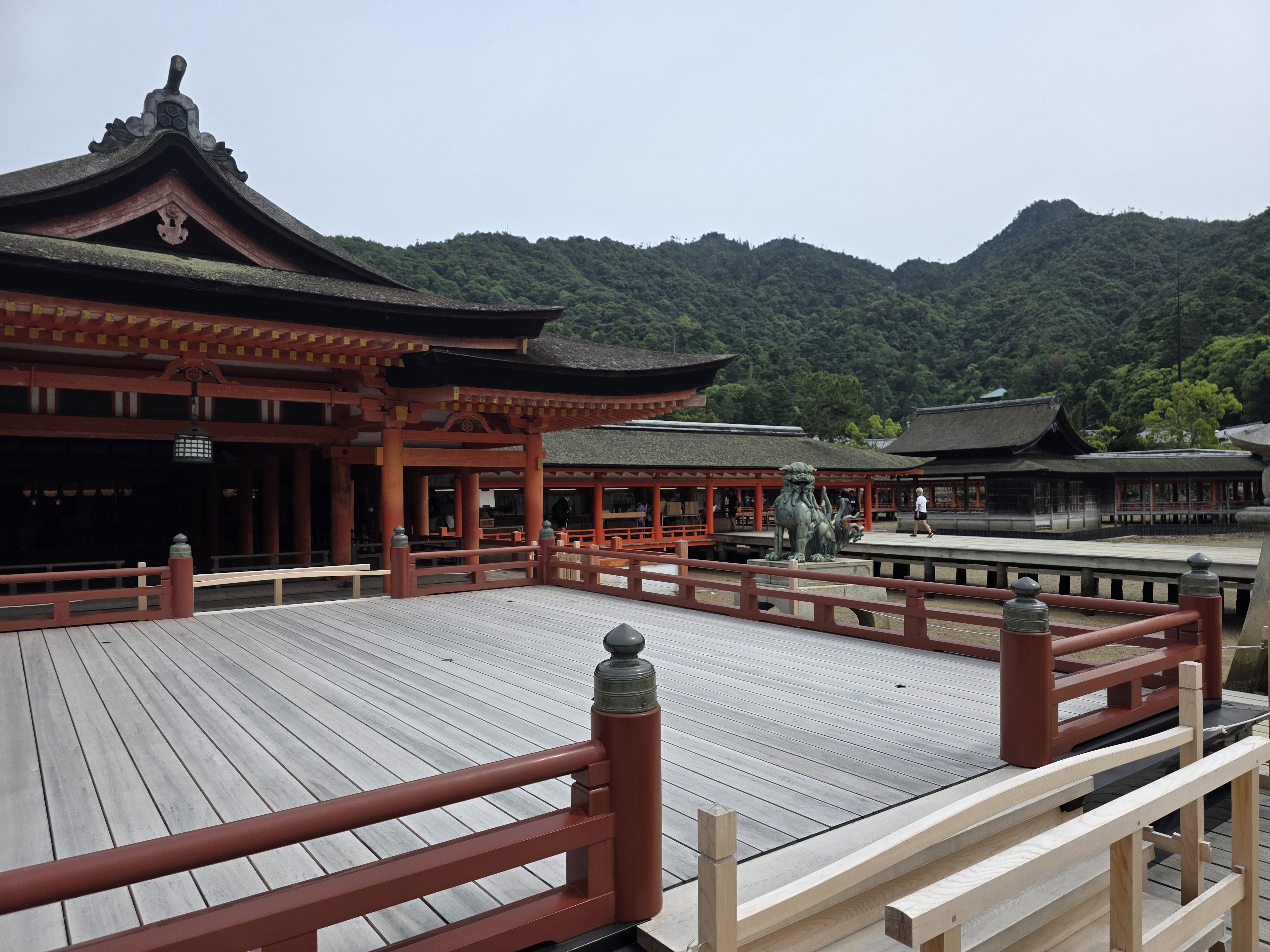
The shrine is Shinto, and the entrance fee is 300 yen (about £1.50), but at the moment, much of it is closed for restoration. Unfortunately, the nearby five-tiered pagoda from the 15th century was also under restoration – we didn’t even recognise it at first, and thought it was a new building going up in the middle of this historical island! So when we climbed up to the Hokoku Temple, we weren’t able to see it.

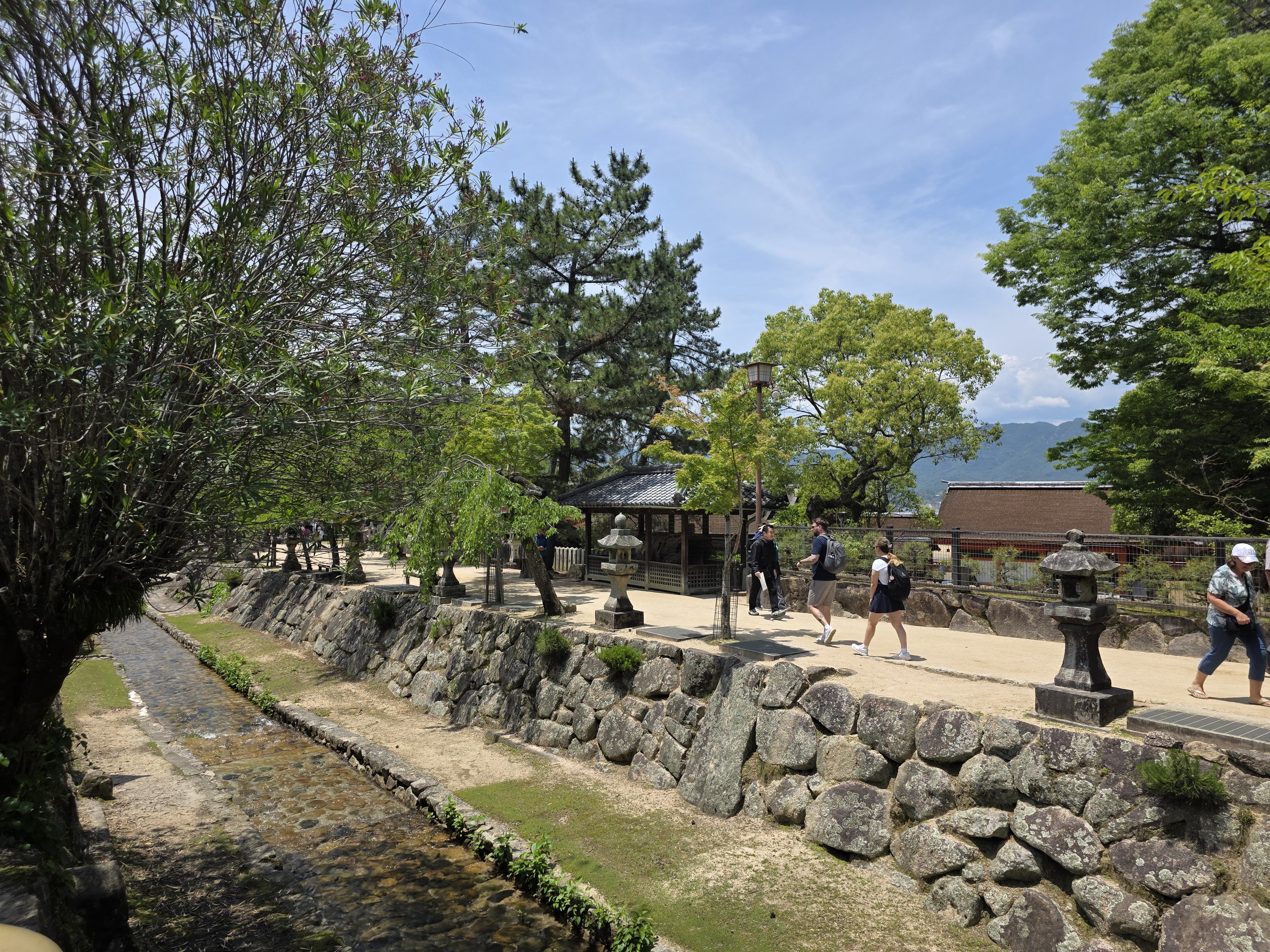
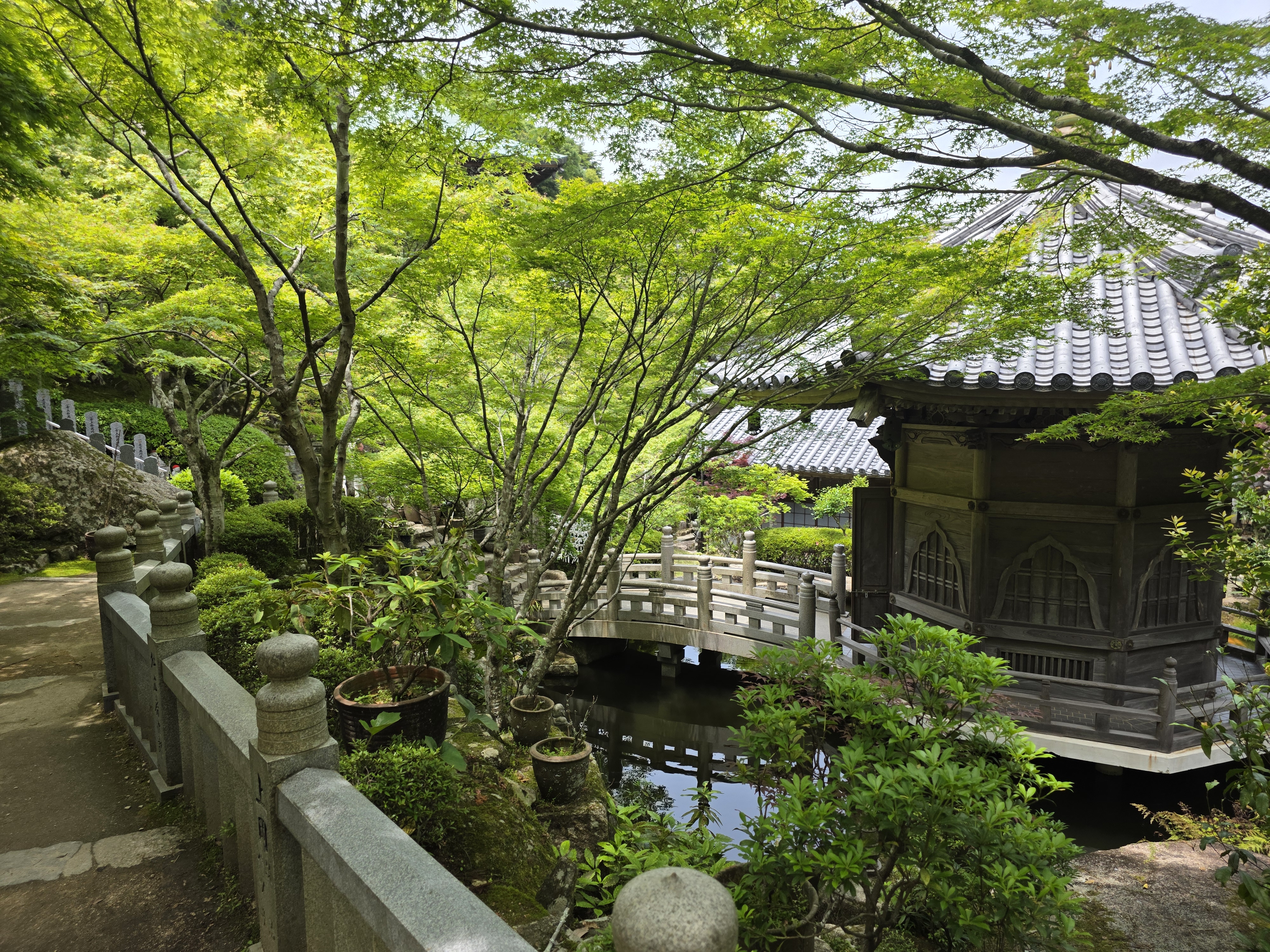
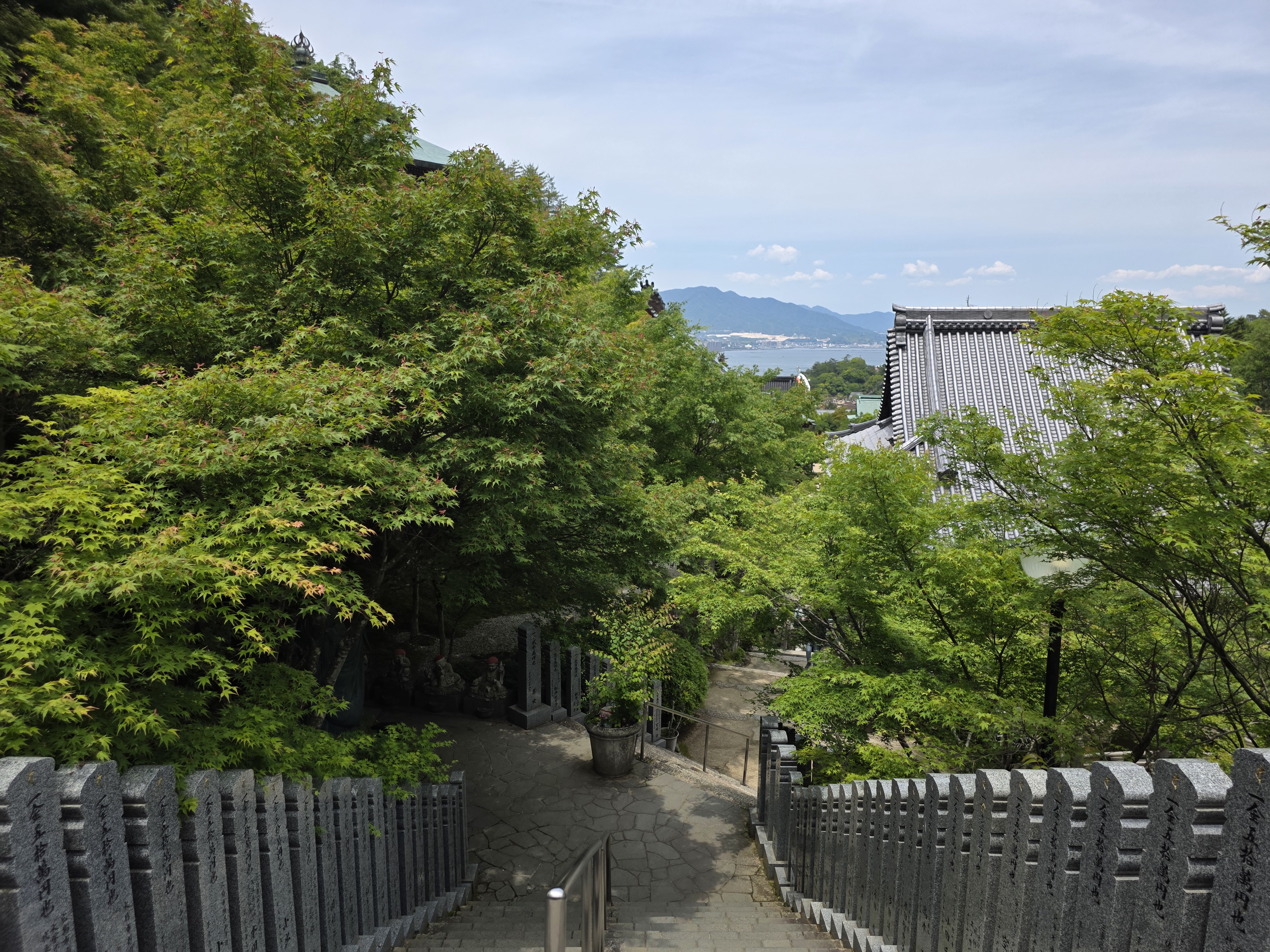
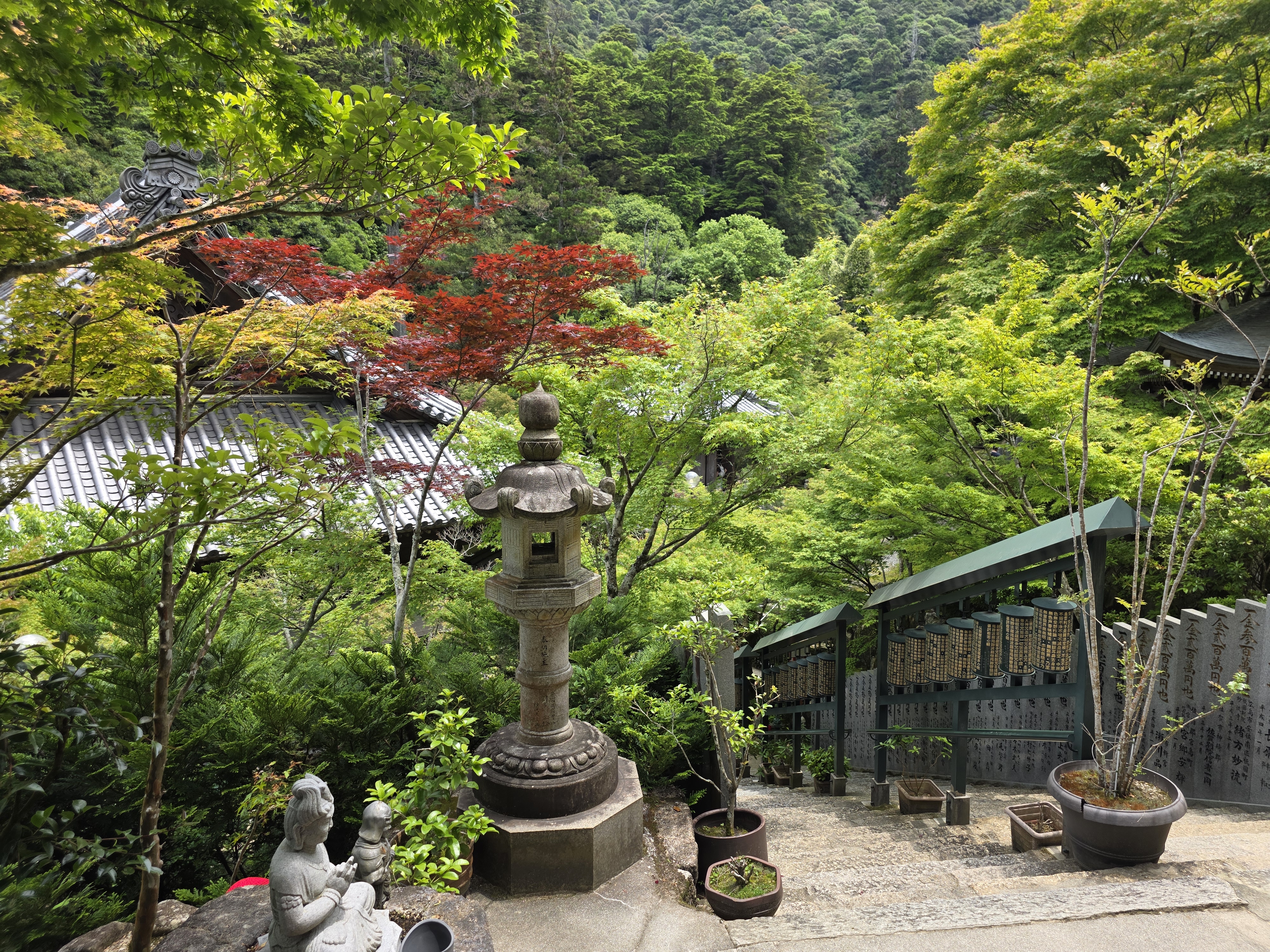
We then continued up to Daisho-in Temple – unlike the shrine and like Hokoku, this one is Buddhist. From here, you can hike to the top of Mount Misen, but we decided not to do that and just enjoyed the temple itself.

The path to the temple was calm and peaceful. Of course, tourists come here too (the same noisy Iranian group was there), but not in overwhelming numbers. Many worshippers were also present, performing rituals. For example, you can strike a large bell and make a wish – though you have to pay. Sure, you can do it for free, but I would imagine that the local higher powers probably don’t grant free wishes.

They say (and back it up with photos!) that the views from the temple in autumn are absolutely spectacular – but even in May, for some reason, many trees were already red, so it was beautiful anyway. We really liked the temple.

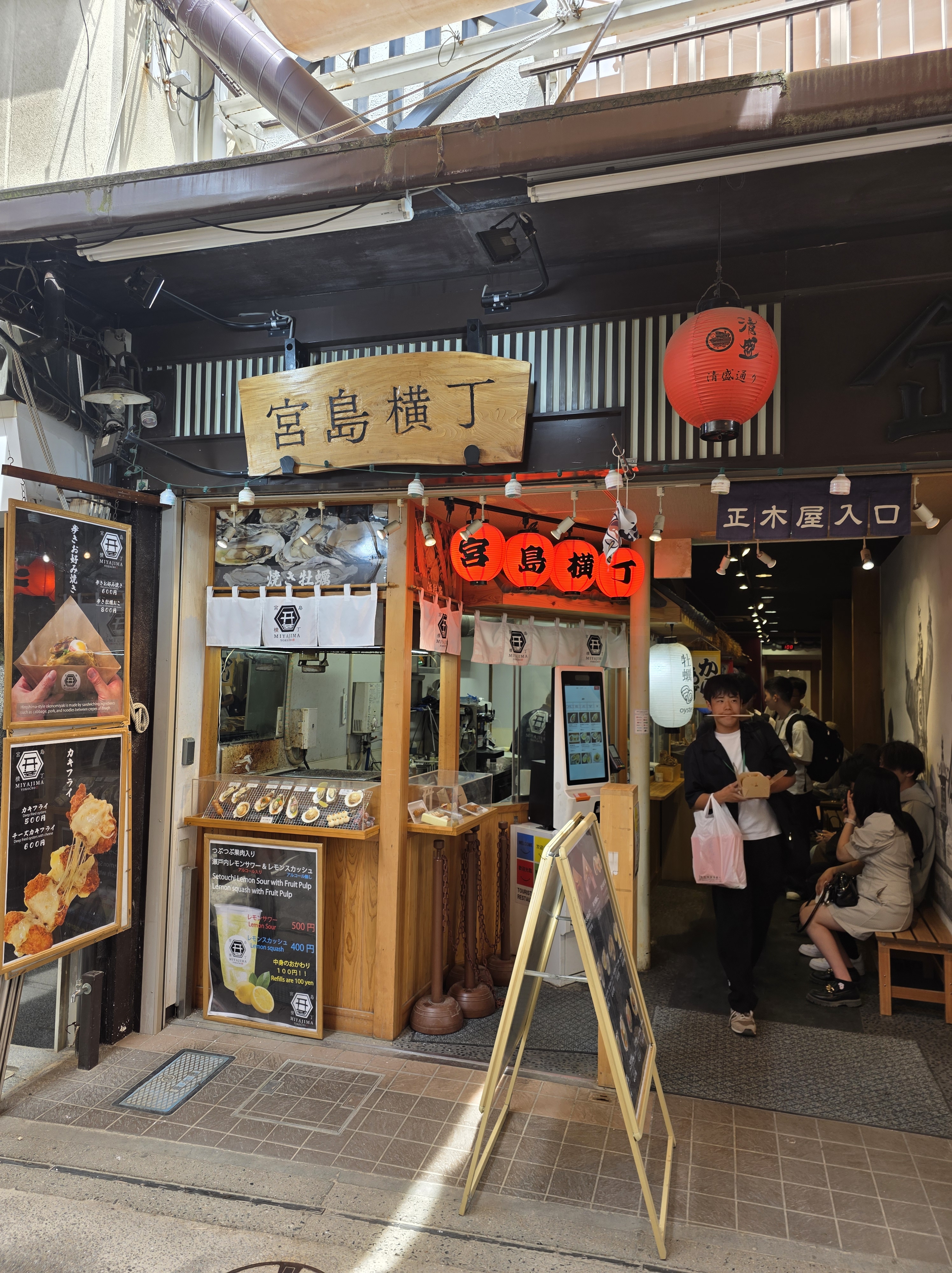
By then it was lunchtime, so we headed back down toward the pier and went into one of the local restaurants to try regional cuisine. We were seated in a “Japanese room” – many places here offer that option – which means sitting on tatami mats at a low table, shoes off. The regional specialties are grilled eel and oysters, which we had in a set meal with buckwheat noodles (soba). It was interesting to try, but I wouldn’t call it my favourite flavour of Japan.

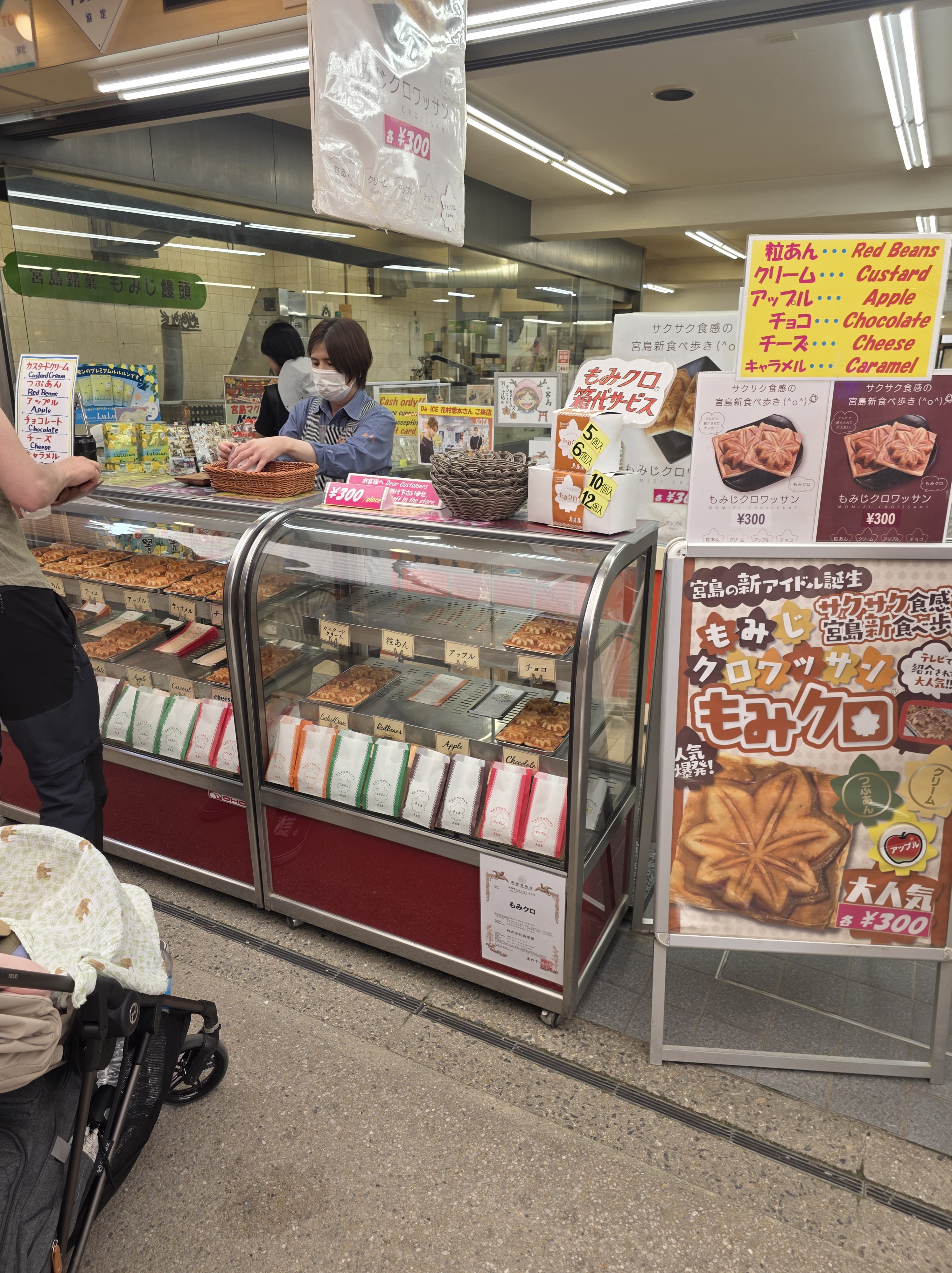
Another local delicacy is momiji manju – maple-leaf-shaped cakes with sweet fillings. The traditional version has sweet bean paste, which I didn’t like, but the chocolate and custard-filled ones were very tasty and delicate.

After lunch, we strolled through covered streets filled with cafés, food stalls, and souvenir shops – including some Ghibli-themed ones that were much better than the museum shop we saw yesterday.

Then we stopped for coffee at a place we’d spotted earlier that looked like someone’s private garden. And as far as I could tell, that’s exactly what it was – a house and garden converted into a café, run by two elderly women. The garden was beautifully maintained and very traditionally Japanese, and it was such a pleasant spot to relax. At first there were some noisy customers chatting loudly, but they left soon after.

From there, we headed back to the ferry. For some reason, at that time there were schoolchildren in uniforms everywhere – whole classes, probably on school trips. Some were arriving, some were leaving, some were gathered for class photos.

Back in Hiroshima, we decided to walk through the Peace Memorial Park and visit the Atomic Dome – the skeletal remains of one of the Hiroshima Prefectural buildings that survived the atomic bombing. Interestingly, the memorial plaque doesn’t mention anywhere that the bombing was carried out by the Americans – and the overall tone of the memorial isn’t accusatory at all, but more like a quiet reflection on the horrors of war and the importance of peace.

At the hotel, we arrived just in time for happy hour and had some rather mediocre wine that made us a bit dizzy – but then we went to dinner and had delicious katsu to make up for it.

Posted in Asia, English, Hiroshima, Japan, Tokyo

Japan – Day 5

РУССКОЯЗЫЧНАЯ ВЕРСИЯ ПО ЭТОЙ ССЫЛКЕ. CLICK HERE FOR RUSSIAN VERSION.

27 May 2025

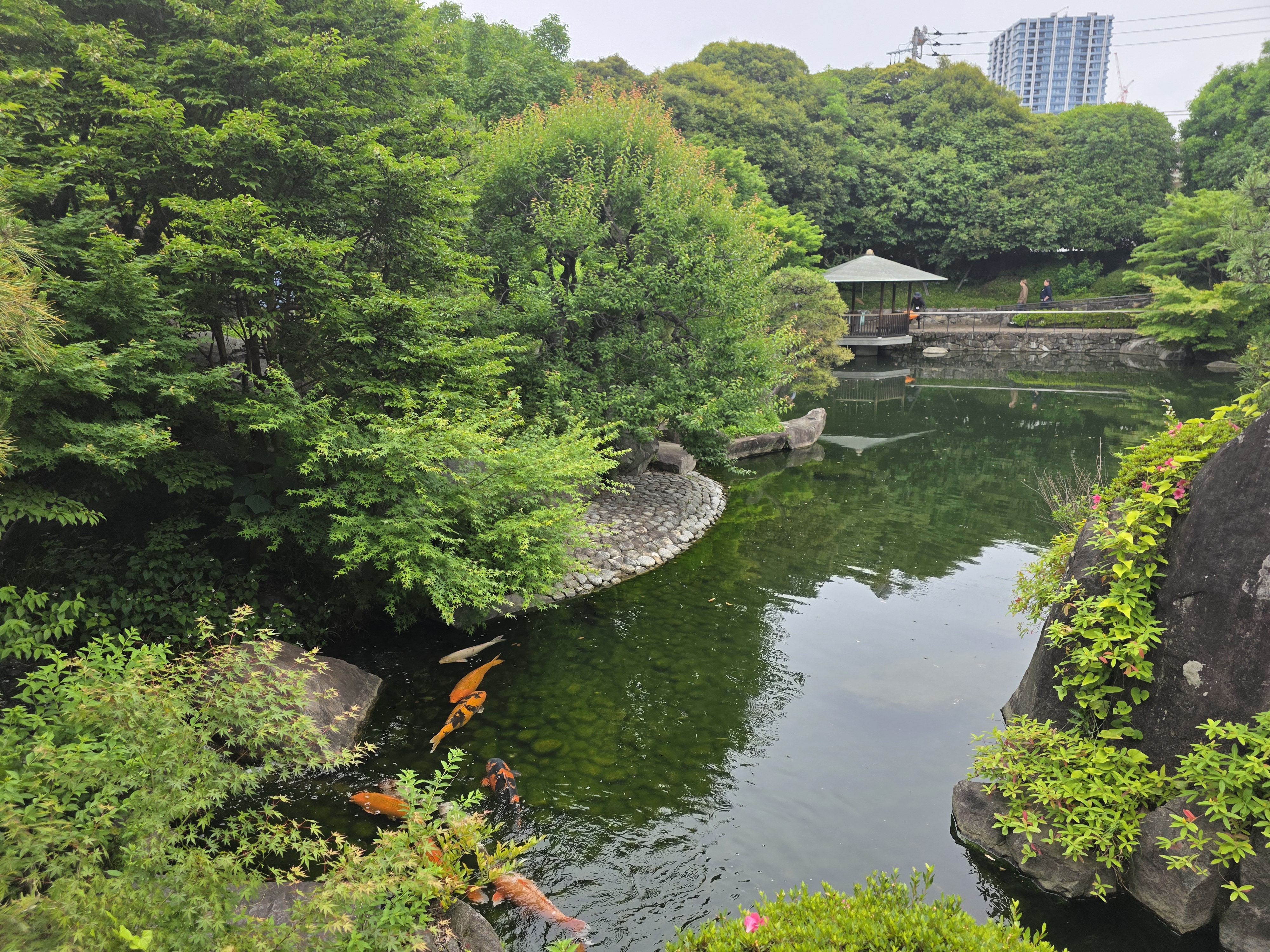
Today was our last day in Tokyo (though we’ll be coming back later). We had breakfast again at the same café in the park as the day before yesterday. We had to go to Hiroshima, but only after lunch, so in the morning we took a walk to Mejiro Japanese Garden, not far from our hotel. It’s a small, quiet, and very typically Japanese garden – clearly not a famous one, as there were very few people around.

At the entrance, there’s a traditional room that looks like a tea house, which can be rented for photo shoots or private events. The garden itself has a central pond surrounded by greenery, and a small gazebo. On the surface of the pond we saw lots of water striders, and in the pond itself, big fat koi carp swimming lazily around.

After returning to the hotel, we headed off to Tokyo Station. The station is truly massive – many subway and train lines converge there, and it’s also where the high-speed Shinkansen trains depart, which we were taking to Hiroshima. We had lunch right at the station in a Chinese restaurant – the hot and sour soup was especially good.

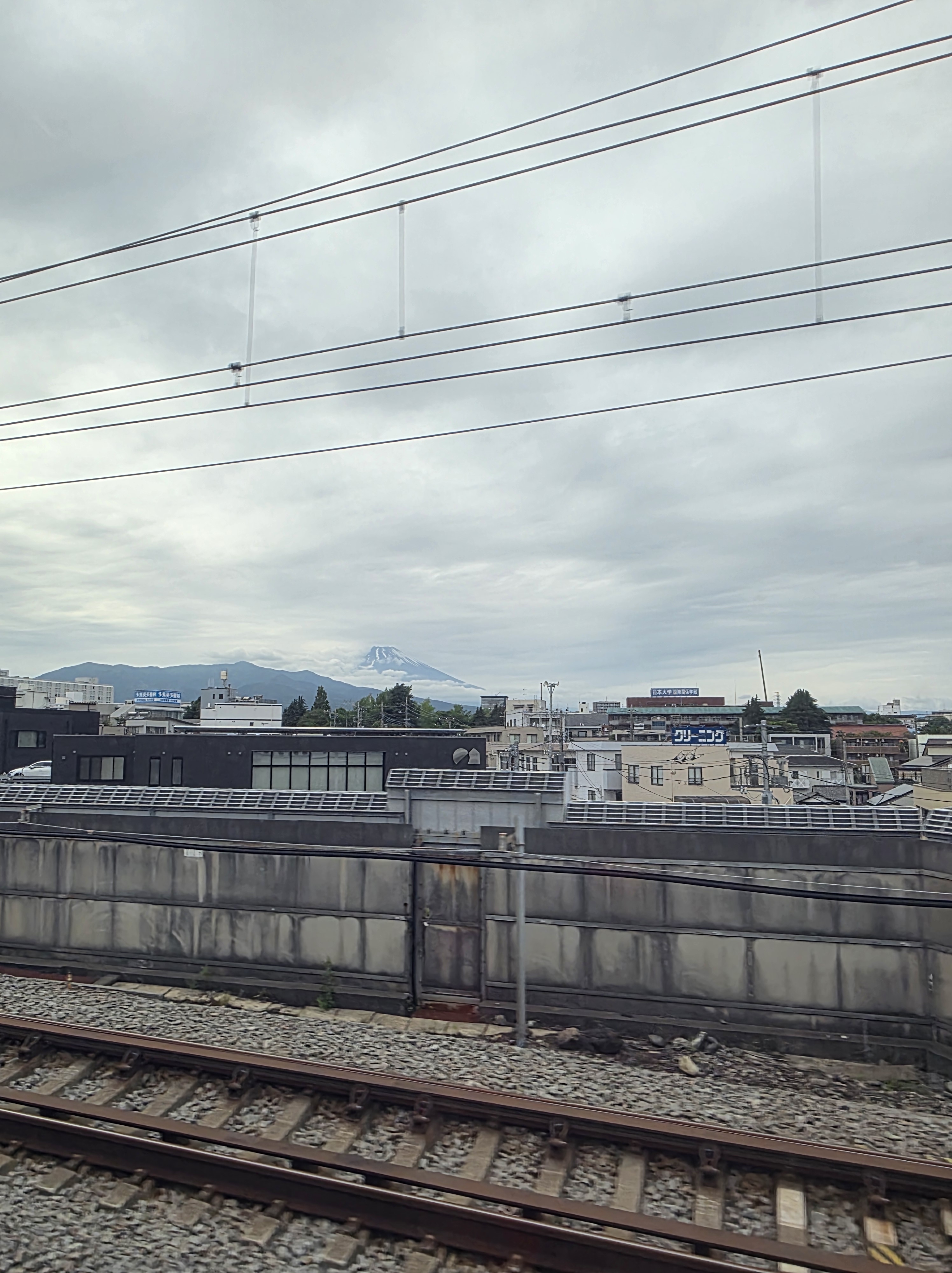
Coming back to the Shinkansen – also known as “bullet trains.” They’re fast, but not quite as jaw-dropping as the ones in China. Almost ten years ago, I took a Chinese bullet train from Hangzhou to Shanghai, and it was flying so fast you couldn’t even make out the scenery – everything outside just blurred into a gray wall. That was a proper “bullet.” Here, the train is definitely fast, but you can still see everything outside – the outline of Mount Fuji as we approached Kyoto, endless rice fields, and villages with houses that still have traditional curved Japanese roofs.

The journey to Hiroshima took about four hours, but it passed quickly and effortlessly. We’re not planning to do much in Hiroshima itself – the real goal of coming here is to visit Miyajima Island.

Once we arrived, we checked in to the hotel. First impressions of the city – at first glance, Hiroshima didn’t feel that different from Tokyo. But no, the vibe is quite different. For one, there are far fewer people, which makes foreigners stand out more – especially Germans, of whom there seem to be quite a few. Second – though maybe this was just our route – there were some confusing pedestrian passages and street crossings where it wasn’t obvious how or where to cross. Thirdly, I’ve already mentioned Japan’s older infrastructure – and here it feels even more dated. The buses look like ancient Ikaruses, and the taxis seem straight out of a movie from the ’80s or ’90s.

Just off the wide avenues, as in Tokyo, are hidden narrow streets. Same as in Tokyo, often there are no sidewalks, and where they do exist, cyclists ride along them, also in the same way.

We had dinner at a fish restaurant – though calling it a “restaurant” might be a bit generous. It was more like a small eatery with room for 10–15 people, and, once again, everything was in Japanese. They gave us a card with pictures of various fish, and we just pointed to the ones we wanted. Those were grilled with salt and served with rice, miso soup, and a few small side dishes.

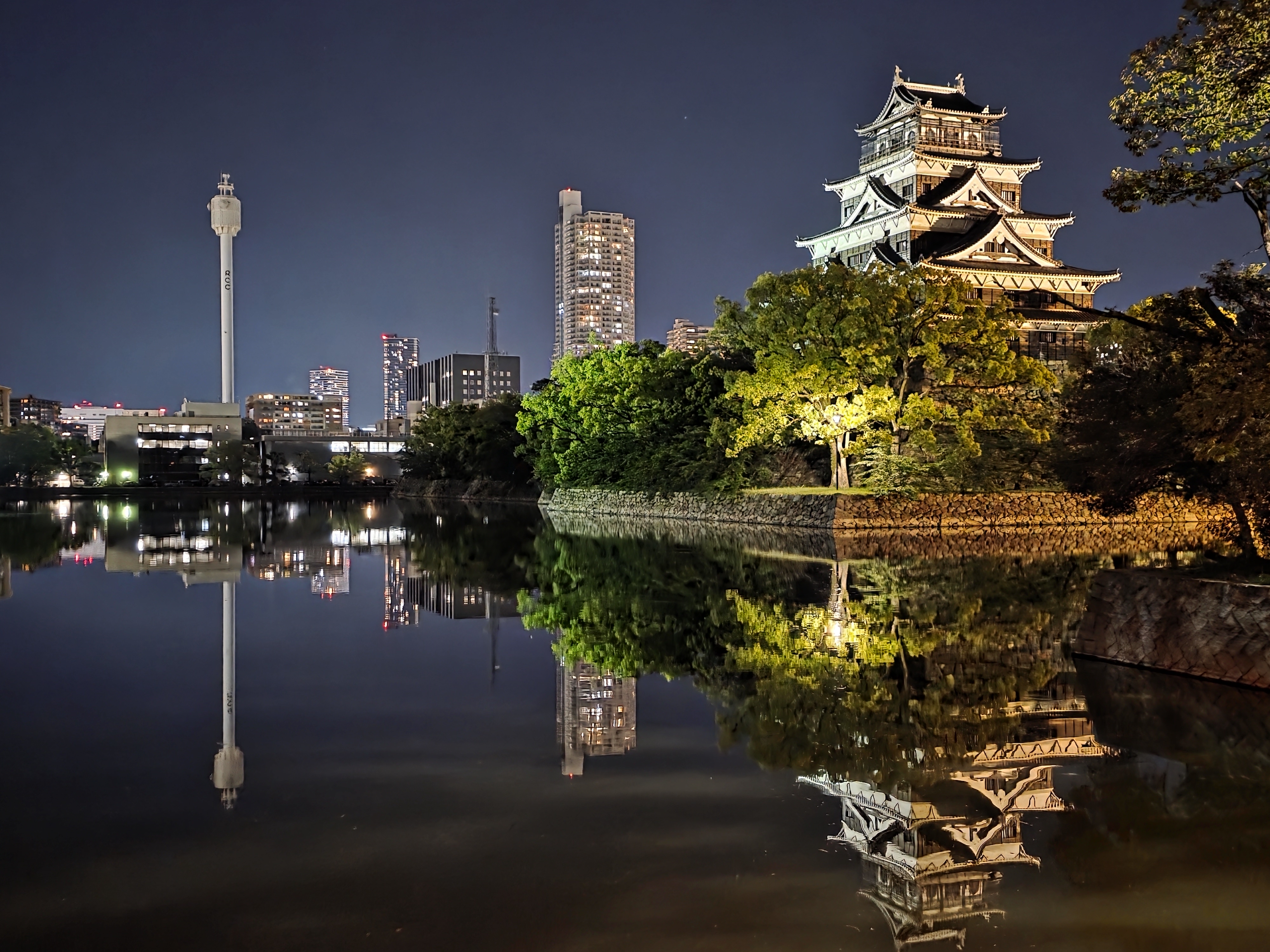
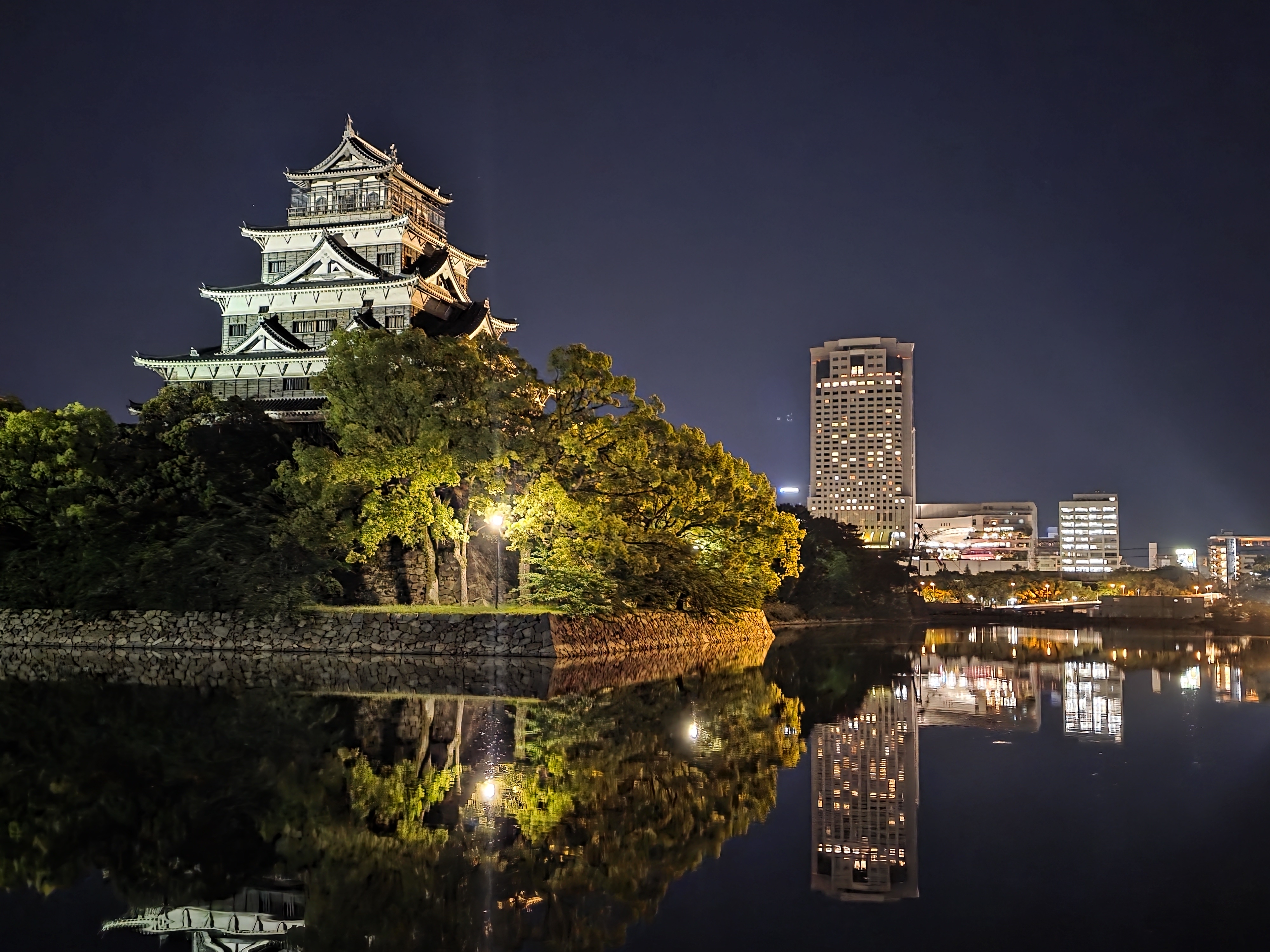
After that, we made our way through some dark streets to Hiroshima Castle to see it lit up at night. It was definitely worth the walk – we got some beautiful photos with the castle reflected in the water. By the way, the original castle was almost completely destroyed by the atomic bombing – what we see today is a reconstruction.

Posted in Asia, English, Japan, Tokyo

Japan – Day 1

РУССКОЯЗЫЧНАЯ ВЕРСИЯ ПО ЭТОЙ ССЫЛКЕ. CLICK HERE FOR RUSSIAN VERSION.

23 May 2025

Whoop whoop, my childhood dream is finally coming true and I’m going to Japan! This is something I’ve wanted to do for years, but it never quite worked out – whether it was the Fukushima disaster (yes, when I say “years,” I mean years!) or trying to combine the trip with a wedding in Barcelona – only to realise this wasn’t going to work.

I took a direct 13-hour flight from London to Tokyo. I’d really hoped to sleep on the plane, but since the flight was during London daytime – and, as luck would have it, I was sitting right behind a baby who screamed almost non-stop for what felt like the entire 13 hours – I couldn’t fall asleep at all. Of course, I don’t know why the parents were flying to Japan – maybe they had a good reason – but if not, it did feel a bit selfish. Not just toward the other passengers, but toward the baby too, who was clearly not having a comfortable flight.

Naturally, I arrived feeling pretty irritated. But that mood quickly lifted as I easily went through airport procedures, figured out how to get to the hotel, finally sat down on the train, and realised – damn, I was in Japan!

But even before that, I’d already had my first culture shock as I entered a Japanese toilet. Heated seats, built-in washing functions, and even a button that plays forest sounds and birdsong to mask any “indecent” noises.

The second shock came while I was on my way, as I changed from the train to the subway. I happened to hit rush hour – around 9 am – and that’s when I realised: anyone who has never ridden the Tokyo subway, hasn’t truly seen a packed train. The London Underground looks tame in comparison. Luckily, I had a seat, but the crowd was so dense I ended up half-lying on someone, my suitcases pressing into me and simultaneously squashing some poor guy’s crotch. I was genuinely worried I wouldn’t be able to get off at my stop with all my luggage, but thankfully Ikebukuro is a major station, and a wave of people getting off pretty much swept me and my suitcases out with them.

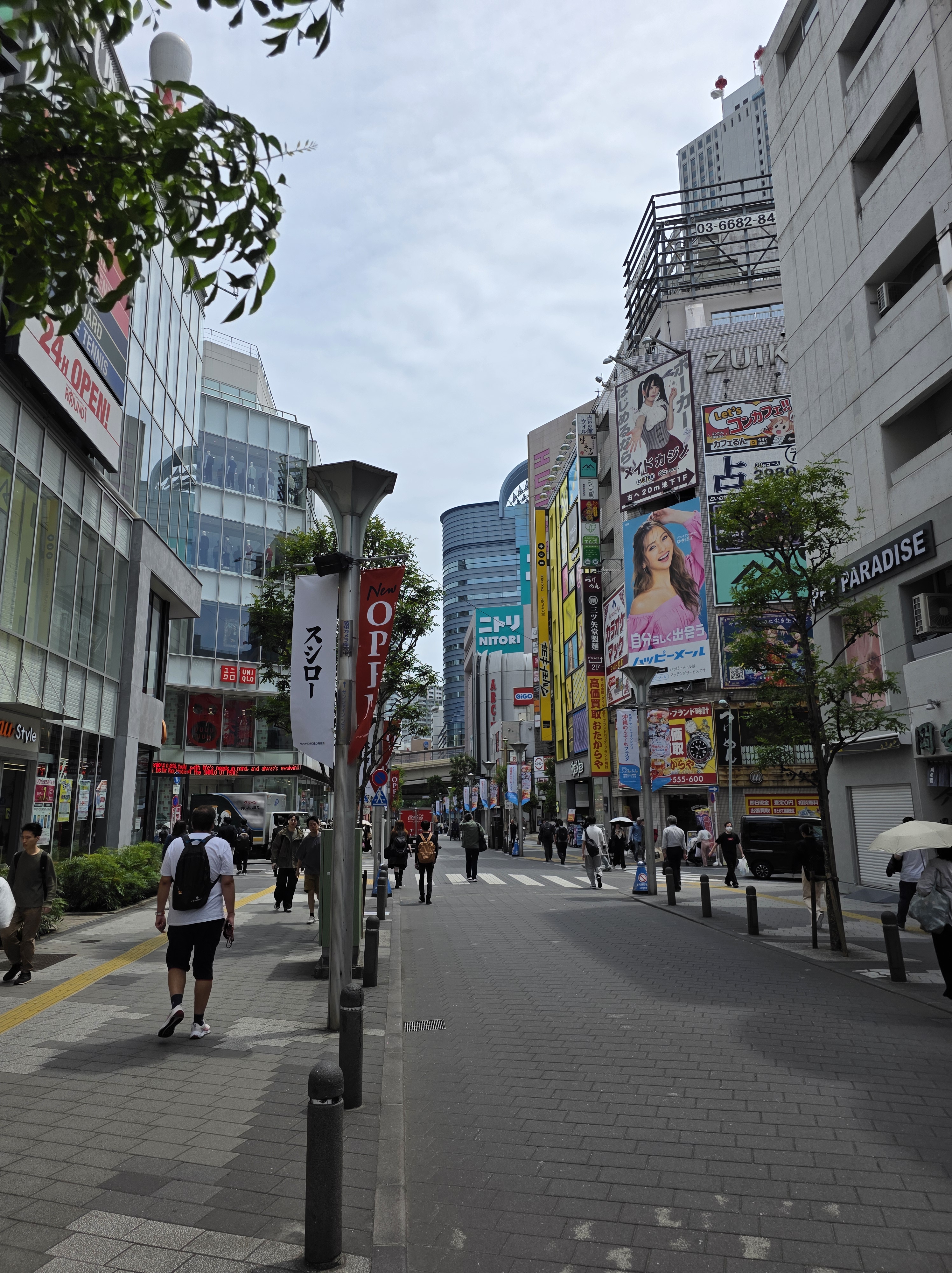
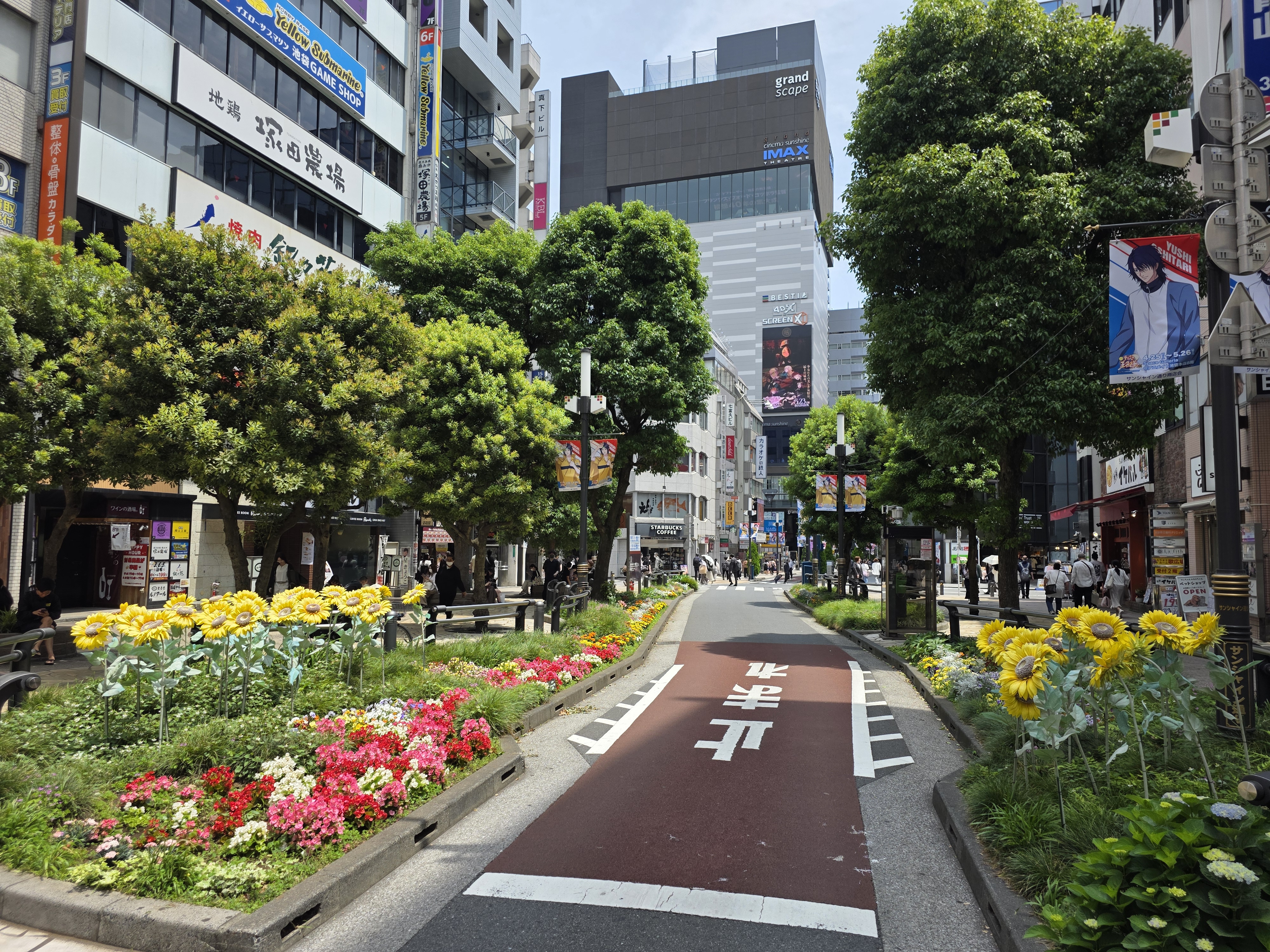
I arrived at the hotel a couple of hours before Rena, who was flying from Baku via Tashkent, and while waiting for her, I decided to take a walk around the area and look around. My eyes just darted around – everything looked so interesting! The signs, the shops (including those selling loads of Japanese and Korean cosmetics!), and all sorts of eateries – at least 358 of them per square meter, by my estimate.

While waiting, I had a couple of coffees and a matcha latte – I needed to refuel with caffeine after an entire sleepless day. English doesn’t seem to be widely spoken here, as far as I can see. In the coffee shop they spoke to me in Japanese, and naturally I didn’t understand a word, but still managed to order and pay using gestures and pointing at pictures.

The weather wasn’t too hot or sunny, but it’s still fairly stuffy. Despite the lack of direct sun, many people carry umbrellas to avoid getting burned. And lots of people wear masks – which, as we know, has been common in Japan long before Covid.

I also noticed that food and lots of other things are actually quite cheap here. It’s only the accommodation and some transport – mainly the high-speed Shinkansen trains – that are expensive. The rest of the transport system is quite reasonable (I’m comparing everything to London prices, of course).

We also saw groups of schoolgirls in uniforms here and there throughout the day, but oddly enough, no schoolboys (at least until 6 pm – it makes you wonder if they either study in different shifts, or if the girls skip classes en masse during the day, while the boys sit in class).

Once Rena arrived and while waiting for the hotel check-in time, we walked around the neighbourhood some more, had a rich and greasy bowl of ramen in a casual eatery, stopped by a cemetery (and immediately left – it wasn’t exactly Père Lachaise, but just a regular Japanese cemetery) and had more coffee at a conceptual little coffee shop.

In the evening, we headed to Shibuya to see the famous scramble crossing – the busiest in Japan, with up to 3,000 people crossing at the same time.

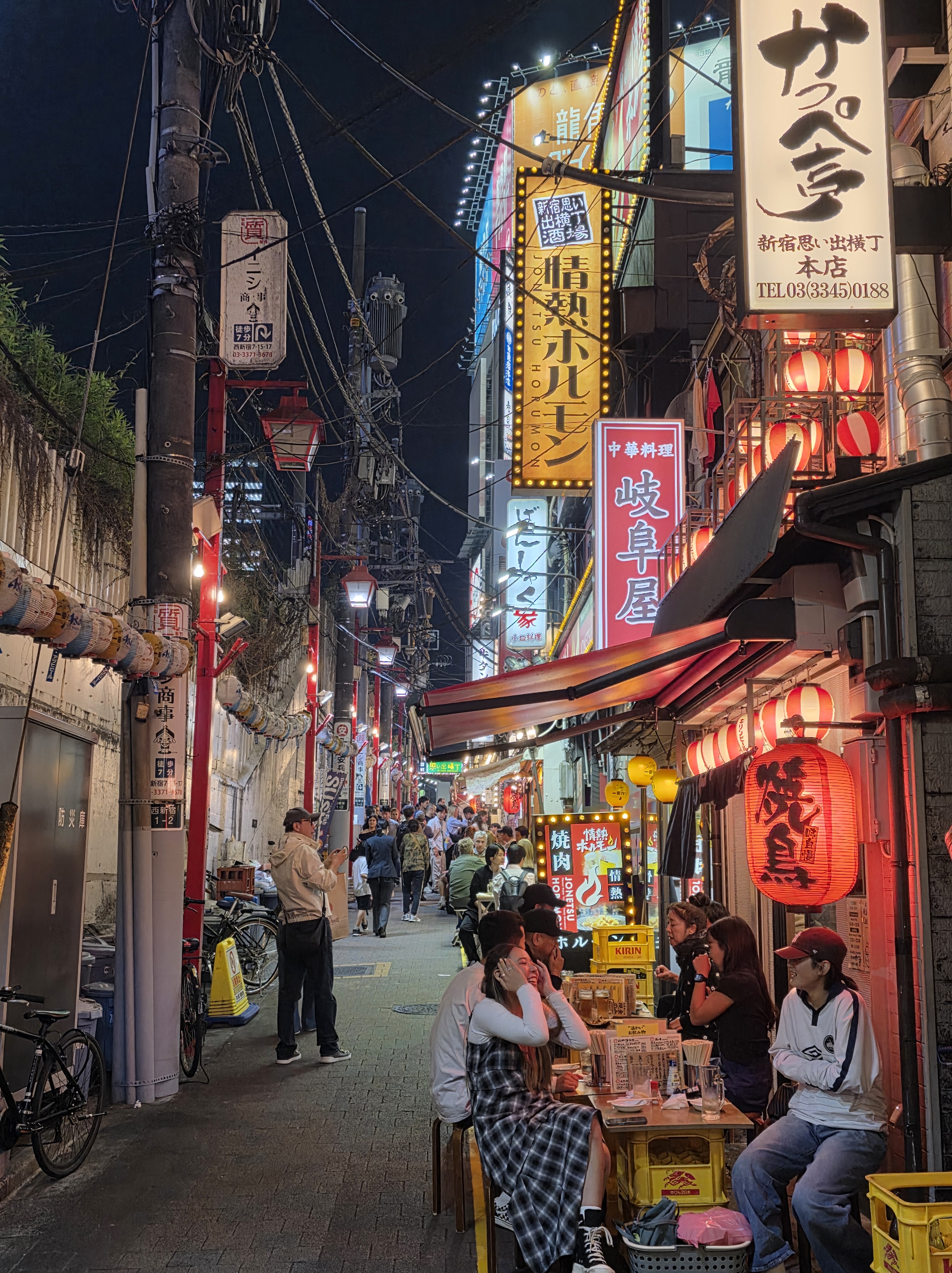
From Shibuya we went over to Shinjuku, and explored some of its narrow alleyways lined with izakayas – these are something like traditional Japanese pubs. Some of them are so tiny that they fit literally five visitors at a time.

We also went to an izakaya for dinner – but not to one of these small ones, instead we found a larger one, on the 5th floor of a mall, where we happily consumed sashimi and other dishes. Meals here are usually served as a set – with miso soup, boiled rice and pickled vegetables. And honestly, those who say that Japanese cuisine in other countries will be ruined for you once you try it in Japan itself – are right.

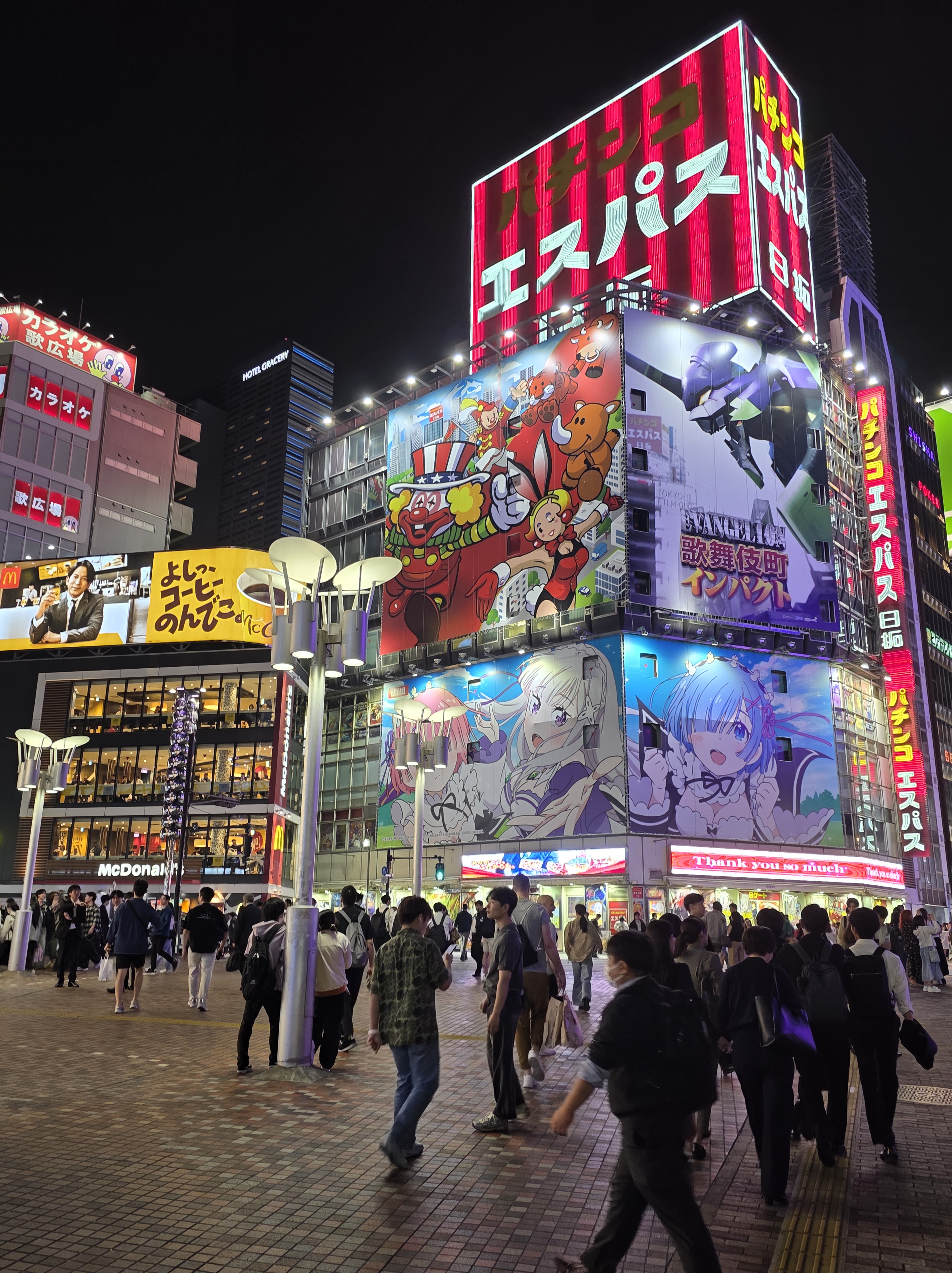
After dinner, we strolled through Shinjuku a bit more, enjoying the neon-lit night views.

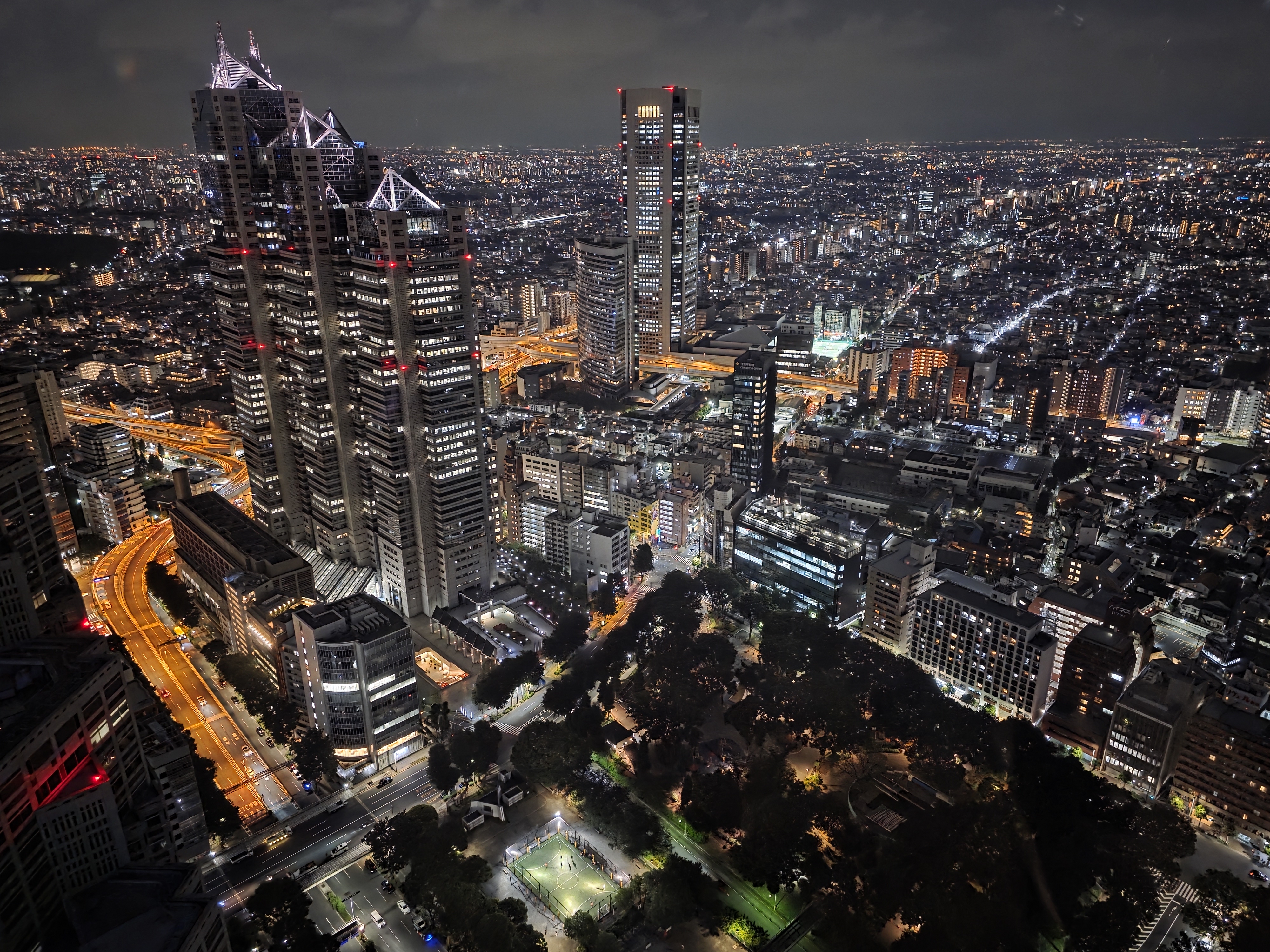
Our last stop of the day was the Tokyo Metropolitan Government Building, which has an observation deck on the 45th floor with great city views. We didn’t see Mount Fuji from there, although on clear days it’s apparently visible.

From there, we took the subway back to the hotel. Another observation – the stations here are huge. Even a small one with just a single line can have quite a few exits, a public toilet, and a number of shops and food stalls. And I’m not even mentioning the major hubs with several lines – they’re full-on labyrinths, and getting out can take a good 5–10 minutes. Luckily, there are plenty of signs, and everything is duplicated English (and often Chinese and Korean too), so it’s easy to find your way.

And that’s how we wrapped up the day – after 30+ hours with no sleep, running purely on excitement (with a little help from caffeine).

Posted in Asia, English, Ho Chi Minh City, Vietnam

Vietnam – Day 2

РУССКОЯЗЫЧНАЯ ВЕРСИЯ ПО ЭТОЙ ССЫЛКЕ. CLICK HERE FOR RUSSIAN VERSION.

6 June 2017

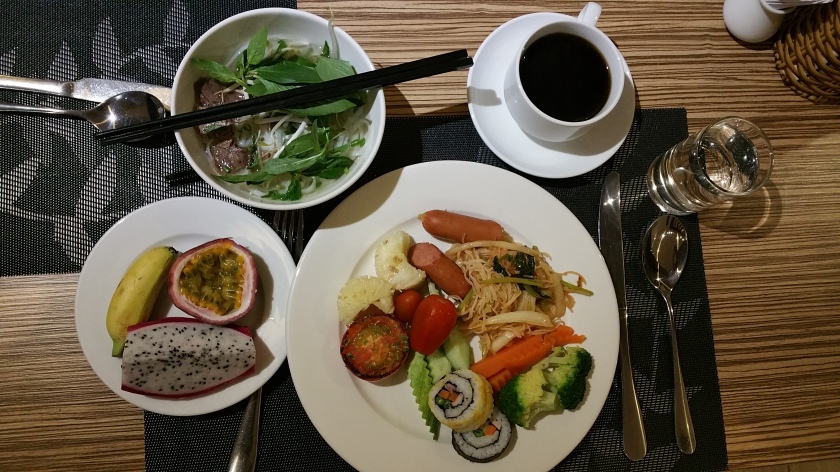
I may well be unoriginal and repeat what I’ve said before, but I will say it again: what’s particularly nice about breakfasts in Asian hotels is that apart from the usual boring cheeses/sausages/croissants/toasts you can get stir-fried veggies, noodles, dim sum and even pho! Which is exactly what we did before heading down to the reception at 8 am, where our tour guide Phuoc was already waiting for us, ready for the Mekong Delta excursion.
20170607_073939

First of all, we took a two-hour drive in a comfortable SUV to the town of Cai Be in the Mekong Delta region. As we were driving out of Ho Chi Minh City, and also afterwards, I was thinking of my impressions about the surroundings. There are places which make you say “so beautiful that it takes my breath away”. This is not the case. The Vietnam, which we have seen so far, is best described by the epithet “charming”. And in many respects, it’s charming precisely by its imperfection, including chaos on the roads; assemblages of narrow buildings, sometimes shabby, not wider than a single window; street vendors on the sidewalks, and so on.

On the way, Phuoc was telling us how people live in country – about low salaries, about taxes and cases of tax evasion, about how, with the emergence of a free market economy, many are striving to own a business, even if a very small one, and that often all family members, including the elderly, need to work as it’s very difficult to make ends meet otherwise.

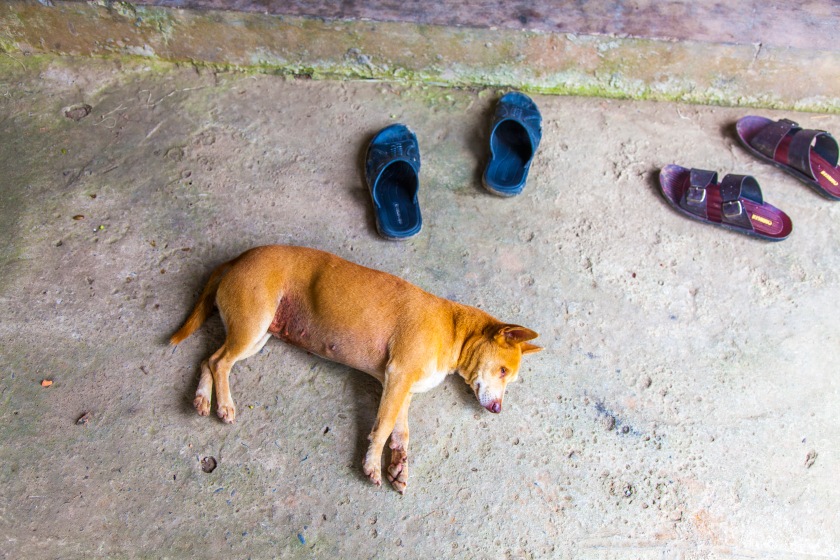
At some point, we started talking about dogs and the fact that in Northern Vietnam people still eat them despite the government’s attempts to ban this. In 1945, a terrible famine raged in the north of the country and it were dogs that helped many people survive (not by their own will though!), so some still believe that eating a dog brings good luck. At the same time, this doesn’t prevent the Vietnamese from treating the dog as a man’s best friend and even to welcome stray dogs in their shops or cafes – it turns out that dog barking somehow sounds similar to the Vietnamese word meaning wealth, so again it’s believed that dogs bring good luck, even without being eaten. As for cats, the situation is exactly the opposite, since their ‘meow’ is consonant with the word meaning poverty.
IMG_2293

On the way, we stopped to visit the “happy room” (that’s the euphemism used here for toilet, which is quite logical for travellers) in some interesting place, looking like either a garden or a restaurant. Through Phuoc’s efforts, the stop turned for us into something like a botanical lecture: she basically showed us every plant and explained how and for what purposes it’s used. We really got the impression that the Vietnamese eat almost any stems, leaves, fruits and roots (well, except for poisonous ones obviously), including banana tree stems, and literally every part of the lotus. Then, already back in the car, she showed us some books about tropical plants, flowers and fruits.

IMG_2183

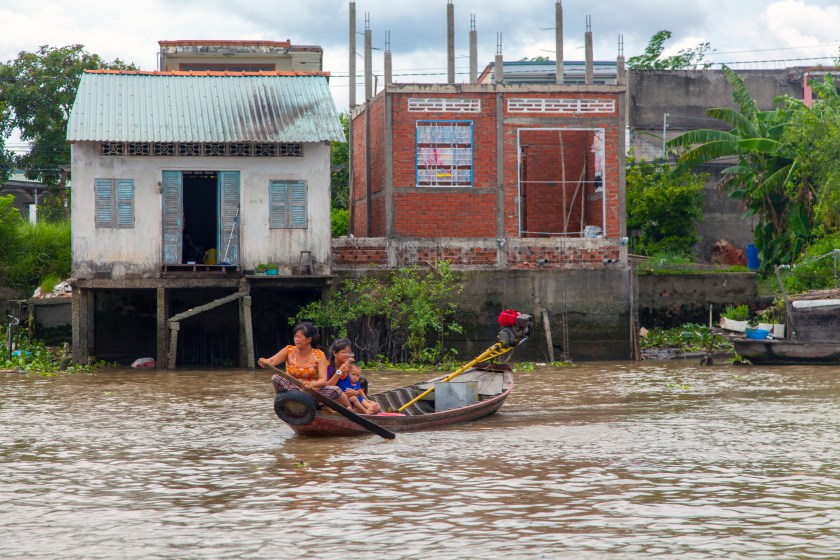
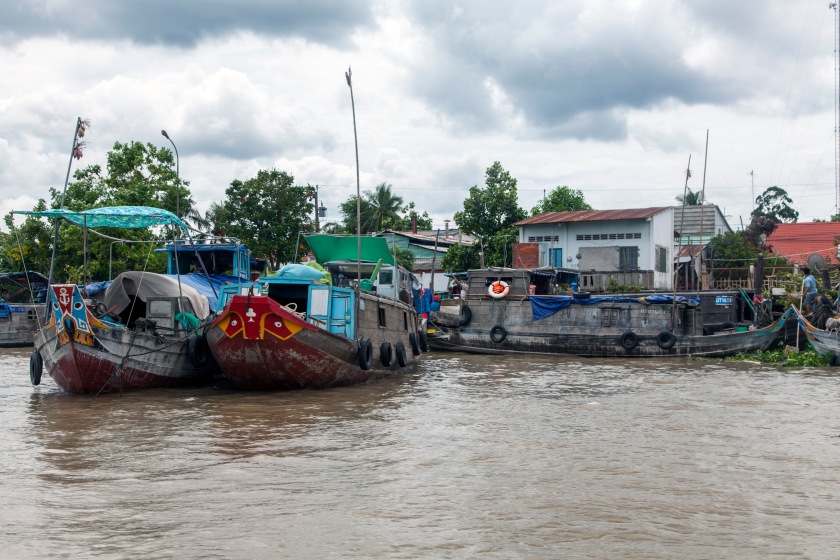
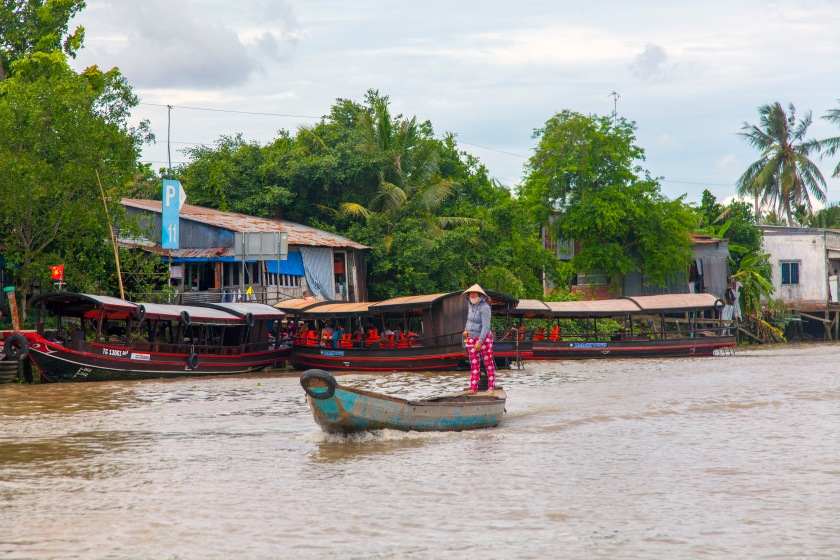
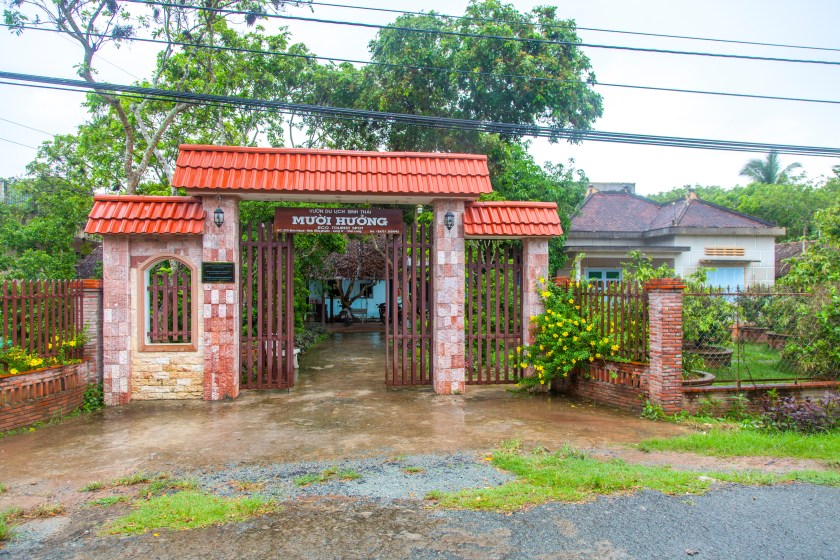
Another fifteen minutes’ drive – and we arrived at Cai Be, where we had to get on a boat and continue the journey on it. The boat was big – like a sampan – enough for 10 people, but it was just for our mini-group. First, we headed off to see the famous fruit and vegetable floating market. The population in the Mekong Delta area is mainly engaged in farming, and growing fruit is a very profitable business. The local climate and fertile land definitely help. But as for rice, for example, growing it is not that financially rewarding – the market price of one tonne barely covers the labour costs of the workers involved in producing this very tonne. Coming back to our floating market, we were told that in the early morning there are particularly many boats selling goods, and by 10 am (which is the time when we arrived), mostly everything is already sold out with only a few boats remaining. That is, to enjoy the floating market in all its glory, we would have had to spend a night in Cai Be.
IMG_2200

IMG_2213

IMG_2201

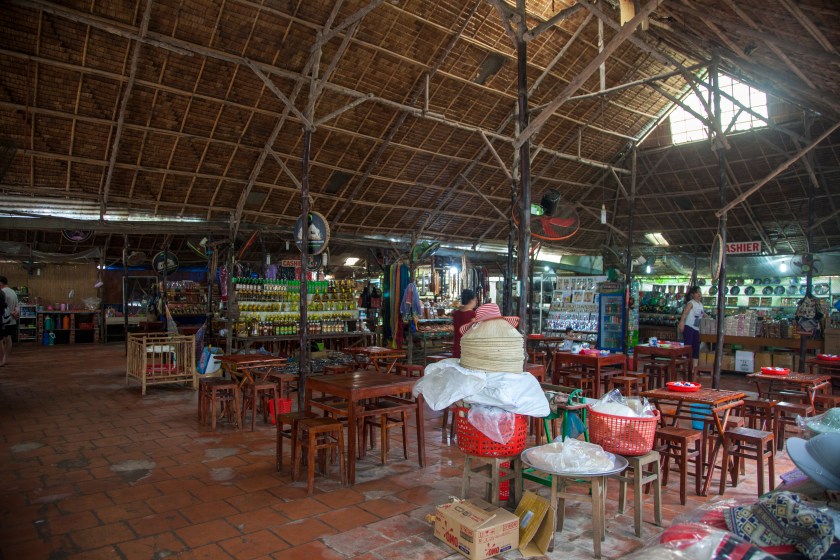
Our first stop is a local village with several family businesses. Here, for example, they make coconut candy by boiling coconut milk with sugar and sometimes flavour additives like coffee and chocolate. Coconuts, by the way, are used very extensively here – pulp and milk are used for food, and the shell is used as fuel, for crafts or even for activated charcoal production.
IMG_2215

IMG_2220

IMG_2219

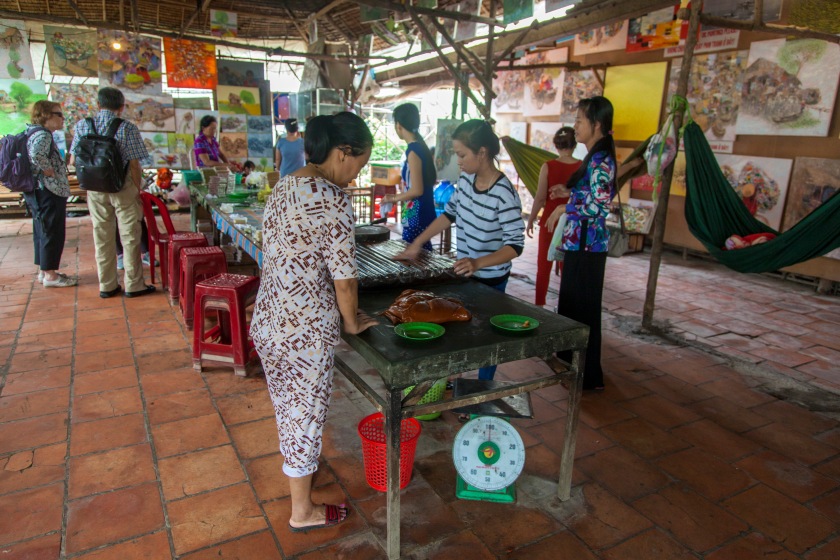
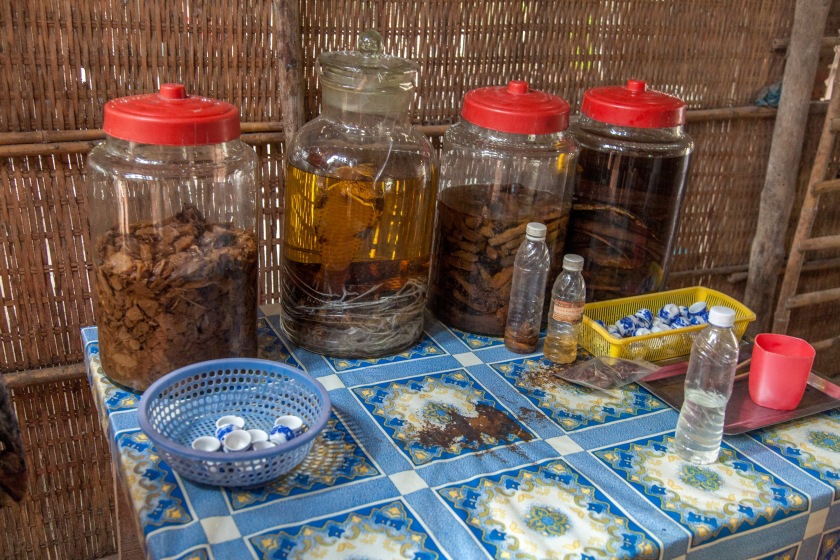
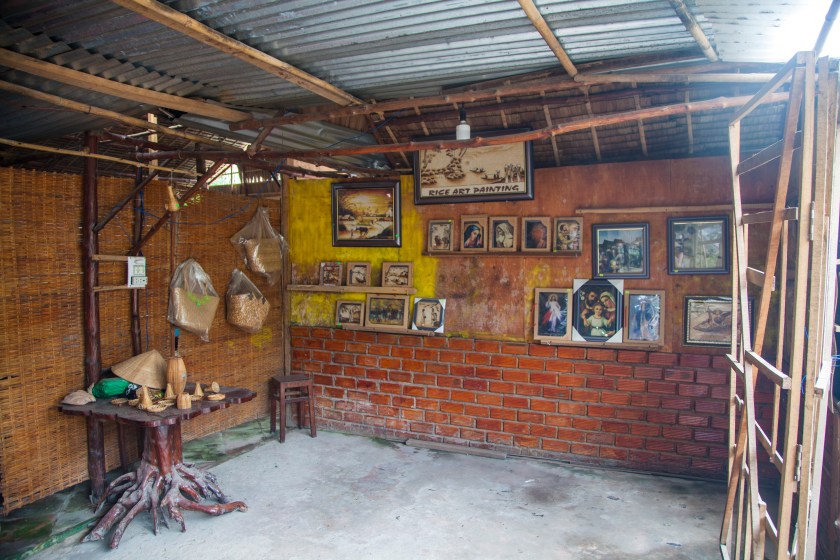
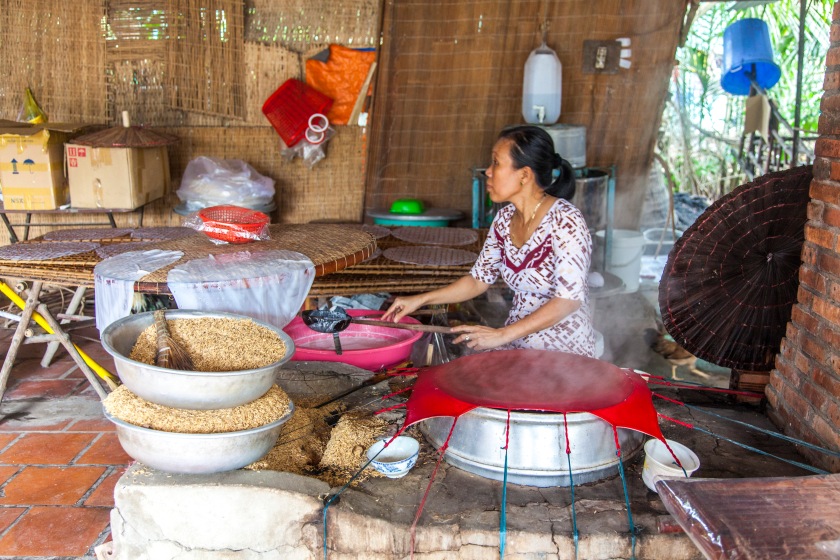
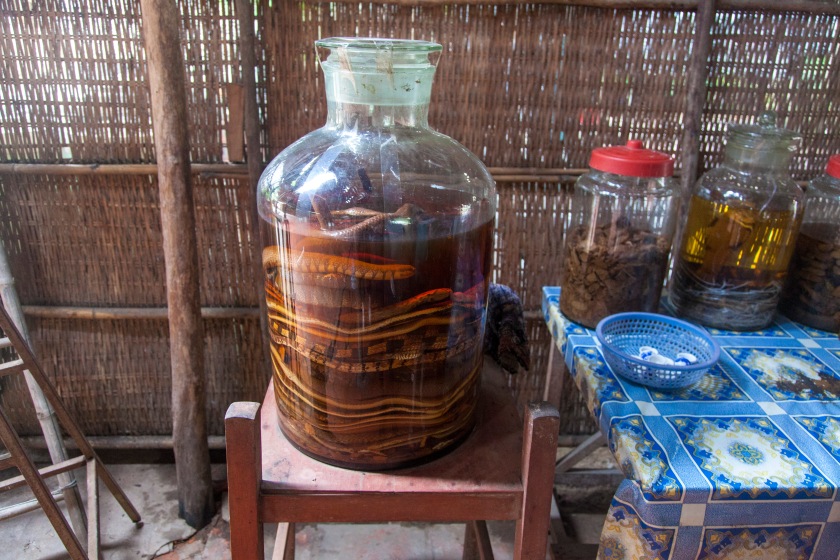
And here there’s clearly a rice business. A woman is making edible rice paper on a brazier. Not far away, rice alcohol is being produced and there are big jars of alcohol infused on bananas, lychees and even venomous snakes. Rice is also used for making pictures – every rice grain gets painted in the appropriate colour and used for the kind of mosaic as in one of the pictures below.
IMG_2224

IMG_2221

IMG_2222

IMG_2225

And a little bit further they are making puffed rice, frying it on a hot pan with hot black sand. Further on, this rice is mixed with various additives – sugar, salt or ginger, and even pieces of pork or beef – and pressed into something similar to the rice cakes that we know.

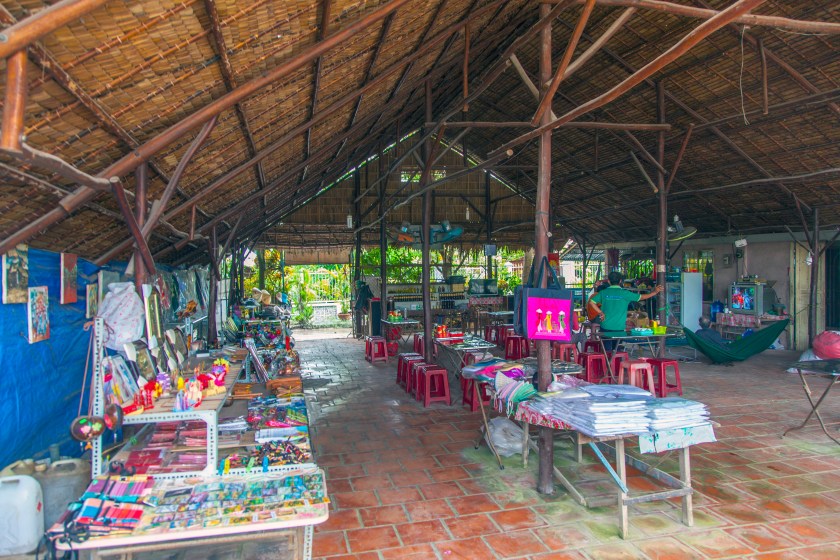
I have to say, all these braziers and pans make me feel like in hell in this not-very-cool weather, I sweat a ton, but finally we are sat under fans for a cup of jasmine tea with different sweets made of banana, ginger, sesame and peanuts. Jasmine tea here is very special, much more fragrant than, say, in China or elsewhere. Phuoc explains this by a higher proportion of jasmine flowers relative to tea. Enjoying the tea, we look around and notice that they sell all sorts of things here – coconut oil, crafts made of coconut and other trees, some ointment with cobra venom and even the famous Tiger Balm, although not in the familiar little red tin.
IMG_2214

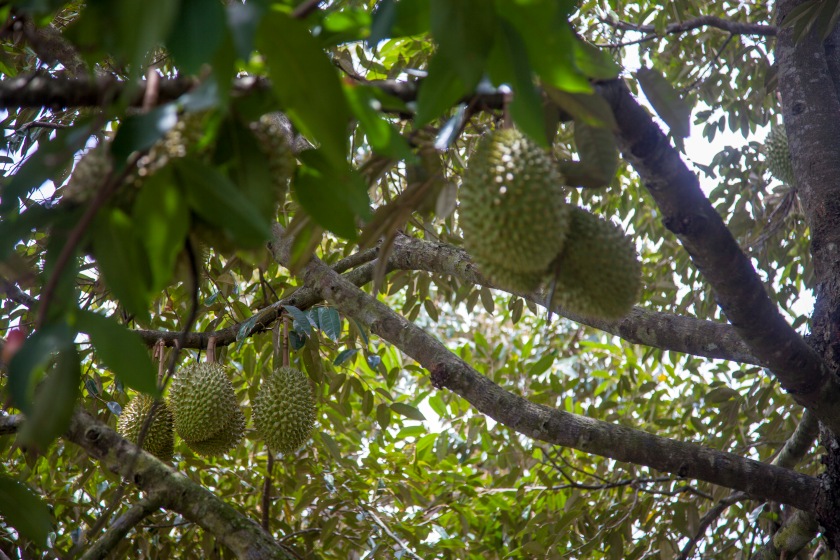
After the tea break, we again board the boat and drive on to the An Binh island, where we are supposed to enjoy fresh fruit and local music. Just as we take a step off the boat and onto the ground, we immediately feel knocked down by the smell of durian, and in a minute, we understand why: right in front of us there are durian trees, laden with large “fragrant” fruits.
IMG_2253

Fortunately, we aren’t offered any, instead on our plate we have pieces of ordinary watermelon, exotic but familiar pineapple and mango and quite unusual guava (something like feijoa and, as it turned out, closely related to it) and jackfruit (similar to durian, a bit smelly too, but, oddly enough, belongs to the mulberry family, and the pulp is bright orange, slippery and sugary-sweet, tasting like either melon or bubble-gum). At the same time, several performers entertain us with Vietnamese songs accompanied by guitar and some kind of folk instrument, and even with small performances.

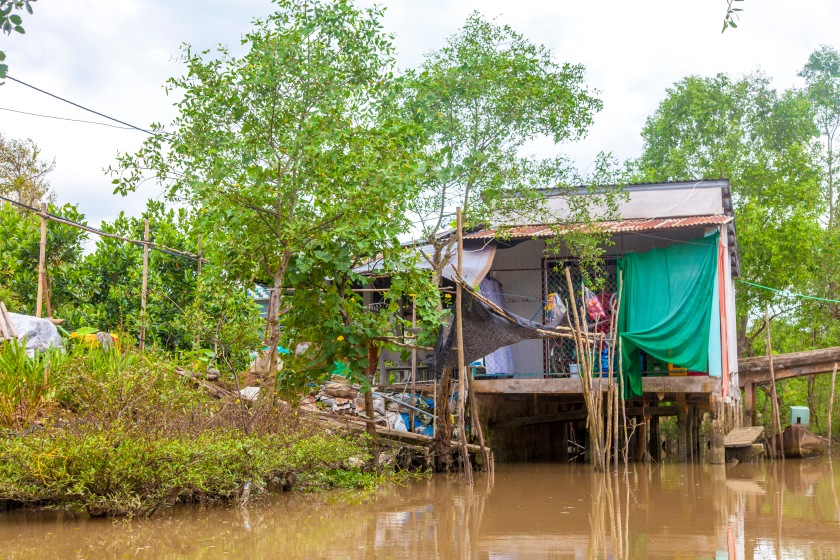
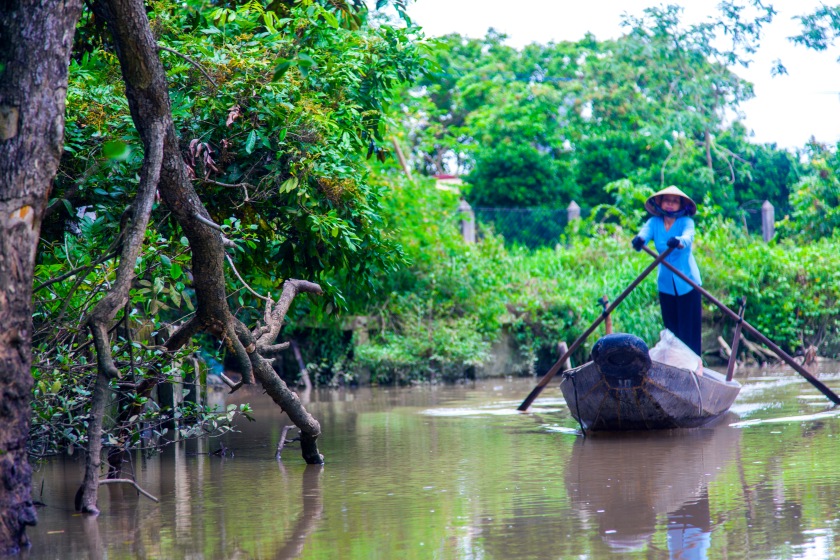
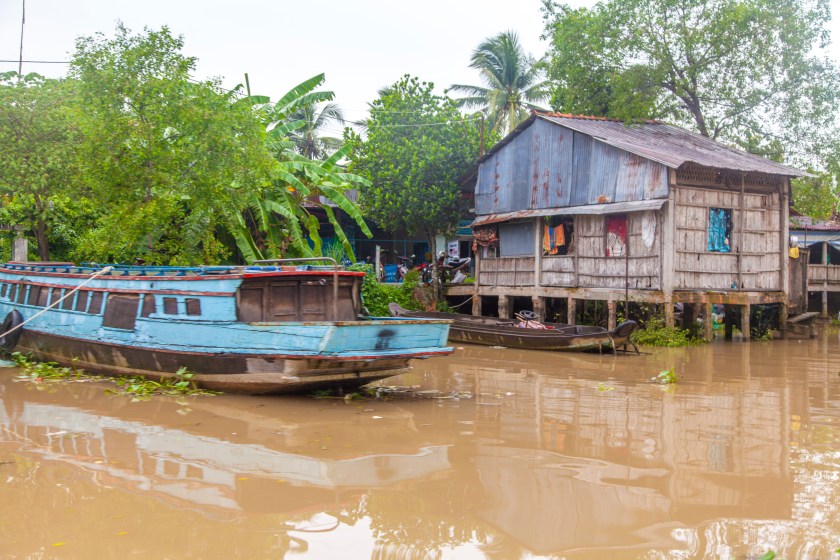
The next item on our schedule is a ride on a traditional flat-bottomed rowing boat along a narrow canal. There are cork trees growing right in the water, which, according to Phuoc, protect the soil from erosion. Generally all the vegetation around is pretty luxuriant, often covered with unfamiliar fruits. Behind the plants one can see houses on stilts. Some of them look better – obviously, the owners are making good money by growing durians – and some are pretty shabby. And yet, as I already said above, there is a particular charm to all of this, especially when you pass by a house where a nice-looking middle-aged lady is sweeping her terrace to the sound of some Vietnamese song playing at full blast.
IMG_2286

Not counting the Vietnamese song, there is a peaceful silence around, broken only by the splash of water under the oars and by boats occasionally passing by.
IMG_2282

Meanwhile, the helmsman on our sampan is already waiting with young coconuts for us. Once again, so far we are very impressed with our tour, everything seems to be arranged at the highest level! And so, sipping refreshing coconut water, we headed back to the island, moored and walked to an eco-tourism complex with an orchard, where we were served lunch. The lunch was home-cooked and pretty tasty, consisting of fish that had to be wrapped with vegetables in rice paper and dipped into fish sauce, deep-fried spring rolls, grilled shrimps, vegetable soup (we liked it the least) and pork with rice. Fish sauce, I must say, is an extremely smelly substance, but it tastes a lot better than it smells. Phuoc said that the Vietnamese fish sauce is much better than the Thai one, because it is made of anchovies, while in Thailand it’s made of mackerel.
IMG_2298

We washed it all down with Vietnamese coffee, stronger than many varieties of coffee, but less strong than Turkish coffee. That’s when Phuoc told us that the tradition of drinking coffee is a French colonial heritage, as well as colonial architecture and baguettes, and this, in her opinion apparently shared by many Vietnamese, exhausts the list of positive effects of colonisation, absolutely not offsetting the complete plundering of royal treasures.

We also starting talking about the Vietnam War – how Saigon was much more developed, more or less in step with Singapore and Hong Kong, and then, destroyed by the war and the communist regime, fell hopelessly behind – and about relations with China, which are much better than in the 80s, but, according to Phuoc, quite dangerous and could potentially lead to the occupation of Vietnam by China.

Actually, we went into these lengthy conversations for one simple reason: while we were having lunch (luckily, under a canopy), a heavy downpour started. I have to say that we’d been lucky with the rain from the very beginning – all weather websites I know were forecasting it right in the morning and for the whole day. And it only started when we’d already finished sightseeing.
IMG_2301

After lunch, the only thing left was a boat ride to the town of Vinh Long, where our driver should have already been waiting for us. The rain kept pouring. Fortunately, the boat also had a canopy (unlike the flat rowing boat we were on literally a couple of hours ago), but at some point a wind broke out forcing us to put on raincoats so as not to get wet. Because of the rain, we didn’t stop at the Vinh Long market, and headed straight to the pier. As there were only a few metres remaining to the pier, the waves became so strong, making the boat reel so much that I seriously feared that it would scoop up water and capsize. But thank God, it didn’t, and we drove off back to Ho Chi Minh City. The rain was pouring non-stop throughout the whole two-and-a-half-hour drive, but not as intensely as before.

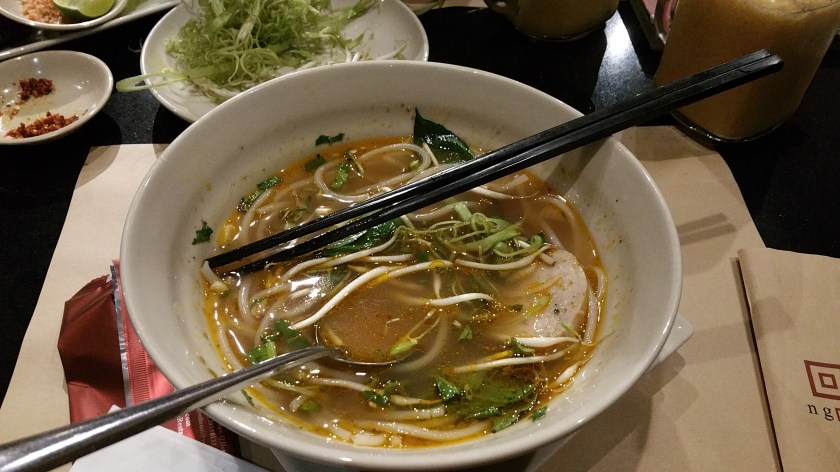
Today we decided to have dinner at the Ngon restaurant, recommended by Phuoc, which turned out to be a good choice. The restaurant is a ten minute walk from our hotel and is located in that fancier area we didn’t reach yesterday. The interior is very pretty with palm trees everywhere. The menu has several sections: Japanese, Thai, Chinese, Korean and Vietnamese, and of course we went for the latter – aren’t we in Vietnam after all? I had bun bo hue (spicy beef soup with rice vermicelli and greens – more precisely, it is the chili pepper served separately that makes it spicy), chicken thighs barbecue and for dessert, something like banana cake with coconut milk – not sweet at all, which I really liked. Generally, I’m enjoying the Vietnamese cuisine and finding it somewhat less intrusive compared to, say, Chinese (which I like as well but tend to have had enough of soon) – mainly because dishes taste precisely like their ingredients and all sorts of sauces and spices are served separately: you can add/dip/sprinkle if you want, but you don’t have to. It all cost us twice as much as yesterday’s dinner (almost 30 USD) – it’s a fancy restaurant after all, but we also ate a lot more.
20170606_192640

Posted in Asia, China, English, Hong Kong, Singapore

Singapore – Day 7 / Hong Kong

РУССКОЯЗЫЧНАЯ ВЕРСИЯ ПО ЭТОЙ ССЫЛКЕ. CLICK HERE FOR RUSSIAN VERSION.

30 November 2013

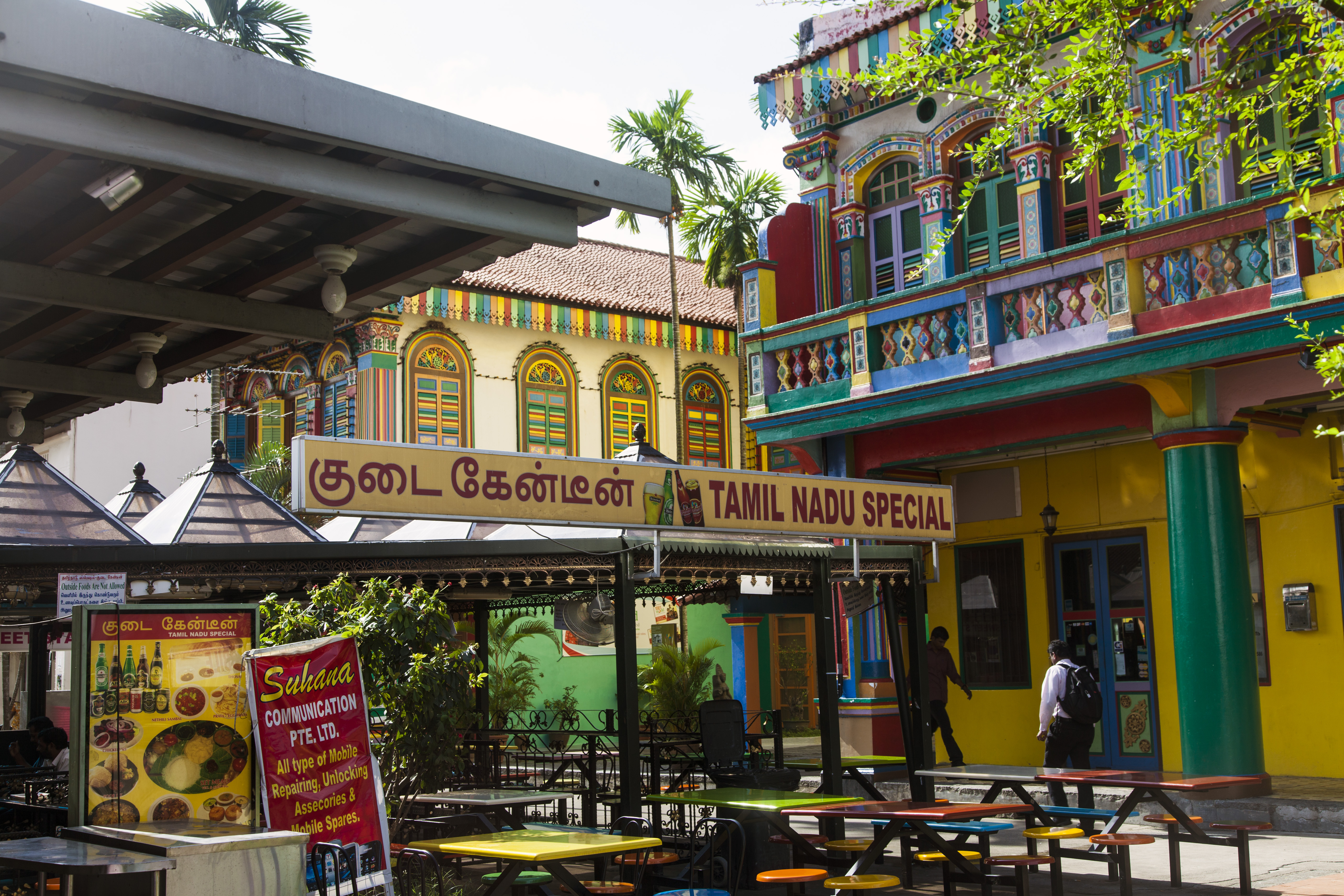
The trip to the chic and luxury Singapore ended not very luxuriously in Little India. First, we were intending to have lunch right there too, in order to join the Indian spirit, just as we had been joining the Chinese spirit in Chinatown; however the spirit didn’t please us that much, for it was very smelly! We really had the impression that the city government of Singapore had just given up on this part of town and provided people the opportunity to live in a familiar environment: very colourful, moderately dirty and ragged.

IMG_7806

IMG_7804

IMG_7800

IMG_7796

IMG_7816

IMG_7815

IMG_7813

Besides, there was a lot of construction going on around; maybe in the near future Little India too would be transformed to match the other parts of the magnificent Singapore. Quite frankly, we didn’t have the desire to eat here, so we eventually decided to have lunch at Changi Airport.

Even though our flight was delayed by an hour, we made it safely to Hong Kong on a small JetStar plane. The air temperature here is far from tropical, yet, by our standards, if it can get up to 20°C (or even slightly above), you wouldn’t really wear a down parka. By Chinese standards, though, it’s exactly the right time for those – that is why Hong Kong is dressed very diversely: foreigners walk around in almost beach style clothing, and the locals wear warm winter jackets and boots.

While during our last visit we were staying on Hong Kong Island, this time we booked a hotel on the busy Nathan Road on the Kowloon Peninsula.

Posted in Asia, English, Singapore

Singapore – Day 6

РУССКОЯЗЫЧНАЯ ВЕРСИЯ ПО ЭТОЙ ССЫЛКЕ. CLICK HERE FOR RUSSIAN VERSION.

29 November 2013

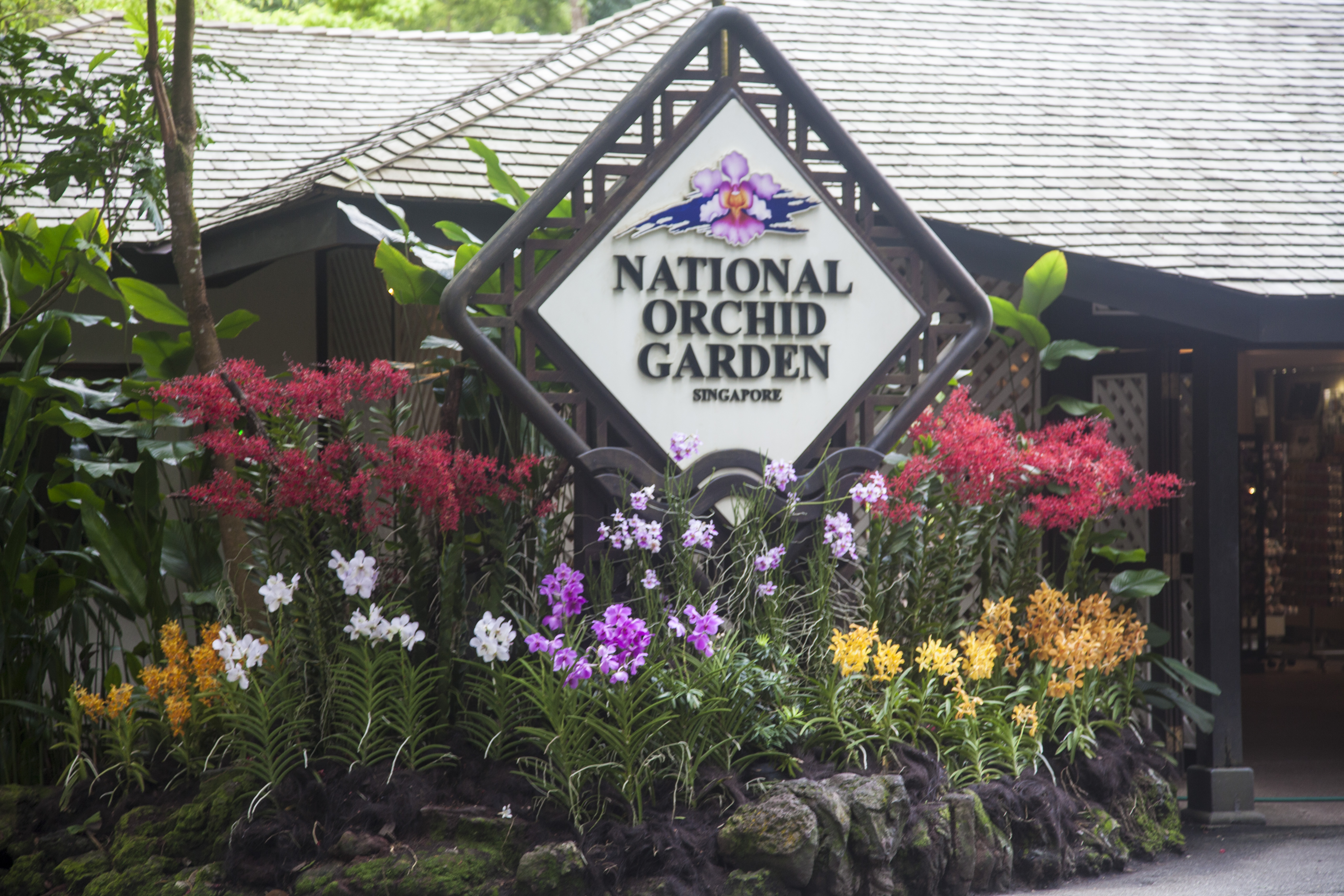
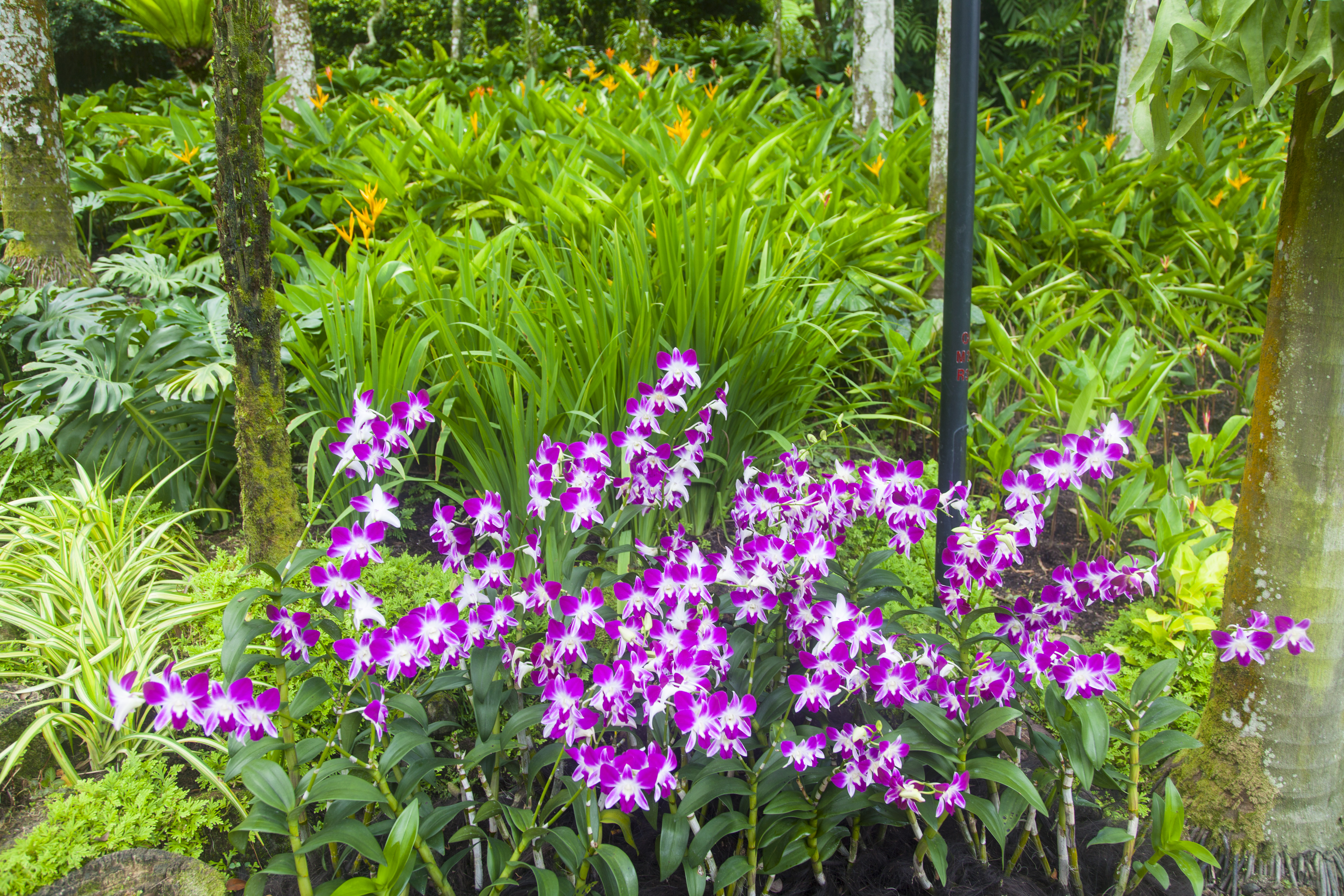
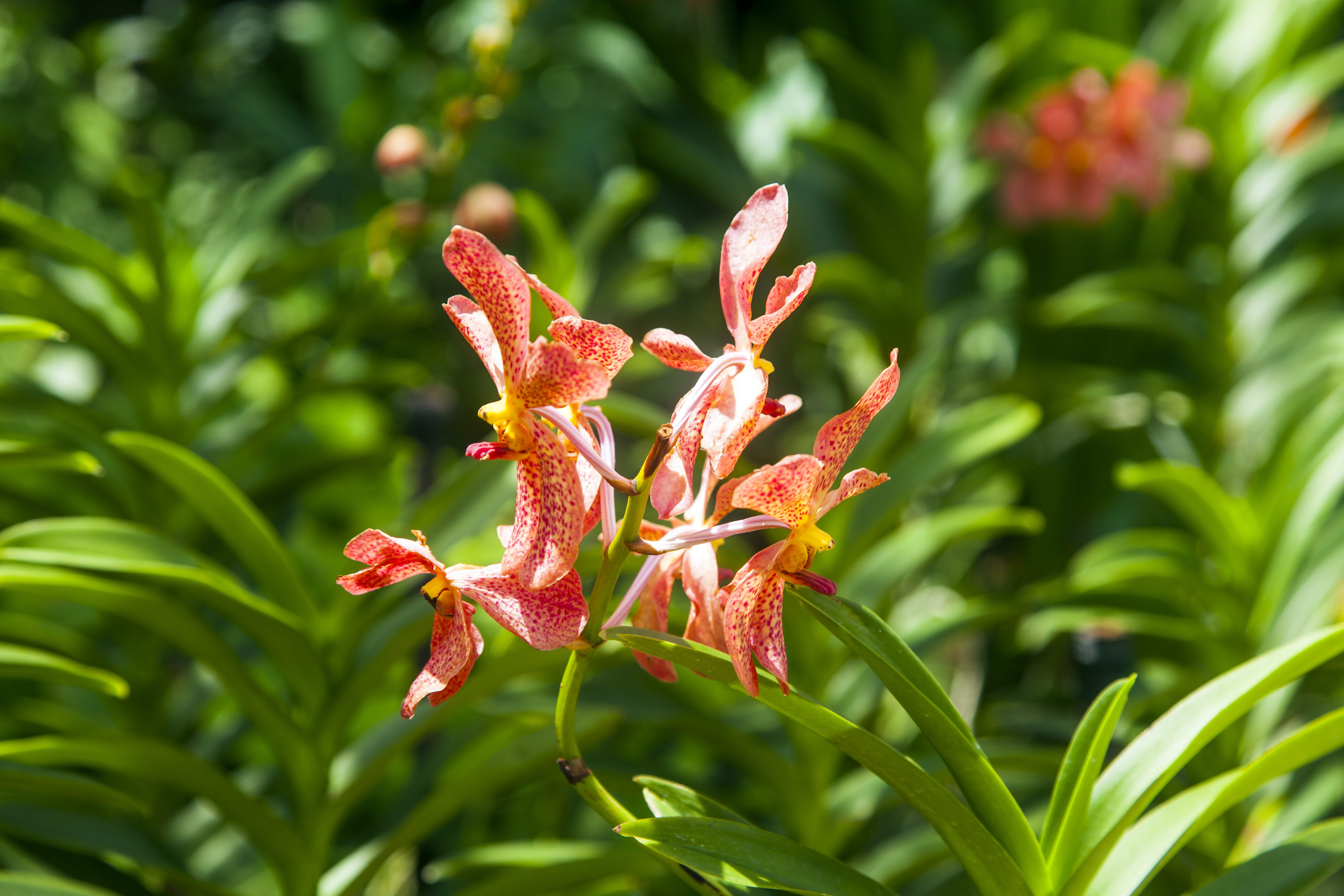
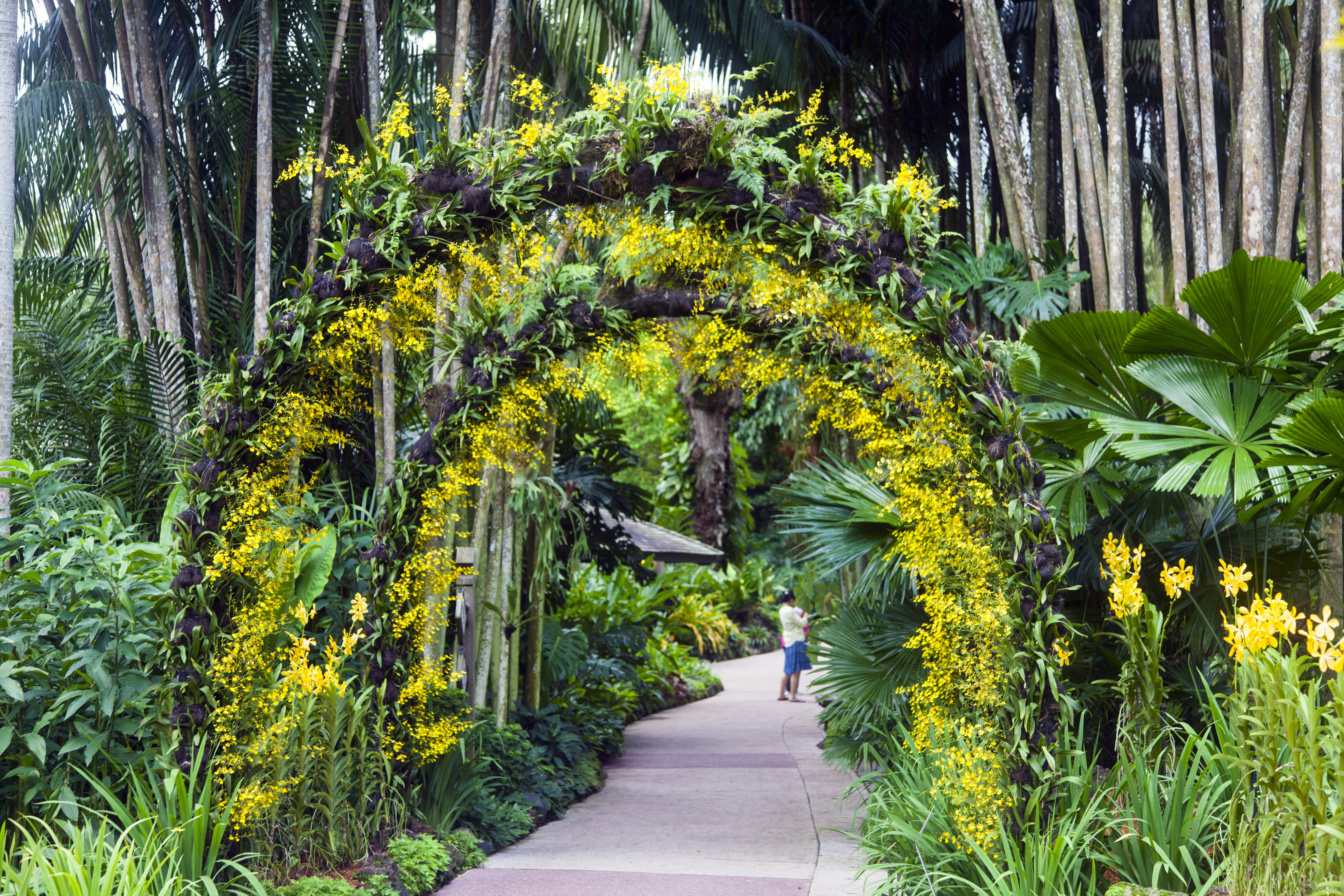
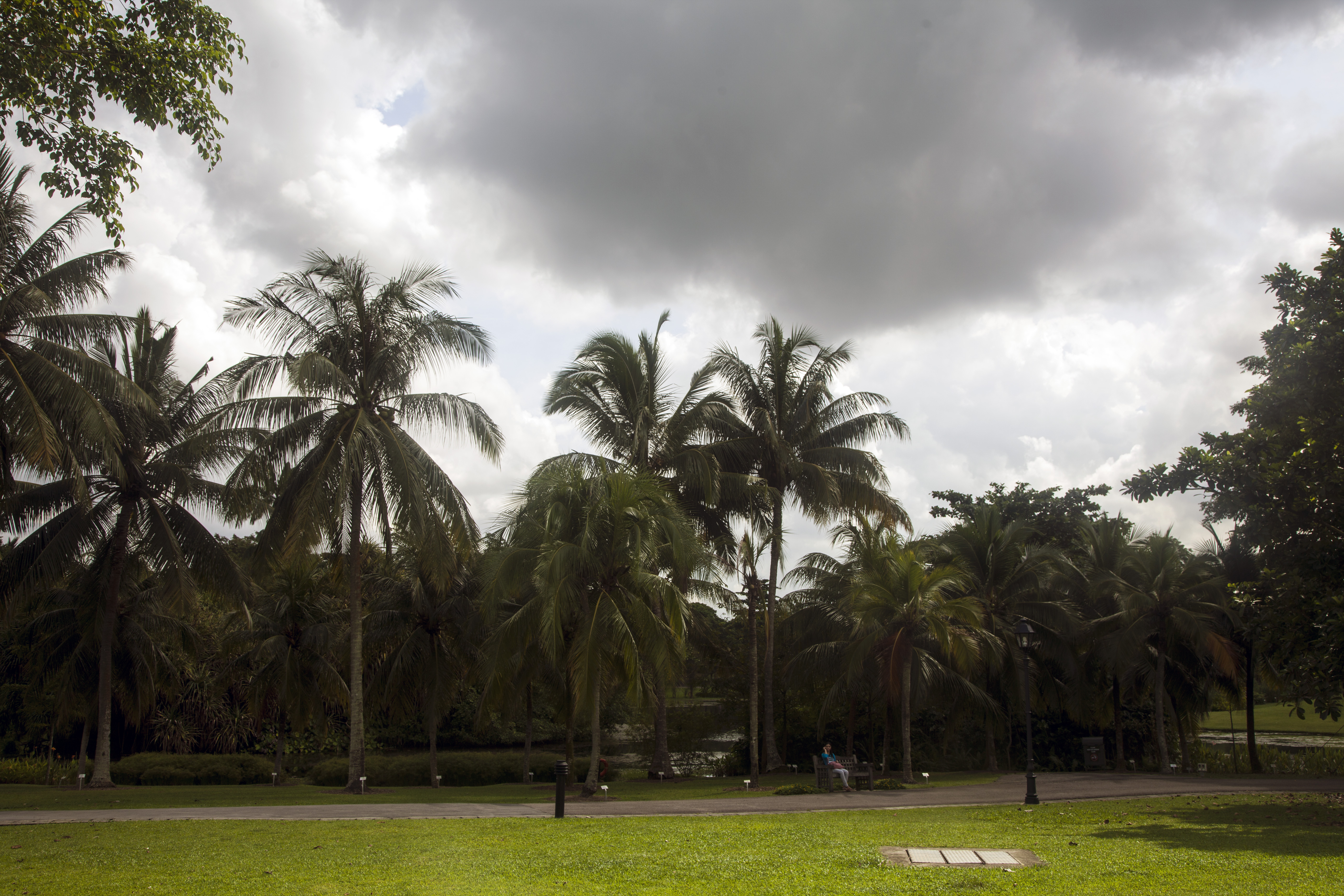
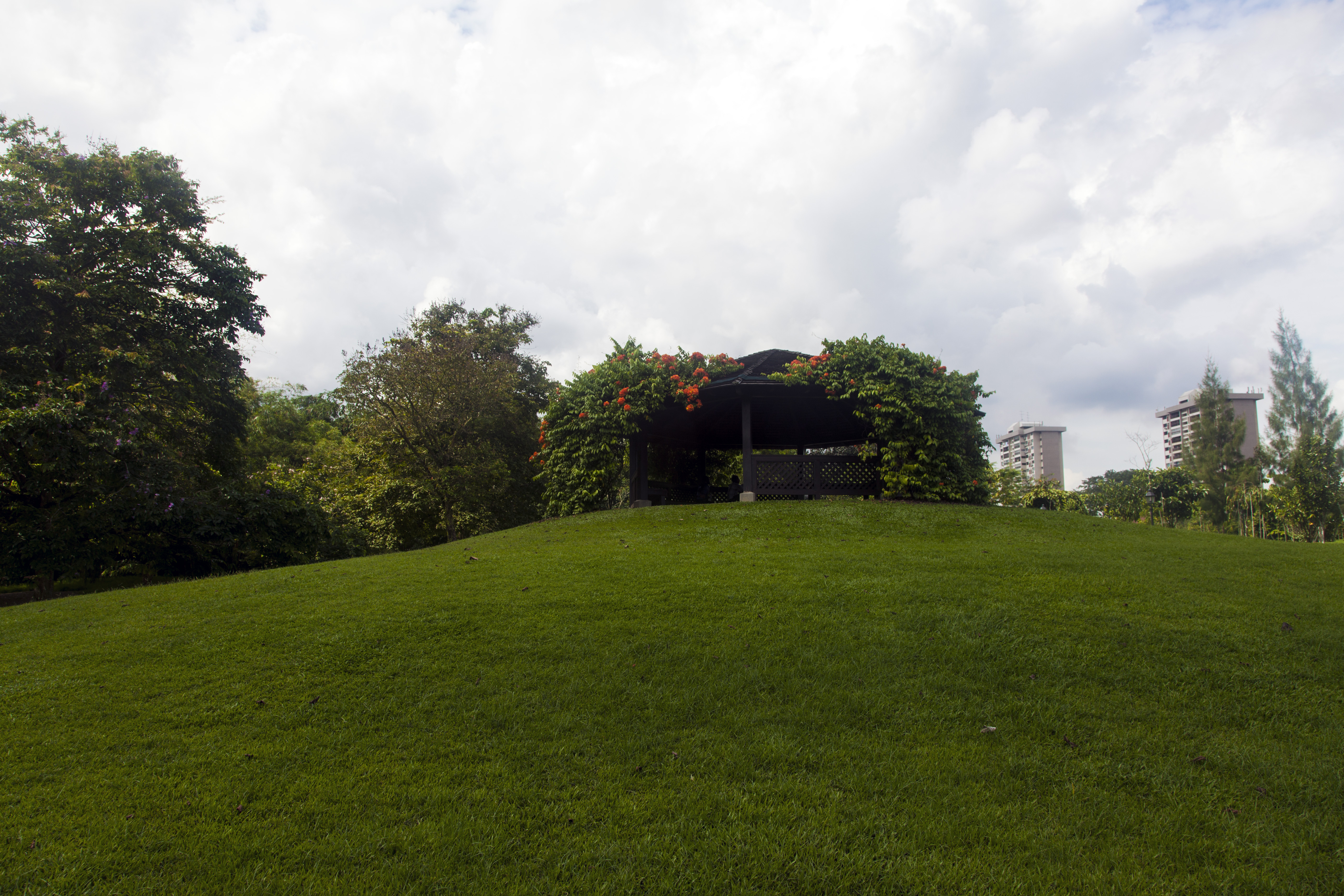
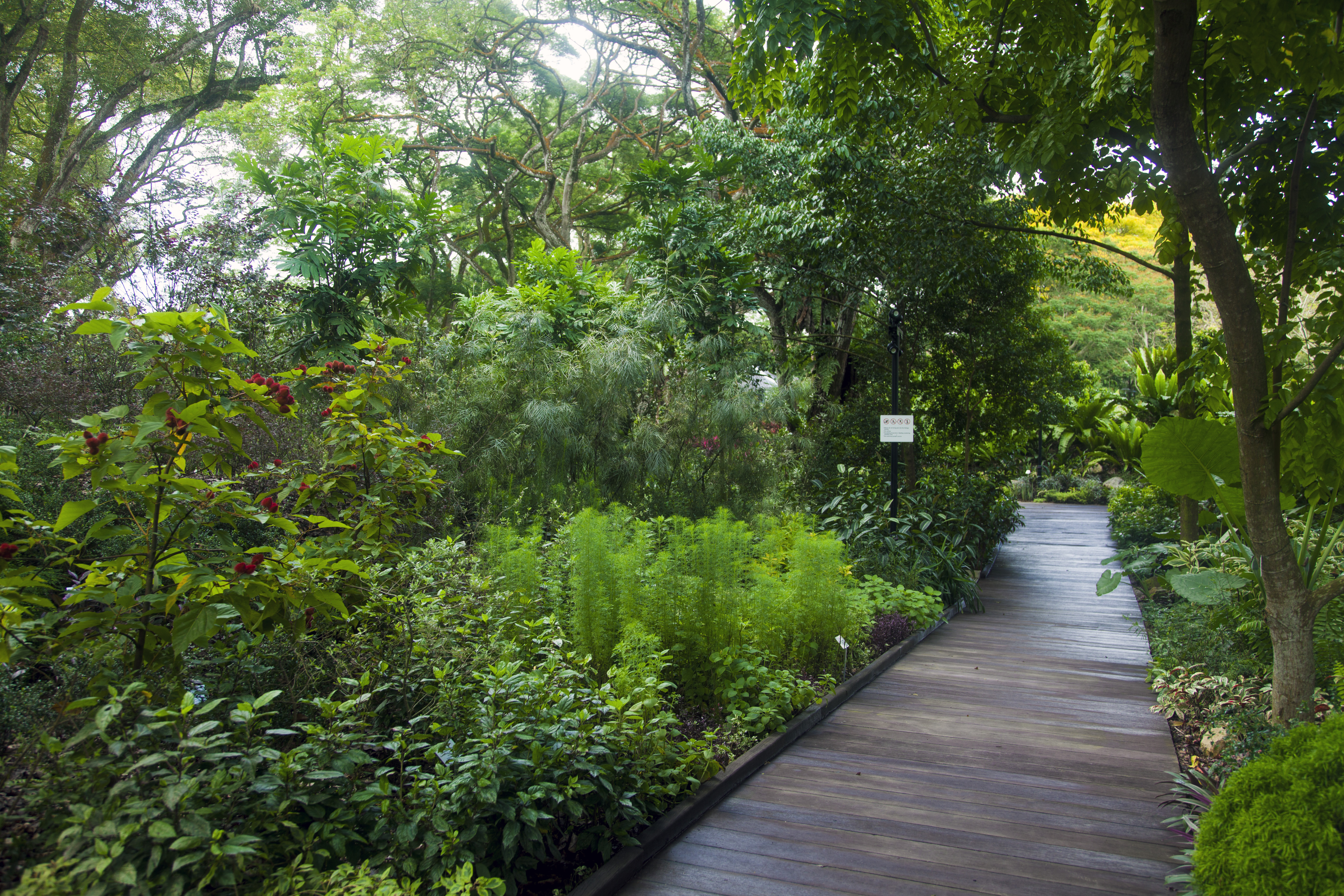
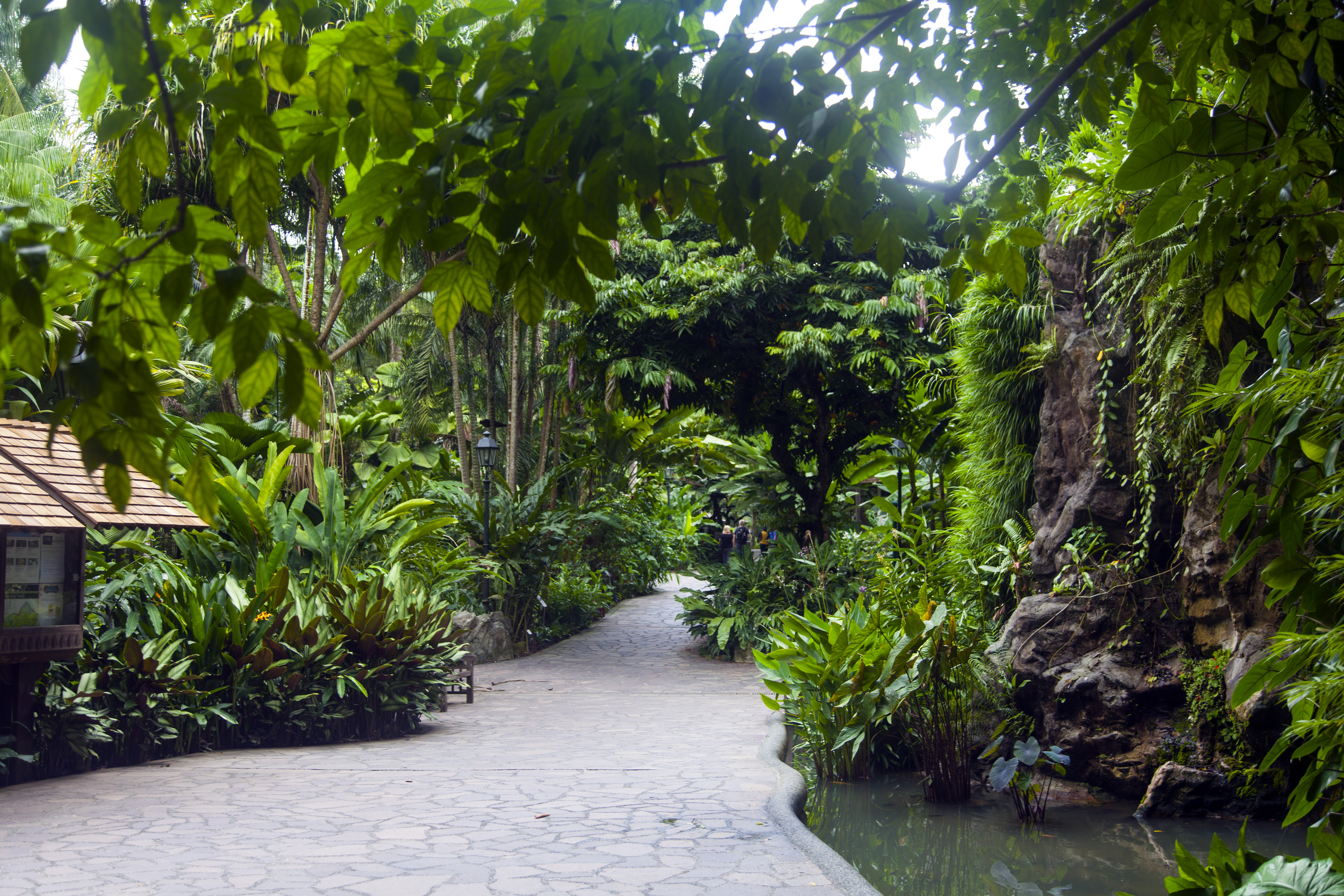
Today we switched from fauna to flora, starting the day with a visit to the Botanic Gardens. They are huge here in Singapore, splendid and fragrant – a real riot of tropical greenery. The reason why they are called “gardens” and not “garden” is that in fact there are several themed gardens gathered in one place: the Fragrant Garden, Healing Garden, Ginger Garden, a few others, and – the crown of all – the National Orchid Garden. The territory between those gardens is actually park as well, with ponds, swans, and so on.

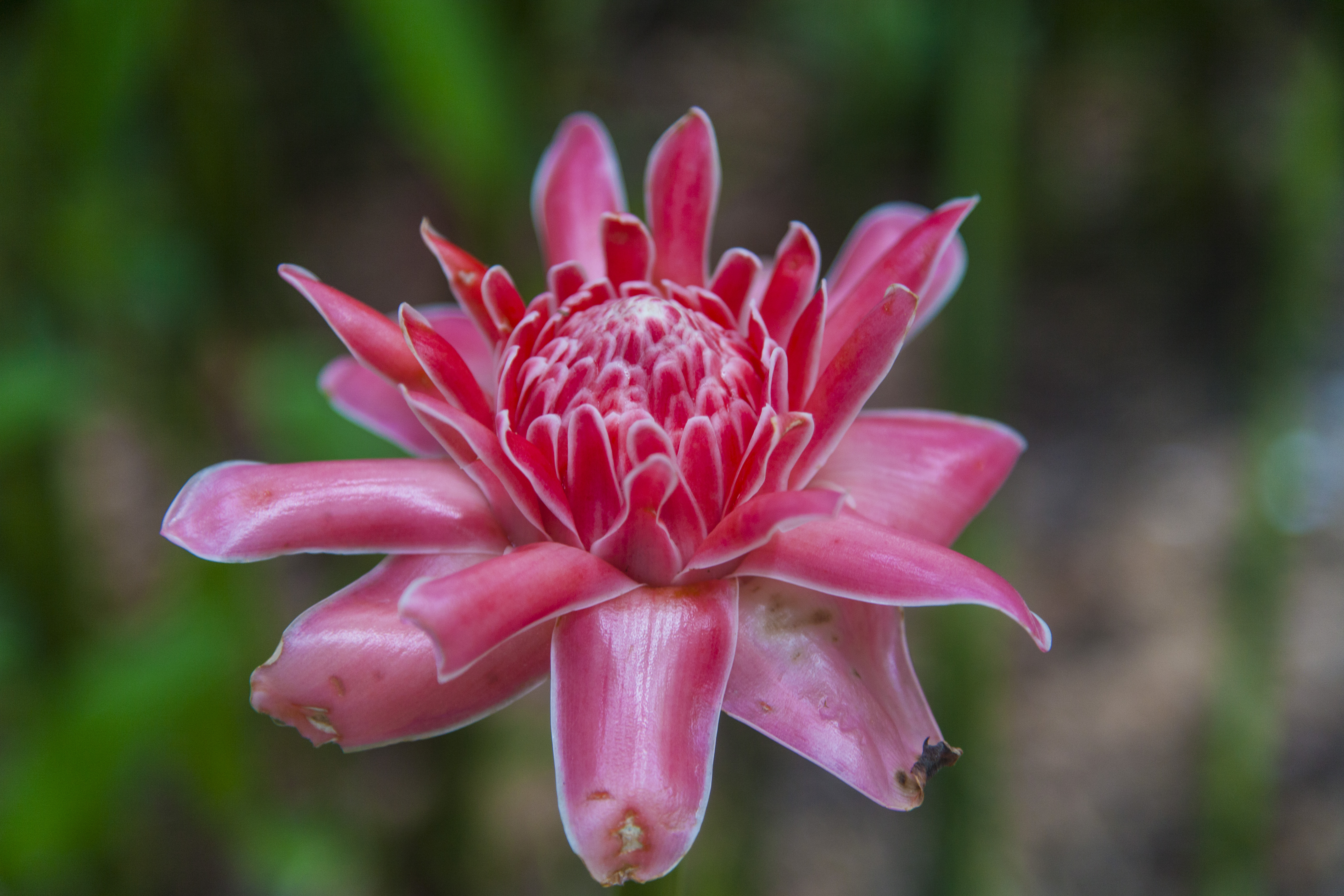
National Orchid Garden

National Orchid Garden

National Orchid Garden

National Orchid Garden

National Orchid Garden

National Orchid Garden

We started off very briskly, stopping next to each plant, but then our fervour and enthusiasm somehow began to diminish. The sun was beating down, even though there was a black cloud looming in the sky and mercifully hiding the sun behind it from time to time. For some reason, in the Healing Garden we were attacked and cruelly stung by all sorts of insects – seemed like they had been healed there and were now full of energy.

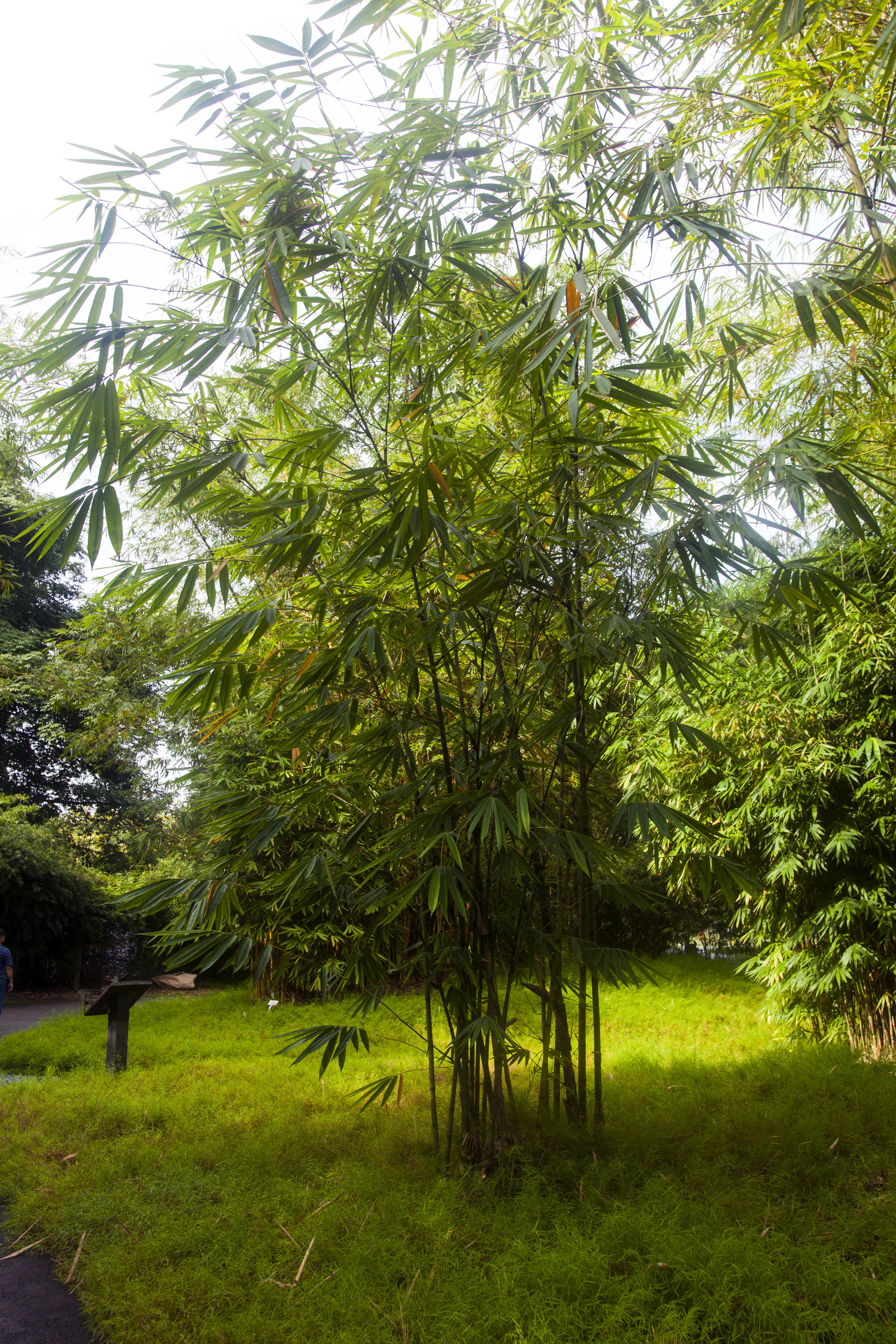
Botanic Gardens

Botanic Gardens

Botanic Gardens

Botanic Gardens

Botanic Gardens

Botanic Gardens

Botanic Gardens

Botanic Gardens

Botanic Gardens

Botanic Gardens

Botanic Gardens

Once again, for the umpteenth time in Singapore, it started raining just as we entered a restaurant to have lunch, as if the rain had been waiting for us to take shelter under the roof. The restaurant, which was obviously right inside the Gardens, was called Halia, meaning “ginger” in Malay, so, as one may guess, this spice was present in abundance in all the meals. The portions were strikingly small, but delicious. On leaving the restaurant, which we did after it stopped raining, we were provided with free raincoats, which we didn’t have the chance to make use of.

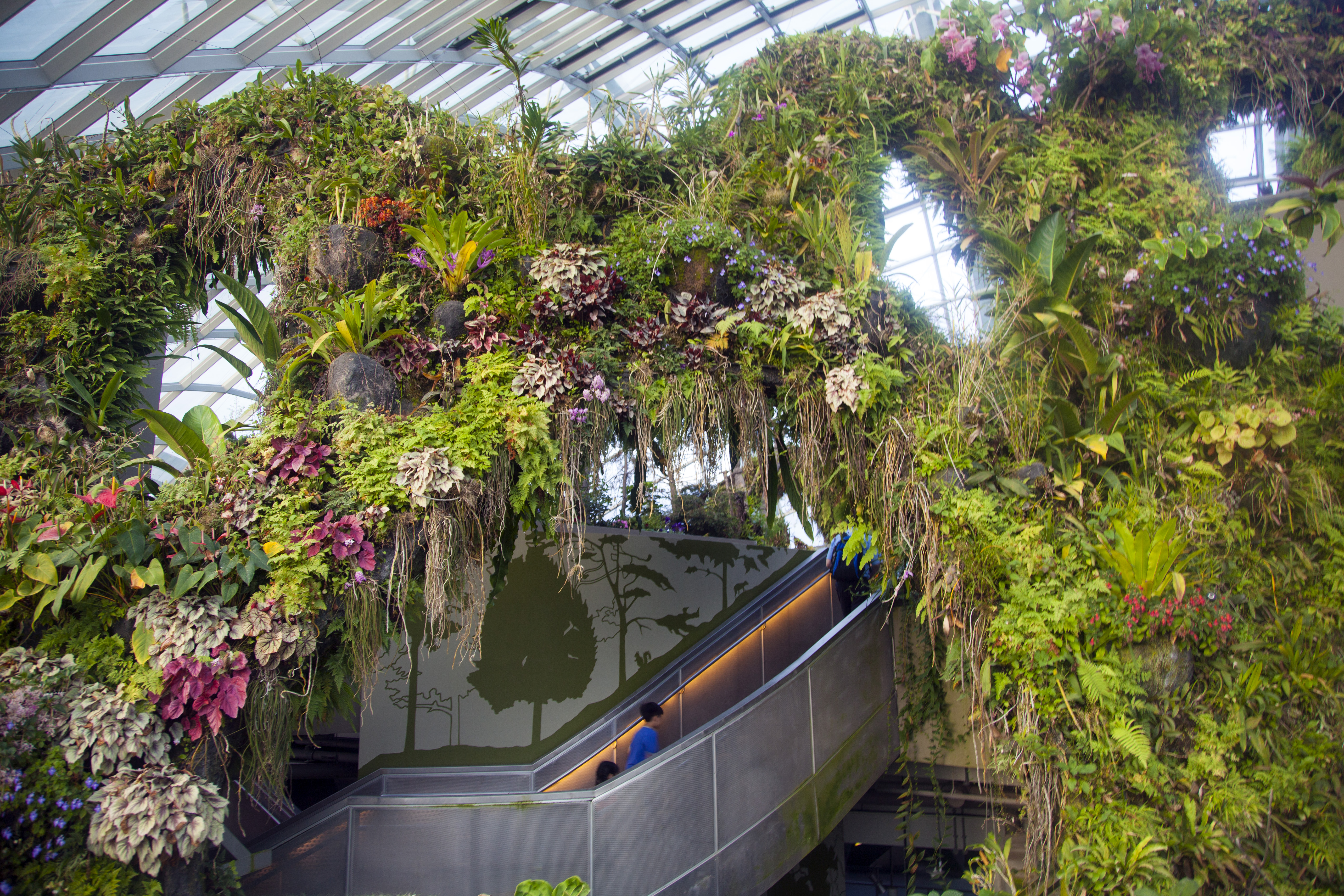
Having taken a liking to plants, we left the natural gardens just to head to artificial ones – the famous gardens at Marina Bay, with large conservatories. We feared that we would have an overdose of the monotonous tropical flora, but these gardens had a very different spirit. The conservatories, which could be accessed via a quite peculiar viaduct, were very interesting in design, looking like giant blooming bouquets or trees.

Gardens at Marina Bay

Gardens at Marina Bay

Gardens at Marina Bay

Gardens at Marina Bay

We visited only two of the conservatories: the Flower Dome and Cloud Forest (a term for a very humid tropical montane forest). The first one contained a variety of roses, geraniums and other flowers and, for whatever reason, vegetables of giant sizes, such as aubergines, peppers, cabbage and tomatoes.

At the Flower Dome

At the Flower Dome

At the Flower Dome

At the Flower Dome

At the Flower Dome

At the Flower Dome

Cloud Forest

Cloud Forest

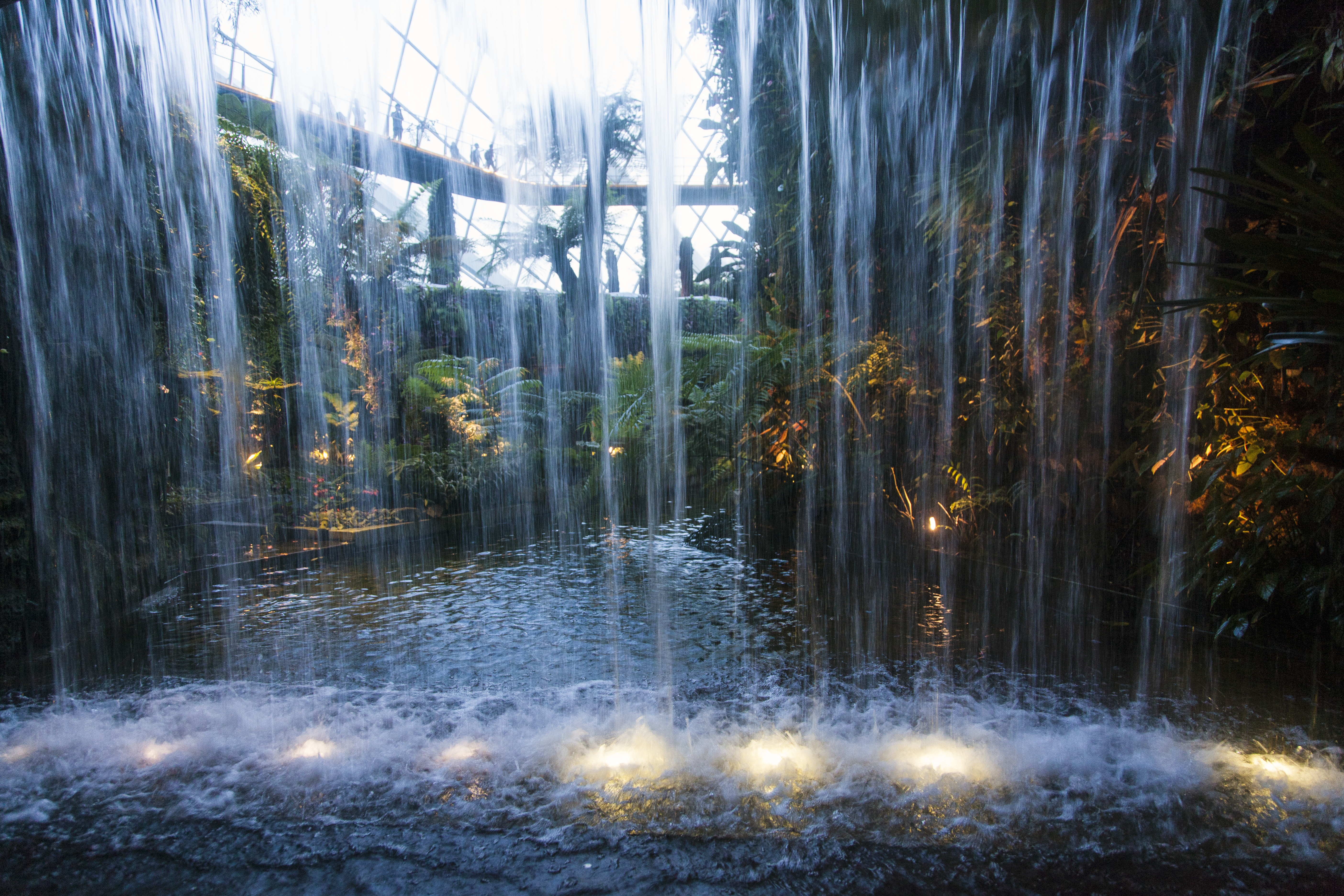
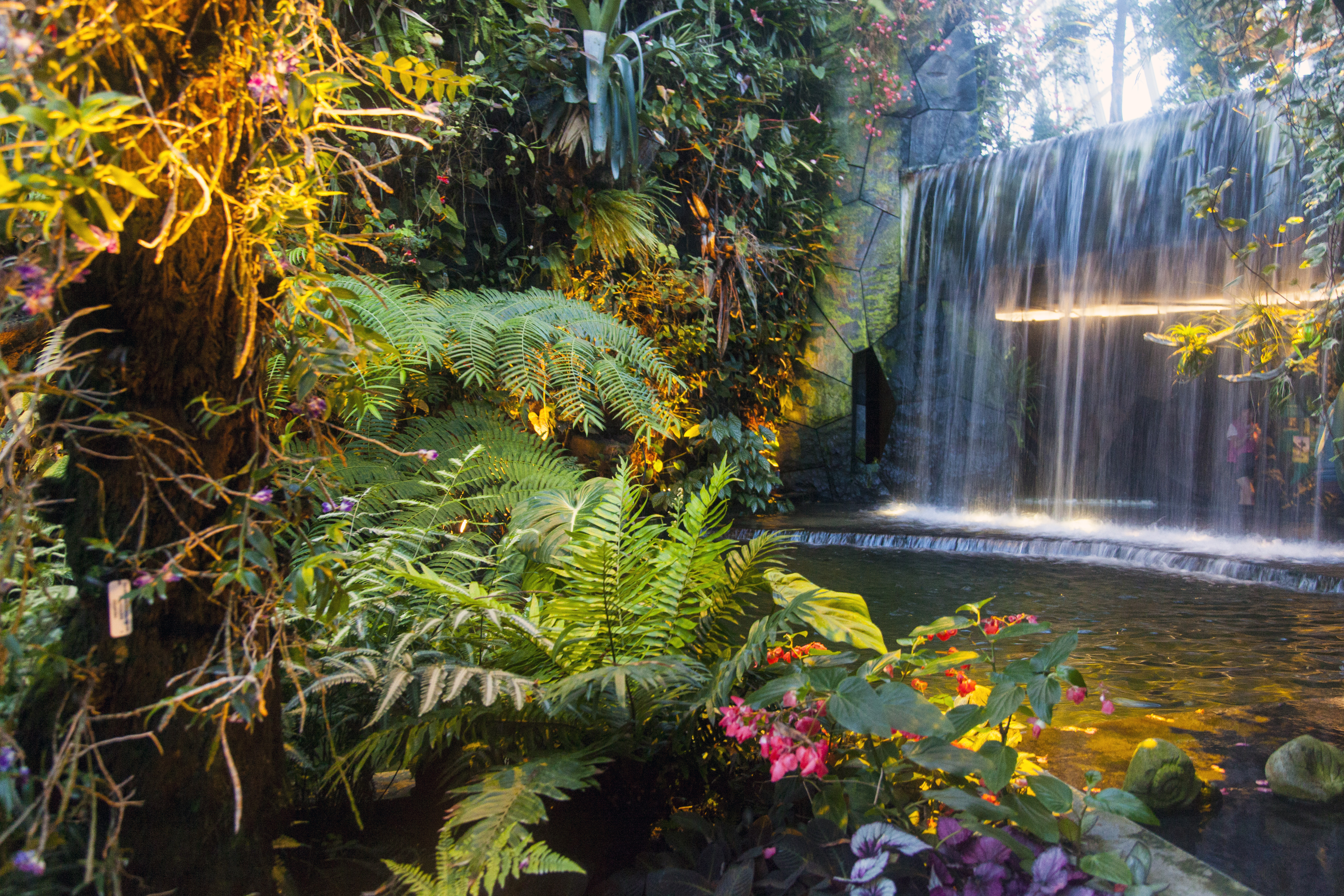
The second one was designed as basically a mountain, with diverse vegetation on its slopes, and it was so moist there that the air was filled with drizzle. Atop the mountain there was a little garden called the Lost World, which could be accessed by lift, and there was a circular path descending to different levels from that garden. The last thing to see before exiting was a video with gloomy forecasts that by 2100 the temperature on Earth would rise by an average of 5 degrees, which would result in all sorts of disasters, such as the extinction of many species of animals and plants, reduction of the amount of drinking water, spread of diseases – although it ended with a reassurance that all this could be avoided.

Cloud Forest

Cloud Forest

Cloud Forest

Cloud Forest

Cloud Forest

Cloud Forest

Cloud Forest

What’s not a problem in Singapore (well, not that anything at all is a problem here!) is that everything is constructed and designed very conveniently and user-friendly. Places to eat can be found literally everywhere. Wherever you go, whether it’s a garden, a mall, a museum or a theatre, you can be sure that you won’t stay hungry. So, quite naturally, we found where to have dinner just as we exited the Gardens and turner around the corner. It was a Chinese restaurant, mainly seafood oriented, and, to spare ourselves from difficult choices, we decided to go for a set meal, where we were continuously served small portions of different dishes to sample, which seemed to be the right decision, as everything was delicious.
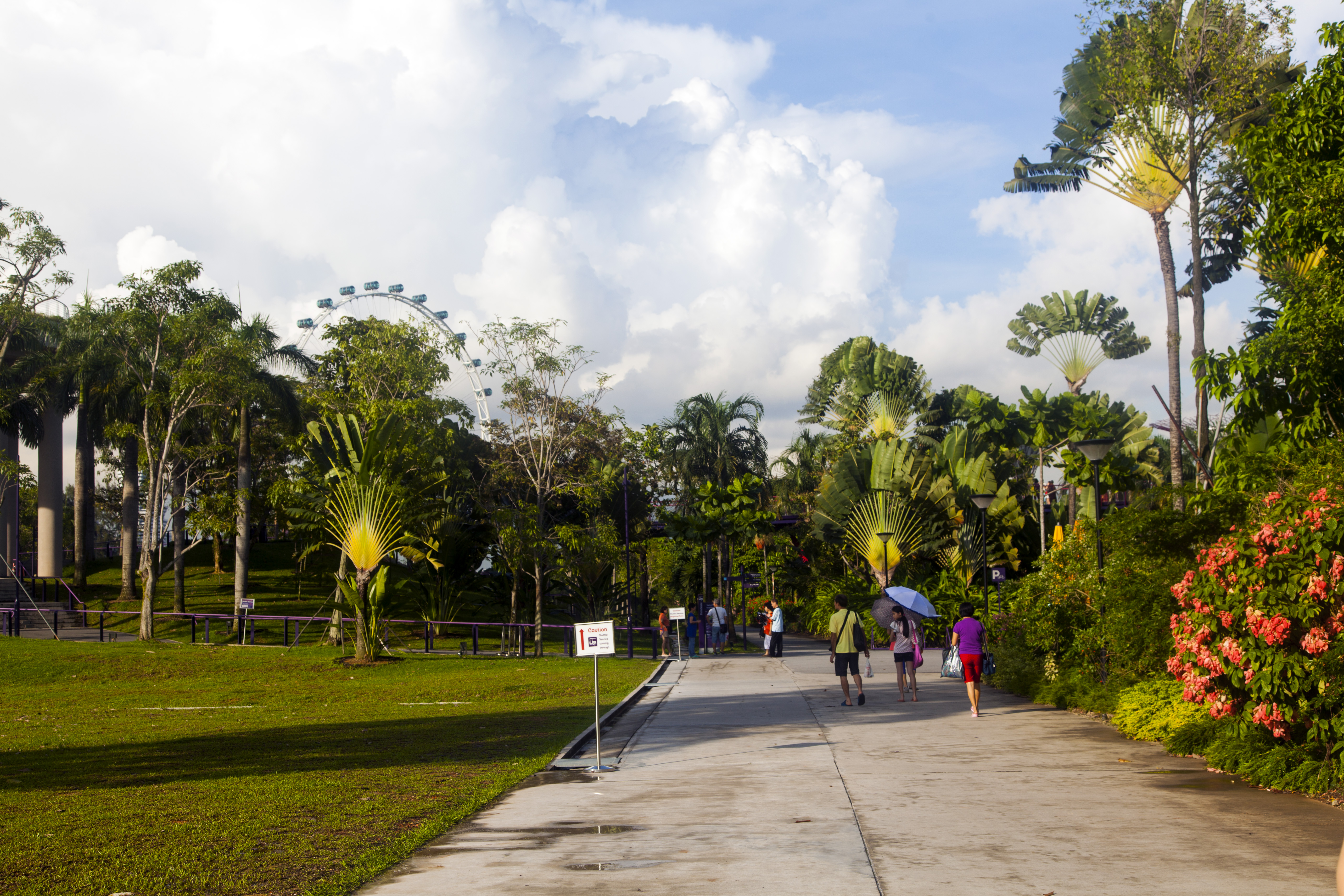
Singapore Flyer - view from Gardens on the Bay

Singapore Flyer - view from Gardens on the Bay

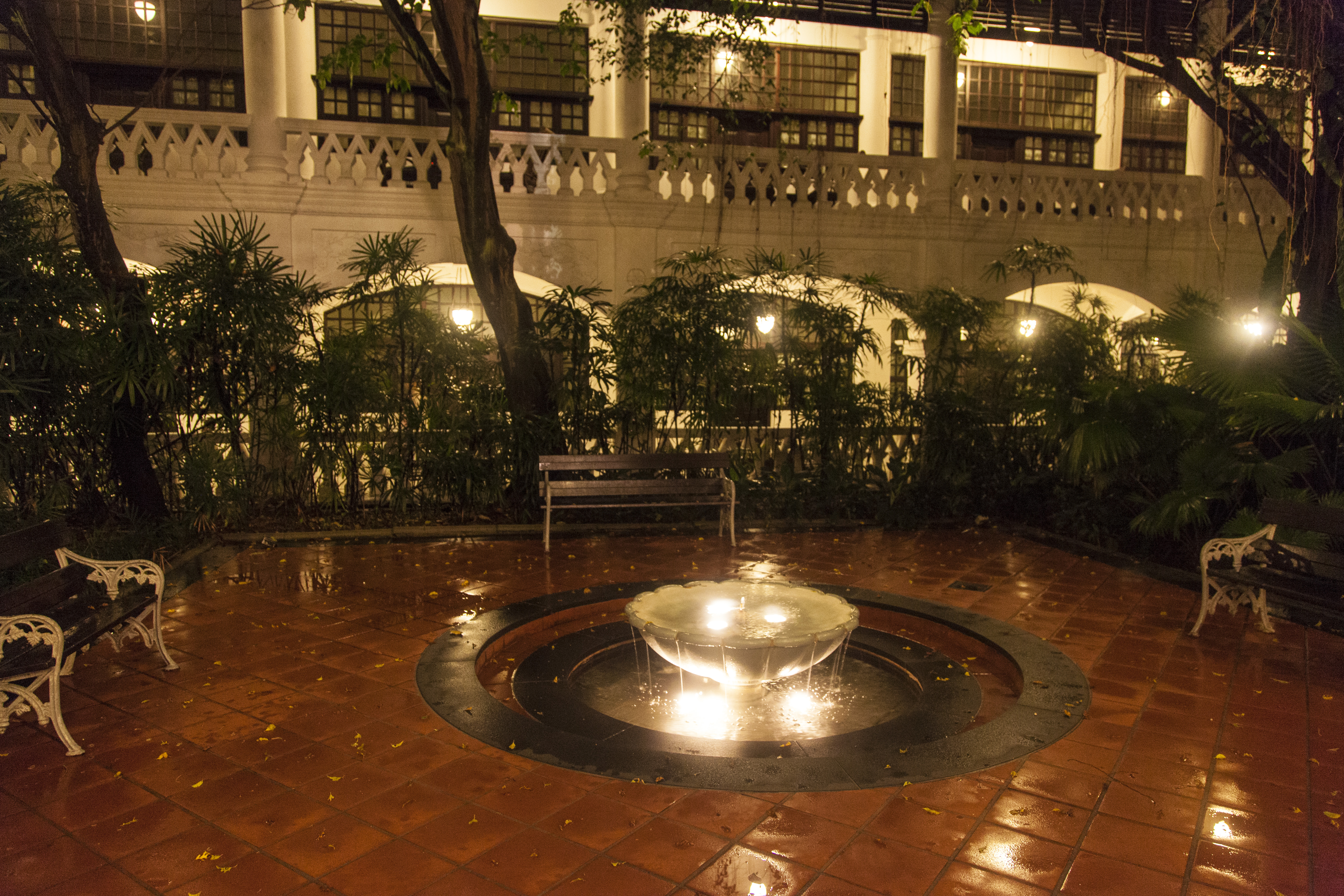
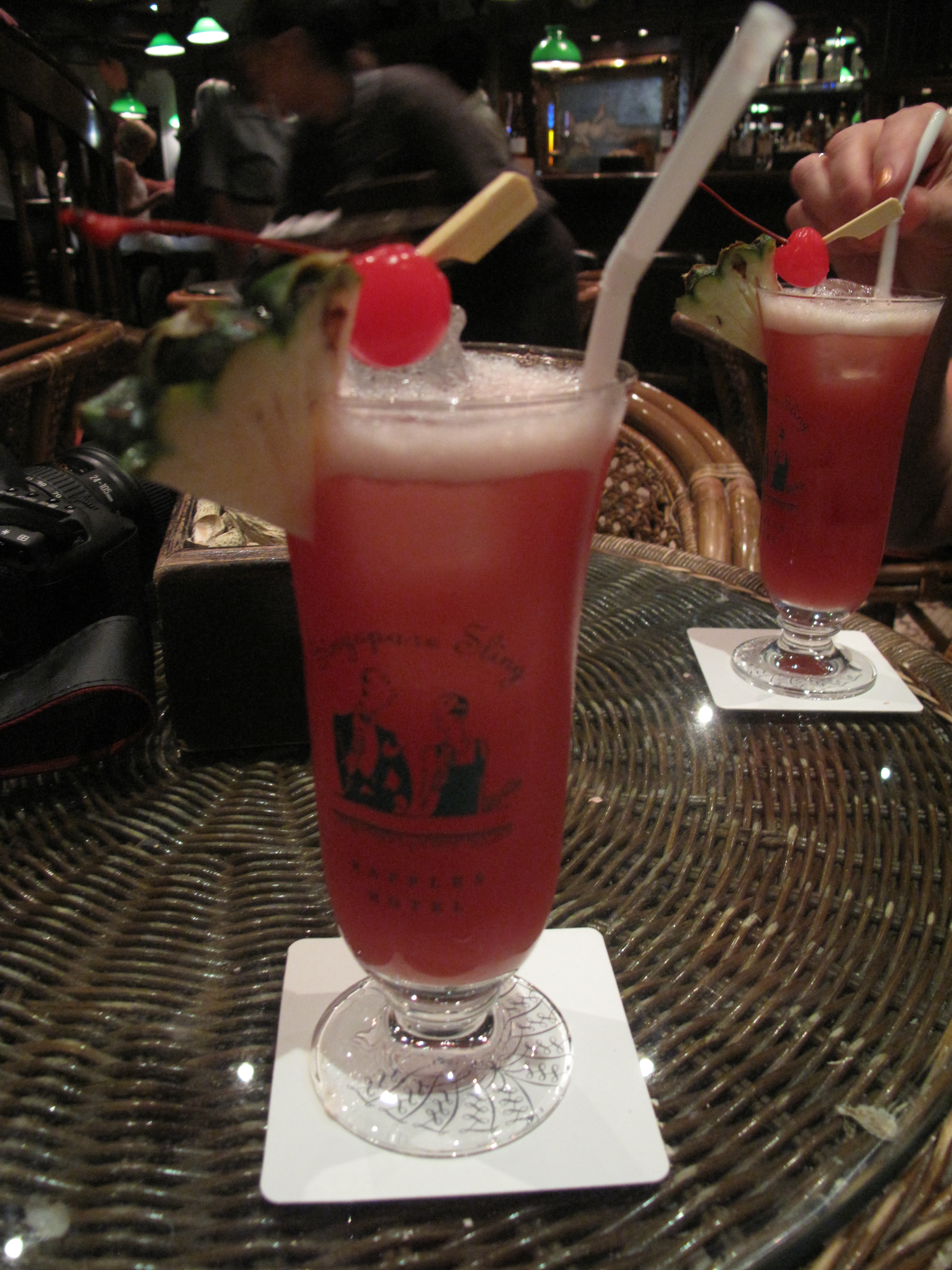
Since it was our last full day in Singapore, we definitely felt the urge to go see the famous Raffles hotel and taste its signature cocktail, the Singapore Sling. The colonial style hotel, of course, claims to be chic. It’s a white-stone building, with a courtyard and a shopping arcade full of fashion boutiques. The hotel is certainly impressive, but not drop dead impressive. A small detail: in the glamorous Long Bar, where most of the guests buy this very cocktail, on each table there is a basket filled with unshelled peanuts. Guests throw the shells right on the floor, and if they leave them on their tables by mistake, the waiters whisk them to the floor when clearing the table after them. As a result, the entire floor is littered with those shells.
Raffles Hotel

Raffles HotelSingapore Sling

Posted in English, Europe, Ischia, Italy

Adventures of the Azeris in Italy – Ferragosto

РУССКОЯЗЫЧНАЯ ВЕРСИЯ ПО ЭТОЙ ССЫЛКЕ. CLICK HERE FOR RUSSIAN VERSION.

As we were planning our trip, we had no idea that we would have a chance to see a big holiday of Ferragosto on August 15. This day is celebrated everywhere – particularly, every hotel arranges a feast for their guests. Those restaurants that are not closed, also host parties. Of course, it would be absolutely foolish of us not to participate.

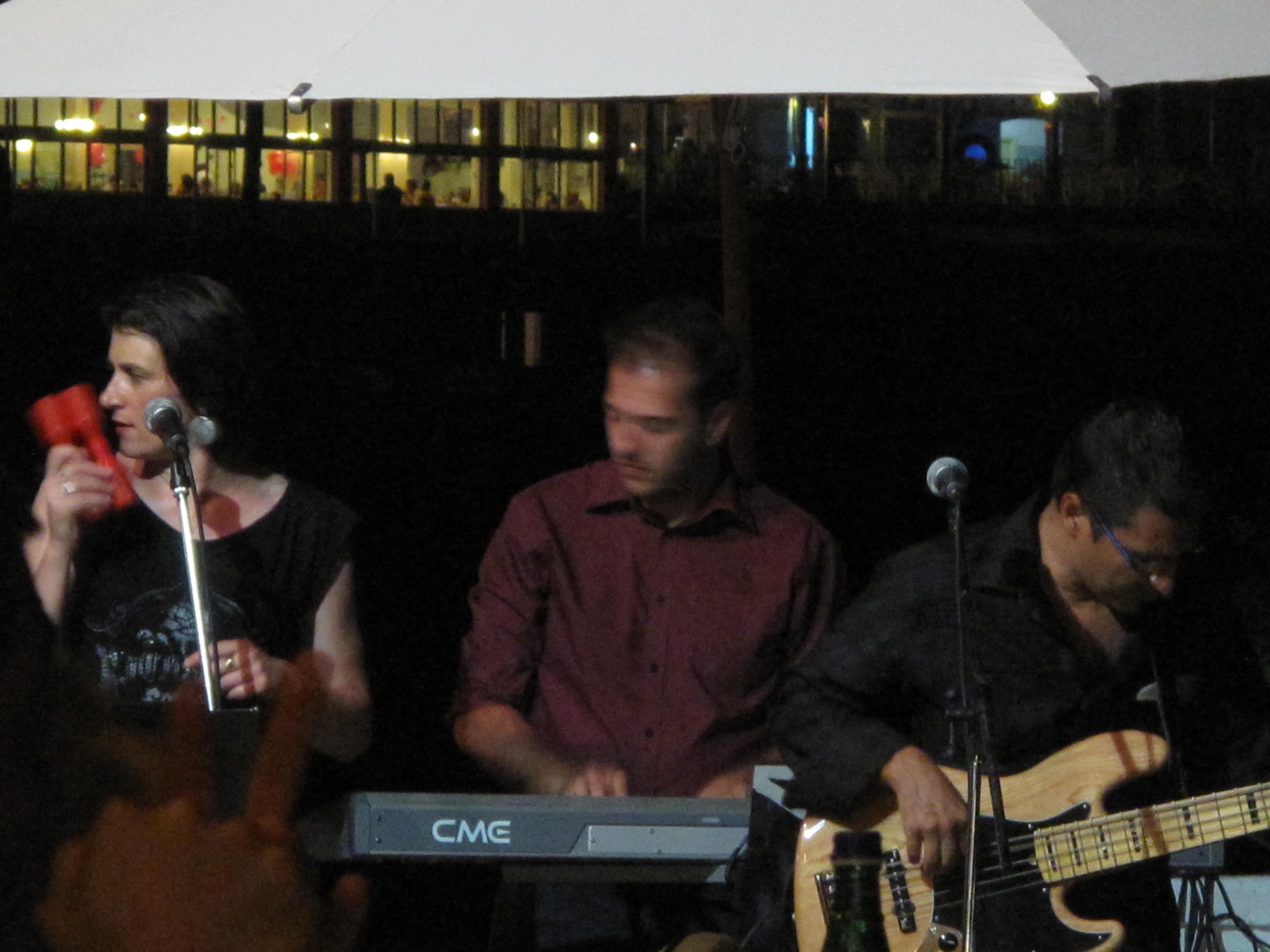
We were treated with very good live music – it was basically kind of a concert of old and new Italian hits. The food was really good as well and consisted of an aperitif with appetizers; assorted antipasti (ranging from ordinary bruschetta to exquisite oysters); pasta for entrée (spaghetti with seafood and ravioli ); a main seafood course (swordfish and king prawns) and a large variety of traditional pastry and fruit for dessert.

By the way, speaking about pasta for starter – this is not the know-how of our hotel. We were surprised to find out that the local cuisine (i.e. southern Italian) was totally devoid of liquid dishes, and meals very often start with pasta. Even the so-called mussel soup, popular in local menus, is essentially steamed mussels with a very small amount of liquid at the bottom.

Ferragosto Food

Ferragosto

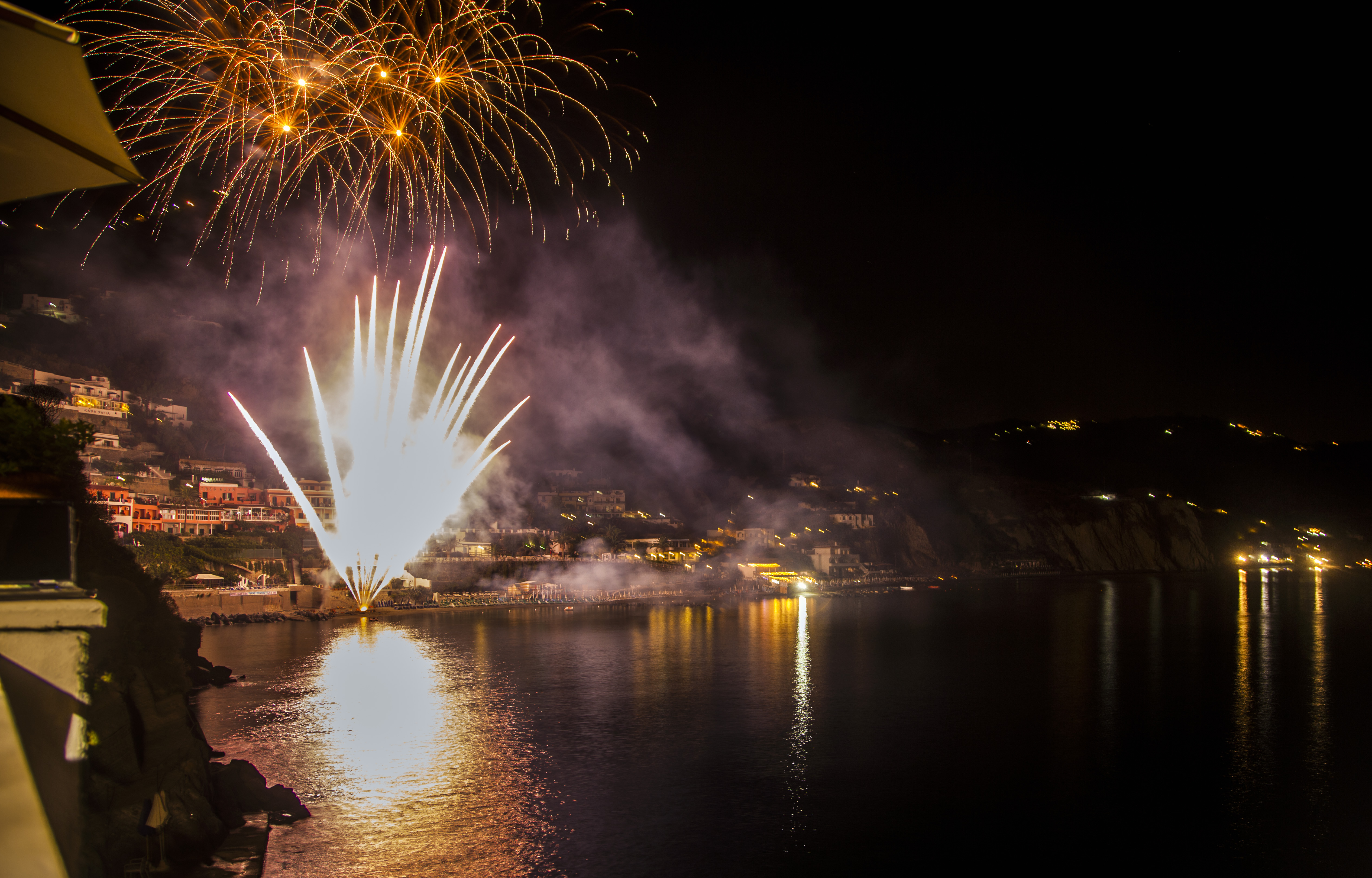
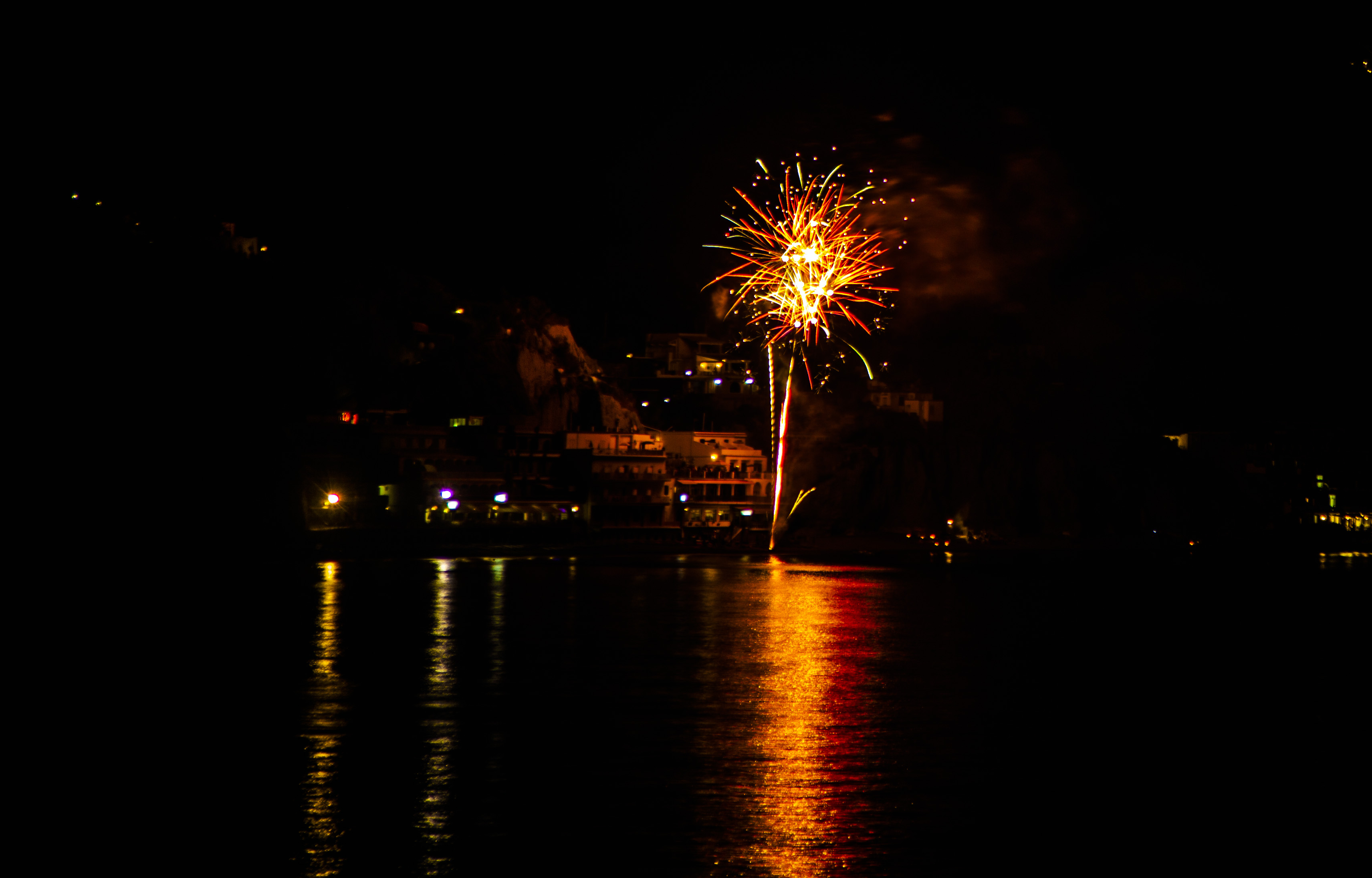
The dinner ended with magnificent fireworks: right over our heads at 11pm, and then – somewhere in the distance at midnight. On this cheerful note, we said goodbye to Ischia – Naples awaits us tomorrow.

Fireworks

Fireworks

Fireworks

Fireworks

Fireworks

Posted in Amalfi Coast, English, Europe, Italy

Adventures of the Azeris in Italy – Amalfi Coast

РУССКОЯЗЫЧНАЯ ВЕРСИЯ ПО ЭТОЙ ССЫЛКЕ. CLICK HERE FOR RUSSIAN VERSION.

The “cool” guy despising group tours seems to have jinxed us. At first everything went very normal: the bus punctually picked us up at 5.15am, while it was still dark, collected other participants of the Amalfi Coast tour from their hotels and delivered all of us to Ischia Porto, where we boarded a ferry. In Naples we were met by a tour guide with a Baltic accent, and got on another bus.

Ischia Porto

I must say that Naples hadn’t made much of an impression when we arrived from Rome, but, as we drove through it, Lena the tour guide spoke of it with great passion. She was telling us about its status of the capital of the kingdom, its magnificent palaces neighbouring with sunless narrow streets with colourful linens hanging on the balconies, just like in the movie La Ciociara.

We drove out of Naples, past Pompeii and Herculaneum. Here we were told that everything around was pretty much sitting on a powder keg – there are lots of extinct and dormant volcanoes, and also the active Vesuvius. It erupts every 60-70 years, and the last time was just 69 years ago. Thus, on the one hand, the next eruption is anticipated with fear, but on the other, it is awaited, because the longer the interval between two eruptions, the more destructive disaster it turns into – for example, the eruption that destroyed Pompeii and Herculaneum in 79 AD occurred after 300 years of inactivity. However, people continue to settle right at the foot of the volcano with careless perseverance: the climate is too favourable and the soil too fertile for these places to be left. Officially construction within a radius of a few kilometers from Mount Vesuvius is prohibited. But people here seem to live with the if-you-mustn’t-but-want-to-do-it-then-you-can-do-it principle – especially that the law does not permit to destroy the buildings, even at the stage of one wall built only, and only makes the owners pay a fine of 20-30k euros.

Heading to Sorrento

At this point already we noticed that the traffic was very slow on our side of the road, we were basically in a traffic jam. But Lena suggested that this was due to tomorrow’s holiday of Ferragosto and had to do with everyone flocking to the resort coast. The reality was much worse: and we had the chance to fully appreciate it, as well as the “evil eye” of the New Russian, when we entered a two-kilometre tunnel. Here the column of vehicles literally froze, although the opposite lane was absolutely empty. We spent exactly an hour and a half in this tunnel, and the whole way from Naples to Sorrento took us a good four hours, while it barely should have taken 90 minutes. The people in the bus got extremely frustrated, the most radical ones were demanding to turn around, get on the opposite lane, return to Naples and get the money back, but this was absolutely impossible, because there was no opportunity to turn around, and besides large buses are allowed to move in only one direction along this coast. The most impatient ones left the bus at the exit of the tunnel, as the situation outside was no better, and walked around to stretch their legs.

Our tour guide talked to the Carabinieri driving past us, and found out that a terrible fatal accident had happened somewhere ahead and a funeral car was already heading there. Why it took almost two hours for the Carabinieri to get close to the scene remained a big question to us. And anyway, even to us (not quite knowing the intricacies of the case, of course) it seemed pretty logical that the traffic in the tunnel should have somehow been regulated in order to avoid such a disheartening and unsafe congestion in it.

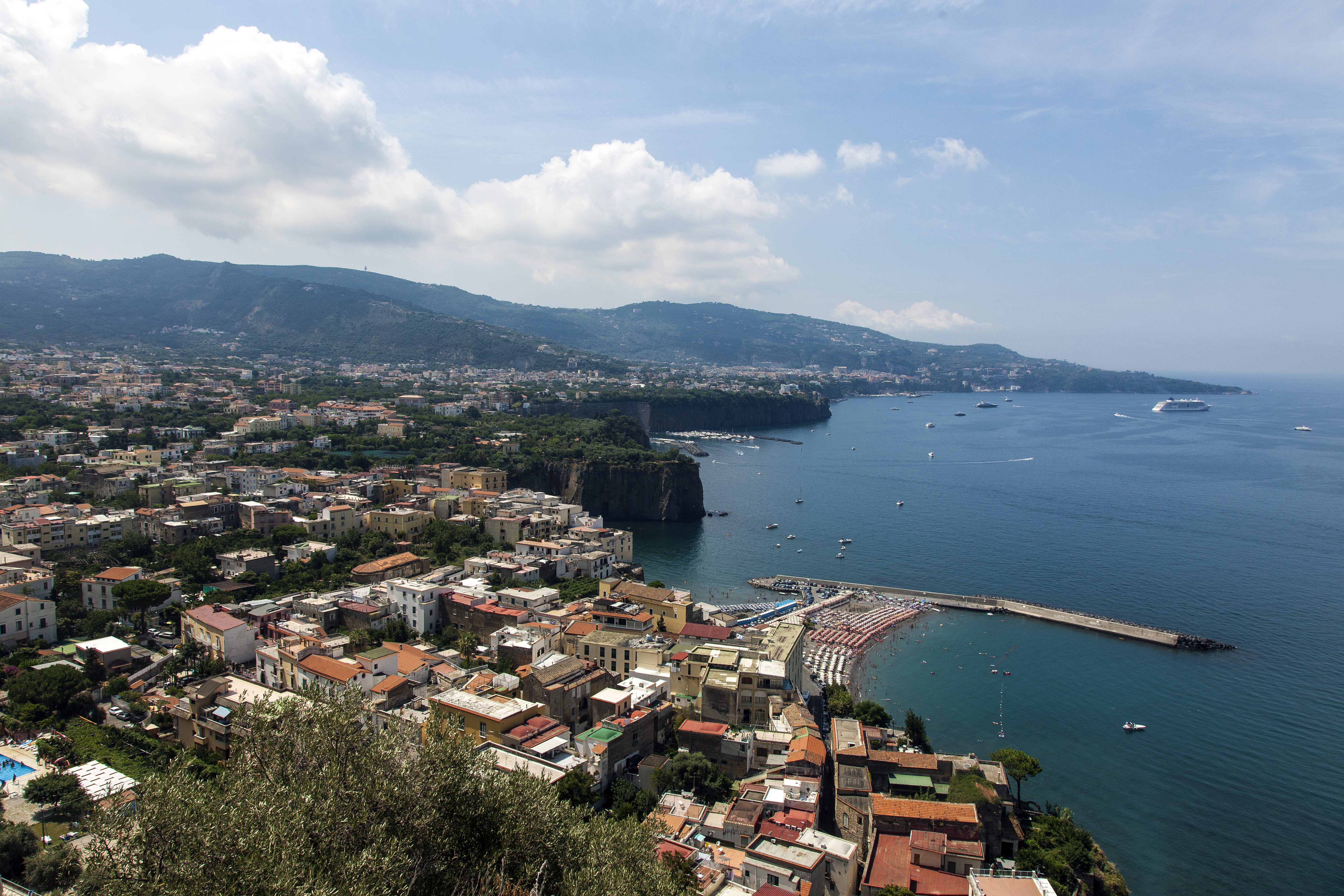
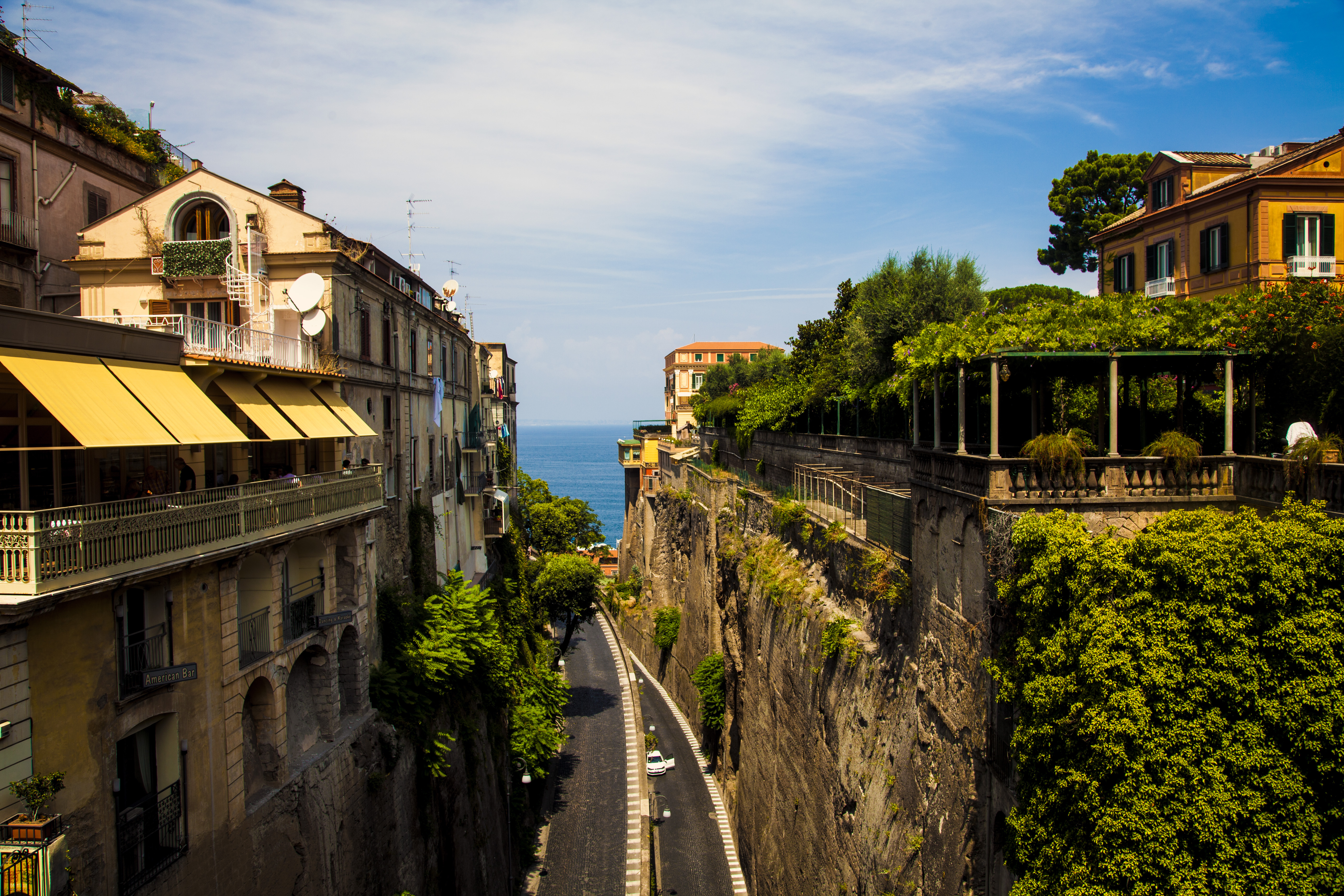
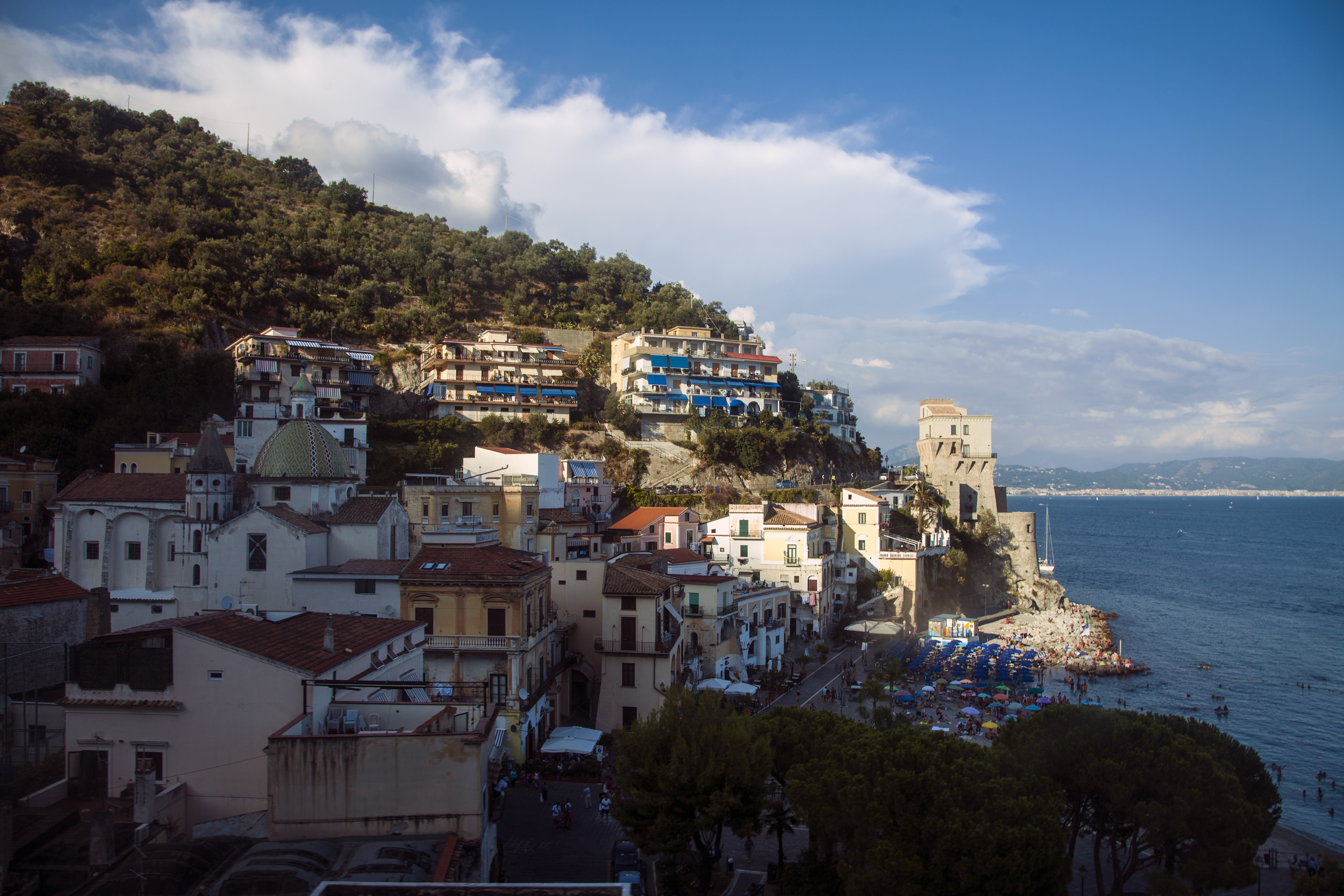
It seemed that the whole tour went awry. However, the situation was saved: Lena promptly got in touch with their “headquarters ” and agreed that we would be allowed to board a different ferry at a different, nearer port an hour later than initially planned, which therefore allowed us to save an hour, and then one more – by cancelling the set lunch planned originally and giving the tourists an opportunity to eat on the go during town walks. And finally, exhausted, but happy, we returned arrived in Sorrento. What can I say, it is indeed a very beautiful town. We were told that it had been visited by Gorky (again!), Feodor Chaliapin, Sylvester Shchedrin. Everything here is all about lemons and olives – lemons reach monstrous proportions (up to two kilograms) and have a distinctive flavour, the whole town smells of them! The mountains slopes are covered with olive trees, with rows stretched underneath them. We were told that the olives for the best first press oil must be collected directly from the tree and not from the ground, which is virtually impossible to do manually on steep slopes – and that’s where those nets come in handy!

Sorrento

Sorrento

Sorrento and the Amalfi Coast are considered traditional wedding places for couples from all over the world. We saw an English wedding, with guests walking on the streets and taking photos.

The views here are just so breathtakingly beautiful, in the truest sense of the word! In general, a drive on the mountain serpentine feels, to put it mildly, quite exciting. The bus is driving on a narrow ledge along the cliff, at a height of up to 300 metres above sea level. The road, however, had not always been there – it was constructed by Mussolini. Prior to that, people used to walk on foot or ride donkeys on the mountain paths.

Amalfi Coast

Amalfi Coast

Amalfi Coast

IMG_6689

Despite the fact that these places are declared heaven on earth (it’s even said that righteous Amalfians will return home after death), life is not that comfortable there. Of course, it probably is for Sophia Loren or Gina Lollobrigida, who own luxury villas along the coast, as we were shown, with helipads and elevators that can take them right down to the beach. For ordinary mortals, though, every simple thing turns into a difficult issue – they have to walk a hell lot of steps (and I mean that – really a lot!) every time they want to go to the beach or to work. If you ask someone where they live, they will tell you the number of the step rather than the street name! And imagine them having to do something more serious, such as painting the house! That’s what they do in this case: a van brings a couple of donkeys to the closest possible place, where the specially trained animals get loaded with buckets of paint and rush up the stairs.

Rock Looking Like Virgin Mary with Flowers

Amalfi Coast

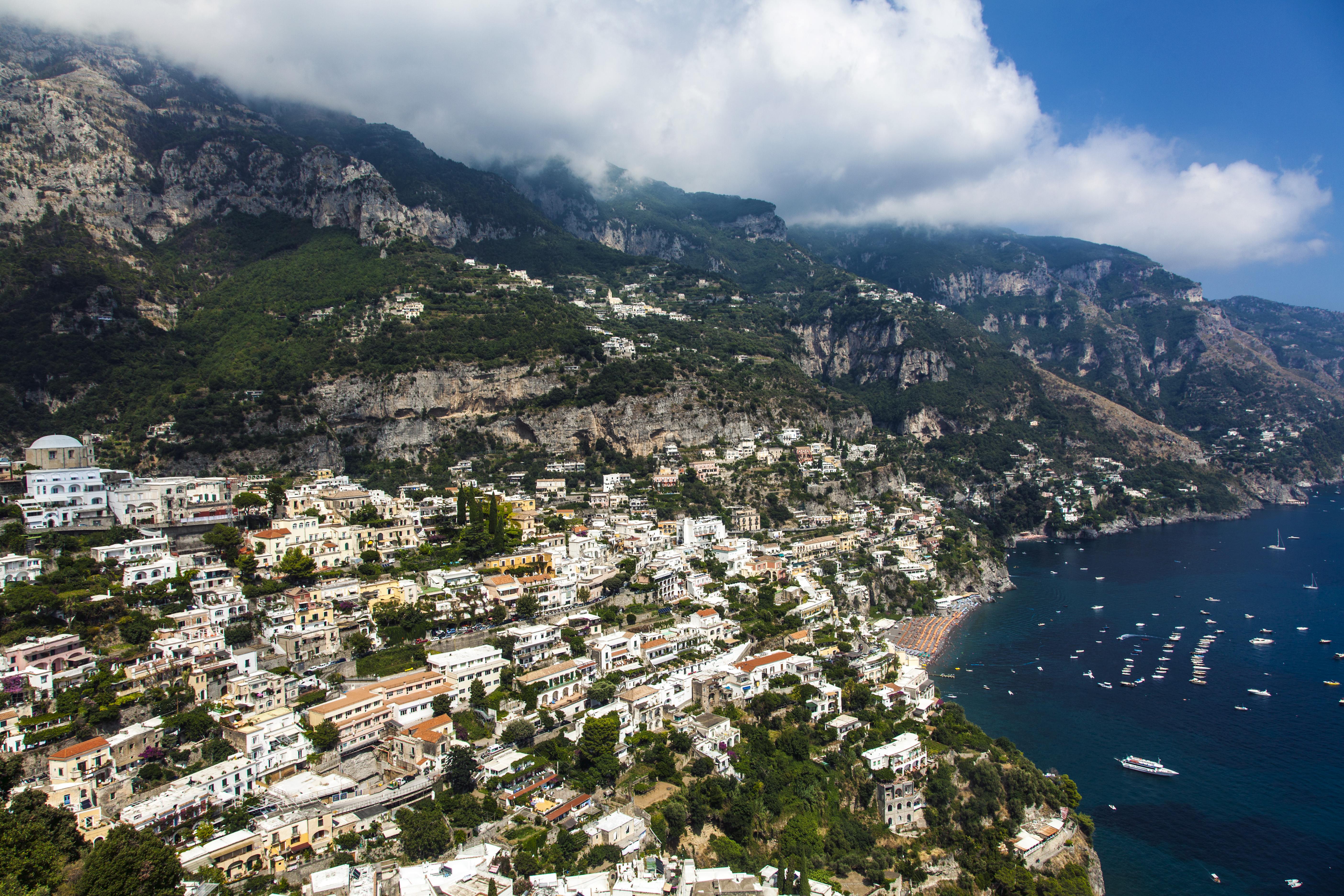
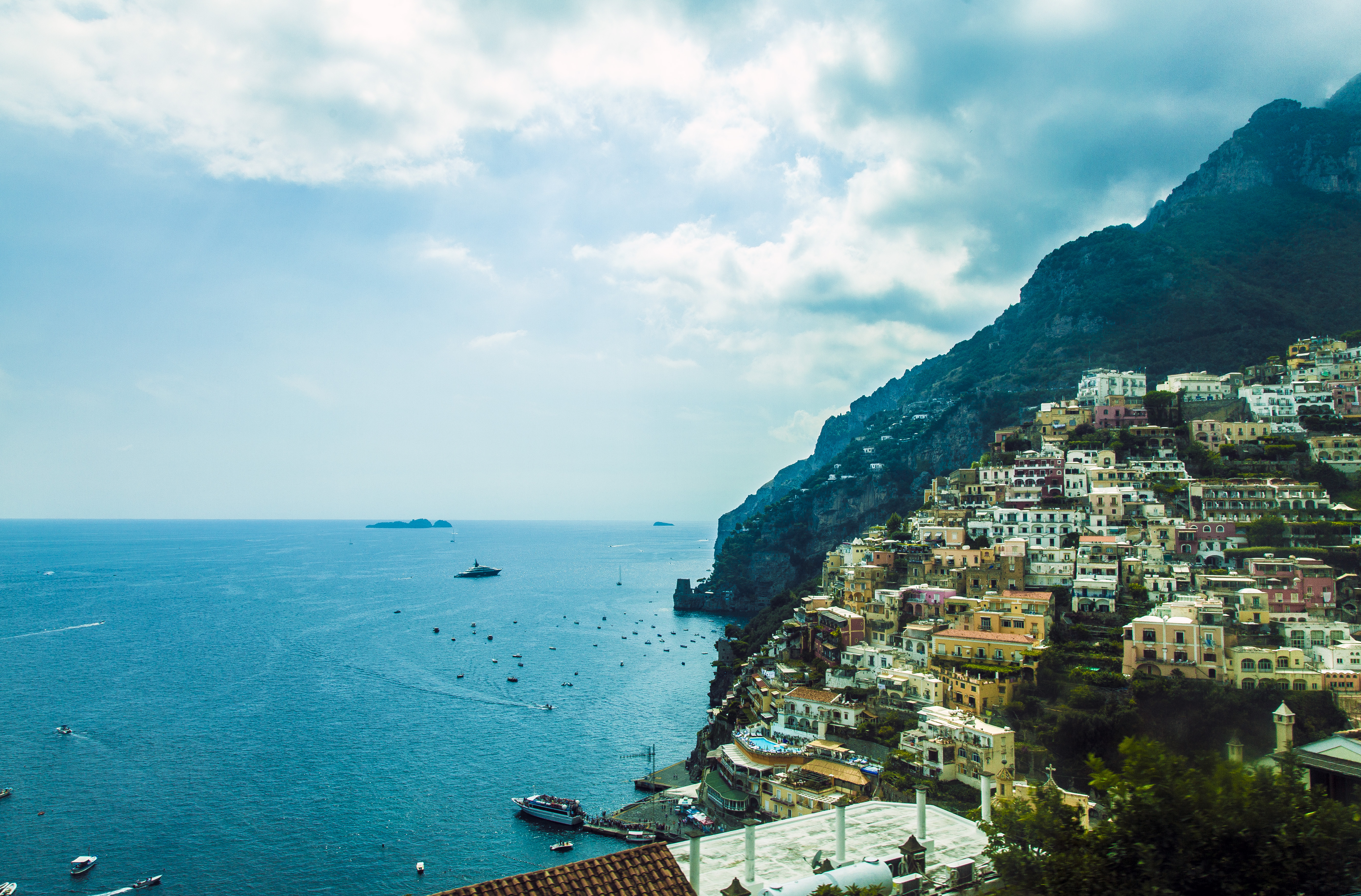
We didn’t get to visit the very beautiful town of Positano, although we did fully appreciate the view over it from the observation deck: pink, white and yellow houses, literally built into the rocks. Very picturesque, but it looked even more inaccessible and impractical.

Positano

Positano

Positano

Positano

Positano

Another town where we didn’t stop either – Praiano – is less well known than Positano. It is interesting that the traditional Christmas nativity scene includes the model of the town itself. This is the ending point of the Christmas procession on December 25, carrying a miniature figuring of Christ the child. We drove past this model and had the chance to take a look.

Amalfi, despite being so celebrated, looked to us like one more replica of the previously seen towns. It is famous for the majestic Cathedral of St. Andrew, where the relics of the aforementioned saint lie. Lena was persistently urging us to see them but honestly we weren’t too enthusiastic about this idea, even though the cathedral was really very beautiful from the outside.

Amalfi

Amalfi

Speaking of holy relics: it appears that in the Middle Ages they were extremely fashionable and prestigious to have in any city, so they were then subject to barter in the best case and theft in the worst. The relics of St. Andrew appeared in Amalfi as a result of the latter actually. Sometimes they would steal not only whole relics, but also parts of them. Robbed monks were ashamed to admit being so careless, therefore, they would replace the missing parts with fake ones (surprisingly, these fake relics still went on working wonders!), and as a result, a saint could end up having three or four arms or legs.

Thus, the walking tour around Amalfi did not satisfy us, but the boat trip along its coast was very pleasant, allowing us to see all these magnificent mountains, bays, hotels and villas from the sea. We sailed in the direction of Maiori, Minori and Ravello, where our bus arrived to pick us up. By the way, on top of all the transportation troubles we had had, the bus somehow managed to hit a parked car when manoeuvring to enter yet another busy tunnel, so while we were happily enjoying our sea trip, the driver had to deal with the frustrated owner of that car.

Minori

Ravello is a small town located even higher up the cliff. We didn’t go up there, and only saw it from aside, while listening to our guide’s comments about Wagner festivals that are held there and are so popular that tickets must be booked almost a year in advance.

The town of Ravello is also a proud owner of relics – this time those of Saint Panteleimont, and every year on the day of his execution the Saint, as if to demonstrate his full consent to be in this place, arranges a miracle – liquefaction of his blood. A similar miracle, but with even more rapid boiling of the blood, is arranged by Saint Januarius, the patron of Naples. It is very important for Neapolitans, as a pattern has been traced: if the blood liquefies duly, the Vesuvius does not erupt during this year and any other ills also bypass Naples. Therefore, on this day – namely September 19 – all Neapolitans are very nervous and can’t wait for the coveted event. To guarantee it happening for sure, the oldest old ladies are sat in the first row in the cathedral (who are jokingly referred to as the “relatives of Saint Januarius” for their age), and start praying to the saint. Then, if the miracle is delayed, they switch to exhortations – gently at first, then more and more angrily until they literally end up swearing. Instead of taking offense, the Saint, either stimulated by, or scared of such attitude finally performs the long-awaited miracle!

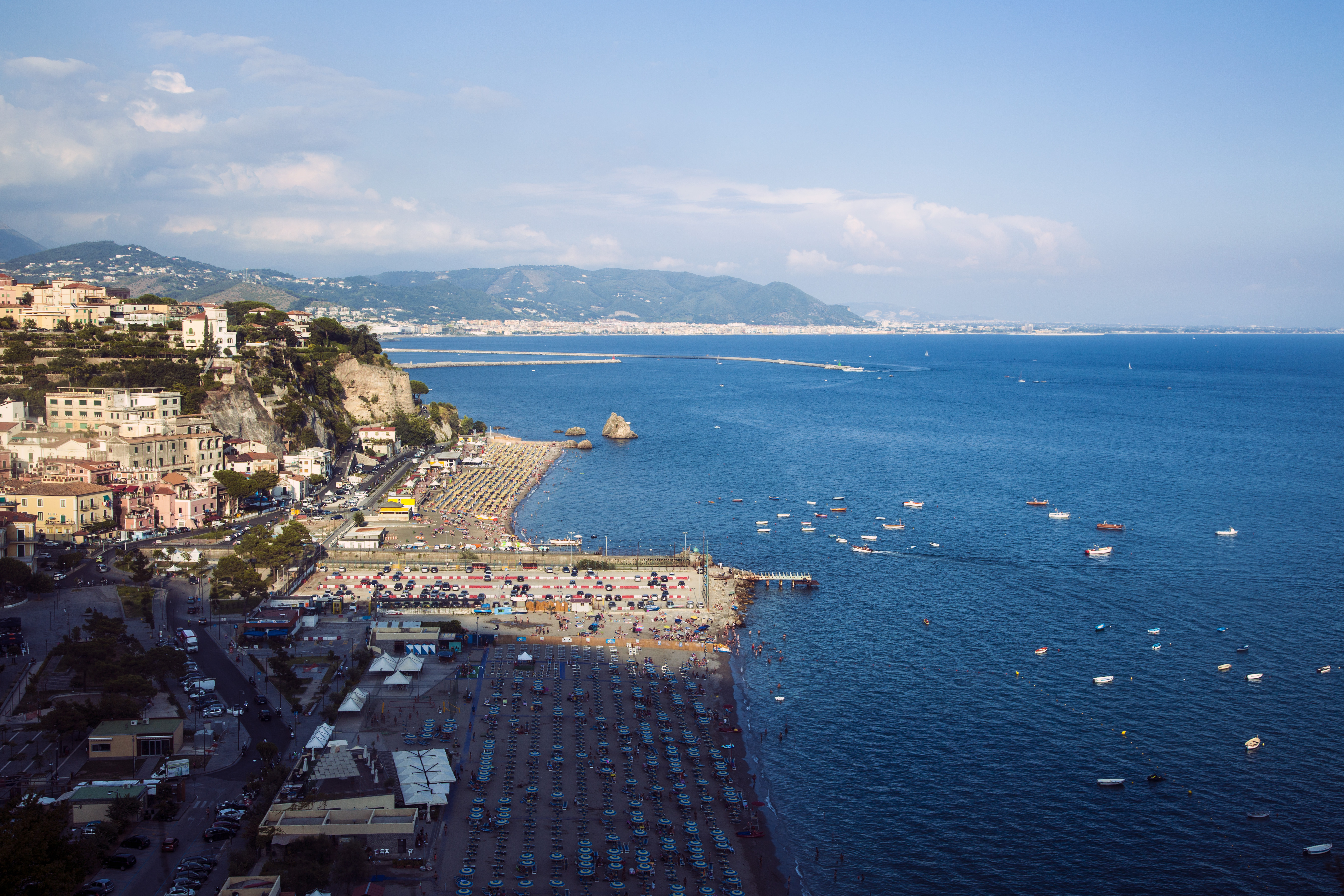
The last town of the Amalfi coast was Vetri Sul Mare, and rounding the hill, we saw the city of Salerno in the distance and hurried back to Naples, to get to the port. On the way back, Lena told us that the Neapolitans were very superstitious , believed in destiny and tried to find signs in any event for the game of bingo . In every house there is a booklet that translates any unusual event into the language of numbers. Lena said half-jokingly, half-seriously, that upon returning home she would check that little book and find out which numbers corresponded to a traffic congestion, a corpse on the road and other events that happened to us today, and then place bets on these numbers.

Vietri Sul Mare

Posted in Europe, Ischia, Italy

Adventures of the Azeris in Italy – Ischia

РУССКОЯЗЫЧНАЯ ВЕРСИЯ ПО ЭТОЙ ССЫЛКЕ. CLICK HERE FOR RUSSIAN VERSION.

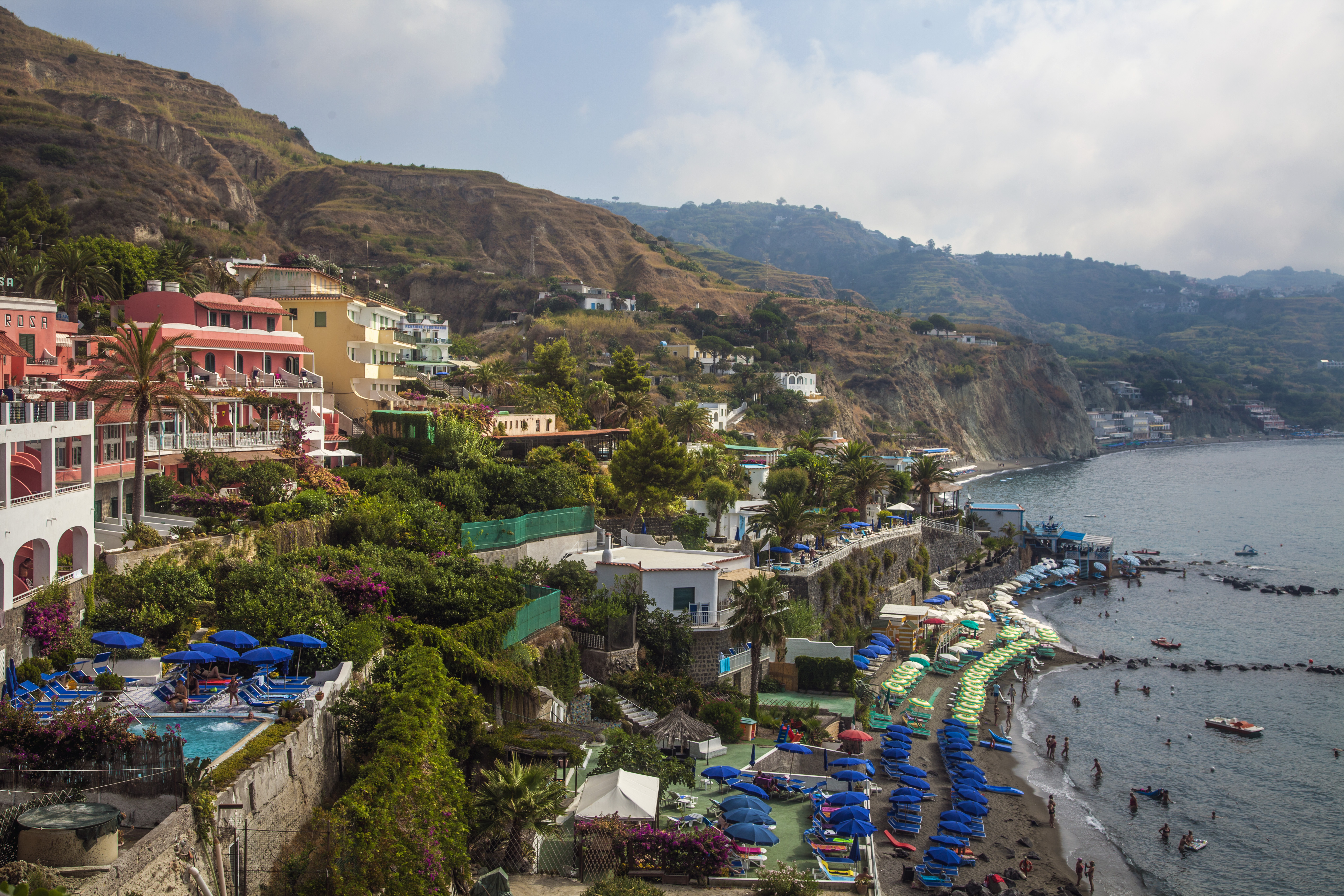
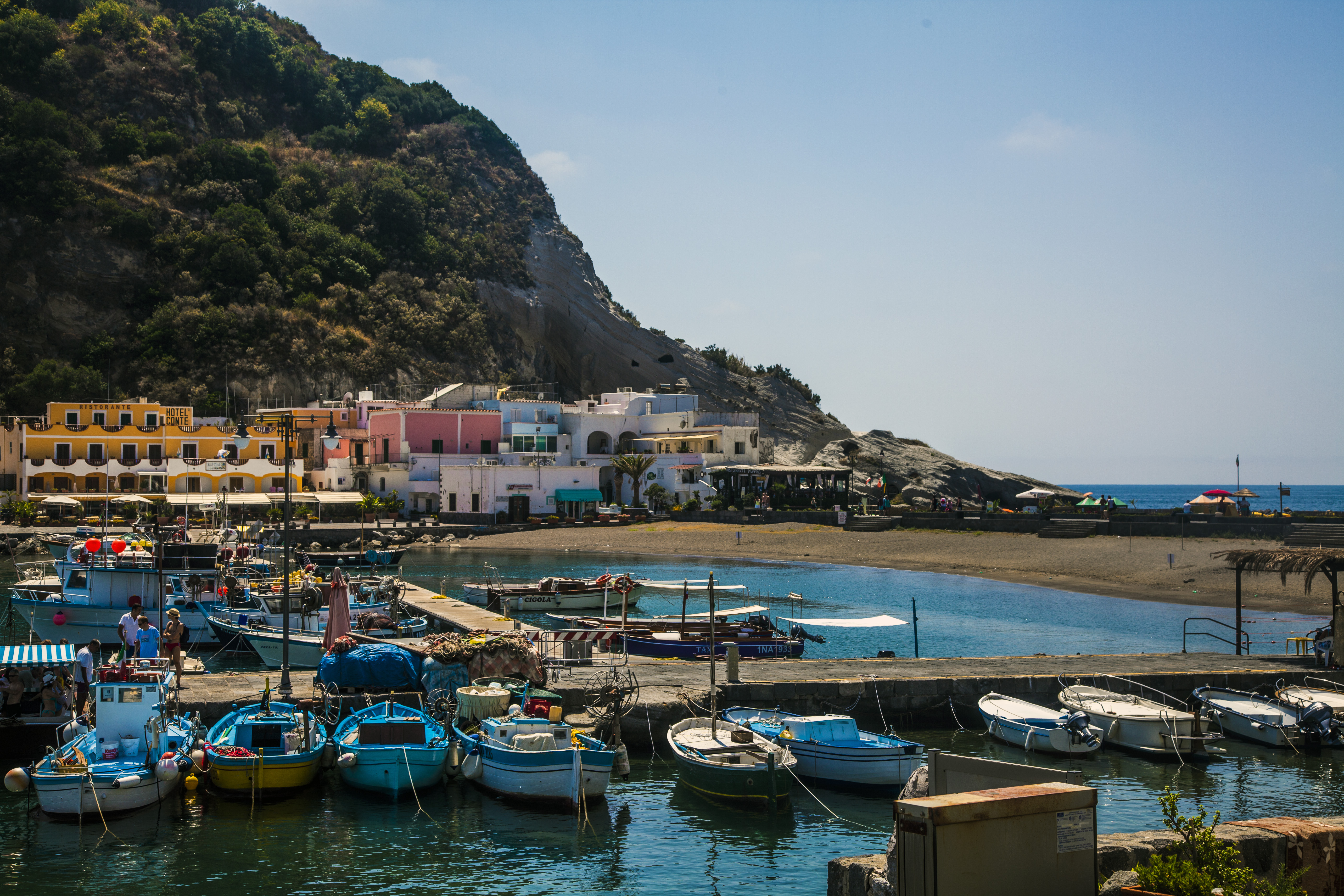
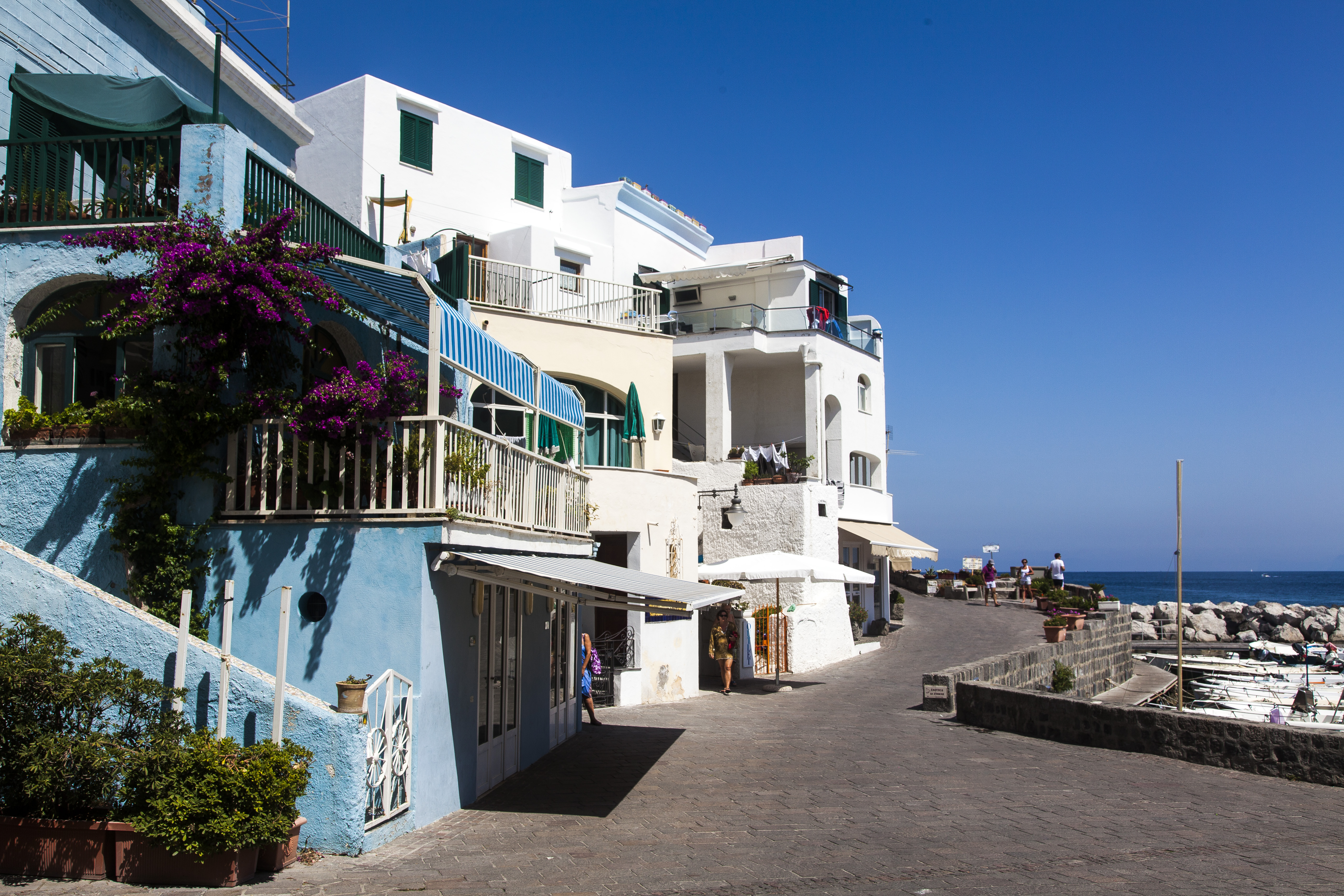
On our first day in Sant’Angelo we took a look around. At first glance our hotel seemed small, labyrinthine and beachless. We stared in disbelief at a small stone slab under our balcony with a couple of sun loungers and pool ladders leading into the sea. Look, we were saying to each other pointing into the distance, that hotel there has got a magnificent sandy beach. Had Booking.com simply duped us like that? It hadn’t, as it turned out. A huge spa area, covering the entire hillside, with a variety of pools – with thermal water, sea water and fresh water, hot and cold – and also part of the same beach which we had been drooling over – were all part of our hotel complex. Then we faced another problem: in order to reach it, we had to walk quite a long way up and down the stairs and paths under the baking sun. Looking ahead, I can say that in the following days this road did not seem as painfully long, as for me personally, I sometimes swam all the way from the stone slab to the sandy beach instead of walking there (about five hundred metres across the sea).

Sant'Angelo, Ischia

Sant'Angelo, Ischia

Sant'Angelo, Ischia

The Tyrrhenian Sea is clear, blue, moderately salty (not as salty as the Adriatic), the only problem is going in and coming out: the sand here is quite different from the dense and compacted one we have at the Caspian Sea, on which one can walk without falling through, the local sand actually looks more like tiny pebbles.

Sant'Angelo, Ischia

Sant'Angelo, Ischia

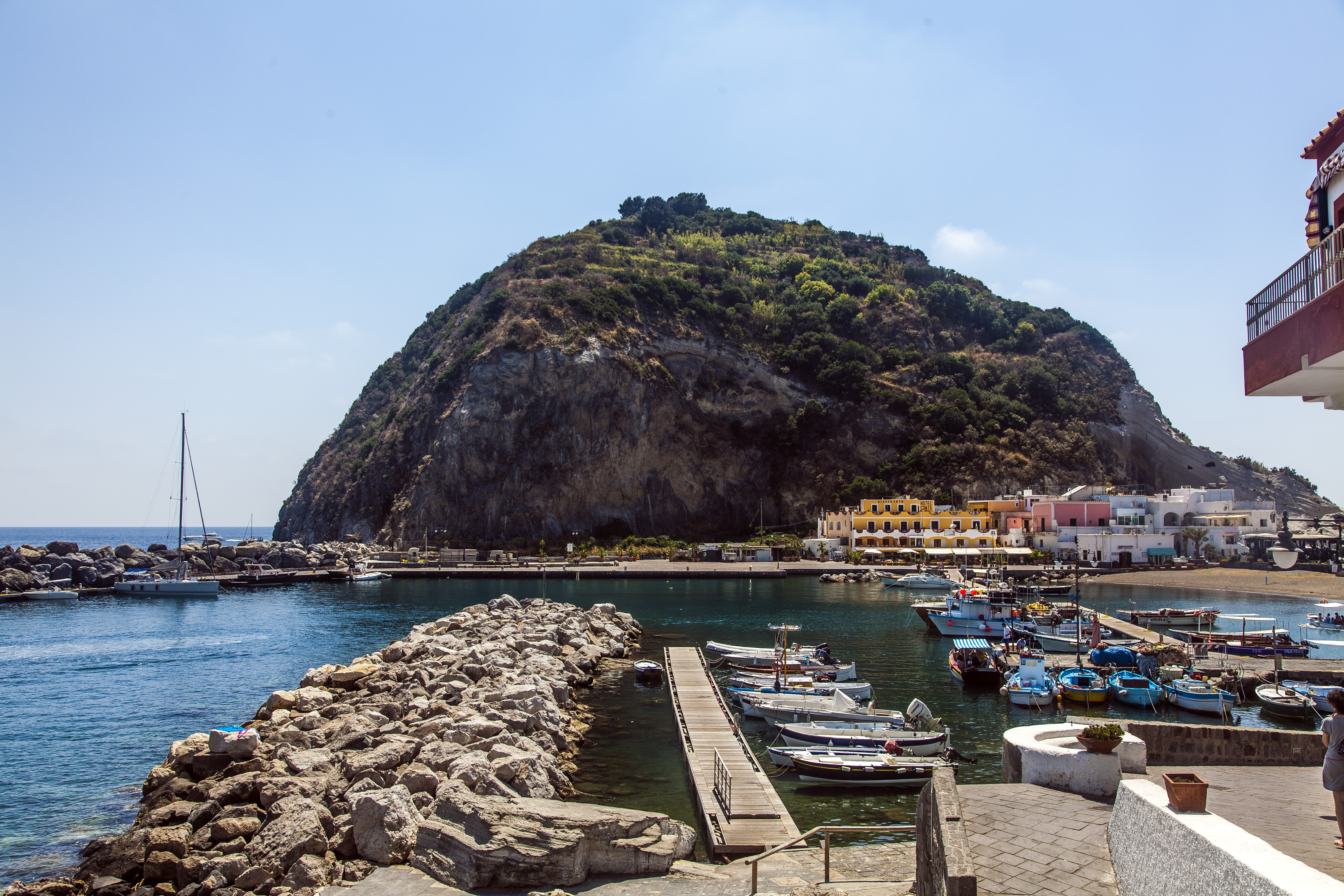
So what can I say about Sant’Angelo? It is a village, situated in the south of the island and is connected by a thin isthmus with a small peninsula, which is basically a lava formation. In the very heart of the village there is a pedestrian zone comprised of a square and a few adjacent streets, dotted with restaurants and shops. The shops look tempting at first glance, with closer examination, though, it turns out that a lot of them sell very cheap trash or the same kind of trash, but at exorbitant prices.

Sant'Angelo, Ischia

Sant'Angelo, Ischia

The food here is quite good, but rather unvaried: seafood, pizza and pasta. Interestingly, there are virtually no soups. The atmosphere in this area is very Italian with music playing, people dancing, children screaming, their mothers yelling at them, someone fishing and small mongrels barking furiously. Somehow the children are mostly girls: it’s either that a century of peace awaits Ischia, or for some reason boys are kept at home.

Sant'Angelo, Ischia

The vacationers here are mostly Italians themselves, there are also a lot of Russians, some Germans, French and British, and that’s pretty much it. There are no Chinese or Japanese tourists, which is surprising – I think you’d agree that places without crowds of either, cause some suspicion.

Sant'Angelo, Ischia

Sant'Angelo, Ischia

Here our observation of the locals’ laziness got developed and validated. To begin with, the vacationers swim surprisingly little – if you see someone swimming in the sea, most certainly they’ll turn out to be French, or Russian, or those writing these lines. Italians prefer to float lazily on mattresses, or not to go down to the sea altogether, lying around the pool instead. As for the staff, it is astonishing that any simple request grows into a big problem requiring a vigorous discussion between a few people.

For instance, on our very first day, as we usually do arriving to a new place, we tried to book tours and excursions, naively believing that this should be an easy and usual practice for the hotel. We came to the reception, and the girl working there readily laid out several maps and brochures, noting the places which she would recommend to visit, and considered her mission completed. We let her know that we weren’t going to call any tourist organisations or taxi services ourselves and clearly hinted that we expected these services from the hotel, in accordance with the notices on the walls. The girl was surprised and puzzled, and called a colleague to help. He pulled out a few more maps and brochures, and, in his turn, showed the places, which, in his opinion, would be interesting for us to visit. We stood our own and tried to persuade them into organising something for us. Finally, he remembered with relief, that they had a Russian lady named Larissa working for them, and she would come in the evening and help us.

Unlike the Italians, Larissa took up the matter enthusiastically. She told us that only the day before she sailed to the Amalfi coast on a private yacht with a Russian couple for 1,500 euro. We asked her to take us at least on a tour around Ischia – and a cheaper one preferably! – and agreed for the next day. Larissa had been living in Italy for the past seventeen years, so had perfectly mastered the talkativeness of the locals. However, these talks ended with zilch: she didn’t manage to get the day off.
Then we went back to the reception and importuned the girl until she finally called us a taxi. This is how we literally wrung out of them a trip to Forio and Ravino Gardens. Gino, the driver, turned out to be a nice fellow, who couldn’t speak a word of English, though – however, he knew a couple of phrases in German and for some reason was using them every now and then communicating with us. Here it’s worth pointing out another feature of the Italians – they are normally nice and willing to help, unless they are playing the big boss. So Gino voluntarily offered to take us not only to Ravino Gardens and Forio, but also to drive us around the whole island, for just a little extra payment.

The Ravino Gardens are basically a small botanical garden dedicated to cacti and succulents only, which are more numerous and diverse than in the famous glasshouses of Kew Gardens in London. The specialty of these gardens is their own very tasty cactus cocktail.

Ravino Gardens, Ischia

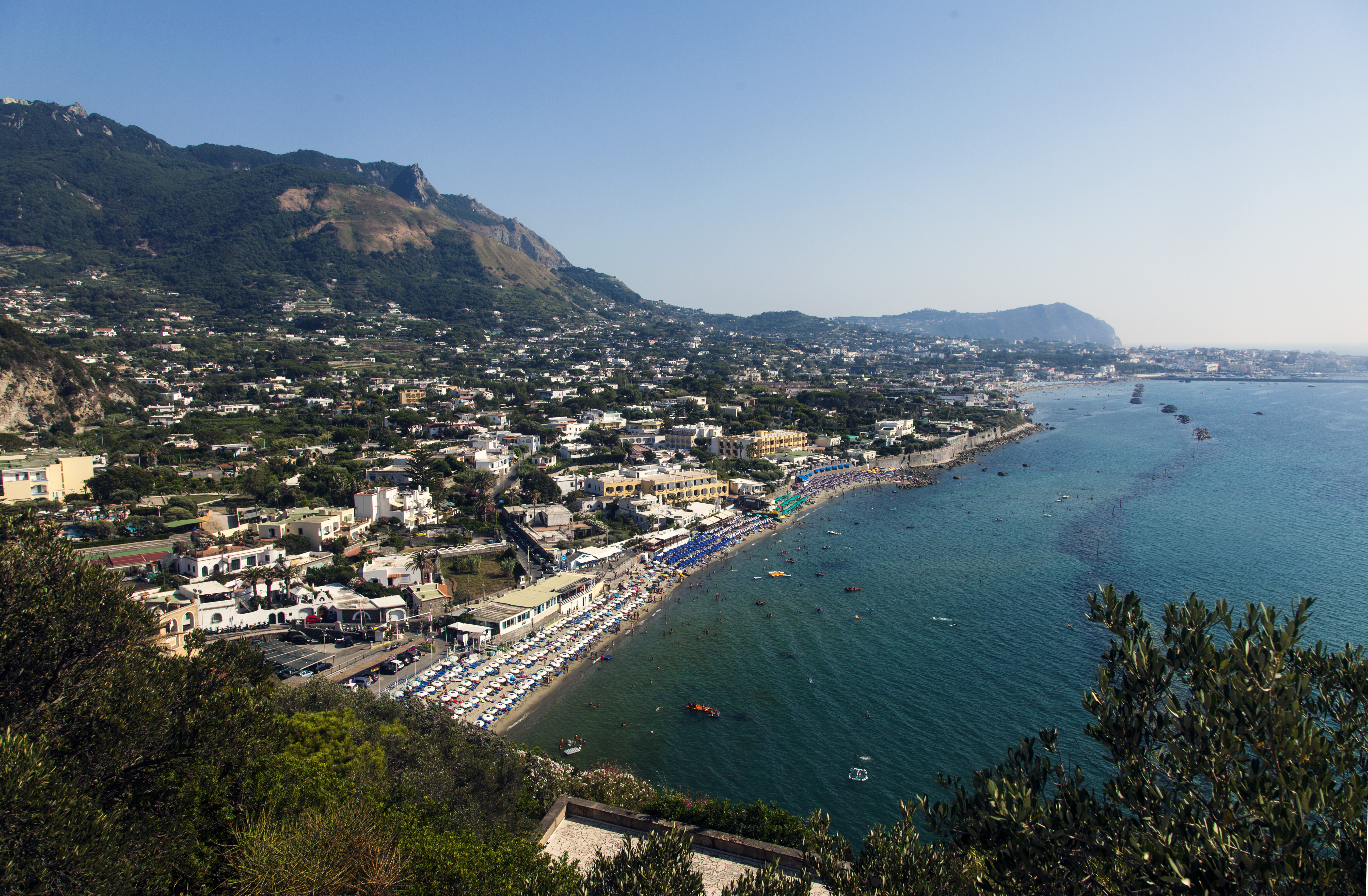
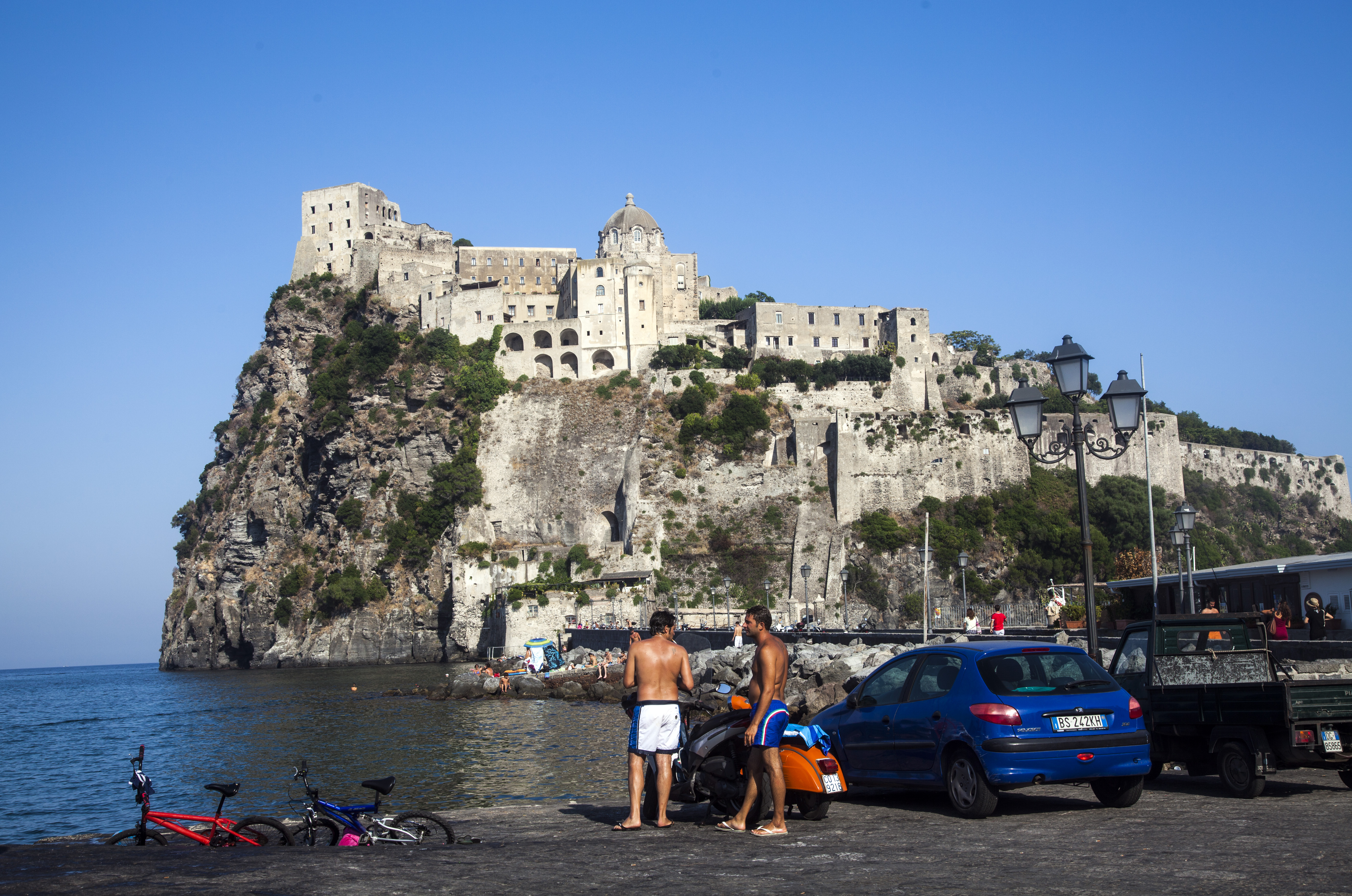
Driving us around the island, Gino still somehow managed to give us explanations in his Italian-German and diligently stopped in the most beautiful panoramic places for us to take pictures. So we pretty much saw almost all of the towns of Ischia: Forio, Lacco Ameno, Casamicciola, Ischia Porto (where we took a look from afar at the Aragonese Castle, a local landmark on the top of a cliff), Barano.

Forio, Ischia

Lacco Ameno, Ischia

Ischia Porto

Ischia Porto - Castello Aragonese

Ischia Porto

Ischia Porto