Posted in Asia, English, Himeji, Japan, Osaka

Japan – Day 8

РУССКОЯЗЫЧНАЯ ВЕРСИЯ ПО ЭТОЙ ССЫЛКЕ. CLICK HERE FOR RUSSIAN VERSION.

30 May 2025

Today, completely unintentionally, we woke up at 6:30 a.m., but it turned out to be a good thing, since we had a long day of traveling ahead: from Kyoto to Himeji, then on to Osaka, and finally back to Kyoto.

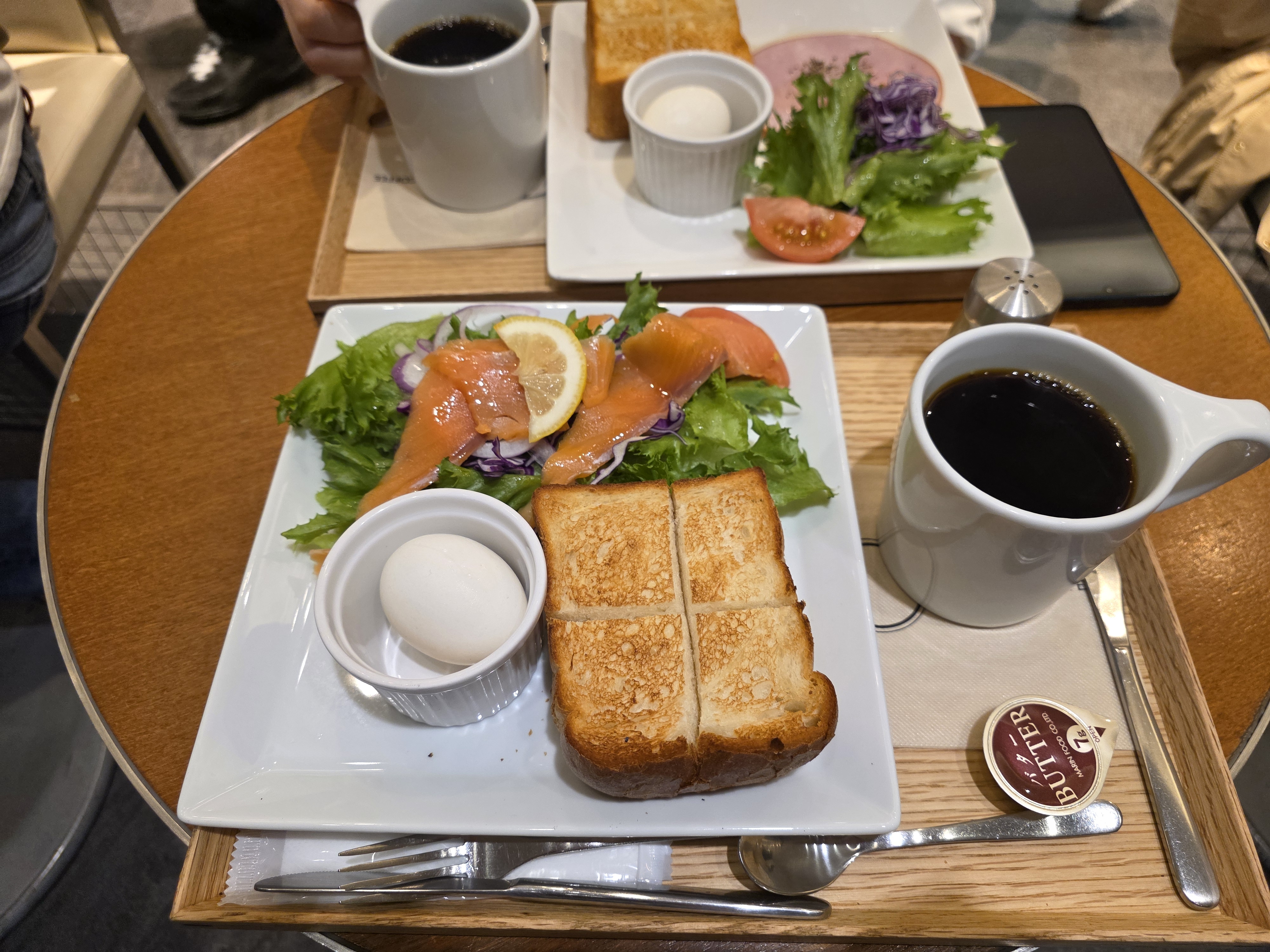
As a result, we left an hour earlier than planned. But before heading out, we walked to Kyoto Station and had breakfast there – we had delicious toasts made with Japanese milk bread, topped with egg and salmon in my case, or ham in Rena’s.
At the station, we took an express train (not the Shinkansen, just a regular limited express) to Himeji.

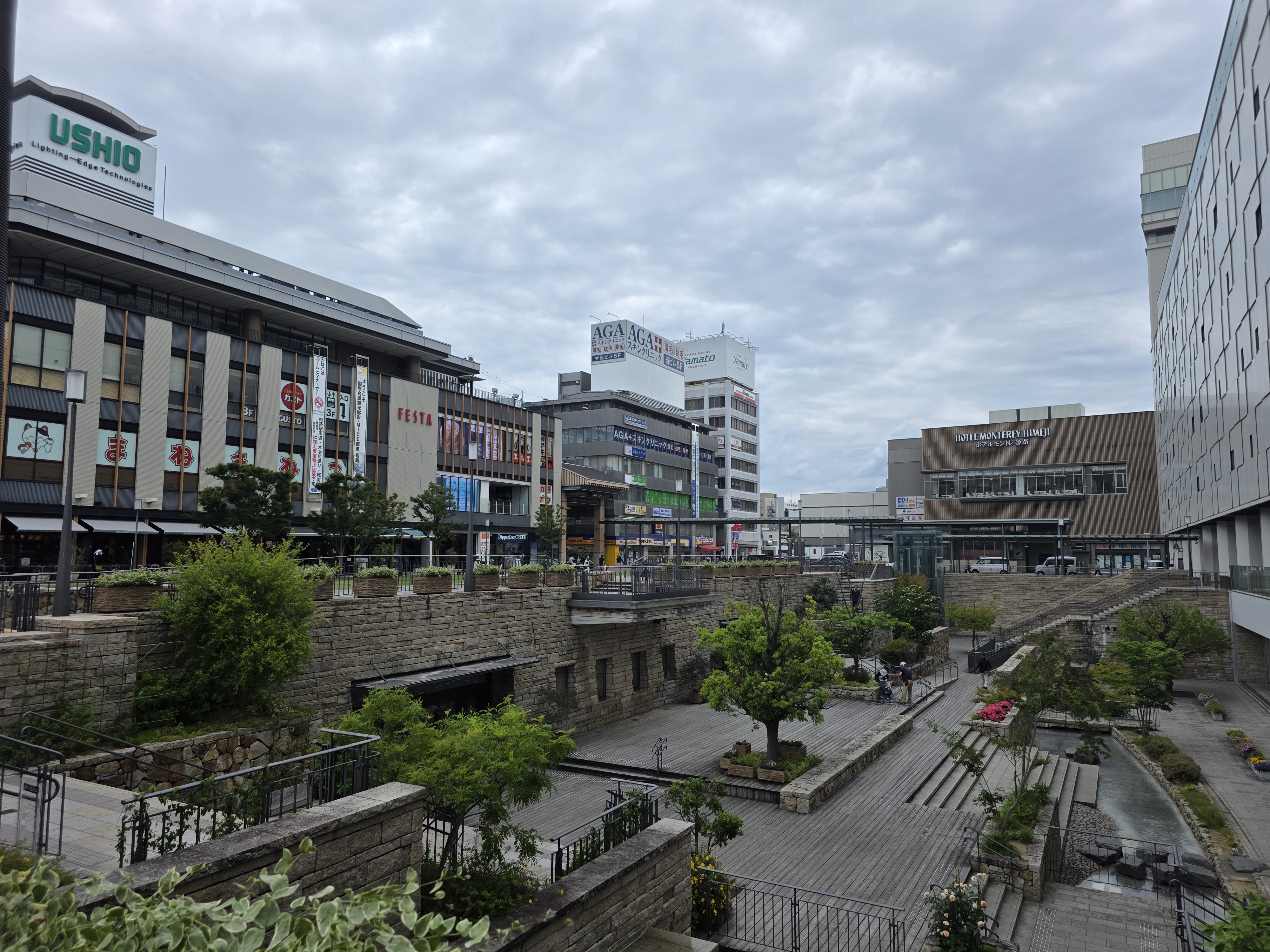
The sole reason for the trip to Himeji (which took about an hour and a half, by the way) was to visit its famous castle. From Himeji Station, we walked down one of the main streets towards the castle. Honestly, there wasn’t much to see along the way – the city seemed fairly ordinary and, at first glance, felt rather provincial.
The castle really is the city’s main (and maybe only) attraction – but what an attraction it is. It is extremely popular among tourists, as it’s one of Japan’s oldest castles, and interestingly, is built almost entirely out of wood.

We weren’t sure whether it was enough to admire the castle from the outside or whether we should go inside as well. Google reviews strongly recommended going in, and so we did – but in hindsight, we might as well have skipped it.

From the outside, the castle is stunning – graceful and elegant. No wonder it’s also called the “White Heron Castle” – it truly does resemble a white heron. But inside, there’s practically nothing to see. Just seven floors of empty wooden rooms, between which we had to walk up and down the steep, slippery staircases (they are slippery because you have to take your shoes off and walk in socks). There’s no interior decoration, no furnishings, barely any artifacts. Even the weapon displays are sparse – just a couple of spears and guns for show.

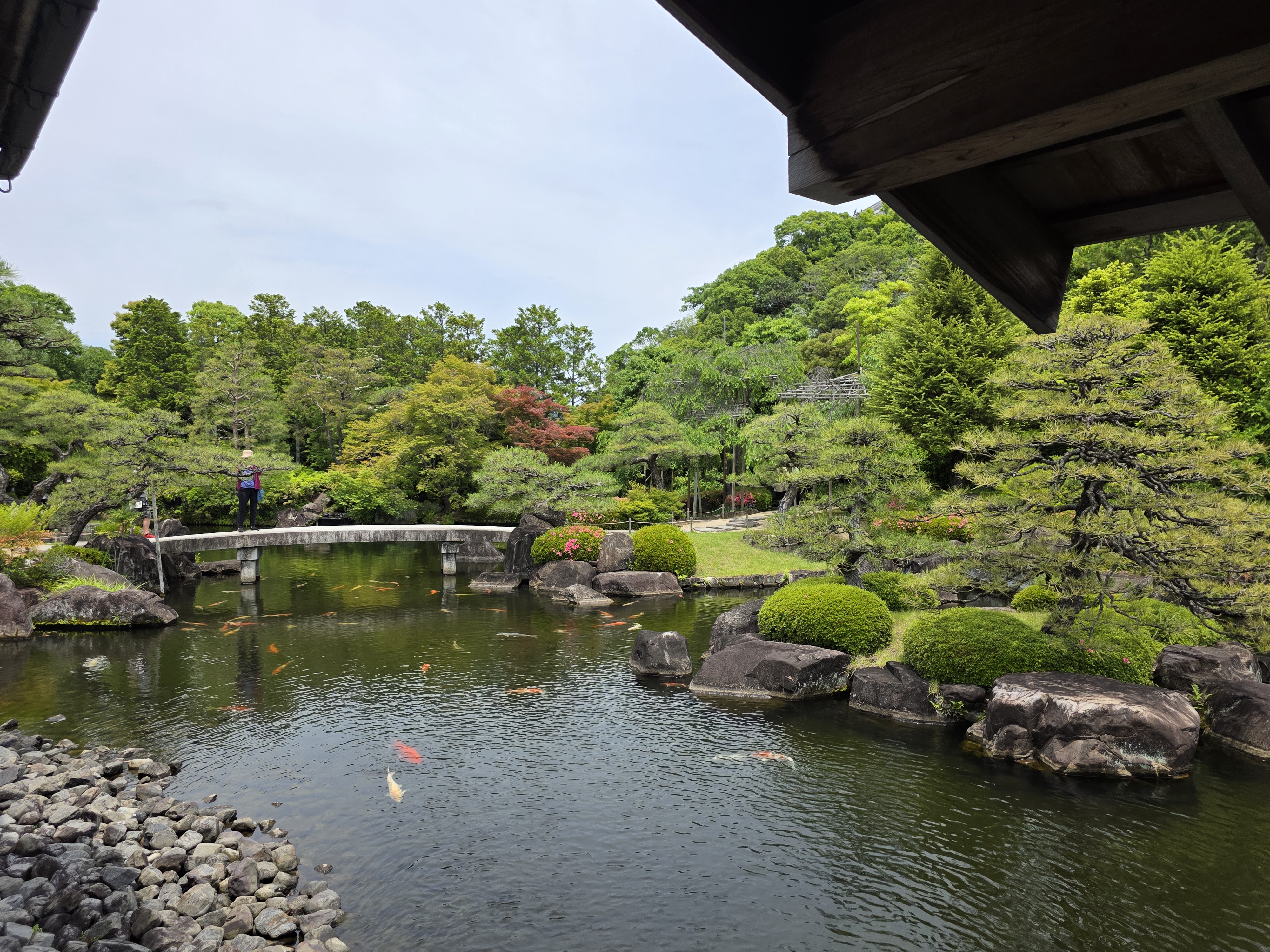
However, right next to the castle is Koko-en – a lovely garden made up of nine smaller gardens, each designed in a different traditional Japanese style. One focuses on pine trees only, another features multi-level paths, waterfalls, and stones, while another has a flat landscape – and all are filled with beautiful flowers and trees. Interestingly, the garden was created only recently, in the late 20th century, but it’s designed to reflect the aesthetics of the Edo period.
It was hot and stuffy all day, even though the forecast had promised rain – instead, we got bright sun. By the time we finished at the gardens, it was already lunchtime. We decided to have lunch in Himeji and ate in a tiny local eatery that served Kobe beef – a premium, marbled Wagyu variety that’s about twice as expensive as regular Wagyu, but still reasonably priced here.

There wasn’t anything else we wanted to do in Himeji, so we headed to Osaka – in the opposite direction, towards Kyoto – about an hour’s ride.

The contrast was immediate – Osaka has a completely different energy. It is a much more modern city than anything else we’d seen so far (even Tokyo). If your idea of a modern Asian city includes futuristic infrastructure and glass skyscrapers, Osaka fits the bill perfectly – it felt like such a contrast to Kyoto, which is only half an hour away. Even the people looked different – more relaxed, dressed more brightly and stylishly. And there are even dedicated bike lanes – in the other places we saw, cyclists just ride on the sidewalks, while you narrowly manage to avoid them.
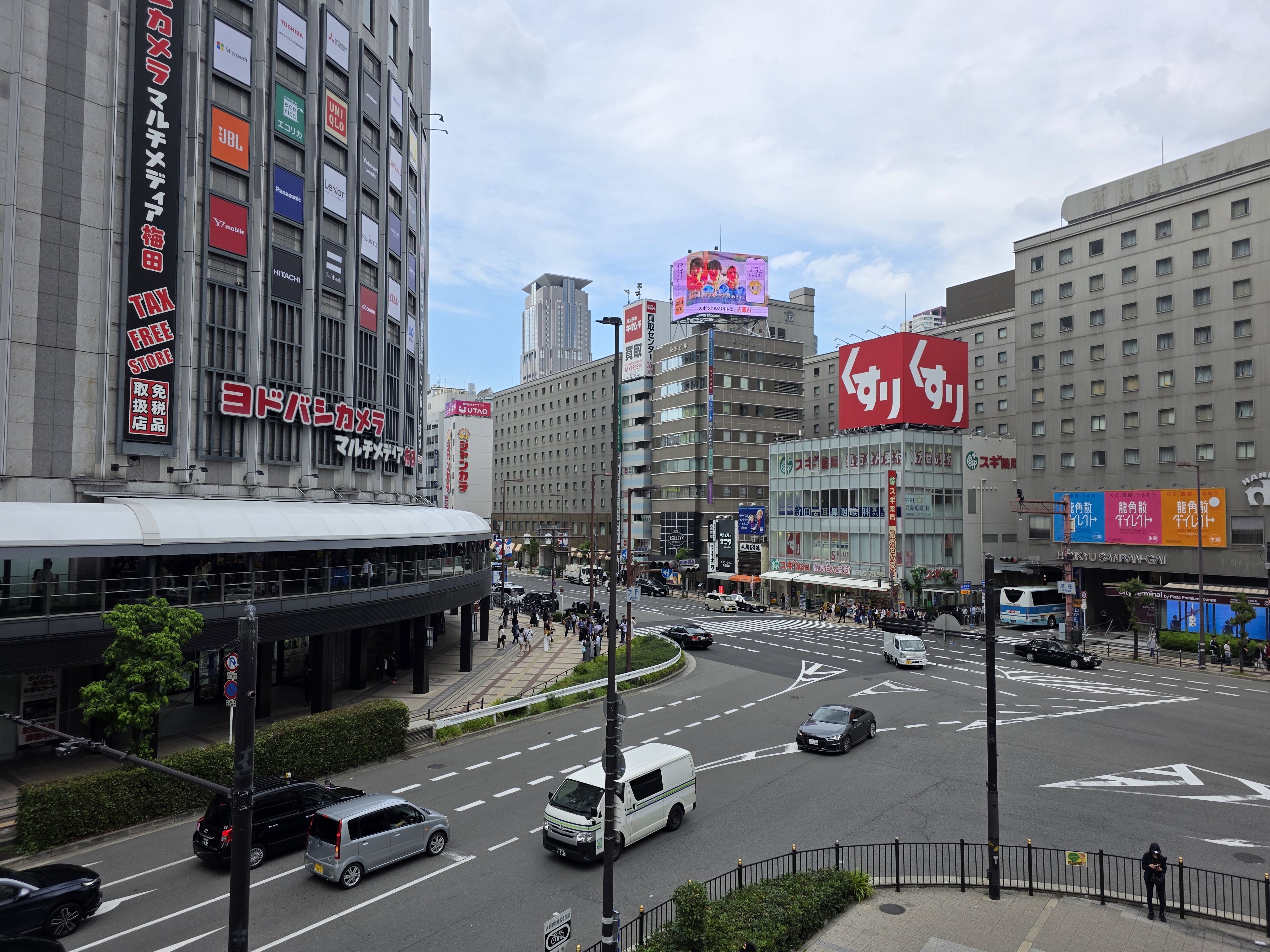
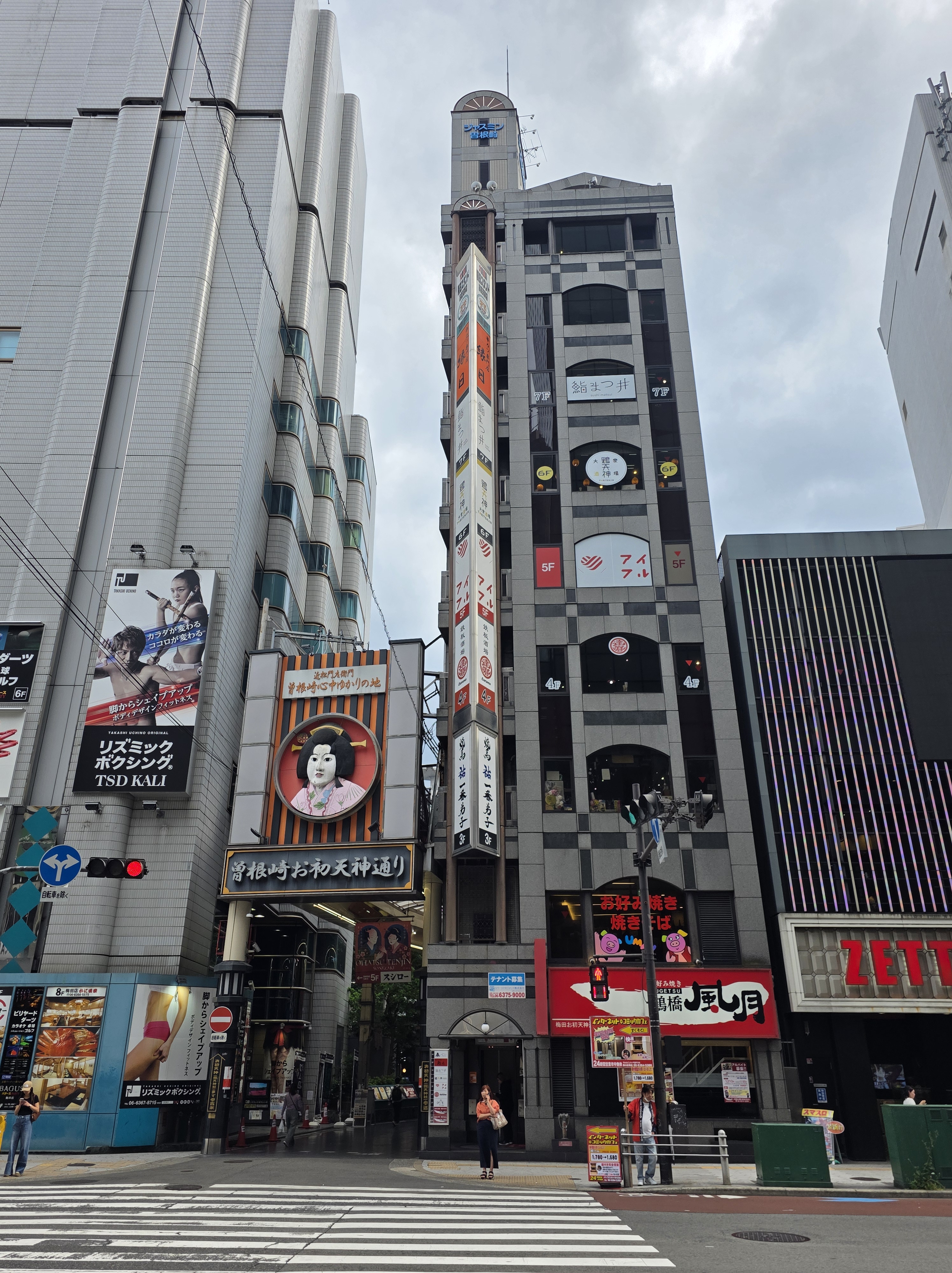
Osaka also has a castle, so we went to take a look – just from the outside, of course. It turned out to be located on a hill, mostly hidden behind trees, and we didn’t feel like climbing up – we simply didn’t have the energy.
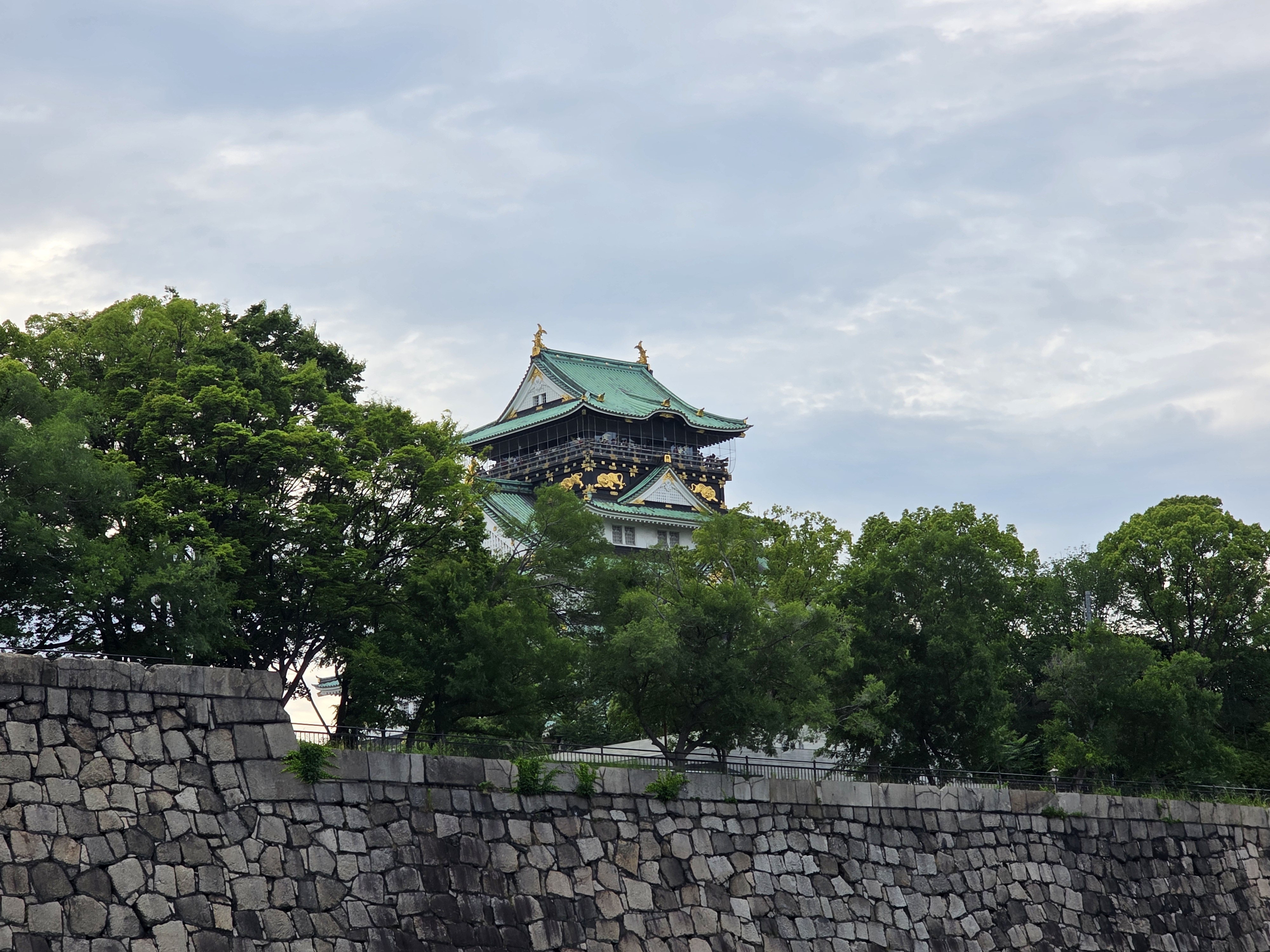
The park around the castle reminded us a bit of Hiroshima Castle’s grounds, but Osaka’s was better maintained and much more lively – full of people, like the city itself.

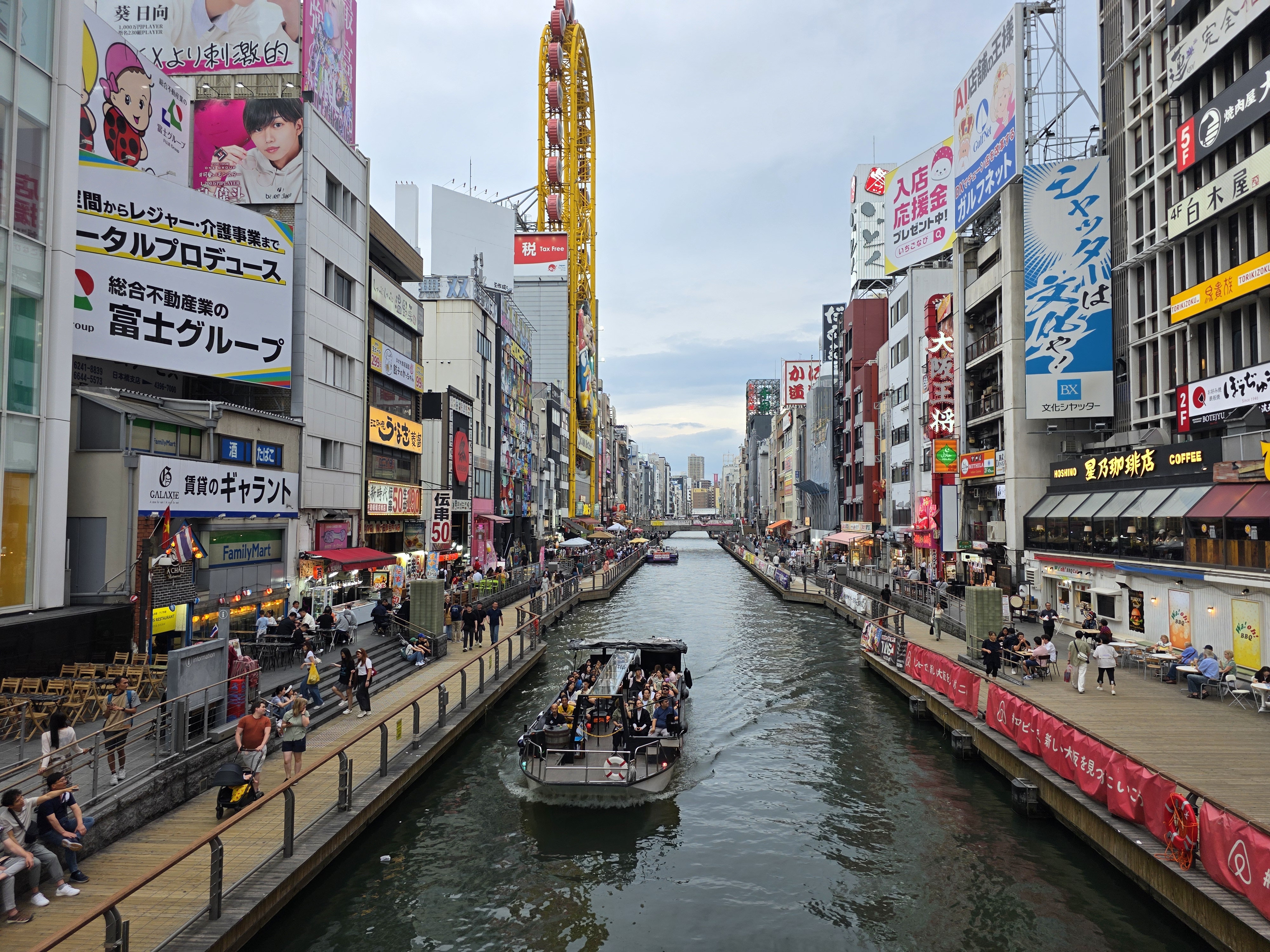
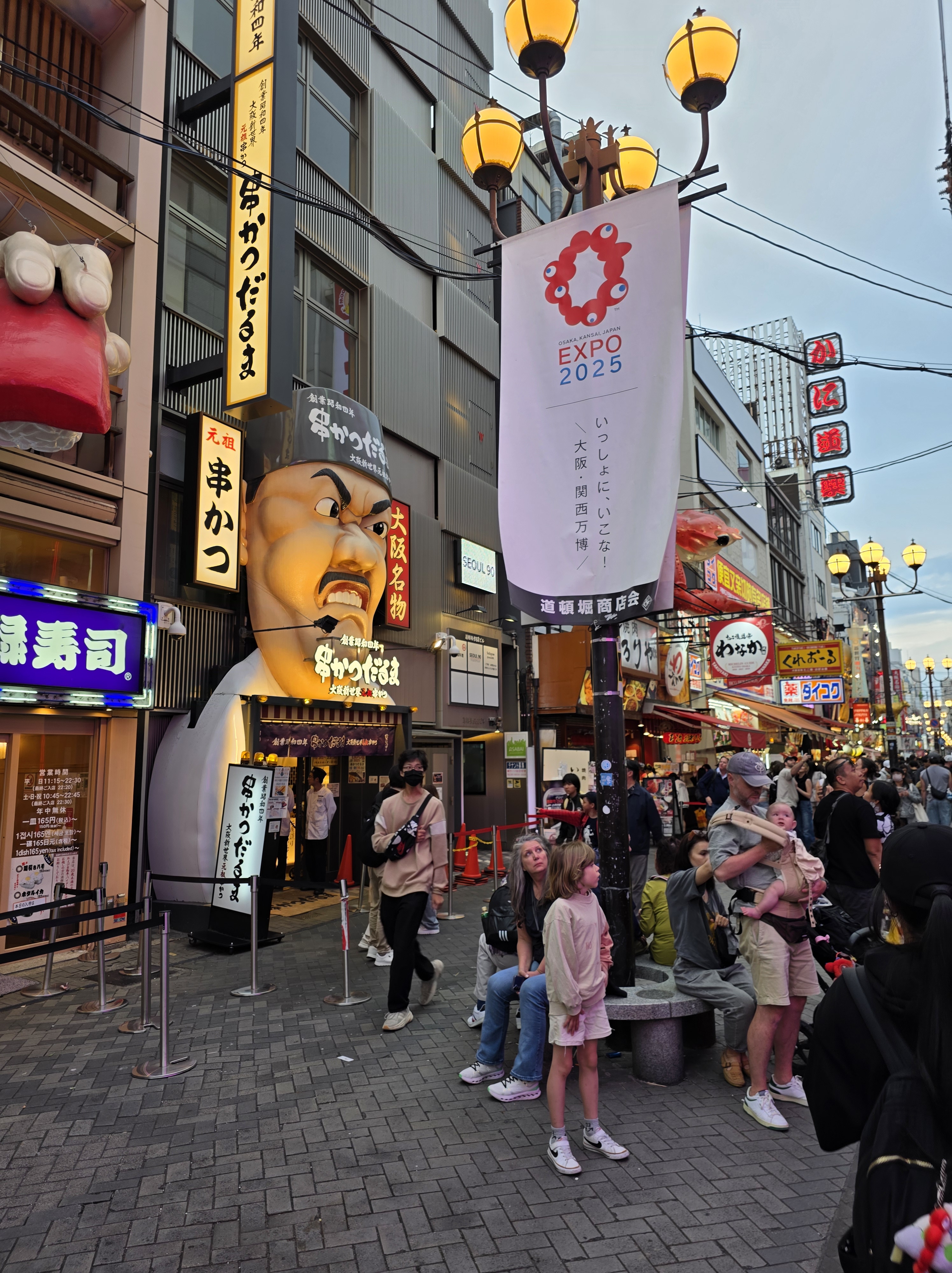
Next, we headed to what’s probably the noisiest and most chaotic part of the city: the Dotonbori area. Along the canal and the adjacent pedestrian street, there is an endless choice of cafés, restaurants, shops, and game centres – all with huge, elaborate signs, that are more like 3D sculptures, covering the entire facade. At night, everything lights up in dazzling neon.
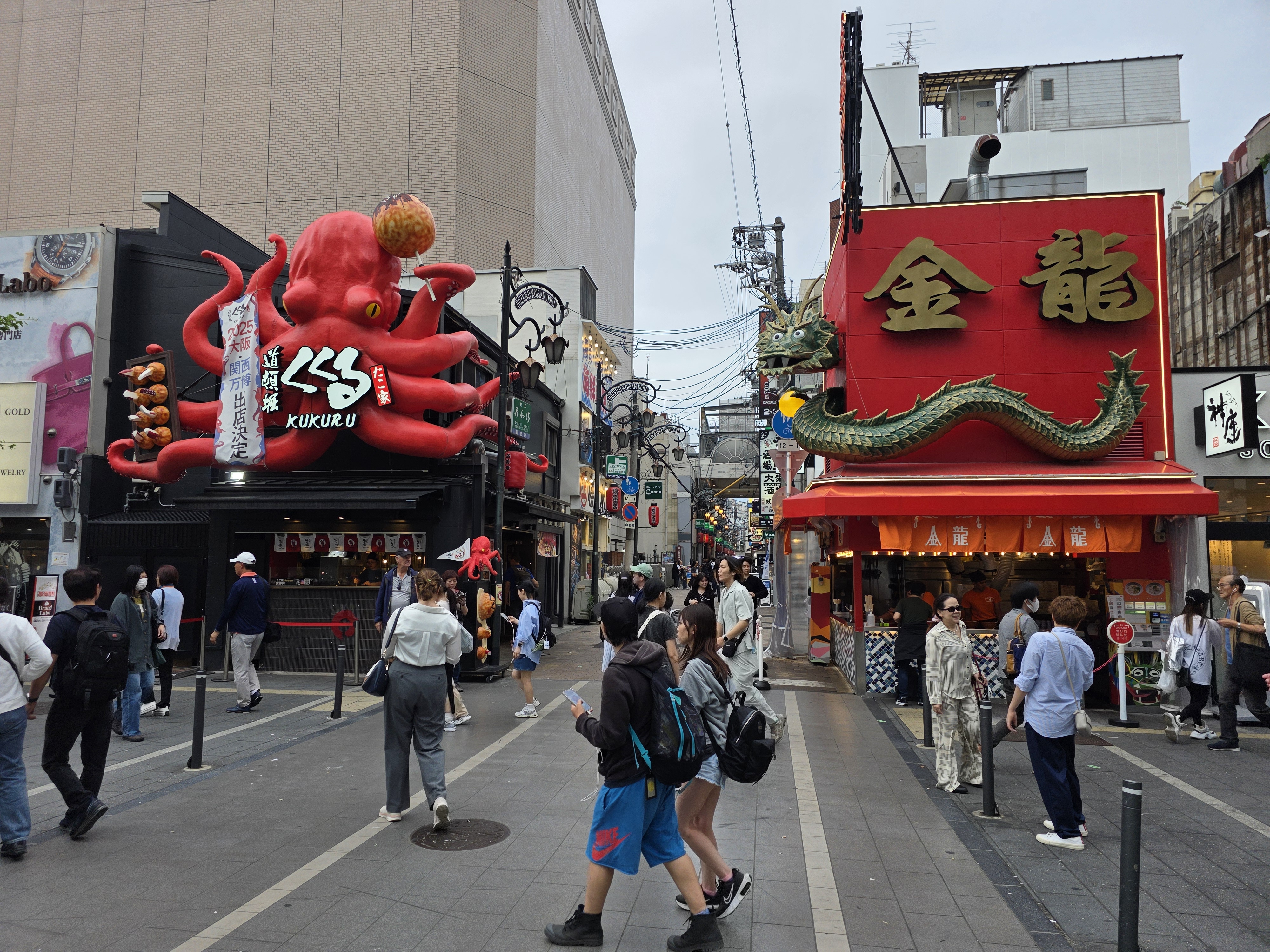
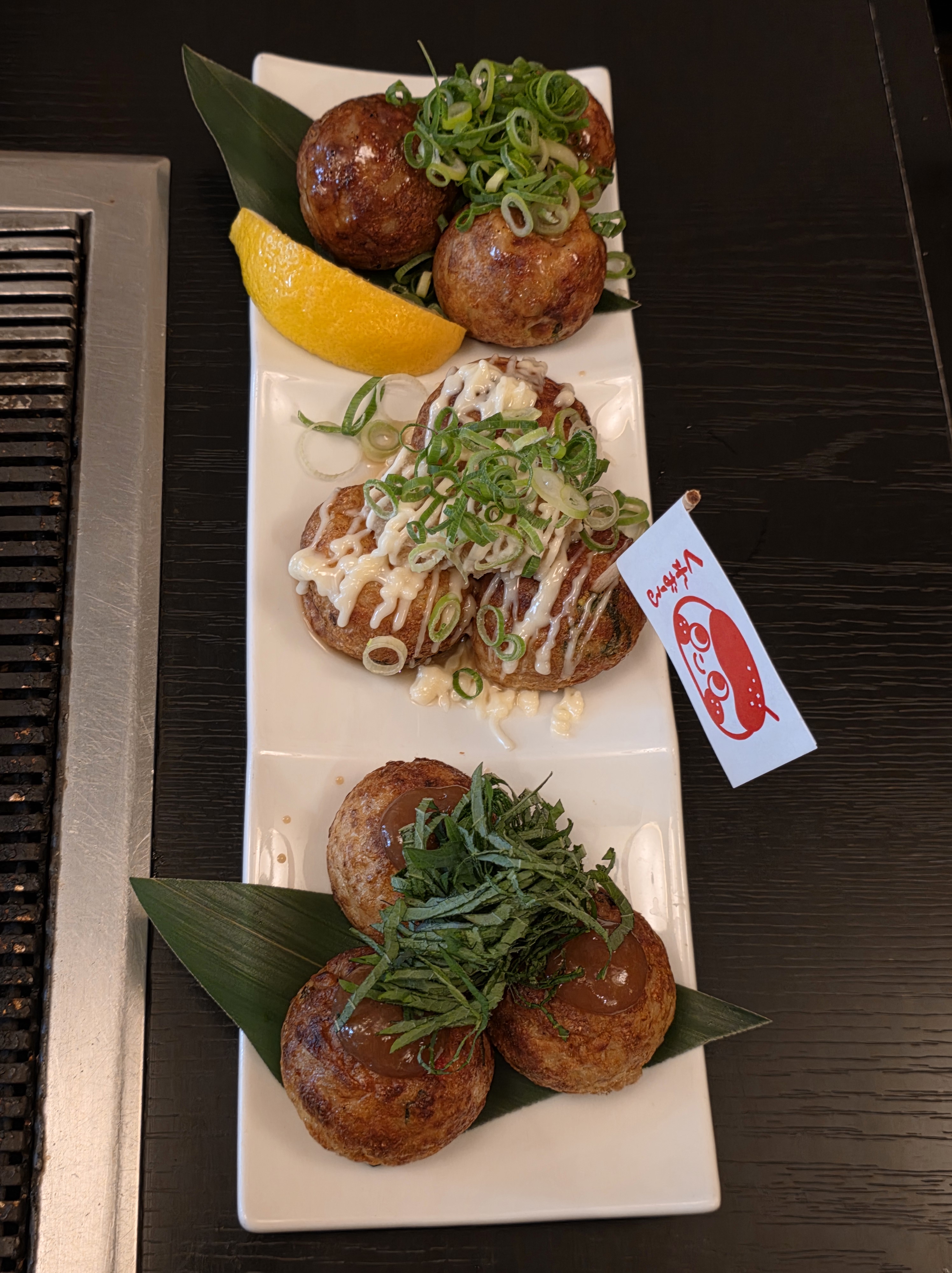
Food stalls and restaurants offer all the local specialties – which, of course, we tried for dinner: okonomiyaki (something between a savory pancake and fritter made of a hodgepodge of different ingredients – seafood, cabbage, eggs), takoyaki (fried octopus balls in liquid batter), and noodles. I really liked it, though Rena didn’t.
In general, if you’re looking for that loud, wild, fashionable version of Japan you often see in the media – you’ll find it here, in Osaka. The city is vibrant, chaotic, and it’s very entertaining to look at all this, but we’re still happy to be staying in Kyoto, where we were happy to return in the evening.

Posted in Asia, English, Hiroshima, Japan, Miyajima

Japan – Day 6

РУССКОЯЗЫЧНАЯ ВЕРСИЯ ПО ЭТОЙ ССЫЛКЕ. CLICK HERE FOR RUSSIAN VERSION.

28 May 2025

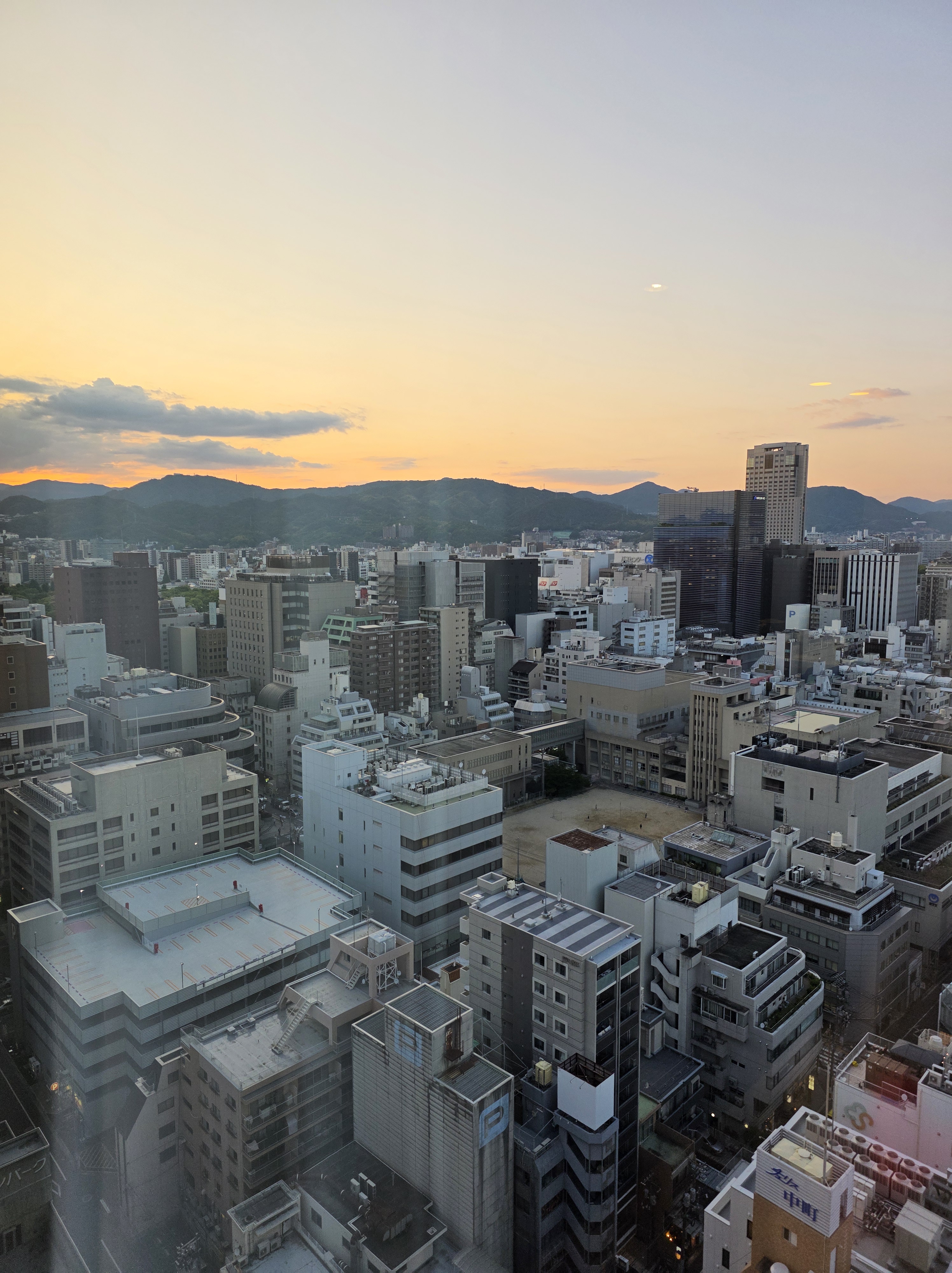
Today we went to Miyajima Island right in the morning. Prior to that, we had breakfast at our hotel – we tried the buffet on the 25th floor, which had a really cool view of the city. The breakfast offered both Western and Japanese options, including local Hiroshima specialties like fish cakes and fish sausage.

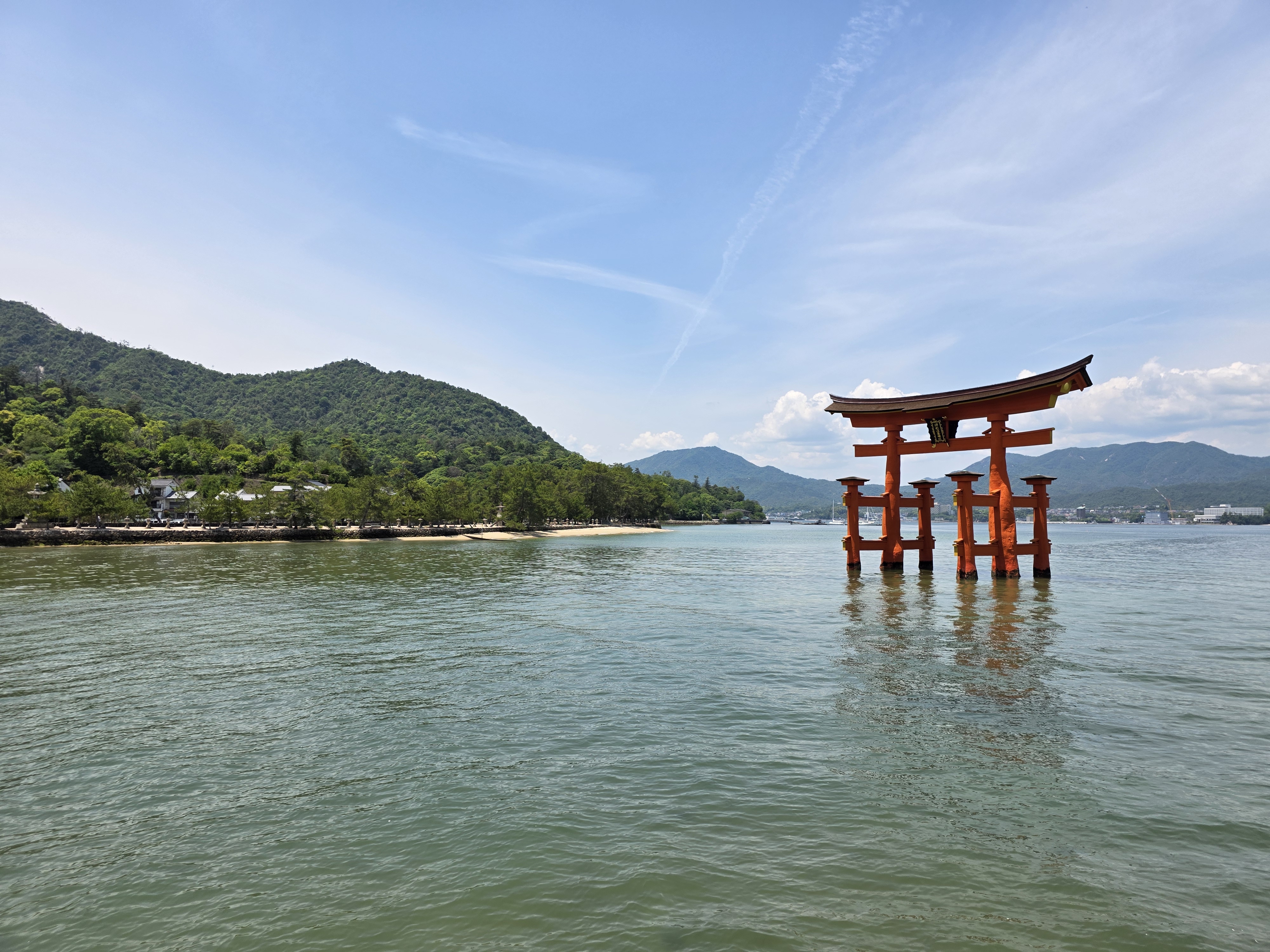
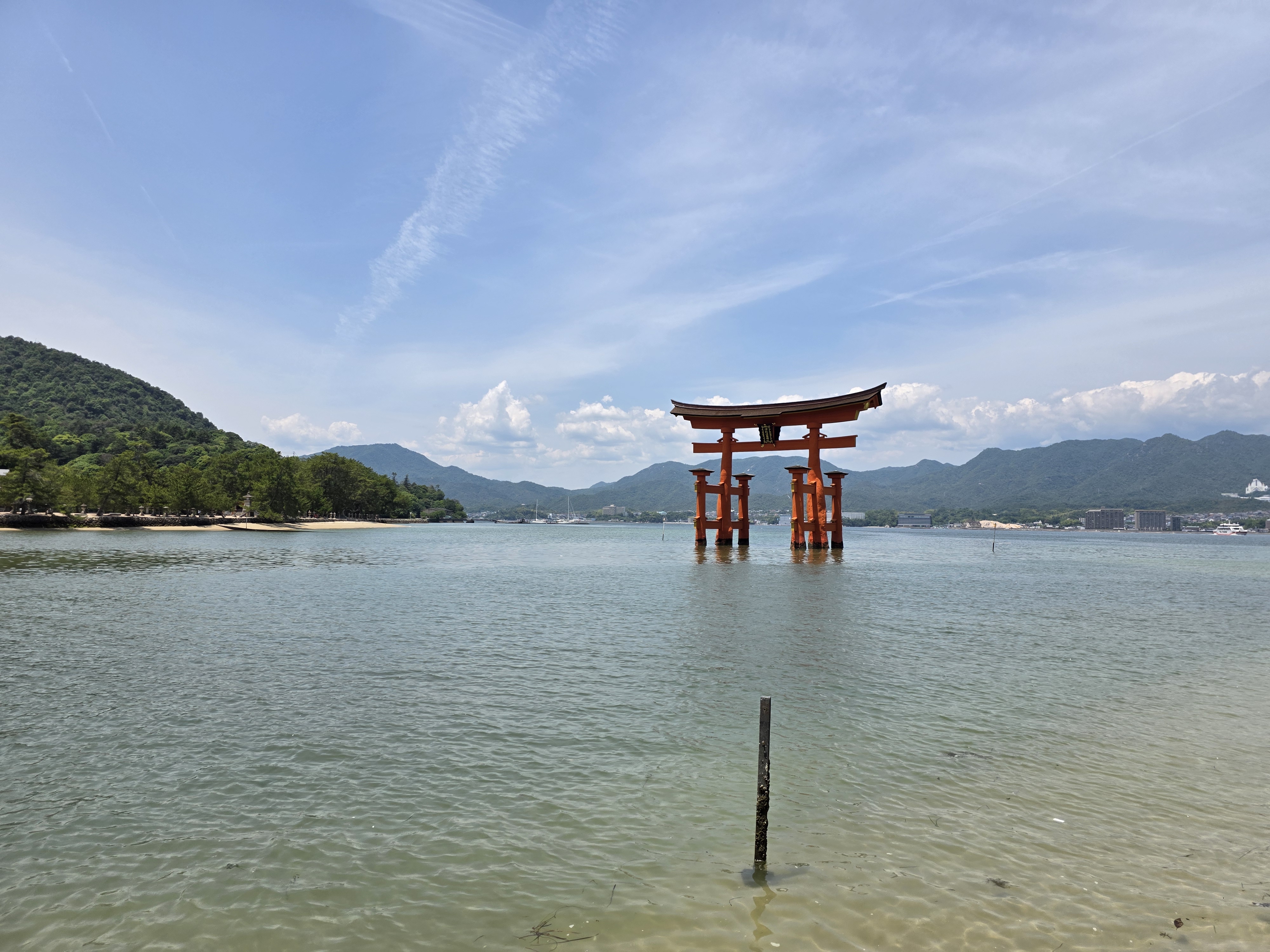
We walked to Shin-Hakushima Station, passing by the castle we visited yesterday – which, in daylight, looked a little less impressive than it did lit up at night. The train took about 20 minutes to get us to the ferry terminal, accompanied by a noisy Iranian tour group. From the terminal, ferries from two different companies run frequently to Miyajima, and the crossing only takes 10 minutes. From the ferry, we got a great view of the famous “floating” torii gates.

There were tons of tourists on the island – but despite its small size, it didn’t feel crowded. Somehow, everyone seemed to spread out. Most tourists were local Japanese, but there were also quite a few foreigners – the Germans again made a noticeable appearance.

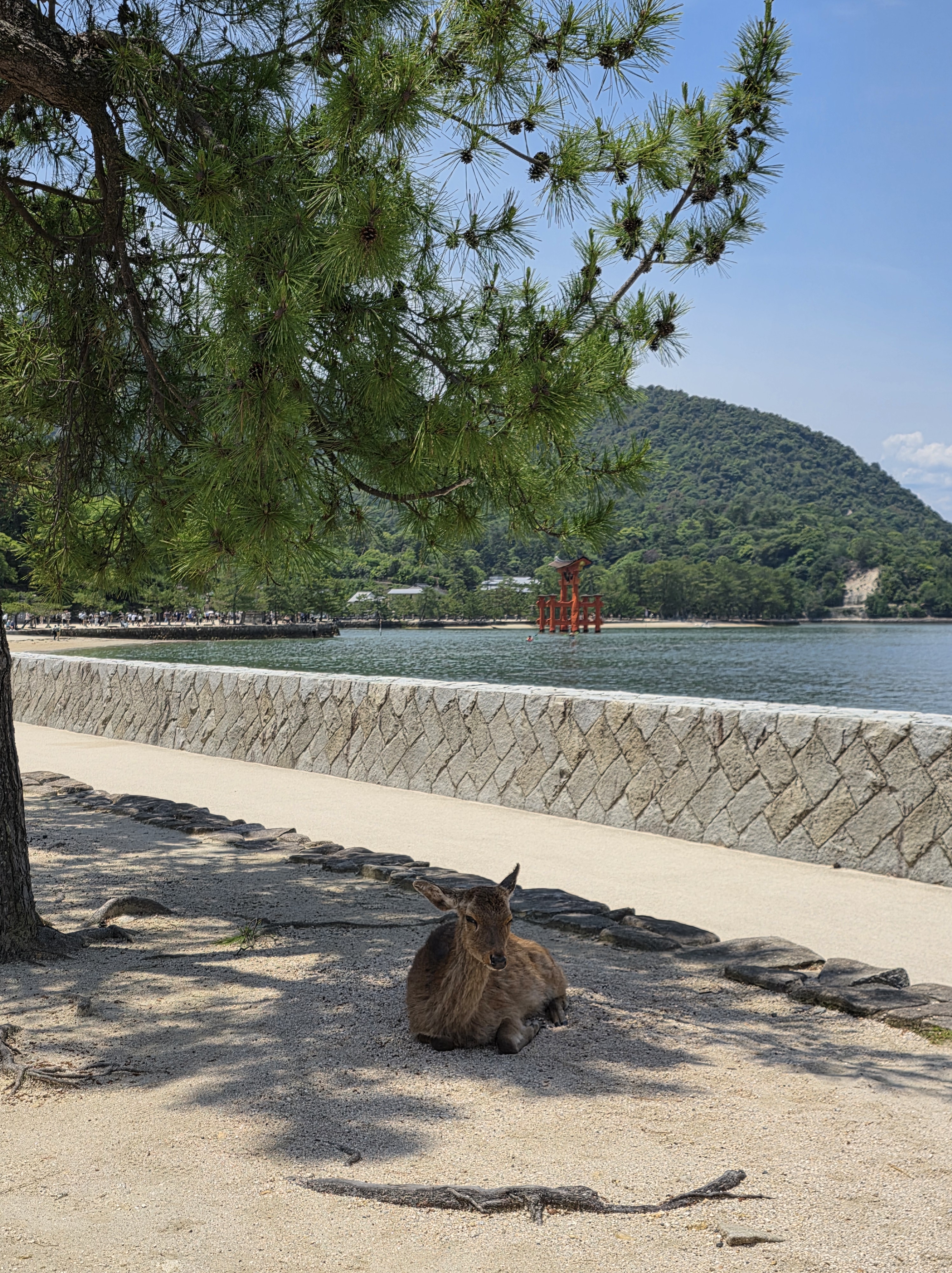
Stray deer roam freely on the island – so there’s no need to go to Nara to see them. That said, the ones here seem hungrier and more persistent. We didn’t even think of eating anything outside, but we saw others who did and clearly regretted it, trying in vain to fend off the pushy deer.

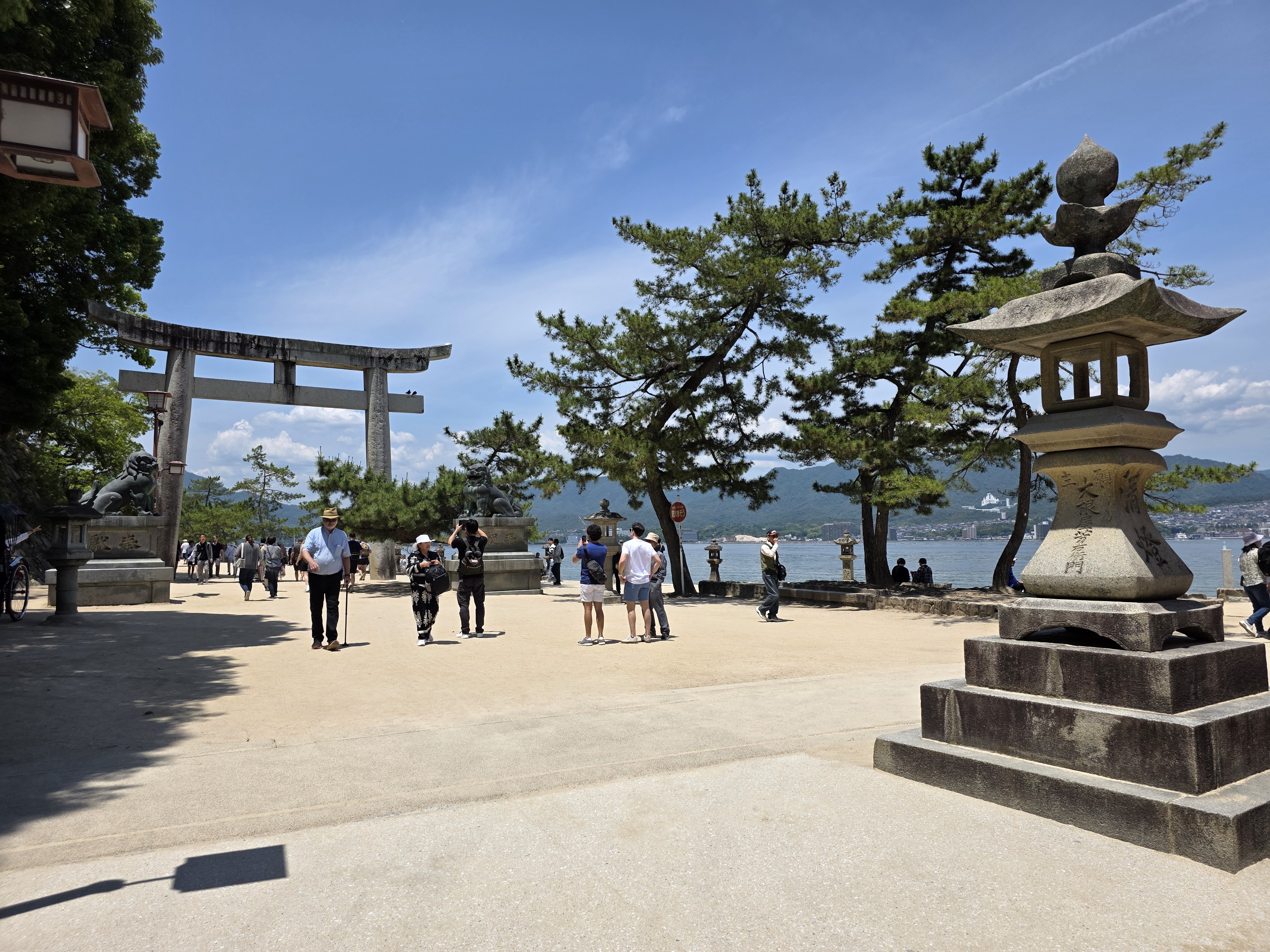
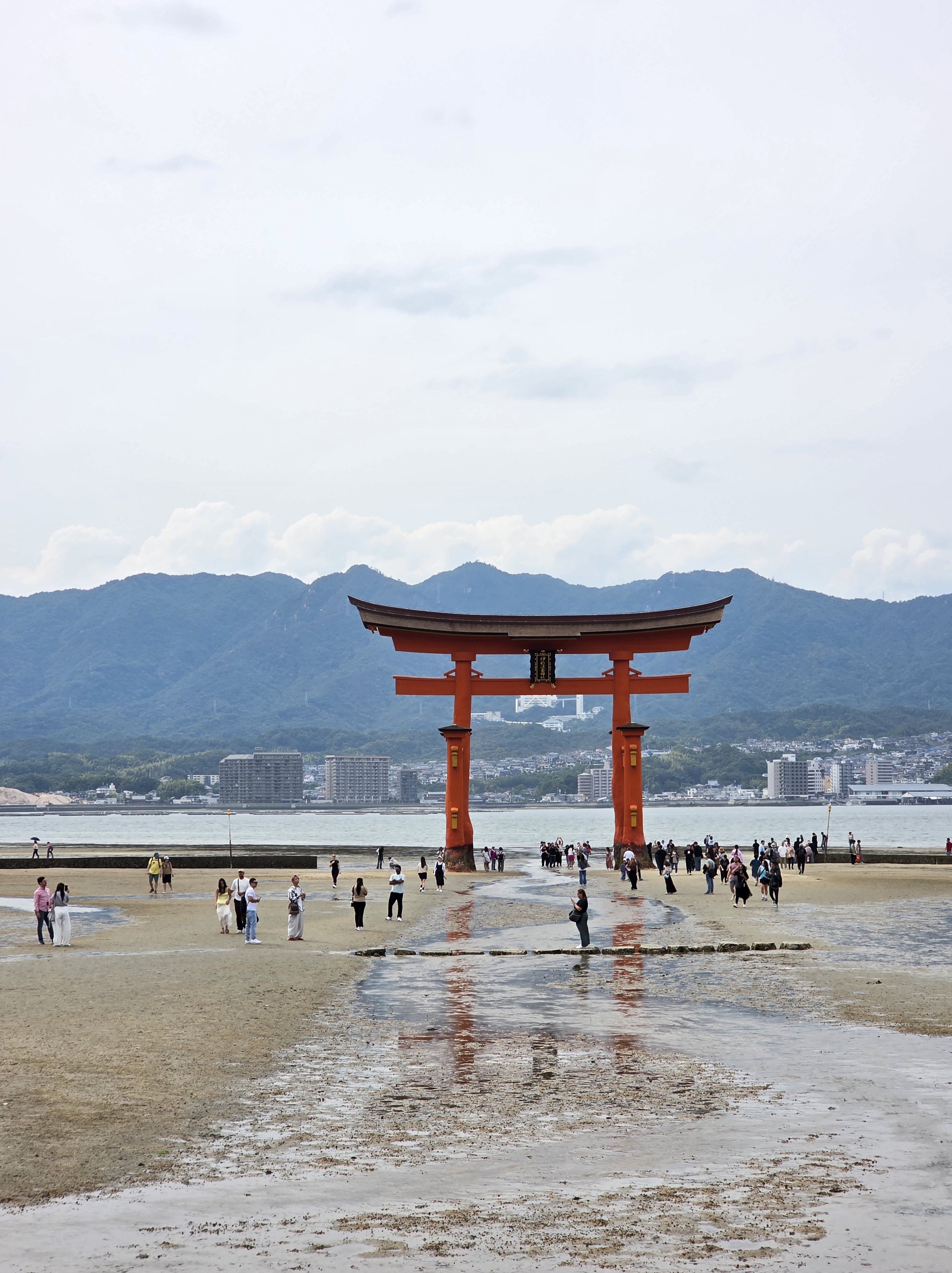
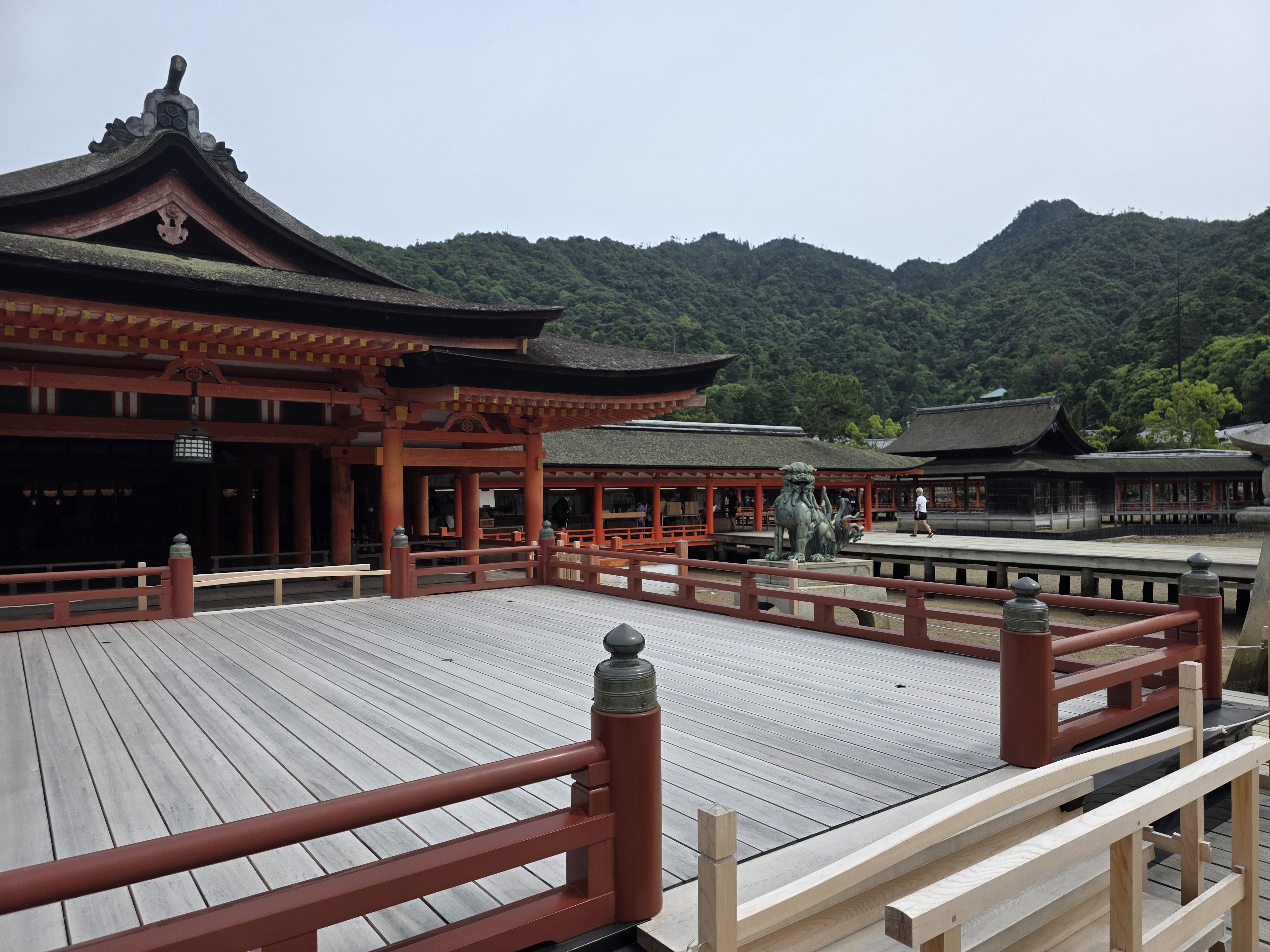
Once on the island, we wandered through the charming streets of Miyajima toward the Itsukushima Shrine – the one the “floating” torii gate belongs to. Interestingly, the gate doesn’t “float” all the time – only at high tide. So when we arrived in the morning, it was surrounded by water, but by around 3 p.m., it was already on dry land, with people walking right up to it and through it.

The shrine is Shinto, and the entrance fee is 300 yen (about £1.50), but at the moment, much of it is closed for restoration. Unfortunately, the nearby five-tiered pagoda from the 15th century was also under restoration – we didn’t even recognise it at first, and thought it was a new building going up in the middle of this historical island! So when we climbed up to the Hokoku Temple, we weren’t able to see it.

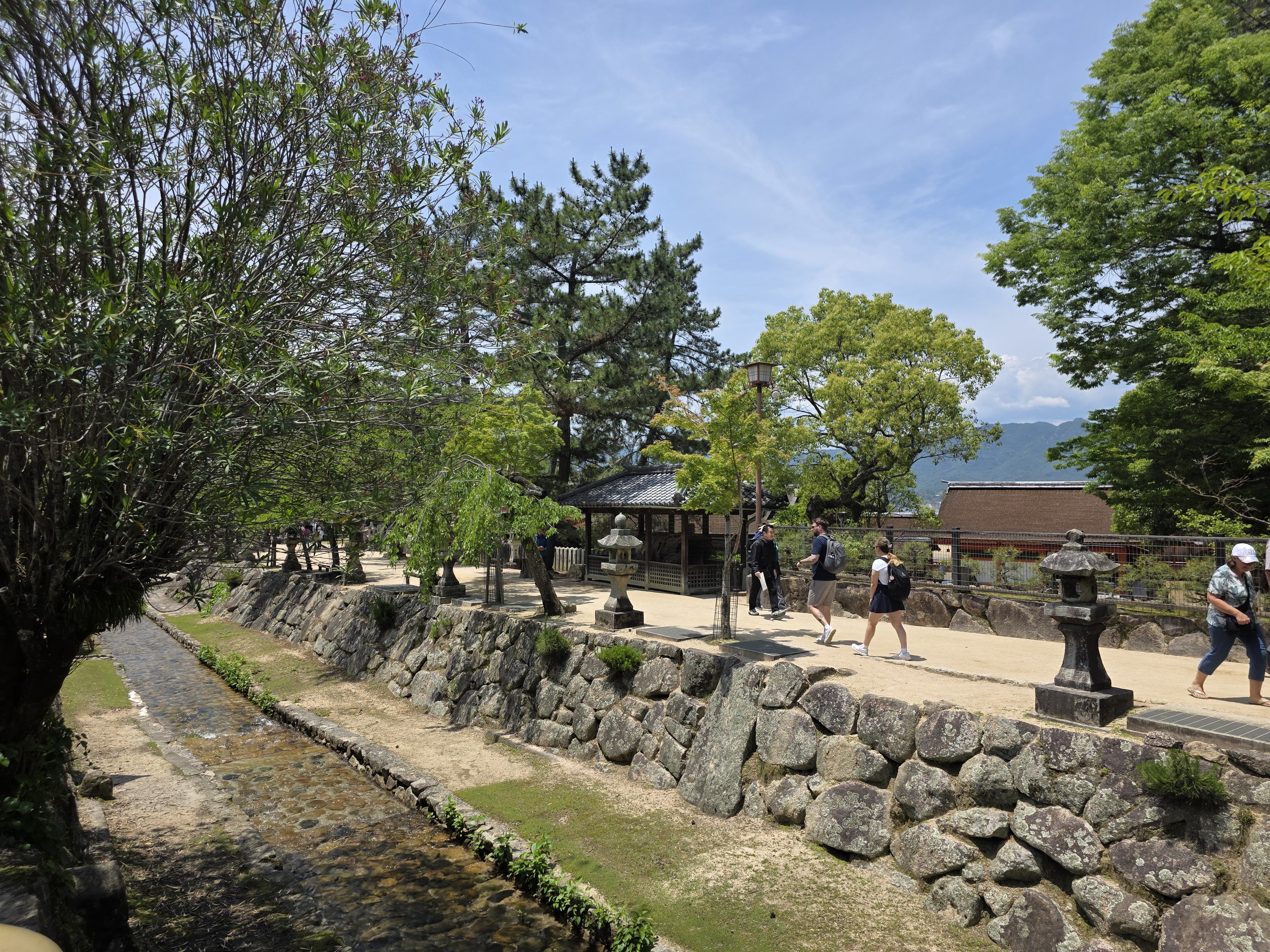
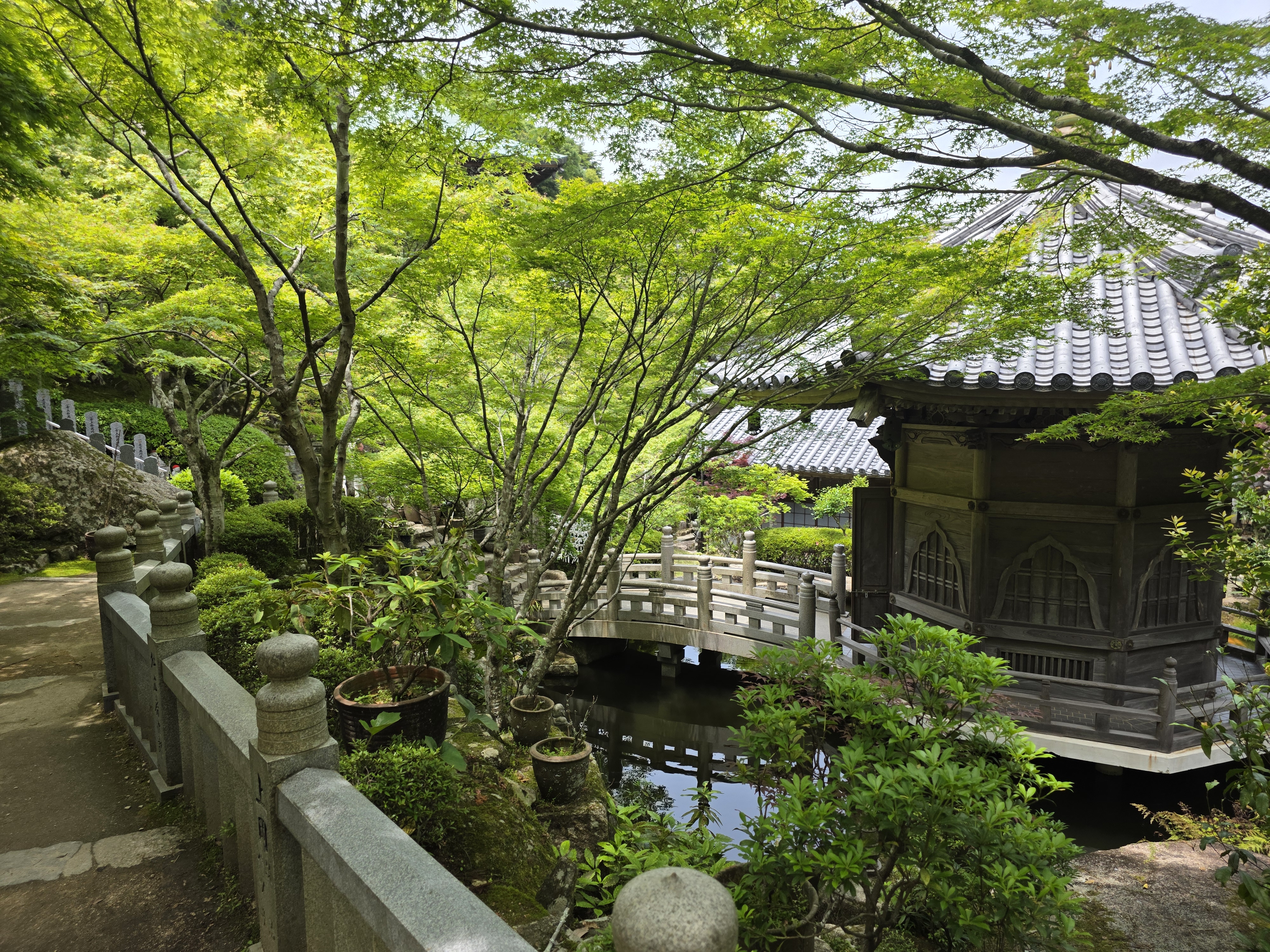
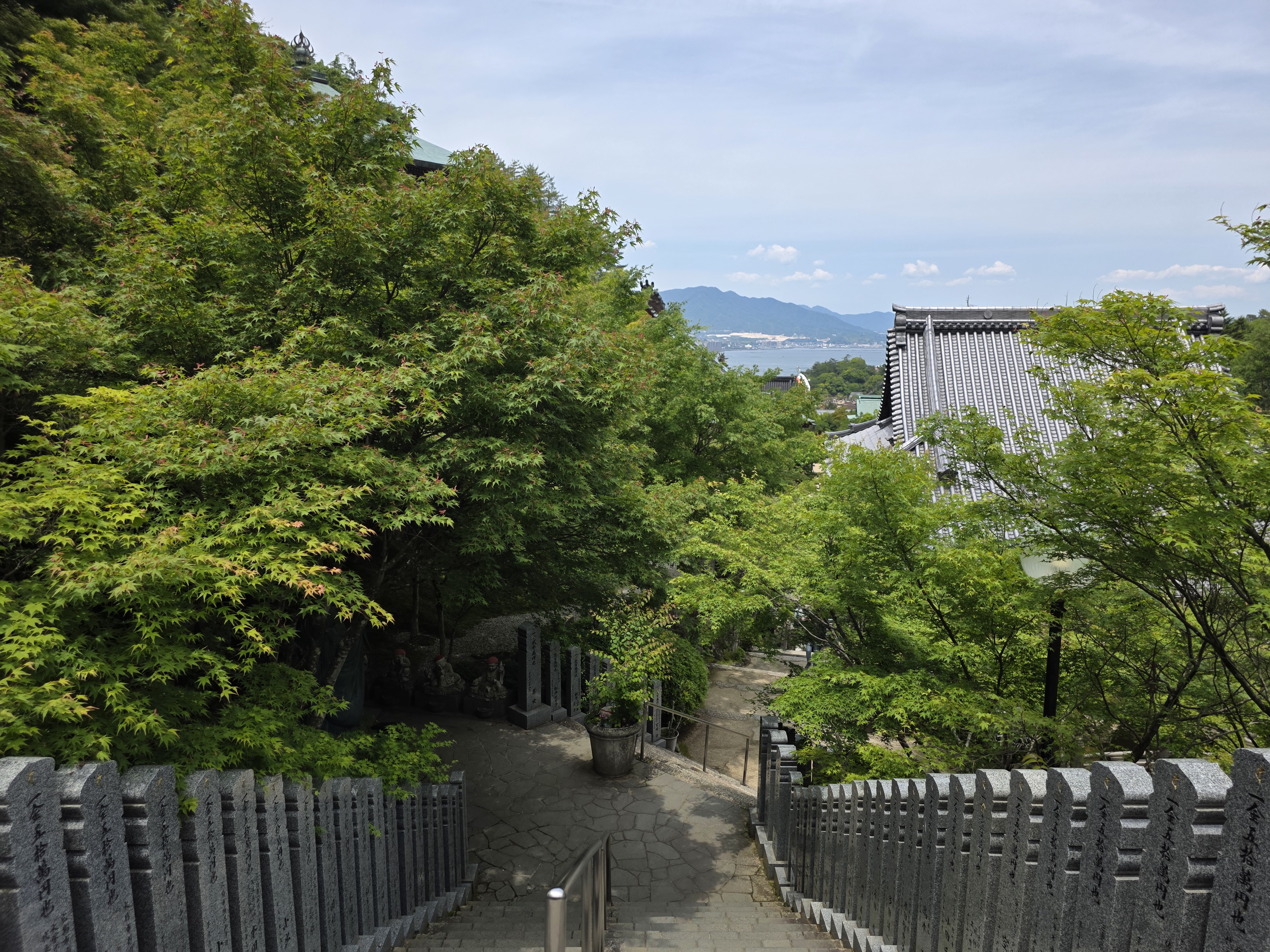
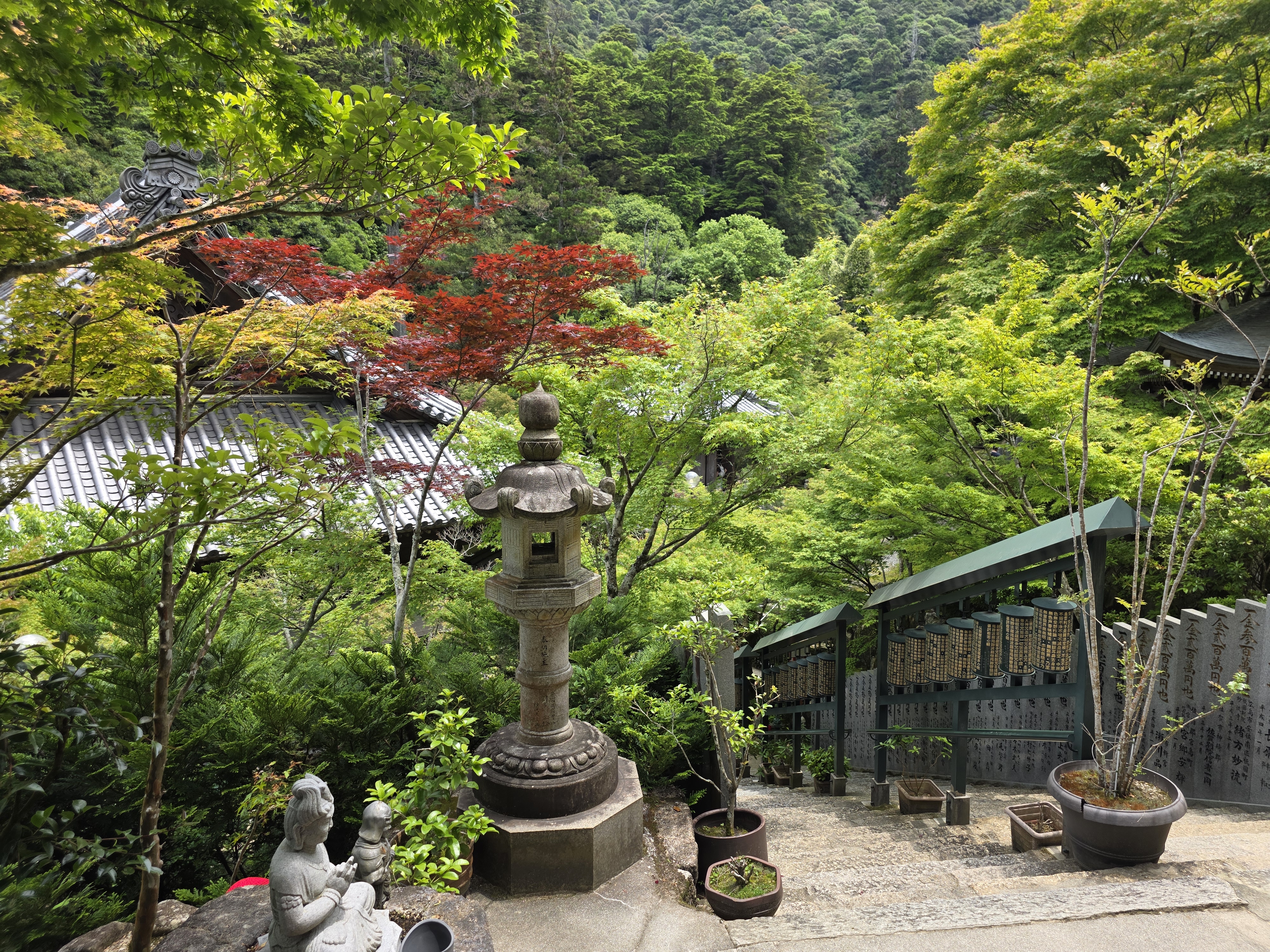
We then continued up to Daisho-in Temple – unlike the shrine and like Hokoku, this one is Buddhist. From here, you can hike to the top of Mount Misen, but we decided not to do that and just enjoyed the temple itself.

The path to the temple was calm and peaceful. Of course, tourists come here too (the same noisy Iranian group was there), but not in overwhelming numbers. Many worshippers were also present, performing rituals. For example, you can strike a large bell and make a wish – though you have to pay. Sure, you can do it for free, but I would imagine that the local higher powers probably don’t grant free wishes.

They say (and back it up with photos!) that the views from the temple in autumn are absolutely spectacular – but even in May, for some reason, many trees were already red, so it was beautiful anyway. We really liked the temple.

By then it was lunchtime, so we headed back down toward the pier and went into one of the local restaurants to try regional cuisine. We were seated in a “Japanese room” – many places here offer that option – which means sitting on tatami mats at a low table, shoes off. The regional specialties are grilled eel and oysters, which we had in a set meal with buckwheat noodles (soba). It was interesting to try, but I wouldn’t call it my favourite flavour of Japan.

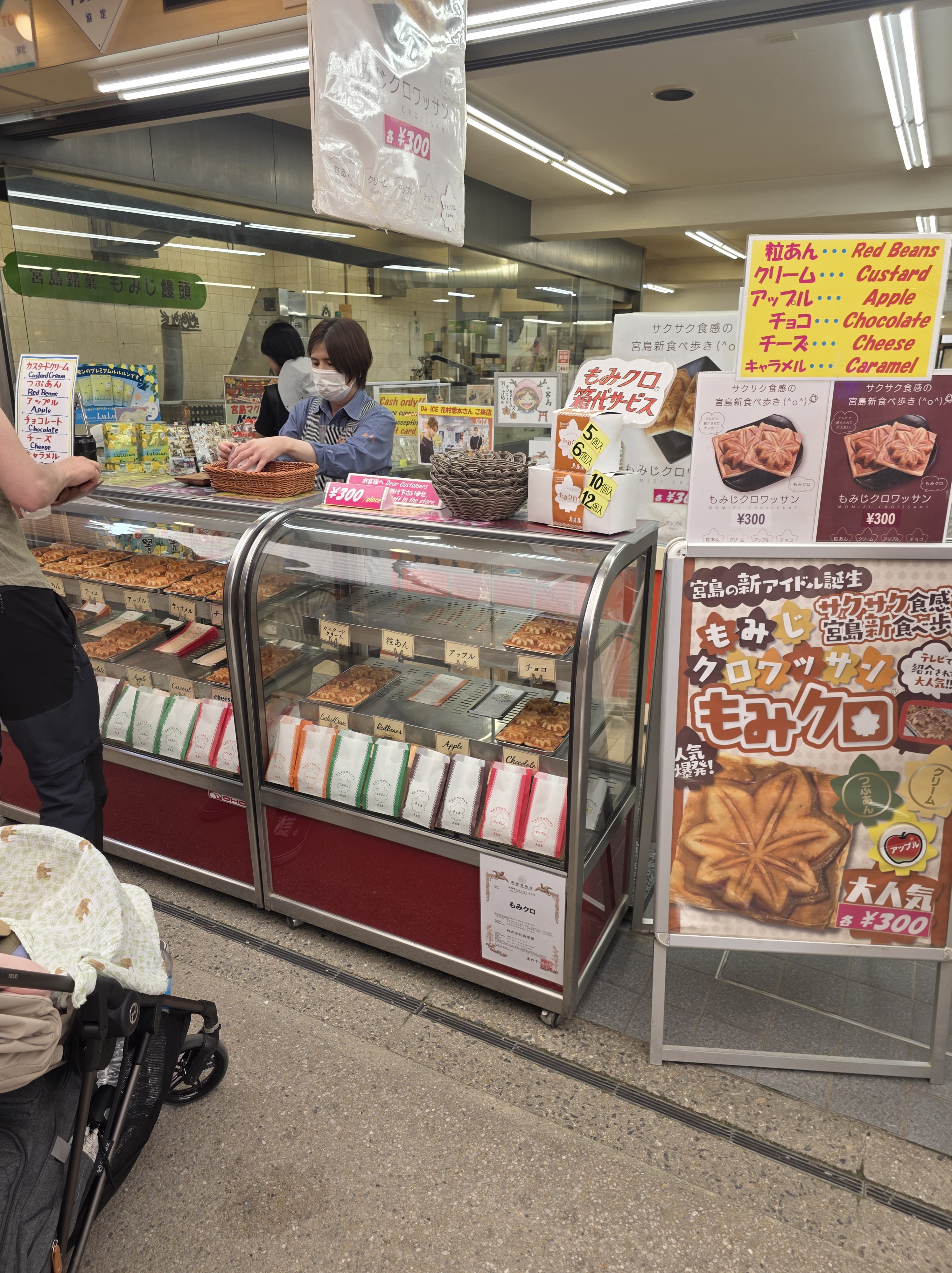
Another local delicacy is momiji manju – maple-leaf-shaped cakes with sweet fillings. The traditional version has sweet bean paste, which I didn’t like, but the chocolate and custard-filled ones were very tasty and delicate.

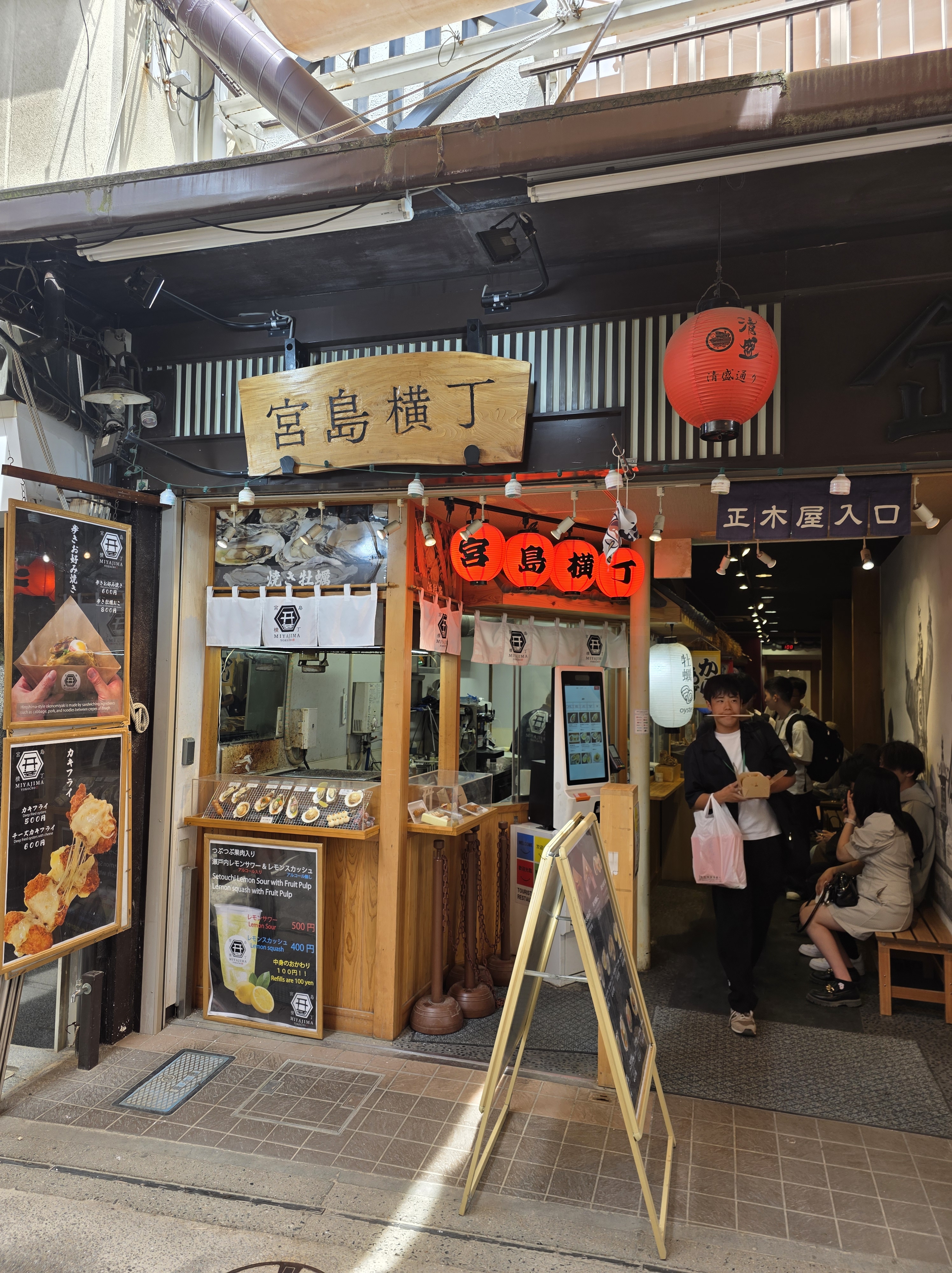
After lunch, we strolled through covered streets filled with cafés, food stalls, and souvenir shops – including some Ghibli-themed ones that were much better than the museum shop we saw yesterday.

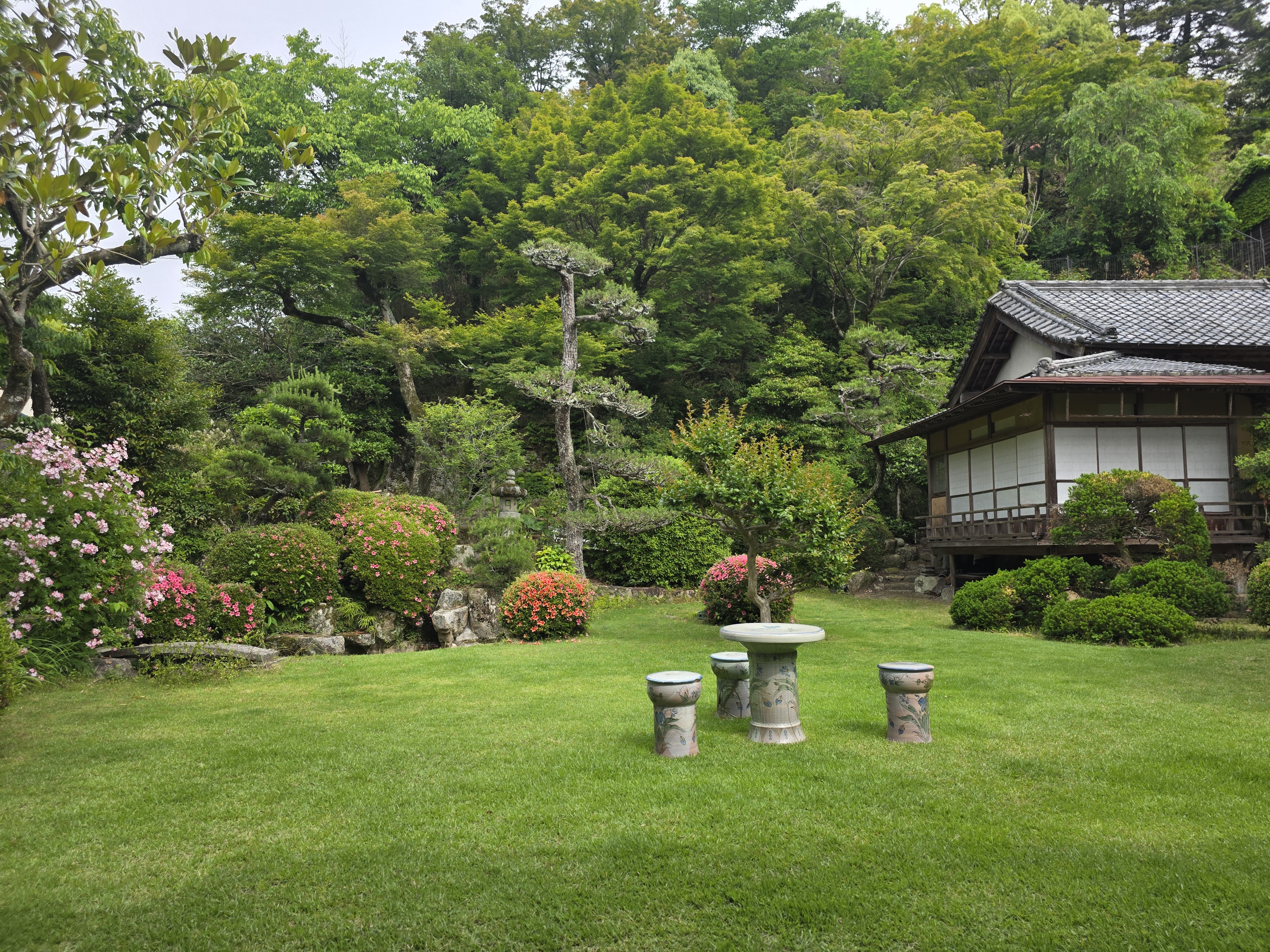
Then we stopped for coffee at a place we’d spotted earlier that looked like someone’s private garden. And as far as I could tell, that’s exactly what it was – a house and garden converted into a café, run by two elderly women. The garden was beautifully maintained and very traditionally Japanese, and it was such a pleasant spot to relax. At first there were some noisy customers chatting loudly, but they left soon after.

From there, we headed back to the ferry. For some reason, at that time there were schoolchildren in uniforms everywhere – whole classes, probably on school trips. Some were arriving, some were leaving, some were gathered for class photos.

Back in Hiroshima, we decided to walk through the Peace Memorial Park and visit the Atomic Dome – the skeletal remains of one of the Hiroshima Prefectural buildings that survived the atomic bombing. Interestingly, the memorial plaque doesn’t mention anywhere that the bombing was carried out by the Americans – and the overall tone of the memorial isn’t accusatory at all, but more like a quiet reflection on the horrors of war and the importance of peace.

At the hotel, we arrived just in time for happy hour and had some rather mediocre wine that made us a bit dizzy – but then we went to dinner and had delicious katsu to make up for it.

Posted in Asia, English, Hiroshima, Japan, Tokyo

Japan – Day 5

РУССКОЯЗЫЧНАЯ ВЕРСИЯ ПО ЭТОЙ ССЫЛКЕ. CLICK HERE FOR RUSSIAN VERSION.

27 May 2025

Today was our last day in Tokyo (though we’ll be coming back later). We had breakfast again at the same café in the park as the day before yesterday. We had to go to Hiroshima, but only after lunch, so in the morning we took a walk to Mejiro Japanese Garden, not far from our hotel. It’s a small, quiet, and very typically Japanese garden – clearly not a famous one, as there were very few people around.

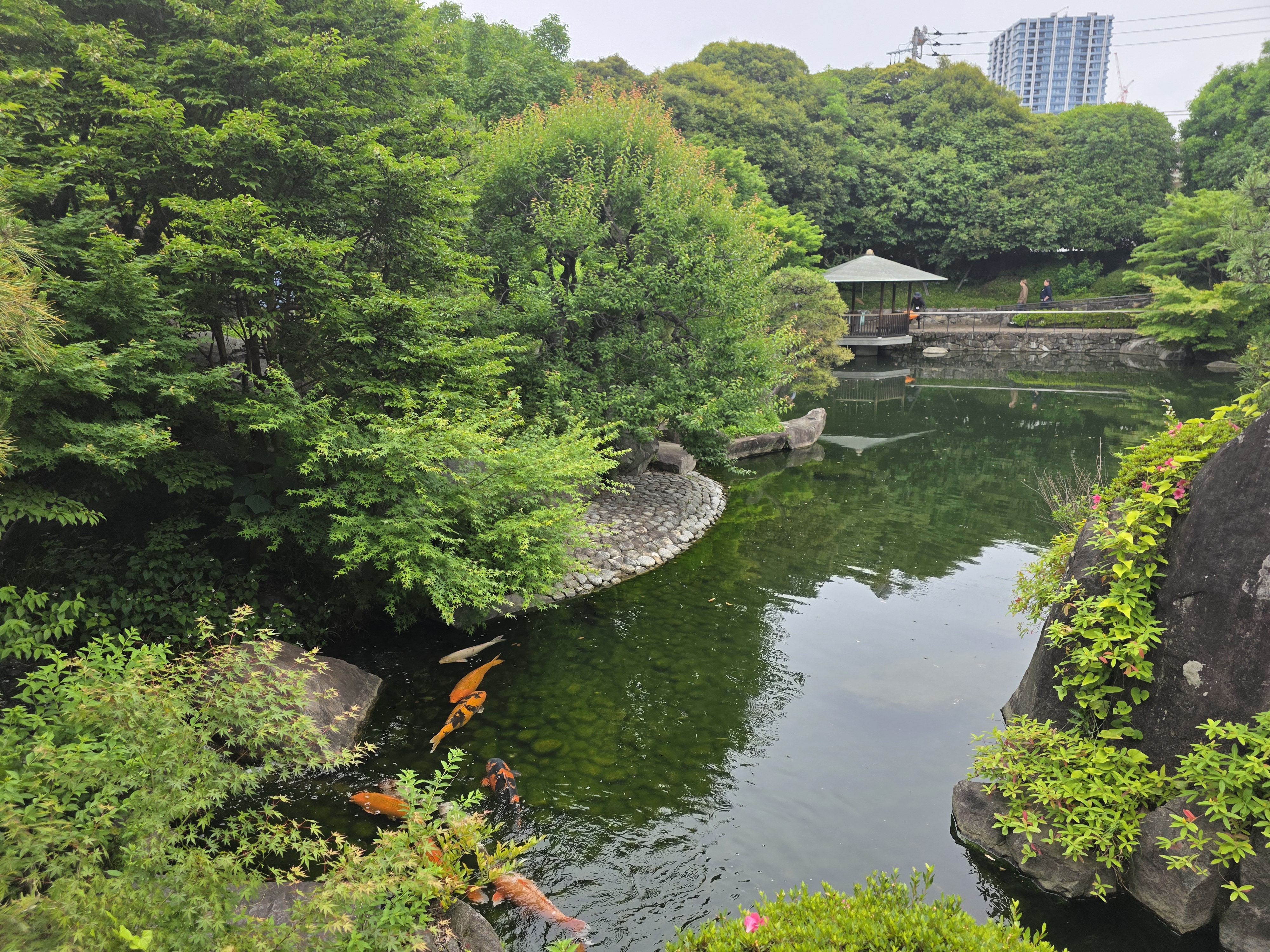
At the entrance, there’s a traditional room that looks like a tea house, which can be rented for photo shoots or private events. The garden itself has a central pond surrounded by greenery, and a small gazebo. On the surface of the pond we saw lots of water striders, and in the pond itself, big fat koi carp swimming lazily around.

After returning to the hotel, we headed off to Tokyo Station. The station is truly massive – many subway and train lines converge there, and it’s also where the high-speed Shinkansen trains depart, which we were taking to Hiroshima. We had lunch right at the station in a Chinese restaurant – the hot and sour soup was especially good.

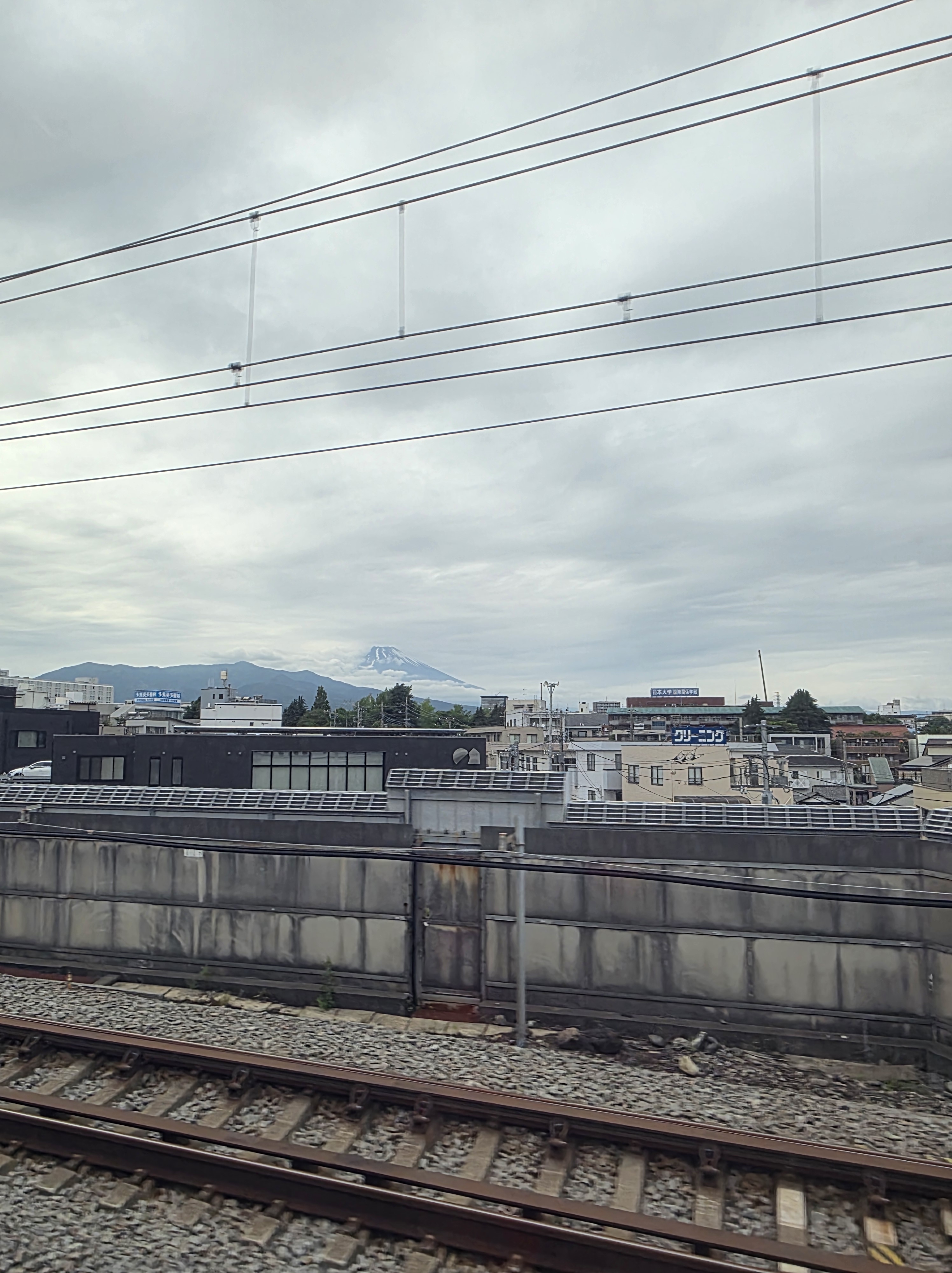
Coming back to the Shinkansen – also known as “bullet trains.” They’re fast, but not quite as jaw-dropping as the ones in China. Almost ten years ago, I took a Chinese bullet train from Hangzhou to Shanghai, and it was flying so fast you couldn’t even make out the scenery – everything outside just blurred into a gray wall. That was a proper “bullet.” Here, the train is definitely fast, but you can still see everything outside – the outline of Mount Fuji as we approached Kyoto, endless rice fields, and villages with houses that still have traditional curved Japanese roofs.

The journey to Hiroshima took about four hours, but it passed quickly and effortlessly. We’re not planning to do much in Hiroshima itself – the real goal of coming here is to visit Miyajima Island.

Once we arrived, we checked in to the hotel. First impressions of the city – at first glance, Hiroshima didn’t feel that different from Tokyo. But no, the vibe is quite different. For one, there are far fewer people, which makes foreigners stand out more – especially Germans, of whom there seem to be quite a few. Second – though maybe this was just our route – there were some confusing pedestrian passages and street crossings where it wasn’t obvious how or where to cross. Thirdly, I’ve already mentioned Japan’s older infrastructure – and here it feels even more dated. The buses look like ancient Ikaruses, and the taxis seem straight out of a movie from the ’80s or ’90s.

Just off the wide avenues, as in Tokyo, are hidden narrow streets. Same as in Tokyo, often there are no sidewalks, and where they do exist, cyclists ride along them, also in the same way.

We had dinner at a fish restaurant – though calling it a “restaurant” might be a bit generous. It was more like a small eatery with room for 10–15 people, and, once again, everything was in Japanese. They gave us a card with pictures of various fish, and we just pointed to the ones we wanted. Those were grilled with salt and served with rice, miso soup, and a few small side dishes.

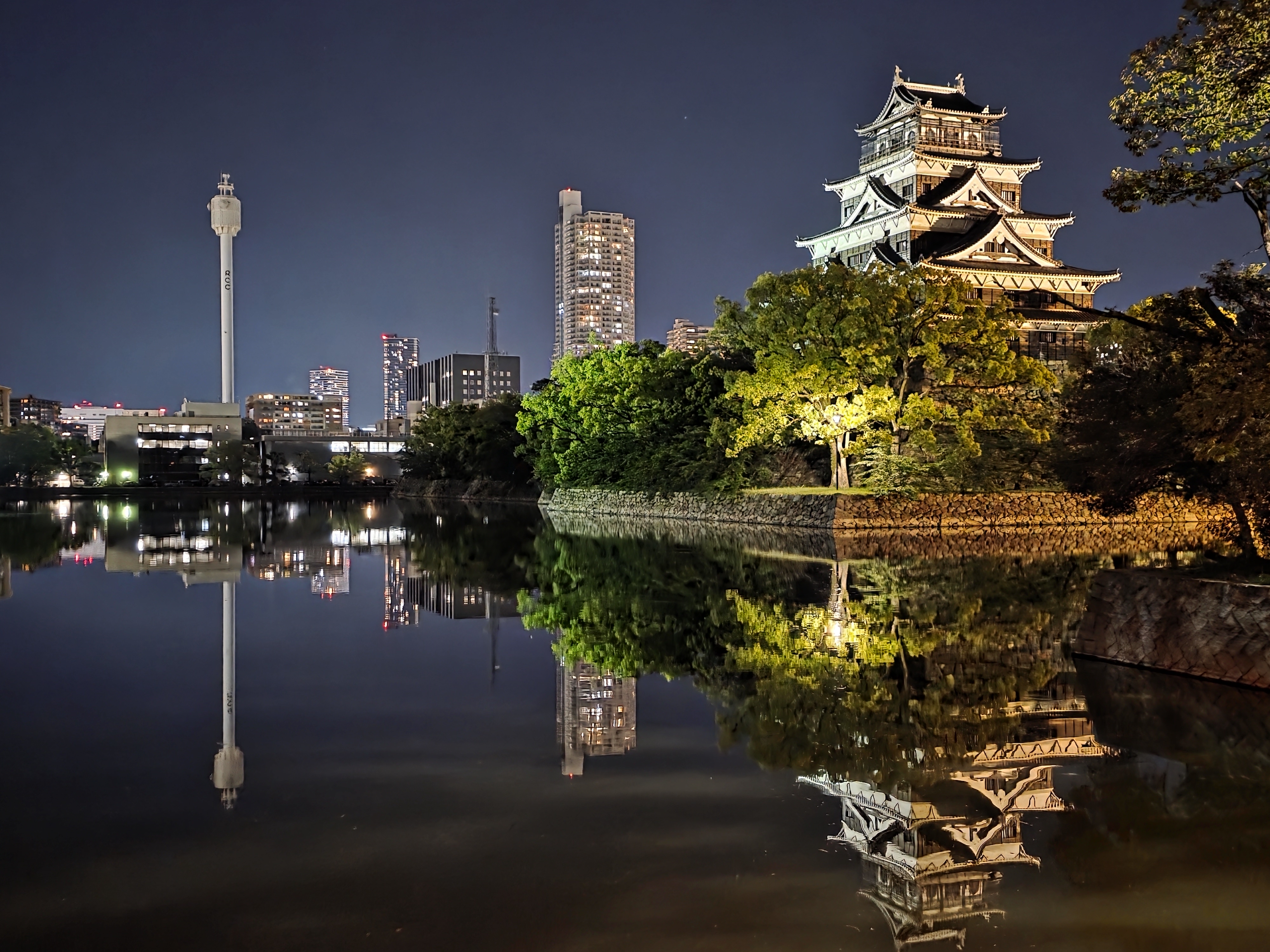
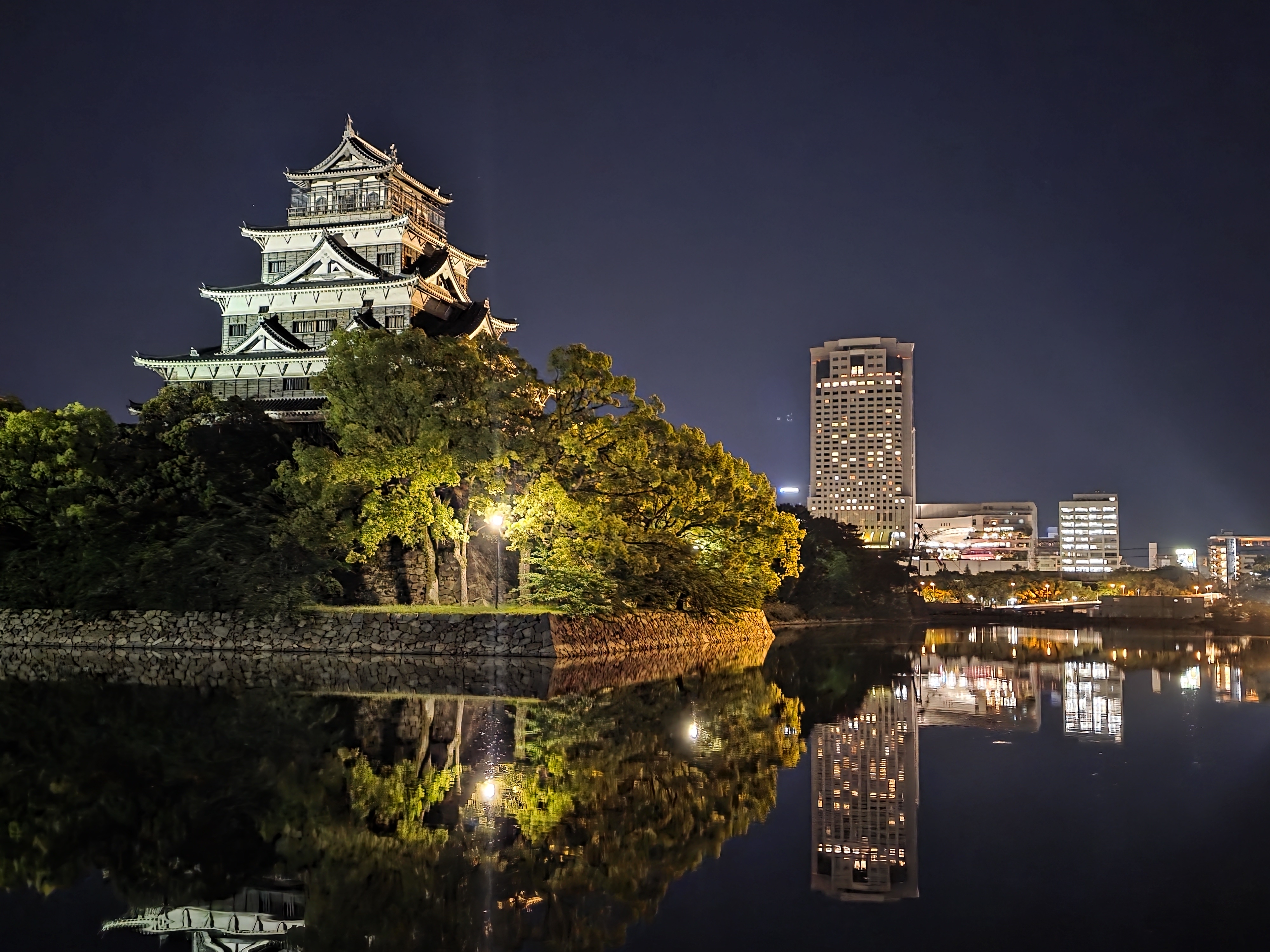
After that, we made our way through some dark streets to Hiroshima Castle to see it lit up at night. It was definitely worth the walk – we got some beautiful photos with the castle reflected in the water. By the way, the original castle was almost completely destroyed by the atomic bombing – what we see today is a reconstruction.

Posted in Asia, Chiang Rai, English, Thailand

Thailand – Day 4

РУССКОЯЗЫЧНАЯ ВЕРСИЯ ПО ЭТОЙ ССЫЛКЕ. CLICK HERE FOR RUSSIAN VERSION.

21 March 2018

Today we left our hotel at 8am for our first excursion in Chiang Rai and headed up north, to the Doi Tung Royal villa with a beautiful garden.

IMG_3367

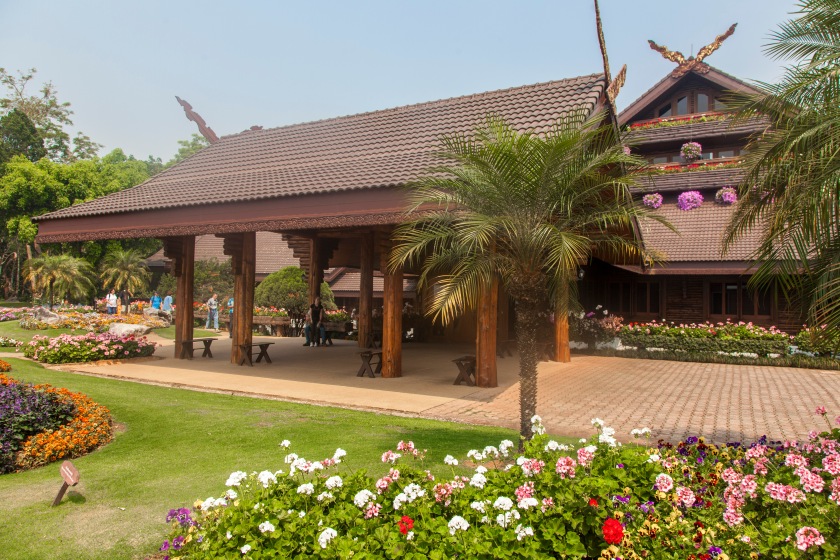
The garden is one of the successful projects of the late Queen Mother, who tried to combat drug trafficking in this dysfunctional region, bordering Myanmar, by increasing employment.

IMG_3380

IMG_3381

IMG_3386

IMG_3387

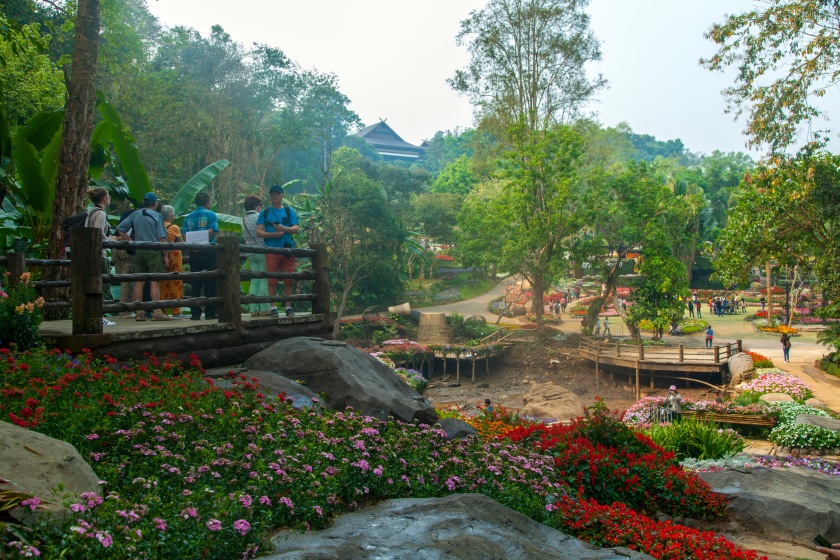
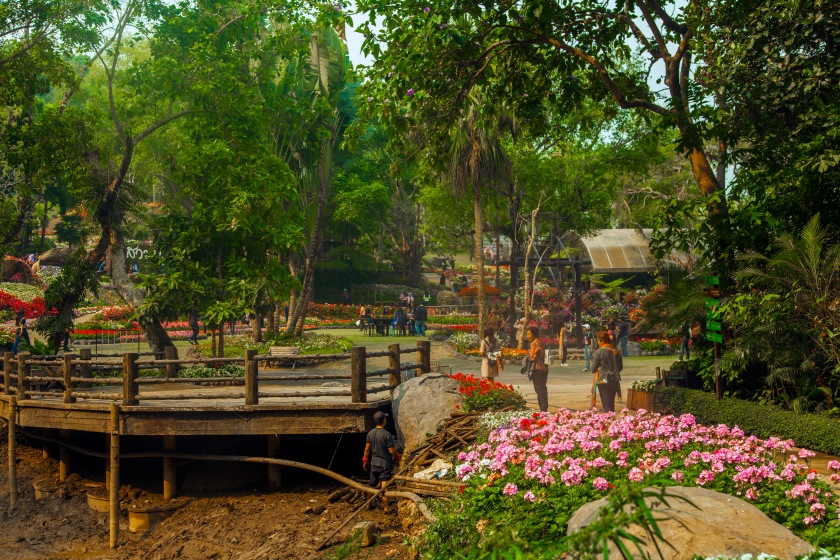
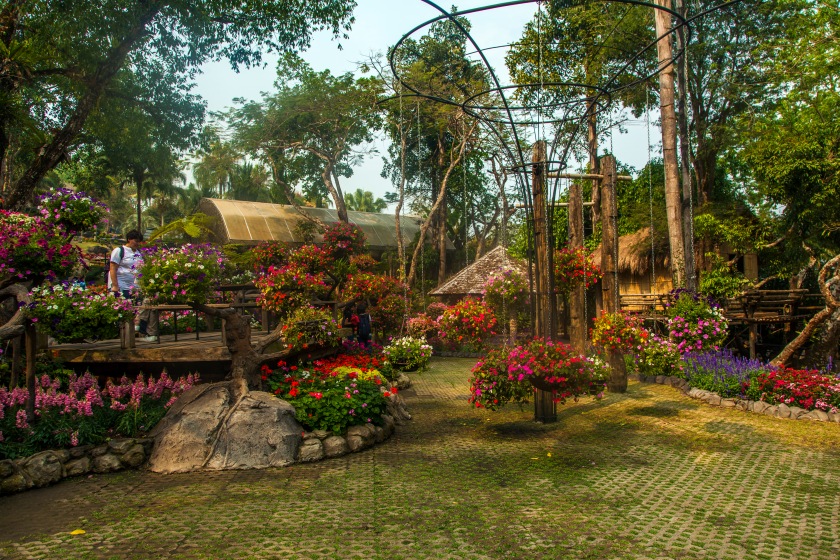
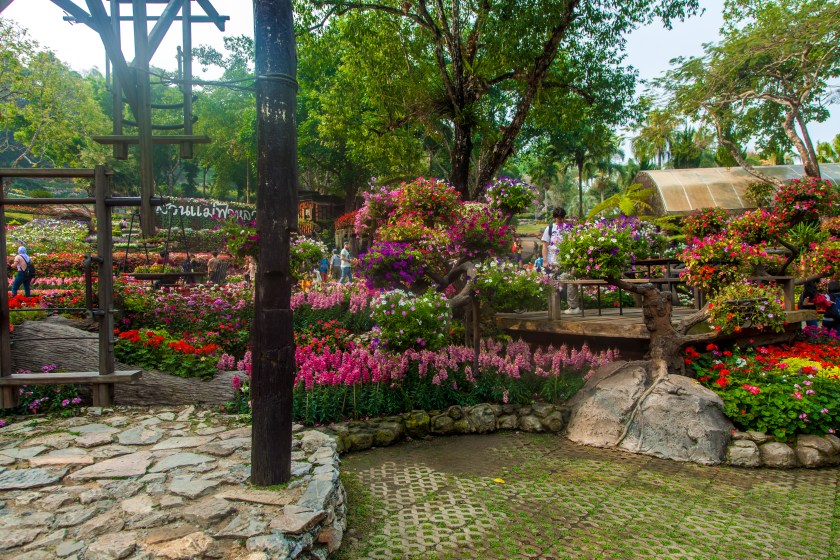
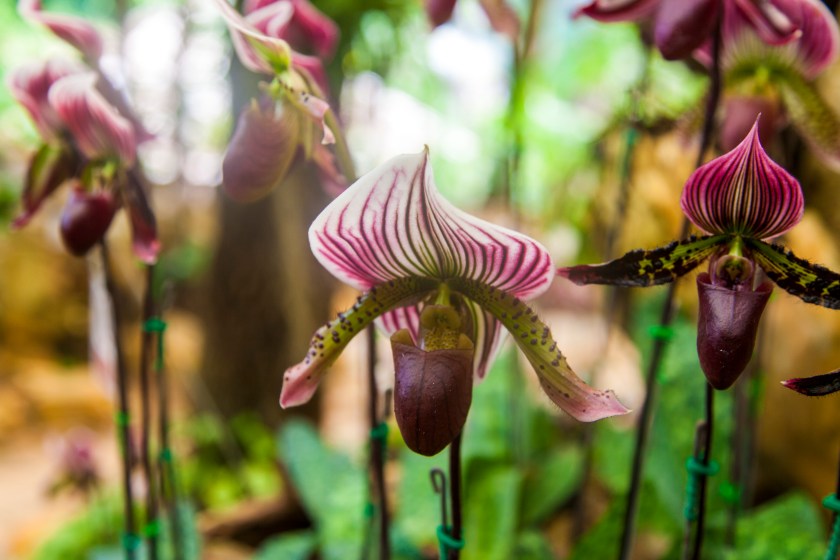
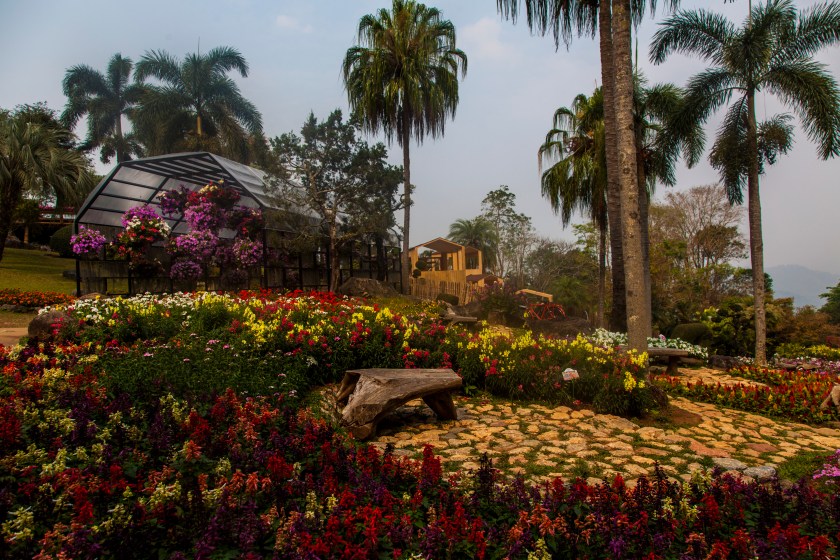
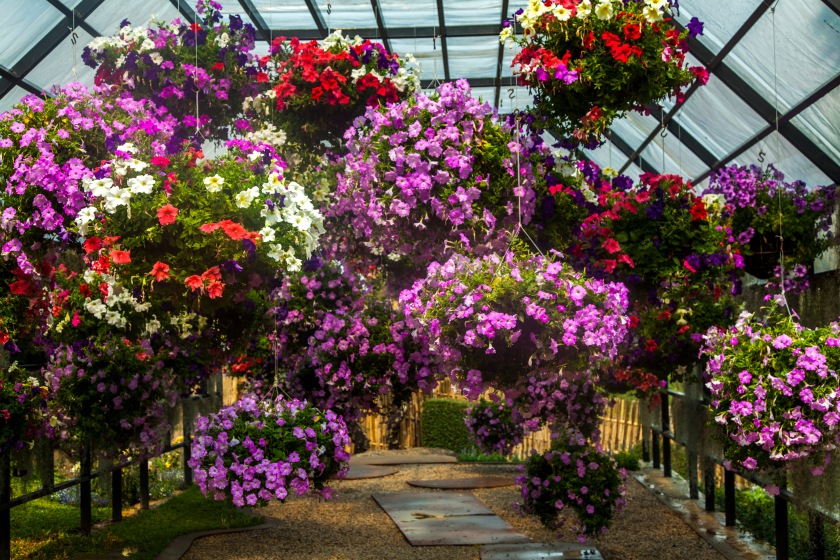
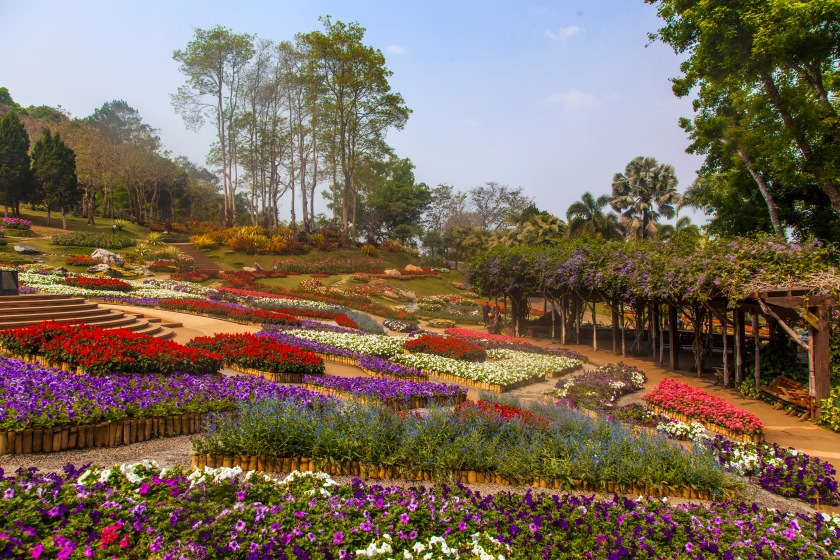
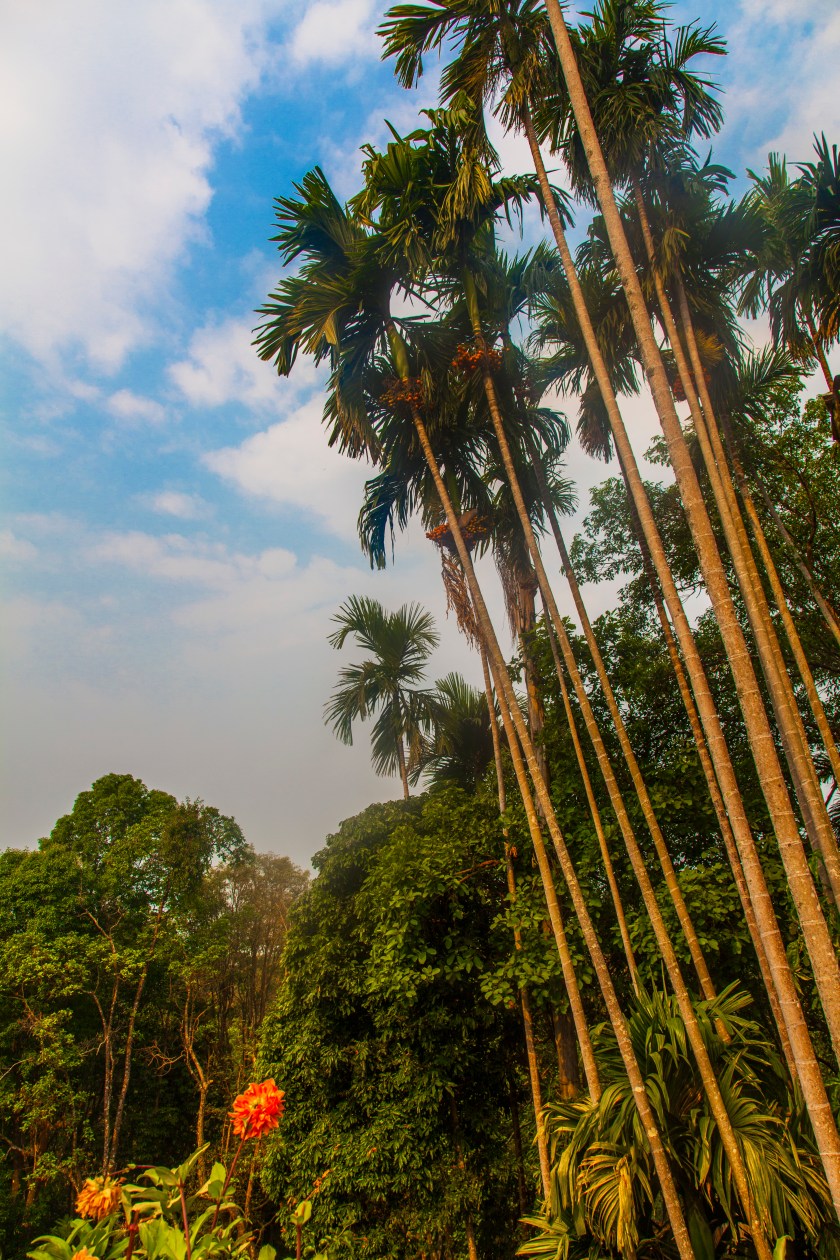
And indeed, the garden is very beautiful. At an altitude of 1300 m above sea level, it is much cooler than Chiang Rai itself, and full of the most diverse flowers ever – predominantly European, but including some local orchids too.

IMG_3393

IMG_3397

IMG_3399

IMG_3404

The actual royal villa, where the Queen Mother used to live, is located further uphill. We went up to the residence – again, strict dress code had to be followed there and we had to cover up – and went inside. I managed to take one photo before a lady from a French tourist group – the only tourists apart from us, I wonder where the crowds of Chinese tourists are? – warned me that this was prohibited.

IMG_3411

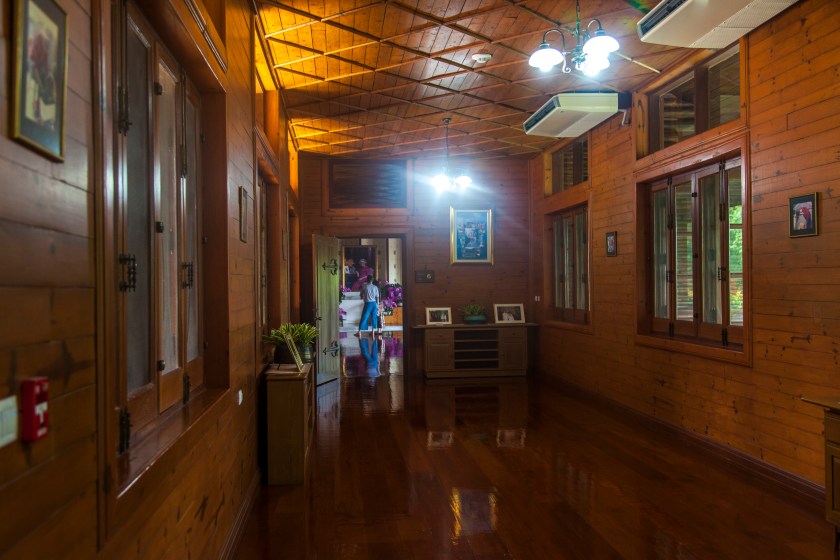
The residence is essentially a huge wooden hut, the entire interior is also made of wood. Some of the Queen’s personal belongings are exhibited, in particular tools for embroidery and pottery. The balcony provides stunning views of the garden that we saw before.

IMG_3414

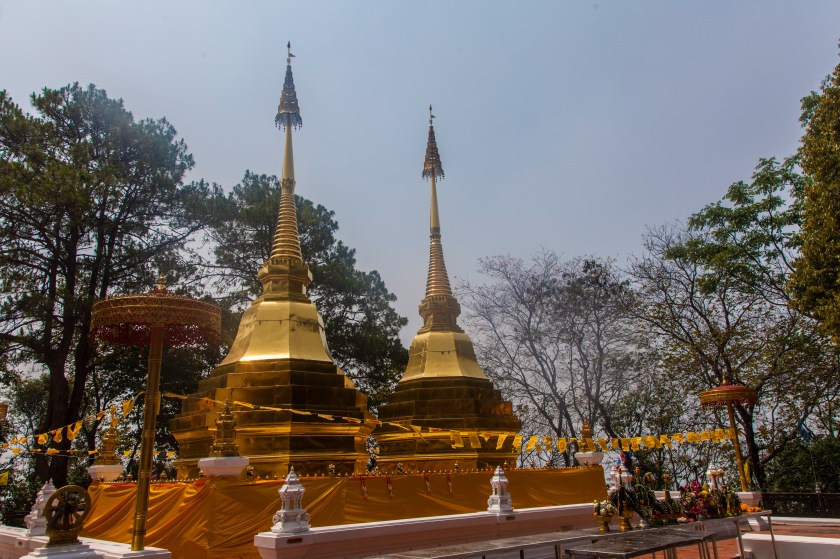
There is another attraction at the very top of the Doi Tung mountain, where we had to get by car. These are two stupas in a typical Lanna style, erected as far back as the 10th century and containing Lord Buddha’s relics – namely, his collarbone.

IMG_3420

IMG_3425

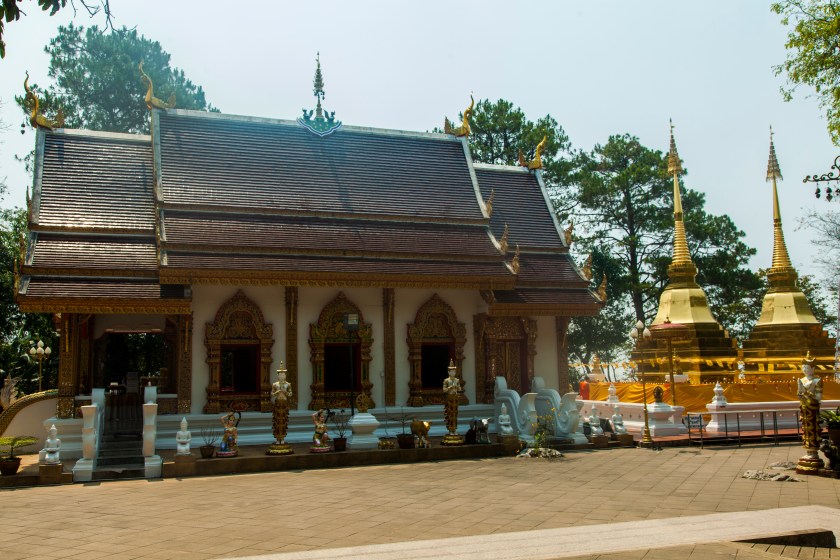
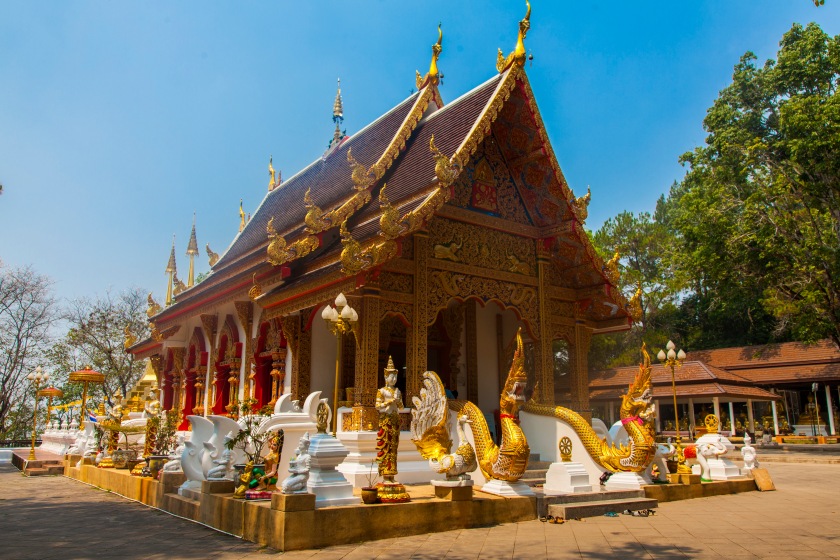
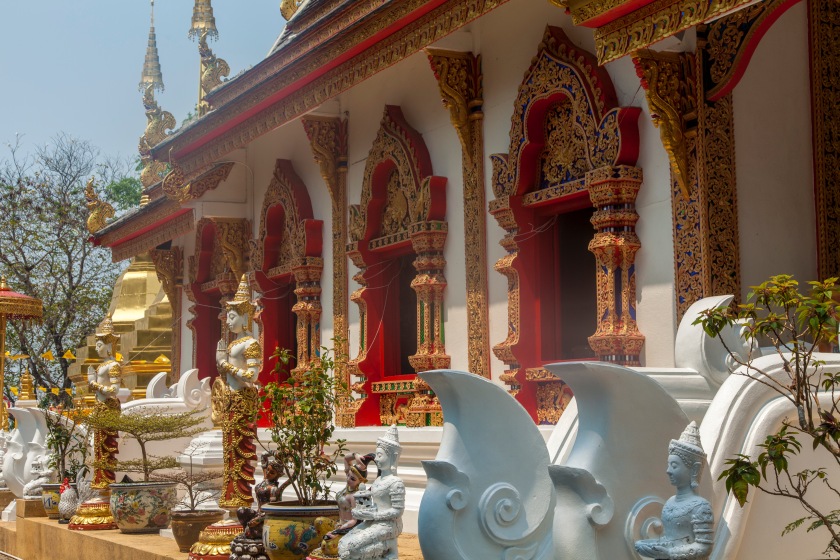
There is also a temple next to the stupas, very intricate from the outside, but not particularly remarkable inside. As for the stupas themselves, we couldn’t come close to them – women are not allowed to.

IMG_3429

IMG_3430

By the way, our guide Dino told us that these stupas were especially sacred for people born in the year of the Pig (or Elephant) according to the Eastern Zodiac. And for each of the zodiacal animals, there are respective stupas all around Indochina. It is believed that everyone should visit the stupa corresponding to their zodiacal animals and pray there at least once during their lifetime.

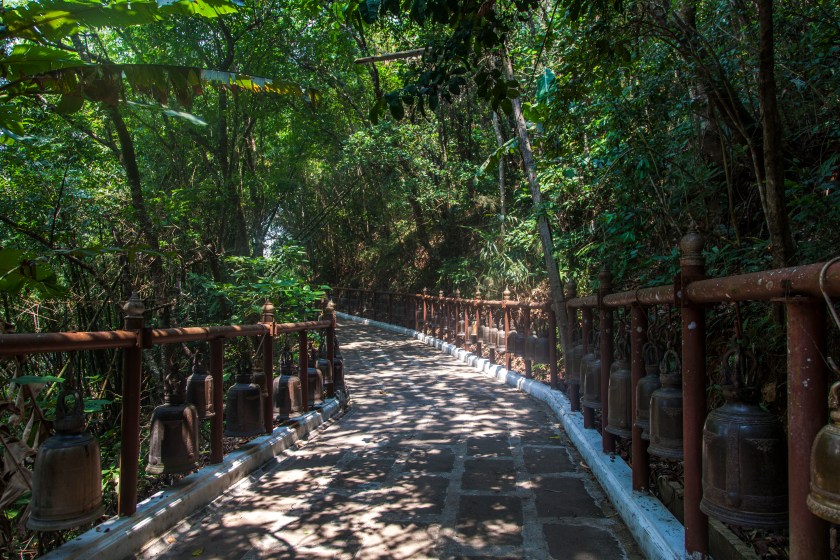
On the way back down to our car we descended a stepped alley with lots and lots of bells of different sizes at the sides.

IMG_3432

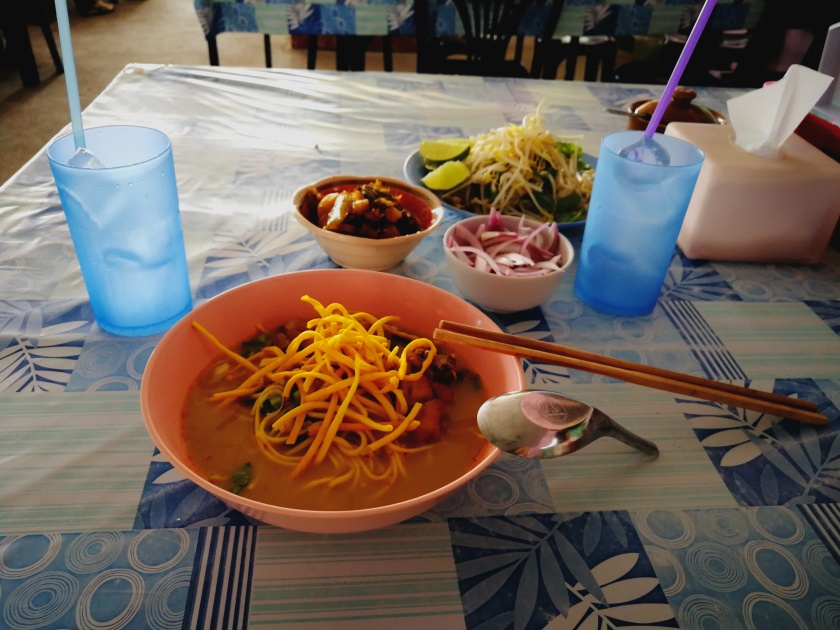
It was already lunch time, and we stopped at some roadside eatery. I had read somewhere that in Thailand the most delicious food can be found right in such non-glamorous places (in China as well, by the way – as confirmed by myself), and it turned out to be exactly the case! We got two servings of spicy chicken noodle soup, and we liked it a lot. And it cost us 70 baht for two, which didn’t even make 3 USD!

selfp

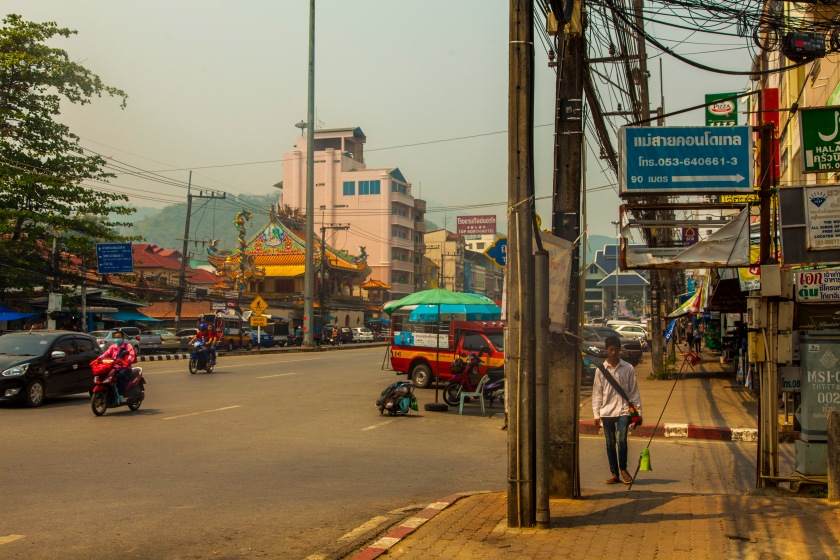
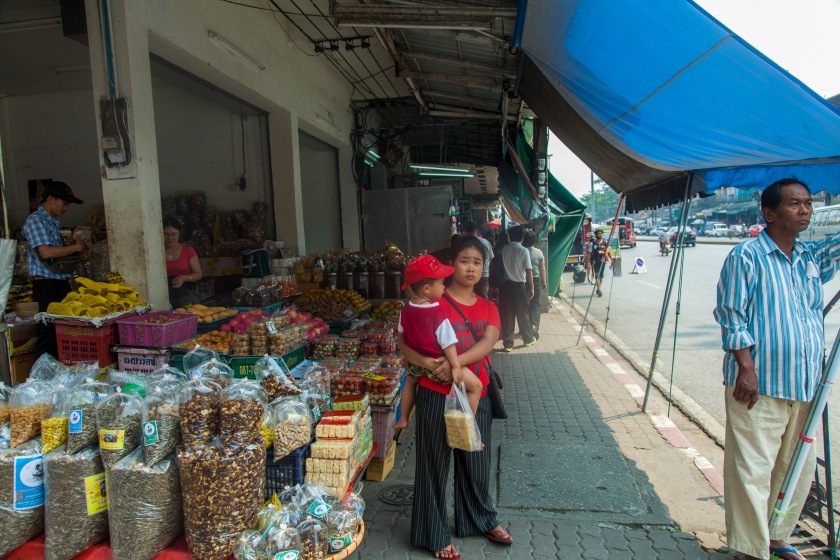
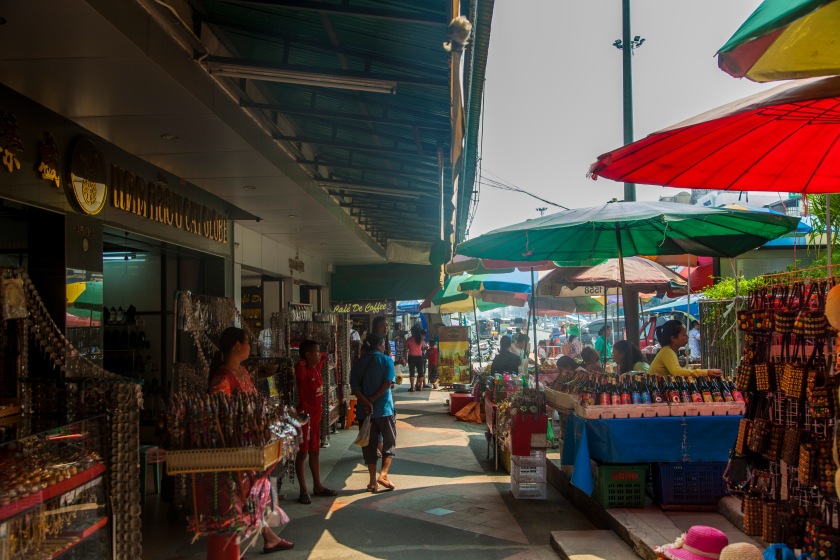
After lunch we drove to the town of Mae Sai at the very border with Myanmar. Dino said that Thai, Burmese, Indian, and Chinese people live here, and everyone gets along very well: Muslims, Buddhists, and Christians. In Mae Sai we visited a jade shop and walked past a street market, which, apparently, Dino himself was much more interested in than we were.

IMG_3438

IMG_3443

IMG_3444

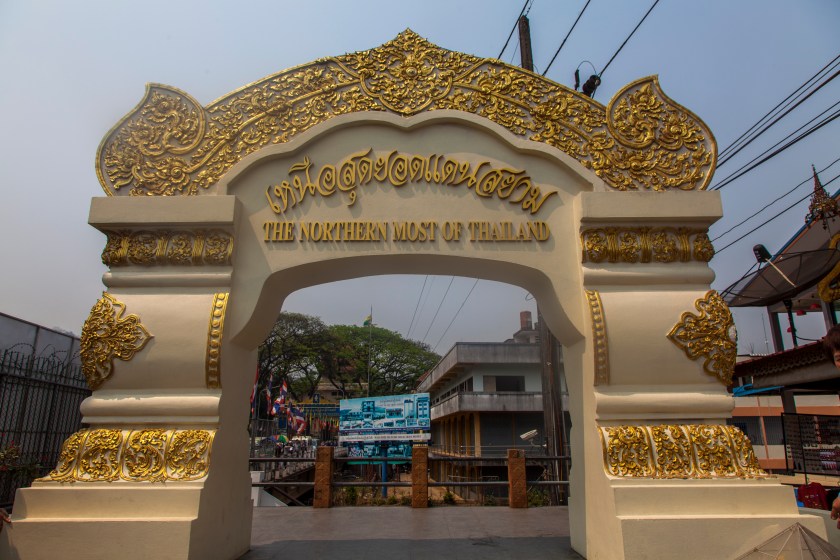
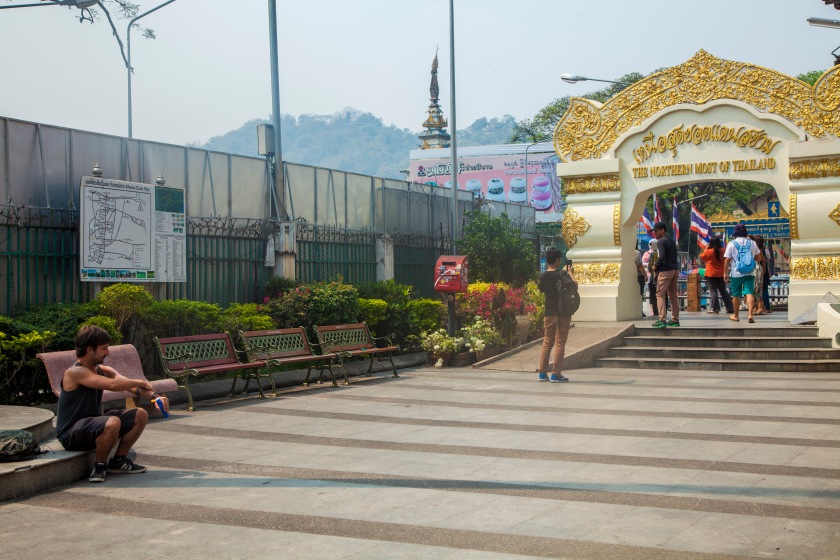
But what was really interesting to see was the gate separating Thailand from Myanmar. We asked, how far away from here the Golgen Triangle was – that is, the place where the borders of Thailand, Myanmar and Laos meet. We were told that it was a 35-minute drive, for which we’d have to pay extra to the driver and that we’d still need to get permission to get on a Mekong tour boat.

IMG_3445

IMG_3451

We decided that we didn’t want to go there and headed back to Chiang Rai. Once back at the hotel and left to ourselves, we went straight to the swimming pool, which we’d been drooling over for two days now. But it was no coincidence that the area around the pool was completely empty all the time, which we were really surprised about. The water turned out to be so icy cold that I could not even dip my toe in it, let alone get in there.

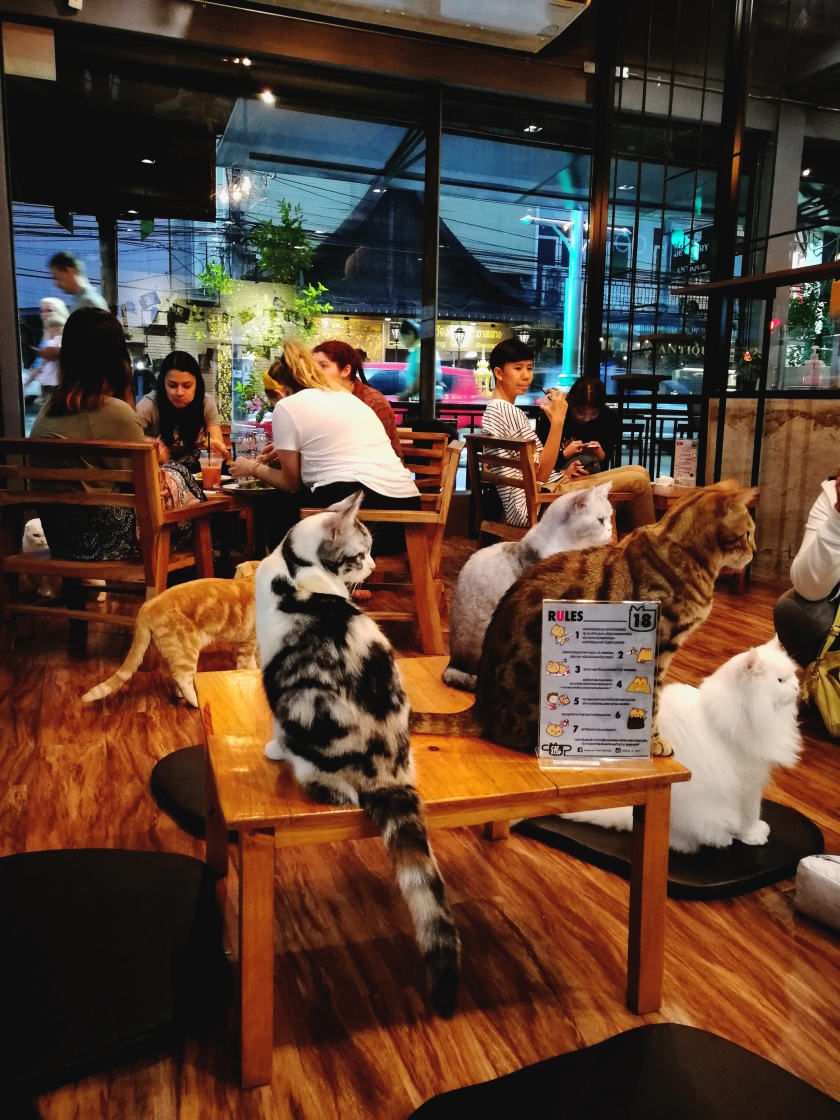
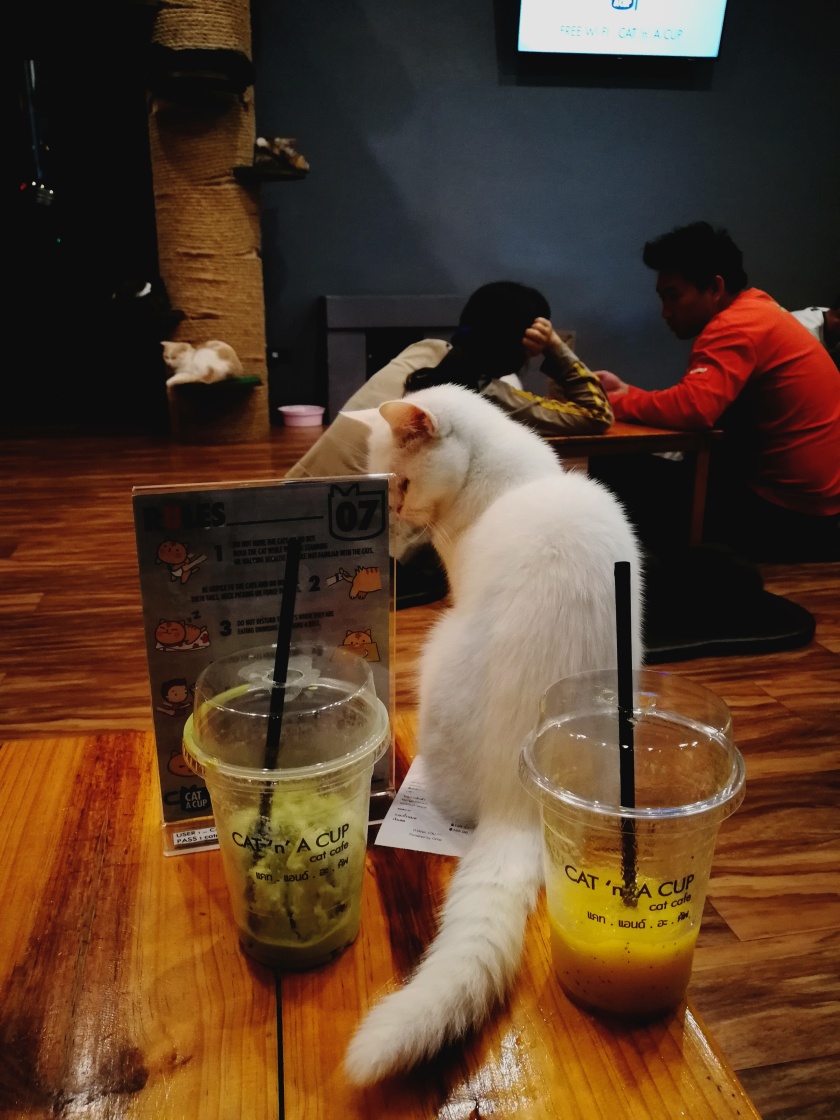
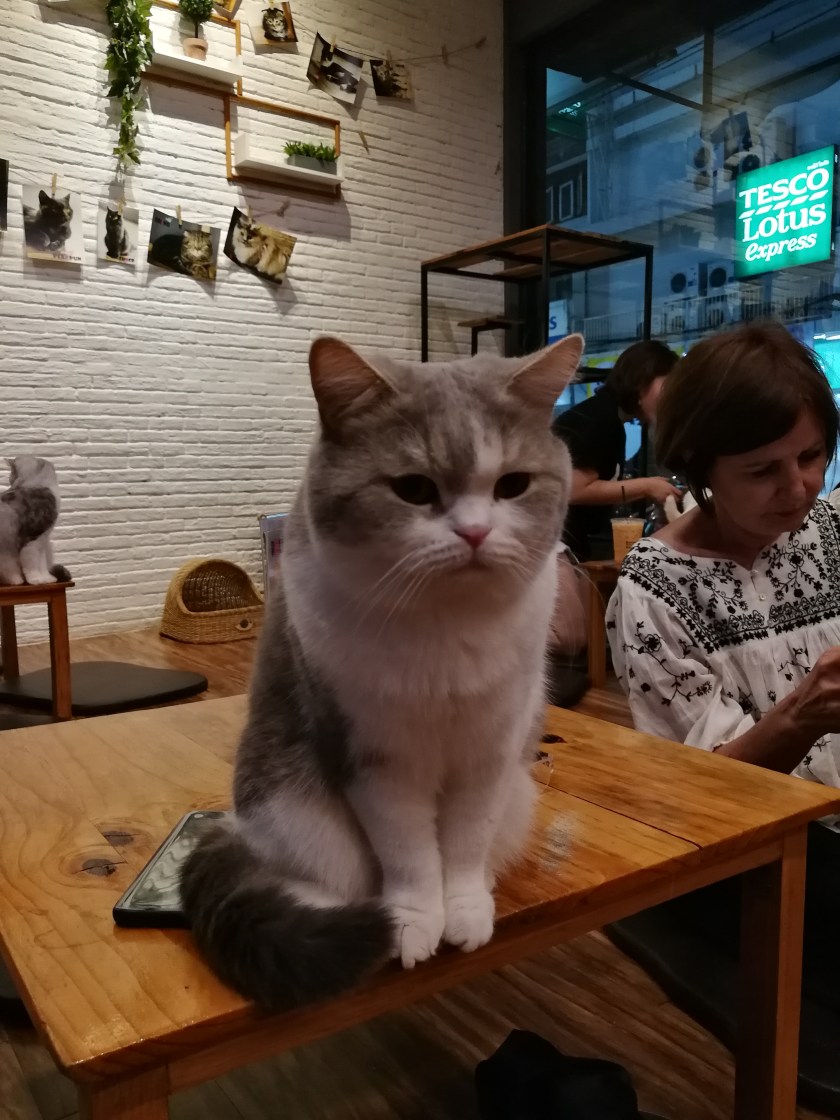
Mission unaccomplished! But we went again to get a wonderful massage in the same parlour as yesterday. There are plenty of such parlours on our street, but as we already tested this one yesterday and were very happy with it, we saw no point in looking for something else. And after the massage, as we were intending to go for dinner, we accidentally spotted a cat in the window of a small coffee shop, and then many more cats. We’d noticed this coffee shop, called Cat’n’Cup, yesterday, but somehow didn’t realise that it was a cat cafe. So how could we resist going in to have a frappe and to pet some furry purring felines!

selfp

Well, the latter actually turned out a bummer: we were still smelling of massage oil with a citrus aroma, which by cat standards meant that we were stinking sickeningly! So they avoided us at all costs, although we did see one or two curious faces on our table!

selfp

sdr

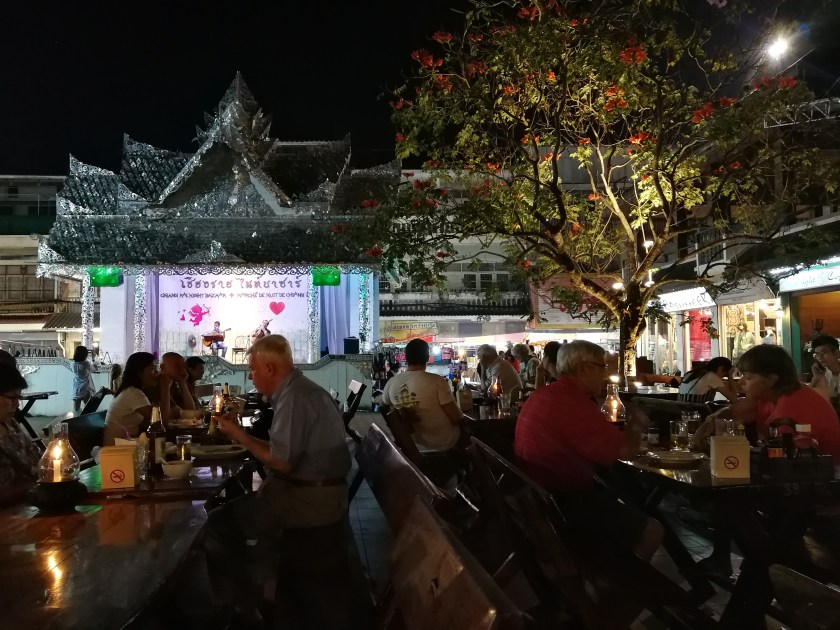
Then we went to have dinner in an open-air restaurant, right around the corner from the night market. It was a very pleasant place, and next to it there was a stage, from which we were entertained first with Chinese music, then with English-language guitar songs, and finally with Thai dances.

sdr

Posted in Asia, China, English, Hong Kong

Hong Kong – Day 5

РУССКОЯЗЫЧНАЯ ВЕРСИЯ ПО ЭТОЙ ССЫЛКЕ. CLICK HERE FOR RUSSIAN VERSION.

4 December 2013

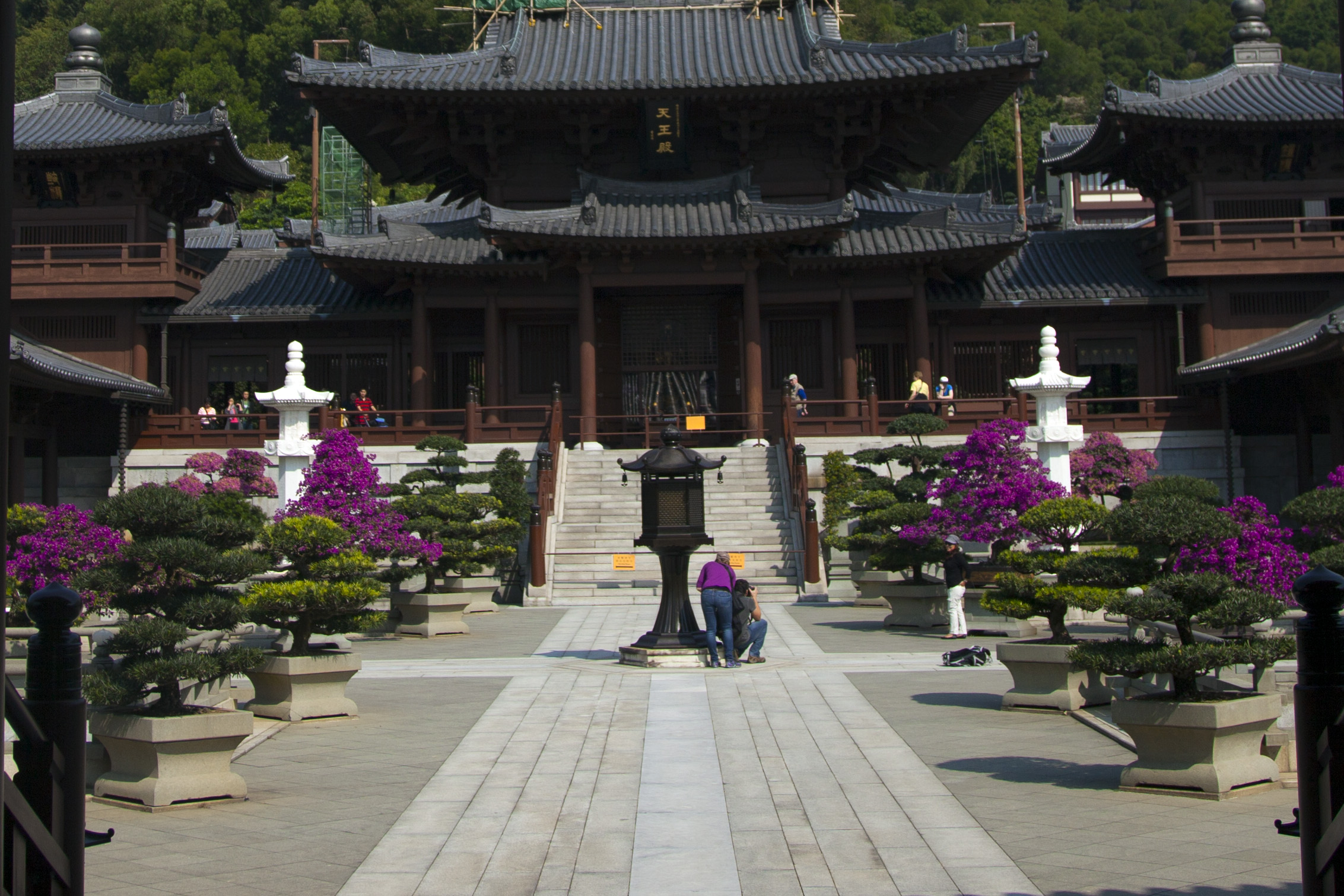
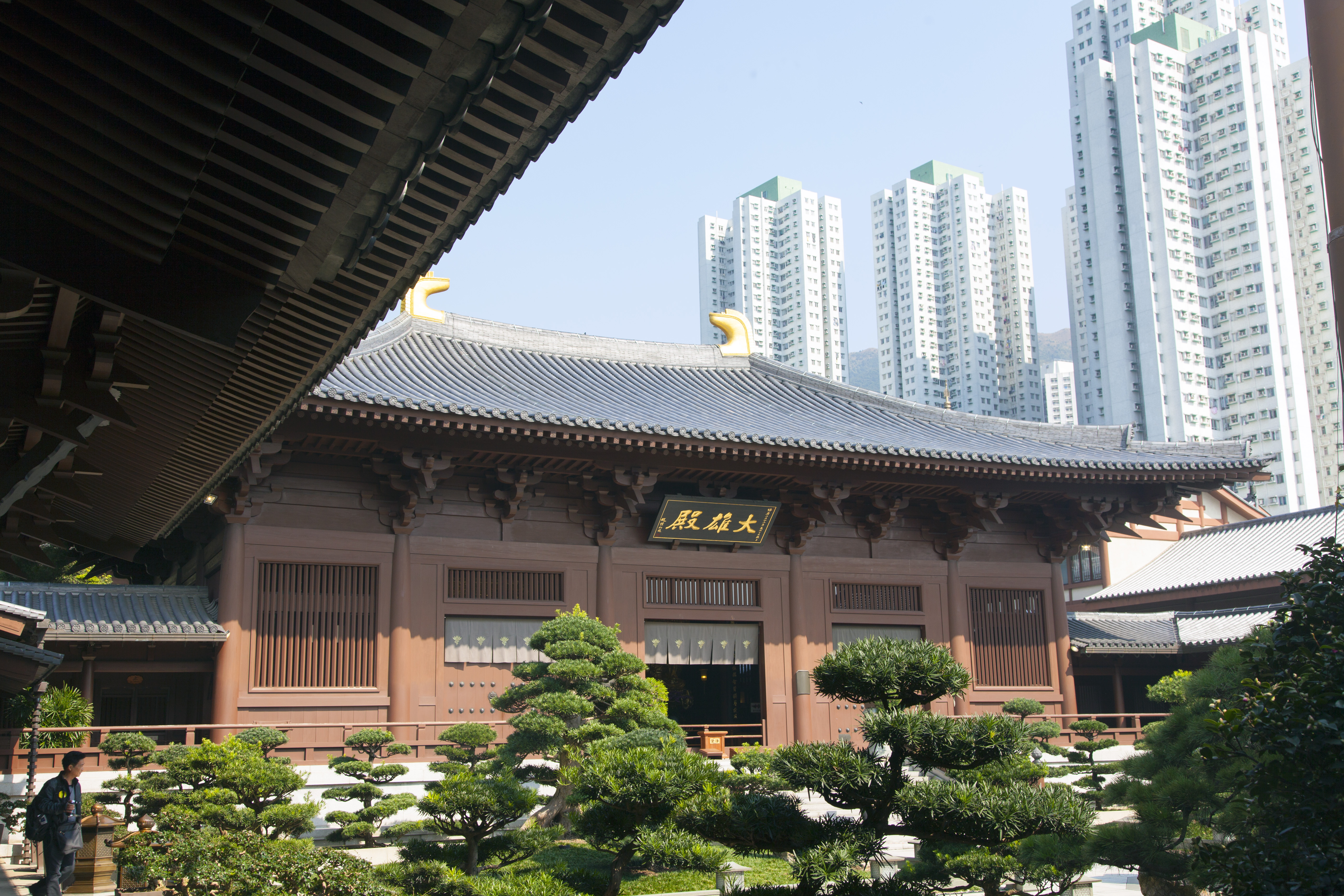
Today we made a particularly good choice, visiting the Chi Lin Nunnery and the adjacent Nan Lian Garden.

IMG_8194

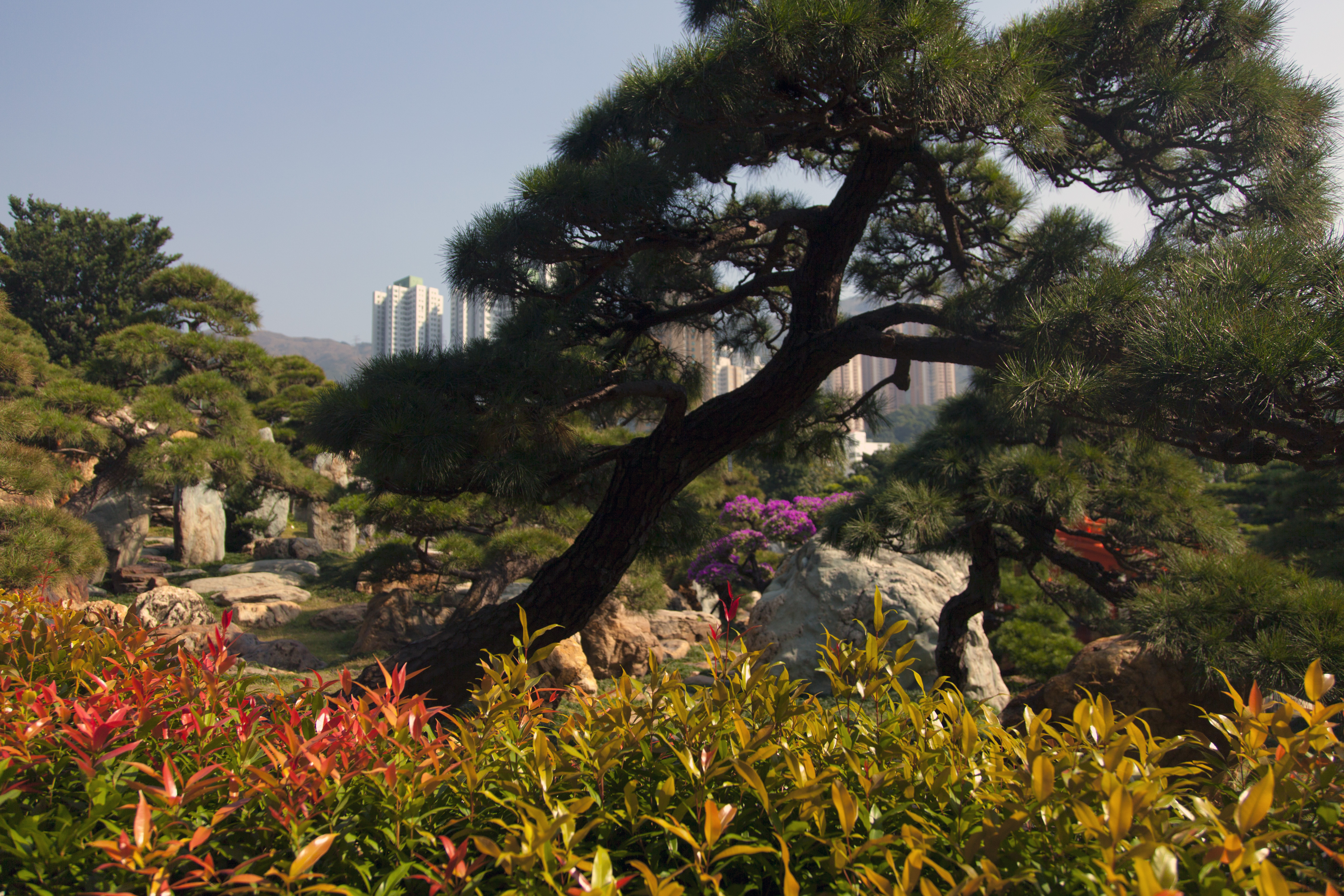
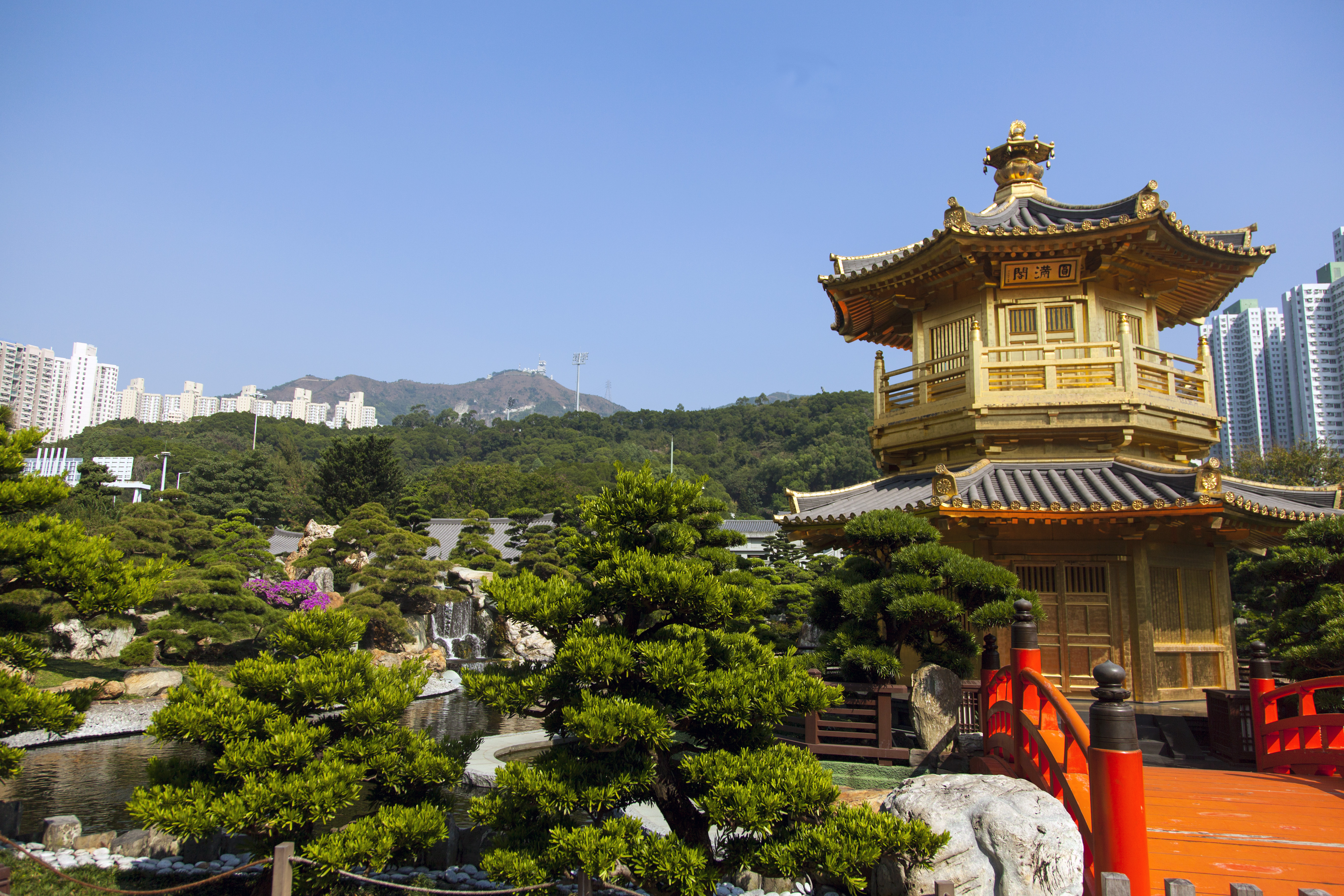
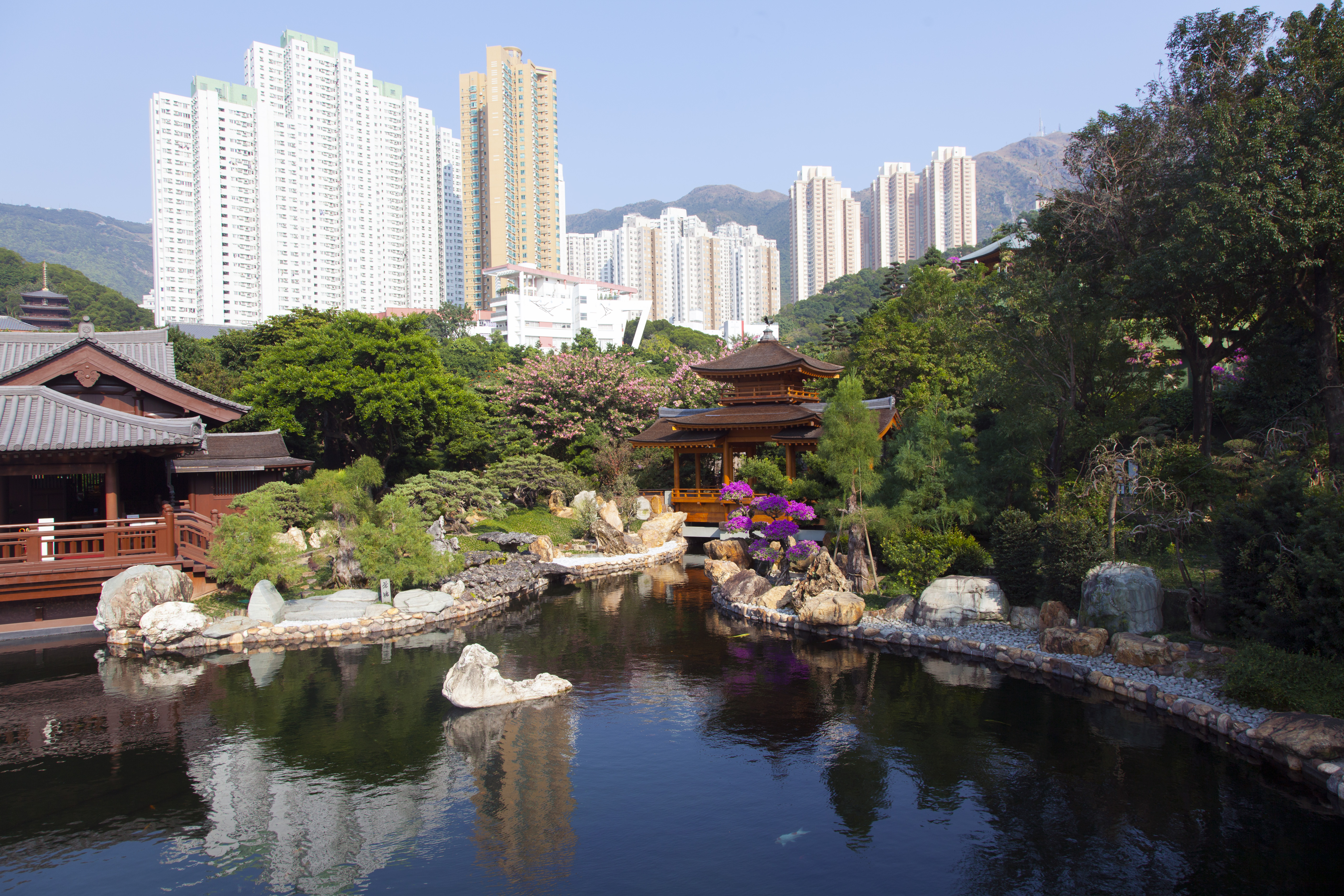
It’s hard even to imagine such beauty, peace and tranquillity as in this garden, which is essentially an amazingly harmonious composition of water, rocks and trees, and also traditional Chinese pagodas, bridges and pavilions. As for the skyscrapers in the background, not only don’t they seem to disturb this harmony, but they actually emphasise it in a rather unique way.

IMG_8210

IMG_8211

Overall, the garden is somewhat oval-shaped, and each turn of the track uncovers a new charming scene, e.g. giant banyan trees, or exquisite bridges over a pond with large colourful fish, or a waterfall with a water mill. And there you are, walking and admiring it all, accompanied by the low-pitch, vibrant, ’nasal’ sounds of guqin, a traditional Chinese stringed instrument, which feels like the most appropriate accompaniment in this place.
IMG_8213

IMG_8218

IMG_8223

IMG_8226

IMG_8232

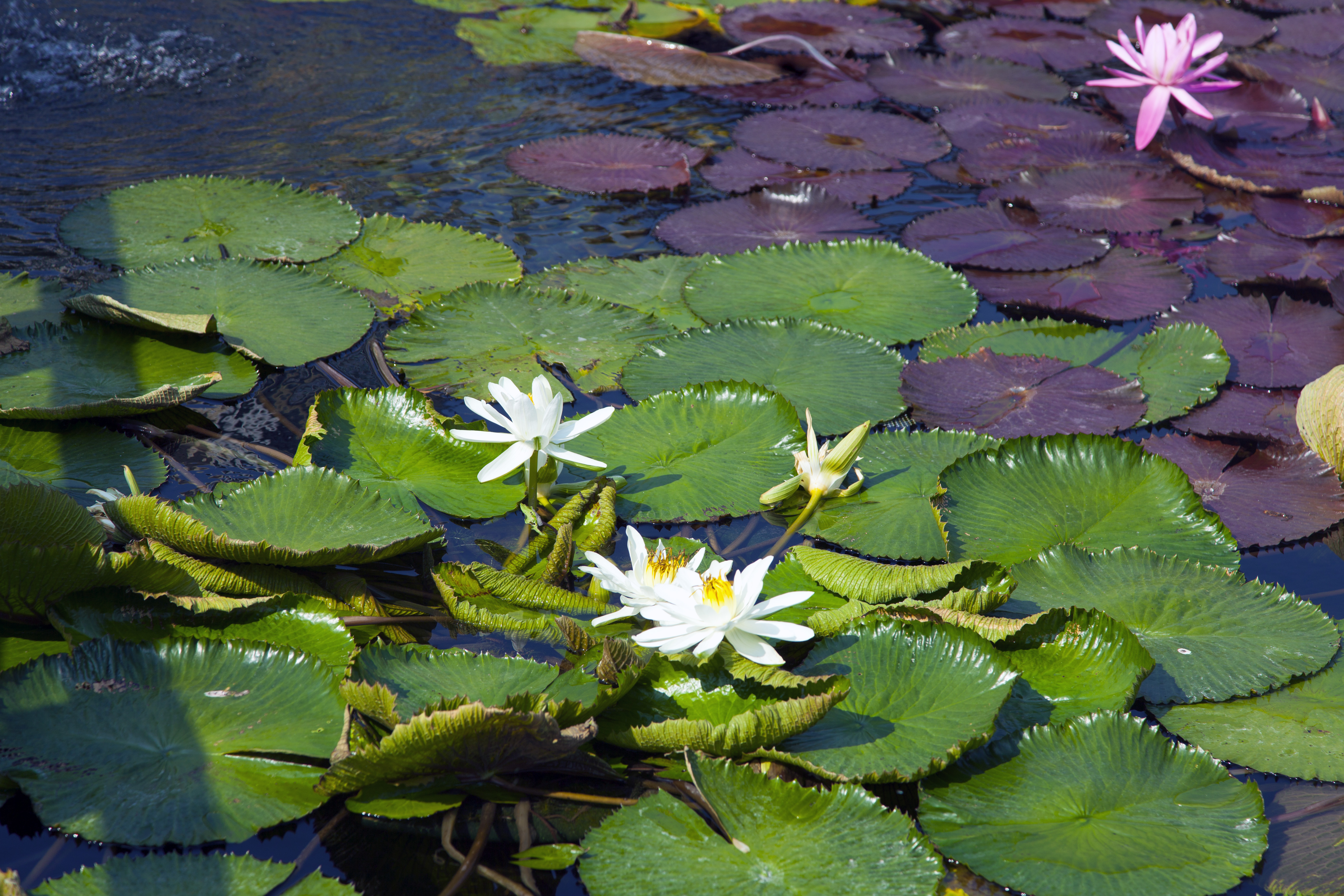
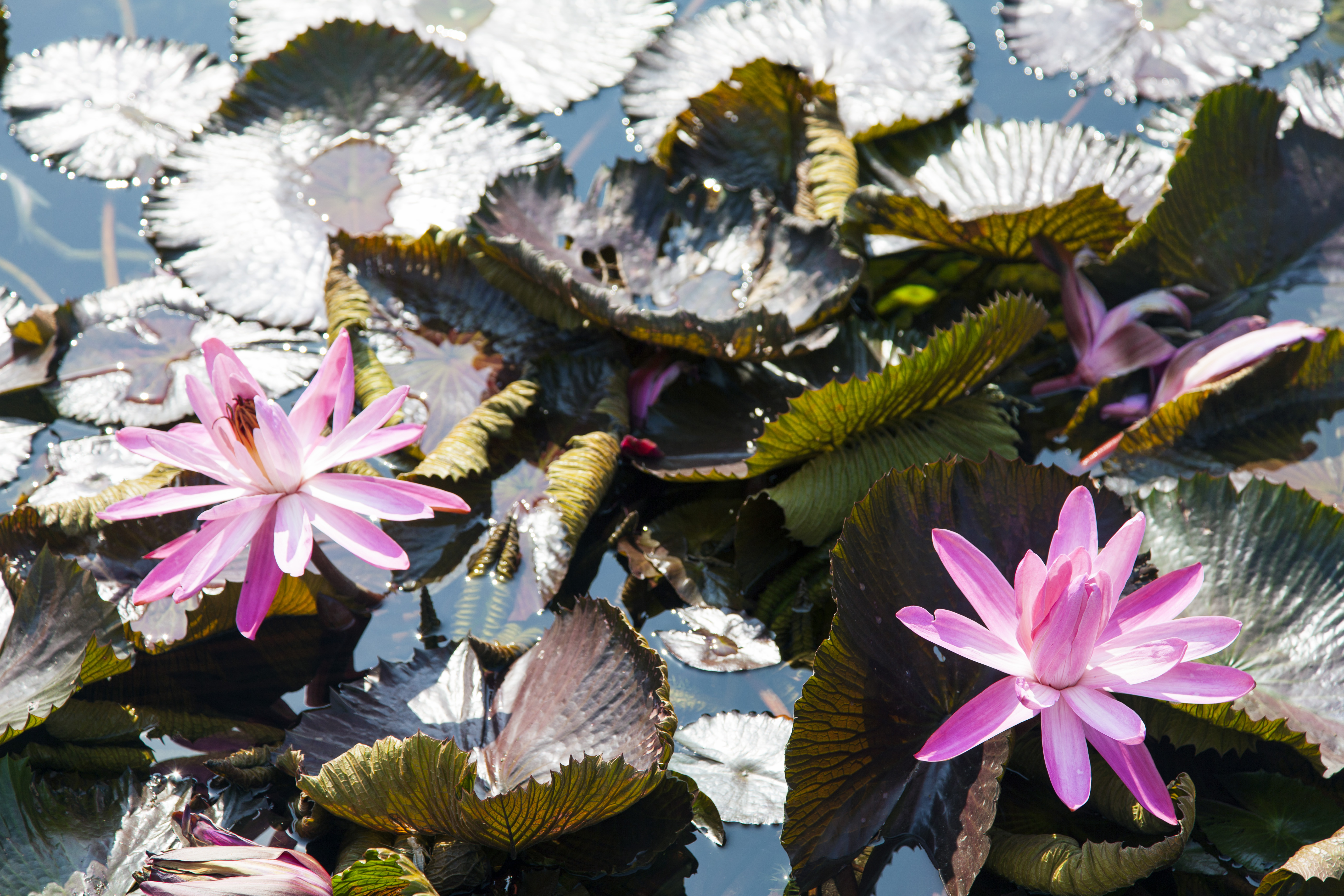
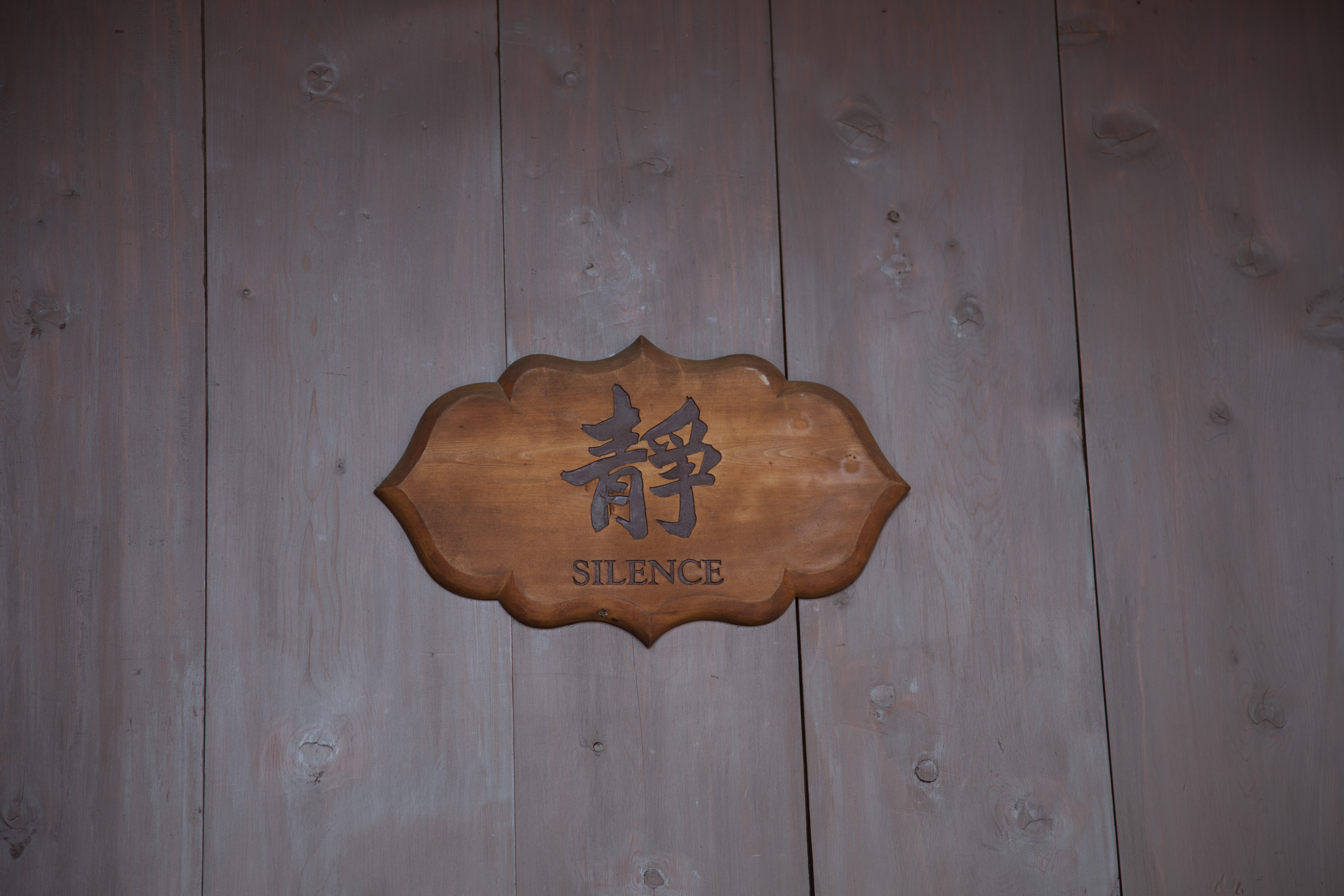
There are some lotus ponds right in front of the monastery. The petals move gently under the light breeze, and you feel like you could spend hours and hours just looking at them – at least, you somehow begin to understand Asians who find pleasure in the long contemplation of beauty. Neither taking pictures, nor even talking is allowed in the monastery, even in the public section (the other section, where the monks actually live, is closed to public altogether). There are sanctuaries on both sides, while in the centre there is a magnificent gilded statue of Buddha Sakyamuni. The monastery is also filled with music, not guqin sounds any longer though, but the chants of the monks. Even though we have nothing to do with Buddhism, still a sense of the sanctity of the place was definitely present.

IMG_8234

IMG_8237

IMG_8241

IMG_8244

IMG_8247

IMG_8250

IMG_8253

IMG_8254

IMG_8256

IMG_8258

As we returned to the Nan Lian Garden, we decided to try the tea ceremony there. The tea house has a couple of requirements: first of all you have to remove your shoes, leave them outside and put on the slippers provided, and also to switch off your mobile phone and put your camera away, as taking photos and videos is prohibited. The order has to be at least one portion per person. And a portion in this case is not one cup but rather 6 grammes of dry tea, which can be brewed in a small teapot six times. But I’m getting ahead of myself here – before talking about brewing I have to mention that there is actually a high degree of self-service here – you fill the iron kettle yourself and put it on the stove to boil, then you call the waitress. She brings you teaware and dry tea leaves, explaining how to brew them. It is actually a whole science (or should I say art?) in itself: you first rinse and fill the teapot with boiling water (the teaware stands on a grid with a drain underneath it). Then you pour the same water into a jug and cups, which thus get rinsed as well. You carefully add the tea to the tiny teapot, fill it with boiling water up to the top, then immediately pour it away – this is how the tea leaves also get rinsed. Now comes the final part: you fill the teapot with boiling water once again, keep it there for just a few seconds, and then pour the tea into the jug (so that it doesn’t get any stronger), from which it can be poured into cups.

IMG_8267

IMG_20131204_130604

It’s worth emphasising that these six grams is a lot for such a small teapot, way more than the portions we are used to. The tea that we had is called Da Hong Pao, which grows high in the mountains and is considered one of the most expensive teas in the world.

IMG_20131204_131835

IMG_20131204_133918

IMG_8266

IMG_8269

IMG_8274

Our lunch that day was quite unusual too – it was vegetarian, as it is always the case with monastery restaurants, with a very high content of various types of mushrooms.

In the evening we went to Lan Kwai Fong yet again. Even though it was only Wednesday and not Friday, the place was way more crowded and fun than during our last visit – which in fact is quite logical. The last time we were here was Sunday, when pretty obviously very few people are keen on drinking and hanging out late before a Monday. And on a weekday, of course, many people want to relax and chill out after a hard day at work – this is exactly why we saw such a considerable number of ‘white collars’ there.