Posted in Asia, English, Hiroshima, Japan, Tokyo

Japan – Day 5

РУССКОЯЗЫЧНАЯ ВЕРСИЯ ПО ЭТОЙ ССЫЛКЕ. CLICK HERE FOR RUSSIAN VERSION.

27 May 2025

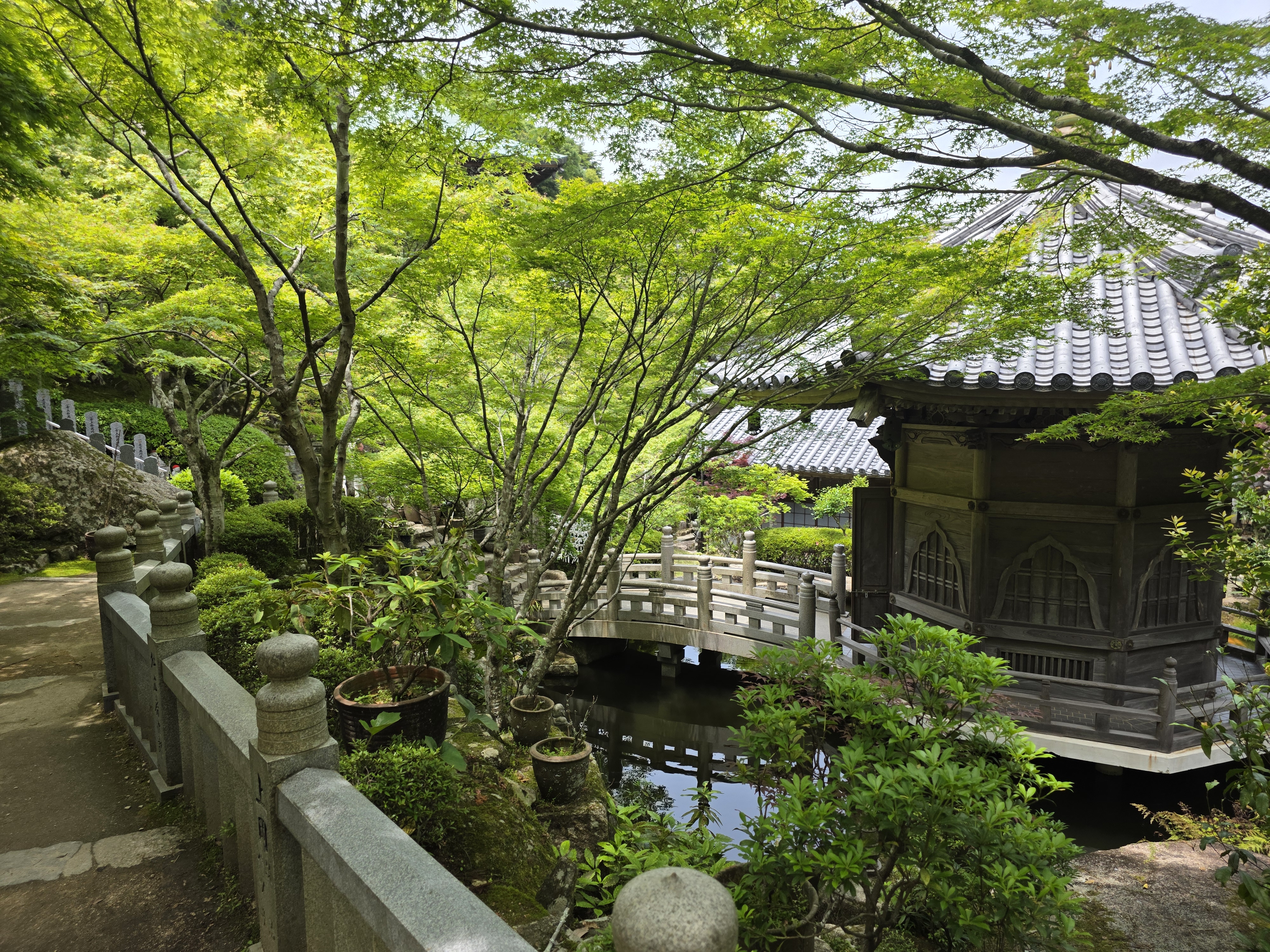
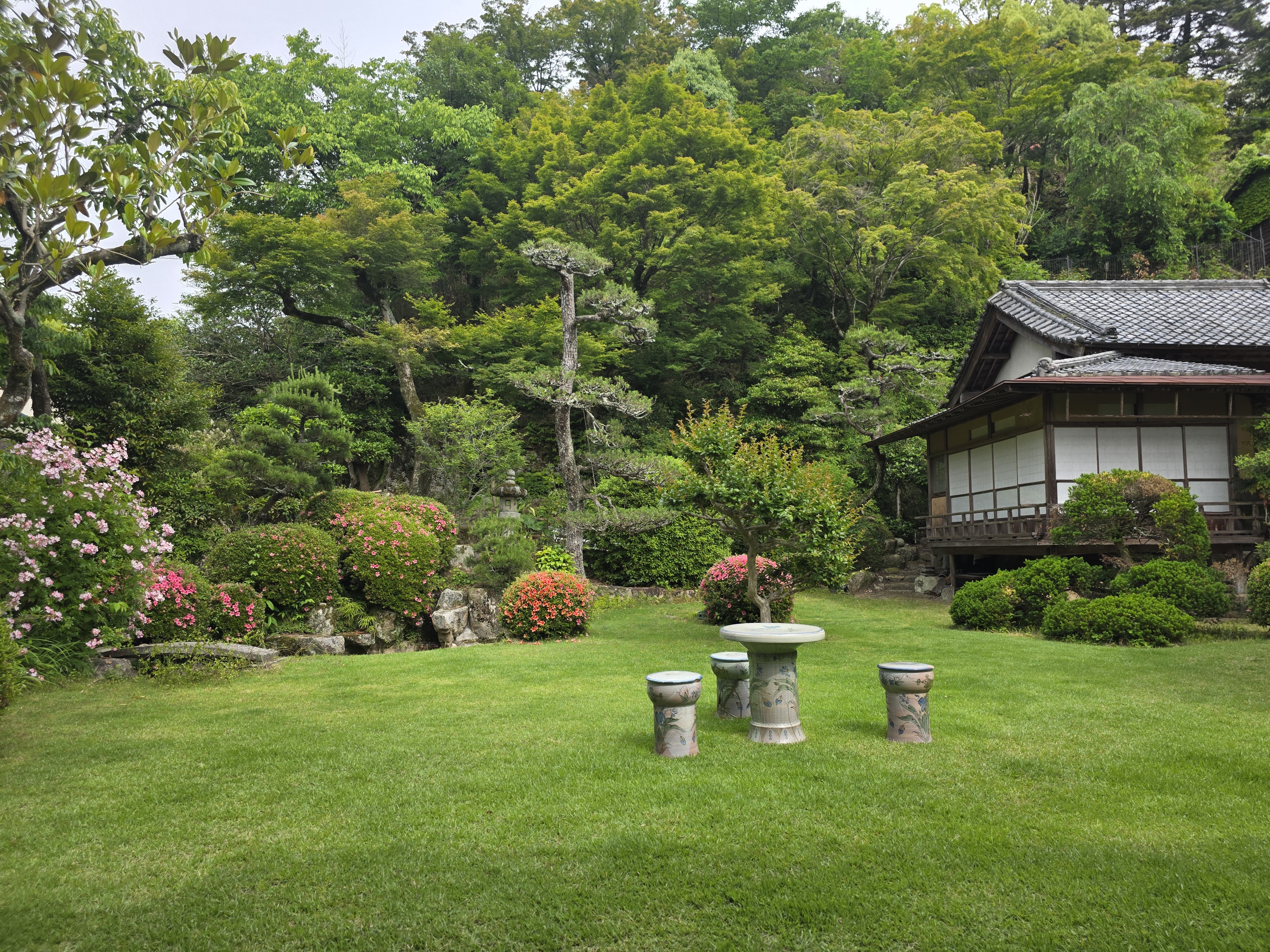
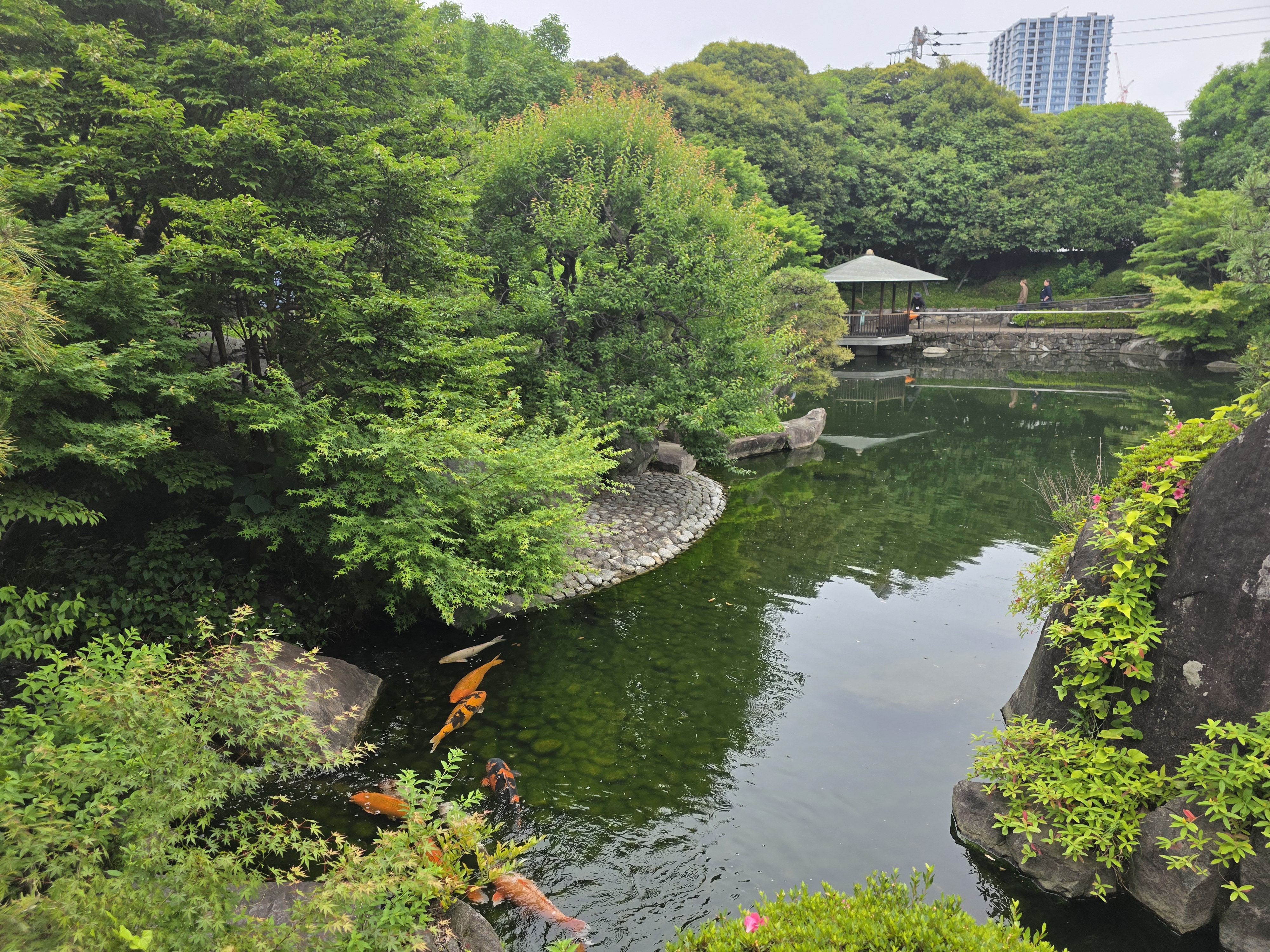
Today was our last day in Tokyo (though we’ll be coming back later). We had breakfast again at the same café in the park as the day before yesterday. We had to go to Hiroshima, but only after lunch, so in the morning we took a walk to Mejiro Japanese Garden, not far from our hotel. It’s a small, quiet, and very typically Japanese garden – clearly not a famous one, as there were very few people around.

At the entrance, there’s a traditional room that looks like a tea house, which can be rented for photo shoots or private events. The garden itself has a central pond surrounded by greenery, and a small gazebo. On the surface of the pond we saw lots of water striders, and in the pond itself, big fat koi carp swimming lazily around.

After returning to the hotel, we headed off to Tokyo Station. The station is truly massive – many subway and train lines converge there, and it’s also where the high-speed Shinkansen trains depart, which we were taking to Hiroshima. We had lunch right at the station in a Chinese restaurant – the hot and sour soup was especially good.

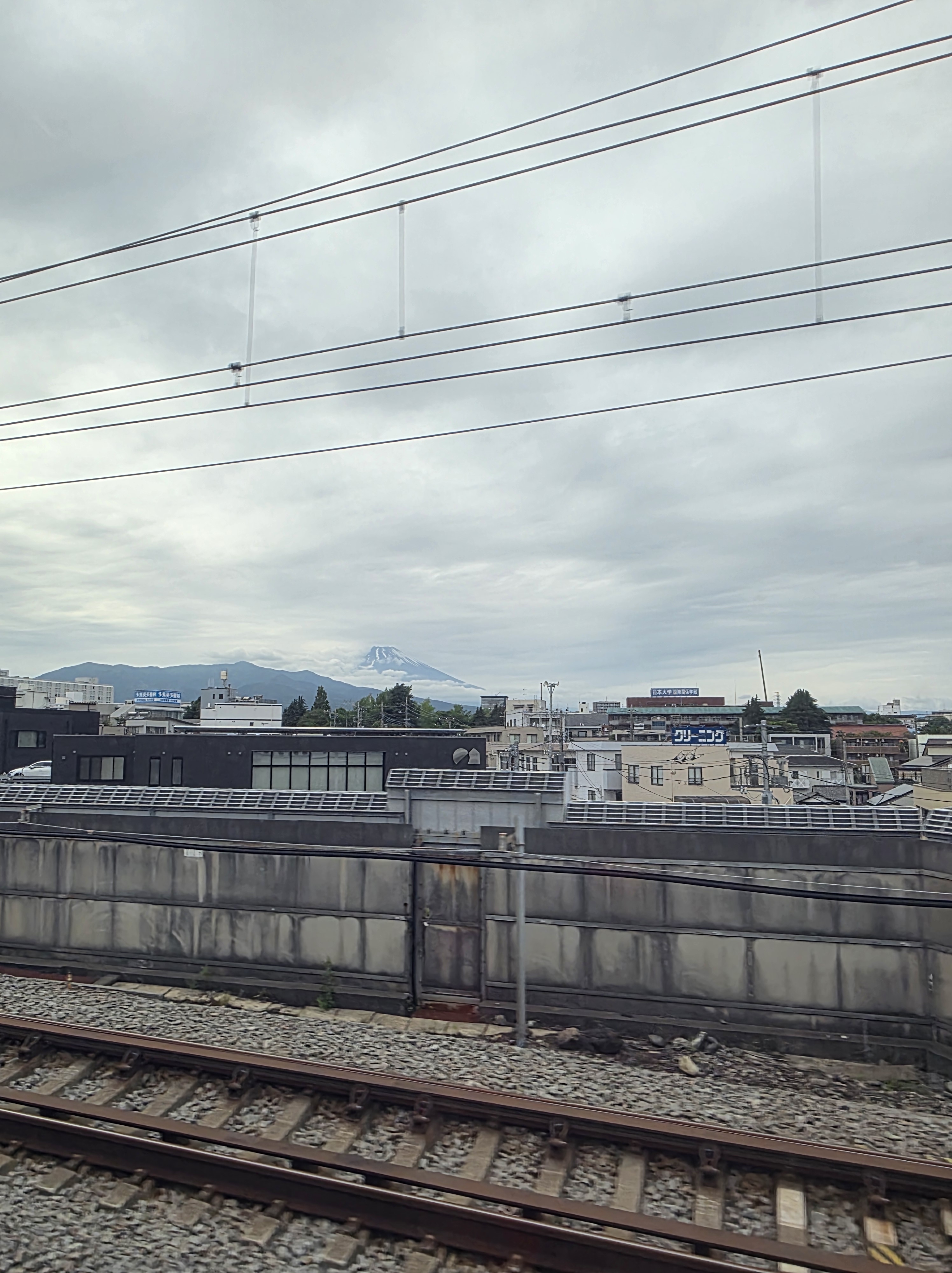
Coming back to the Shinkansen – also known as “bullet trains.” They’re fast, but not quite as jaw-dropping as the ones in China. Almost ten years ago, I took a Chinese bullet train from Hangzhou to Shanghai, and it was flying so fast you couldn’t even make out the scenery – everything outside just blurred into a gray wall. That was a proper “bullet.” Here, the train is definitely fast, but you can still see everything outside – the outline of Mount Fuji as we approached Kyoto, endless rice fields, and villages with houses that still have traditional curved Japanese roofs.

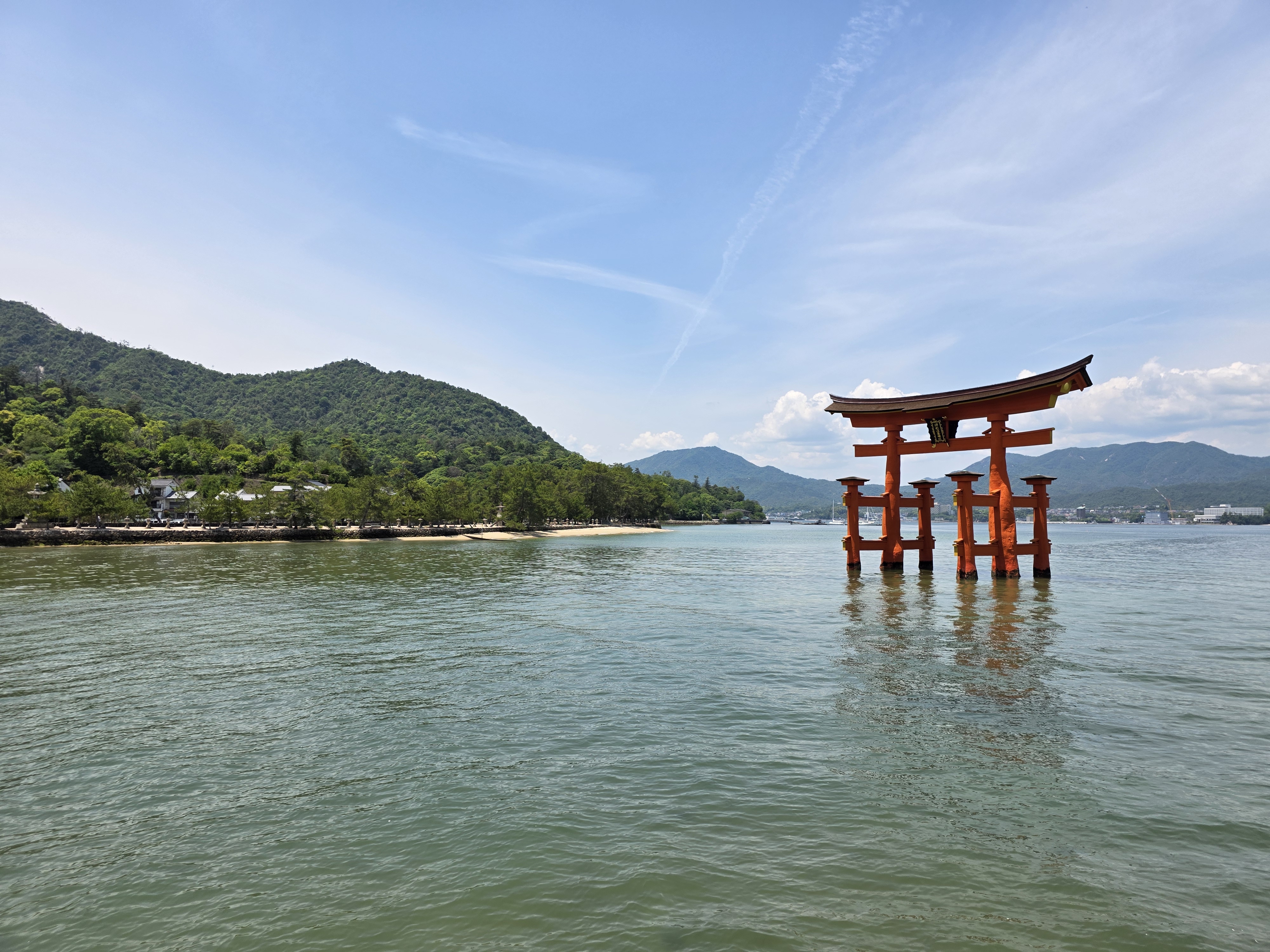
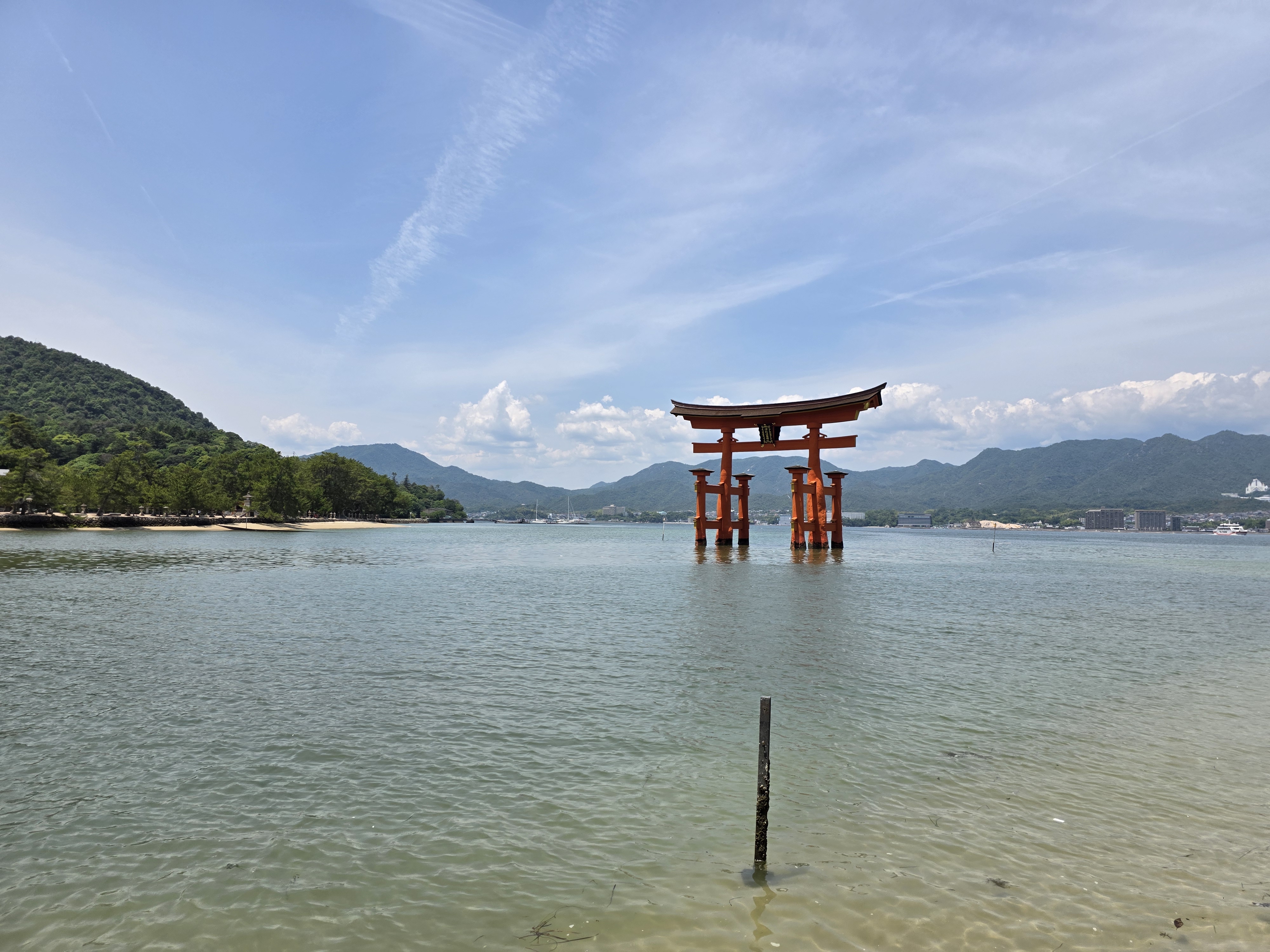
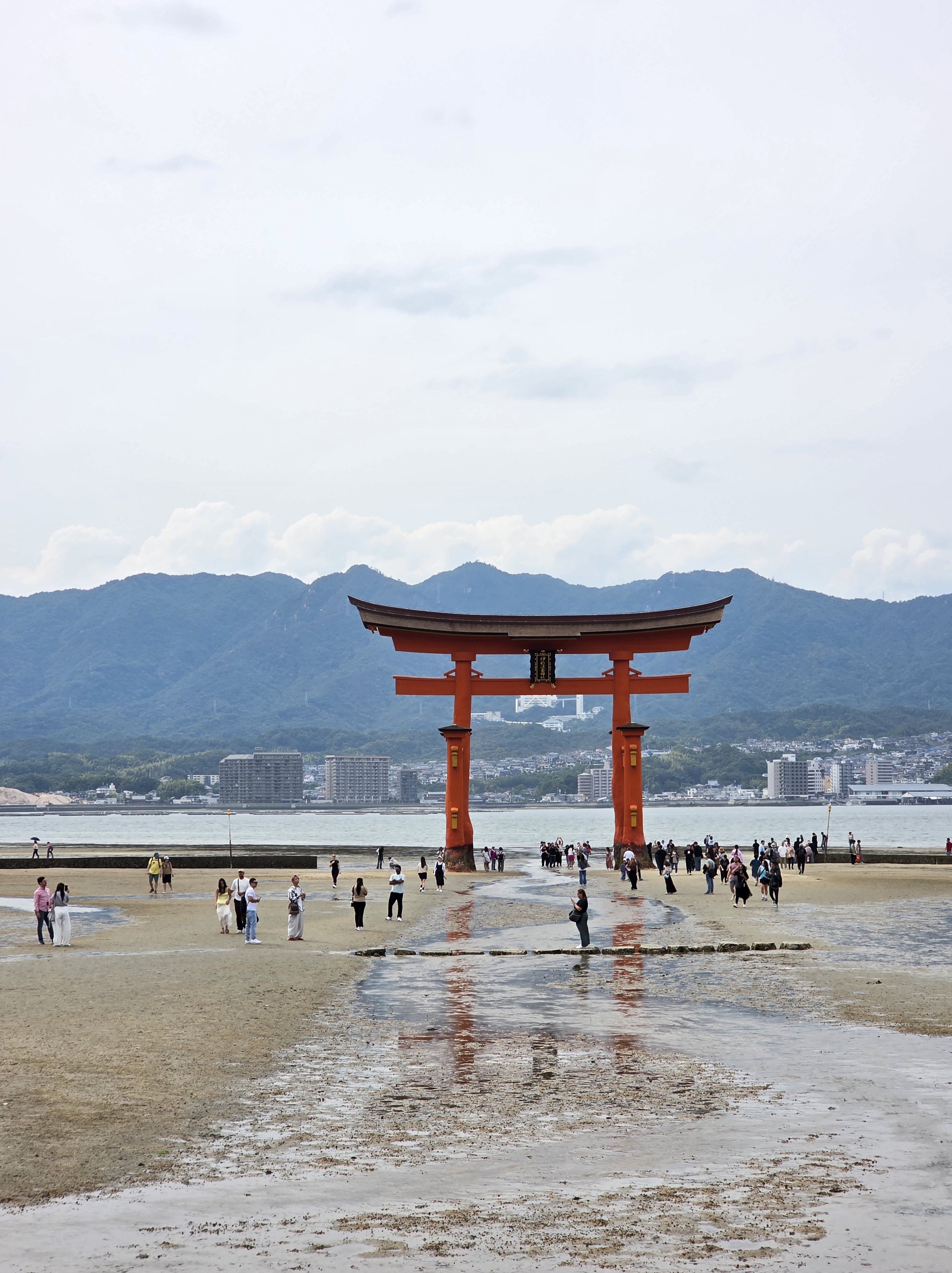
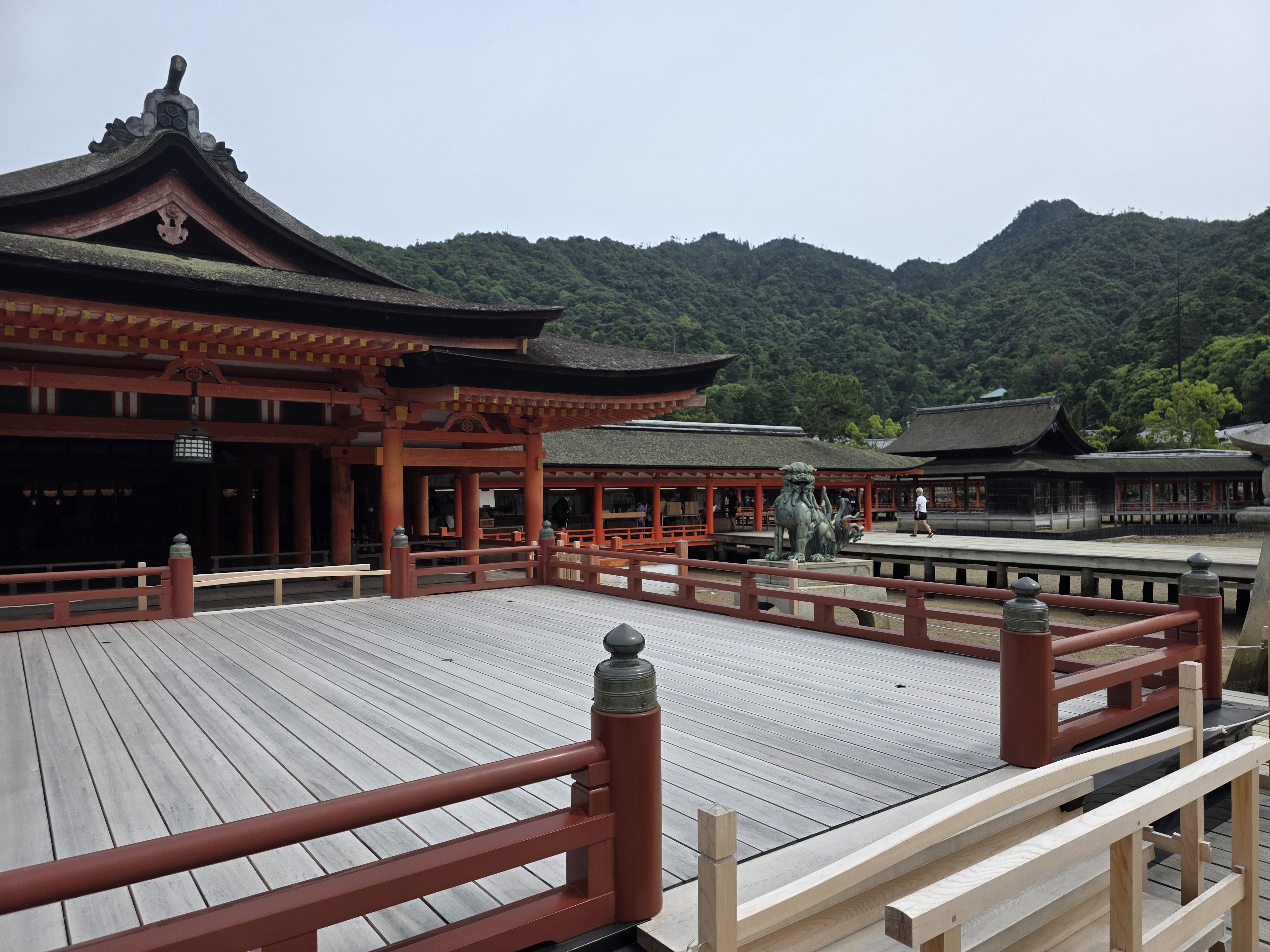
The journey to Hiroshima took about four hours, but it passed quickly and effortlessly. We’re not planning to do much in Hiroshima itself – the real goal of coming here is to visit Miyajima Island.

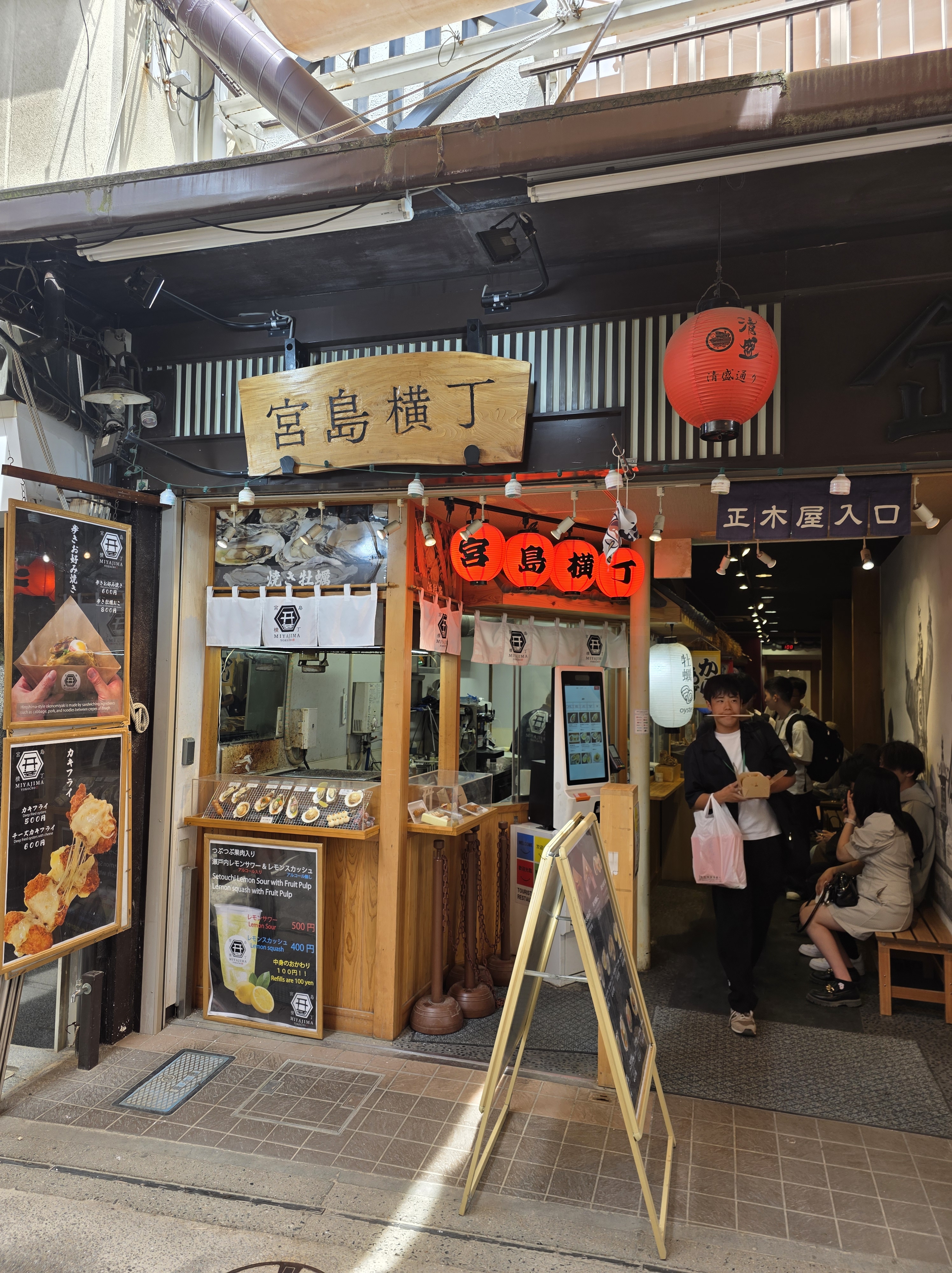
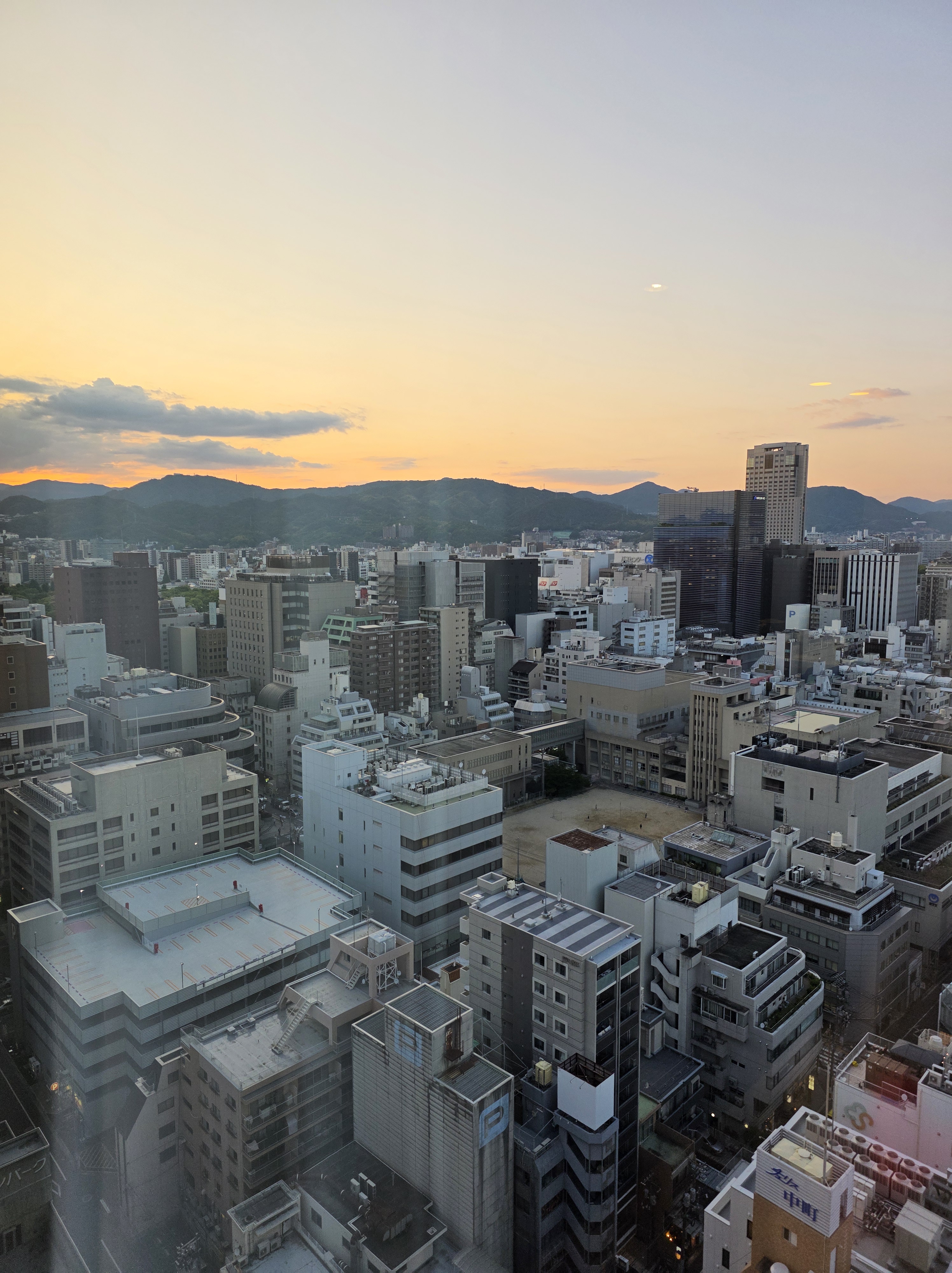
Once we arrived, we checked in to the hotel. First impressions of the city – at first glance, Hiroshima didn’t feel that different from Tokyo. But no, the vibe is quite different. For one, there are far fewer people, which makes foreigners stand out more – especially Germans, of whom there seem to be quite a few. Second – though maybe this was just our route – there were some confusing pedestrian passages and street crossings where it wasn’t obvious how or where to cross. Thirdly, I’ve already mentioned Japan’s older infrastructure – and here it feels even more dated. The buses look like ancient Ikaruses, and the taxis seem straight out of a movie from the ’80s or ’90s.

Just off the wide avenues, as in Tokyo, are hidden narrow streets. Same as in Tokyo, often there are no sidewalks, and where they do exist, cyclists ride along them, also in the same way.

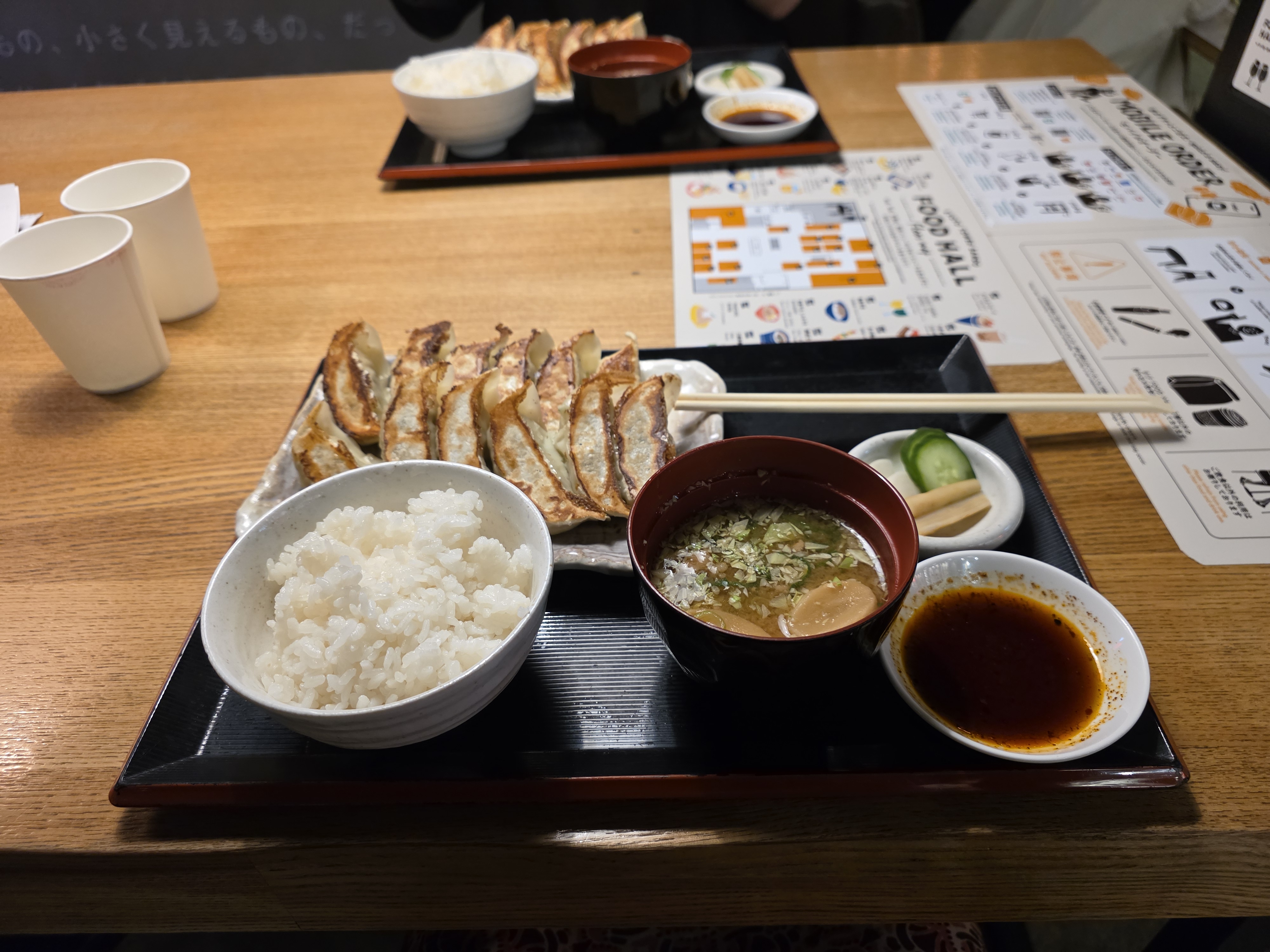
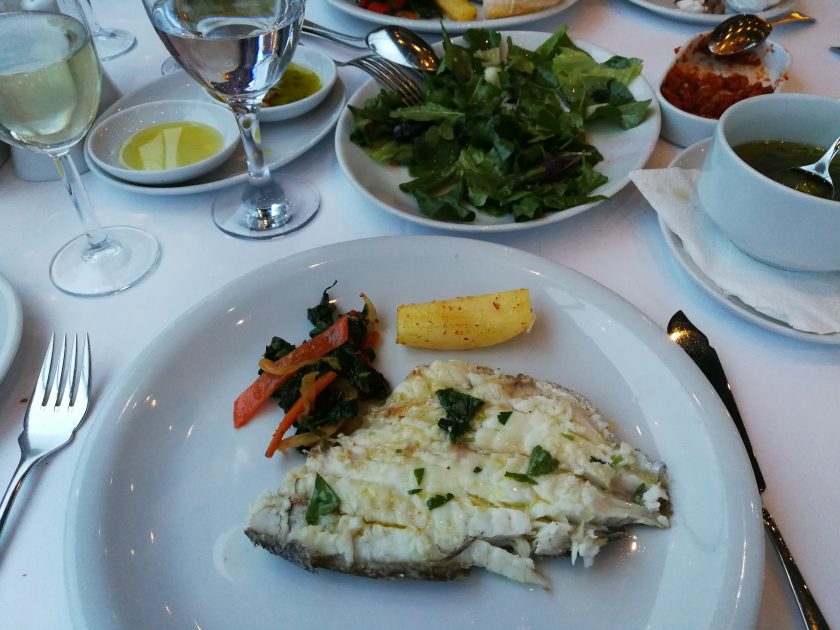
We had dinner at a fish restaurant – though calling it a “restaurant” might be a bit generous. It was more like a small eatery with room for 10–15 people, and, once again, everything was in Japanese. They gave us a card with pictures of various fish, and we just pointed to the ones we wanted. Those were grilled with salt and served with rice, miso soup, and a few small side dishes.

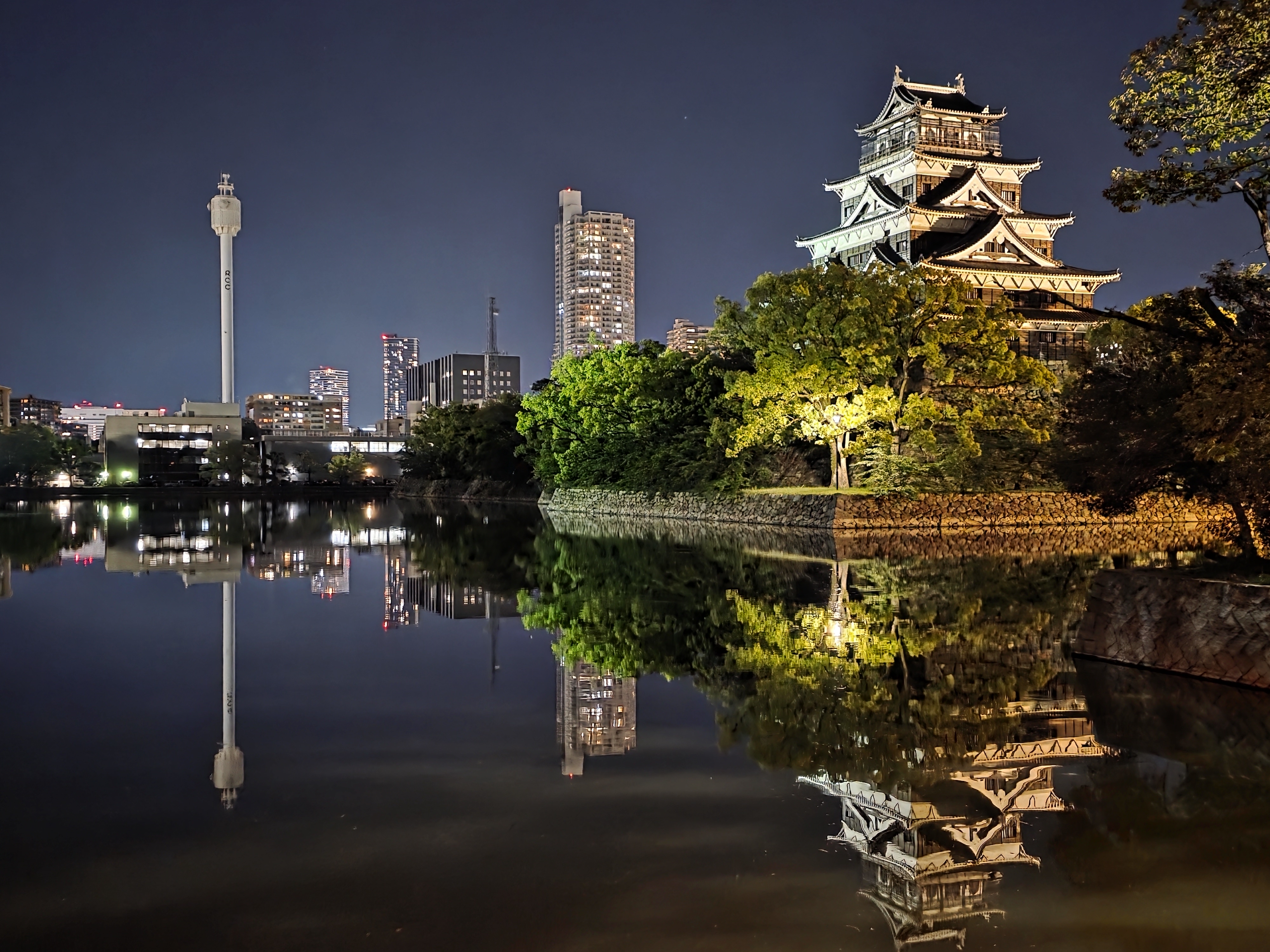
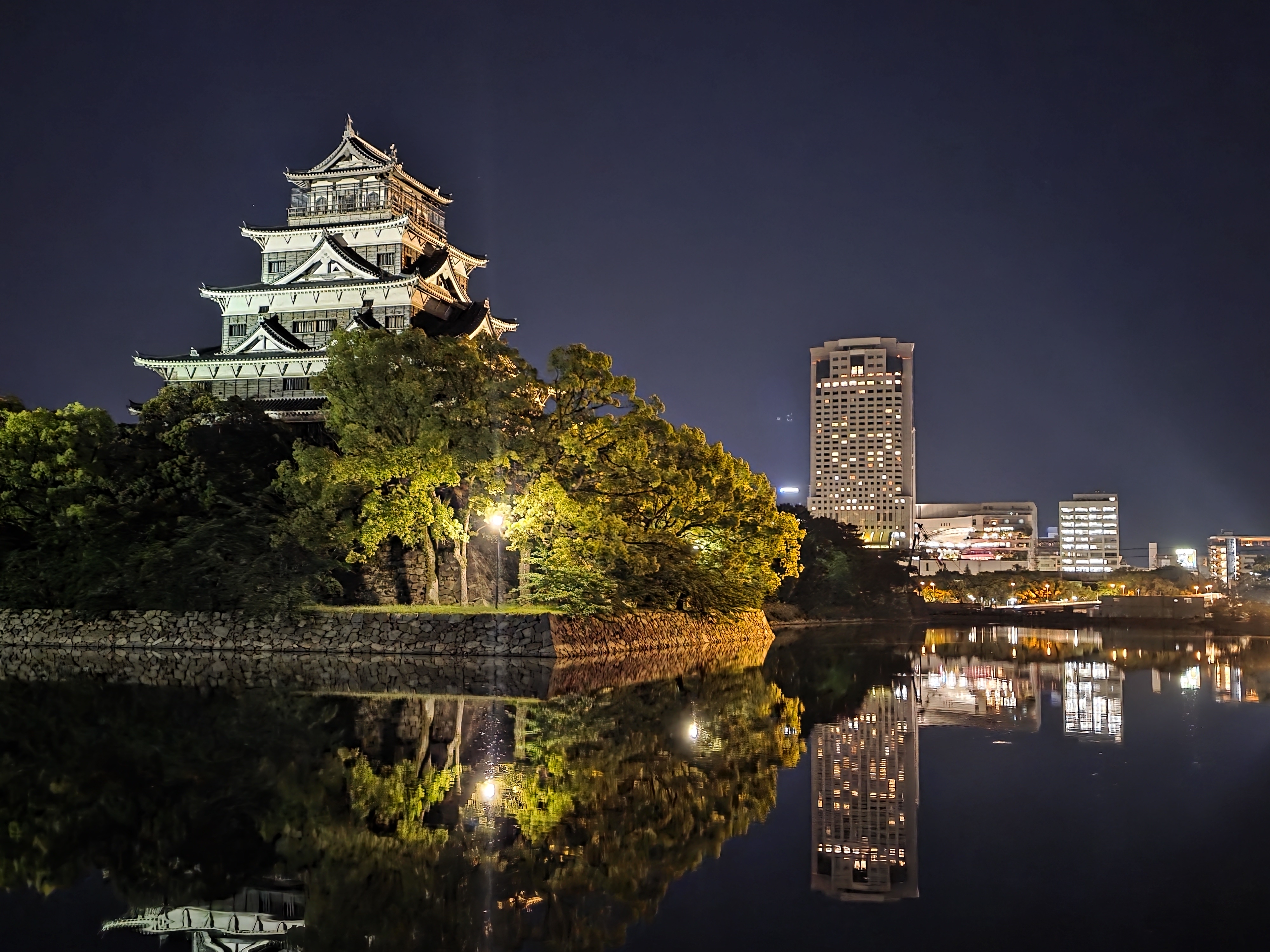
After that, we made our way through some dark streets to Hiroshima Castle to see it lit up at night. It was definitely worth the walk – we got some beautiful photos with the castle reflected in the water. By the way, the original castle was almost completely destroyed by the atomic bombing – what we see today is a reconstruction.

Posted in Asia, English, Japan, Tokyo

Japan – Day 4

РУССКОЯЗЫЧНАЯ ВЕРСИЯ ПО ЭТОЙ ССЫЛКЕ. CLICK HERE FOR RUSSIAN VERSION.

26 May 2025

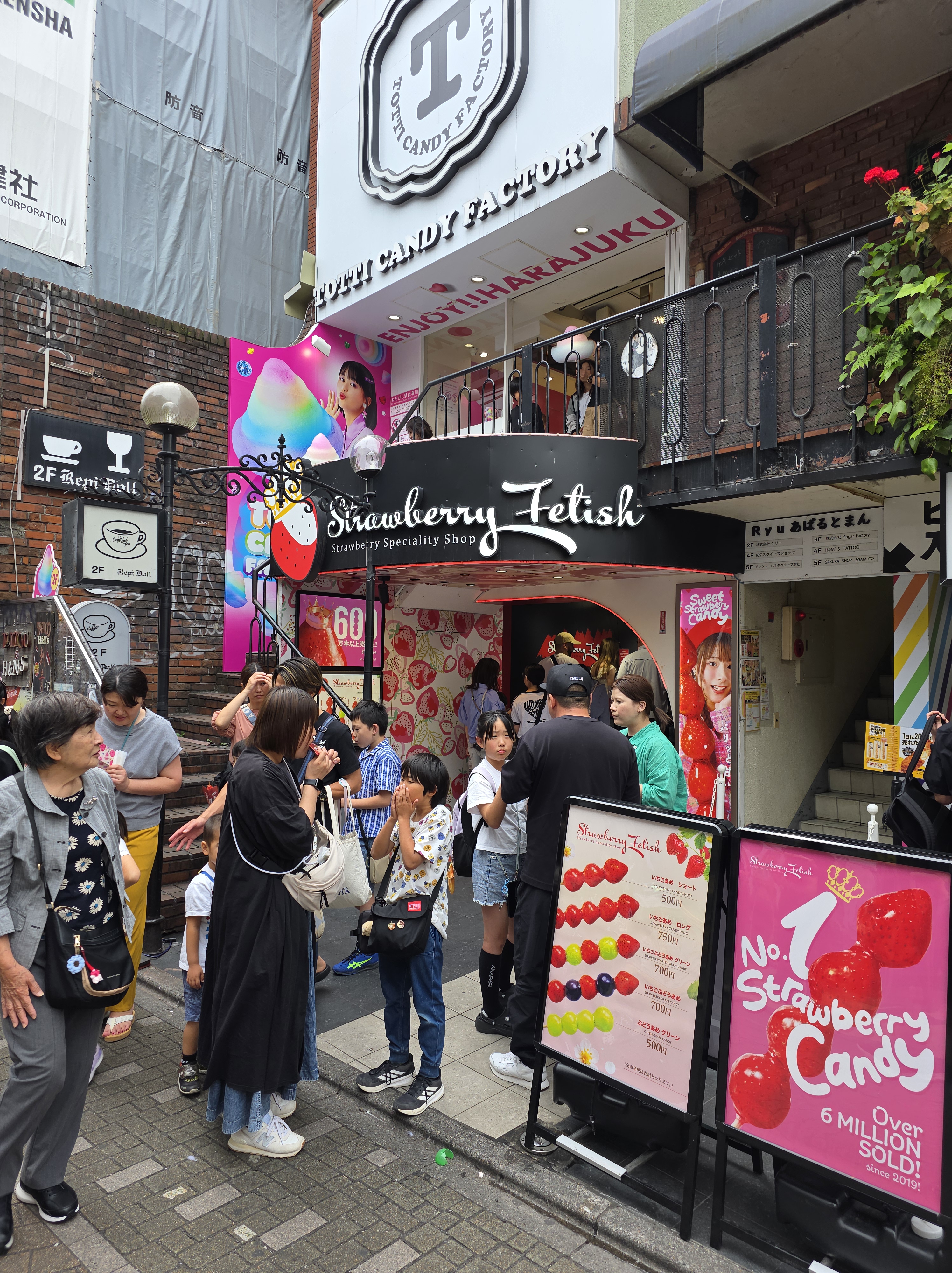
In the morning, we went to have breakfast at a French bakery not far from the hotel. Since we had the Ghibli Museum on the agenda for today, we decided not to rush and instead went for a walk through Harajuku – a trendy, youthful district full of interesting and extravagant shops with alternative fashion.

Tokyo really is a huge city – the distances are vast, and each district has its own distinct vibe, completely different from the others.

Another observation – the Japanese really do love queuing. Even though, as I mentioned before, there are countless eateries, some are clearly more popular than others, and there are always queues outside them. We often see queues at shops too – and sometimes, it’s not even clear what people are queuing up for.

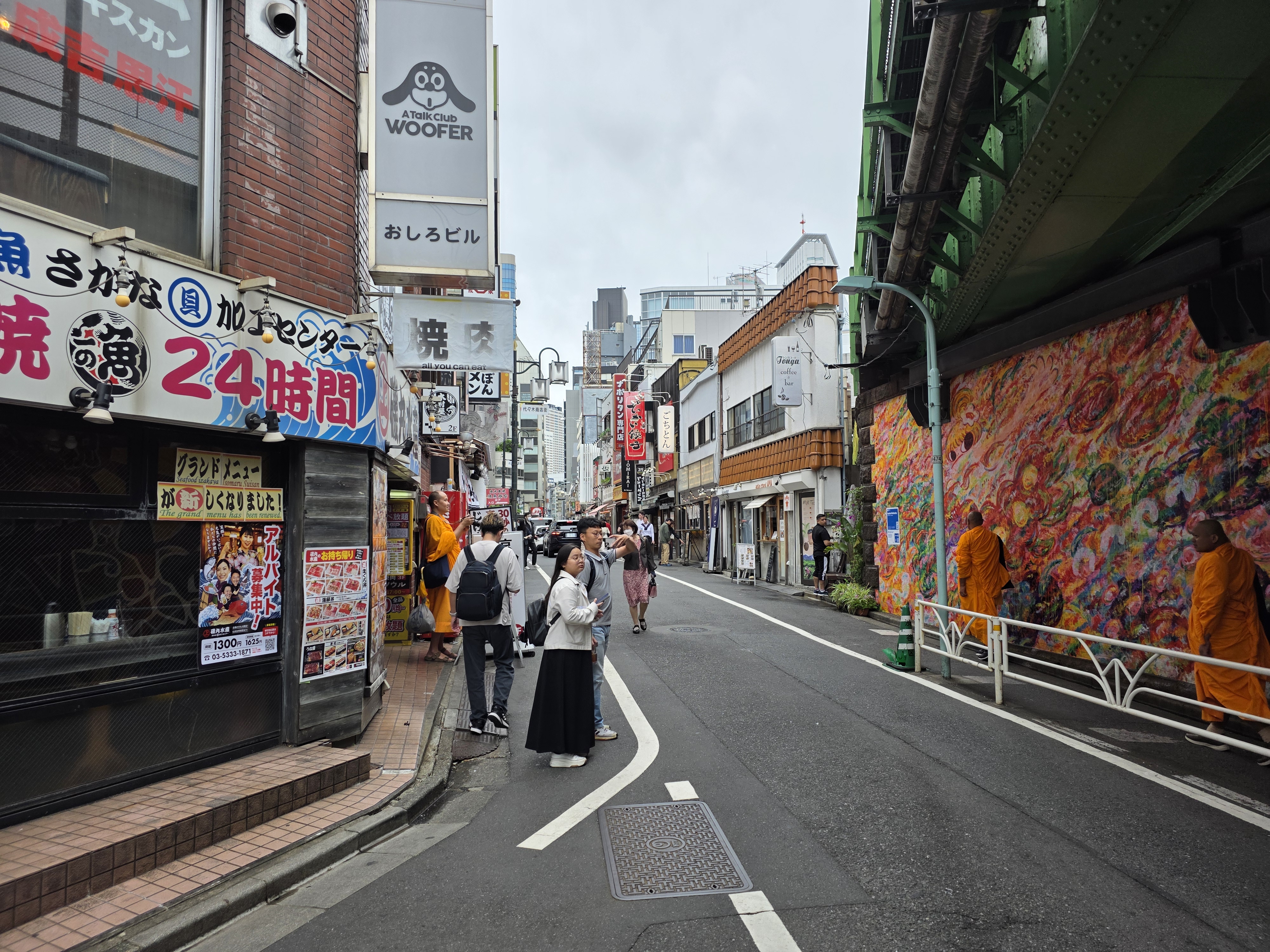
We walked across the entire district to the subway station, and from there we headed to the Kichijoji area, where the Ghibli Museum is located. Kichijoji also has a totally different feel, and it also has narrow streets with izakayas, but we didn’t find anything interesting here: since it was around midday, most of them were shut behind roller shutters (I’m guessing, it’s more lively in the evening).

So, in search of lunch, we somehow ended up in the Japanese equivalent of what we’d call a “day-day kafesi” (literally – “café for uncles”), indeed quite packed with local “uncles”, and everything was in Japanese. Luckily, the ordering was done via an interactive tablet – you just tap on pictures and help yourself out with Google Lens. They served ramen, noodles, yakitori with rice, and some very tasty gyoza. It was a delicious and incredibly cheap meal – 1800 yen for two (that’s 9 pounds, mind you!).

After lunch, we still had time before the museum and headed to the nearby Inokashira Park – a lovely park with a large lake in the middle.

As for the museum itself – as you can probably guess, it’s dedicated to the Ghibli anime studio. Tickets need to be bought in advance – for foreign tourists, they’re released once a month for the following month and sell out within just a couple of hours. I’m not a Ghibli fan (to be honest, I’ve never even seen a single film), but I joined Rena – and didn’t regret it one bit.

You’re not allowed to take pictures inside the museum, which makes sense – otherwise, people would be crowding every exhibit forever. The exhibits – both temporary and permanent – were really interesting. The idea is to use Studio Ghibli’s well-known anime films as an example to show the entire animation process – from early sketches and drawings to the final product.

There are piles of scrapbooks and art books filled with images of everything imaginable – tools, landscapes, cityscapes, people in motion, animals, plants – all used to create the most realistic animations possible. You really get a sense of how colossal the amount of work is.

It was also fascinating to see how animation frames are brought to life – with techniques like layering images or using fast-spinning three-dimensional figures in different poses (the rotation itself is too fast to see, so it looks like the figures are actually moving, though they’re just different models ending up in the same position). Overall, it was all really, really interesting.

They also showed a short animation – “The Day I Bought a Star” – about a boy who buys something like a precious gem from a mole and a frog, then plants it and grows a planet. Unfortunately, the film was in Japanese with no subtitles, so we didn’t quite understand what was going on. Actually, the museum doesn’t bother much with translations in other parts either – apparently, they feel they have enough visitors already, and if you don’t understand Japanese, that’s your own problem.

The museum shop was a bit of a disappointment – we expected more, given how great the museum was, but it really didn’t impress us.

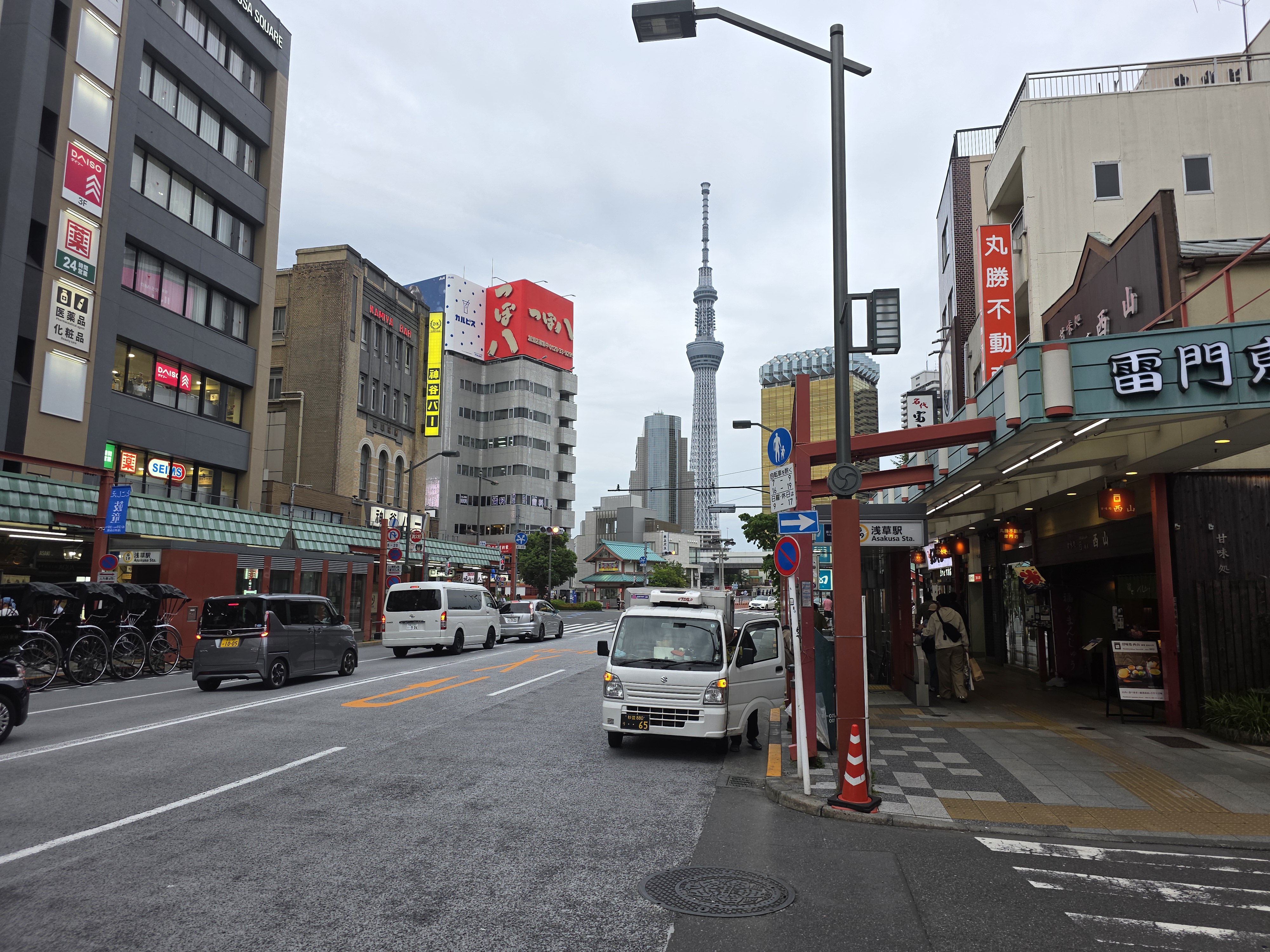
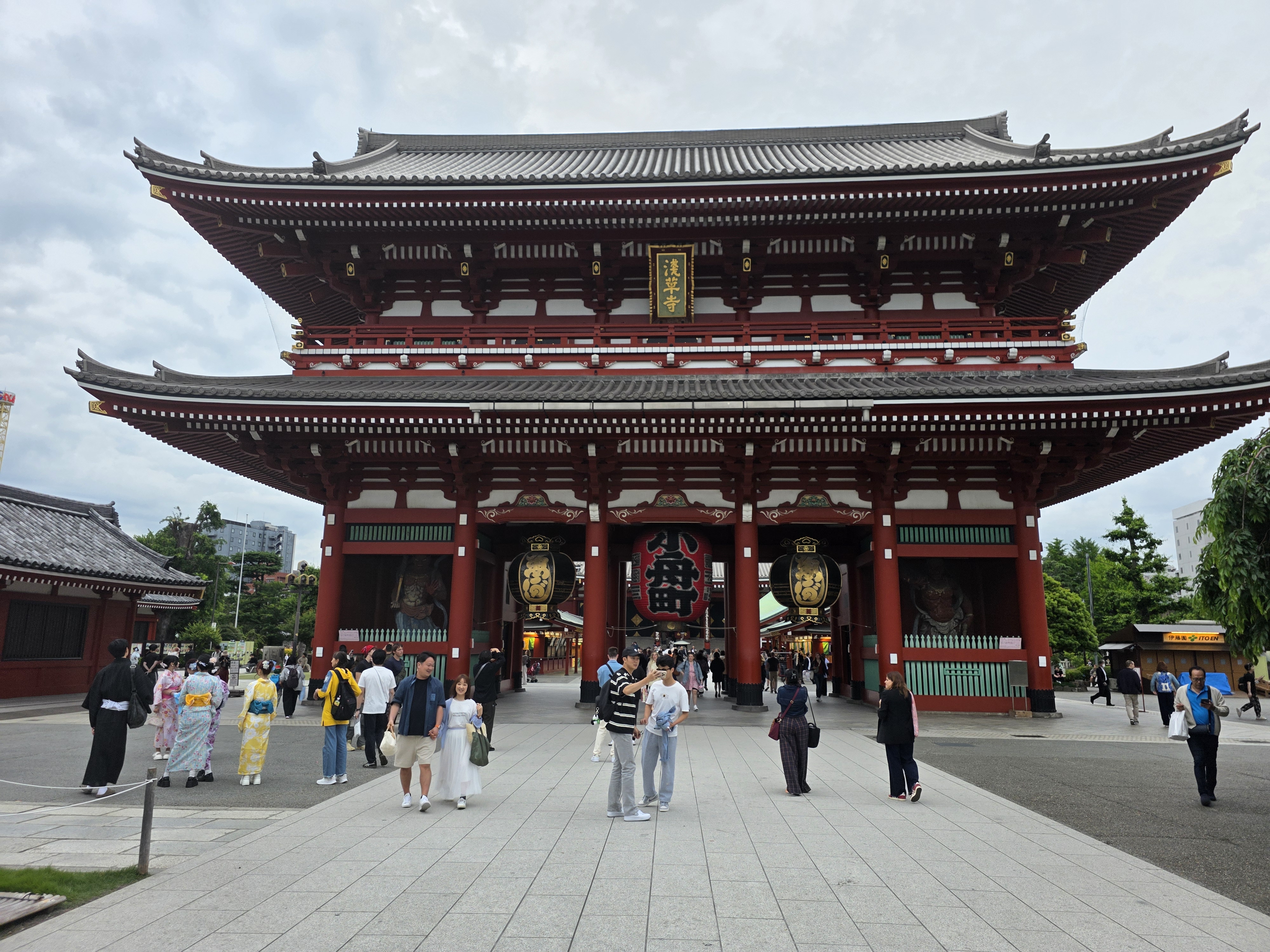
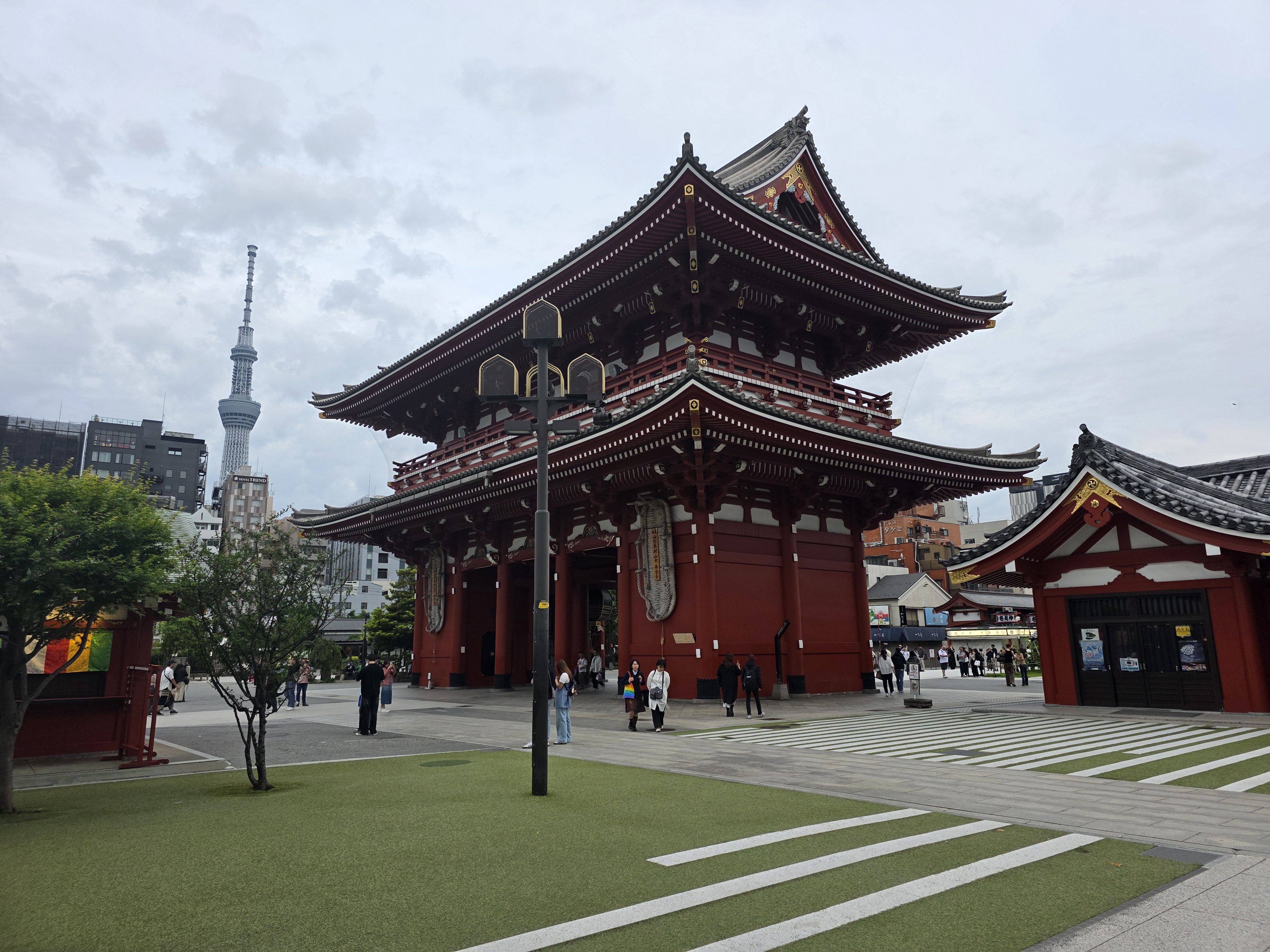
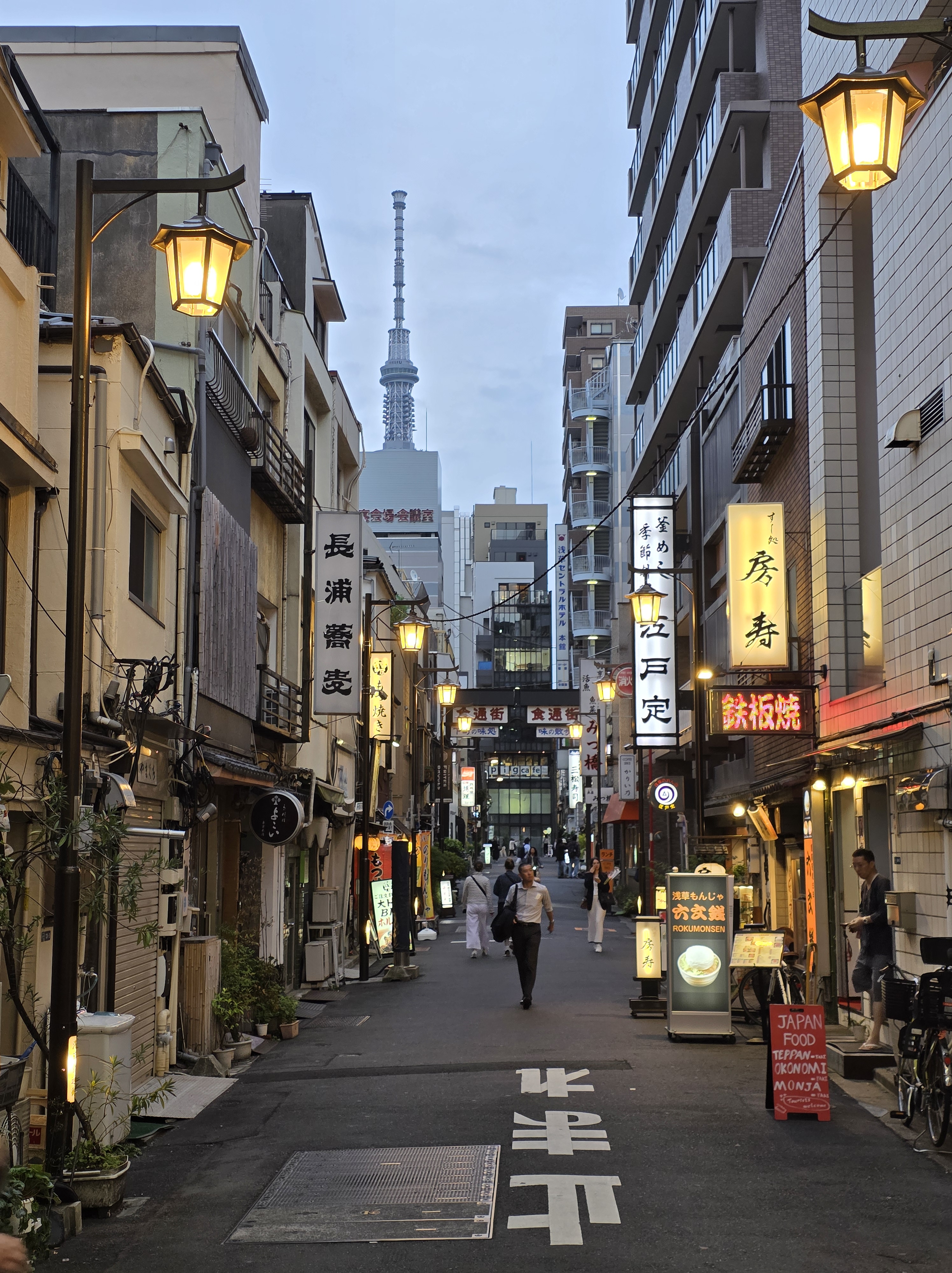
After the museum, we headed to the other side of Tokyo – to the Asakusa district – to visit Sensoji Temple. It’s Buddhist and is the oldest Buddhist temple in Tokyo. The approach to the temple is via Nakamise-dori, a traditional-style shopping street that mostly sells souvenirs. Since it was almost evening already, very few of the shops were still open – which was actually a good thing, because there were no crowds. The temple itself was beautiful.

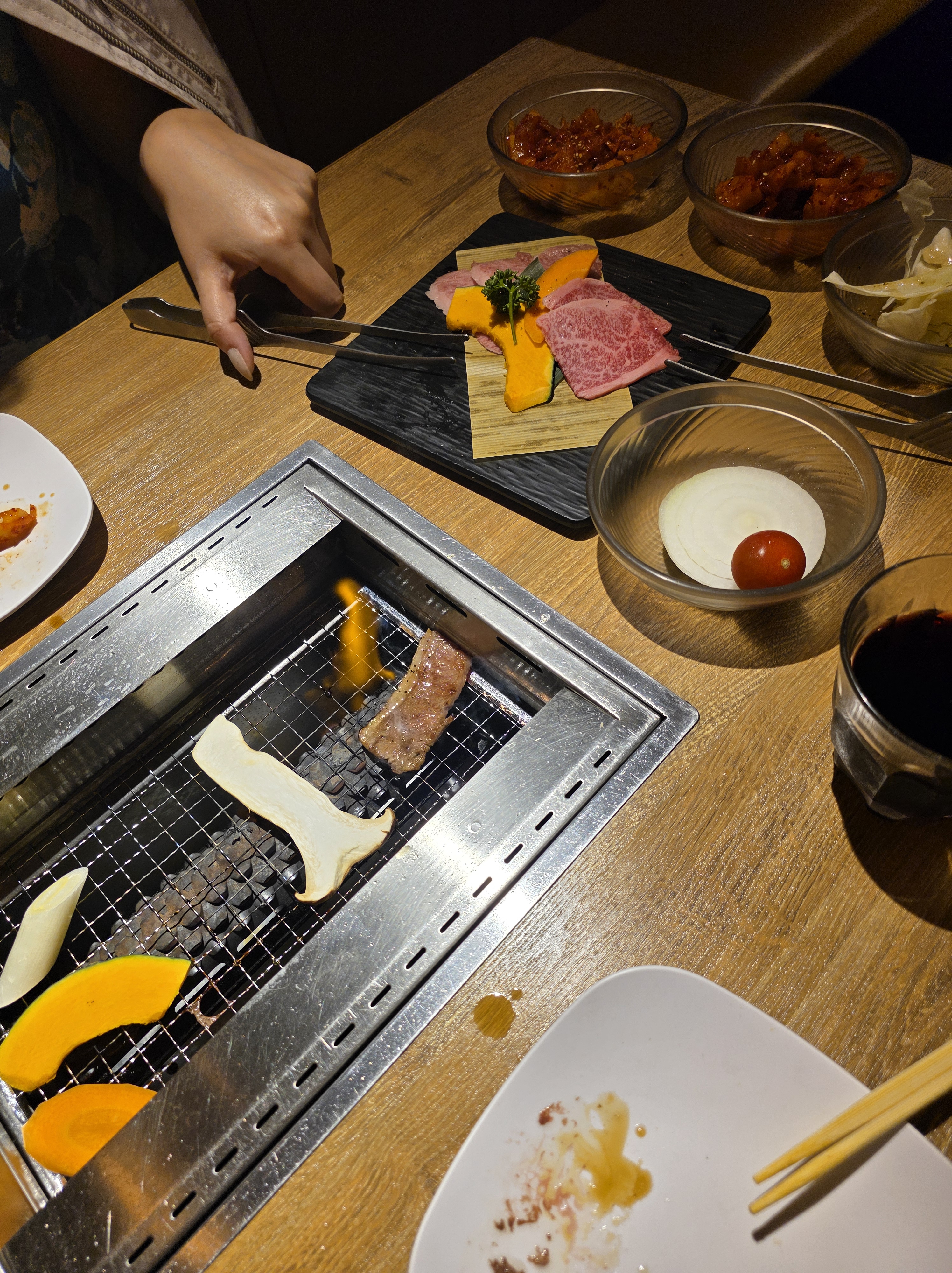
We had dinner in the same area, at a yakiniku-style restaurant – where you grill meat and other food yourself at the table. The place offered all-you-can-eat for 100 minutes. Naturally, we went for the marbled Wagyu beef – they had a variety of cuts. Unfortunately, we only managed two rounds of meat per person – a shame, because the beef was absolutely delicious!

Posted in Asia, English, Japan, Kawaguchiko

Japan – Day 3

РУССКОЯЗЫЧНАЯ ВЕРСИЯ ПО ЭТОЙ ССЫЛКЕ. CLICK HERE FOR RUSSIAN VERSION.

25 May 2025

Today we got up early, at 8 o’clock (although jet lag is still noticeable), and went for breakfast at a cool café nearby, in the park. They serve delicious Japanese milk bread for breakfast everywhere – it looks like an airy bun, and at first glance I thought I wouldn’t like it, but it’s actually really tasty.

Then we picked up my umbrella I’d forgotten at another café yesterday, and after that, we headed out for our trip to Lake Kawaguchiko and Mount Fuji!

I have to say, this trip had a whole backstory that deserves to be told separately. The thing is, this time of year doesn’t offer great chances of seeing Mount Fuji: the best visibility is during the winter months, and even then, the odds are only about 60–70%, while May isn’t ideal at all. Because of the clouds and fog, Fuji might not be visible at all – or only be partly visible. So planning a trip there far in advance makes absolutely no sense. It’s better to decide last minute, using a special website that gives 5-day weather and visibility forecasts for the mountain from both the north and south.

A couple of days before travelling to Japan, I checked the site, but the forecasts for our stay in Tokyo looked pretty discouraging. On the evening of our first day, we checked again – and saw that for today’s afternoon, visibility was rated 6 out of 10. We decided to take a risk and bought bus tickets anyway. And today – it was showing 10 out of 10!

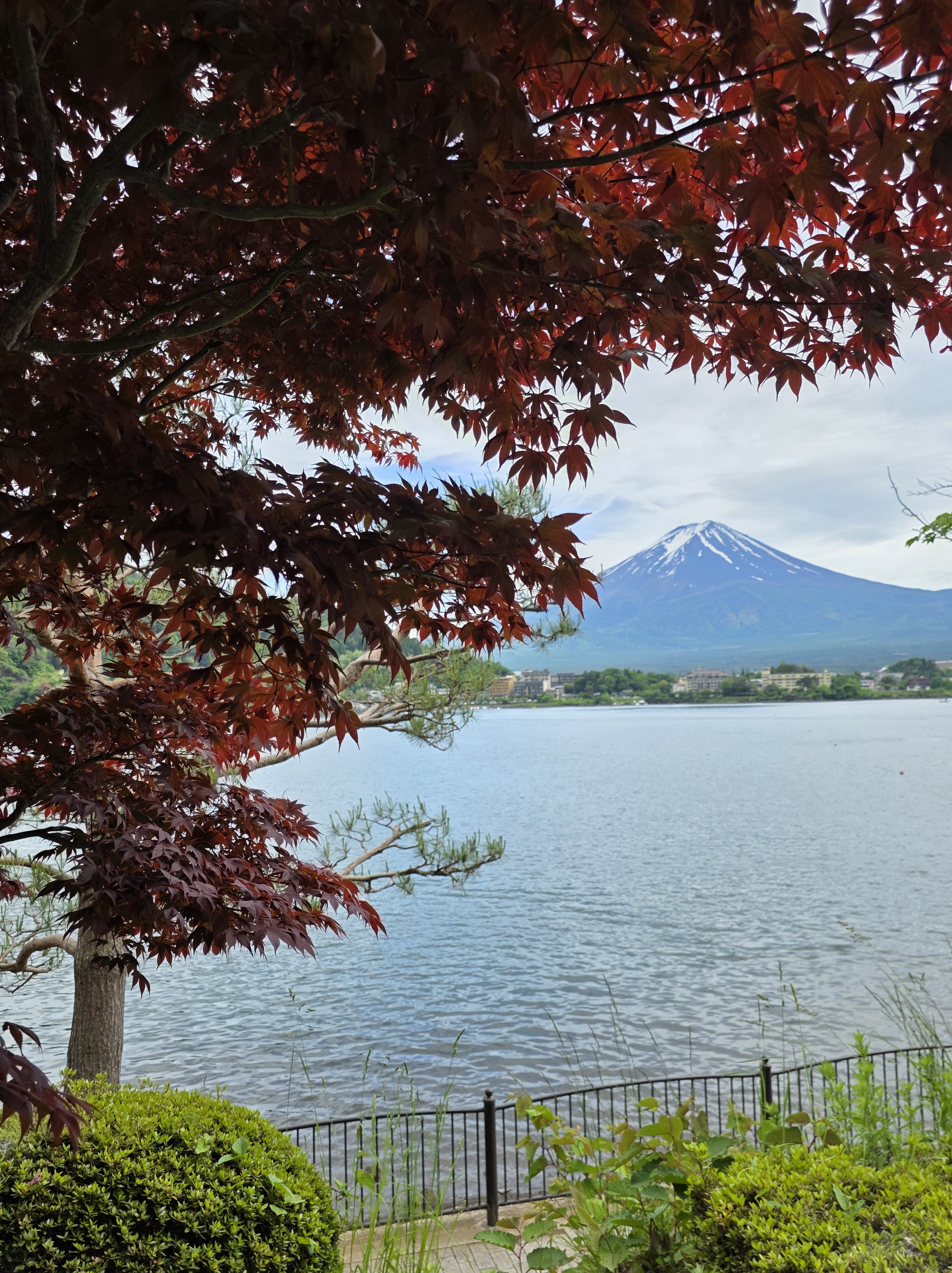
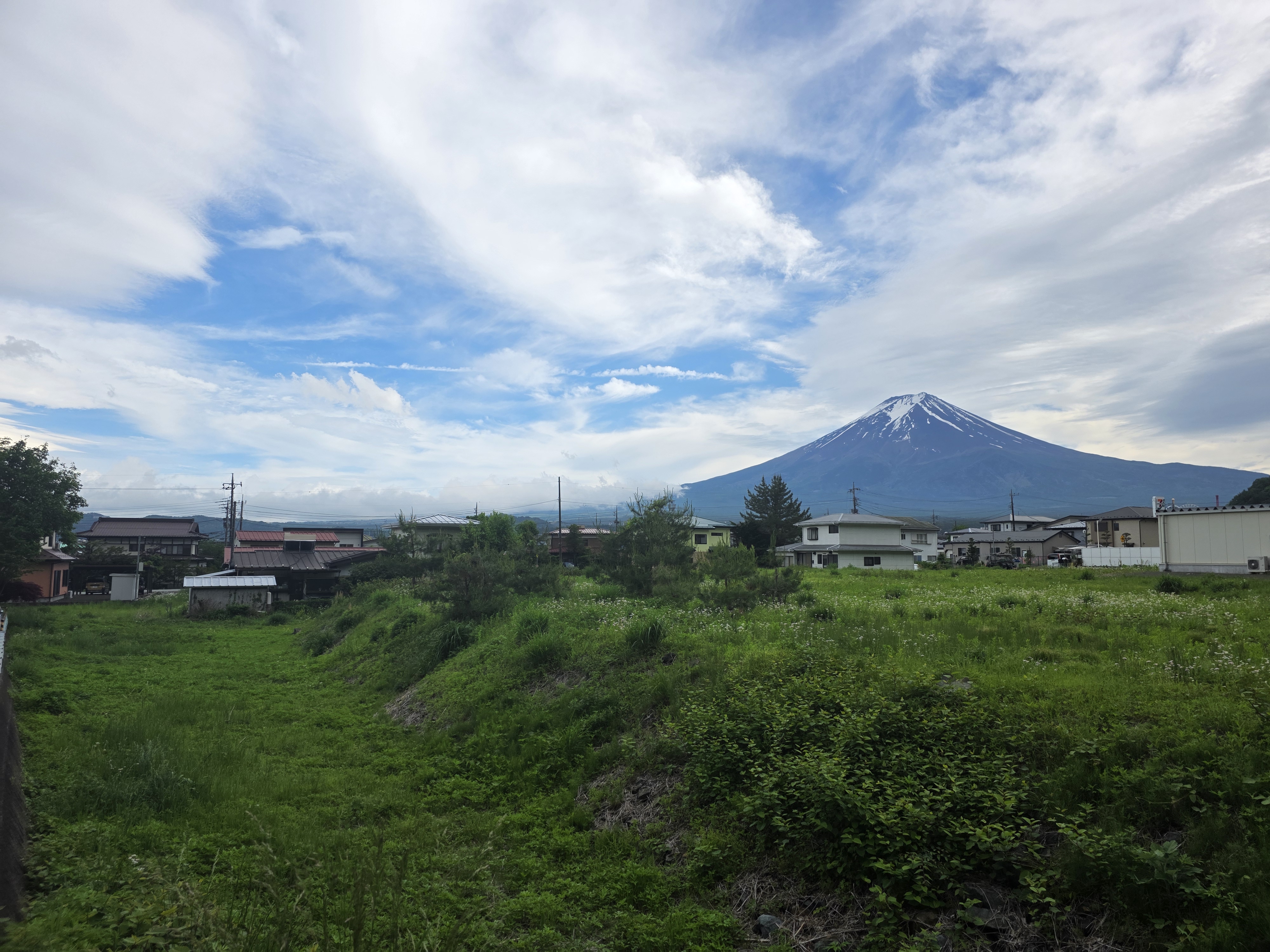
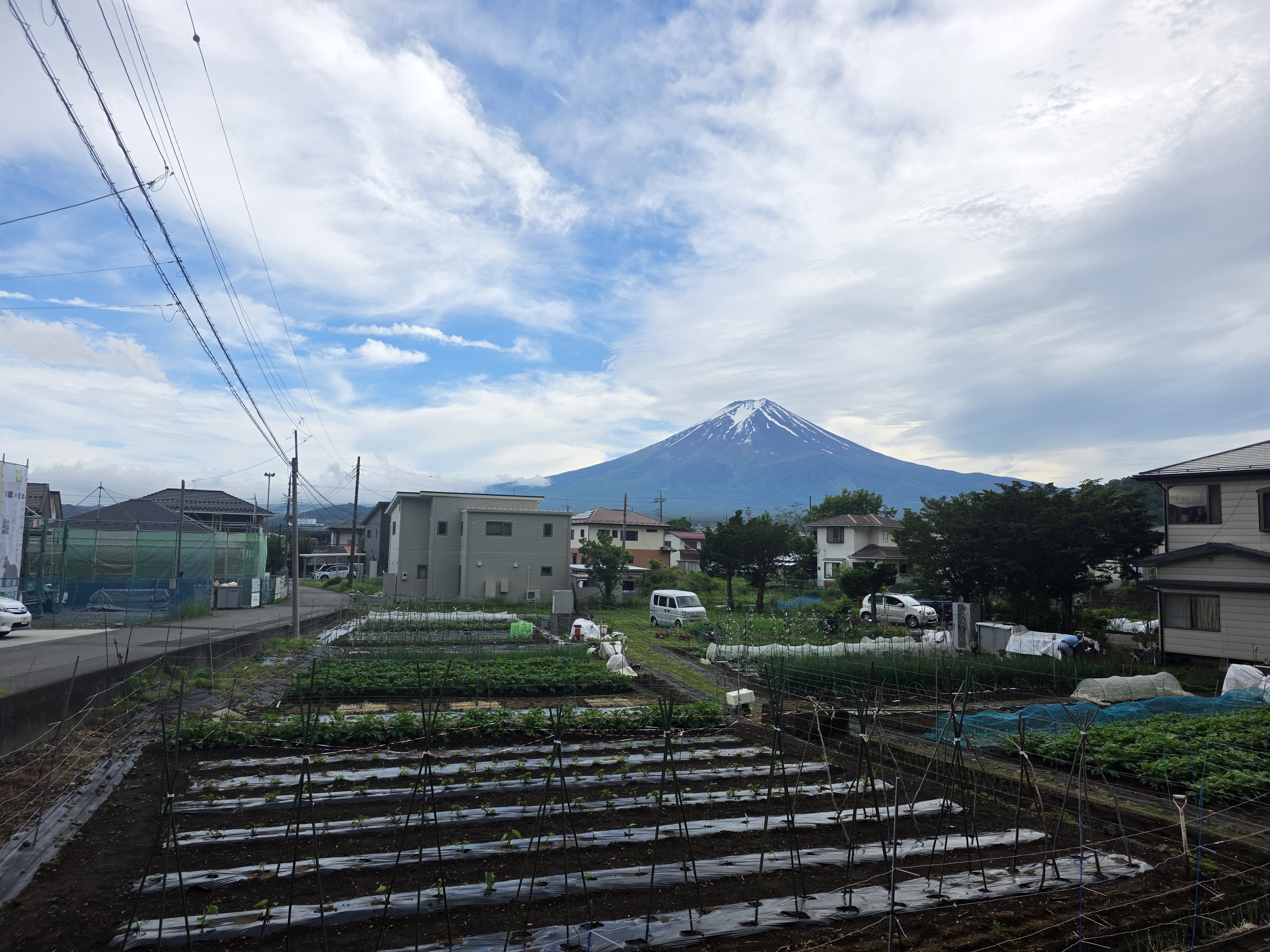
The bus picked us up right from our hotel and took us to Kawaguchiko Station in two hours. And right away, we saw the majestic mountain – fully visible! It really is incredibly impressive.

First things first – we decided to get lunch. We wanted to try the local specialty noodles (udon), but the line outside the restaurant didn’t look inspiring, so we went to another place that only serves one dish: beef katsu cutlet.

After lunch, we went for a walk along the perimeter of Lake Kawaguchiko – one of the “Five Fuji Lakes” – toward an observation deck. The lake itself didn’t seem all that remarkable, at least not this part of it – we didn’t even feel like doing a boat tour, which we’d originally planned.

There was a funny moment when it seemed like the mountain had completely disappeared, and we were confused – how could it vanish in just five minutes? But it turned out we were just looking in the wrong direction, and it was hidden behind a hill, so soon enough, it reappeared – still in full view.

Next on our list was the Chureito Pagoda with its famous “postcard” view of Mount Fuji. From the observation deck where we’d already taken a hundred million photos, we decided to walk there instead of heading back to the station to take a train – we figured an hour and twenty minutes on foot sounded doable.

Spoiler alert: this turned out not to be our brightest idea, because 2.5 kilometers of the walk (at least half an hour) went straight through a car tunnel carved through a mountain – something Google Maps didn’t warn us about. Initially we didn’t even realise how long it was. We reached the mountain, saw the tunnel, and even joked that a clever person wouldn’t climb a mountain but would rather dig a tunnel through it. But dragging ourselves through that dark, polluted tunnel wasn’t the most pleasant part of the trip. We didn’t see a single other pedestrian – just a couple of puzzled cyclists passed us along the narrow walkway.

After the tunnel, though, the walk was much nicer – through a quiet rural area, with cute houses and irises blooming in small gardens. It must be lovely to live there, with the country’s most important symbol as your everyday backdrop.

Of course, to reach the pagoda itself we had to climb uphill – wouldn’t expect anything else. By then it was about 5 pm, so there weren’t many people around. Most tourist groups probably visit in the morning, because I recall reading reviews saying the pagoda isn’t worth it because of the crowds, with people packed so tightly it’s hard to take a single photo. As for us, we spent quite a while on the viewing platform, admiring the view of the pagoda and Fuji, and took yet another hundred million photos. In total, I must have photographed at least a hundred different views of Mount Fuji – just like Hokusai, only with much less effort!

On the way back, we ran into a bit of an issue. We hadn’t realised that bus tickets needed to be booked in advance. In one sense, it wasn’t a bad thing – we didn’t know exactly how much time we’d need to explore. But when we got to the bus stop, all three buses that came only picked up passengers who already had tickets. Since they were full, they refused to take us. When we checked the bus company’s website, we saw that all the remaining buses for the day were also sold out.

We had to walk to Shimoyoshida Station – at least that was still an option!

From there, we had to transfer trains and then take the subway. The return trip took over three hours, probably to balance out how easy and direct the ride there had been (right from the hotel!). So we ended up having a rather sad dinner – a sandwich and an onigiri (a rice triangle with filling, wrapped in dried seaweed) that we grabbed at the station and basically inhaled on the train in minutes, like cormorants (since it’s considered rude to eat or drink on Japanese public transport, at least we didn’t embarrass ourselves for too long!).

All in all, despite the hiccups, it was a wonderful trip – and Fuji-san was kind to us. We were so lucky to see her in all her glory!

Posted in Asia, English, Japan, Tokyo

Japan – Day 2

РУССКОЯЗЫЧНАЯ ВЕРСИЯ ПО ЭТОЙ ССЫЛКЕ. CLICK HERE FOR RUSSIAN VERSION.

24 May 2025

Observations after our second day in Tokyo – first of all, Japan is, above all, for the Japanese. For example, you won’t see souvenir shops with magnets and other touristy junk popping up everywhere – you can find them, of course, but you pretty much have to deliberately look for them.

Secondly, cash still plays a major role here – which is surprising for such a developed, high-tech country. Cards are accepted in many places, but definitely not everywhere. For example, the balance on the transport IC card (which, by the way, is incredibly convenient – you can use it for transport all over Japan, and also to pay in convenience stores like FamilyMart and 7-Eleven, at vending machines, and even to lock up your suitcase in hotel storage rooms or in Shinkansen luggage lockers) can only be topped up with cash. You can load it from a card only when you first buy it at the airport.

That said, the country doesn’t even feel especially high-tech. Websites and online payment systems are often clunky, and the city infrastructure doesn’t give off a futuristic vibe that’s miles ahead of, say, old Europe – like was the case in e.g. Singapore. For instance, there aren’t always escalators at the entrances and exits of the subway, which would be unthinkable in Singapore. It feels like Japan’s rapid development sort of paused at some point – maybe in the ’90s. The architecture doesn’t resemble the likes of Singapore or Hong Kong either. There are lots of plain, boxy concrete apartment buildings. But it also doesn’t feel densely built-up like Hong Kong, despite what we’d heard about Japanese homes being so compact they fit a bed, a toilet, and a kitchen into literally a single square meter – often with retractable furniture. At least from the outside, it doesn’t look like space is that tight.

People, of course, are very polite. If the British are known for loving to queue, then the Japanese seem like they were born for it.

We also noticed that various jobs that seem “inefficient” by our standards – like waving a flag to direct traffic that’s already controlled by traffic lights – are often done by elderly men. Even in retirement age, people don’t sit at home on the couch; they still prefer to work, even if it’s not clear what exactly they’re contributing.

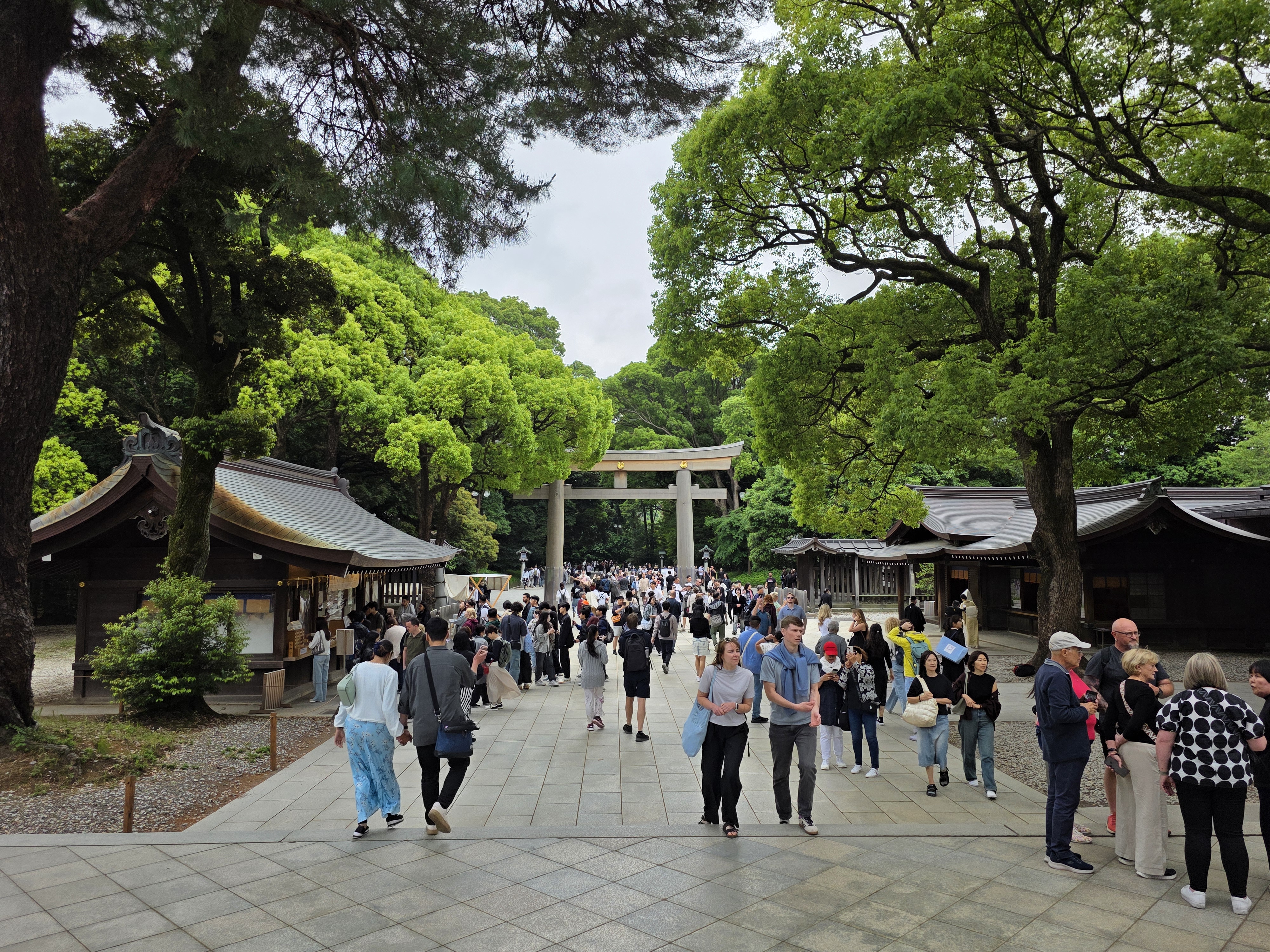
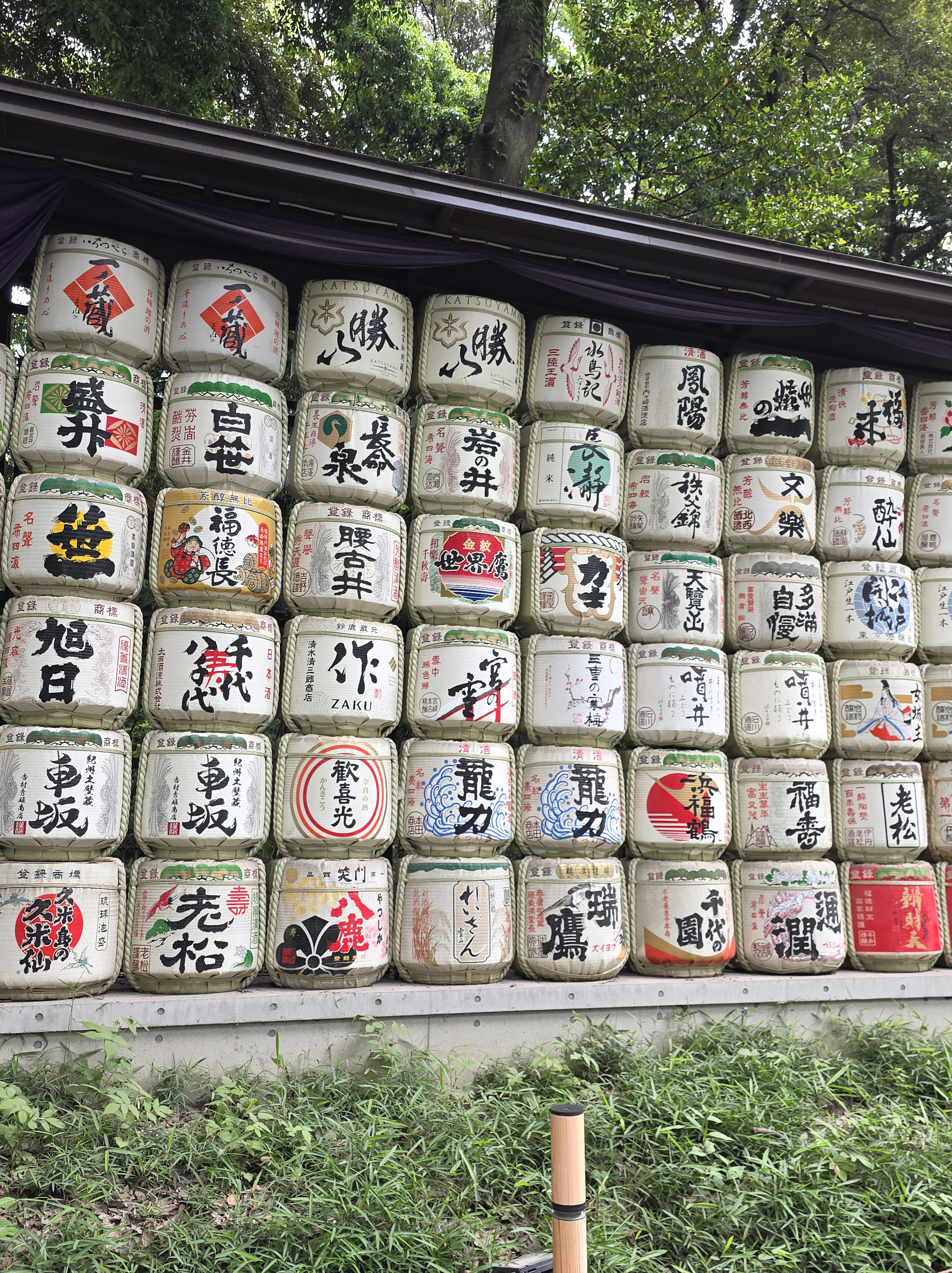
Now, about today itself. In the morning, we had breakfast at a café near the hotel and then headed to Meiji Shrine. It’s a large area with gardens and the shrine complex itself – the biggest Shinto shrine in Tokyo from the early 20th century. It was interesting, though there wasn’t that much to linger over. We were lucky to see a traditional Japanese wedding procession, and all the tourists immediately whipped out their cameras to record it.

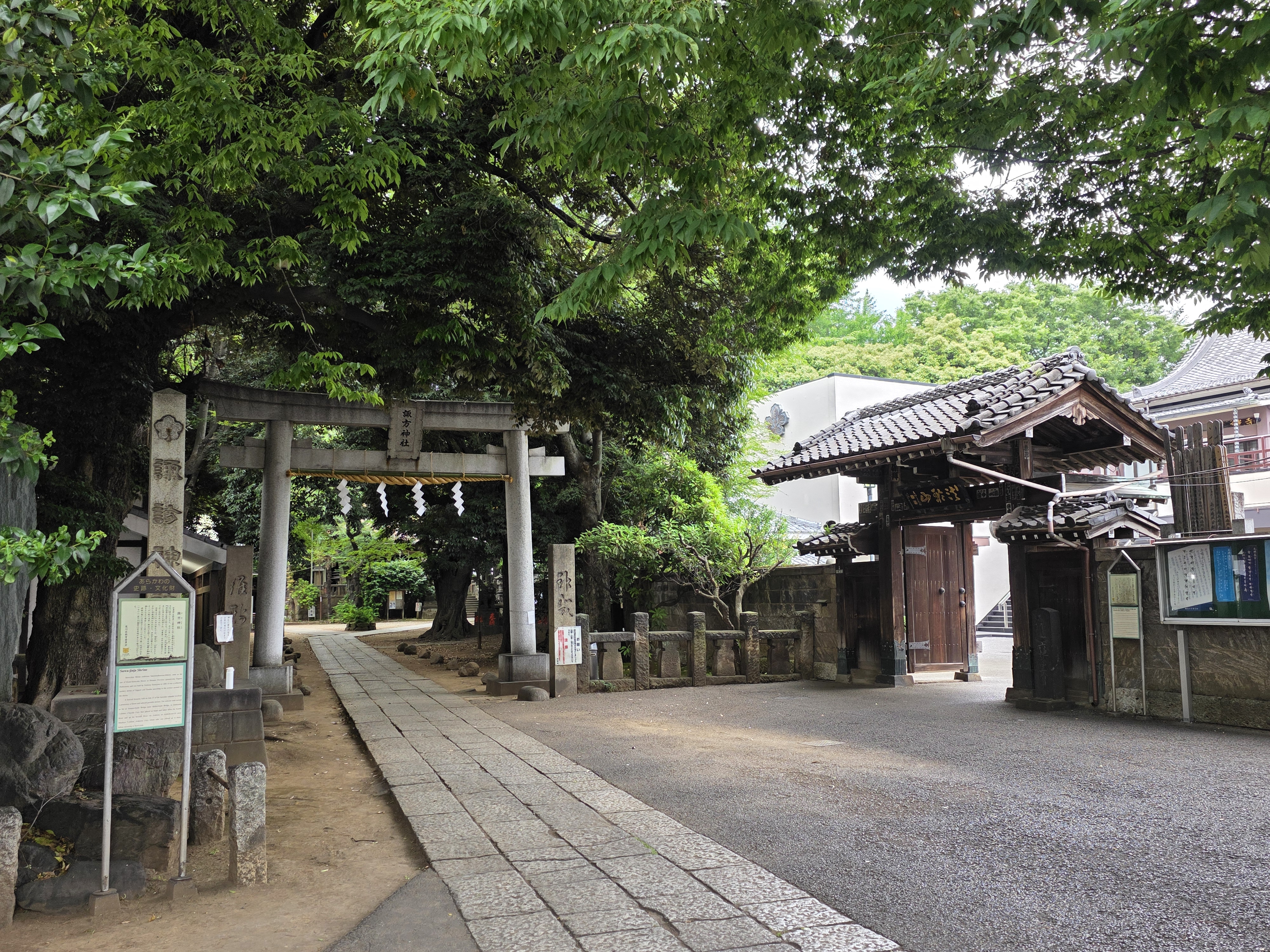
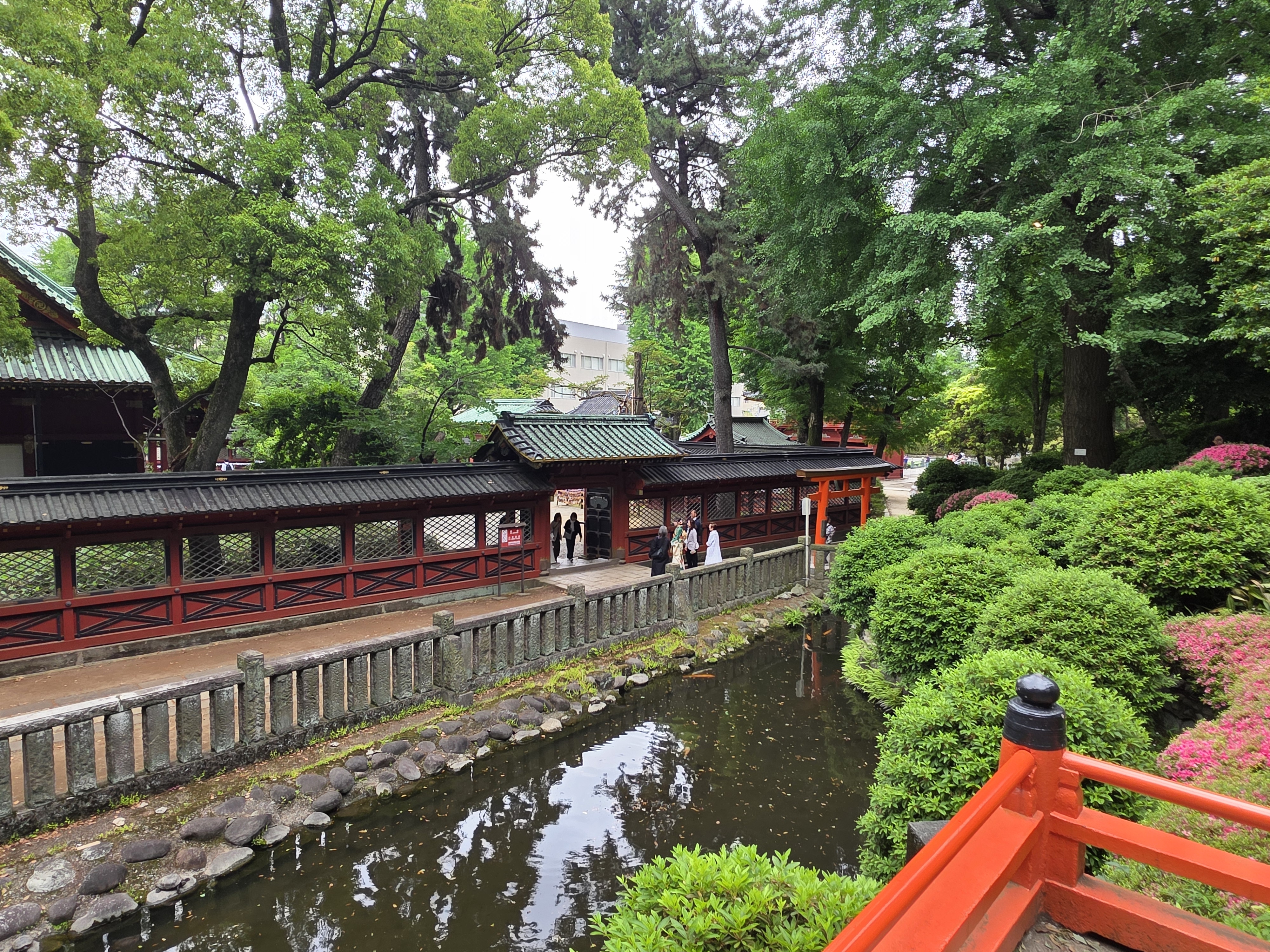
From there, we went to the Nezu area, where we strolled through narrow streets and visited another shrine – called Nezu Shrine. It was much quieter there, clearly not a major tourist spot, but we actually found it more charming and interesting.

Before visiting the shrine, we had sushi nearby. I ordered an assorted nigiri set – I could recognise salmon, tuna, and grilled eel, and there were a few other types of fish I couldn’t identify. It was incredibly tasty – sushi like this just doesn’t exist outside Japan. And yes, it’s true what people say: sushi here is nothing like what we get back home. Here it’s mostly nigiri, sashimi, and occasionally very simple maki rolls. Just the basics: rice, fish, nori. No mayo, avocado, cream cheese – or God forbid, Caesar rolls.

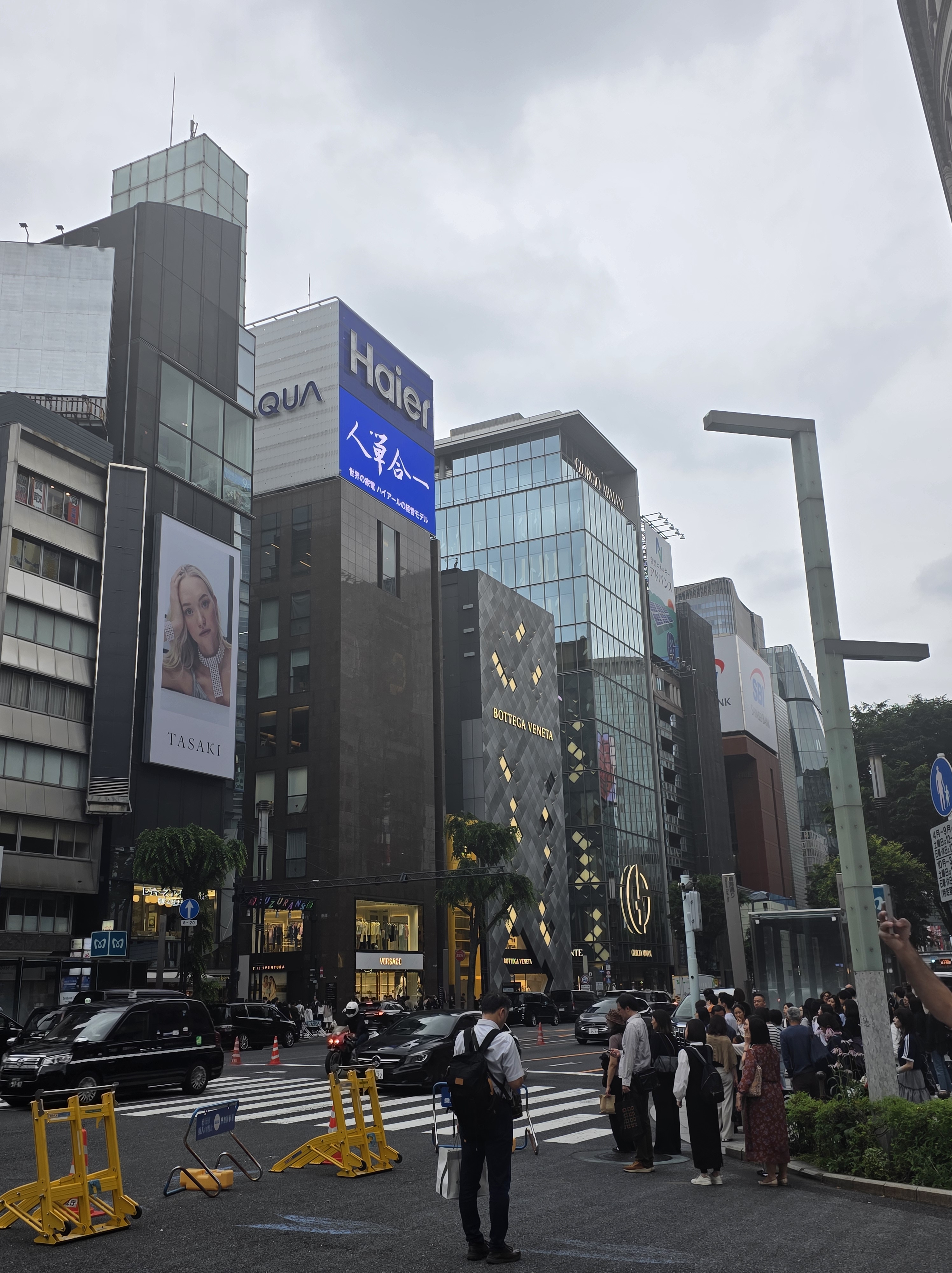
Next, we headed to the Ginza district and walked around. Each Tokyo neighbourhood feels different from the the other – Ginza feels more upscale and also more European in a way. In places, it almost feels like walking around the Galeries Lafayette area in Paris.

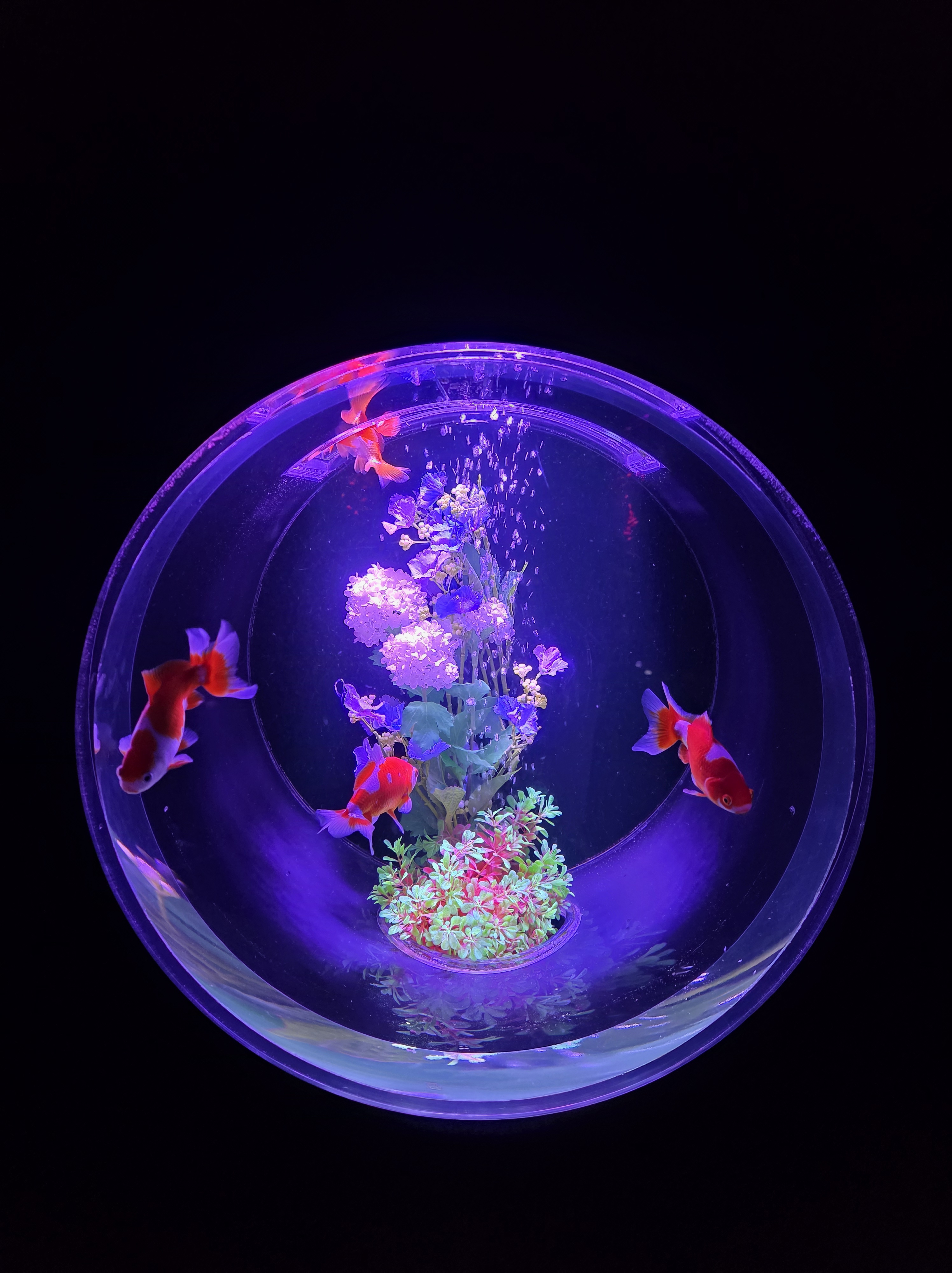
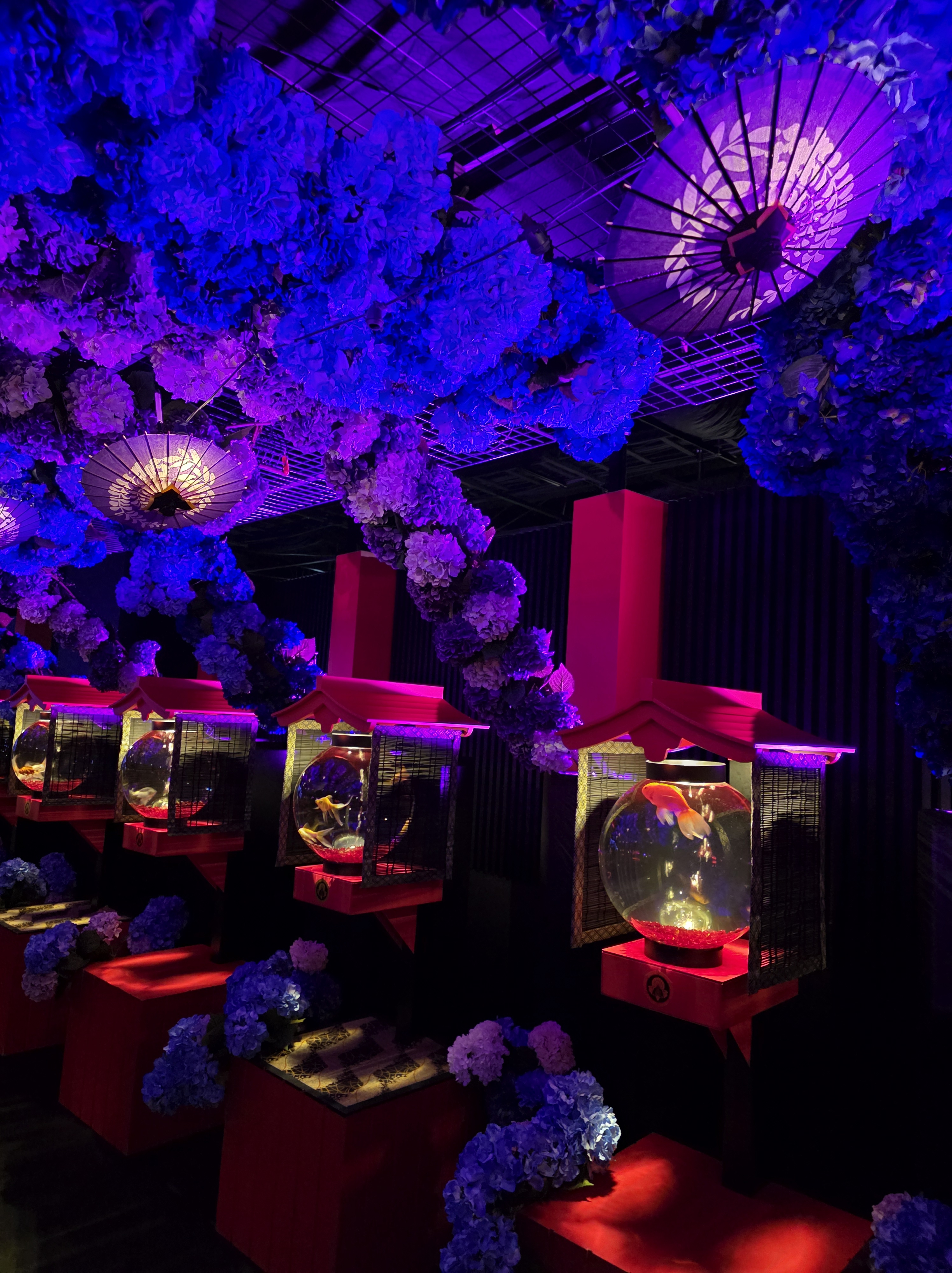
In Ginza, we visited the Art Aquarium Museum, which has lots of different aquarium installations with live fish lit up in creative ways. Yes, it was cool and interesting, but there was also something a bit unsettling about it – some sense of neglect or even cruelty. Some tanks were tiny glass bowls, others looked like solitary confinement cells with two or three fish crammed inside, clearly with no room to move. It’s unclear whether they’re kept there permanently, and if not, how the whole system works – how they’re fed, where they’re moved, etc. The fish themselves were fascinating – some with bulging eyes, others round-bellied and odd-looking. But after a while, the installations started to feel a bit repetitive.

We had dinner in a diner in the same building – set meals with meat, fish, and various small side dishes. I had one with wagyu beef.

We wanted to hang around Ginza a bit longer, but it started raining so we headed back to the hotel.

Posted in Asia, English, Japan, Tokyo

Japan – Day 1

РУССКОЯЗЫЧНАЯ ВЕРСИЯ ПО ЭТОЙ ССЫЛКЕ. CLICK HERE FOR RUSSIAN VERSION.

23 May 2025

Whoop whoop, my childhood dream is finally coming true and I’m going to Japan! This is something I’ve wanted to do for years, but it never quite worked out – whether it was the Fukushima disaster (yes, when I say “years,” I mean years!) or trying to combine the trip with a wedding in Barcelona – only to realise this wasn’t going to work.

I took a direct 13-hour flight from London to Tokyo. I’d really hoped to sleep on the plane, but since the flight was during London daytime – and, as luck would have it, I was sitting right behind a baby who screamed almost non-stop for what felt like the entire 13 hours – I couldn’t fall asleep at all. Of course, I don’t know why the parents were flying to Japan – maybe they had a good reason – but if not, it did feel a bit selfish. Not just toward the other passengers, but toward the baby too, who was clearly not having a comfortable flight.

Naturally, I arrived feeling pretty irritated. But that mood quickly lifted as I easily went through airport procedures, figured out how to get to the hotel, finally sat down on the train, and realised – damn, I was in Japan!

But even before that, I’d already had my first culture shock as I entered a Japanese toilet. Heated seats, built-in washing functions, and even a button that plays forest sounds and birdsong to mask any “indecent” noises.

The second shock came while I was on my way, as I changed from the train to the subway. I happened to hit rush hour – around 9 am – and that’s when I realised: anyone who has never ridden the Tokyo subway, hasn’t truly seen a packed train. The London Underground looks tame in comparison. Luckily, I had a seat, but the crowd was so dense I ended up half-lying on someone, my suitcases pressing into me and simultaneously squashing some poor guy’s crotch. I was genuinely worried I wouldn’t be able to get off at my stop with all my luggage, but thankfully Ikebukuro is a major station, and a wave of people getting off pretty much swept me and my suitcases out with them.

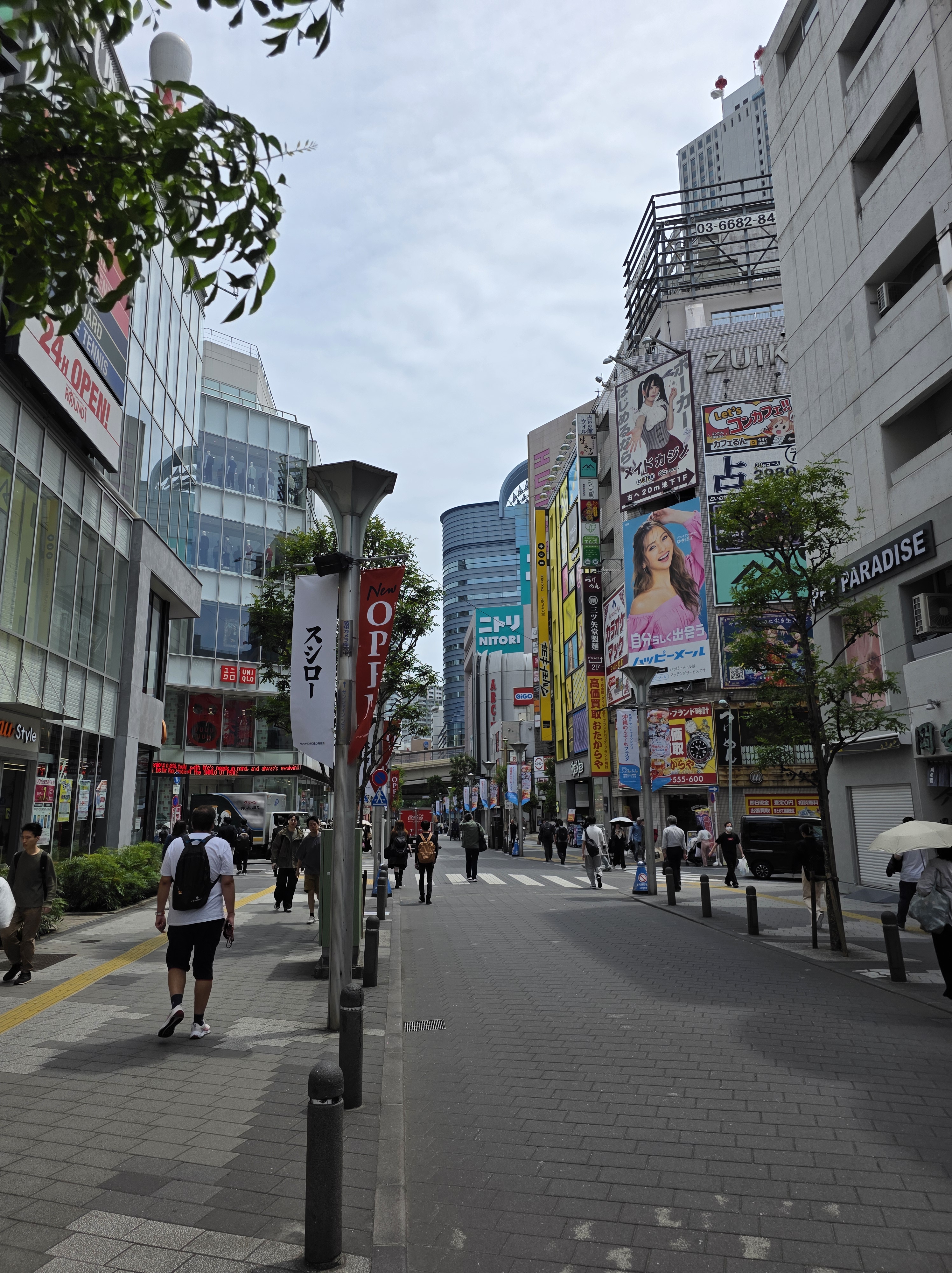
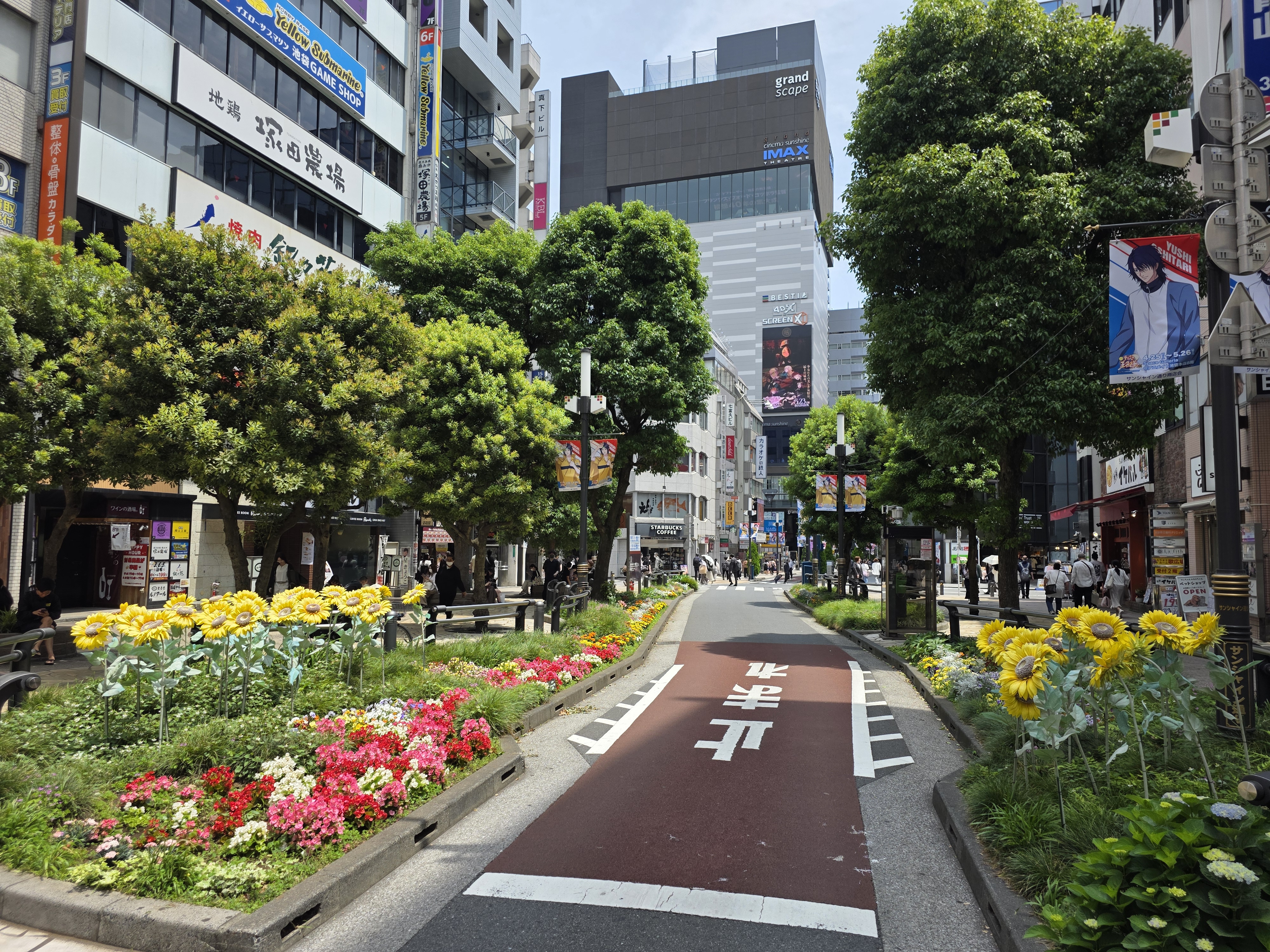
I arrived at the hotel a couple of hours before Rena, who was flying from Baku via Tashkent, and while waiting for her, I decided to take a walk around the area and look around. My eyes just darted around – everything looked so interesting! The signs, the shops (including those selling loads of Japanese and Korean cosmetics!), and all sorts of eateries – at least 358 of them per square meter, by my estimate.

While waiting, I had a couple of coffees and a matcha latte – I needed to refuel with caffeine after an entire sleepless day. English doesn’t seem to be widely spoken here, as far as I can see. In the coffee shop they spoke to me in Japanese, and naturally I didn’t understand a word, but still managed to order and pay using gestures and pointing at pictures.

The weather wasn’t too hot or sunny, but it’s still fairly stuffy. Despite the lack of direct sun, many people carry umbrellas to avoid getting burned. And lots of people wear masks – which, as we know, has been common in Japan long before Covid.

I also noticed that food and lots of other things are actually quite cheap here. It’s only the accommodation and some transport – mainly the high-speed Shinkansen trains – that are expensive. The rest of the transport system is quite reasonable (I’m comparing everything to London prices, of course).

We also saw groups of schoolgirls in uniforms here and there throughout the day, but oddly enough, no schoolboys (at least until 6 pm – it makes you wonder if they either study in different shifts, or if the girls skip classes en masse during the day, while the boys sit in class).

Once Rena arrived and while waiting for the hotel check-in time, we walked around the neighbourhood some more, had a rich and greasy bowl of ramen in a casual eatery, stopped by a cemetery (and immediately left – it wasn’t exactly Père Lachaise, but just a regular Japanese cemetery) and had more coffee at a conceptual little coffee shop.

In the evening, we headed to Shibuya to see the famous scramble crossing – the busiest in Japan, with up to 3,000 people crossing at the same time.

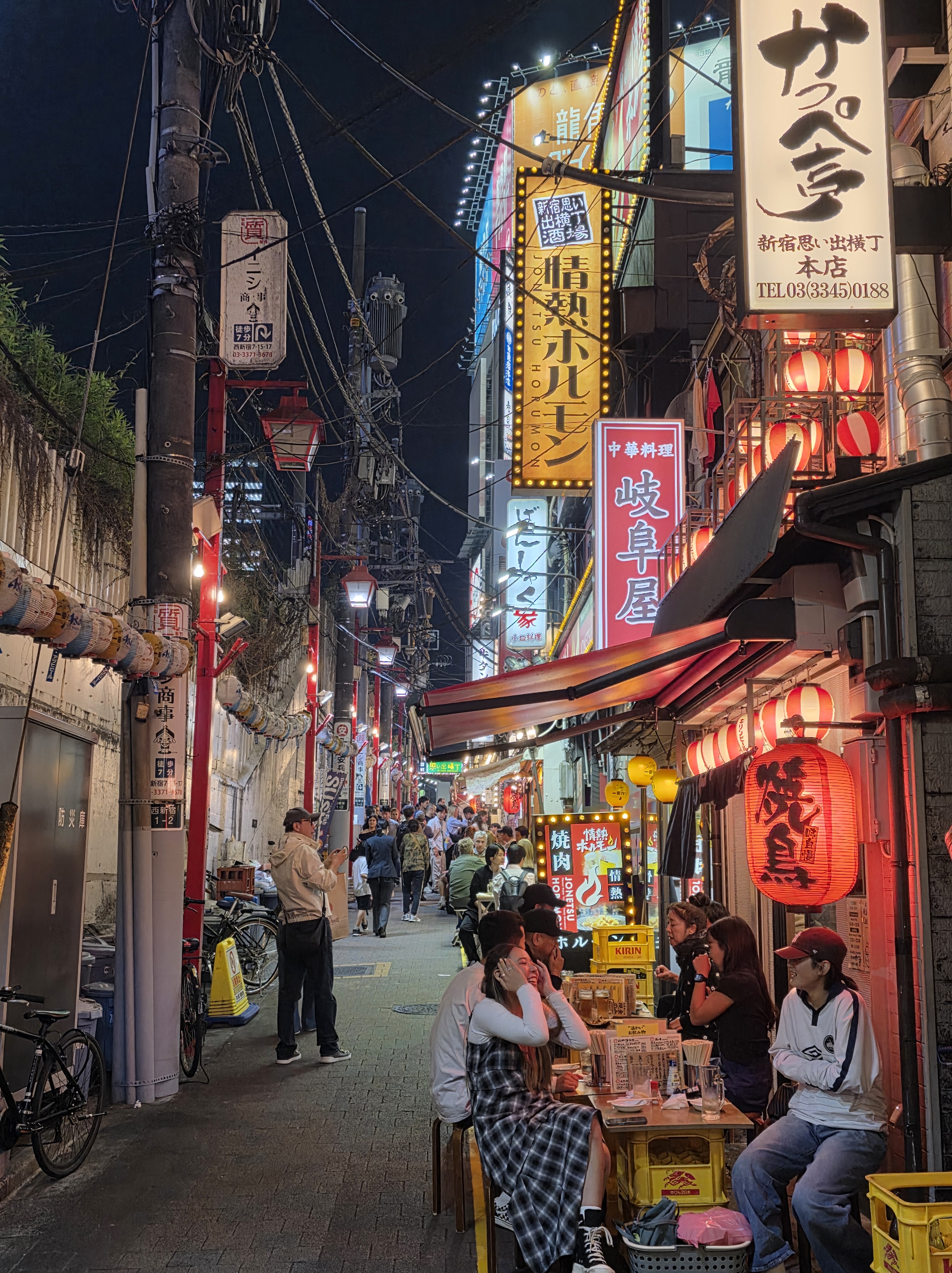
From Shibuya we went over to Shinjuku, and explored some of its narrow alleyways lined with izakayas – these are something like traditional Japanese pubs. Some of them are so tiny that they fit literally five visitors at a time.

We also went to an izakaya for dinner – but not to one of these small ones, instead we found a larger one, on the 5th floor of a mall, where we happily consumed sashimi and other dishes. Meals here are usually served as a set – with miso soup, boiled rice and pickled vegetables. And honestly, those who say that Japanese cuisine in other countries will be ruined for you once you try it in Japan itself – are right.

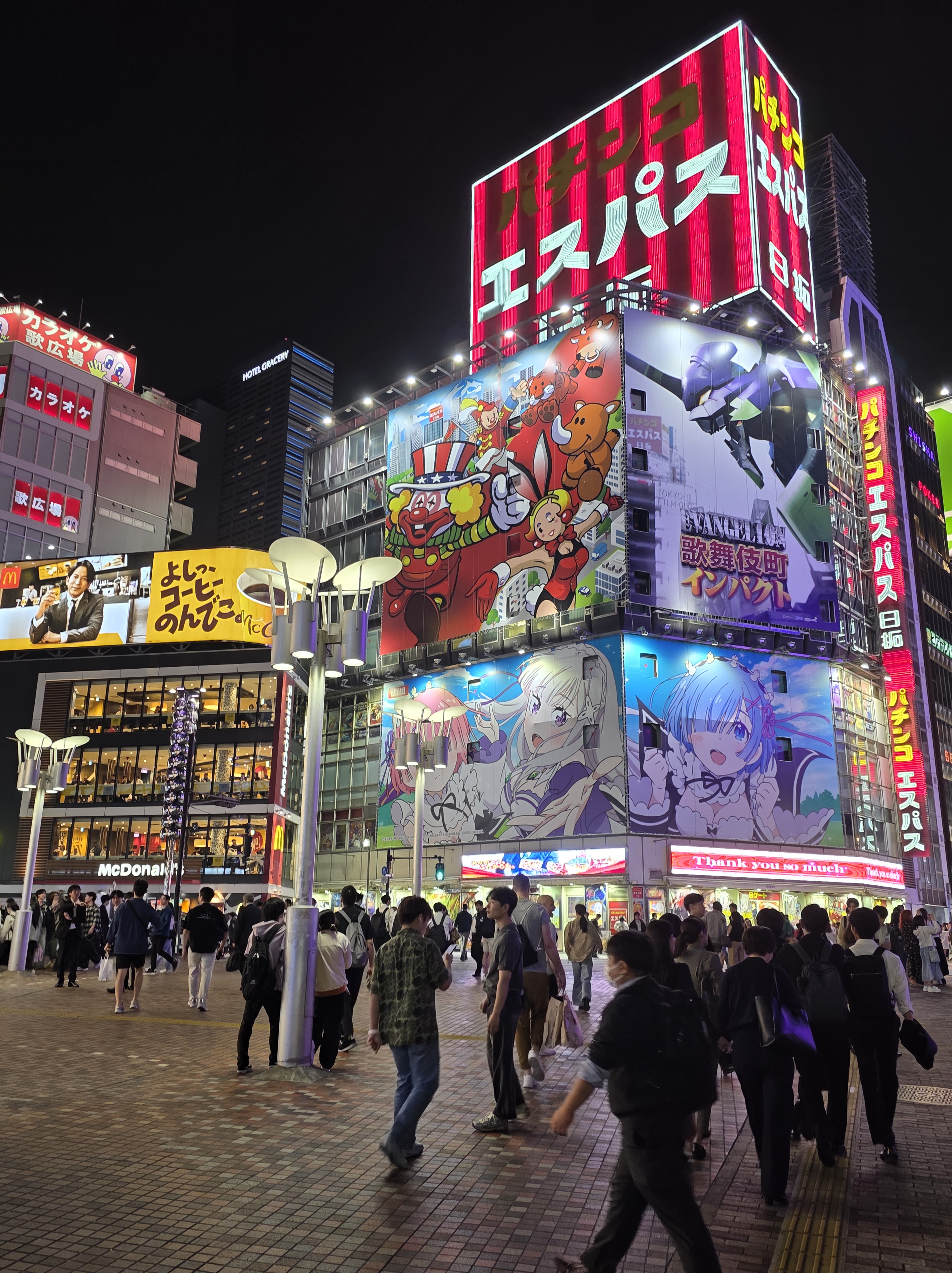
After dinner, we strolled through Shinjuku a bit more, enjoying the neon-lit night views.

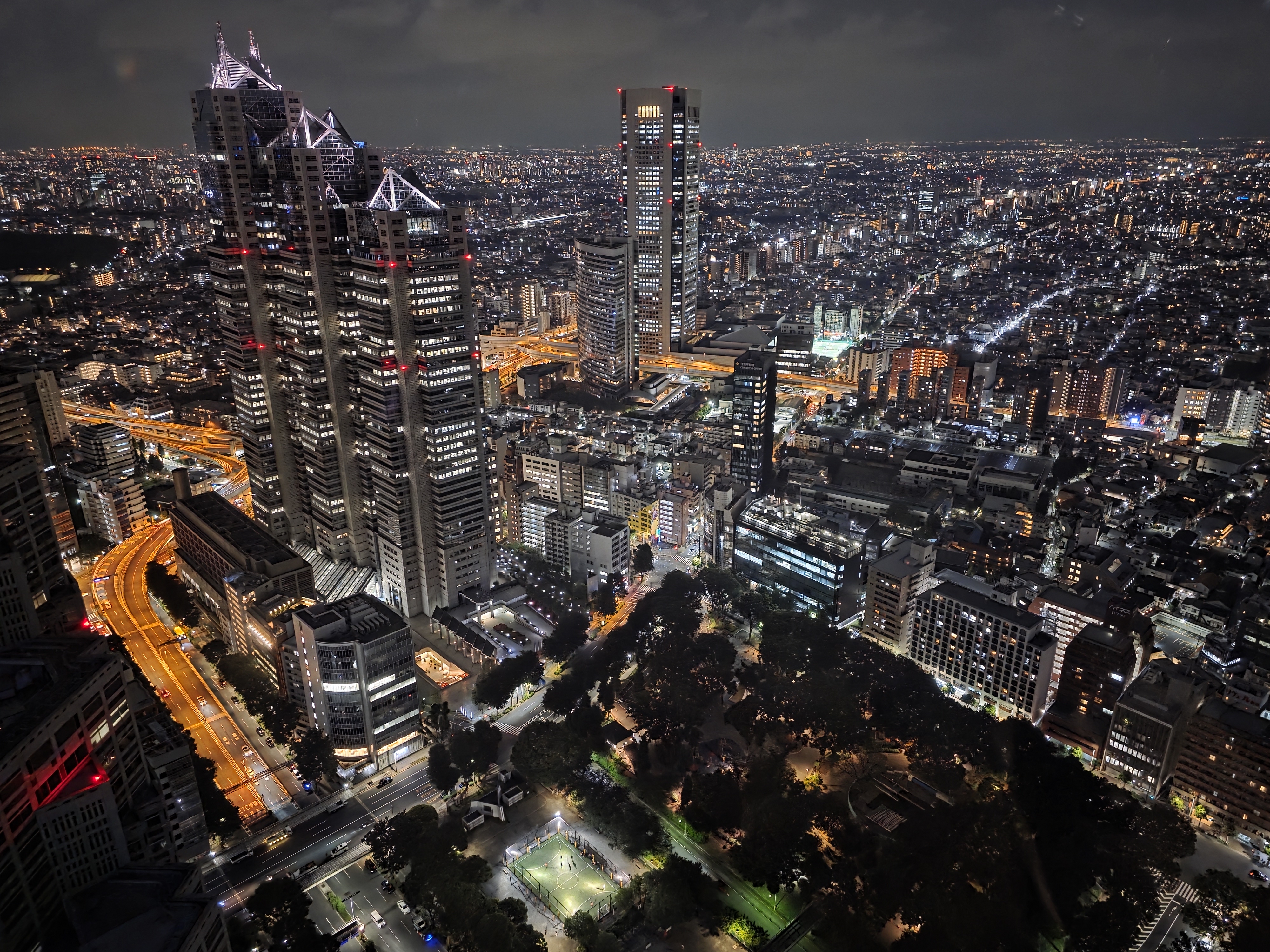
Our last stop of the day was the Tokyo Metropolitan Government Building, which has an observation deck on the 45th floor with great city views. We didn’t see Mount Fuji from there, although on clear days it’s apparently visible.

From there, we took the subway back to the hotel. Another observation – the stations here are huge. Even a small one with just a single line can have quite a few exits, a public toilet, and a number of shops and food stalls. And I’m not even mentioning the major hubs with several lines – they’re full-on labyrinths, and getting out can take a good 5–10 minutes. Luckily, there are plenty of signs, and everything is duplicated English (and often Chinese and Korean too), so it’s easy to find your way.

And that’s how we wrapped up the day – after 30+ hours with no sleep, running purely on excitement (with a little help from caffeine).

Posted in English, Europe, Istanbul, Turkey

Istanbul – Days 4&5

РУССКОЯЗЫЧНАЯ ВЕРСИЯ ПО ЭТОЙ ССЫЛКЕ. CLICK HERE FOR RUSSIAN VERSION.

07 February 2019

Today is the penultimate day of our short stay in Istanbul. Of course, there is a lot that we didn’t get to see – mainly because of the weather, rather than lack of time. For example, had the weather been good we could have headed to the Prince’s Islands or the Rumeli Fortress. Instead, we had to dedicate the day to shopping, which is actually also interesting and also a source of impressions. Besides, it turned out to be a great bargain: first, the lira is rather cheap at the moment and second, we were lucky to be here during big winter sales.

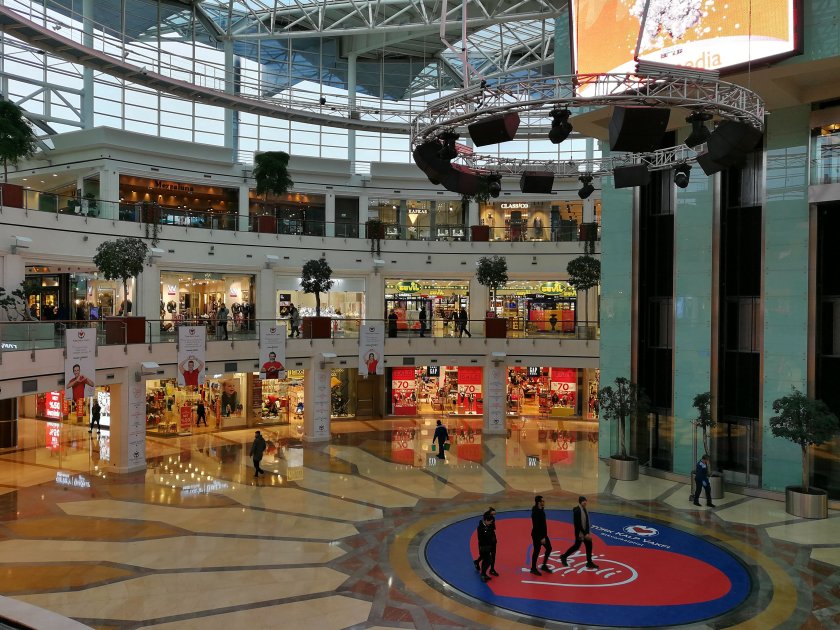
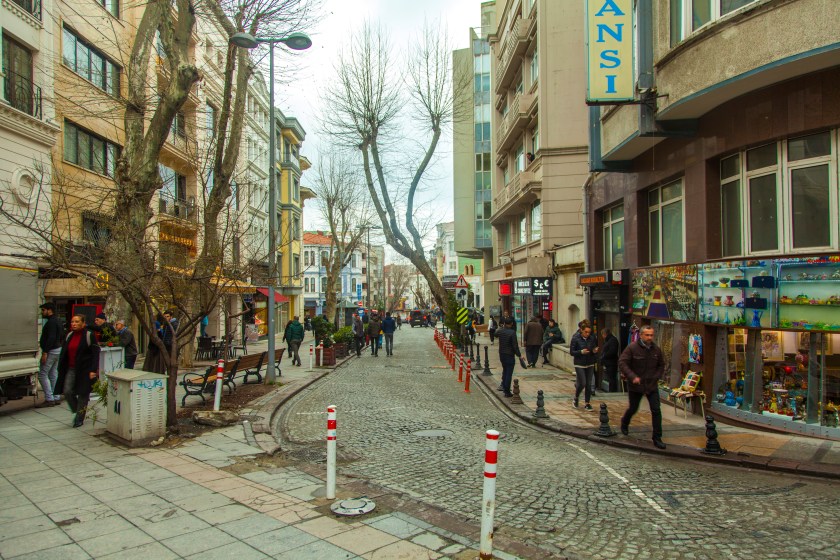
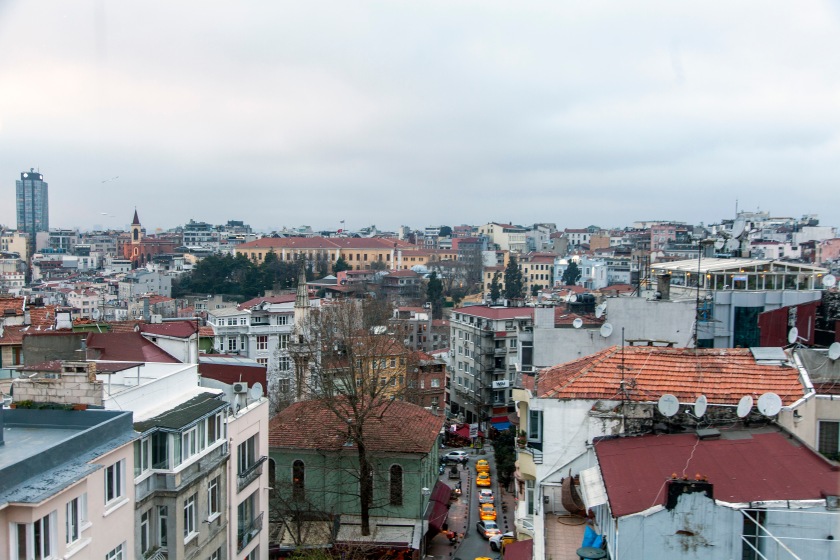
A drive to the Istinye Park shopping mall, located quite far north, near the Technical University, is also an introduction to previously unexplored parts of Istanbul. I guess, this is the perfect time to share my general impressions of the city, taking, of course, into account the fact that the trees are all bare now and will certainly add a lot more colour to the landscapes in the spring. So, the city is not homogeneous, some parts of it look a bit shabby, although I would say that overall, buildings in one area tend to follow the same style – it is unlikely to see a tall new building among old five-storey houses, like it is often the case back home.

The shopping centre is a huge building, topped with a dome, which, of course, gives it a distinct Middle-Eastern look.

sdr

Shopping-wise, we were interested specifically in Turkish brands. Generally, shopping in Istanbul is very pleasant, primarily because of the high quality of service. The shop assistant immediately greets you but does not pounce on you or tread on your heels, as, again, they annoyingly like to do back home. And when you address them, they show a maximum of friendliness, patience and willingness to help you make a purchase that you are really going to like.

The same, by the way, applies to waiters in restaurant: the service is very quick and they are really friendly (which doesn’t look fake and forced).

Funnily, the only time when we saw neither of these qualities was the day before yesterday, when we had lunch at our hotel’s bistro. We waited for our most basic sandwiches for so long that we could vividly imagine the waiter running into the kitchen in a panic and shouting: “They ordered sandwiches! Be quick, run to buy chicken and meat!”

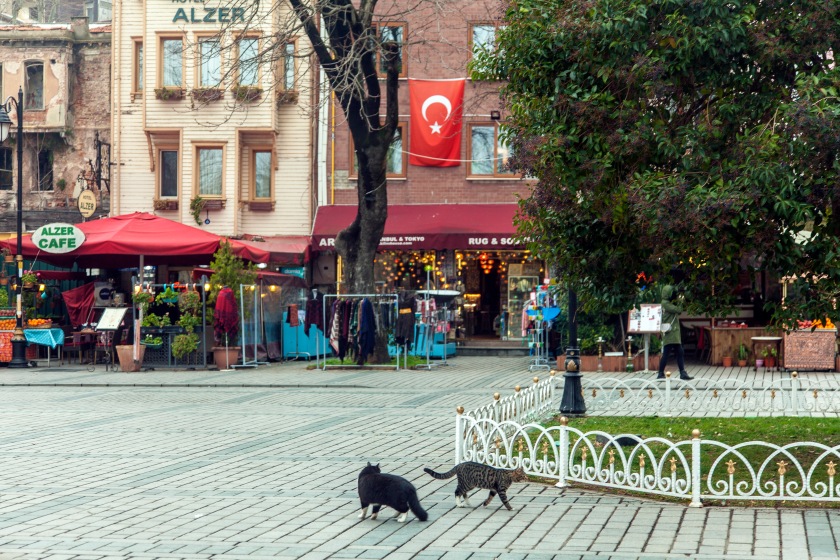
But overall, we really liked the local people. Not once did we even observe any quarrel, rudeness or swearing. People are polite and friendly to each other. The degree of friendliness towards us increased even more when they learned that we were from Azerbaijan. And their attitude towards animals, which I have already mentioned, simply wins one’s heart and mind!

On this day, dedicated to shopping, we got a chance to visit not only a large modern mall, but also the little shops of the Old City. The impressions are completely different, of course. Shops are strictly specialized – bags only or hats only – but on the whole, there is some feeling of chaos. Yet, this chaos has a certain charm to it.

We finished the day with dinner at the same restaurant near our hotel, which we liked so much yesterday.

08 February 2019

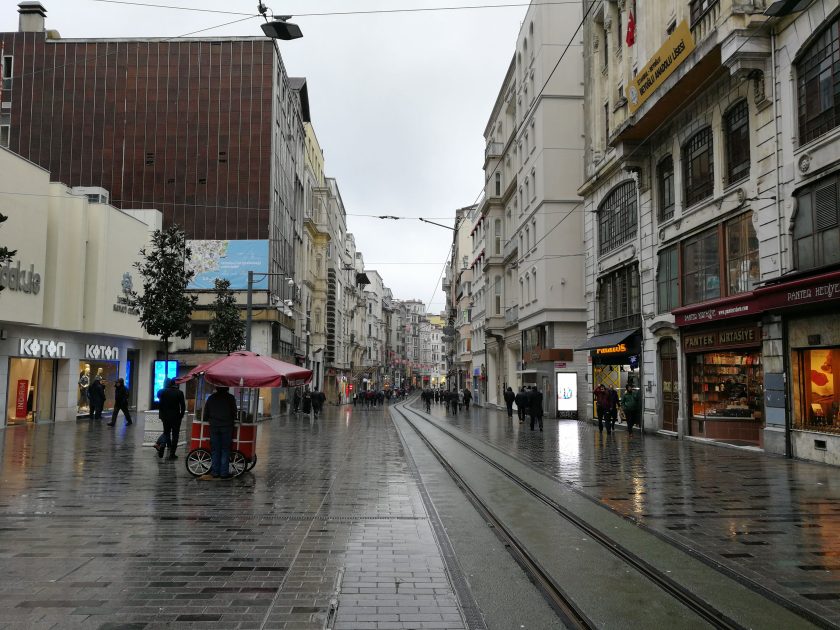
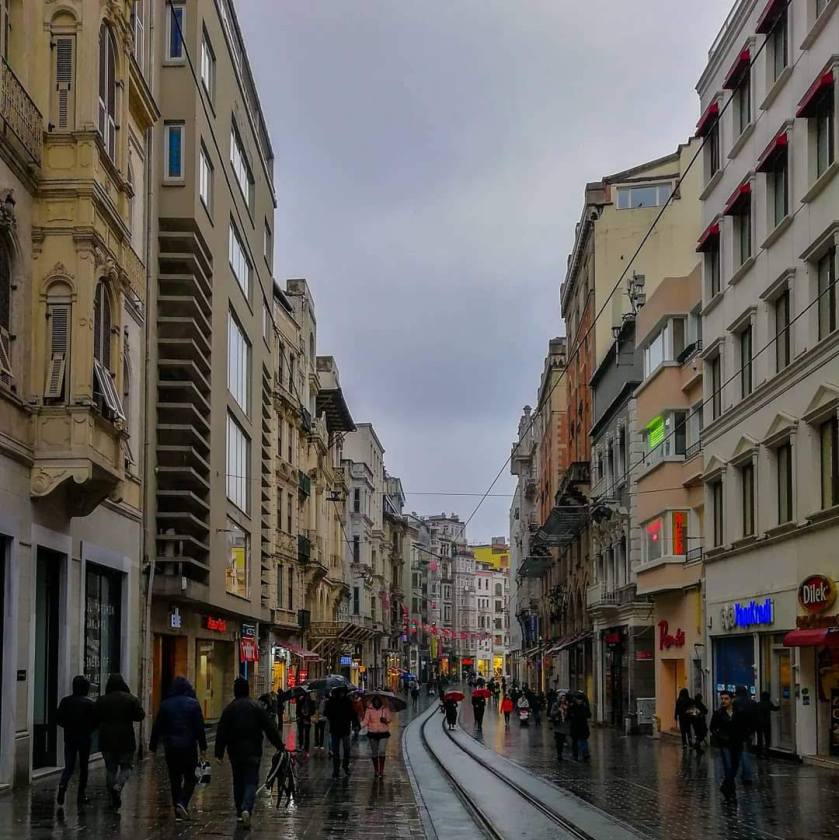
Today, on the day of our departure, we enjoyed a very pleasant walk along the rainy Istiklal Caddesi after breakfast.

sdr

cof

IMG_20190208_123906_079

IMG_20190208_123906_076

We decided to have lunch at the airport, and we headed there rather early – as it turned out, it was a good idea. The queues at the Istanbul airport begin not at the check-in counter, but from the entrance, where a full security check is taking place. Actually, the measure is quite understandable, remembering the terrorist attack at this airport three years ago.

Interestingly, everywhere around the airport we could spot bald men, with bruises on their seemingly burned heads. We’d come across such men previously as well, in the city. We wondered what that could be – some kind of sect? Later it turned out that everything was much more trivial and that Istanbul is a Mecca of hair transplantation, with lots of clinics and prices more affordable than in other countries.

Posted in English, Europe, Istanbul, Turkey

Istanbul – Day 3

РУССКОЯЗЫЧНАЯ ВЕРСИЯ ПО ЭТОЙ ССЫЛКЕ. CLICK HERE FOR RUSSIAN VERSION.

06 February 2019

Today has been a particularly busy day, and the weather played up very well: the forecast that promised non-stop rain turned out wrong, and it actually only rained in the morning while we were still on the bus on our way to the tour around the main sights of Istanbul’s Old City.

IMG_4141

Surprisingly, although we had reserved yesterday’s and today’s tours on different websites, we were greeted by the same guide as yesterday, Muzaffer, in our English-speaking group. Apart from us there was also the same Indian couple as yesterday and an Irish family. Looking ahead, I will say that after lunch we were joined by another couple from Hong Kong and some British Indians.

The day started getting a spiritual direction right from the start – from the Hacı Beşir Ağa Mosque. It is small, not particularly remarkable, but it is where we were explained how to behave in a mosque (believe it or not, I hadn’t been to one before!): there is an obligatory requirement to take shoes off and, for women, to cover their head with a scarf. The mosque itself was closed, and we could only look at its interior from the upper floor for women. What was interesting to see was a special chamber, where a believer would spend the night before having to make an important decision, praying for Allah to send them a clue in a dream.

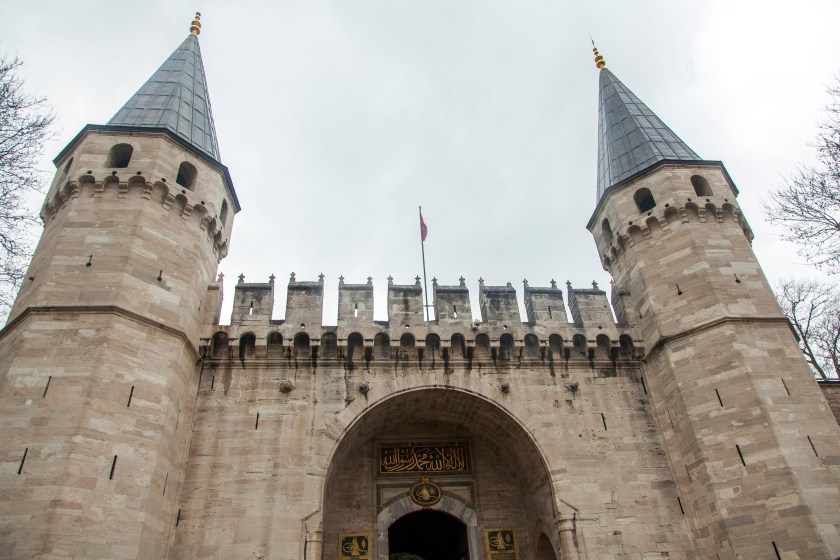
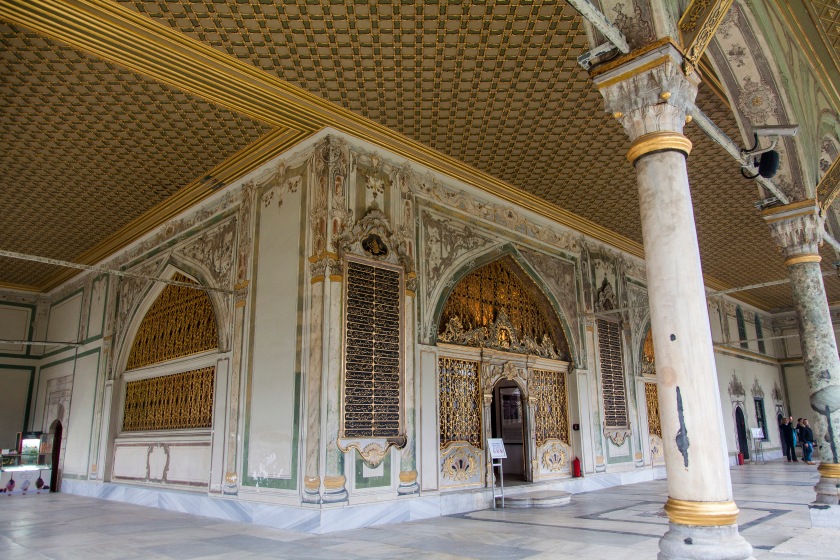
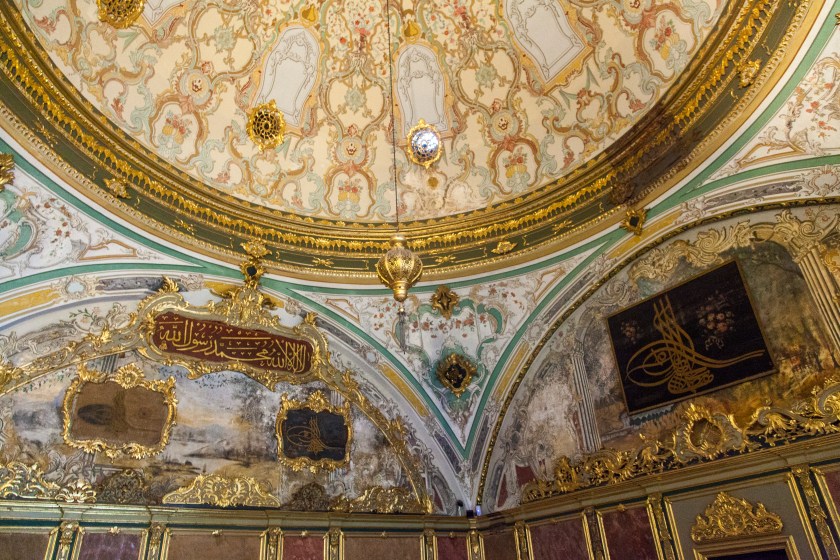
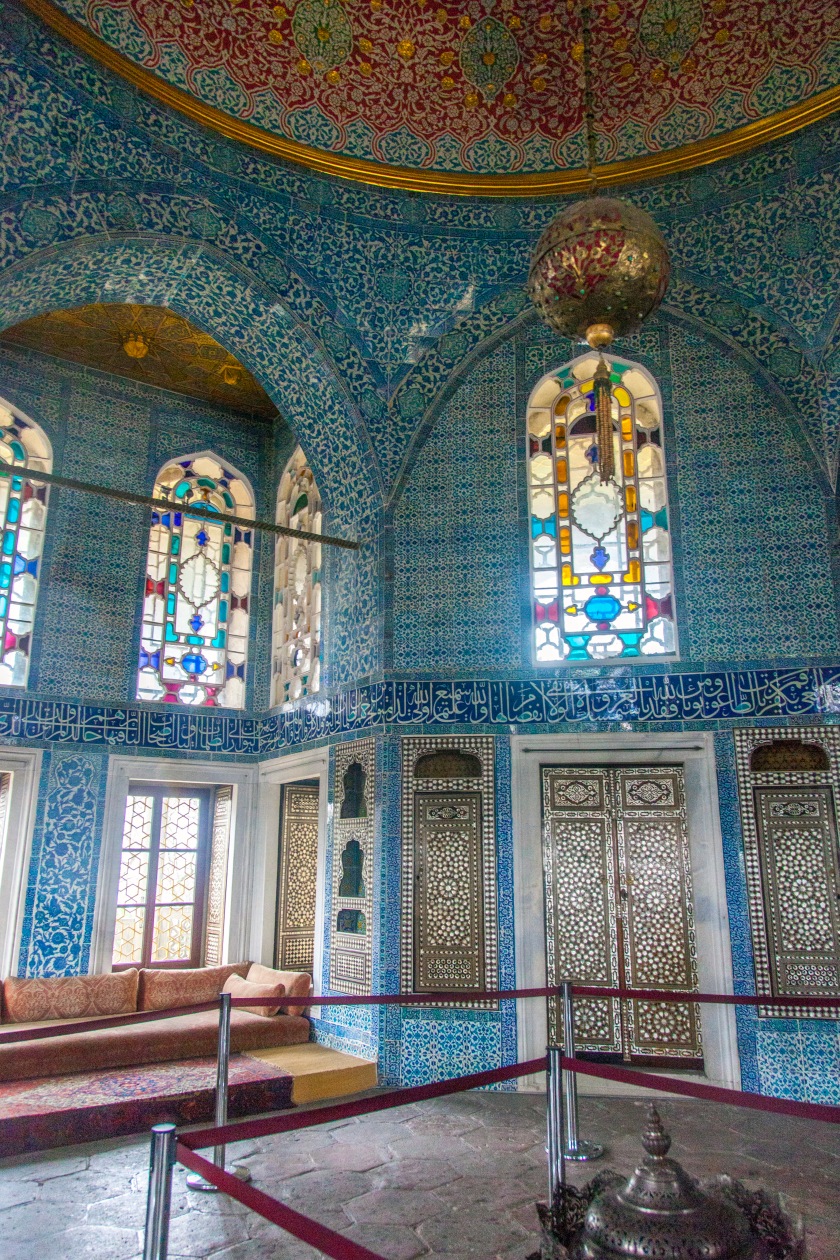
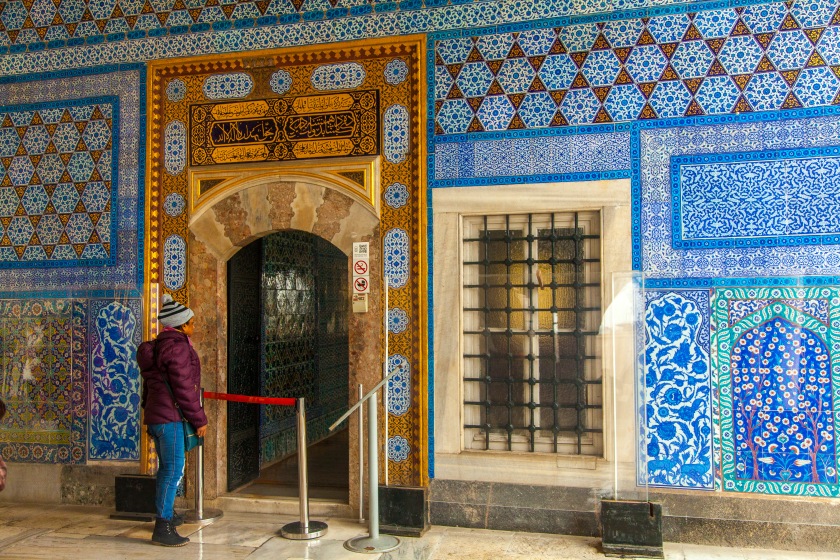
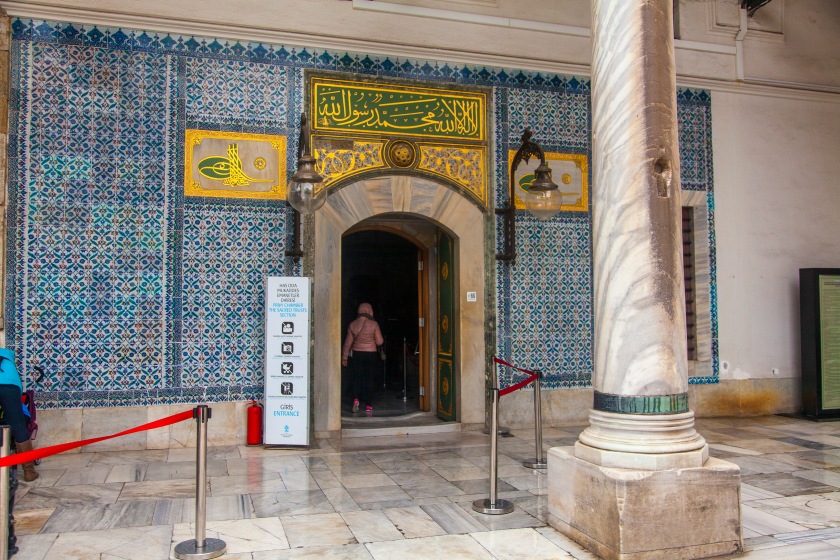
Next followed one of Istanbul’s main features – which became especially famous after the Magnificent Century TV series – the Topkapi Palace. It is constructed on the first of the seven hills of Istanbul and dominates the surrounding area. As we entered the very first room – if I remember correctly, it was the Imperial Council, or Dîvân-ı Hümâyûn – we immediately understood why the Dolmabahce Palace, despite all its pomp and splendour, didn’t cause a storm of delight. The domes, the paintings and the décor of Topkapi are much stricter, more harmonious and, one might say, more majestic. What I see here is spirituality vs. Dolmabahce’s depersonalised grandeur. And all this despite the fact that this palace’s harem was not included in our tour.

IMG_4146

IMG_4147

IMG_4149

IMG_4150

IMG_4170

IMG_4173

There are four gardens in the palace complex – the first two are external, while the third and fourth are internal, and the latter was only reserved for the closest members of the sultan’s household. Photography is allowed in many parts of the palace, but not in rooms with expositions – which is a shame, given that they contain the most interesting things!

First of all, there is a magnificent collection of clocks and watches – both from Turkey and Western Europe, from small pocket watches to tall grandfather clocks. Next, there is an extensive collection of weapons – mostly local Ottoman ones (such as firearms, bows, swords, yatagans, chain armours, shields, helmets, including those for horses), but also trophy and gifted weapons. For us it was particularly interesting to see Safavid weapons among the last (or maybe the penultimate!): who knows, it may have been my ancestors who used it! At the same time, we couldn’t help having a strange feeling, that today we are walking around this exposition and looking with great interest at something that once presented a mortal danger and was created to kill people.

The next exposition consists of huge kitchen premises, which were used for preparing food for six thousand people. And nowadays they contain a collection of ceremonial tableware and kitchen utensils. We found the latter more interesting, since they are functional, as for tableware — well, it’s just tableware!

We were really impressed with the collection of religious relics – at one point the sovereignty of the Ottoman Empire extended over Mecca and Medina, making it inherit the status of the caliphate, as well as Jerusalem. Not surprisingly, it was in its capital that a collection of items belonging to the prophet Muhammad (weapons, personal belongings, even beard hair and teeth) and his closest entourage, as well as other prophets — for example, the staff of Moses and the sword of David — was collected.

IMG_4167

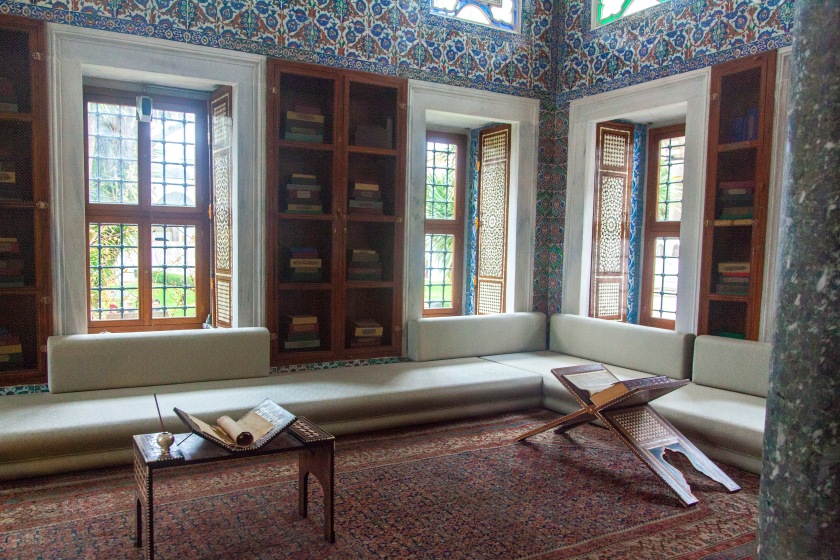
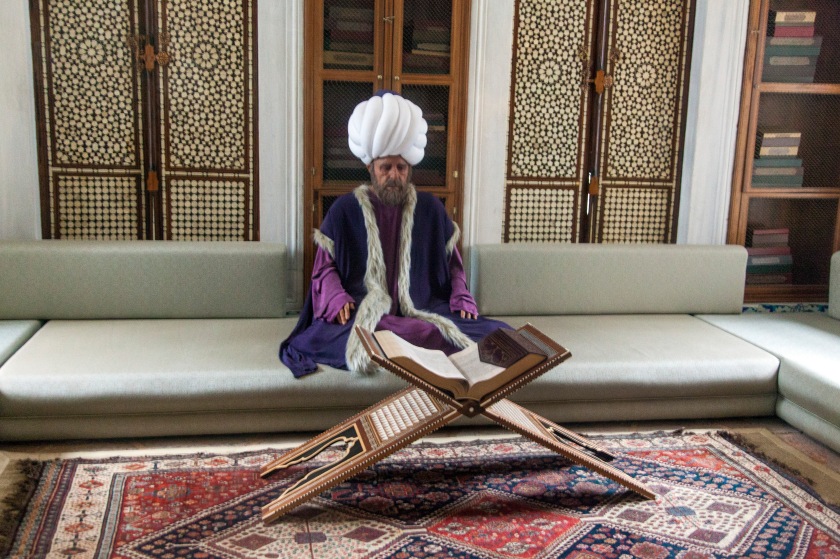
We also really liked the library of Sultan Ahmed III, in the midst of which there is the sultan himself (well, obviously a figure!)

IMG_4158

IMG_4161

IMG_4162

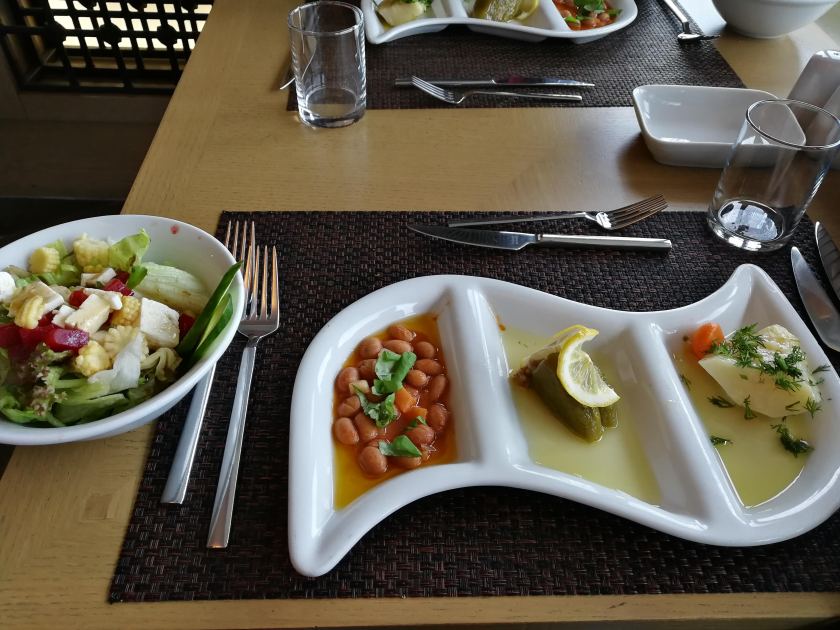
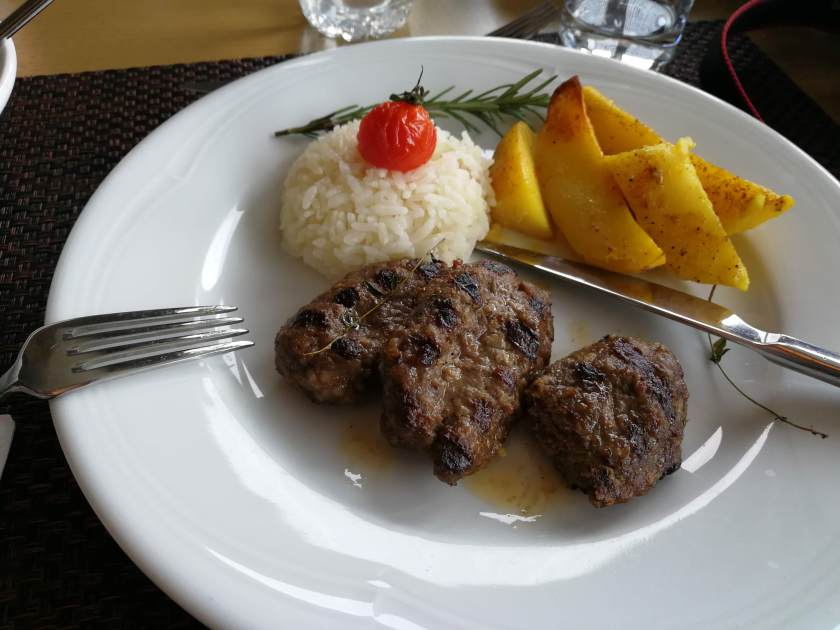
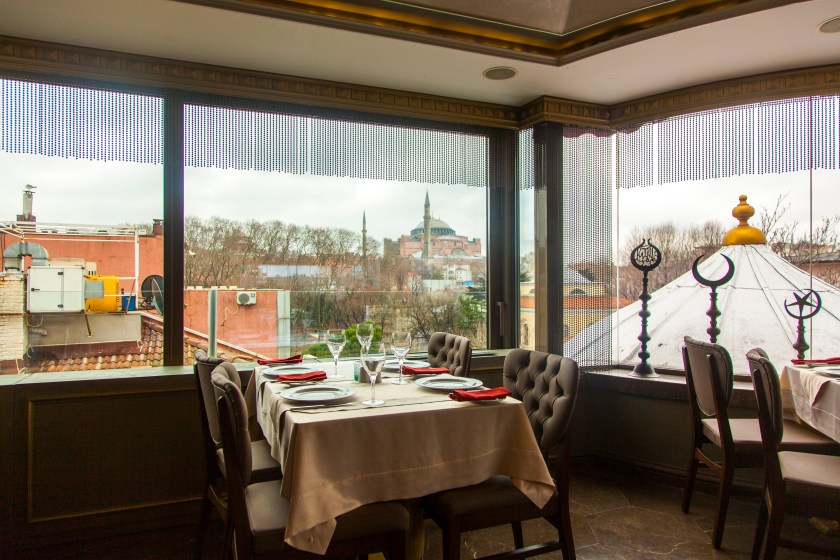
The last exposition we got to see contained the portraits of all the sultans, but this one was probably the least interesting. From the palace, where we spent about two hours, we went straight to lunch, which was very well organized. In general, the impression is that restaurants in Istanbul are often placed on the top floor of a hotel to provide a beautiful view. So there we sat, eating delicious mezes and kofte, drinking tea and admiring the views of Istanbul and the seagulls proudly sitting on the roofs.

IMG_20190206_130238.jpg

IMG_20190206_132321.jpg

IMG_4182

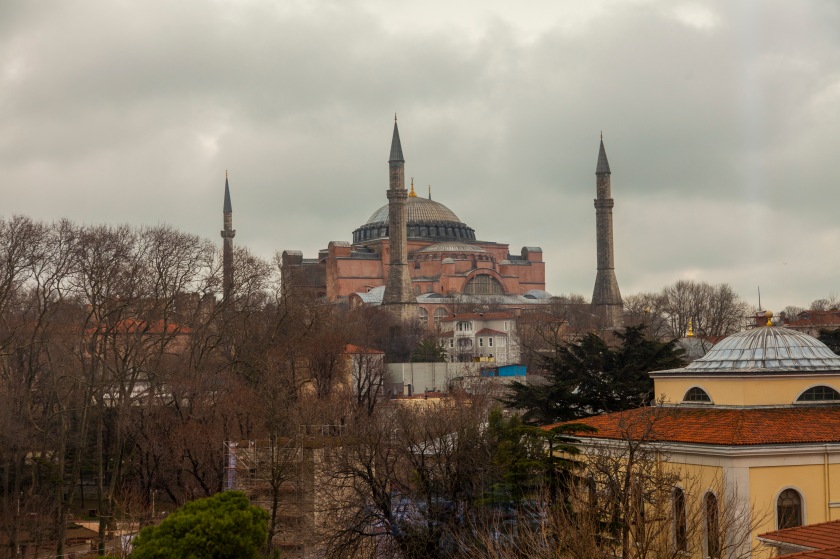
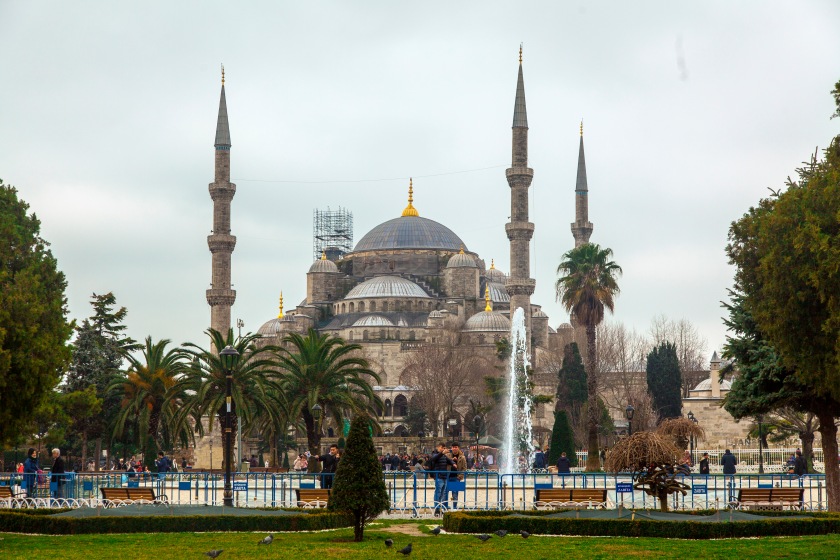
After lunch, now in a bigger group, we headed to Hagia Sophia. This place is truly unique, bringing together values that are almost incompatible by modern standards. Outside, it is very clearly visible that the minarets are attached to a Christian church. However, the building itself does not look particularly outstanding. Looking ahead, I will say that the Blue Mosque, located directly opposite, is much more beautiful on the outside.

IMG_4179

IMG_4176

IMG_4184

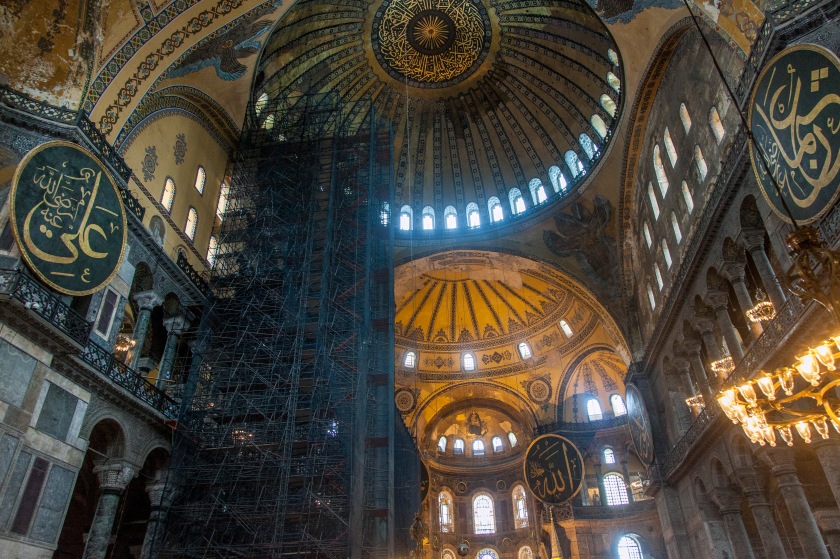
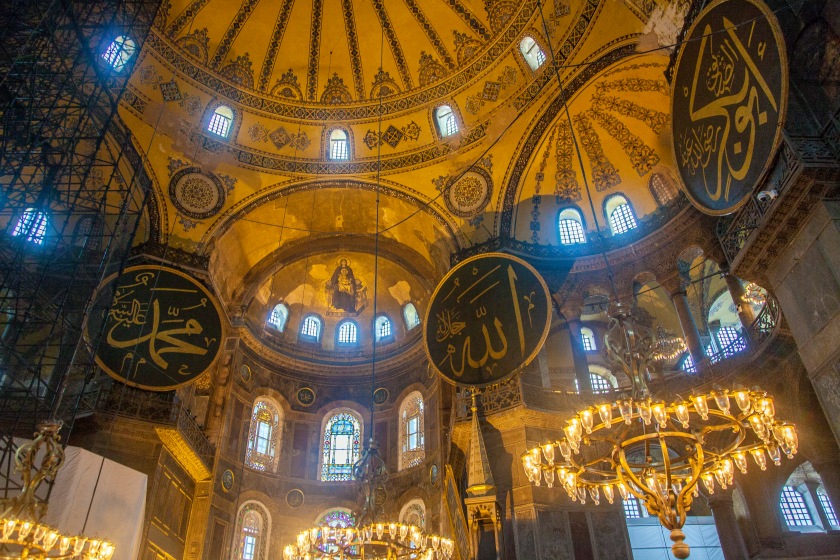
However, the interior of Hagia Sophia is stunning. Despite crowds of tourists – as always, mostly Chinese – you get a feeling of extraordinary holiness and admiration for the fact that the images of Christ, the Virgin Mary, the first Roman emperors and the symbols of Islam peacefully coexist in this place.

IMG_4187

IMG_4206

IMG_4192

IMG_4197

In fact, this has not always been the case. At first, Sultan Mehmed II, who conquered Constantinople, simply ordered the main Christian cathedral to be turned into a mosque, covering the Christian images with plaster. They weren’t cleared until 1935, when by a decree signed by Ataturk, Hagia Sophia became a museum.

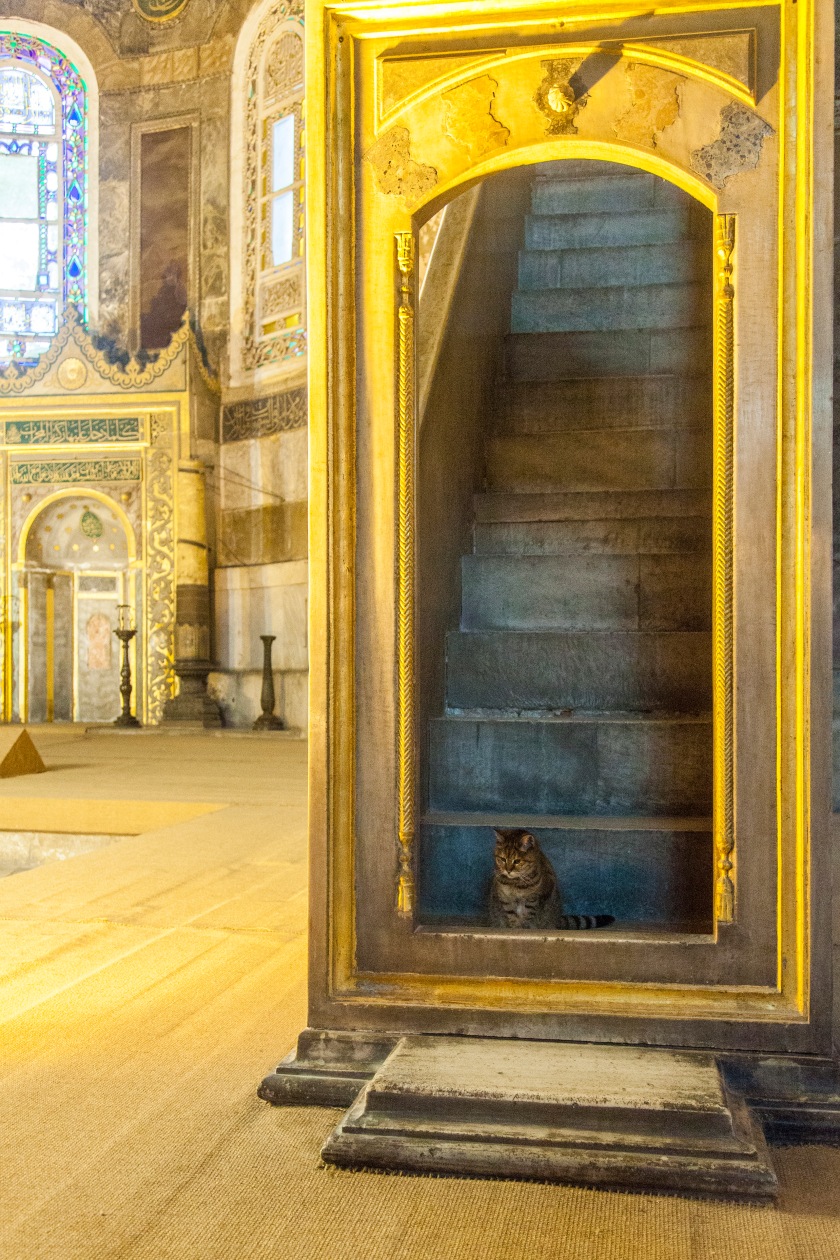
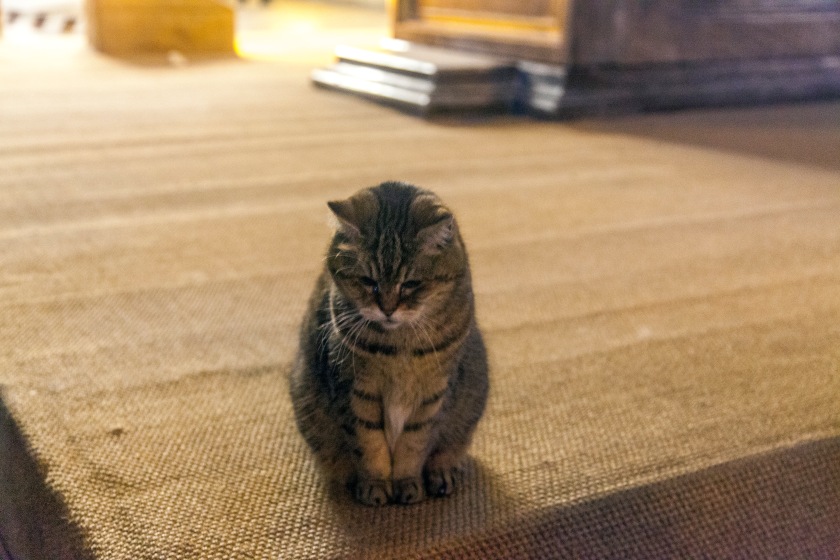
The happy free cats of Istanbul feel great here as well, causing a smile, which somewhat dilutes the sublime feelings evoked by the place.

IMG_4201

IMG_4204

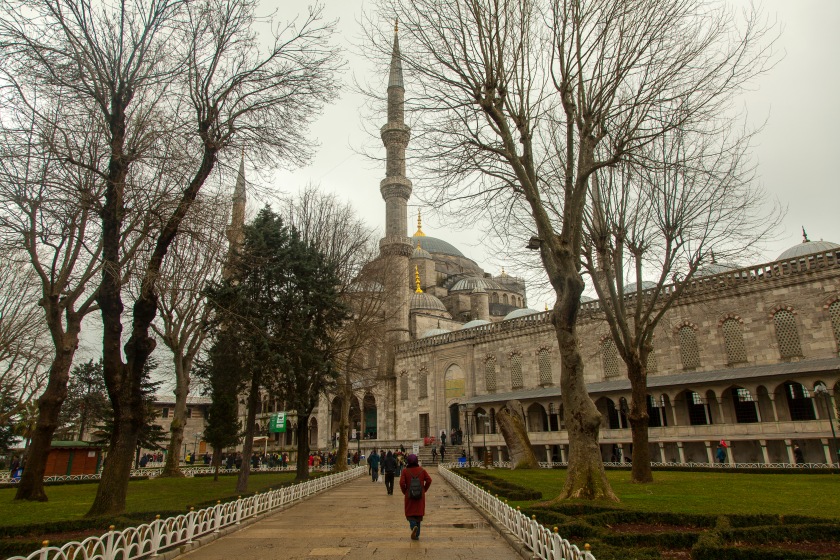
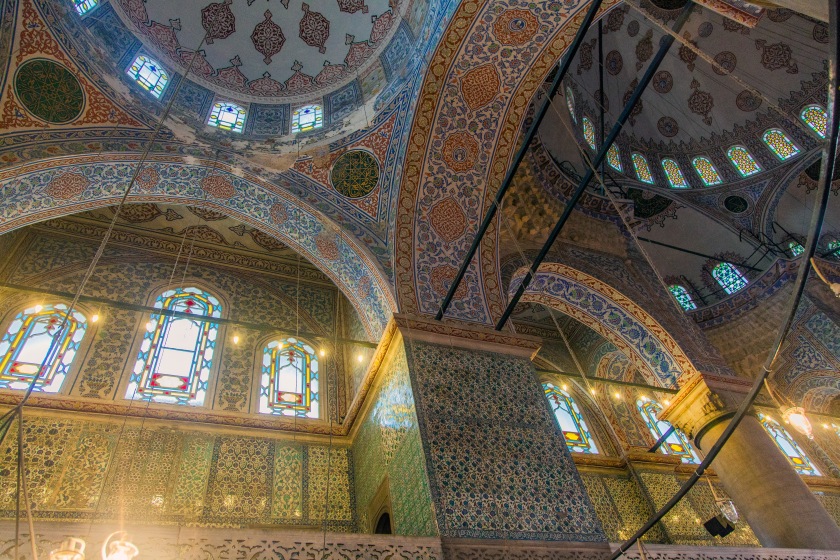
The Blue Mosque, aka the Sultanahmet Mosque, as already mentioned, is very beautiful outside. It has as many as six minarets (usually, there are one, two or four). But unfortunately, there was almost nothing to look at inside – there is renovation going on, so, for instance, the dome is completely covered. Since, unlike Hagia Sophia, this is a functioning mosque, there are a separate entrance and exit for tourists, who therefore have to carry their shoes with them in specially provided plastic bags.

IMG_4213

IMG_4221

IMG_4218

To finish with the mosque topic, I will say that there are more than two thousand of them in Istanbul. This seems like a huge number, but is actually normal for 20 million people.

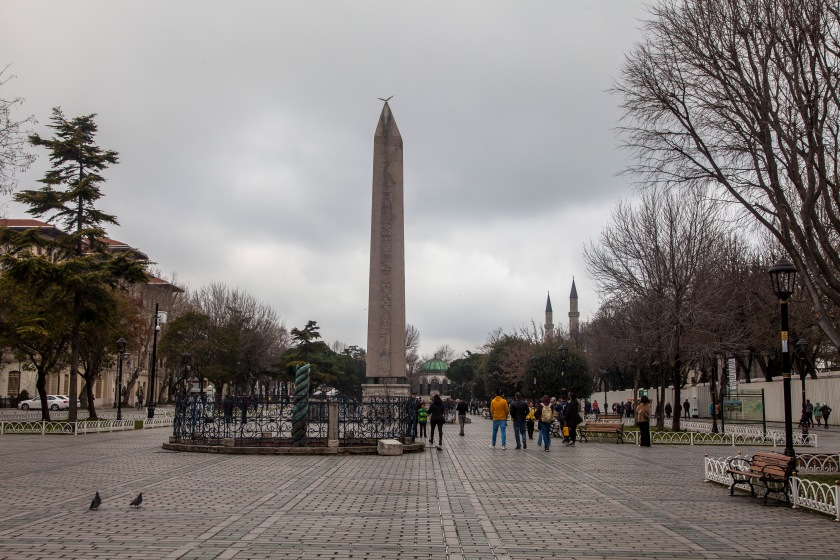
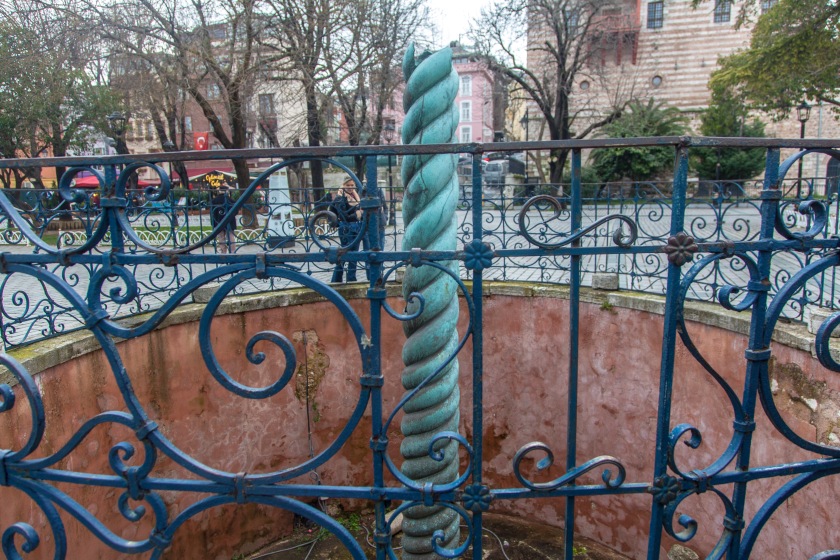
We had thought that the Hippodrome – our next destination – was a visit to some ancient sports facilities or its remnants. It turned out to be even more than just remnants, located right here, at the Sultanahmet Square: there is only one Egyptian obelisk and two Greek columns, one of which is made of weapons and armour of the defeated Persians.

IMG_4233

IMG_4232

IMG_4234

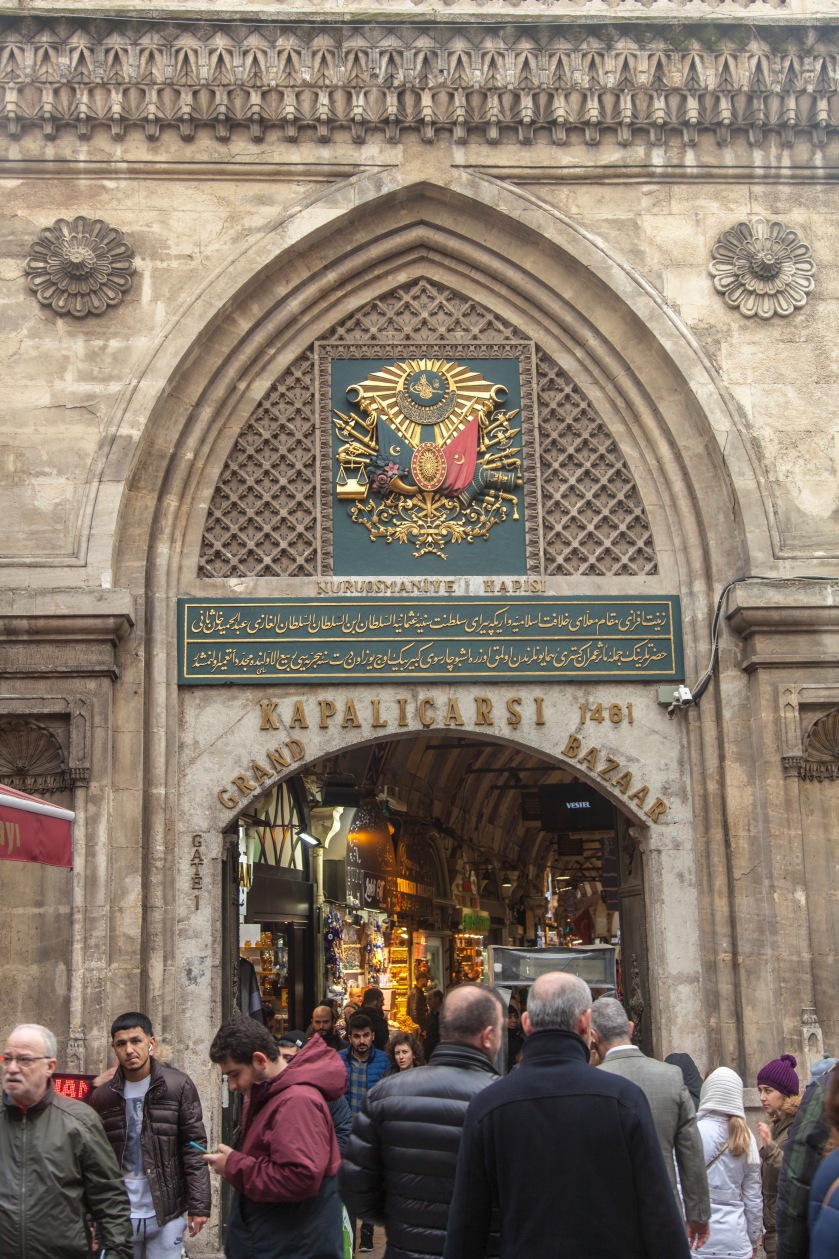
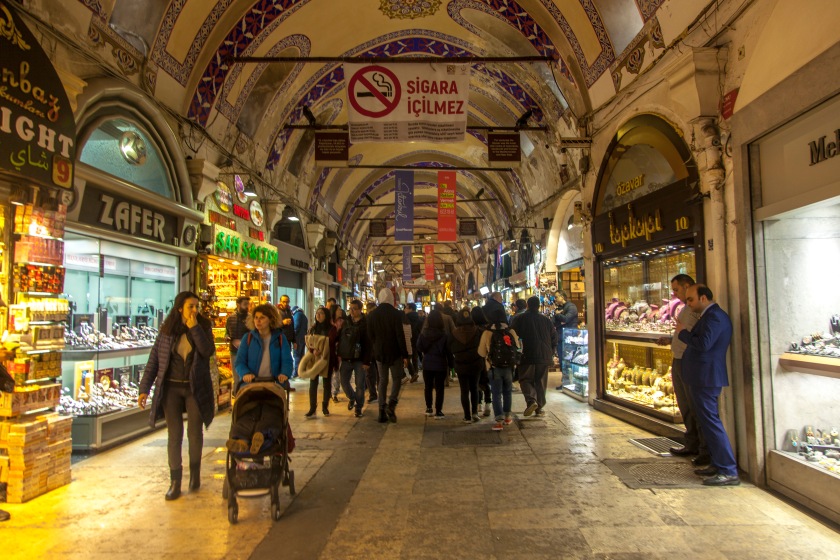
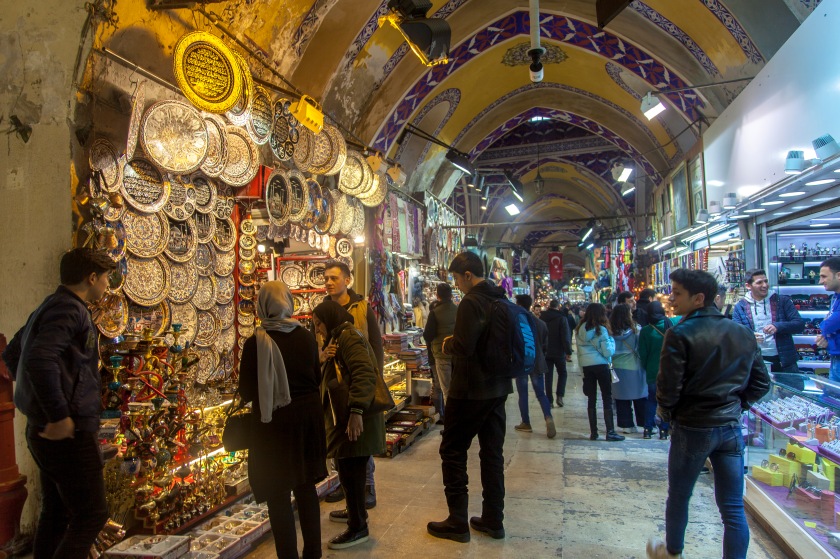
And finally, the last destination of our tour is the Grand Bazaar, or Kapalı Çarşı. The visit was preceded by a meeting with experts of Turkish carpet weaving, which we had in the Istanbul Handicraft Centre not far from the Bazaar. They treated us to apple tea, piled up a bunch of carpets in front of us and explained the difference between the local and, say, Persian technique(double knots instead of single ones). Of course, this was done with an eye to enticing us to purchase carpets, but no one in our group was willing to. At least us, the Azerbaijanis, could hardly be tempted by carpets.

IMG_4240

IMG_4242

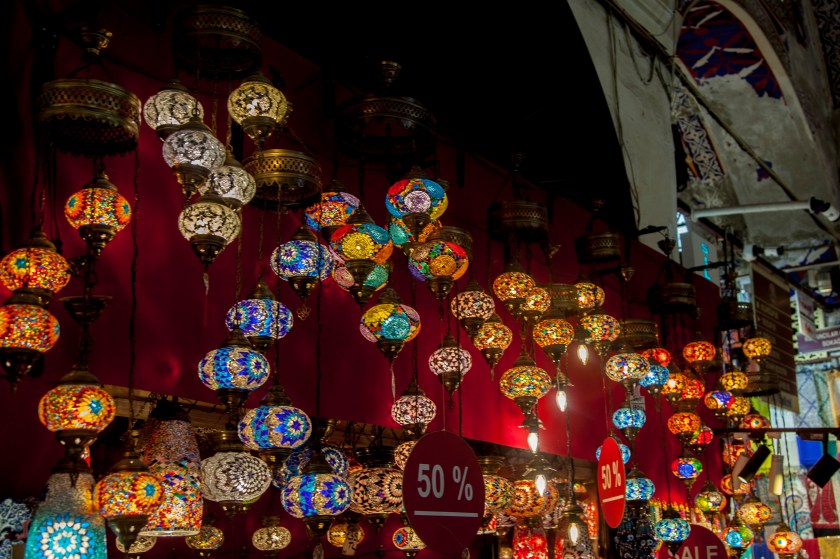
We had 40 minutes to explore the Bazaar itself, but in fact that was more than enough. Frankly speaking, yesterday’s Spice Bazaar impressed us a lot more, because Kapalı Çarşı, although of course much bigger, seemed less beautiful and more chaotic. We walked through one of the galleries back and forth and found that this “drop” was enough to appreciate the entire “sea” of the Grand Bazaar.

IMG_4245

IMG_4247

IMG_4250

IMG_4251

IMG_4252

Moreover, even though the day had been very interesting, it had also been exhausting, so our bus, which accurately dropped us off at our hotel, seemed to be the most tempting place.

IMG_4259

We were so tired that for dinner we found a restaurant literally around the corner from our hotel, and made a right choice: it was very nice and cozy with delicious food and great service.

Posted in English, Europe, Istanbul, Turkey

Istanbul – Day 2

РУССКОЯЗЫЧНАЯ ВЕРСИЯ ПО ЭТОЙ ССЫЛКЕ. CLICK HERE FOR RUSSIAN VERSION.

04 February 2019

Today’s weather clearly demonstrated that February is February, and yesterday was just a gift to mark our arrival. Today was pretty windy, with almost no sun, and, according to the forecast, this is not going to be the worst day of our stay.

IMG_4049

We had a Bosphorus cruise planned for today, and at 8am we were picked up by a minibus. Apparently in order to prepare us for a boat ride, the minibus hurled us from side to side, rushing down narrow streets, past countless (for some reason!) shops selling lighting fixtures.

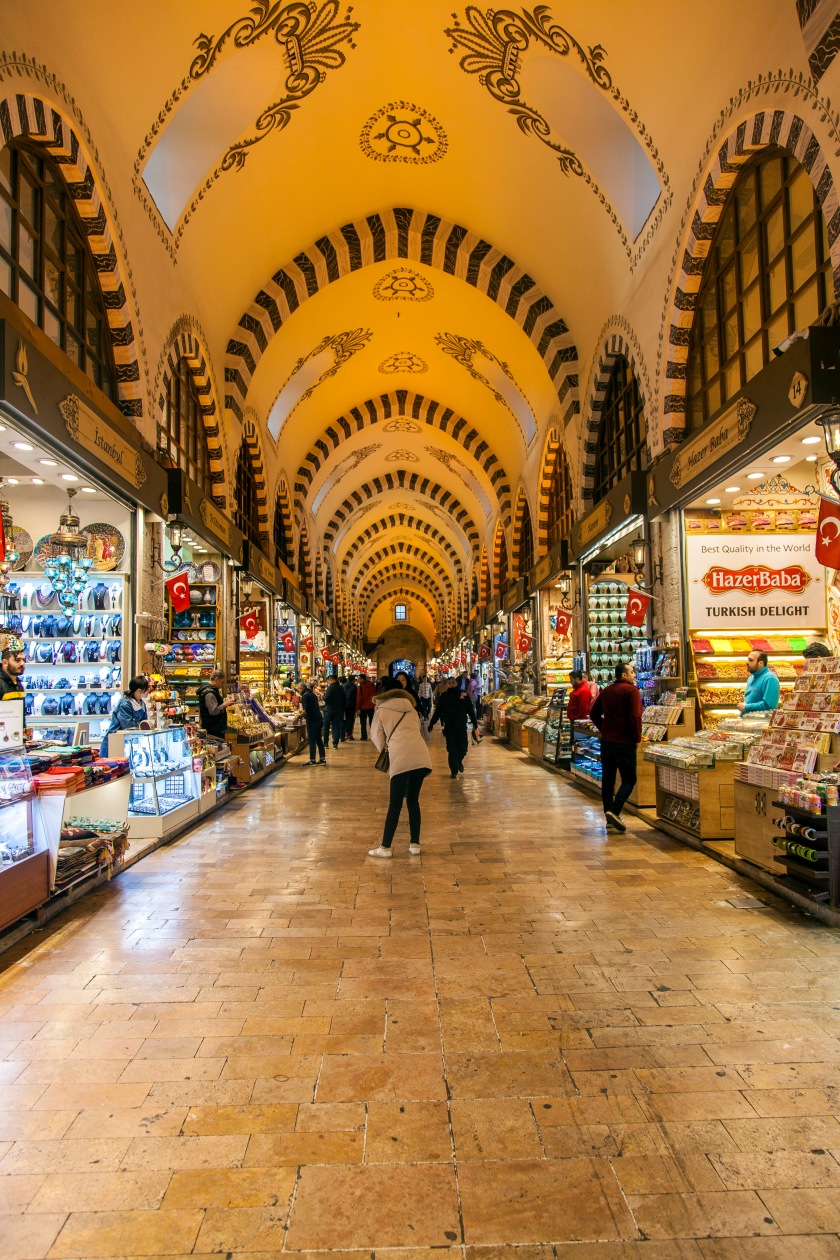
There were six of us in the group – a couple from Southeast Asia, two Indians, and us – the Azerbaijanis. The first item on our agenda was Misir Carsisi – or Spice Bazaar, aka Egyptian Bazaar, with beautiful gilded passages, tons and tons of spices, nuts, Turkish delights, gold and silver! We entered this kingdom of Middle-Eastern goods with a firm intention to just look around. But resourceful sellers immediately involved us in a “round dance” of offers, treats, promises of discounts, and we changed our determination to not but anything – anyway, we didn’t end up making any completely impulsive purchases: we bought sweets, spices, a cezve and silver jewelry. What contributed most to our purchases was, first of all, our understanding of Turkish (which allowed the sellers to elaborate extensively on the quality of their goods) and secondly, the fact that we accidentally came across our fellow countrywoman at one of the shops – she seemed to be either the administrator or the owner.

IMG_4051

IMG_4052

Having left all our purchases in the minibus, with the kind consent of our guide, we transferred to the cruise boat, where there were a couple of other tourist groups apart from ours, but overall the boat was far from being full – apparently, it’s a low season now.

Yesterday the concierge at our hotel was trying to convince us to sign up for another cruise in the afternoon, scaring us with the usual morning fog, which would prevent us from seeing much. Fortunately, that turned out not to be the case. I mean, some fog was present indeed, but firstly, it didn’t really bother us, and besides, it didn’t dissipate in the afternoon either.

IMG_4060

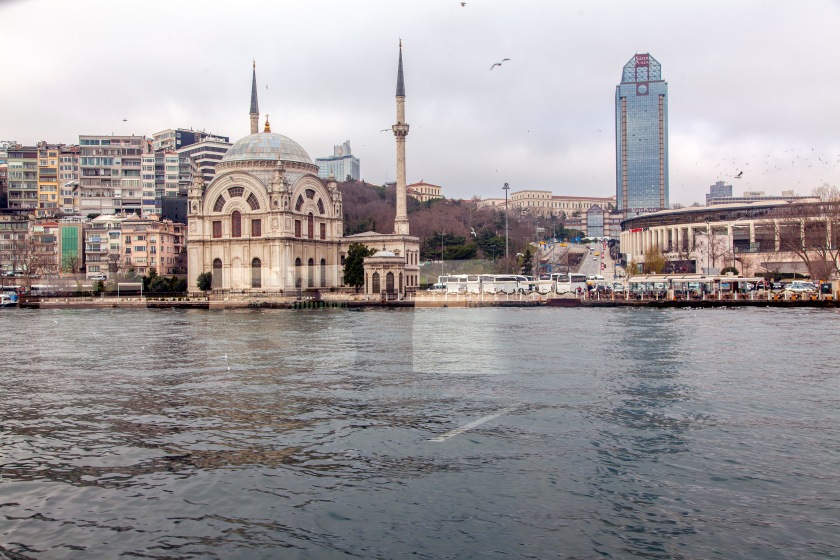
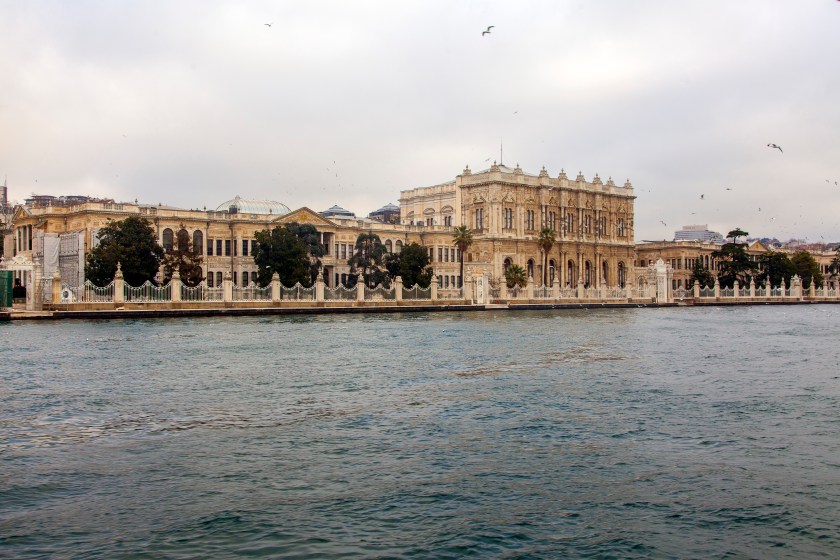
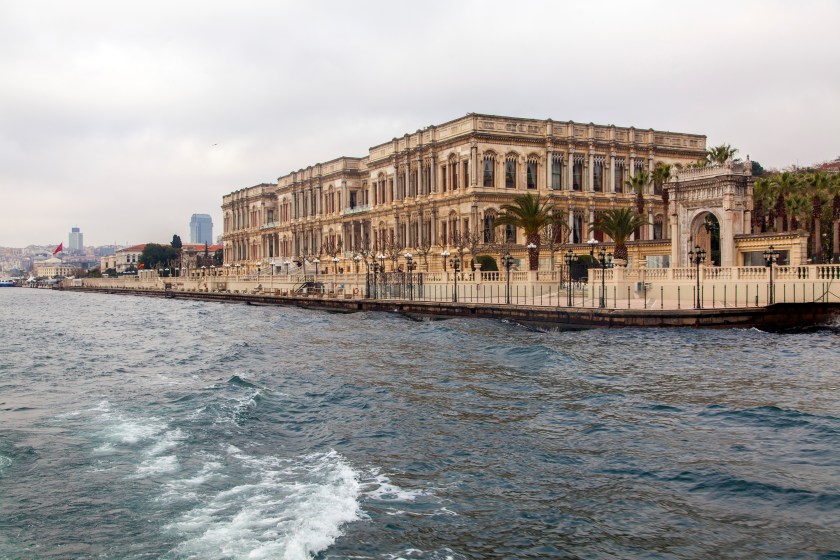
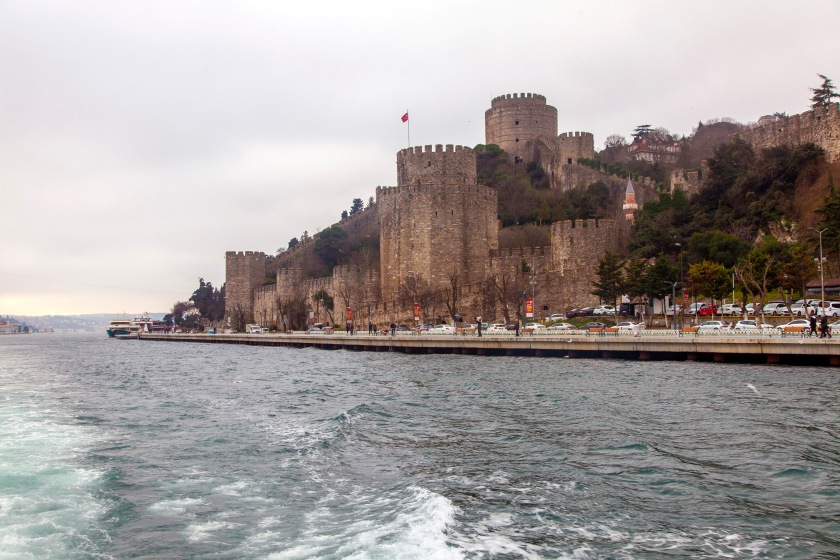
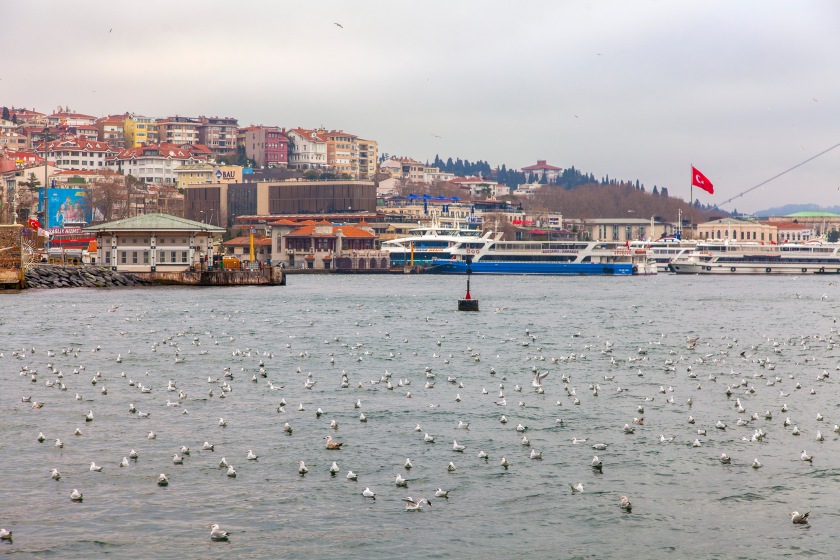
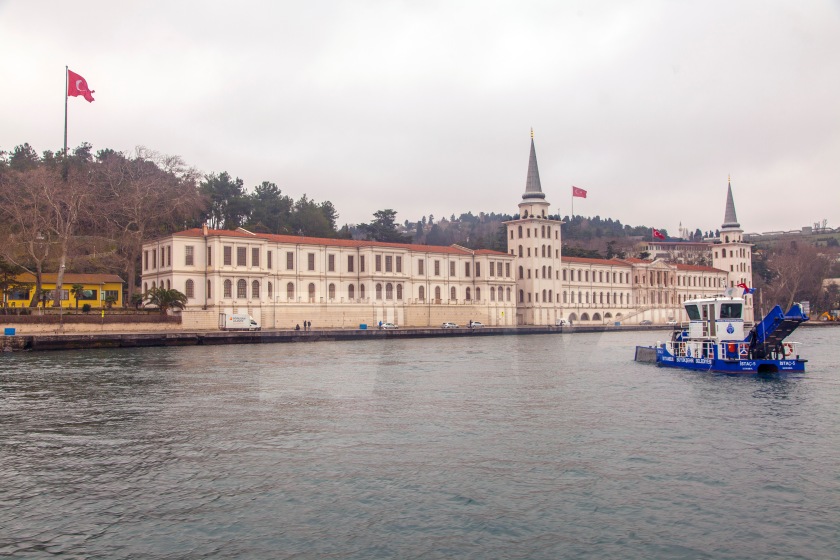
The cruise starts at the Kabatas ferry port, and first goes along the European part of the city, past such attractions as the Dolmabahce Palace, the Rumeli Fortress and the Ciragan Palace, converted into a Kempinski hotel – the most expensive one in Istanbul. We made nice photos, but cannot really say that our delight went through the roof. By the way, we were accompanied by seagulls during the whole of our journey, however, compared to those at Galata Tower yesterday, these ones seemed smaller.

IMG_4064

IMG_4065

IMG_4075

IMG_4083

IMG_4090

IMG_4071

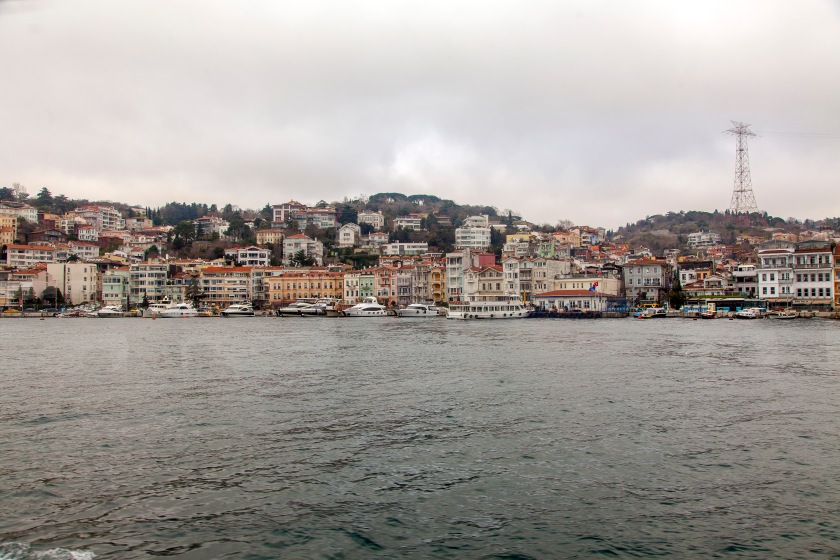
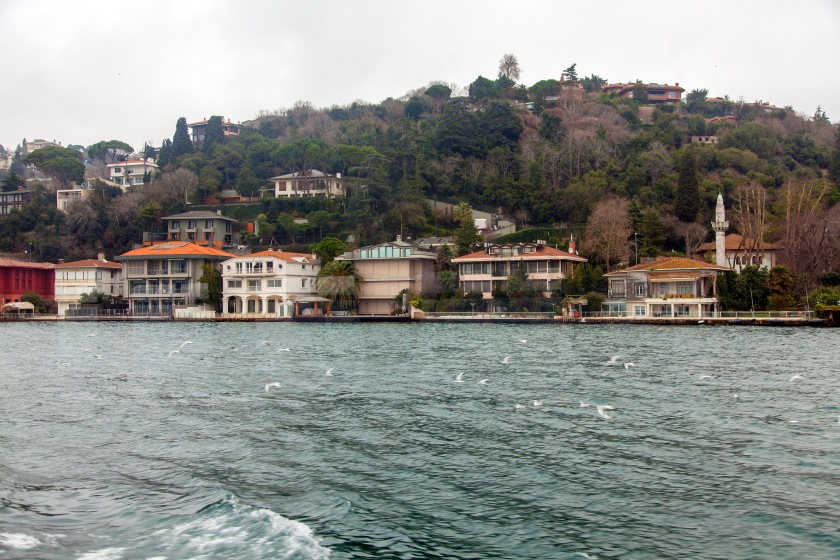
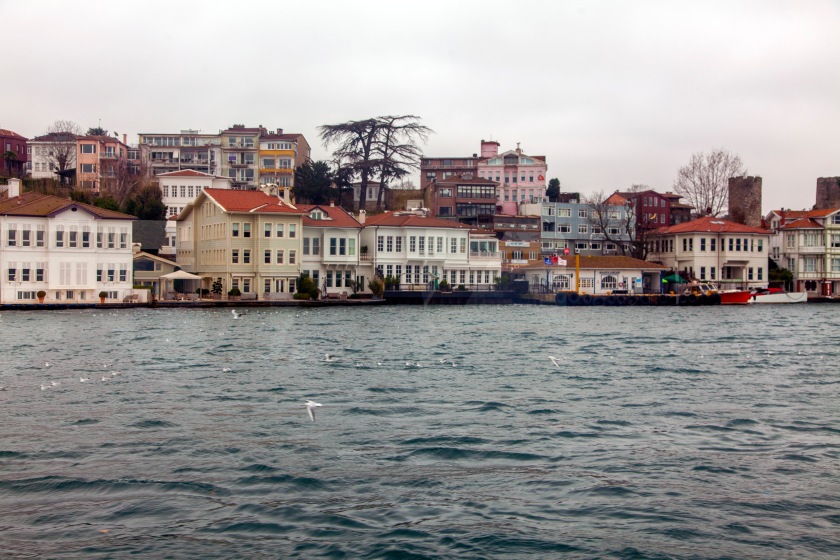
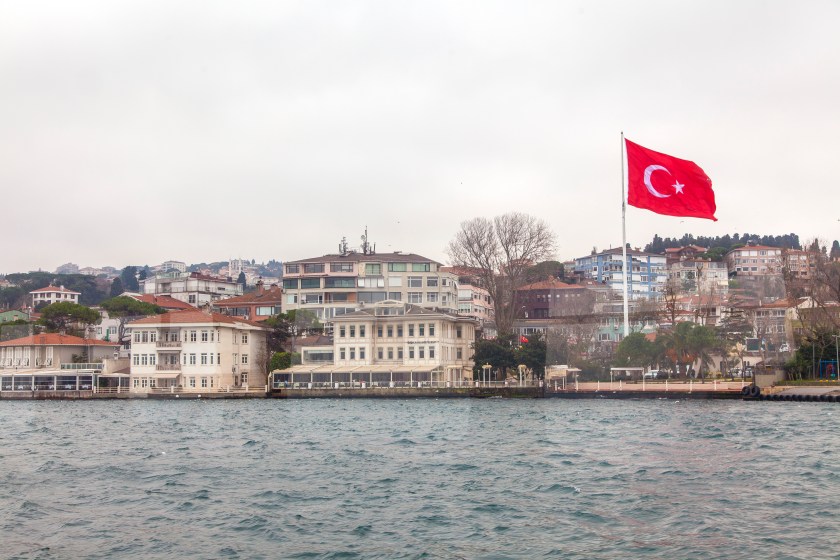
What looked more interesting was the Asian part, which we sailed along when the ship turned around from the Fatih Sultan Mehmet Bridge. And here, even more than the actual sights of interest, including the Anadolu fortress, the Beylerbeyi Palace, the Kucuksu pavilion, we enjoyed the coastline, strewn with variegated mansions. Their unique location with direct Bosphorus views makes them the most expensive real estate in Turkey, with prices reaching up to hundreds of millions of dollars.

IMG_4096

IMG_4097

IMG_4103

IMG_4113

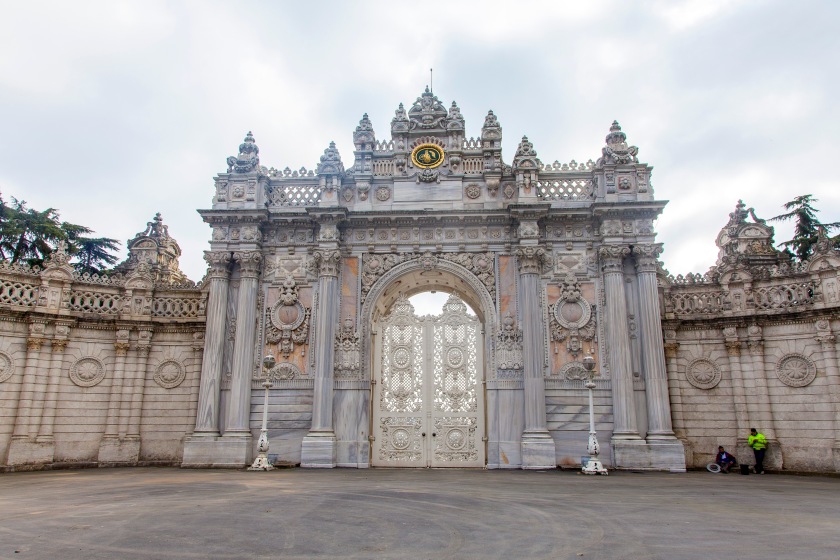
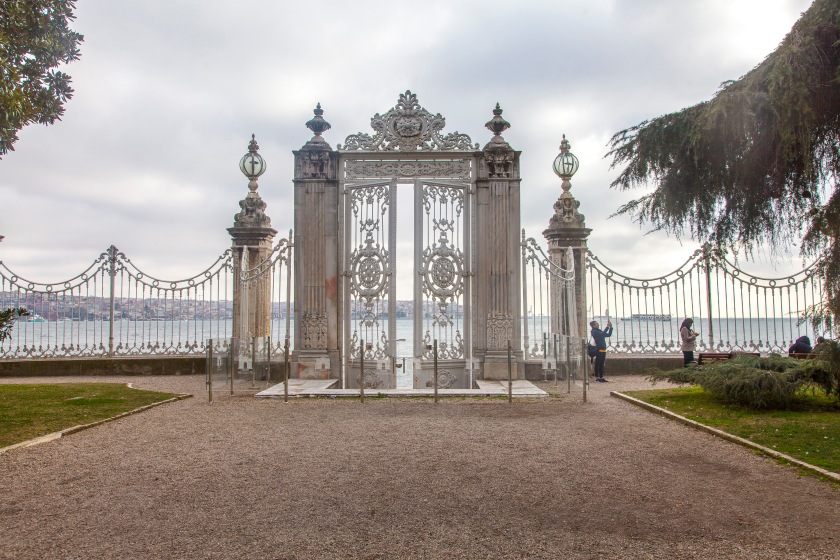
This morning we still had no exact plans for the afternoon: we had a thought to dedicate the day entirely to water travel and visit the Princes’ Islands. It was the weather that finally discouraged us. The Princes’ Islands are mostly good for walking around – there isn’t even any transport there, besides horse carts. Therefore, we changed our minds in favour of the Dolmabahce Palace, and we took an Uber there, which didn’t go perfectly well. He dropped us off near some beautiful (but locked!) palace gates and rushed off into the sunset. The street looked deserted, in particular, we didn’t see any crowds of tourists storming the palace.

IMG_4118

To our luck, literally the only passer-by, whom we naturally addressed, knew exactly where the palace entrance was (it turned out that we had just been dropped off in the wrong place) and kindly showed us the way. By the way, she herself turned out not to be local, but an Afghan living in the USA and working here just temporarily.

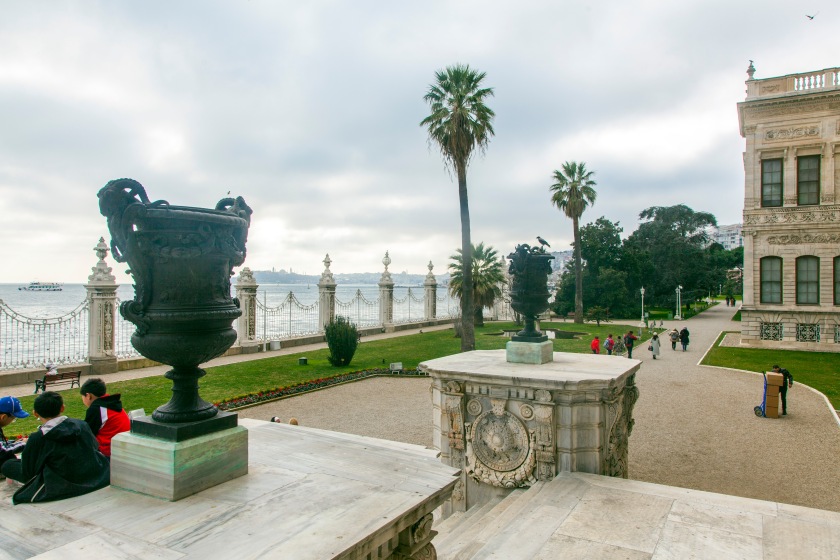
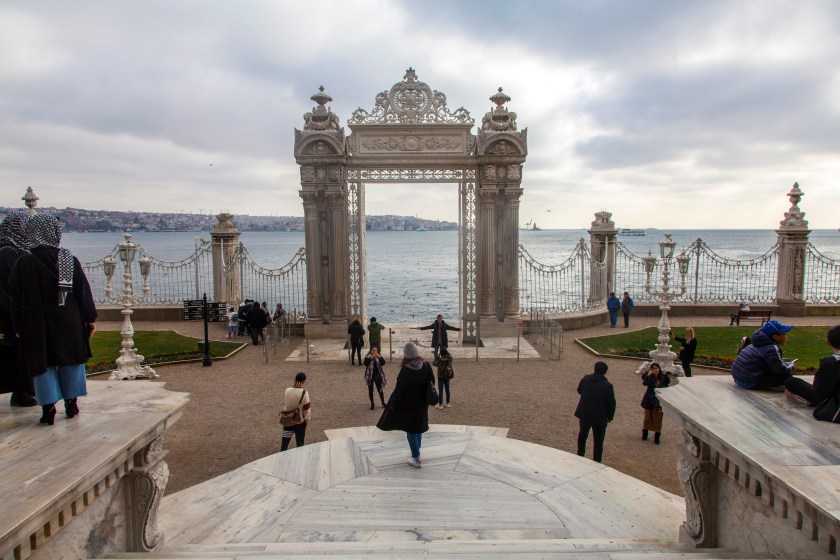
The location of the palace is simply amazing – the sultans did know a thing or two about choosing the perfect place. The carved fences and the garden gates overlook the Bosphorus. One can imagine the pleasure of walking in this garden!

IMG_4128

IMG_4130

IMG_4132

IMG_4133

Dolmabahce is not the old residence of the sultans (which we aren’t going to see till tomorrow), but a 19th-century building, reflecting all of the contemporary European trends, which is especially noticeable in the furniture. Unfortunately, photography is prohibited inside the palace, and although not all visitors were quite law-abiding, we decided to comply.

There are two types of tickets: including and excluding a visit to the harem. Of course, the first type is preferable: in fact, the harem is much more interesting and luxurious than the rest of the palace, and better reflects the actual life of the sultan’s family. Along standard apartments of sultan’s wives, consisting of a bedroom, a living room and a bathroom (with a squat toilet, as everywhere in the palace!), there are also the luxurious and extensive apartments of Valide Sultan, the reigning sultan’s mother. The latter include a prayer room, a large reception room, a private room, and a spacious bedroom. Even the sultan’s own apartments in the harem are superior in luxury and decoration to his apartments in the official part of the palace.

The latter, of course, has beautifully furnished rooms, but the one that can be considered truly exclusive is the main hall with an incredibly painted domed ceiling. There are also two display rooms: the first one contains tableware and kitchenware, and the second one has medals, weapons, household and leisure items.

It’s interesting to note that after the fall of the monarchy, Atatürk chose Dolmabahce as his residence, and this is where he died – in one of the rooms (a very simple and modest one) of the former harem. This room is also open to visitors, and the bed in it is covered with a blanket representing the Turkish flag.

IMG_4120

IMG_4136

We stayed in Dolmabahce almost until its closing time. From here we were supposed to go for dinner, to a fish restaurant, booked in advance, in the Cihangir area. And this suddenly turned into a whole adventure. We hadn’t ordered a taxi in advance, and tried to hail one in the street, but the cars were going in the opposite direction and the taxi driver refused to pick us. Google showed that the restaurant was relatively close, literally a 22-minute walk.

What Google didn’t show, however, is that we would have to climb countless stairs a good deal of the way. Possibly, I would even say most certainly, there should exist a longer way without stairs – I mean, cars do get there somehow! – but we, naively and recklessly, not realising how much we would have to climb, went up the stairs. It was a breathtaking experiment! The stairs were quite steep and chipped, some parts of the way had no handrails, occasionally a stair was interrupted by a sewer manhole. Afraid to look back and feel dizzy, we climbed up and up, like cats, who can climb only up trees, out of fear. Speaking of cats, their appearance was the pinnacle of the whole climb. Five of them simultaneously ditched their food bowls (apparently, kindly provided by residents of the houses located along the stairs) and rushed at our feet. They were meowing loudly and rubbing against us, a couple of cats even smacked each other, fighting for the right to get in our way, and then followed us for a long time. I struggle to imagine what that was. In that situation, they totally seemed like messengers from hell, but perhaps the poor animals were just trying to welcome us and cheer us up. They only left us at the very last part of the staircase. Alas, there are no photos of the cats – it was not the right moment to take pictures, you know.

After we successfully overcame this “hurdle”, we still had to meander a bit more more around the streets going up and down, but this felt more tolerable. We entered the restaurant totally exhausted. But then we were rewarded with a magnificent view of the city from the 8th floor, delicious fish, and excellent service.

IMG_4139

cof

Posted in English, Europe, Istanbul, Turkey

Istanbul – Day 1

РУССКОЯЗЫЧНАЯ ВЕРСИЯ ПО ЭТОЙ ССЫЛКЕ. CLICK HERE FOR RUSSIAN VERSION.

03 February 2019

Surprising, but fact – I am a person who has seen quite a few countries, including far ones, but has never been to the neighbouring Turkey. Yet, every self-respecting Azerbaijani, who has the opportunity to travel abroad, has definitely been there. So I finally decided to fill this unforgivable gap, and here we are, flying to Istanbul!

The flight begins with mixed feelings: there is no online check-in, which is bad, but we end up without a seat neighbour, which is good; our seats are at the very rear of the aircraft, which is bad, but breakfast starts being served from the tail of the cabin, which is good. First we are flying over mountains – underneath us there is the majestic Caucasus, with its dazzling snowy peaks! – and then mostly over the Black Sea.

IMG_20190213_142509_380

The Istanbul Ataturk Airport is definitely worth a mention – the speed and the quality, which we observed while going through all the necessary stages of arrival, really impressed us. Such a contrast with, say, Heathrow, where you hang around for a good hour in an extremely slow queue at the passport control. The queue here isn’t any shorter, if not longer, but it’s moving speedily and cheerfully all the time.

At first glance, Istanbul didn’t strike us with anything extraordinary. We are going in a taxi, on our right side we see the Marmara Sea, and on our left side there are some buildings, not very expressive ones.

Our hotel is located in the Pera district in the European part of the city, and is literally a stone’s throw away from the central pedestrian street Istiklal Caddesi. In general, we were advised – and we also advise this in our turn – to choose a hotel in this particular part of the city, and definitely not in the Old Town, where most of the tourist attractions are. In fact the Old Town area is only lively during the daytime, while Istiklal Avenue and its surroundings provide the tourist with everything they need – food, drink, shopping, entertainment – at all times of the day and night. View from our hotel window:

IMG_3955

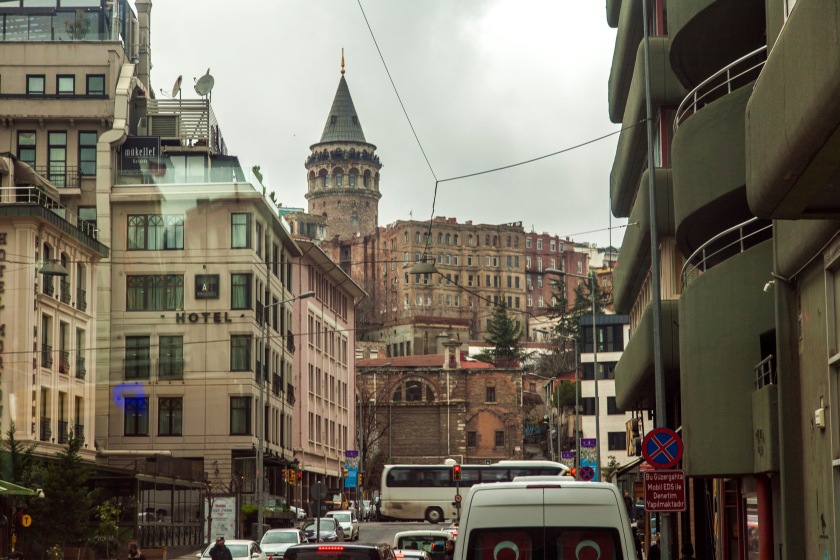
So Istiklal Avenue is where we start exploring Istanbul today. Our hotel’s location is such that if you walk a kilometre to the left, you will get to Taksim, and if you walk one (plus a bit more) to the right, you will reach the Galata Tower.

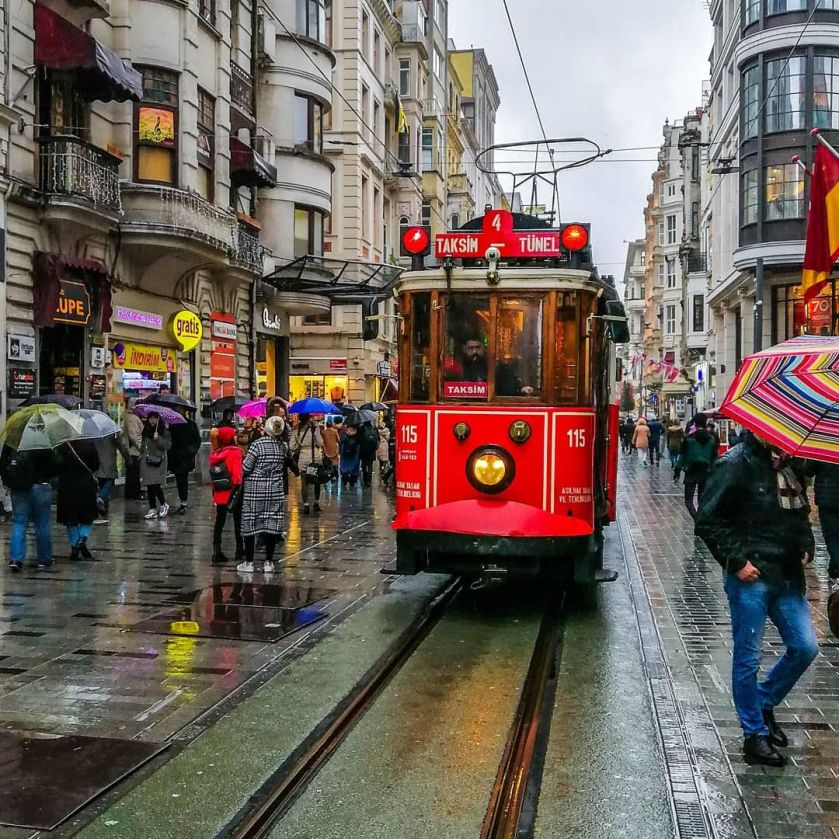
We first turned left. A historic tram line passes through Istiklal Caddesi, and this is the street’s only transport, apart from cleaning vehicles and police cars, which, by the way, also try to drive along the tramway track so as not to disturb pedestrians very much. For people from Baku, the best description of Istiklal Avenue is that it’s Istanbul’s “Torgovaya”, only a very long one.

IMG_3958

IMG_3984

We are surprisingly lucky with the weather today: despite it being February, it is so warm during the daytime that we have to take off our outerwear every now and then. When we sit down on a bench on Taksim Square, the sun is literally scorching. The square itself does not seem very cozy. We sat there for a bit and looked at a mosque under construction, at the “Republic” monument with sculptures of Ataturk and other marshals, including the Soviet marshal Voroshilov, and then turned back to Istiklal Caddesi, more interested in the tram, with roller skater boys clinging to it, than in the square itself.

IMG_3965

IMG_3967

IMG_3972

Walking Istiklal Street is very pleasant. We are eating wonderful roasted chestnuts, which are sold at every corner, and dondurma – the special stretchy Turkish ice cream, which the seller scoops onto cones, using a long-handled paddle, and turning the whole thing into a real show.

IMG_3959

IMG_3979

IMG_3990

IMG_3994

A separate paragraph should be devoted to the cats of Istanbul. There are lots of them, and this is the only place I have seen where cats are as beautiful as in Baku, but here they are loved and cherished much more. Almost every store or restaurant has food and drink bowls for cats, and often even a special little cat house. However, the most audacious cats prefer to settle in a chair right inside. There are quite ordinary-looking cats, and there are also simply outstanding examples of fluffiness and fatness. Dogs can also be found, though less often; all of them are microchipped and seemingly contented.

IMG_3995

IMG_3957

IMG_4243

IMG_3997

IMG_4003

IMG_4037

cof

What’s also interesting on Istiklal Caddesi is that there are quite a few Christian churches. We walked into one – the Basilica of St. Anthony of Padua, and, as it seemed to me, there were quite a few Turks praying in it, although I could be wrong.

IMG_3987

We reached the Galata Tower quite unexpectedly – for some reason I had the impression that it was in the opposite direction, and then suddenly we saw a signpost. It was about 5pm, and at first we decided to wait for the evening to take pictures of the tower in the evening light, and then thought that instead of idly waiting around we might as well go up to the observation deck (previously we were planning to do it tomorrow). The queue (maybe it’s a property of all the queues in Istanbul!), despite its impressive length, was moving rather quickly. We wondered if there was a lift inside the tower, or if we would have to climb a spiral staircase. There was a lift, yet we still had to climb the last two floors.

IMG_4004

IMG_4006

IMG_4011

IMG_4013

I must say that a moderate wait in the queue and a dizzy climb up the eerie stairs were totally worth it. The view of Istanbul from all sides is magnificent! A special feature are the large seagulls, which land on stone balls from time to time, right at arm’s length, and observe the city, looking very smart and important. Obviously, just like the tourists here, they are admiring the Bosphorus, the Golden Horn Bay, the famous mosques in the Old City. The only slightly annoying bit is that there are too many people on such a narrow rim of the tower, especially when not everyone is following the instructions to move only clockwise, which leads to chaotic cramming.

IMG_4021

IMG_4029

IMG_4022

IMG_4023

IMG_4024

IMG_4033

The tower also offers another entertainment – a simulation of a helicopter flight, which we didn’t find tempting though. However, we were taken a ton of pictures of, wearing historical costumes of harem dwellers. The poster advertising this attraction beckons you with a price of 30 liras (about 6 USD) per photo, but the ingenious photographer takes so many beautiful photos, with a variety of props, that you almost unwittingly end up forking out a lot more. But we still liked it!

To make sure we do get to see the Galata Tower in the evening light, we decided to have dinner in a restaurant directly opposite it. The weather and the heaters allowed us to sit comfortably outside (in February!) As for the restaurant, what can I say? Delicious kebabs, excellent service.

mde

IMG_4039

Posted in Asia, English, Phi Phi, Phuket, Thailand

Thailand – Day 9

РУССКОЯЗЫЧНАЯ ВЕРСИЯ ПО ЭТОЙ ССЫЛКЕ. CLICK HERE FOR RUSSIAN VERSION.

26 March 2018

Since we are now all on our own and we need to entertain ourselves somehow, we decided to go on a day tour of the nearby islands. The are two famous directions here: the Phi Phi islands and the islands of Phang Nga Bay (which include the famous James Bond Island).

We took a while to pick one – both seemed to be very good, but the first route included snorkeling and the second one included kayaking. As we had already tried kayaking in Vietnam, we decided to try snorkeling this time and finally chose Phi Phi.

So, at about 6.15am (!) we were picked up from our hotel by a minibus and taken to the pier with seven other passengers. The painfully early hour is a special feature of this company, intended to arrive to places before crowds of other tourists.
At the pier, we got a light breakfast (special kudos for the hot sandwiches!) and then headed to our boat with the guide – a very friendly guy called Wai. The speedboat was equipped with safety vests, which we were told to wear, as well as with snorkeling masks.

It took us about an hour to get to our first stop – the Phi Phi Lei island. We arrived around 9am, and there were already a lot of tourists, mostly Russians. On the Maya beach, known for The Beach movie with DiCaprio, no one was swimming, everyone was just taking photos.

IMG_3694

IMG_3706

We took a few as well and then took a stroll among a crowd of Russian tourists to look at the picturesque Loh Samah Bay.

IMG_3697

Once back on the boat, we rounded the island and anchored in the Pi Leh bay, where we could swim, jumping (or descending the stairs) into the sea directly from the boat. Right next to us was a boat carrying lots and lots of Chinese tourists, who were swimming around us, wearing bright orange lifejackets.

IMG_3707

Our next stop was for snorkeling, again straight from the boat. Wai handed us the snorkeling masks, we pulled on our fins and got out into the water. It felt bizzarre at first, so I had to get my head above water every few seconds. But then I got used to it. The sensations are very interesting, as if you are right inside the Singapore aquarium – there are lots of colourful tropical fish swarming around and it seems like you can reach out and catch one. Except that when you do try to reach out, they dodge and very easily avoid being caught.
IMG_3711

Another attraction of the island is the so-called Viking Cave, containing some rock paintings. Previously, the cave used to be open to visitors, but now swallow nests are being harvested here (for food purposes), so tourists cannot get inside. So we just floated by. Quite a pity, as on the outside it didn’t look like anything special.

IMG_3710

We didn’y stop at the Monkey Island either, just came very close to it. Not that anyone minded though – the prospect of being attacked and robbed by long-tailed macaques was hardly tempting! It was much better to observe our distant relatives from the boat. And then, when one monkey, apparently a male, separated from the group, jumped on a rock closer to us and stared at us, it even started feeling a bit uncomfortable, so I preferred to go inside the boat.

selfp

selfp

We stopped on the second major island, Phi Phi Don, for lunch at a local restaurant, with a big table already waiting for us with various dishes: curries, coconut soup, french fries, and some spicy vegetables.

selfp

It already got very hot to the extent that walking on the sand became painful. We didn’t get to swim here, but our last stop on the Bamboo Island turned out very pleasant. We stopped at the back of the island, and Wai said that there were much fewer people here than at the front. Indeed, there was only one other boat anchored at beach, and then it left too.

IMG_3714

The sea bottom here was more suitable for snorkeling than for normal swimming, as there were lost of coral reefs. And again it was very interesting – there were colourful fish all around you in the crystal-clear water, there were sea sponges, contracting their bodies, there were some ugly creatures looking like sea cucumbers at the bottom.

Overall, we had a very good trip, with the cherry on the top being such an interesting activity as snorkeling.

We still have two and a half days to spend in Phuket, but I am not going to write any more posts, since all we are planning to do is lie on the beach.