All Posts

Posted in Europe, Georgia

Georgia – Day 2

РУССКОЯЗЫЧНАЯ ВЕРСИЯ ПО ЭТОЙ ССЫЛКЕ. CLICK HERE FOR RUSSIAN VERSION.

27 December 2014

We dedicated our second day to a tour of Tbilisi. First of all, we were taken to the Turtle lake which is located in the posh Vake district. The lake is called like that for a very obvious reason – there are small turtles on its shores. The lake was coated with a thin layer of ice, and the park impressed us with its clean pine air and the sources thereof.

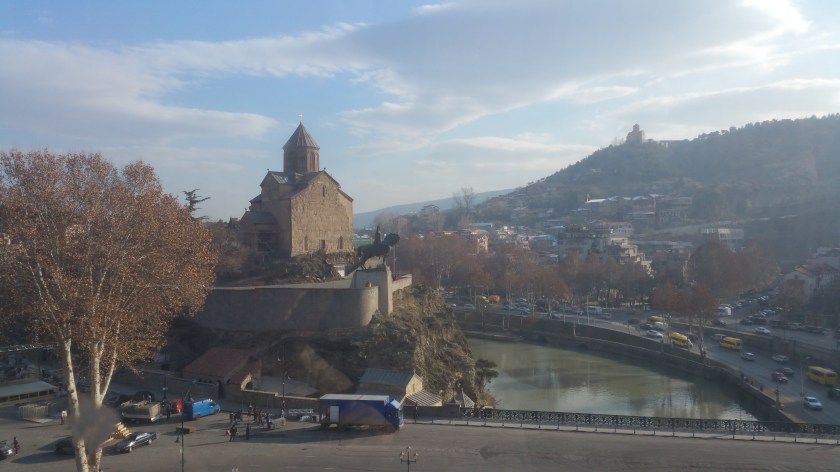
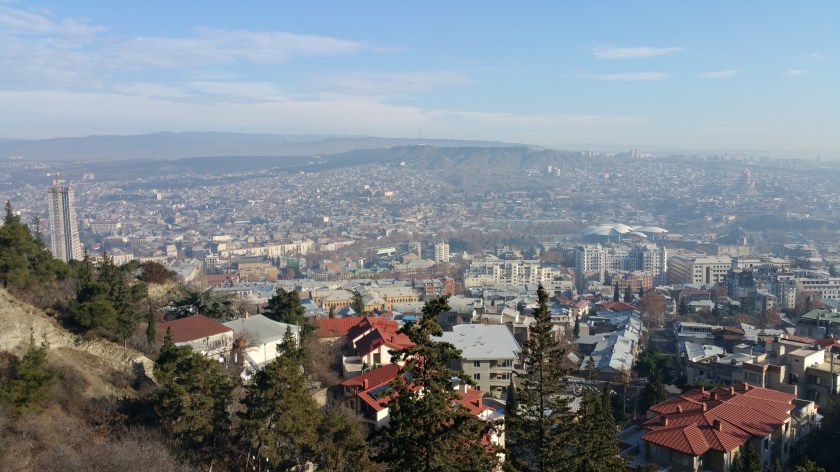
Yesterday we thought that Tbilisi was pretty small, but when we were taken to see it from one of the highest points today, so that not only the old part, but also the new districts were visible, it turned out that the sizes are much larger and the city, extended in length, lies in the cleft between the mountains. In short, the size of the city could be seen well, but the details could not really be made out – it was very foggy. On the way to this lookout point we saw a very original building of the 112 rescue service in the form of a flying saucer.
20141228_120721
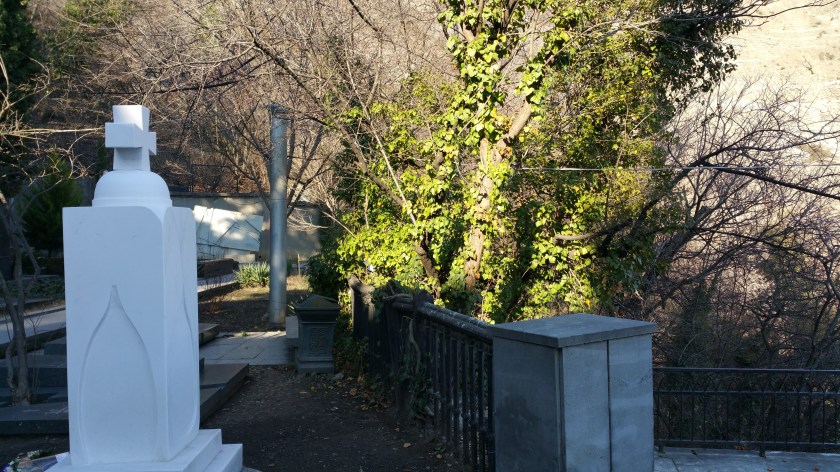
One of the planned visits was the Pantheon – the burial place of famous Georgian figures of culture, science and politics – situated on the slopes of Mount Mtatsminda. More precisely, it was our guide who told us about the Pantheon, as we only knew about the graves of Griboyedov and his wife, Nina Chavchavadze. It turns out that these very graves initiated the Pantheon. We came as close as we could by car, and then had to walk, making pretty steep climbs. The guide was encouraging us by showing the place of destination. From this high point, we looked at Tbilisi again, from a different perspective now, and suddenly it turned out that the grave of Griboyedov was just behind us. The grave had a very touching monument to a weeping woman clinging to a cross, and a no less touching famous inscription: “Your spirit and achievements will be remembered forever. Why still does my love outlive you?” With regard to the Pantheon itself, I found all the graves interesting, even though I had only known the names of Stalin’s mother, Zviad Gamsakhurdia and Nodar Dumbadze.

20141228_121124

20141228_121322
After such a spiritual visit we moved on to a purely prosaic activity – food consumption, for the purpose of which we were taken to the Agmashenebeli avenue (former Plekhanov street). By the way, I really liked the avenue, even more than the Rustaveli ave. I can’t now recall the name of the small restaurant we went to, but the interior was purely Georgian, with antique items, such as cameras and phonographs, and reproductions of Pirosmani’s paintings on the walls (we ate our khachapuris right next to the famous “Feast of Five Princes”).

If yesterday we visited ancient churches and temples, today, having driven us through a quarter that was very reminiscent of the Kubinka and generally the area of Teze Bazar in Baku, Zviad brought us to a modern temple, visible from almost any point of Tbilisi – Tsminda Sameba, the Holy Trinity Cathedral. It occupies a large area, around which you can still see construction works, like columns being built and stone carving works going on.

20141228_140522
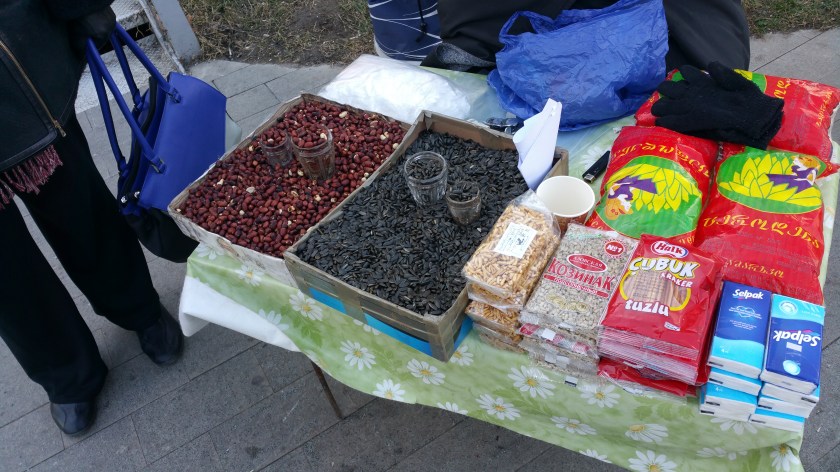
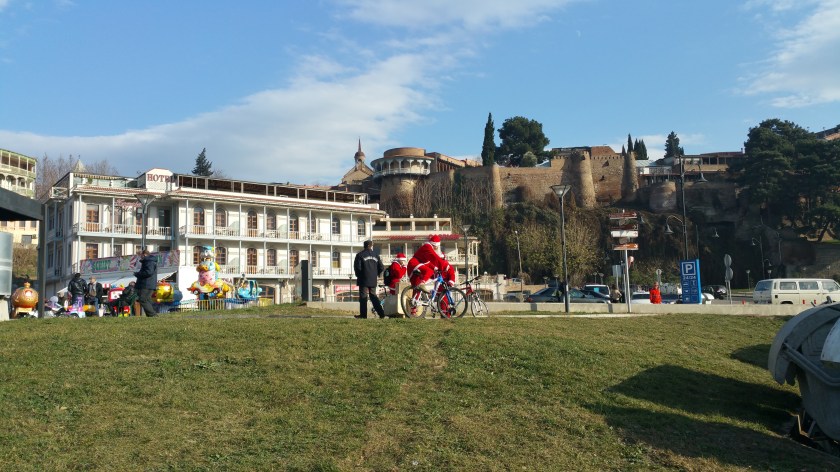
Apparently, the plan of our guide consisted of alternating spiritual visits with pure entertainment – undoubtedly the cableway to the Narikala forthress at the same Mount Mtatsminda was part of the latter. It is not at all scary here – unlike the one I took to the Great Wall in China, where you literally float over the abyss, risking dropping your shoes there (while also afraid to drop yourself!). Here you just sit in a closed cabin for 5-6 people and peacefully look at the Kura and its banks underneath. We didn’t get to see the fortress, but had the opportunity to be photographed with a falcon, and then descended to the Europe Square using the same cableway. We saw a few people dressed as Santa Clauses riding bicycles, and also something that made me really emotional – street vendors of roasted peanuts and sunflower seeds, which are measured with a large or a small faceted glass and then sold in paper cornets: where are the days when we had the exact same thing in Baku?..

20141228_145438

20141228_143903

20141228_144909

20141228_150224

20141228_150422
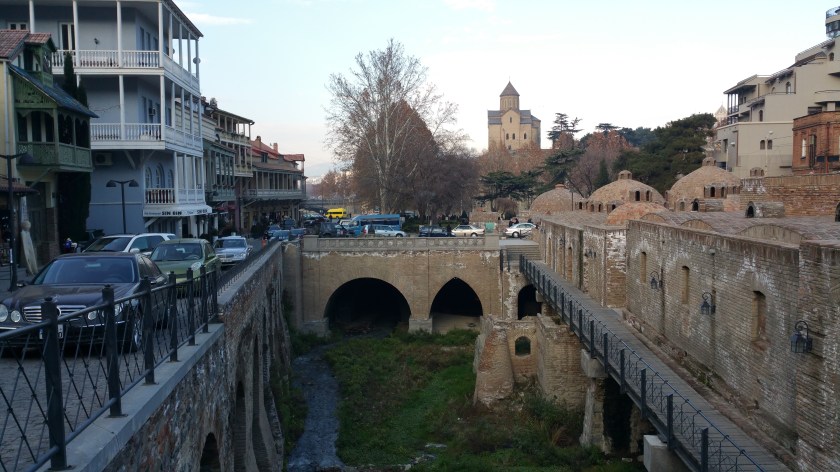
Both today and yesterday we saw a lot of purely Tbilisian houses, clinging on the steep cliffs over the Kura, with a lot of balconies. Today we also went into one of the old quarters. Here we found the famous sulfur baths, which we could sense even from afar for the very specific smell of hydrogen sulphide. We walked up to a waterfall in a narrow crevice.

20141228_151501

20141228_152154

20141228_151855
Ever since yesterday we really wanted to buy churchkhela – the traditional sausage-shaped candy made of grape must with nuts, but Zviad had told us not to buy it not just anywhere but in trusted places, and so he took us to one. The tiny convenience store seemed to have a whole market squeezed in it: they had meat, and cheese, and pickles, and a variety of fruit-vegetables, and well, of course, the coveted churchkhela. Unluckily, we had to wait for the sales assistant of this particular department for quite a while – it turned out that he had been queueing at a supermarket nearby to buy a box of champagne.

Towards the end of the day we went up the Mtatsminda for the third time, this time by a cable car. The first stop was near the pantheon we’d already seen, and the second one led us to a large park, with lots of swings and carousels, with New Year’s songs coming from the speakers, with a house with upturned balconies – as if it was standing upside down. And again I was wrapped in nostalgia – the Baku Boulevard in the days of my childhood looked exactly like this, even the benches were similar. But it’s not that I’m trying to say that anything around looks old and shabby, straight from those times – the park is exactly maintained like this, just as the buildings are restored, as I said before.

20141228_165328
Overflowing with impressions, we ended the day in the khinkali restaurant right near the hotel, where we tried different kinds of khinkali: with meat, mushrooms, cheese – and were very pleased. Thus, our stay in Tbilisi was brief, but very impressive.

Posted in Грузия, Европа

Грузия – День 2

CLICK HERE FOR ENGLISH VERSION. АНГЛОЯЗЫЧНАЯ ВЕРСИЯ ПО ЭТОЙ ССЫЛКЕ.

28 Декабря 2014

Второй день мы посвятили объезду Тбилиси. Прежде всего нас повезли к Черепашьему озеру- это престижный парковый район Ваке. Озеро называется Черепашьим по самой очевидной причине – на берегах его водятся черепахи, не галапагосские, конечно, а так, небольшие. Озеро было подернуто ледяной пленкой, а сам парк впечатлил своим чистым сосновым воздухом и самими источниками оного.

Вчера нам показалось, что Тбилиси очень небольшой, но когда нас сегодня повезли смотреть на него с одной из высоких точек, так, чтобы была видна не только старая часть, но и новые микрорайоны, оказалось, что размеры значительно больше – город вытянут в длину и лежит в расщелине между гор. Размеры города, короче, были видны хорошо, а вот детали просматривались не слишком – было очень туманно. По пути на эту смотровую точку видели очень оригинальное здание службы спасения 112 в форме летающей тарелки.

20141228_120721
Одним из запланированных посещений был пантеон – место захоронения известных деятелей грузинской культуры, науки и политики, расположенное на склоне горы Мтацминда. Точнее, про Пантеон нам рассказал наш гид, а мы знали лишь о нахождении там могил Грибоедова и его жены Нины Чавчавадзе. Оказывается, именно они положили начало этому пантеону. Мы подъехали на машине до тех пор, пока можно было, а дальше шли пешком, преодолевая довольно крутые подъемы. Гид ободрял и показывал, куда мы должны прийти. С этой высокой точки мы опять посмотрели на Тбилиси, уже в другом ракурсе, и неожиданно оказалось, что могилы Грибоедовых как раз у нас за спиной. На могиле Грибоедова – трогательный памятник женщине, плачущей у креста, и не менее трогательная знаменитая надпись: «Ум и дела твои бессмертны в памяти русской, но для чего пережила тебя любовь моя?» Что касается самого пантеона, я с интересом посмотрела на все памятники, но известными мне были только имена матери Сталина, Звиада Гамсахурдиа и Нодара Думбадзе.

20141228_121124

20141228_121322
После столь возвышенного посещения мы перешли к мероприятию сугубо прозаичному – поглощению пищи. Перекусить нас отвезли на проспект Агмашенебели (бывшая улица Плеханова). Кстати, проспект очень понравился, пожалуй даже больше, чем Руставели. Название небольшого ресторанчика в памяти не отложилось, но интерьер был сугубо грузинским, по стенам были развешаны антикварные вещи (фотоаппарат, граммофон) и репродукции картин Пиросмани (мы лично поедали хачапури под знаменитыми «Пирующими князьями»).

Если вчера мы посещали церкви и храмы старинные, то сегодня, провезя нас через квартал, очень напоминающий бакинскую Кубинку и вообще район Тязя Базара, Звиад показал нам храм-новодел, видный едва ли не со всех точек Тбилиси – это Цминда Самеба, храм Святой Троицы. Он занимает большую территорию, на которой все еще ведутся какие-то строительные работы – строятся колонны, делается резьба по камню.

20141228_140522
Очевидно, в планах нашего гида было попеременно угощать нас то возвышенными достопримечательностями, то чисто развлекательными – несомненно, канатная дорога к крепости Нарикала на все той же горе Мтацминда относится к последним. Она здесь совсем не страшная – не то, что на Великой Китайской Стене, где, проплывая в креслице над бездной, все время рискуешь уронить в нее туфлю (и опасаешься уронить туда же себя). Тут ты чинно сидишь в закрытой кабинке на 5-6 человек и мирно поглядываешь на Куру и ее берега под тобой. Никакую крепость нам показывать не стали, зато мы имели возможность сфотографироваться с соколом, после чего довольно быстро тем же путем спустились обратно на площадь Европы. На площади какие-то люди в костюмах Дедов Морозов катались на велосипедах, а что умилило едва ли не до слез – так это уличная торговля жареным арахисом и семечками, которые отмеряют большим или маленьким граненым стаканом и пересыпают в бумажные фунтики: все это когда-то было и в Баку…

20141228_145438

20141228_143903

20141228_144909

20141228_150224

20141228_150422
И вчера, и сегодня мы уже достаточно видели чисто тбилисские дома, лепящиеся на отвесных скалах над Курой со множеством балкончиков. Но сегодня мы углубились в один из старых кварталов. Здесь оказались знаменитые бани на серных источниках, которые мы почуяли еще издалека по весьма характерному запаху сероводорода. Мы прогулялись к водопаду, находящемуся в узкой расщелине.

20141228_151501

20141228_152154

20141228_151855
Нам еще вчера хотелось купить чурчхелу – традиционную виноградную колбаску, начиненную орехами, но Звиад сказал, что покупать надо не абы где, а в проверенных местах, и следующим номером как раз повез нас в оное. В крохотной колоритной лавочке помещался целый базар: тут и мясо, и сыры, и соленья, и разнообразные фрукты-овощи, ну, и конечно, вожделенная чурчхела. Правда, продавца именно этого отдела пришлось ждать довольно долго – выяснилось, что он стоял в очереди в супермаркете неподалеку, закупая ящик шампанского.

К исходу дня мы оказались на Мтацминде в третий раз, теперь поднявшись на нее на фуникулере. Первая остановка была около уже виденного нами пантеона, а вторая привела нас в большой парк, со множеством качелей и каруселей, с новогодними песнями, доносящимися из динамиков, с домиком с перевернутыми балконами – как бы вниз головой. И снова меня окутала ностальгия – бакинский бульвар во времена моего детства выглядел именно так, даже скамейки были похожи. Причем я вовсе не хочу сказать, что что-либо вокруг выглядит дряхлым и обшарпанным, прямиком из тех времен – парк именно поддерживается в таком виде, так же как реставрируются здания, о чем я уже говорила раньше.

20141228_165328
Переполненные впечатлениями, мы закончили день в хинкальной прямо около гостинице. Попробовали разные хинкали: с мясом, грибами, сыром – и остались весьма довольны. Таким образом, наше пребывание в Тбилиси было кратким, но очень впечатляющим.

Posted in English, Europe, Georgia

Georgia – Day 1

РУССКОЯЗЫЧНАЯ ВЕРСИЯ ПО ЭТОЙ ССЫЛКЕ. CLICK HERE FOR RUSSIAN VERSION.

27 December 2014

We arrived last night, and found Zviad, the guide meeting us, very easily, so logistic-wise everything went really smoothly. The smooth start actually began at the passport control, where each of us was handed a bottle of Saperavi wine – turns out, they are given out to all foreigners entering the country, isn’t that surprising? Zviad drove us a bit around the night Tbilisi, which immediately aroused nostalgia – the non-central streets seemed very similar to the Baku of my childhood. We got particularly excited when shown the river Kura and then the Avlabari neighbourhood, and started quoting the Khanuma movie.

20141227_085802

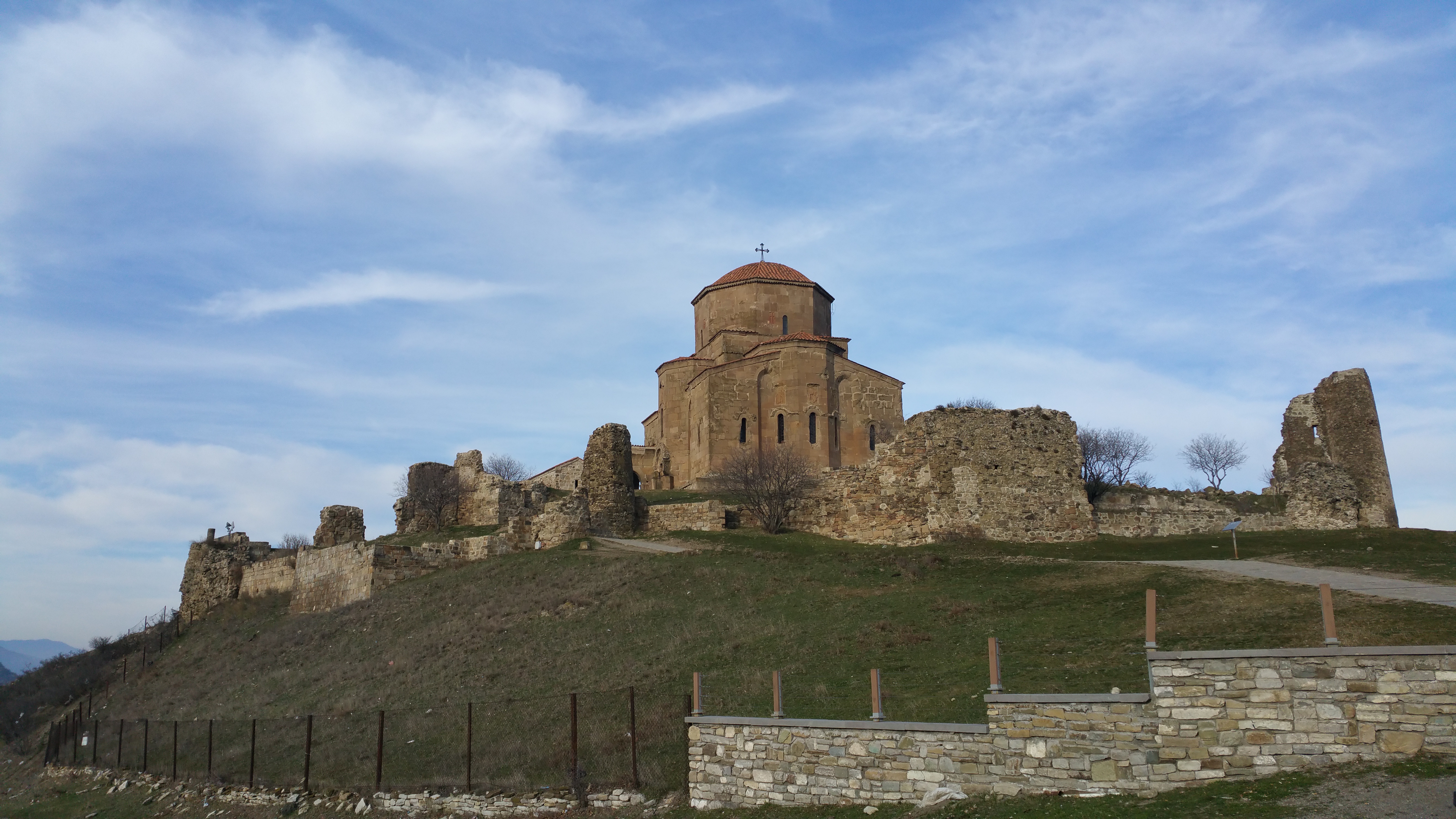
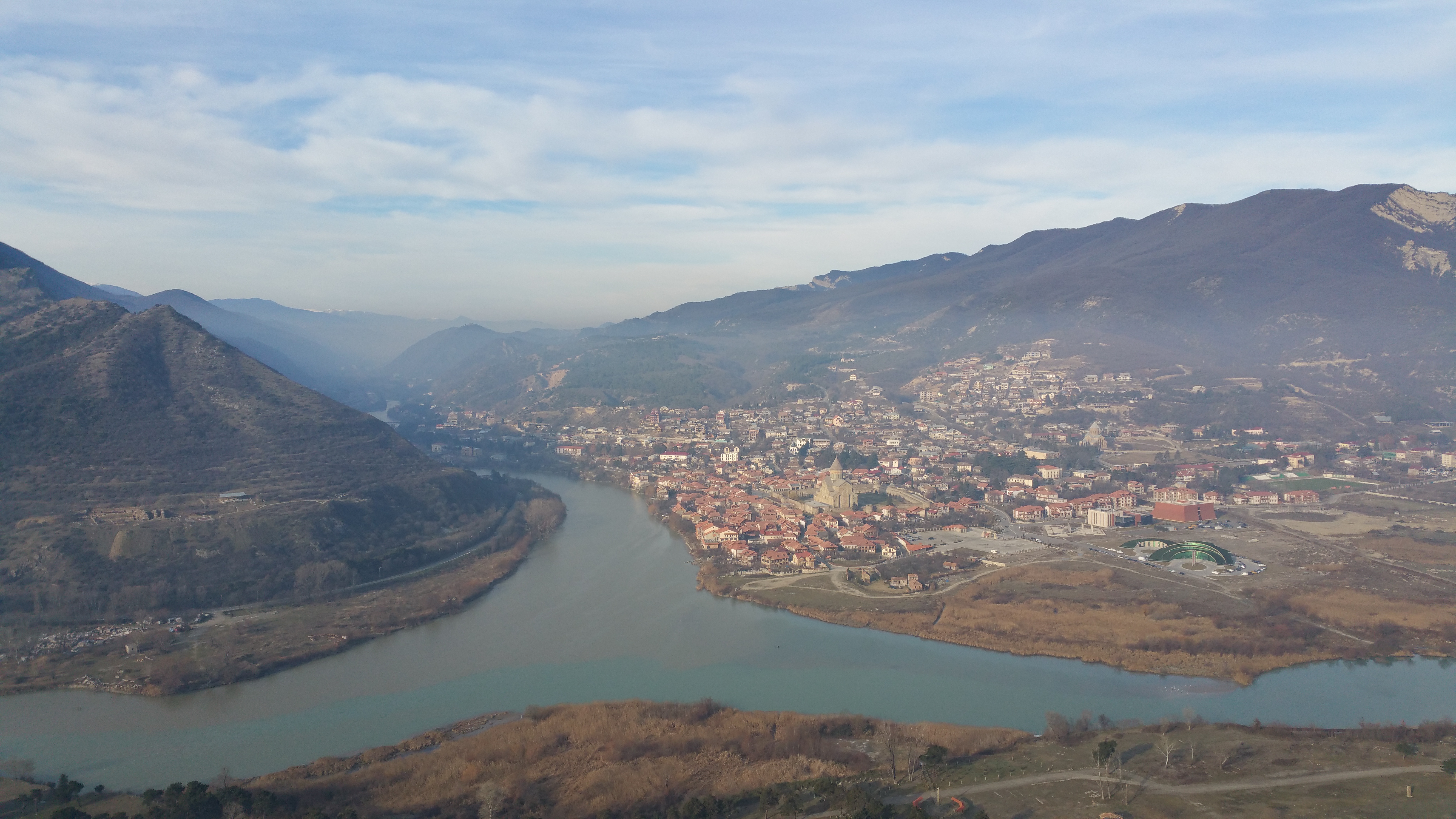
It was decided that on the first day we would make a sortie out of Tbilisi and leave the city sightseeing for the second one. The weather promised to be nice (and honestly fulfilled the promise), even though it was quite chilly near the Jvari (meaning ‘cross’) monastery where we headed first, and the puddles were flecked with ice. The monastery is located atop a rocky mountain, from which one can see the Mtskheta town and also exactly what was described in Lermontov’s poem ‘The Novice’ (‘Mtsyri’): “…where soundingly together flow Aragva and Kura – the place, where, like two sisters, they embrace…”, i.e. where the blue Aragvi merges with the yellow Kura, and the line separating these waters is very clearly noticeable. The reason why the monastery is called the Holy Cross monastery is not because it has the shape of a cross, as one might expect, but because it was here where St. Nino of Georgia, a female evangelist, erected a cross. The legend says that this very cross lies in the foundation of the monastery.

20141227_104035

20141227_104044

20141227_104539

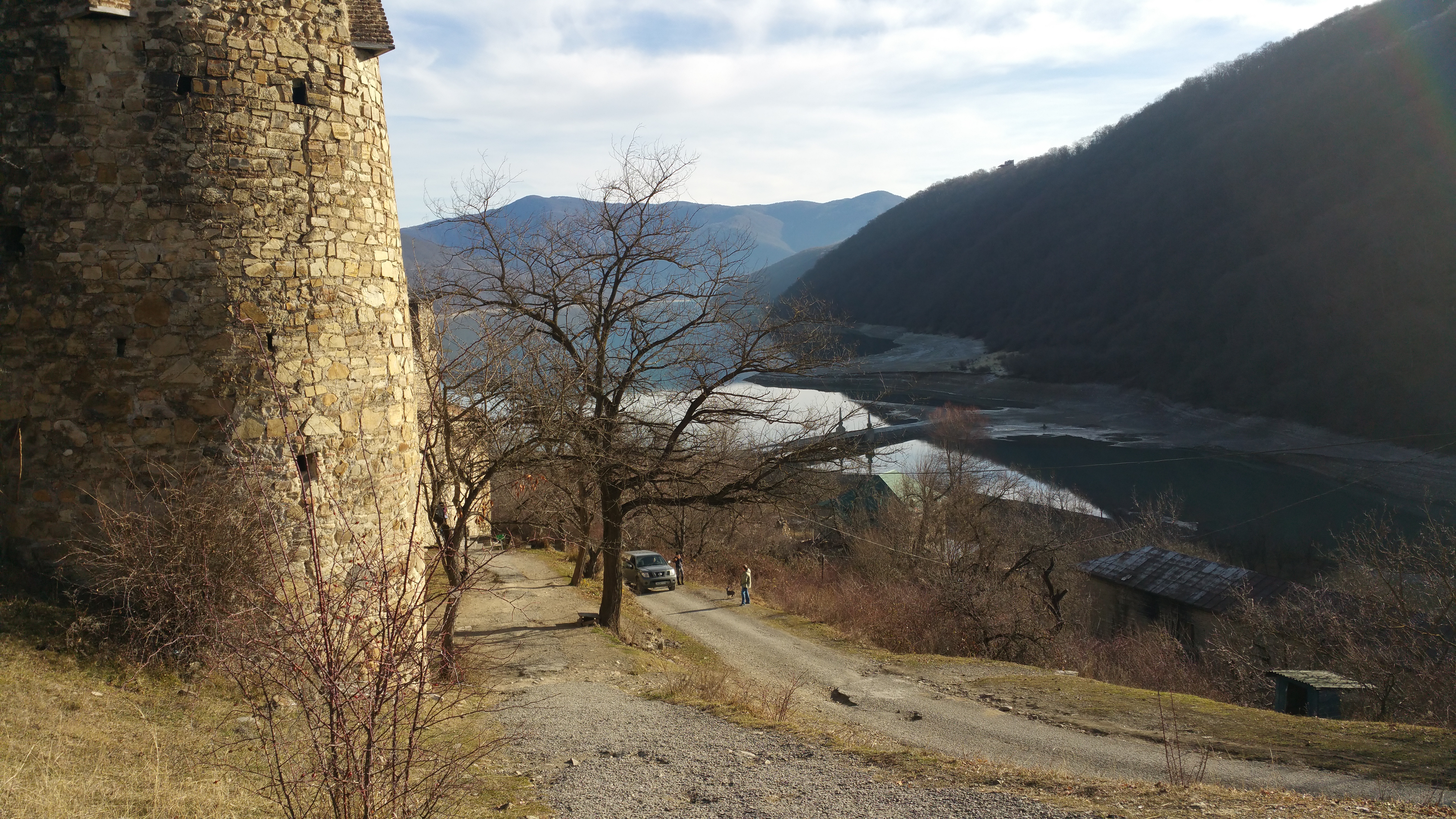
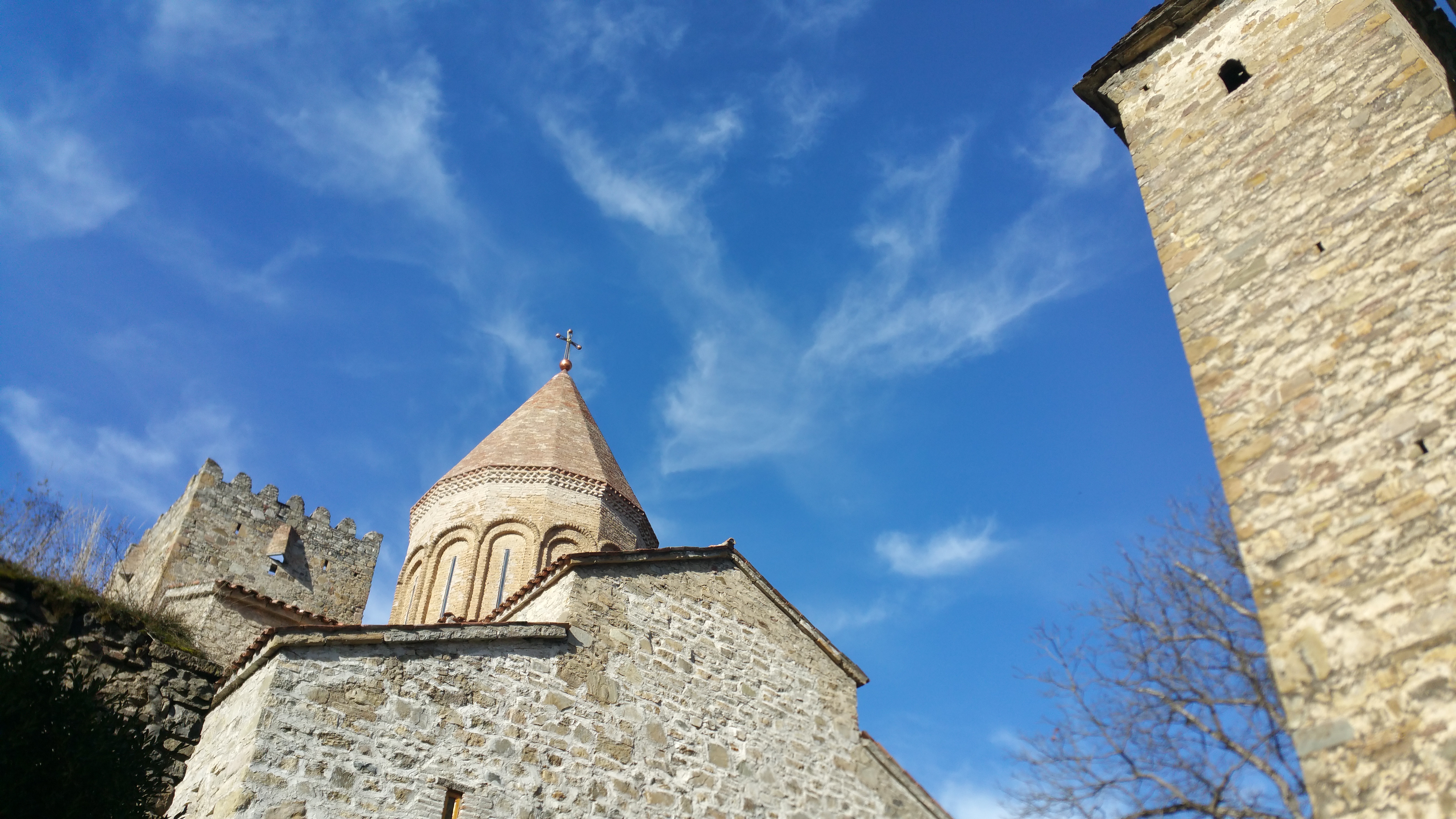
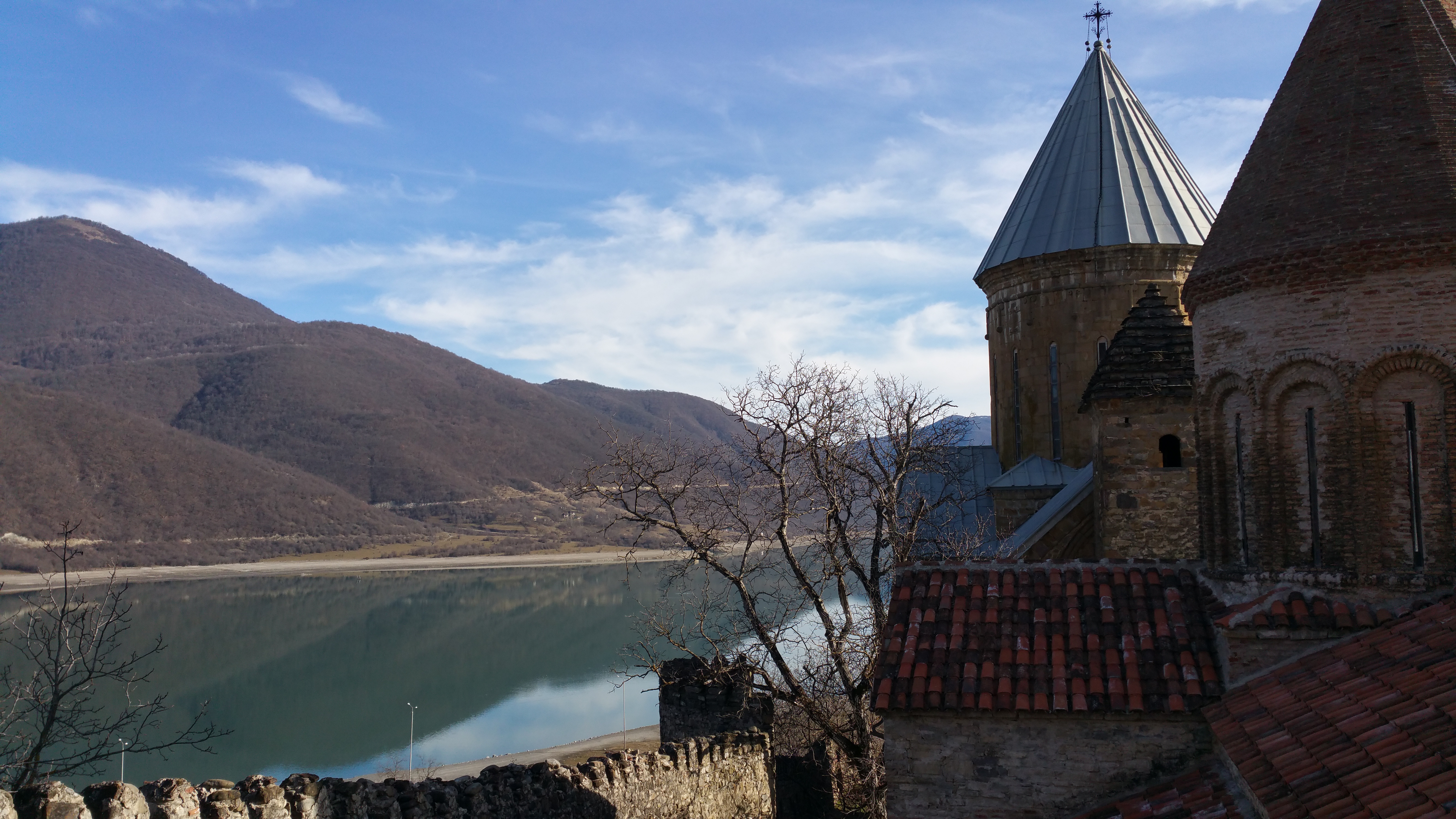
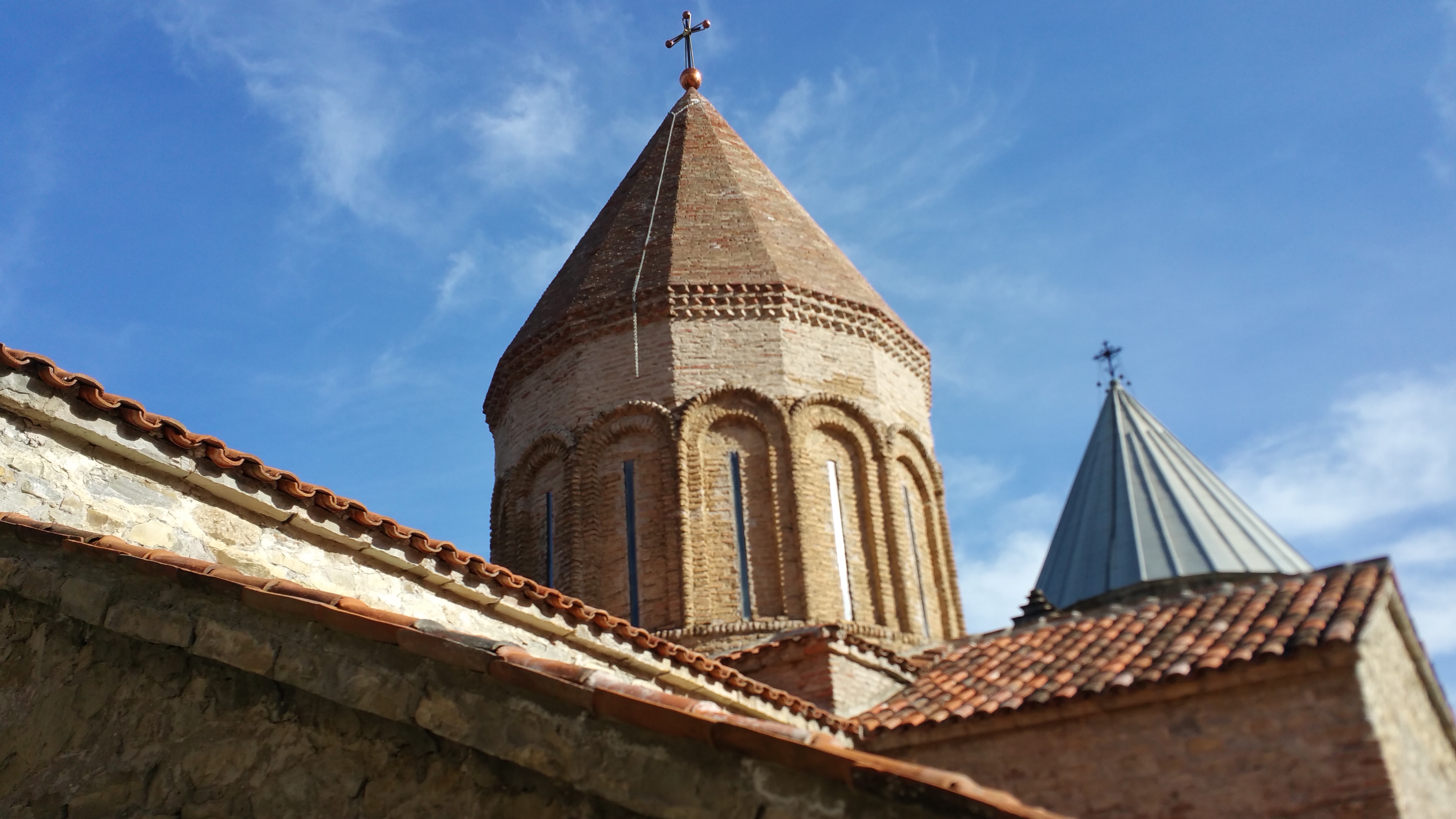
We drove off along Aragvi, on the Georgian Military Highway, to see the ancient fortress of Ananuri. The places around were very picturesque, even though it’s not the best season now – in autumn or spring it must look absolutely spectacular! On our way we took pictures of the Zhinvali reservoir from various angles. It’s also very beautiful, but that’s somewhat overshadowed by the fact that to create this beauty (which of course has practical use too!) three villages had to be flooded. We visited one of the churches in the castle complex, while the other one was closed. Zviad told us that once all the walls in the first church were painted with frescoes, but then during the stay of a Russian garrison in the fortress, they were all covered with a thick layer of lime. Relatively recently a small area was cleared and a really impressive fresco of St. George was discovered. I climbed to the top of the tower, which was quite difficult and scary, considering the narrow passages and steep, broken stairs. But I got the chance to look out of a loophole, although it was so narrow that I couldn’t really see much.

20141227_121051

20141227_121232

20141227_121726

20141227_121742

20141227_121846

20141227_121942

20141227_122617

20141227_123401

20141227_123628

20141227_125548

From here we drove back to Mtskheta and stopped in the old part of the city. In general, as we noted, it is peculiar to Georgia that most of the ancient and old buildings are restored in their original form. Therefore, all the houses are colorful, neat, with traditional Georgian balconies and look very good. There are little shops selling souvenirs, wine, churchkhela (Georgian sweet “sausages” made of fruit and nuts) with sellers strongly beckoning tourists to drink with them all along the road to the Cathedral of Mtskheta. Our guide even argued with someone, reproaching him for trying to “recapture” his guests.

.

20141227_133702

20141227_133713

20141227_133745

20141227_141233

20141227_141303

20141227_141404

The Cathedral of Mtskheta, or Svetitskhoveli (translated as “the life-giving pillar”) is a patriarchal cathedral with the seat of the Patriarch standing right in the centre thereof. It’s a burial place of the last kings of Georgia and various princes, including a few from the Mukhrani branch of the famous Bagrationi dynasty. The Cathedral is one of the three main cathedral in country, symbolising the central Georgia, or the Kartli region. The Alaverdi temple in Kakheti, respectively, represents the east of Georgia and the Bagrat temple in Kutaisi represents the west. Even in Soviet times, it was common among the youth of Tbilisi to wed in Svetitskhoveli, so every spring after Easter endless wedding processions stretched from Tbilisi.

20141227_134636

Instead of the anticipated three hours we spent five on the road, by the end of which we were absolutely starving. We wanted to taste some proper Georgian cuisine, and on our return to Tbilisi we were taken to a restaurant called “Zakhar Zakharich”. The food there was really delicious. Our menu consisted of the kharcho soup, Imeretian khachapuri (cheese pie), aubergines with walnuts, ojakhuri (roasted pork with potatoes and onions), shkmeruli (fried chicken with lots of garlic) and jigar (liver) on the grid. As for the wine, we had red Saperavi in pitchers. In short, we had a great treat and only paid 127 GEL for four of us, which makes about 70 USD , or 54 AZN.

The only thing we could do after that was taking a two-hour nap. In the evening, we walked along the holiday-decorated Rustaveli Avenue, which was right around the corner from our hotel. It was beautiful, but in many ways reminded of Baku – potholes here and there, lots of construction, cars on the sidewalks, cigarette smoke everywhere – as most of the population seems to smoke. However, the walk was still nice.

Posted in Грузия, Европа, Русский

Грузия – День 1

CLICK HERE FOR ENGLISH VERSION. АНГЛОЯЗЫЧНАЯ ВЕРСИЯ ПО ЭТОЙ ССЫЛКЕ.

27 Декабря 2014

Прилетели вчера вечером, очень легко нашли встречающего нас гида Звиада, так что с точки зрения логистики все прошло очень гладко. А начало положил паспортный контроль, где нам вручили по бутылке Саперави – оказывается, их раздают всем въезжающим иностранцам, не удивительно ли? Звиад провез нас немного по ночному Тбилиси, который сразу же вызвал ностальгию – нецентральные улицы показались очень похожими на Баку моего детства. Встрепенулись, когда нам показали, вот, мол, Кура, а вот за ней Авлабар – начали хором цитировать «Хануму».

20141227_085802

Мы решили, что в первый день мы совершим вылазку за пределы Тбилиси, а осмотр самого города оставим на второй. Погода обещала быть хорошей и честно выполнила свое обещание – хотя около монастыря Джвари (что означает «крест»), куда мы поехали прежде всего, было достаточно холодно, лужи были подмерзшие. Сам монастырь расположен на горе и с него видно Мцхету, а также как раз то, что описано в «Мцыри»: «…там, где, сливаяся, шумят, обнявшись, будто две сестры, струи Арагвы и Куры…», то есть место слияние голубой Арагви и желтой Куры, причем очень четко заметно место разделения этих вод. Почему монастырь называется Крестовым, так это не потому, что он имеет форму креста, как можно предположить, а потому, что именно здесь крестительница Грузии святая Нино воздвигла крест. Легенда гласит, что именно этот крест лежит в фундаменте монастыря.

20141227_104035

20141227_104044

20141227_104539

Вдоль Арагви, по Военно-Грузинской дороге, мы поехали в Ананури посмотреть старинную крепость. Места вокруг были очень живописные, хотя сезон не самый подходящий – осенью или весной там, говорят, вообще сказка. По дороге во всех ракурсах пофотографировали Жинвальское водохранилище – тоже очень красиво, но несколько омрачает мысль, что для создания этой красоты (ну и пользы, конечно) пришлось затопить три деревни. В крепости мы посетили одну из церквей, другая же была закрыта. Звиад рассказал нам, что когда-то все стены в первой церкви были расписаны фресками, однако потом во время пребывания в крепости русского гарнизона они были замазаны толстым слоем извести. Сравнительно недавно был расчищен небольшой участок, и обнаружилась действительно очень впечатляющая фреска с изображением святого Георгия Победоносца. Я поднялась на самый верх башни, что было довольно трудно и страшно, учитывая узкие проходы и крутые, обломанные ступеньки. Зато выглянула из бойницы, правда, она была такой узкой, что особо большого обзора не было.

20141227_121051

20141227_121232

20141227_121726

20141227_121742

20141227_121846

20141227_121942

20141227_122617

20141227_123401

20141227_123628

20141227_125548

Далее из Ананури мы вернулись к Мцхете и заехали в старую часть города. Вообще, как мы заметили, для Грузии характерно, что тут стараются отреставрировать древние и старинные постройки именно в первозданном виде. Поэтому все домики здесь цветные, аккуратные, с традиционными грузинскими балконами и смотрятся очень хорошо. Когда проходишь к кафедральному собору Светицховели, по всей дороге торгуют сувенирами, вином, чурчхелой (грузинские сладкие фруктово-ореховые «колбаски») и усиленно зазывают туристов выпить с ними. Наш гид даже возмутился, что у него пытаются «отбить» гостей.

20141227_133702

20141227_133713

20141227_133745

20141227_141233

20141227_141303

20141227_141404

Светицховели (в переводе – «животворящий столб») – это патриарший собор, и кресло патриарха красуется в самом центре оного. Там похоронены последние цари Грузии и различные князья, в том числе и целый клан знаменитых князей Багратионов-Мухранских. Собор является одним из трех главных кафедралов страны и символизирует центральную Грузию – Картли. Храм Алаверди в Кахетии, соответственно, символизирует восток Грузии, а кутаисский храм Баграта – запад. Даже в советские времена среди тбилисской молодежи было принято венчаться в Светицховели, и поэтому весной после пасхи из Тбилиси сюда тянулись бесконечные свадебные кортежи.

20141227_134636

Вместо предполагаемых трех часов мы проездили все пять и очень уже проголодались. Нам хотелось вкусить настоящей грузинской кухни, и по возвращении в Тбилиси нас повезли в ресторан «Захар Захарыч». Блюда там были действительно великолепные. Наше меню состояло из супа-харчо, имеретинского хачапури, баклажанов с орехами, оджахури (жареной свинины с картошкой и луком), шкмерули (жареного цыпленка с большим количеством чеснока), а также джигара (печени) в сетке. Вино пили красное, кувшинное Саперави. Словом, угостились мы весьма основательно, а заплатили в результате на четверых 127 лари, что составляет под 70 долларов США, или 54 АЗН.

Единственное, что мы могли после всего этого сделать – это поспать часа два. Вечером прошлись по иллюминированному к Новому Году проспекту Руставели, за углом которого находилась наша гостиница. Красиво, но как-то по-бакински – много где разрыто или идет строительство, машины едут по тротуару, а еще очень накурено – потому что курят повально все. Тем не менее, пройтись все равно было приятно.

Posted in Asia, China, English, Hong Kong

Hong Kong – Day 5

РУССКОЯЗЫЧНАЯ ВЕРСИЯ ПО ЭТОЙ ССЫЛКЕ. CLICK HERE FOR RUSSIAN VERSION.

4 December 2013

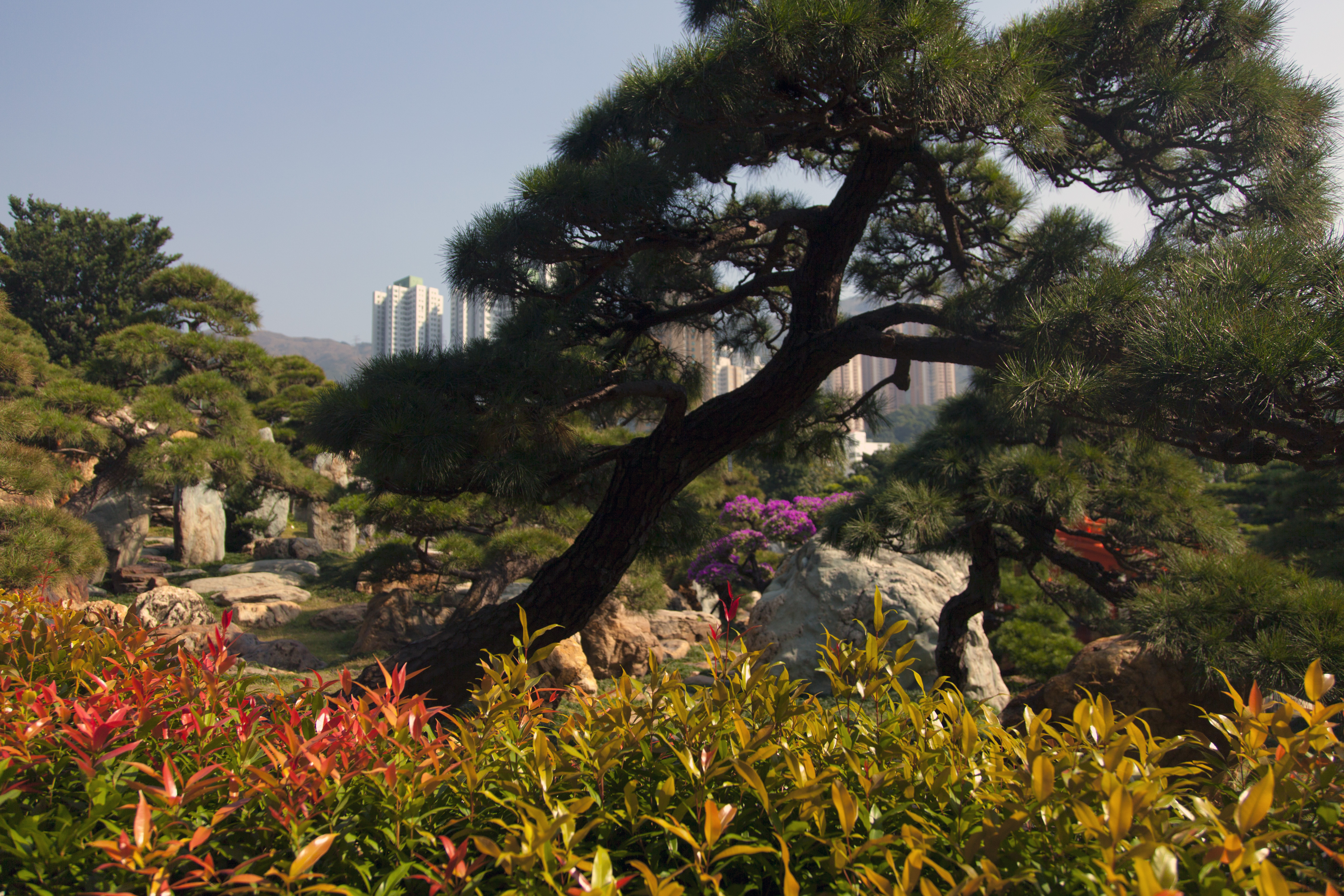
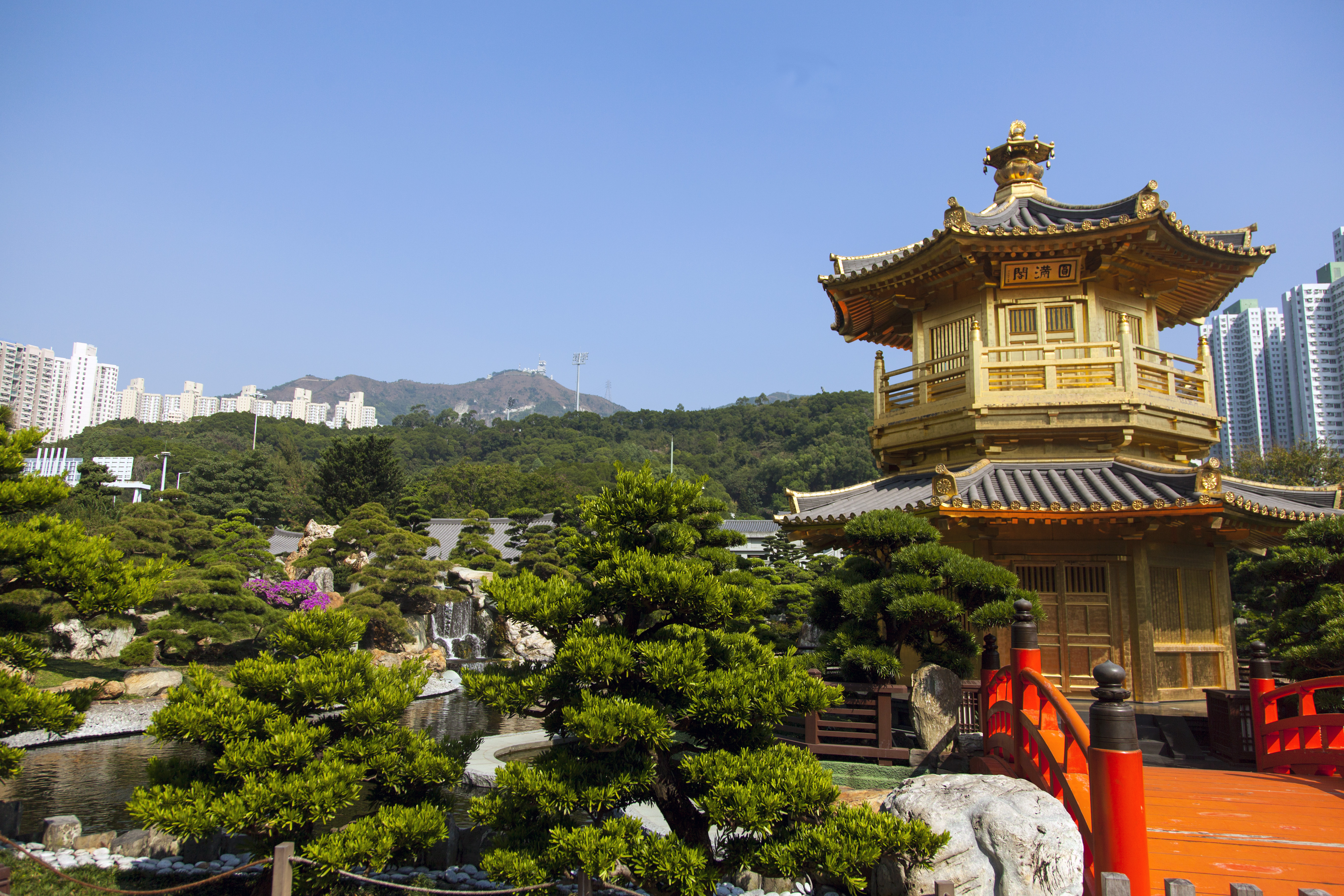
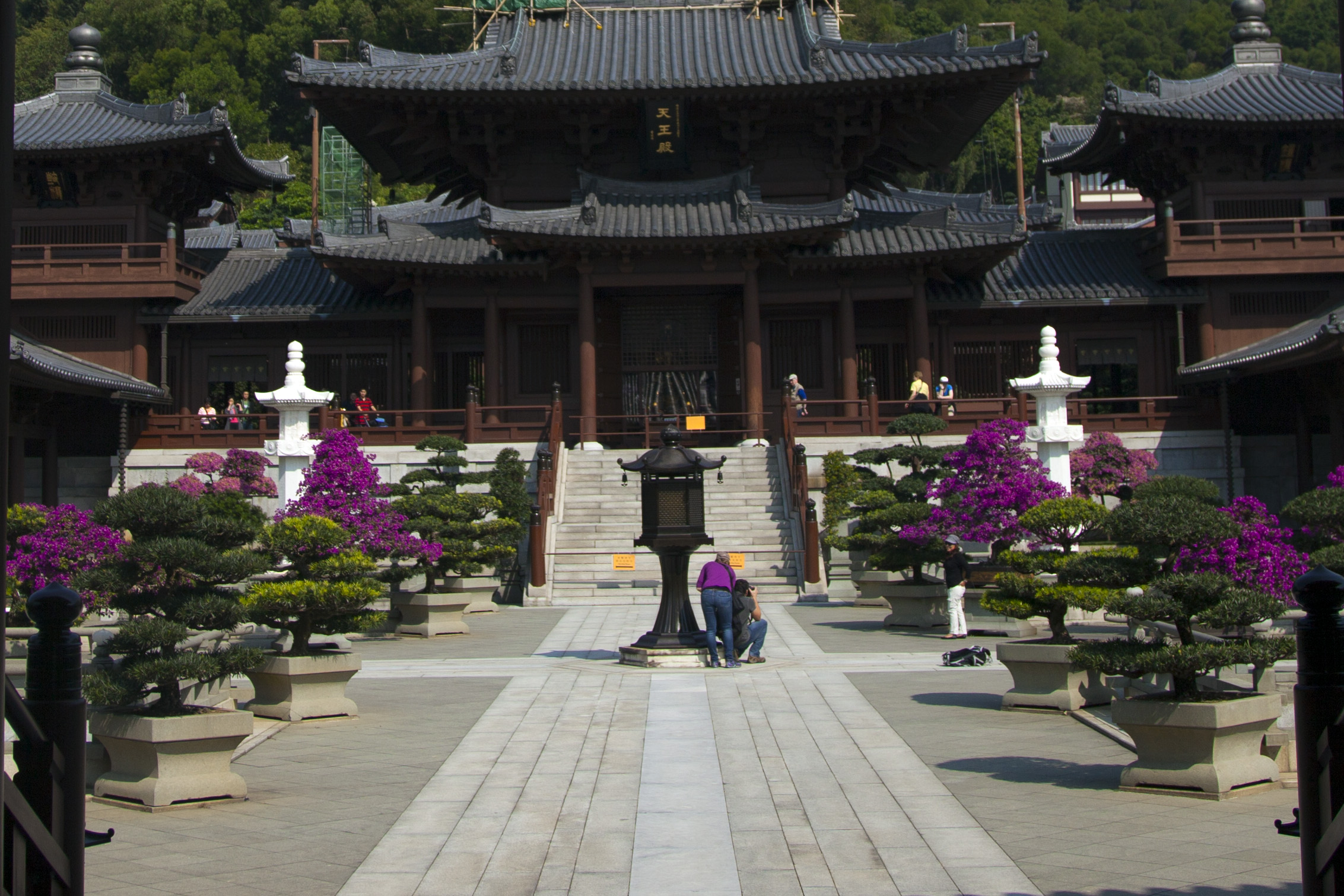
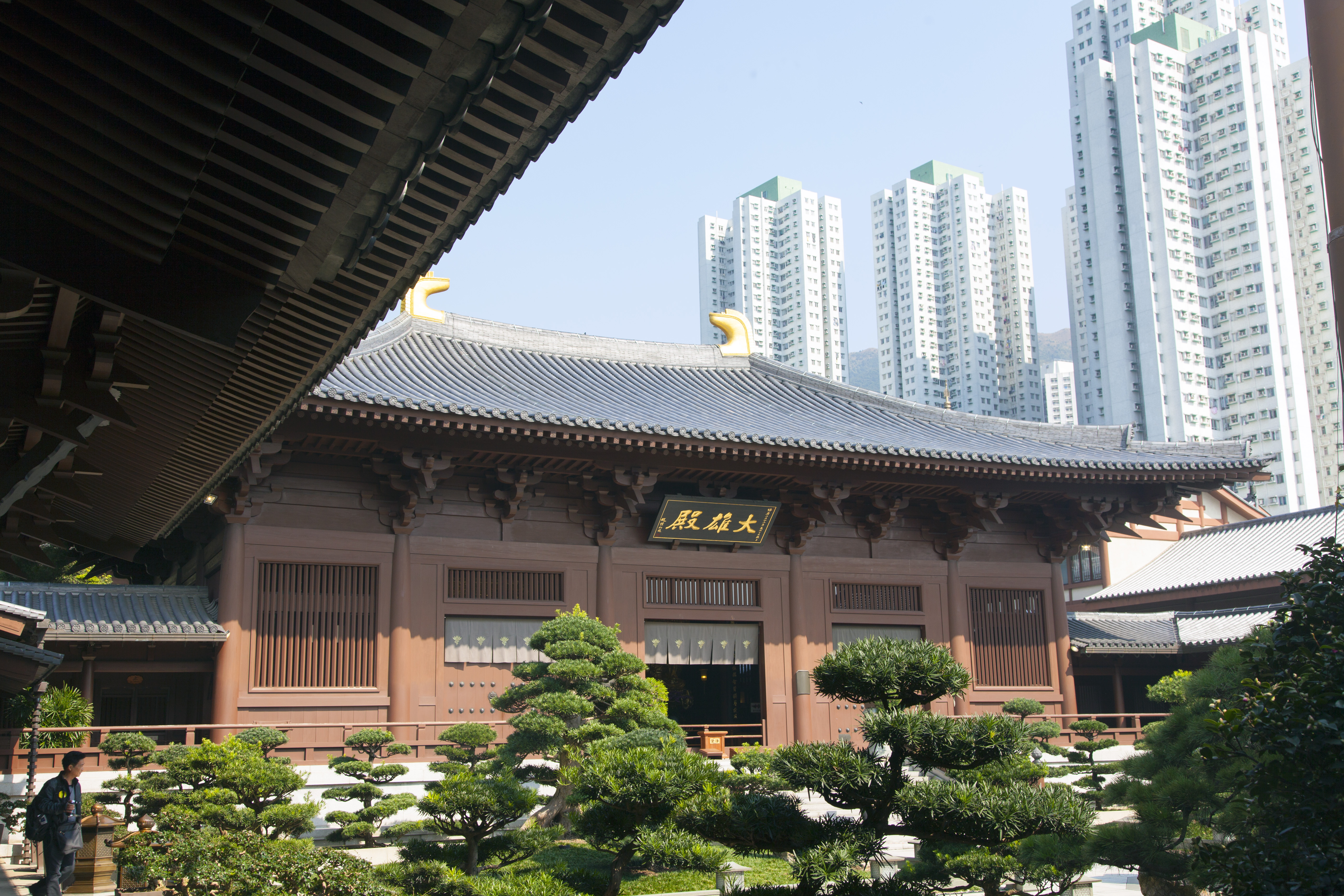
Today we made a particularly good choice, visiting the Chi Lin Nunnery and the adjacent Nan Lian Garden.

IMG_8194

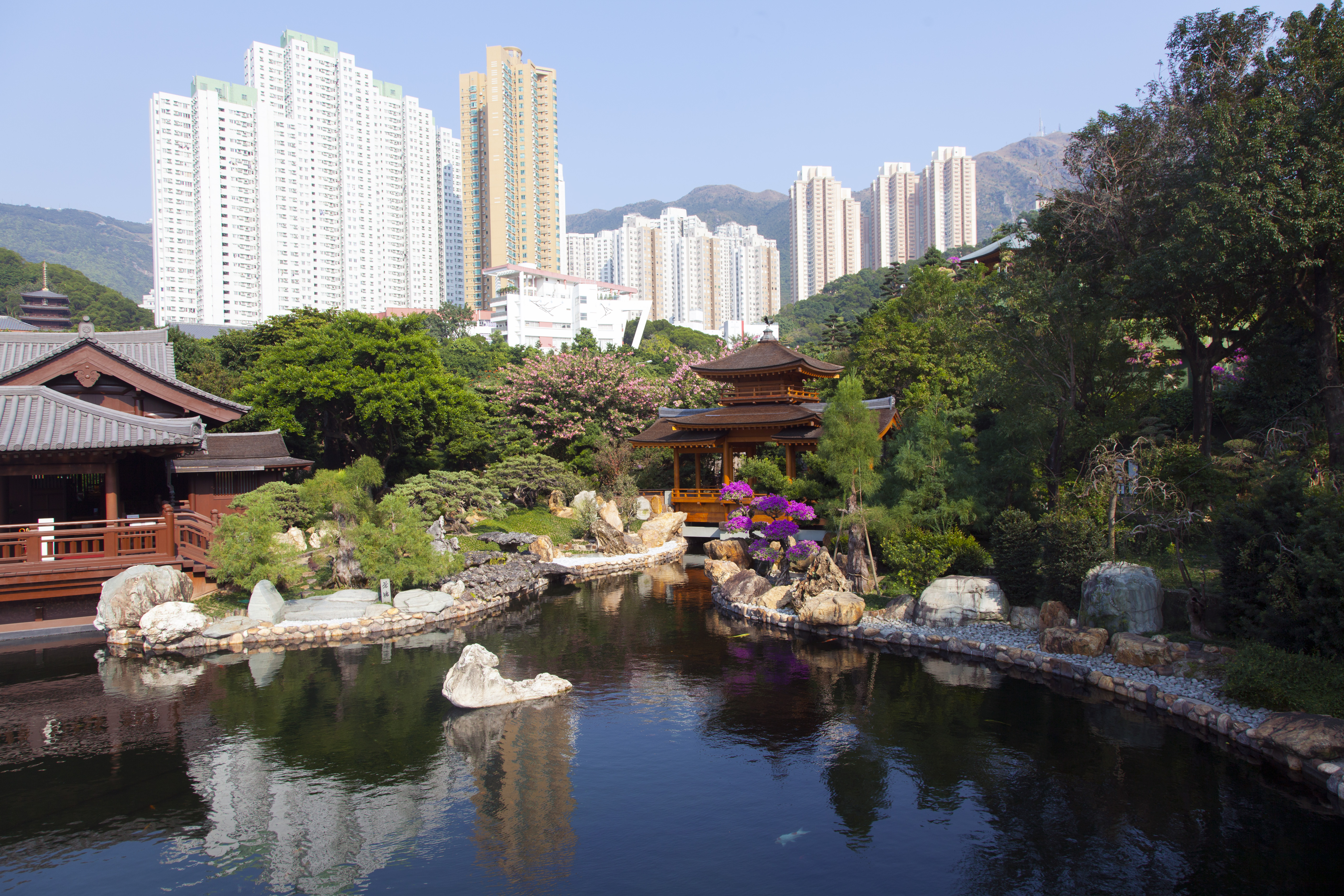
It’s hard even to imagine such beauty, peace and tranquillity as in this garden, which is essentially an amazingly harmonious composition of water, rocks and trees, and also traditional Chinese pagodas, bridges and pavilions. As for the skyscrapers in the background, not only don’t they seem to disturb this harmony, but they actually emphasise it in a rather unique way.

IMG_8210

IMG_8211

Overall, the garden is somewhat oval-shaped, and each turn of the track uncovers a new charming scene, e.g. giant banyan trees, or exquisite bridges over a pond with large colourful fish, or a waterfall with a water mill. And there you are, walking and admiring it all, accompanied by the low-pitch, vibrant, ’nasal’ sounds of guqin, a traditional Chinese stringed instrument, which feels like the most appropriate accompaniment in this place.

IMG_8213

IMG_8218

IMG_8223

IMG_8226

IMG_8232

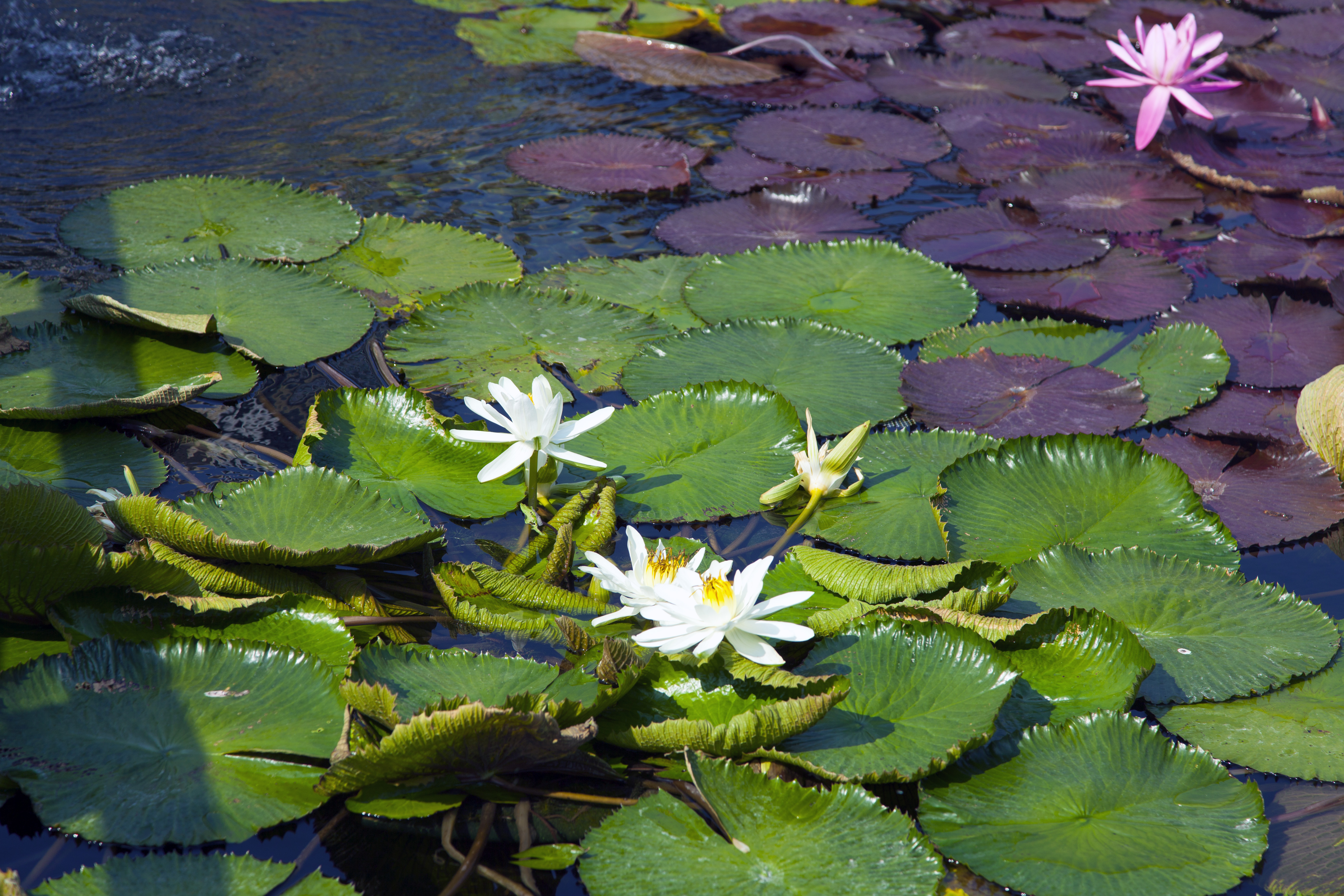
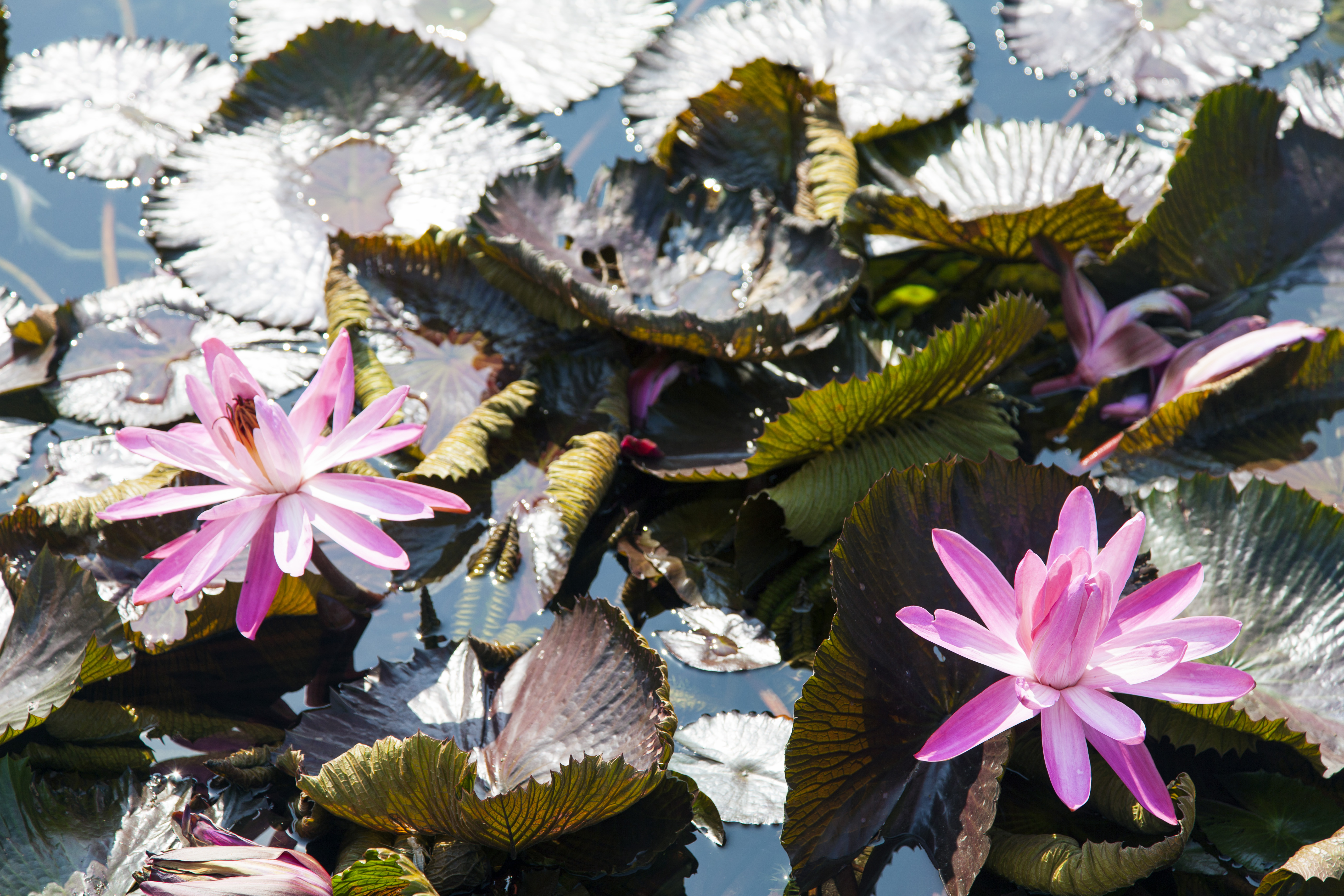
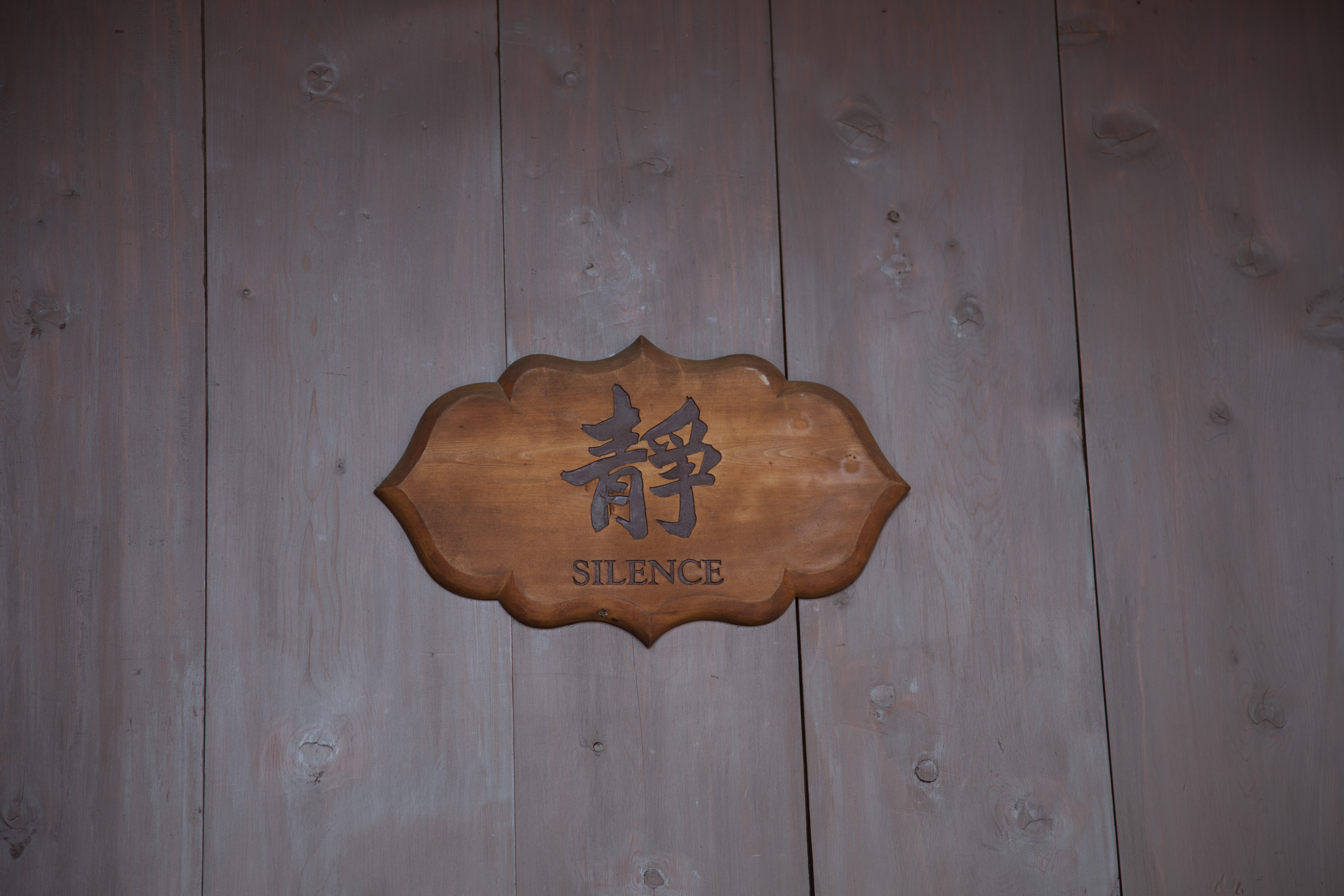
There are some lotus ponds right in front of the monastery. The petals move gently under the light breeze, and you feel like you could spend hours and hours just looking at them – at least, you somehow begin to understand Asians who find pleasure in the long contemplation of beauty. Neither taking pictures, nor even talking is allowed in the monastery, even in the public section (the other section, where the monks actually live, is closed to public altogether). There are sanctuaries on both sides, while in the centre there is a magnificent gilded statue of Buddha Sakyamuni. The monastery is also filled with music, not guqin sounds any longer though, but the chants of the monks. Even though we have nothing to do with Buddhism, still a sense of the sanctity of the place was definitely present.

IMG_8234

IMG_8237

IMG_8241

IMG_8244

IMG_8247

IMG_8250

IMG_8253

IMG_8254

IMG_8256

IMG_8258

As we returned to the Nan Lian Garden, we decided to try the tea ceremony there. The tea house has a couple of requirements: first of all you have to remove your shoes, leave them outside and put on the slippers provided, and also to switch off your mobile phone and put your camera away, as taking photos and videos is prohibited. The order has to be at least one portion per person. And a portion in this case is not one cup but rather 6 grammes of dry tea, which can be brewed in a small teapot six times. But I’m getting ahead of myself here – before talking about brewing I have to mention that there is actually a high degree of self-service here – you fill the iron kettle yourself and put it on the stove to boil, then you call the waitress. She brings you teaware and dry tea leaves, explaining how to brew them. It is actually a whole science (or should I say art?) in itself: you first rinse and fill the teapot with boiling water (the teaware stands on a grid with a drain underneath it). Then you pour the same water into a jug and cups, which thus get rinsed as well. You carefully add the tea to the tiny teapot, fill it with boiling water up to the top, then immediately pour it away – this is how the tea leaves also get rinsed. Now comes the final part: you fill the teapot with boiling water once again, keep it there for just a few seconds, and then pour the tea into the jug (so that it doesn’t get any stronger), from which it can be poured into cups.

IMG_8267

IMG_20131204_130604

It’s worth emphasising that these six grams is a lot for such a small teapot, way more than the portions we are used to. The tea that we had is called Da Hong Pao, which grows high in the mountains and is considered one of the most expensive teas in the world.

IMG_20131204_131835

IMG_20131204_133918

IMG_8266

IMG_8269

IMG_8274

Our lunch that day was quite unusual too – it was vegetarian, as it is always the case with monastery restaurants, with a very high content of various types of mushrooms.

In the evening we went to Lan Kwai Fong yet again. Even though it was only Wednesday and not Friday, the place was way more crowded and fun than during our last visit – which in fact is quite logical. The last time we were here was Sunday, when pretty obviously very few people are keen on drinking and hanging out late before a Monday. And on a weekday, of course, many people want to relax and chill out after a hard day at work – this is exactly why we saw such a considerable number of ‘white collars’ there.

Posted in Азия, Гонконг, Китай, Русский

Гонконг – день 5

АНГЛОЯЗЫЧНАЯ ВЕРСИЯ ПО ЭТОЙ ССЫЛКЕ. CLICK HERE FOR ENGLISH VERSION.

4 December 2013

Сегодня мы сделали исключительно удачный выбор: отправились в монастырь Чи Линь и прилегающий к нему китайский сад Нань Лянь.

IMG_8194

Такую красоту, покой и умиротворение, как в этом саду, трудно даже вообразить. Сад представляет собой изумительно удачную композицию воды, камней, зелени и китайских строений: пагод, мостиков, павильонов. А небоскребы на заднем фоне не только не нарушают гармонию, а наоборот, своеобразно ее оттеняют.

IMG_8210

IMG_8211

Общая форма сада – нечто вроде овала, и каждый поворот дорожки открывает новую прелестную сценку: то это гигантские баньяны, то – изысканные мостики над прудом с большими разноцветными рыбами, то водопад и водяная мельница. Так что идешь и восхищаешься, а сопровождают твою прогулку низкие, вибрирующие, гнусавые звуки китайского струнного инструмента гуциня, которые, впрочем, именно в этом саду совершенно уместны.

IMG_8213

IMG_8218

IMG_8223

IMG_8226

IMG_8232

Непосредственно перед монастырем – пруды с лотосами. Под легким дуновением ветерка лепестки чуть шевелятся, и кажется, что можно провести целые часы, созерцая их – по крайней мере, начинаешь хоть как-то понимать азиатов, которые находят удовольствие в долгом созерцании прекрасного. В самом монастыре не разрешается ни фотографировать, ни даже разговаривать, несмотря на то, что это часть, открытая для публики, в ту часть же, где проходит жизнь самих монахов, посторонних не пускают. По обеим сторонам – святилища Будд, а в центре – великолепная золоченая статуя Будды Сакьямуни. В монастыре звучат уже не звуки гуциня, а песнопения монахов. Несмотря на то, что мы к буддизму не имеем ровным счетом никакого отношения, ощущение святости места было.

IMG_8234

IMG_8237

IMG_8241

IMG_8244

IMG_8247

IMG_8250

IMG_8253

IMG_8254

IMG_8256

IMG_8258

Вернувшись опять в сад Нань Лянь, мы решили испробовать и чайную церемонию. Чайный дом – это вам не какая-нибудь чайхана, тут прежде всего необходимо снять обувь и надеть предлагаемые шлепанцы, затем надо поставить мобильный телефон на беззвучный режим, а фотоаппарат убрать подальше – снимать фото и видео запрещается. Каждый должен обязательно заказать себе порцию чая, делить не разрешается. А порция в данном случае – это отнюдь не одна чашка, а 6 г сухого чая, который можно заваривать в маленьком чайничке шесть раз. Но мы забежали вперед. Оказалось, что здесь в высокой степени самообслуживание – сам наполняешь металлический чайник и кипятишь его, затем звонком подзываешь официантку. Она приносит сухой листовой чай и посуду и объясняет, как надо заваривать. Это целая наука (или скорее искусство): сначала заварной чайничек ополаскивают крутым кипятком снаружи и внутри (вся посуда стоит на решетке, под которой есть сток для воды). Потом эта же вода последовательно переливается в кувшинчик и чашки, которые таким образом тоже ополаскиваются. Чай осторожно засыпается в буквально кукольный заварной чайничек и доверху заливается кипятком, который тут же сливается прочь – таким образом, чайные листья тоже ополаскиваются. Теперь начинается заварка: листья еще раз заливаются кипятком, выдерживаются буквально несколько секунд, и чай сливается в кувшинчик (чтоб крепче уже не становился), откуда и разливается по чашкам.

IMG_8267

IMG_20131204_130604

Надо подчеркнуть, что эти шесть граммов для такого маленького чайничка – это очень много, гораздо больше, чем так порция, которую принято заваривать у нас. Тот чай, что мы пили, называется дахунпао, он высокогорный и считается самым дорогим сортом чая в мире.

IMG_20131204_131835

IMG_20131204_133918

IMG_8266

IMG_8269

IMG_8274

Обед у нас тоже был не совсем обычный – вегетарианский, как и водится при монастырях, с очень большим содержанием различного вида грибов.

Вечером мы опять посетили Лан Квай Фонг. Несмотря на то, что сегодня всего лишь среда, а не пятница, было гораздно более людно и весело, чем в наше последнее посещение – что в принципе логично. В прошлый раз мы ходили сюда в воскресенье, и понятно, что перед понедельником мало кому охота посещать питейные и увеселительные заведения. А в будний день, ясное дело, многим хочется отдохнуть и расслабиться после тяжелого трудового дня – именно поэтому мы видели тут немалое количество «белых воротничков».

Posted in Asia, China, English, Hong Kong

Hong Kong – Day 4

РУССКОЯЗЫЧНАЯ ВЕРСИЯ ПО ЭТОЙ ССЫЛКЕ. CLICK HERE FOR RUSSIAN VERSION.

3 December 2013

Today was the Big Shopping day. From travel blogging perspective, it may not be the most exciting event ever, but since we’re all human and nothing human is alien to us, it’s still worth touching this topic.

All guidebooks scream that Hong Kong is a great place for shopping, primarily due to the free trade regime. So people flock here from all over the world. In particular, I doubt that anywhere in the world one can find as many jewellery stores as there are here, and none of them stays empty and clientless. Literally on every corner in the central areas there is a Chow Tai Fook store, with slightly less stores of the competing Luk Fook and Chow Sang Sang chains.

If Singapore created the impression that the main idea was to feed as much people as possible, so there were all kinds of eateries pretty much at every turn, it looks like Hong Kong’s ‘task’ is, of course, selling as many goods as possible, so almost at every step you come across malls, shops, stores, outlets etc.

We ended up heading to Harbour City, which is one of the biggest malls. It’s probably that we didn’t have much time to understand how it was all structured there, but we were left with a feeling of randomness – for example, in comparison with Westfield in London. There everything is crystal clear with high fashion brands being concentrated in one section and more democratic brands in a totally different one. Here everything is mixed, and the logic of locating the stores remained totally unclear to us. All the stores were very nicely decorated (Christmas is coming up!) and Christmas songs sounded everywhere, most of which, though, with the exception of the famous Jingle Bells, seemed too schmaltzy and cloying.

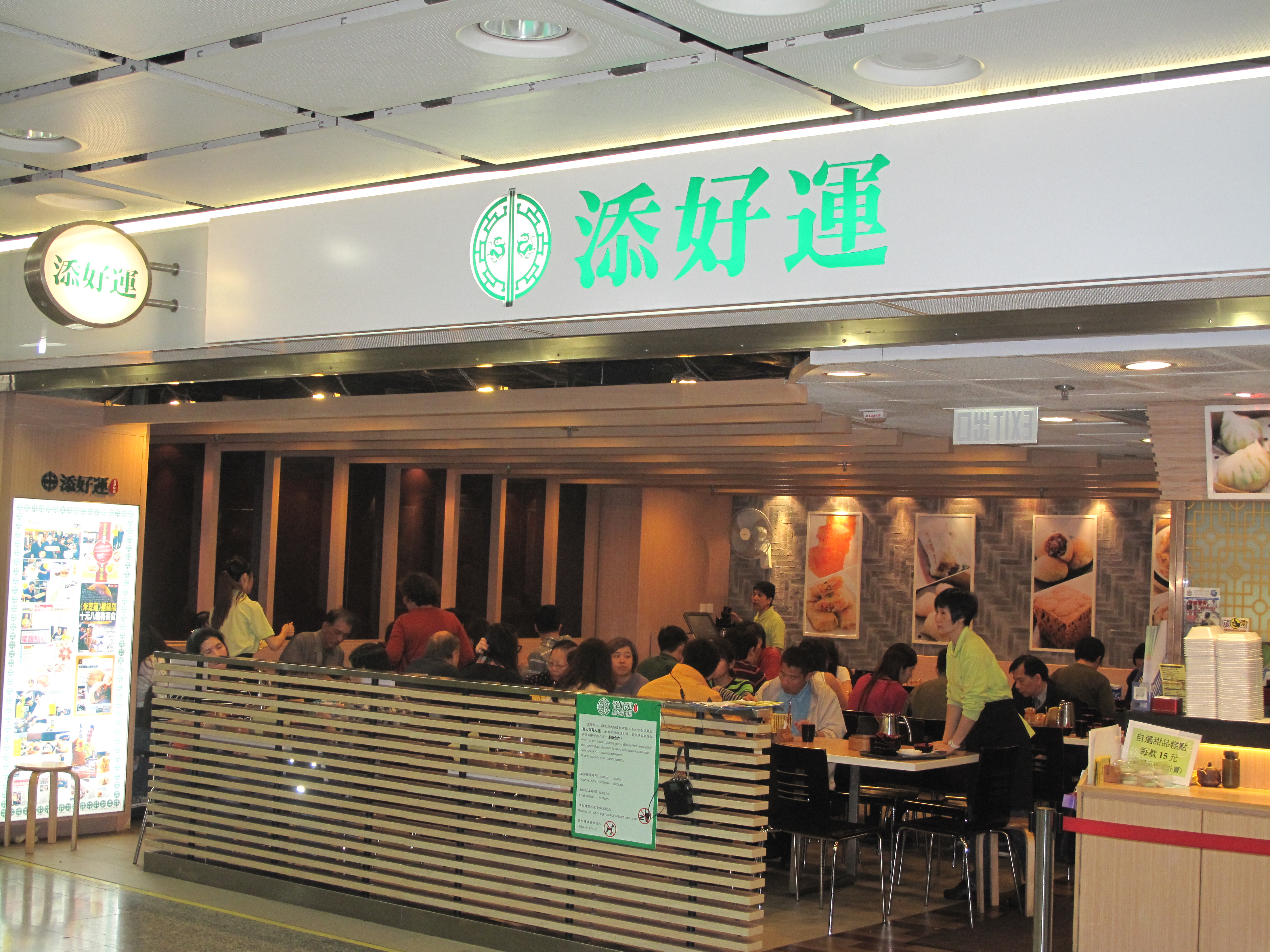
One of the must-do things planned for this trip was having a proper dim sum lunch, and we found that the best place to do so was Tim Ho Wan – it is a chain of restaurants, looking more like small eateries, but with a Michelin star, and by the way, being the world’s cheapest Michelin-starred restaurant. At lunchtime there are always lots of people queuing outside. Everyone gets an order sheet with their number in the queue, so while waiting they could decide what they are getting and tick off those items. When seats become available, the waiters shout out the numbers – not necessarily in order, but rather depending on how many seats there are – in Cantonese, but if they see any non-Chinese among the people waiting, it can be repeated in English too.

IMG_2235

Many people think of dim sum as a variety of dumplings, while in reality it is not just dumplings, but rather a general assortment of small snacks to be consumed together with pu er tea. Originally it was part of the tea ceremony in southern China, and this traditional tea drinking, or “yum cha”, took place in tea houses in the morning. Now “yum cha” has moved to special dim sum restaurants, like Tim Ho Wan, and not necessarily happens in the morning, but still mostly before mid-afternoon.

IMG_2225

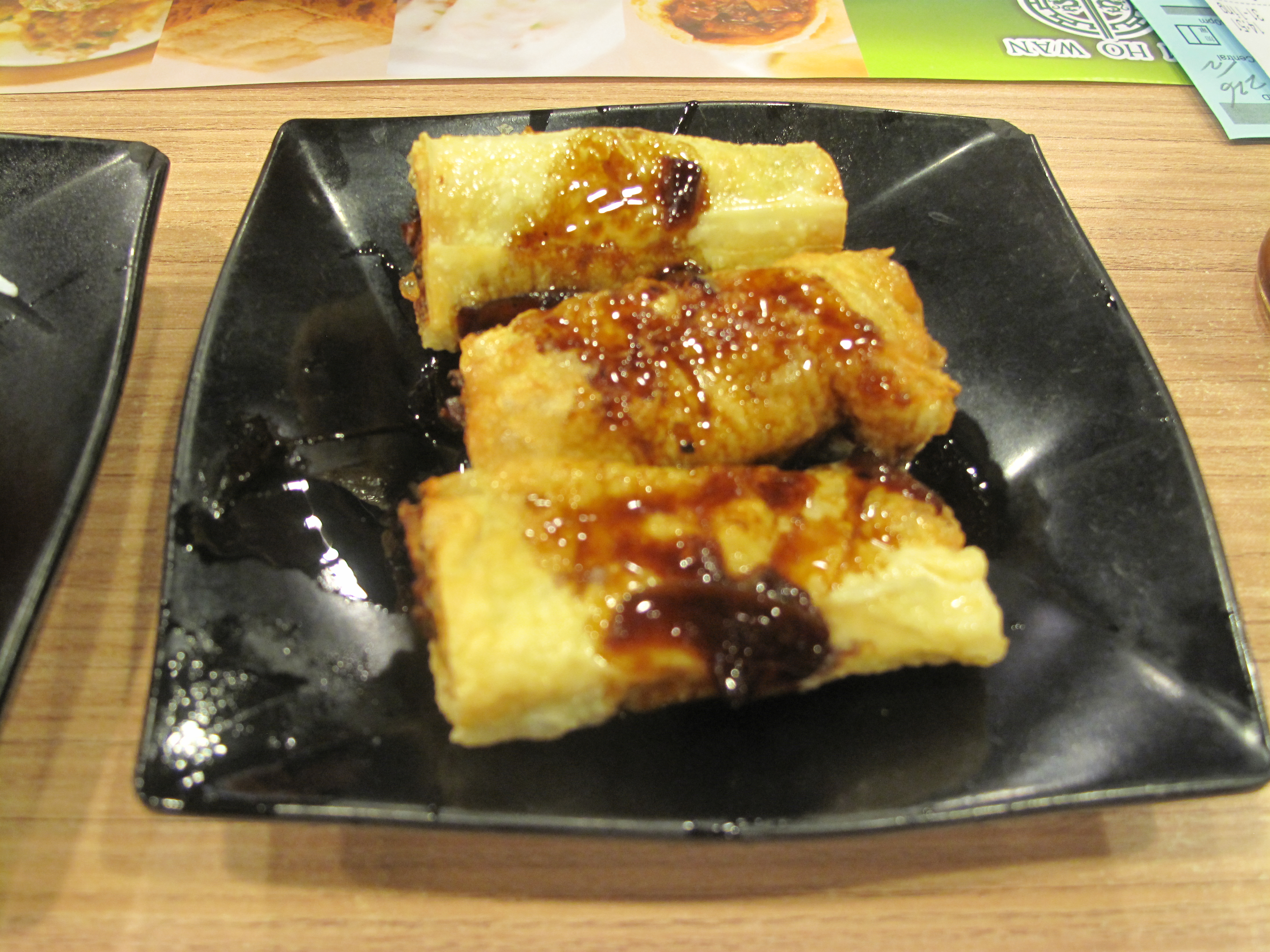
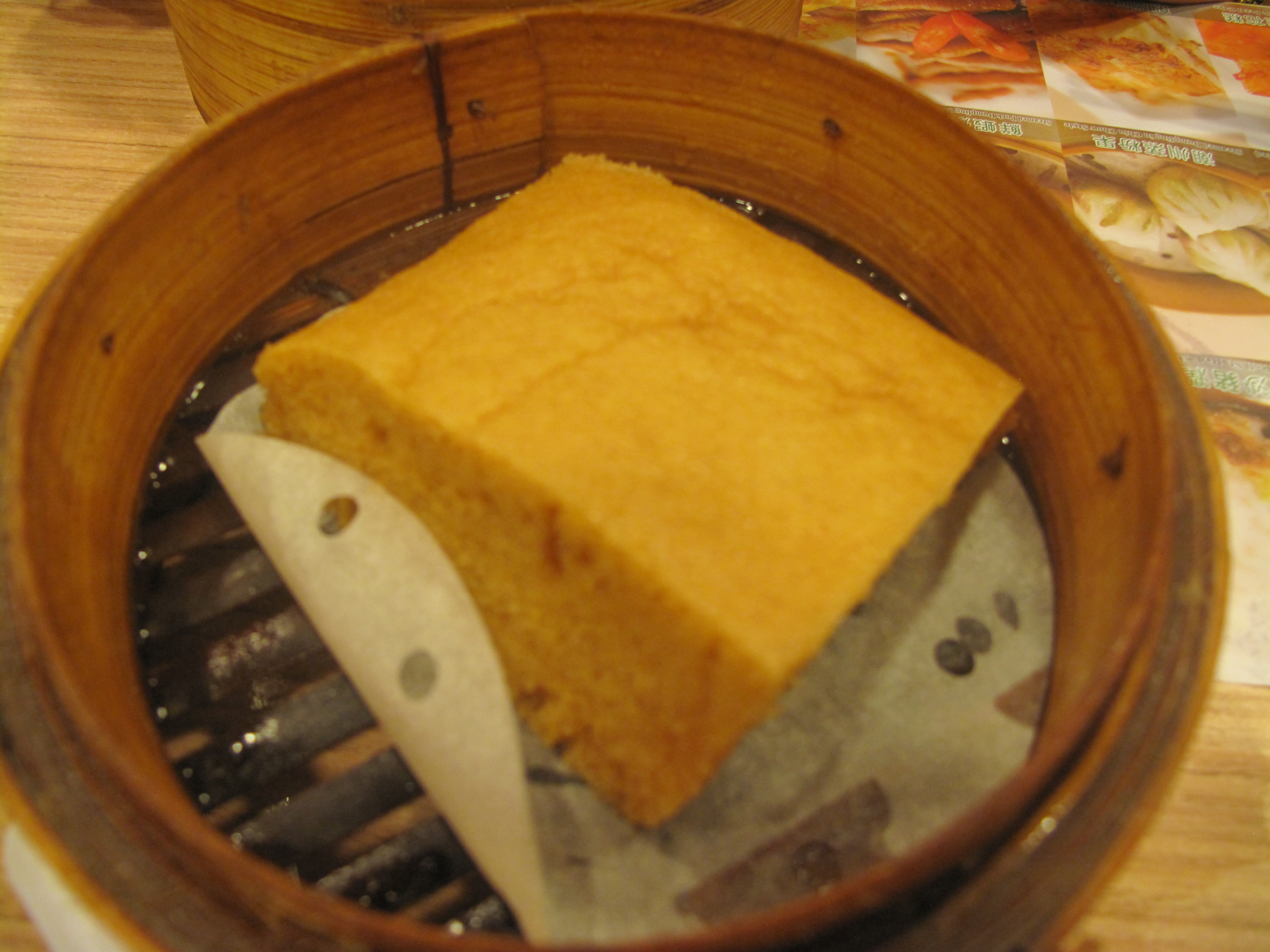
We absolutely loved everything we ordered, which included prawn dumplings (har gow), rice noodle rolls (cheong fun) with Cantonese BBQ pork (char siu), steamed egg cake, medlar & osmanthus jelly. We ate until we were totally full, and it cost only HK $ 112 for two (which makes U.S. $14-15 or 11-12 AZN).

IMG_2233

IMG_2232

IMG_2229

IMG_2234

IMG_2230

IMG_2228

Posted in Азия, Гонконг, Китай, Русский

Гонконг – день 4

CLICK HERE FOR ENGLISH VERSION. АНГЛОЯЗЫЧНАЯ ВЕРСИЯ ПО ЭТОЙ ССЫЛКЕ.

3 декабря 2013

Сегодня у нас был день Большого Шопинга. С точки зрения путевых заметок, это, возможно, не самое интересное событие, но поскольку все мы люди и ничто человеческое нам не чуждо, пару-тройку замечаний на эту тему все же сделать стоит.

Все путеводители вопят о том, что Гонконг – прекрасное место для шопинга, и в первую очередь благодаря режиму беспошлинной торговли. Поэтому сюда устремляются люди со всего мира. В частности, такого количества ювелирных магазинов нет, наверное, нигде в мире, и каждый из них далеко не пустует – буквально на каждом углу в центре есть по магазину сети Chow Tai Fook, чуть меньше магазинов конкурирующих сетей Luk Fook и Chow Sang Sang.

Если в Сингапуре было ощущение, что главной задачей является накормить побольше народу, поэтому какая бы то ни была едальня попадалась на каждом шагу, то задача Гонконга, разумеется, продать побольше товара, поэтому здесь на каждом шагу моллы, магазины, магазинчики, аутлеты.

Ну вот мы и отправились в один из самых больших моллов Harbour City. Возможно, мы все-таки как следует в нем разобраться не успели, но у нас осталось ощущение какой-то беспорядочности – например, в сравнении с тем же лондонским Вестфилдом. Там ясно: вот крыло брендовых магазинов, вот – более демократичные. Здесь же все вперемешку, и логика размещения нам осталась неясной. Все магазины очень красиво украшены (Рождество скоро!) и везде звучат рождественские песни. Но большинство из них, кроме знаменитого Jingle Bells, показались нам слишком слащавыми и приторными.

Одной из намеченных на эту поездку задач было поедание дим сам на обед, причем мы выяснили, что лучше всего сделать это в Tim Ho Wan – это сеть ресторанов, практически забегаловок, но имеющих мишленовскую звезду, и кстати, являющихся самыми дешевыми мишленоносцами в мире. В обеденное время перед этим заведением собирается очередь. Каждому выдают листок заказа, с номером в очереди, и время ожидания как раз коротаешь тем, что отмечаешь, что заказать. Когда освобождается место, официанты выкрикивают номера – не обязательно по порядку, а в зависимости от того, сколько мест освободилось – по-кантонски, но если видят среди ожидающих неместные лица, то могут повторить и по-английски.

IMG_2235

Многие думают, что дим сам – это пельмени, на самом деле это не только пельмени, а вообще ассорти из маленьких закусок, подаваемых вместе с чаем пу эр. Изначально это являлось частью чайной церемонии в Южном Китае, происходило это традиционное чаепитие «ям ча» по утрам в чайных. Теперь же «ям ча» переместилось в специальные димсамовые ресторанчики, вроде этого самого Tim Ho Wan и совершается не обязательно утром, но предпочтительнее в первой половине дня.

IMG_2225

Нам понравилось абсолютно все, что мы заказали – и пельмени с креветками, и рисовые рулеты со свиным кантонским шашлыком, и яичный пирог, и желе с мушмулой и какими-то лепестками. Наелись мы до отвала, и обошлось нам это все удовольствие в 112 гонконгских долларов на двоих (это делает 14-15 американских долларов или 11-12 АЗН).

IMG_2233

IMG_2232

IMG_2229

IMG_2234

IMG_2230

IMG_2228

Posted in Asia, China, English, Hong Kong

Hong Kong – Day 3

РУССКОЯЗЫЧНАЯ ВЕРСИЯ ПО ЭТОЙ ССЫЛКЕ. CLICK HERE FOR RUSSIAN VERSION.

2 December 2013

Today we went on with the bus tour which continued on the Kowloon peninsula. I found it less interesting than the island – lots of skyscrapers and shops, the streets mostly looked quite the same. Generally, it would have even been better to find a hotel on the island instead, it is way more picturesque than the peninsula which basically has only shopping and restaurants, and also the Avenue of Stars on the promenade, where we walked prior to the bus ride. The first time, I mean last year, it had been more fun – at least, seeing the handprints of local stars for the second time seemed less exciting now, however I still found the Bruce Lee statue impressive.

IMG_2174

IMG_8091

IMG_8093

IMG_8103

IMG_8102

IMG_8099

IMG_8101

During the bus tour, as usual, we were listening to the audio guide, and again heard the familiar information about the Black Christmas, when on 25 December 1941 the Hong Kong authorities had ignominiously surrendered to the Japanese; and how the Chinese emperor had mastered Kowloon and why this area with eight dragon-like hills was called the peninsula of Nine Dragons. But there was also an unfamiliar piece of information which I found quite interesting: one can hardly find any rats in Hong Kong nowadays, but in the late 19th century the city was literally flooded with lots of them. When some Japanese doctor proved the correlation between the spread of plague and the presence of rats, the city authorities took drastic measures and announced a reward of 2, and later 5 cents per caught rat. All went well at first, but then the reward had to be cancelled, for some particularly enterprising citizens started importing thousands of rats from China!

IMG_8105

IMG_8108

IMG_8111

IMG_8116

IMG_8121

The highlight of the day was meeting my teacher of Cantonese, which I learn over Skype. It’s always great when you have the opportunity to talk to someone local during a trip – it was fascinating to ask her questions about the Chinese language, and how text messages are typed in Chinese (she said there were dozens of ways: for example, her cousins, who can only read, but not write characters, use an app where you input romanised text, and it suggests all possible character options, out of which you need to find and select the appropriate one; while she herself prefers the app where you handwrite each character on the touchscreen, and the app recognises them and translates into printed text – the trick here is to follow the correct stroke order), and to hear from her that the income tax is very low in Hong Kong, however, there is no state pension at all. By the way, despite being 35, my teacher looks 23-25 at most.

She took us to the Maritime Museum, which had an exhibition of John Thomson’s photoworks, depicting Hong Kong and Coastal China of the 19th century. The technique of creating these photographs was shown right there: the wet collodion photographic process he had been using was already somewhat more advanced than the daguerreotype process, but still as far as the moon from being any similar to the modern process. It was rather complicated and time consuming, so it’s really amazing how Thomson managed to obtain photographs of such high quality. Personally, I liked the most those portraying people, some of which had been obviously posing very diligently and thus had ‘frozen’ faces, while the facial expressions of some others were vivid and natural, creating real genre pictures.

The rest of the museum expositions were stationary, and demonstrated the history of local seafaring and shipbuilding, piracy and maritime trade from ancient times to the present. Even we, being generally quite far from maritime affairs, found it very interesting.

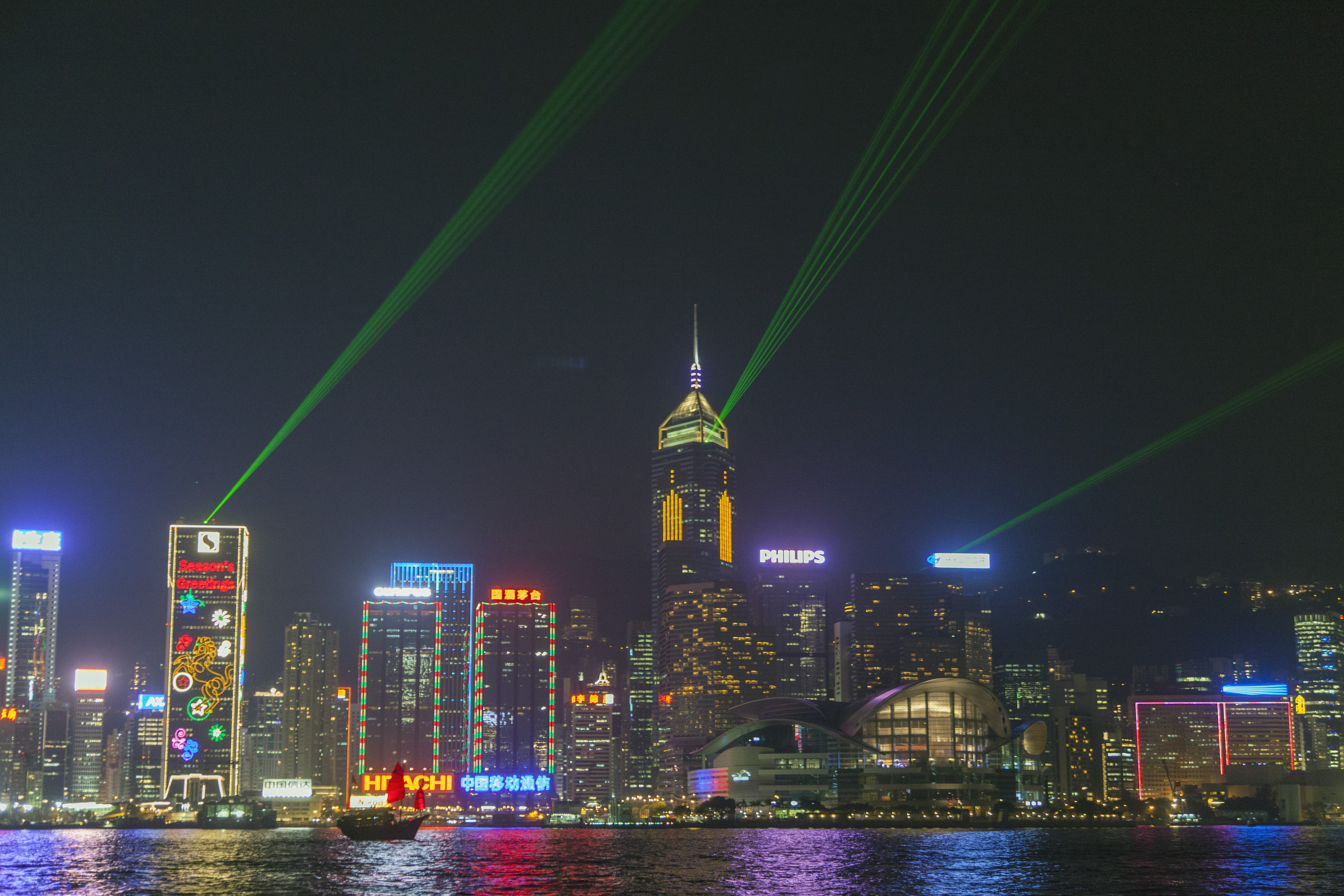
We finished off the day with a night tour of Hong Kong and the laser show. Hong Kong is remarkably bright at night, and the famous neon signs are not the only contributors to this – the walls of most skyscrapers basically turn into huge glowing panels. As for the laser show, it didn’t impress us any more than the last time we had seen it, even though the air was way cleaner and the rays should have been more noticeable.

IMG_8124

IMG_8137

IMG_8138

IMG_8144

IMG_8147

IMG_8151

IMG_8155

IMG_8160

IMG_8162

IMG_8176

Posted in Азия, Гонконг, Китай, Русский

Гонконг – день 3

CLICK HERE FOR ENGLISH VERSION. АНГЛОЯЗЫЧНАЯ ВЕРСИЯ ПО ЭТОЙ ССЫЛКЕ.

2 декабря 2013

Сегодня продолжили автобусный тур поездку по Коулуну. Было менее интересно, чем на острове – много небоскребов, много магазинов, все улицы довольно одинаковы. Вообще, лучше было бы наверное опять жить на острове, он более живописен, на полуострове же – в основном только торговля, ну и Аллея Звезд на набережной, по которой мы погуляли перед поездкой на автобусе. В первый раз, то бишь в прошлом году, это было гораздо интереснее – а во второй смотреть на отпечатки ладоней местных звезд было уже вовсе не так весело, порадовал снова разве что памятник Брюсу Ли.

IMG_2174

IMG_8091

IMG_8093

IMG_8103

IMG_8102

IMG_8099

IMG_8101

Во время поездки, как обычно, слушали аудиогида – опять звучала знакомая информация о Черном Рождестве, когда в 1941 году как раз 25 декабря власти Гонконга бесславно сдались японцам, и как китайский император осваивал Коулун и почему эта местность с восемью похожими на драконов холмами называется полуостровом девяти драконов. Но был и кусочек неизвестной нам информации, довольно интересной: сейчас в Гонконге трудно найти крыс, а в конце 19 века их тут было пруд пруди. Когда один японский врач доказал связь между распространением чумы и наличием крыс, власти предприняли решительные меры: объявили награду в 2, а позднее и в 5 центов за каждую пойманную крысу. Сначала все шло очень хорошо, но потом вознаграждение пришлось отменить, ибо некоторые особо предприимчивые граждане принялись тысячами завозить крыс из Китая!

IMG_8105

IMG_8108

IMG_8111

IMG_8116

IMG_8121

Интересным событием дня была встреча с моей учительницей кантонского, с которой я занимаюсь по скайпу. Хорошо, когда в поездке есть возможность пообщаться с местным человеком – интересно было спрашивать ее и про китайский язык, и про то, как набираются смс-ки по-китайски (она сказала, что существуют десятки способов – например, ее кузены, которые умеют читать иероглифы, но не умеют их писать, используют программу, в которой пишешь слова латиницей, а на это выдаются всевозможные варианты иероглифов, из которых надо узнать и выбрать нужный; а она сама предпочитает программу, где иероглиф пишешь на экране от руки, а программа распознает его и выдает печатный вариант- здесь фишка в том, чтобы соблюдать правильный порядок написания элементов иероглифа), и услышать от нее, что в Гонконге по сути не существует пенсий, но зато очень низкий подоходный налог. Кстати, выглядит моя учительница, несмотря на свои 35 лет, от силы на 23-25.

Она повела нас в морской музей, где проходила выставка фотографа Джона Томсона, запечатлевшего Гонконг и прибрежные провинции Китая XIX века. Там же описывалась техника создания этих работ: мокрый коллоидный фотопроцесс – это уже не дагерротип, но до современного процесса далеко как до луны. Это все очень сложно и трудоемко, поэтому просто удивительно, как Томсону удавалось получить фотографии такого высокого качества. Лично мне особенно понравились те, где изображены люди – причем если некоторые были с застывшими лицами, – явно долго и старательно позировали – то у других выражения лиц были живые и естественные, и получались настоящие жанровые фотографии.

Остальная экспозиция музея стационарная, и это история местного мореплавания и кораблестроения, пиратства и морской торговли с древнейших времен до настоящего времени. Даже нам, в общем-то от морских дел далеких, это было очень интересно.

Завершила день ночная экскурсия по Гонконгу и лазерное шоу. Гонконг ночью необыкновенно ярок, потому что здесь не только вывески выведены светящимися буквами, но и на стенах небоскребов – целые светящиеся панно. А вот лазерное шоу как в прошлый раз не впечатлило, так и в этот раз не больше, хотя воздух вроде бы был чище и лучи по идее должны были быть более заметны.

IMG_8124

IMG_8137

IMG_8138

IMG_8144

IMG_8147

IMG_8151

IMG_8155

IMG_8160

IMG_8162

IMG_8176