All Posts

Posted in Asia, English, Phi Phi, Phuket, Thailand

Thailand – Day 9

РУССКОЯЗЫЧНАЯ ВЕРСИЯ ПО ЭТОЙ ССЫЛКЕ. CLICK HERE FOR RUSSIAN VERSION.

26 March 2018

Since we are now all on our own and we need to entertain ourselves somehow, we decided to go on a day tour of the nearby islands. The are two famous directions here: the Phi Phi islands and the islands of Phang Nga Bay (which include the famous James Bond Island).

We took a while to pick one – both seemed to be very good, but the first route included snorkeling and the second one included kayaking. As we had already tried kayaking in Vietnam, we decided to try snorkeling this time and finally chose Phi Phi.

So, at about 6.15am (!) we were picked up from our hotel by a minibus and taken to the pier with seven other passengers. The painfully early hour is a special feature of this company, intended to arrive to places before crowds of other tourists.

At the pier, we got a light breakfast (special kudos for the hot sandwiches!) and then headed to our boat with the guide – a very friendly guy called Wai. The speedboat was equipped with safety vests, which we were told to wear, as well as with snorkeling masks.

It took us about an hour to get to our first stop – the Phi Phi Lei island. We arrived around 9am, and there were already a lot of tourists, mostly Russians. On the Maya beach, known for The Beach movie with DiCaprio, no one was swimming, everyone was just taking photos.
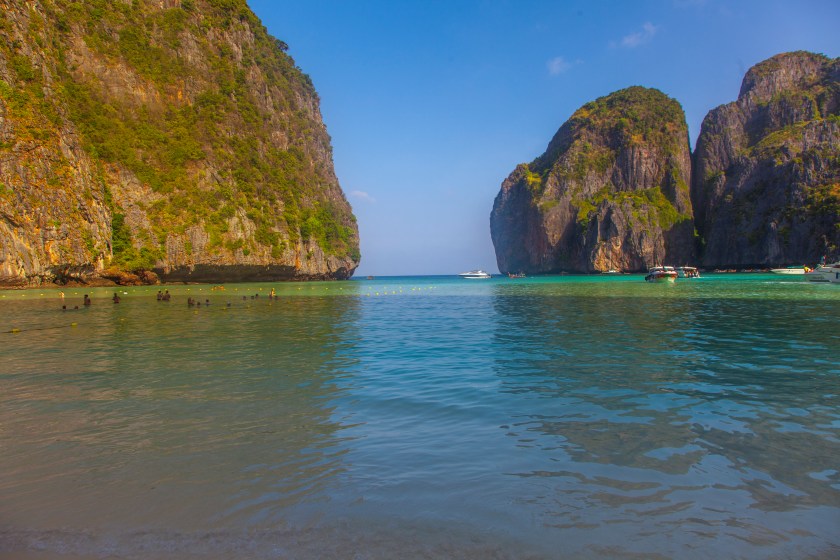
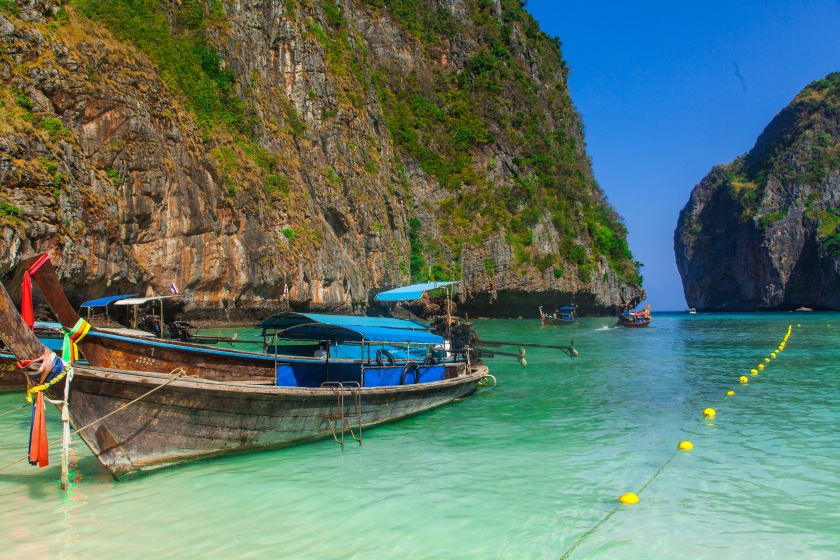
IMG_3694

IMG_3706

We took a few as well and then took a stroll among a crowd of Russian tourists to look at the picturesque Loh Samah Bay.
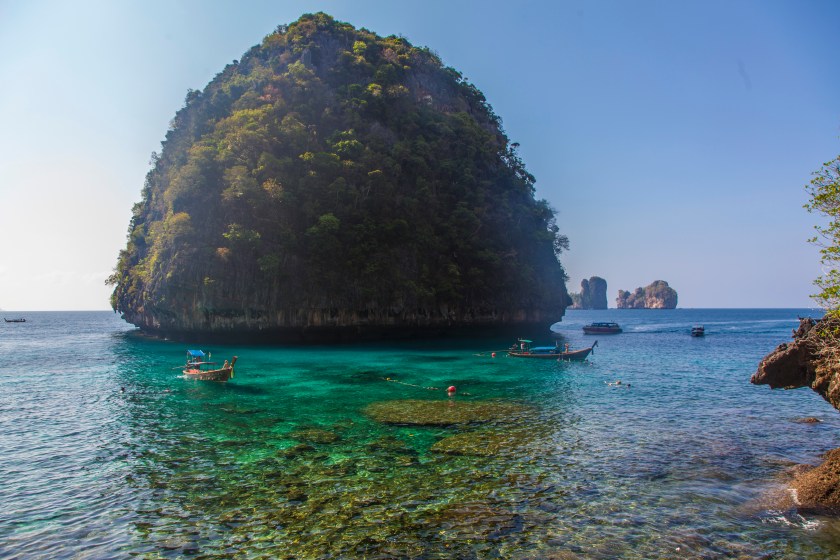
IMG_3697

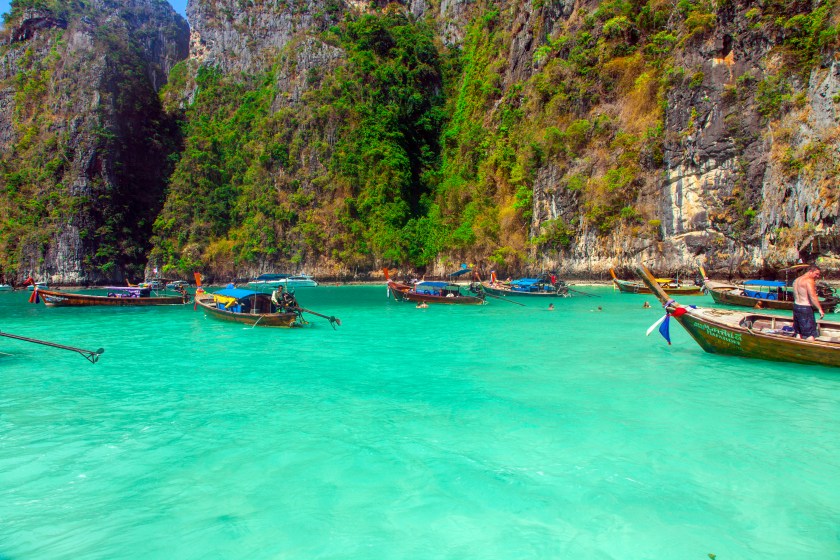
Once back on the boat, we rounded the island and anchored in the Pi Leh bay, where we could swim, jumping (or descending the stairs) into the sea directly from the boat. Right next to us was a boat carrying lots and lots of Chinese tourists, who were swimming around us, wearing bright orange lifejackets.
IMG_3707

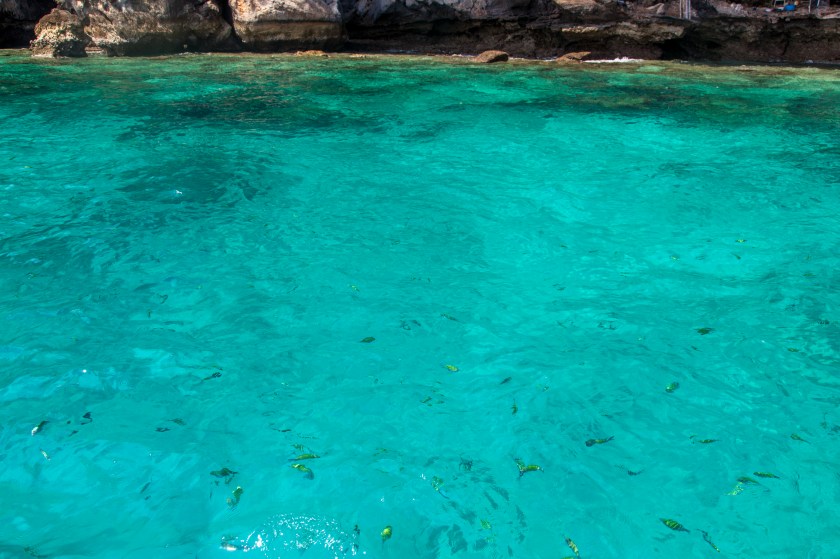
Our next stop was for snorkeling, again straight from the boat. Wai handed us the snorkeling masks, we pulled on our fins and got out into the water. It felt bizzarre at first, so I had to get my head above water every few seconds. But then I got used to it. The sensations are very interesting, as if you are right inside the Singapore aquarium – there are lots of colourful tropical fish swarming around and it seems like you can reach out and catch one. Except that when you do try to reach out, they dodge and very easily avoid being caught.
IMG_3711

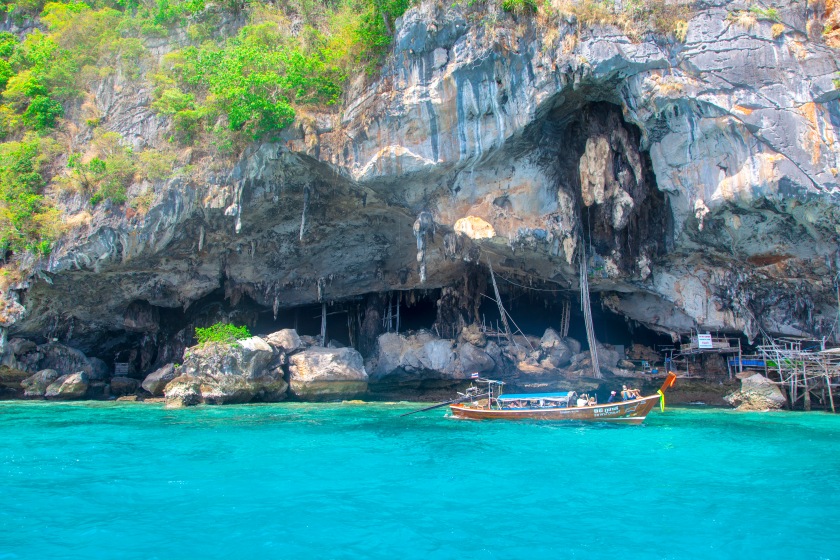
Another attraction of the island is the so-called Viking Cave, containing some rock paintings. Previously, the cave used to be open to visitors, but now swallow nests are being harvested here (for food purposes), so tourists cannot get inside. So we just floated by. Quite a pity, as on the outside it didn’t look like anything special.
IMG_3710

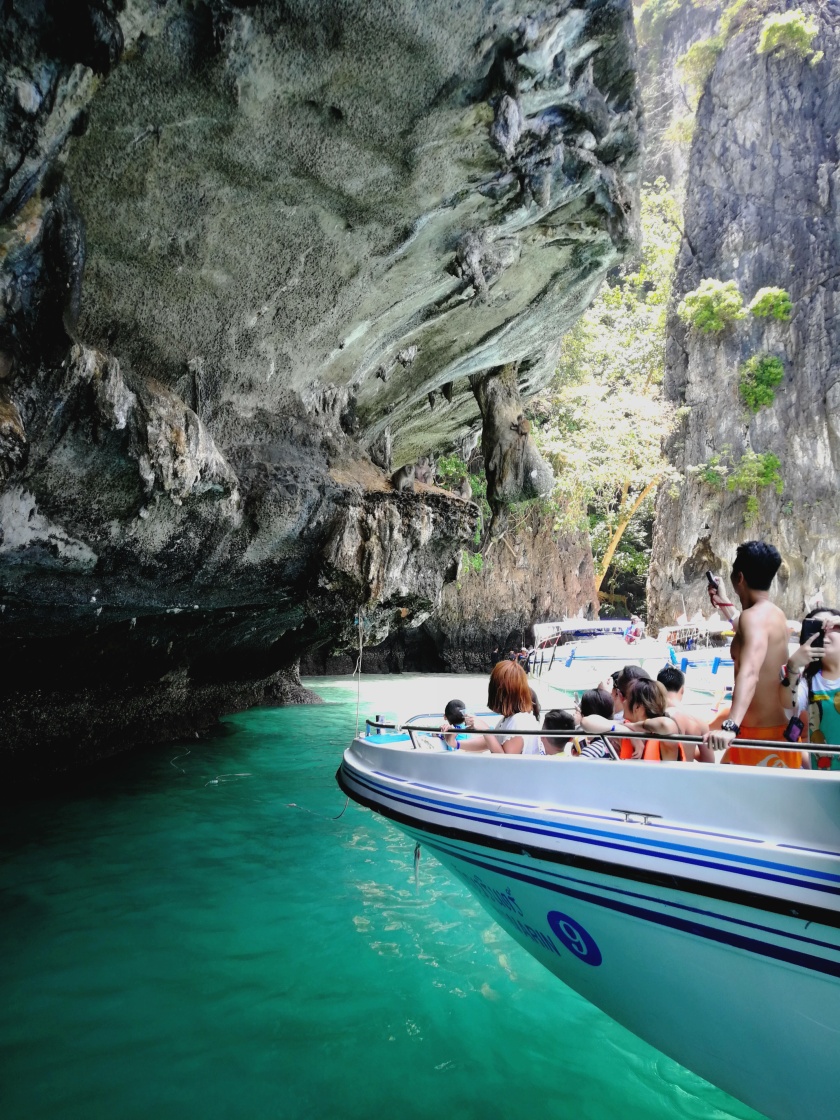
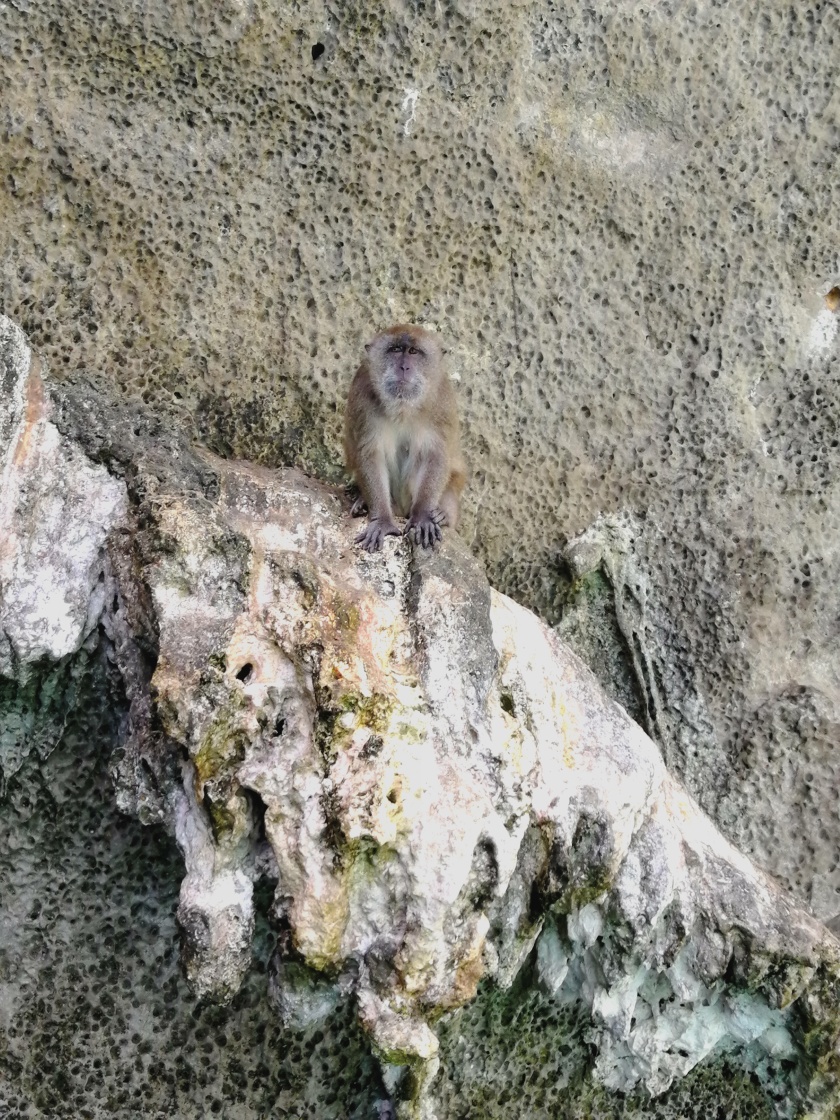
We didn’y stop at the Monkey Island either, just came very close to it. Not that anyone minded though – the prospect of being attacked and robbed by long-tailed macaques was hardly tempting! It was much better to observe our distant relatives from the boat. And then, when one monkey, apparently a male, separated from the group, jumped on a rock closer to us and stared at us, it even started feeling a bit uncomfortable, so I preferred to go inside the boat.
selfp

selfp

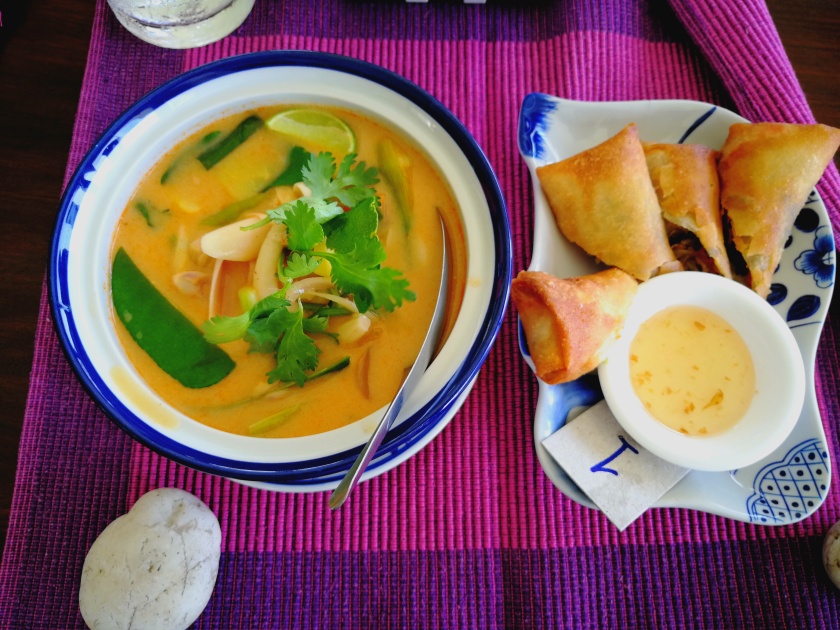
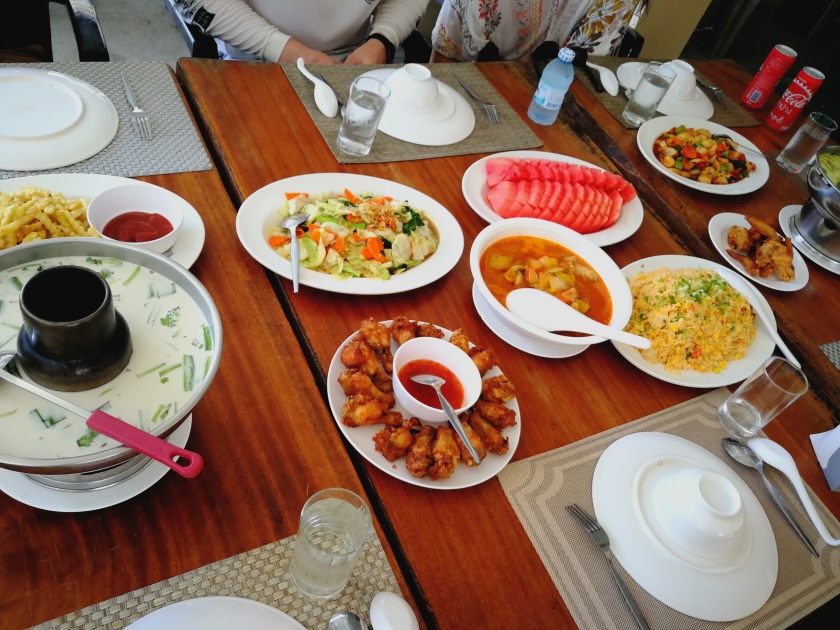
We stopped on the second major island, Phi Phi Don, for lunch at a local restaurant, with a big table already waiting for us with various dishes: curries, coconut soup, french fries, and some spicy vegetables.
selfp

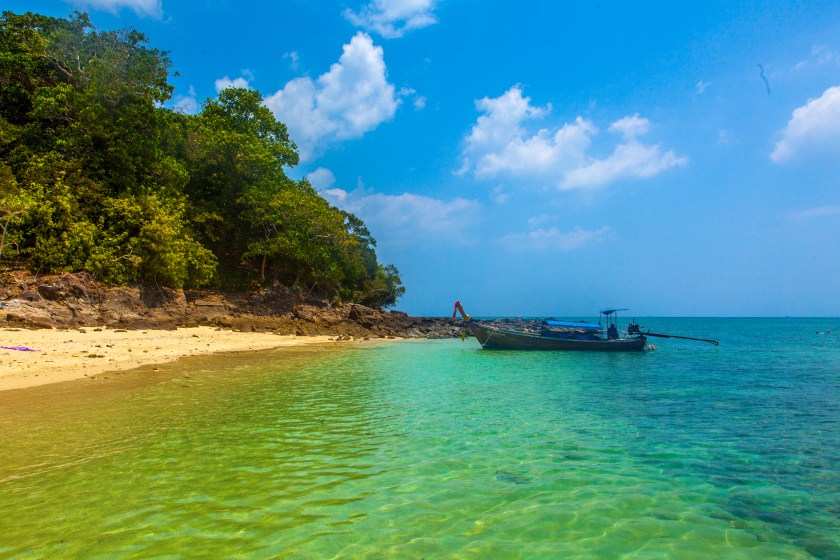
It already got very hot to the extent that walking on the sand became painful. We didn’t get to swim here, but our last stop on the Bamboo Island turned out very pleasant. We stopped at the back of the island, and Wai said that there were much fewer people here than at the front. Indeed, there was only one other boat anchored at beach, and then it left too.
IMG_3714

The sea bottom here was more suitable for snorkeling than for normal swimming, as there were lost of coral reefs. And again it was very interesting – there were colourful fish all around you in the crystal-clear water, there were sea sponges, contracting their bodies, there were some ugly creatures looking like sea cucumbers at the bottom.

Overall, we had a very good trip, with the cherry on the top being such an interesting activity as snorkeling.

We still have two and a half days to spend in Phuket, but I am not going to write any more posts, since all we are planning to do is lie on the beach.
Posted in Азия, Пхи Пхи, Пхукет, Русский, Таиланд

Таиланд – День 9

CLICK HERE FOR ENGLISH VERSION. АНГЛОЯЗЫЧНАЯ ВЕРСИЯ ПО ЭТОЙ ССЫЛКЕ.

26 марта 2018

Поскольку теперь мы предоставлены сами себе и нам надо себя как-то развлекать, то мы решили поехать в дневной тур по островам. Известных направления тут два: острова Пхи Пхи и острова залива Пхангнга (среди которых остров Джеймса Бонда.

Мы долго выбирали – вроде и там, и там должно быть очень здорово, но первый маршрут включал сноркелинг, а второй – каякинг. Поскольку каякинг мы уже пробовали во Вьетнаме, решили попробовать сноркелинг и выбрали Пхи Пхи.

Итак, в начале седьмого утра (!) нас забрал из отеля микроавтобус и повез на пирс с еще семью другими пассажирами. Такая рань – это вроде как фишка этой компании, для того чтобы успевать раньше толп других туристов.

На пирсе нас накормили легким завтраком (особый зачет – за горячие бутерброды) и отправили на лодку с гидом – улыбчивым длинноволосым парнем по имени Уай. Лодка-спидбот была оснащена жилетами безопасности, которые нам велели надеть, а также масками для сноркелинга.

До первого острова Пхи Пхи Лей мы ехали около часа. Прибыли около 9 утра, и там уже было очень много туристов, преимущественно русских. На пляже Майа, известный по фильму “Пляж” никто не плавал, а все только фотографировались.

IMG_3694

IMG_3706

Сфотографировались и мы, прогулялись среди толпы русских туристов посмотреть на живописный залив Лох Самах.

IMG_3697

Потом, на лодке же, обогнули остров и стали на якорь в бухте Пи Лей, где можно было поплавать, прыгая (или спускаясь по ступенькам) в море прямо с лодки. Прямо рядом с нами стояла лодка, перевозившая ну очень много китайцев, и все они, шумною толпою (это не эпитет ради красного словца, они и правда очень шумели!) плавали тут же в одинаковых оранжевых спасательных жилетах.

IMG_3707

Следующая остановка – для сноркелинга, опять же прямо с лодке. Уай выдает нам маски, мы натягиваем ласты и вылезаем в воду. Мне поначалу очень непривычно, я выныриваю каждые несколько секунд. А потом привыкаю. Ощущения очень интересные, как будто ты в сингапурском аквариуме – вокруг снуют пестрые тропические рыбы, вот, казалось бы, протяни руку и лови. Правда, когда ее все же протягиваешь, им очень ловко удается увернуться.

IMG_3711

Еще одна достопримечательность острова – так называемая Пещера Викинга, в которой имеются какие-то наскальные изображения. Раньше пещера была открыта для посещения, но теперь в ней “разводят” ласточкины гнезда для употребления в пищу, и попасть внутрь туристы не могут. Поэтому мы просто проплыли мимо. Снаружи в принципе ничего особенного – пещера как пещера.

IMG_3710

Не остановились мы также и на Острове Обезьян, а проплыли мимо. Оно и к лучшему – перспектива быть атакованными и обворованными длиннохвостыми макаками едва ли была заманчивой. Гораздо лучше было посмотреть на дальних родичей из лодки. И то, когда одна обезьяна, по-видимому самец, отделилась от группы, прыгнула на скалу поближе к нам и уставилась на нас, стало как-то не по себе и я предпочла уйти внутрь лодки.

selfp

selfp

На втором крупном острове, Пхи Пхи Дон мы остановились на обед – тут в местном ресторане нас уже ждал накрытый стол с различными яствами: и карри, и кокосовым супом, и жареное картошкой, и какими-то острыми овощами.

selfp

Стало уже очень жарко, аж по песку идти больно. Здесь поплавать не удалось, зато последняя наша остановка – на Бамбуковом острове оказалась очень приятной. Мы остановились у задней части острова, и Уай сказал, что здесь гораздо менее людно, чем на передней. И правда, у пляжа стояла всего одна лодка, а потом уплыла и она.

IMG_3714

Дно на этом пляже больше подходило для сноркелинга, чем для обычного плавания, так как там были коралловые рифы. И снова очень интересно – вокруг тебя в кристально-чистой воде плавают разноцветные рыбы, открываются и закрываются губки, на дне лежат какие-то уродцы, вроде морских огурцов.

В результате, весьма неплохая поездка, украшенная таким интересным занятием как сноркелинг.

Нам предстоит провести в Пхукете еще два с половиной дня, но больше я записей делать не буду, так как мы предполагаем растительный отдых.

Posted in Азия, Пхукет, Русский, Таиланд

Таиланд – День 8

CLICK HERE FOR ENGLISH VERSION. АНГЛОЯЗЫЧНАЯ ВЕРСИЯ ПО ЭТОЙ ССЫЛКЕ.

25 марта 2018

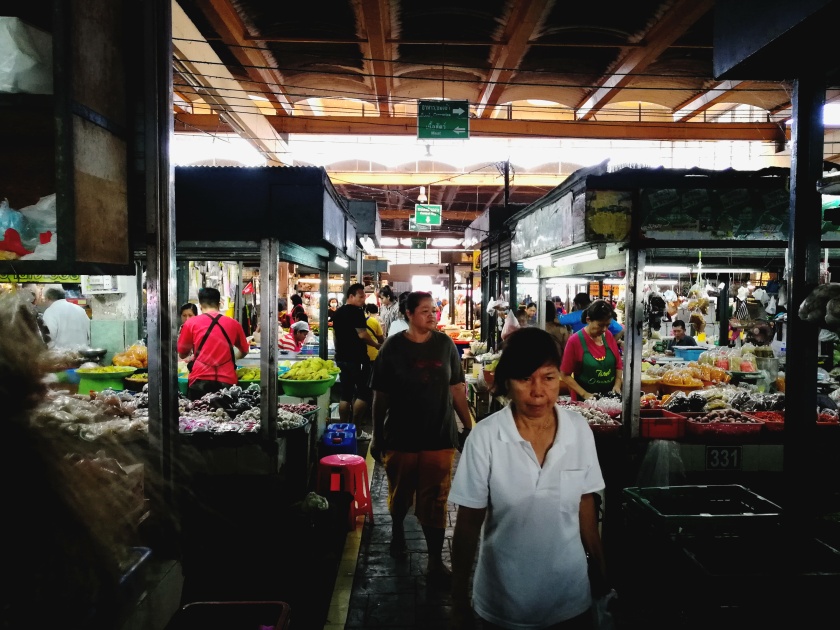
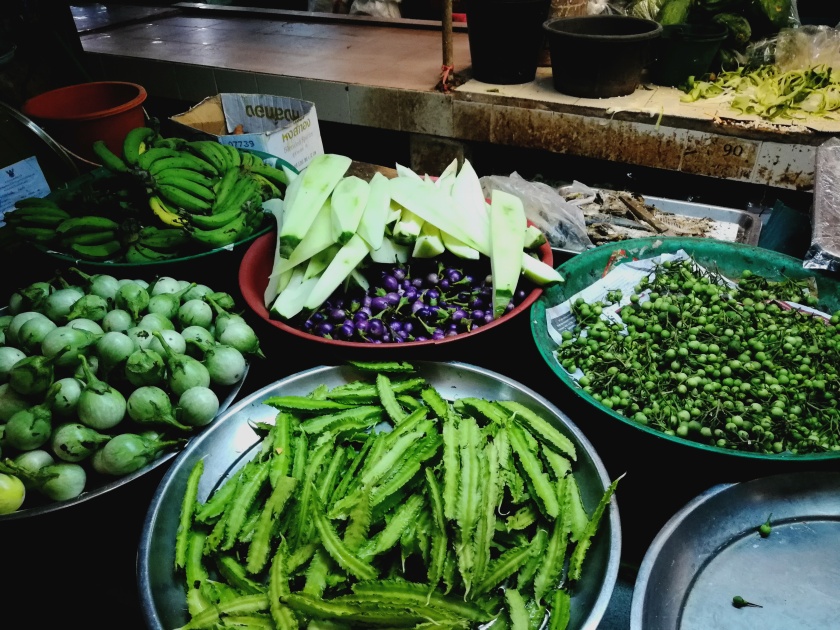
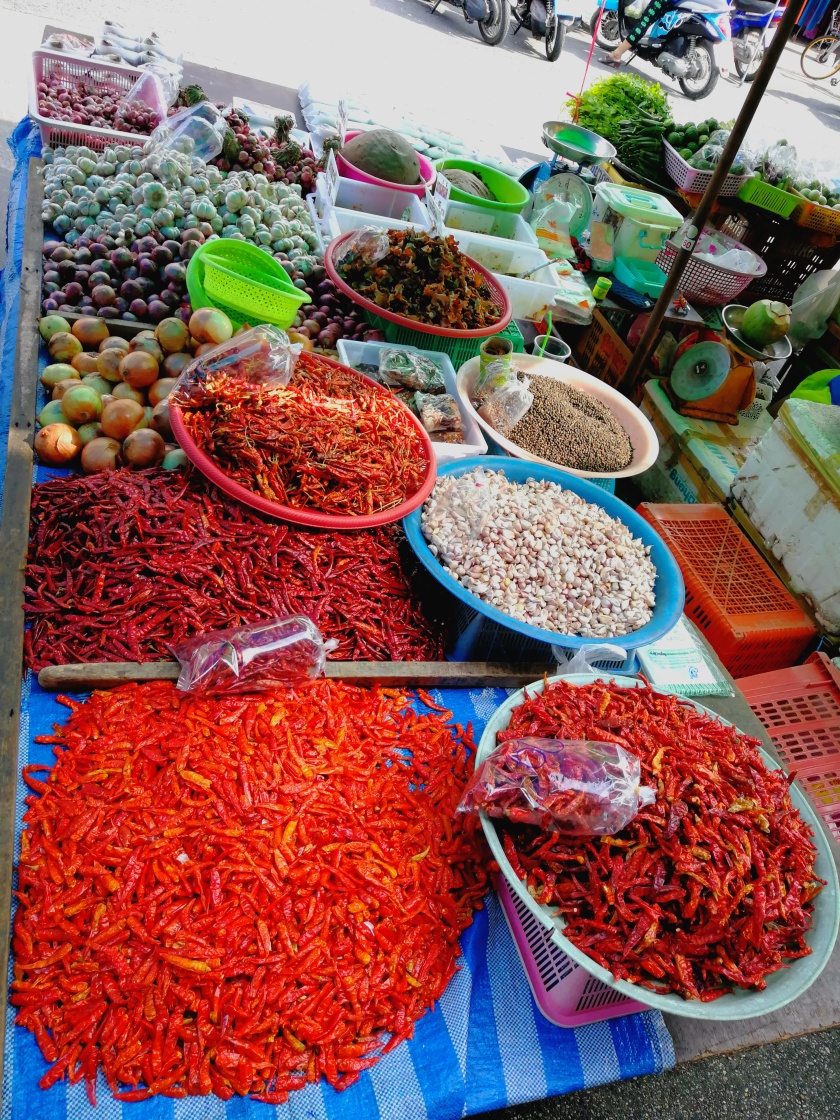
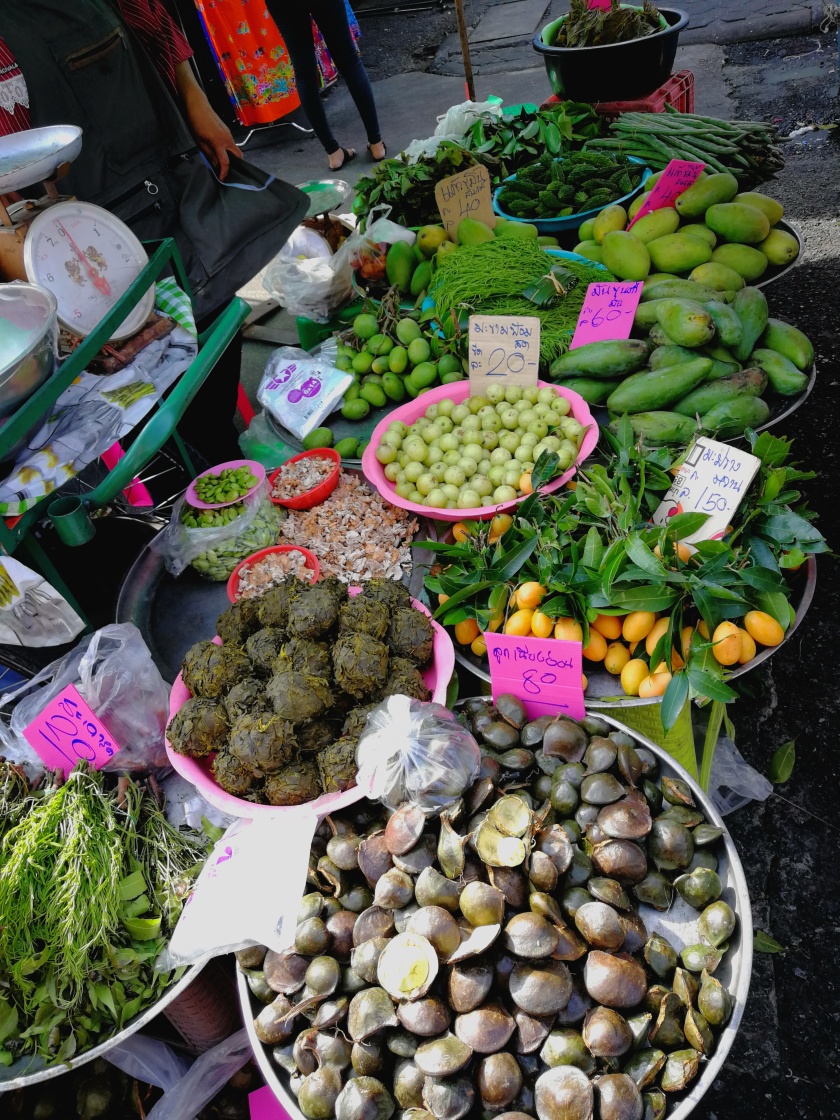
На свой последний кулинарный класс мы, несмотря на вчерашние волнения, благополучно попали. Как и было обозначено, в 8 утра за нами заехал миниавтобус, и мы поехали на противоположный берег полуострова, через сам город Пхукет. Сначала мы остановились у базара, где, как и на предыдущих классах, инструктор показала нам продукты, характерные для тайской кухни. Но если ни в Бангкоке, ни в Чианг Мае полномасштабного базара мы не видели, то здесь мы попали именно на такой, со всеми его специфическими запахами.

selfp

selfp

selfp

Инструктор объяснила, что все продукты, кроме мясных и рыбных для нас были закуплены именно здесь. А мясо и рыба тут лежат целый день без холодильника, и если для тайского желудка это не проблема, то наши могут такого не оценить, поэтому эти продукты купили в супермаркете.

selfp

selfp

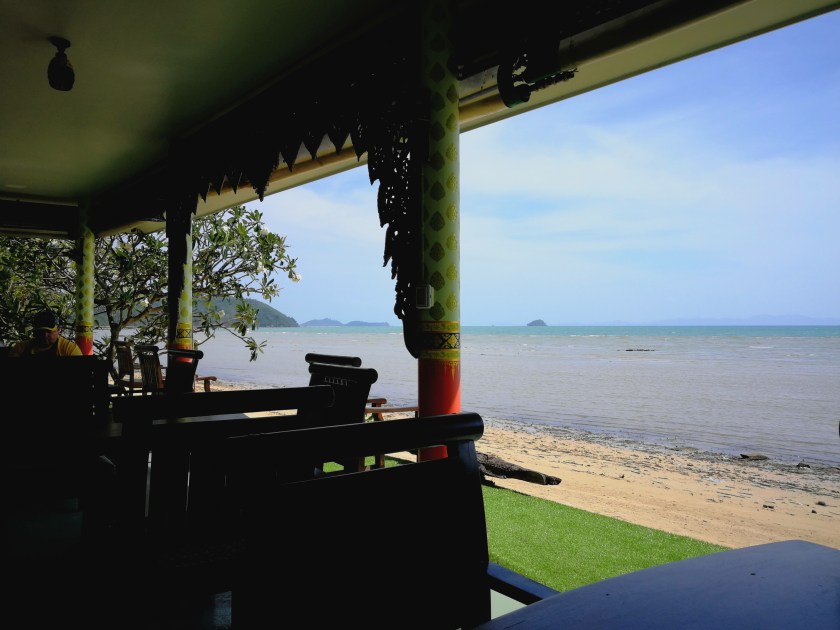
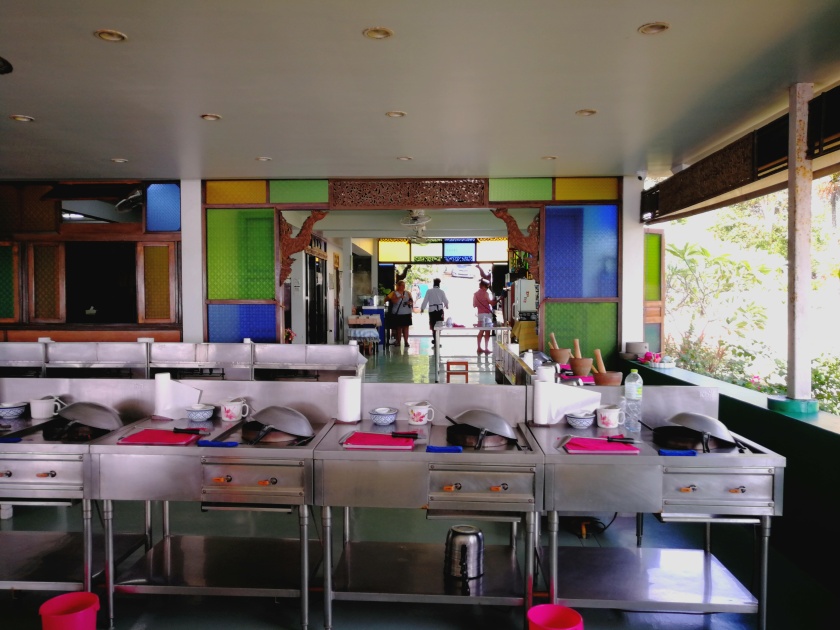
Потом отсюда мы поехали в саму кулинарную школу, которая расположена прямо на берегу моря.

selfp

selfp

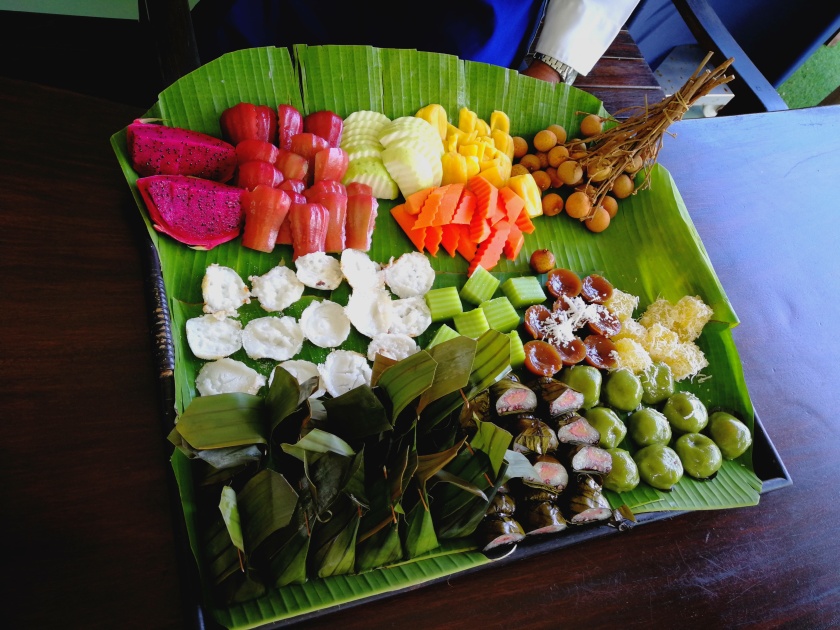
Для начала нас угостили местными десертами и экзотических фруктами, из которых новым для меня было только розовое яблоко чомпу, похожее ао форме на грушу, очень сочное, и не очень напоминающее по вкусу яблоко. Что касается десертов, они все мне показались на один вкус – такой же, как у клейкого риса (того, который чаще всего бывает с манго).

selfp

На полудневном курсе нам предстояло готовить все уже знакомое: спринг роллы, суп том ям и клейкий рис с манго. Отличие этого курса от других было в том, что во-первых, инструкторы для разных блюд были разные, а во-вторых, сам процесс происходил так: сначала нас сажали в комнатку наподобие мини-лекционного театра, и инструктор демонстрировал весь процесс приготовления от и до, а потом мы уже готовили сами от и до.

selfp

Десерт нам только показали – а готовить самим опять не дали. Причина в том, что этот десерт индивидуальными порциями не готовится: сначала нужно сварить на пару рис, потом залить его сладким кокосовым соусом. Но зато, в этот раз очень хорошо и подробно объяснили, как варить рис.

Демонстрацию приготовления супа том ям мы смотрели прямо как представление в театре. Инструктор вовсю комиковал, и снабжал каждое действие шуточками и смешными рожицами.

selfp

selfp

В общем, теперь мы вполне можем считать себя специалистами по тайской кухне!

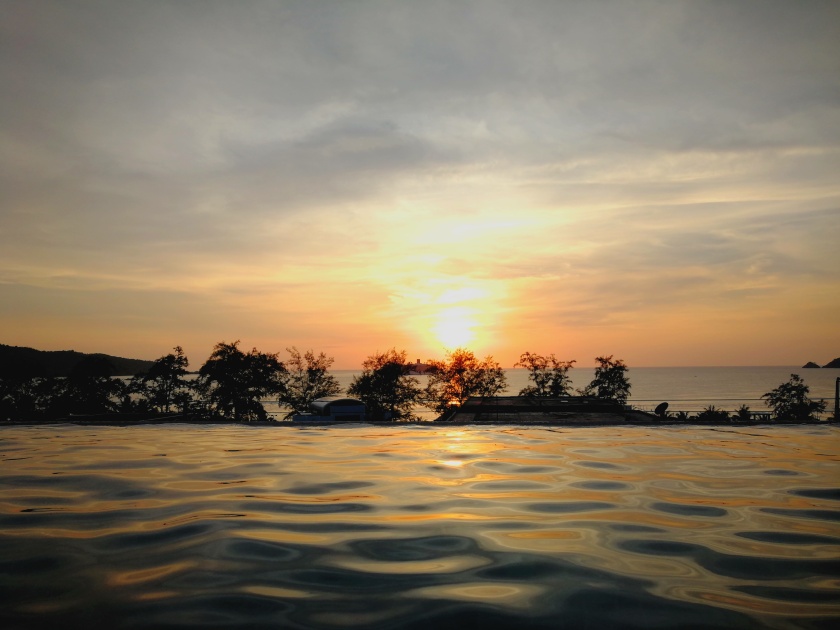
После класса нас привезли обратно в отель, и на этом наша турпрограмма окончена. Теперь от турфирмы потребуется только благополучно доставить нас в аэропорт через 4 дня, а пока мы полностью предоставлены самим себе. Так что послеобеденное время лично у меня прошло у “бесконечного” бассейна в нашей гостинице, с видом на море. Дождалась и красивого заката – нам повезло быть на западе полуострова.

selfp

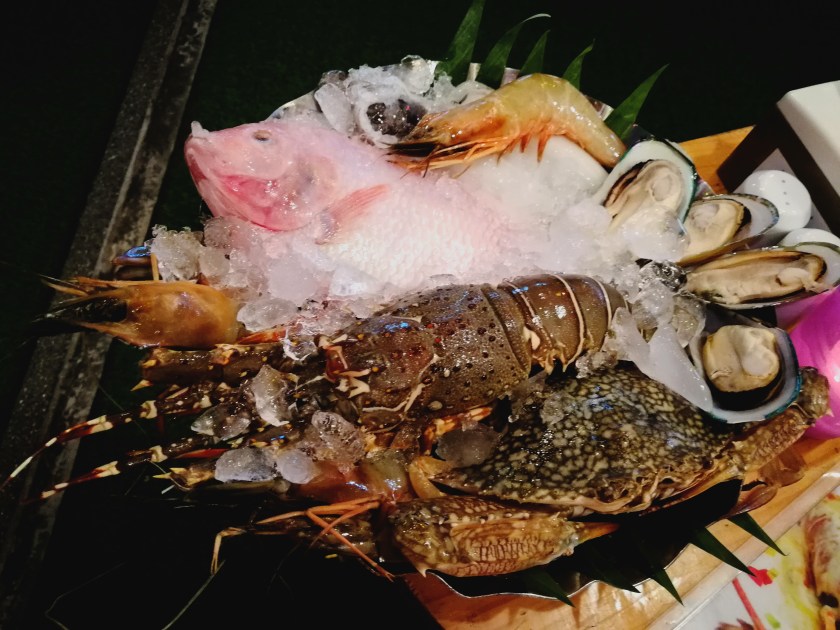
На ужин мы забрели в какой-то ресторан, в надежде поесть морепродуктов. Немного растерялись, что выбрать, и тут официант сказал, что за 2200 бат (около 70 долларов) мы можем получить краба, лобстера, рыбу, мидии, креветки и кальмара, и выбрать, как каждую тварюгу приготовить, и на двоих этого будет более чем достаточно. У нас получилось целое пиршество!

selfp

selfp

Posted in Asia, English, Phuket, Thailand

Thailand – Day 8

РУССКОЯЗЫЧНАЯ ВЕРСИЯ ПО ЭТОЙ ССЫЛКЕ. CLICK HERE FOR RUSSIAN VERSION.

25 March 2018

Despite yesterday’s worries, we made it to our last cooking class very smoothly. As it was indicated, we were picked up at 8am by a minibus and taken to the opposide coast of the peninsula, right through the town of Phuket. First we stopped at a market, where, just as during our previous classes, the instructor showed us variuos products, specific for Thai cuisine. But while neither in Bangkok nor in Chiangmai did we get to see a full-scale market, here we found ourselves right in one, with all its peculiar smells.

selfp

selfp

selfp

The instructor explained that all the products that we were going to use today had been purchased here, except for meat and fish. The meat and fish here stay outside without a refrigerator all day, and, she said, while it is not a problem for a Thai stomach, ours would not necessarily appreciate it, that is why these products had been bought at a supermarket.

selfp

selfp

From the market we headed to the cooking school, located right on the beach.

selfp

selfp

To start with, we were treated to local desserts and exotic fruits, mostly familiar to us, except for the rose apple or chompoo, looking like a pear, very juicy, and not tasting anything like a proper apple. As for desserts, they all seemed to taste the same – just like the sticky rice that usually goes with mango.

selfp

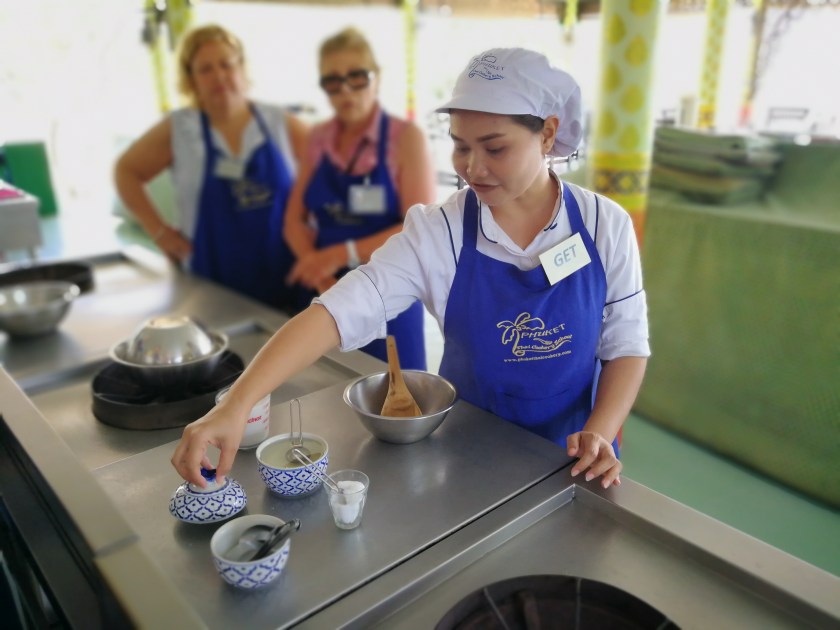
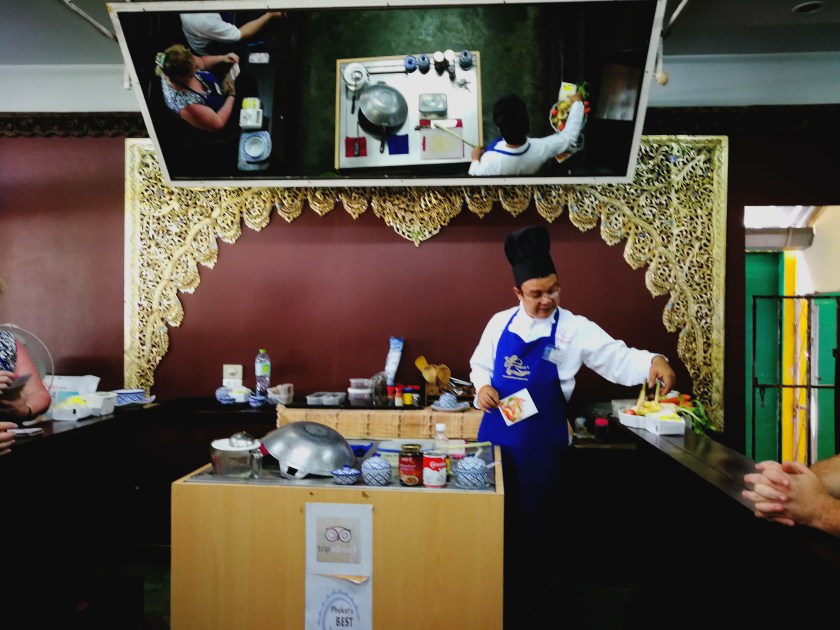
Our half-day course included cooking everything we were already familiar with: spring rolls, tom yum soup and sticky rice with mango. The difference between this course and the previous ones was that firstly, there were different instructors for different dishes and secondly, the process itself went like this: we sat in a room looking like a mini-lecture theatre, and the instructor demonstrated the whole cooking process from beginning to end, and then we had to repeat it on our own.

selfp

Once again, we didn’t get to cook the sticky rice with mango, but were only shown how to do it. The reason is that this dessert is made in bulk rather than in individual portions: first you have to steam the glutinous rice and then top it with a sweet coconut sauce. But this time, the process of cooking the rice was explained very well and thoroughly.

We watched the instructor prepare the tom yum soup just like a theatre performance. He was totally killing it, supplying every action with jokes and funny faces.

selfp

selfp

So now we can quite consider ourselves specialists in Thai cuisine!

After the class we were brought back to the hotel, and our tour programme was over. Now the travel agency would only need to safely take us to the airport in 4 days’ time, and for now we are completely left to ourselves. So I personally spent my afternoon by the infinity pool in our hotel, overlooking the sea. I got to see a gorgeous sunset – we are lucky to be staying in the west of the peninsula.

selfp

Looking for a place to have seafood dinner, we wandered into a restaurant. First we were a bit confused about what to choose, and then the waiter told us that just for 2200 baht (about $70) we could get a crab, a lobster, a fish, mussels, shrimp and squid, and choose how to cook each of the beasts, which would be more than enough for two people. And we got a whole feast!

selfp

selfp

Posted in Asia, Chiang Mai, English, Phuket, Thailand

Thailand – Day 7

РУССКОЯЗЫЧНАЯ ВЕРСИЯ ПО ЭТОЙ ССЫЛКЕ. CLICK HERE FOR RUSSIAN VERSION.

24 March 2018

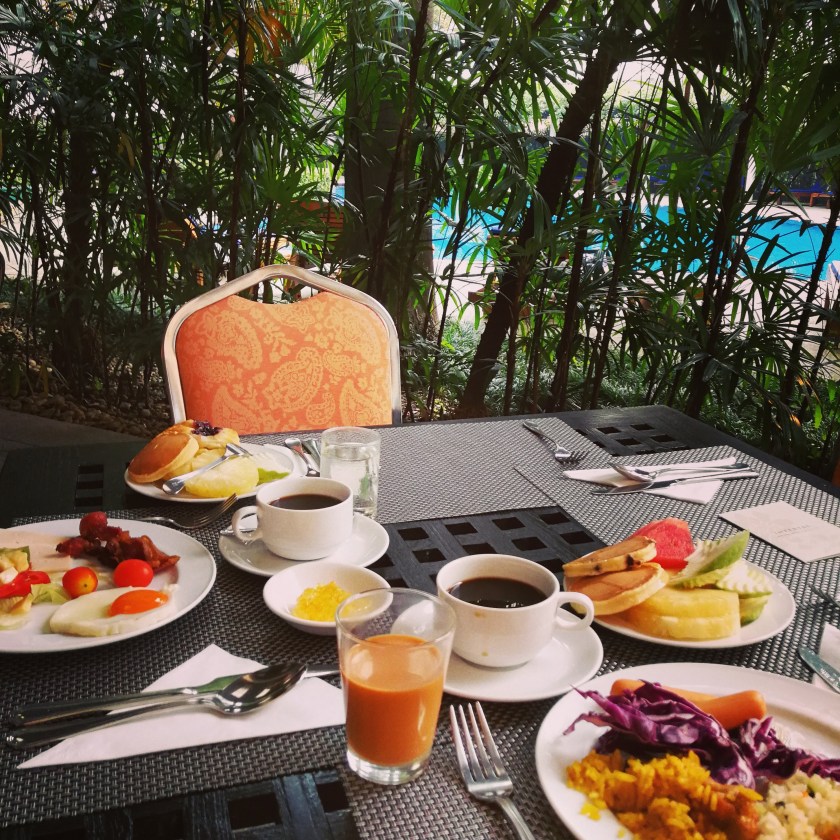
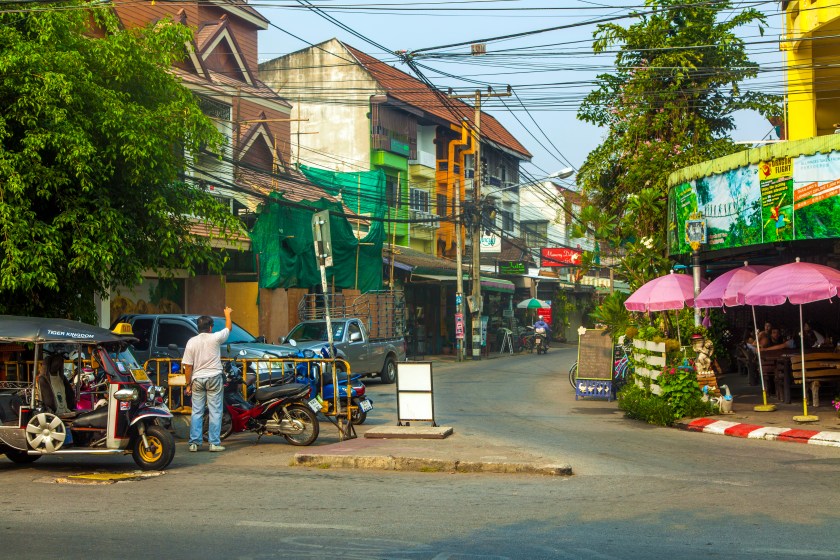
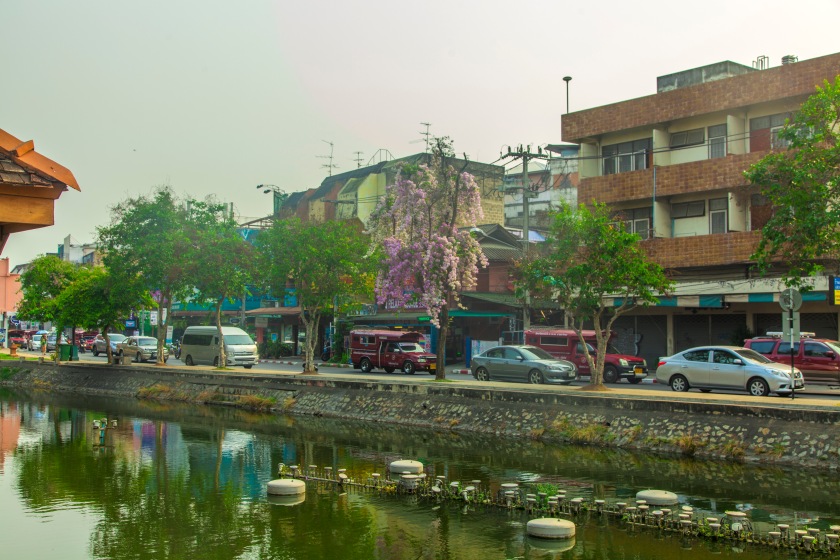
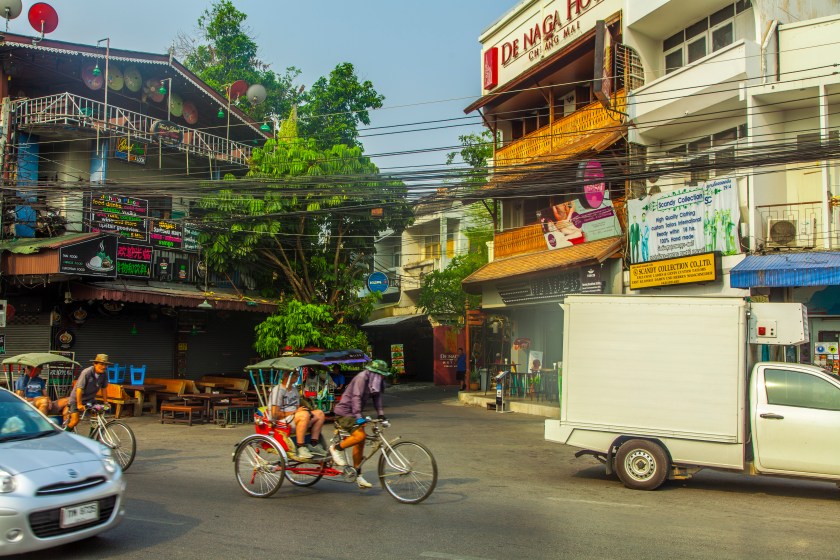
This post is also supposed to turn out short, as well as devoid of any particular enthusiasm. But anyway, the morning started pretty well. We got up, had a slow breakfast at the poolside (by the way, the breakfast in Chiang Mai is leading so far, compared to breakfasts in other cities: there’s more variety, the food is tastier and the place looks more pleasant overall), and went for a walk to the Old Town on our own.

IMG_20180323_163025_290

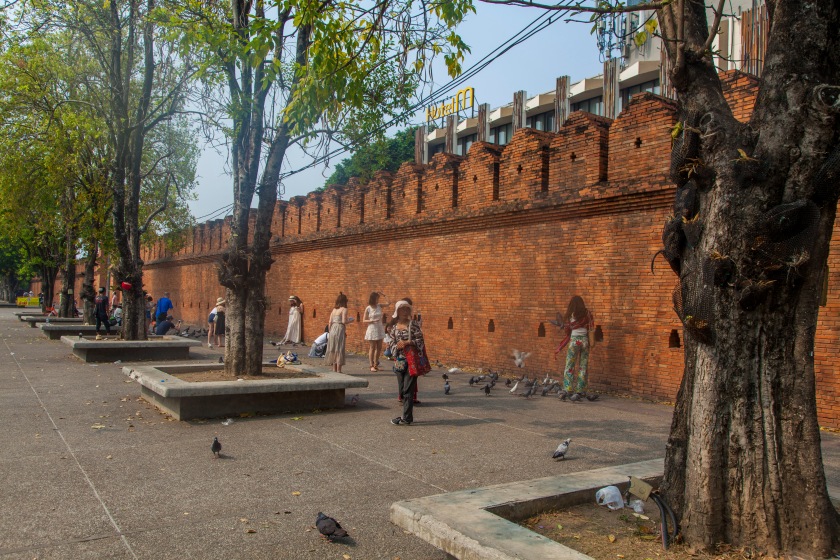
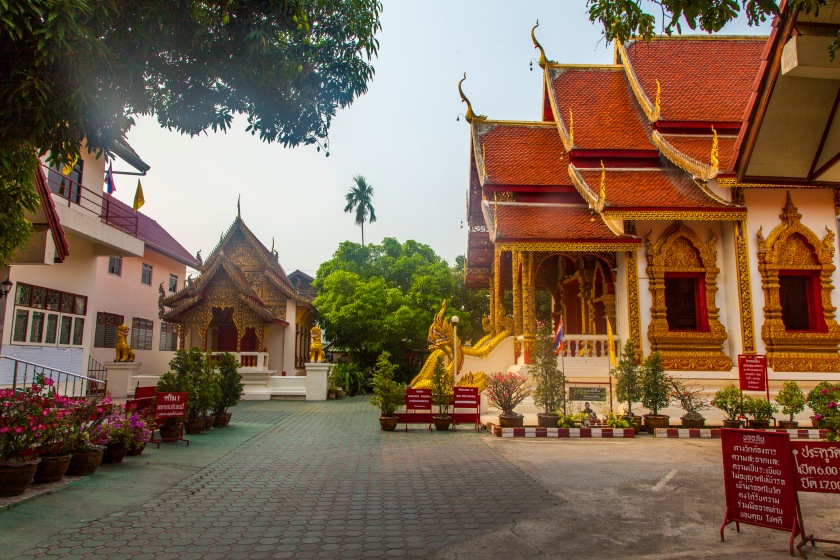
Basically, just as during our evening walk with the guide, we didn’t discover anything particularly remarkable in the Old Town. Well, there is a medieval city wall, but I’ve seen better walls. Otherwise, there are lots and lots of temples at literally every step – I think, Chiang Mai has around 300 of them, in fact, that is what it’s famous for.

IMG_3662

IMG_3665

IMG_3666

IMG_3687

IMG_3683

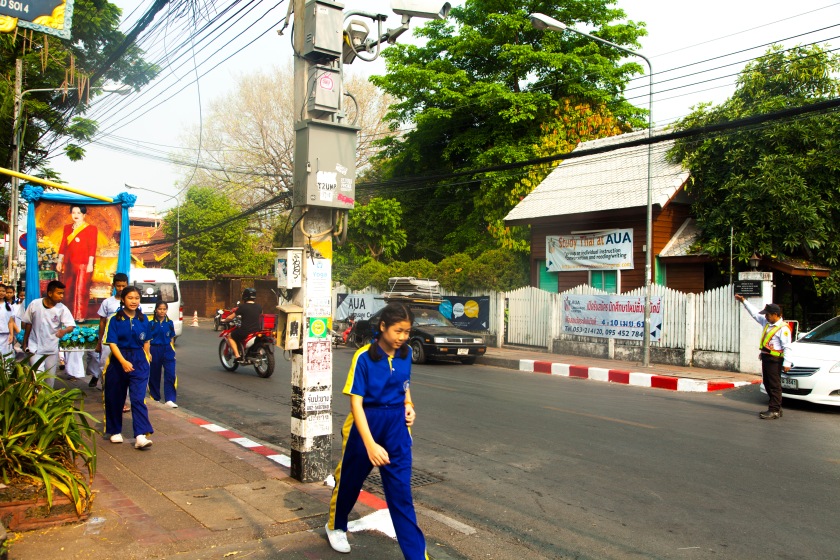
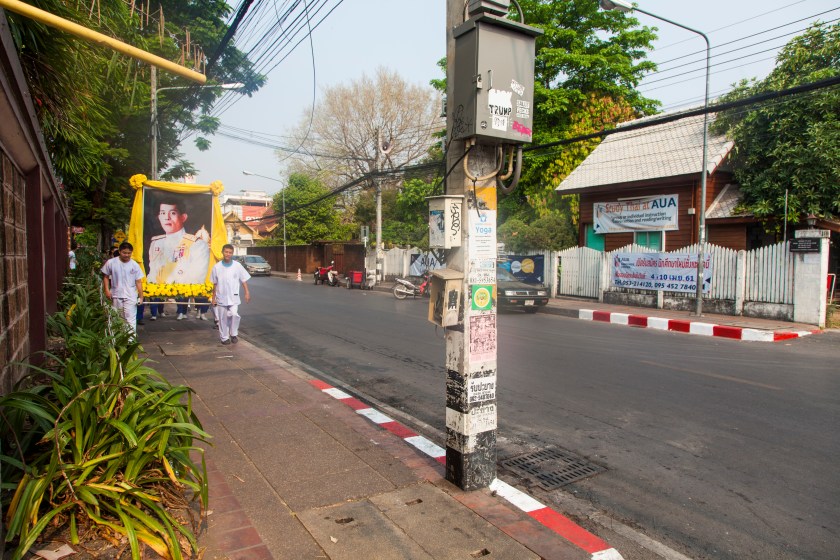
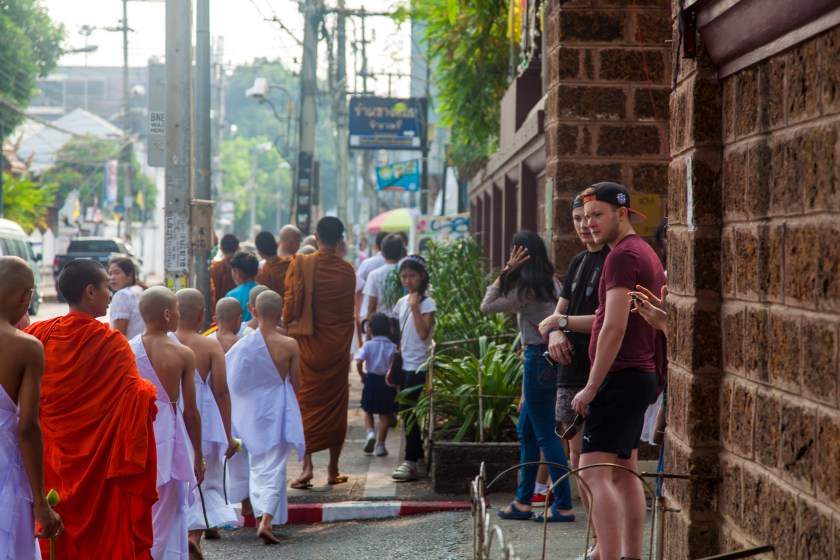
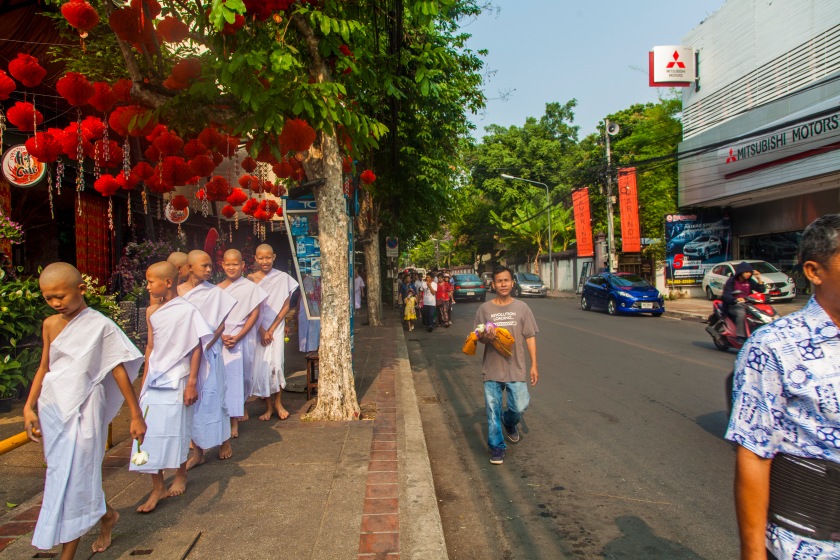
On the way we noticed an interesting procession. First we saw school-aged boys in identical white clothes. They were followed by girls, in the same type of clothes, only with skirts. Then we saw young monks of the same age in monastic robes of the same white colour. There were also occasional adults, dressed normally, but all carrying beautifully folded orange cloth in their hands – it looked as if they were carrying robes for monks as a gift. Some schoolchildren were carrying some flags or portraits of the king and members of the royal family. Unfortunately, we weren’t able to figure out what kind of event that was and where they were all heading.

IMG_3670

IMG_3672

IMG_3673

IMG_3676

We didn’t get to do a long walk, as it became very hot, so we returned to the hotel, packed and came downstairs to the lobby to wait for our driver for our airport transfer. Kudos to the driver, he arrived exactly on time – it’s not for nothing that we liked him (moreover, in the driver-guide tandem, he was definitely our favourite).

The flight to Phuket itself was on time and went fine. But at the airport there was a surprise waiting for us – or rather, there wasn’t anyone waiting for us at all. Based on our experience working with this travel agency, this came completely unexpected, as neither in Vietnam, nor in Thailand so far had we faced such issues. We tried calling the agency, but no one responded – it was Saturday, after all. To our great luck, though, we had a business card from Vanna, our Bangkok guide. We called her, she followed up, and it turned out that there was someone waiting for us after all, but he didn’t have our names written on the paper, or maybe forgot about us completely. By the way, he wasn’t a personal guide, but merely a representative of the transfer company, and, having made us wait for some more time, finally organised a car with a driver for us. In total, we had to wait for at least 45 minutes. Honestly, it wasn’t the most pleasant experience, because while our Vietnam trip had left us with the impression that we were much better off taking a tour than if we’d organised the trip ourselves, in a situation like this we definitely felt that it would have been way easier for us to just get a taxi and not spend ages waiting.

As for tomorrow’s cooking class, no one left us any instructions either. Once again, many thanks to Vanna, who came to our rescue and found out everything: who would pick us up and when.

As a result, we arrived at the hotel already in the dark, and didn’t get to see much. The beach is right across our hotel, and there seem to be many different restaurants around. We wend to one of them straight away to have seafood and really enjoyed sitting on the terrace overlooking the sea (in the dark). The prices in Phuket are significantly higher than elsewhere and apparently, the restaurant itself wasn’t cheap as well. By the way, alcohol is relatively expensive throughout Thailand. A glass of wine or a cocktail here will cost the same as a main dish, if not more.
Posted in Азия, Пхукет, Русский, Таиланд, Чианг Май

Таиланд – День 7

CLICK HERE FOR ENGLISH VERSION. АНГЛОЯЗЫЧНАЯ ВЕРСИЯ ПО ЭТОЙ ССЫЛКЕ.

24 марта 2018

Этот пост тоже должен получиться коротким, а также лишенным особого восторга. Впрочем, с утра все было нормально. Мы встали, неспешно позавтракали у бассейна (кстати, завтрак в Чианг Мае пока лидирует по сравнению с другими городами: выбора больше, еда вкуснее и место приятнее), и пошли своим ходом на прогулку к Старому городу.

IMG_20180323_163025_290

В принципе, как и вечером с гидом, мы ничего особо примечательного в старом городе не обнаружили. Есть средневековая городская стена, но видала я стены и получше. Разве что, очень много храмов на каждом шагу – вообще, в Чианг Мае их около 300, он по сути этим и знаменит.

IMG_3662

IMG_3665

IMG_3666

IMG_3687

IMG_3683

По дороге мы заметили какое-то интересное шествие. Шли мальчики школьного возраста в одинаковой белой одежде. Потом шли девочки, в такой же одежде, только с юбками. Шли юные монахи такого же возраста в монашеских одеждах такого же белого цвета. Между ними попадались и взрослые, одетые обычно, но с красиво перевязанной оранжевой тканью в руках – выглядело это как будто они несли одеяния для монахов в подарок. Некоторые школьники несли какие-то флаги, либо портреты короля и членов королевской семьи. Что это было за мероприятие и куда они шли, нам узнать так и не удалось.

IMG_3670

IMG_3672

IMG_3673

IMG_3676

Долго гулять не получилось, так как стало очень жарко, и мы вернулись в отель, собрались и вышли ждать нашего шофера для трансфера в аэропорт. Шофер молодец, приехал тютелька в тютельку, недаром он нам понравился (причем, в связке шофер-гид, однозначно больше).

Сам полет прошел нормально и вовремя. А вот в аэропорту нас ждал сюрприз – вернее, не ждал никто. Мы, по нашему опыту работы с этой турфирмой, такого вообще не ожидали, так как ни во Вьетнаме, ни до сих пор в Таиланде таких накладок не возникало. Попытались было позвонить по номеру агентства, но там никто не брал: суббота все-таки. К большой удаче, у нас была визитка с номером Ванны, нашего гида в Бангкоке. Мы позвонили ей, она стала разбираться и оказалось, что какой-то гид нас все-таки ждет, только он не написал наших имен почему-то, может, забыл вообще про нас. Гид этот, кстати, был не персональный, а представитель трансферной компании, который, заставив нас прождать еще какое-то время, организовал машину с шофером. В общей сложности, нам пришлось прождать не меньше 45 минут. Честно говоря, инцидент не очень приятный, потому что если после Вьетнама у нас было впечатление, что от тура мы получили очень много, гораздо больше, чем если б организовывали поездку сами, то в такой ситуации как эта, нам реально было бы удобнее самим уехать на такси и не ждать так долго.

По поводу завтрашнего кулинарного класса нам тоже никто не сообщил, кто и когда за нами приедет, и спасибо Ванне, она опять пришла на помощь: позвонила и все узнала.

В результате в отель мы приехали уже затемно, и поэтому ничего особо не разглядели. Пляж у нас напротив, вокруг разные ресторанчики. В один из них мы сразу пошли на ужин есть морепродукты, и очень приятно посидели на террасе с видом на море (в темноте). Цены, правда, в Пхукете значительно выше, да и ресторан, судя по всему, не из дешевых. Кстати, алкоголь относительно дорог по всему Таиланду. Бокал вина или коктейль тут обойдется так же, как и основное блюдо, если не больше.

Posted in Азия, Русский, Таиланд, Чианг Май

Таиланд – День 6

CLICK HERE FOR ENGLISH VERSION. АНГЛОЯЗЫЧНАЯ ВЕРСИЯ ПО ЭТОЙ ССЫЛКЕ.

23 марта 2018

Наш второй запланированный кулинарный класс состоялся сегодня в Чианг Мае. Утром за нами в отель заехала машина из кулинарной школы, и нас забрали вместе с постояльцами еще двух отелей.

Прибыв в школу, мы долго не могли понять, почему нас посадили за стол, а наших попутчиков оставили ждать у входа, а потом посадили на другую машину вместе с другой группой новоприбывших и куда-то повезли. Потом, уже при просмотре рекламного флаера школы, мы поняли, что они предлагают уроки в школе и на ферме и судя по всему, уехавшие забронировали урок на ферме.

IMG_3581

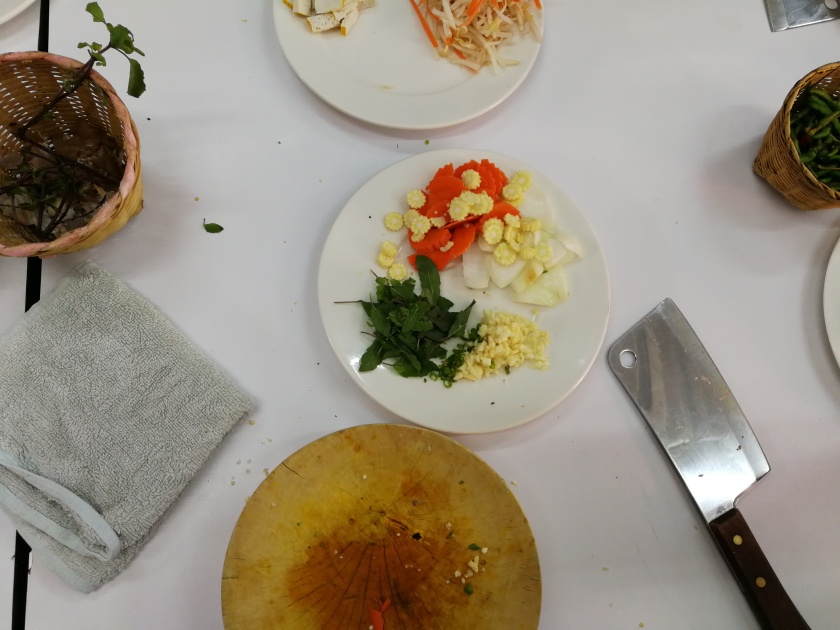
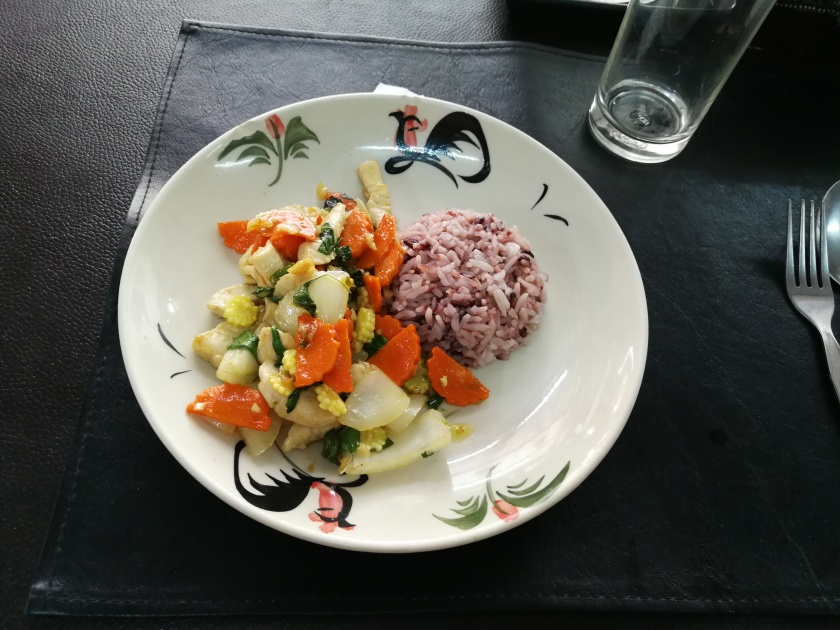
К нам же подсадили французскую пару и две разные компании американцев и дали меню. Здесь принцип немного отличался от бангкокского. Из семи групп блюд нам на нашем полудневном уроки предлагалось приготовить пять, причем три из них – пасту для карри, само карри и спринг роллы были в обязательном порядке, а из оставшихся четырех наша группа должна была совместно выбрать два. Мы выбрали стир фрай и десерт, и не выбрали суп и салат. Зато из каждой выбранной группы каждый мог индивидуально выбрать себе блюдо. Например, я выбрала курицу с острым базиликом как стир фрай (многие взяли пад тай, но его мы уже готовили в Бангкоке), местный вид карри под названием кау сой и пасту для него же, бананы в кокосовом молоке на десерт, ну и спринг роллы были только одного вида.

cof

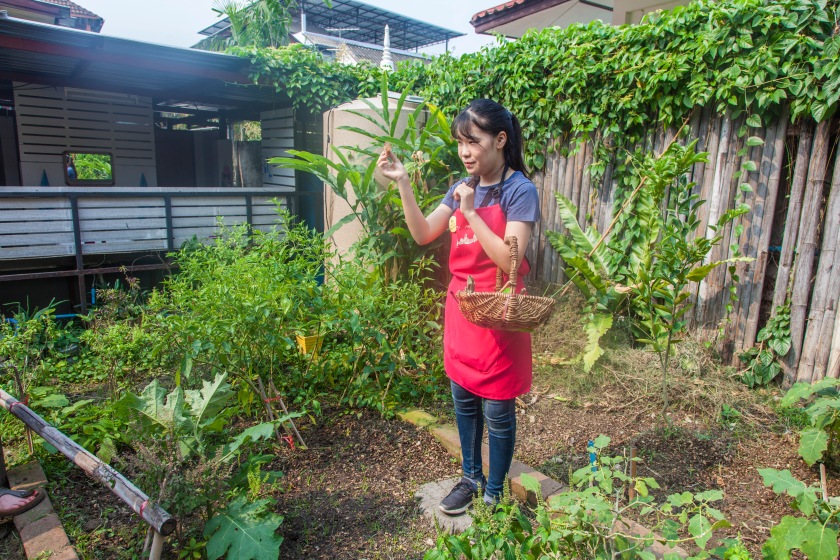
Нас вывели в огородик прямо при школе и снова показали и дали понюхать часто используемые в тайской кухне ингредиенты: зеленый лук, порей, лемонграсс, листья каффирового лайма, разные виды базилика, корни имбиря, галангала, куркумы и женьшеня.

IMG_3583

IMG_3585

Потом мы прогулялись к местному базарчику – через очень интересные места с гостевыми домами и кафешками, судя по всему, для бекпекеров и прочих бюджетных туристов.

IMG_3588

IMG_3593

IMG_3596

На базаре наша инструктор по имени Да показала нам разные пряности, готовые пасты для карри, виды лапши и риса. Я подумала, что для проблемы отсутствия дома нужных ингредиентов можно найти как краткосрочное, так и долгосрочное решение – и купила как набор сушеных ингредиентов для супа том ям, так и семена каффир-лайма.

IMG_3591

А дальше мы вернулись в школу и принялись за дело. Надо сказать, тут нам было дано больше самостоятельности – мы практически все готовили сами. Кстати, до того как мы принялись за дело, нам подали закуску – листья, в которые надо было завернуть арахис, имбирь, лук, перец чили и кусочек жареного кокоса, и положить ложечку сладкого соуса. Потом все должны были сказать “чок ди” – это вроде пожелания удачи – и, как ни забавно, “чокнуться” этим мешочком перед тем, как положить его в рот.

Стир фрай, как водится, готовился очень легко и быстро, к моему полагался уже готовый рис.

cof

cof

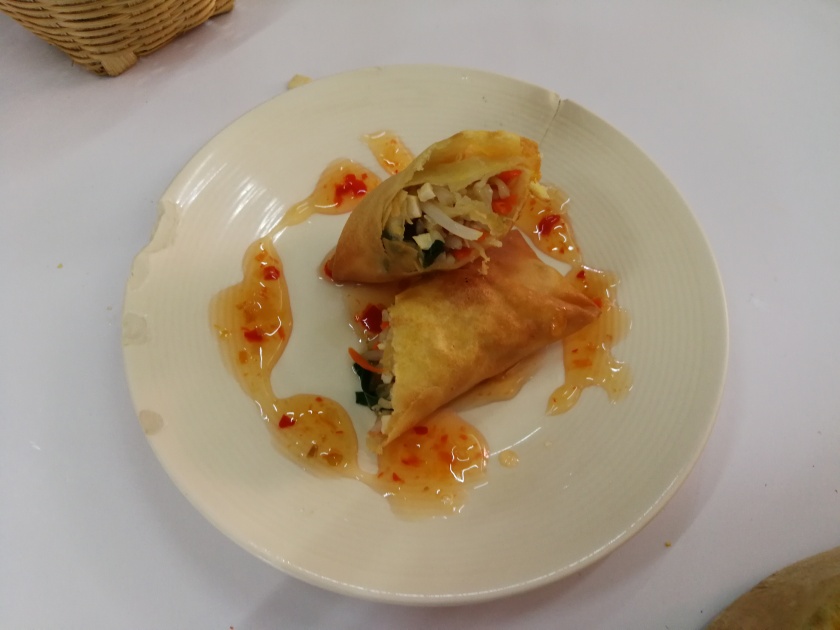
Потом из группы выбрали двух доброволиц, которые приготовили чуть бОльшую порцию примерно по такому же принципу, для начинки спринг роллов. А дальше каждый уже сам заворачивал желаемое количество этой начинки в выданный ему блинчик и обжаривал его во фритюре.

cof

После этого мы готовили пасту для карри. Так получилось, что никто не выбрал зеленый карри, а для всех остальных – красного карри, карри пананг, кау сой и массаман (последнее, кстати, тоже никто не выбрал) – базовая паста готовится одинаково, и только потом добавляются разные другие ингредиенты.

cof

cof

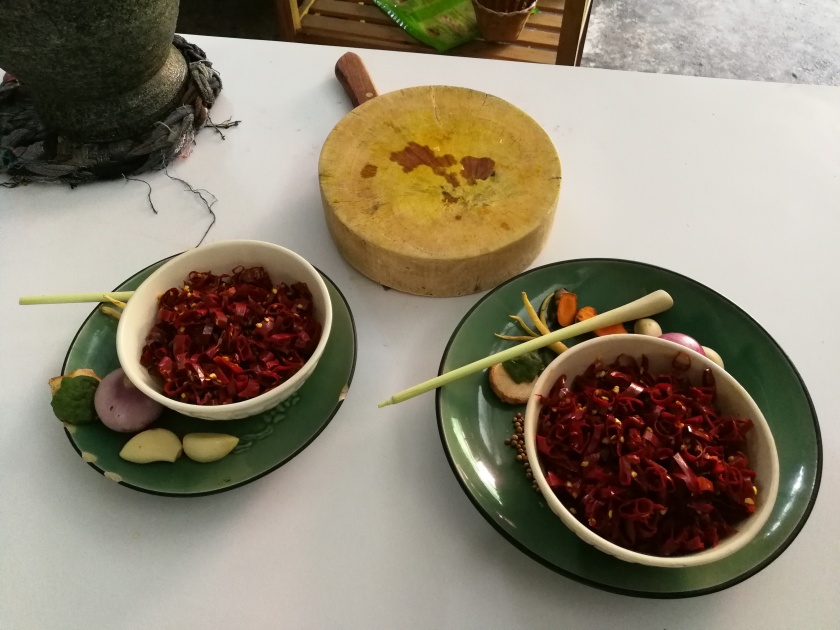
Собственно в пасту для красного карри идут размоченный в воде сушеный перец чили, лук, чеснок, куркума, женьшень, шкурка каффир-лайма и лемонграсс. А дальше для кау сой добавляется еще сушеный порошок карри, а для пананга – арахис.

cof

Кстати, само красное карри готовится так же как и зеленое – то есть помимо мяса, пасты, соусов и кокосового молока туда кладутся тайские баклажаны и базилик. А в пананг и кау сой овощи не добавляются. Мой кау сой оказался более жидким, чем другие карри, и в него надо класть лапшу , а не подавать с рисом. Как я поняла, именно это мы и ели позавчера в придорожной забегаловке и приняли за суп-лапшу. Я даже добавила лишнюю ложку пасты карри, так как мне было недостаточно остро!

cof

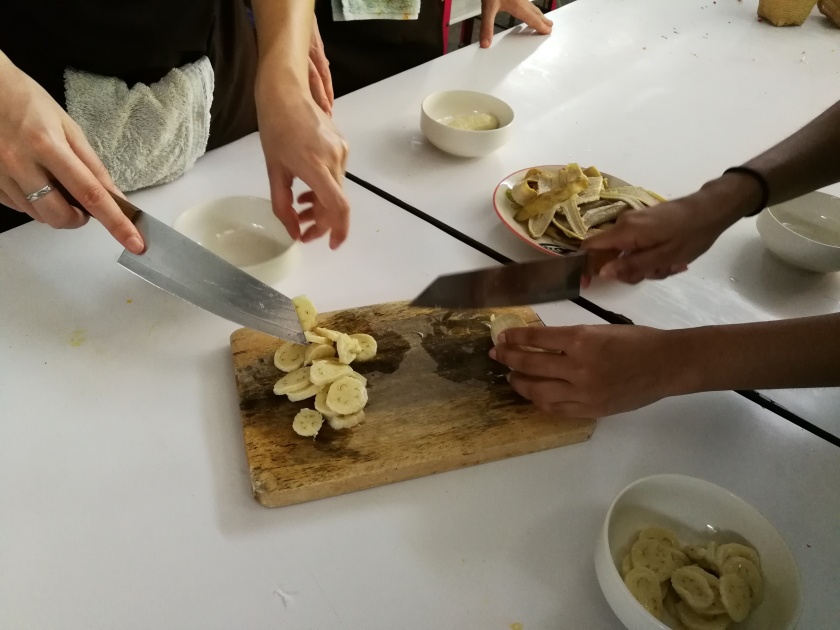
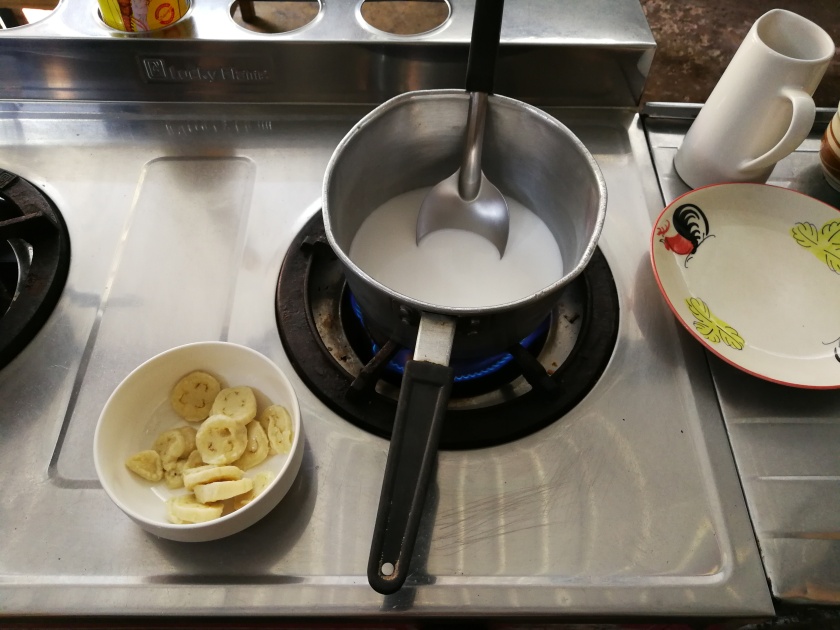
Где-то в промежутке между приготовлением пасты и карри мы еще умудрились быстренько сварганить десерт. В моем случае это было дело нехитрое: просто сварить нарезанные бананы в кокосовом молоке с сахаром. Интересно, что нарезая этот вид бананов, мы обнаружили в них черные семена , которые пришлось выковыривать – никогда ничего подобного не видела!

cof

cof

В общем, здешний класс тоже очень понравился, в том числе и немного повышенным уровнем сложности после бангкокского. Нас ожидает еще один кулинарные класс, в Пхукете, посмотрим, каким будет он.

Наш гид с шофером заехали за нами прямо в кулинарную школу, и отсюда мы поехали в последний запланированный программой храм в Таиланде на горе Дой Сутеп.

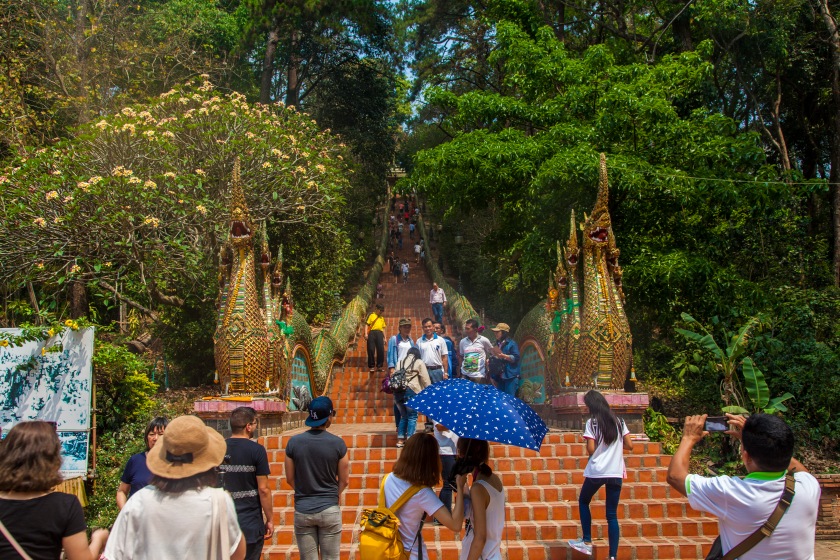
В храме и его окрестностях очень людно (как водится, значительно превалируют китайцы). Чтобы попасть к самому храму, приходится преодолеть 306 ступенек пешком по жаре. К счастью, на верху горы дует приятный ветерок.

IMG_3601

IMG_3604

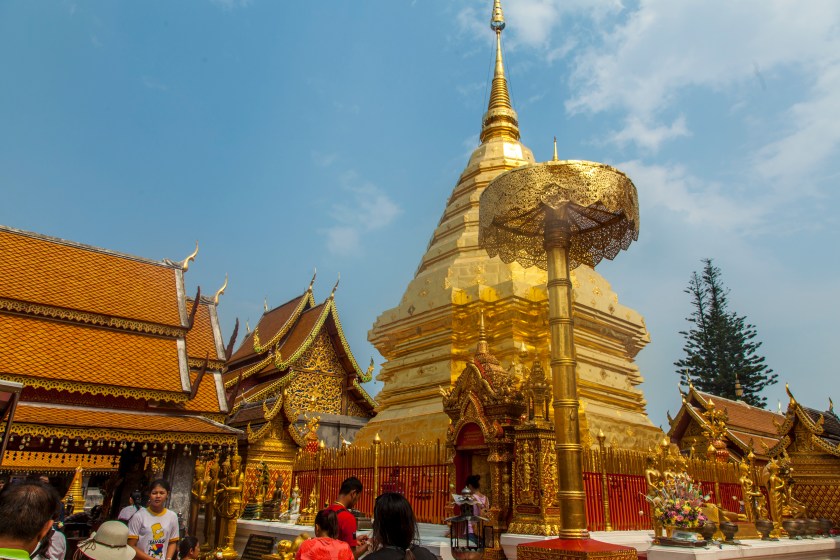
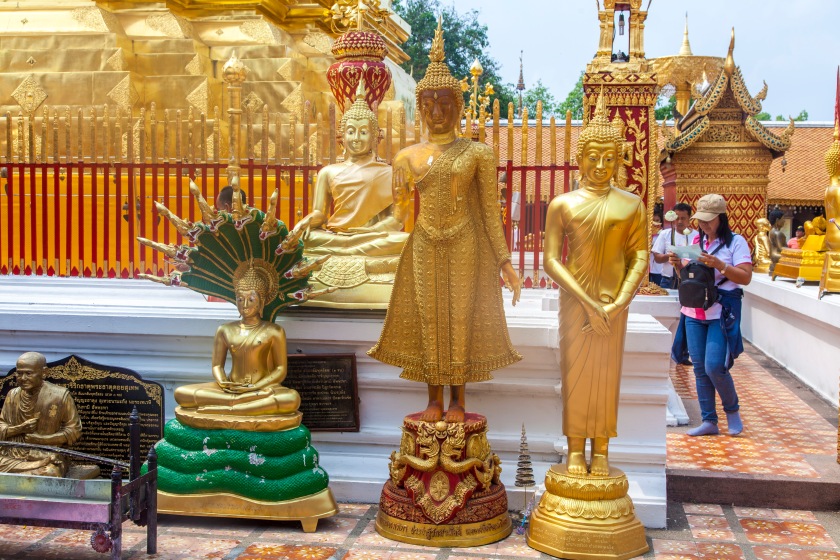
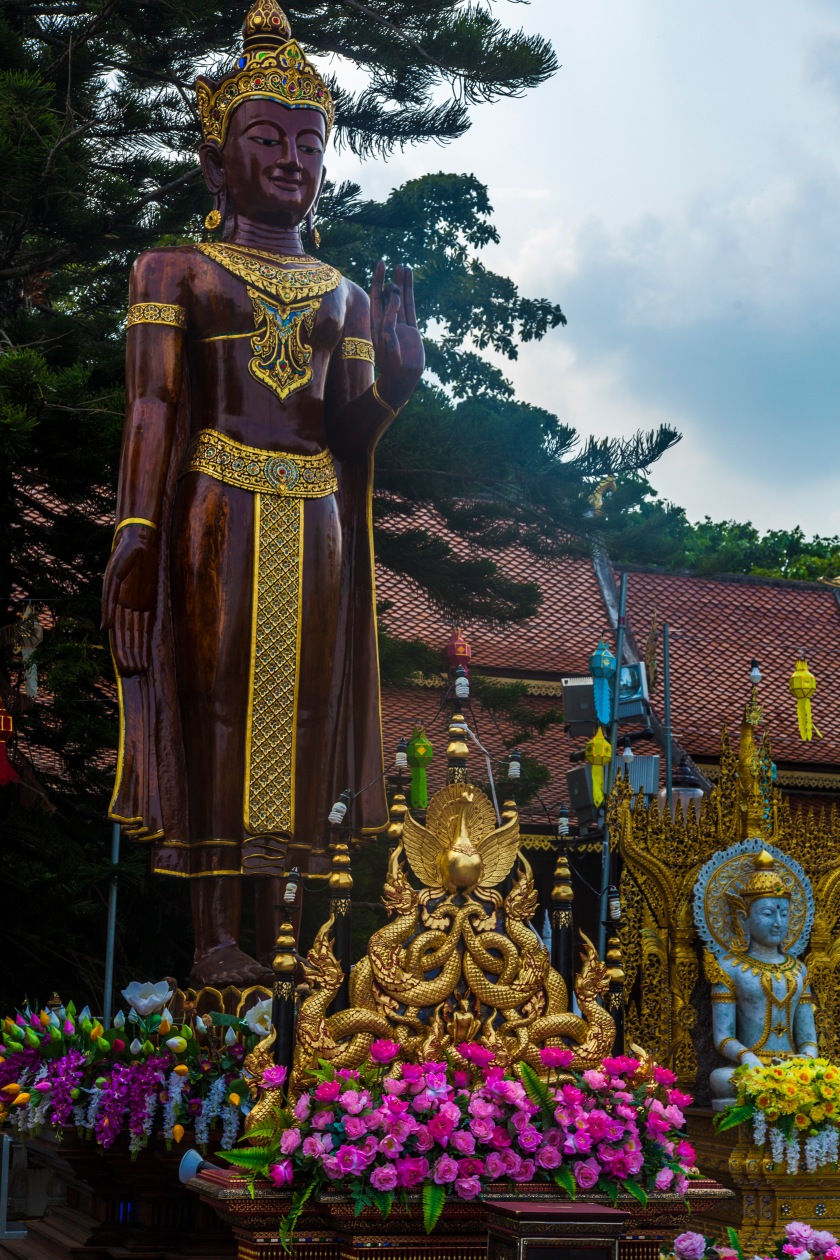
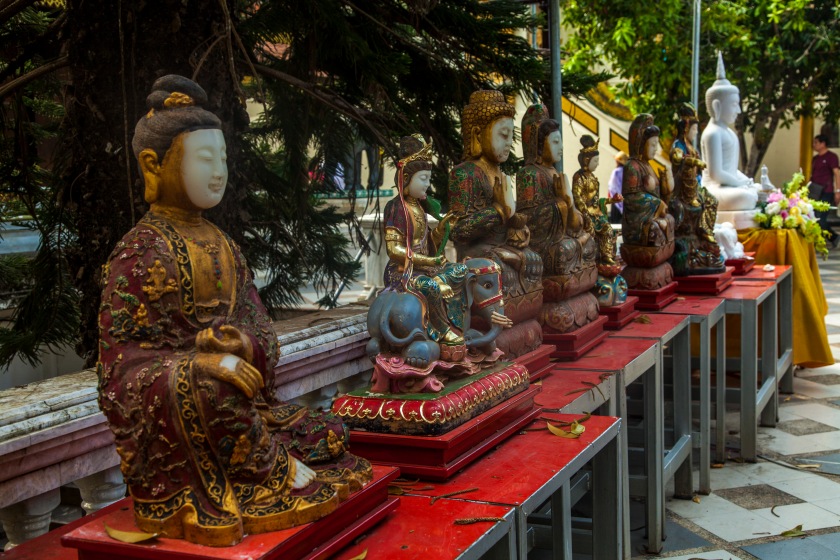
Заходишь в храм – и глазам больно от золотого блеска вокруг. Вид, конечно, роскошный, но что интересно – и в этом мнении мы сошлись с подругой, когда делились впечатлениями от нашего путешествия – здешние храмы не вызывают никакого чувства умиротворения, они для этого какие-то слишком помпезные, что ли. Впрочем, вполне возможно, что это нас просто водят по таким, и что где-то в горах есть такие храмы и монастыри, сокрытые от туристических глаз, где спокойствие, умиротворение и хочется медитировать. Здесь же, хоть и имеется уголок медитации, использовать его по назначению как-то вообще не тянет.

IMG_3610

IMG_3617

IMG_3621

Золоченая ступа (или чеди, как их тут называют) в центре храма тоже содержит священную буддийскую реликвию – какую-то кость Будды – и по легенде, эту реликвию погрузили на слона и предоставили ему возможность выбрать место для храма, а он пришел именно сюда.

IMG_3606

IMG_3621

IMG_3637

Кстати, как я уже говорила, по территории Индокитая разбросаны ступы, имеющие особое символическое значение для родившихся в определенный год восточного зодиака. Для здешней ступы это год козла.

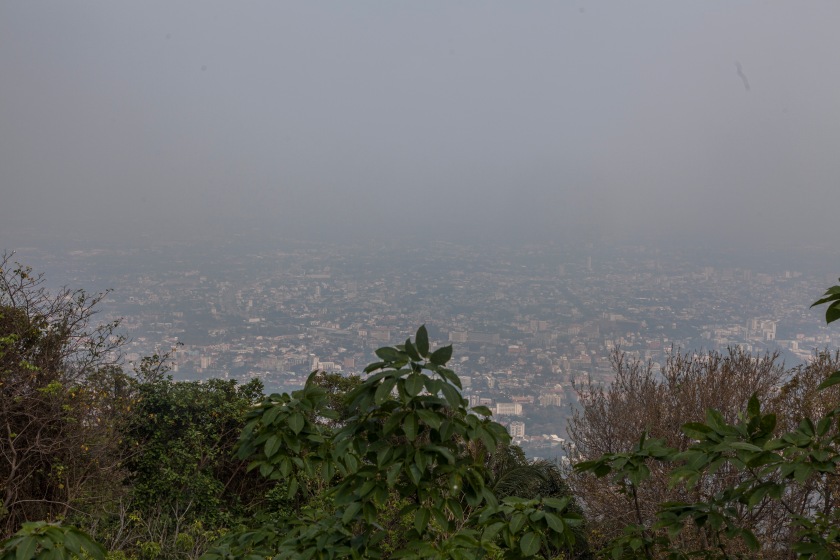
Еще при монастыре находится смотровая площадка с видом на весь Чианг Май, но слишком туманно для того, чтобы что-то можно было разглядеть.

IMG_3636

IMG_3643

IMG_3644

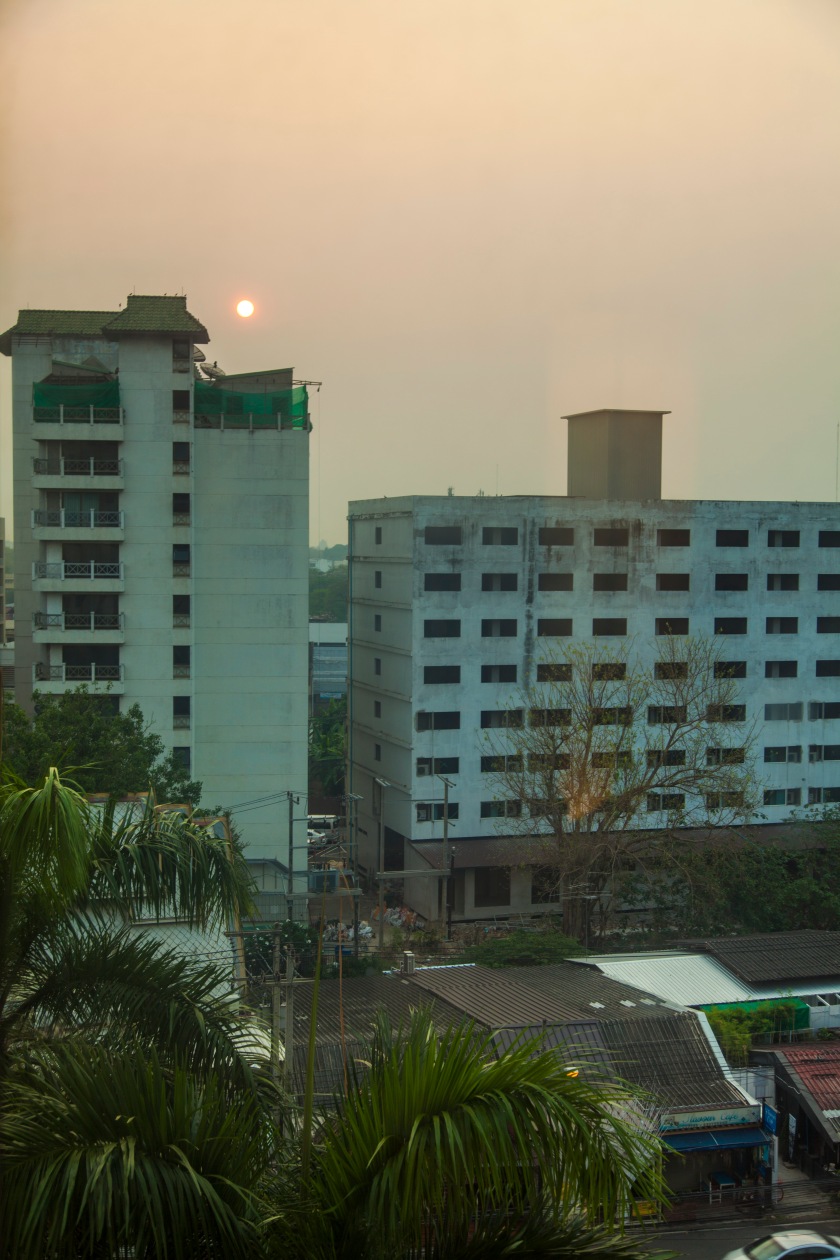
Причем такая туманная дымка в Чианг Мае и в Чианг Рае все время, что мы тут, настолько, что солнце по утрам и ближе к закату выглядит как оранжевый апельсин в небе.

IMG_3579

Вернувшись в отель и распрощавшись с нашим гидом, мы немного отдохнули и направились в массажный салон, который мы заранее выбрали, опираясь на отзывы в интернете, и зарезервировали онлайн. Надо сказать, понравилось меньше, чем в Чианг Рае, хотя тут и слегка дороже.

Для ужина мы облюбовали симпатичный японский ресторан на балкончике на втором этаже, с видом на ночной рынок, сели прямо с краю. Но тут чуть не подпортил дело внезапно пошедший дождь – первый раз за все пребывание в Таиланде! – и пока мы сориентировались, что к чему, места под навесом и приличные места внутри уже оказались заняты, а нам пришлось переместиться внутрь в какой-то угол. К счастью, дождь скоро прекратился, и любезные официантки в очередной раз пересадили нас – обратно на балкон, за прекрасный столик.

cof

Единственное, что скрасило наше сидение за дурацким угловым столом внутри, это забавный эпизод за соседним столом: там сидела девушка, китаянка, и ожидала свой заказ на вынос. Вдруг к ней подошли две женщины в возрасте – возможно, мать и тетя, например – и стали показывать ей какие-то штаны, купленные на ночном рынке, да еще и с таким энтузиазмом и восторгом, размахивая руками и ногами, что мы смотрели на них во все глаза и девушка аж смутилась и попросила их вести себя потише. Вообще редко увидишь такую искреннюю и неподдельную радость, а особенно весело, когда эта радость вызвана двумя парами штанов! 🙂

Posted in Asia, Chiang Mai, English, Thailand

Thailand – Day 6

РУССКОЯЗЫЧНАЯ ВЕРСИЯ ПО ЭТОЙ ССЫЛКЕ. CLICK HERE FOR RUSSIAN VERSION.

23 March 2018

We had our second planned cooking class today in Chiang Mai. In the morning we got picked up from the hotel by the cooking school’s own car, along with the a few more people from two other hotels.

Once we arrived at the school, it took us a while to understand what was going on – for some reason we were seated at a table, while our fellow car travelers were left to wait at the entrance, and then were put on a different car together with another group of newcomers and taken somewhere. Only after seeing the school’s advertising leaflet, we realised that they were offering classes both here, at the school, and on a farm, and apparently those guys had booked a farm class.

IMG_3581

Eventually, our group was formed – apart from us, it consisted of a French couple and two different companies of Americans. We were then given the menu. Here the concept was slightly different from what we saw in Bangkok. Out of seven categories of dishes, we were supposed to cook five on our half-day class, and three of them – curry paste, curry and spring rolls – were pre-selected for us, so our group had to agree and choose two more out of the remaining four. We chose stir-fry and dessert, and did not choose soup and salad. And then, everyone could individually pick their own dish from each chosen category. For example, I chose hot basil stir fried chicken (many went for pad thai, but we had already made that in Bangkok); a local kind of curry called khaw soi and the respective curry paste; bananas in coconut milk for dessert; and as for spring rolls, there was only one variety.

cof

The school has its own vegetable garden, and we went there to see and smell the ingredients frequently used in Thai cuisine: green onions, leeks, lemongrass, kaffir lime leaves, various kinds of basil, roots of ginger, galangal, turmeric and ginseng.

IMG_3583

IMG_3585

Then we walked all the way to the local market, passing by very interesting places with guest house and cafes, apparently for backpackers and other budget tourists.

IMG_3588

IMG_3593

IMG_3596

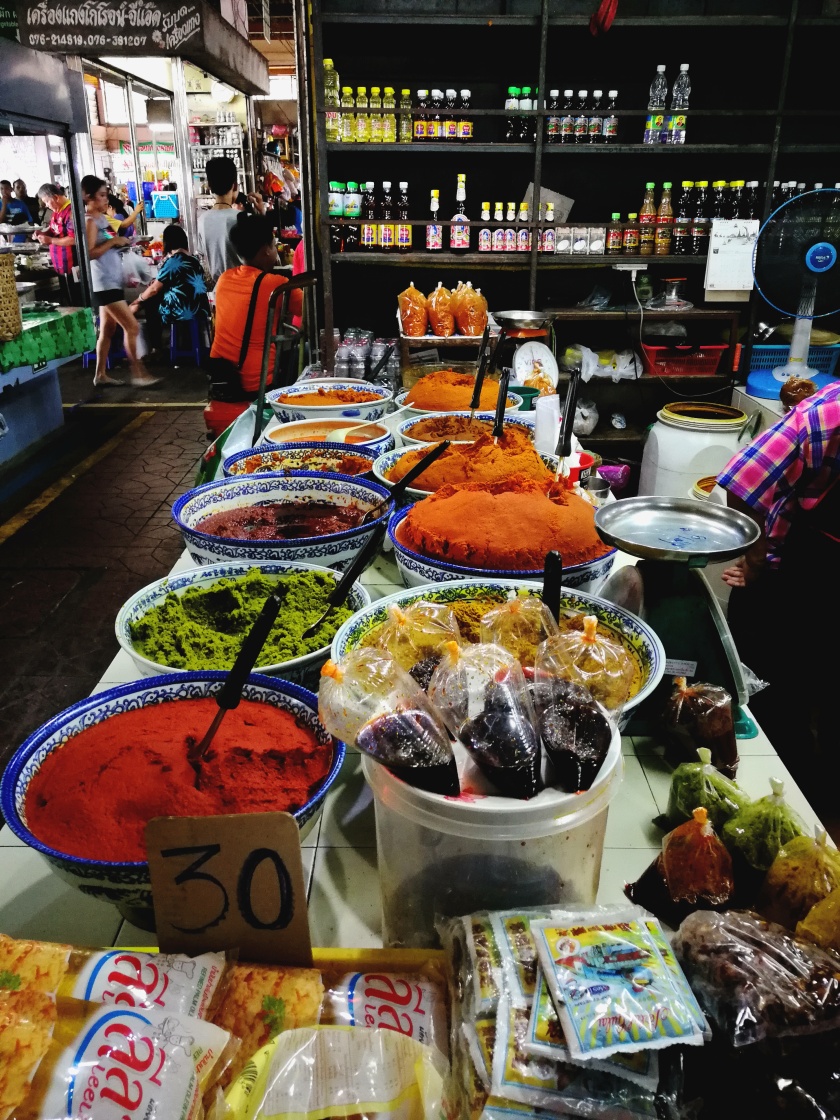
At the market, our instructor named Da showed us different spices, ready-made curry pastes, various kinds of noodles and rice. Here I found both a short-term and a long-term solution to my problem of the lack of vital ingerdients back home – and bought a pack of dried ingredients for tom yum soup, as well as kaffir lime seeds.

IMG_3591

And then we came back to the cooking school and got down to business. I must say, here we were given more independence and almost made everything by ourselves. By the way, before we started cooking, we were given a snack – leaves, in which we had to wrap peanuts, small pieces of ginger, onion, chili, roasted coconut, and add a spoonful of sweet sauce. Then everyone had to say ‘chok dee’ – which kind of means ‘good luck’ – and, however funny it may seem, toast each other by “clinking” the little wraps before putting them in our mouths.

The stir fries, as usual, were very quick and easy to make, and I got some pre-cooked rice to go with mine.

cof

cof

Then, two volunteers were chosen from the group, and they made a slightly larger portion of a somewhat generic stir fry, for the spring roll filling. And everyone had to wrap the desired amount of this filling in a provided pancake and deep fry their spring roll.

cof

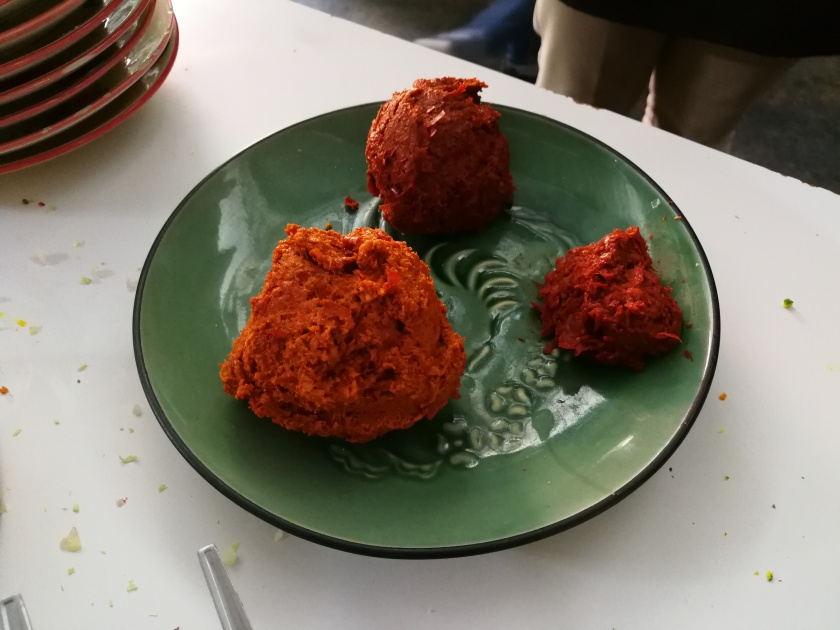
After that, we made the curry paste. It turned out that no one chose green curry, and for all the others – red curry, panang curry, khaw soi and massaman curry (nobody chose the last one either) – the base paste is exactly the same, with several different ingredients added later on.

cof

cof

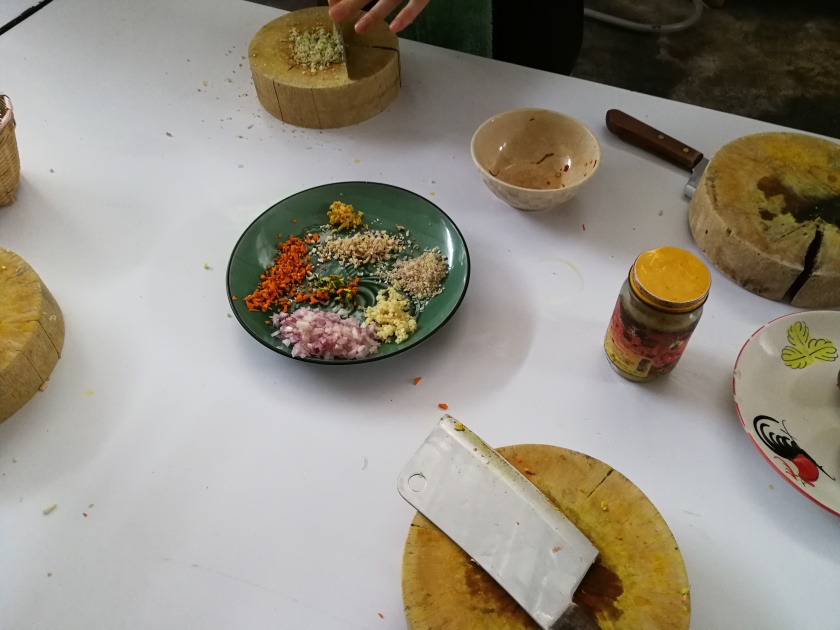
What goes into red curry paste is the following: pre-soaked dried chili peppers, garlic, turmeric, ginseng, kaffir lime zest and lemongrass. And then you would need to add dried curry powder to make khaw soi paste or crushed peanuts for panang curry paste.

cof

By the way, red curry itself is made just like green curry – i.e. with Thai eggplants and basil in addition to meat, curry paste, sauces and coconut milk. As for panang curry and khaw soi, they are made without the vegetables. My khaw soi was more liquid than the other curries and had to be served with noodles rather than rice. As I understood, that’s exactly what we ate and took for noodle soup in that roadside eatery the day before yesterday. I even added an extra spoonful of curry paste, since it wasn’t spicy enough!

cof

At some point between making the curry paste and the curry itself, we somehow managed to squeeze in the dessert preparation. In my case, this was a simple matter: I just had to boil sliced ​​bananas in coconut milk with sugar. Interestingly, while slicing this kind of bananas, we came across big black seeds which we had to pick out – I had never seen anything like that!

cof

cof

In general, we really liked the Chiang Mai cooking class as well, especially its slightly higher level of complexity after the Bangkok one. There is yet another cooking class awaiting us in Phuket, we have to see what it’s going to be like!

Our guide and driver picked us up at the culinary school, and from there we drove to our last temple in Thailand, planned in the tour programme, on Mount Doi Suthep.

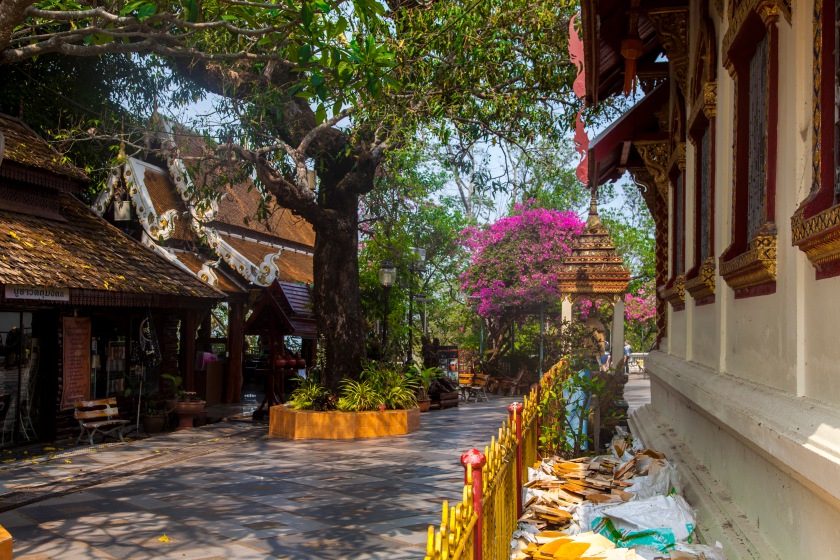
The temple and its surroundings are very croded (as usual, Chinese tourists predominate). To get to the temple itself, one has to walk up 306 stairs in the heat. Fortunately, there is a nice cool breeze atop the mountain.

IMG_3601

IMG_3604

You walk into the temple – the golden shine all around makes your eyes hurt. The view is, of course, magnificent, but interestingly – and we agreed on this with my friend when sharing our impressions of the trip – the temples here don’t give you that sense of peacefull bliss, they seem too pompous for that. However, it’s quite possible that it’s just us being taken to such temples, and that somewhere in the mountains, hidden from the tourist’s eye, there are temples and monasteries where you’d find peace and tranquility and want to meditate. Here, even though there is a meditation corner, you don’t quite feel like using it as intended.

IMG_3610

IMG_3617

IMG_3621

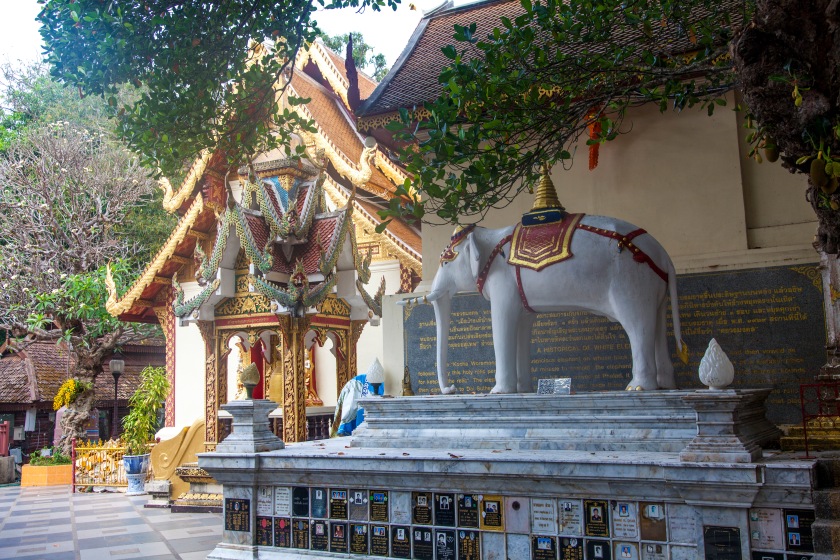
The gilded stupa (or chedi, as they are also called here) in the center of the temple also contains a sacred Buddhist relic – a bone of Lord Buddha – and according to a legend, this relic was loaded on an elephant, which was given an opportunity to pick a spot for the temple, and so the animal came here.

IMG_3606

IMG_3621

IMG_3637

By the way, as I have already said, there are stupas scattered all around Indochina, which have a special symbolic significance for those born in a certain year of the Eastern zodiac. The local stupa is associated with the year of the goat.

There is also an observation deck on the territory of the temple, with a view of entire Chiang Mai, but it’s too foggy to see anything at all.

IMG_3636

IMG_3643

IMG_3644

And we’ve been seeing this foggy haze during all the time of our stay both in Chiang Mai and in Chiang Rai, to the extent that in the morning and closer to the sunset the sun looks like an orange tangerine in the sky.

IMG_3579

Once back at our hotel and having said goodbye to our guide, we rested for a bit and headed out to a massage parlor, which we had found based on Internet reviews and booked online. I must say, I liked it less than the one in Chiang Rai, although it was slightly more expensive.

For dinner, we chose a nice Japanese restaurant with a terrace on the second floor and a view over the night market, and sat down outside. But then the whole dinner nearly got ruined by a sudden rain – our first one in Thailand! – and while we waited to see whether it would stop quickly, all the outdoors tables under the canopy and decent tables inside were already occupied, so we had to sit at some tiny table in the corner inside. Luckily, the rain soon stopped and the waitresses kindly moved us back to a lovely table on the terrace.

cof

The only thing that brightened our time at the stupid corner table inside, was a funny episode at the next table: there was a young Chinese lady sitting there and waiting for her take-away. Suddenly, two older women approached her – perhaps, her mother and aunt, for example – and started showing her some harem pants they bought at the night market, with such delight and enthusiasm, almost jumping up and down with excitement, that we couldn’t help staring at them which made the younger woman quite embarassed, so she asked them to behave more quietly. I have to say, it’s not very often that you see such sincere and genuine joy, let alone when it’s caused by two pairs of pants! 🙂

Posted in Asia, Chiang Mai, English, Thailand

Thailand – Day 5

РУССКОЯЗЫЧНАЯ ВЕРСИЯ ПО ЭТОЙ ССЫЛКЕ. CLICK HERE FOR RUSSIAN VERSION.

22 March 2018

And once again we had to forget about our sundresses and put on our elephant harem pants purchased in Bangkok, as pretty much the whole of today is dedicated to temples in Chiang Rai and its environs.

In general, there are lots and lots of temples in Thailand, people seem much more religious than, for example, in Vietnam or China, and it’s much more common to see monks everywhere. That’s quite understandable – the country hasn’t been colonised recently, it has no communist past or present, so obviously, religion hasn’t been historically oppressed. And by the way, Buddhism here seems to contain elements of Hinduism.

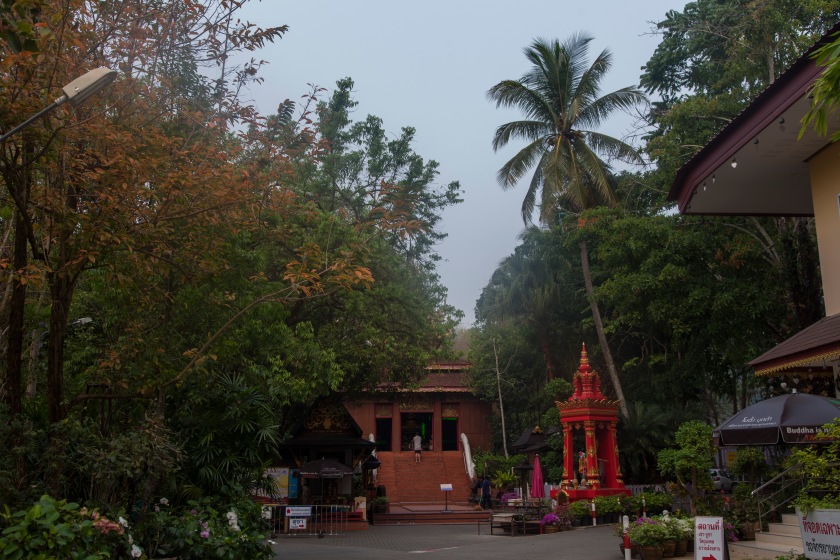
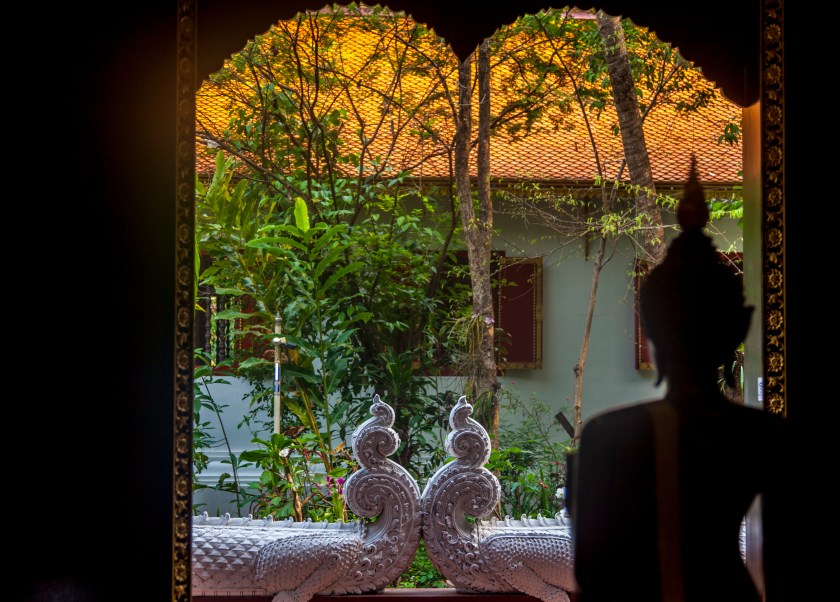
The first temple we went to was Wat Phra Singh, founded in the 14th century. The name of this temple comes from the golden Buddha image, almost as famous (and as ‘well-traveled’) as the Emerald Buddha. Our guide Dino said that the temple’s architecture is in Burmese style.

IMG_3464

IMG_3471

IMG_3474

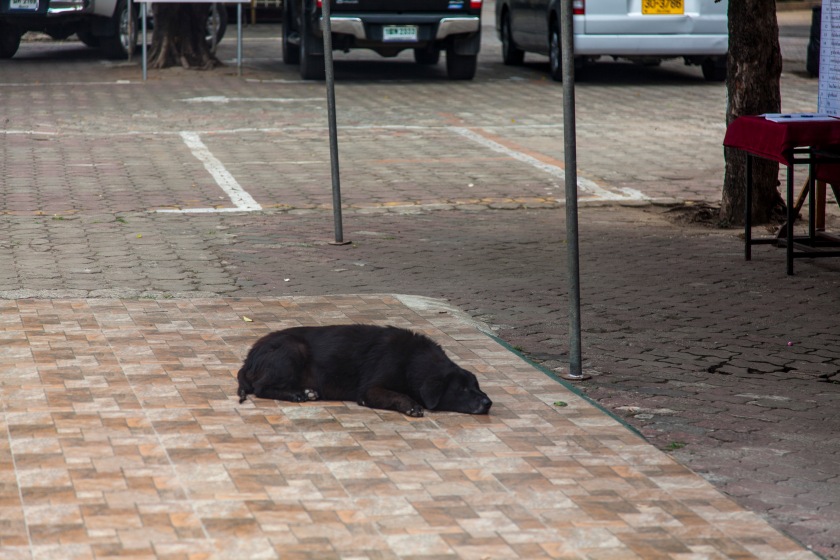
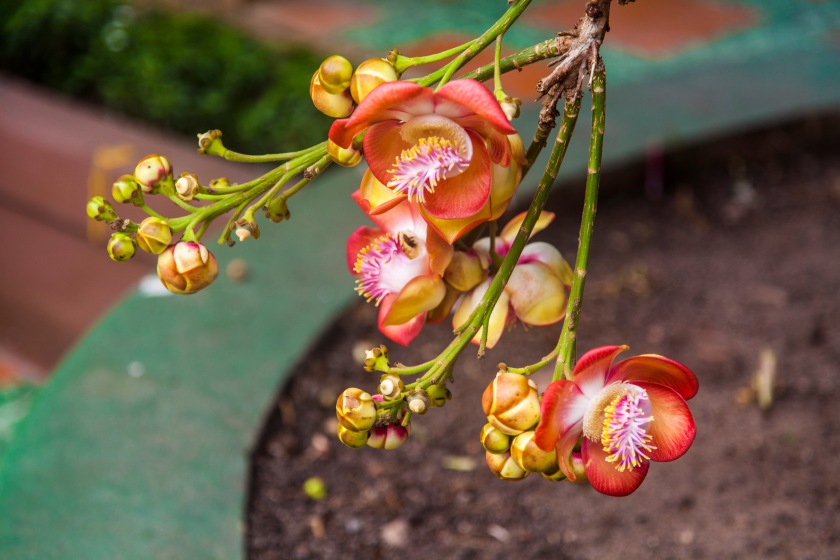
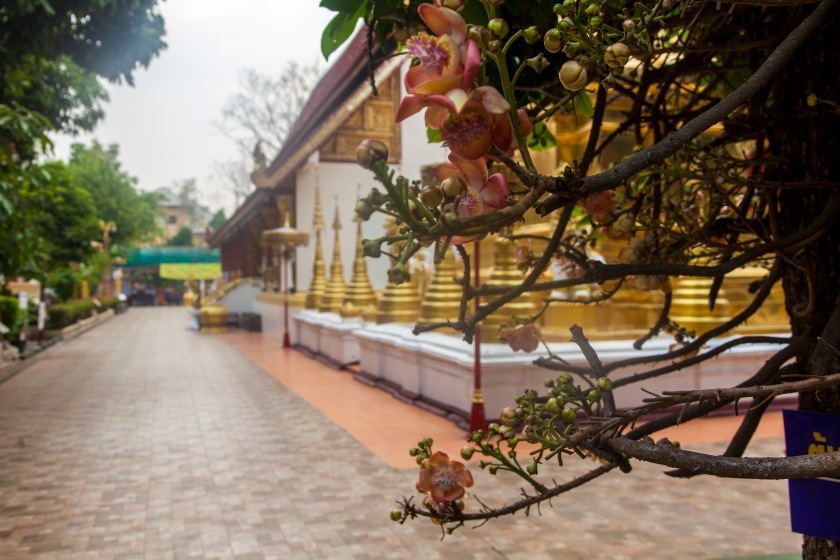
What was specifically remarkable about this temple is the large number of stray dogs that are fed here, apparently with rice, given their state of utter apathy; and sal trees, sacred to Buddhists, with large and very fragrant flowers.

IMG_3472

IMG_3481

IMG_3483

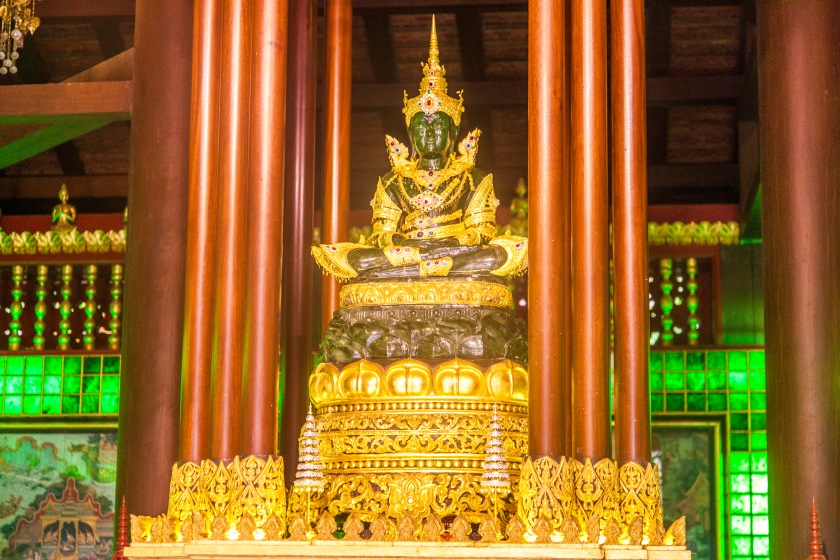
From here we headed to another temple – Wat Phra Keo, or the temple of the Emerald Buddha. Yes, yes, it has the same name as the one we saw in Bangkok. The temple is very old and was originally called something else, but in the 15th century, it was here, among the wreckage of a stupa split by a thunderbolt, that the Emerald Buddha statue, believed to be of divine origin, was found. Since the 18th century and up to this day, the statue is in Bangkok, just where we saw it, but before that it traveled a lot around the territories of Thailand, Laos, Myanmar and Cambodia. Dino talked about the statue’s displacements in the most thorough details – who and when took/stole it, who robbed whom etc. – but we didn’t even try to memorise all this, especially since he wasn’t the most interesting narrator ever…

IMG_3488

IMG_3521

The Chiang Rai temple currently has a jade replica of the Emerald Buddha (in fact, as you may remember, the original one is also made of jade) but at least, unlike in Bangkok, you can photograph it.

IMG_3512

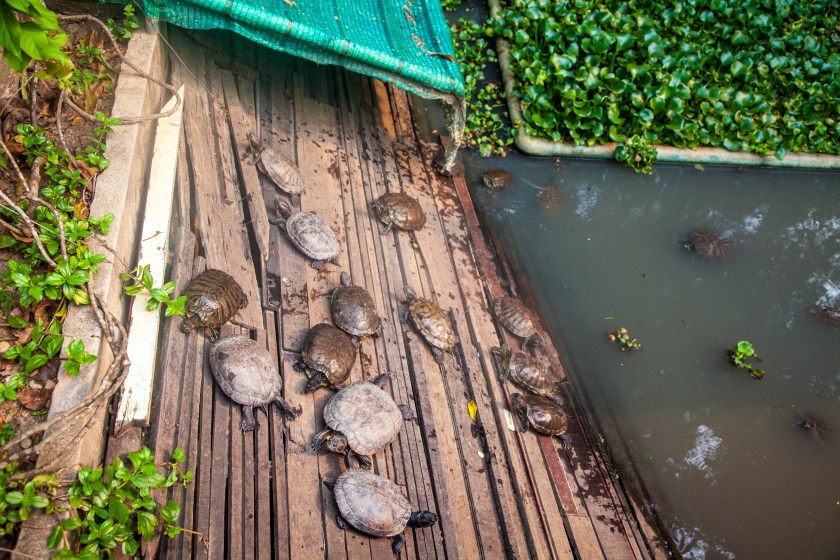
Right here, on the territory of the temple, we noticed a pond with turtles and spent quite a while watching one particular small, but proud turtle trying to crawl towards the fence, walking on the heads of its fellow turtles.

IMG_3508

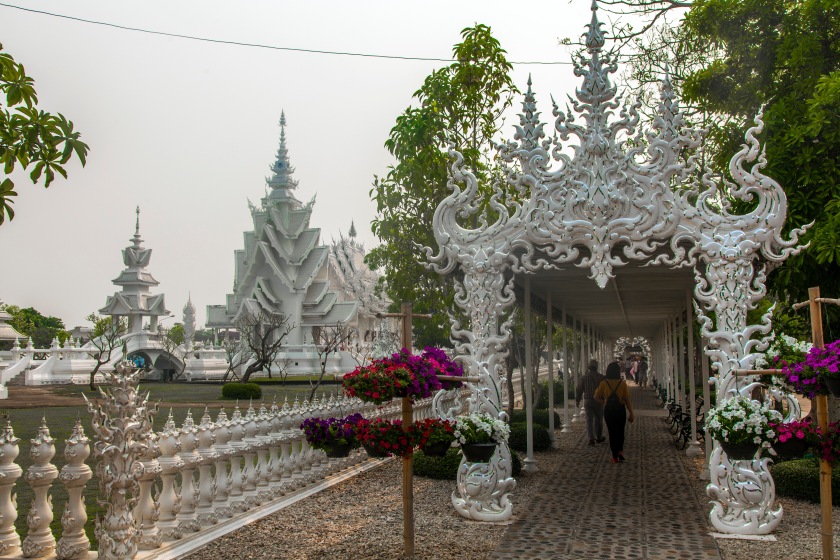
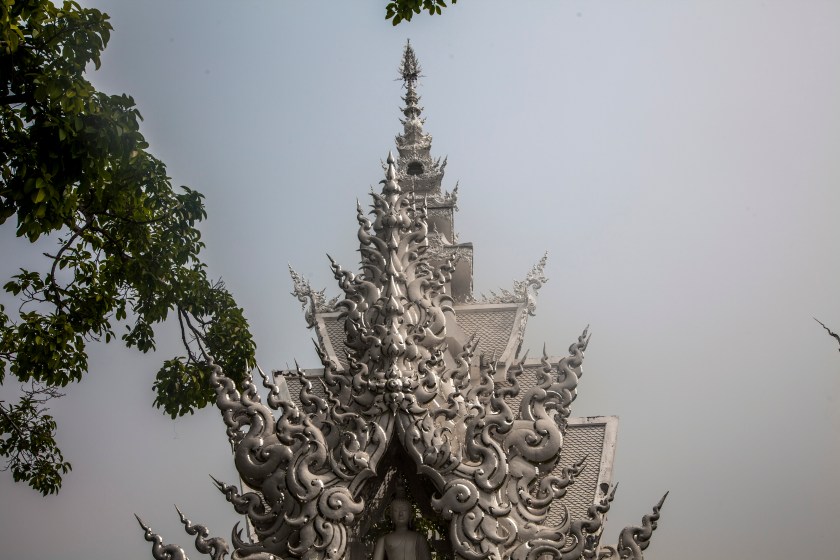
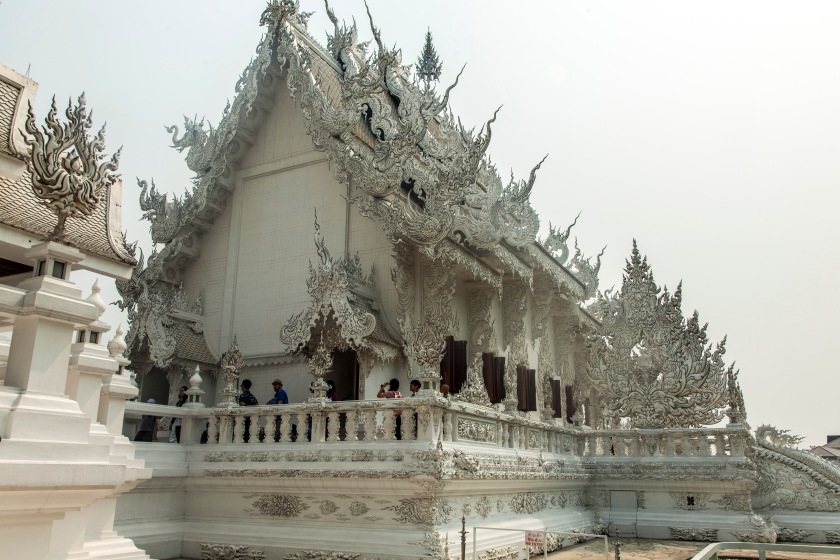
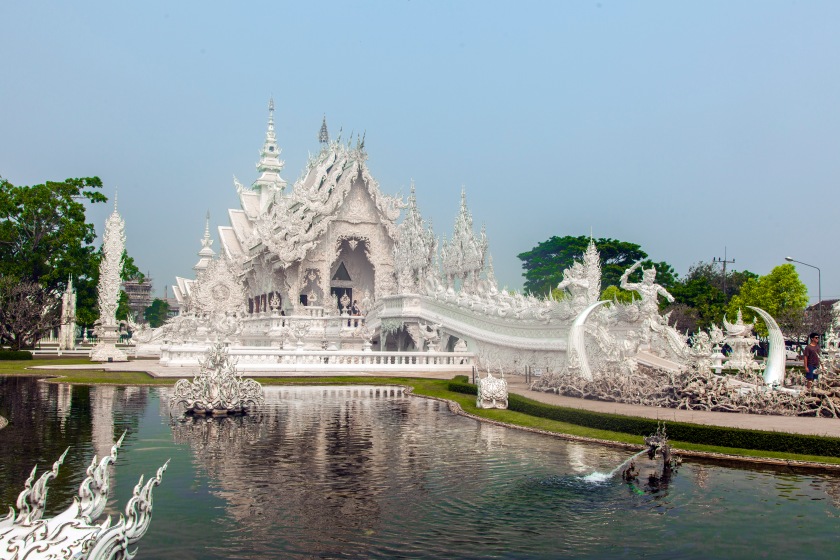
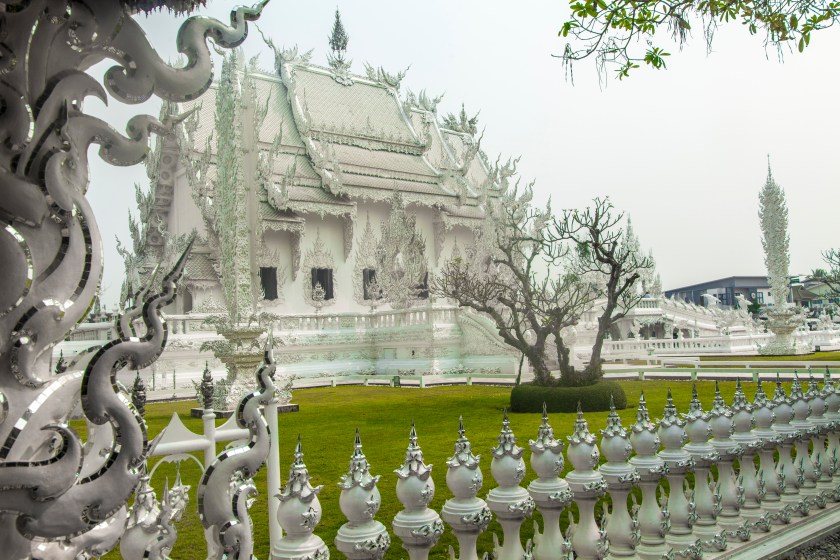
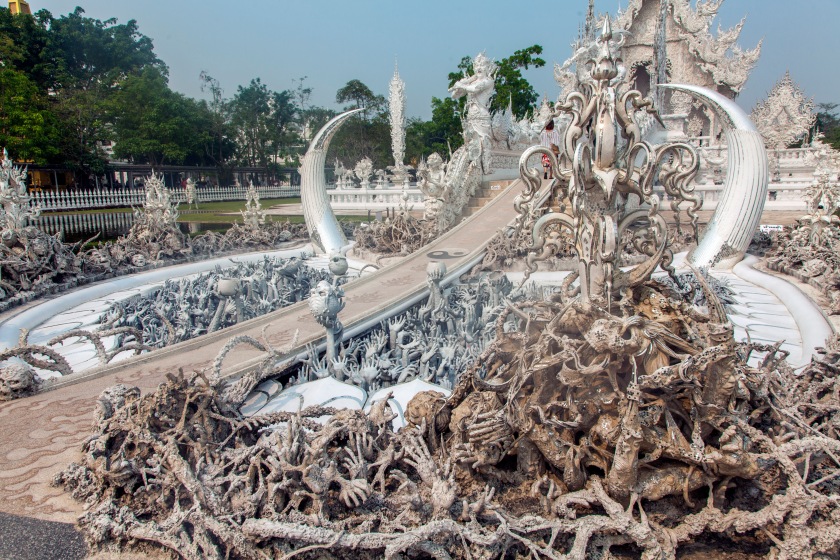
The third temple we saw was really the best – it was the White temple, very beautiful and unusual. It’s quite new, having been built in 1997, and in fact I would rather call it a modern art exhibit in the style of a Buddhist Temple.

IMG_3533

IMG_3563

IMG_3560

The white colour represents spiritual purity.

IMG_3555

IMG_3564

To get into the temple itself, one has to walk along a bridge past the “hands of sinners” sticking out of the earth – very symbolic.

IMG_3556

Right next to the temple there’s a museum containing paintings by Chalermchai Kositpipat – the artist who built this temple with his own money. The paintings are quite interesting, many depict paradise with different buildings in the same style as the White Temple, or mythological animals.

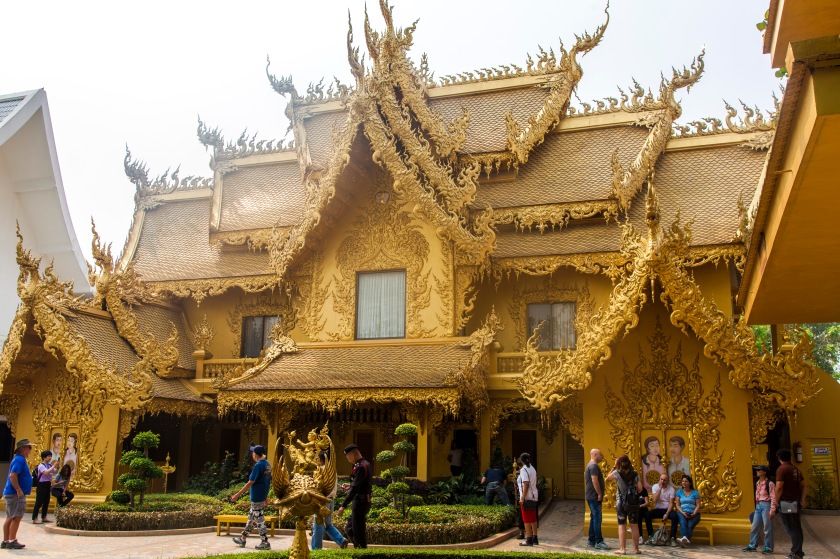
The gorgeous gilded building on the territory of the temple is nothing more than the ‘happy room’ (or rather a whole happy palace!), that is, a toilet.

IMG_3566

Fortunately for us, the thickest crowds of tourists started arriving just as we were leaving – most probably from Chiang Mai – so we were really lucky to walk around and take pictures without them.

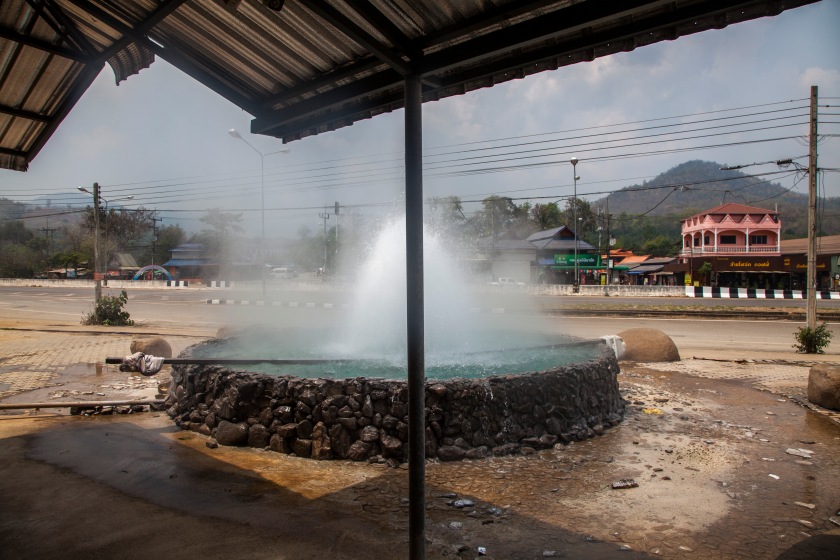
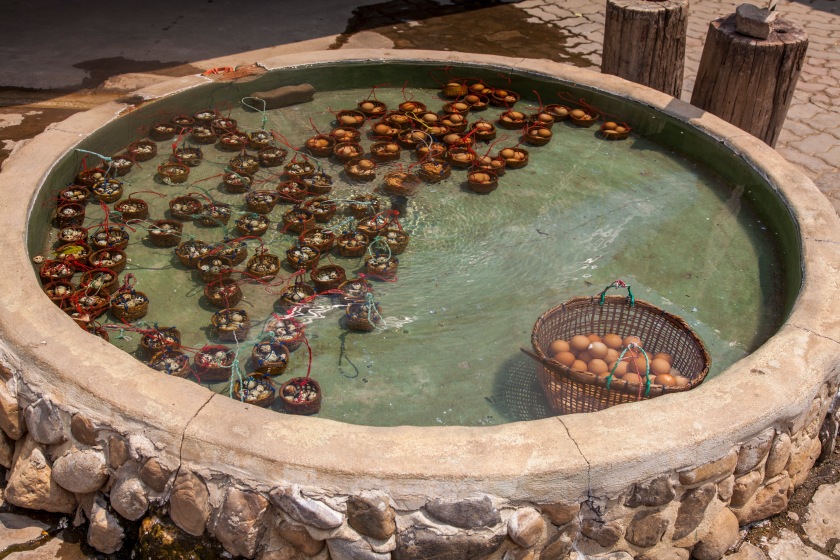
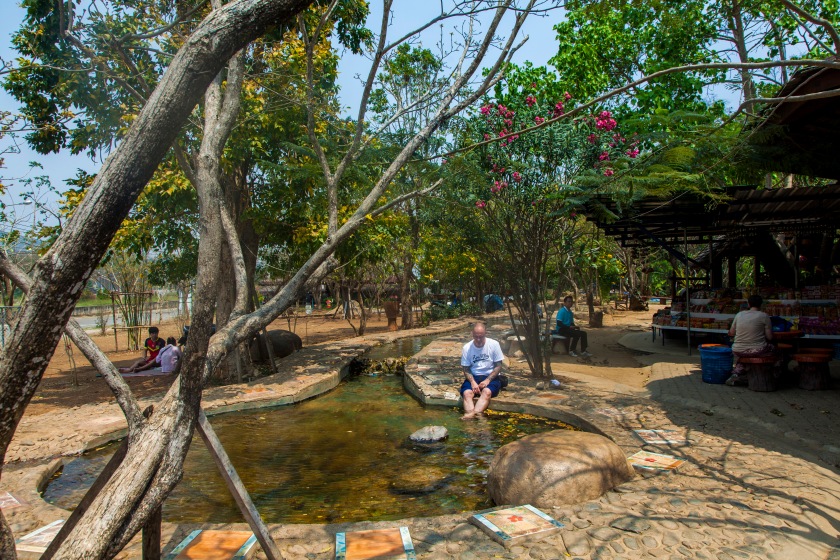
The White Temple was our last stop before we drove off to Chiang Mai – we had already checked out from our Chiang Rai hotel this morning and loaded our suitcases in the car. We stopped on our way for lunch, again in a cheap roadside cafe, with a hot spring next to it. In one fenced well, the water was boiling and bubbling up, another one was used for cooking eggs, and there was also a bigger section of the spring which was cool enough to put one’s legs into it, which is supposedly very good for health. Some people managed to sit knee-deep in the water, but I was barely able to dip my feet for a couple of seconds, as the water was very hot – around 50 degrees Celsius – the exact opposite situation of yesterday’s pool visit in Chiang Rai!
IMG_3572

IMG_3574

IMG_3575

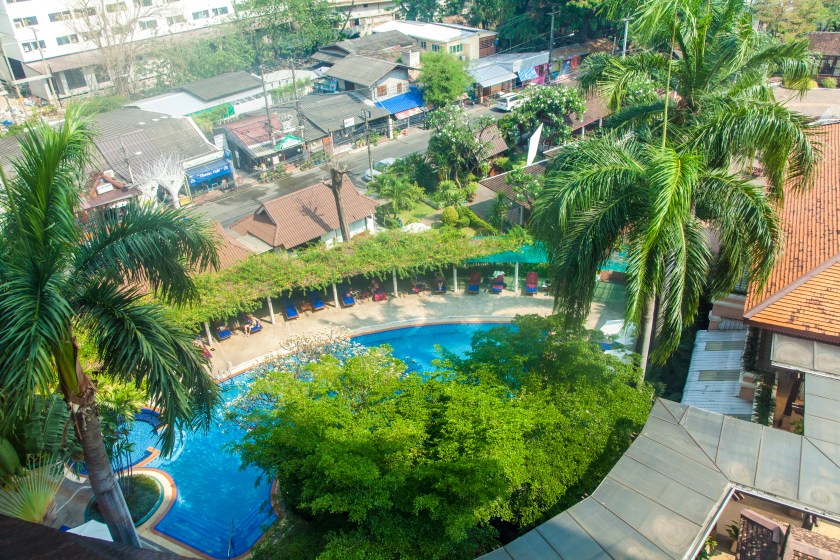
We arrived at our hotel in Chiang Mai at about 3pm. The hotel is located next to the night market, so there are lots of market stalls, massage parlours and bars around.

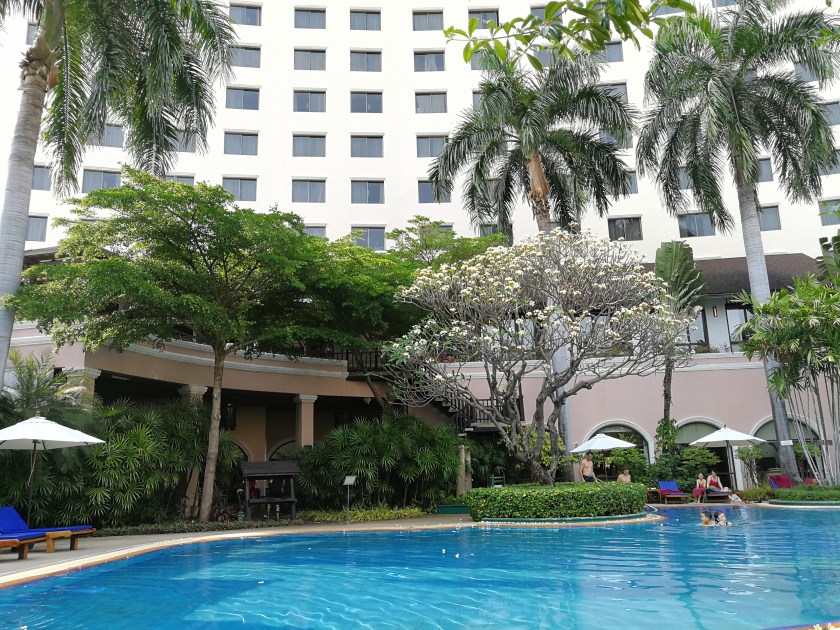
The hotel has two excellent swimming pools, and this time we had better luck and managed to take a dip. And we knew right away that we’d be more lucky – unlike in Chiang Rai, the poolside area was full of people.

IMG_3577

cof

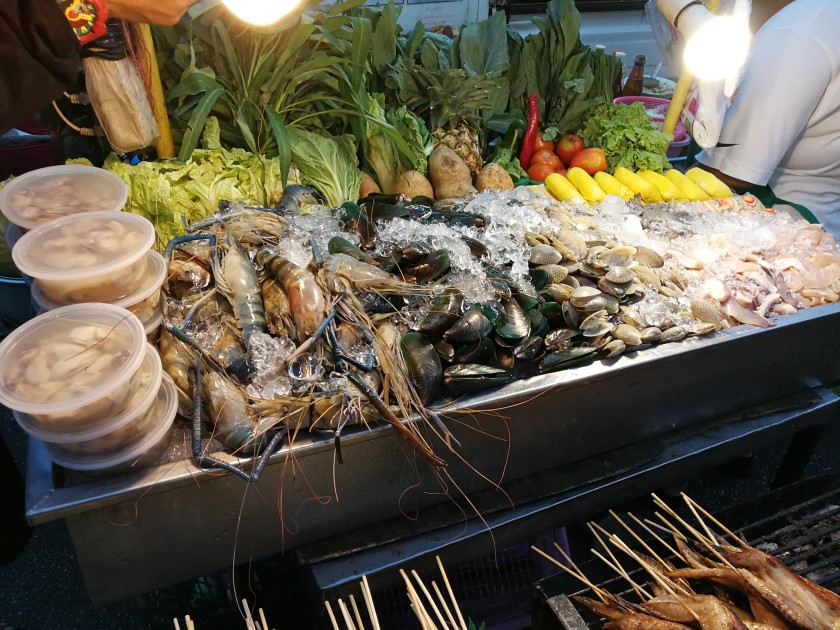
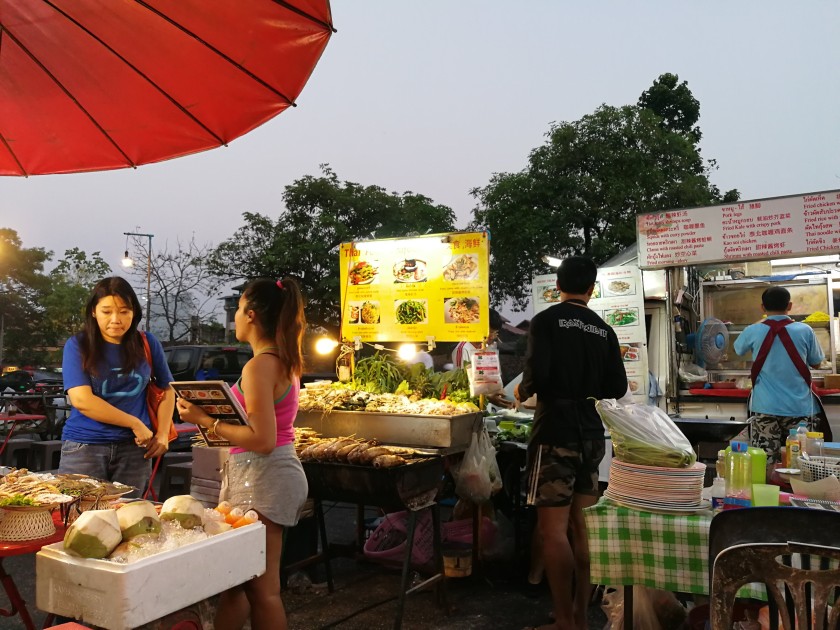
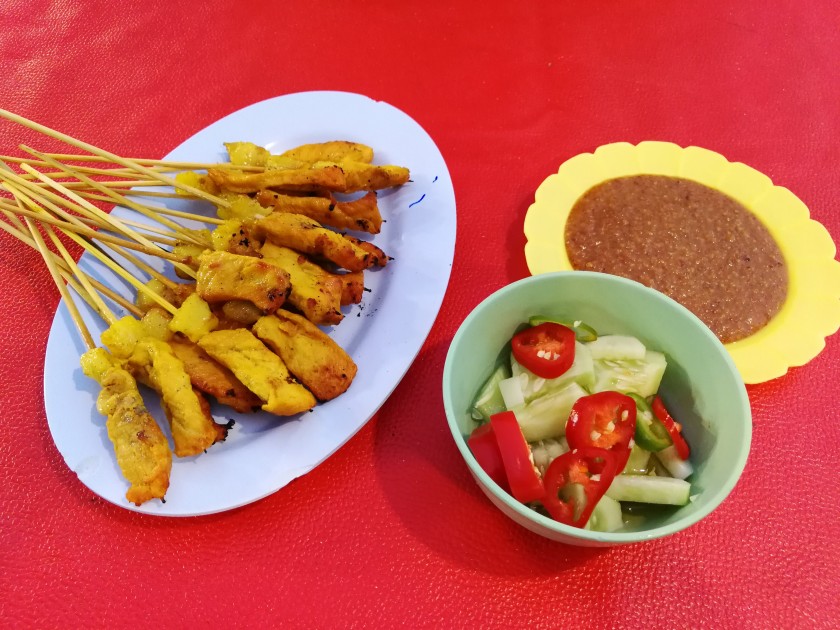
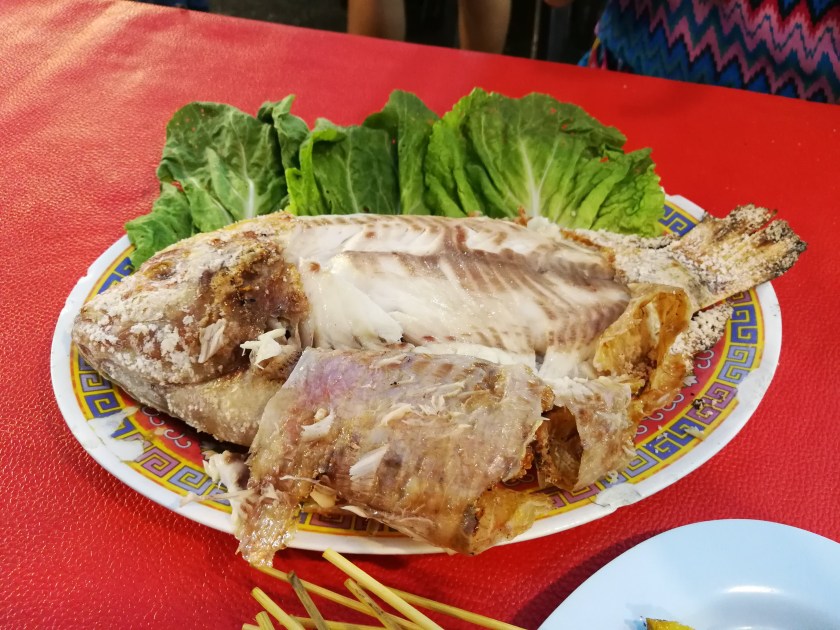
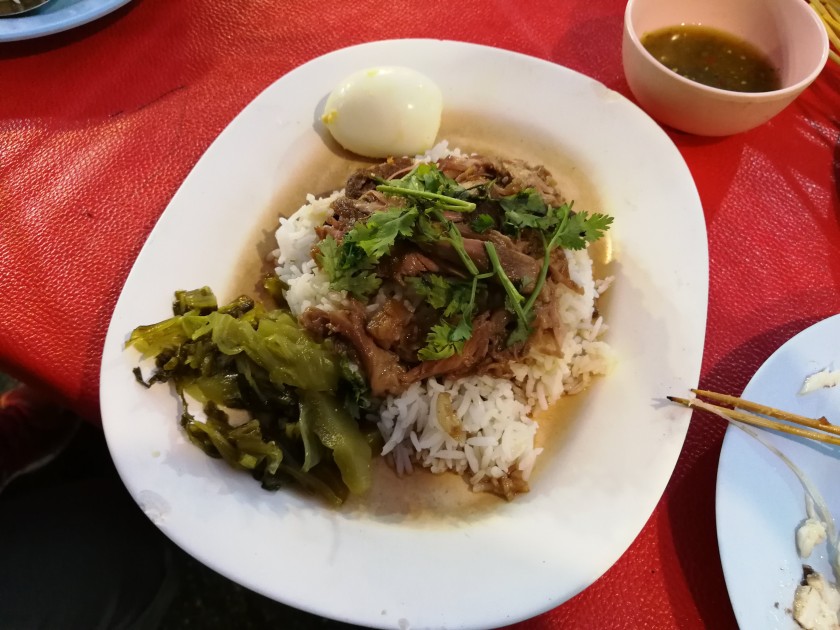
Our tour programme for the evening included a trip to the street food market and dinner right there. We tried pork satay (i.e. pork skewers) with peanut sauce, snapper fish in salt and some pork dish with rice. It was quite tasty, although not necessarily much cheaper than in a restaurant.

cof

cof

cof

cof

cof

On the way back to the hotel our guide Dino took a longer route so that we could walk around the Old Town, which we didn’t enjoy much – there was little to see in the dark, plus we wanted to rest a bit and enjoy some guide-less time.

Once we said goodbye to him, we went for a drink at one of the bars near the hotel, but left very quickly – the place seemed a bit dodgy, with a few foreign men and a lot of half-naked local women (if they were all women, of course), rushing with open arms towards every white man in sight trying to lure him into the bar. It seems that all the bars around are like that, and many are even completely empty, except for the stacks of women waiting at the entrance.

Posted in Азия, Русский, Таиланд, Чианг Май

Таиланд – День 5

CLICK HERE FOR ENGLISH VERSION. АНГЛОЯЗЫЧНАЯ ВЕРСИЯ ПО ЭТОЙ ССЫЛКЕ.

22 марта 2018

И снова пришлось забыть про открытые сарафанчики и облачиться в купленные в Бангкоке шаровары – практически весь сегодняшний день посвящен храмам в Чианг Рае и его окрестностях.

Вообще различных храмов в Таиланде великое множество, люди кажутся гораздо более религиозными, чем например во Вьетнаме или Китае, и монахи встречаются гораздо чаще. Оно и понятно – страну в ближайшем прошлом никто не колонизировал, коммунистического прошлого и настоящего у нее нет, так что религию явно никто не притеснял. А еще, буддизм тут с элементами индуизма.

Первый храм, куда мы поехали, это Ват Пхра Сингх, основанный в XIV веке. Имя этого храма происходит от золотой статуи Будды, почти такой же известной, как Изумрудный Будда, и столько же путешествовавшей. Наш гид Дино рассказал, что архитектура храма выполнена в бирманском стиле.

IMG_3464

IMG_3471

IMG_3474

Чем особенно запомнился храм, так это большим количеством бездомных собак, которых тут кормят, явно рисом, отчего они находятся в состоянии полной апатии, и священными для буддистов деревьями сала, с большими и очень ароматными цветами.

IMG_3472

IMG_3481

IMG_3483

Отсюда мы отправились в другой храм – Ват Пхра Кео, он же храм Изумрудного Будды. Да-да, он называется так же, как тот, который мы видели в Бангкоке. Храм очень старый и изначально назывался как-то иначе, но именно тут среди обломков ступы, расколотой ударом молнии, и была в XV веке обнаружена статуя Изумрудного Будды, которая по поверию имеет божественное происхождение. С XVII века и по сей день статуя находится в Бангкоке, где мы ее и видели, а до того она очень много путешествовала по территории Таиланда, Лаоса, Мьянмы и Камбоджи. Дино даже рассказывал подробно обо всех перипетиях ее перемещения – кто и когда ее вывез, украл, кого ограбил и т.д. – но мы даже не пытались запомнить все это, тем более, что рассказывал он не слишком интересно…

IMG_3488

IMG_3521

В чианграйском храме в данный момент находится копия Изумрудного Будды из нефрита (собственно, и оригинал, как вы помните, из него же), зато ее можно фотографировать, чего нельзя было делать в Бангкоке.

IMG_3512

Тут же, на территории храма, мы заметили пруд с черепахами и некоторое время наблюдали как одна маленькая, но гордая птичка черепаха все пыталась ползти куда-то наверх к ограде по головам своих соплеменников.

IMG_3508

А третий храм понравился больше всего – этот Белый храм, очень красивый и необычный. Он совсем новый – построен в 1997г, и по сути даже скорее представляет собой выставку современного искусства в стиле храма.

IMG_3533

IMG_3563

IMG_3560

Белый цвет олицетворяет духовную чистоту.

IMG_3555

IMG_3564

Чтобы попасть в сам храм, надо пройти по мостику мимо “рук грешников”, торчащих из земли – очень символично.

IMG_3556

Тут же рядом музей картин художника Чалермчая Коситпипата – того, который на свои деньги и построил этот храм. Картины довольно интересные, многие изображают рай с различными строениями в том же стиле, как и сам храм, либо мифологических животных.

Шикарное золоченое здание на территории храма – это не что иное как “комната (а точнее, целый дворец!) счастья”, то бишь туалет.

IMG_3566

На наше счастье, толпы туристов подъехали как раз когда мы уже уходили – судя по всему, из Чианг Мая – так что удалось погулять и пофотографироваться без них.

А вот мы отсюда как раз выехали в Чианг Май – чемоданы в машину были погружены еще с утра. Остановились по дороге пообедать, снова в дешевой придорожной кафешке при горячем источнике. В одном огороженном колодце вода прямо бурлила и кипела, в другом варились яйца, а еще в одну секцию источника можно было погружать ноги, якобы очень полезно. Некоторые ухитрялись сидеть по колено в воде, но мне едва удавалось окунуть ступни на пару секунд, очень горячо – градусов 50 – полная противоположность вчерашнему чианграйскому бассейну!

IMG_3572

IMG_3574

IMG_3575

Добрались мы до отеля в Чианг Мае часа в три, расположен отель у ночного базара, вокруг барахолка, множество баров и массажных салонов.

В отеле два прекрасных бассейна, и на этот раз удалось выкупаться. И сразу было понятно, что удастся – в отличие от чианграйского бассейна, в этом было полно народу.

IMG_3577

cof

На вечер у нас был по программе заплкнирован поход на рынок уличной еды с поеданием оной. Мы попробовали свиной сатай (шашлычки на шпажках) с арахисовым соусом, рыбу снеппер в соли и какое-то блюдо из свинины с рисом. Было вкусно, хотя не сказать, что значительно дешевле, чем было бы в ресторане.

cof

cof

cof

cof

cof

На пути обратно в отель гид Дино сделал круг, чтобы мы могли прогуляться по Старому городу, чем не доставил нам огромного удовольствия – в темноте мало что видно и понятно, хотелось уже отдохнуть и вообще уже распрощаться с ним.

Как только нам это удалось, мы зашли выпить по коктейлю в один из баров около отеля, но ушли очень быстро – заведение показалось левеньким, с некоторым количеством мужчин-иностранцев и большим количеством полуголых местных женщин (если они все были женщинами, конечно), кидающихся с распростертыми объятиями на каждого проходящего мимо белого мужчину и пытающихся завлечь его в бар. Кажется, все бары вокруг такие же, многие вообще пустуют за исключением стаек женщин, ожидающих у входа.