All Posts

Posted in Asia, English, Singapore

Food in Singapore (bonus post)

РУССКОЯЗЫЧНАЯ ВЕРСИЯ ПО ЭТОЙ ССЫЛКЕ. CLICK HERE FOR RUSSIAN VERSION.

If you have read my previous posts about Singapore, you might remember that I was mentioning the idea to write a separate gastronomic one, where I would describe the stuff I’d been eating during the trip (and other stuff which I had only seen but not necessarily eaten). Those who enjoy food as much as I do will hopefully appreciate.

So, on our first day in Singapore we ended up at the Paragon shopping mall, which, as pretty much everywhere here, had an extensive food court. It seemed logical to actually start the acquaintance with the food in Singapore with a Singaporean cuisine restaurant. There was one here – the Grandma’s restaurant was proudly proclaiming its authenticity.
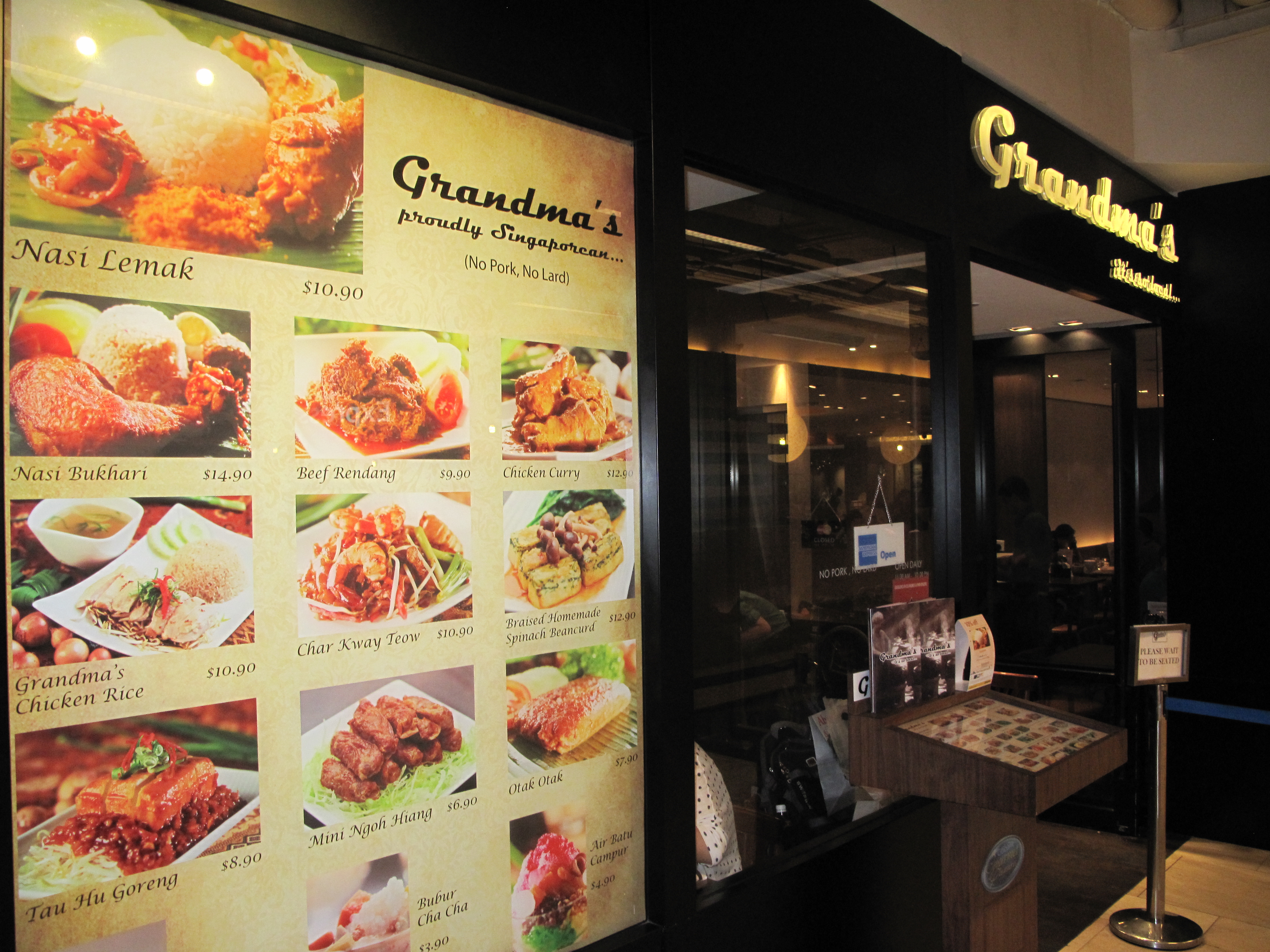
IMG_1501

The Singaporean cuisine is represented by a large variety of dishes of different origins, which is not a bit surprising given such a diverse ethnic composition of the population. The whole concept of the “Singaporean cuisine” is a kind of mix of Chinese and Malay/Indonesian cuisines, with influences from other Asian and even European cuisines.

The very first thing I ordered was fried red snapper, which I really like – and it was indeed delicious!
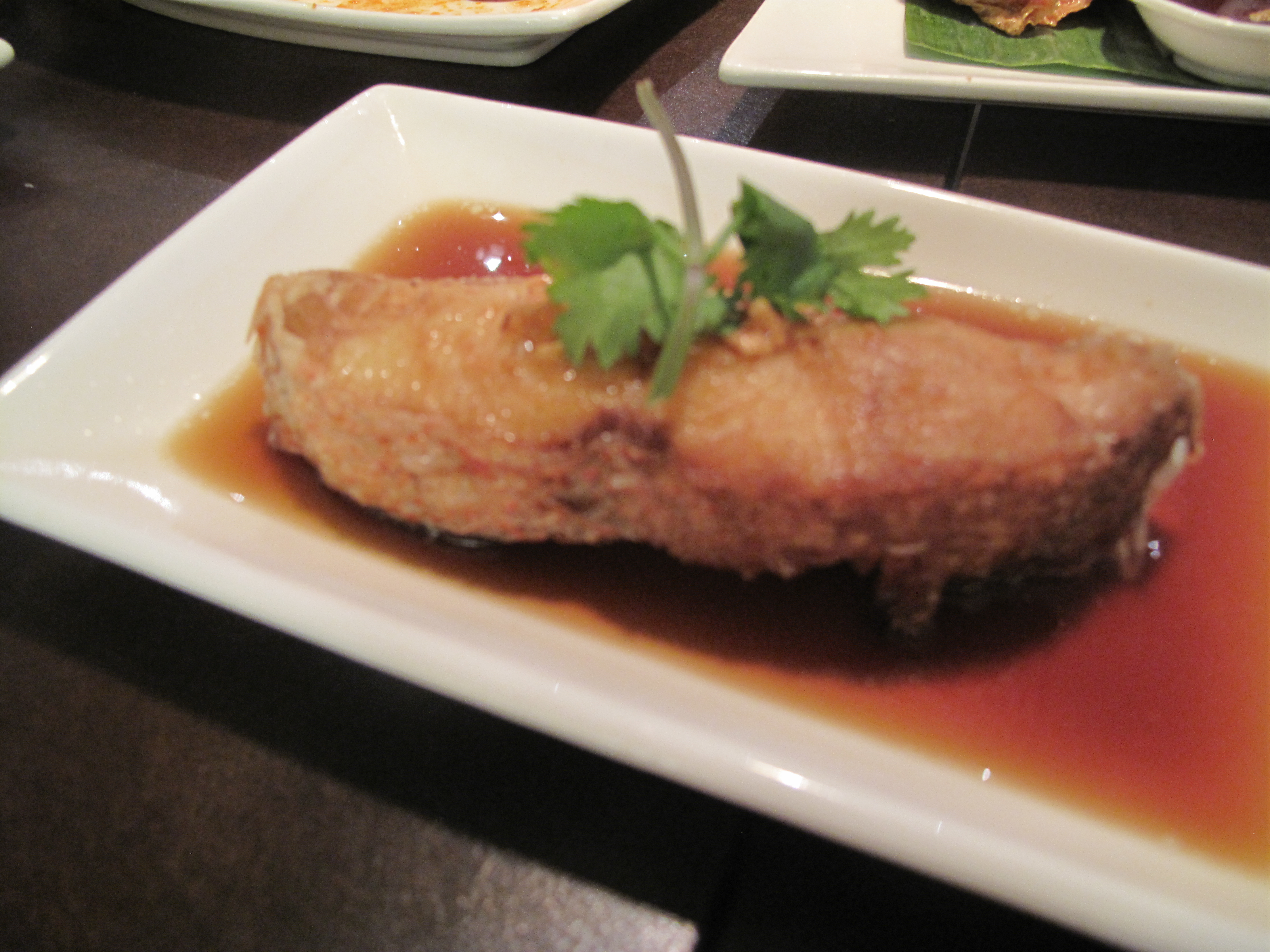
IMG_1498

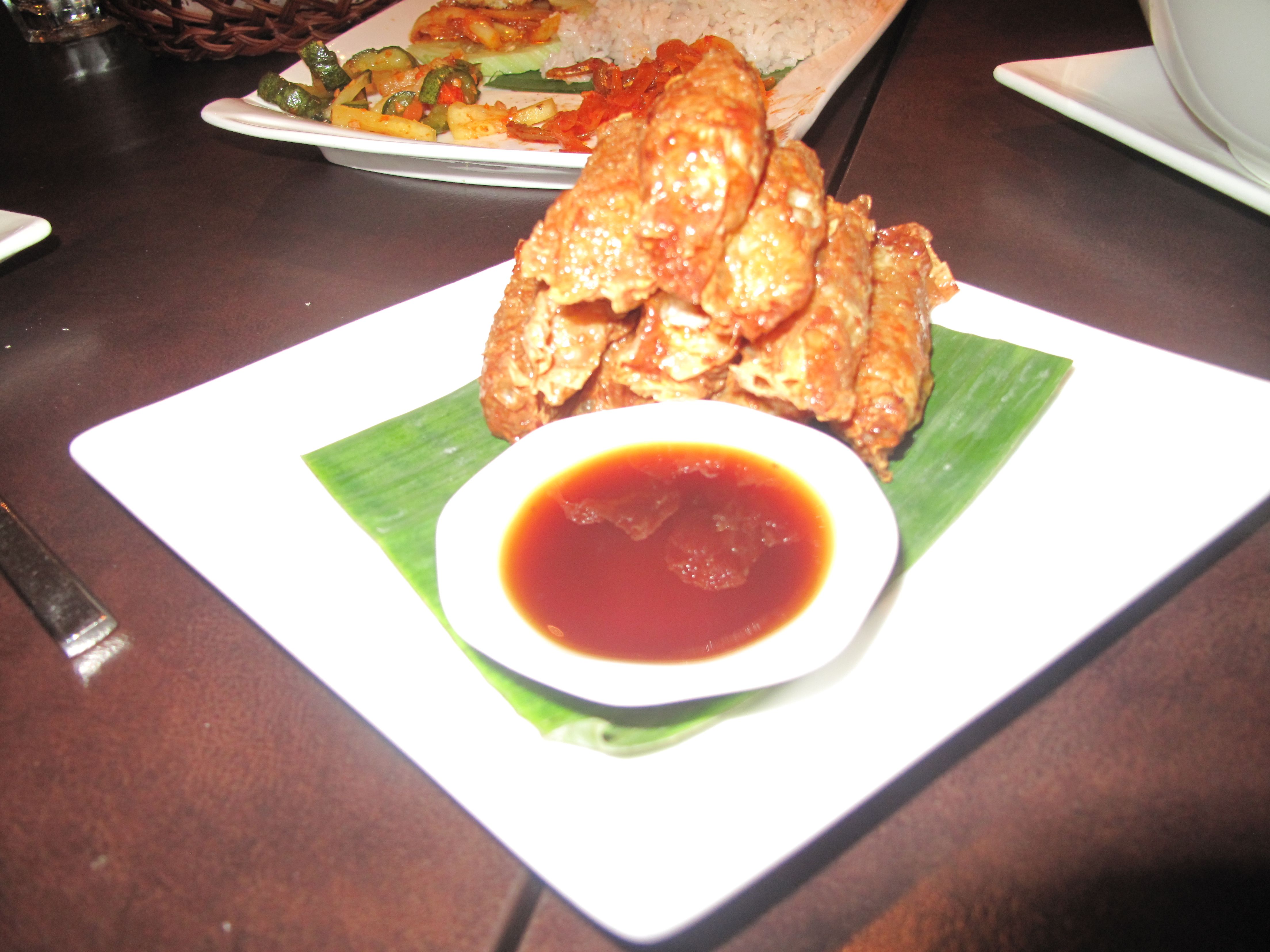
But what I probably like the most was a Chinese (namely Hokkien and Teochew) fried snack called mini ngo hiang – that was spicy minced chicken meat wrapped in very thin beancurd skin.
IMG_1493

In the next photo there are two Malaysian dishes: nasi lemak on the left and curry laksa on the right. The former, consisting of coconut rice, chicken curry, anchovies sambal (a type of sauce), hard-boiled eggs, cucumbers and achar (pickled vegetables), was very nice. The latter – basically a curry noodle soup with prawns, chicken and tau pok (deep-fried tofu) – was pretty decent too, but started to cloy quite quickly.

IMG_1491

Another dish that was either Indonesian or Malay was beef rendang, made from meat chunks stewed in coconut milk and some spices.

IMG_1499

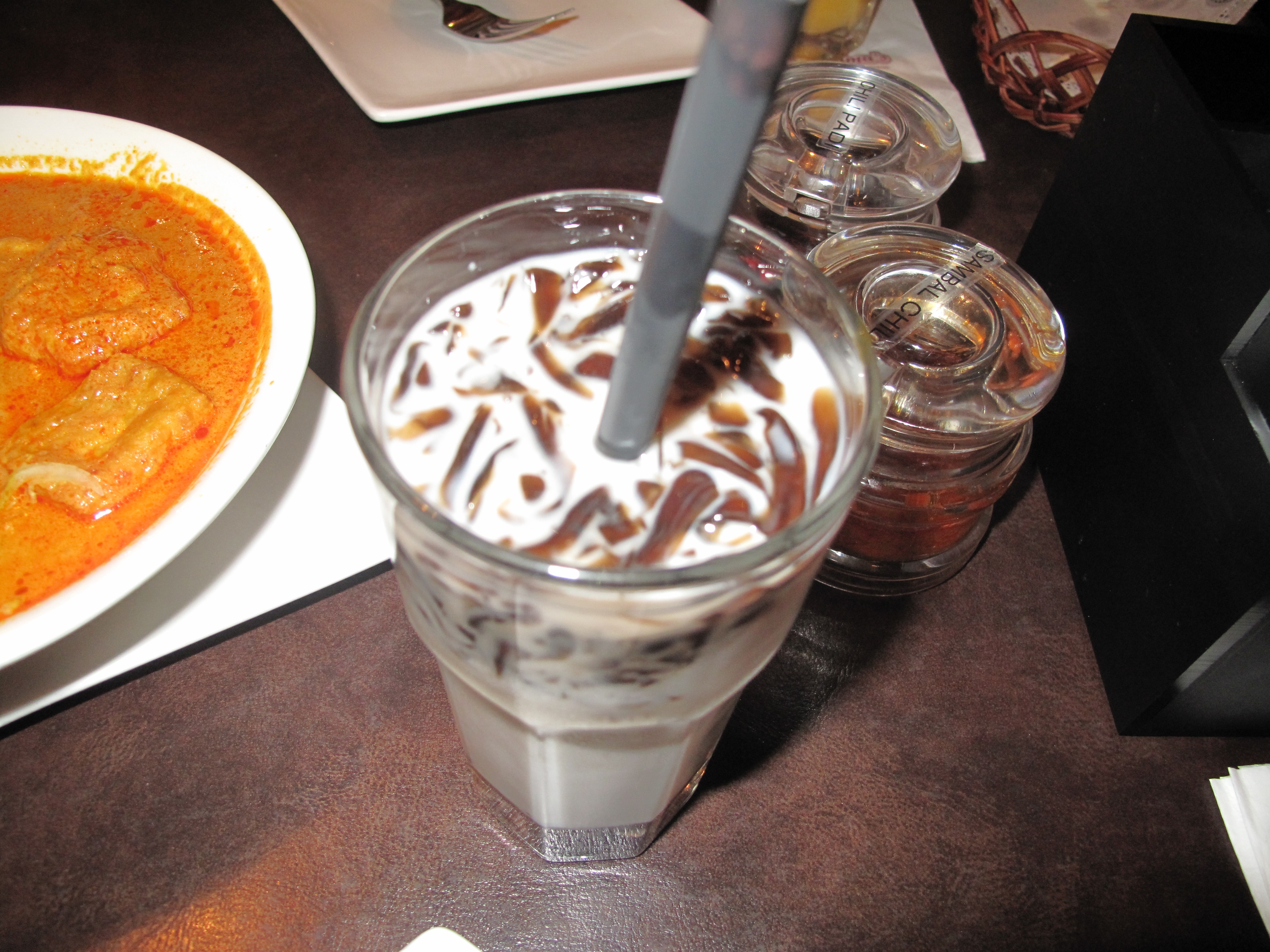
And here is a rather interesting drink called Grandson’s Favourite, made with almond soy milk, grass jelly and palm sugar.
IMG_1492

The next day, if you remember, we were exploring Chinatown; therefore, we had lunch right there, in a Chinese restaurant, of course. It wasn’t entirely clear how the restaurant was called, but Google now suggests that it’s Chinatown Shanghai Kitchen. We ordered a hell lot of food, and it was all excellent.

IMG_1575

Here is the good old sweet and sour pork, which is popular throughout the world and, by the way, as far as I know, belongs to Cantonese rather than Shanghainese cuisine:

???????????????????????????????

This is some quite ordinary roast duck, not the famous Peking one, and not even the slightly less well-known Cantonese one, but nevertheless very tender and tasty.

IMG_1568

And this one is sizzling beef with ginger and onion, also very tender and spicy:

IMG_1562

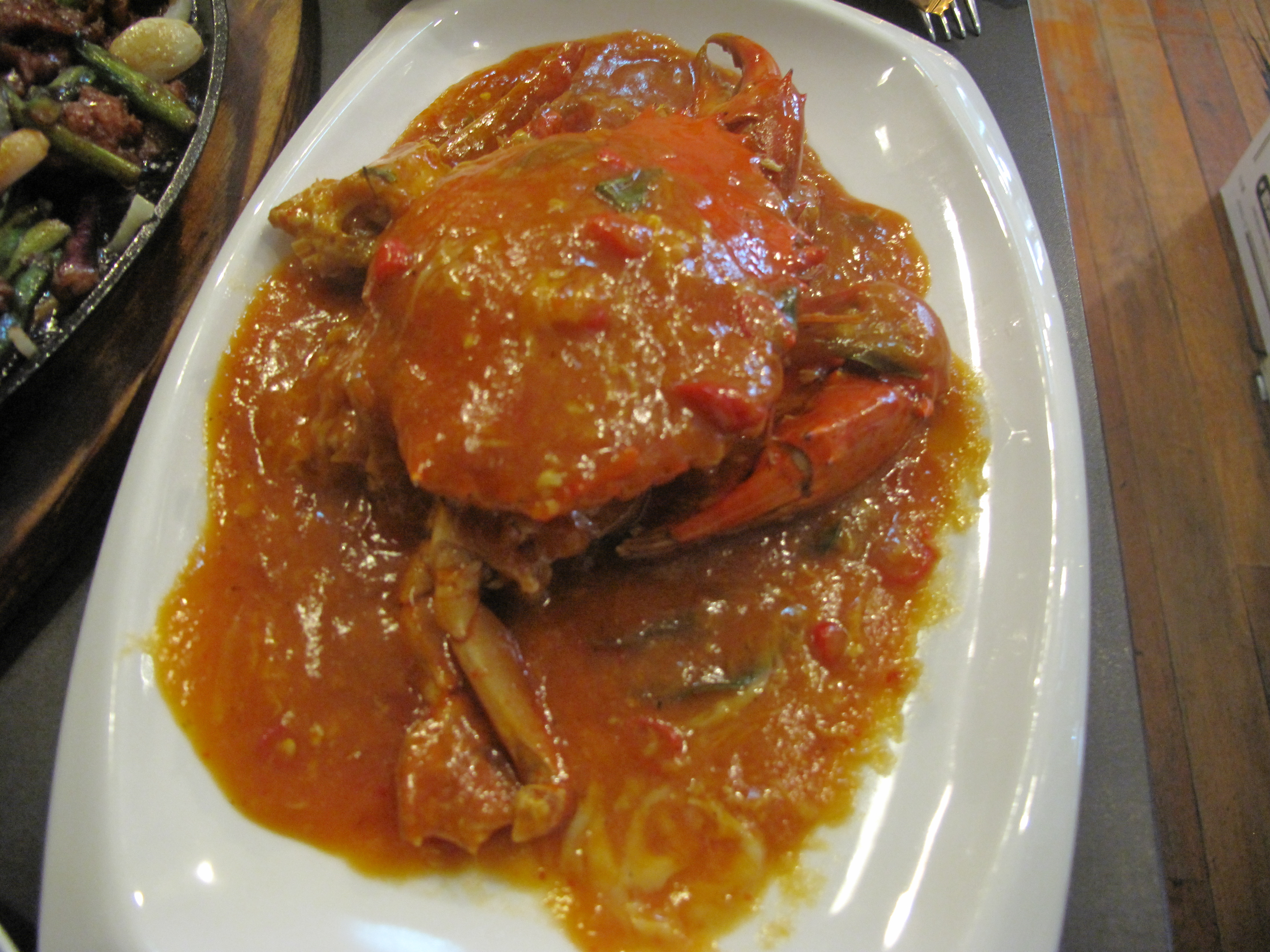
Chili crab is yet another must-try Singaporean dish, along with laksa and nasi lemak, that we had the day before. It tasted pretty good, although not particularly to die for, was moderately spicy, and very messy to eat: no matter how hard you try to keep it neat, you’ll still end up eating with your hands and getting yourself all dirty.
IMG_1573

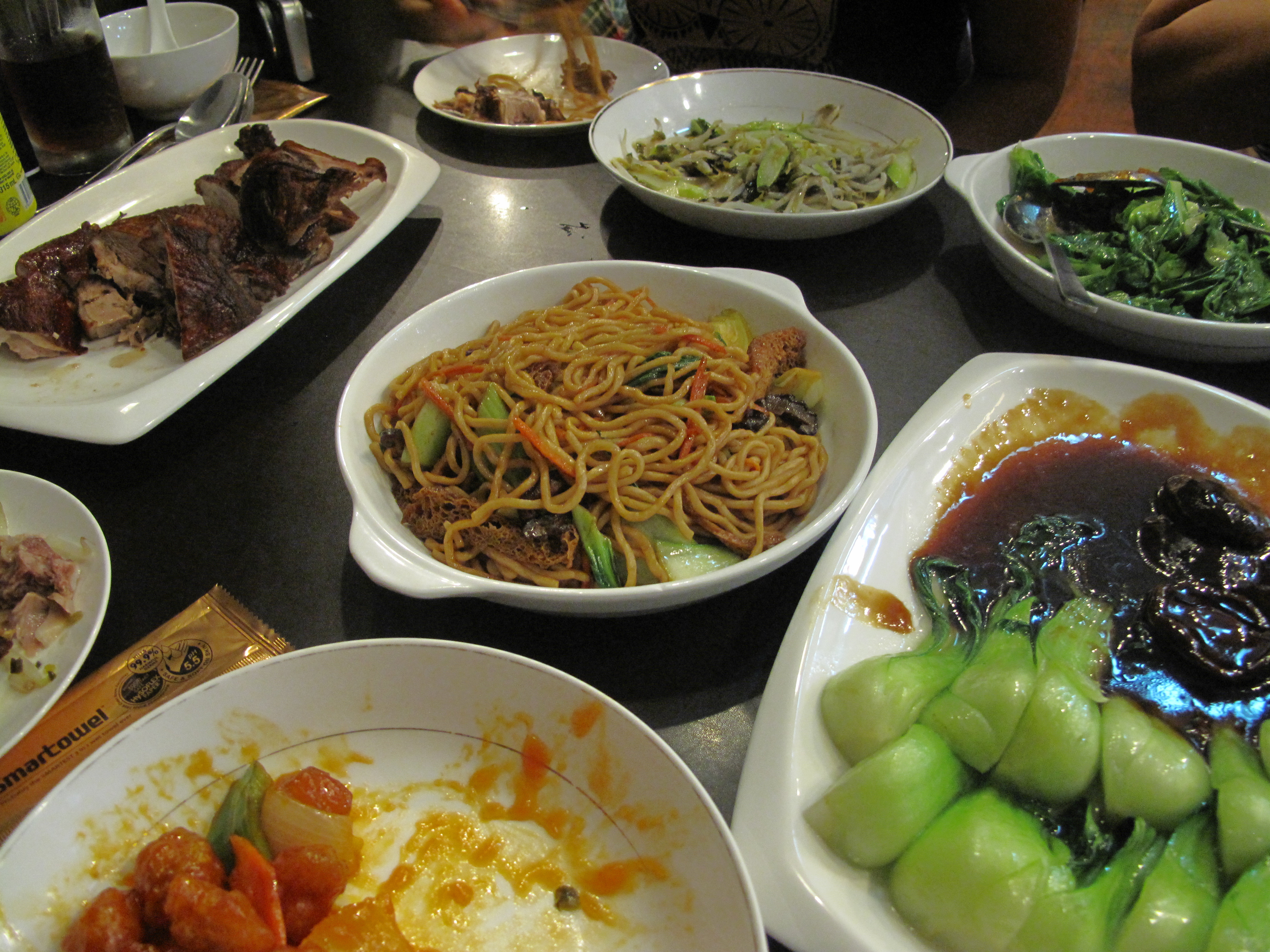
In addition to all this meaty-fishy food, we also got a variety of side dishes, such as these noodles with vegetables and some spongy mushrooms, which looked more like pieces of bread:
IMG_1572

Or this asparagus with snow peas and bean sprouts:
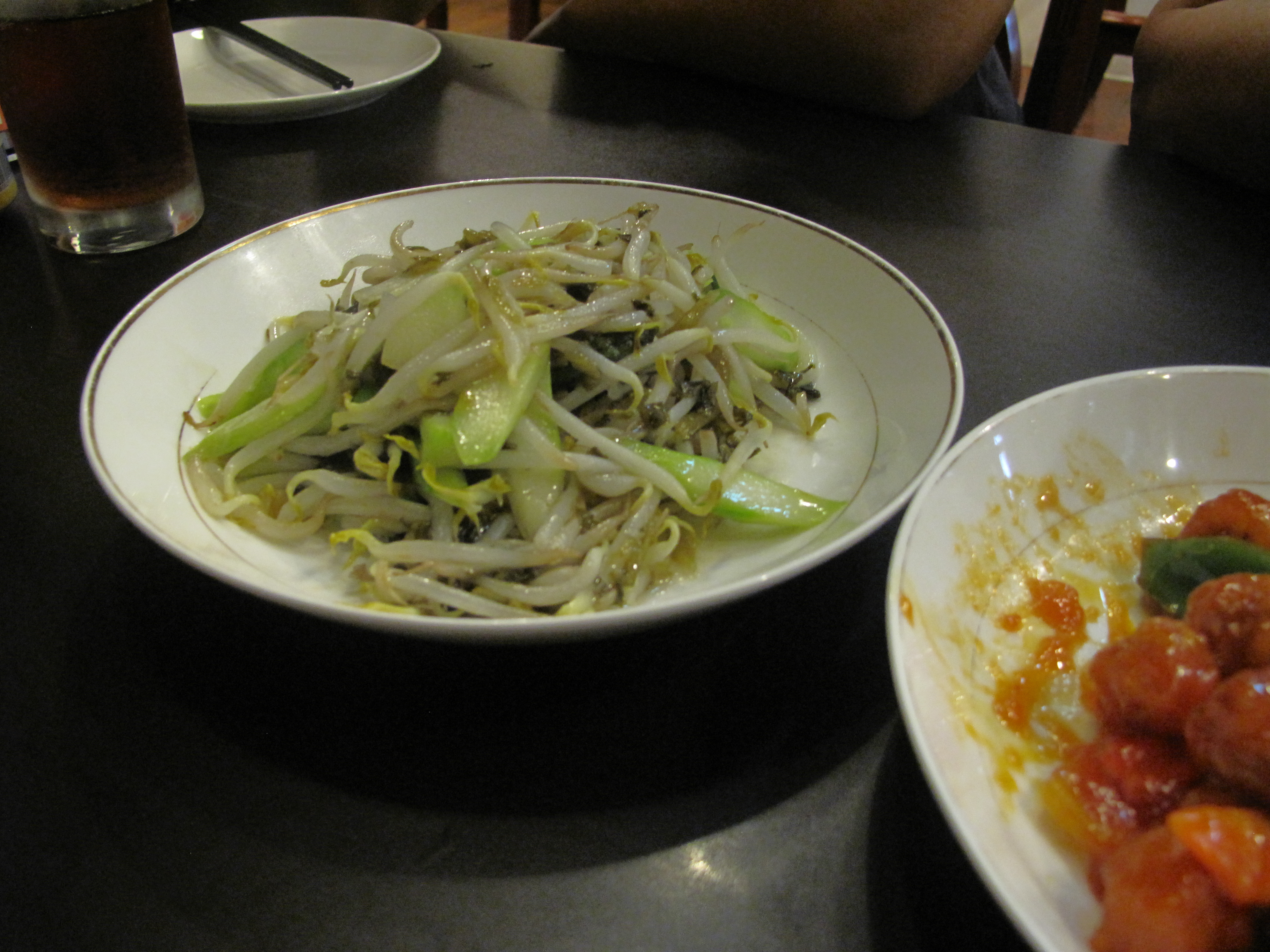
IMG_1561

This is sautéed kai-lan, or Chinese broccoli, except that it doesn’t look much like the broccoli we’re used to. I’d never heard of this vegetable previously, but during this Asian trip it definitely became one of my favourite.

IMG_1563

And one more side dish – sautéed Chinese vegetables (pak choi and some mushrooms).

IMG_1570

Later the same day, we discovered the huge food court of the Shoppes at Marina Bay Sands mall, where we were hiding from a heavy downpour. My companions decided to go for tea and cake only, while I, not being a big fan of the latter, opted for a proper meal. After a long indecisive walk along the various food booths, I stopped at the Korean one and got a BBQ set consisting of a seaweed soup, spicy BBQ chicken, rice, fried dried anchovies and cabbage kimchi (that is spicy pickled cabbage). Honestly, I wasn’t wild with delight – whether because I wasn’t too hungry or simply this combination of flavours was not my thing.

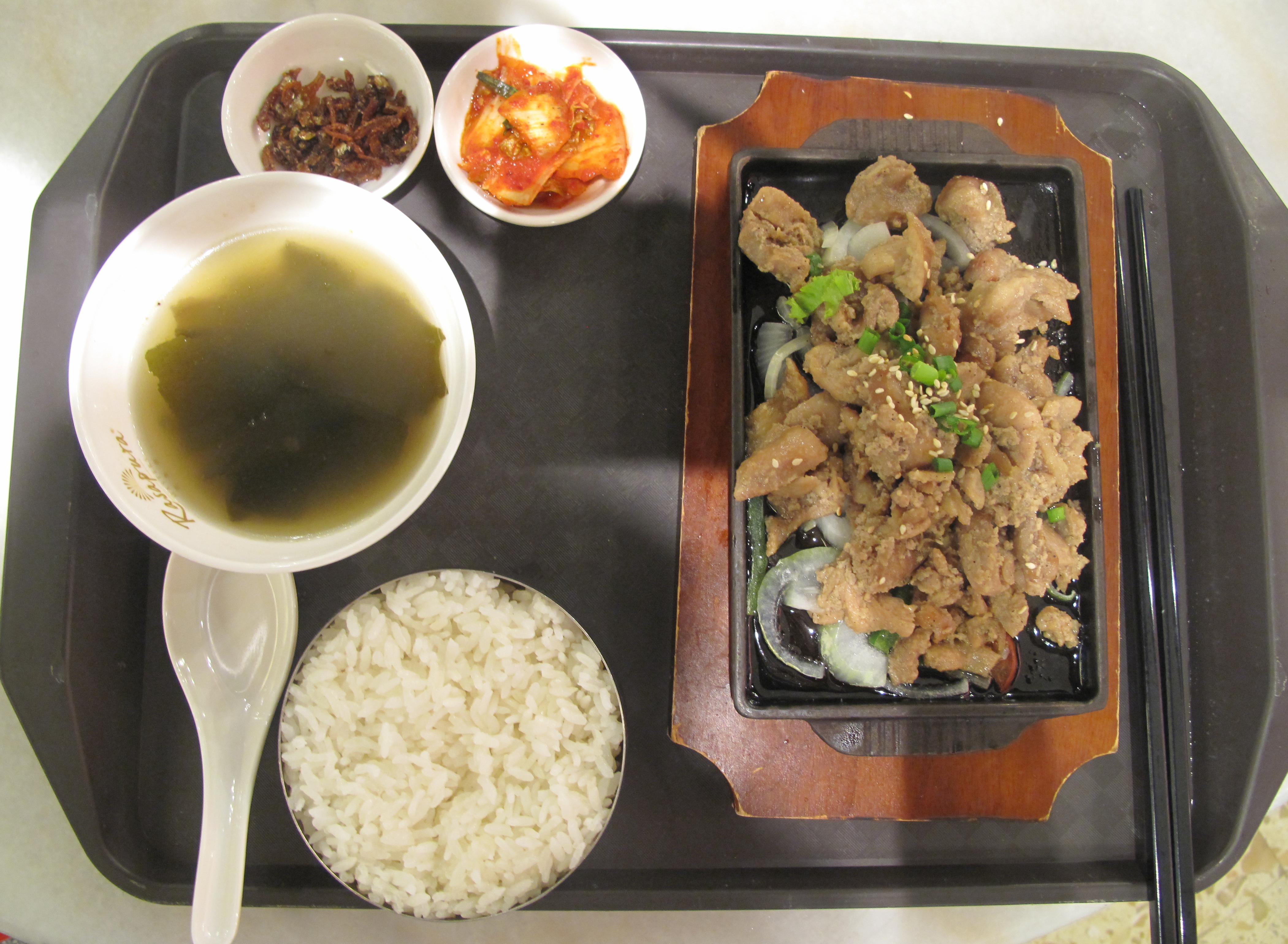
IMG_1684

???????????????????????????????

Other booths, as I already mentioned in this post, offered a huge variety of cuisines, mainly Asian ones – this one had Singapore’s local delicacies:
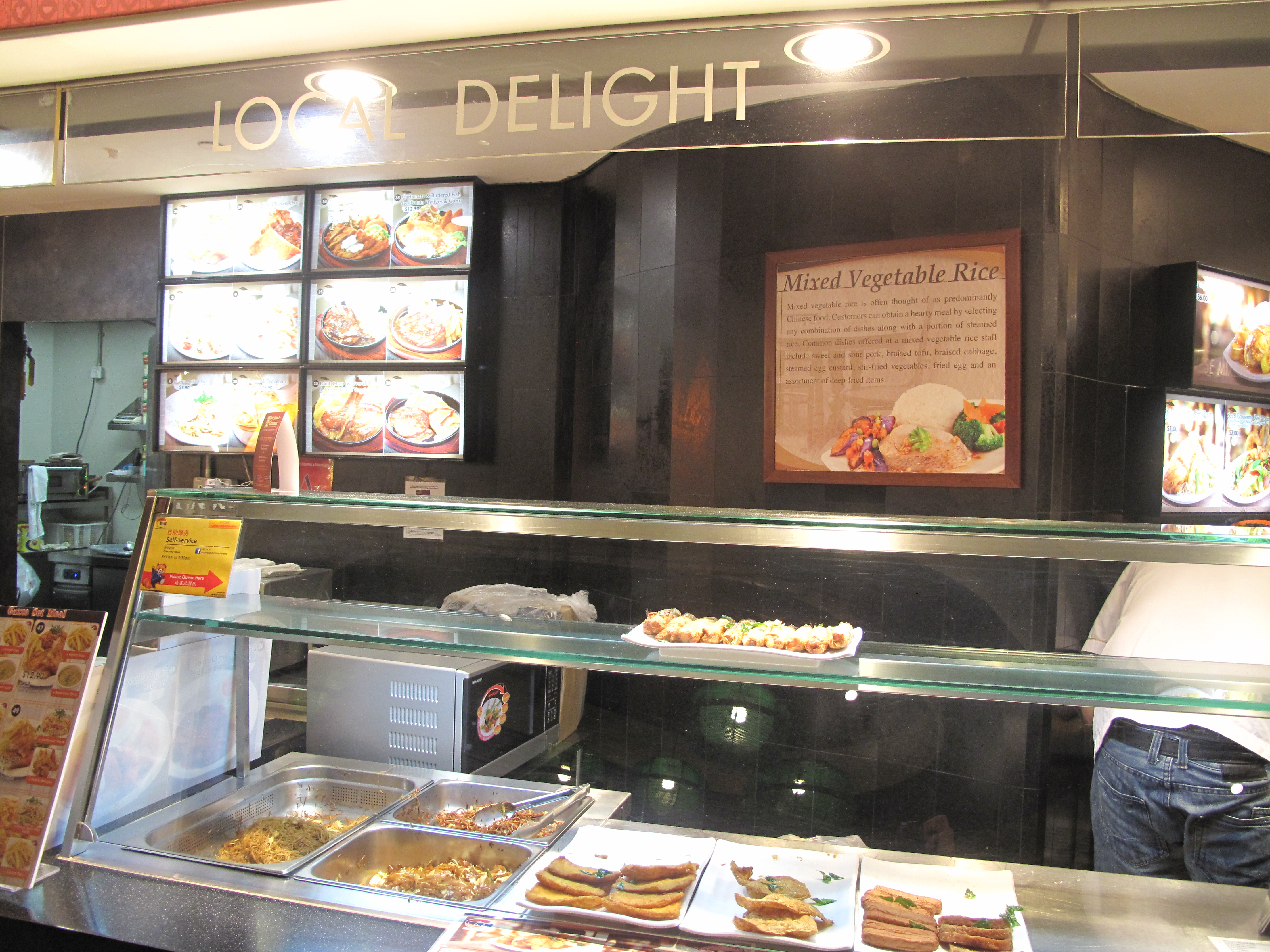
IMG_1671

Yong Tau Foo is a Chinese Hakka dish, which originally used to be a soup with tofu stuffed with meat or fish (hence the name), and now can contain lots of various other stuff like meat or fish balls, seafood, vegetables, crab sticks, mushrooms, and in fact doesn’t even have to be a soup, it can be eaten as a dry dish as well.
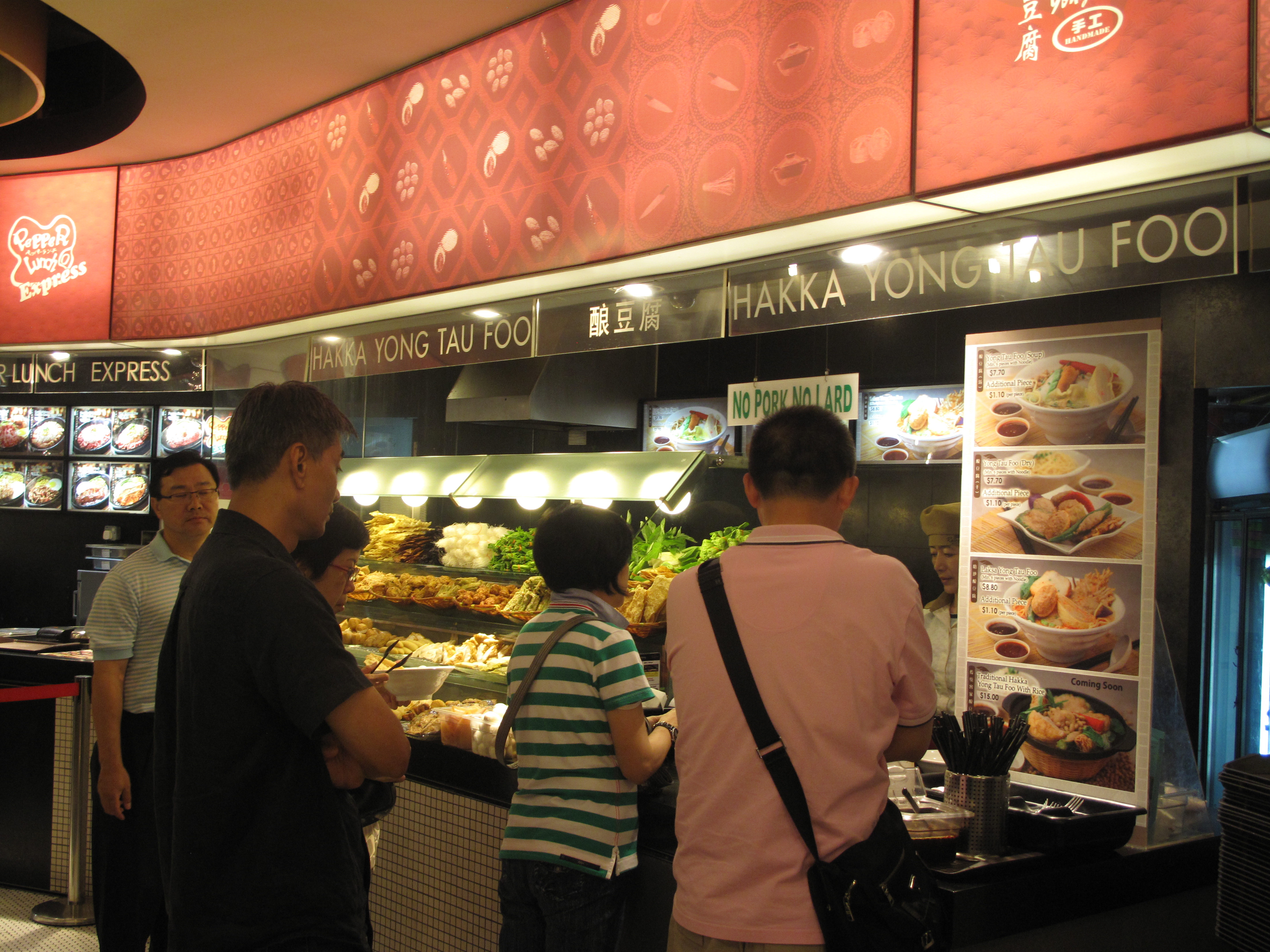
IMG_1672

Bak kut teh is a Chinese soup made of pork ribs with various additional ingredients; the name literally means “meat bone tea”. Despite the fact that the dish is of Chinese origin, it is mostly common in Malaysia and Singapore, where it was brought in the 19th century by Chinese workers of Hokkien and Teochew origins.
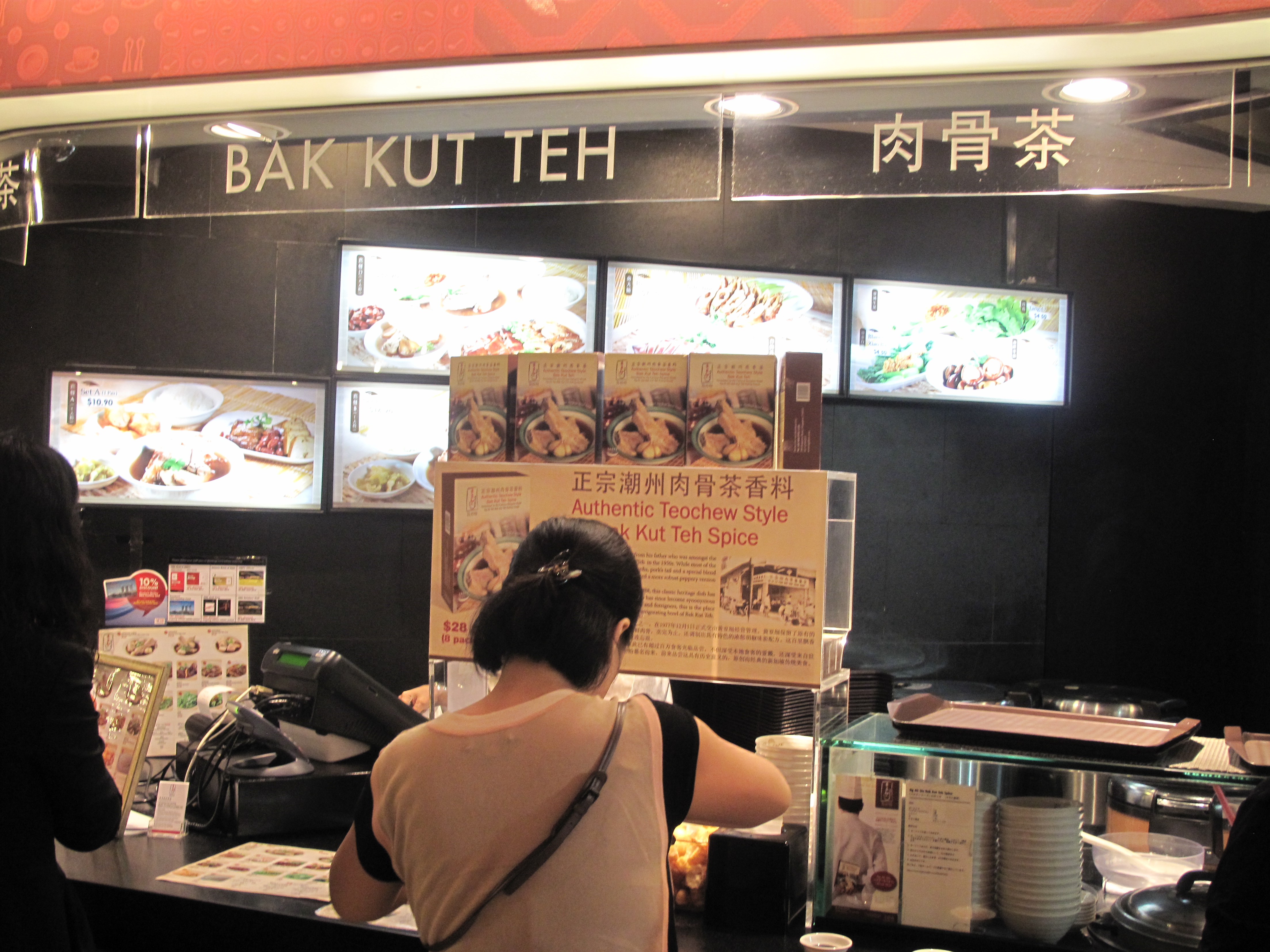
IMG_1673

As far as I understand, Chinatown Beef Noodle is a chain, serving, obviously, different sorts and varieties of beef noodles.

IMG_1674

One of the elements of Cantonese cuisine is the rotisserie style called siu mei, which includes different meats (pork, chicken, goose, duck) and is very popular in Hong Kong.

IMG_1675

Here you can get Singapore-style fried noodles with various ingredients.

IMG_1677

Nasi Padang is basically steamed rice served with all kinds of meat and vegetable dishes, comes from the city of Padang in Indonesia.

IMG_1678

Ajisen Ramen is a Japanese fast-food chain, serving, as the name implies, different kinds of ramen soup (wheat noodles in broth, with all sorts of toppings).

IMG_1679

Jia Xiang Sarawak Kuching Kolo Mee is yet another chain that specialises in Kolo Mee (a dish of egg noodles with pork, originating from the Sarawak state in Malaysia).
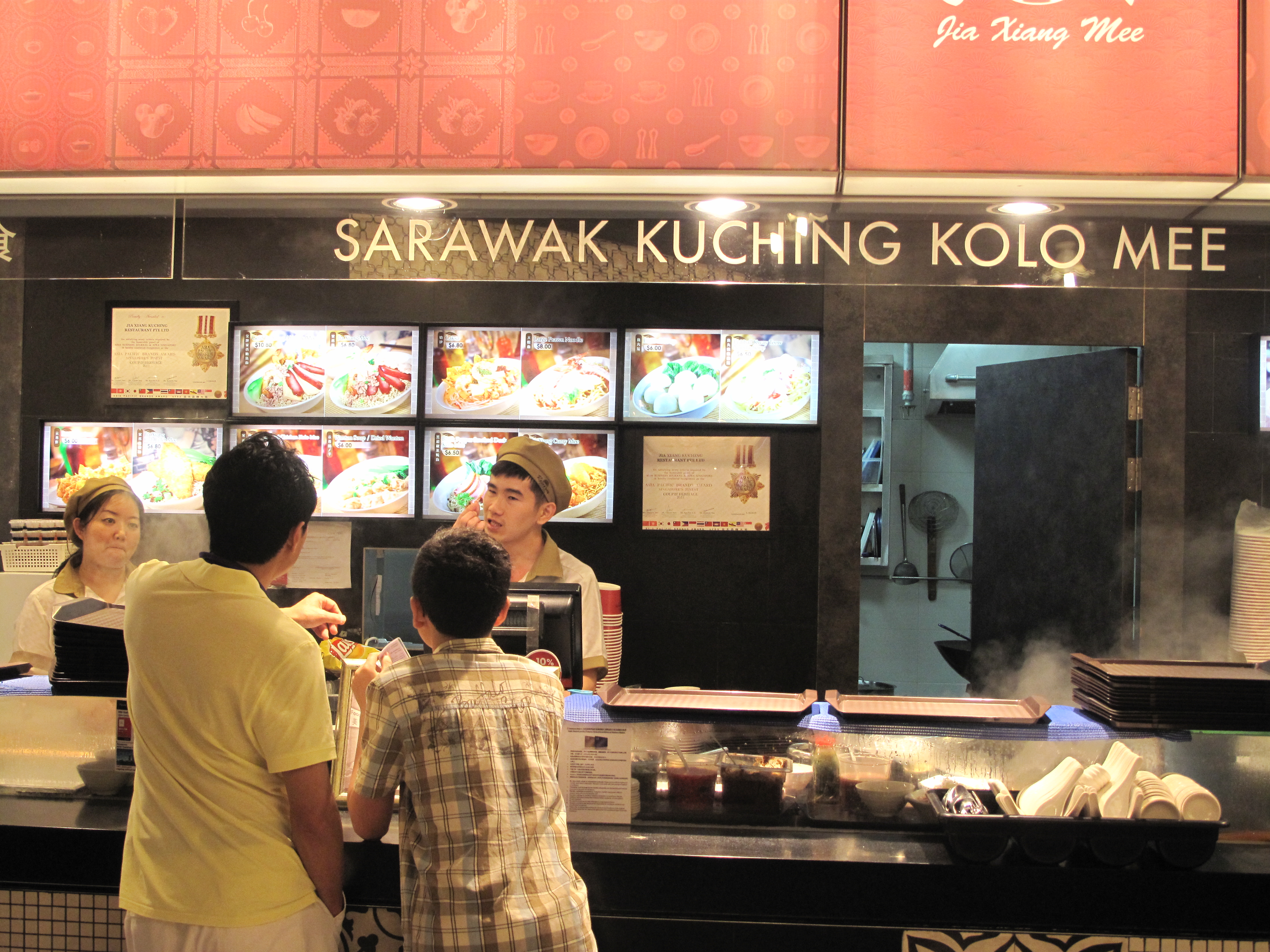
IMG_1680

Continuing the topic of noodle soups, another variation thereof is ban mian, a dish common in Hokkien- and Hakka-speaking areas (in particular, the Fujian province in China, Singapore and Malaysia).

IMG_1681

This looks like the Malay cuisine booth, although I wasn’t able to identify any of the dishes on the signboards.

IMG_1682

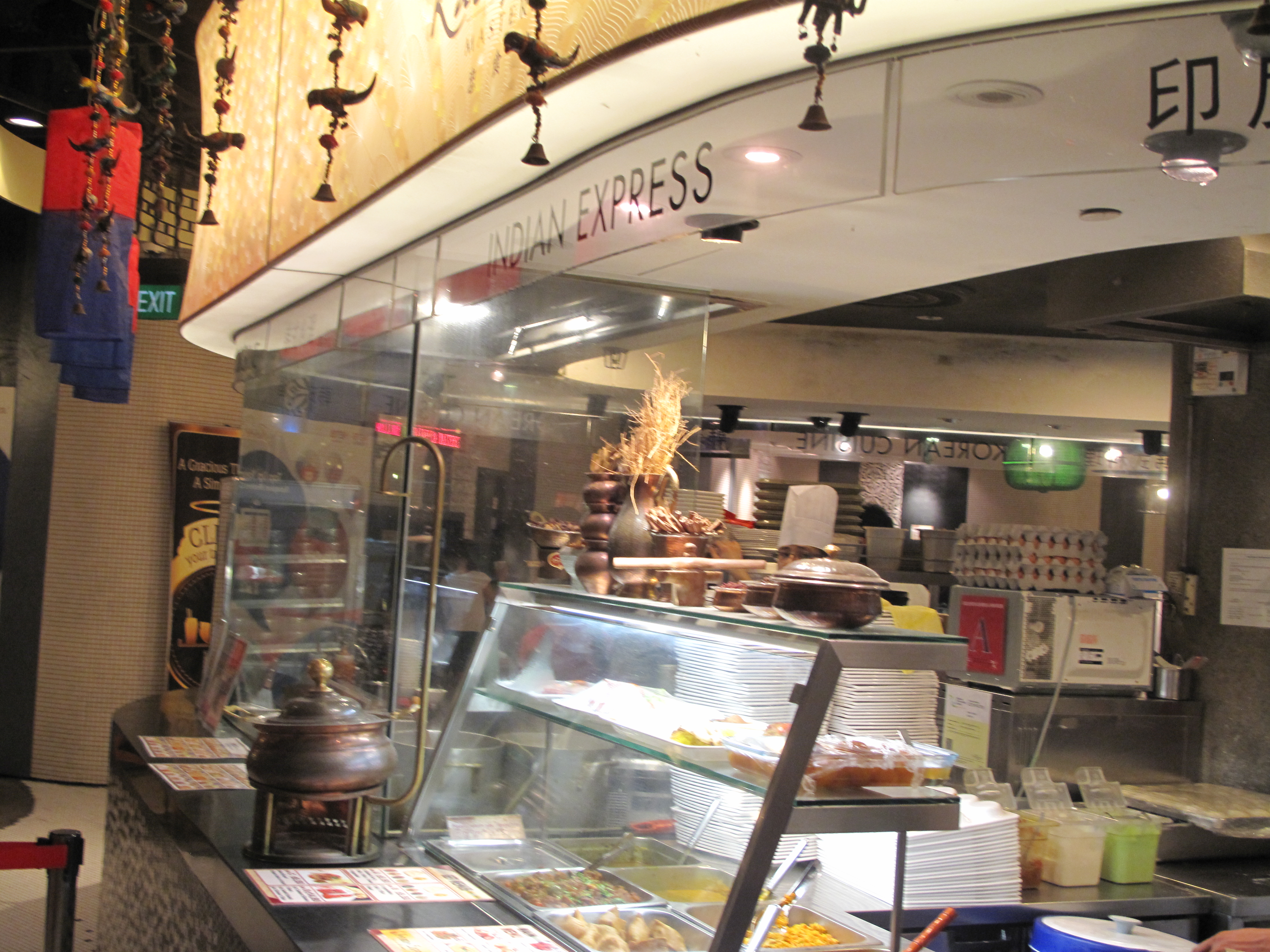
The Indian cuisine booth:

IMG_1683

I believe everyone is familiar with the concept of dim sum, as this invention of Cantonese cuisine is widespread worldwide. For those who are not – these are light snacks, served in small plates or bamboo steamers. There exists a great variety of dim sum choices: all sorts of dumplings you can even think of, buns with various fillings, fried chicken legs (the so-called “phoenix claws”), pork ribs, meatballs, even congee, and many, many more.
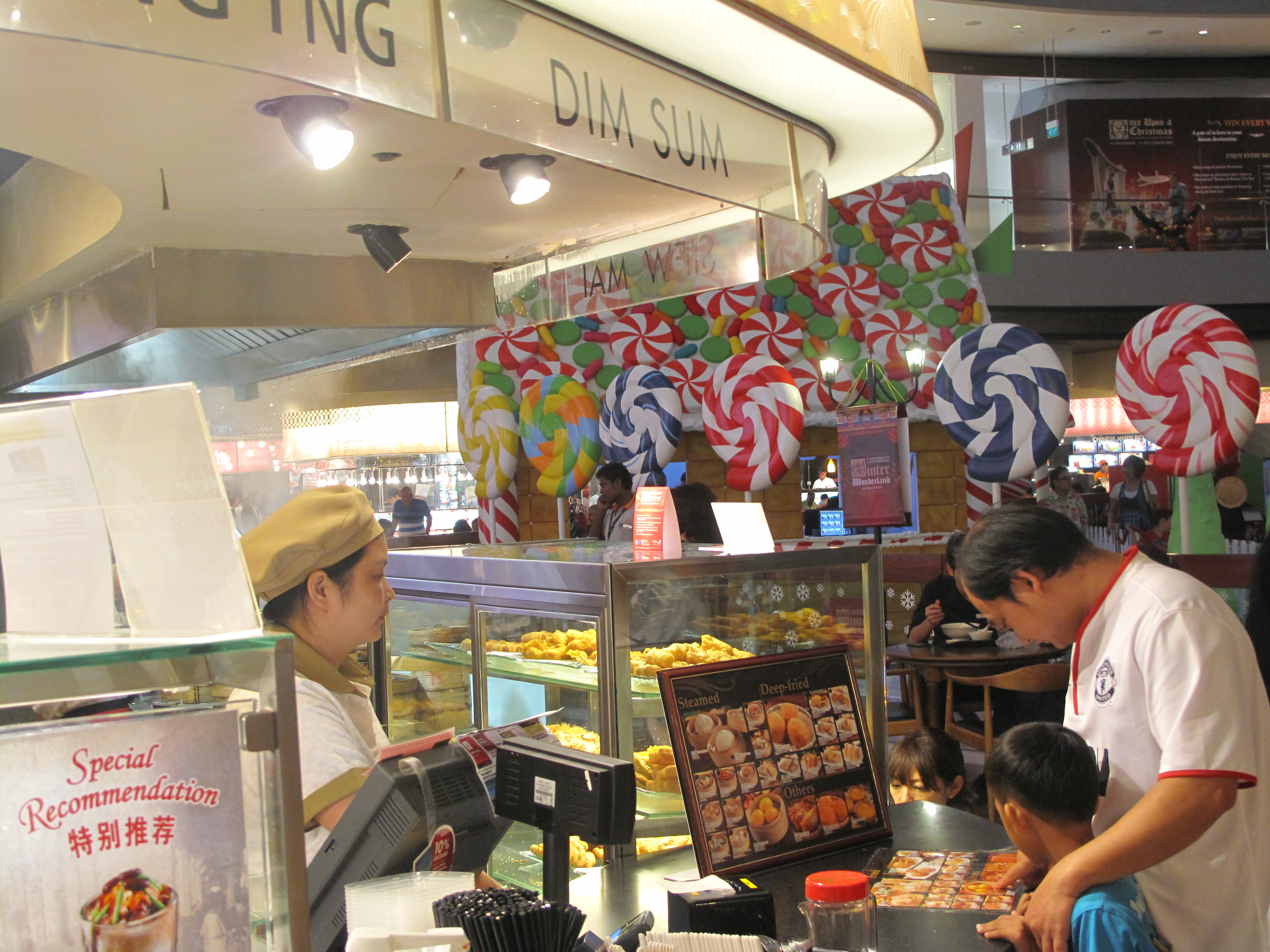
IMG_1685

Judging by the dishes represented here, this booth also serves dim sum, and not only shrimp dumplings, as the name suggests, but also other kinds of dumplings, as well as the aforementioned chicken legs, egg custard buns, etc.
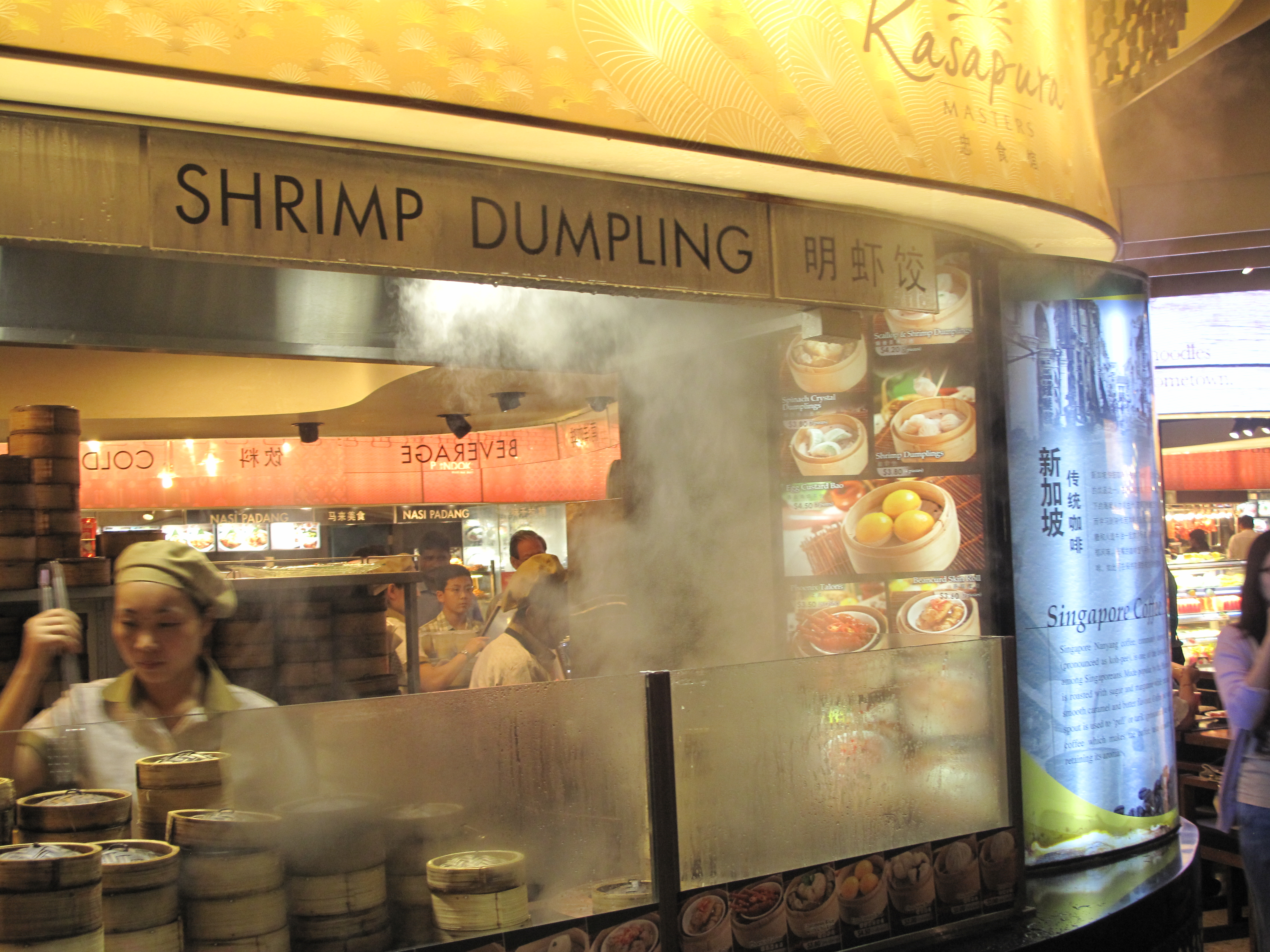
IMG_1686

And here is Japanese food and, as seen in the picture, many of the dishes are served in traditional bento boxes with multiple compartments.

IMG_1687

More noodles – and they are prepared right here, before your very eyes.
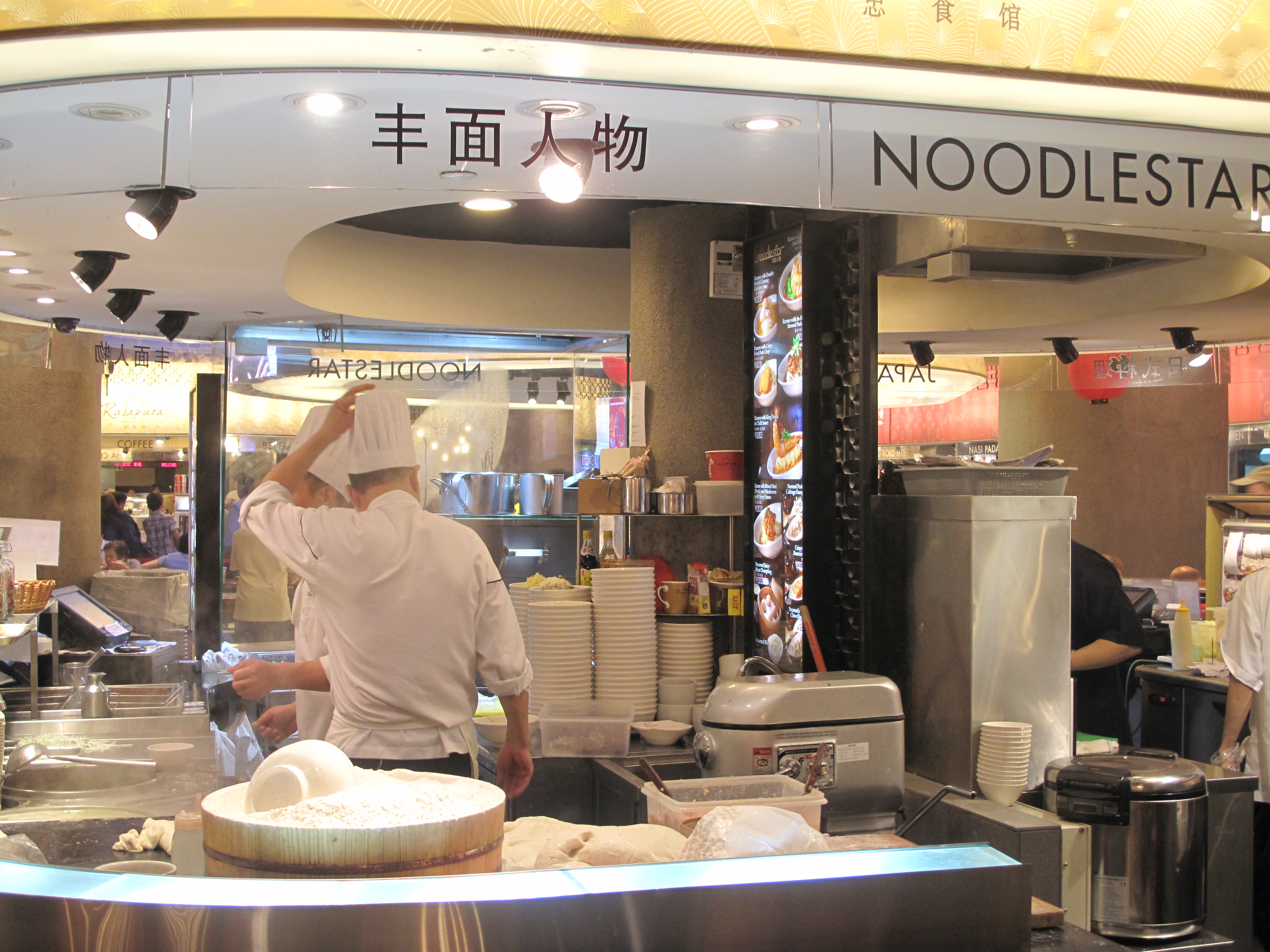
IMG_1688

Philippine cuisine is the least known to me out of all the mentioned above, I would have loved to try it, but didn’t have the opportunity this time.
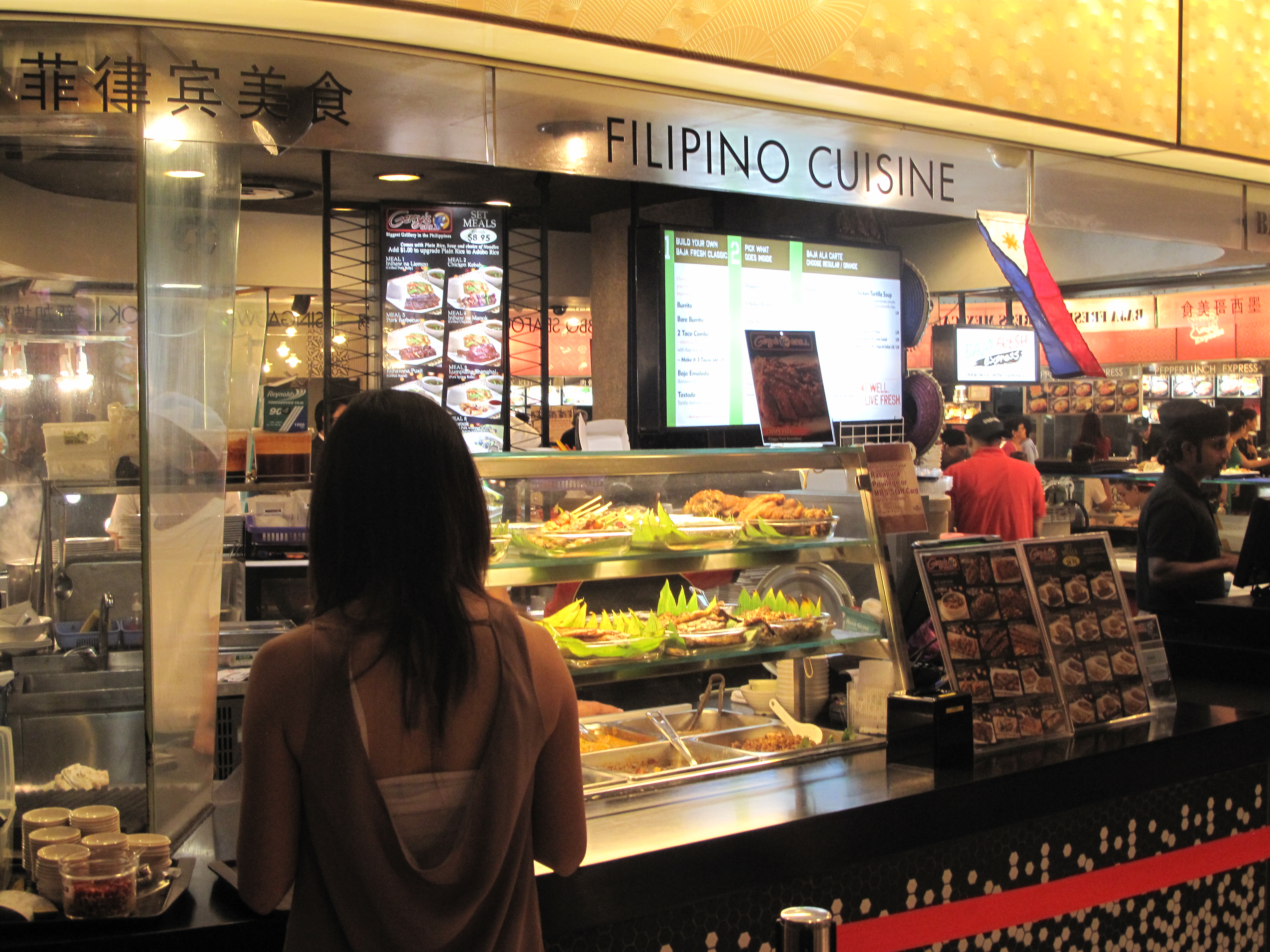
IMG_1689

The next day I felt the urgent desire to have some Chinese dumplings, so half of us headed to Din Tai Fung, a Taiwanese chain restaurant specializing in xiaolongbao (steamed dumplings).

IMG_7563

As it is often the case in dim sum and dumpling restaurants, you are handed the menu with a pen, and you can mark off what you want and in what quantities.

IMG_1748

Tea and shredded ginger are served immediately and free of charge.

IMG_1749

IMG_1752

We ordered vegetable and pork wonton soup (wontons are a variety of dumplings, wrapped in very thin dough), some rice and my favourite kai-lan, stir-fried Hong Kong-style, with special oyster sauce.
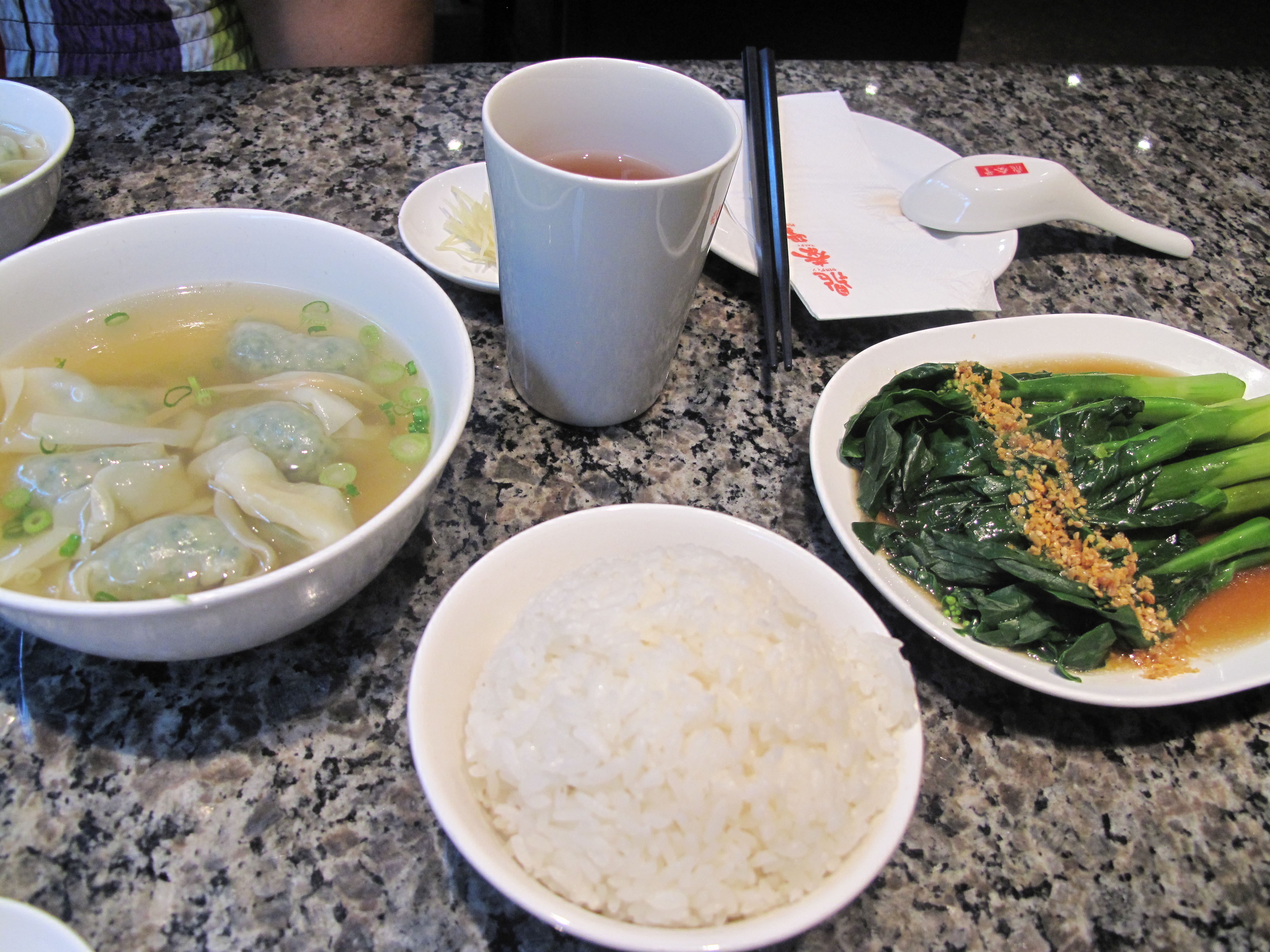
IMG_1753

And then came the dumplings. Minimum portion was 6 pieces, so even though we wanted to try as much as possible, due to the lack of spare stomachs, we had to limit ourselves to two types only. These are chicken dumplings:

IMG_1755

And these are shrimp and pork dumplings, called shao mai (or siu mai in Cantonese pronunciation – and that is how they are best known, due to the already mentioned worldwide popularity of dim sum).

IMG_1754

The next day, we found this eatery on the Sentosa Island:

IMG_7578

The place is pretty small, and the menu, although not extremely abundant, is somehow very diverse in terms of the number of cuisines represented.
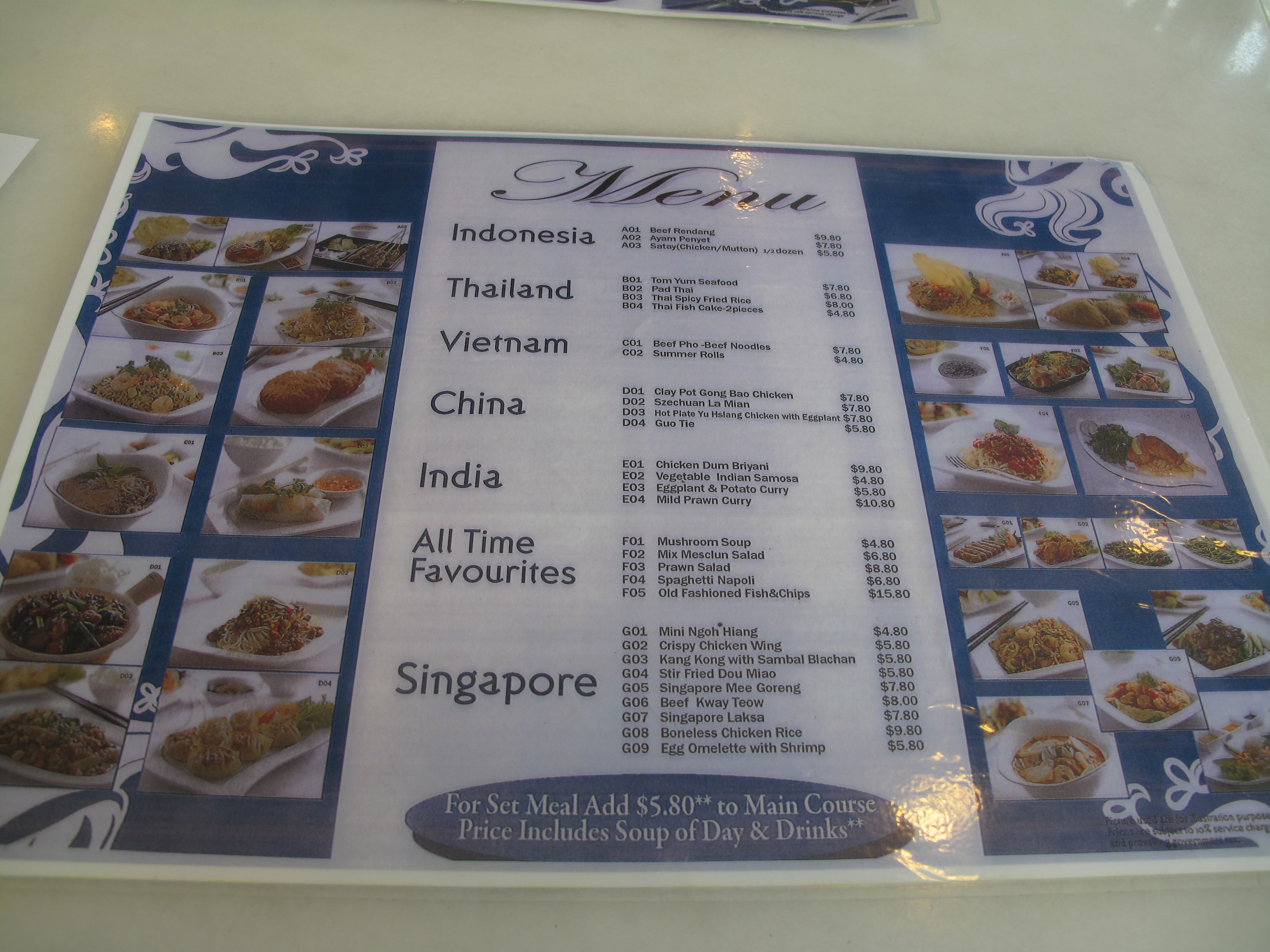
IMG_1775

So our selection was quite diverse as well – we, already missing familiar food, started with a mushroom soup and a plain vegetable salad.

IMG_1777

Indian dum biryani is a dish of rice with meat (in this case – chicken) and/or vegetables and spices, a spicy one, as one would expect from Indian cuisine, though in moderation.

IMG_1778

Gong bao chicken is also spicy, and, as one would expect from Szechuan cuisine, not in moderation. Szechuan cuisine is generally characterised by extensive use of pepper – in particular, the combination of dried chili with Szechuan peppercorn (which in fact is not quite pepper, but rather husks of the zanthoxylum plant) creates that sensation of numbing heat, which is a distinguishing feature of this cuisine.
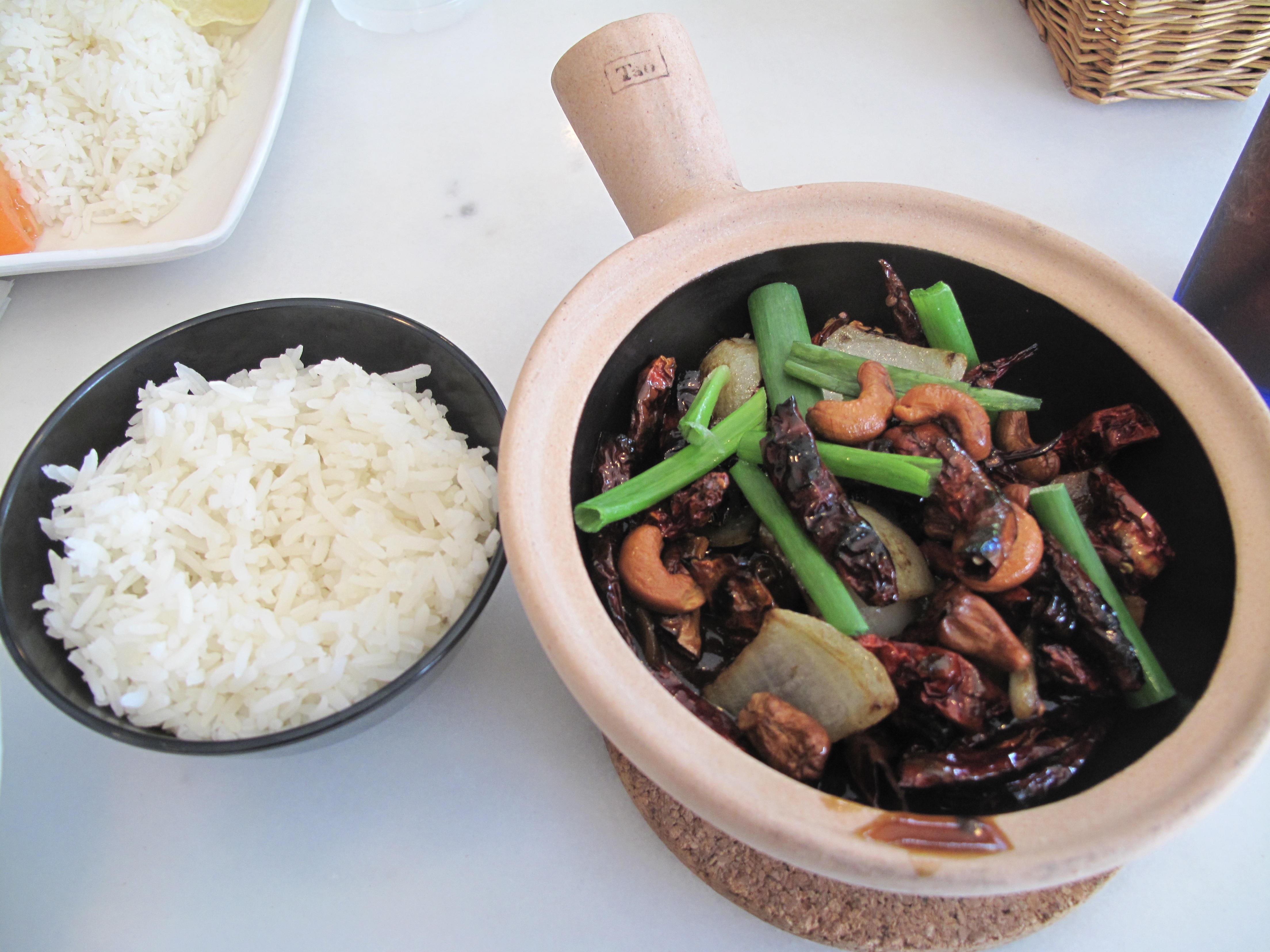
IMG_1780

Another meal we had on Sentosa Island was in Hollywood China Bistro in Universal Studios amusement park.

IMG_1912

IMG_1910

This time we weren’t really up for new exotic dishes so we ordered the familiar stuff. For example, sweet corn soup with egg:
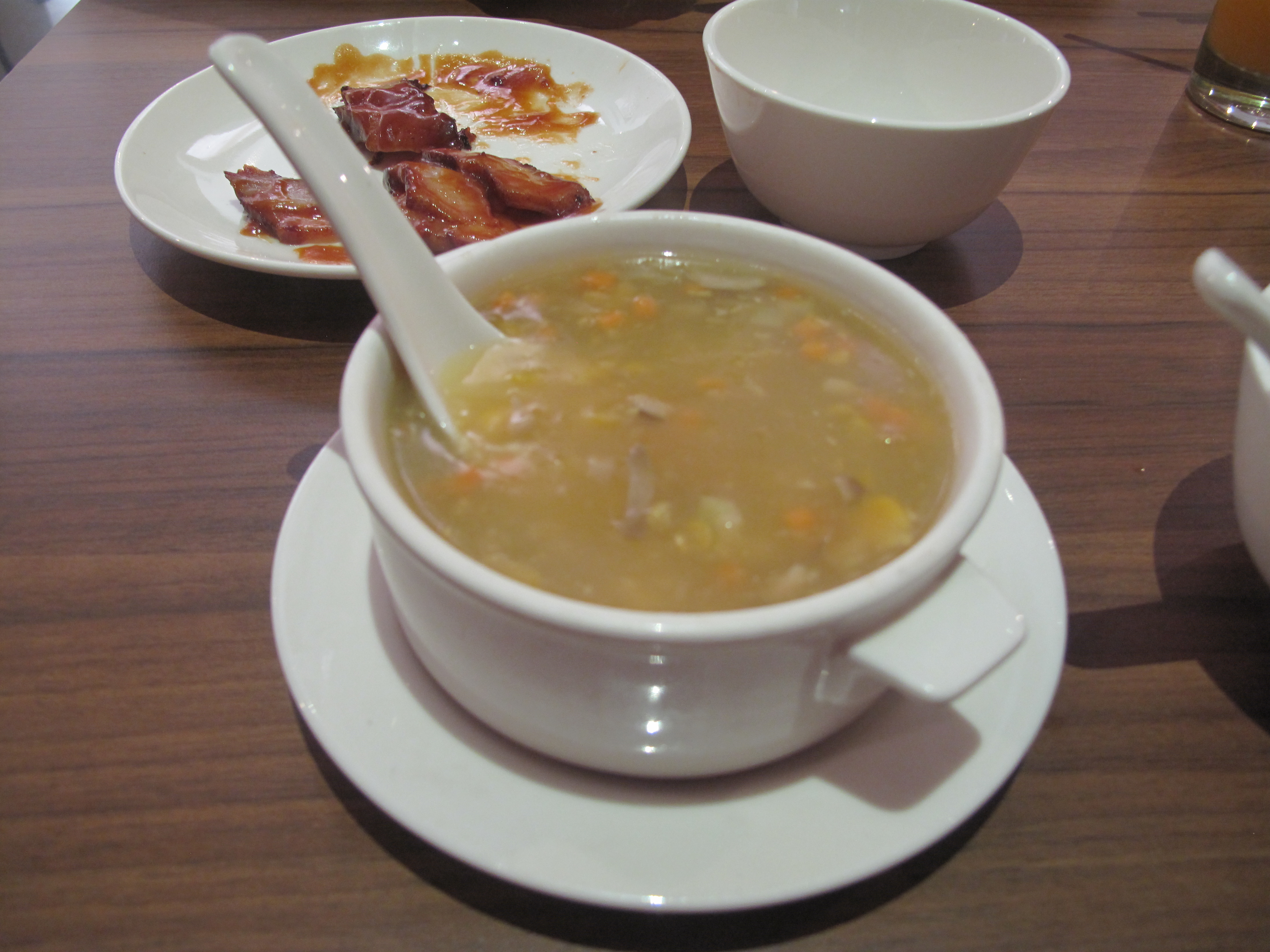
IMG_1905

Here is quite an ordinary dish with a not-so-ordinary name: braised ee fu noodles with mushrooms. Ee fu, also known as yi mein is a Cantonese egg noodles variety made from wheat flour.
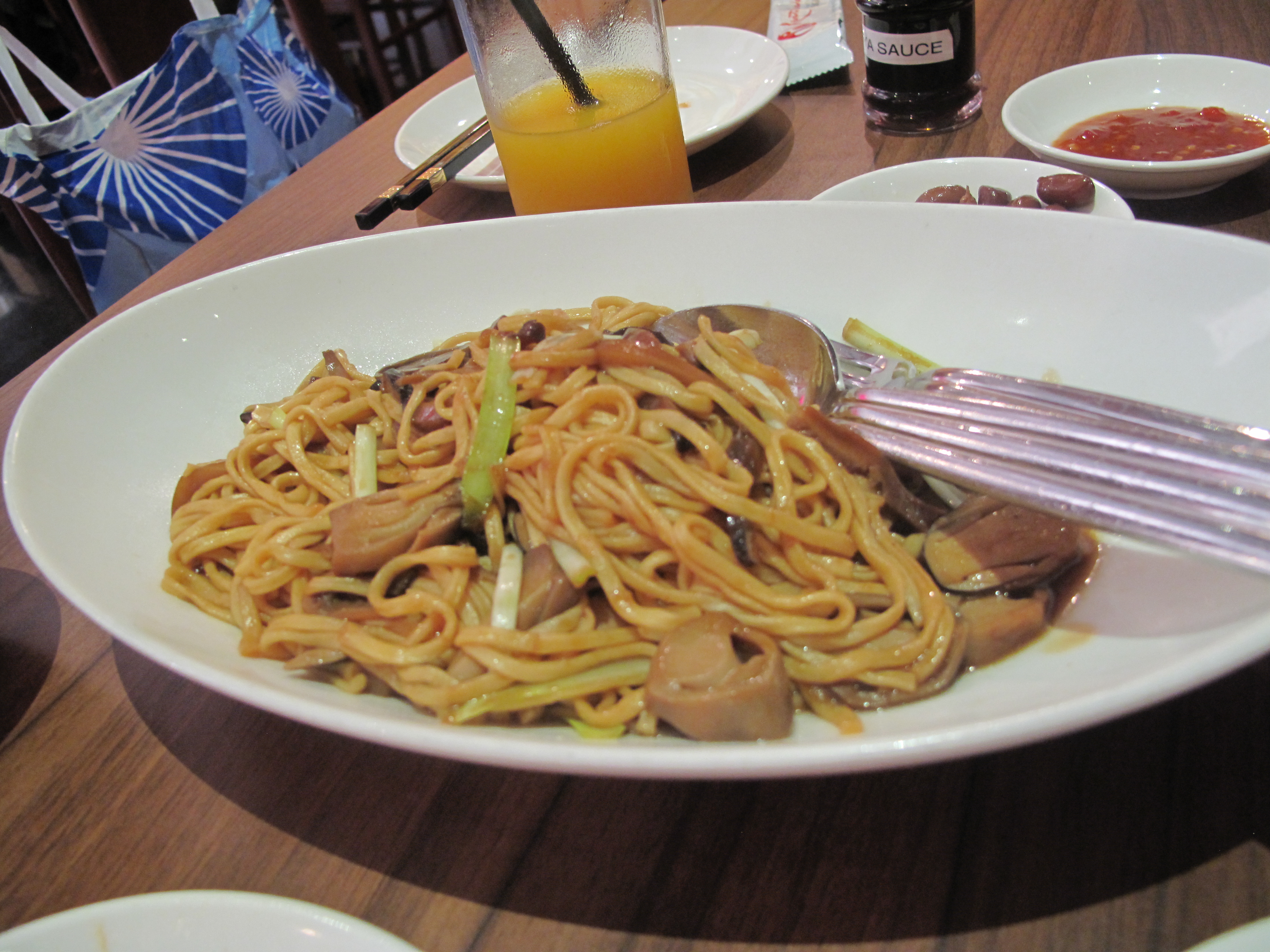
IMG_1907

Lemon chicken is quite a famous dish, served more often in Chinese restaurants around the world, than in China itself.

IMG_1908

And this is Cantonese roast duck, with a fragrant sauce – one type of siu mei, which I mentioned above.

IMG_1904

All of this was accompanied by wonderful jasmine tea.

IMG_1900

If you remember, we were spending the first half of the next day at the Singapore Botanic Gardens, therefore, we had lunch right in the Ginger Garden, at the Halia restaurant, whose name actually means “ginger” in Malay. From noon to 2pm they serve a set menu of two or three courses to choose from. The portions are quite small, but delicious and generously seasoned with ginger, just as one might expect.
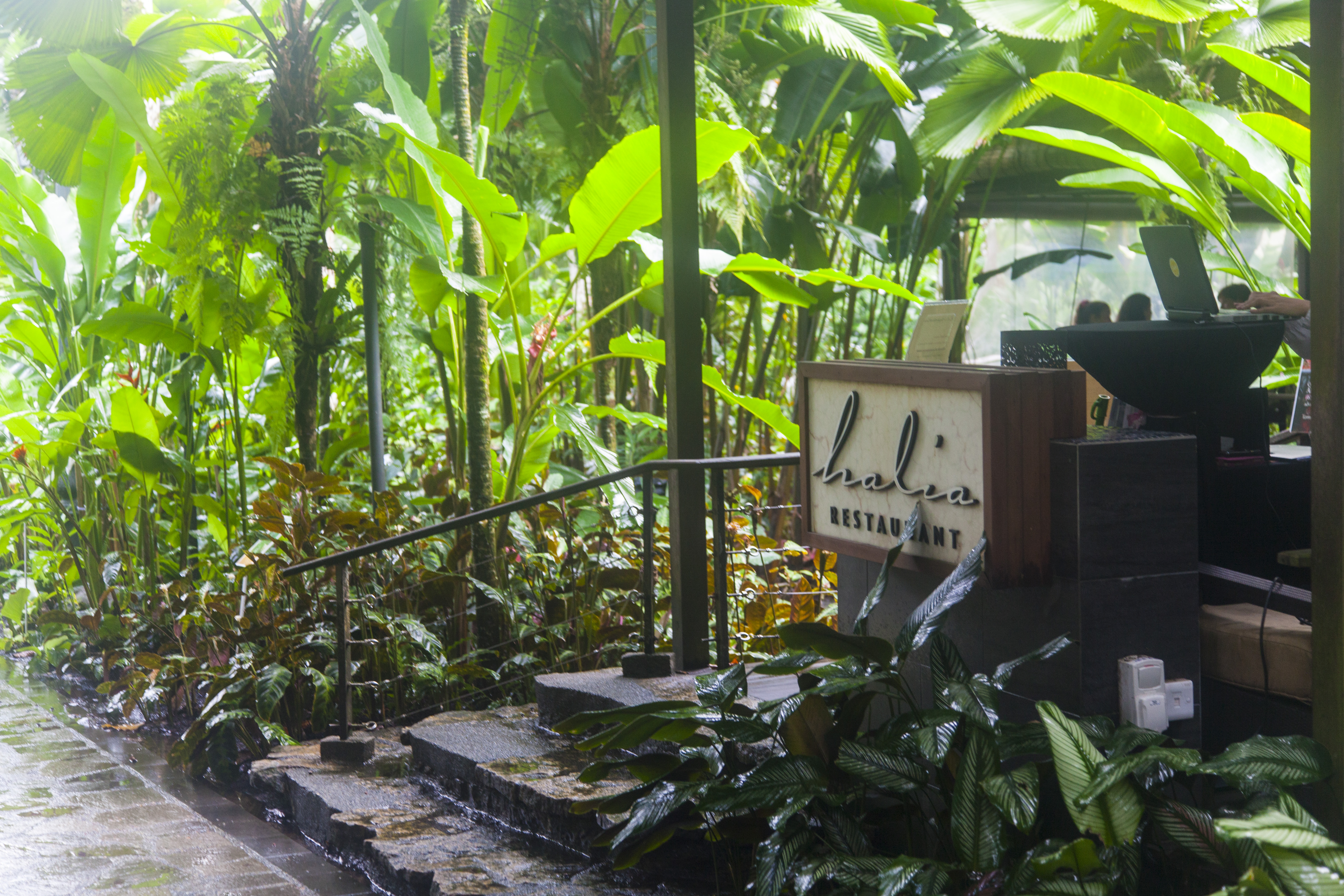
IMG_7740

Here’s what their starters are like (out of those we tried): these are pieces of home-cured salmon, cucumber and kipfler potato with some rye croutons and English mustard:

IMG_2010

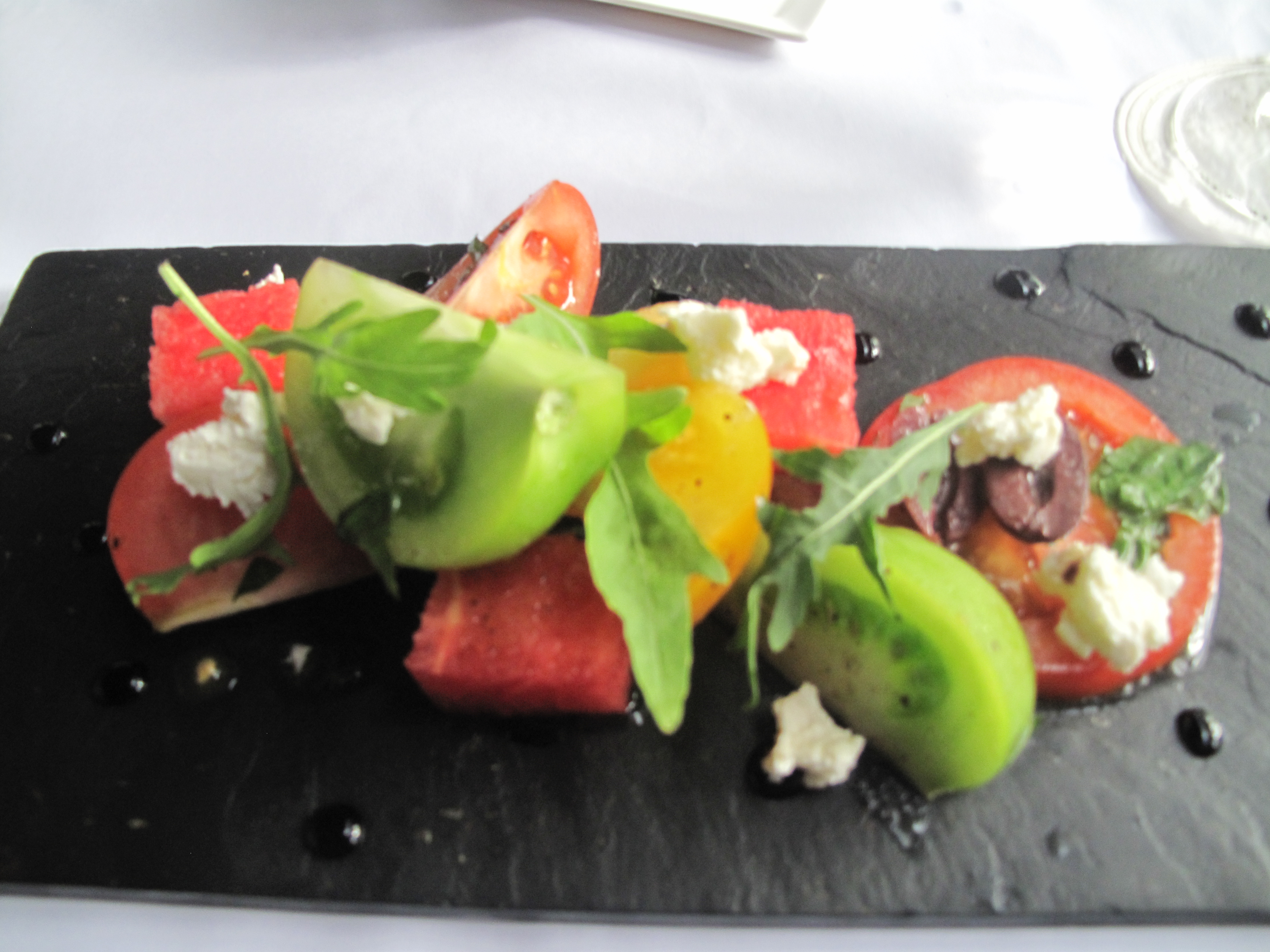
And this is a salad of heirloom tomato, watermelon and goat cheese with black olives and balsamic vinegar.
IMG_2011

The soup of the day was pumpkin soup:

IMG_2012

And then, the main courses arrived: grilled fillet of barramundi fish with local organic mushrooms and Chinese roast duck consommé. The waiter pours the consommé into the bowl from a small pitcher, right at the table.

IMG_2013

One more main – roasted corn fed chicken breast with carrot puree, potato mille-feuille and Brussels sprouts.

IMG_2014

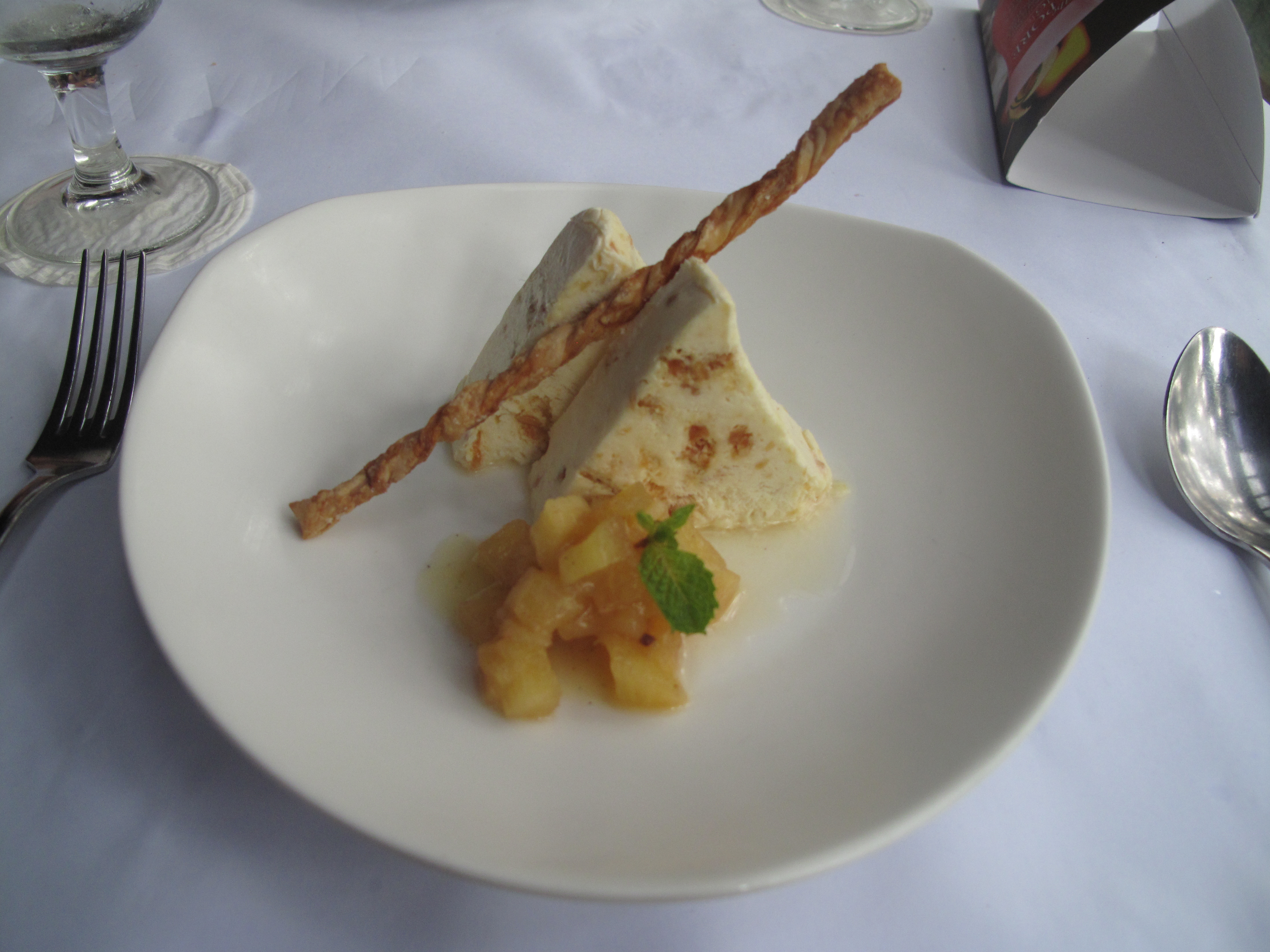
Quite unexpectedly, I really loved the desserts, perhaps even more than the starters and mains. The ginger nougat parfait with caramelised pineapple and spiced pineapple sauce was simply amazing!
IMG_2015

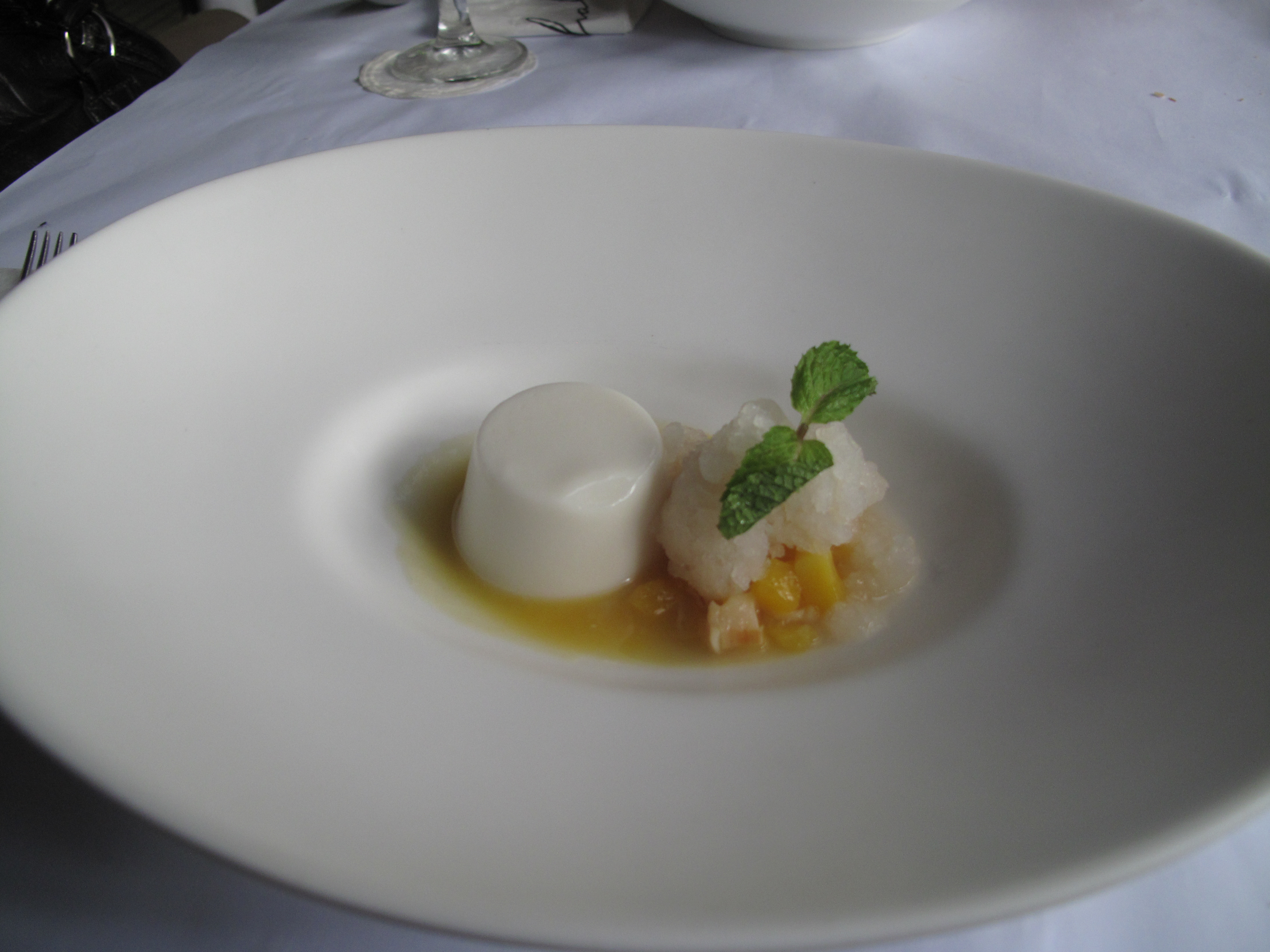
And this is coconut panna cotta with mango, passion fruit, mint and lychee granita.
IMG_2016

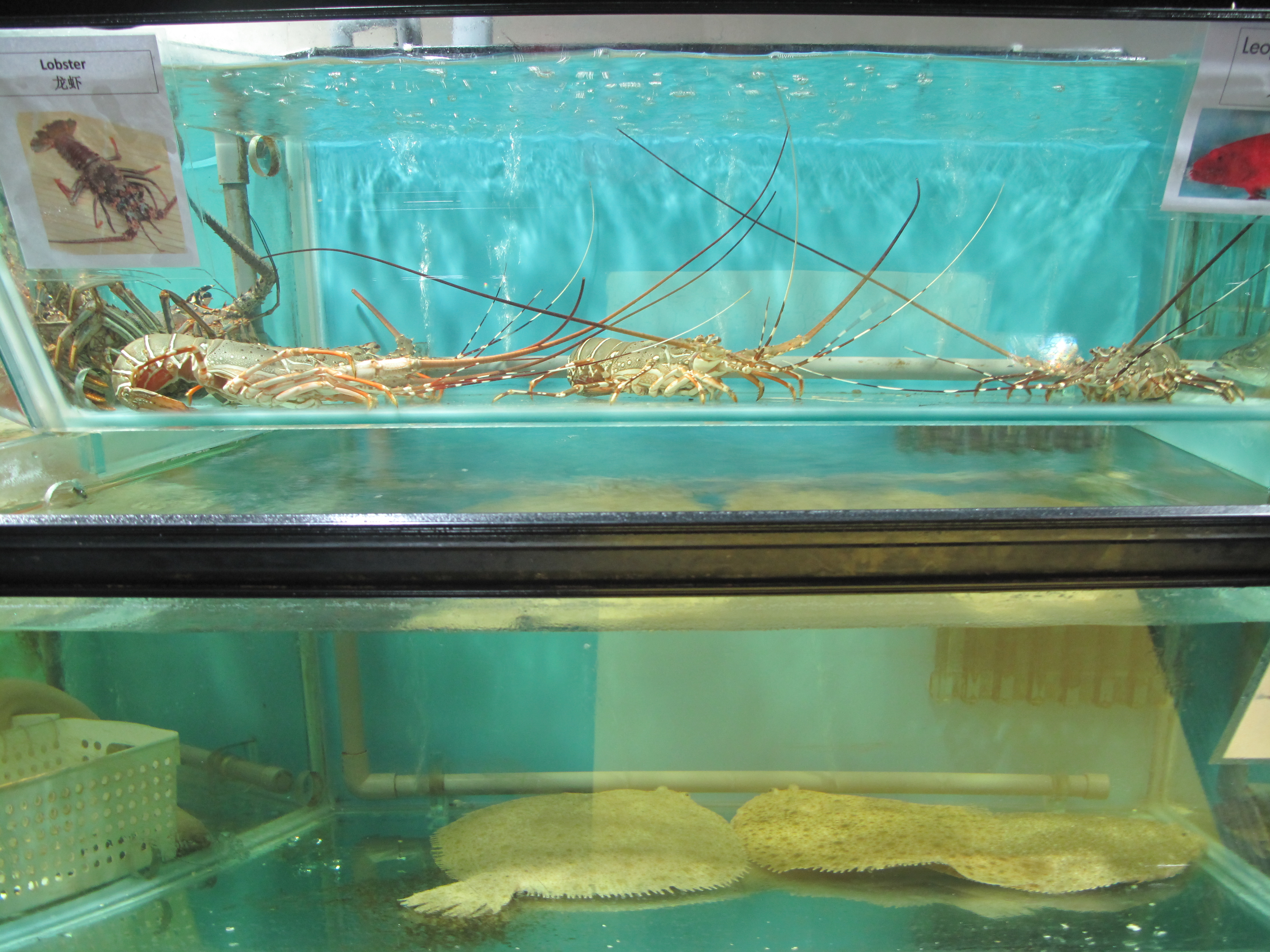
But that wasn’t it for our gastronomic adventures that day. After lunch we headed to the Gardens by the Bay, where we stayed right until dinner. The dinner, which we had nearby, at the Majestic Bay seafood restaurant, turned out great. Right near the entrance there stood a few big tanks with live seafood.

IMG_7788

IMG_2066

IMG_2065

IMG_2064

IMG_2063

IMG_2052

We went for the set menu consisting of small portions of several courses, so as to try more different food. The first thing to be served was the snack combo: soft shell crab with lemon buttermilk sauce, some kind of crisps and Japanese scallops with pickled cucumber, grapes and Kyoto dressing.

IMG_2053

The next course was chicken soup with cordyceps (at that time we had no idea what it was, thank goodness – but having googled it later I discovered that it was parasitic fungi!), con poy (dried scallops) and Chinese ham. The soup tasted quite unusually.

IMG_2054

Then came wok-fried pork ribs with espresso sauce – yummy!

IMG_2056

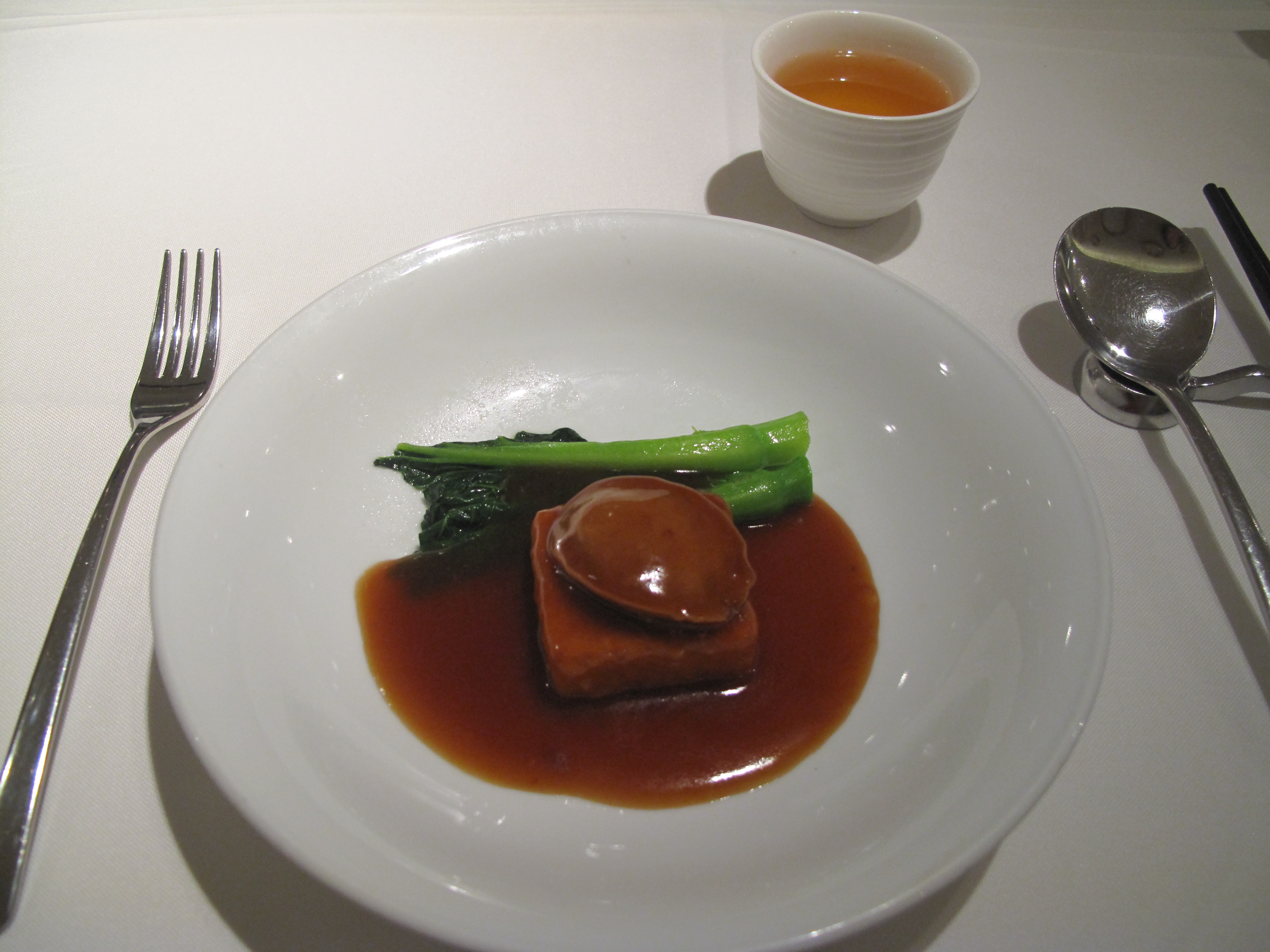
It was followed by stewed 10 heads abalone (familiar to us from our last Hong Kong trip), with tofu and my old friend kai-lan. Generally, abalone tastes quite nice, although I wouldn’t include it among my favourite food.
IMG_2057

Next we had some stewed Boston lobster with bee hoon (South-East Asian rice noodles). The lobster was very good, but for some reason I didn’t enjoy the noodles much.

IMG_2058

And last, but not least, we were served the dessert: essence of mango puree in a whole young coconut (i. e. with soft meat) and a glutinous rice dumpling with fresh cream stuffing. Both were delicious.

IMG_2061

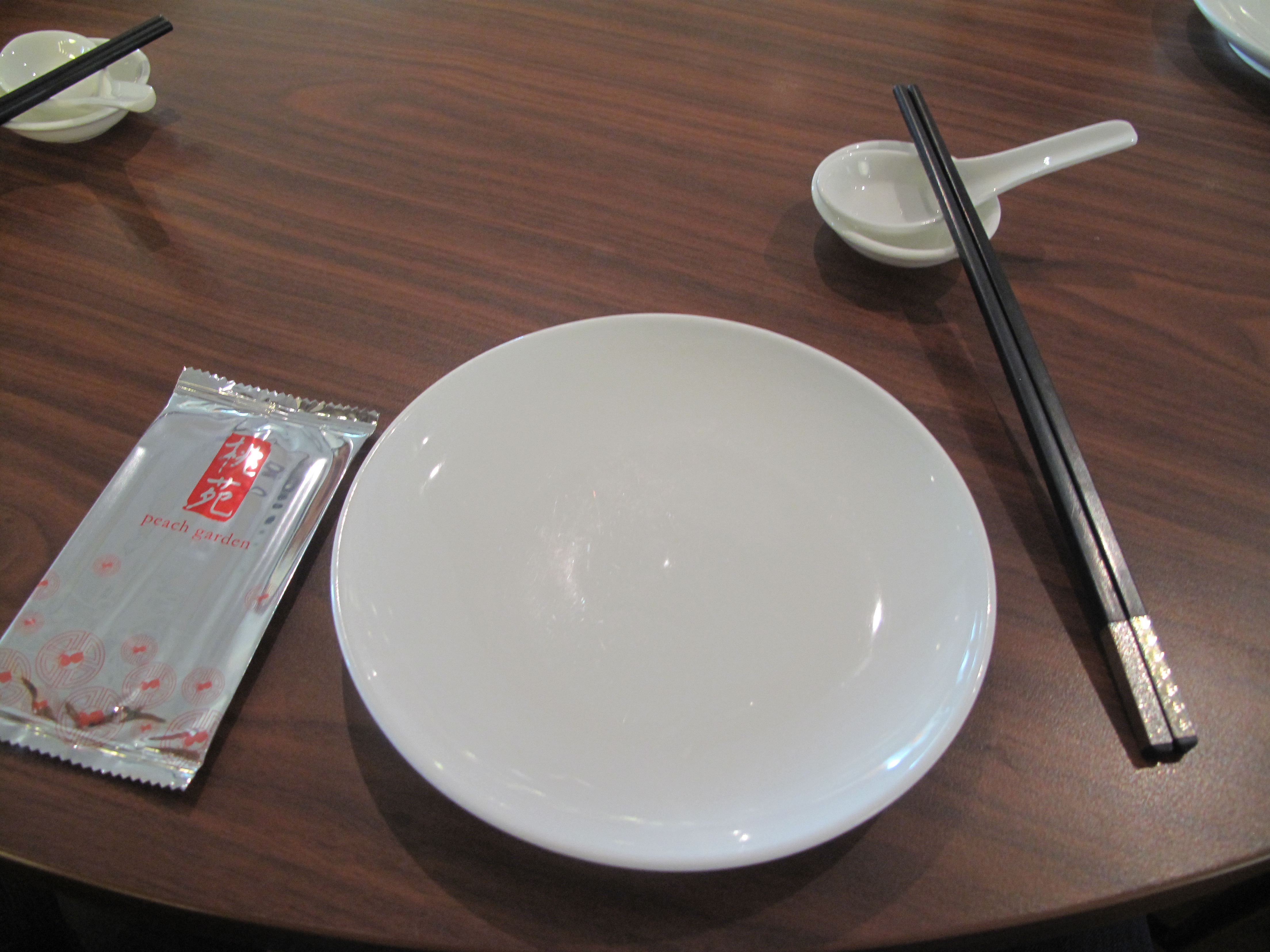
And finally, we had our last meal in Singapore right at the airport, before the flight to Hong Kong, in the Peach Garden Noodle House.
IMG_2081

First of all, I ordered my long-time favourite Szechuan-style hot and sour soup.

IMG_2085

The main course was noodles with roast pork, and broth served separately. The broth had to be poured onto the noodles to turn them into a soup, which I didn’t do – that would be way too many soups for me.

IMG_2089

Hainanese chicken rice is one more dish, considered Singapore’s national (even though it derived, of course, from the cuisine of the Hainan island in China). This dish is served with chicken broth, pounded ginger, dark soy sauce and chili garlic sauce. Overall, it wasn’t bad, but a bit too greasy for my taste.

???????????????????????????????

Posted in Азия, Русский, Сингапур

Еда в Сингапуре (бонусный пост)

CLICK HERE FOR ENGLISH VERSION. АНГЛОЯЗЫЧНАЯ ВЕРСИЯ ПО ЭТОЙ ССЫЛКЕ.

Если вы читали предыдущие посты про Сингапур, то, возможно, помните, что я грозилась сделать отдельную гастрономическую заметку, в которой будет описано все, что я во время поездки ела (и даже то, что сама не ела, а лишь видела со стороны). Любители поесть, к каковым причисляю и себя, надеюсь, оценят.

Итак, в день нашего приезда в Сингапур, мы оказались в торговом центре Paragon, где, как и практически везде тут, наличествовал обширный фуд корт. Нам показалось логичным начать знакомство с едой в Сингапуре собственно с ресторана сингапурской кухни. Таковой имелся – ресторан Grandma’s с гордостью возвещал о своей аутентичности.

IMG_1501

Сингапурская кухня представлена огромным количеством блюд различного происхождения, что совершенно не удивительно при столь разнообразном этническом составе населения. Само понятие «сингапурская кухня» – это эдакий микс кухонь китайской и малайской/индонезийской, с элементами других азиатских и даже европейских кухонь.

Жареного красного снэппера (он же луциан, он же рифовый окунь) я заказала в первую очередь – очень уж люблю эту рыбу, и не прогадала, вкусно!

IMG_1498

Но пожалуй, больше всего понравилась китайская (из фуцзяньской и чаошаньской кухни) жареная закуска под названием мини нго хианг – это пряная рубленая курица, завернутая в тонкую пленку с соевого молока.

IMG_1493

На следующем фото – два малайских блюда: наси лемак слева и карри лакса справа. Первое, состоящее из риса, сваренного в кокосовом молоке, куриного карри, анчоусового самбала (приправы), яиц вкрутую, огурцов и ачара (маринованных овощей), очень понравилось. Второе – суп-лапша с креветками, курицей, тофу и собственно карри – вроде как и неплохое, но довольно быстро надоело.

IMG_1491

Еще одно блюдо, то ли индонезийское, то ли малайское – ренданг из говядины, представляющий собой кусочки мяса, тушенные в кокосовом молоке и каких-то специях.

IMG_1499

А вот достаточно интересный напиток, называется Grandson’s Favourite – из миндально-соевого молока и травяного желе, с пальмовым сахаром.

IMG_1492

На следующий день, если помните, днем мы рассекали по Чайнатауну, соответственно, в оном и обедали, и, конечно же, именно в китайском ресторане. Не совсем понятно, как именно этот ресторан называется, вот гугл подсказывает, что Chinatown Shanghai Kitchen. Еды заказали много, и она была прекрасна.

IMG_1575

Вот старая добрая свинина в кисло-сладком соусе, которая популярна во всем мире и, кстати, насколько мне известно, скорее относится к кантонской кухне, нежели шанхайской:

???????????????????????????????

Это самая обыкновенная жареная утка, а вовсе не всем известная пекинская, и даже не чуть менее известная кантонская, но в любом случае мягкая и вкусная.

IMG_1568

А вот говядина с имбирем и луком, очень нежная и пряная:

IMG_1562

Чили краб – это еще одно блюдо сингапурской кухни, обязательное к дегустации, наряду с лаксой и наси лемак, отведанными нами накануне. На вкус – достаточно неплохо, правда, не скажу, что прямо умереть – не встать, в меру остро, не очень удобно есть: как ни изощряйся, в результате все равно придется есть руками и перепачкаться соусом.

IMG_1573

Ну, и помимо мясных блюд, мы также взяли разнообразные гарниры, например, лапшу с овощами и какими-то ноздреватыми грибами, которые скорее похожи на куски хлеба.

IMG_1572

Или вот спаржа с бобовыми ростками:

IMG_1561

А вот – жареный гай лань, он же – китайская брокколи, разве что, на привычную нам брокколи не слишком-то и похож. Я никогда раньше об этом овоще не слышала, но после этой азиатской поездки записала его в число любимых.

IMG_1563

И еще один гарнир – жареные китайские овощи (пак чой и какие-то грибы).

IMG_1570

Вечером того же дня мы оказались в фуд корте торгового центра Marina Bay, причем не по собственной воле, а скрываясь от сильнейшего ливня. Мои спутники решили ограничиться лишь чаем с пирожными, я же, не будучи большим любителем последних, решила поужинать по-человечески. После долгого хождения мимо будок фуд корта, остановилась у корейской и взяла себе набор, состоящий из супа из водорослей , острого куриного барбекю, риса, жареных сушеных анчоусов и кимчхи из капусты (то бишь острой квашеной капусты). Честно скажу, дикого восторга я не испытала – то ли была не слишком голодна, то ли просто это сочетание вкусов не по мне.

IMG_1684

???????????????????????????????

Другие будки, как я уже писала в этом посте, предлагают огромное разнообразие блюд различных кухонь, преимущественно азиатских – вот местные сингапурские лакомства:

IMG_1671

Йонг тау фу – блюдо китайской кухни хакка, изначально представляло собой суп с кусочками тофу, фаршированного мясом или рыбой (откуда и название), а теперь – еще и со всякой всячиной вроде мясных или рыбных шариков, морепродуктов, овощей, крабовых палочек, грибов, а кроме того, все это великолепие не обязательно должно быть супом, есть разновидность и в качестве второго блюда.

IMG_1672

Бак кут те – это китайский суп из свиных ребрышек с различными добавками, название буквально означает «чай из мясных костей». Несмотря на то, что блюдо имеет китайское происхождение, встречается оно чаще всего именно в Сингапуре и Малайзии, куда его завезли в 19 веке китайские рабочие фуцзяньского и чаошаньского происхождения.

IMG_1673

Насколько я понимаю, Chinatown Beef Noodle – это такая сеть, подается там, соответственно, лапша с говядиной во всевозможных вариантах.

IMG_1674

Одно из направлений кантонской кухни, очень популярное в Гонконге – это сиу мей, или жареное на открытом огне мясо (свинина, курица, гусь, утка).

IMG_1675

А это – жареная лапша по-сингапурски, с разнообразными добавками.

IMG_1677

Наси паданг – это вареный на пару рис со всевозможными мясными и овощными добавками, происходит из города Паданг в Индонезии.

IMG_1678

Ajisen Ramen – японская сеть фаст-фуда, подаются тут, как понятно из названия, различные виды супа рамэн (пшеничная лапша в бульоне, со всевозможными добавками).

IMG_1679

Jia Xiang Sarawak Kuching Kolo Mee – еще одна сеть, специализирующаяся на коло мее (блюде из яичной лапши со свининой, родом из малайского штата Саравак).

IMG_1680

Продолжим тему супа-лапши: еще одна вариация оного – это бань мянь, распространено это блюдо в местах обитания носителей фуцзяньского диалекта китайского языка и диалекта хакка (в частности, в самой провинции Фуцзянь, Сингапуре и Малайзии).

IMG_1681

Вроде как будка малайской кухни, хотя ни одно из приведенных на вывесках блюд мне идентифицировать не удалось.

IMG_1682

Уголок индийской кухни:

IMG_1683

С понятием «дим сам», думаю, знакомы все, ибо это изобретение кантонской кухни широко распространено по всему миру. Для тех, кто в танке – это такие легкие закуски, подаваемые на маленьких тарелочках или в бамбуковых пароварках. Видов дим сам великое множество: это и самые разнообразные пельмени, и булочки с различными начинками, и жареные куриные лапы (т.н. «когти феникса»), и ребрышки, и мясные шарики, и даже рисовая каша, и много чего другого.

IMG_1685

Судя по представленным блюдам, здесь тоже дим сам, причем не только пельмени с креветками, как утверждает название, но и другие виды пельменей, а также все те же куриные лапы, булочки с яичным кремом, и т.д.

IMG_1686

А вот японская еда, и как видно на картинке, многие из блюд подаются в порционных коробочках с несколькими отделениями – традиционных бэнто.

IMG_1687

Еще лапша – вот прямо тут, у всех на глазах, ее и делают.

IMG_1688

Из всего вышеперечисленного наименее известной мне является филиппинская кухня, с удовольствием бы попробовала, но к сожалению, в этот раз не получилось.

IMG_1689

На следующий день шибко захотелось китайских пельменей, поэтому мы усеченным составом направились в ресторан Din Tai Fung из тайваньской сети, как раз специализирующийся на мантах на пару – сяолунбао.

IMG_7563

Как оно нередко бывает в пельменных и димсамовых ресторанах, к меню прилагается ручка, и ты сам отмечаешь, что и в каком количестве хочешь заказать.

IMG_1748

Чай и имбирная стружка подаются сразу и бесплатно.

IMG_1749

IMG_1752

Мы в результате взяли суп с вонтонами (разновидность пельменей из тонкого теста) с овощами и свининой, рис и уже так полюбившийся мне гай лань, приготовленный по-гонконгски, со специальным устричным соусом.

IMG_1753

Ну и, собственно, сами пельмешки сяолунбао. Минимальная порция – 6 штук, поэтому хотя и хотелось попробовать всего побольше, ввиду отсутствия запасного желудка, пришлось ограничиться всего двумя видами. Это пельмени с курицей:

IMG_1755

А это – пельмени со свининой и креветками, называемые шао май (в кантонском произношении «сиу май» – именно в таком варианте они наиболее известны, ввиду уже упомянутой мной выше повсеместной распространенности дим сам).

IMG_1754

На следующий день, на острове Сентоса, мы забрели вот в такую азиатскую едальню:

IMG_7578

Заведение довольно маленькое, а меню, хоть и не изобилует количеством наименований, умудряется быть настолько разнообразным по числу представленных кухонь, что прямо глаза разбежались.

IMG_1775

Вот мы и заказали относительно разнообразно – начали с грибного супа и обычного овощного салата, соскучившись по привычной еде.

IMG_1777

Индийское дум бирьяни – это блюдо из риса с мясом (в данном случае – курицей) и/или овощами и специями, острое, как и полагается в индийской кухне, правда в меру.

IMG_1778

Курица «гунбао» тоже острая, причем, как и полагается в сычуаньской кухне, не в меру. Сычуаньской кухне вообще присуще использование большого количества перца – в частности, сочетание сушеного перца чили с сычуаньским перцем (который на самом деле вовсе даже не перец, а плод перечного дерева, или зантоксилума) дает ту самую, характерную для этой кухни, сухую остроту, вызывающую онемение полости рта и острое послевкусие.

IMG_1780

На той же Сентосе, в парке аттракционов Юниверсал Студиос, мы питались еще раз, в китайском ресторане Hollywood China Bistro.

IMG_1912

IMG_1910

В этот раз особо изощряться не стали, а взяли хорошо знакомые блюда. В частности, суп из сладкой кукурузы с яйцом:

IMG_1905

А вот вполне обычное блюдо, с не таким уж обычным названием: лапша и-фу с грибами. И-фу, она же и-мейн – это кантонская яичная лапша из пшеничной муки.

IMG_1907

Лимонная курица – достаточно известное блюдо, подаваемое в китайских ресторанах по всему миру, причем реже всего в самом Китае.

IMG_1908

А это – жареная утка по-кантонски, под ароматным соусом, разновидность уже упомянутого мной выше жаркого сиу мей.

IMG_1904

Ну и сдобрено все это было замечательным жасминовым чаем.

IMG_1900

Первую половину следующего дня, если помните, мы проводили в Ботанических садах, соответственно, и обедали там же – в Имбирном саду, в ресторане Halia, название которого как раз-таки и означает «имбирь» по-малайски. С 12 до 2 часов дня у них подают комплексный обед из двух или трех блюд, на выбор. Порции довольно маленькие, но все вкусно и щедро приправлено, как и следует ожидать, имбирем.

IMG_7740

Вот какие у них закуски (из попробованных нами) – это кусочки копченого лосося, огурца, картофеля кипфлер (это такой деликатесный салатный сорт) с какими-то сухарями и английской горчицей:

IMG_2010

А это салат из арбуза, помидоров трех цветов и козьего сыра, с маслинами и бальзамическим уксусом.

IMG_2011

Суп дня – тыквенный:

IMG_2012

Из основных блюд: рыба баррамунди на гриле (она же – белый морской окунь) с местными грибами и консоме из жареной утки по-китайски. Консоме подливают в тарелку прямо на месте, из небольшого чайничка.

IMG_2013

А также – жареная куриная грудка с морковным пюре, картофельным мильфеем (это по сути такая многослойная картофельная запеканка) и брюссельской капустой.

IMG_2014

Против обыкновения, мне очень понравились десерты, пожалуй даже больше, чем закуски и вторые блюда. Имбирное парфе-нуга (холодный десерт) с карамелизированными ананасами и в пряном ананасном соусе – это было просто прекрасно!

IMG_2015

Это кокосовая панна котта с манго и маракуйей и колотым льдом из сока личи.

IMG_2016

Но этим наши гастрономические похождения в тот день не ограничились. После обеда мы направились в сады на Marina Bay, где и прогуляли до самого ужина. Ели прямо рядом же, в морепродуктовом ресторане Majestic Bay, причем ужин получился прекрасный. Морепродукты свежайшие, их вылавливают из аквариумов прямо тут же.

IMG_7788

IMG_2066

IMG_2065

IMG_2064

IMG_2063

IMG_2052

Мы заказали набор, состоящий из маленький порций нескольких блюд, дабы попробовать всего побольше. Сначала принесли закуски: мягкопанцирного краба с соусом из пахты с лимоном, что-то хрустящее (не удалось понять, что именно) и японские морские гребешки с маринованным огурцом и виноградом.

IMG_2053

Следующим номером шел суп – куриный, с кордицепсом (на тот момент мы понятия не имели, что это такое, и слава богу – ибо погуглив впоследствии, выяснили, что это грибы, паразитирующие на насекомых!), сушеными гребешками и китайской ветчиной. Вкус у супа довольно оригинальный.

IMG_2054

Дальше шли жареные свиные ребрышки в кофейном соусе – вкусно!

IMG_2056

Следующее блюдо – тушеное морское ушко (оно же абалон, известный нам еще по прошлой поездке в Гонконг), с тофу и нашим старым знакомым гай ланем. В целом, вкусный моллюск, хотя в число любимых блюд бы его не включила.

IMG_2057

Далее – тушеный омар с юговосточноазиатской рисовой вермишелью би-хун. Сам омар был весьма недурственен, а вот лапша как-то не пошла.

IMG_2058

Ну и в конце, ясное дело, подали десерт: пюре из манго в молодом кокосе (то есть, с мягкой мякотью, пардон за плеоназм) и рисовый пирожок со сметанной начинкой. И то, и другое очень даже порадовало.

IMG_2061

Ну и последний наш обед в Сингапуре был прямо в аэропорту, перед рейсом в Гонконг, в ресторане лапши с поэтическим названием Peach Garden (то бишь «Персиковый сад»).

IMG_2081

На первое был давно любимый мной сычуаньский остро-кислый суп.

IMG_2085

Далее – лапша с жареной свининой, и бульон отдельно к ней. Бульоном надо было эту самую лапшу полить, чтоб получился суп, чего мы, честно говоря, не сделали – уж слишком много супов получается.

IMG_2089

Хайнаньская курица с рисом – еще одно блюдо, считающееся национальным сингапурским (хотя и происходит, понятное дело, из кухни китайского острова Хайнань). Подается это блюдо с куриным бульоном, толченым имбирем, темным соевым соусом и чесночным соусом чили. В целом, неплохо, но на мой вкус слишком жирно.

???????????????????????????????

Posted in Asia, China, English, Hong Kong, Singapore

Singapore – Day 7 / Hong Kong

РУССКОЯЗЫЧНАЯ ВЕРСИЯ ПО ЭТОЙ ССЫЛКЕ. CLICK HERE FOR RUSSIAN VERSION.

30 November 2013

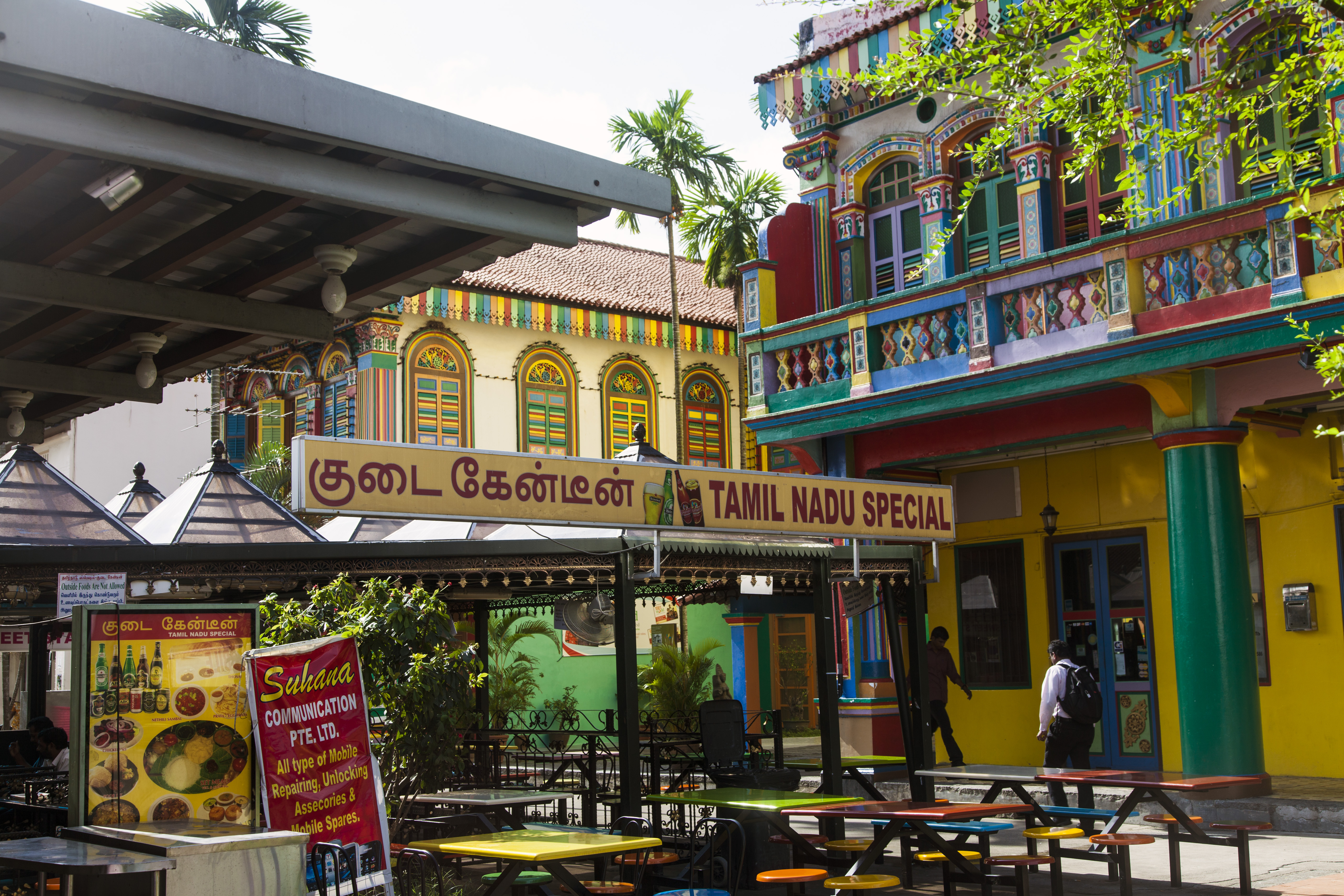
The trip to the chic and luxury Singapore ended not very luxuriously in Little India. First, we were intending to have lunch right there too, in order to join the Indian spirit, just as we had been joining the Chinese spirit in Chinatown; however the spirit didn’t please us that much, for it was very smelly! We really had the impression that the city government of Singapore had just given up on this part of town and provided people the opportunity to live in a familiar environment: very colourful, moderately dirty and ragged.

IMG_7806

IMG_7804

IMG_7800

IMG_7796

IMG_7816

IMG_7815

IMG_7813

Besides, there was a lot of construction going on around; maybe in the near future Little India too would be transformed to match the other parts of the magnificent Singapore. Quite frankly, we didn’t have the desire to eat here, so we eventually decided to have lunch at Changi Airport.
Even though our flight was delayed by an hour, we made it safely to Hong Kong on a small JetStar plane. The air temperature here is far from tropical, yet, by our standards, if it can get up to 20°C (or even slightly above), you wouldn’t really wear a down parka. By Chinese standards, though, it’s exactly the right time for those – that is why Hong Kong is dressed very diversely: foreigners walk around in almost beach style clothing, and the locals wear warm winter jackets and boots.

While during our last visit we were staying on Hong Kong Island, this time we booked a hotel on the busy Nathan Road on the Kowloon Peninsula.

Posted in Азия, Гонконг, Китай, Русский, Сингапур

Сингапур – день 7 / Гонконг

CLICK HERE FOR ENGLISH VERSION. АНГЛОЯЗЫЧНАЯ ВЕРСИЯ ПО ЭТОЙ ССЫЛКЕ.

30 ноября 2013

Шикарный, роскошный Сингапур закончился у нас совсем не роскошно: Малой Индией. Сначала мы намеревались аж там и пообедать и приобщиться к духу Индии так, как в Чайнатауне приобщились к китайскому, но тот дух нас не обрадовал совсем, он был очень вонючий. Такое впечатление, что городские власти Сингапура просто махнули рукой на эту часть города и предоставили выходцам из Индии жить в привычной для себя обстановке: очень пестро, в меру грязно и обшарпанно.

IMG_7806

IMG_7804

IMG_7800

IMG_7796

IMG_7816

IMG_7815

IMG_7813

Кроме того, там еще шло какое-то большое строительство, может быть, в недалеком будущем Малая Индия тоже преобразится и станет под стать остальным частям великолепного Сингапура. Желания обедать тут, честно говоря, вообще не возникло, поэтому, как и намеревались, пообедали в аэропорту Чанги.

Затем маленький самолетик компании Джетстар, хотя и задержался с вылетом на час, но благополучно перевез нас в Гонконг. Здесь температура воздуха уже далеко не тропическая, однако, по нашим понятиям, если днем доходит до 20 градусов Цельсия (и чуть выше), в зимних дутиках все-таки ходить не будешь. По китайским же меркам для них теперь самое время – поэтому Гонконг одет очень разностильно: иностранцы ходят едва ли не полуголыми, а китайцы – в зимних куртках и сапогах.

Если в прошлый раз мы жили на острове Гонконг, то в этот раз выбрали полуостров Коулун и оживленную Натан Роуд, то есть переместились ближе к центру.

Posted in Asia, English, Singapore

Singapore – Day 6

РУССКОЯЗЫЧНАЯ ВЕРСИЯ ПО ЭТОЙ ССЫЛКЕ. CLICK HERE FOR RUSSIAN VERSION.

29 November 2013

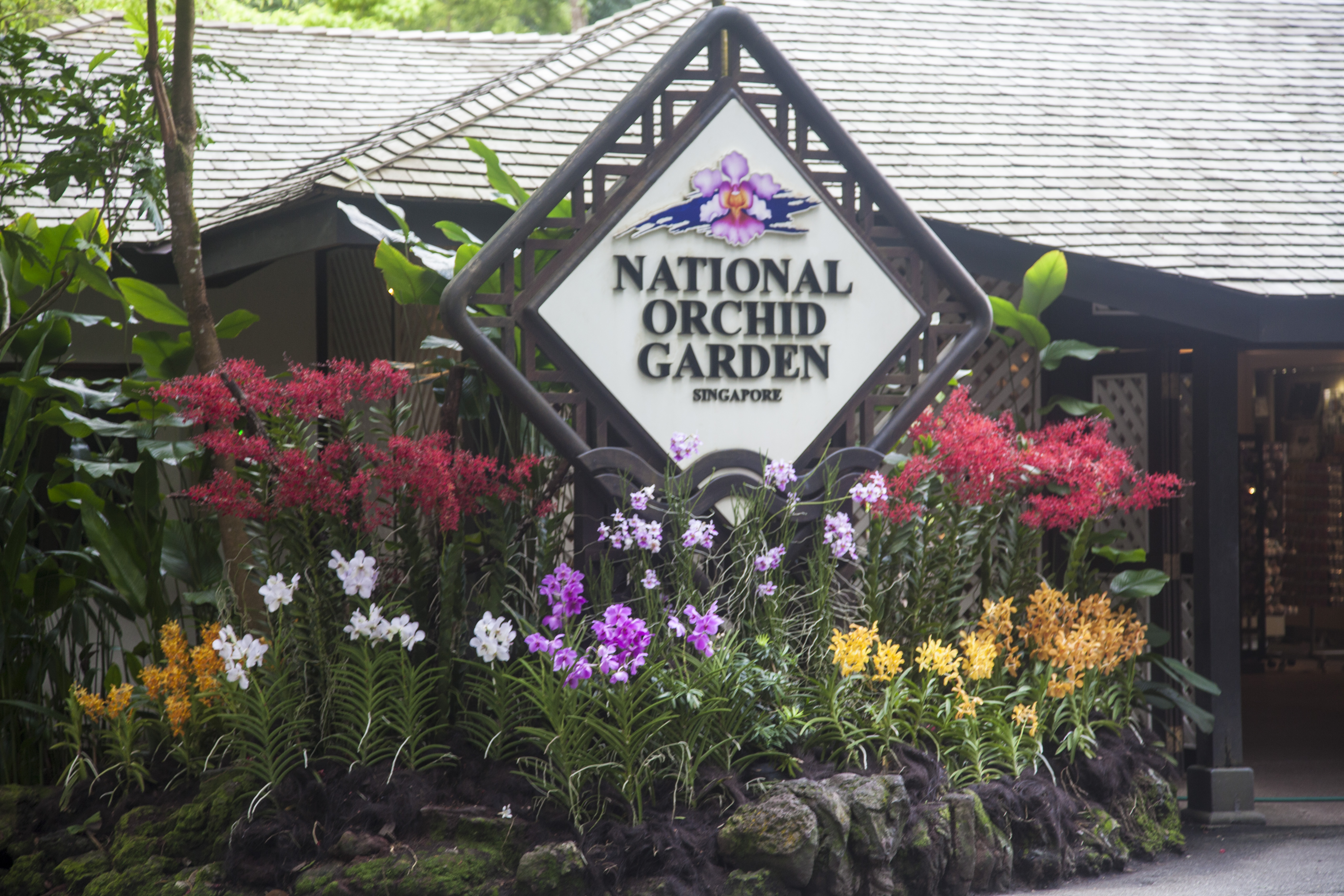
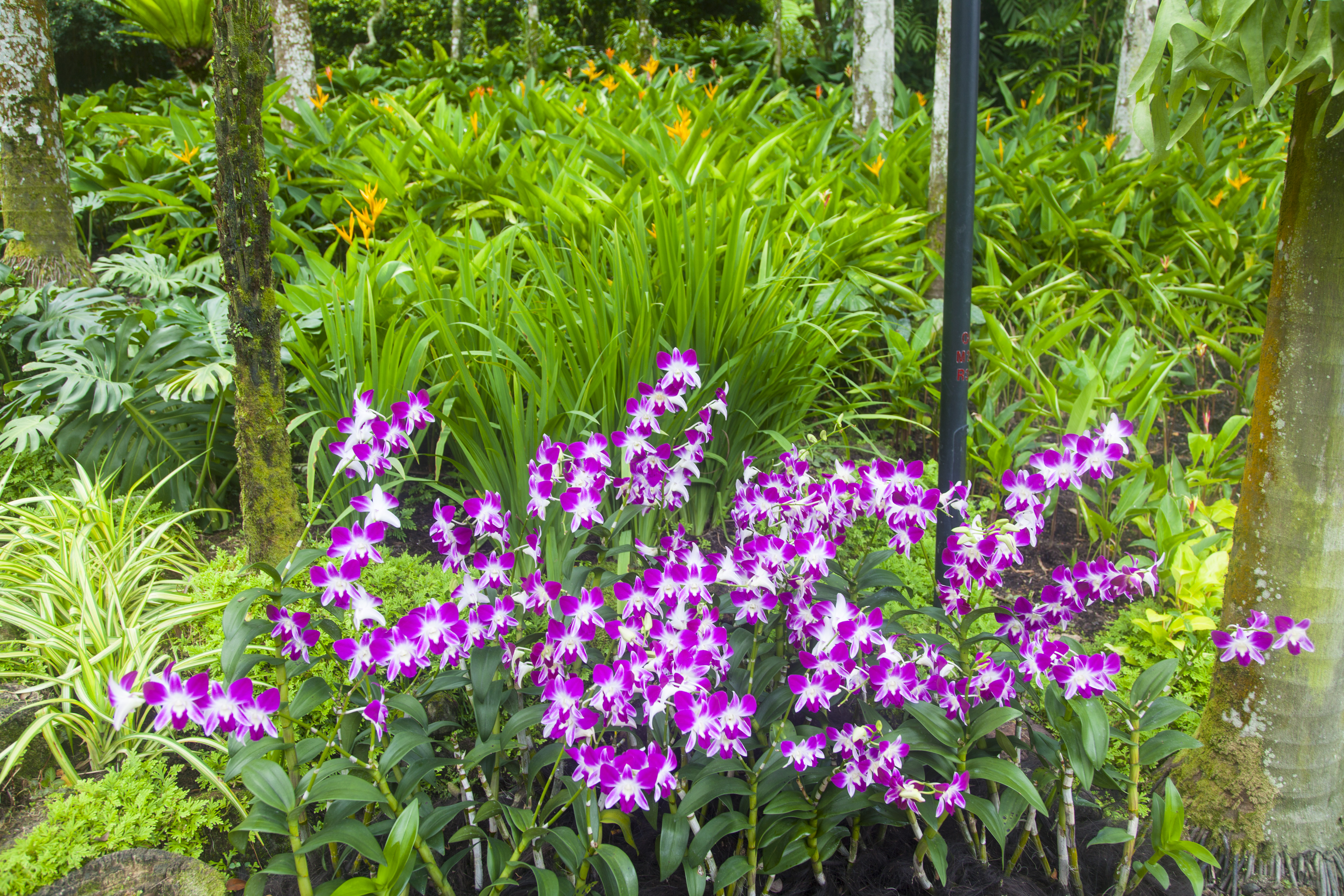
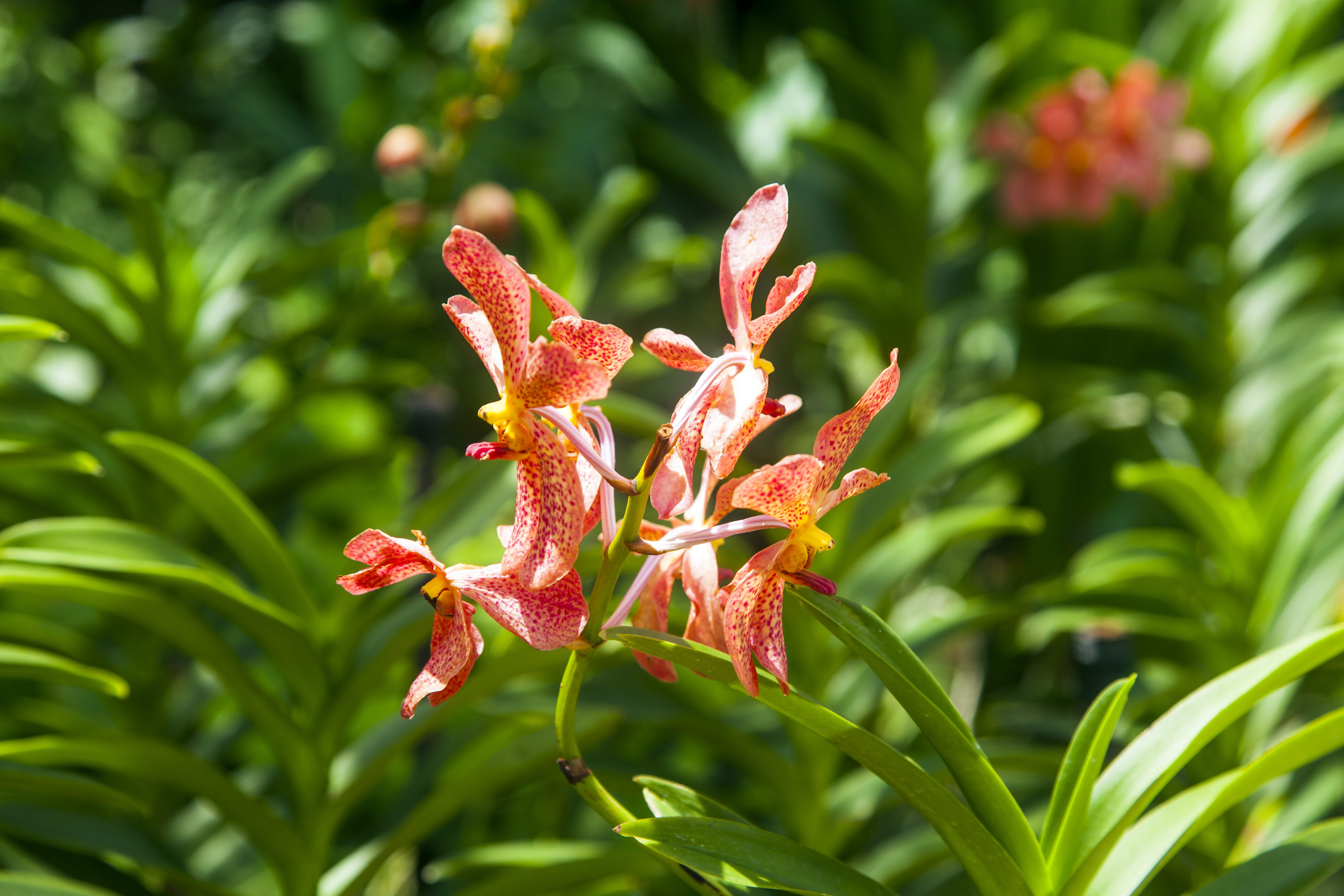
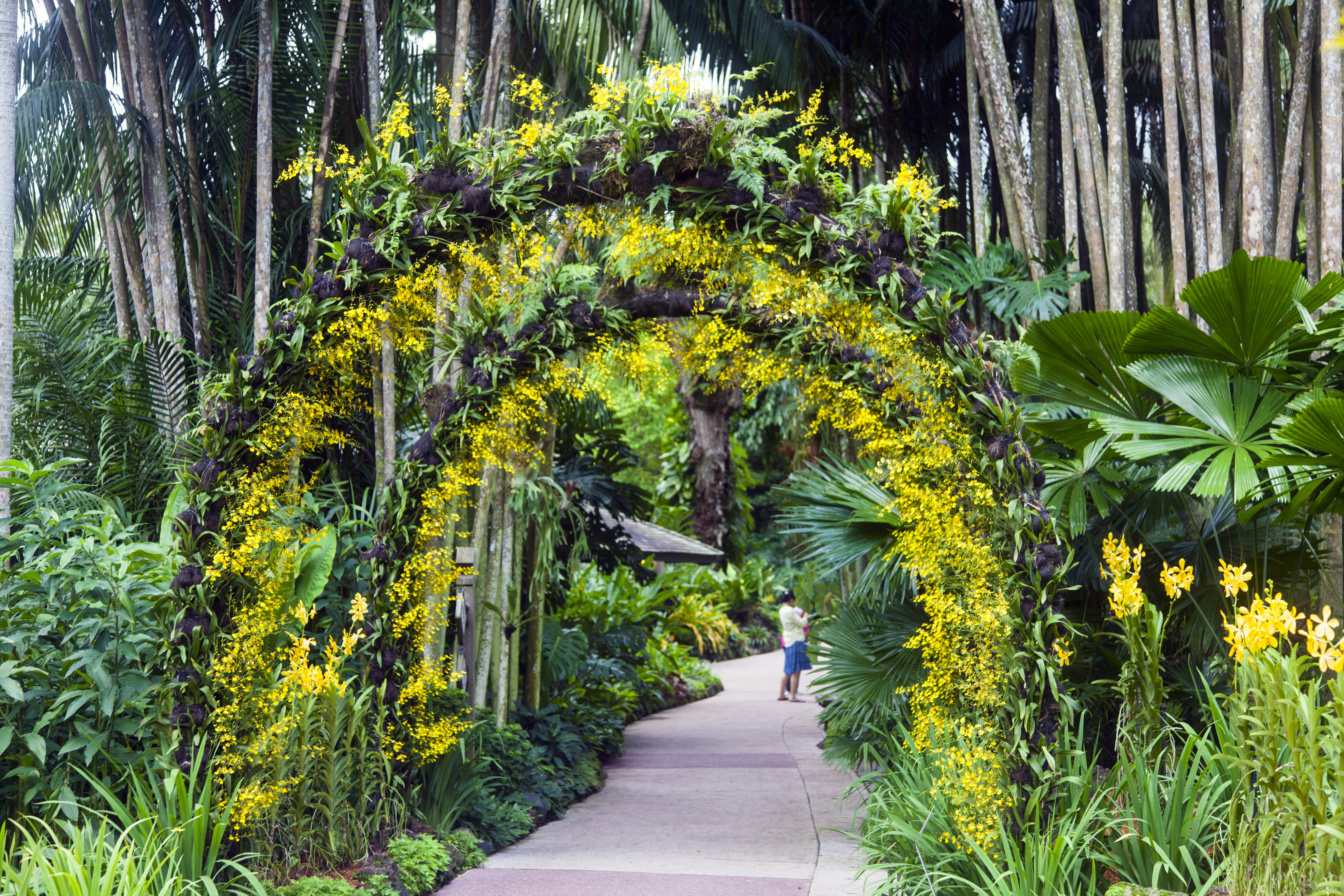
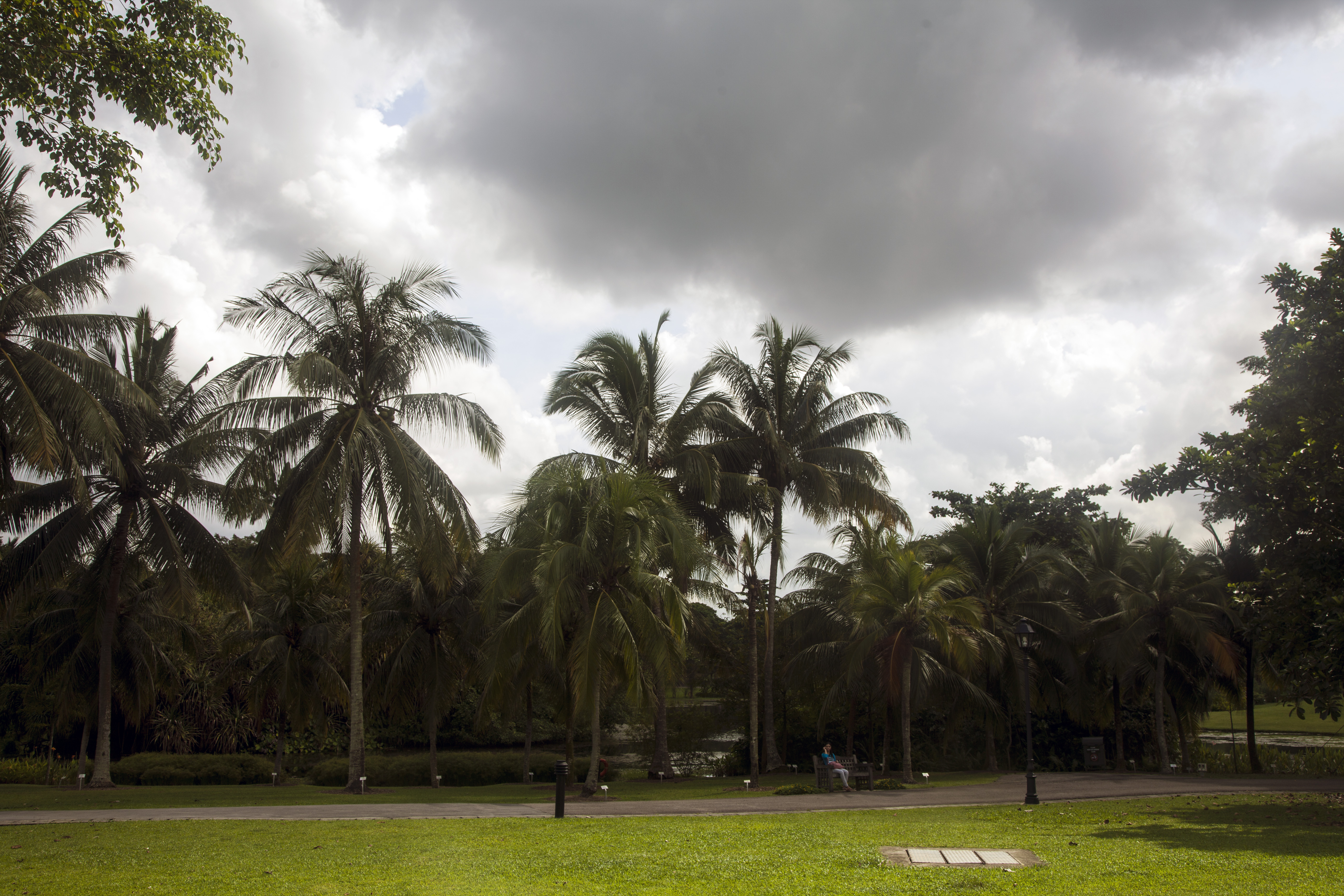
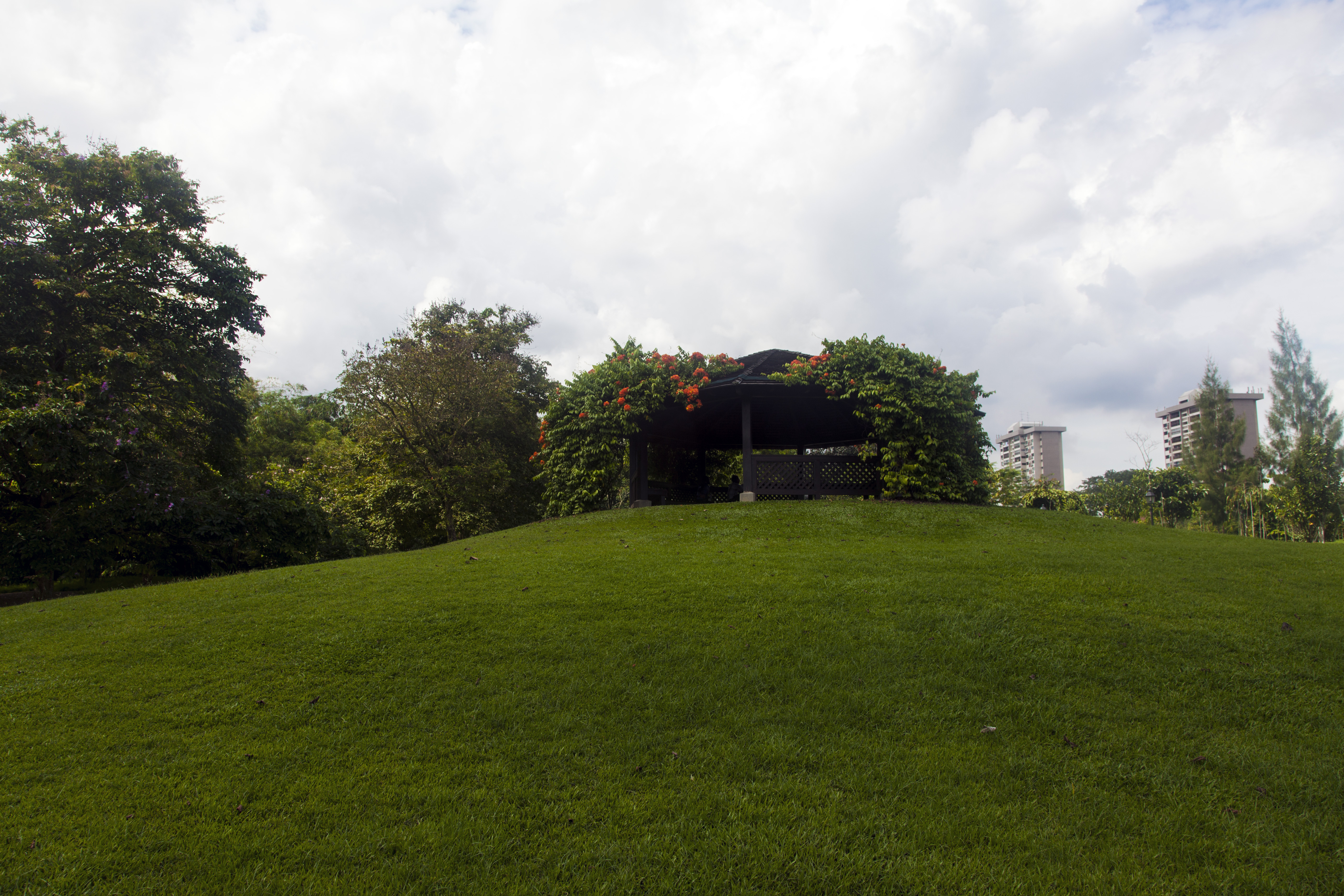
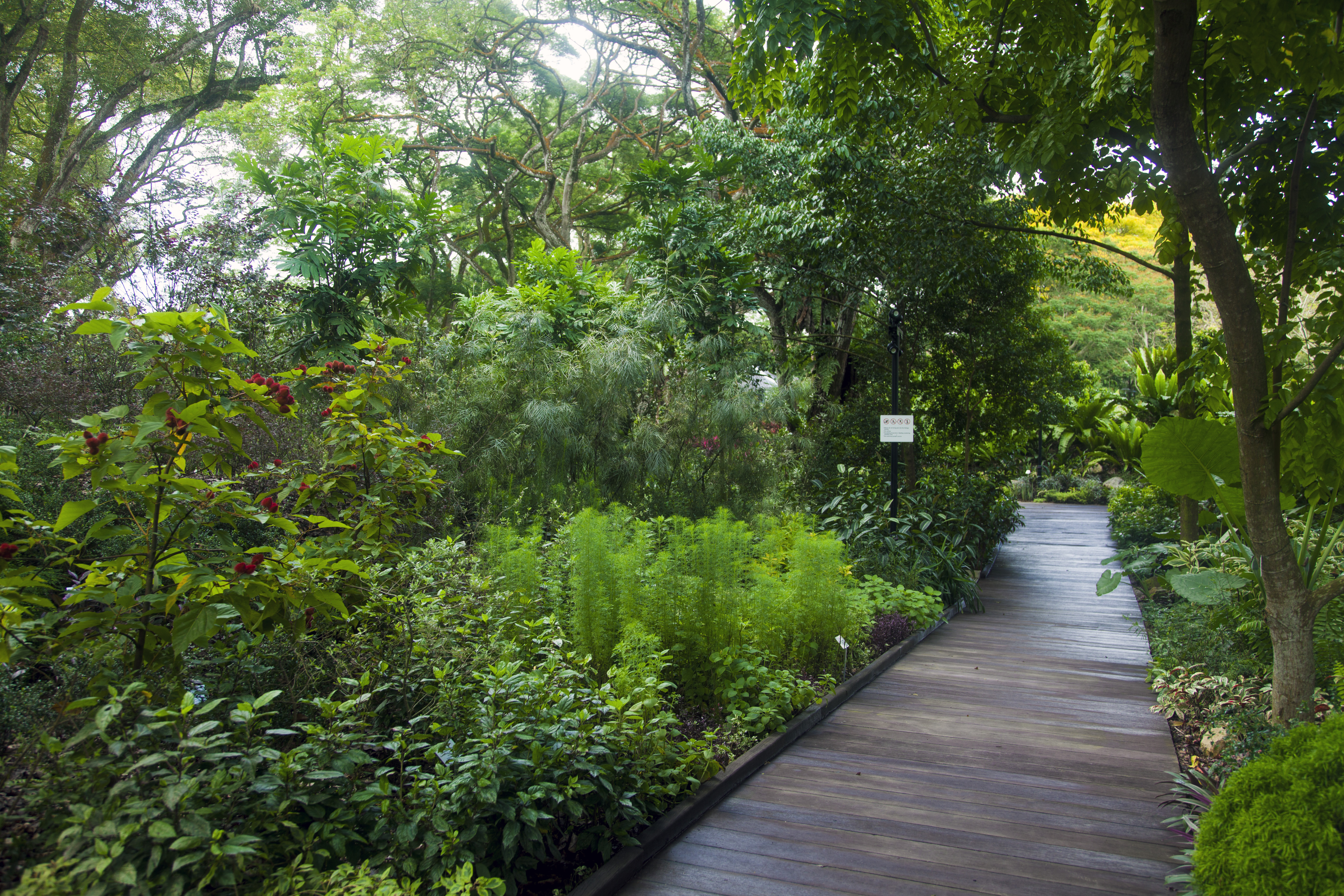
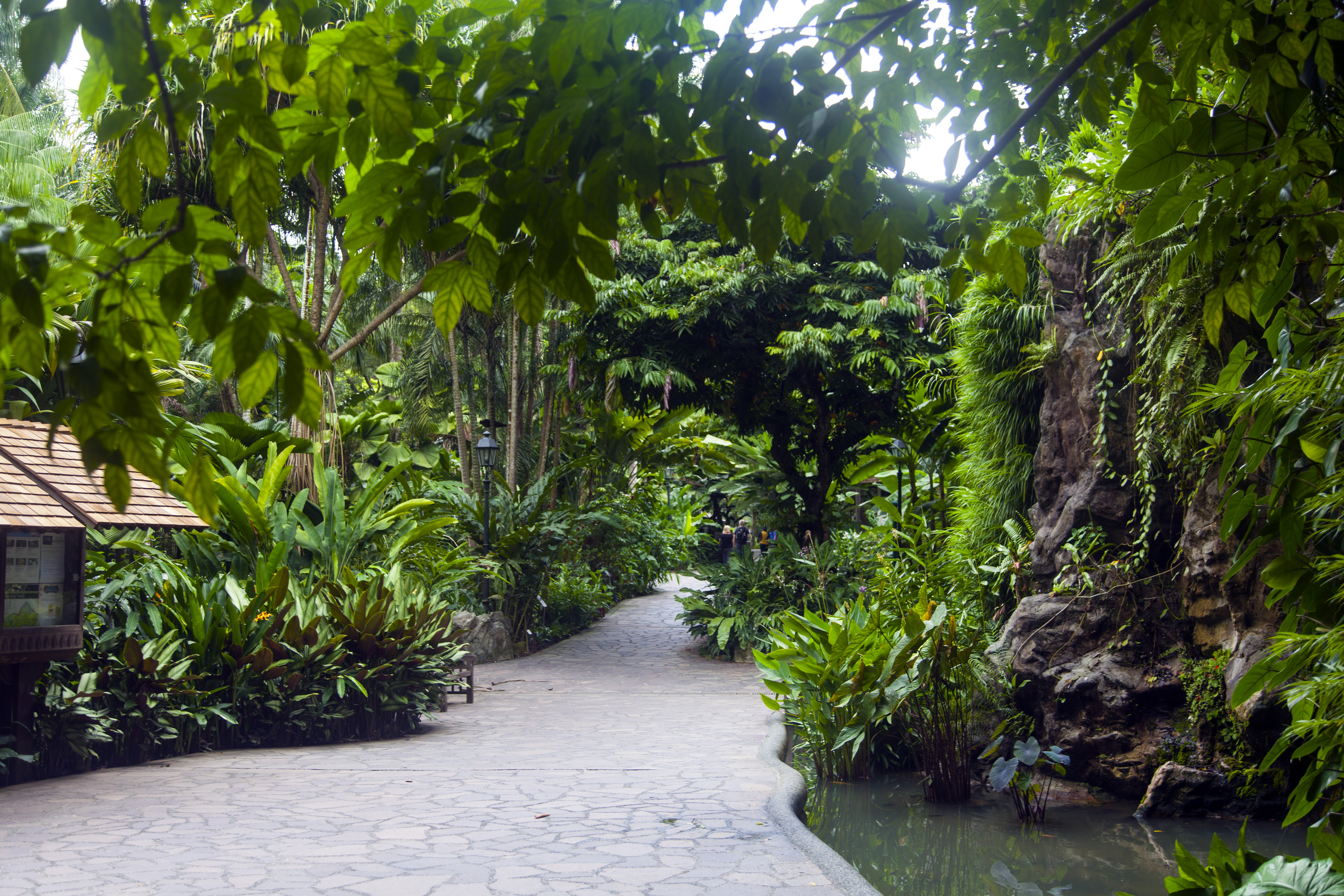
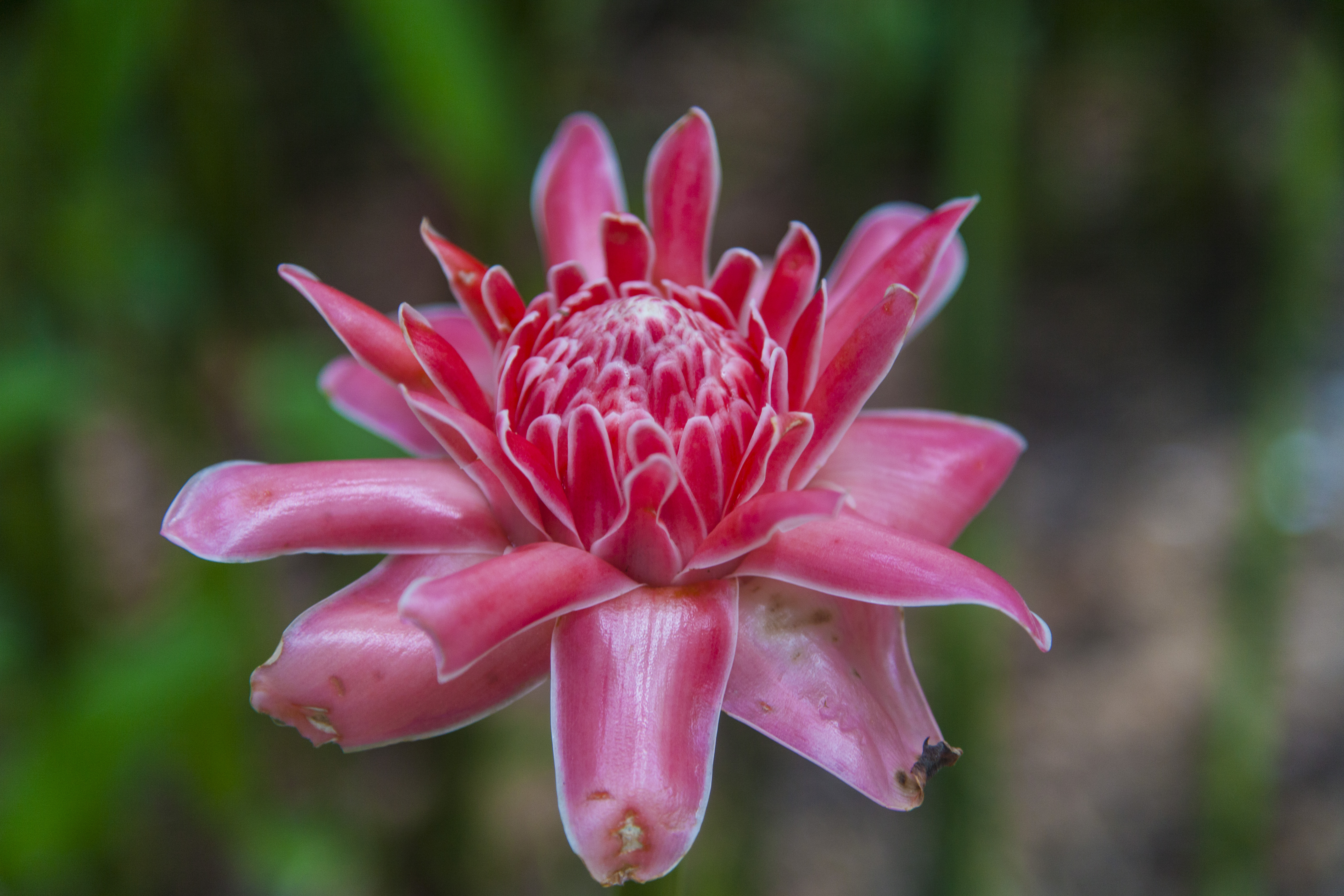
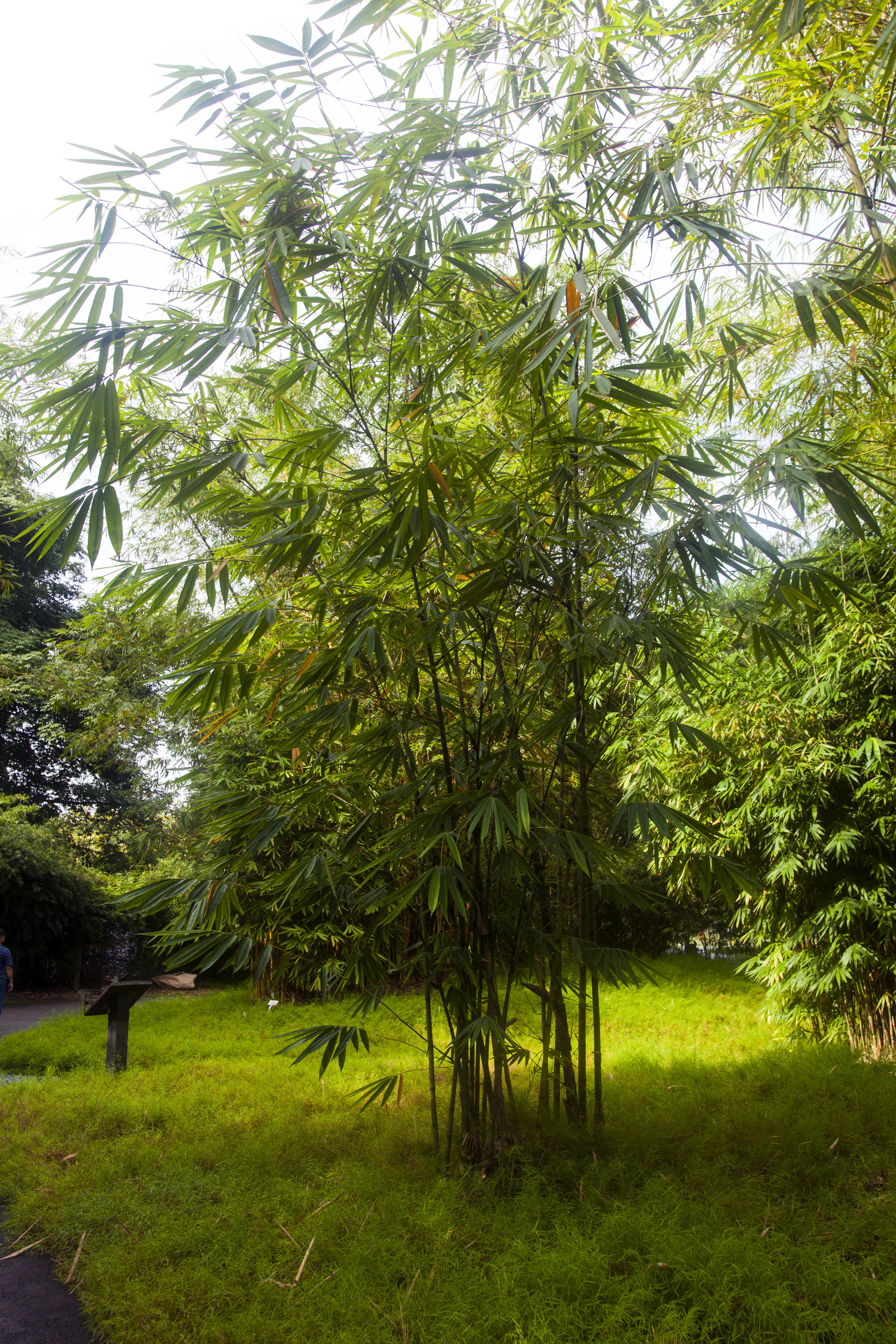
Today we switched from fauna to flora, starting the day with a visit to the Botanic Gardens. They are huge here in Singapore, splendid and fragrant – a real riot of tropical greenery. The reason why they are called “gardens” and not “garden” is that in fact there are several themed gardens gathered in one place: the Fragrant Garden, Healing Garden, Ginger Garden, a few others, and – the crown of all – the National Orchid Garden. The territory between those gardens is actually park as well, with ponds, swans, and so on.

National Orchid Garden

National Orchid Garden

National Orchid Garden

National Orchid Garden

National Orchid Garden

National Orchid Garden

We started off very briskly, stopping next to each plant, but then our fervour and enthusiasm somehow began to diminish. The sun was beating down, even though there was a black cloud looming in the sky and mercifully hiding the sun behind it from time to time. For some reason, in the Healing Garden we were attacked and cruelly stung by all sorts of insects – seemed like they had been healed there and were now full of energy.

Botanic Gardens

Botanic Gardens

Botanic Gardens

Botanic Gardens

Botanic Gardens

Botanic Gardens

Botanic Gardens

Botanic Gardens

Botanic Gardens

Botanic Gardens

Botanic Gardens

Once again, for the umpteenth time in Singapore, it started raining just as we entered a restaurant to have lunch, as if the rain had been waiting for us to take shelter under the roof. The restaurant, which was obviously right inside the Gardens, was called Halia, meaning “ginger” in Malay, so, as one may guess, this spice was present in abundance in all the meals. The portions were strikingly small, but delicious. On leaving the restaurant, which we did after it stopped raining, we were provided with free raincoats, which we didn’t have the chance to make use of.

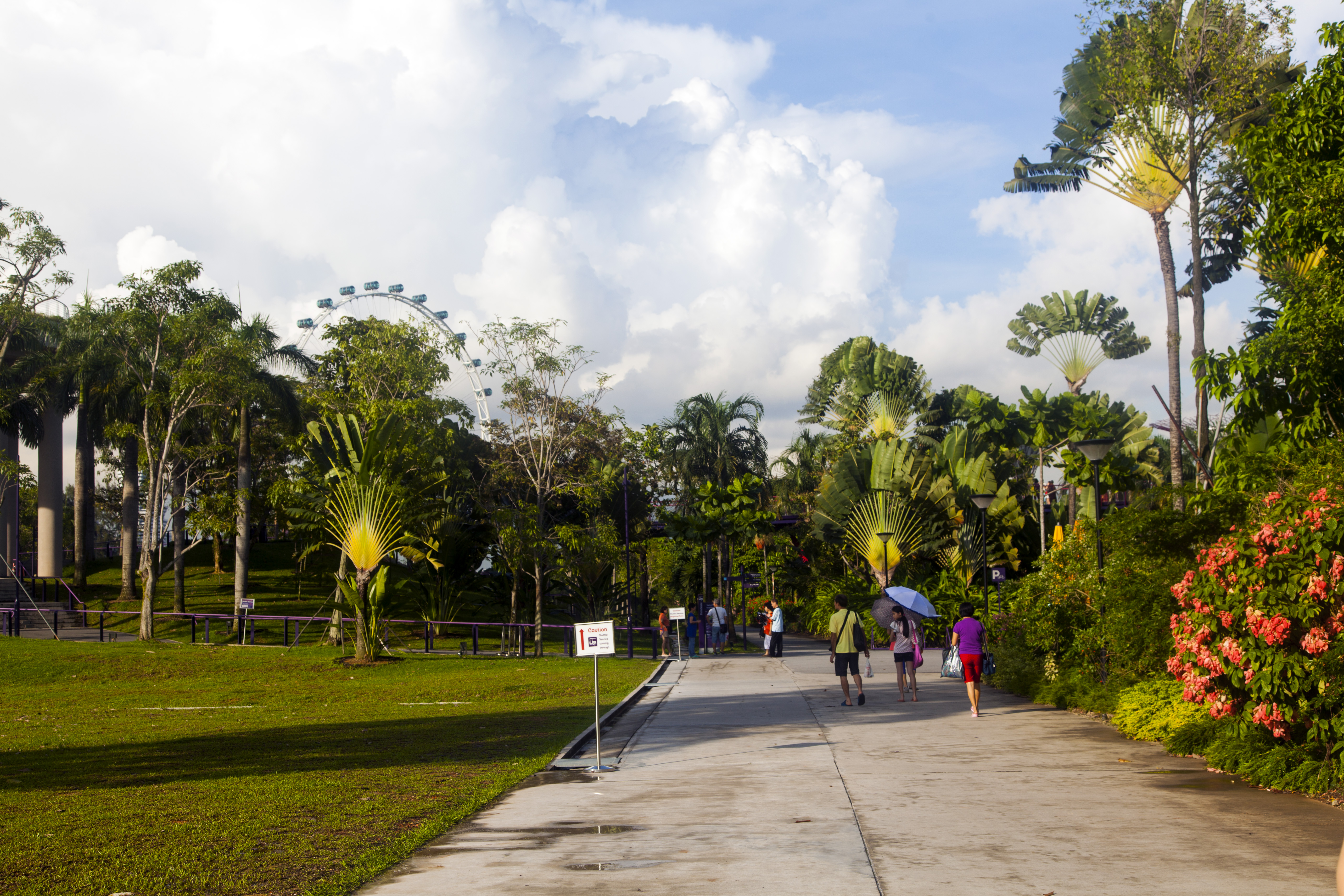
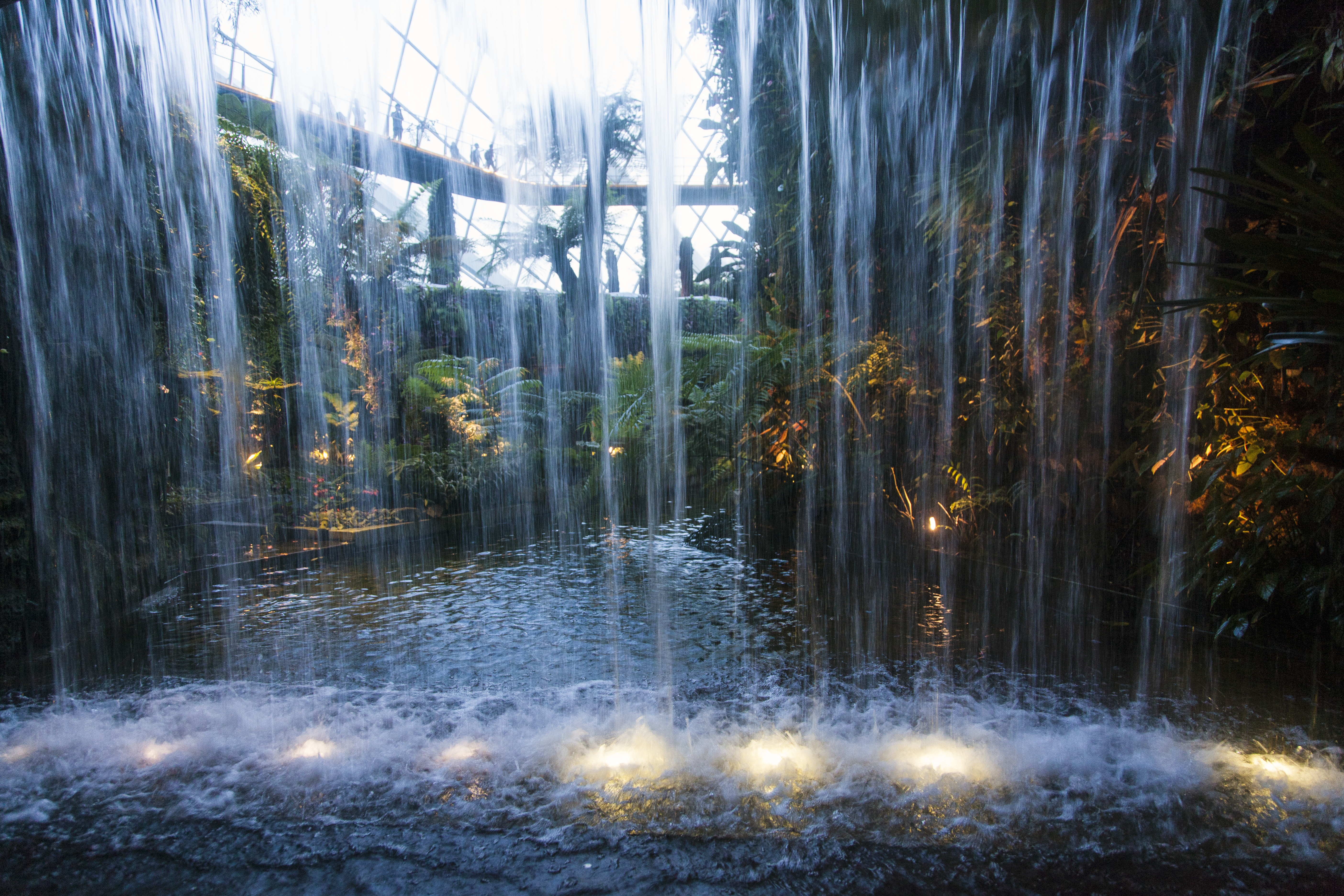
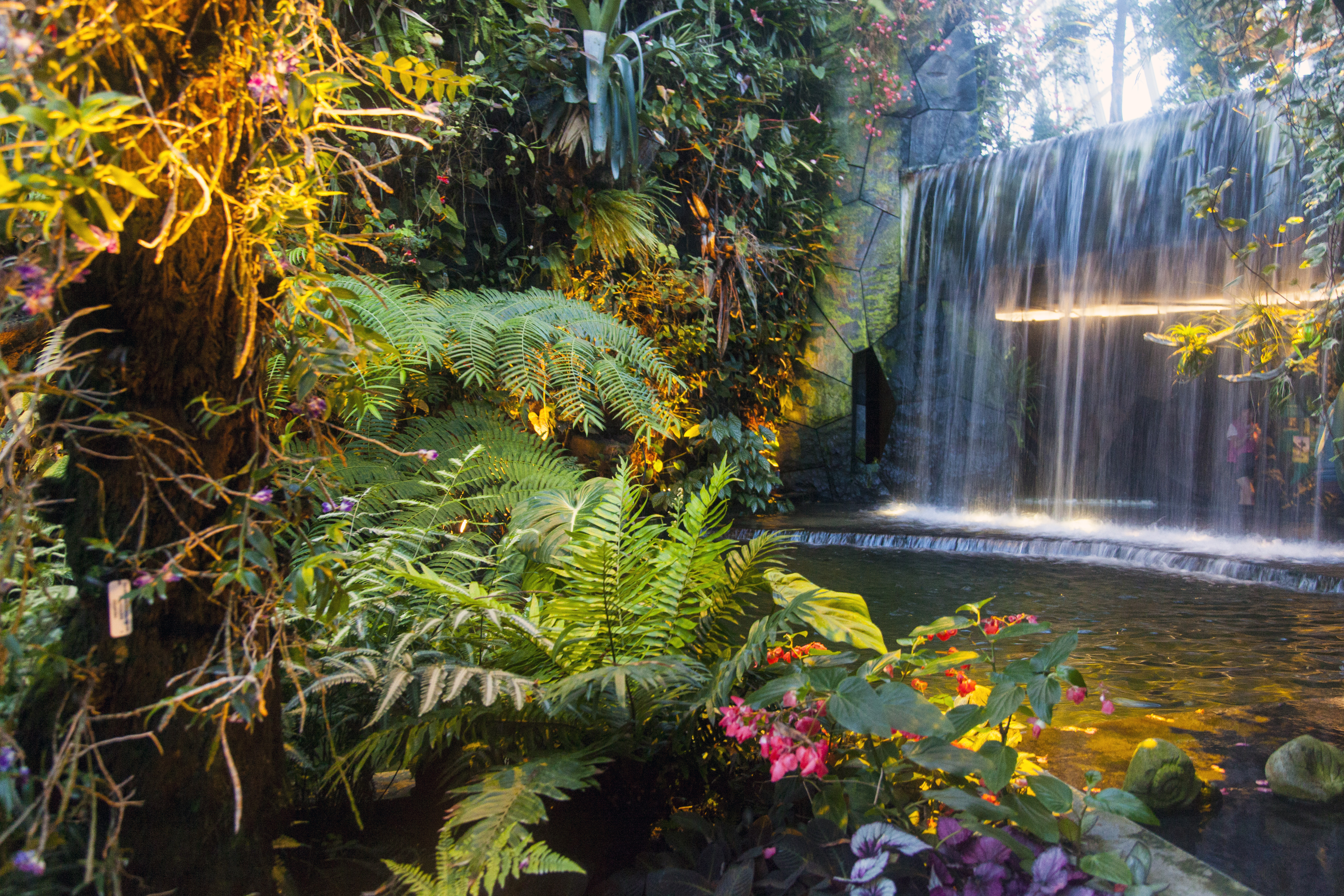
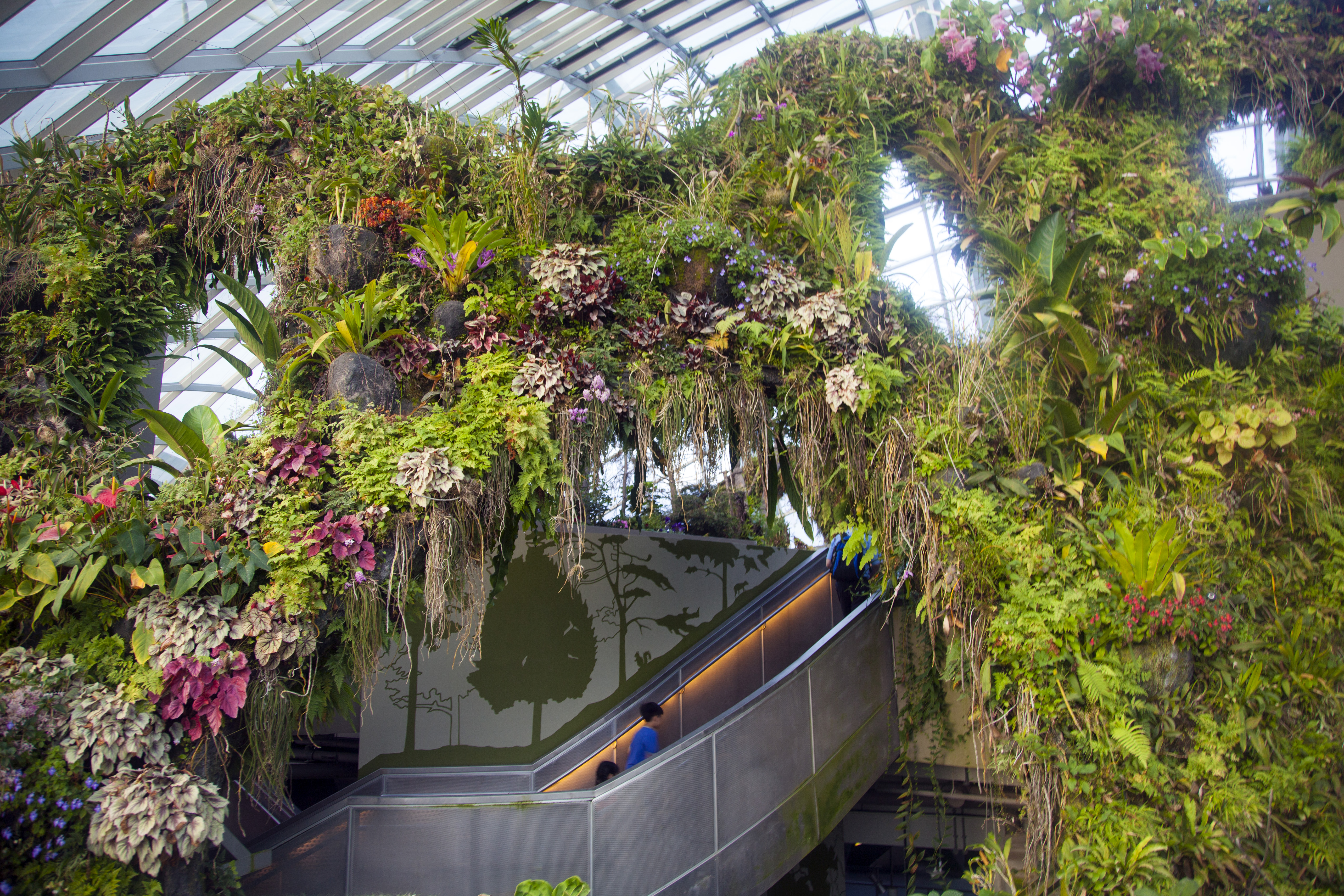
Having taken a liking to plants, we left the natural gardens just to head to artificial ones – the famous gardens at Marina Bay, with large conservatories. We feared that we would have an overdose of the monotonous tropical flora, but these gardens had a very different spirit. The conservatories, which could be accessed via a quite peculiar viaduct, were very interesting in design, looking like giant blooming bouquets or trees.

Gardens at Marina Bay

Gardens at Marina Bay

Gardens at Marina Bay

Gardens at Marina Bay

We visited only two of the conservatories: the Flower Dome and Cloud Forest (a term for a very humid tropical montane forest). The first one contained a variety of roses, geraniums and other flowers and, for whatever reason, vegetables of giant sizes, such as aubergines, peppers, cabbage and tomatoes.

At the Flower Dome

At the Flower Dome

At the Flower Dome

At the Flower Dome

At the Flower Dome

At the Flower Dome

Cloud Forest

Cloud Forest

The second one was designed as basically a mountain, with diverse vegetation on its slopes, and it was so moist there that the air was filled with drizzle. Atop the mountain there was a little garden called the Lost World, which could be accessed by lift, and there was a circular path descending to different levels from that garden. The last thing to see before exiting was a video with gloomy forecasts that by 2100 the temperature on Earth would rise by an average of 5 degrees, which would result in all sorts of disasters, such as the extinction of many species of animals and plants, reduction of the amount of drinking water, spread of diseases – although it ended with a reassurance that all this could be avoided.

Cloud Forest

Cloud Forest

Cloud Forest

Cloud Forest

Cloud Forest

Cloud Forest

Cloud Forest

What’s not a problem in Singapore (well, not that anything at all is a problem here!) is that everything is constructed and designed very conveniently and user-friendly. Places to eat can be found literally everywhere. Wherever you go, whether it’s a garden, a mall, a museum or a theatre, you can be sure that you won’t stay hungry. So, quite naturally, we found where to have dinner just as we exited the Gardens and turner around the corner. It was a Chinese restaurant, mainly seafood oriented, and, to spare ourselves from difficult choices, we decided to go for a set meal, where we were continuously served small portions of different dishes to sample, which seemed to be the right decision, as everything was delicious.

Singapore Flyer - view from Gardens on the Bay

Singapore Flyer - view from Gardens on the Bay

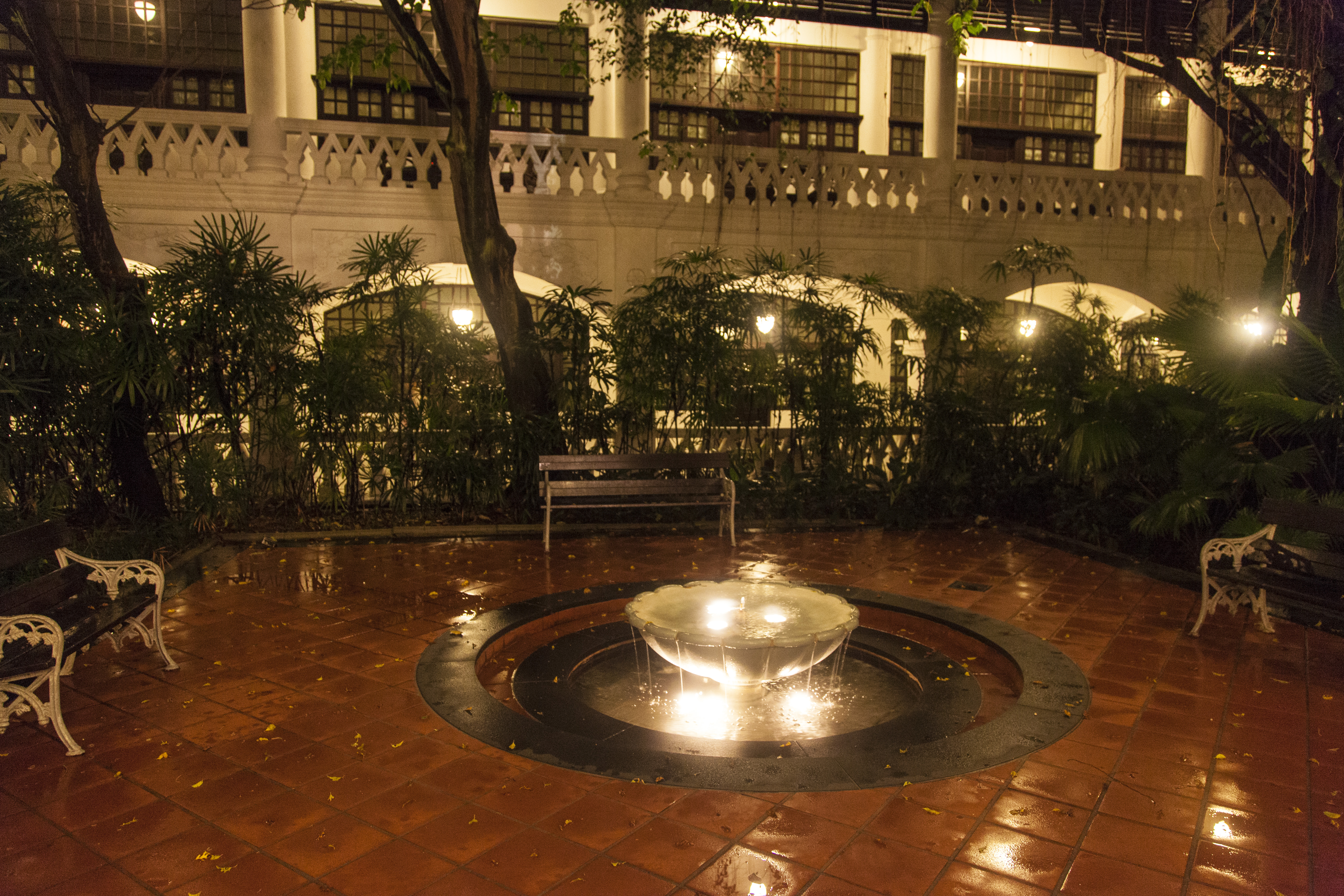
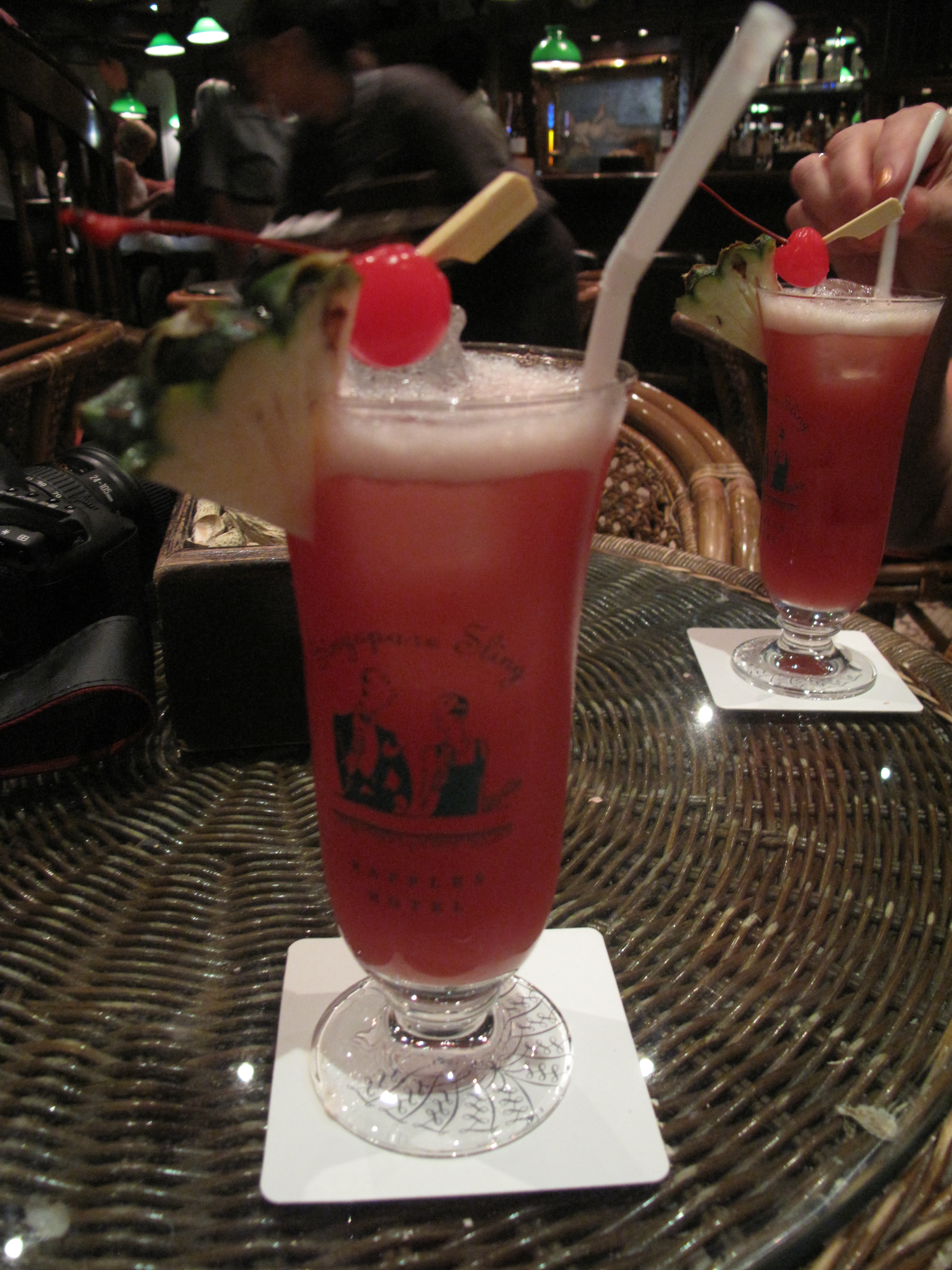
Since it was our last full day in Singapore, we definitely felt the urge to go see the famous Raffles hotel and taste its signature cocktail, the Singapore Sling. The colonial style hotel, of course, claims to be chic. It’s a white-stone building, with a courtyard and a shopping arcade full of fashion boutiques. The hotel is certainly impressive, but not drop dead impressive. A small detail: in the glamorous Long Bar, where most of the guests buy this very cocktail, on each table there is a basket filled with unshelled peanuts. Guests throw the shells right on the floor, and if they leave them on their tables by mistake, the waiters whisk them to the floor when clearing the table after them. As a result, the entire floor is littered with those shells.

Raffles Hotel

Raffles HotelSingapore Sling

Posted in Азия, Русский, Сингапур

Сингапур – день 6

CLICK HERE FOR ENGLISH VERSION. АНГЛОЯЗЫЧНАЯ ВЕРСИЯ ПО ЭТОЙ ССЫЛКЕ.

29 ноября 2013

Сегодня от фауны мы перешли к флоре. Начали день с посещения ботанических садов. Они в Сингапуре громадные, роскошные, ароматные, настоящее буйство тропической зелени. Почему именно «сады», а не «сад» – потому что в одном месте фактически собрано несколько тематических ботанических садов: сад ароматических растений, сад лечебных растений, имбирный сад, еще какие-то, и – венец всего – сад орхидей. Переходы из сада в сад – это фактически тоже парк, с водоемами, лебедями и так далее.

National Orchid Garden

National Orchid Garden

National Orchid Garden

National Orchid Garden

National Orchid Garden

National Orchid Garden

Поначалу мы ходили бодро, останавливались возле каждого растения, но потом пыла и сил как-то поубавилось. Солнце нещадно палило, хотя в небе маячила черная туча и время от времени милостиво прятала солнце за собой. Почему-то именно в саду лекарственных трав на нас напали всякие насекомые и безжалостно искусали – такое впечатление, что они там подлечились и полны энергии.

Botanic Gardens

Botanic Gardens

Botanic Gardens

Botanic Gardens

Botanic Gardens

Botanic Gardens

Botanic Gardens

Botanic Gardens

Botanic Gardens

Botanic Gardens

Botanic Gardens

Уже в который раз в Сингапуре, стоит нам переступить порог ресторана, начинается ливень, как будто ждет, чтобы мы скрылись под крышей. Ресторан, ясное дело, был прямо в ботаническом саду, назывался он Halia, что по-малайски как раз означает «имбирь», поэтому все его блюда были обильно приправлены этой специей. Порции были поразительно маленькие, но вкусные. На выходе из ресторана нас бесплатно снабдили дождевиками, но они нам больше не пригодились.

Разошедшись, мы решили от садов натуральных перейти к садам искусственным. Здесь есть такие знаменитые сады на Marina Bay, фактически оранжереи. Мы опасались, что у нас будет передозировка однородной ботаники, но эти сады оказались в совсем ином духе. Попадаешь в них по своеобразному виадуку, а представляют собой они чрезвычайно оригинальную конструкцию –то ли это гигантские распустившиеся букеты, то ли стеклянные купола, соединенные воздушными переходами.

Gardens at Marina Bay

Gardens at Marina Bay

Gardens at Marina Bay

Gardens at Marina Bay

Во все сады мы уже не пошли и ограничились двумя: цветочным куполом и туманными лесами (это очень влажный тропический горный лес). В первом – разнообразие роз, гераней и других цветов, а также почему-то овощей гигантских размеров: баклажанов, перцев, капусты и помидоров.

At the Flower Dome

At the Flower Dome

At the Flower Dome

At the Flower Dome

At the Flower Dome

At the Flower Dome

Cloud Forest

Cloud Forest

Во втором – конструкция, представляющая собой как раз гору с разнообразнейшей растительностью по склонам, влажно настолько, что весь воздух наполнен моросью. На вершине горы расположен небольшой садик, именующийся Затерянным миром. Оттуда по круговой дорожке спускаешься на разные уровни. На выходе показывают видеоролик с мрачными прогнозами о том, что к 2100 году температура на Земле в среднем повысится на 5 градусов, и это будет сопровождаться всевозможными катаклизмами, вроде исчезновения многих видов животных и растений, уменьшением количества питьевой воды, распространением болезней – правда, в конце обнадежили, что этого можно избежать.

Cloud Forest

Cloud Forest

Cloud Forest

Cloud Forest

Cloud Forest

Cloud Forest

Cloud Forest

Что в Сингапуре не проблема (впрочем, что здесь проблема?), что все устроено удобно и, как говорится, юзер-френдли. Различного рода едальни буквально понатыканы всюду. Куда бы ты ни пришел – в сад, в молл, в музей, в театр – можешь быть уверен, что голодным нигде не останешься. Так же и мы нашли себе место для ужина буквально выйдя из садов и завернув за угол. Это был китайский ресторан, в основном морепродуктовый, и, чтобы не заморачиваться на выбор, мы заказали набор, в котором непрерывно подают маленькие порции различных блюд на пробу, и не прогадали – все было очень вкусно.

Singapore Flyer - view from Gardens on the Bay

Singapore Flyer - view from Gardens on the Bay

Поскольку сегодня наш последний полный день в Сингапуре, то одним махом решили и поехать посмотреть знаменитый отель Раффлз, и отведать его фирменный коктейль Сингапур Слинг. Отель, разумеется, претендует на шик, причем шик колониальный. Это белокаменное строение, имеющее внутренний двор, по бокам галереи расположена масса фешенебельных магазинов. Отель, конечно, впечатляет, но не так, чтобы умереть – не встать. Небольшая деталь: в очень роскошном так называемом Длинном баре, где практически все гости заказывают преимущественно этот коктейль, на каждом столе стоит корзина, наполненная нечищеным арахисом. Скорлупки же посетители бросают прямо на пол, а если они по недоразумению оставляют их на столе, то их смахивают на пол служители бара, убирая за ними. В результате весь пол усеян скорлупой.

Raffles Hotel

Raffles HotelSingapore Sling

Posted in Asia, English, Singapore

Singapore – Day 5

РУССКОЯЗЫЧНАЯ ВЕРСИЯ ПО ЭТОЙ ССЫЛКЕ. CLICK HERE FOR RUSSIAN VERSION.

28 November 2013

The day turned out very diverse in content which ranged quite impressively from the Universal Studios amusement park to a classical concert. But – one thing at a time.

Since the day before we had spent very limited time on Sentosa, we decided to repeat the visit right in the morning, and started again from the beach, and from the same one. We had kind of got used to it somehow, but the beach attendant must have been having a senior moment: he asked us literally all the same set of questions as yesterday: where we were from, whether we spoke Russian, what kind of country Azerbaijan was and whether it was close to Kazakhstan.

Siloso Beach

Sentosa

Even though the attendant caused a puzzled laughter with his repetition, the sunny weather which also replicated that of the previous day, was accepted with joy. The water was unpleasantly different though: tons of algae had been brought by the wind, and there was also something stinging in the water.

Sentosa

We hesitated a lot whether to visit the Universal Studios after all, or not. Having googled it thoroughly, we found out that it was basically nothing more than just an amusement park, and I personally am not a big fan of those. Nevertheless, we still decided to go and take a look – a very expensive look, I have to say.

Universal Studios

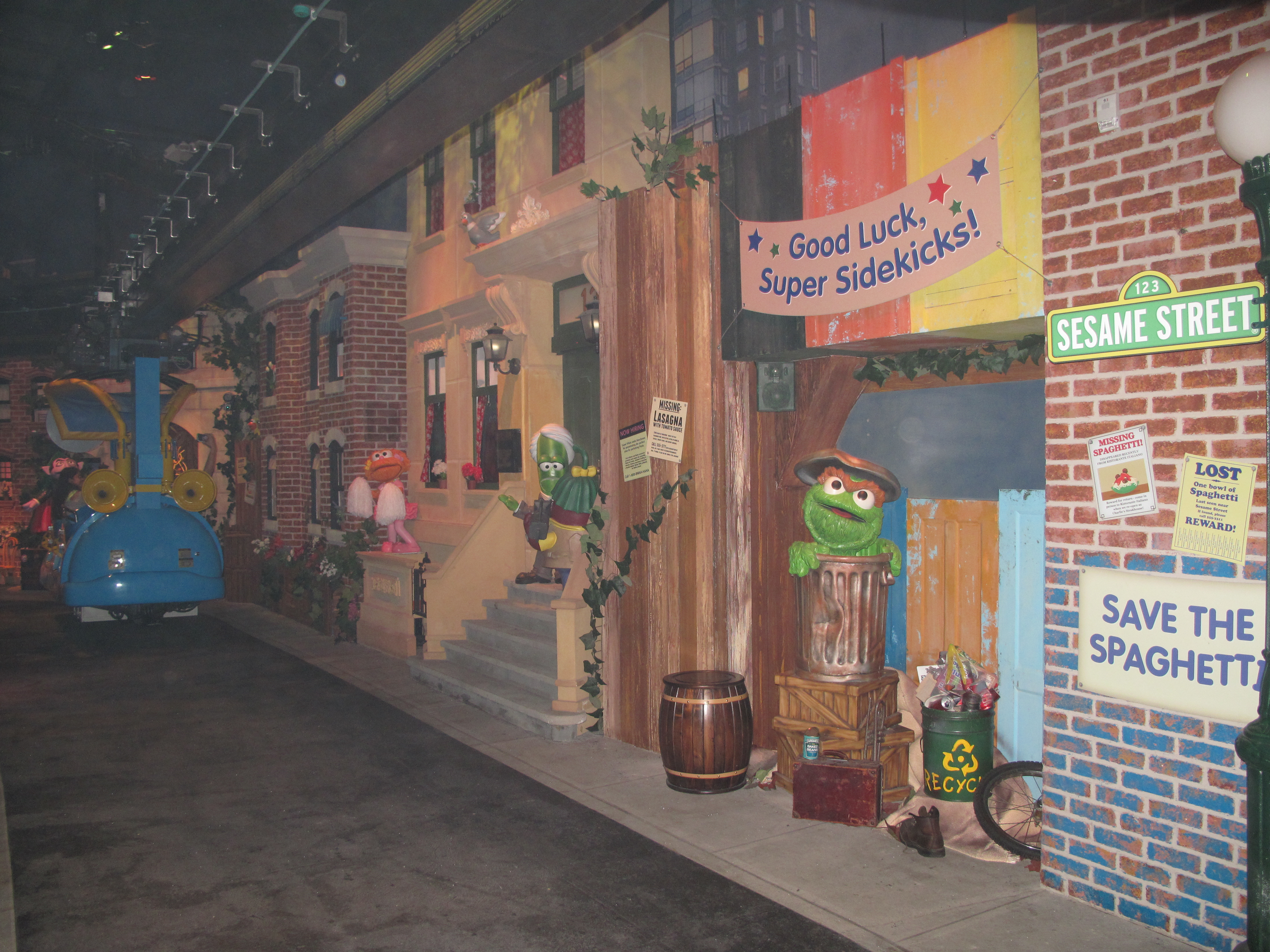
As a result, we, limited in time (due to the concert in the evening!) visited only three of the attractions. The first one was a complacent and almost childlike Sesame Street ride. The second one could have been the Transformers, but we noticed just in time that the ride included rotation and tipping upside down, which I absolutely can’t tolerate – and escaped.

Universal Studios

Universal Studios

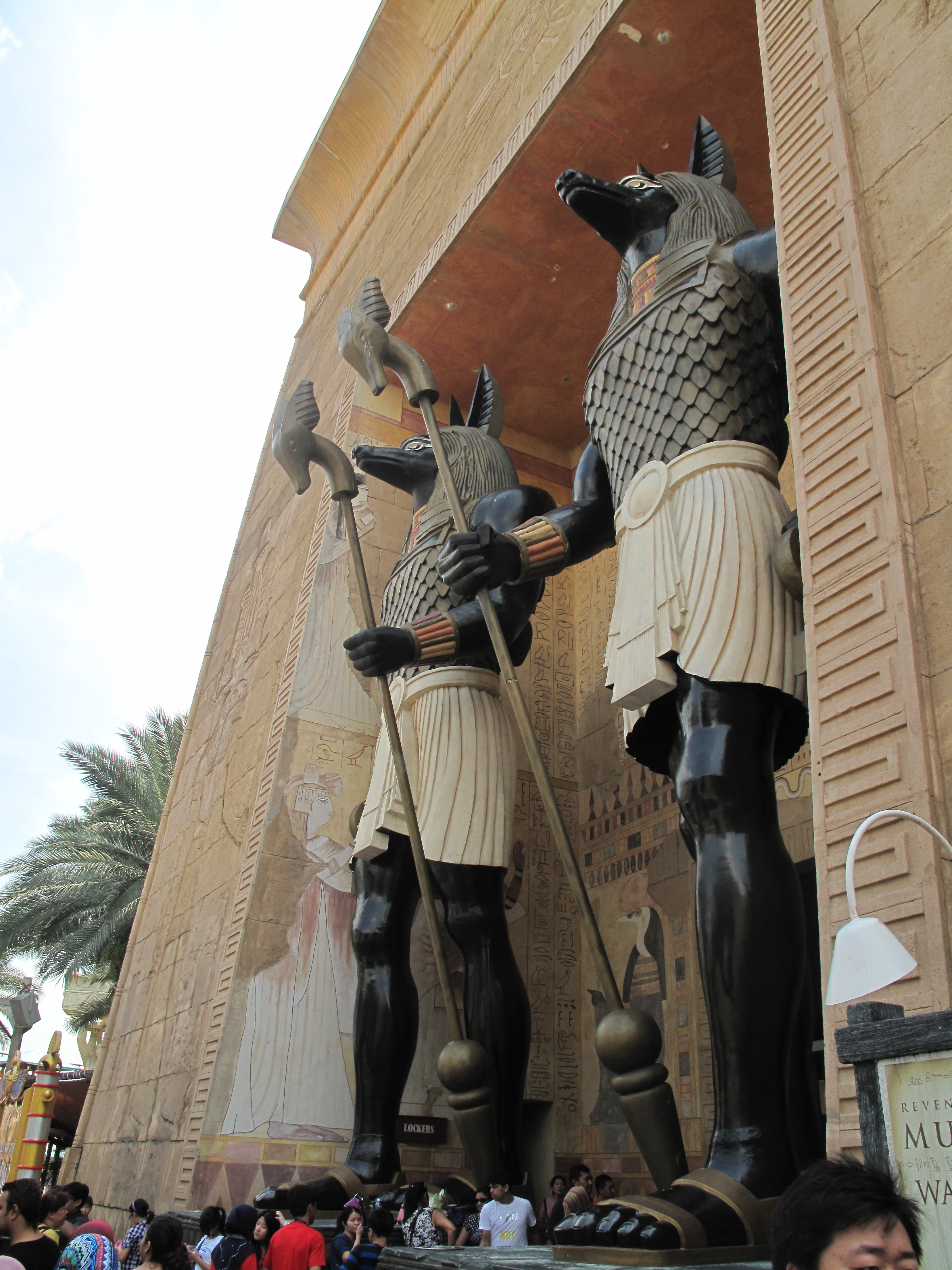
The one we found tempting was the attraction themed on the ‘Mummy’ and ancient Egypt. And that’s where our adventure began! First of all, it turned out that we were not allowed to take anything inside – so everything, including bags, had to be locked in a locker. We accidentally shut the first one, even before we had time to read how to set a passcode for it, and had to call the attendant and ask him to open the locker, promising to show our passports as soon as the bags containing them would be removed from there. We then put our belongings in another locker, properly following the guidance. There was a sign saying that the first 45 minutes were free of charge, and we recklessly trusted the digital clock showing 15 minutes waiting time in the queue – so we didn’t take any money with us, especially that we didn’t even have pockets to put it in. And there we went, right into this hallway, imitating an Egyptian temple, where we got stuck in an endless queue in a totally dark corridor, which took nearly an hour. The ride itself was very short. We expected something absolutely scary, but it was rather fun, despite the dizzying turns forward, backward, up and down, as well as the roars and spits of fire of the Egyptian priests. When we finally got to our locker, we couldn’t open it again – the free time had expired, and all our money was locked inside – so we had to call the attendant for help once more.

Universal Studios

And the third attraction was simply a little 4D cartoon about Shrek with shaking, water splashing and some hairy stuff, supposed to represent spiders, touching our legs.

Of course, we were ‘felled’ by the Egyptian attraction – if it hadn’t been for the hour-long standing, we could have caught another attraction. And all we had time for was having lunch at a Chinese bistro on Hollywood street right at the Universal Studios. At least we were precisely on schedule.

Universal Studios

Universal Studios

Universal Studios

And finally the long-awaited concert! It opened with Lyadov’s ‘Enchanted Lake’, but the word “enchanted” can be also applied to our overall impressions of the concert. It was truly an awesome event! Actually, it was a concert of the Singapore Symphony Orchestra, considered the best in Asia, directed by Lan Shui. And Lang Lang – a phenomenal, brilliant pianist – was taking part in it, playing Prokofiev’s Piano Concerto No. 3. It’s difficult to find words to describe the amazing impressions that his performance left on us. I was literally taken away, even being aware that if a piece of music as difficult to grasp as this one, had been played by someone else, it could have just seemed to me a set of random sounds and nothing special. Lang Lang’s virtuosity, power and dexterity are striking, and you just can’t imagine how anyone possibly can perform this piece at all. We were seated so that his face could be seen, so we had the opportunity to observe the infinite palette of his emotions.

Taking pictures and videos was prohibited (that’s how the lockers theme was continued – we had to lock our cameras in one before the concert), but when Lang Lang gave an encore, I, like some others, contrived to take a few pictures with my phone. Talking about the encore – the public went so wild that, despite all his efforts to simply take a bow and leave, he had to stay and play an intermezzo by Manuel Ponce and a waltz by Chopin.

Lang Lang

At first I thought that Tchaikovsky’s Fifth Symphony, which was to be played in the second part, was just an unnecessary appendage to the great genius Lang Lang. But in this case there was another genius – actually Tchaikovsky himself, with a very good performance of the orchestra and Lan Shui’s conducting.

Overall, I enjoyed the concert so much that even having to wait an hour for a taxi, which wasn’t extremely pleasant, didn’t spoil the great mood.

Posted in Азия, Русский, Сингапур

Сингапур – день 5

CLICK HERE FOR ENGLISH VERSION. АНГЛОЯЗЫЧНАЯ ВЕРСИЯ ПО ЭТОЙ ССЫЛКЕ.

28 ноября 2013

Сегодняшний день получился весьма разнообразным по содержанию – диапазон впечатляет: от аттракционов студии Юниверсал до концерта классической музыки. Но – по порядку.

Поскольку вчера Сентоса у нас была половинчатая, сегодня с утра пораньше мы повторили визит, и начали опять с пляжа, причем с того же. Мы с ним как-то сжились, а вот пляжный служитель продемонстрировал тяжелейшую форму склероза: задал нам буквально дословно всю ту же обойму вопросов, что и вчера: откуда мы, говорим ли по-русски, что за страна такая Азербайджан и не рядом ли с Казахстаном она находится?

Siloso Beach

Sentosa

Если служитель своей повторяемостью вызвал недоуменный смех, то солнечная погода со своей репликой вчерашней, была принята на ура. Неприятным же отличием от вчерашнего была вода: ветер нанес всяких водорослей, а еще там что-то жалилось.

Sentosa

Пойти ли на студию Юниверсал – мы колебались. Погуглив, мы выяснили, что это в принципе не более, чем просто парк аттракционов, а они лично меня особо не привлекают. Все же решили пойти и глянуть, що це таке, хотя погляд этот довольной дорогой.

Universal Studios

В результате мы, ограниченные временем (вечером концерт!) посетили только три аттракциона. Первый – благодушная и почти детская поездка по улице Сезам. Вторым могли бы стать Трансформеры, но мы вовремя разглядели, что аттракцион включал вращение и опрокидывание вниз головой, чего мы не терпим в принципе – сбежали.

Universal Studios

Universal Studios

Показался заманчивым аттракцион по «Мумии» и древнему Египту. И вот тут начались наши приключения! Прежде всего выяснилось, что с собой туда брать нельзя ничего – и все вещи, включая сумки, надо запереть в ячейку. Первую ячейку мы случайно захлопнули, не успев даже прочитать, как ей нужно задать пароль. Пришлось вызвать служителя и попросить его вскрыть ячейку, пообещав показать паспорт, как только содержащая его сумка будет оттуда извлечена. Во вторую ячейку мы положили свои пожитки по всем правилам. Там было написано, что первые 45 минут бесплатно, и мы опрометчиво доверились объявлению о том, что ждать в очереди перед аттракционом придется 15 минут – так что денег мы с собой не взяли, тем более, что их и положить-то было некуда, у нас даже карманов не было. И мы вступили в это ужасное помещение, имитирующее египетский храм, где нам пришлось продвигаться по полутемным коридором в совершенно бесконечной очереди, что растянулось практически на час. Сам же аттракцион был очень коротким. Мы ожидали совсем уж жути, но в принципе было скорее весело, несмотря на головокружительные виражи вперед, назад, вверх и вниз, а также рыки и плевания огнем египетских жрецов по дороге. В результате, ячейку мы вскрыть не смогли – ибо отведенное нам бесплатное время истекло, и служащего пришлось вызывать повторно.

Universal Studios

Ну а третий аттракцион – просто-напросто небольшой мультик про Шрека (или отрывок – погуглить) в 4д: с тряской, брызгами и ползаньем по ногам всякой живности.

Конечно, нас подкосил египетский аттракцион – если бы не это часовое стояние, можно было бы успеть еще что-нибудь. А так, успели только пообедать в китайском бистро на улице Голливуд прямо в студии же. Зато из намеченного себе расписания не выбились ни на минуту.

Universal Studios

Universal Studios

Universal Studios

И наконец долгожданный концерт! Открывался он «Волшебным озером» Лядова, но слово «волшебный» пожалуй можно применить и ко всему концерту тоже. Это было воистину потрясающее событие! Собственно, это был концерт Сингапурского симфонического оркестра, который считается лучшим в Азии, под управлением Лань Шуя. А феноменальный, гениальный пианист Лан Лан был его участником – играл Третий концерт Прокофьева. Трудно найти слова, чтобы описать то потрясающее впечатление, которое оставила его игра. Я просто словно улетела, хотя отдаю себе отчет, что если бы такую сложную для восприятия вещь играл кто-нибудь другой, она бы показалась мне никакой, набором хаотических звуков. Виртуозность, мощь, напор Лан Лана поражают, и совершенно непонятно, как такую сложную вещь вообще кто-либо может исполнять. Мы сидели так, что было видно его лицо, и могли наблюдать всю бесконечную палитру его эмоций.

Снимать фото и видео было запрещено (тема локеров была продолжена – фотоаппарат перед началом концерта тоже пришлось запереть в ячейку), но когда Лан Лан выходил на бис, я, как и некоторые другие, исхитрилась снять его на телефон. Кстати, о бисе – зал так неистовствовал, что несмотря на все попытки пианиста просто поклониться и уйти, ему пришлось исполнить интермеццо Мануэля Понсе и вальс Шопена.

Lang Lang

Сначала я думала, что Пятая симфония Чайковского, которая должна была звучать во втором отделении, – это просто ненужный довесок к гениальному Лан Лану. Но здесь был другой гений – собственно сам Чайковский, при очень хорошем исполнении оркестра и дирижировании Лань Шуя.

В целом, концерт настолько понравился, что даже часовое ожидание такси, хотя и было неприятным, но все же не испортило настроения.

Posted in Asia, English, Singapore

Singapore – Day 4

РУССКОЯЗЫЧНАЯ ВЕРСИЯ ПО ЭТОЙ ССЫЛКЕ. CLICK HERE FOR RUSSIAN VERSION.

27 November 2013

This morning, right after breakfast, we went up to the concierge in order to find out whether there was anything interesting going on in town. Instead of an answer, he handed us a brochure, where we read that tomorrow there was going to be a performance of Lang Lang – the Chinese pianist that we had seen in a TV-programme quite some time ago in London, got very impressed and had been dreaming to hear live since then. And now we were lucky: he was here!

We immediately changed the plans for tomorrow: the concert in the evening would make it impossible to spend a whole day on Sentosa island. So we decided to book our concert tickets and then go to Sentosa right today. These plans were overset by the rather useless concierge: in response to our request to book tickets for us, he muttered with a strong Indian accent that he couldn’t do this, basically telling us to go book ourselves. We asked him to clarify whether we needed to go directly to the concert hall and got an affirmative answer. We found this pretty strange, as almost anywhere, we thought, there at least existed box offices around the city, if hotels didn’t provide such services.

Mt Elizabeth Hospital

Quite obviously, we didn’t know the exact location of the hall, so we had to stray a bit – but no rest for the wicked, so we strayed, searched and found. The receptionist at the concert hall – a nice Chinese young lady – seemed way more helpful than our concierge: she told us that the ticket office actually opened an hour later, but there were options to either book tickets online (and she gave us the link) or else to buy them from SISTIC Outlets – a ticketing service with outlets all around Singapore (which actually did exist after all!); she then asked us where we were going from there (to the Harbour Front station, in order to head to Sentosa from there, as you remember), and advised where the nearest outlet was. Surely there must have been at least one around Orchard Road as well, and if the concierge had told us about them, he would have saved us at least an hour, or even an hour and a half.

Esplanade MRT Station

Esplanade

Outram Park MRT Station

Anyway, we found a SISTIC Outlet in the Vivocity mall, which could be accessed directly from the tube, bought our tickets and, totally relieved, albeit later than originally planned, got on the Sentosa Monorail right from the mall. By the way, the train fare can be paid with EZ-Link cards, which are also valid for other types of public transport, and can even be used even in some stores.

Waterfront Station

Once on the island, we decided to limit ourselves to the beach and the Aquarium only, and then come again another time to visit the Universal Studios separately. It was lunch time and we sat down in an Asian eatery, where, as we had already seen in many places, the complete diversity of the south-east Asian cuisine was represented by countries: China, India, Vietnam, Indonesia – but also some western food, like spaghetti or Fish’n’Chips, for those tired of Asian food. Generally, what I like in Singapore, is this spirit of pan-Asianism – although it would be weird to expect anything else from a city-state with such a colourful ethnic composition: the backbone of the population is formed by Chinese, Malays and Tamils.

Sentosa Island

Sentosa Island

Sentosa Island

Sentosa Island

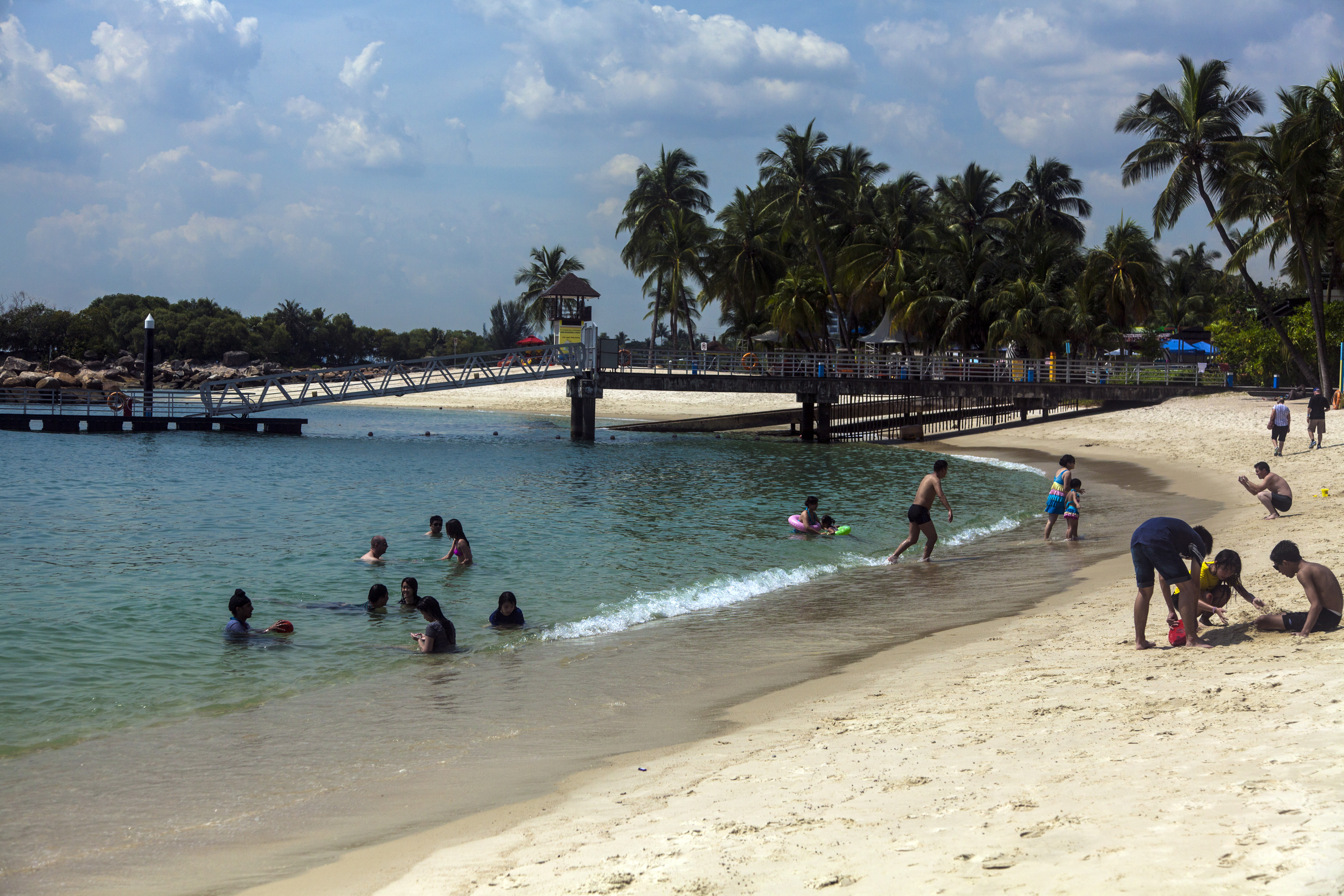
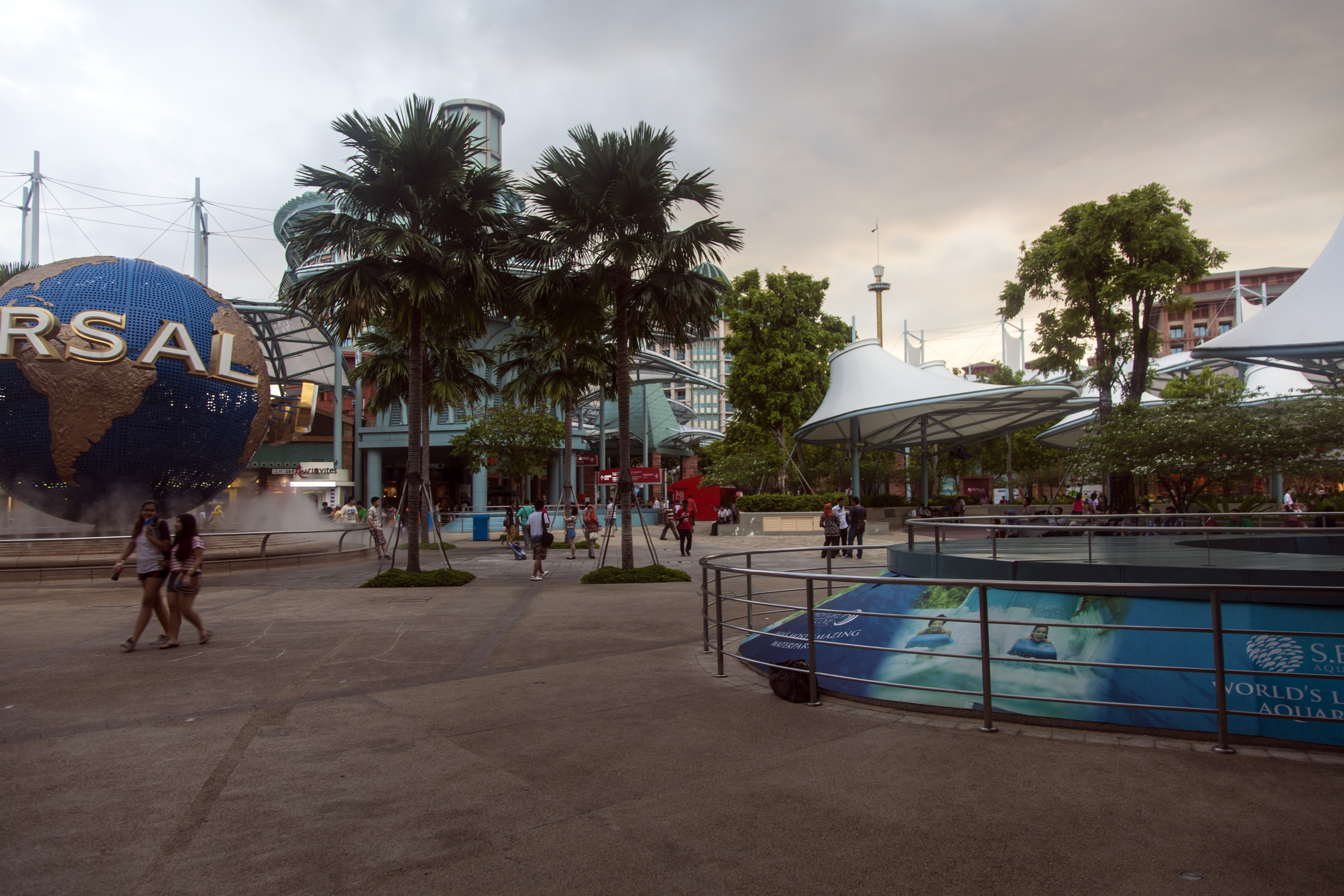
The weather was exceptionally suitable for the beach: as a special gift, the sun was shining all the time, without a single drop of rain (all the previous days had been cloudy). Arriving at the Beach station, we realised that there were beaches both to the left and to the right, and, after hanging about near the signs announcing this, like Buridan’s donkeys, we eventually chose the one to the right – Siloso beach. We had never seen such white fine soft sand before. The beach was quite uncrowded. Among the few other visitors there were a group of teen school students (maybe even skipping classes) who were swimming right in their clothes – both boys and girls.

Siloso Beach

Siloso Beach

Siloso Beach

Siloso Beach

Siloso Beach

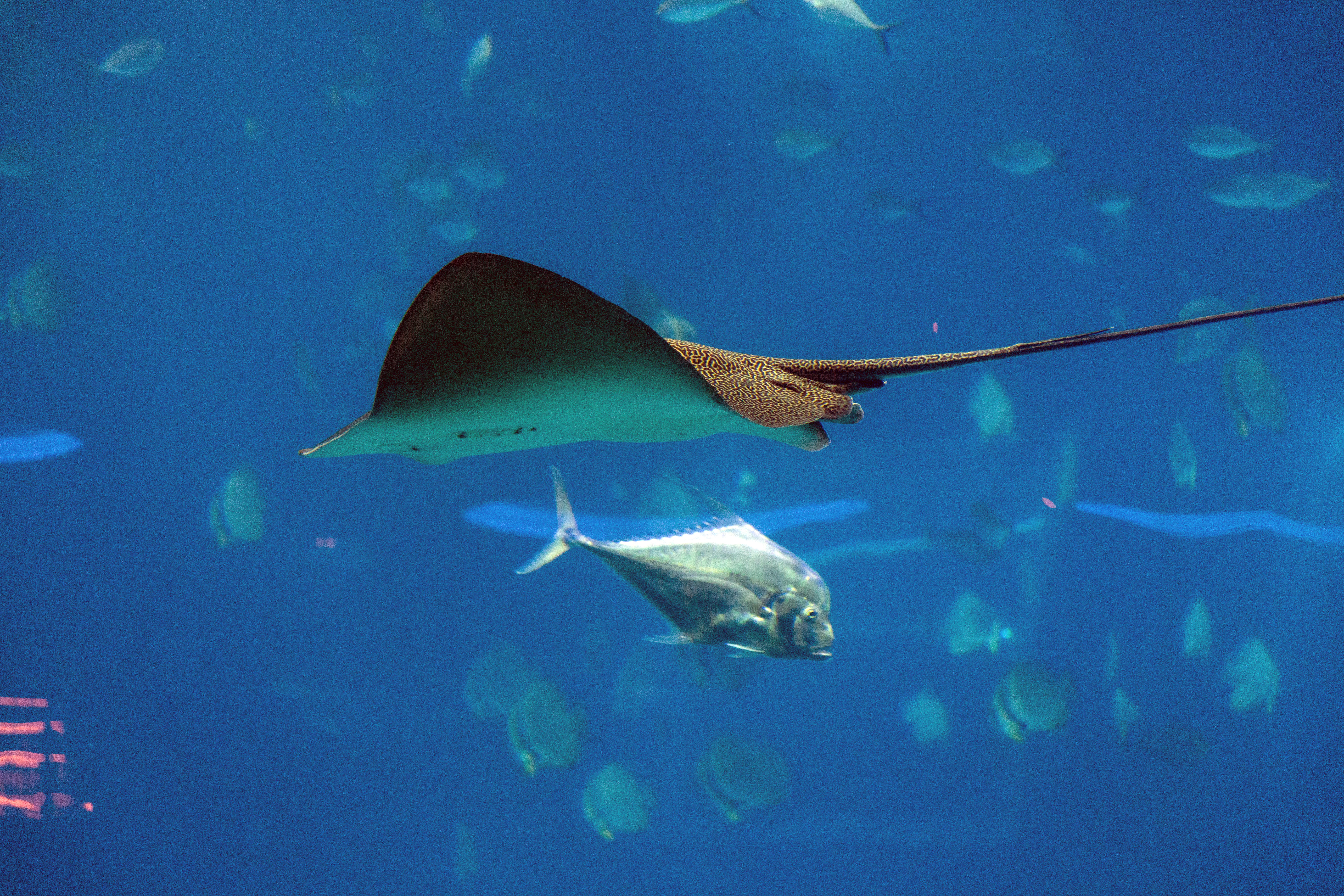
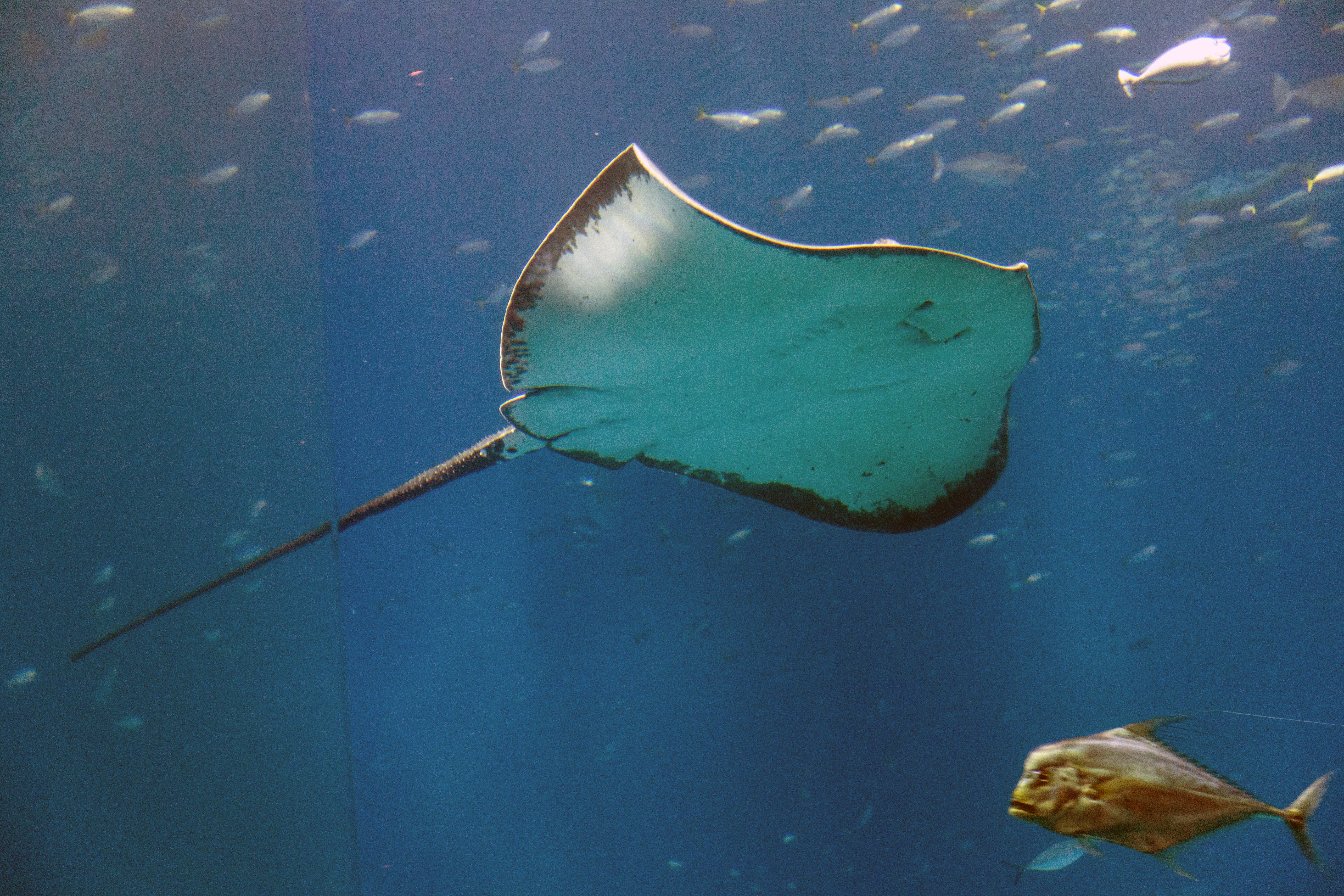
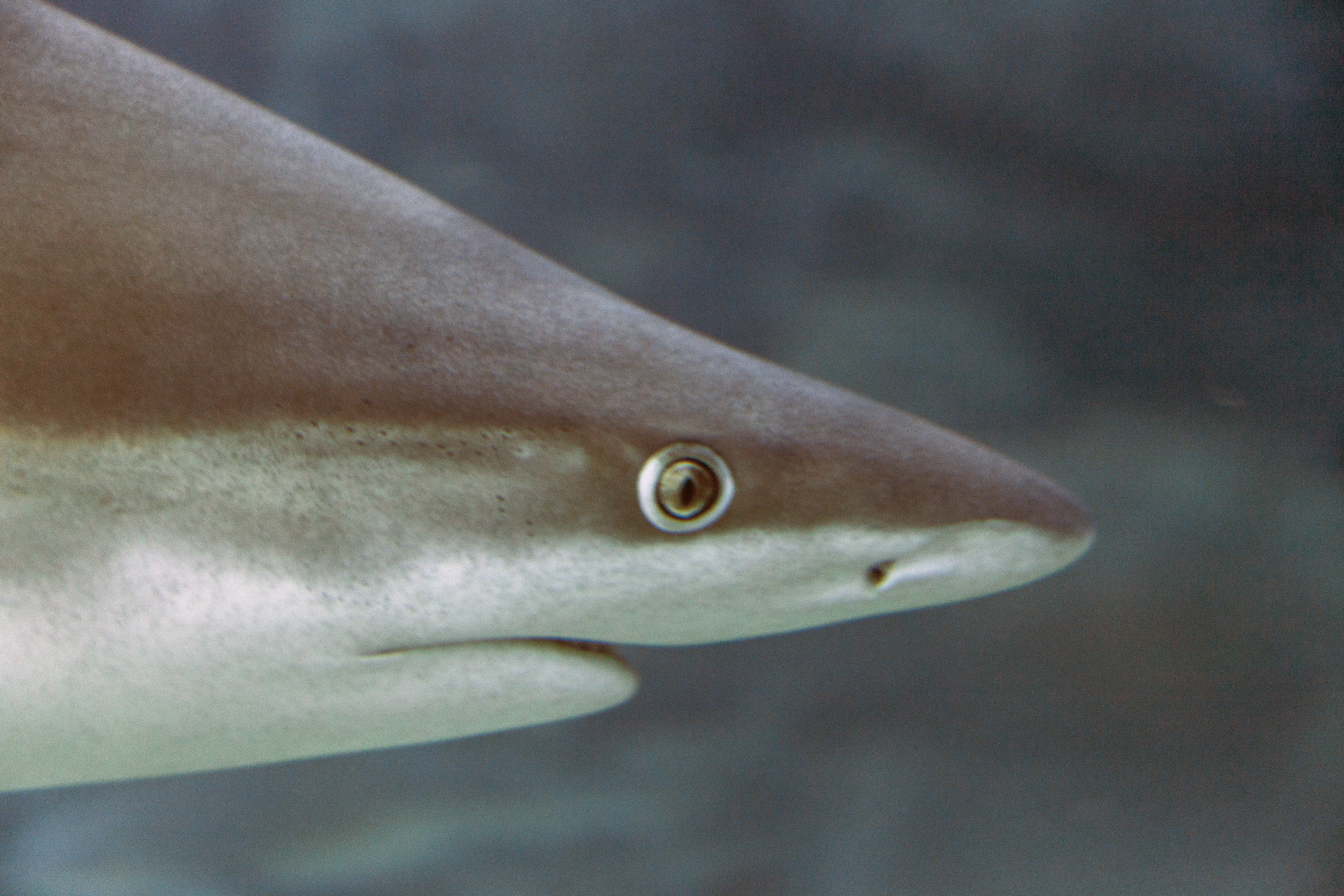
After swimming to our heart’s content we headed to the Aquarium – the largest one in the world. It’s simply gorgeous, especially its huge glass arches, where fish glide both along the walls, and above one’s head – a very strong impression. We took tons of pictures and videos of various fish: the “smiling” rays resembling Astrid Lindgren’s Karlsson, disguised as a ghost, the sharks with their concentrated yet dazed snouts, and the moray eels. I loved the large amphitheatre, where the whole wall was made of glass, and it felt as though there was a whole ocean behind it. There we just sat on the floor and stared at the fish scurrying to and fro, among which rays stood out again, but this time giant ones.

Little Ray

Some Crustacean

Nautilus

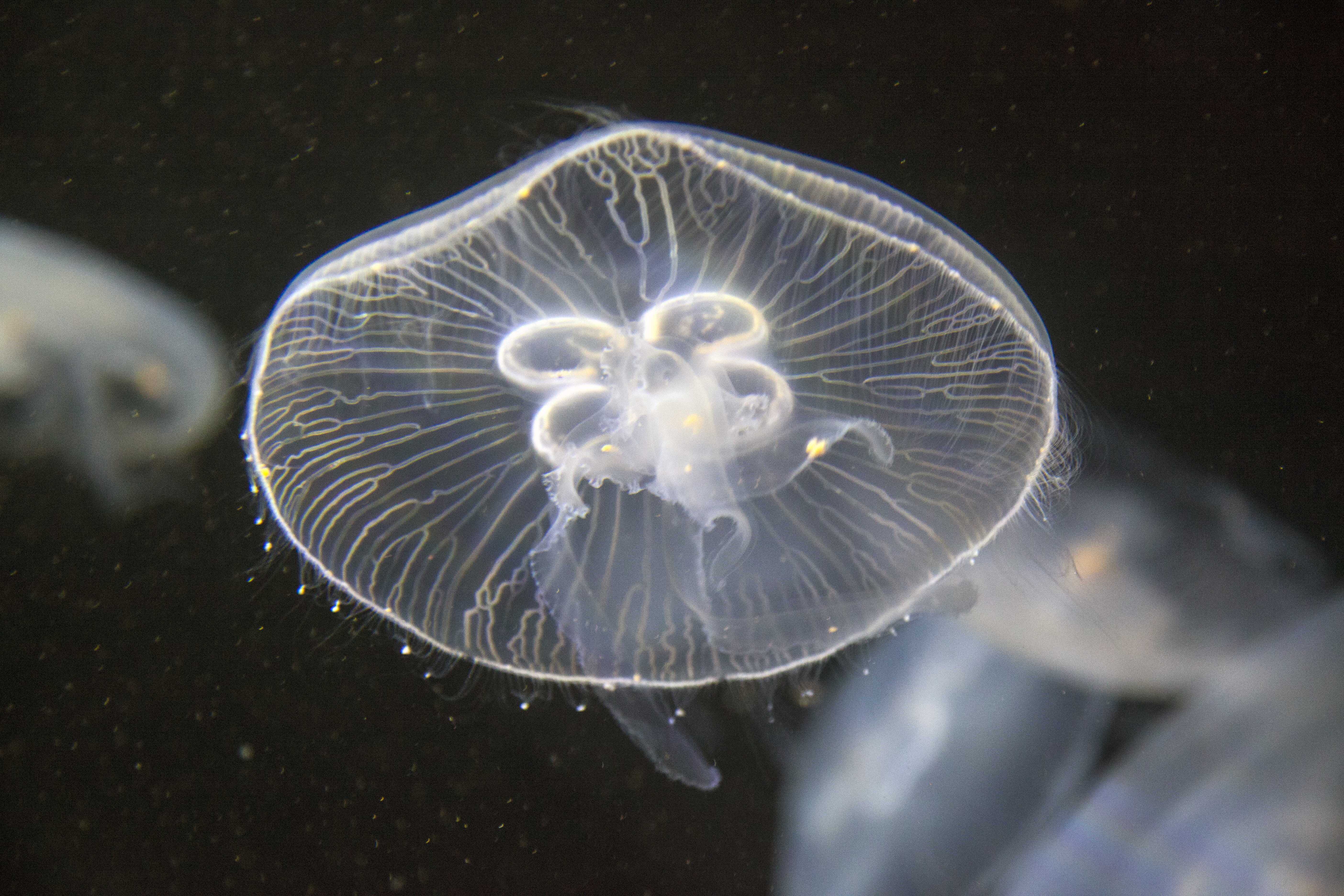
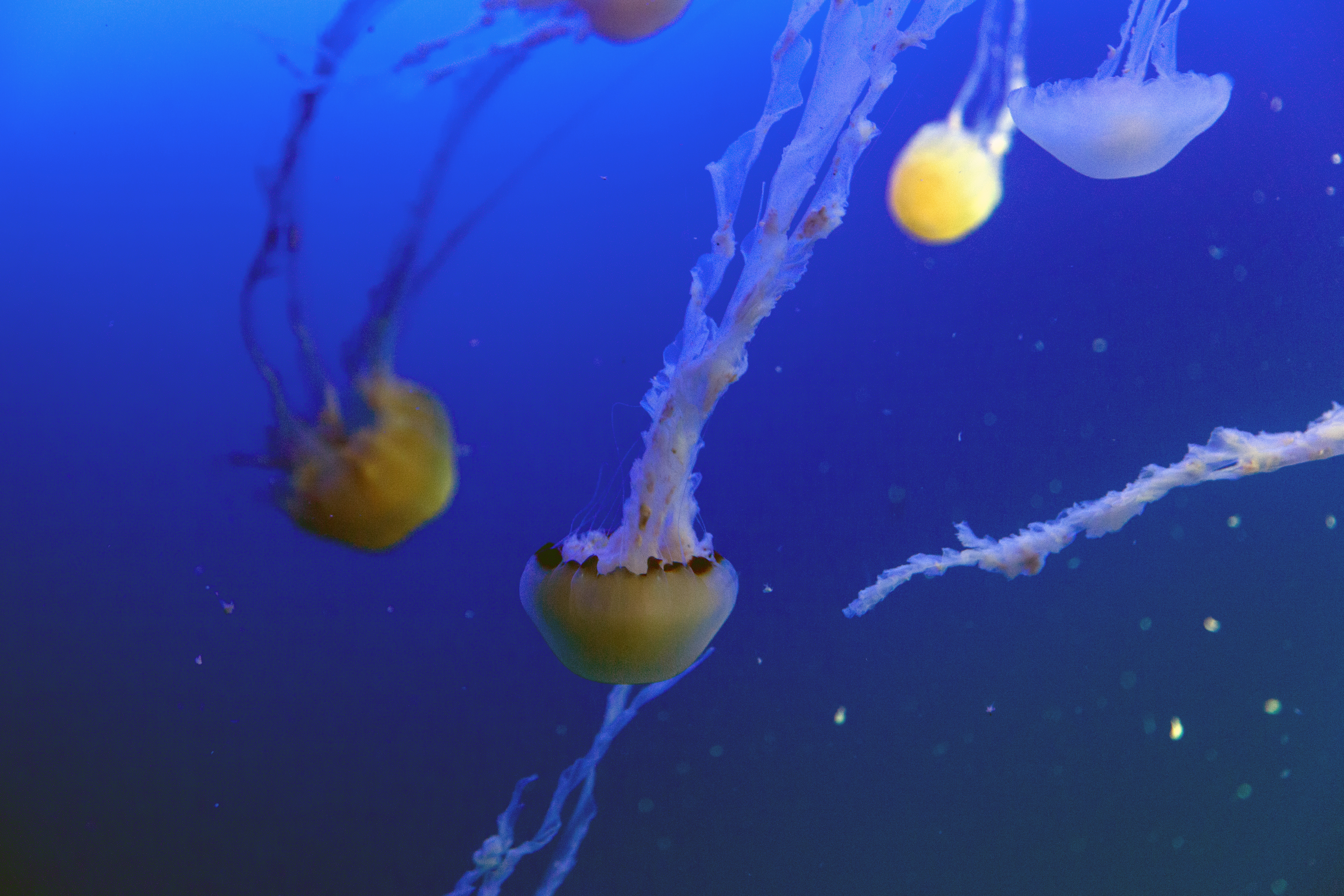
Some Jellyfish

Some Jellyfish

Ray and some other fish

IMG_7640

IMG_7642

Shark

Shark

Moray Eels

Lionfish

IMG_7657

Next to the dolphin displays, we were warned not to attract the dolphins’ attention, or beckon them, because they might decide what we offered them food, get discouraged and never come again when beckoned. It is understandable, as dolphins are highly intelligent beings, unlike, for example, some big fish, which had been staring at us for quite a long time with the stupidest expression (and painfully resembling someone I know, just couldn’t remember who exactly it was) – whether you beckon it or not.

Stupid Fish

Dolphin

We had dinner right on Sentosa, and oddly enough, at a Mexican, not Asian restaurant.

Sentosa Island

Sentosa Island

Sentosa Island

Sentosa Island

Sentosa Island

Posted in Азия, Русский, Сингапур

Сингапур – день 4

CLICK HERE FOR ENGLISH VERSION. АНГЛОЯЗЫЧНАЯ ВЕРСИЯ ПО ЭТОЙ ССЫЛКЕ.

27 ноября 2013

Утром, позавтракав, мы пытались узнать у консьержа, нет ли чего-нибудь интересного вечером. Вместо ответа он снабдил нас книжечкой, из которой мы выяснили, что завтра в концертном холле «Эспланада» выступает Лан Лан – тот самый китайский пианист, передачу про которого мы видели еще в Лондоне, очень тогда впечатлились и мечтали послушать вживую. И вот, оказывается нам повезло: он здесь.

Мы мгновенно изменили планы на завтра: с концертом вечером провести целый вечер на острове Сентоса не получится. Поэтому решили забронировать билеты на концерт и поехать на Сентосу сегодня же. Эти планы нарушил туповатый консьерж: на просьбу забронировать билеты для нас он забормотал с сильным индийским акцентом, что не может этого сделать, идите, мол, и бронируйте сами. Мы переспросили: в театр ехать? – и получили утвердительный ответ. Ну и нравы у них в Сингапуре, подумали мы, в нормальных местах существуют хотя бы театральные кассы, если уж отели такие услуги не предоставляют.

Mt Elizabeth Hospital

Легко понять, что точное месторасположение театра мы не знали, поэтому пришлось поплутать – но охота пуще неволи: плутали, искали, нашли. Ресепшенистка-китаянка концертного холла, не в пример нашему консьержу, была умной: сказала, что вообще-то билетная касса открывается через час, но есть варианты либо забронировать онлайн (и дала адрес сайта), либо же купить во все-таки имеющейся тут сети билетных касс SISTIC Outlet; поинтересовалась, куда мы отсюда собираемся направиться (а мы собирались на станцию Harbour Front, чтобы оттуда ехать, как вы помните, на Сентосу), и назвала ближайшую там кассу. Наверняка где-нибудь на Orchard Road такие кассы тоже имеются, и если бы туповатый консьерж нам о них поведал, это сберегло бы нам как минимум час, а то и полтора.

Esplanade MRT Station

Esplanade

Outram Park MRT Station

Так или иначе SISTIC Outlet мы нашли в торговом центре Vivocity, куда можно попасть прямо из метро, билеты купили и с мирной душой, хотя и припозднившись, отбыли на Сентосу на монорельсовом поезде из того же торгового центра. Кстати, в качестве оплаты за поезд годятся те же карты EZ-Link, которые действительны и для других видов городского транспорта, и даже действуют в некоторых магазинах.

Waterfront Station

На Сентосе решили ограничиться пляжем и Аквариумом, а на студию Юниверсал приехать еще раз отдельно. Было время обеда, и мы завалились в азиатскую едальню, где, как мы уже наблюдали во многих местах, представлено полное разнообразие юго-восточноазиатской кухни, причем по странам: вот тебе Китай, вот Индия, а вот и Вьетнам с Индонезией, ну а если уж совсем невмоготу – вот пожалуйста спагетти или Fish’n’Chips. Вообще, что мне нравится в Сингапуре, так это дух паназиатства – хотя странно было бы ожидать иного от города-государства с таким пестрым этническим составом: костяк составляют китайцы, малайцы и тамилы.

Sentosa Island

Sentosa Island

Sentosa Island

Sentosa Island

День выдался исключительно пляжный: в качестве особого подарка даже светило солнце и не выпало ни капли дождя (в остальные дни пока что было облачно все время). Приехав на станцию Beach, мы обнаружили пляж налево и пляж направо, потоптались немного возле возвещающих об этом табличек, аки Буридановы ослы, и в результате выбрали тот, который направо – Силосо. Такого мельчайшего мягкого и белого песка, как тут, мы не видели еще нигде. Пляж довольно малолюдный. Перед нами была группа школьников, которые пришли на пляж дикарем (возможно даже удрали с уроков) и купались прямо в одежде – и мальчики, и девочки.

Siloso Beach

Siloso Beach

Siloso Beach

Siloso Beach

Siloso Beach

Вдоволь накупавшись, мы нацелились в Аквариум – самый большой в мире. Он великолепен, в особенности своими громадными стеклянными арками, где рыбы плавают и по бокам вдоль стен, и над головой – впечатление очень сильное. Рыб наснимали и на фото, и на видео – и «улыбающихся» скатов, напоминающих Карлсона, переодетого в привидение, и акул с сосредоточенно-обалдевшими мордами, и мурен. Очень понравился большой амфитеатр, в котором целая стена была аквариумом – там мы просто уселись на землю и смотрели на сновавших туда и сюда рыб, среди которых опять же выделялись скаты, но на этот раз гигантские.

Little Ray

Some Crustacean

Nautilus

Some Jellyfish

Some Jellyfish

Ray and some other fish

IMG_7640

IMG_7642

Shark

Shark

Moray Eels

Lionfish

IMG_7657

У панелей с дельфинами стояли служители, предупреждающие, что ни в коем случае нельзя привлекать их внимание, подманивать, потому что они могут решить, что им предлагают корм, разочароваться и больше не приплывать. Оно и понятно, дельфины – существа высокоинтеллектуальные, не то, что например, какая-то большая рыба, которая долго-долго на нас пялилась с тупейшим выражением лица (и до боли напоминала при этом кого-то знакомого, не удалось только вспомнить, кого именно) – эту хоть подманивай, хоть не подманивай.

Stupid Fish

Dolphin

Ужинали прямо на Сентосе же, причем, как ни странно, не азиатской едой, а мексиканской.

Sentosa Island

Sentosa Island

Sentosa Island

Sentosa Island

Sentosa Island