Posted in English, Europe, Porto, Portugal

Portugal – Day 4

РУССКОЯЗЫЧНАЯ ВЕРСИЯ ПО ЭТОЙ ССЫЛКЕ. CLICK HERE FOR RUSSIAN VERSION.

April 18, 2024 – Thursday

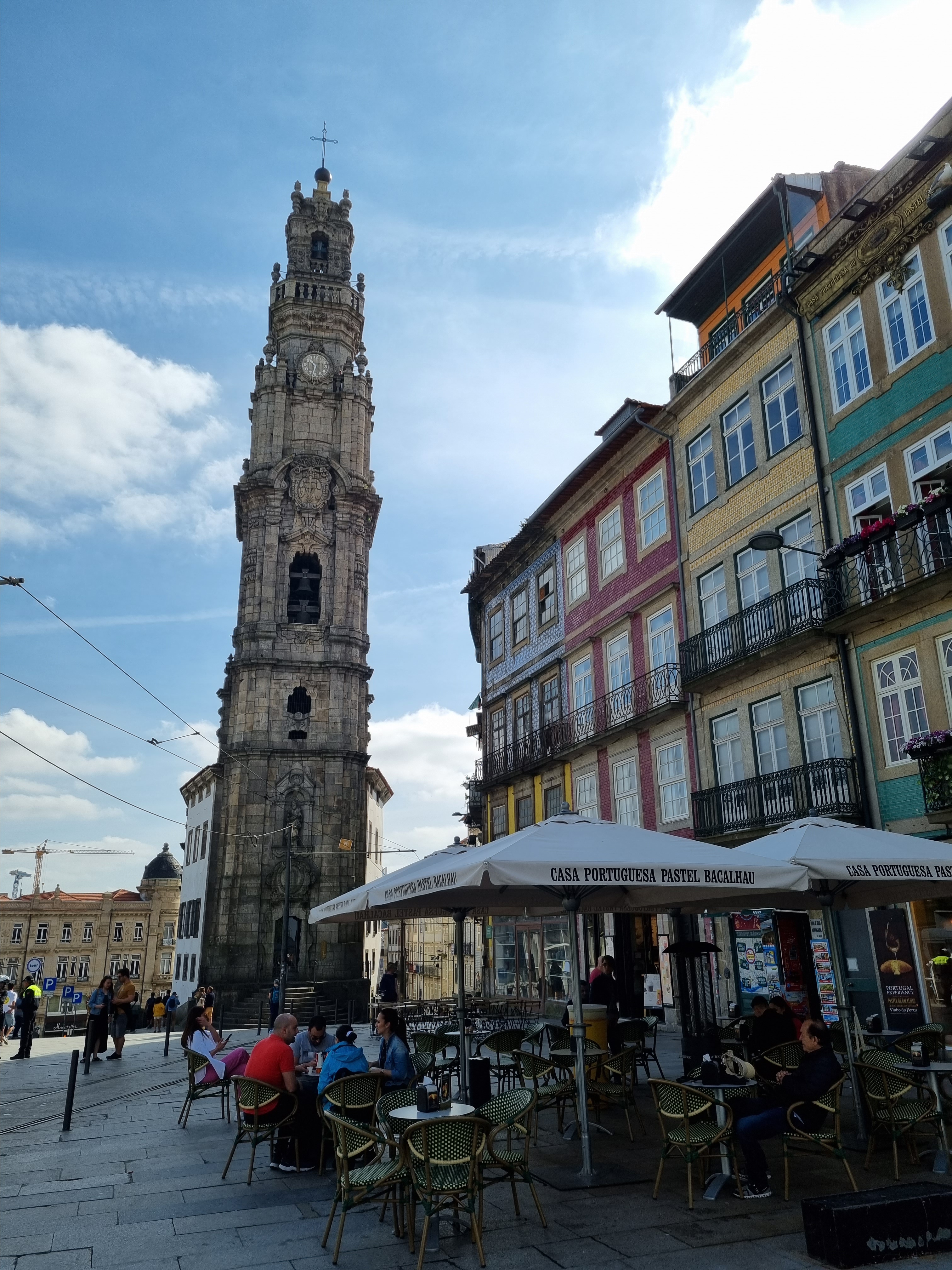
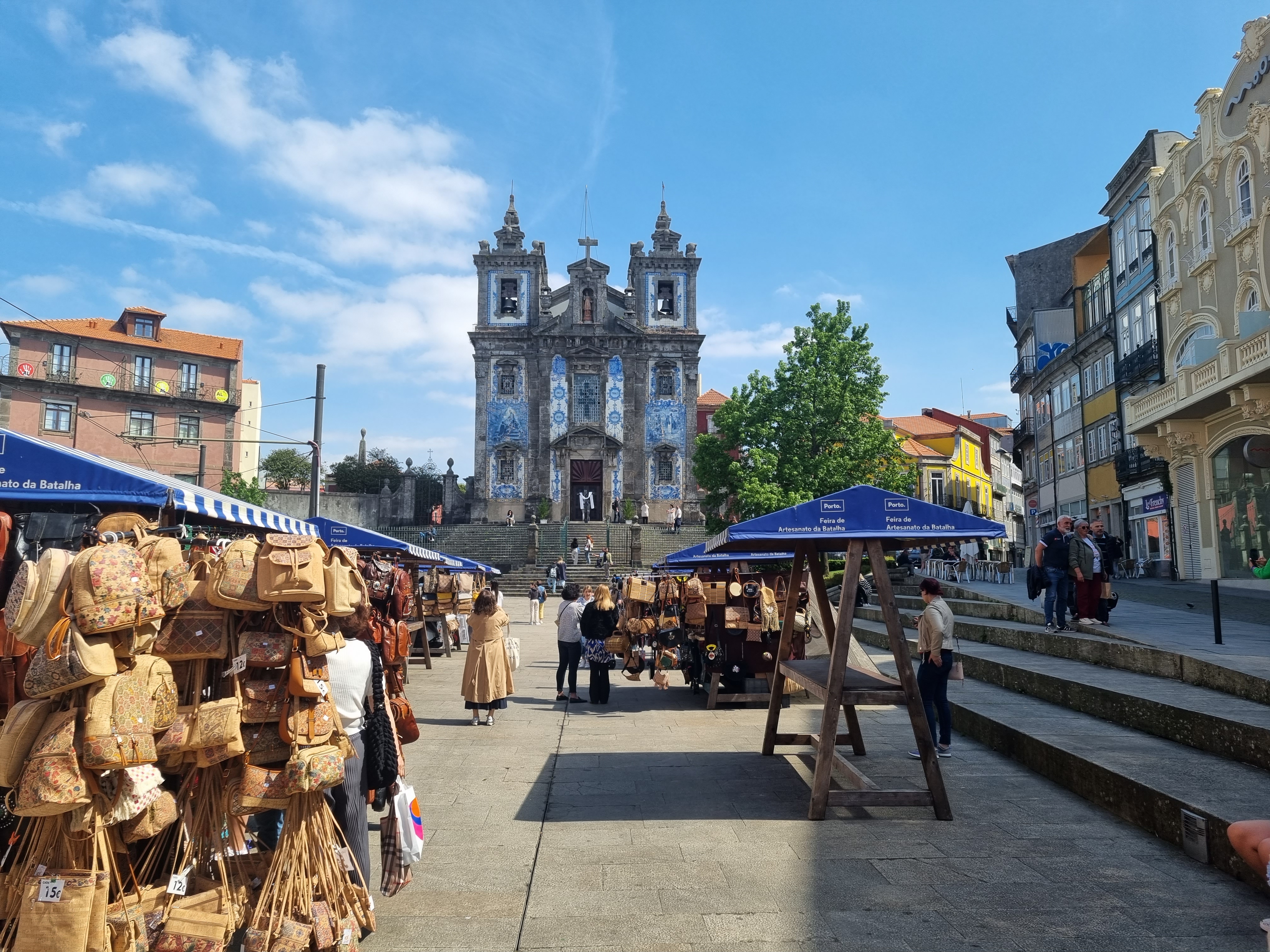
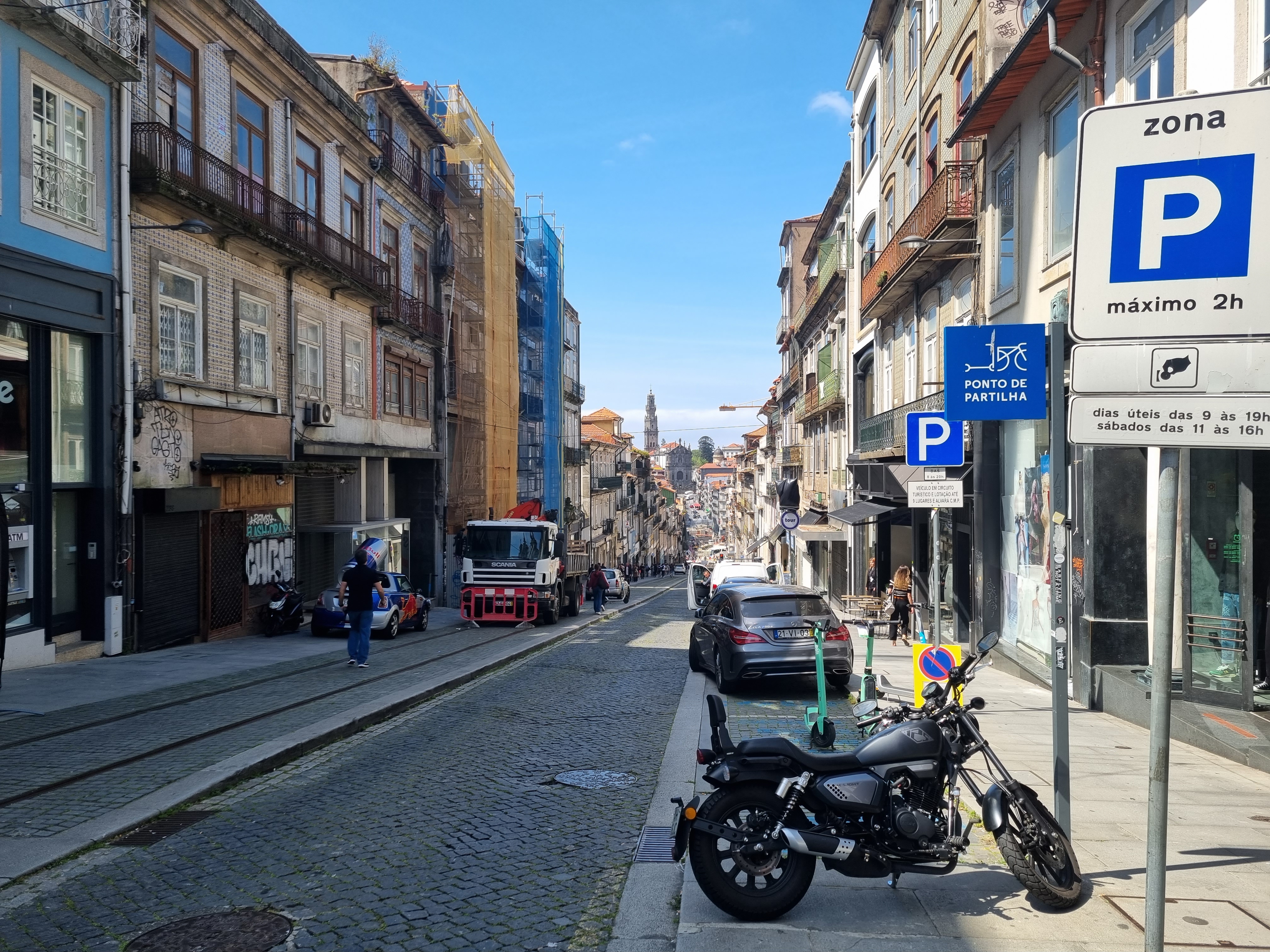
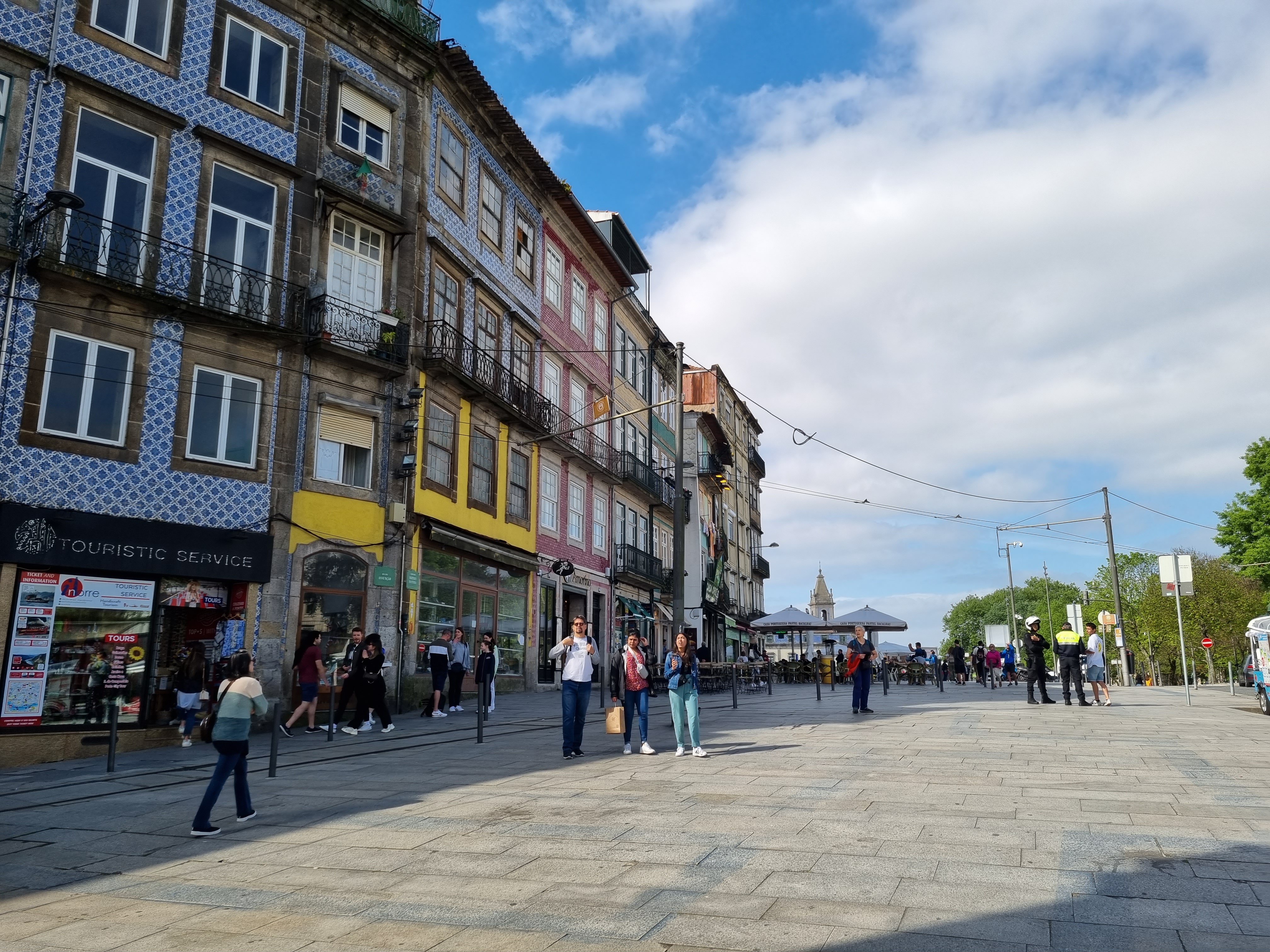
In the morning, after breakfast at our hotel, we went for a walk to the centre of Porto – we walked down to the river. On the way, we stopped at a church, but there was a service going on, so we left. Then we saw the Church of the Clérigos, where we plan to go tomorrow.

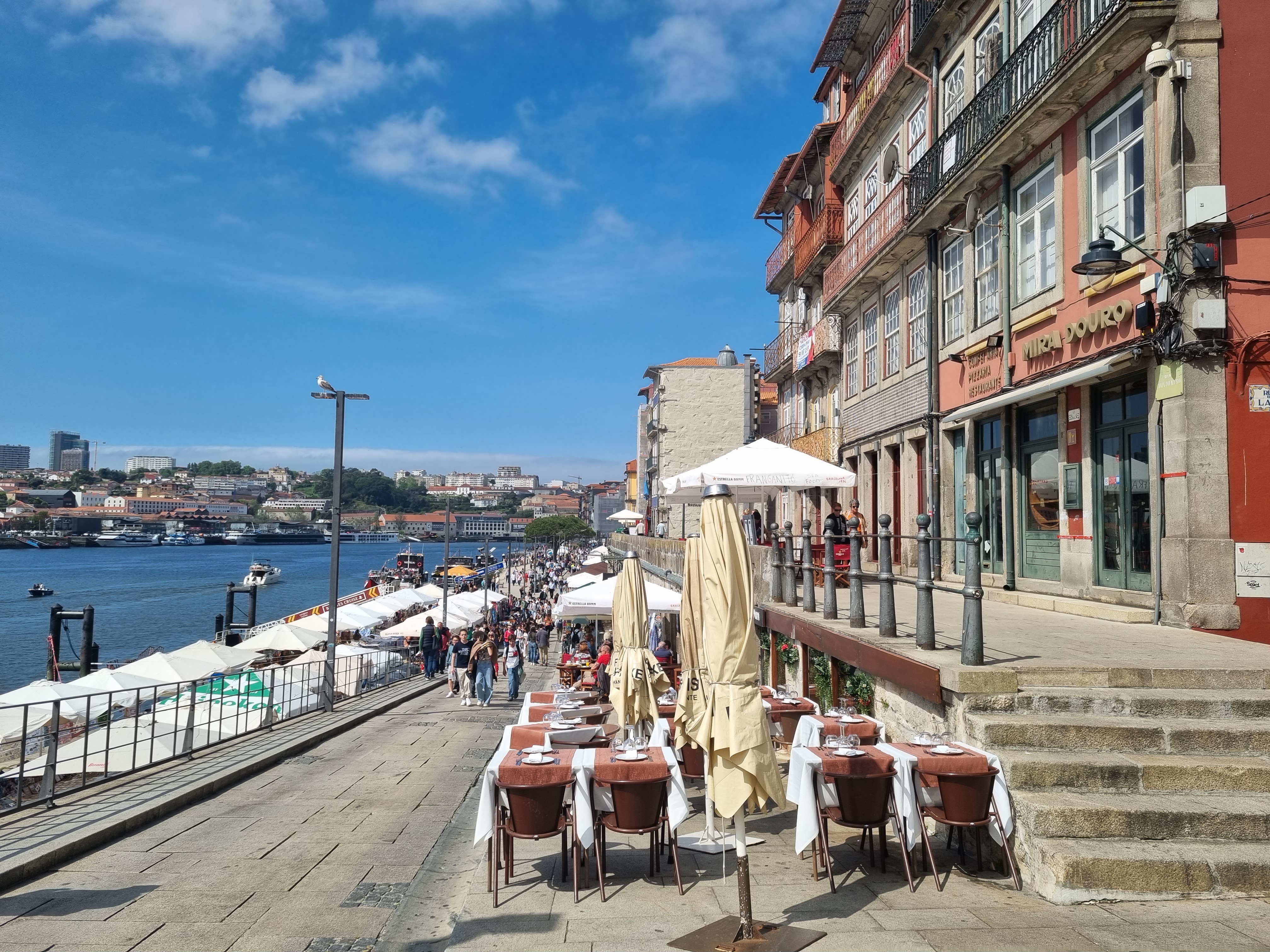
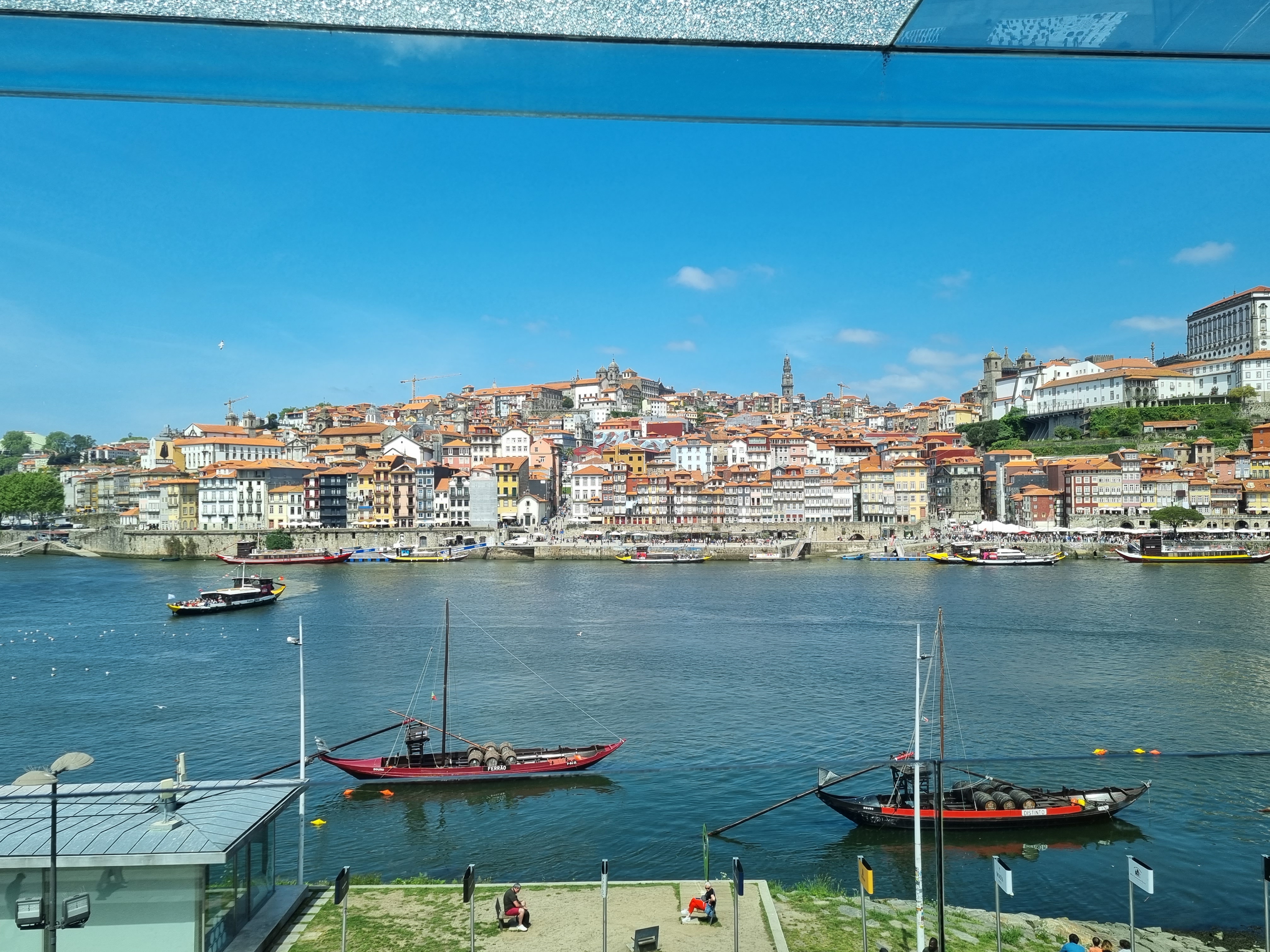
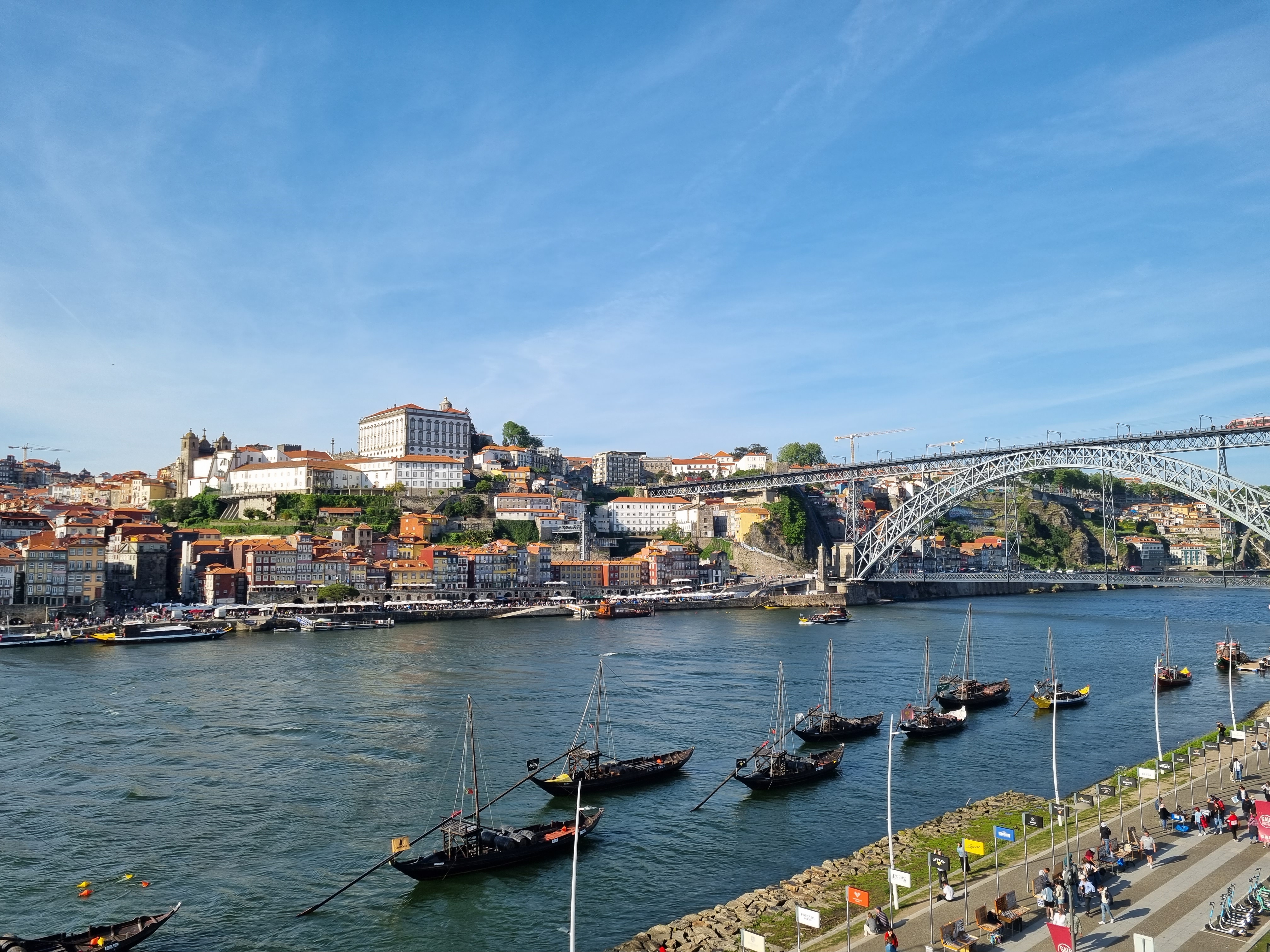
The Ribeira embankment was very, VERY crowded.

To kill time before our wine tour, we had lemonade on the embankment, and then took the funicular back up, planning to get to the famous Majestic Café and have coffee there. But the queue was so long that instead we went to a conceptual hipster coffee shop called Calma, where the coffee was very good.

Once again, we walked down to the embankment, crossed the bridge to the Gaia side, where we were supposed to have lunch. The first place we tried turned out to be closed, but that worked out well, because we found a great restaurant with a panoramic view of the river.

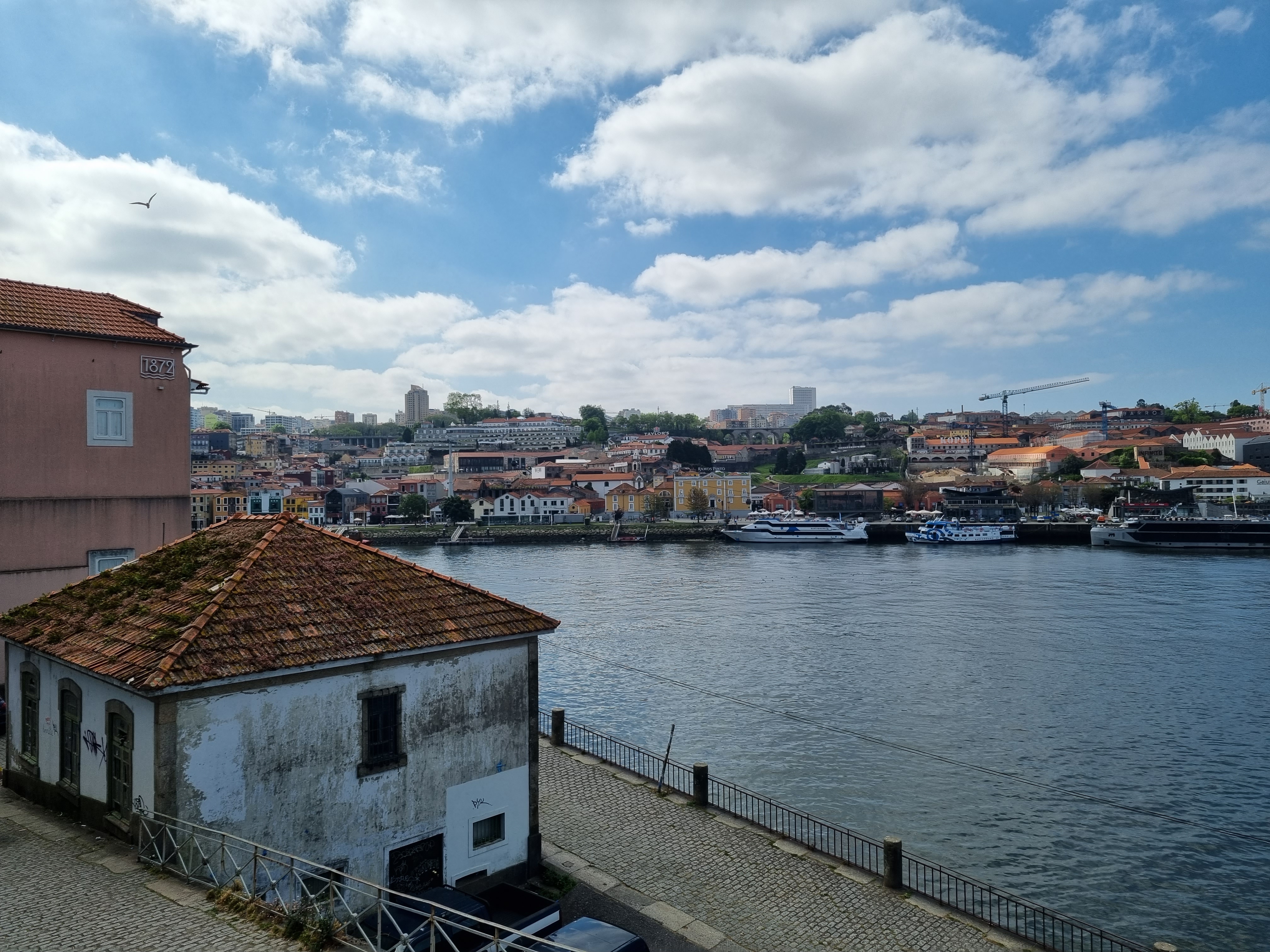
After lunch, we finally went on our wine tour. It was a walking tour, mainly focused, of course, on port wine. We visited three wineries. Our guide, Ricardo, talked about port wine in a very interesting and humorous way.

The first winery was Churchill’s, founded by the English. There, they showed us the different barrels used in making port. One type, ruby, is a red port aged in chestnut barrels to avoid oxidation when exposed to air. Another red port, tawny, is aged in oak barrels specifically to oxidize. There is also white port. The point is that port is a fortified wine, so 77% brandy is added to stop fermentation. Brandy can be added at different stages, which makes the wine sweeter or less sweet. We tried all three types of port there. We liked ruby a bit more than the other two.

The next winery was called Vasques de Carvalho. There, we were told that their barrels “mature” not here, but in the Douro Valley itself. We tried the same three types of port, and we liked them better here.

At the last winery, we tried only one port – tawny – but we didn’t like it at all, as it had a strong alcohol taste. But there, we also tried three table wines – rosé, white, and red – which we really liked. I don’t remember anything about these wines, except that they are blends, and wines made from a single grape variety are almost never found here. There are about 200 grape varieties in total.

We didn’t leave the tour very drunk, since we only took a couple of sips of each drink. After returning to the hotel and resting, we went out for dinner at a five-story food court and walked around.

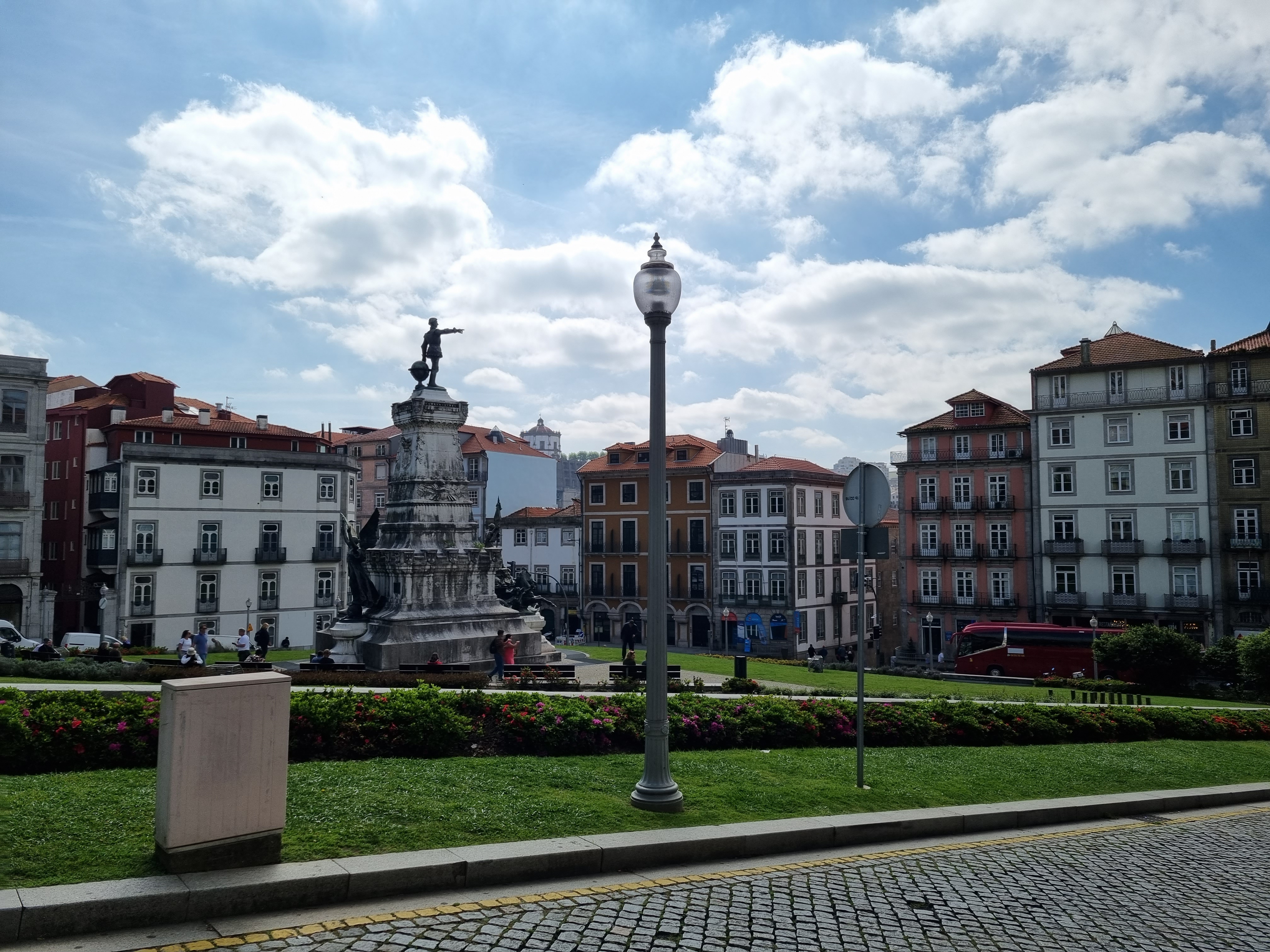
Overall, Porto is very different from Lisbon. Maybe it doesn’t have such a distinctive character, but it’s quite charming. In some places, it’s grand, in others – shabby, and it’s clear that this is a port city.

Posted in Asia, English, Hiroshima, Japan, Miyajima

Japan – Day 6

РУССКОЯЗЫЧНАЯ ВЕРСИЯ ПО ЭТОЙ ССЫЛКЕ. CLICK HERE FOR RUSSIAN VERSION.

28 May 2025

Today we went to Miyajima Island right in the morning. Prior to that, we had breakfast at our hotel – we tried the buffet on the 25th floor, which had a really cool view of the city. The breakfast offered both Western and Japanese options, including local Hiroshima specialties like fish cakes and fish sausage.

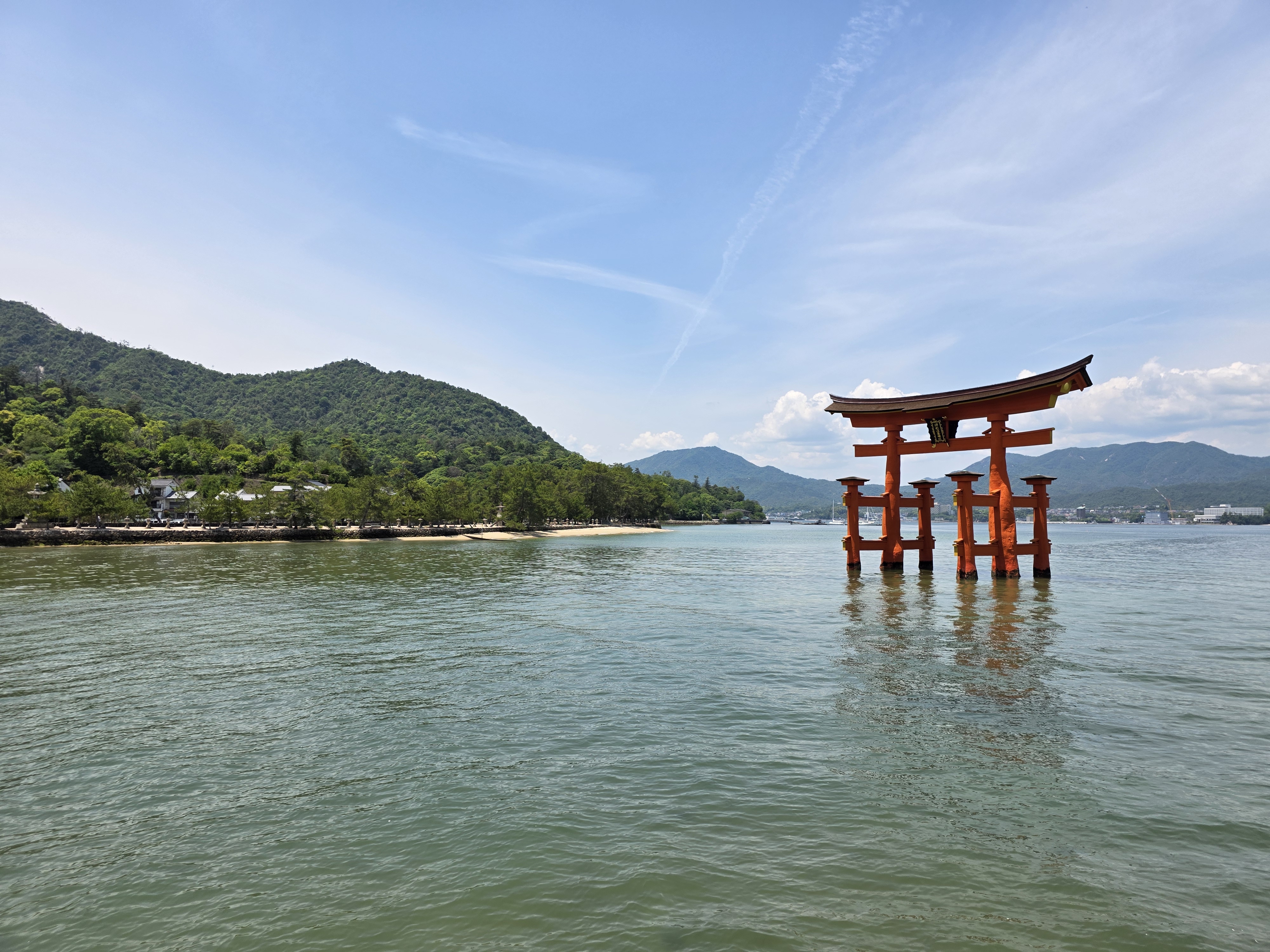
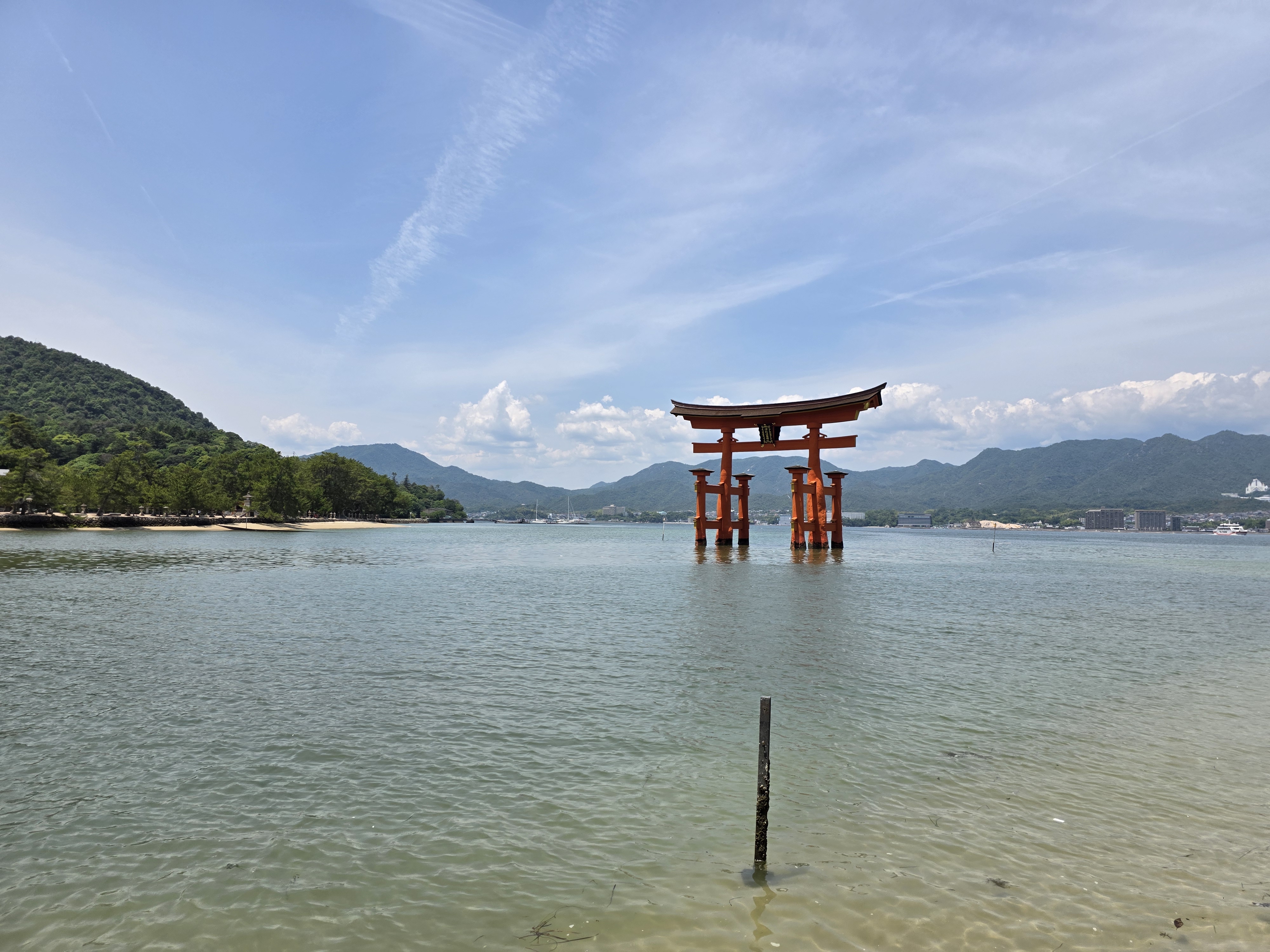
We walked to Shin-Hakushima Station, passing by the castle we visited yesterday – which, in daylight, looked a little less impressive than it did lit up at night. The train took about 20 minutes to get us to the ferry terminal, accompanied by a noisy Iranian tour group. From the terminal, ferries from two different companies run frequently to Miyajima, and the crossing only takes 10 minutes. From the ferry, we got a great view of the famous “floating” torii gates.

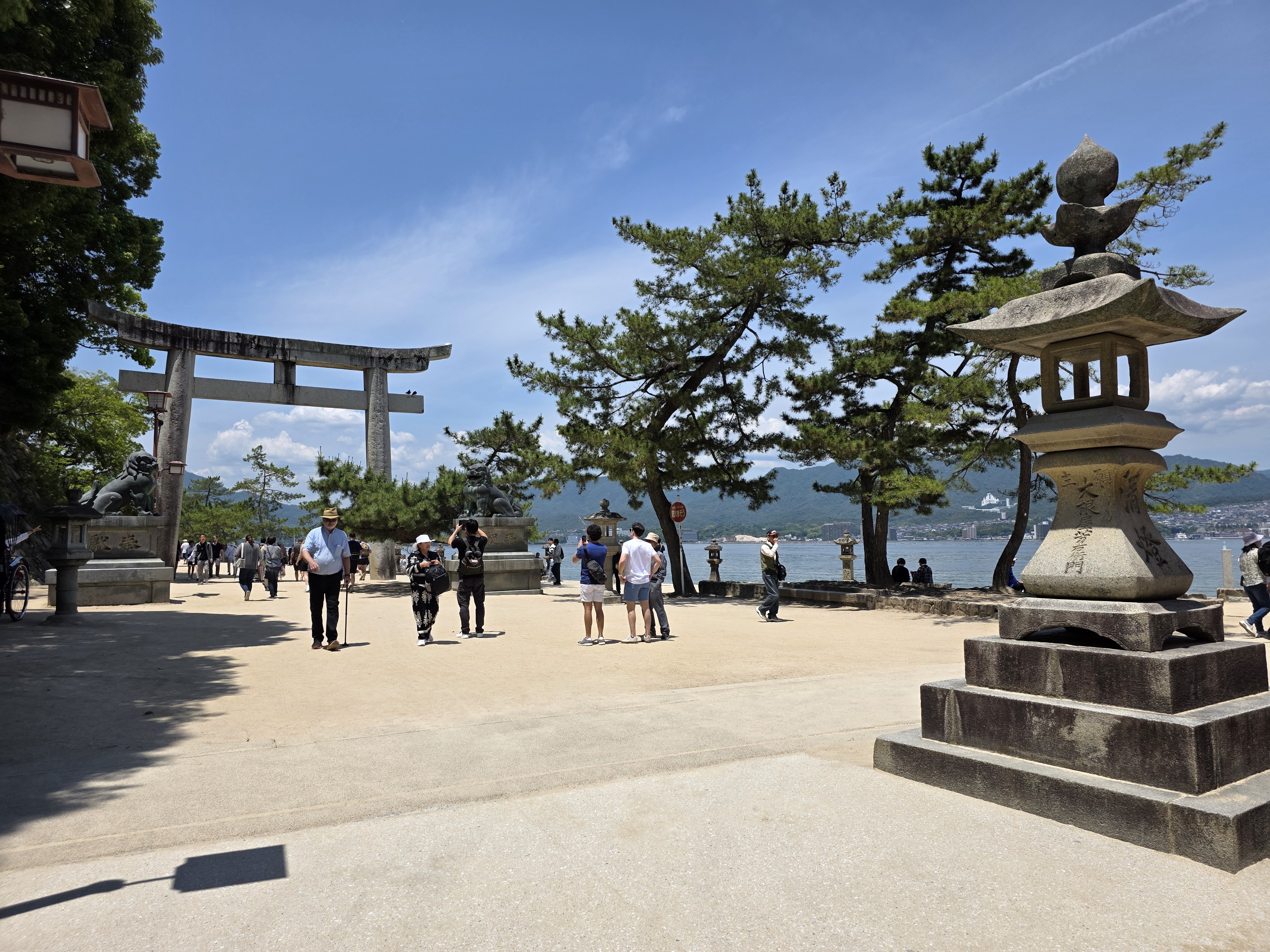
There were tons of tourists on the island – but despite its small size, it didn’t feel crowded. Somehow, everyone seemed to spread out. Most tourists were local Japanese, but there were also quite a few foreigners – the Germans again made a noticeable appearance.

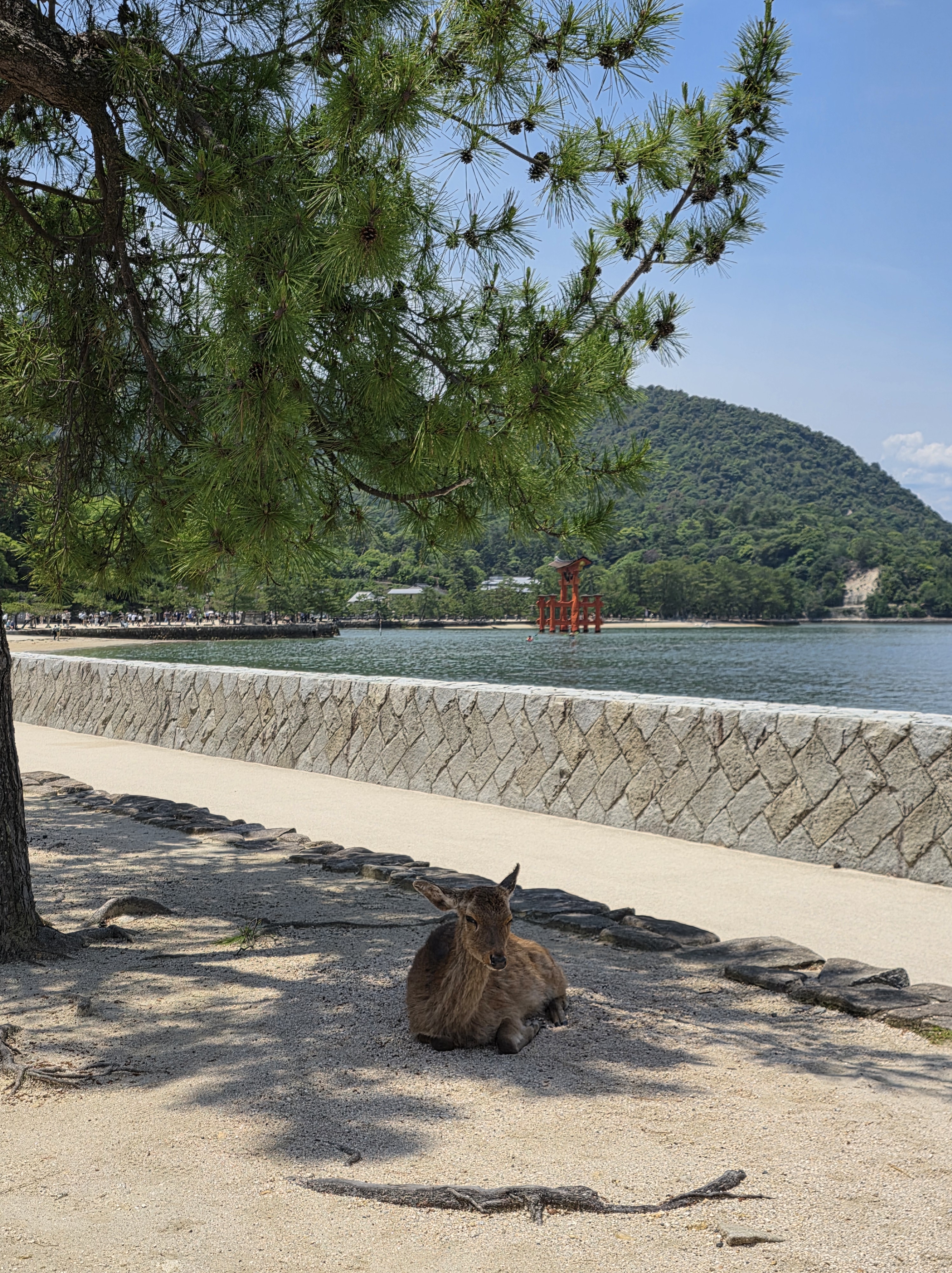
Stray deer roam freely on the island – so there’s no need to go to Nara to see them. That said, the ones here seem hungrier and more persistent. We didn’t even think of eating anything outside, but we saw others who did and clearly regretted it, trying in vain to fend off the pushy deer.

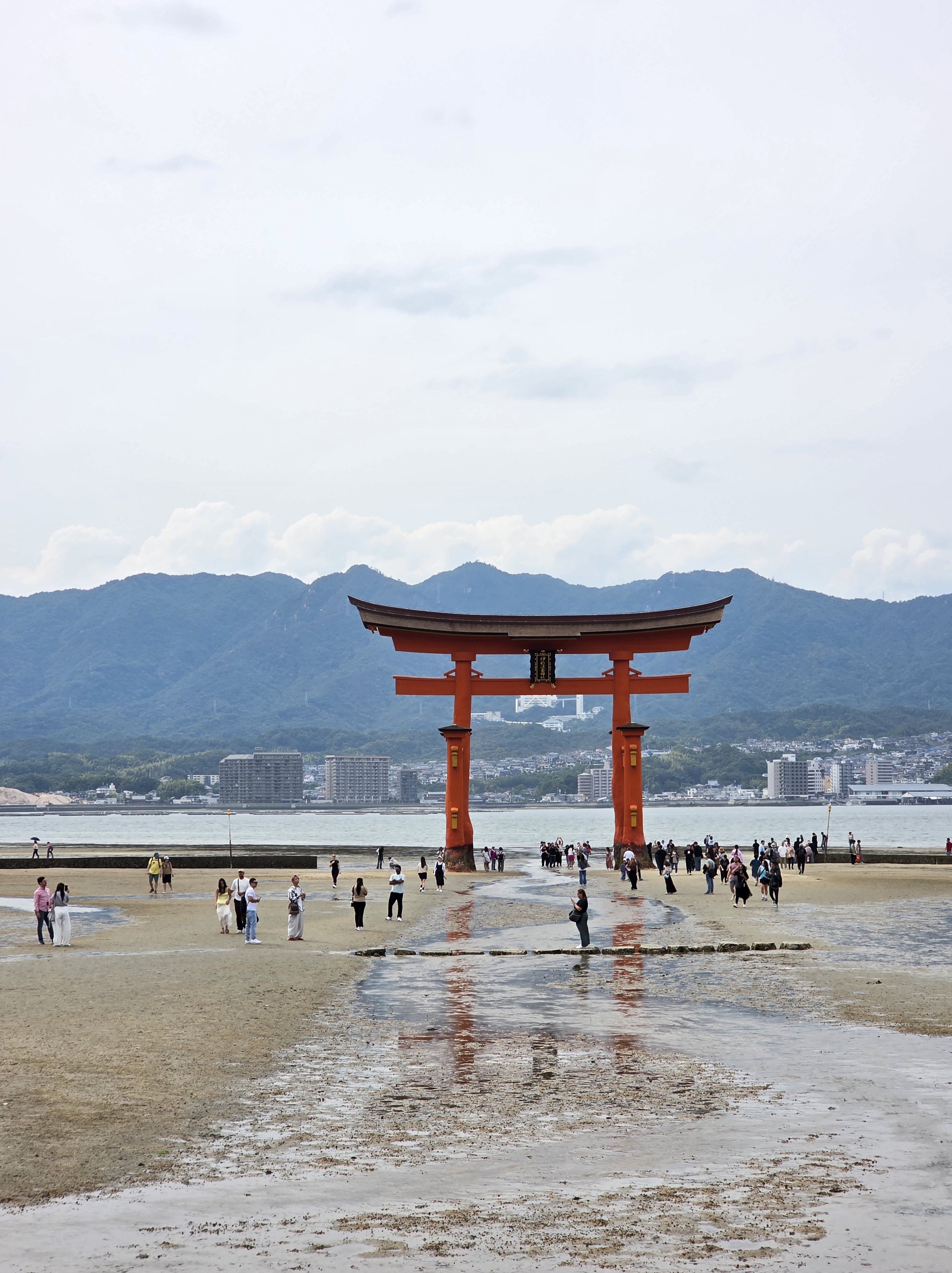
Once on the island, we wandered through the charming streets of Miyajima toward the Itsukushima Shrine – the one the “floating” torii gate belongs to. Interestingly, the gate doesn’t “float” all the time – only at high tide. So when we arrived in the morning, it was surrounded by water, but by around 3 p.m., it was already on dry land, with people walking right up to it and through it.

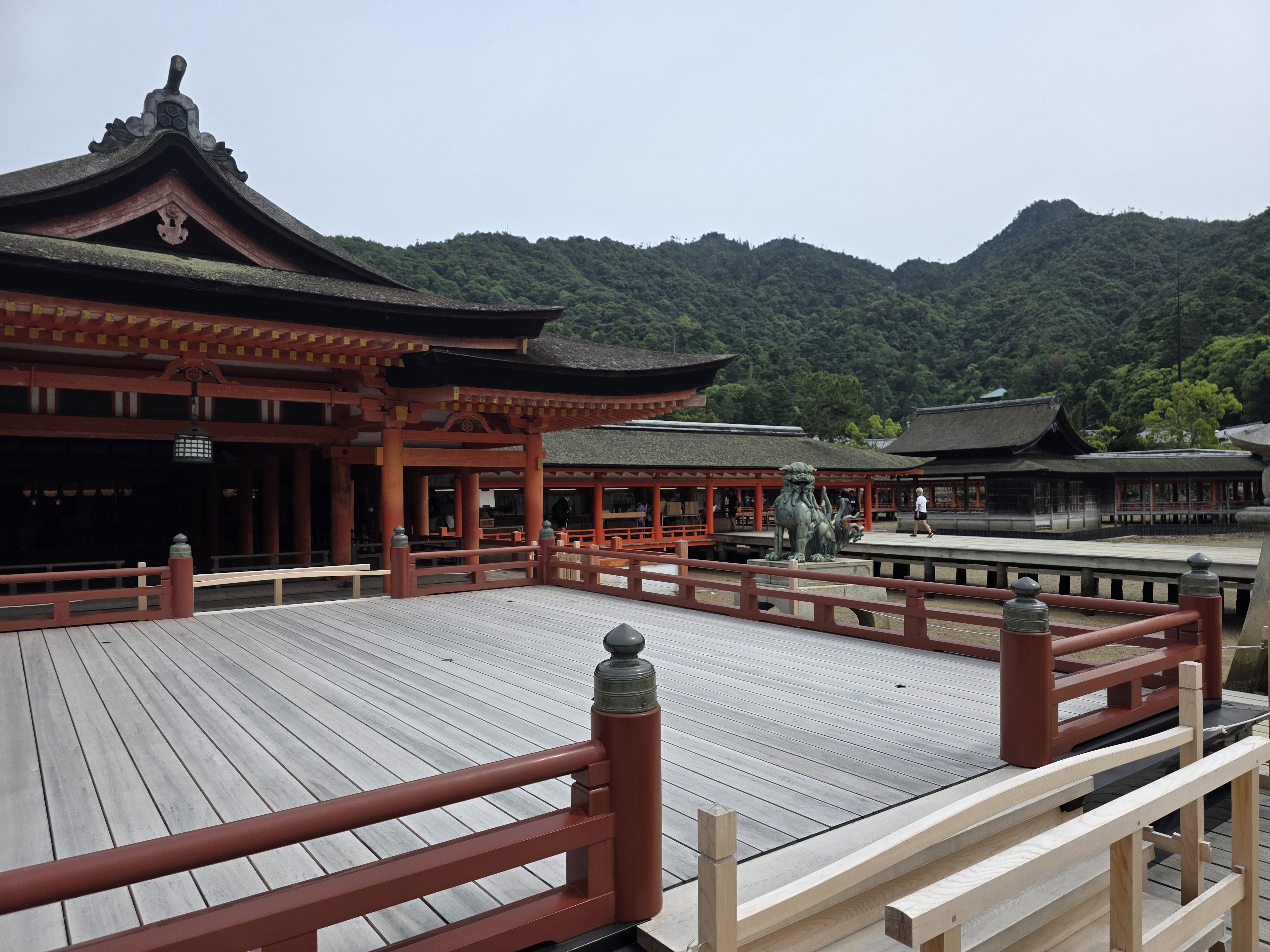
The shrine is Shinto, and the entrance fee is 300 yen (about £1.50), but at the moment, much of it is closed for restoration. Unfortunately, the nearby five-tiered pagoda from the 15th century was also under restoration – we didn’t even recognise it at first, and thought it was a new building going up in the middle of this historical island! So when we climbed up to the Hokoku Temple, we weren’t able to see it.

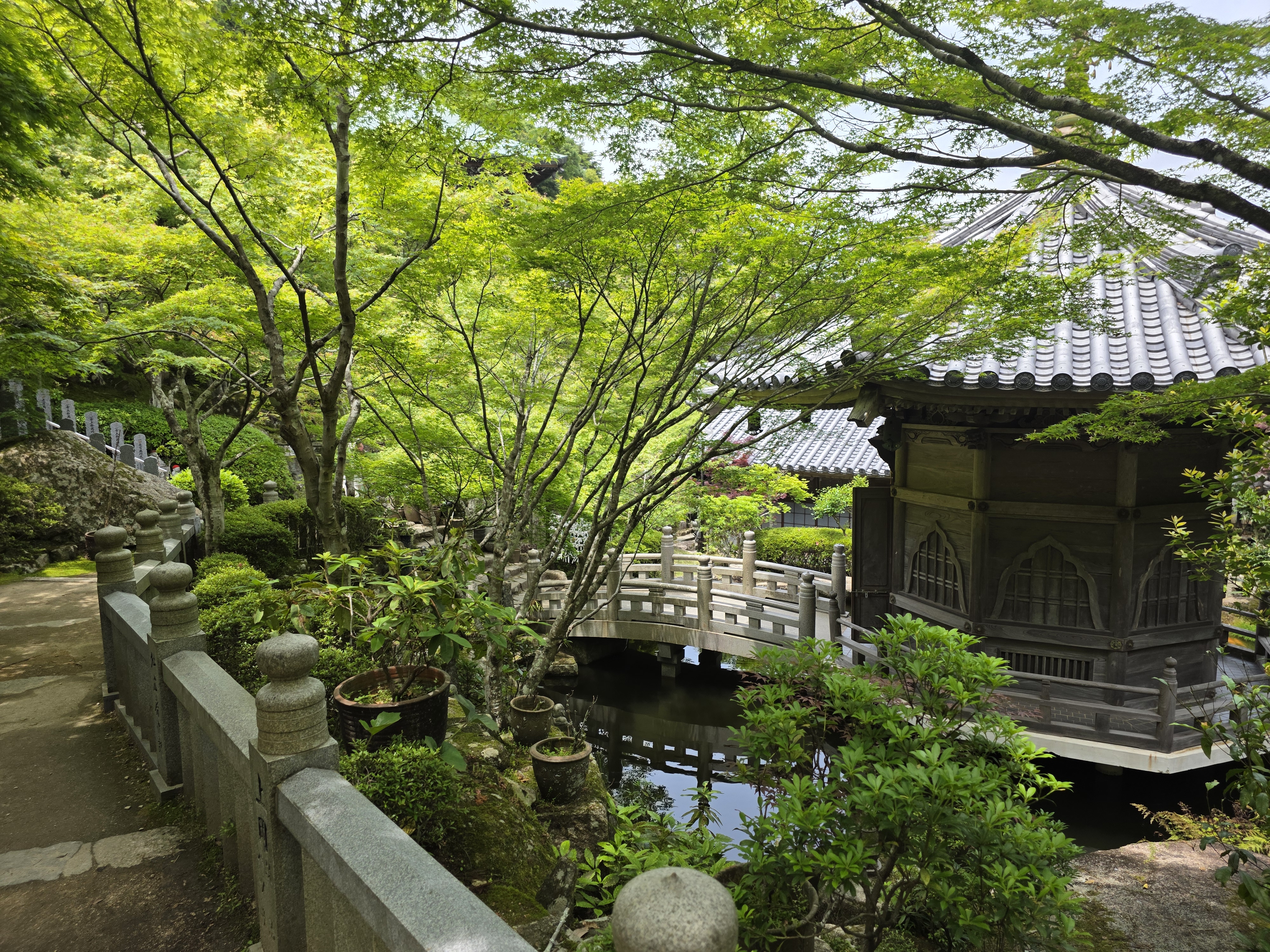
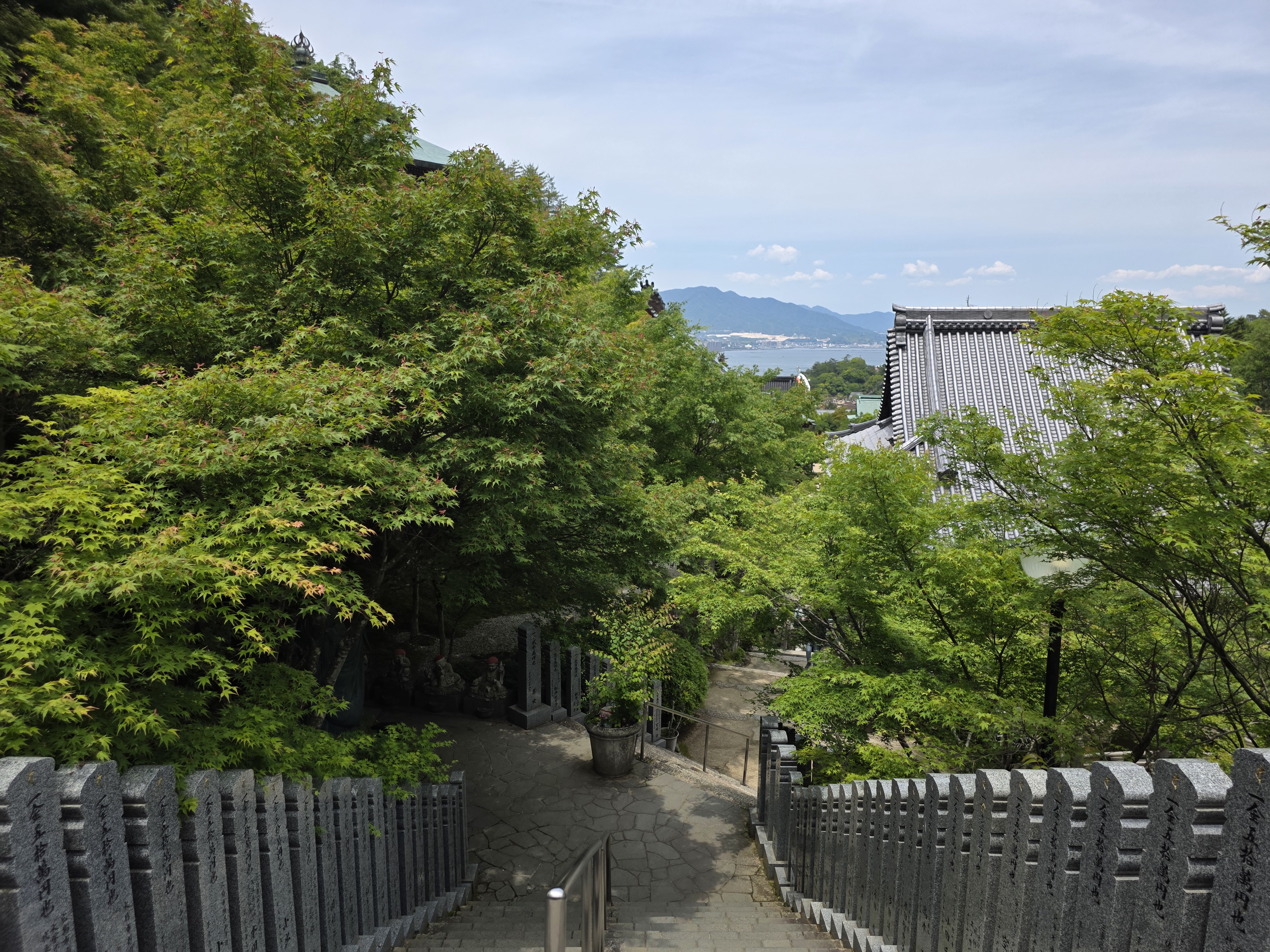
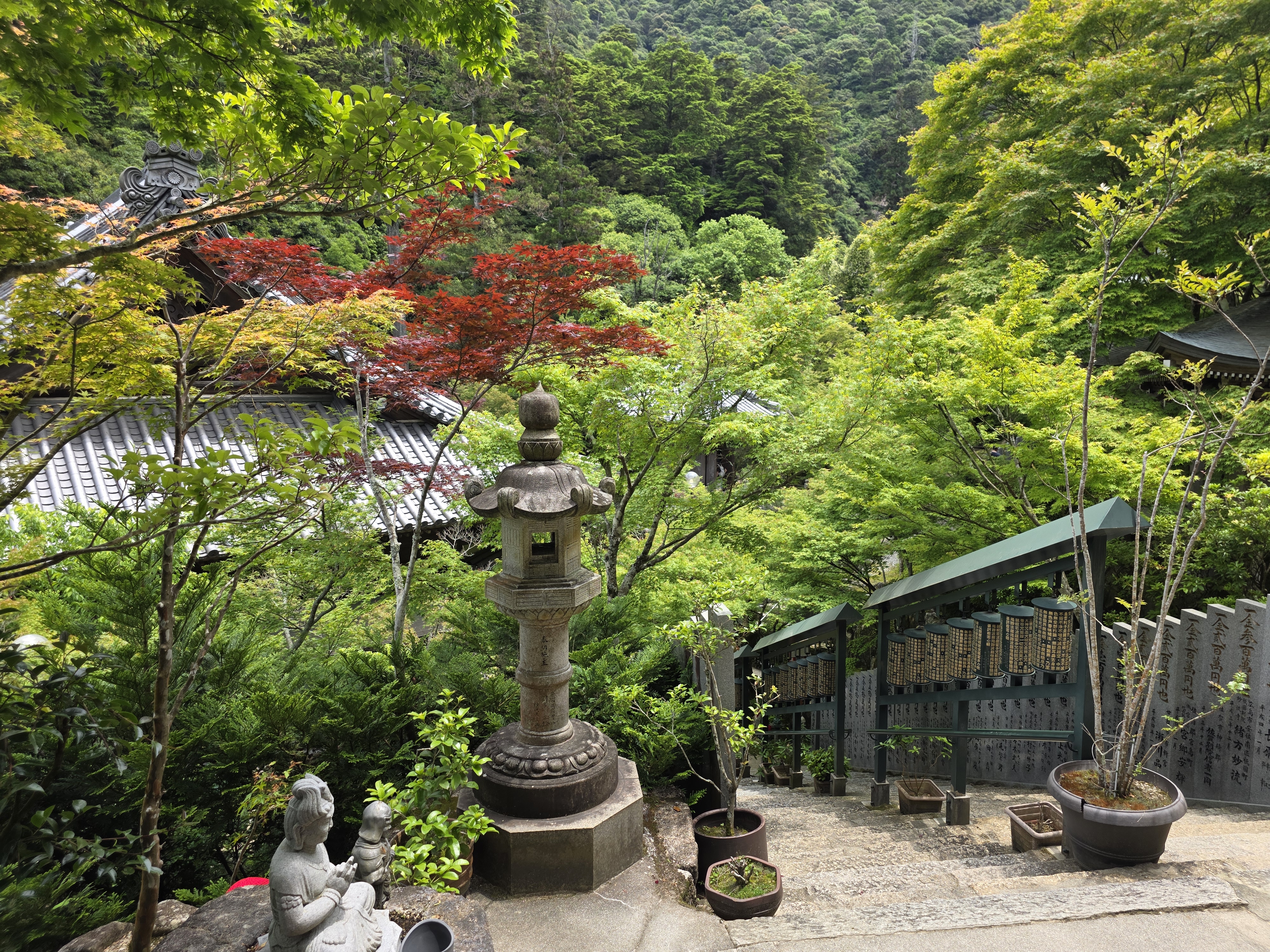
We then continued up to Daisho-in Temple – unlike the shrine and like Hokoku, this one is Buddhist. From here, you can hike to the top of Mount Misen, but we decided not to do that and just enjoyed the temple itself.

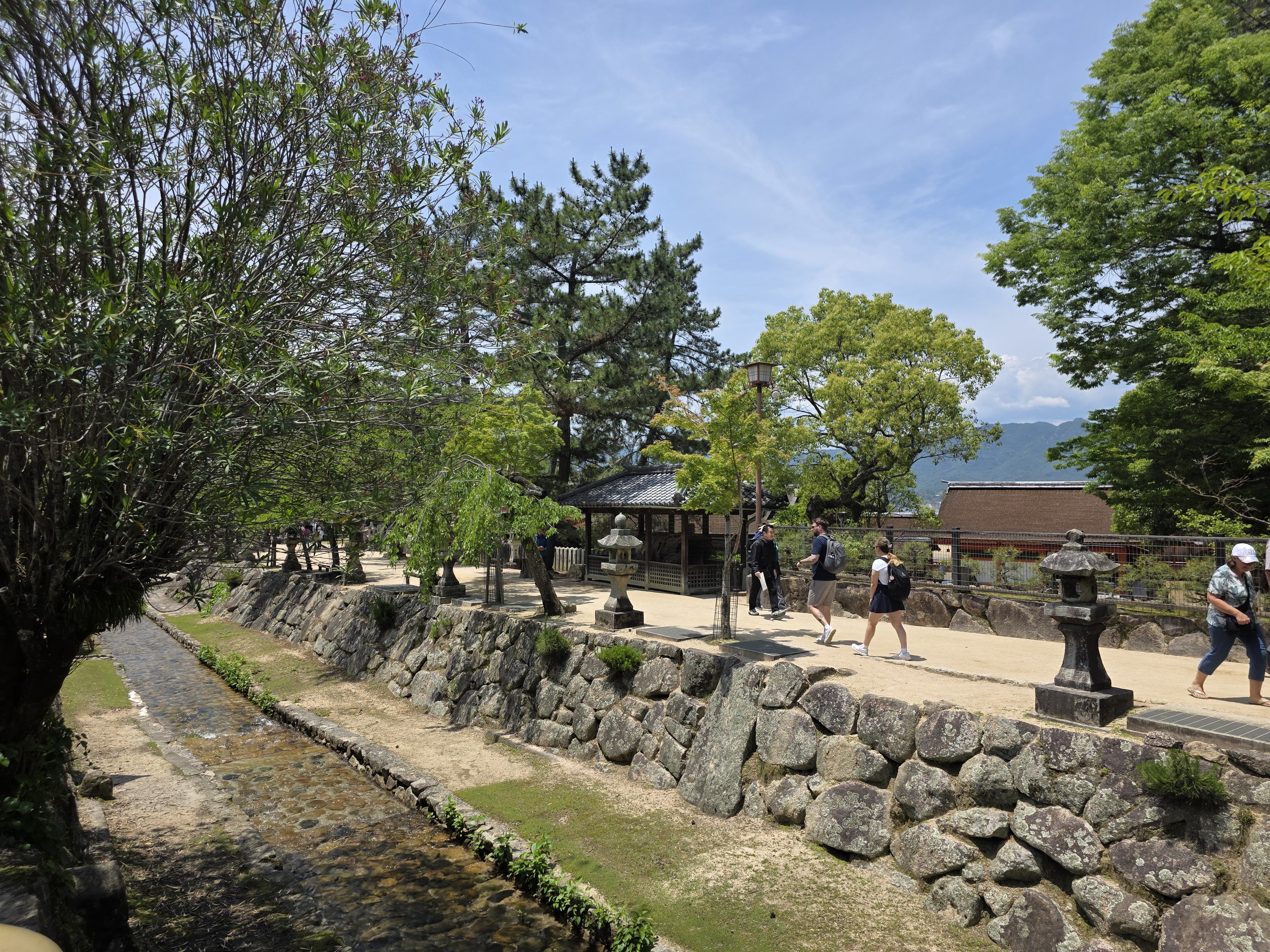
The path to the temple was calm and peaceful. Of course, tourists come here too (the same noisy Iranian group was there), but not in overwhelming numbers. Many worshippers were also present, performing rituals. For example, you can strike a large bell and make a wish – though you have to pay. Sure, you can do it for free, but I would imagine that the local higher powers probably don’t grant free wishes.

They say (and back it up with photos!) that the views from the temple in autumn are absolutely spectacular – but even in May, for some reason, many trees were already red, so it was beautiful anyway. We really liked the temple.

By then it was lunchtime, so we headed back down toward the pier and went into one of the local restaurants to try regional cuisine. We were seated in a “Japanese room” – many places here offer that option – which means sitting on tatami mats at a low table, shoes off. The regional specialties are grilled eel and oysters, which we had in a set meal with buckwheat noodles (soba). It was interesting to try, but I wouldn’t call it my favourite flavour of Japan.

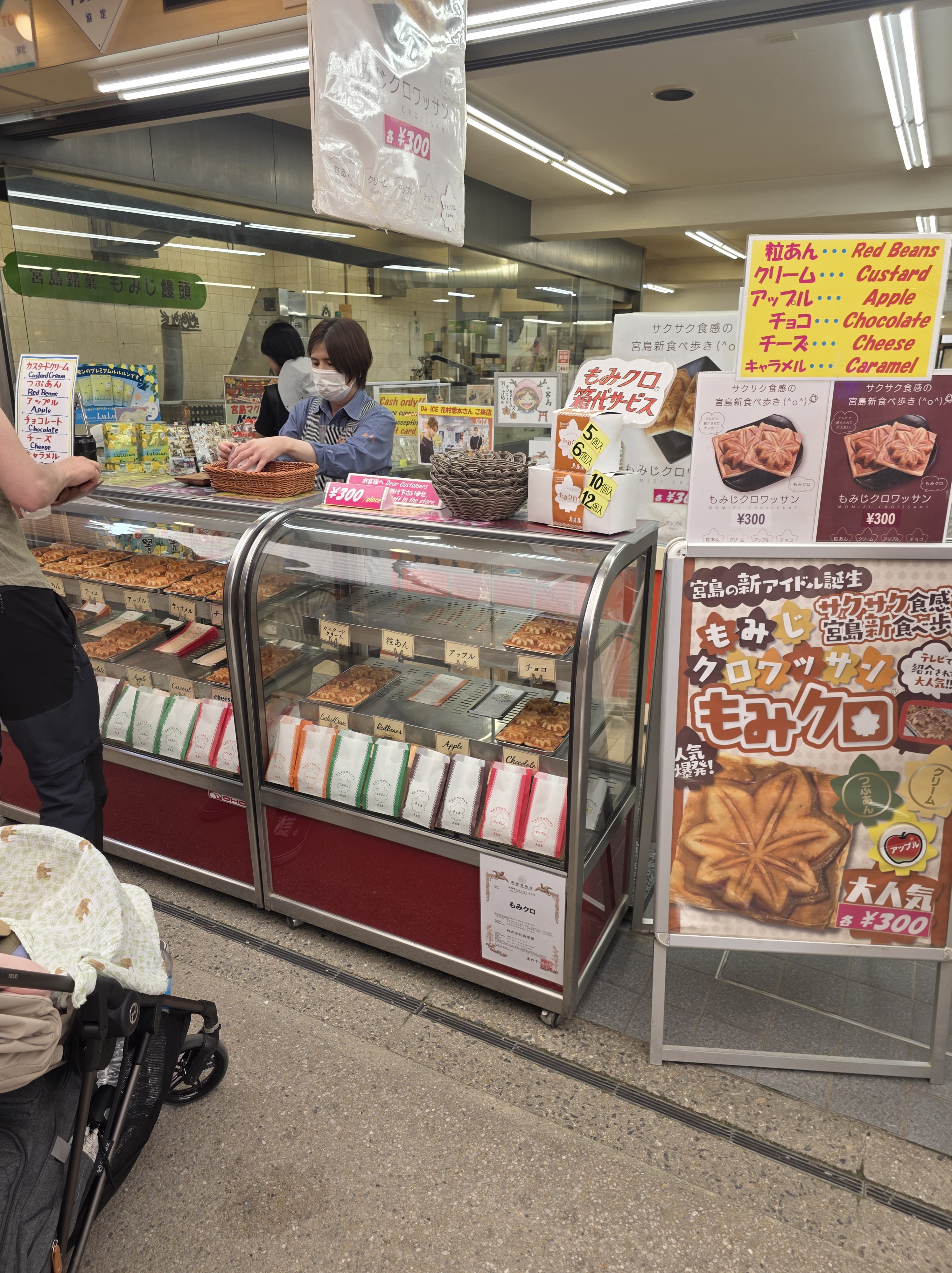
Another local delicacy is momiji manju – maple-leaf-shaped cakes with sweet fillings. The traditional version has sweet bean paste, which I didn’t like, but the chocolate and custard-filled ones were very tasty and delicate.

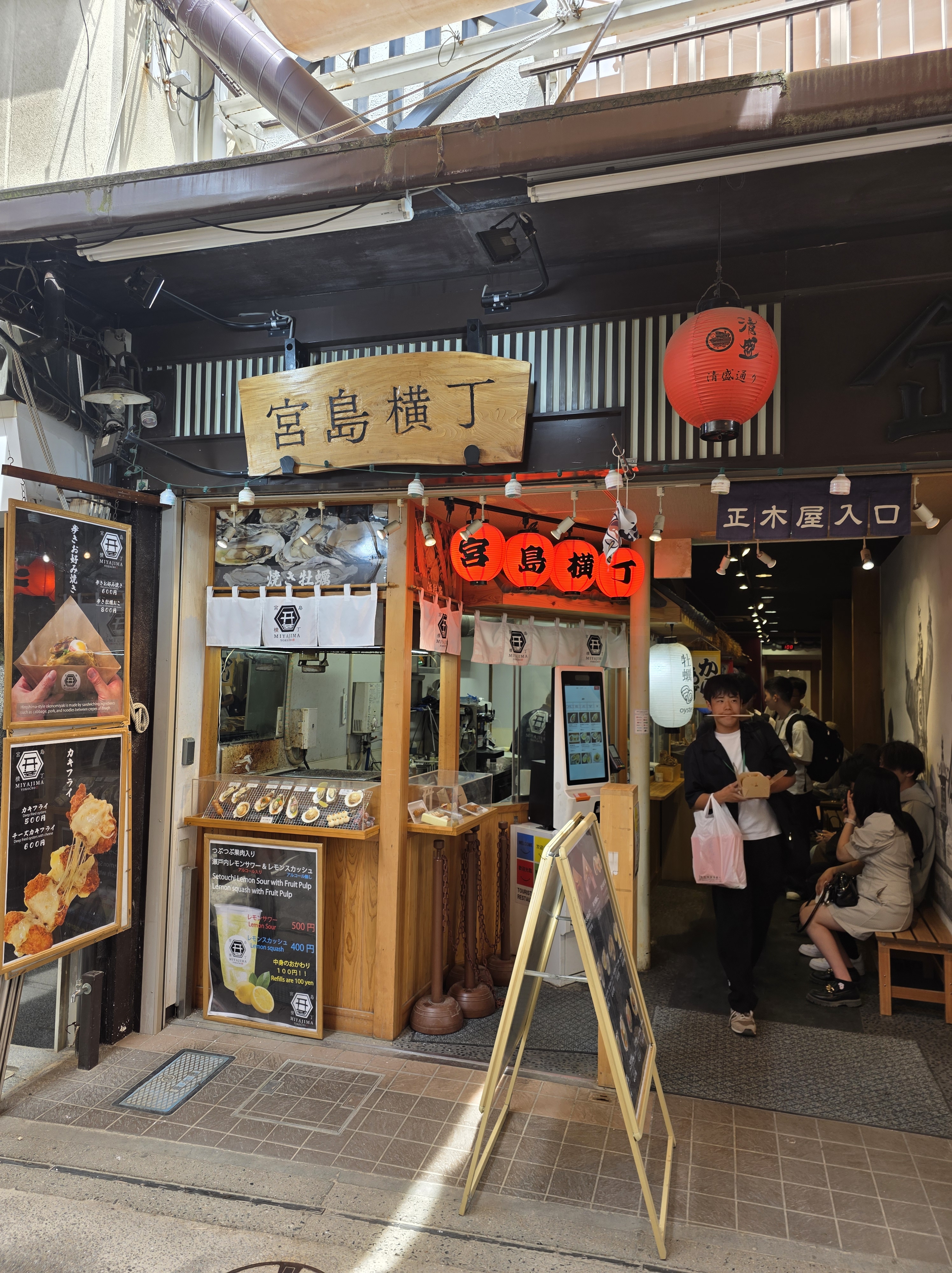
After lunch, we strolled through covered streets filled with cafés, food stalls, and souvenir shops – including some Ghibli-themed ones that were much better than the museum shop we saw yesterday.

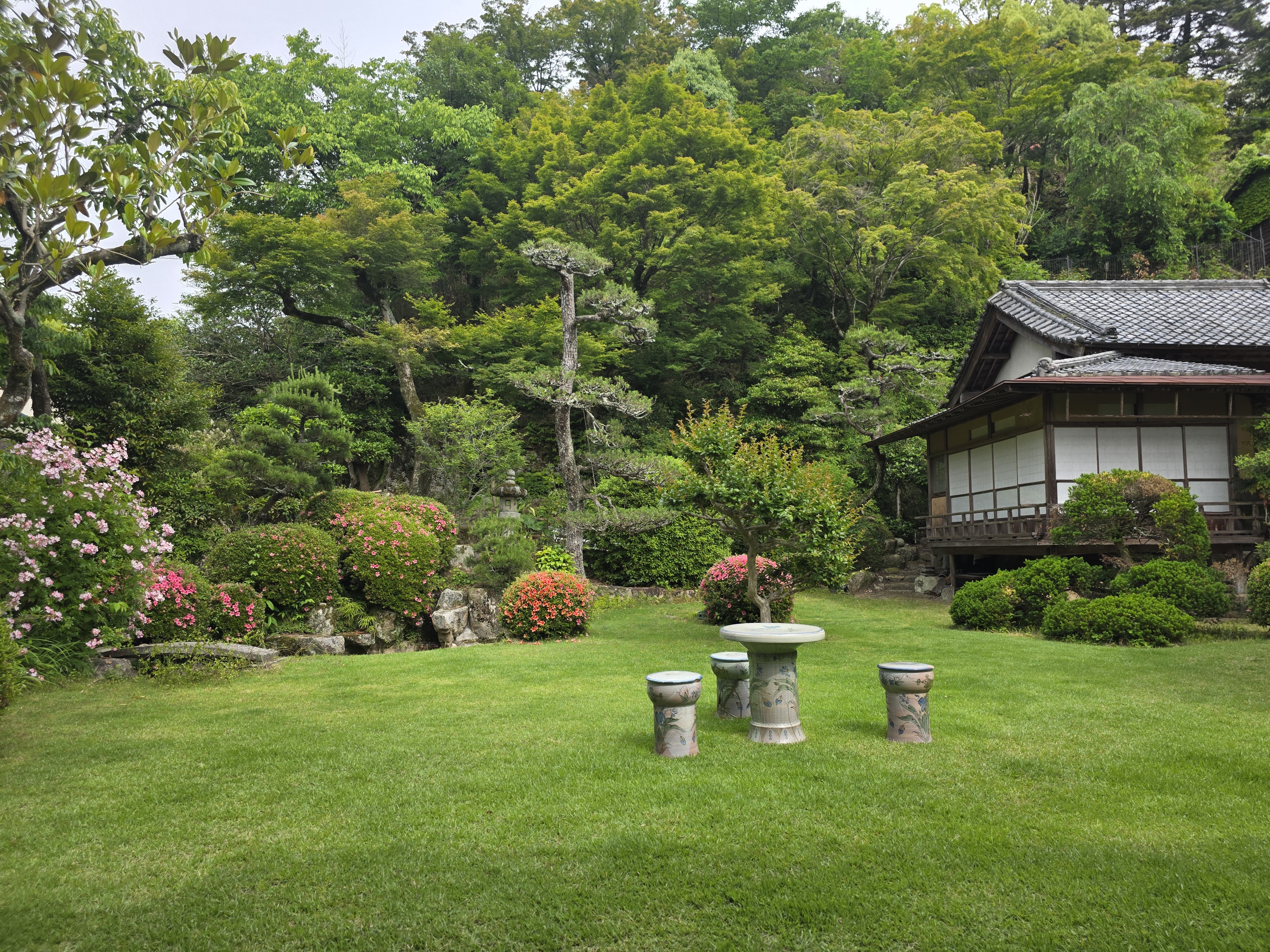
Then we stopped for coffee at a place we’d spotted earlier that looked like someone’s private garden. And as far as I could tell, that’s exactly what it was – a house and garden converted into a café, run by two elderly women. The garden was beautifully maintained and very traditionally Japanese, and it was such a pleasant spot to relax. At first there were some noisy customers chatting loudly, but they left soon after.

From there, we headed back to the ferry. For some reason, at that time there were schoolchildren in uniforms everywhere – whole classes, probably on school trips. Some were arriving, some were leaving, some were gathered for class photos.

Back in Hiroshima, we decided to walk through the Peace Memorial Park and visit the Atomic Dome – the skeletal remains of one of the Hiroshima Prefectural buildings that survived the atomic bombing. Interestingly, the memorial plaque doesn’t mention anywhere that the bombing was carried out by the Americans – and the overall tone of the memorial isn’t accusatory at all, but more like a quiet reflection on the horrors of war and the importance of peace.

At the hotel, we arrived just in time for happy hour and had some rather mediocre wine that made us a bit dizzy – but then we went to dinner and had delicious katsu to make up for it.

Posted in English, Europe, Georgia

Georgia – Day 1

РУССКОЯЗЫЧНАЯ ВЕРСИЯ ПО ЭТОЙ ССЫЛКЕ. CLICK HERE FOR RUSSIAN VERSION.

27 December 2014

We arrived last night, and found Zviad, the guide meeting us, very easily, so logistic-wise everything went really smoothly. The smooth start actually began at the passport control, where each of us was handed a bottle of Saperavi wine – turns out, they are given out to all foreigners entering the country, isn’t that surprising? Zviad drove us a bit around the night Tbilisi, which immediately aroused nostalgia – the non-central streets seemed very similar to the Baku of my childhood. We got particularly excited when shown the river Kura and then the Avlabari neighbourhood, and started quoting the Khanuma movie.

20141227_085802

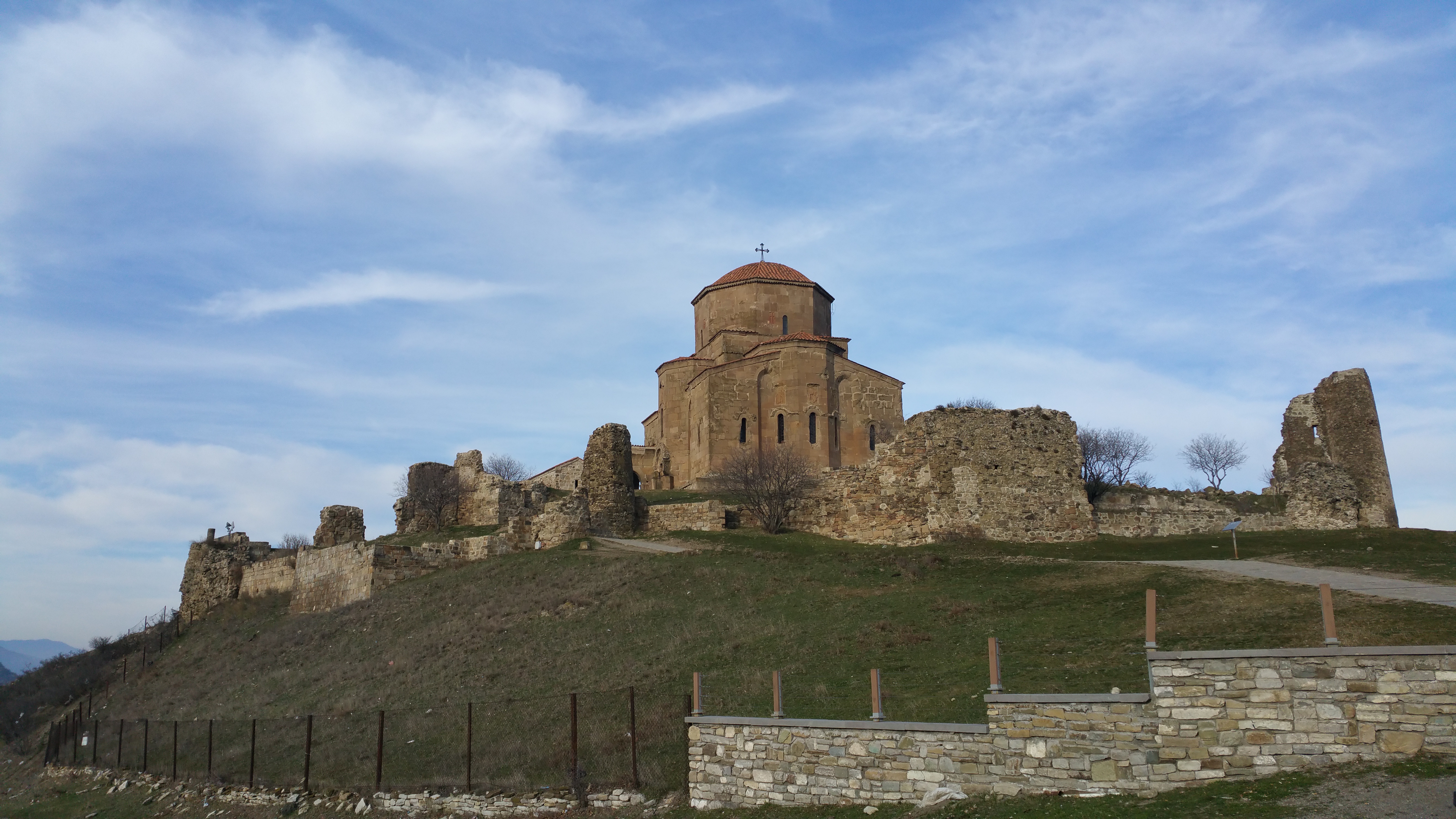
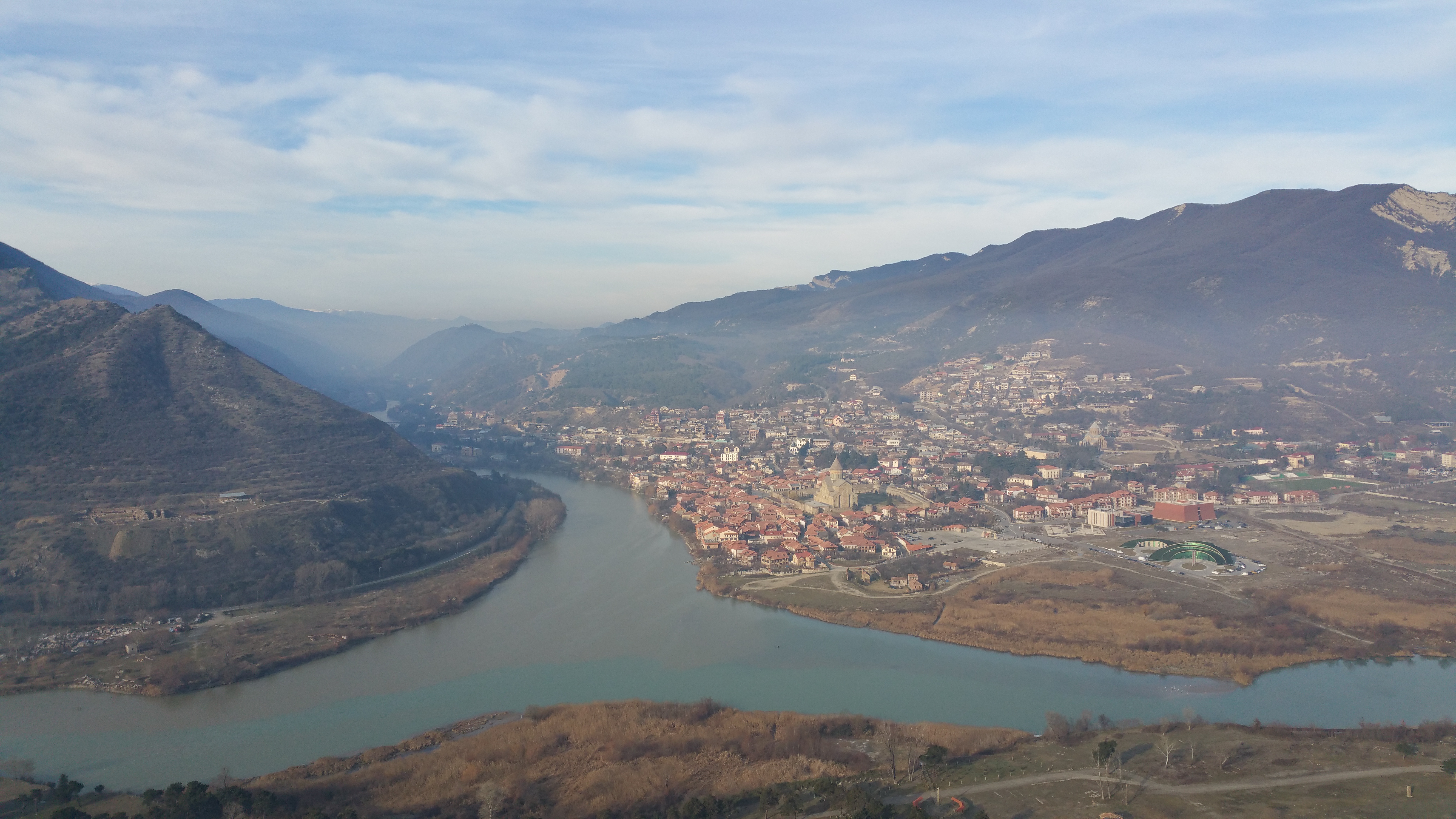
It was decided that on the first day we would make a sortie out of Tbilisi and leave the city sightseeing for the second one. The weather promised to be nice (and honestly fulfilled the promise), even though it was quite chilly near the Jvari (meaning ‘cross’) monastery where we headed first, and the puddles were flecked with ice. The monastery is located atop a rocky mountain, from which one can see the Mtskheta town and also exactly what was described in Lermontov’s poem ‘The Novice’ (‘Mtsyri’): “…where soundingly together flow Aragva and Kura – the place, where, like two sisters, they embrace…”, i.e. where the blue Aragvi merges with the yellow Kura, and the line separating these waters is very clearly noticeable. The reason why the monastery is called the Holy Cross monastery is not because it has the shape of a cross, as one might expect, but because it was here where St. Nino of Georgia, a female evangelist, erected a cross. The legend says that this very cross lies in the foundation of the monastery.

20141227_104035

20141227_104044

20141227_104539

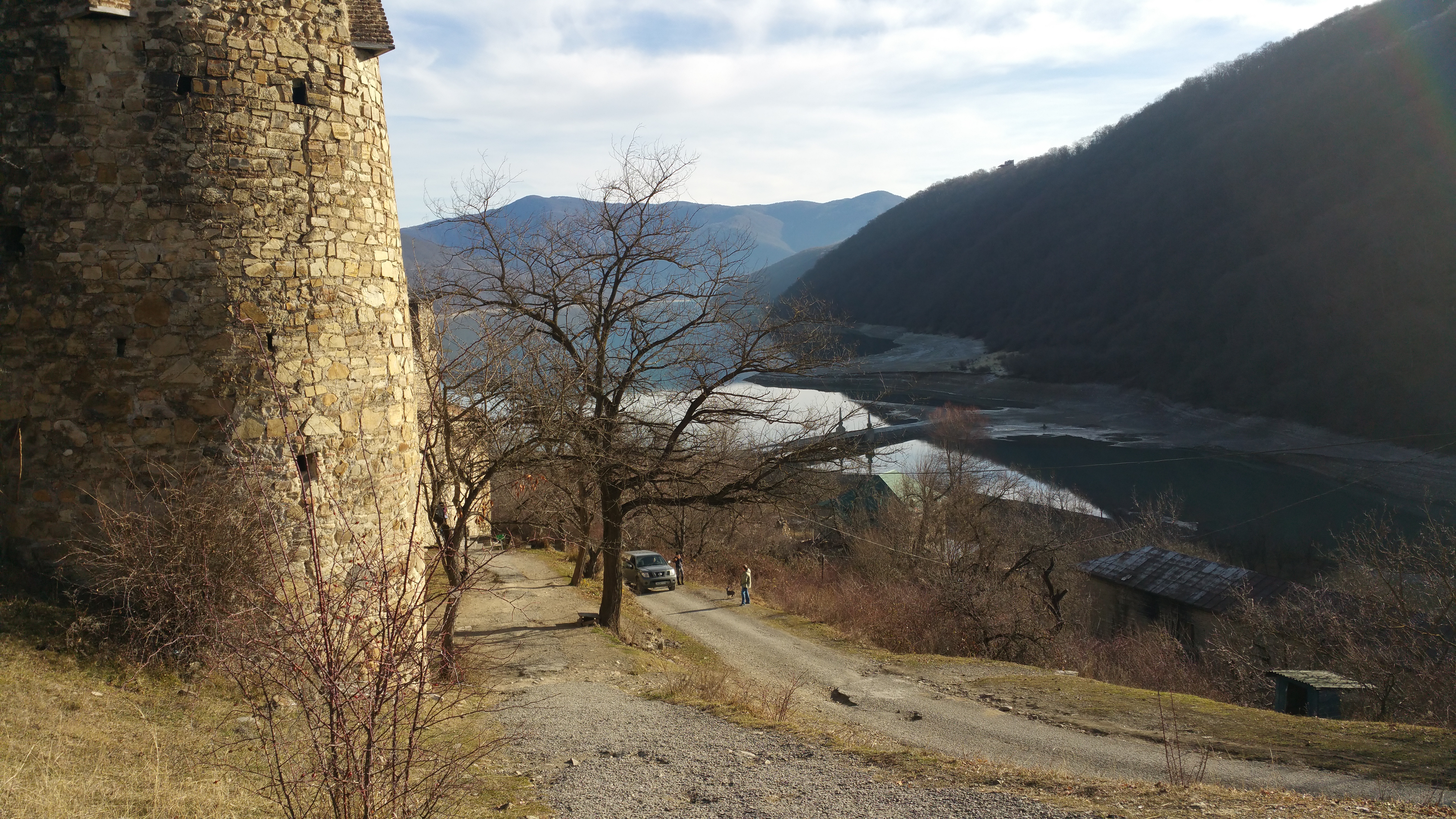
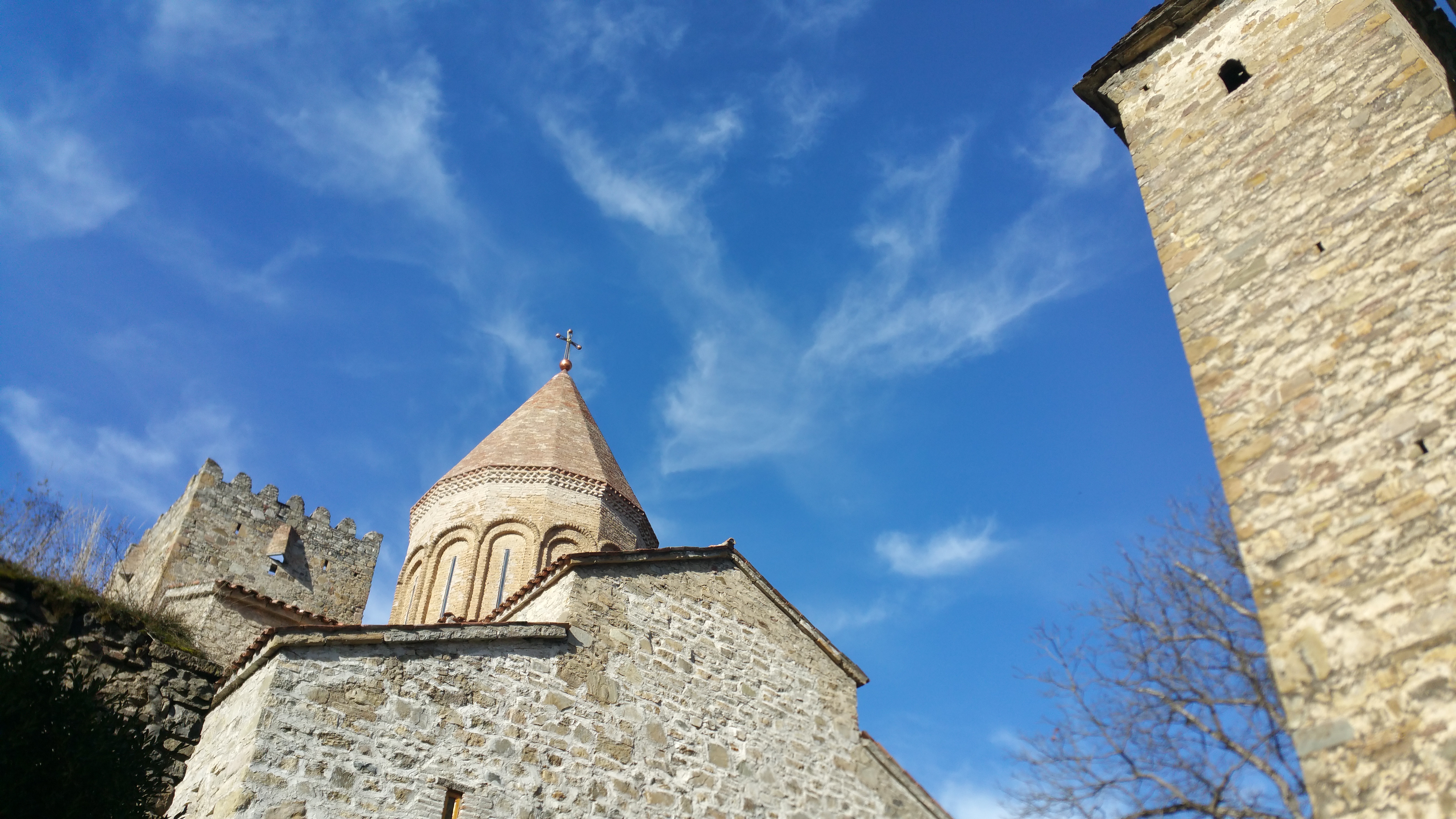
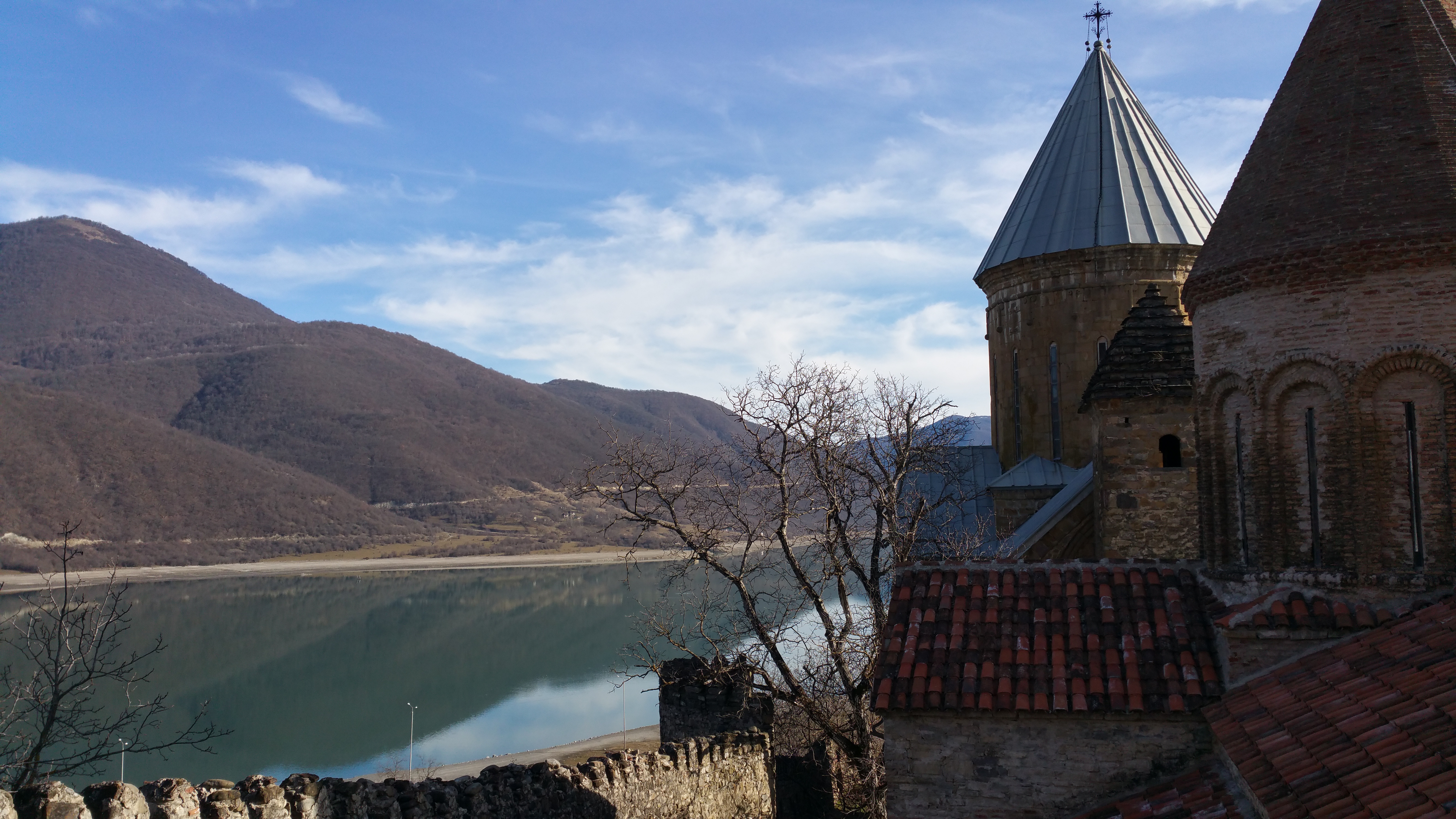
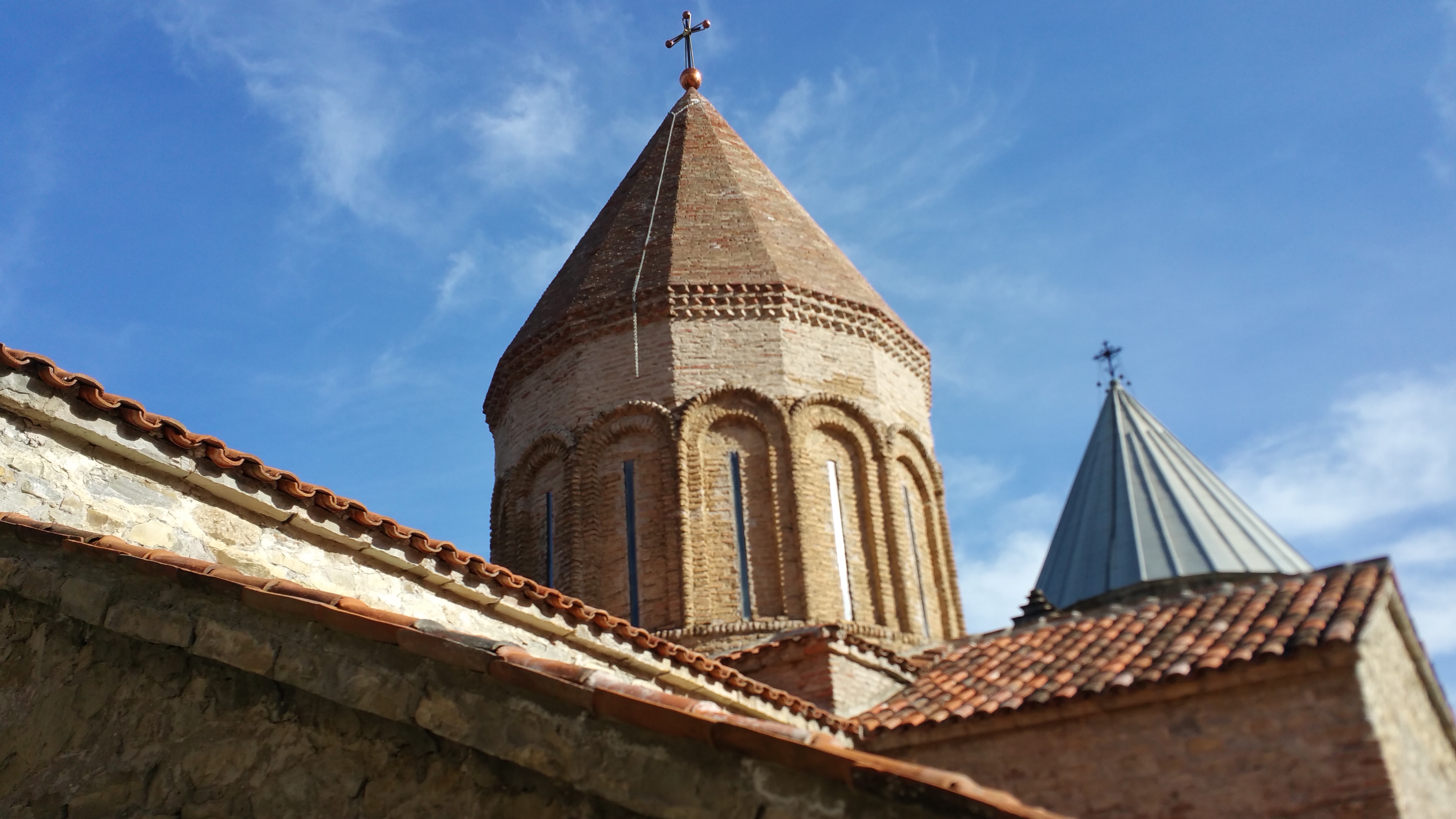
We drove off along Aragvi, on the Georgian Military Highway, to see the ancient fortress of Ananuri. The places around were very picturesque, even though it’s not the best season now – in autumn or spring it must look absolutely spectacular! On our way we took pictures of the Zhinvali reservoir from various angles. It’s also very beautiful, but that’s somewhat overshadowed by the fact that to create this beauty (which of course has practical use too!) three villages had to be flooded. We visited one of the churches in the castle complex, while the other one was closed. Zviad told us that once all the walls in the first church were painted with frescoes, but then during the stay of a Russian garrison in the fortress, they were all covered with a thick layer of lime. Relatively recently a small area was cleared and a really impressive fresco of St. George was discovered. I climbed to the top of the tower, which was quite difficult and scary, considering the narrow passages and steep, broken stairs. But I got the chance to look out of a loophole, although it was so narrow that I couldn’t really see much.

20141227_121051

20141227_121232

20141227_121726

20141227_121742

20141227_121846

20141227_121942

20141227_122617

20141227_123401

20141227_123628

20141227_125548

From here we drove back to Mtskheta and stopped in the old part of the city. In general, as we noted, it is peculiar to Georgia that most of the ancient and old buildings are restored in their original form. Therefore, all the houses are colorful, neat, with traditional Georgian balconies and look very good. There are little shops selling souvenirs, wine, churchkhela (Georgian sweet “sausages” made of fruit and nuts) with sellers strongly beckoning tourists to drink with them all along the road to the Cathedral of Mtskheta. Our guide even argued with someone, reproaching him for trying to “recapture” his guests.

.

20141227_133702

20141227_133713

20141227_133745

20141227_141233

20141227_141303

20141227_141404

The Cathedral of Mtskheta, or Svetitskhoveli (translated as “the life-giving pillar”) is a patriarchal cathedral with the seat of the Patriarch standing right in the centre thereof. It’s a burial place of the last kings of Georgia and various princes, including a few from the Mukhrani branch of the famous Bagrationi dynasty. The Cathedral is one of the three main cathedral in country, symbolising the central Georgia, or the Kartli region. The Alaverdi temple in Kakheti, respectively, represents the east of Georgia and the Bagrat temple in Kutaisi represents the west. Even in Soviet times, it was common among the youth of Tbilisi to wed in Svetitskhoveli, so every spring after Easter endless wedding processions stretched from Tbilisi.

20141227_134636

Instead of the anticipated three hours we spent five on the road, by the end of which we were absolutely starving. We wanted to taste some proper Georgian cuisine, and on our return to Tbilisi we were taken to a restaurant called “Zakhar Zakharich”. The food there was really delicious. Our menu consisted of the kharcho soup, Imeretian khachapuri (cheese pie), aubergines with walnuts, ojakhuri (roasted pork with potatoes and onions), shkmeruli (fried chicken with lots of garlic) and jigar (liver) on the grid. As for the wine, we had red Saperavi in pitchers. In short, we had a great treat and only paid 127 GEL for four of us, which makes about 70 USD , or 54 AZN.

The only thing we could do after that was taking a two-hour nap. In the evening, we walked along the holiday-decorated Rustaveli Avenue, which was right around the corner from our hotel. It was beautiful, but in many ways reminded of Baku – potholes here and there, lots of construction, cars on the sidewalks, cigarette smoke everywhere – as most of the population seems to smoke. However, the walk was still nice.

Posted in Croatia, Europe, Korčula

Croatia – Day 8

РУССКОЯЗЫЧНАЯ ВЕРСИЯ ПО ЭТОЙ ССЫЛКЕ. CLICK HERE FOR RUSSIAN VERSION.

31 August 2012 – Friday

After the two tours we had had with the “Elite Travel” company, where we were picked up next to the “President” hotel, our impressions about this company and their work were quite good. And looks like we put an “evil eye” on them: our today’s trip to the Korčula island started with a hitch: the bus didn’t arrive. It turned out that the day before we had been forgotten to be included in the list. As a result, we were picked up by a separate minibus and delivered to the port of Gruž, where we eventually found our group and the guide. The guide (also named Ivana) initially seemed to us a bit rude (instead of apologising immediately, she attacked us – saying something like, come on, what’s your problem, you’ve been finally brought here after all!), and most importantly, uninteresting – she was literally falling asleep while making comments in English and German. She seemed more willing to speak German, by the way – generally I noticed a clear preference shown to German tourists here.

Another problem – among the group there was a family with a two-year-old toddler, for whom this long road, quite obviously, was way too long: in the good moments he was spinning like mad, while in the bad ones he was crying and throwing up. So, his presence added neither peace, nor fresh air to other passengers.

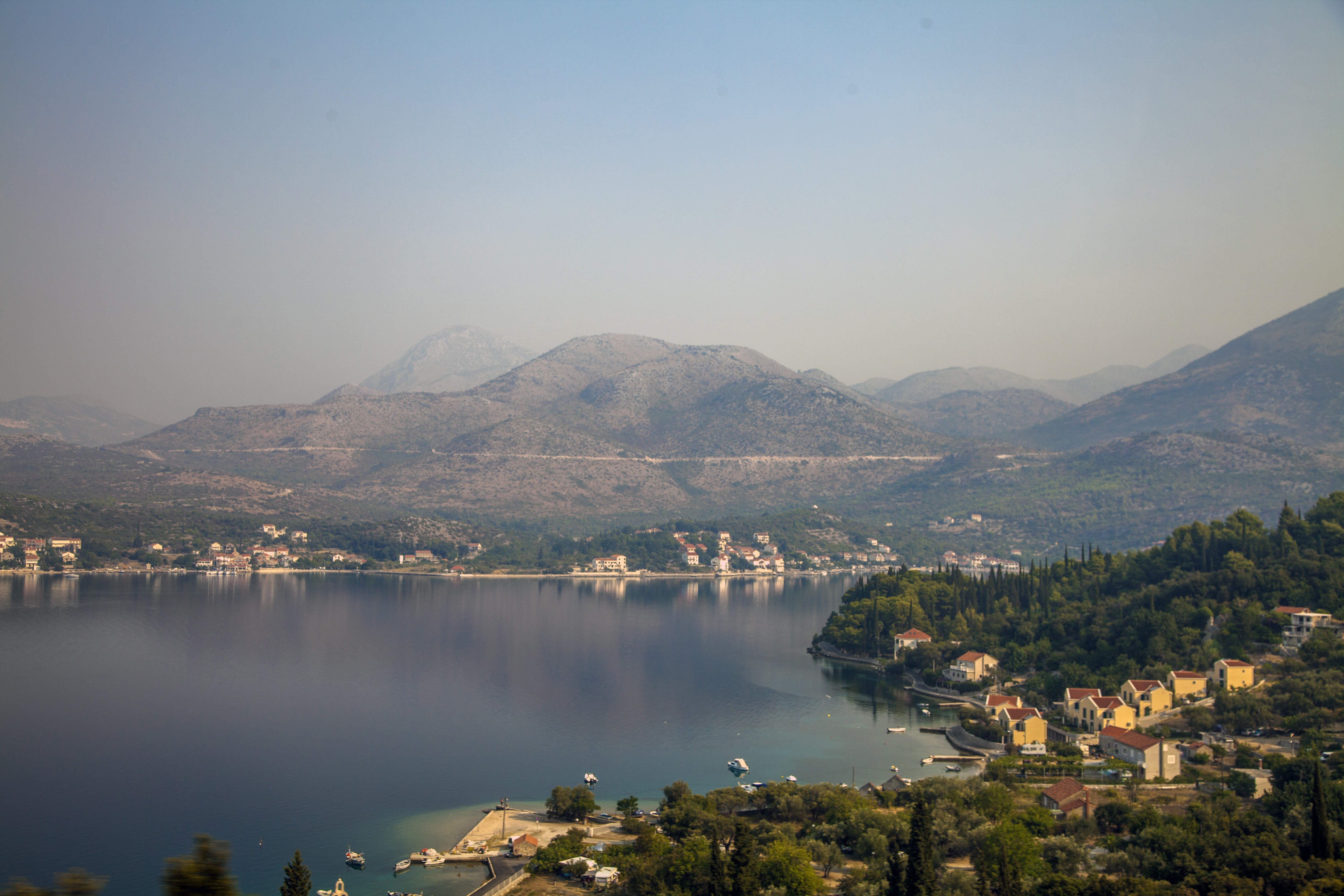
We climbed high into the mountains, again very close to the burning Bosnia. In the town of Slano we picked the last passengers. The location is called Slano (“salty”), because, starting almost from the first settlements, when salt used to be worth its weight in gold, it was mined here. Because of this salt, the Ottoman Empire’s caravan ways passed through these places.

This time the road was totally crazy. In some parts of it even looking down was scary, and at the same time it was hard to tear oneself away from the window – the view was unbelievably beautiful!

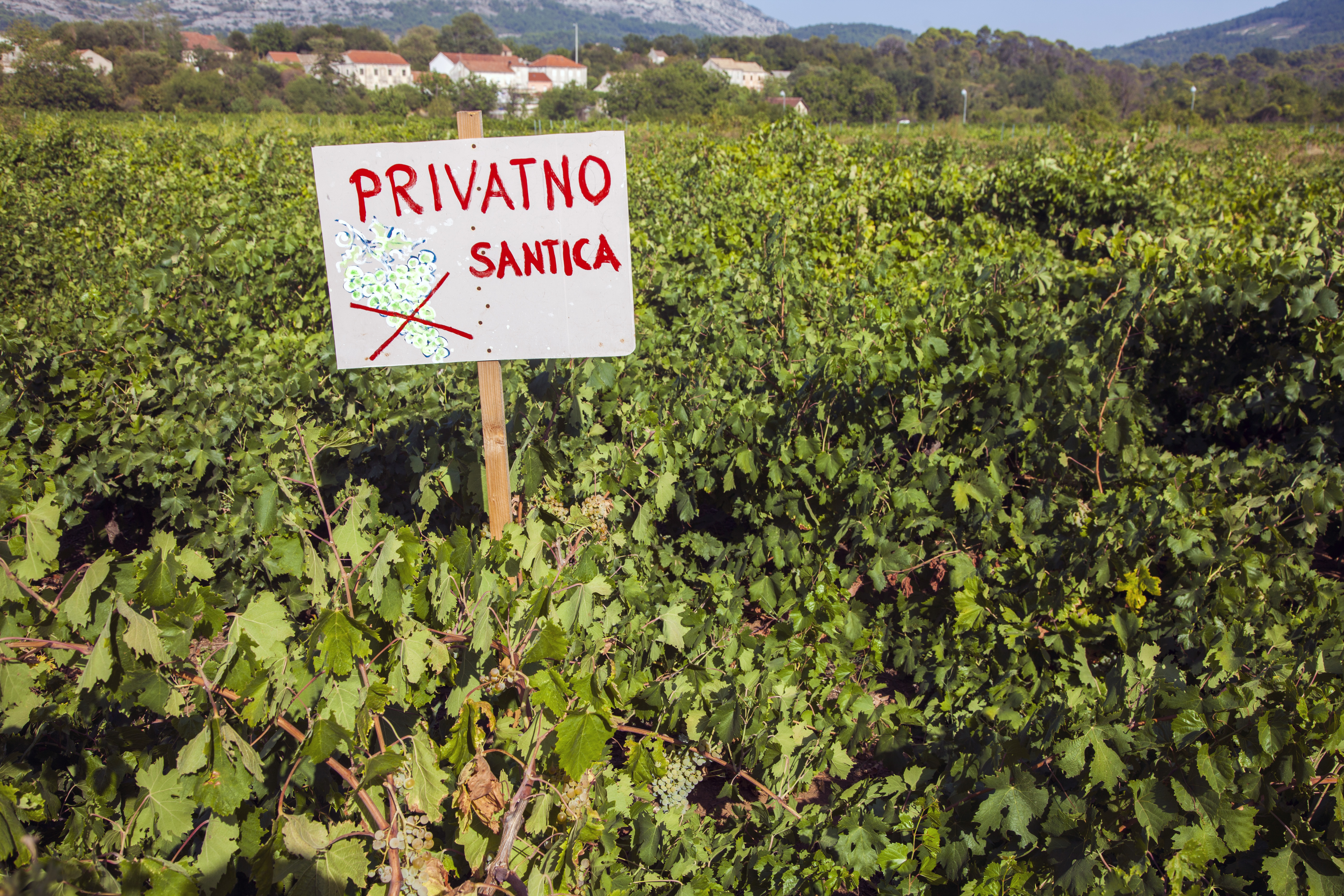
Virtually the entire foreseeable space around us was covered with vineyards. The plan was to visit one of them for wine tasting on our way back. Our guide told us that mainly red wine is produced here, and Postup is considered to be the best of all. Looking ahead, I can mention that Korčula is famous for its white wine, Pošip.

We were transported to Korčula on a small shuttle boat from Orebič (a very nice town, by the way), and got to observe how cars and even buses were transported on a large ferry.

In the town of Korčula we were to visit the Old Town, and the whole group was divided into English speakers and German speakers. The English speakers stayed with our gloomy, moody and sleepy guide, – and that was when she suddenly revived, and showed great artistry and a sense of humour.

First thing, she told us about the local “wind rose”. There is the north wind “bura”, which blows in winter and brings clear and sunny weather, although lowering the temperature to zero. There is a south wind called “jugo” or “siroc”, the locals’ least favourite: it blows from the Sahara in summer and brings dust, and, oddly enough, rain. The city walls are located so that this wind could penetrate the city as little as possible. Finally, the wind most preferred by the population is the western “mistral”, bringing cool air in summer. The city is open for this wind from the sea, and, as Ivana joked, this was the first air-conditioning system in the world.

On the city gates the name of the first Croatian King Tomislav is engraved, and above it there is the Venetian winged lion, as the city used to belong to the Venetian Republic for a long time. These lions usually have their attributes, or symbols, showing how easy or difficult it was to get into the town. If the lion has a closed book before it, it was hard, and if the book is open, it means that the Venetians were accepted almost with open arms.

We came to Korčula thinking of ​​Marco Polo, because we had heard that he was from here. However, it turned out that Venice claims to be his hometown as well, and also, his home as such does not exist – the assumed house is a ruin. As our guide indignantly mentioned, in communist times nobody really cared about history, and in the times of crisis the intention even was to sell it. Luckily, the town borrowed some money and bought the house out (currently the price of these ruins is half a million euros!), but that money wasn’t enough to restore the building and make a museum out of it, as planned. For the time being some enterprising and patriotic Korčulan opened a souvenir shop named after Marco Polo, and behind it, the Museum of Marco Polo, in a totally different place.
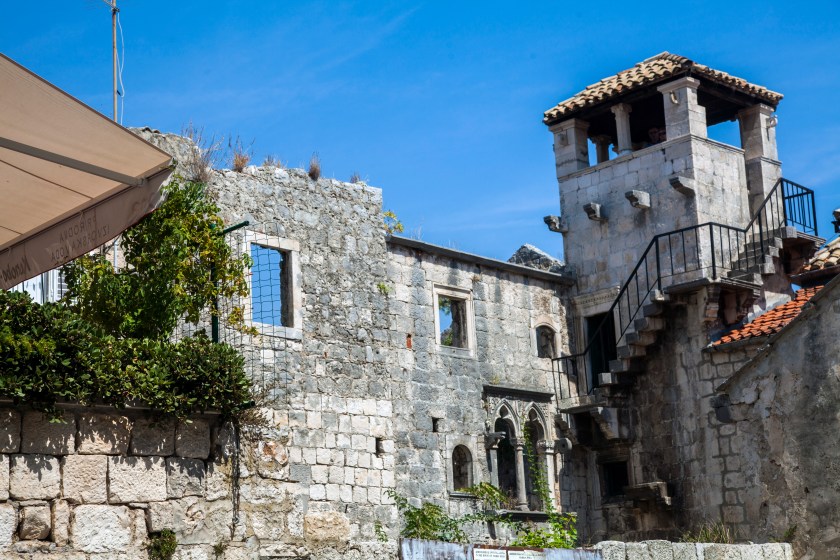
By the way, three things are cited as proof that Marco Polo was born here indeed: first, there is a De Polo family still living here to this day, while in Venice there are no families with such name. Secondly, there exists a register of baptisms of the 14th century, which mentions Marco de Polo. Of course, the great traveller lived in the 13th century, but because it was quite common to give children the names of their ancestors, this could well be some great-grandson of his. Well, and thirdly, the book written by Marco Polo’s cellmate brings his own words, saying that he saw the tower of his hometown Corcyra Melaina and sailed towards it. It is proved that this is how Korčula was called in the ancient times, and no other city, including Venice, has claims on this name. As there is only one tower in the town, the house of Marco Polo could be identified.

One of our stops was in the atrium. Ivana showed us, where the mayor and his secretary would seat and how they would collect the citizens’ complaints, literally portraying and mimicking each of them.

In front of the atrium was the doctor’s house. Doctors used to be lured from Venice, the bait being this very house. The doctor could live there with his family as long as he remained in the service of the city of Korčula.

We made good use of our free time – at least, I got a chance to take a quick dip in the sea, right in the city, among boats – even there it was very clean. I deliberately found a deep place, as it was impossible to get into the water in the shallow part because of the large slippery rocks.

On the way back we were taken to a huge winery belonging to the Matuško family. This family produces 500,000 litres of product annually, 90% of which is red wine, and the remaining 10% is comprised of white wine, dessert wine, schnapps and olive oil. They have huge cellars, completely cluttered with enormous barrels.

The first wine we tried was Plavac Mali. The name generally belongs to a grape variety, grown in the continental climate, in places where there is enough water, but not so much sun. 4—5 kg of grapes can be collected from one plant. The wine turns dry and light (only 12.2%), and is only drunk young.

The next wine was Dingač, made from the same grapes variety, but grown in Mediterranean climate: a little water and a lot of sun, and the sunlight comes from three sources: direct, reflected from the sea and reflected from stones. As a result, no more than one kilogramme of grapes is collected from each plant; the wine turns more robust, almost black (14.5%), and is preserved for several years.

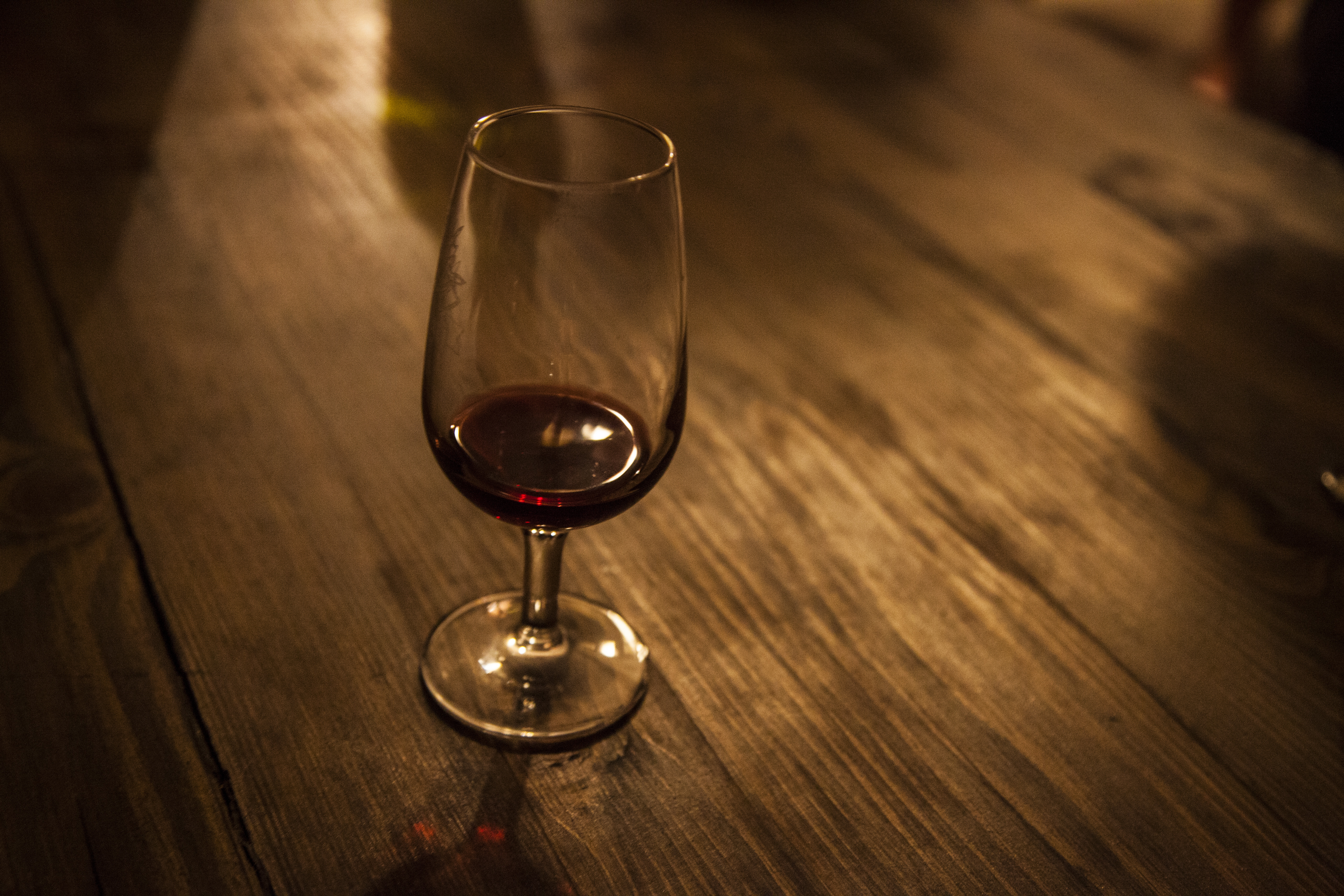
The next drink to try was the sweet dessert wine called Prošek. It can be maintained for many years: according to tradition, when a child is born in a family, a barrel of Prošek is made, and it can only be opened at this child’s wedding. Personally, I found it it too sweet. And finally there was a 40% grappa and a 25% cherry brandy, made from this very grappa.
We then had a short stop in the town of Ston. There, too, there is the old town and a fortress, but we didn’t get to see them.