Posted in English, Europe, Porto, Portugal

Portugal – Day 5

РУССКОЯЗЫЧНАЯ ВЕРСИЯ ПО ЭТОЙ ССЫЛКЕ. CLICK HERE FOR RUSSIAN VERSION.

April 19 – Friday

On the last day, we were very unlucky with the weather. Rain had been in the forecast all week, and it did come – fortunately, only in the afternoon.

We got up, had breakfast, and then made a second attempt to get into the Majestic Café and have coffee there. We got in, but there was nothing special about it – all its popularity is nothing more than tourist hype. A café like any other.

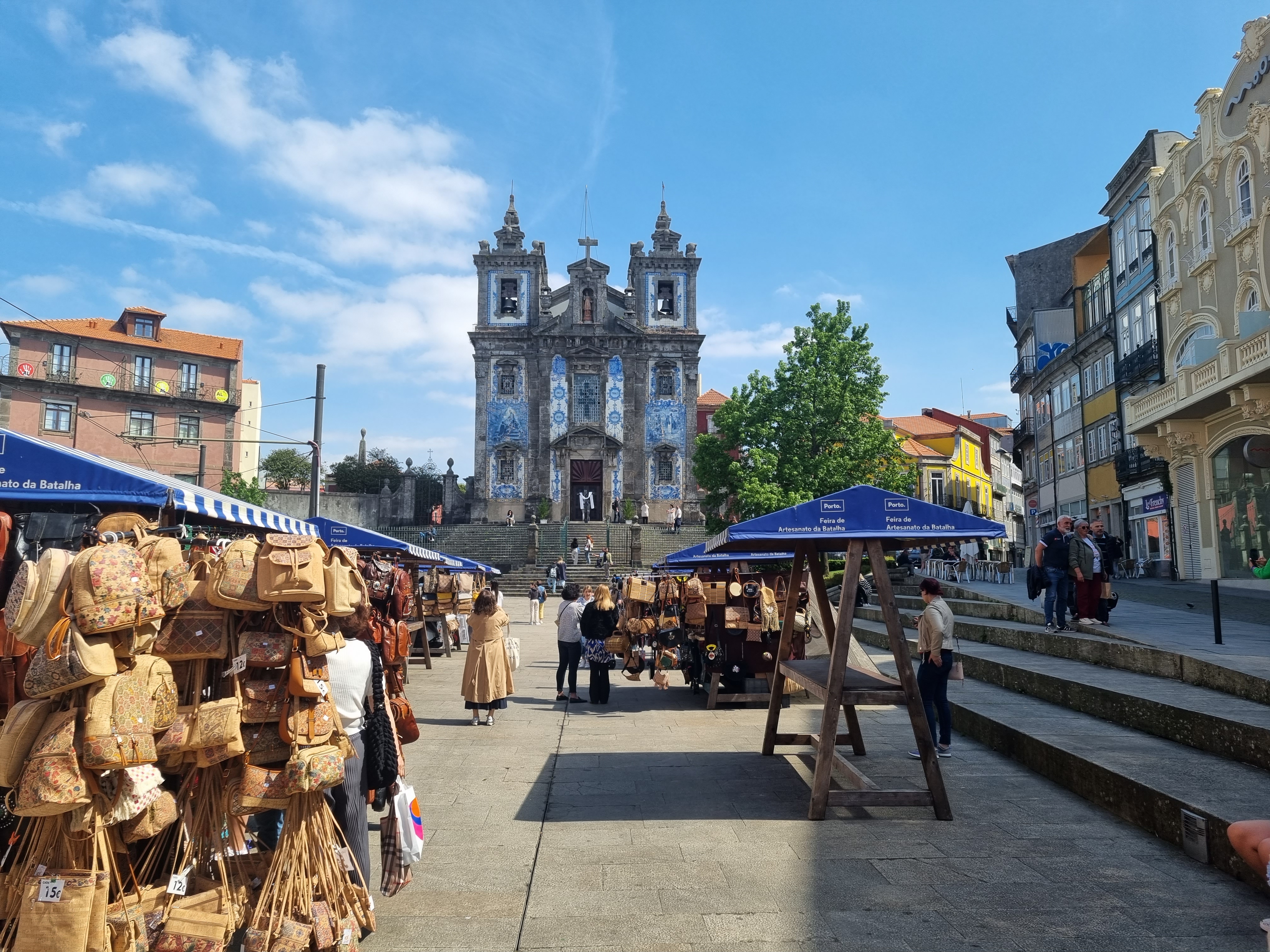
Then we tried to get into Livraria Lello – the most famous bookstore in Porto, said to have inspired the idea of Hogwarts. As is known, J.K. Rowling lived in Porto for a while, and it was supposedly in the Majestic Café that she wrote Harry Potter. To be honest, I can’t imagine how anyone could write in such a loud and pompous place, but then again, I’m not Rowling! We didn’t get into Livraria – same story, a huge queue. Later we found out that entry is paid and costs 5 euros, but we gave up anyway.

We decided to go shopping and went to the Via Rua Catarina shopping centre, where we did quite well. There are both local Portuguese brands and European ones. We also had lunch at the food court. And when we came out, it was already pouring rain. We had to buy umbrellas right then and there.

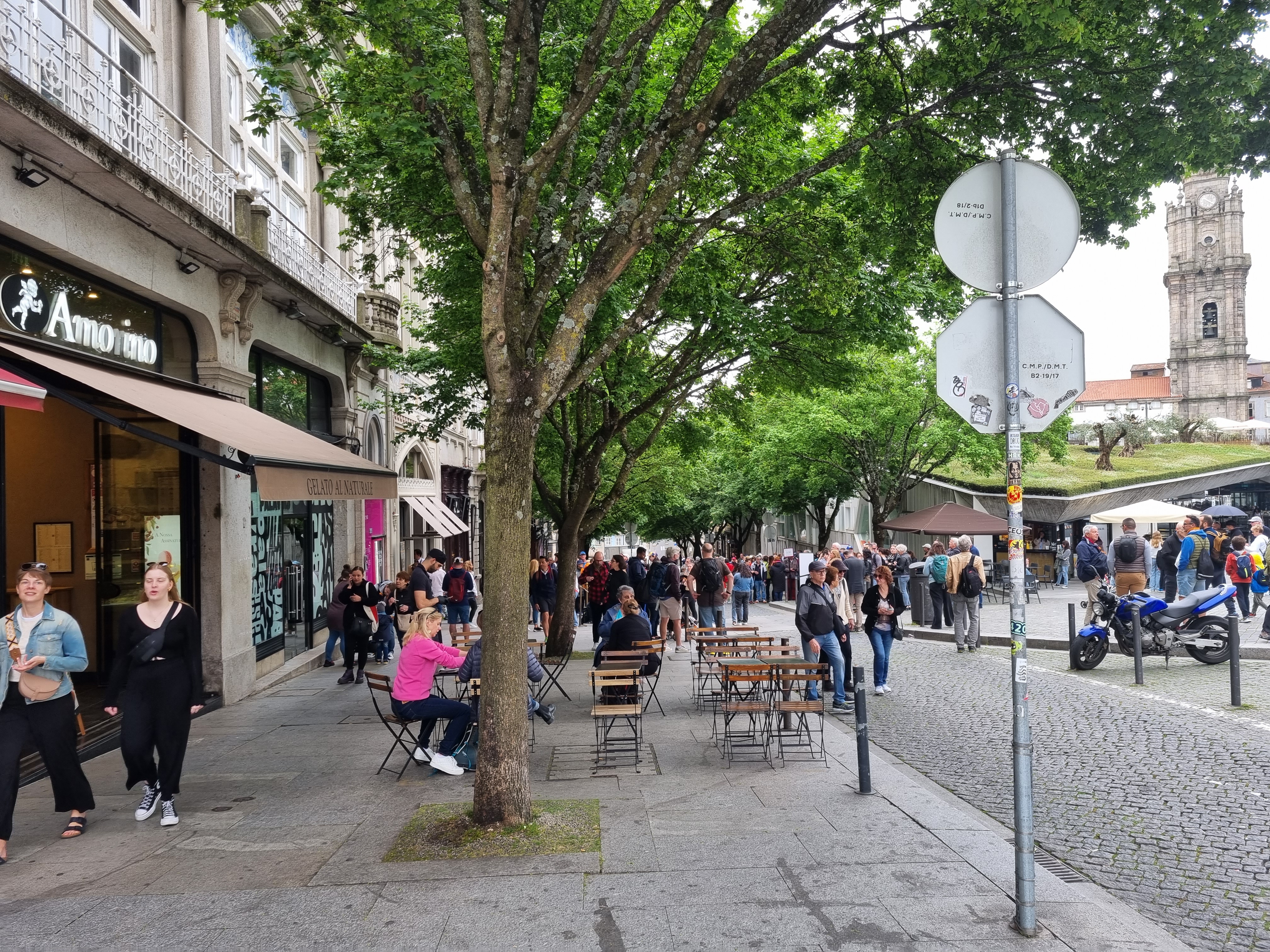
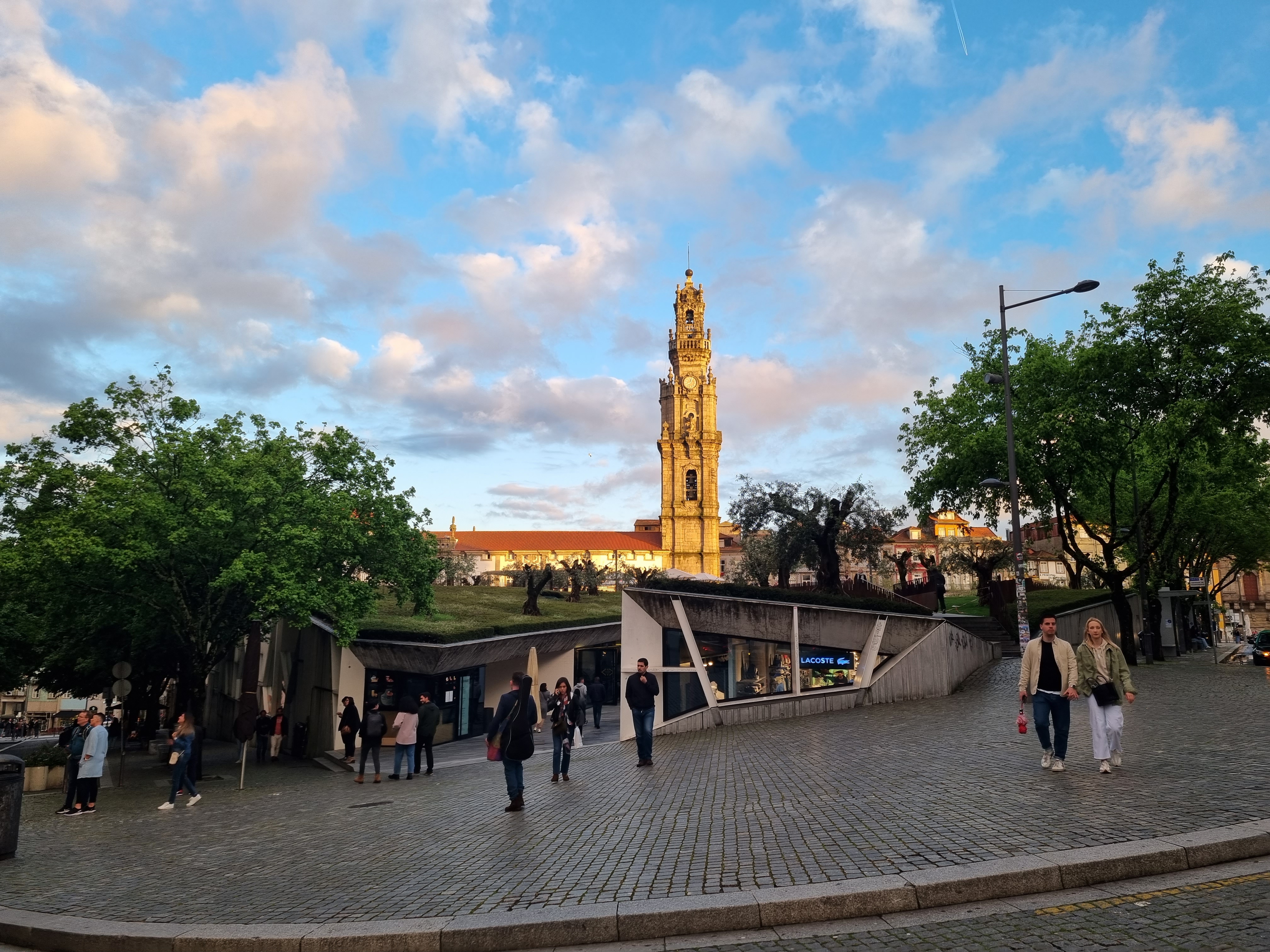
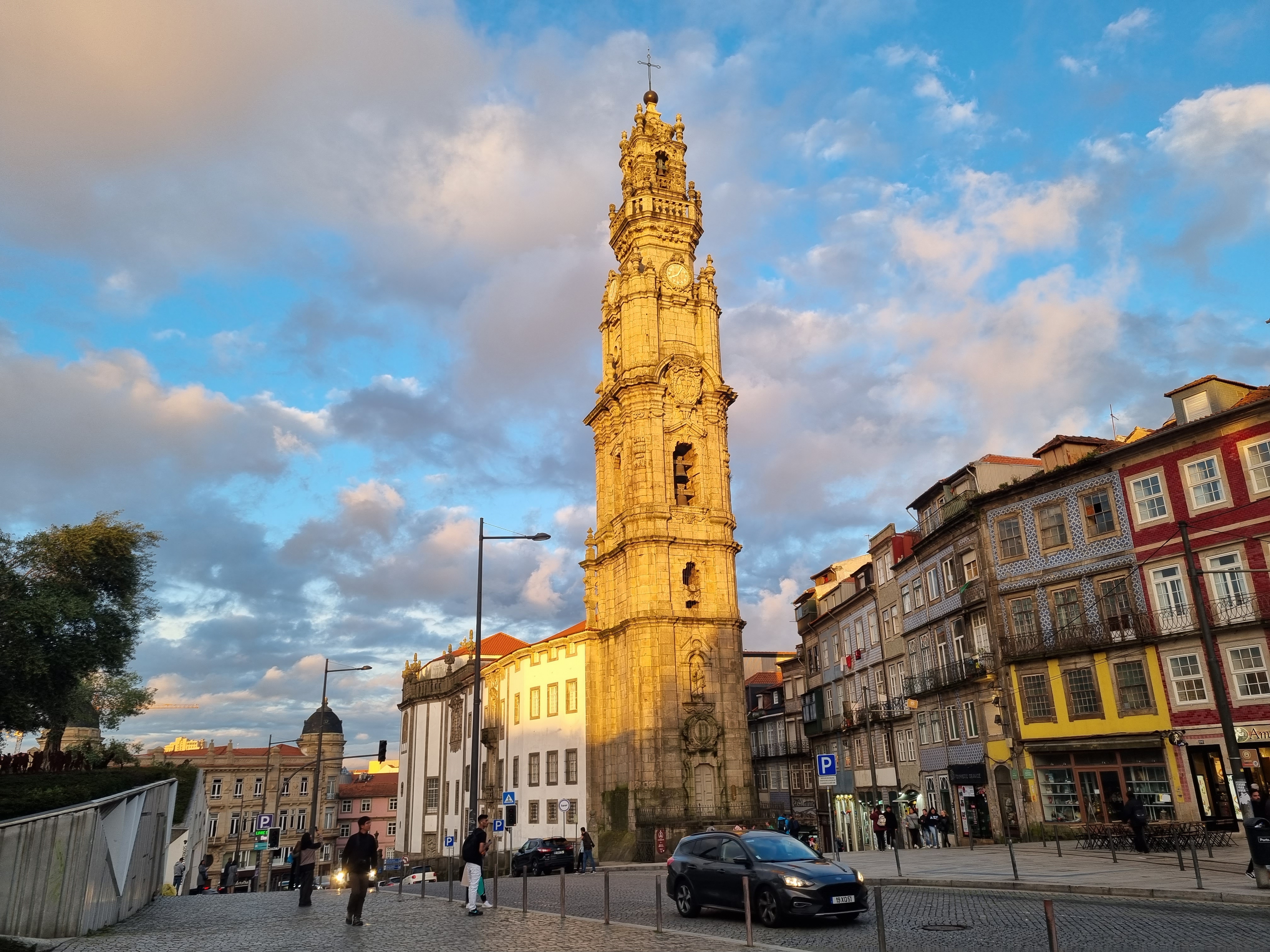
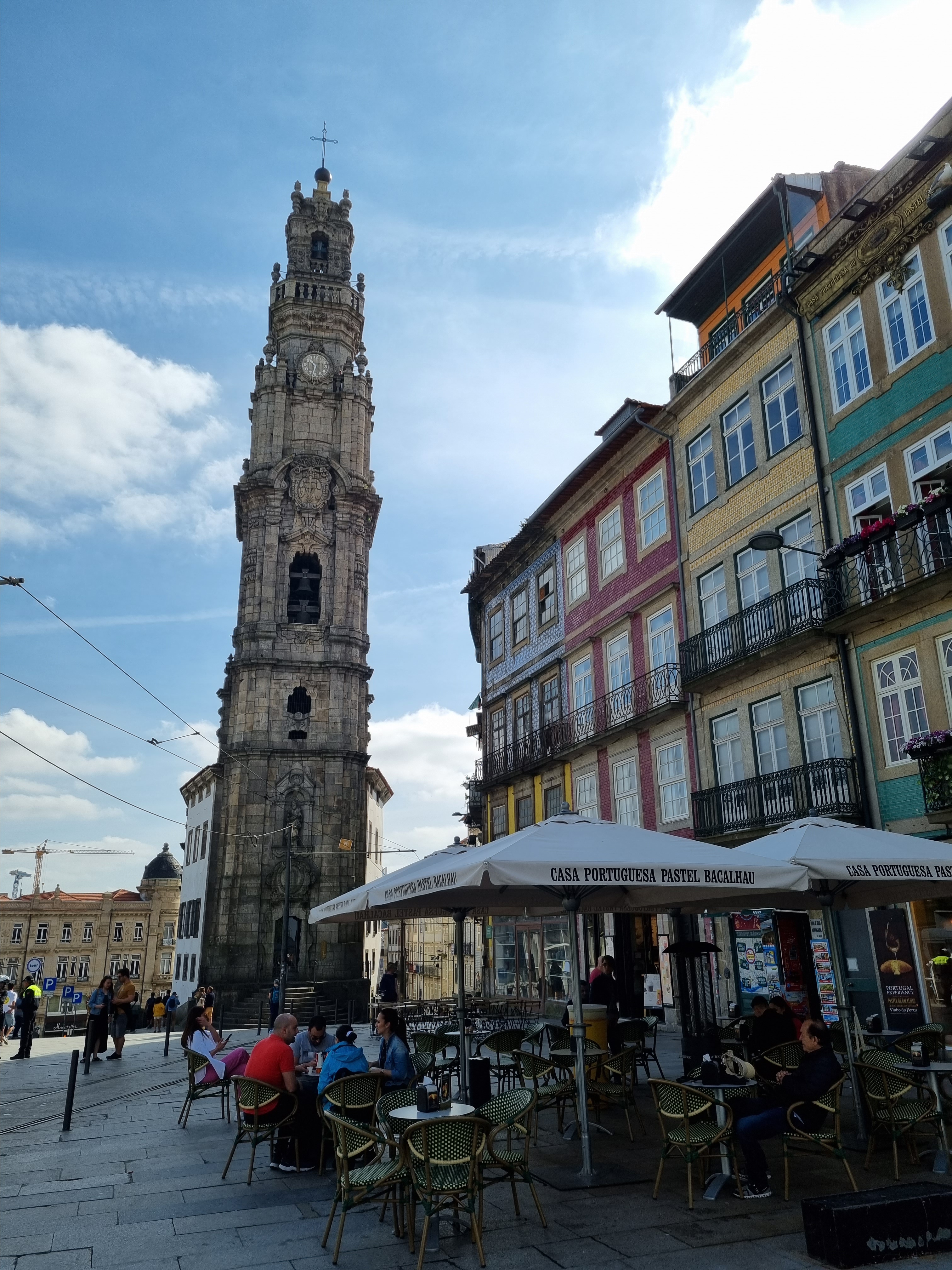
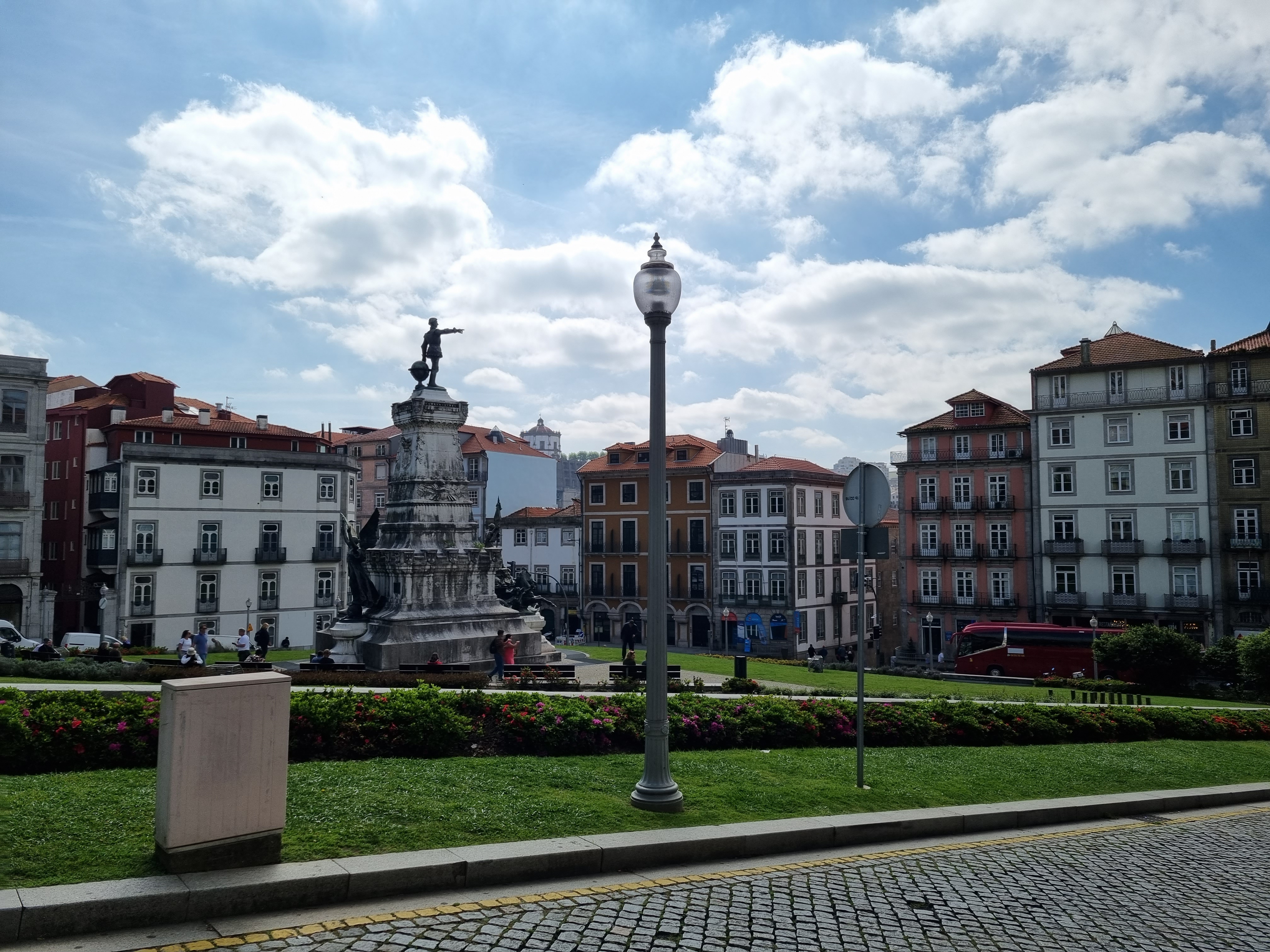
Somehow we ran back to the hotel and rested. In the evening, we had a light show planned in the centre, at the Clérigos Church. We left a little early, hoping to climb the Clérigos Tower first, but in such weather – barely making it to Clérigos in short dashes – we decided against climbing any towers.

I really liked the light show. It lasted for half an hour and was a kind of combination of old (baroque!) and new technologies – essentially a very spectacular and colorful digital animation with beautiful orchestral music.

In the evening, we had dinner with traditional Portuguese fado. The dinner included a starter, main course, dessert, and half a bottle of wine – everything was very tasty. I also really enjoyed the performance – such soulful romances.

Posted in English, Europe, Porto, Portugal

Portugal – Day 4

РУССКОЯЗЫЧНАЯ ВЕРСИЯ ПО ЭТОЙ ССЫЛКЕ. CLICK HERE FOR RUSSIAN VERSION.

April 18, 2024 – Thursday

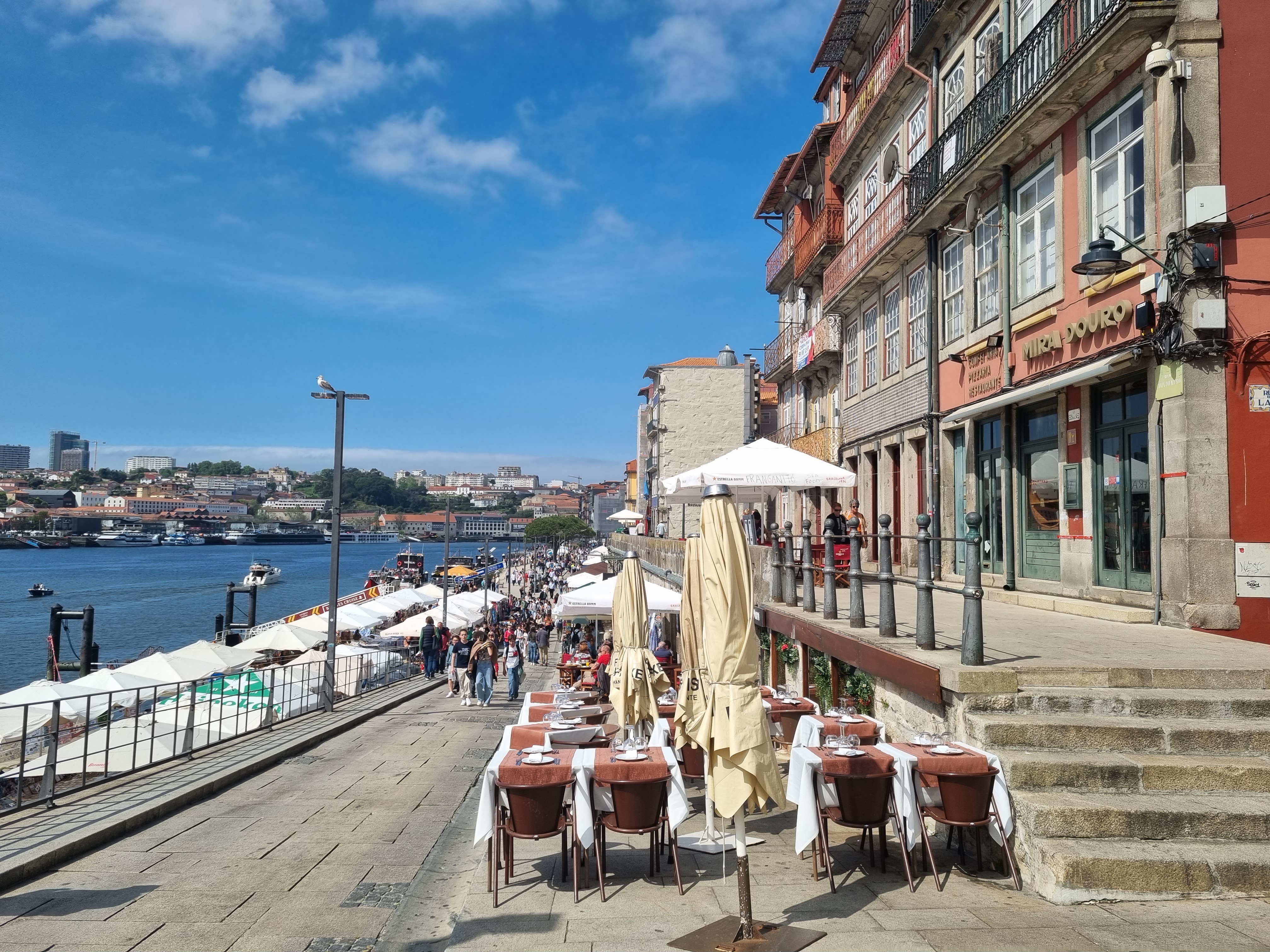
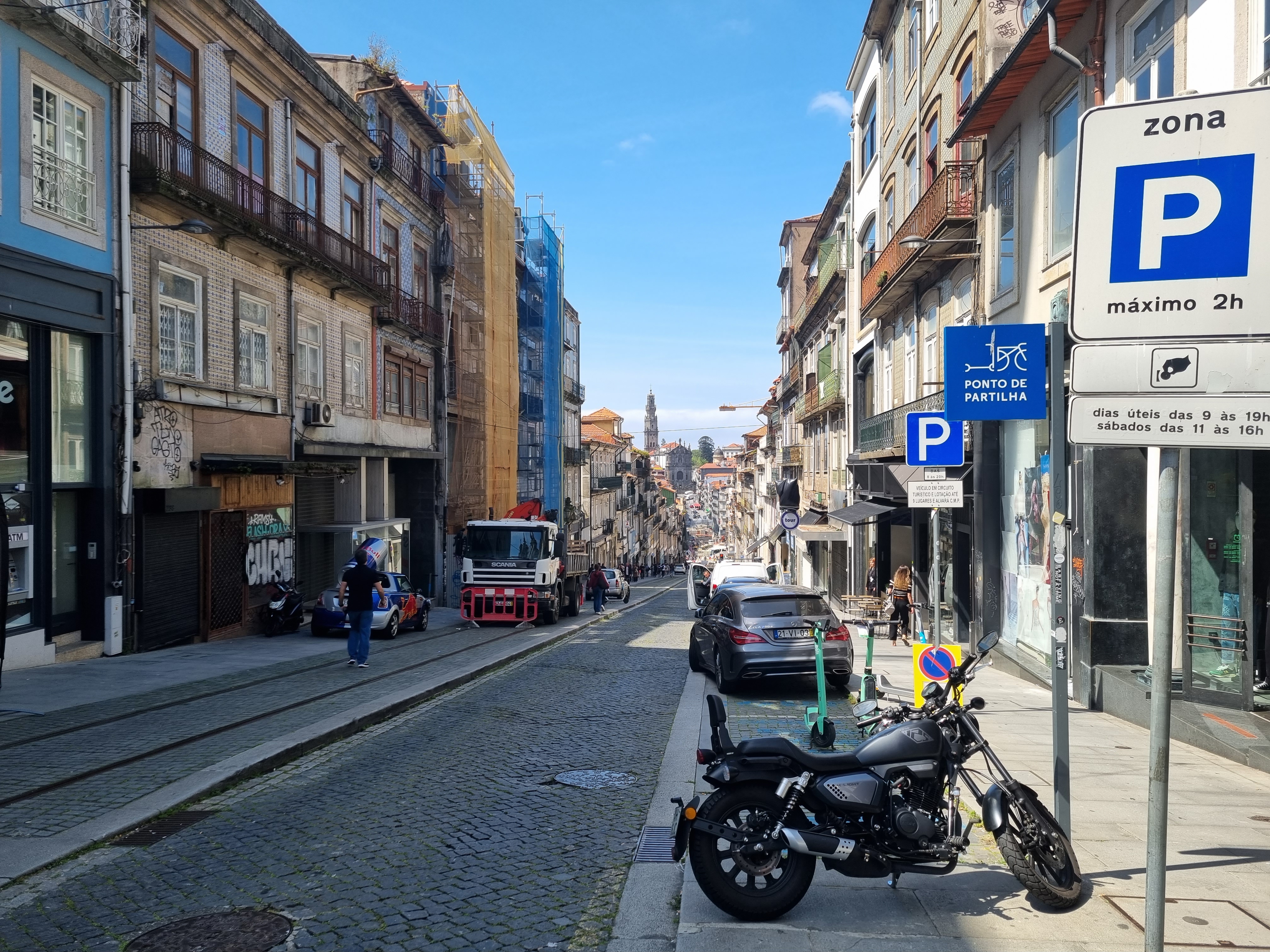
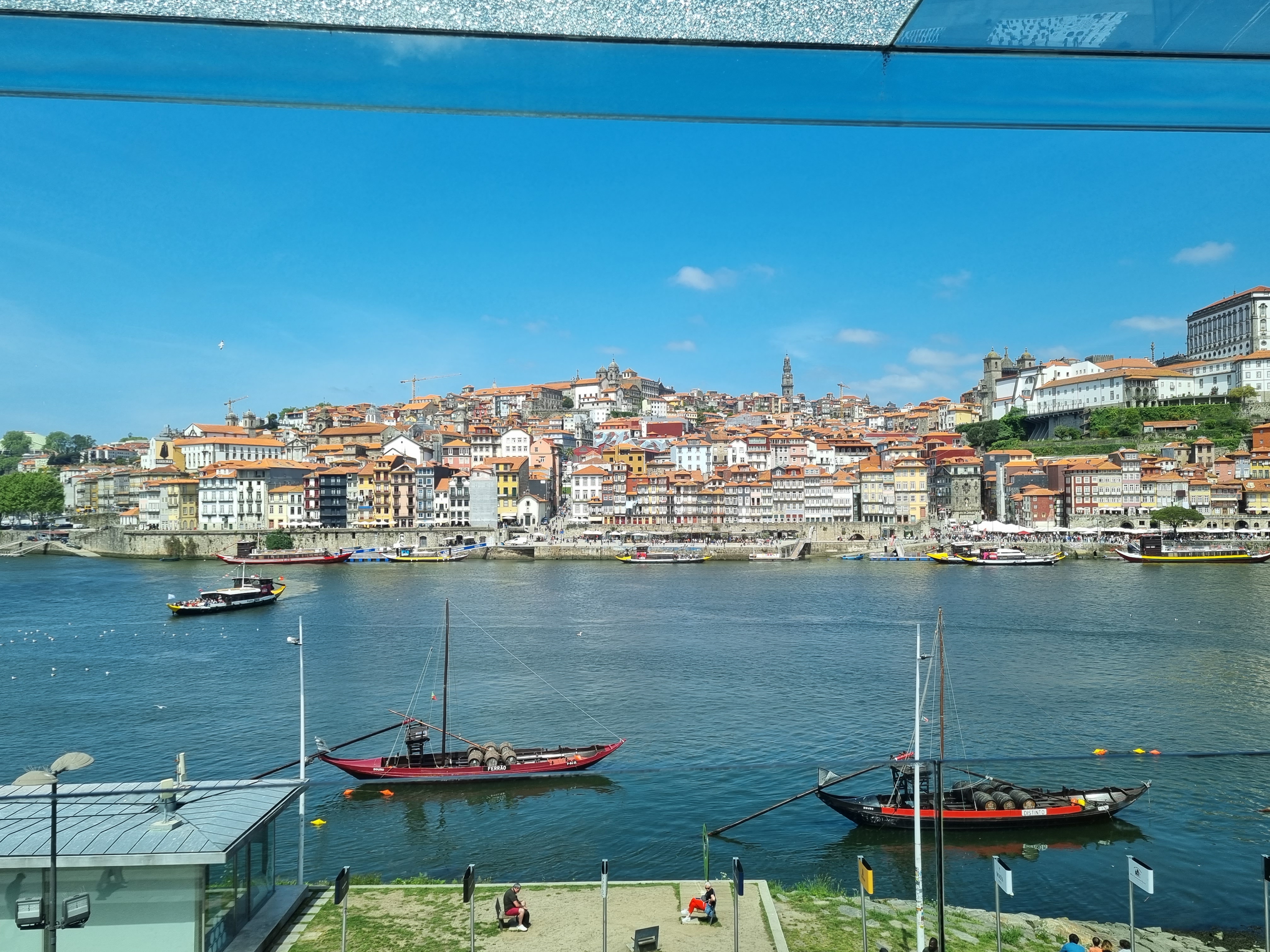
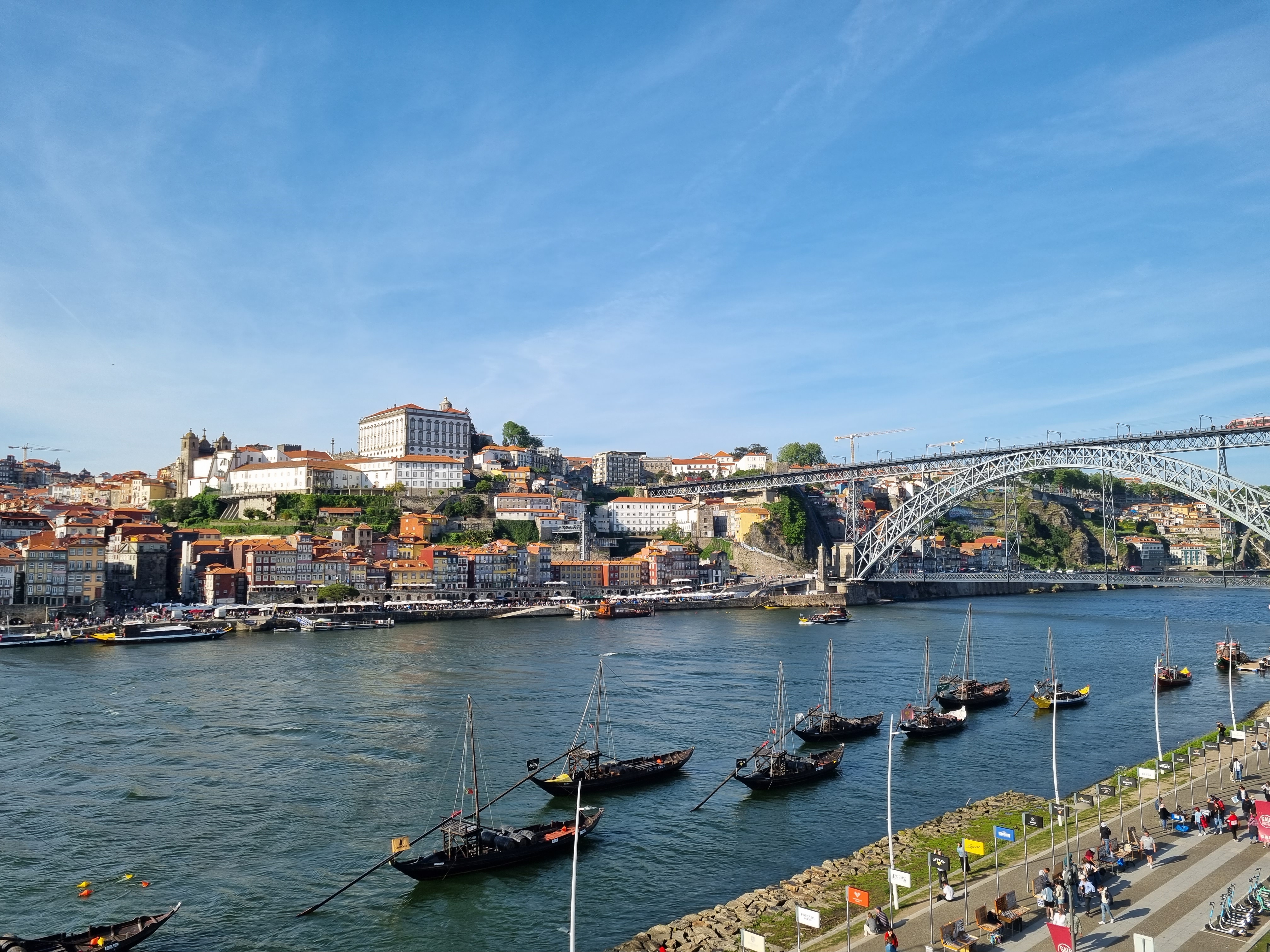
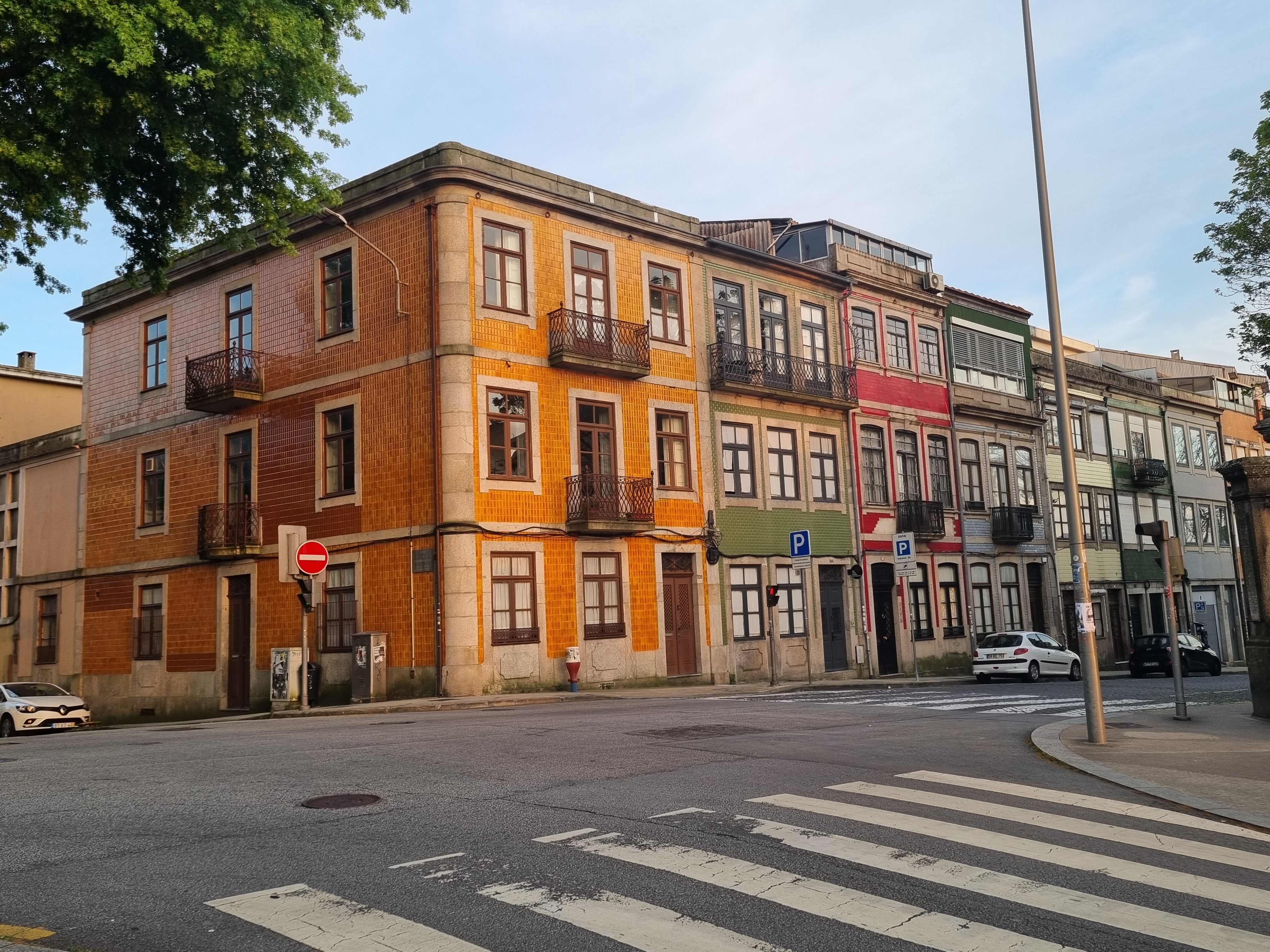
In the morning, after breakfast at our hotel, we went for a walk to the centre of Porto – we walked down to the river. On the way, we stopped at a church, but there was a service going on, so we left. Then we saw the Church of the Clérigos, where we plan to go tomorrow.

The Ribeira embankment was very, VERY crowded.

To kill time before our wine tour, we had lemonade on the embankment, and then took the funicular back up, planning to get to the famous Majestic Café and have coffee there. But the queue was so long that instead we went to a conceptual hipster coffee shop called Calma, where the coffee was very good.

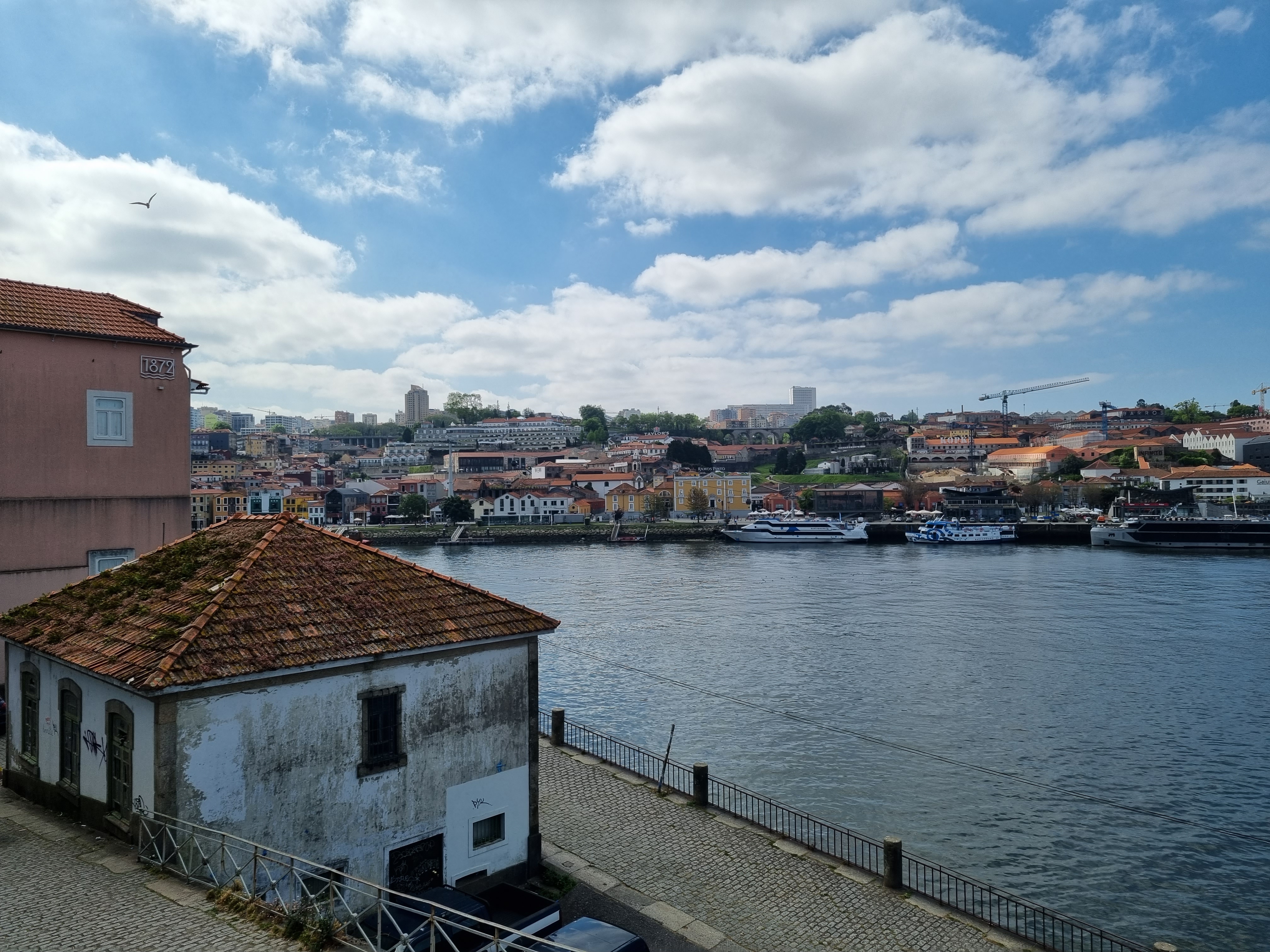
Once again, we walked down to the embankment, crossed the bridge to the Gaia side, where we were supposed to have lunch. The first place we tried turned out to be closed, but that worked out well, because we found a great restaurant with a panoramic view of the river.

After lunch, we finally went on our wine tour. It was a walking tour, mainly focused, of course, on port wine. We visited three wineries. Our guide, Ricardo, talked about port wine in a very interesting and humorous way.

The first winery was Churchill’s, founded by the English. There, they showed us the different barrels used in making port. One type, ruby, is a red port aged in chestnut barrels to avoid oxidation when exposed to air. Another red port, tawny, is aged in oak barrels specifically to oxidize. There is also white port. The point is that port is a fortified wine, so 77% brandy is added to stop fermentation. Brandy can be added at different stages, which makes the wine sweeter or less sweet. We tried all three types of port there. We liked ruby a bit more than the other two.

The next winery was called Vasques de Carvalho. There, we were told that their barrels “mature” not here, but in the Douro Valley itself. We tried the same three types of port, and we liked them better here.

At the last winery, we tried only one port – tawny – but we didn’t like it at all, as it had a strong alcohol taste. But there, we also tried three table wines – rosé, white, and red – which we really liked. I don’t remember anything about these wines, except that they are blends, and wines made from a single grape variety are almost never found here. There are about 200 grape varieties in total.

We didn’t leave the tour very drunk, since we only took a couple of sips of each drink. After returning to the hotel and resting, we went out for dinner at a five-story food court and walked around.

Overall, Porto is very different from Lisbon. Maybe it doesn’t have such a distinctive character, but it’s quite charming. In some places, it’s grand, in others – shabby, and it’s clear that this is a port city.

Posted in English, Europe, Lisbon, Porto, Portugal

Portugal – Day 3

РУССКОЯЗЫЧНАЯ ВЕРСИЯ ПО ЭТОЙ ССЫЛКЕ. CLICK HERE FOR RUSSIAN VERSION.

April 18, 2023 – Wednesday

We got up in the morning and, as usual, had breakfast. We were supposed to take a train to Porto at noon, but when we arrived at the station, we discovered that it didn’t exist – the train had been cancelled due to a strike, like all the 12-o’clock trains throughout the entire month. What can I say – wonderful. Even more wonderful was the fact that the app sold us the ticket without batting an eye and didn’t even notify us about the strike.

We had to buy tickets for a later train, at 15:30, and then spent a long time looking for a place to leave our luggage so we wouldn’t have to drag it around. We found one across the street from the station and went to get some coffee. But first, we wandered around Alfama, from where we made our way to Restauradores and had coffee there.

Then we returned to the station, boarded the train and, thank God, we were off. On the train, we encountered some American fellow passengers who couldn’t grasp that, in addition to the seat number on the ticket, you also have to check the carriage number – instead of trying to chase away people already sitting in a seat with the same number.

In the end, we arrived in Porto quite late – it was already around 7 p.m.

We got to the hotel by Uber and went out for dinner at a restaurant, where we once again ran into loud Americans, who talked non-stop at the next table all evening, and we learned their entire life story and all their family problems.

Posted in English, Europe, Lisbon, Portugal

Portugal – Day 2

РУССКОЯЗЫЧНАЯ ВЕРСИЯ ПО ЭТОЙ ССЫЛКЕ. CLICK HERE FOR RUSSIAN VERSION.

April 18, 2023 – Tuesday

The second day in Lisbon was marked by queues. But – first things first. In the morning, we got up and tried the wonderful, varied breakfast at the hotel (I was the one actually “trying” it   – my friend was having it for the third time), with smoked salmon, waffles, pancakes, and the like.

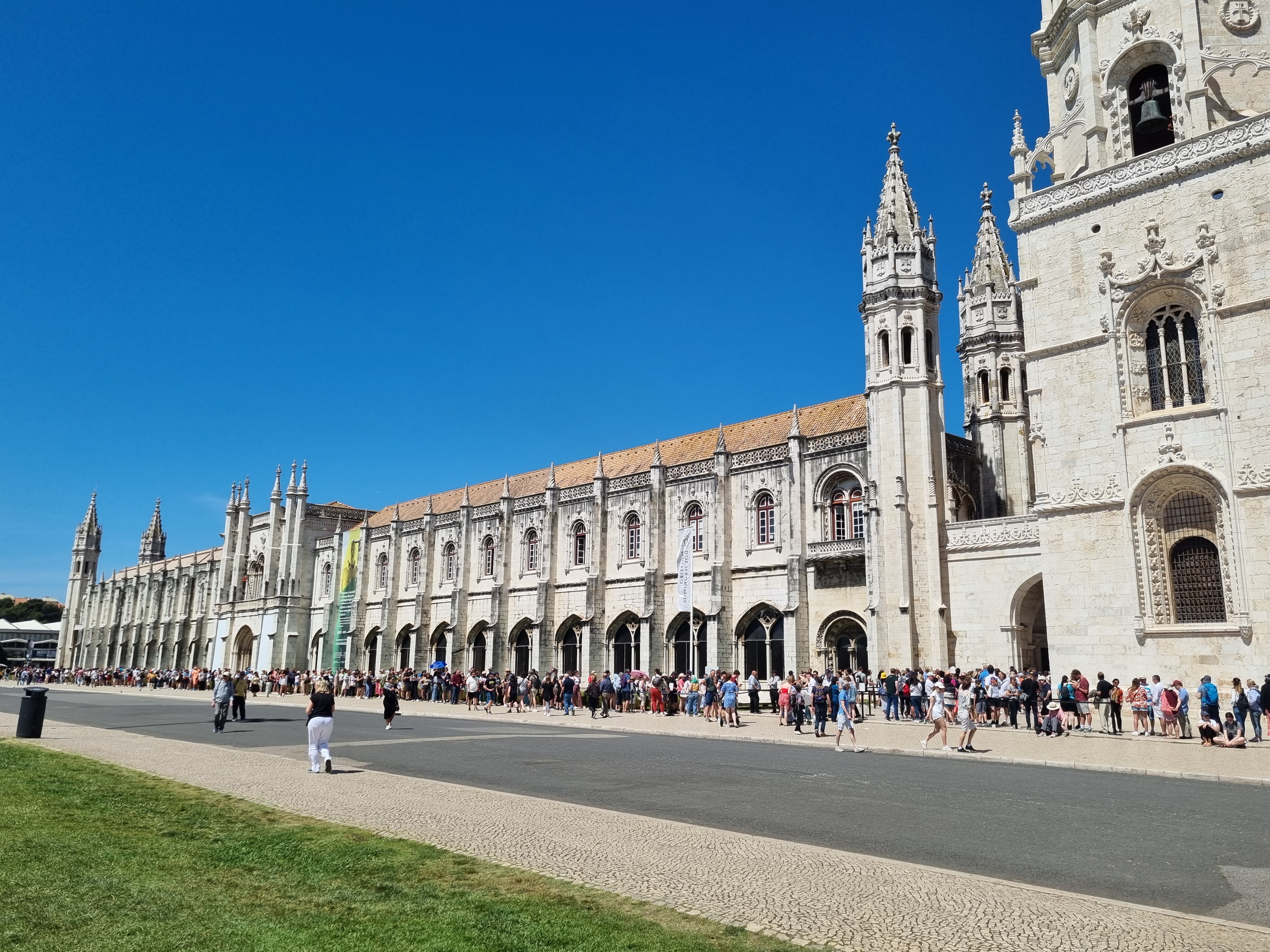
Then we went to the Belém area – it’s like a suburb of Lisbon. The idea was to see the Jerónimos Monastery and the Belém Tower. We got there by city bus – an authentic route through non-touristy areas.

When we arrived at the monastery, we saw a queue. No – that’s not quite right – we saw an incredibly long QUEUE and probably about 15 large tourist buses. We didn’t really feel like standing in that queue, so we decided to head straight to the Belém Tower, figuring we could return to the monastery later and check whether the queue had dispersed, assuming most group tours visit the monastery right when it opens.

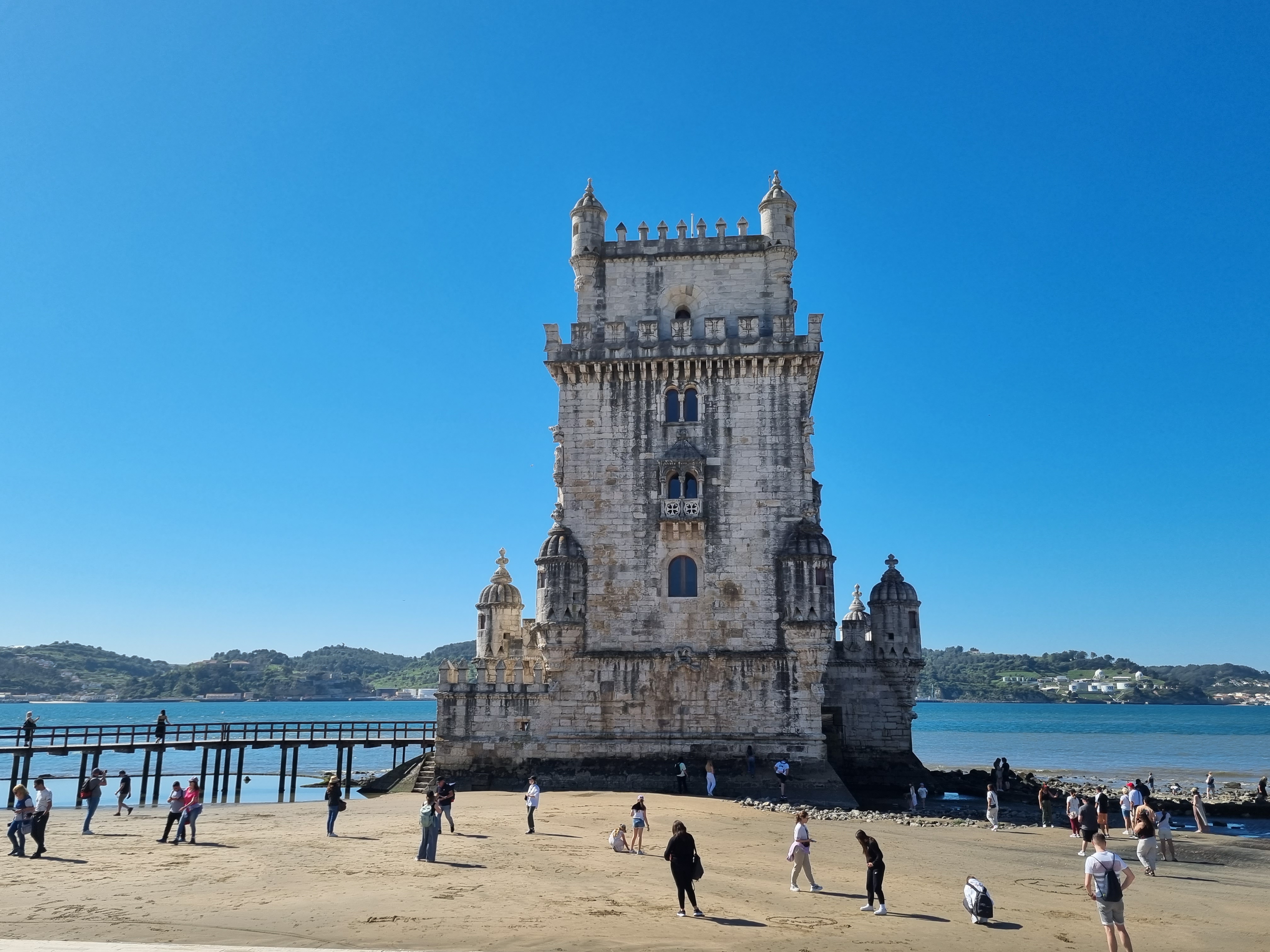
It was about a 15-minute walk to the Torre de Belém, but there we found quite a long queue as well. It turned out there were two reasons for this: first, entrance to the tower is free on Tuesdays; and second, they only let people in in small groups, after the previous group has left, to avoid overcrowding in the narrow spiral staircases and confined spaces.

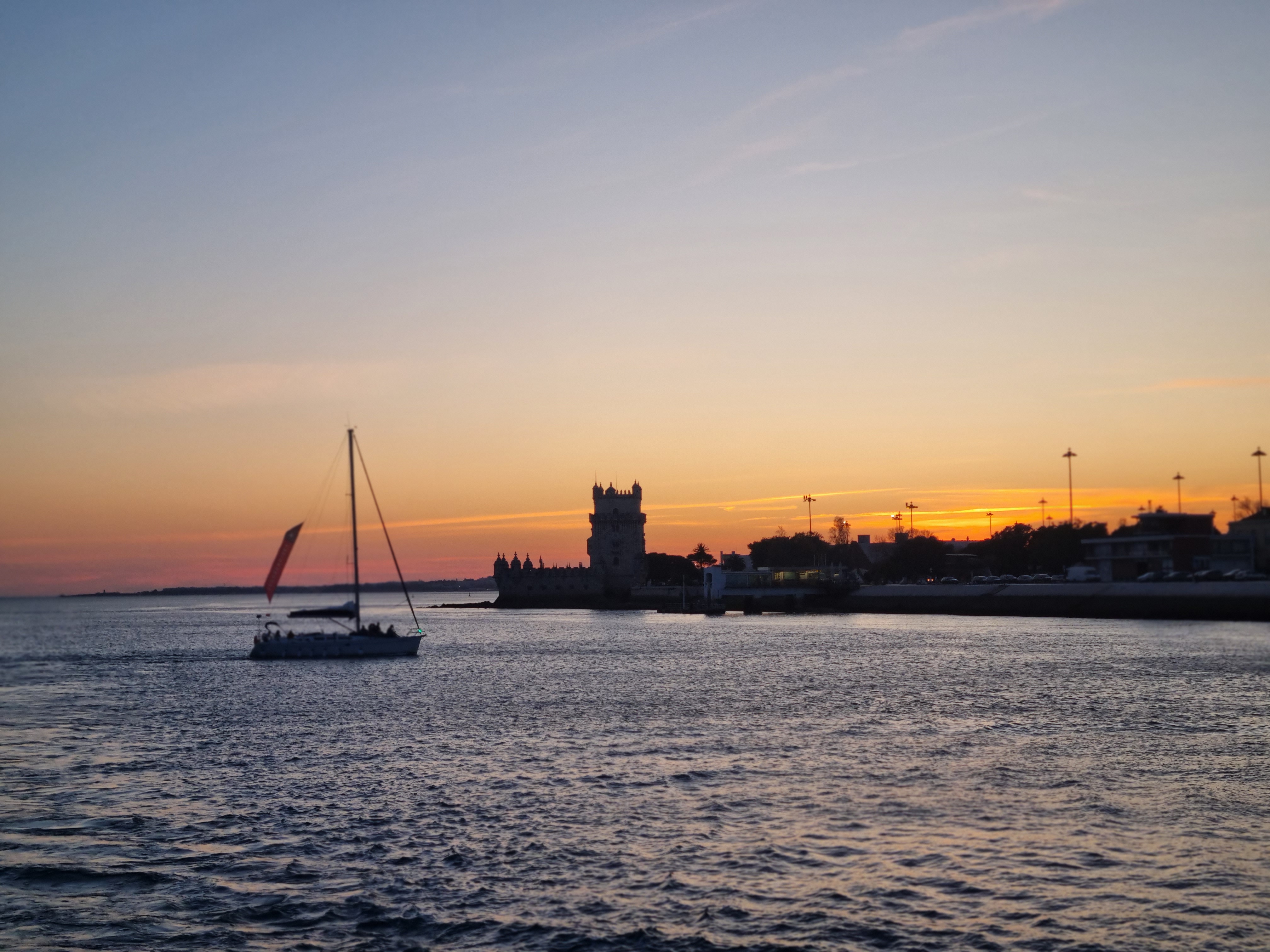
The tower was built back in the 16th century, in honour of Vasco da Gama’s discovery of the sea route to India. It looks very interesting from the outside, but I’ll leave the question of whether it was worth standing in line for 40 minutes under the scorching sun to go inside open.

After the tower, we gave the Jerónimos Monastery a second chance and went back to see how things were going there. But the line hadn’t gotten any shorter, and the sun continued to scorch mercilessly. So, after googling photos of the monastery’s interior and deciding it wasn’t worth the long wait and completely burnt shoulders, we dealt with a more pressing matter – and went for lunch at a French-Portuguese restaurant, where all the staff spoke good French and worse English. I never thought I’d have to speak French in Portugal.

By the way, about English – overall, I’m pleasantly surprised. Almost everywhere we go, people speak it very, very well. I hadn’t expected this from Southern Europe, based on past experience.

After lunch, we returned to the centre and headed to another monastery – São Vicente de Fora. This turned out to be a very good idea, because unlike Jerónimos, there was practically no one there. And it’s completely unclear why – the interior is very beautiful, many rooms are decorated with azulejos, and you can also visit the pantheon of the Portuguese Braganza dynasty and see azulejo panels based on the fables of La Fontaine. An interesting observation – the masters of azulejo painting were not very good at depicting animals, and the dogs and cats turned out rather odd, with human eyes and pig ears.

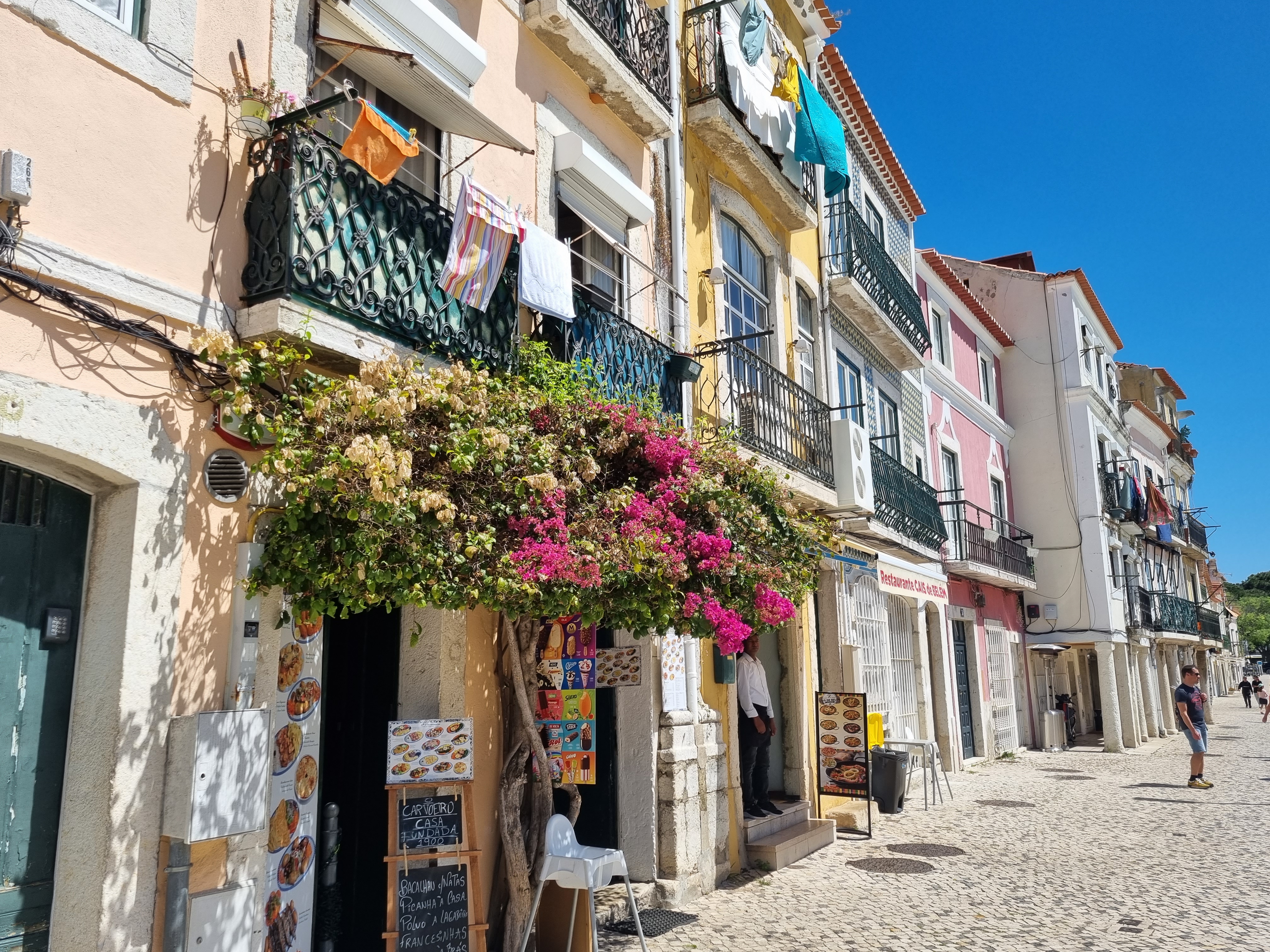
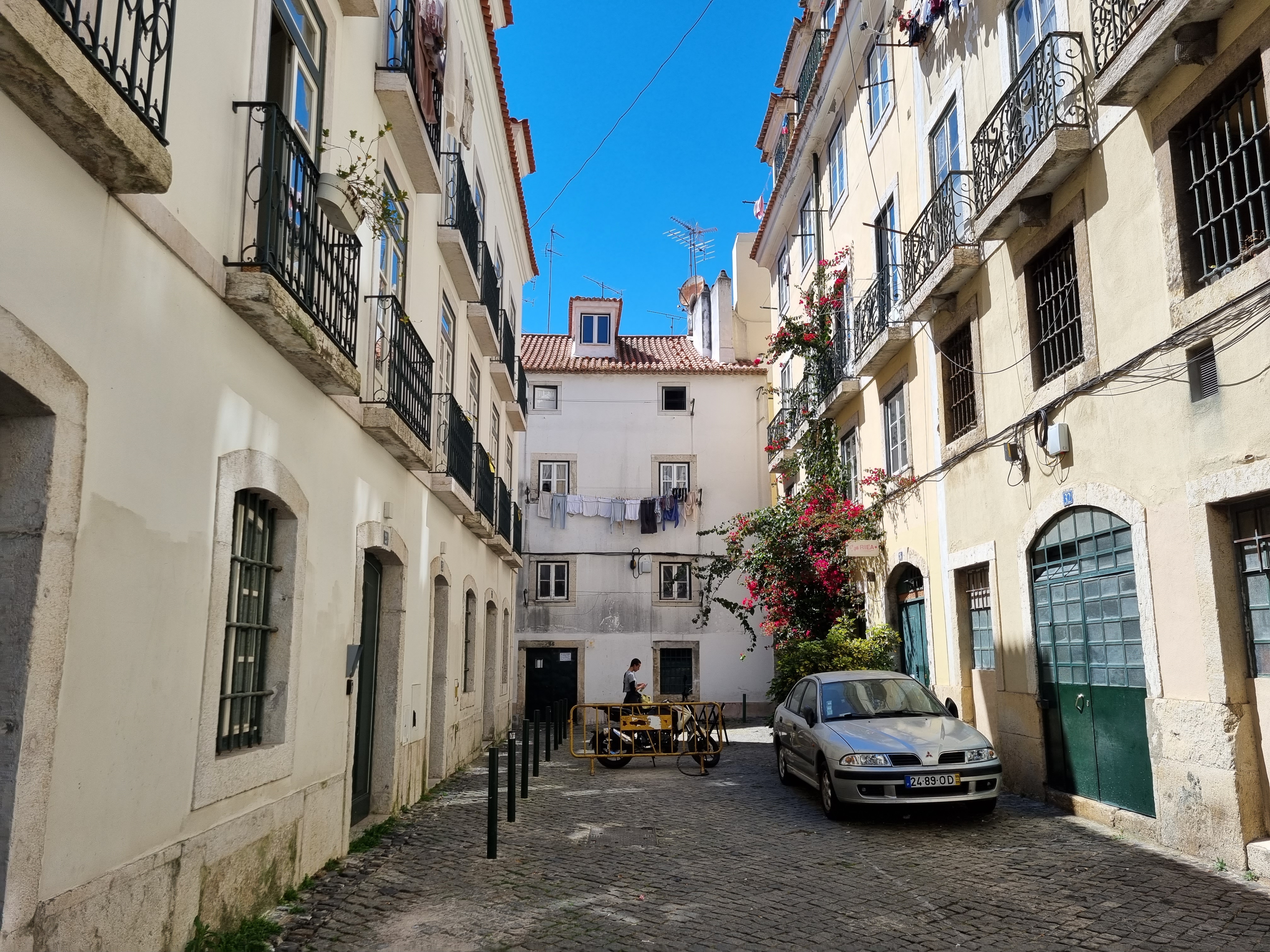
In the evening, we walked around the Alfama district, which I really liked. It’s very colourful and authentic, with beautiful architecture, trams, hanging laundry, and a chaotic street layout. This is the oldest district of Lisbon – the only one that survived the devastating 1755 earthquake.

Posted in English, Europe, Lisbon, Portugal

Portugal – Day 1

РУССКОЯЗЫЧНАЯ ВЕРСИЯ ПО ЭТОЙ ССЫЛКЕ. CLICK HERE FOR RUSSIAN VERSION.

April 17, 2023

Technically, my trip to Portugal was supposed to start two days ago – on Saturday, April 15 – and I’d already bought a ticket for that date well in advance. But literally 36 hours before, when I received an email saying that online check-in was open and started entering my details at 1 a.m., I suddenly looked closely at my Schengen visa and realised that it was only valid from April 17. The old one had expired on the 13th, and the new one was valid from the 17th – so I had managed to buy a ticket for one of those unlucky four days when I didn’t have a visa. I had to urgently change it and buy a new one for 6 a.m. on Monday.

As a result, I had to wake up today at 2 a.m., and by 2:45 I was already in a taxi on my way to Heathrow. Everything went smoothly – unsurprisingly, there weren’t many people at the airport at that hour, so I didn’t have to queue for anything. I even managed to find coffee and oatmeal cookies. Special mention goes to a fellow passenger who showed up at 3:30 a.m. in full makeup – truly impressive.

By 10 a.m., I had arrived at the hotel in Lisbon, where my friend Rena – who’d flown in on Saturday, as originally planned – was already waiting for me.

I had another strong coffee (no joke, I’d been up since 2 a.m. and hadn’t slept a minute on the plane), and then we headed out for a walk around the Baixa district.

It is sunny and hot in Lisbon – a touch of summer after London’s unseasonably cold spring.

The city itself is very hilly – you’re constantly going up and down, and of course the “down” is much more pleasant. There are quite a few tourists, mostly French as far as I can tell – at least, they’re the ones you most often come across.

The city is stunning, with very interesting architecture. Many buildings are decorated with clay tiles – painted in the traditional Portuguese style. These tiles are called azulejos.

We’d headed to Baixa quite purposefully – our first stop for the day was the Carmo Convent, which now houses an archaeological museum. In 1755, Lisbon was hit by a devastating earthquake, followed by a tsunami and fires, and as a result almost the entire city was destroyed. For instance, only the shell of the Carmelite monastery remained, and that’s how it still stands today.

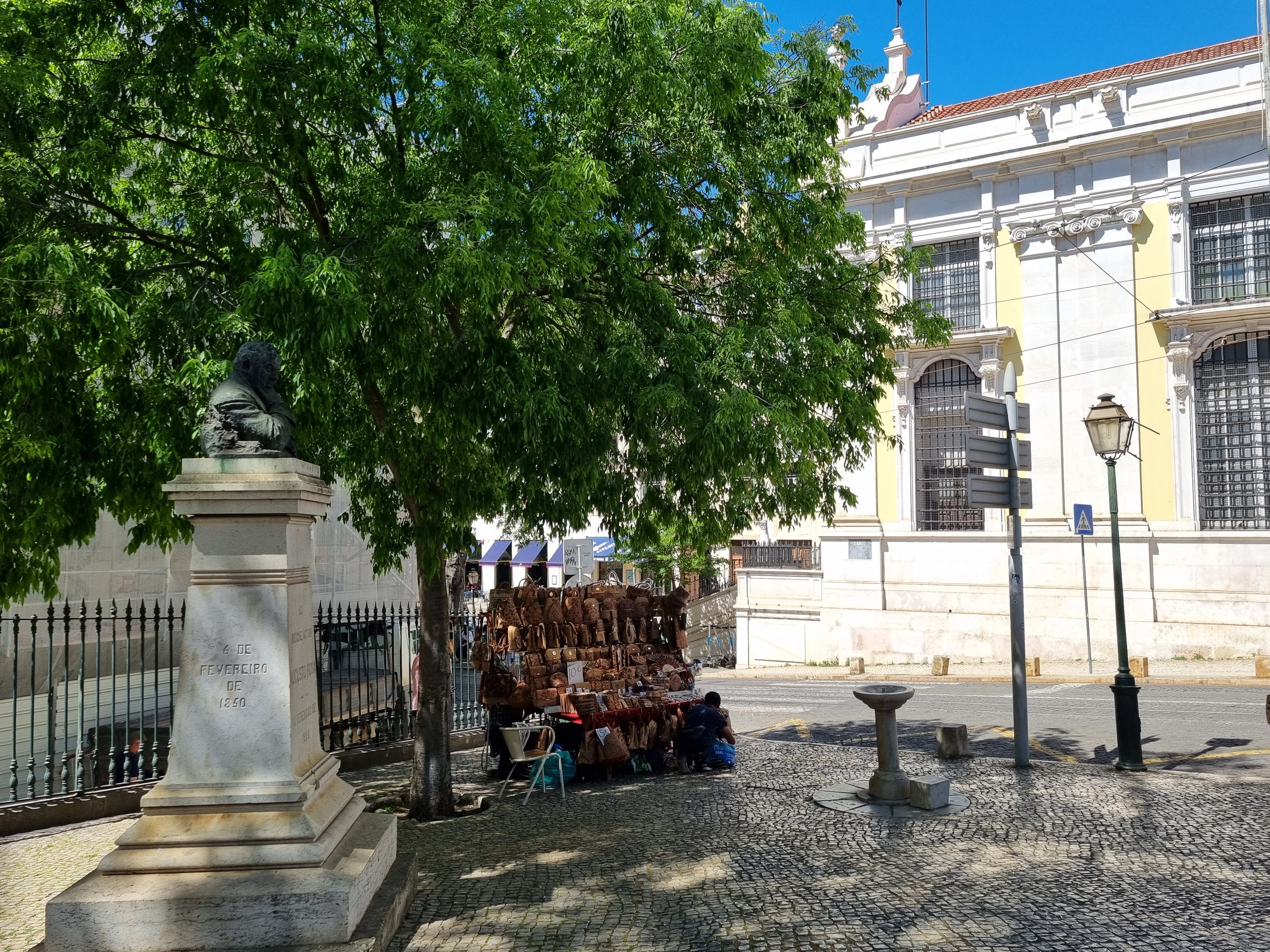
Afterwards, we had lunch – some fish – in a tiny tavern, and then visited Lisbon Cathedral (Sé), and saw the cloisters and treasury.

For the evening, we had planned a cruise along the Tagus River (which also flows through Spain – it starts there and reaches the Atlantic near Lisbon). We’d been told that seating on the deck was limited to the first 52 people, and when we arrived, there were already well over that many in the queue. Still, we somehow managed to score great spots – a table at the very front of the deck, right at the bow, next to a group of Germans.

Posted in Asia, English, Japan, Tokyo

Japan – Day 10

РУССКОЯЗЫЧНАЯ ВЕРСИЯ ПО ЭТОЙ ССЫЛКЕ. CLICK HERE FOR RUSSIAN VERSION.

1 June 2025

Well, today is the last full (and generally significant – since tomorrow can be ignored) day in Japan. We woke up in Kyoto, again quite early, got ready, and went straight with our suitcases to have breakfast at a very nice café, called Tsumugi, near the station. We had sandwiches – as always, on thick slices of Japanese milk bread.

Once again, we noticed groups of schoolchildren in uniform walking around everywhere – the only surprising thing was that this was happening on a Sunday. Apparently, they also have excursions, trips, or extracurricular activities on weekends.

Then – yet another Shinkansen and a two-hour ride from Kyoto back to Tokyo. This time we had a different hotel, and in a different area – Shinjuku. From Shinjuku Station – by the way, the busiest railway station in the world (although we arrived there by subway, as the Shinkansen doesn’t go to Shinjuku but to Tokyo Station) – we really struggled to drag our suitcases to the hotel, not least because we exited the station from the wrong side (and the right exit is very hard to find!).

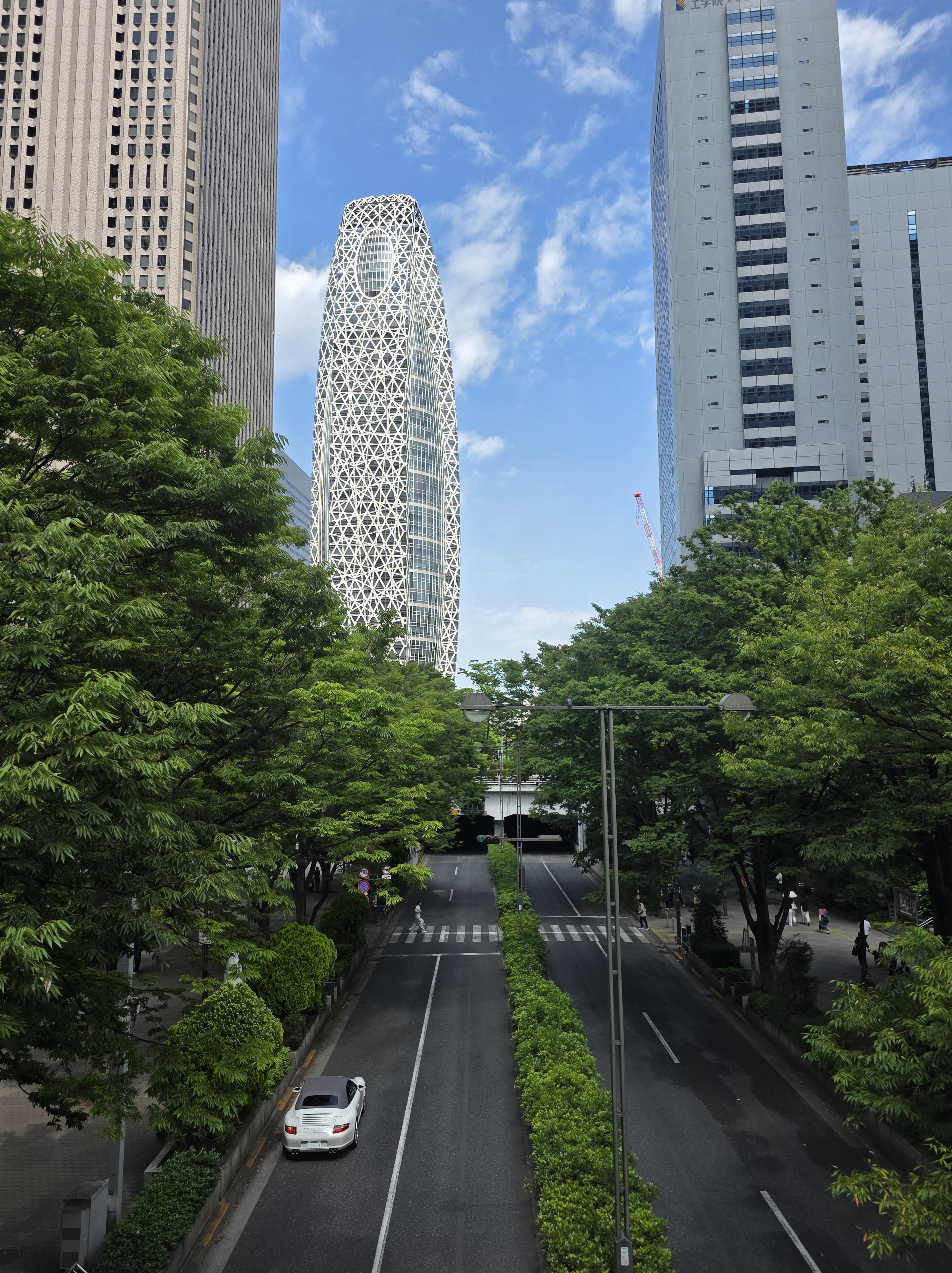
In broad daylight, we didn’t immediately recognise the area, but we turned out to be just steps away from the Tokyo Metropolitan Government Building – the one we visited earlier for its observation deck.

For today, we had planned a visit to the teamLab Planets museum. I don’t even know how to describe it properly – something like a digital art museum with immersive effects. But more on that in a moment.

Before that, we wanted to get lunch and found an interesting restaurant nearby – this time an American one – but when we got there, we saw a queue and realized we wouldn’t make it in time. The restaurant was in the skyscraper business district near Tochomae Station, and unlike other places (where, as we remember, there are 528 eateries per square meter!), there was nothing else nearby. We even went down into the subway to the station where a sign pointed to restaurants, but on a Sunday everything was closed – except for one Chinese place, which wasn’t exactly a diner, but a restaurant in the spirit of one.

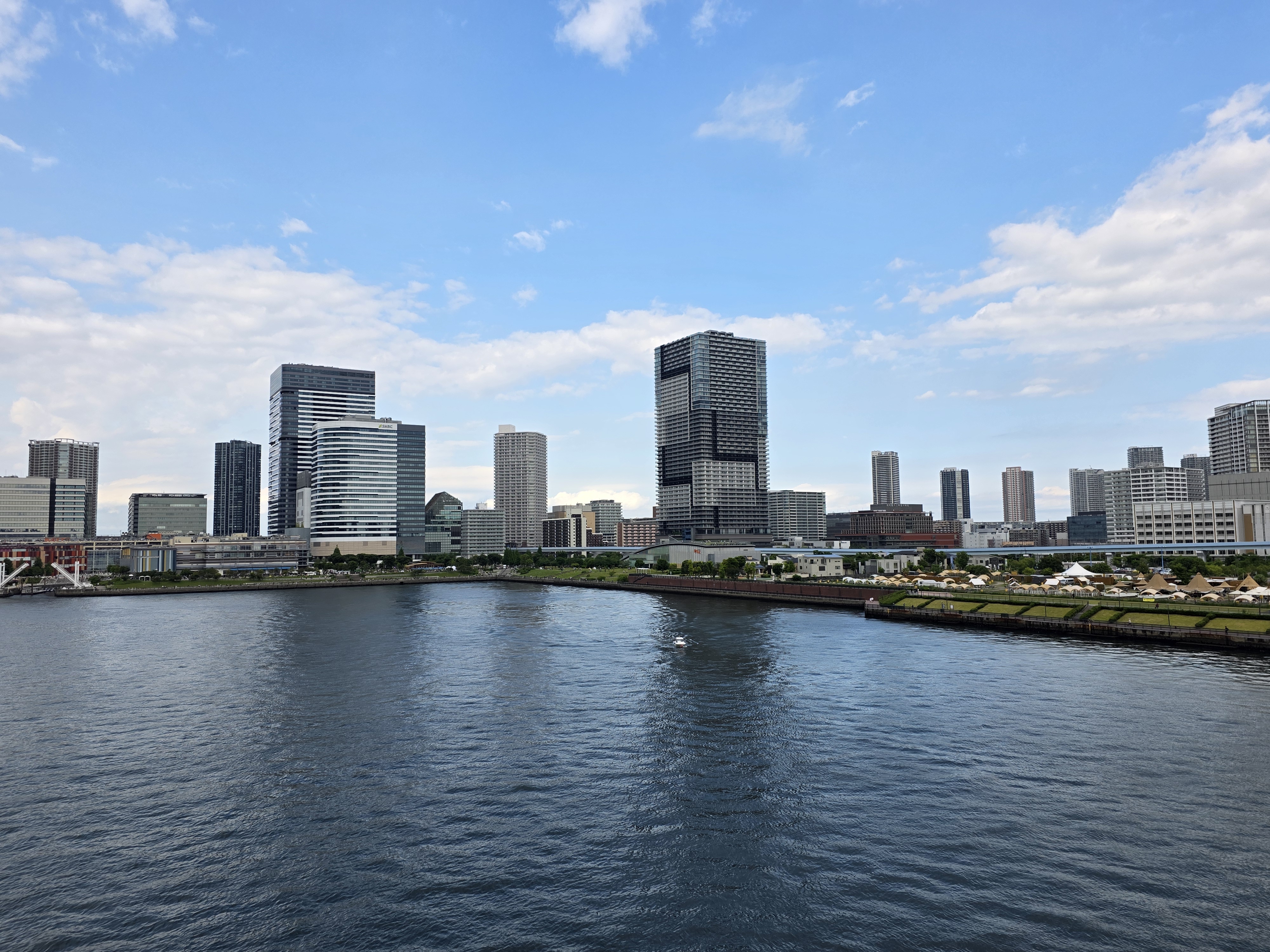
Luckily, they served us Chinese food really quickly, and we got to the museum on time – it’s located quite far away, in the Toyosu area, with a river and skyscrapers, which strongly reminded me of my dearly loved Canary Wharf in London.

Now about the museum – it was a very interesting experience. I really liked it, although the coloured lighting was a bit much for my taste in some places.

The museum features different elements – water, a garden, a forest. In one installation, you walk barefoot through knee-deep water with glowing patterns on the surface (including koi carp) that constantly change. In another, you find yourself surrounded by live orchids, and it’s not immediately clear how to get out. In another room, you’re immersed in a space filled with large glowing spheres that you have to push aside – and when you touch them, they change colour. In general, it’s truly full immersion.

There’s also an interactive part – “Catching and Collecting Forest” – where you can “catch” animals that appear on the walls and floors using a smartphone app (we didn’t try it, but from the outside, it looked like something similar to Pokémon GO). In another “forest,” called “Athletic Forest,” you’re supposed to interact with three-dimensional space – climb on things, move along swings. It’s probably aimed more at kids – though we did jump on a trampoline.

I didn’t really understand the name Planets – I had a vague idea of what to expect from the museum, but I thought there would be a space theme. There wasn’t, so what the planets had to do with it remained a mystery to me.

After the museum, we made a second attempt to eat at the American restaurant – this time successfully: after just 10 minutes of waiting, we were seated. We ordered a delicious steak, but the main draw was the unlimited salad bar. And that’s when we realised just how much we had missed simple salads and vegetables during all these days of Japanese food – we really went for those cucumbers and cabbage!

Then we returned to the hotel and, after a bit of rest, Rena left for the airport to fly to Baku via Dubai. I’m staying until tomorrow morning, and then I’ll take another long, direct flight back to London. That’s the end of our trip to Japan! It turned out to be a wonderful journey – and at the same time, I feel like I’ve had my fill of Japan, in the best possible sense. Not that I got tired of it, but more that I feel fully satisfied, having being able to do and see everything I wanted to. As they say, I’ve “closed the gestalt.”

Posted in Asia, English, Japan, Kyoto

Japan – Day 9

РУССКОЯЗЫЧНАЯ ВЕРСИЯ ПО ЭТОЙ ССЫЛКЕ. CLICK HERE FOR RUSSIAN VERSION.

31 May 2025

Today is our last day in Kyoto. We woke up very early again and had breakfast in a French café.

Since it was early, we decided to go to Gion again and take another look at the geisha quarter and the streets around the Yasaka Pagoda, which we hadn’t properly explored a couple of days ago when it was crowded and we were in a rush. We figured there would be fewer people at this time – and we were right. Of course, there were the occasional enthusiastic Chinese tourists who got up early and even dressed in kimonos to take photos before the crowds arrived. But overall, there weren’t many people, so we were able to enjoy the Yasaka Pagoda and the historic streets of Ninenzaka and Sannenzaka in relative peace.

However, we still didn’t manage to spend a lot of time there – we were feeling cold, and it also started to rain. I’ve actually been joking that the head of the local meteorological service should commit hara-kiri – the forecasts here are so unreliable that you almost need to do the opposite of what they tell you. For example, yesterday the forecast promised cool weather and rain, but not a drop fell – it was 26 degrees, hot and stuffy. And today, on the contrary, it promised 23–24 degrees, with sunshine, and zero chance of rain – but couldn’t even forecast an hour ahead, because it was grey and chilly, and the rain started almost immediately.

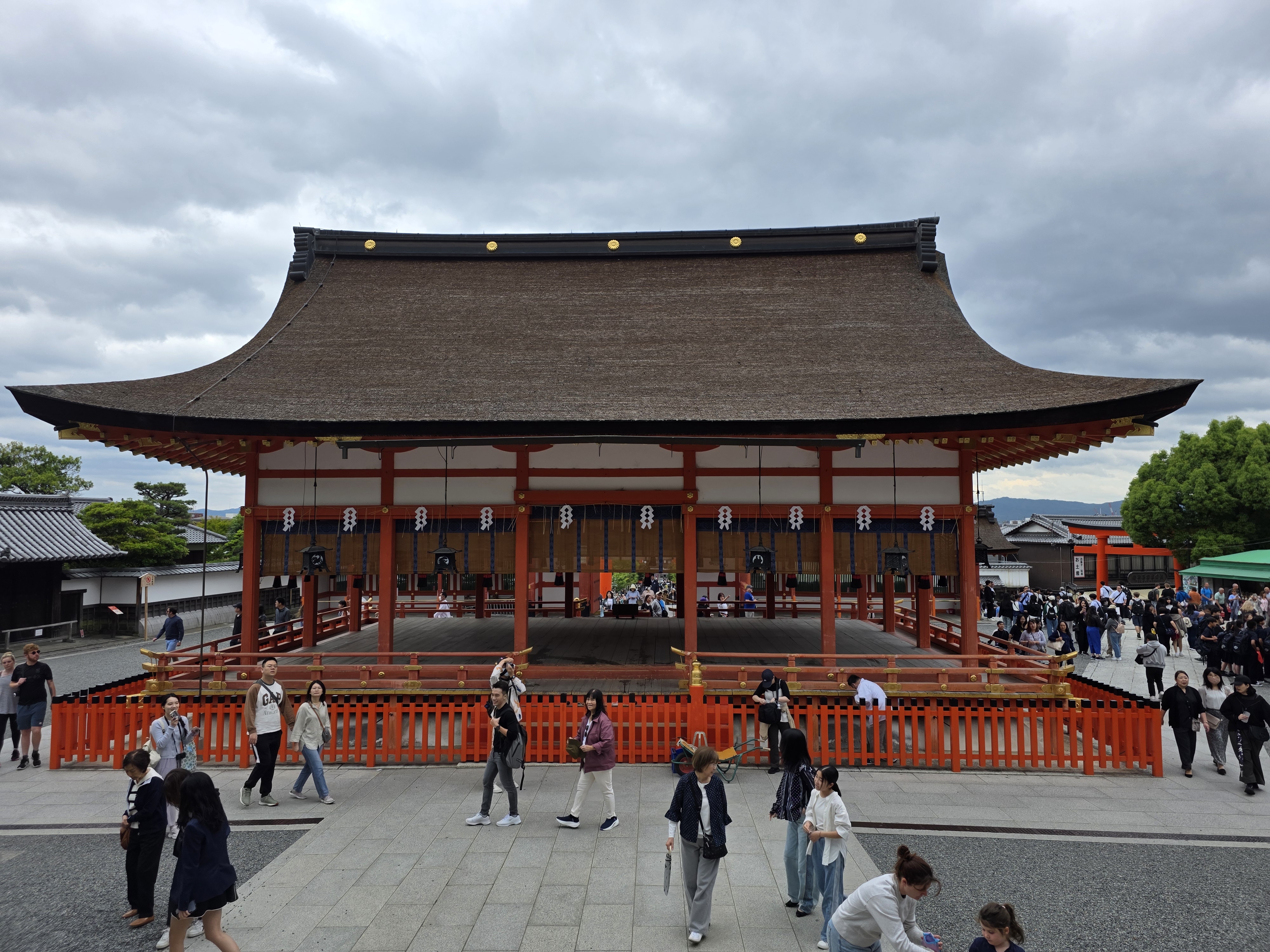
So we went back to the hotel to change clothes and grab an umbrella, and then we went our separate ways. I went to the Fushimi Inari Taisha Shrine, while Rena had already been there on her last visit and didn’t want to go a second time. Not surprising – the shrine is located on Mount Inari, and the main shrine is at the top. The whole round trip takes about two hours, so doing it once is probably enough.

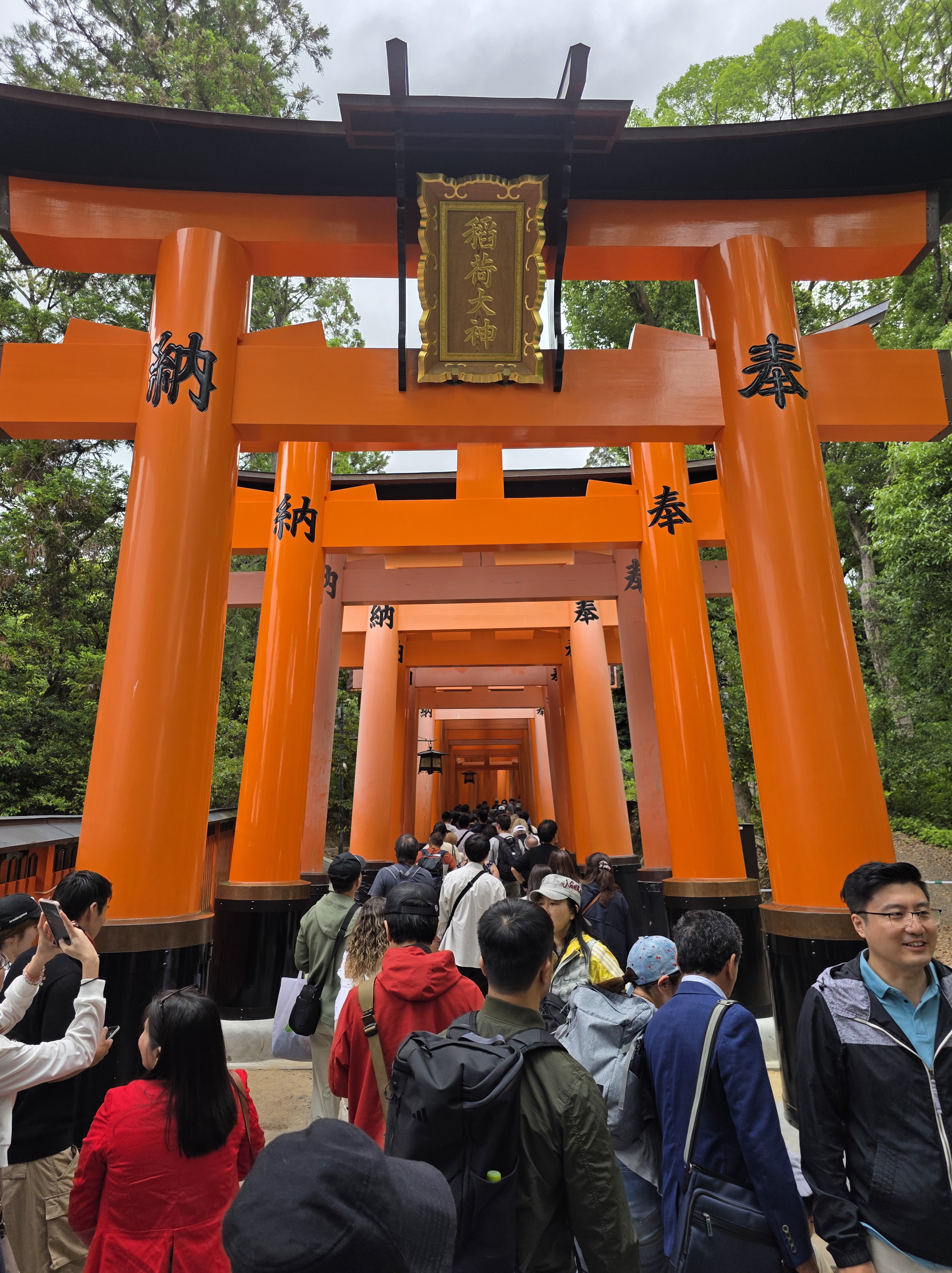
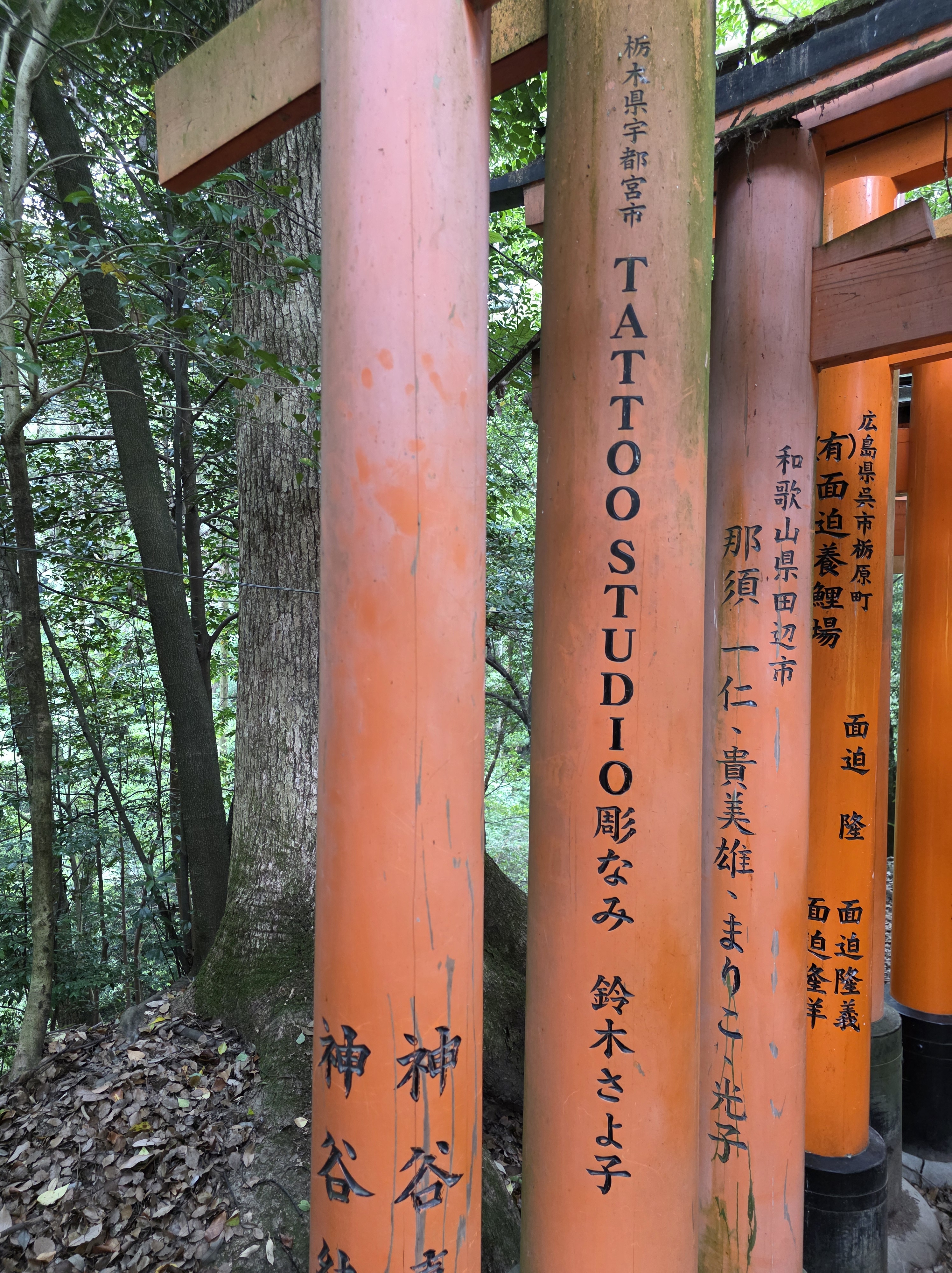
The temple is famous for the more than ten thousand orange torii gates that line the entire route up and down the mountain, forming tunnels of gates you walk through. I arrived around mid-morning, and there was an absolute sea of people. Especially at the entrance to the first “corridor” of torii gates, there was a continuous flow. Everyone was trying to take photos, but there was hardly any space to move.

Apparently, people didn’t realize that the torii gates would continue all the way to the top of the mountain – or maybe they just didn’t feel like climbing there. Some were dressed in kimonos, some even in evening dresses – where would you go in heels or socks with flip-flops up a mountain?

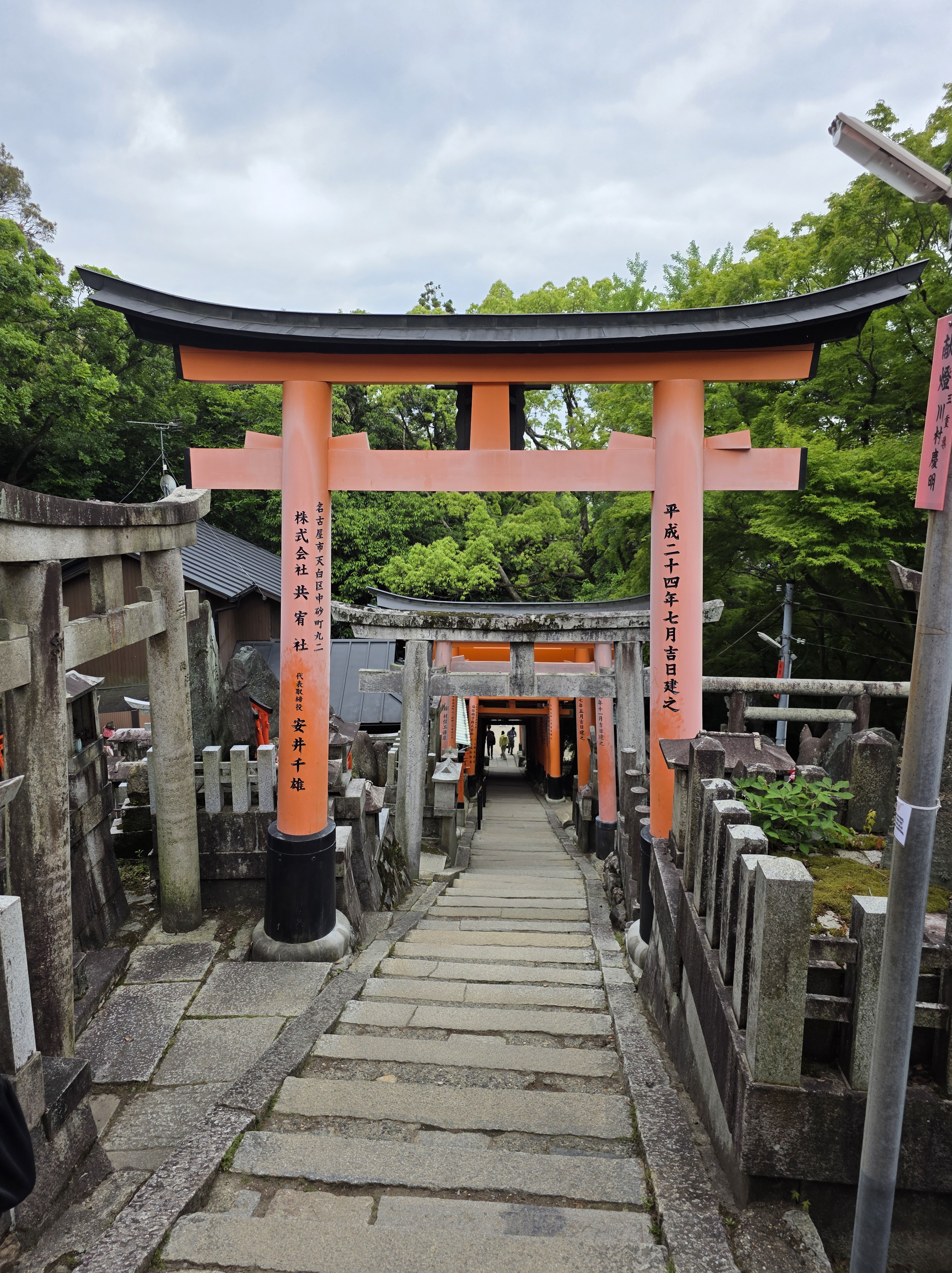
To be honest, I wasn’t planning to go all the way to the top either. I thought I’d climb a little, take some photos of the gates from different angles, see a few shrines, and call it a day. But then, for some reason, I got caught up in the excitement – maybe it was the signs at each rest stop showing how much further to the summit. Especially that the higher you go, the fewer people there are. I was able to peacefully explore the shrines and the torii gates – for example, the back of each gate is covered in kanji. It might seem like some sacred texts, but it’s actually just the names of those who donated each gate – there are even a few rare inscriptions in Latin script. The route isn’t one straight path – there are forks leading to smaller, secondary shrines, and rest areas with toilets, a small shop, and an ice cream stand.

One route led up, the other down. In the end, very few people made it to the summit, so I could take photos in peace. By then, though, I was completely drenched in sweat – and that was despite the spitting rain and cool weather.

After the shrine, I was supposed to meet up with Rena for lunch at a ramen place – but there was a slight hitch. We didn’t align when we arrived and stood in the queue, so I ended up going in first and tried to save her a seat next to me, but they didn’t allow that – we had to sit separately. The concept of this (chain) restaurant is that visitors sit alone, separated from each other by plywood dividers. There’s also a divider between guests and staff – you just pass them a piece of paper with your order number and the desired spice level, noodle firmness, etc., and they place your ramen through a small window.

So, in the end, we didn’t sit next to each other – but it was fine. After lunch, we walked around the shops and bought some Korean cosmetics.

Then our tired legs started reminding us of themselves – and of all the previous days, each of which involved at least 20,000 steps. We had to find a café to sit down in – we found one in a small side street. In general, I have to say that all the little backstreets in Kyoto feel the same – I honestly couldn’t tell the street our hotel is on apart from another one a kilometre or two away.

After coffee, we went back to the hotel to rest a bit. And then it was already evening, so we headed to a recently opened izakaya, where we had all sorts of interesting dishes, like some kind of whelk in an unusual sauce, but also quite plain donburi with chicken and egg (a sort of chigirtmaplov à la Japonaise) – and drank fragrant sake.

After that, we continued the evening at an Irish pub we’d spotted earlier – but only briefly, since it turned out to be a bit of a dive. On a Saturday evening, there were hardly any people: there was a cheerful Japanese group celebrating something in the private room, and in the main area – just a couple of foreigners, plus us.

Posted in Asia, English, Himeji, Japan, Osaka

Japan – Day 8

РУССКОЯЗЫЧНАЯ ВЕРСИЯ ПО ЭТОЙ ССЫЛКЕ. CLICK HERE FOR RUSSIAN VERSION.

30 May 2025

Today, completely unintentionally, we woke up at 6:30 a.m., but it turned out to be a good thing, since we had a long day of traveling ahead: from Kyoto to Himeji, then on to Osaka, and finally back to Kyoto.

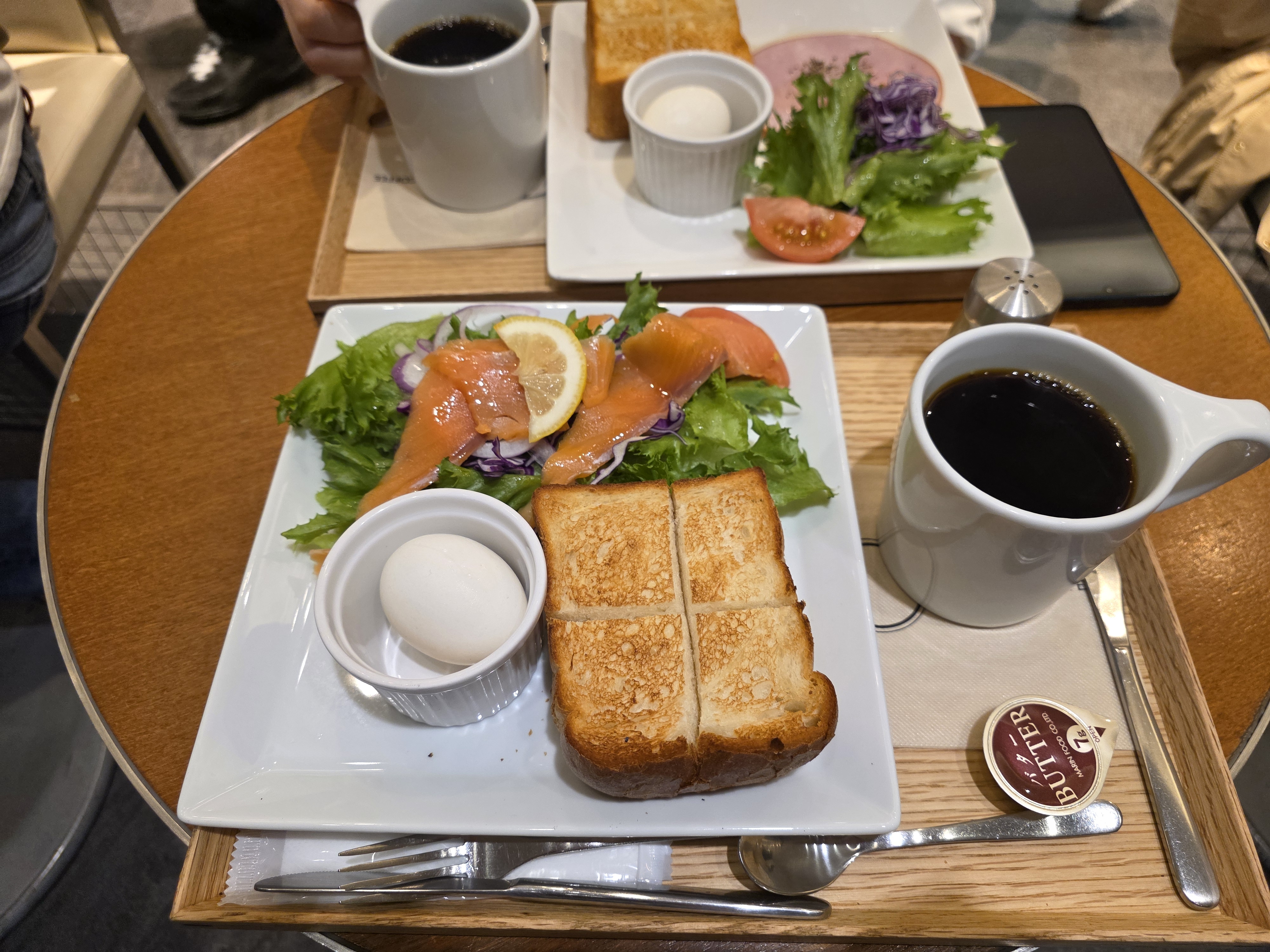
As a result, we left an hour earlier than planned. But before heading out, we walked to Kyoto Station and had breakfast there – we had delicious toasts made with Japanese milk bread, topped with egg and salmon in my case, or ham in Rena’s.

At the station, we took an express train (not the Shinkansen, just a regular limited express) to Himeji.

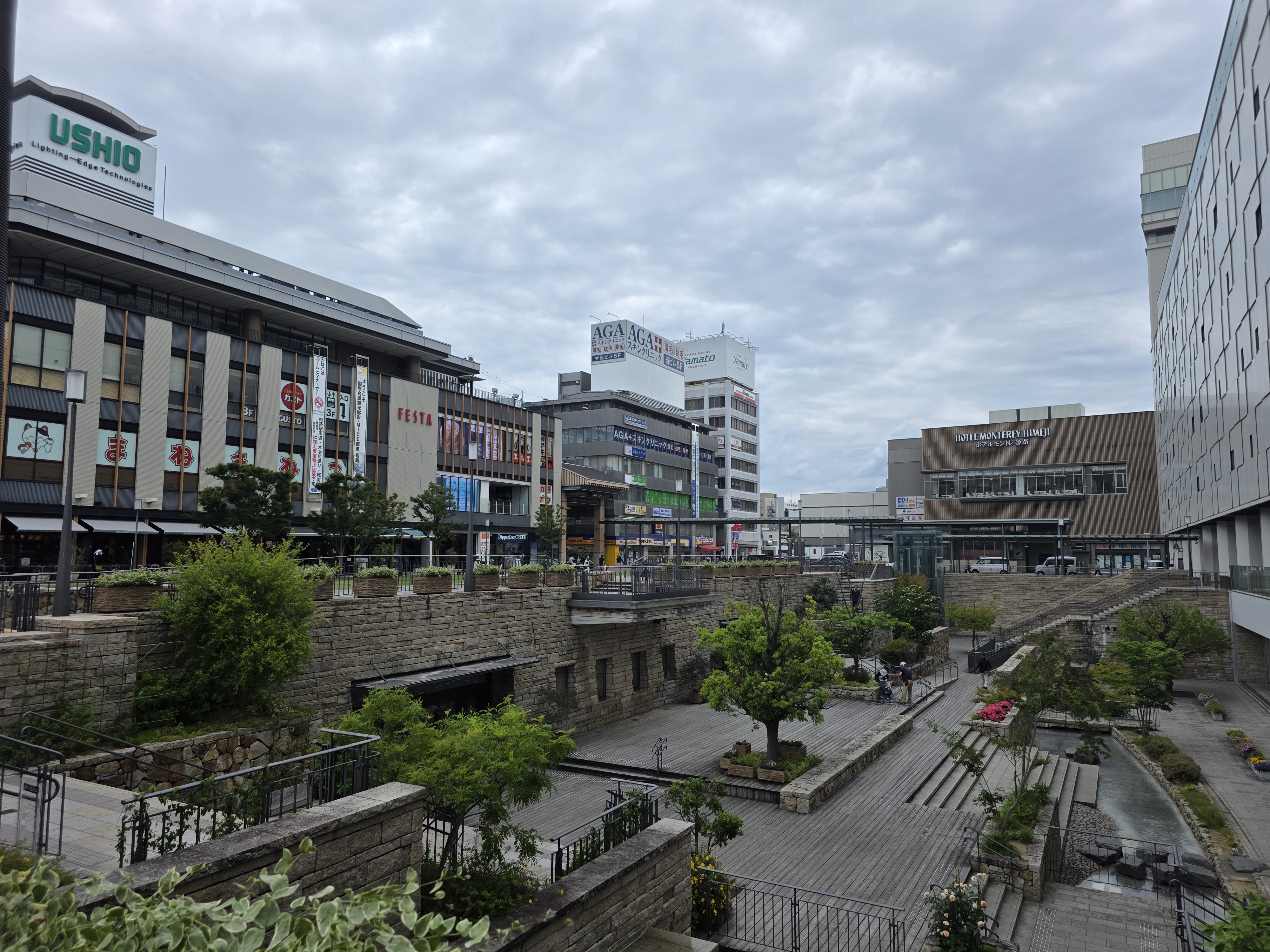
The sole reason for the trip to Himeji (which took about an hour and a half, by the way) was to visit its famous castle. From Himeji Station, we walked down one of the main streets towards the castle. Honestly, there wasn’t much to see along the way – the city seemed fairly ordinary and, at first glance, felt rather provincial.

The castle really is the city’s main (and maybe only) attraction – but what an attraction it is. It is extremely popular among tourists, as it’s one of Japan’s oldest castles, and interestingly, is built almost entirely out of wood.

We weren’t sure whether it was enough to admire the castle from the outside or whether we should go inside as well. Google reviews strongly recommended going in, and so we did – but in hindsight, we might as well have skipped it.

From the outside, the castle is stunning – graceful and elegant. No wonder it’s also called the “White Heron Castle” – it truly does resemble a white heron. But inside, there’s practically nothing to see. Just seven floors of empty wooden rooms, between which we had to walk up and down the steep, slippery staircases (they are slippery because you have to take your shoes off and walk in socks). There’s no interior decoration, no furnishings, barely any artifacts. Even the weapon displays are sparse – just a couple of spears and guns for show.

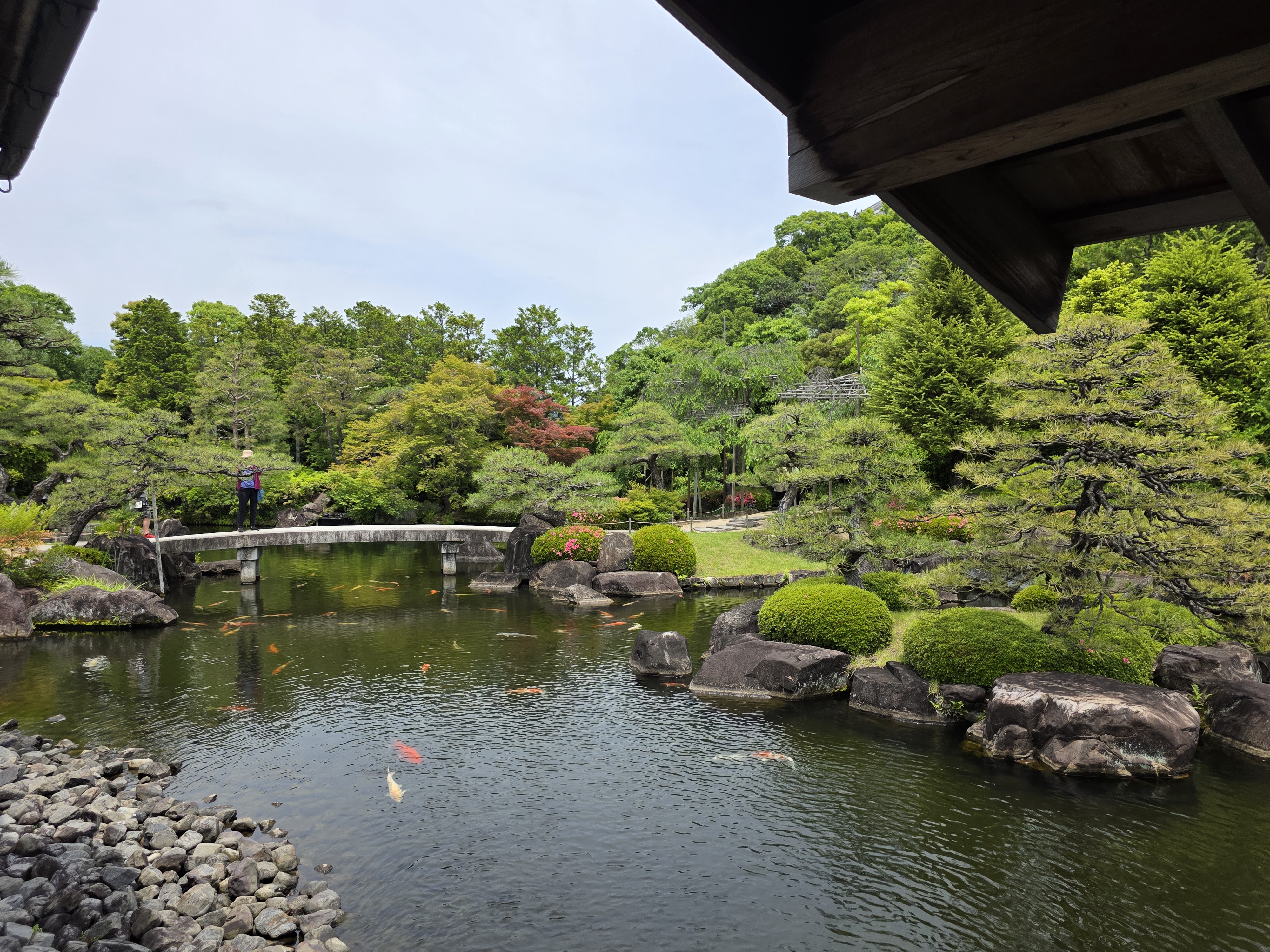
However, right next to the castle is Koko-en – a lovely garden made up of nine smaller gardens, each designed in a different traditional Japanese style. One focuses on pine trees only, another features multi-level paths, waterfalls, and stones, while another has a flat landscape – and all are filled with beautiful flowers and trees. Interestingly, the garden was created only recently, in the late 20th century, but it’s designed to reflect the aesthetics of the Edo period.

It was hot and stuffy all day, even though the forecast had promised rain – instead, we got bright sun. By the time we finished at the gardens, it was already lunchtime. We decided to have lunch in Himeji and ate in a tiny local eatery that served Kobe beef – a premium, marbled Wagyu variety that’s about twice as expensive as regular Wagyu, but still reasonably priced here.

There wasn’t anything else we wanted to do in Himeji, so we headed to Osaka – in the opposite direction, towards Kyoto – about an hour’s ride.

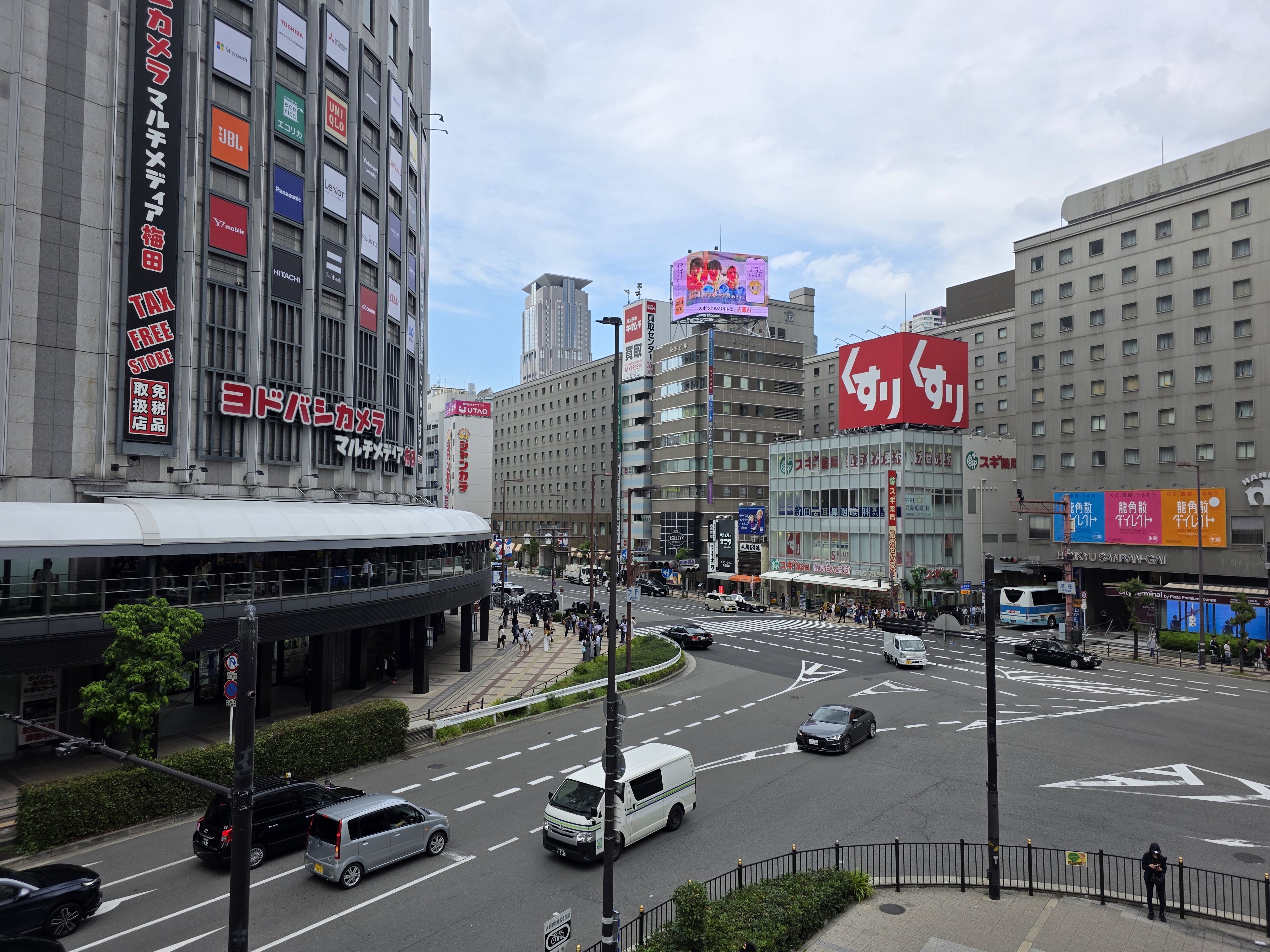
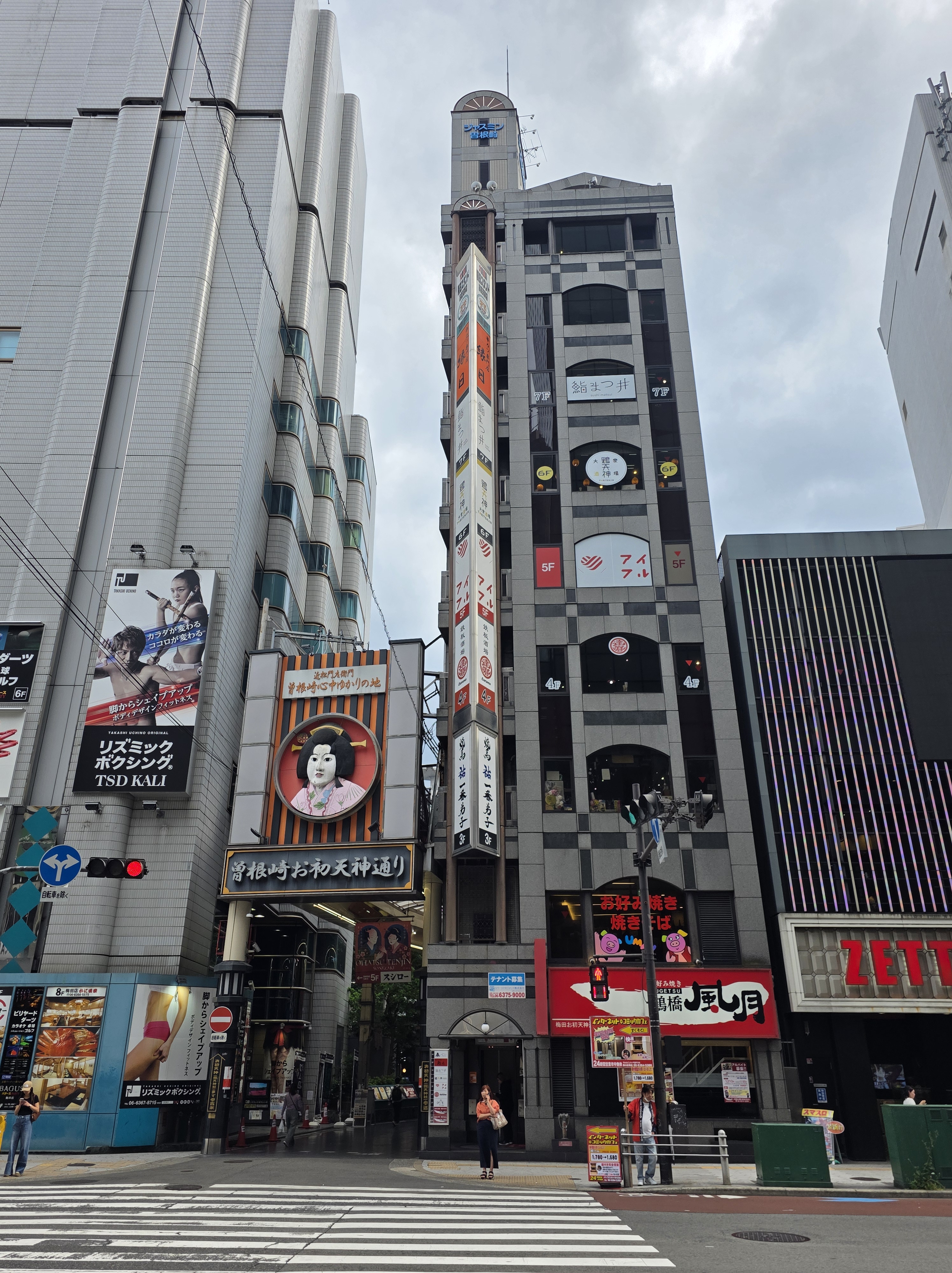
The contrast was immediate – Osaka has a completely different energy. It is a much more modern city than anything else we’d seen so far (even Tokyo). If your idea of a modern Asian city includes futuristic infrastructure and glass skyscrapers, Osaka fits the bill perfectly – it felt like such a contrast to Kyoto, which is only half an hour away. Even the people looked different – more relaxed, dressed more brightly and stylishly. And there are even dedicated bike lanes – in the other places we saw, cyclists just ride on the sidewalks, while you narrowly manage to avoid them.

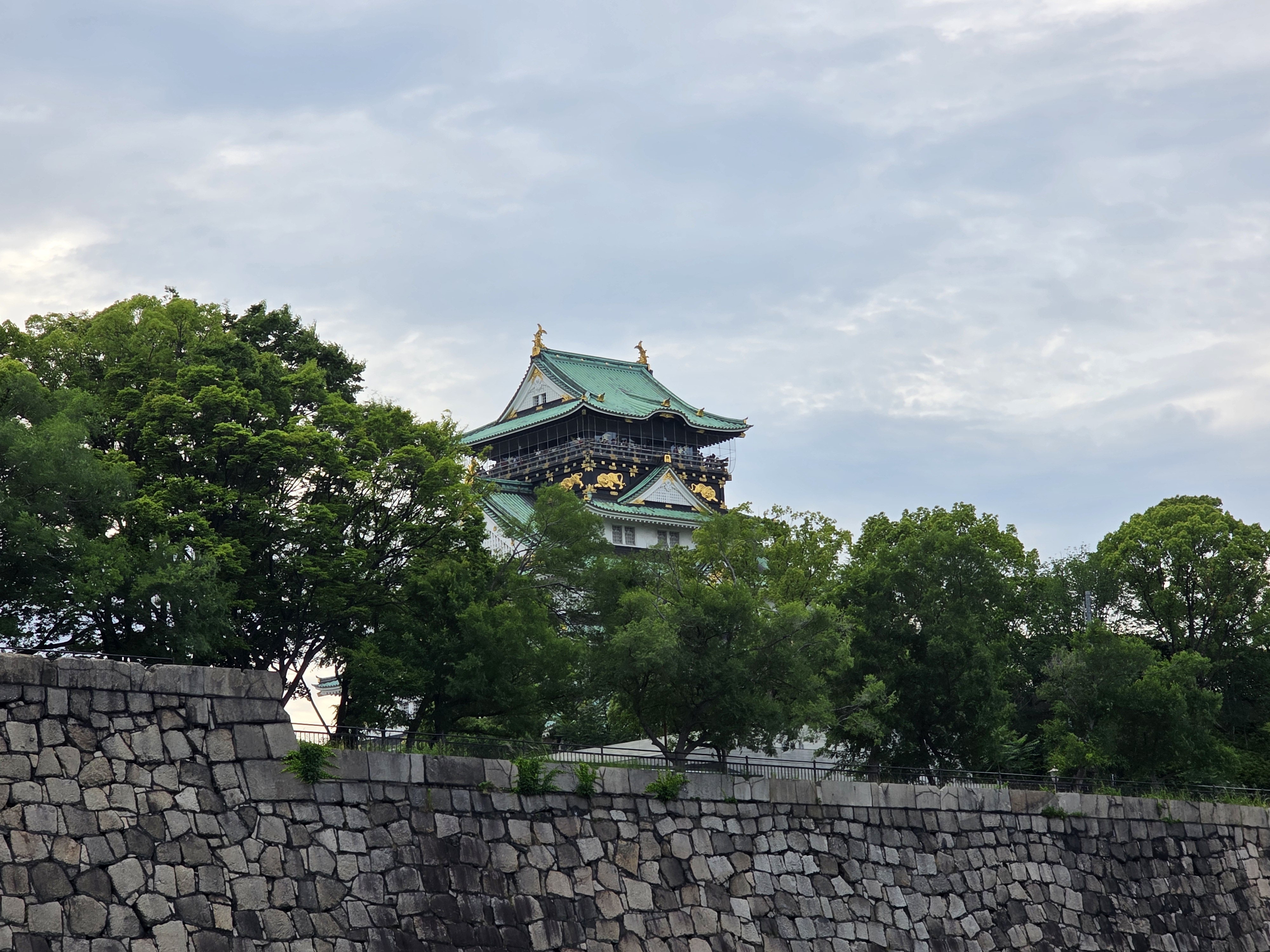
Osaka also has a castle, so we went to take a look – just from the outside, of course. It turned out to be located on a hill, mostly hidden behind trees, and we didn’t feel like climbing up – we simply didn’t have the energy.

The park around the castle reminded us a bit of Hiroshima Castle’s grounds, but Osaka’s was better maintained and much more lively – full of people, like the city itself.

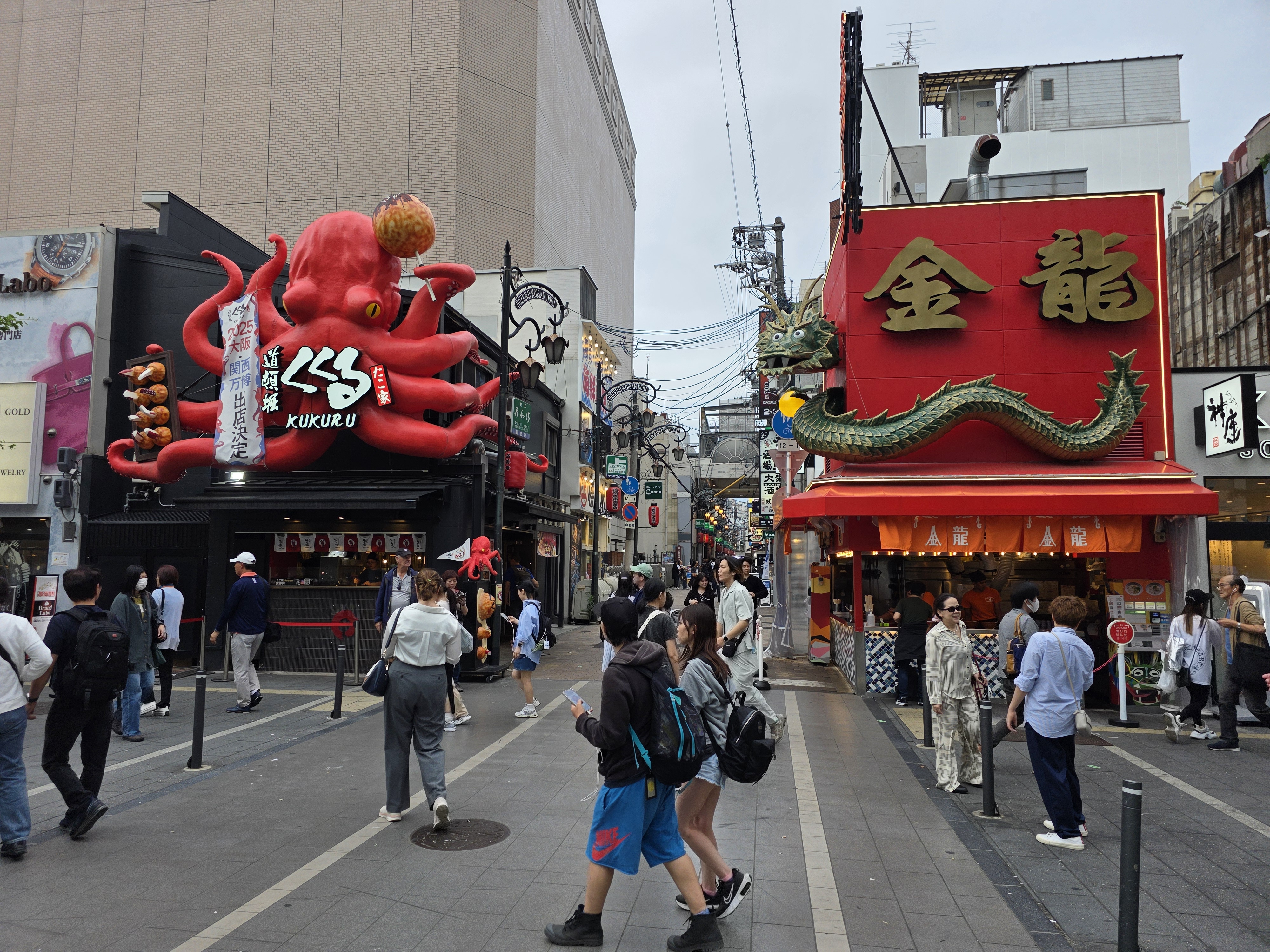
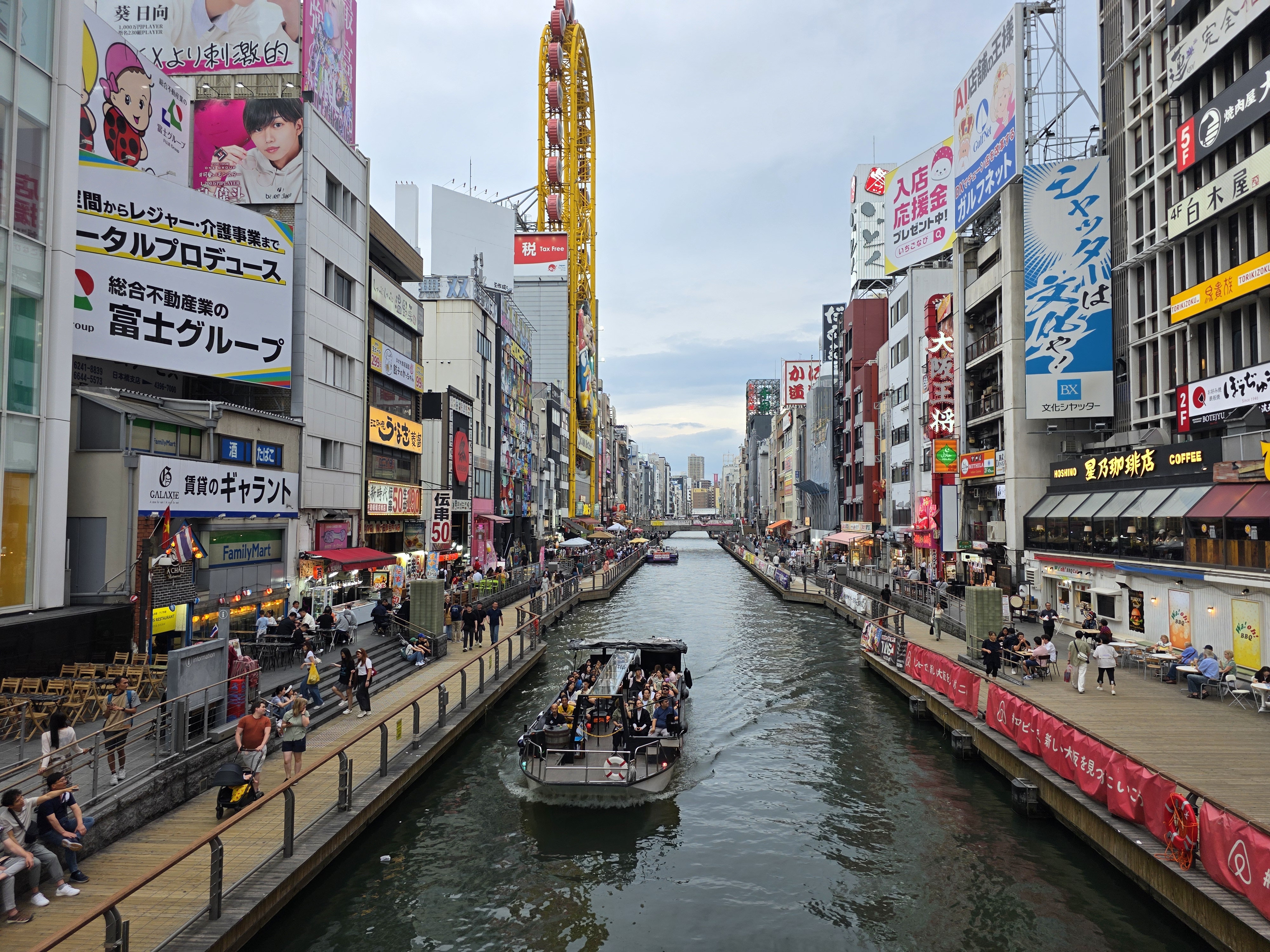
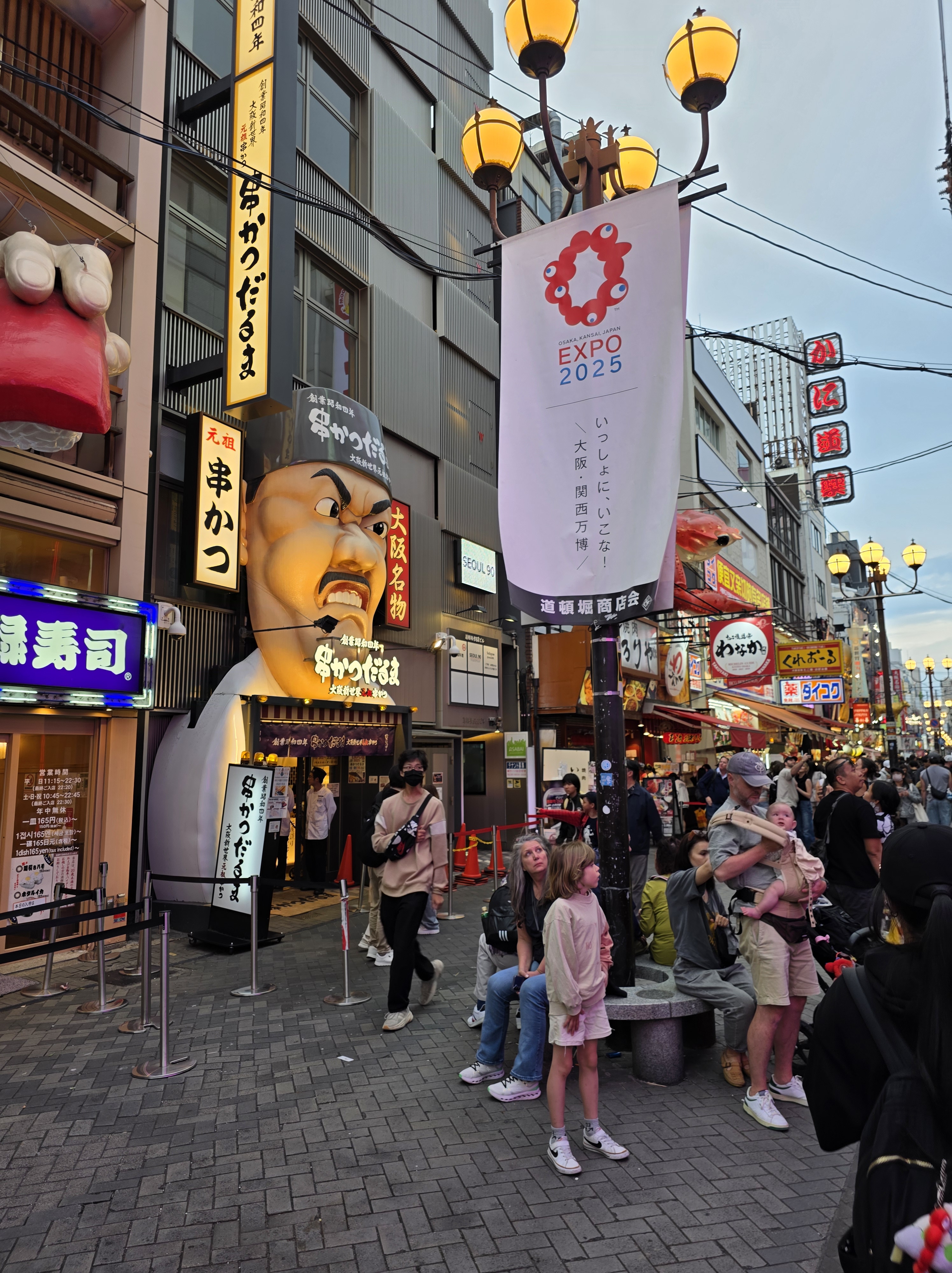
Next, we headed to what’s probably the noisiest and most chaotic part of the city: the Dotonbori area. Along the canal and the adjacent pedestrian street, there is an endless choice of cafés, restaurants, shops, and game centres – all with huge, elaborate signs, that are more like 3D sculptures, covering the entire facade. At night, everything lights up in dazzling neon.

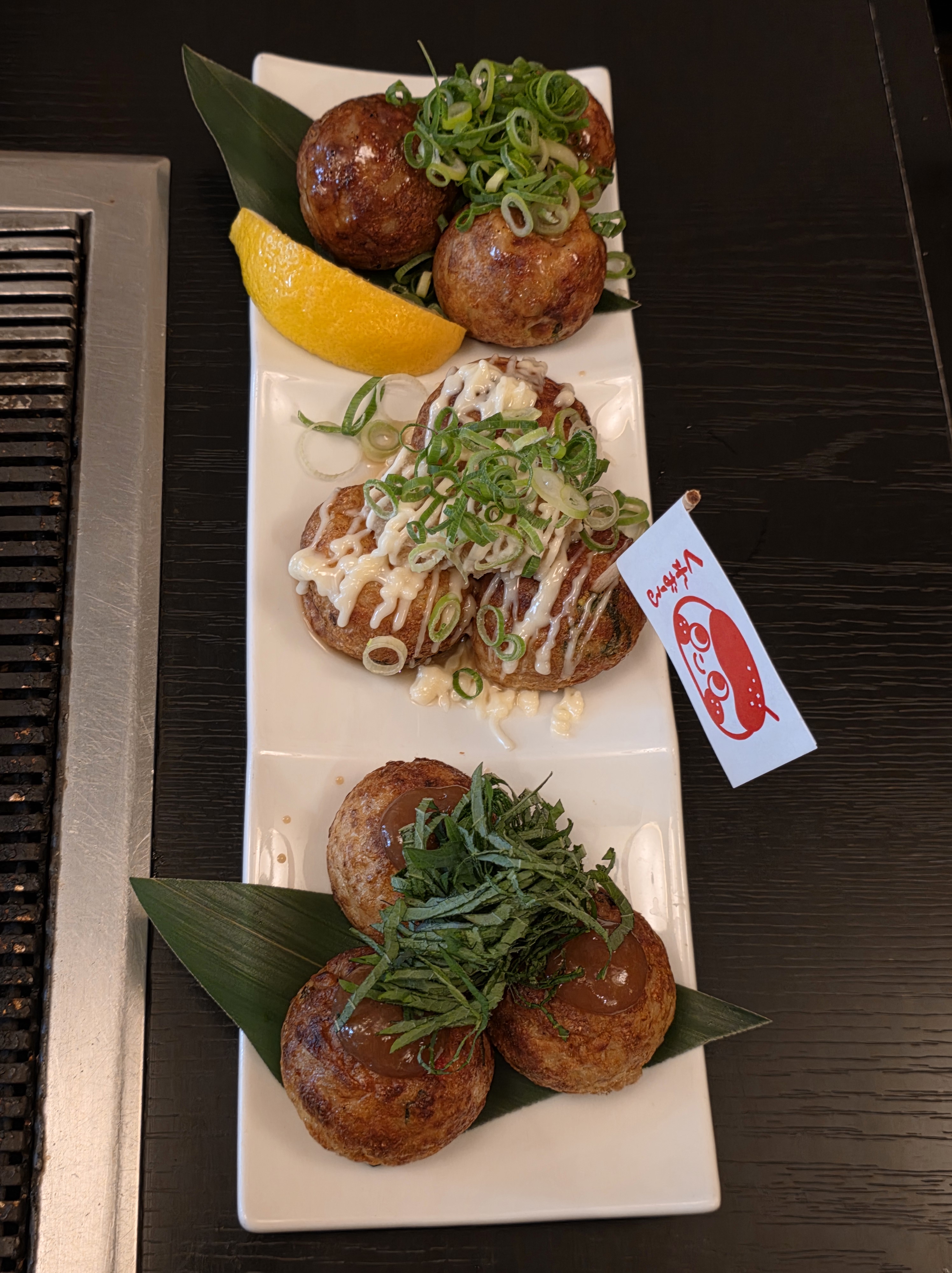
Food stalls and restaurants offer all the local specialties – which, of course, we tried for dinner: okonomiyaki (something between a savory pancake and fritter made of a hodgepodge of different ingredients – seafood, cabbage, eggs), takoyaki (fried octopus balls in liquid batter), and noodles. I really liked it, though Rena didn’t.

In general, if you’re looking for that loud, wild, fashionable version of Japan you often see in the media – you’ll find it here, in Osaka. The city is vibrant, chaotic, and it’s very entertaining to look at all this, but we’re still happy to be staying in Kyoto, where we were happy to return in the evening.

Posted in Asia, English, Hiroshima, Japan, Miyajima

Japan – Day 6

РУССКОЯЗЫЧНАЯ ВЕРСИЯ ПО ЭТОЙ ССЫЛКЕ. CLICK HERE FOR RUSSIAN VERSION.

28 May 2025

Today we went to Miyajima Island right in the morning. Prior to that, we had breakfast at our hotel – we tried the buffet on the 25th floor, which had a really cool view of the city. The breakfast offered both Western and Japanese options, including local Hiroshima specialties like fish cakes and fish sausage.

We walked to Shin-Hakushima Station, passing by the castle we visited yesterday – which, in daylight, looked a little less impressive than it did lit up at night. The train took about 20 minutes to get us to the ferry terminal, accompanied by a noisy Iranian tour group. From the terminal, ferries from two different companies run frequently to Miyajima, and the crossing only takes 10 minutes. From the ferry, we got a great view of the famous “floating” torii gates.

There were tons of tourists on the island – but despite its small size, it didn’t feel crowded. Somehow, everyone seemed to spread out. Most tourists were local Japanese, but there were also quite a few foreigners – the Germans again made a noticeable appearance.

Stray deer roam freely on the island – so there’s no need to go to Nara to see them. That said, the ones here seem hungrier and more persistent. We didn’t even think of eating anything outside, but we saw others who did and clearly regretted it, trying in vain to fend off the pushy deer.

Once on the island, we wandered through the charming streets of Miyajima toward the Itsukushima Shrine – the one the “floating” torii gate belongs to. Interestingly, the gate doesn’t “float” all the time – only at high tide. So when we arrived in the morning, it was surrounded by water, but by around 3 p.m., it was already on dry land, with people walking right up to it and through it.

The shrine is Shinto, and the entrance fee is 300 yen (about £1.50), but at the moment, much of it is closed for restoration. Unfortunately, the nearby five-tiered pagoda from the 15th century was also under restoration – we didn’t even recognise it at first, and thought it was a new building going up in the middle of this historical island! So when we climbed up to the Hokoku Temple, we weren’t able to see it.

We then continued up to Daisho-in Temple – unlike the shrine and like Hokoku, this one is Buddhist. From here, you can hike to the top of Mount Misen, but we decided not to do that and just enjoyed the temple itself.

The path to the temple was calm and peaceful. Of course, tourists come here too (the same noisy Iranian group was there), but not in overwhelming numbers. Many worshippers were also present, performing rituals. For example, you can strike a large bell and make a wish – though you have to pay. Sure, you can do it for free, but I would imagine that the local higher powers probably don’t grant free wishes.

They say (and back it up with photos!) that the views from the temple in autumn are absolutely spectacular – but even in May, for some reason, many trees were already red, so it was beautiful anyway. We really liked the temple.

By then it was lunchtime, so we headed back down toward the pier and went into one of the local restaurants to try regional cuisine. We were seated in a “Japanese room” – many places here offer that option – which means sitting on tatami mats at a low table, shoes off. The regional specialties are grilled eel and oysters, which we had in a set meal with buckwheat noodles (soba). It was interesting to try, but I wouldn’t call it my favourite flavour of Japan.

Another local delicacy is momiji manju – maple-leaf-shaped cakes with sweet fillings. The traditional version has sweet bean paste, which I didn’t like, but the chocolate and custard-filled ones were very tasty and delicate.
After lunch, we strolled through covered streets filled with cafés, food stalls, and souvenir shops – including some Ghibli-themed ones that were much better than the museum shop we saw yesterday.

Then we stopped for coffee at a place we’d spotted earlier that looked like someone’s private garden. And as far as I could tell, that’s exactly what it was – a house and garden converted into a café, run by two elderly women. The garden was beautifully maintained and very traditionally Japanese, and it was such a pleasant spot to relax. At first there were some noisy customers chatting loudly, but they left soon after.

From there, we headed back to the ferry. For some reason, at that time there were schoolchildren in uniforms everywhere – whole classes, probably on school trips. Some were arriving, some were leaving, some were gathered for class photos.

Back in Hiroshima, we decided to walk through the Peace Memorial Park and visit the Atomic Dome – the skeletal remains of one of the Hiroshima Prefectural buildings that survived the atomic bombing. Interestingly, the memorial plaque doesn’t mention anywhere that the bombing was carried out by the Americans – and the overall tone of the memorial isn’t accusatory at all, but more like a quiet reflection on the horrors of war and the importance of peace.

At the hotel, we arrived just in time for happy hour and had some rather mediocre wine that made us a bit dizzy – but then we went to dinner and had delicious katsu to make up for it.

Posted in Asia, English, Hiroshima, Japan, Tokyo

Japan – Day 5

РУССКОЯЗЫЧНАЯ ВЕРСИЯ ПО ЭТОЙ ССЫЛКЕ. CLICK HERE FOR RUSSIAN VERSION.

27 May 2025

Today was our last day in Tokyo (though we’ll be coming back later). We had breakfast again at the same café in the park as the day before yesterday. We had to go to Hiroshima, but only after lunch, so in the morning we took a walk to Mejiro Japanese Garden, not far from our hotel. It’s a small, quiet, and very typically Japanese garden – clearly not a famous one, as there were very few people around.

At the entrance, there’s a traditional room that looks like a tea house, which can be rented for photo shoots or private events. The garden itself has a central pond surrounded by greenery, and a small gazebo. On the surface of the pond we saw lots of water striders, and in the pond itself, big fat koi carp swimming lazily around.

After returning to the hotel, we headed off to Tokyo Station. The station is truly massive – many subway and train lines converge there, and it’s also where the high-speed Shinkansen trains depart, which we were taking to Hiroshima. We had lunch right at the station in a Chinese restaurant – the hot and sour soup was especially good.

Coming back to the Shinkansen – also known as “bullet trains.” They’re fast, but not quite as jaw-dropping as the ones in China. Almost ten years ago, I took a Chinese bullet train from Hangzhou to Shanghai, and it was flying so fast you couldn’t even make out the scenery – everything outside just blurred into a gray wall. That was a proper “bullet.” Here, the train is definitely fast, but you can still see everything outside – the outline of Mount Fuji as we approached Kyoto, endless rice fields, and villages with houses that still have traditional curved Japanese roofs.

The journey to Hiroshima took about four hours, but it passed quickly and effortlessly. We’re not planning to do much in Hiroshima itself – the real goal of coming here is to visit Miyajima Island.

Once we arrived, we checked in to the hotel. First impressions of the city – at first glance, Hiroshima didn’t feel that different from Tokyo. But no, the vibe is quite different. For one, there are far fewer people, which makes foreigners stand out more – especially Germans, of whom there seem to be quite a few. Second – though maybe this was just our route – there were some confusing pedestrian passages and street crossings where it wasn’t obvious how or where to cross. Thirdly, I’ve already mentioned Japan’s older infrastructure – and here it feels even more dated. The buses look like ancient Ikaruses, and the taxis seem straight out of a movie from the ’80s or ’90s.

Just off the wide avenues, as in Tokyo, are hidden narrow streets. Same as in Tokyo, often there are no sidewalks, and where they do exist, cyclists ride along them, also in the same way.

We had dinner at a fish restaurant – though calling it a “restaurant” might be a bit generous. It was more like a small eatery with room for 10–15 people, and, once again, everything was in Japanese. They gave us a card with pictures of various fish, and we just pointed to the ones we wanted. Those were grilled with salt and served with rice, miso soup, and a few small side dishes.

After that, we made our way through some dark streets to Hiroshima Castle to see it lit up at night. It was definitely worth the walk – we got some beautiful photos with the castle reflected in the water. By the way, the original castle was almost completely destroyed by the atomic bombing – what we see today is a reconstruction.