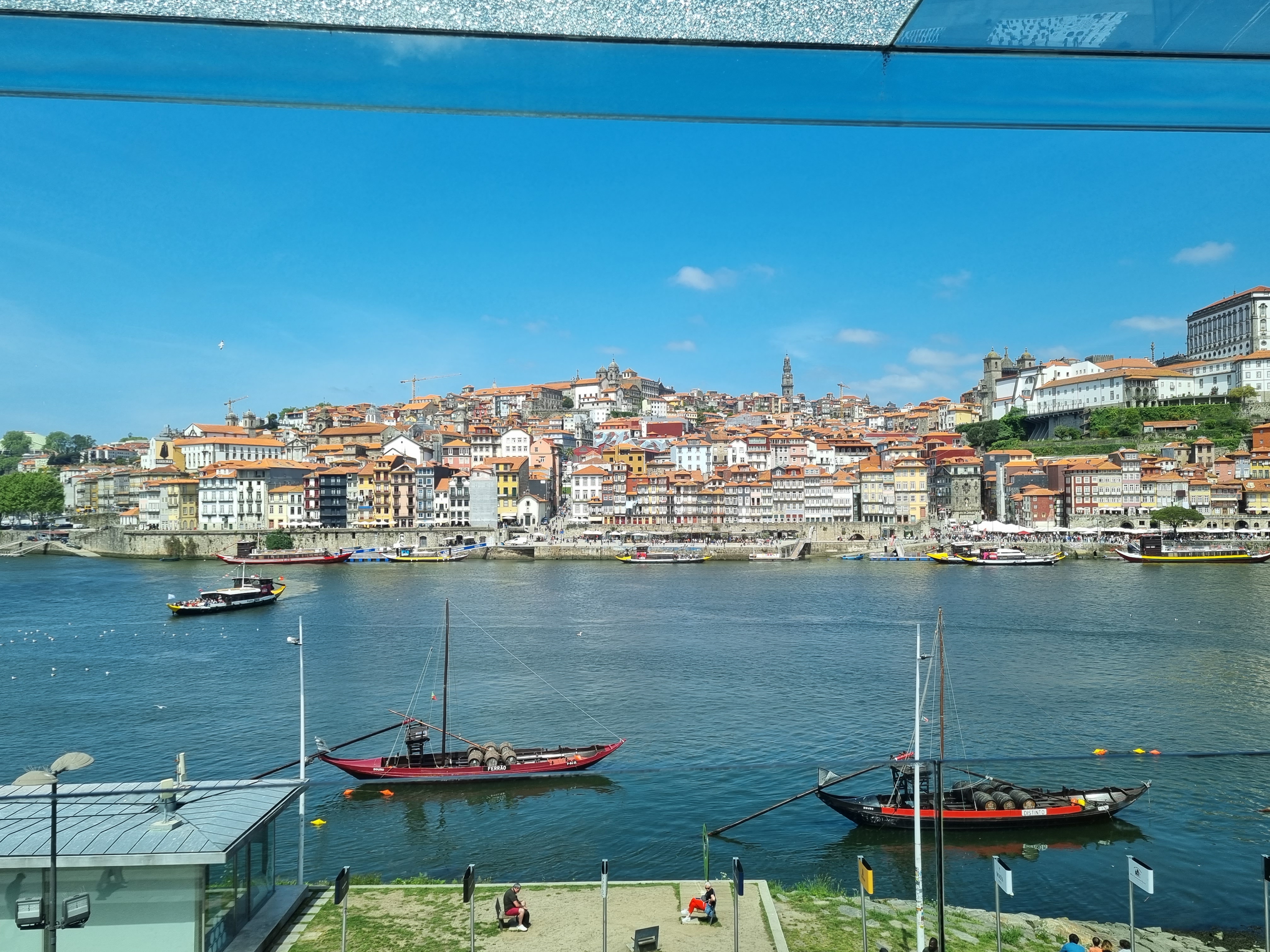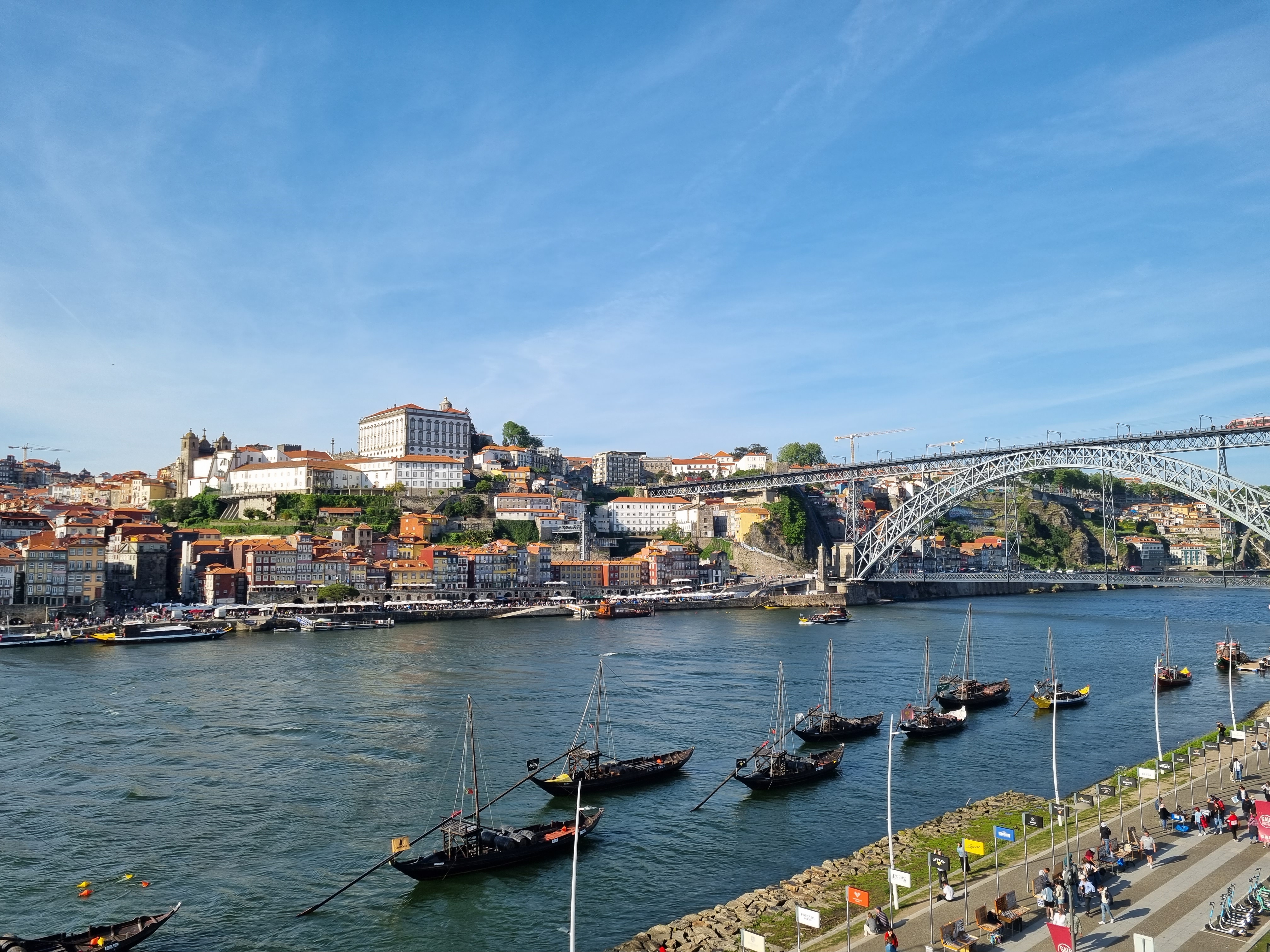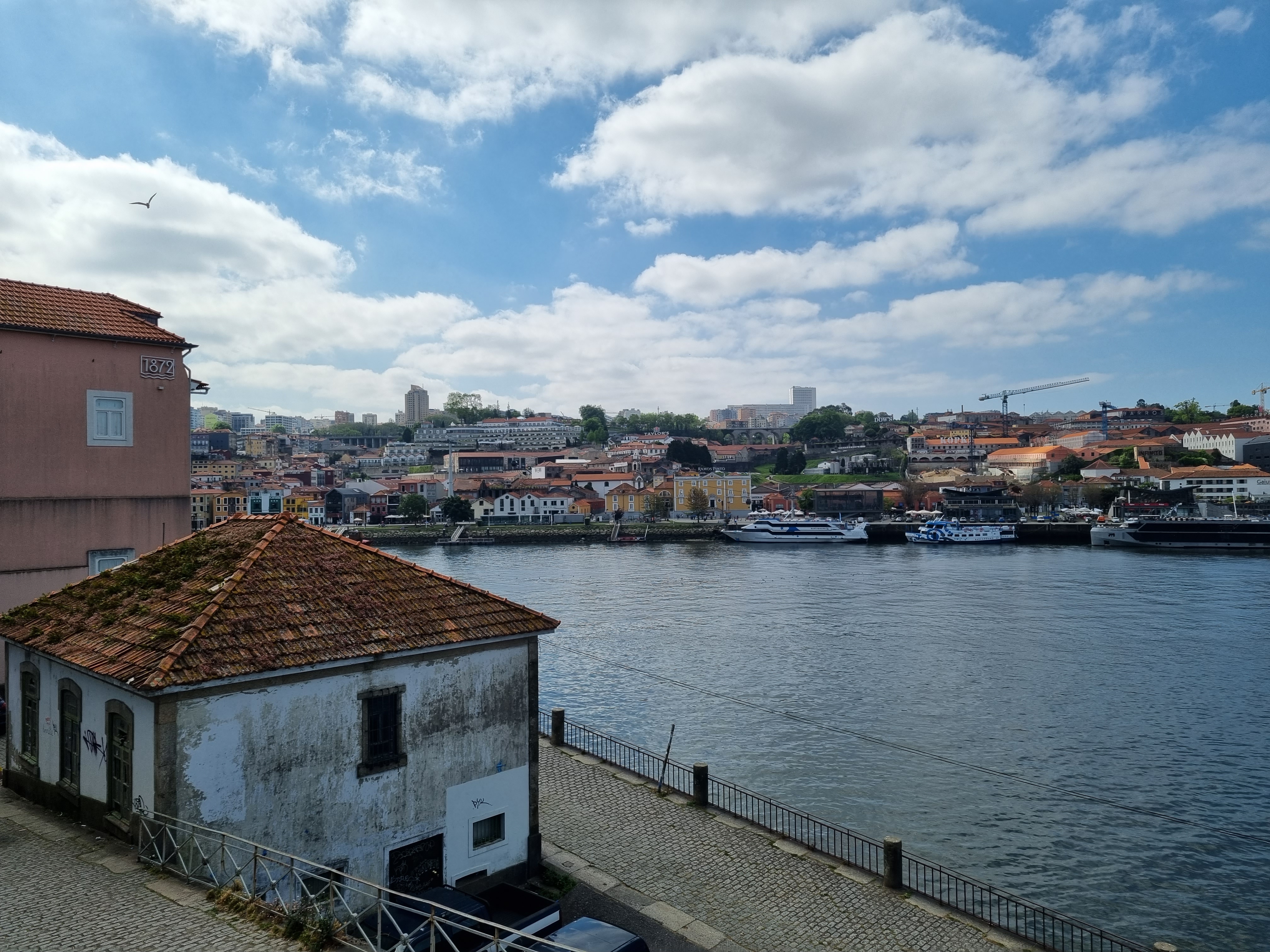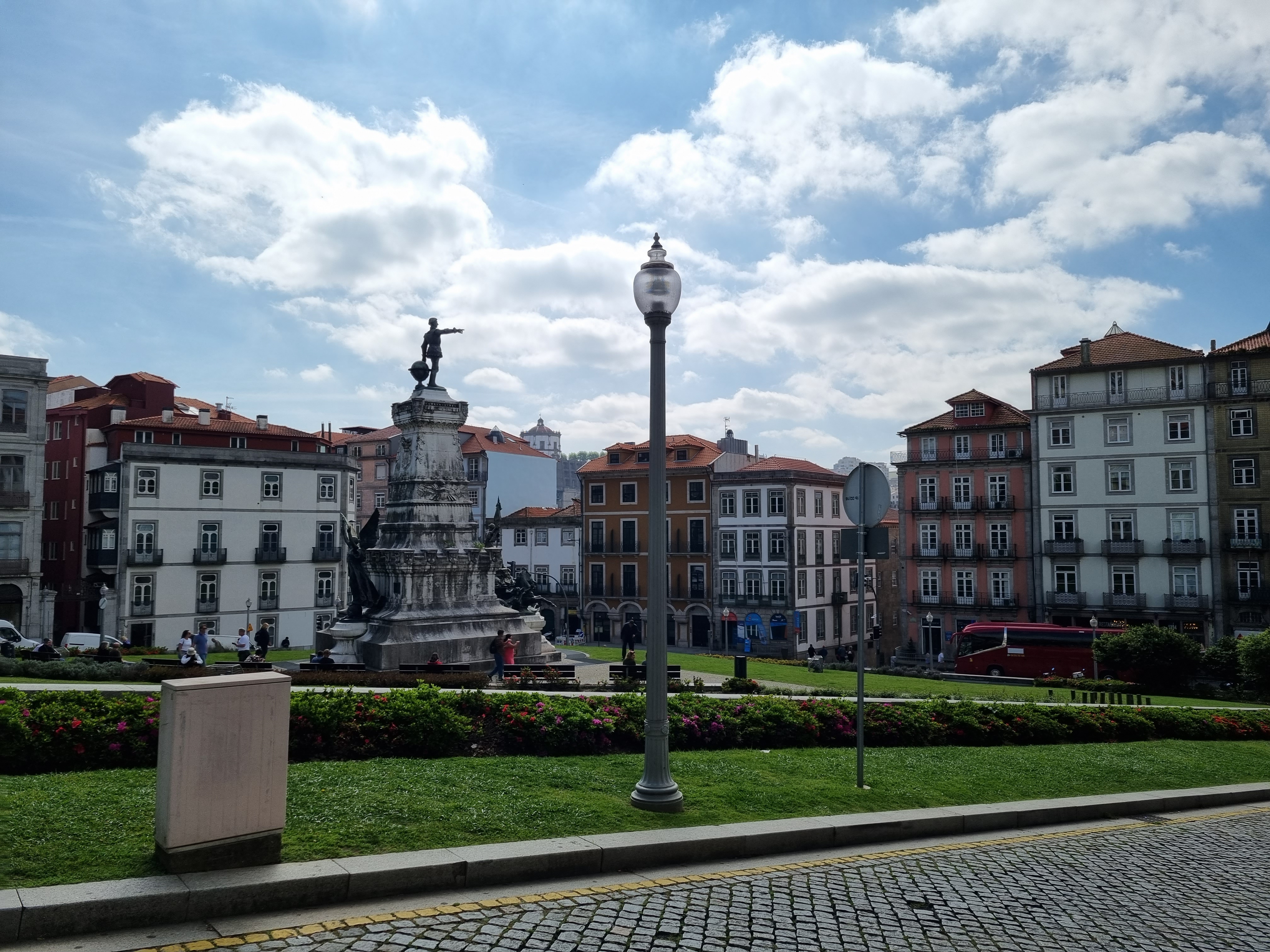
Posted in English, Europe, Porto, Portugal

Portugal – Day 5

РУССКОЯЗЫЧНАЯ ВЕРСИЯ ПО ЭТОЙ ССЫЛКЕ. CLICK HERE FOR RUSSIAN VERSION.

April 19 – Friday

On the last day, we were very unlucky with the weather. Rain had been in the forecast all week, and it did come – fortunately, only in the afternoon.

We got up, had breakfast, and then made a second attempt to get into the Majestic Café and have coffee there. We got in, but there was nothing special about it – all its popularity is nothing more than tourist hype. A café like any other.

Then we tried to get into Livraria Lello – the most famous bookstore in Porto, said to have inspired the idea of Hogwarts. As is known, J.K. Rowling lived in Porto for a while, and it was supposedly in the Majestic Café that she wrote Harry Potter. To be honest, I can’t imagine how anyone could write in such a loud and pompous place, but then again, I’m not Rowling! We didn’t get into Livraria – same story, a huge queue. Later we found out that entry is paid and costs 5 euros, but we gave up anyway.

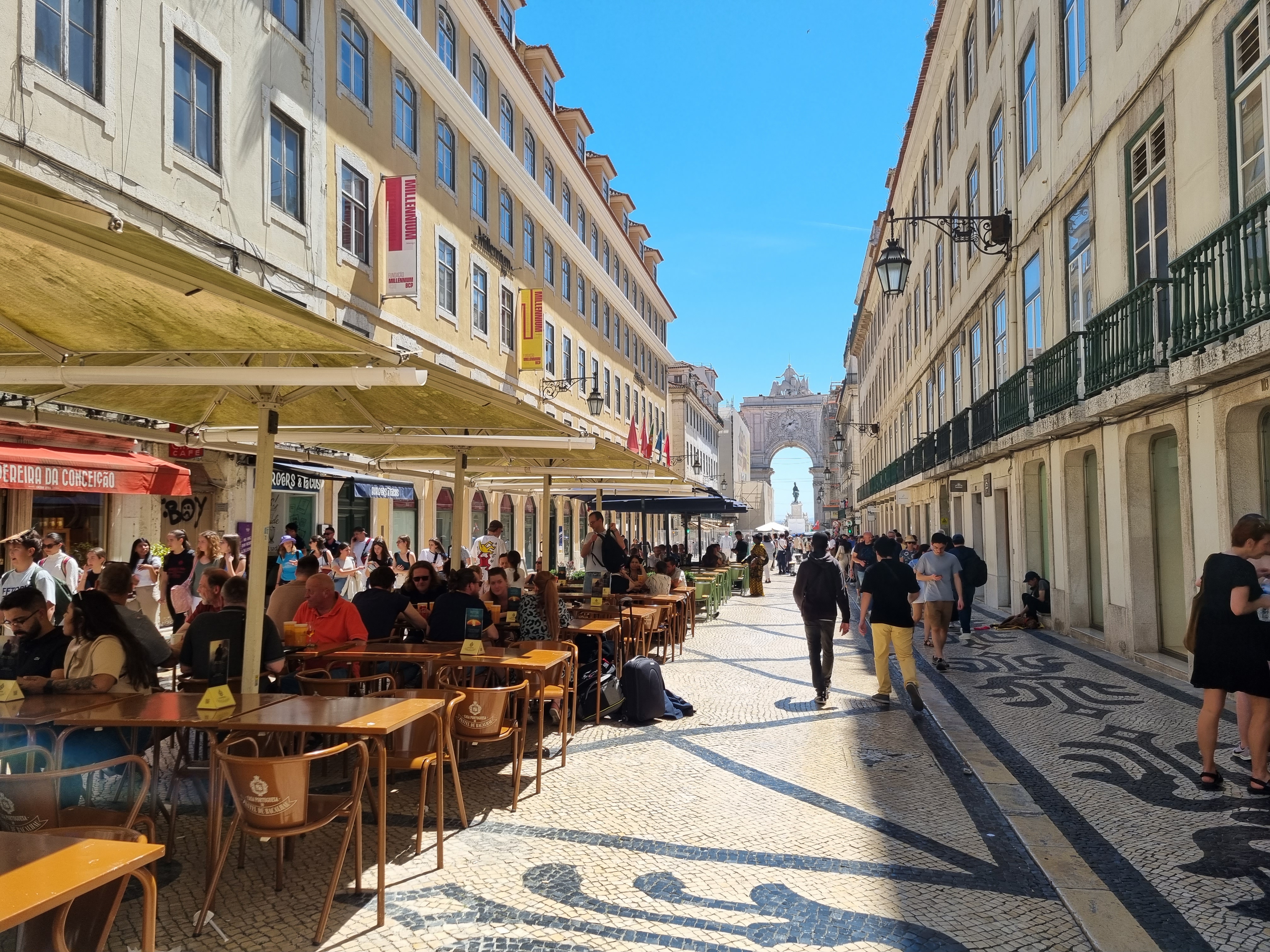
We decided to go shopping and went to the Via Rua Catarina shopping centre, where we did quite well. There are both local Portuguese brands and European ones. We also had lunch at the food court. And when we came out, it was already pouring rain. We had to buy umbrellas right then and there.

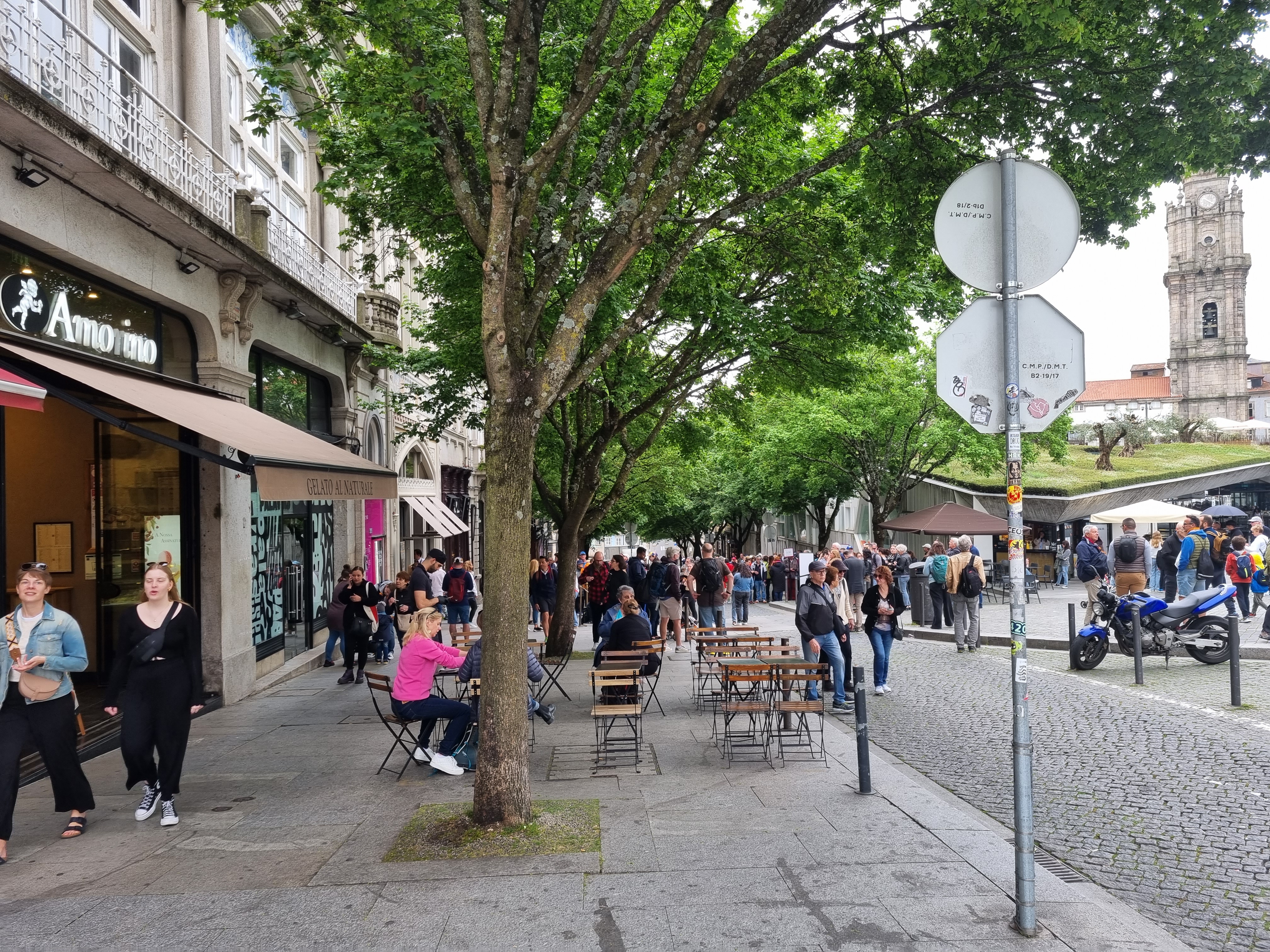
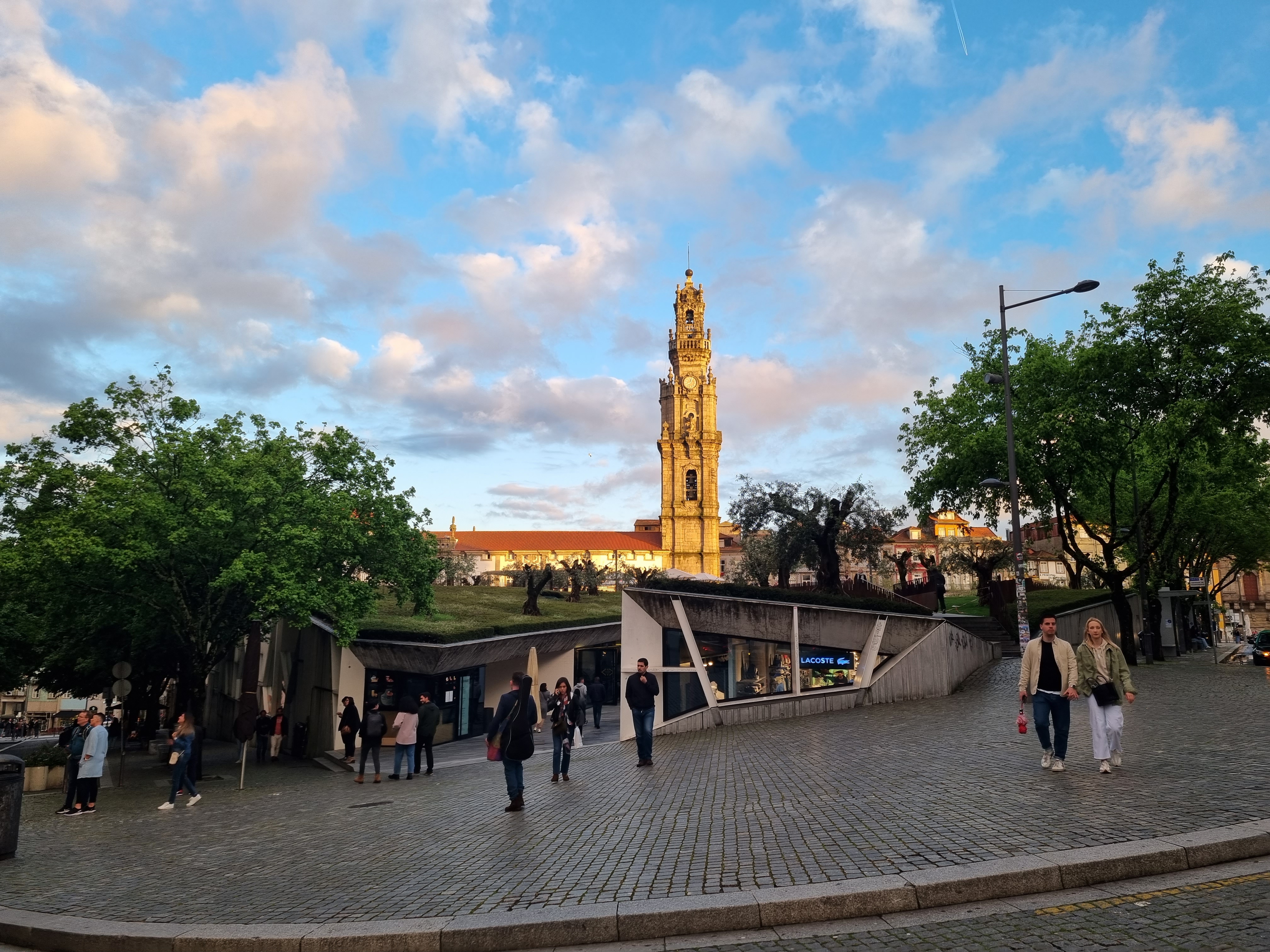
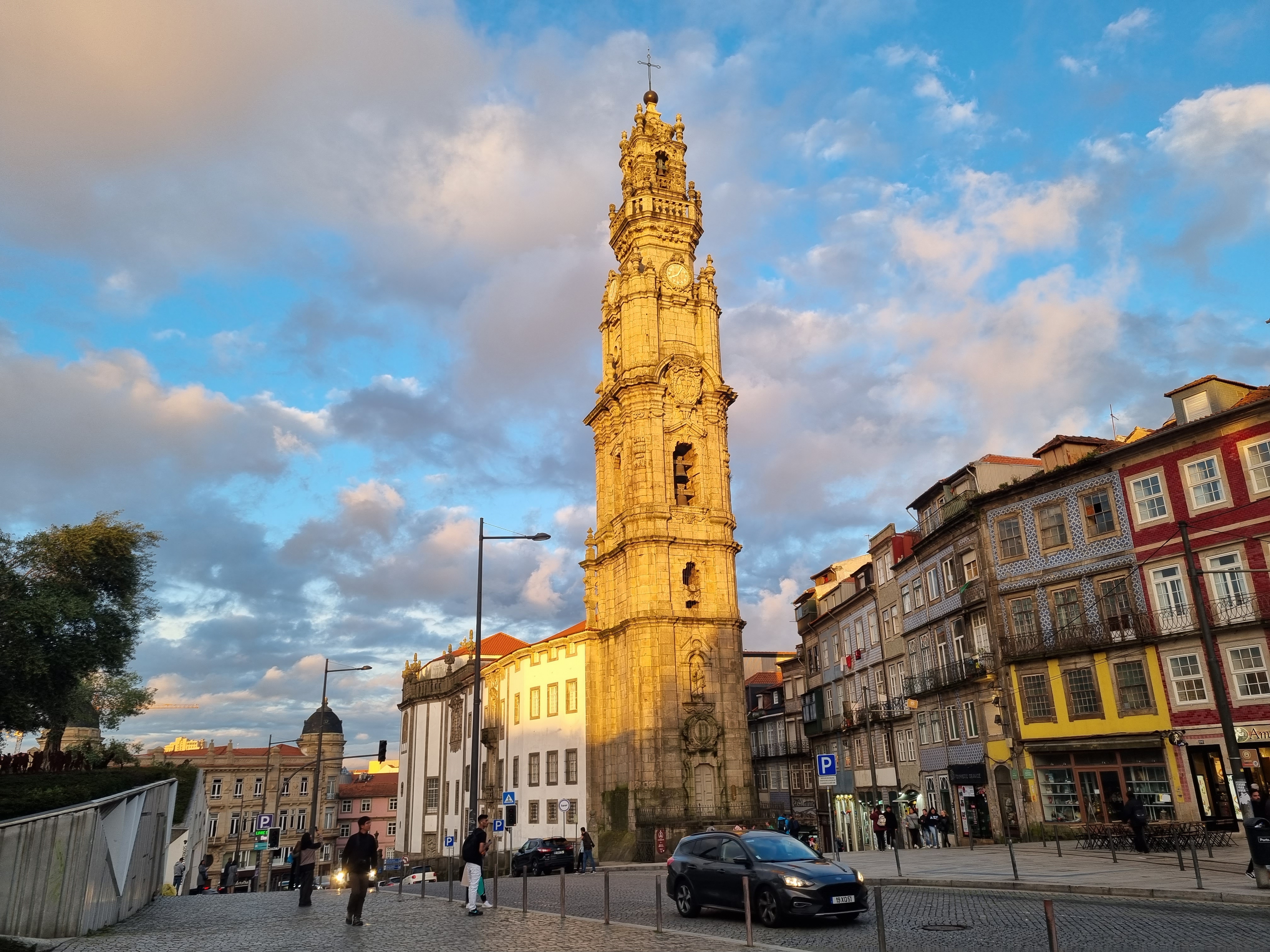
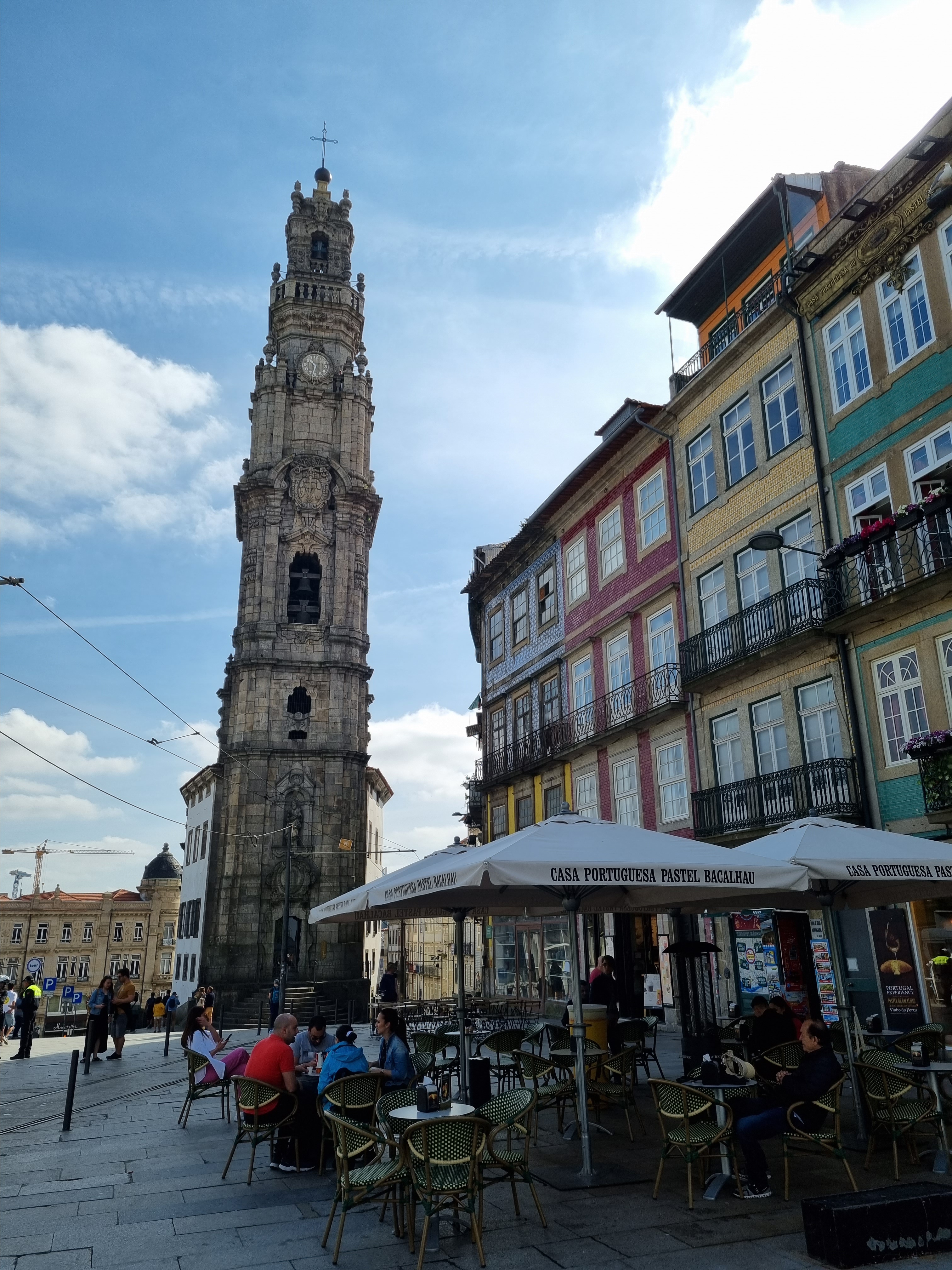
Somehow we ran back to the hotel and rested. In the evening, we had a light show planned in the centre, at the Clérigos Church. We left a little early, hoping to climb the Clérigos Tower first, but in such weather – barely making it to Clérigos in short dashes – we decided against climbing any towers.

I really liked the light show. It lasted for half an hour and was a kind of combination of old (baroque!) and new technologies – essentially a very spectacular and colorful digital animation with beautiful orchestral music.
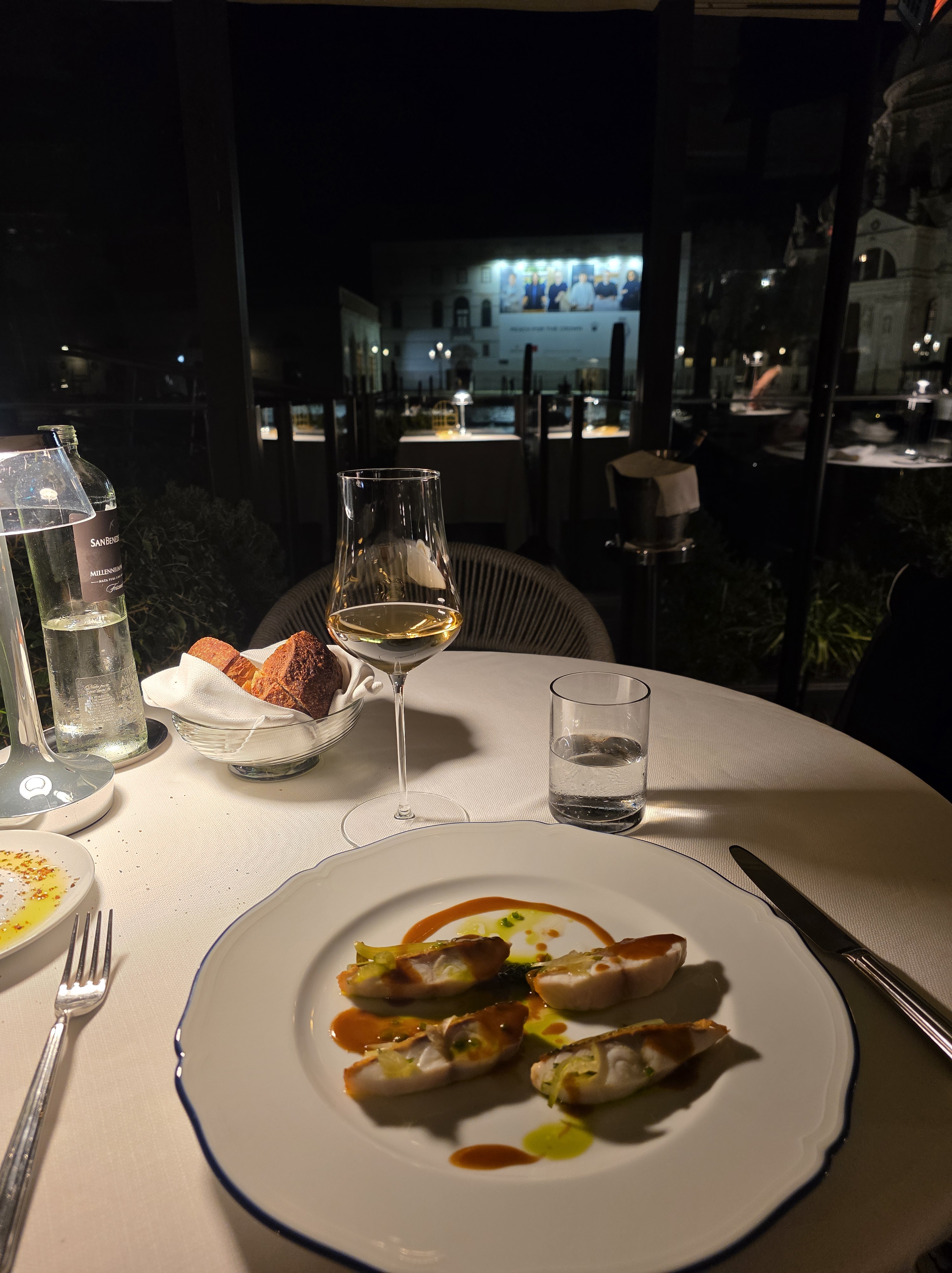
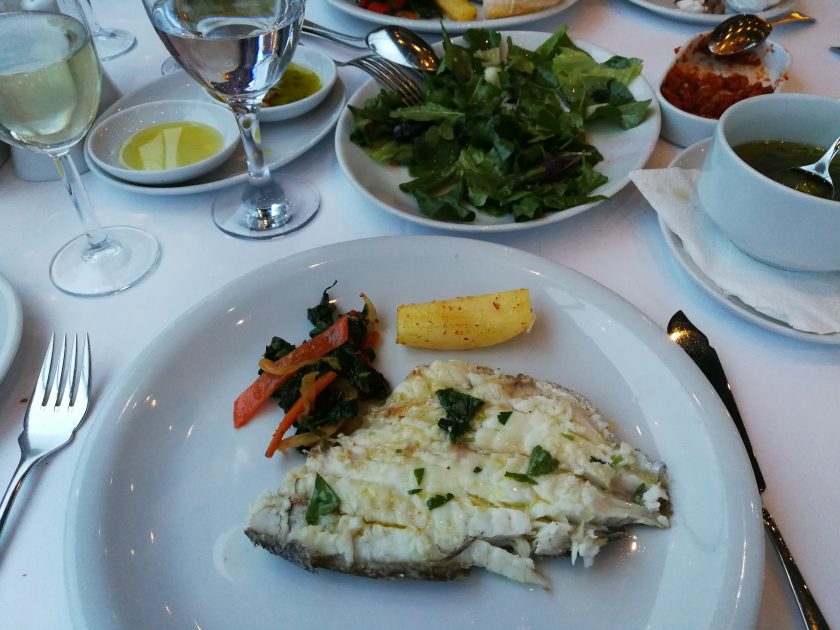
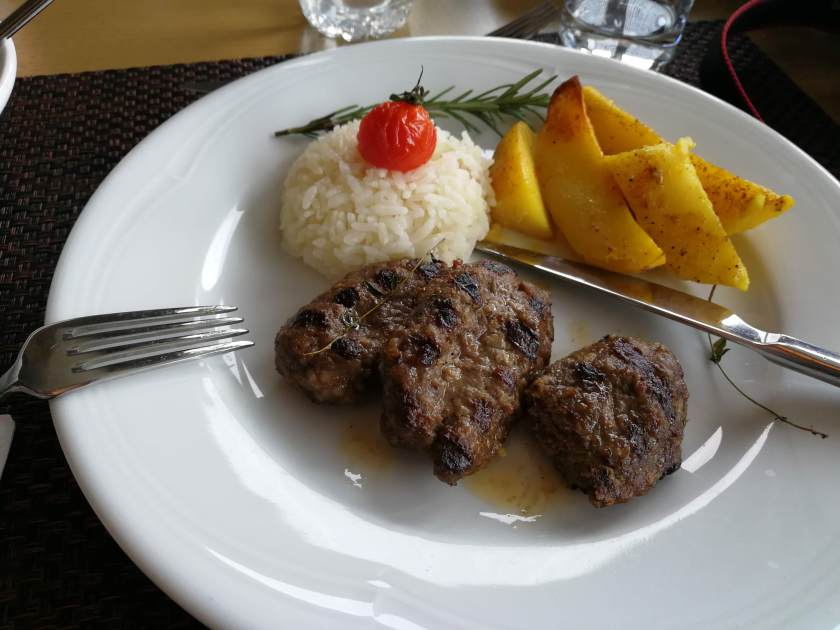
In the evening, we had dinner with traditional Portuguese fado. The dinner included a starter, main course, dessert, and half a bottle of wine – everything was very tasty. I also really enjoyed the performance – such soulful romances.
Posted in English, Europe, Porto, Portugal

Portugal – Day 4

РУССКОЯЗЫЧНАЯ ВЕРСИЯ ПО ЭТОЙ ССЫЛКЕ. CLICK HERE FOR RUSSIAN VERSION.

April 18, 2024 – Thursday

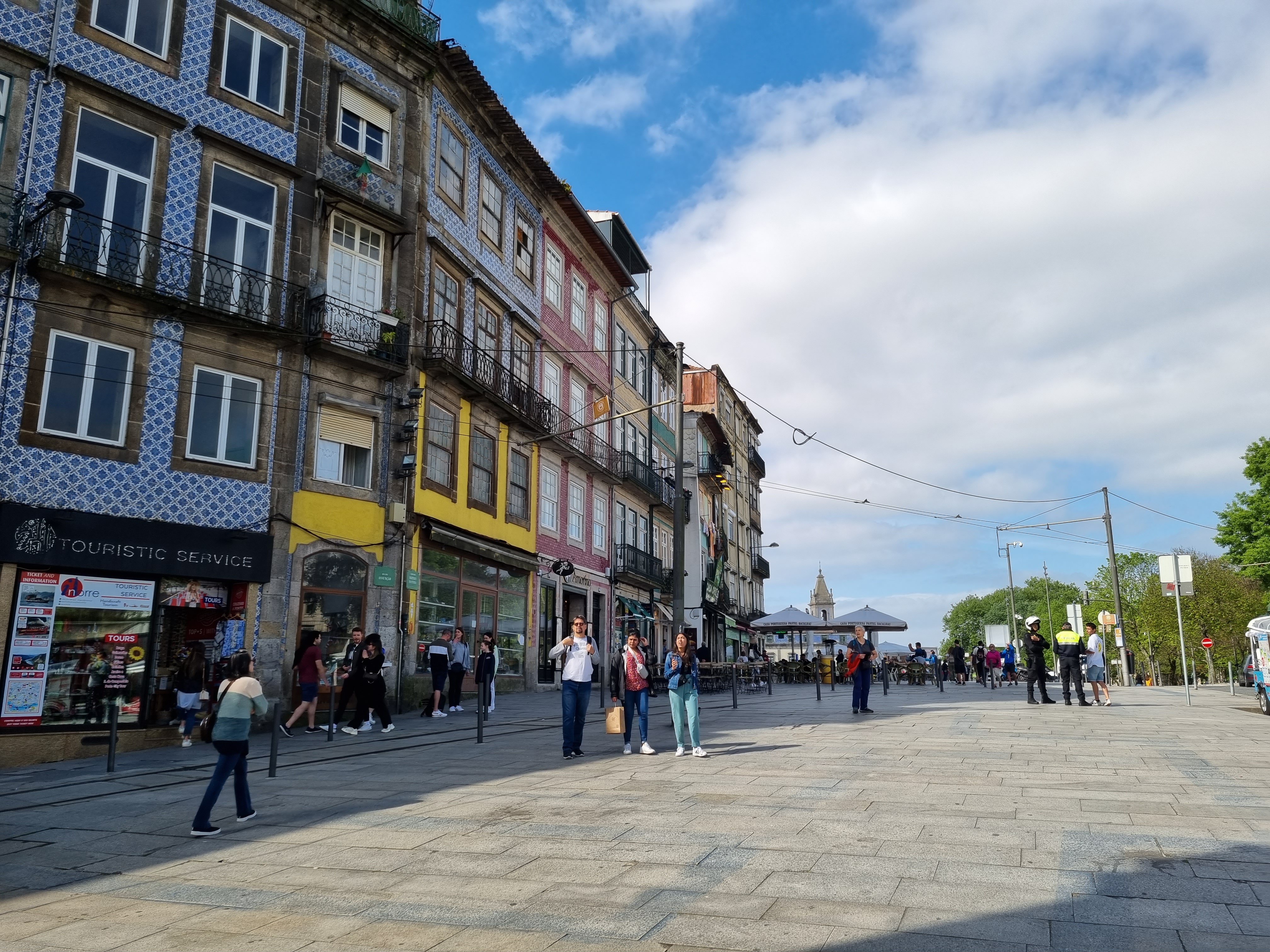
In the morning, after breakfast at our hotel, we went for a walk to the centre of Porto – we walked down to the river. On the way, we stopped at a church, but there was a service going on, so we left. Then we saw the Church of the Clérigos, where we plan to go tomorrow.

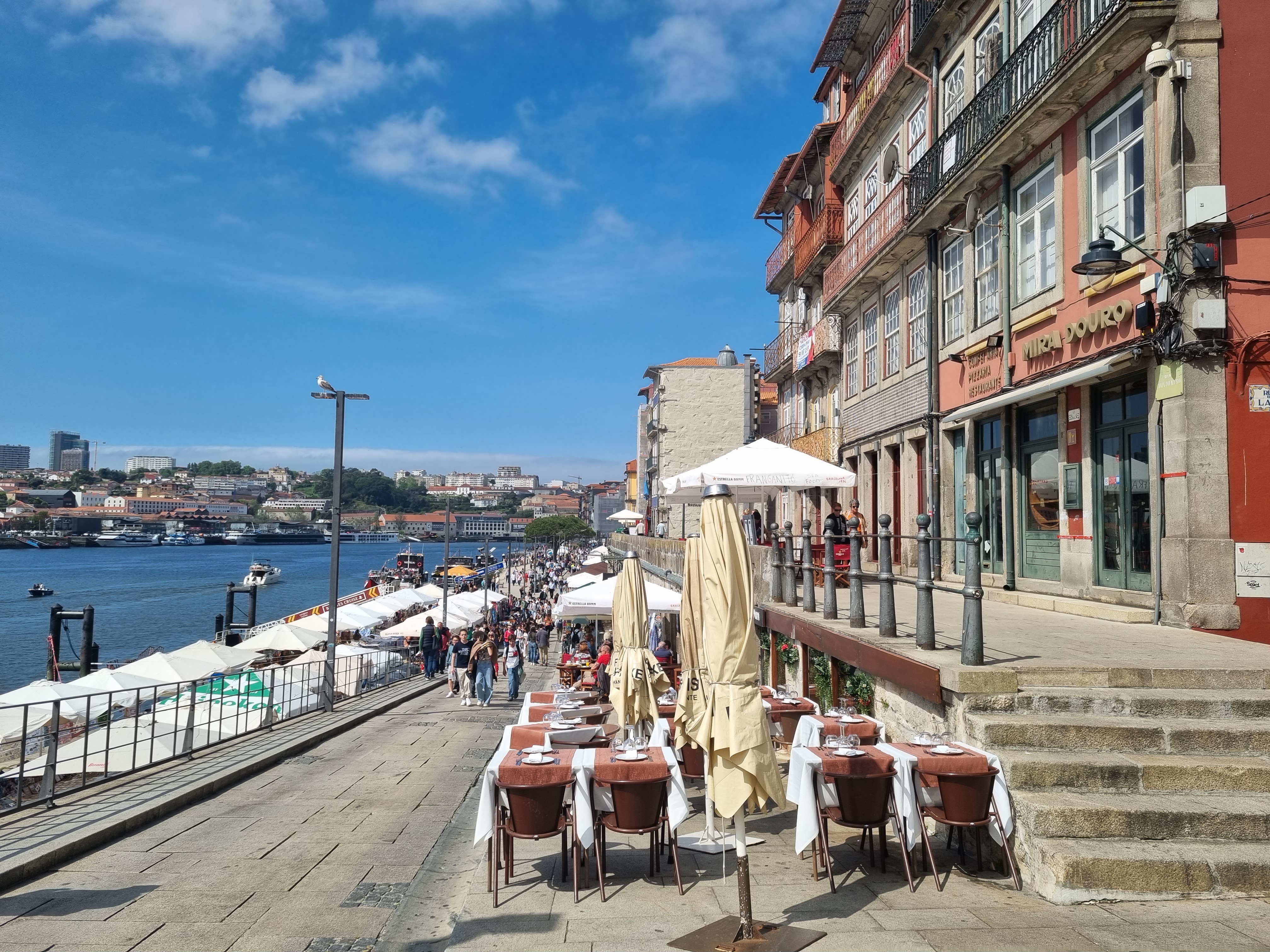
The Ribeira embankment was very, VERY crowded.

To kill time before our wine tour, we had lemonade on the embankment, and then took the funicular back up, planning to get to the famous Majestic Café and have coffee there. But the queue was so long that instead we went to a conceptual hipster coffee shop called Calma, where the coffee was very good.

Once again, we walked down to the embankment, crossed the bridge to the Gaia side, where we were supposed to have lunch. The first place we tried turned out to be closed, but that worked out well, because we found a great restaurant with a panoramic view of the river.

After lunch, we finally went on our wine tour. It was a walking tour, mainly focused, of course, on port wine. We visited three wineries. Our guide, Ricardo, talked about port wine in a very interesting and humorous way.
The first winery was Churchill’s, founded by the English. There, they showed us the different barrels used in making port. One type, ruby, is a red port aged in chestnut barrels to avoid oxidation when exposed to air. Another red port, tawny, is aged in oak barrels specifically to oxidize. There is also white port. The point is that port is a fortified wine, so 77% brandy is added to stop fermentation. Brandy can be added at different stages, which makes the wine sweeter or less sweet. We tried all three types of port there. We liked ruby a bit more than the other two.

The next winery was called Vasques de Carvalho. There, we were told that their barrels “mature” not here, but in the Douro Valley itself. We tried the same three types of port, and we liked them better here.

At the last winery, we tried only one port – tawny – but we didn’t like it at all, as it had a strong alcohol taste. But there, we also tried three table wines – rosé, white, and red – which we really liked. I don’t remember anything about these wines, except that they are blends, and wines made from a single grape variety are almost never found here. There are about 200 grape varieties in total.

We didn’t leave the tour very drunk, since we only took a couple of sips of each drink. After returning to the hotel and resting, we went out for dinner at a five-story food court and walked around.

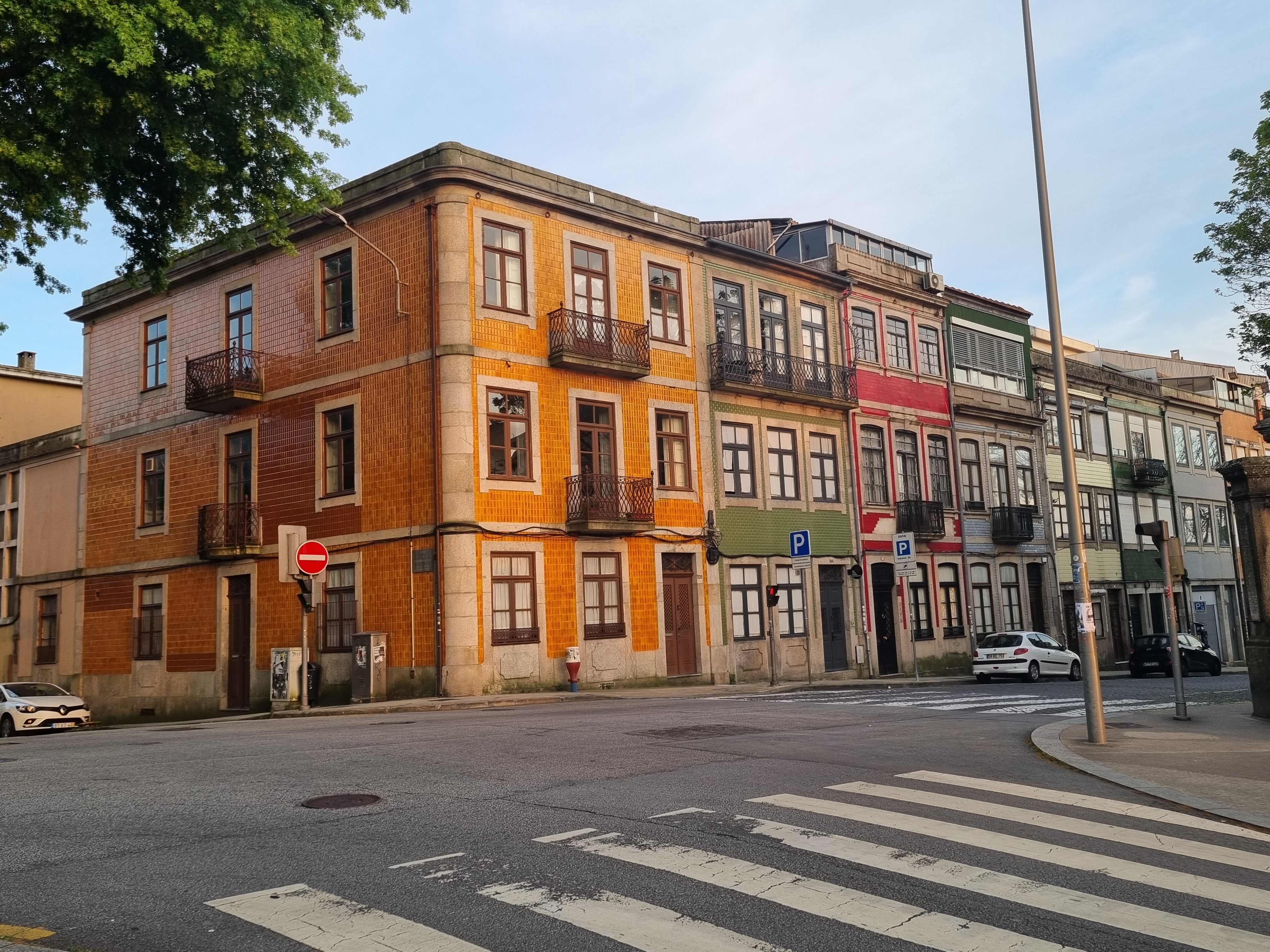
Overall, Porto is very different from Lisbon. Maybe it doesn’t have such a distinctive character, but it’s quite charming. In some places, it’s grand, in others – shabby, and it’s clear that this is a port city.

Posted in English, Europe, Lisbon, Porto, Portugal

Portugal – Day 3

РУССКОЯЗЫЧНАЯ ВЕРСИЯ ПО ЭТОЙ ССЫЛКЕ. CLICK HERE FOR RUSSIAN VERSION.

April 18, 2023 – Wednesday

We got up in the morning and, as usual, had breakfast. We were supposed to take a train to Porto at noon, but when we arrived at the station, we discovered that it didn’t exist – the train had been cancelled due to a strike, like all the 12-o’clock trains throughout the entire month. What can I say – wonderful. Even more wonderful was the fact that the app sold us the ticket without batting an eye and didn’t even notify us about the strike.

We had to buy tickets for a later train, at 15:30, and then spent a long time looking for a place to leave our luggage so we wouldn’t have to drag it around. We found one across the street from the station and went to get some coffee. But first, we wandered around Alfama, from where we made our way to Restauradores and had coffee there.

Then we returned to the station, boarded the train and, thank God, we were off. On the train, we encountered some American fellow passengers who couldn’t grasp that, in addition to the seat number on the ticket, you also have to check the carriage number – instead of trying to chase away people already sitting in a seat with the same number.

In the end, we arrived in Porto quite late – it was already around 7 p.m.

We got to the hotel by Uber and went out for dinner at a restaurant, where we once again ran into loud Americans, who talked non-stop at the next table all evening, and we learned their entire life story and all their family problems.

Posted in English, Europe, Lisbon, Portugal

Portugal – Day 2

РУССКОЯЗЫЧНАЯ ВЕРСИЯ ПО ЭТОЙ ССЫЛКЕ. CLICK HERE FOR RUSSIAN VERSION.

April 18, 2023 – Tuesday

The second day in Lisbon was marked by queues. But – first things first. In the morning, we got up and tried the wonderful, varied breakfast at the hotel (I was the one actually “trying” it   – my friend was having it for the third time), with smoked salmon, waffles, pancakes, and the like.

Then we went to the Belém area – it’s like a suburb of Lisbon. The idea was to see the Jerónimos Monastery and the Belém Tower. We got there by city bus – an authentic route through non-touristy areas.

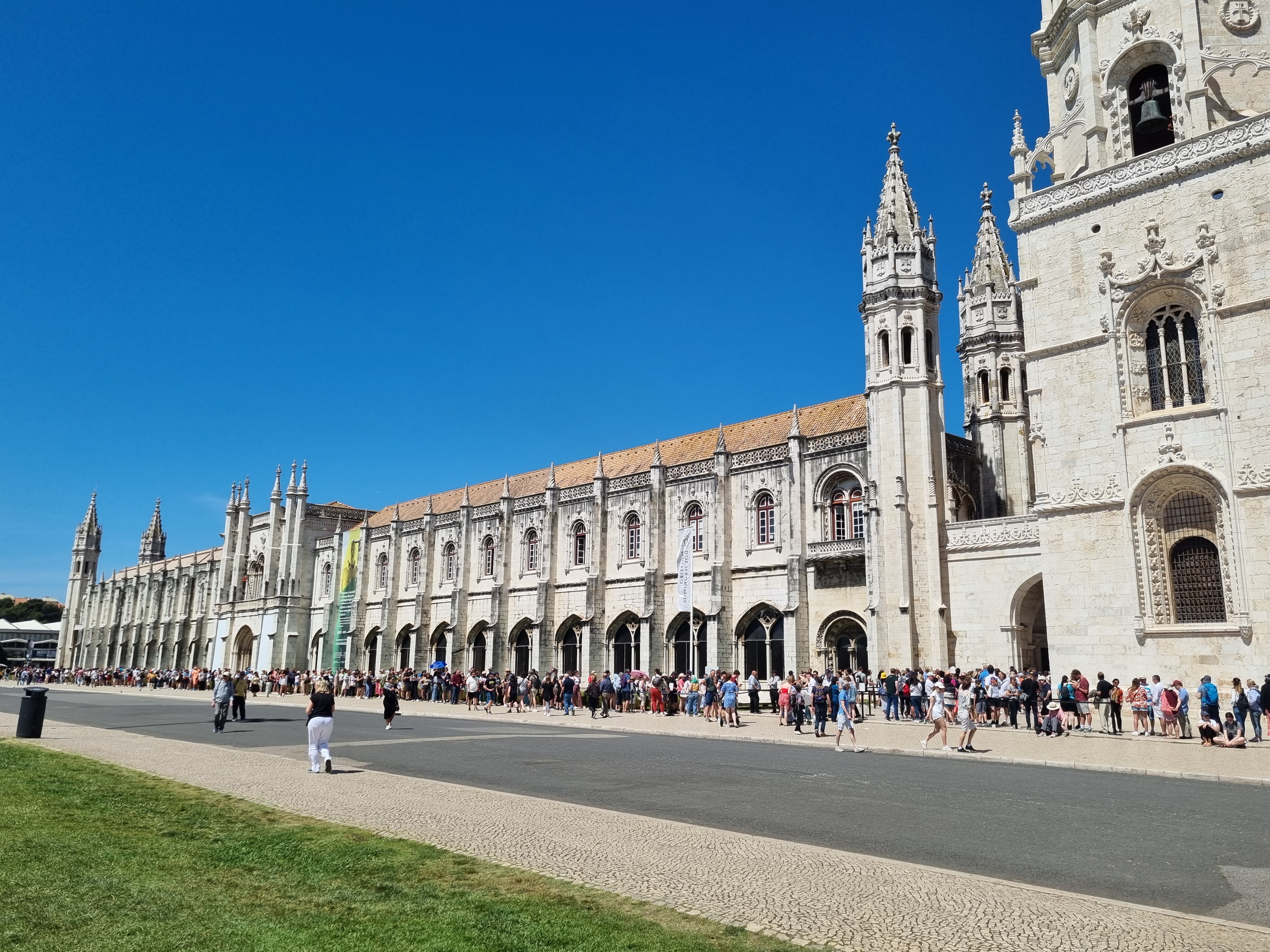
When we arrived at the monastery, we saw a queue. No – that’s not quite right – we saw an incredibly long QUEUE and probably about 15 large tourist buses. We didn’t really feel like standing in that queue, so we decided to head straight to the Belém Tower, figuring we could return to the monastery later and check whether the queue had dispersed, assuming most group tours visit the monastery right when it opens.

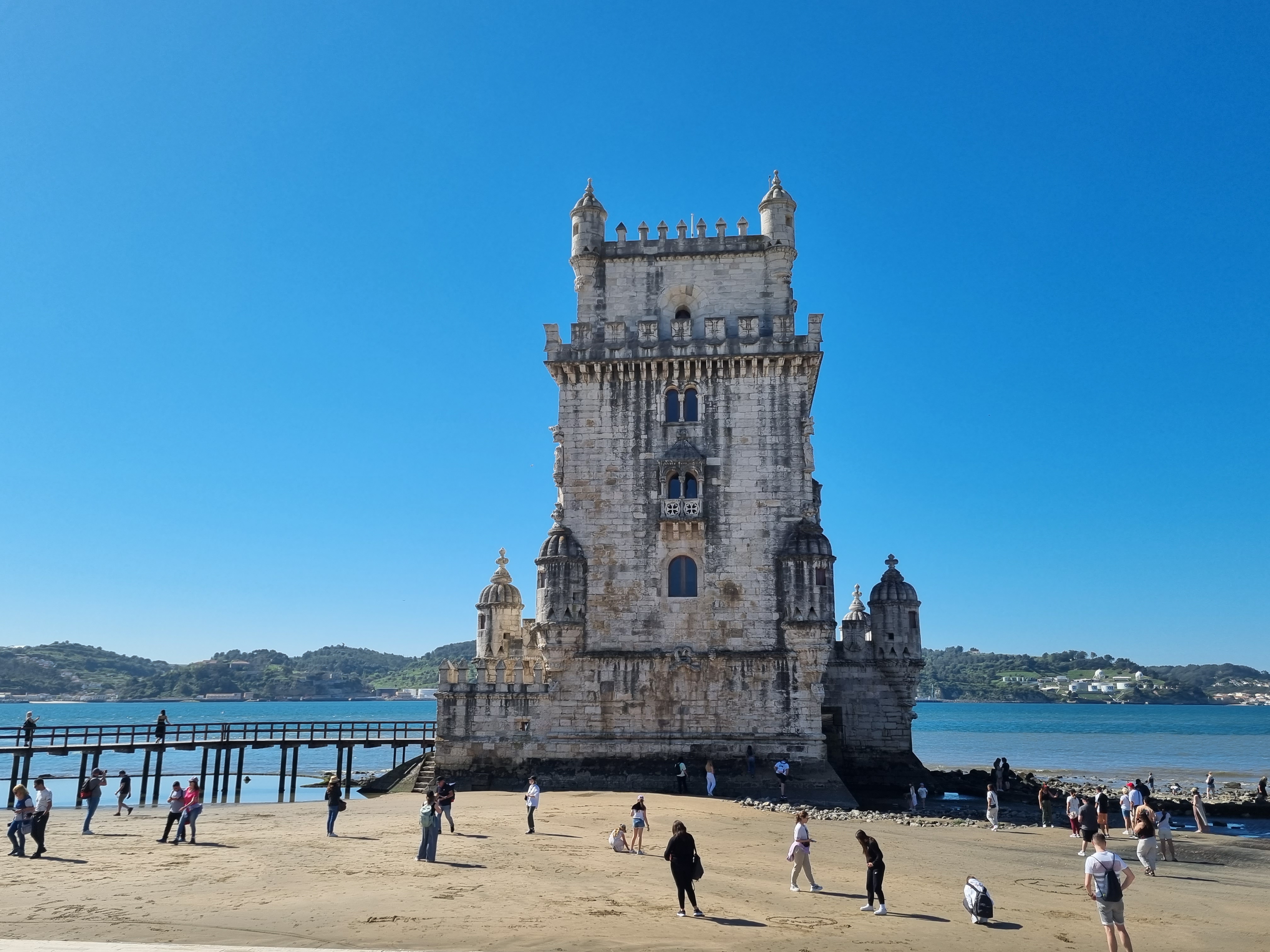
It was about a 15-minute walk to the Torre de Belém, but there we found quite a long queue as well. It turned out there were two reasons for this: first, entrance to the tower is free on Tuesdays; and second, they only let people in in small groups, after the previous group has left, to avoid overcrowding in the narrow spiral staircases and confined spaces.

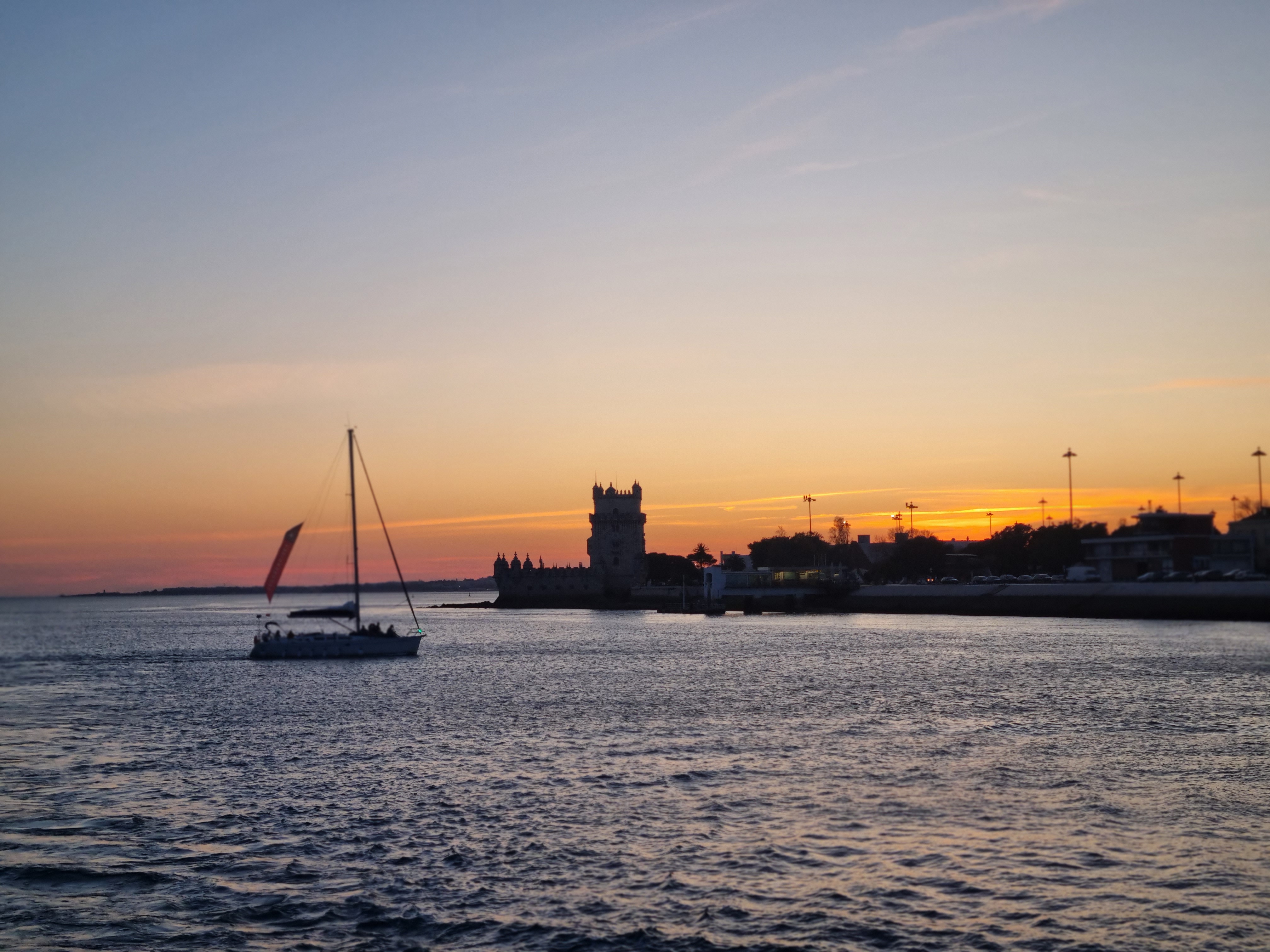
The tower was built back in the 16th century, in honour of Vasco da Gama’s discovery of the sea route to India. It looks very interesting from the outside, but I’ll leave the question of whether it was worth standing in line for 40 minutes under the scorching sun to go inside open.

After the tower, we gave the Jerónimos Monastery a second chance and went back to see how things were going there. But the line hadn’t gotten any shorter, and the sun continued to scorch mercilessly. So, after googling photos of the monastery’s interior and deciding it wasn’t worth the long wait and completely burnt shoulders, we dealt with a more pressing matter – and went for lunch at a French-Portuguese restaurant, where all the staff spoke good French and worse English. I never thought I’d have to speak French in Portugal.

By the way, about English – overall, I’m pleasantly surprised. Almost everywhere we go, people speak it very, very well. I hadn’t expected this from Southern Europe, based on past experience.

After lunch, we returned to the centre and headed to another monastery – São Vicente de Fora. This turned out to be a very good idea, because unlike Jerónimos, there was practically no one there. And it’s completely unclear why – the interior is very beautiful, many rooms are decorated with azulejos, and you can also visit the pantheon of the Portuguese Braganza dynasty and see azulejo panels based on the fables of La Fontaine. An interesting observation – the masters of azulejo painting were not very good at depicting animals, and the dogs and cats turned out rather odd, with human eyes and pig ears.

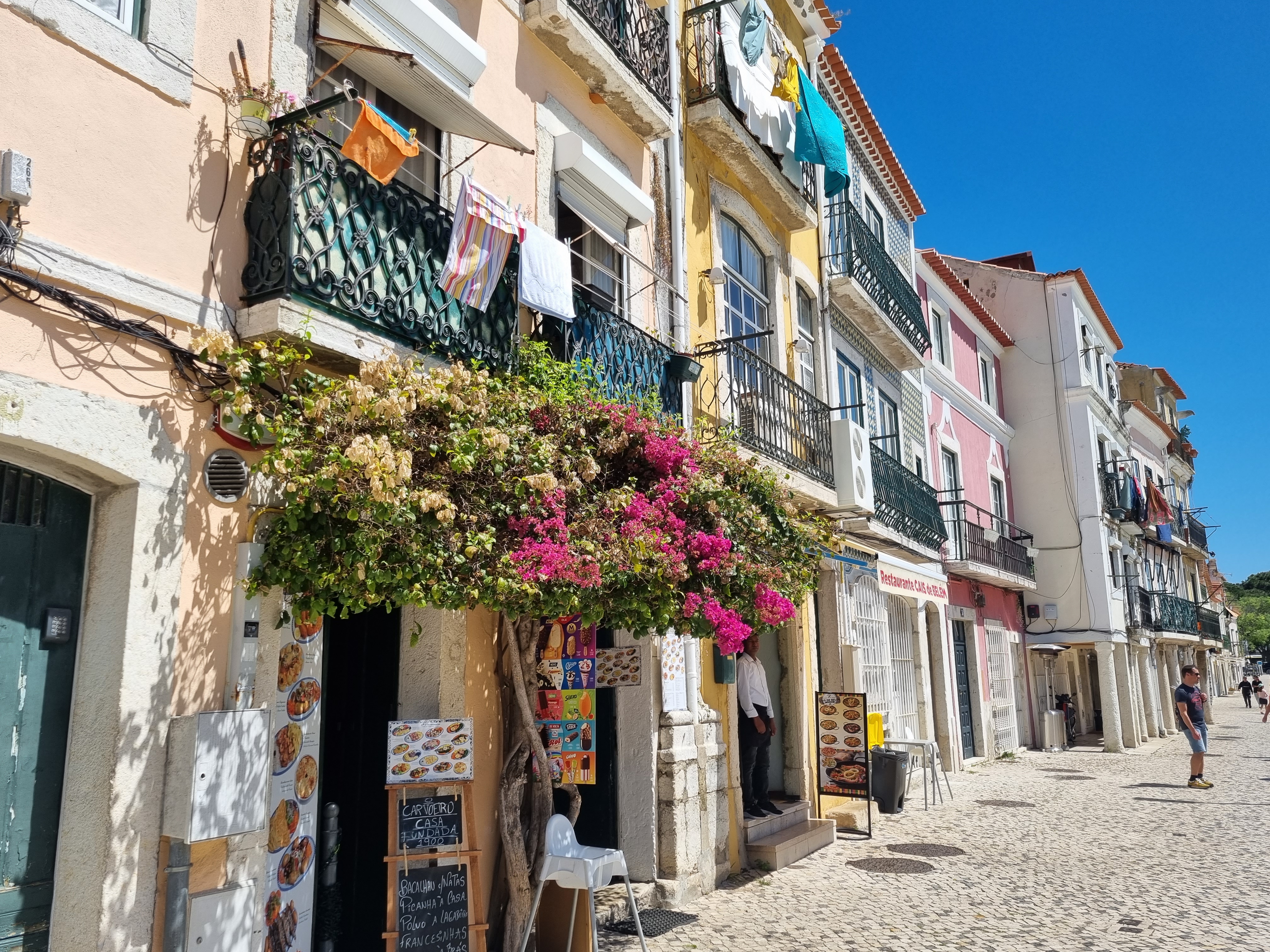
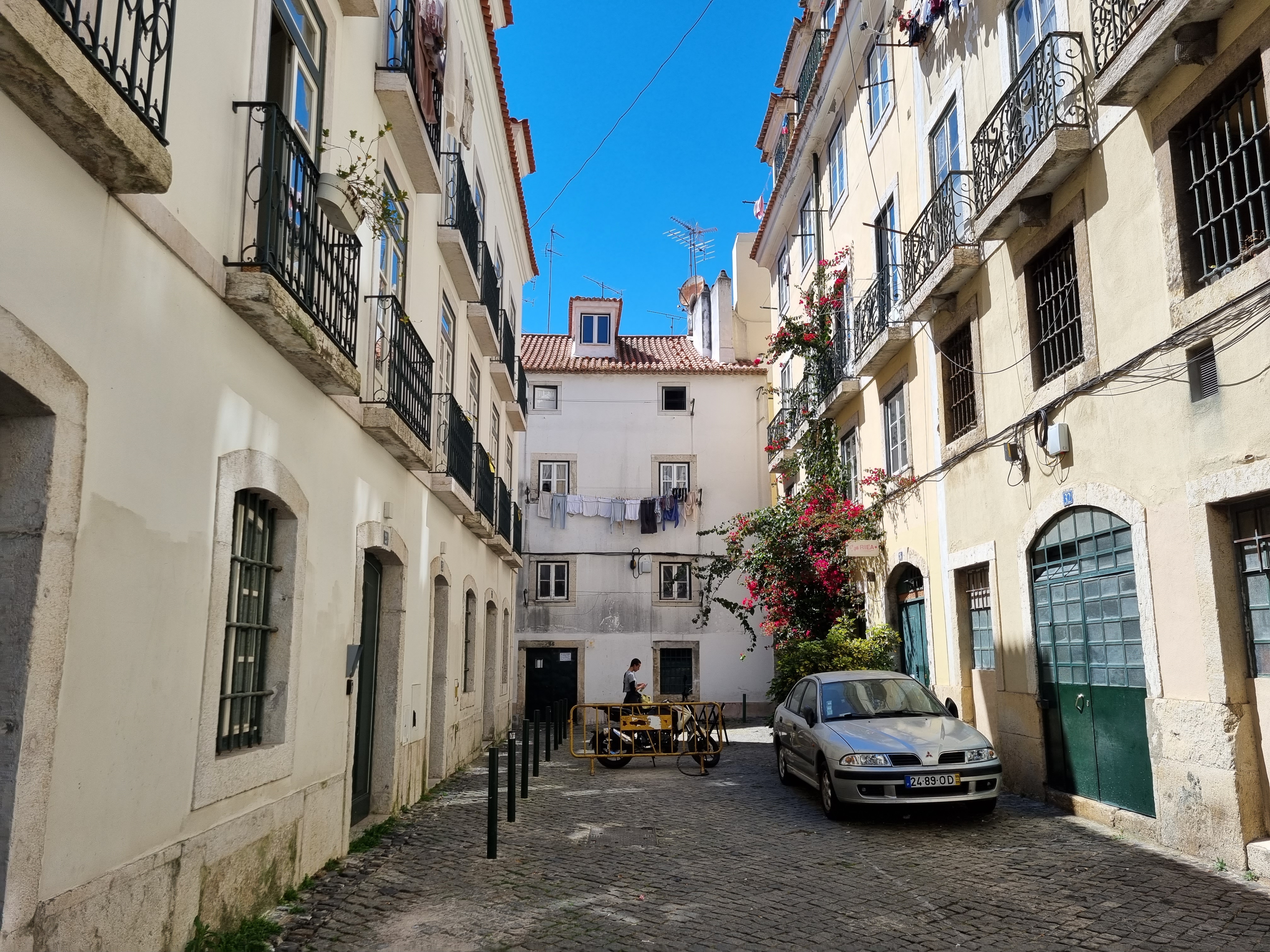
In the evening, we walked around the Alfama district, which I really liked. It’s very colourful and authentic, with beautiful architecture, trams, hanging laundry, and a chaotic street layout. This is the oldest district of Lisbon – the only one that survived the devastating 1755 earthquake.

Posted in English, Europe, Lisbon, Portugal

Portugal – Day 1

РУССКОЯЗЫЧНАЯ ВЕРСИЯ ПО ЭТОЙ ССЫЛКЕ. CLICK HERE FOR RUSSIAN VERSION.

April 17, 2023

Technically, my trip to Portugal was supposed to start two days ago – on Saturday, April 15 – and I’d already bought a ticket for that date well in advance. But literally 36 hours before, when I received an email saying that online check-in was open and started entering my details at 1 a.m., I suddenly looked closely at my Schengen visa and realised that it was only valid from April 17. The old one had expired on the 13th, and the new one was valid from the 17th – so I had managed to buy a ticket for one of those unlucky four days when I didn’t have a visa. I had to urgently change it and buy a new one for 6 a.m. on Monday.

As a result, I had to wake up today at 2 a.m., and by 2:45 I was already in a taxi on my way to Heathrow. Everything went smoothly – unsurprisingly, there weren’t many people at the airport at that hour, so I didn’t have to queue for anything. I even managed to find coffee and oatmeal cookies. Special mention goes to a fellow passenger who showed up at 3:30 a.m. in full makeup – truly impressive.

By 10 a.m., I had arrived at the hotel in Lisbon, where my friend Rena – who’d flown in on Saturday, as originally planned – was already waiting for me.

I had another strong coffee (no joke, I’d been up since 2 a.m. and hadn’t slept a minute on the plane), and then we headed out for a walk around the Baixa district.

It is sunny and hot in Lisbon – a touch of summer after London’s unseasonably cold spring.

The city itself is very hilly – you’re constantly going up and down, and of course the “down” is much more pleasant. There are quite a few tourists, mostly French as far as I can tell – at least, they’re the ones you most often come across.

The city is stunning, with very interesting architecture. Many buildings are decorated with clay tiles – painted in the traditional Portuguese style. These tiles are called azulejos.

We’d headed to Baixa quite purposefully – our first stop for the day was the Carmo Convent, which now houses an archaeological museum. In 1755, Lisbon was hit by a devastating earthquake, followed by a tsunami and fires, and as a result almost the entire city was destroyed. For instance, only the shell of the Carmelite monastery remained, and that’s how it still stands today.

Afterwards, we had lunch – some fish – in a tiny tavern, and then visited Lisbon Cathedral (Sé), and saw the cloisters and treasury.

For the evening, we had planned a cruise along the Tagus River (which also flows through Spain – it starts there and reaches the Atlantic near Lisbon). We’d been told that seating on the deck was limited to the first 52 people, and when we arrived, there were already well over that many in the queue. Still, we somehow managed to score great spots – a table at the very front of the deck, right at the bow, next to a group of Germans.

Posted in English, Europe, Istanbul, Turkey

Istanbul – Days 4&5

РУССКОЯЗЫЧНАЯ ВЕРСИЯ ПО ЭТОЙ ССЫЛКЕ. CLICK HERE FOR RUSSIAN VERSION.

07 February 2019

Today is the penultimate day of our short stay in Istanbul. Of course, there is a lot that we didn’t get to see – mainly because of the weather, rather than lack of time. For example, had the weather been good we could have headed to the Prince’s Islands or the Rumeli Fortress. Instead, we had to dedicate the day to shopping, which is actually also interesting and also a source of impressions. Besides, it turned out to be a great bargain: first, the lira is rather cheap at the moment and second, we were lucky to be here during big winter sales.

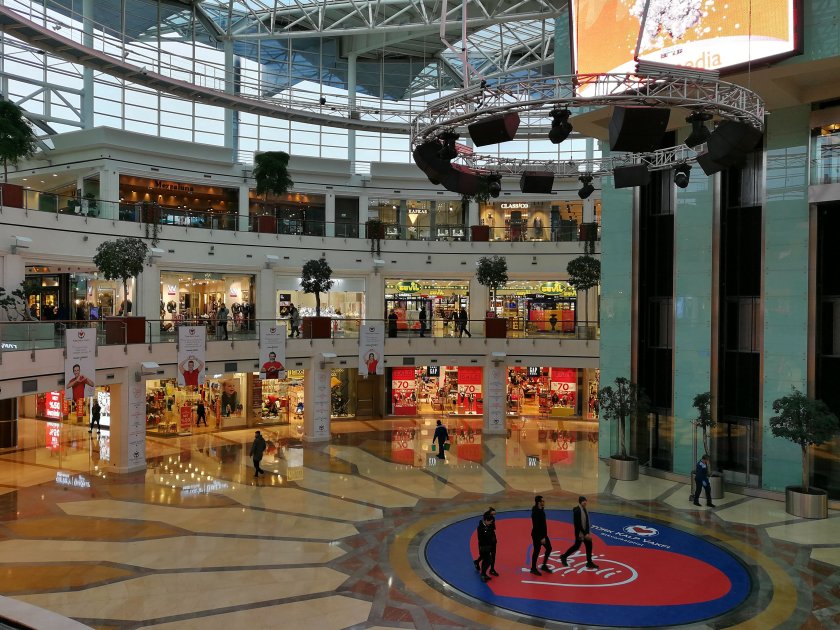
A drive to the Istinye Park shopping mall, located quite far north, near the Technical University, is also an introduction to previously unexplored parts of Istanbul. I guess, this is the perfect time to share my general impressions of the city, taking, of course, into account the fact that the trees are all bare now and will certainly add a lot more colour to the landscapes in the spring. So, the city is not homogeneous, some parts of it look a bit shabby, although I would say that overall, buildings in one area tend to follow the same style – it is unlikely to see a tall new building among old five-storey houses, like it is often the case back home.

The shopping centre is a huge building, topped with a dome, which, of course, gives it a distinct Middle-Eastern look.

sdr

Shopping-wise, we were interested specifically in Turkish brands. Generally, shopping in Istanbul is very pleasant, primarily because of the high quality of service. The shop assistant immediately greets you but does not pounce on you or tread on your heels, as, again, they annoyingly like to do back home. And when you address them, they show a maximum of friendliness, patience and willingness to help you make a purchase that you are really going to like.

The same, by the way, applies to waiters in restaurant: the service is very quick and they are really friendly (which doesn’t look fake and forced).

Funnily, the only time when we saw neither of these qualities was the day before yesterday, when we had lunch at our hotel’s bistro. We waited for our most basic sandwiches for so long that we could vividly imagine the waiter running into the kitchen in a panic and shouting: “They ordered sandwiches! Be quick, run to buy chicken and meat!”

But overall, we really liked the local people. Not once did we even observe any quarrel, rudeness or swearing. People are polite and friendly to each other. The degree of friendliness towards us increased even more when they learned that we were from Azerbaijan. And their attitude towards animals, which I have already mentioned, simply wins one’s heart and mind!

On this day, dedicated to shopping, we got a chance to visit not only a large modern mall, but also the little shops of the Old City. The impressions are completely different, of course. Shops are strictly specialized – bags only or hats only – but on the whole, there is some feeling of chaos. Yet, this chaos has a certain charm to it.

We finished the day with dinner at the same restaurant near our hotel, which we liked so much yesterday.

08 February 2019

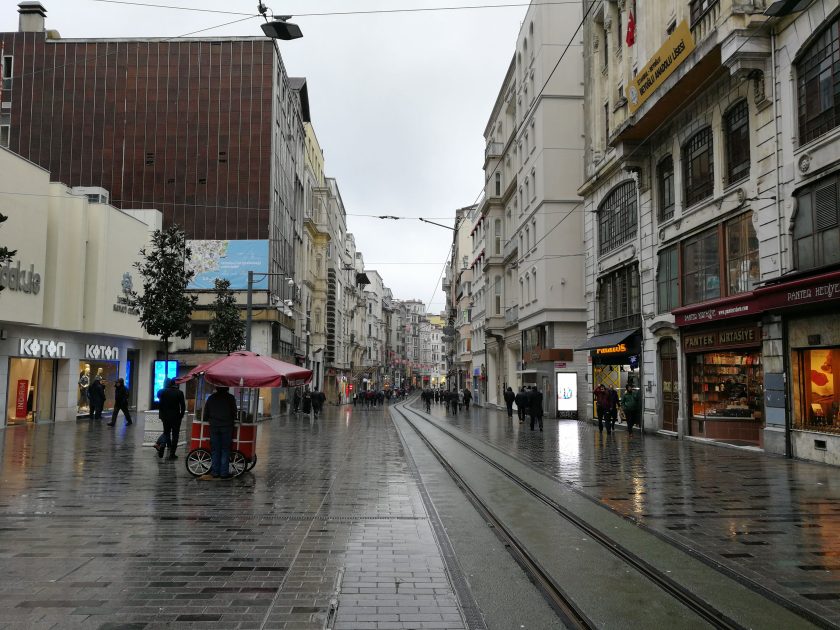
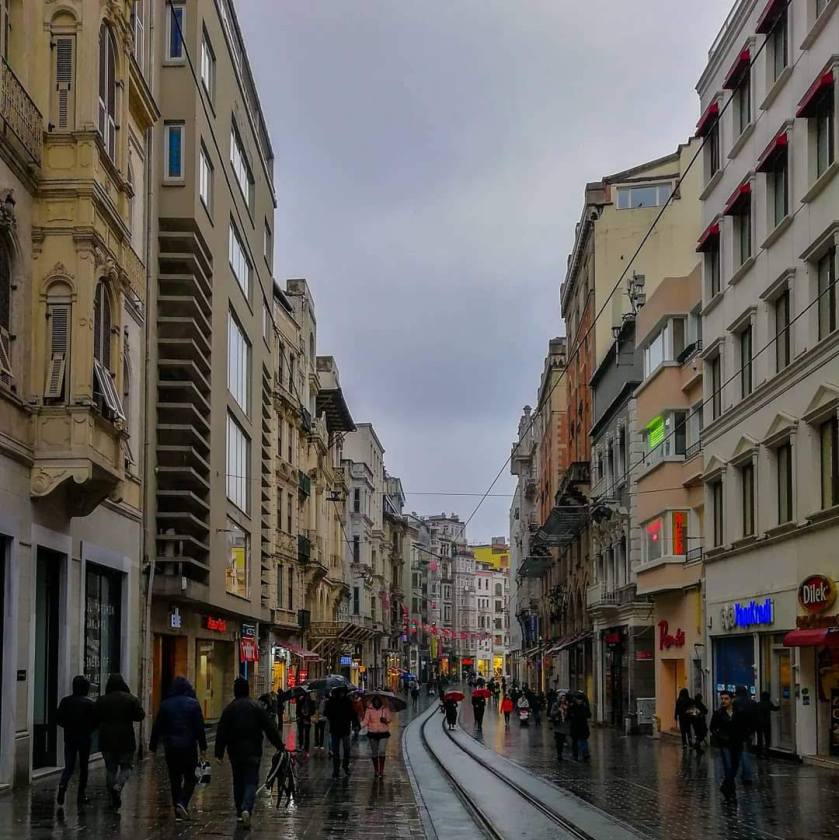
Today, on the day of our departure, we enjoyed a very pleasant walk along the rainy Istiklal Caddesi after breakfast.

sdr

cof

IMG_20190208_123906_079

IMG_20190208_123906_076

We decided to have lunch at the airport, and we headed there rather early – as it turned out, it was a good idea. The queues at the Istanbul airport begin not at the check-in counter, but from the entrance, where a full security check is taking place. Actually, the measure is quite understandable, remembering the terrorist attack at this airport three years ago.

Interestingly, everywhere around the airport we could spot bald men, with bruises on their seemingly burned heads. We’d come across such men previously as well, in the city. We wondered what that could be – some kind of sect? Later it turned out that everything was much more trivial and that Istanbul is a Mecca of hair transplantation, with lots of clinics and prices more affordable than in other countries.

Posted in English, Europe, Istanbul, Turkey

Istanbul – Day 3

РУССКОЯЗЫЧНАЯ ВЕРСИЯ ПО ЭТОЙ ССЫЛКЕ. CLICK HERE FOR RUSSIAN VERSION.

06 February 2019

Today has been a particularly busy day, and the weather played up very well: the forecast that promised non-stop rain turned out wrong, and it actually only rained in the morning while we were still on the bus on our way to the tour around the main sights of Istanbul’s Old City.

IMG_4141

Surprisingly, although we had reserved yesterday’s and today’s tours on different websites, we were greeted by the same guide as yesterday, Muzaffer, in our English-speaking group. Apart from us there was also the same Indian couple as yesterday and an Irish family. Looking ahead, I will say that after lunch we were joined by another couple from Hong Kong and some British Indians.

The day started getting a spiritual direction right from the start – from the Hacı Beşir Ağa Mosque. It is small, not particularly remarkable, but it is where we were explained how to behave in a mosque (believe it or not, I hadn’t been to one before!): there is an obligatory requirement to take shoes off and, for women, to cover their head with a scarf. The mosque itself was closed, and we could only look at its interior from the upper floor for women. What was interesting to see was a special chamber, where a believer would spend the night before having to make an important decision, praying for Allah to send them a clue in a dream.

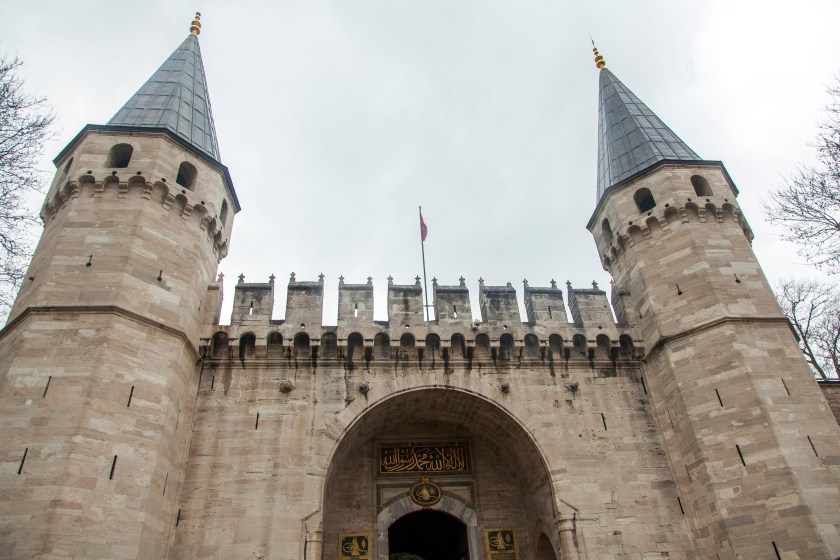
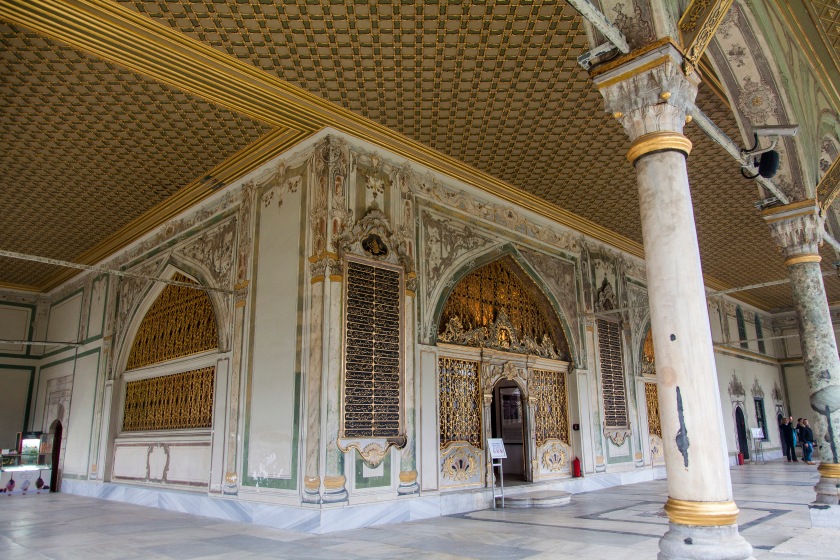
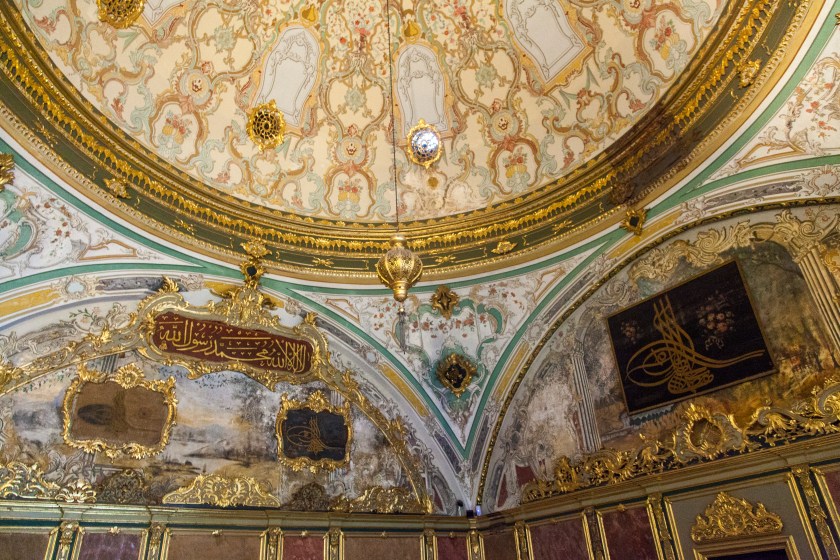
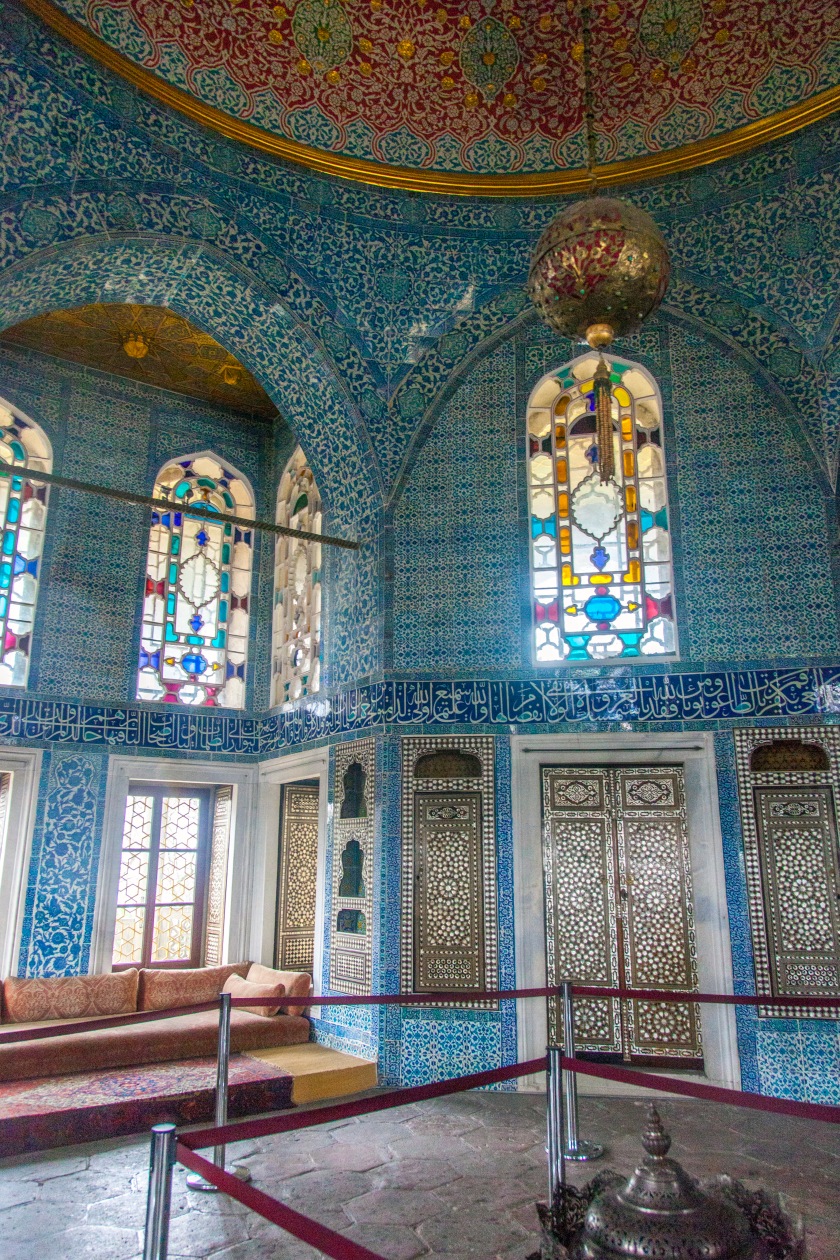
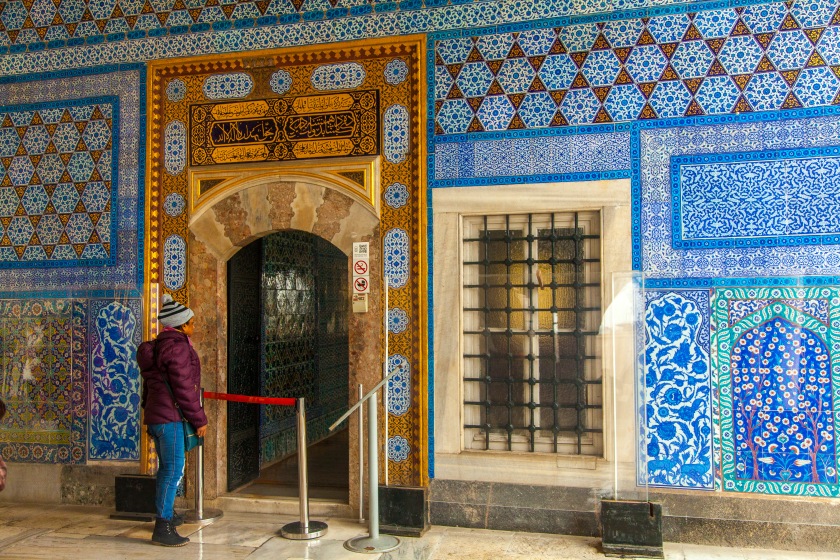
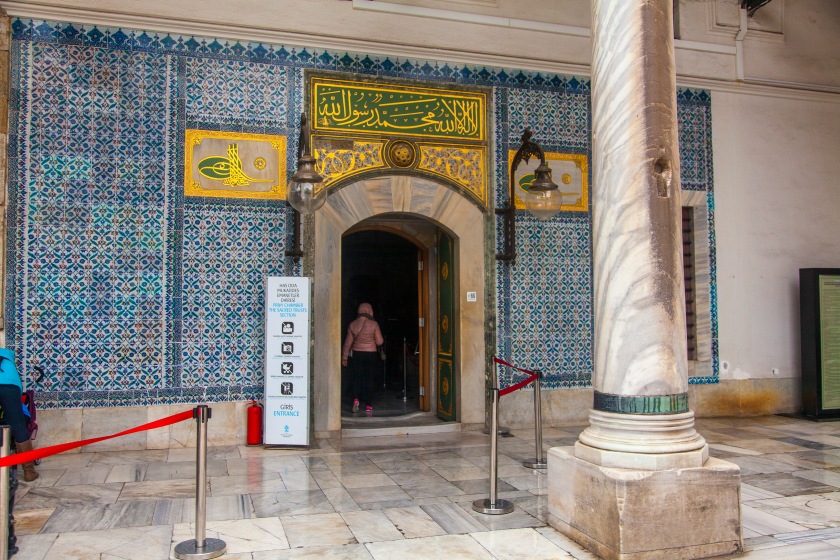
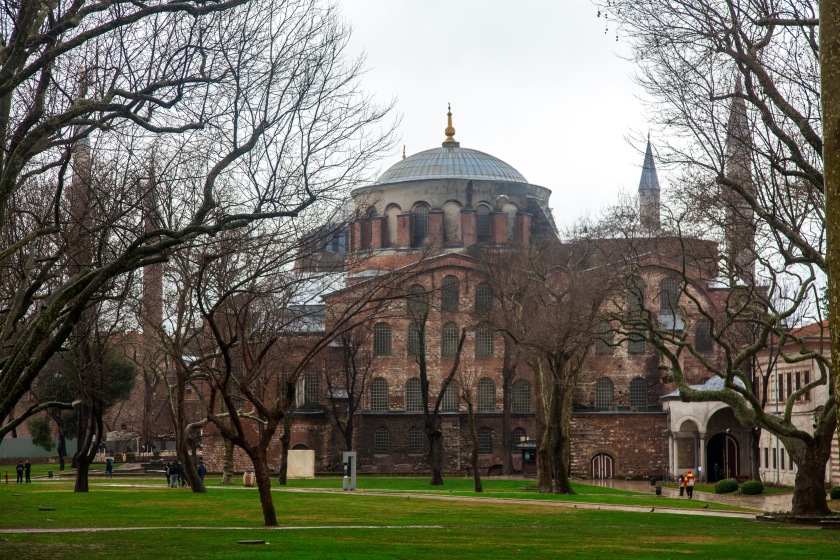
Next followed one of Istanbul’s main features – which became especially famous after the Magnificent Century TV series – the Topkapi Palace. It is constructed on the first of the seven hills of Istanbul and dominates the surrounding area. As we entered the very first room – if I remember correctly, it was the Imperial Council, or Dîvân-ı Hümâyûn – we immediately understood why the Dolmabahce Palace, despite all its pomp and splendour, didn’t cause a storm of delight. The domes, the paintings and the décor of Topkapi are much stricter, more harmonious and, one might say, more majestic. What I see here is spirituality vs. Dolmabahce’s depersonalised grandeur. And all this despite the fact that this palace’s harem was not included in our tour.

IMG_4146

IMG_4147

IMG_4149

IMG_4150

IMG_4170

IMG_4173

There are four gardens in the palace complex – the first two are external, while the third and fourth are internal, and the latter was only reserved for the closest members of the sultan’s household. Photography is allowed in many parts of the palace, but not in rooms with expositions – which is a shame, given that they contain the most interesting things!

First of all, there is a magnificent collection of clocks and watches – both from Turkey and Western Europe, from small pocket watches to tall grandfather clocks. Next, there is an extensive collection of weapons – mostly local Ottoman ones (such as firearms, bows, swords, yatagans, chain armours, shields, helmets, including those for horses), but also trophy and gifted weapons. For us it was particularly interesting to see Safavid weapons among the last (or maybe the penultimate!): who knows, it may have been my ancestors who used it! At the same time, we couldn’t help having a strange feeling, that today we are walking around this exposition and looking with great interest at something that once presented a mortal danger and was created to kill people.

The next exposition consists of huge kitchen premises, which were used for preparing food for six thousand people. And nowadays they contain a collection of ceremonial tableware and kitchen utensils. We found the latter more interesting, since they are functional, as for tableware — well, it’s just tableware!

We were really impressed with the collection of religious relics – at one point the sovereignty of the Ottoman Empire extended over Mecca and Medina, making it inherit the status of the caliphate, as well as Jerusalem. Not surprisingly, it was in its capital that a collection of items belonging to the prophet Muhammad (weapons, personal belongings, even beard hair and teeth) and his closest entourage, as well as other prophets — for example, the staff of Moses and the sword of David — was collected.

IMG_4167

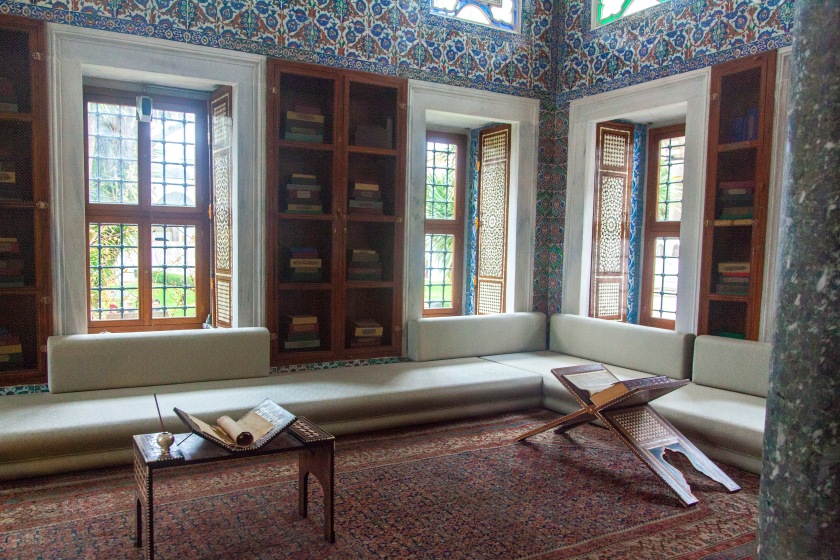
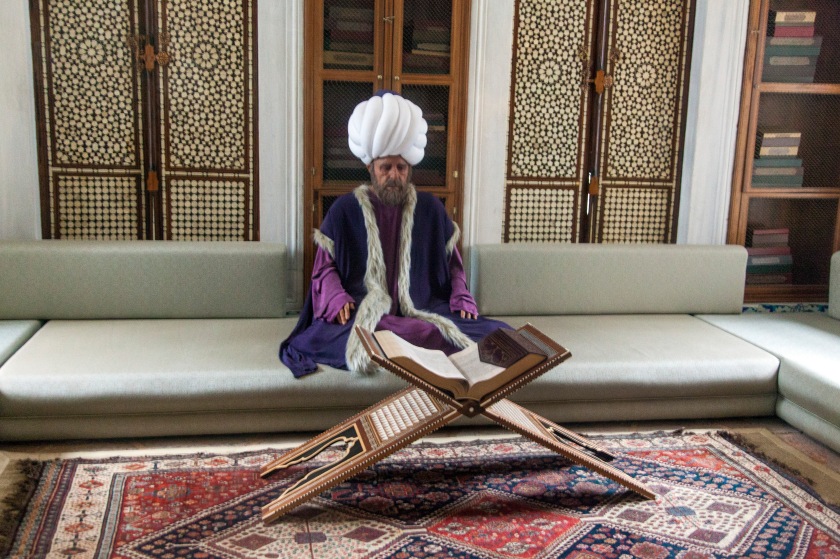
We also really liked the library of Sultan Ahmed III, in the midst of which there is the sultan himself (well, obviously a figure!)

IMG_4158

IMG_4161

IMG_4162

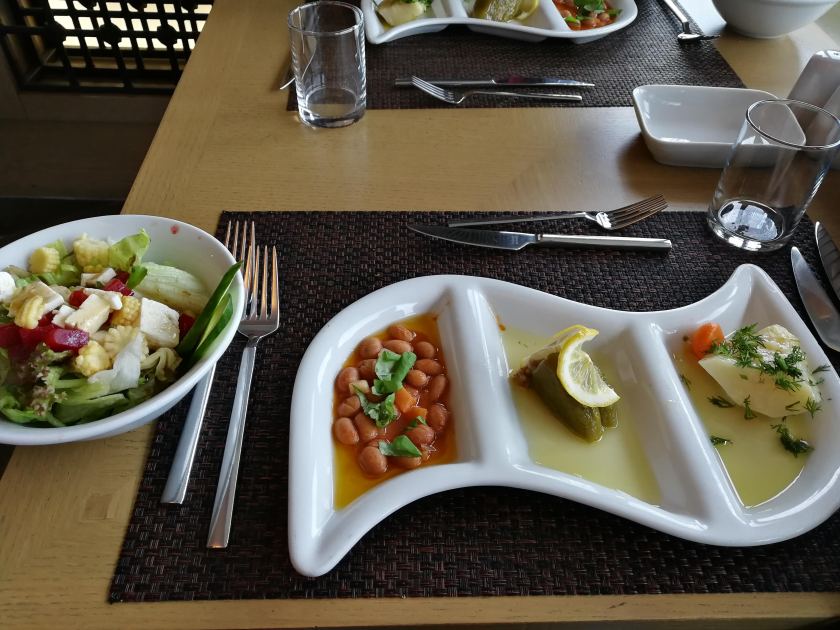
The last exposition we got to see contained the portraits of all the sultans, but this one was probably the least interesting. From the palace, where we spent about two hours, we went straight to lunch, which was very well organized. In general, the impression is that restaurants in Istanbul are often placed on the top floor of a hotel to provide a beautiful view. So there we sat, eating delicious mezes and kofte, drinking tea and admiring the views of Istanbul and the seagulls proudly sitting on the roofs.

IMG_20190206_130238.jpg

IMG_20190206_132321.jpg

IMG_4182

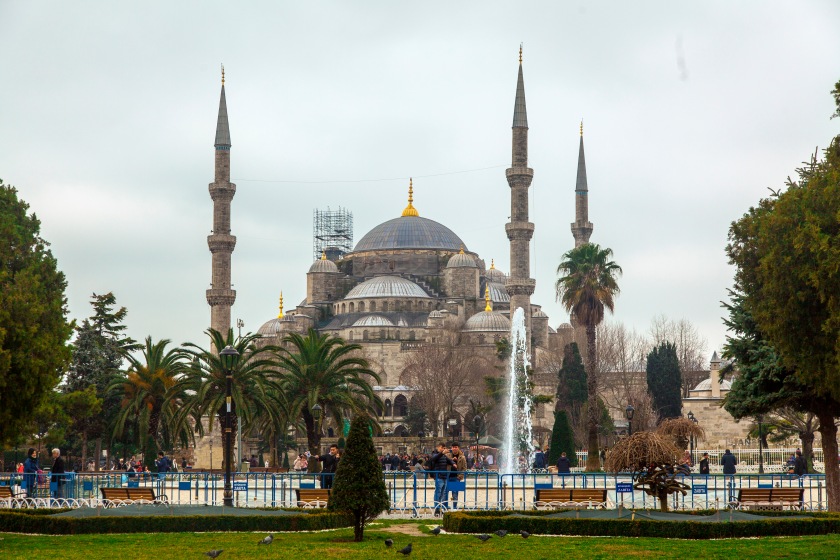
After lunch, now in a bigger group, we headed to Hagia Sophia. This place is truly unique, bringing together values that are almost incompatible by modern standards. Outside, it is very clearly visible that the minarets are attached to a Christian church. However, the building itself does not look particularly outstanding. Looking ahead, I will say that the Blue Mosque, located directly opposite, is much more beautiful on the outside.

IMG_4179

IMG_4176

IMG_4184

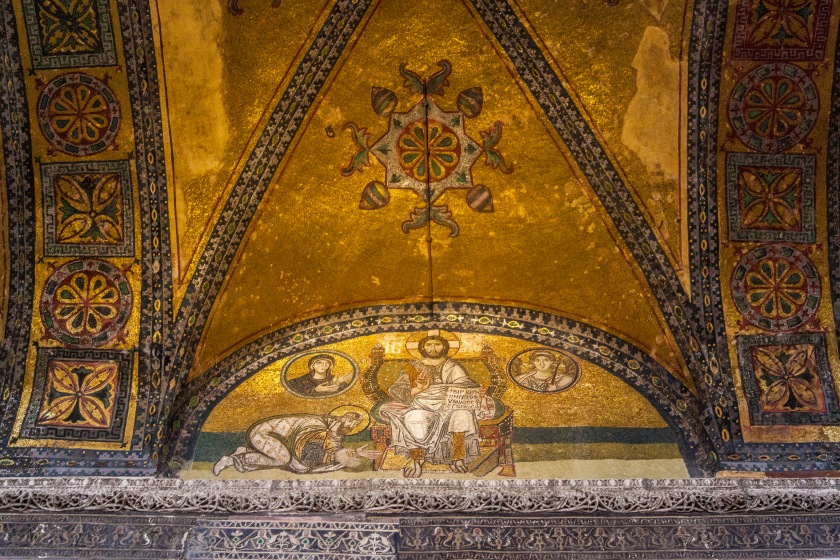
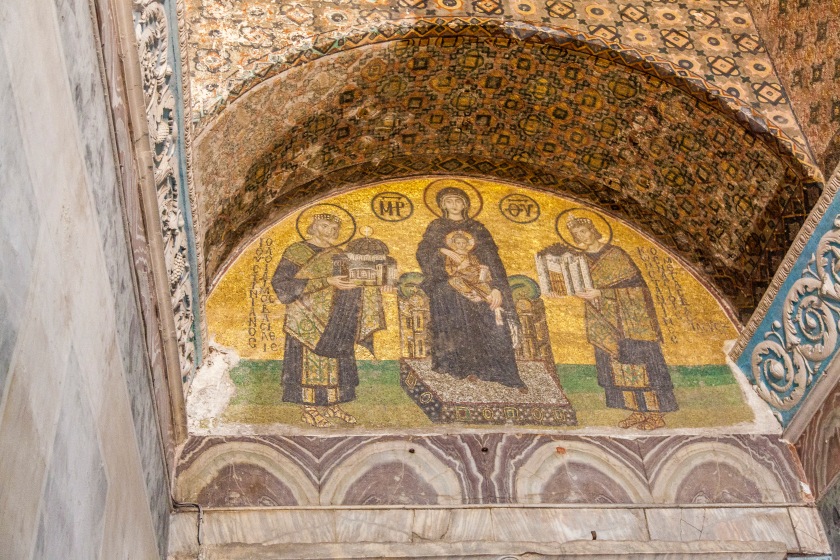
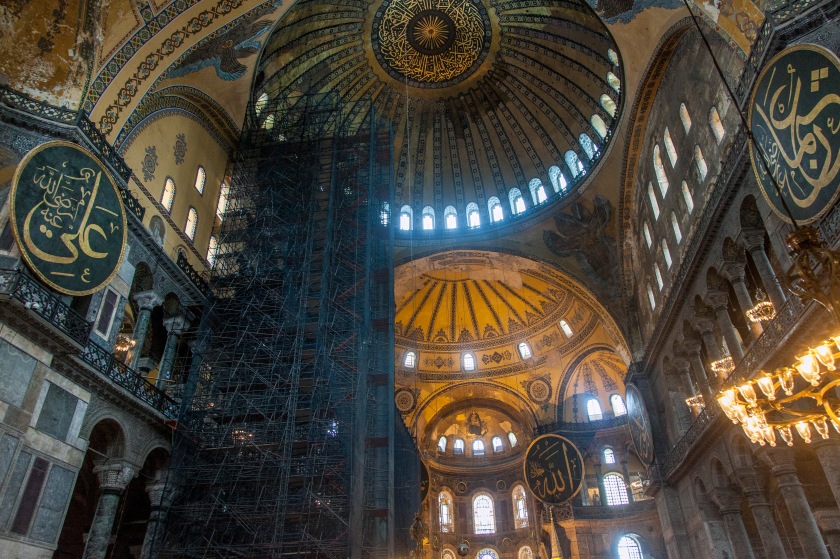
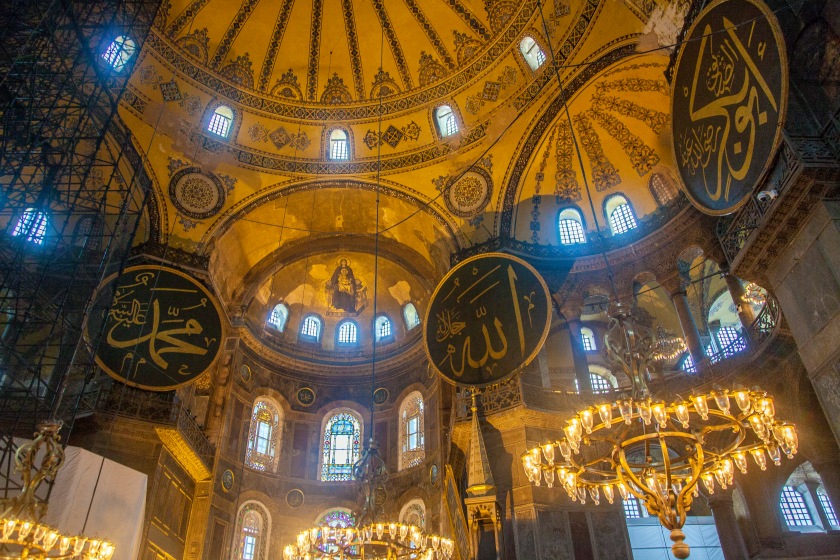
However, the interior of Hagia Sophia is stunning. Despite crowds of tourists – as always, mostly Chinese – you get a feeling of extraordinary holiness and admiration for the fact that the images of Christ, the Virgin Mary, the first Roman emperors and the symbols of Islam peacefully coexist in this place.

IMG_4187

IMG_4206

IMG_4192

IMG_4197

In fact, this has not always been the case. At first, Sultan Mehmed II, who conquered Constantinople, simply ordered the main Christian cathedral to be turned into a mosque, covering the Christian images with plaster. They weren’t cleared until 1935, when by a decree signed by Ataturk, Hagia Sophia became a museum.

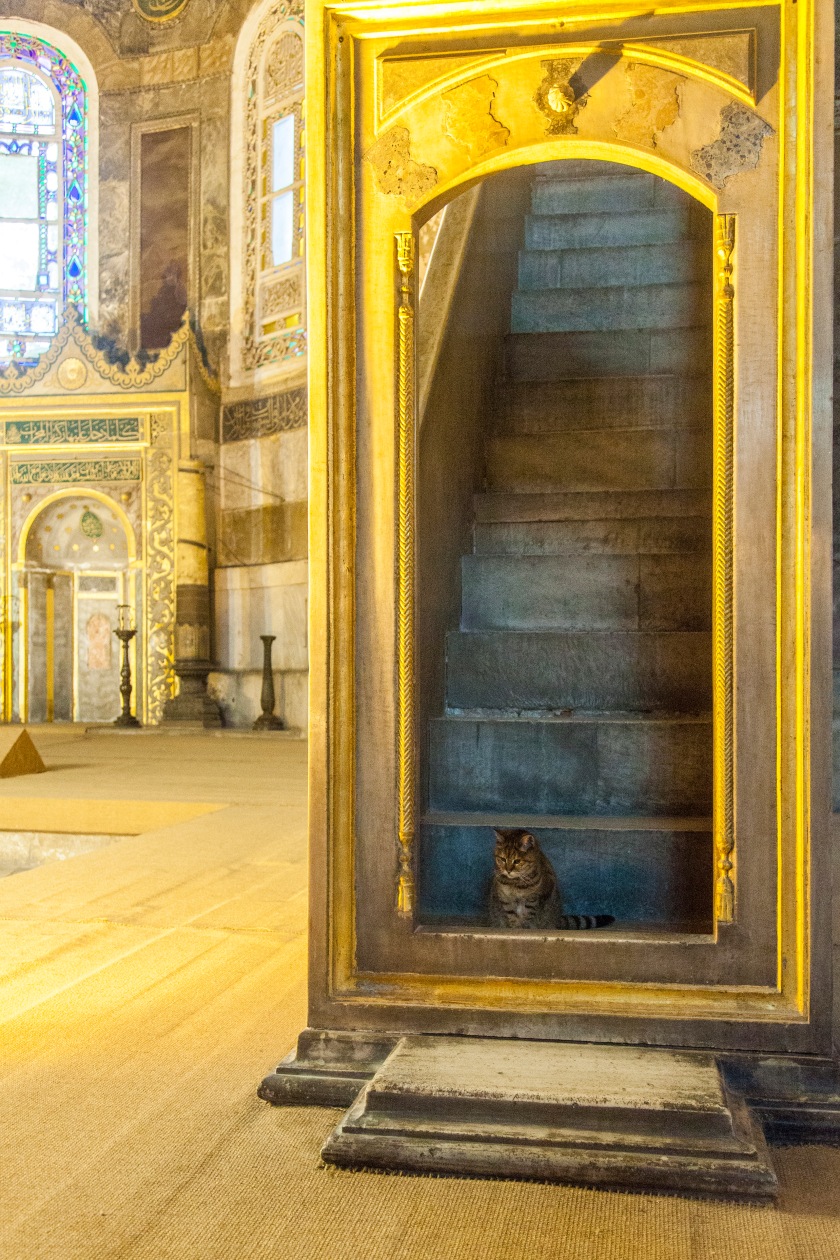
The happy free cats of Istanbul feel great here as well, causing a smile, which somewhat dilutes the sublime feelings evoked by the place.

IMG_4201

IMG_4204

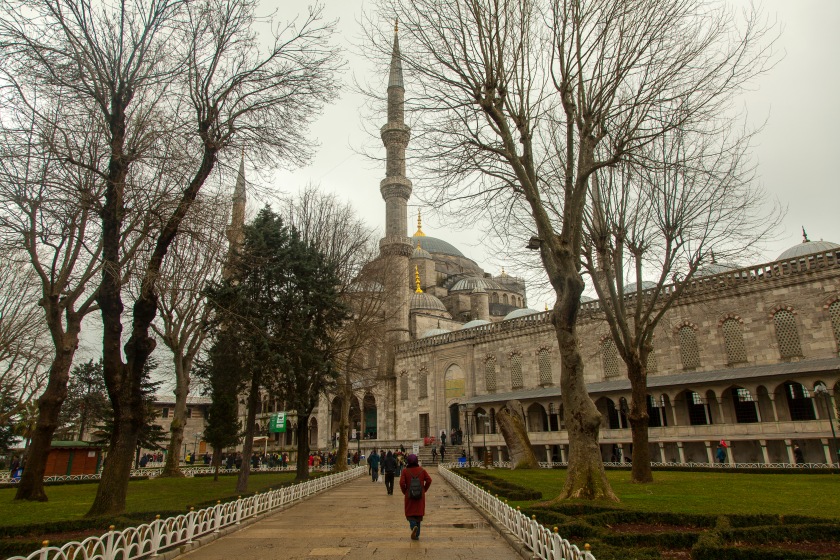
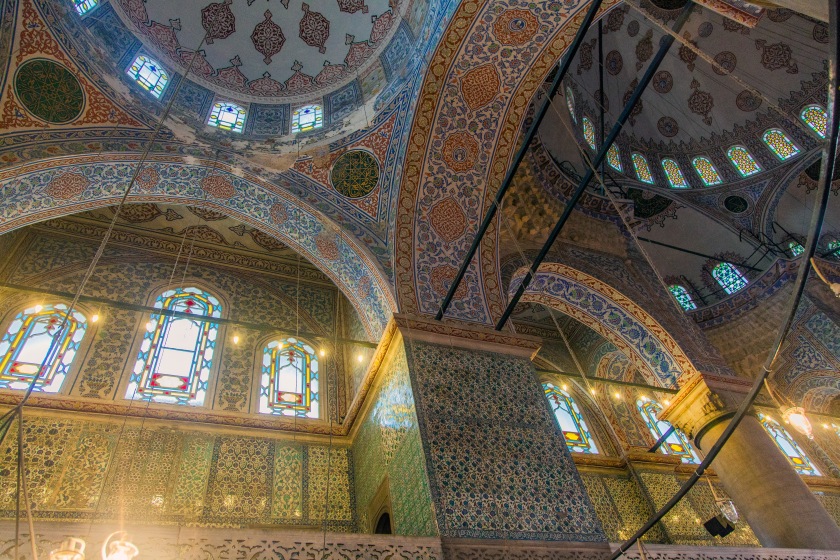
The Blue Mosque, aka the Sultanahmet Mosque, as already mentioned, is very beautiful outside. It has as many as six minarets (usually, there are one, two or four). But unfortunately, there was almost nothing to look at inside – there is renovation going on, so, for instance, the dome is completely covered. Since, unlike Hagia Sophia, this is a functioning mosque, there are a separate entrance and exit for tourists, who therefore have to carry their shoes with them in specially provided plastic bags.

IMG_4213

IMG_4221

IMG_4218

To finish with the mosque topic, I will say that there are more than two thousand of them in Istanbul. This seems like a huge number, but is actually normal for 20 million people.

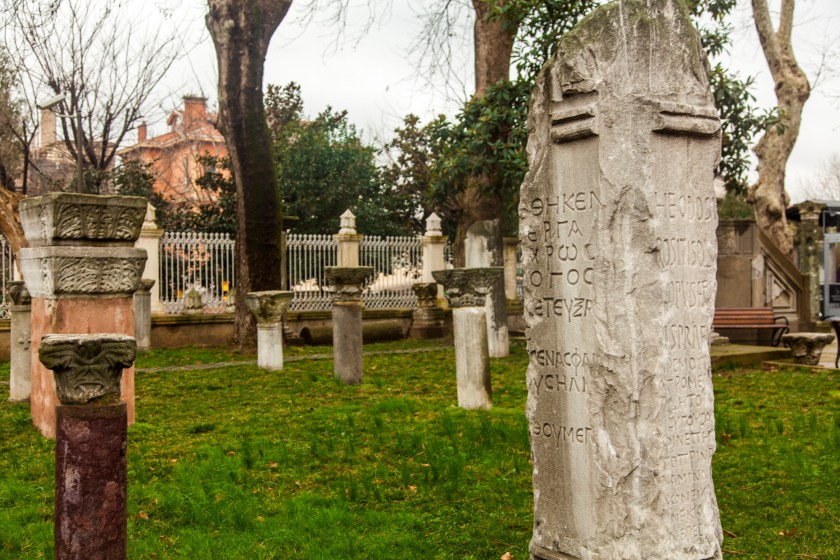
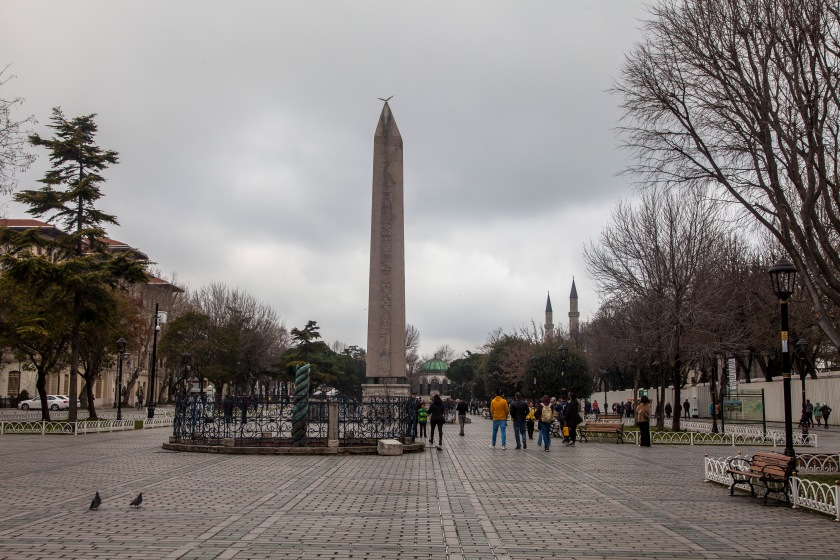
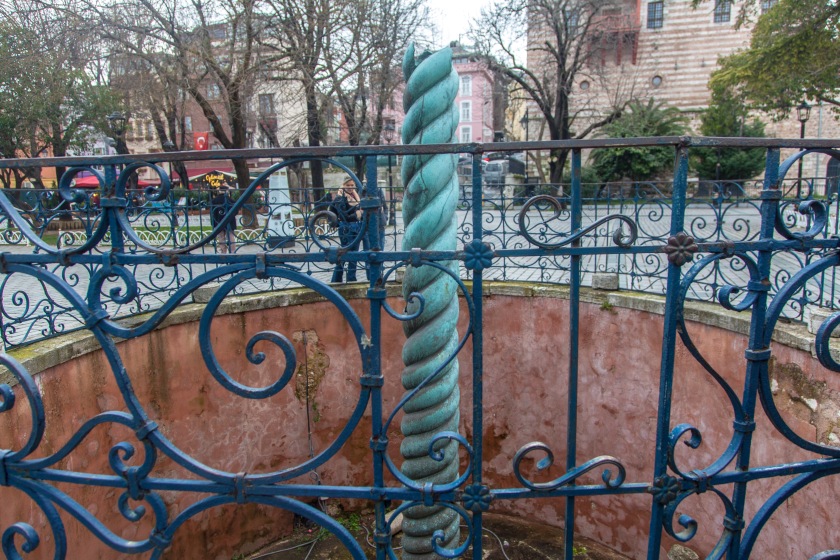
We had thought that the Hippodrome – our next destination – was a visit to some ancient sports facilities or its remnants. It turned out to be even more than just remnants, located right here, at the Sultanahmet Square: there is only one Egyptian obelisk and two Greek columns, one of which is made of weapons and armour of the defeated Persians.

IMG_4233

IMG_4232

IMG_4234

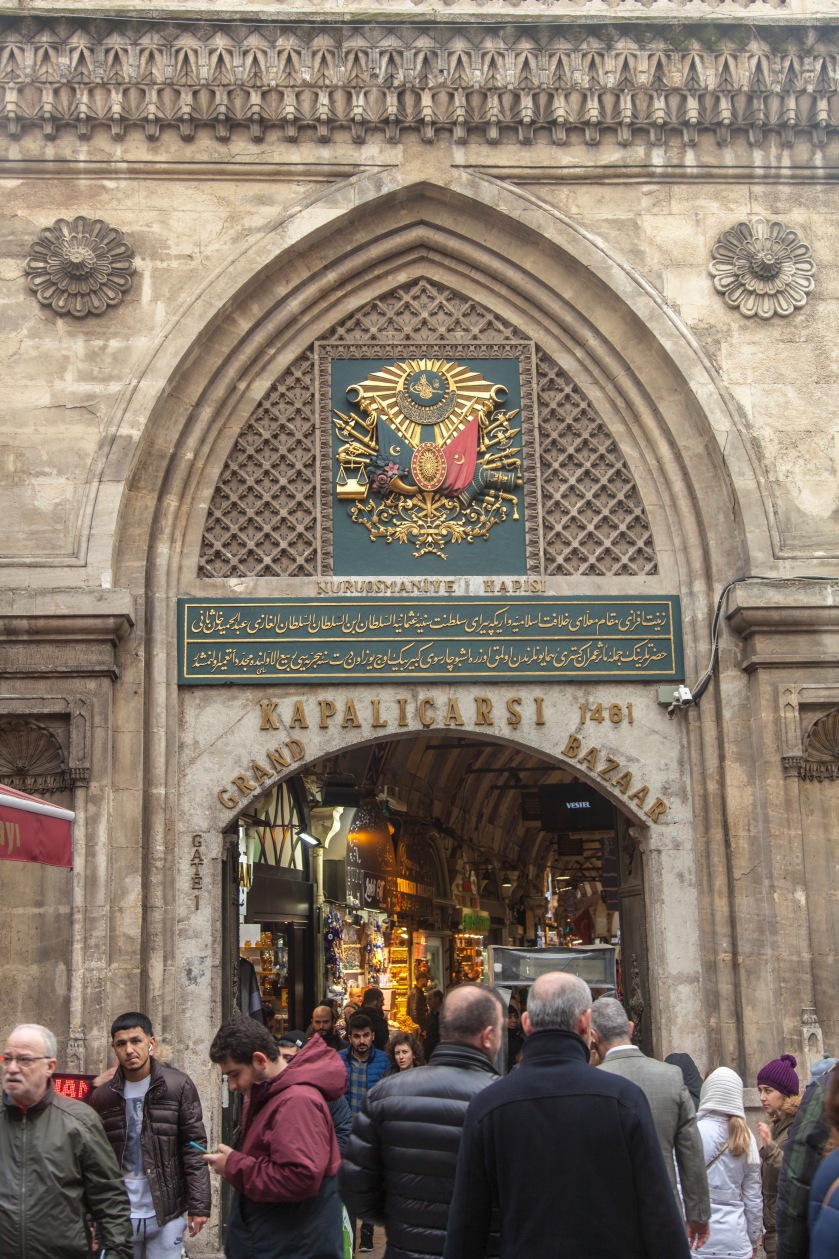
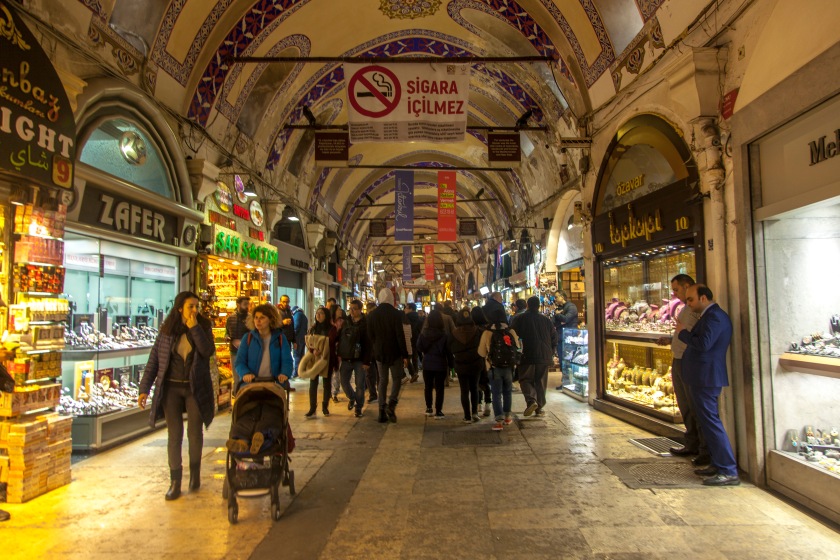
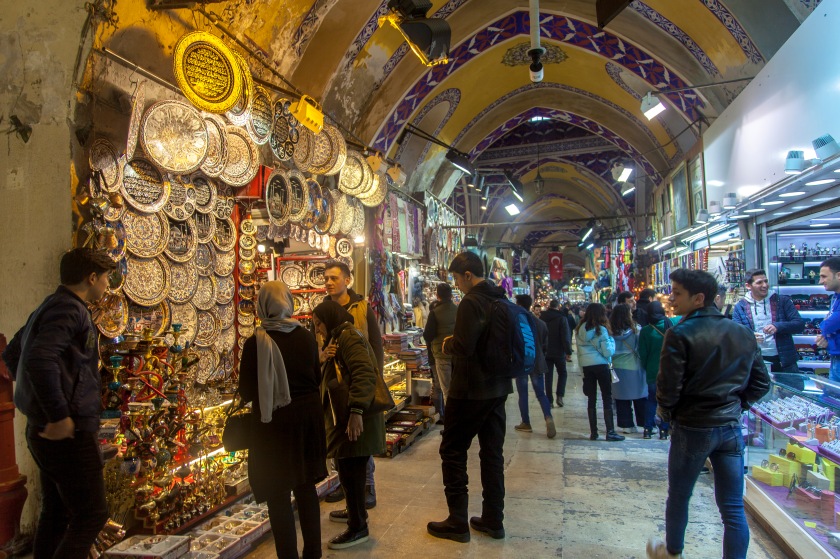
And finally, the last destination of our tour is the Grand Bazaar, or Kapalı Çarşı. The visit was preceded by a meeting with experts of Turkish carpet weaving, which we had in the Istanbul Handicraft Centre not far from the Bazaar. They treated us to apple tea, piled up a bunch of carpets in front of us and explained the difference between the local and, say, Persian technique(double knots instead of single ones). Of course, this was done with an eye to enticing us to purchase carpets, but no one in our group was willing to. At least us, the Azerbaijanis, could hardly be tempted by carpets.

IMG_4240

IMG_4242

We had 40 minutes to explore the Bazaar itself, but in fact that was more than enough. Frankly speaking, yesterday’s Spice Bazaar impressed us a lot more, because Kapalı Çarşı, although of course much bigger, seemed less beautiful and more chaotic. We walked through one of the galleries back and forth and found that this “drop” was enough to appreciate the entire “sea” of the Grand Bazaar.

IMG_4245

IMG_4247

IMG_4250

IMG_4251

IMG_4252

Moreover, even though the day had been very interesting, it had also been exhausting, so our bus, which accurately dropped us off at our hotel, seemed to be the most tempting place.

IMG_4259

We were so tired that for dinner we found a restaurant literally around the corner from our hotel, and made a right choice: it was very nice and cozy with delicious food and great service.

Posted in English, Europe, Istanbul, Turkey

Istanbul – Day 2

РУССКОЯЗЫЧНАЯ ВЕРСИЯ ПО ЭТОЙ ССЫЛКЕ. CLICK HERE FOR RUSSIAN VERSION.

04 February 2019

Today’s weather clearly demonstrated that February is February, and yesterday was just a gift to mark our arrival. Today was pretty windy, with almost no sun, and, according to the forecast, this is not going to be the worst day of our stay.

IMG_4049

We had a Bosphorus cruise planned for today, and at 8am we were picked up by a minibus. Apparently in order to prepare us for a boat ride, the minibus hurled us from side to side, rushing down narrow streets, past countless (for some reason!) shops selling lighting fixtures.

There were six of us in the group – a couple from Southeast Asia, two Indians, and us – the Azerbaijanis. The first item on our agenda was Misir Carsisi – or Spice Bazaar, aka Egyptian Bazaar, with beautiful gilded passages, tons and tons of spices, nuts, Turkish delights, gold and silver! We entered this kingdom of Middle-Eastern goods with a firm intention to just look around. But resourceful sellers immediately involved us in a “round dance” of offers, treats, promises of discounts, and we changed our determination to not but anything – anyway, we didn’t end up making any completely impulsive purchases: we bought sweets, spices, a cezve and silver jewelry. What contributed most to our purchases was, first of all, our understanding of Turkish (which allowed the sellers to elaborate extensively on the quality of their goods) and secondly, the fact that we accidentally came across our fellow countrywoman at one of the shops – she seemed to be either the administrator or the owner.

IMG_4051

IMG_4052

Having left all our purchases in the minibus, with the kind consent of our guide, we transferred to the cruise boat, where there were a couple of other tourist groups apart from ours, but overall the boat was far from being full – apparently, it’s a low season now.

Yesterday the concierge at our hotel was trying to convince us to sign up for another cruise in the afternoon, scaring us with the usual morning fog, which would prevent us from seeing much. Fortunately, that turned out not to be the case. I mean, some fog was present indeed, but firstly, it didn’t really bother us, and besides, it didn’t dissipate in the afternoon either.

IMG_4060

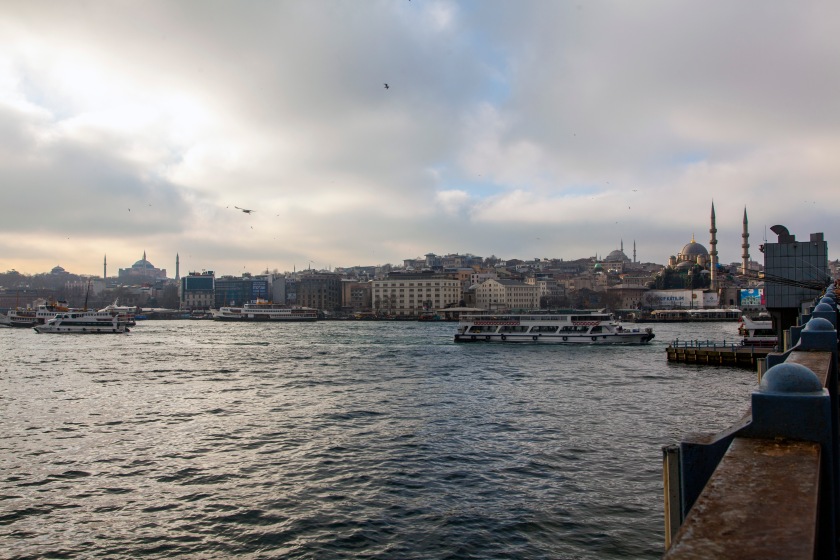
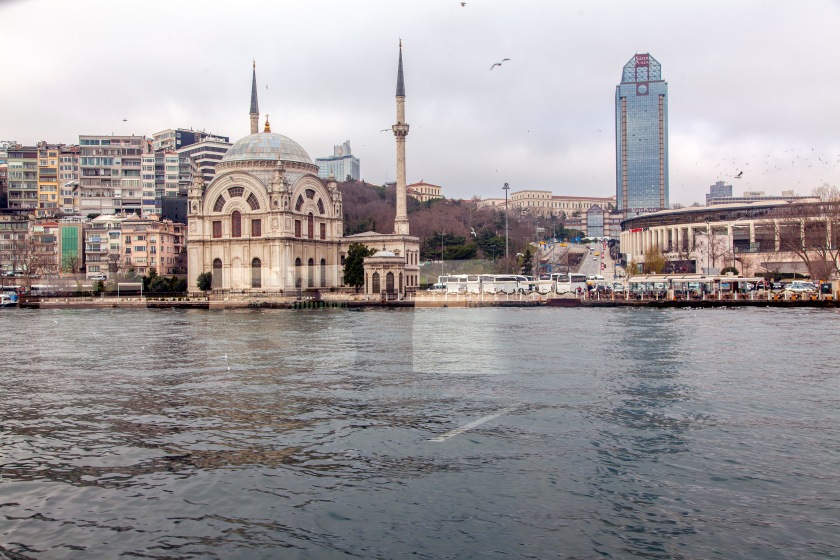
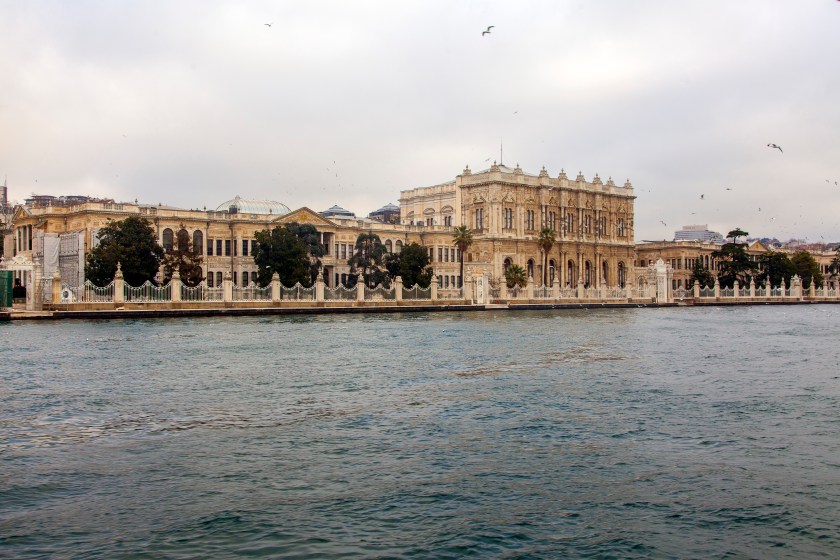
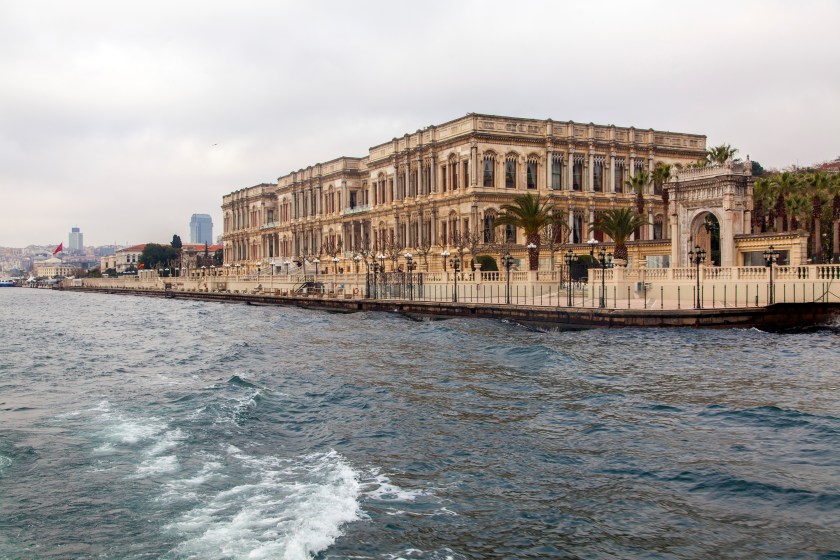
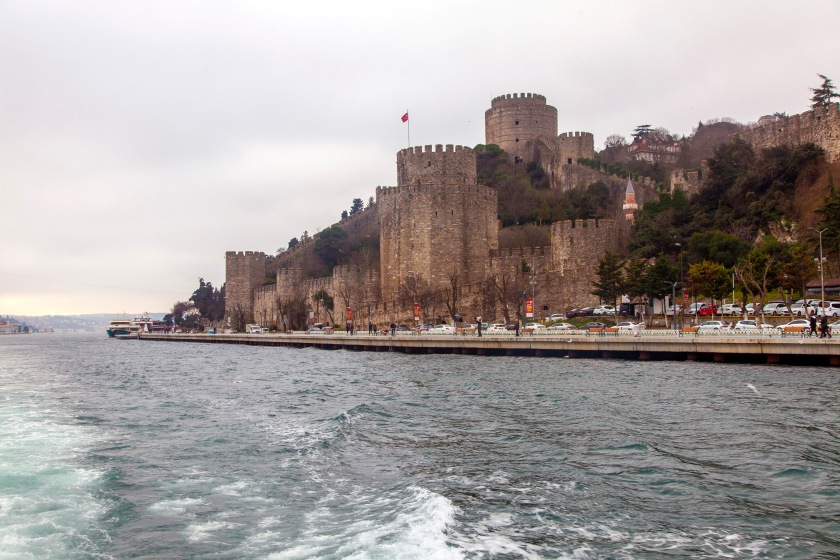
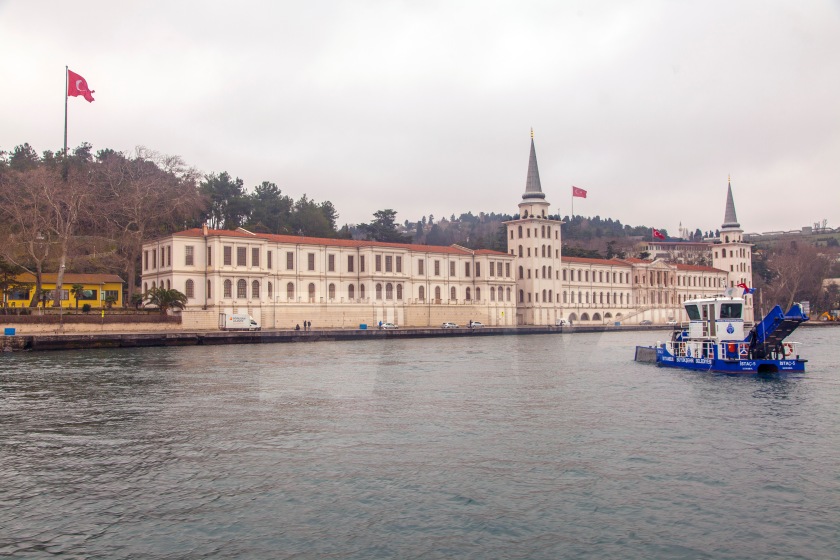
The cruise starts at the Kabatas ferry port, and first goes along the European part of the city, past such attractions as the Dolmabahce Palace, the Rumeli Fortress and the Ciragan Palace, converted into a Kempinski hotel – the most expensive one in Istanbul. We made nice photos, but cannot really say that our delight went through the roof. By the way, we were accompanied by seagulls during the whole of our journey, however, compared to those at Galata Tower yesterday, these ones seemed smaller.

IMG_4064

IMG_4065

IMG_4075

IMG_4083

IMG_4090

IMG_4071

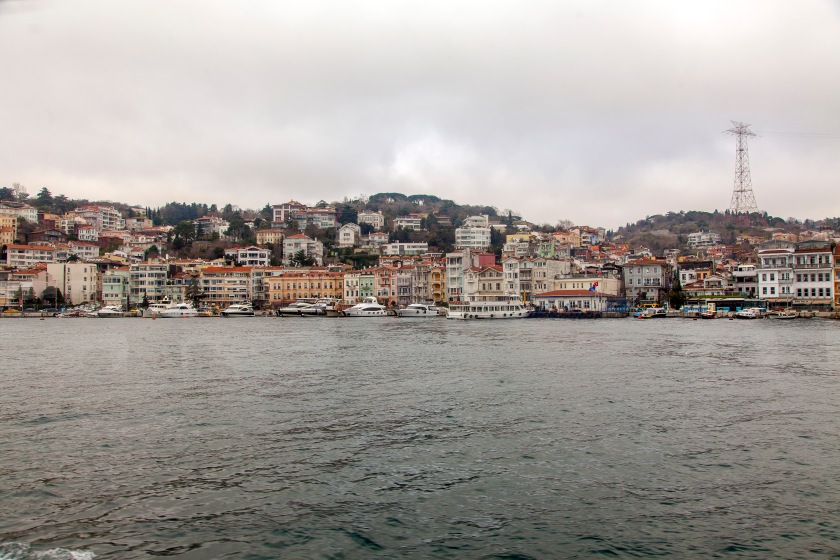
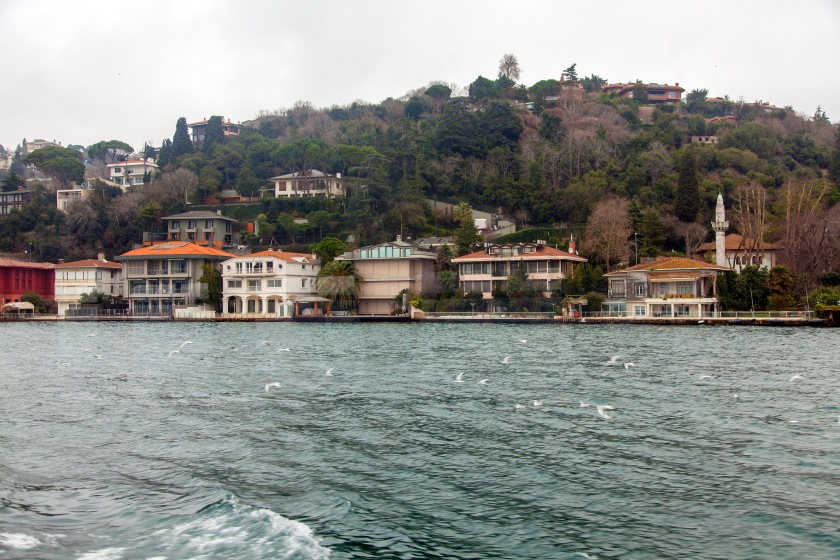
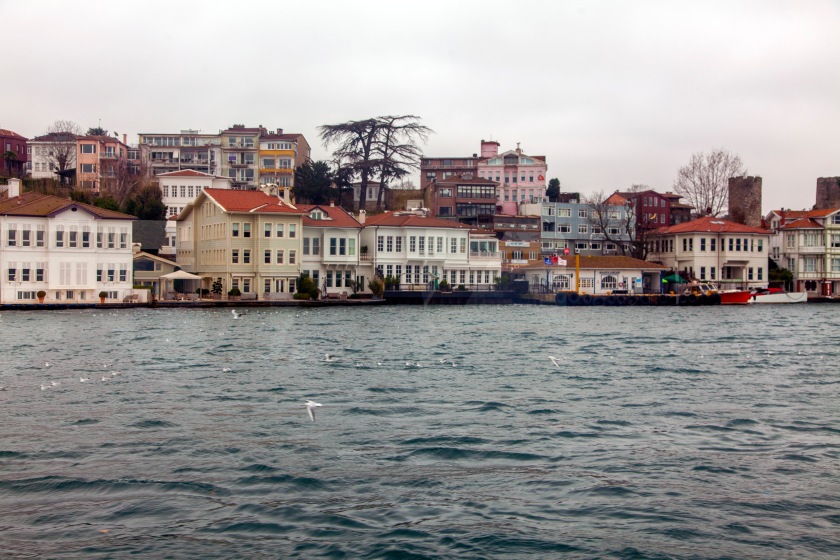
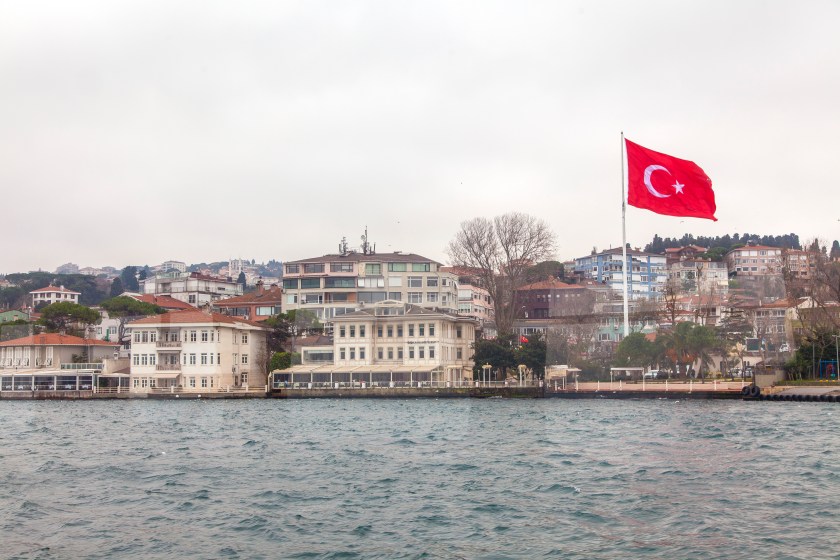
What looked more interesting was the Asian part, which we sailed along when the ship turned around from the Fatih Sultan Mehmet Bridge. And here, even more than the actual sights of interest, including the Anadolu fortress, the Beylerbeyi Palace, the Kucuksu pavilion, we enjoyed the coastline, strewn with variegated mansions. Their unique location with direct Bosphorus views makes them the most expensive real estate in Turkey, with prices reaching up to hundreds of millions of dollars.

IMG_4096

IMG_4097

IMG_4103

IMG_4113

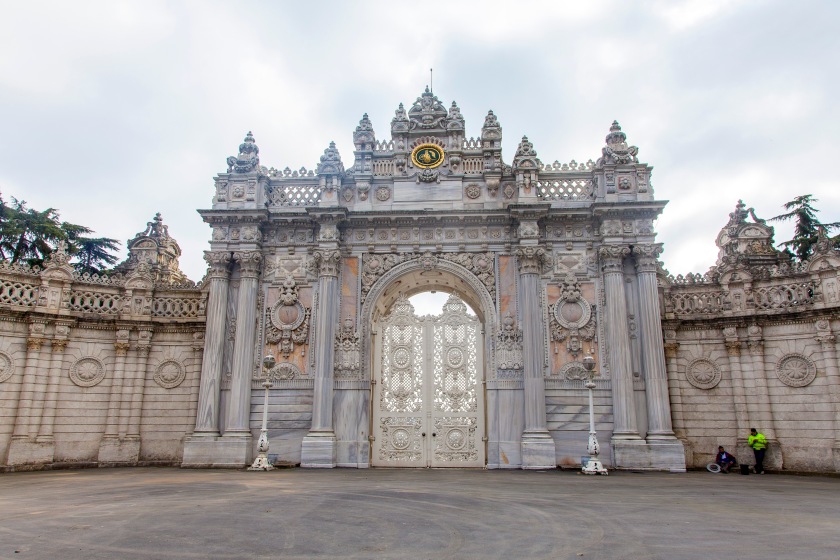
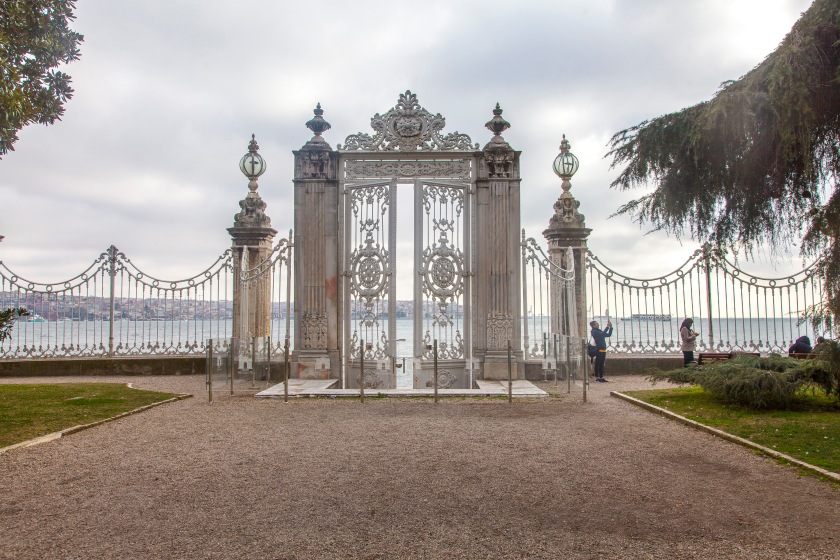
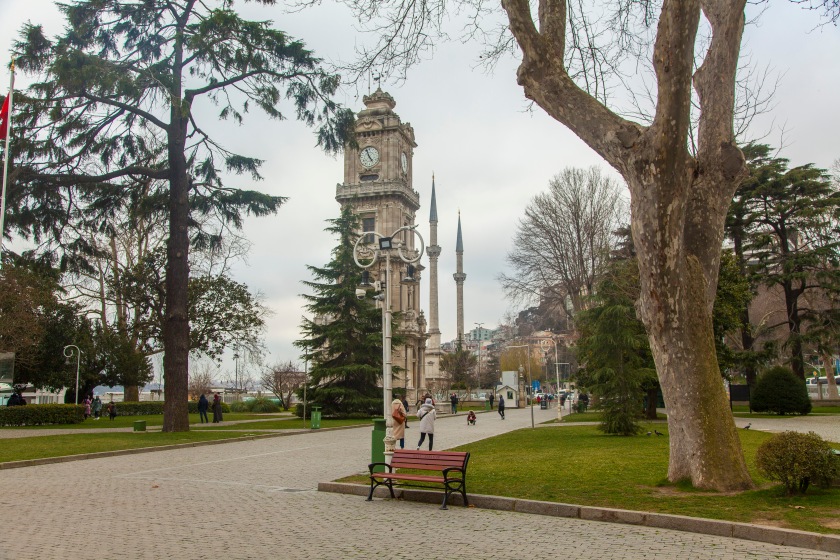
This morning we still had no exact plans for the afternoon: we had a thought to dedicate the day entirely to water travel and visit the Princes’ Islands. It was the weather that finally discouraged us. The Princes’ Islands are mostly good for walking around – there isn’t even any transport there, besides horse carts. Therefore, we changed our minds in favour of the Dolmabahce Palace, and we took an Uber there, which didn’t go perfectly well. He dropped us off near some beautiful (but locked!) palace gates and rushed off into the sunset. The street looked deserted, in particular, we didn’t see any crowds of tourists storming the palace.

IMG_4118

To our luck, literally the only passer-by, whom we naturally addressed, knew exactly where the palace entrance was (it turned out that we had just been dropped off in the wrong place) and kindly showed us the way. By the way, she herself turned out not to be local, but an Afghan living in the USA and working here just temporarily.

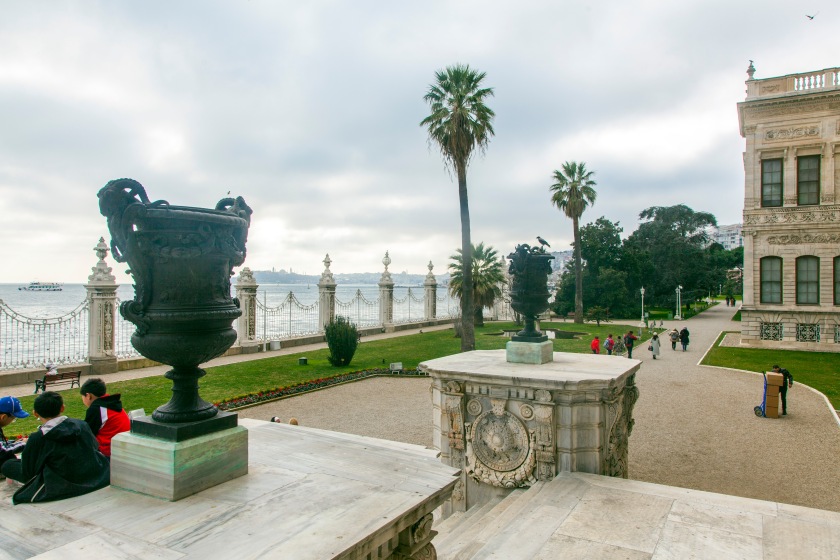
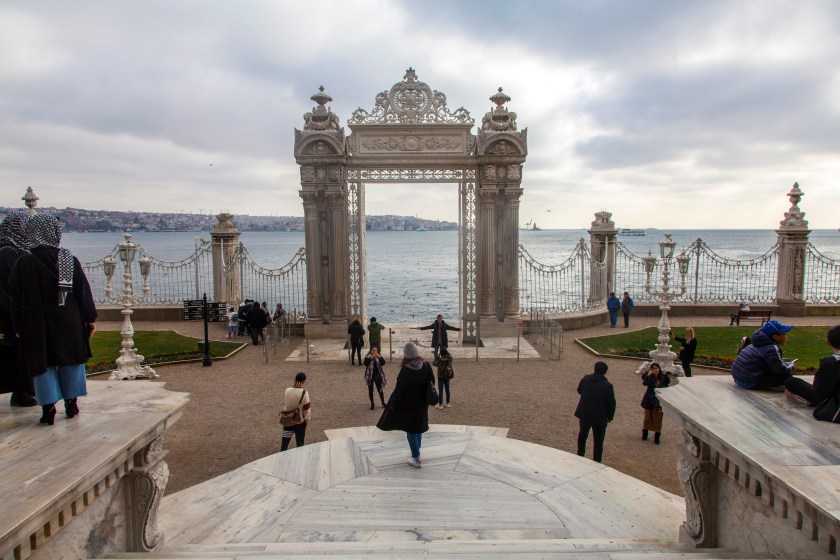
The location of the palace is simply amazing – the sultans did know a thing or two about choosing the perfect place. The carved fences and the garden gates overlook the Bosphorus. One can imagine the pleasure of walking in this garden!

IMG_4128

IMG_4130

IMG_4132

IMG_4133

Dolmabahce is not the old residence of the sultans (which we aren’t going to see till tomorrow), but a 19th-century building, reflecting all of the contemporary European trends, which is especially noticeable in the furniture. Unfortunately, photography is prohibited inside the palace, and although not all visitors were quite law-abiding, we decided to comply.

There are two types of tickets: including and excluding a visit to the harem. Of course, the first type is preferable: in fact, the harem is much more interesting and luxurious than the rest of the palace, and better reflects the actual life of the sultan’s family. Along standard apartments of sultan’s wives, consisting of a bedroom, a living room and a bathroom (with a squat toilet, as everywhere in the palace!), there are also the luxurious and extensive apartments of Valide Sultan, the reigning sultan’s mother. The latter include a prayer room, a large reception room, a private room, and a spacious bedroom. Even the sultan’s own apartments in the harem are superior in luxury and decoration to his apartments in the official part of the palace.

The latter, of course, has beautifully furnished rooms, but the one that can be considered truly exclusive is the main hall with an incredibly painted domed ceiling. There are also two display rooms: the first one contains tableware and kitchenware, and the second one has medals, weapons, household and leisure items.

It’s interesting to note that after the fall of the monarchy, Atatürk chose Dolmabahce as his residence, and this is where he died – in one of the rooms (a very simple and modest one) of the former harem. This room is also open to visitors, and the bed in it is covered with a blanket representing the Turkish flag.

IMG_4120

IMG_4136

We stayed in Dolmabahce almost until its closing time. From here we were supposed to go for dinner, to a fish restaurant, booked in advance, in the Cihangir area. And this suddenly turned into a whole adventure. We hadn’t ordered a taxi in advance, and tried to hail one in the street, but the cars were going in the opposite direction and the taxi driver refused to pick us. Google showed that the restaurant was relatively close, literally a 22-minute walk.

What Google didn’t show, however, is that we would have to climb countless stairs a good deal of the way. Possibly, I would even say most certainly, there should exist a longer way without stairs – I mean, cars do get there somehow! – but we, naively and recklessly, not realising how much we would have to climb, went up the stairs. It was a breathtaking experiment! The stairs were quite steep and chipped, some parts of the way had no handrails, occasionally a stair was interrupted by a sewer manhole. Afraid to look back and feel dizzy, we climbed up and up, like cats, who can climb only up trees, out of fear. Speaking of cats, their appearance was the pinnacle of the whole climb. Five of them simultaneously ditched their food bowls (apparently, kindly provided by residents of the houses located along the stairs) and rushed at our feet. They were meowing loudly and rubbing against us, a couple of cats even smacked each other, fighting for the right to get in our way, and then followed us for a long time. I struggle to imagine what that was. In that situation, they totally seemed like messengers from hell, but perhaps the poor animals were just trying to welcome us and cheer us up. They only left us at the very last part of the staircase. Alas, there are no photos of the cats – it was not the right moment to take pictures, you know.

After we successfully overcame this “hurdle”, we still had to meander a bit more more around the streets going up and down, but this felt more tolerable. We entered the restaurant totally exhausted. But then we were rewarded with a magnificent view of the city from the 8th floor, delicious fish, and excellent service.

IMG_4139

cof

Posted in English, Europe, Istanbul, Turkey

Istanbul – Day 1

РУССКОЯЗЫЧНАЯ ВЕРСИЯ ПО ЭТОЙ ССЫЛКЕ. CLICK HERE FOR RUSSIAN VERSION.

03 February 2019

Surprising, but fact – I am a person who has seen quite a few countries, including far ones, but has never been to the neighbouring Turkey. Yet, every self-respecting Azerbaijani, who has the opportunity to travel abroad, has definitely been there. So I finally decided to fill this unforgivable gap, and here we are, flying to Istanbul!

The flight begins with mixed feelings: there is no online check-in, which is bad, but we end up without a seat neighbour, which is good; our seats are at the very rear of the aircraft, which is bad, but breakfast starts being served from the tail of the cabin, which is good. First we are flying over mountains – underneath us there is the majestic Caucasus, with its dazzling snowy peaks! – and then mostly over the Black Sea.

IMG_20190213_142509_380

The Istanbul Ataturk Airport is definitely worth a mention – the speed and the quality, which we observed while going through all the necessary stages of arrival, really impressed us. Such a contrast with, say, Heathrow, where you hang around for a good hour in an extremely slow queue at the passport control. The queue here isn’t any shorter, if not longer, but it’s moving speedily and cheerfully all the time.

At first glance, Istanbul didn’t strike us with anything extraordinary. We are going in a taxi, on our right side we see the Marmara Sea, and on our left side there are some buildings, not very expressive ones.

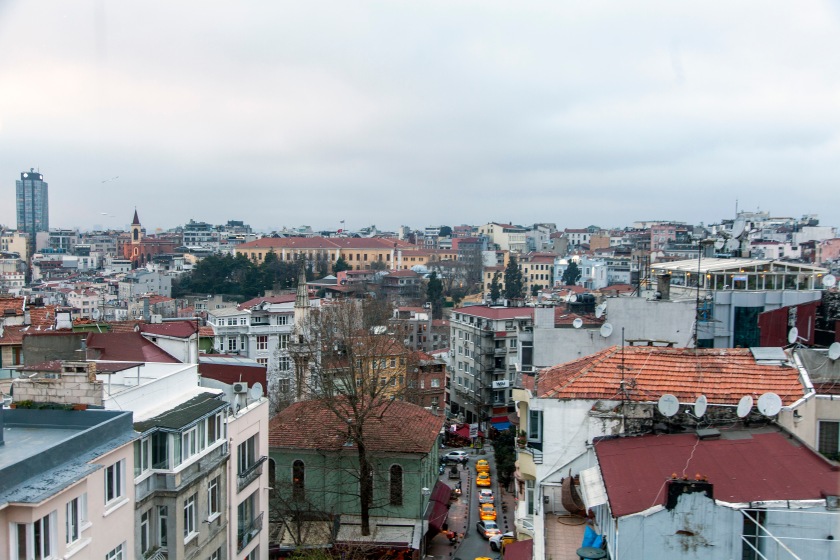
Our hotel is located in the Pera district in the European part of the city, and is literally a stone’s throw away from the central pedestrian street Istiklal Caddesi. In general, we were advised – and we also advise this in our turn – to choose a hotel in this particular part of the city, and definitely not in the Old Town, where most of the tourist attractions are. In fact the Old Town area is only lively during the daytime, while Istiklal Avenue and its surroundings provide the tourist with everything they need – food, drink, shopping, entertainment – at all times of the day and night. View from our hotel window:

IMG_3955

So Istiklal Avenue is where we start exploring Istanbul today. Our hotel’s location is such that if you walk a kilometre to the left, you will get to Taksim, and if you walk one (plus a bit more) to the right, you will reach the Galata Tower.

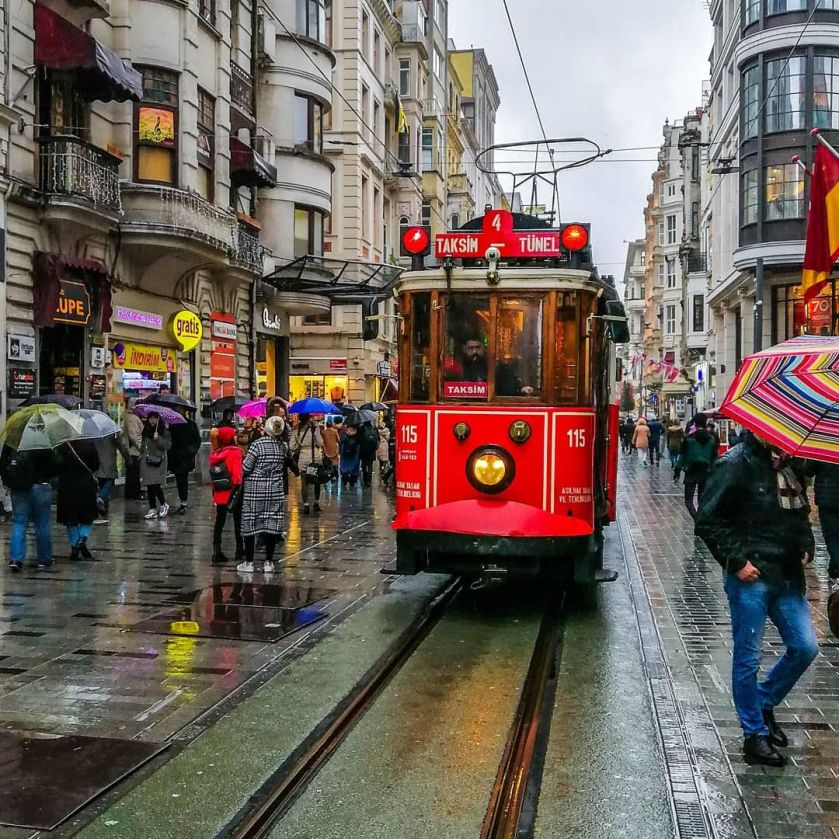
We first turned left. A historic tram line passes through Istiklal Caddesi, and this is the street’s only transport, apart from cleaning vehicles and police cars, which, by the way, also try to drive along the tramway track so as not to disturb pedestrians very much. For people from Baku, the best description of Istiklal Avenue is that it’s Istanbul’s “Torgovaya”, only a very long one.

IMG_3958

IMG_3984

We are surprisingly lucky with the weather today: despite it being February, it is so warm during the daytime that we have to take off our outerwear every now and then. When we sit down on a bench on Taksim Square, the sun is literally scorching. The square itself does not seem very cozy. We sat there for a bit and looked at a mosque under construction, at the “Republic” monument with sculptures of Ataturk and other marshals, including the Soviet marshal Voroshilov, and then turned back to Istiklal Caddesi, more interested in the tram, with roller skater boys clinging to it, than in the square itself.

IMG_3965

IMG_3967

IMG_3972

Walking Istiklal Street is very pleasant. We are eating wonderful roasted chestnuts, which are sold at every corner, and dondurma – the special stretchy Turkish ice cream, which the seller scoops onto cones, using a long-handled paddle, and turning the whole thing into a real show.

IMG_3959

IMG_3979

IMG_3990

IMG_3994

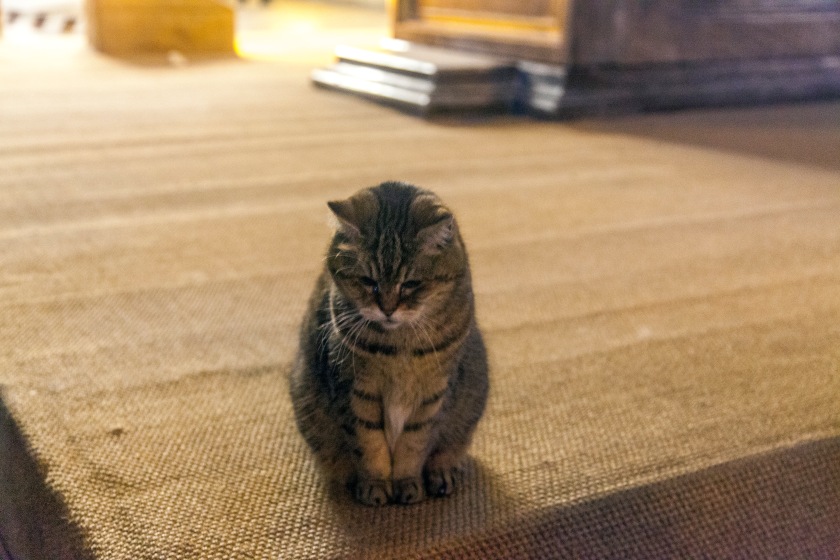
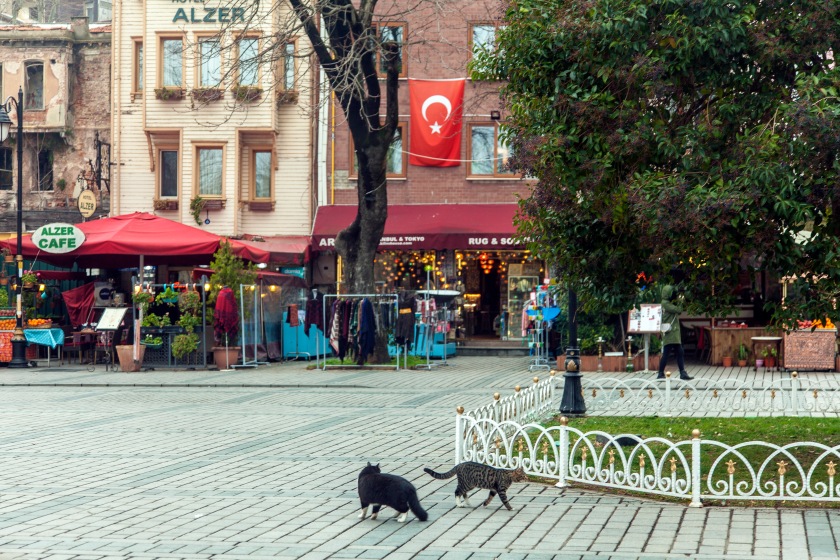
A separate paragraph should be devoted to the cats of Istanbul. There are lots of them, and this is the only place I have seen where cats are as beautiful as in Baku, but here they are loved and cherished much more. Almost every store or restaurant has food and drink bowls for cats, and often even a special little cat house. However, the most audacious cats prefer to settle in a chair right inside. There are quite ordinary-looking cats, and there are also simply outstanding examples of fluffiness and fatness. Dogs can also be found, though less often; all of them are microchipped and seemingly contented.

IMG_3995

IMG_3957

IMG_4243

IMG_3997

IMG_4003

IMG_4037

cof

What’s also interesting on Istiklal Caddesi is that there are quite a few Christian churches. We walked into one – the Basilica of St. Anthony of Padua, and, as it seemed to me, there were quite a few Turks praying in it, although I could be wrong.

IMG_3987

We reached the Galata Tower quite unexpectedly – for some reason I had the impression that it was in the opposite direction, and then suddenly we saw a signpost. It was about 5pm, and at first we decided to wait for the evening to take pictures of the tower in the evening light, and then thought that instead of idly waiting around we might as well go up to the observation deck (previously we were planning to do it tomorrow). The queue (maybe it’s a property of all the queues in Istanbul!), despite its impressive length, was moving rather quickly. We wondered if there was a lift inside the tower, or if we would have to climb a spiral staircase. There was a lift, yet we still had to climb the last two floors.

IMG_4004

IMG_4006

IMG_4011

IMG_4013

I must say that a moderate wait in the queue and a dizzy climb up the eerie stairs were totally worth it. The view of Istanbul from all sides is magnificent! A special feature are the large seagulls, which land on stone balls from time to time, right at arm’s length, and observe the city, looking very smart and important. Obviously, just like the tourists here, they are admiring the Bosphorus, the Golden Horn Bay, the famous mosques in the Old City. The only slightly annoying bit is that there are too many people on such a narrow rim of the tower, especially when not everyone is following the instructions to move only clockwise, which leads to chaotic cramming.

IMG_4021

IMG_4029

IMG_4022

IMG_4023

IMG_4024

IMG_4033

The tower also offers another entertainment – a simulation of a helicopter flight, which we didn’t find tempting though. However, we were taken a ton of pictures of, wearing historical costumes of harem dwellers. The poster advertising this attraction beckons you with a price of 30 liras (about 6 USD) per photo, but the ingenious photographer takes so many beautiful photos, with a variety of props, that you almost unwittingly end up forking out a lot more. But we still liked it!

To make sure we do get to see the Galata Tower in the evening light, we decided to have dinner in a restaurant directly opposite it. The weather and the heaters allowed us to sit comfortably outside (in February!) As for the restaurant, what can I say? Delicious kebabs, excellent service.

mde

IMG_4039

Posted in Europe, Georgia

Georgia – Day 2

РУССКОЯЗЫЧНАЯ ВЕРСИЯ ПО ЭТОЙ ССЫЛКЕ. CLICK HERE FOR RUSSIAN VERSION.

27 December 2014

We dedicated our second day to a tour of Tbilisi. First of all, we were taken to the Turtle lake which is located in the posh Vake district. The lake is called like that for a very obvious reason – there are small turtles on its shores. The lake was coated with a thin layer of ice, and the park impressed us with its clean pine air and the sources thereof.

Yesterday we thought that Tbilisi was pretty small, but when we were taken to see it from one of the highest points today, so that not only the old part, but also the new districts were visible, it turned out that the sizes are much larger and the city, extended in length, lies in the cleft between the mountains. In short, the size of the city could be seen well, but the details could not really be made out – it was very foggy. On the way to this lookout point we saw a very original building of the 112 rescue service in the form of a flying saucer.

20141228_120721
One of the planned visits was the Pantheon – the burial place of famous Georgian figures of culture, science and politics – situated on the slopes of Mount Mtatsminda. More precisely, it was our guide who told us about the Pantheon, as we only knew about the graves of Griboyedov and his wife, Nina Chavchavadze. It turns out that these very graves initiated the Pantheon. We came as close as we could by car, and then had to walk, making pretty steep climbs. The guide was encouraging us by showing the place of destination. From this high point, we looked at Tbilisi again, from a different perspective now, and suddenly it turned out that the grave of Griboyedov was just behind us. The grave had a very touching monument to a weeping woman clinging to a cross, and a no less touching famous inscription: “Your spirit and achievements will be remembered forever. Why still does my love outlive you?” With regard to the Pantheon itself, I found all the graves interesting, even though I had only known the names of Stalin’s mother, Zviad Gamsakhurdia and Nodar Dumbadze.

20141228_121124

20141228_121322
After such a spiritual visit we moved on to a purely prosaic activity – food consumption, for the purpose of which we were taken to the Agmashenebeli avenue (former Plekhanov street). By the way, I really liked the avenue, even more than the Rustaveli ave. I can’t now recall the name of the small restaurant we went to, but the interior was purely Georgian, with antique items, such as cameras and phonographs, and reproductions of Pirosmani’s paintings on the walls (we ate our khachapuris right next to the famous “Feast of Five Princes”).

If yesterday we visited ancient churches and temples, today, having driven us through a quarter that was very reminiscent of the Kubinka and generally the area of Teze Bazar in Baku, Zviad brought us to a modern temple, visible from almost any point of Tbilisi – Tsminda Sameba, the Holy Trinity Cathedral. It occupies a large area, around which you can still see construction works, like columns being built and stone carving works going on.

20141228_140522
Apparently, the plan of our guide consisted of alternating spiritual visits with pure entertainment – undoubtedly the cableway to the Narikala forthress at the same Mount Mtatsminda was part of the latter. It is not at all scary here – unlike the one I took to the Great Wall in China, where you literally float over the abyss, risking dropping your shoes there (while also afraid to drop yourself!). Here you just sit in a closed cabin for 5-6 people and peacefully look at the Kura and its banks underneath. We didn’t get to see the fortress, but had the opportunity to be photographed with a falcon, and then descended to the Europe Square using the same cableway. We saw a few people dressed as Santa Clauses riding bicycles, and also something that made me really emotional – street vendors of roasted peanuts and sunflower seeds, which are measured with a large or a small faceted glass and then sold in paper cornets: where are the days when we had the exact same thing in Baku?..

20141228_145438

20141228_143903

20141228_144909

20141228_150224

20141228_150422
Both today and yesterday we saw a lot of purely Tbilisian houses, clinging on the steep cliffs over the Kura, with a lot of balconies. Today we also went into one of the old quarters. Here we found the famous sulfur baths, which we could sense even from afar for the very specific smell of hydrogen sulphide. We walked up to a waterfall in a narrow crevice.

20141228_151501

20141228_152154

20141228_151855
Ever since yesterday we really wanted to buy churchkhela – the traditional sausage-shaped candy made of grape must with nuts, but Zviad had told us not to buy it not just anywhere but in trusted places, and so he took us to one. The tiny convenience store seemed to have a whole market squeezed in it: they had meat, and cheese, and pickles, and a variety of fruit-vegetables, and well, of course, the coveted churchkhela. Unluckily, we had to wait for the sales assistant of this particular department for quite a while – it turned out that he had been queueing at a supermarket nearby to buy a box of champagne.

Towards the end of the day we went up the Mtatsminda for the third time, this time by a cable car. The first stop was near the pantheon we’d already seen, and the second one led us to a large park, with lots of swings and carousels, with New Year’s songs coming from the speakers, with a house with upturned balconies – as if it was standing upside down. And again I was wrapped in nostalgia – the Baku Boulevard in the days of my childhood looked exactly like this, even the benches were similar. But it’s not that I’m trying to say that anything around looks old and shabby, straight from those times – the park is exactly maintained like this, just as the buildings are restored, as I said before.

20141228_165328
Overflowing with impressions, we ended the day in the khinkali restaurant right near the hotel, where we tried different kinds of khinkali: with meat, mushrooms, cheese – and were very pleased. Thus, our stay in Tbilisi was brief, but very impressive.