РУССКОЯЗЫЧНАЯ ВЕРСИЯ ПО ЭТОЙ ССЫЛКЕ. CLICK HERE FOR RUSSIAN VERSION.
October 26 – Sunday
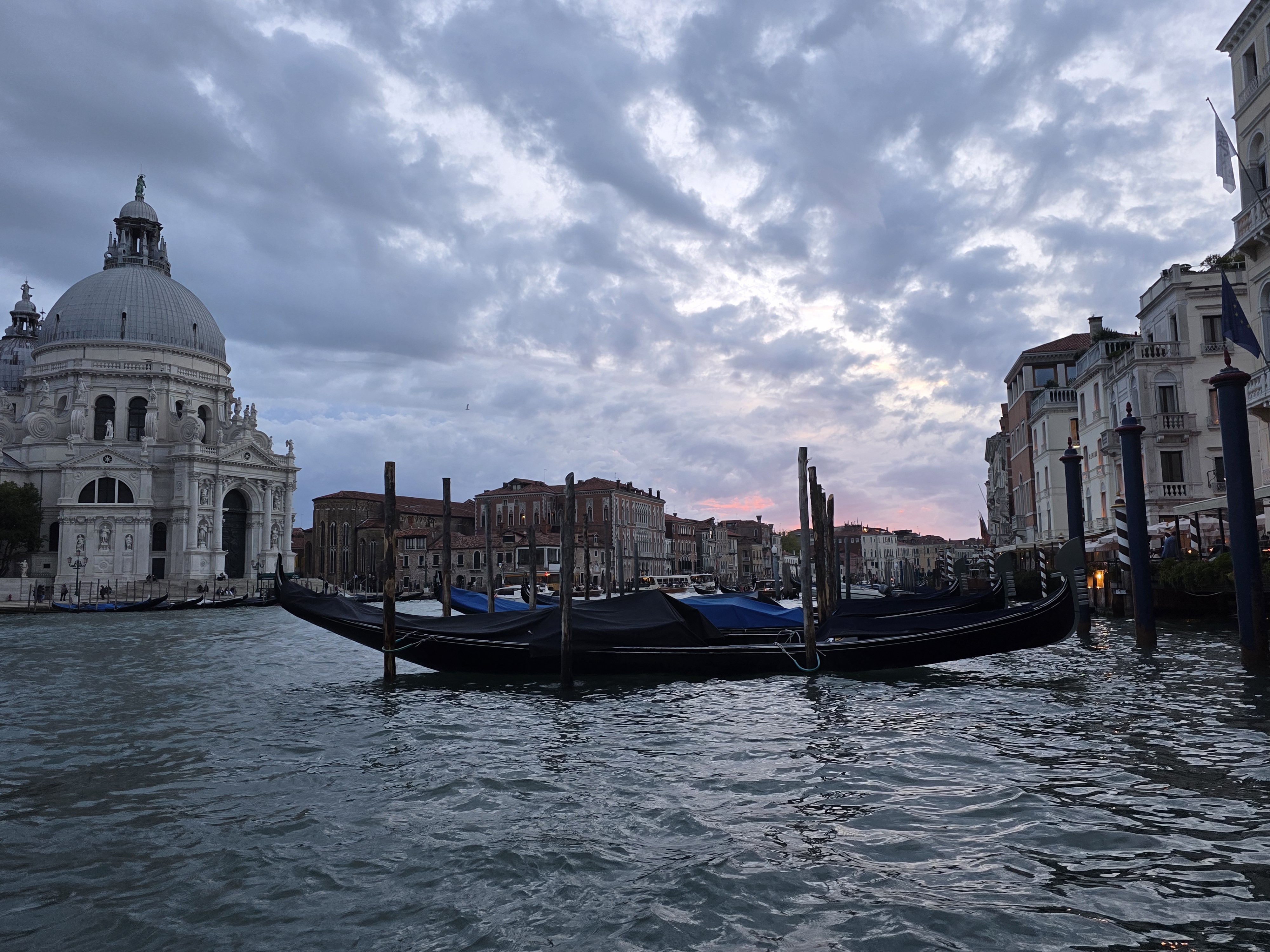
The second day started very early, but luckily the clocks changed today, so I gained an extra hour. I ended up waking at 6am – earlier than I needed to, by the way – and packed my suitcase, since I’m moving to another hotel today, closer to the airport, to make things easier for my very early flight.
To kill some time before breakfast, I decided to take a short walk in the area, especially since I hadn’t actually seen St Mark’s Square yet. I have a tour of St Mark’s Basilica (and a few other landmarks) planned for today, but I wanted to see everything in the morning, before the crowds and before the marathon – which is the reason today’s island tour meeting point was moved.
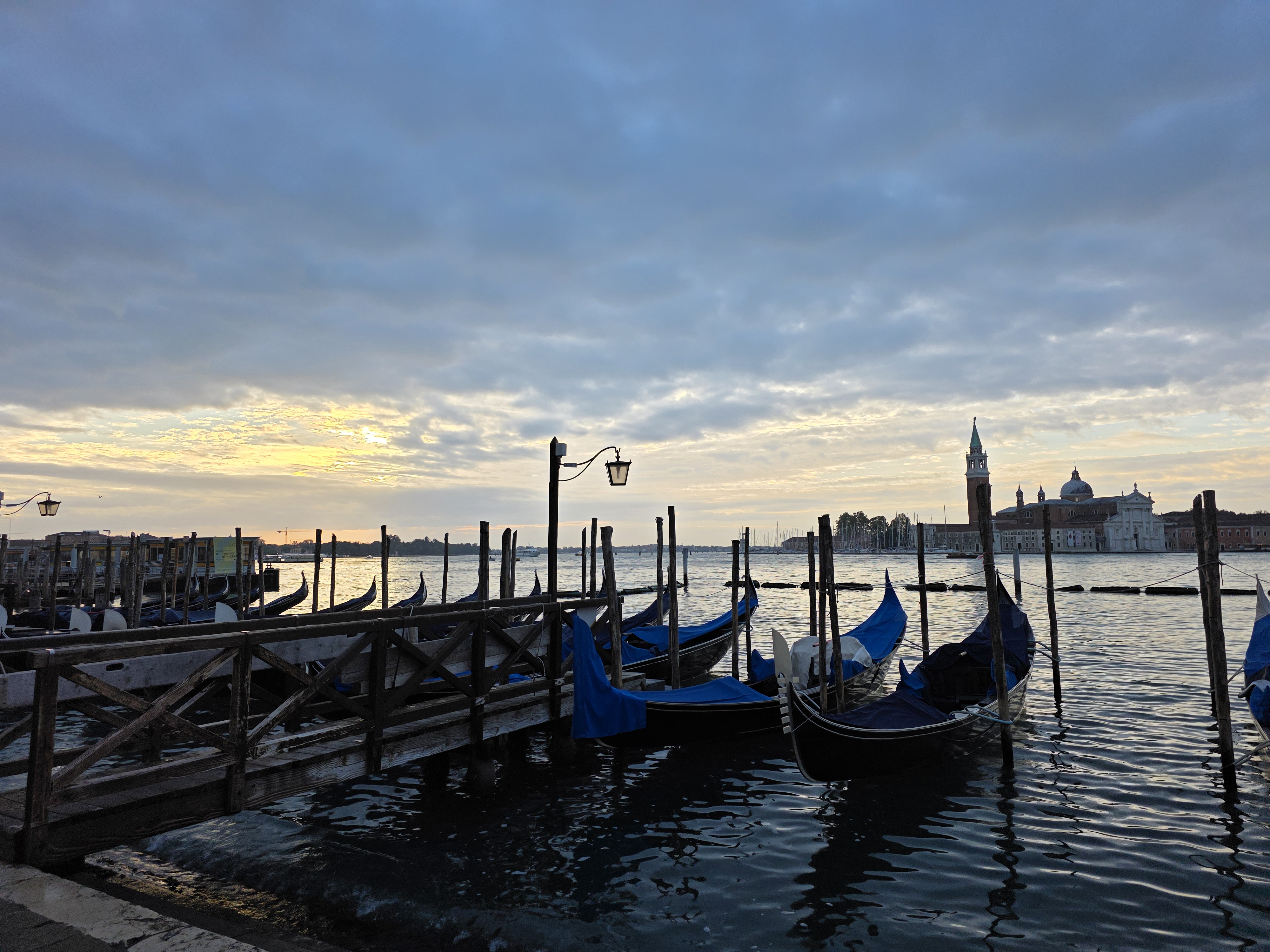
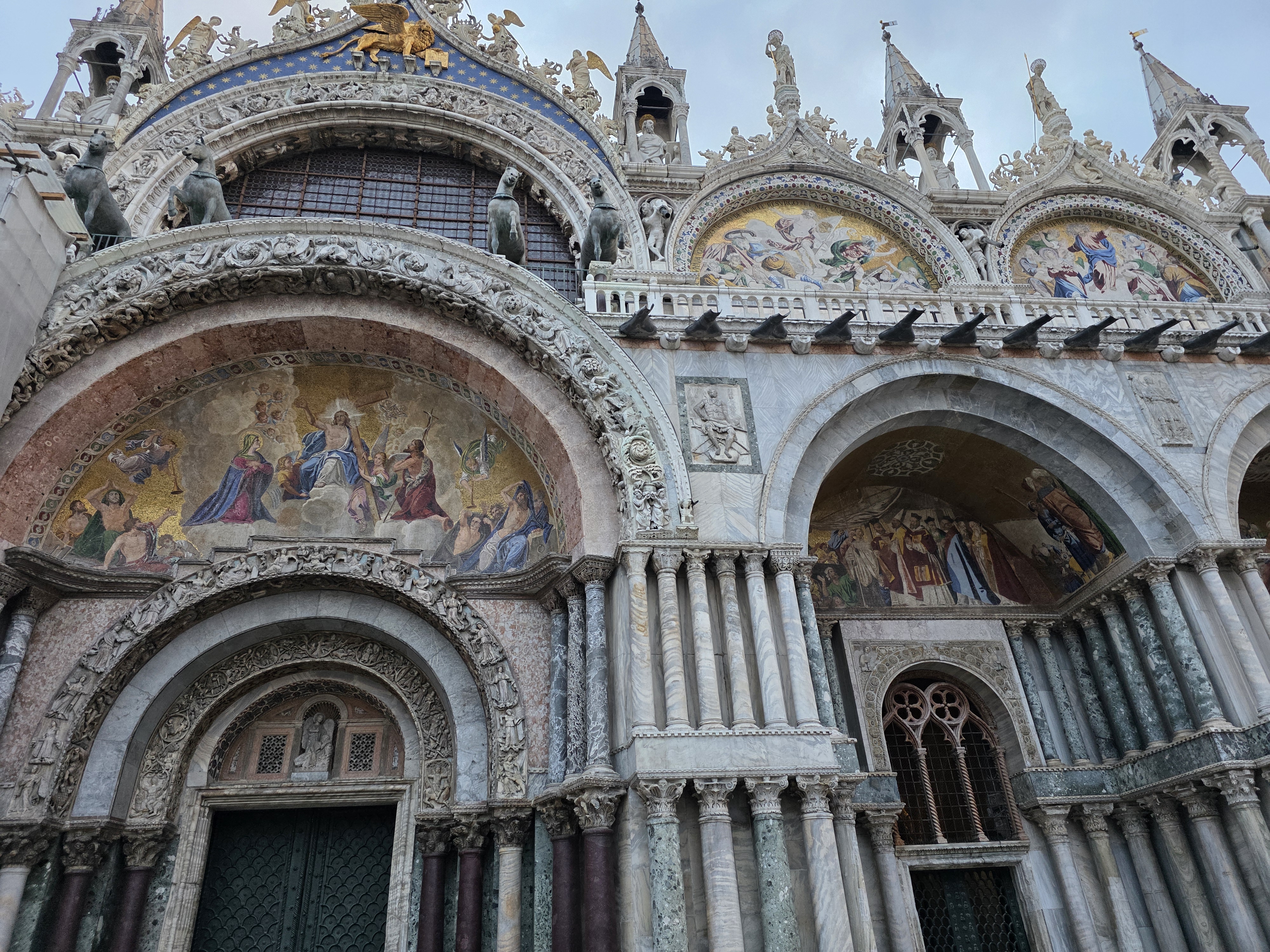
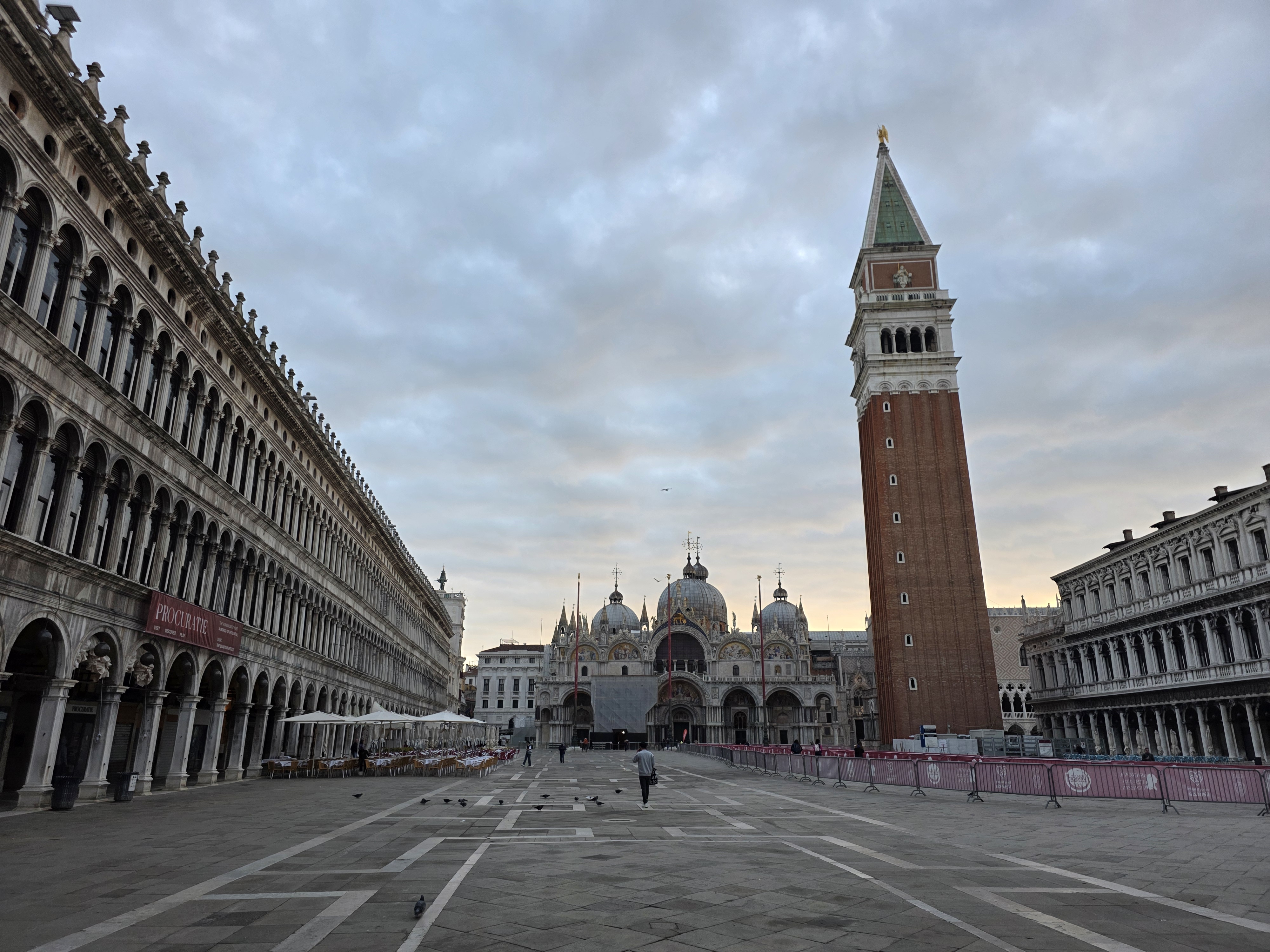
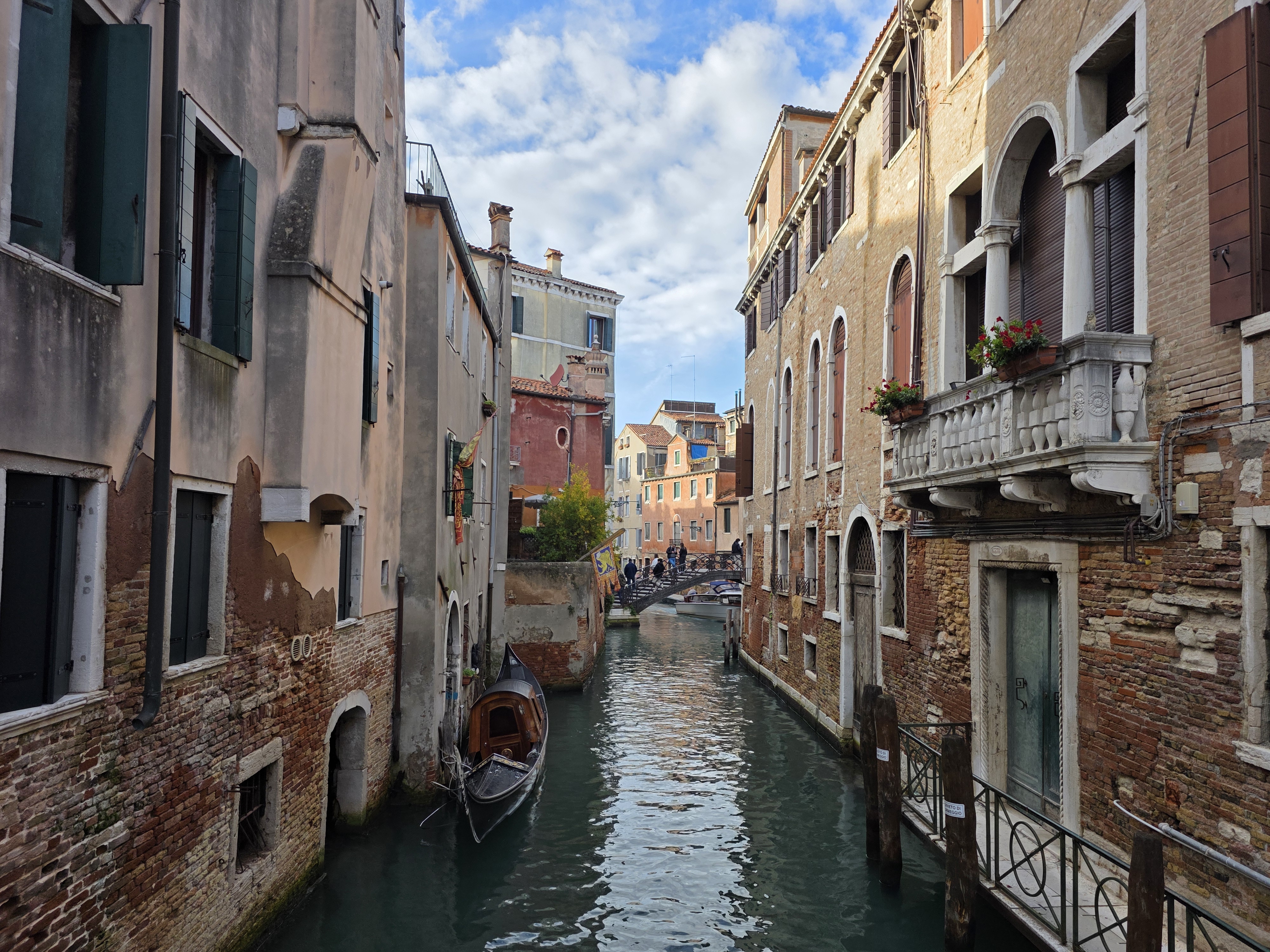
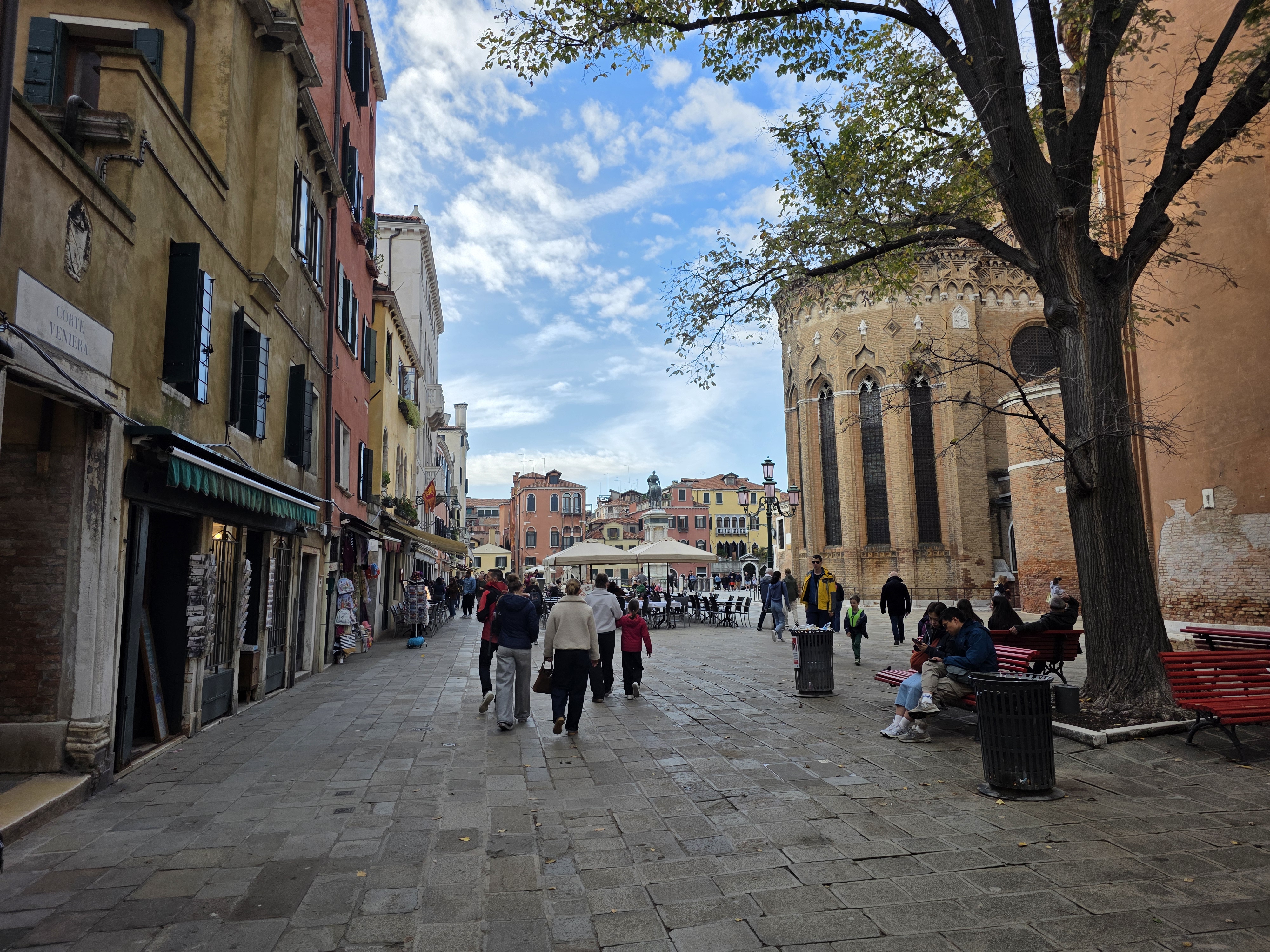
Breakfast at the hotel didn’t strike me as anything special, but it was fine. After breakfast, I left my suitcase in the storage room and set off along the route I already knew toward the statue of Bartolomeo Colleoni. It was a very pleasant walk through early-morning Venice, before the city got too crowded.
I found my group and our guide very easily. The guide – a very nice woman named Serena – shared lots of interesting facts about Venice throughout the journey. For example, that Venice, built on rather marshy terrain, has actually been standing on wooden piles for over 15 centuries, and due to the anaerobic conditions, these piles haven’t just not rotted, but they have basically turned to stone.
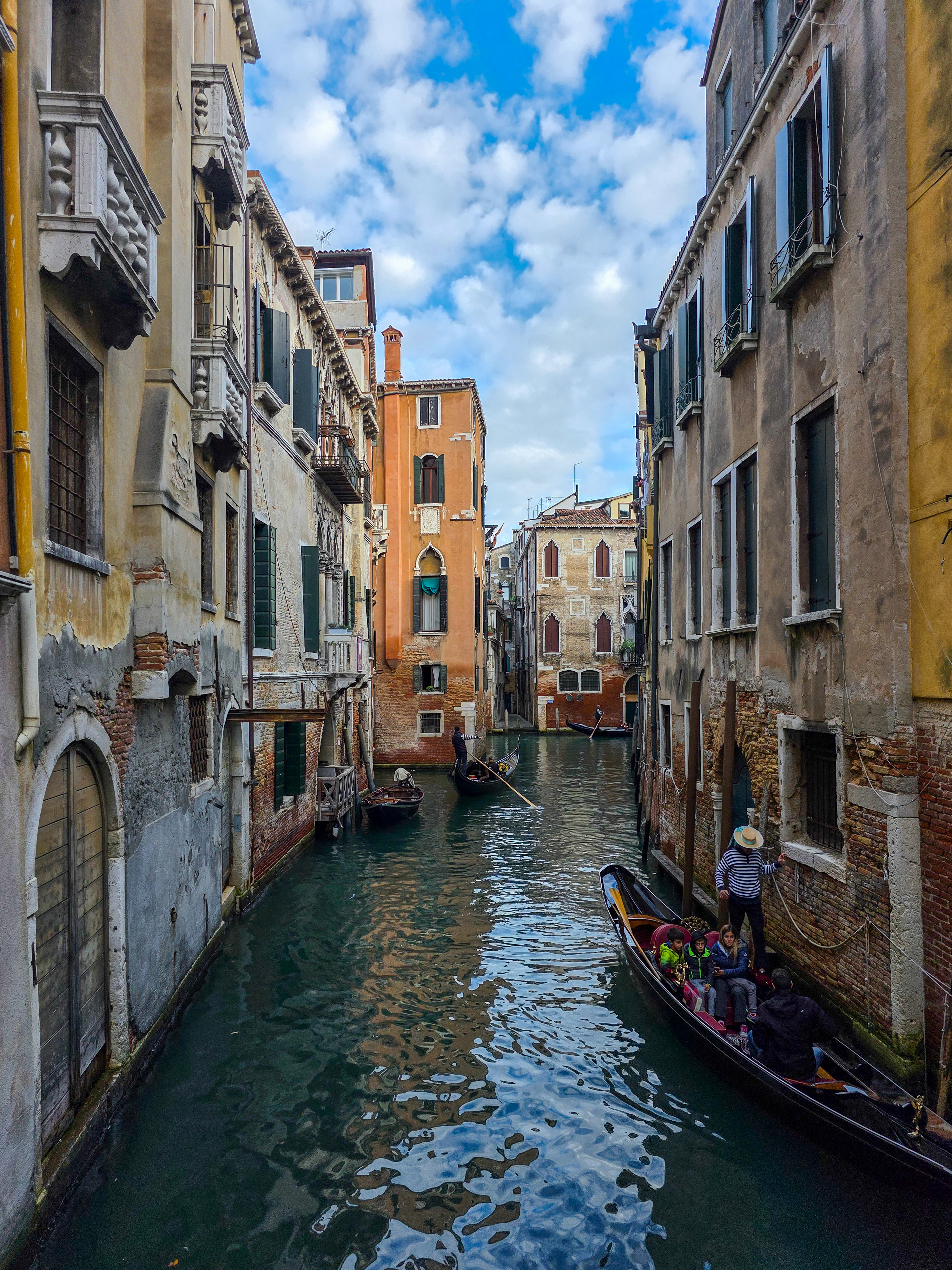
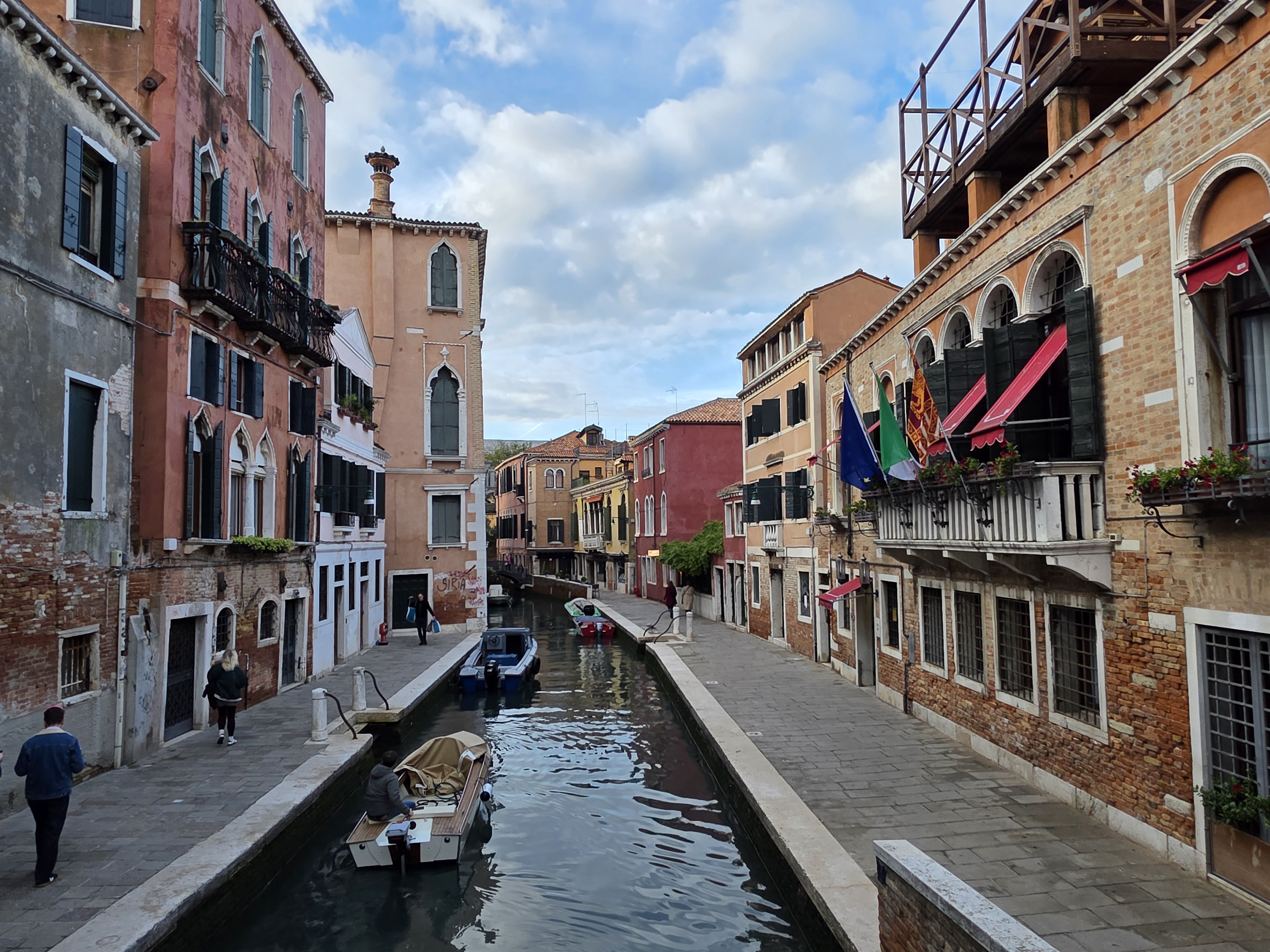
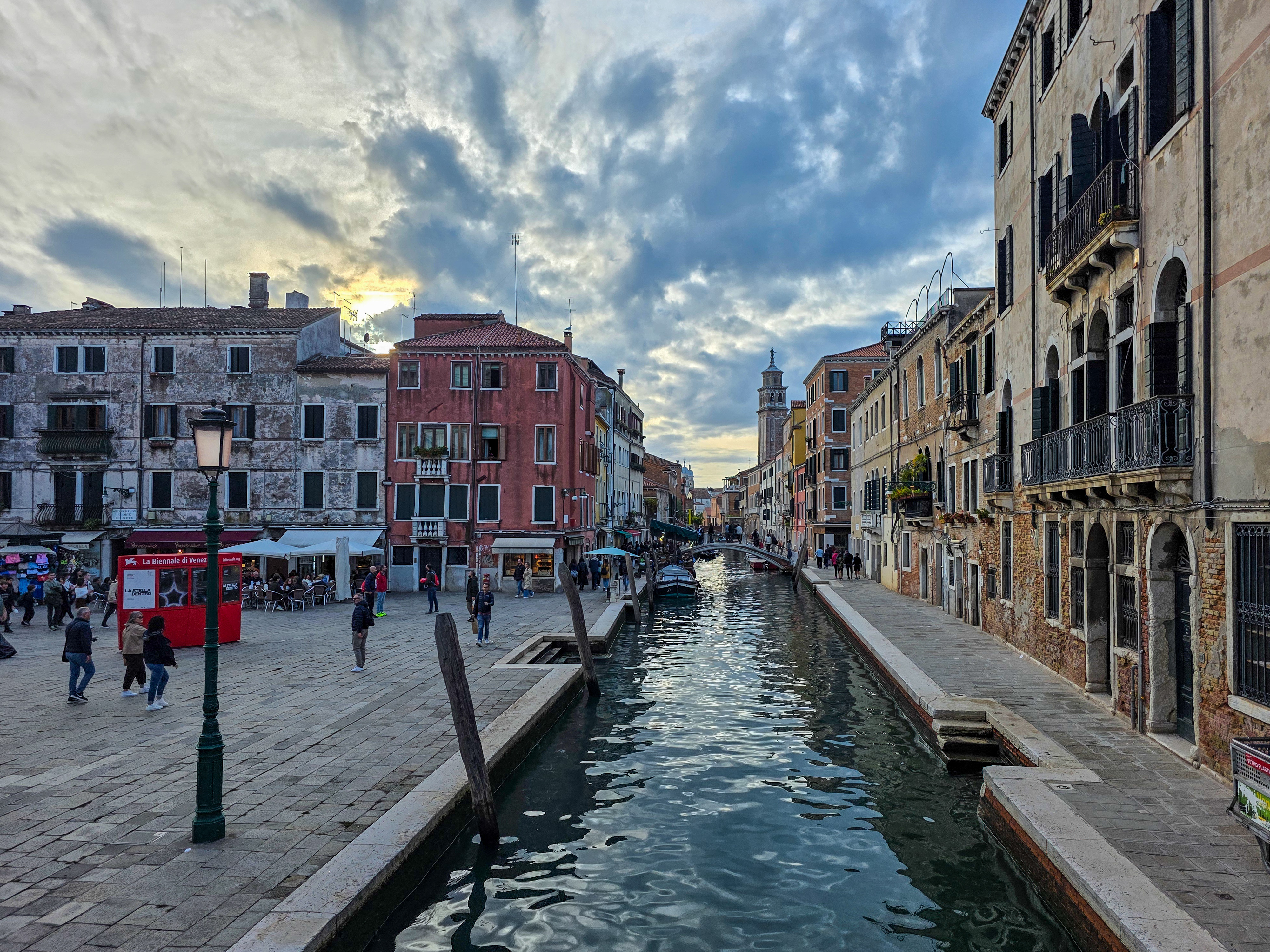
She also mentioned that the “fish” shape of Venice on the map is actually not a single island, but a multitude of smaller ones, each separated by canals, many of which are manmade.
During high tide – the so-called acqua alta – the city sometimes floods, and we’ll come back to that later. But for now, here’s an interesting fact: in 2019, there was one of the worst floods in recent decades (only once in history has the water been higher), which caused significant damage to St Mark’s Basilica. As a result, a super-expensive flood defence system was built, made up of gates and dams – but it’s so costly to operate that it’s only used in absolute emergency cases.
Apparently, in recent years there’s also been a trend of residents moving out of the city to the mainland and renting their homes out on Airbnb, because, firstly, it’s become expensive to live in Venice; secondly, it’s overcrowded with tourists; and thirdly, it’s simply inconvenient to live on a massive pedestrian-only territory, where you can’t even get close to your house with e.g. heavy shopping bags. So, there’s a real risk that in the near future, Venice will essentially turn into a giant open-air museum.
Meanwhile, listening to all these fascinating stories, we arrived at the island of Murano, world-famous for its glassmaking – I think everyone’s heard of Murano glass.
On the way, Serena pointed out some tiny islands – some with abandoned monasteries, one with an active monastery (where you can stay overnight, but only for spiritual purposes), and another with a Michelin-starred vineyard that produces the very expensive Venissa wine from slightly salty local grapes.
As for Murano glassmaking, the glass furnaces were originally moved here from Venice proper, both for fire safety reasons and to maintain strict secrecy of the techniques. We were taken to a workshop – on Sundays, the industrial furnaces don’t operate, but they still do demonstrations for tourists. First, the master glassblower (yes, he actually blew glass using a blowing pipe) made a vase for us – and to show how hot it was, the guide threw a piece of paper inside and it instantly burst into flames. Then, without blowing, the master made a small glass horse in under five minutes.
We were told that most shops in Venice claiming to sell Murano glass are actually selling fakes, whereas here, at their showroom, everything is authentic and comes with a certificate. Well, who am I to resist buying a couple of pieces of jewellery?
With some time left before the boat, I tried walking to the centre of the island, but there was nothing interesting there at all, so I quickly returned.
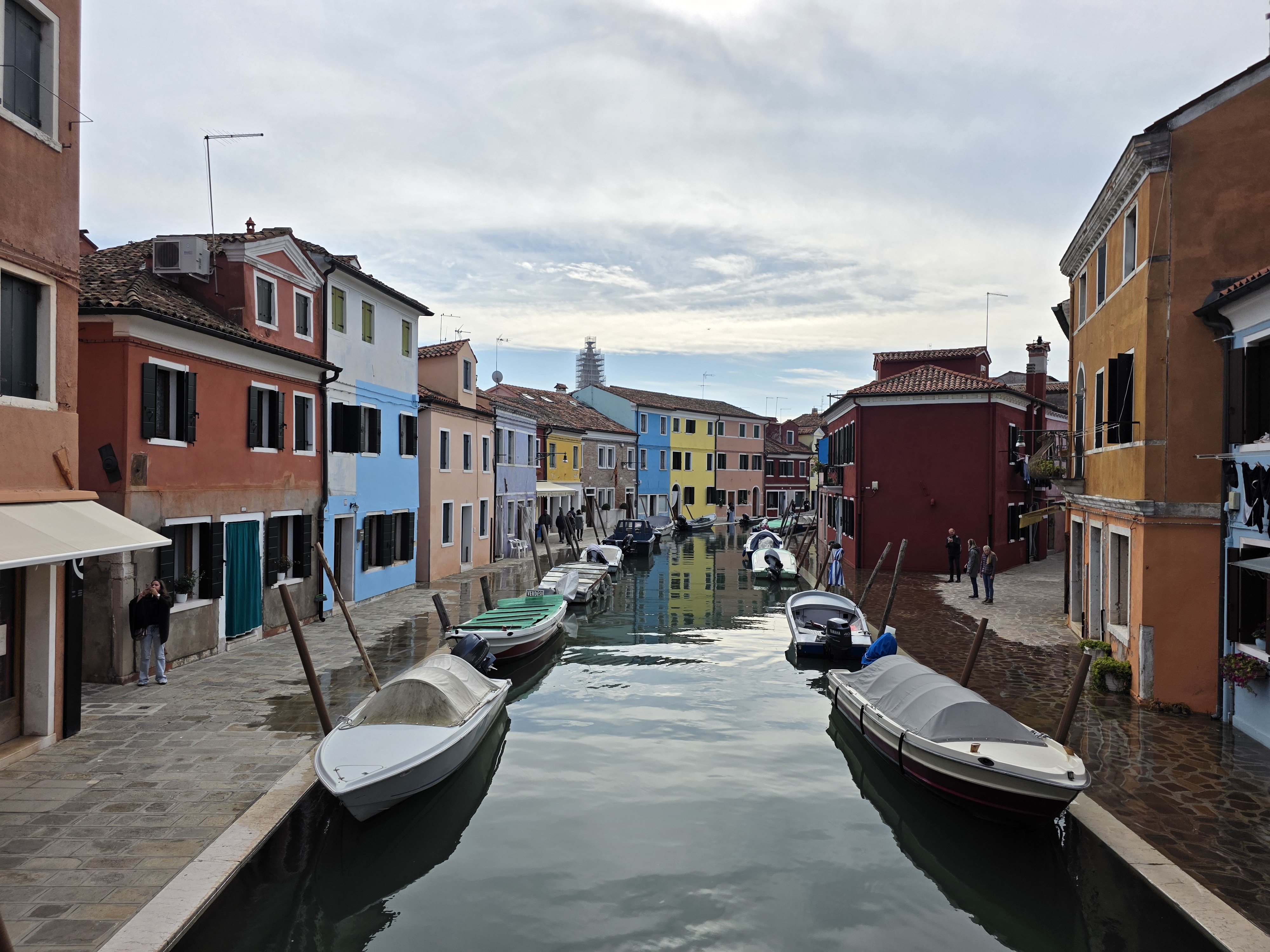
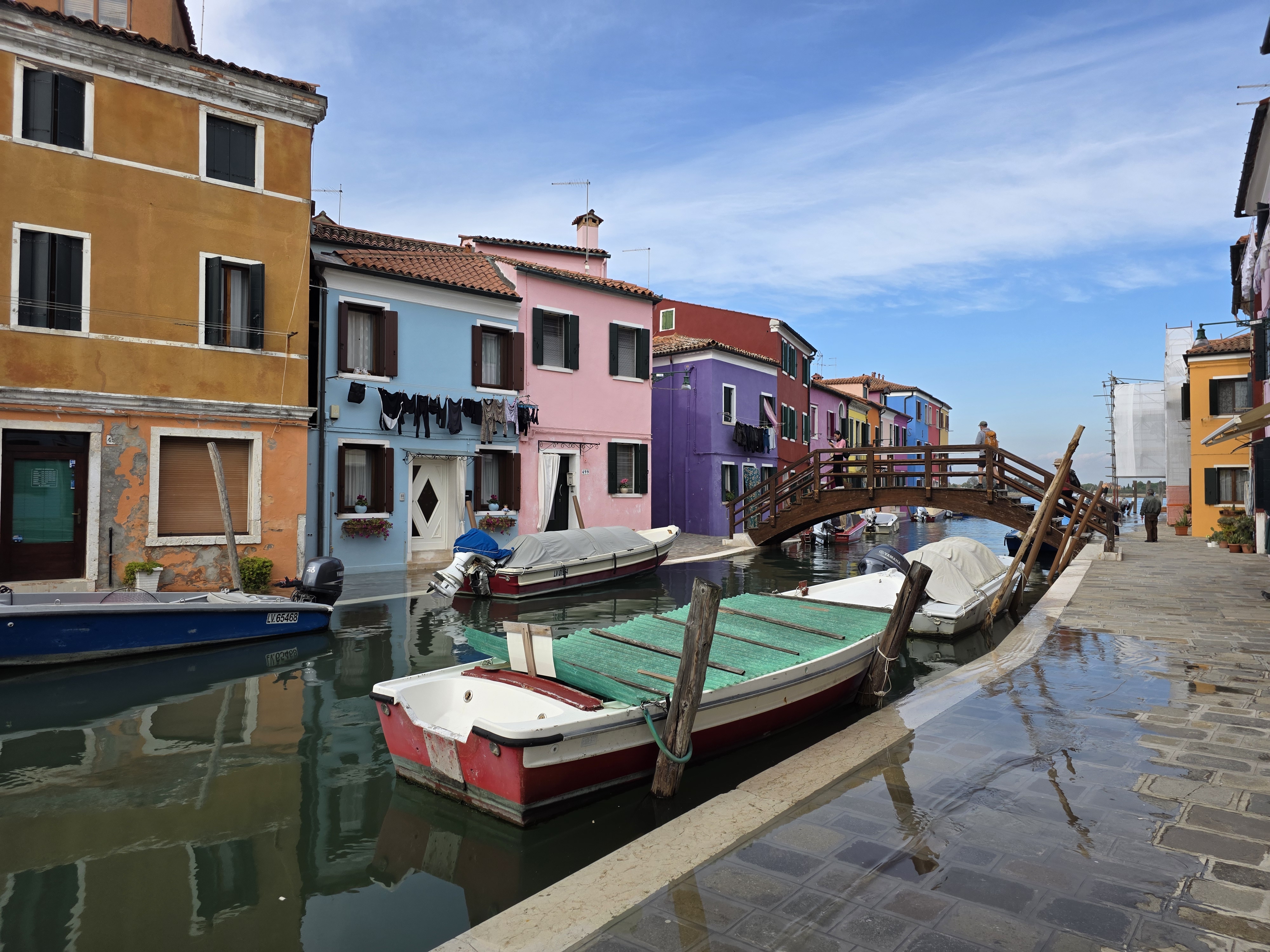
From Murano we went to Burano. This one was a much more picturesque island. Originally a fishing village, it’s known for its colourful houses. One theory says the houses were painted bright colours so fishermen could easily find their homes; another says it helped distinguish between families with the same surname. In any case, all houses really are painted different colours, and you’re not allowed to repaint them.
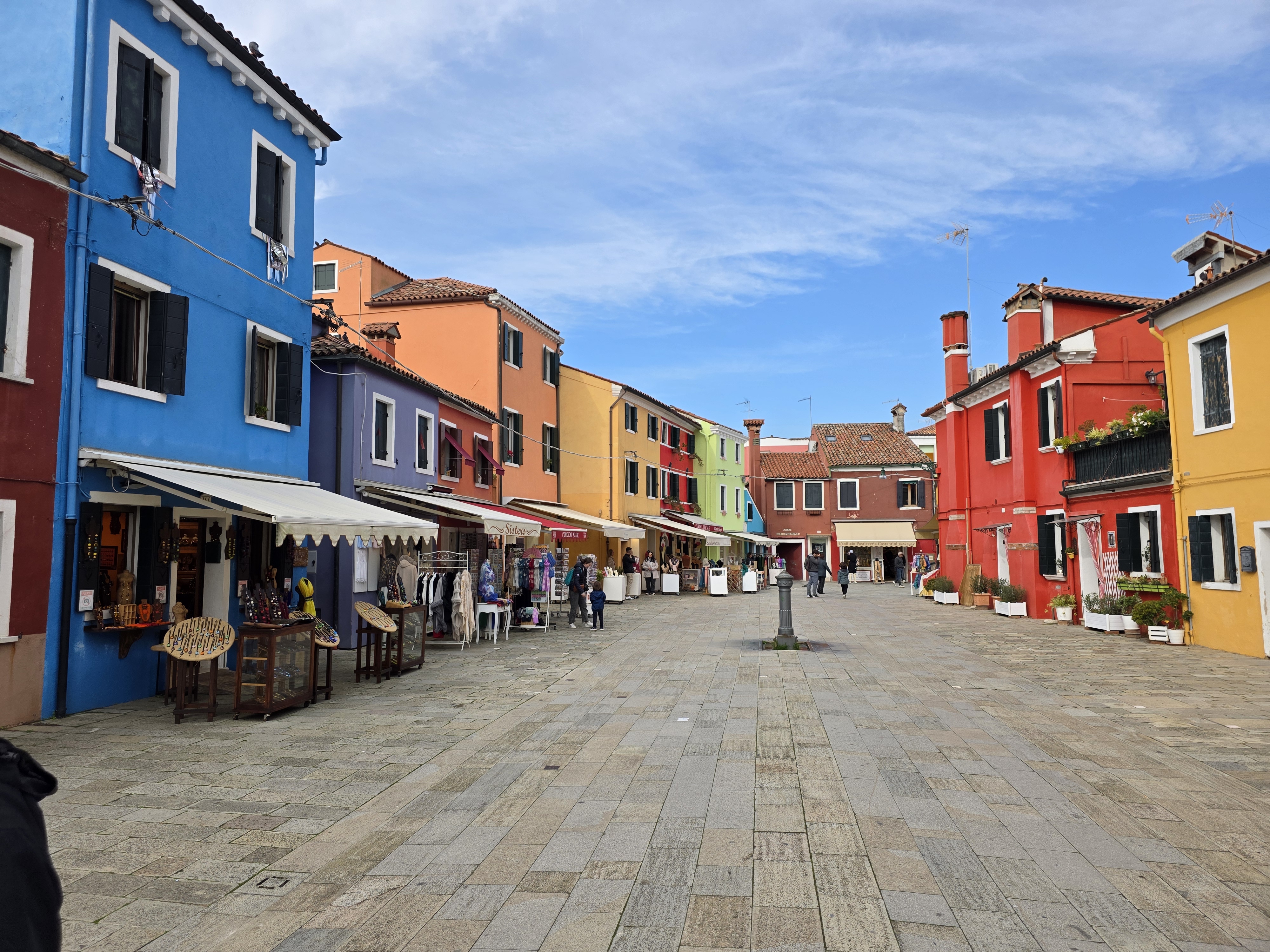
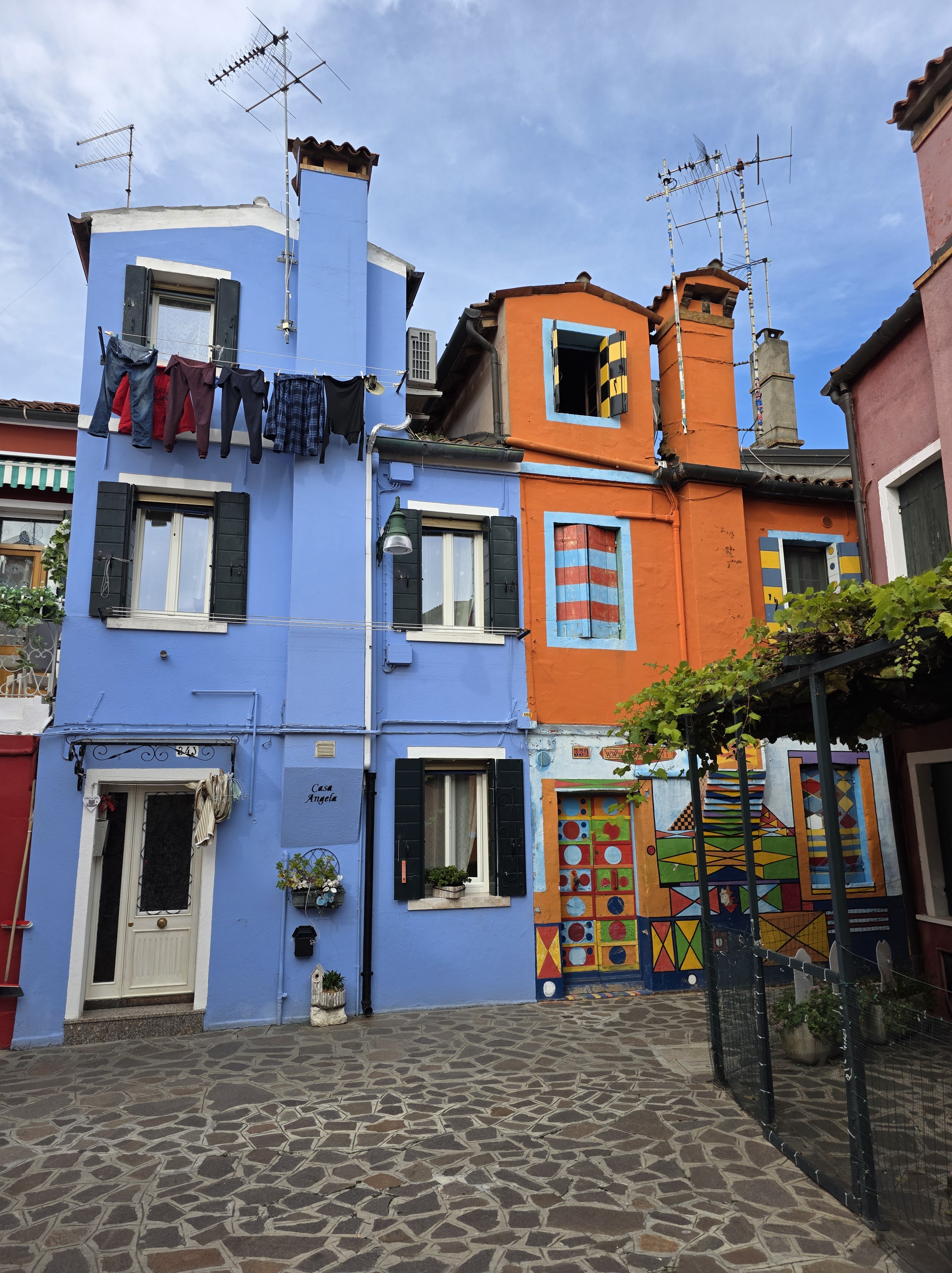
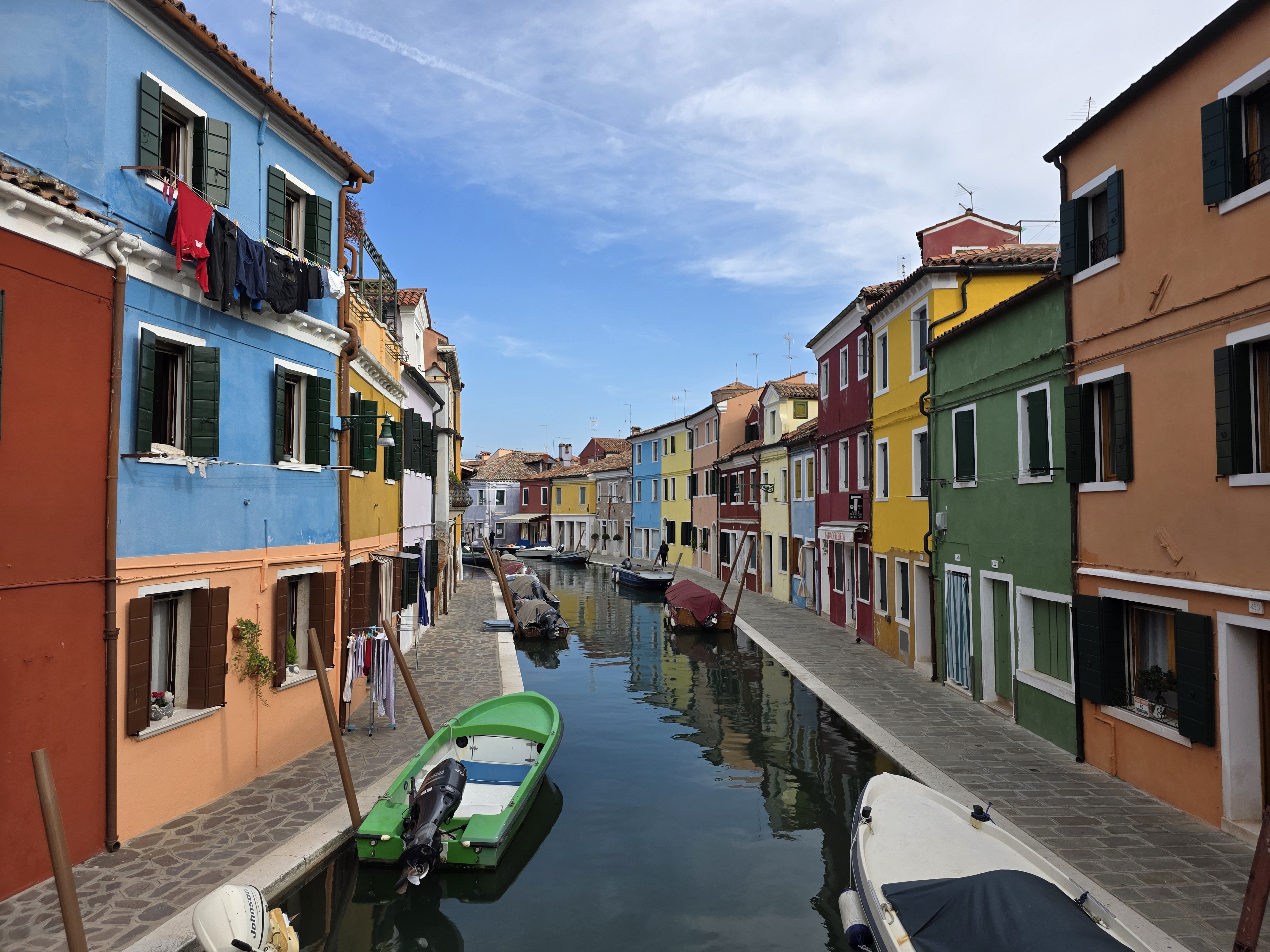
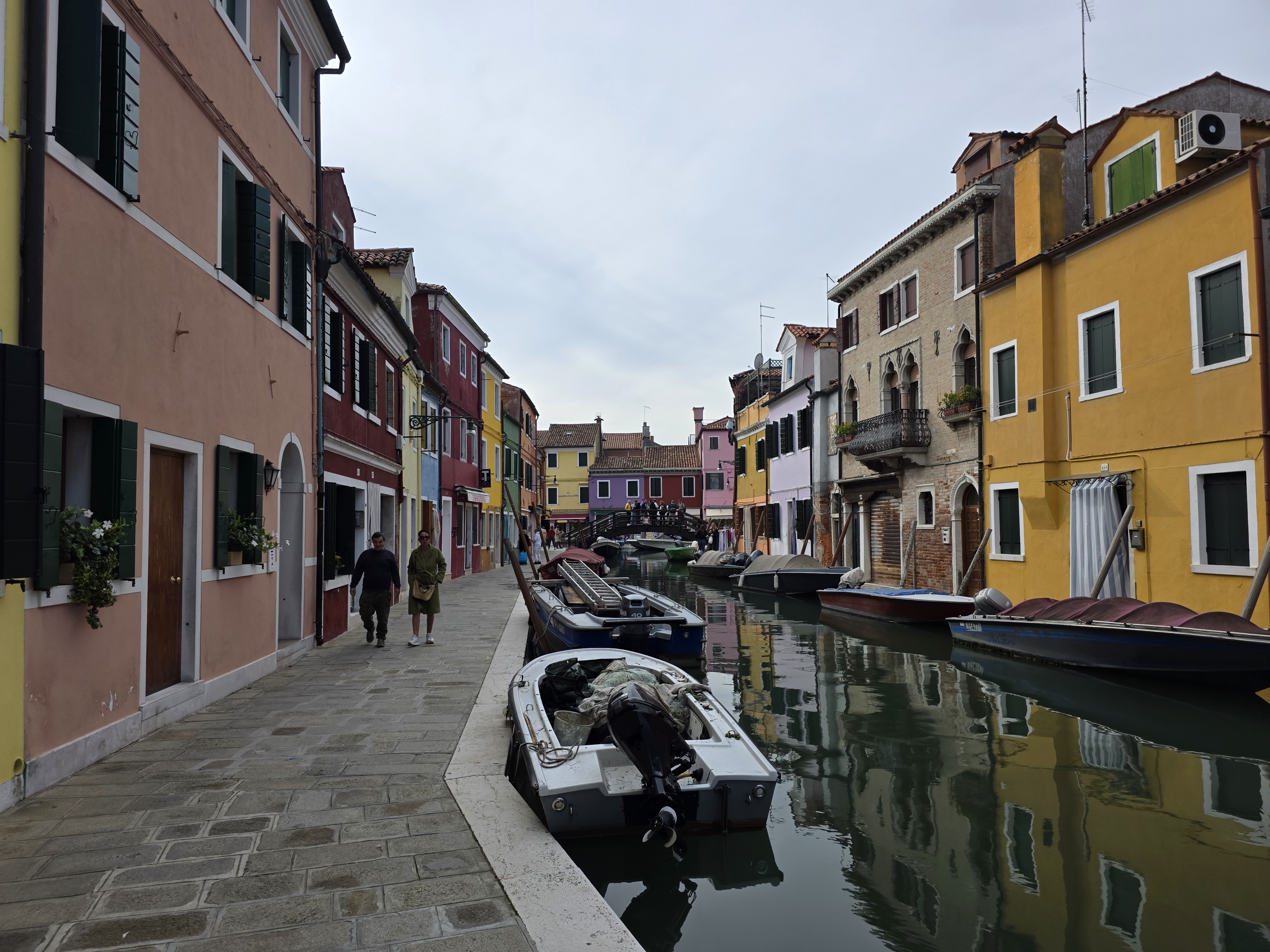
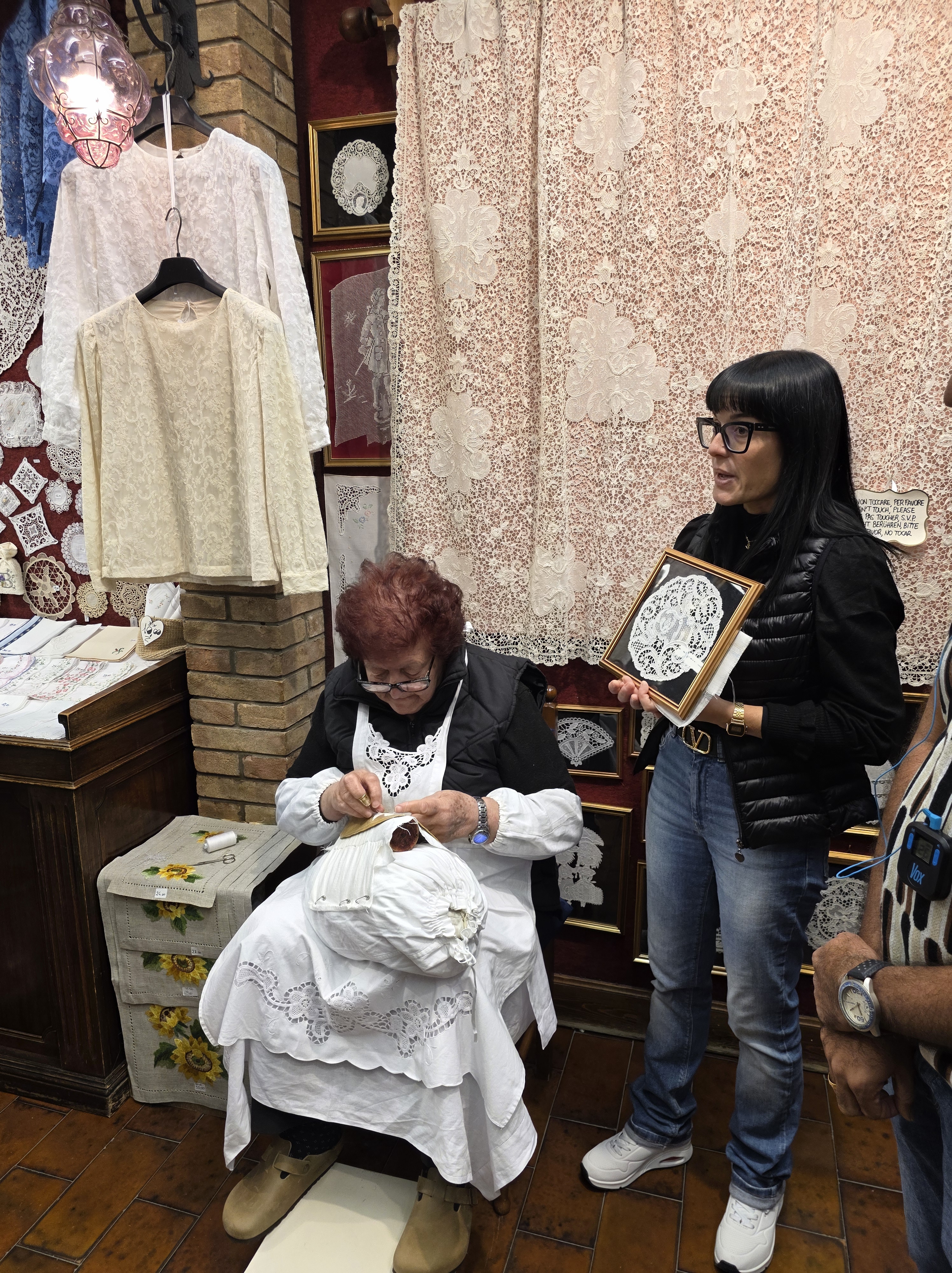
Burano is also famous for its lace, but sadly this craft is dying out, because the youngest lacemakers are already over 70, and the new generation isn’t interested in such painstaking manual work. We were taken to a lace shop where we saw one of these elderly lacemakers at work. We were told that each lacemaker specialises in a specific type of stitch.
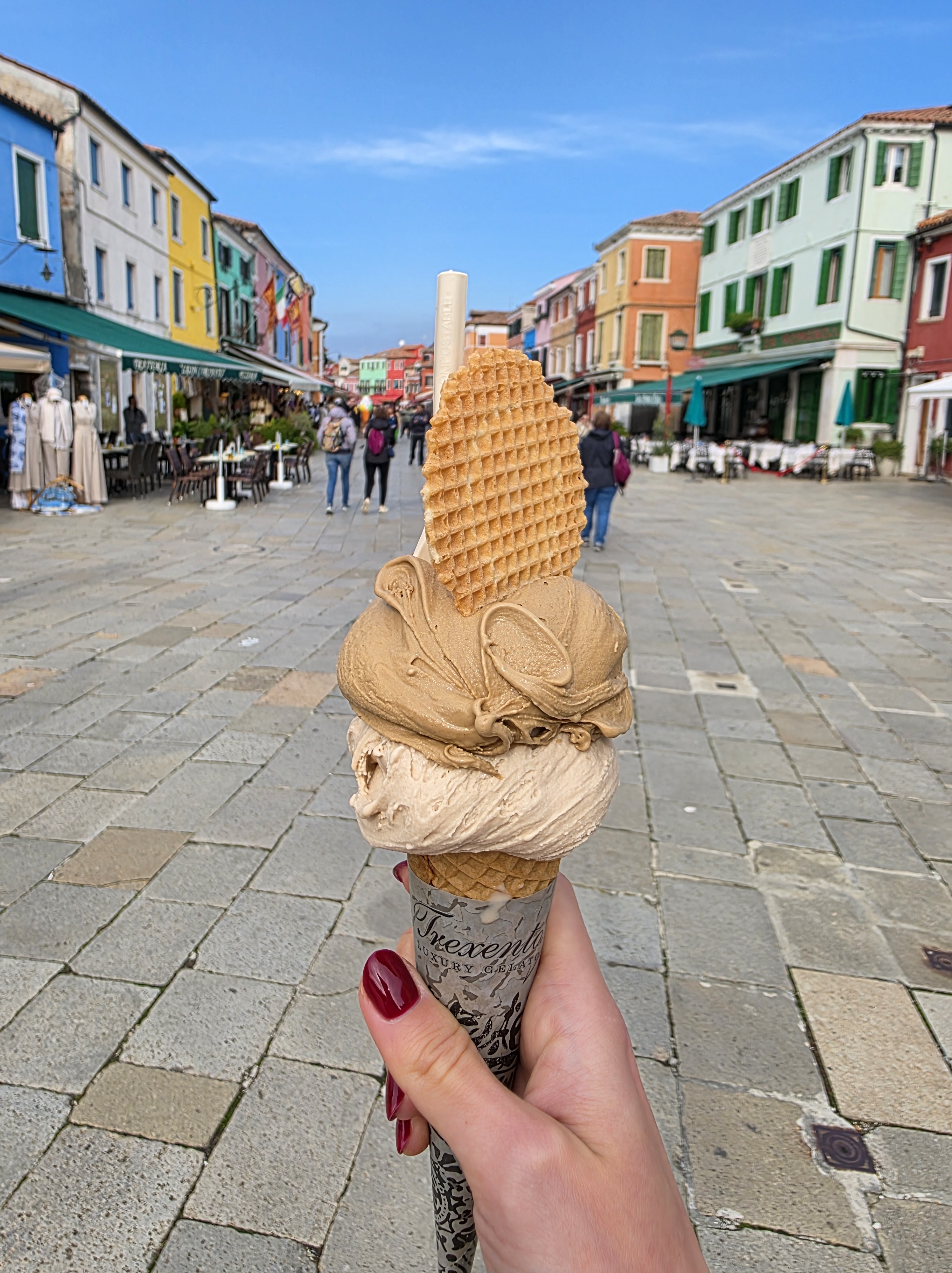
Then we had about an hour of free time. Serena strongly recommended trying the local biscuits, but I didn’t feel like biscuits – instead, I treated myself to a big coffee and hazelnut gelato, had a coffee, and went for a walk and took photos.
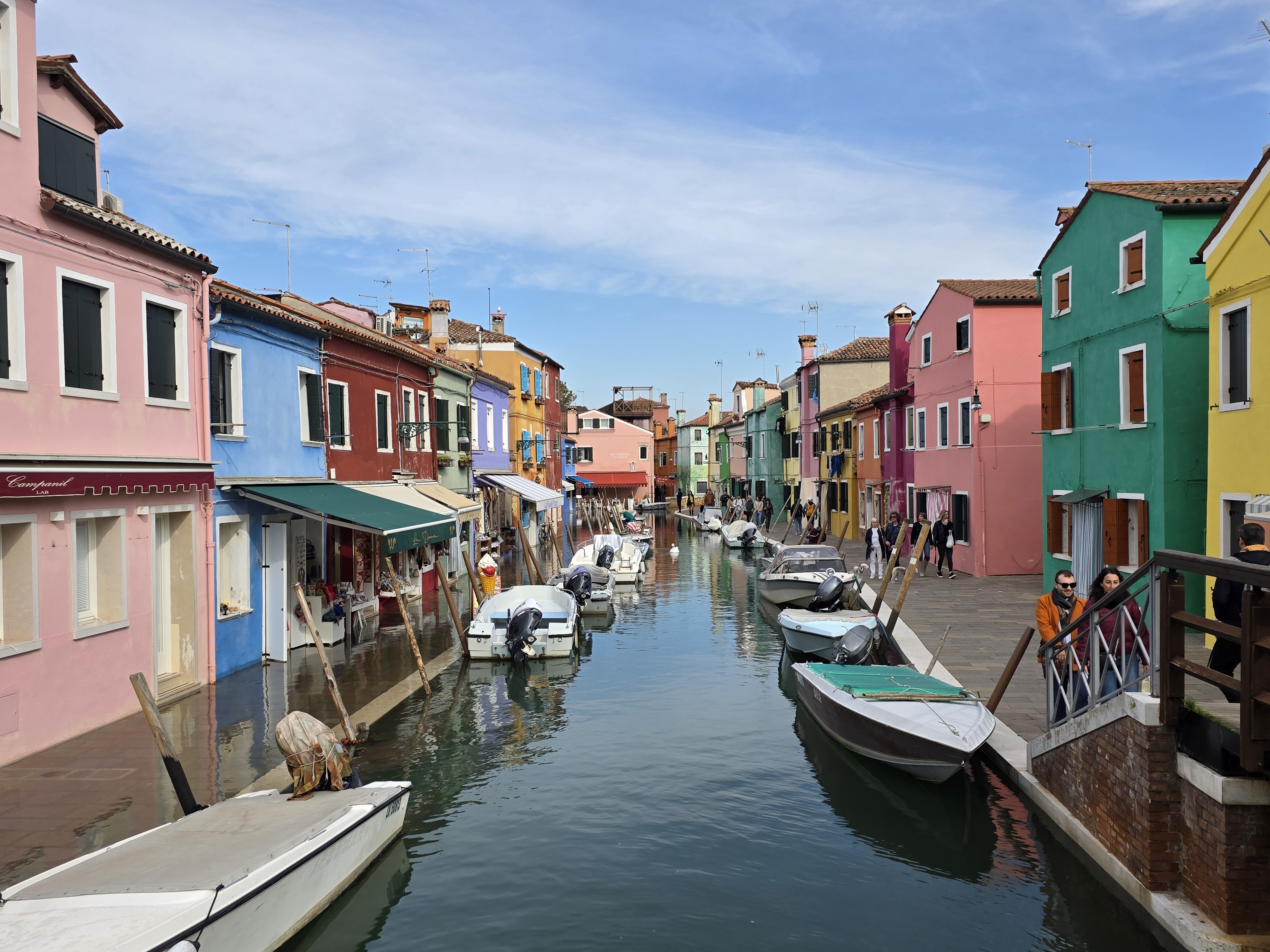
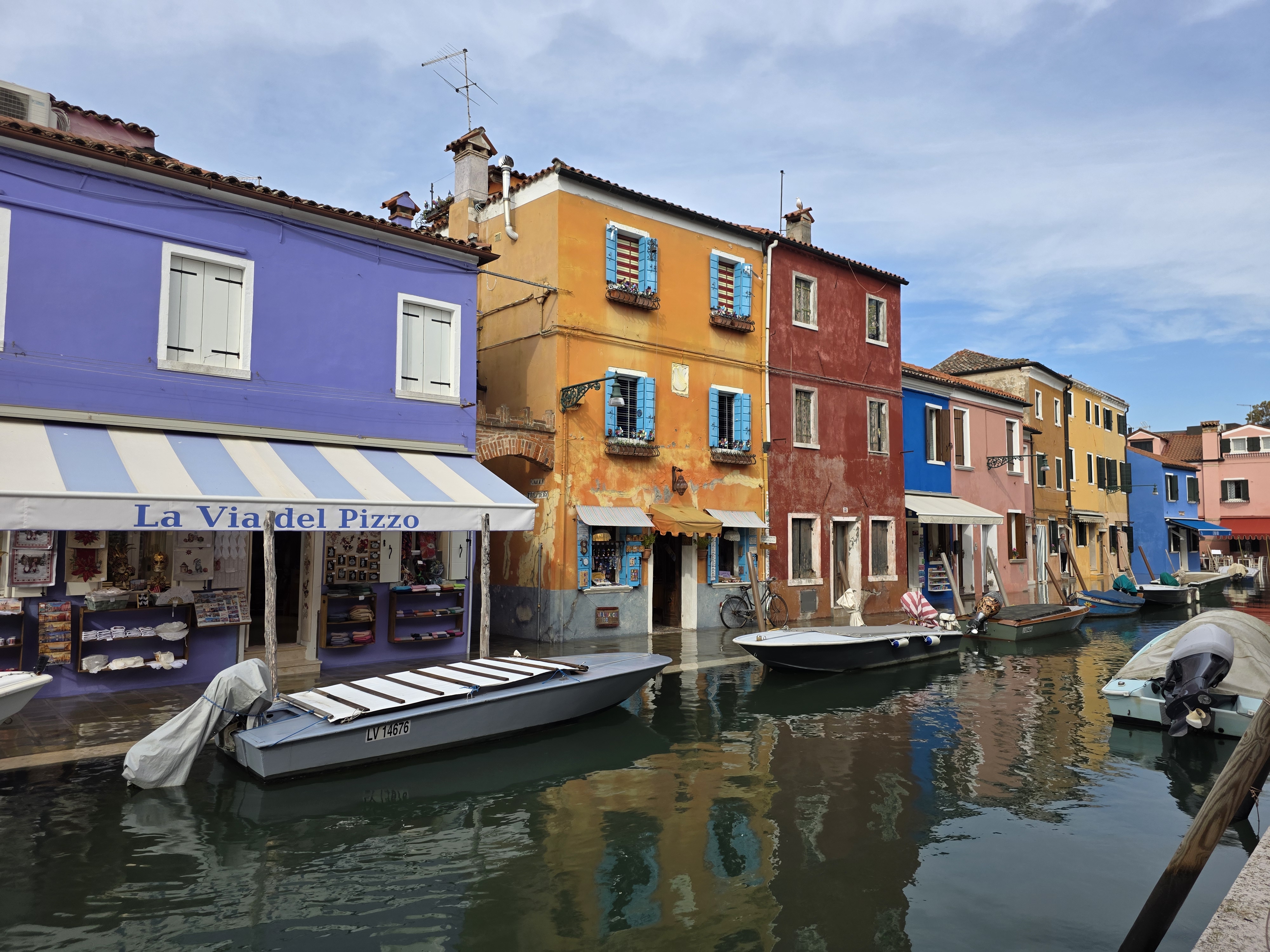
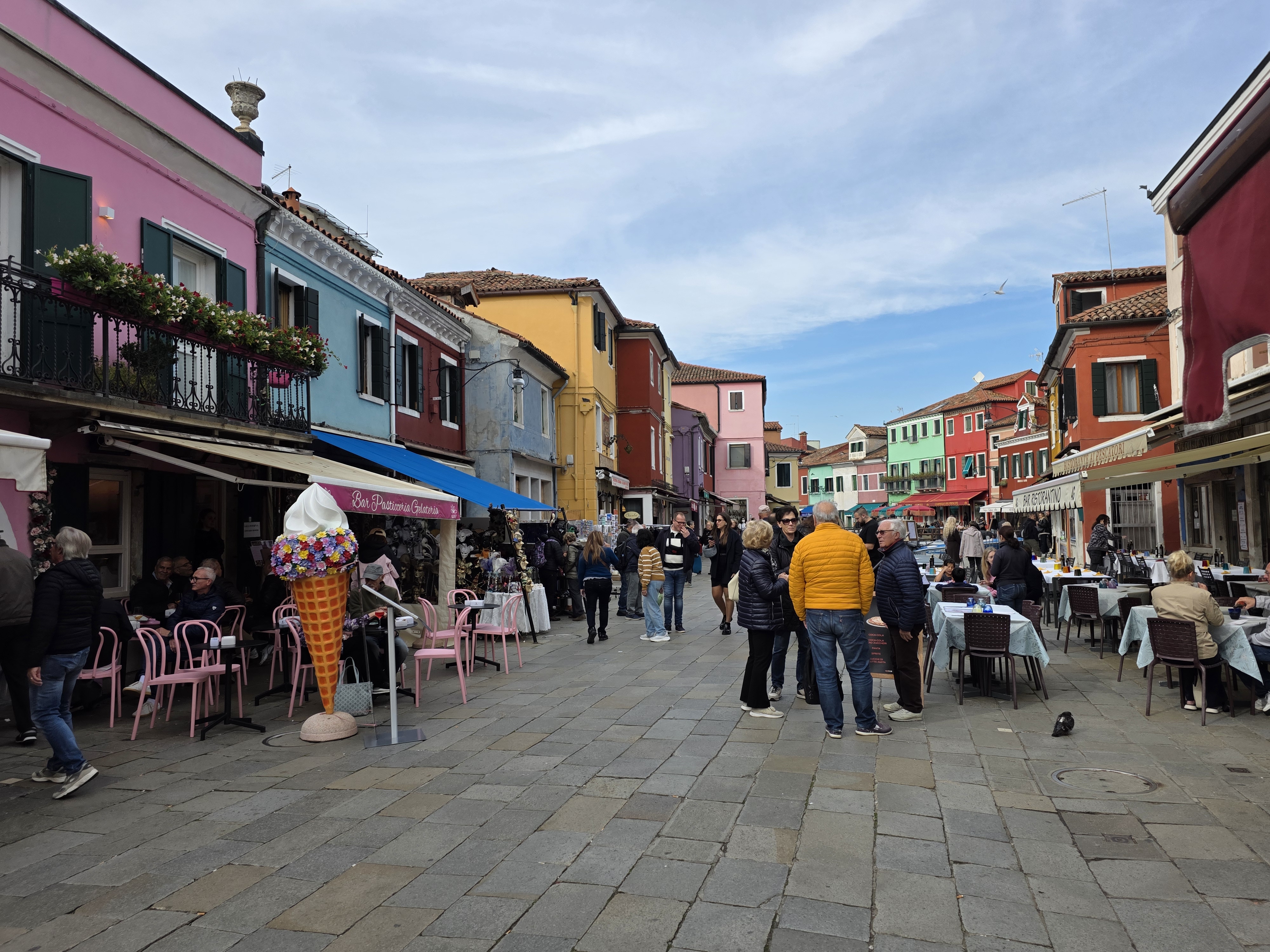
We came back to Venice around lunchtime, and I went to a well-reviewed pizzeria – but to be honest, I can’t say it was the best pizza I’d ever had. Maybe pizza just has to be eaten in Naples, or maybe I just ended up in an overrated tourist spot.
After lunch, I headed to the Basilica to make it in time for my tour. And good thing I went early, because I saw firsthand what acqua alta actually looks like! I’d already noticed on Burano that the canals were starting to overflow, with water coming out of manholes.
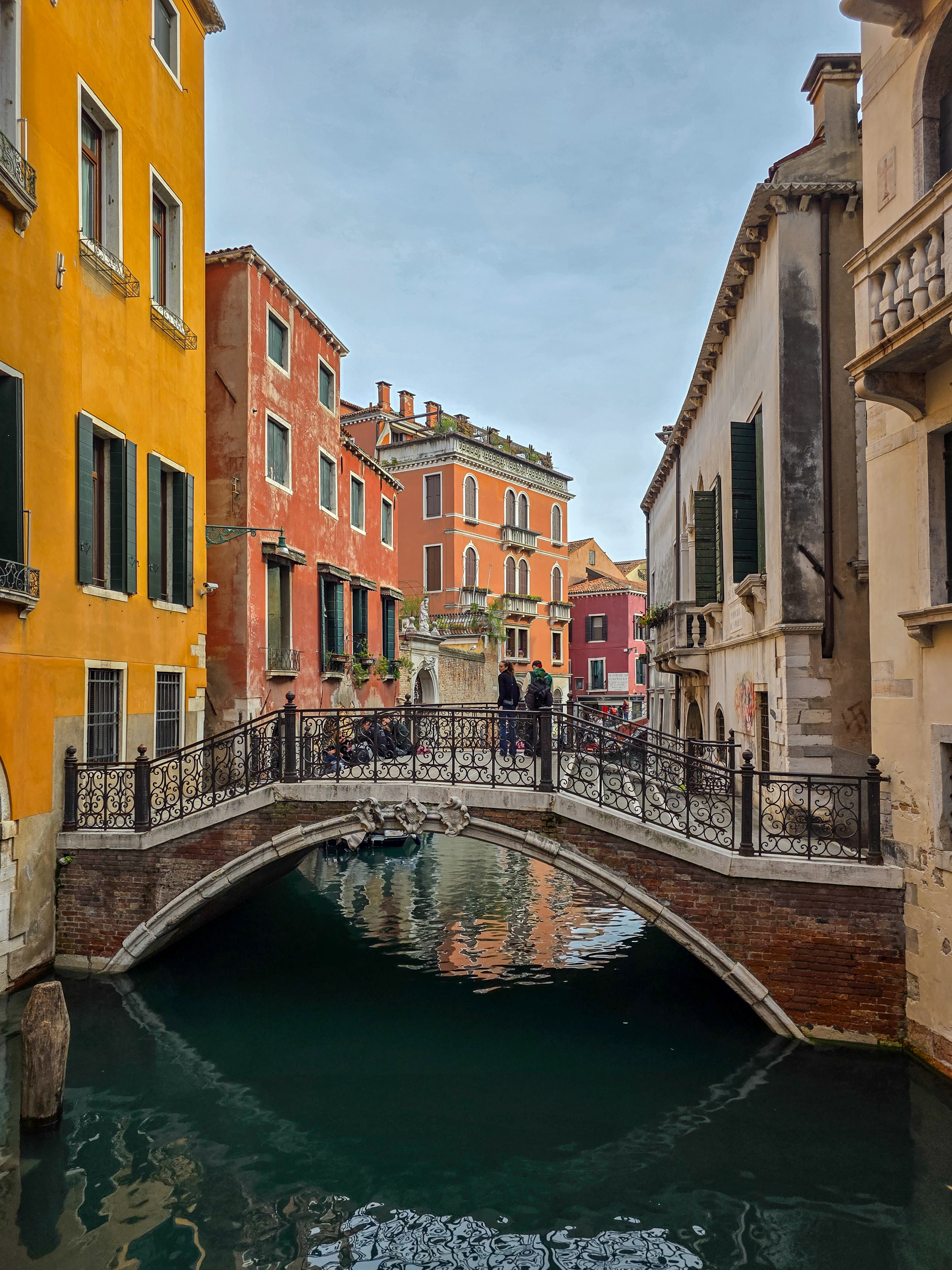
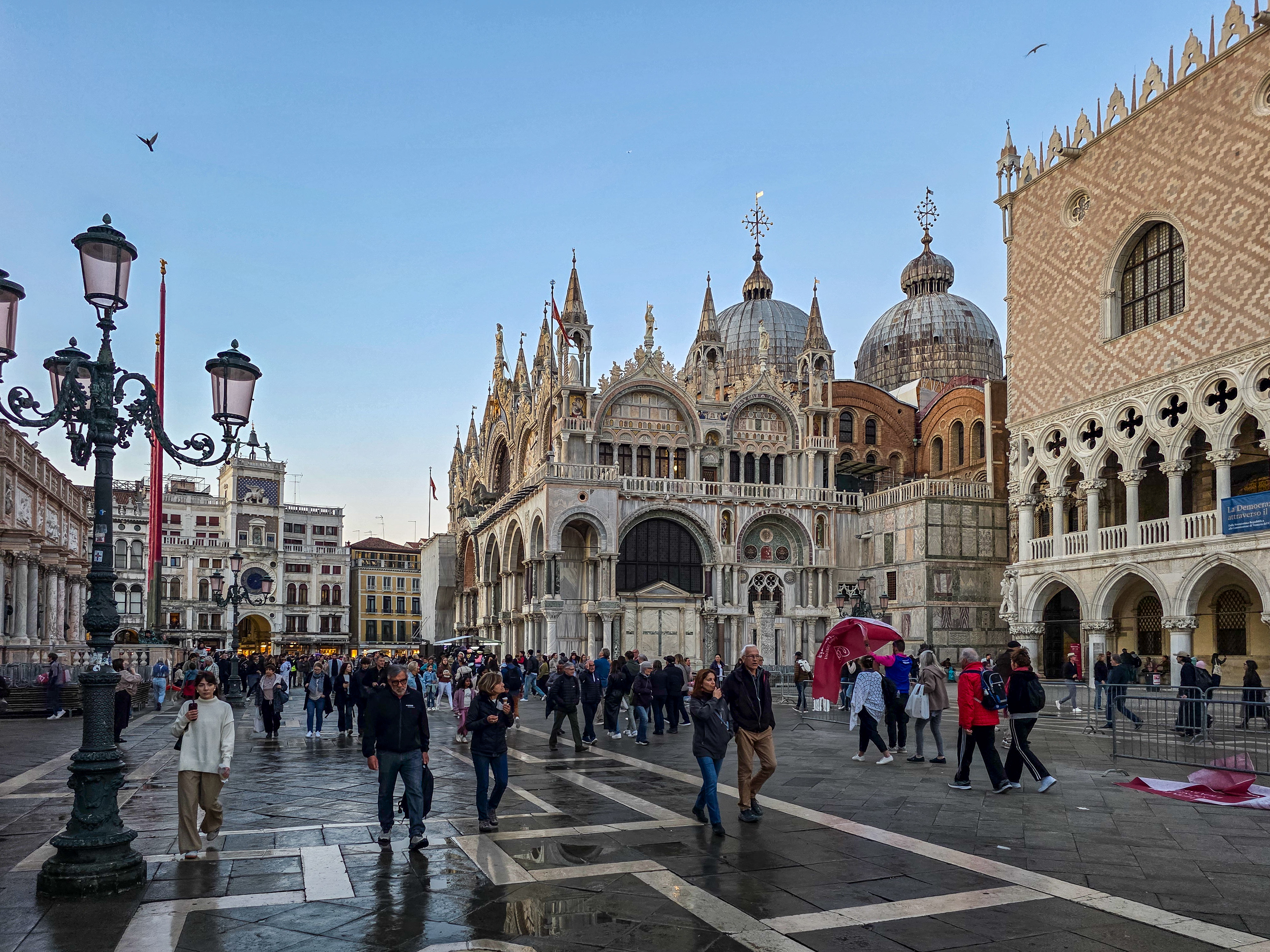
Well, the same thing was happening in St Mark’s Square, which is the lowest point in Venice. It was seriously flooded – the slowest marathon runners were still finishing the race, while in some parts of the square the water was already ankle-deep or more. And all this without a single drop of rain, purely from the tide. It was impossible to reach the Basilica without getting your feet wet, and I couldn’t get across the square to the tour meeting point – I had to go around the perimeter and still got a bit soaked.
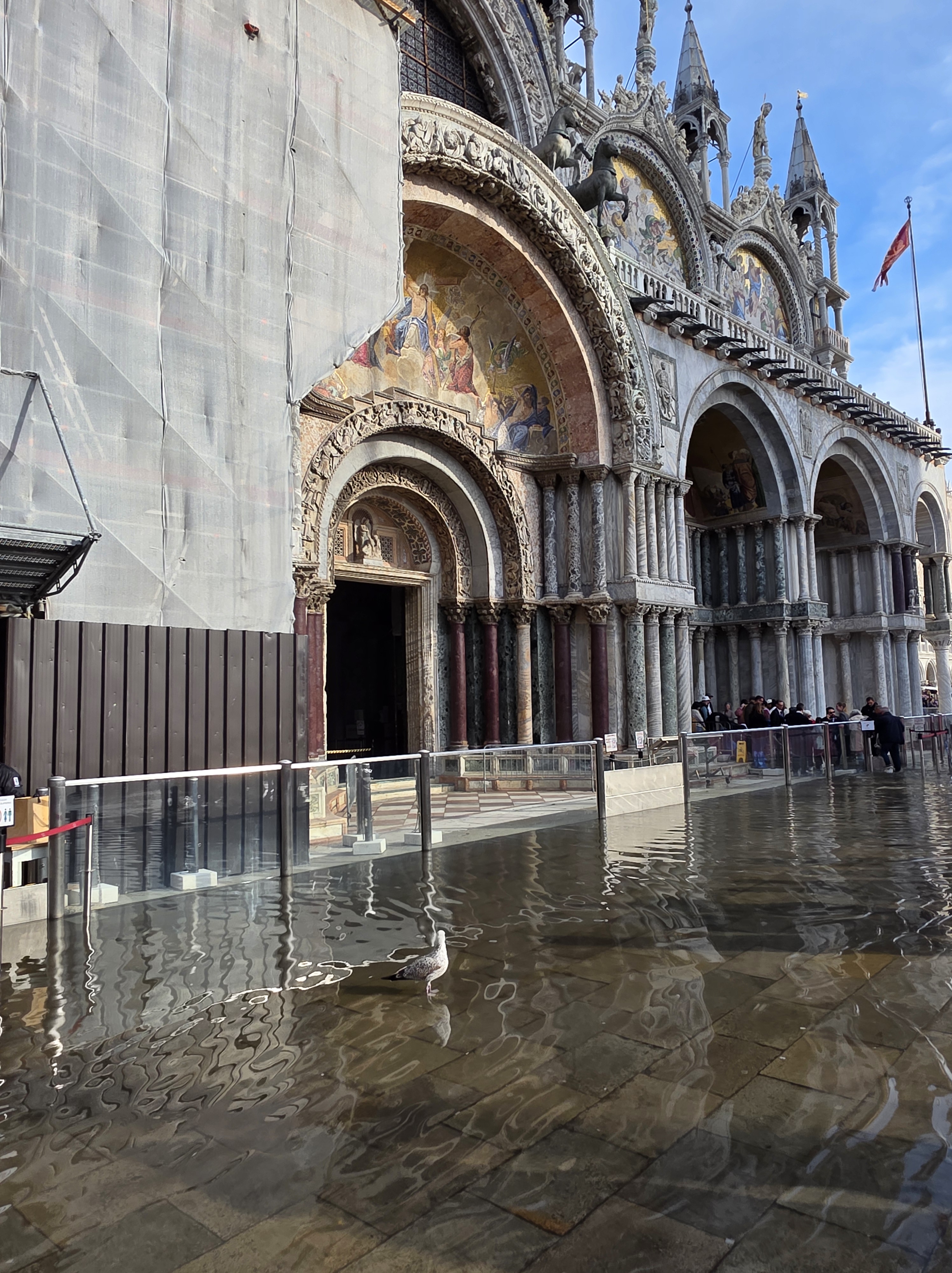
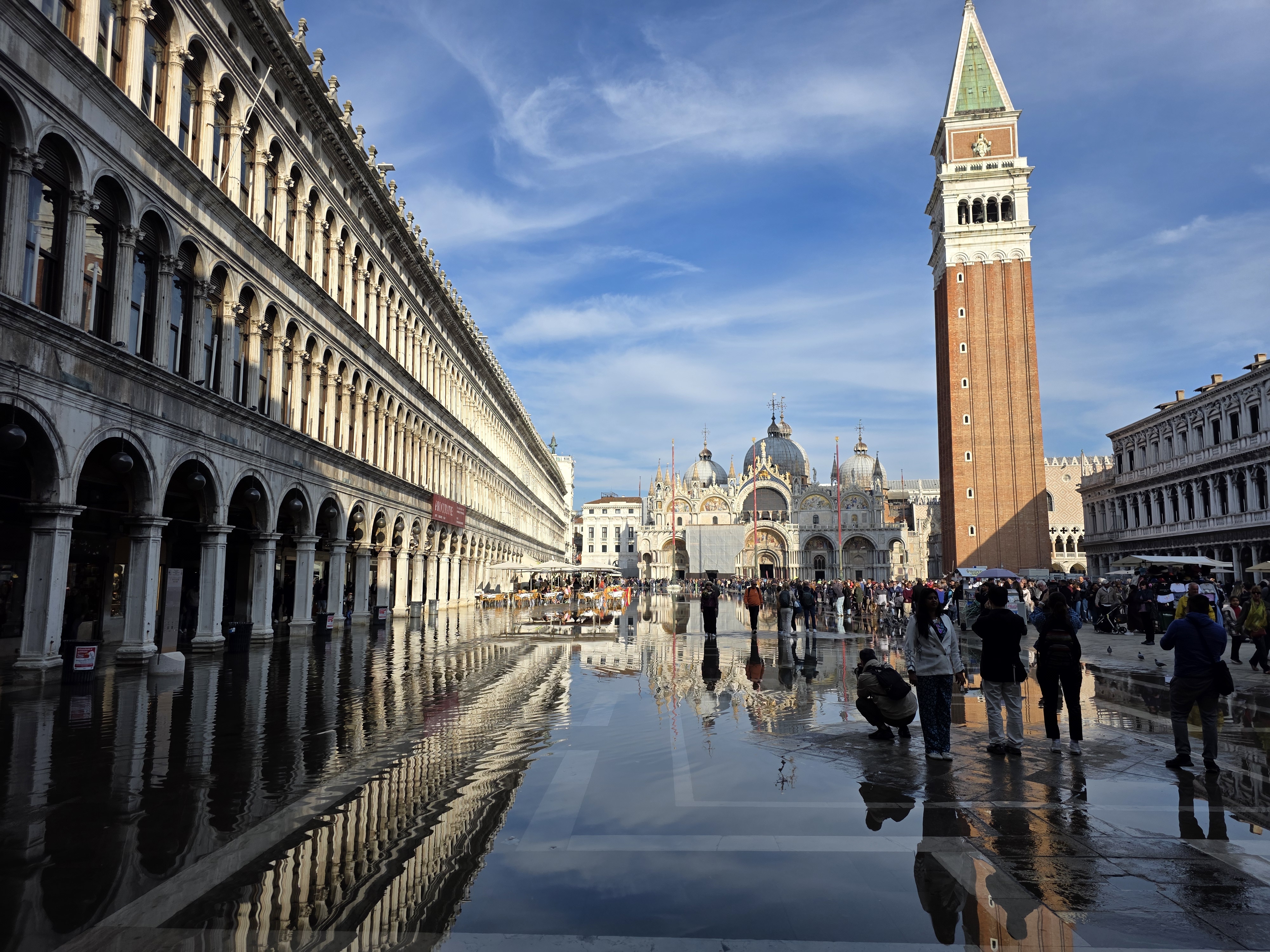
There were quite a few kiosks on the square where enterprising vendors – the ones normally selling scarves to visitors who forgot to cover their shoulders for religious buildings – suddenly pulled out some kind of plastic overshoes or knee-high boots (clearly, this is a common occurrence!) and started selling them. Our guide said we’d have to walk through water to get into the Basilica, so we’d be better off either taking our shoes off or buying those covers – I did the latter.
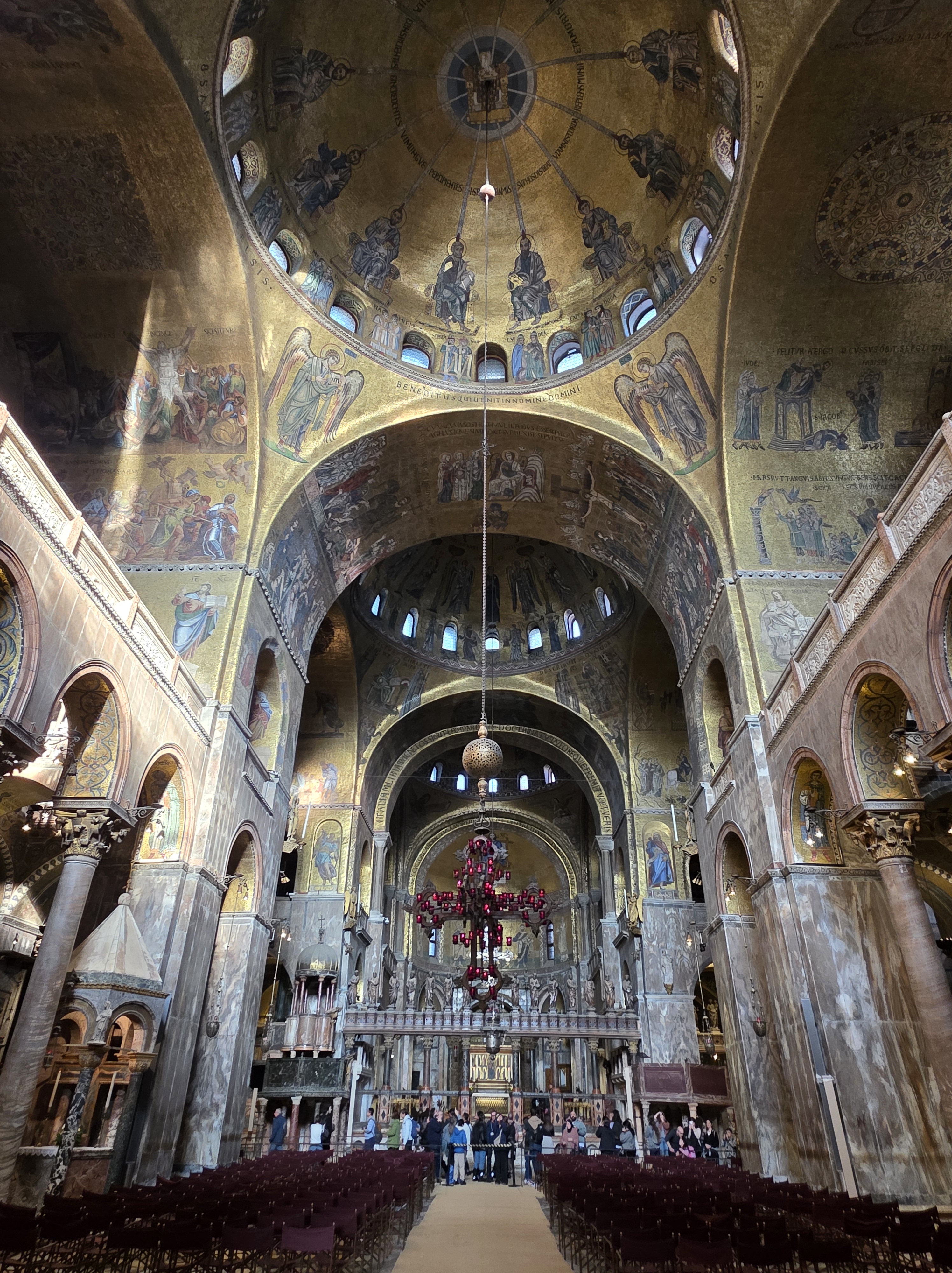
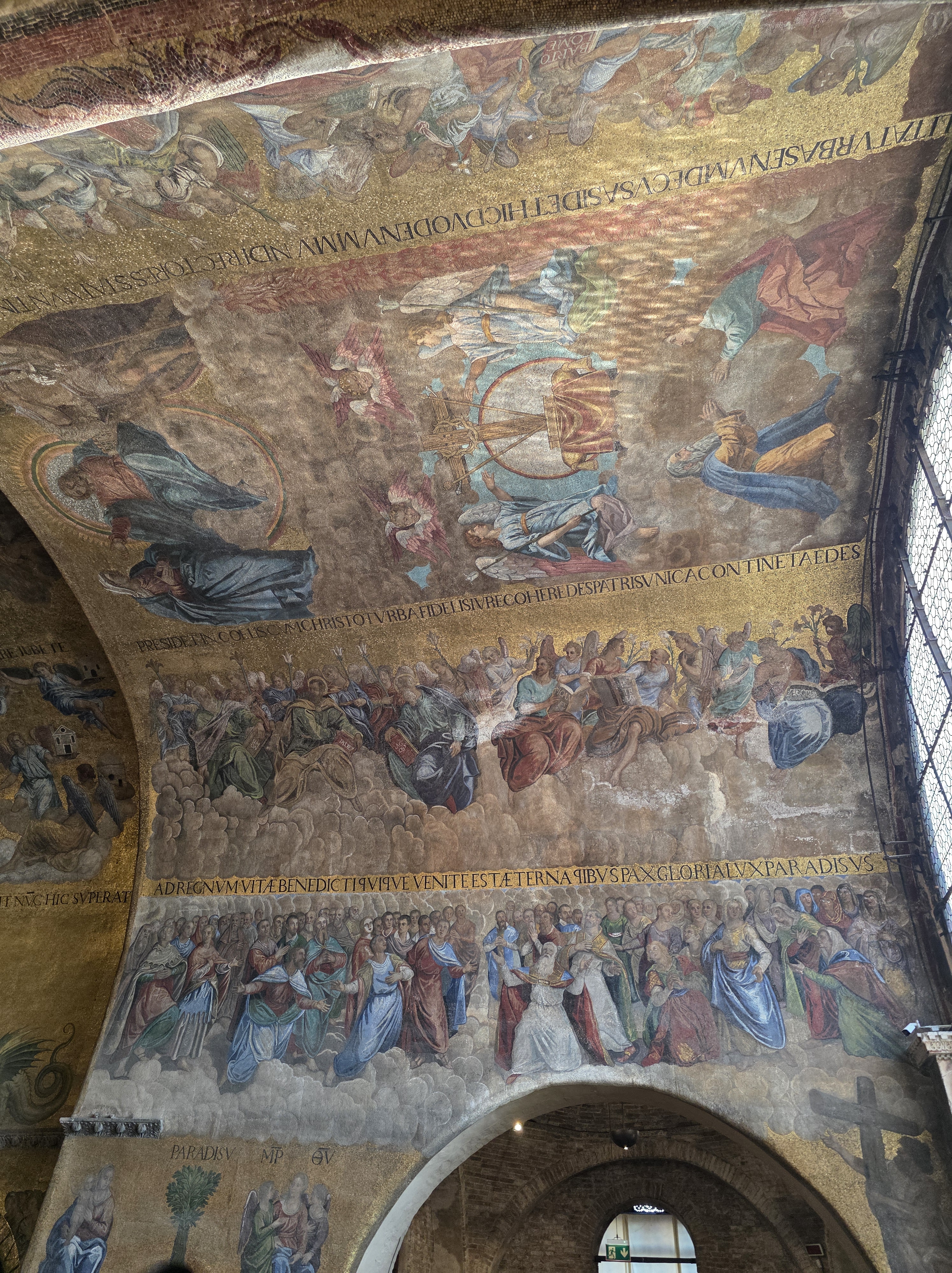
I saw the Basilica, with its amazing mosaics, and went up to the second-floor museum, displaying various relics, Byzantine artefacts, and fragments of older mosaics. I also stepped out onto the terrace and watched the last marathon runners down below.
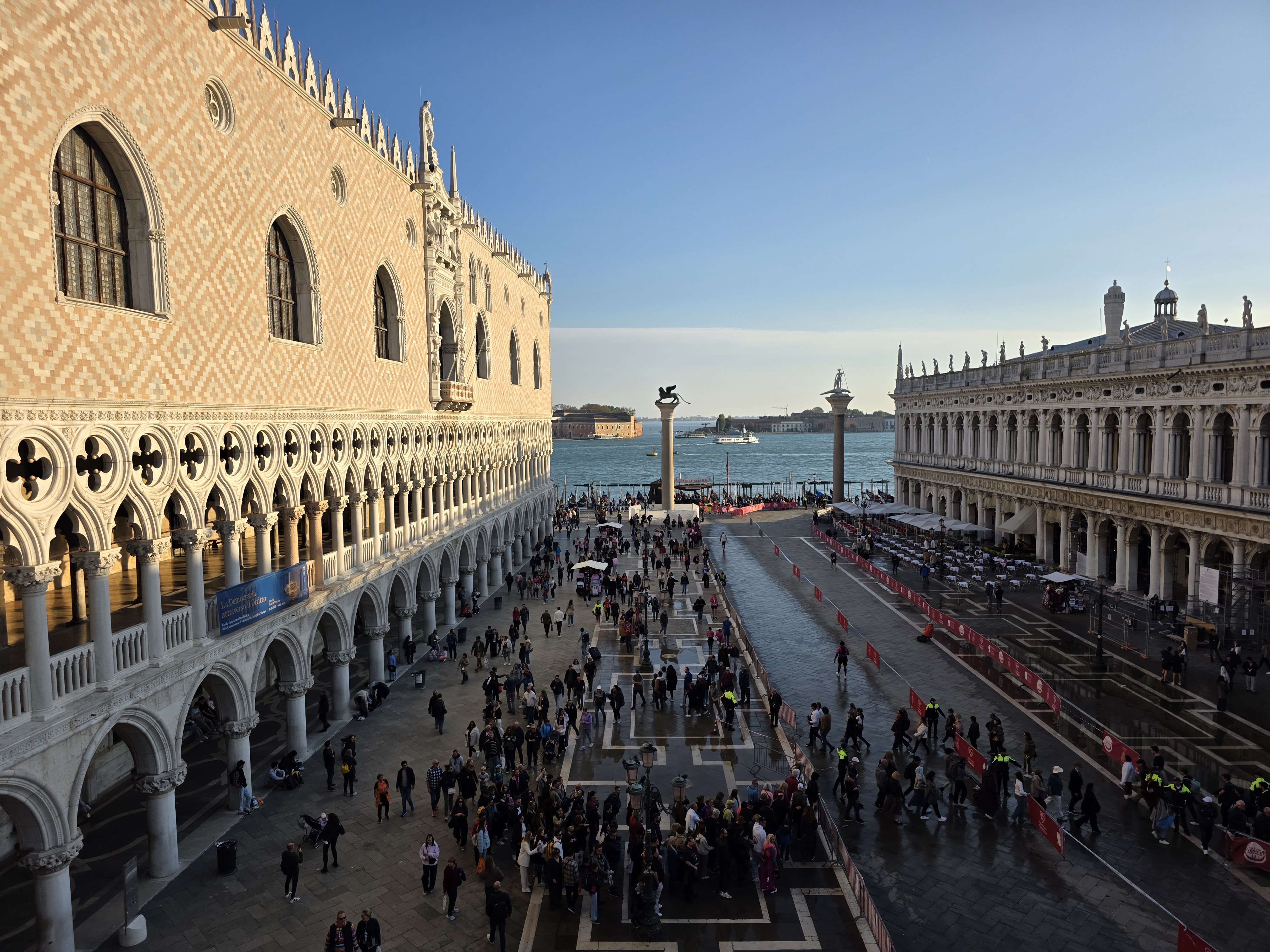
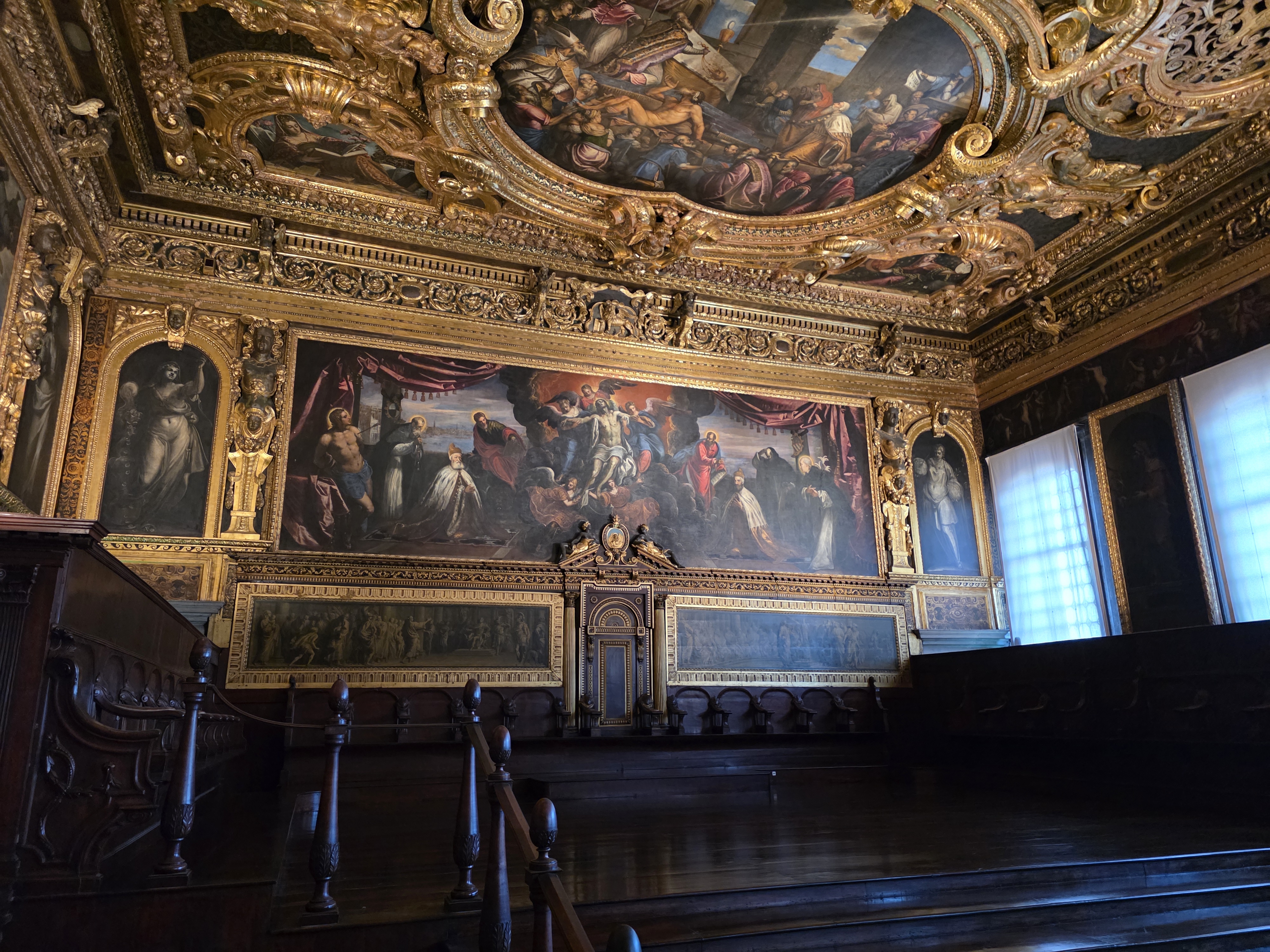
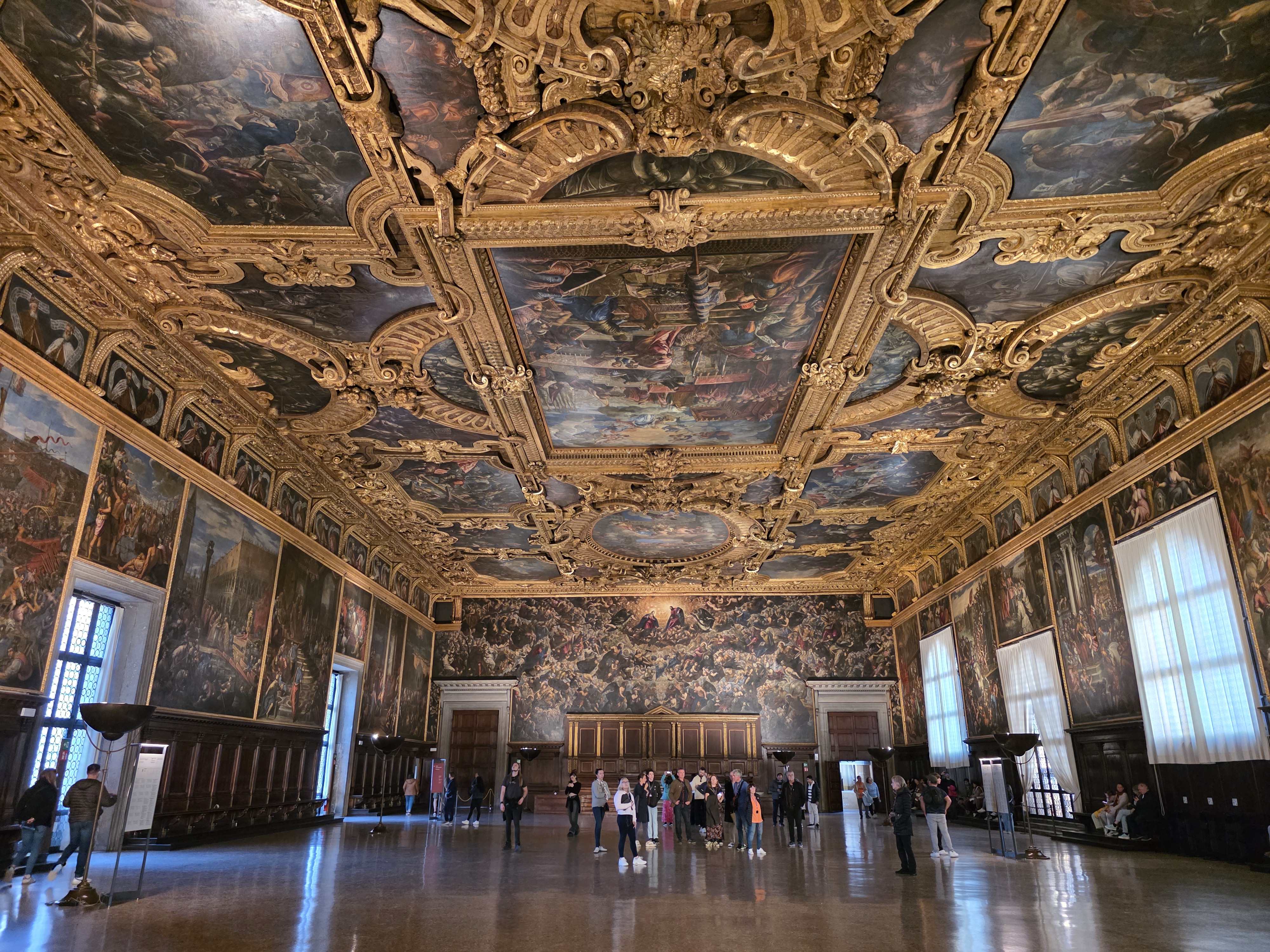
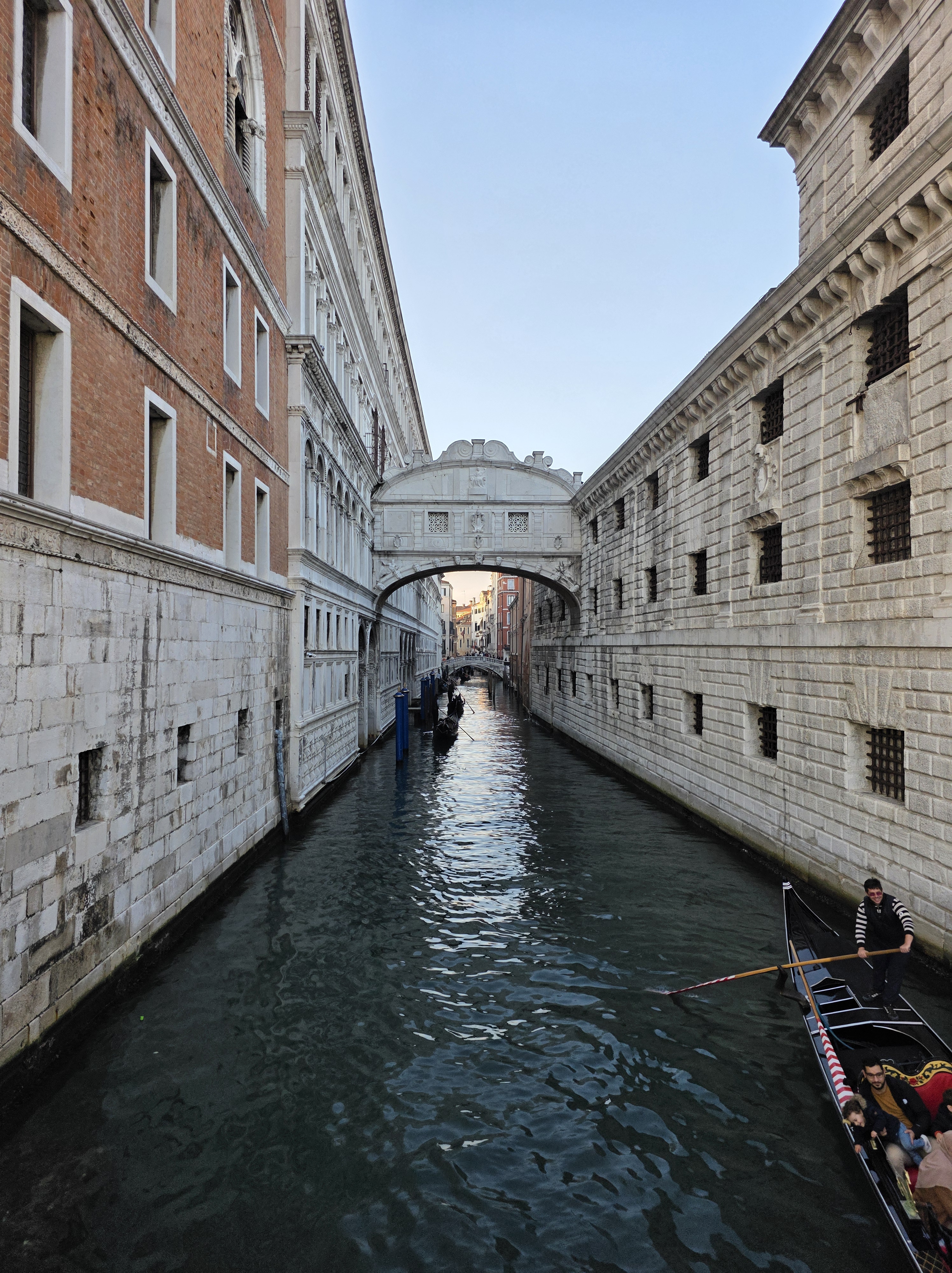
Next on the tour was the Doge’s Palace, right next door, where I looked at different rooms. The ceilings were truly luxurious, covered in gold leaf, paintings, and genuine masterpieces by famous Venetian artists. The palace also includes a prison, connected with the main building by the so-called Bridge of Sighs – named for the fact that prisoners would see the outside world for the last time through its window and, presumably, sigh.
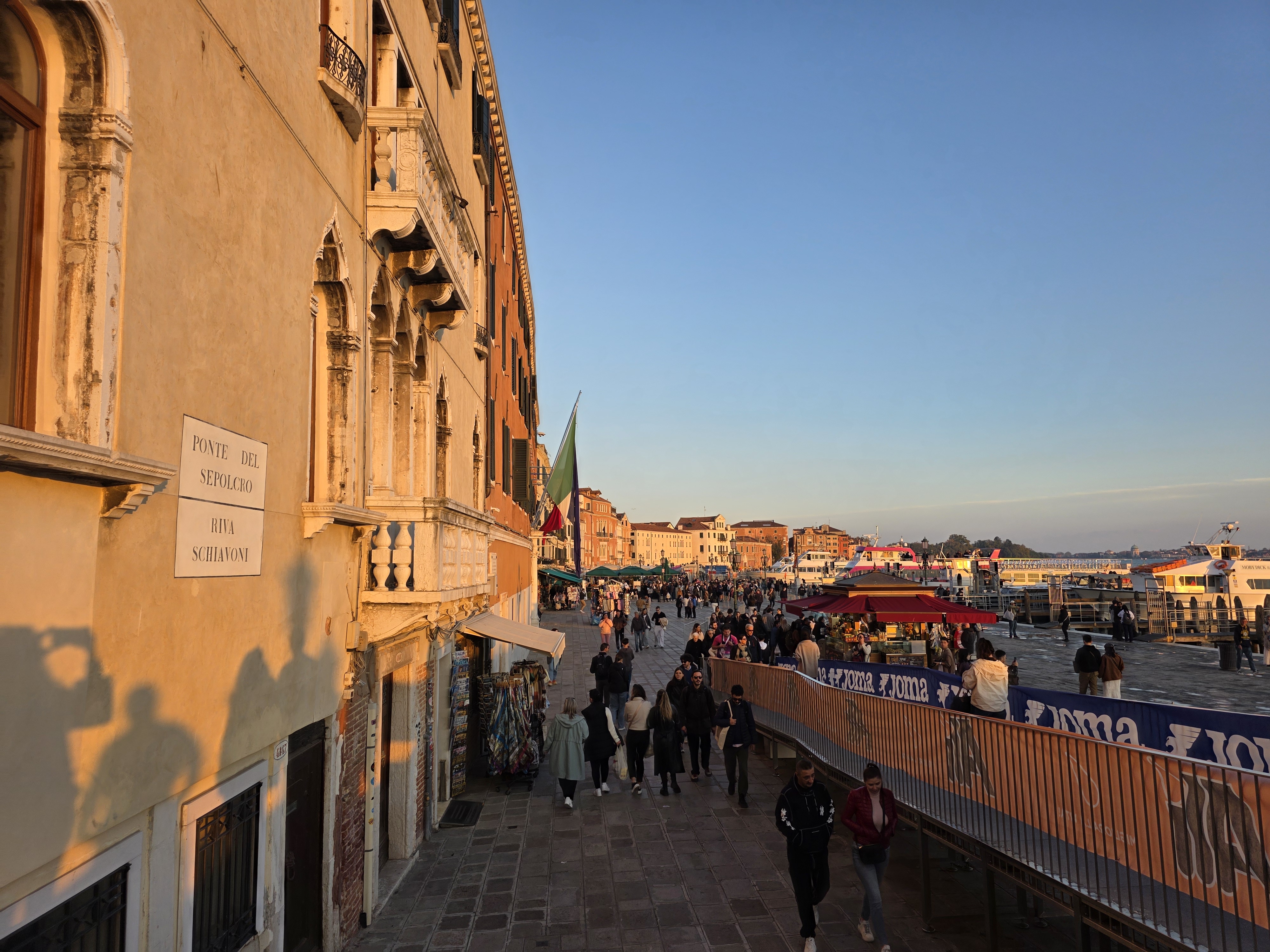
I finished the tour earlier than expected, so I had some time before my visit to the bell tower (Campanile) of St Mark’s. I strolled along the promenade, where the marathon barriers had already been removed. The crowd was enormous – apparently a mix of marathon finishers and other tourists.
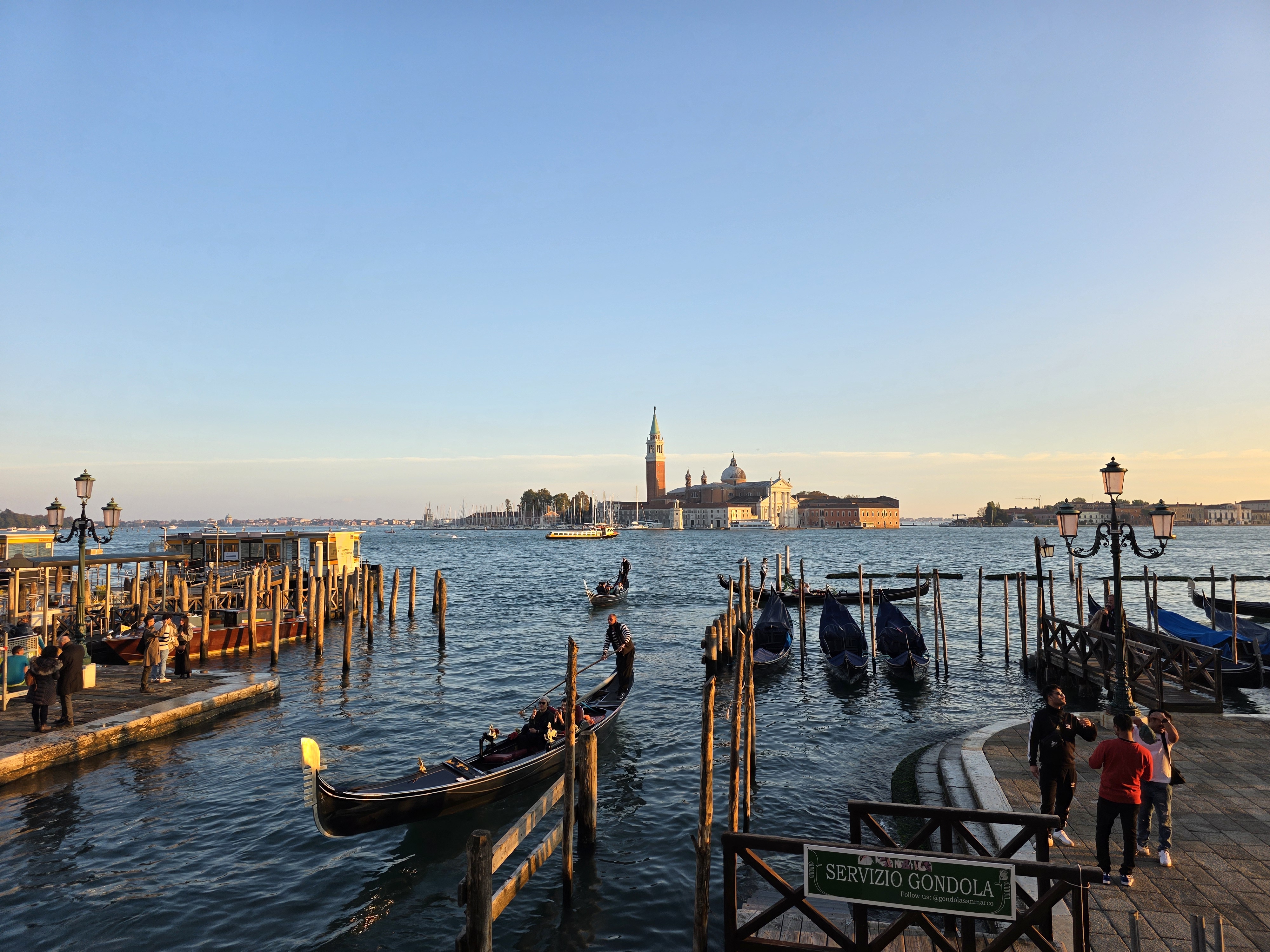
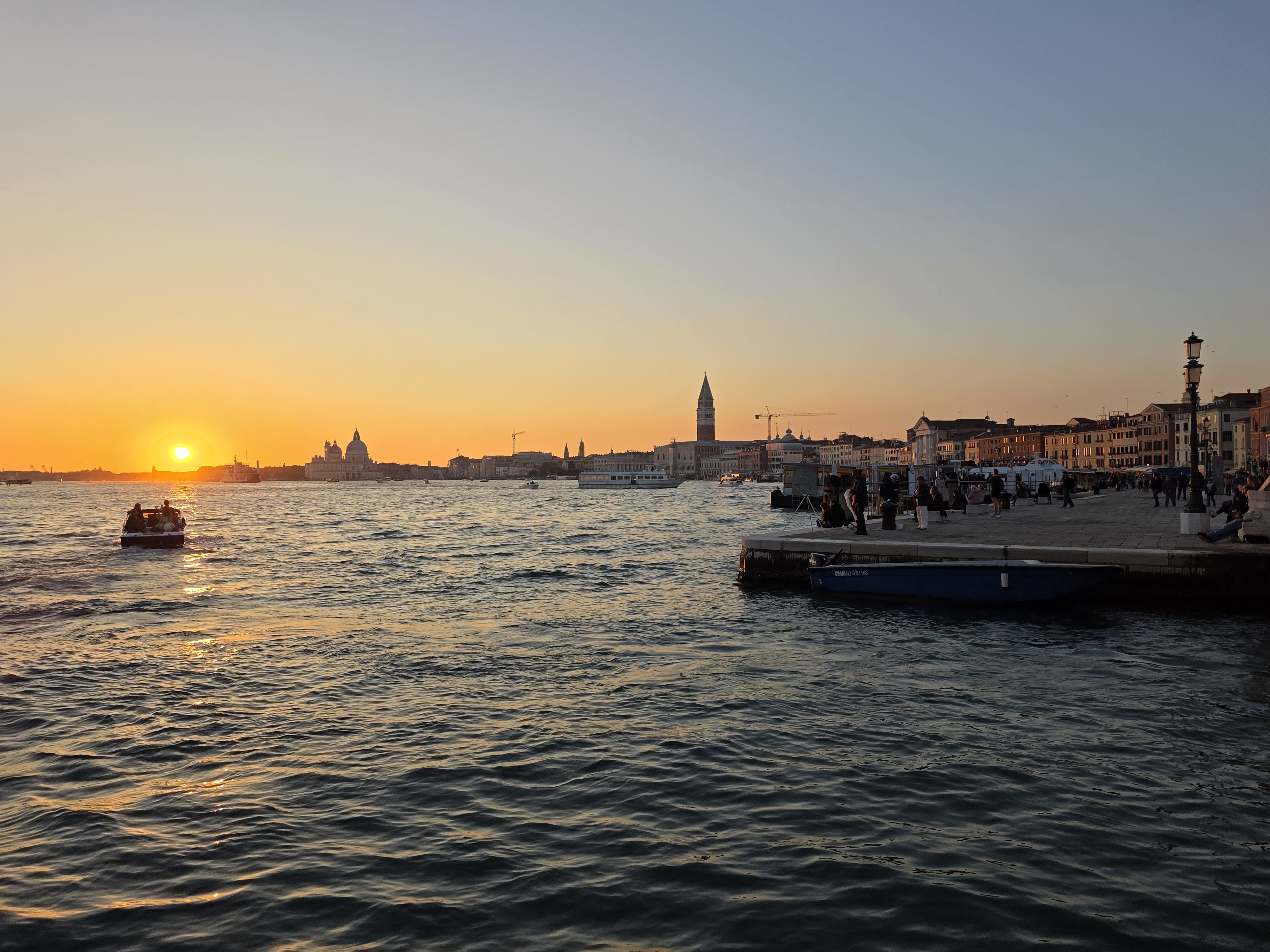
I ended up getting into the Campanile half an hour earlier than my booked slot – fortunately, they let me in. The whole attraction is the viewing platform at the top, which you reach by lift. I happened to be there right at sunset, and got to see Venice from above in the evening light, taking some beautiful photos.
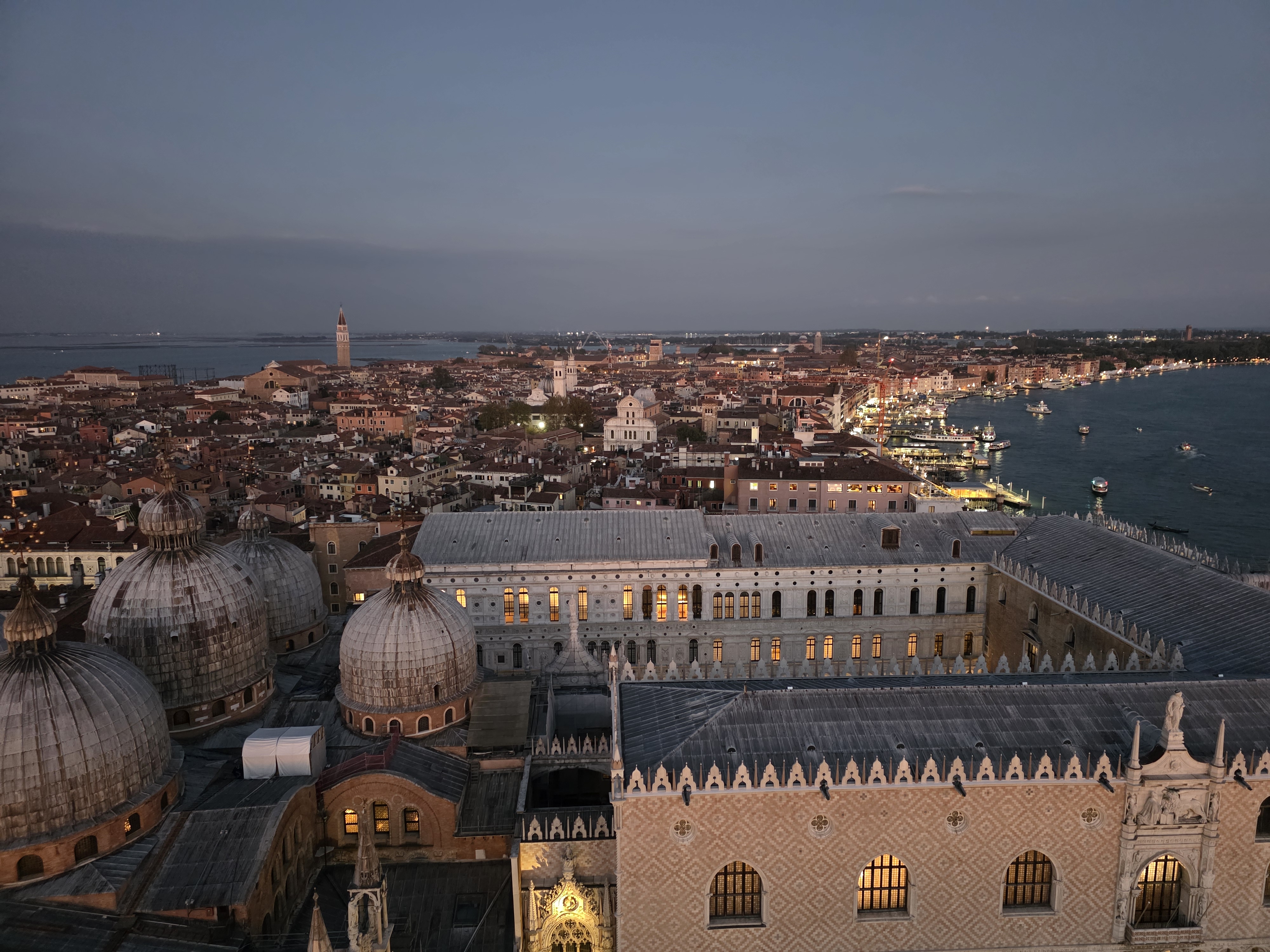
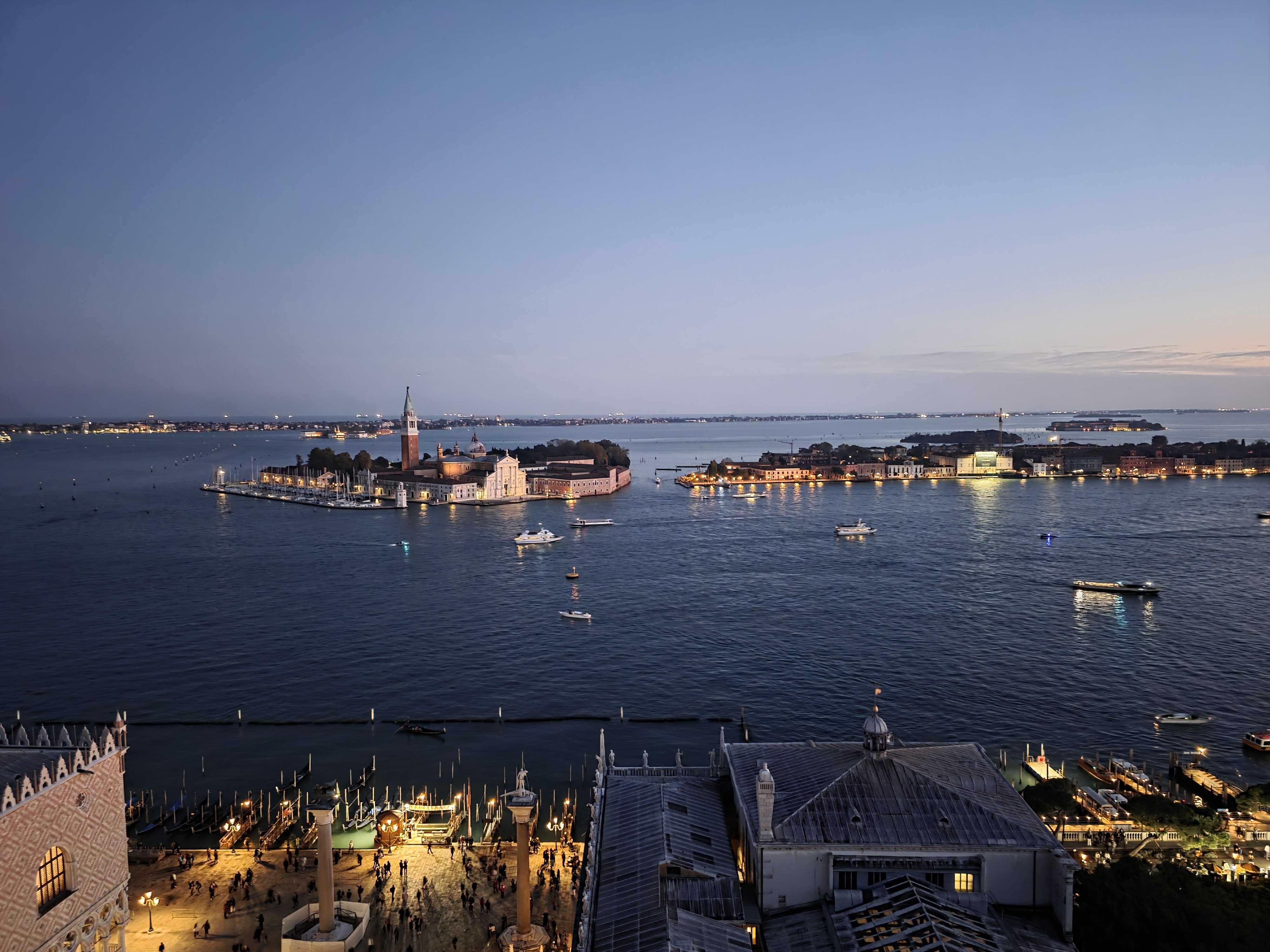
In the evening, I had to move to a different hotel near the airport, as I have a very early flight tomorrow, as mentioned, and running around pedestrian-only Venice at 4am looking for transfer options didn’t seem like a great idea.
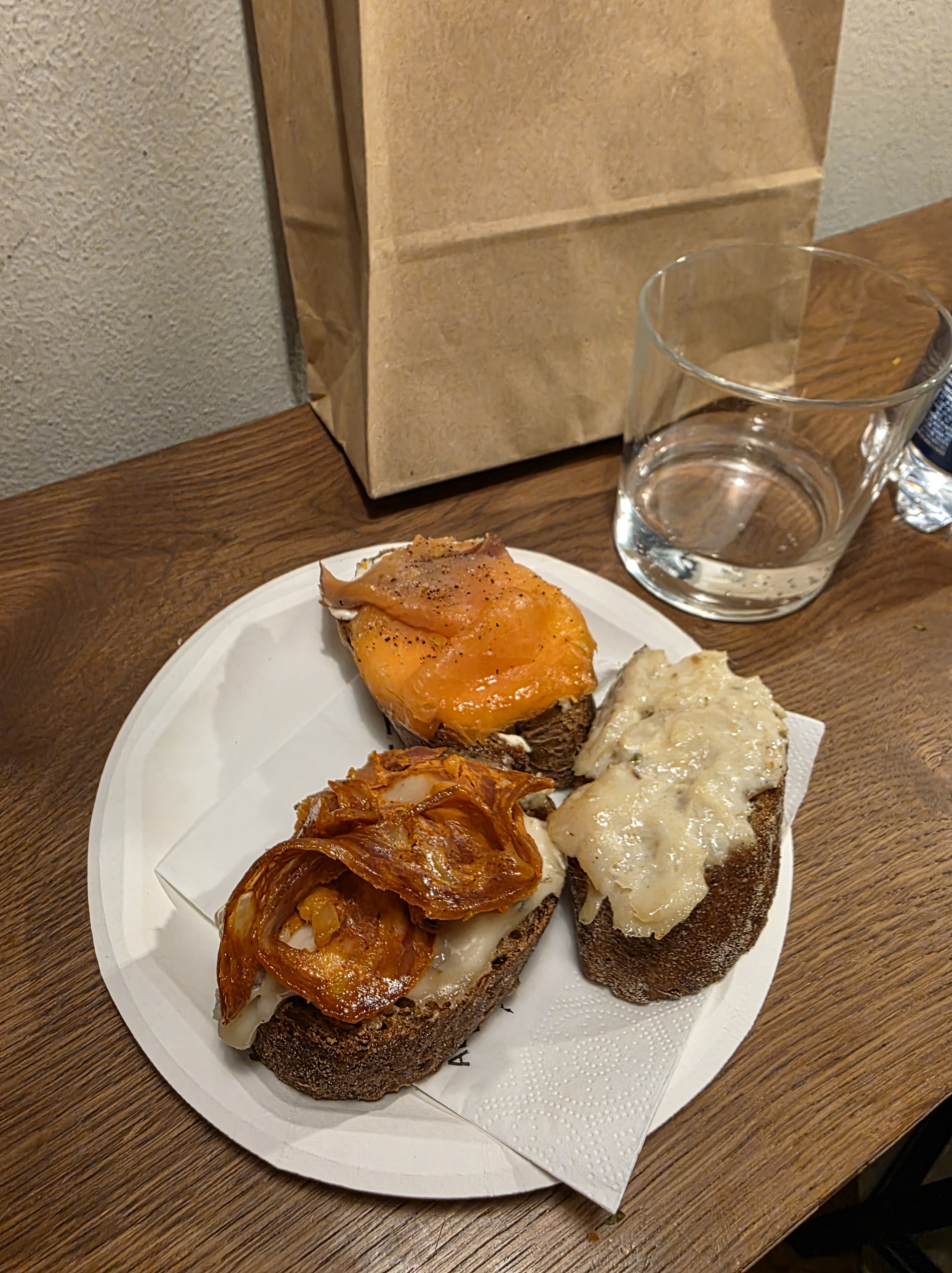
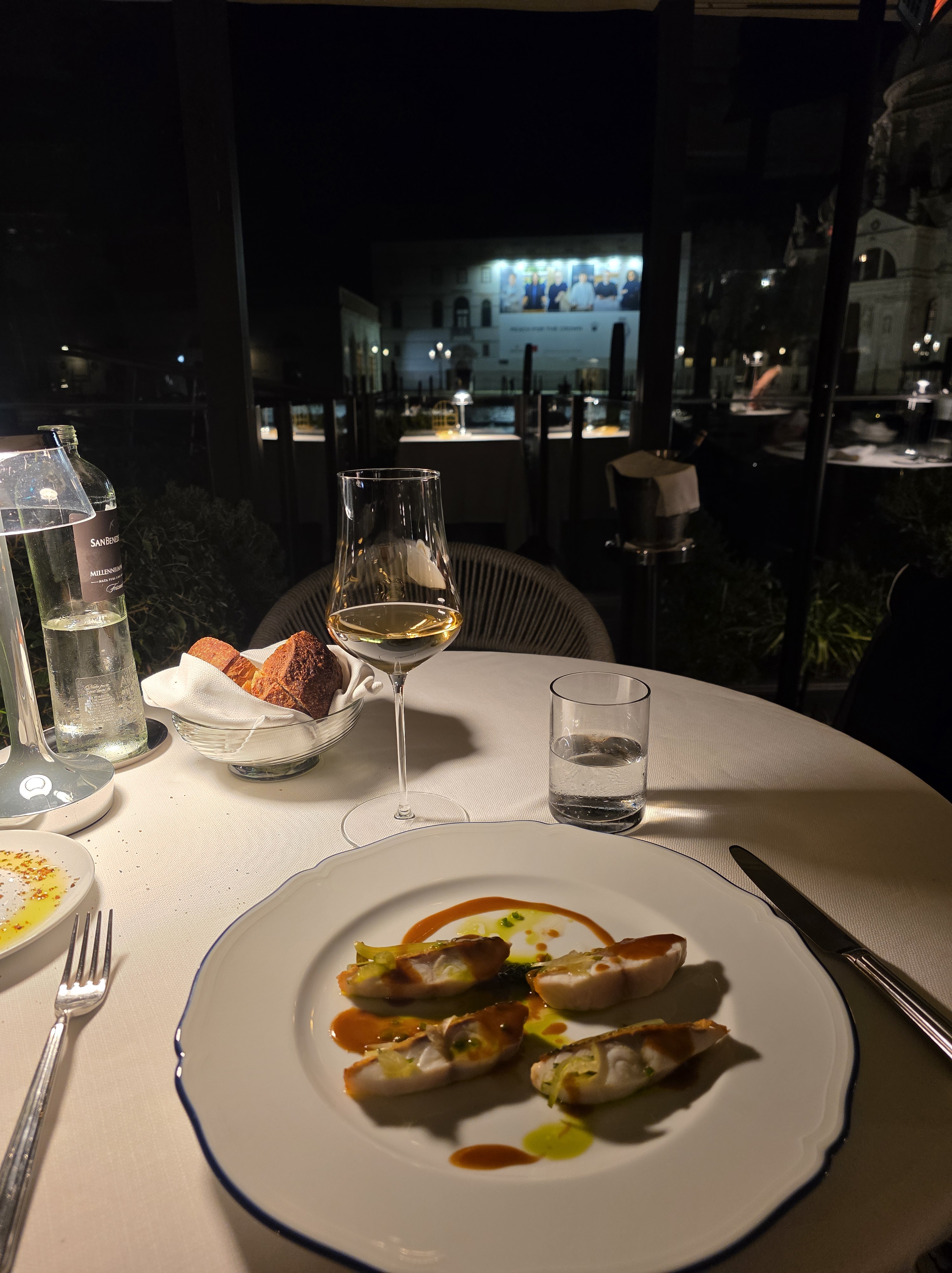
Before that, I decided to have dinner – something light, after the pizza earlier – and I wanted to try local cicchetti. This Venetian speciality consists of small tapas-like bites with all kinds of toppings, the most famous being a paste made from dried cod, called baccalà.
I tried two types of cicchetti with cod, one with salmon, and one with salami – and I liked them all!
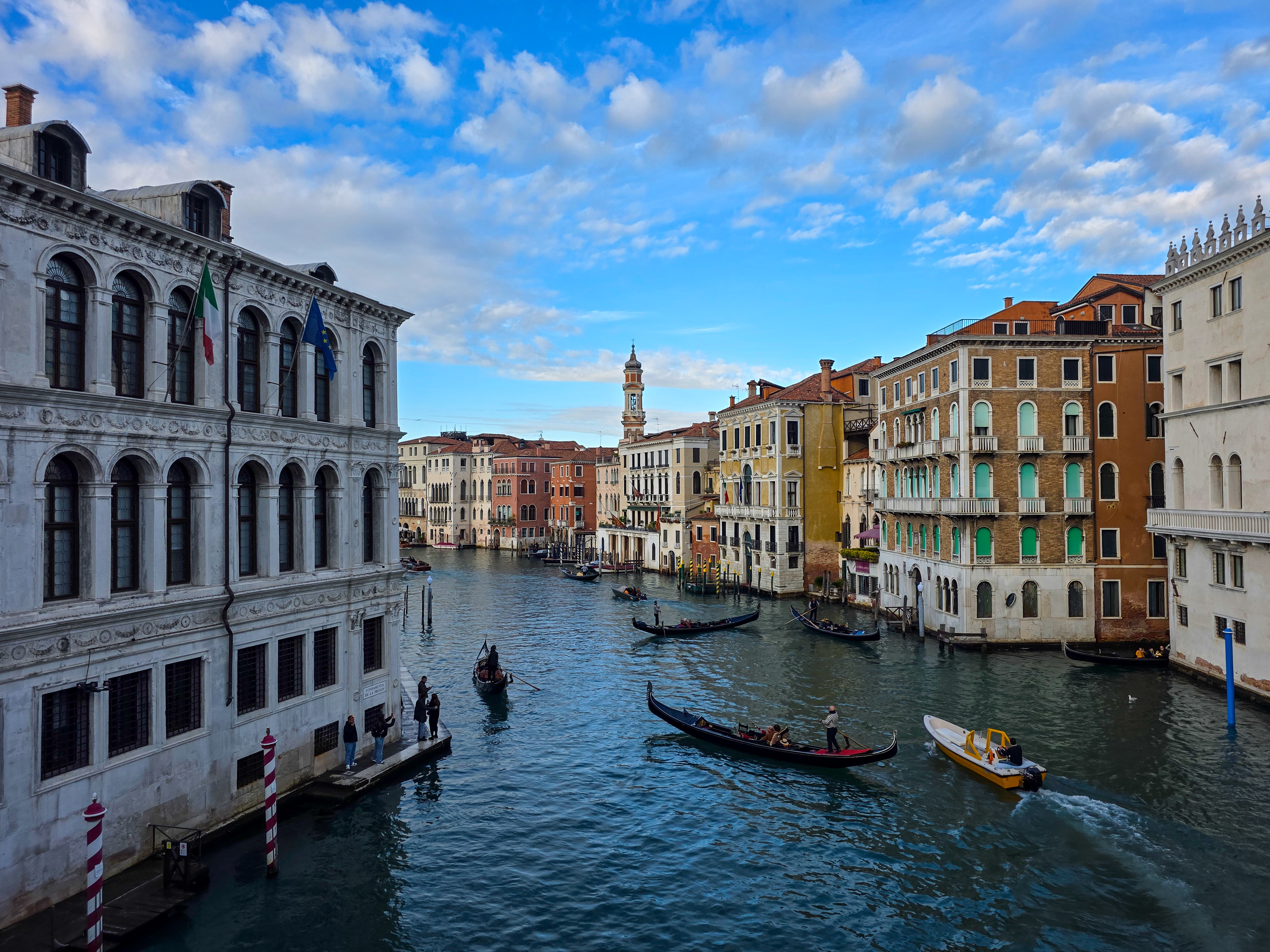
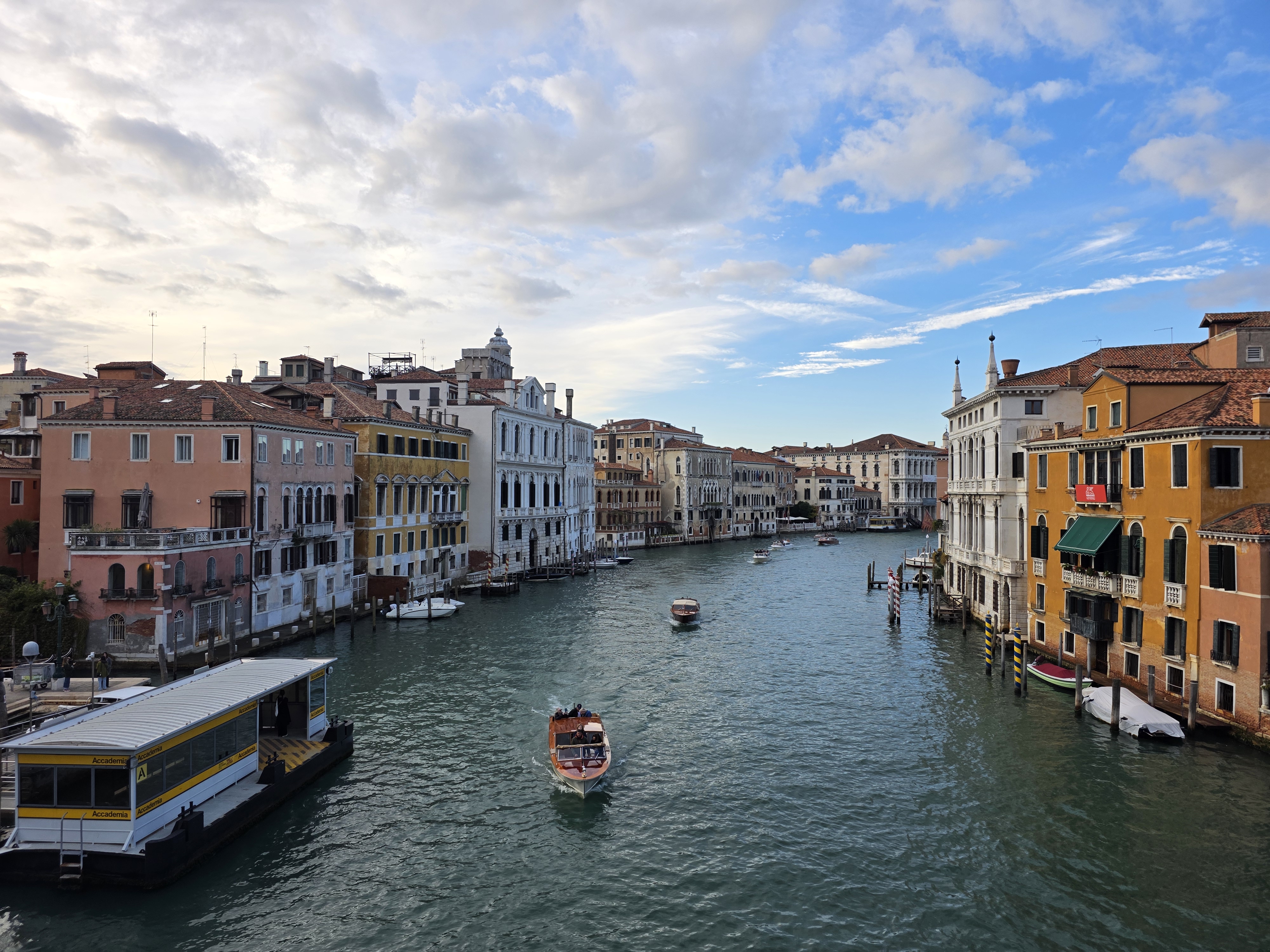
Then I picked up my suitcase from the first hotel and set off. First, I took a vaporetto (water bus) from near the Rialto Bridge, and then a regular bus from Piazzale Roma to the airport area. Initially, I thought I’d walk to Piazzale Roma, but then I found out I’d have to take a boat partway anyway, so I ended up just taking the vaporetto.
The hotel’s location was very odd – I had to get off the bus right in the middle of a highway, with no pavement or footpath in sight, and then walk for about 10 minutes. But at least tomorrow at 4:30 a.m., the shuttle will pick me up and get me to the airport in just 5 minutes.
 Travelling Leila