РУССКОЯЗЫЧНАЯ ВЕРСИЯ ПО ЭТОЙ ССЫЛКЕ. CLICK HERE FOR RUSSIAN VERSION.
31 May 2025
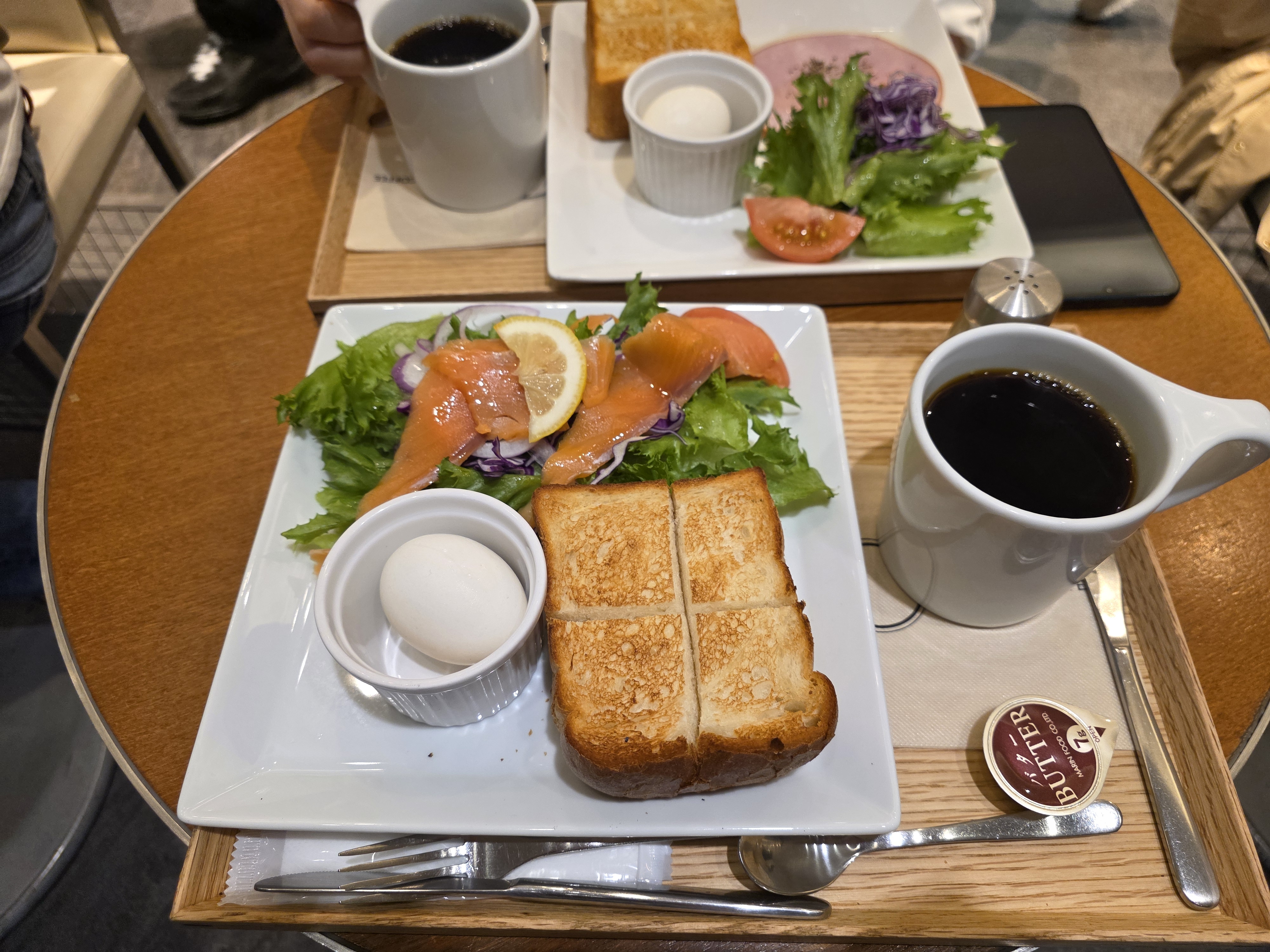
Today is our last day in Kyoto. We woke up very early again and had breakfast in a French café.
Since it was early, we decided to go to Gion again and take another look at the geisha quarter and the streets around the Yasaka Pagoda, which we hadn’t properly explored a couple of days ago when it was crowded and we were in a rush. We figured there would be fewer people at this time – and we were right. Of course, there were the occasional enthusiastic Chinese tourists who got up early and even dressed in kimonos to take photos before the crowds arrived. But overall, there weren’t many people, so we were able to enjoy the Yasaka Pagoda and the historic streets of Ninenzaka and Sannenzaka in relative peace.


However, we still didn’t manage to spend a lot of time there – we were feeling cold, and it also started to rain. I’ve actually been joking that the head of the local meteorological service should commit hara-kiri – the forecasts here are so unreliable that you almost need to do the opposite of what they tell you. For example, yesterday the forecast promised cool weather and rain, but not a drop fell – it was 26 degrees, hot and stuffy. And today, on the contrary, it promised 23–24 degrees, with sunshine, and zero chance of rain – but couldn’t even forecast an hour ahead, because it was grey and chilly, and the rain started almost immediately.
So we went back to the hotel to change clothes and grab an umbrella, and then we went our separate ways. I went to the Fushimi Inari Taisha Shrine, while Rena had already been there on her last visit and didn’t want to go a second time. Not surprising – the shrine is located on Mount Inari, and the main shrine is at the top. The whole round trip takes about two hours, so doing it once is probably enough.
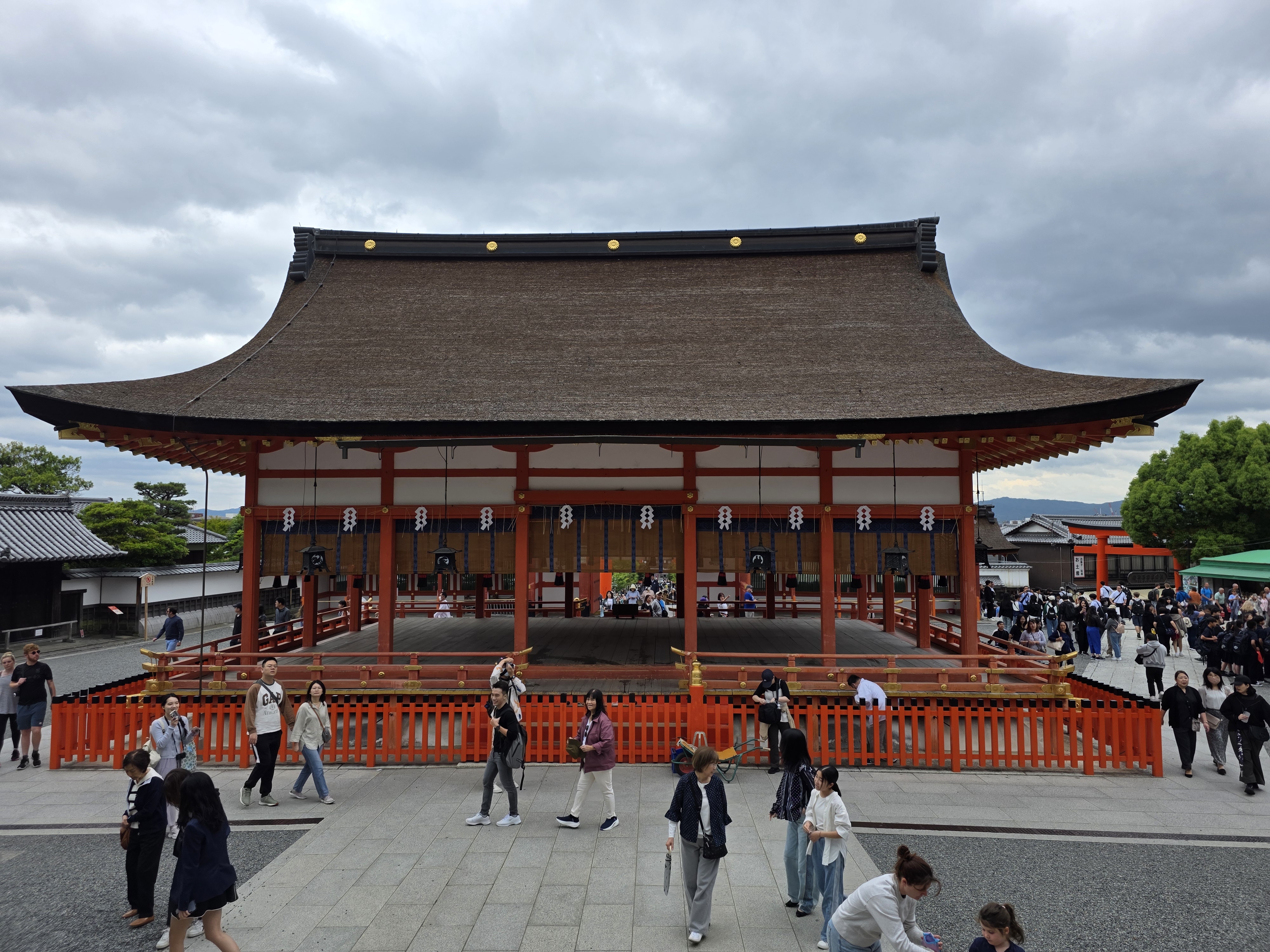
The temple is famous for the more than ten thousand orange torii gates that line the entire route up and down the mountain, forming tunnels of gates you walk through. I arrived around mid-morning, and there was an absolute sea of people. Especially at the entrance to the first “corridor” of torii gates, there was a continuous flow. Everyone was trying to take photos, but there was hardly any space to move.
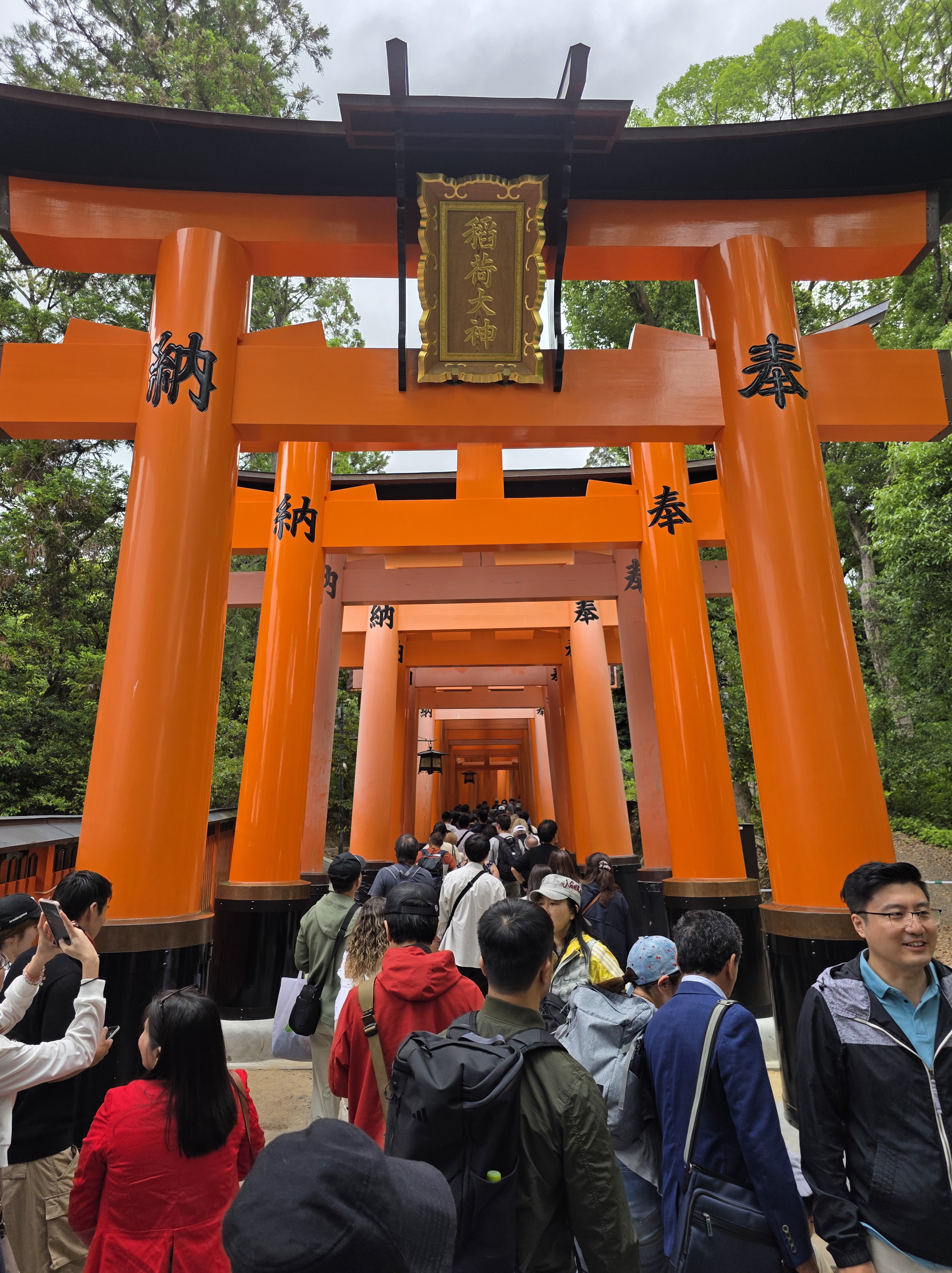
Apparently, people didn’t realize that the torii gates would continue all the way to the top of the mountain – or maybe they just didn’t feel like climbing there. Some were dressed in kimonos, some even in evening dresses – where would you go in heels or socks with flip-flops up a mountain?
To be honest, I wasn’t planning to go all the way to the top either. I thought I’d climb a little, take some photos of the gates from different angles, see a few shrines, and call it a day. But then, for some reason, I got caught up in the excitement – maybe it was the signs at each rest stop showing how much further to the summit. Especially that the higher you go, the fewer people there are. I was able to peacefully explore the shrines and the torii gates – for example, the back of each gate is covered in kanji. It might seem like some sacred texts, but it’s actually just the names of those who donated each gate – there are even a few rare inscriptions in Latin script. The route isn’t one straight path – there are forks leading to smaller, secondary shrines, and rest areas with toilets, a small shop, and an ice cream stand.


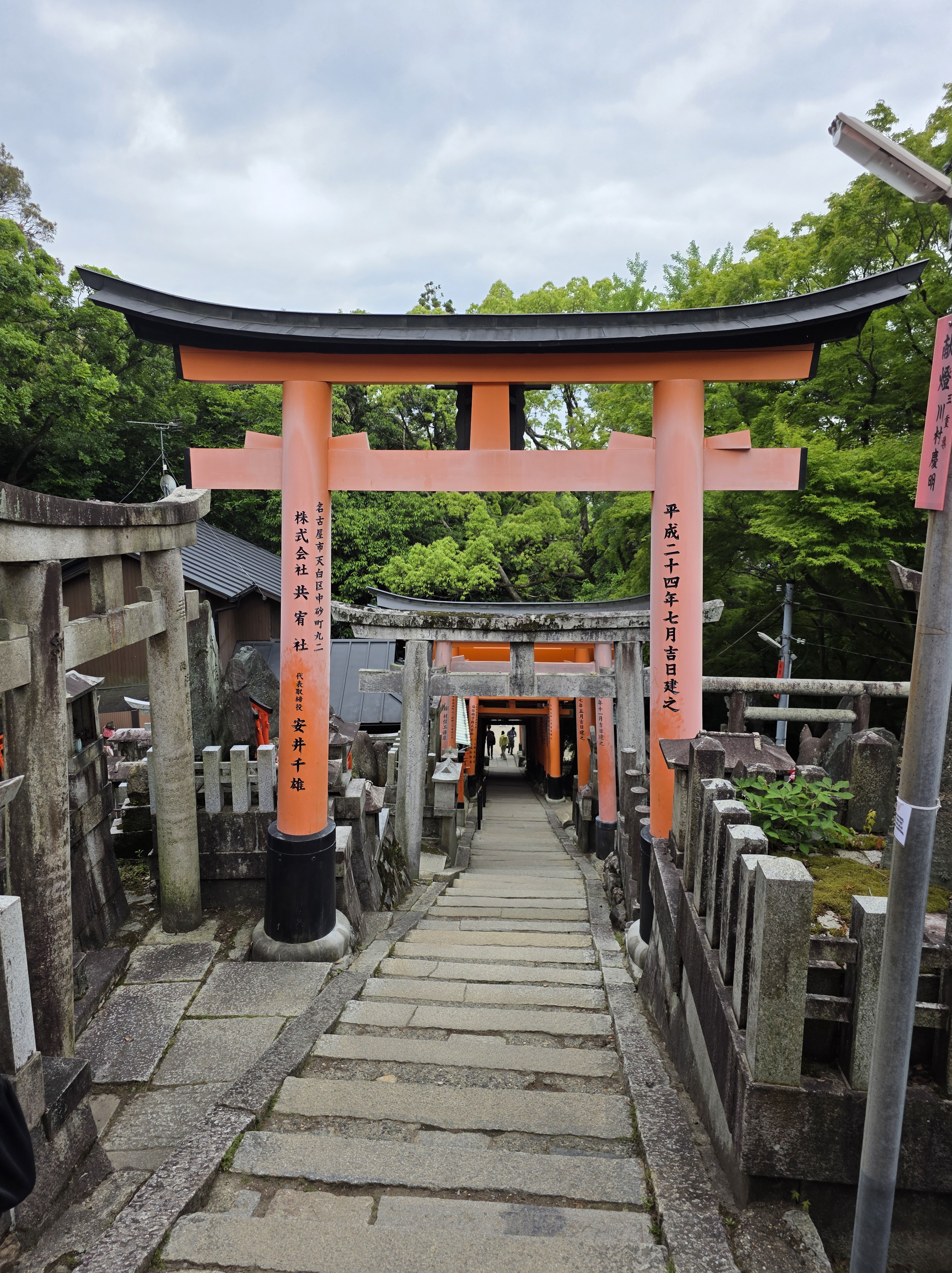

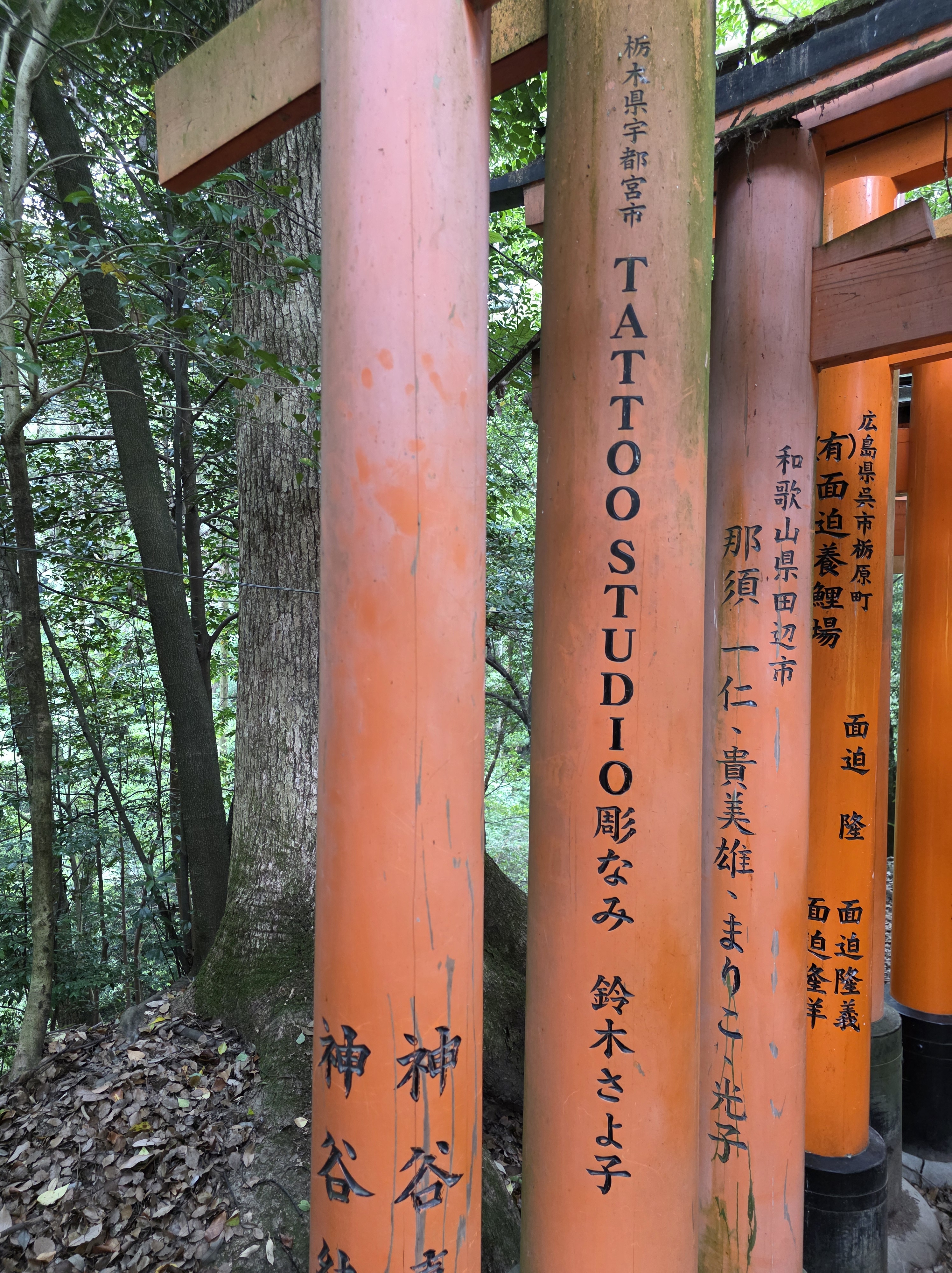
One route led up, the other down. In the end, very few people made it to the summit, so I could take photos in peace. By then, though, I was completely drenched in sweat – and that was despite the spitting rain and cool weather.
After the shrine, I was supposed to meet up with Rena for lunch at a ramen place – but there was a slight hitch. We didn’t align when we arrived and stood in the queue, so I ended up going in first and tried to save her a seat next to me, but they didn’t allow that – we had to sit separately. The concept of this (chain) restaurant is that visitors sit alone, separated from each other by plywood dividers. There’s also a divider between guests and staff – you just pass them a piece of paper with your order number and the desired spice level, noodle firmness, etc., and they place your ramen through a small window.
So, in the end, we didn’t sit next to each other – but it was fine. After lunch, we walked around the shops and bought some Korean cosmetics.
Then our tired legs started reminding us of themselves – and of all the previous days, each of which involved at least 20,000 steps. We had to find a café to sit down in – we found one in a small side street. In general, I have to say that all the little backstreets in Kyoto feel the same – I honestly couldn’t tell the street our hotel is on apart from another one a kilometre or two away.
After coffee, we went back to the hotel to rest a bit. And then it was already evening, so we headed to a recently opened izakaya, where we had all sorts of interesting dishes, like some kind of whelk in an unusual sauce, but also quite plain donburi with chicken and egg (a sort of chigirtma–plov à la Japonaise) – and drank fragrant sake.


After that, we continued the evening at an Irish pub we’d spotted earlier – but only briefly, since it turned out to be a bit of a dive. On a Saturday evening, there were hardly any people: there was a cheerful Japanese group celebrating something in the private room, and in the main area – just a couple of foreigners, plus us.









 Travelling Leila