РУССКОЯЗЫЧНАЯ ВЕРСИЯ ПО ЭТОЙ ССЫЛКЕ. CLICK HERE FOR RUSSIAN VERSION.
26 August 2012 – Sunday
Today we went to the city centre again – not just randomly, like the day before, but on an Old City walking tour. Yesterday, while watching tourists walking on the city walls under the burning sun, I personally felt their pain, already sadly imagining myself in their ranks. The reality was far more enjoyable: we met our guide Ivana – a very nice girl with a bandaged leg – and within a group of 8 people we walked around the Old City in a “derated mode”, trying to avoid direct sunlight and even sitting down every now and then. The tour lasted two hours, during which we learned a lot of interesting things about Dubrovnik.
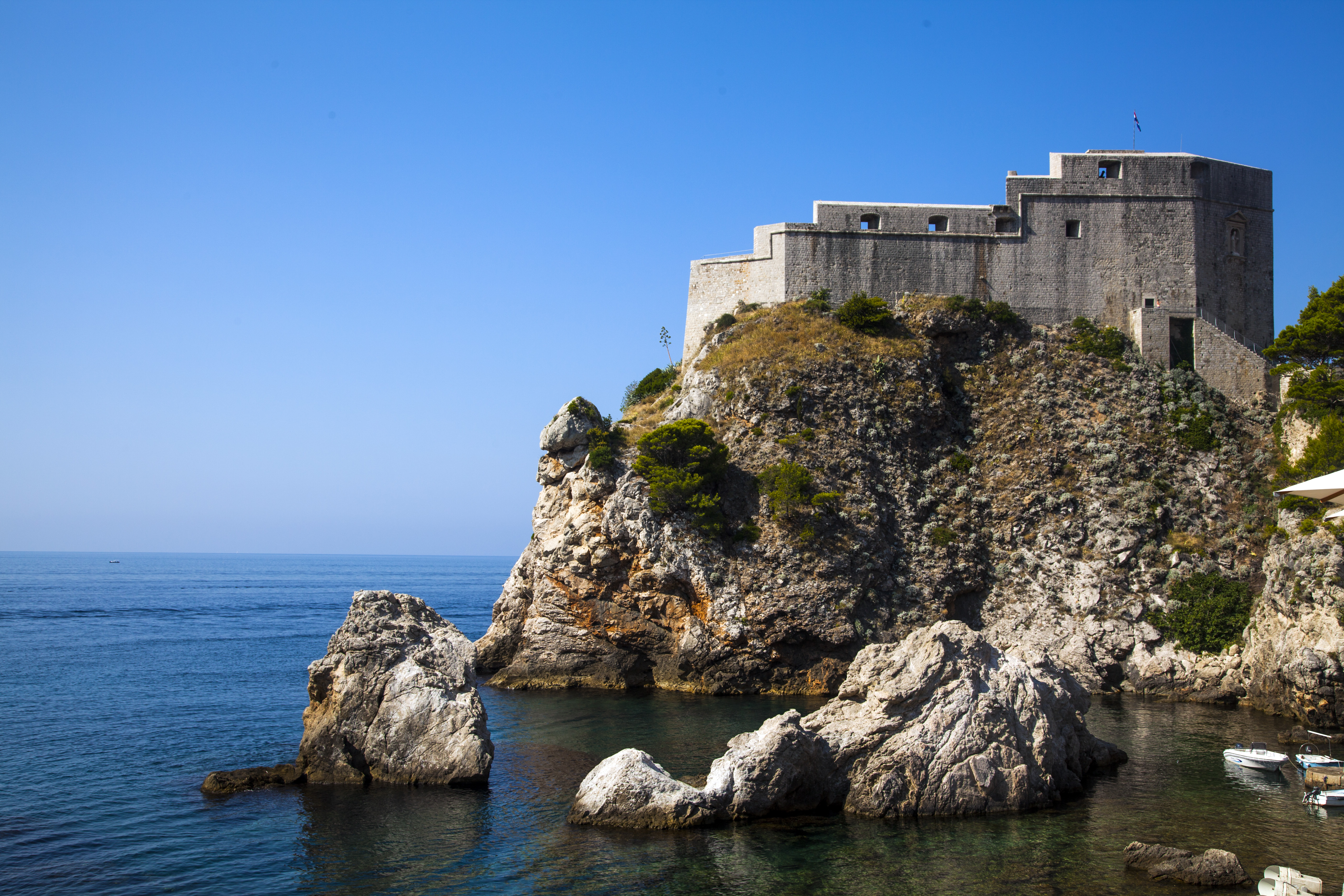
So, Dubrovnik once used to be an independent republic, known as Ragusa in Latin. The republic was democratic (albeit conditionally, as the right to vote belonged only to male noblemen). The city had a rector, who was elected for a 30-day period during which he had no right to leave the palace, where he lived alone, without family. Apparently, this was done to ensure that he did not have any outside influences and cared only about the government’s interest.
The Republic had very strict rules and laws, concerning even the construction of buildings. Thus, the buildings had to look pretty much the same – no one was allowed to show off their wealth, at least outwardly. The windows of neighbouring houses were not to be facing each other, as everyone had the right for privacy. Nobody could build their house even a foot or two ahead of others; the punishment for violation of the law was indeed very strict: the house would be demolished, and its owner would face a penalty charge AND go to jail.
Foreigners were allowed to stay in the city only during the day – at night they were expelled, and the city gates were locked. The only exception was made for the Jewish quarter, due to the extreme utility of its inhabitants to the city. But this quarter too was locked at night on both sides, so formally it was kind of outside of the city. When Dubrovnikers were blamed for the fact that they were cherishing the infidels, the very diplomatic city authorities replied that the Republic often had to deal with other infidels – the Ottoman Empire – so it was better to have these infidels communicate between each other. By the way, this quarter has the second oldest synagogue in Europe, the first one being in Prague.
In general, it must be said that the mercantile Dubrovnik had always managed to juggle between its main enemies: the Venetian Republic and the Ottoman Empire. Its motto was “Non bene pro toto libertas venditur auro” (meaning something like “Liberty can’t be sold for all the gold in the world”), yet the authorities spared no expense for buying this liberty – that is, they paid off their enemies.
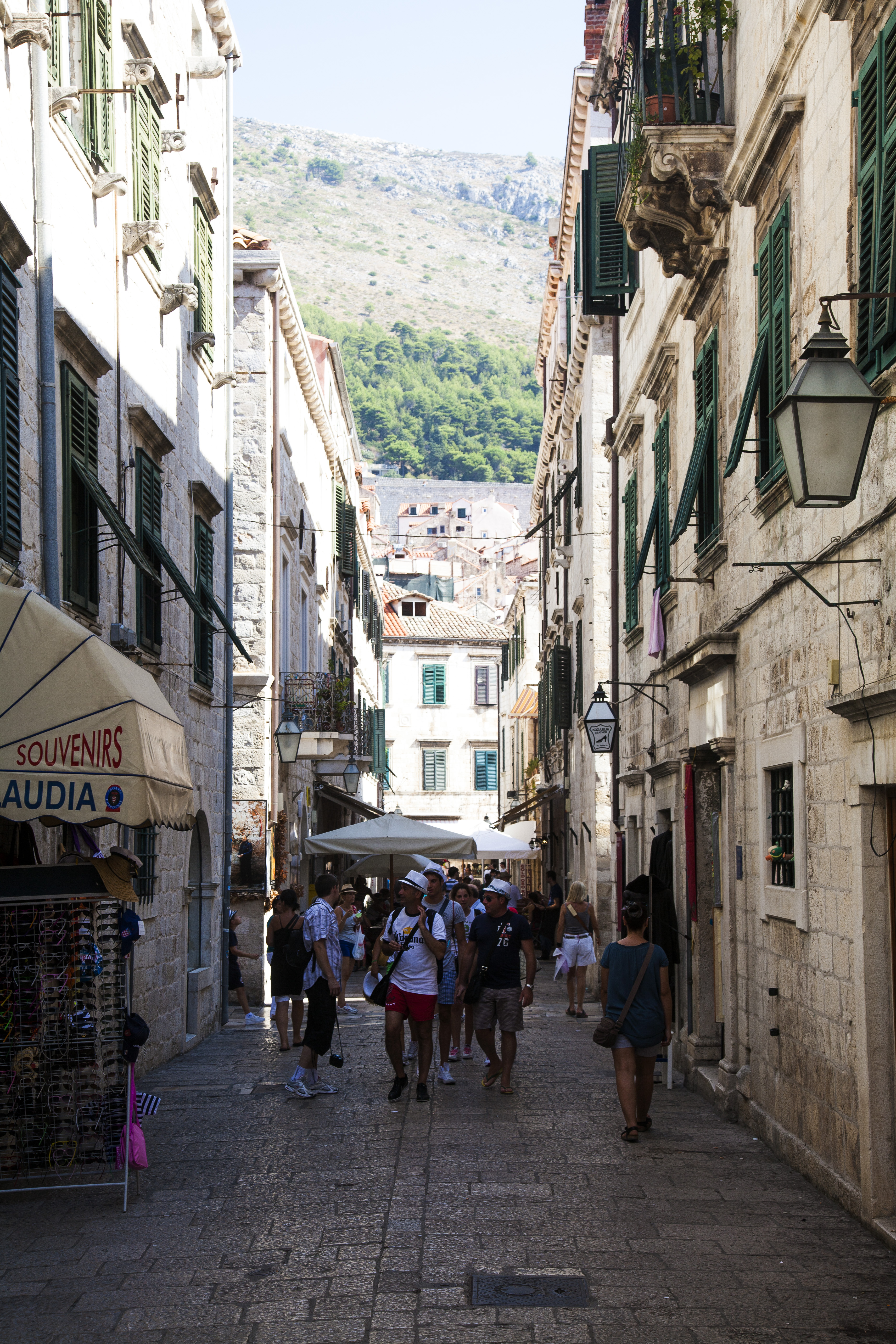
On one of the side streets we saw the Church of St. Roch – the patron saint of plague patients. There is an interesting story associated with it: once children used to play some football-like game just outside of the church and kept pounding the ball against its walls. At some point the priest had enough of it, so he scribbled a curse on the wall saying “May peace be with you. Remember of death, those playing the ball”. The children scribbled a response – something like “We want to play – and so we will!”


On one of the staircases Ivana asked us if we could figure out why the balustrade was solid up to a certain height. Our version was that it was done in care of children, so that they didn’t fall out. The reality was nothing like that. Noble ladies, climbing the stairs on their way to the nearby Dominican church, of course, had to lift their skirts, revealing their ankles. The architecture of the staircase did not allow loitering young men to stare at them from below.

The old town is associated with many contrarieties, for example, in 1806 Napoleon deceived the authorities of Dubrovnik, asking to give him permission to just pass through the city to hit Montenegrins – the Russian allies. The authorities trustfully opened the gates for the French emperor and… the city was seized. Napoleon even built a fort atop of Mount Srđ. However, these fortifications built by an invader, saved Dubrovnik during the war for independence in 1991. By the way, during this war, Dubrovnik was besieged for real: from the sea it was blocked by the Montenegrin Navy, and from the land it was bombed by Serbs, who also cut off all communications. People, believing that the Old City was a safe place (as bombing historical objects is prohibited by international military law) rushed under the protection of its walls. However, as Ivana told us with indignation, it was bombed in the first place.
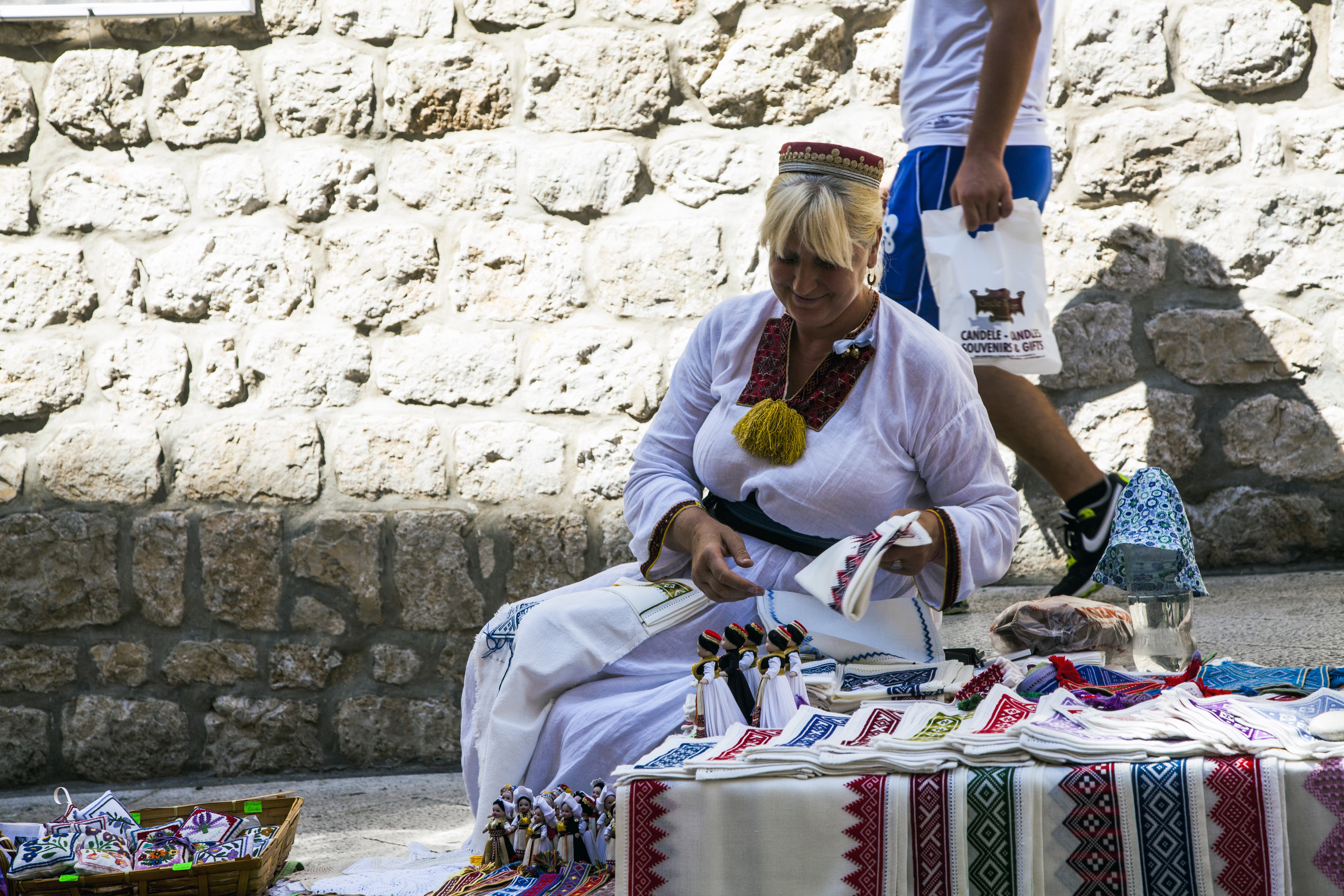
But finally there was peace, and as previously, Dubrovnik is respected among Croatian cities. If someone says, “I’m from The City”, this means that they are from Dubrovnik. The rest find this pretty annoying, but nevertheless they have also become used to calling Dubrovnik “The City”.

At the end of the tour Ivana told us a touching story about the local “Romeo and Juliet” – Silvana from the Roman settlement and Dubravko from the Slavic one. As it always happens with lovers from warring clans, they perished. Interestingly, the names of both, each in their own language, are related to the word “forest”, and the name of Dubrovnik itself is derived from the word “dub”, meaning “oak”.

Left on our own, we walked along the main shopping street, but didn’t find anything decent in terms of good value for money. Tourist shops, no more than that. We wanted to have lunch in the Old City, but somehow ended up in the same terrace restaurant on the Pile Square, as yesterday.
After lunch we went back to the hotel, and as intended, swam in the sea, right until a tangible wind got up, bringing some rubbish to our pristine shores. From the evening impressions it’s worth mentioning an awfully brazen cat in the restaurant: it was not actually begging for food, but rather demanding it discontentedly, wagging its tail menacingly and sharpening its claws on our chairs no less threateningly. Fortunately, one of us didn’t like his Caesar salad, so virtually all of the chicken went to the impertinent animal.

The evening ended with a pleasant walk along the sea, so on the whole the day hasn’t been lived in vain.

 Travelling Leila