РУССКОЯЗЫЧНАЯ ВЕРСИЯ ПО ЭТОЙ ССЫЛКЕ. CLICK HERE FOR RUSSIAN VERSION.
29 May 2025
In the morning, we woke up still in Hiroshima, had a tasty but small sandwich breakfast at a nearby coffee shop, and immediately headed to the station to catch the Shinkansen to Kyoto.
We arrived in Kyoto around noon and took the subway to the station closest to our hotel. From there, we had to walk another 10 minutes with our suitcases along narrow and not particularly convenient streets – again with no sidewalks. There seem to be especially many streets like this in Kyoto.
The city feels more uniform than Tokyo, where, as I’ve already said, each district had its own vibe. Generally, here it’s clear that Kyoto is an ancient capital, and this status is being preserved in every possible way – for example, I don’t think there are any skyscrapers at all.


Our hotel isn’t one of the traditional ryokans you see all around Kyoto, but it’s still quite interesting. For instance, they don’t clean the rooms daily (they’ll do it every four days), but they’ll take out the rubbish if you ask, and all essentials like towels, toiletries, and tea bags are available in the hallway for you to take as needed.
After dropping off our luggage, we were already pretty hungry and headed out to eat some delicious assorted nigiri sushi.

We didn’t have much time left before our scheduled tea ceremony, so we dashed through the historic Gion district, especially the geisha quarter and the famous Ninenzaka street with stairs. We didn’t see any geisha or maiko, though – they usually appear around 6 p.m., and we were there during the day. By the way, I’ve read that Kyoto’s authorities had to ban photographing geisha in Gion because tourists were behaving too rudely and inconsiderately.
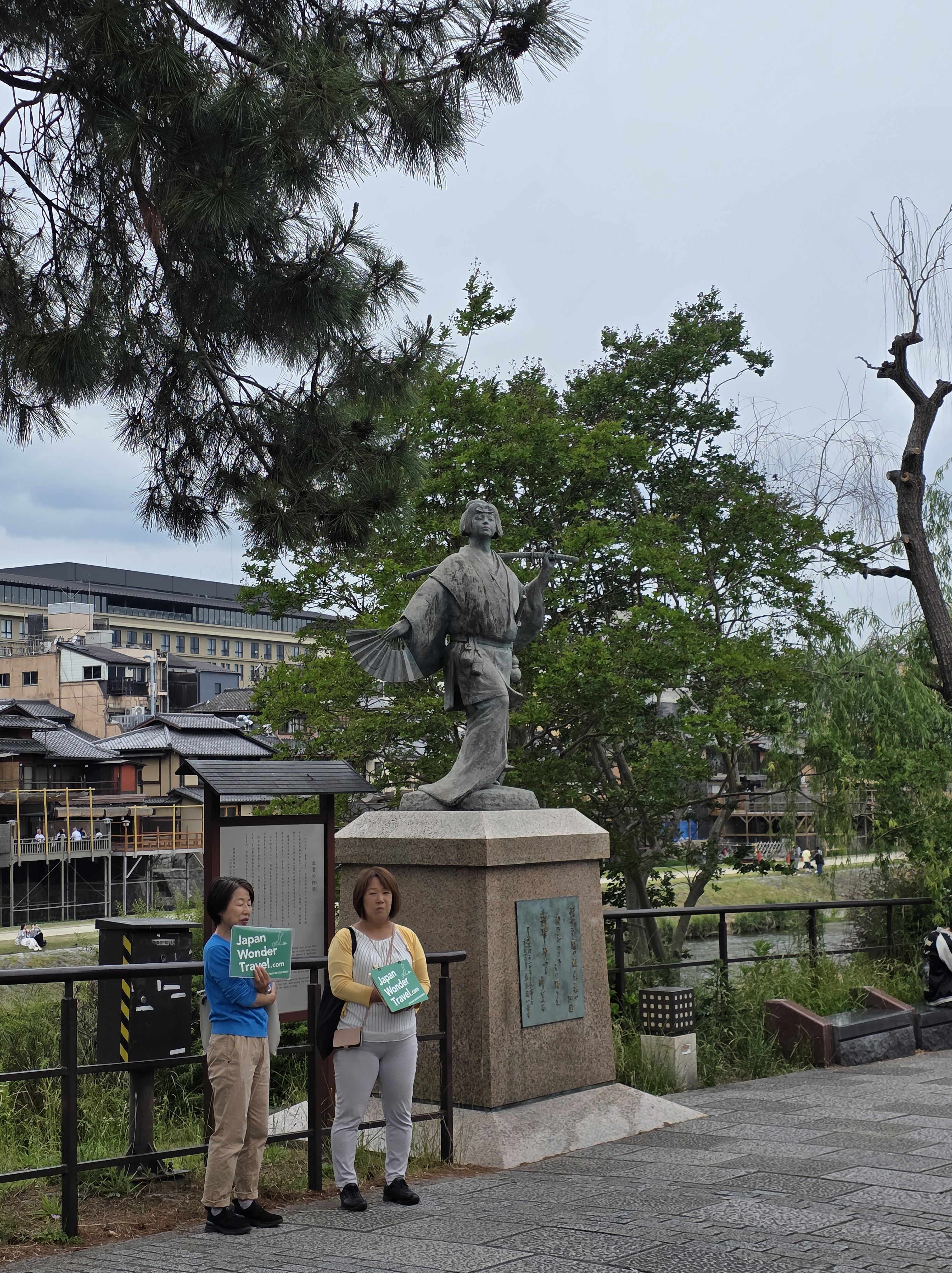
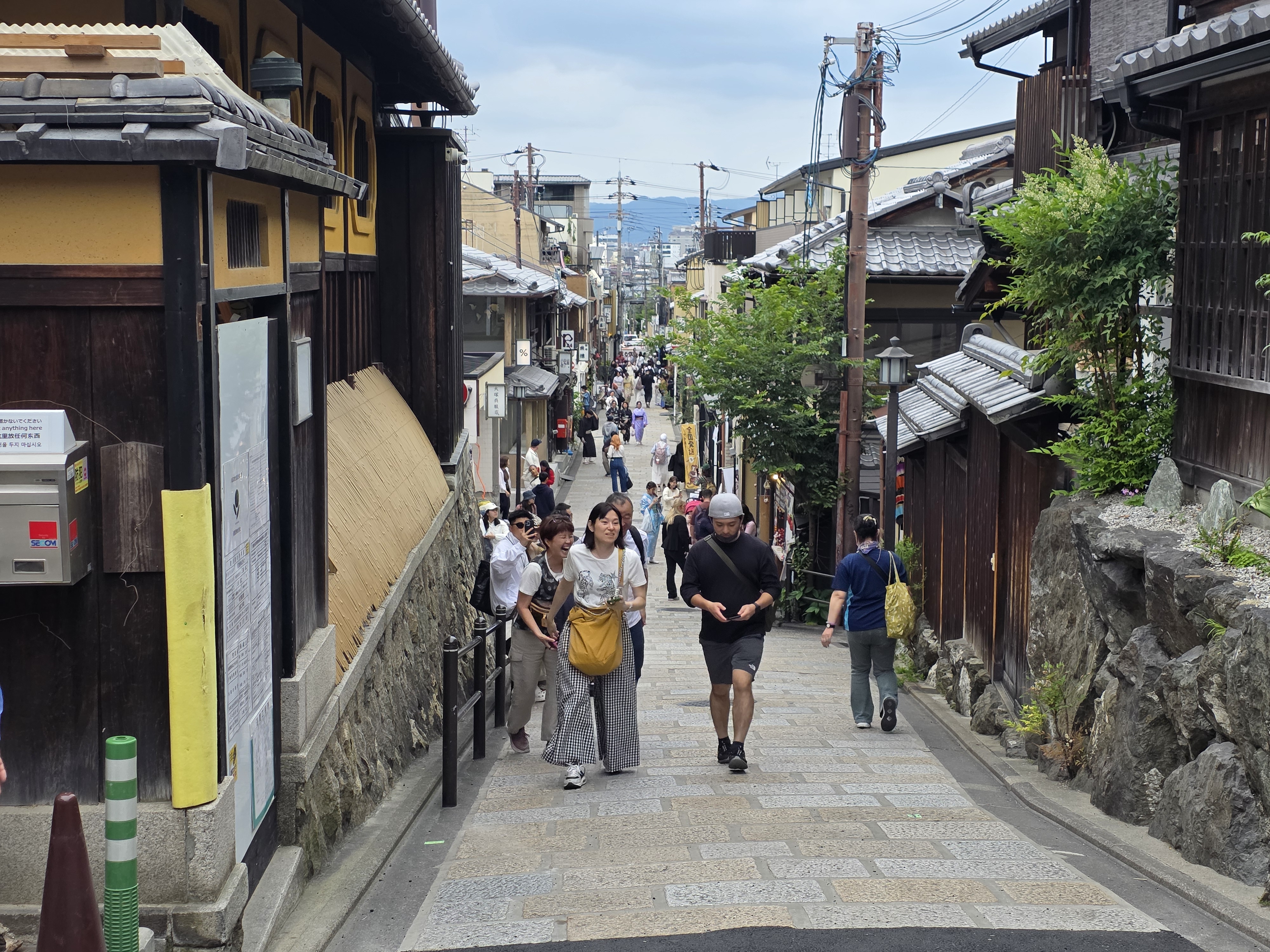
There were indeed a lot of tourists in the area. The streets are charming and atmospheric, and they would have been perfect if there had been a few less people. There were also loads of tourists dressed in kimonos. Kimono rental services are very popular here in Kyoto – they dress you up, do your hair and makeup, and you can stroll around and take photos in full traditional splendour. But more on that later! For now, I’ll just say that most of the people walking around in kimonos in the middle of the day aren’t Japanese – they’re tourists, and mostly Chinese (which is probably why they’re often mistaken for locals).

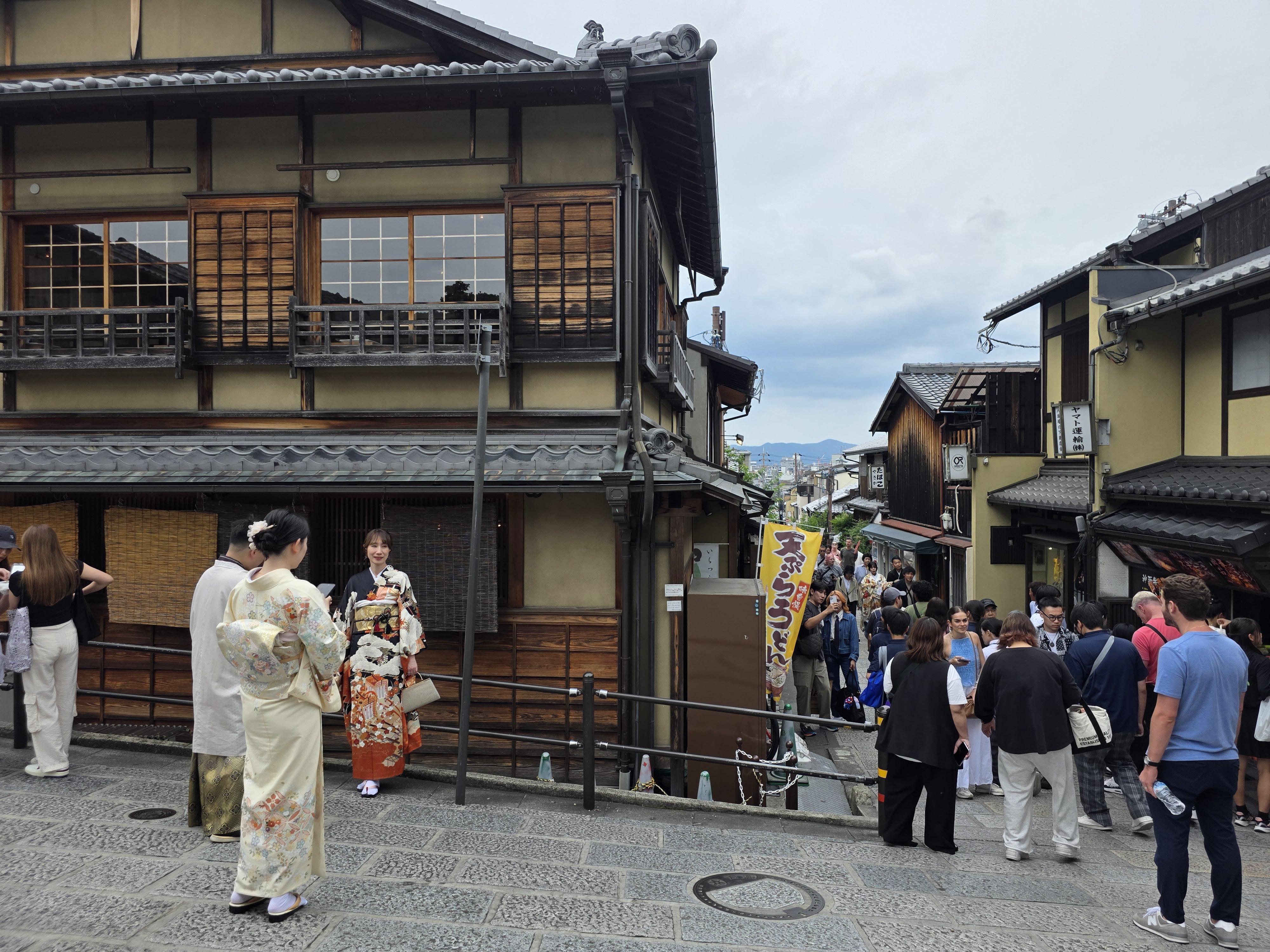

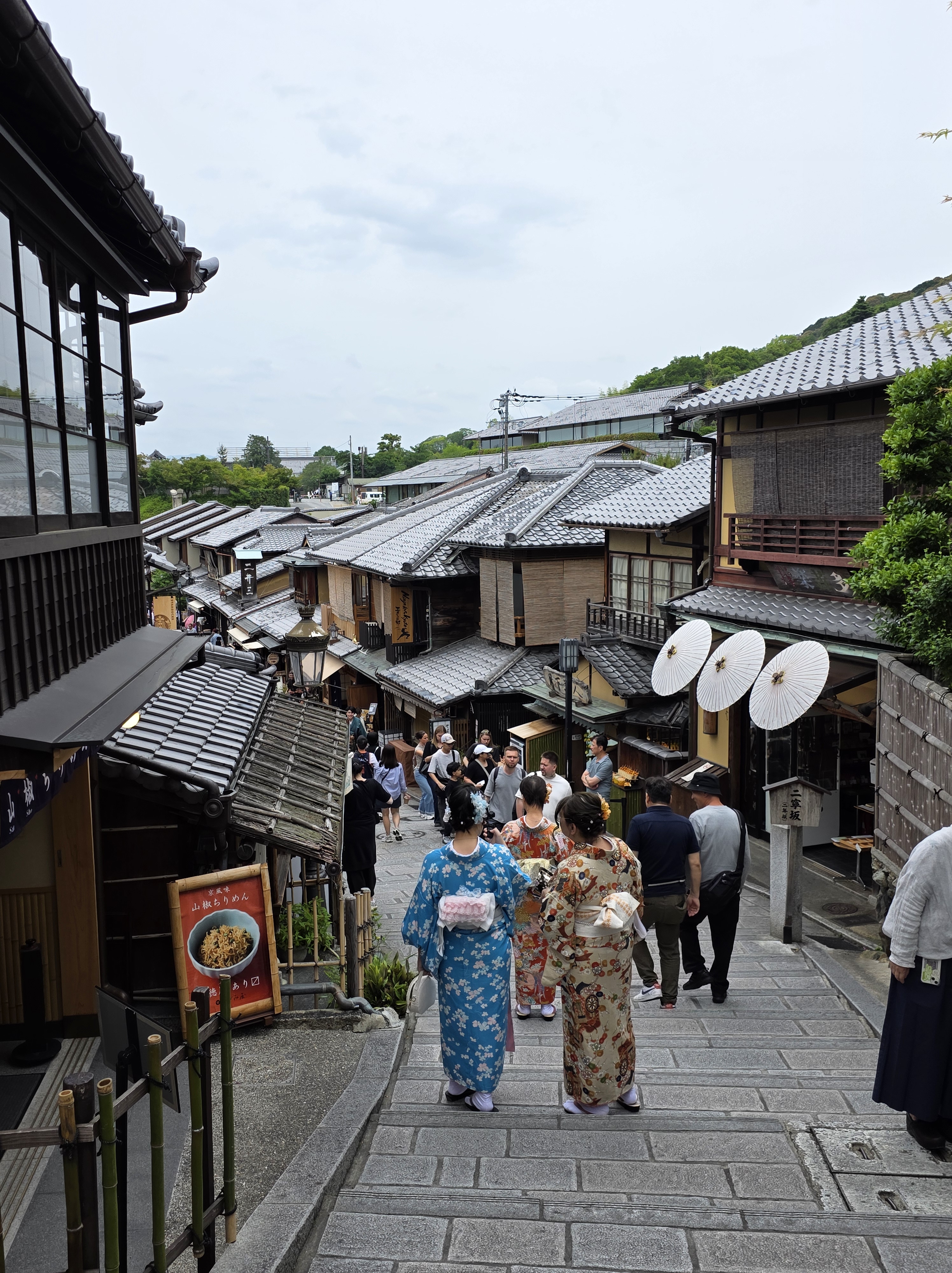
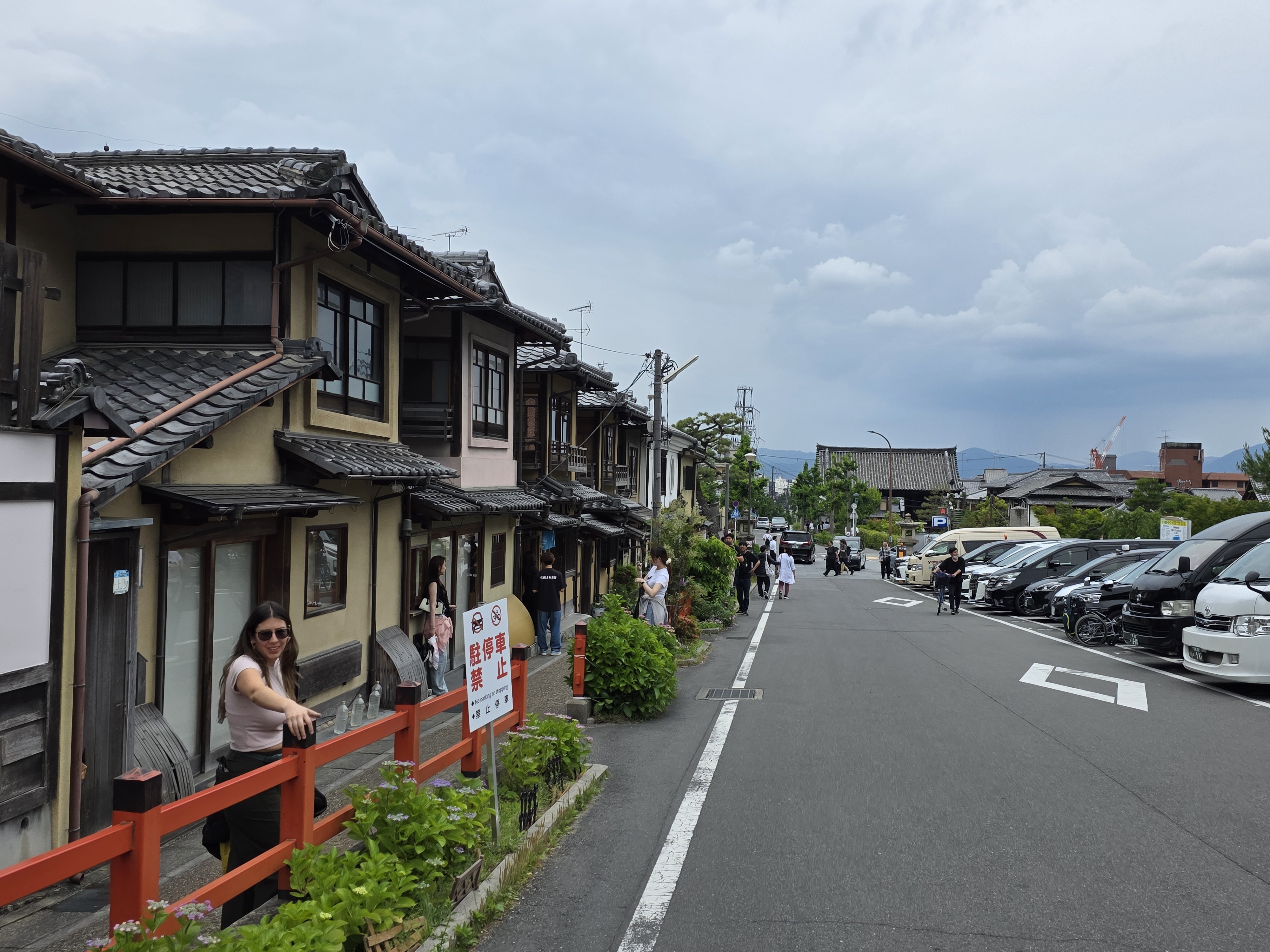

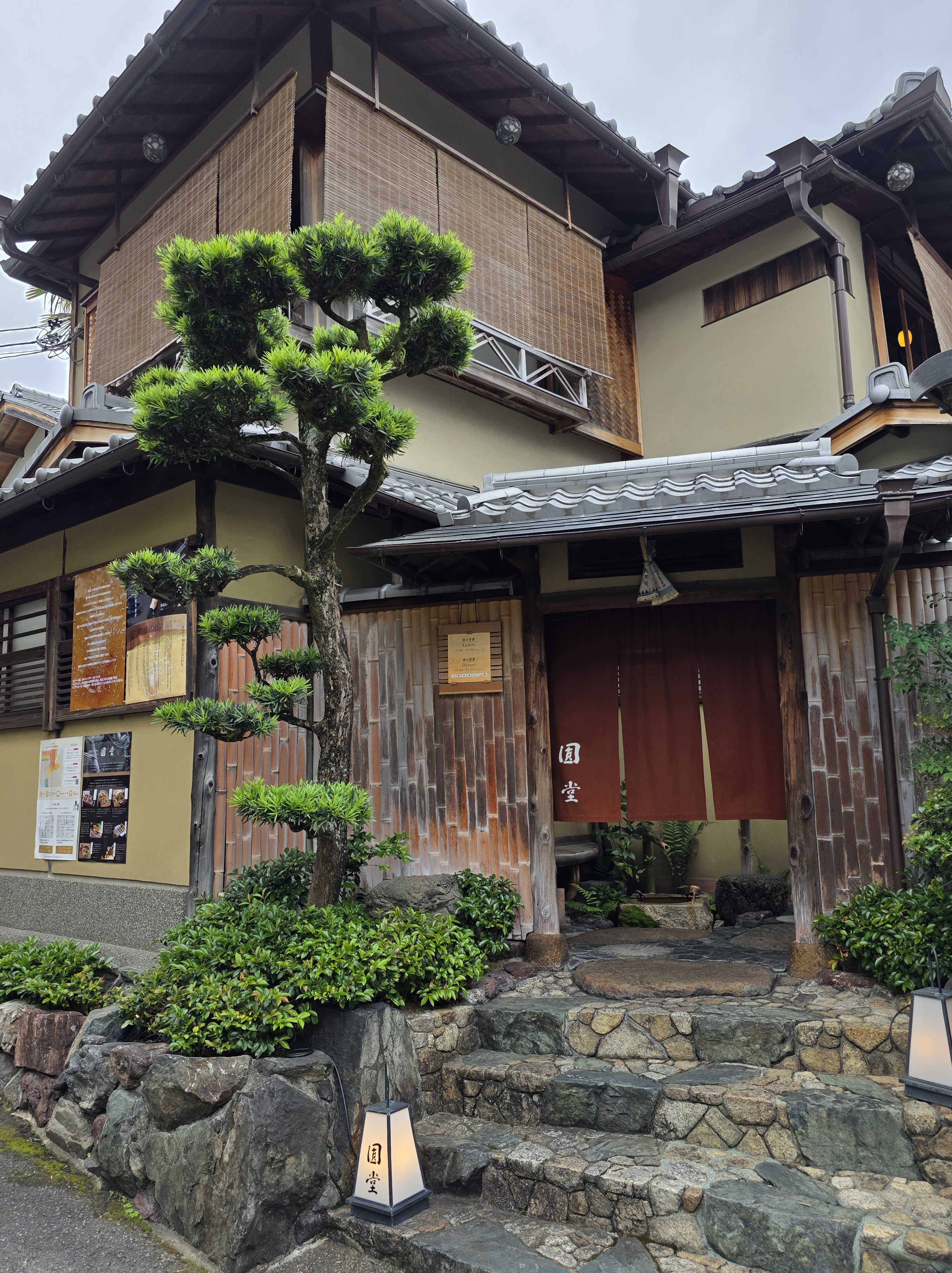
As I said, we were short on time, so we had to rush back at full speed, since we thought we were running late. For instance, at Nishiki Market, which was on our route, we practically bowled people over trying to get through. But as it turned out, there was no need to hurry. In fact, we ended up sitting and waiting. And soon it became clear why. The tea ceremony included dressing in a kimono, and that turned out to be quite a process!
A kimono, especially the women’s version, is not something you can get dressed into yourself. As someone who’s loved Japan since childhood and used to dress up in random robes pretending they were kimonos, I’ve always dreamed of wearing a real one – but I had no idea how complex it actually is. Therefore, there’s really no point in buying one for yourself – it’s not just that there’s nowhere to wear it, but it’s also not something you could put on without help.
First, we were given tabi socks – the kind with a separate big toe – and led to the dressing room. There, we put all our clothes into special bags, undressed down to our underwear, and put on the provided undergarment. Then they helped us into the under-kimono and asked us to choose the outer one. I picked a red one with flowers. After that, we chose a thick obi belt to match, a ribbon (still not sure what it was for), and a decorative cord. Then they dressed us properly, layering and tying everything according to tradition. Next, we went to another woman who did our hair quickly and added accessories we’d selected. It was all very efficient – in about half an hour, we’d been transformed into fairly convincing Japanese ladies!
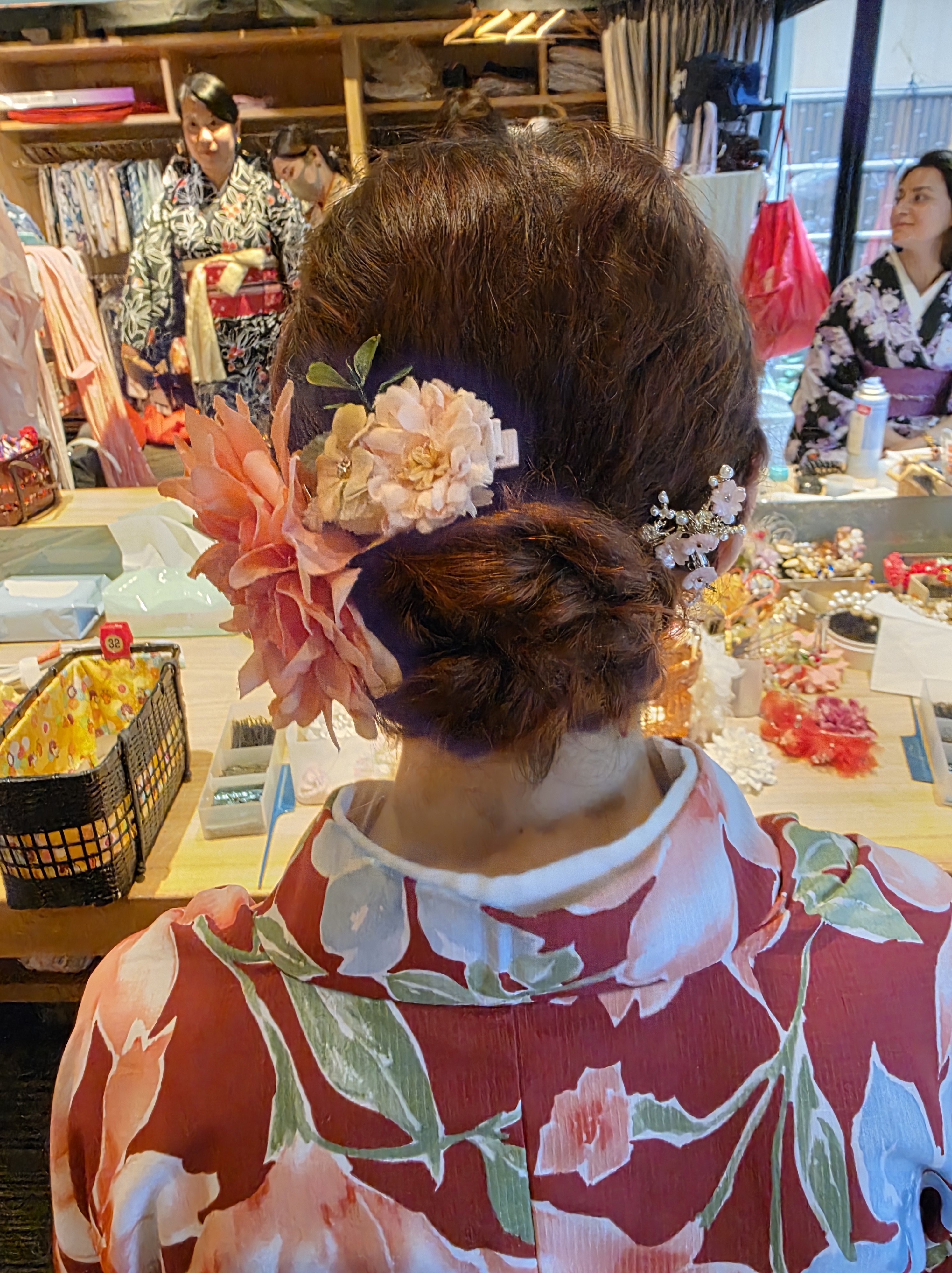
Then came the tea ceremony itself, held with a group of others who were also dressed in kimonos. First, they showed us how to wash ourselves at temple entrances – water over the left hand, then the right, then over the ladle’s handle itself. Inside the tea room, the only downside was that we had to sit on our knees, which quickly became uncomfortable and numbing. But otherwise, it was fascinating. The lovely host explained the rules of the ceremony and the signs and gestures of hospitality – for example, she placed a fan in front of her to symbolically draw a respectful line between herself and the guests, then removed it. Next followed a whole ritual around cleaning the tea utensils. We were given cups with matcha powder and little green sweets shaped like maple leaves – they tasted kind of like halva. We learned how to pour hot water over the matcha, whisk it until frothy, and then drink it along with the “halva”.
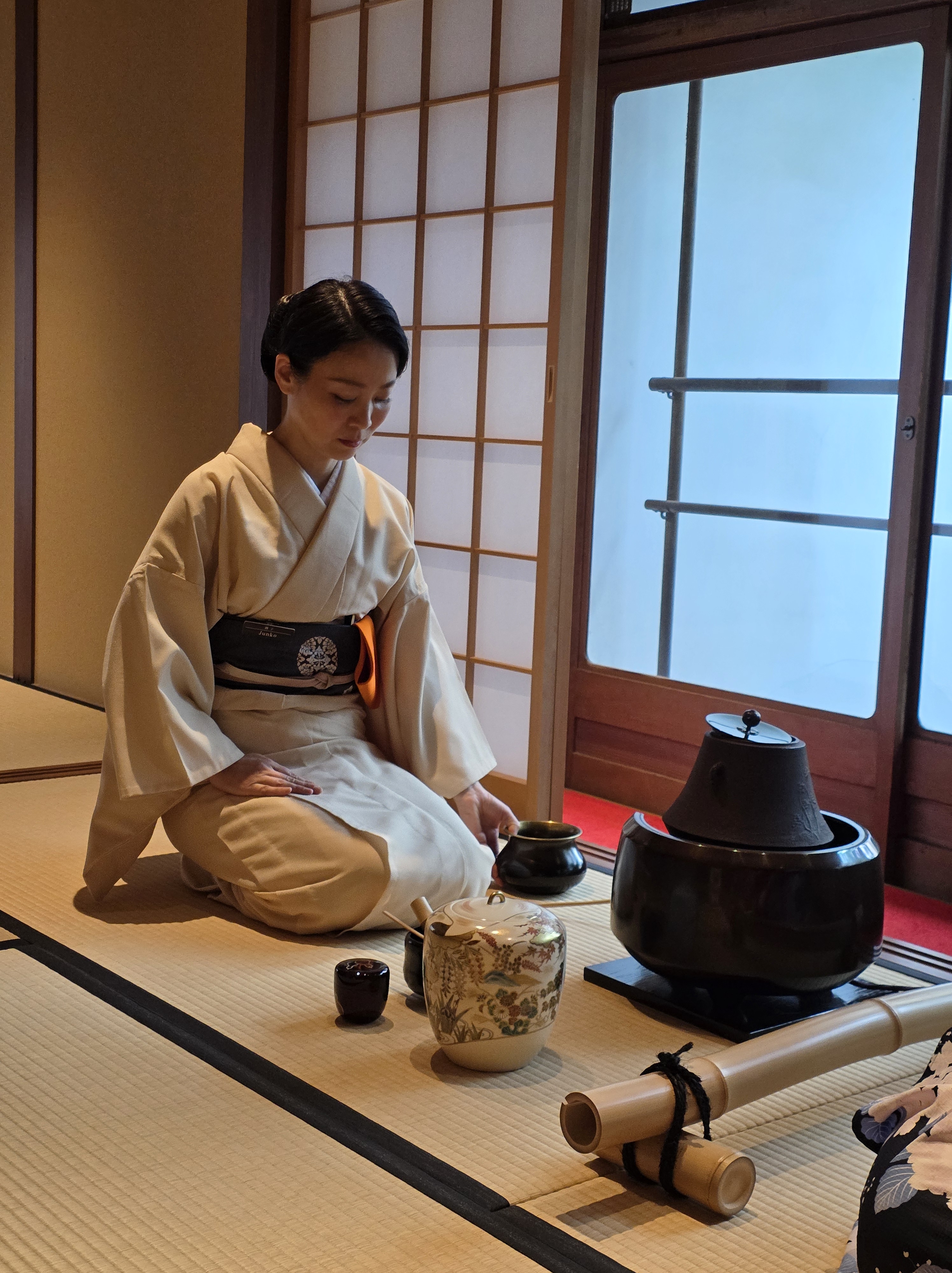

After the ceremony, we were told we could walk around the city in our kimonos, as long as we returned everything by 6 p.m. We decided not to go far – it’s hard to walk far in those undersized flip-flops (they weren’t the traditional wooden geta, but still not the most practical footwear). We wandered around a bit, found a small shrine where we took some great photos, and decided that was enough and we were ready to return the kimonos.
The whole experience was really enjoyable – being dressed so carefully, wearing the kimono, and seeing how great it looked., so we were very happy with it.
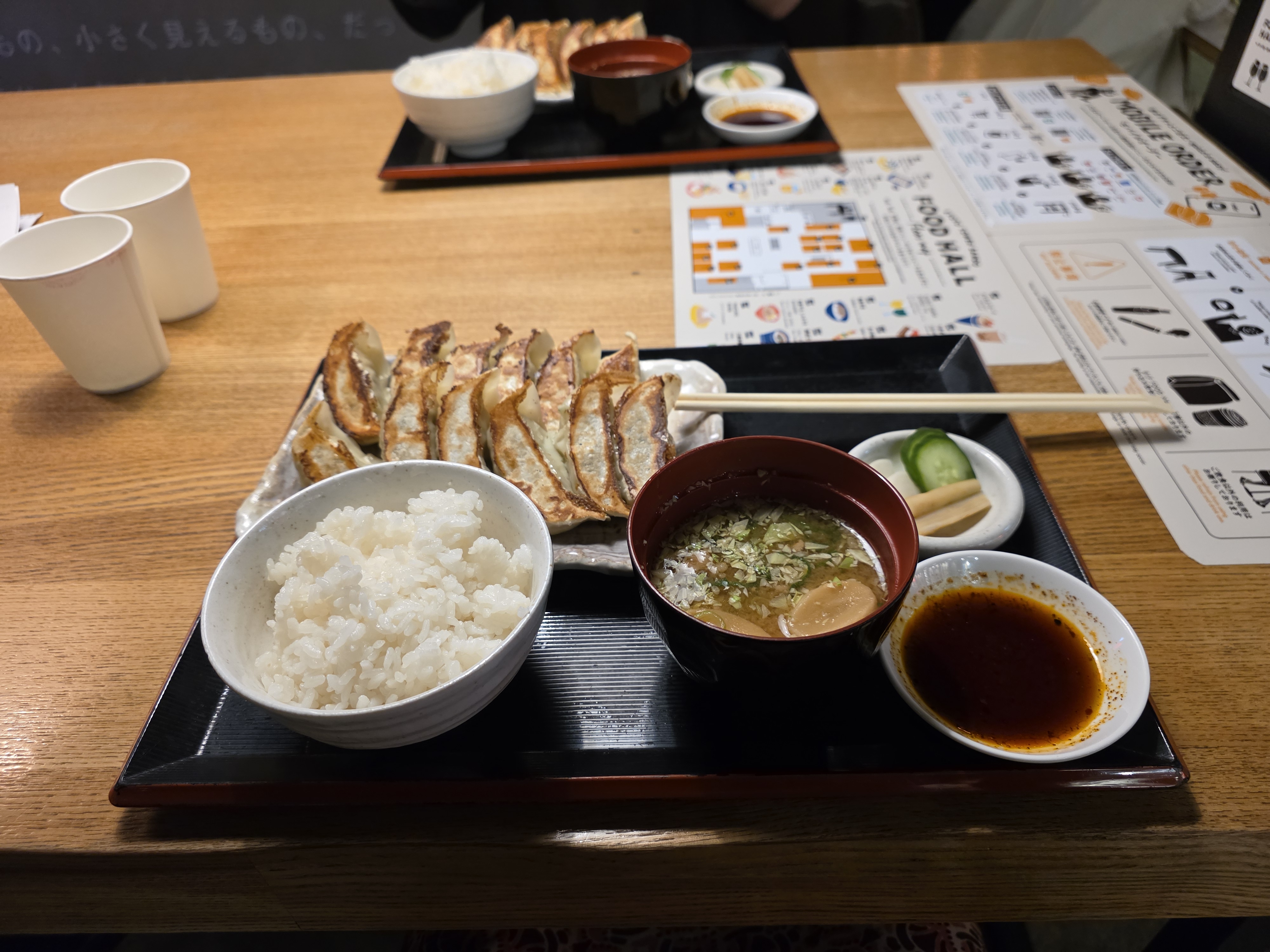
After all that running around and not-so-filling meals during the day, we decided to make up for it and went to the food court under Kyoto Tower. We devoured a portion of delicious gyoza, followed by fluffy and no less delicious Japanese soufflé pancakes. Kyoto Tower is right across from the train station, so after dinner we hung around the area, bought some souvenirs and sweets, went up to the top of the station building for a view of the evening city, and finally headed back to the hotel – it had started to drizzle, though the air was still stuffy. I really liked Kyoto, it has a pleasant atmosphere, noticeably more people than in Hiroshima, and a lot of tourists.














 Travelling Leila