РУССКОЯЗЫЧНАЯ ВЕРСИЯ ПО ЭТОЙ ССЫЛКЕ. CLICK HERE FOR RUSSIAN VERSION.
30 May 2025
Today, completely unintentionally, we woke up at 6:30 a.m., but it turned out to be a good thing, since we had a long day of traveling ahead: from Kyoto to Himeji, then on to Osaka, and finally back to Kyoto.
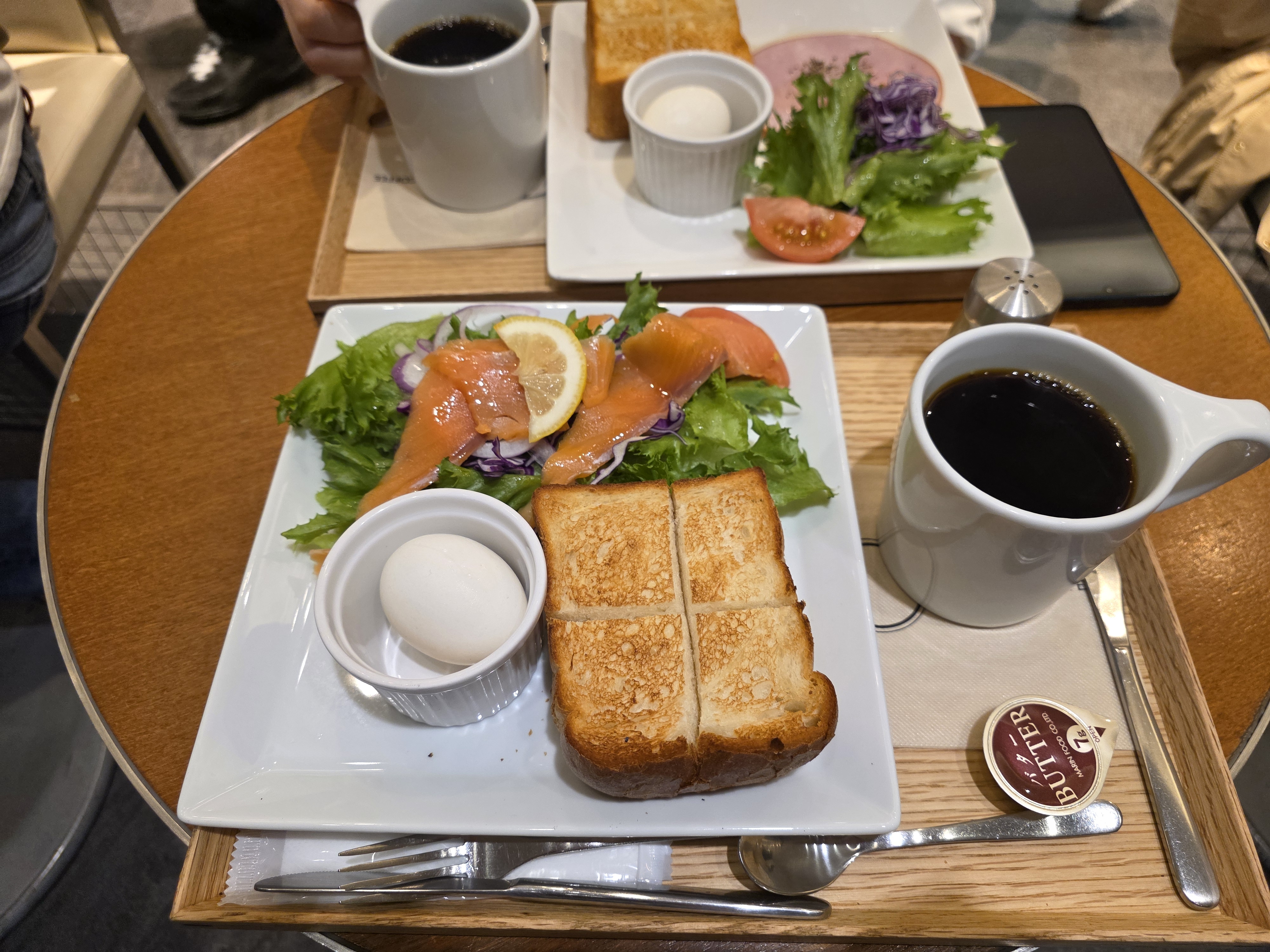
As a result, we left an hour earlier than planned. But before heading out, we walked to Kyoto Station and had breakfast there – we had delicious toasts made with Japanese milk bread, topped with egg and salmon in my case, or ham in Rena’s.
At the station, we took an express train (not the Shinkansen, just a regular limited express) to Himeji.
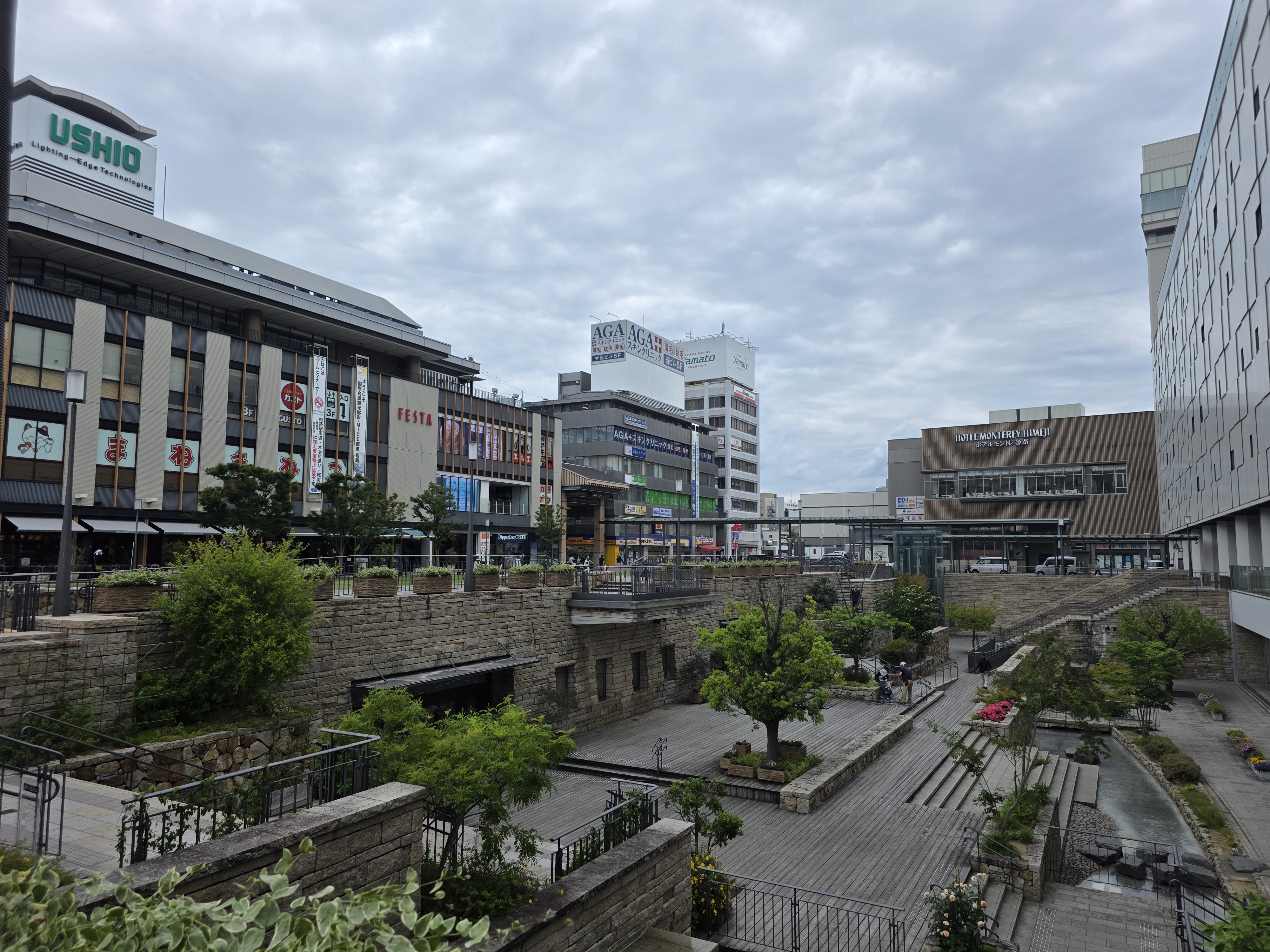
The sole reason for the trip to Himeji (which took about an hour and a half, by the way) was to visit its famous castle. From Himeji Station, we walked down one of the main streets towards the castle. Honestly, there wasn’t much to see along the way – the city seemed fairly ordinary and, at first glance, felt rather provincial.
The castle really is the city’s main (and maybe only) attraction – but what an attraction it is. It is extremely popular among tourists, as it’s one of Japan’s oldest castles, and interestingly, is built almost entirely out of wood.
We weren’t sure whether it was enough to admire the castle from the outside or whether we should go inside as well. Google reviews strongly recommended going in, and so we did – but in hindsight, we might as well have skipped it.
From the outside, the castle is stunning – graceful and elegant. No wonder it’s also called the “White Heron Castle” – it truly does resemble a white heron. But inside, there’s practically nothing to see. Just seven floors of empty wooden rooms, between which we had to walk up and down the steep, slippery staircases (they are slippery because you have to take your shoes off and walk in socks). There’s no interior decoration, no furnishings, barely any artifacts. Even the weapon displays are sparse – just a couple of spears and guns for show.

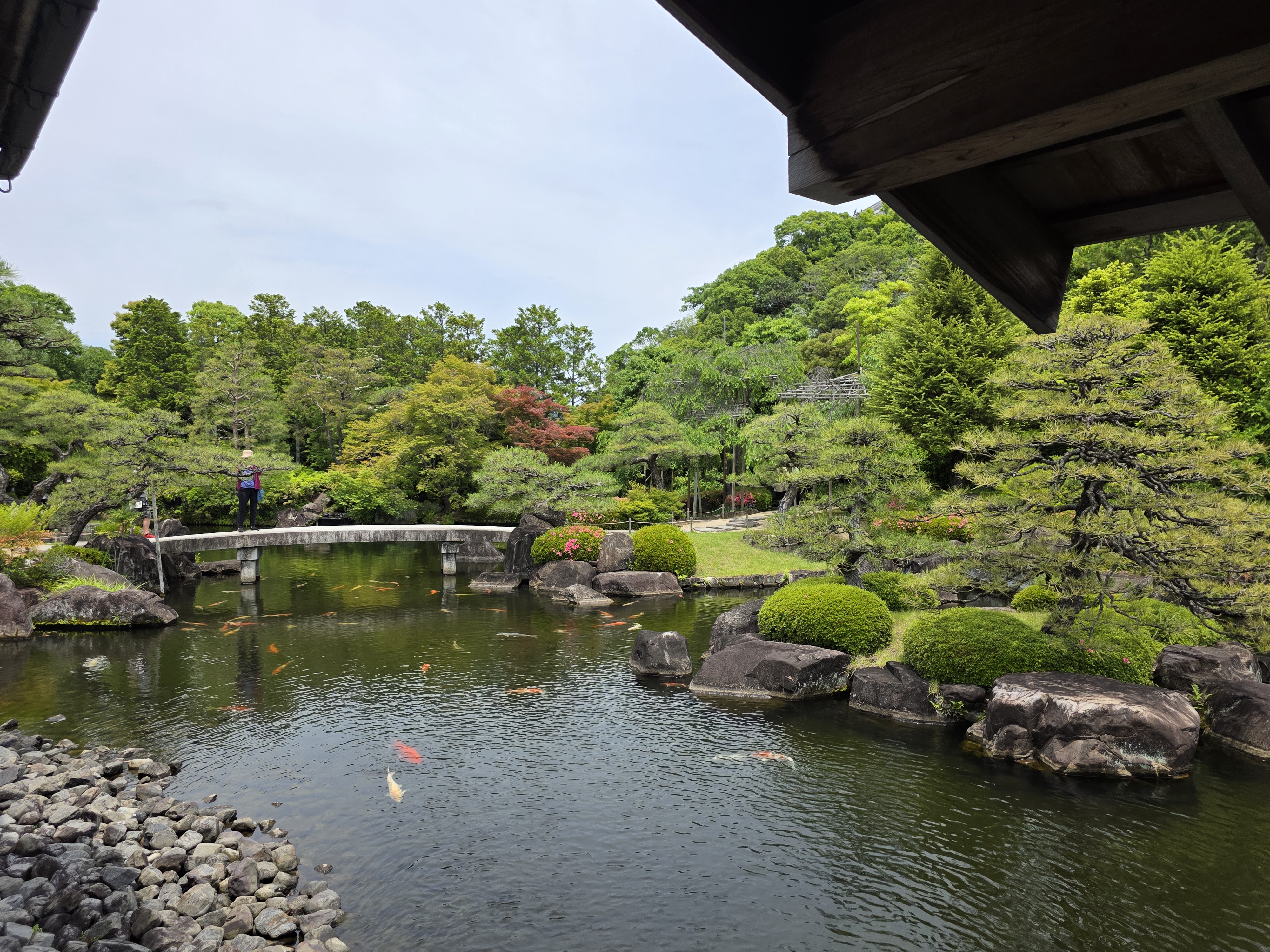
However, right next to the castle is Koko-en – a lovely garden made up of nine smaller gardens, each designed in a different traditional Japanese style. One focuses on pine trees only, another features multi-level paths, waterfalls, and stones, while another has a flat landscape – and all are filled with beautiful flowers and trees. Interestingly, the garden was created only recently, in the late 20th century, but it’s designed to reflect the aesthetics of the Edo period.


It was hot and stuffy all day, even though the forecast had promised rain – instead, we got bright sun. By the time we finished at the gardens, it was already lunchtime. We decided to have lunch in Himeji and ate in a tiny local eatery that served Kobe beef – a premium, marbled Wagyu variety that’s about twice as expensive as regular Wagyu, but still reasonably priced here.

There wasn’t anything else we wanted to do in Himeji, so we headed to Osaka – in the opposite direction, towards Kyoto – about an hour’s ride.
The contrast was immediate – Osaka has a completely different energy. It is a much more modern city than anything else we’d seen so far (even Tokyo). If your idea of a modern Asian city includes futuristic infrastructure and glass skyscrapers, Osaka fits the bill perfectly – it felt like such a contrast to Kyoto, which is only half an hour away. Even the people looked different – more relaxed, dressed more brightly and stylishly. And there are even dedicated bike lanes – in the other places we saw, cyclists just ride on the sidewalks, while you narrowly manage to avoid them.
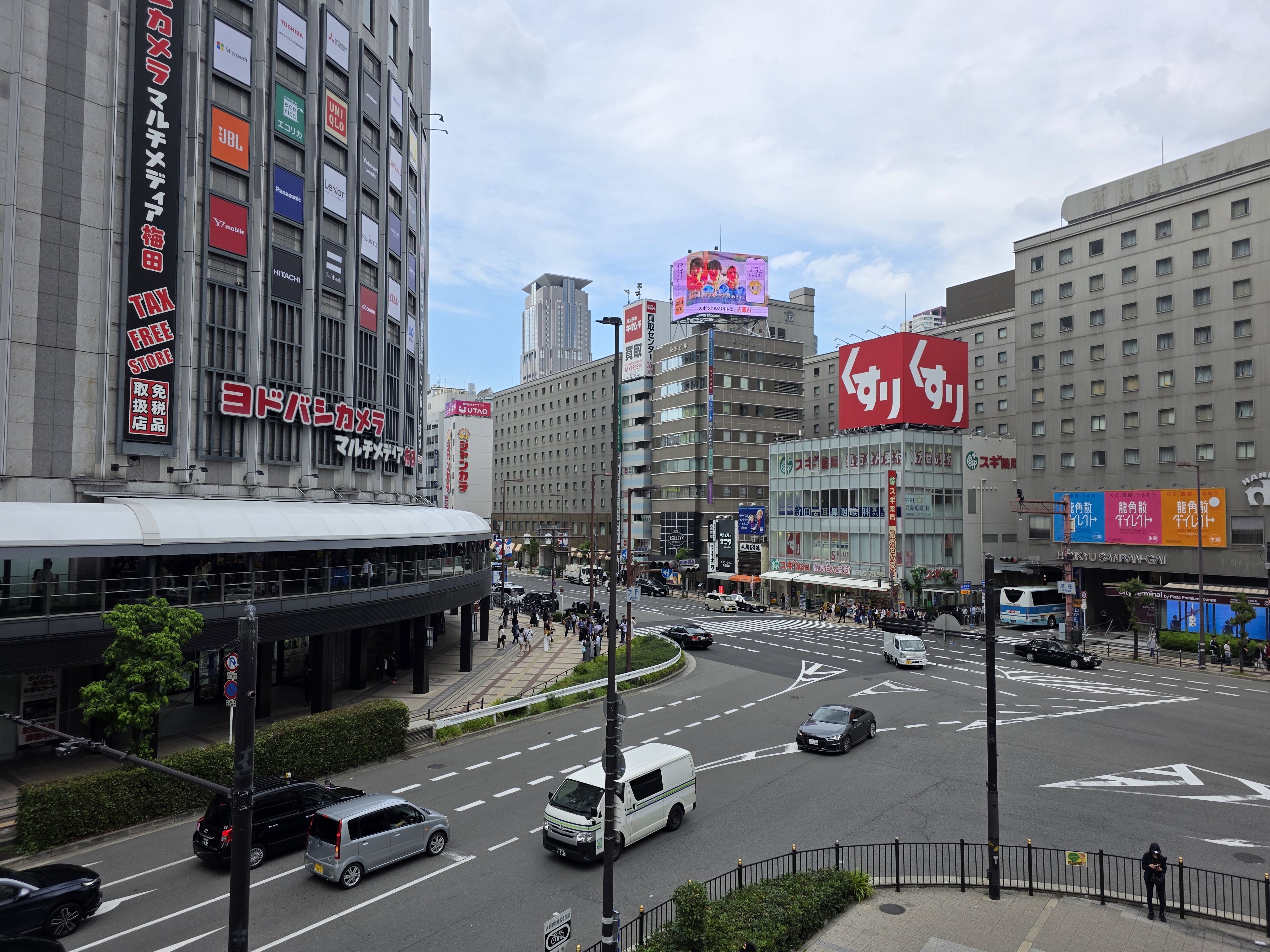
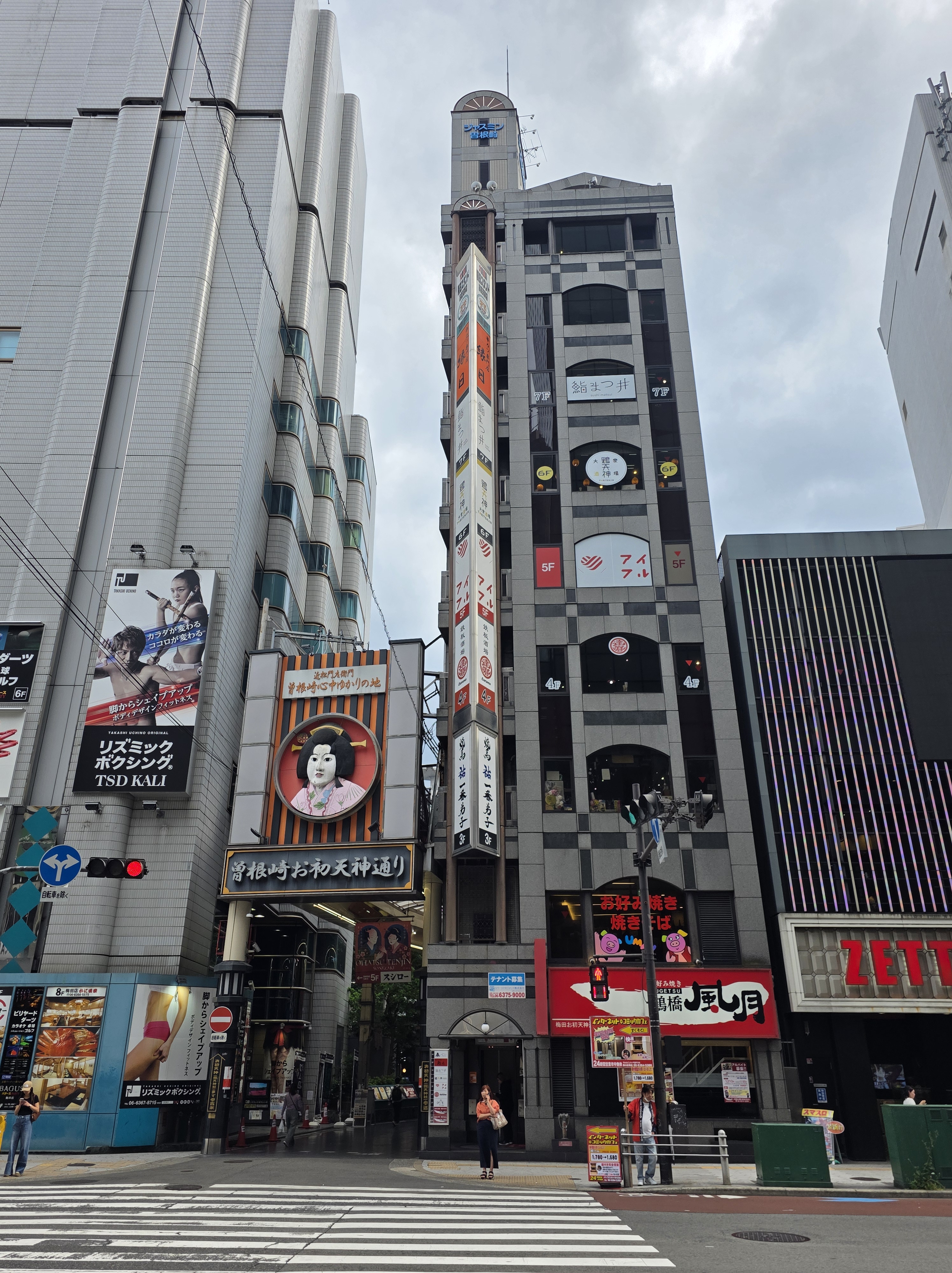
Osaka also has a castle, so we went to take a look – just from the outside, of course. It turned out to be located on a hill, mostly hidden behind trees, and we didn’t feel like climbing up – we simply didn’t have the energy.
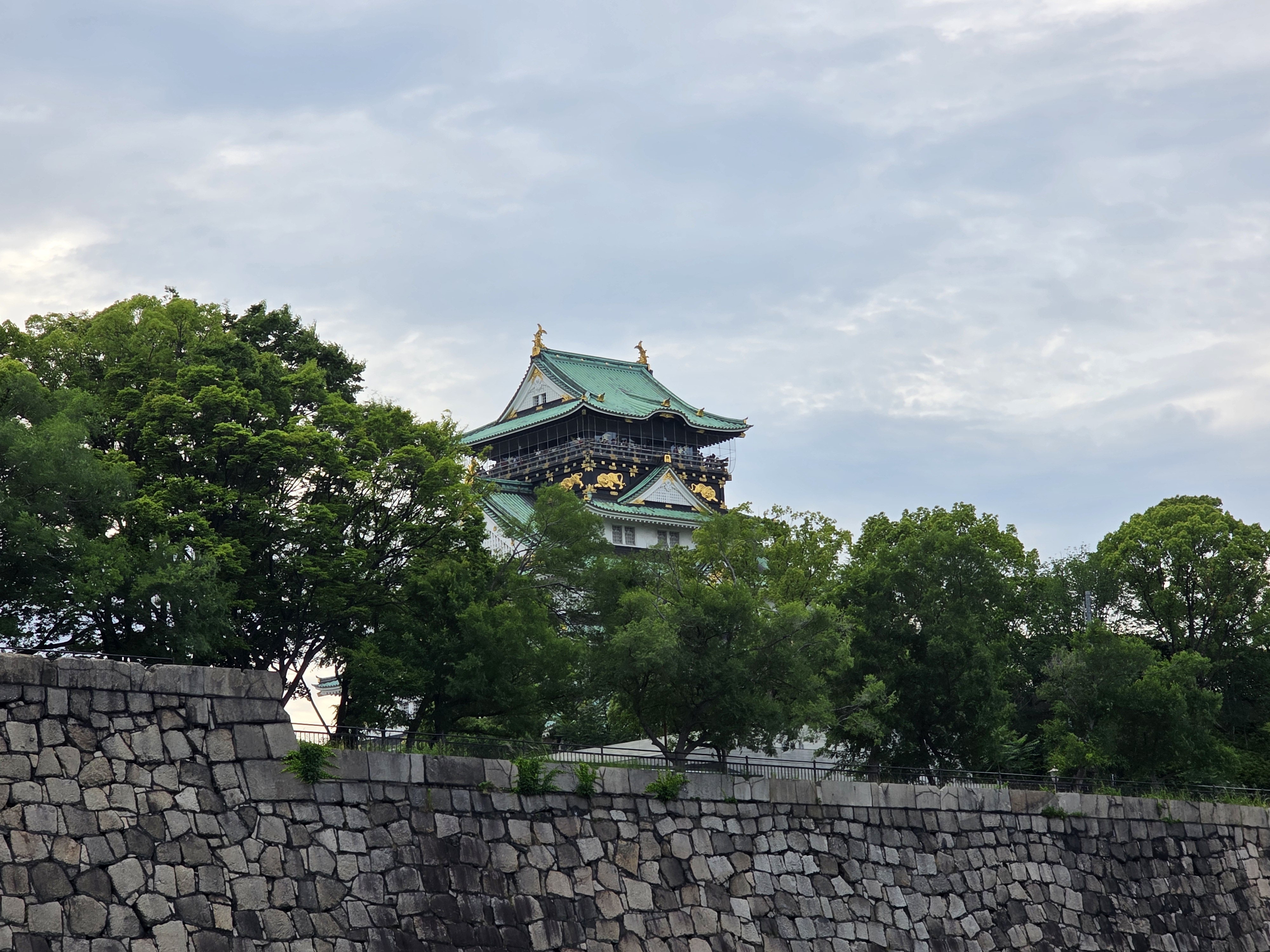
The park around the castle reminded us a bit of Hiroshima Castle’s grounds, but Osaka’s was better maintained and much more lively – full of people, like the city itself.
Next, we headed to what’s probably the noisiest and most chaotic part of the city: the Dotonbori area. Along the canal and the adjacent pedestrian street, there is an endless choice of cafés, restaurants, shops, and game centres – all with huge, elaborate signs, that are more like 3D sculptures, covering the entire facade. At night, everything lights up in dazzling neon.
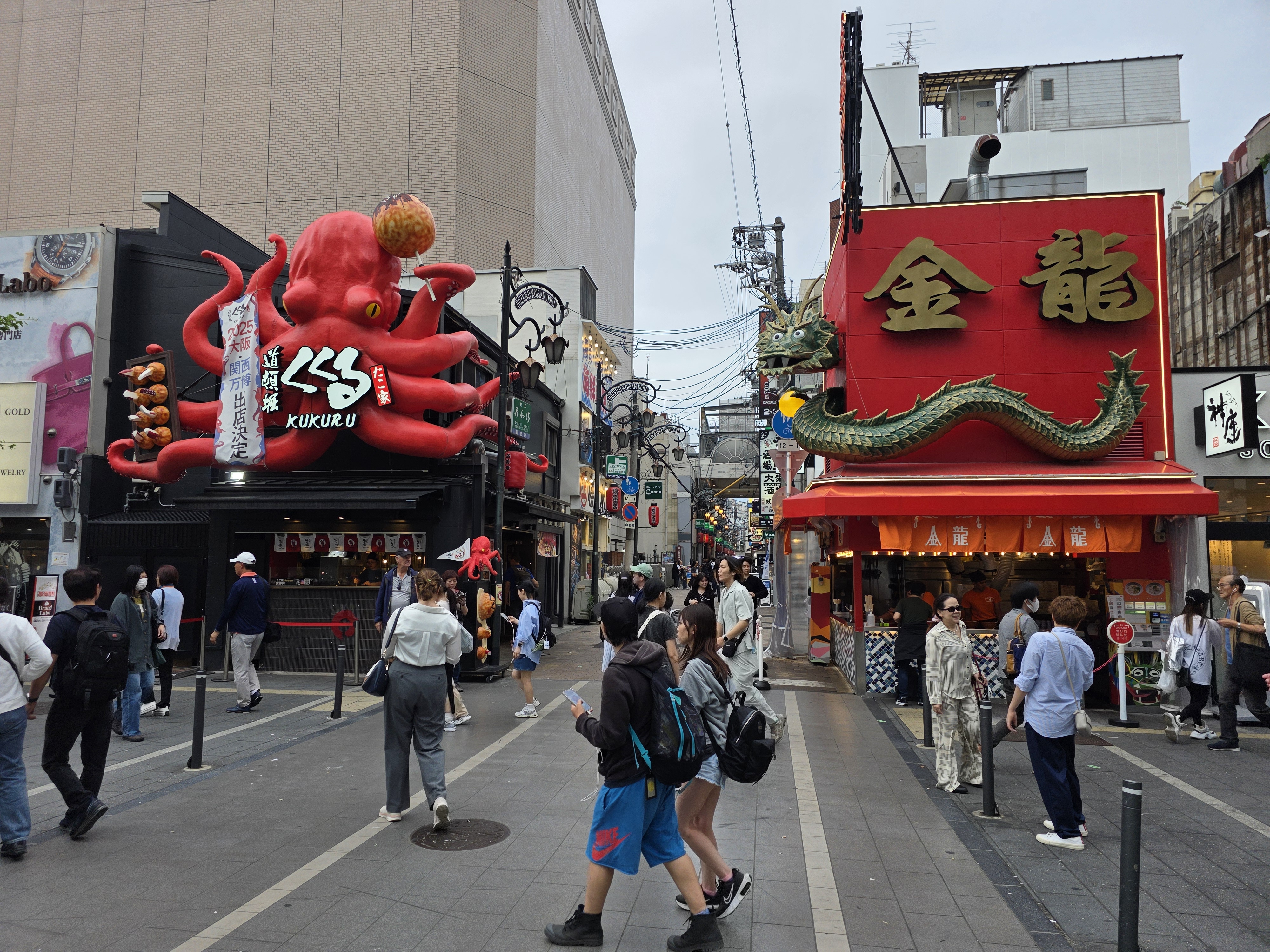

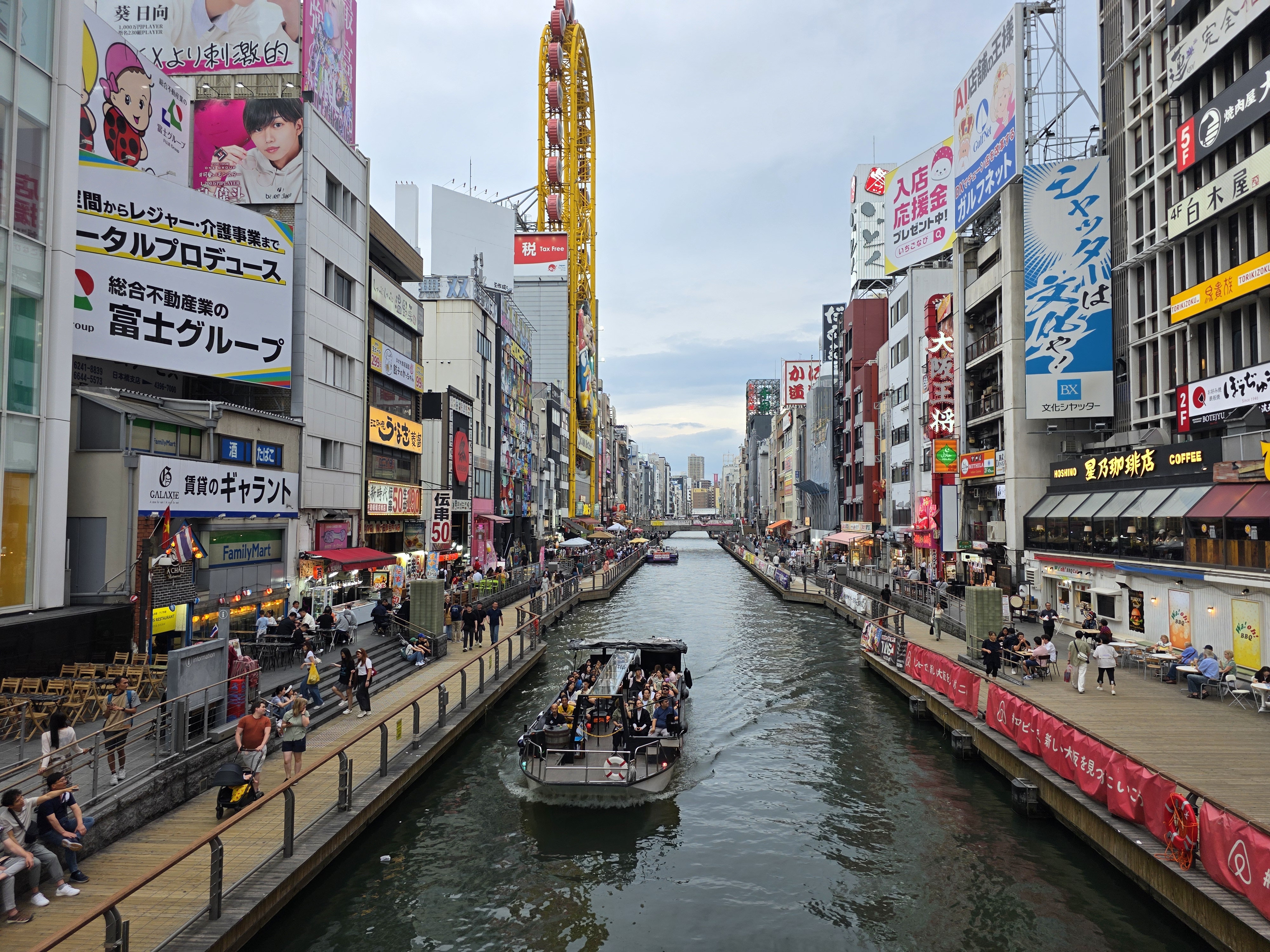

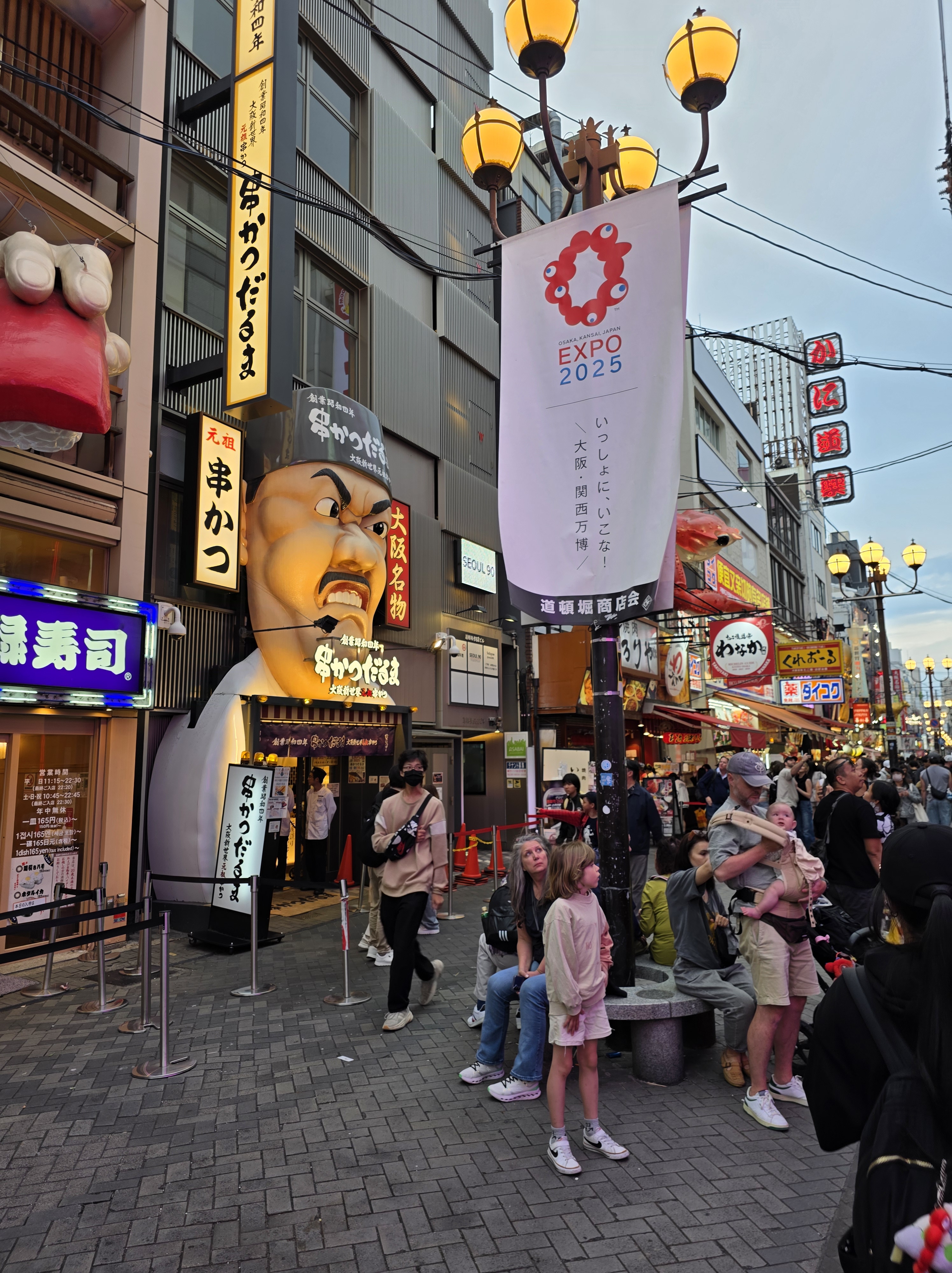


Food stalls and restaurants offer all the local specialties – which, of course, we tried for dinner: okonomiyaki (something between a savory pancake and fritter made of a hodgepodge of different ingredients – seafood, cabbage, eggs), takoyaki (fried octopus balls in liquid batter), and noodles. I really liked it, though Rena didn’t.
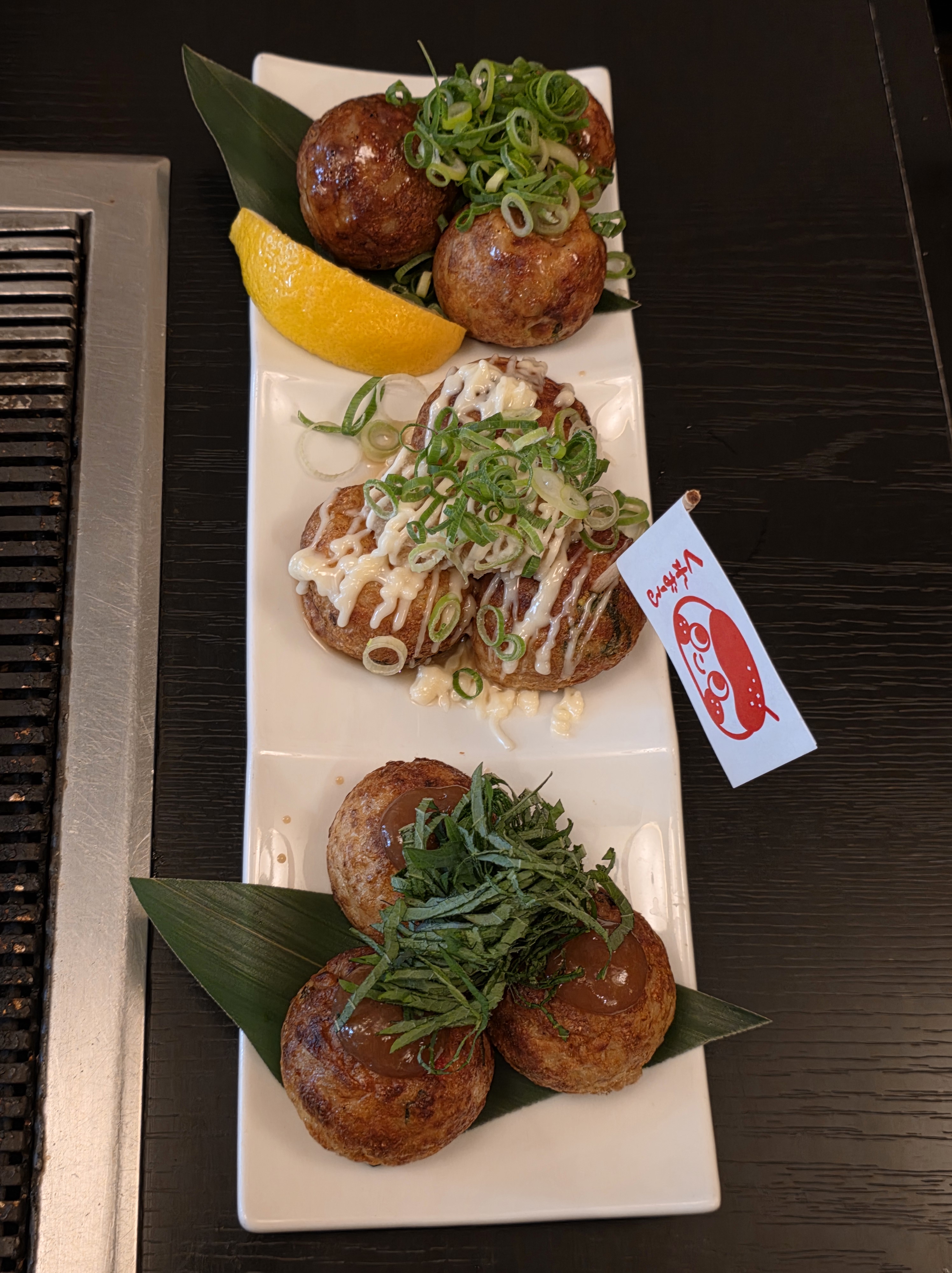
In general, if you’re looking for that loud, wild, fashionable version of Japan you often see in the media – you’ll find it here, in Osaka. The city is vibrant, chaotic, and it’s very entertaining to look at all this, but we’re still happy to be staying in Kyoto, where we were happy to return in the evening.


 Travelling Leila